Category: Science

  • MIL-Evening Report: Astronomers have spied an interstellar object zooming through the Solar System

    Source: The Conversation (Au and NZ) – By Kirsten Banks, Lecturer, School of Science, Computing and Engineering Technologies, Swinburne University of Technology

    K Ly / Deep Random Survey

    This week, astronomers spotted the third known interstellar visitor to our Solar System.

    First detected by the Asteroid Terrestrial-impact Last Alert System (ATLAS) on July 1, the cosmic interloper was given the temporary name A11pl3Z. Experts at NASA’s Center for Near Earth Object Studies and the International Astronomical Union (IAU) have confirmed the find, and the object now has an official designation: I3/ATLAS.

    The orbital path of I3/ATLAS through the Solar System.
    NASA/JPL-Caltech, CC BY-NC

    There are a few strong clues that suggest 3I/ATLAS came from outside the Solar System.

    First, it’s moving really fast. Current observations show it speeding through space at around 245,000km per hour. That’s more than enough to escape the Sun’s gravity.

    An object near Earth’s orbit would only need to be travelling at just over 150,000km/h to break free from the Solar System.

    Second, 3I/ATLAS has a wildly eccentric orbit around the Sun. Eccentricity measures how “stretched” an orbit is: 0 eccentricity is a perfect circle, and anything up to 1 is an increasingly strung-out ellipse. Above 1 is an orbit that is not bound to the Sun.

    3I/ATLAS has an estimated eccentricity of 6.3, by far the highest ever recorded for any object in the Solar System.

    Has anything like this happened before?

    An artist’s impression of the first confirmed interstellar object, 1I/‘Oumuamua.
    ESO/M. Kornmesser, CC BY

    The first interstellar object spotted in our Solar System was the cigar-shaped ‘Oumuamua, discovered in 2017 by the Pan-STARRS1 telescope in Hawaii. Scientists tracked it for 80 days before eventually confirming it came from interstellar space.

    The interstellar comet I2/Borisov, imaged by the Hubble Space Telescope.
    NASA, ESA, and D. Jewitt (UCLA), CC BY-NC

    The second interstellar visitor, comet 2I/Borisov, was discovered two years later by amateur astronomer Gennadiy Borisov. This time it only took astronomers a few weeks to confirm it came from outside the Solar System.

    This time, the interstellar origin of I3/ATLAS has been confirmed in a matter of days.

    How did it get here?

    We have only ever seen three interstellar visitors (including I3/ATLAS), so it’s hard to know exactly how they made their way here.

    However, recent research published in The Planetary Science Journal suggests these objects might be more common than we once thought. In particular, they may come from relatively nearby star systems such as Alpha Centauri (our nearest interstellar neighbour, a mere 4.4 light years away).

    Alpha Centauri A and Alpha Centauri B, from the triple star system Alpha Centauri.
    ESA/Hubble & NASA, CC BY

    Alpha Centauri is slowly moving closer to us, with its closest approach expected in about 28,000 years. If it flings out material in the same way our Solar System does, scientists estimate around a million objects from Alpha Centauri larger than 100 metres in diameter could already be in the outer reaches of our Solar System. That number could increase tenfold as Alpha Centauri gets closer.

    Most of this material would have been ejected at relatively low speeds, less than 2km/s, making it more likely to drift into our cosmic neighbourhood over time and not dramatically zoom in and out of the Solar System like I3/ATLAS appears to be doing. While the chance of one of these objects coming close to the Sun is extremely small, the study suggests a few tiny meteors from Alpha Centauri, likely no bigger than grains of sand, may already hit Earth’s atmosphere every year.

    Why is this interesting?

    Discovering new interstellar visitors like 3I/ATLAS is thrilling, not just because they’re rare, but because each one offers a unique glimpse into the wider galaxy. Every confirmed interstellar object expands our catalogue and helps scientists better understand the nature of these visitors, how they travel through space, and where they might have come from.

    A swarm of new asteroids discovered by the NSF–DOE Vera C. Rubin Observatory.

    Thanks to powerful new observatories such as the NSF–DOE Vera C. Rubin Observatory, our ability to detect these elusive objects is rapidly improving. In fact, during its first 10 hours of test imaging, Rubin revealed 2,104 previously unknown asteroids.

    This is an astonishing preview of what’s to come. With its wide field of view and constant sky coverage, Rubin is expected to revolutionise our search for interstellar objects, potentially turning rare discoveries into routine ones.

    What now?

    There’s still plenty left to uncover about 3I/ATLAS. Right now, it’s officially classified as a comet by the IAU Minor Planet Center.

    But some scientists argue it might actually be an asteroid, roughly 20km across, based on the lack of typical comet-like features such as a glowing coma or a tail. More observations will be needed to confirm its nature.

    Currently, 3I/ATLAS is inbound, just inside Jupiter’s orbit. It’s expected to reach its closest point to the Sun, slightly closer than the planet Mars, on October 29. After that, it will swing back out towards deep space, making its closest approach to Earth in December. (It will pose no threat to our planet.)

    Whether it’s a comet or an asteroid, 3I/ATLAS is a messenger from another star system. For now, these sightings are rare – though as next-generation observatories such as Rubin swing into operation, we may discover interstellar companions all around.

    Kirsten Banks does not work for, consult, own shares in or receive funding from any company or organisation that would benefit from this article, and has disclosed no relevant affiliations beyond their academic appointment.

    ref. Astronomers have spied an interstellar object zooming through the Solar System – https://theconversation.com/astronomers-have-spied-an-interstellar-object-zooming-through-the-solar-system-260422

    MIL OSI AnalysisEveningReport.nz

  • MIL-Evening Report: ER Report: A Roundup of Significant Articles on EveningReport.nz for July 4, 2025

    ER Report: Here is a summary of significant articles published on EveningReport.nz on July 4, 2025.

    Astronomers have spied an interstellar object zooming through the Solar System
    Source: The Conversation (Au and NZ) – By Kirsten Banks, Lecturer, School of Science, Computing and Engineering Technologies, Swinburne University of Technology K Ly / Deep Random Survey This week, astronomers spotted the third known interstellar visitor to our Solar System. First detected by the Asteroid Terrestrial-impact Last Alert System (ATLAS) on July 1, the

    Avoid bad breath, don’t pick partners when drunk: ancient dating tips to find modern love
    Source: The Conversation (Au and NZ) – By Konstantine Panegyres, Lecturer in Classics and Ancient History, The University of Western Australia Henryk Siemiradzki via Wikimedia Commons To love and be loved is something most people want in their lives. In the modern world, we often see stories about the difficulties of finding love and the

    Back to Back Theatre tackles an epic Shakespearian conflict – set in a factory, with cardboard props
    Source: The Conversation (Au and NZ) – By Kate Hunter, Senior Lecturer in Art and Performance, Deakin University Jeff Busby/Back To Back Theatre/ACMI Back to Back Theatre is one of Australia’s national treasures. Over 30 years this dynamic Geelong-based company – an ensemble of actors who are perceived to have intellectual disabilities – has built

    Australia’s new lung cancer screening program has chosen simplicity over equity, and we’re concerned
    Source: The Conversation (Au and NZ) – By Lisa J. Whop, Associate Director of Research and Senior Fellow, Yardhura Walani, National Centre for Aboriginal and Torres Strait Islander Wellbeing Research, Australian National University Thurtell/Getty Images Australia’s lung cancer screening program launched on July 1, and marks real progress and opportunity. It aims to reduce the

    Lost in space: MethaneSat failed just as NZ was to take over mission control – here’s what we need to know now
    Source: The Conversation (Au and NZ) – By Nicholas Rattenbury, Associate Professor in Physics, University of Auckland, Waipapa Taumata Rau Environmental Defense Fund, CC BY-SA This week’s announcement of the loss of a methane-detecting satellite, just days before New Zealand was meant to take over mission control, is a blow to the country’s space research

    Rare wooden tools from Stone Age China reveal plant-based lifestyle of ancient lakeside humans
    Source: The Conversation (Au and NZ) – By Bo Li, Professor, Environmental Futures Research Centre, School of Science, University of Wollongong Excavation at the Gantangqing site. Liu et al. Ancient wooden tools found at a site in Gantangqing in southwestern China are approximately 300,000 years old, new dating has shown. Discovered during excavations carried out

    I’ve seen the brain damage contact sports can cause – we all need to take concussion and CTE more seriously
    Source: The Conversation (Au and NZ) – By Alan Pearce, Professor, Adjunct Research Fellow, School of Health Science, Swinburne University of Technology AAP Image/The Conversation, CC BY Concussion in sport continues to make headlines, whether it be class actions, young men flocking to the highly violent “RunIt” activity or debate about whether Australian rules football

    NZ will soon have no real interisland rail-ferry link – why are we so bad at infrastructure planning?
    Source: The Conversation (Au and NZ) – By Timothy Welch, Senior Lecturer in Urban Planning, University of Auckland, Waipapa Taumata Rau Hagen Hopkins/Getty Images) Another week, another Cook Strait ferry breakdown. As the winter maintenance season approaches and the Aratere prepares for its final months of service, New Zealand faces a self-imposed crisis. The government

    Mauna Loa Observatory captured the reality of climate change. The US plans to shut it down
    Source: The Conversation (Au and NZ) – By Alex Sen Gupta, Associate Professor in Climate Science, UNSW Sydney Izabela23/Shutterstock The greenhouse effect was discovered more than 150 years ago and the first scientific paper linking carbon dioxide levels in the atmosphere with climate change was published in 1896. But it wasn’t until the 1950s that

    6 simple questions to tell if a ‘finfluencer’ is more flash than cash
    Source: The Conversation (Au and NZ) – By Dimitrios Salampasis, Associate Professor, Emerging Technologies and FinTech | FinTech Capability Lead, Swinburne University of Technology Oleg Golovnev/Shutterstock Images of flashy sports cars. Lavish lifestyle shots. These are just some of the red flags consumers should watch out for when they turn to social media for financial

    Grattan on Friday: how two once hot-button issues this week barely sparked media and political interest
    Source: The Conversation (Au and NZ) – By Michelle Grattan, Professorial Fellow, University of Canberra Political and news cycles often work in a certain and predictable way. Issues flare like bushfires, then rage for weeks or even months, until they are finally extinguished by action or fade by being overtaken by the next big thing.

    How many serious incidents are happening in Australian childcare centres? We don’t really know
    Source: The Conversation (Au and NZ) – By Erin Harper, Lecturer, School of Education and Social Work, University of Sydney Catherine Delahaye/ Getty Images This week, a Melbourne childcare worker was charged over alleged sexual abuse of young children in his care. Families are justifiably appalled and furious – with 1,200 children urged to be

    Too much vitamin B6 can be toxic. 3 symptoms to watch out for
    Source: The Conversation (Au and NZ) – By Nial Wheate, Professor, School of Natural Sciences, Macquarie University Selena3726/Shutterstock Side effects from taking too much vitamin B6 – including nerve damage – may be more widespread than we think, Australia’s medicines regulator says. In an ABC report earlier this week, a spokesperson for the Therapeutic Goods

    Too much vitamin B6 can be toxic. 3 symptoms to watch out for
    Source: The Conversation (Au and NZ) – By Nial Wheate, Professor, School of Natural Sciences, Macquarie University Selena3726/Shutterstock Side effects from taking too much vitamin B6 – including nerve damage – may be more widespread than we think, Australia’s medicines regulator says. In an ABC report earlier this week, a spokesperson for the Therapeutic Goods

    10 steps governments can take now to stamp out child sexual abuse in care settings
    Source: The Conversation (Au and NZ) – By Ben Mathews, Distinguished Professor, School of Law, Queensland University of Technology Recent cases of prolific alleged child sexual abuse in Melbourne and other Australian early childhood education and care settings have shocked even experienced people who work to prevent child sexual abuse. Parents are right to be

    Tears, trauma and unpaid work: why men in tinnies aren’t the only heroes during a flood disaster
    Source: The Conversation (Au and NZ) – By Rebecca McNaught, Research Fellow, Rural and Remote Health, University of Sydney Dan Peled/Getty Images When flooding strikes, our screens fill with scenes of devastated victims, and men performing heroic dinghy rescues in swollen rivers. But another story often goes untold: how women step in, and step up,

    The takeaway from the Venice Biennale saga: the art world faces deep and troubling structural inequality
    Source: The Conversation (Au and NZ) – By Grace McQuilten, Professor of Art and Associate Dean, Research and Innovation, School of Art, RMIT University Creative Australia’s decision earlier this year to rescind the selection of artist Khaled Sabsabi and curator Michael Dagostino as Australia’s 2026 representatives at the Venice Biennale sent shockwaves through the arts

    The Rainbow Warrior saga: 1. French state terrorism and NZ’s end of innocence
    COMMENTARY: By Eugene Doyle Immediately after killing Fernando Pereira and blowing up Greenpeace’s flagship the Rainbow Warrior in Auckland harbour, several of the French agents went on a ski holiday in New Zealand’s South Island to celebrate. Such was the contempt the French had for the Kiwis and the abilities of our police to pursue

    Does eating cheese before bed really give you nightmares? Here’s what the science says
    Source: The Conversation (Au and NZ) – By Charlotte Gupta, Senior Postdoctoral Research Fellow, Appleton Institute, HealthWise Research Group, CQUniversity Australia Phoenixns/Shutterstock, The Conversation, CC BY Have you heard people say eating cheese before bed will cause you to have vivid dreams or nightmares? It’s a relatively common idea. And this week, a new study

    Experiencing extreme weather and disasters is not enough to change views on climate action, study shows
    Source: The Conversation (Au and NZ) – By Omid Ghasemi, Research Associate in Behavioural Science at the Institute for Climate Risk & Response, UNSW Sydney STR / AFP via Getty Images Climate change has made extreme weather events such as bushfires and floods more frequent and more likely in recent years, and the trend is

    MIL OSI AnalysisEveningReport.nz

  • MIL-Evening Report: ER Report: A Roundup of Significant Articles on EveningReport.nz for July 4, 2025

    ER Report: Here is a summary of significant articles published on EveningReport.nz on July 4, 2025.

    Astronomers have spied an interstellar object zooming through the Solar System
    Source: The Conversation (Au and NZ) – By Kirsten Banks, Lecturer, School of Science, Computing and Engineering Technologies, Swinburne University of Technology K Ly / Deep Random Survey This week, astronomers spotted the third known interstellar visitor to our Solar System. First detected by the Asteroid Terrestrial-impact Last Alert System (ATLAS) on July 1, the

    Avoid bad breath, don’t pick partners when drunk: ancient dating tips to find modern love
    Source: The Conversation (Au and NZ) – By Konstantine Panegyres, Lecturer in Classics and Ancient History, The University of Western Australia Henryk Siemiradzki via Wikimedia Commons To love and be loved is something most people want in their lives. In the modern world, we often see stories about the difficulties of finding love and the

    Back to Back Theatre tackles an epic Shakespearian conflict – set in a factory, with cardboard props
    Source: The Conversation (Au and NZ) – By Kate Hunter, Senior Lecturer in Art and Performance, Deakin University Jeff Busby/Back To Back Theatre/ACMI Back to Back Theatre is one of Australia’s national treasures. Over 30 years this dynamic Geelong-based company – an ensemble of actors who are perceived to have intellectual disabilities – has built

    Australia’s new lung cancer screening program has chosen simplicity over equity, and we’re concerned
    Source: The Conversation (Au and NZ) – By Lisa J. Whop, Associate Director of Research and Senior Fellow, Yardhura Walani, National Centre for Aboriginal and Torres Strait Islander Wellbeing Research, Australian National University Thurtell/Getty Images Australia’s lung cancer screening program launched on July 1, and marks real progress and opportunity. It aims to reduce the

    Lost in space: MethaneSat failed just as NZ was to take over mission control – here’s what we need to know now
    Source: The Conversation (Au and NZ) – By Nicholas Rattenbury, Associate Professor in Physics, University of Auckland, Waipapa Taumata Rau Environmental Defense Fund, CC BY-SA This week’s announcement of the loss of a methane-detecting satellite, just days before New Zealand was meant to take over mission control, is a blow to the country’s space research

    Rare wooden tools from Stone Age China reveal plant-based lifestyle of ancient lakeside humans
    Source: The Conversation (Au and NZ) – By Bo Li, Professor, Environmental Futures Research Centre, School of Science, University of Wollongong Excavation at the Gantangqing site. Liu et al. Ancient wooden tools found at a site in Gantangqing in southwestern China are approximately 300,000 years old, new dating has shown. Discovered during excavations carried out

    I’ve seen the brain damage contact sports can cause – we all need to take concussion and CTE more seriously
    Source: The Conversation (Au and NZ) – By Alan Pearce, Professor, Adjunct Research Fellow, School of Health Science, Swinburne University of Technology AAP Image/The Conversation, CC BY Concussion in sport continues to make headlines, whether it be class actions, young men flocking to the highly violent “RunIt” activity or debate about whether Australian rules football

    NZ will soon have no real interisland rail-ferry link – why are we so bad at infrastructure planning?
    Source: The Conversation (Au and NZ) – By Timothy Welch, Senior Lecturer in Urban Planning, University of Auckland, Waipapa Taumata Rau Hagen Hopkins/Getty Images) Another week, another Cook Strait ferry breakdown. As the winter maintenance season approaches and the Aratere prepares for its final months of service, New Zealand faces a self-imposed crisis. The government

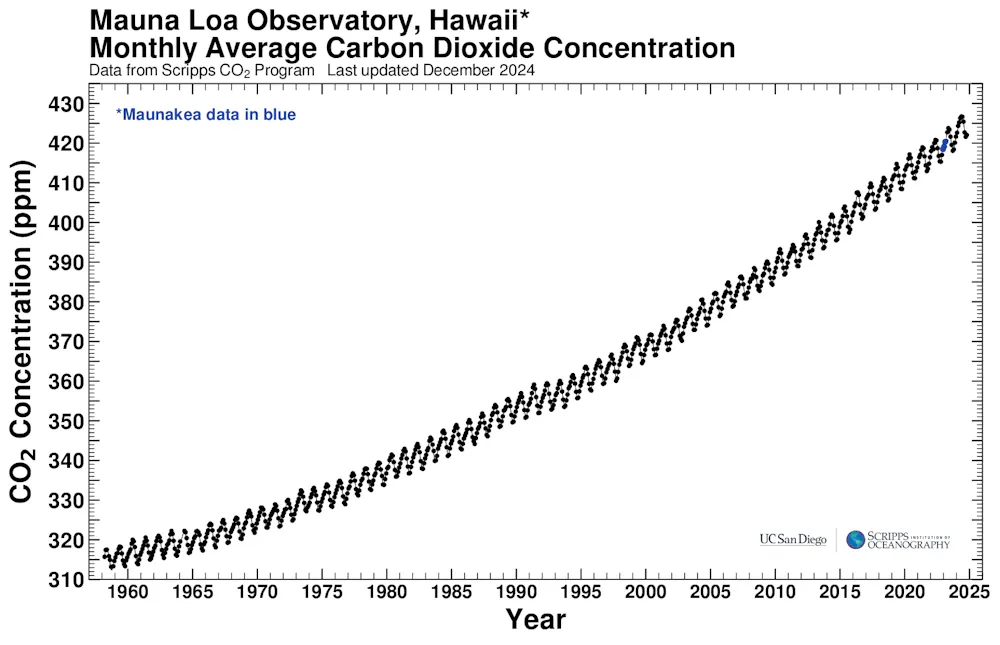
    Mauna Loa Observatory captured the reality of climate change. The US plans to shut it down
    Source: The Conversation (Au and NZ) – By Alex Sen Gupta, Associate Professor in Climate Science, UNSW Sydney Izabela23/Shutterstock The greenhouse effect was discovered more than 150 years ago and the first scientific paper linking carbon dioxide levels in the atmosphere with climate change was published in 1896. But it wasn’t until the 1950s that

    6 simple questions to tell if a ‘finfluencer’ is more flash than cash
    Source: The Conversation (Au and NZ) – By Dimitrios Salampasis, Associate Professor, Emerging Technologies and FinTech | FinTech Capability Lead, Swinburne University of Technology Oleg Golovnev/Shutterstock Images of flashy sports cars. Lavish lifestyle shots. These are just some of the red flags consumers should watch out for when they turn to social media for financial

    Grattan on Friday: how two once hot-button issues this week barely sparked media and political interest
    Source: The Conversation (Au and NZ) – By Michelle Grattan, Professorial Fellow, University of Canberra Political and news cycles often work in a certain and predictable way. Issues flare like bushfires, then rage for weeks or even months, until they are finally extinguished by action or fade by being overtaken by the next big thing.

    How many serious incidents are happening in Australian childcare centres? We don’t really know
    Source: The Conversation (Au and NZ) – By Erin Harper, Lecturer, School of Education and Social Work, University of Sydney Catherine Delahaye/ Getty Images This week, a Melbourne childcare worker was charged over alleged sexual abuse of young children in his care. Families are justifiably appalled and furious – with 1,200 children urged to be

    Too much vitamin B6 can be toxic. 3 symptoms to watch out for
    Source: The Conversation (Au and NZ) – By Nial Wheate, Professor, School of Natural Sciences, Macquarie University Selena3726/Shutterstock Side effects from taking too much vitamin B6 – including nerve damage – may be more widespread than we think, Australia’s medicines regulator says. In an ABC report earlier this week, a spokesperson for the Therapeutic Goods

    Too much vitamin B6 can be toxic. 3 symptoms to watch out for
    Source: The Conversation (Au and NZ) – By Nial Wheate, Professor, School of Natural Sciences, Macquarie University Selena3726/Shutterstock Side effects from taking too much vitamin B6 – including nerve damage – may be more widespread than we think, Australia’s medicines regulator says. In an ABC report earlier this week, a spokesperson for the Therapeutic Goods

    10 steps governments can take now to stamp out child sexual abuse in care settings
    Source: The Conversation (Au and NZ) – By Ben Mathews, Distinguished Professor, School of Law, Queensland University of Technology Recent cases of prolific alleged child sexual abuse in Melbourne and other Australian early childhood education and care settings have shocked even experienced people who work to prevent child sexual abuse. Parents are right to be

    Tears, trauma and unpaid work: why men in tinnies aren’t the only heroes during a flood disaster
    Source: The Conversation (Au and NZ) – By Rebecca McNaught, Research Fellow, Rural and Remote Health, University of Sydney Dan Peled/Getty Images When flooding strikes, our screens fill with scenes of devastated victims, and men performing heroic dinghy rescues in swollen rivers. But another story often goes untold: how women step in, and step up,

    The takeaway from the Venice Biennale saga: the art world faces deep and troubling structural inequality
    Source: The Conversation (Au and NZ) – By Grace McQuilten, Professor of Art and Associate Dean, Research and Innovation, School of Art, RMIT University Creative Australia’s decision earlier this year to rescind the selection of artist Khaled Sabsabi and curator Michael Dagostino as Australia’s 2026 representatives at the Venice Biennale sent shockwaves through the arts

    The Rainbow Warrior saga: 1. French state terrorism and NZ’s end of innocence
    COMMENTARY: By Eugene Doyle Immediately after killing Fernando Pereira and blowing up Greenpeace’s flagship the Rainbow Warrior in Auckland harbour, several of the French agents went on a ski holiday in New Zealand’s South Island to celebrate. Such was the contempt the French had for the Kiwis and the abilities of our police to pursue

    Does eating cheese before bed really give you nightmares? Here’s what the science says
    Source: The Conversation (Au and NZ) – By Charlotte Gupta, Senior Postdoctoral Research Fellow, Appleton Institute, HealthWise Research Group, CQUniversity Australia Phoenixns/Shutterstock, The Conversation, CC BY Have you heard people say eating cheese before bed will cause you to have vivid dreams or nightmares? It’s a relatively common idea. And this week, a new study

    Experiencing extreme weather and disasters is not enough to change views on climate action, study shows
    Source: The Conversation (Au and NZ) – By Omid Ghasemi, Research Associate in Behavioural Science at the Institute for Climate Risk & Response, UNSW Sydney STR / AFP via Getty Images Climate change has made extreme weather events such as bushfires and floods more frequent and more likely in recent years, and the trend is

    MIL OSI AnalysisEveningReport.nz

  • MIL-OSI USA: In Memoriam: Wes Hildreth, 1938-2025

    Source: US Geological Survey

    Wes receiving a Meritorious Service Award in 2004.

    Wes was born on August 17, 1938, in Newton, MA, and lived most of his early life in the Boston and San Francisco Bay areas. He studied at Harvard, where he majored in geology with a minor in government (BA, 1961). Receiving a Harvard Sheldon Fellowship, he traveled around the world alone in 1961-62. In 1963, he drove his Volkswagen van to Panama and back. After two years at Harvard graduate school in international affairs, he withdrew, alienated by bitterness over the Vietnam War. Between 1966 and 1970, Wes was a National Park Service naturalist at Muir Woods, Glacier Bay, Grand Canyon, Olympic, and Death Valley national parks.  

    Wes returned to graduate school at the University of California, Berkeley, in 1970, intending to map Precambrian stratigraphy in Death Valley. Instead, he met Prof. Ian Carmichael and soon found himself studying igneous petrology and volcanology in an exceptionally fruitful environment with talented fellow students, including his future wife, Gail Mahood (geology professor at Stanford University). That period was characterized by the advent of precise and comprehensive trace-element analyses, the transformation from wet chemistry to X-ray fluorescence, and from mineral picking to the then still-primitive electron microprobe. Wes’s 1977 PhD on the Bishop Tuff ignited a global interest in large-scale silicic volcanism and magmatism that continues undiminished. He joined the USGS in 1977, where he remained a research leader for his whole career.  

    The many outstanding features of Wes’s productive career reflect his intertwined interests in mapping volcanoes and understanding large-scale magmatic processes. He combined the two (with a sometimes-intimidating gravitas) through numerous intensive, field-focused studies mostly in the U.S. and Chile. For more than 45 years, he did so with Judy Fierstein, an indefatigable field collaborator and the artistic talent behind their many geologic maps. Their work made heavy use of USGS analytical facilities and was made possible by the high-quality geochronology provided by the USGS argon dating laboratory.  

    Several facets of Wes’s research, often made with U.S. and international collaborators, stand out:  

    • Wes’s petrologic study of the rhyolitic Bishop Tuff, pioneering in its detail and comprehensiveness, challenged models for generating wide ranges in trace-element abundances in the erupted products. After what Wes himself referred to as “…the wild-goose chase of Soret effects in magma chambers,” his subsequent comparisons with other ignimbrites and related plutonic systems and the efforts of many other workers led to what has become widely known as the “mush model,” which is now a central paradigm for the generation of silicic magmas.  
    • Turning to the ultimate driver of silicic magmatism, Wes recognized the fundamentally basaltic nature of most continental crustal magmatism and developed enduring concepts for what are now termed trans-crustal magmatic systems. His original 1981 concepts were further developed in 1988 to outline (using Chilean examples) the roles of crustal thickness and deep crustal processes (the MASH model) in the generation of arc magmas.  
    • At the Yellowstone Plateau volcanic field, Wes and his colleagues were the first to document the contrast between the narrow ∂18O range in the ignimbrites and the much lighter isotopic values of the earliest post-collapse lavas. His interpretation, that meteoric water was involved, initiated much research on the role of hydrothermally altered crust in the origins of low-d18O rhyolites and influenced the understanding of upper crustal silicic magma bodies.  
    • Studies of the Valley of Ten Thousand Smokes in Alaska yielded fundamental insights into how a complicated volcanic plumbing system beneath Novarupta and Katmai caldera led to a remarkable diversity of magmas erupting in the 1912 eruption.  
    • Wes’s contribution to the 1986 geologic map of the island of Pantelleria in Italy stands as the most detailed study of a peralkaline rhyolite volcanic center. It remains an important contribution to understanding the physical volcanology of low-viscosity felsic magmas and their associated calderas, as well as the chronology of volcanic ashes across the Mediterranean.  
    • Late in his career Wes turned to his love of basic field geology and stratigraphy and published compelling studies on the landscape evolution of eastern Sierra Nevada, including the geology and geomorphology of the Long Valley Caldera region, the evolution of the Owens River gorge, and the nature and timing of development of the eastern Sierra Nevada escarpment.  
    • A major legacy of Wes’ productive career at the USGS are the detailed geologic maps and descriptions of volcanic histories for Mount Adams, Mount Baker, Three Sisters, and Simcoe Mountains in the Cascade Range of Washington and Oregon; Mammoth Mountain and Long Valley Caldera in eastern California; Katmai in Alaska; Quizapu-Descabezado and Laguna del Maule in Chile, and Pantelleria in Italy. In Wes’s words: “I’ve emphasized on-foot authentic geologic mapping of blank spots on the map, largely in wilderness or otherwise uninhabited areas.”  

    Wes received wide recognition and awards during his career, including Fellow of the Geological Society of America (1985), Fellow (1995) and Bowen Award (1985) from the American Geophysical Union, Thorarinsson Medalist of the International Association of Volcanology and Chemistry of the Earth’s Interior (2004), and a Meritorious Service Award from the Department of the Interior (2004). Wes and Judy Fierstein jointly received the 2019 Florence Bascom Mapping Award from the Geological Society of America. In response to the award, Wes noted that it “celebrated what I love doing best.”  

    Wes was an avid reader and maintained a broad knowledge of global affairs, which was seeded by his travels through the Harvard Sheldon Fellowship. To colleagues, he offered three-thousand-year perspectives on the roots of conflicts in the Middle East and Europe. Before starting fieldwork each day, he scrutinized and read aloud portions of the daily academic commentary on current domestic affairs.  

    Wes was also a lifelong runner. He ran cross-country for the Harvard Crimson, and he finished in 29th place in the 1960 Boston Marathon. While traveling the world on the Sheldon Fellowship, he spent two months training at an immersion running camp in Australia. Between 1955 and 1972, Wes competed in the Dipsea Race for a grueling 12 km over the flank of Mt. Tamalpais, just north of San Francisco. On June 6, 2025, just two weeks before his death, Wes was inducted into the Dipsea Foundation Hall of Fame. In his acceptance speech, he said, “Distance running can be as much a lifestyle as a competitive sport. At age 87, I still hit the road for an hour every day – 365 days – slower every year, but the mentality and fitness support my geological day job,” and “there’s a spiritual component – the freedom of the hills – the simple gift of communion with the landscape.”  

    Wes was an outstanding geologist who had broad interests, including aspects of regional geology well outside of his recognized specialties in volcanology and igneous petrology. His insights and contributions have been of the highest quality and promise to last over time. At the time of his death, Wes was still carrying out work in the Sierra Nevada, the Mono Basin, the Cima volcanic field (all in California), and the Mina volcanics in western Nevada near where he died. His body of work, meticulously detailed, authoritatively stated, and contained within beautifully written papers, remains as an enduring memorial to his creativity, knowledge, and influence.  

    Contributed by: Charlie Bacon, Andy Calvert, Judy Fierstein, Shaul Hurwitz, Jake Lowenstern, Tom Sisson (all USGS Volcano Science Center), Gail Mahood (Stanford University), and Colin Wilson (Victoria University, NZ) 

    MIL OSI USA News

  • MIL-OSI Australia: ARENA backs Hunter Valley renewable hydrogen project with $432 million

    Source: Ministers for the Department of Industry, Innovation and Science

    Overview

    • Category

      News

    • Date

      04 July 2025

    • Classification

      Hydrogen energy

    Orica’s Hunter Valley Hydrogen Hub is set to receive up to $432 million in grant funding as the second recipient of ARENA’s Hydrogen Headstart Program.

    Orica’s Hunter Valley Hydrogen Hub (HVHH) will produce renewable hydrogen using a 50-megawatt electrolyser powered by renewable electricity. This hydrogen will replace natural gas in Orica’s ammonia production process, helping to reduce carbon emissions.

    ARENA CEO Darren Miller said that hydrogen has an important role to play in decarbonising heavy industry, particularly where electrification isn’t possible or where other alternatives are limited or don’t exist.

    “Renewable hydrogen is an important decarbonisation lever for applications like ammonia production where hydrogen has traditionally been produced with fossil fuels.”

    “By replacing natural gas-derived hydrogen with clean, renewable alternatives, projects like Orica’s are helping to decarbonise core industrial processes while preserving domestic manufacturing and unlocking new export opportunities,” said Mr Miller.

    “ARENA’s Hydrogen Headstart program is designed to fast-track Australia’s renewable hydrogen industry by supporting large-scale projects that are finding ways to reduce emissions, strengthen industrial competitiveness and position the nation as a global leader in clean energy exports. Orica’s project is a great example of what’s possible.”

    The project represents a major step in decarbonising Orica’s existing Kooragang Island Ammonia Manufacturing Facility and producing low-carbon ammonia and ammonium nitrate for domestic use across mining, agriculture and industrial sectors.

    As part of the funding process, Orica must now work with ARENA to satisfy a number of conditions and demonstrate its ability to meet a range of contractual milestones before the funding is released. Funding under this program is paid based on actual production volumes over a 10-year operating period.

    Orica’s Managing Director and Chief Executive Officer Sanjeev Gandhi said: “We’re grateful for this crucial support, which brings us closer to realising the Hunter Valley Hydrogen Hub and advancing the decarbonisation of our Kooragang Island facility – a site we’ve proudly operated for over fifty years. We look forward to continuing our collaboration with ARENA and other Federal and State government agencies to support the transition of Orica’s Kooragang Island manufacturing facility and help shape a cleaner, more resilient future for the Hunter region.”

    This project follows the announcement of the first recipient of Hydrogen Headstart, with $814 million allocated to Copenhagen Infrastructure Partners’ (CIP) 1,500 MW Murchison Green Hydrogen Project in Western Australia. With both projects now announced, Hydrogen Headstart Round 1 has now concluded.

    To date, ARENA has allocated $370 million to 65 renewable hydrogen projects from early-stage research to deployment.

    To find out more about Orica’s project, visit: Hunter Valley Hydrogen Project | Home

    Consultation for Round 2 of Hydrogen Headstart is now open. For more information, visit Round 2 funding page.

    ARENA media contact:

    media@arena.gov.au

    Download this media release (PDF 151KB)

    MIL OSI News

  • MIL-OSI New Zealand: Mild Start to Winter, Wetter Than Usual for Many Regions – Earth Sciences New Zealand’s (formerly NIWA) latest monthly climate summary for June 2025

    Source: Earth Sciences New Zealand

    Winter began on a mild and soggy note across much of New Zealand, according to Earth Sciences New Zealand’s (formerly NIWA) latest monthly climate summary for June 2025.
    Temperatures were above or well above average for most of the country, especially across the North Island, Tasman, Otago, eastern Southland, and Fiordland, says Earth Sciences New Zealand climate scientist Gregor Macara. “The nationwide average temperature of 9.4°C was 0.7°C above the June normal, making it the 16th-warmest June on record since 1909.”
    Rainfall was well above normal in many regions including Auckland, Bay of Plenty, Waikato, Taranaki, Wellington, and much of the South Island. In contrast, dry conditions persisted in northern Northland, eastern Gisborne, Hawke’s Bay, and Wairarapa.
    Soil moisture levels reflected the rainfall pattern, says Macara. “Drier-than-normal soils remained in Hawke’s Bay, while soils were wetter than normal across much of eastern South Island, from Marlborough to Dunedin.”
    The highest temperature in June was 23.2°C at Whakatu in the Hawke’s Bay, while Aoraki Mt Cook Airport recorded the lowest temperature of -12.9°C. Milford Sound took the title for the highest one-day rainfall in June with 151 mm on 25 June (that’s more than halfway up a Redband gumboot), while another regular in climate summaries, east coast headland Cape Turnagain, between Hawke’s Bay and Cook Strait, recorded the strongest wind gust at 191 km/h on the 1st of June.
    Among the main centres, Auckland was the warmest, Tauranga the wettest and sunniest, Christchurch the coolest and driest, and Dunedin the least sunny.
    The sunniest four locations in 2025 so far are Taranaki, Bay of Plenty, Auckland, and wider Nelson.
    On 1 July, GNS and NIWA merged to become Earth Sciences New Zealand. 
    More detailed information for regions, cities and monitoring stations is available at https://niwa.co.nz/climate-and-weather/monthly/climate-summary-june-2025

    MIL OSI New Zealand News

  • MIL-OSI Russia: Who Reads Russian Literature in China: From “Veteran Classics Lovers” to “Little Fairytale Lovers”

    Translation. Region: Russian Federal

    Source: People’s Republic of China in Russian –

    Source: People’s Republic of China – State Council News

    BEIJING, July 4 (Xinhua) — At the recently concluded 31st Beijing International Book Fair held in the Chinese capital, the Russian national stand showcased about 800 of the best new releases from the Russian publishing market, covering various literary genres. Classic works of Russian literature that have had a profound impact on Chinese society, such as “War and Peace,” “Crime and Punishment,” and “How the Steel Was Tempered,” are now creating a new reading landscape for the Chinese audience along with works by contemporary Russian authors.

    THE ETERNAL RELEVANCE OF CLASSICS

    Over the past 100-odd years, a huge number of classic works of Russian literature have been translated and introduced to China. The works of literary titans such as Leo Tolstoy, Fyodor Dostoevsky, Alexander Pushkin, Anton Chekhov have had a lasting and profound influence on Chinese literary circles. Classic works such as How the Steel Was Tempered, War and Peace, and The Seagull were once widely known in China, but their mass recognition has noticeably weakened in our days.

    In Chinese literary studies, the prevailing opinion is that the end of the era of total reception of Russian literature in modern China does not indicate its decline, but rather a transition to a phase of deep artistic reflection, where the aesthetic value of the text dominates over utilitarian functions.

    Speaking about the main readers of Russian classical literature in today’s China, the winner of the international translation prize “Read Russia”, professor of the Capital Normal University Liu Wenfei in an interview with a correspondent of the Xinhua news agency noted that teachers and students of the humanities and Russian language departments are the most devoted readers of Russian classics in China.

    In addition, older Chinese writers and literary scholars have a particular fondness for the realism of the 19th-century “golden age,” while younger poets and prose writers have a clear preference for the modernist literature of the Silver Age—the works of Marina Tsvetaeva, Anna Akhmatova, and other outstanding authors. “It is unlikely that you will find a poet in China today who is not familiar with their legacy,” Liu Wenfei said. According to his observations, these groups form the main readership of Russian classics in the country.

    “But the readership of Russian classics in China is by no means limited to the groups mentioned. Otherwise, it would be difficult to explain the phenomenon of multiple reprints of translations – it is enough to mention that Leo Tolstoy’s novel Anna Karenina has been translated into Chinese at least fifty times, while the works of Fyodor Dostoevsky are constantly present in publishing plans,” emphasized Liu Wenfei, a professor of Russian studies who has been involved in literary translation since the early 1980s.

    THE FLOURISH OF RUSSIAN LITNISHES

    Modern Russian literature is also translated quite fully in China, although classic works such as Tolstoy’s War and Peace, whose reader demand consistently exceeds that of 21st century authors, retain absolute dominance in book retail.

    Contemporary Russian literature is in a phase of dynamic development, which excludes premature final assessments. This context is due to the transformation of reading practices, says Wang Xiaoyu, a junior research fellow at the Institute of World Literature of the Chinese Academy of Social Sciences.

    However, according to her, compared to other languages, the spread of modern Russian literature in China should be recognized as significant – based on the volume of translations into Chinese and the awards received in recent years.

    For example, Renmin Wenxue Chubanshe Publishing House launched the project “Mutual Translations of Chinese and Foreign Authors on a Single Theme”. The Chinese magazine “October” regularly publishes works by contemporary Russian writers first. In 2022, Professor Chen Fang from Renmin University of China received the Lu Xun Prize in the Best Literary Translation category for her translation work on Guzel Yakhina’s novel “My Children”, which contributes to the promotion of contemporary Russian literature in China.

    Thus, Chinese youth born after the 1990s have begun to pay more attention to the works of contemporary Russian authors. As demonstrated by the activities of Russian language clubs in Beijing universities in recent years, Chinese youth interest in contemporary Russian literature has evolved from “exoticization” to “analytical discourse” – as evidenced by the academic debate on postmodern narratology in the novels of Viktor Pelevin. And the number of participants in the “Russian-Language Literature” group on the Douban review platform increased by 46 percent in the 2023 annual report.

    DETLIT-REVANCE

    A significant place in the exposition of the Russian stand at the 31st PMCF was given to children’s books, which clearly demonstrates the desire to strengthen the position of Russian children’s publishers in close cooperation with Chinese partners.

    Let us recall that the 1950s were the “golden age” for the introduction and translation of Russian children’s literature in China. Such outstanding works as Pushkin’s fairy tale poem “The Tale of the Fisherman and the Fish”, Bianki’s “Forest Newspaper”, Gaidar’s “Distant Countries” and “Chuk and Gek”, and many other wonderful examples of Russian children’s literature were translated and published in China.

    However, in recent decades, attention to contemporary Russian children’s literature has noticeably weakened. “This is a serious and unacceptable omission,” says Zhu Ziqiang, director of the Xingyuan Institute at the Ocean University of China.

    This omission is now being actively corrected. In order to introduce outstanding Russian children’s books of recent decades to Chinese readers on a large scale, the Chinese publishing house “Jely” initiated and released the series “Golden Russian Children’s Books”. According to information, as of the end of June 2024, 11 titles with a total circulation of 147 thousand copies have been published within this series, including novels, fairy tales, prose and other works.

    These books have firmly gained recognition in the Chinese children’s and adolescent literature market. Some of them, including “Visiting the Polar Bear” by Oleg Bundur, “Theo, the Theater Captain” by Nina Dashevskaya, were included in the reading list recommended by teachers of a Chinese school for students. “Theo teaches us that even a small role is important. Now I also want to create a puppet theater in the classroom – like Theo!” wrote an 11-year-old schoolboy surnamed Li from Beijing in a review of the book he read “Theo, the Theater Captain”, which became one of the “Top 10 Best Children’s Books of 2023” at the “Reading Month” festival in the city of Shenzhen, Guangdong Province /South China/.

    At the Shanghai International Children’s Literature Fair held in November 2024, the China Literary Authors’ Society (CLAS) and the Association of Writers’ and Publishers’ Unions of Russia agreed to cooperate in acquiring numerous rights to Russian children’s publications.

    According to KLAO, as of June 2024, over the past decade, Chinese publishers have translated more than 700 books from Russia, and about 400 Chinese books have been translated in Russia. Literary exchange between the two countries is gradually moving from “one-way borrowing” to “two-way exchange”. In the future, with the deep introduction of digital technology and the involvement of young people, Russian literature will continue to write new pages in China’s cultural landscape.

    MIL OSI Russia News

  • MIL-OSI Australia: On Country and in demand: Tackling remote teacher shortages

    Source:

    04 July 2025

    Sports day on Country.

    When a dry creek bed is your classroom, science connects to the land, and sports day kicks off amid a cloud of red dust, you know you’re on Country out bush.

    For a group of UniSA student teachers, the opportunity to teach in remote South Australia offers more than cultural immersion – it’s a chance to connect with community, embrace new ways of learning, and potentially spark a career in Aboriginal education.

    This National NAIDOC Week, UniSA is highlighting its remote teaching placements in the Anangu Lands, spanning Anangu Pitjantjatjara Yankunytjatjara (APY) and Yalata Lands, aiming to inspire future teachers, while addressing workforce shortages in regional and remote Australia.

    The timing is significant, with the State’s Aboriginal Education Strategy, Impact Report showing that teaching support in the APY Lands has helped deliver the highest average preschool attendance in five years.

    Already, four of last year’s eight placement students have returned to continue teaching in the APY Lands while completing their degrees.

    With more than 30 years’ experience in Aboriginal education, UniSA’s Associate Director: Regional Engagement, Dr Sam Osborne, says encouraging students to explore remote teaching placements is vital to building the remote workforce.

    “When there’s a teacher shortage in Australia, we know there’s a desperate teacher shortage in rural and remote Australia,” Dr Osborne says.

    “These areas can seem daunting – they’re unfamiliar, far from family and friends, and may lack creature comforts – but they also offer incredibly rewarding experiences in close-knit and supportive communities.

    “Our placement program provides third-year education students with a unique opportunity to spend six weeks living and teaching in Anangu communities, alongside the world’s oldest continuing culture.

    “They live, learn and teach between the classroom, and on Country. Whether it’s working with Elders to link native plants with science, teaching kindy kids colours in Pitjantjatjara and Yankunytjatjara, or making maths fun by tallying bird species observed on Country.

    “Importantly, students are supported by the community as they learn their craft in a cultural and language context that few Australians ever encounter.”

    The Anangu schools’ partnership includes 10 schools spanning the far north and west of South Australia, including The APY Lands, Maralinga Tjarutja, and Yalata with around 200 local and non-local educators working in these schools.

    UniSA student teachers and team connecting at Yulara.

    Sophia, a third-year UniSA education student who recently returned from a six-week placement in Pipalyatjara Anangu School, says her stay was transformative.

    “One of the first things you notice is the scale of the Australian outback. From the desert plains to endless skies over the mountain ranges, you know you’re about to experience something completely different,” Sophia says.

    “Teaching at an Anangu school was so unique, and it very strongly connected to culture.

    “We often took learning outdoors – using hopscotch or other made-up games to teach language and numbers – which the kids loved because they’re such outdoor people.

    “There were also amazing opportunities to learn from people in the community. On family days, we’d sit with an Elder to hear stories of their history, their travels, or more practical things like how to mix bush medicines or make spears.

    “The local people are beautiful – gentle, kind and insightful, and they have a quiet confidence that really stayed with me.

    “This placement was unlike anything I’ve ever done. I felt welcomed in the community and I can’t wait to return – hopefully next year.”

    The program includes a three-day language and culture orientation run by Iwiri Aboriginal corporation, a mid-placement visit to the UniSA site at Ernabella, and a post-placement debrief at Uluru. Students are supported by experienced staff and take part in on-Country experiences and excursions.

    “This program provides high-quality support for preservice teachers who want to challenge themselves personally and professionally in a new context,” Dr Osborne says.

    “They are developing far more than classroom skills – they’re building cultural understanding, lasting connections, and for many, a sense of purpose that could shape their careers.”

    In partnership with the SA Department for Education, UniSA is also running a two-week field trip for students interested in teaching in remote areas.

    …………………………………………………………………………………………………………………………

    Contact for interview: Dr Sam Osborne E: Sam.Osborne@unisa.edu.au
    Media contact: Annabel Mansfield M: +61 479 182 489 E: Annabel.Mansfield@unisa.edu.au

    MIL OSI News

  • MIL-OSI USA News: Fact Sheet: President Donald J. Trump Establishes Make America Beautiful Again Commission

    Source: US Whitehouse

    MAKING AMERICA BEAUTIFUL AGAIN: Today, President Donald J. Trump signed an Executive Order establishing the Make America Beautiful Again (MABA) Commission to conserve America’s lands and waters, cut red tape, and drive conservation and economic growth.

    • The MABA Commission will be chaired by Secretary of the Interior Doug Burgum and comprised of members of President Trump’s Administration.
    • Guided by our Nation’s rich history, the MABA Commission will work to expand access to recreation for outdoorsmen, hunters, anglers, hikers, bikers, climbers, skiers, runners, and all Americans seeking to spend time in nature.
    • The MABA Commission is tasked with expanding access to public lands and waters for recreation and incentivizing voluntary conservation efforts.
    • Using gold-standard science, the MABA Commission will promote active forest management and responsible stewardship of our public lands, while reducing bureaucratic delays that hinder effective environmental management and put our forests and rural communities at risk.

    EXPANDING ACCESS TO PUBLIC LANDS: President Trump wants to preserve America’s natural beauty and expand outdoor recreation for future generations.

    • As the Roosevelt Arch at Yellowstone National Park states, America’s public lands are “for the benefit and enjoyment of the people.” Therefore, the MABA Commission will work to expand access to America’s natural wonders for the enjoyment of the American people.
    • The outdoor recreation economy creates $1.2 trillion in economic output and supports 5 million jobs.
    • The Biden Administration unnecessarily restricted outdoorsmen’s access to public lands and deprived them of the ability to responsibly hunt and fish in certain areas.
    • Years of mismanagement have unnecessarily reduced public access to and enjoyment of outdoor recreational areas

    CONSERVING AMERICAN TREASURES: The MABA Commission will build on the legacy of conservative conservationists like President Teddy Roosevelt and protect our Nation’s natural treasures.

    • During President Trump’s first term in office, his Administration recovered more endangered or threatened species than any other administration in its first term.
    • President Trump signed the Great American Outdoors Act during his first term—the largest investment in America’s national parks and public lands in history and the most significant development in conservation policy since Teddy Roosevelt.
    • During President Trump’s first term, his Administration designated 1.3 million new acres of wilderness, added 1,645 miles of new trails to the National Recreational Trails System, and expanded hunting and fishing opportunities across more than 2.3 million acres of land.
    • President Trump has worked to protect American industries while maintaining standards that allow Americans to have among the cleanest air and water in the world.

    MIL OSI USA News

  • MIL-OSI USA: We Have Only Just Begun

    US Senate News:

    Source: United States Senator for Wisconsin Ron Johnson

    On July 1, after the longest vote-a-rama in Senate history, the Senate passed the One Big Beautiful Bill Act by a vote of 51-50. Here is why I voted yes. 

    With President Biden in the White House and majorities in both chambers of Congress, Democrats had every opportunity to repeal the Tax Cuts and Jobs Act and increase taxes on “the rich.” They did not do so. Instead of returning to a reasonable pre-pandemic level of spending and deficits, once the economy recovered, they incurred deficits averaging $1.9 trillion over four years. If that wasn’t bad enough, President Biden also left office with open borders and raging wars.  

    By passing the One Big Beautiful Bill Act, we have avoided a $4 trillion automatic tax increase and a default on our debt. Due to the enormous messes Biden and congressional Democrats left us, we are also providing additional funding for border security and defense.   

    While the bill is a step forward, we have only just begun the difficult task of reducing spending, and there is still a long way to go. A rigorous effort will soon be announced to review every program and every line of the federal budget, looking for ways to reduce spending to a reasonable pre-pandemic level. I look forward to being fully involved in that effort to put America on a path to fiscal sustainability.

    As a follow up to my May 21 Permanent Subcommittee on Investigations’ hearing entitled, The Corruption of Science and Federal Health Agencies: How Health Officials Downplayed and Hid Myocarditis and Other Adverse Events Associated with the COVID-19 Vaccines, I asked witnesses to “send me the science” to back up their hearing testimony. 

    We kept the record open until June 5, during which time Majority’s witnesses submitted hundreds of documents — including peer-reviewed studies — and thousands of citations about COVID-19 vaccine adverse events to accompany their testimonies. These records provide substantial support for the witnesses’ claims regarding the serious health risks associated with the COVID-19 vaccines. 

    At the hearing we released a Majority staff interim report and over 2,400 pages of records detailing the failure of Biden health officials to properly warn the public of the risks of myocarditis and related heart inflammation conditions following mRNA COVID-19 vaccination. The hearing featured testimony from Dr. Peter McCullough, Dr. Jordan Vaughn, Dr. James Thorp, Dr. Joel Wallskog, and Mr. Aaron Siri, all of whom were invited  to speak about COVID-19 vaccine adverse events.

    Hawaii Governor Josh Green, the Minority’s witness at the hearing, submitted 33 pages of testimony in his written statement for the hearing. He then submitted 19 links to studies and articles to support his claims about the safety and efficacy of the COVID-19 vaccines one week after the hearing record officially closed.   

    I allowed Governor Green’s late submission to be included in the official record so that the public can compare the evidence that the governor presented in support of the COVID-19 vaccines to the multitude of documentation indicating the clear health risks associated with the injections.

    Documents and citations that the Majority’s witnesses entered into the record can be viewed here. 

    Governor Green’s submission to the record can be viewed here.

    Congratulations to Class 171 of the Joseph Project. These seven participants spent the week learning how to prepare for opportunities to put them on a successful path in the job market.

    We connect graduates with employers who are ready to hire and help with the job application and interview process. Once employment is secured, the Joseph Project provides transportation (free for one month) to participants to help establish good work habits. 

    While the U.S. Coast Guard Academy is the only service academy that does not require a congressional nomination, my staff stays abreast of the academic and service opportunities provided by this institution for young people in Wisconsin. 

    The other service academies — U.S. Military Academy (West Point), U.S. Naval Academy, U.S. Air Force Academy, and U.S. Merchant Marine Academy — require a congressional nomination in addition to your application.

    Wisconsin students should be aware the deadline for nomination applications is September 19, 2025. Visit my website for more information. 

    The Senate passed a resolution I introduced designating July as National Sarcoma Awareness Month. The resolution raises awareness of sarcoma, a form of cancer, and honors the life of Hartford’s Melissa Locke and the many other Americans that this disease affects.

    I am pleased that my resolution passed the Senate in honor of Melissa Locke and the countless other Americans who have struggled with this life-threatening disease. I hope we can continue to increase awareness of this complex form of cancer that is diagnosed thousands of times each year.

    My staff is part of the Capitol Brew Crew softball team which plays against other Congressional offices. They are 4-2 overall and the last game of the season is against the team from the Office of Sen. Tammy Baldwin on July 17. Stay tuned!

    MIL OSI USA News

  • MIL-Evening Report: Lost in space: MethaneSat failed just as NZ was to take over mission control – here’s what we need to know now

    Source: The Conversation (Au and NZ) – By Nicholas Rattenbury, Associate Professor in Physics, University of Auckland, Waipapa Taumata Rau

    Environmental Defense Fund, CC BY-SA

    This week’s announcement of the loss of a methane-detecting satellite, just days before New Zealand was meant to take over mission control, is a blow to the country’s space research sector.

    New Zealand invested NZ$29 million in the MethaneSat mission, built and operated by the US nonprofit Environmental Defense Fund, with a goal of growing the nation’s space industry.

    This would have been accomplished through gaining experience in operating a satellite at the University of Auckland’s Te Pūnaha Ātea Space Institute, and through research led by a team at Earth Sciences New Zealand to use the satellite to measure agricultural sources of methane.

    But on June 20, the satellite lost power and contact with the ground, and appears to be irrecoverable. This is disappointing for everyone on the mission development and operations teams.

    Having been in that position personally when my team lost a miniature satellite after a successful launch, I sympathise. But the benefits New Zealand hoped to gain from the MethaneSat mission will now be limited, at best, and questions need to be asked to learn from the failure.

    Early issues and delays

    The MethaneSat satellite launched in March 2024. New Zealand was meant to take over mission control by the end of last year, but problems with the satellite’s thrusters meant this was delayed to June this year.

    The satellite’s main mission was to detect methane leaks from oil and gas production, but it was also used to track methane sources from agriculture.

    New Zealand was not likely involved in the chain of events leading to the under-performance and delays, nor the eventual loss of the satellite. But as investors in the project, we are entitled to an explanation.

    That a spacecraft fails in orbit is not surprising. The space environment is unforgiving. But there is a question about whether New Zealand should have taken a closer look “under the hood” before investing in MethaneSat.

    The principle of caveat emptor (buyer beware) applies to spacecraft as much as to purchasing a car. While we were not involved in the MethaneSat mission design, satellite construction and testing, we were certainly entitled to relevant information to make a fully informed decision on whether or not to invest.

    Questions remain. During the MethaneSat post-mortem, one could reasonably ask to what extent experts were consulted during the decision-making process to invest in the satellite mission, and who was applying due diligence on behalf of New Zealand taxpayers.

    When earlier issues emerged, to what extent should New Zealand taxpayers, as investors, have been happy with explanations veiled in reported obligations of confidentiality or commercial sensitivity?

    Lessons for future space missions

    New Zealand has scientists and engineers working at publicly-funded universities who can contribute to future decision-making processes for the next taxpayer-funded space mission.

    New Zealand scientists working in the space sector do so knowing full well that the nation’s capacity to fund space missions is limited. Apart from being hard, frustrating, rewarding and unforgiving, working in space is expensive – and there are often delays and setbacks.

    Some of us working in New Zealand space research have been trying to work through how best to advise government on where to spend limited public funding. This will not be an easy task.

    The Committee on Space Research (COSPAR) is an international organisation established in 1958 to promote global cooperation in space research. It provides a forum for the exchange of scientific results, sets standards for space data sharing, and advises on space policy and planetary protection.

    New Zealand participates in COSPAR as a national member and its committee comprises space science researchers from across the country. As chair of the New Zealand COSPAR committee, I sent a letter to Minister of Space Judith Collins last year offering our services:

    I believe closer collaboration between COSPAR’s initiatives and New Zealand’s aerospace goals would enhance our mutual objectives and strengthen our contribution to the global aerospace community. Specifically, we are uniquely placed to advise on the range of scientific endeavours currently underway […] that could be at the heart of a national space mission.

    Close scrutiny needed

    New Zealand has more talent and good research ideas than funding to support them. So there has to be a way of choosing between competing ideas.

    Crucially, that selection process has to be fully transparent so the investors – New Zealand taxpayers – can have confidence their investment is being safely bestowed.

    My vision is for a funding process for future space missions that addresses scientific goals relevant to New Zealand and takes advantage of the talent we have.
    There will be applicants who miss out, as there always are in any competitive process. But I would like to see support given to unsuccessful applicants to improve their chances in subsequent attempts.

    I work towards fostering the New Zealand space sector, especially in the areas where we can push back the boundaries of human knowledge via the safe, peaceful and sustainable use of space. This is the excitement I see reflected in the students I teach.

    For a nation with ambitions to utilise space for science, technological development and commercial gain, we also have to acknowledge that failure is a part of that journey. To make the best use of our very limited resources, we must examine our processes in the fullest light of disclosure – regardless of whether the failure was technological or in our decision-making processes.

    Nicholas James Rattenbury works for The University of Auckland. He has received funding from the Ministry of Business, Innovation and Employment (MBIE) and Royal Society Te Apārangi. He is affiliated with Te Pūnaha Ātea Space Institute. He is the current Chair of the New Zealand Committee of COSPAR.

    None of the viewpoints expressed in this article necessarily reflect those held by any of the abovementioned organisations or any other organisation or entity mentioned in the article.

    ref. Lost in space: MethaneSat failed just as NZ was to take over mission control – here’s what we need to know now – https://theconversation.com/lost-in-space-methanesat-failed-just-as-nz-was-to-take-over-mission-control-heres-what-we-need-to-know-now-260407

    MIL OSI AnalysisEveningReport.nz

  • MIL-OSI USA: NEW INFO: July 4th Cookouts Will Cost More Amid Trump Tariffs

    US Senate News:

    Source: United States Senator for Washington Maria Cantwell
    07.03.25
    NEW INFO: July 4th Cookouts Will Cost More Amid Trump Tariffs
    Domestic beer up 13%; popular propane grill up $30, ground beef and ice cream at their highest recorded prices ever
    EDMONDS, WA – President Trump’s unpredictable tariff policy and increasing economic uncertainty have driven up the cost of Independence Day cookout essentials, according to a new analysis by The Joint Economic Committee – Minority.
    Since Trump’s April 1 “Liberation Day” announcement, a six-pack of Miller Lite or Coors Light costs 13% more at Wal-Mart. The cost of the most popular propane grill on Amazon has risen $30. Ground beef and ice cream reached their highest prices since data first became available in the 1980s. All told, the total cost of a grocery store trip for a cookout increased by a 12.7% annualized rate since “Liberation Day.”
    “Enjoying July 4th is going to cost families more because of President Trump’s on-again, off-again tariffs,” said U.S. Senator Maria Cantwell (D-WA), ranking member of the Senate Committee on Commerce, Science, and Transportation and senior member of the Senate Finance Committee. “These rising prices show that a tariffs-first policy puts consumers last.”
    For the past five months, President Trump has been sowing economic chaos across the country with unpredictable and ever-changing tariff announcements. His back-and-forth announcements and actions have whipsawed American businesses and consumers, as well as close neighbors and allies.
    Sen. Cantwell has been the leading Senate voice against a tariffs-first trade policy.
    In April, Sen. Cantwell introduced the bipartisan Trade Review Act of 2025 to reaffirm Congress’ key role in setting and approving U.S. trade policy, and reestablish limits on the president’s ability to impose unilateral tariffs. Her bill has since picked up 12 additional cosponsors – an equal mix of Republicans and Democrats – and been endorsed by multiple major U.S. business organizations, including the National Retail Federation, which is the largest retail trade association in the world. House members also introduced a bipartisan companion bill.
    On April 16, Sen. Cantwell joined nine local business owners and leaders at the Port of Seattle to push back against the Trump administration’s chaotic tariffs-first trade policy. On May 29, she gathered stakeholders at the Port of Seattle again to respond to the chaos caused by President Donald Trump scrambling to keep his draconian tariffs in place amid court challenges.
    “American businesses need a rules-based trade system. That means American families would have the certainty, not chaos and not higher prices. We know this: That when you start trade wars, usually that means you end up closing markets,” Sen. Cantwell said in at the May 29 press conference.
    In Washington state, two out of every five jobs are tied to trade and trade-related industries. More information about how those tariffs will affect consumers and businesses in the State of Washington can be found HERE. 

    MIL OSI USA News

  • MIL-OSI USA: Cantwell Statement Ahead of Trump Signing Disastrous Budget Bill

    US Senate News:

    Source: United States Senator for Washington Maria Cantwell
    07.03.25
    Cantwell Statement Ahead of Trump Signing Disastrous Budget Bill
    EDMONDS, WA – Today, the United States House of Representatives passed a budget bill 218 to 214; President Donald Trump has indicated his intent to sign the bill into law tomorrow morning, on the Fourth of July. U.S. Senator Maria Cantwell (D-WA), ranking member of the Senate Committee on Commerce, Science, and Transportation and senior member of the Senate Finance Committee, issued the following statement:
    “With the House green lighting President Trump’s goal of taking away health care access and food security for millions, many Americans are going to suffer, and many working families will see their costs go up. 
    “This law is the largest cut to Medicaid in history, which will raise costs for everyone’s health insurance.  Hospitals, local elected officials from both parties, and everyday Americans all begged Republicans to make changes, but they refused. They stuck to their cruel plan to kick 17 million Americans off of their health insurance and take SNAP benefits away from millions of families — all so that billionaires and corporations could get another tax cut.” 
    Sunday night, Sen. Cantwell delivered a speech on the Senate floor to highlight how various provisions included in the bill sell out the American people. That speech can be watched in full HERE; a transcript is HERE.

    MIL OSI USA News

  • MIL-OSI New Zealand: Backing innovation to grow King salmon exports

    Source: New Zealand Government

    The Government is backing innovation to grow New Zealand’s high-value aquaculture exports, with a $455,000 investment from the new Primary Sector Growth Fund to support the development of specialised feed for King salmon, Agriculture, Trade and Investment Minister Todd McClay announced today.

    The $1.2 million project—led by global aquafeed company Skretting—will design feed tailored specifically for New Zealand’s King salmon, supporting the growth of open ocean farming and helping reduce costs for local producers.

    “This funding comes from the Primary Sector Growth Fund, announced in Budget 2025 to support forward-leaning, high-impact projects that will drive productivity, innovation and export growth across the sector,” Mr McClay says.

    “Feed is the biggest cost for salmon farmers. Getting it right is essential if we want to scale production and lift farmgate returns.”

    “This is part of our plan to grow aquaculture into a $3 billion industry. With the launch of Invest New Zealand this month, we’re also making it easier for world-leading innovators like Skretting to invest and grow here.”

    The initiative comes as New Zealand’s first open ocean salmon farm—Blue Endeavour—receives final resource consent. Once operational, it is expected to produce 10,000 tonnes of salmon annually and generate up to $300 million in export revenue each year.

    “This is about backing technology and expertise to lift productivity and strengthen the global competitiveness of our salmon industry,” Mr McClay says.

    Research will focus on optimising feed for King salmon in New Zealand’s unique conditions—supporting sustainable, low-impact farming while boosting returns at the farm gate.

    “This is another practical step in our wider plan to double the value of New Zealand’s exports over the next decade. We’re backing sectors with high growth potential and supporting the science that will help get them there,” Mr McClay says.

    MIL OSI New Zealand News

  • MIL-OSI USA: NASA Advances Pressure Sensitive Paint Research Capability

    Source: NASA

    Many of us grew up using paint-by-number sets to create beautiful color pictures.
    For years now, NASA engineers studying aircraft and rocket designs in wind tunnels have flipped that childhood pastime, using computers to generate images from “numbers-by-paint” – pressure sensitive paint (PSP), that is.
    Now, advances in the use of high-speed cameras, supercomputers, and even more sensitive PSP have made this numbers-by-paint process 10,000 times faster while creating engineering visuals with 1,000 times higher resolution.
    So, what’s the big difference exactly between the “old” capability in use at NASA for more than a decade and the “new?”
    “The key is found by adding a single word in front of PSP, namely ‘unsteady’ pressure sensitive paint, or uPSP,” said E. Lara Lash, an aerospace engineer from NASA’s Ames Research Center in California’s Silicon Valley.
    With PSP, NASA researchers study the large-scale effects of relatively smooth air flowing over the wings and body of aircraft. Now with uPSP, they are able to see in finer detail what happens when more turbulent air is present – faster and better than ever before.
    In some cases with the new capability, researchers can get their hands on the wind tunnel data they’re looking for within 20 minutes. That’s quick enough to allow engineers to adjust their testing in real time.
    Usually, researchers record wind tunnel data and then take it back to their labs to decipher days or weeks later. If they find they need more data, it can take additional weeks or even months to wait in line for another turn in the wind tunnel.
    “The result of these improvements provides a data product that is immediately useful to aerodynamic engineers, structural engineers, or engineers from other disciplines,” Lash said.
    Robert Pearce, NASA’s associate administrator for aeronautics, who recently saw a demonstration of uPSP-generated data displayed at Ames, hailed the new tool as a national asset that will be available to researchers all over the country.
    “It’s a unique NASA innovation that isn’t offered anywhere else,” Pearce said. “It will help us maintain NASA’s world leadership in wind tunnel capabilities.”

    How it Works
    With both PSP and uPSP, a unique paint is applied to scale models of aircraft or rockets, which are mounted in wind tunnels equipped with specific types of lights and cameras.
    When illuminated during tests, the paint’s color brightness changes depending on the levels of pressure the model experiences as currents of air rush by. Darker shades mean higher pressure; lighter shades mean lower pressure.
    Cameras capture the brightness intensity and a supercomputer turns that information into a set of numbers representing pressure values, which are made available to engineers to study and glean what truths they can about the vehicle design’s structural integrity.
    “Aerodynamic forces can vibrate different parts of the vehicle to different degrees,” Lash said. “Vibrations could damage what the vehicle is carrying or can even lead to the vehicle tearing itself apart. The data we get through this process can help us prevent that.”
    Traditionally, pressure readings are taken using sensors connected to little plastic tubes strung through a model’s interior and poking up through small holes in key places, such as along the surface of a wing or the fuselage. 
    Each point provides a single pressure reading. Engineers must use mathematical models to estimate the pressure values between the individual sensors.
    With PSP, there is no need to estimate the numbers. Because the paint covers the entire model, its brightness as seen by the cameras reveals the pressure values over the whole surface.

    Making it Better
    The introduction, testing, and availability of uPSP is the result of a successful five-year-long effort, begun in 2019, in which researchers challenged themselves to significantly improve the PSP’s capability with its associated cameras and computers.
    The NASA team’s desire was to develop and demonstrate a better process of acquiring, processing, and visualizing data using a properly equipped wind tunnel and supercomputer, then make the tool available at NASA wind tunnels across the country.
    The focus during a capability challenge was on NASA’s Unitary Plan Facility’s 11-foot transonic wind tunnel, which the team connected to the nearby NASA Advanced Supercomputing Facility, both located at Ames.
    Inside the wind tunnel, a scale model of NASA’s Space Launch System rocket served as the primary test subject during the challenge period.
    Now that the agency has completed its Artemis I uncrewed lunar flight test mission, researchers can match the flight-recorded data with the wind tunnel data to see how well reality and predictions compare.
    With the capability challenge officially completed at the end of 2024, the uPSP team is planning to deploy it to other wind tunnels and engage with potential users with interests in aeronautics or spaceflight.
    “This is a NASA capability that we have, not only for use within the agency, but one that we can offer industry, academia, and other government agencies to come in and do research using these new tools,” Lash said.
    NASA’s Aerosciences Evaluation and Test Capabilities portfolio office, an organization managed under the agency’s Aeronautics Research Mission Directorate, oversaw the development of the uPSP capability.
    Watch this uPSP Video

    [embedded content]

    MIL OSI USA News

  • MIL-OSI USA: Old Glory on the Red Planet

    Source: NASA

    The United States flag adorns an aluminum plate mounted at the base of the mast, or “head,” of NASA’s Perseverance Mars rover. This image of the plate was taken on June 28, 2025 (the 1,548th day, or sol, of the mission), by the WATSON (Wide Angle Topographic Sensor for Operations and eNgineering) camera on the end of the rover’s robotic arm.
    WATSON, part of an instrument called SHERLOC (Scanning Habitable Environments with Raman & Luminescence for Organics & Chemicals), was built by Malin Space Science Systems (MSSS) in San Diego and is operated jointly by MSSS and NASA’s Jet Propulsion Laboratory in Southern California. JPL, which is managed for the agency by Caltech, built and manages operations of the Perseverance rover.
    Learn more about Perseverance’s latest science.

    MIL OSI USA News

  • MIL-OSI Economics: Thales and Kista Science City team up to boost Swedish trust tech startups

    Source: Thales Group

    Headline: Thales and Kista Science City team up to boost Swedish trust tech startups

    As a global leader in cybersecurity, data protection and AI, Thales continues to drive its open innovation strategy by reinforcing its commitment to the rapidly growing cybersecurity market. Cybersecurity is not only a priority market for Thales but also an essential asset that enhances its other core activities. With its unique expertise, Thales addresses all levels of the cybersecurity value chain – from identification and protection to detection, response, and restoration.

    MIL OSI Economics

  • MIL-OSI Economics: WTO announces new cohort of Young Trade Leaders for 2025

    Source: World Trade Organization

    Aim of the Young Trade Leaders Programme

    The Young Trade Leaders Programme was launched in 2024 to bring young people closer to the work of the WTO. By creating a global network of enthusiastic young trade leaders, it aims at promoting a better understanding of the WTO’s role in supporting international trade.

    The Young Trade Leaders are invited to bring fresh ideas about the role of trade and the WTO, while also having the opportunity to learn about the organization’s work and advance its mission.

    More information on the programme is available here.

    About the participants

    Following a rigorous selection process, seven candidates were selected from more than 1,200 applications from around the world to form the second cohort of WTO Young Trade Leaders. The selected participants were chosen on the basis of their background and experience, and the strength of their application.

    The selected candidates are:

    • Atyia Al-Hammud, Ukraine, bachelor’s student in international relations
    • Paola Flores Carvajal, Bolivia, industrial engineer specializing in supply chain management
    • Serena Indij da Costa, Brazil, master’s student in development and economics
    • Karo Harutyunyan, Armenia, bachelor’s student in economics and political science
    • Olexa Heshima, Rwanda, consultant and business analyst
    • Alexandra Kaiss, United States, lawyer specializing in international trade
    • Aarushi Shrivastav, India, graduate in trade law

    You can find more information on the participants here.

    Benefits

    Participants will have the opportunity to take advantage of training courses organized by the WTO, to benefit from WTO Secretariat advice and mentoring, and to receive support when organizing WTO-related activities in their home countries.

    Participants will also travel to Geneva for the 2025 WTO Public Forum in September, where they will attend a full-day workshop and participate actively in Forum activities.

    Share

    MIL OSI Economics

  • MIL-OSI USA: Remarks as prepared for delivery by Becky Pringle, President, National Education Association, to the 104th Representative Assembly

    Source: US National Education Union

    Oh, Freedom.

    I am Becky Pringle. I am the great-granddaughter of people who were kidnapped from the Ghanaian region of West Africa and enslaved in Charlottesville, Virginia. I am the daughter of Haywood Harrison Board, a public school history teacher and Mildred Taylor Board, a Head Start food service worker. I am the widow of Nathan, a labor attorney, who loved and supported me, unconditionally. I am the proud mother of Nathan and Lauren and the grandmother of the beautiful and brilliant Carter and Mackenzie. I am an educator, who has spent 31 of my 70 years on this earth teaching middle school students the wonders of science. And now, I have the honor and privilege of being the president of the largest labor union in this country—the National Education Association.

    Oh, Freedom is a Negro Spiritual that my family choir sang at our annual concerts at our church. During these long weeks when our spirits have been saddened, our consciousness outraged, our realities rattled . . . that song has stirred in my soul. I sang it out loud as the Supreme Court decisions were handed down last week; as lawsuits we had won were challenged. Oh, Freedom. I sing it while watching evil run rampant; while witnessing so much hurt and harm. But delegates, I also sing Oh, Freedom while watching millions rise up to say no; when decent people remind this nation of what is good, and right, and true; when morality carries the moment.

    Oh, Freedom. It is a reminder . . . a clarion call for courage and determination . . . for the righteous indignation that must fuel our resistance and resolve. And when I look back at my family’s ties to that song, I know that the singing of it built community. Just like we are doing in this space—building a community of support and strength and love.

    And, my community, I must express some radical gratitude. You continue to show up with courage in the midst of exhaustion. You defend truth and equity amid a vicious swirl of hatred and lies. You are the holders of hope and the keepers of dreams. You provide love and care to our students and to each other.  NEA, thank you . . .  for all you are, and for all you do. 

    Fellow delegates, as the highest governing body of the NEA, our country is depending on us—on this community—to lead the way . . . from dogmatism back to decency and democracy. NEA, we must lead the way from callousness and the castigation of society’s at-risk communities. It is up to us to lead the way toward the care, consideration and compassion that is everyone’s right.

    We know well the obstacles we face—all of them designed to distract, divert, and divide as those in power blatantly and aggressively target immigrants, our Black, Brown, Indigenous, API, and LGBTQ+ communities, and anyone who dares to demand the safety and humanity that should be the inheritance of us all.

    Those in power are trying to erase the truth of our history. They want to whitewash the past so our students are denied the full story of who we are. They want to silence all of the pain, all of the struggle. Even in the telling of the triumphs, their narration is incomplete. They want to stop our students from looking inward to see their own dignity, or outward to a diverse world filled with possibility and pride.

    NEA, none of this, none of it is normal. And, it is not an accident. It is all despicably deliberate. This pitting of parents against educators, neighbors against neighbors, and communities against themselves. Scapegoating, othering, and blaming, instead of fixing the inequitable systems that are baked into this nation’s soil. 

    And as they blame and they ban, Donald Trump and his billionaire buddies are slashing already promised federal support, funneling public dollars into private hands that are already obscenely wealthy, gutting protections for trans students, and dismantling diversity, equity, and inclusion programs that lift up every student.

    Notice I said the words: Diversity. Equity. Inclusion. We cannot allow this administration, or anyone else, to reduce these three sacred values to a simple, three-letter slur. 

    Diversity is our uniqueness, our strength. Equity means every student gets what they need, when they need it, and in the way that serves them best. Inclusion means all students are seen, valued, and respected; that they all have access to opportunities and support. 

    Delegates, we cannot allow fear to write the future. Diversity. Equity. Inclusion. Say the words, NEA! Say the words!

    NEA, we know exactly why public education lies at the core of their attacks.

    Because a public, free, universal education that is grounded in teaching critical thinking is a threat to authoritarianism. Because if they can control what our students learn, they can control what they believe, and then they can use those beliefs to manipulate reality and reason, and manifest confusion and cruelty. 

    That’s why they want to dismantle, defund, privatize, and voucherize public education. That’s why they want to demoralize the education professionals who have dedicated their lives to teaching and feeding, nurturing, counseling, and driving our students every day. 

    This is an intentional, coordinated campaign to strip away the very tools that challenge power, demand justice, and preserve democracy. As they work to destroy public education, and then profit from the wreckage, this administration wants to lock in policies that will take generations to undo.

    Delegates, I need you to understand that we are in a prolonged fight—one that cannot end on the last day of this RA. 

    While you have been elected to lift up the voices of educators across our country and then decide the future of our union, your responsibility reaches well past these four days. It’s not only about what we deliberate, debate, and decide, and…learn. NEA, it is always about what we do.

    We must use our power to take action that leads, action that liberates, action that lasts.

    And, we cannot simply fight against, NEA. We must also fight forward: for our vision of a public school system where every student—every one—attends a school that is safe, welcoming, and plentiful in resources; a school where every student is celebrated for who they know themselves to be; a school that is steeped in excellence and care; where education justice is recognized as a birthright; where educators—you—are valued as the professionals you are.

    NEA, I see you. In so many ways, you are already fighting forward to make that vision reality.

    Just last month, in a historic vote for unionization, determined education support professionals in Kansas brought nearly 600 new members into the Lawrence Education Association. Their dedication unites all school employees into one powerful local, laying the groundwork for a statewide movement for dignity and respect. 

    Last fall—while we didn’t “win all the things”…yet—we can find strength and inspiration and learning in victories in Nebraska, Colorado, and Kentucky. In each of those states, public education was on the ballot. And every time—every time—voters said no to school vouchers. 

    And in legislative sessions this year, educators helped to beat back vouchers in Utah, Kansas, Mississippi and in North and South Dakota. 

    And not just that.

    NEA-New Mexico wrapped a circle of protection around our immigrant students. They fought against using the standardized testing process to collect student immigration status—and they won.

    Educators in Sackets Harbor, New York, mobilized their community and won the release of their students who were detained in an ICE raid.

    NEA, this is the type of work that we must do all over this country.  

    And I will forever be proud of NEA’s response to the Department of Education’s dangerous, diabolical, and unconstitutional edict, which was designed to erase diversity, equity, and inclusion. NEA stood up. And we won. In three states, federal judges blocked implementation, ruling that what the department had done was a clear abuse of power. 

    As we continue and expand this work across our nation, we must take action guided by these seven important verbs: Educate. Communicate. Organize. Mobilize. Litigate. Legislate. Elect. 

    In many of the world’s cultures, spiritual systems, and creation stories, the number seven holds special significance. In the Lakota Sioux tradition, “Every decision we make must be done with consideration for the next seven generations.” 

    Our seven verbs hold similar long-term thinking. As we answer the call to fight back now, we must also fight forward for those who will follow us in our continuous struggle for justice. 

    Our multi-pronged strategy to protect our nation’s promise is designed to meet the multi-pronged attack on our democracy and our schools. Seven verbs… 

    We must EDUCATE. We will talk openly about what is happening to the world around us and what it portends for the future. As the rapid consolidation of power leads us down a treacherous and dark road toward authoritarian rule, we must be vigilant in teaching the lessons of history, and help not just our students, but our communities understand what is at stake and ensure they are able to fully imagine their world as it should be. 

    We must COMMUNICATE. We will use truth to cut through all of the noise and each of the lies. We will share all of the joyful and miraculous stories we have witnessed serving in our nation’s classrooms, on campuses, and worksites. Together, we will inspire, motivate, prepare, and compel others to join our movement and take action. 

    We must ORGANIZE, and we must build our power. Power to promote, protect, and strengthen public education. Power, expanded by partnerships that connect our work to the struggles for worker rights, wages, and protections. For fair taxes and economic justice. For reproductive freedom. That’s why we’ve allocated more money to organizing. It is the most powerful tool for creating change. 

    We must MOBILIZE. We will show up in school board elections, state capitals, marches, protests, at the ballot box—wherever our students’ futures are at stake, we will stand. Together. 

    We must LITIGATE. Whenever the rights of students and educators are denied, we will take our fight to the courts! Just since January, NEA has filed several suits and joined our allies in hundreds of other lawsuits on: diversity, equity, and inclusion; public education funding and support; and the closure of the Department of Education. We’ve worked to protect collective bargaining rights, the right to strike, and the right to engage in union advocacy. We’ve stood up for disability rights, the rights of students, educators, immigrants, the LGBTQ+ community, and constitutional rights to voting, speech, and assembly.

    Every time they create an unjust policy, we will use every legal tool to challenge it.  

    And, we must LEGISLATE. From school board meetings and state houses to the halls of Congress, we will continue to call for laws that provide what’s best for our students. Together, we will continue to demand for educators the dignity, respect, and fair pay that every professional should have. We will create and support measures that invest in public schools. That’s why we’re fighting so hard against the Big, Terrible, Horrible, No Good, Very Bad Bill that recently passed in the Senate—a bill that will allow taxpayer dollars to fund private schools that are allowed to hand pick students and freely discriminate; a bill that will slash Medicaid, school meals, healthcare. 

    And in November of 2026, we will hold lawmakers accountable! 

    We will ELECT. We must have leaders who believe in fully funded public education. Leaders who will stand with us in the battle for racial and social justice. Leaders who know educators deserve the freedom to teach and our students deserve the freedom to learn.

    NEA, we are not simply reacting to a moment. We are building a strong, sustainable movement. A movement that votes. That holds leaders accountable. A movement of strong educator leaders who run for office—and win!

    Educate. Communicate. Organize. Mobilize. Litigate. Legislate. Elect. NEA, I need you to remember these verbs. Action words. Then, I ask that you decide every day what you will do; which actions you will take!  

    Use your power to fuel our resistance and resolve; our righteous indignation and our renaissance!

    Show me your power, NEA!

    If you led a walk-in or rally, a march or a protest, stand up!

    If you’ve joined with allies in acts of resistance, stand up! 

    Stand if you’ve said something or done something to defend our democracy.

    Stand if you have fought for the survival of public education!

    If you will make the commitment to protect every student . . . every family . . . every community . . . stand up! 

    Stand, NEA! Stand! Look around and see each other. 

    I see you NEA!

    As you return to your seats, I ask you to relax into the poetry of Leslé Honoré. Allow her writing to lift your hearts, feed your spirit, and strengthen your resolve: 

    Hold your head high

    Especially when the winds are heavy

    Especially when the lies are loud . . . when the traps are set . . .

    Especially when the truth is banned . . . 

    Hold your head high . . .

    Dance in the rain you walking miracle…

    You are the resistance

    You are the victory

    You are the history

    And present 

    And future . . .

    You are the wildest dream

    Dreaming still for the dreamers yet to come

    Hold your head high

    You are 

    Living

    Breathing

    Hope

    NEA, as you fight back: hold your head high! 

    There is power in what you do every day.

    As you fight forward, hold your head high knowing there is hope in the future you are building.

    Through your courage and your conviction, we will create a path for our children toward a world where life, liberty, and the pursuit of happiness is a promise fulfilled.

    NEA, remember who you are and hold your head high!

    You are brave. You are powerful. You are the NEA!

    Hold your head high!

    Hold your head high! 

    Oh Freedom! 

    -###- 

     Follow us on Bluesky at https://bsky.app/profile/neapresident.bsky.social and https://bsky.app/profile/neatoday.bsky.social  

    The National Education Association is the nation’s largest professional employee organization, representing more than 3 million elementary and secondary teachers, higher education faculty, education support professionals, school administrators, retired educators, students preparing to become teachers, healthcare workers, and public employees. Learn more at www.nea.org  

    MIL OSI USA News

  • MIL-OSI Europe: MOTION FOR A RESOLUTION on preserving the memory of the victims of the post-war communist period in Slovenia – B10-0322/2025

    Source: European Parliament

    B10‑0322/2025

    European Parliament resolution on preserving the memory of the victims of the post-war communist period in Slovenia

    (2025/2575(RSP))

    The European Parliament,

     having regard to the Treaty on European Union, particularly Article 2 thereof, which upholds respect for human dignity, freedom, democracy, equality and human rights,

     having regard to the Universal Declaration of Human Rights and related United Nations resolutions,

     having regard to Resolution 1481 of the Parliamentary Assembly of the Council of Europe of 26 January 2006 on the need for international condemnation of crimes of totalitarian communist regimes,

     having regard to the Prague Declaration on European Conscience and Communism of 3 June 2008, which calls for Europe-wide condemnation of, and education about, the crimes of communism,

     having regard to its declaration of 23 September 2008 on the proclamation of 23 August as European Day of Remembrance for Victims of Stalinism and Nazism[1],

     having regard to the Vilnius Declaration of the OSCE of July 2009 condemning totalitarianism and supporting the European Day of Remembrance for Victims of Stalinism and Nazism,

     having regard to its resolution of 2 April 2009 on European conscience and totalitarianism[2],

     having regard to the Commission report of 22 December 2010 entitled ‘The memory of the crimes committed by totalitarian regimes in Europe’ (COM(2010)0783),

     having regard to its resolution of 19 September 2019 on the importance of European remembrance for the future of Europe[3],

     having regard to its resolution of 17 January 2024 on European historical consciousness[4],

     having regard to Petition No 0718/2023,

     having regard to Rule 233(2) of its Rules of Procedure,

    A. whereas European history, in all its complexity, should be respected and addressed through an objective, inclusive and evidence-based dialogue that promotes understanding and reconciliation and that should be conducted by professional historians and not be subject to political influence;

    B. whereas preserving the memory of Europe’s tragic past and remembering all victims of totalitarian and authoritarian regimes is essential for honouring the dignity of those victims, promoting reconciliation, human rights and the rule of law, and fostering a culture of peace and mutual respect;

    C. whereas Parliament has adopted a resolution on European consciousness and totalitarianism and has always been committed to preserving the memory of victims of all totalitarian regimes;

    D. whereas the crimes committed during the Second World War in Slovenia and other republics of the former Yugoslavia must never be forgotten;

    E. whereas in the aftermath of the Second World War, more than 100 000 Slovenian residents who resisted the communist system and its ideological repression were victims of violence in various forms; whereas these acts constituted serious violations of fundamental human rights, including the right to life, a fair trial and a decent burial;

    F. whereas tens of thousands of civilians and prisoners of war were extrajudicially executed by the Yugoslav communist regime in Slovenia; whereas in 1945 alone, thousands were executed right after the end of the war;

    G. whereas the Slovenian Government Commission on Concealed Mass Graves has identified over 750 locations of hidden gravesites, revealing a systematic effort to conceal these crimes, yet the places of execution have not been located and the victims have not been properly buried;

    H. whereas mass graves were covered up for decades and public discussion of these crimes was strictly prohibited under the totalitarian regime, thus burying historical truth and hindering the process of reconciliation;

    I. whereas the Slovenian Government abolished the National Day of Remembrance for victims of communist violence in 2023, which represents a serious backward step in efforts to ensure historical justice, reconciliation and respect for victims;

    J. whereas European history should be remembered and discussed objectively, and whereas the victims of the communist massacres in Slovenia therefore deserve remembrance and respect; whereas respect for the historical memory of the victims of all totalitarian regimes contributes to the building of a just and democratic society;

    K. whereas the Slovenian National Assembly passed a law in December 2024 banning the use of symbols of Nazism, fascism and their collaborationist organisations from the Second World War, but not the symbols of communism;

    L. whereas forced labour camps existed in all former Yugoslav republics; whereas these camps were used by the totalitarian communist regime in the country as a tool for suppressing all political opposition;

    1. Takes the view that the memory of crimes committed by totalitarian regimes should form part of the collective memory that makes up modern European history; acknowledges the crimes committed by Nazi, fascist and communist totalitarian regimes and the role these crimes have played in shaping historical perceptions in Europe;

    2. Underlines the importance of including historical facts in educational programmes and history textbooks to ensure that young people understand the importance of democracy and human rights;

    3. Reaffirms its condemnation of all forms of totalitarianism and authoritarianism, including communism, in line with its previous resolutions on historical memory and human rights;

    4. Reaffirms that crimes against humanity have no statute of limitations and should all be judged and handled against the same scale; reaffirms its unequivocal condemnation of historical revisionism and the glorification of Nazi collaborators and other wartime actors responsible for atrocities during and after the Second World War, including the trivialisation of crimes perpetrated by the Nazi and Fascist regimes and their allies, as well as the actions of collaborationist forces and the Yugoslav communist authorities; reiterates the importance of accurate and inclusive historical remembrance that recognises the full scale of totalitarian violence; emphasises the moral responsibility to preserve the memory of all innocent victims of totalitarian and authoritarian regimes in a spirit of reconciliation, truth and democratic values, while rejecting any exploitation of history for political gain and urging continued scholarly engagement with this complex legacy;

    5. Calls for the preservation of the memory of all innocent victims of the communist regime in Slovenia, from its inception to its downfall;

    6. Underlines the importance of the dedicated work taking place on the full disclosure of historical facts, and the continuation of the official investigative mission to uncover the sites of mass graves in Slovenia in order to document and verify historical evidence of crimes committed;

    7. Highlights that many of those responsible for post-war crimes were not held accountable for their actions;

    8. Believes that the victims of Second World War and post-war retribution violence by the Yugoslav communist authorities in Slovenia must be buried properly and with dignity; calls on the Slovenian authorities to continue to do their utmost to guarantee the universal right to burial, and to maintain supporting institutions that contribute to a scholarly and evidence-based understanding of historical events;

    9. Notes that Member States have established memorials to commemorate totalitarian atrocities; calls on Slovenian authorities to continue investigating concealed graves, conduct dignified burials, and establish memorial sites to serve as reminders for future generations;

    10. Reiterates that the official day of remembrance for the millions of victims of totalitarian regimes, known as the European Day of Remembrance for Victims of All Totalitarian and Authoritarian Regimes, is 23 August;

    11. Stresses the importance of keeping the memory of crimes committed by totalitarian regimes alive, as there can be no reconciliation without remembrance; recalls that remembrance policies fall under the competence of the Member States and therefore do not fall within the scope of EU law; encourages all Member States to actively support remembrance policy projects that foster reconciliation rather than division or political instrumentalisation;

    12. Recalls that the Commission is providing funding under the citizens, equality, rights and values programme to support remembrance actions and research and education projects that reflect on the causes of totalitarian regimes, in particular Nazism, but also fascism, Stalinism and communist regimes, and to commemorate the victims of their crimes;

    13. Believes that a National Day of Remembrance in Slovenia should commemorate victims of authoritarian and totalitarian regimes, including communism, to respect historical justice and contribute to reconciliation;

    14. Calls on the Commission to continue the programme of historical remembrance taking into account all tragedies, to support projects across Europe that address the history of totalitarian crimes, encourage remembrance and serve reconciliation; Reiterates that the crimes of the totalitarian Yugoslav communist regime are not limited to Slovenia and that victims exist in all former Yugoslav republics and autonomous regions;

    15. Calls for a comprehensive examination of the archives of the Yugoslav secret services, in particular KOS and UDBA;

    16. Underlines that all totalitarian regimes should be condemned and that their symbols should not be promoted;

    17. Calls on Slovenia and the other Member States to strive to strengthen historical memory, mutual understanding and reconciliation based on truth and respect for all victims of totalitarian regimes;

    18. Instructs its President to forward this resolution to the European Commission, the Council of the European Union, the Slovenian Government and parliament, and the governments and parliaments of the other Member States.


    MIL OSI Europe News

  • MIL-OSI Africa: Minister Blade Nzimande receives Cuban Ambassador to South Africa for a courtesy visit

    Source: APO


    .

    Yesterday, 2 July, the Minister of Science, Technology and Innovation, Prof. Blade Nzimande, received Her Excellency, Mrs. Esther Armenteros, Cuban Ambassador to South Africa for a courtesy visit.

    Over the past three decades, South Africa’s collaboration with Cuba evolved significantly in critical areas of human development such as public health, water resource management, and education.

    Last year, South Africa and Cuba celebrated 30 years of Diplomatic relations. In the area of science, South Africa-Cuba co-operation goes back to 2001, when the first science, technology and innovation agreement was signed.

    Flowing from this, between 2005 and 2007, South Africa invested more than 44 million rands in joint biotechnology and nanotechnology projects with Cuba, focusing on critical areas such as the development of cholera vaccines, monoclonal antibodies, and pre-clinical drug development, which included interventions against the Human Papilloma Virus.

    These early joint projects brought together South African research facilities such as Mintek, iThemba Labs, and the South African Nuclear Energy Corporation, laying the groundwork for future cooperation in nuclear medicine and diagnostic technology.

    Further to this, in 2015, a technical delegation from South Africa visited Cuba to study Cuba’s world-class biotechnology ecosystem.

    In April this year, Minister Nzimande undertook a comprehensive visit to Cuba, whose key outcome was the signing of a Statement of Intent to renew the existing science, technology, and innovation agreement between Cuba and South Africa and to expand the areas of cooperation.

    A further commitment was made by Minister Nzimande and his counterpart, Cuba’s Minister of Science, Technology and Environment, Mr. Armando Rodríguez Batista to ensure that the revival of the existing STI agreement is concluded by the end of this year.

    Emphasising the importance of SA-Cuba STI cooperation, Minister Nzimande stated that “South Africa and Cuba share a commitment to use scientific knowledge to resolve their development challenges and to respond to the grand challenges of energy security, climate change and the urgent need to diversify our economies.”

    “Cuba has unparalleled expertise in such areas as healthcare, biotechnology, and education with South Africa’s strengths in mining, renewable energy, astronomy and space sciences research and innovation. This provides a firm basis for continued cooperation and the development of sustainable solutions for both countries,” added the Minister.

    Cooperation between South Africa and Cuba is also driven by a shared commitment to such values as peace, justice, multi-lateralism, the equitable development of all nations and a commitment to building a more just and humane world, through science.

    Distributed by APO Group on behalf of Department of Science, Technology and Innovation, Republic of South Africa.

    MIL OSI Africa

  • MIL-OSI USA: Mrvan Statement on Republican Majority Reconciliation Legislation

    Source: United States House of Representatives – Congressman Frank J. Mrvan (IN)

    Washington, DC – Today, Rep. Frank J. Mrvan issued the statement below following the House approval of the Republican Majority Reconciliation Legislation.  As the Senate has already approved this legislation, it is expected to be signed into law shortly by President Trump.

    “This so-called “One Big Beautiful Bill” may seem beautiful to the boardrooms of major corporations and to the most wealthy billionaires, but to the teacher in East Chicago, the nurse in Gary, the steelworker in Portage, or the farmer in LaPorte County, it will create uncertainty and actually increase the cost of living.  

    “I opposed this measure because I cannot in good conscience leave people behind.  The Republican Majority made a decision to prioritize their elite donors and corporations, and now our seniors, veterans, hard-working Americans, women, children and those yet to be born will pay with increased costs and possibly their lives.

    “It is wrong that the Republican Majority failed to address the legitimate concerns raised by some within their own ranks, and resorted to coercion, bribery with personal gifts, and empty promises to meet an artificial deadline.

    “I won’t back down when it comes to protecting access to healthcare, feeding the hungry, and creating more opportunities for work and wealth for everyone.”

    Please click here to see Congressman Mrvan’s video statement from yesterday on this legislation.

    ###

    MIL OSI USA News

  • MIL-Evening Report: Mauna Loa Observatory captured the reality of climate change. The US plans to shut it down

    Source: The Conversation (Au and NZ) – By Alex Sen Gupta, Associate Professor in Climate Science, UNSW Sydney

    Izabela23/Shutterstock

    The greenhouse effect was discovered more than 150 years ago and the first scientific paper linking carbon dioxide levels in the atmosphere with climate change was published in 1896.

    But it wasn’t until the 1950s that scientists could definitively detect the effect of human activities on the Earth’s atmosphere.

    In 1956, United States scientist Charles Keeling chose Hawaii’s Mauna Loa volcano for the site of a new atmospheric measuring station. It was ideal, located in the middle of the Pacific Ocean and at high altitude away from the confounding influence of population centres.

    Data collected by Mauna Loa from 1958 onward let us clearly see the evidence of climate change for the first time. The station samples the air and measures global CO₂ levels. Charles Keeling and his successors used this data to produce the famous Keeling curve – a graph showing carbon dioxide levels increasing year after year.

    But this precious record is in peril. US President Donald Trump has decided to defund the observatory recording the data, as well as the widespread US greenhouse gas monitoring network and other climate measuring sites.

    We can’t solve the existential problem of climate change if we can’t track the changes. Losing Mauna Loa would be a huge loss to climate science. If it shuts, other observatories such as Australia’s Kennaook/Cape Grim will become even more vital.

    The Keeling Curve tracking steadily rising carbon dioxide levels in the atmosphere came from data gathered at Mauna Loa.
    Scripps Institution of Oceanography at UC San Diego, CC BY-NC-ND

    What did Mauna Loa show us?

    The first year of measurements at Mauna Loa revealed something incredible. For the first time, the clear annual cycle in atmospheric CO₂ was visible. As plants grow in summer, they absorb CO₂ and draw it out of the atmosphere. As they die and decay in winter, the CO₂ returns to the atmosphere. It’s like Earth is breathing.

    Most land on Earth is in the Northern Hemisphere, which means this cycle is largely influenced by the northern summer and winter.

    The annual cycle of carbon dioxide is largely due to plant growth and decay in the northern hemisphere.

    It only took a few years of measurements before an even more profound pattern emerged.

    Year on year, CO₂ levels in the atmosphere were relentlessly rising. The natural in-out cycle continued, but against a steady increase.

    Scientists would later figure out that the ocean and land together were absorbing almost half of the CO₂ produced by humans. But the rest was building up in the atmosphere.

    Crucially, isotopic measurements meant scientists could be crystal clear about the origin of the extra carbon dioxide. It was coming from humans, largely through burning fossil fuels.

    Mauna Loa has now been collecting data for more than 65 years. The resulting Keeling curve graph is the most iconic demonstration of how human activities are collectively affecting the planet.

    When the last of the Baby Boomer generation were being born in the 1960s, CO₂ levels were around 320 parts per million. Now they’re over 420 ppm. That’s a level unseen for at least three million years. The rate of increase far exceeds any natural change in the past 50 million years.

    The reason carbon dioxide is so important is that this molecule has special properties. Its ability to trap heat alongside other greenhouse gases means Earth isn’t a frozen rock. If there were no greenhouse gases, Earth would have an average temperature of -18°C, rather than the balmy 14°C under which human civilisation emerged.

    The greenhouse effect is essential to life. But if there are too many gases, the planet becomes dangerously hot. That’s what’s happening now – a very sharp increase in gases exceptionally good at trapping heat even at low concentrations.

    Greenhouse gases are the reason Earth isn’t an icebox. But the rate humans are emitting them is leading to very rapid changes.
    Reid Wiseman/NASA, CC BY-NC-ND

    Keeping our eyes open

    It’s not enough to know CO₂ is climbing. Monitoring is essential. That’s because as the planet warms, both the ocean and the land are expected to take up less and less of humanity’s emissions, letting still more carbon accumulate in the air.

    Continuous, high-precision monitoring is the only way to spot if and when that happens.

    This monitoring provides the vital means to verify whether new climate policies are genuinely influencing the atmospheric CO₂ curve rather than just being touted as effective. Monitoring will also be vital to capture the moment many have been working towards when government policies and new technologies finally slow and eventually stop the increase in CO₂.

    The US administration’s plans to defund key climate monitoring systems and roll back green energy initiatives presents a global challenge.

    Without these systems, it will be harder to forecast the weather and give seasonal updates. It will also be harder to forecast dangerous extreme weather events.

    Scientists in the US and globally have sounded the alarm about what the closure would do to science. This is understandable. Stopping data climate collection is like breaking a thermometer because you don’t like knowing you’ve got a fever.

    If the US follows through, other countries will need to carefully reconsider their commitments to gathering and sharing climate data.

    Australia has a long record of direct atmospheric CO₂ measurement, which began in 1976 at the Kennaook/Cape Grim Baseline Air Pollution Station in north-west Tasmania. This and other climate observations will only become more valuable if Mauna Loa is lost.

    It remains to be seen how Australia’s leaders respond to the US retreat from climate monitoring. Ideally, Australia would not only maintain but strategically expand its monitoring systems of atmosphere, land and oceans.

    Alex Sen Gupta receives funding from the Australian Research Council.

    Katrin Meissner receives funding from the Minderoo Foundation and has received funding from the Australian Research Council in the past.

    Timothy Raupach receives funding from QBE Insurance, Guy Carpenter, and the Australian Research Council.

    ref. Mauna Loa Observatory captured the reality of climate change. The US plans to shut it down – https://theconversation.com/mauna-loa-observatory-captured-the-reality-of-climate-change-the-us-plans-to-shut-it-down-260403

    MIL OSI AnalysisEveningReport.nz

  • MIL-Evening Report: Mauna Loa Observatory captured the reality of climate change. The US plans to shut it down

    Source: The Conversation (Au and NZ) – By Alex Sen Gupta, Associate Professor in Climate Science, UNSW Sydney

    Izabela23/Shutterstock

    The greenhouse effect was discovered more than 150 years ago and the first scientific paper linking carbon dioxide levels in the atmosphere with climate change was published in 1896.

    But it wasn’t until the 1950s that scientists could definitively detect the effect of human activities on the Earth’s atmosphere.

    In 1956, United States scientist Charles Keeling chose Hawaii’s Mauna Loa volcano for the site of a new atmospheric measuring station. It was ideal, located in the middle of the Pacific Ocean and at high altitude away from the confounding influence of population centres.

    Data collected by Mauna Loa from 1958 onward let us clearly see the evidence of climate change for the first time. The station samples the air and measures global CO₂ levels. Charles Keeling and his successors used this data to produce the famous Keeling curve – a graph showing carbon dioxide levels increasing year after year.

    But this precious record is in peril. US President Donald Trump has decided to defund the observatory recording the data, as well as the widespread US greenhouse gas monitoring network and other climate measuring sites.

    We can’t solve the existential problem of climate change if we can’t track the changes. Losing Mauna Loa would be a huge loss to climate science. If it shuts, other observatories such as Australia’s Kennaook/Cape Grim will become even more vital.

    The Keeling Curve tracking steadily rising carbon dioxide levels in the atmosphere came from data gathered at Mauna Loa.
    Scripps Institution of Oceanography at UC San Diego, CC BY-NC-ND

    What did Mauna Loa show us?

    The first year of measurements at Mauna Loa revealed something incredible. For the first time, the clear annual cycle in atmospheric CO₂ was visible. As plants grow in summer, they absorb CO₂ and draw it out of the atmosphere. As they die and decay in winter, the CO₂ returns to the atmosphere. It’s like Earth is breathing.

    Most land on Earth is in the Northern Hemisphere, which means this cycle is largely influenced by the northern summer and winter.

    The annual cycle of carbon dioxide is largely due to plant growth and decay in the northern hemisphere.

    It only took a few years of measurements before an even more profound pattern emerged.

    Year on year, CO₂ levels in the atmosphere were relentlessly rising. The natural in-out cycle continued, but against a steady increase.

    Scientists would later figure out that the ocean and land together were absorbing almost half of the CO₂ produced by humans. But the rest was building up in the atmosphere.

    Crucially, isotopic measurements meant scientists could be crystal clear about the origin of the extra carbon dioxide. It was coming from humans, largely through burning fossil fuels.

    Mauna Loa has now been collecting data for more than 65 years. The resulting Keeling curve graph is the most iconic demonstration of how human activities are collectively affecting the planet.

    When the last of the Baby Boomer generation were being born in the 1960s, CO₂ levels were around 320 parts per million. Now they’re over 420 ppm. That’s a level unseen for at least three million years. The rate of increase far exceeds any natural change in the past 50 million years.

    The reason carbon dioxide is so important is that this molecule has special properties. Its ability to trap heat alongside other greenhouse gases means Earth isn’t a frozen rock. If there were no greenhouse gases, Earth would have an average temperature of -18°C, rather than the balmy 14°C under which human civilisation emerged.

    The greenhouse effect is essential to life. But if there are too many gases, the planet becomes dangerously hot. That’s what’s happening now – a very sharp increase in gases exceptionally good at trapping heat even at low concentrations.

    Greenhouse gases are the reason Earth isn’t an icebox. But the rate humans are emitting them is leading to very rapid changes.
    Reid Wiseman/NASA, CC BY-NC-ND

    Keeping our eyes open

    It’s not enough to know CO₂ is climbing. Monitoring is essential. That’s because as the planet warms, both the ocean and the land are expected to take up less and less of humanity’s emissions, letting still more carbon accumulate in the air.

    Continuous, high-precision monitoring is the only way to spot if and when that happens.

    This monitoring provides the vital means to verify whether new climate policies are genuinely influencing the atmospheric CO₂ curve rather than just being touted as effective. Monitoring will also be vital to capture the moment many have been working towards when government policies and new technologies finally slow and eventually stop the increase in CO₂.

    The US administration’s plans to defund key climate monitoring systems and roll back green energy initiatives presents a global challenge.

    Without these systems, it will be harder to forecast the weather and give seasonal updates. It will also be harder to forecast dangerous extreme weather events.

    Scientists in the US and globally have sounded the alarm about what the closure would do to science. This is understandable. Stopping data climate collection is like breaking a thermometer because you don’t like knowing you’ve got a fever.

    If the US follows through, other countries will need to carefully reconsider their commitments to gathering and sharing climate data.

    Australia has a long record of direct atmospheric CO₂ measurement, which began in 1976 at the Kennaook/Cape Grim Baseline Air Pollution Station in north-west Tasmania. This and other climate observations will only become more valuable if Mauna Loa is lost.

    It remains to be seen how Australia’s leaders respond to the US retreat from climate monitoring. Ideally, Australia would not only maintain but strategically expand its monitoring systems of atmosphere, land and oceans.

    Alex Sen Gupta receives funding from the Australian Research Council.

    Katrin Meissner receives funding from the Minderoo Foundation and has received funding from the Australian Research Council in the past.

    Timothy Raupach receives funding from QBE Insurance, Guy Carpenter, and the Australian Research Council.

    ref. Mauna Loa Observatory captured the reality of climate change. The US plans to shut it down – https://theconversation.com/mauna-loa-observatory-captured-the-reality-of-climate-change-the-us-plans-to-shut-it-down-260403

    MIL OSI AnalysisEveningReport.nz

  • MIL-Evening Report: I’ve seen the brain damage contact sports can cause – we all need to take concussion and CTE more seriously

    Source: The Conversation (Au and NZ) – By Alan Pearce, Professor, Adjunct Research Fellow, School of Health Science, Swinburne University of Technology

    AAP Image/The Conversation, CC BY

    Concussion in sport continues to make headlines, whether it be class actions, young men flocking to the highly violent “RunIt” activity or debate about whether Australian rules football should remove the “bump” once and for all.

    Bringing this weighty issue to greater prominence are the former athletes who bravely share their long-term health struggles after careers in sport – cognitive impairments, mental health issues or concerns about neurodegenerative disease, specifically chronic traumatic encephalopathy (CTE).

    Yet for all the progress made by many sports in recent years, it feels like we still have not fully grasped the understanding of CTE – or maybe we don’t want to.

    Remind me again, what is CTE?

    CTE is a neurodegenerative brain disease, just like dementia, motor neurone disease (MND) and Parkinson’s disease.

    Expert groups agree on the links between traumatic brain injury and increased risk of Alzheimer’s disease (and other dementias), and the growing evidence of links to MND and Parkinson’s.

    People who have never had a traumatic brain injury can still regrettably suffer from these diseases. However, while CTE is rare in the general population, those with a history of repetitive impacts to the brain are more at risk.

    These impacts may not be diagnosed brain injuries or concussions, but rather non-concussive impacts (smaller hits that do not produce signs or symptoms of concussion).

    Contrary to anecdotal opinion, an athlete’s concussion history is not the crucial variable in risk and severity of CTE.

    Emerging international evidence, including my own recently published studies, show the risk of developing CTE (and its severity) is linked to exposure: the age a person starts full contact sport and the length of a playing career.

    The grey area of concussion, CTE and mental health

    Currently, CTE cannot be diagnosed in living people.

    However in understanding the progression of the disease in those who have passed away with CTE, families have described signs and symptoms including cognitive impairments such as:

    • Parkinsonism
    • memory loss
    • trouble with planning and organising tasks
    • impulsive behaviours
    • anger and irritability
    • emotional instability
    • substance misuse
    • suicidal thoughts/behaviour.

    While these signs and symptoms can overlap with those we associate with mental health, this does not necessarily mean the affected person had “mental health concerns”.

    The continued awareness in men’s mental health is a good thing broadly but it has sometimes misappropriated CTE as a mental health issue. For example, some fundraising games in the names of athletes who have died with CTE are being channelled to mental health charities and institutes, confusing the wider community.

    Consequently two recent tragic stories, one from the family of deceased former AFL player Shane Tuck and the other from Amanda Green, the widow of the late NRL player and coach Paul Green, needed to be told.

    Their stories contradicted widely held beliefs in the media and among fans that Tuck or Green were suffering with a psychiatric disease prior to their untimely deaths. In fact, they had CTE.

    An uncomfortable conversation

    So, why aren’t we talking about CTE more?

    The answer is, unfortunately it is an inconvenient truth.

    Considering CTE is entirely preventable if we remove exposure risk of repetitive hits to the head, the solution is to further modify many of our most popular sports to make head impacts much rarer.

    There is sizeable opposition to this idea.

    “Now is not the time to discuss such ‘political’ issues,” is the response I usually get from academics and colleagues involved in these sports, and even football loving friends, when I try to raise awareness.

    This continued hesitation only slows the science of CTE further.

    If an athlete’s family has been courageous in donating their brain to the Australian Sports Brain Bank and CTE has been found, the standard response from sports organisations is:

    the (insert sport here) takes athlete health and wellbeing as its greatest priority […] the (insert sport here) has implemented strict concussion protocols and continues research into athletes’ brain health.

    Even a Senate parliamentary inquiry has done little to change the situation.

    In fact, while most sports have tried to become safer through rule changes, progress more broadly has plateaued or even regressed in recent years.

    Take one recent example in the NRL, when some in the rugby league community made light of the multiple concussions suffered by Victor Radley. After playing his 150th game, he posed smiling with a t-shirt detailing the number of concussions he had suffered during his career. His club, the Sydney Roosters, posted the photo on Instagram before it was later removed.

    Even more worrying is a new controversial activity called “RunIt”, which involves two men running full speed at each other with the intention of knocking over (or more aptly knocking out) the opponent.

    A recent death of a New Zealand teenager playing RunIt has highlighted the dangers.


    Read more:
    Head knocks and ultra-violence: viral games Run It Straight and Power Slap put sports safety back centuries


    What more can be done?

    With the help of the Concussion Legacy Foundation, experts around the world, including myself, have produced a CTE prevention protocol. This does not mean banning any sports but rather modifying components that will reduce exposure risk.

    Here are five ideas I believe would make a difference.

    1. Reducing contact loads in training, particularly in pre-season training.

    2. Modify contact sports for children until the age of 14. This potentially removes six to eight years of incidental and unnecessary hits to kids’ heads. They can still play and learn all the fundamental motor skills and enjoy the psychological benefits of sport before graduating to the full version of the game at 14.

    3. Influential media commentators need to upskill themselves around CTE and to not be afraid to mention CTE rather than deferring to “concussion protocols”.

    4. Medical and allied health practitioners do not regularly screen for concussion or contact sport playing history when assessing a patient who is struggling with movement disorders, chronic headaches/fatigue or cognitive/behavioural impairments. Repetitive head impact history should be screened just like alcohol and drug use history.

    5. When an athlete suddenly and tragically dies, we need to include, along with emergency help lines, information for help and support for those unsure about CTE.

    Unfortunately, if we don’t have the political will to acknowledge CTE and act, more families will be grieving tragic deaths of athletes. These families may not even be aware of CTE.

    This does not make me anti-sport, but pro-athlete. Let’s all become pro-athlete for the sake of our sports and the people who play them.

    Alan Pearce is currently unfunded. Alan is a non-executive director for the Concussion Legacy Foundation (unpaid position) and Adjunct research manager for the Australian Sports Brain Bank (unpaid position). He has previously received funding from Erasmus+ strategic partnerships program (2019-1-IE01-KA202-051555), Sports Health Check Charity (Australia), Australian Football League, Impact Technologies Inc., and Samsung Corporation, and is remunerated for expert advice to medico-legal practices.

    ref. I’ve seen the brain damage contact sports can cause – we all need to take concussion and CTE more seriously – https://theconversation.com/ive-seen-the-brain-damage-contact-sports-can-cause-we-all-need-to-take-concussion-and-cte-more-seriously-259785

    MIL OSI AnalysisEveningReport.nz

  • MIL-Evening Report: Rare wooden tools from Stone Age China reveal plant-based lifestyle of ancient lakeside humans

    Source: The Conversation (Au and NZ) – By Bo Li, Professor, Environmental Futures Research Centre, School of Science, University of Wollongong

    Excavation at the Gantangqing site. Liu et al.

    Ancient wooden tools found at a site in Gantangqing in southwestern China are approximately 300,000 years old, new dating has shown. Discovered during excavations carried out in 2014–15 and 2018–19, the tools have now been dated by a team of archaeologists, geologists, chronologists (including me) and paleontologists.

    The rare wooden tools were found alongside an assortment of animal and plant fossils and stone artifacts.

    Taken together, the finds suggest the early humans at Gantangqing were surprisingly sophisticated woodworkers who lived in a rich tropical or subtropical environment where they subsisted by harvesting plants from a nearby lake.

    The location of the Gantangqing site and excavation trenches.
    Liu et al. / Science

    Why ancient wooden tools are so rare

    Wood usually decomposes relatively rapidly due to microbial activity, oxidation, and weathering. Unlike stone or bone, it rarely survives more than a few centuries.

    Wood can only survive for thousands of years or longer if it ends up buried in unusual conditions. Wood can last a long time in oxygen-free environments or extremely dry areas. Charred or fire-hardened wood is also more durable.

    At Gantangqing, the wooden objects were excavated from low-oxygen clay-heavy layers of sediment formed on the ancient shoreline of Fuxian Lake.

    Wooden implements are extremely rare from the Early Palaeolithic period (the first part of the “stone age” from around 3.3 million years ago until 300,000 years ago or so, in which our hominin ancestors first began to use tools). Indeed, wooden tools more than even 50,000 years old are virtually absent outside Africa and western Eurasia.

    As a result, we may have a skewed understanding of Palaeolithic cultures. We may overemphasise the role of stone tools, for example, because they are what has survived.

    What wooden tools were found at Gantangqing?

    The new excavations at Gantangqing found 35 wooden specimens identified as artificially modified tools. These tools were primarily manufactured from pine wood, with a minority crafted from hardwoods.

    Some of the tools had rounded ends, while others had chisel-like thin blades or ridged blades. Of the 35 tools, 32 show marks of intentional modification at their tips, working edges, or bases.

    Two large digging implements were identified as heavy-duty digging sticks designed for two-handed use. These are unique forms of digging implements not documented elsewhere, suggesting localised functional adaptations. There were also four distinct hook-shaped tools — likely used for cutting roots — and a series of smaller tools for one-handed use.

    Nineteen of the tools showed microscopic traces of scraping from shaping or use, while 17 exhibit deliberately polished surfaces. We also identified further evidence of intensive use, including soil residues stuck to tool tips, parallel grooves or streaks along working edges, and characteristic fracture wear patterns.

    The tools from Gantangqing are more complete and show a wider range of functions than those found at contemporary sites such as Clacton in the UK and Florisbad in South Africa.

    The wooden tools from Gantangqing took a variety of forms.
    Liu et al. / Science

    How old are the Gantangqing wooden tools?

    The team used several techniques to figure out the age of the wooden tools. There is no way to determine their age directly, but we can date the sediment in which they were found.

    Using a technique called infrared stimulated luminescence, we analysed more than 10,000 individual grains of minerals from different layers. This showed the sediment was deposited roughly between 350,000 and 200,000 years ago.

    Dating the different layers of sediment excavated at the site produced a detailed timeline.
    Liu et al. / Science

    We also used different techniques to date a mammal tooth found in one of the layers to roughly 288,000 years old. This was consistent with the mineral results.

    Next we used mathematical modelling to bring all the dating results together. Our model indicated that the layers containing stone tools and wooden implements date from 360–300,000 years ago to 290–250,000 years ago.

    What was the environment like?

    Our research indicates the ancient humans at Gantangqing inhabited a warm, humid, tropical or subtropical environment. Pollen extracted from the sediments reveals 40 plant families that confirm this climate.

    Plant fossils further verify the presence of subtropical-to-tropical flora dominated by trees, lianas, shrubs and herbs. Wet-environment plants show the local surroundings were a lakeside or wetlands.

    Animal fossils also fit this picture, including rhinoceros and other mammals, turtles and various birds. The ecosystem was likely a mosaic of grassland, thickets and forests. Evidence of diving ducks confirms the lake must have been at least 2–3 metres deep during human occupation.

    Examples of stone and bone tools found at Gantangqing.
    Liu et al. / Science

    What were the Gantangqing wooden tools used for?

    The site contained evidence of plants such as storable pine nuts and hazelnuts, fruit trees such as kiwi, raspberry-like berries, grapes, edible herbs and fern fronds.

    There were also aquatic plants that would have provided edible leaves, seeds, tubers and rhizomes. These were likely dug up from shallow mud near the shore, using wooden tools.

    These findings suggest the Gantangqing hominins may have made expeditions to the lake shore, carrying purpose-made wooden digging sticks to harvest underground food sources. To do this, they would have had to anticipate seasonal plant distributions, know exactly what parts of different plants were edible, and produce specialised tools for different tasks.

    Why the Gantangqing site is important

    The wooden implements from Gantangqing represent the earliest known evidence for the use of digging sticks and for the exploitation of underground plant storage organs such as tubers within the Oriental biogeographic realm. Our discovery shows the use of sophisticated wood technology in a very different environmental context from what has been seen at sites of similar age in Europe and Africa.

    The find significantly expands our understanding of early hominin woodworking capabilities.

    The hominins who lived at Gantangqing appear to have lived a heavily plant-based subsistence lifestyle. This is in contrast to colder, more northern settings where tools of similar age have been found (such as Schöningen in Germany), where hunting large mammals was the key to survival.

    The site also shows how important wood – and perhaps other organic materials – were to “stone age” hominins. These wooden artifacts show far more sophisticated manufacturing skill than the relative rudimentary stone tools found at sites of similar age across East and Southeast Asia.

    The excavation, curation, and research of the Gantangqing site were supported by
    National Cultural Heritage Administration (China), Yunnan Provincial Institute of
    Cultural Relics and Archaeology, Yuxi Municipal Bureau of Culture and Tourism,
    Chengjiang Municipal Bureau of Culture and Tourism, Australian Research Council
    (ARC) Discovery Projects, Strategic Priority Research Program of the Chinese
    Academy of Sciences, Hong Kong Research Grants Council (RGC), National Natural
    Science Foundation of China (NSFC).

    ref. Rare wooden tools from Stone Age China reveal plant-based lifestyle of ancient lakeside humans – https://theconversation.com/rare-wooden-tools-from-stone-age-china-reveal-plant-based-lifestyle-of-ancient-lakeside-humans-260204

    MIL OSI AnalysisEveningReport.nz

  • MIL-OSI Canada: New Mapping Tool Supports Aquaculture Growth

    Source: Government of Canada regional news

    A new mapping tool that helps identify the suitability of coastal areas for aquaculture development is now available.

    “Aquaculture is a key economic growth opportunity for Nova Scotia,” said Kent Smith, Minister of Fisheries and Aquaculture. “Access to scientific data provides the aquaculture industry greater confidence in choosing suitable areas for aquaculture development, supporting responsible growth and contributing to coastal communities.”

    The Coastal Classification System is a provincewide mapping tool that includes data related to conditions such as water depth and temperature, distance from protected areas and navigation routes. It helps show where coastal conditions may present more or fewer challenges for aquaculture development in Nova Scotia.

    The publicly available information tool rates suitability for oysters, mussels, salmon and trout aquaculture. It supports early planning but does not replace the aquaculture licensing process, which would include public input.

    Information on the coastal classification tool is available at: https://novascotia.ca/aquaculture-coastal-classification-system/


    Quotes:

    “Data sets and information resources are key for decision making in business – and the aquaculture business is no different. This new coastal classification tool pulls together a number of these technical resources – and starts to inform someone looking to start or expand an existing aquaculture business in Nova Scotia. Choosing the best accessible, growing areas for our farms is part of responsible, sustainable growth in aquaculture. And it means putting meals on the tables of Nova Scotians for years to come.”
    Jeff Bishop, Executive Director, Aquaculture Association of Nova Scotia


    Quick Facts:

    • the aquaculture industry employs almost 800 people and generates about $120 million every year for Nova Scotia’s economy
    • in February, the Province sought feedback from Nova Scotians on the development of the tool
    • it was developed in partnership with the Centre for Marine Applied Research, a division of Perennia
    • it is in response to a recommendation from the 2015 Doelle-Lahey Report, which called for more transparent, science-based planning tools to support responsible aquaculture development in Nova Scotia
    • its development was supported by federal and provincial agencies, project-specific committees and the Nova Scotia aquaculture science advisory committee

    Additional Resources:

    News release – Province Seeks Feedback on New Online Mapping Tool for Developing Aquaculture: https://news.novascotia.ca/en/2025/02/28/province-seeks-feedback-new-online-mapping-tool-developing-aquaculture

    Centre for Marine Applied Research: https://cmar.ca/

    Aquaculture Association of Nova Scotia: https://seafarmers.ca/


    Other than cropping, Province of Nova Scotia photos are not to be altered in any way.

    MIL OSI Canada News

  • MIL-OSI Russia: Sobyanin opened an exhibition about Grand Duke Sergei Alexandrovich at the Museum of Moscow

    Translation. Region: Russian Federal

    Source: Moscow Government – Government of Moscow –

    Sergei Sobyanin opened the exhibition “The August Master of Moscow”. It is dedicated to Grand Duke Sergei Alexandrovich (1857-1905) – the first and only representative of the imperial house of Romanov, who headed the First Throne (from 1891 to 1905).

    “The current exhibition at the Museum of Moscow, of course, cannot fail to attract attention and touch the hearts of Muscovites. Because the period when Sergei Alexandrovich was the Governor-General of Moscow is one of the best periods of the city’s development. I would call it a revolutionary period in general, because it was during his time that such an impetus was given to the development of Moscow, when it began to transform from a provincial, to put it mildly, not very comfortable and clean city into one of the best European cities. During this period, something was done that had not been done for a whole century before,” said Sergei Sobyanin.

    The exhibition at the Museum of Moscow (Zubovsky Boulevard, Building 2, Block 3) was prepared by the Elisabeth-Sergius Educational Society Foundation with the support of the Moscow Government for the 120th anniversary of the death of the Grand Duke. More than 30 leading museums, archives, libraries, and private collectors are participating in the exhibition.

    Statesman, military leader, manager

    Grand Duke Sergei Alexandrovich was one of the outstanding statesmen of the Russian Empire. He was a skilled military leader and a talented manager.

    While holding the post of Moscow Governor-General, Sergei Alexandrovich made a huge contribution to the development of all spheres of the city economy. Under his rule, water supply and sewerage systems were modernized, street lighting was carried out, the transport network was improved, and new buildings and structures were erected. In addition, the first stage of the city power plant was opened, and electric tram lines were built.

    With the direct participation of Sergei Alexandrovich, the project was developed and construction of the Small Ring of the Moscow Railway began.

    “Thanks to the active development of those times, the historical center of the city was significantly transformed,” wrote Sergei Sobyanin in

    on your telegram channel.

    Source: Sergei Sobyanin’s Telegram channel @mos_sobyanin.

    The Grand Duke headed many scientific societies and institutions, patronized cultural and artistic figures, and supported creative educational institutions. With his personal assistance, a new building for the Moscow Conservatory was built and the Bolshoi Theater was restored. He also took care of students. For example, in 1899, a dormitory for Moscow University was built.

    The Grand Duke, who created for the benefit of the people, was killed by terrorists in the very heart of Russia – at the Nikolsky Gate of the Moscow Kremlin.

    What the exhibition will tell about

    Based on documents and materials from the state archives of Russia, and on numerous studies, the authors of the exhibition tell about the bright personality of the Grand Duke, his devoted service to the Fatherland and fruitful work as the Moscow Governor-General and commander of the troops of the Moscow Military District.


    The exhibition presents over 500 items, documents, photographs and other artifacts dedicated to the life, state, military and public service of the august master of Moscow. These are books from his library, letters, photographs, portraits of members of the imperial family and personal belongings, awards of charitable institutions and societies. In addition, rare archival documents on the activities of the Grand Duke as Governor-General and Commander of the Moscow Military District, his correspondence with family members and statesmen, military uniform, weapon models and much more are on display.

    Visitors to the exhibition will also learn about the charitable service of Grand Duke Sergei Alexandrovich and his wife, Grand Duchess Elizabeth Feodorovna. They supervised over 100 charitable societies and associations that helped those in need in Moscow and other cities of the empire. The exhibition tells about the activities of the Moscow branch of the Russian Red Cross Society, the Elizabethan Charity Society, and many other areas of charitable work. One of the sections is dedicated to the history of the development of Russian Palestine — the activities of the Grand Duke as the first chairman of the Imperial Orthodox Palestine Society.

    The authors of the project recreated a fragment of the furnishings of Sergei Alexandrovich’s living room in the Governor-General’s house on Tverskaya Street (house 13), where the grand ducal couple lived from 1892.

    “It’s great that we were able to show all the main areas of activity of Grand Duke Sergei Alexandrovich on this platform. Not only to highlight his work as Governor-General of Moscow and Commander-in-Chief of the Moscow Military District, but also to tell a little about his and Elizaveta Feodorovna’s personalities and spiritual appearance. And it seems to me that this Christian image of people who truly lived according to the Gospel, it inspires our contemporaries,” said Anna Gromova, PhD in History, leading researcher at the Institute of General History of the Russian Academy of Sciences.

    In the cinema hall, guests will be able to watch a documentary about Sergei Alexandrovich and the history of the Chudov Monastery. It was there in 1905 that the Grand Duke was laid to rest by decision of his wife, Grand Duchess Elizabeth Feodorovna.

    In addition, the exhibition tells about the legacy of the Grand Duke, the work of the Elisabeth-Sergius Educational Society Foundation to restore the memorial cross in the Kremlin at the site of the murder of the august martyr, and the revival of the Moscow region residence of the Moscow Governor-General — the imperial estate of Ilyinskoye-Usovo. In addition, visitors to the exhibition will learn about the creation of museums by the foundation in the historic buildings of the estate, the installation of a monument to the Grand Duke’s couple in Klimentovsky Lane in Moscow, and educational work to preserve the memory of them in different regions of Russia.

    The exhibition will also feature an educational program with lectures, overview and author’s excursions. The exhibition will run until September 21, 2025.

    Museum association “Moscow Museum”

    The Museum of Moscow was founded in 1896. It is one of the oldest museums in the capital and one of the largest in Russia. Its collection numbers 891,558 items, including a rich collection of archaeological artefacts.

    The Museum of Moscow is located on the territory and in the premises of the federal cultural heritage site “Provision Stores” (1832–1835, architect V.P. Stasov) on Zubovsky Boulevard (building 2).

    In addition, the museum association includes seven structural divisions, including the Moscow Archaeology Museum, the Lefortovo History Museum, the V.A. Gilyarovsky Center, the Garden Ring Museum, the Zelenograd Museum, the N.A. Dobrolyubov Library, and the Heraldic Hall of the City of Moscow.

    The total area of the territory is 1.76 hectares, and the premises are 31,335 square meters, of which 8,127 square meters are exhibition areas.

    Every year, the Museum of Moscow hosts dozens of exhibitions and events, festivals, seasonal and book fairs, theatrical and musical events. A children’s center, a lecture hall, a school of tour guides “Moskvagid” and a city excursion bureau, as well as a cinema for special screenings, are open on a permanent basis.

    In the first half of 2025, the Museum of Moscow was visited by 600 thousand residents and guests of the capital.

    Moscow Museums to Host International and National Projects — SobyaninBy 2026, all collections of Moscow museums will be digitized — Moscow Mayor

    Please note: This information is raw content directly from the source of the information. It is exactly what the source states and does not reflect the position of MIL-OSI or its clients.

    Please Note; This Information is Raw Content Directly from the Information Source. It is access to What the Source Is Stating and Does Not Reflect

    https: //vv.mos.ru/mayor/tkhemes/1302505/

    MIL OSI Russia News

  • MIL-OSI USA: Exploring Critical Minerals and Volcanic Processes in Aleutian Rocks

    Source: US Geological Survey

    The human-occupied vehicle Alvin grabs a piece of altered volcanic rock from a mound on the seafloor in the Aleutian Arc. Courtesy of Amanda Demopoulos, USGS; NOAA Ocean Exploration, ONR, NOPP, BOEM, NOAA IOCM, USGS, © Woods Hole Oceanographic Institution.

    One of the motivations of this expedition along the Aleutian Arc is centered on collecting and characterizing submarine volcanic and seafloor rocks to support two complementary objectives: improving assessments of volcanic hazards and identifying environments favorable for critical mineral formation. This region, marked by a tectonic complexity of volcanic arcs offers valuable insight into both eruptive history and the potential of hydrothermal systems. 

    Map of the Aleutian Arc showing active volcanoes along the arc and back arc. The arc and associated islands are prospective for hydrothermal mineral formation. Source: Gartman et al. (2022). 
    USGS Research Geologist Maria Figueroa holds two two splits from a mustone recovered from the seafloor during the Aleutian expedition. Image courtesy of The Aleutian Arc: Integrated Exploration of Biodiversity at Priority Benthic Habitats (USGS/BOEM/NOAA/ONR). Photographer: Art Howard. 

    Some of the recovered samples so far include basalts, altered volcanic rocks, volcaniclastics rocks and mudstones. These volcanic samples are essential for reconstructing eruption histories, evaluating seafloor geohazards, and constraining the timing of volcanic activity in this subduction-dominated arc. Many of the basalts display textures consistent with submarine eruption, including glassy rims and radial jointing. Some exhibit alteration features such as clay replacement and oxidation halos, which may reflect interaction with hydrothermal fluids. However, further analysis is required to confirm the extent and origin of these alterations.

    In parallel, the Global Seabed Mineral Resources team—namely Maria Figueroa and Katlin Adamczyk—from the USGS Pacific Coastal and Marine Science Center (PCMSC) is actively surveying for hydrothermal vents. These vents are key targets as they form where metal-rich hydrothermal fluids meet colder seawater, precipitating sulfide-rich minerals as they cool. Hydrothermal vents can be important sources of metals such as zinc, copper, gold, cobalt, and antimony, many of which are identified as critical minerals by the USGS and the U.S. Department of the Interior. 

    By combining geological, geochemical, and geophysical observations, this expedition contributes to the broader USGS, BOEM, and NOAA missions to improve national understanding of domestic critical mineral resources, particularly in underexplored areas of the U.S. Exclusive Economic Zone. Ongoing work will further refine the mineralogical and geochemical characterization of recovered samples and guide continued hydrothermal prospecting throughout the cruise.

    Outlined in black is the Exclusive Economic Zone of the United States and affiliated islands, which when combined are larger in area than the entire land area.

    MIL OSI USA News

  • MIL-OSI United Kingdom: New project to protect Cambridge’s chalk streams

    Source: Anglia Ruskin University

    The Granta, a tributary of the river Cam

    A new project dedicated to studying and preserving Cambridge’s chalk streams is being launched at Anglia Ruskin University’s East Road campus on Wednesday, 16 July.

    It is estimated that 85% of the world’s chalk streams are found in the UK, with the majority located in the south of England and East Anglia. These streams, fed by springs in chalk bedrock, provide clean and clear water that supports a huge variety of wildlife.

    However, once pristine, many local chalk streams are being degraded by a range of factors including water extraction, pollution, the erosion of riverbanks, and invasive species.

    The Greater Cambridge Chalk Stream Project is a collaboration between Cambridge City Council and Anglia Ruskin University (ARU), and is bringing together experts to study the threats faced by local chalk streams, such as Hobson’s Brook and Cherry Hinton Brook in Cambridge, and highlight practical ways to protect them.

    The project kicks off with a free conference at ARU, running from 10am-4pm on 16 July, featuring presentations by leading environmental scientists. Topics will range from groundwater depletion and sediment loading to aquatic biodiversity and emerging contaminants.

    Geologist and ecologist Dr Steve Boreham will focus on the pressure chalk aquifers are facing from water extraction, while Dr Mike Foley of Cam Valley Forum will share insights from his citizen science water quality monitoring work.

    Dr Tory Milner of Keele University will examine the impact of sediment and gravel accumulation on chalk streams, while Professor Angela Gurnell will cover the important role of submerged aquatic plants.

    From ARU, Dr Toby Carter will discuss the connection between brown trout populations and the health of chalk streams, Dr Alvin Helden will demonstrate how monitoring aquatic macroinvertebrates, such as mayflies and caddisflies, can indicate water quality and habitat condition, and Dr Bas Boots will address the risks posed by new pollutants, including PFAS “forever chemicals” and microplastics.

    The conference will also introduce the Greater Cambridge Chalk Stream Project’s citizen science programme, offering opportunities to participate in water quality testing, photography, sediment trapping and the monitoring of riverbank erosion. Taking place weekly over two years, the citizen science monitoring will be co-ordinated by ARU.

    “Chalk streams are globally rare freshwater habitats and we’re fortunate to have them in and around the city. However, many of these precious ecosystems are now significantly degraded and at risk.

    “The Greater Cambridge Chalk Stream Project will investigate local sites to understand habitat loss, biodiversity reduction, and water quality issues. By bringing everyone together, including involving local community volunteers, we hope to obtain detailed information about each stream to help inform Cambridge City Council’s restoration strategies and safeguard our chalk streams for future generations.”

    Emma Dominic, research assistant at ARU for the Greater Cambridge Chalk Stream Project

    To register for the free event at ARU’s East Road campus on Wednesday, 16 July, please visit https://www.eventbrite.co.uk/e/greater-cambridge-chalk-stream-project-gccsp-launch-conference-tickets-1407358650609

    MIL OSI United Kingdom