NewzIntel.com

    • Checkout Page
    • Contact Us
    • Default Redirect Page
    • Frontpage
    • Home-2
    • Home-3
    • Lost Password
    • Member Login
    • Member LogOut
    • Member TOS Page
    • My Account
    • NewzIntel Alert Control-Panel
    • NewzIntel Latest Reports
    • Post Views Counter
    • Privacy Policy
    • Public Individual Page
    • Register
    • Subscription Plan
    • Thank You Page

Category: Sport

  • MIL-OSI Africa: Only 3% of South Africans can name all five national animals and plants. Why these symbols matter

    Source: The Conversation – Africa – By Charlie Shackleton, Professor & Research Chair in Interdisciplinary Science in Land and Natural Resource Use for Sustainable Livelihoods, Rhodes University

    Alongside a national flag, anthem and coat of arms, most countries have one or more plant and animal species that they designate as national symbols. The national animal of China, for example, is the giant panda, a nation-wide source of pride and diplomacy. Americans salute the bald eagle as a symbol of strength and freedom.

    But how do South Africans relate to their official national symbols? Do they even know what they are? It’s a country with an enviable variety of ethnicities, cultures, languages, histories, landscapes and biodiversity. It’s also a country fractured by colonialism and apartheid.

    South Africa is still in the process of building a unified and national identity as it moves beyond apartheid, an oppressive system of legislated racial division that formally ended with the advent of democracy in 1994.

    The process of nation building includes developing a shared history, identity, pride and values of what it means to be South African. One dynamic in this process is the shaping of a collective identity around particular national icons, symbols, activities and personalities. The national anthem, flag, sports stars, artists and the like. Things that make citizens proud of their country and its people, despite a divided past.

    King protea. Carol Phillips/iStock/Getty Images

    Reflecting its mega-biodiversity status, South Africa boasts five national animal and plant symbols. These are the national animal (springbok), fish (galjoen), bird (blue crane), flower (king protea) and tree (real yellowwood). Yet, their usefulness in helping build a national identity depends on South Africans actually knowing what they are. Sadly, this seems not to be the case.

    As environmental scientists we’re intrigued by the relationships between humans and nature. Environmental scholars Ondwela Tshikombeni, Monde Ntshudu and I recently conducted a study to find out how much South Africans know about the five biodiversity symbols. We found that only a tiny fraction could name all of them. The level of knowledge about them was generally low.

    This indicates that these symbols can’t be effectively used to help build a common South African identity. Nor will they add value to biodiversity conservation campaigns in a time when the need to protect nature increases due to the impacts of human development and climate change.

    National animals and plants

    The process of choosing a species as a national symbol is different depending on the country and may even be contested. In Turkey, for example, the national animal is the grey wolf. It can be a symbol of pride or be rejected because it’s the controversial name of a rightwing political group.

    Many national symbols are rooted in history and could stem from the emblems of the political, colonial or economic elites of the past. Or they may be more recent and based on lobbying by certain groups or even via public vote. Britain, for example, asked the public to choose a national bird. The robin won.
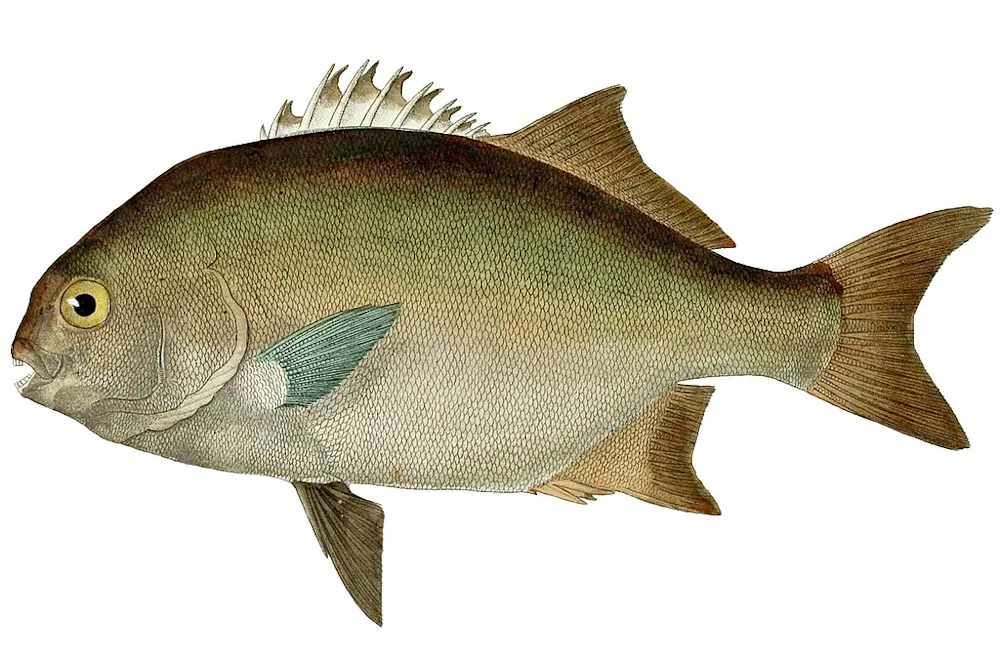
    Galjoen. Biodiversity Heritage Library/Wikimedia Commons, CC BY

    The first national animal to be used as a symbol in South Africa was the springbuck (or springbok), proposed in 1906 as a name for the country’s rugby team ahead of a tour of Europe. The most recent addition was the galjoen in 1992.

    Our study

    We surveyed 382 urban dwellers in four towns spanning three provinces: Mossel Bay, Kariega (formerly Uitenhage), Gcuwa (formerly Butterworth) and Kokstad. In each town we set out to interview 25 adults across low-, medium- and high-income areas and the central business district.

    Blue crane. Knowsley Hall/Wikimedia Commons

    As part of the survey, we asked people to name each of the five national biodiversity symbols. After that, we presented them with photos of four different species (one of which was the national one) and asked them to correctly identify the national species.

    What we found

    Only 11 of the respondents (3%) could name all five symbols, while almost half (48%) could not correctly name a single one. The most widely known were the springbok (40%) and the king protea (40%), perhaps because they correspond to the names of national sporting teams. The blue crane was mentioned by only 16% of the respondents and the galjoen (8%) and yellowwood (6%) fared even worse.

    The numbers were slightly better when respondents were asked to identify each species from a photo of four choices – 58% identified the protea, 51% the blue crane, 45% the springbok, 26% the galjoen and 16% the real yellowwood.

    Real yellowwood. Abu Shawka/ Wikimedia Commons, CC BY-SA

    To benchmark these knowledge levels, we also asked a few questions about the national flag and coat of arms. Only eight people knew the meaning of the phrase at the base of the coat of arms (ǃke e꞉ǀxarraǁke, meaning “diverse people unite” in the |Xam language of the country’s original inhabitants). Only 29% correctly knew that the Y-shape in the middle of the national flag was green. This indicates that the low knowledge of national symbols is not limited to just biodiversity symbols.

    What can be done about it

    It’s clear that a great deal more effort is needed to popularise the national biodiversity symbols if they’re to be used to help shape a national identity in South Africa. They could be promoted in schools where other national symbols, like the flag and anthem, are common.


    Read more: Should Graaff-Reinet be renamed Robert Mangaliso Sobukwe? Residents of the South African town say no – study


    The South African National Biodiversity Institute and the Department of Sport, Arts and Culture could promote them during September’s heritage month celebrations. They could engage the public by popularising their names in the different official languages of the country and their roles in folklore and indigenous knowledge. They could also be featured in national and international tourism promotions.

    Ondwela Tshikombeni and Monde Ntshudu contributed to this article

    – Only 3% of South Africans can name all five national animals and plants. Why these symbols matter
    – https://theconversation.com/only-3-of-south-africans-can-name-all-five-national-animals-and-plants-why-these-symbols-matter-241284
    MIL OSI Africa –

    January 26, 2025
  • MIL-OSI Global: Only 3% of South Africans can name all five national animals and plants. Why these symbols matter

    Source: The Conversation – Africa – By Charlie Shackleton, Professor & Research Chair in Interdisciplinary Science in Land and Natural Resource Use for Sustainable Livelihoods, Rhodes University

    The springbok is best known, thanks to it being a name for sports teams. A Oosthuizen/iStock/Getty Images

    Alongside a national flag, anthem and coat of arms, most countries have one or more plant and animal species that they designate as national symbols. The national animal of China, for example, is the giant panda, a nation-wide source of pride and diplomacy. Americans salute the bald eagle as a symbol of strength and freedom.

    But how do South Africans relate to their official national symbols? Do they even know what they are? It’s a country with an enviable variety of ethnicities, cultures, languages, histories, landscapes and biodiversity. It’s also a country fractured by colonialism and apartheid.

    South Africa is still in the process of building a unified and national identity as it moves beyond apartheid, an oppressive system of legislated racial division that formally ended with the advent of democracy in 1994.

    The process of nation building includes developing a shared history, identity, pride and values of what it means to be South African. One dynamic in this process is the shaping of a collective identity around particular national icons, symbols, activities and personalities. The national anthem, flag, sports stars, artists and the like. Things that make citizens proud of their country and its people, despite a divided past.

    King protea.
    Carol Phillips/iStock/Getty Images

    Reflecting its mega-biodiversity status, South Africa boasts five national animal and plant symbols. These are the national animal (springbok), fish (galjoen), bird (blue crane), flower (king protea) and tree (real yellowwood). Yet, their usefulness in helping build a national identity depends on South Africans actually knowing what they are. Sadly, this seems not to be the case.

    As environmental scientists we’re intrigued by the relationships between humans and nature. Environmental scholars Ondwela Tshikombeni, Monde Ntshudu and I recently conducted a study to find out how much South Africans know about the five biodiversity symbols. We found that only a tiny fraction could name all of them. The level of knowledge about them was generally low.

    This indicates that these symbols can’t be effectively used to help build a common South African identity. Nor will they add value to biodiversity conservation campaigns in a time when the need to protect nature increases due to the impacts of human development and climate change.

    National animals and plants

    The process of choosing a species as a national symbol is different depending on the country and may even be contested. In Turkey, for example, the national animal is the grey wolf. It can be a symbol of pride or be rejected because it’s the controversial name of a rightwing political group.

    Many national symbols are rooted in history and could stem from the emblems of the political, colonial or economic elites of the past. Or they may be more recent and based on lobbying by certain groups or even via public vote. Britain, for example, asked the public to choose a national bird. The robin won.

    Galjoen.
    Biodiversity Heritage Library/Wikimedia Commons, CC BY

    The first national animal to be used as a symbol in South Africa was the springbuck (or springbok), proposed in 1906 as a name for the country’s rugby team ahead of a tour of Europe. The most recent addition was the galjoen in 1992.

    Our study

    We surveyed 382 urban dwellers in four towns spanning three provinces: Mossel Bay, Kariega (formerly Uitenhage), Gcuwa (formerly Butterworth) and Kokstad. In each town we set out to interview 25 adults across low-, medium- and high-income areas and the central business district.

    Blue crane.
    Knowsley Hall/Wikimedia Commons

    As part of the survey, we asked people to name each of the five national biodiversity symbols. After that, we presented them with photos of four different species (one of which was the national one) and asked them to correctly identify the national species.

    What we found

    Only 11 of the respondents (3%) could name all five symbols, while almost half (48%) could not correctly name a single one. The most widely known were the springbok (40%) and the king protea (40%), perhaps because they correspond to the names of national sporting teams. The blue crane was mentioned by only 16% of the respondents and the galjoen (8%) and yellowwood (6%) fared even worse.

    The numbers were slightly better when respondents were asked to identify each species from a photo of four choices – 58% identified the protea, 51% the blue crane, 45% the springbok, 26% the galjoen and 16% the real yellowwood.

    Real yellowwood.
    Abu Shawka/ Wikimedia Commons, CC BY-SA

    To benchmark these knowledge levels, we also asked a few questions about the national flag and coat of arms. Only eight people knew the meaning of the phrase at the base of the coat of arms (ǃke e꞉ǀxarraǁke, meaning “diverse people unite” in the |Xam language of the country’s original inhabitants). Only 29% correctly knew that the Y-shape in the middle of the national flag was green. This indicates that the low knowledge of national symbols is not limited to just biodiversity symbols.

    What can be done about it

    It’s clear that a great deal more effort is needed to popularise the national biodiversity symbols if they’re to be used to help shape a national identity in South Africa. They could be promoted in schools where other national symbols, like the flag and anthem, are common.


    Read more:
    Should Graaff-Reinet be renamed Robert Mangaliso Sobukwe? Residents of the South African town say no – study


    The South African National Biodiversity Institute and the Department of Sport, Arts and Culture could promote them during September’s heritage month celebrations. They could engage the public by popularising their names in the different official languages of the country and their roles in folklore and indigenous knowledge. They could also be featured in national and international tourism promotions.

    Ondwela Tshikombeni and Monde Ntshudu contributed to this article

    Charlie Shackleton received funding from the National Research Foundation under the SARChI Chairs programme for this work.

    – ref. Only 3% of South Africans can name all five national animals and plants. Why these symbols matter – https://theconversation.com/only-3-of-south-africans-can-name-all-five-national-animals-and-plants-why-these-symbols-matter-241284

    MIL OSI – Global Reports –

    January 26, 2025
  • MIL-OSI Translation: A trip to Samoa around key sectors for New Caledonia

    MIL OSI Translation. French Polynesian to English –

    Source: Government of New Caledonia

    Mickaël Forrest, member of the government responsible for sport and international tourism promotion, travelled to Apia (Samoa) to take part in the Pacific sports ministers meeting on 30 October, as well as the first forum of the World Anti-Doping Agency for Oceania sports ministers. He took advantage of this trip to meet with the Samoan ministry responsible for tourism. This was an opportunity to discuss partnership options between New Caledonia and Samoa.

    Pacific Sports Ministerial Meeting

    The Pacific Sports Ministers’ Meeting, held in Apia on 30 October, provided an opportunity to discuss issues of common interest to countries and territories in the region, such as hosting the Pacific Games, the contribution of sport to national priorities and the need to coordinate and create a regional strategic plan in due course.

    The sports ministers also had the opportunity to share the projects undertaken in their respective countries. A secretariat was decided to ensure better coordination between the policies developed in the islands but also for better operational efficiency in connection with the national Olympic committees.

    As part of this ministerial, Mickaël Forrest, member of the government responsible for sport, also participated in the first forum of the World Anti-Doping Agency for Oceania sports ministers which took place the day before.


    The primary objective of this meeting was to hear the concerns and challenges of the Oceania region while benefiting from a new dynamic around the fight against doping. The needs and aspirations of the region were highlighted during this ministerial in order to foster greater support and a better understanding of these needs.

    Contact with Samoa’s Prime Minister for Tourism

    The member of the government responsible for the international promotion of tourism and president of New Caledonia Tourism took the opportunity of this trip to meet Samoa Tourism this Wednesday, October 30.


    The representatives discussed possible partnerships between New Caledonia and Samoa in terms of tourism promotion, which could be made official at the beginning of 2025.

    These meetings are part of the guidelines set by the safeguard, reconstruction and rebuilding plan (S2R), of which the strengthening of regional cooperation is one of the measures recommended in the overhaul of the Caledonian economic model, and which also coincide with the strategic objectives of the plan for a Blue Pacific 2050.

    EDITOR’S NOTE: This article is a translation. Apologies should the grammar and/or sentence structure not be perfect.

    MIL Translation OSI

    January 26, 2025
  • MIL-OSI Security: U.S. Marshals-led Operation Safe Haven Arrests More Than 53 Fugitives in Southern District of Ohio

    Source: US Marshals Service

    Columbus, OH – The U.S. Marshals Service Southern Ohio Fugitive Apprehension Strike Team (SOFAST) arrested 53 violent Felony Domestic Violence and Felony Family Violence fugitives during a fugitive apprehension initiative called Operation Safe Haven.

    Enforcement activities covered 31 operational days, from Oct 1 to Oct 31, and targeted fugitives with Felony Domestic Violence and Felony Family Violence arrest warrants, prioritizing those who used firearms in the commission of crimes or signaled high-risk factors for violence. Operation Safe Haven resulted in the arrest of fugitives on charges to include homicide, forcible sexual assault, domestic violence, aggravated assault, and child abuse.

    Notable arrests included: On 10/17/2024, Columbus SOFAST arrested Justin Woolum. Woolum was wanted by the Kenova Police Department (WV) for Rape of a Minor. Columbus SOFAST arrested Woolum in Lancaster, OH.

    On 10/30/2024, Dayton SOFAST arrested James Wilson. Wilson was wanted by Dayton Police Department for Felony Domestic Violence and Strangulation. The United States District Court for the Southern District of Ohio also issued an arrest warrant for Wilson charging him with a Supervised Release Violation.

    On 10/01/2024, Columbus SOFAST and FCSO (Franklin County Sheriff’s Office) SWAT arrested Aaron Rice. Rice was wanted by the Springfield Police Division for Felonious Assault and Weapons Offenses. Rice was indicted for Abduction and Kidnapping. An investigation indicated that, while Rice was a fugitive for the Felonious Assault case, he kidnapped the victim and a small child. Rice drove the victims from Ohio to Tennessee where they escaped. Rice was also facing Felony Domestic Violence charges in the State of Tennessee at the time of his arrest.

    On 10/18/2024, Cincinnati SOFAST arrested Timothy Cromwell. Cromwell was wanted by the Colerain Township Police Department for the Abduction and Kidnapping of the victim at gun point.

    On 10/25/2024, Cincinnati SOFAST arrested Jurabek Sherov. Sherov was wanted by the Warren County Sheriff’s Office for kidnapping the victim and holding her hostage for several days at gun point. Sherov was also charged with Rape, and Strangulation.

    “Every day our Deputy U.S. Marshals and Task Force officers are out locating and apprehending our most violent offenders. As part of Domestic Violence Awareness Month, the U.S. Marshals and our law enforcement partners focused on locating those suspects accused of violent crimes relating to domestic violence. Removing these dangerous fugitives from our community can hopefully bring some peace to the victims and serve as a deterrent to others to not commit these sorts of crimes”. – Michael D. Black, U.S. Marshal, Southern District of Ohio.

    Columbus SOFAST is a fugitive-focused, U.S. Marshals Service-led task force consisting of local, state and federal authorities including the Columbus Division of Police, Franklin County Sheriff’s Office, Ohio Adult Parole Authority, Ohio State Highway Patrol, Immigration and Customs Enforcement, Bexley Police Department, Capital University Police Department, Delaware County Probation Office, Groveport Police Department, Hocking County Sheriff’s Office, Lancaster Police Department, Ohio Attorney General Bureau of Criminal Investigation, Ohio Division of State Fire Marshal, Office of Inspector General Social Security Administration, United States Attorney’s Office, Utica Police Department, Whitehall Police Department, and Zanesville Police Department.

    Dayton SOFAST is a multi-jurisdictional, U.S. Marshals Service- led task force comprised of the Dayton Police Department, Ohio Adult Parole Authority, Ohio State Highway Patrol, Shelby County Sheriff’s Office, Springfield Division of Police, Greene County Prosecutor’s Office, Miami County Sheriff’s Office, Montgomery County Prosecutor’s Office, Perry Township Police Department, Greenville Police Department, Springboro Police Department, Franklin Police Department, United States Secret Service, Warren County Sheriff’s Office, West Carrollton Police Department, and the Xenia Police Department.

    Cincinnati SOFAST is a U.S. Marshals Service-led task force consisting of local, state, and federal authorities including the Adult Parole Authority, Butler County Sheriff’s Office, Hamilton County Sheriff’s Office, Butler County Probation Office, Colerain Township Police Department, Department of Homeland Security/ Immigration and Customs Enforcement, Golf Manor Police Department, Harrison Police Department, Mount Orab Police Department, Social Security Administration Office of the Inspector General, Trenton Police Department, Warren County Prosecutor’s Office, and Warren County Sheriff’s Office.

    Anyone with information on any fugitive may submit an anonymous web tip.
     

    MIL Security OSI –

    January 26, 2025
  • MIL-OSI Asia-Pac: HK to host Olympics body meeting

    Source: Hong Kong Information Services

    The 2024 General Assembly of the Association of National Olympic Committees (ANOC) announced yesterday the successful bid of Hong Kong, China to host the 2026 ANOC General Assembly.

    The ANOC comprises 206 National Olympic Committees (NOCs) and is responsible for protecting and advancing the interests of the world’s NOCs and supporting their mission of promoting Olympic values worldwide. The general assembly is the supreme governing body of the ANOC and a significant international sports event.

    Secretary for Culture, Sports & Tourism Kevin Yeung said the successful bid shows international confidence in Hong Kong’s ability to host major sports events. 

    The Hong Kong Special Administrative Region Government will fully support and guide the Sports Federation & Olympic Committee of Hong Kong, China in hosting this important international meeting, co-ordinating close co-operation between relevant government departments and various sectors including tourism and business, with a view to demonstrating the synergy between sports, convention and exhibition as well as tourism, giving full play to Hong Kong’s strengths in connecting with the world and telling good stories of Hong Kong.

    Under the arrangements of the Ministry of Culture of the Government of Portugal, Mr Yeung visited the Palácio Nacional da Ajuda yesterday morning and exchanged views with its curator on ways to promote culture exchanges through museums.

    Mr Yeung also met Secretary of State for Sport of the Government of Portugal Pedro Dias the day before to discuss the work and vision of the promotion of sports development in Hong Kong and Portugal.

    The sports chief then visited the Portuguese Football Federation’s Cidade do Futebol (Football City) in Lisbon, where he spoke to the federation’s president Fernando Gomes on exploring co-operation opportunities between the two places in promoting football development.

    He also toured Football City’s various facilities, including training and competition venues as well as ancillary facilities for sports medicine and science.

    Mr Yeung left Portugal for Hong Kong today.

    MIL OSI Asia Pacific News –

    January 26, 2025
  • MIL-OSI Asia-Pac: Appointments to Programme and Development Committee

    Source: Hong Kong Government special administrative region

    Appointments to Programme and Development Committee
    Appointments to Programme and Development Committee
    ***************************************************

         The Culture, Sports and Tourism Bureau announced today (November 1) appointments to the Programme and Development Committee (PDC) and its six Art Form Sub-committees (AFSCs), namely Music, Dance and Multi-Arts, Theatre, Chinese Traditional Performing Arts, Community and Festivals. All appointments are for a two-year term up to October 31, 2026.     The PDC and its six AFSCs comprise members of different backgrounds with a great wealth of professional expertise and relevant experience. The PDC and its six AFSCs advise the Leisure and Cultural Services Department (LCSD) on programme (including local, Mainland and overseas) strategies, plans, resource allocations and the support of budding and small-scale performing arts groups.     A spokesman for the Culture, Sports and Tourism Bureau thanked the Chairperson and members of the PDC and its AFSCs for their ardent support and invaluable contributions in the past years, including the outgoing Community Sub-committee Chairperson, Professor Winton Au Wing-tung, two outgoing PDC members, namely Ms Icy Lai Yin-ting and Mr Hanjin Tan, and 21 outgoing AFSCs co-opted members, namely Dr Au Yi-man, Mr Chan Wing-chuen, Mr Leo Cheung Kwok-wing, Ms Pewan Chow Pui-wan, Ms May Fung Mei-wah, Mr Nick Ho Lik-ko, Mr Ip Sai-hung, Ms Monica Kwok Kit-ling, Dr William Lai Chi-fu, Dr Linda Lai Chiu-han, Mr Maurice Lai Yu-man, Ms Eliza Li Pui-yan, Professor Lui Yu-hon, Ms Susan Pau Suk-hang, Ms Tang Mi-ling, Professor Wong Chuen-fung, Mr Kevin Wong Kin-wang, Ms Wong Tin-yee, Mr Johnny Yim Lai-hang, Mr Jacky Yu Yan-wah and Professor Nancy Yuen Miu-fun. He looked forward to receiving the valuable advice of the new PDC and its AFSCs on the performing arts programme plans and their implementation.     The membership list and terms of reference of the PDC are as follows:ChairpersonMr Tam Wing-pong MembersMr Chan Ching-kanMr Terence Chang Thomp-kwanMs Jessica Cheng*Ms Amanda CheungMs Margaret Cheung Kwok-wingMr Chiu Tsang-heiMr Ethan Kwok Chiu-lam*Ms Stella Lau Yin-lingMs Andrea Leung Tsui-shan*Ms Anna Lo Yee-kwan*Professor Johnny Poon Ming-lunMr Seto YokMr Tsang Man-tungMr Desmond Yip Koon-shingMs Karen Yu*Mr Chris Ip Ngo-tung (Ex-officio Member, Chairperson of Committee on Venue Partnership)Representative of the Culture, Sports and Tourism Bureau (Official Member)Representative of the Leisure and Cultural Services Department (Official Member) *Newly appointed membersTerms of reference     To advise the Director of Leisure and Cultural Services on the strategies on performing arts programmes: 

    the consideration of long-term programme presentation strategies such as

           – Art Form Sub-committee’s proposals on development strategies in support of budding and small-scale performing arts groups;       – proportion of local and visiting programmes; and       – venue-based programming and decentralisation of programmes;

    the consideration and endorsement of the LCSD’s annual programme strategies/directions, resource allocation and programme plans;
    the review progress of the implementation of the annual programme plans; and
    the interface with the Committee on Venue Partnership.

         The membership lists and terms of reference of the six AFSCs are in the Annex.

     
    Ends/Friday, November 1, 2024Issued at HKT 16:18

    NNNN

    MIL OSI Asia Pacific News –

    January 26, 2025
  • MIL-OSI United Kingdom: Funding for UK’s growth-driving creative industries confirmed in the Budget

    Source: United Kingdom – Executive Government & Departments

    Culture Secretary Lisa Nandy has welcomed confirmation in the Budget of the government’s commitment to support the creative industries – as part of the Industrial Strategy – recognising the key role it can play in economic growth.

    • Budget funding to help thousands of creative businesses grow across the UK
    • £3m scheme to improve awareness of creative career paths for school children 
    • £25m devolved local growth funding, which the North East plans to use for new Crown Works film studio to be built in Sunderland
    • Grants to continue for start-up video game studios, grassroots music venues and for regional clusters of creative firms outside of London
    • New VFX tax credit confirmed, UK’s world-leading film,TV, theatre, orchestra and museums tax reliefs continue

    The creative industries are worth £125 billion to the UK economy and were named as one of the government’s eight growth-driving sectors in its Industrial Strategy.

    At the Budget yesterday the Chancellor confirmed that the Department for Culture, Media and Sport’s spending programmes to grow the creative industries will continue, with additional funding to improve access to creative careers for young people across the country.

    Culture Secretary Lisa Nandy said:

    This was a Budget to fix the foundations, stabilise our economy and put us on the path to prosperity for years to come.

    The Creative Industries will play a critical role in helping us turn the corner and deliver on the national missions of this Government – driving economic growth into our towns and cities; drawing on the wealth of talent that exists everywhere; and flying the flag for British culture and values on the world stage.

    The Chancellor’s Budget underscored just how important these sectors are going to be with funding extended for vital programmes and tax reliefs, an expansion of the Creative Careers Programme and a £25 million investment in the CrownWorks Studio in Sunderland that will make the city one of the centres of our TV and film industry for years to come.

    This Government recognises that for millions of people, geography has become destiny. That while talent is everywhere, opportunity is not. This Budget has put the Creative Industries front and centre of how we write those people back into our national story and drive opportunity, jobs and prosperity into every community, in every region.

    The government will continue to broaden and diversify the talent pipeline in the creative industries by expanding the Creative Careers Programme, providing 11-18 year olds with the opportunity to learn more about the full range of jobs in the creative industries and directly engage with the workplace.

    The programme has helped 25,000 students meet industry professionals in 2023, trained over 200 careers professionals on roles in the sector and registered over 500 employers to take part in the annual Discover! Creative Careers Week.

    Funding for the Creative Careers Programme will be increased to £3 million, meaning it can boost its awareness-raising efforts and provide even more schoolchildren with information, advice and guidance on creative career routes.

    The £25 million funding for the North East Mayoral Combined Authority (NEMCA) has been confirmed. NEMCA plans to use the funding to remediate the Crown Works Studio site. 

    The North East is already a backdrop for major blockbusters – with Indiana Jones, Harry Potter and Transformers all filmed in the region. Crown Works is set to be one of the largest film studios in Europe and is expected to lead to around 8,000 new jobs in the region.

    The DCMS will also continue to fund the following creative industries programmes:

    • The Create Growth Programme, which supports thousands of businesses, enabling them to convert their creative potential into creative growth, boosting their access to private finance and helping turn today’s creative entrepreneurs into tomorrow’s CEOs.
    • The BFI’s Global Screen Fund helps innovative independent filmmakers showcase the best of Britain’s screen sectors on the global stage by boosting international development and distribution opportunities. 
    • The Dundee-based UK Games Fund, which develops talent and awards grants to high-potential, early-stage video game studios, helping them turn their drawing board ideas into working prototype games and unlock private investment. 
    • The Supporting Grassroots Music Fund, which enables grassroots music venues, recording studios, promoters and festivals to apply for grants of up to £40,000 to develop new revenue streams, make repairs and improvements, and enhance the live music experience for millions of gig-goers across the UK. 

    More details will be set out in due course by DCMS on the specific funding for its programmes going forward. 

    Elsewhere the Creative Industries Clusters programme, supported with at least £50 million and delivered by the Arts and Humanities Research Council on behalf of UKRI, will continue to fund creative clusters in new sub-sectors and regions over the next six years. The first round of the scheme supports nine regional hubs of business specialising in creative subsectors, such as film and high end TV in Cardiff’s Clwstwr and fashion in the Future Fashion Factory in Leeds, helping entrepreneurs and businesses in these areas innovate with new technologies, secure investment, and access global markets, with further clusters to be announced. 

    DCMS will also continue to contribute funding towards the hosting of the London Film Festival and London Fashion Week, as well as providing continued funding for the British Film Commission, National Film and Television School and the BFI’s Certification Unit.

    The Budget has confirmed that the government remains committed to the UK’s regime of highly-competitive tax reliefs for film, high-end TV and video games, including the recently-announced Independent Film Tax Credit, as well as reliefs for animation and children’s TV production.

    Yesterday the government also confirmed that a new VFX relief will go ahead in April 2025, with costs incurred by VFX firms from 1 January 2025 eligible. It will incentivise more film projects to draw on the UK’s post-production expertise – potentially generating hundreds of millions of pounds in additional revenues and creating thousands of jobs.

    The UK’s visual effects industry has grown substantially in recent years and it is now home to six of the world’s biggest visual effects studios. British firms have created CGI and visual effects for global box office hits such as Barbie and Wonka.

    In addition, the Chancellor has increased support for the national museums and galleries by raising their Grant-in-Aid to help support their long-term sustainability. A package of cultural infrastructure funding will also support cultural organisations across the country. 

    The Chancellor also announced yesterday that the government will continue to provide generous tax reliefs to museums, galleries, theatres and orchestras, which will support cultural sectors and help to ensure they can share their world-class productions and collections with more audiences up and down the country. 

    From 1 April 2025, theatres, orchestras and museums and galleries will benefit from higher tax relief rates of 40 percent for non-touring productions, and 45 percent for orchestral and touring productions.

    ENDS

    Notes to Editors

    Creative Careers Programme

    • The Creative Careers Programme (CCP), launched in 2018, tackles information and coordination barriers to providing specialist information, advice and guidance about creative careers to young people, targeting 11-18 year olds, as well as their parents, carers, teachers and careers advisors. 
    • The programme delivers Discover! Creative Careers Week annually in November, alongside a website with lesson plans and resources, monthly online insight Q&A panels, and training for careers advisors.
    • The programme operates UK-wide, with current priority focus given to areas in England where young people face particular challenges in accessing information about the Creative Industries
    • It is delivered by ScreenSkills, with co-delivery partners Creative UK and Speakers for Schools. Further partners include: National Careers Service, Careers and Enterprise Company, Design Council, Into Film, the Royal Institute of British Architects, the Advertising Association, the Publishers Association, UK Fashion and Textiles Association, YouTube, UK Music and UK Theatre/Society of London Theatre.

    Share this page

    The following links open in a new tab

    • Share on Facebook (opens in new tab)
    • Share on Twitter (opens in new tab)

    Updates to this page

    Published 1 November 2024

    MIL OSI United Kingdom –

    January 26, 2025
  • MIL-OSI: Bitget’s Survey Reveals Some Users Prefer Influencer Videos Over Whitepapers to Make Trading Choices

    Source: GlobeNewswire (MIL-OSI)

    VICTORIA, Seychelles, Nov. 01, 2024 (GLOBE NEWSWIRE) — Bitget, the leading cryptocurrency exchange and Web3 company, has launched a campaign to celebrate Bitcoin’s 16th Whitepaper Day, with a scintillating theme “Who’s Still Reading Whitepapers?”. This initiative seeks to ignite conversations within the crypto community about the current role of whitepapers in blockchain projects and investment decisions. The event is campaigned around the release of Satoshi Nakamoto’s foundational document and offers an opportunity to reconsider how whitepapers are perceived and whether they remain as influential as they once were in guiding investment strategies and project evaluations.

    Survey data gathered by Bitget provides insights into the crypto community’s current views on whitepapers. Of the 5,923 participants surveyed, an overwhelming 92.28% stated that they always read a project’s whitepaper before trading its token, indicating that technical documentation remains crucial for most users. Furthermore, 99.43% of respondents still consider whitepapers necessary, emphasizing their ongoing relevance in establishing a project’s credibility and outlining its foundational principles.

    However, the survey also revealed that key opinion leaders (KOLs) play a dominant role in influencing trading decisions. Among participants who do not always read whitepapers, 86.51% rely on KOL recommendations, while only a small percentage turn to research institutions or personal networks. This highlights a growing trend where influencer-driven insights are beginning to compete with whitepaper-based evaluations, reflecting broader shifts in how information is consumed and trusted in the crypto space.

    Over the years, whitepapers have been regarded as crucial documents for understanding the technical and strategic intentions of blockchain projects. However, with fast-paced developments in the crypto space, there is growing debate over whether these documents are still a vital tool for investors or if alternative methods of evaluation are taking precedence.
    Bitget’s research, supported by surveys and consultations with industry insiders, reveals a range of opinions. Some participants continue to view whitepapers as essential for understanding a project’s foundation and long-term goals. Others argue that the rise of new evaluation metrics, such as market trends, project performance, and development teams, has reduced the reliance on whitepapers, with real-world applications and use cases taking center stage.

    Insights gathered from these discussions indicate a shift in how the crypto community approaches project evaluation. By creating a platform for this discourse, Bitget encourages users and professionals alike to rethink the tools and resources used in assessing blockchain projects today. With Bitcoin Whitepaper Day as the theme, this campaign shows the ongoing changes in the industry, inviting the community to look ahead and consider new approaches to evaluating the industry’s most promising innovations.

    To learn more about Bitcoin Whitepaper Day, check our tweet here.

    About Bitget

    Established in 2018, Bitget is the world’s leading cryptocurrency exchange and Web3 company. Serving over 45 million users in 150+ countries and regions, the Bitget exchange is committed to helping users trade smarter with its pioneering copy trading feature and other trading solutions, while offering real-time access to Bitcoin price, Ethereum price, and other cryptocurrency prices. Formerly known as BitKeep, Bitget Wallet is a world-class multi-chain crypto wallet that offers an array of comprehensive Web3 solutions and features including wallet functionality, token swap, NFT Marketplace, DApp browser, and more.

    Bitget is at the forefront of driving crypto adoption through strategic partnerships, such as its role as the Official Crypto Partner of the World’s Top Football League, LALIGA, in EASTERN, SEA and LATAM market, as well as a global partner of Turkish National athletes Buse Tosun Çavuşoğlu (Wrestling world champion), Samet Gümüş (Boxing gold medalist) and İlkin Aydın (Volleyball national team), to inspire the global community to embrace the future of cryptocurrency.

    For more information, visit: Website | Twitter | Telegram | LinkedIn | Discord | Bitget Wallet
    For media inquiries, please contact: media@bitget.com

    Risk Warning: Digital asset prices may fluctuate and experience price volatility. Only invest what you can afford to lose. The value of your investment may be impacted and it is possible that you may not achieve your financial goals or be able to recover your principal investment. You should always seek independent financial advice and consider your own financial experience and financial standing. Past performance is not a reliable measure of future performance. Bitget shall not be liable for any losses you may incur. Nothing here shall be construed as financial advice.

    A photo accompanying this announcement is available at https://www.globenewswire.com/NewsRoom/AttachmentNg/fd91260c-97bd-4437-902e-4c75550e371e

    The MIL Network –

    January 26, 2025
  • MIL-OSI United Kingdom: World Championship esports event to deliver £12m boost to London’s economy

    Source: Mayor of London

    • London will host the League of Legends World Championship this weekend – one of the biggest and most popular esports events in the world.
    • The O2 arena’s tickets sold out in minutes and millions are set to watch from around the world.
    • The Mayor continues to support London’s thriving games and esports industry bringing significant investment and jobs to the capital.

    London will host the League of Legends World Championship this weekend – one of the biggest and most popular esports events in the world.

    The O2 arena’s tickets sold out in minutes and millions are set to watch from around the world.
    The Mayor continues to support London’s thriving games and esports industry bringing significant investment and jobs to the capital.
     
    One of esports biggest global events, the League of Legends World Championship finals, will take place at London’s O2 Arena tomorrow (Saturday 2 November) – boosting the capital’s economy and cementing its position as leading destination for sports and esports.
     
    The Mayor of London, Sadiq Khan, has today welcomed the finals to the capital and celebrated the impact of the growing industry. It will be the largest esports event ever to take place in the UK and will bring more opportunities for growth, talent development and skills for young Londoners. 
     
    Thousands of fans from all over the world are expected to head to the O2 tomorrow to watch, with London’s business growth and destination agency London & Partners calculating a £12m boost to the London economy from hosting the finals. Millions more are set to watch online – showcasing the capital. 
     
    League of Legends is a multiplayer online battle arena game that pits two teams of five against each other. The World Championships, known as ‘Worlds’, were launched in 2009 and have grown to be the most anticipated event of the year in esports. Last year’s finals were held in South Korea. It is the latest major esports event that London has hosted, after welcoming the League of Legends Mid-Season Invitational to the Copper Box Arena in Queen Elizabeth Olympic Park last year. 
     
    London is home to largest group of games studios in Europe and esports is a growing market offering huge potential for London’s businesses and communities. The Mayor is a big supporter of the games industry, which generates millions of pounds for our economy and is a growing force. His support includes funding Games London who run the UK’s only Games Production Finance Market which brings in new investment to help games businesses grow, and delivers the annual London Games Festival. Through work with London & Partners, Sadiq has also helped to bring esports events to London.
     
    Earlier this week, City Hall convened a panel discussion with key industry leaders and partners Fnatic – a leading esports brand – and London & Partners. Deputy Mayor for Business and Growth, Howard Dawber opened the event at the Fnatic HQ to champion esports and explore ways to further support esports in the capital. City Hall has also commissioned Arena Consultancy to conduct a new piece of research to gain a deeper understanding of what more London needs to do to become a global centre for esports. 
     
    The League of Legends World Championship is the latest in a series of global events to take place in London this year, including the UEFA Champions League final, European Professional Club Rugby Finals, NFL, Major League Baseball and Diamond League athletics. 
     
    The Mayor of London, Sadiq Khan, said: “I am delighted that the League of Legends World Championship finals are taking place in the capital this weekend. The event brings together gamers and fans from across the globe, boosting our economy by £12m and showing that London is a leading destination for sports and esports. Gaming is a hugely exciting and fast growing industry, and I will continue to do all I can to support its development and growth in the capital, as we build a better London for everyone.”
     
    Ailsa Buck, Head of Major Events and City Experience at London & Partners, said: “We’re thrilled to host the League of Legends World Championship Finals. The excitement is electric and we can’t wait for fans to have an unforgettable experience in the capital. Hosting such a huge esports event shows that London is a top destination for the industry. Tickets flew off the shelves in minutes. That tells us there’s a huge demand for more esports in the city. We’re ready to make this day special for everyone.”  

    Sam Mathews, CEO at Fnatic, said: “Partnering with the GLA and London & Partners to bring this event to life is an exciting step for Fnatic and esports in London. As one of the world’s leading esports organizations, Fnatic has always pushed boundaries—and there’s no better place to showcase that than in our home city. London’s support shows a real commitment to making this city a global hub for gaming. We’re looking forward to creating an unforgettable experience for our fans and the community right here and forging the future of esports in the city.”

    MIL OSI United Kingdom –

    January 26, 2025
  • MIL-OSI Asia-Pac: Department of Sports: Successful Completion of Special Campaign 4.0

    Source: Government of India (2)

    Posted On: 01 NOV 2024 3:11PM by PIB Delhi

    The Department of Sports, in collaboration with organizations under it – including the Sports Authority of India (SAI), Lakshmibai National Institute of Physical Education (LNIPE), National Sports University (NSU), National Anti-Doping Agency (NADA), and the National Dope Testing Laboratory (NDTL)—made a significant contribution to Special Campaign 4.0 organized by Department of Administrative Reforms & Public Grievances (DARPG). This campaign, was conducted during October 2024 and was aimed at embedding Swachhata (cleanliness) principles within the Department’s ethos and addressing long-standing pendencies. The Department of Sports commenced this effort with the spirited launch of the Fit India Swachhata Freedom Run 5.0 on October 2, 2024, at Major Dhyanchand Stadium, intertwining the themes of fitness and cleanliness.

    Over the course of the campaign, the Department replied 15 pending Member of Parliament references, resolved 30 public grievances, and fulfilled 2 Parliamentary Assurances under active supervision of senior officers of Department. This dedicated oversight ensured that objectives were met with both efficiency and impact.

    The campaign also focused on physical and digital file management. Accordingly, 210 physical files were thoroughly reviewed and subsequently 120 were weeded out. Moreover, the campaign saw the completion of the review of 220 e-files, marking a substantial stride in digital records management. On the ground, cleanliness drives were carried out across 44 identified sites spanning field offices and headquarters of the organizations under this Department. This concerted effort resulted in the reclamation of 12,000 square feet of space, with many newly available areas repurposed into valuable utility spaces. In addition, scrap disposal during the campaign generated Rs.1,76,000 in revenue, underscoring a commitment to sustainability and resourcefulness in the pursuit of cleanliness. 24 Tweets were made by this Department and organizations under it across various social media platforms, leveraging hashtags #SpecialCampaign4.0 and #SwachhBharat to amplify the campaign’s reach and visibility.

    Through above initiatives, the Department of Sports has not only reinforced the values of Swachhata but also set an example of practical, efficient governance. Some of the pictures of cleaning of office premises/ campus at organizations under this Department are shown below.

    ****

    Himanshu Pathak

    (Release ID: 2070114) Visitor Counter : 40

    MIL OSI Asia Pacific News –

    January 26, 2025
  • MIL-OSI Asia-Pac: Dr. Mansukh Mandaviya Urges Youth to Apply for National Youth Award (2022-23)

    Source: Government of India

    Dr. Mansukh Mandaviya Urges Youth to Apply for National Youth Award (2022-23)

    Applications for National Youth Award (2022-23) Open from November 1 to 15, 2024

    Posted On: 01 NOV 2024 1:46PM by PIB Delhi

    Union Minister for Youth Affairs & Sports and Labour & Employment, Dr. Mansukh Mandaviya has called upon young Indians to apply for the prestigious National Youth Awards (NYA) 2022-23, recognizing their exceptional contributions to India’s development and social progress.

    Highlighting the unmatched spirit of India’s youth across sectors—be it sports, social service, science, or research—Dr. Mandaviya emphasized that the awards are not merely an accolade but a celebration of youth leadership in fostering a progressive and inclusive India.

    नमस्कार मेरे युवा साथियों,

    राष्ट्र निर्माण में आपके अनमोल योगदान को सम्मानित करने के लिए ‘राष्ट्रीय युवा पुरस्कार – 2022-23’ हेतु आवेदन की तारीख 1 नवंबर से 15 नवंबर जारी हो चुकी है।

    आप सभी से आग्रह है कि इस अवसर का लाभ उठाएं और अपने योगदान को राष्ट्र के सामने प्रस्तुत करें।… pic.twitter.com/sVIUzxrtdn

    — Dr Mansukh Mandaviya (@mansukhmandviya) November 1, 2024

    Department of Youth Affairs, under the Ministry of Youth Affairs and Sports, confers the National Youth Awards (NYA) on individuals (aged between 15-29 years) and organizations for excellent work and contribution in different fields of development and social service such as health, promotion of human rights, active citizenship, community service etc.

    The objective of the awards is to motivate young persons to achieve excellence in the field of national development and social service, to encourage young people to develop a sense of responsibility to the community and thus to improve their own personal potential as good citizens and to give recognition to the outstanding work done by voluntary organizations working with the youth for national development including social service.

    Application for National Youth Award (2022-23) is being invited through common award portal of Ministry of Home Affairs from 1st November to 15th November, 2024.  The link of the award portal is https://awards.gov.in/.

    The award comprises of a medal, a certificate and a cash prize of Rs 1,00,000/- to individual and a cash prize of Rs. 3,00,000/- to organization respectively.


    ******

    Himanshu Pathak

    (Release ID: 2070077) Visitor Counter : 44

    MIL OSI Asia Pacific News –

    January 26, 2025
  • MIL-OSI Asia-Pac: Department of Defence successfully completes Special Campaign 4.0, achieving a 100% disposal rate of all identified targets through multiple initiatives

    Source: Government of India (2)

    Posted On: 01 NOV 2024 1:02PM by PIB Delhi

    The Department of Defence (DOD) achieved a 100% disposal rate of all identified targets which focused on productivity, environmental responsibility, and efficient space utilisation under the Special Campaign 4.0. The Campaign, unfolded over two phases—the preparation phase (September 15–30) and the implementation phase (October 02–31) targeted both cleanliness and efficiency in order to enhance workplace productivity.

    DOD took the following steps during the campaign:

    • Addressed Grievances and Streamlined Processes: 45 references from MPs/VIPs and 169 public grievances via CPGRAMS were resolved. Additionally, 10 processes were simplified.
    • File Review and Disposal: Out of 45,870 reviewed files, 12,186 were successfully weeded out.
    • Revenue Generation and Space Optimisation: The Department generated Rs 25.68 lakh through the disposal of obsolete equipment. This exercise also freed up 2.66 lakh square feet of space.


    The Campaign included extensive people-centric engagement across 3,832 locations, involving various organisations under the DOD, such as: Controller General of Defence Accounts, Border Roads Organisation, Military Hospitals, Directorate General of National Cadet Corps, Indian Coast Guard, Sainik Schools, Canteen Stores Department, the Cantonments along with the Nehru Institute of Mountaineering, Uttarkashi and Himalayan Mountaineering Institute, Darjeeling.

    DOD implemented several innovative practices in line with environmental responsibility with efforts to eradicate mosquito-breeding areas and set-up awareness workshops for waste segregation. Additionally, Garbage Vulnerable Points (GVPs) were transformed into plantation sites, and composting facilities for dry leaves were set up in parks.

    Himalayan Mountaineering Institute (HMI), Darjeeling spearheaded multiple projects, including:

    • Sewage Treatment Plant – ‘Swachhata Se Samriddhi’: The plant, with a capacity to treat 1,000 litres of wastewater daily, recycles this water for flush systems within the institute, representing a yearly impact of 365,000 litres.
    • Rainwater Harvesting Facility: With a capacity of 1.8 lakh litres, the rainwater facility reduces dependency on external water sources, supporting water conservation in stressed areas.
    • Creative Waste Repurposing: HMI transformed damaged mountaineering gear into decorative pieces, blending sustainability with artistic expression.

    In Sainik School Amaravatinagar, recycling bins made from repurposed barrels were re-painted with colourful designs and placed in prominent locations around the campus. This initiative led to significant reduction in litter around the school grounds.

    In future, DOD plans to showcase these sustainable practices during the Good Governance Week 2024 to promote a message of environmental stewardship and innovation.


    SR/KB

    (Release ID: 2070065) Visitor Counter : 19

    MIL OSI Asia Pacific News –

    January 26, 2025
  • MIL-OSI Asia-Pac: Asia+ Festival: Asian Ethnic Cultural Performances to showcase diverse cultures of Asian and Belt and Road countries and regions (with photos)

    Source: Hong Kong Government special administrative region

    Asia+ Festival: Asian Ethnic Cultural Performances to showcase diverse cultures of Asian and Belt and Road countries and regions (with photos)
    Asia+ Festival: Asian Ethnic Cultural Performances to showcase diverse cultures of Asian and Belt and Road countries and regions (with photos)
    ******************************************************************************************

         To develop Hong Kong into an East-meets-West centre for international cultural exchange, this year’s Asia+ Festival, presented by the Culture, Sports and Tourism Bureau and organised by the Leisure and Cultural Services Department (LCSD), continues to collaborate with consulates general and overseas cultural organisations in Hong Kong to stage the Asian Ethnic Cultural Performances. The event will take place on November 10 (Sunday), from 2pm to 6pm at the Hong Kong Cultural Centre Piazza and Foyer, where the cultural essence and artistic talent from over 20 Asian and Belt and Road countries and regions will be featured. Admission is free. Members of the public are welcome to join.      The theme for this year’s edition is “Celebration in Splendour”. Through folk music, dance, costume display, handicrafts and special delicacies, the event enables visitors to learn about how people of different nations celebrate milestones and important moments in their lives. Highlights include ethnic dances from Cambodia, Indonesia, Kazakhstan, Kuwait, Laos, Nepal, the Philippines, Russia, Singapore, Sri Lanka, Thailand, Türkiye and Vietnam; as well as traditional musical instrument performances from Kazakhstan, Korea and Kuwait. Of particular note is a 20-plus-member Kuwaiti group who will for the first time fly in to perform a sword dance and Middle East instruments, namely Daf and Mirwas. ​     Members of the public can also enjoy handicraft displays from Bangladesh, Pakistan and other places, and participate in a vast range of workshops such as traditional dance, headgear making, spoon painting, Christmas decoration drawing, paper umbrella painting, and fragrant sachet making. Japanese sake and snacks from Türkiye and Vietnam will also be available at the food stalls on-site for the enjoyment of visitors of all ages. ​     Additionally, an exhibition entitled “Sartorial Splendour – National Costume Exhibition” will be held from November 10 to 17 at the Hong Kong Cultural Centre Foyer. The eight-day exhibition showcases beautiful costumes and accessories that Asian people wear during festive events and celebratory performances. These include wedding attire and ethnic costumes from multiple countries and regions; Kuwait’s wedding attire and headdress; Laos’ Sinh skirts; Bidayuh, Orang Ulu and Dayak attire from the aboriginals in Malaysia; wedding attire from Myanmar; T’boli ethnic costumes from the Philippines; and Ao Dai gowns from Vietnam. There will also be a trial session of traditional Chinese costumes for visitors to deepen their understanding of Chinese culture. ​     Along with the aforesaid live performances and exhibition, the Asian Ethnic Cultural Performances will also offer an online programme recapturing the event highlights, to be broadcast on November 24 on the LCSD’s Community Programmes Office (CPO) website (www.cpo.gov.hk/activity/en-aecp-2024-carnival/). ​     Twenty-three countries and regions will participate in the event, including Hong Kong, China; Macao, China; Bangladesh; Cambodia; Indonesia; Japan; Kazakhstan; Korea; Kuwait; Laos; Malaysia; Mongolia; Myanmar; Nepal; Pakistan; the Philippines; Russia; Saudi Arabia; Singapore; Sri Lanka; Thailand; Türkiye and Vietnam. For more details of the event, please visit the CPO website or call 2591 1340.      The second Asia+ Festival is running from September to November, highlighting the arts and cultures of nearly 30 Asian and Belt and Road countries and regions. Apart from stage programmes, there are also thematic exhibitions, an outdoor carnival, film screenings, outreach activities and more, numbering over 100 in total. For programme enquiries and concessionary schemes, please call 2370 1044 or visit asiaplus.gov.hk/2024/en/.

     
    Ends/Friday, November 1, 2024Issued at HKT 19:35

    NNNN

    MIL OSI Asia Pacific News –

    January 26, 2025
  • MIL-OSI Africa: National Basketball Association (NBA) Africa and University Mohammed VI Polytechnic Launch New Youth Basketball Initiative in Morocco, Through EVOSPORT

    Source: Africa Press Organisation – English (2) – Report:

    PARIS, France, January 25, 2025/APO Group/ —

    NBA Africa (www.NBA.com) and University Mohammed VI Polytechnic (UM6P), through its subsidiary EVOSPORT, today announced a new collaboration to support youth basketball in Morocco. The collaboration marks the league’s most expansive youth basketball development programming ever in Morocco and makes UM6P an official partner of NBA Africa.

    UM6P is a Moroccan university that focuses on developing solutions to specific continental and, more broadly, global challenges. The university is engaged in economic and human development and puts innovation at the forefront of African growth. In alignment with this vision, UM6P has launched EVOSPORT, its subsidiary dedicated to sports development, with the ambition of contributing to the creation of a dynamic and sustainable Moroccan and African sports ecosystem.

    The collaboration between NBA Africa and UM6P will be implemented by EVOSPORT, in collaboration with Act4Community, which is a part of OCP Group’s ecosystem. Together, they will launch four Jr. NBA leagues that will reach nearly 2,000 boys and girls ages 18 and under annually in Khouribga, Gantour, Laayoune and El Jadida, as well as Morocco’s first NBA Basketball Schools in all four locations. More than 200 local coaches will also participate in Jr. NBA Coaches Workshops in each city.

    The announcement was made today at a signing ceremony at UM6P France in Paris, the university’s branch in Europe, by UM6P President Hicham El Habti, NBA Deputy Commissioner and Chief Operating Officer Mark Tatum, NBA Africa CEO Clare Akamanzi and Basketball Africa League (BAL) President Amadou Gallo Fall.

    “We have seen firsthand through our previous initiatives in Morocco that there is incredible passion for basketball across the country,” said Akamanzi. “Together with UM6P and ahead of the first BAL games in Morrocco in April, we look forward to significantly expanding our youth basketball development efforts in the country and providing opportunities for thousands of Moroccan youth to learn and play the game.”

    “We are thrilled to work with NBA Africa to bring this transformative youth basketball program to Morocco,” said El Habti. “At UM6P, we believe in the power of sports to inspire and develop young minds. This collaboration aligns perfectly with our mission to foster innovation and contribute to the socio-economic development of Africa. Through EVOSPORT, we are committed to creating opportunities for young athletes to thrive and achieve their full potential.”

    UM6P, as a key component of OCP Group’s ecosystem, has significantly contributed to the group’s long-standing commitment to sports development in Morocco. The collaboration with NBA Africa supports the youth targeted by the Act4Community program and reflects OCP Group’s corporate social responsibility aiming for sustainable and tangible improvements in living standards through job creation, entrepreneurship, culture and sports.

    The announcement builds on NBA Africa’s and the OCP Group’s previous collaboration that has featured previous Jr. NBA leagues in the cities of Benguerir and Khouribga. NBA Africa has reached more than 100,000 Moroccan youth and coaches through youth basketball development programming to date.

    MIL OSI Africa –

    January 26, 2025
  • MIL-OSI Global: Why ancient Mesopotamians would have used a sheep’s liver to predict Donald Trump’s election odds

    Source: The Conversation – UK – By Selena Wisnom, Lecturer in the Heritage of the Middle East, University of Leicester

    With one week to go, the US presidential election race is on a knife-edge. Jonah Elkowitz / Shutterstock

    I’m standing in a basement kitchen prodding at a sheep’s liver, looking for marks on its smooth surface. People crowd around to film the proceedings, since I’m here to ask a question that everyone wants to know the answer to: will Donald Trump win the US election?

    I’m following instructions that were first written down by the ancient Babylonians 4,000 years ago, and still survive today. Every crease on the liver has a meaning, and cuneiform tablets discovered in modern-day Iraq explain how to interpret them.

    Armed with this knowledge, it’s possible to calculate the answer to any question, so long as it is yes or no, by adding up the number of positive or negative signs and seeing which comes out on top.

    Since this liver had an overwhelming number of bad omens in it, I concluded that it declared no for Trump this time. Though in 2016 this method predicted a win well before he had won the Republican nomination, and in 2020 foretold that he would not be reelected that year.

    Will Trump win the US election?

    What started as an entertaining talk for a university open day has since become a serious part of my research – not because I sincerely believe in it, but because it gives us some of the earliest evidence in history for how human beings reason and think.

    Looking at livers also makes a serious underlying point about how humans have coped with uncertainty throughout history, and still struggle to today. People have developed techniques as varied as astrology, tarot cards and even peering into entrails in response to the agony of not knowing, or the strain of trying to make a difficult decision.

    Given the level of feeling invested in this election, it’s a unique moment where perhaps we can appreciate that, in this respect, we are not so different from those who lived thousands of years ago, even if our methods of looking into the future are different.

    Asking the entrails

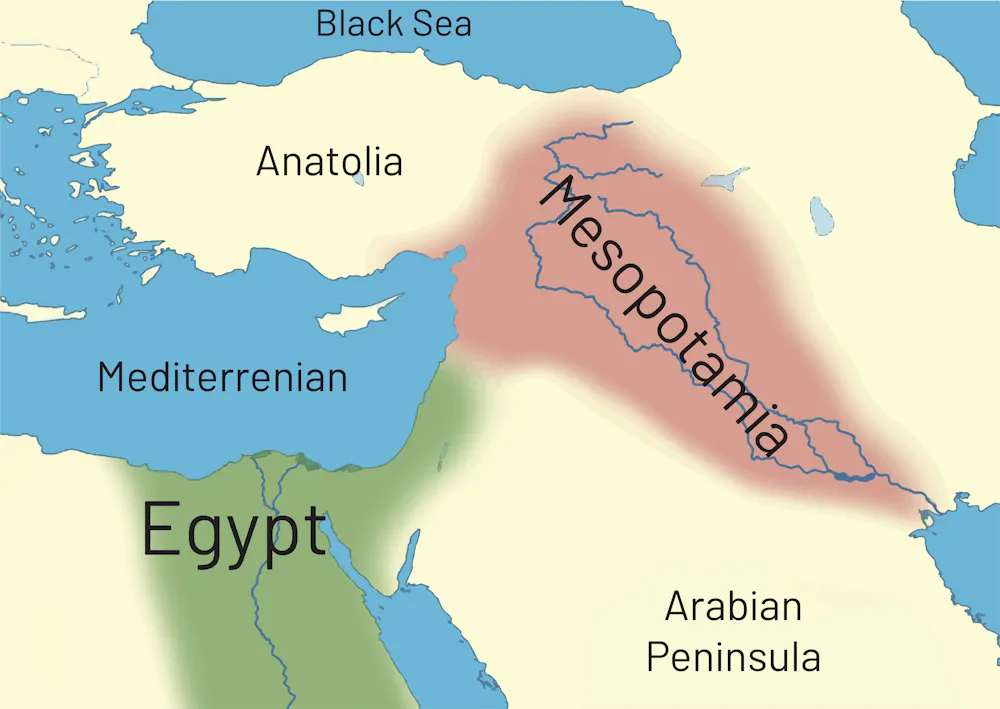
    Developed in its classic form in Babylon, entrail divination was practised throughout ancient Mesopotamia, the written history of which spans from the 3rd millennium BC to the 1st century AD.

    It was enormously important in all sections of society – a standard part of political decision-making at the royal court, but accessible to all. Budget options were even available for those who could not afford a sheep.

    People addressed their questions directly to the gods and believed that at the moment of asking, the answer would be written on the entrails. This could then be “read” by a diviner trained in this esoteric language.

    A map of Mesopotamia, a historical region in modern-day Iraq.
    aipsidtr / Shutterstock

    Sitting in the British Museum is an archive of real questions that were asked by the king of Assyria (a kingdom in northern Mesopotamia) in the 7th century BC. All kinds of affairs of state were put before the gods. Are the Egyptians going to attack? Has the enemy taken the town under siege? And will the governors return home safely?

    Reading the archive, you get a real sense of nerves on a knife-edge as the king waited for news from far away, wanting to know what had happened to his troops and trying to decide what to do next.

    Not only did he ask them about what would happen in the future, but he also consulted them on possible courses of action. Should the Assyrian army go to war? Should the king send a messenger to make peace? Asking the opinion of the gods would have helped him feel more confident in his next steps.

    The Babylonians did not have elections. But that did not mean the king could do whatever he wanted. It was important for his public image to have the gods onside, as well as for his own reassurance.

    Whenever a powerful official was appointed, the entrails would be read to ensure the gods approved. The head of the army, high priests and other important positions were all subject to this requirement. On one occasion, even the choice of crown prince – and hence the future king of Assyria – was put to this test.

    Interpreting the entrails was held to almost scientific standards of exactitude. Diviners worked in pairs or groups of up to 11, checking each other’s work to make sure they got it right. This was not a vague or woolly process, but a real attempt to ensure “accuracy” that could not be manipulated to simply come up with the answer that the king wanted to hear.

    Modern forecasting

    We all want to know what the future has in store, and have come up with ingenious ways of trying to find out, from opinion polls and data modelling to Paul the octopus, who developed a reputation for picking the winners of football matches during the 2010 World Cup. But are our methods really any better than looking inside a sheep?

    As all investors are warned, past performance does not guarantee future results. Yet the only data we have to inform our predictions comes from the past, and most of our models can’t take into account “unknown unknowns”.

    As many experts have found, predicting the future is a difficult business: opinion polls can lie and people change their minds, while economists have often been blindsided by a sudden crash.


    Read more:
    Harris nudges ahead of Trump in the polls – but could the economy prove her downfall?


    A Babylonian clay liver used for divination in Mesopotamia from 2050–1750 BC.
    Science Museum Group Collection, CC BY-NC-ND

    Since liver divination only answers “yes” or “no”, it is going to be right 50% of the time just through the law of averages. Despite its randomness, its success rate may well have seemed convincing at the time.

    And when we trust the authority of the source, it’s easy to find a way to explain away a wrong result – the prediction got halfway there, answered a different question, or would have been right if x hadn’t happened.

    We shouldn’t be blind to the weaknesses of our own methods. We are often wrong, and the Babylonians could sometimes be right.

    Selena Wisnom does not work for, consult, own shares in or receive funding from any company or organisation that would benefit from this article, and has disclosed no relevant affiliations beyond their academic appointment.

    – ref. Why ancient Mesopotamians would have used a sheep’s liver to predict Donald Trump’s election odds – https://theconversation.com/why-ancient-mesopotamians-would-have-used-a-sheeps-liver-to-predict-donald-trumps-election-odds-242251

    MIL OSI – Global Reports –

    January 25, 2025
  • MIL-OSI Russia: Dmitry Chernyshenko held meetings with Russian teachers and youth of Uzbekistan in Tashkent

    Translation. Region: Russian Federation –

    Source: Government of the Russian Federation – An important disclaimer is at the bottom of this article.

    During his working visit to Uzbekistan, Dmitry Chernyshenko talked with teachers who are participants in projects of the Russian Ministry of Education. With the Minister of Education Sergey Kravtsov and the head of the Department of Social Development of the Administration of the President of the Republic of Uzbekistan Odil Abdurakhmanov

    October 31, 2024

    Dmitry Chernyshenko at a meeting with participants of youth projects and programs in Uzbekistan, implemented by the Russian Federation

    October 31, 2024

    Dmitry Chernyshenko at a meeting with participants of youth projects and programs in Uzbekistan, implemented by the Russian Federation

    October 31, 2024

    greeted the participants of the international motor rally of the project “The Path of the Future Games Trophy 2.0” and gave the start to the Tashkent – Jizzakh stage

    October 31, 2024

    Dmitry Chernyshenko greeted the participants of the international motor rally of the project “The Path of the Future Games Trophy 2.0” and gave the start to the Tashkent – Jizzakh stage

    October 31, 2024

    Previous news Next news

    Dmitry Chernyshenko, as part of a working visit to Uzbekistan, talked with teachers who are participants in projects of the Russian Ministry of Education. With the Minister of Education Sergey Kravtsov and the head of the Department of Social Development of the Administration of the President of the Republic of Uzbekistan Odil Abdurakhmanov

    During his working visit to Uzbekistan, Deputy Prime Minister of Russia Dmitry Chernyshenko spoke with teachers participating in humanitarian projects implemented by the Russian Ministry of Education: “Russian Teacher Abroad”, “Class!” (“Zur!”) and “Baby” (“Mittivoi”).

    The Deputy Prime Minister emphasized the importance of the work of Russian teachers, who make a significant contribution to the development of bilateral relations between Uzbekistan and Russia.

    “The project “Russian Teacher Abroad” is developing in almost 30 countries. Uzbekistan is one of the leaders in the number of Russian teachers, which emphasizes the importance of bilateral cooperation in the field of education between our countries and the corresponding attitude of our Presidents to this. I know that you closely interact with your Uzbek colleagues and introduce advanced educational technologies here. It is important to build a continuous educational trajectory between specialists from Uzbekistan and Russian business,” the Deputy Prime Minister emphasized.

    Dmitry Chernyshenko thanked the teachers for their dedicated work and promotion of the Russian language and culture in the republic.

    “We are doing a lot of work within the framework of the “Class!” project. Teachers from the Russian Federation undergo appropriate training and advanced training at the A.I. Herzen Russian State Pedagogical University in St. Petersburg. Then they come to the Republic of Uzbekistan and teach Russian, exchanging experiences with local teachers,”– noted the Minister of Education of Russia Sergei Kravtsov.

    The head of the Russian Ministry of Education added that the Russian side is also ready to provide methodological assistance so that the training of in-demand specialists here is carried out at a high level.

    During the event, participants also discussed the Russian federal project “Professionalism” and textbooks on Russian as a foreign language.

    At a meeting with participants in youth projects and programs implemented by the Russian Federation, the Deputy Prime Minister noted the significance and legacy of the World Youth Festival and discussed strengthening international youth relations between Uzbekistan and Russia.

    The topic of projects and initiatives that are planned to be implemented within the framework of the 80th anniversary of Victory in the Great Patriotic War was separately touched upon.

    In addition, they discussed ways to increase young people’s interest in science and issues of media literacy.

    “You know that our country pays a lot of attention to the international youth agenda. Some of you personally took part in the World Youth Festival, which took place in the federal territory of Sirius. When organizing such an event, it was very important for us that young people from all over the world, including from our fraternal Republic of Uzbekistan, come, look at the created infrastructure and participate in the events,” said Dmitry Chernyshenko.

    He also noted the importance of Uzbekistan’s support for phygital sports and the Future Games.

    “The delegation of Uzbekistan was one of the largest at the World Youth Festival. More than 300 young people from all corners of our country participated in the festival, had the opportunity to find new friends to learn about the experience of countries around the world, and also to demonstrate the unique experience of Uzbekistan in working with youth,” emphasized the moderator of the event, head of the Volunteer Association of Uzbekistan Shirin Abidova.

    During the meeting, Dmitry Chernyshenko awarded the commemorative medal “World Youth Festival 2024” to representatives of Uzbekistan and Russia who made a great contribution to the preparation and holding of this large-scale event. The medals were awarded in accordance with the order of Russian President Vladimir Putin.

    The meeting was also attended by Ambassador Extraordinary and Plenipotentiary of the Russian Federation to the Republic of Uzbekistan Oleg Malginov, Deputy Head of Rosmolodezh Denis Ashirov, Head of the Representative Office of Rossotrudnichestvo in the Republic of Uzbekistan Irina Staroselskaya, Head of the Department of Social Development of the Administration of the President of the Republic of Uzbekistan Odil Abdurakhmanov, First Deputy Director of the Agency for Youth Affairs of the Republic of Uzbekistan Dilnozahon Kattakhanova.

    “Rosmolodezh is pursuing a course to strengthen international youth relations. It is important for us to help young people from Russia and other countries find common ground in various spheres of activity. Joint projects and programs are a contribution to the development of modern society and the construction of a happy future,” emphasized State Secretary – Deputy Head of the Federal Agency for Youth Affairs (Rosmolodezh) Denis Ashirov.

    The Deputy Prime Minister of Russia also greeted the participants of the international motor rally of the Future Games Trophy Route 2.0 project and gave the start to the Tashkent – Jizzakh stage.

    The Deputy Prime Minister recalled that the run started in October at the Russia – Sports Power forum in Ufa. It will pass through the territory of eight states – participants of the global phygital movement.

    “Phygital and Future Games are a new competition format that was invented in Russia on the instructions of President Vladimir Putin and became known to the entire world. We know the intention of your head of state and the people of Uzbekistan to also be nominated to host the Future Games in your country. I thank the leadership of the republic and everyone who works with young people for their caring attitude to this format, which allows new stars to develop, who show themselves well both in computer games and in real sports,” said Dmitry Chernyshenko.

    Please note: This information is raw content directly from the source of the information. It is exactly what the source states and does not reflect the position of MIL-OSI or its clients.

    MIL OSI Russia News –

    January 25, 2025
  • MIL-OSI: BW Energy Limited – Prospectus approved for listing of bonds

    Source: GlobeNewswire (MIL-OSI)

    BW Energy Limited – Prospectus approved for listing of bonds

    Reference is made to the announcement by BW Energy Limited (the “Company”) on 7 June 2024 about the successful completion of a new senior unsecured bond issue with an initial issue amount of USD 100 million with ISIN NO 0013259663 (the “Bonds”).

    The Financial Supervisory Authority of Norway has today approved a prospectus prepared by the Company in connection with the application for admission to trading and listing of the Bonds on the Euronext Oslo Børs. The admission to listing of the bonds is expected on or about 4 November 2024.

    The prospectus will be made available on the company’s website: www.bwenergy.no/investors/


    For further information, please contact:

    Brice Morlot, CFO BW Energy, +33.7.81.11.41.16 ir@bwenergy.com


    About BW Energy:

    BW Energy Limited is a growth E&P company with a differentiated strategy targeting proven offshore oil and gas reservoirs through low risk phased developments. The Company has access to existing production facilities to reduce time to first oil and cashflow with lower investments than traditional offshore developments. The Company’s assets are 73.5% of the producing Dussafu Marine licence offshore Gabon, 100% interest in the Golfinho and Camarupim fields, a 76.5% interest in the BM-ES-23 block in, a 95% interest in the Maromba field in Brazil and a 95% interest in the Kudu field in Namibia, all operated by BW Energy. Total net 2P+2C reserves and resources were 580 million barrels of oil equivalents at the start of 2024.

    This information is subject to the disclosure requirements pursuant to Section 5-12 of the Norwegian Securities Trading Act.

    The MIL Network –

    January 25, 2025
  • MIL-OSI United Kingdom: Birmingham Cultural Compact launch and Culture Strategy refresh

    Source: City of Birmingham

    Early October saw the first official ‘coming together’ of the new Birmingham Cultural Compact Board.

    A cross-sector partnership designed to support the city’s cultural sector and enhance its contribution to development, it has a special emphasis on cross-sector engagement beyond the cultural sector itself.  

    The Cultural Compacts model was born out of the UK Cultural Cities Investment Inquiry 2019 and their implementation in towns and cities across the country has been supported by Arts Council England and the Department for Digital, Culture, Media and Sport.

    Chaired by Professor David Mba (Vice-Chancellor at Birmingham City University) with Councillor Saima Suleman (Cabinet Member for Digital, Culture, Heritage and Tourism at the city council) as Deputy Chair, the Birmingham Cultural Compact brings together stakeholders from the local authority, culture, business, education, healthcare and allied sectors with the aim to help culture thrive and grow in the city and, in turn, increase the city’s health, wellbeing, resilience, economic prosperity and environmental sustainability. 

    Chair of the Birmingham Cultural Compact Professor David Mba said “It is an immense privilege to lead Birmingham’s Cultural Compact Board. We hope to offer the strategic vision for the future that represents the voices of all local communities.  Birmingham has a unique and diverse culture that has global impact. We saw this through the Commonwealth Games in 2022 and, more recently, the city’s successful bid to host the Serendipity Arts Festival.  Our work will put the preservation and celebration of culture at the forefront of regional decision making.” 

    Councillor Saima Suleman, Cabinet Member for Digital, Culture, Heritage and tourism and Deputy Chair of the Birmingham Cultural Compact, stated: “The establishment of the Birmingham Cultural Compact marks a pivotal moment for our city. By uniting diverse sectors—culture, business, education, and healthcare—we can cultivate a thriving cultural landscape that not only enriches lives but also drives economic growth and community wellbeing. Together, we will ensure that Birmingham’s cultural sector flourishes for generations to come.”

    Erica Love, Chief Executive Office of Culture Central said “We know the power Culture has on people and places and we believe in the power of working collectively. Culture Central are excited to be supporting Birmingham’s Cultural Compact and the collaborative approach to the Cultural strategy. It’s great to see the importance of Culture recognised and the vital role it plays in the City.  We look forward to working with the Compact to advocate for, develop and celebrate the vibrant and varied cultural ecology of Birmingham.”

    One of the first actions for the Birmingham Cultural Compact is to lead and oversee development of Birmingham’s new Cultural Strategy 2025 – 2035. Creative Concern, a creative and strategy agency that works on local and regional projects across the UK has been commissioned to deliver the new ten-year arts and culture strategy for Birmingham, supported by its partner consultancy Hatch. Their work will build  on the previous extensive consultation that resulted in the city’s Cultural Statement of Intent but also build on the considerable cultural successes that Birmingham has demonstrated to date. The outcome of the project will be an action-orientated framework strategy that supports culture and the arts across Birmingham for the next ten years.

    Founder and Director of Creative Concern, Steve Connor, said: “Culture is the lifeblood of any city and never was that more the case than for Birmingham. We’re delighted to be working collaboratively with a range of partners from across the city to develop this new strategy, which will re-affirm the importance of culture and the transformative role it can play in delivering civic pride, greater prosperity, wellbeing and of course, joy, happiness and entertainment.” 

    Tim Fanning, Director at Hatch, said: “Culture makes life worthwhile, and we at Hatch spend a lot of time helping institutions and places make the case for it. We are very happy to be supporting partners in Birmingham to ensure that its cultural strategy is built on firm socio-economic evidence.” 

    MIL OSI United Kingdom –

    January 25, 2025
  • MIL-OSI: Monster League Studios Announces Upcoming $MOKA Token Sale for Mokens League Platform, Powering the Next-Gen Web3 Gaming Ecosystem

    Source: GlobeNewswire (MIL-OSI)

    BARCELONA, Spain, Oct. 31, 2024 (GLOBE NEWSWIRE) — Monster League Studios, the visionary company behind the Mokens League gaming platform, is thrilled to announce the upcoming public sale of its highly anticipated utility token, $MOKA. Designed to fuel an ecosystem of interconnected games and experiences, $MOKA will serve as the backbone for in-game transactions, rewards, and player engagement across the Mokens League universe.

    Scheduled to go live on [31.10.2024], the $MOKA token sale represents a key milestone in Monster League Studios’ mission to redefine gaming through blockchain technology. With Mokens League, the company is creating a universe of games where players can seamlessly interact and carry their assets across different game experiences. Beginning with its flagship soccer game, the platform will soon expand to titles such as Padel, Tennis, Racing, and more, broadening the reach and utility of $MOKA.

    Mokens League Soccer is the first game that allows players to compete in team-based or individual matches. It features multiple gameplay modes, with match length and rules varying by mode. Players need 1–6 NFTs to participate, which act as in-game characters. The game has already reached over 50,000 active users. Mokens League Soccer is available on PC, App Store, and Google Play.

    “At Mokens League, we believe in building more than just individual games—we’re creating a full gaming universe,” said Martin Repetto, CEO of Monster League Studios. “The launch of $MOKA will empower our players and community by giving them real value and utility across all our games, allowing them to participate in our Win-to-Earn model, earn exclusive rewards, and explore a connected universe of Web3 gaming experiences.”

    Key Highlights of the $MOKA Token Sale:

    • Utility-Driven Token: $MOKA is designed to be more than just a currency. As a utility token, it will support in-game purchases, facilitate player rewards, and unlock exclusive features across all Mokens League games.
    • Two NFT Tiers: FAN and VIP Packs: Recently, Mokens League announced two NFT tiers—FAN and VIP packs—as essential components of its promotional series, aimed at unlocking exclusive features and rewards within the Mokens Hub. These packs drive engagement by providing early access to various platform functionalities. The initial launch of FAN packs was met with great success, as NFTs were claimed in record time, underscoring high demand and the platform’s effectiveness in expanding the user base and creating a vibrant gaming community.
    • Cross-Game Compatibility: Players can use $MOKA across the entire Mokens League ecosystem, allowing their assets, achievements, and rewards to transcend individual games, from sports-based titles like soccer and padel to exciting genres like racing and brawling.
    • User-Friendly Web3 Integration: Mokens League has partnered with ImmutableX (IMX) to ensure seamless onboarding for Web2 users unfamiliar with crypto. Players can create a secure Web3 wallet effortlessly using just their email, Apple ID, or Google Play account.
    • Accessible to All: The $MOKA token sale will be conducted in stages, with the first phase launching as a community sale. This will be followed by public sales on leading launchpads, including Bit2Me, Kanga, and Gamestarter, ensuring broad accessibility to both seasoned crypto investors and gaming enthusiasts new to Web3.

    The tokenomics of the $MOKA token are carefully designed. 10% of the total supply is allocated for the community sale, 1% for the public sale, and 17% for the team. A substantial 42% is dedicated to the community, ecosystem, and rewards. This tokenomics structure is community-centered, prioritizing user needs to drive high engagement and reward active participation in Mokens League.

    The $MOKA token sale provides a unique opportunity for investors to join a pioneering project in the rapidly expanding blockchain gaming space. Mokens League’s commitment to innovation, combined with its seasoned team of game developers with over 25 years of experience, positions it as a formidable player in the Web3 gaming industry.

    Contact:
    Martin Repetto CEO
    Email: hello@mokensleague.com

    Disclaimer: This content is provided by MONSTER LEAGUE S.L. The statements, views and opinions expressed in this column are solely those of the content provider. The information provided in this press release is not a solicitation for investment, nor is it intended as investment advice, financial advice, or trading advice. It is strongly recommended you practice due diligence, including consultation with a professional financial advisor, before investing in or trading cryptocurrency and securities. Please conduct your own research and invest at your own risk.

    A photo accompanying this announcement is available at https://www.globenewswire.com/NewsRoom/AttachmentNg/376d9a5a-bebd-4af6-879e-2793bd3e7f89

    The MIL Network –

    January 25, 2025
  • MIL-OSI Security: Met sets out policing plan ahead of a busy weekend of events in London

    Source: United Kingdom London Metropolitan Police

    Update and information on the policing operation for events in London this weekend.

    An event has been organised by the Palestine Solidarity Campaign (PSC) in central London on Saturday 2 November. Officers will also be policing international sporting events, several football fixtures and a presence at large public events and fireworks displays throughout the weekend.

    In relation to the PSC event, our goal has been to protect the lawful right to protest whilst minimising the impact of these events on those who live, work and visit London.

    We have engaged with the PSC and agreed a route and timings of the event. To help provide clarity to those taking part and to assist their travel plans we have imposed conditions on the protest to minimise any disruption.

    The PSC march will form up in Whitehall from midday and commence at 12.45, proceeding across Vauxhall Bridge to Nine Elms where a rally will take place near the US Embassy, concluding by 16.00.

    ‘Stop The Hate UK’ will hold a counter protest on the corner of Millbank and Vauxhall Bridge to voice opposition to the PSC march. Replicating the approach to the PSC, we have engaged and agreed the location and conditions to their protest to minimise disruption to the public.

    A large ticketed fireworks event in Battersea Park is taking place in the early evening. We call on participants of the PSC march to conclude promptly at 16.00 and all protestors to consider their travel plans carefully as public transport and venues throughout the area will be extremely busy.

    We encourage participants of the ‘Stop The Hate UK’ protest to head towards Pimlico and Victoria Stations, and those on the PSC march to head away from Battersea and towards Vauxhall when leaving the area and to check online for the latest travel information.

    Officers are engaging in advance with businesses, residents and venues along the route to help minimise disruption and respond to any concerns on the day.

    Commander Adam Slonecki, who is leading this weekend’s policing operation, said: “Ahead of the weekend we have been in regular discussions with the PSC as well as residents, partners, community groups and businesses. It’s a busy weekend of events across London and we have worked with organisers to seek to minimise disruption and balance the right to protest.

    “Officers will be highly visible along the protest route and wider area to ensure the events take place safely and deal with any offences.”

    Conditions

    The Public Order Act gives the police the power to impose conditions on a procession or assembly of two or more people who are deemed to have a common purpose.

    Conditions can be imposed either in advance of an event or by the senior officer present during an event.

    On Saturday 2 November the following conditions will be in place relating to the PSC event.

    Section 12(3) of the Public Order Act 1986:

    The Palestine Solidarity Campaign procession must commence no later than 12.45.

    Procession participants forming up at Whitehall must commence proceeding along the prescribed route by 12.45.

    Procession participants must not deviate from the prescribed route specified on the attached map.

    Procession participants must proceed continuously along the prescribed route and not form up into static assemblies until reaching the final assembly point on Nine Elms Lane.

    Section 14(3) Public Order Act 1986

    The Palestine Solidarity Campaign assembly in preparation for the planned procession must be held within the specified location on Whitehall, SW1 (see Map) and assembly participants must remain within that area.

    Assembly participants must remain within the shaded area of the attached map until such time that the procession commences, which must be no later than 12.45, in accordance with the ‘Procession’ conditions imposed.

    Section 14(3) Public Order Act 1986:

    Any person participating in the Palestine Solidarity Campaign post-procession assembly must remain within the shaded area (purple) of Nine Elms Lane, SW11 on the map below.

    Any stage erected for the assembly must be in the specified area (blue) on the map below.

    The use of the stage and amplified noise equipment must cease by 16.00 and the assembly must conclude, including removal of stage and infrastructure by 1700hrs.

    On Saturday 2 November the following conditions will be in place relating to the ‘Stop The Hate UK’ assembly:

    Section 14(3) Public Order Act 1986

    Any person participating in the ‘Stop the Hate UK’ assembly must remain in the shaded area on the map below, on the corner of Millbank and Vauxhall Bridge.

    Warning regarding expressing support for proscribed organisations

    London is global city and with people joining events from across the country and around the world it is important to reiterate that expressing support for a proscribed organisation in the UK is a criminal offence.

    Under the Terrorism Act 2000 (TACT), the Home Secretary may proscribe an organisation if they believe it is concerned in terrorism and it is proportionate to do so.

    Proscription makes it a criminal offence to invite or express support for a proscribed organisation through chanting, wearing clothing or display articles such as flags, signs or logos.

    Hamas and Hizballah are proscribed by the UK Government and expressing support for them is a criminal offence.

    Hamas has been proscribed since 2021 – both political and military wings are proscribed under UK jurisdiction.

    Hizballah has been proscribed since 2019.

    It is a criminal offence to:

    • belong, or profess to belong, to a proscribed organisation in the UK or overseas (Section 11 TACT)
    • invite support for a proscribed organisation (Section 12(1A) TACT)
    • express an opinion or belief that is supportive of a proscribed organisation (Section 12(1A) TACT)
    • arrange, manage or assist in arranging or managing a meeting in the knowledge that the meeting is to support or further the activities of a proscribed organisation, or is to be addressed by a person who belongs or professes to (Section 12(2) TACT)
    • wear clothing or carry or display articles in public in such a way or in such circumstances as to arouse reasonable suspicion that the individual is a member or supporter of a proscribed organisation (Section 13 TACT)
    • publish an image of an item of clothing or other article, such as a flag or logo, in the same circumstances (Section 13(1A) TACT)

    Officers policing events will deal with any offences. If you have any concerns during an event speak to a police officer or event steward.

    If you see material supporting terrorism online report it – visit www.gov.uk/ACT

    You can also report suspicious activity by contacting the police in confidence on 0800 789 321

    In an emergency, or if you need urgent police assistance, you should always dial 999.

    MIL Security OSI –

    January 25, 2025
  • MIL-OSI USA: Boozman Convenes 2024-2025 Arkansas Congressional Youth Cabinet

    US Senate News:

    Source: United States Senator for Arkansas – John Boozman
    LITTLE ROCK, Ark. –– U.S. Senator John Boozman (R-AR) launched the eighth year of his Congressional Youth Cabinet on Tuesday at the Old State House Museum in Little Rock. The meeting brought together 114 high school juniors who were selected from public, private, charter and homeschool students across the state for their involvement and leadership in their communities.
    “The Congressional Youth Cabinet benefits Arkansas students and families as well as their communities by promoting a healthy public policy dialogue and developing the next generation of leaders in our state. I am pleased to welcome this group of bright young people to contribute their ideas and experiences as we explore legislative solutions to the issues that interest them most,” Boozman said. “Their enthusiasm for enhancing their own understanding of civic engagement and helping shape the future of our state and country is inspiring.”

    Senator Boozman and Congressional Youth Cabinet participants in Little Rock.
    The Congressional Youth Cabinet is a non-partisan program that gives students insight and experience with the legislative process. The students will attend meetings throughout the year and work in teams to select and research national issues. In the spring, the students will present their policy recommendations to the senator.
    Click here for more photos from the CYC kick-off.
    The following students were selected to participate in the Congressional Youth Cabinet for the 2024-2025 school year:
    1st Congressional District

    Jack Coleman – Mountain Home
    Mark Gregory Green – Harrison
    Lindsay Dunsing – Alpena
    Luke Wilkins – Batesville
    Penelope Jackson – Melbourne
    Natalie Rodriguez – Cabot
    Ella Curry – Alpena
    Suraya Tennison – Alpena
    Sara Hinson – Bergman
    Kayla Thorndike – Cabot
    Adam Stanisor – Cabot
    Bryce Veasman – Cabot
    Kaitlyn Carmical – Cabot
    Jeremy Jason – Lake City
    Andrew Boots – Jonesboro
    Spencer May – Jonesboro
    Sam Vaught – Wynne

    Christian Boykin – Earle
    Ajiah Parker – Earle
    Aryanna Perry – Earle
    Jada Maples – Earle
    Lucas White – Manila
    Kera Fesperman – Marion
    Penelope Marie Salas – Marion
    Gabrielle Weathers – Lepanto
    Harlynn Robertson – Jonesboro
    Deven Isbell – Jonesboro
    William Crader – Jonesboro
    Bentley McCoy – Clarendon
    Sam Sabbatini – Hazen
    Hailey Nichols – Wynne
    Derek Lately Jr. – Earle
    Zavion Maples – Earle
    Kialynn Mitchell – Earle

    2nd Congressional District

    Claira Tittle – Searcy
    Landon Hillman – Jacksonville
    Eva Harrell – Maumelle
    Yusuf Taha Guven – Little Rock
    Jayden Branch – Jacksonville
    Garrett Fisher – Greenbrier
    Fatimah Jabbar – North Little Rock
    Zachary Tancinco – Searcy
    Canadee Mosley – Conway
    Jil Patel – Jacksonville

    Luis Denilso Calderon – Little Rock
    Katharine Wekly – Conway
    Savannah Shelley – Little Rock
    Gregory Lin – Searcy
    Grabiela Valadez-Rizo – Little Rock
    Lisandro Isai Salas – Little Rock
    Ashlynn Pecanty – Maumelle
    Damian Morales – Little Rock
    David Salinas – Bryant
    Ethan Bolton – Jacksonville
    Sophie Swiney – Bradford

    3rd Congressional District

    Schuyler Henehan – Fort Smith
    Robinson Skaggs – Bentonville
    Cole Kessman – Fayetteville
    Kyndall Richey – Bentonville
    Manvitha Narasimhan – Bentonville
    Evalyn Clark – Bentonville
    Lily Cate Caldwell – Bentonville
    Matthew Velasquez-Amaya – Fort Smith
    Preston Thai – Bentonville
    Khant Sin – Fayetteville
    Evangelina Hernandez – Fort Smith
    Grayson Proctor – Lavaca
    Adrian Gonzalez – Lavaca
    Sydney Turner – Fayetteville
    Lydia Parsley – Springdale
    Terri Michelle Turner – Fort Smith
    Alee Thongprachanh – Fort Smith
    Colt Hood – Greenland

    Caroline Sanders – Bentonville
    Sullivan Shepard – Rogers
    Oakley Allen – Fort Smith
    Weston Arnett – Greenwood
    Jadyn Patterson – Bentonville
    Saqib Memon – Fayetteville
    Sarah Amor – Fort Smith
    Clara Hibbard – Mountainburg
    Drake Norris – Fort Smith
    Madelyn Maxey – Fort Smith
    Aubree Stewart – Springdale
    Aneeka Srivastava – Bentonville
    Nidhi Nair – Bentonville
    Grace Dickinson – Tontitown
    Tatum Grace Loe – Fort Smith
    Nathan Barney – Bentonville
    Jude Alfaouri – Fayetteville
    Claire Hassler – Fort Smith
    Hannah Elliott – Greenwood

    4th Congressional District

    Dana Liu – Russellville
    Ian Warnick – Russellville
    Peyton Gustave Blasé – Ozark
    David Culver – Ozark
    Sydnie Herriage – Ozark
    Elizabeth Harrison – Russellville
    Mallory Cloud – Russellville
    Audrey Rogers – Russellville
    Tristan Marrufo – DeQueen
    Kyle Williamson – DeQueen
    Miley Byler – DeQueen

    Isabel Rivas – Russellville
    Hannah Grace Skinner – Texarkana
    Christian Hunter – Arkadelphia
    Yasmine Sakr – Hot Springs
    Mary Lopez-Furlong – Hot Springs
    Tucker Arnold – Hot Springs
    Heather Atchley – Sheridan
    Madilynn Stuffle – Hot Springs
    Alexandria Evans – White Hall
    Blake Levi Jimerson – Sheridan
    Carson Brody Lyons – Sheridan

    MIL OSI USA News –

    January 25, 2025
  • MIL-OSI: Game-Changing $MOKA Token Launch Set to Boost Mokens League’s Digital Ecosystem

    Source: GlobeNewswire (MIL-OSI)

    BARCELONA, Spain, Oct. 31, 2024 (GLOBE NEWSWIRE) — Monster League Studios, the visionary company behind the Mokens League gaming platform, is thrilled to announce the upcoming public sale of its highly anticipated utility token, $MOKA. Designed to fuel an ecosystem of interconnected games and experiences, $MOKA will serve as the backbone for in-game transactions, rewards, and player engagement across the Mokens League universe.

    Scheduled to go live on 8th November 2024, the $MOKA token sale represents a key milestone in Monster League Studios’ mission to redefine gaming through blockchain technology. With Mokens League, the company is creating a universe of games where players can seamlessly interact and carry their assets across different game experiences. Beginning with its flagship soccer game, the platform will soon expand to titles such as Padel, Tennis, Racing, and more, broadening the reach and utility of $MOKA.

    Mokens League Soccer is the first game that allows players to compete in team-based or individual matches. It features multiple gameplay modes, with match length and rules varying by mode. Players need 1–6 NFTs to participate, which act as in-game characters. The game has already reached over 50,000 active users. Mokens League Soccer is available on PC, App Store, and Google Play.

    “At Mokens League, we believe in building more than just individual games—we’re creating a full gaming universe,” said Martin Repetto, CEO of Monster League Studios. “The launch of $MOKA will empower our players and community by giving them real value and utility across all our games, allowing them to participate in our Win-to-Earn model, earn exclusive rewards, and explore a connected universe of Web3 gaming experiences.”

    Key Highlights of the $MOKA Token Sale:

    • Utility-Driven Token: $MOKA is designed to be more than just a currency. As a utility token, it will support in-game purchases, facilitate player rewards, and unlock exclusive features across all Mokens League games.
    • Two NFT Tiers: FAN and VIP Packs: Recently, Mokens League announced two NFT tiers—FAN and VIP packs—as essential components of its promotional series, aimed at unlocking exclusive features and rewards within the Mokens Hub. These packs drive engagement by providing early access to various platform functionalities. The initial launch of FAN packs was met with great success, as NFTs were claimed in record time, underscoring high demand and the platform’s effectiveness in expanding the user base and creating a vibrant gaming community.
    • Cross-Game Compatibility: Players can use $MOKA across the entire Mokens League ecosystem, allowing their assets, achievements, and rewards to transcend individual games, from sports-based titles like soccer and padel to exciting genres like racing and brawling.
    • User-Friendly Web3 Integration: Mokens League has partnered with ImmutableX (IMX) to ensure seamless onboarding for Web2 users unfamiliar with crypto. Players can create a secure Web3 wallet effortlessly using just their email, Apple ID, or Google Play account.
    • Accessible to All: The $MOKA token sale will be conducted in stages, with the first phase launching as a community sale. This will be followed by public sales on leading launchpads, including Bit2Me, Kanga, and Gamestarter, ensuring broad accessibility to both seasoned crypto investors and gaming enthusiasts new to Web3.

    The tokenomics of the $MOKA token are carefully designed. 10% of the total supply is allocated for the community sale, 1% for the public sale, and 17% for the team. A substantial 42% is dedicated to the community, ecosystem, and rewards. This tokenomics structure is community-centered, prioritizing user needs to drive high engagement and reward active participation in Mokens League.

    The $MOKA token sale provides a unique opportunity for investors to join a pioneering project in the rapidly expanding blockchain gaming space. Mokens League’s commitment to innovation, combined with its seasoned team of game developers with over 25 years of experience, positions it as a formidable player in the Web3 gaming industry.

    Contact:
    Martin Repetto CEO
    Email: hello@mokensleague.com

    Disclaimer: This content is provided by MONSTER LEAGUE S.L. The statements, views and opinions expressed in this column are solely those of the content provider. The information provided in this press release is not a solicitation for investment, nor is it intended as investment advice, financial advice, or trading advice. It is strongly recommended you practice due diligence, including consultation with a professional financial advisor, before investing in or trading cryptocurrency and securities. Please conduct your own research and invest at your own risk.

    A photo accompanying this announcement is available at https://www.globenewswire.com/NewsRoom/AttachmentNg/f6bccd88-e368-4b0a-9f87-a2397cbbe17e

    The MIL Network –

    January 25, 2025
  • MIL-OSI New Zealand: Animal Welfare – Animals suffering for entertainment – SAFE calls for ban as rodeo season begins

    Source: SAFE For Animals

    With the 2025/25 rodeo season due to commence this Sunday 3 November, animal rights organisation SAFE is reinforcing its call for a ban.
    SAFE Campaign Manager Emily Hall says rodeo events directly breach New Zealand’s Animal Welfare Act, with animals used at these events subjected to extreme psychological and physical trauma.
    “Our Animal Welfare Act states that any physical handling of animals must be done in a way that minimises the likelihood of unnecessary pain or distress, and rodeo practices clearly violate this legislation.”
    “Horses, bulls, steers, and calves are singled out, provoked with painful instruments and pursued, which translates to sheer terror for these gentle natured herd animals.”
    SAFE says the types of injuries animals experience can include ripped tendons, broken bones, horns torn off, severe bruising, and organ damage.
    “The animals forced to participate are at significant risk of injury, and rodeo has long been condemned by animal welfare experts here in New Zealand and internationally.”
    “We should have seen these barbaric events banned a long time ago,” says Hall.
    SAFE highlights the physical pain and distress rodeo practices inflict on animals not only breaches their legal rights, but also goes against Kiwis expectations of animal welfare, particularly as rodeo is promoted as a family-friendly event.
    “We are deeply concerned at the disconnect between what the rodeo industry considers a sport and the level of harm inflicted upon the animals in their care.” “Rodeo certainly holds no social licence as a community event, and we hope to see a shift in terms of clubs and competitor’s respect for animal welfare.”
    In addition to highlighting the need for a ban, SAFE is calling on the National Animal Welfare Advisory Committee (NAWAC) to release its revised rodeo Code of Welfare for public consultation.
    “SAFE understands a revised rodeo code was completed almost two years ago but no further steps have been taken by NAWAC or the Minister for Animal Welfare. This unnecessary delay is preventing New Zealanders from having their say, and puts the lives of animals still being subjected to this cruel practice at risk”. says Hall.
    “No animal should have to endure extreme trauma or catastrophic injuries in the name of entertainment, and we are calling for these exceptionally cruel events to be banned in line with the Animal Welfare Act”.
    SAFE is Aotearoa’s leading animal rights organisation.
    We’re creating a future that ensures the rights of animals are respected. Our core work empowers society to make kinder choices for ourselves, animals and our planet.
    • The revised Code of Welfare; Rodeo has been significantly delayed.
    • In July 2022, SAFE and the New Zealand Animal Law Association (NZALA) jointly contested rodeo in the High Court.
    • Rodeo clubs are not obliged to report injuries or deaths sustained during events. Information is therefore only available through OIA requests.
    • On Tuesday 22 October the Aohanga Horse Sports & Rodeo Club received a formal warning from Ministry for Primary Industries (MPI) in relation to the club permitting and encouraging the riding of sheep. Sheep riding is banned at rodeo events as outlined in the rodeo Code of Welfare. 

    MIL OSI New Zealand News –

    January 25, 2025
  • MIL-OSI China: Torch, medal, anthem for Asian Winter Games unveiled

    Source: People’s Republic of China – State Council News

    This picture shows the torch for the 9th Asian Winter Games in Harbin, capital of northeast China’s Heilongjiang Province. [Photo/Xinhua]

    HARBIN, Oct. 30 — The torch, medals and anthem for the 2025 Asian Winter Games in Harbin were officially unveiled on Wednesday.

    The height of the torch is 735mm, with a top diameter of 115mm and a grip diameter of 50mm. The theme of the design, “Surging”, aims to capture the vibrant and dynamic energy of life in nature. It symbolizes that the 9th Asian Winter Games will be filled with vitality and passion. The overall torch design incorporates international aesthetic features while blending classical and modern Chinese art.

    The design takes the form of a blossoming lilac, integrating colors such as China Red, Lilac Purple, and Snow White, symbolizing the sincerity, warmth, openness, and inclusivity of Heilongjiang Province and the characteristics of the host city, Harbin.

    The torch features a burner nozzle that combines a lilac floral design with a hollow center, creating a three-dimensional effect. The outer wall of the upper combustion chamber is designed with hollow snowflakes, harmonizing the beauty of order with the overall biomimetic natural aesthetic, blending culture and technology with natural artistry. The outer shell resembles a blossomed lilac, transitioning from transparent ice crystal to Snow White. The inner core transitions from China Red to Lilac Purple. When lit, the torch presents an effect of ice and fire merging, highlighting the radiant energy of winter sports that springs from challenge and passion.

    This picture shows the front of the medals for the 9th Asian Winter Games. [Photo/Xinhua]

    The medals for the Asian Winter Games, titled “Spirit of Speed”, were also released on the same day. The front of the medals combines the streamlined shape of a racetrack with the emblem of the 9th Asian Winter Games, capturing the powerful and graceful motion of athletes in action. This design embodies the strength and beauty of competitive sports. The flowing curves of the racetrack incorporate the silhouette of the Harbin Grand Theatre, reflecting the city’s unique aesthetic.

    This picture shows the reverse side of the medals for the 9th Asian Winter Games. [Photo/Xinhua]

    The reverse side of the medal features a picturesque landscape of Yabuli, with mountain ranges and forests that mirror the terrain of the Greater and Lesser Khingan ranges, creating a vibrant portrayal of Heilongjiang’s rich and bountiful landscape. At the center, the emblem of the Olympic Council of Asia is embedded with a rare Xunke red agate gem from Heilongjiang — symbolizing the sun shining brightly over the vibrant land. The ribbon clasp at the top of the medal is inspired by the Sun Gate of Sun Island Scenic Area, adding a distinctive local character to the design.

    The anthem for the Asian Winter Games is titled “Snow of Harbin”, written by lyricist and director Wang Pingjiu and composed by renowned domestic music producer Chang Shilei. The lyrics and melody express the vision of unity, friendship, and a shared commitment to peace and development among the people of Asian countries and regions, working together to build a community with a shared future for mankind.

    MIL OSI China News –

    January 25, 2025
  • MIL-OSI China: Eurozone GDP up 0.4% in Q3

    Source: China State Council Information Office

    The eurozone’s seasonally adjusted gross domestic product (GDP) grew by 0.4 percent in the third quarter of 2024, marking an improvement from the 0.2 percent growth seen in the previous quarter, according to preliminary data released Wednesday by Eurostat.

    The GDP in the European Union (EU) grew by 0.3 percent in the third quarter, maintaining the same pace as in the second quarter, according to data from the EU’s statistical office.

    Year-on-year, seasonally adjusted GDP grew by 0.9 percent in both the euro area and the EU from July to September, up from a 0.6 percent increase in the euro area and 0.8 percent in the EU in the second quarter.

    Germany, the eurozone’s largest economy, reversed its second-quarter contraction to achieve 0.2 percent growth in the third quarter, according to Eurostat data. Meanwhile, France and Spain saw growth rates of 0.4 percent and 0.8 percent, respectively.

    Ireland posted the highest growth rate in the third quarter, with a 2 percent increase, while Hungary saw a significant decline of 0.7 percent. Latvia and Sweden also reported negative growth during the same period.

    Bert Colijn, senior economist at ING, noted that third-quarter GDP growth in the eurozone was partly fueled by one-off factors, including Ireland’s volatile GDP growth influenced by multinational accounting activities and a boost in French GDP driven by the Olympics.

    Colijn expressed caution regarding the eurozone’s economic outlook, forecasting weaker GDP growth in the fourth quarter. In a research report, he noted that “the eurozone economy remains sluggish for the moment.”

    MIL OSI China News –

    January 25, 2025
  • MIL-OSI: Bitget Named Among Top 12 Finalists for Digital Currency Exchange of the Year at Australia’s 2024 Blockies Awards

    Source: GlobeNewswire (MIL-OSI)

    VICTORIA, Seychelles, Oct. 31, 2024 (GLOBE NEWSWIRE) — Bitget, the leading crypto exchange and Web3 company has been selected as a finalist in the Digital Currency Exchange (DCE) of the Year category at Australia’s 2024 Blockies Awards. Only 12 finalists were announced for this competitive category among more than 400 registered crypto exchanges in Australia’s $552 million DCE market.

    The Blockies Awards, officially known as the Australian Blockchain Industry Awards, is an annual event celebrating achievements in blockchain and digital technology across Australia. It was established by Blockchain Australia and the Digital Economy Council of Australia (DECA) to recognize individuals, startups, and organizations contributing to blockchain adoption.

    The Digital Currency Exchange of the Year award recognizes platforms that prioritize seamless transactions, security, compliance, and community engagement. Winners and shortlists are selected based on major developments in user experience and security standards. Bitget has achieved several feats over the past year within this criteria to address the expanding needs of Australia’s crypto market.

    The exchange currently offers over 1,000 trading pairs across spot, futures, and margin trading options in Australia. It also provides a $300+ million protection fund to safeguard users in the case of any unforeseen threats and security breaches.

    Bitget further maintains a high proof-of-reserves ratio to ensure that the platform is able to serve the market even during major liquidations. These high-standard security features demonstrate a strong commitment to user safety – a primary reason why the exchange was shortlisted in this category.

    “Australia is an important market for us, and it’s gratifying to see Bitget’s efforts being recognized at The Blockies.” said Gracy Chen, CEO of Bitget. “There’s immense potential to grow the blockchain industry in the region by dialogue and collaboration. The country already has a booming financial infrastructure, and blockchain can only make it better. We at Bitget are happy to be part of Australia’s crypto story.”

    In terms of user experience, Bitget has emphasized its focus on both newcomers and advanced traders in the Australian market, making sure that there are tangible trading options for everyone. The exchange offers a range of advanced trading tools, such as risk management features and round-the-clock customer support in multiple languages. It also has a Pre-Market Trading Platform, where users can gain early access to new popular tokens and projects before public listing.

    The platform is also making crypto trading simple for the continent’s growing userbase through its signature copy trading feature. Bitget currently has over 180,000 elite traders with 800,000+ followers on its copy trading platform.

    Beyond its business operations, Bitget has made key contributions to increasing blockchain literacy across the market. The platform has launched exclusive blockchain educational projects like the Bitget Academy, Blockchain4Her, and Blockchain4Youth, with substantial investments in lectures and scholarships. These programs issued over 2,000 certificates and facilitated on-campus learning at over 50 universities.

    All of these developments have driven Bitget to be one of the key contenders in the Digital Currency Exchange of the Year category. The award is set to take place in Sydney on the 21st of November, where the final winner will be announced.

    The exchange’s operations have excelled globally throughout the year. As of October 2024, the exchange is serving a whopping of 45 million user base from 150+ countries and regions, with an average daily trading volume of $10 billion, and Bitget also ranked globally the 4th largest crypto exchange by Market Share.

    About The Blockies

    The Digital Economy Council of Australia warmly invites crypto and blockchain enthusiasts to the most prestigious night in the Australian Blockchain calendar. Hundreds of industry professionals from the Australian blockchain, digital assets, and Web3 industry will convene on Thursday, November 21st, 2024, at the stunning Watersedge overlooking the Sydney Opera House.

    This illustrious evening recognizes the exceptional achievements in the blockchain industry and creates a grand platform for networking. There will be plenty of collaboration opportunities between community members, entrepreneurs, and industry leaders to celebrate the transformative impact of blockchain technology on shaping Australia’s digital future.

    About Bitget

    Established in 2018, Bitget is the world’s leading cryptocurrency exchange and Web3 company. Serving over 45 million users in 150+ countries and regions, the Bitget exchange is committed to helping users trade smarter with its pioneering copy trading feature and other trading solutions while offering real-time access to Bitcoin price, Ethereum price, and other cryptocurrency prices. Formerly known as BitKeep, Bitget Wallet is a world-class multi-chain crypto wallet that offers an array of comprehensive Web3 solutions and features, including wallet functionality, token swap, NFT Marketplace, DApp browser, and more.

    Bitget is at the forefront of driving crypto adoption through strategic partnerships, such as its role as the Official Crypto Partner of the World’s Top Football League, LALIGA, in EASTERN, SEA and LATAM market, as well as a global partner of Turkish National athletes Buse Tosun Çavuşoğlu (Wrestling world champion), Samet Gümüş (Boxing gold medalist) and İlkin Aydın (Volleyball national team), to inspire the global community to embrace the future of cryptocurrency.

    For more information, visit: Website | Twitter | Telegram | LinkedIn | Discord | Bitget Wallet

    A photo accompanying this announcement is available at https://www.globenewswire.com/NewsRoom/AttachmentNg/22f29c78-2861-4097-af07-62b5148d8f28

    The MIL Network –

    January 25, 2025
  • MIL-OSI: BW Energy: Final agreements signed for Niosi and Guduma Marin Exploration Blocks Offshore Gabon

    Source: GlobeNewswire (MIL-OSI)

    BW Energy: Final agreements signed for Niosi and Guduma Marin Exploration Blocks Offshore Gabon 

    BW Energy is pleased to announce its signing of production sharing contracts (PSCs) for the exploration blocks Niosi Marin and Guduma Marin (formerly named G12-13 and H12-13) with Gabon’s Petroleum Minister and Minister of Economy. BW Energy holds 37.5% working interest and is the operator of the blocks, which significantly expands the resource base for infrastructure-led exploration in Gabon.    

    The blocks are adjacent to BW Energy’s Dussafu Marin licence offshore southern Gabon, covering a combined area of 4,918 km2. 

    “Most of the Niosi Marin and Guduma Marin acreage is within tie-back distance to existing infrastructure, enabling fast-track, low-cost development of future discoveries. We have proven our ability to create significant value in the Dussafu licence, where we are close to completing the first phase of Hibiscus / Ruche to bring production to nameplate capacity of 40,000 barrels per day. These licence awards further underpin BW Energy’s commitment to Gabon and clear ambition of growing production and cash flow generation,” said Carl K. Arnet, the CEO of BW Energy. 

    VAALCO Energy (37.5%) and Panoro Energy (25%) are non-operating joint venture partners in the PSCs, which have an eight-year exploration period with option to extend for two additional years. The partners have committed to drilling one well on Niosi Marin during the exploration period and intend to carry out a 3D seismic acquisition campaign. 

    The consortium is uniquely positioned with BW Energy and Panoro Energy as joint venture partners in the Dussafu PSC, and with VAALCO Energy as the operator of the adjacent Etame PSC. Together, the partners will jointly implement safe, efficient, and cost-effective operations whilst leveraging subsurface and production learnings from Dussafu and Etame to accelerate value creation.

    For further information, please contact: 

    Brice Morlot, CFO BW Energy, +33.7.81.11.41.16 

    ir@bwenergy.no 

    About BW Energy: 

    BW Energy is a growth E&P company with a differentiated strategy targeting proven offshore oil and gas reservoirs through low risk phased developments. The Company has access to existing production facilities to reduce time to first oil and cashflow with lower investments than traditional offshore developments. The Company’s assets are 73.5% of the producing Dussafu Marine licence offshore Gabon, 100% interest in the Golfinho and Camarupim fields, a 76.5% interest in the BM-ES-23 block, a 95% interest in the Maromba field in Brazil, a 95% interest in the Kudu field in Namibia, all operated by BW Energy. In addition, BW Energy holds approximately 6.6% of the common shares in Reconnaissance Energy Africa Ltd. and a 20% non-operating interest in the onshore Petroleum Exploration Licence 73 (“PEL 73”) in Namibia. Total net 2P+2C reserves and resources were 580 million barrels of oil equivalent at the start of 2024. 

    This information is subject to the disclosure requirements pursuant to section 5-12 of the Norwegian Securities Trading Act. 

    The MIL Network –

    January 25, 2025
  • MIL-OSI Europe: The start-up “Patronus AI” wins over the DDPS in the Cyber Start-up Challenge 2024

    Source: Switzerland – Department of Defence, Civil Protection and Sport

    The Cyber Start-up Challenge of the Cyber-Defence Campus of armasuisse Science and Technology is held every year to find relevant start-ups and innovative technologies in the cyber area. In this year’s Cyber Start-up Challenge contest, the start-up “Patronus AI” won over the jury with a platform for automated evaluation and safeguarding of LLMs. In 2025, the start-up will be able to demonstrate its solution to the DDPS in practice in a feasibility study.

    MIL OSI Europe News –

    January 25, 2025
  • MIL-OSI Asia-Pac: Participatory theatre production “Post Capitalistic Auction” allows audiences to bid for artworks in creative ways other than money (with photos)

    Source: Hong Kong Government special administrative region

    Participatory theatre production “Post Capitalistic Auction” allows audiences to bid for artworks in creative ways other than money (with photos)
    Participatory theatre production “Post Capitalistic Auction” allows audiences to bid for artworks in creative ways other than money (with photos)
    ******************************************************************************************

         The Asia+ Festival, presented by the Culture, Sports and Tourism Bureau and organised by the Leisure and Cultural Services Department, will stage a participatory theatre production “Post Capitalistic Auction” on November 16 and 17. In this unconventional yet authentic auction created by Mainland artist Jingyi Wang and local curator Kyle Chung, audiences can bid for their favourite artworks in new ways other than money, before taking the art pieces home. The auction comes with a pre-auction showcase and fringe activities, offering audiences multiple perspectives to contemplate the value of art.      This auction is unique in that it gives endless room for imagination: Audiences can place bids not only with money but alternative “currencies” they can think of, such as barter (in either tangible or intangible terms), a career opportunity for the artist, a deep understanding of the artwork, and more. A total of eight artworks (see Annex) will be put up for bidding in two rounds of auction. Audiences will place bids online and the process will be projected onto a big screen in real time. Eight groups of artists from France, Indonesia, Thailand and Hong Kong, China will attend in person to choose the winning bid, guided by professional advice from an expert panel.      In “Post Capitalistic Auction”, creator Wang questions if money is the only means to determine something’s value. This experiment is an attempt to explore whether changing the rules of the game can change the way people think. Curator Chung, who describes his project as an experimental performance, advises potential bidders to attend the pre-auction showcase and guided tour to learn more about the eight groups of artists and their works in advance, which may raise their chances of winning the auction.      Ever since its 2018 premiere in Bergen, “Post Capitalistic Auction” has toured Toronto and Yokohama. Previous editions have attracted many interesting bids and inspired reflections on the ecology of the art market. The upcoming Hong Kong debut is set to make waves in this city widely known as Asia’s art trading hub. Audience members who have no intention of bidding are welcome to buy tickets and join the event nonetheless.      Two rounds of auction will each feature four groups of artists, namely (November 16): Carla Chan (Hong Kong, China), Maurice Benayoun (France), Navin Rawanchaikul and daughter Mari Rawanchaikul (Thailand), and Wu Jiaru (Hong Kong, China); (November 17): Chan Wai-lap (Hong Kong, China), Leung Mee-ping (Hong Kong, China), Maryanto (Indonesia) and William Lim (Hong Kong, China).      The auction will be conducted in Cantonese, Putonghua and English, with Cantonese and English simultaneous interpretation. Each auction will be followed by a discussion session. Bidders, who must be over 18 years of age, will be asked to place bids using a smartphone or a tablet with Internet connection. During the process, bidders’ interaction with performers may be photographed, recorded or live-streamed. A vernissage will be held at 6pm on November 13 at the Hong Kong City Hall Exhibition Hall, while guided tours and an auction showcase will be held from November 14 to 18. Other fringe activities include art student roundtables and a panel discussion. For details, please refer to asiaplus.gov.hk/2024/en/post-capitalistic-auction.      Participatory theatre production “Post Capitalistic Auction” will be held at 8pm on November 16 and 3pm on November 17 at the Hong Kong City Hall Theatre. Free seating tickets priced at $420 and guided tour tickets at $60 are now available at URBTIX (www.urbtix.hk). Admission to other activities is free. For telephone bookings, please call 3166 1288, or use the mobile ticketing app “URBTIX”.      The second Asia+ Festival is running from September to November, highlighting the arts and cultures of nearly 30 Asian and Belt and Road countries or regions. Apart from stage programmes, there are also thematic exhibitions, an outdoor carnival, film screenings, outreach activities and more, numbering over 100 in total. For programme enquiries and concessionary schemes, please call 2370 1044 or visit asiaplus.gov.hk/2024/en/.

     
    Ends/Thursday, October 31, 2024Issued at HKT 17:15

    NNNN

    MIL OSI Asia Pacific News –

    January 25, 2025
  • MIL-Evening Report: Islands Business publisher Samantha Magick – storyteller, risk-taker and community champion

    By Teagan Laszlo, Queensland University of Technology

    For Samantha Magick, journalism isn’t just a job. It is a lifelong commitment to storytelling, advocacy, and empowering voices often overlooked in the Pacific.

    As the managing editor and publisher at Islands Business, the Pacific Islands’ longest surviving news and business monthly magazine, Magick’s commitment to quality reporting and journalistic integrity has established her as a leading figure in the region’s news industry.

    Magick’s passion for journalism began at a young age.

    “I wanted to be a journalist when I was like 12,” Magick recalls. “When I left school, that’s all I wanted to study.”

    She remembers her family’s disapproval when she would write stories as a child, as they thought she was “sharing secrets”. Despite that early condemnation, Magick’s thriving journalism career has taken her across continents and exposed her to diverse media landscapes.

    After completing a Bachelor of Communications with a major in journalism at Charles Sturt University in Bathurst, Australia, Magick began her career at Communications Fiji Limited (CFL), a prominent Fijian commercial network.

    She progressed over 11 years from a cadet to CFL’s news director.

    Guidance of first boss
    Magick attributes some of her early success to the guidance of her first boss and CFL’s founder, William Parkinson. She considers herself fortunate to have had a supportive mentor who led by example and dared to take risks early in life, such as founding a radio station in his 20s.

    After leaving CFL, Magick’s career took her across the globe, including regional Pacific non-government organisations, news publications in Hawai’i and Indonesia, and even international legal organisations in Italy.

    Magick, who is of both Fijian and Australian heritage, returned to Suva in 2018, where she began her current role as Islands Business’s managing editor.

    “I’ve chosen to make my life in Fiji because I feel more myself here,” Magick says, reflecting on her deep connection to the island nation.

    Magick’s vision for Islands Business focuses on delving into the deeper, underlying narratives often overshadowed by breaking news cycles and free, readily available news content.

    “We need to be able to demonstrate the value of investigation, big picture reporting rather than the day-to-day stuff,” Magick says.

    Magick prides herself on creating a diverse and inclusive newsroom that reflects the communities it serves.

    Need for diverse newsroom
    “You have to have a diverse newsroom,” she emphasises, recognising the importance of amplifying marginalised voices. “For example, there is a conscious effort to make sure our magazine is not full of photos of men shaking hands with other men.”

    Magick also believes journalists have a responsibility to advocate for change, as demonstrated by Islands Business’s dedication to tackling pressing issues from climate change to media freedom.

    “Why would I give a climate change denier space?” Magick questions when discussing the need to balance objectivity and advocacy. “Because it’s kind of going to sell magazines? Because it’s going to create a bit of a stir online? That’s not something we believe in.”

    Despite her success, Magick’s career has not been without challenges. Magick worked through Fiji’s former draconian media restriction laws under the Media Industry Development Act 2010, while also navigating the shift to digital media.

    Islands Business managing editor Samantha Magick (right) with Fiji Times reporter Rakesh Kumar and chief editor Fred Wesley (centre) celebrating the repeal of the draconian Fiji media law last year . . . ““Why would I give a climate change denier space?” Image: Lydia Lewis/RNZ Pacific

    Magick emphasises the need to constantly upskill and re-evaluate strategies to ensure she and Islands Business can effectively navigate the constantly evolving media landscape.

    From learning to capitalise on social media analytics to locating reputable information sources when many of them feared to speak to the journalists due to the risk of legal retribution, Magick believes flexibility and perseverance are crucial to staying ahead in media.

    In her early career, Magick also faced sexism and misogyny in the media industry. “When I think back about the way I was treated as a young journalist, I feel sick,” Magick says as she reflects on how she and her female colleagues would warn each other against interviewing certain sources alone.

    Supporting aspiring journalists
    The challenges Magick has faced undoubtably contribute to her dedication to supporting aspiring journalists, as evident through Kite Pareti’s journey. Starting as a freelance writer with no newswriting experience in March 2022, Pareti has since progressed to one of two full-time reporters at Islands Business.

    Pareti expresses gratitude for the opportunities she’s had while working at Islands Business, and for the mentorship of Magick, whom she describes as “family”.

    “Samantha took a chance on me when I had zero knowledge on news writing,” Pareti says. “So I’m grateful to God for her life and for allowing me to experience this once-in-a-lifetime opportunity.”

    Magick reciprocates this sentiment. “Recently, I am inspired by some of our younger reporters in the field, and their ability to embrace and leverage technology — they’re teaching me.”

    Magick anticipates an exciting period ahead for Islands Business, as she aims to attract a younger, professionally driven, and regionally focused audience to their platforms.

    When asked about her aspirations for journalism in the region, Magick says she hopes to see a future where Pacific voices remain at the centre, “telling their own stories in all their diversities”.

    Teagan Laszlo was a student journalist from the Queensland University of Technology who travelled to Fiji with the support of the Australian Government’s New Colombo Plan Mobility Programme. This article is published in a partnership of QUT with Asia Pacific Report, Asia Pacific Media Network (APMN) and The University of the South Pacific.

    MIL OSI Analysis – EveningReport.nz –

    January 25, 2025
←Previous Page
1 … 149 150 151 152 153 … 176
Next Page→
NewzIntel.com

NewzIntel.com

MIL Open Source Intelligence

  • Blog
  • About
  • FAQs
  • Authors
  • Events
  • Shop
  • Patterns
  • Themes

Twenty Twenty-Five

Designed with WordPress