In mid-February, as production resumed on a large scale following the Spring Festival break, the Engineering Machinery Industrial Park in Laizhou, a county-level city in Yantai, Shandong province, bustled with activity. The steady electricity supply plays a crucial role in driving this productive momentum.
Staff members from the Yantai Power Supply under the State Grid has been visiting enterprises to aid in conducting electrical safety inspections, reducing energy consumption and ensuring power reliability for the transformation and advancement of the small engineering machinery industry towards intelligent manufacturing.
Laizhou stands out as the national hub for small engineering machinery, commanding 70 percent share of the national market, according to statistics from the city government.
The city’s Shahe town is the major base for engineering machinery equipment production, boasting a comprehensive industrial chain from component processing to complete machine assembly.
As the urban manufacturing sector transitions towards intelligence and automation, there is a rising demand for electricity. In response to this increasing requirement, Yantai Power Supply has constructed several substations and upgraded 20 kilometers of high and low voltage lines to meet the expanding needs within the city.
Kaspersky Managed Detection and Response service (MDR) provides round-the-clock monitoring and threat detection, based on Kaspersky technologies and expertise. The annual MDR analyst report presents insights based on the analysis of incidents detected by Kaspersky’s SOC team. It sheds light on the most prevalent attacker tactics, techniques, and tools, as well as the characteristics of identified incidents and their distribution across regions and industry sectors among MDR customers. This report answers key questions, including:
Who are the potential attackers?
What methods are they using today?
How can their activities be effectively detected?
Security incident statistics for 2024
In 2024, the MDR infrastructure received and processed on average 15,000 telemetry events per host every day, generating security alerts as a result. Around 26% of these alerts were processed by machine learning algorithms and the rest were analyzed by the SOC team. On average, more than two high-severity incidents were detected daily. MDR customers were informed about all identified incidents via the MDR portal.
Geography of MDR customers
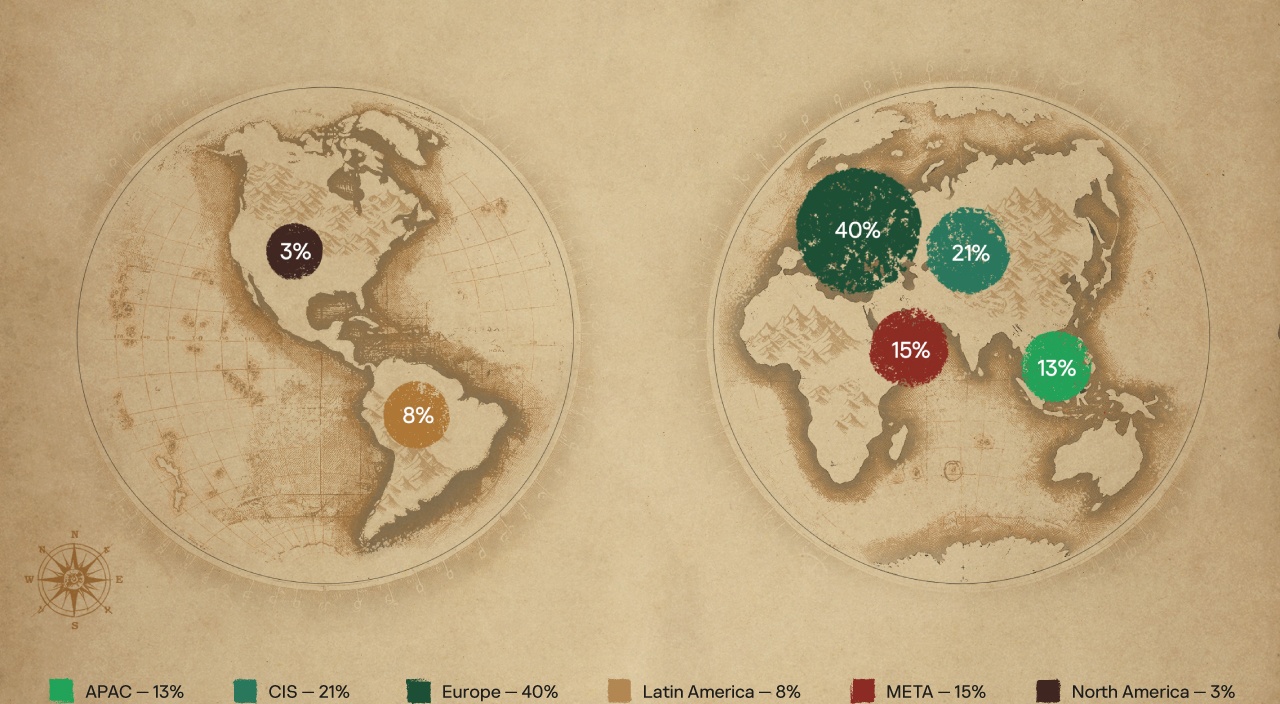
Kaspersky MDR customers span the globe, giving us a comprehensive and objective view of regional attack behaviors and tactics. The largest concentration of customers is in Europe, the CIS, and the META regions.
Kaspersky MDR customers by region
Distribution of incidents by industry
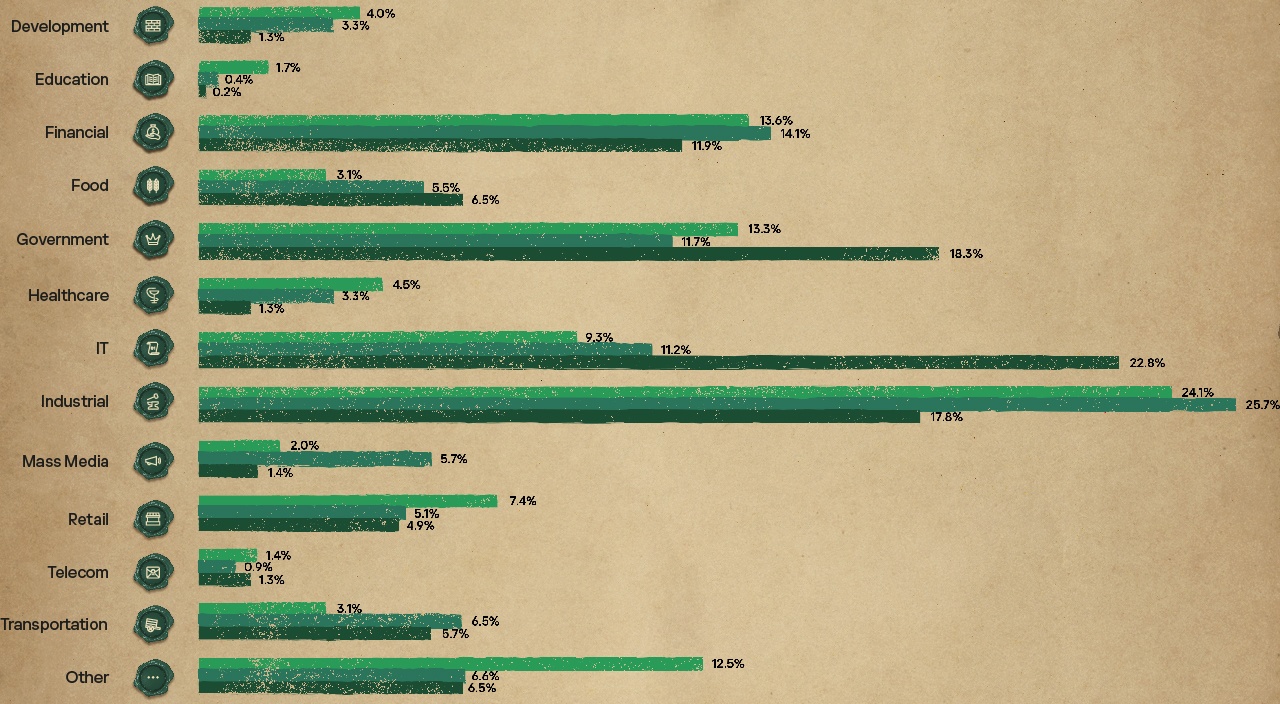
In 2024, the MDR team observed the highest number of incidents in the industrial (25.7%), financial (14.1%), and government (11.7%) sectors. However, if we consider only high-severity incidents, the distribution is somewhat different: 22.8% in IT, 18.3% in government, 17.8% in industrial, and 11.9% in the financial sector.
The most attacked industries
General observations and recommendations
In 2024, we observed the following trends in the incidents detected by our SOC team:
High-severity incidents decreased, but complexity increased. The number of high-severity incidents decreased by 34% compared to 2023. However, the mean time to investigate and report these incidents increased by 48%, indicating a rise in the average complexity of attacks. This is supported by the fact that the vast majority of triggered detection rules and IoAs were from specialized XDR tools. This marks a shift from previous years, where OS log-based detection played a significant role. Given this trend, specialized tools like XDR are essential for effectively detecting and investigating modern threats.
Human-driven targeted attacks are increasing. Human-driven targeted attacks accounted for 43% of high-severity incidents – 74% more than in 2023 and 43% more than in 2022. Despite advances in automated detection tools, motivated attackers continue to find ways to bypass them. To counter such threats, human-driven solutions like Managed Detection and Response are critical. For organizations with in-house security operations teams, internal processes and technologies must be equipped to handle the modern threat landscape. Comprehensive SOC consulting services can help achieve this.
Attackers often return after a successful breach. The statistics consistently show that attackers often return after a successful attack. This is especially evident in the government sector, where attackers aim to persist in the system long-term for espionage purposes. In such cases, combining an XDR-equipped in-house SOC or outsourced MDR with regular Compromise Assessments is an effective way to detect and investigate incidents that may be missed by existing security measures.
Living off the Land techniques remain prevalent. Attackers often use Living off the Land (LotL) methods in infrastructures lacking proper system configuration controls. A significant number of incidents are linked to unauthorized changes, such as adding accounts to privileged groups or weakening secure configurations. To minimize false positives in these scenarios, effective configuration management and formal procedures for implementing changes and managing access are crucial.
User Execution and Phishing remain top threats.User Execution and Phishing techniques ranked again in the top three threats, with nearly 5% of high-severity incidents involving successful social engineering. Users are still the weakest link, making Security Awareness training an important focus for corporate information security planning.
To explore these and other trends in detail, download full report (PDF).
China’s top prosecutors have ramped up efforts to combat corruption at the grassroots level, particularly in healthcare, education and employment, as these areas directly impact people’s daily lives, officials from the Supreme People’s Procuratorate said. More than 3,000 people were prosecuted in 2024 for dereliction of duty in these sectors, a 1.6-fold increase from the previous year, according to statistics released on Tuesday by the Supreme People’s Procuratorate. Procuratorial authorities have focused on tackling corruption linked to people’s livelihoods and rural revitalization, said Zhang Xiaojin, head of the procuratorate’s division on duty-related crimes. To address public concerns over corruption in the healthcare sector, which has made medical treatment more difficult and expensive, prosecutors have targeted offenses such as taking kickbacks and embezzling health insurance funds. As a result, more than 1,800 individuals in the healthcare industry were prosecuted for duty-related crimes, Zhang said. In March 2024, the Supreme People’s Procuratorate, the Supreme People’s Court and the Ministry of Public Security issued a guideline on handling health insurance fraud cases to step up enforcement against such offenses, which have been on the rise. The guideline states that conspirators involved in fraud schemes carried out by medical institutions, such as fabricating medical services and falsifying medical bills, will be prosecuted. Individuals who illegally receive health insurance refunds through fraudulent means, including by using others’ medical insurance certificates, will also face punishment. Meanwhile, more than 1,200 people from township and village organizations were prosecuted for duty-related crimes last year, marking a 48.5 percent year-on-year increase. “Punishing corruption crimes that affect the public is also a way of protecting people’s livelihoods,” Zhang said. To further safeguard public interests, procuratorial authorities nationwide handled more than 92,000 public interest litigation cases from January to November last year in areas such as food and drug safety, the rights of vulnerable groups, and the security of citizens’ personal information, according to Xu Xiangchun, director of the Supreme People’s Procuratorate’s Public Interest Litigation Procuratorate Office. “Public interest is the interest of the people. The procuratorial public interest litigation system is closely tied to daily life,” Xu said in an interview on Wednesday. “In 2024, prosecutors focused on public concerns, actively responded to livelihood issues, and handled cases in a precise and law-abiding manner.” In one case, the Qinghai Provincial People’s Procuratorate filed administrative public interest litigation against more than 60 express delivery companies for failing to legally contribute to work injury insurance for couriers, strengthening labor protections. In another case, the procuratorial office in Tianfu New Area in Chengdu, the capital of Sichuan province, urged administrative bodies to revise village autonomy regulations in eight villages that violated women’s rights.
The latest child poverty statistics show child poverty reduction must remain a priority for the Government.
“Children should not be living in poverty, and the latest statistics are hugely concerning,” Labour child poverty reduction spokesperson Carmel Sepuloni said.
“There are huge challenges that families are facing right now, with high cost of living, high unemployment and housing – and significant work is needed to lift more children out of poverty.
“Labour is staunchly committed to child poverty reduction, and I am proud that it remained a priority for us throughout our time in government, even with the immense challenges of the COVID-19 pandemic. But there is still so much more work to do.
“The Government must put our tamariki first. Now is not the time to be bending over backwards for landlords and tobacco companies, instead we must focus on alleviating the struggle for families and their children who need our support most.
“Denying funding to food banks, stopping families from accessing emergency housing, and building no new public homes will only exacerbate these statistics. Stagnating benefits by tying increases to inflation instead of wage growth will mean less money for many families over time. Going against official advice on minimum wage increases means many of our poorest workers are going backwards.
“These statistics come after a recent report showing half of Pacific children sometimes go without food, and homelessness is increasing.
“I urge the Government to take these statistics seriously. Diminishing the child poverty targets to make it easier to achieve is a worrying sign they’re not.
“We made changes that lifted tens of thousands of children out of poverty while in government. Child poverty reduction must remain a priority for this Government too,” said Carmel Sepuloni.
This morning’s Stats NZ child poverty statistics should act as a wake-up call for the government: with no movement in child poverty rates since June 2023, it’s time to make the wellbeing of our tamariki a political priority.
“Poverty is a political choice we do not have to accept. We can choose to end it–our mokopuna deserve nothing less,” says Green Party co-leader and Child Poverty spokesperson, Hon Marama Davidson.
“Every child in Aotearoa deserves a warm, dry home and a full belly. We have all the tools we need to give them that and more.
“What we need is ambition and commitment to end the cycle of thousands of children across generations falling through the cracks and being set up to fail for the rest of their lives. It is high time we started supporting our children to thrive.
“It’s well understood that the first few years set the stage for the rest of a child’s life. Living in a household mired in poverty has lasting consequences for the wellbeing of ourpēpi andtamariki.
“Unfortunately, as we have seen today, 156,000 children are growing up in material hardship. This is a national shame.
“Māori, Pacific and disabled children are disproportionately affected by child poverty, with 1 in 4, 1 in 3, and 1 in 5 children growing up in material hardship respectively. These are the very groups hit the hardest by the policies of a Government which has bent over backwards to hand billions of dollars in tax cuts to wealthy landlords, while ignoring the many struggling.
“The Green Party campaigned to end poverty for all families in Aotearoa by providing everyone with an Income Guarantee that would ensure every household and every child has all they need to thrive.
“We can’t keep tinkering around the edge and watering down child poverty reduction targets like we’ve seen the coalition doing this term. Our plan will put children’s wellbeing at the centre of decision-making and policy, where it should have been all along,”says Marama Davidson.
Save the Children is calling on the Government to commit to investing in policies to lift more children and whānau out of poverty following the release of today’s latest child poverty statistics that show no progress on meeting targets over the past year, and particular groups of children more at risk.
Child Poverty Statistics for the year ending June 2024 released today by Stats NZ show the number of children experiencing hardship in their everyday lives has largely remained the same, with specific groups of children – including mokopuna Māori, Pasifika and disabled children and those living in sole parent households – particularly impacted by poverty.
The cost of housing continues to push many families into poverty, with one third of low- income families spending more than 40% of their income on housing, compared to an average of 20% for all households. Today’s figures do not include those children and families living in emergency housing, the hardest end of poverty.
“Child poverty is complex and needs political commitment and investment across all governments if we are to achieve real change and enable all children in Aotearoa to thrive,” says Save the Children New Zealand’s Advocacy and Research Director Jacqui Southey.
“If we are to meaningfully reduce child poverty levels, we must be committed to meaningfully lifting the incomes of low-income families, including lifting welfare levels, and tackle the availability and cost of housing for all New Zealanders whether renting or owning their own homes.
“We cannot be trapped into seeing this as a single term or single government issue. And most importantly, we must not give up.”
Ms Southey says the data across the reporting period from 2018 shows a lift in poverty levels since 2021, although the primary measures remain lower than, or at, the 2018 baseline.
“Although there is no statistically significant difference to report, the graphs show that over time we are no longer moving the dial in the right direction and this is extremely concerning.
“We cannot ignore that one in four of our children are living in material hardship and one in five are living below the poverty line after housing costs in Aotearoa. For each of these numbers, a real child is experiencing the everyday hardships of not having enough.
“For particular groups of children, this number is much higher. Pasifika children continue to experience poverty at a higher rate than other groups of children. It is essential that we understand the why of these statistics so we can make the necessary changes to ensure Pasifika children do not lead lives disadvantaged by poverty.”
Ms Southey says children living in sole parent households are also significantly impacted by child poverty. Nearly 80% of households living on the lowest incomes are sole parent households, on average living on a disposable income of less than $46,000.
“By any measure this is a shockingly low-income level for a family and is directly contributing to levels of child poverty in Aotearoa New Zealand,” she says.
“It is not acceptable that our economic systems are set up to push sole parent families into poverty, this is a critical area for change.”
Save the Children is calling for targeted policies and investment to significantly improve support for sole parent families that would ease the economic burden they are living under.
About Save the Children NZ:
Save the Children works in 120 countries across the world. The organisation responds to emergencies and works with children and their communities to ensure they survive, learn and are protected.
Save the Children NZ currently supports international programmes in Fiji, Cambodia, Bangladesh, Laos, Nepal, Vanuatu, Solomon Islands and Papua New Guinea. Areas of work include child protection, education and literacy, disaster risk reduction and climate adaptation, and alleviating child poverty.
The Child Poverty Action Group (CPAG) is urging the government to put child poverty back on the agenda after official data showed an increase of children living in hardship over the past two years.
It’s likely an extra 36,300 children are living in material hardship compared to 2022, according to official child poverty statistics from StatsNZ released today.
“Child poverty data was trending down from 2018 but in the past two years we have seen an increase in material hardship rates which is a concerning trend,” CPAG executive officer Sarita Divis said.
Stats NZ figures showed a likely 156,600 New Zealand children – 1 in 7 or 13.4 percent – are living in material hardship where their families cannot afford the basics.
Those numbers were significantly higher for Māori (23.9 percent), Pacific (28.7 percent) and disabled (21 percent) children.
“Colonisation and discrimination are at the root of these disproportionate rates for marginalised groups. The government needs to reverse the cuts made to community-led approaches.”
“We know the broad brush stroke of economic growth benefits those already doing well and doesn’t help raise incomes of those struggling,” Ms Divis said.
“We need to see a concerted effort with policies that we know will help. The government has ignored official advice on introducing measures to help improve child poverty rates and instead has focused on cruel actions that we know hurt children such as benefit sanctions.”
CPAG urged the government to address urgent matters like food insecurity.
“For a long time now, as a country, we have lived with low wages and inadequate welfare, an unfair tax system, high housing costs, and ongoing underinvestment in key services that help the lowest-income families,” Ms Divis said.
“And as our cost of living has increased substantially over recent times, along with increased unemployment, it is no wonder that parents, despite their best efforts, struggle to provide the basics for their children.”
The aim of the Child Poverty Reduction Act (2018) is to address a significant and sustained reduction in child poverty.
While in opposition National supported the implementation of the act. At the time current child poverty reduction Minister Louise Upston said then the targets were not ambitious enough.
The Prime Minister also talked about child poverty in his maiden speech to parliament in 2021 and we urge both to go back to their commitments.
Data released today by Statistics New Zealand showed the urgent problem facing Aotearoa New Zealand in tackling child poverty, said NZCTU Te Kauae Kaimahi Economist Craig Renney.
“Child poverty is estimated by Stats NZ on three measures – before housing costs, after housing costs, and material poverty. All three central estimates of poverty rose last year. This is the second year in a row in which the trend is heading in the wrong direction. We need action now to turn this trend around,” said Renney.
“1 in 7 children are estimated to be living in households where they experience material poverty – that means 156,000 kids are missing out on essentials and living in cold and damp housing. That is the highest number since 2015.
“Child poverty is a prison that holds too many children in Aotearoa back. Unless we tackle this problem now, we will be paying the social costs over generations.
“Child poverty is not distributed equally. 1 in 4 tamariki Māori live in material poverty. 1 in 3 Pacific children live in material poverty. Where a household has a disabled person, 1 in 4 children in those households are in material poverty. For all these groups the number of children in material poverty has grown over the past two years.
“The Government is now missing all three of its child poverty targets. The Government’s key response to child poverty has been to water down the targets, reduce the value of welfare support, and cut the real value of the minimum wage.
“There is no plan to help these families living in poverty, instead they are being threatened with further sanctions and penalties.
“The Government is urgently talking up the need for an economic plan, but it doesn’t seem as if it shares the same sense of urgency for child poverty. Children deserve better than this Government’s indifference,” said Renney.
Source: United States Senator for Washington State Patty Murray
*** VIDEO of Senator Murray’s FULL questioningHERE***
Washington, D.C. — Today, U.S. Senator Patty Murray (D-WA), a senior member and former Chairof the Senate Health, Education, Labor, and Pensions (HELP) Committee, questioned former Congresswoman Lori Chavez-DeRemer, President Donald Trump’s nominee to lead the Department of Labor (DOL), at a HELP committee hearing on her nomination. Murray pressed Chavez-DeRemer on the Trump administration’s unprecedented and unlawful efforts to hold up federal funding Congress passed into law, and whether it’s appropriate for Elon Musk—whose companies have repeatedly been accused of violating labor laws—to have access to sensitive, market-moving data at the Department of Labor. Murray also asked Chavez-DeRemer about how she would make sure the Department of Labor’s Wage and Hour Division and the Solicitor’s office would enforce our nation’s child labor law, as the number of minors employed in violation of child labor laws has increased dramatically since 2019—something Senator Murray has introduced legislation to combat.
Murray began by pressing Chavez-DeRemer on Trump’s ongoing illegal funding freezes—and whether she will follow the law and ensure that funding passed by Congress and signed into law isn’t illegally held up by the Trump administration. “The Trump administration is flagrantly violating the bipartisan agreements in our appropriations law by refusing to spend money that Congress—in a bipartisan manner—has passed for the American people. I’ve been hearing about it in my home state of Washington. I heard from an organization in Edmonds about whether or not it will now be able to provide support for our veterans who are seeking educational and employment opportunities as they transition to civilian life. I heard from a workforce training program that operates statewide about whether they’ll now be able to continue to pair workers with employers in the grocery industry.”
“You should know that the chaos surrounding these funding freezes is causing real damage to people’s lives. So, I want to know: will you commit to following appropriations laws and the Impoundment Control Act?”
Chavez DeRemer replied that, “The President of the United States has the power to determine what he’s going to do through his executive power. I have not been confirmed. I have not been read into all that.”
“Ok I’m asking you: will you follow the law?,” Murray asked. “There is an Impoundment Control Act—will you follow that law?”
“I will follow the law and the Constitution,” Chavez DeRemer replied.
Murray pressed: “If you receive a directive to violate appropriations laws and withhold funding for workers, what will you do?”
“I do not believe the President is going to ask me to break the law,” Chavez DeRemer said.
Murray followed up: “But we have seen that across the board since he was put into office—where he is violating that law—so you will likely be asked. What will you do?”
“Well it’s a hypothetical, I have not talked to the President on this issue,” Chavez DeRemer replied.
Murray pressed again: “So you won’t commit to following the law if the President tells you to violate it?”
“I will commit to following the law and I do not believe the President would ever ask me to break the law,” said Chavez DeRemer.
Murray continued her questioning by asking about Elon Musk’s DOGE team accessing sensitive information at the Department of Labor—and the serious conflict of interest concerns it raised. “Last week, Elon Musk’s DOGE team came to the Department of Labor and got access to the Department’s sensitive information system. Musk’s companies have, as you must know, been repeatedly accused of violating labor laws—including workplace safety laws, discrimination laws, and wage and hour laws. In fact, OSHA has investigated Tesla and SpaceX. Now, Elon can access those investigations about HIS companies–because he’s gone in and gotten those records. He can also access sensitive, market moving data created by the Bureau of Labor Statistics. That gives him tremendous power to manipulate quarterly jobs numbers and other important economic data—to say nothing of raising potential insider trading concerns,” Murray continued.
“Just to make this abundantly clear: Elon Musk is now in a position to use his unelected role to use confidential government data to advance his own corporate interests, while suppressing his competitors. Do you believe it is appropriate for someone with such blatant conflicts of interest to have access to those confidential economic and personal information?”
Chavez DeRemer responded, “Thank you Senator Murray. If I have the honor of being confirmed by this committee and the full Senate, then I will have the opportunity—I have not stepped foot into the Department of Labor. And I understand…”
Murray continued: “Well, my question to you is will you protect the private information of people whose records you will be overseeing? Will you allow anyone—a billionaire, or anyone else—to come in and access that?”
Chavez DeRemer evaded: “Again, because I have not been confirmed, I only see the reports that everybody else is seeing—I have not been read into that. If confirmed, I will…”
Murray pressed: “You’re not answering the question.”
Chavez DeRemer replied that, “If confirmed, I will support the Department of Labor. I think it’s important to support the Department of Labor. But I have not been…”
Murray pressed again: “… the private information that you will be overseeing? Will you protect that?”
“I would protect the private information. On this issue, I have not been privy to those conversations with the President—I have seen that. If confirmed, I commit to you that I will always protect the Department of Labor and those issues,” said Chavez DeRemer, finally.
Murray concluded her questioning by raising awareness of the worrying spike in child labor violations over the last five years. “Well, let me ask you about child labor. It’s an area that I have been very worried about–the rise of child labor violations. The Wage and Hour Division at the department has actually seen a 31 percent increase in minors employed in violation of child labor laws since 2019. In the last administration, the Wage and Hour Division at DOL and the Solicitor’s office worked really hard to secure some really important victories against some really egregious violators. How will you make sure that the Wage and Hour Division and the Solicitor’s office work together to enforce our child labor laws in this country?” Murray asked.
Chavez DeRemer responded, “Well, protecting… child labor is abhorrent. And nobody should stand for child labor exploitation. I will do everything in my power within the Department of Labor to double down on the safety of all American workers that are exploited–but especially child labor. And I would love to work with your office, if this is an important issue–it should be important to everybody, making sure that we protect against any child labor exploitation.”
Throughout her career, Senator Murray has championed workers’ rights and fought to combat employment discrimination, including as the top Democrat on the Senate labor committee from 2015-2022—among other things, Senator Murray fought back against a proposed DOL rule by the Trump administration that would allow federal contractors and subcontractors to justify discrimination against women, LGBTQ+ people, and members of certain religious groups on ideological grounds. Senator Murray first introduced the Protecting the Right to Organize (PRO) Act—comprehensive labor legislation to protect workers’ right to stand together and bargain for fairer wages, better benefits, and safer workplaces—in the 116th Congress. Murray also leads the Paycheck Fairness Act to combat wage discrimination and help close the wage gap, and has helped lead the fight for paid family and medical leave since she first joined Congress.
No movement in child poverty rates for year ended June 2024 –20 February 2025 –None of the nine measures of child poverty showed a statistically significant change in the year ended June 2024, compared with the previous year, according to figures released by Stats NZ today.
Three of the nine child poverty measures have decreased from the baseline year (year ended June 2018) to the year ended June 2024. The rest showed no statistically significant changes.
“There has been no movement in the child poverty rates since June 2023,” statistical delivery spokesperson Abby Johnston said. “If we look over the longer term, however, we can see that two of the primary measures and one of the supplementary measures have statistically significant decreases from the baseline year ending June 2018.”
No movement in child poverty rates for year ended June 2024 – 20 February 2025 – None of the nine measures of child poverty showed a statistically significant change in the year ended June 2024, compared with the previous year, according to figures released by Stats NZ today.
Three of the nine child poverty measures have decreased from the baseline year (year ended June 2018) to the year ended June 2024. The rest showed no statistically significant changes.
“There has been no movement in the child poverty rates since June 2023,” statistical delivery spokesperson Abby Johnston said. “If we look over the longer term, however, we can see that two of the primary measures and one of the supplementary measures have statistically significant decreases from the baseline year ending June 2018.”
Housing costs continue to put pressure on households in year to June 2024 – 20 February 2025 – One-third of low-income households in Aotearoa New Zealand spent more than 40 percent of their income on housing costs in the year ended June 2024, according to data released by Stats NZ today.
In the year ended June 2024, approximately 31 percent of households in the lowest two income quintiles spent 40 percent or more of their income on housing costs (31.7 percent of households in the lowest income quintile (under $41,600) and 31.0 percent for those in the second income quintile ($41,600 to $69,999)).
Across all households, 19.7 percent spent 40 percent or more of their income on housing costs, up from 18.2 percent the previous year.
Source: The Conversation – Canada – By Jack L. Rozdilsky, Associate Professor of Disaster and Emergency Management, York University, Canada
The day after the Delta Flight 4819 crash on Feb. 17 at Toronto Pearson International Airport, the damaged aircraft remained on the runway as the crash investigation ramped up.
Whether it was due to luck, skill, heroism or aircraft design, the evacuation of passengers took place quickly and everyone aboard the ill-fated flight were able to exit the plane and make it on to the tarmac.
Post-accident investigations will provide more details about what contributed to the accident, and the strengths and weaknesses of the emergency response. But one point is already obvious: the positive outcome speaks to the importance of the institutions and expertise that keep our aviation system safe overall.
The response
The response to Delta Flight 4819 air crash was an example of just how important inter-agency collaboration is in emergency response.
Within minutes of the crash, not only were the airport’s firefighters on the scene to douse any flames and assist with the rescue of passengers, but other agencies were already providing aid. Mississauga Fire and Emergency Services sent six vehicles to the airport as part of the mutual aid effort.
The news conference following the accident involving Delta Flight 4819 at Toronto Pearson Airport.
Ornge, Ontario’s air ambulance system, also sent multiple units to the scene to help transport injured passengers to hospitals, aiding Peel Region paramedics who were also triaging passengers.
Multiple agencies collaborated to save lives. This collaboration in emergency response isn’t developed on the fly, but instead follows a highly choreographed and practised set of plans.
Both the airport and partner agencies maintain air crash emergency response plans that lay out the details of how help will be requested, where aid will arrive and how to scale up the response as needed.
Preparation facilitates response
A primary reason the air crash response worked so well was preparation. An important component of preparation at airports is regularly testing response plans and operations with specialized full-scale mock disaster exercises.
In these exercises, airport response personnel work through scenarios that simulate emergencies. Real emergency equipment is tested, volunteer victims participate in search-and-rescue scenarios and theatrical make-up is even used to simulate injuries.
These exercises serve multiple purposes, including increasing familiarity with the plan for responders and creating real challenges that will help to find any potential weaknesses in the plan before a real event.
Practice saves lives
Another less desirable way responses can be improved is for an actual disaster to happen. Actual air crash disasters force plans to be activated, require response actions to be taken, and — ideally — foster adaptive learning through hard-won experience.
One past significant Pearson crash with no casualties is especially relevant to revisit now. In August 2005, Air France Flight 358 rolled off the runway during landing and caught fire.
Twenty years later, and Pearson CEO Deborah Flint said the crew, airport emergency workers and first responders mounted a “textbook response” to the Delta incident.
An investigation begins
While the immediate response may have been over fairly quickly after passengers were successfully evacuated, the mutual aid and collaboration between agencies will continue in the months ahead.
The integrity of the investigation depends on strong institutions and trust in experts. In the context of air crashes, lessons learned from these investigations are critical to improving airline procedures for maintaining safety, creating better regulation to avoid accidents in the first place and ensuring emergency systems are well prepared.
Safety in aviation
According to the most recent TSB data, the 2023 overall air transportation accident rate of 2.8 per 100,000 aircraft movements is among the lowest recorded by the federal agency since it began measuring in 2004.
Within the first 24 hours after the Delta crash, a pivot from the emergency response phase to the investigation phase took place.
It’s far too early to speculate on what the ultimate cause of the accident may have been. While learning about what contributed to the crash of Delta Flight 4819 is important, we can also seek comfort in the fact that air travel in Canada continues to be a safe activity for passengers.
Jack L. Rozdilsky receives support for research communication and public scholarship from York University. He also has received research support from the Canadian Institutes of Health Research.
Whether it’s colleges in Vancouver, Lethbridge or Toronto, many federally funded English-language training programs are experiencing crushing funding cuts resulting in closures, layoffs and fewer classes available.
The LINC program has 60 assessment sites across the country and has served roughly 50,000-60,000 learners per year.
Language learning programs expecting to receive the most significant cuts will be those focused on building employment skills and preparing learners for higher education.
Rather than the reducing barriers to newcomers’ employment as promised, the changes will make it more difficult for newcomers to access the language learning programs needed for work and life.
While not without critique, LINC classes have an important function beyond helping newcomers acquire language skills.
Through these programs, newcomers build confidence to be able to advocate for themselves, develop a sense of citizenship, contribute to values of equality, respect and rights and access resources essential for life in Canada. All of these contribute to one’s sense of belonging.
Addressing connection, community
There is strong evidence that learning in groups reduces isolation, loneliness and feelings of unbelonging, and increases sense of community and connection for immigrants.
Research shows that learning activities that have goals beyond developing practical language skills such as drama and poetry are opportunities to build a sense of community, empowerment and belonging to facilitate intercultural dialogue.
Canada is often portrayed as a tolerant and welcoming country, a stronghold of multiculturalism and multilingualism. Canada has made promises to build a nation that is economically, socially and culturally prosperous.
These residents should have access to learning offerings and intercultural socialization opportunities. These would ideally include offerings centred on critical conversations, discussions of shared experiences, visions for life in Canada and building allyships between new immigrants and long-time citizens. Such learning, socialization and relationship-building opportunities could be made accessible through LINC.
Social stratification concerns
By reducing funding available for English-language classes, the federal government is denying thousands of people their fundamental right to education. The current budget cuts will inevitably contribute to growing social stratification and increase the challenges faced by the already overwhelmed immigration and educational sectors.
A recent statement by TESL Ontario, the certification body for educators who teach English as another language in Ontario, urges the Canadian government to consider impacts on language teachers who face precarious employment and low pay, a concern shared by unions across the public sector.
Language learning programs are foundational to ensuring sustainable settlement in Canada. A truly sustainable development strategy would see the continued funding of English-language programs as essential to ensuring the continued economic and societal well-being of all people living in Canada.
The authors do not work for, consult, own shares in or receive funding from any company or organisation that would benefit from this article, and have disclosed no relevant affiliations beyond their academic appointment.
This week, updated figures once again showed an increasing number of Australian families are choosing to send their children to private schools.
Just over 63% of Australian students are enrolled in government schools. Almost 20% are in Catholic schools and almost 17% go to independent schools, according to Australian Bureau of Statistics.
How much is it costing parents?
While headlines often focus on the most expensive schools, there is a huge range of private schools operating in Australia.
In our new analysis, which is not peer-reviewed, we looked at private school fees in New South Wales and Victoria (the two most populous states).
We looked only at independent schools. The non-government school sector is made up of Catholic and independent schools, but Catholic private schools typically charge lower fees and this can skew the data on the sector.
The tuition fees we refer to are based on what is publicly available through each school’s website.
We collected all available data for Year 12 tuition fees in every independent school in NSW and Victoria in 2021 and 2024. We chose to focus on Year 12, as this is typically the most expensive year at school.
In NSW, we found fee information for 369 schools (77% of independent schools).
In Victoria we found fee information for 138 schools (92% of independent schools).
Private school fees don’t necessarily include other expenses such as music or sport. DGLimages/Shutterstock
In 2024, the average tuition fee for a Year 12 student in NSW was A$15,674 and in Victoria it was $20,923.
This is in keeping with other analyses showing Victoria is the most expensive state for school fees in Australia.
These figures suggest while many schools are far from the headlines of “$50,000 fees”, many families are still paying substantial amounts for a private education – particularly if they have more than one child.
However, there were significant variations in tuition fees between schools. In NSW, 12% of schools in our sample charged under $5,000 per year per student. In Victoria, 9% charged less than $5,000.
One alternative school in NSW charged just $100 per student per year. This is less than parents typically pay out of their own pocket at the average public school.
This shows us there some cheaper options available, depending on where families live although they are certainly not the majority.
At the other end of the sample, The Scots College in NSW and Geelong Grammar School in Victoria charged the highest tuition fees in their respective states for 2024. Geelong Grammar charged $49,720 for Year 12; Scots charged $46,920.
There are other costs
While we only looked at tuition fees, families might also have to pay levies for infrastructure or technology.
There are also extra charges for activities such as camps, excursions and incursions, as well as fees for uniforms, school buses, and special subjects such as music and sport.
For the majority of independent schools, parents are asked to pay to enrol or go on the waiting list. The average application fee in Victoria was $156 and in NSW was $197. These fees widely differed between schools, ranging from zero to $650.
Our analysis found in Victoria, tuition fees in independent schools increased by an average of 15% from 2021 to 2024 – roughly 3.75% each year. In NSW, fees increased by 13% from 2021 to 2024, or about 3.25% per year.
In media coverage, individual schools have blamed fee increases on inflation, “operational costs”, rising staff costs, and a drop in federal funding.
Will fees keep rising?
In some OECD countries, if private schools receive government funding, there are conditions placed on what they can charge for tuition.
This is not the case in Australia, where the system is unregulated and uncapped.
Unless this policy approach changes, we can expect private schools to keep increasing fees, as long as there are families willing and able to pay them.
Emma Rowe receives funding from the Australian Research Council.
Diana Langmead does not work for, consult, own shares in or receive funding from any company or organisation that would benefit from this article, and has disclosed no relevant affiliations beyond their academic appointment.
Source: The Conversation (Au and NZ) – By Chris Wallace, Professor, School of Politics Economics & Society, Faculty of Business Government & Law, University of Canberra
Tasmanian Senator Jacqui Lambie represents the lowest-income Australians, with median weekly earnings of $1,208 a week. In the Australian Capital Territory, where the nation’s highest median weekly earners live, including the brains trust of the Australian Public Service, it’s $1,688 a week – 40% higher.
As a federal politician, Lambie shuttles between these two starkly different earnings worlds and is not happy about the disparity.
Of course, Lambie herself is on a reasonable wicket. Parliamentarians’ base salaries are $233,660 a year, according to an Instagram post she made this month drawing attention to the issue.
At a time of considerable financial stress for Australians hit by the combination of inflation, high interest rates and housing shortages, Lambie struck a nerve with her post, which listed a range of public roles drawing big six figure-plus annual salaries.
In doing so, Lambie underlined the far higher salaries paid to senior public servants compared to the ministers to whom they’re responsible.
Department of Prime Minister and Cabinet Secretary Glyn Davis earns $1,011,410 a year, 66% more than the man he serves, Prime Minister Anthony Albanese, who earns $607,516.
Treasury Secretary Steven Kennedy’s salary is more than double that of Treasurer Jim Chalmers, who is paid $438,112. Another three departmental secretaries each earn $960,840.
Lambie’s Instagram post drew hundreds of comments including:
How does a public servant earn more than the prime minister? That’s wrong!!
Politicians get flak about their salaries from belligerent constituents, but also keenly feel the injustice of earning far less than senior public servants.
Higher pay for higher risk
The salaries of both politicians and public servants have long and specific histories. Without an income, only the rich could afford to be politicians, so publicly paid allowances and salaries have historically been an important equity and inclusion measure. They remain so today.
The original framers of the public service component of our Westminster system of government believed that to prevent conflicts of interest that drive corruption, the bureaucracy ought to be staffed by “permanent officers” with job security. In exchange for what, barring wrongdoing, was going to be a lifetime career, public service pay was historically adequate but not extravagant.
This nexus was broken when, in exchange for higher pay, the Keating government introduced five-year contracts for departmental secretaries in March 1994. Three departmental secretaries refused contracts and continued as “permanent officers”. The rest took the money and the increased employment risk that went with it.
Two years later, the Keating government lost office and incoming Prime Minister John Howard summarily fired nearly a third of departmental secretaries, fatally eroding the “frank and fearless” tradition of public service advice underpinned by security of employment.
Compromised advice
Contract employment for secretaries, who effectively can now be fired at will, not only created pressure for public servants to tell ministers what they wanted to hear, but also untethered their salaries from historical norms. Higher pay reflected that insecurity. The flow-on effect meant other salaries in the senior executive service also floated upwards.
Contracts for secretaries have also been central to the revolving door that’s developed between the top of the public service and large consulting firms, creating conflicts of interest unknown in the traditional Westminster public service.
The big four consulting firms are attractive alternative employers for highly paid and insecure departmental secretaries.
Little wonder, then, that a quasi-privatisation of public service advice through consultancy contracts to those firms occurred, at vast expense to taxpayers – something Finance Minister Katy Gallagher has made strong efforts to reverse.
Lambie’s push for answers
Lambie has introduced the Remuneration Tribunal Amendment (There for the Public Service, Not Profit) Bill 2025 to cap senior APS pay at $430,000. It’s a bid to address remuneration which has raced far beyond ministerial salaries, and well beyond reasonable public expectations.
The Lambie bill has been referred to a Senate committee, which presents an opportunity to evolve debate on the deeper reasons for what has gone awry in the public service and to devise a response that gets to the root of the problem.
The precarity of contract employment for departmental secretaries, which is used to justify high salaries, is both unnecessary and harmful to the quality of public policy and administration in Australia.
The intrinsic interest and challenge of working for the nation and the betterment of its citizens has always paid well in terms of a “psychic wage” on top of senior public servants’ actual salaries. If the complaint is that an executive could make much more in the private sector, they’re probably not the right person to work in the public service anyway.
One reply to Lambie’s Insta post summed up the situation:
It’s the pollies that made this mess.
Politicians are the ones who are going to have to clean it up.
It is neither likely nor plausible that highly paid public service leaders will cut their own salaries in return for an end to the five year contract system for secretaries.
But that is what a return to good public service governance – and to frank and fearless advice in the national interest – now requires.
Chris Wallace has received funding from the Australian Research Council.
Source: The Conversation (Au and NZ) – By David Rowe, Emeritus Professor of Cultural Research, Institute for Culture and Society, Western Sydney University
Lukas Coch/AAP, Shutterstock, X.com, The Conversation
As the next federal election came into view before the summer break, concern increased that Labor wouldn’t be honouring its commitment to introduce new restrictions on online (especially sport) gambling advertising during the current parliamentary sitting.
The Greens made a last-ditch attempt to cooperate with the government to pass some reforms in the February 2025 sitting, but were rebuffed.
Instead, Communications Minister Michelle Rowland blamed the delay on the complexity of advertising reform and the need to continue consultation.
This is despite a House of Representatives inquiry into the harmful impacts of online gambling, led by the late Labor MP Peta Murphy, concluding in June 2023.
There are both deep historical and immediate political reasons why this legislation has been bogged down.
A nation of sporting gamblers
Professional sport in Australia has an inglorious history of promoting unhealthy goods and services, including cigarettes, sugary drinks, fast food, alcohol and gambling.
Television and, later, online advertisements have been particularly effective vehicles for connecting sport gambling with potential consumers.
There is convincing evidence that Australia’s world-leading per capita expenditure on gambling and the integral role of sport gambling ads cause harm to a considerable number of people, families and communities.
Such harm includes negative effects on relationships, health, psychological wellbeing, finances, work and study.
The gamblification of sport
Although sport comes third among the main areas of gambling in Australia, it is by far the most prominent, especially in homes.
Sport and media’s enthusiasm for gambling money has provoked strong pushback over its negative social consequences, with mounting public pressure for greater controls on gambling advertising.
A recent poll found about 72% of those surveyed wanted to ban online gambling ads, while another of AFL fans reported 76% supported television and radio ad bans.
The response of and to the Murphy Report
The House of Representatives Standing Committee on Social Policy and Legal Affairs was charged with investigating online gambling and its impacts.
It made 31 recommendations, with rare cross-party support, in its “you win some, you lose more” report (which was not only about sport).
Contrary to most public debate and media reporting, it did not formally recommend a blanket ban on all gambling advertising. Its terms of reference only covered online gambling.
But Murphy’s foreword – calling for a “phased, comprehensive ban on all gambling advertising on all media; broadcast and online, that leaves no room for circumvention” – caught the most attention.
The main recommendation was for a three-year, four-phase ban on all forms of online gambling advertising. Dedicated racing channels and programming were exempted and small community radio broadcasters given extra time to comply.
After further consultation lasting almost 18 months, it’s clear this calibrated proposal is not favoured by the government.
Journalists were backgrounded about a watered down law capping ads for gambling at two per hour per TV channel before 10pm, and banning them for an hour either side of a live sport event. A blanket ban would apply only to betting ads on social media and other digital platforms.
Yet even these more modest reforms did not proceed as anticipated.
The reason, it has been widely reported, was heavy lobbying by the sport, media and gambling industries.
However, Australia’s major sports leagues derive significant gambling revenue from direct sources (sponsorship, product fees) and indirectly from the value of media rights.
The AFL and NRL generated cumulative revenues of $1.06 billion and $701 million respectively in 2023.
So while sport leagues would have less capacity to monetise their media rights if gambling ads were reduced, it would neither threaten professional sport in general nor seriously jeopardise funding of junior participation.
Follow the money
An Australian Communications and Media Authority report discovered capital city free-to-air television featured 1,381 gambling spots per day between May 2022 and April 2023.
Gambling companies spent $162 million on free-to-air television advertising during this period, not including further investment on subscription platforms.
As free-to-air commercial TV is already losing advertising income to digital media platforms, restrictions on this lucrative advertiser category would not be as easily absorbed today as the tobacco advertising bans in the 1970s.
This is why sports and their media and betting partners are fighting so hard against the legislation.
And all this capital flowing to and through sport, gambling, and media has created the potential to inflict political harm on gambling reforming governments.
Negotiations behind closed doors can easily break out into public campaigns, akin to the infamous “axe the (carbon) tax” agitation, if powerful organisations are not satisfied.
Gambling and the young voter
Sport gambling ads in Australia have especially targeted young men in a jocular larrikin style. But young women are now also being induced to gamble in greater numbers.
Those who want curbs on sport gambling advertisements have been cast by some as “wowsers” and “puritans”.
State intervention in the sport-media-gambling nexus may provoke a backlash that working-class men are under attack for engaging in their favourite pastimes.
Like the latest reforms to sport TV anti-siphoning laws, new policies are the product of high-stakes horse trading between nervous governments and pressure groups with manifestly variable degrees of influence.
David Rowe has received funding from the Australian Research Council to support research relating to this article: Struggling for Possession: The Control and Use of Online Media Sport (with Brett Hutchins, DP0877777); ‘A Nation of “Good Sports”? Cultural Citizenship and Sport in Contemporary Australia’ (DP130104502), and ‘Australian Cultural Fields: National and Transnational Dynamics’ (with Tony Bennett et al, DP140101970).
Hunter Fujak does not work for, consult, own shares in or receive funding from any company or organisation that would benefit from this article, and has disclosed no relevant affiliations beyond their academic appointment.
Source: The Conversation – UK – By Sarah Rosenberg-Jansen, Research Advisor on Humanitarian Energy, University of Oxford
Refugees are providing energy within camps home to millions of displaced people around the world, my research has found.
There are now more than 120 million forcibly displaced people globally. Although United Nations humanitarian agencies provide firewood and small electric lanterns, these are often not enough for most families.
To make up the shortfall, entrepreneurial refugees in the camps I visited have become energy suppliers by establishing shops, phone charging stations, even cinemas.
While visiting camps administered by the UN Refugee Agency in Rwanda, Kenya, the Democratic Republic of the Congo, Somalia, Sudan, Uganda and other countries across Africa, I was struck by the hum of electricity and the smell of cooking in the camps’ markets. Energy was everywhere.
A mobile phone and electronics market shop at the Kakuma refugee camp, Kenya. Sarah Rosenberg-Jansen, CC BY-NC-ND
In all the camps I visited, people were selling clothes, cooking bowls and toys, as well as lighting and electrical appliances. These shops all used energy – computers totted up bills and printed receipts, radios played music, and people everywhere were using mobile phones and the internet. Fans and motors were working hard to keep things cool and the power on. Refugees buy these products at local markets – which are often run by refugees themselves.
After conducting over 170 interviews with refugees and humanitarian practitioners, it became clear refugees buy their own energy to run many of these cafes and shops: buying their own diesel, generators, or electricity technologies including solar panels and batteries.
Formal refugee energy access provided by humanitarian agencies or national governments is projected to be very low: Chatham House statistics suggest 94% of forcibly displaced people living in camps have no meaningful access to power, and 81% lack anything other than the most basic fuels for cooking.
Renewable connections
Local energy businesses operating around the camps in Rwanda and Kenya, such as BBOX or MESH Power, provide solar solutions such as selling solar panels and solar home systems from which refugees can have lighting, charge their phones and plug in electrical appliances. These renewable systems help to lower the costs – but sometimes the companies are not able to expand their businesses within refugee camps due to UN restrictions.
As one of the refugees I spoke to in Rwanda explained: “You can see two types of solar business really. Those using energy that is easy to get to – off-the-shelf products and services – to keep the lights on in the night, or offer cool drinks or a fan. And those businesses where really energy is the business … where people can use solar home systems or other technologies.”
Sadly, this picture is not uniform across the world. For example, buying diesel in refugee camps or purchasing kerosene for lanterns can be very expensive. Spending by displaced people on simple cooking fuels and technologies, as well as basic lighting, is estimated to be around US$200 (£160) per year per family, for less than four hours of energy a day.
Buying from external energy suppliers often comes at great cost to refugee families as energy in refugee camps can be incredibly expensive. Estimates suggest that refugee households in Kenya and Burkina Faso spend between 15% and 30% of their income on energy – a figure that in the UK would mean a household was in a situation of extreme fuel poverty.
In total, refugee households around the world spend at least US$2.1 billion (£1.68 billion) on energy each year.
Refugee-led businesses
In the face of such challenges, refugee energy entrepreneurs are expanding the range of energy services and products available to refugee communities in terms of sustainability: providing new solar solutions and electricity connections from solar-powered energy sources. For members of the refugee community who use this service, this can reduce the cost of energy.
These refugee-led enterprises often start after refugees have saved or borrowed money from friends and family to start their energy businesses – for example, by buying a solar panel and battery and charging customers to use the electricity it generates. Sometimes referred to as micro-enterprises or energy entrepreneurs, they go beyond being passive users of electricity and become active participants in the energy economies of refugee camps.
Examples of such businesses include Kakuma Ventures, based in Kakuma refugee camp in Kenya, which provides wifi and solar energy access to more than 1,500 people in the camps.
A grid pylon next to refugee homes at Kigeme refugee camp, Rwanda. Sarah Rosenberg-Jansen, CC BY-NC-ND
Another example is Patapia, based in camps in Uganda, which helps refugee women launch and grow businesses powered by clean energy. Successful refugee-led energy businesses are highlighted by the work of climate change charity Ashden through its Humanitarian Energy Award, and its support for local businesses leading the way on sustainable energy in humanitarian settings.
Indeed, many new global initiatives and humanitarian programmes are starting to take seriously the role of refugee-led organisations and businesses. Take the work of Last Mile Climate, which is dedicated to helping grassroots initiatives, refugee-led businesses, charities, humanitarian agencies and government organisations tackle climate-related challenges.
Refugees are also writing on this issue in the media, highlighting how important the issue of inclusivity is in delivering the sustainable energy transition in humanitarian contexts.
Don’t have time to read about climate change as much as you’d like?
English isn’t the first language of over 20% of pupils in schools in England, and this proportion is rising. The children in this group who also have special educational needs or disabilities may be falling through the cracks, missing out on support that would help them succeed.
My recent research analysed data from 2.5 million English primary school pupils. The findings show that bilingual learners with special educational needs especially struggle with reading. They trail behind both their peers without special educational needs, and other children with special educational needs who speak English as their first language.
When a pupil has a special educational need such as specific learning difficulties or autism, their language hurdles can make it harder to see the real cause of their challenges. Sometimes, a child’s limited English masks a disability. Other times, disabilities may be confused with language problems. This confusion can delay the help they need.
Reading is particularly a problem because strong vocabulary and language-processing skills are needed, and the extra task of learning English can slow them down in this area. Maths may rely less on advanced English, so the gap is often smaller in that subject.
Research suggests that if bilingual pupils with special educational needs get strong support in the early years, they can catch up significantly.
The right support
One useful method is data-based decision-making. This means teachers and special needs coordinators regularly track progress in reading, writing or maths. For example, teachers might assess oral reading fluency or brief writing samples to measure progress. By spotting which pupils are falling behind, they can provide small-group tutoring, phonics help or targeted vocabulary lessons.
Pupils also benefit from clear, structured lessons that focus on reading and writing. They may also need extra time to practise and may learn better if the same vocabulary is taught in different ways, such as through games or acting.
In addition, research shows that when teachers use examples or stories that reflect different languages and cultures, pupils stay more engaged. This “culturally responsive” teaching boosts children’s language skills.
For example, a case study on culturally responsive teaching for bilingual learners with disabilities has shown that connecting lessons to students’ own cultural and linguistic backgrounds can boost both their language skills and their reading comprehension.
The teacher in the study combined explicit instruction – such as teaching vocabulary or grammar – with discussions in small groups that drew on experiences from the students’ own lives. Her pupils saw significant improvements in literacy that underscores how culturally responsive methods can help bilingual children succeed.
Room for improvement
Another way to improve the situation for these children would be better assessments of whether they need additional support.
My research with colleagues has found that most bilingual pupils in England are not assessed for dyslexia in their first language, which can mask their true skills and needs. If schools allow pupils to be tested in their home language, or at least use bilingual materials, they can get a clearer picture of each pupil’s progress.
Funding for specialised training is also needed. Schools need resources to hire or develop experts who understand both language learning and disabilities. Educational psychologists, for instance, or English-as-a-second-language teachers with expertise in special educational needs, can provide this much needed support.
Ofsted inspectors should also check how schools use regular progress monitoring data to adjust teaching for bilingual pupils with special educational needs. If data use becomes a core part of good practice, more schools may be inspired to invest in it.
The evidence shows many bilingual learners with special educational needs can catch up, or even surpass their peers, if they receive the right support early on. Yet too often, these children are seen only as “language learners,” with their disabilities overlooked, or they are treated as having a disability, while their language needs get ignored.
We already know strategies that work. By using detailed progress tracking, culturally responsive teaching, and targeted language instruction, schools can close the gap and make sure bilingual pupils with special educational needs and disabilities do not fall behind.
Johny Daniel does not work for, consult, own shares in or receive funding from any company or organisation that would benefit from this article, and has disclosed no relevant affiliations beyond their academic appointment.
Headline: Are value-added taxes a barrier to trade?
We use necessary cookies to make our site work. We’d also like to set optional cookies to optimize site functionality and to give you the most relevant experience. We won’t set optional cookies unless you enable them. Using this tool will set a cookie on your device to remember your preferences.
The technical storage or access is strictly necessary for the legitimate purpose of enabling the use of a specific service explicitly requested by the subscriber or user, or for the sole purpose of carrying out the transmission of a communication over an electronic communications network.
The technical storage or access is necessary for the legitimate purpose of storing preferences that are not requested by the subscriber or user.
The technical storage or access that is used exclusively for statistical purposes.The technical storage or access that is used exclusively for anonymous statistical purposes. Without a subpoena, voluntary compliance on the part of your Internet Service Provider, or additional records from a third party, information stored or retrieved for this purpose alone cannot usually be used to identify you.
The technical storage or access is required to create user profiles to send advertising, or to track the user on a website or across several websites for similar marketing purposes.
Source: The Conversation – Africa – By Hannah J. Dawson, Senior Lecturer, Anthropology and Development Studies, University of Johannesburg
South Africa has one of the highest unemployment rates in the world. The official rate is 32%, rising to 42% when discouraged job seekers are included. Among young people aged 15 to 24, unemployment reaches a staggering 60%. While much attention has focused on youth exclusion from the labour market and their survival strategies, far less is said about their experiences in precarious jobs, or why some choose to leave low-wage employment.
Across South Africa, young people are encouraged by the government, NGOs and society to accept unpaid internships, precarious apprenticeships and low-wage jobs on the assumption that these opportunities will lead to better employment. Those who quit or refuse low wage jobs are sometimes derided by employers as “lazy” or “choosy”.
In 2015 and 2016 I conducted in-depth interviews and a survey with 100 young people (aged 18-35) in the settlement of Zandspruit, near Johannesburg, for my PhD (unpublished). What they told me was that the wage work available to them did not offer a pathway to a dignified life.
Their stories challenge society to rethink the relationship between work, dignity and citizenship. Addressing youth unemployment requires more than increasing job numbers. It demands improving job quality and recognising the aspirations of those without work.
My journal article, based on the PhD research, challenges the assumption that wage employment automatically leads to economic and social inclusion.
Work around Zandspruit
Established in the early 1990s as a small informal settlement, Zandspruit now houses over 50,000 residents within a two kilometre radius. Its unplanned expansion reflects its strategic location near new economic hubs, shaped by the shift from an industrial to a service-based economy.
Most low-end service jobs in surrounding suburbs, malls and industrial hubs offer neither financial security nor routes to what the men in my study saw as respectable adulthood.
I asked the men about their movement in and out of wage work, job experiences and work trajectories. Most had only held low-wage service jobs, which they ranked hierarchically: manual labour at the bottom, followed by hospitality and cleaning, with security and retail slightly better. Over half (57%) had never stayed in a job for more than a year. Many lasted only weeks or months.
Short-term contracts were the leading cause of job loss (35%), followed by voluntary quitting (18%) — often due to low wages — and retrenchment (15%). While temporary contracts and retrenchments explain half of all job losses, voluntary quitting is a striking trend in a country with such high unemployment.
To understand these departures, I interviewed 37 young people, mainly young men, who had left wage work in 2015-2016. They cited exploitative conditions, workplace racism, and financial and social pressures as key reasons. Their decisions reflect not just dissatisfaction with low wages but a deeper aspiration for dignity, social recognition and economic progress. Work, they insisted, should offer more than basic survival.
Why young men refuse low-wage work
All the young men I interviewed had cycled through low-paying jobs as security guards, cashiers, golf caddies, petrol attendants and call centre agents. Over half had quit because of dissatisfaction or exploitation.
Unemployed builders, tilers, and plumbers seeking jobs on the side of the road in Johannesburg, South Africa.Guillem Sartorio / AFP via Getty Images.
The most common reason for quitting was exploitative labour conditions. They spoke of employers bypassing minimum benefits, withholding pay and making unfair deductions. Contracts were rarely made permanent. More than just poor wages or bad working conditions, these jobs offered little prospect of social mobility. Some felt that no matter how hard they worked, they would never earn enough to improve their lives or achieve what they saw as key markers of respected manhood, like marriage, establishing a home and supporting a family.
Eric, who had moved on from low-end jobs to run a small IT business from home, put it simply:
When you look for a job, you don’t look for one that will drain you. You need a job that will build you so you have a future tomorrow.
His words reflect a common view: young men do not judge jobs solely by their ability to provide a means of survival, but by whether they offer a path to stability, dignity and a better future.
Workplace racism and mistreatment were also factors. Many young men recounted being undermined, insulted or unfairly treated by their superiors. The workplace became a direct encounter with South Africa’s racialised inequalities, where almost all low-wage workers are black and most employers and business owners are white.
Thatho, who quit a retail job after six months, described his frustration:
That guy [boss] is yelling at me for five days. On the sixth day I realised it’s too much. I can’t do this. I’m trying my best … It’s better if I left the company cause it’s painful when you work hard and someone says you’re not doing anything.
Being disrespected in the workplace takes a psychological and emotional toll. For some, quitting was a way to reclaim respect and a degree of autonomy.
Young men faced financial and social pressures, shaped by the male breadwinner ideal, to improve their own lives and support their families. This responsibility often motivated young men to take up or keep jobs, but it also led some to leave. Some quit in search of better-paying jobs. Others quit to escape the social demands tied to earning a wage.
One young man, who struggled to send his son to a good crèche, keep his girlfriend happy and support his unemployed siblings, explained:
Even though I’m working, I’m always left with nothing […] sometimes I feel like I’m drowning.
The inability of low-wage jobs to meet both personal and social expectations drove some to make a living in the informal economy.
Rethinking work and citizenship
Wage labour, often idealised as a path to inclusion and citizenship, falls short for many South Africans. By rejecting such jobs, these young men challenge the notion that “any job is better than no job” and assert their right to economic participation on fair and dignified terms.
– 6 in 10 young South Africans have no jobs. Why some still reject offers of work – https://theconversation.com/6-in-10-young-south-africans-have-no-jobs-why-some-still-reject-offers-of-work-249052
Source: The Conversation – Africa – By Hannah J. Dawson, Senior Lecturer, Anthropology and Development Studies, University of Johannesburg
South Africa has one of the highest unemployment rates in the world. The official rate is 32%, rising to 42% when discouraged job seekers are included. Among young people aged 15 to 24, unemployment reaches a staggering 60%. While much attention has focused on youth exclusion from the labour market and their survival strategies, far less is said about their experiences in precarious jobs, or why some choose to leave low-wage employment.
Across South Africa, young people are encouraged by the government, NGOs and society to accept unpaid internships, precarious apprenticeships and low-wage jobs on the assumption that these opportunities will lead to better employment. Those who quit or refuse low wage jobs are sometimes derided by employers as “lazy” or “choosy”.
In 2015 and 2016 I conducted in-depth interviews and a survey with 100 young people (aged 18-35) in the settlement of Zandspruit, near Johannesburg, for my PhD (unpublished). What they told me was that the wage work available to them did not offer a pathway to a dignified life.
Their stories challenge society to rethink the relationship between work, dignity and citizenship. Addressing youth unemployment requires more than increasing job numbers. It demands improving job quality and recognising the aspirations of those without work.
My journal article, based on the PhD research, challenges the assumption that wage employment automatically leads to economic and social inclusion.
Work around Zandspruit
Established in the early 1990s as a small informal settlement, Zandspruit now houses over 50,000 residents within a two kilometre radius. Its unplanned expansion reflects its strategic location near new economic hubs, shaped by the shift from an industrial to a service-based economy.
Most low-end service jobs in surrounding suburbs, malls and industrial hubs offer neither financial security nor routes to what the men in my study saw as respectable adulthood.
I asked the men about their movement in and out of wage work, job experiences and work trajectories. Most had only held low-wage service jobs, which they ranked hierarchically: manual labour at the bottom, followed by hospitality and cleaning, with security and retail slightly better. Over half (57%) had never stayed in a job for more than a year. Many lasted only weeks or months.
Short-term contracts were the leading cause of job loss (35%), followed by voluntary quitting (18%) — often due to low wages — and retrenchment (15%). While temporary contracts and retrenchments explain half of all job losses, voluntary quitting is a striking trend in a country with such high unemployment.
To understand these departures, I interviewed 37 young people, mainly young men, who had left wage work in 2015-2016. They cited exploitative conditions, workplace racism, and financial and social pressures as key reasons. Their decisions reflect not just dissatisfaction with low wages but a deeper aspiration for dignity, social recognition and economic progress. Work, they insisted, should offer more than basic survival.
Why young men refuse low-wage work
All the young men I interviewed had cycled through low-paying jobs as security guards, cashiers, golf caddies, petrol attendants and call centre agents. Over half had quit because of dissatisfaction or exploitation.
The most common reason for quitting was exploitative labour conditions. They spoke of employers bypassing minimum benefits, withholding pay and making unfair deductions. Contracts were rarely made permanent. More than just poor wages or bad working conditions, these jobs offered little prospect of social mobility. Some felt that no matter how hard they worked, they would never earn enough to improve their lives or achieve what they saw as key markers of respected manhood, like marriage, establishing a home and supporting a family.
Eric, who had moved on from low-end jobs to run a small IT business from home, put it simply:
When you look for a job, you don’t look for one that will drain you. You need a job that will build you so you have a future tomorrow.
His words reflect a common view: young men do not judge jobs solely by their ability to provide a means of survival, but by whether they offer a path to stability, dignity and a better future.
Workplace racism and mistreatment were also factors. Many young men recounted being undermined, insulted or unfairly treated by their superiors. The workplace became a direct encounter with South Africa’s racialised inequalities, where almost all low-wage workers are black and most employers and business owners are white.
Thatho, who quit a retail job after six months, described his frustration:
That guy [boss] is yelling at me for five days. On the sixth day I realised it’s too much. I can’t do this. I’m trying my best … It’s better if I left the company cause it’s painful when you work hard and someone says you’re not doing anything.
Being disrespected in the workplace takes a psychological and emotional toll. For some, quitting was a way to reclaim respect and a degree of autonomy.
Young men faced financial and social pressures, shaped by the male breadwinner ideal, to improve their own lives and support their families. This responsibility often motivated young men to take up or keep jobs, but it also led some to leave. Some quit in search of better-paying jobs. Others quit to escape the social demands tied to earning a wage.
One young man, who struggled to send his son to a good crèche, keep his girlfriend happy and support his unemployed siblings, explained:
Even though I’m working, I’m always left with nothing […] sometimes I feel like I’m drowning.
The inability of low-wage jobs to meet both personal and social expectations drove some to make a living in the informal economy.
Rethinking work and citizenship
Wage labour, often idealised as a path to inclusion and citizenship, falls short for many South Africans. By rejecting such jobs, these young men challenge the notion that “any job is better than no job” and assert their right to economic participation on fair and dignified terms.
Hannah J. Dawson received funding from the Commonwealth Scholarship Commission and the National Research Foundation.
Source: The Conversation – UK – By Jorge Valverde, PhD Fellow, Maastricht Economic and Social Research Institute on Innovation and Technology (UNU-MERIT), United Nations University
Nickel laterite in an open pit mine. Nickel is one of the critical minerals
There’s a chance Donald Trump’s second term as US president could have a long-term negative impact on the demand for and supply of what are known as critical minerals. These include copper, lithium, nickel, cobalt and the “rare earth elements”, such as lanthanum and yttrium.
They are vital for the green energy transition, being used in electric car batteries, solar panels and wind turbines. Trump’s decision to pull out of the UN’s Paris agreement to control global warming has led to some pessimistic perspectives on this policy’s impacts.
If Trump’s move towards oil and gas is interpreted by the markets as permanent, the price incentive for new mining projects for critical minerals will fall, along with long-term supply. This could potentially threaten the green energy transition.
However, there are reasons to doubt this pessimistic scenario. Contrary to this, we believe that the new US administration policy is just a temporary shock without a significant change to the world’s energy transition trajectory. Therefore, critical mineral markets will remain buoyant in the medium and long term. This position is based on three main arguments.
1. The US holds a competitive position in critical mineral markets
There’s a generalised perception that the US depends on importing critical minerals from other countries, such as China. This is true for a handful, but, overall, America is one of the most competitive countries in producing the minerals needed for green technology.
Indeed, the US has a revealed comparative advantage in exporting a wide variety of minerals and, among them, the most critical ones.
Supplies of germanium are tightly controlled by China. RHJPhtotos
Therefore, it will be in the US’s interests to keep the lucrative critical mineral markets dynamic. Even if the US reduces its sustainability ambitions, slowing its demand for new clean technologies, it is likely to do it carefully, so as not to harm its own industries.
Indeed, we expect the US to increase its interest in developing processing industries to recover some minerals from electronic waste or intermediate stages in some manufacturing processes. These include germanium and gallium, which are tightly controlled by China (their biggest producer) but which are vital for computer chips and renewable energy technology, as well as night-vision goggles.
2. The US produces and uses only a small share of clean technologies
China and Europe drive these markets. The US does not drive either the demand or the supply for new clean technologies. On the demand side, the US only represents 10% of world electric car sales, while China and Europe account for 66% and 20% of the market respectively.
Similarly, for the world installed solar energy capacity, China represents over 43% of the market, Europe 20%, and the US only 10%. On the supply side, the US produces around 15% of the world’s electric cars, while China represents more than 50% of the market.
So the policies followed by China and Europe are likely to have a much larger impact on the energy transition than the US’s. In the likely event that these countries continue pushing forward the green transition, the cost of slowing its technological catch up for the US will be too high.
Moreover, oil producer countries of the Middle East are heavily betting for new clean technologies, which could offset the lower appetite for green assets from the US. So regardless of what Trump’s administration will decide on this matter, its influence on the market for clean technologies will be limited.
3. New tariffs could further increase some minerals’ criticality
Import tariffs imposed by Trump’s first administration to promote local production damaged US exports of those industries using imported intermediate, or partly finished, goods. In other words, international trade along global value chains has modified the textbook dynamics of protectionism, and exports are hindered – and not fostered – by import protection.
President Trump has said he plans to impose 25% new tariffs on imports from Canada and Mexico. This could increase the criticality of some minerals for the US. For example, nickel and aluminium could become even more critical to the US economy because Canada supplies almost 40% of the nickel employed by US industry, and 70% of the aluminium.
As a consequence, new tariffs could indeed increase the criticality of some minerals. Indeed, this was probably in some way behind the decisions to postpone the tariff increases and to only impose them on selected products.
The energy policies of the new American administration will have ripple effects. But these are likely to be temporary and the market in critical minerals is unlikely to be affected long term. The global transition to clean energy seems safe, for now.
The authors do not work for, consult, own shares in or receive funding from any company or organisation that would benefit from this article, and have disclosed no relevant affiliations beyond their academic appointment.
Source: The Conversation – USA – By Liza Bondurant, Associate Professor of Secondary Math Education, Mississippi State University
Many DEI programs support students with a disability, about a fifth of whom are white. simonkr/E+ via Getty Images
While diversity, equity and inclusion may on the surface seem focused on certain groups, in fact DEI programs benefit people from all walks of life – including white people.
President Donald Trump and other conservatives have increasingly attacked such initiatives as discriminatory based on the presumption that they benefit only students of color and members of the LGBTQ+ community.
Most recently, Trump issued an executive order on Jan. 20, 2025, directing federal agencies, including the Department of Education, to eliminate support for DEI positions and projects. The order labels them “illegal and immoral discrimination” and “radical and wasteful.”
As professors of education who have studied DEI programs in higher education, we believe these attacks represent a misconception about which groups DEI higher education programs actually support. The reality is, DEI policies help a wide range of people access and succeed in college regardless of their racial or ethnic background.
Breaking down DEI funding by race
It’s a challenge to determine the exact percentages of federal DEI funding allocated to groups of students broken down by race and ethnicity. There is limited publicly available data.
Broadly speaking, a large majority of people within most racial and ethnic groups receive some kind of federal funding – some of which is connected to DEI programs. That includes 81% of Black students, 74% of American Indian/Alaska Native students, 72% of Hispanic or Latino students, 70% of white students, and 66% of Asian students, according to a 2023 report from the National Center for Education Statistics based on data during the 2019-20 academic year.
The center’s data does not indicate whether those grants were explicitly designated for DEI initiatives. For example, Pell Grants are need-based, but not explicitly DEI.
University DEI programs support underrepresented students from all kinds of backgrounds, such as those who are the first in their family to attend college, about half of whom are white. AP Photo/Darron Cummings
First-generation students
At most universities, a portion of DEI funding is dedicated to programs designed to support the success of first-generation students, or students whose parents did not graduate from college.
DEI initiatives enhance first-generation students’ academic success by addressing their unique challenges, such as financial constraints, cultural adjustments and unfamiliarity with college environments. They do this through tailored support programs, inclusive learning communities and mentorship opportunities.
Research shows that first-generation students are likely to adopt what psychologists call performance avoidance goals – such as the fear of looking incompetent – so they play it safe and don’t try too hard, which can hinder their academic success. But DEI efforts such as faculty engagement programs and dorm communities that mix academics and social support help foster supportive environments that mitigate those challenges.
Disability access is a vital yet often overlooked component of DEI efforts, with 20.5% of undergraduate students reporting a disability. Many institutions address this through disability services, which ensure students receive such appropriate testing accommodations as extended exam times, classroom support and access to assistive technology.
Accommodations for individuals with both sensory and physical disabilities are universally accepted and ensure access to everyone regardless of their ability. DEI initiatives, particularly those focusing on accessibility and support services, play a pivotal role in ensuring students with disabilities have equal opportunities to succeed.
Given that disabilities affect people from every ethnicity, gender and socioeconomic background, the erasure of DEI programs that support them hurts all groups – and that includes white people, who made up 21.1% of all undergraduate students with disabilities in the 2019-20 academic year.
We believe it is particularly critical to fund programs that include students with disabilities because, in the past, public providers did not create equitable opportunities for all.
Before the passage of key legislation such as the Rehabilitation Act of 1973 and the Americans with Disabilities Act of 1990, students with disabilities were often excluded from mainstream educational settings or received inadequate support. Even since those laws were enacted, enforcement has been inconsistent, and gaps in accessibility persist today.
Women and veterans
In addition to those two groups, DEI programs also target women and veterans.
For veterans, DEI programs provide tailored resources like academic support, mental health services and career transition assistance that recognize the unique challenges some of them face in higher education.
Diversity encompasses a lot more than just race, and that’s why DEI programs are intended to benefit a broad range of people who historically have been underrepresented at universities or have lacked support.
For both of us, the end of these types of programs hits close to home. One of us is white, and one of us is Black, but we’ve both benefited from DEI initiatives aimed at first-generation college students and women.
We also both have family members who are veterans or who have disabilities and who have received financial support and resources that made a significant difference in their ability to go to college.
Most American families – even if they don’t realize it – can tell a similar story of how programs aimed at diversity, equity and inclusion helped them achieve the American dream.
Trump’s order describes DEI programs as “illegal and immoral discrimination programs” and says Americans deserve “a government committed to serving every person with equal dignity and respect.”
In our view, the orders are more likely to have the opposite effect.
The authors do not work for, consult, own shares in or receive funding from any company or organization that would benefit from this article, and have disclosed no relevant affiliations beyond their academic appointment.
Source: The Conversation – UK – By Adam Crawford, Professor of Criminology & Criminal Justice, University of Leeds, and Chair in Policing and Social Justice, University of York
The UK government has doubled the additional funding for neighbourhood policing in England and Wales to £200 million. This is to support its commitment to putting 13,000 new police officers on the streets.
High-profile cases and scandals have eroded trust in police in the UK. According to some metrics, it is at its lowest level in 20 years. But the key to repairing it could be through neighbourhood policing. After all, this is where most people’s interactions with police happen.
The government clearly understands this, hence the extra funding – but how do we make sure that the new recruits are delivering a good policing service?
My colleagues and I within the Vulnerability & Policing Futures Research Centre (University of York and University of Leeds) have recently published research that shows police are failing to meet the public’s minimum standards of service delivery.
With Professor Ben Bradford, we developed a framework for a “minimum policing standard”. This is a list of things that members of the public, when asked, think the police should simply be able to do as a minimum standard under normal circumstances.
We asked focus groups around the country – a total of 93 people – to identify what “good” or “effective” policing meant to them. Members of the public felt very strongly that, at minimum, police should be responsive, fair and respectful, as well as engaged and visibly present.
Interestingly, people were more concerned with how policing is conducted, the quality of the treatment people receive, and the relationship between the police and the communities they serve, than with particular outcomes.
The three areas that our respondents thought were most important to the minimum standard were:
Response: the way police respond to calls for service, follow up and address crime.
Behaviour and treatment: the ways officers and the police as an organisation treat individuals and communities.
Presence and engagement of police in neighbourhoods.
How are the police doing?
We then conducted a nationally representative survey of 1,484 respondents across Britain, and found that they viewed police to be failing across all three areas.
Less than 30% of people were confident that police are open and transparent with the decisions they make, prioritise the crimes most affecting the respondents’ community, and provide adequate follow-up after a crime has been committed.
While a majority of our respondents had confidence that police would treat people with respect, less than half thought that police were good role models, or that they built good relationships with the community or with young people. However, the public still retained significant trust in the idea of “the police” as a whole – which gives me and my colleagues hope that things can improve.
The government’s efforts to reverse declining confidence in police focus on three aspects: internal reform, fighting crime and revitalising neighbourhood policing. Though all of these are important, our research suggests that the last is the most vital.
Trust in police has consequences for crime too. Research shows that people are more likely to report crime and cooperate with investigations when they feel that the police are fair and respectful.
Declining officer numbers and experience
Between 2010 and 2018, police officer numbers declined from 143,734 to 122,405 across England and Wales, an overall loss of over 21,000 officers. Since 2019, this has increased back up to 147,746 by March 2024. But it means that we now have a police workforce that is both younger and less experienced. In March 2024, more than one in three police officers had less than five years’ service.
The Home Office said that the additional £100 million in funding “reflects the scale of the challenges that many forces face” in building out their neighbourhood policing teams. This funding is to help them reach the aim of putting those extra 13,000 officers on the street by 2029.
But these new recruits will again be inexperienced, and may not have developed the appropriate social, interpersonal and problem-solving skills to ensure that standards are met in all instances. This could lead to mistakes that set public confidence and trust in policing back further.
One way to address this would be to limit the range of social problems that police are expected to respond to. Too often, the police are called upon to manage a host of social ills and vulnerable people. They are often filling gaps left by the withdrawal of other public and third sector services, such as mental health services, exacerbated by austerity.
Yet there has been little critical assessment of what problems the state is asking the police to solve, and whether the police are really the best suited to solve them. Greater clarity about the limited role of the police would help avoid raising unrealistic expectations, and focus attention on the minimum standards that people want from local policing.
Our research suggests that if police meet a minimum standard in their neighbourhood interactions with the public (the small things), then the public will be more likely to trust police to be fair and trustworthy when it comes to big and complex things like serious organised crime, counter-terrorism and violent offending.
Adam Crawford receives funding from ESRC, Centre Grant number: ES/W002248/1.
He is a member of the Police Science Council, a publicly appointed committee that is one of the Scientific Advisory Councils of the UK government, which provides independent advice to the National Police Chiefs’ Council in the UK on science, technology, analysis and research matters relevant to policing policy and operations.
Source: The Conversation – UK – By Jorge Valverde, PhD Fellow, Maastricht Economic and Social Research Institute on Innovation and Technology (UNU-MERIT), United Nations University
Nickel laterite in an open pit mine. Nickel is one of the critical minerals
There’s a chance Donald Trump’s second term as US president could have a long-term negative impact on the demand for and supply of what are known as critical minerals. These include copper, lithium, nickel, cobalt and the “rare earth elements”, such as lanthanum and yttrium.
They are vital for the green energy transition, being used in electric car batteries, solar panels and wind turbines. Trump’s decision to pull out of the UN’s Paris agreement to control global warming has led to some pessimistic perspectives on this policy’s impacts.
If Trump’s move towards oil and gas is interpreted by the markets as permanent, the price incentive for new mining projects for critical minerals will fall, along with long-term supply. This could potentially threaten the green energy transition.
However, there are reasons to doubt this pessimistic scenario. Contrary to this, we believe that the new US administration policy is just a temporary shock without a significant change to the world’s energy transition trajectory. Therefore, critical mineral markets will remain buoyant in the medium and long term. This position is based on three main arguments.
1. The US holds a competitive position in critical mineral markets
There’s a generalised perception that the US depends on importing critical minerals from other countries, such as China. This is true for a handful, but, overall, America is one of the most competitive countries in producing the minerals needed for green technology.
Indeed, the US has a revealed comparative advantage in exporting a wide variety of minerals and, among them, the most critical ones.
Supplies of germanium are tightly controlled by China. RHJPhtotos
Therefore, it will be in the US’s interests to keep the lucrative critical mineral markets dynamic. Even if the US reduces its sustainability ambitions, slowing its demand for new clean technologies, it is likely to do it carefully, so as not to harm its own industries.
Indeed, we expect the US to increase its interest in developing processing industries to recover some minerals from electronic waste or intermediate stages in some manufacturing processes. These include germanium and gallium, which are tightly controlled by China (their biggest producer) but which are vital for computer chips and renewable energy technology, as well as night-vision goggles.
2. The US produces and uses only a small share of clean technologies
China and Europe drive these markets. The US does not drive either the demand or the supply for new clean technologies. On the demand side, the US only represents 10% of world electric car sales, while China and Europe account for 66% and 20% of the market respectively.
Similarly, for the world installed solar energy capacity, China represents over 43% of the market, Europe 20%, and the US only 10%. On the supply side, the US produces around 15% of the world’s electric cars, while China represents more than 50% of the market.
So the policies followed by China and Europe are likely to have a much larger impact on the energy transition than the US’s. In the likely event that these countries continue pushing forward the green transition, the cost of slowing its technological catch up for the US will be too high.
Moreover, oil producer countries of the Middle East are heavily betting for new clean technologies, which could offset the lower appetite for green assets from the US. So regardless of what Trump’s administration will decide on this matter, its influence on the market for clean technologies will be limited.
3. New tariffs could further increase some minerals’ criticality
Import tariffs imposed by Trump’s first administration to promote local production damaged US exports of those industries using imported intermediate, or partly finished, goods. In other words, international trade along global value chains has modified the textbook dynamics of protectionism, and exports are hindered – and not fostered – by import protection.
President Trump plans to impose 25% new tariffs on imports from Canada and Mexico. This could increase the criticality of some minerals for the US. For example, nickel and aluminium could become even more critical to the US economy because Canada supplies almost 40% of the nickel employed by US industry, and 70% of the aluminium.
As a consequence, new tariffs could indeed increase the criticality of some minerals. Indeed, this was probably in some way behind the decisions to postpone the tariff increases and to only impose them on selected products.
The energy policies of the new American administration will have ripple effects. But these are likely to be temporary and the market in critical minerals is unlikely to be affected long term. The global transition to clean energy seems safe, for now.
The authors do not work for, consult, own shares in or receive funding from any company or organisation that would benefit from this article, and have disclosed no relevant affiliations beyond their academic appointment.
Source: Hong Kong Government special administrative region
Following is a question by the Hon Yim Kong and a written reply by the Deputy Financial Secretary, Mr Michael Wong, in the Legislative Council today (February 19):Question: The Office for Attracting Strategic Enterprises (OASES) commenced operation in December 2022, which was tasked with attracting industries of strategic importance to Hong Kong (including advanced manufacturing industries) to pursue development in Hong Kong. Some analyses have pointed out that investments in advanced manufacturing industries focus on technology and capital, and the number of jobs created is limited. There are also views that although automation and intelligentisation may reduce the number of jobs in traditional manufacturing industries, they also create jobs in technical maintenance, research and development as well as management. In this connection, will the Government inform this Council:(1) how it will assess the effectiveness of OASES’ work carried out in 2023 and last year;(2) whether it has compiled statistics on the investment amount and the numbers of employees hired by the enterprises related to advanced manufacturing industries; how the Government will assess the effectiveness of the policies implemented in 2023 and last year on attracting strategic enterprises in advanced manufacturing industries covering such aspects as taxation, financing and talents, so as to ensure that the objectives of attracting investments and creating employment opportunities can be achieved; and(3) whether it has assessed if the manpower trained by local universities caters for the needs of the future development of advanced manufacturing industries; whether the Government will, in attracting the strategic enterprises concerned, implement plans to support manpower training in the light of the development needs of the enterprises, such as setting up vocational training funds and encouraging enterprises to collaborate with universities and vocational training schools to offer training courses related to advanced manufacturing industries to nurture the required talents for the enterprises?Reply:President, The Office for Attracting Strategic Enterprises (OASES) is dedicated to attracting enterprises from industries of strategic importance to Hong Kong. Its work includes identifying target strategic enterprises, understanding their needs and providing customised facilitation support and one-stop services to strategic enterprises that are establishing their presence in Hong Kong. My reply to the questions raised by the Hon Yim Kong is as follows:(1) Since its commencement of operation in December 2022, OASES has reached out proactively to high-potential and representative strategic enterprises from around the globe. Despite the complicated and ever-changing economic environment in recent years, substantive progress has been achieved by OASES over the past two years. So far, 66 strategic enterprises have been brought to Hong Kong, and they are from the four strategic industries, i.e. life and health technology, artificial intelligence and data science, financial technology and advanced manufacturing and new energy technology. Among them, around 80 per cent plan to establish their global or regional headquarters in Hong Kong. It is estimated that in the coming years, they will invest about $42 billion in total and create more than 17 000 jobs. OASES also continues to follow up on the development and needs of strategic enterprises that have established their presence in Hong Kong. By assisting and accelerating the plans of strategic enterprises to use Hong Kong as their base to tap into the Mainland market or expand overseas, it would thereby speed up the diversification and transformation of Hong Kong’s industries. This would also further strengthen Hong Kong’s role as a “super connector” and “super value-adder”, and attract more overseas enterprises to use Hong Kong as a base to tap into the Mainland market, while supporting Mainland enterprises to “go global”.(2) Based on the information from OASES, amongst the 66 strategic enterprises that have established their presence in Hong Kong, 12 belong to the advanced manufacturing and new energy technology industry. They include companies with a market capitalisation/valuation of over $10 billion, and are engaging in cutting-edge technologies. The enterprises have either established or plan to establish research and development (R&D) centres and/or production bases in Hong Kong, while 75 per cent of them plan to establish international or regional headquarters in Hong Kong. OASES has closely followed up on the development and needs of these strategic enterprises, and provided them with customised facilitation support. For example, a series of matching activities with parties such as innovation and technology (I&T) parks, universities and research institutes, chambers of commerce and professional bodies were arranged to speed up their commencement of operation in Hong Kong. It is estimated that in the coming few years, the aforementioned advanced manufacturing enterprises alone will invest around $5.6 billion in Hong Kong and create more than 1 800 jobs. By establishing or expanding their operations in Hong Kong, these strategic enterprises from the advanced manufacturing sector will also attract upstream, midstream and downstream partners from their industry chains to come to Hong Kong. This would accelerate the development of the advanced manufacturing industry, and assist the upgrading and transformation of the traditional manufacturing industry, thereby building a more vibrant ecosystem for the industry and creating more high-quality job opportunities. In fact, with a view to promoting the development of new industrialisation in Hong Kong, the Government has been using various measures to encourage the manufacturing industry (including the advanced manufacturing industry) to upgrade and transform through the use of I&T. The implementation of such measures is progressing as scheduled. On tax measures, the Government offers tax concessions to enterprises engaging in R&D activities in Hong Kong. The qualifying R&D expenditures of such enterprises enjoy an enhanced tax deduction, with the first $2 million of the total expenditure eligible for a 300 per cent tax deduction, and the amount beyond $2 million eligible for a 200 per cent deduction. There is no cap on the amount of enhanced tax deduction, and it applies to all eligible enterprises. The Inland Revenue Department is still processing the tax returns and assessments for the year of assessment 2023/24 and does not further classify the relevant statistics into traditional or advanced manufacturing mode in the assessment of profits tax so is unable to provide the relevant statistics. The Government also provides funding support to further promote new industralisation. For instance, the New Industrialisation Funding Scheme (NIFS), aiming to subsidise manufacturers to set up new smart production lines in Hong Kong, targets to increase the cumulative number of smart production lines funded under the scheme to at least 130 in 2027. As at January 2025, 63 applications have been supported by the NIFS Vetting Committee (Vetting Committee), involving more than 100 production lines in total. The progress is satisfactory. Besides, the $10 billion New Industrialisation Acceleration Scheme (NIAS) was set up by the Government in September 2024 to provide funding support on a matching basis for enterprises in strategic industries including advanced manufacturing and new energy technology. The first project under NIAS was supported by the Vetting Committee in early 2025, with the total project cost estimated at around $600 million and the expected NIAS funding amount at around $200 million. With enterprises actively participating in the two funding schemes, the Government is glad to see that they are making use of I&T to achieve smart production so as to enhance competitiveness. Meanwhile, the Government is increasing investment and guiding more market capital to invest in I&T industries. For instance, it was announced in the 2024 Policy Address to set up a $10 billion I&T Industry-Oriented Fund to create a fund-of-funds and channel more market capital to invest in specified emerging and future industries of strategic importance, including areas such as advanced manufacturing, so as to systematically build an I&T ecosystem. Furthermore, the Policy Address also announced the optimisation of the Innovation and Technology Venture Fund by redeploying at most $1.5 billion to set up funds jointly with the market, on a matching basis, to invest in start-ups of strategic industries including advanced manufacturing and new energy technology, thereby strengthening the Hong Kong I&T ecosystem.(3) Post-secondary institutions in Hong Kong can flexibly offer programmes that meet market needs and to engage with relevant industry stakeholders for timely adjustment of programme content to enhance the learning experience of students. The Education Bureau has also been supporting different policy bureaux/departments in policy areas related to manpower and training needs. In order to nurture local talents, the New Industrialisation and Technology Training Programme was launched in August 2018. It subsidises local enterprises on a 2 (Government): 1 (enterprise) matching basis to train their staff in advanced technologies, especially training related to new industrialisation. OASES has all along been promoting and encouraging strategic enterprises that have established their presence in Hong Kong to consider participating in the talent training programmes launched by the Government to support talent nurturing. Meanwhile, OASES has also been promoting and encouraging these enterprises to engage with universities and research institutes to discuss potential research collaborations and matters related to talent development, so that there would be more avenues to nurture talents to meet the needs of the enterprises.
Source: Hong Kong Government special administrative region
​Following is a question by the Hon Luk Chung-hung and a written reply by the Secretary for Transport and Logistics, Ms Mable Chan, in the Legislative Council today (February 19):
Question:
It is learnt that public light buses (PLBs) are an important supplementary feeder transport means in Hong Kong, with an average daily patronage in the millions. However, some members of the trade have pointed out that due to factors such as rising fuel expenses and the increase in Cross-Harbour Tunnel (CHT) tolls resulting from the rationalisation of traffic flow among the three road harbour crossings (RHCs), the operating costs of PLBs have increased, thereby affecting the livelihood of drivers. Regarding the support for the development of the PLB trade, will the Government inform this Council:
(1) whether it has compiled statistics on the average monthly number of red minibuses using CHT in the two years before and one year after the rationalisation of traffic flow among RHCs; whether the average monthly number of red minibuses using CHT has decreased after the rationalisation of traffic flow at CHT;
(2) whether it will consider the trade’s request to lower the RHC toll for PLBs to $25 to bring it in line with that for taxis; if so, of the relevant adjustment arrangements; if not, the reasons for that;
(3) whether it will consider opening up the bus-only lanes and drop-off points for tunnels to PLBs; if so, of the relevant arrangements; if not, the reasons for that; and
(4) whether it has plans to introduce other measures to support the development of the PLB trade?
Reply:
President,
In consultation with the Transport Department (TD), our reply to the question raised by the Hon Luk Chung-hung, is as follows:
(1) As the toll collection systems only record the use of tunnels by vehicle type “light bus” (including private light buses and public light buses (PLBs)), the TD does not have figures on the use of tunnels by red minibuses (RMBs).
Since the implementation of time-varying tolls, taking December 2024 as an example, there is no significant change in the total weekday cross-harbour light bus (including private light buses and PLBs) traffic compared with that before the implementation. Some of the light bus traffic at the Cross-Harbour Tunnel has been diverted to the Western Harbour Crossing (WHC), thus resulting in a more even distribution of cross-harbour traffic of light bus among the three road harbour crossings (RHCs).
(2) Generally speaking, the tolls for commercial vehicles (CVs) (including goods vehicles, light buses and buses) are generally higher than that for private cars as CVs take up more road space and cause more wear and tear to road surfaces. With the implementation of time-varying tolls, the Government has taken into account the “efficiency first” principle, the passenger-carrying efficiency and the socio-economic benefits of CVs in the past, and has brought the higher tolls for CVs closer to a level comparable to that for private cars during busy hours. The tolls for PLBs using WHC have been substantially reduced compared to the previous tolls (from $85 to $50, a reduction of about 41 per cent), and the tolls are comparable to the average tolls of the three RHCs in the past (about $44). For taxis, journeys are mainly passenger-driven and passengers are required to pay the tolls for both the outward and return cross-harbour journeys, i.e. a total of $50, which is in line with the CHT tolls for PLBs.
With the implementation of time-varying tolls, the distribution of cross-harbour traffic is becoming more even and the capacity of the three RHCs can be better utilised. The overall traffic queues and congestion at the tunnel portals has also been alleviated, thus effectively improving the overall cross-harbour traffic. RMBs have been operating with a high degree of flexibility in terms of routeings, frequencies and fares. In planning cross-harbour routes for PLBs, most operators will take into account a number of factors besides tolls. These factors include target passengers, routeings and destinations, accessibility and journey time. With the implementation of time-varying tolls, the overall cross-harbour traffic has improved, saving cross-harbour travel time and helping to reduce fuel costs. It will also enhance the efficiency of PLB services and attractiveness of PLBs to passengers.
The Government is now collecting and consolidating the cross-harbour traffic data of 2024, including data on the traffic flow, speed and queues of the three RHCs at different times of the day/quarters/directions, as well as the distribution of traffic flow by vehicle types, so as to conduct a comprehensive analysis of the impact of the time-varying tolls on the cross-harbour traffic, and then examine whether the toll levels of various vehicle types need to be adjusted. The review is expected to be completed by mid-2025.
(3) As road-based mass carriers with high patronage, buses have relatively higher passenger carrying capacity and efficiency. Therefore, the TD will give priority to buses in the use of roads as far as practicable, such as providing bus-only lanes and designated bus gate to optimise the capacity of busy roads. If bus-only lanes are opened for use by other vehicles, the effectiveness of bus-only lanes and the journey time of buses may be affected. Therefore, the TD currently has no plan to open bus-only lanes for use by other vehicles.
At present, there are bus stops for a number of cross-harbour bus routes near the entrances and exits of the RHCs. Their usage has reached saturation. To avoid affecting bus operation and passengers’ boarding and alighting, the TD has no plan to open the cross-harbour tunnel bus stops as drop-off points for PLBs.
(4) The Government has been paying close attention to the operating situation of the PLB trade and has implemented various measures to help improve the operating environment. In respect of day-to-day operations, the TD provides appropriate and practicable support on the request of the trade to meet operational needs, for example, suitably relaxing or rescinding some passenger pick-up/drop-off restricted zones or prohibited zones for RMBs, taking into account the actual road conditions of individual locations; and permitting overnight parking of PLBs at designated PLB stands where it does not impact road safety or other road users, with a view to meeting operational needs of the PLB trade.
The Government also noted that the PLB sector has been facing continuous and acute shortage of drivers. To this end, the Government launched the Labour Importation Scheme for Transport Sector – PLB/Coach Trade in July 2023, to allow importation of non-local drivers by eligible PLB operators on the premise of safeguarding the employment priority for local workers. A total of 900 quotas for imported PLB drivers have been approved under two rounds of application. As of end January 2025, over 600 imported drivers have successfully obtained the driver license required and have been deployed to services. In addition, the TD and the Employees Retraining Board (ERB) have introduced a pilot placement scheme in late 2024. The placement-tied driving training scheme, using the PLB trade as pilot, is jointly launched by the ERB, green minibus (GMB) operators and third-party training organisations to encourage local workers to join the PLB trade.
On the other hand, it has been the Government’s established policy to encourage the conversion of RMBs to GMB operations, which has a wider catchment area and a relatively stable operating environment, with a view to improving their operating conditions and allowing for more effective monitoring by the TD to ensure the service quality. To align with this policy, the TD has been planning and developing new GMB route packages in light of district development and passenger demand and has been inviting applications from interested parties (including RMB operators) to run these routes through the annual GMB Operators Selection exercise. At the same time, in August 2024, the TD invited operators of 11 selected RMB routes meeting specific conditions to apply for conversion to GMB route operations. The operators of the two approved RMB routes have started the gearing-up work for conversion to GMB route operations. The two routes are expected to commence service in March 2025.
The Government will continue to closely monitor the operation of PLB trade and maintain close communication with relevant stakeholders to explore more feasible measures to improve the operating environment of the trade.
Source: Hong Kong Government special administrative region
Following is a question by the Hon Rock Chen and a written reply by the Secretary for Transport and Logistics, Ms Mable Chan, in the Legislative Council today (February 19):Question: It is learnt that in recent years, more and more people with disabilities and elderly people with impaired mobility have chosen to use electric wheelchairs as a substitute for traditional manual wheelchairs. However, it has been reported that an electric wheelchair user collided with a motorcycle in July last year, arousing public concern about the safety of electric wheelchairs. In this connection, will the Government inform this Council:(1) of the number of cases in which the Police (i) issued advice to electric wheelchair users and (ii) instituted prosecutions against electric wheelchair users for contravening traffic regulations in each of the past three years, as well as the respective reasons for issuing such advice and instituting such prosecutions;(2) as the Consumer Council has earlier on recommended that the Government tighten regulation of the use of electric wheelchairs, including limiting their maximum travelling speed, requiring users to take out insurance, etc, whether the Government will, in accordance with the Road Traffic Ordinance (Cap. 374), formulate regulations on the use of electric wheelchairs for outdoor travel (e.g. restrictions on the modification of electric wheelchairs, loading requirements, insurance requirements, fire safety standards, prohibition on the carriage of passengers, and maximum speed limits), so as to protect the safety of electric wheelchair users and other road users; if so, of the specific details and timetable; if not, the reasons for that; and(3) as there are views that pavements in many districts in Hong Kong are so narrow that electric wheelchair users may easily come into conflict with pedestrians due to competition for road space, whether relevant government departments will provide additional barrier-free facilities for electric wheelchair users when planning and constructing roads for new towns and new development areas in the future; if so, of the specific details and timetable; if not, the reasons for that?Reply:President, Having consulted the Health Bureau, the Hong Kong Police Force (Police) and the Transport Department (TD) in respect of electric wheelchair, my reply to the various parts of the question raised by the Hon Rock Chen is as follows:(1) The Police does not maintain statistics on enforcement against electric wheelchair users.(2) Proper use of electric wheelchairs can help ensure the safety of both the wheelchair users and others. The allied health professionals of Hospital Authority (HA) hospitals, when prescribing electric wheelchairs, will teach patients how to use the wheelchairs safely and correctly according to the needs of individual patients. In addition, the Community Rehabilitation Service Support Centre under the HA provides systematic group training for electric wheelchair users so that they could familiarise the skills and attitudes of using the wheelchairs safely in order to cope with different situations including using public transport and public facilities and handling outdoor obstacles. Under section 4(8) of the Summary Offences Ordinance (Cap. 228), it is an offence if any person, in any public place, drives recklessly or negligently or at a speed or in a manner which is dangerous to the public. As regards the Road Traffic Ordinance (Cap. 374), as it seeks to regulate road traffic and the use of vehicles, it is not suitable for further regulation of electric wheelchairs. Nevertheless, the TD will continue to help promoting the safe use of electric wheelchairs to enhance the safety of road users (including pedestrians).(3) It is the Government’s established policy objective to provide barrier-free environment for people in need (including manual or electric wheelchair users) with a view to enabling them to access premises and make use of the facilities and services therein on an equal basis with others, thereby facilitating them to live independently and integrate into the community. In planning the pedestrian network in new towns and new development areas, the Government will fully consider the needs of pedestrians (including wheelchair users and other people in need), provide footpaths of sufficient width and set up appropriate pedestrian crossing facilities to enhance the travel experience of wheelchair users and other pedestrians. The Government will keep in contact with organisations of persons with disabilities, and pay heed to their views on the circumstances which they encounter in the daily use of barrier-free access and facilities.
Source: Hong Kong Government special administrative region
LCQ16: Professional Services Advancement Support Scheme LCQ16: Professional Services Advancement Support Scheme *******************************************************
Following is a question by the Hon Maggie Chan and a written reply by the Secretary for Commerce and Economic Development, Mr Algernon Yau, in the Legislative Council today (February 19): Question: The Professional Services Advancement Support Scheme (PASS) launched by the Government in 2016 with a total commitment of $200 million aims at funding non-profit-making industry-led projects to increase exchanges and co-operation between Hong Kong’s professional services and external counterparts, promote relevant publicity activities, and enhance the standards and external competitiveness of Hong Kong’s professional services. In addition, the Government has set aside $50 million to launch the Professionals Participation Subsidy Programme (PSP) under PASS, which subsidises Hong Kong’s major professional bodies to participate in relevant activities organised by the Government and the Hong Kong Trade Development Council after the epidemic has stabilised in order to step up the promotion of Hong Kong’s competitive edges and professional services to external parties. In this connection, will the Government inform this Council: (1) of the following information on the Main Programme of PASS from August 2021 to November last year: the number of (i) funded and (ii) rejected projects, (iii) the number of beneficiary organisations, (iv) the average amount of grant for approved projects, and (v) the beneficiary sectors and their proportions; (2) given that according to the paper submitted by the Government to the Finance Committee of this Council on July 8, 2016, the funding of $200 million allocated to PASS could sustain its operation up to around 2021-22, of the total amount of grants involved in the approved projects of PASS since its launch, and whether the Government has re-assessed up to when the funding can sustain the operation of PASS; (3) of the following information on the PSP since its launch: (i) the number of applications approved, (ii) the total amount of subsidies granted, and (iii) the number of beneficiaries; (4) as there are views pointing out that international legal and dispute resolution services are among the several industries in which Hong Kong can utilise its unique advantages under “one country, two systems”, whether the Government has compiled statistics on the number of applications for PASS funding submitted by organisations in the legal sector and the proportion they account for, and analysed their reasons for applying; of the highest and lowest amounts of funding granted for such applications; (5) whether it has reviewed if the number of applications under PASS has resumed to the pre-epidemic level after the Government’s lifting of all mandatory mask-wearing requirements in March 2023; if the number of applications has resumed to the pre-epidemic level, of the details; if not, whether it has studied the reasons for that; and (6) apart from issuing a press release on December 1 last year announcing that PASS would accept a new round of applications, whether the Government has formulated other promotion plans for PASS; if so, of the details; if not, whether it will formulate the relevant plans expeditiously? Reply: President, The Professional Services Advancement Support Scheme (PASS), launched in November 2016 with a total commitment of $200 million, aims to support Hong Kong’s professional services sector in undertaking worthwhile projects to strengthen exchanges and co-operation with external counterparts, promote relevant publicity activities, and enhance service standards and external competitiveness. Since the launch of the Main Programme of PASS, nearly 120 projects have been funded, involving a total grant of about $80 million. In addition, it was announced in the 2020 Policy Address that the Government would set aside $50 million under PASS to set up the Professionals Participation Subsidy Programme (PSP), which subsidises Hong Kong’s major professional bodies to participate in relevant activities organised by the Government (e.g. Hong Kong Economic and Trade Offices) and the Hong Kong Trade Development Council after the pandemic situation has stabilised, with a view to stepping up promotion of Hong Kong’s competitive edge and professional services to Mainland cities and overseas markets. My reply in response to the question raised by the Hon Maggie Chan is as follows: (1), (3) and (4) From August 2021 to November last year, a total of 41 projects were funded under the PASS Main Programme, involving 24 applicants with a total grant of about $24 million. The average amount of grant for each project is about $600,000. A total of 25 applications were not funded. Among the beneficiary sectors, health-related services accounted for about 40 per cent, legal services accounted for about 20 per cent and building and construction-related services accounted for around 15 per cent. Beneficiary sectors of the remaining projects included design services, information and communications technology services etc. Projects related to legal services involved four applicants, with the highest and lowest amounts of grant approved being around $1.1 million and $270,000 respectively. As for the PSP, since the stabilisation of the pandemic and easing of travel restrictions at the end of 2022, a total of 14 activities were funded. Nearly 300 local professionals participated, involving a total subsidy of about $3.4 million. (2) As mentioned in the first paragraph above, since the launch of the PASS Main Programme in 2016, the total amount of grant approved is about $80 million, averaging around $10 million of funding approved per year. With reference to the average annual funding approved in the past, it is expected that the funding of $150 million designated for the Main Programme can sustain its operation until around 2031-32, though the actual situation will depend on the number of applications submitted by applicants and the amount of grant approved for each project. (5) and (6) The number of applications under PASS during the pandemic was similar to those before and after the pandemic. Most of the applicants conducted their projects online during the pandemic, hence the relatively low amount of funding applied. The projects have now resumed in a physical format. We have been actively promoting PASS through various channels, such as holding quarterly briefing sessions, sending emails to post-secondary institutions, commercial and industrial organisations as well as professional bodies, issuing press releases, and providing application information on the PASS website. We also take the initiative to reach out to and meet with commercial and industrial organisations as well as professional bodies from time to time to brief them on PASS and encourage them to actively apply for funding. Relevant promotion work is on-going.
Ends/Wednesday, February 19, 2025Issued at HKT 11:00