Category: Statistics

  • MIL-Evening Report: Here’s how First Nations landholders can share the benefits of the NSW energy transition

    Source: The Conversation (Au and NZ) – By Heidi Norman, Professor of Australian and Aboriginal history, Faculty of Arts, Design and Architecture, Convenor: Indigenous Land & Justice Research Group, UNSW Sydney

    Hay Local Aboriginal Land Council staff and members with researchers and actuaries from Finity Consulting. UNSW Indigenous Land and Justice Research Group

    The shift to clean, renewable sources of energy presents a rare opportunity for First Nations people, not only as energy users but as landholders.

    We wanted to explore the potential for First Nations land in the energy transition across New South Wales. The transition is well underway, but the pace must accelerate to meet state targets for 2030 and beyond.

    Our new report found the state’s 121 Aboriginal Land Councils have an opportunity to partner with renewable developers and build solar, wind or transmission lines on their own land.

    Such projects can offer jobs during construction and a smaller number of ongoing positions, as well as annual payments. This is why farmers and other landholders often look to renewable projects as a reliable source of income.

    To date, the 447 square kilometres of the state owned by Aboriginal Land Councils has not been actively used in the energy transition. As a result, First Nations involvement in the transition has been limited and the renewables boom has not flowed to these communities.

    Making this opportunity a reality will require collaboration with governments, electricity networks and industry, as well as policy support.

    The role of land councils

    In NSW, land councils have been operating since 1983, the year the state government passed laws recognising Aboriginal land rights. About a third of Australia’s First Nations people live in NSW.

    Each land council is governed by Aboriginal members, and they are located in most country towns and across Sydney.

    Land councils have a statutory responsibility “to improve, protect and foster the best interests of all Aboriginal persons within the Council’s area and other persons who are members of the Council”. These councils manage their land to protect culture and heritage.

    Generating wealth through the development of Aboriginal land is a key objective of Aboriginal land rights in NSW.

    Aboriginal goals in the energy transition

    Following analysis of the land potentially available to renewable energy projects, our research moved on to exploring what Aboriginal land councils want from the energy transition.

    We ran workshops with three land councils: Tibooburra in the far northwest, Hay in the southwest and Brewarrina in the northwest of the state. Each had expressed interest in renewable developments and concern around exposure to extreme weather events.

    In these workshops, land council members told us about their priorities for energy.

    Reliable energy was a major concern for Tibooburra, far from the main electricity grid.

    For Brewarrina on the Barwon River, energy security in the face of heatwaves and floods was front of mind. High energy bills in housing ill-equipped for extreme weather was another big issue.

    Members of Hay land council told us they wanted ownership and equity share in renewable energy projects. Their goal was to create opportunities to live, work and care for Country.

    The Hay Local Aboriginal Land Council (brown) is found in the South-West Renewable Energy Zone, while Tibooburra (green) and Brewarrina (orange) land councils are more remote.
    Norman, H., et al. (2025) APPI Policy Insights Paper, CC BY-NC-SA

    Renewable energy, First Nations land

    Aboriginal land councils own and manage about 450 square km of land in NSW. Resolving outstanding land claims would further expand the estate.

    Our analysis reveals current land holdings could host up to 11 gigawatts of solar or 1.6 gigawatts of onshore wind energy projects.

    But several barriers stand in the way. There are long delays in the processing of Aboriginal land claims and the return of vacant Crown Land. This limits options for land councils to contribute to renewable energy development.

    Realising opportunities in the energy transition

    Our case studies demonstrate the potential for Aboriginal land to support the state government’s renewable energy efforts. This can also bring economic and social benefits to Aboriginal communities. But the opportunities will vary from place to place.

    In areas at the edge of the grid, such as Tibooburra and Brewarrina, Aboriginal land could help meet regional energy demand through small to mid-scale wind and solar projects, microgrids and batteries.

    Hay Local Aboriginal Land Council, on the other hand, is in the South-West Renewable Energy Zone. This is an area where new renewable energy projects, storage facilities and high-voltage transmission lines are already being constructed. Land under claim here holds huge economic potential for both mid-scale renewable energy (solar installations feeding into the local electricity network) and large-scale renewable energy projects.

    Unlocking the power of renewable energy zones (NSW EnergyCo)

    How can authorities support land councils?

    At present, local Aboriginal Land Councils need expertise and resources to turn this opportunity into reality.

    Our report identified four broad areas for policy reform:

    1. Build capacity for land councils to manage clean energy opportunities and risks on their landholdings. This could include establishing a dedicated government team to support interested land councils, and funding land councils to engage expertise and develop renewable energy projects.

    2. Enable collaboration between electricity network distributors and land councils to set up microgrids. One case study, Tibooburra Local Aboriginal Land Council had land suitable for a microgrid and battery to support the energy provider. But early-stage support is needed to develop such projects.

    3. Pilot programs to develop mid- and large-scale renewable energy projects on land council holdings. A partnership between lands councils and planning authorities could demonstrate a model for arranging approval processes. Programs by the Clean Energy Finance Corporation and the Australian Renewable Energy Agency have proven successful in the past. We recommend funding these organisations to run a program for land council-developer partnerships in large-scale renewables.

    4. Strengthen recognition of Aboriginal rights to unlock the renewable energy potential of Aboriginal land. This could include expediting land claims and land transfers and providing incentives for cooperation between land councils and Traditional Owners.

    The next five years will be crucial for NSW’s renewable energy transition. Getting the foundations right now could empower Aboriginal landholders and their regional communities to get the most out of this once-in-a-generation opportunity.

    Heidi Norman receives funding from the Australian Research Council, Australian Public Policy Institute, Boundless and the NSW Government.

    Saori Miyake receives funding from Australian Public Policy Institute and Boundless for this project.

    Sarah Niklas receives funding from the Australian Public Policy Institute and Boundless for this project.

    Therese Apolonio receives funding from Australian Public Policy Institute, Boundless and the NSW Government.

    ref. Here’s how First Nations landholders can share the benefits of the NSW energy transition – https://theconversation.com/heres-how-first-nations-landholders-can-share-the-benefits-of-the-nsw-energy-transition-259702
    MIL OSI AnalysisEveningReport.nz

  • MIL-OSI Russia: China Manufacturing PMI Rises to 49.7 in June /more details/

    Translation. Region: Russian Federal

    Source: People’s Republic of China in Russian – People’s Republic of China in Russian –

    Source: People’s Republic of China – State Council News

    BEIJING, June 30 (Xinhua) — China’s manufacturing sector picked up momentum in June as more industries returned to growth and high-tech and consumer goods output remained robust, data from the National Bureau of Statistics showed Monday.

    According to the department, the purchasing managers’ index (PMI) in the manufacturing sector of China in June was 49.7, compared with 49.5 in May and 49 in April.

    Of the 21 industries surveyed, 11 saw expansion in June, compared with 7 in May.

    The PMI index for equipment manufacturers, high-tech products and consumer goods manufacturers was 51.4, 50.9 and 50.4, respectively, remaining in the positive zone for the second month in a row.

    As is known, a PMI above 50 indicates expansion of the sector, while below 50 indicates contraction.

    The GSU data also showed that China’s non-manufacturing PMI in June was 50.5, up 0.2 percentage points from May. The overall PMI thus rose from 50.4 to 50.7. The rise in all three key indicators suggests that China’s overall economic climate is improving further, said Zhao Qinghe, a statistician at the department. -0-

    MIL OSI Russia News

  • China’s weak factory activity maintains pressure for more stimulus as tariff risks weigh

    Source: Government of India

    Source: Government of India (4)

    China’s manufacturing activity shrank for a third straight month in June, though at a slower pace, as increases in new orders, purchasing volumes and supplier delivery times signalled that policy support rolled out since late last year is taking effect.

    But business sentiment remains subdued, Monday’s survey showed, with employment, factory gate prices and new export orders still languishing, and keeping alive calls for even more stimulus as authorities deal with U.S. President Donald Trump’s tariff onslaught and chronic weakness in the property sector.

    The National Bureau of Statistics purchasing managers’ index (PMI) rose to 49.7 in June from 49.5 in May, matching the median forecast in a Reuters poll but remaining below the 50-mark that separates growth from contraction.

    “Two months of successive improvement, that’s a decent reading given June was the first full month without Trump’s prohibitive 100%-plus tariffs,” said Xu Tianchen, senior economist at the Economist Intelligence Unit.

    “There is still evidence of frontloading in trade, but the tariffs are lower now and manufacturers are preparing to ship holiday season goods,” he added.

    The new export orders sub-index remained in contraction for a 14th straight month in June, inching up to 47.7 from 47.5 in May, while employment diverged from other indicators by deteriorating further. However, new domestic orders rose to 50.2 from 49.8, and purchasing volumes jumped from 47.6 to 50.2 — offering policymakers some hope that domestic demand may be starting to recover.

    Zichun Huang, China economist at Capital Economics, said the PMIs suggested the world’s second-largest economy had regained some momentum over the past month, but warned tensions with the West would continue to squeeze its exports and there were still signs of deflationary pressures.

    The non-manufacturing PMI, which includes services and construction, grew to 50.5 from 50.3.

    Activity in the food and beverages, travel, hospitality and logistics sectors fell this month, NBS senior statistician Zhao Qinghe said in a statement. However, this drag was offset by a pickup in the construction PMI, which rose to a 3-month high of 52.8, Capital Economics’ Huang said.

    “Fiscal support looks to have continued to support infrastructure spending,” Huang added, but cautioned that “a fading fiscal tailwind is likely to slow activity in the second half of the year.”

    MORE STIMULUS

    Uncertainty also lingers among factory owners, as the business outlook index – which normally moves in line with the headline PMI – dropped in June and suggested producers were waiting on a more durable trade deal to a fragile framework agreed between Beijing and Washington earlier this month.

    That puts pressure on policymakers to roll out more support measures, as the government cannot afford for China’s vast manufacturing sector to stagnate or shrink, if its ambitious 2025 growth target of “around 5%” is to be met.

    Profits at China’s industrial firms swung sharply back into decline in May, which officials attributed to weak demand and falling industrial product prices.

    Policymakers are confident they can push ahead with reforms launched late last year to transition China’s economy from a manufacturing-led model to a consumer-driven one, Premier Li Qiang told delegates at World Economic Forum and Asian Infrastructure Investment Bank meetings last week.

    Such a shift in the engines of growth, which economists say is crucial to securing China’s future, could be progressed while maintaining strong growth, Li said.

    But economists say the transition could take years, and that reform typically comes at the cost of a more subdued economy in the short term.

    “Exports are expected to decelerate in the second half of the year, and domestic deflationary pressures will intensify,” said Dan Wang, China director at Eurasia Group, who expects more stimulus in coming months.

    “Household consumption cannot be a real short-term driver, but fiscal spending in things like infrastructure can deliver the kind of growth required to hit this year’s target.”

    (Reuters)

  • MIL-Evening Report: Do you have Bitcoin? Be aware of the tax consequences of selling your investment

    Source: The Conversation (Au and NZ) – By Christina Allen, Senior lecturer, Curtin University

    Bitcoin is ubiquitous. It is impossible to open a social media stream or news source without encountering yet another mention of the topic. Many Australians have invested, hoping for a good return.

    But they may not have considered the tax consequences of their investments. So some might be in for an unexpected surprise.

    The tax implications of Bitcoin ownership and other cryptocurrencies such as Ethereum largely turns on how seriously an investor pursues and manages their purchase.

    Given the enormous computing power and electric power needed to create Bitcoin from scratch, few Australians are actively mining Bitcoins.

    Mining involves creating digital information that yields the unique data “tokens” known as Bitcoins. It involves using specialised software to add new groups of transactions (known as blocks) to the shared transaction record (known as the blockchain.

    Trading in Bitcoins

    People who create Bitcoins are considered to be running a business and face the same tax consequences as any other active business, paying ordinary income tax on their profits.

    However, most Australian Bitcoin investors are using online exchanges to buy and sell already created Bitcoins.

    For them, the tax consequences will depend in the first instance on the frequency with which they buy or sell their Bitcoins and the level of study and ongoing monitoring and management they assign to the investment.

    A passive Bitcoin investor who simply buys some coins and largely ignores it until an opportune time to sell comes up will be treated purely as an investor by the Australian Taxation Office.

    For these people, the coins are characterised as passive investment assets similar to ownership of shares, gold or land. These Bitcoin investors will be subject to the capital gains rules in the income tax law.

    If they realise a gain on the sale of Bitcoin and the sale takes place within a year of the purchase, the gain will be fully included in the investor’s taxable income for the year the sale took place.

    If the sale takes place more than a year after purchase, the investor will qualify for a capital gains tax discount that makes half the gain exempt from tax, with only half included in their assessable income subject to taxation.

    But if the investor has a loss on the sale of Bitcoin, it can be recognised for tax purposes. But it will be quarantined against capital gains realised by the investor.

    In other words, it can only be used to reduce the amount of capital gains realised by the investor on the sale of other assets.

    Assumptions challenged

    While it is generally thought the capital gains treatment of Bitcoin sales has been settled for some time, a recent criminal case challenges some commonly accepted assumptions.

    The case was brought against a police officer charged with stealing Bitcoin recorded on a hardware wallet seized in a drug raid.

    The magistrate suggested Bitcoin was an asset (a view consistent with that of the tax office) but went on to suggest it was property similar to money.

    This led at least one tax lawyer to suggest there would be no tax consequences from selling Bitcoin for cash, as this would be akin to exchanging money for other money.

    It is, however, very unlikely a tax court would use a comment from the criminal case to unwind what has been settled tax law.

    Active investors

    If investors plays a more active role by frequently buying and selling Bitcoin or by actively researching and monitoring factors affecting its price, the tax office may consider they have shifted from being a passive investor to an active trader.

    A number of tax consequences follow.

    At one time, designation as a Bitcoin trader might have triggered a GST liability. If an investment trader has sales exceeding A$75,000 per year, they are considered an enterprise that must register as a GST business and pay GST on sales of goods or services.

    This included sales of Bitcoins, which were regarded as intangible goods by the tax office similar to music, films or other types of personal consumption.

    The tax office’s view

    However, following a very intense and ultimately successful lobbying campaign by digital commerce groups, the tax office revised its view and now considers Bitcoin to be a form of money for GST purposes.

    That means a sale of Bitcoin is treated as an exchange of money similar to changing Australian dollars for UK pounds or a $10 bill for five $2 coins.

    The office now recognises no sale of goods or services when there is a transfer of Bitcoin, leaving the transaction outside the goods and services tax system.

    The tax office’s view is the characterisation of Bitcoin as equivalent to money for goods and services tax purposes has no bearing on its character for income tax purposes. Instead, it is treated the same as any other trading stock or business asset if the seller is considered a trader.

    This has two implications. First, if the seller realises a gain on the sale of Bitcoin, the full amount of the gain is included in the person’s taxable income, regardless of whether it is sold more or less than one year after acquisition.

    Secondly, and very importantly for some, if an investor has a loss on the sale of Bitcoin – for every winner there is a loser in the investment world – and can convince the tax office they are an active trader, they can recognise the full loss. This means they can use the loss to offset other taxable income including wage and salary or business or professional income.

    Those who have taken the plunge into a Bitcoin investment or those considering the possibility should first consider carefully the tax consequences.

    The authors do not work for, consult, own shares in or receive funding from any company or organisation that would benefit from this article, and have disclosed no relevant affiliations beyond their academic appointment.

    ref. Do you have Bitcoin? Be aware of the tax consequences of selling your investment – https://theconversation.com/do-you-have-bitcoin-be-aware-of-the-tax-consequences-of-selling-your-investment-259671

    MIL OSI AnalysisEveningReport.nz

  • MIL-OSI China: China’s manufacturing sector sees stronger momentum in June

    Source: People’s Republic of China – State Council News

    China’s manufacturing sector sees stronger momentum in June

    Xinhua | June 30, 2025

    China’s manufacturing sector gathered steam this month as more industries returned to growth and high-tech and consumer goods production remained vibrant, official data showed Monday.

    The purchasing managers’ index (PMI) for China’s manufacturing sector rose for the second straight month to 49.7 in June, the National Bureau of Statistics (NBS) said in a statement. The reading was 49.5 in May and 49 in April.

    Of 21 surveyed industries, 11 logged expansion this month, up from 7 in May. The PMIs for the manufacturing of equipment, high-tech products and consumer goods have stayed in the expansion zone for two consecutive months, standing at 51.4, 50.9, and 50.4, respectively.

    A PMI reading above 50 reflects expansion, while suggesting contraction if below 50.

    Monday’s data also showed that the non-manufacturing PMI came in at 50.5 in June, up 0.2 percentage points from the previous month, and the general PMI climbed from 50.4 to 50.7. As all three major indices rose, the overall economic climate continued to improve, NBS statistician Zhao Qinghe said.

    MIL OSI China News

  • MIL-OSI China: Cycling boom fuels economy, urban vitality in north China city

    Source: People’s Republic of China – State Council News

    As the sun rises over a green fitness trail in Xingtai in north China’s Hebei Province, a group of cyclists pedals in unison, their wheels humming along the smooth, tree-lined path.

    “The road is flat and smooth, without any noticeable slopes. It’s a real pleasure to ride here,” said Zhao Wei, a cycling enthusiast with eight years of riding experience.

    Nowadays, as more people turn to cycling for fitness, stress relief and social connection, the humble bicycle has evolved far beyond its traditional role as a mere mode of transport.

    In Xingtai, a city renowned for its bicycle manufacturing industry, the local government is charting a new course as it works to shape a distinctive urban identity as a “City of Bicycles.”

    This year, Xingtai launched an initiative to integrate cycling with wellness and tourism. So far, more than 50 cycling-friendly tourism routes have been developed, each blending physical activity with local culture and lifestyle.

    Some routes highlight revolutionary history, while others combine cycling with traditional health practices such as herbal therapy and Tai Chi-themed parks, transforming simple rides into immersive cultural experiences.

    Data shows that the return rate of tourists participating in cycling tours has reached 35 percent, significantly higher than that of traditional sightseeing tours.

    “Each cycling route is carefully designed with both safety and scenic value in mind, combining public participation with professional competitions, and blending health, leisure and culture,” said Guo Qingbo, deputy director of Xingtai Sports Bureau.

    The city’s vibrant cycling culture is evident in the rising number of local club members.

    According to Wang Zhenping, general manager of a cycling club in Xingtai, the club has registered over 30,000 members since its founding in 2008. In the first five months of this year alone, more than 3,000 new members joined.

    “Many families are joining together, which reflects a new trend in people’s health awareness and consumption habits,” Wang said.

    Xingtai is also tapping into the potential of cycling competitions, projecting the city not only as a venue for races but also as a vibrant display of urban vitality.

    In May, the city hosted multiple large-scale cycling events that attracted hundreds of professional and amateur riders from across the country.

    Such events are driving the rise of a new “cycling economy,” boosting consumption in sectors such as sports equipment, wellness services, tourism, dining and lodging.

    Statistics show that cycling tourists spend an average of 2.3 times more than ordinary visitors, with over 60 percent of that spending going toward gear upgrades and health-related services.

    Xingtai’s ambition to become a cycling capital is backed by solid industrial foundations. With bicycle manufacturing dating back to the 1970s, it remains one of the city’s key industries.

    Today, Xingtai is home to over 4,500 bicycle producers, with an annual output of 20 million adult bicycles and 80 million children’s bicycles.

    China’s cycling boom is part of the country’s broader efforts to build itself into a leading sporting nation. With its wide accessibility and eco-friendly appeal, cycling has emerged as one of the fastest-growing forms of public exercise.

    According to the General Administration of Sport of China, the number of people who regularly engage in physical exercise nationwide rose from 360 million in 2014 to 550 million in 2023, with the proportion of the population participating in sports increasing from 26 percent to 39 percent.

    Official data also show that China’s sports industry reached a total output of nearly 3.7 trillion yuan (about 516.56 billion U.S. dollars) in 2023, reflecting strong momentum in sectors such as sporting goods manufacturing, outdoor events and health services. Cities like Xingtai are riding this wave by aligning local development with national sports policies.

    Currently, as China’s bicycle market shifts toward premium models, manufacturers in Xingtai are seizing the opportunity to upgrade.

    Efforts are underway to strengthen the industrial chain and promote the rapid shift of the bicycle industry toward the middle and high-end market, a local official said.

    MIL OSI China News

  • MIL-Evening Report: Cities are heating up the planet – how they can do more to fight climate change

    Source: The Conversation (Au and NZ) – By Anna Hurlimann, Associate Professor in Urban Planning, The University of Melbourne

    Quality Stock Arts/Shutterstock

    Cities have a central role to play tackling climate change. They contribute 67–72% of the greenhouse gas emissions which are heating up the planet.

    At the same time, cities are increasingly at risk from global warming. Flood, fire and drought are affecting everything from the cost of insuring homes and businesses, through to impacts on health and safety.

    This is critical given 90% of Australians live in urban areas. Globally, cities are home to more than four billion people.

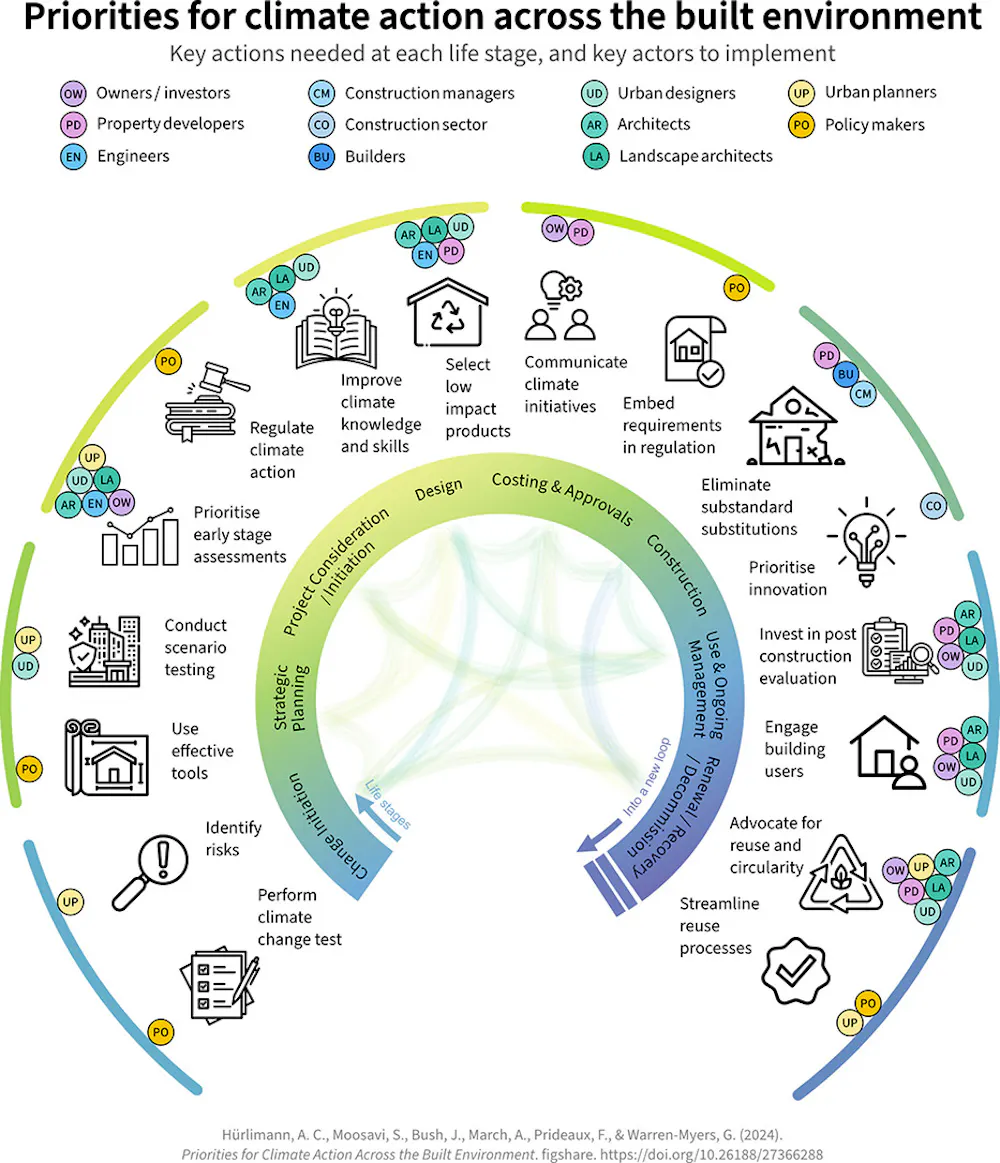
    Our new study identifies 16 priority actions to address climate change in the construction and management of cities.

    Building smarter

    Climate change must be a key consideration when designing, building and managing our cities. The emissions generated need to be minimised and eventually eliminated.

    We must build in locations, and in ways, that reduce climate risks. But policies governing how our cities are designed and constructed don’t achieve this.

    A recent study of three local government areas identified only limited action on adaptation and mitigation. Other research has found few urban development policies include carbon reduction goals that meet international targets.

    The National Housing Accord will see more than one million houses built by 2029. These new homes must address the climate challenge.

    16 areas for priority action

    The priority areas in our new study were informed by interviews with more than 150 stakeholders working in urban planning, architecture, landscape architecture, urban design, sustainability, construction and property.

    Priority areas for minimising damaging emissions generated by cities.
    CC BY

    The actions they identified cover the entire life cycle of the built environment.

    One of the first barriers to overcome is the perceived lack of agency among industry professionals to initiate or demand climate action. They perceive others, such as property owners or clients, to have more influence.

    Climate change risks should be identified in the early stages of planning new developments, backed up by effective tools to make risk identification and action easier:

    There were areas that were identified as being flood prone or risk prone. But there was no strategy to deal with what happens to those areas – An urban planner

    Once specific projects are being considered it is important to prioritise early stage climate assessments, supported by policies which mandate climate action:

    Everyone has good intentions but without big formal legislation around it, everyone’s just sort of making their way in the dark – A construction industry professional

    In the design stage, steps to improve the climate knowledge and skills of the workforce beyond disciplinary boundaries is critical. The selection of low-impact products and materials will also help ensure design is more climate responsive.

    Climate action must be embedded in all stages of design and construction of Australian cities.
    GagliardiPhotography/Shutterstock

    The highest number of hurdles to climate action were found to occur during the costing and approvals stage. Participants spoke of a highly competitive building industry. If climate change initiatives introduced at an earlier stage aren’t required by law, they are likely to be cut.

    unless there’s something in it for them in terms of return on investment, it’s going to be hard to get them to do it, unless we make them – An urban planner

    During the construction phase, product and material substitutions that have detrimental environmental impact should be eliminated. Innovation should be encouraged:

    If you want to push the envelope a little bit in terms of using recycled materials […] that’s a bit of a barrier. To push innovation is difficult – A landscape architect

    Post-construction

    Once construction is complete and buildings and public spaces are being used, it is important to invest in a thorough evaluation process. Building users should be involved to ensure buildings are maintained for optimal climate outcomes:

    [We] tried to achieve the six star rating […] the client has to maintain it [the building] for a year, and that’s when things start to fall off – An architect

    When it comes to area upgrades or building renewals, advocating for reuse and materials circularity is important. But the custom of demolishing and building anew, is hard to shift:

    The reuse of the existing building obviously generates significantly less waste and involves less material. So, design decisions and strategic decisions around using existing buildings is really important – An urban designer

    Working together

    This is a time of significant change in our urban areas.

    We need to make sure climate action is embedded in every stage of decision making. This may mean more efficient use, and reuse, of the existing built stock. This will require an overhaul of policies regarding building retrofits, and a change in mindsets.

    The priority actions to address climate change in cities can be implemented across a range of levels for:

    • individual professionals – pursue development of their climate change skills, including opportunities provided by professional associations

    • professional practices – review internal processes to ensure climate action is mainstreamed across projects, and in company decision making

    • universities teaching built environment professional degrees – embed climate change knowledge, skills, and competencies across the curriculum

    • governments at all levels – review policy settings to mandate mitigation and adaption.

    By addressing these actions, we can collectively work towards achieving our emission reduction targets and making sure our cities minimise climate change risks.

    Anna Hurlimann received funding for the research reported in this article from the Australian Research Council – Discovery Grant DP200101378, with co-chief investigators Georgia Warren-Myers, Alan March, Sareh Moosavi and Judy Bush. She is a member of the Planning Institute of Australia.

    Sareh Moosavi received funding for the research reported in this article from the Australian Research Council – Discovery Grant DP200101378, with co-chief investigators Anna Hurlimann, Georgia Warren-Myers, Alan March, and Judy Bush.

    ref. Cities are heating up the planet – how they can do more to fight climate change – https://theconversation.com/cities-are-heating-up-the-planet-how-they-can-do-more-to-fight-climate-change-259391

    MIL OSI AnalysisEveningReport.nz

  • MIL-OSI New Zealand: Health – Wai July launches: Tāne Māori encouraged to go alcohol-free this July

    Source: Hapai Te Hauora

    Hāpai Te Hauora has launched Wai July, a new kaupapa calling on tāne Māori to go alcohol-free for the month of July.
    The challenge invites tāne to press pause on waipiro, reflect on how it shows up in their lives, and choose wai (water) instead, all while backing their bros and reclaiming their hauora.
    “This isn’t just about going alcohol free. It’s about creating a supportive space for tāne to choose themselves, back their mates, and reflect on the role alcohol plays in their lives,” says Jessikha Makoare, General Manager at Hāpai Te Hauora.
    Wai July was created in response to the ongoing impacts of alcohol harm in Māori communities. Māori men continue to be overrepresented in alcohol-related harm statistics, from long-term health conditions to whānau violence and mental distress.
    This kaupapa offers a chance to reset, with support, accountability and brotherhood at the center.
    Tāne can sign up as an individual or join as a group. All participants will receive support throughout the month, with fresh content, ambassador kōrero and free Wai July merch.
    One of this year’s ambassadors, Chaz Brown (Ngāti Raukawa ki Wharepūhunga, Ngāti Apakura, Ngāti Maniapoto, Ngāti Kahu), is the owner of Wai Ora Sports Recovery & Wellness based in New Lynn, Tāmaki Makaurau.
    “This is more than cutting out the drink. It’s about showing discipline, backing each other, and honouring our hauora across tinana, hinengaro and wairua,” says Brown.
    “Whether you’re doing this to reset, show leadership, or just support the kaupapa, it’s another step in levelling up together.”
    Throughout July, Chaz will also be hosting Sunday Morning Sessions in Tāmaki Makaurau to keep his community connected. These include run clubs, recovery sessions, mobility work and kōrero over coffee.
    “No drink, just discipline. Whether you’re here for the grind, the connection, or the clarity, this is our space to refocus and move with intention.”
    Sign up now at: hapai.co.nz/wai-july

    MIL OSI New Zealand News

  • MIL-OSI New Zealand: Stats NZ information release: Employment indicators: May 2025

    Employment indicators: May 2025 – information release

    30 June 2025

    Employment indicators provide an early indication of changes in the labour market.

    Key facts
    Changes in the seasonally adjusted filled jobs for the May 2025 month (compared with the April 2025 month) were:

    • all industries – up 0.1 percent (1,689 jobs) to 2.35 million filled jobs
    • primary industries – up 0.4 percent (439 jobs)
    • goods-producing industries – down 0.2 percent (787 jobs)
    • service industries – up 0.1 percent (1,990 jobs).

    Visit our website to read this information release and to download CSV files:

    MIL OSI New Zealand News

  • MIL-OSI United Kingdom: Island resilience fund opens

    Source: Scottish Government

    £4.4 million targeted support for businesses.

    A funding package developed to support island businesses affected by ferry disruption is now ready to accept applications.

    Businesses from eligible sectors on South Uist, Colonsay, North Uist, Eriskay, Benbecula, Berneray, Grimsay and Arran can apply.

    Eligible sectors include those that rely on tourism and those that are engaged in the manufacture or movement of perishable goods, such as seafood.

    £4.4 million has been allocated to the Islands Business Resilience Fund (IBRF) which was established to help address issues, such as travel disruption, that can have a disproportionate impact on people and businesses living, and operating on Scotland’s islands.

    Highlands and Islands Enterprise will manage the IBRF on behalf of the Scottish Government. Applications will be accepted from 2 July until 12 noon 1 September 2025 with decisions and payments expected by 31 October 2025.

    Funding awards will be based on demand and the scale size of organisations that apply for support but awards are expected to range between £3,000 and £35,000

    Islands Secretary Mairi Gougeon said:

    “We know that Scotland’s island communities face distinct challenges, not least in terms of their economic and social resilience. People and businesses require ferry services running reliably and frequently to support their livelihoods.

    “We worked with Highlands and Islands Enterprise to refine the eligibility criteria and identify how this money can make a real difference to the businesses who need it most.

    “Reliable and regular ferry services are key to this connectivity for people and businesses and we know that the current situation of delays and ongoing maintenance to some vessels has created real difficulties for some. We are determined to do everything we can to support islands, their local businesses and employers through these challenging times.”

    Rachel Hunter, HIE’s director of enterprise and community support, said:

    “Island businesses and social enterprises make an important contribution to local economies and provide vital rural employment that helps sustain many communities. Those operating in tourism and production or movement of perishable foods are particularly vulnerable to disruption such as we’ve seen in recent years.

    “This fund is about strengthening the resilience of those organisations operating in the sectors and islands most affected. Our focus will be assessing applications promptly so that funding can be awarded as soon as possible after the closing date.”

    Background

    The application form and guidance will be available on the Highlands and Islands Enterprise website from 12 noon on 2 July.

    Highlands and Islands Enterprise carried out detailed analysis of information and statistics provided by Transport Scotland and CalMac relating to ferry disruption.

    The islands of South Uist, Colonsay, North Uist, Eriskay, Benbecula, Berneray, Grimsay and Arran were chosen as eligible for the Islands Business Resilience Fund as they each had more than 15% ferry disruption over the last three seasons. The average cancellations of ferry services across the Calmac network is during that time has been around 7%. 

    MIL OSI United Kingdom

  • MIL-Evening Report: How to reform the NDIS and better support disabled people who don’t qualify for it

    Source: The Conversation (Au and NZ) – By Sam Bennett, Disability Program Director, Grattan Institute

    Australia is spending more than ever on disability services – and yet many people with disability still aren’t receiving the support they need.

    Since the National Disability Insurance Scheme (NDIS) began in 2013, it has transformed the lives of hundreds of thousands of disabled Australians and their families.

    But the NDIS has grown too big, too fast.

    The scheme cost nearly A$42 billion in 2023-24 and is expected to cost more than $58 billion by 2028. This makes it one of the fastest-growing pressures on the federal budget.

    New “foundational supports” – disability-specific services outside individual NDIS packages – are part of the answer to reduce demand on the NDIS and make the scheme sustainable. They were supposed to be operational from July 1 2025. That’s tomorrow, but they are nowhere to be seen.

    A new Grattan Institute report shows how the government can fund these vital supports and save the NDIS – without spending more money.

    Spending is too concentrated in the NDIS

    All Australian governments are spending more on disability services than they were before the NDIS.

    Note: Includes all expenditure on direct disability service delivery by Australian governments.
    Sources: Productivity Commission Return on Government Services report 2025/Grattan Institute

    This is a good thing. But most of this expenditure is for individual NDIS funding packages. The NDIS funds packages for about 700,000 Australians.

    This leaves little support for the roughly 75% of disabled Australians who don’t qualify for the NDIS.

    Around 200,000 Australians with a severe mental illness, for example, aren’t receiving the psychosocial supports they need.

    Many other disabled Australians might only require occasional or low-intensity support such as peer support, supported decision-making, or self-advocacy – supports which are poorly funded and targeted under current arrangements.

    So there’s a huge incentive for people to get into the NDIS, regardless of whether an individualised funding package best meets their needs.

    The NDIS supports more people than intended

    We’re seeing this incentive play out in ballooning numbers of people entering the NDIS.

    In 2011, the Productivity Commission estimated a mature NDIS would serve 490,000 people.

    But in 2025, the NDIS is supporting more than 700,000 people. That number is projected to surpass one million by 2034.

    The number of adults in the scheme is only a little higher than originally expected, but the number of children is nearly double.

    Note: Productivity Commission estimates have been inflated based on population growth for 0-64 year-olds between the reference year (2009) and 2024, using Australian Bureau of Statistics Estimated Resident Population data.
    Sources: Productivity Commission Disability Care and Support 2011, National Disability Insurance Agency Explore Data 2024, Australian Bureau of Statistics Estimated Resident Population 2024/Grattan Institute

    About 10% of children aged five to seven are now in the NDIS, including 15% of six-year-old boys.

    The expectation was that many children would only require short-term early intervention supports. Instead, most children are staying in the scheme long term.

    Our research shows the current NDIS design is poorly suited to delivering early intervention, which works best for children when it is delivered in the places they live, learn and play. This includes in playgroups, libraries and early childhood education settings.

    An individualised funding model makes this difficult. Yet this is the only option available for most families, because the NDIS has led to reduced investment in services that could work far better for their children.

    Support more Australians with disability

    The problem isn’t the amount of funding in the system, but the way it is used.

    The original NDIS design was for a multi-tiered scheme with different levels of coverage. Getting back to this idea is what foundational supports is all about.

    Foundational supports are services and supports for people with disability that do not involve individualised funding from the NDIS.

    To meet the needs of more disabled Australians and take pressure off the NDIS, it is imperative that governments establish an ambitious program of these lower-intensity supports.

    These should include supports available to all disabled Australians who need them, such as information and advice, support with decision-making, and access to peer support or self-advocacy.

    Foundational supports are best delivered where people live, play and learn.
    Central City Library (Kids zone)/Shutterstock

    They should also include evidence-based early intervention supports for children with disability and/or developmental delay. And they should include psychosocial supports for people with severe mental illness who don’t meet the threshold for an individualised NDIS package.

    The current impasse in Commonwealth-state funding negotiations could be overcome by governments agreeing to repurpose a small portion – about 10% – of their existing NDIS contributions.

    Our report outlines a plan to fully fund foundational supports using this repurposed funding and better allocate individualised funding. This would ensure more people get the support they need within an affordable NDIS that grows more slowly.

    Don’t save money by delaying access

    NDIS growth has fallen in recent quarters and is on track to be 10.6% in 2024-25.

    This compares with an average growth rate of more than 24% a year over the past five years.

    But it is too early to attribute that reduction in growth to policy changes.

    A significant downturn in operational performance is very likely to be a contributing factor. The NDIS is groaning under the weight of unsustainable work volumes.

    Since September 2023, it has been taking longer to approve new applicants trying to get access to the NDIS, and to reassess the plans of people already on the scheme.

    Notes: Data is unavailable for December 2023 due to the NDIA upgrading to a new computer system.
    Sources: NDIA Quarterly reports, Q4 2021-22 to Q3 2024-25/Grattan Institute

    We know what drives growth in NDIS expenditure: more people joining the scheme, and existing NDIS participants’ plans increasing over time.

    At the moment, slowing down how fast the NDIS is growing is coming at the expense of the disabled people who need support from the NDIS and are waiting too long to get it.

    It is important that necessary growth moderation is achieved through measures that do not result in vital supports being delayed, or disabled peoples’ experience of, and results from, the NDIS being undermined.

    The NDIS is worth saving. Making necessary policy changes now to rebalance the NDIS will ensure it endures for future generations.

    Grattan Institute’s Disability Program has support from the Summer Foundation.

    ref. How to reform the NDIS and better support disabled people who don’t qualify for it – https://theconversation.com/how-to-reform-the-ndis-and-better-support-disabled-people-who-dont-qualify-for-it-258799

    MIL OSI AnalysisEveningReport.nz

  • MIL-OSI Analysis: Gen Z is struggling to find work: 4 strategies to move forward

    Source: The Conversation – Canada – By Leda Stawnychko, Associate Professor of Strategy and Organizational Theory, Mount Royal University

    As the school year comes to a close, young Canadians entering the job market are facing one of the toughest hiring seasons in years. Despite their drive to build careers and connections, many Gen Z are entering a stagnant job market.

    According to Statistics Canada, the unemployment rate for youth aged 15-24 is 12.2 per cent — over double that of the prime working-age population.

    The outlook is bleaker for students planning to return to full-time studies in the fall. Unemployment for this group has reached just over 20 per cent, the highest level since 2009, when the global economy was reeling from the Great Recession.

    Gen Zs without post-secondary credentials, people with disabilities and newcomers face steeper hurdles. They are competing in a labour market dominated by one of the world’s most highly educated generations.

    Today’s youth are navigating a perfect storm of persistent inflation, global trade tensions, a saturated labour market and restructuring driven by automation and AI.

    Unlike older workers, many young people lack the financial stability or support systems to pursue opportunities that require relocating.

    First jobs matter more than ever

    Early work experiences have long served as crucial stepping stones for young people entering the workforce. They offer new workers exposure to the habits, norms and expectations of the professional world.

    Roles in retail, hospitality and customer service often serve as a first taste of working life, helping young people build confidence, develop transferable skills and expand their professional networks. Without access to these opportunities, many young Canadians risk falling behind before their careers even begin.

    The long-term implications are serious. According to a 2024 report from consulting firm Deloitte, Canada stands to lose $18.5 billion in GDP over the next decade if youth unemployment remains high.

    Young Canadians are facing one of the toughest hiring seasons in years.
    (Shutterstock)

    More broadly, high unemployment among youth weakens social trust and undermines the foundations of social cohesion, long-term prosperity, democratic stability and leadership pipelines.

    Underemployment also takes a personal toll, contributing to poorer mental and physical health and delaying major life milestones like financial independence, homeownership and family formation.

    What Gen Z can do

    Many young job-seekers are understandably discouraged by today’s labour market. But as digital natives, Gen Z have advantages to bring to the table, including creativity, values-driven mindsets and fluency in technology.

    The key is to stay open, proactive and creative by pursuing non-linear experiences that can serve as legitimate entry points into the workforce. Here are four actionable strategies for Gen Z starting their careers:

    1. Think beyond traditional pathways.

    Unconventional roles and programs can offer valuable experience. For example, university students at Global Affairs Canada’s federal work experience program recently helped support the G7 Summit, gaining confidence and transferable skills.

    Side projects, such as building websites or freelancing, can also help people start their careers. These are increasingly recognized as valid ways to break into the job market.

    2. Build core skills that matter.

    The World Economic Forum’s Future of Jobs Report identifies analytical thinking, resilience, creativity, leadership and self-awareness as the most in-demand skills for the future. These can be developed through volunteer work, community leadership, mentorship or personal projects.

    Programs like International Experience Canada also help foster independence, global awareness and important skills.

    3. Invest in future-ready capabilities.

    As workplaces adopt AI and automation, tech literacy is becoming increasingly valuable. Microcredentials can help build specialized skills, while apprenticeships and other experiential learning opportunities offer experiences that employers value.


    Read more:
    Workplace besties: How to build relationships at work while staying professional


    4. Build meaningful connections.

    Networks are also a key part of job success. Relationships with peers, mentors and community members can provide support, broaden perspectives and lead to unexpected opportunities. Participating in interest groups or volunteering can help young workers feel more connected and confident while developing skills that matter.

    A new working generation

    While these steps won’t solve the systemic challenges facing the labour market, they can help young Canadians gain traction in a system that is still catching up to the needs of their generation.

    This will require the collaboration of government, employers, educational institutions and community service providers to innovatively reduce existing barriers. Importantly, these sectors are being asked to “walk the talk” when it comes to addressing youth unemployment.

    Gen Z is entering the workforce during a time of profound economic and social change. But they also have unparalleled access to information, supportive communities and platforms to share ideas and make a meaningful impact.

    By acting with intention, young Canadians can navigate this landscape with agency, laying the foundation not only for jobs but for careers that reflect their values and ambitions.

    Leda Stawnychko receives funding from SSHRC.

    Warren Boyd Ferguson does not work for, consult, own shares in or receive funding from any company or organisation that would benefit from this article, and has disclosed no relevant affiliations beyond their academic appointment.

    ref. Gen Z is struggling to find work: 4 strategies to move forward – https://theconversation.com/gen-z-is-struggling-to-find-work-4-strategies-to-move-forward-259504

    MIL OSI Analysis

  • MoSPI celebrates 19th Statistics Day honouring Prof. P.C. Mahalanobis and 75 years of National Sample Survey

    Source: Government of India

    Source: Government of India (4)

    The Ministry of Statistics and Programme Implementation (MoSPI) on Sunday celebrated the 19th Statistics Day at Dr. Ambedkar International Centre, New Delhi, marking the 132nd birth anniversary of renowned statistician Prof. P.C. Mahalanobis. The event also commemorated the 75th year of the National Sample Survey (NSS), with the theme ‘75 Years of National Sample Survey’ highlighting the transformative impact of the NSS on India’s statistical landscape.

    Union Minister of State (Independent Charge) Rao Inderjit Singh, the Chief Guest, paid tribute to Prof. Mahalanobis and underlined the significance of robust statistical systems in policy planning. Emphasising reforms like digital transformation, integrated survey frameworks, and real-time data tools, he lauded MoSPI’s transparent and inclusive approach.

    In his welcome address, Dr. Saurabh Garg, Secretary, MoSPI, reflected on the evolution of the NSS since 1950 and highlighted key reforms such as quicker data release, the use of digital tools like CAPI, the eSankhyiki portal, and adoption of administrative statistics.

    Dr. Rajeeva Laxman Karandikar, Chairman of the National Statistical Commission, emphasized the role of statistics in broader governance and urged the statistical community to explore uniform methodologies in areas like online assessments and e-voting.

    A commemorative coin, customized stamp, and several key publications, including the Sustainable Development Goals National Indicator Framework Progress Report 2025 and the NSS Report on Nutritional Intake in India 2022–24, were released. The GoIStat mobile app was also launched to enhance public access to official data.

    Dr. Prajamitra Bhuyan, Assistant Professor at IIM Calcutta, received the 2025 Prof. C.R. Rao National Award for his notable contributions to statistics. A panel discussion moderated by Dr. Shamika Ravi explored the impact of frontier technologies on official statistics, with insights from industry, academia, and public institutions.

    The event saw participation from over 700 delegates, including government officials, international agencies, academics, and industry leaders, reinforcing MoSPI’s commitment to evidence-based policymaking and a data-driven future.

  • MIL-OSI Global: Gen Z is struggling to find work: 4 stategies to move forward

    Source: The Conversation – Canada – By Leda Stawnychko, Assistant Professor of Strategy and Organizational Theory, Mount Royal University

    As the school year comes to a close, young Canadians entering the job market are facing one of the toughest hiring seasons in years. Despite their drive to build careers and connections, many Gen Z are entering a stagnant job market.

    According to Statistics Canada, the unemployment rate for youth aged 15-24 is 12.2 per cent — over double that of the prime working-age population.

    The outlook is bleaker for students planning to return to full-time studies in the fall. Unemployment for this group has reached just over 20 per cent, the highest level since 2009, when the global economy was reeling from the Great Recession.

    Gen Zs without post-secondary credentials, people with disabilities and newcomers face steeper hurdles. They are competing in a labour market dominated by one of the world’s most highly educated generations.

    Today’s youth are navigating a perfect storm of persistent inflation, global trade tensions, a saturated labour market and restructuring driven by automation and AI.

    Unlike older workers, many young people lack the financial stability or support systems to pursue opportunities that require relocating.

    First jobs matter more than ever

    Early work experiences have long served as crucial stepping stones for young people entering the workforce. They offer new workers exposure to the habits, norms and expectations of the professional world.

    Roles in retail, hospitality and customer service often serve as a first taste of working life, helping young people build confidence, develop transferable skills and expand their professional networks. Without access to these opportunities, many young Canadians risk falling behind before their careers even begin.

    The long-term implications are serious. According to a 2024 report from consulting firm Deloitte, Canada stands to lose $18.5 billion in GDP over the next decade if youth unemployment remains high.

    Young Canadians are facing one of the toughest hiring seasons in years.
    (Shutterstock)

    More broadly, high unemployment among youth weakens social trust and undermines the foundations of social cohesion, long-term prosperity, democratic stability and leadership pipelines.

    Underemployment also takes a personal toll, contributing to poorer mental and physical health and delaying major life milestones like financial independence, homeownership and family formation.

    What Gen Z can do

    Many young job-seekers are understandably discouraged by today’s labour market. But as digital natives, Gen Z have advantages to bring to the table, including creativity, values-driven mindsets and fluency in technology.

    The key is to stay open, proactive and creative by pursuing non-linear experiences that can serve as legitimate entry points into the workforce. Here are four actionable strategies for Gen Z starting their careers:

    1. Think beyond traditional pathways.

    Unconventional roles and programs can offer valuable experience. For example, university students at Global Affairs Canada’s federal work experience program recently helped support the G7 Summit, gaining confidence and transferable skills.

    Side projects, such as building websites or freelancing, can also help people start their careers. These are increasingly recognized as valid ways to break into the job market.

    2. Build core skills that matter.

    The World Economic Forum’s Future of Jobs Report identifies analytical thinking, resilience, creativity, leadership and self-awareness as the most in-demand skills for the future. These can be developed through volunteer work, community leadership, mentorship or personal projects.

    Programs like International Experience Canada also help foster independence, global awareness and important skills.

    3. Invest in future-ready capabilities.

    As workplaces adopt AI and automation, tech literacy is becoming increasingly valuable. Microcredentials can help build specialized skills, while apprenticeships and other experiential learning opportunities offer experiences that employers value.


    Read more:
    Workplace besties: How to build relationships at work while staying professional


    4. Build meaningful connections.

    Networks are also a key part of job success. Relationships with peers, mentors and community members can provide support, broaden perspectives and lead to unexpected opportunities. Participating in interest groups or volunteering can help young workers feel more connected and confident while developing skills that matter.

    A new working generation

    While these steps won’t solve the systemic challenges facing the labour market, they can help young Canadians gain traction in a system that is still catching up to the needs of their generation.

    This will require the collaboration of government, employers, educational institutions and community service providers to innovatively reduce existing barriers. Importantly, these sectors are being asked to “walk the talk” when it comes to addressing youth unemployment.

    Gen Z is entering the workforce during a time of profound economic and social change. But they also have unparalleled access to information, supportive communities and platforms to share ideas and make a meaningful impact.

    By acting with intention, young Canadians can navigate this landscape with agency, laying the foundation not only for jobs but for careers that reflect their values and ambitions.

    Leda Stawnychko receives funding from SSHRC.

    Warren Boyd Ferguson does not work for, consult, own shares in or receive funding from any company or organisation that would benefit from this article, and has disclosed no relevant affiliations beyond their academic appointment.

    ref. Gen Z is struggling to find work: 4 stategies to move forward – https://theconversation.com/gen-z-is-struggling-to-find-work-4-stategies-to-move-forward-259504

    MIL OSI – Global Reports

  • MIL-OSI Global: Gen Z is struggling to find work: 4 stategies to move forward

    Source: The Conversation – Canada – By Leda Stawnychko, Assistant Professor of Strategy and Organizational Theory, Mount Royal University

    As the school year comes to a close, young Canadians entering the job market are facing one of the toughest hiring seasons in years. Despite their drive to build careers and connections, many Gen Z are entering a stagnant job market.

    According to Statistics Canada, the unemployment rate for youth aged 15-24 is 12.2 per cent — over double that of the prime working-age population.

    The outlook is bleaker for students planning to return to full-time studies in the fall. Unemployment for this group has reached just over 20 per cent, the highest level since 2009, when the global economy was reeling from the Great Recession.

    Gen Zs without post-secondary credentials, people with disabilities and newcomers face steeper hurdles. They are competing in a labour market dominated by one of the world’s most highly educated generations.

    Today’s youth are navigating a perfect storm of persistent inflation, global trade tensions, a saturated labour market and restructuring driven by automation and AI.

    Unlike older workers, many young people lack the financial stability or support systems to pursue opportunities that require relocating.

    First jobs matter more than ever

    Early work experiences have long served as crucial stepping stones for young people entering the workforce. They offer new workers exposure to the habits, norms and expectations of the professional world.

    Roles in retail, hospitality and customer service often serve as a first taste of working life, helping young people build confidence, develop transferable skills and expand their professional networks. Without access to these opportunities, many young Canadians risk falling behind before their careers even begin.

    The long-term implications are serious. According to a 2024 report from consulting firm Deloitte, Canada stands to lose $18.5 billion in GDP over the next decade if youth unemployment remains high.

    Young Canadians are facing one of the toughest hiring seasons in years.
    (Shutterstock)

    More broadly, high unemployment among youth weakens social trust and undermines the foundations of social cohesion, long-term prosperity, democratic stability and leadership pipelines.

    Underemployment also takes a personal toll, contributing to poorer mental and physical health and delaying major life milestones like financial independence, homeownership and family formation.

    What Gen Z can do

    Many young job-seekers are understandably discouraged by today’s labour market. But as digital natives, Gen Z have advantages to bring to the table, including creativity, values-driven mindsets and fluency in technology.

    The key is to stay open, proactive and creative by pursuing non-linear experiences that can serve as legitimate entry points into the workforce. Here are four actionable strategies for Gen Z starting their careers:

    1. Think beyond traditional pathways.

    Unconventional roles and programs can offer valuable experience. For example, university students at Global Affairs Canada’s federal work experience program recently helped support the G7 Summit, gaining confidence and transferable skills.

    Side projects, such as building websites or freelancing, can also help people start their careers. These are increasingly recognized as valid ways to break into the job market.

    2. Build core skills that matter.

    The World Economic Forum’s Future of Jobs Report identifies analytical thinking, resilience, creativity, leadership and self-awareness as the most in-demand skills for the future. These can be developed through volunteer work, community leadership, mentorship or personal projects.

    Programs like International Experience Canada also help foster independence, global awareness and important skills.

    3. Invest in future-ready capabilities.

    As workplaces adopt AI and automation, tech literacy is becoming increasingly valuable. Microcredentials can help build specialized skills, while apprenticeships and other experiential learning opportunities offer experiences that employers value.


    Read more:
    Workplace besties: How to build relationships at work while staying professional


    4. Build meaningful connections.

    Networks are also a key part of job success. Relationships with peers, mentors and community members can provide support, broaden perspectives and lead to unexpected opportunities. Participating in interest groups or volunteering can help young workers feel more connected and confident while developing skills that matter.

    A new working generation

    While these steps won’t solve the systemic challenges facing the labour market, they can help young Canadians gain traction in a system that is still catching up to the needs of their generation.

    This will require the collaboration of government, employers, educational institutions and community service providers to innovatively reduce existing barriers. Importantly, these sectors are being asked to “walk the talk” when it comes to addressing youth unemployment.

    Gen Z is entering the workforce during a time of profound economic and social change. But they also have unparalleled access to information, supportive communities and platforms to share ideas and make a meaningful impact.

    By acting with intention, young Canadians can navigate this landscape with agency, laying the foundation not only for jobs but for careers that reflect their values and ambitions.

    Leda Stawnychko receives funding from SSHRC.

    Warren Boyd Ferguson does not work for, consult, own shares in or receive funding from any company or organisation that would benefit from this article, and has disclosed no relevant affiliations beyond their academic appointment.

    ref. Gen Z is struggling to find work: 4 stategies to move forward – https://theconversation.com/gen-z-is-struggling-to-find-work-4-stategies-to-move-forward-259504

    MIL OSI – Global Reports

  • MoSPI releases key SDG publications on 19th Statistics Day

    Source: Government of India

    Source: Government of India (4)

    On the occasion of the 19th Statistics Day, the Ministry of Statistics and Programme Implementation (MoSPI) released three major publications related to Sustainable Development Goals (SDGs), showcasing India’s progress toward achieving the global targets. The publications include the Sustainable Development Goals – National Indicator Framework (NIF) Progress Report 2025, Data Snapshot on SDGs – NIF Progress Report 2025, and the Sustainable Development Goals – NIF 2025.

    Developed in consultation with concerned ministries, UN agencies, and other stakeholders, the SDG National Indicator Framework forms the backbone of India’s efforts to monitor and track SDG implementation at the national level. Each year, MoSPI releases these reports on June 29 to mark Statistics Day, providing critical insights and time-series data for policymakers, researchers, and the public.

    The 2025 Progress Report presents comprehensive data from various government sources, reflecting substantial advances in multiple sectors. Among the highlights, the report notes a significant rise in social protection coverage, with 64.3% of the population now covered under social security schemes—up from 22% in 2016. Agricultural productivity has improved, with Gross Value Added per worker rising to ₹94,110 in 2024–25 from ₹61,247 in 2015–16. Access to improved drinking water in rural areas has reached 99.62%, and renewable energy’s share in total electricity generation has grown to 22.13%.

    India’s waste management infrastructure has also seen a boost, with the number of recycling plants growing from 829 in 2019–20 to over 3,000 in 2024–25. The country’s entrepreneurial landscape is expanding rapidly, as reflected by the recognition of over 34,000 startups under the Start-up India initiative, up from just 453 in 2016.

    The report also records progress in environmental sustainability and digital access. Forest cover has inched up to 21.76% of the total geographical area, while internet subscriptions have tripled from 302 million in 2015 to 954 million in 2024. The emissions intensity of GDP has reduced by 36% compared to 2005 levels, indicating a strong move toward a low-carbon economy. Additionally, the Gini coefficient—a measure of income inequality—has declined in both rural and urban areas, signalling improved income distribution.

    These reports are publicly accessible on the MoSPI website and serve as valuable tools for tracking India’s commitments to the 2030 Agenda for Sustainable Development.

  • Not just a tournament, it’s a celebration of unity & hope: PM Modi hails staging of Bodoland CEM Cup

    Source: Government of India

    Source: Government of India (4)

    Prime Minister Narendra Modi on Sunday praised the power of sports in Assam’s Bodoland, highlighting the Bodoland CEM Cup as a symbol of unity and hope in the Bodo Territorial Area.

    The Bodoland Chief Executive Member’s (CEM) Cup Football Tournament is a visionary initiative by the Bodoland Territorial Council (BTC), leveraging sports as a means of social transformation. The tournament embodies BTC’s commitment to fostering unity, peace, and football talent across the Bodoland Territorial Region (BTR).

    In the 123rd episode of his monthly radio programme ‘Mann Ki Baat’, PM Modi said “Imagine a picture. The morning sun is touching the hills, the light is slowly moving towards the plains, and with that light, a troupe of football lovers is advancing. The whistle blows and in a few moments, the ground reverberates with applause and slogans. People’s enthusiasm is increasing with every pass, every goal. You must be wondering… what a beautiful world is that? This picture is the reality of Bodoland, a major region of Assam. Bodoland today stands out in the country with a new face, a new identity. The energy and confidence that the youth here have, is most visible on the football field. In the Bodo Territorial Area, the Bodoland CEM Cup is being organised. This is not just a tournament; it has become a celebration of unity and hope.”

    The tournament is organised at multiple administrative levels – including Village Council Development Committees (VCDCs), BTCLA Constituencies, Districts, and the Council Level – ensuring widespread participation and accessibility. It complements initiatives like football academies and the participation of Bodoland FC in national events like the Durand Cup.

    “More than three thousand seven hundred teams, about seventy thousand players, and even among them, a large number of our daughter’s participation! These statistics tell the story of a big change in Bodoland. Bodoland is now increasingly casting its glow on the sports map of the country,” PM Modi said.

    In a region that has seen past unrest, the CEM Cup uses football to unify diverse communities. It fosters a shared identity, bringing people together through the universal language of sports.

    “There was a time when struggle itself was the identity of this place. Then the avenues for the youth here were limited. But today, there are new dreams in their eyes and the courage of self-reliance in their hearts. The football players hailing from here are now making their mark at a high level. Halicharan Narzary, Durga Boro, Apurba Narzary, Manbir Basumatari – these are not just the names of football players – they are the identity of that new generation who catapulted Bodoland from the field to the national stage,” PM Modi added.

    As sports promote both physical and mental health. The CEM Cup encourages discipline, teamwork, and perseverance among youth, contributing to holistic community development.

    “Many of them practiced with limited resources; many forged their way through difficult circumstances, and today many young children of the country kickstart their dreams, inspired by their names. If we have to expand our capability, first of all we have to focus on our fitness and wellbeing,” he concluded.

    (With inputs from IANS)

  • Not just a tournament, it’s a celebration of unity & hope: PM Modi hails staging of Bodoland CEM Cup

    Source: Government of India

    Source: Government of India (4)

    Prime Minister Narendra Modi on Sunday praised the power of sports in Assam’s Bodoland, highlighting the Bodoland CEM Cup as a symbol of unity and hope in the Bodo Territorial Area.

    The Bodoland Chief Executive Member’s (CEM) Cup Football Tournament is a visionary initiative by the Bodoland Territorial Council (BTC), leveraging sports as a means of social transformation. The tournament embodies BTC’s commitment to fostering unity, peace, and football talent across the Bodoland Territorial Region (BTR).

    In the 123rd episode of his monthly radio programme ‘Mann Ki Baat’, PM Modi said “Imagine a picture. The morning sun is touching the hills, the light is slowly moving towards the plains, and with that light, a troupe of football lovers is advancing. The whistle blows and in a few moments, the ground reverberates with applause and slogans. People’s enthusiasm is increasing with every pass, every goal. You must be wondering… what a beautiful world is that? This picture is the reality of Bodoland, a major region of Assam. Bodoland today stands out in the country with a new face, a new identity. The energy and confidence that the youth here have, is most visible on the football field. In the Bodo Territorial Area, the Bodoland CEM Cup is being organised. This is not just a tournament; it has become a celebration of unity and hope.”

    The tournament is organised at multiple administrative levels – including Village Council Development Committees (VCDCs), BTCLA Constituencies, Districts, and the Council Level – ensuring widespread participation and accessibility. It complements initiatives like football academies and the participation of Bodoland FC in national events like the Durand Cup.

    “More than three thousand seven hundred teams, about seventy thousand players, and even among them, a large number of our daughter’s participation! These statistics tell the story of a big change in Bodoland. Bodoland is now increasingly casting its glow on the sports map of the country,” PM Modi said.

    In a region that has seen past unrest, the CEM Cup uses football to unify diverse communities. It fosters a shared identity, bringing people together through the universal language of sports.

    “There was a time when struggle itself was the identity of this place. Then the avenues for the youth here were limited. But today, there are new dreams in their eyes and the courage of self-reliance in their hearts. The football players hailing from here are now making their mark at a high level. Halicharan Narzary, Durga Boro, Apurba Narzary, Manbir Basumatari – these are not just the names of football players – they are the identity of that new generation who catapulted Bodoland from the field to the national stage,” PM Modi added.

    As sports promote both physical and mental health. The CEM Cup encourages discipline, teamwork, and perseverance among youth, contributing to holistic community development.

    “Many of them practiced with limited resources; many forged their way through difficult circumstances, and today many young children of the country kickstart their dreams, inspired by their names. If we have to expand our capability, first of all we have to focus on our fitness and wellbeing,” he concluded.

    (With inputs from IANS)

  • Not just a tournament, it’s a celebration of unity & hope: PM Modi hails staging of Bodoland CEM Cup

    Source: Government of India

    Source: Government of India (4)

    Prime Minister Narendra Modi on Sunday praised the power of sports in Assam’s Bodoland, highlighting the Bodoland CEM Cup as a symbol of unity and hope in the Bodo Territorial Area.

    The Bodoland Chief Executive Member’s (CEM) Cup Football Tournament is a visionary initiative by the Bodoland Territorial Council (BTC), leveraging sports as a means of social transformation. The tournament embodies BTC’s commitment to fostering unity, peace, and football talent across the Bodoland Territorial Region (BTR).

    In the 123rd episode of his monthly radio programme ‘Mann Ki Baat’, PM Modi said “Imagine a picture. The morning sun is touching the hills, the light is slowly moving towards the plains, and with that light, a troupe of football lovers is advancing. The whistle blows and in a few moments, the ground reverberates with applause and slogans. People’s enthusiasm is increasing with every pass, every goal. You must be wondering… what a beautiful world is that? This picture is the reality of Bodoland, a major region of Assam. Bodoland today stands out in the country with a new face, a new identity. The energy and confidence that the youth here have, is most visible on the football field. In the Bodo Territorial Area, the Bodoland CEM Cup is being organised. This is not just a tournament; it has become a celebration of unity and hope.”

    The tournament is organised at multiple administrative levels – including Village Council Development Committees (VCDCs), BTCLA Constituencies, Districts, and the Council Level – ensuring widespread participation and accessibility. It complements initiatives like football academies and the participation of Bodoland FC in national events like the Durand Cup.

    “More than three thousand seven hundred teams, about seventy thousand players, and even among them, a large number of our daughter’s participation! These statistics tell the story of a big change in Bodoland. Bodoland is now increasingly casting its glow on the sports map of the country,” PM Modi said.

    In a region that has seen past unrest, the CEM Cup uses football to unify diverse communities. It fosters a shared identity, bringing people together through the universal language of sports.

    “There was a time when struggle itself was the identity of this place. Then the avenues for the youth here were limited. But today, there are new dreams in their eyes and the courage of self-reliance in their hearts. The football players hailing from here are now making their mark at a high level. Halicharan Narzary, Durga Boro, Apurba Narzary, Manbir Basumatari – these are not just the names of football players – they are the identity of that new generation who catapulted Bodoland from the field to the national stage,” PM Modi added.

    As sports promote both physical and mental health. The CEM Cup encourages discipline, teamwork, and perseverance among youth, contributing to holistic community development.

    “Many of them practiced with limited resources; many forged their way through difficult circumstances, and today many young children of the country kickstart their dreams, inspired by their names. If we have to expand our capability, first of all we have to focus on our fitness and wellbeing,” he concluded.

    (With inputs from IANS)

  • MIL-OSI Africa: Chikunga calls for stronger partnerships to tackle GBVF

    Source: South Africa News Agency

    Minister in the Presidency for Women, Youth and Persons with Disabilities, Sindisiwe Chikunga, has called for a “more deliberate partnership” between government and the Gender-Based Violence and Femicide (GBVF) Response Fund. 

    Delivering remarks during a recent meet and greet with the leadership of the GBVF Fund, held in Sandton, Gauteng, the Minister stressed the need for shared responsibility and a unified commitment to justice in the national fight against GBVF. 

    “Let today mark the beginning of a more deliberate partnership, one rooted in shared responsibility, mutual respect, and an unwavering commitment to justice,” Chikunga said. 

    Commending the Fund for its efforts in mobilising and distributing resources to frontline GBVF initiatives, the Minister underscored the need for deeper alignment between state-led and civil society efforts. 

    The fund has so far reached 772 244 people across the country.

    “We commend the GBVF Response Fund for the strides it has made in mobilising and disbursing resources to frontline initiatives. This is vital work, and we acknowledge the dedication and effort it entails.

    “At the same time, we believe this is a critical moment to strengthen alignment. As government, we are committed to ensuring that our respective efforts reinforce one another, that we close systemic gaps, scale local innovation, and ensure that survivors across all communities are supported with care and dignity,” she said.

    The engagement brought together Fund executives, including Interim CEO Zanele Ngwepe and Chairperson of the Board Faith Khanyile, alongside officials from the Ministry and Department of Women, Youth and Persons with Disabilities. 

    Chikunga warned that gender-based violence and femicide remain a national and global human rights crisis, citing alarming statistics. 

    “The situation in South Africa is dire. In just three months — January to March 2025 — the South African Police Service recorded 969 women murdered, over 11,000 rape cases, and close to 15,000 assault cases against women. Each of these numbers is a tragedy [and] a call to action,” the Minister emphasised. 

    She stressed that violence continues to occur where women should feel safest, in homes, workplaces, and places of worship and highlighted the added vulnerability of women with disabilities who often face sexual violence with little access to justice. 

    “This means there are women who cannot see, hear, or speak — who are subjected to brutality and have little to no access to justice. These are the hidden faces of gender-based violence and femicide,” she said.

    Chikunga reiterated South Africa’s commitment to the National Strategic Plan on GBVF, describing it as “a country plan driven by survivors, community leaders, civil society, and the public.” The Ministry is also leading South Africa’s chairmanship of the G20 Empowerment Working Group this year, placing GBVF firmly on the international agenda.

    Highlighting institutional progress, she announced that the Inter-Ministerial Committee on GBVF and Substance Abuse, co-chaired with Social Development Minister Sisisi Tolashe, has been approved by Cabinet and is already operational. 

    She also confirmed that the long-awaited National Council on GBVF will be formally established by April 2026.

    “This Council will serve as the institutional anchor for coordination, accountability, and funding — ensuring that the implementation of the National Strategic Plan is survivor-centred, agile, and sustained beyond political cycles,” she said.

    Other key interventions include the launch of the National GBVF Dashboard to track progress in real time, the expansion of Thuthuzela Care Centres, and the implementation of 100-Day Challenge models in communities — an initiative bringing together local police, prosecutors, health workers, and social services to tackle specific GBV issues with speed and collaboration.

    The Minister invited the Fund to contribute to ongoing policy efforts, including the finalisation of the Women Empowerment and Gender Equality (WEGE) Bill, which seeks to strengthen mechanisms for eliminating gender discrimination across all sectors.

    While acknowledging the resource constraints faced by her department, Minister Chikunga affirmed her team’s commitment. 

    “This work is not easy. But it is a non-negotiable because there can be no freedom, no peace, and no economic justice where women, girls, persons with disabilities and Lesbian, Gay, Bisexual, Transgender, Queer, Intersex, and Asexual (LGBTQIA+) individuals live in fear,” she said. 

    The Minister concluded by expressing hope that the meeting would lay the groundwork for enhanced cooperation with the Fund, in pursuit of a South Africa free from gender-based violence and femicide. – SAnews.gov.za

    MIL OSI Africa

  • India to celebrate 19th Statistics Day on June 29, highlighting 75 years of National Sample Survey

    Source: Government of India

    Source: Government of India (4)

    The Ministry of Statistics and Programme Implementation (MoSPI) will mark the 19th Statistics Day on June 29, at the Dr. Ambedkar International Centre in New Delhi. This annual event commemorates the birth anniversary of Professor Prasanta Chandra Mahalanobis, a pioneer in statistics and economic planning, and aims to raise public awareness, particularly among the younger generation, about the role of statistics in socio-economic planning and policy formulation for national development.

    The theme for this year’s celebration, “75 Years of National Sample Survey,” underscores the critical role of the National Sample Survey (NSS) in providing reliable and timely statistical data that supports evidence-based decision-making and governance in India. Since 2007, Statistics Day has been celebrated annually with a theme of national significance.

    The event will be inaugurated by Rao Inderjit Singh, Minister of State (Independent Charge) for MoSPI, Minister of State (Independent Charge) for the Ministry of Planning, and Minister of State for the Ministry of Culture, who will serve as the Chief Guest. The inaugural session will feature addresses by Prof. Rajeeva Laxman Karandikar, Chairman of the National Statistical Commission, and Dr. Saurabh Garg, Secretary of MoSPI.

    To mark the 75th anniversary of the NSS, MoSPI will release a Commemorative Coin and a Customized My Stamp. Several key statistical publications, including the Sustainable Development Goals – National Indicator Framework Progress Report 2025 and Nutritional Intake in India 2022-23 & 2023-24, will also be launched. Additionally, MoSPI will introduce the GoIStat mobile application, designed to provide user-friendly access to official statistics. The prestigious Prof. C.R. Rao National Award in Statistics will be conferred, and winners of MoSPI’s Data Visualization Hackathon will be felicitated. The vote of thanks will be delivered by P.R. Meshram, Director General of MoSPI.

    Following the inauguration, a technical session will feature a short film showcasing 75 years of the NSS, followed by a panel discussion on “Impact of Frontier Technologies on Official Statistics.” Moderated by Dr. Shamika Ravi, Member of the Economic Advisory Council to the Prime Minister, the panel will include Dr. Debasisa Mohanty, Director of the National Institute of Immunology; Prakash Kumar, CEO of the Wadhwani Centre for Government Digital Transformation; and Amitabha Tripathi, SVP and Head of Analytics Consulting and Solution at Aditya Birla Management Corporation Pvt. Ltd.

    Approximately 700 participants, including officials from Central Ministries, NITI Aayog, state governments, Union Territory administrations, representatives from international and national organizations, domain experts, and research institutions, are expected to attend. The event’s highlights will be shared on MoSPI’s social media platforms.

  • MIL-OSI Russia: In January-May, Manzhouli checkpoint ranked first in China in terms of the number of China-Europe trains entering the country

    Translation. Region: Russian Federal

    Source: People’s Republic of China in Russian – People’s Republic of China in Russian –

    Source: People’s Republic of China – State Council News

    BEIJING, June 28 (Xinhua) — Manzhouli Port ranked first in China in terms of the number of freight trains entering the country on the China-Europe international freight transport route in the first five months of this year, according to the press service of the people’s government of the city of the same name in the Inner Mongolia Autonomous Region.

    According to statistics, during the reporting period, a total of 1,826 freight trains passed through the said checkpoint, transporting 189 thousand standard containers (twenty-foot equivalent, TEU).

    In particular, 1,123 such trains passed through the border crossing in the opposite direction, delivering 116,000 standard containers to the country. In terms of these indicators, Manzhouli exceeded other checkpoints in the country.

    The Manzhouli checkpoint is located on the border of China with the Zabaikalsky Krai of Russia. Currently, freight trains traveling in the opposite direction as part of China-Europe cargo transportation connect Manzhouli with more than 60 cities in the country, including Harbin, Shenyang, Xi’an, Nanjing, Zhengzhou, Changsha and Chengdu. The range of products imported to China through the checkpoint includes essential goods, equipment, metals, agricultural products, timber, etc. -0-

    MIL OSI Russia News

  • MIL-OSI Russia: In January-May, Manzhouli checkpoint ranked first in China in terms of the number of China-Europe trains entering the country

    Translation. Region: Russian Federal

    Source: People’s Republic of China in Russian – People’s Republic of China in Russian –

    Source: People’s Republic of China – State Council News

    BEIJING, June 28 (Xinhua) — Manzhouli Port ranked first in China in terms of the number of freight trains entering the country on the China-Europe international freight transport route in the first five months of this year, according to the press service of the people’s government of the city of the same name in the Inner Mongolia Autonomous Region.

    According to statistics, during the reporting period, a total of 1,826 freight trains passed through the said checkpoint, transporting 189 thousand standard containers (twenty-foot equivalent, TEU).

    In particular, 1,123 such trains passed through the border crossing in the opposite direction, delivering 116,000 standard containers to the country. In terms of these indicators, Manzhouli exceeded other checkpoints in the country.

    The Manzhouli checkpoint is located on the border of China with the Zabaikalsky Krai of Russia. Currently, freight trains traveling in the opposite direction as part of China-Europe cargo transportation connect Manzhouli with more than 60 cities in the country, including Harbin, Shenyang, Xi’an, Nanjing, Zhengzhou, Changsha and Chengdu. The range of products imported to China through the checkpoint includes essential goods, equipment, metals, agricultural products, timber, etc. -0-

    MIL OSI Russia News

  • MIL-OSI Europe: Answer to a written question – Skin sensitisation tests involving the use of guinea pigs – E-001720/2025(ASW)

    Source: European Parliament

    In 2022, 33 029 skin sensitisation tests were conducted on animals constituting a reduction of 12.2% compared to 2018 and 12.5% compared to 2021.

    Based on ALURES[1] data, most guinea pig sensitisation assays occur in the medical devices (MD) sector. Testing requirements for these are governed by the International Organisation for Standardisation standards, and the relevant standard 10993-10:2021[2] still lists guinea pig assays next to the local lymph node assay (LLNA) and non-animal methods.

    Member States are expected to urge manufacturers to validate the LLNA or other alternatives for specific needs such as MD. Manufacturers should prioritise application of Defined Approaches for skin sensitisation.

    These consist of a combination of non-animal methods and a defined algorithm to interpret results and are described in the Organisation for Economic Cooperation and Development Guideline 497[3]. These approaches have superior performance compared to the LLNA in predicting human responses.

    Member States require regular reporting on progress made with alternatives, or to limit the project authorisation period for animal tests.

    If validation of the alternative fails, use of animals should continue to be allowed. The Commission collaborates closely with Member States to remind them of the obligations[4] under Directive 2010/63[5] to ask product-specific qualification of recognised alternatives.

    The European Partnership for Alternative Approaches to Animal Testing[6] has invited the MD industry to join initiatives such as the skin sensitisation project to share knowledge and accelerate qualification of non-animal methods also by MD manufacturers.

    The Commission will publish a Roadmap on phasing out animal testing which covers MD legislation.

    • [1] https://environment.ec.europa.eu/topics/chemicals/animals-science/statistics-and-non-technical-project-summaries_en.
    • [2] Biological evaluation of medical devices — Part 10: Tests for skin sensitisation.
    • [3] https://www.oecd.org/en/publications/guideline-no-497-defined-approaches-on-skin-sensitisation_b92879a4-en.html.
    • [4] E.g., during bi-annual meetings.
    • [5] Directive 2010/63/EU of the European Parliament and of the Council of 22 September 2010 on the protection of animals used for scientific purposes, OJ L 276, 20.10.2010, p. 33-79.
    • [6] https://single-market-economy.ec.europa.eu/sectors/chemicals/european-partnership-alternative-approaches-animal-testing_en.
    Last updated: 27 June 2025

    MIL OSI Europe News

  • MIL-OSI USA: US Department of Labor awards more than $23M in new grants to help homeless, at-risk veterans reenter workforce

    Source: US Department of Labor

    Categories24/7 OSI, labor, MIL-OSI, United States Government, US Bureau of Labor Statistics, US Department of Labor

    Alethieia House Inc.

    Birmingham

    AL

    AL: Autauga, Bullock, Elmore, Lowndes, Montgomery

    $358,996

    Teens Empowerment Awareness with Resolutions Inc.

    Tuskegee

    AL

    AL: Macon, Lee, Russell

    $300,000

    St. Francis House Inc.

    Little Rock

    AR

    AR: Pulaski

    $183,965

    Valley of the Sun Young Men’s Christian Association

    Phoenix

    AZ

    AZ: Maricopa

    $500,000

    United States Veterans Initiative

    Prescott

    AZ

    AZ: Yavapai

    $320,000

    WestCare California Inc.

    Fresno

    CA

    CA: San Joaquin

    $300,000

    WestCare California Inc.

    Fresno

    CA

    CA: Fresno, Madera

    $400,000

    Emmanuel’s House Inc.

    Hesperia

    CA

    CA: San Bernardino, Riverside 

    $500,000

    United States Veterans Initiative

    Inglewood

    CA

    CA: Los Angeles

    $240,000

    Managed Career Solutions Spc.

    Los Angeles

    CA

    CA: Los Angeles, Santa Barbara, Ventura

    $500,000

    Volunteers of America of Los Angeles

    Los Angeles

    CA

    CA: Los Angeles

    $500,000

    Vocational Rehabilitation Specialists Inc. 

    Marina

    CA

    CA: Monterey, Santa Cruz, San Benito

    $336,000

    Vocational Rehabilitation Specialists Inc. 

    Marina

    CA

    CA: Fresno, Madera

    $396,000

    Vocational Rehabilitation Specialists Inc. 

    Marina

    CA

    CA: Amador, San Joaquin, Calaveras, Stanislaus

    $440,000

    Vocational Rehabilitation Specialists Inc. 

    Marina

    CA

    FL: Hillsborough, Polk, Hardee

    $400,000

    Vocational Rehabilitation Specialists Inc. 

    Marina

    CA

    CA: Santa Barbara, San Luis Obispo, Ventura

    $408,000

    Vocational Rehabilitation Specialists Inc. 

    Marina

    CA

    WA: Island, Jefferson, King, Kitsap, Mason, Pierce, Thurston

    $499,999

    Vocational Rehabilitation Specialists Inc. 

    Marina

    CA

    FL: Orange, Osceola, Seminole, Brevard

    $500,000

    Vocational Rehabilitation Specialists Inc. 

    Marina

    CA

    FL: Pinellas, Manatee, Sarasota

    $392,000

    Vocational Rehabilitation Specialists Inc. 

    Marina

    CA

    MN: Benton, Carlton, Lake, Mille Lacs, Morrison, Sherburne, St. Louis, Stearns, Todd, Wright

    WI: Barron, Buffalo, Chippewa, 
    Clark, Crawford, Douglas, Dunn, Eau Claire, Jackson, La Crosse, Monroe, Pepin, Pierce, Polk, Rusk, St. Croix, Trempealeau, Vernon

    $304,000

    Vocational Rehabilitation Specialists Inc. 

    Marina

    CA

    WI: Columbia, Dane, Dodge, Green, Iowa, Jefferson, Lafayette, Rock, Sauk

    $320,000

    Vocational Rehabilitation Specialists Inc. 

    Marina

    CA

    NC: Bladen, Brunswick, Chatham, Columbus, Cumberland, Duplin, Harnett, Hoke, Johnston, Lee, Moore, New Hanover, Onslow, Pender, Richmond, Robeson, Sampson, Scotland

    $496,000

    Vocational Rehabilitation Specialists Inc. 

    Marina

    CA

    NE: Burt, Cass, Dodge, Douglas, Lancaster, Otoe, Sarpy, Saunders, Washington

    $272,000

    The Salvation Army

    Rancho Palos Verdes

    CA

    CA: Los Angeles, Ventura, Santa Barbara

    $500,000

    The Salvation Army

    Rancho Palos Verdes

    CA

    CA: Los Angeles, Orange, Riverside, San Bernardino

    $500,000

    Vietnam Veterans of San Diego

    San Diego

    CA

    CA: Imperial

    $237,070

    Goodwill Of Silicon Valley

    San Jose

    CA

    CA: Santa Clara

    $500,000

    Goodwill Industries of Orange County California

    Santa Ana

    CA

    CA: Orange

    $240,000

    The Arapahoe/Douglas Workforce Development Board

    Centennial

    CO

    CO: Arapahoe, Douglas

    $165,000

    Volunteers of America Colorado

    Denver

    CO

    CO: Adams, Arapahoe, Broomfield, Boulder, Denver, Douglas, Jefferson

    $445,473

    Goodwill of Western and Northern Connecticut, Inc.

    Bridgeport

    CT

    CT: Fairfield

    $260,000

    PowerTechs Incorporated

    Wilmington

    DE

    TN: Davidson

    $483,112

    Abilities Inc. of Florida

    Clearwater

    FL

    FL: Pinellas

    $300,000

    Salt Outreach, Inc.

    Orlando

    FL

    FL: Orange, Osceola, Seminole

    $350,000

    Atlanta Center for Self Sufficiency, Inc.

    Atlanta

    GA

    GA: Clayton, Cobb, DeKalb, Fulton, Gwinnett

    $475,000

    Get to Work Foundation Inc.

    Villa Rica

    GA

    NC:  Iredell, Mecklenburg, Union, Rowan, Cabarrus

    $500,000

    Get to Work Foundation Inc.

    Villa Rica

    GA

    GA: Clayton, Cobb, DeKalb, Douglas, Fulton, Gwinnett, Henry, Rockdale

    $500,000

    Workforce Alliance of South Central Kansas

    Wichita

    KS

    KS: Sedgwick

    $500,000

    Vietnam Veterans Workshop Inc.

    Boston

    MA

    MA: Bristol, Essex, Middlesex, Norfolk, Plymouth, Suffolk

    $500,000

    AMVETS National Service Foundation

    Hyattsville

    MD

    AZ: Maricopa

    $500,000

    AMVETS National Service Foundation

    Hyattsville

    MD

    UT: Salt Lake

    $500,000

    Southwest Economic Solutions Corporation

    Detroit

    MI

    MI: Wayne

    $160,000

    Volunteers of America Michigan Inc.

    Southfield

    MI

    MI: Allegan, Calhoun, Kalamazoo, Kent, Muskegon, Ottawa

    $256,761

    Connections to Success Inc.

    St. Charles

    MO

    MO: Boone

    $152,000

    Harbor Homes Inc.

    Nashua

    NH

    NH: Belknap, Carroll, Cheshire, Coos, Grafton, Hillsborough, Merrimack, Rockingham, Strafford, Sullivan

    $200,000

    Center For Family Services Inc.

    Camden

    NJ

    NJ: Camden

    $220,000

    WestCare Nevada Inc.

    Reno

    NV

    NV: Washoe 

    $500,000

    Black Veterans for Social Justice Inc.

    Brooklyn

    NY

    NY: Bronx, New York, Westchester

    $500,000

    Services for the UnderServed Inc.

    New York

    NY

    NY:  Bronx, Kings, Queens, Richmond, New York

    $178,459

    Volunteers of America Ohio & Indiana

    Columbus

    OH

    IN: Lake, Jasper, La Porte

    $290,240

    Easter Seals Oregon

    Portland

    OR

    OR: Jackson, Josephine

    $300,000

    Easter Seals Oregon

    Portland

    OR

    OR: Crook, Deschutes

    $320,000

    Veterans Multi-Service Center Inc.

    Philadelphia

    PA

    PA: Centre, Clinton. Dauphin, Franklin, Fulton, Juniata, Lebanon, Mifflin, Northumberland, Snyder, Union

    $278,632

    America Works of Tennessee Inc.

    Memphis

    TN

    TN: Shelby, Jackson
    AR: Crittenden

    $360,000

    Volunteers of America Texas Inc.

    Euless

    TX

    TX: Dallas, Tarrant

    $500,000

    SER-Jobs for Progress of the Texas Gulf Coast Inc.

    Houston

    TX

    TX: Fort Bend, Harris, Montgomery

    $312,000

    American GI Forum National Veterans Outreach Program Inc.

    San Antonio

    TX

    TX: Bexar

    $500,000

    Family Endeavors Inc., dba Endeavors

    San Antonio

    TX

    AZ: Cochise

    $399,999

    River City Comprehensive Counseling Services

    Henrico

    VA

    VA: Richmond city

    $405,516

    United States Veterans Initiative

    Richmond

    VA

    DC: District of Columbia
    MD: Montgomery

    $260,000

    Opportunities Industrialization Center of Washington

    Yakima

    WA

    WA: Adams, Benton, Chelan, Douglas, Franklin, Grant, Kittitas, Walla Walla, Yakima

    $500,000

    Eastern West Virginia Community Action Agency Inc.

    Petersburg

    WV

    WV: Barbour, Berkeley, Braxton, Brooke, Calhoun, Doddridge, Gilmer, Grant, Greenbrier, Hampshire, Hancock, Hardy, Harrison, Jefferson, Lewis, Marion, Marshall, Mineral, Monongalia, Monroe, Morgan, Ohio, Pendleton, Pleasants, Pocahontas, Preston, Randolph, Ritchie, Taylor, Tucker, Tyler, Upshur, Webster, Wetzel, Wirt, Wood

    $500,000

    Volunteers Of America Northern Rockies

    Sheridan

    WY

    MT: Custer, Dawson, Prairie, Rosebud, Treasure, Wibaux, Yellowstone

    $200,000

    MIL OSI USA News

  • MIL-OSI USA: US Department of Labor awards more than $23M in new grants to help homeless, at-risk veterans reenter workforce

    Source: US Department of Labor

    Categories24/7 OSI, labor, MIL-OSI, United States Government, US Bureau of Labor Statistics, US Department of Labor

    Alethieia House Inc.

    Birmingham

    AL

    AL: Autauga, Bullock, Elmore, Lowndes, Montgomery

    $358,996

    Teens Empowerment Awareness with Resolutions Inc.

    Tuskegee

    AL

    AL: Macon, Lee, Russell

    $300,000

    St. Francis House Inc.

    Little Rock

    AR

    AR: Pulaski

    $183,965

    Valley of the Sun Young Men’s Christian Association

    Phoenix

    AZ

    AZ: Maricopa

    $500,000

    United States Veterans Initiative

    Prescott

    AZ

    AZ: Yavapai

    $320,000

    WestCare California Inc.

    Fresno

    CA

    CA: San Joaquin

    $300,000

    WestCare California Inc.

    Fresno

    CA

    CA: Fresno, Madera

    $400,000

    Emmanuel’s House Inc.

    Hesperia

    CA

    CA: San Bernardino, Riverside 

    $500,000

    United States Veterans Initiative

    Inglewood

    CA

    CA: Los Angeles

    $240,000

    Managed Career Solutions Spc.

    Los Angeles

    CA

    CA: Los Angeles, Santa Barbara, Ventura

    $500,000

    Volunteers of America of Los Angeles

    Los Angeles

    CA

    CA: Los Angeles

    $500,000

    Vocational Rehabilitation Specialists Inc. 

    Marina

    CA

    CA: Monterey, Santa Cruz, San Benito

    $336,000

    Vocational Rehabilitation Specialists Inc. 

    Marina

    CA

    CA: Fresno, Madera

    $396,000

    Vocational Rehabilitation Specialists Inc. 

    Marina

    CA

    CA: Amador, San Joaquin, Calaveras, Stanislaus

    $440,000

    Vocational Rehabilitation Specialists Inc. 

    Marina

    CA

    FL: Hillsborough, Polk, Hardee

    $400,000

    Vocational Rehabilitation Specialists Inc. 

    Marina

    CA

    CA: Santa Barbara, San Luis Obispo, Ventura

    $408,000

    Vocational Rehabilitation Specialists Inc. 

    Marina

    CA

    WA: Island, Jefferson, King, Kitsap, Mason, Pierce, Thurston

    $499,999

    Vocational Rehabilitation Specialists Inc. 

    Marina

    CA

    FL: Orange, Osceola, Seminole, Brevard

    $500,000

    Vocational Rehabilitation Specialists Inc. 

    Marina

    CA

    FL: Pinellas, Manatee, Sarasota

    $392,000

    Vocational Rehabilitation Specialists Inc. 

    Marina

    CA

    MN: Benton, Carlton, Lake, Mille Lacs, Morrison, Sherburne, St. Louis, Stearns, Todd, Wright

    WI: Barron, Buffalo, Chippewa, 
    Clark, Crawford, Douglas, Dunn, Eau Claire, Jackson, La Crosse, Monroe, Pepin, Pierce, Polk, Rusk, St. Croix, Trempealeau, Vernon

    $304,000

    Vocational Rehabilitation Specialists Inc. 

    Marina

    CA

    WI: Columbia, Dane, Dodge, Green, Iowa, Jefferson, Lafayette, Rock, Sauk

    $320,000

    Vocational Rehabilitation Specialists Inc. 

    Marina

    CA

    NC: Bladen, Brunswick, Chatham, Columbus, Cumberland, Duplin, Harnett, Hoke, Johnston, Lee, Moore, New Hanover, Onslow, Pender, Richmond, Robeson, Sampson, Scotland

    $496,000

    Vocational Rehabilitation Specialists Inc. 

    Marina

    CA

    NE: Burt, Cass, Dodge, Douglas, Lancaster, Otoe, Sarpy, Saunders, Washington

    $272,000

    The Salvation Army

    Rancho Palos Verdes

    CA

    CA: Los Angeles, Ventura, Santa Barbara

    $500,000

    The Salvation Army

    Rancho Palos Verdes

    CA

    CA: Los Angeles, Orange, Riverside, San Bernardino

    $500,000

    Vietnam Veterans of San Diego

    San Diego

    CA

    CA: Imperial

    $237,070

    Goodwill Of Silicon Valley

    San Jose

    CA

    CA: Santa Clara

    $500,000

    Goodwill Industries of Orange County California

    Santa Ana

    CA

    CA: Orange

    $240,000

    The Arapahoe/Douglas Workforce Development Board

    Centennial

    CO

    CO: Arapahoe, Douglas

    $165,000

    Volunteers of America Colorado

    Denver

    CO

    CO: Adams, Arapahoe, Broomfield, Boulder, Denver, Douglas, Jefferson

    $445,473

    Goodwill of Western and Northern Connecticut, Inc.

    Bridgeport

    CT

    CT: Fairfield

    $260,000

    PowerTechs Incorporated

    Wilmington

    DE

    TN: Davidson

    $483,112

    Abilities Inc. of Florida

    Clearwater

    FL

    FL: Pinellas

    $300,000

    Salt Outreach, Inc.

    Orlando

    FL

    FL: Orange, Osceola, Seminole

    $350,000

    Atlanta Center for Self Sufficiency, Inc.

    Atlanta

    GA

    GA: Clayton, Cobb, DeKalb, Fulton, Gwinnett

    $475,000

    Get to Work Foundation Inc.

    Villa Rica

    GA

    NC:  Iredell, Mecklenburg, Union, Rowan, Cabarrus

    $500,000

    Get to Work Foundation Inc.

    Villa Rica

    GA

    GA: Clayton, Cobb, DeKalb, Douglas, Fulton, Gwinnett, Henry, Rockdale

    $500,000

    Workforce Alliance of South Central Kansas

    Wichita

    KS

    KS: Sedgwick

    $500,000

    Vietnam Veterans Workshop Inc.

    Boston

    MA

    MA: Bristol, Essex, Middlesex, Norfolk, Plymouth, Suffolk

    $500,000

    AMVETS National Service Foundation

    Hyattsville

    MD

    AZ: Maricopa

    $500,000

    AMVETS National Service Foundation

    Hyattsville

    MD

    UT: Salt Lake

    $500,000

    Southwest Economic Solutions Corporation

    Detroit

    MI

    MI: Wayne

    $160,000

    Volunteers of America Michigan Inc.

    Southfield

    MI

    MI: Allegan, Calhoun, Kalamazoo, Kent, Muskegon, Ottawa

    $256,761

    Connections to Success Inc.

    St. Charles

    MO

    MO: Boone

    $152,000

    Harbor Homes Inc.

    Nashua

    NH

    NH: Belknap, Carroll, Cheshire, Coos, Grafton, Hillsborough, Merrimack, Rockingham, Strafford, Sullivan

    $200,000

    Center For Family Services Inc.

    Camden

    NJ

    NJ: Camden

    $220,000

    WestCare Nevada Inc.

    Reno

    NV

    NV: Washoe 

    $500,000

    Black Veterans for Social Justice Inc.

    Brooklyn

    NY

    NY: Bronx, New York, Westchester

    $500,000

    Services for the UnderServed Inc.

    New York

    NY

    NY:  Bronx, Kings, Queens, Richmond, New York

    $178,459

    Volunteers of America Ohio & Indiana

    Columbus

    OH

    IN: Lake, Jasper, La Porte

    $290,240

    Easter Seals Oregon

    Portland

    OR

    OR: Jackson, Josephine

    $300,000

    Easter Seals Oregon

    Portland

    OR

    OR: Crook, Deschutes

    $320,000

    Veterans Multi-Service Center Inc.

    Philadelphia

    PA

    PA: Centre, Clinton. Dauphin, Franklin, Fulton, Juniata, Lebanon, Mifflin, Northumberland, Snyder, Union

    $278,632

    America Works of Tennessee Inc.

    Memphis

    TN

    TN: Shelby, Jackson
    AR: Crittenden

    $360,000

    Volunteers of America Texas Inc.

    Euless

    TX

    TX: Dallas, Tarrant

    $500,000

    SER-Jobs for Progress of the Texas Gulf Coast Inc.

    Houston

    TX

    TX: Fort Bend, Harris, Montgomery

    $312,000

    American GI Forum National Veterans Outreach Program Inc.

    San Antonio

    TX

    TX: Bexar

    $500,000

    Family Endeavors Inc., dba Endeavors

    San Antonio

    TX

    AZ: Cochise

    $399,999

    River City Comprehensive Counseling Services

    Henrico

    VA

    VA: Richmond city

    $405,516

    United States Veterans Initiative

    Richmond

    VA

    DC: District of Columbia
    MD: Montgomery

    $260,000

    Opportunities Industrialization Center of Washington

    Yakima

    WA

    WA: Adams, Benton, Chelan, Douglas, Franklin, Grant, Kittitas, Walla Walla, Yakima

    $500,000

    Eastern West Virginia Community Action Agency Inc.

    Petersburg

    WV

    WV: Barbour, Berkeley, Braxton, Brooke, Calhoun, Doddridge, Gilmer, Grant, Greenbrier, Hampshire, Hancock, Hardy, Harrison, Jefferson, Lewis, Marion, Marshall, Mineral, Monongalia, Monroe, Morgan, Ohio, Pendleton, Pleasants, Pocahontas, Preston, Randolph, Ritchie, Taylor, Tucker, Tyler, Upshur, Webster, Wetzel, Wirt, Wood

    $500,000

    Volunteers Of America Northern Rockies

    Sheridan

    WY

    MT: Custer, Dawson, Prairie, Rosebud, Treasure, Wibaux, Yellowstone

    $200,000

    MIL OSI USA News

  • MIL-OSI USA: US Department of Labor awards more than $37M in continued grants to help homeless, at-risk veterans reenter workforce

    Source: US Department of Labor

    Categories24/7 OSI, labor, MIL-OSI, United States Government, US Bureau of Labor Statistics, US Department of Labor

    Volunteers of America Southeast Inc.  

    Mobile

    AL

    GA: Baldwin, Bibb, Crisp, Houston, Laurens, Muscogee, Peach

    $214,654

    United States Veterans Initiative

    Phoenix

    AZ

    AZ: Maricopa

    $300,000

    Insights Housing

    Berkeley

    CA

    CA: Alameda, Amador, Contra Costa, Sacramento, Solano

    $500,000

    America Works of California Inc. 

    Fresno

    CA

    CA: San Bernardino, Orange, Riverside

    $300,000

    America Works of California Inc. 

    Fresno

    CA

    CA: Alameda, Contra Costa, Marin, Napa, San Francisco, Solano

    $200,000

    JVS SoCal

    Los Angeles

    CA

    CA: Los Angeles, Orange

    $498,000

    Volunteers of America of Los Angeles

    Los Angeles

    CA

    CA: Los Angeles

    $480,000

    United State Veterans Initiative Inc.

    March Air Reserve Base

    CA

    CA: Riverside, San Bernardino

    $427,794

    Vocational Rehabilitation Specialists Inc.

    Marina

    CA

    IA: Adair, Adams, Allamakee, Appanoose, Audubon, Benton, Black Hawk, Boone, Bremer, Buchanan, Buena Vista, Butler, Calhoun, Carroll, Cass, Cedar, Cerro Gordo, Cherokee, Chickasaw, Clarke, Clay, Clayton, Crawford, Dallas, Davis, Decatur, Delaware, Des Moines, Dickinson, Dubuque, Emmet, Fayette, Floyd, Franklin, Fremont, Greene, Grundy, Guthrie, Hamilton, Hancock, Hardin, Harrison, Henry, Howard, Humboldt, Ida, Iowa, Jackson, Jasper, Jefferson, Johnson, Jones, Keokuk, Kossuth, Lee, Linn, Louisa, Lucas, Lyon, Madison, Mahaska, Marion, Marshall, Mills, Mitchell, Monona, Monroe, Montgomery, O’Brien, Osceola, Page, Palo Alto, Plymouth, Pocahontas, Polk, Pottawattamie, Poweshiek, Ringgold, Sac, Shelby, Sioux, Story, Tama, Taylor, Union, Van Buren, Wapello, Warren, Washington, Wayne, Webster, Winnebago, Winneshiek, Woodbury, Worth, Wright

    $500,000

    Vocational Rehabilitation Specialists Inc.

    Marina

    CA

    WI: Brown, Calumet, Columbia, Door, Fond du Lac, Green Lake, Kewaunee, Manitowoc, Marinette, Marquette, Menominee, Oconto, Outagamie, Ozaukee, Shawano, Sheboygan, Washington, Waupaca, Waushara, Winnebago   

    $270,000

    Veteran Employment Services

    Monterey

    CA

    CO: Boulder, Larimer, Weld

    $347,000

    Swords to Plowshares Veterans Rights Organization

    Oakland

    CA

    CA: Alameda, Contra Costa, Solano

    $500,000

    Able-Disabled Advocacy Inc. 

    San Diego

    CA

    CA: San Diego

    $476,000

    Swords to Plowshares Veterans Rights Organization

    San Francisco

    CA

    CA: San Francisco, San Mateo, Santa Clara

    $150,000

    Colorado Coalition for the Homeless

    Denver

    CO

    CO: Denver

    $500,000

    Boley Centers Inc. 

    St. Petersburg

    FL

    FL: Pasco

    $413,183

    Tampa Bay Academy of Hope

    Tampa

    FL

    FL: Hardee, Hernando, Highlands, Hillsborough, Pasco, Polk, Sumter

    $500,000

    Get to Work Foundation Inc. 

    Douglasville

    GA

    GA: Bartow, Carroll, Chattooga, Coweta, Floyd, Gordon, Haralson, Paulding, Polk

    $300,000

    Of Color Inc. 

    Chicago

    IL

    IL: Cook

    $478,081

    Transitional Living Services Inc. 

    Crystal Lake

    IL

    IL: Boone, Cook, Lake, McHenry, Winnebago

    $300,000

    ECHO Housing Corporation

    Evansville

    IN

    IN: Daviess, Dubois, Gibson, Greene, Knox, Perry, Pike, Posey, Spencer, Vanderburgh, Warrick

    $251,892

    Crossroads Rehabilitation Center Inc. 

    Indianapolis

    IN

    IN: Boone, Hamilton, Hancock, Hendricks, Johnson, Madison, Marion, Morgan, Shelby

    $378,200

    Volunteers of America Ohio & Indiana

    Indianapolis

    IN

    IN: Bartholomew, Boone, Brown, Hamilton, Hancock, Hendricks, Johnson, Madison, Marion, Monroe, Morgan, Shelby

    $364,035

    Mountain Comprehensive Care Center Inc. 

    Prestonsburg

    KY

    KY: Anderson, Bath, Bell, Bourbon, Boyd, Boyle, Breathitt, Carter, Clark, Clay, Elliott, Estill, Fayette, Fleming, Floyd, Franklin, Garrard, Greenup, Harlan, Jackson, Jessamine, Johnson, Knott, Knox, Laurel, Lawrence, Lee, Leslie, Letcher, Lincoln, Madison, Magoffin, Martin, Mason, McCreary, Menifee, Mercer, Montgomery, Morgan, Nicholas, Owsley, Perry, Pike, Powell, Pulaski, Rockcastle, Rowan, Scott, Wayne, Whitley, Wolfe, Woodford

    $238,112

    Volunteers of America Massachusetts

    Jamaica Plain

    MA

    MA: Barnstable, Bristol, Plymouth

    $443,832

    Volunteers of America Massachusetts

    Jamaica Plain

    MA

    MA: Essex, Middlesex, Norfolk, Suffolk

    $461,154

    Veterans Inc. 

    Worcester

    MA

    MA: Franklin, Hampden, Hampshire, Middlesex, Worcester

    $345,600

    Veterans Inc. 

    Worcester

    MA

    ME: Androscoggin, Cumberland, Kennebec, Lincoln, Oxford, Sagadahoc, York

    $105,000

    Veterans Inc. 

    Worcester

    MA

    MT: Beaverhead, Big Horn, Broadwater, Carbon, Cascade, Custer, Dawson, Deer Lodge, Fergus, Flathead, Gallatin, Garfield, Glacier, Jefferson, Lake, Lewis and Clark, Lincoln, Madison, Mineral, Missoula, Park, Pondera, Powell, Prairie, Ravalli, Richland, Rosebud, Sanders, Silver Bow, Teton, Toole, Valley, Wheatland, Yellowstone
    ND: Barnes, Benson, Bottineau, Burleigh, Cass, Dickey, Emmons, Grand Forks, McHenry, McKenzie, McLean, Mercer, Morton, Mountrail, Pembina, Ramsey, Richland, Rolette, Sioux, Stark, Stutsman, Traill, Walsh, Ward, Wells, Williams 

    $500,000

    Veterans Inc. 

    Worcester

    MA

    MA: Bristol, Norfolk, Plymouth  RI: Bristol, Kent, Newport, Providence, Washington

    $360,000

    St. James A.M.E. Zion Church

    Salisbury

    MD

    MD: Caroline, Dorchester, Kent, Queen Anne’s, Somerset, Talbot, Wicomico, Worcester

    $310,000

    Easter Seals Serving DC / MD / VA Inc. 

    Silver Spring

    MD

    MD: Allegany, Anne Arundel, Calvert, Carroll, Cecil, Charles, Frederick, Garrett, Harford, St. Mary’s, Washington  
    VA: Fauquier, Loudoun, Stafford

    $500,000

    Easter Seals Serving DC / MD / VA Inc. 

    Silver Spring

    MD

    MD: Baltimore, Baltimore City, Howard, Montgomery, Prince George’s
    DC: Washington
    VA: Alexandria City, Arlington, Fairfax, Fairfax City, Falls Church City, Manassas City, Manassas Park City, Prince William

    $500,000

    Michigan Ability Partners

    Ann Arbor

    MI

    MI: Jackson, Livingston, Oakland, Washtenaw, Wayne

    $174,405

    Southwest Economic Solutions Corporation

    Detroit

    MI

    MI: Macomb, St. Clair, Wayne

    $200,000

    Minnesota Assistance Council for Veterans

    St. Paul

    MN

    MN: Anoka, Carver, Dakota, Hennepin, Ramsey, Scott, Washington

    $440,000

    Asheville-Buncombe Community Christian Ministry Inc. 

    Asheville

    NC

    NC: Ashe, Avery, Buncombe, Burke, Caldwell, Catawba, Cherokee, Clay, Cleveland, Gaston, Graham, Haywood, Henderson, Jackson, Lincoln, Macon, Madison, McDowell, Mitchell, Polk, Rutherford, Swain, Transylvania, Watauga, Yancey 
    Tribal Areas: Eastern Cherokee Reservation

    $500,000

    Veterans Multi-Service Center Inc. 

    Vineland

    NJ

    NJ: Atlantic, Burlington, Camden, Cape May, Cumberland, Gloucester, Salem

    DE: Kent, New Castle, Sussex

    $270,698

    United Veterans Beacon House Inc. 

    Bay Shore

    NY

    NY: Nassau, Queens, Suffolk

    $120,000

    America Works of New York Inc. 

    New York

    NY

    NY: Nassau, Suffolk

    $300,000

    America Works of New York Inc. 

    New York

    NY

    NY: Kings, Queens, Richmond, Bronx, New York

    $500,000

    Easter Seals TriState LLC

    Cincinnati

    OH

    OH: Butler, Clermont, Hamilton, Warren

    $321,015

    Volunteers of America Ohio & Indiana

    Cincinnati

    OH

    IN: Dearborn, Franklin     

    KY: Boone, Caldwell, Kenton   

    OH: Butler, Clermont, Hamilton, Warren

    $410,019

    Volunteers of America Ohio & Indiana

    Cleveland

    OH

    OH: Cuyahoga, Erie, Lake, Lorain

    $457,773

    Volunteers of America Ohio & Indiana

    Columbus

    OH

    OH: Delaware, Fairfield, Franklin, Licking, Madison, Pickaway, Union

    $365,822

    Volunteers of America Oklahoma Inc. 

    Tulsa

    OK

    OK: Canadian, Cleveland, Grady, Hughes, Lincoln, Logan, McClain, Oklahoma, Pottawatomie, Seminole, Tulsa 

    $429,569

    Goodwill Industries of Lane and South Coast Counties

    Eugene

    OR

    OR: Lane

    $159,073

    Easter Seals Oregon

    Portland

    OR

    OR: Douglas, Lane

    $378,390

    Easter Seals Oregon

    Portland

    OR

    OR: Marion, Polk, Yamhill

    $344,100

    Veterans Multi-Service Center Inc. 

    Philadelphia

    PA

    PA: Bucks, Chester, Delaware, Montgomery, Philadelphia

    $495,951

    Veterans Leadership Program of Western Pennsylvania Inc. 

    Pittsburgh

    PA

    PA: Allegheny, Armstrong, Beaver, Butler, Fayette, Greene, Lawrence, Washington, Westmoreland

    $416,193

    Veterans Place of Washington Boulevard Inc. 

    Pittsburgh

    PA

    PA: Allegheny, Butler, Washington, Westmoreland

    $427,000

    Commission on Economic Opportunity

    Wilkes-Barre

    PA

    PA: Carbon, Columbia, Lackawanna, Luzerne, Monroe, Montour, Northumberland, Pike, Wayne, Wyoming

    $200,000

    Fast Forward

    Columbia

    SC

    SC: Richland, Lexington, Fairfield

    $400,000

    Goodwill Industries of Upstate/Midlands South Carolina Inc. 

    Greenville

    SC

    SC: Anderson, Oconee, Pickens, Greenville, Spartanburg

    $225,818

    Unity Partners dba Project Unity

    Bryan

    TX

    TX: Brazos, Burleson, Grimes, Leon, Madison, Robertson, Washington

    $419,870

    Citizens Development Center

    Dallas

    TX

    TX: Collin, Dallas, Denton, Ellis, Kaufman, Rockwall, Tarrant

    $320,000

    Adaptive Construction Solutions Inc.  

    Houston

    TX

    TX: Harris, Fort Bend, Montgomery, Brazoria, Galveston, Liberty, Waller, Austin, Chambers, Colorado, Walker, Wharton, Matagorda

    $377,777

    Adaptive Construction Solutions Inc.  

    Houston

    TX

    TX: Bell, Bosque, Brown, Burleson, Callahan, Coleman, Collin, Comanche, Coryell, Denton, Eastland, Ellis, Erath, Falls, Fisher, Freestone, Grimes, Hamilton, Haskell, Hill, Hood, Hunt, Johnson, Jones, Kaufman, Kent, Knox, Lampasas, Leon, Limestone, McLennan, Milam, Mills, Mitchell, Navarro, Nolan, Palo Pinto, Parker, Rockwall, Runnels, San Saba, Scurry, Shackelford, Somervell, Stephens, Stonewall, Taylor, Throckmorton, Washington, Wise

    $245,432

    The Houston Launch Pad

    Houston

    TX

    TX: Angelina, Bell, Bexar, Brazoria, Brazos, Chambers, Crockett, Fort Bend, Galveston, Grimes, Hardin, Harris, Jasper, Jefferson, Liberty, Matagorda, Montgomery, Nacogdoches, Nueces, Orange, Polk, Sabine, San Jacinto, Shelby, Tom Green, Travis, Trinity, Tyler, Victoria, Walker, Waller, Washington, Wharton   

    $500,000

    American GI Forum National Veterans Outreach Program Inc.

    San Antonio

    TX

    TX: Collin, Dallas, Rockwall, Tarrant

    $500,000

    American GI Forum National Veterans Outreach Program Inc.

    San Antonio

    TX

    TX: Travis

    $500,000

    Castle Cares Community Ministry Inc.

    West Columbia

    TX

    TX: Brazoria, Chambers, Fort Bend, Galveston, Jefferson, Matagorda

    $434,105

    Focused Outreach Richmond Inc.

    Richmond

    VA

    VA: Charles City, Chesterfield, Colonial Heights City, Dinwiddie, Emporia City, Greensville, Hampton city, Hanover, Henrico, Hopewell City, James City, King and Queen, King William, New Kent, Newport News City, Petersburg City, Poquoson City, Prince George, Richmond City, Williamsburg City, York

    $397,862

    Center for Veterans Issues Inc.

    Milwaukee

    WI

    WI: Milwaukee, Waukesha

    $500,000

    MIL OSI USA News

  • India’s agriculture and alied sectors show robust growth, reports MoSPI

    Source: Government of India

    Source: Government of India (4)

    The National Statistics Office (NSO) under the Ministry of Statistics and Programme Implementation (MoSPI) on Friday released its annual publication, “Statistical Report on Value of Output from Agriculture and Allied Sectors (2011-12 to 2023-24)”. Available on the ministry’s official website (https://mospi.gov.in), the comprehensive report details the value of output from crop, livestock, forestry, logging, and fishing and aquaculture sectors at both current and constant (2011-12) prices. This follows the release of major aggregates at the national level in the National Accounts Statistics on February 28, 2025.

    The Gross Value Added (GVA) of agriculture and allied sectors at current prices surged by approximately 225%, rising from ₹1,502 thousand crore in 2011-12 to ₹4,878 thousand crore in 2023-24. At constant prices, the Gross Value of Output (GVO) from these sectors grew steadily from ₹1,908 thousand crore in 2011-12 to ₹2,949 thousand crore in 2023-24, reflecting a 54.6% increase over the period.

    The crop sector, contributing ₹1,595 thousand crore, remains the largest component of the total GVO at constant prices, accounting for 54.1% in 2023-24. Within this sector, cereals and fruits & vegetables together made up 52.5% of the crop GVO. Among cereals, paddy and wheat dominated, constituting about 85% of the cereal GVO in 2023-24. Five states—Uttar Pradesh, Madhya Pradesh, Punjab, Telangana, and Haryana—contributed nearly 53% of the cereal GVO, with Uttar Pradesh retaining its top position despite a slight decline in share from 18.6% in 2011-12 to 17.2% in 2023-24.

    In the fruit category, banana overtook mango in 2023-24, recording a GVO of ₹47.0 thousand crore compared to mango’s ₹46.1 thousand crore. Mango had been the leading fruit contributor from 2011-12 to 2021-22. Potato continued to lead the vegetable group, with its GVO rising from ₹21.3 thousand crore in 2011-12 to ₹37.2 thousand crore in 2023-24. Floriculture saw significant growth, nearly doubling from ₹17.4 thousand crore to ₹28.1 thousand crore over the same period, signaling increased commercial interest and diversification in horticulture.

    State-wise contributions to the GVO of fruits, vegetables, and floriculture have shifted noticeably between 2011-12 and 2023-24, reflecting changes in production dynamics and regional agricultural growth. In the condiments and spices category, Madhya Pradesh emerged as the top contributor in 2023-24 with a 19.2% share, followed by Karnataka (16.6%) and Gujarat (15.5%).

    The livestock sector recorded strong growth, with its GVO increasing from ₹488 thousand crore in 2011-12 to ₹919 thousand crore in 2023-24. Milk remained the dominant component, though its share slightly decreased from 67.2% to 65.9% over the period, while the meat group’s share rose from 19.7% to 24.1%.

    The forestry and logging sector showed consistent growth, with its GVO rising from ₹149 thousand crore in 2011-12 to ₹227 thousand crore in 2023-24. The share of industrial wood in this sector surged from 49.9% to 70.2% over the same period. Meanwhile, the fishing and aquaculture sub-sector grew in importance, with its contribution to agricultural GVA increasing from 4.2% in 2011-12 to 7.0% in 2023-24. The share of inland fish decreased from 57.7% to 50.2%, while marine fish increased from 42.3% to 49.8%. West Bengal and Andhra Pradesh remained key contributors to the fisheries GVO, with significant shifts observed between 2011-12 and 2022-23.

  • MIL-OSI Analysis: The UK has published a ten-year industrial strategy to boost key sectors of the economy – here’s what the experts think

    Source: The Conversation – UK – By Michael A. Lewis, Professor of Operations and Supply Management, University of Bath

    PBabic/Shutterstock

    The UK government has published a ten-year strategy outlining how it aims to boost productivity and innovation across eight key sectors of the economy. From the future of AI to energy security and net zero, it’s a broad and ambitious plan. Our experts assess what it tells us about how the UK economy – and the jobs it offers – could look in future.

    Nuclear placed firmly in the centre of the UK’s low-carbon future

    Doug Specht, Reader in Cultural Geography and Communication, University of Westminster

    For clean energy and industrial growth, the strategy presents an ambitious and comprehensive vision. And it seeks to establish the UK as a global leader in clean energy manufacturing and innovation. A key strength lies in its substantial investment commitments, however this includes £14.2 billion for the controversial Sizewell C nuclear power station and more than £2.5 billion for a Small Modular Reactor (SMR) programme.

    Nuclear energy remains controversial – nevertheless, the strategy firmly places it as a central pillar for low-carbon, reliable energy and national security.

    The strategy also targets high-growth sectors, prioritises regional development and introduces support schemes and regulatory reforms to tackle high electricity costs for industry, and slow grid connections. Yet despite these potential strengths, there are notable challenges. Implementation risks are significant, given the ten-year timeframe and potential shifts in political priorities.

    And regional disparities and social inequalities may not be fully addressed, as the focus is on high-potential city regions. Some areas could be left behind. Skills shortages in engineering and digital sectors persist, and there is not enough detail on reskilling and lifelong learning. The importance of supply chain resilience, especially for the critical minerals needed for the green transition is acknowledged but not fully assured.

    Overall, the strategy is ambitious and well-structured. But a reliance on nuclear rather than true renewables is seeking a quick win with high risks and high costs. A more radical and inclusive plan that expanded green infrastructure, and provided details of resilient growth across all regions and sectors, would have been welcomed.


    Read more:
    Nuclear energy is a risky investment, but that’s no reason for the UK government to avoid it


    An innovation boost for the UK’s world-leading creative industries

    Bernard Hay, Head of Policy at the Creative Industries Policy and Evidence Centre, Newcastle University

    The plan for the creative industries is a significant step forward for this critical sector. With multiple new commitments announced on areas ranging from scale-up finance and AI to skills, exports and freelance support, there is a lot to welcome for the sector. After all, it already accounts for over 5% of the UK’s annual gross value added (or GVA – which measures the value of goods and services) and 14% of its services exports.

    One key aspect is boosting creative industries’ research and development (R&D), which is a driver of innovation, productivity and growth. This includes £100 million for the Arts and Humanities Research Council’s clusters programme, which supports location-based, creative R&D partnerships between universities and industry.

    And by the end of the year, HMRC will publish clarification on what types of activity are eligible for R&D tax relief, to include arts activities that meet certain criteria. This is a nuanced change, but together with the other plans, it could have a catalytic effect on innovation in the sector.

    Supporting regional creative economies is a golden thread running through this plan. A new £4 billion group capital initiative from the British Business Bank, announced earlier in the spending review, will be an important source of scale-up finance for small and medium-sized creative businesses that face barriers in accessing capital.

    It is also welcome to see the government both increasing creative industries investment in several city-regions and supporting places to join up and work together through “creative corridors”. Coupled with the ongoing devolution of powers and funding in England, the next decade provides a huge opportunity for local policy innovation. This includes sharing and scaling proven strategies in growing regional creative economies.

    An effective industrial strategy relies on high-quality data and analysis to support it. This is especially true when dealing with a rapidly evolving part of the economy such as the creative industries. The new plan includes commitments to strengthen the evidence base, including by increasing access to official statistics. This is good news not only for researchers, but for the whole sector.

    The Lowry in Salford is part of a creative cluster in the north-west of England.
    Debu55y/Shutterstock

    Advanced manufacturing: promising plans, but persistent problems

    Michael Lewis, Professor of Operations and Supply Management, University of Bath

    The government plans to invest £4.3 billion in advanced manufacturing. This covers research-driven production in sectors including automotive, aerospace and advanced materials (engineered substances that are especially useful in these industries). Some firms may also get energy cost relief through green levy exemptions.

    A long-term plan is overdue, but the challenges are huge. Automotive production is targeted to rise substantially, but the sector will still depend heavily on a range of critical imports. The aerospace sector will start 40,000 apprenticeships by 2035, yet further education funding remains below 2010 levels. Much of the promised investment appears to be the repackaging of existing funding.

    Most importantly, how to deliver these changes remains unclear. There are good ideas, like £99 million to expand the relatively successful Made Smarter Adoption programme to help small and medium-sized enterprises employ digital technology. But when helping small firms adopt basic digital tools counts as policy success, it shows how far UK manufacturing has fallen behind competitors. Likewise, when you need a new “connections accelerator service” just to help companies connect to the grid, it shows the scale of basic infrastructure problems that undermine grander ambitions.

    Overall, the strategy marks real progress. However, without clear delivery plans, it reads more like a wish list than an action plan. This explains why industry reactions have been cautiously optimistic at best.

    A chance to take the lead in the global AI race

    Kamran Mahroof, Associate Professor of Supply Chain Analytics and Programme Leader for the MSc in the Applied Artificial Intelligence and Data Analytics, University of Bradford

    From a digital and technologies perspective, the industrial strategy appears to signal a strong commitment to anchoring the nation at the forefront of the global AI race. The proposed Sovereign AI Unit shows an intent to ensure national control and access to critical AI infrastructure, computational power and expertise.

    This is pivotal, not only for research and development, but also for national security and economic resilience in an increasingly AI-driven world. It points to a recognition that relying solely on external providers for cutting-edge AI capabilities carries inherent risks.

    Besides, some of the world’s most innovative AI businesses are based in the UK. British companies are pushing the limits of what is feasible, from Synthesia’s advances in synthetic media to DeepMind’s developments in machine learning. In sectors including public safety, insurance and defence, smaller firms like Faculty, Tractable and Mind Foundry are also having a significant impact.

    Complementing this, the AI Growth Zones are designed to act as regional magnets for investment and innovation, particularly in the realm of data centres and high-density computational facilities. By streamlining planning and providing preferential access to energy, these zones could accelerate the development of the physical infrastructure needed.

    This decentralised approach has received more than 200 bids already from local authorities. It also has the potential to spread the economic benefits of AI beyond established tech hubs, encouraging new regional powerhouses and creating high-skilled jobs right across the UK.

    Taken as a whole, these projects show a deliberate effort to develop core competencies and draw in private-sector funding. This puts the UK in a position to benefit from AI’s potential. This effort to develop national AI capabilities is not a new idea – it echoes the US AI executive order and the EU’s AI Act.

    However, given the dominance of global tech giants, the UK needs to define “sovereignty” in practice and decide whether it is willing to provide large-scale funding. At a time when debates continue around the UK’s defence budget — a field now deeply intertwined with AI – more transparency is needed on how these ambitions will be funded.

    Growth plans for financial services – and moves to share the benefits beyond London

    Sarah Hall, 1931 Professor of Geography, University of Cambridge

    One of the most striking elements of the new plan is that it places financial services much more centrally compared to previous approaches.

    There are good reasons for doing this. Financial services are a vital component of the UK economy, contributing close to 9% of economic output in 2023. Clearly then, an industrial strategy without one of the most important economic sectors would make little sense.

    There is also a welcome emphasis on the ways in which financial services can grow, not only as a sector in its own right, but also to be better integrated in supporting the growth of other parts of the economy. Some important policy moves have already been announced, such as changes to pension funds aimed at increasing their investment in large infrastructure projects.

    In order to meet these ambitions, the strategy is right to note that financial services need to be supported, not only in London but also across the many clusters around the UK. These include, for example, Edinburgh, Manchester and Bristol.

    There will be more details in the sector plan, released alongside Chancellor Rachel Reeves’ Mansion House speech on July 15. At that point, we will be able to assess the measures intended to grapple with two longstanding issues for UK financial services. That is, how does the government bridge the gap between finance and the “real” economy (goods and non-financial services)? And how does it bridge the gap between London and the rest of the UK?

    Michael A. Lewis receives funding from AHRC, EPSRC and ESRC.

    Bernard Hay is Head of Policy at the Creative PEC, a partnership between Newcastle University and the Royal Society of Arts, which is funded by the UKRI via Arts and Humanities Research Council.

    Sarah Hall receives funding from an ESRC Fellowship grant.

    Doug Specht and Kamran Mahroof do not work for, consult, own shares in or receive funding from any company or organisation that would benefit from this article, and have disclosed no relevant affiliations beyond their academic appointment.

    ref. The UK has published a ten-year industrial strategy to boost key sectors of the economy – here’s what the experts think – https://theconversation.com/the-uk-has-published-a-ten-year-industrial-strategy-to-boost-key-sectors-of-the-economy-heres-what-the-experts-think-259741

    MIL OSI Analysis

  • MIL-OSI Analysis: The UK has published a ten-year industrial strategy to boost key sectors of the economy – here’s what the experts think

    Source: The Conversation – UK – By Michael A. Lewis, Professor of Operations and Supply Management, University of Bath

    PBabic/Shutterstock

    The UK government has published a ten-year strategy outlining how it aims to boost productivity and innovation across eight key sectors of the economy. From the future of AI to energy security and net zero, it’s a broad and ambitious plan. Our experts assess what it tells us about how the UK economy – and the jobs it offers – could look in future.

    Nuclear placed firmly in the centre of the UK’s low-carbon future

    Doug Specht, Reader in Cultural Geography and Communication, University of Westminster

    For clean energy and industrial growth, the strategy presents an ambitious and comprehensive vision. And it seeks to establish the UK as a global leader in clean energy manufacturing and innovation. A key strength lies in its substantial investment commitments, however this includes £14.2 billion for the controversial Sizewell C nuclear power station and more than £2.5 billion for a Small Modular Reactor (SMR) programme.

    Nuclear energy remains controversial – nevertheless, the strategy firmly places it as a central pillar for low-carbon, reliable energy and national security.

    The strategy also targets high-growth sectors, prioritises regional development and introduces support schemes and regulatory reforms to tackle high electricity costs for industry, and slow grid connections. Yet despite these potential strengths, there are notable challenges. Implementation risks are significant, given the ten-year timeframe and potential shifts in political priorities.

    And regional disparities and social inequalities may not be fully addressed, as the focus is on high-potential city regions. Some areas could be left behind. Skills shortages in engineering and digital sectors persist, and there is not enough detail on reskilling and lifelong learning. The importance of supply chain resilience, especially for the critical minerals needed for the green transition is acknowledged but not fully assured.

    Overall, the strategy is ambitious and well-structured. But a reliance on nuclear rather than true renewables is seeking a quick win with high risks and high costs. A more radical and inclusive plan that expanded green infrastructure, and provided details of resilient growth across all regions and sectors, would have been welcomed.


    Read more:
    Nuclear energy is a risky investment, but that’s no reason for the UK government to avoid it


    An innovation boost for the UK’s world-leading creative industries

    Bernard Hay, Head of Policy at the Creative Industries Policy and Evidence Centre, Newcastle University

    The plan for the creative industries is a significant step forward for this critical sector. With multiple new commitments announced on areas ranging from scale-up finance and AI to skills, exports and freelance support, there is a lot to welcome for the sector. After all, it already accounts for over 5% of the UK’s annual gross value added (or GVA – which measures the value of goods and services) and 14% of its services exports.

    One key aspect is boosting creative industries’ research and development (R&D), which is a driver of innovation, productivity and growth. This includes £100 million for the Arts and Humanities Research Council’s clusters programme, which supports location-based, creative R&D partnerships between universities and industry.

    And by the end of the year, HMRC will publish clarification on what types of activity are eligible for R&D tax relief, to include arts activities that meet certain criteria. This is a nuanced change, but together with the other plans, it could have a catalytic effect on innovation in the sector.

    Supporting regional creative economies is a golden thread running through this plan. A new £4 billion group capital initiative from the British Business Bank, announced earlier in the spending review, will be an important source of scale-up finance for small and medium-sized creative businesses that face barriers in accessing capital.

    It is also welcome to see the government both increasing creative industries investment in several city-regions and supporting places to join up and work together through “creative corridors”. Coupled with the ongoing devolution of powers and funding in England, the next decade provides a huge opportunity for local policy innovation. This includes sharing and scaling proven strategies in growing regional creative economies.

    An effective industrial strategy relies on high-quality data and analysis to support it. This is especially true when dealing with a rapidly evolving part of the economy such as the creative industries. The new plan includes commitments to strengthen the evidence base, including by increasing access to official statistics. This is good news not only for researchers, but for the whole sector.

    The Lowry in Salford is part of a creative cluster in the north-west of England.
    Debu55y/Shutterstock

    Advanced manufacturing: promising plans, but persistent problems

    Michael Lewis, Professor of Operations and Supply Management, University of Bath

    The government plans to invest £4.3 billion in advanced manufacturing. This covers research-driven production in sectors including automotive, aerospace and advanced materials (engineered substances that are especially useful in these industries). Some firms may also get energy cost relief through green levy exemptions.

    A long-term plan is overdue, but the challenges are huge. Automotive production is targeted to rise substantially, but the sector will still depend heavily on a range of critical imports. The aerospace sector will start 40,000 apprenticeships by 2035, yet further education funding remains below 2010 levels. Much of the promised investment appears to be the repackaging of existing funding.

    Most importantly, how to deliver these changes remains unclear. There are good ideas, like £99 million to expand the relatively successful Made Smarter Adoption programme to help small and medium-sized enterprises employ digital technology. But when helping small firms adopt basic digital tools counts as policy success, it shows how far UK manufacturing has fallen behind competitors. Likewise, when you need a new “connections accelerator service” just to help companies connect to the grid, it shows the scale of basic infrastructure problems that undermine grander ambitions.

    Overall, the strategy marks real progress. However, without clear delivery plans, it reads more like a wish list than an action plan. This explains why industry reactions have been cautiously optimistic at best.

    A chance to take the lead in the global AI race

    Kamran Mahroof, Associate Professor of Supply Chain Analytics and Programme Leader for the MSc in the Applied Artificial Intelligence and Data Analytics, University of Bradford

    From a digital and technologies perspective, the industrial strategy appears to signal a strong commitment to anchoring the nation at the forefront of the global AI race. The proposed Sovereign AI Unit shows an intent to ensure national control and access to critical AI infrastructure, computational power and expertise.

    This is pivotal, not only for research and development, but also for national security and economic resilience in an increasingly AI-driven world. It points to a recognition that relying solely on external providers for cutting-edge AI capabilities carries inherent risks.

    Besides, some of the world’s most innovative AI businesses are based in the UK. British companies are pushing the limits of what is feasible, from Synthesia’s advances in synthetic media to DeepMind’s developments in machine learning. In sectors including public safety, insurance and defence, smaller firms like Faculty, Tractable and Mind Foundry are also having a significant impact.

    Complementing this, the AI Growth Zones are designed to act as regional magnets for investment and innovation, particularly in the realm of data centres and high-density computational facilities. By streamlining planning and providing preferential access to energy, these zones could accelerate the development of the physical infrastructure needed.

    This decentralised approach has received more than 200 bids already from local authorities. It also has the potential to spread the economic benefits of AI beyond established tech hubs, encouraging new regional powerhouses and creating high-skilled jobs right across the UK.

    Taken as a whole, these projects show a deliberate effort to develop core competencies and draw in private-sector funding. This puts the UK in a position to benefit from AI’s potential. This effort to develop national AI capabilities is not a new idea – it echoes the US AI executive order and the EU’s AI Act.

    However, given the dominance of global tech giants, the UK needs to define “sovereignty” in practice and decide whether it is willing to provide large-scale funding. At a time when debates continue around the UK’s defence budget — a field now deeply intertwined with AI – more transparency is needed on how these ambitions will be funded.

    Growth plans for financial services – and moves to share the benefits beyond London

    Sarah Hall, 1931 Professor of Geography, University of Cambridge

    One of the most striking elements of the new plan is that it places financial services much more centrally compared to previous approaches.

    There are good reasons for doing this. Financial services are a vital component of the UK economy, contributing close to 9% of economic output in 2023. Clearly then, an industrial strategy without one of the most important economic sectors would make little sense.

    There is also a welcome emphasis on the ways in which financial services can grow, not only as a sector in its own right, but also to be better integrated in supporting the growth of other parts of the economy. Some important policy moves have already been announced, such as changes to pension funds aimed at increasing their investment in large infrastructure projects.

    In order to meet these ambitions, the strategy is right to note that financial services need to be supported, not only in London but also across the many clusters around the UK. These include, for example, Edinburgh, Manchester and Bristol.

    There will be more details in the sector plan, released alongside Chancellor Rachel Reeves’ Mansion House speech on July 15. At that point, we will be able to assess the measures intended to grapple with two longstanding issues for UK financial services. That is, how does the government bridge the gap between finance and the “real” economy (goods and non-financial services)? And how does it bridge the gap between London and the rest of the UK?

    Michael A. Lewis receives funding from AHRC, EPSRC and ESRC.

    Bernard Hay is Head of Policy at the Creative PEC, a partnership between Newcastle University and the Royal Society of Arts, which is funded by the UKRI via Arts and Humanities Research Council.

    Sarah Hall receives funding from an ESRC Fellowship grant.

    Doug Specht and Kamran Mahroof do not work for, consult, own shares in or receive funding from any company or organisation that would benefit from this article, and have disclosed no relevant affiliations beyond their academic appointment.

    ref. The UK has published a ten-year industrial strategy to boost key sectors of the economy – here’s what the experts think – https://theconversation.com/the-uk-has-published-a-ten-year-industrial-strategy-to-boost-key-sectors-of-the-economy-heres-what-the-experts-think-259741

    MIL OSI Analysis