Category: Test

  • ‘Next time bring my daughter’: Barbara Demick reunited a Chinese family with the stolen ‘missing twin’ adopted in the US

    Source: ForeignAffairs4

    Source: The Conversation – Global Perspectives – By Kathryn Shine, Associate Professor, Journalism, Curtin University

    Reunited twins Esther (left) and Shuangjie Barbara Demick

    At the end of a long road trip through rural China in 2009, American journalist Barbara Demick had an encounter that would change the course of her life. In the previous days, she had interviewed several parents whose children had been forcibly removed from them by government officials. Demick suspected there may be a link between the missing children and China’s booming international adoption industry.

    She had enough for her story, but some instinct compelled her to follow the next lead to remote Gaofeng Village, high in the mountains of Hunan Province.

    Her driver could only take her so far. The dirt road ended at a stream, where she was met by local woman Zanhua Zeng and her daughter Shuangjie. They guided her across a makeshift bridge and into the village where “everything was in the process of falling down or going up”.

    Zanhua Zeng and daughter Shuangjie, meeting Barbara Demick in a moment that would change all their lives.
    Barbara Demick

    There, she learnt about two-year-old Fangfang, daughter of Zanhua and twin sister of Shuangjie, violently taken from her aunt’s care in 2002. Government officials had told the family they were in breach of China’s One Child Policy and were not allowed to keep the baby. They had no idea what had happened to their daughter and sister.

    Zanhua’s parting words were: “Come back again and next time bring my daughter.”


    Review: Daughters of the Bamboo Grove: From China to America, A True Story of Abduction, Adoption, and Separated Twins – Barbara Demick (Text)


    Extraordinary consequences

    At the time, Demick had no premonition of the significance the Zeng family and their story would play in her life – and those of many others. But in writing a front-page report for the Los Angeles Times about the links between China’s stolen children and international adoptions, including a small piece about the missing twin Fangfang, she started a chain of events with extraordinary consequences.

    Fangfang (renamed Esther), in the referral photo supplied by the orphanage.

    For Zanhua and Shuangjie, it would eventually lead to a reunion with Fangfang, accompanied by Demick, who helped organise it. She was to develop an enduring connection with the family – and with Fangfang’s adoptive American family, too.

    Daughters of the Bamboo Grove does what the best stories do: humanises a big issue. In this case, China’s one child policy and the international adoption industry it created.

    Demick’s book is a story of China, and of incomprehensible government control. But as told through this case of the separated twins, it’s also a story of family, identity, loss and resilience.

    It’s personal and moving, but also thoroughly researched, strengthened with compelling and confronting statistics and anecdotes.

    The twins’ meeting as young women was documented by Barbara Demick for the Los Angeles Times.

    Demick outlines the population growth that led to the introduction of the One Child Policy in 1979 and the rise of the State Family Planning Commission, set up to enforce the law limiting most Chinese families to one child.

    “Family Planning morphed into a monstrous organization that dwarfed the police and military in manpower,” she writes. “By the 1990s, it was estimated that eighty-three million Chinese worked at least part-time for Family Planning.” (By comparison, China’s combined armed forces were estimated to number roughly three million at the time.)

    The organisation was “intrusive in the extreme”, with female workers having to report when they had their periods and, in some cases, show their blood-stained sanitary pads. After giving birth to their first child, women were forced to have an IUD or were sterilised.

    People who violated the law received fines of two to six times their annual income. If violators were civil servants, they could lose their jobs. In rural areas, where people were less reliant on government jobs, the policy was implemented with “brute force”.

    People were beaten. Sometimes their homes were demolished or set on fire. “If you violate the policy, your family will be destroyed,” read a sign on a wall not far from the Zeng’s home. Family Planning officials regularly checked even the most remote villages, sometimes tipped off by neighbours.

    If a woman was discovered to be pregnant after having a child, she would be forced to undergo an abortion. The methods were “crude, often barbaric,” Demick writes. “Doctors would sometimes induce labor and then kill the baby with an injection of formaldehyde into the cranium before the feet emerged.”


    Although Chinese people, particularly those from rural communities, often wanted to have bigger families, they had no power to fight the authorities. Those who tried to quietly subvert the system were ruthlessly punished.

    These practices were so common, they were generally accepted. But when government officials started to take babies from families who had defied the policy, resistance grew. Other families started reporting cases like what had happened to Fangfang. Family Planning had forcibly removed children, refusing to provide any details about their whereabouts.

    Officials miscalculated in 2005 when they dared to take a boy, Demick writes. He lived in a town, attended school and was not as poor as some of the other affected families. The school made a complaint, which was supported by a local politician. The boy was returned to his family after 29 days.

    Hearing about this case emboldened other families to mobilise and fight back. These were among the first families Demick met when she travelled to cover the story of the missing children in 2009.

    Child trafficking by ‘good Samaritans’

    In the meantime, news was starting to emerge about the child trafficking of children through Chinese orphanages, with “good Samaritans” who “rescued” babies being paid increasingly large amounts of money. “The orphanages were competing with one another to procure babies,” Demick writes.

    Chinese babies were in high demand for international adoption, and it had become a lucrative business. One Hunan orphanage director later told police they started a service to allow foreigners to adopt babies in 2001; they were charged a US$3,000 cash donation per baby. In some cases, the babies genuinely needed homes and families, Demick writes, but the payment was “in effect a bounty that incentivised a wave of kidnapping of female babies and toddlers”.

    Shaoyang Social Welfare Institute, where Esther spent the last six months of her life in China.
    Barbara Demick

    It gradually became clear that many of the children removed by Family Planning officials were among the wave of Chinese babies and toddlers adopted by families from other countries, all of whom paid significant fees to do so, as well as donating to the orphanages. It was later revealed that orphanages routinely fabricated information about how and where the babies had been reportedly left.

    By the time Demick’s reports were published in 2009, nearly 100,000 babies had been sent out of China, more than half to the US. The worldwide number would reach 160,000 by 2024, when China ended its international adoption program.

    Demick’s story about stolen babies, plus other reports from within China and elsewhere, stunned the international adoption community and parents of Chinese adoptees around the world. Until then, China was perceived to be the most ethical choice for international adoption. For adoptive parents who now feared their adopted children could be taken from them, the revelations were terrifying, Demick says.

    Marsha and Esther (background) in their Texas kitchen.
    Barbara Demick

    One of these parents was a Texan women named Marsha. She and her husband Al had adopted two Chinese girls: Victoria in 1999 and Esther in 2002. Through developing connections among families who had adopted from China, Demick came across Marsha – and realised Esther may be Fangfang: the missing twin.

    She was correct. However, the story was far from resolved, which explains, in part, why Demick had plenty of material for her book.

    Reporter as dogged detective

    Daughters of the Bamboo Grove is a testament to dogged reporting. Demick’s skills as a researcher, interviewer – and effectively, a detective – imbue the book with substance and credibility.

    She handles difficult subject matter sensitively, portraying the Zeng family in China and adoptive mother Marsha in the US with empathy. She acknowledges the challenges they faced and recognises their devotion to their children.

    Her descriptions of the twin sisters, Shuangjie and Esther, are perceptive and gentle. Restraint is a powerful writing tool and Demick uses it here to great effect.

    This is the moment where the twins first meet, outside the Zeng family home in China:

    When everybody was out of the van, the two of them stood next to each other, side by side, facing the photographer. Nobody embraced. Nobody spoke. I imagined the twins as bride and groom in an arranged marriage, meeting for the first time, willing to pose for the photographer but not yet able to engage in conversation.

    a girl in a beanie is getting out of a van, with her twin looking at her, smiling, in a parka
    Twins Esther (left) and Shaungjie, separated most of their lives, meet for the first time since babyhood.
    Barbara Demick

    Demick came to this story with the perspectives and limitations of an American journalist, but has gone to remarkable lengths to hear and convey the voices of Chinese people impacted by the One Child Policy.

    At the same time, she challenges Western paternalistic ideas around adoption, questioning the view expressed by many she encounters that the Chinese children adopted by Westerners were lucky, guaranteed to have better lives elsewhere.

    China’s One Child Policy was not formally abolished until 2015. In its 35 years, it did almost unimaginable damage, concludes Demick:

    the policy shattered marriages, led to the deaths of countless children and suicides of parents, and left China with a population expected to continue declining into the next century. It was all encompassing, leaving almost everyone a victim or perpetrator or both.

    For the hundreds of thousands of children sent out of China during this period, the legacy of One Child endures. As Demick writes, they are

    citizens of their adopted countries but tethered by blood to another family and country they struggle to comprehend. Living in this in-between space between worlds.

    In dedicating Daughters of the Bamboo Grove to Chinese adoptees around the world, Demick says she hopes in some small way it helps them to understand where they came from, and how they got to where they are today.

    The Conversation

    Kathryn Shine does not work for, consult, own shares in or receive funding from any company or organisation that would benefit from this article, and has disclosed no relevant affiliations beyond their academic appointment.

    ref. ‘Next time bring my daughter’: Barbara Demick reunited a Chinese family with the stolen ‘missing twin’ adopted in the US – https://theconversation.com/next-time-bring-my-daughter-barbara-demick-reunited-a-chinese-family-with-the-stolen-missing-twin-adopted-in-the-us-259993

  • What makes a good AI prompt? Here are 4 expert tips

    Source: ForeignAffairs4

    Source: The Conversation – Global Perspectives – By Sandra Peter, Director of Sydney Executive Plus, Business School, University of Sydney

    FOTOSPLASH/Shutterstock

    “And do you work well with AI?”

    As tools such as ChatGPT, Copilot and other generative artificial intelligence (AI) systems become part of everyday workflows, more companies are looking for employees who can answer “yes” to this question. In other words, people who can prompt effectively, think with AI, and use it to boost productivity.

    In fact, in a growing number of roles, being “AI fluent” is quickly becoming as important as being proficient in office software once was.

    But we’ve all had that moment when we’ve asked an AI chatbot a question and received what feels like the most generic, surface level answer. The problem isn’t the AI – you just haven’t given it enough to work with.

    Think of it this way. During training, the AI will have “read” virtually everything on the internet. But because it makes predictions, it will give you the most probable, most common response. Without specific guidance, it’s like walking into a restaurant and asking for something good. You’ll likely get the chicken.

    Your solution lies in understanding that AI systems excel at adapting to context, but you have to provide it. So how exactly do you do that?

    Crafting better prompts

    You may have heard the term “prompt engineering”. It might sound like you need to design some kind of technical script to get results.

    But today’s chatbots are great at human conversation. The format of your prompt is not that important. The content is.

    To get the most out of your AI conversations, it’s important that you convey a few basics about what you want, and how you want it. Our approach follows the acronym CATS – context, angle, task and style.

    Context means providing the setting and background information the AI needs. Instead of asking “How do I write a proposal?” try “I’m a nonprofit director writing a grant proposal to a foundation that funds environmental education programs for urban schools”. Upload relevant documents, explain your constraints, and describe your specific situation.

    Angle (or attitude) leverages AI’s strength in role-playing and perspective-taking. Rather than getting a neutral response, specify the attitude you want. For example, “Act as a critical peer reviewer and identify weaknesses in my argument” or “Take the perspective of a supportive mentor helping me improve this draft”.

    Task is specifically about what you actually want the AI to do. “Help me with my presentation” is vague. But “Give me three ways to make my opening slide more engaging for an audience of small business owners” is actionable.

    Style harnesses AI’s ability to adapt to different formats and audiences. Specify whether you want a formal report, a casual email, bullet points for executives, or an explanation suitable for teenagers. Tell the AI what voice you want to use – for example, a formal academic style, technical, engaging or conversational.

    A person typing into a chatbot on their mobile phone.
    In a growing number of roles, being able to use AI is quickly becoming as important as being proficient in office software once was.
    Shutterstock

    Context is everything

    Besides crafting a clear, effective prompt, you can also focus on managing the surrounding information – that is to say on “context engineering”. Context engineering refers to everything that surrounds the prompt.

    That means thinking about the environment and information the AI has access to: its memory function, instructions leading up to the task, prior conversation history, documents you upload, or examples of what good output looks like.

    You should think about prompting as a conversation. If you’re not happy with the first response, push for more, ask for changes, or provide more clarifying information.

    Don’t expect the AI to give a ready-made response. Instead, use it to trigger your own thinking. If you feel the AI has produced a lot of good material but you get stuck, copy the best parts into a fresh session and ask it to summarise and continue from there.

    Keeping your wits

    A word of caution though. Don’t get seduced by the human-like conversation abilities of these chatbots.

    Always retain your professional distance and remind yourself that you are the only thinking part in this relationship. And always make sure to check the accuracy of anything an AI produces – errors are increasingly common.

    AI systems are remarkably capable, but they need you – and human intelligence – to bridge the gap between their vast generic knowledge and your particular situation. Give them enough context to work with, and they might surprise you with how helpful they can be.

    The Conversation

    The authors do not work for, consult, own shares in or receive funding from any company or organisation that would benefit from this article, and have disclosed no relevant affiliations beyond their academic appointment.

    ref. What makes a good AI prompt? Here are 4 expert tips – https://theconversation.com/what-makes-a-good-ai-prompt-here-are-4-expert-tips-260502

  • If you have a pet as a kid, does this lower your risk of asthma and eczema?

    Source: ForeignAffairs4

    Source: The Conversation – Global Perspectives – By Samantha Chan, Immunology and Allergy Lead, Snow Centre for Immune Health, WEHI (Walter and Eliza Hall Institute of Medical Research)

    Catherine Delahaye/Getty Images

    As the number of people with allergies grows worldwide, scientists are trying to work out precisely how and why these conditions – such as asthma and eczema – develop.

    One long-standing idea is the “hygiene hypothesis”. This suggests our modern indoor lifestyles are to blame, as they limit our early exposure to germs and allergens which help train the immune system.

    But growing evidence suggests having a pet may counter this effect. As any pet owner knows, our furry friends bring a lot of mess, germs and fur into our homes – along with the cuddles.

    So, does spending time with animals lower children’s risk of allergies? Here’s what we know.

    How allergies develop

    During early childhood, our immune systems learn what to attack and what to ignore to stop us getting sick.

    Evidence suggests early exposure – to family members, food, germs, dust, dirt, pollen and pet dander (skin flakes) – shapes this immune response.

    Allergic conditions develop when the immune system overreacts to harmless substances, such as dust, pollen or certain foods. These reactions can affect the skin, airways and gut.

    Big fluffy dog nuzzles baby in colourful jumpsuit.
    Dogs bring both love and mess – which might be just what a developing immune system needs.
    Samantha Chan/Author provided, CC BY-NC-ND

    However, we still don’t fully understand why some people develop allergies while others don’t.

    Scientists have identified genes linked to allergic conditions. But most have subtle effects on the immune system and act as “risk factors” – they increase the chance of disease but don’t cause it outright.

    Recent research suggests exposure to bacteria in our environment could be another major factor.

    From birth, our bodies are colonised by bacteria, especially in the gut. This community of microorganisms is known as the microbiome.

    Ongoing “crosstalk” between the microbiome and immune system is crucial for healthy immune function. When this balance is disturbed, it can contribute to inflammation and disease.

    The effect of our early environment

    In the last few decades, studies of children raised on farms gave us some of the first clues that early environments can affect allergy risk.

    Compared to children raised in cities, children on farms are less likely to have allergic conditions such as eczema and asthma. This is especially true of those in close contact with animals.

    Notably, farm-raised children tend to develop a more diverse microbiome than children raised in urban environments. This may help make their immune system more tolerant to foreign substances (such as bacteria and dirt) and less likely to develop allergies.

    However, across the world children are increasingly living in urban areas.

    This means a pet may be the closest contact they have with animals. So, does this still lower their risk of developing allergies?

    Close-up of boarder collie sheep dog protecting herd in field.
    Children raised on farms, especially those in close contact with animals, seem to have a lower risk of allergic diseases.
    Peter van Haastrecht / 500px/Getty Images

    What the studies show in eczema

    Some studies indicate children with pets may be less likely to have allergies.

    However this evidence hasn’t always been easy to interpret.

    It can be difficult to tell whether lower allergy rates are due to the pets themselves or other factors, such as location, lifestyle or a family history of allergies.

    A review of results from 23 studies found children exposed to dogs early in life were significantly less likely to develop eczema.

    Another 2025 study analysed genetic data from more than 270,000 people. It found a gene linked to eczema only increased risk of eczema in children who hadn’t been exposed to dogs.

    This suggests early dog exposure may help protect children who are genetically more likely to develop eczema.

    What about asthma?

    When it comes to asthma, the story gets trickier.

    One 2001 study followed more than 1,000 children in the United States from birth to age 13. It found those living with dogs indoors were less likely to develop frequent wheezing – a common asthma symptom – but only if they didn’t have a family history of asthma.

    A Korean study from 2021 found those who had dogs during childhood were less likely to develop allergies. But they had a slightly higher risk of non-allergic wheeze — a type of breathing difficulty usually caused by airway irritation or infections (not allergens).

    This suggests while growing up with a dog may protect against allergic conditions, such as asthma, it may increase the chance of certain non-allergic respiratory symptoms.

    What about cats?

    It’s challenging to tease apart the specific effects of cats versus dogs, since many early studies grouped all furry pets together.

    But in studies that have looked at them separately, living with cats didn’t seem to reduce allergy risk.

    One potential reason is cats and dogs carry very different microbes, which may influence how they shape the household environment.

    A boy holds up his cat.
    Cats and dogs carry very different microbes, which may influence how they shape the household environment.
    Photo by Mochamad Reza Aditya on Unsplash

    So, should you get a pet?

    If you’re already thinking about getting a dog, there’s decent evidence early exposure could reduce your child’s risk of eczema, and possibly other allergic conditions too.

    It’s not a guarantee, but a potential bonus – alongside companionship, joy and never having to worry about what to do with leftovers.

    And if a dog’s not on the cards, don’t worry. Spending time outdoors, encouraging messy play, and avoiding overuse of disinfectants can all help build a more resilient immune response.

    The Conversation

    Samantha Chan has served on advisory boards for CSL Behring. She is in receipt of funding from the Allergy and Immunology Foundation Australia and Walter & Eliza Hall Institute. She is affiliated with the Australasian Society of Clinical Immunology and Allergy, American Academy of Allergy, Asthma, and Immunology and European Academy of Allergy and Clinical Immunology. She is a physician for the Snow Centre for Immune Health, funded by the Snow Medical Research Foundation.

    In the past five years, Jo Douglass has served on advisory boards, provided advice or undertaken presentations on behalf of Astra-Zeneca P/L, GSK, CSL, Stallergenes, Immunosis P/L , Novartis and Sanofi. She is in receipt of funding from the Medical Research Future Fund for studies in allergic asthma. She is a clinical co-director of the Snow Centre for Immune Health, funded by the Snow Medical Research Foundation.

    ref. If you have a pet as a kid, does this lower your risk of asthma and eczema? – https://theconversation.com/if-you-have-a-pet-as-a-kid-does-this-lower-your-risk-of-asthma-and-eczema-258581

  • Netflix’s Shark Whisperer wants us to think ‘sexy conservation’ is the way to save sharks – does it have a point?

    Source: ForeignAffairs4

    Source: The Conversation – Global Perspectives – By Susan Hopkins, Senior Lecturer in Education (Curriculum and Pedagogy), University of the Sunshine Coast

    Netflix

    In the new Netflix documentary Shark Whisperer, the great white shark gets an image makeover – from Jaws villain to misunderstood friend and admirer.

    But the star of the documentary is not so much the shark, but the model and marine conservationist Ocean Ramsey (yes, that’s her real name).

    The film centres on Ramsey’s self-growth journey, with the shark co-starring as a quasi-spiritual medium for finding meaning and purpose (not to mention celebrity status).

    The film, and some in it, are happy to attribute Ramsey’s success as a shark conservation activist to how driven and photogenic she is. Ramsey says “People look first and listen second. I’ll use my appearance, I’ll put myself out there for a cause.”

    Her husband, the photographer Juan Oliphant, enthuses she is good for sharks partly because she is so beautiful and uses all the attention she attracts in the selfless service of sharks.

    The image of the long-haired, long-limbed young woman in a bikini swimming above an outsized great white shark is not a new one.

    Primal fears and fantasies

    Since Jaws (1975), generations have been fascinated and titillated by filmic images and promotional materials of bikini-clad young women juxtaposed with dangerous sharks.

    The heroine of Deep Blue Sea (1999) is a neuroscientist – however the film and its promotional materials still require her to appear in a wet t-shirt and underwear while pursued by a massive shark monster.

    A shark mouth looms above a busty woman.
    The poster for 1999’s Deep Blue Sea.
    IMDB

    The Shallows (2016) presents countless images of its bikini-clad heroine, with partially exposed bottom and long legs marked by bite marks as a kind of meat to be consumed – not least by the voyeuristic lens of the camera.

    The poster for 47 Meters Down: Uncaged (2019) features a bikini-clad young woman with legs dangling precariously in front of the gaping jaws of an unnaturally large great white.

    I have previously explored the psychosexual symbolism of these films and images. These films were never really about actual sharks. They are about very human fears and fantasies about being exposed and vulnerable.

    Whisperer and the Ocean Ramsey website tap into the collective fascination with dangerous sharks fuelled by popular culture. Many online images show Ramsey in a bikini or touching sharks – she’s small, and vulnerable in the face of great whites. As with forms of celebrity humanitarianism, what I have dubbed “sexy conservationism” leaves itself open to criticism about its methods – even if its intentions are good.

    The paradox of Shark Whisperer – and indeed the whole Ocean Ramsey empire – is it both resists and relies on Jaws mythology and iconography to surf the image economy of new media.

    Saving, not stalking

    Ramsey and Oliphant are on a mission not just to save individual sharks, but to change the public perception of great whites to a more positive one.

    This mission is reiterated in Shark Whisperer and in the Saving Jaws documentary linked to the website, which also promotes a book, accessories and shark-diving tours.

    Ramsay pats a shark.
    Shark Whisperer both resists and relies on the mythical status of the shark brought to us by Jaws.
    Netflix

    It is reassuring to know proceeds from the bikini you buy from the official website are donated to shark conservation. But the (often sexualised) media attention which fuels the whole enterprise still depends on tapping into the legacy of popular culture representations of great whites as fearsome monsters.

    In footage, Ramsey seems to spend most of her time with smaller tiger sharks, yet her website and the Shark Whisperer film foreground her rare close encounters with an “enormous” or “massive” great white as the climax and cover shot.

    Shark Whisperer also includes the kind of “money shots” we have come to expect: images of a large great white tearing at flesh (here, a whale carcass) with blood in the water. Images like these arouse our collective cultural memory of the filmic great white as the ultimate bestial predator.

    In its climactic scene, Whisperer strategically deploys eerie music to build the suspense and foretell the appearance of the enormous great white which rises from the depths. Again echoes of Jaws are used to stimulate viewing pleasures and sell the mixed messages of sexy shark conservation.

    A story of (personal) growth

    The self-growth narrative which underpins Whisperer will feel familiar to shark film fans. Jaws was always about overcoming fears and past traumas, as in the scene where Quint and Brody compare their real and metaphorical scars.

    A shark closes in on a woman in a bikini.
    The poster for the 2022 film Shark Bait.
    IMDB

    Over the past decade, a new generation of post-feminist shark films have used sharks as metaphorical stalkers to tell stories about women overcoming past trauma, grief, “inner darkness” or depression.

    In The Reef: Stalked (2022) the heroine must overcome the murder of her sister. In Shark Bait (2022) the heroine must rise above a cheating partner. In The Shallows, the heroine is processing grief.

    Whisperer also leans into the idea of Ramsey fighting inner demons on a journey to self-actualisation.

    And while Ramsey has undoubtedly raised the profile of shark conservation, as a model-designer-conservationist-entrepreneur she has also disseminated another more dubious message: that the way to enact influence and activism is through instagrammable images of beautiful models in high risk situations.

    Happy endings

    The end credits of Whisperer are a montage of happy endings: Ramsey frolics with sharks and shows off her diamond ring. There is even an ocean-themed wedding scene.

    Yet beneath all the glossy surface lies a sombre reality: globally at least 80 million sharks are killed every year.

    The Ramsey website and the film rightly remind us of this. They also remind us that, thanks in part to the hashtag activism of Ocean Ramsey and her millions of fans and followers, Hawaii was the first state in the United States to outlaw shark fishing.

    So, Ramsey may be right to argue her ends justify the means.

    The Conversation

    Susan Hopkins does not work for, consult, own shares in or receive funding from any company or organisation that would benefit from this article, and has disclosed no relevant affiliations beyond their academic appointment.

    ref. Netflix’s Shark Whisperer wants us to think ‘sexy conservation’ is the way to save sharks – does it have a point? – https://theconversation.com/netflixs-shark-whisperer-wants-us-to-think-sexy-conservation-is-the-way-to-save-sharks-does-it-have-a-point-260290

  • XFG could become the next dominant COVID variant. Here’s what to know about ‘Stratus’

    Source: ForeignAffairs4

    Source: The Conversation – Global Perspectives – By Paul Griffin, Professor, Infectious Diseases and Microbiology, The University of Queensland

    visualspace/Getty Images

    Given the number of times this has happened already, it should come as little surprise that we’re now faced with yet another new subvariant of SARS-CoV-2, the virus responsible for COVID.

    This new subvariant is known as XFG (nicknamed “Stratus”) and the World Health Organization (WHO) designated it a “variant under monitoring” in late June. XFG is a subvariant of Omicron, of which there are now more than 1,000.

    A “variant under monitoring” signifies a variant or subvariant which needs prioritised attention and monitoring due to characteristics that may pose an additional threat compared to other circulating variants.

    XFG was one of seven variants under monitoring as of June 25. The most recent addition before XFG was NB.1.8.1 (nicknamed “Nimbus”), which the WHO declared a variant under monitoring on May 23.

    Both nimbus and stratus are types of clouds.

    Nimbus is currently the dominant subvariant worldwide – but Stratus is edging closer. So what do you need to know about Stratus, or XFG?

    A recombinant variant

    XFG is a recombinant of LF.7 and LP.8.1.2 which means these two subvariants have shared genetic material to come up with the new subvariant. Recombinants are designated with an X at the start of their name.

    While recombination and other spontaneous changes happen often with SARS-CoV-2, it becomes a problem when it creates a subvariant that is changed in such a way that its properties cause more problems for us.

    Most commonly this means the virus looks different enough that protection from past infection (and vaccination) doesn’t work so well, called immune evasion. This basically means the population becomes more susceptible and can lead to an increase in cases, and even a whole new wave of COVID infections across the world.

    XFG has four key mutations in the spike protein, a protein on the surface of SARS-CoV-2 which allows it to attach to our cells. Some are believed to enhance evasion by certain antibodies.

    Early laboratory studies have suggested a nearly two-fold reduction in how well antibodies block the virus compared to LP.8.1.1.

    Where is XFG spreading?

    The earliest XFG sample was collected on January 27.

    As of June 22, there were 1,648 XFG sequences submitted to GISAID from 38 countries (GISAID is the global database used to track the prevalence of different variants around the world). This represents 22.7% of the globally available sequences at the time.

    This was a significant rise from 7.4% four weeks prior and only just below the proportion of NB.1.8.1 at 24.9%. Given the now declining proportion of viral sequences of NB.1.8.1 overall, and the rapid rise of XFG, it would seem reasonable to expect XFG to become dominant very soon.

    According to Australian data expert Mike Honey, the countries showing the highest rates of detection of XFG as of mid-June include India at more than 50%, followed by Spain at 42%, and the United Kingdom and United States, where the subvariant makes up more than 30% of cases.

    In Australia as of June 29, NB.1.8.1 was the dominant subvariant, accounting for 48.6% of sequences. In the most recent report from Australia’s national genomic surveillance platform, there were 24 XFG sequences with 12 collected in the last 28 days meaning it currently comprises approximately 5% of sequences.

    The big questions

    When we talk about a new subvariant, people often ask questions including if it’s more severe or causes new or different symptoms compared to previous variants. But we’re still learning about XFG and we can’t answer these questions with certainty yet.

    Some sources have reported XFG may be more likely to course “hoarseness” or a scratchy or raspy voice. But we need more information to know if this association is truly significant.

    Notably, there’s no evidence to suggest XFG causes more severe illness compared to other variants in circulation or that it is necessarily any more transmissible.

    Will vaccines still work against XFG?

    Relatively frequent changes to the virus means we have continued to update the COVID vaccines. The most recent update, which targets the JN.1 subvariant, became available in Australia from late 2024. XFG is a descendant of the JN.1 subvariant.

    Fortunately, based on the evidence available so far, currently approved COVID vaccines are expected to remain effective against XFG, particularly against symptomatic and severe disease.

    Because of SARS-CoV-2’s continued evolution, the effect of this on our immune response, as well as the fact protection from COVID vaccines declines over time, COVID vaccines are offered regularly, and recommended for those at the highest risk.

    One of the major challenges we face at present in Australia is low COVID vaccine uptake. While rates have increased somewhat recently, they remain relatively low, with only 32.3% of people aged 75 years and over having received a vaccine in the past six months. Vaccination rates in younger age groups are significantly lower.

    Although the situation with XFG must continue to be monitored, at present the WHO has assessed the global risk posed by this subvariant as low. The advice for combating COVID remains unchanged, including vaccination as recommended and the early administration of antivirals for those who are eligible.

    Measures to reduce the risk of transmission, particularly wearing masks in crowded indoor settings and focusing on air quality and ventilation, are worth remembering to protect against COVID and other viral infections.

    The Conversation

    Paul Griffin has been the principal investigator for clinical trials of 8 COVID-19 vaccines. He has previously participated in medical advisory boards for COVID-19 vaccines. Paul Griffin is a director and medical advisory board member of the immunisation coalition.

    ref. XFG could become the next dominant COVID variant. Here’s what to know about ‘Stratus’ – https://theconversation.com/xfg-could-become-the-next-dominant-covid-variant-heres-what-to-know-about-stratus-260499

  • Greek and Roman nymphs weren’t just sexy nature spirits. They had other important jobs too

    Source: ForeignAffairs4

    Source: The Conversation – Global Perspectives – By Kitty Smith, PhD Candidate in Classical Greek and Roman History, University of Sydney

    Acteon, having accidentally seen the goddess Diana and her nymphs bathing, begins to change into a stag. Metropolitan Museum of Art, Gift of Mrs. George S. Amory, Object Number: 64.208.

    Could you ever be truly alone in the woods of ancient Greece or Rome? According to myth, the ancient world was filled with wild animals, terrifying monsters, and mischievous deities. Among them were nymphs: semi-divine female figures that personified elements of the natural world.

    But nymphs offer us more than just stories of sexy nature spirits.

    They can reveal how ancient people thought about their world and connected with their landscape through mythology.

    Personifying elements of nature

    Nymph was a broad category in myth. It encompassed almost every semi-divine woman and girl in myth, including a number of goddesses. The sea goddess Thetis and the underworld river Styx were both sea nymphs as well as goddesses.

    Nymphs were typically portrayed as young, exceptionally beautiful women in art and literature. The word “nymph” in ancient Greek could even be used to mean “young girl” or “unmarried woman” when applied to mortal women.

    Despite this etymological connection, many nymphs were married or mothers or gods. Amphitrite was the wife of Poseidon, and her sister Metis, the personification of wisdom, was Zeus’ first wife, according to Hesiod’s Theogony. Maia was the mother of Hermes, the messenger god.

    What links all nymphs was their connection with the natural world. Nymphs typically personified elements of nature, like bodies of water, mountains, forests, the weather, or specific plants.

    This carving derives from a passage in The Iliad that describes the nereid Thetis, mother of the hero Achilles, and other nereids carrying newly forged armour to her son.
    This carving derives from a passage in The Iliad that describes the nereid Thetis, mother of the hero Achilles, and other nereids carrying newly forged armour to her son.
    The Metropolitan Museum of Art, The Bothmer Purchase Fund, 1993, Object Number: 1993.11.2

    The nymph Daphne

    One of the most quintessential nymphs was Daphne (or Laurel, in Latin). According to the Roman poet Ovid in his poem the Metamorphoses, Daphne was a stunningly beautiful nymph who lived in the forest.

    Daphne had chosen to follow in the footsteps of Artemis (Diana), the goddess of the hunt, by being a huntress and abstaining from sex and marriage. But her beauty would be her downfall.

    One day the god Apollo saw Daphne and immediately tried to pursue her. Daphne did not feel similarly and fled through the forest. Apollo chased and nearly caught her.

    But Daphne’s father Peneus, a river god, saved his daughter by transforming her into the laurel tree.

    Like many nymphs, Daphne’s myth was an origin story for her namesake tree and its significance to the god Apollo.

    But her story also followed one of the most common tropes in nymph myths – the trope a nymph transformed into her namesake after running away from a male deity.

    Different nymphs for trees, water, mountains, stars

    There were even special names for different types of nymph.

    Daphne was a dryad, or tree nymph. Oreads (mountain nymphs) are referenced in Homer’s Iliad. There were three different types of water nymph: the saltwater oceanids and nereids, and the freshwater naiads.

    Nymphs lived in the wilderness. These untamed places could be dangerous but they also held precious natural resources that nymphs personified, such as special trees and springs.

    Spring nymphs personified one of the most precious resources of all: freshwater.

    It was hard to find freshwater in the ancient world, especially in places without human infrastructure. Cities were often built around springs.

    The nymph Arethusa was the personification of the spring Arethusa in Sicily. Today, you can visit the Fountain of Arethusa in modern day Syracuse.

    No matter where you looked in the ancient landscape, there were nymphs – even in the sky.

    The Pleiades and Hyades were two sets of daughters of the god Atlas who eventually were transformed into stars.

    Their myths gave an origin for two sets of constellations that were used for navigation and divination.

    The Pleiades and Hyades constellations were visible to the naked eye, and can still be seen today.

    This painting depicts the god Bacchus (the Roman equivalent of the wine god Dionysus) lounging with some nymphs in a landscape.
    This painting depicts the god Bacchus (the Roman equivalent of the wine god Dionysus) lounging with some nymphs in a landscape.
    Abraham van Cuylenborch/The Metropolitan Museum of Art/Object Number: 25.110.37

    The divine presence in nature

    Although myths may feel like a fictional story told to kids, nymph myths show that ancient myth is inseparable from the ancient landscape and ancient people.

    The natural world was imbued with a divine presence from the gods who physically made it – Gaia (Earth) was literally the soil underfoot. Nymphs were a part of this divine presence.

    This divine presence brought with it a very special boon: the gift of inspiration.

    Some writers (such as Plato) referred to this sort of natural inspiration as being “seized by the nymphs” (νυμφόληπτος or nympholeptus).

    Being present in nature and present in places with nymphs could bring about divine inspiration for philosophers, poets and artists alike.

    So, if you ever do find yourself alone in a Grecian wood, you may find yourself inspired and in good company – as long as you remain respectful.

    The Conversation

    Kitty Smith is a member of the Australian Society for Classical Studies and of Australasian Women in Ancient World Studies.

    ref. Greek and Roman nymphs weren’t just sexy nature spirits. They had other important jobs too – https://theconversation.com/greek-and-roman-nymphs-werent-just-sexy-nature-spirits-they-had-other-important-jobs-too-258287

  • AI is driving down the price of knowledge – universities have to rethink what they offer

    Source: ForeignAffairs4

    Source: The Conversation – Global Perspectives – By Patrick Dodd, Professional Teaching Fellow, Business School, University of Auckland, Waipapa Taumata Rau

    For a long time, universities worked off a simple idea: knowledge was scarce. You paid for tuition, showed up to lectures, completed assignments and eventually earned a credential.

    That process did two things: it gave you access to knowledge that was hard to find elsewhere, and it signalled to employers you had invested time and effort to master that knowledge.

    The model worked because the supply curve for high-quality information sat far to the left, meaning knowledge was scarce and the price – tuition and wage premiums – stayed high.

    Now the curve has shifted right, as the graph below illustrates. When supply moves right – that is, something becomes more accessible – the new intersection with demand sits lower on the price axis. This is why tuition premiums and graduate wage advantages are now under pressure.


    According to global consultancy McKinsey, generative AI could add between US$2.6 trillion and $4.4 trillion in annual global productivity. Why? Because AI drives the marginal cost of producing and organising information toward zero.

    Large language models no longer just retrieve facts; they explain, translate, summarise and draft almost instantly. When supply explodes like that, basic economics says price falls. The “knowledge premium” universities have long sold is deflating as a result.

    Employers have already made their move

    Markets react faster than curriculums. Since ChatGPT launched, entry-level job listings in the United Kingdom have fallen by about a third. In the United States, several states are removing degree requirements from public-sector roles.

    In Maryland, for instance, the share of state-government job ads requiring a degree slid from roughly 68% to 53% between 2022 and 2024.

    In economic terms, employers are repricing labour because AI is now a substitute for many routine, codifiable tasks that graduates once performed. If a chatbot can complete the work at near-zero marginal cost, the wage premium paid to a junior analyst shrinks.

    But the value of knowledge is not falling at the same speed everywhere. Economists such as David Autor and Daron Acemoglu point out that technology substitutes for some tasks while complementing others:

    • codifiable knowledge – structured, rule-based material such as tax codes or contract templates – faces rapid substitution by AI

    • tacit knowledge – contextual skills such as leading a team through conflict – acts as a complement, so its value can even rise.

    Data backs this up. Labour market analytics company Lightcast notes that one-third of the skills employers want have changed between 2021 and 2024. The American Enterprise Institute warns that mid-level knowledge workers, whose jobs depend on repeatable expertise, are most at risk of wage pressure.

    So yes, baseline knowledge still matters. You need it to prompt AI, judge its output and make good decisions. But the equilibrium wage premium – meaning the extra pay employers offer once supply and demand for that knowledge settle – is sliding down the demand curve fast.

    What’s scarce now?

    Herbert Simon, the Nobel Prize–winning economist and cognitive scientist, put it neatly decades ago: “A wealth of information creates a poverty of attention.” When facts become cheap and plentiful, our limited capacity to filter, judge and apply them turns into the real bottleneck.

    That is why scarce resources shift from information itself to what machines still struggle to copy: focused attention, sound judgement, strong ethics, creativity and collaboration.

    I group these human complements under what I call the C.R.E.A.T.E.R. framework:

    • critical thinking – asking smart questions and spotting weak arguments

    • resilience and adaptability – staying steady when everything changes

    • emotional intelligence – understanding people and leading with empathy

    • accountability and ethics – taking responsibility for difficult calls

    • teamwork and collaboration – working well with people who think differently

    • entrepreneurial creativity – seeing gaps and building new solutions

    • reflection and lifelong learning – staying curious and ready to grow.

    These capabilities are the genuine scarcity in today’s market. They are complements to AI, not substitutes, which is why their wage returns hold or climb.

    What universities can do right now

    1. Audit courses: if ChatGPT can already score highly on an exam, the marginal value of teaching that content is near zero. Pivot the assessment toward judgement and synthesis.

    2. Reinvest in the learning experience: push resources into coached projects, messy real-world simulations, and ethical decision labs where AI is a tool, not the performer.

    3. Credential what matters: create micro-credentials for skills such as collaboration, initiative and ethical reasoning. These signal AI complements, not substitutes, and employers notice.

    4. Work with industry but keep it collaborative: invite employers to co-design assessments, not dictate them. A good partnership works like a design studio rather than a boardroom order sheet. Academics bring teaching expertise and rigour, employers supply real-world use cases, and students help test and refine the ideas.

    Universities can no longer rely on scarcity setting the price for the curated and credentialed form of information that used to be hard to obtain.

    The comparative advantage now lies in cultivating human skills that act as complements to AI. If universities do not adapt, the market – students and employers alike – will move on without them.

    The opportunity is clear. Shift the product from content delivery to judgement formation. Teach students how to think with, not against, intelligent machines. Because the old model, the one that priced knowledge as a scarce good, is already slipping below its economic break-even point.

    The Conversation

    Patrick Dodd does not work for, consult, own shares in or receive funding from any company or organisation that would benefit from this article, and has disclosed no relevant affiliations beyond their academic appointment.

    ref. AI is driving down the price of knowledge – universities have to rethink what they offer – https://theconversation.com/ai-is-driving-down-the-price-of-knowledge-universities-have-to-rethink-what-they-offer-260493

  • A Shakespearean, small-town murder: why Australia became so obsessed with the Erin Patterson mushroom case

    Source: ForeignAffairs4

    Source: The Conversation – Global Perspectives – By Xanthe Mallett, Criminologist, CQUniversity Australia

    The “mushroom murder trial”, as it has popularly become known, has gripped Australia over the past 11 weeks. More than that, it’s prompted worldwide headlines, multiple daily podcasts, and even YouTube videos of self-proclaimed “body language experts” assessing defendant Erin Patterson’s every move.

    There’s an ABC drama series in the works. Acclaimed Australian author Helen Garner has been in the courtroom.

    But why did this tragedy, in which three people died and a fourth was lucky to survive, grip the public consciousness in way no other contemporary Australian case has?


    Read more:
    Erin Patterson has been found guilty in the mushroom murder trial. Legal experts explain why


    A not-so-wholesome family lunch

    On July 29 2023, in a sleepy town called Leongatha in the foothills of the Strzelecki Ranges in Victoria, a very normal woman called Erin Patterson made an ostensibly very normal lunch of beef Wellington.

    She was cooking for her in-laws, Gail and Don Patterson, Gail’s sister Heather Wilkinson, and Heather’s husband Ian. Erin’s estranged husband, Simon Patterson, was also invited, but chose not to attend.

    Simon and Erin had two children, a boy and a girl, who did not attend the lunch either.

    Shortly after the lunch, all four guests were admitted to hospital with suspected gastroenteritis. Erin Patterson also presented to hospital, but refused to be admitted.

    Within a few days, Gail, Don, and Heather all died as a result of what was later confirmed as poisoning with Amanita phalloides, better known as death cap mushrooms.

    Ian survived, but he was lucky. He spent seven weeks in hospital and needed a liver transplant.

    The questions became, how did the mushrooms get into the beef Wellington? Was this an awful accident or something more sinister?

    Public obsession

    These questions became the focus of very significant public and media attention.

    Erin Patterson spoke to the media in the days after the incident. She presented as your typical, average woman of 50.

    That is, in my opinion, where the obsession with this case began.

    This case had the feel of a Shakespearean drama: multiple deaths within one family, death by poison, and a female protagonist.

    The juxtaposition between the normality of a family lunch (and the sheer vanilla-ness of the accused) and the seriousness of the situation sent the media into overdrive.

    Then there were the lies. Patterson lied about foraging for mushrooms, and about having cancer to encourage the guests to attend.

    The location also played a huge part. Leongatha is known for its staggering natural beauty and thriving food and wine scene. It’s hardly a place where the world expected a mass murderer to live.

    However, the perception that rural areas are utopias of safety and social cohesion, and cities are dark and dangerous places, is a myth.

    One study by the Australian Institute of Health and Welfare paints a different picture.

    For serious assault cases that resulted in hospitalisation, for major cities the rates were 65 per 100,000 people. In rural areas, this rose to 1,244 people per 100,000. And for murder, in very remote areas the rate was five per 100,000 population, but fewer than one per 100,000 in urban areas.

    Then there was Erin Patterson’s unusual behaviour. She disposed of the desiccator in which the mushrooms she had foraged were dehydrated. She used multiple phones, one of which underwent multiple factory resets on in the days following the lunch. One of these resets was done remotely after police seized her phone.

    There are also the much-discussed plates. The court heard she prepared her meal on a different-coloured plate to those of her other guests so they were easily identifiable.

    The public latched onto these details, each providing a new talking point around water coolers or spurring new Reddit threads dedicated to unpacking their significance.

    The courtroom as a stage

    Ultimately, after three months, Erin Patterson was charged with three counts of murder and one count of attempted murder. She pleaded not guilty.

    The trial lasted 40 days. The prosecution alleged Patterson intentionally poisoned her guests, whereas the defence suggested it was all an awful, tragic accident.

    The jury took six and a half days to deliberate. During that time, various media outlets did everything they could to keep the story on the front page.

    Bizarre pieces began appearing online from credible sources such as the ABC, profiling people who had attended court. They included stories of people turning down work to attend the court daily, cases of friendships blossoming during the trial between regular attendees, and the outfit choices of locals turning up every day to watch the drama unfold.

    There were also articles profiling local cafe owners and how they felt about being at the centre of the legal theatrics. The daily podcasts continued even when news from the courtroom didn’t.

    The vibe felt more appropriate for a royal visit than a triple murder trial.

    It seemed everyone in Australia was gripped by one event, united in a way few other things could manage. We all waited with bated breath to see what the 12 men and women of the jury would decide.


    Read more:
    Justice on demand? The true crime podcasts serving up Erin Patterson’s mushroom murder trial


    Humanity behind the spectacle

    The end to this strange and unique criminal case came on Monday July 7.

    The result? Guilty on all four counts. Erin Patterson is formally a mass murderer, though many in the court of public opinion had reached the same conviction months earlier.

    Leongatha will always be known for being the setting of (arguably) the most infamous multiple murder case in Australian history. It will join Snowtown in South Australia (home of the “bodies in the barrell” murder case), Kendall in New South Wales (where William Tyrrell disappeared), and Claremont in Western Australia (the murder or disappearance of three women) as places forever linked to tragic crimes.

    While the trial is over, there’s much more content still to come, the public’s appetite yet to be satiated.

    But the final word should be saved for the Patterson and Wilkinson families. This is an awful tragedy, and there are no winners. Ian and Simon have lost loved ones. The Patterson children have lost grandparents and now have to come to terms with the fact their mother caused those deaths intentionally.

    Amid the spectacle, it’s easy to lose sight of the humanity at the centre. As the media spotlight dims, may the families get the privacy and respect they deserve.

    The Conversation

    Xanthe Mallett does not work for, consult, own shares in or receive funding from any company or organisation that would benefit from this article, and has disclosed no relevant affiliations beyond their academic appointment.

    ref. A Shakespearean, small-town murder: why Australia became so obsessed with the Erin Patterson mushroom case – https://theconversation.com/a-shakespearean-small-town-murder-why-australia-became-so-obsessed-with-the-erin-patterson-mushroom-case-259982

  • How Philadelphia’s current sanitation strike differs from past labor disputes in the city

    Source: ForeignAffairs4

    Source: The Conversation – USA – By Francis Ryan, Associate Professor of Labor Studies and Employment Relations, Rutgers University

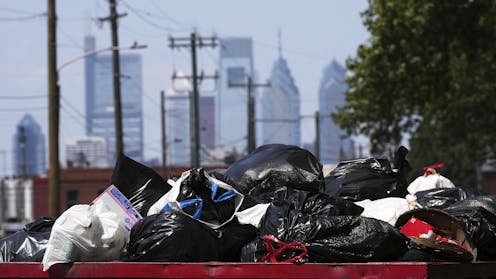
    Curbside trash collection has been on pause in Philadelphia since July 1, 2025. AP Photo/Matt Slocum

    As the Philadelphia municipal worker strike enters its second week, so-called “Parker piles” – large collections of garbage that some residents blame on Mayor Cherelle Parker – continue to build up in neighborhoods across the city.

    The AFSCME District Council 33 union on strike represents about 9,000 blue-collar workers in the city, including sanitation workers, 911 dispatchers, city mechanics and water department staff.

    The Conversation U.S. asked Francis Ryan, a professor of labor studies at Rutgers University and author of “AFSCME’s Philadelphia Story: Municipal Workers and Urban Power in Philadelphia in the Twentieth Century,” about the history of sanitation strikes in Philly and what makes this one unique.

    Has anything surprised you about this strike?

    This strike marks the first time in the history of labor relations between the City of Philadelphia and the AFSCME District Council 33 union where social media is playing a significant role in how the struggle is unfolding.

    The union is getting their side of the story out on Instagram and other social media platforms, and citizens are taking up or expressing sympathy with their cause.

    Piles of garbage on the street beside a green Dumpster spraypainted with 'Don't Scab Parker's Mess'
    Some city residents are referring to the garbage build-up sites as ‘Parker piles.’
    AP Photo/Tassanee Vejpongsa

    How successful are trash strikes in Philly or other U.S. cities?

    As I describe in my book, Philadelphia has a long history of sanitation strikes that goes back to March 1937. At that time, a brief work stoppage brought about discussions between the city administration and an early version of the current union.

    When over 200 city workers were laid off in September 1938, city workers called a weeklong sanitation strike. Street battles raged in West Philadelphia when strikers blocked police-escorted trash wagons that were aiming to collect trash with workers hired to replace the strikers.

    Philadelphia residents, many of whom were union members who worked in textile, steel, food and other industries rallied behind the strikers. The strikers’ demands were met, and a new union, the American Federation of State, County and Municipal Employees, or AFSCME, was formally recognized by the city.

    This strike was a major event because it showed how damaging a garbage strike could be. The fact that strikers were willing to fight in the streets to stop trash services showed that such events had the potential for violence, not to mention the health concerns from having tons of trash on the streets.

    There was another two-week trash strike in Philadelphia in 1944, but there wouldn’t be another for more than 20 years.

    However, a growing number of sanitation strikes popped up around the country in the 1960s, the most infamous being the 1968 Memphis Sanitation Strike.

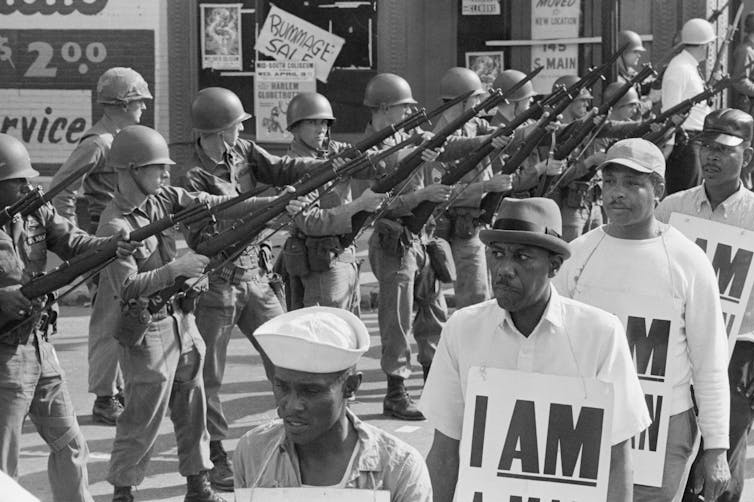
    Black-and-white photo of a line of Black men walking past a row of white soldiers in uniform with bayonets fixed
    Black sanitation workers peacefully march wearing placards reading ‘I Am A Man’ during the Memphis sanitation strike in 1968.
    Bettmann via Getty Images

    In Memphis, a majority African American sanitation workforce demanded higher wages, basic safety procedures and recognition of their union. Dr. Martin Luther King, Jr. rallied to support the Memphis workers and their families as part of his Poor Peoples’ Campaign, which sought to organize working people from across the nation into a new coalition to demand full economic and political rights.

    On April 4, 1968, Dr. King was assassinated. His death put pressure on Memphis officials to settle the strike, and on April 16 the the strikers secured their demands.

    Following the Memphis strike, AFSCME began organizing public workers around the country and through the coming years into the 1970s, there were sanitation strikes and slowdowns across the nation including in New York City, Atlanta, Cleveland and Washington, D.C. Often, these workers, who were predominantly African American, gained the support of significant sections of the communities they served and secured modest wage boosts.

    By the 1980s, such labor actions were becoming fewer. In 1986, Philadelphia witnessed a three-week sanitation strike that ended with the union gaining some of its wage demands, but losing on key areas related to health care benefits.

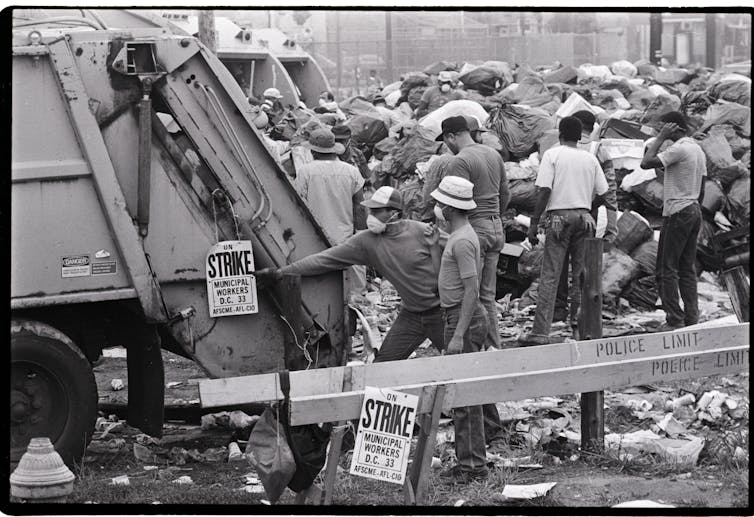
    Black-and-white photo of men standing alongside huge pile of trash and two trash trucks
    Workers begin removing mounds of trash after returning to work after the 18-day strike in Philadelphia in July 1986.
    Bettmann via Getty Images

    How do wages and benefits for DC33 workers compare to other U.S. cities?

    DC 33 president Greg Boulware has said that the union’s members make an average salary of $46,000 per year. According to MIT’s Living Wage Calculator, that is $2,000 less than what a single adult with no kids needs to reasonably support themselves living in Philadelphia.

    Sanitation workers who collect curbside trash earn a salary of $42,500 to $46,200, or $18-$20 an hour. NBC Philadelphia reports that those wages are the lowest of any of the major cities they looked at. Hourly wages in the other cities they looked at ranged from $21 an hour in Dallas to $25-$30 an hour in Chicago.

    Unlike other eras, the fact that social media makes public these personal narratives and perspectives – like from former sanitation worker Terrill Haigler, aka “Ya Fav Trashman” – is shaping the way many citizens respond to these disruptions. I see a level of support for the strikers that I believe is unprecedented going back as far as 1938.

    What do you think is behind this support?

    The pandemic made people more aware of the role of essential workers in society. If the men and women who do these jobs can’t afford their basic needs, something isn’t right. This may explain why so many people are seeing things from the perspective of striking workers.

    At the same time, money is being cut from important services at the federal, state and local levels. The proposed gutting of the city’s mass transit system by state lawmakers is a case in point. Social media allows people to make these broader connections and start conversations.

    If the strike continues much longer, I think it will gain more national and international attention, and bring discussions about how workers should be treated to the forefront.

    The Conversation

    Francis Ryan does not work for, consult, own shares in or receive funding from any company or organization that would benefit from this article, and has disclosed no relevant affiliations beyond their academic appointment.

    ref. How Philadelphia’s current sanitation strike differs from past labor disputes in the city – https://theconversation.com/how-philadelphias-current-sanitation-strike-differs-from-past-labor-disputes-in-the-city-260676

  • Golden eagles were reintroduced to Ireland, but without prey they’re now struggling to thrive

    Source: ForeignAffairs4

    Source: The Conversation – UK – By Fiona McAuliffe, Lecturer of Ecology, Scotland’s Rural College

    Dennis Jacobsen/Shutterstock

    In the early 2000s, golden eagles soared once again over the hills of Donegal in northwest Ireland, for the first time in nearly a century. Their return was celebrated as a landmark in Irish conservation, a hopeful sign that one of the island’s most iconic predators was back.

    But two decades on, the reality is sobering. The population remains small with just five territorial pairs and an estimated total population of just 20-25 birds. Breeding success is poor, and the golden eagle’s future in Ireland is uncertain. So what went wrong?

    Our research published in the Irish Naturalists’ Journal suggests the problem isn’t with the eagles themselves – it’s with the landscape they were released into. On paper, Donegal’s uplands looked ideal: open terrain, low human disturbance and ample wild prey. But over time, key parts of that ecosystem have quietly unravelled.

    Golden eagles rely on a steady supply of prey to thrive and raise chicks – notably red grouse and Irish hares. Yet, during our recent surveys along transects (predetermined lines through an area) and footage from camera traps in and around Glenveagh national park, the uplands seemed eerily quiet. Not just quiet of eagles, but of the smaller animals they prey on for food. The landscape looked wild, but had lost some of its vital living components.

    When comparing the available prey biomass, that’s the combined weight of grouse and hares per unit area, Donegal had 74-83% less prey than equivalent areas in the Scottish Highlands where golden eagles are thriving. That’s an enormous shortfall. Without enough food, adult eagles must travel further to hunt and spend more energy – and so are less likely to raise chicks successfully. A few lean years can tip a small population like this into crisis.

    Why is prey so scarce? One of the main culprits is overgrazing. Red deer numbers have exploded across Ireland in recent decades. In places such as Donegal, their constant browsing and grazing has severely degraded upland habitats. This damages the heather moorlands that grouse and hares depend on, leaving them with less cover and fewer food sources.

    A red deer looks at a camera trap in an upland environment.
    Red deer were the most common species recorded during camera trap surveys.
    Queen’s University Belfast

    Add to this the growing pressure from medium-sized predators, including foxes and badgers. Without apex predators such as wolves or lynx to keep them in check, these “mesopredators” flourish. This well-documented phenomenon is known as mesopredator release where populations of mid-sized predators increase after the loss of top predators, often leading to greater pressure on prey species, such as ground-nesting birds and young hares, compounding the challenges for these struggling prey species.

    And while Ireland’s conservation laws look strong on paper, implementation often lags behind. Some protected areas remain heavily grazed, burned or unmanaged. Management plans are either missing, unenforced or outdated. This weakens the very protections meant to sustain wildlife.

    A lesson for rewilding

    The reintroduction of golden eagles was based on the best available knowledge at the time. But ecosystems aren’t static. What may have been viable habitat in the 1990s no longer meets the needs of a breeding eagle population today.

    Reintroducing a species isn’t enough. The systems that sustain it also need to be restored. The clichéd paradigm that nature-is-good and humans-are-bad isn’t helpful. Instead modern landscapes are often so degraded that they can’t recover if left alone.

    Upland habitat with exposed peat and areas of rock.
    Upland areas within Glenveagh national park are overgrazed, leading to exposed peat and erosion.
    Fiona McAuliffe

    Conservation can facilitate active recovery. Real rewilding is about more than simply “putting animals back” and “letting nature take its course”. It is about putting systems back: predators, prey, plants and the processes that connect them.

    Despite the challenges, the golden eagle population has not failed in Ireland – not yet at least. To turn the tide, conservation efforts must go beyond charismatic species and focus on landscape restoration. That means reducing overgrazing, supporting prey recovery, rebalancing predator dynamics and making sure protected areas are actually protected.

    Encouragingly, Glenveagh national park has begun some of this work, by reducing deer overgrazing and regenerating native woodlands. If this landscape restoration is sustained and expanded, golden eagles could still thrive in a more balanced, functioning upland ecosystem.

    These birds are more than just a symbol of wildness. They are a litmus test of ecosystem health. Right now, they’re telling us something important. Something those calling for the reintroduction of other top predators, including wolves, would do well to consider.


    Don’t have time to read about climate change as much as you’d like?

    Get a weekly roundup in your inbox instead. Every Wednesday, The Conversation’s environment editor writes Imagine, a short email that goes a little deeper into just one climate issue. Join the 45,000+ readers who’ve subscribed so far.


    The Conversation

    The authors do not work for, consult, own shares in or receive funding from any company or organisation that would benefit from this article, and have disclosed no relevant affiliations beyond their academic appointment.

    ref. Golden eagles were reintroduced to Ireland, but without prey they’re now struggling to thrive – https://theconversation.com/golden-eagles-were-reintroduced-to-ireland-but-without-prey-theyre-now-struggling-to-thrive-258832

  • The Shrouds: new Cronenberg film is an elusive meditation on death, grief and environmental ethics

    Source: ForeignAffairs4

    Source: The Conversation – UK – By Laura O’Flanagan, PhD Candidate, School of English, Dublin City University

    American filmmaker David Cronenberg is a leading figure in body horror, a film genre that explores disturbing and often grotesque aspects of the human body. Films such as The Fly (1986), eXistenZ (1999) and Crimes of the Future (2022) depict scenes of physical mutilation, illness and technological invasion to represent deeper fears about identity, society and the human condition.

    Through intense bodily imagery, Cronenberg’s films raise powerful questions about human relationships with technology and nature. As our relationship with technology rapidly evolves alongside escalating environmental catastrophe, there is a timely significance in these ideas.

    His latest film, The Shrouds, evokes the writing of Stacy Alaimo, a scholar known for her work exploring the connections between the human body, the environment, and the social forces that shape both. Alaimo’s work combines feminist and materialist ideas and examines how our bodies are physically connected to the world around us – not separate from nature or society, but shaped by both ecological systems and social structures.

    Looking for something good? Cut through the noise with a carefully curated selection of the latest releases, live events and exhibitions, straight to your inbox every fortnight, on Fridays. Sign up here.


    Like Cronenberg, Alaimo is interested in the entanglement of human flesh with more-than-human worlds, alongside the interplay between bodies and objects.

    In The Shrouds, the body, specifically that of Becca (Diane Kruger) is placed firmly at the centre of the story. Appearing both as a decaying corpse and naked in dream sequences, her body bears fresh surgical scars which are unbandaged and exposed.

    Becca’s body is shown as intensely vulnerable, a gendered depiction of femaleness which is controlled literally by the male gaze through the “shroud”, a piece of sci-fi wearable tech. It comprises a suit of MRI and X-ray cameras which encases a corpse, allowing decomposition to be monitored through a live video link with an app.

    This conceit embeds Becca both in the Earth and in technology, creating deeply memorable imagery which challenges viewers to think about death, grief and the environmental ethics surrounding human burial.

    The presentation of Becca’s body evokes Alaimo’s concept of transcorporeality. In her 2010 book Bodily Natures, Alaimo describes transcorporeality as the idea that “the human is ultimately inseparable from ‘the environment’” – continually transformed through interactions with the landscape, chemicals, technology and non-human forces. Becca’s corpse, decaying in real-time on a live link, highlights this connection.

    Grief: the fictional and the personal

    The film opens with Karsh (Vincent Kassel), Becca’s bereaved husband, in a dentist’s chair being told, “Grief is rotting your teeth”. The film as a whole can be read as a meditation on how grief seeps into and changes the body.

    Written following the death of David Cronenberg’s wife (and initially conceived of as a Netflix series), Cronenberg has rejected the idea that it is fully autobiographical. It is, however, difficult to fully separate the director from the story.

    Cassel as Karsh physically resembles Cronenberg in the film, blurring the boundary between fiction and the personal. Physical duplication is a disorienting motif of the film. Kruger reappears as Becca’s sister Terri and as an animated AI assistant named Honey.

    Alongside the grotesque images of her decaying body, these versions of Kruger are especially striking. Cassel’s performance as the controlling and obsessive Karsh is nuanced and understated. His desire to monitor Becca’s decomposition is presented as a logical step to regain possession of her from her illness, and is deeply disturbing.

    It also has ominous and timely resonance in our modern world, where controversial technology exists that permits artificial intelligence to create avatars of the dead to comfort the bereaved.

    The film becomes a mimetic piece on grief, where boundaries between imagination and reality dissolve. Cronenberg’s frequent collaborator Howard Shore provides an ambient score that reinforces this dissolution. Ethereal and bass-rich, it features spacious, slowly evolving melodies wrapped in velvety synth textures which evoke a dream-like soundscape.

    As the plot progresses into a tangle of conspiracy theories, lines blur between Karsh’s dreams and reality. Background plots drift unresolved, characters are vaguely sketched. Themes of environmental activism versus capitalist enterprise, the exploitation of technology, illegal surveillance and government corruption are all threaded through the story, but none are fully realised. This is not a film which offers a straightforward narrative or closure. Like grief, it remains raw, fluid and difficult to contain.

    Throughout, the film returns to Becca’s decaying body, encased in a shroud that is described as both toxic and radioactive, an object of controversy for eco-activists. “She’s dead, remember, she can’t do anything,” Karsh’s companion reminds him.

    But this is not true for Becca. In death, her body is watched and consumed by systems of surveillance and ecological anxiety. Symbolising Alaimo’s concept of transcorporeality, Becca’s decaying corpse, wrapped in technology, but buried in the Earth, is deeply connected to the environment and cannot be separated from it. Her body is influenced by both its natural surroundings and social factors such as the shroud’s technology, outside interference and Karsh’s control.

    Karsh asserts that burial is a complex matter, converging politics, religion and economics. The Shrouds raises questions that touch on all of these, but provides no tangible answers. Some viewers will be frustrated by the film’s lack of logical structure and resolution. But it is also fair to say that this is how it mirrors the pathways of grief itself: unwieldy, unpredictable and consuming.

    The Conversation

    Laura O’Flanagan does not work for, consult, own shares in or receive funding from any company or organisation that would benefit from this article, and has disclosed no relevant affiliations beyond their academic appointment.

    ref. The Shrouds: new Cronenberg film is an elusive meditation on death, grief and environmental ethics – https://theconversation.com/the-shrouds-new-cronenberg-film-is-an-elusive-meditation-on-death-grief-and-environmental-ethics-260009

  • Brics is sliding towards irrelevance – the Rio summit made that clear

    Source: ForeignAffairs4

    Source: The Conversation – UK – By Amalendu Misra, Professor of International Politics, Lancaster University

    The Brics group of nations has just concluded its 17th annual summit in the Brazilian city of Rio de Janeiro. But, despite member states adopting a long list of commitments covering global governance, finance, health, AI and climate change, the summit was a lacklustre affair.

    The two most prominent leaders from the group’s founding members – Brazil, Russia, India, China and South Africa – were conspicuously absent. Russia’s president, Vladimir Putin, only attended virtually due to an outstanding arrest warrant issued by the International Criminal Court over his role in the war in Ukraine.

    China’s Xi Jinping avoided the summit altogether for unknown reasons, sending his prime minister, Li Qiang, instead. This was Xi’s first no-show at a Brics summit, with the snub prompting suggestions that Beijing’s enthusiasm for the group as part of an emerging new world order is in decline.

    Perhaps the most notable takeaway from the summit was a statement that came not from the Brics nations but the US. As Brics leaders gathered in Rio, the US president, Donald Trump, warned on social media: “Any Country aligning themselves with the Anti-American policies of BRICS, will be charged an ADDITIONAL 10% Tariff. There will be no exceptions to this policy.”


    Get your news from actual experts, straight to your inbox. Sign up to our daily newsletter to receive all The Conversation UK’s latest coverage of news and research, from politics and business to the arts and sciences.


    Trump has long been critical of Brics. This is largely because the group has consistently floated the idea of adopting a common currency to challenge the dominance of the US dollar in international trade.

    Such a move makes sense if we focus on trade figures. In 2024, the value of trade among the Brics nations was around US$5 trillion, accounting for approximately 22% of global exports. Member nations have always felt their economic potential could be fully realised if they were not reliant upon the US dollar as their common currency of trade.

    During their 2024 summit, which was held in the Russian city of Kazan, the Brics nations entered into serious discussions around creating a gold-backed currency. At a time when the Trump administration is waging a global trade war, the emergence of an alternative to the US dollar would be a very serious pushback against US economic hegemony.


    Read more:
    Why Donald Trump’s election could hasten the end of US dollar dominance


    But the freshly concluded Brics summit did not present any concrete move towards achieving that objective. In fact, the 31-page Rio de Janeiro joint declaration even contained some reassurances about the global importance of the US dollar.

    There are two key obstacles hindering Brics from translating its vision of a common currency into reality. First is that some founding member nations are uncomfortable with adopting such an economic model, in large part due to internal rivalries within Brics itself.

    India, currently the fourth-largest economy in the world, has a history of periodic confrontation and strategic competition with China. It is reticent about adopting an alternative to the US dollar, concerned that this could make China more powerful and undercut India’s long-term interests.

    Second is that the Brics member nations are dependent on their bilateral trade with the US. Simply put, embracing an alternative currency is counterproductive when it comes to the current economic interests of individual countries. Brazil, China and India, for example, all export more to the US than they import from it.

    In December 2024, following his election as US president, Trump said: “We require a commitment from these countries that they will neither create a new Brics currency nor back any other currency to replace the mighty US dollar or they will face 100% tariffs and should expect to say goodbye to selling into the wonderful US economy”. This blunt message all but killed any enthusiasm that was there for this grand economic model.

    Caught in contradiction

    The Brics group is a behemoth. Its full 11 members account for 40% of the world’s population and economy. But the bloc is desperately short of providing any cohesive alternative global leadership.

    While Brazil used its position as host to highlight Brics as a truly multilateral forum capable of providing leadership in a new world order, such ambitions are thwarted by the many contradictions plaguing this bloc.

    Among these are tensions between founding members China and India, which have been running high for decades.

    There are other contradictions, too. In their joint Rio declaration, the group’s members decried the recent Israeli and US attacks on Iran. Brazil’s president, Luiz Inácio “Lula” da Silva, also used his position as summit host to criticise the Israeli offensive in Gaza.

    But this moral high ground appears hollow when you consider that the Russian Federation, a key member of Brics, is on a mission to destroy Ukraine. And rather than condemning Russia, Brics leaders used the Rio summit to criticise recent Ukrainian attacks on Russia’s railway infrastructure.

    Brics declared intention to address the issue of climate change is also problematic. The Rio declaration conveyed the group’s support for multilateralism and unity to achieve the goals of the Paris agreement. But, despite China making significant advances in its green energy sector, Brics contains some of the world’s biggest emitters of greenhouse gases as well as several of the largest oil and gas producers.

    Brics can only stay relevant and provide credible leadership in a fast-changing international order when it addresses its many inner contradictions.

    The Conversation

    Amalendu Misra is a recipient of British Academy and Nuffield Foundation Fellowships.

    ref. Brics is sliding towards irrelevance – the Rio summit made that clear – https://theconversation.com/brics-is-sliding-towards-irrelevance-the-rio-summit-made-that-clear-260653

  • As Netanyahu meets Trump in Washington, what hope for peace in Gaza? Expert Q&A

    Source: ForeignAffairs4

    Source: The Conversation – UK – By Jonathan Este, Senior International Affairs Editor, Associate Editor

    The US government “remains upbeat” about the prospects for at least a ceasefire in Gaza, according to the latest reports from Washington, where the Israeli prime minister, Benjamin Netanyahu, has been meeting the US president, Donald Trump.

    Netanyahu handed the US president a letter nominating him for the Nobel peace prize, saying he deserved it for “forging peace, as we speak, in one country in the region after another”. But as yet there are no signs that either Hamas or Israel have moved any closer to accepting each other’s terms.

    In fact, reports emerging from the White House meeting are that the two leaders discussed the displacement of much of the Palestinian population. And a plan revealed by the Israeli foreign minister, Israel Katz, proposed the contruction of a “humanitarian city” at Rafah in the north of the Gaza Strip to house more than 600,000 Palestinians.

    The Conversation’s senior international affairs editor, Jonathan Este, spoke with Middle East expert, Scott Lucas, of University College Dublin to address this and other questions.

    The two leaders’ discussions in Washington seemed to centre around displacement of the Palestinian population in lieu of a two-state solution. What does this tell you about the chance of a ceasefire deal?

    I am fascinated – and sometimes disillusioned – by how some media outlets, led by the nose, miss the main story. Last week Donald Trump pronounced on social media that Israel had agreed to a 60-day ceasefire and Hamas “should take this deal”.

    But the Netanyahu government has not accepted the framework, circulated by Trump’s envoy Steve Witkoff, let alone consented to a halt of their attacks, which have continued even as the Israeli prime minister travelled to Washington to meet the US president.

    As Trump hosted Netanyahu in the White House on Monday, the line was that the US president was “upbeat on Gaza ceasefire talks”. Meanwhile, few of them seemed to notice the important development. Hamas responded to the US framework with proposals for the staged release of 28 of the remaining 50 Israeli hostages over the 60 days while Israeli troops withdrew from positions inside the Strip and humanitarian aid was restored.

    But the Israeli government has thus far not given a substantive response. Instead, while pursuing a plan for the long-term military occupation of Gaza, it may also be seeking the displacement of a large portion of the more than 2.2 million population.


    Sign up to receive our weekly World Affairs Briefing newsletter from The Conversation UK. Every Thursday we’ll bring you expert analysis of the big stories in international relations.


    Hard-right members of Netanyahu’s cabinet, such as finance minister, Bezalel Smotrich, and internal security minister, Itamar Ben-Gvir, have long called for more than a million Gazans to be moved out of the territory. Reports over the weekend confirmed that this is not rhetoric. Israeli businessmen and venture capitalists have reportedly been working on plans for postwar Gaza, to include a “Trump riviera”, mirroring the displacement declaration by the US President, and an “Elon Musk smart manufacturing zone”.

    On Tuesday, security cabinet member Ze’ev Elkin, a Netanyahu loyalist, proclaimed “a substantial chance” for a ceasefire. But Qatari negotiators have said there are currently no talks, only discussions with each side about the framework for talks.

    Meanwhile, citing the killing of five Israeli soldiers in Gaza on Sunday night by an improvised explosive device, Ben-Gvir said: “We should not negotiate with those who kill our soldiers. They should be crushed to pieces, starved to death, and not resuscitated with humanitarian aid that gives them oxygen.”

    He called for “a complete siege, crushing them militarily” and reiterated the plan for “encouraging [Palestinian] immigration and [Jewish] settlement — these are the keys to complete victory”.

    Smotrich also called for a ban on any aid to Gaza: “In addition, I demand … that any territory that was conquered and cleansed of terror with the blood of our fighters not be abandoned.”

    So I am not optimistic at the moment.

    Looking at the region as a whole, two events have ‘reset’ the Middle East: the October 7 Hamas attacks and Israel’s recent 12-day war. Can you tell me more about the kaleidoscope effect these two events had?

    In October 2023, there was no open-ended war in Gaza. Benjamin Netanyahu’s focus was on curbing the Palestinian Authority in the West Bank, blocking any possibility of a two-state solution. His tactic was to ease the economic pressure on Gaza and Hamas, maintaining that organisation as a balance against its West Bank rivals.

    Hamas ripped up that approach with its mass murder on October 7 – the first of the two kaleidoscope moments which changed the whole picture in a matter of hours. The attack triggered the deadly Israeli response that continues 21 months later. That response did not “destroy” Hamas, as Netanyahu pledged, but it led the Israelis to take on other foes in the region.

    Pursuing its “octopus doctrine”, Israel severely damaged one of the tentacles, Hezbollah, when it destroyed much of the Lebanese group’s leadership in the autumn of 2024. It assassinated senior Iranian commanders and officials in Damascus, and received a further boost when Turkish-backed factions toppled the Assad regime in December.

    The 12-day war in June aimed to destroy the head of the octopus: Iran. Israel’s strikes and assassinations killed much of the country’s military leadership and many of its top nuclear scientists. The supreme leader, Ali Khamenei, hid in a bunker, only emerging on July 6. But Israel failed to topple his regime, as it had hoped.

    The war was another kaleidoscope moment. Israel had its regional victory. But paradoxically, because there has been no resolution in Gaza, this has come at the cost of further international isolation. Gulf States, having moved away from “normalisation” with Israel, put out tougher statements about “genocide” of Gazans and the violation of Iranian sovereignty. Saudi Arabia’s state media highlighted a letter from Iranian foreign minister Abbas Araghchi to Saudi counterpart Faisal bin Farhan for “ways to support and enhance [relations] across all fields”.

    This implies that for any normalisation to occur, Israel must end its military operation in Gaza?

    That question cuts to the chase. The Gulf states, with the notable exception of Qatar, are no friends of Hamas. They might even have accepted the destruction of the group if Israel had been able to accomplish it quickly.

    But there is no way that they can publicly acquiesce in the killing of almost 60,000 Gazans, the large majority of them civilians, and the humanitarian blockade that threatens every single person living in the Gaza Strip. Nor will they want to see Israel export Gazans across the region in an echo of the 1948 “Nakba” whose legacy is the millions of Palestinians living in refugee camps across the Middle East.

    Netanyahu can pursue his “absolute destruction” of Hamas by pursuing the destruction and displacement of Gazans. Or he can try to capitalise on his war with Iran through links with Arab countries. He cannot do both.

    Will Donald Trump get his Nobel peace prize?

    I don’t know, for that is a question which does not have a logical answer.

    Herny Kissinger was the US secretary of state who oversaw an escalation of the Vietnam war in which up to 3 million Vietnamese, 310,000 Cambodians, 62,000 Laotians and 58,220 US service members died. The singer-songwriter Tom Lehrer aptly noted: “Political satire became obsolete when Henry Kissinger was awarded the Nobel Peace Prize.”

    We are in a world where having caused so much disorder and chaos, having enabled violence, including Israel’s open-ended war, Donald Trump may succeed in a pose as “peacemaker”.

    Some may see the least worst option as flattery, which seems to work as a strategy for dealing with the US president. They may accept the White House theatre in which Netanyahu, wanted by the International Criminal Court for war crimes, personally hands Trump a peace prize nomination.

    Meanwhile, in the past 24 hours, according to the Hamas-run Gaza health ministry, the number of casualties in Gaza rose to 57,575 people killed and 136,879 wounded. Twenty hostages spent another day in limbo. That’s what matters here.

    The Conversation

    ref. As Netanyahu meets Trump in Washington, what hope for peace in Gaza? Expert Q&A – https://theconversation.com/as-netanyahu-meets-trump-in-washington-what-hope-for-peace-in-gaza-expert-qanda-260722

  • How to support someone who is grieving: five research-backed strategies

    Source: ForeignAffairs4

    Source: The Conversation – UK – By Lucy Poxon, Senior Lecturer in Counselling Psychology, Department of Social Work Counselling & Social Care , School of Childhood and Social Care, University of East London

    PeopleImages.com – Yuri A/Shutterstock

    When someone we care about is grieving the loss of a loved one, our natural instinct is to ease their pain. But when words feel clumsy and gestures fall short, it can be hard to know how to help.

    Drawing on both my research as a counselling psychologist and 18 years of supporting bereaved clients in therapy, I’ve identified five compassionate, research-backed ways to walk alongside someone who is mourning.

    Whether you’re a close friend, family member, or caring colleague, these approaches will help you offer support in meaningful and authentic ways.

    1. Grief wears many disguises

    Our expectations of how grief should look are often shaped by culture, the media or personal experience, and they may bear little resemblance to how grief is actually lived.

    Grief can appear as physical symptoms like exhaustion, loss of appetite, or insomnia; as behaviour like withdrawing from others or drinking more; and as thoughts or emotions ranging from apathy and numbness to anger or intense sadness.

    It can be loud and overwhelming or quiet and barely perceptible. Some people feel deep sorrow immediately; others feel nothing for weeks or even months. A lack of overt sadness isn’t necessarily cause for concern; it may reflect relief that a loved one is no longer suffering, or be a sign of early adjustment.


    Read more:
    Not all mourning happens after bereavement – for some, grief can start years before the death of a loved one


    One of the most compassionate things you can do is validate whatever shape grief takes. Reassure the person that there’s no “right” way to grieve and support them in tuning into what their body and emotions need.

    2. Acknowledge the death and don’t rush the tears

    Nearly every grieving client I’ve worked with has described someone, often a friend, colleague, or even family member, who avoided or ignored them after the loss. It’s one of the most painful experiences for someone already feeling vulnerable.

    Often, the avoidance isn’t malicious. It’s driven by fear of saying the wrong thing or not knowing how to help. But by avoiding the subject, we send an unintended message: your grief is too much.

    Acknowledging the death, even simply by saying “I’m so sorry to hear about your loss”, is not a reminder of their pain, it’s a sign that you see it and honour it. Inviting someone out, even if they decline, communicates that they still belong and are welcome.

    If someone begins to cry, it’s natural to want to fix things, to offer comfort, or even to pass a tissue. But giving a tissue too soon can inadvertently signal that they should stop crying. Sometimes the most supportive thing you can do is to sit with your own discomfort, and simply be present. That silent witness can help a grieving person feel less alone.

    3. Let go of the “stages of grief” myth

    Many people are still taught to expect a tidy progression of grief: denial, anger, bargaining, depression and acceptance, popularised by Swiss-American psychiatrist Elisabeth Kübler-Ross in the 1960s. While these emotions are real and common, research shows that most people don’t experience them in a neat order, or even experience all five at all.

    Despite being widely critiqued, stage-based models are still found in healthcare training manuals and TV scripts, and they can leave people feeling like they’re grieving “wrong”.

    If your loved one is worried they should feel more sadness, or wonders why they haven’t yet felt angry, remind them: grief is personal and unpredictable. There’s no timeline, no script and no shame in not following one.

    Helping someone let go of these expectations may ease guilt, reduce internal pressure and encourage gentler self-care.

    4. Encourage communication – with the living and the lost

    Grief often comes with emotional loneliness, a deep sense of aloneness that persists even in the presence of others. It’s different from social isolation; it’s the ache of missing someone irreplaceable.


    Read more:
    What we can learn from death rites of the past will help us treat the dead and grieving better today


    While you can’t fix that loneliness, you can help the bereaved maintain a continuing bond with their loved one. This might include writing letters to the person who has died, speaking to them at a graveside or special place, saying prayers or engaging in meditation or creating memory boxes or rituals.

    These forms of connection can help integrate the loss into a new reality. You might offer to visit a meaningful place together, or support them in planning a small memorial gesture.

    5. Make specific, practical offers

    It’s common to say “Let me know if you need anything”, but for someone in deep grief, reaching out can feel impossible. Emotional overwhelm, fatigue and even shame can prevent them from asking for help, even when they desperately need it.

    Instead, make intentional, concrete offers that remove decision-making and emotional labour. These might include:

    • delivering a home-cooked meal once a week

    • taking care of pets or houseplants

    • helping with funeral admin or paperwork

    • offering regular lifts to appointments

    • updating others on their behalf

    • messaging with a clear “no need to reply” reassurance

    If you live far away, sending a card, text, or voice note can still be powerful; just be mindful that they may receive many, and feel pressure to respond. A line like, “No need to write back, just wanted you to know I’m thinking of you” can go a long way.

    Grief is not a puzzle to solve or a wound to fix. It’s a human response to love and loss – and it’s different for everyone.

    The most powerful thing you can do? Be there. Stay present. Listen without judgement. And remember that it’s okay not to have the perfect words. Showing up with authenticity, patience and compassion is what matters most.

    The Conversation

    Lucy Poxon does not work for, consult, own shares in or receive funding from any company or organisation that would benefit from this article, and has disclosed no relevant affiliations beyond their academic appointment.

    ref. How to support someone who is grieving: five research-backed strategies – https://theconversation.com/how-to-support-someone-who-is-grieving-five-research-backed-strategies-260265

  • The Edwardians: Age of Elegance – a glimpse into royal patronage of the arts in the early 20th century

    Source: ForeignAffairs4

    Source: The Conversation – UK – By Jane Hamlett, Professor of Modern British History, Royal Holloway University of London

    King Edward VII, the son of Queen Victoria, ascended the throne upon her death in 1901, but unlike his mother, he ruled for a very short period and died in 1910. His reign, along with the years immediately before the outbreak of the first world war in 1914, are known as the Edwardian period.

    Taking in this particular era, The Edwardians: Age of Elegance at the King’s Gallery in Buckingham Palace, focuses on the artistic patronage of Edward VII and his wife Alexandra of Denmark, and their son George V and his wife Mary of Teck.


    Looking for something good? Cut through the noise with a carefully curated selection of the latest releases, live events and exhibitions, straight to your inbox every fortnight, on Fridays. Sign up here.


    Edward and Alexandra were married in 1863, and as Prince and Princess of Wales the pair were leading tastemakers in Victorian upper-class society in the years before Edward came to the throne at the beginning of the 20th century.

    This is often regarded as a golden age before the carnage and disruption of the great war saw the world indelibly change. However, the exhibition is not confined to these years and also reaches back into the Victorian period (1837-1901).

    Those hoping to experience some of the glamour of the royal family won’t be disappointed. The first room takes visitors into the heady atmosphere of the Marlborough House set which centred around Edward and Alexandra’s residence in St James’s. One case commemorates the 1871 Waverley Ball which marked the centenary of popular Scottish novelist Sir Walter Scott. Alexandra’s elaborate Mary Queen of Scots costume – a silk dress with gold lacings – is on display.

    The pageantry of the court is communicated through a series of stunning narrative paintings including the Danish artist Laurits Tuxen’s The Garden Party at Buckingham Palace (1897-1900) and The Family of Queen Victoria in 1887 (1887) painted for her golden jubilee in 1887.

    This theme is picked up in the second large room, which focuses on the lavish world of the court. Here, the opulent 1911 coronation robes of George and Mary and a case of necklaces and jewellery take centre stage. This exhibit is the star of the show with plenty of visitors posing for photographs in front of it.

    Royals as art collectors

    But beneath all the glitz and glamour there’s a subtler story about how the royal family worked as collectors and their wider role in Britain and beyond. One of the most interesting things about the exhibition is that it reveals the personal taste of the royals, through what they chose to collect.

    Horses, dogs and yachts are prominent. Edward’s dog Caesar, the wire-haired fox terrier who famously followed his funeral procession in 1910, appears in several images, and his race horse Persimmon is also represented.

    Edward and Alexandra were patrons of leading artists of the day – he owned a number of works by the popular Victorian painter Frederic Leighton, while she collected art by the Pre-Raphaelite artist Edward Burne Jones. Alexandra also supported Minton’s pottery studio in the 1870s, which employed many women artists.

    The exhibition also reveals Alexandra’s personal artistic activities. Like many upper-class Victorian women, she was a keen photographer and creator of photo albums. In the second half of the 19th century, album-making offered women an outlet for creativity and emotional expression. An album of designs made by Alexandra in the 1860s features photos arranged in a spiders web, with family and friends transformed into butterflies and insects.

    Royal patronage was often about international connections. Alexandra’s Danish heritage is expressed through pieces from the Royal Copenhagen porcelain manufacturing company, including a massive porcelain cabinet, featuring an ornamental roof topped by a group of dancing monkeys surrounding a large swan.

    A larger room is devoted to objects amassed on visits and through diplomatic exchange with the colonies which at the time included India, part of Africa, Australia, Canada and New Zealand. Increasingly speedy travel networks brought the world closer in the late 19th century and the royal family were able to travel further and more frequently than ever before. These visits played an important role in Britain’s imperial identity, and underlined the nation’s global power.

    Between 1875 and 1876 Edward toured India. This trip produced a dazzling array of diplomatic gifts, such as a case filled with ornately decorated Indian weapons. After the visit Edward created a special Indian room for them at Marlborough House. Today, they sparkle in their cabinet for the exhibition’s visitors.

    The exhibition does a good job of revealing the importance of imperial connections to the royal collections and the role of the royals in the larger colonial project, but in places I would have liked to know more about the stories behind these objects.

    There’s a tension between the precise attribution of the work of British and European artists and the objects that have been gifted from the colonies – almost all labelled “unidentified maker”.

    The absence of such information is the product of longstanding curatorial habits that shaped these collections in the past and continue to determine what we know about them today. This does mean that there are some absences about the origins and makers of these things, which could have been acknowledged more in some of the exhibition text.

    This was particularly evident when looking at a large portrait of the Maori dancer Terewai Horomona by Gottfried Lindauer. The image has an elaborate frame with a plaque declaring it was presented to the Prince of Wales by the New Zealand commissioner for the Colonial and India Exhibition, 1886.

    The commentary states that Edward was “enchanted” with the portrait which was “promptly gifted” to him. But this might have been better used as an opportunity to give some thought to the woman whose image was framed, presented and exchanged.

    Overall, though, this is an enjoyable exhibition that reveals the royal social world, patronage and imperial connections, and tells a fascinating story about the artistic taste and activities of the lesser-known monarchs of the early 20th century.

    The Conversation

    Jane Hamlett does not work for, consult, own shares in or receive funding from any company or organisation that would benefit from this article, and has disclosed no relevant affiliations beyond their academic appointment.

    ref. The Edwardians: Age of Elegance – a glimpse into royal patronage of the arts in the early 20th century – https://theconversation.com/the-edwardians-age-of-elegance-a-glimpse-into-royal-patronage-of-the-arts-in-the-early-20th-century-259909

  • Norman Tebbit, Conservative minister known as Thatcher’s enforcer, dies at 94

    Source: ForeignAffairs4

    Source: The Conversation – UK – By Martin Farr, Senior Lecturer in Contemporary British History, Newcastle University

    No man more embodied Thatcherism in the eyes of the public in the 1980s than Norman Tebbit, who died on July 7, aged 94.

    Though certainly no yuppie, Lord Tebbit entitled his memoirs Upwardly Mobile. Margaret’s Thatcher’s triumph was also his. She saw in the Essex MP just the uncompromising approach to transforming Britain to which she too was committed.

    Both had been disgusted by the Conservative government of Edward Heath blinking when it sought to face down trade unions in the early 1970s. The experience was elemental to their plan for government.

    Others were more important to the New Right/neoliberal project elected in 1979: Conservative minister Keith Joseph, and Thatcher’s two chancellors, Geoffrey Howe and Nigel Lawson.

    But Tebbit provided something no one else in Thatcher’s cabinet could: an innate connection with white, working-class voters, who may once have been Labour – Tebbit lauded Clement Attlee and Ernest Bevin – but whose values were held to have been washed away in the postwar tide of union militancy, social permissiveness, European integration, and mass immigration.


    Get your news from actual experts, straight to your inbox. Sign up to our daily newsletter to receive all The Conversation UK’s latest coverage of news and research, from politics and business to the arts and sciences.


    He became a Conservative almost because, rather than in spite, of his background. “Essex man” was a presiding personification of the period.

    Unlike almost all of Thatcher’s ministers, Tebbit did not go to university, but left school at 16 to encounter the “closed shop”: that one had to be a member of a particular union to work in a particular workplace. He became determined at that moment to end this practice, and with it so much else of postwar social democracy.

    Thirty years later he did, as Thatcher’s secretary of state for employment. Tebbit’s 1982 Employment Act avenged the unions’ defeat of Heath. Union rights were weakened, never to be restored, and those of employers emboldened. It was a significant contribution to Thatcherism’s ledger.

    As secretary of state for trade and industry, Tebbit pursued privatisation – the return (as its proponents, simply, put it) of nationalised industries to the private sector – with passion. The postwar settlement in Britain was being upended.

    Public image

    In an age before the televising of parliament (much less 24-hour news and social media), Tebbit cut through in a way few politicians did.

    At at a time of inner-city violence, the public knew Tebbit’s unemployed father, decades earlier, didn’t riot but “got on his bike and looked for work”. No one else could have been called – in the words of Labour’s Michael Foot – a “semi-house-trained polecat”. TV’s puppet satire Spitting Image portrayed him as the “Chingford Strangler”, dressed in biker leathers.

    Tebbit felt no need for his contempt for socialism to be leavened by charm or humour. There was invariably a slight sense of menace. He had no interest in ingratiating or propitiating. And so he was as loved by Conservative party members as he was hated by the left. He welcomed their hatred.

    Tebbit in particular despised the swinging 60s – fittingly, he entered parliament in the election in which Harold Wilson’s government was unexpectedly ejected – and its legacy of “insufferable, smug, sanctimonious, naive, guilt-ridden, wet, pink orthodoxy”. Thus his trenchancy on immigration, overseas aid (a “sink of iniquity, corruption and violence”), sexuality (he was one of the few still to use the word “sodomite”) and Europe (he was a Eurosceptic before Euroscepticism).

    In 1990 Tebbit asked of British-born people of Asian heritage: “Which side do they cheer for? Are you still harking back to where you came from or where you are?”. Tebbit’s “cricket test” is second only to Enoch Powell’s “rivers of blood” speech in the annals of inflammatory – they and their supporters would say candid – rhetoric relating to immigration. Neither would mind the association.


    Read more:
    Tory humiliation down to campaign length and cult of May – Norman Tebbit Q&A


    What silenced most – if not quite all – of his critics, was Tebbit at his most vulnerable. Following the IRA bombing of the Grand Hotel Brighton in 1984, live television footage of him, only partially clad in his pyjamas, covered in dust, being stretchered out of the rubble, became the defining image of the atrocity.

    The following year Thatcher moved him from trade and industry to, less happily, chairman of the Conservative party. It was a job that required a lighter touch than Tebbit’s.

    Nevertheless, as chairman, he delivered the Conservatives’ third election victory, of 1987 – ensuring the permanence of the transformation – only to immediately retire to the backbenches. Margaret, his wife, had been paralysed by the bomb, and he devoted himself to her care for more than 30 years until her death.

    As warranted as his departure from government may have been, Thatcher “bitterly regretted” losing him, a feeling she felt for few. Her defenestration in November 1990 is much harder to imagine had Tebbit still been in the cabinet.

    Norman Tebbit’s conservatism and nationalism harked back to an earlier age, yet presaged the populism of the 2020s. In his remarks following the news of Tebbit’s death, Nigel Farage said he thought him “a great man”.

    Tebbit’s values endure in public discourse, in more ways than he might have expected even a few years ago. But in his last months he was either unable, or unwilling, to say whether those values were those of the Conservatives, the traditional party of the right, or of another project. That may be a final Tebbit “test”.

    The Conversation

    Martin Farr does not work for, consult, own shares in or receive funding from any company or organisation that would benefit from this article, and has disclosed no relevant affiliations beyond their academic appointment.

    ref. Norman Tebbit, Conservative minister known as Thatcher’s enforcer, dies at 94 – https://theconversation.com/norman-tebbit-conservative-minister-known-as-thatchers-enforcer-dies-at-94-260716

  • Why many kidney patients are still choosing hospital dialysis – and how the NHS can help more people access care at home

    Source: ForeignAffairs4

    Source: The Conversation – UK – By Leah McLaughlin, Research Fellow in Health Services, Bangor University

    PeopleImages.com – Yuri A/Shutterstock

    Every week, thousands of people with kidney disease in the UK spend long hours in hospital receiving life-saving dialysis. For many, this means travelling to a kidney unit three times a week and sitting through sessions that last four hours or more. It’s a huge commitment that affects people’s ability to work, travel and maintain a normal social life.

    But for many with kidney failure, there’s another option: dialysis at home. It’s more flexible, often less disruptive and, in the long run, more cost-effective for the NHS. So why do most people still choose hospital dialysis?

    A parliamentary summit in May reflected on how to make dialysis more accessible to patients at home. My colleagues and I published research on this topic in 2019. Working in partnership with people who have kidney disease, their families, NHS staff, dialysis providers and kidney charities, we explored the barriers to home dialysis, and how to overcome them.

    People with kidney failure need either a transplant or regular dialysis to filter waste from their blood. Despite NHS guidance that at least 20% of people on dialysis should be supported to have this treatment at home, this target isn’t being met in many parts of the UK.

    A close up of a kidney dialysis machine.
    A kidney dialysis machine.
    ali.can0707/Shutterstock

    Our research team, which included people who had experienced dialysis, held discussions with 50 people from across Wales. Many told us that hospital dialysis was presented by healthcare staff as the default option. For those who had not yet come to terms with needing dialysis, or who had delayed planning due to the unpredictable nature of kidney disease, hospital treatment felt like the path of least resistance.

    Some were concerned about the disruption home dialysis might bring. This included changes to their living space or worries that partners or family members might become their carers. Others valued the routine and regular social contact of hospital dialysis.

    Healthcare professionals may unintentionally reinforce this choice. Some feel more comfortable monitoring patients in clinical settings or are unsure about how to support home dialysis effectively. In some cases, home dialysis isn’t an option because local services don’t have the infrastructure to support it.

    Rather than simply identifying problems, we worked together to develop practical solutions. In 2021, working with patients, healthcare professionals, charities, commissioners and industry, we devised a new service plan that outlines how kidney services could be redesigned to support more people to choose home dialysis.

    One important finding was the power of talking to others already doing it. It’s not just about practical advice, but reassurance that it can work.

    We also identified the need for better training for both professionals and patients. People told us they wanted to understand their options earlier, ideally a year before dialysis starts. That means tackling difficult topics, such as advance care planning, sooner and with the right support.

    Social care also has an important role to play. People with complex needs – like living alone, having mobility challenges, or experiencing financial hardship – may need home support, welfare advice or help navigating the system.

    The cost of choice

    In a linked study, published in 2022, we analysed the costs of different dialysis options. Home dialysis was found to cost between £16,000 and £23,000 per person per year.

    Hospital dialysis costs more, between £20,000 and £24,000, rising to over £30,000 when ambulance transport is needed. This suggests that encouraging more people to have dialysis at home could deliver savings for the NHS.

    In Wales, where all kidney services are coordinated through a single clinical network, home dialysis is more widely available. But in England, services are more fragmented, so access can depend on where you live.

    Even if these changes were implemented, fundamental issues may still prevent progress. Beneath the surface of patient satisfaction lies a deeper problem – the NHS dialysis service is no longer working as intended.

    Transport is one of the most frequently cited concerns among people receiving hospital dialysis, and no one seems satisfied with current arrangements. But satisfaction surveys fail to capture the complexity of the situation.

    People often begin dialysis in a unit that isn’t closest to home due to availability. Later, when given the option to move closer or switch to home dialysis, they may decline. These dialysis units begin to function as surrogate families, offering comfort, routine and social interaction, especially for people who live alone or are isolated.

    This emotional connection can obscure the bigger picture. Patients may focus on transport as the issue, rather than recognising that their own decisions – shaped by understandable human needs and system design – are part of the wider challenge.

    A close up of an arm receiving kidney dialysis.
    shutterstock.
    ali.can0707/Shutterstock

    Staff are caught in the same dynamic. They worry about losing patients they’ve built relationships with or fear someone may not cope alone. But as a result, the service ends up operating not to help people live well for longer but to preserve a sense of satisfaction with a suboptimal status quo.

    By focusing too heavily on keeping people content with the status quo, we risk obscuring what’s truly working, or not. Worse, we may end up wasting already limited resources trying to fix problems that are byproducts of a system shaped more by sentiment than strategy.

    Meanwhile, staff are caught in the middle, trying to deliver care under mounting pressure, with increasingly blurred expectations.

    What needs to change

    To break out of this cycle, different questions should be asked, and not just whether people are satisfied, but whether they are living well, maintaining independence and receiving care that truly reflects their needs and values.

    Our research shows that people already on home dialysis are a valuable and underused resource. They can offer support and insight to others who are starting their treatment.

    The collaborative approach we used could be a model for other parts of the NHS. By designing services with people, not just for them, we can move closer to a future where more people live comfortably with kidney disease, and care that truly fits around their lives and not the other way round.

    The Conversation

    Leah McLaughlin receives funding from Health and Care Research Wales. She is affiliated with the Wales Kidney Research Unit.

    We would like to acknowledge Dr Gareth Roberts Chief Investigator of the Dialysis Options and Choices study. Dr Gareth Roberts is a Consultant Nephrologist and Associate Medical Director at Aneurin Bevan University Health Board and is clinical lead of the Welsh Renal Clinical Network.

    ref. Why many kidney patients are still choosing hospital dialysis – and how the NHS can help more people access care at home – https://theconversation.com/why-many-kidney-patients-are-still-choosing-hospital-dialysis-and-how-the-nhs-can-help-more-people-access-care-at-home-254747

  • I rode the Tour de France to study its impact on the human body – here’s what I learned

    Source: ForeignAffairs4

    Source: The Conversation – UK – By Steve Faulkner, Senior Lecturer in Exercise Physiology, Nottingham Trent University

    The Tour de France is often called the world’s biggest annual sporting event. Each July up to 12 million people line the roadside, while the cumulative TV audience tops 3 billion viewers across 190 countries.

    In 2025, 184 riders will compete in teams of eight, racing a punishing 3,500 km route with nearly 50,000 metres of climbing – roughly the height of Mount Everest six times over. Across 21 stages riders tackle time trials, flat sprints and brutal mountain passes through the Alps, Pyrenees and Massif Central.

    Professional cyclists possess extraordinary endurance and are capable of generating high power outputs day after day. Yet, despite having far less training and support, in recent years a number of amateur cyclists have begun riding the Tour route just days before the pros. The Tour 21 is one such effort and offers cyclists a chance to follow in the tyre tracks of the elite while raising money for a good cause.

    In 2021 I joined 19 others to ride the full route in support of Cure Leukaemia, with a shared goal of raising £1 million for blood cancer research. As a blood cancer survivor diagnosed at 16, this challenge combined my love of cycling, my background in science and my deep desire to give back to the community that helped save my life. It was also a unique opportunity to study how amateur cyclists cope with one of the most demanding endurance events in the world.

    The research findings were published in the Journal of Science and Cycling, to coincide with 2025’s Grand Départ (the official start of the race) in Lille.

    Training for the impossible

    Originally, the study planned to include lab-based physiological assessments of the amateur cyclists undertaking the Tour de France route, but the COVID-19 pandemic forced us to adapt and rely instead on data from training diaries. These gave us insight into how much (or little) training had been done leading up to the ride, and how riders managed the physical and mental strain during the event itself.

    While professional cyclists typically train 20–25 hours a week – often at altitude, with tailored coaching and racing schedules – our group of amateurs had full-time jobs, were typically 15–20 years older than the pros and trained around seven to ten hours a week.

    Our preparation was far from ideal, averaging just 47km per ride and 350 metres of climbing; a fraction of what the Tour demands. In fact, this amounted to less than 10% of the required climbing during the mountain stages.

    Once the ride began, the contrast between training and reality was stark. The group averaged nearly seven hours of riding a day, a 300% increase from their usual routine. Within four days signs of overtraining began to emerge: riders were no longer able to elevate their heart rates, a classic marker of central nervous system fatigue and excessive physical stress.

    As the days progressed, performance metrics continued to decline: heart rates dropped, power outputs fell and mood scores deteriorated. The cumulative fatigue was undeniable.

    Surprisingly, when we compared our amateur data to metrics from professional riders, we found that although pros ride at much higher power outputs, amateurs were subject to greater relative stress. On some days they spent almost double the time in the saddle, which meant they operated closer to their physical limits, with far less time for recovery – and often suboptimal sleep and nutrition.

    By the final week many of the riders could no longer produce the same power they had in the first few days. In some cases, heart rates wouldn’t rise above 100 beats per minute – a clear sign of accumulated fatigue and physiological overload.

    How to prepare for an ultra-endurance challenge

    If you’re planning to take on a major endurance event – whether it’s cycling, running, or hiking – here are some lessons from the road:

    1. Train specifically for the event

    Your training should mirror the challenge ahead. For the Tour, this meant preparing for long, back-to-back days with significant climbing. Mimic the intensity, volume and terrain as closely as possible.

    2. Understand how quickly fatigue builds

    Over multiple days, fatigue doesn’t just accumulate – it compounds. Listen to your body, adapt your plan and include plenty of recovery time.

    3. Prioritise nutrition and recovery

    These two factors can make or break your performance. You’ll need to consume enough energy to fuel the effort, but avoid excessive intake that leads to unnecessary weight gain. Recovery – through sleep, rest and refuelling – is equally vital.

    4. Work with an experienced coach

    More than fancy bikes or high-tech gear, a good coach is your best investment. They can help tailor your training plan, track your progress and adapt strategies as needed. Don’t underestimate this support.

    A ride to remember

    Completing the Tour de France route is a monumental achievement for any cyclist — amateur or pro. In 2021, our team not only rode the full route, but also raised over £1 million for Cure Leukaemia. For me, it marked a deeply personal milestone in my cancer journey.

    Throughout those 21 days, I thought often of the physical and emotional battles I faced during treatment; moments when I didn’t know if I’d survive, let alone ride across France. That experience gave me the resilience to keep going, even when my body was screaming to stop.

    Riding the Tour taught me that we’re capable of far more than we realise, especially when we ride with purpose.

    The Conversation

    Steve Faulkner does not work for, consult, own shares in or receive funding from any company or organisation that would benefit from this article, and has disclosed no relevant affiliations beyond their academic appointment.

    ref. I rode the Tour de France to study its impact on the human body – here’s what I learned – https://theconversation.com/i-rode-the-tour-de-france-to-study-its-impact-on-the-human-body-heres-what-i-learned-260524

  • Four reasons why many of us feel the global economy is not on our side

    Source: ForeignAffairs4

    Source: The Conversation – UK – By Cahal Moran, Visiting Fellow in the Department of Psychological and Behavioural Science, London School of Economics and Political Science

    During my adult life, I have never experienced what it’s like to live in a “good” economy. Starting with the global financial crash in 2008, which hit just as I began studying economics, the world seems to have lurched from crisis to crisis and the UK economy even more so.

    Some of those crises, like the crash and COVID, are sudden shocks. Others have been more gradual, such as increasingly unaffordable housing or the rising dominance of the world’s ultra rich.

    As I explore in my new book, Why We’re Getting Poorer, the result of these crises is an economic system which works for some much more than it does for others. Here are four reasons why you may be feeling let down.

    1. Grasping for growth

    Like many of his fellow leaders across the world, the British prime minister, Keir Starmer, is aiming to make economic growth the primary mission of his government. And understandably so.

    A growing economy puts more money in people’s pockets and brings other benefits such as low unemployment. But economic growth is not easy (in the UK it has been poor for a long time).

    That’s because there’s no GDP dial that a prime minister or president can simply turn up. Research shows that economic growth is an amorphous and difficult goal which depends on many factors – geopolitical, demographic, technological – outside any single country’s control.

    One option is to focus on achievable goals around investment, like the public investments of £113 billion on homes, transport and energy planned in the UK. But big projects can take a long time to build and develop, so even if they do boost growth, it can take a while for households to feel the benefits.

    2. Inherent inequality

    Against the backdrop of low growth in the UK has been high inequality, under Conservative and Labour governments. And again, inequality is an international issue.

    The wealth of the richest people in the world skyrocketed over COVID, buoyed in many cases by the increased importance of the tech sector during lockdowns. Even before the pandemic, wealth inequality was a problem across the globe.

    This imbalance has given the very richest opportunities to buy up commercial competitors, indulge in space travel and control large parts of the media, exerting extreme economic, social and political power. Needless to say, their economic priorities are not the same as everyone else’s.

    Meanwhile, communities and regions may be left behind, with declining physical and social infrastructure. People living in hollowed out areas where incomes and opportunities are limited are unlikely to feel that the economic system is working for them.

    3. Globalisation

    Globalisation has made a lot of people – in places like China, India and Brazil – better off. But it is not a system which ensures economic benefits for everyone.

    With global competition, big businesses are often under pressure to reduce costs. Free trade deals have often failed to enforce labour standards or redistribute gains to poorly paid workers, and in many cases simply made the rich richer.

    Such a distorted form of economic governance, where large sections of society end up feeling left behind was bound to provoke a response. Some would link it to recent political events like Brexit and the presidencies of Donald Trump, whose international tariffs are a clear attempt to reverse the rise of globalisation.

    Row of parked up colourful lorries.
    Sporadic supply chains.
    Corona Borealis Studio/Shutterstock

    Since the pandemic, more fault-lines have been exposed. The global economy has become too dependent on certain regions, epitomised by Taiwanese dominance in the manufacturing of semiconductors, or European reliance on Russia for gas and oil.

    Recent years have also seen supply chain bottlenecks, leading to shortages of goods including cars, phones and even salad ingredients. Inflexible global systems have been ineffective, and internationally agreed fixes are hard to achieve.

    4. Climate change

    World news at the start of 2020 was dominated by the massive wildfires raging across Australia. At the start of 2025, Los Angeles burned.

    As the global climate shifts and lurches, extreme weather events are becoming more common. Floods, hurricanes and extreme temperatures look to be the likely outcome.

    When sea levels rise, countless coastal cities will experience flooding, and many Pacific islands may disappear altogether. The UN’s climate science advisory group, the Intergovernmental Panel on Climate Change (IPCC) suggests that humanity will struggle with food production, disease and massive migration.

    This will all result in huge economic costs, impeding growth and disrupting livelihoods across the world. According to the IPCC, the impacts could range from extreme weather events disrupting infrastructure to changing weather reducing yields in agriculture, forestry and fishing.

    Yet many countries appear to be backtracking on their commitment to reducing emissions. It seems they would prefer to deal with the fallout of climate change rather than invest in potential solutions like carbon taxes, walkable cities or alternative fuels. But such acts of self-harm are not a sound basis for a prosperous economy, society or planet.

    The Conversation

    Cahal Moran does not work for, consult, own shares in or receive funding from any company or organisation that would benefit from this article, and has disclosed no relevant affiliations beyond their academic appointment.

    ref. Four reasons why many of us feel the global economy is not on our side – https://theconversation.com/four-reasons-why-many-of-us-feel-the-global-economy-is-not-on-our-side-252220

  • Alcohol sales changed subtly after Canada legalized cannabis

    Source: ForeignAffairs4

    Source: The Conversation – Canada – By Michael J. Armstrong, Associate Professor, Operations Research, Brock University

    In Canada, some studies indicate alcohol consumption declined slightly as medical cannabis use became more common. Did similar decreases follow recreational legalization? (Unsplash+)

    Before Canada legalized recreational cannabis in October 2018, it was unclear how the change might affect beverage alcohol consumption. Would consumers drink less or more after cannabis became legal?

    Drinking might decrease, for example, if people used cannabis in place of alcohol. That switch potentially could reduce alcohol-related harms. But economically, it would mean any gains in the cannabis industry would likely come at the expense of alcohol producers.

    Conversely, drinking might increase if people used alcohol along with cannabis. That could boost alcohol industry profits and government tax revenues, but at the cost of increased health risks of both substances.

    In response to this uncertainty, some businesses diversified. One alcohol producer bought a cannabis grower, while a cannabis firm took took over several beer brewers.

    Research from the United States into the relationship between alcohol and cannabis use is inconclusive. Some studies report that alcohol use decreased in states that allowed cannabis, while others said usage increased or didn’t significantly change. Those conflicting conclusions might reflect the complex legal situation in the United States, where cannabis remains illegal under federal law, even in states that allow its use.

    In Canada, some studies indicate alcohol consumption declined slightly as medical cannabis use became more common. Did similar decreases follow recreational legalization?

    To investigate this question, I first collaborated with health science researchers Daniel Myran, Robert Talarico, Jennifer Xiao and Rachael MacDonald-Spracklin to study Canada’s overall alcohol sales.

    Total sales looked stable

    We started our research by examining annual alcohol sales from 2004 to 2022. During that period, beer sales gradually fell, while the sale of coolers and other drinks steadily rose. That left total sales basically unchanged.

    So consumers were apparently switching from beer to other beverages. But there were no obvious effects from 2018’s cannabis legalization.

    This diagram shows how beer sales declined while other beverage sales increased from 2004 to 2022. Total alcohol sales remained roughly constant.
    Annual Canadian beverage alcohol sales from 2004 to 2022, in litres of ethanol content per capita. The vertical gray bar marks cannabis legalization.
    (Statistics Canada), CC BY-ND

    We also compared monthly sales during the 12 months before legalization versus the 12 after. This included national average sales by liquor retailers and beer producers. In both cases, sales trends showed no significant changes in October 2018.

    However, this research on Canada-wide sales was mainly designed to detect large changes. To find subtler ones, I focused on the province of Nova Scotia.

    Some liquor stores sold cannabis

    When Canada legalized cannabis, most provinces banned liquor stores from selling it to avoid tempting alcohol drinkers into trying cannabis.

    Nova Scotia did the opposite. Its government-owned liquor corporation became the main cannabis retailer. After legalization in October 2018, most provincial liquor stores kept selling only alcohol, but some began selling cannabis as well.

    This unique situation prompted me to study the province’s sales. I focused on the 17 months before and 17 months after legalization.

    The corporation’s total alcohol sales initially fell in October 2018, then slowly regrew. As a result, monthly sales after legalization averaged about $500,000 below their earlier levels.

    More interestingly, the changes differed between the cannabis-selling stores and the alcohol-only ones. At the alcohol-only stores, sales immediately fell. They averaged $800,000 below previous levels.

    But at cannabis-sellers, alcohol sales began growing. Total monthly sales from October 2018 to February 2020 averaged $300,000 above earlier levels.

    This diagram shows that after October 2018, alcohol sales rose gradually at liquor stores that sold cannabis but fell quickly at stores selling only alcohol.
    Seasonally adjusted Nova Scotia Liquor Corporation retail sales of beverage alcohol in Canadian dollars, from May 2017 to February 2020. The vertical gray bar marks cannabis legalization.
    (Nova Scotia Liquor Corporation), CC BY-ND

    The divergence in sales was larger for beers than for spirits or wines.

    Interestingly, alcohol-only stores located near cannabis-selling stores had changes similar to those located farther away, suggesting that cannabis-seller proximity didn’t matter.

    Switching substances or stores?

    My data can’t say why the sales split occurred, but I can speculate.

    Consider the immediate sales drop at alcohol-only stores — this could suggest some consumers switched from alcohol to cannabis right after legalization.

    Meanwhile, the lack of a drop at cannabis sellers might mean some consumers simply changed where they shopped. Instead of visiting their local alcohol-only retailer, they went to cannabis sellers to shop for alcohol and cannabis together.

    The cannabis sellers’ ongoing growth might reflect people increasingly buying cannabis from licensed stores instead of illegal dealers. They went to those stores to buy weed, but picked up some extra booze while they were there.

    Looking ahead

    My research so far has focused on the initial post-legalization period, from October 2018 to February 2020.

    I plan to study later periods next, when cannabis retailing was more widespread and perhaps more influential.

    That will be more challenging, however, because COVID-19 arrived in March 2020. The pandemic disrupted sales of alcohol, though not of cannabis. It will be tricky to separate cannabis effects from pandemic ones, or from Canadian consumers’ evolving drinking habits in general.

    My guess is that cannabis legalization had little short-term impact on existing drinkers overall. Most Canadians didn’t suddenly consume cannabis with their cabernet or replace vodka with vapes.

    Instead, we might see gradual long-term shifts. Young Canadians now reach legal age in a context where cannabis and alcohol are both allowed. Some folks who previously would have started drinking alcohol might now choose cannabis instead, or in addition.

    For now, alcohol drinking is still three times more common than cannabis use. Whether that continues, only time will tell.

    The Conversation

    Michael J. Armstrong does not work for, consult, own shares in or receive funding from any company or organisation that would benefit from this article, and has disclosed no relevant affiliations beyond their academic appointment.

    ref. Alcohol sales changed subtly after Canada legalized cannabis – https://theconversation.com/alcohol-sales-changed-subtly-after-canada-legalized-cannabis-260375

  • Cancellations at Canadian film festivals raise questions about accountability

    Source: ForeignAffairs4

    Source: The Conversation – Canada – By Dorit Naaman, Alliance Atlantis Professor of Film and Media, Queen’s University, Ontario

    Film festivals are unique cultural institutions, spaces to see diverse films by local and global filmmakers and an important market for distributors. These films are often difficult to see, or even know about, outside of festival circuits.

    Festivals are also answerable to funders and to different stakeholders’ interests. Cancellations of planned films raise questions about festivals’ roles and accountability to community groups who find certain films objectionable, the wider public, politicians, festival sponsors, audiences, filmmakers and the films themselves.

    In September 2024, The Toronto International Film Festival (TIFF) faced a backlash from pro-Ukrainian groups — and former deputy prime minister Chrystia Freeland, who is of Ukrainian descent — when the documentary Russians at War was included in the program.


    Read more:
    ‘Russians at War’ documentary: From the Crimean to the Iraq War, soldier images pose questions about propaganda


    The Ukrainian Canadian Congress and other advocates called on TIFF to cancel the film, directed by Russian Canadian Anastasia Trofimova, which they accused of being Russian propaganda.

    TIFF did cancel festival screenings after it was “made aware of significant threats to festival operations and public safety,” but once the festival was over, showed Russians at the TIFF Lightbox Theatre.

    In November, the Montréal International Documentary Festival (RIDM) cancelled the Canadian premiere of Rule of Stone, directed by Israeli Canadian director Danae Elon. As a film and media professor, I supervised Elon’s research for the film while she pursued a master’s degree at Queen’s University.

    RIDM acknowledged Elon’s “personal commitment to criticizing and questioning the state of Israel” through her story about the stone that, by Israeli law, has to be used on the exterior of every new building in Jerusalem.

    In the film, Elon examines how, in post-1967 Jerusalem, “architecture and stone are the main weapons in a silent, but extraordinarily effective colonization and dispossession process” of Palestinians.

    As a documentarist and a researcher in Israeli and Palestinian media representations of fighters, I have analyzed both films and followed the controversies. Each focuses on contemporary political issues relevant to our understanding of current affairs.

    While the reasons for the cancellations are different, in both cases the festivals responded to pressures from community groups, placing the public right to a robust debate at the festival and beyond as secondary.

    ‘Russians at War’

    Director Anastasia Trifamova embedded herself in a Russian supply unit, and later a medical team, eventually making her way to the front lines in occupied Ukraine.

    Trifamova comes across as a naive filmmaker, using an observational, non-judgmental form of filmmaking common in 21st-century war documentaries, as seen in films like Armadillo and Restrepo (respectively following Danish and U.S. troops in Afghanistan).

    As noted by TIFF, Russians was “an official Canada-France co-production with funding from several Canadian agencies,” and Trifamova said she did not seek or receive official permission from the Russian army to film.

    The film documents the machination of war, where soldiers are both perpetrators of violence and its victims. It humanizes the soldiers, which understandably can be upsetting to Ukrainian and pro-Ukrainian publics. But should emotions of one group, outraged and incensed as they may be, prevent the public from having the difficult conversations promoted by the film?

    Early in the film, Trifamova confronts the soldiers about why they are fighting and they respond with Russian propaganda (fighting Nazism, defending the borders).

    Later, soldiers approach Trifamova — on camera — to express doubts about the justification of the war and their presence in Ukraine. The film provides an unflattering view of Russia’s attack on Ukraine, emphasizing the futility of the war and the incredible toll on soldiers and civilians (including some Ukrainian civilians). Russian troops appear untrained and poorly equipped to fight in chaotically managed battles.

    Like Armadillo and Restrepo, Russians at War represents the soldiers without judgment and contributes to necessary conversations about war. In my analysis, while Trifamova refrains — in her sporadic voice-over — from condemning the war outright, it is difficult to read the film as Russian propaganda.

    While TIFF cited security concerns as the reason for cancellation, security was in place for another film that attracted controversy, Bliss.

    A cancellation from such an established festival likely has an effect on how a film is able to circulate. For example, TVO, one of the funders of Russians at War, cancelled its scheduled broadcast days after the TIFF cancellation.

    ‘Rule of Stone’

    Rule of Stone, as noted by RDIM, “critically examines the colonialist project of East Jerusalem following its conquest by Israeli forces in 1967.”

    The title references a colonial bylaw to clad building with stone, first introduced by the British, which still exists today.

    The film, which examines architecture’s role in creating modern Jerusalem, is led by Elon’s voice-over. It mixes her memories of growing up in 1970s Jerusalem and her reckoning with the “frenzy of building,” which included projects by architect Moshe Safdie, a citizen of Israel, Canada and the United States. Elon recounts that her father, journalist and author Amos Elon, was a close friend of Safdie, as well as legendary Jerusalem mayor Teddy Kolek.

    Safdie is among the Israeli architects, architectural historians and planners who Elon interviews. The expansion of Jewish neighbourhoods is contrasted with the restrictions on and disposession of Palestinians in Jerusalem. Multiple scenes show the demolition of Palestinian homes or the aftermath. In intervwoven segments, Izzat Ziadah, a Palestinian stonemason who lives in a stone quarry, gives a tour of what is left of his destroyed home.

    Viewers hear how the planning, expansion and building of Jewish neighbourhoods, post-1967, were designed to evoke biblical times. As architectural historian Zvi Efrat notes, the new neighbourhoods look like, or attempt to look like, they were there forever.

    ‘Rule of Stone’ trailer.

    As reported by La Presse, the RIDM cancellation came after the festival received information about the documentary’s partial Israeli financing, something that “embarrassed” them with some of the festival’s partners. Funding for the development of the film came from the Makor Foundation for Israeli Films, which receives support from Israel’s Ministry of Culture and Sport.

    Two organizations, the Palestinian Film Institute and Regards Palestiniens, opposed the film’s showing on the basis of their commitment to the Palestinian Campaign for the Academic and Cultural Boycott of Israel (PACBI).

    In the organizations’ logic, Israel state funding means a film should be subject to boycott as “PACBI specifically targets Israeli institutional funding in the arts which serves to culturally whitewash and legitimize the Israeli state.”

    In my view, this position differs from the PACBI guidelines, which state:

    “As a general overriding rule, Israeli cultural institutions, unless proven otherwise, are complicit in maintaining the Israeli occupation and denial of basic Palestinian rights, whether through their silence or actual involvement in justifying, whitewashing or otherwise deliberately diverting attention from Israel’s violations of international law and human rights.”

    Makor should be exempted since it regularly funds films that draw attention to Israel’s violations of Palestinian human rights. In 2024 alone, the list includes The Governor, The Village League and Death in Um al hiran.

    RIDM’s website does not disclose support for a boycott. In the end, RIDM announced that Elon withdrew her film. She stated: “Screening my film at RIDM does not serve the long-term purpose of the festival, nor is it possible now to address the nuances in our common fight for justice for Palestine. I am deeply saddened and distressed by [what] has brought it to this point.”

    To date, the film has not found a cinema in Montréal willing to screen it.

    Provoking important conversations

    The two festivals’ mission statements promise high-quality films that transform or renew audiences’ relationships to the world.

    It is clear why programmers chose both films, since they’re cinematically innovative and provoke important conversations.

    However, both festivals silenced these films and signalled to other filmmakers that these festivals are not brave spaces to have difficult and necessary conversations.

    The Conversation

    Dorit Naaman does not work for, consult, own shares in or receive funding from any company or organisation that would benefit from this article, and has disclosed no relevant affiliations beyond their academic appointment.

    ref. Cancellations at Canadian film festivals raise questions about accountability – https://theconversation.com/cancellations-at-canadian-film-festivals-raise-questions-about-accountability-250892

  • Nearly two-thirds of voters think Starmer doesn’t respect them – new poll

    Source: ForeignAffairs4

    Source: The Conversation – UK – By Marc Stears, Director of UCL Policy Lab and Professor of Political Science, UCL

    Simon Dawson/Number 10/Flickr, CC BY-NC-ND

    Exhausted from a long campaign but buoyed by an extraordinary victory, Keir Starmer stood on the steps of Downing Street just over one year ago to deliver his victory speech. “Your government,” the new prime minister said, “should treat every single person in this country with respect.”

    This message of respect resonated strongly in the year leading up to the campaign, coming as close as anything to providing a central argument to Labour’s case for government. And, according to polling and focus groups that my team at UCL Policy Lab designed along with polling company More in Common, it seemed to work.

    As our research at the time showed, voters felt that “respecting ordinary people” was the most important attribute that any politician could have, more important than having ideas for the future, managing effectively or having real experience. And they thought Starmer was the leader who displayed that respect most.

    A year later, the picture looks quite different. In new polling, we asked a representative sample of over 7,000 people to evaluate the government one year on. On respect, the judgement has not been good.


    Want more politics coverage from academic experts? Every week, we bring you informed analysis of developments in government and fact check the claims being made.

    Sign up for our weekly politics newsletter, delivered every Friday.


    During the general election campaign, 41% of the electorate said that they believed that Starmer “respected people like them”. One year on, that stands at only 24%. At the same time, the number who say that he does not respect them has risen from 32% to 63%. Starmer is now outstripped on that question by Nigel Farage – 33% say the Reform UK leader respects people like them.

    Losing support

    This view has had crucial political consequences. Of those who voted for Labour in the general election, only 60% of our respondents say they would vote for the party in an election held tomorrow.

    And that is not because some other political party is suddenly swooping in for their supporters. Labour’s voters are defecting in a host of different directions: 11% say they would vote Reform; 8% would vote Liberal Democrat; 4% would vote Green and 4% would vote Conservative. A further one in ten say they simply don’t know how they would vote.

    Labour’s losses have been most dramatic among their first-time voters. Of those who voted for Labour in 2024 but not in any other general election since 2010, barely a third still support the party, while a fifth would vote for Reform UK.

    These political failures, our report contends, are directly related to the declining sense of respect. The top reason voters gave for turning away from Labour are the broken promises and U-turns made by Labour in government, followed by the party’s failure to reduce the cost of living and changes to the winter fuel payment.

    The idea of “respect” being key to the public’s sense of whether a government is on their side or not has been growing for many years now, both in academia and in politics itself. Since at least the 2007/8 financial crisis there has been a sense that large swathes of the public feel neglected, overlooked and even disdained by those who govern them.

    When people talk about wanting to see “change” in Britain, this is often what they mean. It was a theme I touched on recently in two books, Out of the Ordinary and, with my co-author Tom Baldwin, England.

    A smiling Keir Starmer delivers his victory speech, with a crowd of supporters behind him
    Just over a year ago, a happier Starmer delivers his victory speech.
    Shutterstock

    But respect is not just an abstract idea. People appear to judge whether they are respected by those who govern them or not primarily on the basis of whether the government stands up for them against powerful vested interests.

    Our earlier research demonstrated that there is a widespread sense among the British public that certain groups have had it too easy for too long. This is either because they have been able to intimidate the government, or because government ministers and advisers have themselves been recruited from among these groups.

    In our new report, therefore, we see that the new government’s most popular act was their willingness to raise the minimum wage by £1,400 in April, against the objections of some in business who suggested that such a move was too burdensome on them.

    Changes to the winter fuel allowance and proposed changes to the disability benefits system, on the other hand, registered poorly. They suggest that the interests of ordinary and vulnerable people count for too little in decision-making.

    These judgements currently shape the mood of the country and probably top the list of issues that the government now needs to address. There is still time for the government to rebuild its appeal, of course. Indeed, our respondents who said they would vote for Labour said they would do so because the party needs more time to fix the problems they inherited.

    But as it seeks to do so, voters will want to know who this government stands for. Whose interests does it put first? What kind of people does it respect?

    Much of the electorate thought they knew the answer to these questions one year ago. Now they’re not so sure.

    The Conversation

    Marc Stears directs the UCL Policy Lab, a non-partisan think tank based at University College London. He was previously chief speechwriter to the UK Labour Party.

    ref. Nearly two-thirds of voters think Starmer doesn’t respect them – new poll – https://theconversation.com/nearly-two-thirds-of-voters-think-starmer-doesnt-respect-them-new-poll-260606

  • New therapy teplizumab could delay type 1 diabetes by years – if caught early

    Source: ForeignAffairs4

    Source: The Conversation – UK – By Richard Oram, Professor of Diabetes and Nephrology, University of Exeter

    Dorde Krstic/Shutterstock.com

    For more than a century, type 1 diabetes has meant one thing: a lifetime administering insulin. But for the first time, science is breaking that paradigm – not by managing the disease, but by intercepting it before symptoms even appear.

    As the first patients in the UK begin receiving the groundbreaking new therapy, teplizumab, we are developing ways to identify who might benefit from a drug that only works if given before any symptoms appear. At the Royal Devon NHS, we are currently treating the first UK adult, Hannah Robinson, who was found to have early type 1 diabetes by chance during routine pregnancy screening.

    About 10% of people with diabetes have type 1, while the remaining 90% have type 2, a condition linked to lifestyle factors where insulin is still produced but does not work properly. Type 1 diabetes is an autoimmune condition that leads to complete loss of insulin production from the pancreas. Without insulin, blood sugar levels rise dangerously, increasing the risk of blindness, kidney failure and early death.

    Although type 1 is often thought of as a disease of childhood, research from the University of Exeter has highlighted that more than half of all new cases occur in adults.

    For millions around the world living with type 1 diabetes, treatment to keep blood sugar in check means lifelong daily insulin. However, using insulin comes with its own risks.

    If blood sugar drops too low, it can cause hypoglycaemia, or “hypos”, which in severe cases may lead to seizures or even death. It is no surprise that constantly balancing between high and low blood sugars takes a heavy toll on both physical and mental health. During her pregnancy, Robinson needed insulin and saw firsthand how “life completely revolves around balancing your blood glucose”.

    Teplizumab offers a completely different approach. Instead of simply replacing insulin, it targets the immune attack that causes type 1 diabetes.

    Our immune system is usually remarkably good at telling friend from foe, protecting us from infections and cancer while leaving our own organs alone. But sometimes, for reasons still not fully understood, this balance breaks down in a process known as autoimmunity. In type 1 diabetes, the immune system mistakenly attacks the pancreas, destroying insulin-producing cells.

    Diabetes symptoms.

    Teplizumab works by retraining the immune system and dialling down the specific cells that target the pancreas. Studies show it can delay the disease and the need for insulin therapy by two to three years, with generally mild side-effects. For Robinson, who knows all too well from pregnancy and the full-time job that is living with type 1 diabetes, the possibility of a few extra years without insulin really mattered.

    The drug is already approved in the US and is under review for routine NHS use, although a few children and teenagers in the UK have also received it through special access programmes.

    Finding people early

    There is a catch. By the time people develop symptoms of type 1 diabetes, such as thirst, weight loss and fatigue, more than three-quarters of their insulin-producing capacity is already destroyed.

    For teplizumab and similar therapies to work, they need to be given before symptoms appear, while blood sugar levels are still normal. This means these treatments are not an option for people who already have established type 1 diabetes.

    So how do we find people at this early stage? Fortunately, it is possible to detect the beginnings of the autoimmune attack many years before symptoms show using simple blood tests that measure immune markers called pancreatic autoantibodies.

    Just a few drops from a finger prick can reveal whether the immune system has started to target the pancreas. Finding people early not only offers the chance to delay disease progression, it can also help avoid the life-threatening emergencies that sometimes come with a first diagnosis – such as diabetic ketoacidosis.

    With type 1 diabetes affecting roughly one in 200 people, there is still the question of who to test. Not everyone’s risk is the same. When we think of inherited diseases, we often imagine conditions caused by a single gene change, such as cystic fibrosis.

    Type 1 diabetes does have a genetic component, but it involves many different genes, each nudging a person’s risk up or down. Having genetic risk alone is not enough, with unknown environmental factors also needed to tip the balance.

    Nine in ten people who develop type 1 diabetes have no family history. While testing relatives of people with type 1 is a logical first step, research at the University of Exeter suggests that combining all these genetic factors into a single risk score could help predict who might develop the disease and identify babies who should be monitored more closely. This could become an important tool as we move towards wider genomic screening.

    It is still early days, but we are seeing a fundamental shift in how we approach type 1 diabetes. For more than a century, treatment has meant patients taking on the daily burden of replacing the insulin their bodies can no longer make. Now, the focus is turning to therapies that tackle the immune problem at its source, with the hope of stopping the disease before it fully develops and opening the door to an insulin-free future.

    The Conversation

    Richard Oram has received research grants or contracts from Randox and Sanofi. He has also received royalties and license from Randox, consulting fees from Sanofi, Provention Bio, and Janssen and payment or honoraria from Sanofi and Novo Nordisk. He has served on data safety monitory board or advisory board for Sanofi.

    Nicholas Thomas serves on an advisory boards for Sanof (manafacturer of Teplizumab) guiding the technical delivery of therapy within the NHS. He is currently employed by Exeter University as an NIHR Academic Clinical Fellow.

    ref. New therapy teplizumab could delay type 1 diabetes by years – if caught early – https://theconversation.com/new-therapy-teplizumab-could-delay-type-1-diabetes-by-years-if-caught-early-259814

  • Calls to designate the Bishnoi gang a terrorist group shine a spotlight on Canadian security laws

    Source: ForeignAffairs4

    Source: The Conversation – Canada – By Basema Al-Alami, SJD Candidate, Faculty of Law, University of Toronto

    British Columbia Premier David Eby recently called on Prime Minister Mark Carney to designate the India-based Bishnoi gang a terrorist organization.

    Brampton Mayor Patrick Brown echoed the request days later. The RCMP has also alleged the gang may be targeting pro-Khalistan activists in Canada.

    These claims follow a series of high-profile incidents in India linked to the Bishnoi network, including the murder of a Punjabi rapper in New Delhi, threats against a Bollywood actor and the killing of a Mumbai politician in late 2024.

    How terrorism designations work

    Eby’s request raises broader legal questions. What does it mean to label a group a terrorist organization in Canada and what happens once that label is applied?

    Under Section 83.05 of the Criminal Code, the federal government can designate an entity a terrorist organization if there are “reasonable grounds to believe” it has engaged in, supported or facilitated terrorist activity. The term “entity” is defined broadly, covering individuals, groups, partnerships and unincorporated associations.

    The process begins with intelligence and law enforcement reports submitted to the public safety minister, who may then recommend listing the group to cabinet if it’s believed the legal threshold is met. If cabinet agrees, the group is officially designated a terrorist organization.

    A designation carries serious consequences: assets can be frozen and financial dealings become criminalized. Banks and other institutions are protected from liability if they refuse to engage with the group. Essentially, the designation cuts the group off from economic and civic life, often without prior notice or public hearing.

    As of July 2025, Canada has listed 86 entities, from the Islamic Revolutionary Guard Corps to far-right and nationalist organizations. In February, the government added seven violent criminal groups from Latin America, including the Sinaloa cartel and La Mara Salvatrucha, known as the MS-13.

    This marked a turning point: for the first time, Canada extended terrorism designations beyond ideological or political movements to include transnational criminal networks.

    Why the shift matters

    This shift reflects a deeper redefinition of what Canada considers a national security threat. For much of the post-9/11 era, counterterrorism efforts in Canada have concentrated on groups tied to ideological, religious or political agendas — most often framed through the lens of Islamic terrorism.

    This has determined not only who is targeted, but also what forms of violence are taken seriously as national security concerns.

    That is why the recent expansion of terrorism designations — first with the listing of Mexican cartels in early 2025, and now potentially with the Bishnoi gang — feels so significant.

    It signals a shift away from targeting ideology alone and toward labelling profit-driven organized crime as terrorism. While transnational gangs may pose serious public safety risks, designating them terrorist organizations could erode the legal and political boundaries that once separated counterterrorism initiatives from criminal law.

    Canada’s terrorism listing process only adds to these concerns. The decision is made by cabinet, based on secret intelligence, with no obligation to inform the group or offer a chance to respond. Most of the evidence remains hidden, even from the courts.

    While judicial review is technically possible, it is limited, opaque and rarely successful.

    In effect, the label becomes final. It brings serious legal consequences like asset freezes, criminal charges and immigration bans. But the informal fallout can be just as harsh: banks shut down accounts, landlords back out of leases, employers cut ties. Even without a trial or conviction, the stigma of being associated with a listed group can dramatically change someone’s life.

    What’s at stake

    Using terrorism laws to go after violent criminal networks like the Bishnoi gang may seem justified. But it quietly expands powers that were originally designed for specific types of threats. It also stretches a national security framework already tainted by racial and political bias.


    Read more:
    Canadian law enforcement agencies continue to target Muslims


    For more than two decades, Canada’s counterterrorism laws have disproportionately targeted Muslim and racialized communities under a logic of pre-emptive suspicion. Applying those same powers to organized crime, especially when it impacts immigrant and diaspora communities, risks reproducing that harm under a different label.

    Canadians should be asking: what happens when tools built for exceptional threats become the default response to complex criminal violence?

    As the federal government considers whether to label the Bishnoi gang a terrorist organization, the real question goes beyond whether the group meets the legal test. It’s about what kind of legal logic Canada is endorsing.

    Terrorism designations carry sweeping powers, with little oversight and lasting consequences. Extending those powers to organized crime might appear pragmatic, but it risks normalizing a process that has long operated in the shadows, shaped by secrecy and executive discretion.

    As national security law expands, Canadians should ask not just who gets listed, but how those decisions are made and what broader political agendas they might serve.

    The Conversation

    Basema Al-Alami does not work for, consult, own shares in or receive funding from any company or organisation that would benefit from this article, and has disclosed no relevant affiliations beyond their academic appointment.

    ref. Calls to designate the Bishnoi gang a terrorist group shine a spotlight on Canadian security laws – https://theconversation.com/calls-to-designate-the-bishnoi-gang-a-terrorist-group-shine-a-spotlight-on-canadian-security-laws-259844

  • Northern B.C. shows how big resource projects can strain rural health care

    Source: ForeignAffairs4

    Source: The Conversation – Canada – By Gary N. Wilson, Professor of Political Science, University of Northern British Columbia

    American tariffs and fears of a prolonged recession have increased calls to expand resource development and infrastructure projects in Canada. The pace and scope of expansion projects like these have major implications for Canada on many levels, including: commitments to environmental sustainability, relations with Indigenous Peoples and the quality of local health services.

    In a study that I conducted with environmental health researcher Barbara Oke in northern British Columbia, we found that major resource projects can strain local health-care services in rural and remote regions. In particular, the influx of workers connected with development projects puts significant pressures on health-care providers. This is especially concerning as local health-care services are already experiencing funding, infrastructure and staff shortages.

    Therefore, it’s critical that government and industry actively consider these pressures when planning new projects.

    Health-care services under pressure

    In recent years, northern British Columbia has been home to some of the biggest capital investment projects in Canada, including a major hydroelectric dam, liquefied natural gas (LNG) facilities, pipelines and mines.

    Our interviews with leaders from Northern Health, the region’s main health-care provider, have highlighted the link between major development projects and the pressures experienced by their health-care system.

    Pressures on the local health-care system mainly stem from the influx of a non-local workforce when compared to the size of the nearest community, and local contexts. The smaller the community, the more vulnerable its health-care system is to additional pressures, especially if capacity challenges already exist.

    How well a project manages its health service impacts clearly matters. When project workers resided in well-managed camps supported by competent onsite medical service providers, the pressures on the local system were less than when workforces did not have adequate accommodation and health supports.

    An older workforce

    Contrary to some popular assumptions that itinerant project workforces consist mainly of young, risk-taking individuals, most workers seeking health-care services were older and managing multiple chronic illnesses or disease risk factors.

    Therefore, most of the pressure on health-care services did not come from what one would consider typical “workplace injuries” but, rather, from workers experiencing injuries and illnesses common within any population.

    One health-care interviewee said: “It’s not that [project workers] are asking for special services, but just having more people needing health care adds to [the] pressure.”

    Emergency departments

    Impacts to the health-care system were felt primarily in the emergency departments of local hospitals and health-care centres.

    Many communities in northern B.C. do not have walk-in clinics and most doctor’s offices are already at patient capacity.

    So if a project does not provide its own on-site medical supports, the only option for workers is to seek care at a local emergency department, which are supposed to respond to urgent issues.

    When staff have to deal with non-urgent needs, such as prescription renewals, sick notes or to manage regular ailments, it compounds the challenges and congestion faced by emergency departments.

    Cumulative impacts on health services

    Beyond emergency departments, industry pressures have cascaded throughout the system, affecting services such as primary care, infectious disease, diagnostic and lab services, and administrative and ambulance transfer services.

    Rising workloads, combined with higher private-sector wages and an industry-driven increase in the cost of living, have made it harder to retain and recruit staff — especially in housekeeping, food services, laundry, administration, ambulance services and care aide roles.

    Several people interviewed noted the consistent and cumulative pressures of projects on the health-care system.

    While the pressures from a single project may seem inconsequential, the impacts from multiple projects in the same area pose a significant challenge to health-care services.

    Balancing resource development and health care

    The strategic and economic value of resource development is difficult to ignore.

    Major infrastructure projects contribute to both local and provincial economies. When managed well, the economic benefits of such projects can positively contribute to community health.

    But when not managed properly, the pressures that major infrastructure projects place on local health-care services can be significant. Therefore, we strongly urge governments and businesses to consider their impacts on overburdened and hard-working health-care providers in rural and remote communities.

    Barbara Oke contributed to this article. She recently completed her Master’s of Arts in Political Science at UNBC.

    The Conversation

    The authors do not work for, consult, own shares in or receive funding from any company or organisation that would benefit from this article, and have disclosed no relevant affiliations beyond their academic appointment.

    ref. Northern B.C. shows how big resource projects can strain rural health care – https://theconversation.com/northern-b-c-shows-how-big-resource-projects-can-strain-rural-health-care-256059

  • There are many things American voters agree on, from fears about technology to threats to democracy

    Source: ForeignAffairs4

    Source: The Conversation – UK – By Emma Connolly, Research Fellow, Digital Speech Lab, UCL

    During his recent public spat with Donald Trump, Elon Musk tweeted a poll asking if a new political party would better represent the 80% of voters in the middle. Hundreds of thousands of people responded and more than 80% answered “yes”.

    The middle is still overlooked in US politics. This is because there is a perception that Republicans and Democrats have nothing in common, and therefore no issue will win support from both centrist Republicans and Democrats.

    Polarisation is problematic as it is linked to “democratic backsliding” – the use of underhand tactics in political processes. Worst of all, it poses a threat to democracy.

    Many think that polarisation is fuelled by echo chambers created on social media platforms. These only expose people to beliefs similar to their own.

    However, I study how narratives emerge on social media, and ways to investigate them. My work has two aims: first, to identify political issues that are likely to cross party lines, and a wider goal of exploring the role of social media in mitigating, rather than exacerbating, levels of polarisation.


    Get your news from actual experts, straight to your inbox. Sign up to our daily newsletter to receive all The Conversation UK’s latest coverage of news and research, from politics and business to the arts and sciences.


    Earlier this year, for example, I sorted through 12,000 posts from Republican and Democrat voters on subreddits (online forums discussing specific topics). Using a technique I developed in my PhD research, I analysed attitudes to contested political issues around the time of Trump’s inauguration. Like other researchers, I am finding that there are things both sides often agree on, and that not every issue splits neatly across party lines.

    Pew Research shows what Democrats and Republicans agree on.

    Although it’s a complex topic, people from both parties are worried about levels of free speech on social media. According to my work and other sources, some Democrats accuse TikTok of censoring hashtags such as #FreeLuigi (a reference to Luigi Mangione, accused of murdering UnitedHealthcare CEO, Brian Thompson).

    Meanwhile, some Republicans are saying they are flooded with what they see as left-wing content pushed by the algorithms. Despite their differences, Republicans and Democrats agree that social media platforms need to be more transparent about the way they work.

    Both sides worry about the rise of authoritarianism and the growing negative influence of artificial intelligence in shaping the US’s future. There is a sense among some members of the two parties that the real enemies aren’t each other, but powerful corporations who hold too much power.

    People on both sides of the political divide can be distrustful of tech companies and big businesses, where billionaires have power regardless of who’s in charge. Divisions of “up v down” could be alternatives to seeing divisions as “left v right”.

    Some people are worried about the creation of a massive database of citizens’ details, and how their details could be used, or abused. Recently Republican Marjorie Taylor Greene said she would have opposed Trump’s “big, beautiful, bill”, had she read the AI clause thoroughly. The clause stops states from passing laws to regulate AI systems for the next ten years.

    What do people agree on?

    On the topic of protecting democracy, there are some suggestions that many Republicans and Democrats agree this is important, and under threat. In my study, some Republican and Democrat voters object to the possibility of Trump having a third term, aligning with the findings of several recent polls on the subject, and even among Trump’s most loyal support groups.

    Both Republicans and Democrats want “the best” leaders who could get things done fast and efficiently. But it would appear that people on both sides are concerned about the “slash-and-burn” way that Doge (the Department for Government Efficiency, the new agency tasked with cutting federal spending) is working.

    Also, deciding who is the best leader isn’t always about agreeing with specific policies. Instead, it’s about delivering decisive, efficient action. Even Republicans who don’t back everything Trump is doing say that at least he is doing something, especially in relation to immigration.

    Many Republicans criticise the left, and former Democratic presidential candidate Kamala Harris in particular, but for unclear messaging, as much as any one policy. They (and others) put her loss down to a lack of direction and clarity on key issues (among other things). This probably resulted in failing to win votes from independents and moderate Republicans and many Democrats are frustrated that the party still hasn’t addressed this.

    Research suggests that Democrat and Republican voters often agree that polarisation causes gridlock and prevents progress, but believe voices from the middle are not being heard. Some Republicans and Democrats also share a concern that both parties are more focused on fighting each other than on solving problems, with 86% of Americans believing this.

    Some Republican voters in the posts I am analysing suggest that working together to get things done would be positive, supporting findings from the US and abroad. Other important factors rather than political party, such as religion or family or everyday life experiences can bring people from both sides together.

    So, Americans might not be as divided as one might think. Levels of polarisation feel high but this could be skewed by the extreme views of a minority on both sides. And it isn’t helped by some sensationalist media reporting.

    Lots of people get their news from social media platforms which reward and monetise engagement. Posts that fuel division are often the most visible, but they rarely tell the whole story. Divisive views are also often shared by those who are themselves the most polarised.

    Like Musk’s online poll, research is starting to suggest that there is still a sizeable moderate middle in the US today who are open to compromise through clear messaging. These voters can make all the difference, especially if parties can frame issues in ways that appeal across the divide. With the 2026 midterm elections on the horizon, both sides might want to listen to them more.

    The Conversation

    Emma Connolly does not work for, consult, own shares in or receive funding from any company or organisation that would benefit from this article, and has disclosed no relevant affiliations beyond their academic appointment.

    ref. There are many things American voters agree on, from fears about technology to threats to democracy – https://theconversation.com/there-are-many-things-american-voters-agree-on-from-fears-about-technology-to-threats-to-democracy-258440

  • Tax season in South Africa: the system is designed to tackle inequality – how it falls short

    Source: ForeignAffairs4

    Source: The Conversation – Africa – By Nadine Riedel, Director of the Institute for Public and Regional Economics, University of Münster

    South Africa’s personal income tax system is in the spotlight as the country’s tax filing season gets under way. Personal income tax is an important way of redistributing income from higher-earning to less-well-off individuals.

    But how effectively does it do this and what can get in the way?

    At the heart of any redistributive tax system is its structure: which incomes are taxed or exempted, which expenses are tax deductible, how the tax rate schedule is designed, and which tax credits are granted, including how much they reduce the tax owed. The schedule translates taxable income into the taxpayers’ tax liability by defining tax rates by tax brackets. The top tax rate is 45%.

    In a recent study we explore how features such as tax rates, deductions, credits, and bracket adjustments shape the redistributive capacity of South Africa’s personal income tax system. For this research, we analyse all the income tax returns of South African taxpayers provided by South Africa’s Revenue Service for the tax years 2015 and 2018. (All records were made anonymous.)

    The country´s personal income tax operates under a progressive tax scheme: People pay higher rates of tax as their income rises. Those with lower incomes may owe no income tax at all, while top earners can face marginal rates as high as 45%.

    Based on our analysis, this progressive rate schedule is the most effective mechanism for redistributing income from higher- to lower-income earners. By contrast, “tax expenditures” – that is, expenses, which taxpayers can deduct from what they owe in tax – lower the redistributive impact of the personal income tax system.

    Put differently: Allowing taxpayers to claim tax deductions and tax credits reduces the extent to which personal income taxation effectively lowers gaps between the after-tax income of high- and low-income earners.

    A number of recent tax policy reforms further dampened the redistributive capacity of the system. The spotlight is on potential policy reforms that may counter this.

    Weaknesses

    Our research shows that the benefits from tax expenditures in the country’s personal income tax system lower its ability to narrow income gaps. South African taxpayers can deduct various expenses from the personal income tax base and their tax liability respectively, including expenses for donations, home offices, certain insurance contributions and public offices.

    Many of these benefits are claimed by a relatively small number of taxpayers (often below 1% of the taxpayer population or under 100,000 taxpayers) and are concentrated among top earners. And average deduction amounts can be high.

    Even more widely used deductions and credits, such as those for pensions and medical schemes, are disproportionately claimed by higher-income individuals.

    We also found that recent reforms have weakened the redistributive capacity of the personal income tax system.

    Over the years, adjustments have been made, some intended to improve equity, others driven by the need to bolster revenues. A closer look at three key reforms offers some insight into the impact they have had on the distributive goal of the country’s tax system.

    In 2016, pension-related deductions were redesigned to be more generous and to harmonise the treatment of different pension funds. The goal of the reform was to create a fairer and more coherent pension deduction system. While the number of taxpayers claiming pension deductions increased after the reform, our research found that that the policy change still disproportionately benefited higher-income earners. This is because they are more likely to make pension contributions – and do so in larger amounts.

    As a result, the policy reduced the overall redistributive impact of the personal income tax system. In other words, it lowered the extent to which personal income taxation reduces income gaps between higher and lower income taxpayers.

    The following year, the government introduced a new top tax bracket which raised the marginal tax rate on incomes above R1.5 million (today roughly R1.8 million or US$100,700) from 41% to 45%. That is, if you earn more than R1.5 million, you pay 45% of this income in tax.

    The stated aim of the reform was to strengthen the progressivity of the personal income tax system. But our analysis suggests that the real-world impact was limited. This is because the pre-tax incomes of high earners grew more slowly than those of lower-income individuals after the reform. This may reflect that high income earners responded to the reform by lowering their taxable income. They could do so by tax avoidance – high income earners may, for example, shift income to the (potentially lower-taxed) future by compensation through stock options or higher retirement contributions. Or it could be through real adjustments, like earlier retirement entry or less job effort (and, in consequence, lower earnings).

    Between 2015 and 2018, inflation pushed wages and prices upward, but tax thresholds did not keep pace. This led to many taxpayers being shifted into higher tax brackets despite no real change in their purchasing power (referred to as bracket creep). This raised effective tax rates, but also had a regressive side-effect: lower- and middle-income earners were disproportionately affected, weakening the personal income tax system’s ability to reduce income inequality.

    For example, because of bracket creep, a significant fraction of low-income taxpayers – around 3% – became liable for tax. Without bracket creep they would have stayed below the tax exemption threshold.

    Reforms to the tax system

    South Africa’s progressive personal income tax structure has played an important redistributive role. Nevertheless, its effectiveness has been weakened by tax expenditures, bracket creep, and uneven reform outcomes.

    Targeted policy adjustments can strengthen its redistributive capacity.

    Deductions and tax credits: Most of these are regressive, with benefits concentrated among higher-income earners. Phasing out some could strengthen redistribution. But not without trade-offs. After all, deductions and credits also recognise unavoidable expenses, such as work-related or medical costs, and encourage behaviour like charitable giving or retirement saving.

    Yet their appropriateness remains widely debated and their use differs across countries.

    Beyond fairness, tax expenditures come with other downsides, too. For example, they can complicate tax enforcement and open the door to misreporting, particularly where qualifying expenses are hard to verify.

    Policymakers might also consider shifting from deductions to tax credits.
    While deductions reduce the taxable income of an individual, tax credits directly reduce the tax owed. Individuals in higher tax brackets gain a relatively higher advantage from deductions, as their tax rate is higher. Contrarily, one rand of tax credit provides the same relief to all taxpayers with a positive tax liability.

    Making credits refundable, though potentially costly, could further boost their redistributive effect.

    Standardised deductions could help as well, by allowing fixed rand amounts for certain expenses without requiring proof of payment, and offering relief to lower-income taxpayers who often forgo claims due to lack of resources or knowledge.

    Finally, addressing bracket creep by automatically indexing tax brackets to inflation could preserve the progressivity of the personal income tax system over time, shielding lower- and middle-income taxpayers from a quiet rise in tax burdens.

    The Conversation

    Prof. Dr. Nadine Riedel receives funding from UNU WIDER.

    This research is part of the so-called SATIED program. In the context of the program, I act as an academic work stream lead and receive compensation through UNU WIDER (which is the University of the UN) for this role.

    Ida Zinke does not work for, consult, own shares in or receive funding from any company or organisation that would benefit from this article, and has disclosed no relevant affiliations beyond their academic appointment.

    ref. Tax season in South Africa: the system is designed to tackle inequality – how it falls short – https://theconversation.com/tax-season-in-south-africa-the-system-is-designed-to-tackle-inequality-how-it-falls-short-260351

  • Calls to designate the Bishnoi gang a terrorist group shine a spotlight on Canada’s security laws

    Source: ForeignAffairs4

    Source: The Conversation – Canada – By Basema Al-Alami, SJD Candidate, Faculty of Law, University of Toronto

    British Columbia Premier David Eby recently called on Prime Minister Mark Carney to designate the India-based Bishnoi gang a terrorist organization.

    Brampton Mayor Patrick Brown echoed the request days later. The RCMP has also alleged the gang may be targeting pro-Khalistan activists in Canada.

    These claims follow a series of high-profile incidents in India linked to the Bishnoi network, including the murder of a Punjabi rapper in New Delhi, threats against a Bollywood actor and the killing of a Mumbai politician in late 2024.

    How terrorism designations work

    Eby’s request raises broader legal questions. What does it mean to label a group a terrorist organization in Canada and what happens once that label is applied?

    Under Section 83.05 of the Criminal Code, the federal government can designate an entity a terrorist organization if there are “reasonable grounds to believe” it has engaged in, supported or facilitated terrorist activity. The term “entity” is defined broadly, covering individuals, groups, partnerships and unincorporated associations.

    The process begins with intelligence and law enforcement reports submitted to the public safety minister, who may then recommend listing the group to cabinet if it’s believed the legal threshold is met. If cabinet agrees, the group is officially designated a terrorist organization.

    A designation carries serious consequences: assets can be frozen and financial dealings become criminalized. Banks and other institutions are protected from liability if they refuse to engage with the group. Essentially, the designation cuts the group off from economic and civic life, often without prior notice or public hearing.

    As of July 2025, Canada has listed 86 entities, from the Islamic Revolutionary Guard Corps to far-right and nationalist organizations. In February, the government added seven violent criminal groups from Latin America, including the Sinaloa cartel and La Mara Salvatrucha, known as the MS-13.

    This marked a turning point: for the first time, Canada extended terrorism designations beyond ideological or political movements to include transnational criminal networks.

    Why the shift matters

    This shift reflects a deeper redefinition of what Canada considers a national security threat. For much of the post-9/11 era, counterterrorism efforts in Canada have concentrated on groups tied to ideological, religious or political agendas — most often framed through the lens of Islamic terrorism.

    This has determined not only who is targeted, but also what forms of violence are taken seriously as national security concerns.

    That is why the recent expansion of terrorism designations — first with the listing of Mexican cartels in early 2025, and now potentially with the Bishnoi gang — feels so significant.

    It signals a shift away from targeting ideology alone and toward labelling profit-driven organized crime as terrorism. While transnational gangs may pose serious public safety risks, designating them terrorist organizations could erode the legal and political boundaries that once separated counterterrorism initiatives from criminal law.

    Canada’s terrorism listing process only adds to these concerns. The decision is made by cabinet, based on secret intelligence, with no obligation to inform the group or offer a chance to respond. Most of the evidence remains hidden, even from the courts.

    While judicial review is technically possible, it is limited, opaque and rarely successful.

    In effect, the label becomes final. It brings serious legal consequences like asset freezes, criminal charges and immigration bans. But the informal fallout can be just as harsh: banks shut down accounts, landlords back out of leases, employers cut ties. Even without a trial or conviction, the stigma of being associated with a listed group can dramatically change someone’s life.

    What’s at stake

    Using terrorism laws to go after violent criminal networks like the Bishnoi gang may seem justified. But it quietly expands powers that were originally designed for specific types of threats. It also stretches a national security framework already tainted by racial and political bias.


    Read more:
    Canadian law enforcement agencies continue to target Muslims


    For more than two decades, Canada’s counterterrorism laws have disproportionately targeted Muslim and racialized communities under a logic of pre-emptive suspicion. Applying those same powers to organized crime, especially when it impacts immigrant and diaspora communities, risks reproducing that harm under a different label.

    Canadians should be asking: what happens when tools built for exceptional threats become the default response to complex criminal violence?

    As the federal government considers whether to label the Bishnoi gang a terrorist organization, the real question goes beyond whether the group meets the legal test. It’s about what kind of legal logic Canada is endorsing.

    Terrorism designations carry sweeping powers, with little oversight and lasting consequences. Extending those powers to organized crime might appear pragmatic, but it risks normalizing a process that has long operated in the shadows, shaped by secrecy and executive discretion.

    As national security law expands, Canadians should ask not just who gets listed, but how those decisions are made and what broader political agendas they might serve.

    The Conversation

    Basema Al-Alami does not work for, consult, own shares in or receive funding from any company or organisation that would benefit from this article, and has disclosed no relevant affiliations beyond their academic appointment.

    ref. Calls to designate the Bishnoi gang a terrorist group shine a spotlight on Canada’s security laws – https://theconversation.com/calls-to-designate-the-bishnoi-gang-a-terrorist-group-shine-a-spotlight-on-canadas-security-laws-259844

  • What is the ‘Seven Mountains Mandate’ and how is it linked to political extremism in the US?

    Source: ForeignAffairs4

    Source: The Conversation – USA (3) – By Art Jipson, Associate Professor of Sociology, University of Dayton

    People pray before Republican vice presidential nominee J.D. Vance at a town hall hosted by Lance Wallnau on Sept. 28, 2024, in Monroeville, Pa. AP Photo/Rebecca Droke

    Vance Boelter, who allegedly shot Melissa Hortman, a Democratic Minnesota state representative, and her husband, Mark Hortman, on June 14, 2025, studied at Christ for the Nations Institute in Dallas. The group is a Bible school linked to the New Apostolic Reformation, or NAR.

    The NAR is a loosely organized but influential charismatic Christian movement that shares similarities with Pentecostalism, especially in its belief that God actively communicates with believers through the Holy Spirit. Unlike traditional Pentecostalism, however, the organization emphasizes modern-day apostles and prophets as authoritative leaders tasked with transforming society and ushering in God’s kingdom on Earth. Prayer, prophecy and worship are defined not only as acts of devotion but as strategic tools for advancing believers’ vision of government and society.

    After the shooting, the Christ for the Nations Institute issued a statement “unequivocally” denouncing “any and all forms of violence and extremism.” It stated: “Our organization’s mission is to educate and equip students to spread the Gospel of Jesus Christ through compassion, love, prayer, service, worship, and value for human life.”

    But the shooting has drawn attention to the school and the larger Christian movement it belongs to. One of the most important aspects of NAR teachings today is what is called “the Seven Mountain Mandate.”

    The Seven Mountain Mandate calls on Christians to gain influence, or “take dominion,” over seven key areas of culture: religion, family, education, government, media, business and the arts.

    With over three decades of experience studying extremism, I offer a brief overview of the history and core beliefs of the Seven Mountains Mandate.

    ‘Dominion of Christians’

    The Seven Mountains concept was originally proposed in 1975 by evangelical leader Bill Bright, the founder of Campus Crusade for Christ. Now known as “Cru,” the Campus Crusade for Christ was founded as a global ministry in 1951 to promote Christian evangelism, especially on college campuses.

    United by a shared vision to influence society through Christian values, Bright partnered with Loren Cunningham, the founder of Youth With A Mission, a major international missionary training and outreach organization, in the 1970s.

    The Seven Mountains Mandate was popularized by theologian Francis Schaeffer, who linked it to a larger critique of secularism and liberal culture. Over time, it evolved.

    C. Peter Wagner, a former seminary professor who helped organize and name the New Apostolic Reformation, is often regarded as the theological architect of the group. He developed it into a call for dominion. In his 2008 book “Dominion! How Kingdom Action Can Change the World,” he urged Christians to take authoritative control of cultural institutions.

    For Wagner, “dominion theology” – the idea that Christians should have control over all aspects of society – was a call to spiritual warfare, so that God’s kingdom would be “manifested here on earth as it is in heaven.”

    A gray-haired man wearing glasses and a blue shirt.
    Bill Johnson.
    Doctorg via Wikimedia Commons

    Since 1996, Bill Johnson, a senior leader of Bethel Church, and Johnny Enlow, a self-described prophet and Seven Mountains advocate, among others, have taken the original idea of the Seven Mountains Mandate and reshaped it into a more aggressive, political and spiritually militant approach. Spiritual militancy reflects an aggressive, us-vs.-them mindset that blurs the line between faith and authoritarianism, promoting dominion over society in the name of spiritual warfare.

    Their version doesn’t just aim to influence culture; it frames the effort as a spiritual battle to reclaim and reshape the nation according to their vision of God’s will.

    Lance Wallnau, another Christian evangelical preacher, televangelist, speaker and author, has promoted dominion theology since the early 2000s. During the 2020 U.S. presidential election, Wallnau, along with several prominent NAR figures, described Donald Trump as anointed by God to reclaim the “mountain” of government from demonic control.

    In their book “Invading Babylon: The 7 Mountains Mandate,” Wallnau and Johnson explicitly call for Christian leadership as the only antidote to perceived moral decay and spiritual darkness.

    The beliefs

    Sometimes referred to as Seven Mountains of Influence or Seven Mountains of Culture, the seven mountains are not neutral domains but seen as battlegrounds between divine truth and demonic deception.

    Adherents believe that Christians are called to reclaim these areas through influence, leadership and even, if necessary, the use of force and to confront demonic political forces, as religion scholar Matthew Taylor demonstrates in his book “The Violent Take It By Force.”

    Diverse perspectives and interpretations surround the rhetoric and actions associated with the New Apostolic Reformation. Some analysts have pointed out how the NAR is training its followers for an active confrontation. Other commentators have said that the rhetoric calling for physical violence is anti-biblical and should be denounced.

    NAR-aligned leaders have framed electoral contests as struggles between “godly” candidates and those under the sway of “satanic” influence.

    Similarly, NAR prophet Cindy Jacobs has repeatedly emphasized the need for “spiritual warfare” in schools to combat what she characterizes as “demonic ideologies” such as sex education, LGBTQ+ inclusion or discussions of systemic racism.

    In the NAR worldview, cultural change is not merely political or social but considered a supernatural mission; opponents are not simply wrong but possibly under the sway of demonic influence. Elections become spiritual battles.

    This belief system views pluralism as weakness, compromise as betrayal, and coexistence as capitulation. Frederick Clarkson, a senior research analyst at Political Research Associates, a progressive think tank based in Somerville, Massachusetts, defines the Seven Mountains Mandate as “the theocratic idea that Christians are called by God to exercise dominion over every aspect of society by taking control of political and cultural institutions.”

    The call to “take back” the culture is not metaphorical but literal, and believers are encouraged to see themselves as soldiers in a holy war to dominate society. Some critics argue that NAR’s call to “take back” culture is about literal domination, but this interpretation is contested.

    Many within the movement see the language of warfare as spiritually focused on prayer, evangelism and influencing hearts and minds. Still, the line between metaphor and mandate can blur, especially when rhetoric about “dominion” intersects with political and cultural action. That tension is part of an ongoing debate both within and outside the movement.

    Networks that spread the beliefs

    This belief system is no longer confined to the margins. It is spread widely through evangelical churches, podcasts, YouTube videos and political networks.

    It’s hard to know exactly how many churches are part of the New Apostolic Reformation, but estimates suggest that about 3 million people in the U.S. attend churches that openly follow NAR leaders.

    At the same time, the Seven Mountains Mandate doesn’t depend on centralized leadership or formal institutions. It spreads organically through social networks, social media – notably podcasts and livestreams – and revivalist meetings and workshops.

    André Gagné, a theologian and author of “American Evangelicals for Trump: Dominion, Spiritual Warfare, and the End Times,” writes about the ways in which the mandate spreads by empowering local leaders and believers. Individuals are authorized – often through teachings on spiritual warfare, prophetic gifting, and apostolic leadership – to see themselves as agents of divine transformation in society, called to reclaim the “mountains,” such as government, media and education, for God’s kingdom.

    This approach, Gagné explains, allows different communities to adapt the action mandate to their unique cultural, political and social contexts. It encourages individuals to see themselves as spiritual warriors and leaders in their domains – whether in business, education, government, media or the arts.

    Small groups or even individuals can start movements or initiatives without waiting for top-down directives. The only recognized authorities are the apostles and prophets running the church or church network the believers attend.

    The framing of the Seven Mountains Mandate as a divinely inspired mission, combined with the movement’s emphasis on direct spiritual experiences and a specific interpretation of scripture, can create an environment where questioning the mandate is perceived as challenging God’s authority.

    Slippery slope

    These beliefs have increasingly fused with nationalist rhetoric and conspiracy theories.

    A white flag bearing the words 'An Appeal to Heaven,' featuring a green pine tree, with the American flag displayed beneath it.
    The ‘Appeal to Heaven’ flags symbolize the belief that people have the right to appeal directly to God’s authority when they think the government has failed.
    Paul Becker/Becker1999 via Flickr, CC BY

    A powerful example of NAR political rhetoric in action is the rise and influence of the “Appeal to Heaven” flags. For those in the New Apostolic Reformation, these flags symbolize the belief that when all earthly authority fails, people have the right to appeal directly to God’s authority to justify resistance.

    This was evident during the Jan. 6, 2021, Capitol insurrection, when these flags were prominently displayed.

    To be clear, its leaders are not calling for violence but rather for direct political engagement and protest. For some believers, however, the calls for “spiritual warfare” may become a slippery slope into justification for violence, as in the case of the alleged Minnesota shooter.

    Understanding the Seven Mountains Mandate is essential for grasping the dynamics of contemporary efforts to align government and culture with a particular vision of Christian authority and influence.

    The Conversation

    Art Jipson does not work for, consult, own shares in or receive funding from any company or organization that would benefit from this article, and has disclosed no relevant affiliations beyond their academic appointment.

    ref. What is the ‘Seven Mountains Mandate’ and how is it linked to political extremism in the US? – https://theconversation.com/what-is-the-seven-mountains-mandate-and-how-is-it-linked-to-political-extremism-in-the-us-260034

  • President Trump’s tug-of-war with the courts, explained

    Source: ForeignAffairs4

    Source: The Conversation – USA – By Paul M. Collins Jr., Professor of Legal Studies and Political Science, UMass Amherst

    The U.S. Supreme Court in Washington, D.C. Stefani Reynolds/Bloomberg

    The Supreme Court handed President Donald Trump a big win on June 27, 2025, by limiting the ability of judges to block Trump administration policies across the nation.

    But Trump has not fared nearly as well in the lower courts, where he has lost a series of cases through different levels of the federal court system. On June 5, a single judge temporarily stopped the administration from preventing Harvard University from enrolling international students.

    And a three-judge panel of the U.S. Court of International Trade blocked Trump on May 28 from imposing tariffs on China and other nations. The Trump administration has appealed this decision. It will be taken up in July by all 11 judges on the United States Court of Appeals for the Federal Circuit.

    After that, the case can be appealed to the Supreme Court.

    I’m a scholar of the federal courts. The reasons why some courts have multiple judges and others have a single judge can be confusing. Here’s a guide to help understand what’s going on in the federal courts.

    Federal District Courts

    The U.S. District Courts are the trial courts in the federal system and hear about 400,000 cases per year. A single judge almost always presides over cases.

    This makes sense for a jury trial, since a judge might make dozens of spur-of-the-moment decisions during the course of a trial, such as ruling on a lawyer’s objection to a question asked of a witness. If a panel of, say, three judges performed this task, it would prolong proceedings because the three judges would have to deliberate over every ruling.

    A more controversial role of District Courts involves setting nationwide injunctions. This happens when a single judge temporarily stops the government from enforcing a policy throughout the nation.

    There have been more than two dozen nationwide injunctions during Trump’s second term. These involve policy areas as diverse as ending birthright citizenship, firing federal employees and banning transgender people from serving in the military.

    A man at a podium speaks to dozens of reporters.
    President Donald Trump speaks at the White House on June 27, 2025, after the Supreme Court curbed the power of lone federal judges to block executive actions.
    Andrew Caballero-Reynolds/AFP via Getty Images

    Trump and Republicans in Congress argue that the ability to issue nationwide injunctions gives too much power to a single judge. Instead, they believe injunctions should apply only to the parties involved in the case.

    On June 27, the Supreme Court agreed with the Trump administration and severely limited the ability of District Court judges to issue nationwide injunctions. This means that judges can generally stop policies from being enforced only against the parties to a lawsuit, instead of everyone in the nation.

    In rare instances, a panel of three District Court judges hears a case. Congress decides what cases these special three-judge panels hear, reserving them for especially important issues. For example, these panels have heard cases involving reapportionment, which is how votes are translated into legislative seats in Congress and state legislatures, and allegations that a voter’s rights have been violated.

    The logic behind having three judges hear such important cases is that they will give more careful consideration to the dispute. This may lend legitimacy to a controversial decision and prevents a single judge from exercising too much power.

    There are also specialized courts that hear cases involving particular policies, sometimes in panels of three judges. For instance, three-judge panels on the U.S. Court of International Trade decide cases involving executive orders related to international trade.

    The federal Court of Appeals

    The U.S. Court of Appeals hears appeals from the District Courts and specialized courts.

    The 13 federal circuit courts that make up the U.S. Court of Appeals are arranged throughout the country and handle about 40,000 cases per year. Each circuit court has six to 29 judges. Cases are decided primarily by three-judge panels.

    Having multiple judges decide cases on the Court of Appeals is seen as worthwhile, since these courts are policymaking institutions. This means they set precedents for the judicial circuit in which they operate, which covers three to nine states.

    Supporters of this system argue that by having multiple judges on appellate courts, the panel will consider a variety of perspectives on the case and collaborate with one another. This can lead to better decision-making. Additionally, having multiple judges check one another can boost public confidence in the judiciary.

    The party that loses a case before a three-judge panel can request that the entire circuit rehear the case. This is known as sitting en banc.

    Because judges on a circuit can decline to hear cases en banc, this procedure is usually reserved for especially significant cases. For instance, the U.S. Court of Appeals for the Federal Circuit has agreed to an en banc hearing to review the Court of International Trade’s decision to temporarily halt Trump’s sweeping tariff program. It also allowed the tariffs to remain in effect until the appeal plays out, likely in August.

    The exception to having the entire circuit sit together en banc is the 9th Circuit, based in San Francisco, which has 29 judges, far more than other circuit courts. It uses an 11-judge en banc process, since having 29 judges hear cases together would be logistically challenging.

    Cargo ships are seen at a container terminal.
    Cargo ships are seen at a container terminal in the Port of Shanghai, China, in May 2025. A three-judge panel of the U.S. Court of International Trade blocked Trump from imposing tariffs on China and other nations.
    CFOTO/Future Publishing via Getty Images

    The US Supreme Court

    The U.S. Supreme Court sits atop the American legal system and decides about 60 cases per year.

    Cases are decided by all nine justices, unless a justice declines to participate because of a conflict of interest. As with other multimember courts, advocates of the nine-member makeup argue that the quality of decision-making is improved by having many justices participate in a case’s deliberation.

    Each Supreme Court justice is charged with overseeing one or more of the 13 federal circuits. In this role, a single justice reviews emergency appeals from the District Courts and an appellate court within a circuit. This authorizes them to put a temporary hold on the implementation of policies within that circuit or refer the matter to the entire Supreme Court.

    In February, for example, Chief Justice John Roberts blocked a Court of Appeals order that would have compelled the Trump administration to pay nearly US$2 billion in reimbursements for already completed foreign aid work.

    In March, a 5-4 majority of the high court sent the case back to U.S. District Judge Amir Ali, who subsequently ordered the Trump administration to release some of the funds.

    The federal judicial system is complex. The flurry of executive orders from the Trump administration means that cases are being decided on a nearly daily basis by a variety of courts.

    A single judge will decide some of these cases, and others are considered by full courts. Though the nine justices of the Supreme Court technically have the final say, the sheer volume of legal challenges means that America’s District Courts and Court of Appeals will resolve many of the disputes.

    The Conversation

    Paul M. Collins Jr. does not work for, consult, own shares in or receive funding from any company or organization that would benefit from this article, and has disclosed no relevant affiliations beyond their academic appointment.

    ref. President Trump’s tug-of-war with the courts, explained – https://theconversation.com/president-trumps-tug-of-war-with-the-courts-explained-258234