Category: Test

  • Scientific norms shape the behavior of researchers working for the greater good

    Source: ForeignAffairs4

    Source: The Conversation – USA – By Jeffrey A. Lee, Professor of Geography and the Environment, Texas Tech University

    Mentors model the ethical pursuit of scientific knowledge. sanjeri/E+ via Getty Images

    Over the past 400 years or so, a set of mostly unwritten guidelines has evolved for how science should be properly done. The assumption in the research community is that science advances most effectively when scientists conduct themselves in certain ways.

    The first person to write down these attitudes and behaviors was Robert Merton, in 1942. The founder of the sociology of science laid out what he called the “ethos of science,” a set of “values and norms which is held to be binding on the man of science.” (Yes, it’s sexist wording. Yes, it was the 1940s.) These now are referred to as scientific norms.

    The point of these norms is that scientists should behave in ways that improve the collective advancement of knowledge. If you’re a cynic, you might be rolling your eyes at such a Pollyannaish ideal. But corny expectations keep the world functioning. Think: Be kind, clean up your mess, return the shopping cart to the cart corral.

    I’m a physical geographer who realized long ago that students are taught biology in biology classes and chemistry in chemistry classes, but rarely are they taught about the overarching concepts of science itself. So I wrote a book called “The Scientific Endeavor,” laying out what scientists and other educated people should know about science itself.

    Scientists in training are expected to learn the big picture of science after years of observing their mentors, but that doesn’t always happen. And understanding what drives scientists can help nonscientists better understand research findings. These scientific norms are a big part of the scientific endeavor. Here are Merton’s original four, along with a couple I think are worth adding to the list:

    Universalism

    Scientific knowledge is for everyone – it’s universal – and not the domain of an individual or group. In other words, a scientific claim must be judged on its merits, not the person making it. Characteristics like a scientist’s nationality, gender or favorite sports team should not affect how their work is judged.

    Also, the past record of a scientist shouldn’t influence how you judge whatever claim they’re currently making. For instance, Nobel Prize-winning chemist Linus Pauling was not able to convince most scientists that large doses of vitamin C are medically beneficial; his evidence didn’t sufficiently support his claim.

    In practice, it’s hard to judge contradictory claims fairly when they come from a “big name” in the field versus an unknown researcher without a reputation. It is, however, easy to point out such breaches of universalism when others let scientific fame sway their opinion one way or another about new work.

    black-and-white image of man in white jacket holding up two bottles
    When asked about patenting his polio vaccine, Jonas Salk replied, ‘There is no patent. Could you patent the sun?’
    Bettmann via Getty Images

    Communism

    Communism in science is the idea that scientific knowledge is the property of everyone and must be shared.

    Jonas Salk, who led the research that resulted in the polio vaccine, provides a classic example of this scientific norm. He published the work and did not patent the vaccine so that it could be freely produced at low cost.

    When scientific research doesn’t have direct commercial application, communism is easy to practice. When money is involved, however, things get complicated. Many scientists work for corporations, and they might not publish their findings in order to keep them away from competitors. The same goes for military research and cybersecurity, where publishing findings could help the bad guys.

    Disinterestedness

    Disinterestedness refers to the expectation that scientists pursue their work mainly for the advancement of knowledge, not to advance an agenda or get rich. The expectation is that a researcher will share the results of their work, regardless of a finding’s implications for their career or economic bottom line.

    Research on politically hot topics, like vaccine safety, is where it can be tricky to remain disinterested. Imagine a scientist who is strongly pro-vaccine. If their vaccine research results suggest serious danger to children, the scientist is still obligated to share these findings.

    Likewise, if a scientist has invested in a company selling a drug, and the scientist’s research shows that the drug is dangerous, they are morally compelled to publish the work even if that would hurt their income.

    In addition, when publishing research, scientists are required to disclose any conflicts of interest related to the work. This step informs others that they may want to be more skeptical in evaluating the work, in case self-interest won out over disinterest.

    Disinterestedness also applies to journal editors, who are obligated to decide whether to publish research based on the science, not the political or economic implications.

    Organized skepticism

    Merton’s last norm is organized skepticism. Skepticism does not mean rejecting ideas because you don’t like them. To be skeptical in science is to be highly critical and look for weaknesses in a piece of research.

    colorful journals with spines out on library shelves
    By the time new research is published in a reputable journal, it’ has made it past several sets of skeptical eyes.
    gorsh13/iStock via Getty Images Plus

    This concept is formalized in the peer review process. When a scientist submits an article to a journal, the editor sends it to two or three scientists familiar with the topic and methods used. They read it carefully and point out any problems they find.

    The editor then uses the reviewer reports to decide whether to accept as is, reject outright or request revisions. If the decision is revise, the author then makes each change or tries to convince the editor that the reviewer is wrong.

    Peer review is not perfect and doesn’t always catch bad research, but in most cases it improves the work, and science benefits. Traditionally, results weren’t made public until after peer review, but that practice has weakened in recent years with the rise of preprints, reducing the reliability of information for nonscientists.

    Integrity and humility

    I’m adding two norms to Merton’s list.

    The first is integrity. It’s so fundamental to good science that it almost seems unnecessary to mention. But I think it’s justified since cheating, stealing and lazy scientists are getting plenty of attention these days.

    The second is humility. You may have made a contribution to our understanding of cell division, but don’t tell us that you cured cancer. You may be a leader in quantum mechanics research, but that doesn’t make you an authority on climate change.

    Scientific norms are guidelines for how scientists are expected to behave. A researcher who violates one of these norms won’t be carted off to jail or fined an exorbitant fee. But when a norm is not followed, scientists must be prepared to justify their reasons, both to themselves and to others.

    The Conversation

    Jeffrey A. Lee does not work for, consult, own shares in or receive funding from any company or organization that would benefit from this article, and has disclosed no relevant affiliations beyond their academic appointment.

    ref. Scientific norms shape the behavior of researchers working for the greater good – https://theconversation.com/scientific-norms-shape-the-behavior-of-researchers-working-for-the-greater-good-255159


  • Your data privacy is slipping away – here’s why, and what you can do about it

    Source: ForeignAffairs4

    Source: The Conversation – USA – By Mike Chapple, Teaching Professor of IT, Analytics, and Operations, University of Notre Dame

    Cybersecurity and data privacy are constantly in the news. Governments are passing new cybersecurity laws. Companies are investing in cybersecurity controls such as firewalls, encryption and awareness training at record levels.

    And yet, people are losing ground on data privacy.

    In 2024, the Identity Theft Resource Center reported that companies sent out 1.3 billion notifications to the victims of data breaches. That’s more than triple the notices sent out the year before. It’s clear that despite growing efforts, personal data breaches are not only continuing, but accelerating.

    What can you do about this situation? Many people think of the cybersecurity issue as a technical problem. They’re right: Technical controls are an important part of protecting personal information, but they are not enough.

    As a professor of information technology, analytics and operations at the University of Notre Dame, I study ways to protect personal privacy.

    Solid personal privacy protection is made up of three pillars: accessible technical controls, public awareness of the need for privacy, and public policies that prioritize personal privacy. Each plays a crucial role in protecting personal privacy. A weakness in any one puts the entire system at risk.

    The first line of defense

    Technology is the first line of defense, guarding access to computers that store data and encrypting information as it travels between computers to keep intruders from gaining access. But even the best security tools can fail when misused, misconfigured or ignored.

    Two technical controls are especially important: encryption and multifactor authentication. These are the backbone of digital privacy – and they work best when widely adopted and properly implemented.


    Read more:
    The hidden cost of convenience: How your data pulls in hundreds of billions of dollars for app and social media companies


    Encryption uses complex math to put sensitive data in an unreadable format that can only be unlocked with the right key. For example, your web browser uses HTTPS encryption to protect your information when you visit a secure webpage. This prevents anyone on your network – or any network between you and the website – from eavesdropping on your communications. Today, nearly all web traffic is encrypted in this way.

    But if we’re so good at encrypting data on networks, why are we still suffering all of these data breaches? The reality is that encrypting data in transit is only part of the challenge.

    Securing stored data

    We also need to protect data wherever it’s stored – on phones, laptops and the servers that make up cloud storage. Unfortunately, this is where security often falls short. Encrypting stored data, or data at rest, isn’t as widespread as encrypting data that is moving from one place to another.

    While modern smartphones typically encrypt files by default, the same can’t be said for cloud storage or company databases. Only 10% of organizations report that at least 80% of the information they have stored in the cloud is encrypted, according to a 2024 industry survey. This leaves a huge amount of unencrypted personal information potentially exposed if attackers manage to break in. Without encryption, breaking into a database is like opening an unlocked filing cabinet – everything inside is accessible to the attacker.

    Multifactor authentication is a security measure that requires you to provide more than one form of verification before accessing sensitive information. This type of authentication is more difficult to crack than a password alone because it requires a combination of different types of information. It often combines something you know, such as a password, with something you have, such as a smartphone app that can generate a verification code or with something that’s part of what you are, like a fingerprint. Proper use of multifactor authentication reduces the risk of compromise by 99.22%.

    While 83% of organizations require that their employees use multifactor authentication, according to another industry survey, this still leaves millions of accounts protected by nothing more than a password. As attackers grow more sophisticated and credential theft remains rampant, closing that 17% gap isn’t just a best practice – it’s a necessity.

    Multifactor authentication is one of the simplest, most effective steps organizations can take to prevent data breaches, but it remains underused. Expanding its adoption could dramatically reduce the number of successful attacks each year.

    Awareness gives people the knowledge they need

    Even the best technology falls short when people make mistakes. Human error played a role in 68% of 2024 data breaches, according to a Verizon report. Organizations can mitigate this risk through employee training, data minimization – meaning collecting only the information necessary for a task, then deleting it when it’s no longer needed – and strict access controls.

    Policies, audits and incident response plans can help organizations prepare for a possible data breach so they can stem the damage, see who is responsible and learn from the experience. It’s also important to guard against insider threats and physical intrusion using physical safeguards such as locking down server rooms.

    Public policy holds organizations accountable

    Legal protections help hold organizations accountable in keeping data protected and giving people control over their data. The European Union’s General Data Protection Regulation is one of the most comprehensive privacy laws in the world. It mandates strong data protection practices and gives people the right to access, correct and delete their personal data. And the General Data Protection Regulation has teeth: In 2023, Meta was fined €1.2 billion (US$1.4 billion) when Facebook was found in violation.

    Despite years of discussion, the U.S. still has no comprehensive federal privacy law. Several proposals have been introduced in Congress, but none have made it across the finish line. In its place, a mix of state regulations and industry-specific rules – such as the Health Insurance Portability and Accountability Act for health data and the Gramm-Leach-Bliley Act for financial institutions – fill the gaps.

    Some states have passed their own privacy laws, but this patchwork leaves Americans with uneven protections and creates compliance headaches for businesses operating across jurisdictions.

    The tools, policies and knowledge to protect personal data exist – but people’s and institutions’ use of them still falls short. Stronger encryption, more widespread use of multifactor authentication, better training and clearer legal standards could prevent many breaches. It’s clear that these tools work. What’s needed now is the collective will – and a unified federal mandate – to put those protections in place.


    This article is part of a series on data privacy that explores who collects your data, what and how they collect, who sells and buys your data, what they all do with it, and what you can do about it.

    The Conversation

    Mike Chapple does not work for, consult, own shares in or receive funding from any company or organization that would benefit from this article, and has disclosed no relevant affiliations beyond their academic appointment.

    ref. Your data privacy is slipping away – here’s why, and what you can do about it – https://theconversation.com/your-data-privacy-is-slipping-away-heres-why-and-what-you-can-do-about-it-251768

  • Universities in every state care for congressional papers that document US political history − federal cuts put their work at risk

    Source: ForeignAffairs4

    Source: The Conversation – USA – By Katherine Gregory, Assistant Professor, University Libraries, Mississippi State University

    The papers of members of Congress are fertile ground for research into Congress’ role in shaping U.S. history. cunfek, iStock/Getty Images Plus

    In 1971, the president of Mississippi State University, Dr. William L. Giles, invited President Richard Nixon to attend the dedication of U.S. Sen. John C. Stennis’ papers to the university library’s archives.

    Nixon declined, but the Republican president sent a generous note in support of the veteran Democrat Stennis.

    “Future students and scholars who study there will … familiarize themselves with the outstanding record of a U.S. Senator whose … judgment in complex areas of national security have been a source of strength and comfort to those who have led this Nation and to all who are concerned in preserving the freedom we cherish.”

    Nixon’s prediction came true, perhaps ironically, considering the legal troubles over his own papers during the Watergate crisis. Congress passed the Presidential Records Act of 1978 after Nixon resigned.

    Stennis’ gift to his alma mater caused a windfall of subsequent congressional donations to what is now the Mississippi Political Collections at Mississippi State University Libraries.

    Now, 55 years later, Mississippi State University holds a body of records from a bipartisan group of officials that has positioned it to tell a major part of the state’s story in national and global politics. That story is told to over 100 patrons and dozens of college and K-12 classes each year.

    The papers are fertile ground for scholarly research into Congress’ role in shaping U.S. history, with its extraordinary powers over lawmaking, the economy and one of the world’s largest militaries.

    Mississippi State University, where I work as an assistant professor and director of the Mississippi Political Collections, is not alone in providing such a rich source of history. It is part of a national network of universities that hold and steward congressional papers.

    But support for this stewardship is in jeopardy. With the White House’s proposed elimination of independent granting agencies such as the National Endowment for the Humanities and the Institute of Museum and Library Services, it is unclear what money will be available for this work in the future.

    A typed letter on the letterhead of the U.S. Congress, Committee on Armed Forces begins 'Dear Walter:'
    A 1963 letter from Sen. John Stennis to a constituent about agricultural legislation and also Russians in Cuba.
    Mississippi State University

    From research to public service

    Mississippi State University’s building of an expansive political archive is neither unique nor a break from practices by our national peers:

    The Richard Russell Library for Political Research and Studies at the University of Georgia – named after the U.S. senator from Georgia from 1933 to 1971 – has grown since its founding in 1974 into one of America’s premier research libraries of political history, with more than 600 manuscript collections and an extensive oral history collection.

    • Iowa Sen. Tom Harkin donated his papers to Drake University to form The Harkin Institute, which memorializes Harkin’s role as chief sponsor of the Americans with Disabilities Act through disability policy research and education.

    • Sens. Robert and Elizabeth Dole’s papers are the bedrock of the Dole Institute of Politics at Kansas University.

    • In 2023, retiring Sens. Richard Shelby and Patrick Leahy donated their archives – Shelby to the University of Alabama and Leahy to the University of Vermont.

    By lending their papers and relative political celebrity, members of Congress have laid the groundwork for repositories like these to promote policy research to enable local and state governments to shape legislation on issues central to their states.

    More complete history

    When the repositories are at universities, they also provide educational programming that encourages public service for the next generations.

    At Mississippi State University, the John C. Stennis Institute for Government and Community Development sponsors an organization that allows students to learn about government, voting, organizing and potential careers on Capitol Hill with trips to Washington, D.C.

    Depositing congressional papers in states and districts, to be cared for by professional archivists and librarians, extends the life of the records and expands their utility.

    When elected officials give their papers to their constituents, they ensure the public can see and use the papers. This is a way of returning their history to them, while giving them the power to assemble a more complete, independent version of their political history. While members of Congress are not required by law to donate their papers, they passed a bipartisan concurrent resolution in 2008 encouraging the practice.

    Users of congressional archives range from historians to college students, local investigative journalists, political memoirists and documentary filmmakers. In advance of the 2020 election, we contributed historical materials to CNN’s reporting on Joe Biden’s controversial relationship with the Southern bloc of segregationist senators in his early Senate years.

    A yellowed letter from 1947 about Indian resource rights from a congressman to a Native American constituent in Oklahoma.
    A copy of a letter from U.S. Rep. Carl Albert of Oklahoma, who ultimately became the 46th speaker of the U.S. House of Representatives.
    Carl Albert Center Congressional and Political Collections, University of Oklahoma

    Preserving the archives

    While the results contribute to the humanities, the process of archival preservation and management is as complex a science as any other.

    “Congressional records” is a broad term that encompasses many formats such as letters, diaries, notes, meeting minutes, speech transcripts, guestbooks and schedules.

    They also include ephemera such as campaign bumper stickers, military medals and even ceremonial pieces of the original U.S. Capitol flooring. They contain rare photographs of everything from natural disaster damage to state dinners and legacy audiovisual materials such as 8 mm film, cassette tapes and vinyl records. Members of Congress also have donated their libraries of hundreds of books.

    Archival preservation is a constantly evolving science. Only in the mid-20th century was the acid-free box developed to arrest the deterioration of paper records. After the advent of film-based photographs, archivists later learned to keep them away from light and heat, and they observed that audiovisual materials such as 8mm tape decompose from acid decay quickly if not stored in proper conditions.

    Alongside preservation work comes the task of inventorying the records for public use. Archivists write finding aids – itemized, searchable catalogs of the records – and create metadata, which describes items in terms of size, creation date and location.

    Future congressional papers will include born-digital content such as email and social media. This means traditional archiving will give way to digital preservation and data management. Federal law mandates that digital records have alt-text and transcription, and they need specialized expertise in file storage and data security because congressional papers often contain case files with sensitive personal data.

    With congressional materials often clocking in at hundreds or thousands of linear feet, emerging artificial intelligence and automation technologies will usher this field into a new era, with AI speeding metadata and cataloging work to deliver usable records for researchers faster than ever.

    No more funding?

    All of this work takes money; most of it takes staff time. Institutions meet these needs through federal grants – the very grants at risk from the Trump administration’s proposed elimination of the agencies that administer them.

    For example, West Virginia University has been awarded over $400,000 since 2021 from the National Endowment for the Humanities for the American Congress Digital Archives Portal project, a website that centralizes digitized congressional records at the university and a growing list of partners such as the University of Hawaii and the University of Oklahoma.

    Past federal grants have funded other congressional papers projects, from basic supply needs such as folders to more complex repair of film and tape.

    The Howard Baker Center for Public Policy at the University of Tennessee used National Endowment for the Humanities funds to purchase specialized supplies needed to store the papers of its namesake, the Republican senator who also served as chief of staff to President Ronald Reagan.

    National Endowment for the Humanities funds helped process U.S. Rep. Pat Williams’ papers at the University of Montana, resulting in a searchable finding aid for the 87 boxes of records documenting the Montana Democrat’s 18 years in Congress.
    President Franklin D. Roosevelt said, “I have an unshaken conviction that democracy can never be undermined if we maintain our library resources and a national intelligence capable of utilizing them.”

    With the current threat to federal grants – and agencies – that pay for the crucial work of stewarding these congressional papers, it appears that these records of democracy may no longer play their role in supporting that democracy.

    The Conversation

    Katherine Gregory received funding from the National Endowment for the Humanities and is a member of the Society of American Archivists.

    ref. Universities in every state care for congressional papers that document US political history − federal cuts put their work at risk – https://theconversation.com/universities-in-every-state-care-for-congressional-papers-that-document-us-political-history-federal-cuts-put-their-work-at-risk-256053

  • Reduce, remove, reflect — the three Rs that could limit global warming

    Source: ForeignAffairs4

    Source: The Conversation – UK – By Dante McGrath, Postdoctoral Researcher, Centre for Climate Repair, Department of Engineering, University of Cambridge

    NASA Johnson/flickr, CC BY-NC

    Since 2019, the UK has been committed to the target of net zero greenhouse gas emissions by 2050. Legally binding net zero targets form the basis for national efforts to meet the international goals of limiting global warming to “well below 2°C above pre-industrial levels” and ideally to 1.5°C.

    These goals, launched in 2015 as part of the UN’s Paris agreement, set the stage for climate action in a warming world. Much like the “reduce-reuse-recycle” sustainability initiative, various climate actions fit within three Rs — reduce, remove and reflect. These actions were the subject of a recent debate in the UK parliament.

    My colleagues and I have reviewed how these three Rs differ in scope, scale and state of knowledge. Our analysis reveals that a range of climate interventions may complement intensified mitigation efforts (to reduce greenhouse gas emissions), but more research is urgently needed.

    Reducing greenhouse gas emissions is at centre stage. This is non-negotiable. Emissions reduction must be deep, rapid and sustained if we are to limit global warming to less than 2°C. These drastic cuts demand an ensemble cast, players from all sectors, from energy to agriculture. The energy to power modern society accounts for almost 75% of our greenhouse gas emissions.

    We need a prop change at centre stage: an energy transition from fossil fuels to renewables. This requires electrification and energy efficiency measures — both are central to managing the growth in energy demand sustainably.

    At stage right, greenhouse gas removal offers a supporting role by removing historical emissions and offsetting residual emissions from sectors lagging behind in the energy transition (such as shipping and aviation). A number of academics have stressed that a range of removal methods is required to achieve net zero emissions and halt the rise in global temperature.

    Conventional carbon removal methods, such as forestation or the restoration of peatlands and wetlands, are vital. However, due to resource constraints (such as land and water security) and ecosystem impacts of global warming, we need to scale new methods rapidly to meet Paris agreement targets. These include ways to capture and store carbon on land and at sea.

    Novel methods have many challenges, however, related to their effectiveness (including storage durability and permanence), unintended environmental consequences, economic costs and demands on natural resources. The challenges constraining the scale-up of novel removal methods must be addressed if we are to achieve net zero and halt global warming.

    The consequences of climate change are outpacing efforts to abate it. With each year, the likelihood of exceeding 1.5 and 2°C warming increases, posing major risks to society and Earth’s ecosystems. That’s why the third R — reflect — needs to be assessed.


    Read more:
    UK funds controversial climate-cooling research


    Sunlight reflection methods have been in the wings on stage left. In the context of limiting global warming to 1.5°C, they have been considered feasible in theory, but fraught with challenges in practice. As the chance of exceeding 1.5°C in the coming years increases, this form of climate intervention needs further consideration. Experts brought together by the UN Environment Programme have concluded that, although this intervention is “not a substitute for mitigation”, it is “the only option that could cool the planet within years”.

    The most studied methods to reflect sunlight are called stratospheric aerosol injection and marine cloud brightening. These methods mimic natural processes that cool the earth by reflecting sunlight, be it through the release of reflective aerosols into the upper atmosphere, or the addition of droplet-forming salt crystals into marine clouds in the lower atmosphere.


    Read more:
    Five geoengineering trials the UK is funding to combat global warming


    Sunlight reflection methods pose immense challenges with respect to research, ethics and governance. There are many scientific uncertainties about how these interventions will influence the climate. There is also no global regulatory framework in place. Any legislation needs to be based on scientific evidence and informed decisions.

    Shining the spotlight

    Meeting climate goals requires an ensemble cast performing actions across the warming world stage. Emissions reduction is indispensable and should remain centre stage in climate policy. Climate interventions at stage right and left — in the form of greenhouse gas removal and sunlight reflection — need responsible and responsive direction. Their risks and benefits need to be assessed.

    Before curtains are drawn, let’s make sure every climate action — reduce, remove and reflect — gets a fair hearing.


    Don’t have time to read about climate change as much as you’d like?

    Get a weekly roundup in your inbox instead. Every Wednesday, The Conversation’s environment editor writes Imagine, a short email that goes a little deeper into just one climate issue. Join the 45,000+ readers who’ve subscribed so far.


    The Conversation

    Dante McGrath does not work for, consult, own shares in or receive funding from any company or organisation that would benefit from this article, and has disclosed no relevant affiliations beyond their academic appointment.

    ref. Reduce, remove, reflect — the three Rs that could limit global warming – https://theconversation.com/reduce-remove-reflect-the-three-rs-that-could-limit-global-warming-258413

  • Staying positive might protect against memory loss

    Source: ForeignAffairs4

    Source: The Conversation – UK – By Christian van Nieuwerburgh, Professor of Coaching and Positive Psychology, RCSI University of Medicine and Health Sciences

    PeopleImages.com – Yuri A/Shutterstock

    Want to remember things better as you get older? The secret might be surprisingly simple: focus on feeling good.

    Recent research involving over 10,000 people aged 50 and above has found that people with higher wellbeing perform better on memory tests as they age. The study, which followed participants for 16 years, checked their wellbeing and memory every two years.

    The researchers expected that good memory might improve wellbeing, but found no evidence for that. Instead, it was wellbeing that predicted better memory performance over time.

    The study also found that the link between wellbeing and memory stayed strong even after taking things like depression into account. This means wellbeing may affect memory on its own, not just through effects on mood.


    Get your news from actual experts, straight to your inbox. Sign up to our daily newsletter to receive all The Conversation UK’s latest coverage of news and research, from politics and business to the arts and sciences.


    However, the study’s authors acknowledge some limitations that should be taken into account when considering the real-life application of their findings.

    The study relied on people reporting their own wellbeing, which can be biased – some people might overestimate how good they feel. The research also can’t prove that wellbeing directly causes better memory – other factors like income or life experiences might play a role.

    Also, the memory tests used were relatively simple and might not capture the full complexities of how memory works in real life.

    Despite these limitations, the study offers a compelling reason to invest in your wellbeing now. Here are five evidence-based strategies to increase the positive emotions in your day-to-day experiences.

    Five strategies to boost your wellbeing now

    1. Be grateful

    Some people feel better when they keep a gratitude journal.

    2. Engage in acts of kindness.

    Being kind can boost the wellbeing of both initiators and receivers of kindness.

    3. Nurture your most important relationships

    Positive relationships are important for our wellbeing. These should be nurtured and maintained.

    4. Be more present.

    In a distracted world, being present in the moment can be difficult. Being present is the opposite of multitasking. This takes intentional practice and you can develop it through meditation or mindfulness practices.

    5. Do things that lead to a “flow” state.

    Being in a flow state means that we are fully engaged in an activity. It is a mental state where a person feels fully involved and enjoys a process or activity that provides just the right balance of challenge and reward. People often talk about this as “being in the zone”. Finding an engaging hobby or sport is a good way of increasing flow moments.

    Ensuring that you and the people around you experience positive emotions regularly is not just about feeling good in the moment. It is also an important investment for the future, ensuring better mental health and wellbeing for yourself and others. What will you do?

    The Conversation

    Christian van Nieuwerburgh does not work for, consult, own shares in or receive funding from any company or organisation that would benefit from this article, and has disclosed no relevant affiliations beyond their academic appointment.

    ref. Staying positive might protect against memory loss – https://theconversation.com/staying-positive-might-protect-against-memory-loss-259617

  • Online therapy as effective as in-person therapy, finds large study

    Source: ForeignAffairs4

    Source: The Conversation – UK – By Fabian Lenhard, Researcher, Department of Clinical Neuroscience, Karolinska Institutet

    Chay Tee/Shutterstock.com

    When COVID arrived early in 2020, pandemic restrictions made in-person mental health care difficult or impossible. Both therapists and patients had to adapt almost overnight. For many in the field, it felt like a gamble: could this screen-based format offer the same level of support for people struggling with depression, anxiety or trauma?

    Evidence has been growing, but until now few studies have compared treatment outcomes before and during the pandemic. Research my colleagues and I conducted offers new insights into this period.

    We followed 2,300 patients treated in Sweden’s public mental health system over six years – three years before and three years during the pandemic – and tracked outcomes for common conditions including depression, anxiety, post-traumatic stress disorder (PTSD) and obsessive-compulsive disorder (OCD).

    We found that nearly half of visits shifted online during the pandemic (up from just 4% pre-COVID), yet treatment outcomes did not decline – they remained stable, despite the rapid transition.


    Get your news from actual experts, straight to your inbox. Sign up to our daily newsletter to receive all The Conversation UK’s latest coverage of news and research, from politics and business to the arts and sciences.


    Patients filled out regular questionnaires during treatment to track their progress, using standard mental health assessments that measured depression and anxiety symptoms. We examined the degree of symptom improvement and the number of patients who transitioned from severe to manageable symptoms.

    Fully 38% of depressed patients recovered, along with 56% of those with generalised anxiety disorder, 46% with OCD and 59% with PTSD. These recovery rates were almost identical before and during the pandemic.

    A group of young people wearing masks.
    Recovery rates were the same during the pandemic.
    AlessandroBiascioli/Shutterstock.com

    As long as care is done well

    We aren’t certain why remote care works, but one reason might be that the most important aspects of good therapy – things like building trust between patient and therapist, using evidence-based treatments and regular follow-up – can still occur online. In fact, for some people, meeting by video can make it easier to show up and feel comfortable. Our study suggests that, when care is done well, whether it’s in person or online doesn’t make much difference.

    Online care also helps with everyday difficulties. It’s often easier for people who live far away, have trouble getting around or have busy schedules to get help from home. And during a health crisis like the pandemic, being able to keep up with treatment probably helped many people stay on track instead of falling behind.

    Still, the findings come with limits. The study did not include children, people in acute psychiatric crisis or those with severe psychotic disorders — groups for whom in-person care may still be essential. And while online therapy offers flexibility, it also requires access to a private space, stable internet and the ability to engage through a screen — conditions that aren’t guaranteed for all patients.

    Just turning on a webcam isn’t enough. The clinics in this study followed proven treatment methods and kept a close eye on how patients were doing. These steps probably made a big difference and are important for making remote care work.

    Rather than being a temporary fix, online mental health care has become a core part of the system. Our study offers strong evidence that remote care, when well implemented, can match in-person treatment in effectiveness, even during something as challenging as a pandemic.

    There is no one-size-fits-all model – and not all patients will benefit equally from internet-based treatments. But giving people the choice – and maintaining high standards of care regardless of delivery method – appears to be a key to success.

    Because in the end, what matters most isn’t where care happens. It’s that it happens and that it works.

    The Conversation

    Fabian Lenhard works as the Head of Data & Analytics for WeMind Psychiatry and is affiliated as a researcher at Karolinska Institutet, Stockholm, Sweden.

    ref. Online therapy as effective as in-person therapy, finds large study – https://theconversation.com/online-therapy-as-effective-as-in-person-therapy-finds-large-study-259959

  • There are many things Americans voters agree on, from fears about technology to threats to democracy

    Source: ForeignAffairs4

    Source: The Conversation – UK – By Emma Connolly, Research Fellow, Digital Speech Lab, UCL

    During his recent public spat with Donald Trump, Elon Musk tweeted a poll asking if a new political party would better represent the 80% of voters in the middle. Hundreds of thousands of people responded and more than 80% answered “yes”.

    The middle is still overlooked in US politics. This is because there is a perception that Republicans and Democrats have nothing in common, and therefore no issue will win support from both centrist Republicans and Democrats.

    Polarisation is problematic as it is linked to “democratic backsliding” – the use of underhand tactics in political processes. Worst of all, it poses a threat to democracy.

    Many think that polarisation is fuelled by echo chambers created on social media platforms. These only expose people to beliefs similar to their own.

    However, I study how narratives emerge on social media, and ways to investigate them. My work has two aims: first, to identify political issues that are likely to cross party lines, and a wider goal of exploring the role of social media in mitigating, rather than exacerbating, levels of polarisation.


    Get your news from actual experts, straight to your inbox. Sign up to our daily newsletter to receive all The Conversation UK’s latest coverage of news and research, from politics and business to the arts and sciences.


    Earlier this year, for example, I sorted through 12,000 posts from Republican and Democrat voters on subreddits (online forums discussing specific topics). Using a technique I developed in my PhD research, I analysed attitudes to contested political issues around the time of Trump’s inauguration. Like other researchers, I am finding that there are things both sides often agree on, and that not every issue splits neatly across party lines.

    Pew Research shows what Democrats and Republicans agree on.

    Although it’s a complex topic, people from both parties are worried about levels of free speech on social media. According to my work and other sources, some Democrats accuse TikTok of censoring hashtags such as #FreeLuigi (a reference to Luigi Mangione, accused of murdering UnitedHealthcare CEO, Brian Thompson).

    Meanwhile, some Republicans are saying they are flooded with what they see as left-wing content pushed by the algorithms. Despite their differences, Republicans and Democrats agree that social media platforms need to be more transparent about the way they work.

    Both sides worry about the rise of authoritarianism and the growing negative influence of artificial intelligence in shaping the US’s future. There is a sense among some members of the two parties that the real enemies aren’t each other, but powerful corporations who hold too much power.

    People on both sides of the political divide can be distrustful of tech companies and big businesses, where billionaires have power regardless of who’s in charge. Divisions of “up v down” could be alternatives to seeing divisions as “left v right”.

    Some people are worried about the creation of a massive database of citizens’ details, and how their details could be used, or abused. Recently Republican Marjorie Taylor Greene said she would have opposed Trump’s “big, beautiful, bill”, had she read the AI clause thoroughly. The clause stops states from passing laws to regulate AI systems for the next ten years.

    What do people agree on?

    On the topic of protecting democracy, there are some suggestions that many Republicans and Democrats agree this is important, and under threat. In my study, some Republican and Democrat voters object to the possibility of Trump having a third term, aligning with the findings of several recent polls on the subject, and even among Trump’s most loyal support groups.

    Both Republicans and Democrats want “the best” leaders who could get things done fast and efficiently. But it would appear that people on both sides are concerned about the “slash-and-burn” way that Doge (the Department for Government Efficiency, the new agency tasked with cutting federal spending) is working.

    Also, deciding who is the best leader isn’t always about agreeing with specific policies. Instead, it’s about delivering decisive, efficient action. Even Republicans who don’t back everything Trump is doing say that at least he is doing something, especially in relation to immigration.

    Many Republicans criticise the left, and former Democratic presidential candidate Kamala Harris in particular, but for unclear messaging, as much as any one policy. They (and others) put her loss down to a lack of direction and clarity on key issues (among other things). This probably resulted in failing to win votes from independents and moderate Republicans and many Democrats are frustrated that the party still hasn’t addressed this.

    Research suggests that Democrat and Republican voters often agree that polarisation causes gridlock and prevents progress, but believe voices from the middle are not being heard. Some Republicans and Democrats also share a concern that both parties are more focused on fighting each other than on solving problems, with 86% of Americans believing this.

    Some Republican voters in the posts I am analysing suggest that working together to get things done would be positive, supporting findings from the US and abroad. Other important factors rather than political party, such as religion or family or everyday life experiences can bring people from both sides together.

    So, Americans might not be as divided as one might think. Levels of polarisation feel high but this could be skewed by the extreme views of a minority on both sides. And it isn’t helped by some sensationalist media reporting.

    Lots of people get their news from social media platforms which reward and monetise engagement. Posts that fuel division are often the most visible, but they rarely tell the whole story. Divisive views are also often shared by those who are themselves the most polarised.

    Like Musk’s online poll, research is starting to suggest that there is still a sizeable moderate middle in the US today who are open to compromise through clear messaging. These voters can make all the difference, especially if parties can frame issues in ways that appeal across the divide. With the 2026 midterm elections on the horizon, both sides might want to listen to them more.

    The Conversation

    Emma Connolly does not work for, consult, own shares in or receive funding from any company or organisation that would benefit from this article, and has disclosed no relevant affiliations beyond their academic appointment.

    ref. There are many things Americans voters agree on, from fears about technology to threats to democracy – https://theconversation.com/there-are-many-things-americans-voters-agree-on-from-fears-about-technology-to-threats-to-democracy-258440

  • The online world comes with risks – but also friendships and independence for young people with disabilities

    Source: ForeignAffairs4

    Source: The Conversation – UK – By Andy Phippen, Professor of IT Ethics and Digital Rights, Bournemouth University

    Kleber Cordeiro/Shutterstock

    “In the real world, I’m a coward. When I’m online, I’m a hero.”

    These words, paraphrased from a conversation with a young man with autism, have stayed with us throughout the years of research that underpin our recently published book exploring the relationship between children with special educational needs and disabilities and digital technology.

    We’re constantly bombarded with warnings about the potential dangers of digital technology, especially for children. But this quote captures something we might miss. The digital world can be a vital space of empowerment and connection.

    In our work, we’ve found that digital technology offers more than just access to learning for young people with special educational needs and disabilities. It opens doors to social lives, creative outlets and even employment opportunities that might be closed to them in the offline world. And yet, this potential is too often overshadowed by fears about the risks and harms they might encounter online.


    Get your news from actual experts, straight to your inbox. Sign up to our daily newsletter to receive all The Conversation UK’s latest coverage of news and research, from politics and business to the arts and sciences.


    Adolescence, the Netflix drama that delves into the hidden dangers of growing up in a digital world, has taken up a lot of the national conversation around social media, cyberbullying and online exploitation. But there is another show on Netflix that has received far less attention.

    The Remarkable Life of Ibelin is a powerful documentary that tells the story of Mats Steen, a young Norwegian man with a severe disability who found freedom, friendship and purpose in the online world of gaming. Though physically limited by Duchenne muscular dystrophy, Mats, known as “Ibelin” in World of Warcraft, built a rich life online.

    After his passing at 25, his gaming friends revealed just how much he had meant to them. Some travelled to his funeral. The film challenges stereotypes about online gaming. It shows it as a source of connection, compassion, and real human bonds.

    We’ve spoken to many young people with special educational needs and disabilities who echo the same themes. Online spaces offer a sense of identity and capability they don’t always feel offline.

    We found that the benefits of digital engagement for children with special educational needs and disabilities are extensive. It enhances communication: tools such as voice interfaces and text-to-speech software help those with speech or language difficulties express themselves confidently. Online platforms create spaces for friendships, especially for those who find face-to-face interaction challenging.

    Boy with wheelchair gaming on computer
    Young people can build meaningful relationships online.
    Frame Stock Footage/Shutterstock

    Digital tools can also foster independence. Calendar apps can be useful for those with ADHD, or assistive technology for learners with dyslexia. And for education, tailored online content can bridge the gap between mainstream and specialist learning environments.

    But the digital world isn’t an equal playing field. Children with special educational needs and disabilities face disproportionate levels of online harm, including grooming, cyberbullying and exposure to inappropriate content. Crucially, they often lack the tools or support to report harm or seek help.

    This, of course, raises concerns for the parents, carers and teachers of young people with special educational needs and disabilities. We’ve found that parents, carers and teachers we’ve spoken to often reach for a “prohibition first” approach – feeling young people will be safer if they do not have the access to the internet and social media that a young person without their needs might enjoy.

    Safeguarding and empowerment

    We’ve been asked questions such as “What apps should I ban?” or “How do I stop my child going on the dark web?” These questions reflect a risk-averse mindset that fails to appreciate the value of digital engagement. Risk cannot be eliminated, but it can be managed. And, more importantly, opportunity must be protected.

    Too often, safeguarding strategies are done to children, not with them. It’s a good idea for parents and teachers of all children to talk to them about their digital life: what brings them joy, what worries them, where they feel confident or confused. Children are more likely to talk about fears or bad experiences if they feel believed, respected and understood. Make yourself a safe adult to talk to: one who listens without panic.

    While banning apps or limiting access might be useful in some cases, it should not be the starting point for safeguarding. It’s worth considering whether there are skills that a child could learn that would allow them to use technology safely.

    What’s more, online safety lessons are best when adapted to the communication style, cognitive ability and emotional maturity of an individual child. Visual aids, social stories, or interactive games may work better than text-heavy advice.

    Fear can limit what technology can offer the children who may need it most. For young people with special educational needs and disabilities, digital spaces are not simply entertainment, they are platforms for agency, creativity, relationships and voice.

    The role of adults here is to ensure these spaces are not only safe, but welcoming and empowering. That means moving past automatic restrictions and toward thoughtful, inclusive strategies that support children who might gain the most from using these technologies. We don’t need more bans. We need more belief.

    The Conversation

    The authors do not work for, consult, own shares in or receive funding from any company or organisation that would benefit from this article, and have disclosed no relevant affiliations beyond their academic appointment.

    ref. The online world comes with risks – but also friendships and independence for young people with disabilities – https://theconversation.com/the-online-world-comes-with-risks-but-also-friendships-and-independence-for-young-people-with-disabilities-260443

  • The aftermath of floods, hurricanes and other disasters can be hardest on older rural Americans – here’s how families and neighbors can help

    Source: ForeignAffairs4

    Source: The Conversation – USA (3) – By Lori Hunter, Professor of Sociology, Director of the Institute of Behavioral Science, University of Colorado Boulder

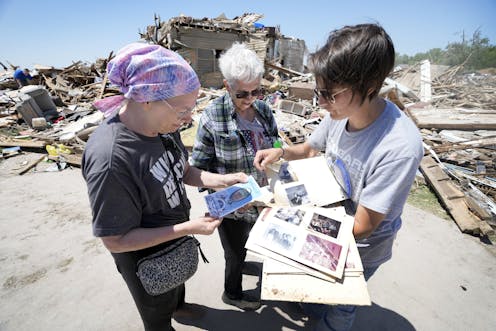
    Edith Schaecher, center, and her daughter and granddaughter look at a photo album recovered from her tornado-damaged home in Greenfield, Iowa, in May 2024. AP Photo/Charlie Neibergall

    Hurricanes, tornadoes and other extreme weather do not distinguish between urban and rural boundaries. But when a disaster strikes, there are big differences in how well people are able to respond and recover – and older adults in rural areas are especially vulnerable.

    If a disaster causes injuries, getting health care can take longer in rural areas. Many rural hospitals have closed, leaving patients traveling longer distances for care.

    At the same time, rural areas have higher percentages of older adults, a group that is more likely to have chronic health problems that make experiencing natural disasters especially dangerous. Medical treatments, such as dialysis, can be disrupted when power goes out or clinics are damaged, and injuries are more likely around property damaged by flooding or powerful winds.

    As a sociologist who studies rural issues and directs the Institute of Behavioral Science at the University of Colorado Boulder, I believe that understanding the risks is essential for ensuring healthier lives for older adults. I see many different ways rural communities are helping reduce their vulnerability in disasters.

    Disasters disrupt health care, especially in isolated rural regions

    According to the U.S. Census Bureau, about 20% of the country’s rural population is age 65 and over, compared with only 16% of urban residents. That’s about 10 million older adults living in rural areas.

    There are three primary reasons rural America has been aging faster than the rest of the country: Young people have been leaving for college and job opportunities, meaning fewer residents are starting new families. Many older rural residents are choosing to “age in place” where they have strong social ties. And some rural areas are gaining older adults who choose to retire there.

    An aging population means rural areas tend to have a larger percentage of residents with chronic disease, such as dementia, heart disease, respiratory illness and diabetes.

    According to research from the National Council on Aging, nearly 95% of adults age 60 and older have at least one chronic condition, while more than 78% have two or more. Rural areas also have higher rates of death from chronic diseases, particularly heart disease.

    At the same time, health care access in rural areas is rapidly declining.

    Nearly 200 rural hospitals have closed or stopped providing in-patient care since 2005. Over 700 more — one-third of the nation’s remaining rural hospitals — were considered to be at risk of closing even before the cuts to Medicaid that the president signed in July 2025.

    Hospital closures have left rural residents traveling about 20 miles farther for common in-patient health care services than they did two decades ago, and even farther for specialist care.

    Those miles might seem trivial, but in emergencies when roads are damaged or flooded, they can mean losing access to care and treatment.

    After Hurricane Katrina struck New Orleans in 2005, 44% of patients on dialysis missed at least one treatment session, and almost 17% missed three or more.

    When Hurricanes Matthew and Florence hit rural Robeson County, North Carolina, in 2016 and 2018, some patients who relied on insulin to manage their blood sugar levels went without insulin for weeks. The county had high rates of poverty and poor health already, and the healthy foods people needed to manage the disease were also hard to find after the storm.

    Insulin is important for treating diabetes – a chronic disease estimated to affect nearly one-third of adults age 65 and older. But a sufficient supply can be harder to maintain when a disaster knocks out power, because insulin should be kept cool, and medical facilities and drugstores may be harder for patients to reach.

    Rural residents also often live farther from community centers, schools or other facilities that can serve as cooling centers during heat waves or evacuation centers in times of crisis.

    Alzheimer’s disease can make evacuation difficult

    Cognitive decline also affects older adults’ ability to manage disasters.

    Over 11% of Americans age 65 and older – more than 7 million people – have Alzheimer’s disease or related dementia, and the prevalence is higher in rural areas’ older populations compared with urban areas.

    Caregivers for family members living with dementia may struggle to find time to prepare for disasters. And when disaster strikes, they face unique challenges. Disasters disrupt routines, which can cause agitation for people with Alzheimer’s, and patients may resist evacuation.

    Living through a disaster can also worsen brain health over the long run. Older adults who lived through the 2011 Great East Japan earthquake and tsunami were found to have greater cognitive decline over the following decade, especially those who lost their homes or jobs, or whose health care routines were disrupted.

    Social safety nets are essential

    One thing that many rural communities have that helps is a strong social fabric. Those social connections can help reduce older adults’ vulnerability when disasters strike.

    Following severe flooding in Colorado in 2013, social connections helped older adults navigate the maze of paperwork required for disaster aid, and some even provided personal loans.

    Two older men stand by debris form a storm-damaged church. Another group of people walks in the background.
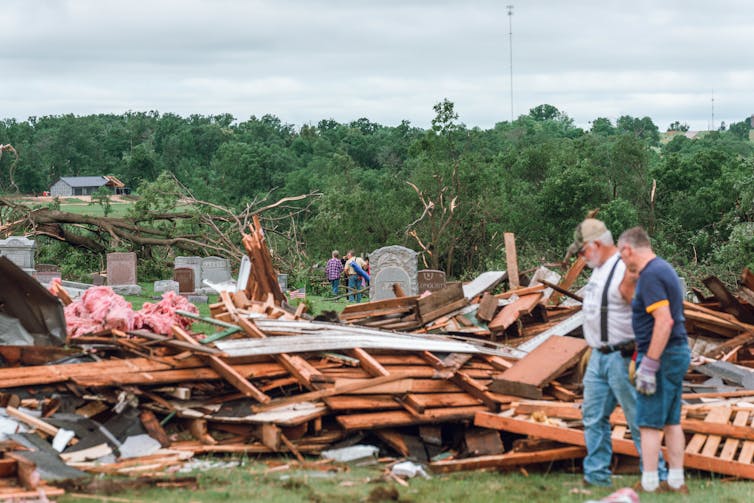
    Community support through churches, like this one whose building was hit by a tornado in rural Argyle, Wis., in 2024, and other groups can help older adults recover from disasters.
    Ross Harried/NurPhoto via Getty Images

    Friends, family and neighbors in rural areas often check in on seniors, particularly those living alone. They can help them develop disaster response plans to ensure older residents have access to medications and medical treatment, and that they have an evacuation plan.

    Rural communities and local groups can also help build up older adults’ mental and physical health before and after storms by developing educational, social and exercise programs. Better health and social connections can improve resilience, including older adults’ ability to respond to alerts and recover after disasters.

    Ensuring that everyone in the community has that kind of support is important in rural areas and cities alike as storm and flood risks worsen, particularly for older adults.

    The Conversation

    Lori Hunter receives funding from the National Institutes of Health and the National Science Foundation.

    ref. The aftermath of floods, hurricanes and other disasters can be hardest on older rural Americans – here’s how families and neighbors can help – https://theconversation.com/the-aftermath-of-floods-hurricanes-and-other-disasters-can-be-hardest-on-older-rural-americans-heres-how-families-and-neighbors-can-help-247691

  • 3 basic ingredients, a million possibilities: How small pizzerias succeed with uniqueness in an age of chain restaurants

    Source: ForeignAffairs4

    Source: The Conversation – USA (2) – By Paula de la Cruz-Fernández, Cultural Digital Collections Manager, University of Florida

    Variety is the sauce of life. Suzanne Kreiter/Boston Globe via Getty Images

    At its heart, pizza is deceptively simple. Made from just a few humble ingredients – baked dough, tangy sauce, melted cheese and maybe a few toppings – it might seem like a perfect candidate for the kind of mass-produced standardization that defines many global food chains, where predictable menus reign supreme.

    Yet, visit two pizzerias in different towns – or even on different blocks of the same town – and you’ll find that pizza stubbornly refuses to be homogenized.

    We are researchers working on a local business history project that documents the commercial landscape of Gainesville, Florida, in the 20th and 21st centuries. As part of that project, we’ve spent a great many hours over the past two years interviewing local restaurant owners, especially those behind Gainesville’s independent pizzerias. What we’ve found reaffirms a powerful truth: Pizza resists sameness – and small pizzerias are a big reason why.

    Why standardized pizza rose but didn’t conquer

    While tomatoes were unknown in Italy until the mid-16th century, they have since become synonymous with Italian cuisine – especially through pizza.

    Pizza arrived in the U.S. from Naples in the early 20th century, when Italian immigration was at its peak. Two of the biggest destinations for Italian immigrants were New York City and Chicago, and today each has a distinctive pizza style. A New York slice can easily be identified by its thin, soft, foldable crust, while Chicago pies are known for deep, thick, buttery crusts.

    After World War II, other regions developed their own types of pizza, including the famed New Haven and Detroit styles. The New Haven style is known for being thin, crispy and charred in a coal-fired oven, while the Detroit style has a rectangular, deep-dish shape and thick, buttery crust.

    By the latter half of the 20th century, pizza had become a staple of the American diet. And as its popularity grew, so did demand for consistent, affordable pizza joints. Chains such as Pizza Hut, founded in 1958, and Papa John’s, established in 1984, applied the model pioneered by McDonalds in the late 1940s, adopting limited menus, assembly line kitchens and franchise models built for consistency and scale. New technologies such as point-of-sale systems and inventory management software made things even more efficient.

    As food historian Carol Helstosky explains in “Pizza: A Global History,” the transformation involved simplifying recipes, ensuring consistent quality and developing formats optimized for rapid expansion and franchising. What began as a handcrafted, regional dish became a highly replicable product suited to global mass markets.

    Today, more than 20,000 Pizza Huts operate worldwide. Papa John’s, which runs about 6,000 pizzerias, built its brand explicitly on a promise rooted in standardization. In this model, success means making pizza the same way, everywhere, every time.

    So, what happened to the independent pizzerias? Did they get swallowed up by efficiency?

    Not quite.

    Chain restaurants don’t necessarily suffocate small competitors, recent research shows. In fact, in the case of pizza, they often coexist, sometimes even fueling creativity and opportunity. Independent pizzerias – there are more than 44,000 nationwide – lean into what makes them unique, carving out a niche. Rather than focusing only on speed or price, they compete by offering character, inventive toppings, personal service and a sense of place that chains just can’t replicate.

    A local pizza scene: Creativity in a corporate age

    For an example, look no farther than Gainesville. A college town with fewer than 150,000 residents, Gainesville doesn’t have the same culinary cache as New York or Chicago, but it has developed a very unique pizza scene. With 13 independent pizzerias serving Neapolitan, Detroit, New York and Mediterranean styles and more, hungry Gators have a plethora of options when craving a slice.

    What makes Gainesville’s pizza scene especially interesting is the range of backgrounds its proprietors have. Through interviews with pizzeria owners, we found that some had started as artists and musicians, while others had worked in engineering or education – and each had their own unique approach to making pizzas.

    The owner of Strega Nona’s Oven, for example, uses his engineering background to turn dough-making into a science, altering the proportions of ingredients by as little as half of a percent based on the season or even the weather.

    Satchel’s Pizza, on the other hand, is filled with works made by its artist owner, including mosaic windows, paintings, sculptures and fountains.

    Gainesville’s independent pizzerias often serve as what sociologists call “third places”: spaces for gathering that aren’t home or work. And their owners think carefully about how to create a welcoming environment. For example, the owner of Scuola Pizza insisted the restaurant be free of TVs, so diners can focus on their food. Squarehouse Pizza features a large outdoor space; an old, now repurposed school bus outfitted with tables and chairs to dine in, and a stage for live music.

    Squarehouse also is known for its unusual toppings on square, Detroit-style pies – for example, the Mariah Curry, topped with curry chicken or cauliflower and coconut curry sauce. It refreshes its specialty menus every semester or two.

    While the American pizza landscape may be shaped by big brands and standardized menus, small pizzerias continue to shine. Gainesville is a perfect example of how a local pizza scene in a small Southern college town can be so unique, even in a globalized industry. Small pizzerias don’t just offer food – they offer a flavorful reminder that the marketplace rewards distinctiveness and local character, too.

    The Conversation

    The authors do not work for, consult, own shares in or receive funding from any company or organization that would benefit from this article, and have disclosed no relevant affiliations beyond their academic appointment.

    ref. 3 basic ingredients, a million possibilities: How small pizzerias succeed with uniqueness in an age of chain restaurants – https://theconversation.com/3-basic-ingredients-a-million-possibilities-how-small-pizzerias-succeed-with-uniqueness-in-an-age-of-chain-restaurants-259661

  • How slashing university research grants impacts Colorado’s economy and national innovation – a CU Boulder administrator explains

    Source: ForeignAffairs4

    Source: The Conversation – USA (2) – By Massimo Ruzzene, Vice Chancellor of Research and Innovation, University of Colorado Boulder

    Federal funding cuts to the University of Colorado Boulder have already impacted research and could cause even more harm. Glenn J. Asakawa/University of Colorado

    The Trump administration has been freezing or reducing federal grants to universities across the country.

    Over the past several months, universities have lost more than US$11 billion in funding, according to NPR. More than two dozen universities, including the University of Colorado Boulder and the University of Denver, have been affected. Research into cancer, farming solutions and climate resiliency are just a few of the many projects nationally that have seen cuts.

    The Conversation asked Massimo Ruzzene, senior vice chancellor for research and innovation at the University of Colorado Boulder, to explain how these cuts and freezes are impacting the university he works for and Colorado’s local economy.

    How important are federal funds to CU Boulder?

    Federal funding pays for approximately 70% of CU Boulder’s research each year. That’s about $495 million in the 2023-2024 fiscal year.

    The other 30% of research funding comes from a variety of sources. The second-largest is international partnerships at $127 million. Last year, CU Boulder also received $27 million in philanthropic gifts to support research and approximately $29 million from collaborations with industry.

    CU Boulder uses this money to fund research that advances fields like artificial intelligence, space exploration and planetary sciences, quantum technologies, biosciences and climate and energy.

    At CU Boulder, federal funding also supports research projects like the Dust Accelerator Laboratory that helps us understand the composition and structure of cosmic dust. This research allows scientists to reconstruct the processes that formed planets, moons and organic molecules.

    How much federal funding has CU Boulder lost?

    So far in 2025, CU Boulder has received 56 grant cancellations or stop-work orders. Those amount to approximately $30 million in lost funding. This number is not inclusive of awards that are on hold and awaiting action by the sponsor.

    This number also does not include the funds that have not been accessible due the considerable lag in funding from agencies such as the National Science Foundation and the National Institutes of Health.
    Nationwide, National Science Foundation funding has dropped by more than 50% through the end of May of this year compared to the average of the past 10 years. The university anticipates that our funding received from these agencies will drop a similar amount, but the numbers are still being collected for this year.

    What research has been impacted?

    A wide variety. To take just one example, CU Boulder’s Cooperative Institute for Research in Environmental Sciences and the Institute of Arctic and Alpine Research investigate how to monitor, predict, respond to and recover from extreme weather conditions and natural disasters.

    This research directly impacts the safety, well-being and prosperity of Colorado residents facing wildfires, droughts and floods.

    A man in a red jacket sits on the ground and reads a tablet near a metal weather detector.
    Michael Gooseff, a researcher from the College of Engineering and Applied Science, collects weather data from the McMurdo Dry Valleys in Antarctica.
    Byron Adams/University of Colorado Boulder

    Past research from these groups includes recovery efforts following the 2021 Marshall Fire in the Boulder area. Researchers collaborated with local governments and watershed groups to monitor environmental impacts and develop dashboards that detailed their findings.

    How might cuts affect Colorado’s aerospace economy?

    Colorado has more aerospace jobs per capita than any other state. The sector employs more than 55,000 people and contributes significantly to both Colorado’s economy and the national economy.

    This ecosystem encompasses research universities such as CU Boulder and Colorado-based startups like Blue Canyon Technologies and Ursa Major Technologies. It also includes established global companies like Lockheed Martin and Raytheon Technologies.

    At CU Boulder, the Laboratory for Atmospheric and Space Physics is one of the world’s premier space science research institutions. Researchers at the lab design, build and operate spacecraft and other instruments that contribute critical data. That data helps us understand Earth’s atmosphere, the Sun, planetary systems and deep space phenomena. If the projects the lab supports are cut, then it’s likely the lab will be cut as well.

    The Presidential Budget Request proposes up to 24% cuts to NASA’s annual budget. These include reductions of 47% for the Science Mission Directorate. The directorate supports more than a dozen space missions at CU Boulder. That cut could have an immediate impact on university programs of approximately $50 million.

    People in white suits stand in front of large metal solar arrays to test them for a space mission to Mars.
    Scientists test the solar arrays on NASA’s Mars Atmosphere and Volatile Evolution orbiter spacecraft at Lockheed Martin’s facility near Denver.
    Photo courtesy of LASP

    One of the largest space missions CU Boulder is involved in is the Mars Atmosphere and Volatile Evolution orbiter. MAVEN, as it’s known, provides telecommunications and space weather monitoring capabilities. These are necessary to support future human and robotic missions to Mars over the next decade and beyond, a stated priority for the White House. If MAVEN were to be canceled, experts estimate that it would cost almost $1 billion to restart it.

    Have the cuts hit quantum research?

    While the federal government has identified quantum technology as a national priority, the fiscal year 2026 budget proposal only maintains existing funding levels. It does not introduce new investments or initiatives.

    I’m concerned that this stagnation, amid broader cuts to science agencies, could undermine progress in this field and undercut the training of its critical workforce. The result could be the U.S. ceding its leadership in quantum innovation to global competitors.

    The Conversation

    Massimo Ruzzene receives funding from the National Science Foundation.

    ref. How slashing university research grants impacts Colorado’s economy and national innovation – a CU Boulder administrator explains – https://theconversation.com/how-slashing-university-research-grants-impacts-colorados-economy-and-national-innovation-a-cu-boulder-administrator-explains-257869

  • Higher ed’s relationship with marriage? It’s complicated – and depends on age

    Source: ForeignAffairs4

    Source: The Conversation – USA (2) – By John V. Winters, Professor of Economics, Iowa State University

    Education rates are rising; marriage rates are falling. But the relationship between those two trends isn’t straightforward. Ugur Karakoc/E+ via Getty Images

    The longer someone stays in school, the more likely they are to delay getting married – but education does not reduce the overall likelihood of being married later in life, according to our research recently published in Education Economics. Education also influences who Americans marry: Obtaining a four-year degree vs. just a high school diploma more than doubles someone’s likelihood of marrying a fellow college graduate.

    Previous research has documented that the more education you have, the more likely you are to get married. But correlation does not imply causality, and plenty of other factors influence marriage and education.

    My research with economist Kunwon Ahn provides evidence that there is indeed a causal link between education and marriage – but it’s a nuanced one.

    Our study applies economic theory and advanced statistics to a 2006-2019 sample from the American Community Survey: more than 8 million people, whom we divided into different cohorts based on birthplace, birth year and self-reported ancestry.

    To isolate the causal relationship, we needed to sidestep other factors that can influence someone’s decisions about marriage and education. Therefore, we did not calculate based on individuals’ own education level. Instead, we estimated their educational attainment using a proxy: their mothers’ level of education. On the individual level, plenty of people finish more or less education than their parents. Within a cohort, however, the amount of schooling that mothers have, on average, is a strong predictor of how much education children in that cohort received.

    We found that an additional year of schooling – counting from first grade to the end of any postgraduate degrees – reduces the likelihood that someone age 25 to 34 is married by roughly 4 percentage points.

    Among older age groups, the effects of education were more mixed. On average, the level of education has almost zero impact on the probability that someone age 45 to 54 is married. Among people who were married by that age, being more educated reduces their likelihood of being divorced or separated.

    However, more education also makes people slightly more likely to have never been married by that age. In our sample, about 12% of people in that age group have never married. An additional year of education increases that, on average, by 2.6 percentage points.

    Why it matters

    Marriage rates are at historical lows in the United States, especially for young people. Before 1970, more than 80% of Americans 25 to 34 were married. By 2023, that number had fallen to only 38%, according to data from the U.S. Census Bureau.

    Over the same time, the percentage of Americans with a college degree has increased considerably. Additional education can increase someone’s earning potential and make them a more attractive partner.

    Yet the rising costs of higher education may make marriage less attainable. A 2016 study found that the more college debt someone had, the less likely they were to ever marry.

    While marriage rates have fallen across the board, the drop is most pronounced for lower-income groups, and not all of the gap is driven by education. One of the other causes may be declining job prospects for lower-income men. Over recent decades, as their earning potential has dwindled and women’s job options have grown, it appears some of the economic benefits of marriage have declined.

    Declining marriage rates have important effects on individuals, families and society as a whole. Many people value the institution for its own sake, and others assign it importance based on religious, cultural and social values. Economically, marriage has important consequences for children, including how many children people have and the resources that they can invest in those children.

    What still isn’t known

    Education levels are only part of the explanation for trends in marriage rates. Other cultural, social, economic and technological factors are likely involved in the overall decline, but their exact contribution is still unknown.

    One idea gaining traction, though little research has been done on it, considers the ways smartphones and social media may be reducing psychological and social well-being. We stay in more, go out less, and are increasingly divided – all of which could make people less likely to marry.

    The Research Brief is a short take on interesting academic work.

    The Conversation

    John V. Winters does not work for, consult, own shares in or receive funding from any company or organization that would benefit from this article, and has disclosed no relevant affiliations beyond their academic appointment.

    ref. Higher ed’s relationship with marriage? It’s complicated – and depends on age – https://theconversation.com/higher-eds-relationship-with-marriage-its-complicated-and-depends-on-age-258664

  • The US has high hopes for a new Gaza ceasefire, but Israel’s long-term aims seem far less peaceful

    Source: ForeignAffairs4

    Source: The Conversation – Global Perspectives – By Ali Mamouri, Research Fellow, Middle East Studies, Deakin University

    US President Donald Trump has hosted Israeli Prime Minister Benjamin Netanyahu for dinner at the White House, where he has declared talks to end the war in Gaza are “going along very well”.

    In turn, Netanyahu revealed he has nominated Trump for the Nobel Peace Prize, saying:

    he is forging peace as we speak, in one country, in one region, after the other.

    Despite all the talk of peace, negotiations in Qatar between Israeli and Palestinian delegations have broken up without a breakthrough. The talks are expected to resume later this week.

    If an agreement is reached, it will likely be hailed as a crucial opportunity to end nearly two years of humanitarian crisis in Gaza, following the October 7 attacks in which 1,200 Israelis were killed by Hamas-led militants.

    However, there is growing scepticism about the durability of any truce. A previous ceasefire agreement reached in January led to the release of dozens of Israeli hostages and hundreds of Palestinian prisoners.

    But it collapsed by March, when Israel resumed military operations in Gaza.

    This breakdown in trust on both sides, combined with ongoing Israeli military operations and political instability, suggests the new deal may prove to be another temporary pause rather than a lasting resolution.

    Details of the deal

    The proposed agreement outlines a 60-day ceasefire aimed at de-escalating hostilities in Gaza and creating space for negotiations toward a more lasting resolution.

    Hamas would release ten surviving Israeli hostages and return the remains of 18 others. In exchange, Israel is expected to withdraw its military forces to a designated buffer zone along Gaza’s borders with both Israel and Egypt.

    An Israeli hostage flanked by militants in Gaza
    The agreement being thrashed out in Doha includes the release of Israeli hostages, held in Gaza for the past 22 months.
    Anas-Mohammed/Shutterstock

    While the specific terms of a prisoner exchange remain under negotiation, the release of Palestinian detainees held in Israeli prisons is a central component of the proposal.

    Humanitarian aid is also a key focus of the agreement. Relief would be delivered through international organisations, primarily UN agencies and the Palestinian Red Crescent.

    However, the agreement does not specify the future role of the US-backed Gaza Humanitarian Fund, which has been distributing food aid since May.

    The urgency of humanitarian access is underscored by the scale of destruction in Gaza. According to Gaza’s Health Ministry, Israel’s military campaign has killed more than 57,000 Palestinians. The offensive has triggered a hunger crisis, displaced much of the population internally, and left vast areas of the territory in ruins.

    Crucially, the agreement does not represent an end to the war, one of Hamas’s core demands. Instead, it commits both sides to continue negotiations throughout the 60-day period, with the hope of reaching a more durable and comprehensive ceasefire.

    Obstacles to a lasting peace

    Despite the apparent opportunity to reach a final ceasefire, especially after Israel has inflicted severe damage on Hamas, Netanyahu’s government appears reluctant to fully end the military campaign.

    Palestinian people in front of bombed out buildings in Gaza.
    There is scepticism a temporary ceasefire would lead to permanent peace.
    Anas-Mohammed/Shutterstock

    A central reason is political: Netanyahu’s ruling coalition heavily relies on far-right parties that insist on continuing the war. Any serious attempt at a ceasefire could lead to the collapse of his government.

    Militarily, Israel has achieved several of its tactical objectives.

    It has significantly weakened Hamas and other Palestinian factions and caused widespread devastation across Gaza. This is alongside the mass arrests, home demolitions, and killing of hundreds of Palestinians in the West Bank.

    And it has forced Hezbollah in Lebanon to scale back its operations after sustaining major losses.

    Perhaps most notably, Israel struck deep into Iran’s military infrastructure, killing dozens of high-ranking commanders and damaging its missile and nuclear capabilities.

    Reshaping the map

    Yet Netanyahu’s ambitions may go beyond tactical victories. There are signs he is aiming for two broader strategic outcomes.

    First, by making Gaza increasingly uninhabitable, his government could push Palestinians to flee. This would effectively pave the way for Israel to annex the territory in the long term – a scenario advocated by many of his far-right allies.

    Speaking at the White House, Netanyahu says he is working with the US on finding countries that will take Palestinians from Gaza:

    if people want to stay, they can stay, but if they want to leave, they should be able to leave.

    Second, prolonging the war allows Netanyahu to delay his ongoing corruption trial and extend his political survival.

    True intentions

    At the heart of the impasse is the far-right’s vision for total Palestinian defeat, with no concession and no recognition of a future Palestinian state. This ideology has consistently blocked peace efforts for three decades.

    Israeli leaders have repeatedly described any potential Palestinian entity as “less than a state” or a “state-minus”, a formulation that falls short of Palestinian aspirations and international legal standards.

    Today, even that limited vision appears to be off the table, as Israeli policy moves towards complete rejection of Palestinian statehood.

    With Palestinian resistance movements significantly weakened and no immediate threat facing Israel, this moment presents a crucial test of Israel’s intentions.

    Is Israel genuinely pursuing peace, or seeking to cement its dominance in the region while permanently denying Palestinians their right to statehood?

    Following its military successes and the normalisation of relations with several Arab states under the Abraham Accords, Israeli political discourse has grown increasingly bold.

    Some voices in the Israeli establishment are openly advocating for the permanent displacement of Palestinians to neighbouring Arab countries such as Jordan, Egypt and Saudi Arabia. This would effectively erase the prospect of a future Palestinian state.

    This suggests that for certain factions within Israel, the end goal is not a negotiated settlement, but a one-sided resolution that reshapes the map and the people of the region on Israel’s terms.

    The coming weeks will reveal whether Israel chooses the path of compromise and coexistence, or continues down a road that forecloses the possibility of lasting peace.

    The Conversation

    Ali Mamouri does not work for, consult, own shares in or receive funding from any company or organisation that would benefit from this article, and has disclosed no relevant affiliations beyond their academic appointment.

    ref. The US has high hopes for a new Gaza ceasefire, but Israel’s long-term aims seem far less peaceful – https://theconversation.com/the-us-has-high-hopes-for-a-new-gaza-ceasefire-but-israels-long-term-aims-seem-far-less-peaceful-260286

  • Why the traditional college major may be holding students back in a rapidly changing job market

    Source: ForeignAffairs4

    Source: The Conversation – USA (2) – By John Weigand, Professor Emeritus of Architecture and Interior Design, Miami University

    Rethinking the college major could help colleges better understand what employers and students need. Westend61/Getty Images

    Colleges and universities are struggling to stay afloat.

    The reasons are numerous: declining numbers of college-age students in much of the country, rising tuition at public institutions as state funding shrinks, and a growing skepticism about the value of a college degree.

    Pressure is mounting to cut costs by reducing the time it takes to earn a degree from four years to three.

    Students, parents and legislators increasingly prioritize return on investment and degrees that are more likely to lead to gainful employment. This has boosted enrollment in professional programs while reducing interest in traditional liberal arts and humanities majors, creating a supply-demand imbalance.

    The result has been increasing financial pressure and an unprecedented number of closures and mergers, to date mostly among smaller liberal arts colleges.

    To survive, institutions are scrambling to align curriculum with market demand. And they’re defaulting to the traditional college major to do so.

    The college major, developed and delivered by disciplinary experts within siloed departments, continues to be the primary benchmark for academic quality and institutional performance.

    This structure likely works well for professional majors governed by accreditation or licensure, or more tightly aligned with employment. But in today’s evolving landscape, reliance on the discipline-specific major may not always serve students or institutions well.

    As a professor emeritus and former college administrator and dean, I argue that the college major may no longer be able to keep up with the combinations of skills that cross multiple academic disciplines and career readiness skills demanded by employers, or the flexibility students need to best position themselves for the workplace.

    Students want flexibility

    A man wearing headphones checks his phone while working on a laptop.
    The college curriculum may be less flexible now than ever.
    MoMo Productions/Digital Vision via Getty Images

    I see students arrive on campus each year with different interests, passions and talents – eager to stitch them into meaningful lives and careers.

    A more flexible curriculum is linked to student success, and students now consult AI tools such as ChatGPT to figure out course combinations that best position them for their future. They want flexibility, choice and time to redirect their studies if needed.

    And yet, the moment students arrive on campus – even before they apply – they’re asked to declare a major from a list of predetermined and prescribed choices. The major, coupled with general education and other college requirements, creates an academic track that is anything but flexible.

    Not surprisingly, around 80% of college students switch their majors at least once, suggesting that more flexible degree requirements would allow students to explore and combine diverse areas of interest. And the number of careers, let alone jobs, that college graduates are expected to have will only increase as technological change becomes more disruptive.

    As institutions face mounting pressures to attract students and balance budgets, and the college major remains the principal metric for doing so, the curriculum may be less flexible now than ever.

    How schools are responding

    A student wearing a blue cap and gown stands on grass looking at a building.
    The college major emerged as a response to an evolving workforce that prioritized specialized knowledge.
    Fuse/Corbia via Getty Images

    In response to market pressures, colleges are adding new high-demand majors at a record pace. Between 2002 and 2022, the number of degree programs nationwide increased by nearly 23,000, or 40%, while enrollment grew only 8%. Some of these majors, such as cybersecurity, fashion business or entertainment design, arguably connect disciplines rather than stand out as distinct. Thus, these new majors siphon enrollment from lower-demand programs within the institution and compete with similar new majors at competitor schools.

    At the same time, traditional arts and humanities majors are adding professional courses to attract students and improve employability. Yet, this adds credit hours to the degree while often duplicating content already available in other departments.

    Importantly, while new programs are added, few are removed. The challenge lies in faculty tenure and governance, along with a traditional understanding that faculty set the curriculum as disciplinary experts. This makes it difficult to close or revise low-demand majors and shift resources to growth areas.

    The result is a proliferation of under-enrolled programs, canceled courses and stretched resources – leading to reduced program quality and declining faculty morale.

    Ironically, under the pressure of declining demand, there can be perverse incentives to grow credit hours required in a major or in general education requirements as a way of garnering more resources or adding courses aligned with faculty interests. All of which continues to expand the curriculum and stress available resources.

    Universities are also wrestling with the idea of liberal education and how to package the general education requirement.

    Although liberal education is increasingly under fire, employers and students still value it.

    Students’ career readiness skills – their ability to think critically and creatively, to collaborate effectively and to communicate well – remain strong predictors of future success in the workplace and in life.

    Reenvisioning the college major

    Assuming the requirement for students to complete a major in order to earn a degree, colleges can also allow students to bundle smaller modules – such as variable-credit minors, certificates or course sequences – into a customizable, modular major.

    This lets students, guided by advisers, assemble a degree that fits their interests and goals while drawing from multiple disciplines. A few project-based courses can tie everything together and provide context.

    Such a model wouldn’t undermine existing majors where demand is strong. For others, where demand for the major is declining, a flexible structure would strengthen enrollment, preserve faculty expertise rather than eliminate it, attract a growing number of nontraditional students who bring to campus previously earned credentials, and address the financial bottom line by rightsizing curriculum in alignment with student demand.

    One critique of such a flexible major is that it lacks depth of study, but it is precisely the combination of curricular content that gives it depth. Another criticism is that it can’t be effectively marketed to an employer. But a customized major can be clearly named and explained to employers to highlight students’ unique skill sets.

    Further, as students increasingly try to fit cocurricular experiences – such as study abroad, internships, undergraduate research or organizational leadership – into their course of study, these can also be approved as modules in a flexible curriculum.

    It’s worth noting that while several schools offer interdisciplinary studies majors, these are often overprescribed or don’t grant students access to in-demand courses. For a flexible-degree model to succeed, course sections would need to be available and added or deleted in response to student demand.

    Several schools also now offer microcredentials– skill-based courses or course modules that increasingly include courses in the liberal arts. But these typically need to be completed in addition to requirements of the major.

    We take the college major for granted.

    Yet it’s worth noting that the major is a relatively recent invention.

    Before the 20th century, students followed a broad liberal arts curriculum designed to create well-rounded, globally minded citizens. The major emerged as a response to an evolving workforce that prioritized specialized knowledge. But times change – and so can the model.

    The Conversation

    John Weigand does not work for, consult, own shares in or receive funding from any company or organization that would benefit from this article, and has disclosed no relevant affiliations beyond their academic appointment.

    ref. Why the traditional college major may be holding students back in a rapidly changing job market – https://theconversation.com/why-the-traditional-college-major-may-be-holding-students-back-in-a-rapidly-changing-job-market-258383

  • How proposed changes to higher education accreditation could impact campus diversity efforts

    Source: ForeignAffairs4

    Source: The Conversation – USA (2) – By Jimmy Aguilar, PhD Candidate in Urban Education Policy, University of Southern California

    An executive order seeks to remove ‘discriminatory ideology’ in universities. Critics contend it politicizes the accreditation process. Abraham Gonzalez Fernandez via Getty Images

    President Donald Trump on April 23, 2025, signed an executive order that aims to change the higher education accreditation process. It asks accrediting agencies to root out “discriminatory ideology” and roll back diversity, equity and inclusion initiatives on college campuses.

    The Conversation asked Jimmy Aguilar, who studies higher education at the University of Southern California, to explain what accreditation is, why it matters and how the Trump order seeks to change it.

    What is accreditation and how does it work?

    Accreditation is a process that evaluates whether colleges and universities meet standards of academic rigor, institutional integrity and financial stability.

    In the United States, there were 88 accrediting agencies during the 2022-23 school academic year.

    The agencies are formally recognized by the Department of Education and the Council for Higher Education Accreditation.

    Accreditation is not a one-time stamp of approval, but a continuous process.

    At its core, accreditation is a guarantor of quality in higher education.

    The process involves self-assessment and peer review visits.

    Colleges typically undergo a full review every five to 10 years, depending on the accrediting agency.

    Institutions must meet standards for curriculum, faculty, student services and outcomes, and provide documentation.

    Then, federally recognized accrediting agencies review the documentation.

    Teams, often comprised of peer reviewers from other colleges, conduct campus visits and evaluations before granting or reviewing accreditation.

    Why do universities need to be accredited?

    Accreditation assures students, employers and the public that an institution meets basic academic standards.

    It also signals credibility and secures federal financial support.

    Without it, colleges cannot access key funding sources such as Pell Grants and federal student loans.

    The funding is essential for college budgets and students’ access to higher education.

    Accreditation is also required for professional licensure in fields such as teaching, nursing, medicine and law.

    It also helps ensure that students can transfer credits between institutions.

    What does Trump’s executive order do?

    President Donald Trump wearing a blue suit and red tie displays a signed executive order.
    President Donald Trump displays a signed executive order in the Oval Office at the White House on April 23, 2025, in Washington.
    Chip Somodevilla/Getty Images)

    The executive order would reshape the college accreditation system, aligning it with the administration’s political priorities. Those priorities include the rollback of DEI initiatives.

    The order seeks to use federal oversight to weaken institutional DEI policies and priorities. It also promotes new standards aligned with the administration’s interpretation of “merit-based” education.

    The executive order also directs the Department of Education to penalize agencies that require colleges to implement DEI-related standards.

    The Trump administration claims that such standards amount to “unlawful discrimination.”

    Penalties may include increased oversight or loss of federal recognition. This would render the accreditation seal meaningless, according to the executive order.

    The order also proposes a broad overhaul of the accreditation process, including:

    • Promoting “intellectual diversity” in faculty hiring. The executive order argues that promoting a broader range of viewpoints among faculty will enhance academic freedom. Critics often interpret this language as an effort to increase conservative ideological representation.

    • Streamlining the process for institutions to switch accreditors. During Trump’s first term, his administration removed geographic restrictions, giving colleges more flexibility to choose. The new executive order goes further. It makes it easier for schools to leave agencies whose standards they disagree with.

    • Expanding recognition of new accrediting agencies to increase competition.

    • Linking accreditation more directly to student outcomes. This would shift focus to metrics such as graduation rates and earnings, rather than commitments to diversity or equity.

    View from front steps of US Supreme Court
    A 2023 Supreme Court ruling that outlawed affirmative action in university admissions has been a point of contention in the debate over diversity, equity and inclusion in higher education.
    Joe Daniel Price/Getty Images

    The executive order singles out accreditors for law schools, such as the American Bar Association, and for medical schools, such as the Liaison Committee on Medical Education.

    The order accuses them of enforcing DEI standards that conflict with a 2023 Supreme Court ruling that outlawed affirmative action in university admissions.

    However, the ruling was limited to race-conscious admissions. It did not directly address faculty hiring or accreditation standards.

    That raises questions about whether the order’s interpretation extends beyond the scope of the court’s decision.

    The ruling has nonetheless been a point of contention in the debate over diversity, equity and inclusion.

    The American Association of University Professors and the Lawyers’ Committee for Civil Rights Under Law have denounced the executive order.

    The groups argue that it threatens to politicize accreditation and suppress efforts to promote equity and inclusion.

    Nevertheless, the order represents a push by the federal government to influence higher education governance.

    The Conversation

    Jimmy Aguilar does not work for, consult, own shares in or receive funding from any company or organization that would benefit from this article, and has disclosed no relevant affiliations beyond their academic appointment.

    ref. How proposed changes to higher education accreditation could impact campus diversity efforts – https://theconversation.com/how-proposed-changes-to-higher-education-accreditation-could-impact-campus-diversity-efforts-255309

  • AI isn’t replacing student writing – but it is reshaping it

    Source: ForeignAffairs4

    Source: The Conversation – USA (2) – By Jeanne Beatrix Law, Professor of English, Kennesaw State University

    Studies have shown that many students are using AI to brainstorm, learn new information and revise their work. krisanapong detraphiphat/Moment via Getty Images

    I’m a writing professor who sees artificial intelligence as more of an opportunity for students, rather than a threat.

    That sets me apart from some of my colleagues, who fear that AI is accelerating a glut of superficial content, impeding critical thinking and hindering creative expression. They worry that students are simply using it out of sheer laziness or, worse, to cheat.

    Perhaps that’s why so many students are afraid to admit that they use ChatGPT.

    In The New Yorker magazine, historian D. Graham Burnett recounts asking his undergraduate and graduate students at Princeton whether they’d ever used ChatGPT. No one raised their hand.

    “It’s not that they’re dishonest,” he writes. “It’s that they’re paralyzed.”

    Students seem to have internalized the belief that using AI for their coursework is somehow wrong. Yet, whether my colleagues like it or not, most college students are using it.

    A February 2025 report from the Higher Education Policy Institute in the U.K. found that 92% of university students are using AI in some form. As early as August 2023 – a mere nine months after ChatGPT’s public release – more than half of first-year students at Kennesaw State University, the public research institution where I teach, reported that they believed that AI is the future of writing.

    It’s clear that students aren’t going to magically stop using AI. So I think it’s important to point out some ways in which AI can actually be a useful tool that enhances, rather than hampers, the writing process.

    Helping with the busywork

    A February 2025 OpenAI report on ChatGPT use among college-aged users found that more than one-quarter of their ChatGPT conversations were education-related.

    The report also revealed that the top five uses for students were writing-centered: starting papers and projects (49%); summarizing long texts (48%); brainstorming creative projects (45%); exploring new topics (44%); and revising writing (44%).

    These figures challenge the assumption that students use AI merely to cheat or write entire papers.

    Instead, it suggests they are leveraging AI to free up more time to engage in deeper processes and metacognitive behaviors – deliberately organizing ideas, honing arguments and refining style.

    If AI allows students to automate routine cognitive tasks – like information retrieval or ensuring that verb tenses are consistent – it doesn’t mean they’re thinking less. It means their thinking is changing.

    Of course, students can misuse AI if they use the technology passively, reflexively accepting its outputs and ideas. And overreliance on ChatGPT can erode a student’s unique voice or style.

    However, as long as students learn how to use AI intentionally, this shift can be seen as an opportunity, rather than a loss.

    Clarifying the creative vision

    It has also become clear that AI, when used responsibly, can augment human creativity.

    For example, science comedy writer Sarah Rose Siskind recently gave a talk to Harvard students about her creative process. She spoke about how she uses ChatGPT to brainstorm joke setups and explore various comedic scenarios, which allows her to focus on crafting punchlines and refining her comedic timing.

    Note how Siskin used AI in ways that didn’t supplant the human touch. Instead of replacing her creativity, AI amplified it by providing structured and consistent feedback, giving her more time to polish her jokes.

    Another example is the Rhetorical Prompting Method, which I developed alongside fellow Kennesaw State University researchers. Designed for university students and adult learners, it’s a framework for conversing with an AI chatbot, one that emphasizes the importance of agency in guiding AI outputs.

    When writers use precise language to prompt, critical thinking to reflect, and intentional revision to sculpt inputs and outputs, they direct AI to help them generate content that aligns with their vision.

    There’s still a process

    The Rhetorical Prompting Method mirrors best practices in process writing, which encourages writers to revisit, refine and revise their drafts.

    When using ChatGPT, though, it’s all about thoughtfully revisiting and revising prompts and outputs.

    For instance, say a student wants to create a compelling PSA for social media to encourage campus composting. She considers her audience. She prompts ChatGPT to draft a short, upbeat message in under 50 words that’s geared to college students.

    Reading the first output, she notices it lacks urgency. So she revises the prompt to emphasize immediate impact. She also adds some additional specifics that are important to her message, such as the location of an information session. The final PSA reads:

    “Every scrap counts! Join campus composting today at the Commons. Your leftovers aren’t trash – they’re tomorrow’s gardens. Help our university bloom brighter, one compost bin at a time.”

    The Rhetorical Prompting Method isn’t groundbreaking; it’s riffing on a process that’s been tested in the writing studies discipline for decades. But I’ve found that it works by directing writers how to intentionally prompt.

    I know this because we asked users about their experiences. In an ongoing study, my colleagues and I polled 133 people who used the Rhetorical Prompting Method for their academic and professional writing:

    • 92% reported that it helped them evaluate writing choices before and during their process.

    • 75% said that they were able to maintain their authentic voice while using AI assistance.

    • 89% responded that it helped them think critically about their writing.

    The data suggests that learners take their writing seriously. Their responses reveal that they are thinking carefully about their writing styles and strategies. While this data is preliminary, we continue to gather responses in different courses, disciplines and learning environments.

    All of this is to say that, while there are divergent points of view over when and where it’s appropriate to use AI, students are certainly using it. And being provided with a framework can help them think more deeply about their writing.

    AI, then, is not just a tool that’s useful for trivial tasks. It can be an asset for creativity. If today’s students – who are actively using AI to write, revise and explore ideas – see AI as a writing partner, I think it’s a good idea for professors to start thinking about helping them learn the best ways to work with it.

    The Conversation

    Jeanne Beatrix Law does not work for, consult, own shares in or receive funding from any company or organization that would benefit from this article, and has disclosed no relevant affiliations beyond their academic appointment.

    ref. AI isn’t replacing student writing – but it is reshaping it – https://theconversation.com/ai-isnt-replacing-student-writing-but-it-is-reshaping-it-254878

  • South Africa’s 36.1% electricity price hike for 2025: why the power utility Eskom’s request is unrealistic

    Source: ForeignAffairs4

    Source: The Conversation – Africa – By Steven Matome Mathetsa, Senior Lecturer at the African Energy Leadership Centre, Wits Business School, University of the Witwatersrand

    South Africa’s state-owned electricity company, Eskom, has applied to the National Energy Regulator of South Africa to approve a 36.1% electricity price hike from April 2025, a 11.8% price increase in 2026 and an 9.1% increase in 2027. Steven Mathetsa teaches and researches sustainable energy systems at the University of the Witwatersrand’s African Energy Leadership Centre. He explains some of the problems with the planned tariff increase.

    Why such a big hike?

    Eskom says the multi-year price increase is because of the need to move closer a cost-reflective tariff that reflects the actual costs of supplying electricity.

    However, Eskom’s electricity tariff increases have been exorbitant for several years – an 18% increase in 2023 and a 13% increase in 2024. This is a price increase far above inflation, which is currently at 4.4%.

    Some companies have installed their own generation capacity, and individuals have moved to rooftop solar systems. As a result electricity sales have fallen by about 2% , resulting in a drop in revenue.

    There’s a knock on effect for municipalities, the biggest distributors of electricity, which have also been forced to hike tariffs in line with Eskom’s increases.

    All these costs are passed onto the consumers.

    What will the impact be on South Africans?

    If the hike is approved it will certainly worsen the economic difficulties facing
    South Africa. One of the most unequal countries in the world, South Africa has an extremely high unemployment rate – 33.5%at the last count.

    Economic growth is also very slow, at a mere 0.6% in 2023. The cost of living is high.

    Exorbitant increases in electricity costs aggravate these problems.

    South Africans and businesses in the country have little choice about where they source their energy. Eskom is still the sole supplier for nearly all the country’s electricity needs. This means that ordinary citizens are likely to continue relying on electricity supplied by Eskom, irrespective of the costs.

    The high costs affect businesses negatively. Large industrial and small, medium, and micro enterprises have all highlighted that costs associated with utilities, mainly electricity, are affecting their sustainability.


    Read more:
    Competition in South Africa’s electricity market: new law paves the way, but it won’t be a smooth ride


    The Electricity Regulation Amendment Act implementation will make major changes to Eskom. The reforms establish an independent Transmission Systems Operator tasked with connecting renewable energy providers to the grid. This will allow the creation of a competitive market where renewable energy providers can sell power to the grid.

    But it’s not yet clear if these changes will address the issue of exorbitant electricity price rises.

    What are the problems?

    The country’s energy frameworks are drafted on the basis of the World Energy Trilemma Index. The index promotes a balanced approach between energy security, affordability, and sustainability. In other words, countries must be able to provide environmentally friendly and reliable electricity that their residents can afford.

    South Africa is currently unable to meet these goals because of different energy policies that do not align, a lack of investment in electricity and dependency on coal-fired power. Electricity is increasingly becoming unaffordable in the country. Although there’s been a recent reprieve from power cuts, security of supply is still uncertain.


    Read more:
    South Africa’s new energy plan needs a mix of nuclear, gas, renewables and coal – expert


    Furthermore, over 78% of the country’s electricity is produced by burning coal. This means South Africa is also far from attaining its 2015 Paris Agreement greenhouse gas reduction goals.

    Compounding this problem is that Eskom is financially unstable – it needed R78 billion from the government in debt relief in 2024. For years, there was a lack of effective maintenance on the aging infrastructure.

    The country has made some inroads into improving security of supply. To date, recent interventions have resulted in over 200 days without power cuts. This should be commended. The same focus must be placed on ensuring that electricity remains affordable while giving attention to meeting the goals of the Paris Agreement.

    What needs to change?

    South Africa’s 1998 Energy Policy White Paper and the new Electricity Regulation Amendment Act promote access to affordable electricity. However, they’ve been implemented very slowly. Affordable electricity needs to be taken seriously.

    The question is whether the country’s electricity tariff methodology is flexible enough to accommodate poor South Africans, especially during these challenging economic times.

    In my view, it is not. In its current form, vulnerable communities continue to foot the bill for various challenges confronting Eskom, including financial mismanagement, operational inefficiencies, municipal non-payment, and corruption.

    I believe the following steps should be taken.

    Firstly, South Africa should revise its tariff application methodologies so that consumers, especially unemployed and impoverished people, are protected against exorbitant increases.

    Secondly, the National Energy Regulator of South Africa should strengthen its regulations to ensure its compliance and enforcement systems are effective. For example, Eskom should be held accountable when it does not deliver efficient services or mismanages funds, and be transparent about costs associated with its processes. Municipalities should also be held accountable for non-payment and other technical issues they regularly struggle with. Both affect the revenue of the power utility.


    Read more:
    South Africa’s economic growth affected by mismatch of electricity supply and demand


    Thirdly, the government must make sure that price increases are affordable and don’t hurt the broader economy. It can do this by adjusting its policies to make sure that increases in electricity tariffs are in line with the rate of inflation.

    Fourthly, communities can play a vital role in saving electricity at a household level. This will reduce the country’s overall energy consumption. Furthermore, both small and large businesses should continue to consider alternative energy technologies while implementing energy saving technologies.

    Lastly, the level of free-basic electricity is not sufficient for poor households. Subsidy policies should also be reviewed to allow users access to affordable electricity as their financial situation changes negatively.

    The Conversation

    Steven Matome Mathetsa does not work for, consult, own shares in or receive funding from any company or organisation that would benefit from this article, and has disclosed no relevant affiliations beyond their academic appointment.

    ref. South Africa’s 36.1% electricity price hike for 2025: why the power utility Eskom’s request is unrealistic – https://theconversation.com/south-africas-36-1-electricity-price-hike-for-2025-why-the-power-utility-eskoms-request-is-unrealistic-240941

  • Post-flood recovery: lessons from Germany and Nigeria on how to help people cope with loss and build resilience

    Source: ForeignAffairs4

    Source: The Conversation – Africa – By Olasunkanmi Habeeb Okunola, Senior Research Associate, United Nations University – Institute for Environment and Human Security (UNU-EHS), United Nations University

    Extreme climate events — floods, droughts and heatwaves — are not just becoming more frequent; they are also more severe.

    It’s important to understand how communities can recover from these events in ways that also build resilience to future events.

    In a recent study, we analysed how communities affected by the extreme flood events of 2021 in Germany’s Ahr Valley and in Lagos, Nigeria, grappled with recovery from floods.

    Our aim was to identify the factors – and combinations of factors – that served as barriers (or enablers) to recovery from disasters.

    We found that financial limitations, political interests and administrative hurdles led to prioritising immediate relief and reconstruction over long-term sustainable recovery.

    In both cases immediate and long-term recovery efforts were siloed, underfunded and focused on reconstruction to pre-disaster conditions.

    We concluded from our findings that the success of recovery efforts lies in balancing short-term relief and a long-term vision. While immediate aid is essential after a disaster, true resilience hinges on proactive measures that address systemic challenges and empower communities to build a better future.

    Recovery should not be merely action-oriented and building back infrastructure (engineering). It should also include insights in other areas, like governance and psychology, helping people to deal with losses and to heal.

    What worked

    To understand the recovery pathways of the two regions, we reviewed relevant literature, newspaper articles and government documents. We also interviewed government agencies, NGO representatives, volunteers and local residents in the communities where these floods occurred.

    We found that in the Ahr Valley, recovery wasn’t just about rebuilding structures, it was about empowering individuals.

    Through initiatives like mental health and first aid courses, residents learned to support one another. This fostered a sense of community and resilience that was essential for meeting the emotional challenges posed by the disaster.

    The focus on rebuilding with a sustainable vision also included environmental initiatives. For example, a type of heating system was put in place that didn’t rely on fossil fuels.

    Not only did this reduce carbon emissions, it also served as a symbol of hope. It showed there was an opportunity to create a more sustainable and environmentally friendly community.

    In Lagos, too, residents found strength in community and innovation. Grassroots efforts using sustainable materials like bamboo and palm wood highlighted the ingenuity and resourcefulness of the people. Faith-based organisations provided material aid as well as emotional and spiritual support. This reinforced the bonds that held the community together.

    Each community faced unique challenges. But they shared a common thread: the importance of adaptive governance – flexible decision-making and strong community ties.

    For example, established building codes in the Ahr Valley provided a framework for reconstruction, ensuring that new structures were resilient and safe.

    In Lagos, the absence of strong government support highlighted the critical role of community organisations in providing services and fostering a sense of shared responsibility.

    What needs improvment

    In both the Ahr Valley and Lagos, the journey towards recovery has been fraught with obstacles as well.

    In the Ahr Valley, bureaucratic red tape has become a formidable barrier. Residents, eager to rebuild their lives, find themselves entangled in a complex web of regulations and lengthy approval processes. This has delayed their access to insurance and recovery funds. Waiting for months or even years has eroded hope and fuelled a sense of abandonment.

    Meanwhile, in Lagos, insufficient government support has left communities to fend for themselves, creating a breeding ground for uncertainty and conflict.

    Land tenure disputes, fuelled by a lack of clear property rights, sow seeds of distrust and hinder resettlement efforts. Political disagreements complicate the picture, as competing interests divert attention and resources away from those who need them most.

    In Lagos, none of the respondents reported having insurance to help them to recover from disaster-related losses.

    While some residents in the Ahr Valley did have insurance, many were under-insured.

    The Ahr Valley’s building codes offer a framework for reconstruction. But it’s clear that processes should be streamlined so communities can take ownership of their recovery.

    In Lagos, the importance of robust social safety nets is clear. Partnerships between communities and authorities are also needed.

    A different approach

    Recovery isn’t a separate process that occurs after disasters only. It should be seen as an essential part of managing risks. It’s important to understand what recovery involves and what resources are needed.

    This will help reduce future risks and increase resilience after extreme events.

    Governments should encourage flexible governance structures that value community voices and local knowledge to enable recovery. A good example is the New Orleans Recovery Authority, established after Hurricane Katrina. It involved local residents and city officials in planning and rebuilding efforts.

    Grassroots efforts in Lagos demonstrated the power of sustainable materials and community-led initiatives. Seeing things from the community’s point of view can help tailor solutions that fit the situation and adapt to evolving challenges.

    Training and capacity-building programmes empower communities to be active in their own recovery.

    Mental health and first aid courses were successful in the Ahr Valley. Equipping individuals with skills in sustainable practices and disaster preparedness helps weave a social fabric capable of weathering future storms.

    The Conversation

    Olasunkanmi Habeeb Okunola is a Visiting Scientist at, the United Nations University – Institute for Environment and Human Security (UNU-EHS)

    Saskia E. Werners works with United Nations University, Institute for Environment and Human Security (UNU-EHS). She is grateful to have received research grants in support of her research on climate change adaptation and recovery.

    ref. Post-flood recovery: lessons from Germany and Nigeria on how to help people cope with loss and build resilience – https://theconversation.com/post-flood-recovery-lessons-from-germany-and-nigeria-on-how-to-help-people-cope-with-loss-and-build-resilience-240260

  • Climate change is making it harder for people to get the care they need

    Source: ForeignAffairs4

    Source: The Conversation – Africa – By Maria S. Floro, Professor Emerita of Economics, American University

    The world is witnessing the consequences of climate change: long-lasting changes in temperature and rainfall, and more intense and frequent extreme weather events such as heat waves, hurricanes, typhoons, flooding and drought. All make it harder for families and communities to meet their care needs.

    Climate change affects care systems in various ways. First, sudden illnesses and unexpected disabilities heighten the need for care. Second, it reduces access to important inputs for care such as water, food and safe shelter. Third, it can damage physical and social care infrastructures.

    It can also lead to breakdowns of traditional units of caregiving such as households and communities. And it creates new situations of need with the increase in displaced person settlements and refugee camps.

    Climate change creates sudden spikes in the demand for care, and serious challenges to meeting the growing need for care. All this has immediate and long lasting effects on human well-being.

    The size of the current unmet care needs throughout the world is substantial. In childcare alone, about 23% of children worldwide – nearly 350 million – need childcare but do not have it. Families in low- and lower-middle-income countries are the most in need.

    Similarly, as the world’s population ages rapidly, only a small proportion of the elderly who need assistance are able to use formal care (in an institution or paid homecare). Most are cared for by family members or other unpaid caregivers. Much of this unpaid care and formal care work is provided by women and girls.

    Hundreds of millions of people around the world struggle to get healthcare. Expansion of access to essential health services has slowed compared to pre-2015 . And healthcare costs still create financial hardship.

    Without comprehensive public and global support for care provision and the integration of care in the climate agenda, unmet care needs will only grow and inequalities will widen.

    Impact

    Climate change interacts with human health in complex ways. Its impact is highly uneven across populations. It depends on geographical region, income, education, gender roles, social norms, level of development, and the institutional capacity and accessibility of health systems.

    In 2018-22, Africa experienced the biggest increase in the
    heat-related mortality rate since 2000-05
    . This is not surprising as the continent has more frequent health-threatening temperatures than ever before and a growing population of people older than 65.

    Africa is also the region most affected by droughts in 2013-22, with 64% of its land area affected by at least one month of extreme drought per year on average. It was followed by Oceania (55% of its land area) and South and Central America (53%).

    Scientific evidence also points to increases in health inequalities caused by climate change. The health effects of climate change are not uniformly felt by different population groups.

    Exposure, severity of impact, and ability of individuals to recover depend on a variety of factors. Physiological characteristics, income, education, type of occupation, location, social norms and health systems are some of them.

    For example, older people and young children face the greatest health risks from high temperatures.

    There is also evidence of the disproportionate effect of climate change on the health of people living in poverty and those who belong to disadvantaged groups.

    Women of lower social and economic status and with less education are more vulnerable to heat stress compared to women in wealthier households and with higher education or social status. They are exposed to pollution in the absence of clean cooking fuel, and to extreme heat as they walk to gather water and fuel, or do other work outdoors.

    Bad sanitation in poor urban areas increases the incidence of water-borne diseases after heavy rains and floods.

    Lack of access to healthcare services and the means to pay for medicines make it difficult for women and men in low-income households to recover from illness, heat strokes, and air pollution-related ailments.

    Mental health problems are being attributed to climate change as well. Studies show that the loss of family or kin member, home, livelihood and a safe environment can bring about direct emotional impacts.

    These adverse impacts increase the demand for caregiving and the care workload. Climate-induced health problems force family and community caregivers, particularly women, to spend more time looking after the sick and disabled, particularly frail elderly people and children.

    Effect on food and water

    Climate change threatens the availability of food, clean water and safe shelter. It erodes households’ and communities’ care capacity and hence societies’ ability to thrive.

    Fluctuations in food supply and rising food prices as a result of environmental disasters, along with the inadequacy of government policies, underscore the mounting challenge of meeting food needs.

    The threat of chronic shortage of safe drinking water has also risen. Water scarcity is an area where structural inequalities and gender disparities are laid bare.

    Care for the sick and disabled, the young and the elderly is compromised when water is scarce.

    Effects on providing care

    Extreme weather events disrupt physical care infrastructures. It may be hard to reach hospitals, clinics, daycare centres, nursery schools and nursing homes. Some facilities may be damaged and have to close.

    Another type of care system that can break down is family networks and support provided by friends and neighbours. These informal care sharing arrangements are illustrated in a study of the three large informal settlements in Nairobi.

    About half (50.5%) of the sampled households reported having had a sick member in the two weeks before the survey. The majority relied on close friends and family members living nearby for care and support.

    Studies have shown that climate change eventually leads to livelihood loss and resource scarcity, which can weaken social cohesion and local safety nets in affected communities.

    Heightened risks and uncertainty and imminent changes in socio-economic and political conditions can also compel individuals or entire households to migrate. Migration is caused by a host of factors, but it has increasingly been a climate-related response.

    The World Bank’s Groundswell Report released in 2018, for example, projected that climate change could force 216 million people to move within their countries by 2050 to avoid the slow-onset impacts of climate change.

    A possible consequence of migration is the withdrawal of care support provided by the migrating extended kin, neighbours or friends, increasing the caregiving load of people left behind.

    In the case of forced displacements, the traditional social networks existing in communities are disrupted entirely.

    What’s needed

    There are compelling reasons to believe that meeting care needs can also help mitigate the effects of climate change. And actions to meet carbon-zero goals, prevent biodiversity loss and regenerate ecosystems can reduce the care work burden that falls heavily on families, communities and women.

    Any effort to tackle these grave problems should be comprehensive in scope and must be based on principles of equality, universality, and responsibility shared by all.

    This article is part of a series of articles initiated through a project led by the Southern Centre for Inequality studies, in collaboration with the International Development Research Centre and a group of feminist economists and climate scientists across the world.

    The Conversation

    Maria S. Floro does not work for, consult, own shares in or receive funding from any company or organisation that would benefit from this article, and has disclosed no relevant affiliations beyond their academic appointment.

    ref. Climate change is making it harder for people to get the care they need – https://theconversation.com/climate-change-is-making-it-harder-for-people-to-get-the-care-they-need-240557

  • Parental controls on children’s tech devices are out of touch with child’s play

    Source: ForeignAffairs4

    Source: The Conversation – Canada – By Sara M. Grimes, Wolfe Chair in Scientific and Technological Literacy and Professor, McGill University

    Parenting in the digital age can be stressful and demands a lot from parents.

    The Family Online Safety Institute (FOSI) recently released its annual Online Safety Survey that discovered almost 50 per cent of parents surveyed aren’t using parental controls to manage their children’s devices. These are tools that would ostensibly help parents filter out inappropriate content or unwanted interactions on their children’s devices.

    The FOSI authors conclude the reason parents aren’t using the tools is because they feel “overwhelmed” and recommend parents educate themselves as a good first step toward broader use.

    While overwhelm is a real thing, we suggest a bigger problem with parental controls is how they are designed. This includes how little attention is given to supporting open communication between parents and children.

    Once a year for the past three years, we’ve asked the same 33 children (initially aged six to 12) what they think about content ratings, online safety, game monetization and privacy.
    Our team’s combined expertise in communication, education, policy and game studies analyzed their answers.

    We also asked their parents how they mediated their kids’ gaming. Nearly half of them don’t use parental controls either. They say parental controls don’t always work as promised, offer little context about how settings affect gameplay and force binary choices that don’t align with household rules or with children’s maturity levels.

    The parents we asked said they aren’t avoiding parental controls because they feel overwhelmed by them. It’s that the tools are poorly designed.

    Parent controls can introduce more problems

    At the same time, many of the parents described themselves as highly engaged in their child’s gameplay; talking with their children regularly or encouraging play in shared, supervised spaces. Several said they choose to trust their child rather than set top-down limits.

    Our findings align with previous research on digital parenting. In one British study, parents said they felt some controls were valuable supplements to mediation, while other controls were poorly designed, introducing more problems than solutions.

    The use of parental controls doesn’t necessarily translate to increased child safety. In fact, using parental controls can create a disconnect between parents and children on key safety issues.

    Awareness of risks

    Six children we interviewed were not aware their parents were using controls, and at least two children revealed they didn’t even know why a parent would use parental controls in the first place. In this context, parents’ efforts to protect their children had the unintended side effect of obscuring vital knowledge, leaving the children unaware of some of the key risks associated with playing online. Parental controls can remove opportunities to teach kids about safety if they aren’t part of the conversation.

    We believe that the behind-the-scenes protections enabled by (some) parental controls can be detrimental to parent-child communication about online safety. What are the risks? How can children avoid the riskiest behaviour? What should they do when or if they’ve encountered danger?

    Meanwhile, parents aren’t always familiar with the features and activities they are asked to restrict or allow. Very few parental controls contain information about how gameplay will be impacted by their settings. Many contain terms only someone familiar with the game would understand, while others are hard to navigate.

    All of this can lead to misinterpretations and parent-child conflicts, making the tools even harder to use.

    Power of communication

    Open communication between parents and children on safety topics fosters trust, which increases the likelihood kids will turn to their parents for help when something dangerous happens.

    It enables children to build resiliency, which in turn reduces the risk they’ll be harmed by negative online encounters.

    Research also suggests that parent-child communication may be more effective at helping to avoid harm than embedded restrictions enabled by parental controls.

    The importance of open communication is also emphasized in the FOSI report. In households where conversations about online safety happened regularly (six times or more a year), parents and children were both more likely to view parental controls as a useful and valuable tool for online safety.

    This, the authors conclude, “supports the view of online safety as a collaborative effort as opposed to a priority imposed by parents on their children.”

    On this point, we couldn’t agree more. Families would benefit from making parental controls and safety settings a family affair. Kids and parents have a lot to learn from each other about the digital world, and reviewing these systems together can provide a much-needed opening for crucial conversations about risk, safety and what kids find meaningful about digital play.

    Rethinking safety tools

    Let’s not pretend parental controls are a panacea for child safety.

    Many parental controls contain serious design flaws and limitations. Very few comprehensively address the needs and concerns of either children or their parents.

    Now that lawmakers are starting to make parental controls a mandatory part of new child safety legislation, we urgently need to start taking a closer and more critical look at what they can and can’t do.

    Parental controls can be a useful tool when they are designed well, applied with transparency, and provide families with ample options so they can be tailored to not only fit with but foster household rules and open communication.

    There’s a lot of work to be done before this is the standard. But also a growing impetus for game and other tech companies to make it happen.

    The Conversation

    Sara M. Grimes receives funding from the Social Sciences and Humanities Research Council (SSHRC) of Canada,

    Riley McNair does not work for, consult, own shares in or receive funding from any company or organisation that would benefit from this article, and has disclosed no relevant affiliations beyond their academic appointment.

    ref. Parental controls on children’s tech devices are out of touch with child’s play – https://theconversation.com/parental-controls-on-childrens-tech-devices-are-out-of-touch-with-childs-play-257874

  • Workplaces have embraced mindfulness and self-compassion — but did capitalism hijack their true purpose?

    Source: ForeignAffairs4

    Source: The Conversation – Canada – By Yasemin Pacaci, Postdoctoral Fellow, Smith School of Business, Queen’s University, Ontario

    When practiced with integrity, mindfulness and self-compassion can improve the collective well-being and personal agency of employees. (Shutterstock)

    Mindfulness and self-compassion have become popular tools for improving mental health and well-being in the workplace. Mindfulness involves paying attention to thoughts, emotions and surroundings without judgment, much like watching clouds pass in the sky. This moment-to-moment awareness helps people respond skilfully rather than react automatically.

    Self-compassion builds on mindfulness by encouraging people to meet difficult feelings and experiences with kindness instead of resistance. In other words, mindfulness helps people first recognize their suffering, while self-compassion helps people respond with kindness.

    Both mindfulness and self-compassion can be practised formally through meditations like body scans, breath awareness or loving-kindness meditation, and informally by bringing mindful attention to mind, emotions and everyday activities.

    Both practices have the potential to transform dysfunctional workplaces by improving the collective well-being and personal agency of employees.

    Yet too often, these practices are introduced superficially to boost productivity and performance, rather than used to address the root causes of workplace stress. It’s a pattern I’ve witnessed repeatedly in my years as a mindfulness teacher and researcher.

    This brings into question whether these practices can thrive in capitalist systems that prioritize profit over people. But rather than rejecting mindfulness and self-compassion as incompatible with capitalism, I argue we need a more thoughtful framework that stays true to their essence while tackling common misunderstandings and misuses.

    How capitalism is co-opting mindfulness

    Academic and practitioner critics have raised concerns about how mindfulness and self-compassion practices are being integrated into corporate life.

    Some of these critics argue that companies are incorporating mindfulness and self-compassion practices not to fix systemic problems, but to boost their own productivity and shift the responsibility for stress onto employees.

    In these cases, critics use the term “McMindfulness” to describe a commodified, diluted version of mindfulness that is stripped of its roots in Buddhist philosophy.

    Group of people having a meeting around a conference table in an office
    If organizations want to reap the full benefits of mindfulness and self-compassion, they need to take a more deliberate, systemic approach.
    (Unsplash/Redd Francisco)

    Some critics have gone further, claiming that mindfulness encourages contentment with the status quo and may make employees more vulnerable to exploitation.

    While these critiques raise valid concerns, they often create more confusion and resistance than meaningful dialogue or practical solutions for implementing mindfulness and self-compassion in the workplace.

    Empirical research offers a more nuanced perspective. Mindfulness and self-compassion, when practised consistently, can strengthen employees’ sense of agency, improve their self-confidence, support ethical decision-making and action for meaningful change.

    Done right, mindfulness can help workers

    Employees who develop mindfulness and self-compassion skills tend to respond in three main ways, according to research.

    First, they become more aware of dysfunction in the workplace. This awareness can empower them to speak up and advocate for change if it’s within their control and in their own interest. It can also cause them to engage in more ethical practices, especially in toxic work environments.

    Second, they are more likely to leave toxic work environments. When employees realize change is beyond their control, mindfulness and self-compassion can cause them to lose their motivation for work and, indirectly, might prompt them to leave toxic workplaces altogether.

    Third, for employees who end up staying in their roles, they are better able to acknowledge and become less effected by stressors. However, this doesn’t mean they become more productive or blindly enthusiastic about their jobs. Mindfulness enhances motivation that stems from genuine interest, not from pressure or obligation.

    It’s important to note that mindfulness doesn’t mean these employees condone poor conditions or toxic practices. Rather, it helps them see reality more clearly, without denial or avoidance.

    And for employers hoping mindfulness will instantly boost engagement or drive performance, research shows employees may actually become more critical of their work and less willing to perform mundane tasks.

    Towards true workplace transformation

    Mindfulness alone cannot fix a toxic workplace. When organizations introduce mindfulness programs without first addressing the underlying causes of stress or toxicity, they’re unlikely to see the results they expect.

    If organizations want to reap the full benefits of mindfulness and self-compassion, they need to take a more deliberate, structured approach. Psychologist Kurt Lewin’s three-step change management model offers a useful guide:

    Step 1. Unfreeze: Address the root causes of workplace stress

    • Address systemic stressors. Before introducing any well-being initiative, organizations must confront actual sources of stress such as excessive workloads, toxic leadership and job insecurity.
    • Correct misunderstandings. Clarify what mindfulness and self-compassion actually is to reduce scepticism and confusion.
    • Avoid mandatory participation. Giving employees the freedom to opt in fosters authentic engagement and sustains interest.
    A woman looks down at a sheaf of papers in her hands with an annoying look on her face
    Without addressing the systemic causes of stress, mindfulness practices can prove ineffective.
    (Shutterstock)

    Step 2. Change: Implement practices ethically and intentionally

    • Lead by example at the top. Instead of only offering these programs to employees, leaders should engage with mindfulness and self-compassion practices themselves. When senior figures lead by example, these programs gain legitimacy and workplaces foster more ethical, people-centered leadership that goes beyond performance and productivity.
    • Ensure cultural sensitivity. Small cultural adaptations can improve the inclusion of mindfulness and self-compassion sessions. For instance, research has found that in Hispanic communities, using familiar stories or proverbs can make mindfulness sessions more relatable and improve engagement.
    • Preserve ethical foundations. Present mindfulness and self-compassion as universal practices, not tied to any one religion. This preserves their ethical underpinnings while ensuring they remain universal and accessible to all.

    Step 3. Freeze: Embed mindfulness and self-compassion into workplace culture

    • Encourage small, daily practices. Offer simple tools like journaling or mindful breathing breaks that employees can tailor to their own needs and schedules.
    • Provide ongoing support. Create time and space for continued practice, such as guided meditations, mindfulness moments in meetings or gratitude boards so new habits take root.
    • Measure impact holistically. Consider hiring qualified professionals to evaluate program effectiveness, address emerging needs and keep the organization moving forward.

    Moving beyond wellness window-dressing

    Mindfulness and self-compassion are not magic bullets, but they can still be powerful catalysts for change.

    When introduced with a deliberate and thoughtful approach, mindfulness and self-compassion can help workplaces move beyond shallow wellness “hacks” toward truly transformative practices, even in high-pressure, profit-driven environments.

    Far from serving as a quick fix or a mere productivity tool, these practices encourage employees to challenge the status quo, take meaningful action, build healthier relationships and make more ethical decisions. They can help individual employees flourish within and beyond their workplaces.

    The true value of mindfulness and self-compassion practices lies not in short-term outcomes or surface-level improvements, but in helping individuals be more aware of themselves, their surroundings and the choices they make, which is beyond any outcome or context.

    The Conversation

    Yasemin Pacaci does not work for, consult, own shares in or receive funding from any company or organisation that would benefit from this article, and has disclosed no relevant affiliations beyond their academic appointment.

    ref. Workplaces have embraced mindfulness and self-compassion — but did capitalism hijack their true purpose? – https://theconversation.com/workplaces-have-embraced-mindfulness-and-self-compassion-but-did-capitalism-hijack-their-true-purpose-258043

  • The oldest rocks on Earth are 4.3 billion years old

    Source: ForeignAffairs4

    Source: The Conversation – Canada – By Hanika Rizo, Associate Professor, Department of Earth Sciences, Carleton University

    Earth formed about 4.6 billion years ago, during the geological eon known as the Hadean. The name “Hadean” comes from the Greek god of the underworld, reflecting the extreme heat that likely characterized the planet at the time.

    By 4.35 billion years ago, the Earth might have cooled down enough for the first crust to form and life to emerge.

    However, very little is known about this early chapter in Earth’s history, as rocks and minerals from that time are extremely rare. This lack of preserved geological records makes it difficult to reconstruct what the Earth looked like during the Hadean Eon, leaving many questions about its earliest evolution unanswered.

    We are part of a research team that has confirmed the oldest known rocks on Earth are located in northern Québec. Dating back 4.3 billion years, these rocks provide a rare and invaluable glimpse into the origins of our planet.

    two men stand on rocks examining pieces in their hands
    Geologists Jonathan O’Neil and Chris Sole examine rocks in northern Québec.
    (H. Rizo), CC BY

    Remains from the Hadean Eon

    The Hadean Eon is the first period in the geological timescale, spanning from Earth’s formation 4.6 billion years ago and ending around 4.03 billion years ago.

    The oldest terrestrial materials ever dated by scientists are extremely rare zircon minerals that were discovered in western Australia. These zircons were formed as early as 4.4 billion years ago, and while their host rock eroded away, the durability of zircons allowed them to be preserved for a long time.

    Studies of these zircon minerals has given us clues about the Hadean environment, and the formation and evolution of Earth’s oldest crust. The zircons’ chemistry suggests that they formed in magmas produced by the melting of sediments deposited at the bottom of an ancient ocean. This suggests that the zircons are evidence that the Hadean Eon cooled rapidly, and liquid water oceans were formed early on.

    Other research on the Hadean zircons suggests that the Earth’s earliest crust was mafic (rich in magnesium and iron). Until recently, however, the existence of that crust remained to be confirmed.

    In 2008, a study led by associate professor Jonathan O’Neil (then a McGill University doctoral student) proposed that rocks of this ancient crust had been preserved in northern Québec and were the only known vestige of the Hadean.

    Since then, the age of those rocks — found in the Nuvvuagittuq Greenstone Belt — has been controversial and the subject of ongoing scientific debate.

    a flat, rocky landscape
    The Nuvvuagittuq Greenstone Belt in northern Québec.
    (H. Rizo), CC BY

    ‘Big, old solid rock’

    The Nuvvuagittuq Greenstone Belt is located in the northernmost region of Québec, in the Nunavik region above the 55th parallel. Most of the rocks there are metamorphosed volcanic rocks, rich in magnesium and iron. The most common rocks in the belt are called the Ujaraaluk rocks, meaning “big old solid rock” in Inuktitut.

    The age of 4.3 billion years was proposed after variations in neodymium-142 were detected, an isotope produced exclusively during the Hadean through the radioactive decay of samarium-146. The relationship between samarium and neodymium isotope abundances had been previously used to date meteorites and lunar rocks, but before 2008 had never been applied to Earth rocks.

    This interpretation, however, was challenged by several research groups, some of whom studied zircons within the belt and proposed a younger age of at most 3.78 billion years, placing the rocks in the Archean Eon instead.

    Confirming the Hadean Age

    In the summer of 2017, we returned to the Nuvvuagittuq belt to take a closer look at the ancient rocks. This time, we collected intrusive rocks — called metagabbros — that cut across the Ujaraaluk rock formation, hoping to obtain independent age constraints. The fact that these newly studied metagabbros are in intrusion in the Ujaraaluk rocks implies that the latter must be older.

    The project was led by masters student Chris Sole at the University of Ottawa, who joined us in the field. Back in the laboratory, we collaborated with French geochronologist Jean-Louis Paquette. Additionally, two undergraduate students — David Benn (University of Ottawa) and Joeli Plakholm (Carleton University) participated to the project.

    We combined our field observations with petrology, geochemistry, geochronology and applied two independent samarium-neodymium age dating methods, dating techniques used to assess the absolute ages of magmatic rocks, before these become metamorphic rocks. Both assessments yielded the same result: the intrusive rocks are 4.16 billion years old.

    a rocky landscape silhouetted by sunset
    Sunset at the Nuvvuagittuq Greenstone Belt.
    (H. Rizo), CC BY

    The oldest rocks

    Since these metagabbros cut across the Ujaraaluk formation, the Ujaraaluk rocks must be even older, placing them firmly in the Hadean Eon.

    Studying the Nuvvuagittuq rocks, the only preserved rocks from the Hadean, provides a unique opportunity to learn about the earliest history of our planet. They can help us understand how the first continents formed, and how and when Earth’s environment evolved to become habitable.

    The Conversation

    Hanika Rizo receives funding from the Natural Sciences and Engineering Research Council of Canada (NSERC).

    Jonathan O’Neil receives funding from the Natural Sciences and Engineering Research Council of Canada.

    ref. The oldest rocks on Earth are 4.3 billion years old – https://theconversation.com/the-oldest-rocks-on-earth-are-4-3-billion-years-old-259657

  • University leaders have to make sense of massive disruption — 4 ways they do it

    Source: ForeignAffairs4

    Source: The Conversation – Canada – By Daniel Atlin, Adjunct Professor, Gordon S. Lang School of Business, University of Guelph

    Trying to navigate an environment where massive disruption and unprecedented change is the norm presents a challenge for business leaders everywhere.

    Social-purpose, multi-stakeholder organizations like post-secondary institutions, hospitals, governments and NGOs are particularly affected.

    The practice of “sense-making” — making sense of the situations people find themselves in, in the words of organizational theorist Karl Weick — offers an innovative and timely framework that can help social-purpose leaders address complexity.

    Senior post-secondary leaders study

    Management experts have described sense-making as the key skill needed in an age of disruption. This has been confirmed through my research while completing a master’s degree in change leadership.

    I interviewed more than two dozen senior leaders in complex organizations in Canada, the United Kingdom, Australia and New Zealand — the majority of whom were in the post-secondary sector. I found the leaders I interviewed were intuitively using elements from Weick’s organizational sense-making framework.

    As one leader shared:

    “The first thing you need to do is to recognize that it’s your role to help the rest of your community make sense of what’s happening around you. It’s something that I take very seriously.”

    Deborah Ancona, professor of management at MIT, says:

    “Sense-making is most often needed when our understanding of the world becomes unintelligible in some way. This occurs when the environment is changing rapidly, presenting us with surprises for which we are unprepared or confronting us with adaptive, rather than technical problems to solve.”

    Leading in ‘age of outrage’

    Social-purpose organizations face common issues such as a lack of funding, system fragmentation, competing stakeholders, new entrants and the challenges of emerging technologies.

    They are also at the centre of what business and public policy professor Karthik Ramana describes as “the age of outrage,” reflected in heightened polarization. Against this backdrop, it’s increasingly challenging to attract and retain leaders.

    I heard from leaders who felt they didn’t have the proper training for the job or support once they started their roles. In part, this is because few of them, including those involved in their hiring, seem to realize the actual messiness inherent within their organizations.

    This brings to mind the parable that writer David Foster Wallace used in his 2005 convocation speech at Kenyon College, in which two young fish are told by an older fish that they are swimming in water. One of the young fish then turns to the other in surprise and says: “What is water anyway?”

    Lack of agency

    I heard from various leaders who experienced an “aha” moment when they realized they were immersed within a fluid and dynamic organizational environment that they were expected to run like a traditional business. This realization gave them a framework to understand the lack of agency they often experienced.

    The challenge with social-purpose organizations is that they’re complex adaptive systems in which individual interactions form an ever-changing array of networks generating emergent behaviours that are often unpredictable. Complex adaptive systems also tend to revert to the status quo when faced with change.

    So how do social-purpose leaders navigate change and this challenging organizational context? They wrap their efforts around purpose. It’s an anchor point and unifying focus for leaders, teams and all stakeholders.

    4 strategies

    Based on my research, I’ve identified four main sense-making strategies that leaders use:

    Exploration and map-making: These pursuits help leaders extract a steady flow of information and data from their interactions both inside and outside their organizations. This allows them to develop high-level, adaptive frameworks that are constantly in flux — similar to Google Maps, as it generates live snapshots of traffic flows and suggested routes.

    Storytelling and narrative development: Leaders use storytelling and narrative development to project ideas, purposes and visions into the future. This allows them to connect emotionally and inspire people and communities. Recognizing their role as storyteller-in-chief can align disparate parts of an organization into a coherent and engaged whole.

    Invention and improvisation: These are employed by leaders to test assumptions as they learn what works and what doesn’t. This approach allows them to respond in real time to the never-ending flow of new information. Without taking risks, leaders are at risk of being stuck in paralysis.

    Adaptation and collaboration allows leaders to help their organizations remain relevant. Leaders spoke about the need to foster adaptation. They also stressed the need to attract new resources through collaboration across like-minded institutions, governments, funding partners and the private sector.

    Embracing a sense-making mindset

    Thinking that benefits the interests and perspectives of the total enterprise is a critical but challenging task for leaders in social- purpose organizations.

    Time and energy — two scarce resources — are necessary to build aligned and high-performing teams and to break down silos. Team alignment cannot be achieved through the occasional team-building session, but requires an ongoing commitment and a well-articulated plan.

    Social-purpose organizations need practices, frameworks and metrics that are tailored to organizations’ unique needs. Rather than spending resources, time and energy on strategic plans, some leaders are building more flexible strategic frameworks or using strategic foresight to guide an innovative vision for the future.

    Leadership can be lonely

    It’s also important to remember that leadership can be lonely. To survive and thrive, social-purpose leaders must remember to seek out their own coaches and build communities of practice to enhance their lived experience and activities.

    Developing an outer shell to weather criticism also helps. While leaders can’t please everyone, sense-making leaders find strength and build endurance in the recognition that the roles they play are meaningful, satisfying and essential — not only within the organizations they serve but through the collective work their organizations accomplish in the world.

    Leaders (and board members) must realize that hiring the same people with the same profile as the past won’t make an organization ready for change, but instead reinforces the status quo.

    By recognizing the messiness of their organizations and using sense-making skills, leaders in social-purpose organizations have better odds of surviving the perils and challenges of massive disruption and unprecedented change.

    The Conversation

    Daniel Atlin does not work for, consult, own shares in or receive funding from any company or organisation that would benefit from this article, and has disclosed no relevant affiliations beyond their academic appointment.

    ref. University leaders have to make sense of massive disruption — 4 ways they do it – https://theconversation.com/university-leaders-have-to-make-sense-of-massive-disruption-4-ways-they-do-it-257866

  • The oldest rocks on Earth are more than four billion years old

    Source: ForeignAffairs4

    Source: The Conversation – Canada – By Hanika Rizo, Associate Professor, Department of Earth Sciences, Carleton University

    Earth formed about 4.6 billion years ago, during the geological eon known as the Hadean. The name “Hadean” comes from the Greek god of the underworld, reflecting the extreme heat that likely characterized the planet at the time.

    By 4.35 billion years ago, the Earth might have cooled down enough for the first crust to form and life to emerge.

    However, very little is known about this early chapter in Earth’s history, as rocks and minerals from that time are extremely rare. This lack of preserved geological records makes it difficult to reconstruct what the Earth looked like during the Hadean Eon, leaving many questions about its earliest evolution unanswered.

    We are part of a research team that has confirmed the oldest known rocks on Earth are located in northern Québec. Dating back more than four billion years, these rocks provide a rare and invaluable glimpse into the origins of our planet.

    two men stand on rocks examining pieces in their hands
    Geologists Jonathan O’Neil and Chris Sole examine rocks in northern Québec.
    (H. Rizo), CC BY

    Remains from the Hadean Eon

    The Hadean Eon is the first period in the geological timescale, spanning from Earth’s formation 4.6 billion years ago and ending around 4.03 billion years ago.

    The oldest terrestrial materials ever dated by scientists are extremely rare zircon minerals that were discovered in western Australia. These zircons were formed as early as 4.4 billion years ago, and while their host rock eroded away, the durability of zircons allowed them to be preserved for a long time.

    Studies of these zircon minerals has given us clues about the Hadean environment, and the formation and evolution of Earth’s oldest crust. The zircons’ chemistry suggests that they formed in magmas produced by the melting of sediments deposited at the bottom of an ancient ocean. This suggests that the zircons are evidence that the Hadean Eon cooled rapidly, and liquid water oceans were formed early on.

    Other research on the Hadean zircons suggests that the Earth’s earliest crust was mafic (rich in magnesium and iron). Until recently, however, the existence of that crust remained to be confirmed.

    In 2008, a study led by one of us — associate professor Jonathan O’Neil (then a McGill University doctoral student) — proposed that rocks of this ancient crust had been preserved in northern Québec and were the only known vestige of the Hadean.

    Since then, the age of those rocks — found in the Nuvvuagittuq Greenstone Belt — has been controversial and the subject of ongoing scientific debate.

    a flat, rocky landscape
    The Nuvvuagittuq Greenstone Belt in northern Québec.
    (H. Rizo), CC BY

    ‘Big, old solid rock’

    The Nuvvuagittuq Greenstone Belt is located in the northernmost region of Québec, in the Nunavik region above the 55th parallel. Most of the rocks there are metamorphosed volcanic rocks, rich in magnesium and iron. The most common rocks in the belt are called the Ujaraaluk rocks, meaning “big old solid rock” in Inuktitut.

    The age of 4.3 billion years was proposed after variations in neodymium-142 were detected, an isotope produced exclusively during the Hadean through the radioactive decay of samarium-146. The relationship between samarium and neodymium isotope abundances had been previously used to date meteorites and lunar rocks, but before 2008 had never been applied to Earth rocks.

    This interpretation, however, was challenged by several research groups, some of whom studied zircons within the belt and proposed a younger age of at most 3.78 billion years, placing the rocks in the Archean Eon instead.

    Confirming the Hadean Age

    In the summer of 2017, we returned to the Nuvvuagittuq belt to take a closer look at the ancient rocks. This time, we collected intrusive rocks — called metagabbros — that cut across the Ujaraaluk rock formation, hoping to obtain independent age constraints. The fact that these newly studied metagabbros are in intrusion in the Ujaraaluk rocks implies that the latter must be older.

    The project was led by masters student Chris Sole at the University of Ottawa, who joined us in the field. Back in the laboratory, we collaborated with French geochronologist Jean-Louis Paquette. Additionally, two undergraduate students — David Benn (University of Ottawa) and Joeli Plakholm (Carleton University) participated to the project.

    We combined our field observations with petrology, geochemistry, geochronology and applied two independent samarium-neodymium age dating methods, dating techniques used to assess the absolute ages of magmatic rocks, before they became metamorphic rocks. Both assessments yielded the same result: the intrusive rocks are 4.16 billion years old.

    a rocky landscape silhouetted by sunset
    Sunset at the Nuvvuagittuq Greenstone Belt.
    (H. Rizo), CC BY

    The oldest rocks

    Since these metagabbros cut across the Ujaraaluk formation, the Ujaraaluk rocks must be even older, placing them firmly in the Hadean Eon.

    Studying the Nuvvuagittuq rocks, the only preserved rocks from the Hadean, provides a unique opportunity to learn about the earliest history of our planet. They can help us understand how the first continents formed, and how and when Earth’s environment evolved to become habitable.

    The Conversation

    Hanika Rizo receives funding from the Natural Sciences and Engineering Research Council of Canada (NSERC).

    Jonathan O’Neil receives funding from the Natural Sciences and Engineering Research Council of Canada.

    ref. The oldest rocks on Earth are more than four billion years old – https://theconversation.com/the-oldest-rocks-on-earth-are-more-than-four-billion-years-old-259657

  • Employers are failing to insure the working class – Medicaid cuts will leave them even more vulnerable

    Source: ForeignAffairs4

    Source: The Conversation – USA (3) – By Sumit Agarwal, Assistant Professor of Internal Medicine, University of Michigan

    The Congressional Budget Office estimates that 7.8 million Americans across the U.S. will lose their coverage through Medicaid – the public program that provides health insurance to low-income families and individuals – under the multitrillion-dollar domestic policy package that President Donald Trump signed into law on July 4, 2025.

    That includes 247,000 to 412,000 of my fellow residents of Michigan based on the House Reconciliation Bill in early June. There are similarly deep projected cuts within the Senate version of the legislation, which Trump signed.
    Many of these people are working Americans who will lose Medicaid because of the onerous paperwork involved with the proposed work requirements.

    They won’t be able to get coverage in the Affordable Care Act Marketplaces after losing Medicaid. Premiums and out-of-pocket costs are likely to be too high for those making less than 100% to 138% of the federal poverty level who do not qualify for health insurance marketplace subsidies. Funding for this program is also under threat.

    And despite being employed, they also won’t be able to get health insurance through their employers because it is either too expensive or not offered to them. Researchers estimate that coverage losses will lead to thousands of medically preventable deaths across the country because people will be unable to access health care without insurance.

    I am a physician, health economist and policy researcher who has cared for patients on Medicaid and written about health care in the U.S. for over eight years. I think it’s important to understand the role of Medicaid within the broader insurance landscape. Medicaid has become a crucial source of health coverage for low-wage workers.

    A brief history of Medicaid expansion.

    Michigan removed work requirements from Medicaid

    A few years ago, Michigan was slated to institute Medicaid work requirements, but the courts blocked the implementation of that policy in 2020. It would have cost upward of US$70 million due to software upgrades, staff training, and outreach to Michigan residents enrolled in the Medicaid program, according to the Michigan Department of Health and Human Services.

    Had it gone into effect, 100,000 state residents were expected to lose coverage within the first year.

    The state took the formal step of eliminating work requirements from its statutes earlier this year in recognition of implementation costs being too high and mounting evidence against the policy’s effectiveness.

    When Arkansas instituted Medicaid work requirements in 2018, there was no increase in employment, but within months, thousands of people enrolled in the program lost their coverage. The reason? Many people were subjected to paperwork and red tape, but there weren’t actually that many people who would fail to meet the criteria of the work requirements. It is a recipe for widespread coverage losses without meeting any of the policy’s purported goals.

    Work requirements, far from incentivizing work, paradoxically remove working people from Medicaid with nowhere else to go for insurance.

    Shortcomings of employer-sponsored insurance

    Nearly half of Americans get their health insurance through their employers.

    In contrast to a universal system that covers everyone from cradle to grave, an employer-first system leaves huge swaths of the population uninsured. This includes tens of millions of working Americans who are unable to get health insurance through their employers, especially low-income workers who are less likely to even get the choice of coverage from their employers.

    Over 80% of managers and professionals have employer-sponsored health coverage, but only 50% to 70% of blue-collar workers in service jobs, farming, construction, manufacturing and transportation can say the same.

    There are some legal requirements mandating employers to provide health insurance to their employees, but the reality of low-wage work means many do not fall under these legal protections.

    For example, employers are allowed to incorporate a waiting period of up to 90 days before health coverage begins. The legal requirement also applies only to full-time workers. Health coverage can thus remain out of reach for seasonal and temporary workers, part-time employees and gig workers.

    Even if an employer offers health insurance to their low-wage employees, those workers may forego it because the premiums and deductibles are too high to make it worth earning less take-home pay.

    To make matters worse, layoffs are more common for low-wage workers, leaving them with limited options for health insurance during job transitions. And many employers have increasingly shed low-wage staff, such as drivers and cleaning staff, from their employment rolls and contracted that work out. Known as the fissuring of the workplace, it allows employers of predominately high-income employees to continue offering generous benefits while leaving no such commitment to low-wage workers employed as contractors.

    Medicaid fills in gaps

    Low-income workers without access to employer-sponsored insurance had virtually no options for health insurance in the years before key parts of the Affordable Care Act went into effect in 2014.

    Research my coauthors and I conducted showed that blue-collar workers have since gained health insurance coverage, cutting the uninsured rate by a third thanks to the expansion of Medicaid eligibility and subsidies in the health insurance marketplaces. This means low-income workers can more consistently see doctors, get preventive care and fill prescriptions.

    Further evidence from Michigan’s experience has shown that Medicaid can help the people it covers do a better job at work by addressing health impairments. It can also improve their financial well-being, including fewer problems with debt, fewer bankruptcies, higher credit scores and fewer evictions.

    Premiums and cost sharing in Medicaid are minimal compared with employer-sponsored insurance, making it a more realistic and accessible option for low-income workers. And because Medicaid is not tied directly to employment, it can promote job mobility, allowing workers to maintain coverage within or between jobs without having to go through the bureaucratic complexity of certifying work.

    Of course, Medicaid has its own shortcomings. Payment rates to providers are low relative to other insurers, access to doctors can be limited, and the program varies significantly by state. But these weaknesses stem largely from underfunding and political hostility – not from any intrinsic flaw in the model. If anything, Medicaid’s success in covering low-income workers and containing per-enrollee costs points to its potential as a broader foundation for health coverage.

    The current employer-based system, which is propped up by an enormous and regressive tax break for employer-sponsored insurance premiums, favors high-income earners and contributes to wage stagnation. In my view, which is shared by other health economists, a more public, universal model could better cover Americans regardless of how someone earns a living.

    Over the past six decades, Medicaid has quietly stepped into the breach left by employer-sponsored insurance. Medicaid started as a welfare program for the needy in the 1960s, but it has evolved and adapted to fill the needs of a country whose health care system leaves far too many uninsured.

    This article was updated on July 4, 2025, to reflect Trump signing the bill into law.

    The Conversation

    Sumit Agarwal does not work for, consult, own shares in or receive funding from any company or organization that would benefit from this article, and has disclosed no relevant affiliations beyond their academic appointment.

    ref. Employers are failing to insure the working class – Medicaid cuts will leave them even more vulnerable – https://theconversation.com/employers-are-failing-to-insure-the-working-class-medicaid-cuts-will-leave-them-even-more-vulnerable-259256

  • Why Texas Hill Country, where a devastating flood killed dozens, is one of the deadliest places in the US for flash flooding

    Source: ForeignAffairs4

    Source: The Conversation – USA (2) – By Hatim Sharif, Professor of Civil and Environmental Engineering, The University of Texas at San Antonio

    A Kerrville, Texas, resident watches the flooded Guadalupe River on July 4, 2025. Eric Vryn/Getty Images

    Texas Hill Country is known for its landscapes, with shallow rivers winding among hills and through rugged valleys. But that geography also makes it one of the deadliest places in the U.S. for flash flooding.

    In the early hours of July 4, 2025, a rush of flood water swept through an area dotted with summer camps and small towns about 70 miles west of San Antonio. At least 27 people died, and about two dozen girls from one camp and other people in the area were still unaccounted for the following morning, officials said. More than 200 people had to be rescued.

    The flooding began as many flash floods in this region do, with a heavy downpour that sent water sheeting off the hillsides into creeks. The creeks poured into the Guadalupe River. Around 3 a.m. on July 4, National Weather Service data shows the river was rising about 1 foot every 5 minutes near the camp. By 4:30 a.m., the water had risen more than 20 feet.

    Flood expert Hatim Sharif, a hydrologist and civil engineer at the University of Texas at San Antonio, explains what makes this part of the country, known as Flash Flood Alley, so dangerous.

    What makes Hill Country so prone to flooding?

    Texas as a whole leads the nation in flood deaths, and by a wide margin. A colleague and I analyzed data from 1959 to 2019 and found 1,069 people had died in flooding in Texas over those six decades. The next highest total was in Louisiana, with 693.

    Many of those flood deaths have been in Hill County, an area known as Flash Flood Alley. It’s a crescent of land that curves from near Dallas down to San Antonio and then westward.

    The hills are steep, and the water moves quickly when it floods. This is a semi-arid area with soils that don’t soak up much water, so the water sheets off quickly and the shallow creeks can rise fast.

    When those creeks converge on a river, they can create a wall of water that wipes out homes and washes away cars and, unfortunately, anyone in its path.

    Hill Country has seen some devastating flash floods. In 1987, heavy rain in western Kerr County quickly flooded the Guadalupe River, triggering a flash flood similar to the one in 2025. Ten teenagers being evacuated from a camp died in the rushing water.

    San Antonio, considered the gateway to Hill Country, was hit with another flash flood on June 12, 2025, that killed 13 people whose cars were swept away when they drove into high water from a flooding creek near an interstate ramp in the early morning.

    Why does the region get such strong downpours?

    One reason Hill Country gets powerful downpours is the Balcones Escarpment.

    The escarpment is a line of cliffs and steep hills created by a geologic fault. When warm air from the Gulf rushes up the escarpment, it condenses and can dump a lot of moisture. That water flows down the hills quickly, from many different directions, filling streams and rivers below.

    As temperature rise, the warmer atmosphere can hold more moisture, increasing the downpour and flood risk.

    A tour of the Guadalupe River and its flood risk.

    The same effect can contribute to flash flooding in San Antonio, where the large amount of paved land and lack of updated drainage to control runoff adds to the risk.

    What can be done to improve flash flood safety?

    First, it’s important for people to understand why flash flooding happens and just how fast the water can rise and flow. In many arid areas, dry or shallow creeks can quickly fill up with fast-moving water and become deadly. So people should be aware of the risks and pay attention to the weather.

    Improving flood forecasting, with more detailed models of the physics and water velocity at different locations, can also help.

    Probabilistic forecasting, for example, can provide a range of rainfall scenarios, enabling authorities to prepare for worst-case scenarios. A scientific framework linking rainfall forecasts to the local impacts, such as streamflow, flood depth and water velocity, could also help decision-makers implement timely evacuations or road closures.

    Education is particularly essential for drivers. One to two feet of moving water can wash away a car. People may think their trucks and SUVs can go through anything, but fast-moving water can flip a truck and carry it away.

    Officials can also do more to barricade roads when the flood risk is high to prevent people from driving into harm’s way. We found that 58% of the flood deaths in Texas over the past six decades involved vehicles.

    The storm on June 12 in San Antonio was an example. It was early morning, and drivers has poor visibility. Cars drove into floodwater without seeing the risk until it was too late.

    The Conversation

    Hatim Sharif does not work for, consult, own shares in or receive funding from any company or organization that would benefit from this article, and has disclosed no relevant affiliations beyond their academic appointment.

    ref. Why Texas Hill Country, where a devastating flood killed dozens, is one of the deadliest places in the US for flash flooding – https://theconversation.com/why-texas-hill-country-where-a-devastating-flood-killed-dozens-is-one-of-the-deadliest-places-in-the-us-for-flash-flooding-260555

  • Coups in west Africa have five things in common: knowing what they are is key to defending democracy

    Source: ForeignAffairs4

    Source: The Conversation – Africa (2) – By Salah Ben Hammou, Postdoctoral Research Associate, Rice University

    August 2025 makes it five years since Malian soldiers ousted President Ibrahim Boubacar Keïta in a coup d’état. While the event reshaped Mali’s domestic politics, it also marked the beginning of a broader wave of military takeovers that swept parts of Africa between 2020 and 2023.

    Soldiers have toppled governments in Niger, Burkina Faso (twice), Sudan, Chad, Guinea and Gabon.

    The return of military coups shocked many observers. Once thought to be relics of the cold war, an “extinct” form of regime change, coups appeared to be making a comeback.

    No new coups have taken place since Gabon’s in 2023, but the ripple effects are far from over. Gabon’s coup leader, Gen. Brice Oligui Nguema, formally assumed the presidency in May 2025. In doing so he broke promises that the military would step aside from politics. In Mali, the ruling junta dissolved all political parties to tighten its grip on power.

    Across the affected countries, military rulers remain entrenched. Sudan, for its part, has descended into a devastating civil war following its coup in 2021.

    Analysts often cite weak institutions, rising insecurity, and popular frustration with civilian governments to explain coups. While these factors play a role, they don’t capture the patterns we have observed.

    I have studied and written on military coups for nearly a decade, especially this coup wave.

    After a close analysis of the coup cascade, I conclude that the international community must move beyond the view of coups as isolated events.

    Patterns suggest that the Sahelian coups are not isolated. Coup leaders are not only seizing power, they are learning from one another how to entrench authority, sidestep international pressure and craft narratives that legitimise their rule.

    To help preserve democratic rule, the international community must confront five lessons revealed by the recent military takeovers.

    Key lessons

    Contagion: Just a month after Guinea’s military ousted President Alpha Condé, Sudan’s army disrupted its democratic transition. Three months later, Burkina Faso’s officers toppled President Roch Marc Christian Kaboré amid rising insecurity.

    Each case had unique triggers, but the timing suggests more than coincidence.

    Potential coup leaders watch closely, not just to see if a coup succeeds but what kinds of challenges arise as the event unfolds. When coups fail and plotters face harsh consequences, others are less likely to follow.

    Whether coups spread depends on the perceived risks as much as on opportunity. But when coups succeed – especially if new leaders quickly take control and avoid immediate instability – they send a signal that can encourage others to act.

    Civilian support matters: Civilian support for coups is real and observed.

    Since the start of Africa’s recent coup wave, many commentators have highlighted the cheering crowds that often welcome soldiers, celebrating the fall of unpopular regimes. Civilian support is a common and often underestimated aspect of coup politics. It signals to potential coup plotters that military rule can win legitimacy and public backing.

    This popular support also helps coup leaders strengthen their grip on power, shielding their regimes from both domestic opposition and international pressure. For example, following Niger’s 2023 coup, the putschists faced international condemnation and the threat of military intervention. In response, thousands of supporters gathered in the capital, Niamey, to rally around the coup leaders.

    In Mali, protesters flooded the streets in 2020 to welcome the military’s ousting of President Ibrahim Boubacar Keïta. In Guinea, crowds rallied behind the junta after Alpha Condé was removed in 2021. And in Burkina Faso, both 2022 coups were met with widespread approval.

    International responses: The international community’s response sends equally powerful signals. When those responses are weak, delayed, or inconsistent – such as the absence of meaningful sanctions, token aid suspensions, or symbolic suspensions from regional bodies – they can send the message that the illegal seizure of power carries few legitimate consequences.

    International responses to recent coups have been mixed. Some, like Niger’s, triggered strong initial reactions, including sanctions and threats of military intervention.

    But in Chad, Mahamat Déby’s 2021 takeover was effectively legitimised by key international actors, which portrayed it as a necessary step for stability following the battlefield death of his father, President Idriss Déby, at the hands of rebel forces.

    In Guinea and Gabon, regional suspensions were largely symbolic, with little pressure to restore civilian rule. In Mali and Burkina Faso, transitional timelines have been extended repeatedly without much pushback.

    The inconsistency signals to coup leaders that seizing power may provoke outrage, but rarely lasting consequences.

    Coup leaders learn from one another: Contagion isn’t limited to the moment of takeover. Coup leaders also draw lessons from how others entrench themselves afterwards. They watch to see which tactics succeed in defusing opposition and extending their grip on power.

    Entrenched military rule has become the norm across recent coup countries. On average, military rulers have remained in power for nearly 1,000 days since the start of the current wave. Before this wave, military leaders had retained power on average for 22 days since the year 2000.

    In Chad, Mahamat Déby secured his grip through a contested 2024 election. Gabon’s Nguema followed in 2025, winning nearly 90% of the vote after constitutional changes cleared the path. In both cases, elections were used to re-brand military regimes as democratic, even as the role of the armed forces remains unchanged.

    Connecting the dots

    Coup governments across Mali, Burkina Faso and Niger have shifted away from western alliances and towards Russia, deepening military and economic ties. All three exited the Economic Community of West African States and formed the Alliance of Sahel States, denouncing regional pressure.

    Aligning with Russia offers these regimes external support and a veneer of sovereignty, while legitimising authoritarianism as independence.

    The final lesson is clear: when coups are treated as isolated rather than interconnected, it’s likely that more will follow. Would-be plotters are watching how citizens react, how the world responds, and how other coup leaders consolidate power.

    When the message they receive is that coups are tolerable, survivable and even rewarded, the deterrent effect weakens.

    Poema Sumrow, a Baker Institute researcher, contributed to this article

    The Conversation

    Salah Ben Hammou does not work for, consult, own shares in or receive funding from any company or organisation that would benefit from this article, and has disclosed no relevant affiliations beyond their academic appointment.

    ref. Coups in west Africa have five things in common: knowing what they are is key to defending democracy – https://theconversation.com/coups-in-west-africa-have-five-things-in-common-knowing-what-they-are-is-key-to-defending-democracy-258890

  • Child labour numbers rise in homes where adults are jobless – South African study

    Source: ForeignAffairs4

    Source: The Conversation – Africa – By Derek Yu, Professor, Economics, University of the Western Cape

    Child labour is a big concern across the world. It is particularly acute in countries in the global south, where it is estimated that about 160 million children are engaged in child labour, about 87 million of them in sub-Saharan Africa.

    A range of countries have sought to outlaw child labour because it denies children their childhood as well as physical and mental development.

    In South Africa data on the work activities of children aged between 7 and 17 years are collected in the Survey of Activities of Young People, conducted by Statistics South Africa. Despite the survey having taken place four times (1999, 2010, 2015 and 2019), the dataset has been seriously under-used. There has hardly been any comprehensive research done on the state of South Africa’s child labour and child work activities.

    In a recently published study we looked at child labour activities in the country. We compared the 2010, 2015 and 2019 Survey of Activities of Young People.

    We first looked at personal and geographical characteristics of children, such as their gender, ethnic group and province of residence. We went on to look at their work activities, as well as the relationship (if any) between adults’ employment status and the probability of children from the same households having to work.

    The reason we chose to look at the relationship between child labour and work activities of adults is that South Africa has an extremely high level of unemployment. At the end of 2024 the unemployment rate was 31.8%.

    The Basic Conditions of Employment Act, which was passed in 1997, bans the employment of children until the last school day of the year when they turn 15 years old. Nonetheless, as some adult household members struggle to find work successfully, it is possible that child members of households are exploited to help the households survive financially.

    Two striking and alarming findings stand out from the study.

    First, the fewer adults were employed in a household, the more likely it was that children in the household were working. Secondly, the presence of child labour in the household had a discouraging impact on the adult members’ job-seeking action.

    The first key finding implies that if adults were employed, children might not be working. The second implies that jobless adult members most likely relied on the (illegal) income earned by the child labour, discouraging the adults from seeking work actively.

    The number of children working in South Africa has dropped from 778,000 in 2010 to 577,000 in 2019. This downward trend implies the success of South African legislation in prohibiting child labour over the years. But, we conclude, laws and regulations are not enough. In South Africa, the enforcement as well as the public awareness and understanding of the child labour related legislation must be improved to safeguard children.

    Thus, a coordinated programme of action by the government is important to bring all stakeholders into the fight against child labour and unemployment of the working-age population.

    About the survey

    The Survey of Activities of Young People was first introduced in 1999 by Statistics South Africa, two years after the 1997 legislation that banned child labour. However, since the 1999 survey was not linked to the Labour Force Survey and the 1999 survey questions were asked very differently from the 2010, 2015 and 2019 waves, we decided to exclude the 1999 survey wave from the analysis. Hence, we focus on examining the 2010, 2015 and 2019 results, notably because these three waves of data about young people are linked to the Labour Force Survey data taking place in the same year.

    This makes it possible to investigate the relationship between the employment status of child and adult household members.

    The 2019 survey findings show that, if a household had no employed adult members, the probability of the child from the same household ending up as child labour was 6.5%.

    If the household had one employed adult member, child labour probability dropped to 4.7%. Lastly, if the household had at least two employed adult members, child labour likelihood decreased further to 2.7%.

    Using the same 2019 data, we found that if a household had no child involved in labour, the probability of an adult member from the same household seeking work in the labour market was 60%. Adult members’ labour force participation rate from households where at least once child worked as child labour was much lower at 44%.

    Looking at other child labour statistics, we found that the majority (90%) of working children were Africans; above 60% were in the illegal age cohort of 7-14 years; and most were living in the rural areas of KwaZulu-Natal, Gauteng and Eastern Cape.

    In addition, 98% of them were still attending school while working as child labour.

    Lastly, most child labour worked 1-5 hours per week in elementary occupations in the wholesale and retail industry. The top three reasons for children working were “to obtain pocket money”, “to assist family with money” and “duty to help family”.

    The road ahead

    Some children spent many hours on household chores (which is not classified as child labour, strictly speaking). Parents, employers and the community must be educated about the dangers of long hours on domestic chores and even child labour.

    The government should consolidate its infrastructure development programmes, especially the delivery of electricity, water and sanitation in areas where children spend time on domestic chores. These actions will shorten the duration of child household chores and allow children more time for school activities. The surveys used for the study did not include questions about specific activities children were involved in. They only asked if the child was involved in chores such as cleaning, cooking and looking after elderly members.

    It is also worthwhile if questions relating to child labour are included in the child questionnaire of the National Income Dynamics Study (the only national panel data survey in South Africa) to more thoroughly investigate whether child labour is a short-term or long-term phenomenon, and whether there is any relationship between poverty (and receipt of social grants) and child labour incidence.

    Lastly, it has been six years since the Survey of Activities of Young People was last conducted. It is time for Statistics South Africa to collect the latest data on the state of child labour in the country.

    This article is based on a journal article which the writers co-authored with Clinton Herwel (Economics Masters student at the University of the Western Cape).

    The Conversation

    The authors do not work for, consult, own shares in or receive funding from any company or organisation that would benefit from this article, and have disclosed no relevant affiliations beyond their academic appointment.

    ref. Child labour numbers rise in homes where adults are jobless – South African study – https://theconversation.com/child-labour-numbers-rise-in-homes-where-adults-are-jobless-south-african-study-259398

  • ‘Big’ legislative package shifts more of SNAP’s costs to states, saving federal dollars but causing fewer Americans to get help paying for food

    Source: ForeignAffairs4

    Source: The Conversation – USA (2) – By Tracy Roof, Associate Professor of Political Science, University of Richmond

    People shop for food in Brooklyn in 2023 at a store that makes sure that its customers know it accepts SNAP benefits, also known as food stamps and EBT.
    Spencer Platt/Getty Images

    The legislative package that President Donald Trump signed into law on July 4, 2025, has several provisions that will shrink the safety net, including the Supplemental Nutrition Assistance Program, long known as food stamps. SNAP spending will decline by an estimated US$186 billion through 2034 as a result of several changes Congress made to the program that today helps roughly 42 million people buy groceries – an almost 20% reduction.

    In my research on the history of food stamps, I’ve found that the program was meant to be widely available to most low-income people. The SNAP changes break that tradition in two ways.

    The Congressional Budget Office estimates that about 3 million people are likely to be dropped from the program and lose their benefits. This decline will occur in part because more people will face time limits if they don’t meet work requirements. Even those who meet the requirements may lose benefits because of difficulty submitting the necessary documents.

    And because states will soon have to take on more of the costs of the program, which totaled over $100 billion in 2024, they may eventually further restrict who gets help due to their own budgetary constraints.

    Summing up SNAP’s origins

    Inspired by the plight of unemployed coal miners whom John F. Kennedy met in Appalachia when he campaigned for the presidency in 1960, the early food stamps program was not limited to single parents with children, older people and people with disabilities, like many other safety net programs were at the time. It was supposed to help low-income people afford more and better food, regardless of their circumstances.

    In response to national attention in the late 1960s to widespread hunger and malnutrition in other areas of the country, such as among tenant farmers in the rural South, a limited food stamps program was expanded. It reached every part of the country by 1974.

    From the start, the states administered the program and covered some of its administrative costs and the federal government paid for the benefits in full. This arrangement encouraged states to enroll everyone who needed help without fearing the budgetary consequences.

    Who could qualify and how much help they could get were set by uniform national standards, so that even the residents of the poorest states would be able to afford a budget-conscious but nutritionally adequate diet.

    The federal government’s responsibility for the cost of benefits also allowed spending to automatically grow during economic downturns, when more people need assistance. These federal dollars helped families, retailers and local economies weather tough times.

    The changes to the SNAP program included in the legislative package that Congress approved by narrow margins and Trump signed into law, however, will make it harder for the program to serve its original goals.

    Restricting benefits

    Since the early 1970s, most so-called able-bodied adults who were not caring for a child or an adult with disabilities had to meet a work requirement to get food stamps. Welfare reform legislation in 1996 made that requirement stricter for such adults between the ages of 18 and 50 by imposing a three-month time limit if they didn’t log 20 hours or more of employment or another approved activity, such as verified volunteering.

    Budget legislation passed in 2023 expanded this rule to adults up to age 54. The 2025 law will further expand the time limit to adults up to age 64 and parents of children age 14 or over.

    States can currently get permission from the federal government to waive work requirements in areas with insufficient jobs or unemployment above the national average. This flexibility to waive work requirements will now be significantly limited and available only where at least 1 in 10 workers are unemployed.

    Concerned senators secured an exemption from the work requirements for most Native Americans and Native Alaskans, who are more likely to live in areas with limited job opportunities.

    A 2023 budget deal exempted veterans, the homeless and young adults exiting the foster care system from work requirements because they can experience special challenges getting jobs. The 2025 law does not exempt them.

    The new changes to SNAP policies will also deny benefits to many immigrants with authorization to be in the U.S., such as people granted political asylum or official refugee status. Immigrants without authorization to reside in the U.S. will continue to be ineligible for SNAP benefits.

    Tracking ‘error rates’

    Critics of food stamps have long argued that states lack incentives to carefully administer the program because the federal government is on the hook for the cost of benefits.

    In the 1970s, as the number of Americans on the food stamp rolls soared, the U.S. Department of Agriculture, which oversees the program, developed a system for assessing if states were accurately determining whether applicants were eligible for benefits and how much they could get.

    A state’s “payment error rate” estimates the share of benefits paid out that were more or less than an applicant was actually eligible for. The error rate was not then and is not today a measure of fraud. Typically, it just indicates the share of families who get a higher – or lower – amount of benefits than they are eligible for because of mistakes or confusion on the part of the applicant or the case worker who handles the application.

    Congress tried to penalize states with error rates over 5% in the 1980s but ultimately suspended the effort under state pressure. After years of political wrangling, the USDA started to consistently enforce financial penalties on states with high error rates in the mid-1990s.

    States responded by increasing their red tape. For example, they asked applicants to submit more documentation and made them go through more bureaucratic hoops, like having more frequent in-person interviews, to get – and continue receiving – SNAP benefits.

    These demands hit low-wage workers hardest because their applications were more prone to mistakes. Low-income workers often don’t have consistent work hours and their pay can vary from week to week and month to month. The number of families getting benefits fell steeply.

    The USDA tried to reverse this decline by offering states options to simplify the process for applying for and continuing to get SNAP benefits over the course of the presidencies of Bill Clinton, George W. Bush and Barack Obama. Enrollment grew steadily.

    Penalizing high rates

    Since 2008, states with error rates over 6% have had to develop a detailed plan to lower them.

    Despite this requirement, the national average error rate jumped from 7.4% before the pandemic, to a record high of 11.7% in 2023. Rates rose as states struggled with a surge of people applying for benefits, a shortage of staff in state welfare agencies and procedural changes.

    Republican leaders in Congress have responded to that increase by calling for more accountability.

    Making states pay more

    The big legislative package will increase states’ expenses in two ways.

    It will reduce the federal government’s responsibility for half of the cost of administering the program to 25% beginning in the 2027 fiscal year.

    And some states will have to pay a share of benefit costs for the first time in the program’s history, depending on their payment error rates. Beginning in the 2028 fiscal year, states with an error rate between 6-8% would be responsible for 5% of the cost of benefits. Those with an error rate between 8-10% would have to pay 10%, and states with an error rate over 10% would have to pay 15%. The federal government would continue to pay all benefits in states with error rates below 6%.

    Republicans argue the changes will give states more “skin in the game” and ensure better administration of the program.

    While the national payment error rate fell from 11.68% in the 2023 fiscal year to 10.93% a year later, 42 states still had rates in excess of 6% in 2024. Twenty states plus the District of Columbia had rates of 10% or higher.

    At nearly 25%, Alaska has the highest payment error rate in the country. But Alaska won’t be in trouble right away. To ease passage in the Senate, where the vote of Sen. Lisa Murkowski, an Alaska Republican, was in doubt, a provision was added to the bill allowing several states with the highest error rates to avoid cost sharing for up to two years after it begins.

    Democrats argue this may encourage states to actually increase their error rates in the short term.

    The effect of the new law on the amount of help an eligible household gets is expected to be limited.

    About 600,000 individuals and families will lose an average of $100 a month in benefits because of a change in the way utility costs are treated. The law also prevents future administrations from increasing benefits beyond the cost of living, as the Biden Administration did.

    States cannot cut benefits below the national standards set in federal law.

    But the shift of costs to financially strapped states will force them to make tough choices. They will either have to cut back spending on other programs, increase taxes, discourage people from getting SNAP benefits or drop the program altogether.

    The changes will, in the end, make it even harder for Americans who can’t afford the bare necessities to get enough nutritious food to feed their families.

    The Conversation

    Tracy Roof does not work for, consult, own shares in or receive funding from any company or organization that would benefit from this article, and has disclosed no relevant affiliations beyond their academic appointment.

    ref. ‘Big’ legislative package shifts more of SNAP’s costs to states, saving federal dollars but causing fewer Americans to get help paying for food – https://theconversation.com/big-legislative-package-shifts-more-of-snaps-costs-to-states-saving-federal-dollars-but-causing-fewer-americans-to-get-help-paying-for-food-260166

  • Are people at the South Pole upside down?

    Source: ForeignAffairs4

    Source: The Conversation – USA (2) – By Abigail Bishop, Ph.D. Student in Physics, University of Wisconsin-Madison

    At the South Pole, which way is up? Abigail Bishop

    Curious Kids is a series for children of all ages. If you have a question you’d like an expert to answer, send it to CuriousKidsUS@theconversation.com.


    Are people on the South Pole walking upside down from the rest of the world? – Ralph P., U.S.


    When I was standing at the South Pole, I felt the same way I feel anywhere on Earth because my feet were still on the ground and the sky was still overhead.

    I’m an astrophysicist from Wisconsin who lived at the South Pole for seven weeks from December 2024 to January 2025 to work on an array of detectors looking for extremely high energy particles from outer space.

    I didn’t feel upside down, but there were some differences that still made the South Pole feel flipped over from what I was used to.

    As someone who loves looking for the Moon, I noticed that the face of the man on the Moon was flipped over, like he went from 🙂 to 🙃. All the craters that I was used to seeing on the top of the Moon from Wisconsin were now on the bottom – because I was looking at the Moon from the Southern Hemisphere instead of the Northern Hemisphere.

    An image showing the Moon and the Earth, and how the Moon looks different from one end of the Earth than the other.
    How the Moon looks depends on your point of view.
    The Planetary Society, CC BY-SA

    After noticing this difference, I remembered something similar in the night skies of New Zealand, a country near Antarctica where my fellow travelers and I got our big red coats that kept us warm at the South Pole. I had looked for Orion, a constellation that in the Northern Hemisphere is viewed as a hunter holding a bow and drawing an arrow from his quiver. In the night sky of New Zealand, Orion looked like he was doing a handstand.

    Everything in the sky felt upside down and opposite, compared with what I was used to. A person who lives in the Southern Hemisphere might feel the same about visiting the Arctic or the North Pole.

    A view of Earth from space.
    ‘The Big Blue Marble’ photo, taken in 1972 by the crew of Apollo 17.
    NASA

    An out-of-this-world perspective

    To understand what’s happening, and why things are really different but also feel very much the same, it might be useful to back up a bit from Earth’s surface. Like into outer space. On space missions to the Moon, astronauts could see one side of the Earth’s sphere at once.

    If they had superhero vision, an astronaut would see the people at the South Pole and North Pole standing upside down from each other. And a person at the equator would look like they were sticking straight out the side of the planet. In fact, even though they might be standing on the equator, people in Colombia and Indonesia would also look like they were upside down from each other, because they would be sticking out from opposite sides of the Earth.

    Of course, if you asked each person, they would say, “My feet are on the ground, and the sky is up.”

    That’s because Earth is essentially a really big ball whose gravitational pull on every one of us points to the center of the planet. The direction that Earth pulls us in is what people call “down” all over the planet. Think about holding a baseball between your pointer fingers. From the perspective of your fingertips on the ball’s surface, both are pointing “down.” But from the perspective of a friend nearby, your fingers are pointing in different directions – though always toward the center of the ball.

    These relationships between people on the Earth’s surface are good for a little bit of fun, though. While I was at the South Pole, I pointed my body in the same direction as my friends in Wisconsin – by doing a handstand. But if you look at the picture the other way around, it looks like I’m holding up the entire planet, like Superman.

    A person does a handstand on a white surface near a red-and-white striped pole surrounded by flags of various nations.
    This is the right way up: Abigail Bishop does a handstand at the ceremonial South Pole.
    Abigail Bishop

    Hello, curious kids! Do you have a question you’d like an expert to answer? Ask an adult to send your question to CuriousKidsUS@theconversation.com. Please tell us your name, age and the city where you live.

    And since curiosity has no age limit – adults, let us know what you’re wondering, too. We won’t be able to answer every question, but we will do our best.

    The Conversation

    Abigail Bishop receives funding from National Science Foundation Award 2013134 and has received funding from the Belgian American Education Foundation.

    ref. Are people at the South Pole upside down? – https://theconversation.com/are-people-at-the-south-pole-upside-down-256754