Category: Tourism

  • MIL-OSI China: China to kick off monthlong consumption campaign in five big cities

    Source: People’s Republic of China – State Council News

    BEIJING, Oct. 23 — China will launch a monthlong campaign to promote consumption in November as part of its efforts to bolster consumer spending, the Ministry of Commerce said Wednesday.

    The consumption promotion month will kick off next month in Shanghai, Beijing, Guangzhou, Tianjin and Chongqing.

    It will feature a series of activities promoting consumption in shopping, catering, tourism, exhibitions and performances, among others, according to the ministry.

    Relevant departments and localities have been asked to refine their plans to implement the promotion month and introduce practical measures to foster the continuous recovery of the country’s consumer market.

    China introduced a large-scale equipment upgrade and consumer goods trade-in program in March this year to expand domestic demand and shore up the economy.

    China’s retail sales of consumer goods went up 3.3 percent year on year in the first three quarters of this year, official data showed.

    MIL OSI China News

  • MIL-OSI China: Hong Kong receives more visitors from new cities under individual visit scheme

    Source: People’s Republic of China – State Council News

    HONG KONG, Oct. 23 — In the third quarter of this year, visitors to Hong Kong from 10 newly added Chinese Mainland cities under the Individual Visit Scheme exceeded 140,000, an increase of about 16.3 percent compared to the same period last year, according to the Hong Kong Special Administrative Region (HKSAR) government.

    Kevin Yeung, secretary for culture, sports and tourism of the HKSAR government, said on Wednesday at the HKSAR’s Legislative Council that in March and May this year, the scheme has been expanded to 10 mainland cities including Qingdao, Xi’an, Taiyuan, Lhasa and Yinchuan. The scheme is currently implemented in 59 cities on the mainland.

    Yeung said that to attract more residents from the 10 cities to visit Hong Kong, the Culture, Sports and Tourism Bureau of the HKSAR government and the Hong Kong Tourism Board have rolled out a series of promotional activities, including holding briefing sessions in March in Xi’an and Qingdao to introduce the latest tourism products of Hong Kong to local travel agencies and other trade representatives.

    Yeung said that depending on the circumstances of different markets, the Hong Kong Tourism Board promoted immersive, in-depth tours themed around “city walks” and activities appealing to the young generation, aiming to “soft sell” Hong Kong with fresh content and attract more visitors.

    MIL OSI China News

  • MIL-OSI Asia-Pac: Bazaar to mark 75th National Day

    Source: Hong Kong Information Services

    ​The Home Affairs Department and 28 provincial-level Clansmen Associations will hold a bazaar carnival from October 25 to 29 at Sha Tin Park to celebrate the 75th anniversary of the founding of the People’s Republic of China.

    The five-day bazaar carnival will feature 75 market stalls, offering specialty foods and hometown products from across the country.

    Citizens and tourists may also experience a rich variety of customs and unique cultures from across the country via the cultural performances, film screenings and an introduction to different provincial cultures at the carnival.

    The event is free and admission tickets are not required.

    MIL OSI Asia Pacific News

  • MIL-OSI Europe: Answer to a written question – Measures to address water scarcity – need for EU initiatives and new financial instruments to assist Greece and other southern European countries – E-001675/2024(ASW)

    Source: European Parliament

    The EU provides significant financial support to address water management and scarcity. Between 2021 and 2027, EUR 13.2 billion of Cohesion Policy funds[1] are earmarked for sustainable water management.

    The Recovery and Resilience Facility[2], and several missions and partnerships under Horizon Europe[3] also provide support for water resilience[4].

    The Common Agricultural Policy[5] offers inter alia support[6] for water efficiency and water reuse in the agricultural sector, climate smart agriculture and innovation, and risk and crisis management tools.

    The EU programme for the environment and climate action[7] co-finances innovative projects in the environmental sector, including recovery of resources from water.

    Preparatory work and reflections are ongoing for the next multi-annual financial framework.

    Supporting Member States on climate risk preparedness will be part of a European Climate Adaptation Plan[8].

    Moreover, the European Water Resilience strategy[9] will aim to ensure water resources are properly managed, scarcity is addressed, and that the water industry’s innovation is enhanced and takes a circular economy approach.

    It will build on ongoing efforts on water scarcity and drought management in the context of the implementation of the Water Framework Directive[10], including through the Ad Hoc Task group for Water Scarcity and Droughts[11], and the EU Climate Adaptation Strategy[12].

    The Commission will also continue supporting the tourism ecosystem under the Tourism transition pathway[13] to increase water efficiency, reducing water stress and pollution, and improving sanitation, as well as consider how to best support tourism businesses and destinations in the next EU budget.

    MIL OSI Europe News

  • MIL-OSI Europe: Written question – Addressing the impact of the housing crisis on teachers and other categories of public servants in Greece – E-001890/2024

    Source: European Parliament

    Question for written answer  E-001890/2024/rev.1
    to the Commission
    Rule 144
    Elena Kountoura (The Left), Konstantinos Arvanitis (The Left), Nikos Pappas (The Left), Nikolas Farantouris (The Left)

    Greece faces a steadily worsening housing crisis that is affecting all its citizens, especially workers in critical parts of the public service sector such as teachers, doctors, nurses, firefighters, police officers and members of the armed services. The problem is acute in tourist areas and on the islands, where the cost of living is disproportionately high, there is a serious shortage of available housing and rents have skyrocketed with the rapid rise in short-term rentals.

    What is more, civil servants’ salaries are still low and are not sufficient to cover the increased cost of housing[1]. This state of affairs has direct consequences for the functioning of critical public services, as workers are discouraged from serving in remote and island areas[2], creating gaps in sectors such as education, health and security.

    As the Commission has announced the first-ever European Affordable Housing Plan[3], can it answer the following questions:

    • 1.What European financial instruments can the Member States use to assist public servants such as teachers, doctors, nurses, firefighters and police officers facing difficulties in finding affordable housing – especially in tourist and remote areas of Greece?
    • 2.Does it intend to support the Member States, such as Greece, with targeted programmes or financial resources to address the housing crisis that is affecting public servants in key sectors such as education, health and public security owing to the rise in housing prices and short-term rentals?

    Submitted: 1.10.2024

    Last updated: 23 October 2024

    MIL OSI Europe News

  • MIL-OSI United Kingdom: BLOG | Sowing the seeds for future investment, collaboration and economic growth

    Source: City of Liverpool

    Key representatives from the Liverpool City Region are currently on a trade mission to the United States. Liverpool City Council Leader, Cllr Liam Robinson, outlines why the visit is vital for the city’s future economic success...

    One of Liverpool’s key strengths is that, thanks to our maritime, music and sporting heritage, we are known around the world.

    No matter whether you are in Boston, or Botswana, mentioning the city’s name means instant recognition – usually linked to our history as a place of emigration, the city that gave birth to The Beatles, and is home to two Premiership football clubs.

    It is a useful ‘foot in the door’ when you want to have conversations with the right people about driving trade and investment.

    That is why I am delighted that ‘Team Liverpool City Region’ are currently on a high-level mission to the United States aimed at driving tens of millions of pounds of long-term investment, trade and tourism to the Liverpool City Region.

    Liverpool has a rich shared history with the United States and was the exit port for millions of people emigrating to America during the 19th and early 20th centuries.

    The delegation includes senior representatives from the city region’s Health and Life Sciences sector, including the University of Liverpool and Health Innovation North West Coast, as well as leaders from our hugely successful cultural, museums and events sectors.

    They are taking part in a packed schedule of meetings with civic and business leaders aimed at promoting our city region as a place that is ready to do investment deals, and is a must-visit destination for tourists.

    The United States is already the Liverpool City Region’s largest export market worth £1.8bn a year.

    Total trade between the city region and the US is worth £2.5bn, and Liverpool is the UK’s largest western-facing port, handling 45% of the UK’s trade from the US.

    But we believe there are huge opportunities to do more.

    The trade mission is all about sowing the seeds for future investment, collaboration and economic growth.

    We know our city region is a great place to live, work and visit – but it is vital that, in an increasingly competitive world, we do all we can to spread that message around the globe.

    Photo credit: Stratus Imagery

    MIL OSI United Kingdom

  • MIL-OSI China: Scenery of Longji Rice Terraces in S China’s Guangxi

    Source: People’s Republic of China – State Council News

    Scenery of Longji Rice Terraces in S China’s Guangxi

    Updated: October 23, 2024 19:06 Xinhua
    This photo shows the Longji Rice Terraces in Longsheng County, south China’s Guangxi Zhuang Autonomous Region, Oct. 22, 2024. [Photo/Xinhua]
    An aerial drone photo shows tourists enjoying the scenery of the Longji Rice Terraces in Longsheng County, south China’s Guangxi Zhuang Autonomous Region, Oct. 22, 2024. [Photo/Xinhua]
    Tourists take cable cars to enjoy the scenery of the Longji Rice Terraces in Longsheng County, south China’s Guangxi Zhuang Autonomous Region, Oct. 22, 2024. [Photo/Xinhua]
    An aerial drone photo shows the Longji Rice Terraces in Longsheng County, south China’s Guangxi Zhuang Autonomous Region, Oct. 22, 2024. [Photo/Xinhua]
    Tourists enjoy the scenery of the Longji Rice Terraces in Longsheng County, south China’s Guangxi Zhuang Autonomous Region, Oct. 22, 2024. [Photo/Xinhua]
    This photo shows the Longji Rice Terraces in Longsheng County, south China’s Guangxi Zhuang Autonomous Region, Oct. 22, 2024. [Photo/Xinhua]
    Tourists enjoy the scenery of the Longji Rice Terraces in Longsheng County, south China’s Guangxi Zhuang Autonomous Region, Oct. 22, 2024. [Photo/Xinhua]
    Tourists enjoy the scenery of the Longji Rice Terraces in Longsheng County, south China’s Guangxi Zhuang Autonomous Region, Oct. 22, 2024. [Photo/Xinhua]
    Tourists enjoy the scenery of the Longji Rice Terraces in Longsheng County, south China’s Guangxi Zhuang Autonomous Region, Oct. 22, 2024. [Photo/Xinhua]
    This photo shows the Longji Rice Terraces in Longsheng County, south China’s Guangxi Zhuang Autonomous Region, Oct. 22, 2024. [Photo/Xinhua]
    This photo shows the Longji Rice Terraces in Longsheng County, south China’s Guangxi Zhuang Autonomous Region, Oct. 22, 2024. [Photo/Xinhua]
    An aerial drone photo shows tourists enjoying the scenery of the Longji Rice Terraces in Longsheng County, south China’s Guangxi Zhuang Autonomous Region, Oct. 22, 2024. [Photo/Xinhua]
    An aerial drone photo shows tourists taking cable cars to enjoy the scenery of the Longji Rice Terraces in Longsheng County, south China’s Guangxi Zhuang Autonomous Region, Oct. 22, 2024. [Photo/Xinhua]

    MIL OSI China News

  • MIL-OSI USA: Administrator Samantha Power Visits Siem Reap, Cambodia

    Source: USAID

    The below is attributable to Spokesperson Benjamin Suarato:

    Today, Administrator Samantha Power arrived in Siem Reap, Cambodia. She began the day by visiting a Cambodian foster family who is receiving support through USAID in caring for a 11-month-old child with a disability. The family’s caseworker and USAID partners who support persons with disabilities and family-focused care also participated. Administrator Power recognized the tireless efforts of Cambodian partners, social workers, and foster families who are supporting child protection in Cambodia. She discussed ways for USAID to continue supporting and advocating for the rights and inclusion of people living with disabilities in Cambodia.

    Administrator Power then traveled to the Svay Thom Pagoda to discuss USAID’s efforts to support local partners in delivering innovative tuberculosis (TB) screening and diagnostic solutions. Despite Cambodia being removed from the WHO High TB Burden Country list in 2021, it remains on the global TB watchlist and experienced setbacks in TB case finding during the COVID-19 pandemic. The Administrator also announced one of USAID’s largest direct awards to a local organization in Cambodia, through which USAID will continue supporting Cambodia’s ambitious goal of ending TB as a public health threat by 2030.

    Administrator Power then met with trade union members and labor activists working at Angkor Wat, a UNESCO-recognized World Heritage Site located in Siem Reap, to discuss working conditions and other pressing labor rights issues, and how USAID support helps tourism-oriented and other trade unions address them. Administrator Power noted the Biden Administration’s strong support for labor rights, including through the 2023 Presidential Memorandum on Advancing Worker Empowerment, Rights, and High Labor Standards Globally. USAID has supported the trade union movement in Cambodia for decades, and Administrator Power discussed with the union members and activists USAID’s continued commitment to working with Cambodian worker organizations.

    MIL OSI USA News

  • MIL-OSI USA: Administrator Samantha Power at a Press Gaggle in Siem Reap

    Source: USAID

    ADMINISTRATOR SAMANTHA POWER: Good afternoon, everyone. Thank you for coming. Thanks also to our partners from the Cambodian government who have joined us here today. 

    This is my fourth trip to Cambodia, but it is my first trip to Cambodia as USAID Administrator. But, maybe more significant than that, it is the first trip to Cambodia ever by the USAID Administrator, despite decades of investments that USAID has made in economic development, health development, food security, and the like. So, I feel really personally privileged to be back in a country that I find incredibly beautiful, filled with such warm and hospitable people who have welcomed me many times over the years. To now get to come back as USAID Administrator, it’s a great privilege. 

    I had the chance to tour a tuberculosis screening clinic here at the Svay Thom Pagoda. Over the past five years, USAID’s Community Mobilization Initiatives to End TB, which we have called COMMIT, has helped Cambodia make remarkable progress preventing, detecting, and treating tuberculosis. And, I got to see this screening effort, at least in one of them, up close. 

    In the past 20 years, Cambodia has cut the rate of tuberculosis in this country by almost half, and the country is no longer on the World Health Organization’s list of the 30 highest TB Burden Countries. That is genuine progress. But, of course, the fight against TB is not over. An estimated 54,000 Cambodians contract TB still every year, and about a third of TB cases go undetected. 

    So, to help Cambodia meet its goal of ending TB in this country by 2030, I am pleased today to announce a new five year initiative, which we will call COMMIT II, the second phase of our investment here. We will start with an initial $4 million investment for the first year of the program, with additional funding to come. 

    I want to stress that this is one of the largest local direct awards that USAID has ever given to a local Cambodian organization. We think it’s extremely important to invest directly in Cambodian organizations that are doing the work out in their communities to advance the health and the interests of the Cambodian people. 

    Through this program, COMMIT II, we will work directly with local communities to improve TB screening, diagnosis, and TB preventive therapy. We will focus especially on identifying and treating the cases that are currently going undetected. And, we know that getting at these undetected cases is the key to preventing the spread of this terrible disease. 

    Our work together, that of USAID with the Cambodian people, that of USAID with the Cambodian health ministry, is really just one example of the productive health partnership that has developed over the last decades. And it is also, I think, reflective of what is a deepening partnership between the United States and Cambodia, and between the American people and the Cambodian people. 

    I’d like to say a word about malaria as well. Over the past decade, the U.S. has invested $87 million to support Cambodia’s efforts to eliminate malaria. These efforts, led by the Cambodian people, have been a stunning success, with Cambodia registering zero malaria deaths since 2017 and now on track to completely eliminate malaria as soon as next year. 

    We have also supported Cambodia’s efforts to make childbirth safer for mothers and for infants. Since 2005, Cambodia has reduced maternal deaths by 67 percent, infant deaths by 71 percent, and deaths of children under five by 81 percent. 

    The United States and the American people also stood with the Cambodian people during the COVID-19 pandemic, delivering 3.3 million vaccines and providing $16 million in other support. 

    We are really gratified now that Cambodia has become a new partner in the U.S. Global Health Security Strategy, which aims at making sure that Cambodia has the infrastructure to have the surveillance capacity in communities, the lab equipment and testing equipment that it needs in order to prevent, detect, and respond to future health threats. 

    Now we are supporting Cambodia taking on another urgent health threat, and this is one that – while I know the press has covered TB in the past, has covered the incredible progress made against malaria – this may be a harm and a form of illness that even the press has not yet given significant coverage to. And, this issue is lead poisoning, and specifically the lead poisoning of children. 

    Lead poisoning slows a child’s brain development. It harms their bodies, and it can even kill children. Lead poisoning affects an estimated six million children here in Cambodia. That’s over 70 percent of all kids in this country. 

    Taking on this global menace of lead poisoning is extremely important to USAID. It is an urgent priority for the United States government as a whole, and Cambodia has already made itself a really important partner in this effort. Cambodia was one of just 26 founding member countries in a brand new Partnership for a Lead-Free Future that we just launched in September at the UN General Assembly. And, we are really thankful to the Cambodian Health Ministry and to the government for stepping forward and being a leader in raising its hand and committing itself to eliminating lead poisoning for children here in Cambodia.

    Lead poisoning, unlike a lot of other diseases, is really hard to detect. It is tough to know also what the source of lead poisoning is. Is it spices? Is it paint? Is it the recycling of batteries that is causing lead poisoning? 

    Today, which as it happens, is part of international Lead Poisoning Prevention Week, I am pleased to announce that USAID will support Cambodia’s first-ever national survey to evaluate the levels of lead and other heavy metals in the blood levels of children and pregnant women. We will also look together at the level of lead in products in Cambodian stores. And, we will together work to understand how prevalent lead is in the environment. To be clear, understanding where lead poisoning is coming from here in Cambodia is absolutely critical to preventing it going forward. 

    USAID will also work together with the Royal Government of Cambodia and with UNICEF to take steps to mitigate lead exposure by raising awareness and developing policies and regulations that will prevent future exposure. Together, I am confident that just as we have on malaria and TB and just as we did on COVID-19, together we will make progress against this invisible threat.

    USAID stands ready to support the doctors, the teachers, the parents, the government officials and the citizens who want to rid their communities of lead poisoning once and for all. This partnership matters a great deal to the United States. We see how far it can go, and we are very satisfied with the progress that we have seen in the health sector, and eager to learn from it, to see how we can propel progress in other sectors as well. 

    And with that, I am happy to take your questions. Thank you.

    QUESTION: My name is Chamna. I am from Cambodianess, a news outlet based in Siem Reap and Phnom Penh, ma’am. So, ma’am, my first question is that you know, as the first USAID Administrator to Cambodia, visited Cambodia for two days, can you give us, like, a brief activity that you have done and also you will do tomorrow?

    And, the second question is that, why do you choose Siem Reap, one of the cultural provinces of Cambodia, to visit, ma’am? And, also the third question, I was informed that you will visit Prime Minister Hun Manet tomorrow. So, what do you hope to communicate with the Prime Minister, ma’am?

    ADMINISTRATOR POWER: That’s a lot of questions. So, let me start with why did I come to Siem Reap. This is my third trip to Siem Reap. Once a person has come to Siem Reap once, they always insist on coming back. And, any tourist who has come if they haven’t come back, it is only because it is so far away. But, for me, when I knew I was coming to Cambodia, I’ve had such beautiful connections with the people of this town in my previous visits, such rich conversations. And again, the privilege for me is now to come as USAID Administrator and to actually see the work that we have been doing as the United States, as the American people, with the Cambodian people in communities, you know, in a manner that is not only advancing the U.S.-Cambodian partnership, but touching real lives. And so, just as the Cambodian people have touched me over the years, I felt I had to come back.

    And in terms of the content of the visit – my visit follows on, of course, the visit of Secretary [Lloyd] Austin, our Secretary of Defense. We believe really strongly in the United States in what we call the three Ds – diplomacy, defense, and development – because the three Ds reflect the needs, in a way, of all individuals, which is to be physically secure, to be free, to express oneself, and to live as one chooses and as one, and to raise children in a manner where you can imagine them fulfilling their dreams. 

    And then, of course, to develop economically. And we think that, you know, an enhanced security partnership of the kind that Secretary Austin discussed with more exchanges and more familiarity between us, more diplomatic engagement, and these really significant development investments will hopefully support those incredible Cambodians who are doing work to build a brighter Cambodia for the next generation. And, of course, young people are at the heart of Cambodia’s economic progress, and will be at the heart of its progress in strengthening its institutions, its governance, the rule of law, et cetera. 

    My visit will include, yes, a meeting with Prime Minister. I’m very much looking forward to that. I already had the chance in January of this year to meet with the Prime Minister in Davos when he attended, and I attended, the World Economic Forum. But, of course, now we have had a chance, over many more months, to work on shared challenges like strengthening global health security; to initiate new partnerships like the new partnership to combat lead poisoning. And, I look forward to talking about what more can be done, recognizing that we all want to see Cambodia’s economy continue to grow. He has been very specific, of course, about Cambodia – wanting Cambodia to become an upper middle-income country by 2030. We, as USAID, want to understand how we can be catalytic in supporting certain sectors, and so hearing directly from him about his priorities now deeper into his tenure as Prime Minister will be very important. 

    And, of course, we recognize as well that non-governmental organizations, community-based organizations, civil society organizations, that those organizations who are in the community have such an important role to play as well in delivering services like we saw being delivered, in screening tuberculosis, or in educating the community, but also in rooting out corruption and exposing those forces that get in the way of Cambodia’s economy reaching its full potential, and above all, the Cambodian people benefiting as much as they should from all that Cambodia offers and all that young people are investing in that economy. So, I will see the Prime Minister. 

    I will, of course, later today – I can’t come to Siem Reap without seeing some of Angkor Wat. I will engage with individuals outside of government who are looking at, you know, what more can be done, again, to strengthen freedom and governance and the rule of law in this country. And, you know, I’m really looking forward to learning. On every trip, I learned so much, and Cambodia has changed really so much since my last visit to this country, which was back in 2012. Even just driving around, I can see so many of the changes. But again, my privilege is to be here as USAID Administrator and to talk to our incredible team about what more we can do to accelerate the progress in support of Cambodian leaders, inside and outside ministries.

    QUESTION: Okay, ma’am. Also, my second question has two parts, of course. Now, you’re touring the TB, you know, let’s say, progress. How to eliminate them, how to make the system better. So, what are the development[s] that you see so far back then, back there, when you tour the, you know, the mechanism, and also, what are the challenges that still remain? That, you know, when you talk to the expert, they say, there are many challenges out there that needs to be done. That is the first part of the question. 

    And, the second part of the question can be cultural, again, because I see doctors, I see, you know, organization experts, but, at the same time, they are working on health. But, they are not in the clinic. They are not in the hospital. They are in a pagoda, which is a sanctuary for Cambodia, so Buddhism for hundreds of years. So, when you see, you know, expert, modern, expert, modern equipment coming together with old people in the sanctuary of Cambodian religion, how do you make of the situation?

    ADMINISTRATOR POWER: Well, and this is really important, I think, to stress what is so significant about what Cambodians are doing here, is that they are coming to the people. They are bringing the equipment to diagnose whether TB is present in a person to a more central location than the people would otherwise be able to access. So, normally, this very sophisticated X-ray equipment, and the computers that process the X-rays to diagnose whether somebody is likely to have TB, these individuals would have to go very, very far [to access]. 

    And, what USAID, in partnership with the Cambodian Ministry of Health and with this non-governmental organization that has been at the forefront, what we have done together is come up with activities that are designed to move the diagnosis and, ultimately, the treatment closer to the people. And, that is what you saw here, is a large group of individuals who were told that if you come to this place at this time, you won’t have to drive miles and miles in order to get the X-rays. And so, everyone here either had some symptom of TB, or had someone in their family who had some symptom. So, in their mind, they were worried, “Maybe, would I?” but maybe they weren’t worried enough to drive so far. Maybe they couldn’t afford a bus fare, or, you know, they didn’t have a motorbike in order to be able to make it that far. 

    And so, among the people who are here, I’m sure, are people whose TB cases would have gone undetected if we had relied on the old way of doing things. And so, this is really a partnership that looks at the data, sees that a third of TB cases in Cambodia go undetected, and so we have to fix that. If Cambodia is to reach its goal of getting rid of TB by 2030, that is going to require detecting all the cases of TB so that TB then isn’t spread in communities. And, mobile clinics, mobile health workers, mobile screening is going to be a big part of that solution. 

    And, you know, I think that when one seeks out meeting places, gathering places, one looks and here again, we as the United States and as USAID, we defer entirely to the Cambodian Ministry of Health about where best to situate these mobile screening, this equipment. We may invest the resources to purchase this equipment, but fundamentally, when it comes to respecting Cambodian culture, we are the guests of the Cambodian people. We are the guests of the Cambodian Government, and we take their lead and follow their guidance about how best to, again, meet people where they are likely to feel comfortable traveling to and sitting for some time as they go through the different stages of diagnosis, you know, starting, of course, with with the X-ray. But then, if they are deemed, if it is deemed possible that they have TB, going further, and then even waiting for a couple hours to get the formal diagnosis, then the counseling that is going to come. That is a long afternoon. It’s a lot to ask of particularly elderly people, who are among those who gathered. And so to do so in a manner that is culturally sensitive, but that also allows the individuals who come the comfort of not being out in the blazing sun for the entire day. I’m assuming that is why this location was chosen.

    QUESTION: Okay, so my final question is not related to TB or but it’s more like related to your, let’s say, journalism career. So, in Cambodia right now, a lot of young people are interested in journalism, if not you know the media subject. And also, you said that you were a former journalist working in many countries and zones, and now you are a diplomat, so it’s like a career transition. So, just a message for young people in Cambodia, how does journalism help shape, you know, a person’s career in the future? I mean, after they do journalism, of course.

    ADMINISTRATOR POWER: I think journalism is an incredibly important form of civic participation. All of you are bringing to your communities news and facts and often vital information that citizens need to learn. For example, when journalists cover a local happening like this in Siem Reap that there was a gathering where people were able to get TB screening and diagnosis right here, somebody reads that or they see that on the news, and then they think to themselves, “Oh, I haven’t been feeling that well. Maybe I will go and find a screening facility. Or I will ask someone if they know when next this kind of gathering is going to happen, this kind of screening, mobile screening is going to be available.” That’s an example of the kind of good that a journalist can do for their community. 

    Obviously, they’re also in countries where corruption has been an issue. Journalism can be extremely important in also helping law enforcement know where corruption is happening so that it can be rooted out. The Cambodian government really wants to continue to grow the economy. All of us would like to see more American investment in Cambodia. Journalists have a really vital role to play in shining a spotlight on the kinds of things that might need to change in order for that investment to come at a faster clip than it has up to this point. 

    So, you know, I look back on my journalism career, and I feel grateful that I had that chance to be a journalist. I feel grateful to have made some small contribution, I hope, through my journalism. But, the other thing that young people should know as they think about their careers is, if you’re a curious person, journalism is incredible. Look at you. You’ve asked that’s your sixth question. You’re clearly a very, very curious person. But, journalism is incredible because you just get to go around and ask questions, any question that comes into your mind. You can actually earn a living asking questions and learning. And so, you get to perform something that hopefully helps your community grow and progress, while also yourself satisfying the kinds of questions that you’ve had maybe since you were a small child. So, I think it’s a great career. 

    The more that Cambodia can strengthen its checks and balances, where it has more and more independent institutions, that will give investors confidence. And journalists, over time, will become more and more independent, and will be a very important source of sunlight on all the developments in Cambodia, helping it progress into a more stable and prosperous society.

    MIL OSI USA News

  • MIL-OSI China: China to formulate action plan for manufacturing industry’s green, low-carbon development

    Source: People’s Republic of China – State Council News

    China to formulate action plan for manufacturing industry’s green, low-carbon development

    BEIJING, Oct. 23 — China’s Ministry of Industry and Information Technology (MIIT) will formulate an action plan for green and low-carbon development of the manufacturing industry, a spokesperson said Wednesday.

    The move aims to promote comprehensive green transformation in economic and social development, Tao Qing, spokesperson of the MIIT, told a press conference held by the State Council Information Office.

    The MIIT will also continue to promote research, development, innovation and industrialization of key technologies in the fields of integrated circuits, industrial software, artificial intelligence and satellite internet, and cultivate and develop emerging industries and future-oriented industries, said Tao.

    The ministry will expedite the cultivation of leading enterprises in the industrial ecosystem and improve the whole-cycle cultivation system for small and medium-sized enterprises that feature specialization, refinement, uniqueness and innovation.

    The spokesperson also highlighted establishing a national system for nurturing unicorn enterprises — and nurturing a group of quality enterprises specializing in digital economy.

    Zhao Zhiguo, the MIIT’s chief engineer, said at the same press conference that the ministry will cultivate and promote the low-altitude economy, accelerating the development of low-altitude logistics, urban and intercity air transportation, and the low-altitude cultural and tourism industries.

    MIL OSI China News

  • MIL-OSI Russia: Dmitry Chernyshenko: National tourist routes unite 50 regions of the country

    Translation. Region: Russian Federation –

    Source: Government of the Russian Federation – An important disclaimer is at the bottom of this article.

    Previous news Next news

    Altai Krai. Turquoise Katun

    As part of the implementation of the national project “Tourism and Hospitality Industry”, the Government, together with the regions, is actively developing the tourism infrastructure, opening new national routes and making travel around the country even more exciting and comfortable. This was stated by Deputy Prime Minister Dmitry Chernyshenko.

    “Development of tourism infrastructure is a complex task that the Government is solving on the instructions of President Vladimir Putin. Thanks to the national project “Tourism and Hospitality Industry”, we are increasing the availability of recreation for Russians and creating new routes. Traveling around Russia is safe, accessible and comfortable. Today, 56 national routes unite 50 regions, allowing travelers to see interesting sights of our country. In this way, we are popularizing domestic tourism, revealing the potential of the regions,” the Deputy Prime Minister said.

    Dmitry Chernyshenko added that national routes run through all federal districts, and the leader in their number is the North-West, where 16 routes have received national status.

    Minister of Economic Development Maxim Reshetnikov spoke about the advantages of new national tourist routes.

    “National tourist routes are the result of the work of regional teams, a unique and ready-made tourist product. Each route is based on a verified set of tourist services that allow travelers to immerse themselves deeply in the history and culture of the territory in a short time, learn about its ethnographic and gastronomic features. For regions, this is not only an opportunity to declare themselves, but also an additional tool for promoting and attracting tourists, as well as an opportunity to receive funds from the national project for the development of infrastructure. For travelers, this is a guarantee of high quality, thoughtfulness and often greater accessibility of the trip,” said Maxim Reshetnikov.

    The Association of Tour Operators of Russia noted that the main goal of such routes is to ensure that tourists are absolutely confident in their comfort and the optimal price-quality ratio while traveling around the country.

    “Assigning the status of a national tourist route is a quality mark, a guarantee of its compliance with the highest requirements formulated in the decree of the Government of Russia. Each national tourist route has its own specifics, and a tourist can choose the most interesting destination for themselves. All NTMs are logistically thought out, have ready-made recommendations on where to stay and stay, are safe and comfortable. When choosing a trip along each route, a tourist can either use the services of tour operators or go independently. Descriptions and programs of national tourist routes can be found on a special page of the national tourism portal “Puteshestvoem.rf”, – clarified the executive director of the Association of Tour Operators of Russia Maya Lomidze.

    The leader in the number of national tourist routes is the Leningrad Region, where the routes “History and Secrets of Medieval Vyborg” have been developed, as well as interregional routes – “Gosudareva Doroga”, which unites the sights of the Moscow, Tver, Leningrad and Novgorod Regions, and “Energy of Ladoga”, which passes through the Leningrad Region and Karelia and received a new status in October.

    “Lake Ladoga is the largest lake in Europe, the cleanest, many rivers flow into it, and only one flows out. It was here that Russian statehood was born, famous monasteries are located, which are a stronghold of spirituality. The unique nature of Lake Ladoga – the Karelian Isthmus, kames and eskers, skerries and numerous bays – all this is united by one route. For the region, the emergence of another national tourist route is very important in terms of regulating the tourist flow, positioning in the tourist geography of Russia. Thanks to the emergence of another national tourist route, the tourist flow to the region can grow annually from 5 to 10%. The plans include the development and promotion of NTM in the Russian and foreign markets,” said Olga Golubeva, Deputy Chairperson of the Committee for Culture and Tourism of the Leningrad Region – Head of the Tourism Department.

    Among the routes that received a new status in October are “The Secret North: from Arkhangelsk to Solovki,” which allows travelers to get acquainted with the history and traditions of the Russian North and visit the Solovetsky Archipelago, as well as the ethnographic tourist route through the Rostov Region “The Great Cossack Circle,” which offers an immersion in the traditions of the Cossacks.

    According to a study by the Association of Tour Operators of Russia, the most popular routes among organized tourists were the Grand Tour “All of Karelia”, as well as “Stories and Secrets of Medieval Vyborg”, “Zhigulevskie Weekend”, “Hello, Altai” and “Arkhangelsk – the Arctic Begins Here”.

    Please note: This information is raw content directly from the source of the information. It is exactly what the source states and does not reflect the position of MIL-OSI or its clients.

    MIL OSI Russia News

  • MIL-OSI Global: How beef became a marker of American identity

    Source: The Conversation – USA – By Hannah Cutting-Jones, Assistant Professor, Department of Global Studies; Director of Food Studies, University of Oregon

    Beef dominates American diets. In 2022, Americans consumed almost 30 billion pounds of beef. Johnrob/E+ via Getty Images

    Beef is one of America’s most beloved foods. In fact, today’s average American eats three hamburgers per week.

    American diets have long revolved around beef. On an 1861 trip to the United States, the English novelist Anthony Trollope marveled that Americans consumed twice as much beef as Englishmen. Through war, industry, development and settlement, America’s love of beef continued. In 2022, the U.S. as a whole consumed almost 30 billion pounds (13.6 billion kilograms) of it, or 21% of the world’s beef supply.

    Beef has also reached iconic status in American culture. As “Slaughterhouse-Five” author Kurt Vonnegut once penned, “Being American is to eat a lot of beef, and boy, we’ve got a lot more beef steak than any other country, and that’s why you ought to be glad you’re an American.”

    In part, the dominance of beef in American cuisine can be traced to settler colonialism, a form of colonization in which settlers claim – and then transform – lands inhabited by Indigenous people. In America, this process centered on the systemic and often violent displacement of Native Americans. Settlers brought with them new cultural norms, including beef-heavy diets that required massive swaths of land for grazing cattle.

    As a food historian, I am interested in how, in the 19th century, the beef industry both propelled and benefited from colonialism, and how these intertwined forces continue to affect our diets, culture and environment today.

    Cattle and cowboys

    Beginning in the 16th century, the first Europeans to settle across the Americas – and later, Australia and New Zealand – brought their livestock with them. A global economy built on appropriated Indigenous territories allowed these nations to become among the highest consumers and producers of meat in the world.

    The United States in particular tied its burgeoning national identity and westward expansion to the settlement and acquisition of cattle-ranching lands. Until 1848, Arizona, California, Texas, Nevada, Utah, western Colorado and New Mexico were part of Mexico and inhabited by numerous tribes, Indigenous cowboys and Mexican ranchers.

    The Mexican-American War, which lasted from 1846-48, led to 525,000 square miles being ceded to the United States – land that became central to American beef production. Gold, discovered in the northern Sierra by 1849, drew hundreds of thousands more settlers to the region.

    The desire for cattle-supporting land played an integral role in the systematic decimation of bison populations, as well. For thousands of years, Native Americans relied on bison for physical and cultural survival. At least 30 million roamed the western United States in 1800; by 1890, 60 million head of cattle had taken their place.

    Beef replaces bison

    It is no coincidence that the rise of an extensive and powerful American beef industry coincided with the near-elimination of bison across the United States.

    Bison populations were already in steep decline by the mid-1800s, but after the Civil War, as industrialization transformed transportation, communication and mass production, the U.S. Army actively encouraged the wholesale slaughter of bison herds.

    In 1875, Philip Sheridan, a general in the U.S. Army, applauded the impact bison hunters could have on the beef industry. Hunters “have done more in the last two years, and will do more in the next year, to settle the vexed Indian question, than the entire regular army has done in the last forty years,” Sheridan said. “They are destroying the Indians’ commissary … (and so) for a lasting peace, let them kill, skin and sell until the buffaloes are exterminated. Then your prairies can be covered with speckled cattle.”

    In 1884, with no hint of irony, the U.S. Department of Indian Affairs constructed a slaughterhouse on the Blackfeet Reservation in Montana and required tribal members to provide the factory’s labor in exchange for its beef.

    By 1888, New York politician and sometimes rancher Theodore Roosevelt described Western stockmen as “the pioneers of civilization,” who with “their daring and adventurousness make the after settlement of the region possible.” Later, during Roosevelt’s presidency – from 1900 to 1908 – the U.S. claimed another 230 million acres of Indigenous lands for public use, further opening the West to ranching and settlement.

    The Union Stock Yards in Chicago, the most modern slaughterhouse of the era, opened on Christmas Day in 1865 and marked a turning point for industrial beef production. No longer delivered “on the hoof” to cities, cattle were now slaughtered in Chicago and sent East as tinned meat or, after the 1870s, in refrigerated railcars.

    Processing over 1 million head of cattle annually at its height, the Union Stock Yards, a global technological marvel and international tourist attraction, symbolized industrial progress and inspired national pride.

    Beef consumption has become part of the American origin myth of rugged individualism.
    pastorscott via Getty Images.

    Where’s the beef?

    By the turn of the 20th century, beef was solidly linked to American identity both at home and globally. In 1900, the average American consumed over 100 pounds of beef per year, almost twice the amount eaten by Americans today.

    Canadian food writer Marta Zaraska argues in her 2021 book “Meathooked” that beef became a key part of the American origin myth of rugged individualism that was emerging at this time. And cowboys, working the grueling cattle drives, came to embody values linked to the frontier: self-reliance, strength and independence.

    Popular for decades as a street food, America’s proudest culinary invention – the hamburger – debuted at the St. Louis World’s Fair in 1904 alongside other novelties such as Dr. Pepper and ice cream.

    After World War II, suburban markets and fast-food chains dominated the American foodscape, where beef burgers reigned supreme. By the end of the century, more people around the globe recognized the golden arches of McDonald’s than the Christian cross.

    At the same time, national programs reinforced food insecurity for Native Americans. In efforts to eventually dissolve reservations and open these lands to private development, for example, in 1952 the U.S. government launched the Voluntary Relocation Program, in which the Bureau of Indian Affairs persuaded many living on reservations to move to cities. The promised well-paying jobs did not materialize, and most of those who relocated traded rural for urban poverty.

    The true cost of a burger

    Plant- and lab-based meat companies are making headway into restaurants and food markets.
    coldsnowstorm/iStock via Getty Images Plus

    Policies encouraging settler colonialism ultimately led to more sedentary lifestyles and a dependence on fast, convenient and processed foods – such as hamburgers – regardless of the individual or environmental costs.

    In recent decades, scientists have warned that industrial meat production, and beef in particular, fuels climate change and leads to deforestation, soil erosion, species extinction, ocean dead zones and high levels of methane emissions. It is also a threat to biodiversity. Nutritionist Diego Rose believes the best way “to reduce your carbon footprint (is to) eat less beef,” a view shared by other sustainability experts.

    As of January 2022, about 10% of Americans over the age of 18 considered themselves vegetarian or vegan. Another recent study found that 47% of American adults are “flexitarians” who eat primarily, but not wholly, plant-based diets.

    At the same time, small-scale farmers and cooperatives are working to restore soil health by reintegrating cows and other grazing animals into sustainable farming practices to produce more high-quality, environmentally friendly meat.

    More encouraging still, tribes in Montana – Blackfeet Nation, Fort Belknap Indian Community, Fort Peck Assiniboine and Sioux Tribes, and South Dakota’s Rosebud Sioux – have reintroduced bison to the northern Great Plains to revive the prairie ecosystem, tackle food insecurity and lessen the impacts of climate change.

    Even so, in the summer of 2024, Americans consumed 375 million hamburgers in celebration of Independence Day – more than any other food.

    Hannah Cutting-Jones does not work for, consult, own shares in or receive funding from any company or organization that would benefit from this article, and has disclosed no relevant affiliations beyond their academic appointment.

    ref. How beef became a marker of American identity – https://theconversation.com/how-beef-became-a-marker-of-american-identity-214824

    MIL OSI – Global Reports

  • MIL-OSI Global: Both Harris and Trump have records on space policy − an international affairs expert examines where they differ when it comes to the final frontier

    Source: The Conversation – USA – By Thomas G. Roberts, Postdoctoral Fellow in International Affiars, Georgia Institute of Technology

    Neither candidate has talked much about space policy on the campaign trail, but both have records to consider. Anton Petrus/Moment via Getty Images

    The next president of the United States could be the first in that office to accept a phone call from the Moon and hear a woman’s voice on the line. To do so, they’ll first need to make a series of strategic space policy decisions. They’ll also need a little luck.

    Enormous government investment supports outer space activities, so the U.S. president has an outsize role in shaping space policy during their time in office.

    Past presidents have leveraged this power to accelerate U.S. leadership in space and boost their presidential brand along the way. Presidential advocacy has helped the U.S. land astronauts on the surface of the Moon, establish lasting international partnerships with civil space agencies abroad and led to many other important space milestones.

    But most presidential candidates refrain from discussing space policy on the campaign trail in meaningful detail, leaving voters in the dark on their visions for the final frontier.

    For many candidates, getting into the weeds of their space policy plans may be more trouble than it’s worth. For one, not every president even gets the opportunity for meaningful and memorable space policy decision-making, since space missions can operate on decades-long timelines. And in past elections, those who do show support for space initiatives often face criticism from their opponents for their high price tags.

    But the 2024 election is different. Both candidates have executive records in space policy, a rare treat for space enthusiasts casting their votes this November.

    As a researcher who studies international affairs in outer space, I am interested in how those records interface with the strategic and sustainable use of that domain. A closer look shows that former President Donald Trump and Vice President Kamala Harris have used their positions to consistently prioritize U.S. leadership in space, but they have done so with noticeably different styles and results.

    Trump’s space policy record

    As president, Trump established a record of meaningful and lasting space policy decisions, but did so while attracting more attention to his administration’s space activities than his predecessors. He regularly took personal credit for ideas and accomplishments that predated his time in office.

    The former president oversaw the establishment of the U.S. Space Force and the reestablishment of the U.S. Space Command, as well as the National Space Council. These organizations support the development and operation of military space technologies, defend national security satellites in future conflicts and coordinate between federal agencies working in the space domain.

    While president, Donald Trump oversaw the creation of the U.S. Space Force.
    AP Photo/Alex Brandon

    He also had the most productive record of space policy directives in recent history. These policy directives clarify the U.S. government’s goals in space, including how it should both support and rely on the commercial space sector, track objects in Earth’s orbit and protect satellites from cyber threats.

    He has called his advocacy for the creation of the Space Force one of his proudest achievements of his term. However, this advocacy contributed to polarized support for the new branch. This polarization broke the more common pattern of bipartisan public support for space programming.

    Like many presidents, not all of Trump’s visions for space were realized. He successfully redirected NASA’s key human spaceflight destination from Mars back to the Moon. But his explicit goal of astronauts reaching the lunar surface by 2024 was not realistic, given his budget proposal for the agency.

    Should he be elected again, the former president may wish to accelerate NASA’s Moon plans by furthering investment in the agency’s Artemis program, which houses its lunar initiatives.

    He may frame the initiative as a new space race against China.

    Harris’ space policy record

    The Biden administration has continued to support Trump-era initiatives, resisting the temptation to undo or cancel past proposals. Its legacy in space is noticeably smaller.

    As the chair of the National Space Council, Harris has set U.S. space policy priorities and represented the United States on the global stage.

    As vice president, Harris has chaired the National Space Council.
    NASA/Joel Kowsky, CC BY-NC-ND

    Notably, the Trump administration kept this position that the president can alter at will assigned to the vice president, a precedent the Biden administration upheld.

    In this role, Harris led the United States’ commitment to refrain from testing weapons in space that produce dangerous, long-lasting space debris. This decision marks an achievement for the U.S. in keeping space operations sustainable and setting an example for others in the international space community.

    Like some Trump administration space policy priorities, not all of Harris’ proposals found footing in Washington.

    The council’s plan to establish a framework for comprehensively regulating commercial space activities in the U.S., for example, stalled in Congress.

    If enacted, these new regulations would have ensured that future space activities, such as private companies operating on the Moon or transporting tourists to orbit and back, pass critical safety checks.

    Should she be elected, Harris may choose to continue her efforts to shape responsible norms of behavior in space and organize oversight over the space industry.

    Alternatively, she could cede the portfolio to her own vice president, Minnesota Gov. Tim Walz, who has virtually no track record on space policy issues.

    Stability in major space policy decisions

    Despite the two candidates’ vastly different platforms, voters can expect stability in U.S. space policy as a result of this year’s election.

    Given their past leadership, it is unlikely that either candidate will seek to dramatically alter the long-term missions the largest government space organizations have underway during the upcoming presidential term. And neither is likely to undercut their predecessors’ accomplishments.

    Thomas G. Roberts is affiliated with the Center for Strategic and International Studies.

    ref. Both Harris and Trump have records on space policy − an international affairs expert examines where they differ when it comes to the final frontier – https://theconversation.com/both-harris-and-trump-have-records-on-space-policy-an-international-affairs-expert-examines-where-they-differ-when-it-comes-to-the-final-frontier-238289

    MIL OSI – Global Reports

  • MIL-OSI Economics: Transcript of World Economic Outlook October 2024 Press Briefing

    Source: International Monetary Fund

    October 22, 2024

    Speakers:
    Pierre‑Olivier Gourinchas, Director, Research Department, IMF
    Petya Koeva Brooks, Deputy Director, Research Department, IMF
    Jean‑Marc Natal, Division Chief, Research Department, IMF

    Moderator:
    Jose Luis De Haro, Communications Officer, IMF

    Mr. De Haro: OK. I think we can start. First of all, welcome, everyone. Good morning for those who are joining, as online. I am Jose Luis De Haro with the Communications Department here at the IMF. And once again, we are gathered here today for the release of our new World Economic Outlook, titled Policy Pivot Raising Threats. I hope that by this time, all of you have had access to a copy of the flagship. If not, I would encourage you to go to IMF.org. There, you’re going to find the document, but also, you’re going to find Pierre‑Olivier’s blog, the underlying data for the charts, videos, and other assets that I think are going to be very, very helpful for your reporting. And what’s best, that to discuss all the details of the World Economic Outlook that, to be joined here today by Pierre‑Olivier Gourinchas, the Economic Counsellor Chief Economist and the Director of the Research Department. Next to him are Petya Koeva Brooks. She is the Deputy Director of the Research Department. And also with us, Jean‑Marc Natal, the Division Chief at the Research Department. We are going to start with some opening remarks from Pierre‑Olivier, and then we will proceed to take your questions. I want to remind everyone that this press conference is on the record and that we will also be taking questions online.

    With no further ado, Pierre‑Olivier, the floor is yours.

    Mr. Gourinchas: Thank you, Jose, and good morning, everyone. Let me start with the good news. The battle against inflation is almost won. After peaking at 9.4 percent year on year in the third quarter of 2022, we now project headline inflation will fall to 3.5 percent by the end of next year, and in most countries, inflation is now hovering close to central bank targets.

    Now, inflation came down while the global economy remained resilient. Growth is projected to hold steady at 3.2 percent in 2024 and 2025. The United States is expected to cool down, while other advanced economies will rebound. Performance in emerging Asia remains robust, despite the slight downward revision for China to 4.8 percent in 2024. Low‑income countries have seen their growth revised downwards, some of it because of conflicts and climate shocks.

    Now, the decline in inflation without a global recession is a major achievement. Much of that disinflation can be attributed to the unwinding of the unique combination of supply and demand shocks that caused the inflation in the first place, together with improvements in labor supply due to immigration in many advanced countries. But monetary policy played a decisive role, keeping inflation expectations anchored.

    Now, despite the good news, on inflation, risks are now tilted to the downside. This downside risks include an escalation in regional conflicts, especially in the Middle East, which could cause serious risks for commodity markets. Policy shifts toward undesirable trade and industrial policies could also significantly lower output, a sharp reduction in migration into advanced economies, which can unwind some of the supply gains that helped ease inflation in recent quarters. This could trigger an abrupt tightening of global financial conditions that would further depress output. And together, these represent about a 1.6 percent of global output in 2026.

    Now, to mitigate these downside risks and to strengthen growth, policymakers now need to shift gears and implement a policy triple pivot.

    The first pivot on monetary policy is already underway. The decline in inflation paved the way for monetary easing across major central banks. This will support activity at a time when labor markets are showing signs of cooling, with rising unemployment rates. So far, however, this rise has been gradual and does not point to an imminent slowdown. Lower interest rates in major economies will also ease the pressure on emerging market economies. However, vigilance remains key. Inflation in services remains too elevated, almost double prepandemic levels, and a few emerging market economies are seeing rising price pressures, calling for higher policy rates. Furthermore, we have now entered a world dominated by supply shocks, from climate, health, and geopolitical tensions. And this makes the job of central banks harder.

    The second pivot is on fiscal policy. It is urgent to stabilize debt dynamics and rebuild much‑needed fiscal buffers. For the United States and China, current fiscal plans do not stabilize debt dynamics. For other countries, despite early improvements, there are increasing signs of slippage. The path is narrow. Delaying consolidation increases the risk of disorderly adjustments, while an excessively abrupt turn toward fiscal tightening could hurt economic activity. Success requires implementing, where necessary, and without delay, a sustained and credible multi‑year fiscal adjustment.

    The third pivot and the hardest is toward growth‑enhancing reform. This is the only way we can address many of the challenges we face. Many countries are implementing industrial and trade policy measures to protect domestic workers and industries. These measures can sometimes boost investment and activity in the short run, but they often lead to retaliation and ultimately fail to deliver sustained improvements in standards of living. They should be avoided when not carefully addressing well‑identified market failures or narrowly defined national security concerns.

    Economic growth must come, instead, from ambitious domestic reforms that boost innovation, increase human capital, improve competition and resource allocation. Growth‑enhancing reforms often face significant social resistance. Our report shows that information strategies can help improve support, but they only go so far. Building trust between governments and citizens and inclusion of proper compensation measures are essential features.

    Building trust is an important lesson that should also resonate when thinking about ways to further improve international cooperation to address common challenges in the year that we celebrate the 80th anniversary of the Bretton Woods Institutions. Thank you.

    Mr. De Haro: Thank you, Pierre‑Olivier. Before we open the floor for your questions, let’s remind some ground rules. First of all, if you have any question that it is related to a country program or a country negotiation, I would recommend not to formulate that question here. Basically, those questions can be formulated in the different regional press briefings that are going to happen later this week.

    Also, if you want to ask a question, just raise your hand, wait until I call you. Identify yourself and the outlet that you represent. And let’s try to keep it to just one question. I know that there are going to be many, many questions. We might not be able to take all of you. So please be patient. There are going to be many other opportunities to ask questions throughout the week.

    Let me start—how I am going to start. I am going to start in the center. A couple of questions here. Then I am going to go to my right, and then I am going to go there. I am going to start in the first row, the lady with the white jacket, thank you.

    QUESTION: Thank you, Jose, for taking my question. I am Moaling Xiong from Xinhua News Agency. I want to ask about the geopolitical tensions that was mentioned in the report. It says there are rising geopolitical tensions. So far, the impact has been limited. But further intensification of geopolitical rifts could weigh on trade, investment, and beyond. I wonder whether Pierre‑Olivier, could you talk a little bit about what are the economic impacts of growing geopolitical tensions? Thank you.

    Mr. Gourinchas: Thank you. This is, of course, a very important question. This is something that we are very concerned about, the rising geoeconomic fragmentation, trade tensions between countries, measures that are disrupting trade, disrupting cross‑border investment. This is something that we have looked at in our World Economic Outlook report. In Chapter 1, we have a box that evaluates the impact of various adverse measures, measures that could be taken by policymakers or various of shocks that would impact output. And when we look at the impact that rising trade tensions could have, there are two dimensions of this. One is, of course, you are increasing tariffs, for instance, between different blocs. That would disrupt trade. That will misallocate resources. That will weigh down on economic activity. But there is also an associated layer that comes from the uncertainty that increases related to future trade policy. And that will also depress investment, depress economic activity and consumption. When we put these two together, what we find is, we find an impact on world output that is on the order of about 0.5 percent of output levels in 2026. So it’s a quite sizable effect of both an increase in tariffs between different countries and an increase in trade policy uncertainty.

    Mr. De Haro: OK. I’m going to continue here in the center. We’re going to go to the gentleman on the third row. Yep. There. There, third row, there. Third row. Thank you.

    QUESTION: Hi. Thanks very much for taking my question. I just want to ask about the inflation side of the WEO. You mentioned just now inflation, you know, the battle is almost won. I am just wondering, there’s sort of a divergence between the advanced economies and emerging markets and developing economies. When do you expect inflation to sort of fall toward that 2 percent target in emerging markets and developing economies? Thanks.

    Mr. Gourinchas: Yes. So inflation, the progress on inflation has been more pronounced for advanced economies, and now we expect advanced economies to be back to their target sometime in 2025 for most of them. For emerging markets and developing economies, there is more variation, and we see an increase in dispersion of inflation, so a lot of countries have made a lot of progress. You look, for instance, at emerging Asia. There are inflation levels very similar to advanced economies for a number of them. You look at other regions—in the Middle East, for instance, or sub‑Saharan Africa—and you have countries that still have double‑digital inflation rates and will maybe take more time to converge back. So we see an increased divergence that reflects some of the shocks that are specific to some of these regions. Of course, conflict or climate‑related shocks can have an impact on inflation, and that’s what we’re seeing in these two regions I mentioned.

    Mr. De Haro: OK. Now I’m going to move to my right. The first row here, the lady with the red suit.

    QUESTION: Hello. This is Norah from Asharq Business with Bloomberg from Dubai.

    Pierre, you mentioned that the geopolitical tensions could account for 0.5 percent of output if things kind of get out of hand. To what extent is this a very optimistic number here? Because we’re talking about tensions not only in the Middle East. You have things going down in the Taiwan Strait. We have the Russian‑Ukraine war still ongoing. And there is a very big risk that shipping lines, straits might get disrupted. And this would affect very substantially the price of oil and other commodities. To what extent this would affect output—again, global output and inflation levels? Would inflation be a big risk again if major commodities prices increased substantially?

    Mr. Gourinchas: Yes. So you are absolutely right. The scenario I was referring to earlier is a scenario where we have increased trade disruptions, tariffs, and trade policy uncertainty. But one can think also about geopolitical tensions impacting commodity market or shipping. Now, this is not something that we looked at in this report. That’s something that we had looked at in our April report. And in April, when we looked at the potential for escalation in conflicts in the Middle East, the impact it could have on oil prices or on shipping costs, we found that this would very much be in the nature of adverse supply shock. It would negatively impact output, and it would increase inflation pressures. Now, the numbers we had when we did that exercise back in April, they’re still very relevant for the environment we’re in now. And that was one of the layers I showed today, is that it would reduce output by another about 0.4 percent by 2026 and would increase inflation by something on the order of 0.7 percent higher inflation in 2025. So this is something that is very much on top of the other tensions that I mentioned. This is why we are living in this world where there are multiple layers of risk that could be compounding each other.

    Mr. De Haro: I’m going to stay here. First row, here. Thank you.

    QUESTION: Thank you. My name is Simon Ateba. I am with Today News Africa Washington, D.C. I would like you to talk a little bit more about the situation in Africa. I know two years ago it was about COVID and then Ukraine. What do you see now? And what are some of the recommendations for sub‑Saharan Africa? Thank you.

    Mr. Gourinchas: So sub‑Saharan African region is one that is seeing growth rates that are fairly steady this year, compared to last year, at about 3.6 percent, and then expected to increase to about 4.2 percent next year. So we’re seeing some pickup in growth from this year to next year. But now, this is certainly a region that’s been adversely impacted by weather shocks and, in some cases, conflict. So the growth remains subdued and somewhat uneven, and that’s certainly something that we are concerned about.

    Let me turn it over to my colleague Jean‑Marc Natal to add some color.

    Mr. Natal: I would be happy to. Do you hear me? OK.

    So yes, so there has been over the last year, year and a half, there has been some progress in the region. You saw, you know, inflation stabilizing in some countries going down even. And reaching close—level close to the target. But half of them is still at distance, large distance from the target. And a third of them are still having double‑digital inflation.

    In terms of growth, as Pierre‑Olivier mentioned, it’s quite uneven, but it remains too low. The other issue is debt in the region. Obviously, it is still high. It has not increased. It has stopped increasing, and in some countries already starting to consolidate. But it’s still too high. And the debt service is correspondingly still high in the region. So the challenges are still there. There has been some progress. So in terms of the recommendation, in countries where inflation is very high, you would recommend, you know, tight monetary policy and in some cases, when possible, helped by consolidation on the fiscal side.

    It’s complicated. In many countries, you know, there are trade‑offs, and, you know, consolidating fiscal is difficult when you also have to provide for relief, like in Nigeria, for example, due to the flooding. So targeting the support to the poor and the vulnerable is part of the package when you consolidate. I will stop here.

    Mr. De Haro: OK. I am moving to my left. I am going to go to the gentleman in the first row.

    QUESTION: Thank you very much. Joel Hills from ITV News. We know that the chancellor in the United Kingdom is planning on changing the fiscal rule on debt to allow for—to borrow more for investment. Pierre‑Olivier, do you support this idea? And what, in your view, are the risks? And should the U.K. government continue to target a fall in debt of some description or a rise in public sector net worth?

    Mr. De Haro: Pierre‑Olivier, before you answer, are there any other questions on the U.K. in the room? I am going to take just two more from this group of U.K. reporters on my right that they are very eager. Just two questions more. We do not want to overwhelm—

    QUESTION: Alex Brummer from the Daily Mail in London. Again, around the chancellor’s upcoming budget. In your opening remarks, you referred to the possibility of abrupt changes in fiscal policy, disrupting what might happen to economies. U.K., according to your forecast, is in a quite good place in terms of growth heading upward. Do you fear that too strong a change in direction in fiscal policy in the U.K. could affect future growth?

    Mr. De Haro: Just one more question.

    QUESTION: Mehreen Khan from The Times. You mentioned that there are some countries at risk of fiscal slippage because governments have promised to do their consolidation have struggled to execute. Is the U.K. in that group? Also, the IMF has previously recommended that countries are under fiscal strain should—can keep sort of investment flowing if they do shift to measures like public sector net worth. Is that still a recommendation that you stand by in particular relevance for the U.K.?

    Mr. De Haro: And to give Pierre‑Olivier a little bit of time, I just want to remind everyone that we will have regional press briefings later this week, and some of these questions can be brought to all heads of departments that are going to be talking later on in the week. Pierre‑Olivier?

    Mr. Gourinchas: First, I will make three quick remarks. We are going to wait and see at the end of this month, on October 30, the details of the budget that will be announced by the U.K. government. And at that point, we’ll be able to evaluate and see the detail of the measures and how they will impact the U.K. economy.

    The broader question, I think, is relevant for many countries, not just the U.K. And it goes to the second pivot I mentioned, this narrow path in terms of fiscal consolidation. I think when countries have elevated debt levels, when interest rates are high, when growth is OK but not great, there is a risk that things could escalate or get out of control quickly. And so there is a need to bring debt levels down, stabilize them when they are not stabilized and rebuild fiscal buffers. That is true for many countries around the world. And if you are not doing that—and that is getting to the question that was asked by the gentleman on the right here—if you’re not doing that, that’s when you find yourself potentially later on at the mercy of market pressures that will force an adjustment that is uncontrolled to a large extent. At which point you have very few degrees of freedom, so you do not want to get in that position. And I think the effort to stabilize public debt has to be seen in that context.

    Now, the other side of the narrow path is, of course, if you try to do too much too quickly, you might have an adverse impact on growth. And you have to be careful there because we do have important—most countries have important needs when it comes to spending, whether it’s about central services, what we think about healthcare, or if we think about public investment and climate transition. So we need to protect also the type of spending that can be good for growth. So finding ways—and this is something that our colleagues in the Fiscal Monitor report emphasize, finding ways to consolidate by reducing expenditures where it’s needed. Maybe raising revenues. Often, it’s a combination of both but doing so in a way that is least impactful on growth. It’s country by country. There is no general formula. But that’s kind of the nature of the exercise.

    That pivot, that second pivot is absolutely essential. At the point we’re at again precisely because we’re in a world in which there will be more shocks and countries need to be prepared and need to have some room on the fiscal side to be able to build that.

    Mr. De Haro: OK. Last question on this side. Then I will go online, and then I will go around the room again. The gentleman in the second row.

    QUESTION: Thanks, Jose. Pierre‑Olivier, a question on Argentina. The IMF is maintaining its projections for the country for next year, improving GDP and inflation, 45 percent at the end of the year. Oh, yes. Sorry. Alam Md Hasanul from International.

    A question on Argentina. The IMF is maintaining its projections for next year, but I wanted to see if you could give us a little bit more detail on, where do you see the economy going. And if it’s accurate to say at this point that the worst of the crisis is in the past? Thanks.

    Mr. De Haro: We have received other questions regarding Argentina online from Lilliana Franco. Basically, she wants to know what’s behind our expectations for inflation for 2025. And I think that there are other Argentine reporters in the room. I see them in the back. Please, if somebody can get them the mic and we can get all the questions on Argentina and then move on to other regions. There. There. Those two, please. Try to keep it short.

    QUESTION: Hi. Patricia Valli from El Cronista. You mentioned the need to keep going with the reforms. And the government in Argentina is implementing a series of reforms. What’s the take of the IMF in terms of these? And if they are perhaps hurting the most vulnerable due to the increase of poverty numbers in Argentina in the past report?

    QUESTION: Hello. Juan Manuel Barca from Clarín Newspaper. I want to know if you raised your employment projection compared to the April—compared to the July forecast.

    Mr. Gourinchas: Yes. So let me first state at the outset that our projections for Argentina have not been updated since July, and the reason for this is because there are ongoing program discussions between the authorities and the Fund. And so while that process is going on, we did not update the projections for the October round.

    Now, to come to the question that was asked on the left. There are two things that are relevant for Argentina, two main things. One is what’s happening on the inflation side. Here, I think the progress has been very substantial. We are now seeing month‑on‑month inflation in Argentina close to 3.5 percent, and this is down from about 25 percent month on month back in December of last year. So very, very significant decline in the inflation rate. So that’s something to acknowledge. And the hope is, of course, that the measures in place will continue to improve the situation on that front.

    On the growth front, what we are saying is that activity has contracted substantially in the first half of the year, but there are signs that it’s starting to gradually recover. Now how much again, I cannot give you an update because we do not have it as of now. But there are signs that there is a recovery in real wages and in private credit and activity.

    Now, of course, this has been difficult for the Argentine economy, the decline in growth of that nature. And that’s something that, again, we are engaged in discussions with the authorities on the best way forward. I cannot comment more than that.

    Mr. De Haro: OK. Now I am going to get a question from our colleagues on WebEx. I think that Weier is there.

    QUESTION: I have a question on China. Given China’s recent implementation of various stimulus measures, such as support for the real estate—real sector and interest rate reductions and other economic incentives, we’ve already seen a major boost in its capital market. So how do you assess the potential impact of these developments on China’s economic recovery and growth perspective?

    Also, how the external effects, such as the Federal Reserve’s easing monetary path, will play a role here. Thank you.

    Mr. De Haro: Before you answer on the Federal Reserve, there’s other questions on China of a similar nature. Recent stimulus announced by the Governor and its effects.

    Mr. Gourinchas: OK. So China, as I mentioned in my opening remarks, we have a slight downward revision for its 2024 growth, compared to our July projections to 4.8 percent. And that’s a revision that’s coming largely due to a weaker second quarter of the year. And that weaker second quarter of the year is reflecting continued decline in confidence in the household and corporate sector and also the continued problems in the property sector in China.

    Now, this is something that, of course, is a top priority to address for the Chinese authorities. And we’ve seen a number of measures that have been announced since the end of last month. First measures, monetary and financial measures announced by the People’s Bank of China, and then some fiscal measures that were announced a few weeks ago.

    These measures in general go in the right direction, from our perspective. They are trying to improve the situation in the property sector. They’re trying to, for instance, lowering borrowing rates or trying to improve the balance sheet of the property developers.

    In our view, in our assessment, the measures announced at the end of last month by the PBOC, although they go in the right direction, are not sufficient to lift growth in a substantially material way. And that’s why our forecast is still at about 4.8 percent for 2024 and is unchanged for next year, at 4.5 percent.

    The new, more recent measures announced a few weeks ago by the Ministry of Finance are not incorporated in our forecast. We are waiting to see the details. I should mention, however, that since then, there has also been a release of the Q3 growth for China, and this has also been a little bit on the disappointing side. So I would say that what we’re seeing in terms of where the Chinese economy might be going is a little bit of a downward revision coming from the Q3 forecast and then potentially some measures that will help lift the economy going forward.

    Mr. De Haro: OK. So we have an additional question online. Basically, it comes from a reporter in Israel who wants to know how the current conflict is affecting the region and the global economy. Also, if there’s any other questions regarding the ongoing conflict, we can go here in the first row, please.

    QUESTION: Hi. Amir Goumma from Asharq with Bloomberg. With the GCC countries increasingly focusing and diversifying their economies away from oil now, how the IMF sees the progress and how you assess that with geopolitical tensions that may affect the attraction of the investment?

    Mr. Gourinchas: OK. So on the impact of the conflict in the Middle East on the countries in the region, and more broadly, let me ask my colleague Petya Koeva Brooks to come in.

    Ms. Koeva Brooks: Sure. Indeed, the conflict has inflicted a heavy toll on the region, and our hearts go to all who have been affected by it. We are monitoring the situation very closely. And what we could say at this stage is apart from the enormous uncertainty that we see is that the fallout has been the hardest in the countries in the region, at the epicenter of the conflict. We’ve seen significant declines in output in West Bank, in Gaza. Lebanon has also been hard hit. Now, we’ve also seen impact in the—on the economy in Israel, although there, I think the—so far at least, the impact has been smaller.

    Now, beyond that, there has also been an impact on commodity prices, on oil prices. We’ve seen quite a lot of volatility, though, as other factors have also come in, such as the concerns about global demand kind of have pushed prices in the opposite direction.

    Now, beyond that, when it comes to specific countries in the GCC region, when it comes to, for instance, Saudi Arabia, we’ve seen there, actually the non‑oil output has done very well, and we do have a small downward revision in the overall growth rate, but that is pretty much because of the voluntary oil cuts that have now been extended through November. Let me stop here. Thank you.

    Mr. De Haro: OK. We are coming here to the center of the room. I’m going to go way back. The gentleman in the blue shirt that I think is the third row from the back. Yep. There. He has—there, there, there. A little bit. Can you stand up? Yep. Perfect. And then I will go with you, with the lady.

    QUESTION: Thank you for doing this. Your alternative scenario about the trade war does not seem so far from reality. Indeed, especially if Trump wins the elections. So could you augment about that? Thank you.

    Mr. De Haro: We have a couple of questions similar to that nature.

    Mr. Gourinchas: Yes. So, I mean, of course, I will first preface by saying we are not commenting on elections or potential platforms here at the IMF. What we are seeing and when we’re looking at the world economy goes beyond what might be happening in a single country. This is why the scenario that we are looking at in Box 1.2 of our World Economic Outlook is one that focuses on, if you want, an escalation of trade tensions between different regions—whether the U.S., the European Union, or China. And the numbers I quoted earlier are reflecting our model estimates of the cumulative impact of this increase in tensions. So I think that this is something that we are very concerned about. We’ve seen a very sharp increase in a number of trade‑distorting measures implemented by countries since 2019, roughly. They’ve gone from 1,000 to 3,000, so tripling of trade‑distorting measures implemented by countries, and 2019 was not a low point. That was already something that was above what we were seeing in the 2010s. So there is definitely, you know, a direction of travel here that we are very concerned about because a lot of these trade‑distorting measures could reflect decisions by countries that are self‑centered but could be ultimately harmful not just to the global economy, but this is the benefits of doing a scenario analysis like the one we did. They are also hurtful for the countries that want to implement them, as well, because the impact on global trade also makes the residents of a country poorer.

    Mr. De Haro: OK. I’m going to take a question from WebEx and then I’m going to go to you. I think that we have a question on the U.S. Please go ahead.

    QUESTION: My question would be regarding the U.S. resilience toward inflation shock. I remember talks about this during the April meetings and the April report. And I wanted to ask you whether you’re still committed to this forecast of the U.S. resiliency, and whether we can still see the risk of recession in the U.S. since recent talks about the unemployment data, it has not always come to the expectations of what the bond market or the stock exchange thinks.

    So is the U.S. still as resilient as you saw it in April this year?

    Mr. Gourinchas: Yes. So, I mean, the news on the U.S. is good in a sense. We have had an upgrade in growth forecasts for 2024 and 2025. The historical numbers have also been revised, so even upgraded 2023, that is already sort of behind us. But the numbers came in, and they were stronger than what was realized. And that strong growth performance has been happening in a context of a continued disinflation. There have been some bumps in the road. The disinflation may not have been proceeding, especially earlier in the year, as quickly as was projected, but lately it has been quite substantial.

    So what accounts for this is two things that are really important there. One is, there is strong productivity growth that we see when we look at the U.S. That’s somewhat unlike other advanced economies, in fact. When we look around the world. And the second is also a very significant role that immigration has played, the increase in foreign‑born workers in the U.S. that have been integrated fairly quickly into the labor force. Now, the increase in unemployment that we’ve seen recently—I just showed it in my opening remarks—reflects to a large extent the fact that you have this increase in foreign‑born workers. And it takes—they have been integrated quickly in the labor force, but still there was an influx of them or there was an influx of them, and it’s taken a little bit of time to absorb them. And that’s what is reflected in the increased unemployment rate. So the labor market picture remains one that is fairly, fairly robust, even though it has cooled off but from very, very tight levels. Growth is solid. So I think the answer to the question that was posed, I think a risk of a recession in the U.S. in the absence of a very sharp shock would be somewhat diminished.

    Now, that is really what paved the way when you think about what the Federal Reserve is doing, seeing this inflation coming down a lot but noticing the increase in unemployment, pivoting away from just fighting inflation, that fight is almost done, and now being more concerned about, maybe what might be happening going forward with the labor market and wanting to make sure that that cooling off of the labor market does not turn into something that is more negative.

    Mr. De Haro: OK. The clock here says that I have seven minutes that I can push a little bit, but we go there. Then we will go to this side. And come back here and maybe end around here.

    QUESTION: Thank you very much. My name is Hope Moses‑Ashike from Business Day Nigeria. So I am right here in this room, in April, you projected the Nigeria economy to grow by 3.3 percent, and you cited improved oil sector, security, and then agriculture. So I want to understand, what has changed since then in terms of Nigeria’s growth and the factors you mentioned? Thank you.

    Mr. Gourinchas: Thank you. Jean‑Marc, do you want to comment on Nigeria?

    Mr. Natal: Yes. Rightly so. We revised growth for Nigeria in 2024 by .2 down. And, you know, things are volatile, I suppose, because the reason for the revision is precisely issues in agriculture related to flooding. And also issues in the production of oil related to security issues, and also maintenance issues that have pushed down the production of oil. So these two factors have played a role.

    Mr. De Haro: OK. We go to this side. I’m going to go to the front row, the lady with the white jacket. Thank you.

    QUESTION: Thank you. So this is still a follow‑up question since you just answered on Nigeria. What’s the IMF’s projection for the social impacts on full subsidy removal, especially when you—full subsidy removal and forex unification in terms of poverty, inequality, and food insecurity? And also, can give us your medium‑term projections for Nigeria’s growth? Thank you.

    Mr. Gourinchas: So I am afraid on this one I will have to go back and check because I do not have the number ready on the impact of the removal of the fuel subsidies specifically that you asked about. I do not know if my colleagues—

    Mr. De Haro: And I would encourage you to formulate this question in the press briefing for the regional outlook for the African Department. Probably there, you will get your answer, but reach out to us bilaterally and then we will get you the question.

    We are going to stay—we’re going to go to the gentleman in the back. Yep.

    QUESTION: Thanks very much. Andy Robinson of La Vanguardia, Barcelona, Spain. There seems to be a strange sort of divergence in the euro zone economy in which Spain—you have revised upwards Spain’s GDP growth forecast a whole point, percentage point, whilst Germany is languishing. Could I ask you, is Spain’s performance sustainable? And Germany’s in a recession?

    Also, one other question. You seem in your box on inflation and wage share and profit share, wage share you seem to be suggesting if there’s any danger of increasing inflation in the future, it’s more an excessive profit share than exactly wage? Could you tell me if that’s a correct interpretation? Thanks.

    Mr. Gourinchas: Yes. So just a few words on the euro area in general. And then I will let my colleague Petya come in on Spain. We do see some divergence across the different countries of the euro area. And one of the drivers is how reliant they are on manufacturing, as one of the key sectors in domestic production. And what you are seeing is, there is a general weakness in manufacturing and that’s heating countries like Germany. While countries that are maybe a bit more reliant on services, including tourism—and Spain is one of them—are seeing a better performance.

    Now, on the second part of your question, and I will turn it over to Petya, on the profit share and wages. We’re seeing now wage growth that is in excess of inflation. And sometimes people say, well, that’s a problem because that means, you know, maybe that cannot be sustained and therefore there will be more inflation. Well, not quite. That’s not the view we have here at the Fund. A lot of the increase in wages in excess of inflation right now—so that’s an improvement in real wages in standards of living—is reflecting a catchup phenomenon. It’s after years during which inflation was higher than wage inflation, wage increase. So real wages are catching up. They are covering lost ground.

    Now, during those years when inflation was higher than wages, profit margins somewhere were higher in the economy. And that is the profit margin that is being eroded back. So it’s not that we’re squeezing profits inordinately right now. It’s just they’re coming back more toward their historical level as real wages are catching up, and that’s not necessarily a concern in terms of inflation dynamics going forward. With this, let me turn it over to Petya.

    Ms. Koeva Brooks: Thank you. Indeed Spain does stand out as one of the countries with a substantial upward revision for this year. We’re now projecting growth to be 2.9, after last year, when it was 2.7. So what’s behind this revision is the positive surprises that we’ve already seen, especially in the second quarter, as well as some of the revisions to the back data.

    And then when we look at the composition of these surprises, again, it was net exports and the receipts from tourism that were a substantial contributor. But also, private consumption and investment also played a role, which may imply that some of the impact of the national recovery plan and the EU funds that are being used could—we could already be seeing the impact of that. And then when we move forward, we are expecting a slowdown in growth next year, but, again, if these—if this investment continues, of course, that would be a very positive factor behind the recovery. Thanks.

    Mr. De Haro: OK. I have time for just one question because literally, we have 15 seconds. So I’m going to go with the gentleman here.

    QUESTION: Thank you. Barry Wood, Hong Kong Radio. Mr. Gourinchas, in April you said likely we will see one rate cut in the United States. We’ve seen it. The data, as you just said, is very good. Would further rate cuts be counterproductive?

    Mr. Gourinchas: Well, in our projections, of course, we need to make some assumptions about what central banks, and this round of projection is no exception. So in our projections just released today, we’re assuming that there will be two more rate cuts by the Fed in 2024 and then four additional rate cuts in 2025. And that would bring the policy rate towards the terminal rate that is around 2.75, 3. Why do we see the additional rate cuts? Well, in part it’s the progress on inflation. And then as I mentioned earlier, as an answer to an earlier question, the fact that we’re seeing the labor markets cooling and therefore the concern for the Fed is now to make sure that that last part of the disinflation process is not one that is going to hit activity. In the Chapter 2 of our report, we describe how that last mile could be somewhat more costly because, as the supply constraints have eased and moved away, it becomes harder to bring down inflation in that last mile without hurting economic activity, so it’s important to also adjust the policy rate path in a direction of a little bit more easing, as the economy is smooth landing.

    Mr. De Haro: OK. As in life, all good things have to come to an end. But before that, I want to thank you all, on behalf of Pierre‑Olivier, Petya, and Jean‑Marc. Also, on behalf of the Communications Department and a couple of reminders for all of you, the Global Financial Stability Report press briefing is going to happen in this same room at around 10:15 a.m. Tomorrow morning, you have the press briefing for the Fiscal Monitor, and later on in the week, you will have the Managing Director’s press briefing and all the regional press briefings that we’ve been talking about. I want to encourage you to go to IMF.org, download the flagships, the World Economic Outlook, and if you have any questions, comments, feedback, everything to media at IMF.org. So have a great day.

    IMF Communications Department
    MEDIA RELATIONS

    PRESS OFFICER:

    Phone: +1 202 623-7100Email: MEDIA@IMF.org
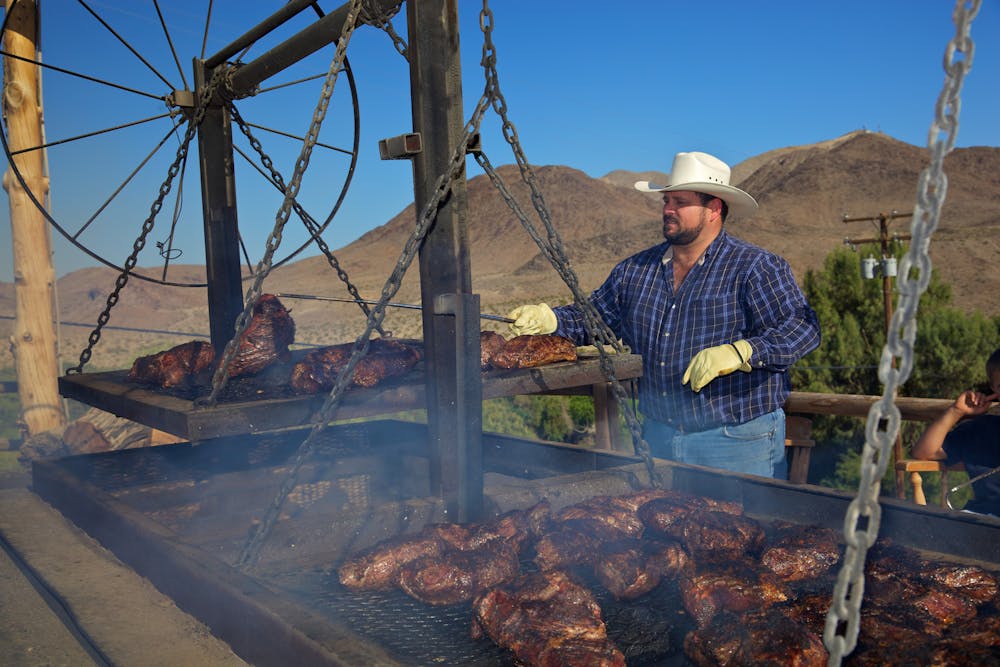
    @IMFSpokesperson

    MIL OSI Economics

  • MIL-OSI USA: Senator Wicker Statement on Gulf Coast Passenger Service Grant Approval

    US Senate News:

    Source: United States Senator for Mississippi Roger Wicker

    WASHINGTON – Today, an agreement was reached among stakeholders on the Consolidated Rail Infrastructure and Safety Improvements (CRISI) Grant which will provide crucial funding to restore passenger rail service along the Mississippi Gulf Coast. The $178,435,333 grant was previously awarded by the Federal Railroad Administration.

    U.S. Senator Roger Wicker, R-Miss., has used his position as Chairman and Ranking Member of the U.S. Senate Commerce Committee to restore the return of passenger rail to the Gulf Coast for the first time since Hurricane Katrina. While serving as chairman, he helped negotiate the infrastructure bill which is the origin of the CRISI Grant.

    Senator Wicker released the following statement:

    “I appreciate the partnership shared by local and state government officials and the freight rail companies, CSX, and Norfolk Southern. This service will provide economic opportunities to the Gulf Coast Region and provide an alternative way to move people safely. Years of hard work and cooperation have brought us to this important moment,” Senator Wicker said.

    Scheduled to resume in 2025, the services are expected to provide economic growth opportunities, boost tourism, and reduce traffic on our roadways. Two trains will run roundtrip from New Orleans to Mobile with stops in Bay St. Louis, Gulfport, Biloxi, and Pascagoula.

    A groundbreaking ceremony was held today in Mobile for the layover track, where a train is stored when not in use. That piece of the project had been one of the remaining hurdles to restoring the route.

    MIL OSI USA News

  • MIL-OSI Australia: Improving flood resilience around singleton

    Source: New South Wales Premiere

    Published: 23 October 2024

    Released by: Minister for Regional Transport and Roads


    The Singleton Local Government Area has received $7 million in funding from the Albanese and Minns Governments to help improve the resilience of Kilfoyles Bridge and Stanhope Road ahead of future flood events.

    The funds, provided through the Regional Roads Transport Recovery Package, will go towards:

    • Raising Stanhope Road at Elderslie; and
    • The betterment of Kilfoyles Bridge and approaches on Luskintyre Road with a two-lane concrete structure.

    Work to raise the road level along a one kilometer section of Stanhope Road is already underway and will involve major culvert upgrades to better manage drainage and improve access to the route during future rainfalls.

    The funding also covers raising Kilfoyles Bridge and approaches on Luskintyre Road by at least 2.2 metres, and upgrading the bridge to a two-lane concrete structure with a higher bridge deck and scour protection. This work is expected to start in November 2024.

    The improvements will help reduce the likelihood of road and bridge closures during severe weather and reduce costs for ongoing repairs and maintenance.

    These upgrades are jointly funded through the Disaster Recovery Funding Arrangements (DRFA).

    Quotes attributable to Federal Minister for Emergency Management Jenny McAllister:

    “We are working with the Minns Government and regional councils to ensure communities have resilient infrastructure they can rely on every day, but particularly in times of crisis.”

    “Upgraded roads and bridges will help residents stay connected during flooding and improve access to emergency services.

    “By raising the road and increasing the capacity of culverts, these projects will also reduce turbulence and help flood water escape quickly.”

    Quotes attributable to Member for Hunter Dan Repacholi:

    “We’ve seen over the last few years the devastation that constant rain and flooding has had on our communities and on our vital infrastructure.

    “Keeping our roads and bridges open during flood events is vital to stop communities being isolated.

    “It’s all about building back better and it’s about the Albanese Labor Government working with the states and the local government so that we can build back better and give people the future they need.”

    Quotes attributable to Minister for Regional Transport and Roads Jenny Aitchison:

    “This key investment by the Minns and Albanese Labor Governments will improve Singleton’s resilience to floods.

    “Workers, students, tourists, freight operators and other residents will be able to continue to go about their business, get to education and medical appointments with less inconvenience and disruption during disasters.

    “This will reduce their reliance on Surf Life Saving and the State Emergency Service (SES), particularly for residents of smaller communities like Lambs Valley and Stanhope.

    Quotes attributable to NSW Labor’s spokesperson for Upper Hunter Emily Suvaal:

    “These flood resilience projects will keep communities better connected during disasters while importantly protecting lives and livelihoods across the Upper Hunter.

    “It’s great to see all three levels of government working together to deliver projects that make such a big difference to our regional communities.”

    Quotes attributable to Singleton Council Mayor Sue Moore:

    “I’m very pleased to have State and Federal Governments working together to improve access in times of flooding for Singleton rural communities.”

    Quotes attributable to Singleton Council General Manager Justin Fitzpatrick-Barr:

    “Stanhope Road and Kilfoyles Bridge form an important transport route for the community and agricultural businesses but in times of flooding, they become inundated and unpassable for days at a time.

    “By upgrading and raising the level of this road and bridge, we’ll keep our community connected during future flooding disasters.

    “We’re extremely grateful to the Australian and NSW governments for their support to deliver these integral infrastructure projects for Singleton.”

    MIL OSI News

  • MIL-Evening Report: New Caledonia crisis: Pacific leaders’ mission must ‘look beyond surface’

    INTERVIEW: By Don Wiseman, RNZ Pacific senior journalist

    Last week, New Caledonia was visited by France’s new Overseas Minister, François Buffet, offering a more conciliatory position by Paris.

    This week, the territory, torn apart by violent riots, is to receive a Pacific Islands Forum fact-finding mission comprised of four prime ministers.

    New Caledonia has been riven with violence and destruction for much of the past five months, resulting in 13 deaths and countless cases of arson.

    Islands Business journalist Nic Maclellan is back there for the first time since the rioting began on May 13 and RNZ Pacific asked for his first impressions.

    Nic Maclellan: Day by day, things are very calm. It’s been a beautiful weekend, and there were people at the beach in the southern suburbs of Nouméa. People are going about their daily business. And on the surface, you don’t really notice that there’s been months of clashes between Kanak protesters and French security forces.

    But every now and then, you stumble across a site that reminds you that this crisis is still, in many ways, unresolved. As you leave Tontouta Airport, the main gateway to the islands, for example, the airport buildings are surrounded by razor wire.

    The French High Commission, which has a very high grill, is also topped with razor wire. It’s little things like that that remind you, that despite the removal of barricades which have dotted both Noumea and the main island for months, there are still underlying tensions that are unresolved.

    And all of this comes at a time of enormous economic crisis, with key industries like tourism and nickel badly affected by months of dispute. Thousands of people either lost their jobs, or on part-time employment, and uncertainty about what capacity the French government brings from Paris to resolve long standing problems.

    Don Wiseman: Well, New Caledonia is looking for a lot of money in grant form. Is it going to get it?

    NMac: With, people I’ve spoken to in the last few days and with statements from major political parties, there’s enormous concern that political leaders in France don’t understand the depth of the crisis here; political, cultural, economic. President Macron, after losing the European Parliament elections, then seeing significant problems during the National Assembly elections that he called the snap votes, finds that there’s no governing majority in the French Parliament.

    It took 51 days to appoint a new prime minister, another few weeks to appoint a government, and although France’s Overseas Minister Francois Noel Buffet visited last week, made a number of pledges, which were welcomed, there was sharp criticism, particularly from anti-independence leaders, from the so called loyalists, that France hadn’t recognised the enormity of what’s happened, and to translate that into financial commitments.

    The Congress of New Caledonia passed a bipartisan, or all party proposal, for significant funding over the next five years, amounting to almost 4 billion euros, a vast sum, but money required to rebuild shattered economic institutions and restore public institutions that were damaged during months of riots and arson, is not there.

    France faces, in Metropolitan France, a major fiscal crisis. The current Prime Minister Michel Barnier announced they cut $250 million out of funding for overseas territories. There’s a lot of work going on across the political spectrum, from politicians in New Caledonia, trying to make Paris understand that this is significant.

    DW: Does Paris understand what happened in New Caledonia back in the 1980s?

    NMac: Some do. I think there’s a real problem, though, that there’s a consistency of French policy that is reluctant to engage with France’s responsibilities as what the United Nations calls it, “administering power of a non-self-governing territory”.

    You know, it’s a French colony. The Noumea Accord said that there should be a transition towards a new political status, and that situation is unresolved. Just this morning (Tuesday), I attended the session of the Congress of New Caledonia, which voted in majority that the provincial elections should be delayed until late next year, late 2025.

    The aim would be to give time for the French State and both supporters and opponents of independence to meet to talk out a new political statute to replace the 1998 Noumea Accord. However, it’s clear from different perspectives that have been expressed in the Congress that there’s not a meeting of minds about the way forward. And key independence parties in the umbrella coalition, the FLNKS make it clear that they only see a comprehensive agreement possible if there’s a pathway forward towards sovereignty, even with a period of inter-dependence with France and over time to be negotiated.

    The loyalists believe that that’s not a priority, that economic reconstruction is the priority, and a talk of sovereignty at this time is inappropriate. So, there’s a long way to go before the French can bring people together around the negotiating table, and that will play out in coming weeks.

    DW: The new Overseas Minister seems to have taken a very conciliatory approach. That must be helpful.

    NMac: For months and months, the FLNKS said that they were willing to discuss electoral reforms, opening up the voting rolls for the local political institutions to more French nationals, particularly New Caledonian-born citizens, but that it had to be part of a comprehensive, overarching agreement.

    The very fact that President Macron tried to force key independence parties, particularly the largest, Union Caledoniénne, to the negotiating table by unilaterally trying to push through changes to these voting rules triggered the crisis that began on the 13th of May.

    After five months of terrible destruction of schools, of hospitals, thousands of people, literally leaving New Caledonia, Macron has realised that you can’t push this through by force. As you say, Overseas Minister Buffet had a more conciliatory tone. He reconfirmed that the controversial reforms to the electoral laws have been abandoned. Doesn’t mean they won’t come back up in discussions in the future, but we’re back at square one in many ways, and yet there’s been five months of really terrible conflict between supporters and opponents of independence.

    The fact that this is unresolved is shown by the reality that the French High Commissioner has announced that the overnight curfew is extended until early November, that the French police and security forces that have been deployed here, more than 6000 gendarmes, riot squads backed by armoured cars, helicopters and more, will be held until at least the end of the year.

    This crisis is unresolved, and I think as Pacific leaders arrive this week, they’ll have to look beyond the surface calm to realise that there are many issues that still have to play out in the months to come.

    DW: So with this Forum visit, how free will these people be to move around to make their own assessments?

    NMac: I sense that there’s a tension between the government of New Caledonia and the French authorities about the purpose of this visit. In the past, French diplomats have suggested that the Forum is welcome to come, to condemn violence, to address the question of reconstruction and so on.

    But I sense a reluctance to address issues around France’s responsibility for decolonisation, at the same time, key members of the delegation, such as Prime Minister Manele of Solomon Islands, Prime Minister Rabuka, have strong contacts through the Melanesian Spearhead Group, with members of the FLNKS and the broader political networks here. To that extent, there’ll be informal as well as formal dialogue. As the Forum members hit the ground after a long delay to their mission.

    DW: There have been in the past, Forum groups that have gone to investigate various situations, and they’ve tended to take a very superficial view of everything that’s going on.

    NMac: I think there are examples where the Forum missions have been very important. For example, in 2021 at the time of the third referendum on self-determination, the one rushed through by the French State in the middle of the covid pandemic, a delegation led by Ratu Inoke Kubuabola, a former Fiji Foreign Minister, with then Secretary-General of the Forum, Henry Puna, they wrote a very strong report criticising the legitimacy and credibility of that vote, because the vast majority of independence supporters, particularly indigenous Kanaks, didn’t turn out for the vote.

    France claims it’s a strong no vote, but the Forum report, which most people haven’t read, actually questions the legitimacy of this politically. The very fact that four prime ministers are coming, not diplomats, not ministers, not just officials, but four prime ministers of Forum member countries, shows that this is an important moment for regional engagement.

    Right from the beginning of the crisis, the then chair of the Forum, Mark Brown, who’ll be on the delegation, talked about the need for the Forum to create a neutral space for dialogue, for talanoa, to resolve long standing differences.

    The very presence of them, although it hasn’t had much publicity here so far, will be a sign that this is not an internal matter for France, but in fact a matter of regional and international attention.

    This article is republished under a community partnership agreement with RNZ.

    MIL OSI AnalysisEveningReport.nz

  • MIL-OSI China: China’s Xizang spends heavily on cultural tourism development

    Source: People’s Republic of China – State Council News

    LHASA, Oct. 22 — Since 2021, southwest China’s Xizang Autonomous Region has spent 20.16 billion yuan (2.83 billion U.S. dollars) on cultural tourism infrastructure, national park conservation facilities, and the preservation and improvement of its historic towns, a local official said on Tuesday.

    Of the funds, 1.97 billion yuan was spent on construction projects, including a regional planetarium, an art museum, and a culture, radio, television and art center, according to Weiqiang, director of the regional development and reform commission, at a regional conference on cultural tourism development.

    These projects have showcased Xizang’s cultural tourism achievements and become a new engine to promote the development of the region’s cultural tourism industry, he said.

    Data shows that from January to September of this year, Xizang received over 57 million domestic and international tourists, up 15 percent year on year. The total tourism expenditure in the region surpassed 67 billion yuan, a year-on-year increase of 13 percent.

    MIL OSI China News

  • MIL-OSI New Zealand: Pule Fakamotu 2024 (Constitution Day Flag Raising) Commemoration

    Source: New Zealand Governor General

    Fakaalofa lahi atu – and my very warmest Pacific greetings.

    I’d like to specifically acknowledge: Prime Minister Tagelagi; Prime Minister Mark Brown of the Cook Islands; Alapati Tavite, Ulu of Tokelau; President Williame Katonivere of Fiji; Ministers and Members of Parliament of Niue; and Members of the Diplomatic Corps.

    Thank you, Prime Minister Tagelagi for inviting Richard and me to join leaders of our ‘Realm family’ and members of the Diplomatic Corps in celebrating this year’s Constitution Day, marking the 50th year of self-government and enduring freedom of association with New Zealand.

    I am honoured to represent His Majesty King Charles III, our Head of State of the Realm of New Zealand, and affirm his best wishes to you all on this very special day for Niue.

    I also wish to convey warmest congratulations from the nearly 31,000 New Zealanders who regard Niue as home. You will be aware of the great pride they take in their distinctive culture, language and traditions, and the strength of their connections to Niue.

    I’m sure those who witnessed that historic moment fifty years ago, on the 19th of October 1974, would be delighted to see what has been achieved in the intervening years: the upgraded roads and airport, the growth of tourism with Matavai Resort and other outstanding new accommodation options, the sea tracks, Niue Development Bank, new government buildings, a supermarket complex, and Millenium Hall.

    Similarly, I hope they would applaud the emphasis on sustainability and the protection of biodiversity, the establishment of a maritime protection area, and modernised waste management systems.

    I hope they would also be pleased to see Niue’s connections to the world, enabled by jet travel and internet access. I’m sure they would be astonished and delighted to see the growth of media and educational opportunities, solar power, electronic banking, an emergency operations centre, and the facilities of a truly modern hospital.

    I was pleased to learn how closely Niue and New Zealand worked to minimise the impact of COVID-19, and I wish to congratulate Prime Minister Tagelagi and everyone involved in keeping the people of Niue safe.

    Nationhood is necessarily an ongoing project, based on a shared understanding of identity, values, and culture.

    All Niueans contribute to this vision, whether they be Assembly Members, Ministers of Cabinet, the Speakers of the Fale Fono, the Public Service Commissioners, Secretaries of Government, the Judges and Judiciary, Niue’s High Commissioners in New Zealand, the Public Service, educators, the keepers of traditional knowledge and crafts, or artists, composers and cultural performers. So too do those Niueans engaged in fishing, growing crops, joining in community and church activities, and hosting tourists – as well as tupuna and spiritual leaders providing wise guidance and counsel across communities.

    I commend the people of Niue for working to sustain and transfer their cultural heritage and traditions. Showdays and Taoga Festivals have brought villages together with the Niuean diaspora to celebrate community, tradition and whanaungatanga. It must be gratifying to see Niueans born in New Zealand choosing to live here, and renew their ties with their culture and history.

    Since 1974, New Zealand has been proud to be Niue’s Constitutional partner, with responsibilities to provide necessary administrative support. The bonds between our two nations have flourished, nurtured by our shared history, language, culture and citizenship.

    The people-to-people links, forged through family ties, friendships, and shared experiences, have created a tapestry of interwoven lives between Niue and New Zealand, and Niue and the Pacific. 

    Today, we are joined by Niueans who have travelled from New Zealand, Australia and beyond to be part of these celebrations.

    Over these past fifty years, Niue has developed its own network of diplomatic, political, trade and economic relationships – and I acknowledge the support and collaboration of such partners and friends who are with us in celebration today. As Niue continues its journey of growth and development, I pay tribute to those partners who have supported those development aspirations, and your vision of a connected and prosperous Niue.

    All of us share in the challenges of our times – particularly climate change – and it is in the absolute interests of all of us to do what is right and what is necessary to build greater resilience and wellbeing for the people of the Pacific.

    This special Aho Pulefakamotu is a time for Niueans to celebrate the legacy of your forebears, and to look forward to how you might shape the destiny of your nation.

    I wish the people of Niue every success with the challenges and opportunities that lie ahead – strengthened by the executive, legislative and judicial processes established by your Constitution – and secure in the knowledge that you will be supported, as always, by your friends in New Zealand.

    Kia moui olaola a Niue. Kia tumau a Niue.  Niue ke Monuina. Niue ko Kaina. Niue ki Mua.

    Now, onwards to the next 50 glorious years. May God Bless Niue. May God Bless you all. Kia fakamonuina mai he Atua a Niue Fekai.

    MIL OSI New Zealand News

  • MIL-OSI New Zealand: Reception for the Diplomatic Corps in Niue

    Source: New Zealand Governor General

    Fakaalofa lahi atu kia mutolu oti – and my very warmest Pacific greetings to you all.

    I’d like to specifically knowledge: Prime Minister Tagelagi and Tanya Tagelagi; Members of the Niue Assembly; Your Excellency Mr Mark Gibb, New Zealand High Commissioner to Niue; Your Excellency Ms Katy Stuart, Australian High Commissioner to Niue; and Members of the Diplomatic Corps.

    Tēnā koutou katoa.

    As Governor-General of the Realm of New Zealand, representing His Majesty King Charles III, as well as the Government and people of New Zealand, it has been an honour to be here in Niue for this historic occasion – marking fifty years of Niue’s self-government and free association with New Zealand.

    Dr Davies and I have welcomed this opportunity be a part of this proud moment in Niuean history, and to reaffirm the depth and special meaning of the relationship between our two countries.

    On a fundamental level, of course, ours is a relationship underpinned by those constitutional arrangements decided upon and inaugurated 50 years ago, on the 19th of October 1974.

    Of course, in fact, the relationship between our two nations extends back much further than that. We are bound by our whakapapa – our common ancestors – who, hundreds of years ago, guided by the stars, the winds and the currents, navigated their way across Te Moana-nui-a-kiwa with immense courage and skill.

    New Zealand and Niue share Polynesian histories and stories with their origins in those great voyages, as well as the many precious ties of whānau – of family – strengthened over successive generations.

    As I come to the end of my time here, in this beautiful place – the ‘Rock of the Pacific’ – and reflect upon how it has touched my understanding of the bond between our countries, I find myself returning to ‘whanaungatanga’ – a term in te reo Māori which refers to a sense of sacred ties; of kinship; and of deep and abiding family connections.

    As the passing of time naturally alters the relationships within a family, so too the relationship between New Zealand and Niue has naturally evolved over these past fifty years. As one part of that evolution, Niue has developed and nurtured its own diplomatic relationships with countries across the Pacific and around the world.

    I’m delighted to see many of those relationships present here this evening, in friendship and support – bringing to mind, as it does, the whakataukī, or proverb: ‘Ehara tāku toa i te toa takitahi, engari takimano, nō āku tīpuna. My strength is not individual it is collective.’

    Such kotahitanga, such unity of action, is more important than ever in facing some of the most pressing global issues of our time: climate change, economic security, achieving equitable health and education outcomes. I am confident we will find solutions, but it requires that we do the work, and that we continue to share our knowledge, resources, and wisdom.

    I wish to take this opportunity to commend Niue for the work that you’ve done to encourage such collaboration, and the innovation that you’ve shown across areas as broad as food production, renewable energy, and sustainable tourism.

    The Niue and Ocean-Wide Trust is a perfect example of your commitment to initiatives whose ethos extends far beyond self-interest, which encourages collective action, and which seeks the greatest possible benefit to our planet and to broader humanity.

    As Governor-General, I once again reinforce New Zealand’s commitment to be a friend and partner to Niue in facing the challenges and seizing the opportunities of these coming years.

    I finish today by returning to the extraordinary image of those great Polynesian explorers charting their course across the Pacific Ocean. As we leave here, I hope we may all be inspired by the example of those early pathfinders – to be courageous in our actions as in our words, to live with deep care and respect for the natural world, and to work together, in the abiding spirit of whanaungatanga and kotahitanga, to seek a positive future for all.

    Fakaaue lahi. Tēnā koutou, tēnā koutou, tēnā koutou katoa.

    MIL OSI New Zealand News

  • MIL-OSI China: Beijing, Chengdu top China’s sci-fi city index

    Source: China State Council Information Office 3

    On Oct. 18, China’s latest science fiction city index was released, with Beijing and Chengdu topping the list, providing a reference for Chinese cities to develop their sci-fi industries and learn from each other.

    Professor Wu Yan speaks at the release of the 2024 China Science Fiction City Index Report in Chengdu, Sichuan province, Oct. 18, 2024. [Photo courtesy of China Science Fiction Research Center]

    The 2024 China Science Fiction City Index Report, compiled by the China Science Fiction Research Center, Chengdu Institute for High-Quality Development, and Shenzhen Science and Fantasy Growth Foundation, considers various factors such as economic foundation, technological innovation, cultural consumption and policy environment. The report evaluated 26 cities in China, each with a GDP exceeding 1 trillion yuan in 2023.

    “We hope to build a scientific evaluation index system to comprehensively and objectively reveal the differences and characteristics of different cities in terms of sci-fi development, providing a reference for cities to develop sci-fi and learn from each other,” said Wu Yan, a Chinese sci-fi pioneer, scholar, writer and professor at the Southern University of Science and Technology’s Center for the Humanities. Wu presented the report on behalf of the project team during the 2024 TianWen Chinese Science Fiction Literature Contest awards ceremony, which was held last weekend in Chengdu, Sichuan province.

    In designing the indicators, the project team followed four major principles: “scientific and practical,” “stable and dynamic,” “measurable and comparable” and “comprehensive and representative.” Based on the core concepts and strategic orientation of evaluation, they crafted three primary indicators: “industry development,” “cultural dissemination” and “fusion capabilities.”

    Each primary indicator was composed of secondary indicators, such as the intensity of sci-fi film and TV consumption, and the number of sci-fi related policy documents, sci-fi writers, sci-fi books published and sci-fi events. The selection of secondary indicators focused on measurability and representativeness, aiming to systematically assess the level of sci-fi development in cities in a multi-dimensional manner.

    The top 10 cities according to the selection criteria were: Beijing, Chengdu, Shanghai, Nanjing, Shenzhen, Hangzhou, Chongqing, Guangzhou, Wuhan and Changsha.

    Beijing, the capital of China and the city with the most resources, scored 81.01. The city has developed a sci-fi industry that encompasses content creation, IP conversion, special effects production, hard technology and immersive experiences. In 2020, the China Association for Science and Technology and the Beijing municipal government agreed to establish a sci-fi industry cluster at Shougang Park. The following year, Shijingshan district, where the park is located, launched measures to support and fund the formation of the nation’s sci-fi industry consortium.

    Chengdu, known as the “capital of Chinese sci-fi” and host of the 81st World Science Fiction Convention in 2023, scored 78.44. The magazine Science Fiction World, a leading global sci-fi publication for over 40 years which is headquartered in the city, has launched the careers of numerous prominent writers, including Liu Cixin. The city also holds prestigious awards such as the Galaxy Awards and the Chinese Nebula Awards.

    In 2023, Chengdu’s sci-fi industry revenue hit 23.52 billion yuan, up by 17.49% from the previous year, showcasing robust growth. Chen Ling, secretary general of the China Science Writers Association and executive deputy director of the China Science Fiction Research Center, highlighted the crucial role Chengdu’s sci-fi industry plays in national development, adding that the city excels in reading, gaming and merchandise.

    Another city worth noting is Shenzhen, which ranked first in terms of sci-fi integration capability. Over the years, the city’s substantial economic resources, robust innovation environment and talent attraction have laid a solid foundation for integrating various industries with sci-fi. Notably, in sci-fi infused technological innovation and urban construction, Shenzhen has demonstrated significant leadership.

    San Feng, a sci-fi researcher and project leader of the report, explained to China.org.cn that after Beijing and Chengdu, the other eight cities in the top 10 features cities from the Yangtze River Delta and the Guangdong-Hong Kong-Macao Greater Bay Area, benefiting from unique geographical advantages and supportive policies that enhance their competitiveness and potential for sci-fi development. Cities like Shanghai, Nanjing and Hangzhou in the Yangtze River Delta are notable for their sci-fi content industry and leisure tourism, with significant advancements in sci-fi films and games. Meanwhile, the Guangdong-Hong Kong-Macao Greater Bay Area has shown strong growth in sci-fi animation, games and merchandise manufacturing.

    Other cities’ sci-fi development has not yet achieved economies of scale. However, as national policies expand and regional economies develop synergistically, by leveraging local characteristics and resources, they can enhance sci-fi development, San said.

    MIL OSI China News

  • MIL-OSI China: Hong Kong museum displays early Chinese photography collection

    Source: China State Council Information Office 3

    Over 500 photographs taken in the late Qing Dynasty (1644-1911) and early 20th century will be on display at the Hong Kong Museum of History from Wednesday, selected from over 24,000 photographs in a collection donated by the Moonchu Foundation on Tuesday.

    The exhibits captured moments of major historical events such as the Second Opium War (1856-1860) and the First Sino-Japanese War (1894-1895), and provided records of the urban landscapes, historic buildings and people’s livelihood in those days. Most of the exhibits have never been publicly displayed before.

    Highlights include a picture taken 180 years ago of Nam Van in Macao, which is one of the earliest photographs of China in existence today. Notable works like stereoscopic photos taken by American photographer James Ricalton in 1900 and landscape photographs taken by famous Chinese photographer Lai Fong are on display.

    Exhibition goers can also find photos known as “Cartes de visite” in the size of a calling card, which were popular for exchanges in social gatherings during the 19th century.

    The donation provides excellent materials for studying modern Chinese society and increasing the public’s understanding of Chinese history from a century ago, said Kevin Yeung, secretary for culture, sports and tourism of the Hong Kong Special Administrative Region (HKSAR) government when addressing Tuesday’s opening ceremony.

    Established in 2007, Moonchu Foundation is dedicated to supporting culture and education-related research, publications and talks.

    The exhibition is one of the events of the 4th Guangdong-Hong Kong-Macao Greater Bay Area Culture and Arts Festival. It will run through Feb. 3 next year.

    MIL OSI China News

  • MIL-OSI: HEROWORKS to Participate in TTA 2024, Initiating Comprehensive Expansion into the Singapore Market

    Source: GlobeNewswire (MIL-OSI)

    SEOUL, KOREA, Oct. 21, 2024 (GLOBE NEWSWIRE) — South Korean hospitality tech company HEROWORKS is set to enter the Singapore market by introducing its hotel revenue management solution, ‘DatAmenity.’

    – HEROWORKS to Participate in ‘TTA 2024’, the Largest Tourism & Tech Expo in the Asia-Pacific Region

    – HEROWORKS to Supply its Hotel Revenue Management Solution ‘DatAmenity’ to the Singapore Market

    – Seeking Global Tourism Partners to Target the Asian Market with Localized Systems

    HEROWORKS has been selected as a participating company for the Travel & Tech Expo organized by the Singapore Tourism Enterprises Support Center (KTSC). From the 23rd to the 25th of this month, HEROWORKS will attend ‘Travel Tech Asia (TTA) 2024’ and ‘2024 ITB-Asia’ at the Marina Bay Sands Convention Centre in Singapore, seeking new business opportunities targeting the Asian hospitality tech market.

    With the aim of providing optimized solutions for the Singapore market, HEROWORKS will engage in networking and one-on-one investment meetings with key stakeholders, including venture capitalists, angel investors, and other investors. Through business consultations with these stakeholders, HEROWORKS plans to identify the specific needs of Singapore’s tourism and hospitality industries and to localize the ‘DatAmenity’ technology by partnering with companies that can create synergistic effects.

    DatAmenity is the first service in Korea to develop and implement a Revenue Management System (RMS) for hotels, and currently holds Korea’s number one market share. The solution collects and analyzes room data registered with Online Travel Agencies (OTAs), including pricing information and sales status, for all types of accommodations, such as hotels, motels, resorts, and pensions, assisting in optimally setting room sale prices.

    Unlike traditional hotel solutions, the DatAmenity solution is offered as a cloud-based SaaS (Software as a Service) model, allowing users to easily access and utilize the system anytime, anywhere. It currently serves approximately 500 accommodation facilities and has received significant positive feedback.

    Notably, DatAmenity has been recognized for its differentiated technological prowess in ‘Comparing Room Sales by Room Type.’ HEROWORKS identified the challenge that, despite having identical room configurations, differing room nomenclatures across hotels make accurate price comparisons difficult. In response, HEROWORKS developed a system allowing users (client companies) to set competitive hotels’ room classifications by their hotel’s room standards. This system, a proprietary technology exclusive to DatAmenity, has been proven innovative by acquiring a technology patent.

    HEROWORKS CEO Lee Chang-ju stated, “The demand for data-driven revenue management is increasing in Singapore’s hospitality industry.” He added, “Through participating in the TTA and ITB-Asia expos, we expect to accelerate our penetration into the Asian market by establishing partnerships with Singapore’s tourism and tech companies.”

    Meanwhile, HEROWORKS is a hospitality technology company specializing in developing automated systems for hotel revenue management. To address the gaps that existing hotel operational systems, such as Property Management Systems (PMS) and Channel Management Systems (CMS), cannot resolve, HEROWORKS has developed and operates a distinctive ‘Hotel Revenue Management Solution.’ Notably, the solution provides features that establish ‘optimal room sale prices’ and enable comprehensive viewing and management of ‘hotel customer reviews,’ contributing to enhanced hotel revenues.

    Social Links

    YouTube: https://youtu.be/e1kOthMDeUo?feature=shared

    Blog: https://blog.naver.com/datamenity

    Media Contact

    Brand: HEROWORKS

    Contact: Planning & Marketing Team

    Email: dyeong@heroworks.co.kr

    Website: https://www.heroworks.co.kr

    The MIL Network

  • MIL-OSI China: Beijing’s GDP grows 5.1%

    Source: China State Council Information Office

    Foreign tourists take a tour on Wangfujing Street in Beijing, capital of China, June 27, 2024. [Photo/Xinhua]

    The gross domestic product (GDP) of Beijing increased 5.1 percent year on year in the first three quarters of 2024, the city’s statistics authorities said Monday.

    The Chinese capital’s GDP reached 3.3 trillion yuan (about 465 billion U.S. dollars) from January to September, according to the municipal bureau of statistics.

    Key industries in Beijing showed robust growth in the first nine months of the year. The manufacturing of computers, communication and other electronic equipment saw an increase of 19.5 percent year on year, while the automotive manufacturing industry surged by 18.4 percent compared with the same period last year.

    In the tertiary sector, the information transmission, software and information technology services industry saw rapid growth, achieving added value of 710.5 billion yuan, up 11.9 percent year on year. The added value of the financial industry increased by 6.6 percent to 672 billion yuan.

    In terms of employment, the urban surveyed unemployment rate in Beijing for the first three quarters stood at 4.1 percent on average, 0.4 percentage points lower than the same period last year.

    MIL OSI China News

  • MIL-OSI Australia: Burnie Cultural Precinct works racing ahead

    Source: Australian Executive Government Ministers

    Sections of the new Burnie Cultural Precinct in north-west Tasmania have officially opened to the community today, marking a critical milestone in the project. 

    Once complete, the precinct is expected to attract 100,000 visitors per year, boosting tourism and the local economy. 

    The project involves upgrading the Burnie Arts and Function Centre and integrating it with the Museum and Art Gallery and civic plaza to create an inclusive environment with public spaces for co-creation and local events.

    With the interior of the Burnie Arts and Function Centre refurbishment complete today, we’re one step closer to realising this vision. 

    Additions to the building include a revitalised main entry, café and external works that link the centre with the civic plaza.

    Future works include the redevelopment of the remainder of the Burnie Arts building and an upgrade of the Civic Plaza made possible with a further $13 million funding from the Albanese Government.

    The new precinct will attract more locals and visitors by providing facilities, programs and cultural offerings for people to enjoy. 

    The project is a joint initiative between the Australian Government and Burnie City Council, with the Australian Government contributing $18 million to the $20.5 million project and the council contributing the remaining $2.5 million.

    Quotes attributable to Infrastructure, Transport, Regional Development and Local Government Minister Catherine King:

    “It’s fantastic to be here today to see the incredible transformation taking place at the new Burnie Cultural Precinct, with the arts and function centre now refurbished. 

    “This is yet another demonstration of the Albanese Government’s unwavering commitment to investing in our regions to create jobs, build opportunity and unlock economic growth and productivity.

    “We’re delivering for the people of Tasmania, investing in community infrastructure that fosters social cohesion and strengthens local communities.”

    Quotes attributable to Senator for Tasmania Anne Urquhart:

    “Ensuring people living on the North West Coast have access to world-class cultural precincts is of great importance to the Albanese Labor Government, and I am pleased to be here today for the opening of new parts of the Burnie Cultural Precinct.

    “This cultural precinct will ensure Burnie, and Braddon, remain a great place to live, work, visit and do business.        

    “The new integrated precinct will support a better visitor experience and provide welcoming public spaces that can be used for events and co-creation.

    “This will draw in more visitors and business activity to the Burnie CBD to provide a real boost to our economy.”

    Quotes attributable to Burnie Council Mayor Teeny Brumby:

    “This first stage of the redevelopment, which we celebrate today, has already breathed new life into the Burnie Arts Centre. 

    “This redevelopment doesn’t just create a venue; it creates an environment where arts and culture can thrive, where our community can gather, and where the next generation of makers can be inspired.”

    MIL OSI News

  • MIL-OSI Asia-Pac: Visits to Lin Ma Hang made easier

    Source: Hong Kong Information Services

    With effect from today, the Government opened a section of road within the frontier closed area near Lin Ma Hang Village in Sha Tau Kok by exempting it from the requirement that passengers travelling on it by green minibus must apply for a closed area permit.

    The move is intended to make it easier for members of the public visit to Lin Ma Hang Village and Robin’s Nest Country Park, the Security Bureau explained. It outlined that residents and tourists can go to Robin’s Nest Country Park and areas nearby for sightseeing purposes and to experience Hong Kong’s rich heritage and geological features.

    From now on, people can take green minibus No. 59K from Sheung Shui MTR Station to reach Lin Ma Hang Village via the newly exempted section of road within the frontier closed area. 

    On alighting, they can visit the MacIntosh Forts and Lin Ma Hang Lead Mine by taking the Lin Ma Hang Country Trail. They can also head in the direction of Sha Tau Kok via the Robin’s Nest Country Trail in order to enjoy the scenery around Yan Chau Tong and Shenzhen Wutong Mountain.

    The bureau emphasised that the exemption is only applicable to people travelling by green minibus, and does not apply to private vehicles, taxis or other vehicles without a valid closed road permit, or to individuals using other means of travel such as walking or cycling.

    MIL OSI Asia Pacific News

  • MIL-OSI Asia-Pac: Bus parade, exhibition launched

    Source: Hong Kong Information Services

    The Transport Department today launched a bus parade and exhibition in Victoria Park, Causeway Bay, to celebrate the 75th anniversary of the founding of the People’s Republic of China.

    The event features buses from the past and present and is one of the highlights of the Hong Kong Special Administrative Region Government’s National Day celebrations this year.

    Speaking at the kick-off ceremony this morning, Secretary for Transport & Logistics Lam Sai-hung noted that bus services have long been an indispensable and important part of Hong Kong’s economy and people’s livelihoods.

    “Buses have not only met the travel needs of Hong Kong people every day, but have also witnessed the city’s developments.”

    The event marks the evolution of franchised buses in the city from the past to the present, engaging with the public to experience the crucial role of bus services in the public transport system, he added.

    The transport chief also highlighted that China’s rapid development of new energy technologies in recent years has enriched Hong Kong’s choices of new energy public transport.

    “Numerous electric double-decker buses and hydrogen fuel cell buses introduced into Hong Kong in the past few years were China-made models. Our country has been forging ahead steadfastly in the last 75 years and continuous innovations in such areas as energy and transport technology not only reflect our country’s leading role in this field, but also bring the convenience of technology into the lives of the general public.”

    After the ceremony, the officiating guests boarded an open-top bus to lead a parade of eight retired and in-service buses from Victoria Park to Man Kwong Street via Gordon Road, King’s Road, Causeway Road, Hennessy Road, Fleming Road and Lung Wo Road.

    The general public enjoyed the parade along the 6km-long route across various districts and took photos.

    The convoy also engaged with citizens and tourists at locations such as Hennessy Road near Jardine’s Bazaar in Causeway Bay, Golden Bauhinia Square in Wan Chai and the destination at Central Pier.

    In addition, the four-day bus exhibition at the Victoria Park football pitches is open to registered members of the public free of charge from this afternoon.

    The department reminded those who have registered to queue up and enter the exhibition via its entrance at Soccer Pitch No. 4 (near the jogging track) with a QR code at the selected time slot.

    The exhibition features a total of 10 retired and in-service buses, including the first-generation double-decker bus introduced 75 years ago and the newly introduced China-made new energy double-decker buses.

    Bus model exhibits, photo-taking spots simulating a bus driver and passengers, a neon light installation as well as bus service-related memorabilia including bus captain uniforms of different generations and vintage bus tickets are also on display, the department said.

    MIL OSI Asia Pacific News

  • MIL-OSI Russia: To the staff of the All-Russian Museum of A.S. Pushkin

    MILES AXLE Translation. Region: Russian Federation –

    Source: Government of the Russian Federation – An important disclaimer is at the bottom of this article.

    On October 19, 2024, the museum will celebrate its 145th anniversary.

    Dear friends!

    I sincerely congratulate you on the 145th anniversary of the founding of the All-Russian Museum of Alexander Sergeevich Pushkin.

    Its opening became an important event in the public life of St. Petersburg, and today it is one of the largest literary and memorial complexes in our country, a national cultural heritage.

    The richest funds, collected over decades, contain unique collections that are associated not only with the fate and creative legacy of the great Russian poet, but also with the development of Russian literature. Thanks to the dedicated work, competence and enthusiasm of the museum staff, talented and infinitely devoted to their work, visitors have the opportunity to see genuine masterpieces.

    It is important that the highly professional team, while maintaining traditions, is constantly searching for new forms and principles of museum work, introducing methods and technologies that correspond to the most modern trends. That is why your large-scale exhibition, scientific and educational projects, conferences, lectures and seminars invariably arouse great interest among both specialists and numerous spectators. Every year, hundreds of thousands of tourists, coming to the city on the Neva, strive to visit this historically significant place, to immerse themselves in its unique atmosphere.

    I wish you successful implementation of your creative plans, well-being and prosperity.

    M. Mishustin

    Please note: This information is raw content directly from the source of the information. It is exactly what the source states and does not reflect the position of MIL-OSI or its clients.

    Please note; This information is raw content directly from the information source. It is accurate to what the source is stating and does not reflect the position of MIL-OSI or its clients.

    http://government.ru/gov/persons/151/telegrams/53038/

    MIL OSI Russia News

  • MIL-OSI China: Xi calls on Anhui to write its own chapter of Chinese modernization

    Source: People’s Republic of China – State Council News

    BEIJING, Oct. 19 — On a recent inspection tour in east China’s Anhui Province, Xi Jinping, general secretary of the Communist Party of China (CPC) Central Committee, Chinese president, and chairman of the Central Military Commission, emphasized the need for the province to further implement the guiding principles of the 20th CPC National Congress and the third plenary session of the 20th CPC Central Committee. He also stressed that the province should comprehensively implement the new development philosophy. He urged Anhui to leverage multiple national development strategies in its continued drive to establish itself as an important hub of sci-tech innovation, a center for emerging industries, a new frontier for reform and opening up, and a comprehensive green transformation zone for economic and social development. Xi called on Anhui to make further achievements in deepening its integration into the new pattern of development, promoting high-quality development, and building a beautiful Anhui in all respects, so as to write an Anhui chapter of Chinese modernization.

    From Oct. 17 to 18, accompanied by Liang Yanshun, secretary of the CPC Anhui Provincial Committee, and Anhui Governor Wang Qingxian, Xi conducted fact-finding missions in the cities of Anqing and Hefei, where he visited a number of sites, including a historical and cultural block and a sci-tech park.

    On the afternoon of Oct. 17, Xi first arrived in Tongcheng City, Anqing. The city’s Liuchi Alley, so called because Zhang Ying, a senior Qing Dynasty official, and his neighbor, the Wu family, both moved back their walls by a meter to resolve their disputes over property boundaries, stands as a model of harmonious and courteous neighbor relations in China. In the alley, Xi learned about the history of the site and its inheritance, viewed artifacts from the “Tongcheng School,” and learned about local efforts to carry on fine traditional Chinese culture and promote cultural and ethical development. He emphasized the need to strengthen the protection of historical and cultural heritage, adhere to the principle of creative transformation and innovative development, as well as work collaboratively to advance socialist culture, promote revolutionary traditions, and inherit fine traditional Chinese culture, laying a solid cultural foundation for social governance.

    As local residents and tourists gathered, Xi engaged warmly with them, stressing the need to resolve disputes between members of the public through mediation. He noted that Liuchi Alley exemplifies the ancestral wisdom of dispute resolution and should serve as an educational site for carrying forward traditional Chinese culture, and full play should be given to China’s traditional virtue of courtesy and modesty, so as to create a harmonious social environment where people can live and work in peace and happiness.

    Later, Xi visited Hefei Binhu Science City, where he viewed major technological innovations in the province and was briefed about what has been done there to innovate systems and mechanisms for scientific and technological development and application of scientific and technological advances, and engaged in discussions with researchers and corporate executives. Xi took a close look at high-tech products in the fields of intelligent connected vehicles, new-generation information technology, new energy, artificial intelligence, and health and life science. He stopped in front of each product, carefully observing them and expressing appreciation from time to time. He said science and technology should spearhead the advancement of Chinese modernization, and sci-tech innovation is an essential path to Chinese modernization. High-tech is not something that can be begged for or borrowed, Xi said, calling for accelerated efforts to achieve greater self-reliance and strength in science and technology. Noting that scientists and researchers are the backbone of advancing Chinese modernization, Xi called on them to seize every opportunity in life, unleash their innovative potential, contribute their wisdom and talent to building the country’s strength in science and technology and score remarkable achievements.

    On the morning of Oct. 18, Xi listened to work reports from the CPC Anhui Provincial Committee and the provincial government. He commended what the province has achieved in various areas of its work and put forward clear requirements for the work in the future.

    Xi emphasized the need to accelerate technological innovation and industrial transformation and upgrading. He called for efforts to build national laboratories and a comprehensive national science center in Hefei with high standards, to effectively leverage high-level scientific and technological innovation platforms. He required greater efforts in innovations regarding key generic technologies, cutting-edge frontier technologies, modern engineering technologies, and disruptive technologies. He also emphasized the importance of expanding international sci-tech exchanges and cooperation, and continuously boosting original innovation capabilities. Xi urged Anhui to establish supportive systems and mechanisms for innovation in all fields, promote the integrated reform of systems involving the development of education, science, technology, and talent in a coordinated manner, optimize financial policies and mechanisms that support sci-tech innovation, and promote the deep integration of the innovation chain, industrial chain, capital chain, and talent chain. He called for efforts to safeguard the foundation of the real economy, accelerate the transformation and upgrading of traditional industries, strengthen and expand strategic emerging industries, plan ahead and nurture future industries, develop new quality productive forces according to local conditions, and build advanced manufacturing clusters with international competitiveness. He called for coordinated efforts to promote carbon reduction, pollution control, afforestation, and economic growth, systematically advance ecological conservation and restoration, and ecological environmental governance, and improve capabilities for disaster prevention, reduction, and relief.

    Xi stressed the importance of advancing extended reform and high-level opening up. He called for bold steps to pursue innovative and differentiated reforms to create a new high ground for reform and opening up in inland areas. It is imperative to unswervingly consolidate and develop the public sector and unswervingly encourage, support, and guide the development of the non-public sector, fully stimulating the vitality of various business entities. It is essential to deepen the market-oriented reform of factors, creating a first-class business environment that is market-oriented, law-based, and internationalized. Xi noted the need to comprehensively expand opening up within the country and to the outside world, forming a comprehensive opening-up paradigm that establishes links between land and sea and between domestic and international markets, and promotes mutual assistance between eastern and western regions. With further integrated development of the Yangtze River Delta as the spearhead for driving coordinated regional development within the province, Xi called on the province to play a bigger role in the strategy for the development of the Yangtze River Economic Belt and the rise of the central region. Anhui should also take an active part in high-quality cooperation under the Belt and Road Initiative, take solid steps to step up reforms to integrate domestic and foreign trade, intensify efforts to attract foreign investment and stabilize its flows, and speed up fostering new growth drivers in foreign trade.

    Xi called for efforts to develop a new paradigm for integrated urban-rural development. It is imperative for Anhui to build modern grain industrial, production and management systems, take solid steps to develop high-standard cropland, develop the Yangtze-Huaihe Valley into a granary, and firmly shoulder the responsibility of ensuring adequate supply of grain. It is essential for the province to deliver good results in the trial extension of rural land contracts by another 30 years upon the expiration of the second-round contracts, and improve the supportive policies for strengthening agriculture, benefiting farmers and bringing prosperity to them, so as to motivate farmers to grow crops. Xi called for intensified efforts to grow local special and green agricultural products, upgrade the industries that benefit people in rural areas, improve the overall benefits of the agricultural sector, and strengthen new rural collective economies. It is imperative to further improve the living environment in rural areas to build beautiful villages. Xi called for strengthened efforts to promote urbanization with a focus on county seats and expand the county economy. He noted the need to boost employment for key target groups, and improve policies for regular assistance to low-income rural residents, thus preventing them from lapsing or relapsing into poverty in large numbers. He underscored the importance of extending the coverage of such services as education, medical care, pension, social security and public culture to rural areas. According to Xi, it is imperative to further guide community-level governance through Party building, and improve efficacy in this regard by applying and developing the “Fengqiao model” in the new era.

    Xi emphasized the necessity to further promote the integrated development of culture and tourism, develop integrated tourism, and build the cultural tourism sector into a pillar industry. He urged efforts to explore and utilize the educational function and tourism value of revolutionary cultural resources. He called for the conservation, inheritance and utilization of traditional villages and traditional architecture, as well as the promotion of creative transformation and innovative development of fine traditional culture. Xi also urged the promotion of extensive public participation activities for cultural and ethical progress, as well as the transformation of outmoded habits and customs, under the guidance of core socialist values. It is imperative to deepen the reform of the cultural system, optimize cultural industries and market, and create more high-quality cultural products, Xi said.

    Xi pointed out that it is necessary to unwaveringly uphold the Party’s leadership and strengthen Party building. He called for efforts to regularize Party discipline study and education, and guide Party members and officials to truly turn discipline rules into political, ideological, and action consciousness. He urged efforts to implement “three distinctions (namely the distinctions between errors caused by lack of experience in pilot reforms and deliberate violations of discipline and law; between errors made in conducting experiments that are not explicitly restricted by higher-level authorities and arbitrary violations of discipline and law in the face of higher-level authorities’ explicit prohibition; and between unwitting errors made in pursuing development and violations of discipline and law for personal gains),” to fully mobilize the enthusiasm, initiative, and creativity of Party members and officials in their work and endeavors. He called for efforts to solve problems concerning officials’ malfeasance, inaction, lack of courage to perform their duties, and incompetence. It is imperative to optimize the systems and mechanisms for preventing pointless formalities and bureaucratism to ease the burdens on the grassroots. He called for continued endeavors to improve conduct, tighten discipline, and fight against corruption, so as to consolidate and develop a good political ecology.

    Xi stressed the necessity to do a good job in the economic work of the fourth quarter, to conscientiously implement the policies and arrangements of the CPC Central Committee, and strive to achieve the economic and social development objectives for the whole year.

    He Lifeng and leading officials of relevant central Party and state departments accompanied Xi during the inspection tour.

    MIL OSI China News

  • MIL-OSI China: Los Angeles Lantern Art Expo showcases Chinese traditional culture

    Source: China State Council Information Office 3

    People visit the 2024 Los Angeles Lantern Art Expo in Arcadia, Los Angeles County, California, the United States, on Oct. 17, 2024. (Photo by Qiu Chen/Xinhua)

    The 2024 Los Angeles Lantern Art Expo was launched Wednesday evening, showcasing Chinese traditional culture with more than 60 sets of lantern displays, cultural performances and Chinese cuisine.

    A total of 66 sets of lanterns are on display at the expo, featuring themes including the Great Tang Dynasty, 12 Chinese zodiac animals, prehistoric dinosaurs, and holidays such as Halloween and Christmas.

    “Today, as we light up the lanterns here, we once again highlight the tremendous potential and continued efforts of China and the United States to foster cultural and tourism exchanges,” said Chinese Consul General in Los Angeles Guo Shaochun at the opening ceremony of the event.

    Lantern art is a good expression of Chinese traditional culture, carrying both deep cultural significance and aesthetic beauty, Guo said.

    “Every lantern represents the exquisite craftsmanship of Chinese artisans and reflects the shared aspirations of Chinese people around the world for a bright and prosperous future,” he noted.

    “The expo is essential to bring us together to celebrate the contributions of immigrants to this country while highlighting our wonderful Chinese culture,” said U.S. Congresswoman Judy Chu while addressing the opening ceremony.

    The expo, held in the Santa Anita Park in Los Angeles, runs from Oct. 18 to Nov. 17.

    MIL OSI China News