Category: Ukraine

  • MIL-OSI Europe: Briefing – Future of EU long-term financing: Post-2027 needs and how to finance them – 07-02-2025

    Source: European Parliament

    The adoption of the next multiannual financial framework (MFF) for the period from 2028 will be one of the second von der Leyen Commission’s defining projects. Striking a delicate balance between the EU’s growing financial needs and many Member States’ reluctance to shoulder higher payments to the EU has always been a challenging task. However, never before have the EU’s many financial needs been greater – and, at the same time, Member States’ budgets are under heavy constraints. On the expenditure side, several costly projects are on the horizon. The EU’s next long-term budget will have to finance the principal repayment of Next Generation EU (NGEU) grants from 2028 onwards, as well as borrowing costs that are higher than originally planned owing to a rise in interest rates. Other major expenditure items will include further financial support for Ukraine in its defence against Russia’s war of aggression and the subsequent contribution to recovery and reconstruction, the need to enhance the EU’s defence, security and preparedness, and the cost of EU enlargement. In addition, the EU must continue to invest in high-growth projects and its green and digital transformation in order to remain competitive, as recently underlined by the former president of the European Central Bank, Mario Draghi, in his high-level report on competitiveness. To finance the repayment of the NGEU debt, the European Parliament, the Council and the European Commission have agreed to introduce new own resources. However, although the Commission presented a proposal, approved by Parliament, no significant progress has so far been made on new own resources in the Council. Some Member States consider increased gross national income-based own resources as a simpler and fairer solution, which they want to combine with savings in existing areas as a way to balance the budget. Parliament has started shaping its position for the forthcoming debate on the next MFF with a draft initiative report, ‘A revamped long-term budget for the Union in a changing world’, presented by co-rapporteurs Siegfried Mureșan (EPP, Romania) and Carla Tavares (S&D, Portugal).

    MIL OSI Europe News

  • MIL-OSI Europe: Written question – The extension of the EU school scheme to eastern European countries with candidate status – E-000374/2025

    Source: European Parliament

    Question for written answer  E-000374/2025
    to the Commission
    Rule 144
    Gheorghe Falcă (PPE)

    The EU school scheme, which provides schoolchildren with fresh fruit, vegetables, milk and other dairy products, has proven an invaluable tool in promoting healthy eating habits and improving public health outcomes across EU Member States. The programme has successfully tackled issues such as childhood obesity, and has helped to promote sustainable agriculture and reinforce the importance of balanced diets.

    According to the most recent statistics, approximately 30.2 % of children in the Republic of Moldova live in absolute poverty. Rural areas are particularly affected, with the poverty rate reaching as high as 44.6 %. This alarming situation highlights the need for targeted initiatives to improve the well-being of children in these regions.

    Given the success of the EU school scheme, I would like to know if there are plans to extend it to countries such as Moldova and Ukraine, which have made significant progress in aligning with EU standards.

    • 1.How could the Commission support the implementation of the EU school scheme in countries with candidate status, especially Moldova and Ukraine, where the situation is particularly challenging due to the ongoing war and Russian aggression?
    • 2.Is the Commission considering extending this specific programme to these countries as part of their European integration process?

    Submitted: 28.1.2025

    Last updated: 7 February 2025

    MIL OSI Europe News

  • MIL-OSI: Self Inspection Secures $3 Million to Accelerate AI-Powered Vehicle Inspections for Car Loans and Fleet Management

    Source: GlobeNewswire (MIL-OSI)

    SAN DIEGO, Feb. 07, 2025 (GLOBE NEWSWIRE) — Self Inspection, an AI-powered platform for the $30 billion automotive inspections market, announced today that it closed a $3 million seed round. The round was co-led by Costanoa Ventures and DVx Ventures, with participation from Westlake Financial, one of the largest financial institutions for automotive loans.

    “Vehicle inspections are expensive, can take weeks to complete, and rely on outdated methods with a significant margin of error,” said Constantine Yaremtso, founder and CEO of Self Inspection. “Slow, inaccurate and expensive inspections create obstacles and a poor experience in millions of mobile transactions. Our tech completes inspections with greater speed, accuracy and customization, which can save financial institutions millions of dollars and speed up a sales process by weeks.”

    Millions of cars require inspection after a car rental, to be sold after a lease return, trade or repossession, or to create an accurate condition report to accelerate a sale. If one inspection is not done correctly or at all, it can result in arbitration when a car is sold (or increased rental fees), reversing transactions and costing thousands of dollars in expenses and time.

    Self Inspection provides standardized condition reports in minutes with increased real-time accuracy, a significant improvement compared to the current manual process. Key highlights from the company’s progress so far:

    • Avis, the third largest rental car provider in the U.S., uses it to facilitate rental inspections and car transactions. Alaska Rent A Car, Inc. an Avis Licensee, is the first state to fully deploy it.
    • CarOffer, a leading digital wholesale platform, part of CarGurus (CARG), uses Self Inspection as part of its vehicle appraisal process.
    • Westlake Financial, the largest privately held finance company in the automotive industry, handles over a million vehicle transactions annually and now exclusively relies on Self Inspection to deliver condition reports to dealers during trade-ins, re-marketing and repossession processes.

    Most inspections requiring an on-site visit can take days to weeks and often lack critical information like subtle defects, cost estimates, etc. Self Inspection’s AI-enhanced inspection platform quickly creates a detailed report of the entire vehicle, including exterior, interior, tires and mechanical components, with 99% accuracy based on advances in computer vision and AI models.

    “We are thrilled to be partnering with the Self Inspection team to bring this product to life. Westlake Financial is already integrating Self Inspection across our business units, and have seen significant value to detect and assess issues, as well as substantial savings that we can pass to our consumers,” said Ian Anderson, president of Westlake Financial. “We need to maintain accurate records of a vehicle’s condition to ensure correct valuations, manage risk effectively, prevent fraud and determine fair prices for our customers. Self Inspection allows us to streamline and standardize our processes, ensuring accurate vehicle assessments with precise, data-backed reports at scale.”

    Self Inspection is significantly more accurate than current photo-based models, which cannot effectively detect subtle defects or mechanical issues. In contrast, Self Inspection’s proprietary AI models are trained on one of the largest datasets of damaged vehicles to quickly detect and assess damage severity. This data is used to provide detailed cost estimates for repairs, resulting in one of the most thorough vehicle inspection reports available in the industry.

    “We are excited to support the Self Inspection team in their mission to transform the vehicle inspection industry through AI. The traditional vehicle inspection process is ripe for innovation, and Self Inspection’s solution addresses a critical need by providing accurate, efficient and scalable inspections,” said Karim Bousta, partner at DVx Ventures and automotive industry expert. “This technology not only streamlines operations for auto lenders, dealerships and rental companies but also sets a new benchmark for quality, reliability and a seamless digital experience in the $30 billion vehicle inspection market.”

    “Innovation that can modernize a massive traditional industry, like automotive, and solve a critical need through AI is poised for long-term growth,” said Greg Sands, managing partner at Costanoa Ventures. “Self Inspection built a reliable AI-powered vehicle inspection platform that ensures data-backed trust every time a vehicle changes hands. This will prove radically useful as the industry evolves.”

    Yaremtso, a Ukrainian immigrant, founded the company in 2021 with former leaders from Apple, NVIDIA and Coinbase who bring significant AI and automotive experience. Self Inspection plans to use the funds to expand its engineering team in both Ukraine and the U.S. to accelerate product development and enhance machine learning algorithms to optimize and expand use cases.

    For more information and to keep up with the latest news from Self Inspection and its traction in the automotive industry, visit https://www.selfinspection.com/.

    About Self Inspection
    Headquartered in San Diego, Self Inspection was founded in 2021 and is an AI-powered solution in the automotive industry dedicated to revolutionizing the $30 billion vehicle inspection industry. The platform leverages cutting-edge AI technology to deliver unparalleled accuracy and efficiency in vehicle inspections to cut costs and save time through automated, self-guided inspections. Founded by industry veterans with extensive experience in AI, software development and the automotive industry, the company is backed by Costanoa Ventures, DVx Ventures and Westlake Financial. For more information, visit https://www.selfinspection.com/.

    A photo accompanying this announcement is available at https://www.globenewswire.com/NewsRoom/AttachmentNg/9fd9346e-be1c-46e1-9c70-bb2c00af106b

    The MIL Network

  • MIL-OSI USA: Shaheen Speaks Out Against Trump Nominee Russell Vought, Calling Him Unfit and Unqualified to Serve as OMB Director

    US Senate News:

    Source: United States Senator for New Hampshire Jeanne Shaheen

    (Washington, DC) – U.S. Senator Jeanne Shaheen (D-NH) delivered remarks on the Senate floor opposing the nomination of Russell Vought, the chief architect of Project 2025, a radical, right-wing agenda, to serve as Director of the Office of Management and Budget. You can watch her full remarks here.  

    Key Quotes from Senator Shaheen:

    • “Either the OMB, under Russell Vought’s direction, deliberately stopped funding for 2,600 programs, for water and sewer projects, for housing, for meals for seniors, or they were so incompetent that without meaning to they sent a memo to the whole federal government that had that effect.”
    • “There’s no question that Russ Vought and President Trump intend to take away some of the funding that Congress has provided on a bipartisan basis to help families in New Hampshire and around the country save money.”
    • “It’s beyond ridiculous that anyone could propose these cuts with a straight face, while also supporting trillions of dollars in tax breaks for the wealthiest individuals and corporations in this country.”
    • “It’s important to all Americans to make sure that our government runs effectively and efficiently, but indiscriminately freezing hiring across the board, pushing out thousands of civil servants, makes that problem worse not better.”
    • “We’re not talking about political appointees here. We’re talking about the people who write the checks at the Social Security Administration, about the caseworkers at the Department of Housing and Urban Development who make sure that people have roofs over their heads and food to eat. We’re talking about doctors and therapists at VA hospitals who work around the clock to provide lifesaving care and benefits to the veterans who have sacrificed so much for our country and program operators at the Small Business Administration.”

    Remarks as delivered can be found below:

    I’d like to go back to my concerns about the nomination of Russ Vought to be the head of the Office of Management and Budget, because that’s an office that determines the services that millions of families and small businesses rely on. 

    And yet, he supported unilaterally taking away those services and help for more than 2,600 federal programs that were ordered to cease activities with less than 24 hours notice. 

    And in every state in the country, we heard confusion and panic and chaos. 

    Since then, I’ve heard from thousands of Granite Staters who are worried about what those cuts mean for them and their families. 

    I’ve heard from health care providers, from our community health centers, from our nonprofits, from our police departments, from so many people who provide services to the state of New Hampshire. 

    And it’s now been more than a week, and despite not one but two federal judges ordering the Trump Administration to stop holding up funds, we are still hearing reports of frozen payment systems and missed reimbursements. 

    Now, I know my Republican colleagues are hearing those concerns too. 

    But despite this outpouring, we’re still here today contemplating confirming Russell Vought, the architect of this reckless, unprecedented and misguided policy. 

    He was directly involved in drafting the memo that OMB sent out that started all of this last Monday. 

    That memo was so extreme that it provoked concern and outrage from both sides of the aisle about the breadth of payments that were being halted. 

    Russ Vought then had to walk back parts of the memo that he’d worked on just the day before. 

    And all of this happened, and he wasn’t even a confirmed nominee. 

    So, I’m very worried about what he’s going to do if he actually gets confirmed for this job. 

    We know that what we saw last week was just a short preview of what he plans to do. 

    And the justification that we’ve heard since that memo is that that memo wasn’t meant to cut off funding to all of the programs that saw their funding halted. 

    It wasn’t meant to stop Medicaid in every state or to shut down HUD’s system of rental assistance or homelessness funding. 

    But I’ll tell you, if that’s your defense, that just means that OMB sent a memo that was so poorly drafted that agencies across the federal government thought it required them to cut off all these programs that people and towns depend on. 

    So, either the OMB under Russell Vought’s direction, deliberately stopped funding for 2,600 programs for water and sewer projects, for housing, for meals for seniors, or they were so incompetent, that without meaning to, they sent a memo to the whole federal government that had that effect. 

    Well, regardless of which answer it is, I think the person who’s behind that, Russ Vought, the man leading that effort, should not be running the Office of Management and Budget that determines how funding goes out in the federal government. 

    And I think this is especially true because there’s no question that Russ Vought and President Trump intend to take away some of the funding that Congress has provided on a bipartisan basis to help families in New Hampshire and around the country save money on things like their energy bills, to help address pollution like PFAS. 

    And I would just remind folks that we passed the Bipartisan Infrastructure Law on a strong bipartisan vote—19 Republican senators voted with the Democrats to invest in our communities.  

    We worked shoulder to shoulder, Republicans and Democrats, to prioritize things like energy efficiency, water infrastructure, funding that this administration says it’s looking at cutting off, even though communities are depending on it. 

    Well, I plan to continue to stand up and defend funding that Congress provides to make necessary investments in all of our communities, and I hope my Republican colleagues will do the same. 

    And then this past weekend, we learned that Elon Musk, the world’s richest man, who’s never been elected, along with unelected, unconfirmed DOGE employees, the DOGE boys we call them, now have access to the payment system at the Treasury Department. 

    That is a system that processes more than $5 trillion worth of payments every year. 

    That’s everything from tax refunds and Social Security checks to reimbursing towns for work that they’re doing on sewers or roads. 

    They have access to Social Security numbers, to health information, and to so much more. 

    This is a system that the vast majority of people working at Treasury can’t access, and they shouldn’t be able to, because this is private information. 

    You may have heard that Treasury only gave “read only”, I say that in quotes, “read only” access.

    But if that’s the case, why is Elon Musk talking about using this access to stop payments to a charity that helps seniors with housing? 

    What’s he doing in the Treasury records anyway? 

    Why does he need that information? 

    This week, we’re hearing confirmation that Musk’s team didn’t just have “read access”. 

    In fact, they had administrator level access, giving them the ability to make changes to this payment system. 

    One specific Treasury employee refuted Treasury leadership’s denial that they gave a DOGE staffer “write access”, that’s the ability to change the code and to change the checks that get sent out by Treasury. 

    The employee said, and I quote, “I am looking at his access right now, and it has the Deputy Assistant Commissioner instructing the team to disregard all previous instructions and assign him,” the DOGE person, “read/write privileges for the database,” so he can change what’s in that database. 

    That doesn’t sound like “read only” access to me. 

    I think it’s unacceptable for an unelected billionaire to be taking over the payments system that our government relies on, that millions of Americans rely on, and trying to stop those payments. 

    Now, fortunately, the original OMB memo was rescinded. 

    But this fight is not over. 

    Instead, this access to the Treasury’s payment system could be the next front in stopping funds going out to the American people. 

    We can, and we do, intend to continue to push back on these illegal actions to stop funding that’s required by law. 

    And despite knowing better, Russell Vought has never shied away from his belief that the executive branch can disregard the law and override spending decisions that are made by Congress.

    He clearly believes that this administration should be above the law and should be able to take away funding that helps millions of Americans. 

    Russ Vought is the architect of Project 2025. 

    That proposed a budget that would cut Medicaid, just Medicaid, by $2.1 trillion over ten years.

     It would slash SNAP, the food program, by $400 billion. 

    We have people in New Hampshire who count on the SNAP program in order to be able to feed their kids. 

    His proposal would cut funding that helps low-income Americans go to college by more than $250 billion.

    It would eliminate the Affordable Care Act tax credits that help millions of Americans afford health care. 

    These are not cuts that lower costs. 

    These are not cuts that create jobs. 

    These are not cuts that enhance public safety and make it easier for people to afford their rent and their groceries. 

    It’s beyond ridiculous that anyone could propose these cuts with a straight face while also supporting trillions of dollars in tax breaks for the wealthiest individuals and corporations in this country. 

    You know, I’m not one to claim that the federal government can’t be run more efficiently. 

    I think we can always do everything better. 

    And it’s important to all Americans to make sure that our government runs effectively and efficiently, but indiscriminately freezing hiring across the board, pushing out thousands of civil servants, makes that problem worse, not better. 

    And last week, more than 2 million federal employees received emails offering to pay their salaries for the rest of the fiscal year in exchange for resigning now. 

    I mean, that in and of itself is questionable because this Congress hasn’t appropriated dollars to pay those employees. 

    And why would somebody who wants to improve effectiveness and efficiency in government, pay people to go home and not work? And that’s what this email said. 

    At the time, it included hundreds of thousands of individuals working in critical national security roles and included, for example, every single air traffic controller in the country, just days before we tragically saw the worst aviation incident in nearly 30 years. 

    Now, they’ve since walked that offer back, stating that it should not apply to employees who are critical to national security. 

    But, like the claim of the funding freeze, they say that that was always their intent, they must have made a mistake, but I’m not sure which option is worse. 

    That while we’re short more than 3,500 air traffic controllers, Russell Vought really wanted to pay the ones we do have not to work, or that he blasted out an irresponsible, reckless, non-targeted effort that could have had devastating consequences for critical positions without taking the time to think it through. 

    What’s more, they tried to convince us this offer will save money, making it clear that even if we lose thousands of key employees with no plans to replace them, we’ll be better off. 

    Well, tell that to the people in New Hampshire who are trying to get answers on their Social Security or their income tax checks. 

    Tell that to the students who need help with their FAFSA form so that they can apply and get help to go to college. 

    Vought has relentlessly attacked the millions of career civil servants who show up every day, no matter who’s in power, to keep the lights on and the wheels turning. 

    Some of these people have served our country for 30, 40, even 50 years through countless presidents and Congresses. 

    We’re not talking about political appointees here, we’re talking about the people who write the checks at the Social Security Administration, about the caseworkers at the Department of Housing and Urban Development who make sure that people have roofs over their heads and food to eat. 

    We’re talking about doctors and therapists at VA hospitals who work around the clock to provide lifesaving care and benefits to the veterans who have sacrificed so much for our country, program operators at the Small Business Administration who helps entrepreneurs get loans. 

    They’re the forest rangers who show up in all weather conditions in the White Mountain Forest in New Hampshire to ensure there is safe and enjoyable recreation opportunities for hundreds of millions of visitors to our national parks and forests.

    And speaking of the weather, they’re the meteorologists at the National Weather Service, the people we rely on to prepare for hazardous storms. 

    These employees contribute to the maintenance of nuclear submarines, which is an essential tenet of our national security, a crucial part of our capability to deter major conflicts. 

    And any impact to our shipyards, we have the Portsmouth Naval Shipyard between New Hampshire and Maine that does maintenance on our nuclear submarines, any impact to that workforce will strain our shipbuilding industrial base that’s already saturated with demand to meet the requirements of our Navy.

    So, why did they get an email giving those employees the option to resign? 

    This administration has said repeatedly that it wants to “restore the warrior ethos” at the Pentagon. 

    But if Russell Vought gets his way, there isn’t going to be anybody left at the Pentagon. 

    And now we’re hearing that Elon Musk’s team is plugging in to our air traffic control system. 

    The National Air Traffic Controllers Association has repeatedly asked for what they need: more funding, targeted investments and workforce development, shorter hours and upgraded technology. 

    We need to get to work in this Senate, in this Congress, on legislation that addresses these issues. 

    But handing the keys to the nation’s air traffic control system over to an unelected, inexperienced billionaire who cuts first and asks questions later, isn’t the solution. 

    Now, Russell Vought will tell you over and over again that government doesn’t work. 

    But he says this at the same time that he’s doing everything in his power to break it with zero regard for how that’s going to hurt you and your family. 

    And this week, we’ve seen and we’ve heard more horrifying parts of Russell Vought’s agenda. 

    He’s teaming up with Elon Musk. 

    And last year, for the first time, thanks to PEPFAR, more than half of new HIV infections were outside of Sub-Saharan Africa. 

    One of the most successful health programs ever in U.S. history, put in by George W. Bush.

    And one of the only things that has stood between Americans and so many of the diseases that come from overseas is USAID. 

    Now, I was listening to the prayer breakfast this morning, and I heard President Trump talking about his admiration for Billy Graham, for Franklin Graham, for the good work that they do. 

    Then a few minutes later, I heard the morning news, and I heard them talking about what’s happening in Sudan, where we have a famine and millions of people desperate because of the conflict there and what’s happening.

    And the news report said, if we don’t get our foreign assistance turned back on to help the Sudanese, eight million people are going to starve to death in the coming months. 

    I can’t imagine that Billy Graham or Franklin Graham support the idea of eight million Sudanese dying, because we’ve turned off the foreign assistance that we provided because Elon Musk doesn’t like the United States Agency for International Development. 

    I think Billy Graham and Franklin Graham, Billy Graham, when he was alive, and his son Franklin would say, these are also God’s children and it’s important for us to support people around the world who are dying. 

    And you know, it’s not just those kinds of situations like we have in Sudan. 

    We have significant diseases that are breaking out in parts of the world, and we don’t have people on the ground to make sure that the people who—the outbreak of Ebola that’s happening in Africa, some of us remember in 2014 when about what came to the United States—we don’t have any aid workers anymore because under Elon Musk’s order, they’ve shut down those programs. 

    They’re bringing those people home, so there’s nobody there to make sure that that Ebola outbreak doesn’t go across borders and doesn’t wind up in the United States. 

    There’s a Marburg outbreak, another hemorrhagic disease that’s happening in Africa. 

    It has a 90% mortality rate, and right now, we have no real treatment and no vaccination for the Marburg virus. 

    And yet again, we’ve taken our teams of people who help in-country to treat the Marburg virus and we’ve taken them home. 

    We’ve said, “go ahead cross whatever country lines you want. Come to the United States, because we’re not going to prevent that.” 

    And, you know, we’ve got a bird flu epidemic now. 

    You may have heard there’s a new strain that’s just been discovered in cows in Nevada. 

    We’ve had, about 70 people who have been infected with bird flu. 

    We’ve had somebody die from that. 

    We used to monitor bird flu outbreaks around the world, but under this shutdown of USAID and its programs, we’re not monitoring bird flu anymore. 

    So, that bird flu can come to the United States? 

    We don’t know. 

    Nobody seems to care in the Trump Administration if that happens. 

    These things don’t just happen overseas. 

    They affect us here in America. 

    It’s in our interest to ensure that these efforts that help with diseases, that help prevent Vladimir Putin and Russia from its nefarious activities in Europe, in Moldova, in Romania, in Ukraine—that’s also happened the aid to help Ukraine in this war against Russia.

    That’s all been cut off. 

    That doesn’t make America safer. 

    That doesn’t make us stronger.

    That doesn’t make us more prosperous. 

    I hope my colleagues will stand against Russell Vought, who has been the architect of so much of this carnage. 

    Sadly, I don’t think my colleagues on the other side of the aisle will do that. 

    And I hope that we can reverse some of this, harm that’s been done to so many people around the world that is going to come home to roost in America if we don’t address it. 

    So, Mr. President, I have taken all of my time. 

    I yield the floor.

    MIL OSI USA News

  • MIL-OSI USA: Durbin, Grassley Baltic Foreign Ministers To Discuss Increased Russian Aggresion

    US Senate News:

    Source: United States Senator for Illinois Dick Durbin

    February 06, 2025

    WASHINGTON – U.S. Senate Democratic Whip Dick Durbin (D-IL) and U.S. Senator Chuck Grassley (R-IA), Co-Chairs of the Senate Baltic Freedom Caucus, met today with Baltic Foreign Ministers and their ambassadors. During the meeting, they discussed the increase in Russian hybrid attacks in the Baltics and across Europe, and the need to maintain allied support for Ukraine and NATO. The meeting comes not long after Finland seized a Russian shadow fleet ship suspected of destroying an energy cable linking Estonia and Finland, and growing evidence of Russian arson, assassination, malign cyber activities, and sabotage on NATO soil. In addition to Durbin and Grassley, U.S. Senators Amy Klobuchar (D-MN), Jeanne Shaheen (D-NH), Ranking Member of the Senate Foreign Relations Committee, and Pete Ricketts (R-NE) also attended.

    The Senators met with Lithuanian Foreign Minister Kestutis Budrys and Ambassador Audra Plepyte; Latvian Foreign Minister Baiba Braže and Ambassador Elita Kuzma; and Estonian Foreign Minister Margus Tsahkna and Ambassador Kristjan Prikk.

    “Not only do I have strong personal ties to the region, but the Baltic countries are essential NATO partners in upholding democratic values and transatlantic security,” said Durbin. “The nations whose foreign ministers we met with today are among Ukraine’s staunchest supporters—and the United States must continue to do its part to stand alongside them. Considering the new Administration’s foreign policy views, we must remain steadfast in the need to strengthen the NATO alliance and in our support for the Baltic States as they work to combat increasing Russian aggression around the region.”

    “The Baltic nations of Estonia, Latvia and Lithuania kept the flame of liberty alive during 50 years of Soviet occupation. Now, they stand united as global leaders helping to combat foreign aggression and authoritarianism,” Grassley said. “As Co-Chair of the Senate Baltic Freedom Caucus, I was proud to welcome the Baltic Ministers of Foreign Affairs to Capitol Hill and I look forward to our nations’ continued partnership.”

    Photos of the meeting are available here.

    Last Congress, Durbin and Grassley introduced a resolution recognizing the importance of the alliance between the United States and the Baltic States.

    Over the years, Durbin and Grassley have introduced the Baltic Security Initiative Act, bipartisan and bicameral legislation to codify the Baltic Security Initiative (BSI), which enhances and strengthens U.S. security cooperation with the Baltics amid Russia’s unprovoked war in Ukraine and heightened tensions with China. In Fiscal Year 2024, Durbin secured $228 million in defense appropriations funding for the BSI.


    In 2022, Durbin traveled to Vilnius, Lithuania, where he received the Aleksandras Stulginskis Star Award—only the second individual and first American to receive this award. It was granted to Durbin for his decades-long support of Lithuanian independence and democracy and his promotion of parliamentary values. He was in Vilnius almost three years ago on the morning Russia launched its full-scale invasion of Ukraine. 

    -30-

    MIL OSI USA News

  • MIL-OSI United Kingdom: The UK launches flagship SPIRIT programme to drive social recovery in Ukraine

    Source: United Kingdom – Government Statements

    In collaboration with Government of Ukraine, UNICEF and the World Bank, £25m of UK funding will support an inclusive and sustainable social recovery in Ukraine.

    • The SPIRIT programme (Social Protection for Inclusion, Resilience, Innovation and Transformation) will support Ukraine to strengthen more inclusive and efficient social protection systems and revitalise community and family-based services.
    • SPIRIT will support the Foreign Secretary’s priority to ensure a safe and loving family for every child, improving social care services for 10,000 families across 10 regions
    • The programme will help Ukraine lay foundations for a recovery that meets the needs of citizens in all their diversity including people with disabilities, veterans and other war-impacted groups.

    The UK will invest £25 million to strengthen Ukraine’s social protection system and services to support an inclusive and barrier-free recovery. The funding announced during the visit of the Foreign Secretary, David Lammy to Kyiv will catalyse Ukraine’s ambition for reform of the social sphere. This support will help Ukraine to meet the varied needs of the population and accelerate Ukraine’s Euro-Atlantic pathway. The UK will partner with UNICEF Ukraine and the World Bank to deliver SPIRIT, working closely with the Ministry of Social Policy of Ukraine, the European Union and key partners in the social sector.

    The SPIRIT programme recognises that investing in people – and the support and services they need – will be critical for Ukraine’s long-term recovery and socio-economic future.

    Russia’s full-scale invasion has had an immense and devastating human impact in Ukraine. This has been disproportionately felt by the most vulnerable and war-impacted groups, including women, children and families, people with disabilities, older people, veterans, and those in frontline areas.    

    The programme will support Government of Ukraine in their social reform agenda, bringing together Ministries and local government, international financial organisations, donors, civil society, academia, and private sector.

    Following the signing of the ‘Social Recovery and Inclusion Partnership for Ukraine’ by the UK, the Ministry of Social Policy of Ukraine, the European Union, UNICEF and the World Bank at the Berlin Ukraine Recovery Conference 2024, SPIRIT demonstrates commitment of the UK government and partners to support Ukraine’s socio-economic future and further our collaboration.  

    The SPIRIT programme has three main priorities:

    • Improving access to high-quality community and family-based social services for at least 10,000 families with children across 10 regions. In cooperation with the Ministry of Social Policy, we will deliver small grants and capacity-building to 100 civil society and local community actors to enable them to provide social services, while building a local marketplace of accessible service providers and empowering local actors to meet the growing demand for social protection support.

    • Establishing a Social Recovery Office with the Ministry of Social Policy to drive reforms, improve coordination in the sector, and enhance collaboration with international financial institutions and development partners. The Social Recovery Office will help Ukraine respond to pressing demographic challenges, meet the needs of the most vulnerable, and support development of a more robust and inclusive social protection framework.

    • Launching a range of cross-sectoral initiatives that support social recovery and inclusion priorities in Ukraine. Projects will work across health, economic and social sectors, piloting new models of support and services to cater for the most vulnerable and war-impacted groups. This includes women, families with children, people with disabilities, older people, and veterans.  These initiatives will foster human capital, enable inclusive reforms and build the institutional capacity needed for Ukraine to address the demographic, economic, and societal changes driven by the war.

    The SPIRIT programme will support the Foreign Secretary’s campaign to realize family-based care for every child. Ukraine is a key partner in the Foreign Secretary’s new global alliance to progress sustainable, lasting reform of children’s social care around the world. Working with the Government of Ukraine and UNICEF, SPIRIT includes a specific focus on accelerating ‘Better Care Reform’ to strengthen families, prevent separation, and ensure a safe and loving family environment for all Ukrainian children.

    The British Ambassador to Ukraine, Martin Harris said:  

    I am proud that the UK is announcing critical funding for Ukraine’s social recovery. The £25m contribution will strengthen Ukraine’s social systems and services that are under overwhelming pressure from Russia’s brutal invasion. Investing in Ukraine’s social systems is an investment in Ukraine’s people – and we know that Ukraine’s people are its greatest resource.

    SPIRIT is a testament to 100 Year Partnership and shared values between our two countries, including our commitment to meet the needs of women, children, people with disabilities, older people, veterans, and marginalised groups.

    In the very worst of circumstances, Ukraine is pursuing an ambitious reform agenda to build a brighter, fairer and ‘barrier-free’ society.  In partnership with the Government of Ukraine, UNICEF and the World Bank, the SPIRIT programme will drive forward this vision and lay the foundations for a future where the well-being, dignity and potential of every Ukrainian is ensured.

    Oksana Zholnovych, Minister of Social Policy of Ukraine outlined:

    Human capital development is at the centre of Ukraine’s recovery. The SPIRIT programme represents a crucial step in building institutional capacity, strengthening the social protection system and supporting critical reforms to improve efficiency, effectiveness, and inclusion. We are grateful to our partners, the FCDO, World Bank, and UNICEF, for their support and shared commitment to fostering social cohesion, leaving no one behind.

    Munir Mammadzade, UNICEF Representative to Ukraine indicates:

    The SPIRIT programme is a critical investment in protecting and improving the lives of the most vulnerable, especially children and families in need across Ukraine. This initiative will further strengthen national systems and community-based services to nurture and maximize the country’s most important resource, its human capital, to drive inclusive and prosperous growth.

    Bob Saum, World Bank Regional Country Director for Eastern Europe added:

    Addressing social cohesion and inclusion, including meeting the needs of vulnerable populations will contribute to maximizing benefits of Ukraine’s post-war recovery economic growth. The SPIRIT program will help build institutional capacity to support veterans, people with disabilities, and other at-risk groups while advancing Ukraine’s EU integration goals.

    Updates to this page

    Published 7 February 2025

    MIL OSI United Kingdom

  • MIL-OSI Global: Keir Starmer takes first steps in UK-EU ‘reset’ – can he get the deal he wants?

    Source: The Conversation – UK – By Magdalena Frennhoff Larsén, Associate Professor in Politics and International Relations, University of Westminster

    It is not unusual for international leaders to be invited to meet with EU heads of state or government at the fringes of the European Council meetings. Ukraine’s president, Volodymyr Zelensky, has regularly been invited to address the EU leaders. And while Donald Trump was never invited during his first term as US president, his successor Joe Biden was.

    But Keir Starmer’s February 3 visit was significant, because it was the first time since Brexit that a British prime minister was invited to join the EU leaders for their traditional post-summit dinner.

    Even before the UK formally left the EU, while the two parties were negotiating the terms for Brexit, British prime ministers were excluded. Not only were they left out of the formal meetings where the other 27 leaders discussed Brexit, but they were also excluded from the post-summit dinner. This caused frustration in Downing Street, and led to complaints about the UK being sidelined.


    Want more politics coverage from academic experts? Every week, we bring you informed analysis of developments in government and fact check the claims being made.

    Sign up for our weekly politics newsletter, delivered every Friday.


    There were rumours that Boris Johnson would be invited to a European Council meeting in 2022, but these remained rumours. And even if UK-EU relations improved under the premiership of Rishi Sunak, it was not until the Labour government’s step-change in the signalling of the need for a Brexit “reset” that a dinner invitation was extended.

    Symbolically, it was important. After eight rather tumultuous years, the UK and EU were having dinner together again. And against the backdrop of the war in Ukraine and the changing geopolitical landscape, both parties recognised the need for closer cooperation on security and defence.

    Starmer wants an ambitious security partnership with the EU. European Council president António Costa recognised that there is a great deal that the EU and the UK can do together in terms of defence and addressing global challenges.

    Partners in security

    The idea of a security partnership is not new. Already in the political declaration of 2019, which accompanied the withdrawal agreement, the UK and the EU agreed to negotiate such a partnership, including cooperation on foreign, security, and defence policies.

    However, in his hurry to “get Brexit done”, Boris Johnson decided not to proceed on this track. As a result, the trade and cooperation agreement, which governs the EU-UK relationship, largely omits security cooperation.

    Even without a formal security and defence structure in place, the EU and the UK have worked alongside each other in supporting Ukraine. But the Labour government has repeatedly stressed the need for more formal cooperation arrangements as part of its “reset”. To this end, the foreign secretary, David Lammy, has called for an ambitious and broad-ranging UK-EU security pact.

    For the UK it is a relatively easy way to improve relations and rebuild trust with the EU. The EU and the UK face similar geopolitical challenges and are largely aligned in terms of values and interests on security and defence matters. A more coordinated EU-UK response would have greater impact, whether it is about supporting Ukraine, tackling cross-border crime or increasing energy security.

    It is also an area where the UK can forge closer links with the EU without crossing its red lines on free movement of people, or membership of the customs union or single market. And the UK – as the only major European military power other than France – is an attractive security partner for the EU.

    EU leaders do see potential in such an initiative. Already in the 2022 “strategic compass”, a document which sets out the EU’s security and defence agenda, the EU stressed that it remains open to closer cooperation with the UK.

    This has become even more urgent in light of the uncertainty surrounding Trump’s future engagement with Nato and European security. If Trump makes good on his threat to downsize America’s security role in Europe, the EU needs to strengthen its own defence, and it cannot do so effectively without the UK.

    However, the EU wants to see concrete proposals for what a security pact would look like. It questioned the genuine commitment to the “reset” after the UK rejected the EU’s proposal around a time-limited and visa-based youth mobility scheme – a move that disappointed the EU, for whom the issue was a top priority. The UK government worried that it could be misinterpreted as a return to free movement of people and rejected the proposal.

    While the leaders left the dinner without concrete proposals, they agreed to talk further. There will be an institutional EU-UK summit in the UK in May, where the two parties will discuss what form the deeper security and defence cooperation could take.

    European Council president Costa recognised that there is a new positive energy in the EU-UK relationship. It remains to be seen whether this energy, and the signalling about the UK’s commitment to a reset, will eventually translate into an actual EU-UK rapprochement – something both parties would benefit from. Rebuilding trust takes time – and a dinner invitation should be seen as positive sign in itself.

    Magdalena Frennhoff Larsén does not work for, consult, own shares in or receive funding from any company or organisation that would benefit from this article, and has disclosed no relevant affiliations beyond their academic appointment.

    ref. Keir Starmer takes first steps in UK-EU ‘reset’ – can he get the deal he wants? – https://theconversation.com/keir-starmer-takes-first-steps-in-uk-eu-reset-can-he-get-the-deal-he-wants-249216

    MIL OSI – Global Reports

  • MIL-OSI Global: Why Americans need well-informed national security decisions – not politicized intelligence analysis

    Source: The Conversation – USA – By Mark S. Chandler, Professor of Practice and Director, Government Relations – Intelligence and Security Studies Department, Coastal Carolina University

    U.S. intelligence workers gather information from around the world to help guide leaders’ decisions. da-kuk/E+ via Getty Images

    The United States’ security depends on leaders who make well-informed decisions, including matters ranging from diplomatic relations around the world to economic relations, threats to the U.S., up to the deployment of military force. The nation’s intelligence community – 18 federal agencies, some military and others civilian – has the responsibility of gathering information from all over the world and delivering it to the country’s leaders for their use.

    As a nearly 40-year veteran of the intelligence community, both in and out of uniform, I know that regardless of what leaders do with the information, the American people need them to have as thorough, unbiased, fact-based and nonpoliticized intelligence assessments as possible.

    That’s because reality matters. Those tasked with gathering, analyzing and assembling intelligence material work hard to assemble facts and information to give leaders an advantage over other nations in international relations, trade agreements and even warfare. Reality is so important that a key policy document for the intelligence community tells analysts that their top two priorities are to be “objective” and “independent of political consideration.”

    But an investigation into the intelligence community found that during the first Trump administration, intelligence workers at many levels made political value judgments about the information they assembled, and did not report the truest picture possible to the nation’s leaders.

    Tulsi Gabbard is President Donald Trump’s choice to be director of national intelligence.
    AP Photo/John McDonnell

    Analysts are a key defense against politicization

    In general, each administration develops a national security strategy based on global events and issues, including threats to U.S. interests that are detailed and monitored by the intelligence community. Based on the administration’s priorities and interests, intelligence agencies collect and analyze data. Regular, often daily, briefings keep the president abreast of developments and warn of potential new challenges.

    In a perfect world, the president and the national security team use that information to determine which policies and actions are in the nation’s best interests.

    With the recent arrival of a new presidential administration, recent reports indicate that at least some workers in the intelligence community are feeling pressure to shift their priorities away from delivering facts and toward manipulating intelligence to achieve specific outcomes.

    Current and former intelligence officials have publicly worried that President Donald Trump might be biased against the intelligence community and seek to overhaul it if analyses did not fit his policy objectives.

    It happened in Trump’s first term. After Trump left office in 2021, Congress turned to the Office of the Director of National Intelligence – which oversees the entire intelligence community – to investigate whether intelligence reports were politicized under Trump’s leadership.

    The investigation determined that they were, up and down the intelligence system. The report found that some people who didn’t agree with the president’s policy views and objectives decided among themselves not to provide a full intelligence picture, while others tried to tailor what they showed the president to match his existing plans.

    At times, individual analysts withheld information. And managers, even up to the most senior level, also edited analyses and assessments, seeking to make them more appealing to leaders.

    For instance, the report found that top intelligence community officials, members of the National Intelligence Council, “consistently watered down conclusions during a drawn-out review process, boosting the threat from China and making the threat from Russia ‘not too controversial.’”

    The ombudsman’s report pointed out that this type of event has happened before – specifically, in 2003 around questions of whether Iraq had weapons of mass destruction – which it was ultimately found not to. As the report describes, “politicians and political appointees had … made up their mind about an issue and spent considerable time pressuring analysts and managers to prove their thesis to the American public.” That biased, politically motivated intelligence led to a war that killed nearly 4,500 U.S. service members, wounded more than 30,000 more, and cost the lives of about 200,000 Iraqi civilians, as well as more than $700 billion in U.S. taxpayer funds.

    Intelligence community leaders brief not only the president and others in the executive branch, but also members and committees in Congress.
    Anna Moneymaker/Getty Images

    Leaders don’t have to listen

    At some point or other, almost every president makes decisions that run contrary to intelligence assessments. For instance, George H.W. Bush did not prioritize a crumbling Yugoslavia, and the challenges that presented, choosing to focus on Iraq’s 1990 invasion of Kuwait and the resulting U.S. military Operations Desert Shield and Desert Storm.

    President Bill Clinton inherited the Yugoslavia situation, in which a failing country was at risk of political implosion, and chose to ignore intelligence warnings until the ethnic cleansing in that country became too public to ignore, at which point he began a U.S.-led NATO air campaign to stop the fighting. Clinton also ignored several intelligence warnings about al-Qaida, even after its deadly attacks on two U.S. embassies in 1998, and in 2000 on the USS Cole, a U.S. Navy destroyer. He chose more limited responses than aides suggested, including passing up an opportunity to kill al-Qaida leader Osama bin Laden.

    President Barack Obama chose to dismiss indications relayed by intelligence officials that Russia was going to invade Ukraine in 2014 – which it did. He focused on the Middle East instead. Obama’s goal of withdrawing U.S. troops from Iraq led him to discount warnings of the potential threat from what would become the Islamic State group – which in 2014 took advantage of the American departure to launch a major assault and seize a massive amount of territory in both Syria and Iraq. Driving the group out required significant reengagement from the U.S. military.

    And President Joe Biden ignored military and intelligence assessments that the Afghan military and government were weak and would not be able to withstand Taliban attacks if the U.S. military withdrew. And until almost the last moment, the Biden administration did not believe warnings that Russia was about to launch a second invasion of Ukraine in 2022. In both cases, the intelligence predictions were correct.

    Elected officials are accountable to the American people, and to history, but I believe accountability is key to ensuring the intelligence community follows its own standards from top to bottom, from senior leaders to the most junior analysts. Failure to abide by those standards harms American national security, and the standards themselves say violations are meant to bring professional, and potentially personal, consequences.

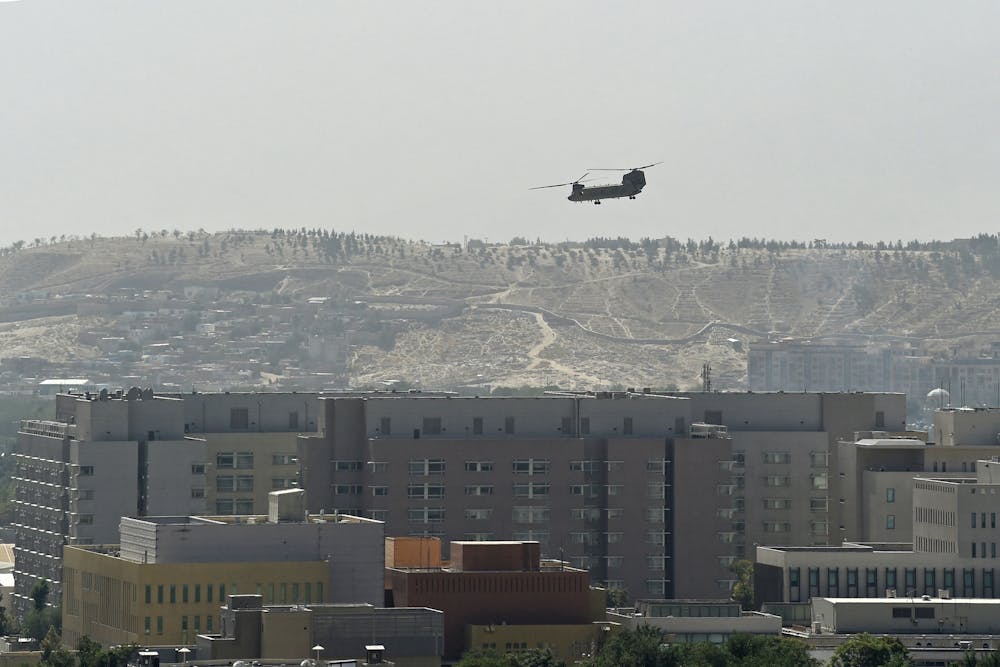
    A U.S. military helicopter flies above Kabul during the evacuation of U.S. troops from Afghanistan in 2021.
    Wakil Kohsar/AFP via Getty Images

    Perfection is elusive

    It’s impossible for intelligence collection and analysis staff to get everything right – they don’t have a crystal ball. Leaders aren’t under any obligation to follow the intelligence community’s recommendations. But if intelligence officials and political leaders are to have effective relationships that safeguard the nation’s security, each must understand their role and trust that each is doing that work as best as possible.

    Providing unvarnished truthful assessments is the job of the intelligence community. That means assessing what’s happening and what might happen as a result of a range of decisions the policymakers might choose. In my experience, putting aside my own views of leaders and their past decisions built trust with them and improved the likelihood that they would take my assessments seriously and make decisions based on the best available information.

    It’s not that intelligence professionals can’t have opinions, political ideologies or particular perspectives on policy decisions. All Americans can, and should.

    But as a second Trump administration begins, I think of what I told my colleagues and staff over the decades: National security requires us to keep those personal views out of intelligence analysis.

    Mark S. Chandler does not work for, consult, own shares in or receive funding from any company or organization that would benefit from this article, and has disclosed no relevant affiliations beyond their academic appointment.

    ref. Why Americans need well-informed national security decisions – not politicized intelligence analysis – https://theconversation.com/why-americans-need-well-informed-national-security-decisions-not-politicized-intelligence-analysis-248831

    MIL OSI – Global Reports

  • MIL-OSI Global: Map wars in the Middle East: How cartographers charted and helped shape a regional conflict

    Source: The Conversation – USA – By Christine Leuenberger, Senior Lecturer, Cornell University

    A lot has changed since the publication of this 1750 map of Palestine. Ken Welsh/Design Pics/Universal Images Group via Getty Image

    Maps are ubiquitous – on phones, in-flight and car displays, and in textbooks the world over. While some maps delineate and name territories and boundaries, others show different voting blocs in elections, and GPS devices help drivers navigate to their destination.

    But no matter the purpose, all maps have something in common: They are political. Making maps is about making decisions about what to omit and what to include. They are subject to selection, classification, abstractions and simplifications. And studying the choices that go into maps, as I do, can reveal different stories about land and the people who claim it as theirs.

    Nowhere is this more true than in the contested regions that today include modern-day Israel and the Palestinian territories. Since the establishment of the state of Israel in 1948, different governmental and nongovernmental organizations and political interest groups have engaged in what can best be described as “map wars.”

    Maps of the region use the naming of places, the position of borders and the inclusion or omission of certain territories to present contrasting geopolitical visions. To this day, Israel or the Palestinian territories may fall off some maps, depending on the politics of their makers.

    This is not exclusive to the Middle East – “map wars” are underway across the globe. Some of the more well-known examples include disputes between Ukraine and Russia, Taiwan and China, and India and China. All are engaged in controversies over the territorial integrity of nation-states.

    Israeli Prime Minister Benjamin Netanyahu displays a map of Israel indicating the Golan Heights are inside the state’s borders.
    Thomas Coex/AFP via Getty Images

    A short history of maps

    Traditionally, maps have been used to represent cosmologies, cultures and belief systems. By the 17th century, maps that represented spatial relations within a given territory beaome important to the making of nation-states. Such official maps helped annex territories and determine property rights. Indeed, to map a territory meant to know and control it.

    More recently, the tools for making maps have become more broadly accessible. Anyone with a computer and internet access can now make and share “alternative maps” that present different visions of a territory and make varied geopolitical claims.

    And maps produced in a conflict region, such as Israel and the Palestinian territories, tell a rich story about the relationship between mapmaking and politics.

    Mapping the Middle East

    During the British Mandate of Palestine from 1917 to 1947, British surveyors mapped the territories to exercise their control over the land and its people. It was an attempt to supersede the more informal Ottoman land claims of the time.

    By the founding of Israel in 1948, only about 20% of the total area of what is known as historic Palestine had been mapped – a fact that has fueled land disputes to this day. The British mapping efforts and their omissions enabled the newly established state of Israel to declare most of the territories as state land, thereby delegitimizing Palestinian land claims.

    A map shows the shaded areas of the Arab state recommended by the U.N. Special Committee on Palestine in 1947. The unshaded areas are parts of the proposed Jewish state.
    Underwood Archives/Getty Images

    Maps also helped build the Israeli state. Surveyors and planners mapped the land to allocate land rights, and they helped build the state’s infrastructure, including roads and railroads.

    But maps also helped create a sense of nationhood. Maps representing a nation’s shape by delineating its national borders are known as “logo” maps. They can enhance feelings of national unity and a sense of national belonging.

    Once established, the Israeli state remade the maps of the region. An Israeli Governmental Names Commission came up with Hebrew names to replace formerly Arab and Christian names for different towns and villages on the official map of Israel. At the same time, formerly Palestinian topographies and places were omitted from the map.

    Some Palestinian mapmakers, however, continue to make maps that include Palestinian named sites and depict pre-1948 historic Palestine – an area that stretches from River Jordan in the east to the Mediterranean Sea in the west. Such maps are used to advocate for Palestinians’ right to land and foster a sense of national belonging.

    A Palestinian woman holds up a map of the British Mandate of Palestine during a protest in Gaza City on Feb. 27, 2020.
    Mohammed Abed/AFP via Getty Images

    At the same time, Palestinian cartographers who work with the Palestinian Authority – the government body that administers partial civil control over Palestinian enclaves in the West Bank – make official maps of the West Bank and Gaza in the hope of establishing a future state of Palestine. They align their maps with United Nations efforts to map the territories according to international law by demarking the West Bank and Gaza as separate from and as occupied by Israel.

    After the 1967 war between Israel and its Arab neighbors, Israel occupied the West Bank and Gaza. As a result, map wars intensified, especially between different fractions within Israel. The left-wing “peace camp,” which was dedicated to territorial compromises with the Palestinians, was pitted against an Israeli right wing committed to reclaiming the “Promised Land” for ensuring Israeli security.

    Such incompatible geopolitical visions continue to be reflected in the maps produced. “Peace camp” maps adhere to the delineation of the territories according to international law. For example, they include the Green Line – the internationally recognized armistice line between the West Bank and Israel. Official maps produced by the Israeli government, by contrast, stopped delineating the Green Line after 1967.

    Broader and border disputes

    Not only have different interest groups and political actors used maps of the region to put forth competing geopolitical claims, but maps have also played a central role in sporadic efforts to establish peace in the region.

    The 1993 Oslo Accords, for example, relied on maps to provide the framework for Palestinian self-rule in return for security for Israel. The aim was that after a five-year interim period, a permanent peace settlement would be negotiated based on the borders laid out in these maps.

    A map of the West Bank with proposed Palestinian-controlled areas in yellow, as per the Oslo II Accords.
    Wikimedia Commons

    Consequently, Palestinian planners and surveyors mapped the territory allocated to a future state of Palestine. With the Oslo Accords promising only a future state – but with its borders and level of sovereignty still uncertain – Palestinian experts nevertheless continue to prepare for governing the territories by mapping them.

    The Oslo maps are used to this day to delineate geopolitical visions of Israel and a future state of Palestine that are based on international law. But for many Israelis, the Oslo vision of a two-state solution has died – the attack by Hamas, the Palestinian nationalist political organization that governs Gaza, on Israel on Oct. 7, 2023, was its last blow.

    The subsequent war between Israel and Hamas, currently subject to a cease-fire, has from the outset involved maps.

    In December 2023, the Israeli military posted an online “evacuation map” that divided the Gaza Strip into 623 zones. Palestinians could go online – provided they have access to electricity and internet in a territory plagued by blackouts – to find out whether their neighborhood was called upon to evacuate. Israeli military commanders used this map to decide where to launch airstrikes and conduct ground maneuvers.

    But the map served a political aim, too: to convince a skeptical world that Israel was taking care to protect civilians. Regardless, its introduction caused confusion and fear among Palestinians.

    Charting a way forward

    Maps aren’t just for making sense of the past and present – they help people imagine the future, too. And different maps can reveal conflicting geopolitical visions.

    In January 2024, for example, various Israeli right-wing and settler organizations organized the Conference for the Victory of Israel. The aim was to plan for resettling Gaza and increase Jewish settlements in the West Bank. Speakers advocated for transferring Palestinians from the Strip to the Sinai through “voluntary emigration.” With Jewish settlers planning for the return to Gaza, and speakers citing both the Bible and Israeli security for justifications, an oversized map showed the location of proposed Jewish settlements.

    A man takes a photo with a map showing the Gaza Strip with Jewish settlements during a convention calling to resettle the Gaza Strip on Jan. 28, 2024, in Jerusalem, Israel.
    Amir Levy/Getty Images

    Similarly, the Israeli Movement for Settlement in Southern Lebanon has published maps of planned Jewish settlements in Southern Lebanon.

    Such maps reveal the desire by some in Israel for a “Greater Israel” – an area described in 1904 by Theodor Herzl, considered the father of modern-day Zionism, as spanning from the brook of Egypt to the Euphrates.

    Unsurprisingly, Palestinians make different maps for envisioning the future. Palestine Emerging – a Palestinian and international initiative that brings together various experts, organizations, and funders – uses maps that connect Gaza to the West Bank and the wider region.

    A map shows the proposed Gaza-West Bank corridor transport link.
    Palestine Emerging

    Their aim is to transform Gaza into a commercial hub for trade, tourism and innovation and to integrate it into the global economy. Accordingly, maps of urban projects, airports and seaports overlay the cartographic contours of Gaza; and a Gaza-West Bank corridor, which would be sealed for Israeli security, could connect the two geographically separate Palestinian territories.

    Such maps reflect the efforts by Palestinian stakeholders to continue surveying the territories that, since the Oslo Accords, were to make up the future state of Palestine.

    A new era of expansionist geopolitics

    With the current U.S. administration more aligned with right-wing Israeli policies, maps of Greater Israel may guide what Hagit Ofran from Peace Now calls the beginning of a new “Greater Israel” policy period.

    In a novel twist, U.S. President Donald Trump on Feb. 4, 2025, floated a plan for the U.S. to “take over” Gaza, moving its current inhabitants out and turning the enclave into “”the Riviera of the Middle East.”

    Such a move would amount to another attempt to remake borders across the Middle East. It would not, however, end the “map wars” in Israel/Palestine.

    This work was supported by the National Science Foundation through the Science and Technology Studies (STS) Program, award #1152322. Any opinions, findings, and conclusions or recommendations expressed in this material are those of the author and do not necessarily reflect the views of the National Science Foundation or any other entity.

    ref. Map wars in the Middle East: How cartographers charted and helped shape a regional conflict – https://theconversation.com/map-wars-in-the-middle-east-how-cartographers-charted-and-helped-shape-a-regional-conflict-231668

    MIL OSI – Global Reports

  • MIL-OSI Global: How Putin, Xi and now Trump are ushering in a new imperial age

    Source: The Conversation – UK – By Eric Storm, Senior Lecturer in General History, Leiden University

    Over the past few weeks the new US president, Donald Trump, has repeatedly claimed that the United States should “take back” the Panama Canal and that it should assume control of Greenland – one way or another. He has talked of Canada becoming America’s 51st state and now he even wants to “take over” the Gaza Strip to convert it into a “Riviera” on the eastern Mediterranean.

    It’s as if the US president believes that his country should be an empire. In this Trump seems to be emulating China’s Xi Jinping and Vladimir Putin of Russia, leaders he has said he admires and who have themselves shown some clear imperial tendencies in recent years.

    Under Putin, Russia has supported secessionist regions, such as Transnistria and Abkhazia, fought wars in Georgia and Ukraine and actively interfered in the affairs of Syria and assorted African countries. In 2022 Russia even launched a full-scale invasion of Ukraine, claiming that Ukraine was historically inseparable from Russia, but that hostile western influences were trying to destroy that unity.

    China, meanwhile, has militarised a number of small uninhabited islands in the South China Sea. It has built 27 installations on disputed islands in the Spratly and Paracel island group that are also claimed by other countries including Vietnam, Taiwan, the Philippines and Malaysia. This has prompted a flurry of development, as other countries in the region have raced to establish their own footholds in the disputed, but very resource-rich, region.

    Beijing also maintains its claim over Taiwan, which it says is an inalienable part of China which it wants to “come home”.

    Empires and nation states

    Most people assumed that the age of empires had been relegated to the dustbin of history. But this is by no means a straightforward proposition. Until relatively recently, the rise and fall of empires had dominated much of recorded history. Nation-states only appeared at the end of the 18th century. And as those states rose to prominence many too displayed imperial inclinations.

    So the US, fresh from throwing off the yoke of the British empire, wasted little time in expanding its borders westward, acquiring – whether by conquest or purchase – large swaths of new territory in what effectively turned a small group of east coast states into a continental empire.

    Meanwhile other newly minted nation-states such as Italy and Germany also aspired to acquire overseas empires and involved themselves, with varying success, building what turned out to be relatively shortlived colonial empires in Africa and elsewhere.

    Most traditional dynastic empires, meanwhile, began to adopt various aspects of the nation-state model, such as conscription, legal equality and political participation. The decades following the second world war are often seen by historians as a period of decolonisation by traditional imperial powers such as Britain and France. But the transition from empire to nation-states was far from smooth. Most imperial governments hoped to transform their empires into more egalitarian commonwealths, while retaining a degree of influence.

    This they did with varying degrees of success and often under extreme duress, as with France in Algeria and Vietnam, or under great economic pressure, such as with Britain and India. The real age of the nation-state didn’t begin until the 1960s.

    The return of empire?

    Today, the world consists of about 200 independent countries, the overwhelming majority nation-states. Nonetheless, one could argue that empires – or at least imperial tendencies – have never totally disappeared. France, for instance, frequently interfered in many of its former colonies in Africa. However, these military interventions were not meant to permanently occupy new territories.

    Today, imperial tendencies seem to resurface around the world. The past, however, tends not to repeat itself. Massive wars of conquest or attempts to create new overseas empires are unlikely in the immediate future. Most imperial expansions are currently sought close to home.

    What is striking is that Putin, Xi and Trump all use fierce nationalist rhetoric to justify their imperialist designs. Putin, as we have seen, claims the indivisibility of Ukraine and Russia and blames “Nazis” for trying to turn Russia’s sister state towards the west. He used it as a justification for invading Ukraine in February 2022.

    Xi, in turn, often maintains that Communist China has finally overcome the century of humiliation, in which the country was the plaything of foreign powers. They both seem to yearn for past imperial greatness. The Russian Federation aims to undo the dissolution of the Soviet Union, communist China looks back to the Qing empire. Interestingly, under its increasingly authoritarian leader Recep Tayyip Erdoğan, Turkey – another regional power with imperial inclinations – similarly finds inspiration in the Ottoman Empire.

    The US case seems to be more complex, but in fact is very similar. Thus, Trump argues that the Panama Canal, which has long been administered by the US, was foolishly returned to Panama by Jimmy Carter and claims that it is now controlled by China. He will, he says, return it to the US.

    Trump also refers to America’s “Manifest Destiny”, the 19th-century belief that American settlers were destined to expand to the Pacific coast. These days his aspirations are northwards rather than to the west. The president also wants to plant the US flag on Mars, taking his imperial dreams into outer space.

    If the US joins China and Russia in violating recognised borders, the international, rights-based order could be in danger. The signs are not very positive. Taking steps to illegally annex territories could blow up the entire international edifice.

    Eric Storm does not work for, consult, own shares in or receive funding from any company or organisation that would benefit from this article, and has disclosed no relevant affiliations beyond their academic appointment.

    ref. How Putin, Xi and now Trump are ushering in a new imperial age – https://theconversation.com/how-putin-xi-and-now-trump-are-ushering-in-a-new-imperial-age-248160

    MIL OSI – Global Reports

  • MIL-OSI NGOs: USA: Trump’s sanctions on ICC are ‘vindictive and aggressive’

    Source: Amnesty International –

    ‘The sanctions constitute another betrayal of our common humanity’ – Agnès Callamard

    In response to the executive order announced by President Trump imposing sanctions on the International Criminal Court, Agnès Callamard, Amnesty International’s Secretary General, said:

    “This reckless action sends the message that Israel is above the law and the universal principles of international justice. It suggests that President Trump endorses the Israeli government’s crimes and is embracing impunity. 

    “This executive order is vindictive. It is aggressive. It is a brutal step that seeks to undermine and destroy what the international community has painstakingly constructed over decades, if not centuries: global rules that are applicable to everyone and aim to deliver justice for all. The sanctions constitute another betrayal of our common humanity

    “The United States is ready to punish an institution that ensures the individuals most responsible for committing atrocities cannot escape justice. No one responsible for crimes under international law should be protected or aided in their attempts to escape individual accountability, least of all with the assistance of the US government based on President Trump’s political alliances.

    “At an historic moment when we are witnessing a genocide against Palestinians in Gaza, Russia’s aggression against Ukraine, and the global rule of law coming under threat from multiple fronts, institutions like the Court are needed more than ever to advance human rights protections, prevent future atrocities and secure justice for victims.

    “This attack against the ICC seeks to damage the Court’s independent pursuit of international justice. The sanctions issued will harm accountability, a crucial ingredient to global and long-term security. They will embolden perpetrators, present and future. They will negatively impact the interests of all victims globally and those who look to the Court for justice in all the countries where it’s conducting investigations, including Darfur, Libya, the Philippines, Palestine, Ukraine and Venezuela.

    “The ICC performs a vital role by investigating crimes under international law, often committed by the most powerful individuals, in situations where – without its involvement – the perpetrators would benefit from perpetual impunity.

    “The sanctions are also an affront to 125 member states who have collectively resolved that the Court must be able to effectively pursue justice – which means it must be able to undertake independent judicial functions, such as issuing arrest warrants, for example, against Benjamin Netanyahu or Vladimir Putin. 

    “Governments around the world and regional organisations must do everything in their power to mitigate and block the effect of President Trump’s sanctions. Through collective and concerted actions, ICC member states can protect the Court and its staff. Urgent action is needed, like never before.”

    MIL OSI NGO

  • MIL-OSI NGOs: USA: Sanctions against International Criminal Court betray international justice system 

    Source: Amnesty International –

    In response to the executive order announced today by President Trump imposing sanctions on the International Criminal Court (ICC), Agnès Callamard, Amnesty International’s Secretary General, said:

    “This reckless action sends the message that Israel is above the law and the universal principles of international justice. It suggests that President Trump endorses the Israeli government’s crimes and is embracing impunity.  

    “Today’s executive order is vindictive. It is aggressive. It is a brutal step that seeks to undermine and destroy what the international community has painstakingly constructed over decades, if not centuries: global rules that are applicable to everyone and aim to deliver justice for all. The sanctions constitute another betrayal of our common humanity.  

    “The United States is ready to punish an institution that ensures the individuals most responsible for committing atrocities cannot escape justice. No one responsible for crimes under international law should be protected or aided in their attempts to escape individual accountability, least of all with the assistance of the US government based on President Trump’s political alliances.”

    “At an historic moment when we are witnessing a genocide against Palestinians in Gaza, Russia’s aggression against Ukraine, and the global rule of law coming under threat from multiple fronts, institutions like the Court are needed more than ever to advance human rights protections, prevent future atrocities and secure justice for victims.

    No one responsible for crimes under international law should be protected or aided in their attempts to escape individual accountability, least of all with the assistance of the US government based on President Trump’s political alliances.

    Agnès Callamard, Amnesty International’s Secretary General

    “This attack against the ICC seeks to damage the Court’s independent pursuit of international justice. The sanctions issued will harm accountability, a crucial ingredient to global and long-term security. They will embolden perpetrators, present and future. They will negatively impact the interests of all victims globally and those who look to the Court for justice in all the countries where it’s conducting investigations, including Darfur, Libya, the Philippines, Palestine, Ukraine and Venezuela.

    “The ICC performs a vital role by investigating crimes under international law, often committed by the most powerful individuals, in situations where – without its involvement – the perpetrators would benefit from perpetual impunity. The sanctions are also an affront to 125 member states who have collectively resolved that the Court must be able to effectively pursue justice – which means it must be able to undertake independent judicial functions, such as issuing arrest warrants, for example, against Benjamin Netanyahu or Vladimir Putin.  

    “Governments around the world and regional organizations must do everything in their power to mitigate and block the effect of President Trump’s sanctions. Through collective and concerted actions, ICC member states can protect the Court and its staff. Urgent action is needed, like never before.”

    MIL OSI NGO

  • MIL-OSI Europe: Sweden and the Republic of Moldova deepen defence cooperation

    Source: Government of Sweden

    Sweden and the Republic of Moldova deepen defence cooperation – Government.se

    Please enable javascript in your browser

    Published

    On 4 February Minister for Defence Pål Jonson and Minister for Civil Defence Carl-Oskar Bohlin received the Republic of Moldova’s Minister of Defence Anatolie Nosatîi at Karlberg Palace.

    • Minister for Civil Defence Carl-Oskar Bohlin, Minister of Defense of the Republic of Moldova Anatolie Nosatîi and Minister for Defence Pål Jonson at Karlberg Palace.

      Photo: Niklas Forsström/Government Offices

    • The flag of the Republic of Moldava and the flag of Sweden.

      Photo: Niklas Forsström/Government Offices

    • Minister of Defense of the Republic of Moldova Anatolie Nosatîi and Minister for Defence Pål Jonson at Karlberg Castle.

      Photo: Niklas Forsström/Government Offices

    The aim of the visit was to intensify and expand defence cooperation between Sweden and the Republic of Moldova and signal robust support for the Republic of Moldova’s territorial integrity and sovereignty.

    In addition to bilateral defence cooperation, issues regarding the security situation in the region, the war in Ukraine and related EU and NATO matters were discussed.

    Representatives of the Swedish Armed Forces, the Defence Materiel Administration and the Psychological Defence Agency also attended the meeting. 

    During his visit to Stockholm Mr Nosatîi also met Minister for Foreign Affairs Maria Malmer Stenergard, Diana Janse, State Secretary to Minister for International Development Cooperation and Foreign Trade Benjamin Dousa, and representatives of the Riksdag.

    The visit followed the Government’s 30 January proposal to donate m/86 AT4 anti-tank weapons to the Republic of Moldova within the framework of the additional amending budget that includes the 18th support package to Ukraine.

    Related

    The meeting on 4 February was held after Sweden and the Republic of Moldova signed a Letter of Intent on 20 August 2024 on deepened defence cooperation during a visit to the Republic of Moldova by Minister for Defence Pål Jonson and Minister for Civil Defence Carl-Oskar Bohlin. The Letter of Intent enables both countries’ armed forces and other defence agencies to expand existing cooperation and promote new initiatives. The Letter of Intent enables both countries’ armed forces and other defence agencies to expand existing cooperation and promote new initiatives.

    MIL OSI Europe News

  • MIL-OSI China: First French Mirage 2000 jets arrive in Ukraine

    Source: China State Council Information Office 3

    The first batch of Mirage 2000 fighter jets from France have arrived in Ukraine, said French Defense Minister Sebastien Lecornu on Thursday.

    The fighter jets were flown by Ukrainian pilots who had been trained for several months in France, he said in a post on social media X.

    However, Lecornu did not specify the number of the delivered or the total number of jets that France plans to deliver to Ukraine.

    According to the French daily Le Monde, the French Air Force owns only a limited number of fighters — 26 Mirage 2000-5 jets out of around 200 Mirage and Rafale aircraft.

    These fighters barely suffice for France to carry out all the missions for which it is responsible on a day-to-day basis, Le Monde said.

    On June 6, 2024, French President Emmanuel Macron announced that France would provide Mirage 2000-5 fighter jets to Ukraine.

    MIL OSI China News

  • MIL-OSI Economics: IMF Press Briefing Transcript – Julie Kozack

    Source: International Monetary Fund

    February 6, 2025

    INTERNATIONAL MONETARY FUND PRESS BRIEFING

    Washington, D.C. Thursday, February 6, 2025

    P R O C E E D I N G S

    1. KOZACK: Good morning, everyone. It’s great to see you all, here in person and online. Welcome to the first IMF press briefing for 2025. I’m Julie Kozak, Director of the Communication Department. As usual, this briefing is embargoed until 11:00 a.m. U.S. Eastern Time. I’ll start with a few announcements and then I’ll move to take your questions in person, on WebEx, and via the Press Center.

       First, Managing Director Kristalina Georgieva will travel to Ethiopia, the United Arab Emirates, and Saudi Arabia. The Managing Director will visit Ethiopia on February 8th and 9th to meet Prime Minister Abiy and his team, and this visit will take stock of the economic reforms and progress that is being made by the country. She will also meet with stakeholders, including representatives of the private sector.

    The Managing Director will also travel to the United Arab Emirates to participate in the Arab Fiscal Forum on February 10th and the World Government Summit on February 11th where she will deliver keynote remarks. On February 16th and 17th, the Managing Director will participate in a two-day conference in Saudi Arabia on building resilience of emerging market economies. The conference is co-organized by the IMF and the Saudi Finance Ministry.

    The First Deputy Managing Director Gita Gopinath will travel to Japan to join the Article IV mission. She will participate in meetings with the authorities and hold a press conference on February 7th at 10:30 a.m. Tokyo time.

    Finally, Deputy Managing Director Okamura will travel to Japan to participate in a jointly organized IMF-JICA conference on Economic and Fiscal Policy Challenges and Prospects for Asia. And this is scheduled for February 12 and 13.

    And with that I will now open the floor for your questions. For those connecting virtually, please do turn on both your camera and the microphone when speaking. Let’s get started.

    QUESTIONER: Hi,I was just wondering, you mentioned Ethiopia. How concerned are you about sort of countries with large IMF programs which also receive a substantial amount of support from USAID, considering the recent executive order, countries like Ethiopia and Ukraine, for example. Thanks.

    KOZACK: Thanks very much. So with respect to your question, you know we are closely following the announcements and developments regarding USAID. At this stage it’s too early to gauge the precise impact on the countries that it supports. We’ll wait for clarity on the next steps, including any changes to the scope of the work of USAID.

    QUESTIONER: So, the IMF mission is going to start working in Ukraine this month. Could you specify please what main issues will the Fund plan to focus on during the Seventh Review of the EFF program. And the second question is about the pension reform in Ukraine. Ukrainian government committed to starting this reform this year. Could you elaborate on what key changes the IMF expects from Ukraine on this area? Thank you.

    KOZACK: Are there any other questions on Ukraine?

    QUESTIONER: So, according to latest information, the review of the EFF is scheduled to begin this month. When the decision on the disbursement is going to be made and what amount of funds are going to be provided with this fund? And the follow-up, how much money is left in the EFF according to the current situation? Are there any plans to expand this program? Thank you.

    QUESTIONER: Just to follow up on the question about Ethiopia. Obviously, the USAID cuts also affect Ukraine pretty significantly. And I wonder, you know, both in those cases and in all cases involving USAID funding, whether you are working with the US ED here and sort of sending a message about the impact. So, whether you’ve kind of figured it out across the enterprise and across all the countries that the IMF works with as well. Thanks.

    KOZACK: Anything else on Ukraine online? Okay. So, on Ukraine, just to remind everyone of the context. So, on December 20th, the IMF’s Executive Board approved the Sixth Review of the EFF program. That enabled the disbursement of $1.1 billion and that brought total disbursements under the program to $9.8 billion. And the total size of the program, I believe, was $15.6 billion. So, the difference between those two is what would be remaining. At that time, the Board assessed that program performance remained strong. The authorities had met all of the benchmarks and prior actions for the review.

    With respect to the next mission, the technical work for the upcoming review is underway. The mission dates are in the process of being finalized, and once we have them, we’ll be sure to communicate that. During this upcoming mission, the IMF staff will engage with the authorities on fiscal policy, including progress on revenue mobilization, monetary policies for 2025, and also progress in ensuring that debt sustainability and fiscal sustainability are restored. Staff will also be reviewing governance reforms, which remain a key pillar for the program. Based on the approved calendar of disbursements, subject to completion of the next review and, of course, subject to Board approval, Ukraine would have access to about $900 million for that next review.

    With respect to pension reform, the government has committed to launch pension reforms this year in 2025, and they would be spearheaded by the Ministry of Social Policy. And those reforms are supported by external partners, notably the World Bank. What I can also add is that the authorities are in the process of developing a comprehensive set of proposals for pension reforms, but it’s too early to tell exactly what will be included in those proposals and what the changes may be.

    And on the second question, I don’t really have much to add to what I already said, other than obviously we’re paying close attention and we’re awaiting further details.

    QUESTIONER: Hi, good morning. Thank you for taking my question. Just on Syria, can you give us an update if the IMF has made any contact with the new government and if there are any plans to provide a loan package to the country? Thank you.

    KOZACK: We’re closely monitoring, obviously, the situation in Syria, and we stand ready to support the international community’s efforts to assist Syria’s reconstruction as needed and when conditions allow. With respect to our engagement, we have not had a meaningful engagement with Syria since 2009, which was the time of the last Article IV Consultation, and this has been due to the difficult security situation in the country.

    QUESTIONER: I have two questions, and they’re Caribbean-related questions. Can you provide a breakdown of the growth projections for the Caribbean region, more specifically, focusing on St. Kitts and Nevis, and what factors are driving the projected growth or decline outlook for the region, more specifically, the Caribbean region?

    KOZACK: Okay. All right, let me step back and give a little bit of an overview of where we stand, what our view is on the Caribbean. So, following the rapid recovery after the Pandemic, real GDP growth in the region has normalized in recent years. Average GDP growth for the region, and this is excluding Guyana and Haiti, is estimated at 2.2 percent for 2023, 2.4 percent for 2024. And growth, our projection is for growth to remain relatively stable at 2.4 percent in 2025.

    Broadly speaking, there are sort of two groups of countries in the Caribbean. So, we look at tourism-dependent economies, and there we see that growth in tourism economies has slowed as tourism arrivals have returned to pre-Pandemic levels. And then for commodity-exporting countries, they have faced challenges in the energy sector but have overall benefited from robust performance in their non-energy sector, and that has been driven by supportive and economic policies.

    I can also add that inflation in most Caribbean countries has moderated significantly over the past few years, and the decline was due to lower global commodity prices and easing of supply chain disruptions. And we expect inflation to remain moderate in the years to come.

    QUESTIONER: My question is on the comment by Managing Director Georgieva in Davos. MD mentioned in Davos clearly that more cooperation in the regional levels might be needed in the future in such a fragmented world and IMF would support such a movement. And could you give me some more detailed plans?

    KOZACK: Thanks very much for the question. What the Managing Director noted in Davos is that we are seeing shifting patterns in global cooperation, in trade, and in other areas, including financial and capital flows. And of course, as a global institution, what will be important for us is as we engage with our membership, right, to take all of this into account to ensure that we can give our members the best policy advice within our mandate of economic and financial stability.

    QUESTIONER: Thanks so much, Julie. I wanted to ask you very broadly about the changes that are happening in the United States and the tariffs that President Trump has announced. Now the implementation of the tariffs on Canada and Mexico has been delayed to March 1st. And, you know, it’s not clear what will happen there exactly. But one of the, you know, the tariffs on China have stayed in place. China has now announced tariffs that will kick in on February 10th. The IMF has warned repeatedly against rising protectionism and also kind of cataloged the thousands of trade restrictions that have been put in place and growing over time since COVID. Can you just walk us through what your perception is right now? The markets have been really all over the place, you know, sort of up and down depending on the day’s mood. Do you see this period of trade uncertainty that you warned about in the WEO, kind of really affecting and dampening global growth prospects? Thanks.

    KOZACK: Thanks very much. Let me see if anyone else has questions on this broad topic.

    QUESTIONER: Thank you. Yeah, I was just wondering, just to follow on the previous question, how you sort of think about the unpredictability of of these tariffs or the discussions around the tariffs, the uncertainty that that kind of brings up, and potentially how that could affect monetary policy. We’ve seen a lot of analysts talking about how they no longer expect the Fed to cut, or they expect the Fed to cut maybe only once this year. I’m just sort of wondering how you’re kind of in real time or as close to real time as you can, sort of taking on board that unpredictability when you think about the U.S. economy and the impacts for global growth. Thanks.

    KOZACK: Great. And you also had a question.

    QUESTIONER: Yes. Just following up with my colleagues. What sort of study, if any, has the IMF undertaken to better understand the global ramifications of these tariffs? We know they’re on pause for another 30 days or so or less. And what sort of impact would small states that are heavily dependent on the United States feel going forward?

    KOZACK: And let me go online to see if anyone online has a question along these lines.

    QUESTIONER: It is very similar. Just wondering the fact that it’s not just tariffs that have imposed on China, but the threat of tariffs on countries across the EU, Canada, and Mexico, and what effect that has on the global outlook. Thank you.

    KOZACK: Okay. Thank you. Anyone else online want to come in on this topic? Okay. So, what I can say on this issue is we’re following the announcements by the U.S. with respect to tariffs on Chinese goods and potentially Canadian and Mexican goods. We’re following these announcements. We believe that it’s in the interest of all to find a constructive way forward to resolve this issue.

    With respect to the assessment, assessing the full impact of these measures of tariffs, it’s actually going to depend on several factors, and let me lay those out. One of those factors is going to be the responses of the countries concerned. Another factor will be how firms and consumers react. And finally, how the measures evolve over time will also have an impact.

    So, at this stage, that’s what I can share with you. We will, of course, have more information over time and in due course as the situation evolves.

    QUESTIONER: Julie, I’m sorry, I think the question is, like, can you say something about what uncertainty does to the global economy? I mean, you’ve talked about this in WEO’s before, but do you see this as a period of heightened uncertainty now that Trump has taken office? And, you know, what is the impact of that uncertainty on things like investment and all this, you know, the sort of categories of economic indicators that we look at?

    KOZACK: So, I think what I can say is, of course, I would refer you to the WEO for some of those analysis. And again, assessing the full impact of this will include all of the factors that I just laid out. And we would take into account issues related to uncertainty, market reactions, et cetera, in an assessment that we will ultimately undertake as the situation evolves and once we have more information.

    Let me now go online. I see a couple of hands up. So, if you’re online, please go ahead and jump in.

    QUESTIONER: Hi, good morning. Thank you for taking my question. Well, has the letter of intent between the IMF and Argentina been prepared? Or let me ask in a different way. Are the negotiations between Argentina and the IMF already in the final stage?

    KOZACK: Thanks. Other questions on Argentina?

    QUESTIONER: Could you give me any updates on the negotiations of the new agreement and what are the most challenging issues they are facing right now? And also yesterday, Minister Luis Caputo said a new agreement will not imply a devaluation of the peso or the exit of the exchange restrictions the next day. Does the IMF agree with this statement?

    KOZACK: Thanks. Others on Argentina?

    QUESTIONER: Hi, Julie. I was wondering also if you could give some input regarding the meetings that the mission in Buenos Aires had, if they have only been talking to government officials or if they are also contacting unions and other opposition representatives. And also, the new crawling peg of 1 percent has started this February. I was wondering if that was a matter of discussion between the staff and the government.

    KOZACK: Thanks, other questions?

    QUESTIONER: Yes, thank you, Julie. So, my question is also on the crawling peg. So, is the IMF concerned about the greater exchange rate delay generated by this reduction of the crawling peg from 2 percent to 1 percent started the 1st of February?

    KOZACK: Any other questions on Argentina? Okay, I hear two more. Please go ahead.

    QUESTIONER: Hi, Julie, I wanted to know if Argentina has already paid a debt due on February 1st or when is it expected to do so? And if there is a meeting plan between Argentina authorities and the IMF network staff in Washington.

    KOZACK: Thank you. Next.

    QUESTIONER: Good morning. The question is if Argentina and the IMF comes to a new agreement, should it be like we are talking here in Argentina about $5 million? It will be for anything special, for example, to leave what we call cepo, or it depends on the Argentine authorities.

    KOZACK: Any other questions on Argentina? Okay, I do not see anyone coming in.

    So, on Argentina, what I can share is first that, as the Managing Director highlighted after her meeting with President Milei last month, we recognize Argentina’s tremendous progress in reducing inflation, stabilizing the economy, returning to growth, and with poverty finally starting to decline. We continue to engage constructively with the Argentine authorities. And a staff mission did recently visit Buenos Aires to advance discussions on a new program. The new program will aim to build on the gains that have been achieved so far, while also addressing the remaining challenges that the country faces. Constructive and frequent discussions continue, and we will provide further details on next steps when we have them.

    I can also just add that to sustain early gains, there is a shared recognition between the Fund staff and the Argentine authorities about the need to continue to adopt a consistent set of fiscal, monetary, and foreign exchange policies while furthering growth-enhancing reforms. I also know that you have a lot of interest, and there were a lot of detailed questions here, but given that the discussions are continuing and there has been good progress so far, we do want to ensure that there is space for staff and the authorities to continue these constructive discussions. And of course, we will communicate more when we have further details.

    Okay, let us go online because I see a few hands up.

    QUESTIONER: My question is, when do we expect Board of Directors to discuss Egypt Fourth Review?

    KOZACK: Do we have other questions on Egypt?

    QUESTIONER: Hi, I’d like to ask, in addition to that, when the board does discuss Egypt’s Fourth Review, will it also be discussing an additional RSF for Egypt? There have been some reports that Egypt is in line to receive as much as $1 billion.

    KOZACK: Other questions?

    QUESTIONER:  I just wanted to ask, in terms of the assessment of Egypt, but also other countries in the region, to what extent you are calculating additional costs and spending needs that have to do with Gaza and with the potential absorption of Palestinian refugees that has been proposed.

    KOZACK: Okay, any other questions on Egypt? I see I have two questions that have come through the press center, which I will read aloud. So, the first is when will the IMF’s Executive Board complete the Fourth Review of the Extended Arrangement under the Extended Fund Facility for Egypt?

    The second question is regarding the Executive Board’s approval of the Fourth Review of Egypt’s program, could it be this month? Does the IMF have updates on your projections for Egypt’s economy in light of regional updates?

    Let me share with you where we are on Egypt. On December 24, the IMF staff and the Egyptian authorities reached a staff-level agreement on the Fourth Review of the EFF. This review is subject to approval of our Executive Board and subject to that approval, Egypt would have access to about $1.2 billion. Preparations for Board consideration are underway, and the Board meeting is expected to take place in the coming weeks.

    In light of the difficult external conditions and challenging domestic environment, the IMF staff and the Egyptian authorities agreed to recalibrate the fiscal consolidation path, and this was agreed in December, I would highlight, to create fiscal space for critical social programs benefiting vulnerable groups and the middle class while ensuring debt sustainability.

    Looking forward, reform priorities comprise lowering inflation, sustaining exchange rate flexibility, and liberalized access to foreign exchange. In addition, the program aims to boost domestic revenues. It aims to improve the business environment. It aims to accelerate disinvestment or divestment rather and leveling [of] the playing field between state-owned enterprises and the private sector. And of course, it also aims to enhance governance and transparency.

    With respect to the question on the RSF, a policy package of reforms will be considered by the Fund’s Executive Board along with the Fourth Review of Egypt’s program.

    And lastly, there is no connection at the moment between some of the announcements in Gaza and the and the Egypt program.

    QUESTIONER: Hi, I wonder if I can just clarify. On the RSF, you say a policy package of reforms that also presumably comes with some additional funding. Can you confirm whether the amount of up to $1 billion is accurate?

    KOZACK: I can’t confirm now the precise amount of the RSF, but of course as we have more information, we will provide that.

    QUESTIONER: Thank you so much.

    KOZACK: Let us go online. I see another hand online and then we will come back. Just one follow up, a follow up. Go ahead.

    QUESTIONER: You cannot confirm the amount of the RSF. So just so we are clear, are you confirming that there are discussions around an RSF? Thanks.

    KOZACK: Yes, there’s discussions on an RSF and the intention is to present the RSF with its package of reforms to our Executive Board at the same time as we present the Fourth Review of the EFF.

    QUESTIONER: Question about Rwanda and Eastern Congo. I wanted to know, I know that the IMF has programs with both Rwanda and the DRC. And I wanted to know, you know, given the M23 incursion, the fall of Goma, how the programs can react to it, if there is anything you can say about that. And also, obviously, in El Salvador, they changed their cryptocurrency law, but it is also reported that they recently bought 50 bitcoins. So, some people are for the kind of national treasury. Some people are confused in terms of what the contours of the limitations put on. And I wonder if you could comment on that. Thanks a lot.

    KOZACK: Okay, thank you. Any other questions on these countries? DRC, Rwanda, El Salvador?

    Okay, let me start with DRC and I want to start by saying that, you know, we are deeply saddened by the loss of lives and the humanitarian crisis in the Eastern part of DRC. We are closely monitoring the situation, including its potential impact on neighboring countries and the region. And of course, we are also closely monitoring with respect to potential impact on our program.

    With respect to Rwanda, what I can say on Rwanda is simply that the country continues to demonstrate a robust commitment to advancing policy reforms. And In December of 2024, our Executive Board concluded the Fourth Review of Rwanda’s programs.

    With respect to El Salvador, just to step back and remind, IMF staff and the Salvadorian authorities reached a staff-level agreement on December 18th for a new arrangement, a new EFF arrangement. The arrangement would be for about $1.4 billion to support the government’s reform agenda, and this agreement is subject to approval by the IMF’s Executive Board.

    I can also add that as explained in the press release that we issued following the staff-level agreement, the new Fund supported program aims to reduce the potential risks of the bitcoin project. Once in place, purchases of bitcoin will be confined under the program as agreed.

    QUESTIONER: Thank you, Julie. Good morning, everyone. A few things. In Zimbabwe, when you expect a deal for the Staff Monitored Program? And on Lebanon, have you had any contact with the new government? Are there any signs that you are going to be able to work with them? Also on Senegal, can you give us any update on the resolution of the suspension of the financing program there? And lastly, are there any concerns of a drop in the commitment of funding from the U.S.? The 2025 project calls for the U.S. to stop putting money into the World Bank and the IMF. So, are you guys concerned about that?

    KOZACK: Okay, thanks. Starting with Zimbabwe, I do not have an update for you for today on Zimbabwe, but we will come back to you bilaterally.

    On Lebanon, what I can share is that, you know, we welcome the election of General Aoun as president of Lebanon, and we look forward to working with him and his new government to address the challenges facing the Lebanese economy. And just to remind, Lebanon continues to face profound economic challenges, and the conflict had exacerbated an already fragile macroeconomic and social situation. The election of the president, the formation of a new government, as well as the ceasefire, are critical to support policy actions and reforms that would allow the gradual return to the normalization of economic activity in Lebanon.

    And what I can share on Senegal is that we are actively engaged in discussions with the authorities on addressing the misreporting case. Senegal’s Court of Auditors is expected to issue its final report this month. In parallel, IMF staff are working closely with the authorities to identify their capacity development needs and to implement corrective measures needed to address the root causes of the misreporting. These efforts are aimed at enhancing transparency, strengthening accountability, and preventing a recurrence of similar misreporting in the future.

    And I think, on your final question, all I can say here is that the United States is the IMF’s largest shareholder, and it plays an extremely valuable role in helping ensure global financial stability. We have a long history of working with successive U.S. administrations, and we look forward to continuing to do so.

    QUESTIONER: Thanks, Julie. Thank you for taking my question. When do you think we can expect the Executive Board’s approval on the next tranche for the Island Nation? And if there is any delay, what sort of reason is there? Is there more for the government to do? And secondly, the budget for the country is expected in a few weeks. Has the IMF given any input on preparing this budget, given the fact that the country is still in the EFF program?

    KOZACK: Thanks. So, your question was on Sri Lanka? And yes, I see you nodding. So, if anyone else has questions on Sri Lanka, I can take them now. Okay. If not, let me go ahead with Sri Lanka.

    So, on Sri Lanka on November 23rd, IMF staff and the Sri Lankan authorities reached a staff-level agreement on the Third Review of Sri Lanka’s EFF program. Once approved by the IMF’s Executive Board, Sri Lanka will have access to about $333 million in financing. And we expect the Board meeting to take place in the coming weeks.

    Here, I would also just like to take the opportunity to emphasize that Sri Lanka’s ambitious reform agenda is delivering commendable outcomes. The economy expanded by 5.5 percent in the fourth — third quarter of 2024. Average headline and core inflation remain contained well below the target during the fourth quarter of 2024. And international reserves increased to $6.1 billion at the end of 2024.

    With respect to the specific question on the budget, what I can share is that the staff-level agreement that I mentioned, which was reached in November, will be presented to the Executive Board or is subject to Executive Board approval, but it’s also contingent upon, among other things, implementation by the authorities of prior actions, including submission of the 2025 budget that is consistent with parameters identified under the program.

    QUESTIONER: Most of the questions we had have been touched upon, and I would just reinforce as well what colleagues had said earlier about trying to get a sense of what all this uncertainty around tariffs will mean. I know there is a tendency to talk about the policies once they are implemented and the impact. But given the fact that policies get announced and withdrawn and swung around, it seems like the uncertainty has more of the impact than the actual policy. But all that seems to be covered. I will get to — actually, the only outstanding question we have now is if you could update us on the status of the Mozambique program and if there is a risk to that program’s existence right now, given what is going on. That is for our Africa colleagues. Everything else was covered. Thank you so much. I appreciate it.

    1. KOZACK: Thank you very much. So, on Mozambique, what I can share is that the Article IV Consultation and the Fourth Review of the Extended Credit Facility, or ECF, were completed back in July of 2024. An IMF team will visit Maputo in the coming weeks to engage with the new government. We do remain engaged to support the country’s efforts toward remaining macroeconomic stability, accelerating growth and making growth more inclusive, in line with the arrangements. But given that there is a mission in the coming weeks, we will have more to report toward the end of that engagement.

    QUESTIONER: Julie, regarding Russia, are there any developments concerning the postponed mission to Russia to evaluate progress in economy that was stopped in September due to necessity to gather additional information and make additional analysis. Anything we should expect this year, probably? Thank you.

    KOZACK: Unfortunately, I don’t yet have an update for you or a timeline for the Article IV.

    QUESTIONER: One final question. Thank you. Sorry, Julie, I’m going to try again with a sort of a similar question. But, you know, we are seeing a fundamental shift in the global and potentially in the support that is available for developing countries. The United States has ended foreign assistance. It has frozen funding for the World Food Program. It is pulling out of and talking about pulling out of the World Health Organization. These are institutions that are part, writ large, of the Bretton Woods system in which the IMF is such a key player.

    So, I do not think it’s unfair of us to be asking for some guidance from you about how you at an institution like the IMF are approaching this period of time that is marked by uncertainty, not just for the markets or for global trade, but also for the institutions themselves. And, you know, we have seen some initial reports that Elon Musk’s DOGE employees or people who work with DOGE are starting to look at the World Bank and other institutions.

    And I, you know, so I guess we want to hear something from you that is a little bit broader about the time that we’re in and what it means, because it obviously has implications for other countries, too, if they’re going to fill the gap in the developing thing. And, you know, you have been warning for years that the developing economies face a kind of perfect storm of different difficult circumstances. This seems like it adds to, to it. Thanks.

    KOZACK: Thanks very much. Look, what I can say now is really what I’ve been saying. I really do not have much to add other than that we are a global institution. We have a clearly defined mandate to support economic and financial stability globally and just ultimately support growth and employment in the world economy. We are continuing as an institution to remain laser-focused, of course, on that mandate. And we, as a global institution, take our responsibility to serve our membership very, very seriously. And we will continue to do everything that we need to do to serve our membership in the best possible way. You know, we do, as I said, have a long history of working with successive U.S. administrations, and we look forward to continuing to do so as an institution for which the U.S. is our largest shareholder.

    And with this, I’m going to bring this press briefing to an end. Thank you all for your participation today. As a reminder, this briefing is embargoed until 11:00 a.m. Eastern Time today. A transcript will be made available later on IMF.org, and as usual, in case of clarifications, additional queries, or anything else, please reach out to my colleagues at media@mf.org.

    This does conclude our first press briefing of the year. I wish everyone a wonderful day and I do look forward to seeing you next time. Thank you all so much for joining, and please be safe given the weather outside here in D.C. Thank you, everyone.

    * * * * *

    IMF Communications Department
    MEDIA RELATIONS

    PRESS OFFICER:

    Phone: +1 202 623-7100Email: MEDIA@IMF.org

    MIL OSI Economics

  • MIL-OSI Russia: IMF Press Briefing Transcript – Julie Kozack

    Source: IMF – News in Russian

    February 6, 2025

    INTERNATIONAL MONETARY FUND PRESS BRIEFING

    Washington, D.C. Thursday, February 6, 2025

    P R O C E E D I N G S

    1. KOZACK: Good morning, everyone. It’s great to see you all, here in person and online. Welcome to the first IMF press briefing for 2025. I’m Julie Kozak, Director of the Communication Department. As usual, this briefing is embargoed until 11:00 a.m. U.S. Eastern Time. I’ll start with a few announcements and then I’ll move to take your questions in person, on WebEx, and via the Press Center.

       First, Managing Director Kristalina Georgieva will travel to Ethiopia, the United Arab Emirates, and Saudi Arabia. The Managing Director will visit Ethiopia on February 8th and 9th to meet Prime Minister Abiy and his team, and this visit will take stock of the economic reforms and progress that is being made by the country. She will also meet with stakeholders, including representatives of the private sector.

    The Managing Director will also travel to the United Arab Emirates to participate in the Arab Fiscal Forum on February 10th and the World Government Summit on February 11th where she will deliver keynote remarks. On February 16th and 17th, the Managing Director will participate in a two-day conference in Saudi Arabia on building resilience of emerging market economies. The conference is co-organized by the IMF and the Saudi Finance Ministry.

    The First Deputy Managing Director Gita Gopinath will travel to Japan to join the Article IV mission. She will participate in meetings with the authorities and hold a press conference on February 7th at 10:30 a.m. Tokyo time.

    Finally, Deputy Managing Director Okamura will travel to Japan to participate in a jointly organized IMF-JICA conference on Economic and Fiscal Policy Challenges and Prospects for Asia. And this is scheduled for February 12 and 13.

    And with that I will now open the floor for your questions. For those connecting virtually, please do turn on both your camera and the microphone when speaking. Let’s get started.

    QUESTIONER: Hi,I was just wondering, you mentioned Ethiopia. How concerned are you about sort of countries with large IMF programs which also receive a substantial amount of support from USAID, considering the recent executive order, countries like Ethiopia and Ukraine, for example. Thanks.

    KOZACK: Thanks very much. So with respect to your question, you know we are closely following the announcements and developments regarding USAID. At this stage it’s too early to gauge the precise impact on the countries that it supports. We’ll wait for clarity on the next steps, including any changes to the scope of the work of USAID.

    QUESTIONER: So, the IMF mission is going to start working in Ukraine this month. Could you specify please what main issues will the Fund plan to focus on during the Seventh Review of the EFF program. And the second question is about the pension reform in Ukraine. Ukrainian government committed to starting this reform this year. Could you elaborate on what key changes the IMF expects from Ukraine on this area? Thank you.

    KOZACK: Are there any other questions on Ukraine?

    QUESTIONER: So, according to latest information, the review of the EFF is scheduled to begin this month. When the decision on the disbursement is going to be made and what amount of funds are going to be provided with this fund? And the follow-up, how much money is left in the EFF according to the current situation? Are there any plans to expand this program? Thank you.

    QUESTIONER: Just to follow up on the question about Ethiopia. Obviously, the USAID cuts also affect Ukraine pretty significantly. And I wonder, you know, both in those cases and in all cases involving USAID funding, whether you are working with the US ED here and sort of sending a message about the impact. So, whether you’ve kind of figured it out across the enterprise and across all the countries that the IMF works with as well. Thanks.

    KOZACK: Anything else on Ukraine online? Okay. So, on Ukraine, just to remind everyone of the context. So, on December 20th, the IMF’s Executive Board approved the Sixth Review of the EFF program. That enabled the disbursement of $1.1 billion and that brought total disbursements under the program to $9.8 billion. And the total size of the program, I believe, was $15.6 billion. So, the difference between those two is what would be remaining. At that time, the Board assessed that program performance remained strong. The authorities had met all of the benchmarks and prior actions for the review.

    With respect to the next mission, the technical work for the upcoming review is underway. The mission dates are in the process of being finalized, and once we have them, we’ll be sure to communicate that. During this upcoming mission, the IMF staff will engage with the authorities on fiscal policy, including progress on revenue mobilization, monetary policies for 2025, and also progress in ensuring that debt sustainability and fiscal sustainability are restored. Staff will also be reviewing governance reforms, which remain a key pillar for the program. Based on the approved calendar of disbursements, subject to completion of the next review and, of course, subject to Board approval, Ukraine would have access to about $900 million for that next review.

    With respect to pension reform, the government has committed to launch pension reforms this year in 2025, and they would be spearheaded by the Ministry of Social Policy. And those reforms are supported by external partners, notably the World Bank. What I can also add is that the authorities are in the process of developing a comprehensive set of proposals for pension reforms, but it’s too early to tell exactly what will be included in those proposals and what the changes may be.

    And on the second question, I don’t really have much to add to what I already said, other than obviously we’re paying close attention and we’re awaiting further details.

    QUESTIONER: Hi, good morning. Thank you for taking my question. Just on Syria, can you give us an update if the IMF has made any contact with the new government and if there are any plans to provide a loan package to the country? Thank you.

    KOZACK: We’re closely monitoring, obviously, the situation in Syria, and we stand ready to support the international community’s efforts to assist Syria’s reconstruction as needed and when conditions allow. With respect to our engagement, we have not had a meaningful engagement with Syria since 2009, which was the time of the last Article IV Consultation, and this has been due to the difficult security situation in the country.

    QUESTIONER: I have two questions, and they’re Caribbean-related questions. Can you provide a breakdown of the growth projections for the Caribbean region, more specifically, focusing on St. Kitts and Nevis, and what factors are driving the projected growth or decline outlook for the region, more specifically, the Caribbean region?

    KOZACK: Okay. All right, let me step back and give a little bit of an overview of where we stand, what our view is on the Caribbean. So, following the rapid recovery after the Pandemic, real GDP growth in the region has normalized in recent years. Average GDP growth for the region, and this is excluding Guyana and Haiti, is estimated at 2.2 percent for 2023, 2.4 percent for 2024. And growth, our projection is for growth to remain relatively stable at 2.4 percent in 2025.

    Broadly speaking, there are sort of two groups of countries in the Caribbean. So, we look at tourism-dependent economies, and there we see that growth in tourism economies has slowed as tourism arrivals have returned to pre-Pandemic levels. And then for commodity-exporting countries, they have faced challenges in the energy sector but have overall benefited from robust performance in their non-energy sector, and that has been driven by supportive and economic policies.

    I can also add that inflation in most Caribbean countries has moderated significantly over the past few years, and the decline was due to lower global commodity prices and easing of supply chain disruptions. And we expect inflation to remain moderate in the years to come.

    QUESTIONER: My question is on the comment by Managing Director Georgieva in Davos. MD mentioned in Davos clearly that more cooperation in the regional levels might be needed in the future in such a fragmented world and IMF would support such a movement. And could you give me some more detailed plans?

    KOZACK: Thanks very much for the question. What the Managing Director noted in Davos is that we are seeing shifting patterns in global cooperation, in trade, and in other areas, including financial and capital flows. And of course, as a global institution, what will be important for us is as we engage with our membership, right, to take all of this into account to ensure that we can give our members the best policy advice within our mandate of economic and financial stability.

    QUESTIONER: Thanks so much, Julie. I wanted to ask you very broadly about the changes that are happening in the United States and the tariffs that President Trump has announced. Now the implementation of the tariffs on Canada and Mexico has been delayed to March 1st. And, you know, it’s not clear what will happen there exactly. But one of the, you know, the tariffs on China have stayed in place. China has now announced tariffs that will kick in on February 10th. The IMF has warned repeatedly against rising protectionism and also kind of cataloged the thousands of trade restrictions that have been put in place and growing over time since COVID. Can you just walk us through what your perception is right now? The markets have been really all over the place, you know, sort of up and down depending on the day’s mood. Do you see this period of trade uncertainty that you warned about in the WEO, kind of really affecting and dampening global growth prospects? Thanks.

    KOZACK: Thanks very much. Let me see if anyone else has questions on this broad topic.

    QUESTIONER: Thank you. Yeah, I was just wondering, just to follow on the previous question, how you sort of think about the unpredictability of of these tariffs or the discussions around the tariffs, the uncertainty that that kind of brings up, and potentially how that could affect monetary policy. We’ve seen a lot of analysts talking about how they no longer expect the Fed to cut, or they expect the Fed to cut maybe only once this year. I’m just sort of wondering how you’re kind of in real time or as close to real time as you can, sort of taking on board that unpredictability when you think about the U.S. economy and the impacts for global growth. Thanks.

    KOZACK: Great. And you also had a question.

    QUESTIONER: Yes. Just following up with my colleagues. What sort of study, if any, has the IMF undertaken to better understand the global ramifications of these tariffs? We know they’re on pause for another 30 days or so or less. And what sort of impact would small states that are heavily dependent on the United States feel going forward?

    KOZACK: And let me go online to see if anyone online has a question along these lines.

    QUESTIONER: It is very similar. Just wondering the fact that it’s not just tariffs that have imposed on China, but the threat of tariffs on countries across the EU, Canada, and Mexico, and what effect that has on the global outlook. Thank you.

    KOZACK: Okay. Thank you. Anyone else online want to come in on this topic? Okay. So, what I can say on this issue is we’re following the announcements by the U.S. with respect to tariffs on Chinese goods and potentially Canadian and Mexican goods. We’re following these announcements. We believe that it’s in the interest of all to find a constructive way forward to resolve this issue.

    With respect to the assessment, assessing the full impact of these measures of tariffs, it’s actually going to depend on several factors, and let me lay those out. One of those factors is going to be the responses of the countries concerned. Another factor will be how firms and consumers react. And finally, how the measures evolve over time will also have an impact.

    So, at this stage, that’s what I can share with you. We will, of course, have more information over time and in due course as the situation evolves.

    QUESTIONER: Julie, I’m sorry, I think the question is, like, can you say something about what uncertainty does to the global economy? I mean, you’ve talked about this in WEO’s before, but do you see this as a period of heightened uncertainty now that Trump has taken office? And, you know, what is the impact of that uncertainty on things like investment and all this, you know, the sort of categories of economic indicators that we look at?

    KOZACK: So, I think what I can say is, of course, I would refer you to the WEO for some of those analysis. And again, assessing the full impact of this will include all of the factors that I just laid out. And we would take into account issues related to uncertainty, market reactions, et cetera, in an assessment that we will ultimately undertake as the situation evolves and once we have more information.

    Let me now go online. I see a couple of hands up. So, if you’re online, please go ahead and jump in.

    QUESTIONER: Hi, good morning. Thank you for taking my question. Well, has the letter of intent between the IMF and Argentina been prepared? Or let me ask in a different way. Are the negotiations between Argentina and the IMF already in the final stage?

    KOZACK: Thanks. Other questions on Argentina?

    QUESTIONER: Could you give me any updates on the negotiations of the new agreement and what are the most challenging issues they are facing right now? And also yesterday, Minister Luis Caputo said a new agreement will not imply a devaluation of the peso or the exit of the exchange restrictions the next day. Does the IMF agree with this statement?

    KOZACK: Thanks. Others on Argentina?

    QUESTIONER: Hi, Julie. I was wondering also if you could give some input regarding the meetings that the mission in Buenos Aires had, if they have only been talking to government officials or if they are also contacting unions and other opposition representatives. And also, the new crawling peg of 1 percent has started this February. I was wondering if that was a matter of discussion between the staff and the government.

    KOZACK: Thanks, other questions?

    QUESTIONER: Yes, thank you, Julie. So, my question is also on the crawling peg. So, is the IMF concerned about the greater exchange rate delay generated by this reduction of the crawling peg from 2 percent to 1 percent started the 1st of February?

    KOZACK: Any other questions on Argentina? Okay, I hear two more. Please go ahead.

    QUESTIONER: Hi, Julie, I wanted to know if Argentina has already paid a debt due on February 1st or when is it expected to do so? And if there is a meeting plan between Argentina authorities and the IMF network staff in Washington.

    KOZACK: Thank you. Next.

    QUESTIONER: Good morning. The question is if Argentina and the IMF comes to a new agreement, should it be like we are talking here in Argentina about $5 million? It will be for anything special, for example, to leave what we call cepo, or it depends on the Argentine authorities.

    KOZACK: Any other questions on Argentina? Okay, I do not see anyone coming in.

    So, on Argentina, what I can share is first that, as the Managing Director highlighted after her meeting with President Milei last month, we recognize Argentina’s tremendous progress in reducing inflation, stabilizing the economy, returning to growth, and with poverty finally starting to decline. We continue to engage constructively with the Argentine authorities. And a staff mission did recently visit Buenos Aires to advance discussions on a new program. The new program will aim to build on the gains that have been achieved so far, while also addressing the remaining challenges that the country faces. Constructive and frequent discussions continue, and we will provide further details on next steps when we have them.

    I can also just add that to sustain early gains, there is a shared recognition between the Fund staff and the Argentine authorities about the need to continue to adopt a consistent set of fiscal, monetary, and foreign exchange policies while furthering growth-enhancing reforms. I also know that you have a lot of interest, and there were a lot of detailed questions here, but given that the discussions are continuing and there has been good progress so far, we do want to ensure that there is space for staff and the authorities to continue these constructive discussions. And of course, we will communicate more when we have further details.

    Okay, let us go online because I see a few hands up.

    QUESTIONER: My question is, when do we expect Board of Directors to discuss Egypt Fourth Review?

    KOZACK: Do we have other questions on Egypt?

    QUESTIONER: Hi, I’d like to ask, in addition to that, when the board does discuss Egypt’s Fourth Review, will it also be discussing an additional RSF for Egypt? There have been some reports that Egypt is in line to receive as much as $1 billion.

    KOZACK: Other questions?

    QUESTIONER:  I just wanted to ask, in terms of the assessment of Egypt, but also other countries in the region, to what extent you are calculating additional costs and spending needs that have to do with Gaza and with the potential absorption of Palestinian refugees that has been proposed.

    KOZACK: Okay, any other questions on Egypt? I see I have two questions that have come through the press center, which I will read aloud. So, the first is when will the IMF’s Executive Board complete the Fourth Review of the Extended Arrangement under the Extended Fund Facility for Egypt?

    The second question is regarding the Executive Board’s approval of the Fourth Review of Egypt’s program, could it be this month? Does the IMF have updates on your projections for Egypt’s economy in light of regional updates?

    Let me share with you where we are on Egypt. On December 24, the IMF staff and the Egyptian authorities reached a staff-level agreement on the Fourth Review of the EFF. This review is subject to approval of our Executive Board and subject to that approval, Egypt would have access to about $1.2 billion. Preparations for Board consideration are underway, and the Board meeting is expected to take place in the coming weeks.

    In light of the difficult external conditions and challenging domestic environment, the IMF staff and the Egyptian authorities agreed to recalibrate the fiscal consolidation path, and this was agreed in December, I would highlight, to create fiscal space for critical social programs benefiting vulnerable groups and the middle class while ensuring debt sustainability.

    Looking forward, reform priorities comprise lowering inflation, sustaining exchange rate flexibility, and liberalized access to foreign exchange. In addition, the program aims to boost domestic revenues. It aims to improve the business environment. It aims to accelerate disinvestment or divestment rather and leveling [of] the playing field between state-owned enterprises and the private sector. And of course, it also aims to enhance governance and transparency.

    With respect to the question on the RSF, a policy package of reforms will be considered by the Fund’s Executive Board along with the Fourth Review of Egypt’s program.

    And lastly, there is no connection at the moment between some of the announcements in Gaza and the and the Egypt program.

    QUESTIONER: Hi, I wonder if I can just clarify. On the RSF, you say a policy package of reforms that also presumably comes with some additional funding. Can you confirm whether the amount of up to $1 billion is accurate?

    KOZACK: I can’t confirm now the precise amount of the RSF, but of course as we have more information, we will provide that.

    QUESTIONER: Thank you so much.

    KOZACK: Let us go online. I see another hand online and then we will come back. Just one follow up, a follow up. Go ahead.

    QUESTIONER: You cannot confirm the amount of the RSF. So just so we are clear, are you confirming that there are discussions around an RSF? Thanks.

    KOZACK: Yes, there’s discussions on an RSF and the intention is to present the RSF with its package of reforms to our Executive Board at the same time as we present the Fourth Review of the EFF.

    QUESTIONER: Question about Rwanda and Eastern Congo. I wanted to know, I know that the IMF has programs with both Rwanda and the DRC. And I wanted to know, you know, given the M23 incursion, the fall of Goma, how the programs can react to it, if there is anything you can say about that. And also, obviously, in El Salvador, they changed their cryptocurrency law, but it is also reported that they recently bought 50 bitcoins. So, some people are for the kind of national treasury. Some people are confused in terms of what the contours of the limitations put on. And I wonder if you could comment on that. Thanks a lot.

    KOZACK: Okay, thank you. Any other questions on these countries? DRC, Rwanda, El Salvador?

    Okay, let me start with DRC and I want to start by saying that, you know, we are deeply saddened by the loss of lives and the humanitarian crisis in the Eastern part of DRC. We are closely monitoring the situation, including its potential impact on neighboring countries and the region. And of course, we are also closely monitoring with respect to potential impact on our program.

    With respect to Rwanda, what I can say on Rwanda is simply that the country continues to demonstrate a robust commitment to advancing policy reforms. And In December of 2024, our Executive Board concluded the Fourth Review of Rwanda’s programs.

    With respect to El Salvador, just to step back and remind, IMF staff and the Salvadorian authorities reached a staff-level agreement on December 18th for a new arrangement, a new EFF arrangement. The arrangement would be for about $1.4 billion to support the government’s reform agenda, and this agreement is subject to approval by the IMF’s Executive Board.

    I can also add that as explained in the press release that we issued following the staff-level agreement, the new Fund supported program aims to reduce the potential risks of the bitcoin project. Once in place, purchases of bitcoin will be confined under the program as agreed.

    QUESTIONER: Thank you, Julie. Good morning, everyone. A few things. In Zimbabwe, when you expect a deal for the Staff Monitored Program? And on Lebanon, have you had any contact with the new government? Are there any signs that you are going to be able to work with them? Also on Senegal, can you give us any update on the resolution of the suspension of the financing program there? And lastly, are there any concerns of a drop in the commitment of funding from the U.S.? The 2025 project calls for the U.S. to stop putting money into the World Bank and the IMF. So, are you guys concerned about that?

    KOZACK: Okay, thanks. Starting with Zimbabwe, I do not have an update for you for today on Zimbabwe, but we will come back to you bilaterally.

    On Lebanon, what I can share is that, you know, we welcome the election of General Aoun as president of Lebanon, and we look forward to working with him and his new government to address the challenges facing the Lebanese economy. And just to remind, Lebanon continues to face profound economic challenges, and the conflict had exacerbated an already fragile macroeconomic and social situation. The election of the president, the formation of a new government, as well as the ceasefire, are critical to support policy actions and reforms that would allow the gradual return to the normalization of economic activity in Lebanon.

    And what I can share on Senegal is that we are actively engaged in discussions with the authorities on addressing the misreporting case. Senegal’s Court of Auditors is expected to issue its final report this month. In parallel, IMF staff are working closely with the authorities to identify their capacity development needs and to implement corrective measures needed to address the root causes of the misreporting. These efforts are aimed at enhancing transparency, strengthening accountability, and preventing a recurrence of similar misreporting in the future.

    And I think, on your final question, all I can say here is that the United States is the IMF’s largest shareholder, and it plays an extremely valuable role in helping ensure global financial stability. We have a long history of working with successive U.S. administrations, and we look forward to continuing to do so.

    QUESTIONER: Thanks, Julie. Thank you for taking my question. When do you think we can expect the Executive Board’s approval on the next tranche for the Island Nation? And if there is any delay, what sort of reason is there? Is there more for the government to do? And secondly, the budget for the country is expected in a few weeks. Has the IMF given any input on preparing this budget, given the fact that the country is still in the EFF program?

    KOZACK: Thanks. So, your question was on Sri Lanka? And yes, I see you nodding. So, if anyone else has questions on Sri Lanka, I can take them now. Okay. If not, let me go ahead with Sri Lanka.

    So, on Sri Lanka on November 23rd, IMF staff and the Sri Lankan authorities reached a staff-level agreement on the Third Review of Sri Lanka’s EFF program. Once approved by the IMF’s Executive Board, Sri Lanka will have access to about $333 million in financing. And we expect the Board meeting to take place in the coming weeks.

    Here, I would also just like to take the opportunity to emphasize that Sri Lanka’s ambitious reform agenda is delivering commendable outcomes. The economy expanded by 5.5 percent in the fourth — third quarter of 2024. Average headline and core inflation remain contained well below the target during the fourth quarter of 2024. And international reserves increased to $6.1 billion at the end of 2024.

    With respect to the specific question on the budget, what I can share is that the staff-level agreement that I mentioned, which was reached in November, will be presented to the Executive Board or is subject to Executive Board approval, but it’s also contingent upon, among other things, implementation by the authorities of prior actions, including submission of the 2025 budget that is consistent with parameters identified under the program.

    QUESTIONER: Most of the questions we had have been touched upon, and I would just reinforce as well what colleagues had said earlier about trying to get a sense of what all this uncertainty around tariffs will mean. I know there is a tendency to talk about the policies once they are implemented and the impact. But given the fact that policies get announced and withdrawn and swung around, it seems like the uncertainty has more of the impact than the actual policy. But all that seems to be covered. I will get to — actually, the only outstanding question we have now is if you could update us on the status of the Mozambique program and if there is a risk to that program’s existence right now, given what is going on. That is for our Africa colleagues. Everything else was covered. Thank you so much. I appreciate it.

    1. KOZACK: Thank you very much. So, on Mozambique, what I can share is that the Article IV Consultation and the Fourth Review of the Extended Credit Facility, or ECF, were completed back in July of 2024. An IMF team will visit Maputo in the coming weeks to engage with the new government. We do remain engaged to support the country’s efforts toward remaining macroeconomic stability, accelerating growth and making growth more inclusive, in line with the arrangements. But given that there is a mission in the coming weeks, we will have more to report toward the end of that engagement.

    QUESTIONER: Julie, regarding Russia, are there any developments concerning the postponed mission to Russia to evaluate progress in economy that was stopped in September due to necessity to gather additional information and make additional analysis. Anything we should expect this year, probably? Thank you.

    KOZACK: Unfortunately, I don’t yet have an update for you or a timeline for the Article IV.

    QUESTIONER: One final question. Thank you. Sorry, Julie, I’m going to try again with a sort of a similar question. But, you know, we are seeing a fundamental shift in the global and potentially in the support that is available for developing countries. The United States has ended foreign assistance. It has frozen funding for the World Food Program. It is pulling out of and talking about pulling out of the World Health Organization. These are institutions that are part, writ large, of the Bretton Woods system in which the IMF is such a key player.

    So, I do not think it’s unfair of us to be asking for some guidance from you about how you at an institution like the IMF are approaching this period of time that is marked by uncertainty, not just for the markets or for global trade, but also for the institutions themselves. And, you know, we have seen some initial reports that Elon Musk’s DOGE employees or people who work with DOGE are starting to look at the World Bank and other institutions.

    And I, you know, so I guess we want to hear something from you that is a little bit broader about the time that we’re in and what it means, because it obviously has implications for other countries, too, if they’re going to fill the gap in the developing thing. And, you know, you have been warning for years that the developing economies face a kind of perfect storm of different difficult circumstances. This seems like it adds to, to it. Thanks.

    KOZACK: Thanks very much. Look, what I can say now is really what I’ve been saying. I really do not have much to add other than that we are a global institution. We have a clearly defined mandate to support economic and financial stability globally and just ultimately support growth and employment in the world economy. We are continuing as an institution to remain laser-focused, of course, on that mandate. And we, as a global institution, take our responsibility to serve our membership very, very seriously. And we will continue to do everything that we need to do to serve our membership in the best possible way. You know, we do, as I said, have a long history of working with successive U.S. administrations, and we look forward to continuing to do so as an institution for which the U.S. is our largest shareholder.

    And with this, I’m going to bring this press briefing to an end. Thank you all for your participation today. As a reminder, this briefing is embargoed until 11:00 a.m. Eastern Time today. A transcript will be made available later on IMF.org, and as usual, in case of clarifications, additional queries, or anything else, please reach out to my colleagues at media@mf.org.

    This does conclude our first press briefing of the year. I wish everyone a wonderful day and I do look forward to seeing you next time. Thank you all so much for joining, and please be safe given the weather outside here in D.C. Thank you, everyone.

    * * * * *

    IMF Communications Department
    MEDIA RELATIONS

    PRESS OFFICER:

    Phone: +1 202 623-7100Email: MEDIA@IMF.org

    https://www.imf.org/en/News/Articles/2025/02/06/020625-tr-imf-press-briefing-julie-kozack

    MIL OSI
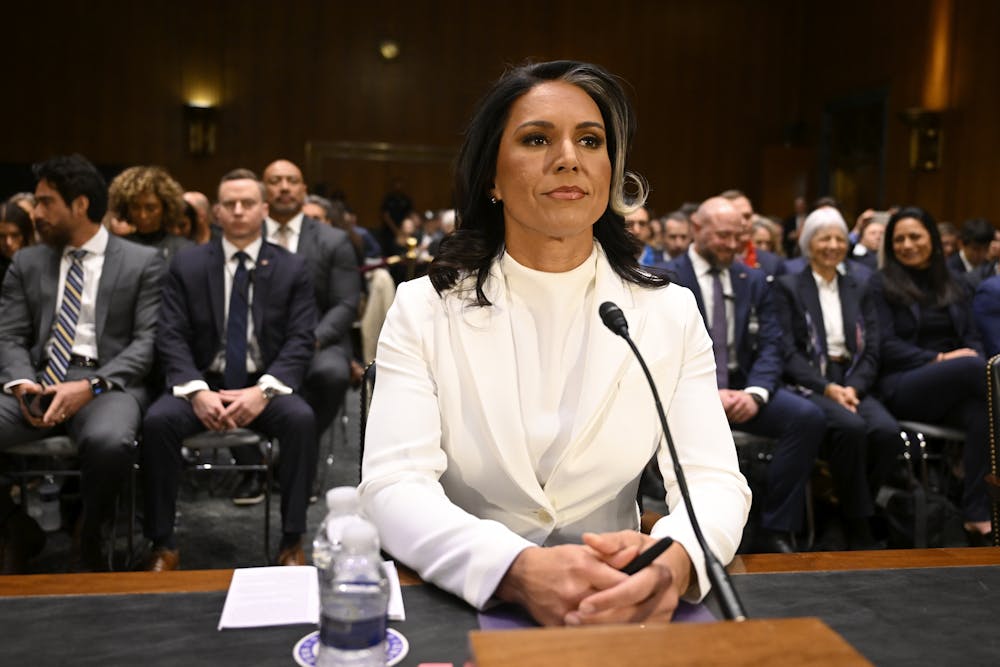
    MIL OSI Russia News

  • MIL-OSI: Cerence Announces First Quarter Fiscal 2025 Results

    Source: GlobeNewswire (MIL-OSI)

    BURLINGTON, Mass., Feb. 06, 2025 (GLOBE NEWSWIRE) — Cerence Inc. (NASDAQ: CRNC) (“Cerence AI”), a global industry leader in AI for transportation, today reported its first quarter fiscal year 2025 results for the quarter ended December 31, 2024.

     
    ResultsSummary(1,2)
    (in millions, except per share data)
           
        Three Months Ended  
        December 31,  
        2024     2023  
    GAAP revenue   $ 50.9     $ 138.3  
    GAAP gross margin     65.0 %     81.0 %
    Non-GAAP gross margin     65.9 %     81.5 %
    GAAP operating margin     -33.3 %     42.3 %
    Non-GAAP operating margin     -1.0 %     49.4 %
    GAAP net (loss) income   $ (24.3 )   $ 23.9  
    GAAP net (loss) income margin     -47.7 %     17.2 %
    Non-GAAP net (loss) income   $ (1.5 )   $ 54.3  
    Adjusted EBITDA   $ 1.4     $ 70.4  
    Adjusted EBITDA margin     2.7 %     50.9 %
    GAAP net (loss) income per share – diluted   $ (0.57 )   $ 0.53  
    Non-GAAP net (loss) income per share – diluted   $ (0.03 )   $ 1.12  
    (1) As previously disclosed, Q1FY24 revenue includes the non-cash revenue associated with the Toyota “Legacy” contract and related impacts totaling $86.6M.
    (2) Please refer to the “Discussion of Non-GAAP Financial Measures” and “Reconciliations of GAAP Financial Measures to Non-GAAP Financial Measures” included elsewhere in this release for more information regarding our use of non-GAAP financial measures.
       

    “I’m incredibly proud of the team’s progress and our performance in Q1, most notably beating the upper end of guidance on top-line revenue and adjusted EBITDA and showing strong free cash flow,” said Brian Krzanich, CEO, Cerence AI. “We believe we have solid momentum for 2025: we’ve made significant progress on our generative AI roadmap, achieving critical development milestones for our next-gen agentic, conversational AI platform. We have continued momentum with our automaker customers, including six design wins and two wins for our generative AI solutions, as well as six major customer SOPs and two generative AI SOPs within the quarter. In addition, our transformation and cost reduction initiatives are having a solid impact on the business. As we look to the future, we believe we are well positioned to continue on our path to long-term, sustainable growth and profitability.”

    Cerence Key Performance Indicators
    To help investors gain further insight into the Cerence business and its performance, management provides a set of key performance indicators that includes:

    Key Performance Indicator1   Q1FY25  
    Percent of worldwide auto production with Cerence Technology (TTM)     51 %
    Change in number of Cerence connected cars shipped2 (TTM over prior year TTM)     5 %
    Change in Adjusted Total Billings (TTM over prior year TTM)     3 %
    (1) Please refer to the “Key Performance Indicators” section included elsewhere in this release for more information regarding the definitions and our use of key performance indicators.
    (2) Based on IHS Markit data, global auto production decreased 2% over the same time period ended on December 31, 2024.
       

    Second Quarter and Full Year Fiscal 2025 Outlook
    For the fiscal quarter ending March 31, 2025, revenue is expected to be in the range of $74 million to $77 million. This includes $20 million of projected Fixed License revenue expected to be signed during the quarter. Gross margins are projected between 74% and 76% and net income is projected in the range of $1 million to $5 million. Adjusted EBITDA is expected to be in the range of $18 million to $22 million.

    Guidance for the full fiscal year ending September 30, 2025 remains unchanged.

    The adjusted EBITDA guidance excludes amortization of acquired intangible assets, stock-based compensation, restructuring and other costs.

    Additional details regarding guidance will be provided during the earnings call.

    Cerence Conference Call and Webcast
    The company will host a live conference call and webcast with slides to discuss the results today at 5:00pm Eastern Time / 2:00pm Pacific Time. Interested investors and analysts are invited to dial into the conference call by registering here.

    Webcast access will also be available on the Investor Information section of the company’s website at https://www.cerence.com/investors/events-and-resources.

    A replay of the webcast can be accessed by visiting the company’s website 90 minutes following the conference call at https://www.cerence.com/investors/events-and-resources.

    Forward Looking Statements
    Statements in this press release regarding: Cerence’s future performance, results and financial condition; expected growth and profitability; outlook and momentum; transformation plans and cost efficiency initiatives, including the estimated net annualized cost savings; strategy; opportunities; business, industry and market trends; strategy regarding fixed contracts and its impact on financial results; backlog; revenue visibility; revenue timing and mix; demand for Cerence products; innovation and new product offerings, including AI technology; expected benefits of technology partnerships; cost efficiency initiatives; and management’s future expectations, estimates, assumptions, beliefs, goals, objectives, targets, plans or prospects constitute forward-looking statements within the meaning of the Private Securities Litigation Reform Act of 1995. Any statements that are not statements of historical fact (including statements containing the words “believes,” “plans,” “goal,” “anticipates,” “projects,” “forecasts,” “expects,” “intends,” “continues,” “will,” “may,” or “estimates” or similar expressions) should also be considered to be forward-looking statements. Although we believe forward-looking statements are based upon reasonable assumptions, such statements involve known and unknown risk, uncertainties and other factors, which may cause actual results or performance of the company to be materially different from any future results or performance expressed or implied by such forward-looking statements including but not limited to: the highly competitive and rapidly changing market in which we operate; adverse conditions in the automotive industry, the related supply chain and semiconductor shortage, or the global economy more generally; volatility in the political, legal and regulatory environment in which we operate, including trade, tariffs and other policies implemented by the new administration or actions taken by other countries in response; automotive production delays; changes in customer forecasts; the impacts of the COVID-19 pandemic on our and our customers’ businesses; the ongoing conflicts in Ukraine and the Middle East; our inability to control and successfully manage our expenses and cash position; our inability to deliver improved financial results from process optimization efforts and cost reduction actions; escalating pricing pressures from our customers; the impact on our business of the transition to a lower level of fixed contracts, including the failure to achieve such a transition; our failure to win, renew or implement service contracts; the cancellation or postponement of existing contracts; the loss of business from any of our largest customers; effects of customer defaults; our inability to successfully introduce new products, applications and services; our strategies to increase cloud offerings and deploy generative AI and large language models (LLMs); the inability to expand into adjacent markets; the inability to recruit and retain qualified personnel; disruptions arising from transitions in management personnel, including the transition to our new Chief Executive Officer; cybersecurity and data privacy incidents; failure to protect our intellectual property; defects or interruptions in service with respect to our products; fluctuating currency rates and interest rates; inflation; financial and credit market volatility; restrictions on our current and future operations under the terms of our debt, the use of cash to service or repay our debt; and our inability to generate sufficient cash from our operations; and the other factors discussed in our most recent Annual Report on Form 10-K, quarterly reports on Form 10-Q, and other filings with the Securities and Exchange Commission. We disclaim any obligation to update any forward-looking statements as a result of developments occurring after the date of this document.

    Discussion of Non-GAAP Financial Measures
    We believe that providing the non-GAAP information in addition to the GAAP presentation, allows investors to view the financial results in the way management views the operating results. We further believe that providing this information allows investors to not only better understand our financial performance, but more importantly, to evaluate the efficacy of the methodology and information used by management to evaluate and measure such performance. The non-GAAP information should not be considered superior to, or a substitute for, financial statements prepared in accordance with GAAP.

    We utilize a number of different financial measures, both GAAP and non-GAAP, in analyzing and assessing the overall performance of the business, for making operating decisions and for forecasting and planning for future periods. While our management uses these non-GAAP financial measures as a tool to enhance their understanding of certain aspects of our financial performance, our management does not consider these measures to be a substitute for, or superior to, the information provided by GAAP financial statements.

    Consistent with this approach, we believe that disclosing non-GAAP financial measures to the readers of our financial statements provides such readers with useful supplemental data that, while not a substitute for GAAP financial statements, allows for greater transparency in the review of our financial and operational performance. In assessing the overall health of the business during the three months ended December 31, 2024 and 2023, our management has either included or excluded the following items in general categories, each of which is described below.

    Adjusted EBITDA.
    Adjusted EBITDA is defined as net income attributable to Cerence Inc. before net income (loss) attributable to income tax (benefit) expense, other income (expense) items, net, depreciation and amortization expense, and excluding amortization of acquired intangible assets, stock-based compensation, and restructuring and other costs, net or impairment charges related to fixed and intangible assets and gains or losses on the sale of long-lived assets, if any. From time to time we may exclude from Adjusted EBITDA the impact of events, gains, losses or other charges (such as significant legal settlements) that affect the period-to-period comparability of our operating performance. Other income (expense) items, net include interest expense, interest income, and other income (expense), net (as stated in our Condensed Consolidated Statement of Operations). Our management and Board of Directors use this financial measure to evaluate our operating performance. It is also a significant performance measure in our annual incentive compensation programs.

    Restructuring and other costs, net.
    Restructuring and other costs, net include restructuring expenses as well as other charges that are unusual in nature, are the result of unplanned events, and arise outside the ordinary course of our business such as employee severance costs, consulting costs relating to our transformation initiatives, and costs for consolidating duplicate facilities.

    Amortization of acquired intangible assets.
    We exclude the amortization of acquired intangible assets from non-GAAP expense and income measures. These amounts are inconsistent in amount and frequency and are significantly impacted by the timing and size of acquisitions. Providing a supplemental measure which excludes these charges allows management and investors to evaluate results “as-if” the acquired intangible assets had been developed internally rather than acquired and, therefore, provides a supplemental measure of performance in which our acquired intellectual property is treated in a comparable manner to our internally developed intellectual property. Although we exclude amortization of acquired intangible assets from our non-GAAP expenses, we believe that it is important for investors to understand that such intangible assets contribute to revenue generation. Amortization of intangible assets that relate to past acquisitions will recur in future periods until such intangible assets have been fully amortized. Future acquisitions may result in the amortization of additional intangible assets.

    Non-cash expenses.
    We provide non-GAAP information relative to the following non-cash expenses: (i) stock-based compensation; and (ii) non-cash interest. These items are further discussed as follows:

    i) Stock-based compensation. Because of varying valuation methodologies, subjective assumptions and the variety of award types, we exclude stock-based compensation from our operating results. We evaluate performance both with and without these measures because compensation expense related to stock-based compensation is typically non-cash and awards granted are influenced by the Company’s stock price and other factors such as volatility that are beyond our control. The expense related to stock-based awards is generally not controllable in the short-term and can vary significantly based on the timing, size and nature of awards granted. As such, we do not include such charges in operating plans. Stock-based compensation will continue in future periods.
    ii) Non-cash interest. We exclude non-cash interest because we believe that excluding this expense provides management, as well as other users of the financial statements, with a valuable perspective on the cash-based performance and health of the business, including the current near-term projected liquidity. Non-cash interest expense will continue in future periods.
       

    Other expenses.
    We exclude certain other expenses that result from unplanned events outside the ordinary course of continuing operations, in order to measure operating performance and current and future liquidity both with and without these expenses. By providing this information, we believe management and the users of the financial statements are better able to understand the financial results of what we consider to be our organic, continuing operations. Included in these expenses are items such as other charges (credits), net, (gains) losses from extinguishment of debt, and changes in indemnification assets corresponding with the release of pre-spin liabilities for uncertain tax positions.

    Adjustments to income tax provision.
    Adjustments to our GAAP income tax provision to arrive at non-GAAP net income is determined based on our non-GAAP pre-tax income. Additionally, as our non-GAAP profitability is higher based on the non-GAAP adjustments, we adjust the GAAP tax provision to remove valuation allowances and related effects based on the higher level of reported non-GAAP profitability. We also exclude from our non-GAAP tax provision certain discrete tax items as they occur.

    Key Performance Indicators
    We believe that providing key performance indicators (“KPIs”) allows investors to gain insight into the way management views the performance of the business. We further believe that providing KPIs allows investors to better understand information used by management to evaluate and measure such performance. KPIs should not be considered superior to, or a substitute for, operating results prepared in accordance with GAAP. In assessing the performance of the business during the three months ended December 31, 2024, our management has reviewed the following KPIs, each of which is described below:

    • Percent of worldwide auto production with Cerence Technology: The number of Cerence enabled cars shipped as compared to IHS Markit car production data.
    • Change in number of Cerence connected cars shipped: The year-over-year change in the number of cars shipped with Cerence connected solutions. Amounts calculated on a TTM basis.
    • Change in Adjusted total billings YoY (TTM): The year over year change in total billings excluding Professional Services, prepay billings and adjusted for prepay consumption.

    ____________

    See the tables at the end of this press release for non-GAAP reconciliations to the most directly comparable GAAP measures.

    To learn more about Cerence AI, visit www.cerence.ai, and follow the company on LinkedIn.

    About Cerence Inc.
    Cerence Inc. (NASDAQ: CRNC) is a global industry leader in creating intuitive, seamless, AI-powered experiences across automotive and transportation. Leveraging decades of innovation and expertise in voice, generative AI, and large language models, Cerence powers integrated experiences that create safer, more connected, and more enjoyable journeys for drivers and passengers alike. With more than 500 million cars shipped with Cerence technology, the company partners with leading automakers, transportation OEMs, and technology companies to advance the next generation of user experiences. Cerence is headquartered in Burlington, Massachusetts, with operations globally and a worldwide team dedicated to pushing the boundaries of AI innovation. For more information, visit www.cerence.ai.

    Contact Information
    Investor Relations | Email: investorrelations@cerence.com 

     
    CERENCE INC.
    Condensed Consolidated Statements of Operations
    (in thousands, except per share data)
           
        Three Months Ended  
        December 31,  
        2024     2023  
    Revenues:            
    License   $ 22,725     $ 20,823  
    Connected services     13,707       96,820  
    Professional services     14,464       20,692  
    Total revenues     50,896       138,335  
    Cost of revenues:            
    License     1,782       1,604  
    Connected services     6,311       7,303  
    Professional services     9,731       17,325  
    Amortization of intangible assets           103  
    Total cost of revenues     17,824       26,335  
    Gross profit     33,072       112,000  
    Operating expenses:            
    Research and development     20,869       33,306  
    Sales and marketing     4,766       6,071  
    General and administrative     12,754       12,793  
    Amortization of intangible assets     554       545  
    Restructuring and other costs, net     11,062       705  
    Total operating expenses     50,005       53,420  
    (Loss) income from operations     (16,933 )     58,580  
    Interest income     1,437       1,432  
    Interest expense     (3,393 )     (3,236 )
    Other income, net     272       1,422  
    (Loss) income before income taxes     (18,617 )     58,198  
    Provision for income taxes     5,671       34,341  
    Net (loss) income   $ (24,288 )   $ 23,857  
    Net (loss) income per share:            
    Basic   $ (0.57 )   $ 0.58  
    Diluted   $ (0.57 )   $ 0.53  
    Weighted-average common share outstanding:            
    Basic     42,897       41,186  
    Diluted     42,897       49,255  
                     
     
    CERENCE INC.
    Condensed Consolidated Balance Sheets
    (in thousands, except per share amounts)
                 
        December 31,     September 30,  
        2024     2024  
        (Unaudited)        
    ASSETS            
    Current assets:            
    Cash and cash equivalents   $ 104,103       121,485  
    Marketable securities     3,889       5,502  
    Accounts receivable, net of allowances of $53 and $1,613     47,671       62,755  
    Deferred costs     4,739       5,286  
    Prepaid expenses and other current assets     39,670       70,481  
    Total current assets     200,072       265,509  
    Long-term marketable securities     2,552       3,453  
    Property and equipment, net     29,371       30,139  
    Deferred costs     15,539       18,051  
    Operating lease right of use assets     13,156       12,879  
    Goodwill     288,886       296,858  
    Intangible assets, net     1,059       1,706  
    Deferred tax assets     46,035       51,398  
    Other assets     20,858       22,365  
    Total assets   $ 617,528     $ 702,358  
    LIABILITIES AND STOCKHOLDERS’ EQUITY            
    Current liabilities:            
    Accounts payable   $ 7,609     $ 3,959  
    Deferred revenue     47,626       52,822  
    Short-term operating lease liabilities     3,828       4,528  
    Short-term debt     59,954       87,094  
    Accrued expenses and other current liabilities     32,967       68,405  
    Total current liabilities     151,984       216,808  
    Long-term debt     196,208       194,812  
    Deferred revenue, net of current portion     113,444       114,354  
    Long-term operating lease liabilities     10,071       8,803  
    Other liabilities     25,119       26,484  
    Total liabilities     496,826       561,261  
    Stockholders’ Equity:            
    Common stock, $0.01 par value, 560,000 shares authorized; 42,988 and 41,924 shares issued and outstanding, respectively     430       419  
    Accumulated other comprehensive loss     (29,785 )     (25,912 )
    Additional paid-in capital     1,096,085       1,088,330  
    Accumulated deficit     (946,028 )     (921,740 )
    Total stockholders’ equity     120,702       141,097  
    Total liabilities and stockholders’ equity   $ 617,528     $ 702,358  
                     
     
    CERENCE INC.
    Condensed Consolidated Statements of Cash Flows
    (in thousands)
           
        Three Months Ended  
        December 31,  
        2024     2023  
    Cash flows from operating activities:            
    Net (loss) income   $ (24,288 )   $ 23,857  
    Adjustments to reconcile net (loss) income to net cash provided by (used in) operations:            
    Depreciation and amortization     2,445       2,686  
    Provision for expected credit loss reserve     207        
    Stock-based compensation     7,771       8,380  
    Non-cash interest expense     1,861       1,468  
    Gain on debt extinguishment     (327 )      
    Deferred tax provision     4,927       30,298  
    Unrealized foreign currency transaction losses (gains)     1,997       (2,012 )
    Other, net     (33 )     382  
    Changes in operating assets and liabilities:            
    Accounts receivable     8,800       4,933  
    Prepaid expenses and other assets     27,201       1,170  
    Deferred costs     1,859       2,589  
    Accounts payable     3,814       2,382  
    Accrued expenses and other liabilities     (33,087 )     3,712  
    Deferred revenue     6,107       (82,660 )
    Net cash provided by (used in) operating activities     9,254       (2,815 )
    Cash flows from investing activities:            
    Capital expenditures     (1,360 )     (931 )
    Sale and maturities of marketable securities     2,493       2,442  
    Other investing activities     (374 )     (322 )
    Net cash provided by investing activities     759       1,189  
    Cash flows from financing activities:            
    Principal payments of short-term debt     (26,964 )      
    Common stock repurchases for tax withholdings for net settlement of equity awards     (1,369 )     (6,209 )
    Principal payment of lease liabilities arising from a finance lease     (115 )     (122 )
    Proceeds from the issuance of common stock     1,364       6,201  
    Net cash used in financing activities     (27,084 )     (130 )
    Effects of exchange rate changes on cash and cash equivalents     (311 )     (662 )
    Net change in cash and cash equivalents     (17,382 )     (2,418 )
    Cash and cash equivalents at beginning of period     121,485       101,154  
    Cash and cash equivalents at end of period   $ 104,103     $ 98,736  
                     
     
    CERENCE INC.
    Reconciliations of GAAP Financial Measures to Non-GAAP Financial Measures
    (unaudited – in thousands)
           
        Three Months Ended  
        December 31,  
        2024     2023  
    GAAP revenue   $ 50,896     $ 138,335  
                 
    GAAP gross profit   $ 33,072     $ 112,000  
    Stock-based compensation     490       641  
    Amortization of intangible assets           103  
    Non-GAAP gross profit   $ 33,562     $ 112,744  
    GAAP gross margin     65.0 %     81.0 %
    Non-GAAP gross margin     65.9 %     81.5 %
                 
    GAAP operating (loss) income   $ (16,933 )   $ 58,580  
    Stock-based compensation*     4,808       8,380  
    Amortization of intangible assets     554       648  
    Restructuring and other costs, net*     11,062       705  
    Non-GAAP operating (loss) income   $ (509 )   $ 68,313  
    GAAP operating margin     -33.3 %     42.3 %
    Non-GAAP operating margin     -1.0 %     49.4 %
                 
    GAAP net (loss) income   $ (24,288 )   $ 23,857  
    Stock-based compensation*     4,808       8,380  
    Amortization of intangible assets     554       648  
    Restructuring and other costs, net*     11,062       705  
    Depreciation     1,891       2,038  
    Total other expense, net     (1,684 )     (382 )
    Provision for income taxes     5,671       34,341  
    Adjusted EBITDA   $ 1,382     $ 70,351  
    GAAP net (loss) income margin     -47.7 %     17.2 %
    Adjusted EBITDA margin     2.7 %     50.9 %
    * – $3.0 million in stock-based compensation is included in Restructuring and other costs, net for Q1’25.            
                 
     
    CERENCE INC.
    Reconciliations of GAAP Financial Measures to Non-GAAP Financial Measures (cont.)
    (unaudited – in thousands, except per share data)
           
        Three Months Ended  
        December 31,  
        2024     2023  
    GAAP net (loss) income   $ (24,288 )   $ 23,857  
    Stock-based compensation*     4,808       8,380  
    Amortization of intangible assets     554       648  
    Restructuring and other costs, net*     11,062       705  
    Gain on debt extinguishment     (327 )      
    Non-cash interest expense     1,861       1,468  
    Other     (33 )     (27 )
    Adjustments to income tax expense     4,895       19,259  
    Non-GAAP net (loss) income   $ (1,468 )   $ 54,290  
                 
    Adjusted EPS:            
    GAAP Numerator:            
    Net (loss) income attributed to common shareholders – basic   $ (24,288 )   $ 23,857  
    Interest on the Notes, net of tax           2,250  
    Net (loss) income attributed to common shareholders – diluted   $ (24,288 )   $ 26,107  
                 
    Non-GAAP Numerator:            
    Net (loss) income attributed to common shareholders – basic   $ (1,468 )   $ 54,290  
    Interest on the Notes, net of tax           1,120  
    Net (loss) income attributed to common shareholders – diluted   $ (1,468 )   $ 55,410  
                 
    GAAP Denominator:            
    Weighted-average common shares outstanding – basic     42,897       41,186  
    Adjustment for diluted shares           8,069  
    Weighted-average common shares outstanding – diluted     42,897       49,255  
                 
    Non-GAAP Denominator:            
    Weighted-average common shares outstanding- basic     42,897       41,186  
    Adjustment for diluted shares           8,069  
    Weighted-average common shares outstanding – diluted     42,897       49,255  
                 
    GAAP net (loss) income per share – diluted   $ (0.57 )   $ 0.53  
    Non-GAAP net (loss) income per share – diluted   $ (0.03 )   $ 1.12  
                 
    GAAP net cash provided by (used in) operating activities   $ 9,254     $ (2,815 )
    Capital expenditures     (1,360 )     (931 )
    Free Cash Flow   $ 7,894     $ (3,746 )
    * – $3.0 million in stock-based compensation is included in Restructuring and other costs, net for Q1’25.            
                 
     
    CERENCE INC.
    Reconciliations of GAAP Financial Measures to Non-GAAP Financial Measures (cont.)
    (unaudited – in thousands)
                 
        Q2 2025     FY2025  
        Low     High     Low     High  
    GAAP revenue   $ 74,000     $ 77,000     $ 236,000     $ 247,000  
                             
    GAAP gross profit   $ 54,700     $ 58,700     $ 158,400     $ 169,400  
    Stock-based compensation     700       700       2,500       2,500  
    Amortization of intangible assets                        
    Non-GAAP gross profit   $ 55,400     $ 59,400     $ 160,900     $ 171,900  
    GAAP gross margin     74 %     76 %     67 %     69 %
    Non-GAAP gross margin     75 %     77 %     68 %     70 %
                             
    GAAP operating income (loss)   $ 7,100     $ 11,100     $ (27,100 )   $ (16,100 )
    Stock-based compensation     7,000       7,000       22,500       22,500  
    Amortization of intangible assets     500       500       1,600       1,600  
    Restructuring and other costs, net     1,300       1,300       8,100       8,100  
    Non-GAAP operating income   $ 15,900     $ 19,900     $ 5,100     $ 16,100  
    GAAP operating margin     10 %     14 %     -11 %     -7 %
    Non-GAAP operating margin     21 %     26 %     2 %     7 %
                             
    GAAP net income (loss)   $ 1,200     $ 5,200     $ (39,600 )   $ (28,600 )
    Stock-based compensation     7,000       7,000       22,500       22,500  
    Amortization of intangible assets     500       500       1,600       1,600  
    Restructuring and other costs, net     1,300       1,300       8,100       8,100  
    Depreciation     1,900       1,900       10,200       10,200  
    Total other expense, net     (1,300 )     (1,300 )     (5,100 )     (5,100 )
    Provision for income taxes     4,600       4,600       7,400       7,400  
    Adjusted EBITDA   $ 17,800     $ 21,800     $ 15,300     $ 26,300  
    GAAP net income (loss) margin     2 %     7 %     -17 %     -12 %
    Adjusted EBITDA margin     24 %     28 %     6 %     11 %
                                     
     
    CERENCE INC.
    Reconciliations of GAAP Financial Measures to Non-GAAP Financial Measures (cont.)
    (unaudited – in thousands)
                 
        Q2 2025     FY2025  
        Low     High     Low     High  
    GAAP net income (loss)   $ 1,200     $ 5,200     $ (39,600 )   $ (28,600 )
    Stock-based compensation     7,000       7,000       22,500       22,500  
    Amortization of intangibles     500       500       1,600       1,600  
    Restructuring and other costs, net     1,300       1,300       8,100       8,100  
    Non-cash interest expense     1,500       1,500       5,500       5,500  
    Other                 (100 )     (100 )
    Adjustments to income tax expense     1,500       1,500       (4,600 )     (4,600 )
    Non-GAAP net income (loss)   $ 13,000     $ 17,000     $ (6,600 )   $ 4,400  
                             
    Adjusted EPS:                        
    GAAP Numerator:                        
    Net income (loss) attributed to common shareholders – basic and diluted   $ 1,200     $ 5,200     $ (39,600 )   $ (28,600 )
                             
    Non-GAAP Numerator:                        
    Net income (loss) attributed to common shareholders – basic   $ 13,000     $ 17,000     $ (6,600 )   $ 4,400  
    Interest on the Notes, net of tax     900       900              
    Net income (loss) attributed to common shareholders – diluted   $ 13,900     $ 17,900     $ (6,600 )   $ 4,400  
                             
    GAAP Denominator:                        
    Weighted-average common shares outstanding – basic     43,000       43,000       43,000       43,000  
    Adjustment for diluted shares     100       100              
    Weighted-average common shares outstanding – diluted     43,100       43,100       43,000       43,000  
                             
    Non-GAAP Denominator:                        
    Weighted-average common shares outstanding- basic     43,000       43,000       43,000       43,000  
    Adjustment for diluted shares     6,800       6,800             100  
    Weighted-average common shares outstanding – diluted     49,800       49,800       43,000       43,100  
                             
    GAAP net income (loss) per share – diluted   $ 0.03     $ 0.12     $ (0.92 )   $ (0.67 )
    Non-GAAP net income (loss) per share – diluted   $ 0.28     $ 0.36     $ (0.15 )   $ 0.10  
                             
    GAAP net cash provided by operating activities               $ 34,000     $ 40,000  
    Capital expenditures                 (14,000 )     (10,000 )
    Free Cash Flow               $ 20,000     $ 30,000  
                                 

    The MIL Network

  • MIL-OSI: Fortinet Reports Fourth Quarter and Full Year 2024 Financial Results

    Source: GlobeNewswire (MIL-OSI)

    Fourth Quarter 2024 Highlights

    • Total revenue of $1.66 billion, up 17% year over year
    • Product revenue of $574 million, up 18% year over year
    • Billings of $2.00 billion, up 7% year over year1
    • Record GAAP operating margin of 35%
    • Record Non-GAAP operating margin of 39%1
    • Unified SASE ARR2up 28% and Security Operations ARR2up 32%, year over year
    • Ranked #7 on the Forbes Most Trusted Companies in America 2025 list, the only cybersecurity company in the top 50

    Full Year 2024 Highlights

    • Total revenue of $5.96 billion, up 12% year over year
    • Service revenue of $4.05 billion, up 20% year over year
    • Record GAAP operating margin of 30%
    • Record Non-GAAP operating margin of 35%1
    • Remaining performance obligations of $6.42 billion, up 12% year over year
    • Cash flow from operations of $2.26 billion
    • Free cash flow of $1.88 billion1
    • Exceeded the ‘Rule of 45’ for the fifth consecutive year

    SUNNYVALE, Calif., Feb. 06, 2025 (GLOBE NEWSWIRE) — Fortinet® (Nasdaq: FTNT), a global cybersecurity leader driving the convergence of networking and security, today announced financial results for the fourth quarter of 2024 and full year ended December 31, 2024.

    “In the fourth quarter, we successfully balanced growth and profitability as our non-GAAP operating margin increased 720 basis points year-over-year to a company record of 39%, while revenue grew 17%,” said Ken Xie, Founder, Chairman and Chief Executive Officer of Fortinet. “We continue to execute our strategy of investing in the high-growth Unified SASE and Security Operations markets, while strengthening our position in Secure Networking. Our customers are increasingly recognizing the benefits of a single-vendor approach to SASE, and we expect to emerge as a leader in this space, being the only company to natively develop all SASE functions within a unified operating system, FortiOS, which seamlessly integrates networking and security capabilities.”

    Financial Summary for the Fourth Quarter of 2024

    • Revenue: Total revenue was $1.66 billion for the fourth quarter of 2024, an increase of 17.3% compared to $1.42 billion for the same quarter of 2023.
    • Service Revenue: Service revenue was $1.09 billion for the fourth quarter of 2024, an increase of 17.2% compared to $927.0 million for the same quarter of 2023.
    • Product Revenue: Product revenue was $574.0 million for the fourth quarter of 2024, an increase of 17.6% compared to $488.1 million for the same quarter of 2023.
    • Billings1: Total billings were $2.00 billion for the fourth quarter of 2024, an increase of 7.4% compared to $1.86 billion for the same quarter of 2023.
    • Unified SASE ARR2: Unified SASE ARR was $1.12 billion for the fourth quarter of 2024, an increase of 27.9% compared to $875.3 million for the same quarter of 2023.
    • Security Operations ARR2: Security Operations ARR was $422.4 million for the fourth quarter of 2024, an increase of 32.2% compared to $319.6 million for the same quarter of 2023.
    • GAAP Operating Income and Margin: GAAP operating income was $574.1 million for the fourth quarter of 2024, representing a GAAP operating margin of 34.6%. GAAP operating income was $385.4 million for the same quarter of 2023, representing a GAAP operating margin of 27.2%.
    • Non-GAAP Operating Income and Margin1: Non-GAAP operating income was $650.9 million for the fourth quarter of 2024, representing a non-GAAP operating margin of 39.2%. Non-GAAP operating income was $453.5 million for the same quarter of 2023, representing a non-GAAP operating margin of 32.0%.
    • GAAP Net Income and Diluted Net Income Per Share: GAAP net income was $526.2 million for the fourth quarter of 2024, compared to GAAP net income of $310.9 million for the same quarter of 2023. GAAP diluted net income per share was $0.68 for the fourth quarter of 2024, based on 775.2 million diluted weighted-average shares outstanding, compared to GAAP diluted net income per share of $0.40 for the same quarter of 2023, based on 772.3 million diluted weighted-average shares outstanding.
    • Non-GAAP Net Income and Diluted Net Income Per Share1: Non-GAAP net income was $571.5 million for the fourth quarter of 2024, compared to non-GAAP net income of $392.0 million for the same quarter of 2023. Non-GAAP diluted net income per share was $0.74 for the fourth quarter of 2024, based on 775.2 million diluted weighted-average shares outstanding, compared to $0.51 for the same quarter of 2023, based on 772.3 million diluted weighted-average shares outstanding.
    • Cash Flow: Cash flow from operations was $477.6 million for the fourth quarter of 2024, compared to $191.7 million for the same quarter of 2023.
    • Free Cash Flow1: Free cash flow was $380.0 million for the fourth quarter of 2024, compared to $164.8 million for the same quarter of 2023.

    Financial Summary for the Full Year 2024

    • Revenue: Total revenue was $5.96 billion for 2024, an increase of 12.3% compared to $5.30 billion in 2023.
    • Service Revenue: Service revenue was $4.05 billion for 2024, an increase of 19.8% compared to $3.38 billion in 2023.
    • Product Revenue: Product revenue was $1.91 billion for 2024, a decrease of 1.0% compared to $1.93 billion in 2023.
    • Billings1: Total billings were $6.53 billion for 2024, an increase of 2.1% compared to $6.40 billion in 2023.
    • Remaining performance obligations: Remaining performance obligations were $6.42 billion as of December 31, 2024, an increase of 11.7% compared to $5.75 billion as of December 31, 2023.
    • Deferred Revenue: Total deferred revenue was $6.36 billion as of December 31, 2024, an increase of 10.9% compared to $5.74 billion as of December 31, 2023.
    • GAAP Operating Income and Margin: GAAP operating income was $1.80 billion for 2024, representing a GAAP operating margin of 30.3%. GAAP operating income was $1.24 billion for 2023, representing a GAAP operating margin of 23.4%.
    • Non-GAAP Operating Income and Margin1: Non-GAAP operating income was $2.09 billion for 2024, representing a non-GAAP operating margin of 35.0%. Non-GAAP operating income was $1.51 billion for 2023, representing a non-GAAP operating margin of 28.4%.
    • GAAP Net Income and Diluted Net Income Per Share: GAAP net income was $1.75 billion for 2024, compared to GAAP net income of $1.15 billion for 2023. GAAP diluted net income per share was $2.26 for 2024, based on 771.9 million diluted weighted-average shares outstanding, compared to GAAP diluted net income per share of $1.46 for 2023, based on 788.2 million diluted weighted-average shares outstanding.
    • Non-GAAP Net Income and Diluted Net Income Per Share1: Non-GAAP net income was $1.83 billion for 2024, compared to non-GAAP net income of $1.29 billion for 2023. Non-GAAP diluted net income per share was $2.37 for 2024, based on 771.9 million diluted weighted-average shares outstanding, compared to $1.63 for 2023, based on 788.2 million diluted weighted-average shares outstanding.
    • Cash Flow: Cash flow from operations was $2.26 billion in 2024 compared to $1.94 billion in 2023.
    • Free Cash Flow1: Free cash flow was $1.88 billion in 2024, compared to $1.73 billion in 2023.

    Guidance

    For the first quarter of 2025, Fortinet currently expects:

    • Revenue in the range of $1.500 billion to $1.560 billion
    • Billings in the range of $1.520 billion to $1.600 billion
    • Non-GAAP gross margin in the range of 80.0% to 81.0%
    • Non-GAAP operating margin in the range of 30.0% to 31.0%
    • Diluted non-GAAP net income per share in the range of $0.52 to $0.54, assuming a non-GAAP effective tax rate of 18%. This assumes a diluted share count of 774 million to 780 million.

    For the fiscal year 2025, Fortinet currently expects:

    • Revenue in the range of $6.650 billion to $6.850 billion
    • Service revenue in the range of $4.575 billion to $4.725 billion
    • Billings in the range of $7.200 billion to $7.400 billion
    • Non-GAAP gross margin in the range of 79.0% to 81.0%
    • Non-GAAP operating margin in the range of 31.0% to 33.0%
    • Diluted non-GAAP net income per share in the range of $2.41 to $2.47, assuming a non-GAAP effective tax rate of 18%. This assumes a diluted share count of 773 million to 783 million.

    These statements are forward looking and actual results may differ materially. Refer to the Forward-Looking Statements section below for information on the factors that could cause our actual results to differ materially from these forward-looking statements.

    Our guidance with respect to non-GAAP financial measures excludes stock-based compensation, amortization of acquired intangible assets, charges in connection with litigation settlement, gain on intellectual property matters, gain on bargain purchase related to acquisition, non-cash charge of impairment on an equity method investment and a tax adjustment required for an effective tax rate on a non-GAAP basis, which differs from the GAAP effective tax rate. We have not reconciled our guidance with respect to non-GAAP financial measures to the corresponding GAAP measures because certain items that impact these measures are uncertain or out of our control, or cannot be reasonably predicted. Accordingly, a reconciliation of these non-GAAP financial measures to the corresponding GAAP measures is not available without unreasonable effort.

    1 A reconciliation of GAAP to non-GAAP measures has been provided in the financial statement tables included in this press release. An explanation of these measures is also included below under the heading “Non-GAAP Financial Measures”.
    2 ARR is defined as the annualized value of renewable / recurring customer agreements as of the measurement date, assuming any contract that expires during the next 12 months is renewed at its existing value.

    Conference Call Details

    Fortinet will host a conference call today at 1:30 p.m. Pacific Time (4:30 p.m. Eastern Time) to discuss the earnings results. A live webcast of the conference call and supplemental slides will be accessible from the Investor Relations page of Fortinet’s website at https://investor.fortinet.com and a replay will be archived and accessible at https://investor.fortinet.com/events-and-presentations.

    First Quarter 2025 Conference Participation Schedule:

    • Morgan Stanley Technology, Media & Telecom Conference
      March 4, 2025

    Members of Fortinet’s management team are expected to present at this conference and discuss the latest company strategies and initiatives. Fortinet’s conference presentations are expected to be available via webcast on the company’s website. To access the most updated information, pre-register and listen to the webcast of each event, please visit the Investor Presentation & Events page of Fortinet’s website at https://investor.fortinet.com/events-and-presentations. The schedule is subject to change.

    About Fortinet (www.fortinet.com)

    Fortinet (Nasdaq: FTNT) is a driving force in the evolution of cybersecurity and the convergence of networking and security. Our mission is to secure people, devices and data everywhere, and today we deliver cybersecurity everywhere our customers need it with the largest integrated portfolio of over 50 enterprise-grade products. Well over half a million customers trust Fortinet’s solutions, which are among the most deployed, most patented and most validated in the industry. The Fortinet Training Institute, one of the largest and broadest training programs in the industry, is dedicated to making cybersecurity training and new career opportunities available to everyone. Collaboration with esteemed organizations from both the public and private sectors, including Computer Emergency Response Teams (“CERTs”), government entities, and academia, is a fundamental aspect of Fortinet’s commitment to enhance cyber resilience globally. FortiGuard Labs, Fortinet’s elite threat intelligence and research organization, develops and utilizes leading-edge machine learning and AI technologies to provide customers with timely and consistently top-rated protection and actionable threat intelligence. Learn more at https://www.fortinet.com, the Fortinet Blog or FortiGuard Labs.

    Copyright © 2025 Fortinet, Inc. All rights reserved. The symbols ® and ™ denote respectively federally registered trademarks and common law trademarks of Fortinet, Inc., its subsidiaries and affiliates. Fortinet’s trademarks include, but are not limited to, the following: Fortinet, the Fortinet logo, FortiGate, FortiOS, FortiGuard, FortiCare, FortiAnalyzer, FortiManager, FortiASIC, FortiClient, FortiCloud, FortiMail, FortiSandbox, FortiADC, FortiAgent, FortiAI, FortiAIOps, FortiAntenna, FortiAP, FortiAPCam, FortiAppSec, FortiAuthenticator, FortiCache, FortiCall, FortiCam, FortiCamera, FortiCarrier, FortiCART, FortiCASB, FortiCentral, FortiCNP, FortiConnect, FortiController, FortiConverter, FortiCSPM, FortiCWP, FortiDAST, FortiDATA, FortiDB, FortiDDoS, FortiDeceptor, FortiDeploy, FortiDevice, FortiDevSec, FortiDLP, FortiEdge, FortiEDR, FortiEndpoint, FortiExplorer, FortiExtender, FortiFirewall, FortiFlex, FortiFone, FortiGSLB, FortiGuest, FortiHypervisor, FortiInsight, FortiIsolator, FortiLAN, FortiLink, FortiMonitor, FortiNAC, FortiNDR, FortiPAM, FortiPenTest, FortiPhish, FortiPoint, FortiPolicy, FortiPortal, FortiPresence, FortiProxy, FortiRecon, FortiRecorder, FortiSASE, FortiScanner, FortiSDNConnector, FortiSEC, FortiSIEM, FortiSMS, FortiSOAR, FortiSRA, FortiStack, FortiSwitch, FortiTester, FortiTIP, FortiToken, FortiTrust, FortiVoice, FortiWAN, FortiWeb, FortiWiFi, FortiWLC, FortiWLM, FortiXDR and Lacework FortiCNAPP. Other trademarks belong to their respective owners. Fortinet has not independently verified statements or certifications herein attributed to third parties and Fortinet does not independently endorse such statements. Notwithstanding anything to the contrary herein, nothing herein constitutes a warranty, guarantee, contract, binding specification or other binding commitment by Fortinet or any indication of intent related to a binding commitment, and performance and other specification information herein may be unique to certain environments.

    FTNT-F

    Forward-Looking Statements

    This press release contains forward-looking statements that involve risks and uncertainties. These forward-looking statements include statements regarding any indications related to future growth and market share gains, our strategy going forward, and guidance and expectations around future financial results, including guidance and expectations for the first quarter of 2025 and full year 2025, and any statements regarding our market opportunity and market size, and business momentum. Although we attempt to be accurate in making forward-looking statements, it is possible that future circumstances might differ from the assumptions on which such statements are based such that actual results are materially different from our forward-looking statements in this release. Important factors that could cause results to differ materially from the statements herein include the following: general economic risks, including those caused by economic challenges, a possible economic downturn or recession and the effects of inflation or stagflation, rising interest rates or reduced information technology spending; supply chain challenges; negative impacts from the ongoing war in Ukraine and its related macroeconomic effects and our decision to reduce operations in Russia; competitiveness in the security market; the dynamic nature of the security market and its products and services; specific economic risks worldwide and in different geographies, and among different customer segments; uncertainty regarding demand and increased business and renewals from existing customers; sales execution risks, including risks in connection with the timing and completion of large strategic deals; uncertainties around continued success in sales growth and market share gains; uncertainties in market opportunities and the market size; actual or perceived vulnerabilities in our supply chain, products or services, and any actual or perceived breach of our network or our customers’ networks; longer sales cycles, particularly for larger enterprise, service providers, government and other large organization customers; the effectiveness of our salesforce and failure to convert sales pipeline into final sales; risks associated with successful implementation of multiple integrated software products and other product functionality risks; risks associated with integrating acquisitions and changes in circumstances and plans associated therewith, including, among other risks, changes in plans related to product and services integrations, product and services plans and sales strategies; sales and marketing execution risks; execution risks around new product development and introductions and innovation; litigation and disputes and the potential cost, distraction and damage to sales and reputation caused thereby or by other factors; cybersecurity threats, breaches and other disruptions; market acceptance of new products and services; the ability to attract and retain personnel; changes in strategy; risks associated with management of growth; lengthy sales and implementation cycles, particularly in larger organizations; technological changes that make our products and services less competitive, including advances in artificial intelligence; risks associated with the adoption of, and demand for, our products and services in general and by specific customer segments, including those caused by competition and pricing pressure; excess product inventory for any reason, including those caused by the effects of increased inflation and interest rates in certain geographies and the war in Ukraine; risks associated with business disruption caused by natural disasters and health emergencies such as earthquakes, fires, power outages, typhoons, floods, health epidemics and viruses, and by manmade events such as civil unrest, labor disruption, international trade disputes, international conflicts such as the war in Ukraine or tensions between China and Taiwan, terrorism, wars, and critical infrastructure attacks; tariffs, trade disputes and other trade barriers, and negative impact on sales based on geo-political dynamics and disputes and protectionist policies, including the impact of any future shutdowns of the U.S. government and the transition in administrations; and the other risk factors set forth from time to time in our most recent Annual Report on Form 10-K, our most recent Quarterly Report on Form 10-Q and our other filings with the Securities and Exchange Commission (“SEC”), copies of which are available free of charge at the SEC’s website at www.sec.gov or upon request from our investor relations department. All forward-looking statements herein reflect our opinions only as of the date of this release, and we undertake no obligation, and expressly disclaim any obligation, to update forward-looking statements herein in light of new information or future events.

    Non-GAAP Financial Measures

    We have provided in this release financial information that has not been prepared in accordance with U.S. Generally Accepted Accounting Principles (“GAAP”). These non-GAAP financial and liquidity measures are not based on any standardized methodology prescribed by GAAP and are not necessarily comparable to similar measures presented by other companies. We use these non-GAAP financial measures internally in analyzing our financial results and believe they are useful to investors, as a supplement to GAAP measures, in evaluating our ongoing operational performance. We believe that the use of these non-GAAP financial measures provides an additional tool for investors to use in evaluating ongoing operating results and trends and in comparing our financial results with peer companies, many of which present similar non-GAAP financial measures to investors.

    Non-GAAP financial measures should not be considered in isolation from, or as a substitute for, financial information prepared in accordance with GAAP. Investors are encouraged to review the reconciliation of these non-GAAP financial measures to their most directly comparable GAAP financial measures provided in the financial statement tables below.

    Billings (non-GAAP). We define billings as revenue recognized in accordance with GAAP plus the change in deferred revenue from the beginning to the end of the period less any deferred revenue balances acquired from business combination(s) during the period. We consider billings to be a useful metric for management and investors because billings drive current and future revenue, which is an important indicator of the health and viability of our business. There are a number of limitations related to the use of billings instead of GAAP revenue. First, billings include amounts that have not yet been recognized as revenue and are impacted by the term of security and support agreements. Second, we may calculate billings in a manner that is different from peer companies that report similar financial measures. Management accounts for these limitations by providing specific information regarding GAAP revenue and evaluating billings together with GAAP revenue.

    Free cash flow (non-GAAP). We define free cash flow as net cash provided by operating activities minus purchases of property and equipment. We believe free cash flow to be a liquidity measure that provides useful information to management and investors about the amount of cash generated by the business that, after capital expenditures, can be used for strategic opportunities, including repurchasing outstanding common stock, investing in our business, making strategic acquisitions and strengthening the balance sheet. A limitation of using free cash flow rather than the GAAP measures of cash provided by or used in operating activities, investing activities, and financing activities is that free cash flow does not represent the total increase or decrease in the cash and cash equivalents balance for the period because it excludes investing activities other than capital expenditures and cash flows from financing activities. Management accounts for this limitation by providing information about our capital expenditures and other investing and financing activities on the face of the cash flow statement and under the caption “Management’s Discussion and Analysis of Financial Condition and Results of Operations—Liquidity and Capital Resources” in our most recent Quarterly Report on Form 10-Q and Annual Report on Form 10-K and by presenting cash flows from investing and financing activities in our reconciliation of free cash flow. In addition, it is important to note that other companies, including companies in our industry, may not use free cash flow, may calculate free cash flow in a different manner than we do or may use other financial measures to evaluate their performance, all of which could reduce the usefulness of free cash flow as a comparative measure.

    Non-GAAP operating income and operating margin. We define non-GAAP operating income as operating income plus stock-based compensation, amortization of acquired intangible assets and charges in connection with litigation settlement, less gain on intellectual property matter and, when applicable, other significant non-recurring items in a given quarter. Non-GAAP operating margin is defined as non-GAAP operating income divided by GAAP revenue. We consider these non-GAAP financial measures to be useful metrics for management and investors because they exclude the items noted above so that our management and investors can compare our recurring core business operating results over multiple periods. There are a number of limitations related to the use of non-GAAP operating income instead of operating income calculated in accordance with GAAP. First, non-GAAP operating income excludes the items noted above. Second, the components of the costs that we exclude from our calculation of non-GAAP operating income may differ from the components that peer companies exclude when they report their non-GAAP results of operations. Management accounts for these limitations by providing specific information regarding the GAAP amounts excluded from non-GAAP operating income and evaluating non-GAAP operating income together with operating income calculated in accordance with GAAP.

    Non-GAAP net income and diluted net income per share. We define non-GAAP net income as net income plus the items noted above under non-GAAP operating income and operating margin. In addition, we adjust non-GAAP net income and diluted net income per share for a gain on bargain purchase related to acquisition, a non-cash charge of impairment on an equity method investment and a tax adjustment required for an effective tax rate on a non-GAAP basis, which differs from the GAAP effective tax rate. We define non-GAAP diluted net income per share as non-GAAP net income divided by the non-GAAP diluted weighted-average shares outstanding. We consider these non-GAAP financial measures to be useful metrics for management and investors for the same reasons that we use non-GAAP operating income and non-GAAP operating margin. However, in order to provide a more complete picture of our recurring core business operating results, we include in non-GAAP net income and non-GAAP diluted net income per share, the tax adjustment required resulting in an effective tax rate on a non-GAAP basis, which often differs from the GAAP tax rate. We believe the non-GAAP effective tax rates we use are reasonable estimates of normalized tax rates for our current and prior fiscal years under our global operating structure. The same limitations described above regarding our use of non-GAAP operating income and non-GAAP operating margin apply to our use of non-GAAP net income and non-GAAP diluted net income per share. We account for these limitations by providing specific information regarding the GAAP amounts excluded from non-GAAP net income and non-GAAP diluted net income per share and evaluating non-GAAP net income and non-GAAP diluted net income per share together with net income and diluted net income per share calculated in accordance with GAAP.

    FORTINET, INC.

    CONDENSED CONSOLIDATED BALANCE SHEETS
    (Unaudited, in millions)
     
      December 31,
    2024
      December 31,
    2023
    ASSETS      
    CURRENT ASSETS:      
    Cash and cash equivalents $ 2,875.9     $ 1,397.9  
    Short-term investments   1,126.4       1,021.5  
    Marketable equity securities   64.2       21.0  
    Accounts receivable—net   1,463.4       1,402.0  
    Inventory   315.5       484.8  
    Prepaid expenses and other current assets   126.1       101.1  
    Total current assets   5,971.5       4,428.3  
    PROPERTY AND EQUIPMENT—NET   1,349.5       1,044.4  
    DEFERRED CONTRACT COSTS   622.9       605.6  
    DEFERRED TAX ASSETS   1,335.6       868.8  
    GOODWILL AND OTHER INTANGIBLE ASSETS—NET   350.4       161.8  
    OTHER ASSETS   133.2       150.0  
    TOTAL ASSETS $ 9,763.1     $ 7,258.9  
    LIABILITIES AND STOCKHOLDERS’ EQUITY (DEFICIT)      
    CURRENT LIABILITIES:      
    Accounts payable $ 190.9     $ 204.3  
    Accrued liabilities   337.9       423.7  
    Accrued payroll and compensation   255.7       242.3  
    Deferred revenue   3,276.2       2,848.7  
    Total current liabilities   4,060.7       3,719.0  
    DEFERRED REVENUE   3,084.7       2,886.3  
    LONG-TERM DEBT   994.3       992.3  
    OTHER LIABILITIES   129.6       124.7  
    Total liabilities   8,269.3       7,722.3  
    COMMITMENTS AND CONTINGENCIES      
    STOCKHOLDERS’ EQUITY (DEFICIT):      
    Common stock   0.8       0.8  
    Additional paid-in capital   1,636.2       1,416.4  
    Accumulated other comprehensive loss   (26.1 )     (18.9 )
    Accumulated deficit   (117.1 )     (1,861.7 )
    Total stockholders’ equity (deficit)   1,493.8       (463.4 )
    TOTAL LIABILITIES AND STOCKHOLDERS’ EQUITY (DEFICIT) $ 9,763.1     $ 7,258.9  
    FORTINET, INC.

    CONDENSED CONSOLIDATED STATEMENTS OF INCOME
    (Unaudited, in millions, except per share amounts)

     
      Three Months Ended   Year Ended
      December 31,
    2024
      December 31,
    2023
      December 31,
    2024
      December 31,
    2023
    REVENUE:              
    Product $ 574.0     $ 488.1     $ 1,908.7     $ 1,927.3  
    Service   1,086.1       927.0       4,047.1       3,377.5  
    Total revenue   1,660.1       1,415.1       5,955.8       5,304.8  
    COST OF REVENUE:              
    Product   178.0       197.2       652.0       763.6  
    Service   136.5       118.7       505.6       473.6  
    Total cost of revenue   314.5       315.9       1,157.6       1,237.2  
    GROSS PROFIT:              
    Product   396.0       290.9       1,256.7       1,163.7  
    Service   949.6       808.3       3,541.5       2,903.9  
    Total gross profit   1,345.6       1,099.2       4,798.2       4,067.6  
    OPERATING EXPENSES:              
    Research and development   191.1       152.5       716.8       613.8  
    Sales and marketing   526.5       507.4       2,044.8       2,006.0  
    General and administrative   55.1       55.1       237.8       211.3  
    Gain on intellectual property matter   (1.2 )     (1.2 )     (4.6 )     (4.6 )
    Total operating expenses   771.5       713.8       2,994.8       2,826.5  
    OPERATING INCOME   574.1       385.4       1,803.4       1,241.1  
    INTEREST INCOME   42.3       30.5       155.2       119.7  
    INTEREST EXPENSE   (4.9 )     (5.4 )     (20.0 )     (21.0 )
    GAIN ON BARGAIN PURCHASE               106.3        
    OTHER INCOME (EXPENSE)—NET   6.9       5.1       13.6       (6.1 )
    INCOME BEFORE INCOME TAXES AND LOSS FROM EQUITY METHOD INVESTMENTS   618.4       415.6       2,058.5       1,333.7  
    PROVISION FOR INCOME TAXES   86.7       95.2       283.9       143.8  
    LOSS FROM EQUITY METHOD INVESTMENTS   (5.5 )     (9.5 )     (29.4 )     (42.1 )
    NET INCOME $ 526.2     $ 310.9     $ 1,745.2     $ 1,147.8  
    Net income per share:              
    Basic $ 0.69     $ 0.41     $ 2.28     $ 1.47  
    Diluted $ 0.68     $ 0.40     $ 2.26     $ 1.46  
    Weighted-average shares outstanding:              
    Basic   766.5       764.9       764.4       778.6  
    Diluted   775.2       772.3       771.9       788.2  
    FORTINET, INC.

    CONDENSED CONSOLIDATED STATEMENTS OF CASH FLOWS
    (Unaudited, in millions)

     
      Year Ended
      December 31,
    2024
      December 31,
    2023
    CASH FLOWS FROM OPERATING ACTIVITIES:      
    Net income $ 1,745.2     $ 1,147.8  
    Adjustments to reconcile net income to net cash provided by operating activities:      
    Stock-based compensation   257.9       249.0  
    Amortization of deferred contract costs   293.7       266.3  
    Depreciation and amortization   122.8       113.4  
    Amortization of investment discounts   (48.8 )     (27.7 )
    Loss from equity method investments   29.4       42.1  
    Gain on bargain purchase   (106.3 )      
    Other   (15.2 )     18.5  
    Changes in operating assets and liabilities, net of impact of business combinations:      
    Accounts receivable—net   (45.4 )     (146.4 )
    Inventory   131.2       (253.5 )
    Prepaid expenses and other current assets   (13.7 )     (27.6 )
    Deferred contract costs   (311.1 )     (353.5 )
    Deferred tax assets   (223.2 )     (301.9 )
    Other assets   (11.0 )     17.7  
    Accounts payable   (10.2 )     (43.1 )
    Accrued liabilities   (106.7 )     137.4  
    Accrued payroll and compensation         23.4  
    Other liabilities   (8.3 )     (21.7 )
    Deferred revenue   577.8       1,095.3  
         Net cash provided by operating activities   2,258.1       1,935.5  
    CASH FLOWS FROM INVESTING ACTIVITIES:      
    Purchases of investments   (1,948.6 )     (1,855.8 )
    Sales of investments   0.5       4.0  
    Maturities of investments   1,891.7       1,414.8  
    Purchases of property and equipment   (378.9 )     (204.1 )
    Purchase of investment in privately held company         (8.5 )
    Payments made in connection with business combinations, net of cash acquired   (275.5 )      
    Purchases of marketable equity securities   (16.7 )      
    Other   0.1       0.3  
         Net cash used in investing activities   (727.4 )     (649.3 )
    CASH FLOWS FROM FINANCING ACTIVITIES:      
    Repurchase and retirement of common stock   (0.6 )     (1,500.5 )
    Proceeds from issuance of common stock   63.1       43.8  
    Taxes paid related to net share settlement of equity awards   (100.9 )     (112.5 )
    Other   (11.7 )     (1.2 )
         Net cash used in financing activities   (50.1 )     (1,570.4 )
    EFFECT OF EXCHANGE RATE CHANGES ON CASH AND CASH EQUIVALENTS   (2.6 )     (0.8 )
    NET INCREASE (DECREASE) IN CASH AND CASH EQUIVALENTS   1,478.0       (285.0 )
    CASH AND CASH EQUIVALENTS—Beginning of year   1,397.9       1,682.9  
    CASH AND CASH EQUIVALENTS—End of year $ 2,875.9     $ 1,397.9  
    Reconciliations of non-GAAP results of operations measures to the nearest comparable GAAP measures
    (Unaudited, in millions, except per share amounts)

    Reconciliation of GAAP operating income to non-GAAP operating income, operating margin, net income and diluted net income per share

      Three Months Ended   Year Ended
      December 31,
    2024
      December 31,
    2023
      December 31,
    2024
      December 31,
    2023
    Reconciliation of non-GAAP operating income:              
    GAAP operating income $ 574.1     $ 385.4     $ 1,803.4     $ 1,241.1  
    GAAP operating margin   34.6 %     27.2 %     30.3 %     23.4 %
    Add back:              
    Stock‐based compensation   66.5       64.0       260.2       251.6  
    Amortization of acquired intangible assets   11.5       5.3       23.1       18.9  
    Litigation-related matter (a)               3.2        
    Gain on intellectual property matter   (1.2 )     (1.2 )     (4.6 )     (4.6 )
    Non‐GAAP operating income $ 650.9     $ 453.5     $ 2,085.3     $ 1,507.0  
    Non‐GAAP operating margin   39.2 %     32.0 %     35.0 %     28.4 %
                   
    Reconciliation of non-GAAP net income:              
    GAAP net income $ 526.2     $ 310.9     $ 1,745.2     $ 1,147.8  
    Add back:              
    Stock‐based compensation   66.5       64.0       260.2       251.6  
    Amortization of acquired intangible assets   11.5       5.3       23.1       18.9  
    Litigation-related matter (a)               3.2        
    Gain on intellectual property matter   (1.2 )     (1.2 )     (4.6 )     (4.6 )
    Gain on bargain purchase (b)               (106.3 )      
    Tax adjustment (c)   (31.5 )     13.0       (95.9 )     (128.1 )
    Non-cash charge on equity method investment (d)               8.0        
    Non-GAAP net income $ 571.5     $ 392.0     $ 1,832.9     $ 1,285.6  
                   
    Non-GAAP net income per share, diluted              
    Non-GAAP net income $ 571.5     $ 392.0     $ 1,832.9     $ 1,285.6  
    Non-GAAP shares used in diluted net income per share calculations   775.2       772.3       771.9       788.2  
    Non-GAAP net income per share, diluted $ 0.74     $ 0.51     $ 2.37     $ 1.63  
                   
    Reconciliation of non-GAAP net income per share, diluted              
    GAAP net income per share, diluted $ 0.68     $ 0.40     $ 2.26     $ 1.46  
    Add back:              
    Non-GAAP adjustments to net income per share   0.06       0.11       0.11       0.17  
    Non-GAAP net income per share, diluted $ 0.74     $ 0.51     $ 2.37     $ 1.63  

    (a) To exclude a $3.2 million adjustment for a litigation settlement in the three months ended September 30, 2024.
    (b) To exclude a $106.3 million gain on bargain purchase related to our acquisition of Lacework Inc in the three months ended September 30, 2024.
    (c) Non-GAAP financial information is adjusted to an effective tax rate of 17% in the three months and year ended December 31, 2024 and 2023, respectively, on a non-GAAP basis, which differs from the GAAP effective tax rate.
    (d) To exclude an $8.0 million non-cash charge of impairment on our equity method investment in Linksys.

    Reconciliation of net cash provided by operating activities to free cash flow

      Three Months Ended   Year Ended
      December 31,
    2024
      December 31,
    2023
      December 31,
    2024
      December 31,
    2023
    Net cash provided by operating activities $ 477.6     $ 191.7     $ 2,258.1     $ 1,935.5  
    Less: Purchases of property and equipment   (97.6 )     (26.9 )     (378.9 )     (204.1 )
    Free cash flow $ 380.0     $ 164.8     $ 1,879.2     $ 1,731.4  
    Net cash used in investing activities $ (79.9 )   $ (71.6 )   $ (727.4 )   $ (649.3 )
    Net cash used in financing activities $ (8.8 )   $ (910.1 )   $ (50.1 )   $ (1,570.4 )


    Reconciliation of total revenue to total billings

      Three Months Ended   Year Ended
      December 31,
    2024
      December 31,
    2023
      December 31,
    2024
      December 31,
    2023
    Total revenue $ 1,660.1     $ 1,415.1     $ 5,955.8     $ 5,304.8  
    Add: Change in deferred revenue   349.2       449.7       625.9       1,094.7  
    Less: Deferred revenue balance acquired in business acquisitions   (6.8 )           (49.2 )      
    Total billings $ 2,002.5     $ 1,864.8     $ 6,532.5     $ 6,399.5  
    Investor Contact: Media Contact:
       
    Aaron Ovadia Michelle Zimmermann
    Fortinet, Inc. Fortinet, Inc.
    408-235-7700 408-235-7700
    investors@fortinet.com pr@fortinet.com

    The MIL Network

  • MIL-OSI: Microchip Technology Announces Financial Results for Third Quarter of Fiscal Year 2025

    Source: GlobeNewswire (MIL-OSI)

    • Net sales of $1.026 billion, down 11.8% sequentially and down 41.9% from the year ago quarter. Our updated guidance provided on December 2, 2024 was net sales of $1.025 billion.
    • On a GAAP basis: gross profit of 54.7%; operating income of $30.9 million and 3.0% of net sales; net loss of $53.6 million; and loss of $0.10 per diluted share. Our guidance provided on November 5, 2024 was for GAAP earnings (loss) per share of $(0.04) to $0.03 per diluted share.
    • On a Non-GAAP basis: gross profit of 55.4%; operating income of $210.7 million and 20.5% of net sales; net income of $107.3 million; and EPS of $0.20 per diluted share. Our updated guidance provided on December 2, 2024 was for Non-GAAP EPS of $0.25 per diluted share.
    • Returned approximately $244.6 million to stockholders in the December quarter through dividends.
    • Quarterly dividend declared today for the March quarter of 45.5 cents per share, an increase of 1.1% from the year ago quarter.

    CHANDLER, Ariz., Feb. 06, 2025 (GLOBE NEWSWIRE) — (NASDAQ: MCHP) – Microchip Technology Incorporated, a leading provider of smart, connected, and secure embedded control solutions, today reported results for the three months ended December 31, 2024, as summarized in the table below.

      Three Months Ended December 31, 2024(1)
    Net sales $1,026.0      
      GAAP % Non-GAAP(2) %
    Gross profit $561.4 54.7% $568.8 55.4%
    Operating income $30.9 3.0% $210.7 20.5%
    Other expense $(77.0)   $(76.7)  
    Income tax provision $7.5   $26.7  
    Net (loss) income $(53.6) (5.2)% $107.3 10.5%
    Net (loss) income per diluted share $(0.10)   $0.20  

    (1) In millions, except per share amounts and percentages of net sales.
    (2) See the “Use of Non-GAAP Financial Measures” section of this release.

    Net sales for the third quarter of fiscal 2025 were $1.026 billion, down 41.9% from net sales of $1.766 billion in the prior year’s third fiscal quarter.

    GAAP net loss for the third quarter of fiscal 2025 was $53.6 million, or $0.10 per diluted share, down from GAAP net income of $419.2 million, or $0.77 per diluted share, in the prior year’s third fiscal quarter. For the third quarters of fiscal 2025 and fiscal 2024, GAAP results were adversely impacted by amortization of acquired intangible assets associated with our previous acquisitions.

    Non-GAAP net income for the third quarter of fiscal 2025 was $107.3 million, or $0.20 per diluted share, down from non-GAAP net income of $592.7 million, or $1.08 per diluted share, in the prior year’s third fiscal quarter. For the third quarters of fiscal 2025 and fiscal 2024, our non-GAAP results exclude the effect of share-based compensation, expenses related to our acquisition activities (including intangible asset amortization, severance, and other restructuring costs, and legal and other general and administrative expenses associated with acquisitions including legal fees and expenses for litigation and investigations related to our Microsemi acquisition), professional services associated with certain legal matters, and losses on the settlement of debt. For the third quarters of fiscal 2025 and fiscal 2024, our non-GAAP income tax expense is presented based on projected cash taxes for the applicable fiscal year, excluding transition tax payments under the Tax Cuts and Jobs Act. A reconciliation of our non-GAAP and GAAP results is included in this press release.

    Microchip announced today that its Board of Directors declared a quarterly cash dividend on its common stock of 45.5 cents per share, up 1.1% from the year ago quarter. The quarterly dividend is payable on March 7, 2025 to stockholders of record on February 24, 2025.

    “Our December quarter performance reflects the need for the decisive steps we are taking to realign our business, as revenue declined to $1.026 billion and inventory levels reached 266 days,” said Steve Sanghi, Microchip’s CEO and President. “Since returning as CEO in November, we have already initiated several key actions, including restructuring our manufacturing footprint, adjusting our channel strategy and intensifying our customer engagement. Our initial assessment indicates clear areas for operational enhancement, and we are taking a methodical yet urgent approach to evaluating all aspects of our business and implementing necessary changes to strengthen our competitive position.”

    Eric Bjornholt, Microchip’s Chief Financial Officer, said, “We are executing on multiple operational initiatives to enhance our financial performance. Our focus remains on returning to premium profitability levels that have historically differentiated Microchip, supported by our diversified business model. While navigating the current cycle, we continue to focus on inventory management while maintaining our commitment to shareholder returns.”

    Rich Simoncic, Microchip’s Chief Operating Officer, said, “Our comprehensive technology platform is driving innovation across critical markets, with our new RISC-V processors and expanded connectivity solutions demonstrating strong momentum in industrial, automotive, and aerospace applications. By delivering advanced AI capabilities, enhanced networking, and robust security technologies, we believe we are well-positioned to meet the evolving needs of our customers in increasingly complex technological environments.”

    Mr. Sanghi concluded, “While we have seen substantial inventory destocking at our customers and channel partners, we believe the correction cycle is still not completed. Our March quarter bookings are running at a higher rate than December, though overall levels remain low. With net sales guidance of $920.0 million to $1.000 billion for our March quarter, we maintain a cautious but focused approach and look forward to providing a comprehensive update during our business update call on March 3, 2025.”

    Fourth Quarter Fiscal Year 2025 Outlook:

    The following statements are based on current expectations. These statements are forward-looking, and actual results may differ materially.

      Microchip Consolidated Guidance
    Net Sales $920.0 million to $1.000 billion    
      GAAP(5) Non-GAAP Adjustments(1) Non-GAAP(1)
    Gross Profit 51.2% to 53.1% $7.8 to $8.8 million 52.0% to 54.0%
    Operating Expenses(2) 56.1% to 60.0% $179.7 to $183.7 million 37.7% to 40.5%
    Operating Income (loss) (8.9)% to (2.9)% $187.5 to $192.5 million 11.5% to 16.3%
    Other Expense, net $69.7 to $71.3 million $(0.2) to $0.2 million $69.5 to $71.5 million
    Income Tax (Benefit) Provision $(24.5) to $(19.8) million(3) $29.5 to $33.4 million $5.0 to $13.6 million(4)
    Net Income (loss) $(128.5) to $(79.4) million $157.8 to $159.3 million $29.3 to $79.9 million
    Diluted Common Shares Outstanding Approximately 538.4 million shares   Approximately 541.5 to 542.5 million shares
    Earnings (loss) per Diluted Share $(0.24) to $(0.14) $0.29 $0.05 to $0.15

    (1) See the “Use of Non-GAAP Financial Measures” section of this release for information regarding our non-GAAP guidance.
    (2) We are not able to estimate the amount of certain Special Charges and Other, net that may be incurred during the quarter ending March 31, 2025. Therefore, our estimate of GAAP operating expenses excludes certain amounts that may be recognized as Special Charges and Other, net in the quarter ending March 31, 2025.
    (3) The forecast for GAAP tax expense excludes any unexpected tax events that may occur during the quarter, as these amounts cannot be forecasted.
    (4) Represents the expected cash tax rate for fiscal 2025, excluding any transition tax payments associated with the Tax Cuts and Jobs Act.
    (5) Our GAAP guidance excludes the impact of any potential charges related to our ongoing evaluation of restructuring activities.

    Capital expenditures for the quarter ending March 31, 2025 are expected to be about $23 million. Capital expenditures for all of fiscal 2025 are expected to be about $135 million. Consistent with the slowing macroeconomic environment in fiscal 2025, we have paused most of our factory expansion actions and reduced our planned capital investments through fiscal 2026. However, we are adding capital equipment to selectively expand our production capacity and add research and development equipment.

    Under the GAAP revenue recognition standard, we are required to recognize revenue when control of the product changes from us to a customer or distributor. We focus our sales and marketing efforts on creating demand for our products in the end markets we serve and not on moving inventory into our distribution network. We also manage our manufacturing and supply chain operations, including our distributor relationships, towards the goal of having our products available at the time and location the end customer desires.

    Use of Non-GAAP Financial Measures: Our non-GAAP adjustments, where applicable, include the effect of share-based compensation, expenses related to our acquisition activities (including intangible asset amortization, severance, and other restructuring costs, and legal and other general and administrative expenses associated with acquisitions including legal fees and expenses for litigation and investigations related to our Microsemi acquisition), professional services associated with certain legal matters, and losses on the settlement of debt. For the third quarters of fiscal 2025 and fiscal 2024, our non-GAAP income tax expense is presented based on projected cash taxes for the fiscal year, excluding transition tax payments under the Tax Cuts and Jobs Act.

    We are required to estimate the cost of certain forms of share-based compensation, including employee stock options, restricted stock units, and our employee stock purchase plan, and to record a commensurate expense in our income statement. Share-based compensation expense is a non-cash expense that varies in amount from period to period and is affected by the price of our stock at the date of grant. The price of our stock is affected by market forces that are difficult to predict and are not within the control of management. Our other non-GAAP adjustments are either non-cash expenses, unusual or infrequent items, or other expenses related to transactions. Management excludes all of these items from its internal operating forecasts and models.

    We are using non-GAAP operating expenses in dollars, including non-GAAP research and development expenses and non-GAAP selling, general and administrative expenses, non-GAAP other expense, net, and non-GAAP income tax rate, which exclude the items noted above, as applicable, to permit additional analysis of our performance.

    Management believes these non-GAAP measures are useful to investors because they enhance the understanding of our historical financial performance and comparability between periods. Many of our investors have requested that we disclose this non-GAAP information because they believe it is useful in understanding our performance as it excludes non-cash and other charges that many investors feel may obscure our underlying operating results. Management uses non-GAAP measures to manage and assess the profitability of our business and for compensation purposes. We also use our non-GAAP results when developing and monitoring our budgets and spending. Our determination of these non-GAAP measures might not be the same as similarly titled measures used by other companies, and it should not be construed as a substitute for amounts determined in accordance with GAAP. There are limitations associated with using these non-GAAP measures, including that they exclude financial information that some may consider important in evaluating our performance. Management compensates for this by presenting information on both a GAAP and non-GAAP basis for investors and providing reconciliations of the GAAP and non-GAAP results.

    Generally, gross profit fluctuates over time, driven primarily by the mix of products sold and licensing revenue; variances in manufacturing yields; fixed cost absorption; wafer fab loading levels; costs of wafers from foundries; inventory reserves; pricing pressures in our non-proprietary product lines; and competitive and economic conditions. Operating expenses fluctuate over time, primarily due to net sales and profit levels.

    Diluted Common Shares Outstanding can vary for, among other things, the trading price of our common stock, the exercise of options or vesting of restricted stock units, the potential for incremental dilutive shares from our convertible debentures (additional information regarding our share count is available in the investor relations section of our website under the heading “Supplemental Information”), and repurchases or issuances of shares of our common stock. The diluted common shares outstanding presented in the guidance table above assumes an average Microchip stock price in the March 2025 quarter between $55 and $65 per share (however, we make no prediction as to what our actual share price will be for such period or any other period and we cannot estimate what our stock option exercise activity will be during the quarter).

     
    MICROCHIP TECHNOLOGY INCORPORATED AND SUBSIDIARIES
    CONDENSED CONSOLIDATED STATEMENTS OF OPERATIONS
    (in millions, except per share amounts; unaudited)
     
      Three Months Ended December 31,   Nine Months Ended December 31,
        2024       2023       2024       2023  
    Net sales $ 1,026.0     $ 1,765.7     $ 3,431.1     $ 6,308.6  
    Cost of sales   464.6       645.7       1,464.3       2,102.8  
    Gross profit   561.4       1,120.0       1,966.8       4,205.8  
                   
    Research and development   246.2       266.0       728.6       857.1  
    Selling, general and administrative   158.2       172.2       465.7       572.4  
    Amortization of acquired intangible assets   122.6       151.3       368.3       454.2  
    Special charges and other, net   3.5       1.1       7.6       4.6  
    Operating expenses   530.5       590.6       1,570.2       1,888.3  
                   
    Operating income   30.9       529.4       396.6       2,317.5  
                   
    Other expense, net   (77.0 )     (45.1 )     (189.4 )     (151.3 )
    (Loss) income before income taxes   (46.1 )     484.3       207.2       2,166.2  
    Income tax provision   7.5       65.1       53.1       414.0  
    Net (loss) income $ (53.6 )   $ 419.2     $ 154.1     $ 1,752.2  
                   
    Basic net (loss) income per common share $ (0.10 )   $ 0.78     $ 0.29     $ 3.23  
    Diluted net (loss) income per common share $ (0.10 )   $ 0.77     $ 0.28     $ 3.19  
                   
    Basic common shares outstanding   537.4       540.8       536.9       543.0  
    Diluted common shares outstanding   537.4       546.5       542.1       549.0  
     
    MICROCHIP TECHNOLOGY INCORPORATED AND SUBSIDIARIES
    CONDENSED CONSOLIDATED BALANCE SHEETS
    (in millions; unaudited)
     
    ASSETS
      December 31,   March 31,
        2024       2024  
    Cash and short-term investments $ 586.0     $ 319.7  
    Accounts receivable, net   857.2       1,143.7  
    Inventories   1,356.3       1,316.0  
    Other current assets   196.3       233.6  
    Total current assets   2,995.8       3,013.0  
           
    Property, plant and equipment, net   1,152.1       1,194.6  
    Other assets   11,484.3       11,665.6  
    Total assets $ 15,632.2     $ 15,873.2  
           
    LIABILITIES AND STOCKHOLDERS’ EQUITY
           
    Accounts payable and accrued liabilities $ 1,330.3     $ 1,520.0  
    Current portion of long-term debt         999.4  
    Total current liabilities   1,330.3       2,519.4  
           
    Long-term debt   6,749.5       5,000.4  
    Long-term income tax payable   598.7       649.2  
    Long-term deferred tax liability   22.9       28.8  
    Other long-term liabilities   899.3       1,017.6  
           
    Stockholders’ equity   6,031.5       6,657.8  
    Total liabilities and stockholders’ equity $ 15,632.2     $ 15,873.2  


    MICROCHIP TECHNOLOGY INCORPORATED AND SUBSIDIARIES

    RECONCILIATION OF GAAP TO NON-GAAP MEASURES
    (in millions, except per share amounts and percentages; unaudited)

    RECONCILIATION OF GAAP GROSS PROFIT TO NON-GAAP GROSS PROFIT

      Three Months Ended December 31,   Nine Months Ended December 31,
        2024       2023       2024       2023  
    Gross profit, as reported $ 561.4     $ 1,120.0     $ 1,966.8     $ 4,205.8  
    Share-based compensation expense   7.4       6.0       18.3       20.2  
    Cybersecurity incident expenses               20.1        
    Non-GAAP gross profit $ 568.8     $ 1,126.0     $ 2,005.2     $ 4,226.0  
    GAAP gross profit percentage   54.7 %     63.4 %     57.3 %     66.7 %
    Non-GAAP gross profit percentage   55.4 %     63.8 %     58.4 %     67.0 %

    RECONCILIATION OF GAAP RESEARCH AND DEVELOPMENT EXPENSES TO NON-GAAP RESEARCH AND DEVELOPMENT EXPENSES

      Three Months Ended December 31,   Nine Months Ended December 31,
        2024       2023       2024       2023  
    Research and development expenses, as reported $ 246.2     $ 266.0     $ 728.6     $ 857.1  
    Share-based compensation expense   (28.8 )     (24.4 )     (79.0 )     (71.0 )
    Other adjustments         (0.1 )           (0.5 )
    Non-GAAP research and development expenses $ 217.4     $ 241.5     $ 649.6     $ 785.6  
    GAAP research and development expenses as a percentage of net sales   24.0 %     15.1 %     21.2 %     13.6 %
    Non-GAAP research and development expenses as a percentage of net sales   21.2 %     13.7 %     18.9 %     12.5 %

    RECONCILIATION OF GAAP SELLING, GENERAL AND ADMINISTRATIVE EXPENSES TO NON-GAAP SELLING, GENERAL AND ADMINISTRATIVE EXPENSES

      Three Months Ended December 31,   Nine Months Ended December 31,
        2024       2023       2024       2023  
    Selling, general and administrative expenses, as reported $ 158.2     $ 172.2     $ 465.7     $ 572.4  
    Share-based compensation expense   (13.2 )     (14.4 )     (42.4 )     (43.5 )
    Cybersecurity incident expenses               (1.3 )      
    Other adjustments   (3.9 )     (1.0 )     (7.3 )     (0.5 )
    Professional services associated with certain legal matters   (0.4 )     (0.4 )     (1.1 )     (1.2 )
    Non-GAAP selling, general and administrative expenses $ 140.7     $ 156.4     $ 413.6     $ 527.2  
    GAAP selling, general and administrative expenses as a percentage of net sales   15.4 %     9.8 %     13.6 %     9.1 %
    Non-GAAP selling, general and administrative expenses as a percentage of net sales   13.7 %     8.9 %     12.1 %     8.4 %

    RECONCILIATION OF GAAP OPERATING EXPENSES TO NON-GAAP OPERATING EXPENSES

      Three Months Ended December 31,   Nine Months Ended December 31,
        2024       2023       2024       2023  
    Operating expenses, as reported $ 530.5     $ 590.6     $ 1,570.2     $ 1,888.3  
    Share-based compensation expense   (42.0 )     (38.8 )     (121.4 )     (114.5 )
    Cybersecurity incident expenses               (1.3 )      
    Other adjustments   (3.9 )     (1.1 )     (7.3 )     (1.0 )
    Professional services associated with certain legal matters   (0.4 )     (0.4 )     (1.1 )     (1.2 )
    Amortization of acquired intangible assets (1)   (122.6 )     (151.3 )     (368.3 )     (454.2 )
    Special charges and other, net   (3.5 )     (1.1 )     (7.6 )     (4.6 )
    Non-GAAP operating expenses $ 358.1     $ 397.9     $ 1,063.2     $ 1,312.8  
    GAAP operating expenses as a percentage of net sales   51.7 %     33.4 %     45.8 %     29.9 %
    Non-GAAP operating expenses as a percentage of net sales   34.9 %     22.5 %     31.0 %     20.8 %

    (1) Amortization of acquired intangible assets consists of core and developed technology and customer-related acquired intangible assets in connection with business combinations. Such charges are excluded for purposes of calculating certain non-GAAP measures.

    RECONCILIATION OF GAAP OPERATING INCOME TO NON-GAAP OPERATING INCOME

      Three Months Ended December 31,   Nine Months Ended December 31,
        2024       2023       2024       2023  
    Operating income, as reported $ 30.9     $ 529.4     $ 396.6     $ 2,317.5  
    Share-based compensation expense   49.4       44.8       139.7       134.7  
    Cybersecurity incident expenses               21.4        
    Other adjustments   3.9       1.1       7.3       1.0  
    Professional services associated with certain legal matters   0.4       0.4       1.1       1.2  
    Amortization of acquired intangible assets (1)   122.6       151.3       368.3       454.2  
    Special charges and other, net   3.5       1.1       7.6       4.6  
    Non-GAAP operating income $ 210.7     $ 728.1     $ 942.0     $ 2,913.2  
    GAAP operating income as a percentage of net sales   3.0 %     30.0 %     11.6 %     36.7 %
    Non-GAAP operating income as a percentage of net sales   20.5 %     41.2 %     27.5 %     46.2 %

    (1) Amortization of acquired intangible assets consists of core and developed technology and customer-related acquired intangible assets in connection with business combinations. Such charges are excluded for purposes of calculating certain non-GAAP measures. The use of acquired intangible assets contributed to our revenues earned during the periods presented.

    RECONCILIATION OF GAAP OTHER EXPENSE, NET TO NON-GAAP OTHER EXPENSE, NET

      Three Months Ended December 31,   Nine Months Ended December 31,
        2024       2023       2024       2023  
    Other expense, net, as reported $ (77.0 )   $ (45.1 )   $ (189.4 )   $ (151.3 )
    Loss on settlement of debt   0.3             0.3       12.2  
    Loss on available-for-sale investments               1.8        
    Non-GAAP other expense, net $ (76.7 )   $ (45.1 )   $ (187.3 )   $ (139.1 )
    GAAP other expense, net, as a percentage of net sales (7.5 )%   (2.6 )%   (5.5 )%   (2.4 )%
    Non-GAAP other expense, net, as a percentage of net sales (7.5 )%   (2.6 )%   (5.5 )%   (2.2 )%

    RECONCILIATION OF GAAP INCOME TAX PROVISION TO NON-GAAP INCOME TAX PROVISION

      Three Months Ended December 31,   Nine Months Ended December 31,
        2024       2023       2024       2023  
    Income tax provision as reported $ 7.5     $ 65.1     $ 53.1     $ 414.0  
    Income tax rate, as reported (16.3 )%     13.4 %     25.6 %     19.1 %
    Other non-GAAP tax adjustment   19.2       25.2       54.2       (27.2 )
    Non-GAAP income tax provision $ 26.7     $ 90.3     $ 107.3     $ 386.8  
    Non-GAAP income tax rate   19.9 %     13.2 %     14.2 %     13.9 %

    RECONCILIATION OF GAAP NET (LOSS) INCOME AND GAAP DILUTED NET (LOSS) INCOME PER COMMON SHARE TO NON-GAAP NET INCOME AND NON-GAAP DILUTED NET INCOME PER COMMON SHARE

      Three Months Ended December 31,   Nine Months Ended December 31,
        2024       2023       2024       2023  
    Net (loss) income, as reported $ (53.6 )   $ 419.2     $ 154.1     $ 1,752.2  
    Share-based compensation expense   49.4       44.8       139.7       134.7  
    Cybersecurity incident expenses               21.4        
    Other adjustments   3.9       1.1       7.3       1.0  
    Professional services associated with certain legal matters   0.4       0.4       1.1       1.2  
    Amortization of acquired intangible assets   122.6       151.3       368.3       454.2  
    Special charges and other, net   3.5       1.1       7.6       4.6  
    Loss on settlement of debt   0.3             0.3       12.2  
    Loss on available-for-sale investments               1.8        
    Other non-GAAP tax adjustment   (19.2 )     (25.2 )     (54.2 )     27.2  
    Non-GAAP net income $ 107.3     $ 592.7     $ 647.4     $ 2,387.3  
    GAAP net (loss) income as a percentage of net sales (5.2 )%     23.7 %     4.5 %     27.8 %
    Non-GAAP net income as a percentage of net sales   10.5 %     33.6 %     18.9 %     37.8 %
    Diluted net (loss) income per common share, as reported $ (0.10 )   $ 0.77     $ 0.28     $ 3.19  
    Non-GAAP diluted net income per common share $ 0.20     $ 1.08     $ 1.19     $ 4.35  
    Diluted common shares outstanding, as reported   537.4       546.5       542.1       549.0  
    Diluted common shares outstanding non-GAAP   541.6       546.5       542.1       549.0  

    RECONCILIATION OF GAAP CASH FLOW FROM OPERATIONS TO FREE CASH FLOW

      Three Months Ended December 31,   Nine Months Ended December 31,
        2024       2023       2024       2023  
    GAAP cash flow from operations, as reported $ 271.5     $ 853.3     $ 692.2     $ 2,462.7  
    Capital expenditures   (18.1 )     (59.5 )     (111.8 )     (245.0 )
    Free cash flow $ 253.4     $ 793.8     $ 580.4     $ 2,217.7  
    GAAP cash flow from operations as a percentage of net sales   26.5 %     48.3 %     20.2 %     39.0 %
    Free cash flow as a percentage of net sales   24.7 %     45.0 %     16.9 %     35.2 %

    Microchip will host a conference call today, February 6, 2025 at 5:00 p.m. (Eastern Time) to discuss this release. This call will be simulcast over the Internet at www.microchip.com. The webcast will be available for replay until February 27, 2025.

    A telephonic replay of the conference call will be available at approximately 8:00 p.m. (Eastern Time) on February 6, 2025 and will remain available until 5:00 p.m. (Eastern Time) on February 27, 2025. Interested parties may listen to the replay by dialing 201-612-7415/877-660-6853 and entering access code 13750989.

    Cautionary Statement:
    The statements in this release relating to the decisive steps we are taking to realign our business, restructuring our manufacturing footprint, adjusting our channel strategy and intensifying our customer engagement, clear areas for operational enhancements, taking a methodical yet urgent approach to evaluating all aspects of our business and implementing necessary changes to strengthen our competitive position, executing on multiple operational initiatives to enhance our financial performance, that our focus remains on returning to premium profitability levels that have historically differentiated Microchip, supported by our diversified business model, that we continue to focus on inventory management while maintaining our commitment to shareholder returns, that our comprehensive technology platform is driving innovation across critical markets, with our new RISC-V processors and expanded connectivity solutions demonstrating strong momentum in industrial, automotive, and aerospace applications, that we believe we are well-positioned to meet the evolving needs of our customers in increasingly complex technological environments, that we believe the correction cycle is still not completed, our net sales guidance of $920.0 million to $1.000 billion for our March 2025 quarter, that we maintain a cautious but focused approach, our fourth quarter fiscal 2025 guidance for net sales and GAAP and non-GAAP gross profit, operating expenses, operating income (loss), other expense, net, income tax (benefit) provision, net income (loss), diluted common shares outstanding, earnings (loss) per diluted share, capital expenditures for the March 2025 quarter and for all of fiscal 2025, adding capital equipment to selectively expand our production capacity and add research and development equipment, our belief that non-GAAP measures are useful to investors and our assumed average stock price in the March 2025 quarter are forward-looking statements made pursuant to the safe harbor provisions of the Private Securities Litigation Reform Act of 1995. These statements involve risks and uncertainties that could cause our actual results to differ materially, including, but not limited to: any continued uncertainty, fluctuations or weakness in the U.S. and world economies (including China and Europe) due to changes in interest rates or high inflation, actions taken or which may be taken by the Trump administration or the new U.S. Congress, monetary policy, political, geopolitical, trade or other issues in the U.S. or internationally (including the military conflicts in Ukraine-Russia and the Middle East), further changes in demand or market acceptance of our products and the products of our customers and our ability to respond to any increases or decreases in market demand or customer

    requests to reschedule or cancel orders; the mix of inventory we hold, our ability to satisfy any short-term orders from our inventory and our ability to effectively manage our inventory levels; foreign currency effects on our business; changes in utilization of our manufacturing capacity and our ability to effectively manage our production levels to meet any increases or decreases in market demand or any customer requests to reschedule or cancel orders; the impact of inflation on our business; competitive developments including pricing pressures; the level of orders that are received and can be shipped in a quarter; our ability to realize the expected benefits of our long-term supply assurance program; changes or fluctuations in customer order patterns and seasonality; our ability to effectively manage our supply of wafers from third party wafer foundries to meet any decreases or increases in our needs and the cost of such wafers, our ability to obtain additional capacity from our suppliers to increase production to meet any future increases in market demand; our ability to successfully integrate the operations and employees, retain key employees and customers and otherwise realize the expected synergies and benefits of our acquisitions; the impact of any future significant acquisitions or strategic transactions we may make; the costs and outcome of any current or future litigation or other matters involving our acquisitions (including the acquired business, intellectual property, customers, or other issues); the costs and outcome of any current or future tax audit or investigation regarding our business or our acquired businesses; the impact that the CHIPS Act will have on increasing manufacturing capacity in our industry by providing incentives for us, our competitors and foundries to build new wafer manufacturing facilities or expand existing facilities; the amount and timing of any incentives we may receive under the CHIPS Act, the impact of current and future changes in U.S. corporate tax laws (including the Inflation Reduction Act of 2022 and the Tax Cuts and Jobs Act of 2017); fluctuations in our stock price and trading volume which could impact the number of shares we acquire under our share repurchase program and the timing of such repurchases; disruptions in our business or the businesses of our customers or suppliers due to natural disasters (including any floods in Thailand), terrorist activity, armed conflict, war, worldwide oil prices and supply, public health concerns or disruptions in the transportation system; and general economic, industry or political conditions in the United States or internationally.

    For a detailed discussion of these and other risk factors, please refer to Microchip’s filings on Forms 10-K and 10-Q. You can obtain copies of Forms 10-K and 10-Q and other relevant documents for free at Microchip’s website (www.microchip.com) or the SEC’s website (www.sec.gov) or from commercial document retrieval services.

    Stockholders of Microchip are cautioned not to place undue reliance on our forward-looking statements, which speak only as of the date such statements are made. Microchip does not undertake any obligation to publicly update any forward-looking statements to reflect events, circumstances or new information after this February 6, 2025 press release, or to reflect the occurrence of unanticipated events.

    About Microchip:

    Microchip Technology Incorporated is a leading provider of smart, connected and secure embedded control solutions. Its easy-to-use development tools and comprehensive product portfolio enable customers to create optimal designs, which reduce risk while lowering total system cost and time to market. Our solutions serve approximately 112,000 customers across the industrial, automotive, consumer, aerospace and defense, communications and computing markets. Headquartered in Chandler, Arizona, Microchip offers outstanding technical support along with dependable delivery and quality. For more information, visit the Microchip website at www.microchip.com.

    Note: The Microchip name and logo are registered trademarks of Microchip Technology Incorporated in the U.S.A. and other countries. All other trademarks mentioned herein are the property of their respective companies.

    INVESTOR RELATIONS CONTACT:

    Sajid Daudi — Head of investor Relations….. (480) 792-7385

    The MIL Network

  • MIL-OSI: Monolithic Power Systems Earnings Commentary for the Quarter and Year Ended December 31, 2024

    Source: GlobeNewswire (MIL-OSI)

    KIRKLAND, Wash., Feb. 06, 2025 (GLOBE NEWSWIRE) — MPS will report its results after the market closes on February 6, 2025 and host a question-and-answer webinar at 2:00 p.m. PT / 5:00 p.m. ET. The live event will be held via a Zoom webcast, which can be accessed at https://mpsic.zoom.us/j/96816578886.

    2024 Financial Summary  (Unaudited)
    GAAP
        2024     2023     YoY Change YoY Change (%)
    Revenue ($k) $ 2,207,100   $ 1,821,072     Up $ 386,028 Up 21.2%
    Gross Margin   55.3 %   56.1 %   Down 0.8 pts Down 1.4%
    Opex ($k) $ 681,512   $ 539,383     Up $ 142,129 Up 26.4%
    Operating Margin   24.4 %   26.5 %   Down 2.1 pts Down 7.9%
    Net income ($k) $ 1,786,700   $ 427,374     Up $ 1,359,326 Up 318.1%
    Diluted EPS $ 36.59   $ 8.76     Up $ 27.83 Up 317.7%
        2024     2023     YoY Change YoY Change (%)
    Revenue ($k) $ 2,207,100   $ 1,821,072     Up $ 386,028 Up 21.2%
    Gross Margin   55.8 %   56.4 %   Down 0.6 pts Down 1.1%
    Opex ($k) $ 466,379   $ 385,395     Up $ 80,984 Up 21.0%
    Operating Margin   34.6 %   35.2 %   Down 0.6 pts Down 1.7%
    Net income ($k) $ 689,755   $ 574,647     Up $ 115,108 Up 20.0%
    Diluted EPS $ 14.12   $ 11.78     Up $ 2.34 Up 19.9%
    Revenue by End Market
        Revenue   YoY Change   % of Total Rev
    End Market ($M)     2024     2023     $   %     2024   2023  
    Enterprise Data   $ 716.2 $ 323.0   $ 393.2   121.7 %   32.5 % 17.7 %
    Storage & Computing     501.6   491.1     10.5   2.1 %   22.7   27.0  
    Automotive     414.0   394.7     19.3   4.9 %   18.8   21.7  
    Communications     225.9   204.9     21.0   10.2 %   10.2   11.3  
    Consumer     202.0   234.7     (32.7 ) (13.9 %)   9.1   12.9  
    Industrial     147.4   172.7     (25.3 ) (14.6 %)   6.7   9.4  
    Total   $ 2,207.1 $ 1,821.1   $ 386.0   21.2 %   100 % 100 %
    Q4 2024 Financial Summary  (Unaudited)
    GAAP
        Q4’24     Q3’24     Q4’23     QoQ Change YoY Change
    Revenue ($k) $ 621,665   $ 620,119   $ 454,012     Up 0.2% Up 36.9%
    Gross Margin   55.4 %   55.4 %   55.3 %   Flat Up 0.1 pts
    Opex ($k) $ 181,101   $ 179,415   $ 141,554     Up 0.9% Up 27.9%
    Operating Margin   26.3 %   26.5 %   24.1 %   Down 0.2 pts Up 2.2 pts
    Net income ($k) $ 1,449,363   $ 144,430   $ 96,905     Up 903.5% Up 1395.7%
    Diluted EPS $ 29.88   $ 2.95   $ 1.98     Up 912.9% Up 1409.1%
      Q4’24   Q3’24     Q4’23     QoQ Change YoY Change
    Revenue ($k) $ 621,665   $ 620,119   $ 454,012     Up 0.2% Up 36.9%
    Gross Margin   55.8 %   55.8 %   55.7 %   Flat Up 0.1 pts
    Opex ($k) $ 126,117   $ 125,169   $ 96,745     Up 0.8% Up 30.4%
    Operating Margin   35.5 %   35.6 %   34.4 %   Down 0.1 pts Up 1.1 pts
    Net income ($k) $ 198,401   $ 198,786   $ 140,852     Down 0.2% Up 40.9%
    Diluted EPS $ 4.09   $ 4.06   $ 2.88     Up 0.7% Up 42.0%
    Revenue by End Market
        Revenue   YoY Change   % of Total Rev
    End Market ($M)     Q4’24     Q4’23   $   %   Q4’24   Q4’23  
    Enterprise Data   $ 194.9 $ 128.9   $ 66.0 51.2 %   31.3 % 28.4 %
    Storage & Computing     136.5   117.3     19.2 16.4 %   22.0   25.8  
    Automotive     128.4   89.8     38.6 43.0 %   20.6   19.8  
    Communications     63.8   40.9     22.9 55.9 %   10.3   9.0  
    Consumer     57.3   43.7     13.6 31.0 %   9.2   9.6  
    Industrial     40.8   33.4     7.4 22.3 %   6.6   7.4  
    Total   $ 621.7 $ 454.0   $ 167.7 36.9 %   100 % 100 %

    Ongoing Business Conditions

    In 2024, MPS’s revenue grew 21.2% year-over-year and achieved record revenue of $2.2 billion. This is our 13th consecutive year of revenue growth driven by consistent execution, continued innovation, and strong customer focus.

    Highlights from 2024 include:

    • We introduced a Silicon Carbide inverter for high power clean energy applications. Initial revenue is expected to ramp in late 2025. Other Silicon Carbide-based applications are expected to be introduced in multiple geographies during 2025 and 2026.
    • We developed a family of high quality, cost efficient automotive audio products utilizing DSP technology from our 2024 Axign acquisition powered by MPS solutions.
    • For enterprise notebooks, we launched a battery management solution and are sampling our new mini-phase power stage. These products enable faster charge time and significantly improve notebook battery life.
    • Building on our first analog to digital converter design win in 2024, we are developing new high accuracy 24-bit converters which are expected to ramp in the second half of 2025.
    • We executed a $640M stock repurchase program offsetting dilution for our shareholders.

    In Q4 2024, MPS achieved record quarterly revenue of $621.7 million, slightly higher than revenue in the third quarter of 2024 and 36.9% higher than revenue in the fourth quarter of 2023.   Our performance during the quarter reflected the continued strength of our diversified market strategy and a continued trend of the improved ordering patterns we saw in Q3 2024.

    MPS continues to focus on innovation, solving our customers’ most challenging problems, and maintaining the highest level of quality. We continue to invest in new technology, expand into new markets, and to diversify our end-market applications and global supply chain. This will allow us to capture future growth opportunities, maintain supply stability, and swiftly adapt to market changes as they occur.

    “Our proven, long-term growth strategy remains intact as we continue our transformation from being a chip-only, semiconductor supplier to a full service, silicon-based solutions provider,” said Michael Hsing, CEO and founder of MPS.

    2024 Full Year Revenue Results

    Our full year 2024 revenue by market segment was as follows:

    Full year 2024 Enterprise Data revenue grew $393.2 million to $716.2 million. This 121.7% increase was due to higher sales of our power management solutions for AI and server applications. Enterprise Data revenue represented 32.5% of MPS’s total revenue in 2024 compared with 17.7% in 2023.

    Communications revenue grew by $21.0 million in 2024 to $225.9 million. This 10.2% increase was a result of higher sales of power solutions for optical modules and routers, partially offset by lower sales of networking solutions. Communications revenue represented 10.2% of our 2024 revenue compared with 11.3% in 2023.

    Automotive revenue grew $19.3 million year-over-year to $414.0 million in 2024. This 4.9% gain was driven by increased sales of our highly integrated applications supporting advanced driver assistance systems. Automotive revenue represented 18.8% of MPS’s full year 2024 revenue compared with 21.7% in 2023.

    Storage and Computing revenue for 2024 grew $10.5 million over the prior year to $501.6 million. This 2.1% increase was primarily driven by increased sales of products for notebooks. Storage and Computing revenue represented 22.7% of MPS’s total revenue in 2024 compared with 27.0% in 2023.

    Consumer revenue decreased $32.7 million to $202.0 million in 2024. This 13.9% year-over-year decrease was a result of broad market weakness. Consumer revenue represented 9.1% of MPS’s full year 2024 revenue compared with 12.9% in 2023.

    Industrial revenue fell by $25.3 million to $147.4 million in 2024. This 14.6% decrease was due to general market weakness across all industrial segments. Industrial revenue represented 6.7% of MPS’s full year 2024 revenue compared with 9.4% in 2023.

    Q4’24 Revenue Results

    MPS reported fourth quarter revenue of $621.7 million, slightly higher than the third quarter of 2024 and 36.9% higher than the fourth quarter of 2023. Compared with the third quarter of 2024, sales in Automotive and Enterprise Data improved sequentially.

    Fourth quarter Automotive revenue of $128.4 million increased 15.3% from the third quarter of 2024 primarily from higher sales in ADAS and infotainment power solutions. Fourth quarter 2024 Automotive revenue was up 43.0% year over year. Automotive revenue represented 20.6% of MPS’s fourth quarter 2024 revenue compared with 19.8% in the fourth quarter of 2023.

    In our Enterprise Data market, fourth quarter 2024 revenue of $194.9 million increased 5.6% from the third quarter of 2024. Fourth quarter 2024 Enterprise Data revenue was up 51.2% year over year. Enterprise Data revenue represented 31.3% of MPS’s fourth quarter 2024 revenue compared with 28.4% in the fourth quarter of 2023.

    Fourth quarter 2024 Storage and Computing revenue of $136.5 million decreased 5.2% from the third quarter of 2024. The sequential decrease was primarily driven by lower sales in notebooks, partially offset by stronger sales in graphic cards. Fourth quarter 2024 Storage and Computing revenue was up 16.4% year over year. Storage and Computing revenue represented 22.0% of MPS’s fourth quarter 2024 revenue compared with 25.8% in the fourth quarter of 2023.

    Fourth quarter 2024 Industrial revenue of $40.8 million decreased 7.3% from the third quarter of 2024 due to lower sales for security and power sources. Fourth quarter 2024 Industrial revenue was up 22.3% year over year. Industrial revenue represented 6.6% of our total fourth quarter 2024 revenue compared with 7.4% in the fourth quarter of 2023.

    Fourth quarter Consumer revenue of $57.3 million decreased 11.0% from the third quarter of 2024 primarily from lower sales in smart TVs, home appliance and gaming solutions. Fourth quarter 2024 Consumer revenue was up 31.0% year over year. Consumer revenue represented 9.2% of MPS’s fourth quarter 2024 revenue compared with 9.6% in the fourth quarter of 2023.

    Fourth quarter 2024 Communications revenue of $63.8 million was down 11.2% from the third quarter of 2024 reflecting lower sales in networking solutions, partially offset by higher sales in optical solutions. Fourth quarter 2024 Communications revenue was up 55.9% year over year. Communications sales represented 10.3% of our total fourth quarter 2024 revenue compared with 9.0% in the fourth quarter of 2023.

    Q4’24 Gross Margin & Operating Income

    GAAP gross margin was 55.4%, flat to the third quarter of 2024. Our GAAP operating income was approximately $163.3 million compared to $164.0 million reported in the third quarter of 2024.

    Non-GAAP gross margin for the fourth quarter of 2024 was 55.8%, flat to the third quarter of 2024. Our non-GAAP operating income was $220.7 million compared to $220.8 million reported in the third quarter of 2024.

    Q4’24 Operating Expenses

    Our GAAP operating expenses were $181.1 million in the fourth quarter of 2024 compared with $179.4 million in the third quarter of 2024.

    Our Non-GAAP operating expenses were approximately $126.1 million, up from $125.2 million in the third quarter of 2024.

    The differences between non-GAAP operating expenses and GAAP operating expenses for the quarters discussed here are primarily stock-based compensation and related expense and deferred compensation plan expense.

    Total stock-based compensation and related expenses, including approximately $1.7 million charged to cost of goods sold, was $56.3 million compared with $52.4 million recorded in the third quarter of 2024.

    The Bottom Line

    Fourth quarter 2024 GAAP net income was $1.4 billion or $29.88 per fully diluted share, compared with $144.4 million or $2.95 per share in the third quarter of 2024. Fourth quarter GAAP net income and EPS included the recognition of a tax benefit granted to a foreign subsidiary.

    Fourth quarter 2024 non-GAAP net income was $198.4 million or $4.09 per fully diluted share, compared with $198.8 million or $4.06 per fully diluted share in the third quarter of 2024.

    There were 48.5 million fully diluted shares outstanding at the end of the fourth quarter of 2024. MPS repurchased $622M in stock during the fourth quarter of 2024.

    Balance Sheet and Cash Flow

    Cash, cash equivalents and short-term investments were $862.9 million at the end of the fourth quarter of 2024 compared to $1.46 billion at the end of the third quarter of 2024. The change was driven primarily by the share repurchases made in the fourth quarter. For the fourth quarter of 2024, MPS generated operating cash flow of approximately $167.7 million compared with the third quarter of 2024 operating cash flow of $231.7 million.

    Accounts receivable at the end of the fourth quarter of 2024 at $172.5 million, representing 25 days of sales outstanding, which was 1 day higher than the 24 days reported at the end of the third quarter of 2024.

    Our internal inventories at the end of the fourth quarter of 2024 were $419.6 million, down from $424.9 million at the end of the third quarter of 2024. Days of inventory of 138 days at the end of the fourth quarter of 2024 was 2 days lower than at the end of the third quarter of 2024.

    We have carefully managed our internal inventories throughout the year, balancing the uncertainty in the market with being prepared to capture market upturns when they occur. Comparing current inventory levels using next quarter’s projected revenue, days of inventory at the end of the fourth quarter of 138 days was 2 days lower than at the end of the third quarter of 2024.

    Selected Balance Sheet and Inventory Data (Unaudited)
           
      Q4’24 Q3’24 Q4’23
    Cash, Cash Equivalents, and Short-Term Investments $ 862.9 M $ 1,462.4 M $ 1,108.5 M
    Operating Cash Flow $ 167.7 M $ 231.7 M $ 153.3 M
    Accounts Receivable $ 172.5 M $ 164.7 M $ 179.9 M
    Days of Sales Outstanding 25 Days 24 Days 36 Days
    Internal Inventories $ 419.6 M $ 424.9 M $ 383.7 M
    Days of Inventory (current quarter revenue) 138 Days 140 Days 172 Days
    Days of Inventory (next quarter revenue) 138 Days 140 Days 170 Days

    Q1’25 Business Outlook

    For the first quarter of 2025 ending March 31, we are forecasting:

    • Revenue in the range of $610 million to $630 million.
    • GAAP gross margin in the range of 55.1% to 55.7%.
    • Non-GAAP gross margin in the range of 55.4% to 56.0%, which excludes the impact from stock-based compensation and related expenses as well as the impact from amortization of acquisition-related intangible assets.
    • Total stock-based compensation and related expenses in the range of $55.0 million to $57.0 million including approximately $1.7 million that would be charged to cost of goods sold.
    • GAAP operating expenses between $180.2 million and $186.2 million.
    • Non-GAAP operating expenses in the range of $126.9 million to $130.9 million. This estimate excludes stock-based compensation and related expenses in the range of $53.3 million to $55.3 million.
    • Interest and other income in the range from $5.8 million to $6.2 million before foreign exchange gains or losses.
    • Non-GAAP tax rate of 15% for 2025.
    • Fully diluted shares outstanding in the range of 47.8 to 48.2 million shares.

    Our quarterly dividend will increase 25% to $1.56 per share from $1.25 per share for stockholders of record as of March 31, 2025.

    In addition, our board of directors has authorized a new $500 million stock repurchase program effective over the next 3 years. The $640 million share repurchase program authorized in October of 2023 has been fully executed.

    For further information, contact:

    Bernie Blegen
    Executive Vice President and Chief Financial Officer
    Monolithic Power Systems, Inc.
    408-826-0777
    MPSInvestor.Relations@monolithicpower.com

    Safe Harbor Statement

    This earnings commentary contains, and statements that will be made during the accompanying webinar will contain, forward-looking statements, as that term is defined in the Private Securities Litigation Reform Act of 1995, including under the “Q1’25 Business Outlook” section herein, our statement regarding our business focus, our statement regarding the expansion and diversification of our global supply chain and the quote from our CEO and founder, including, among other things, (i) projected revenue, GAAP and non-GAAP gross margin, GAAP and non-GAAP operating expenses, stock-based compensation and related expenses, amortization of acquisition-related intangible assets, other income before foreign exchange gains or losses, and fully diluted shares outstanding, (ii) our outlook for the first quarter of fiscal year 2025 and the near-term, medium-term and long-term prospects of MPS, including our ability to adapt to changing market conditions, performance against our business plan, our ability to grow despite the various challenges facing our business, our industry and the global economic environment, revenue growth in certain of our market segments, potential new business segments, our continued investment in research and development (“R&D”), expected revenue growth, customers’ acceptance of our new product offerings, the prospects of our new product development, our expectations regarding market and industry segment trends and prospects, and our projected expansion of capacity and the impact it may have on our business, (iii) our ability to penetrate new markets and expand our market share, (iv) the seasonality of our business, (v) our ability to reduce our expenses, and (vi) statements regarding the assumptions underlying or relating to any statement described in (i), (ii), (iii), (iv), or (v). These forward-looking statements are not historical facts or guarantees of future performance or events, are based on current expectations, estimates, beliefs, assumptions, goals, and objectives, and involve significant known and unknown risks, uncertainties and other factors that may cause actual results to be materially different from the results expressed by these statements. Readers of this earnings commentary and listeners to the accompanying conference call are cautioned not to place undue reliance on any forward-looking statements, which speak only as of the date hereof. Factors that could cause actual results to differ include, but are not limited to, continued uncertainties in the global economy, including due to the Russia-Ukraine and Middle East conflicts, inflation, consumer sentiment and other factors; adverse events arising from orders or regulations of governmental entities, including such orders or regulations that impact our customers or suppliers, and adoption of new or amended accounting standards; adverse changes in laws and government regulations such as tariffs on imports of foreign goods, export regulations and export classifications, and tax laws or the interpretation of same, including in foreign countries where MPS has offices or operations; the effect of export controls, trade and economic sanctions regulations and other regulatory or contractual limitations on our ability to sell or develop our products in certain foreign markets, particularly in China; our ability to obtain governmental licenses and approvals for international trading activities or technology transfers, including export licenses; acceptance of, or demand for, our products, in particular the new products launched recently, being different than expected; our ability to increase market share in our targeted markets; difficulty in predicting or budgeting for future customer demand and channel inventories, expenses and financial contingencies (including as a result of any continuing impact from the Russia-Ukraine and Middle East conflicts); our ability to efficiently and effectively develop new products and receive a return on our R&D expense investment; our ability to attract new customers and retain existing customers; our ability to meet customer demand for our products due to constraints on our third-party suppliers’ ability to manufacture sufficient quantities of our products or otherwise; our ability to expand manufacturing capacity to support future growth; adverse changes in production and testing efficiency of our products; any political, cultural, military, regulatory, economic, foreign exchange and operational changes in China, where a significant portion of our manufacturing capacity comes from; any market disruptions or interruptions in our schedule of new product development releases; our ability to manage our inventory levels; adequate supply of our products from our third-party manufacturing partners; adverse changes or developments in the semiconductor industry generally, which is cyclical in nature, and our ability to adjust our operations to address such changes or developments; the ongoing consolidation of companies in the semiconductor industry; competition generally and the increasingly competitive nature of our industry; our ability to realize the anticipated benefits of companies and products that MPS acquires, and our ability to effectively and efficiently integrate these acquired companies and products into our operations; the risks, uncertainties and costs of litigation in which MPS is involved; the outcome of any upcoming trials, hearings, motions and appeals; the adverse impact on our financial performance if its tax and litigation provisions are inadequate; our ability to effectively manage our growth and attract and retain qualified personnel; the effect of epidemics and pandemics on the global economy and on our business; the risks associated with the financial market, economy and geopolitical uncertainties, including the Russia-Ukraine and Middle East conflicts; and other important risk factors identified under the caption “Risk Factors” and elsewhere in our Securities and Exchange Commission (“SEC”) filings, including, but not limited to, our Annual Report on Form 10-K filed with the SEC on February 29, 2024. MPS assumes no obligation to update the information in this earnings commentary or in the accompanying webinar.

    Non-GAAP Financial Measures

    This CFO Commentary contains references to certain non-GAAP financial measures. Non-GAAP net income, non-GAAP net income per share, non-GAAP gross margin, non-GAAP operating expenses, non-GAAP other income, net, non-GAAP operating income and non-GAAP income before income taxes differ from net income, net income per share, gross margin, operating expenses, other income, net, operating income and income before income taxes determined in accordance with U.S. Generally Accepted Accounting Principles (“GAAP”). Non-GAAP net income and non-GAAP net income per share exclude the effect of stock-based compensation and related expenses, which include stock-based compensation expense and employer payroll taxes in relation to the stock-based compensation, net deferred compensation plan expense, amortization of acquisition-related intangible assets and related tax effects. Non-GAAP net income and non-GAAP net income per share also exclude the recognition of a tax benefit granted to a foreign subsidiary. Non-GAAP gross margin excludes the effect of stock-based compensation and related expenses, amortization of acquisition-related intangible assets and deferred compensation plan expense. Non-GAAP operating expenses exclude the effect of stock-based compensation and related expenses, amortization of acquisition-related intangible assets and deferred compensation plan expense. Non-GAAP operating income excludes the effect of stock-based compensation and related expenses, amortization of acquisition-related intangible assets and deferred compensation plan expense. Non-GAAP other income, net excludes the effect of deferred compensation plan income. Non-GAAP income before income taxes excludes the effect of stock-based compensation and related expenses, amortization of acquisition-related intangible assets and net deferred compensation plan expense. Projected non-GAAP gross margin excludes the effect of stock-based compensation and related expenses, and amortization of acquisition-related intangible assets. Projected non-GAAP operating expenses exclude the effect of stock-based compensation and related expenses. These non-GAAP financial measures are not prepared in accordance with GAAP and should not be considered as a substitute for, or superior to, measures of financial performance prepared in accordance with GAAP. A schedule reconciling non-GAAP financial measures is included at the end of this press release. MPS utilizes both GAAP and non-GAAP financial measures to assess what it believes to be its core operating performance and to evaluate and manage its internal business and assist in making financial operating decisions. MPS believes that the inclusion of non-GAAP financial measures, together with GAAP measures, provides investors with an alternative presentation useful to investors’ understanding of MPS’s core operating results and trends. Additionally, MPS believes that the inclusion of non-GAAP measures, together with GAAP measures, provides investors with an additional dimension of comparability to similar companies. However, investors should be aware that non-GAAP financial measures utilized by other companies are not likely to be comparable in most cases to the non-GAAP financial measures used by MPS. See the GAAP to Non-GAAP reconciliations in the tables set forth below.

    RECONCILIATION OF NET INCOME TO NON-GAAP NET INCOME
    (Unaudited, in thousands, except per share amounts)
        Three Months Ended
    December 31,
      Year Ended December 31,
        2024   2023   2024   2023
    Net income   $ 1,449,363     $ 96,905     $ 1,786,700     $ 427,374  
                                     
    Adjustments to reconcile net income to non-GAAP net income:                                
    Stock-based compensation and related expenses*     56,320       41,107       213,209       149,711  
    Amortization of acquisition-related intangible assets     320       33       1,303       132  
    Deferred compensation plan expense, net     573       288       867       1,055  
    Tax effect of non-GAAP adjustments     (22,773 )     2,519       (26,922 )     (3,625 )
    Recognition of a tax benefit granted to a foreign subsidiary     (1,285,402 )           (1,285,402 )      
    Non-GAAP net income   $ 198,401     $ 140,852     $ 689,755     $ 574,647  
                                     
    Non-GAAP net income per share:                                
    Basic   $ 4.11     $ 2.94     $ 14.19     $ 12.07  
    Diluted   $ 4.09     $ 2.88     $ 14.12     $ 11.78  
                                     
    Shares used in the calculation of non-GAAP net income per share:                                
    Basic     48,317       47,936       48,599       47,610  
    Diluted     48,506       48,881       48,835       48,771  

    *Prior periods exclude stock-based compensation related employer payroll taxes from non-GAAP measures due to immateriality.

    RECONCILIATION OF GROSS MARGIN TO NON-GAAP GROSS MARGIN
    (Unaudited, in thousands)
        Three Months Ended
    December 31,
      Year Ended December 31,
        2024   2023   2024   2023
    Gross profit   $ 344,408     $ 251,123     $ 1,220,870     $ 1,021,119  
    Gross margin     55.4 %     55.3 %     55.3 %     56.1 %
                                     
    Adjustments to reconcile gross profit to non-GAAP gross profit:                                
    Stock-based compensation and related expenses*     1,745       1,228       6,975       4,545  
    Amortization of acquisition-related intangible assets     287             1,171        
    Deferred compensation plan expense     417       486       1,500       871  
    Non-GAAP gross profit   $ 346,857     $ 252,837     $ 1,230,516     $ 1,026,535  
    Non-GAAP gross margin     55.8 %     55.7 %     55.8 %     56.4 %

    *Prior periods exclude stock-based compensation related employer payroll taxes from non-GAAP measures due to immateriality.

    RECONCILIATION OF OPERATING EXPENSES TO NON-GAAP OPERATING EXPENSES
    (Unaudited, in thousands)
        Three Months Ended
    December 31,
      Year Ended December 31,
        2024   2023   2024   2023
    Total operating expenses   $ 181,101     $ 141,554     $ 681,512     $ 539,383  
                                     
    Adjustments to reconcile total operating expenses to non-GAAP total operating expenses:                                
    Stock-based compensation and related expenses*     (54,575 )     (39,879 )     (206,234 )     (145,166 )
    Amortization of acquisition-related intangible assets     (33 )     (33 )     (132 )     (132 )
    Deferred compensation plan expense     (376 )     (4,897 )     (8,767 )     (8,690 )
    Non-GAAP operating expenses   $ 126,117     $ 96,745     $ 466,379     $ 385,395  

    *Prior periods exclude stock-based compensation related employer payroll taxes from non-GAAP measures due to immateriality.

    RECONCILIATION OF OPERATING INCOME TO NON-GAAP OPERATING INCOME
    (Unaudited, in thousands)
        Three Months Ended
    December 31,
      Year Ended December 31,
        2024   2023   2024   2023
    Total operating income   $ 163,307     $ 109,569     $ 539,358     $ 481,736  
                                     
    Adjustments to reconcile total operating income to non-GAAP total operating income:                                
    Stock-based compensation and related expenses*     56,320       41,107       213,209       149,711  
    Amortization of acquisition-related intangible assets     320       33       1,303       132  
    Deferred compensation plan expense     793       5,383       10,267       9,561  
    Non-GAAP operating income   $ 220,740     $ 156,092     $ 764,137     $ 641,140  

    *Prior periods exclude stock-based compensation related employer payroll taxes from non-GAAP measures due to immateriality.

    RECONCILIATION OF OTHER INCOME, NET, TO NON-GAAP OTHER INCOME, NET
    (Unaudited, in thousands)
        Three Months Ended
    December 31,
      Year Ended December 31,
        2024   2023   2024   2023
    Total other income, net   $ 6,224     $ 9,976     $ 33,554     $ 24,105  
                                     
    Adjustments to reconcile other income, net to non-GAAP other income, net:                                
    Deferred compensation plan income     (220 )     (5,095 )     (9,400 )     (8,506 )
    Non-GAAP other income, net   $ 6,004     $ 4,881     $ 24,154     $ 15,599  
    RECONCILIATION OF INCOME BEFORE INCOME TAXES TO NON-GAAP INCOME BEFORE INCOME TAXES
    (Unaudited, in thousands)
        Three Months Ended
    December 31,
      Year Ended December 31,
        2024   2023   2024   2023
    Total income before income taxes   $ 169,531     $ 119,545     $ 572,912     $ 505,841  
                                     
    Adjustments to reconcile income before income taxes to non-GAAP income before income taxes:                                
    Stock-based compensation and related expenses*     56,320       41,107       213,209       149,711  
    Amortization of acquisition-related intangible assets     320       33       1,303       132  
    Deferred compensation plan expense, net     573       288       867       1,055  
    Non-GAAP income before income taxes   $ 226,744     $ 160,973     $ 788,291     $ 656,739  

    *Prior periods exclude stock-based compensation related employer payroll taxes from non-GAAP measures due to immateriality.

    2025 FIRST QUARTER OUTLOOK
    RECONCILIATION OF GROSS MARGIN TO NON-GAAP GROSS MARGIN
    (Unaudited)
        Three Months Ending
    March 31, 2025
       
        Low   High
    Gross margin     55.1 %     55.7 %
    Adjustment to reconcile gross margin to non-GAAP gross margin:                
    Stock-based compensation and other expenses     0.3 %     0.3 %
    Non-GAAP gross margin     55.4 %     56.0 %
    RECONCILIATION OF OPERATING EXPENSES TO NON-GAAP OPERATING EXPENSES
    (Unaudited, in thousands)
        Three Months Ending
    March 31, 2025
       
        Low   High
    Operating expenses   $ 180,200     $ 186,200  
    Adjustments to reconcile operating expenses to non-GAAP operating expenses:                
    Stock-based compensation and other expenses     (53,300 )     (55,300 )
    Non-GAAP operating expenses   $ 126,900     $ 130,900  

    The MIL Network

  • MIL-OSI: Monolithic Power Systems Announces Results for the Fourth Quarter and Year Ended December 31, 2024 and an Increase in Quarterly Cash Dividend

    Source: GlobeNewswire (MIL-OSI)

    KIRKLAND, Wash., Feb. 06, 2025 (GLOBE NEWSWIRE) — Monolithic Power Systems, Inc. (“MPS”) (Nasdaq: MPWR), a fabless global company that provides high-performance, semiconductor-based power electronics solutions, today announced financial results for the quarter and year ended December 31, 2024. MPS also announced that its Board of Directors has approved an increase in the quarterly cash dividend from $1.25 per share to $1.56 per share. The first quarter dividend of $1.56 per share will be paid on April 15, 2025 to all stockholders of record as of the close of business on March 31, 2025.

    The financial results for the quarter ended December 31, 2024 were as follows:

    • Revenue was $621.7 million for the quarter ended December 31, 2024, a 0.2% increase from $620.1 million for the quarter ended September 30, 2024 and a 36.9% increase from $454.0 million for the quarter ended December 31, 2023.
    • GAAP gross margin was 55.4% for the quarter ended December 31, 2024, compared with 55.3% for the quarter ended December 31, 2023.
    • Non-GAAP gross margin (1) was 55.8% for the quarter ended December 31, 2024, excluding the impact of $1.7 million for stock-based compensation and related expenses, $0.4 million for deferred compensation plan expense and $0.3 million for amortization of acquisition-related intangible assets, compared with 55.7% for the quarter ended December 31, 2023, excluding the impact of $1.2 million for stock-based compensation expense and $0.5 million for deferred compensation plan expense.
    • GAAP operating expenses were $181.1 million for the quarter ended December 31, 2024, compared with $141.6 million for the quarter ended December 31, 2023.
    • Non-GAAP operating expenses (1) were $126.1 million for the quarter ended December 31, 2024, excluding $54.6 million for stock-based compensation and related expenses, and $0.4 million for deferred compensation plan expense, compared with $96.7 million for the quarter ended December 31, 2023, excluding $39.9 million for stock-based compensation expense and $4.9 million for deferred compensation plan expense.
    • GAAP operating income was $163.3 million for the quarter ended December 31, 2024, compared with $109.6 million for the quarter ended December 31, 2023.
    • Non-GAAP operating income (1) was $220.7 million for the quarter ended December 31, 2024, excluding $56.3 million for stock-based compensation and related expenses, $0.8 million for deferred compensation plan expense and $0.3 million for amortization of acquisition-related intangible assets, compared with $156.1 million for the quarter ended December 31, 2023, excluding $41.1 million for stock-based compensation expense and $5.4 million for deferred compensation plan expense.
    • GAAP other income, net was $6.2 million for the quarter ended December 31, 2024, compared with $10.0 million for the quarter ended December 31, 2023.
    • Non-GAAP other income, net (1) was $6.0 million for the quarter ended December 31, 2024, excluding $0.2 million for deferred compensation plan income, compared with $4.9 million for the quarter ended December 31, 2023, excluding $5.1 million for deferred compensation plan income.
    • GAAP income before income taxes was $169.5 million for the quarter ended December 31, 2024, compared with $119.5 million for the quarter ended December 31, 2023.
    • Non-GAAP income before income taxes (1) was $226.7 million for the quarter ended December 31, 2024, excluding $56.3 million for stock-based compensation and related expenses, $0.6 million for net deferred compensation plan expense and $0.3 million for amortization of acquisition-related intangible assets, compared with $161.0 million for the quarter ended December 31, 2023, excluding $41.1 million for stock-based compensation expense and $0.3 million for net deferred compensation plan expense.
    • GAAP net income was $1.4 billion and $29.88 per diluted share for the quarter ended December 31, 2024. Comparatively, GAAP net income was $96.9 million and $1.98 per diluted share for the quarter ended December 31, 2023. GAAP net income and income per diluted share for the quarter ended December 31, 2024 included $1.3 billion for the recognition of a tax benefit granted to a foreign subsidiary.
    • Non-GAAP net income (1) was $198.4 million and $4.09 per diluted share for the quarter ended December 31, 2024 excluding $1.3 billion for the recognition of a tax benefit granted to a foreign subsidiary. Non-GAAP net income (1) for the quarter ended December 31, 2024 also excluded $56.3 million for stock-based compensation and related expenses, $0.6 million for net deferred compensation plan expense, $0.3 million for amortization of acquisition-related intangible assets and $22.8 million for the related tax effects, compared with $140.9 million and $2.88 per diluted share for the quarter ended December 31, 2023, excluding $41.1 million for stock-based compensation expense, $0.3 million for net deferred compensation plan expense and $2.5 million for the related tax effects.


    The financial results for the year ended December 31, 2024 were as follows:

    • Revenue was $2.2 billion for the year ended December 31, 2024, a 21.2% increase from $1.8 billion for the year ended December 31, 2023.
    • GAAP gross margin was 55.3% for the year ended December 31, 2024, compared with 56.1% for the year ended December 31, 2023.
    • Non-GAAP gross margin (1) was 55.8% for the year ended December 31, 2024, excluding the impact of $7.0 million for stock-based compensation and related expenses, $1.5 million for deferred compensation plan expense and $1.2 million for amortization of acquisition-related intangible assets, compared with 56.4% for the year ended December 31, 2023, excluding the impact of $4.5 million for stock-based compensation expense and $0.9 million for deferred compensation plan expense.
    • GAAP operating expenses were $681.5 million for the year ended December 31, 2024, compared with $539.4 million for the year ended December 31, 2023.
    • Non-GAAP operating expenses (1) were $466.4 million for the year ended December 31, 2024, excluding $206.2 million for stock-based compensation and related expenses, $8.8 million for deferred compensation plan expense and $0.1 million for amortization of acquisition-related intangible assets, compared with $385.4 million for the year ended December 31, 2023, excluding $145.2 million for stock-based compensation expense, $8.7 million for deferred compensation plan expense and $0.1 million for amortization of acquisition-related intangible assets.
    • GAAP operating income was $539.4 million for the year ended December 31, 2024, compared with $481.7 million for the year ended December 31, 2023.
    • Non-GAAP operating income (1) was $764.1 million for the year ended December 31, 2024, excluding $213.2 million for stock-based compensation and related expenses, $10.3 million for deferred compensation plan expense and $1.3 million for amortization of acquisition-related intangible assets, compared with $641.1 million for the year ended December 31, 2023, excluding $149.7 million for stock-based compensation expense, $9.6 million for deferred compensation plan expense and $0.1 million for amortization of acquisition-related intangible assets.
    • GAAP other income, net was $33.6 million for the year ended December 31, 2024, compared with $24.1 million for the year ended December 31, 2023.
    • Non-GAAP other income, net (1) was $24.2 million for the year ended December 31, 2024, excluding $9.4 million for deferred compensation plan income, compared with $15.6 million for the year ended December 31, 2023, excluding $8.5 million for deferred compensation plan income.
    • GAAP income before income taxes was $572.9 million for the year ended December 31, 2024, compared with $505.8 million for the year ended December 31, 2023.
    • Non-GAAP income before income taxes (1) was $788.3 million for the year ended December 31, 2024, excluding $213.2 million for stock-based compensation and related expenses, $1.3 million for amortization of acquisition-related intangible assets and $0.9 million for net deferred compensation plan expense, compared with $656.7 million for the year ended December 31, 2023, excluding $149.7 million for stock-based compensation expense, $1.1 million for net deferred compensation plan expense and $0.1 million for amortization of acquisition-related intangible assets.
    • GAAP net income was $1.8 billion and $36.59 per diluted share for the year ended December 31, 2024. Comparatively, GAAP net income was $427.4 million and $8.76 per diluted share for the year ended December 31, 2023. GAAP net income and income per diluted share for the year ended December 31, 2024 included $1.3 billion for the recognition of a tax benefit granted to a foreign subsidiary.
    • Non-GAAP net income (1) was $689.8 million and $14.12 per diluted share for the year ended December 31, 2024 excluding $1.3 billion for the recognition of a tax benefit granted to a foreign subsidiary. Non-GAAP net income (1) for the year ended December 31, 2024 also excluded $213.2 million for stock-based compensation and related expenses, $1.3 million for amortization of acquisition-related intangible assets, $0.9 million for net deferred compensation plan expense and $26.9 million for the related tax effects, compared with $574.6 million and $11.78 per diluted share for the year ended December 31, 2023, excluding $149.7 million for stock-based compensation expense, $1.1 million for net deferred compensation plan expense, $0.1 million for amortization of acquisition-related intangible assets and $3.6 million for the related tax effects.

    The following is a summary of revenue by end market (in thousands):

        Three Months Ended December 31,   Year Ended December 31,
    End Market   2024   2023   2024   2023
    Enterprise Data   $ 194,867     $ 128,897     $ 716,264     $ 322,980  
    Storage and Computing     136,507       117,312       501,576       491,139  
    Automotive     128,344       89,758       413,973       394,665  
    Communications     63,810       40,926       225,905       204,911  
    Consumer     57,311       43,741       202,015       234,660  
    Industrial     40,826       33,378       147,367       172,717  
    Total   $ 621,665     $ 454,012     $ 2,207,100     $ 1,821,072  
                                     

    “Our proven, long-term growth strategy remains intact as we continue our transformation from being a chip-only, semiconductor supplier to a full service, silicon-based solutions provider,” said Michael Hsing, CEO and founder of MPS. 

    Business Outlook

    The following are MPS’s financial targets for the first quarter ending March 31, 2025:

    • Revenue in the range of $610.0 million to $630.0 million.
    • GAAP gross margin between 55.1% and 55.7%. Non-GAAP gross margin (1) between 55.4% and 56.0%, which excludes estimated stock-based compensation and related expenses of $1.7 million as well as the impact from amortization of acquisition-related intangible assets.
    • GAAP operating expenses between $180.2 million and $186.2 million. Non-GAAP operating expenses (1) between $126.9 million and $130.9 million, which excludes estimated stock-based compensation and related expenses in the range of $53.3 million to $55.3 million.
    • Total stock-based compensation and related expenses of $55.0 million to $57.0 million including approximately $1.7 million that would be charged to cost of goods sold.
    • Interest and other income in the range of $5.8 million to $6.2 million before foreign exchange gains or losses.
    • Non-GAAP tax rate of 15.0% for 2025.
    • Fully diluted shares outstanding between 47.8 million and 48.2 million. 

    (1) Non-GAAP net income, non-GAAP net income per share, non-GAAP gross margin, non-GAAP operating expenses, non-GAAP other income, net, non-GAAP operating income and non-GAAP income before income taxes differ from net income, net income per share, gross margin, operating expenses, other income, net, operating income and income before income taxes determined in accordance with U.S. Generally Accepted Accounting Principles (“GAAP”). Non-GAAP net income and non-GAAP net income per share exclude the effect of stock-based compensation and related expenses, which include stock-based compensation expense and employer payroll taxes in relation to the stock-based compensation, net deferred compensation plan expense, amortization of acquisition-related intangible assets and related tax effects. Non-GAAP net income and non-GAAP net income per share also exclude the recognition of a tax benefit granted to a foreign subsidiary. Non-GAAP gross margin excludes the effect of stock-based compensation and related expenses, amortization of acquisition-related intangible assets and deferred compensation plan expense. Non-GAAP operating expenses exclude the effect of stock-based compensation and related expenses, amortization of acquisition-related intangible assets and deferred compensation plan expense. Non-GAAP operating income excludes the effect of stock-based compensation and related expenses, amortization of acquisition-related intangible assets and deferred compensation plan expense. Non-GAAP other income, net excludes the effect of deferred compensation plan income. Non-GAAP income before income taxes excludes the effect of stock-based compensation and related expenses, amortization of acquisition-related intangible assets and net deferred compensation plan expense. Projected non-GAAP gross margin excludes the effect of stock-based compensation and related expenses, and amortization of acquisition-related intangible assets. Projected non-GAAP operating expenses exclude the effect of stock-based compensation and related expenses. These non-GAAP financial measures are not prepared in accordance with GAAP and should not be considered as a substitute for, or superior to, measures of financial performance prepared in accordance with GAAP. A schedule reconciling non-GAAP financial measures is included at the end of this press release. MPS utilizes both GAAP and non-GAAP financial measures to assess what it believes to be its core operating performance and to evaluate and manage its internal business and assist in making financial operating decisions. MPS believes that the inclusion of non-GAAP financial measures, together with GAAP measures, provides investors with an alternative presentation useful to investors’ understanding of MPS’s core operating results and trends. Additionally, MPS believes that the inclusion of non-GAAP measures, together with GAAP measures, provides investors with an additional dimension of comparability to similar companies. However, investors should be aware that non-GAAP financial measures utilized by other companies are not likely to be comparable in most cases to the non-GAAP financial measures used by MPS. See the GAAP to non-GAAP reconciliations in the tables set forth below.

    Earnings Commentary
    Earnings commentary on the results of operations for the quarter and year ended December 31, 2024 is available under the Investor Relations page on the MPS website.

    Earnings Webinar
    MPS plans to host a question-and-answer conference call covering its financial results at 2:00 p.m. PT / 5:00 p.m. ET, February 6, 2025. The live event will be held via a Zoom webcast, which can be accessed at: https://mpsic.zoom.us/j/96816578886. The Zoom webcast can also be accessed live over the phone by dialing (669) 444-9171; the webcast ID is 96816578886. A replay of the event will be archived and available for replay for one year under the Investor Relations page on the MPS website.

    Safe Harbor Statement
    This press release contains, and statements that will be made during the accompanying webinar will contain, forward-looking statements, as that term is defined in the Private Securities Litigation Reform Act of 1995, including under the “Business Outlook” section and the quote from our CEO herein, including, among other things, (i) projected revenue, GAAP and non-GAAP gross margin, GAAP and non-GAAP operating expenses, stock-based compensation and related expenses, amortization of acquisition-related intangible assets, other income before foreign exchange gains or losses, and fully diluted shares outstanding, (ii) our outlook for the first quarter of fiscal year 2025 and the near-term, medium-term and long-term prospects of MPS, including our ability to adapt to changing market conditions, performance against our business plan, our ability to grow despite the various challenges facing our business, our industry and the global economic environment, revenue growth in certain of our market segments, potential new business segments, our continued investment in research and development (“R&D”), expected revenue growth, customers’ acceptance of our new product offerings, the prospects of our new product development, our expectations regarding market and industry segment trends and prospects, and our projected expansion of capacity and the impact it may have on our business, (iii) our ability to penetrate new markets and expand our market share, (iv) the seasonality of our business, (v) our ability to reduce our expenses, and (vi) statements regarding the assumptions underlying or relating to any statement described in (i), (ii), (iii), (iv), or (v). These forward-looking statements are not historical facts or guarantees of future performance or events, are based on current expectations, estimates, beliefs, assumptions, goals, and objectives, and involve significant known and unknown risks, uncertainties and other factors that may cause actual results to be materially different from the results expressed by these statements. Readers of this press release and listeners to the accompanying conference call are cautioned not to place undue reliance on any forward-looking statements, which speak only as of the date hereof. Factors that could cause actual results to differ include, but are not limited to, continued uncertainties in the global economy, including due to the Russia-Ukraine and Middle East conflicts, inflation, consumer sentiment and other factors; adverse events arising from orders or regulations of governmental entities, including such orders or regulations that impact our customers or suppliers, and adoption of new or amended accounting standards; adverse changes in laws and government regulations such as tariffs on imports of foreign goods, export regulations and export classifications, and tax laws or the interpretation of same, including in foreign countries where MPS has offices or operations; the effect of export controls, trade and economic sanctions regulations and other regulatory or contractual limitations on our ability to sell or develop our products in certain foreign markets, particularly in China; our ability to obtain governmental licenses and approvals for international trading activities or technology transfers, including export licenses; acceptance of, or demand for, our products, in particular the new products launched recently, being different than expected; our ability to increase market share in our targeted markets; difficulty in predicting or budgeting for future customer demand and channel inventories, expenses and financial contingencies (including as a result of any continuing impact from the Russia-Ukraine and Middle East conflicts); our ability to efficiently and effectively develop new products and receive a return on our R&D expense investment; our ability to attract new customers and retain existing customers; our ability to meet customer demand for our products due to constraints on our third-party suppliers’ ability to manufacture sufficient quantities of our products or otherwise; our ability to expand manufacturing capacity to support future growth; adverse changes in production and testing efficiency of our products; any political, cultural, military, regulatory, economic, foreign exchange and operational changes in China, where a significant portion of our manufacturing capacity comes from; any market disruptions or interruptions in our schedule of new product development releases; our ability to manage our inventory levels; adequate supply of our products from our third-party manufacturing partners; adverse changes or developments in the semiconductor industry generally, which is cyclical in nature, and our ability to adjust our operations to address such changes or developments; the ongoing consolidation of companies in the semiconductor industry; competition generally and the increasingly competitive nature of our industry; our ability to realize the anticipated benefits of companies and products that MPS acquires, and our ability to effectively and efficiently integrate these acquired companies and products into our operations; the risks, uncertainties and costs of litigation in which MPS is involved; the outcome of any upcoming trials, hearings, motions and appeals; the adverse impact on our financial performance if its tax and litigation provisions are inadequate; our ability to effectively manage our growth and attract and retain qualified personnel; the effect of epidemics and pandemics on the global economy and on our business; the risks associated with the financial market, economy and geopolitical uncertainties, including the collapse of certain banks in the U.S. and elsewhere and the Russia-Ukraine and Middle East conflicts; and other important risk factors identified under the caption “Risk Factors” and elsewhere in our Securities and Exchange Commission (“SEC”) filings, including, but not limited to, our Annual Report on Form 10-K filed with the SEC on February 29, 2024. MPS assumes no obligation to update the information in this press release or in the accompanying webinar.

    About Monolithic Power Systems

    Monolithic Power Systems, Inc. (“MPS”) is a fabless global company that provides high-performance, semiconductor-based power electronics solutions. MPS’s mission is to reduce energy and material consumption to improve all aspects of quality of life. Founded in 1997 by our CEO Michael Hsing, MPS has three core strengths: deep system-level knowledge, strong semiconductor expertise, and innovative proprietary technologies in the areas of semiconductor processes, system integration, and packaging. These combined advantages enable MPS to deliver reliable, compact, and monolithic solutions that are highly energy-efficient, cost-effective, and environmentally responsible while providing a consistent return on investment to our stockholders. MPS can be contacted through its website at www.monolithicpower.com or its support offices around the world.

    Monolithic Power Systems, MPS, and the MPS logo are registered trademarks of Monolithic Power Systems, Inc. in the U.S. and trademarked in certain other countries. 

    Contact:
    Bernie Blegen
    Executive Vice President and Chief Financial Officer
    Monolithic Power Systems, Inc.
    408-826-0777
    MPSInvestor.Relations@monolithicpower.com

     
    Monolithic Power Systems, Inc.
    Condensed Consolidated Balance Sheets
    (Unaudited, in thousands, except par value)
     
        December 31,   December 31,
        2024   2023
    ASSETS                
    Current assets:                
    Cash and cash equivalents   $ 691,816     $ 527,843  
    Short-term investments     171,130       580,633  
    Accounts receivable, net     172,518       179,858  
    Inventories     419,611       383,702  
    Other current assets     109,978       147,463  
    Total current assets     1,565,053       1,819,499  
    Property and equipment, net     494,945       368,952  
    Acquisition-related intangible assets, net     9,938        
    Goodwill     25,944       6,571  
    Deferred tax assets, net     1,326,840       28,054  
    Other long-term assets     194,377       211,277  
    Total assets   $ 3,617,097     $ 2,434,353  
                     
    LIABILITIES AND STOCKHOLDERS’ EQUITY                
    Current liabilities:                
    Accounts payable   $ 102,526     $ 62,958  
    Accrued compensation and related benefits     63,918       56,286  
    Other accrued liabilities     128,123       115,791  
    Total current liabilities     294,567       235,035  
    Income tax liabilities     65,193       60,724  
    Other long-term liabilities     111,570       88,655  
    Total liabilities     471,330       384,414  
    Commitments and contingencies                
    Stockholders’ equity:                
    Common stock and additional paid-in capital: $0.001 par value; shares authorized: 150,000; shares issued and outstanding: 47,823 and 48,028, respectively     706,817       1,129,937  
    Retained earnings     2,487,461       947,064  
    Accumulated other comprehensive loss     (48,511 )     (27,062 )
    Total stockholders’ equity     3,145,767       2,049,939  
    Total liabilities and stockholders’ equity   $ 3,617,097     $ 2,434,353  
     
    Monolithic Power Systems, Inc.
    Condensed Consolidated Statements of Operations
    (Unaudited, in thousands, except per share amounts)
     
        Three Months Ended December 31,   Year Ended December 31,
        2024   2023   2024   2023
    Revenue   $ 621,665     $ 454,012     $ 2,207,100     $ 1,821,072  
    Cost of revenue     277,257       202,889       986,230       799,953  
    Gross profit     344,408       251,123       1,220,870       1,021,119  
    Operating expenses:                                
    Research and development     85,762       71,459       324,748       263,643  
    Selling, general and administrative     95,339       70,095       356,764       275,740  
    Total operating expenses     181,101       141,554       681,512       539,383  
    Operating income     163,307       109,569       539,358       481,736  
    Other income, net     6,224       9,976       33,554       24,105  
    Income before income taxes     169,531       119,545       572,912       505,841  
    Income tax expense (benefit), net     (1,279,832 )     22,640       (1,213,788 )     78,467  
    Net income   $ 1,449,363     $ 96,905     $ 1,786,700     $ 427,374  
                                     
    Net income per share:                                
    Basic   $ 30.00     $ 2.02     $ 36.76     $ 8.98  
    Diluted   $ 29.88     $ 1.98     $ 36.59     $ 8.76  
    Weighted-average shares outstanding:                                
    Basic     48,317       47,936       48,599       47,610  
    Diluted     48,506       48,881       48,835       48,771  
     
    SUPPLEMENTAL FINANCIAL INFORMATION
    STOCK-BASED COMPENSATION EXPENSE
    (Unaudited, in thousands)
     
        Three Months Ended December 31,   Year Ended December 31,
        2024   2023   2024   2023
    Cost of revenue   $ 1,720     $ 1,228     $ 6,305     $ 4,545  
    Research and development     12,166       10,204       45,626       36,611  
    Selling, general and administrative     42,124       29,675       153,709       108,555  
    Total stock-based compensation expense   $ 56,010     $ 41,107     $ 205,640     $ 149,711  
     
    RECONCILIATION OF NET INCOME TO NON-GAAP NET INCOME
    (Unaudited, in thousands, except per share amounts)
     
        Three Months Ended December 31,   Year Ended December 31,
        2024   2023   2024   2023
    Net income   $ 1,449,363     $ 96,905     $ 1,786,700     $ 427,374  
                                     
    Adjustments to reconcile net income to non-GAAP net income:                                
    Stock-based compensation and related expenses*     56,320       41,107       213,209       149,711  
    Amortization of acquisition-related intangible assets     320       33       1,303       132  
    Deferred compensation plan expense, net     573       288       867       1,055  
    Tax effect of non-GAAP adjustments     (22,773 )     2,519       (26,922 )     (3,625 )
    Recognition of a tax benefit granted to a foreign subsidiary     (1,285,402 )           (1,285,402 )      
    Non-GAAP net income   $ 198,401     $ 140,852     $ 689,755     $ 574,647  
                                     
    Non-GAAP net income per share:                                
    Basic   $ 4.11     $ 2.94     $ 14.19     $ 12.07  
    Diluted   $ 4.09     $ 2.88     $ 14.12     $ 11.78  
                                     
    Shares used in the calculation of non-GAAP net income per share:                                
    Basic     48,317       47,936       48,599       47,610  
    Diluted     48,506       48,881       48,835       48,771  
     
    *Prior periods exclude stock-based compensation related employer payroll taxes from non-GAAP measures due to immateriality.
     
    RECONCILIATION OF GROSS MARGIN TO NON-GAAP GROSS MARGIN
    (Unaudited, in thousands)
     
        Three Months Ended December 31,   Year Ended December 31,
        2024   2023   2024   2023
    Gross profit   $ 344,408     $ 251,123     $ 1,220,870     $ 1,021,119  
    Gross margin     55.4 %     55.3 %     55.3 %     56.1 %
                                     
    Adjustments to reconcile gross profit to non-GAAP gross profit:                                
    Stock-based compensation and related expenses*     1,745       1,228       6,975       4,545  
    Amortization of acquisition-related intangible assets     287             1,171        
    Deferred compensation plan expense     417       486       1,500       871  
    Non-GAAP gross profit   $ 346,857     $ 252,837     $ 1,230,516     $ 1,026,535  
    Non-GAAP gross margin     55.8 %     55.7 %     55.8 %     56.4 %
     
    *Prior periods exclude stock-based compensation related employer payroll taxes from non-GAAP measures due to immateriality.
     
    RECONCILIATION OF OPERATING EXPENSES TO NON-GAAP OPERATING EXPENSES
    (Unaudited, in thousands)
     
        Three Months Ended December 31,   Year Ended December 31,
        2024   2023   2024   2023
    Total operating expenses   $ 181,101     $ 141,554     $ 681,512     $ 539,383  
                                     
    Adjustments to reconcile total operating expenses to non-GAAP total operating expenses:                                
    Stock-based compensation and related expenses*     (54,575 )     (39,879 )     (206,234 )     (145,166 )
    Amortization of acquisition-related intangible assets     (33 )     (33 )     (132 )     (132 )
    Deferred compensation plan expense     (376 )     (4,897 )     (8,767 )     (8,690 )
    Non-GAAP operating expenses   $ 126,117     $ 96,745     $ 466,379     $ 385,395  
     
    *Prior periods exclude stock-based compensation related employer payroll taxes from non-GAAP measures due to immateriality.
     
    RECONCILIATION OF OPERATING INCOME TO NON-GAAP OPERATING INCOME
    (Unaudited, in thousands)
     
        Three Months Ended December 31,   Year Ended December 31,
        2024   2023   2024   2023
    Total operating income   $ 163,307     $ 109,569     $ 539,358     $ 481,736  
                                     
    Adjustments to reconcile total operating income to non-GAAP total operating income:                                
    Stock-based compensation and related expenses*     56,320       41,107       213,209       149,711  
    Amortization of acquisition-related intangible assets     320       33       1,303       132  
    Deferred compensation plan expense     793       5,383       10,267       9,561  
    Non-GAAP operating income   $ 220,740     $ 156,092     $ 764,137     $ 641,140  
     
    *Prior periods exclude stock-based compensation related employer payroll taxes from non-GAAP measures due to immateriality.
     
    RECONCILIATION OF OTHER INCOME, NET, TO NON-GAAP OTHER INCOME, NET
    (Unaudited, in thousands)
     
        Three Months Ended December 31,   Year Ended December 31,
        2024   2023   2024   2023
    Total other income, net   $ 6,224     $ 9,976     $ 33,554     $ 24,105  
                                     
    Adjustments to reconcile other income, net to non-GAAP other income, net:                                
    Deferred compensation plan income     (220 )     (5,095 )     (9,400 )     (8,506 )
    Non-GAAP other income, net   $ 6,004     $ 4,881     $ 24,154     $ 15,599  
     
    RECONCILIATION OF INCOME BEFORE INCOME TAXES TO NON-GAAP INCOME BEFORE INCOME TAXES
    (Unaudited, in thousands)
     
        Three Months Ended December 31,   Year Ended December 31,
        2024   2023   2024   2023
    Total income before income taxes   $ 169,531     $ 119,545     $ 572,912     $ 505,841  
                                     
    Adjustments to reconcile income before income taxes to non-GAAP income before income taxes:                                
    Stock-based compensation and related expenses*     56,320       41,107       213,209       149,711  
    Amortization of acquisition-related intangible assets     320       33       1,303       132  
    Deferred compensation plan expense, net     573       288       867       1,055  
    Non-GAAP income before income taxes   $ 226,744     $ 160,973     $ 788,291     $ 656,739  
     
    *Prior periods exclude stock-based compensation related employer payroll taxes from non-GAAP measures due to immateriality.
     
    2025 FIRST QUARTER OUTLOOK
    RECONCILIATION OF GROSS MARGIN TO NON-GAAP GROSS MARGIN
    (Unaudited)
     
        Three Months Ending
        March 31, 2025
        Low   High
    Gross margin     55.1 %     55.7 %
    Adjustment to reconcile gross margin to non-GAAP gross margin:                
    Stock-based compensation and other expenses     0.3 %     0.3 %
    Non-GAAP gross margin     55.4 %     56.0 %
     
    RECONCILIATION OF OPERATING EXPENSES TO NON-GAAP OPERATING EXPENSES
    (Unaudited, in thousands)
     
        Three Months Ending
        March 31, 2025
        Low   High
    Operating expenses   $ 180,200     $ 186,200  
    Adjustments to reconcile operating expenses to non-GAAP operating expenses:                
    Stock-based compensation and other expenses     (53,300 )     (55,300 )
    Non-GAAP operating expenses   $ 126,900     $ 130,900  

    The MIL Network

  • MIL-Evening Report: Gaza: we analysed a year of satellite images to map the scale of agricultural destruction

    Source: The Conversation (Au and NZ) – By Lina Eklund, Associate Senior Lecturer, Lund University

    Part of North Gaza in November 2023, and again in July 2024.

    SkySat imagery © 2025/Planet Labs PBC

    The ceasefire agreed between Israel and Hamas makes provisions for the passage of food and humanitarian aid into Gaza. This support is much needed given that Gaza’s agricultural system has been severely damaged over the course of the war.

    Over the past 17 months we have analysed satellite images across the Gaza Strip to quantify the scale of agricultural destruction across the region. Our newly published research reveals not only the widespread extent of this destruction but also the potentially unprecedented pace at which it occurred. Our work covers the period until September 2024 but further data through to January 2025 is also available.

    Before the war, tomatoes, peppers, cucumbers and strawberries were grown in open fields and greenhouses, and olive and citrus trees lined rows across the Gazan landscape. The trees in particular are an important cultural heritage in the region, and agriculture was a vital part of Gaza’s economy. About half of the food eaten there was produced in the territory itself, and food made up a similar portion of its exports.

    By December 2023, only two months into the war, there were official warnings that the entire population of Gaza, more than 2 million people, was facing high levels of acute food insecurity. While that assessment was based on interviews and survey data, the level of agricultural damage across the whole landscape remained out of view.

    Most olive and citrus trees are gone

    To address this problem, we mapped the damage to tree crops – mostly olive and citrus trees – in Gaza each month over the course of the war up until September 2024. Together with our colleagues Dimah Habash and Mazin Qumsiyeh, we did this using very high-resolution satellite imagery, detailed enough to focus on individual trees.

    We first visually identified tree crops with and without damage to “train” our computer program, or model, so it knew what to look for. We then ran the model on all the satellite data. We also looked over a sample of results ourselves to confirm it was accurate.

    Our results showed that between 64% and 70% of all tree crop fields in Gaza had been damaged. That can either mean a few trees being destroyed, the whole field of trees completely removed, or anything in between. Most damage took place during the first few months of the war in autumn 2023. Exactly who destroyed these trees and why is beyond the scope of our research or expertise.

    In some areas, every greenhouse is gone

    As greenhouses look very different in satellite images, we used a separate method to map damage to them. We found over 4,000 had been damaged by September 2024, which is more than half of the total we had identified before the start of the war.

    Greenhouses and the date of initial damage between October 2023 and September 2024.
    Yin et al (2025)

    In the south of the territory, where most greenhouses were found, the destruction was fairly steady from December 2023 onwards.

    But in north Gaza and Gaza City, the two most northerly of the territory’s five governorates, most of the damage had already taken place by November and December 2023. By the end of our study period, all 578 greenhouses there had been destroyed.

    North Gaza and Gaza City have also seen the most damage to tree crop fields. By September 2024, over 90% of all tree crops in Gaza City had been destroyed, and 73% had been lost in north Gaza. In the three southern governorates, Khan Younis, Deir al-Balah and Rafah, around 50% of all tree crops had been destroyed.

    Agricultural damage is common in armed conflict, and has been documented with satellite analysis in Ukraine since the 2022 Russian invasion, in Syria and Iraq during the ISIS occupation in 2015, and in the Caucasus during the Chechen wars in the 1990s and 2000s.

    The exact impact can differ from conflict to conflict. War may directly damage lands, as we have seen in Gaza, or it may lead to more fallow areas as infrastructure is damaged and farmers are forced to flee. A conflict also increases the need for local agricultural production, especially when food imports are restricted.

    Our assessment shows a very high rate of direct and extensive damage to Gaza’s agricultural system, both compared to previous conflict escalations there in 2014 and 2021, and in other conflict settings. For example, during the July-August war in 2014, around 1,200 greenhouses were damaged in Gaza. This time round at least three times as many have been damaged.

    Agricultural attacks are unlawful

    Attacks on agricultural lands are prohibited under international law. The Rome Statute of the International Criminal Court from 1998 defines the intentional use of starvation of civilians through “depriving them of objects indispensable to their survival” as a war crime. The Geneva conventions further define such indispensable objects as “foodstuffs, agricultural areas for the production offoodstuffs, crops, livestock, drinking water installations and supplies and irrigation works”.

    Our study provides transparent statistics on the extent and timing of damage to Gaza’s agricultural system. As well as documenting the impacts of the war, we hope it can help the massive rebuilding efforts that will be required.

    Restoring Gaza’s agricultural system goes beyond clearing debris and rubble, and rebuilding greenhouses. The soils need to be cleaned from possible contamination. Sewage and irrigation infrastructure need to be rebuilt.

    Such efforts may take a generation or more to complete. After all, olive and citrus trees can take five or more years to become productive, and 15 years to reach full maturity. After previous attacks on Gaza the trees were mostly replanted, and perhaps the same will happen again this time. But it’s for good reason they say that only people with hope for the future plant trees.

    Lina Eklund receives funding from the Swedish National Space Agency and the Strategic Research Area: The Middle East in the Contemporary World (MECW) at the Centre for Advanced Middle Eastern Studies, Lund University, Sweden.

    He Yin receives funding from NASA.

    Jamon Van Den Hoek receives funding from NASA.

    ref. Gaza: we analysed a year of satellite images to map the scale of agricultural destruction – https://theconversation.com/gaza-we-analysed-a-year-of-satellite-images-to-map-the-scale-of-agricultural-destruction-248796

    MIL OSI AnalysisEveningReport.nz

  • MIL-OSI United Nations: Experts of the Committee on the Elimination of Discrimination against Women Praise Belarus for Progress in Preventing Trafficking, Ask about Criminalisation of HIV Transmission and Reported Repression of Civil Society

    Source: United Nations – Geneva

    The Committee on the Elimination of Discrimination against Women today concluded its consideration of the ninth periodic report of Belarus, with Committee Experts praising the State’s progress in preventing trafficking, and raising questions about the criminalisation of HIV transmission and reports of repression of civil society.

    Elgun Safarov, Committee Expert and Rapporteur for Belarus, and other Experts commended Belarus’ awareness-raising projects on the prevention of trafficking and women’s empowerment.

    One Committee Expert noted that Belarus had a high number of criminal cases related to HIV.  Transmission of HIV was penalised with imprisonment of up to five years. Was the State party rethinking this law?

    Mr. Safrov said many very important non-governmental organizations had been closed recently.  What were the reasons for these closures?  There were reports of repression of women journalists and activists.

    Several other Experts expressed concern about reports that women who expressed dissent were punished and detained.  What plans were in place to protect women activists from gender-based violence and State repression?  Why were civil society organizations engaged in the protection of human rights dissolved by the State?

    Introducing the report, Larysa Belskaya, Permanent Representative of Belarus to the United Nations Office at Geneva and head of the delegation, said Belarus strived to fully ensure equal rights and opportunities for women in all spheres. In an extremely difficult geopolitical situation, Belarus progressively built a society where every person could have decent living conditions and benefit society.

    The delegation said Belarus had taken measures to eliminate trafficking in persons and to identify and rehabilitate victims.  In 2024, authorities identified 1,500 cases of suspected trafficking and identified several victims, including minors.  The State worked with civil society to build the capacity of law enforcement staff related to trafficking; 90 training sessions had been held in 2024.

    Concerning the transmission of HIV, the delegation said that in 2023, nine women had been penalised for transmitting HIV and 12 women were penalised in 2022.  The State party was continuing to reduce the stringency of HIV legislation.  A draft law had been developed to decriminalise unintentional transmission of HIV.  Penalties for the deliberate transmission of HIV would remain.

    The delegation said the Committee’s assessments related to repression were not appropriate.  The protests that took place in Belarus over the reporting period were in many cases not peaceful.  Certain extremist actions were taken by media workers.  The Government was working to increase understanding of the situation.

    Civil society in Belarus was active, the delegation added.  The State party had over 1,500 civil society organizations, including women’s organizations.  In 2020, there was an attempt to carry out a coup d’etat by several non-governmental organizations engaged in anti-Government activities.  A court decision held these organizations and their members responsible for violating the law.  This should not be considered repression of civil society.  In 2023, a new law on the activities of civil society was adopted that required organizations to re-register.  Many non-governmental organizations had not completed the new registration procedure and had been shut down.  Citizens were entitled to renew the activities of previous non-governmental organizations.

    In closing remarks, Ms. Belskaya said Belarus had achieved much in terms of gender equality and empowering women.  The discussion helped the State party to identify the remaining issues to be addressed. The Committee’s recommendations would be carefully considered by the National Council on Gender Equality and used to construct the next national action plan on gender equality

    In her closing remarks, Nahla Haidar, Committee Chair, commended the State party for its efforts and encouraged it to implement the Committee’s recommendations for the benefit of all women and girls in Belarus.

    The delegation of Belarus consisted of representatives from the Ministry of Labour and Social Protection; Ministry of Health; and the Permanent Mission of Belarus to the United Nations Office at Geneva.

    The Committee will issue the concluding observations on the report of Belarus at the end of its ninetieth session on 21 February.  All documents relating to the Committee’s work, including reports submitted by States parties, can be found on the session’s webpage.  Meeting summary releases can be found here.  The webcast of the Committee’s public meetings can be accessed via the UN Web TV webpage.

    The Committee will next meet at 10 a.m. on Friday, 7 February to consider the eighth periodic report of Luxembourg (CEDAW/C/LUX/8).

    Report

    The Committee has before it the ninth periodic report of Belarus (CEDAW/C/BLR/9).

    Presentation of Report

    LARYSA BELSKAYA, Permanent Representative of Belarus to the United Nations Office at Geneva and head of the delegation, said Belarus was committed to the principles of the Convention and strived to fully ensure equal rights and opportunities for women and men in all spheres.  Its Gender Gap Index score had almost halved from 0.152 in 2014 to 0.096 in 2024, placing the country 29th out of 166 countries.  In an extremely difficult geopolitical situation, Belarus preserved its State, peace and tranquillity, and progressively built a society of equal opportunities, where every person could have decent living conditions and benefit society.

    Over the years, the Government had made serious efforts to implement the Convention and had achieved concrete results for the advancement of women.  Gender policy was coordinated by the National Council on Gender Policy.  Every five years, national action plans on gender equality were adopted.  This year, the sixth national action plan (2021-2025), the goals and objectives of which were linked to the Sustainable Development Goals, was being implemented.  Work was also progressively being carried out to introduce mechanisms for gender analysis of legislation and gender budgeting in the development of draft State plans and programmes. 

    The National Statistical Committee had developed thematic information systems that made it possible to analyse the situation in the field of gender equality.  The “Gender Statistics Web Portal” contained 178 gender statistics.  In 2020, the Labour Code introduced a norm establishing paternity leave of up to 14 days within six months after the birth of the child.  The Government was also working to calculate the value of unpaid domestic services not included in gross domestic product.  The final data would be published in June 2025.

    Belarussian women were actively promoted to managerial positions.  In the National Assembly, the share of women in 2023 was 36 per cent. At the same time, in the House of Representatives, their share was 40.6 per cent.  Women accounted for 47 per cent of local self-government bodies. Among senior civil servants, the share of women in 2023 was 54.6 per cent; among judges, 64.4 per cent.

    Labour legislation provided for parents with family responsibilities an additional day off from work per month or reduced working days, flexible forms of employment, and remote employment.  The country guaranteed access for all citizens to health care, education, social services, culture and sports.  At the birth of a child, the State provided material support to all families and the payment of insurance premiums.  Benefits for pregnancy, childbirth and temporary disability had been increased, as had social support for parents raising a child with disabilities.  Since 2015, the State also provided a one-time non-cash provision equalling 10,000 United States dollars at the birth or adoption of third or subsequent children.

    The Belarussian Women’s Union, which united 162,000 women, worked to raise the status of women in society and their role in all spheres of life, and there were 15 more women’s organizations in Belarus.  In total, as of October 2024, there were 1,466 public associations; 18 new public associations were registered in 2024. 

    In Belarus, the literacy rate of the population aged 15 and over was almost 100 per cent. General secondary education was compulsory for all.  The percentage of women in higher education was about 53 per cent.  Almost 92 per cent of women aged 16-72 used the Internet.

    For several years, there had been a decrease in the female working age unemployment rate, from 3.1 per cent in 2019 to 2.7 per cent in 2023.  This figure was lower than the male unemployment rate, which was 4.1 per cent in 2023.  More than 42 per cent of employed women had completed higher education and 70 per cent of civil servants were women.  The share of women among researchers in Belarus was 39.2 per cent.  In 2024, for the first time, a female cosmonaut from Belarus, Marina Vasilevskaya, flew to the International Space Station.  Belarus was also actively developing women’s entrepreneurship; the representation of women in this area was 36.4 per cent.  In 2023, the first Forum of Women Entrepreneurs was held, with the active participation of the Belarussian Women’s Union.

    Every woman, regardless of income, had the opportunity to receive any type of medical care free of charge.  Unprecedented measures were being taken in the country to protect motherhood and childhood, to accompany women during pregnancy, and to carry out annual medical examinations.  Belarus was among the 25 countries with the highest rating in terms of access to sexual and reproductive health, information and education.  The proportion of women using various types of contraception increased from 39.9 per cent in 2010 to 53.2 per cent in 2021. The number of abortions per 1,000 women of childbearing age over the past 10 years had decreased by almost two times to 6.2 per cent in 2023.  Since 2011, no cases of illegal abortions had been registered in the country.

    Specific measures were being taken in Belarus to prevent domestic violence.  In 2022, protective measures for victims and preventive measures against violators were strengthened.  Every year, about 15,000 victims turned to regional social service centres for help.  A network of “crisis” rooms was being developed, with 134 rooms having been established as of 2024.  There were no restrictions on the time in which people could live in these rooms; in the first half of 2024, 81 women lived in them.  Public and international organizations were involved in aiding women victims of domestic violence.

    From today’s dialogue, Belarus expected practical and implementable recommendations that would allow it to implement high international standards in State policy to ensure equal rights and expand opportunities for women.

    Questions by a Committee Expert 

    ELGUN SAFAROV, Committee Expert and Rapporteur for Belarus, said that Belarus had developed family and women policy, implemented many awareness-raising projects on the prevention of trafficking and women’s empowerment, organised several international conferences on women in entrepreneurship and science, and adopted several legislative acts on women rights protection during the reporting period. He expressed appreciation for the State party’s activities for the harmonisation of legislation and measures for the adoption of international standards. 

    However, the Committee had witnessed multiple violations of women’s rights.  The State party did not have comprehensive anti-discrimination legislation that specifically prohibited discrimination against women, including direct and indirect discrimination, and also had no specific, stand-alone legislation on gender equality, or a law explicitly focused on ending all forms of gender-based violence, including domestic violence.  Sexual harassment in the workplace remained unaddressed in legislation, and laws prohibited women’s participation in certain jobs. 

    There were many problems related to access to justice for women.  There needed to be effective remedies for victims of discrimination.  There was no special body for deciding cases related to discrimination against women.  HIV transmission was criminalised.  Why had some women lawyers’ licenses been terminated?

    What measures were in place to incorporate a definition of equality between women and men in the Constitution and the Criminal Code?  What mechanisms were in place to protect against discrimination?  Had the Convention been translated into Belarussian? Were there any court cases that had referenced the Convention?  Why had closed court sessions been held to try women who had participated in peaceful demonstrations?  How were lawyers appointed?  Did the State party keep data on criminal cases related to gender?

    Responses by the Delegation

    The delegation said Belarus did not have a comprehensive definition of discrimination against women in its legislation, but principles of equality were included in the Constitution and various laws.  The Government had considered developing a single act on discrimination, but had found that existing legislation sufficiently banned discrimination. Legal amendments were introduced in 2022 to provide women and men with equal opportunities in employment, training and education.  The rights of victims of sexual discrimination needed to be restored under law. All complaints of discrimination, including from women and foreign citizens, needed to be reviewed by relevant State authorities within a tight deadline.  Discriminatory norms were not permitted in legislation.  Follow-up on implementation of gender legislation was carried out by a dedicated group of the National Council on Gender Policy.

    The Bar Association carried out activities to inform citizens about how they could access legal aid.  Women who lodged a complaint related to workplace discrimination or the deprivation of parental rights, as well as pregnant women, vulnerable families and victims of trafficking, received legal aid free of charge. Women in prisons could receive legal aid when they submitted complaints.  Women could choose their own lawyer, or were appointed one if they could not afford one.

    Belarus had two national languages: Belarussian and Russian.  Russian was more represented in State correspondence, but this did not hinder access to information on legislation for the population.  The Convention was part of the national legal system and had been referenced in court proceedings.  The Criminal Code recognised undermining of women’s bodily integrity as an offence.  There were around 50 cases related to bodily harm in the first half of 2024, and 44 cases of other sexual offences.

    Questions by Committee Experts 

    A Committee Expert commended the Government on efforts to align policies with the Sustainable Development Goals. However, the Committee was concerned by the absence of an independent national human rights institution, and by the exclusion of civil society organizations that worked to safeguard women’s rights.  Would the State party consider establishing a national human rights institution in line with the Paris Principles?  Which Government agency was responsible for protecting women’s rights.

    The Expert welcomed the policy to promote gender empowerment and gender sensitive budgeting.  How would the national action plan on gender equality be monitored?  How would the State party ensure the meaningful participation of civil society in this regard?

    The Committee was deeply concerned by the increasingly shrinking civic space.  Many women human rights defenders faced detention and restriction of activities. What plans were in place to protect women activists from gender-based violence and State repression?  Why were civil society organizations that were engaged in the protection of human rights dissolved by the State?

    Belarus had not adopted a national action plan on women, peace and security.  Would it consider developing such a plan to mainstream gender perspectives into peacebuilding efforts?

    One Committee Expert said the share of women in regional leadership positions was low and there were very few female ambassadors.  Women who peacefully expressed diverse political opinions were at a high risk of being treated as extremists.  Had the State party implemented temporary special measures to ensure gender equality in recent years?  Were there measures to increase the representation of women in leadership positions, as well as in employment and education?  What measures were in place to support vulnerable women and to mitigate the impact of the COVID-19 pandemic on gender equality?

    Responses by the Delegation

    The delegation said Belarus had State and public institutions protecting human rights, including the national councils on gender equality, children and disability, and the Environmental Committee, among others.  The State had conducted consultations with civil society, international organizations and State agencies in 2017 related to the establishment of a national human rights institution.  Belarus believed that creating a national human rights institution was not a priority as its existing bodies were working efficiently to protect human rights. This issue could be examined in more detail at a later stage.

    The National Council on Gender Equality coordinated and monitored the implementation of national action plans on gender equality.  From 2023 to 2024, a gender assessment methodology for legislation was adopted. Based on assessments, problems had been identified and measures were being planned to address them in the next national action plan.

    Belarus was not a party to any conflict currently, so it had not implemented special measures related to women, peace and security.  However, the Government had taken measures to protect Ukrainian refugees.  Over 200,000 people had arrived from Ukraine in the past three years, more than half of whom were women.  Belarus offered refugees temporary protection and the choice of becoming Belarussian citizens.

    Civil society in Belarus was active. The State party had over 1,500 civil society organizations, as well as professional unions and women’s organizations. The Belarussian Women’s Union actively engaged with State authorities.  There were also specialised civil society organizations supporting vulnerable women.  The process for registering a civil society organization was simple and transparent; the State did not interfere in the registration of such organizations and provided regular support to existing organizations.  Under the law on civil society organizations, such organizations could be closed based on court decisions finding that the organization had carried out unlawful propaganda or violated State legislation. 

    Citizens active in social activities had the right to be defended but were held liable when they violated the law. In 2020, there was an attempt to carry out a coup d’etat by several non-governmental organizations engaged in anti-Government activities.  A court decision had held these organizations and their members responsible for violating the law.  This should not be considered repression of civil society.  After these events, laws on civil society were amended to provide incentives for more constructive civic activities.  Non-governmental organizations in Belarus needed to work cooperatively with the State and could not be funded from abroad.

    Questions by Committee Experts

    A Committee Expert welcomed that the State party had not ruled out establishing a national human rights institution and called for serious consideration of its establishment.  The Expert called for the development of a dedicated policy on women, peace and security.  How many women’s organizations participated in the development and analysis of the national action plan on gender equality?

    Another Committee Expert welcomed advances in protection from domestic violence, including the law on crisis prevention.  However, gender stereotypes were spread in media communications and women were systematically silenced and controlled by the State – women who expressed dissent were attacked, punished and detained.  Vulnerable women were often blamed and stigmatised when they sought protection.  The State party implemented restraining orders for only 30 days and perpetrators were not expelled from homes. 

    Would the State party adopt a comprehensive strategy to address gender stereotyping, a comprehensive law against domestic violence, and penal protection against marital rape?  How would the State party protect victims in criminal proceedings?  What remedies had been provided to victims in recent years?  How many persons had been convicted for domestic violence crimes? What services were provided in crisis rooms and how were personnel in these rooms trained?  Why did the rooms also house men?  Over 30 non-governmental organizations managing hotlines and shelters had been closed; why was this?

    One Committee Expert commended the State party for addressing trafficking in persons by ratifying international conventions on trafficking and developing comprehensive laws related to trafficking.  Could the State party provide data on trafficking and prostitution?  What measures were in place to protect women with disabilities from trafficking and to identify victims of trafficking?  How many investigations into trafficking had been carried out and how many persons were convicted?  How was the State party strengthening protections for women and girls against trafficking, promoting their access to justice, and building the capacity of State officials on the gendered aspects of trafficking?

    Responses by the Delegation

    The delegation said analysis of the national action plan on gender equality was carried out twice a year. The Belarus Women’s Union was represented in the National Commission on Gender Equality and other bodies.  The State party also closely cooperated with the Red Cross and other international organizations, and supported organizations of persons with disabilities.  Seventy per cent of civil servants were women; 50 per cent were in middle management positions and were involved in preparing important political decisions.

    Eliminating gender stereotypes was one of the goals of the national action plan for gender equality.  The State party was working to enhance the role of fathers in carrying out domestic tasks and was working with civil society on a joint project encouraging responsible fatherhood.  There was a programme on State television that presented case studies of successful professional women.

    Persons who perpetrated domestic violence were required to leave the homes where victims lived, and authorities monitored compliance.  The law on preventing domestic violence had been amended to address violence against former partners and cohabitants.  The number of protective measures that had been implemented had increased significantly from around 18,000 in 2022 to 33,000 in 2024.  The Government supported victims to stay in their homes.  There were awareness raising campaigns in place to inform potential victims about reporting channels and preventing gender-based violence.  All types of bodily harm were criminalised.

    Every year, around 17,500 complaints of domestic violence were made.  If women victims required temporary housing, it was provided. Shelters could be accessed 24 hours a day by victims and their children without documentation.  There were hundreds of crisis rooms available, including 132 equipped for children.  Work was underway to ensure access to the rooms for persons with disabilities.

    Belarus had taken measures to eliminate trafficking in persons and to identify and rehabilitate victims.  In 2024, authorities identified 1,500 cases of suspected trafficking and identified several victims, including minors. The State worked with civil society to build the capacity of law enforcement staff related to trafficking; 90 training sessions had been held in 2024.  Specialists had been hired to support victims of various forms of trafficking.  The State was also working to align national trafficking legislation with international norms, and various awareness raising campaigns on trafficking were also in place. Involvement in prostitution was an administrative offence; however, victims of trafficking were not prosecuted, but were provided with support.

    Questions by Committee Experts

    A Committee Expert welcomed that legislation was being amended regarding domestic violence, which needed to be made an aggravated circumstance in homicide offences.  What measures were in place to ensure the safety of victims of domestic violence?

    Another Committee Expert commended progress being made related to trafficking and prostitution.

    ELGUN SAFAROV, Committee Expert and Rapporteur for Belarus, asked why there was a shortage of female Belarussian ambassadors.  None of the chambers of Parliament had female chairs; there were no parliamentary committees working to protect women’s rights; and only one out of 24 Ministers was a woman.  Why was this? How many Deputy Ministers were women? To what extent were women represented in the technological sector?

    Many very important non-governmental organizations had been closed recently.  What were the reasons for these closures?  There were reports of repression of women journalists and activists.

    One Committee Expert noted progress made in reducing statelessness through nationalisation efforts. However, 2,473 women remained stateless in the State party.  Were there programmes addressing statelessness?  When would the State party ratify the 1954 and 1967 United Nations conventions on statelessness?  The State party had not established a clear procedure for protecting migrant mothers and newborns.  Would it do so?

    Responses by the Delegation

    The delegation said the law on prevention of violence included a clause on educational programmes for perpetrators. The State party was interested in best practices in this field in other countries.

    Women made up around 70 per cent of Belarus’ Ministry of Foreign Affairs.  At a time, Belarus had four female ambassadors.  Appointment to ambassadorial roles was based on competitive selection and there was a shortage of women applicants.  Women were broadly represented as deputy chairs of parliamentary committees and made up around 50 per cent of the members of local councils. Belarus aimed to improve women’s representation in all fields.

    The Committee’s assessments related to repression were not appropriate.  The protests that took place in Belarus over the reporting period were in many cases not peaceful.  Certain extremist actions were taken by media workers.  The Government was working to increase understanding of the situation.

    In 2023, a new law on the activities of civil society was adopted that required organizations to re-register. Many non-governmental organizations had not completed the new registration procedure and had been shut down. Citizens were entitled to renew the activities of previous non-governmental organizations.

    Belarus strived to eradicate statelessness.  The number of stateless women in Belarus had significantly decreased by around 5,000 persons over the past 10 years, thanks to the work of authorities in collaboration with United Nations bodies.  The State supported stateless persons and their children to apply for Belarussian citizenship.  It was continuing work towards ratification of the United Nations conventions on statelessness.  The Government had not received reports of unlawful treatment of stateless persons. Stateless persons in Belarus were primarily citizens of the former Soviet Union.  Their numbers were low; the number of stateless children was less than 10.  To receive citizenship, people needed to demonstrate that they had sufficient income and had not committed offences.

    Questions by a Committee Expert 

    A Committee Expert said Belarus had near universal enrolment of girls and boys in primary education.  Educational instructions could reproduce harmful tropes of men as breadwinners and women as caregivers.  What measures were in place to enforce the role of men as caregivers? Only 23 per cent of persons in science, technology, engineering and maths education were women.  What measures were in place to promote their participation?  Only 17 per cent of university professors were female.  How would this be addressed?  Many students had been arrested and prosecuted for their engagement in protest movements.  Nine of the 11 students detained were women, including a woman professor.  What was the status of these women?

    Responses by the Delegation

    The delegation said traditional values in Belarus promoted families with children. Many educational programmes aimed to uphold traditional values and promote gender equality and the equal roles of men and women.  Around 52 per cent of higher education students were women.  Around 40 per cent of workers in the information technology sphere were women.  The Government was implementing incentives and other measures to attract girls to science, technology, engineering and maths careers.

    Students were detained on the grounds that they had broken a criminal law.  There was no persecution of students simply for exercising freedom of expression.

    Questions by a Committee Expert

    One Committee Expert said the employment rate of men was 72 per cent compared to 63 per cent for women. Although the list of closed professions for women had been reduced significantly, significant barriers for women accessing the labour market remained, and the list itself was a form of discrimination.  Women were underrepresented in higher-paid industries.  Workplace harassment remained common and legislation did not provide adequate remedies for victims and penalties for perpetrators.  Detained women were legally required to engage in labour; this was a form of modern slavery.  In July 2022, all independent trade unions were banned in Belarus. What protection mechanisms were available related to workplace sexual harassment?  Was there a national action plan for addressing the gender pay gap? When would the State party abolish forced labour for prisoners?

    In 2017, the State introduced pension reform, raising the retirement age.  Many citizens had lost their pensions due to the reforms.  Why did men and women have different pension ages?

    Responses by the Delegation

    The delegation said the rate of employment for women from 15 to 74 was 63 per cent, whereas the employment rate for women of working age was above 80 per cent. Belarus promoted equal pay for work of equal value.  Overall, women earned around 75 per cent of what men earned.  In the transport sector and the agricultural sector, wage gaps were much lower.  The State party was implementing measures to reduce the gender pay gap.  Women were now able to work in professions that were previously not accessible, such as truck drivers.  The State party was encouraging men to take parental leave. Women who experienced workplace harassment could report the incident to local authorities and receive remedies. 

    The Supreme Court had ruled that trade unions were to be closed when their activities were harmful to public interests or State values. The federation of trade unions covered almost all unions in the country.  It promoted general and collective agreements, which provided additional social and labour rights for workers.

    Women earned 92.5 per cent of the pension earned by men. Less than one per cent of the elderly were poor.  Women could continue working after they reached pension age; around 20 per cent of women did so.  The Presidential Decree on Employment did not punish individuals who were not working. Under the decree, women who were not working had the right to access State subsidies.

    The State party was exerting efforts to address the gender pay gap.  The national action plan on gender equality, which was based on the Committee’s previous recommendations, introduced measures to support female entrepreneurs and workers.

    Questions by a Committee Expert

    A Committee Expert said there had been significant advances in the field of public health in Belarus in recent years, but access to medicines was better in cities than in rural areas, and the quality of healthcare had declined nation-wide.  How was the State party supporting equal access to affordable healthcare for women from vulnerable groups?  What measures were in place to remove obstacles to accessing abortions?  Did both men and women need to undergo cancer screenings before they could obtain a driver’s licence?

    Women with disabilities faced barriers in accessing sexual and reproductive health services.  How was the State party meeting the needs of women with disabilities in this regard?  Some women with disabilities had been pressured to hand over their children to the State.  How would the State party address the discrimination faced by women with disabilities?  How did the delegation respond to reports of sterilisation of women with disabilities?

    Women with HIV reportedly faced systematic discrimination in health care.  The Penal Code sanctioned the transmission of HIV regardless of the circumstances. What measures were in place to support women with HIV?  What was the situation of sexual and reproductive health education?

    Responses by the Delegation

    The delegation said that in Belarus, medical assistance for persons with HIV was provided in line with health protocols from 2018 and 2022.  In 2018, Belarus had been certified as being free from mother-to-child transmission of HIV.  There were around 27,000 HIV positive people in the State.  The State party worked closely with non-governmental organizations to provide treatment for HIV positive people.  Around 95 per cent of HIV positive people were receiving retroviral treatment.  Women formerly had to present certificates from gynaecologists to receive a driver’s licence; as of last year, this was no longer necessary.  A draft law had been developed to decriminalise unintentional transmission of HIV.  Penalties for the deliberate transmission of HIV would remain.

    The protection of maternal and child health was a priority for the State.  Women who sought abortions could receive free counselling.  Over five years, these counselling sessions had prevented 23,000 abortions.  Pregnancies were interrupted only when the pregnant woman provided permission.

    All women, including women with disabilities, had access to medical assistance without discrimination.  Resources were set aside to allow for high quality medical care of the population.

    The World Health Organization had highly rated the medical care provided in Belarus.  The assessment that the quality of medical care had declined in recent years was not in line with reality.  Mobile health clinics provided in-home medical care in rural areas.  The State party was addressing shortages in healthcare staff.  It had difficulties in accessing certain types of medications due to sanctions from Western countries.

    Questions by Committee Experts

    A Committee Expert commended measures reforming regulations on universal social protection and access to support funds for entrepreneurs. Were there schemes guiding social protection for workers in the informal sector?  What steps had been taken to incorporate gender considerations into the tax regime?  What percentage of business grants were received by female entrepreneurs over the past five years?  How had technological training helped to bridge gender gaps in digital fields? How was the State party strengthening women’s role in sports and cultural activities and addressing stereotypes related to sports and culture?

    Another Committee Expert congratulated Belarus on co-sponsoring the United Nations Convention against Cybercrime and for implementing measures to protect elder women in digital spheres.  What social security and economic policies were in place for elderly women?  Belarus had a high number of criminal cases related to HIV.  Transmission of HIV was penalised with imprisonment of up to five years.  Was the State party rethinking this law?

    Women with disabilities’ right to work could only be realised after a medical examination.  How would the State party allow for the full realisation of these women’s right to work?

    Women in prisons were reportedly denied access to menstrual products.  How would the State party ensure that all detained women were treated in a dignified manner?  Belarus had in 2022 broadened its definition of pornography to include non-traditional relationships.  How would this affect the lesbian, bisexual, transgender and queer community?  Were the rights of indigenous women considered in plans to develop a second nuclear powerplant in the State? 

    Responses by the Delegation

    The delegation said there were around 400,000 people engaged in entrepreneurship in Belarus, 40 per cent of whom were women.  There was a framework for supporting women entrepreneurs, including in rural areas, and norms and laws aimed to support small businesses. Special taxation measures were provided to women entrepreneurs.  The share of women entrepreneurs had increased by around 10 per cent in recent years.  A State support programme for the unemployed had been established; almost half of all beneficiaries were women.

    In 2023, nine women had been penalised for transmitting HIV and 12 women were penalised in 2022.  The State party was continuing to reduce the stringency of HIV legislation.

    There was a Government mechanism which visited prisons regularly to examine living conditions.  The Attorney-General also monitored compliance with legislation on prisons.  Access to all forms of medical care was granted to detainees.  All detainees could file complaints to courts related to the lawfulness of their detention as well as other problems.  Prisoners who violated prison regimes were placed in solitary confinement.

    The State party had a plan for implementing the Convention on the Rights of Persons with Disabilities.  It supported employers who hired persons with disabilities and provided training to help persons with disabilities access work.  An act on quotas for persons with disabilities in the workplace had been implemented.

    Legislative changes addressed the circulation of products that harmed public morality.  They were not expected to have an impact on the lesbian, bisexual, transgender and intersex community.  People could choose the type of relationship they had.

    The impact on human health of the State’s nuclear power plants was negligible.  Belarus upheld the highest standards of safety.

    Women were being encouraged to participate in sports traditionally favoured by men.

    Questions by a Committee Expert

    ELGUN SAFAROV, Committee Expert and Rapporteur for Belarus, asked if the State party had statistics on the amount of property inherited by women.  How did courts protect women’s property rights in divorce proceedings? How were children’s rights protected in international adoption proceedings?  The dialogue and the Committee’s recommendations would help with protecting the rights of women in Belarus.

    Responses by the Delegation

    The delegation said Belarus’ legislation on divorce promoted the best interests of the child.  Mediation was increasingly used in custody cases.  The interests of the mother and father were duly protected.  Belarus worked with several States on regulating international adoptions.  The State party monitored families who had adopted Belarussian children to ensure that their rights were upheld.

    Concluding Remarks

    LARYSA BELSKAYA, Permanent Representative of Belarus to the United Nations Office at Geneva and head of the delegation, thanked the Committee for the dialogue. Belarus had achieved much in terms of gender equality and empowering women.  The discussion helped the State party to identify the remaining issues to be addressed.  The Belarussian population supported the State’s measures, but there was more to be done.  The Committee’s recommendations would be carefully considered by the National Council on Gender Equality and used to construct the next national action plan on gender equality

    NAHLA HAIDAR, Committee Chair, thanked the delegation for its engagement with the Committee.  The dialogue had provided insights into the achievements made in Belarus and the areas in which further progress was needed.  The Committee commended the State party for its efforts and encouraged it to implement the Committee’s recommendations for the benefit of all women and girls in Belarus.


    Produced by the United Nations Information Service in Geneva for use of the media; 
    not an official record. English and French versions of our releases are different as they are the product of two separate coverage teams that work independently.


    CEDAW25.004E

    MIL OSI United Nations News

  • MIL-OSI Asia-Pac: Fiscal Prudence and Frugality Must Never Compromise Operational Efficiency, Says Vice-President

    Source: Government of India (2)

    Fiscal Prudence and Frugality Must Never Compromise Operational Efficiency, Says Vice-President

    Being in Service of Bharat, Home to One-Sixth of Humanity, Is a Blessing, Says VP

    Never Create Hurdles in Pension Disbursement; Have Absolute Empathy for Veterans, Says VP

    Lawful Route of Integrity Is the Safest Route, Says VP

    Security Is Best Assured From a Position of Strength, and Strength Is Secured By Preparation, Highlights VP

    Vice President Addresses Indian Defence Accounts Service (IDAS) Probationers of 2022 and 2023 Batches

    Posted On: 06 FEB 2025 8:53PM by PIB Delhi

    The Vice-President of India, Shri Jagdeep Dhankhar today addressed the Indian Defence Accounts Service (IDAS) probationers of the 2022 and 2023 batches in New Delhi, saying, ““I strongly advocate that there must be meticulous, scrupulous adherence to fiscal prudence, frugality but this should not come at the cost or compromising efficiency and efficiency lies in the fiscal utilisation of resources. Financial integrity is absolute essence; it is your nectar. Financial integrity once compromised you lose it forever; you can never repair and therefore, develop a mechanism in life of happiness and satisfaction that do not measure yourself comparing those who are in private sector. You are an ancient guardian of economic discipline.”

    Shri Jagdeep Dhankhar further said, “Being in service of Bharat, home to one-sixth of humanity, is a blessing. You may have, on account of your credentials, the occasion to serve in several other areas, and maybe perhaps with larger fiscal gain, but you shall never have the satisfaction that you will have now. Satisfaction to live up to our civilizational ethos of service, satisfaction to nurture our nationalism, satisfaction to serve our motherland, and satisfaction to serve in conditions that is envy of everyone.”

    Addressing the need for respect and care for veterans, Shri Dhankhar stated, “For example, it is historical fact established, the morale of the armed forces is determined by the care we have for our veterans. If veterans are in good morale, those who serve on the frontiers or otherwise look up. And you have a deep connect with the veterans, pensioners. You will have to have absolute empathy for pensioners. Never ever create a problem in disbursement of the pension. I am so happy and delighted and I came to know about it that technological upgradation has resulted in seamless delivery with expedition. But still, there will be issues and issues are bound to be there. We will never have a system where there will be no issues interdepartmental or with pensioners. Have empathy.”

    He further urged officials to treat pensioners with respect and devotion, remarking, “Act with them with a sense of devotion. All of them are like parents for you, senior citizens, our veterans. Hand-holding them, if they physically interface with you, will go a long way. Not only they will bless you, by word of mouth, a message will permeate all throughout. They are not the people who are retired. They are pensioners. They will never be tired of serving the nation in whatever form they are. This blessed, distinguished, premium category of human resource you will be interacting with.”

    Speaking on financial discipline, the Vice-President cautioned against shortcuts and urged adherence to integrity. “There will always be challenges, but I can assure you lawful route of integrity is the safest route. Shortcuts are very tempting; sometimes, they are too tempting to be resisted but when challenges come, a shortcut, rather than being the shortest distance between two points, turns out to be the longest, intractable with headwinds and air pockets. Sometimes, negotiating is never-ending.”

    Reflecting on the global security scenario, the Vice-President stressed that preparedness is paramount, given the challenges in the region and ongoing global conflicts. “Given the security clime in our neighborhood, given the challenges we have, and given the challenges that we are living in times where conflagration in any part of the globe—Ukraine-Russia, Israel-Hamas—we were impeccable, and therefore, the level of preparation now has become much beyond what you may be having in your mind. The good thing is that our nation is getting prepared.”

    He further emphasized the importance of security from a position of strength, stating, “Security of any nation is fundamental. It is said security is best assured from a position of strength. And position of strength is secured by level of preparation. And preparation these days, you have to be ahead of times. You have to think of next-gen equipment in every field. And now the situation is so dramatically changed that conventional warfare has taken back seat.”

    Highlighting the responsibilities of public servants, the Vice-President urged them to put the nation first. “While I would say always keep the nation first, have unwavering commitment to the nation, but this cannot be just an idea. While it is your ordainment by virtue of being public servants to ensure fiscal discipline, enabling operational efficiency, you also have to look around what as individuals you can do.”

    The Vice-President also stressed the need for strengthening family ties, promoting indigenous knowledge, and fostering inclusivity. “One, strengthening of family ties, family values. Be connected with family. Make it a priority. Believe in environmental awareness and sustainable living. As individuals, you can contribute for it. Embrace indigenous knowledge, economic self-alliance. Be Vocal for Local. I’ll tell you, avoidable imports in this country are a huge drain on finance, to the extent of billions of dollars. And these avoidable imports are in the shape of shoes, socks, trousers, coat, shirts, carpets, furniture, toys, candles, what not. Second aspect is that when we engage into use of avoidable foreign items imported in the country, we are depriving our people of work. This small gesture you can do.”

    He concluded by emphasizing national unity and resilience, saying, “Foster unity and inclusivity amidst mass diversity. For 5,000 years we have had inclusivity, but the challenge to inclusivity was extreme. Murderers came, invaders came. They ravaged our culture, our religious places. We stood our ground. But time has come now to keep nation’s interest always first, fostering unity, fostering brotherhood.”

    Shri Rajesh Kumar Singh, IAS, Defence Secretary, Smt. Devika Raghuvanshi, IDAS, Controller General of Defence Accounts (CGDA), Dr. Vandana Kumar, Additional Secretary, Rajya Sabha Secretariat and other dignitaries were also present on the occasion.


    *****

    JK/RC/SM

    (Release ID: 2100484) Visitor Counter : 47

    MIL OSI Asia Pacific News

  • MIL-OSI Asia-Pac: Text of the Vice President’s address to the IDAS Probationers of 2022 and 2023 Batches (Excerpts)

    Source: Government of India

    To be in service of the largest democracy, home to one-sixth of humanity, is divine intervention in your lives.

    You are required to handhold rather than generate handicaps. It is very easy to find a lapse, it is very easy to pick up. This procedure requirement has not been thorough, but if your attitude is to see things really at fast track, you must have a solution in mind, and primarily, the solution is immediate hand holding. Things will be amazing.

    Let me tell you, being in service of Bharat, home to one-sixth of humanity, is a blessing. You may have on account of your credentials occasion to serve in several other areas, and maybe perhaps with larger fiscal gain, but you shall never have the satisfaction that you will have now. Satisfaction to live up to our civilizational ethos of service, satisfaction to nurture our nationalism, satisfaction to serve our motherland, and satisfaction to serve in conditions that is envy of everyone.

    All your life you will be in close contact with nature because defence estates are bountiful, gifted by nature. 

    Second, you will be living and dealing with a community that is in uniform by and large. You will be dealing with people who are taken to uniform with a resolve to serve the motherland at the cost of making supreme sacrifice. Security of any nation is fundamental. It is said, security is best assured from a position of strength and position of strength is secured by level of preparation and preparation these days, you have to be ahead of times. 

    You have to think of next-gen equipment in every field and now the situation is so dramatically changed that conventional warfare has taken back seat.

    You will have to deal with many strategic challenges generated also by disruptive technologies. Therefore, you will have to keep on learning while your training is well made out, your exposure is remarkable but much of it you will have to self-learn also. Learning never stops but in your service particularly, you have to be always learning because there is paradigm shift when it comes to auditing, budgeting, account handling, effective transparency, accountability.

    If you get into a groove and get obsessed, only to find procedural lapses as indicated by the Defence Secretary and do not have a solution in mind. You cannot imagine the kind of damage we make. Of course, it will have cascading impact, a deleterious impact on our preparedness.

    You are an ancient guardian of economic discipline. I strongly advocate that there must be meticulous, scrupulous adherence to fiscal prudence, frugality but this should not come at the cost or compromising efficiency and efficiency lies the fiscal utilisation of resources. When resources are allocated and in your case the allocation is indeed 13% to 14% of the budget. If you delay it the Nation suffers. 

    Given the security clime in our neighborhood, given the challenges we have, and given the challenges that we are living in times where conflagration in any part of the globe, Ukraine-Russia, Israel-Hamas, we were impeccable, and therefore, the level of preparation now has become much beyond what you may be having in your mind. 

    Good thing is that our nation is getting prepared. It started after a long time with acquisition of Rafale, but now things are on track, backlog is being made up. The Defence Secretary is seat of the matter, so is the CDS and the three Chiefs, but your mindset will be determinative.

    While I would say always keep the nation first, have unwavering commitment to the nation, but this cannot be just an idea. You have to fructify that idea day in and day out. If you look around, while it is your ordainment by virtue of being public servants to ensure fiscal discipline, enabling operational efficiency, you also have to look around what as individuals you can do. For example, it is said and it is historical fact established, the morale of the armed forces is determined by the care we have for our veterans. If veterans are in good morale, those who serve on the frontiers or otherwise look up. 

    You have a deep connect with the veterans, pensioners. There are two connects that you have and I feel very emotively about it because I come from a place called Chittorgarh. I couldn’t get into the uniform on account of my right eye not being well. So, as Rajya Sabha Chairman, I mostly look to the government on the right side, but my heart is on the left side, where the opposition is there. So, you will have to have absolute empathy for pensioners. Never ever create a problem in disbursement of the pension. 

    I am so happy and delighted and I came to know about it that technological upgradation has resulted in seamless delivery with expedition but still there will be issues and issues are bound to be there. We will never have a system where there will be no issues interdepartmental or with pensioners. 

    Have empathy, act with them with a sense of devotion. All of them are like parents for you, senior citizens, our veterans. hand-hold them, if they physically interface with you, will go a long way. Not only they will bless you, by word of mouth, a message will permeate all throughout. They are not the people who are retired, they are pensioners. They will never be tired of serving the nation in whatever form they are. This blessed, distinguished, premium category of human resource you will be interacting with.

    No one has fancy for people who deal with finance. No one is in love with the auditors. There is an element of fear sometimes but now the mindset must change because Integrity has been generated by and large on account of technology. Much has been plugged in the entire system, most of yours but I would particularly urge, while auditing others, never hesitate to self-audit. 

    As young boys and girls, you must exemplify by conduct, discipline and decorum, that not only you are different, you are cut out to make a difference and that difference would add up to the nation being different.

    There will always be challenges, but I can assure you, law full route of integrity is the safest route. Shortcuts are very tempting; sometimes, they are too tempting to be resisted but when challenges comes, a shortcut, rather than being the shortest distance between two points, turns out to be the longest intractable with headwinds and air pockets. Sometimes, negotiating is never-ending.

    Therefore, financial integrity is absolute essence; it is your nectar. Financial integrity once compromised, you lose it forever; you can never repair and therefore, develop a mechanism in life of happiness and satisfaction that do not measure yourself comparing those who are in private sector. The limousine  may also look, very attractive to you but if you get into their role you will find your life is much happier more rewarding more satisfying.   

    The best answer is, ‘I don’t know.’ Never guess, Never fear failure. Never fear that you have lack of knowledge, no one is encyclopedic. There will be people who will tell you, yes, you are nice boy, nice girl. You don’t know, but you are urge to live. You have the courage and conviction to say, I am not ready at the moment, give me a day’s time. Maybe the superior, may at that point of time will not appreciate. But to cover up that fault by something which cannot be tenable. You must not adopt.

    As individuals, I will invite you that you must be good citizens of the country while people in our country focus on rights and we have fundamental rights, I would beseech all of you to first carefully go through fundamental duties that are in part 4A of the Constitution. Many people ask me, what individuals can we do? I will here give you some tips.

    One, if the Prime Minister initiated a clarion call for ‘Ek Ped Maa ke Naam’, imagine the difference it is making. If everyone takes it seriously, and I include everyone, including a child, then there would be saplings of 1.4 billion. You will be living in a state where you can make your difference. Please do that.

    I would want you to take note, get imbibe and practice five civilizational values. 

    One, strengthening of family ties, family values. Being connected with a family. दादा-दादी, नाना-नानी को जब पता लगता है की उनको फ़ोन कर दिया, उनसे बात हो गई| उनको जीवन के अंदर आनंद लेने का एक पल मिल जाता है|

    Make it a priority, believe in environmental awareness and sustainable living. These are not words. As individuals you can contribute for it. Embrace indigenous knowledge, स्वेदेशी, economic self-alliance. Be Vocal for Local. I’ll tell you, avoidable imports in this country are huge drain on finance, to the extent of billions of dollars. These avoidable imports are in the shape of shoes, socks, trousers, coat, shirts, carpets, furniture, toys, candles, what not.

    Second aspect is that when we engage into use of avoidable foreign items imported into the country, we are depriving our people of work. This small gesture you can do. I’ll be Vocal for Local; I’ll go for indigenous product when it comes for my use. State actors can’t do it. You are a discerning young mind. WTO will come into play. It is very difficult to evolve a policy for that. But if people take to a policy by their habit, a designed habit, inculcated habit, it will make a difference.

    Forged in unity and inclusivity amidst mass diversity. For 5,000 years we have had inclusivity, we have had inclusivity, but the challenge to inclusivity was extreme. 

    Murderers came, invaders came. They ravaged our culture, our religious places. We stood our ground but time has come now to keep nation’s interest always first, fostering unity, foster the brotherhood, and that is required because if you find someone not subscribing to our values, not believing in the nation. You must have capacity to effect change of mindset, and if not, make your presence felt. The nation first has to be there.

    Everyone has civic duties to perform. I have noticed myself, no Indian who left India for abroad, threw a banana skin out of a running vehicle. No one has done it, and landing here back, सड़क तो हमारी है, हमारा garbage है, फेकेंगे but Prime Minister gave a call Swachh Bharat. 

    Now people don’t do it. Look at it. If we become a disciplined nation, things will be different. You youngsters must know our history. You are lucky to be living at a time when India is the fastest growing economy in the world. No nation has witnessed the kind of exponential economic upsurge, infrastructure growth, deep digitization, technological penetration, and facilities unheard of in the villages. Cooking gas, toilet, internet, road connectivity. Light in the house, pipe water is on the way, no one thought of it. So we are a nation full of hope and possibility. 

    In that nation you have the privileged honour to be public servants, but comes along with this another challenge that the nation is most aspirational. People have tasted development. Therefore, your duty you must always ensure before you leave the office. There should be no avoidable pendency on your table. If you make it your Dharma, it will take you a long way.

    The armed forces are counting on you, the future generations are counting on you. My best wishes for all your future endeavors and always be positive. Shed negativity in the process if you can spare time to read our scriptures, Vedas, Gita, Epics, Ramayan, Mahabharata. I am not getting religious, I am saying they define sublimity of secularism. 

    Thank you so much.

    ****

    JK/RC/SM

    MIL OSI Asia Pacific News

  • MIL-OSI Europe: Answer to a written question – Protecting the competitiveness of the European cement industry – E-002800/2024(ASW)

    Source: European Parliament

    The Carbon Border Adjustment Mechanism (CBAM) will ensure that the carbon price of cement imported into the EU is equivalent to the carbon price of domestic production under the EU Emissions Trading System (EU ETS).

    Under the EU ETS, the number of free emission allowances declines over time for all sectors. For CBAM sectors like cement, the decline accelerates as from 2026 to maximise the impact of the ETS in fulfilling the EU’s climate goals.

    In line with the phase-out of the allocation of free allowances under the EU ETS, the CBAM financial adjustment is phased in gradually.

    As required by the CBAM Regulation, a report on the application of the CBAM is foreseen in 2025 before the end of the transitional phase[1].

    In view of the expiration of the Autonomous Trade Measures for Ukraine in June 2025, the Commission is working on a review of reciprocal trade liberalisation under Article 29 of the Association Agreement.

    However, since cement was already fully liberalised by the original Association Agreement, it was not affected by the Autonomous Trade Measures nor is it within the scope of the review.

    The Commission is aware of the challenges that companies and households face due to high energy prices. The EU has jointly responded to Russia’s energy market manipulation and the subsequent high inflation.

    The energy dimension of the Clean Industrial Deal and the forthcoming Action Plan for Affordable Energy will address the high energy prices and aim at unlocking all possible decarbonisation pathways for EU industries. Further fuel switches and energy efficiency improvements can also help to reduce energy costs.

    • [1] Regulation (EU) 2023/956, Article 30(2).
    Last updated: 6 February 2025

    MIL OSI Europe News

  • MIL-OSI United Kingdom: Press release: PM meeting with Prime Minister Schoof of the Netherlands: 6 February 2025

    Source: United Kingdom – Prime Minister’s Office 10 Downing Street

    The Prime Minister met Dutch Prime Minister Dick Schoof in Downing Street today.

    The Prime Minister met Dutch Prime Minister Dick Schoof in Downing Street today.

    The leaders reflected on the UK and Netherlands’ strong friendship and shared approach to global challenges. They talked about the successes of existing cooperation on tackling organised crime, including the people smuggling gangs driving illegal migration. The Prime Minister set out the UK’s approach to disrupting these criminals, and agreed further cooperation with the Netherlands on this issue. 

    The Prime Minister then reflected on his attendance at the Informal European Council meeting in Brussels on Monday, and his ambition to strengthen cooperation with the EU for mutual benefit through the UK-EU reset. 

    Discussing Putin’s illegal war in Ukraine, the Prime Minister reiterated the UK’s iron-clad support and the leaders underscored their commitment to working together so that Ukraine is in the strongest possible position.  They agreed to work towards a new bilateral security partnership led by their Foreign Ministers. 

    Turning to technology and innovation, the leaders agreed on the importance of moving at pace to seize on the opportunities offered by new and emerging technologies, such as artificial intelligence, quantum and semiconductors, and agreed to pursue a new innovation partnership to accelerate growth in key technologies. 

    On the subject of energy, the Prime Minister shared details on his plans to make it easier to build nuclear infrastructure in the UK. The leaders agreed to work towards a new agreement on sustainable energy, including nuclear, and both agreed on the importance of energy security. 

    The leaders looked forward to the fact direct Eurostar services between London and the Netherlands are set to restart on Monday, and hoped to speak again soon.

    Updates to this page

    Published 6 February 2025

    MIL OSI United Kingdom

  • MIL-OSI Europe: Final draft agenda – Tuesday, 11 February 2025 – Strasbourg

    Source: European Parliament

    Final draft agenda
    Strasbourg
    Monday, 10 February 2025 – Thursday, 13 February 2025  
    Tuesday, 11 February 2025   Version: Thursday, 6 February 2025, 13:39

    09:00 – 11:50   Debates     
    Council (including replies) 20′
    Commission (including replies) 20′
    “Catch the eye”   (2×5′) 10′
    Members 104′
    13:00 – 22:00   Debates (or at the end of the votes)     
    Council (including replies) 50′
    Commission (including replies) 65′
    Author (committee) 5′
    “Catch the eye”   (7×5′) 35′
    Members 239′

    32 Continuing the unwavering EU support for Ukraine, after three years of Russia’s war of aggression
    17 European Central Bank – annual report 2024
    Anouk Van Brug (A10-0003/2025
        Amendments Wednesday, 5 February 2025, 13:00
    50 Escalation of violence in the eastern Democratic Republic of the Congo
        Motion for a resolution Monday, 10 February 2025, 19:00
        Amendments to motions for resolutions; joint motions for resolutions Tuesday, 11 February 2025, 19:00
        Amendments to joint motions for resolutions Tuesday, 11 February 2025, 20:00
        Requests for “separate”, “split” and “roll-call” votes Wednesday, 12 February 2025, 16:00
    Separate votes – Split votes – Roll-call votes
    Texts put to the vote on Tuesday Friday, 7 February 2025, 12:00
    Texts put to the vote on Wednesday Monday, 10 February 2025, 19:00
    Texts put to the vote on Thursday Tuesday, 11 February 2025, 19:00
    Motions for resolutions concerning debates on cases of breaches of human rights, democracy and the rule of law (Rule 150) Wednesday, 12 February 2025, 19:00

    MIL OSI Europe News

  • MIL-OSI United Kingdom: PM meeting with Prime Minister Schoof of the Netherlands: 6 February 2025

    Source: United Kingdom – Government Statements

    The Prime Minister met Dutch Prime Minister Dick Schoof in Downing Street today.

    The Prime Minister met Dutch Prime Minister Dick Schoof in Downing Street today.

    The leaders reflected on the UK and Netherlands’ strong friendship and shared approach to global challenges. They talked about the successes of existing cooperation on tackling organised crime, including the people smuggling gangs driving illegal migration. The Prime Minister set out the UK’s approach to disrupting these criminals, and agreed further cooperation with the Netherlands on this issue. 

    The Prime Minister then reflected on his attendance at the Informal European Council meeting in Brussels on Monday, and his ambition to strengthen cooperation with the EU for mutual benefit through the UK-EU reset. 

    Discussing Putin’s illegal war in Ukraine, the Prime Minister reiterated the UK’s iron-clad support and the leaders underscored their commitment to working together so that Ukraine is in the strongest possible position.  They agreed to work towards a new bilateral security partnership led by their Foreign Ministers. 

    Turning to technology and innovation, the leaders agreed on the importance of moving at pace to seize on the opportunities offered by new and emerging technologies, such as artificial intelligence, quantum and semiconductors, and agreed to pursue a new innovation partnership to accelerate growth in key technologies. 

    On the subject of energy, the Prime Minister shared details on his plans to make it easier to build nuclear infrastructure in the UK. The leaders agreed to work towards a new agreement on sustainable energy, including nuclear, and both agreed on the importance of energy security. 

    The leaders looked forward to the fact direct Eurostar services between London and the Netherlands are set to restart on Monday, and hoped to speak again soon.

    Updates to this page

    Published 6 February 2025

    MIL OSI United Kingdom

  • MIL-OSI Global: Gaza: we analysed a year of satellite images to map the scale of agricultural destruction

    Source: The Conversation – UK – By Lina Eklund, Associate Senior Lecturer, Lund University

    Part of North Gaza in November 2023, and again in July 2024.

    SkySat imagery © 2025/Planet Labs PBC

    The ceasefire agreed between Israel and Hamas makes provisions for the passage of food and humanitarian aid into Gaza. This support is much needed given that Gaza’s agricultural system has been severely damaged over the course of the war.

    Over the past 17 months we have analysed satellite images across the Gaza Strip to quantify the scale of agricultural destruction across the region. Our newly published research reveals not only the widespread extent of this destruction but also the potentially unprecedented pace at which it occurred. Our work covers the period until September 2024 but further data through to January 2025 is also available.

    Before the war, tomatoes, peppers, cucumbers and strawberries were grown in open fields and greenhouses, and olive and citrus trees lined rows across the Gazan landscape. The trees in particular are an important cultural heritage in the region, and agriculture was a vital part of Gaza’s economy. About half of the food eaten there was produced in the territory itself, and food made up a similar portion of its exports.

    By December 2023, only two months into the war, there were official warnings that the entire population of Gaza, more than 2 million people, was facing high levels of acute food insecurity. While that assessment was based on interviews and survey data, the level of agricultural damage across the whole landscape remained out of view.

    Most olive and citrus trees are gone

    To address this problem, we mapped the damage to tree crops – mostly olive and citrus trees – in Gaza each month over the course of the war up until September 2024. Together with our colleagues Dimah Habash and Mazin Qumsiyeh, we did this using very high-resolution satellite imagery, detailed enough to focus on individual trees.

    We first visually identified tree crops with and without damage to “train” our computer program, or model, so it knew what to look for. We then ran the model on all the satellite data. We also looked over a sample of results ourselves to confirm it was accurate.

    Our results showed that between 64% and 70% of all tree crop fields in Gaza had been damaged. That can either mean a few trees being destroyed, the whole field of trees completely removed, or anything in between. Most damage took place during the first few months of the war in autumn 2023. Exactly who destroyed these trees and why is beyond the scope of our research or expertise.

    In some areas, every greenhouse is gone

    As greenhouses look very different in satellite images, we used a separate method to map damage to them. We found over 4,000 had been damaged by September 2024, which is more than half of the total we had identified before the start of the war.

    Greenhouses and the date of initial damage between October 2023 and September 2024.
    Yin et al (2025)

    In the south of the territory, where most greenhouses were found, the destruction was fairly steady from December 2023 onwards.

    But in north Gaza and Gaza City, the two most northerly of the territory’s five governorates, most of the damage had already taken place by November and December 2023. By the end of our study period, all 578 greenhouses there had been destroyed.

    North Gaza and Gaza City have also seen the most damage to tree crop fields. By September 2024, over 90% of all tree crops in Gaza City had been destroyed, and 73% had been lost in north Gaza. In the three southern governorates, Khan Younis, Deir al-Balah and Rafah, around 50% of all tree crops had been destroyed.

    Agricultural damage is common in armed conflict, and has been documented with satellite analysis in Ukraine since the 2022 Russian invasion, in Syria and Iraq during the ISIS occupation in 2015, and in the Caucasus during the Chechen wars in the 1990s and 2000s.

    The exact impact can differ from conflict to conflict. War may directly damage lands, as we have seen in Gaza, or it may lead to more fallow areas as infrastructure is damaged and farmers are forced to flee. A conflict also increases the need for local agricultural production, especially when food imports are restricted.

    Our assessment shows a very high rate of direct and extensive damage to Gaza’s agricultural system, both compared to previous conflict escalations there in 2014 and 2021, and in other conflict settings. For example, during the July-August war in 2014, around 1,200 greenhouses were damaged in Gaza. This time round at least three times as many have been damaged.

    Agricultural attacks are unlawful

    Attacks on agricultural lands are prohibited under international law. The Rome Statute of the International Criminal Court from 1998 defines the intentional use of starvation of civilians through “depriving them of objects indispensable to their survival” as a war crime. The Geneva conventions further define such indispensable objects as “foodstuffs, agricultural areas for the production offoodstuffs, crops, livestock, drinking water installations and supplies and irrigation works”.

    Our study provides transparent statistics on the extent and timing of damage to Gaza’s agricultural system. As well as documenting the impacts of the war, we hope it can help the massive rebuilding efforts that will be required.

    Restoring Gaza’s agricultural system goes beyond clearing debris and rubble, and rebuilding greenhouses. The soils need to be cleaned from possible contamination. Sewage and irrigation infrastructure need to be rebuilt.

    Such efforts may take a generation or more to complete. After all, olive and citrus trees can take five or more years to become productive, and 15 years to reach full maturity. After previous attacks on Gaza the trees were mostly replanted, and perhaps the same will happen again this time. But it’s for good reason they say that only people with hope for the future plant trees.

    Lina Eklund receives funding from the Swedish National Space Agency and the Strategic Research Area: The Middle East in the Contemporary World (MECW) at the Centre for Advanced Middle Eastern Studies, Lund University, Sweden.

    He Yin receives funding from NASA.

    Jamon Van Den Hoek receives funding from NASA.

    ref. Gaza: we analysed a year of satellite images to map the scale of agricultural destruction – https://theconversation.com/gaza-we-analysed-a-year-of-satellite-images-to-map-the-scale-of-agricultural-destruction-248796

    MIL OSI – Global Reports