Category: United Kingdom

  • MIL-OSI NGOs: Trump Puts New England fishermen at risk

    Source: Greenpeace Statement –

    Washington, D.C. (May 9, 2025) In response to the White House Press Secretary’s announcement that President Trump will be issuing an Executive Order to deregulate New England’s fishing industry, including opening the Northeast Canyons and Seamounts National Marine Monument up to commercial fishing, John Hocevar, Greenpeace USA’s Oceans Campaigns Director said: “Trump is going to ‘unleash’ America’s fishing industry straight into collapse. This administration’s approach to fishing is to pander to the most reckless and short-sighted lobbyists, at the expense of a whole industry that will suffer. And so will our oceans.” 

    “Opening this monument to commercial fishing will not boost the fishing economy in the way the Trump administration claims. There is no evidence that commercial fishing was harmed in the creation of this Monument. But opening deep-water coral habitats to industrial fishing gear will cause irreparable harm. It took a lot of time and effort to start rebuilding Atlantic fish stocks, and deregulation will quickly reverse that progress. When fish populations collapse, so do fishing jobs and fishing communities.” 

    The Northeast Canyons and Seamounts Marine National Monument is the first and only National Marine Monument established in the U.S. Atlantic. It protects unique and vulnerable deepwater habitats and abundant wildlife, including right whales, Risso’s dolphins, and leatherback sea turtles. It is estimated to be home to over 1,000 species, including at least 58 deep-sea coral species. 

    Scientists recommend protecting at least 30% of the world’s oceans by 2030 to help marine life recover and thrive. This goal, known as “30×30,” aims to establish marine protected areas (MPAs) and other conservation measures to safeguard marine biodiversity and support coastal communities. With this announcement and the recent Executive Order opening vast swaths of protected ocean to commercial exploitation, including areas within the Pacific Islands Heritage Marine National Monument, the Administration is moving in the opposite direction of what science demands.


    Contact: Tanya Brooks, Senior Communications Specialist at Greenpeace USA, [email protected]  

    Greenpeace USA is part of a global network of independent campaigning organizations that use peaceful protest and creative communication to expose global environmental problems and promote solutions that are essential to a green and peaceful future. Greenpeace USA is committed to transforming the country’s unjust social, environmental, and economic systems from the ground up to address the climate crisis, advance racial justice, and build an economy that puts people first. Learn more at www.greenpeace.org/usa.

    MIL OSI NGO

  • MIL-OSI United Kingdom: expert reaction to study identifying nanoparticles in human breast milk

    Source: United Kingdom – Executive Government & Departments

    A study published in PNAS looks at the identification of nanoparticles in human breast milk. 

    Prof Oliver Jones, Professor of Chemistry, RMIT University, said:

    “There were two parts to this study. The first was an attempt to separate nanoparticles from human breast milk. Here, they found some material that may have been nanoparticles, but I don’t think the results were conclusive. The human samples also all came from China, so don’t tell us anything about the rest of the world. 

    “The other thing to remember is that detection by itself does not mean much. Today’s analytical equipment is so sensitive that we can detect almost anything anywhere. However, just because something may be present in tiny amounts does not mean it is causing harm.

    “The second part of the study aimed to create a specific type of nanoparticle (silicon dioxide or silica) and administer it to mice to investigate its passage into milk. While this sort of experiment has its use, the keywords are “in mice”. Mice are not mini-humans, and lab-made nanoparticles, as well as the amounts they used, may not accurately reflect what is found in the environment. The results, while interesting, are thus not directly comparable.

    “We have actually known that nanoparticles can enter the body through the lungs for over 20 years [1]. Many types of nanoparticles, including carbon, gold, silver, zinc oxide, titanium dioxide, and manganese oxide, have been shown to do this [2], so in that sense, the findings aren’t new.

    “Another thing to keep in mind is that the authors did not assess any potential effects of the particles; they just looked at how they might get into milk. Breathing particles in is different from ingesting them. The tissue in the lung is thin to facilitate gas exchange. This makes it relatively easy for small particles to enter the body this way. In contrast, the tissue in the intestinal tract is relatively thick and well-controlled. It is quite possible that ingested nanoparticles pass through and so don’t cause any effect. 

    “In short, while particulate pollution is a real problem that should be studied, I don’t think we need to panic over nanoparticles in milk just yet.”

    References

    1. Oberdörster G.  Sharp Z.  Atudorei V.  Elder A.  Gelein R.  Lunts A.  Kreyling W. Cox C. Extrapulmonary translocation of ultrafine carbon particles following whole-body inhalation exposure of rats. Journal of Toxicology and Environmental Health Part A 2002 65 (20) 1531-1543.

    2. Oberdörster G.  Oberdörster E. Oberdörster J. Nanotoxicology: an emerging discipline evolving from studies of ultrafine particles. Environmental Health Perspectives, 2005, 113 (7), 823-839″.


    Prof Tamara Galloway, Professor of Ecotoxicology, University of Exeter, said:

    “This interesting paper combined human biomonitoring with animal studies to understand more about the circulation of nanoparticles in the human body and their uptake into breast milk. The paper is well presented and supports previous findings with additional data. It does not offer anything new to report on potential harm to humans or babies, but aids understanding of routes of nanoparticle uptake into the body and how changing the nanoparticles themselves (e/g/ altering their surface charge) could alter how they are taken up.

    “It’s been known for some time that nanoparticles of various types can enter the human body and circulate to different tissues and locations, including to breast milk. For example, micro and nanoplastics, carbon black (an air pollutant linked to traffic fumes) and other metals have been found both in human tissues and breast milk. Mostly, the concentrations of nanoparticles found in the body are very small and there is no indication that they lead to adverse health effects at these concentrations.

    “The real world implications of this paper are in offering a more in-depth characterisation of the particles themselves, including their shapes, sizes and surface charge. The combined approach of human and animal studies, allowed the authors to firstly identify the most abundant nanoparticles in breast milk (silicon) and then to explore how they got there, a good illustration of the ‘One Health’ approach.

    “They found:

    “• Nanoparticles were present in 42/53 breast milk samples

    “• Nanoparticles could be getting into breast milk by a pathway of uptake into and through cells (including immune cells). via airways/intestine/blood to breast milk

    “• Eating flour-containing food might put you more at risk (this was more tentative but not altogether surprising, a lot of flours and powdered foods have anticaking agents and whiteners in them, it’s not particularly new or conclusive)

    “• Changing the surface charge on the nanoparticles could modify their uptake – this is good news at it offers a future way of designing drug delivery or of reducing unwanted exposures”


    ‘Identification of nanoparticle infiltration in human breast milk: Chemical profiles and trajectory pathways’ by Qing Yang et al. was published in PNAS at 20:00 UK time on Monday 12 May 2025.


    DOI: 10.1073/pnas.2500552122 


    Declared interests

    Prof Tamara Galloway: No conflicts to declare.

    Prof Oliver Jones:I have no conflicts of interest to declare. 

    MIL OSI United Kingdom

  • MIL-OSI United Kingdom: £100bn potential of ‘transformational’ projects in the Highlands and Islands

    Source: Scotland – Highland Council

    Issued by Highlands and Islands Enterprise

    The scale of transformational opportunity facing the Highlands and Islands economy has been quantified for the first time in a new report.

    The study reports 251 planned development projects in the economic pipeline of what it refers to as regional transformational opportunities (RTOs).

    Together they represent a potential total investment value of up to £100.35bn, and could bring around 16,000 jobs at the peak of construction and development, and 18,000 operational jobs by 2040.

    The study was commissioned by Highlands and Islands Enterprise (HIE) in partnership with the Highlands and Islands Regional Economic Partnership (HIREP) and carried out by research specialists ekosgen.

    It will be discussed at the Convention of the Highlands and Islands meeting taking place in Strathpeffer today (Monday 12th May).

    The scale of opportunity is described in the report as ‘unprecedented’ for the Highlands and Islands and possibly even Scotland and much of the UK.

    It has the potential to far exceed previous transformational periods, including even the post-war development of the Highlands’ hydro potential and the main period of the oil and gas exploration era.

    The dual purpose of the study is to better understand the breadth of economic opportunities with the greatest potential to bring transformational change to the region’s economy and society, and to inform planning and decision-making by HIREP partners to maximise benefits.

    Renewable energy projects, including offshore and onshore wind, pumped storage hydro green hydrogen and marine energy account for around three quarters of the total RTO investment value.

    Others relate to space, marine biotech, life sciences, natural capital and critical infrastructure developments such as electricity grid upgrades improvements to ports and harbours and research and creation of innovation facilities.

    Projects are generally well dispersed across the region’s local authority areas. They include clusters of initiatives in Shetland and Orkney, Caithness and Sutherland, Lewis, Argyll and Kintyre, as well as Moray, the Inner Moray Firth and down the Great Glen.

    The RTOs are largely private sector-driven with some public sector co-investment and some investment through Growth Deals.

    The report did not look at growth projects in other industries, such as tourism, food and drink and creative industries, many of which will have significant impact at a more local level. Neither did it feature other public sector investment in the likes of roads, schools and hospitals, all of which is in addition to the RTOs.

    The authors are clear when it comes to highlighting barriers to growth that will need to be overcome, and the study explored what needs to be in place to support delivery of the RTO projects.

    The findings will be used to inform policies and planning around topics such as population attraction and retention, skills, housing provision and transport.

    A collaborative, holistic, and place-based approach is described in the report as ‘critical’ in realising the benefits of the opportunities, and something that ‘must happen at pace’.

    Stuart Black, HIE chief executive, said:

    “It would be difficult to overstate the importance of this research and its implications for the role that this region has in Scotland’s economic future.

    “We’ve certainly been aware for some time of projects at various stages of development across the region that could transform our economy and communities and significantly enhance Scotland’s economy. This report quantifies the impacts of those projects in a way we’ve not been able to do so far. The Highlands and Islands will be the engine room for growth for the Scottish economy in the years ahead.

    “We know there’s a lot to get right. Bringing these projects to fruition means addressing some serious challenges facing the region and a strong commitment to partnership. But the sheer scale of the potential prize from these efforts makes all that very worthwhile and that’s where our focus should be. The report will be crucial in informing decisions around things like planning and investment in order to realise as much of the potential benefits as possible.

    “We must support businesses and communities to ensure these investments leave a long-term legacy. We also need to work together and with businesses, social enterprises and community groups to ensure the benefits are spread across the whole region.”

    Cllr Raymond Bremner, chair of HIREP, said:

    “On behalf of the Highlands and Islands Regional Economic Partnership (HIREP), I welcome this report, which highlights the size and scale of opportunity for our region and the crucial role of local authorities and public sector bodies in fostering sustainable economies. We stand on the brink of a once-in-a-generation opportunity for economic transformation.

    “For the first time, this report quantifies 251 planned development projects, representing up to £100.35 billion in investment. These projects could create around 16,000 jobs during construction and 18,000 operational jobs by 2040. This scale of opportunity is unprecedented for the Highlands and Islands, and possibly for Scotland and the UK.

    “Investing in our workforce is essential, prioritising upskilling and reskilling to meet the demands of a green and inclusive economy, while also focusing on significant sectors such as space, marine biotech, life sciences, and critical infrastructure developments.

    “Addressing the challenges ahead demands an unwavering commitment to collaboration. HIREP will play a pivotal role in uniting partners, aligning efforts, and creating the conditions necessary for inclusive and sustainable growth. By strengthening our existing partnerships and actively engaging with our communities, we can drive meaningful progress, build long-term resilience across the region, increase job opportunities for working people, and enhance the quality of life for our communities .”

    Deputy First Minister Kate Forbes said:

    “The Scottish Government’s Programme for Government 2025 puts a clear focus on attracting investment as a key driver to creating jobs and growing our regional and national economies.

    “The skills, talent and natural resources running across the Highlands and Islands are well known but this report sets out the true scale of the opportunities that lie ahead.

    “The challenge now is to capitalise on this promise. I look forward to working alongside our public and private sector partners to deliver on this enormous potential, creating thousands of top-quality jobs for future generations.”

    Membership of the HIREP includes local authorities, Highlands and Islands Enterprise, Skills Development Scotland, Scottish Funding Council, UHI, NatureScot, VisitScotland, Bòrd na Gàidhlig, HITRANS, Cairngorms National Park Authority, the Crofting Commission, business representatives and third sector organisations.

    MIL OSI United Kingdom

  • MIL-OSI United Kingdom: Avian Influenza Prevention Zone housing measures lifted

    Source: United Kingdom – Executive Government & Departments 2

    Press release

    Avian Influenza Prevention Zone housing measures lifted

    Mandatory housing measures for poultry and captive birds, which were introduced across various counties to prevent the spread of bird flu, will be lifted from Thursday 15 May, the Chief Veterinary Officer has confirmed today.

    Mandatory housing measures for poultry and captive birds, which were introduced across various counties to prevent the spread of bird flu, will be lifted from Thursday 15 May, the Chief Veterinary Officer has confirmed today.

    The latest risk assessment supported by the best scientific evidence shows that the risk of avian influenza levels in wild birds and poultry has reduced. This means poultry and other captive birds will no longer need to be housed and can now be kept outside.

    The lifting of housing measures applies to all areas unless keepers are in a Protection Zone or Captive Bird Monitoring (Controlled) Zone – these are areas where there has been a recent outbreak.

    Scrupulous biosecurity is the best deterrent to stopping the spread of avian influenza. Birdkeepers are legally required to adhere to the highest biosecurity standards with an Avian Influenza Prevention Zone (AIPZ) mandating strict biosecurity remaining in place in England, Scotland and Wales. This includes measures such as disinfecting footwear, clothing and vehicles and equipment before and after entering premises.

    Bird gatherings, such as fairs and markets, remain banned.

    UK Chief Veterinary Officer, Dr Christine Middlemiss, said:

    Following a sustained period of reduced risk from avian influenza, we are now able to lift the mandatory housing measures in effect in various counties, which is testament to the hard work and vigilance of bird keepers across the country who have all played their part in managing the spread of this disease.

    While the lifting of mandatory housing measures will be welcomed by bird keepers, it is imperative that keepers continue to practice stringent biosecurity and that any suspicions of disease are reported to the Animal and Plant Health agency immediately.

    Those who intend to allow their birds outside are advised to use the upcoming days to prepare their outside areas for the safe release of their birds, as ranges and outdoor areas may still be contaminated with avian influenzas virus. This will include cleansing and disinfection of hard surfaces, fencing off ponds or standing water and reintroduction of wild bird deterrents.

    As birds have been housed for several months, it may be necessary for birds to be acclimatised and gradually released over a period of days to minimise welfare issues.

    Keepers are encouraged to take action to prevent bird flu and stop it spreading. Be vigilant for signs of disease and report it to keep your birds safe.

    Check if you’re in a bird flu disease zone on the map and check details of the restrictions for further advice and information.  

    You must register within one month of keeping poultry or other captive birds at any premises in England or Wales, further information is available.

    Updates to this page

    Published 12 May 2025

    MIL OSI United Kingdom

  • MIL-OSI United Kingdom: PM meeting with Prime Minister Kristersson of Sweden: 12 May 2025

    Source: United Kingdom – Executive Government & Departments

    Press release

    PM meeting with Prime Minister Kristersson of Sweden: 12 May 2025

    The Prime Minister welcomed the Prime Minister of Sweden Ulf Kristersson to Downing Street this afternoon. 

    The Prime Minister welcomed the Prime Minister of Sweden Ulf Kristersson to Downing Street this afternoon.

    Following the successful Joint Expeditionary Force meeting in Oslo last week and the Coalition of the Willing call in Kyiv on Saturday, the leaders underlined that now more than ever it is vital to be united on defence and security.

    They agreed to continue support for Ukraine and put the pressure on Putin to accept the ceasefire deal on the table – without conditions. The Prime Minister thanked Prime Minister Kristersson for Sweden’s contribution to Operation Interflex – the training programme for Ukrainians in the UK.

    On trade, defence and civil nuclear, the leaders agreed to closer working.

    They both looked forward to discussing migration, security and defence at the European Political Community meeting later this week.

    Updates to this page

    Published 12 May 2025

    MIL OSI United Kingdom

  • MIL-OSI United Kingdom: PM call with Prime Minister Carney of Canada: 12 May 2025

    Source: United Kingdom – Executive Government & Departments

    News story

    PM call with Prime Minister Carney of Canada: 12 May 2025

    The Prime Minister spoke to the Prime Minister of Canada, Mark Carney, this evening.

    The Prime Minister spoke to the Prime Minister of Canada, Mark Carney, this evening.

    The Prime Minister began by congratulating Prime Minister Carney on his fantastic election win.  

    The leaders reflected on the opportunities to deepen the friendship between the two countries, including through economic cooperation and technology ties to deliver for working people in both the UK and Canada.

    Discussing the Coalition of the Willing call in Kyiv on Saturday, the Prime Minister thanked Prime Minister Carney for joining, and leaders underlined the need to increase pressure on President Putin to agree to an unconditional ceasefire.

    Looking ahead, the Prime Minister said he was looking forward to travelling to Canada for the G7 Summit next month, which would be another important moment to stand in solidarity with Ukraine.

    The leaders agreed to stay in close touch.

    Updates to this page

    Published 12 May 2025

    MIL OSI United Kingdom

  • MIL-OSI Global: How the weather got ‘stuck’ over the UK – and produced an unusually dry and warm spring

    Source: The Conversation – UK – By Simon H. Lee, Lecturer in Atmospheric Science, University of St Andrews

    Wildfires have ignited in forests and on moorland across the UK in recent months. LSP EM/Shutterstock

    A “blocking” weather system lingering high above the UK has produced one of the driest, warmest and brightest starts to spring on record.

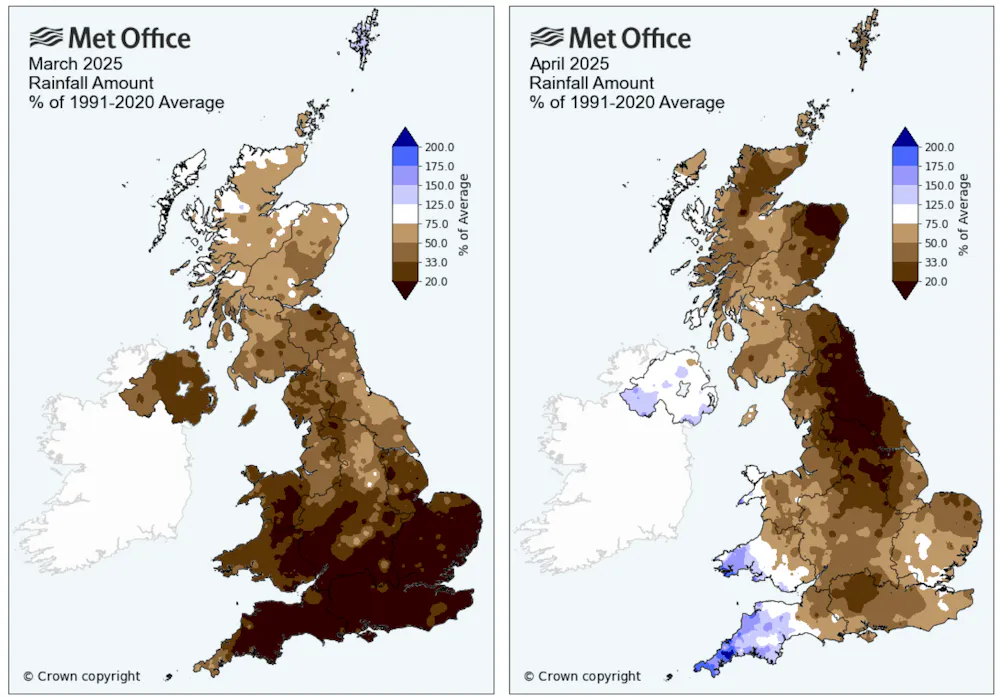
    April 2025 was the sunniest since records began in 1910. This followed the third-sunniest March, and both months saw temperatures well above average nationwide. On May 1, the temperature reached 29.3°C in Kew Gardens in London – a new record for the date.

    Meteorologists are warning of the potential for a summer drought, as the UK has seen roughly half its usual amount of rainfall for March and April. While farmers fret about this year’s harvest, some water companies are urging customers to help reservoir levels recover by limiting water use.

    Meanwhile, wildfires have engulfed forest and moorland in areas of Scotland, Wales and England.

    Most of the UK has experienced a record-dry spring so far.
    Met Office

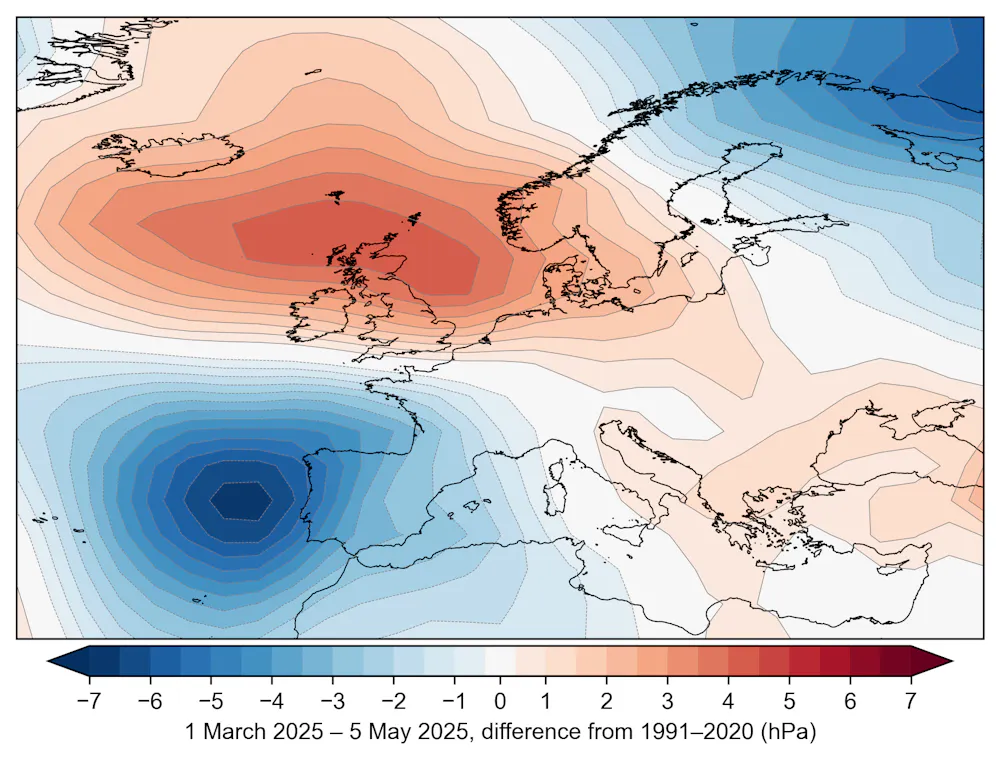
    For several weeks, a stubborn area of high pressure over the UK has diverted the usual flow of mild, moist air from the North Atlantic like a boulder in a river. This is known as a blocking weather system.

    Within it, air descends, warms and dries, which is why this weather pattern tends to be linked to heatwaves and drought. Blocking is usually persistent, making it seem like the weather is stuck.

    Here’s how climate change may have played a role in setting up this unusual spring.


    Get your news from actual experts, straight to your inbox. Sign up to our daily newsletter to receive all The Conversation UK’s latest coverage of news and research, from politics and business to the arts and sciences. Join The Conversation for free today.


    The human fingerprint

    The warming climate means that unusually warm weather is occurring more often and becoming more intense. At the same time, we can expect more periods of both severe drought and extreme rainfall. Sudden changes from drought to deluge, termed “weather whiplash”, are due to the intensification of the water cycle in a warmer atmosphere that can hold more water vapour.

    However, certain weather patterns are necessary to produce extreme weather. More blocking events in future could increase the chance of heatwaves or drought. But are blocking weather patterns becoming more common?

    It’s difficult to determine how weather patterns will change as a result of the rising concentration of greenhouse gases in the atmosphere, which is predominantly caused by the burning of fossil fuels.

    Part of the difficulty arises from the fact that weather patterns vary year to year. Several years in a row with more blocking events than usual could make it seem like blocking is increasing due to climate change, but it could simply be down to chance.

    As a result, it is difficult to detect the fingerprint of human activity from weather observations alone. For example, blocking weather patterns over Greenland during summer have happened more often in recent decades, which can enhance the melting of the ice sheet. But it isn’t clear that this trend is the result of human-induced climate change.

    Climate models do suggest future changes in the occurrence of blocking, however. These computer simulations, consisting of equations that describe the fundamental physics of the atmosphere, are the main tool scientists use to perform experiments that parse how the climate will behave in future.

    The blocking system is visible in the area of high pressure over Britain and Ireland.
    National Centers for Environmental Prediction/National Center for Atmospheric Research/NOAA Physical Sciences Laboratory, CC BY

    When scientists run climate model simulations with increased greenhouse gas concentrations the results consistently show a decrease in blocking events. But blocking generally happens more often in real life than model simulations, which reduces the confidence scientists have in future projections.

    Keeping track of the jet stream

    The movement of weather systems in Earth’s mid-latitudes – including over the UK – is linked to the jet stream, which is a fast-flowing river of air driven by the contrast in temperature between the poles and mid-latitudes.

    Some researchers have suggested that, because the Arctic is warming faster than the tropics, the jet stream may weaken and become more “wavy”, increasing the occurrence of blocking events, contrary to what most climate models show.

    Outside of the scientific community, this idea has become popular. However, the hypothesis remains controversial among scientists, and observational evidence has weakened in recent years.

    In fact, tens of kilometres above the Earth’s surface, near commercial aircraft cruising altitudes, the opposite trends are occurring: the temperature difference between the Arctic and mid-latitudes is increasing, acting to increase the strength of the jet stream.

    There are considerable challenges with understanding how climate change is affecting the large-scale atmospheric patterns which drive the weather we experience. These include large natural variability and imperfect climate models. Models mostly suggest a decline in blocking events with climate change, though this remains relatively uncertain compared with other aspects of the science.

    Overall, we can be confident that climate change is bringing warmer conditions in all seasons. Scientists also have strong evidence to suggest that drought conditions will become more common. These changes are already affecting food production, energy generation and water availability and these impacts will continue to worsen with climate change.


    Don’t have time to read about climate change as much as you’d like?

    Get a weekly roundup in your inbox instead. Every Wednesday, The Conversation’s environment editor writes Imagine, a short email that goes a little deeper into just one climate issue. Join the 45,000+ readers who’ve subscribed so far.


    Simon H. Lee has received funding from the Natural Environment Research Council and the National Science Foundation.

    Matthew Patterson receives funding from the Natural Environment Research Council in the UK via the the National Centre for Atmospheric Science.

    ref. How the weather got ‘stuck’ over the UK – and produced an unusually dry and warm spring – https://theconversation.com/how-the-weather-got-stuck-over-the-uk-and-produced-an-unusually-dry-and-warm-spring-255987

    MIL OSI – Global Reports

  • MIL-OSI United Kingdom: Joint statement on India-Pakistan conflict

    Source: City of Leeds

    Comment issued by civic and faith leaders in Leeds

    “As civic and faith leaders in Leeds, we welcome news of the ceasefire in hostilities between India and Pakistan following the recent terrorist attack in Pahalgam, Kashmir.

    “Terrorism in any form goes against the values of humanity. We condemn all forms of terrorism affecting any communities and countries across the world.

    “We affirm our commitment to stand together at this time of increased tension between India and Pakistan.

    “We are deeply saddened and troubled by the loss of lives, property and livelihoods. Our hearts go out to all those who have been injured, those who are grieving and those who are living in fear of further attacks. We recognise that many in Leeds will also be worried for family and friends in the affected areas. We pray for everyone caught up in the conflict.

    “We have a strong and enduring history in Leeds of caring for one another and of acting responsibly in the face of international events that shake us. We will not let these tensions disrupt the peace we cherish in our neighbourhoods and communities.

    “The faith leaders of Leeds stand firmly against any form of extremism affecting any community in our city. We urge our communities to reject division and to avoid provocation. We would ask all those in our communities to seek to de-escalate tension, recognising our love for our neighbours, reaching out to one another in mutual respect and care. Together, we reaffirm our commitment to peace and concord and to standing against hatred and division.

    “We call on international leaders to continue taking steps to de-escalate the situation through dialogue. Escalation will only lead to the suffering of more innocent people, and everything must be done to prevent further harm.

    “We are a proud city where people of many backgrounds, faiths, and cultures live side by side. Hate has no place on our streets and together we issue this collective call for peace. We have not much control over what is happening internationally, but we can continue to live as neighbours who care for one another and our shared neighbourhoods.

    “In this great city which we all call home, we stand shoulder to shoulder – as part of Team Leeds. One community, one voice, one people. We call on all parties to pray and to work tirelessly for a just peace.”

    Signatories:

    Councillor Abigail Marshall Katung – Lord Mayor of Leeds

    Councillor James Lewis – Leader Leeds City Council

    Ed Whiting – Chief executive Leeds City Council

    Councillor Oliver Edwards – Faith, Religion and Belief Champion

    The Rt. Revd. Arun Arora – Chair Leeds Faith Forum

    Qari Assim MBE – Leeds Faith Forum

    Rasool Bhamani – Leeds Faith Forum

    Dharmesh Mistry – Leeds Faith Forum

    Simon Phillips – Vice Chair Leeds Faith Forum

    Girish Sonigra – Leeds Faith Forum

    Chiragi Solanki – Leeds Faith Forum

    Nirav Thakker – Leeds Faith Forum

    ENDS 

    For media enquiries please contact:

    Leeds City Council communications and marketing,

    Email: communicationsteam@leeds.gov.uk

    Tel: 0113 378 6007

    MIL OSI United Kingdom

  • MIL-OSI USA: Media Alert: Low-level flights to image geology over parts of New England

    Source: US Geological Survey

    The survey is part of USGS Earth Mapping Resources Initiative, a partnership with the geological surveys of Connecticut, Massachusetts, New Hampshire, Rhode Island and Vermont as well as other states.

    “Increasing knowledge of New England’s geologic framework will help with national priorities, like sourcing critical minerals, and regional concerns – like mapping pyrrhotite to minimize its use in local infrastructure,” said Jamey Jones, science coordinator for the USGS Earth Mapping Resources Initiative. 

    Pyrrhotite, a mineral found in bedrock under certain parts of Connecticut and Massachusetts, can cause long-term structural weakness in construction when used in cement.

    The survey is being coordinated by the U.S. Geological Survey as part of a larger, nationwide effort to provide data and images that expand the fundamental knowledge of geology across the nation. The data collected will be made freely available to the public once complete. 

    During the survey, which will be conducted in spring to fall 2025, instruments on the airplane will measure variations in the Earth’s magnetic field and natural, low-level radiation created by different rock types beneath vegetation and up to several miles below the surface. This information will help researchers develop geologic maps of resources and hazards in three dimensions. 

    The aircraft will be equipped with an elongated “boom” that extends either in front of or behind the main cabin that houses sensors. These scientific instruments are completely passive with no emissions that pose a risk to humans, animals, or plant life. No photography or video data will be collected. 

    The aircraft will be flown by experienced pilots who are specially trained and approved for low-level flying. These pilots work with the FAA to ensure flights are safe and in accordance with U.S. law. The surveys will be conducted during daylight hours only. 

    The aircraft will fly along pre-planned fight paths relatively low to the ground at about 300 feet (100 meters) above the surface in some areas. The ground clearance will be increased to 1,000 feet (300+ meters) over populated areas and will comply with Federal Aviation Administration (FAA) regulations. 

    Funding by the Infrastructure Investment and Jobs Act has facilitated coverage of such a large area. 

    Flights will cover areas within the following counties: 

    Connecticut: Fairfield, Hartford, Litchfield, Middlesex, New Haven, New London, Tolland, Windham. Massachusetts: Berkshire, Franklin, Hampden, Hampshire, Middlesex, Worcester. New Hampshire: Cheshire, Hillsborough. Rhode Island: Kent, Providence, Washington. Vermont: Bennington, Windham, as well as Fisher’s Island, New York

    MIL OSI USA News

  • MIL-OSI United Kingdom: Immigration White Paper oral statement

    Source: United Kingdom – Executive Government & Departments

    Oral statement to Parliament

    Immigration White Paper oral statement

    The Home Secretary giving an oral statement to the House of Commons on 12th May to introduce the ‘Restoring Control over the Immigration System’ White Paper.

    Madam Deputy Speaker, with your permission, I will make a statement on the government’s White Paper on Restoring Control over the Immigration System.

    Five months ago, the figures were published that showed net migration had reached a record high of more than 900,000 under the last Conservative government – a figure that had quadrupled in the space of just four years.

    It was the consequence of specific government choices made from 2020 onwards, including introducing what was effectively a free market experiment on immigration – encouraging employers to recruit from abroad, loosening controls in different areas but without any requirement to tackle skills and labour shortages here at home. Choices which undermined the immigration system and the economy too.

    This government is making very different choices. We made clear at that time, just as we had set out in our manifesto, this government would restore order and control to the immigration system, bringing net migration substantially down but also boosting skills and training here at home.

    The White Paper we are publishing today does exactly that and it is built on five core principles.

    First, that net migration must come down so the system is properly managed and controlled.

    Second, that the immigration system must be linked to skills and training here in the UK, so that no industry is allowed to rely solely on immigration to fill its skills shortages. 

    Third, that the system must be fair and effective, with clearer rules in areas like respect for family life, to prevent perverse outcomes that undermine public confidence.

    Fourth, that the rules must be respected and enforced – including tackling illegal and irregular migration and deporting foreign criminals.

    And finally, that the system must support integration and community cohesion, including new rules on the ability to speak English and the contribution that people can bring to the UK.

    The United Kingdom is an interconnected and outward-looking nation. Our history and our geography mean that, for generations, British people have travelled overseas to live and work, and people have come to the UK to study, work, invest or seek refuge. And British citizens draw on heritage from all over the world and that has made us the country we are today.

    Through many years our country has been strengthened by those who have come here to contribute – from the doctors in our NHS to the entrepreneurs founding some of our biggest businesses to those who came through generations to work in jobs from coal mining to caring for our loved ones to serving in our armed forces. People often coming to do some of the most difficult jobs of all.

    Our trading nation, global leading universities and strong historic international connections mean that migration will always be part of our country’s future as well as our past.

    But that is exactly why immigration needs to be properly controlled and managed. It hasn’t been.

    Overseas recruitment shot up while training in the UK was cut.

    Lower skilled migration soared while the proportion of UK residents in work plummeted.

    In 2019 10% of skilled work visas went to non-graduate jobs; by 2024 that had risen to 60%.

    Employers were even given a 20% wage discount if they recruited for shortage jobs from abroad – actively discouraging them from paying the going rate or training here at home.

    Education institutions were allowed to substantially expand the number of overseas students without proper compliance checks.

    Social care providers were encouraged to recruit from abroad with no proper regulation.

    So we saw a serious increase in exploitation – deeply damaging for those who came to work here in good faith, and also for other workers and responsible companies who were being undercut.

    The rules and laws that are supposed to the immigration system were too often ignored.

    By 2024, returns of people with no right to be in the UK were down over a third compared to 2010.  

    And, of course, criminal gangs were allowed to build an entire smuggling industry along our borders, undermining security and creating a crisis in the asylum system.

    Madam Deputy Speaker, later this year we will set out further reforms on asylum and border security, and on tackling illegal and irregular migration, building on the new counter-terrorism powers in the Border Security, Asylum and Immigration Bill before the House this evening, because no one should be making these dangerous crossings on small boats.

    But this White Paper sets out how we restore that control to the legal migration system so it is sustainable, fair and works for the UK.

    First, we are overhauling the approach to labour market policy so for the first time we properly link the immigration system to skills and training here in the UK.

    So that where there are skills or labour shortages in the UK, immigration should not always be the answer to which employers turn. Because that long-term failure to tackle skills shortages, to bring in proper workforce planning, to get UK residents back into work, or to improve pay, terms and conditions here at home is bad for our economy as well as for the immigration system because it undermines our productivity and growth.

    So we will lift the threshold for skilled worker visas back to graduate level and above, removing up to 180 different jobs from the list, increasing salary thresholds.

    Access to the Points-Based System for lower skilled jobs will be limited to areas on a new Temporary Shortage List, including jobs which are critical to the Industrial Strategy, but access will be time limited. There must be a domestic workforce strategy in place, and employers must be acting to increase domestic recruitment.

    We will expect workforce strategies to be drawn up more widely in other higher skilled areas too where there is overreliance on recruitment from abroad.

    To support that work we will establish the new Labour Market Evidence Group, bringing together skills bodies from England, Scotland, Wales and Northern Ireland, the Department for Work and Pensions, the Industrial Strategy Council and the Migration Advisory Committee to gather and share evidence on shortage occupations in different parts of the country and also to highlight the role that skills, training, pay and conditions and other policies can play in improving domestic recruitment, so that increased migration is never again the only answer to the shortages the economy faces.

    This new approach means we also need to act on social care.

    The introduction of the Social Care Visa led not only to a huge increase in migration but also to a shameful and deeply damaging increase in abuse and exploitation.

    When proper checks were finally brought in, 470 care providers had their licence to sponsor international staff suspended. 39,000 care workers were displaced.

    Overseas recruitment for care jobs has since dropped but it must not surge like that again. And it’s time we addressed domestic issues, including a proper Fair Pay Agreement to show respect to people who do some of the most important jobs in the country.

    We are therefore ending overseas recruitment of care workers. It will continue to be possible to extend existing visas and to recruit displaced care workers and people already in the UK with working rights on other visas.

    Alongside the new visa controls and workforce strategies, we will also increase the Immigration Skills Charge paid by employers who recruit from abroad by 32%. That money will be invested through the Spending Review in supporting skills and training here in the UK.

    We will ensure that Britain continues to attract the brightest and best global talent, by enhancing visa routes for very high skilled individuals, top scientific and design talent, and people with the right experience to support growth in key strategic industries.

    Madam Deputy Speaker, international students bring huge benefits to the UK – supporting our world-leading universities, bringing in top talent and investment.

    But we will strengthen compliance requirements and checks to prevent visa misuse.

    Currently, too many people on the Graduate Visa are not doing graduate jobs. So we will reduce the unrestricted period from two years to 18 months. Those who want to stay will need to get a graduate job on a skilled worker visa so that we can ensure they are contributing to the economy.

    Just as our rules on work visas are based on the contribution we expect people to make when they come to our country, we will consult later this year on new earned settlement and citizenship rules that apply the same approach, extending the principles of the Points-Based System, doubling the standard qualifying period for settlement to ten years with provisions to qualify more swiftly that take account of the contribution people have made.

    Because the ability to speak English is integral to the ability for everyone to contribute and integrate, we will introduce new, higher language requirements across a range of visa routes, for both main applicants and their dependants. So family, too, can work, integrate and contribute.

    The system for family migration has become overly complex with policies increasingly developed around case law from court decisions rather than a coordinated framework set out by Parliament. So we will set out a new clearer framework, to be endorsed by Parliament, including clarifying how Article 8 rules should be interpreted and applied to prevent confusion or perverse conclusions.

    We will review current community sponsorship schemes that support recognised refugees and will continue to take action against trafficking and modern slavery. And we will shortly appoint a new Windrush Commissioner to ensure that Windrush lessons continue to be learnt and the Home Office also makes sure its standards are upheld.

    But the rules must be respected and enforced across the board. So we will also bring in stronger controls where there is evidence of visa misuse. We are also rolling out e-visas and digital ID, including better use of technology to monitor when people are overstaying on their visa, or to support the increase in illegal working raids. Since the election we have increased returns and we will go further.

    Those who come to our country must abide by our laws.

    So we will develop new procedures to ensure the Home Office is informed of all foreign nationals convicted of offences – not just those who go to prison – so we can also revoke visas and remove other offenders in a wide range of crimes who are abusing our system.

    Madam Deputy Speaker, already we are reducing the number of visas being granted this year, and updated figures will be published before the end of the month.

    Already we are increasing returns with over 24,000 people in the first 9 months, the highest 9-month period for eight years.

    The impact of the changes to skilled worker visas, care worker visas, settlement, students and English language is expected to reduce visas by around 100,000 a year. In addition, the new workforce strategies, Immigration Skills Charge, family and asylum reforms will further bring numbers down on top of that. And as the Prime Minister has said, where we need to go further to restore a sustainable system, we will.

    Conclusion

    In conclusion, Madam Deputy Speaker, throughout our history, Britain has been strengthened by people coming to start new businesses, study at our universities, contribute to our cultural and sporting excellence, and do some of the toughest, most essential jobs in our country.

    But to be successful, effective and fair, our immigration must be properly controlled and managed. This White Paper sets out how we will restore control, fairness and order to the system, how we will continue to bring net migration down, and how we will turn the page on the chaos and failure of the past. I commend this statement to the House.
    Updates to this page

    Published 12 May 2025

    MIL OSI United Kingdom

  • MIL-OSI United Kingdom: Outstanding young Mancunians recognised at this year’s Youth Buzz Awards – all the winners

    Source: City of Manchester

    A young pro-footballer in the making and a monster model-making young entrepreneur are amongst the recipients of this year’s prestigious Youth Buzz Awards in Manchester.

    The annual awards see young people in Manchester recognised for their stand-out achievements that help make a positive difference to them, their communities, or their peers.

    This year’s awards saw nominations made across ten different categories with winners decided by a judging panel of young people from Manchester Youth Council and Manchester’s MYPs – members of the UK Youth Parliament.

    The names of the winners were revealed at a glittering city centre awards ceremony attended by all of the young finalists and their guests, as well as the Lord Mayor of Manchester Councillor Paul Andrews and Councillor Julie Edwards, Executive Member for Early Years, Children and Young People.

    Winners included professional footballer in the making 16-year-old Hannah Stengert from Openshaw who won the Outstanding Achievement Award.

    Hannah began her football career with Manchester City’s Under-8 Team and has steadily progressed through the ranks, now playing for Manchester City Under 19s, despite being only 16 years old.  She has also played international matches against teams from Greece, Norway and Wales and has been selected to attend training camps with the Under 17 England team in preparation for the Euro’s later this year.

    Outside of football Hannah also regularly volunteers at her mum’s cafe with the local group of older people who go along there and spends time in school as a Senior Prefect helping students who are struggling with their homework, as well as helping out at the school’s pre-loved uniform sales. 

    Other winners included 21-year-old Maame Addo from Moss Side who was recognised with the Making a Difference Award for the difference she makes to young people at Moss Side Powerhouse, where she has become a role model for others with her perseverance in everything she does.

    The Young Entrepreneur Award went to John Millington-Young aged 17 from Wythenshawe who has set up ‘Monster Creations’ that sees him using his skills in Lego building and creating new things to make unique one-off monster creations that he sells locally to others.

    Winner of the Youth Project of the Year Award was Wythenshawe Community Housing Group’s Youth Team.  Together the team members have been involved in a wide range of projects in the Wythenshawe area to help improve the lives of people living in the local community.  This has included a Keeping Women and Young Girls Safe Project, a Bike Safety initiative promoting responsible cycling, and a Fishing Project that uses fishing as a way to help teach wildlife conservation and environmental responsibility.   

    This year’s Youth Voice Project or Campaign of the Year went to the Proud Trust Youth Group who are all passionate LGBTQ+ advocates.  After raising their concerns about issues such as discrimination, mental health challenges and the need for comprehensive legal protections, particularly for trans and non-binary people, they travelled with their youth workers to hand deliver letters in to 10 Downing Street, where they were invited in to meet with MP Wes Streeting, Secretary of State for Health and Social Care to discuss the issues they’d raised in their letters.

    This year’s awards ceremony also provided a platform for some of the city’s best up and coming young musicians to show off their talents during the awards evening, with outstanding performances from all of them.

    The annual awards are organised by Manchester Youth Council, supported by the city council’s Youth, Play and Participation Service, and are sponsored by a number of local businesses and organisations.

    Oscar Brooker, national Youth Parliament member for Manchester, said: “The Youth Buzz Awards are a way for young people from across the city to be recognised and celebrated for all their amazing achievements and successes.”

    Full list of award categories and winners:

    Youth Project of the Year – WCHG Youth Team
    Young Entrepreneur – John Millington-Young
    Making a Difference – Maame Addo
    Young Carer – Ericka Banza
    Young Leader – Bailey Fernandes
    Climate Champion – Pippa England
    Well-being – Rachel Egan
    Championing Inclusion – Humzah Rangrez
    Youth Voice Project – The Proud Trust Young People
    Outstanding Achievement – Hannah Stengert

    The awards to recognise the outstanding achievements of the city’s young people and the valuable contribution they make to their communities and to city life come as Manchester works towards being recognised by UNICEF as a Child Friendly City – a place where children and young people are valued, listened to, and actively encouraged to play a part in helping shape Manchester and its future. 

    Each of the individual award categories recognises one or more of the 54 articles contained in the United Nations Convention on the Rights of the Child.

    Councillor Julie Reid, Executive Member for Early Years, Children and Young People, Manchester City Council, said: “We’re working hard to help make Manchester a Child Friendly City and these awards show just how much enterprise, talent and commitment to their peers and their communities that our young people have.

    “The winners, together with every young person nominated for an award are all fantastic ambassadors for our city and we’re determined to take a lead from them and the city’s many other inspirational young people to help make Manchester the very best place it can be to grow up in.”

    This year’s Youth Buzz Awards were sponsored by a number of local organisations and businesses including road construction company Thermal Road.

    Find out more information about Manchester’s journey towards becoming a UNICEF recognised Child Friendly City.

    MIL OSI United Kingdom

  • MIL-OSI United Kingdom: MHRA approves first UK treatment for congenital thrombotic thrombocytopenic purpura (cTTP) 

    Source: United Kingdom – Executive Government & Departments

    News story

    MHRA approves first UK treatment for congenital thrombotic thrombocytopenic purpura (cTTP) 

    As with all products, the MHRA will keep its safety under close review.

    The Medicines and Healthcare products Regulatory Agency (MHRA) has today (12 May 2025) approved rADAMTS13 (ADZYNMA), the first UK treatment to treat congenital thrombotic thrombocytopenic purpura (CTTP) in patients of all ages.  

    CTTP is a very rare inherited blood disorder in which blood clots form in small blood vessels throughout the body. These clots can block the flow of blood and oxygen to the body’s organs, which leads to a lower-than-normal number of platelets (components that help the blood to clot) in the blood. 

    This medicine has been approved through the International Recognition Procedure (IRP). The IRP allows the MHRA to take into account the expertise and decision-making of trusted regulatory partners for the benefit of UK patients.   

    The MHRA conducts a targeted assessment of IRP applications and retains the authority to reject applications if the evidence provided is not considered sufficiently robust.  

    As with any medicine, the MHRA will keep the safety and effectiveness of this medicine under close review. Anyone who suspects they are having a side effect from this medicine are encouraged to talk to their doctor, pharmacist or nurse and report it directly to the MHRA Yellow Card scheme, either through the website (https://yellowcard.mhra.gov.uk/) or by searching the Google Play or Apple App stores for MHRA Yellow Card.  

    Notes to editors    

    1. The marketing authorisation was granted on 12 May 2025 to Takeda UK Ltd. 

    2. More information can be found in the Summary of Product Characteristics and Patient Information leaflets which will be published on the MHRA Products website within 7 days of approval.    

    3. The Medicines and Healthcare products Regulatory Agency (MHRA) is responsible for regulating all medicines and medical devices in the UK by ensuring they work and are acceptably safe.  All our work is underpinned by robust and fact-based judgments to ensure that the benefits justify any risks.    

    4. The MHRA is an executive agency of the Department of Health and Social Care.    

    5. For media enquiries, please contact the newscentre@mhra.gov.uk, or call on 020 3080 7651.

    Updates to this page

    Published 12 May 2025

    MIL OSI United Kingdom

  • MIL-OSI United Kingdom: CRM12 deadline for the October 2025 rotas is approaching

    Source: United Kingdom – Executive Government & Departments

    News story

    CRM12 deadline for the October 2025 rotas is approaching

    Applicants wishing to secure admission to the October 2025 rotas must take action to ensure that their CRM12 is returned by the deadline

    Applicants who have not yet returned a correctly completed CRM12 must do so by no later than 23 May. If this deadline is not met, then Applicants will not be guaranteed to gain membership of the October 2025 Duty Rotas. Applicants should ensure that their forms are returned promptly and that they continue to monitor the e-Tendering message boards for any relevant communication.

    Updates to this page

    Published 12 May 2025

    MIL OSI United Kingdom

  • MIL-OSI United Kingdom: Statement: New leadership at Derbyshire County Council

    Source: City of Derby

    A statement from the Leader of Derby City Council, Councillor Nadine Peatfield:

    Derby City Council remains committed to close collaboration with Derbyshire County Council in areas where our joint efforts can drive strategic economic development across our area and secure the best possible outcomes for the people we serve.

    We anticipate working in partnership on significant issues, such as Local Government Reorganisation (LGR), the Derby and Derbyshire Waste Treatment Centre and working closely with Derbyshire and the other constituent authorities of East Midlands Combined County Authority (EMCCA).

    It is important for the region that we continue to collaborate, and I look forward to hearing from the new Leader in due course on these and other matters.

    MIL OSI United Kingdom

  • MIL-OSI United Kingdom: Plymouth recognised after incredible tree planting winter

    Source: City of Plymouth

    Plymouth has been recognised as a Tree City of the World on back of another exceptional planting season this winter.

    Since November 2024, thanks in part to a huge new partnership effort, there are over 35,000 new trees growing and establishing across the city.

    In the city, Council teams have helped to plant over 5,700 new trees of all shapes, species and sizes all over the city to further enhance the successful legacy of the Plymouth and South Devon Community Forest.

    Meanwhile, in addition to the trees planted in and around the city, Council and Community Forest teams assisted with the planting of a vast new 30,000-strong forest on MOD land near Ernesettle.

    Be it parks and open spaces, road verges, residential streets or in school grounds, Council teams have been busy delivering a positive impact for people and nature across the city.

    Extra specially, this year a massive 658 standard and fruit trees have been established. Standards are large trees that at the time of planting are already six to ten feet tall with this year’s number nearly double that of 2024.

    On top of the standards, a further 5,102 whips have been planted as hedgerows and high-density planting areas which will become the wildlife corridors, edible hedgerows, and wooded areas of the future.

    Over the course of the season teams have engaged with hundreds of people of all ages through various community events and groups including Plymouth Tree People, Headway, Societree, and the Hoe Gardening Group, as well as through partnerships with landowners like Plymouth Community Homes and the Learning Academy Trust.

    The successful season, plus ongoing work behind the scenes, has led to Plymouth being awarded the coveted status as an official Tree City of the World.

    Tree Cities of the World programme is an international effort to recognise cities and towns committed to ensuring that their urban forests and trees are properly maintained, sustainably managed, and celebrated.

    2024-2025 Planting Season in Numbers

    5,727 planted across the city

    658 standards and fruit trees

    5,102 whips planted as hedgerows and high density areas

    30,000 planted in partnership with the MOD on land near Ernesettle RNAD

    21 sites planted, 6 of which were not on PCC owned land

    11 sites delivered through successful Trees for Climate grant applications

    246 active community volunteers on planting days over 13 sites

    40+ species of tree planted, 30+ of which are native

    45+ varieties of fruit tree planted, creating five new community orchards

    The status is awarded when a city can demonstrated having; policies for tree management; an inventory to determine what trees it has; a budget to care for those trees; a group dedicated to the care of those trees; and an annual celebration of its trees.

    Plymouth was awarded the status after a joint bid between Plymouth and South Devon Community Forest, the Council and local charity Plymouth Tree People, in recognition of the innovative approach to bring our community forest to life.

    Councillor Tom Briars-Delve, Cabinet Member for the Environment and Climate Change, said: “Another year, another incredible amount of trees planted across our beautiful city. Just marvellous.

    “Then to be become a Tree Cities of World is a real honour for our city.

    “Since taking control in 2023, this administration has championed tree planting and the natural environment so this international recognition as a leading tree city, achieved thanks to positive collaborations with local community groups, shows just how far we’ve come.”

    Penny Tarrant, Chair of Plymouth Tree People, said: “We are delighted to have worked in partnership to achieve this accolade for Plymouth. It demonstrates the commitment to and the value in working together.

    “As a local charity, our core work is to Plant, Care and Learn. As partners we have played our part in planting many street trees across the city, caring for trees via our broad Tree Warden network and in teaching about and celebrating trees through the Plymouth Urban Tree Festival, between 11 and 18 May.”

    The prolific 2024-25 planting season means that that over 17,500 trees have been planted across more than 120 sites since 2021, when the Plymouth and South Devon Community Forest was first launched.

    The Defra funded Community Forest project boundary stretches from the South Devon coast, across Plymouth and right across to the rolling landscape of Dartmoor National Park.

    By April 2026 a further 300 hectares will be planted creating a mosaic of orchards, hedgerows, areas of natural regeneration, native broadleaf, and productive woodland.

    Unlike traditional forests, the community forest isn’t geographically restricted to one place. Instead, it encompasses a wide variety of planting styles from community accessible woodland, private woodland, highway verge planting, urban wooded areas , habitat corridors and hedgerows contributing the wider England’s Communty Forests.

    Find out more about Community Forest and how to get involved at https://psdcf.com

    To contribute to the consultation on the Community Forest Plan please visit https://plymouth-consult.objective.co.uk/kse/event/38334

    MIL OSI United Kingdom

  • MIL-OSI United Kingdom: 2025 to 2026: Part-time applications are open

    Source: United Kingdom – Executive Government & Departments

    News story

    2025 to 2026: Part-time applications are open

    Students can now apply for Part-time undergraduate student finance for 2025 to 2026.

    Students can now apply for Part-time undergraduate student finance for 2025 to 2026.

    It’s quick and easy to apply online, you should encourage students to apply at:

    SFE: https://www.gov.uk/apply-online-for-student-finance

    SFW: https://www.studentfinancewales.co.uk/

    We’re encouraging students to apply online as soon as possible to ensure that they have their funding in place for the start of their course.

    Key Changes

    The UK government announced back in November that tuition fees across the country will increase from August 2025, as such the amount of Tuition Fee Loan students can apply for has increased.

    Students can find out what they can get by visiting here:

    SFE: https://www.gov.uk/student-finance/parttime-students

    SFW:  https://www.studentfinancewales.co.uk/undergraduate-finance/part-time/

    Updates to this page

    Published 12 May 2025

    MIL OSI United Kingdom

  • MIL-OSI United Kingdom: New local guidance to tackle synthetic opioid threat

    Source: United Kingdom – Executive Government & Departments

    News story

    New local guidance to tackle synthetic opioid threat

    Communities across England will be better equipped to combat the increasing threat of dangerous synthetic drugs, following new advice issued by the Home Office.

    Image: Getty Images

    In an effort make streets safer, the government has set out new recommendations to local authorities, police and public health organisations to better prepare against synthetic opioids. This includes making sure police officers have the skills and confidence needed to carry and administer naloxone, a lifesaving drug to tackle illicit drug use.

    Synthetic opioids are extremely dangerous substances and their presence in the UK illegal drugs market has risen over the past 2 years, during which time there have been over 450 drug-related deaths where synthetic opioids were present. Although they are most commonly found in heroin, they are also becoming increasingly present in illicit painkillers and sedative pills.

    As part of the government’s Plan for Change, 12 new recommendations have been issued to local authorities, to ensure staff are able to help save lives and support those at risk of overdose. 

    This advice for local areas includes: 

    • making ‘out of hours’ resources available to respond to incidents around the clock

    • sharing data between coroners, police and health services 

    • fast-tracked testing of seized drugs when synthetic opioids are suspected 

    • improving identification and monitoring of all at-risk groups, not just opioid users 

    • reviewing naloxone supplies in their area to make sure they are at sufficient capacity 

    These recommendations follow an exercise in November last year which saw local partners across health and policing, as well as national organisations, work together to respond to different scenarios relating to synthetic opioids. The exercise was organised by the government’s Joint Combating Drugs Unit and chaired by the National Police Chiefs’ Council. 

    Policing Minister Dame Diana Johnson said: 

    Synthetic drugs have no place on Britain’s streets, which is why we must do everything we can to tackle this evolving threat.

    This advice will help save lives by ensuring local authorities know how to respond to incidents more quickly and efficiently, as will the vital rollout of naloxone across our police forces.  

    Already there are hundreds of examples of police officers carrying this lifesaving medicine. I am deeply grateful for their unwavering commitment to protect some of the most vulnerable people in our communities, part of the government’s Plan for Change to keep streets safe.

    Alongside this report, the government is also publishing national data on police use of naloxone for the first time. Naloxone is a medicine used to reverse the effects of an opioid overdose.  

    According to new data released today, as of December 2024, there are approximately 20,650 police officers and 880 police staff carrying the medicine daily across the UK. 

    The data also shows that police officers across the UK have administered naloxone more than 1,200 times since June 2019. 32 UK police forces are currently using the naloxone provision or piloting it, and another 12 forces have committed to either pilot or roll out its use in the near future.  

    National Police Chiefs’ Council lead for Drugs, Chief Constable Richard Lewis said:

    Synthetic drug use, like all illegal drug use, is incredibly dangerous for those who use them as well as carrying high risks of overdosing and we welcome the governments recommendations in how we collectively respond to this particular threat.

    We have long supported the use of the anti-overdose drug Naloxone, which has dramatically reduced the chance of drug-related deaths when dispensed by officers who have been equipped with it and encourage its use further.

    We remain steadfast in doing all we can to protect the people we serve alongside partners, including the most vulnerable in our society and this tool is just one option we can take to achieve this.

    The government supports more police officers carrying naloxone and see this is an important part of steps to reduce opioid deaths across the country.  

    Michael Kill, CEO of the Night Time Industries Association, said:

    We welcome the Home Office initiative supporting police officers in carrying naloxone, which represents a vital step forward in the fight against opioid overdoses. Communities across England are increasingly facing the threat of dangerous synthetic drugs, and this move ensures a faster, more effective response at the most critical moment.

    The immediate administration of naloxone can mean the difference between life and death, particularly as synthetic opioids – now more prevalent in the UK’s illegal drug market – have contributed to over 450 drug-related deaths in the past 2 years.

    Equipping frontline officers with this life-saving tool, alongside the government’s new recommendations to local authorities, police, and public health organisations, shows a commitment to public safety and harm reduction. We look forward to the upcoming findings that will guide a more robust, informed approach to protecting our communities.

    The law was also recently changed to widen access to take-home naloxone without a prescription. This is part of a series of initiatives designed to reduce the threat from synthetic opioids and reduce drug-related harms. 

    A generic definition of nitazenes, a type of synthetic opioid, was also introduced which will help prevent serious and organised criminal groups from adjusting drug recipes to bypass UK drug laws.

    You can read more about this topic on the following pages on GOV.UK:

    Updates to this page

    Published 12 May 2025

    MIL OSI United Kingdom

  • MIL-OSI United Kingdom: Recovered appeal: land off Bedmond Road, Abbots Langley (ref: 3346061 – 12 May 2025)

    Source: United Kingdom – Executive Government & Departments

    Correspondence

    Recovered appeal: land off Bedmond Road, Abbots Langley (ref: 3346061 – 12 May 2025)

    Decision letter and Inspector’s Report for a recovered appeal.

    Applies to England

    Documents

    Recovered appeal: land off Bedmond Road, Abbots Langley (ref: 3346061 – 12 May 2025)

    Request an accessible format.
    If you use assistive technology (such as a screen reader) and need a version of this document in a more accessible format, please email alternativeformats@communities.gov.uk. Please tell us what format you need. It will help us if you say what assistive technology you use.

    Details

    Decision letter and Inspector’s Report for a recovered appeal for outline planning permission for demolition and clearance of existing buildings and hardstandings to allow for the construction of a data centre of up to 84,000 square metres (GEA) delivered across 2 no. buildings, engineering operations and earthworks to create development platforms, site wide landscaping and the creation of a country park.

    The data centre buildings include ancillary offices, internal plant and equipment and emergency back-up generators. Other works include:

    • an ancillary innovation
    • education and training centre of up to 300 square metres
    • internal roads and footpaths
    • cycle and car parking
    • hard and soft landscaping
    • security perimeter fence
    • lighting, drainage, substation, and other associated works and infrastructure

    Updates to this page

    Published 12 May 2025

    Sign up for emails or print this page

    MIL OSI United Kingdom

  • MIL-OSI United Kingdom: New chapter begins as Lionheart School opens its doors 12 May 2025 New chapter begins as Lionheart School opens its doors

    Source: Aisle of Wight

    There were celebrations last week as the newly renamed Lionheart School officially opened, marking a fresh start for the former Island Learning Centre.

    The school, based in Albany Road, Newport, has undergone a full refurbishment and rebranding, transforming both its look and its mission.

    Now known as Lionheart, the school is set to offer a wider range of services aimed at supporting secondary schools and young people across the Island.

    Staff, students, and local supporters gathered to mark the occasion, with many praising the school’s renewed focus on inclusion, wellbeing, and opportunity.

    “This is more than just a new name,” said head teacher, Andrew Hatherley. “It’s a new beginning — one that reflects our commitment to helping every young person thrive.”

    Lionheart School works with students aged 11 to 16 who require additional help with their social, emotional, or mental health needs.

    It provides support for children who, for various reasons, are unable to attend mainstream school, aiming to ensure that pupils return and re-integrate into school as soon as possible.

    Additionally, they assist pupils with medical conditions that prevent school attendance for extended periods but do not hinder their learning.

    As a trauma-informed school, Lionheart understands that many students have faced difficult and sometimes overwhelming experiences.

    “Our approach to education is based on empathy and understanding, ensuring students can learn at their own pace in a safe environment,” Mr Hatherley added.

    “We focus not only on academic achievement but also on the emotional well-being of each student, because we know that true learning happens when children feel safe, supported, and valued.”

    Naomi Carter, service director education, inclusion and access at the Isle of Wight Council, said: “Lionheart School is a beacon of hope for our community. 

    “It offers a supportive and understanding environment that is essential for the growth and development of our young people. I am excited to see the positive impact it will have on their lives.”

    Councillor Claire Critchison, Cabinet member for children’s services, added: “The reopening of Lionheart School marks a powerful milestone in our mission to ensure every child on the Isle of Wight has access to the support they need to succeed.

    “This newly transformed space is more than just a school — it’s a sanctuary of opportunity, compassion, and growth. I’m proud to see such a dedicated team creating a nurturing environment where our most vulnerable young people can rebuild confidence, rediscover their potential, and thrive.”

    MIL OSI United Kingdom

  • MIL-OSI USA: ICE arrests former Massachusetts music teacher and Filipino man for sexually exploiting children

    Source: US Immigration and Customs Enforcement

    BOSTON — U.S. Immigration and Customs Enforcement arrested a former private school music teacher and a Filipino man on charges alleging that the two produced videos depicting the sexual exploitation of minor boys in the Philippines.

    ICE Homeland Security Investigations special agents arrested Joshua DeWitte, 50, of Cambridge on May 8 and Christopher Allan Tisoy, 27, a Filipino national residing in Baltimore, Maryland on May 7. Both were charged with one count each of sexual exploitation of minors, attempt, and conspiracy.

    According to the charging documents, at the time of the alleged conduct, DeWitte was a music teacher at a local school in Massachusetts. Tisoy, a citizen of the Philippines who lawfully entered the United States in September 2024 on a H-1B Visa, is employed as a medical technologist at the Sinai Hospital of Baltimore.

    According to the charging documents, in December 2024, DeWitte was allegedly identified as the owner of a Snapchat account that uploaded a file of suspected child sexual abuse material depicting the abuse of a boy who appears to be between approximately eight and 10 years old. Records obtained from Snapchat allegedly showed that, in September 2024, DeWitte engaged in multiple conversations that were sexual in nature with users who presented themselves as minors. In those conversations, it is alleged that DeWitte requested nude pictures from the purported minors; sent pictures of his penis to the purported minors; and discussed previous and potential in-person meetups for sexual relations with minors.

    Additionally, it is further alleged that DeWitte paid, and offered to pay, another Snapchat user to obtain and produce child pornography and to recruit minor boys for himself.

    Based on that information, state law enforcement obtained a search warrant for DeWitte’s Cambridge residence in January 2025. DeWitte was then arrested and charged in Cambridge District Court with six counts of disseminating obscene material to a child, one count of distribution of material depicting a child in a sexual act and one count of possession of child pornography. He was later released on conditions.

    According to the charging documents, HSI’s forensic examination of DeWitte’s cell phone seized at the time of his January 2025 arrest allegedly revealed a Telegram conversation between DeWitte and another user in which DeWitte allegedly shared three video files and stated, “I was in the Philippines. Most of my vids are from there and that’s where I was with a 10 yo and 12. 16 yo in Japan and Korea;” and “I have a contact there…He only records vids of the boys or arranges for my visit.”

    It is alleged that a separate Telegram conversation between DeWitte and Tisoy was located on DeWitte’s phone, in which they discussed four minor boys by name and arranged for the production of videos depicting the sexual exploitation of at least two minor boys in the Philippines.

    Specifically, it is alleged that in the conversations, DeWitte and Tisoy negotiated the terms of creating sexually explicit videos involving minors, including which minors should be involved; which sex acts the minors should perform; who should film, including whether a third party or one of the minors themselves should film; what angles should be filmed; and how much DeWitte should pay Tisoy for each video. The negotiation allegedly incorporated the sexual preferences of both DeWitte and Tisoy, with both agreeing on what they would each find sexually gratifying. Tisoy then allegedly relayed instructions to the minor victims to create a video.

    DeWitte allegedly paid Tisoy for each video Tisoy produced and sent. It is alleged that, between July 3, 2023, and Dec. 27, 2024, DeWitte sent 87 PayPal payments to Tisoy, in amounts ranging from $27 to $958, to film the sexual exploitation of minors in the Philippines — totaling to approximately $23,752.

    Members of the public who have questions, concerns or information regarding this case should call 617-748-3274 or contact USAMA.VictimAssistance@usdoj.gov.

    The charge of sexual exploitation of minors, attempt, and conspiracy provides for a mandatory minimum sentence of 15 years and up to 30 years in prison, at least five years and up to a lifetime of supervised release and a fine of up to $250,000. Sentences are imposed by a federal district court judge based upon the U.S. Sentencing Guidelines and statutes which govern the determination of a sentence in a criminal case.

    The investigation was led by HSI New England’s Child Exploitation group with valuable assistance from the Cambridge Police Department, HSI Baltimore, the Maryland Department of State Police, and the Middlesex District Attorney’s Office.

    The details contained in the charging documents are allegations. The defendants are presumed innocent unless and until proven guilty beyond a reasonable doubt in a court of law.

    Report suspected child exploitation to the ICE Tip Line at 866-347-2423 or through the CyberTipline on the National Center for Missing & Exploited Children’s website.

    MIL OSI USA News

  • MIL-OSI United Kingdom: Company behind London art galleries which claimed to sell works by Banksy and Andy Warhol is shut down

    Source: United Kingdom – Executive Government & Departments

    Press release

    Company behind London art galleries which claimed to sell works by Banksy and Andy Warhol is shut down

    The company has been wound-up following a hearing at the High Court

    • Artwork Holdings Ltd, formerly Yield Gallery Limited, described itself as “contemporary art specialists offering the purchase and investment of artwork to the public” 

    • Insolvency Service investigations into the company found conflicting accounts as to whether it was trading, inaccurate accounts, and a suspected under-payment of VAT and corporation tax 

    • The company has been shut down by the High Court, with the Official Receiver appointed as liquidator

    A company with two London art galleries which marketed itself as selling works by famous artists such as Banksy, Andy Warhol and Tracey Emin has been shut down. 

    Artwork Holdings Ltd traded under the banner of Yield Gallery, which described itself as an internationally established “reputable and respected” contemporary and modern art gallery with two locations in London. 

    The business said it specialised in sourcing the rarest works by Banksy and Canadian street artist Richard Hambleton, offering collectors and investors the chance to own “original works from the artists”. 

    However, Insolvency Service investigations into Artwork Holdings were met with a lack of clarity over the company’s trading status, unreliable accounts, and a failure from the directors to adequately co-operate. 

    Artwork Holdings opposed the proceedings and asked the court to dismiss the winding-up petition presented by the Insolvency Service.  

    However, the company was wound-up at a hearing of the High Court in London on Monday 12 May. 

    Edna Okhiria, Chief Investigator at the Insolvency Service, said: 

    Our investigations into Artwork Holdings Ltd found several matters of concern. The company claimed to have ceased trading three years ago, but our investigators uncovered substantial evidence directly contradicting that account. Indeed, the company only changed its name to Artwork Holdings in November 2024.  

    Unreliable and inconsistent accounts were uncovered which did not provide a fair representation of the company’s business. The company and its director also failed to sufficiently co-operate with our investigations. 

    The public rightly expects companies to operate with transparency, file their tax returns, and comply with investigations by law enforcement. Artwork Holdings failed to do this and these matters of concern will now be investigated during the course of the company’s liquidation.

    Yield Gallery was founded in 2019 with a gallery based on Royal Parade, Blackheath, in south-east London. A second space, which the company said was the largest Richard Hambleton gallery in the world, opened on Eastcastle Street in Fitzrovia in June 2024. 

    Insolvency Service investigations into Artwork Holdings began in October 2023, with the company named Yield Gallery Limited at that point. The company had earlier traded under a different name, Yield for You Ltd. 

    Solicitors acting on behalf of the company told investigators that it had ceased trading over a period time, rather than at a particular point as is usually the case. No dates were provided, other than vague statements that it was either in late 2021 or early 2022. 

    A new company, YG Group Ltd, was alleged to have taken over the company’s business and trading activities. 

    But information obtained by the Insolvency Service directly contradicted this, with Yield Gallery’s website referencing the company’s full name on its contact page up until April 2024. 

    A rental agreement for one of Yield Gallery’s former locations was also signed by one of the directors in August 2022, more than six months after it claimed to have stopped trading. 

    Similarly, it advertised an exhibition in Soho in the autumn of 2023, with the licence agreement for the location giving the company name as Yield Gallery and the company number of Artwork Holdings. 

    Several Yield Gallery clients contacted by the Insolvency Service also said they had not been informed the company had ceased trading and that the business had been transferred to YG Group. 

    These issues were not disputed by the company’s active director, who blamed “lax administration”, a “lack of diligence” and “carelessness on my part” for the errors. 

    Inaccurate and unreliable accounts were also discovered during the investigations. 

    Investigators found payments from 64 customers totalling just over £2 million paid into two of the company’s bank accounts between December 2020 and April 2022. 

    But sales for that period were more than £4.2 million, suggesting more than half the company’s revenue did not pass through its bank account. 

    Investigators also found that a £50,000 Covid Bounce Back Loan had been secured by the company in June 2020. From the accounts seen by the Insolvency Service, it was not entitled to this government-backed loan as its turnover in 2019 was zero, not the £200,000 it needed to be to secure the funds. 

    The director claimed that the company was entitled to the Bounce Back Loan and that its accounts were wrong. 

    However, in response to questions from investigators who found that the company appeared to owe more than £100,000 in corporation tax, he said he was “unable to comment on the accuracy of the accounts”. 

    No evidence was provided by Artwork Holdings that it had declared and paid the corporation tax due on its trading. 

    Artwork Holdings was also not registered with HM Revenue and Customs as an art market participant which it was required to do to avoid falling foul of money laundering regulations. 

    Concerns were also identified that the company had not paid the appropriate amount of VAT. 

    The Official Receiver has been appointed as liquidator of Artwork Holdings Ltd. 

    All enquiries concerning the affairs of the company should be made to the Official Receiver of the Public Interest Unit: 16th Floor, 1 Westfield Avenue, Stratford, London, E20 1HZ. Email: piu.or@insolvency.gov.uk. 

    Based on the available evidence provided to the Insolvency Service, there is no indication that any of the artists named above had any direct relationship with the company.

    Further information

    Updates to this page

    Published 12 May 2025

    MIL OSI United Kingdom

  • MIL-OSI United Kingdom: expert reaction to Government White Paper on immigration

    Source: United Kingdom – Executive Government & Departments

    Scientists comment on R&D elements of the Government’s White Paper on immigration. 

    Sir Adrian Smith, President of the Royal Society, said:

    “Today’s white paper talks of making it simpler and easier for top scientific talent to come to the UK but our visa system remains one of the most expensive in the world and that is holding the UK back. Simpler and easier is good news but it is not enough – the costs have to come down if we want to attract the best talent.

    “There is a lot of detail that still needs to be explored about the impact of any changes, in what is a complex system. We will be talking to the Government to find out exactly what their plans will mean in practice.”


    Tom Grinyer, CEO of the Institute of Physics, said:

    “We understand the need for reform but these proposals risk us cutting off urgently needed scientific and technological talent at a time when the need to keep up with global change has never been greater.

    “The UK must continue to welcome international scientific talent both to work and to study if it is to keep its place as a leading science and technology nation – and deliver the growth our economy needs.

    “Ensuring visas go to the right people is important but in looking to control migration, we must not undermine our research and innovation economy. The Institute of Physics welcomes incentives for skilled people to come through ‘high talent routes’ but we are very concerned that changes to salary thresholds and graduate eligibility could stop much-needed scientific talent and harm universities and businesses. We’re also concerned that the proposed levy on higher education providers will exacerbate the serious financial challenges these institutions are already facing.

    “The Prime Minister rightly emphasises homegrown skills and sectors like engineering and AI, both powered by physics. But physics is an intensely international, collaborative field. The UK’s strength in the technologies on the future absolutely depends on attracting the right international talent to work alongside the UK’s own brilliant scientists and innovators.”


    Dr Alicia Greated, Executive Director, Campaign for Science and Engineering (CaSE), said:

    “Attracting talented scientists and researchers to the UK from around the world is vital for a thriving research sector that can contribute to economic growth. It is therefore welcome to see the Government’s recognition of the importance of the Global Talent route in the Immigration White Paper published today. It is also pleasing that CaSE recommendations on increasing uptake of the Global Talent Visa and streamlining the visa application process have been taken up. However, we will need to see the detail of these changes and work with the Government as they implement their plans.

    “The white paper also includes changes to the rules governing student and graduate study visas. It is critical that the Government makes clear the work it has done to understand and mitigate the impact of these changes on the university sector given the current issues of financial sustainability.”

    https://www.gov.uk/government/publications/restoring-control-over-the-immigration-system-white-paper


    Declared interests

    The nature of this story means everyone quoted above could be perceived to have a stake in it. As such, our policy is not to ask for interests to be declared – instead, they are implicit in each person’s affiliation.

    MIL OSI United Kingdom

  • MIL-OSI United Kingdom: Film Office opportunity set to boost the region’s Film Industry

    Source: City of Portsmouth

    Portsmouth City Council, in partnership with The Solent Growth Partnership and The Partnership for South Hampshire (PfSH), is inviting experienced consultants to help shape and run a new regional film office for Solent and South Hampshire.

    Aimed at making the area even more film-friendly, this initiative is backed by local authorities via the Solent Growth Partnership with provisional funding of around £60,000. The new film office will serve as a hub to support local film production, streamline processes, and encourage economic growth through creative industries.

    At this early stage, the Council is asking interested suppliers for their feedback. The Council will use this to determine market interest and get input on the proposed service, contractual models, procurement approach, and key milestones. Any feedback received will help improve the final specifications before the formal tender process kicks off.

    Councillor Steve Pitt, Leader of Portsmouth City Council said:

     “This initiative represents a significant opportunity to boost the local film industry, whilst reinforcing South Hampshire’s position as a vibrant hub for film and creative production! We urge anyone interested in being part of it to submit their application.”

    The chosen consultant will operate the film office on a three-year initial contract, which could be extended up to five years. A steering group made up of representatives from all the partner organisations, in close collaboration with Portsmouth City Council, will oversee the project. The tender will be handled as a below-threshold open tender.

    Key Dates:

    • RFI Issued: 7 May 2025
    • RFI Submission Deadline: 27 May 2025, 12:00 BST
    • Procurement Documents Available: 16 June 2025
    • Deadline for Clarification Requests: 4 July 2025, 23:59 BST
    • Tender Submission Deadline: 14 July 2025, 12:00 BST
    • Award Decision: 29 July 2025
    • Project Start: Week commencing 4 August 2025

    Anyone interested can view the detailed specifications and submission documents via the Portsmouth City Council’s e-tendering portal, InTend. For assistance with portal access, please email procurement@portsmouthcc.gov.uk.

    MIL OSI United Kingdom

  • MIL-OSI United Kingdom: I-VMS licence condition in effect

    Source: United Kingdom – Government Statements

    News story

    I-VMS licence condition in effect

    Marine Management Organisation (MMO) confirms I-VMS licence condition in effect from 12 May 2025.

    On 12 May 2025, a new licence condition came into force requiring that English licensed under-12m vessels must now have installed a functioning type-approved I-VMS device that transmits data during a trip to sea.

    I-VMS devices capture and transmit positional data (latitude, longitude, speed, and course) and report device ID, date, time and changes in events such as battery status and data stored. 

    Sean Douglas, MMO’s Head of Regulatory Assurance said:

    This data will provide valuable insights to the activities of the inshore fleet which, when combined with other data such as that collected by VMS for the over-12m fleet, will give a more complete picture of all activity in our marine environment.

    This will allow us, and others, to make smarter, evidence-based, decisions when it comes to marine development assessments, conservation initiatives such Marine Protected Areas (MPAs) and stock protection, regulatory displacement, as well as marine and fisheries management planning, particularly for niche and seasonal fisheries.

    The data will also allow fishers to track their own activity through an app or web portal, allowing them to refine their efforts and business plans, as well as provide evidence to challenge developments or closed areas and use it as evidence in any compliance or conflict resolution.

    More than 80% of industry has purchased and installed a device. Since announcing the new licence condition requirement in March of this year, there has been a continued increase in orders from the small group of fishers still without devices, while more vessels are also submitting data reports.

    Sean added:

    There’s been a really encouraging response from industry and our support team has been working to help them ensure devices are operational and answering general enquiries.

    The licence condition is an introductory stage to support industry ahead of the Statutory Instrument (SI), due later this year, to support English vessel owners be as prepared as possible for when the legislation comes into force.

    Our intention is to ensure vessels have a type-approved device installed and active, and also so we can work with owners and suppliers to address any technical or logistical issues, ahead of the SI being laid.

    I’d like to assure industry that during this period, where we have evidence fishers are taking steps to be compliant, we will take a pragmatic approach to enforcement while arrangements are being made. However, we will take action where necessary to ensure a level playing field.

    Our team is on hand and will continue to support industry with this change.

    The I-VMS hotline remains open for enquiries on 01900 508618, Monday to Friday (9am to 5pm) and emails can be sent to ivms@marinemanagement.org.uk.

    Updated guidance can be found online at: gov.uk/mmo/i-vms-england.

    Updates to this page

    Published 12 May 2025

    MIL OSI United Kingdom

  • MIL-OSI United Kingdom: Civic visit to Netherlands for VE Day 2025

    Source: City of Wolverhampton

    Deputy Lieutenant of the West Midlands Professor Martin Levermore MBE organised this historic visit hosted by Guards Regiment Fusiliers Princess Irene which has close ties with the city.

    The small delegation travelled to The Hague in Holland to mark this remarkable milestone in European history of the 80th anniversary of the liberation of the country and included the Mayor Councillor Linda Leach, Mayor’s Consort and Deputy Mayor, Councillor Craig Collingswood as Chair of the Armed Forces Covenant.

    The small delegation travelled to the Hague in Holland to mark the remarkable milestone in European history of the 80th anniversary of the liberation of the country.

    “Mayor of Wolverhampton, Councillor Linda Leach, said: “The unique bond between the City of Wolverhampton and the people of the Netherlands was forged during the Second World War and has endured for 80 years since the Princess Irene Brigade found a home in Wolverhampton at Wrottesley Park in 1941.

    “The Princess Irene Brigade hold the honour of Freedom of Entry to the City of Wolverhampton, and it was a privilege to be welcomed to their city to mark the 80th anniversary of the liberation of The Hague, a momentous event in which the Princess Irene Brigade played a pivotal role and were the first Allied unit to enter the city.

    “As we reflect on these historic events, we continue to honour the memory of those sacrificed at the Dutch War Graves Ceremony in Jeffcock Road Cemetery as we do each year, a solemn reminder of the price of freedom and the enduring bond between Wolverhampton, Great Britain and the Netherlands. As we look to the future, may we draw inspiration from the bravery of the Princess Irene Brigade and strive to uphold the legacy they have left us.”

    Professor Martin Levermore MBE DL said: “It was an honour for the delegation to be presented to His Majesty Prince Jaime de Bourbon de Parme during the visit and thank all involved on this, the 80th year of the liberation of the Hague, and an opportune time for the City of Wolverhampton to deepen its engagement with Netherlands and its collective appreciation for all those that sacrifice their lives in the pursuit of democracy and freedom.”

    MIL OSI United Kingdom

  • MIL-OSI United Kingdom: Weimar+ Joint Statement on Ukraine and Euro-Atlantic security

    Source: United Kingdom – Government Statements

    News story

    Weimar+ Joint Statement on Ukraine and Euro-Atlantic security

    Joint statement by the Foreign Ministers of France, Germany, Italy, Poland, Spain, the United Kingdom plus the EU High Representative, following their meeting in London

    We met in London on 12 May to discuss Russian aggression against Ukraine and Euro-Atlantic security. 

    On Ukraine, we reiterated our solidarity with the Ukrainian people, our sympathy for the victims of recent attacks by Russia, and our full support for Ukraine’s security, sovereignty and territorial integrity within its internationally recognised borders. 

    We welcomed US-led peace efforts and the prospect of further talks this week.  So far, Russia has not shown any serious intent to make progress.  It must do so without delay.  We joined Ukraine in calling for an immediate, full, unconditional 30-day ceasefire to create space for talks on a just, comprehensive and lasting peace.

    Any peace will only last if it is based on international law including the UN Charter and Ukraine is able to deter and defend against any future Russian attack. 

    We discussed how we would further step up European efforts to support Ukraine in its ongoing defence against Russia’s war of aggression.  Ukraine should be confident in its ability to continue to resist successfully Russian aggression with our support. 

    Strong Ukrainian armed forces will be vital.  We agreed to work with Ukraine on initiatives to strengthen Ukraine’s armed forces, restock munitions and equipment, and further enhance industrial capacity.  

    We are committed to robust security guarantees for Ukraine.  This includes exploring the creation of a coalition of air, land and maritime reassurance forces that could help create confidence in any future peace and support the regeneration of Ukraine’s armed forces.  And we will work on new reconstruction and recovery commitments, including at the Ukraine Recovery Conference in Rome on 10-11 July, to ensure that Ukraine’s future security is underpinned by a vibrant economy.

    We agreed to pursue ambitious measures to reduce Russia’s ability to wage war by limiting Kremlin revenues, disrupting the shadow fleet, tightening the Oil Price Cap, and reducing our remaining imports of Russian energy.  We will keep Russian sovereign assets in our jurisdictions immobilised until Russia ceases its aggression and pays for the damage caused.

    On Euro-Atlantic security, we reaffirmed that NATO is the bedrock of our security and prosperity.  The Alliance has secured peace for over 75 years.  A strong, united NATO, based on a strong transatlantic bond, an ironclad commitment to defend each other, and fair burden-sharing, is essential to maintain this. 

    European countries must play a still greater role in assuring our own security.  We will further strengthen NATO and the contribution of European Allies by stepping up security and defence expenditure to meet the requirement to deter and defend across all domains in the Euro-Atlantic area. 

    We will use all feasible levers to strengthen our collective defence capability and production and reinforce Europe’s technological and industrial base. To that end, we will build on work in NATO, the EU and likeminded groups to achieve these goals.

    An enhanced security and defence relationship between the UK and EU is key to improving the lives of our people and making our continent more safe and secure, as will enhanced cooperation between NATO and the EU on the basis of the three Joint Declarations, and greater co-operation with Ukraine.

    Updates to this page

    Published 12 May 2025

    MIL OSI United Kingdom

  • MIL-OSI United Kingdom: F.E. McWilliam Gallery & Studio to remain open as major expansion gets underway

    Source: Northern Ireland City of Armagh

    Lord Mayor of Armagh City, Banbridge and Craigavon, Councillor Sarah Duffy, joins Gallery Curator and Manager Dr Riann Coulter and Council Chief Executive Roger Wilson to mark the start of the F.E. McWilliam Gallery’s multi-million pound expansion.

    Construction work on a major multi-million pound expansion and upgrade of the F.E. McWilliam Gallery & Studio in Banbridge will commence today (Monday 12th May). The award-winning accredited museum will continue to host exhibitions and remain open and accessible to the public throughout much of the 15-month contract period.

    Armagh City, Banbridge and Craigavon Borough Council has appointed McKelvey Construction Ltd to bring this large-scale capital project to fruition and transform this facility so that it can further capitalise on its A1 location and expand its role as a cultural hub attracting significantly more local, national and international visitors.

    Opened in 2008 to celebrate the life and work of Banbridge-born, internationally renowned sculptor Frederick Edward McWilliam, the gallery has established a reputation as one of the best regional arts museums in the UK and Ireland. Recognised for its high-quality exhibitions, inclusive education programmes and excellent customer service, the venue has outgrown its current facilities with visitor numbers now surpassing 50,000 a year.

    The development, designed by Belfast-based Hall Black Douglas Architects, has been driven by an ambition to transform the experience of visiting F.E. McWilliam Gallery and to offer a suite of modern facilities that ensure the museum along with its collection are more accessible to more people and meet the needs of the wider community.

    Welcoming the start of construction work, Lord Mayor Councillor Sarah Duffy said:

    “Getting this once-in-a-generation project off the ground is a major feat. I applaud everyone involved in the planning and design process for helping us reach this significant milestone. 

    “This redevelopment is a testament to the gallery’s emergence as a nationally significant cultural destination. We are proud to be building upon McWilliam’s legacy and leading the way with this arts and culture investment.

    Our vision is to create a stunning and dynamic museum for displaying more of McWilliam’s work as well as showcasing both established and emerging artists.

    “Due to complete in autumn 2026, this project will significantly increase visitor capacity and further the gallery’s ability to serve as a thriving hub for artistic expression, learning and engagement as well as a much-enhanced space encouraging connection, providing inspiration and enhancing the wellbeing of all who walk through its doors.

    “The expanded and upgraded gallery will be a major gateway for boosting tourism across the wider region. I look forward to seeing this project become a reality and yielding positive benefits for local people for generations to come.”

    The programme of works will double the size of the facility and introduce a swathe of improvements.

    A new climate-controlled collection gallery will allow an increased number of artworks to be taken out of storage and put on permanent display, making more of F.E. McWilliam’s work accessible to the public and ensuring the collection’s long-term preservation.

    The provision of a large, well-resourced education and community space will help meet demand from schools and other education providers, increase engagement with community groups and create opportunities for the gallery to host workshops, classes and events that are currently limited due to lack of space.

    The popular craft shop will double in size, providing a platform for craftspeople and artisans from the borough and beyond to showcase their work.

    The car park will be reconfigured to provide a turning point and parking bay for coaches and buses, enabling the facility to cater for large school groups and visiting coach trips. EV charging points will also be installed.

    Two multi-purpose meeting rooms will be created, allowing the gallery to expand its programme of events and activities. These rooms will be available for hire by arts and community groups as well as businesses.

    The extended reception area will incorporate a Banbridge Visitor Information office. Additional seating capacity will be provided within the popular Quails café. More toilets and a Changing Places facility will also be provided.

    The new building has been designed to be more energy efficient and sustainable, and provision will also be made to increase storage space and improve staff accommodation.

    Gallery Curator and Manager Dr Riann Coulter added: We are delighted that the gallery, including its popular Quails café, will continue to welcome visitors over the summer months and beyond as this project progresses with minimal disruption expected.

    “The expansion and upgrade of this distinctive building will enable us to realise our ambitions and increase the scope and impact of our arts and education programmes, championing the importance of art, culture, and public space that is free to all.

    “We are committed to elevating the visitor experience and making the museum more open, engaging, accessible and inviting to new and diverse audiences.

    “The F.E. McWilliam Gallery & Studio is set to become the jewel in the crown of our region’s rich cultural offering. We are grateful to our funders for their incredible support.”

    This project is one of ten key infrastructure projects across Northern Ireland to receive substantial funding from the UK Government’s Levelling Up Fund.

    The Council has also secured funding from the Wolfson Foundation to fit out the new collection gallery and improve interpretation through multi-lingual video guides and accessible tours of the F.E. McWilliam collection in both British and Irish Sign Language.

    For further information and regular updates on this project, visit www.armaghbanbridgecraigavon.gov.uk/femcwilliam

    MIL OSI United Kingdom

  • MIL-OSI United Kingdom: Unaudited Annual Accounts 2024-25 available in June for public inspection

    Source: Scotland – City of Aberdeen

    The North East Scotland Pension Fund will publish the unaudited Annual Accounts for the financial year 2024/25 on 23 June 2025.

    The accounts provide information which can help the public assess how the Pension Fund has performed during the year and understand its position as at 31 March 2025. Full details are available in the Council and Democracy pages.

    MIL OSI United Kingdom

  • MIL-OSI United Kingdom: Labour have short-changed voters

    Source: Scottish National Party

    Labour’s cuts to disability support target the most vulnerable in our society – disabled people.

    When Labour promised change, voters didn’t expect more of the same as they did under the Tories.

    And they certainly didn’t vote to balance the books on the backs of the vulnerable.

    In Katy Loudon, you have an SNP candidate that will always be on Scotland’s side.

    Standing firm with Scotland’s disabled community, ensuring they receive the support they deserve.

    Unlike Labour, she will always fight for fairness and support for the most vulnerable in Scotland.

    MIL OSI United Kingdom

  • MIL-OSI United Kingdom: Stop Farage, vote for a better future

    Source: Scottish National Party

    This election in Hamilton, Larkhall and Stonehouse is an opportunity to stop Farage in Scotland.

    His Reform party is gaining support down south, but we can take the wind out of his sails with a victory here.

    The SNP is stepping in where Labour have let you down and, crucially, offering hope for a better future.

    The SNP is committed to ensuring that people receive the support they need by saving you money:

    • Free Prescriptions:We continue to make sure that no one in Scotland has to pay for essential medications.
    • Free Bus Travel:Including under-22s, those aged 60 and over, to travel for free, reducing the cost of getting out and about.
    • Universal Free School Meals for primary school children:A vital step to ease the pressure on family budgets and ensure all children in primary 1 to 5, regardless of their financial circumstances, are getting the nutrition they need.
    • Free Childcare: Offering 1,140 hours of free early learning and childcare to families for children aged 3- to 5-year-old, helping working parents save money.

    In Katy Loudon, you have an SNP candidate that will always be on Scotland’s side, putting your community first.

    MIL OSI United Kingdom