“Wales should not have to settle for less” – Heledd Fychan MS
Ahead of today’s (Tuesday 4th February 2025) vote on Draft Budget 2025-26, Plaid Cymru’s Heledd Fychan MS has criticised Labour for failing to deliver on their promise of meaningful change for Wales.
The Labour Welsh Government originally set out its Draft Budget in December 2024.
Despite promising a ‘partnership in power’ between both Labour Governments in Westminster and Cardiff, Labour have failed to stand up for Wales to demand a needs based funding model, powers over the Crown Estate and the billions owed to Wales from HS2.
Plaid Cymru spokesperson for Finance and Culture, Heledd Fychan MS said:
“Labour’s Budget is not one that will address the crisis facing the education or culture sectors, it won’t fix the NHS, and neither will it mean that councils across Wales will be able to properly deliver key public services that our communities rely on.
“While Labour said everything would be rosy once a UK Labour Government was elected, without securing the fair funding that Wales needs, this Draft Budget is yet another sticking plaster that doesn’t offer the meaningful change promised.
“Wales should not have to settle for less. We deserve a fair funding formula to invest in public services. We have the right to full control over our natural resources. And we should absolutely be given the £4bn owed from HS2. Labour’s failure to stand up for Wales and demand all of these from their colleagues in Westminster is reflected in this budget. It’s clear that only Plaid Cymru stands up for our communities.”
Source: United Kingdom – Executive Government & Departments
Move highlights commitment to locally-led growth, investment and regeneration at a pivotal time for the region
Homes England and Cambridgeshire & Peterborough Combined Authority (CPCA) have formalised their ongoing housing and regeneration efforts with a Strategic Place Partnership (SPP), as part of the Government’s plans to deliver 1.5 million new homes over the next five years.
It builds on an established track record of partnership work across Cambridgeshire and Peterborough. Cambridgeshire is home to Northstowe, one of Britain’s largest new settlements, and a place 1,400 households already call home. Once completed the development – which Homes England acts as master developer for – will feature 10,000 homes, a vibrant town centre, and strong community infrastructure.
CPCA and the Agency will work together to bring more investment to the region, starting with developing a shared plan to accelerate local housing, regeneration and growth proposals.
Over the next eight weeks, Homes England will invest over £100,000 alongside existing government funding to accelerate plans to develop Peterborough Station Quarter. Peterborough is one of the country’s fastest growing cities, and in Cambridge, where average house prices and land values are amongst the highest in the UK, funding is pledged to support the delivery of much needed affordable housing.
Homes England has also committed considerable funding to accelerate the Waterbeach New Town development, with the potential to deliver 11,000 homes. This includes over £23m to relocate a railway station to directly unlock 4,500 homes, in partnership with Waterbeach Development Company. These plans are in addition to the existing £61 million loan at the former Waterbeach Barracks and airfield site, led by Urban&Civic, with plans to deliver 6,500 homes on completion.
Eamonn Boylan, Chief Executive of Homes England, said:
Through our Strategic Place Partnership model, we work hand-in-hand with local leaders to help them accomplish their ambitious housing and regeneration aims. This SPP marks the Agency’s commitment to working with the Cambridgeshire and Peterborough Combined Authority, to help realise the aspirations set out in the Shared Ambition for Cambridgeshire and Peterborough 2050.
We already have a strong track record of delivering transformative projects across the region and through this new partnership we will build on our existing relationships and achieve even more for the local community.
Dr Nik Johnson, Mayor of Cambridgeshire and Peterborough Combined Authority, said:
The Combined Authority is about building powerful partnerships locally and nationally, with an aligned vision to deliver for the region. We’re committing, with Homes England, to work smarter, together, to help accelerate the building of the new, good quality, energy efficient homes we need, in places that have the capacity for growth.
The partnership signed with CPCA means Homes England has now signed seven SPPs with combined authorities across England.
ENDS
Notes to editors
The strengthened relationship between Homes England and the combined authority follows the publication of the government’s English Devolution White Paper in December 2024, which details the plan to empower local leaders and deepen devolution across England.
The white paper highlights Homes England’s work on SPPs and the important part they play in devolution.
About Homes England
We are the government’s housing and regeneration Agency, and we’re here to drive the creation of more affordable, quality homes and thriving places so that everyone has a place to live and grow.
We make this happen by working in partnership with thousands of organisations of all sizes, using our powers, expertise, land, capital and influence to bring investment to communities and get more quality homes built.
Source: United Kingdom – Executive Government & Departments
Nearly 700,000 women across the country will take part in a world-leading trial to test how AI tools can be used to catch breast cancer cases earlier.
Cutting-edge AI trial to transform cancer care, helping radiologists catch breast cancer earlier
Trial announced this World Cancer Day, as government launches ‘call for evidence’ to shape new plan to cut lives lost to cancer
Plan for Change will put UK on the front foot, unleashing AI to drive up health services and shift NHS from analogue to digital as part of 10 Year Health Plan
Nearly 700,000 women across the country will take part in a world-leading trial to test how cutting-edge AI tools can be used to catch breast cancer cases earlier, the Department of Health and Social Care announced today (4th February 2025).
As government ramps up the use of new technology across the board, 30 testing sites across the country will be enhanced with the latest digital AI technologies, ready to invite women already booked in for routine screenings on the NHS to take part. The technology will assist radiologists, screening patients to identify changes in breast tissue that show possible signs of cancer and referred for further investigations if required.
Currently two specialists are needed per mammogram screening. This technology enables just one to complete the same mammogram screening process safely and efficiently. If the trial is successful, it could free up hundreds of radiologists and other specialists across the country to see more patients, tackle rising cancer rates, save more lives and cut waiting lists.
The EDITH trial (‘Early Detection using Information Technology in Health’) is backed by £11 million of government support via the National Institute for Health and Care Research (NIHR). It is the latest example of how British scientists are transforming cancer care, building on the promising potential of cutting-edge innovations to tackle one of the UK’s biggest killers.
Breast cancer is the most common type of cancer in women, with around 55,000 people being diagnosed with the disease every year. Currently, women between the ages of 50 and 71 are invited to be screened every three years to help detect cases. This equates to around 2.1 million breast cancer screens carried out by the programme annually, helping to prevent around 1,300 deaths.
The launch of the trial comes as cancer experts, people living with cancer, and medical professionals are invited to help shape the development of a new National Cancer Plan via the launch of a call for evidence, being announced later today by the Health and Social Care Secretary at an event hosted by Macmillan Cancer Support to mark World Cancer Day.
Every four minutes, someone in the UK dies from cancer and Lord Darzi’s recent investigation into the NHS found that cancer survival in this country is worse for some cancers than some similar nations.
The new plan to fight one of the UK’s major conditions could help transform the way we treat cancer, making the UK a world-leader in cancer survival by fighting the disease on all fronts, through improving research, diagnosis, screening, treatment and prevention. This includes investing in the latest technologies to address rising cancer cases, recognising the vital role they’ll play in tackling the disease.
This government is taking the necessary steps to ensure that NHS patients will be among the first to benefit from cutting-edge medical innovations, such as the technology being tested in the EDITH trial, catapulting the service from analogue to digital to cut waiting lists and make it fit for the future, as set out in the government’s 10 Year Health Plan.
Members of the public, as well as NHS staff and experts, have already been invited to share their experiences, views and ideas for fixing the NHS via the Change NHS online platform, which will help shape the government’s 10 Year Health Plan. The results of this consultation will support the development of the National Cancer Plan.
This closely follows the AI Opportunities Action Plan, which has put the UK on course to revolutionise public services and become an AI superpower – already attracting over £14 billion in investment since launching just last month.
Secretary of State for Health and Social Care, Wes Streeting said:
As a cancer survivor, I feel like one of the lucky ones.
With record numbers of people diagnosed with cancer, and Lord Darzi finding that cancer survival is worse in this country than our peers, I know that urgent action is needed to save lives and improve patient care.
That’s why for World Cancer Day, I am committed to publishing a dedicated National Cancer Plan this year, to unleash Britain’s potential as a world-leader in saving lives from this deadly disease and make the NHS fit for the future through our Plan for Change.
Professor Lucy Chappell, Chief Scientific Adviser at the Department of Health and Social Care (DHSC) and Chief Executive Officer of the NIHR said:
This landmark trial could lead to a significant step forward in the early detection of breast cancer, offering women faster, more accurate diagnoses when it matters most.
It is another example of how NIHR research, shaped and funded by the public, is crucial for rigorously testing world-leading new technologies, such as AI, that can potentially save lives while reducing the burden on the NHS.
Due to be published later this year, the National Cancer Plan will set out targeted actions to reduce lives lost to one of the biggest killers, continue improving survival rates, and improve the experience of patients along their cancer journey.
It will also include specific actions for rarer cancers such as those affecting children.
To support this work, the government has re-launched the Children and Young People’s Cancer Taskforce, with Dame Caroline Dinenage and Professor Darren Hargrave appointed as its co-chairs, alongside Dr Sharna Shanmugavadivel as vice-chair.
The taskforce will bring together the country’s top experts to set out plans to improve treatment, detection, and research for cancer in children, which will feed into the National Cancer Plan.
NHS national clinical director for cancer Professor Peter Johnson said:
The NHS is diagnosing more cancers at an early stage than ever before – when treatment is most likely to be effective – but we know we need to accelerate progress further.
A National Cancer Plan will give us the chance to do just that – bringing in new ideas, help us make best practice, normal practice – and ensure the NHS is at the cutting edge of new cancer developments and innovations in the future.
Britain is a global leader in the development of advanced therapies, with a strong academic and life sciences industry, and was the first national health system in Europe to commission CAR-T cellular therapy for blood cancer patients.
Now, alongside the National Cancer Plan, a new UK Collaborative for Cancer Clinical Research is being launched to provide coordination, target investment, and maximise opportunities for the UK to lead in clinical research. This will help to unlock innovation and growth.
Hosted by the Association of Medical Research Charities, the Collaborative will support charities to convene expertise from across the cancer research landscape, to identify strategic priorities and cross-cutting areas of unmet need.
Science Minister Lord Vallance, and Health Minister Baroness Merron will see first-hand how charities, academia, industry and the NHS working hand-in-hand to support research is leading to breakthroughs for cancer patients, on a visit to the Royal Marsden Hospital today. Their Sutton cancer hub is hosting MANIFEST, a research project jointly led by the Francis Crick Institute, looking to better-target immunotherapy as a treatment of cancer. The Government announced £9 million funding for the project, in October.
Science and Technology Secretary, Peter Kyle, said:
Catching cancer weeks earlier could be the difference between life and death – and these trials could not only help to get women faster access to treatment but reduce pressures on our NHS.
Delivering on our AI Opportunities Action Plan, we are going to use AI to repair broken public services and drive forward our Plan for Change. Trials like this illustrate exactly the impact we know the technology can have – improving lives and in this case, saving them.
The government has committed to fixing the NHS and making it fit for the future as part of its Plan for Change.
Last week, the government pledged to speed up diagnosis and treatment for tens of thousands of cancer patients. From March 2026, around 100,000 more people every year will be told they have cancer or not within 28 days and around 17,000 more people will begin treatment within two months of a diagnosis.
This comes as part of new targets from NHS England confirming four out of five patients would receive a diagnosis or be given the all-clear within 28 days of a cancer referral – an increase to 80% on the current target of 77%.
The move will ensure that those with cancer are given the best chance of survival through earlier diagnosis and access to treatment.
It will also bring the government closer to achieving all of the cancer waiting time standards set out in the NHS Constitution, some of which haven’t been met since 2015.
For more information on how to contribute to the call for evidence for the National Cancer Plan, visit gov.uk.
Source: United Kingdom – Executive Government & Departments
Government lays legislation confirming that the new National Living Wage and new National Minimum Wage will take effect from 1 April.
Millions of workers set for significant pay increase in April to improve living standards and drive growth
Pay boost worth £1,400 a year for an eligible full-time worker as Government takes significant step towards genuine living wage
Living wage boost set to put more money back into the pockets of working people and kickstart growth as part of the Plan for Change
Over 3 million workers in shops, restaurants and workplaces across the UK are set to receive a significant pay boost from April – putting thousands of pounds back in the pockets of working people every year. As a result of these changes, a further 4 million workers could benefit from the positive spill-over impacts of the rate increases.
The Government will lay legislation today that confirms a new National Living Wage of £12.21, and a new National Minimum Wage of £10.00 per hour from April.
Announced at last year’s Budget, the 6.7% increase to the National Living Wage which will be worth £1,400 a year for an eligible full-time worker is a significant step towards delivering the manifesto commitment to deliver a genuine living wage.
The National Minimum Wage for 18-20-year-olds is also set to increase by £1.40 to £10.00 per hour – a record increase which means full-time younger workers eligible for the rate will see their pay boosted by £2,500 a year.
An impact assessment also published today shows that these reforms will put around £1.8 billion into the pockets of workers over the next six years – delivering on the Government’s Plan for Change to improve living standards and make working people better off.
The increased income is set to boost financial stability for millions of families and improve spending power which will drive economic growth.
Employment Rights Minister Justin Madders said:
Economic growth only matters if working people are feeling the benefits.
This will be a welcome pay bump for millions of workers who in turn will spend more in the real economy boosting our high streets.
Our Plan for Change is putting money back into people’s pockets and delivering better living standards across the country.
Chancellor of the Exchequer Rachel Reeves said:
This Government promised a genuine living wage for working people that will support people with the cost of living, creating a workforce that is fit and ready to help us deliver number one mission to growth the economy.
This pay boost for millions of workers is a significant step towards delivering on that promise.
Deputy Prime Minister Angela Rayner said:
We’ve taken quick and sensible action to boost wages for millions of lower paid workers who are the backbone and future of our economy.
This is us fulfilling our promise to make work pay and improve living standards across the country, with record boosts to support young people and apprentices – our skilled workers of tomorrow.
The National Minimum Wage is the minimum amount an employer must pay per hour for most workers, while the National Living Wage is the higher rate that applies to workers aged 21 and over.
This is the first time the National Living Wage has taken into account the cost of living and inflation and marks the first step towards aligning the National Minimum Wage for 18–20-year-olds and National Living Wage to create a single adult wage rate.
This will put an end to age-based wage discrimination, meaning employers can no longer be justified in paying younger workers less for doing the same job as their older colleagues.
The minimum hourly wage for an apprentice is also set to be boosted this year, with an 18-year-old apprentice in an industry like construction seeing their minimum hourly pay increase by 18.0%, a pay bump from £6.40 to £7.55 an hour.
The April pay rise comes as the latest ONS stats showed average weekly earnings after inflation have risen at their fastest year-on-year rate in over three years.
This builds on the commitment to be a pro-business, pro-worker, pro-growth Government. It delivers a key plank of the Plan to Make Work Pay, which is already set to boost the pockets of some the lowest paid workers by up to £600 a year through the Employment Rights Bill.
The Employment Rights Bill will boost productivity by creating a secure workforce to help us deliver our first mission to kickstart economic growth.
Working across government, including with HMRC and Acas, we will continue to engage closely with businesses, unions and wider society to ensure that all employers are aware of the new rates and taking the steps needed to prepare for payroll changes on 1 April.
Low Pay Commission Chair Baroness Stroud said:
The increases we recommended are a big step towards making work pay and achieving a genuine living wage.
These rates secure a real-terms pay increase for the lowest-paid, and substantial increases for young workers make up some of the ground lost against the adult rate over time.
It’s important we continue to assess the effects of these changes on employers and workers; to that end, the Low Pay Commission will be consulting with both groups in the coming months.
TUC General Secretary Paul Nowak said:
This government is delivering on its promise to make work pay. The increase in the national minimum wage will make a real difference to the lowest paid at a time when one in six are skipping meals to get by. And moving to end the outdated and unfair youth rates will give young workers a boost up and down the country.
More money in working people’s pockets means more spend on our high streets – that’s good for workers and good for local economies. After workers in the UK have been through the biggest squeeze in living standards in 200 years, this boost to working people’s pay packets is badly needed.
Jason Davenport, CEO of The Chartered Institute of Payroll Professionals (CIPP), said:
With continued pressure on employers, it’s imperative that we ensure the new rates are understood, implemented and paid to workers correctly.
Compliance can be complex with issues for employers to be alert to around, for example, salary sacrifice arrangements.
The CIPP urges employers and agents to get their payroll processes ready for 1 April 2025 and the CIPP is on hand with support, advice and resources to help payroll professionals and employers ensure their workers are paid compliantly.
Notes to editors:
The changes from April will mean:
The National Living Wage for those aged 21 and over will rise from £11.44 per hour to £12.21 per hour.
The National Minimum Wage for 18- to 20-year-olds rises from £8.60 to £10.00 per hour.
The apprenticeship rate, and for 16- to 17-year-olds rises from £6.40 per hour to £7.55 per hour.
I sign this Treaty with my hand, but with the mana of my ancestors.
So said Hōne Heke, the first rangatira (chief) to sign the Treaty of Waitangi. To emphasise the gravity of this sentiment, he then mentioned two of his predecessors by name: Kaharau and Kauteawha.
It would be difficult to imagine a statement that could invest more mana in the Treaty than this. And Heke was not alone in his view of the agreement.
Many other rangatira similarly regarded the Treaty as a kawenata (covenant) of utmost importance, including some going as far as putting a representation of their tā moko (facial tattoo) on the document.
How each rangatira interpreted the Treaty’s provisions remains open to speculation. But what they committed themselves to abiding by was the text of the agreement (either the English version, or in the case of most signatories, the translation in te reo Māori).
That text was comprised of a preamble, followed by three operative articles. Some rangatira read it, some had it read to them. But as far as all the parties were concerned, that was the entirety of the Treaty.
In the 1990s, however, suggestions began to surface about a mysterious “fourth article” guaranteeing religious protections. It was not part of the text, but supposedly a verbal promise that amounted to a provision of the agreement.
The idea has gained sufficient traction for supporters to petition parliament late last year to recognise the fourth article, just as debate about the Treaty Principles Bill was heating up. But it is a claim that needs to be treated with caution and scrutiny.
Religious protections
Prior to the first signing of the Treaty – at Waitangi – the Anglican missionary Henry Williams had observed that some Catholic rangatira were reluctant to commit to the agreement.
The Catholic Bishop, Jean-Baptiste Pompallier, had queried British motives and insisted Catholic rangatira should receive specific protection from the Crown. Williams then read out a hastily-prepared statement to clarify the issue:
The Governor wishes you to understand that all the Maories (sic) who shall join the Church of England, who shall join the Wesleyans, who shall join the Pikopo or Church of Rome, and those who retain their Maori practices, shall have the protection of the British Government.
Williams noted that this statement “was received in silence. No observation was made upon it; the Maories, and others, being at perfect loss to understand what it could mean.”
And there the matter ought to have ended: a peripheral detail in a momentous day. But this minor episode was disinterred from its historical obscurity in 1995 at a meeting of the New Zealand Catholic Bishops Conference.
The clerics announced that a “fourth article was added to the Maori text of the Treaty signed at Waitangi, at the request of Bishop Jean Baptiste […] This article guaranteed religious freedom for all in the new nation, including Maori.”
Some Anglicans soon endorsed this position. The “fourth article” thus entered the bloodstream of Treaty discourse and began to circulate freely.
Missing evidence
There are several objections to the claim of a fourth article of the Treaty.
Firstly, if it was regarded as a part of the Treaty at the signing on February 6 1840, then we would expect to see both contemporaneous confirmation of this, and subsequent evidence that is consistent with it.
Yet, these categories of evidence are largely absent. Indeed, mention of a “fourth article” before the 1990s does not exist.
The sentiment of the fourth article is also absent from the instructions for the Treaty issued by Lord Normanby, British Secretary of State for the Colonies, in 1839.
Indeed, far from the Crown wishing to guarantee freedom of cultural or religious beliefs, Normanby made it explicit that only those Māori customs the British regarded as acceptable would be protected:
[The] savage practices of human sacrifice and cannibalism must be promptly and decisively interdicted; such atrocities, under whatever plea of religion they may take place, are not to be tolerated in any part of the dominions of the British Crown.
Therefore, as far as one party to the Treaty was concerned, the idea of the fourth article was never in contention. What was explicitly promised to all people was the protection of the British government, and not the protection of all customs held by Māori.
Treaties are written
As every other contemporaneous source confirms, no rangatira sought this fourth article, and around 90% of rangatira who signed the Treaty (in places other than Waitangi) did not have this so-called fourth article read to them (and so could not have consented to it).
Nor was it included in the text of copies of the agreement that were subsequently circulated around the country, and neither Hobson nor Pompallier suggested it was an “article” as such.
International law requires that treaties be in a written form. This certainly has been the convention as far as European treaties are concerned, extending back several centuries.
It makes any suggestion Hobson admitted an oral article extremely problematic. Likewise, New Zealand’s domestic law also specifies the Treaty contains only three articles.
Furthermore, if spoken commitments have the status of an article, then what about other verbal commitments made at some of the Treaty signings? Singling out one statement as a presumed article is inconsistent. Either the principle of all verbal commitments in such a setting constitute articles of the Treaty, or none does.
Previous attempts to insert the fourth article into the country’s constitutional framework have gone nowhere. And in the absence of more persuasive historical evidence, it’s likely to stay that way.
Paul Moon does not work for, consult, own shares in or receive funding from any company or organisation that would benefit from this article, and has disclosed no relevant affiliations beyond their academic appointment.
In response to Starmer joining the EU 27 this evening, Greens are urging him to put European unity at the top of his agenda to provide a united front against the toxic impact of Trump’s trade wars.
Commenting, Green Party Co-Leader, Adrian Ramsay MP, said:
“Tonight represents a historic opportunity for the UK. Starmer will be the first PM to attend an EU summit since we left the European Union.
“In the face of increasing international hostility from President Trump, the UK needs to be clear that we stand united in the face of his aggression.
“Starmer cannot do that by parroting Trump’s talking points on defence spending.
“Strong bonds with our European neighbours are the only antidote available to this toxic Trump Presidency.
“In the short-term, Starmer should embrace the idea of young people being able to move freely across their continent to work travel and study and respond positively to the EU’s offer of a youth mobility scheme”
He continued:
“Brexit has resulted in tens of billions of pounds draining from our economy.
“The Office for Budget Responsibility estimates that Brexit will deliver a 15% long-term hit to UK trade.
“We should, as a matter of urgency, be looking to rejoin the Customs Union as a first step to plugging this hole.
“And the PEM deal the EU has offered is a no brainer.
“If Starmer is serious about taking tough decisions for economic stability then this would be a good starting point, not pumping money into climate-rocketing projects like Heathrow expansion.”
Released by: Minister for Finance, Minister for Health
Bulk-billing GPs have claimed more than $41 million in payroll tax-free wages under the Minns Labor Government’s Bulk-Billing Support Initiative in the first three months.
This allows GP clinics to keep offering bulk-billed appointments and ensure primary healthcare is affordable and available to families and households across NSW.
Between 4 September 2024 and 31 December 2024 clinics claimed a rebate on $41,575,708 of GP wages, resulting in a $2,244,205 payroll tax rebate.
GP clinics in metropolitan Sydney have claimed 55 per cent of the payroll tax rebate, while clinics in the rest of the state have claimed the remaining 45 per cent.
Under the $189 million initiative, the NSW Government established an ongoing payroll tax rebate for clinics employing contractor GPs which meet bulk-billing thresholds. It also waived $104 million of historical payroll tax liabilities which began accruing under the previous Liberal-National Government.
Before creating the Bulk-Billing Support Initiative, medical peak bodies warned that without action on the historical tax liabilities GP clinics would close and that half of clinics were prepared to pass on a $20 fee to patients to cover their tax obligations.
The eligibility threshold for the payroll tax rebate – 80% in metropolitan Sydney and 70% in other areas of NSW – was designed to support current bulk-billing levels, provide accessible and affordable primary healthcare, and relieve pressure on the state’s emergency departments.
The Bulk-Billing Support Initiative is the first time the NSW government has intervened to support bulk-billing. It is designed to relieve pressure on emergency departments, with NSW Health estimating that a 1 per cent decrease in bulk-billing equates to around 3,000 additional emergency presentations.
Revenue NSW expects more clinics to register throughout the year, and claim part of their annual return at the end of the 2024-25 financial year.
The Bulk-Billing Support Initiative’s tax rebate covers GP appointments which are bulk-billed to patients covered by Medicare or veterans with a Gold, White or Orange DVA card.
Quotes attributable to Minister for Health Ryan Park:
“The lack of access and availability of bulk-billing GPs is taking an enormous toll on our hospitals.
“This initiative is critical to alleviating pressure on our emergency departments.”
Quotes attributable to Minister for Finance Courtney Houssos:
“This is the first time the NSW Government has made a strategic investment to support bulk-billing rates.
“By relieving cost pressures on GP clinics, they can keep bulk-billed appointments available and accessible to patients.
“This is an important step as we roll out the Bulk-Billing Support Initiative and shows the government is delivering important cost-of-living relief to families and households across NSW.
“It’s encouraging to see clinics begin to take up the Bulk-Billing Support Initiative. As we progress through the year we expect to see more clinics claiming the rebate and the benefits flowing to patients and their families.”
Released by: Minister for the Central Coast, Minister for Health, Minister for the Hunter
Sixty five medical interns have joined the Central Coast Local Health District (CCLHD) workforce, with the graduates taking up positions at Wyong Hospital and Gosford Hospital.
The interns will work with and learn from the CCLHD’s experienced and highly skilled medical staff in one of the world’s best health systems.
The new doctors starting their internship will be entering a training program to be provided by formal and on-the-job training in the region’s public hospitals.
The Central Coast cohort is part of more than 1,000 medical interns that have joined the NSW Health workforce to take up positions in public hospitals across the state.
Interns are medical graduates who have completed their medical degree and are required to complete a supervised year of practice to become independent practitioners.
They receive two-year contracts to rotate between metropolitan, regional, rural and remote hospitals to ensure the diversity of their experience.
They also rotate across different specialties during the intern year, including surgery, medicine and emergency medicine.
Minister for Health Ryan Park said:
“I am so pleased and grateful that more than 1,000 junior medical officers have joined the country’s largest and one of the world’s best health systems.
“These junior doctors undertake vital functions in our hospitals and health facilities.
“I welcome them to our health workforce, and wish them the very best as they start on what will be an incredibly rewarding career in the NSW public health system.”
Minister for the Hunter and Member for Swansea Yasmin Catley said:
“Today’s announcement means better and more accessible healthcare services for the people in the Swansea electorate who’ve been traveling to Wyong Hospital.
“It’s exciting to see the new junior doctors, as young professionals, settling into our electorate – the perfect place to live, work, and play.
“We’re thrilled to welcome them and wish them all a long, successful, and rewarding career here.”
Minister for the Central Coast and Member for Wyong David Harris said:
“It is wonderful to have 65 new doctors join the Central Coast Local Health District to help ensure our community continues to receive the healthcare it needs.
“Our growing region is putting increasing pressure on our region’s health services and this new cohort will help to ensure our busy hospitals are supported with the necessary resourcing.”
Member for The Entrance David Mehan said:
“We are committed to rebuilding our health system, and increasing the number of doctors and nurses is essential to achieving this goal. The Minns Government has made recruiting more healthcare professionals a top priority.”
Member for Gosford Liesl Tesch said:
“It is fantastic news that 65 new junior medical officers have made the decision to join our Central Coast community and begin their healthcare career journeys within the Central Coast Local Health District.
“Junior doctors have a vital role to play in our hospitals and health facilities and on behalf of the Central Coast community, I welcome the 65 junior medical officers to the Central Coast.”
Released by: Minister for Skills, TAFE and Tertiary Education
The NSW Government has launched the new TAFE NSW Charter, reaffirming its commitment to equipping the state with the skilled workforce it urgently needs.
A key recommendation of the independent review of the NSW vocational education and training (VET) sector, the TAFE NSW Charter lets the people of NSW know what they should expect from TAFE – as the provider at the heart of vocational training.
Launched to coincide with the start of Semester 1, 2025, the announcement comes as students return to campuses across NSW and marks a pivotal moment for TAFE NSW along with the rollout of its new operating model.
This model, also stemming from the NSW VET Review, introduces teaching faculties with deeper ties to local industries and communities, enhancing responsiveness and collaboration.
The Charter reflects TAFE NSW as an important public asset, community space, industry partner and a leader of educational quality and innovation within the broader VET sector.
Together, the TAFE NSW Charter and operating model will strengthen the critical role TAFE NSW plays for industry and communities across the state.
The announcement was made at TAFE NSW Kingscliff, where a $33 million NSW Government investment is upgrading facilities, including a new learning space for health services students.
Minister for Skills, TAFE and Tertiary Education, Steve Whan said:
“A skilled workforce is the backbone of our economy, and TAFE NSW is central to delivering the critical skills training needed for strong industries and thriving NSW communities.
“The TAFE NSW Charter is a commitment that TAFE NSW will deliver world-class education and training focused on critical skills needs for NSW, now and into the future.
“It provides a clear mandate for TAFE NSW to lead the way in delivering innovative, industry-aligned training that equips people with the skills and confidence to succeed, while driving economic growth and inclusion for communities.
“It details how TAFE NSW, as the public training provider, will deliver quality skills training to workers beginning and continuing careers in those industries we know are a priority for the state, such as construction, advanced manufacturing, and the care sector.
Acting Managing Director TAFE NSW, Chloe Read said:
“The TAFE NSW Charter is more than a statement of purpose – it’s a commitment to the diverse range of students, industries, and communities we support.
“It will secure TAFE NSW’s place at the heart of the VET sector, providing high-quality training that prepares individuals for success in their careers and strengthens the fabric of our local economies and communities.”
Diploma of Nursing student TAFE NSW Kingscliff, Sophie D’Arcy said:
“Having a strong and sustainable organisation like TAFE NSW underpinning the VET sector means that we can access the vital training needed to pursue our dream professions.
“For me, that’s starting my journey as a nurse through the Diploma of Nursing at TAFE NSW Kingscliff. I am due to complete my studies later this year and am confident my training, combined with practical application and supportive teachers, will give me the skills I need to succeed in my future career.”
More than $124,000 in funding has been provided to 99 community groups, schools and ex-service organisations from Wyong to Wagga Wagga, Cootamundra to Coogee, Winston Hills to Wollondilly as part of the Anzac Community Grants Program (ACGP) to commemorate veterans across the state.
Minister for Veterans David Harris announced today that $124,629 will be provided to a wide variety of projects that commemorate and educate NSW communities about the service and sacrifices of current and former servicemen and servicewomen.
The 2024 round of the ACGP received 116 applications, surpassing the number received last year with a record amount of funding requested. Up to $3,000 was provided to help fund each of the 99 projects around the state, with veterans as well as the wider community benefitting from the projects delivered from this round, including 34 schools, 20 RSL sub-Branches and 15 Councils.
Grant recipients include Wyalong Public School in the state’s west with funding to enhance their commemorative garden and Goulburn Mulwaree Council to support the display of the significant CEW Bean Military Collection.
“The NSW Government is dedicated to honouring the service and sacrifice of our veterans and their families.
“The Anzac Community Grants Program allocates funding for outstanding projects and initiatives that not only acknowledge Australia’s military service history but also play a crucial role in educating future generations and enhancing the wellbeing of the veteran community in NSW.
“This round saw applications from 99 suburbs, across 59 Local Government Areas and 57 State electorates. It’s wonderful to see that so many communities throughout NSW are applying for this funding, and many projects will gain from this program.”
Kylie Taylor, Principal, Wyalong Public School said:
“Thank you to the NSW Government for helping us to continue to honour the contributions of our former students who served in World War One. Our commemorative garden honours each serviceman with a plaque displaying their name, rank, and location of death, alongside a pathway marking the timeline of their wartime service with plants that represent the regions where these men fought.
“This funding will contribute to an accessible commemorative booklet and signage to serve as a valued educational space for our current and future students.”
Justin Croft, Museums Coordinator, Goulburn Mulwaree Council said:
“Thank you to the NSW Government for this funding which will contribute to upgrading and enhancing the display of the highly significant CEW Bean Military Collection.
“This Collection is available in our museum and provides a rich history of the contributions made by our servicemen and servicewomen during the First World War.”
A highly successful regional, rural and remote deployment program for key health care roles is set to be expanded over the next three years, with NSW Health recruiting nurses, midwives and allied health professionals to be posted to short term placements across NSW.
The NSW Health Deployment Program was first established in May 2023 to create a pipeline of skilled health professionals for short-term roles.
The short-term positions of between two and 13 weeks offer healthcare professionals the opportunity to travel and work in regional, rural and remote parts of NSW they may never have visited, with accommodation and travel costs covered.
The NSW Government is currently seeking healthcare workers from more than 20 professions including nurses, midwives and allied health professionals for a range of short-term positions in hospitals and health facilities across NSW.
The initial success of the program so far has seen 90 staff undertake hundreds of deployments across the state in priority roles such as nursing, midwifery, occupational therapy, podiatry, speech pathology and physiotherapy.
NSW Health will now increase the team to around 400 to further strengthen its support to regional, rural and remote areas
Healthcare workers seeking a role with NSW Health, or current staff, are encouraged to register their interest via the NSW Health website.
The Minns Labor Government has introduced a series of measures to strengthen the state’s health workforce including:
Implementing the Safe Staffing Levels initiative in our emergency departments
Providing permanent funding for 1,112 FTE nurses and midwives on an ongoing basis
Abolishing the wages cap and delivering the highest pay increase in more than a decade for nurses and other health workers
Investing an additional $200.1 million in key worker accommodation
Beginning to roll out 500 additional paramedics in regional, rural and remote communities
Boosting subsidies for regional health workers.
Quotes attributable to Minister for Regional Health, Ryan Park:
“Recruitment and retention of healthcare staff in rural, regional and remote hospitals is one of our biggest, if not the biggest issue we face.
“This is a fantastic and unique opportunity for staff to expand their skills and also immerse themselves into a new community.
“This innovative program is not only attracting health workers to regional, rural and remote communities but also strengthening these areas by maintaining essential health services.
“These deployments give health workers the chance to explore and immerse themselves in new communities, and pleasingly I’ve heard stories of many health professionals who have found the experience so rewarding they’ve chosen to stay, providing lasting benefits for patients, the community, and the health system.”
Quotes attributable to NSW Health Deputy Secretary for Rural and Regional Health Luke Sloane:
“The deployment program offers a fantastic career opportunity for a range of healthcare staff who are seeking new experiences and a career reset as well as a great lifestyle change.
“It’s also an incredibly rewarding personal experience, with many who take part forming new friendships in close-knit communities who welcome them with open arms.”
Quotes attributable to NSW Health Deployment Program participant, Speech Pathologist Saffron Foy:
“I joined the NSW Health Deployment program because I wanted a bit of a change and I loved the experience of working in unique and supportive rural communities.
“At first it was a little nerve wracking, but the teams I was deployed to were so welcoming and inclusive that the nerves were shaken pretty quickly.
“I really recommend giving it a go and experiencing something new because it lets you experience a different lifestyle and allows you to improve and expand your skills.”
Highland Council owned garage rents for the Inverness area will increase by 8% for 2025/26 as agreed at today’s City of Inverness Area Committee.
Leader of Inverness and Area, Cllr Ian Brown said: “Highland Council garage rents remain low in Inverness when compared with other renting alternatives. A consultation with tenants was carried out in November last year. The increase agreed today will enable the Council to carry out ongoing repairs and improvements to the tenants’ garage estate.”
Tenant consultation on the general rent increase for Council house rents for 2025/26 was based on options for 8%, 9% and 10% rent increase.
Councillors agreed that for Council tenants:
Garage Rents will increase from £7.41 to £8.00 per week.
Garage Sites weekly rents will increase from £1.23 to £1.33 for Ward 13.
…and for non-tenants:
Garage Rents will increase from £8.89 to £9.60 per week.
Garage Sites weekly rents will increase from £1.47 to £1.59 for Ward 13.
As a result of the 8% garage rent increase, total annual income will rise to £151,449.52.
Members of the City of Inverness Area Committee agreed a list of proposed prioritised roadworks which will be funded out of Highland Council’s Capital Budget allocation for 2025/26.
The local allocations capital budget for 2025/26 remains to be established, which will be calculated from the approved capital budget allocation.
The estimated local allocation for the City of Inverness Area (based on 2024/25) is £1,660,302.50 comprising £1,504,962.50 for overlay/inlay works and £155,340.00 for surface dressing works.
Leader of Inverness and Area Cllr Ian Brown said: “Members welcomed the opportunity to review and agree the proposed resurfacing and surface dressing programmes at their Ward business meetings and I am pleased that today we have agreed a number of programmed schemes that can be prioritised for capital funding works.”
Councillors have agreed funding allocations for 31 specified locations for roads resurfacing works including 7 footpaths reconstruction/resurfacing works which can be funded from the capital allocation. Another 53 locations have been prioritised for resurfacing works subject to any finalised increase in capital budget allocation and any potential underspend being carried forward. A budget of £200,000 for major patching for all Inverness Wards was also agreed.
In addition, 12 locations were prioritised for surface dressing works within the capital allocation with another 20 locations agreed upon – should funds become available.
Details of the prioritised road works schemes for the Inverness area can be viewed in the budget report appendices 2 and 3 at the following link.
Members noted that where future variation may be experienced in the area roads capital programme this will be agreed with Members at Ward business meetings to maintain a dynamic roads programme.
Inverness Councillors have reinforced The Highland Council’s partnership working with Inverness BID by approving Inverness Common Good Funding to the organisation for a range of projects.
At the City of Inverness Area Committee today, Members approved 6 grant applications to Inverness BID from the Inverness Common Good Fund 2025/26 budget.
The six projects that were awarded funding are:
City of Inverness Annual Floral Displays 2025 – £54,272
Wider City of Inverness Annual Floral Displays 2025 – £22,872
Coach and Visitor Ambassador Project 2025 – £23,847
Inverness Gull Project 2025 – £16,798
Regarding the application for City of Inverness Annual Floral Displays, Members agreed to move 6 of the hanging basket locations from Bridge Street to outside the Victorian Market.
Members were informed that a site visit to the Bught Nursery is being arranged this May to view the works of the Grow Project and High Life Highland that currently deliver the annual city floral displays.
Following a motion from the Committee Chair, Leader of Inverness and Area Cllr Ian Brown, the Committee voted to award the 2025 Inverness Gull Project the full application sum of £27,050 (which includes £9,663 granted exceptionally from this year’s 2024/25 budget). and to:
acknowledge the commitments made by the Council, Inverness BID, and the city’s population, to limit the problems caused by the growing and increasingly aggressive bird population.
recognise the overall vulnerability of several natural bird species, the expectations placed on NatureScot in its conservation goals, and the consequent reduction in granting licence applications for egg and nest removal.
support the range of preventative and non-lethal measures proposed, and would also seek to maintain egg and nest removal.
urge NatureScot to expedite the licensing process, working closely with Inverness BID and local conservation groups.
write to the Minister responsible to highlight the situation here with the purpose of creating more constructive relations with NatureScot
seek to enhance community involvement, and to increase public awareness through educational campaigns, events, and local partnerships, highlighting the programme’s environmental and community benefits.
Implement with partners a regular monitoring system to track the programme’s success, identifying the positive impacts for future support.
Another meeting to discuss Gulls in the City of Inverness and Area will be arranged for a future date.
Anyone interested in wishing to stand as Candidate for the Community Council’s listed below have until 12noon on Monday 10 February to complete and submit the online nomination which is available on the Council’s website
Bower
Carrbridge
Conon Bridge
Kilmuir and Logie Easter
Lochalsh
Portree and Braes
Resolis
Smithton
Sinclairs Bay
Tannach and District
To help explain more about the important role community councils play please visit the council’s website
For any questions or candidates experiencing issues with accessibility or the nomination process itself, please contact to the Election Office by Email: ccelection@highland.gov.uk or Tel: 01349 886657.
The statements of persons nominated for each Community Council will be published on the Council’s website by Tuesday 11 February 2025. A postal ballot will be held in instances where the number of nominations exceeds the maximum membership.
The deadline for anyone who wishes to withdraw their candidacy have until 12noon on Monday 17 February 2025 and statements will thereafter be updated accordingly on the council’s website and a press release will be issued.
The Highland Council is preparing a new and important planning document called the Highland Local Development Plan. The plan will ultimately be used to determine planning applications and steer future development and investment in your area. Three documents have just been published which will shape the plan and Highland’s future.
First, we are inviting new development site suggestions to be considered for inclusion in the new plan.
Speaking about the Call For Development Sites, Chair of the Council’s Economy and Infrastructure Committee, Councillor Ken Gowans said: “This is an important part of the evidence consultation and feedback is particularly encouraged from landowners, developers and communities that have land or building opportunities that they wish to promote for housing, industry or mixed-use development.”
Nominated sites will need to be accompanied by sufficient supporting evidence in order to be fairly assessed. The Council will also be considering options for where Masterplan Consent Areas could be prepared.
Second, we seek views on the evidence we’ve collated so far to inform preparation of the new plan. Scotland’s revised planning system now requires each council to prove the sufficiency and assess the implications of its evidence before preparing a plan for its area. Our Evidence Papers are now available for comment. We are asking if we’ve missed anything relevant and for views on the implications of that evidence.
Finally, we have published our 2025 Development Plans Newsletter which provides more detail on how and when we will consult and engage on the new plan.
Councillor Gowans added: “The approach we are taking in preparing a new single LDP for Highland is very much a collaborative one. We are encouraging the public, stakeholders, and organisations to provide us with their input and have a say on what evidence they think we should use before we get in to drafting the Plan itself.”
“We want to engage people on the issues facing Highland communities right now so we can create a single strong, place based, people-focused and deliverable Local Development Plan that captures the distinct issues and priorities across our communities. I hope as many people as possible take up this invitation to get involved and help to shape the new Highland Local Development Plan.”
Feedback from the consultation will help the Council prepare an ‘Evidence Report’, which will be submitted for independent review later in 2025, before a draft plan is prepared.
Following the end of consultation and pending cabinet approval, Birmingham City Council’s Community Libraries and Information services will be integrated to create a new Connected Communities service.
The integrated approach means community libraries will serve as both universal safe spaces promoting access to information, community wellbeing, digital inclusion, education and culture, and as community hubs supporting residents with localised activities and support on their doorstep.
The service will continue to include a 24-hour online service, a citywide book reservation service, self-service, Library Services at Home, and as well as a digital library offering.
As part of the service, individual community libraries will be open for a set number of days.
10 libraries will be open for a minimum of four days with 17 part time libraries open for a minimum of three days, of which four are planned co-located libraries. There are also plans for seven partner-led libraries. Alongside the library services, two mobile library vehicles will serve up to 50 citywide stops a week.
Advice services will work across libraries in the city, offering residents access to high quality information advice and guidance and connections to wider support services in their local community.
Councillor Saima Suleman, Cabinet Member for Digital, Culture, Heritage and Tourism, said: “I would like to thank everyone who has contributed to all stages of our community libraries consultation and this valuable feedback is helping us shape the future of the service.
“The proposed Connected Communities service will maintain library and advice services in safe spaces open to all.”
In January, the United States’ Office of the Surgeon General, the country’s leading public health spokesperson, recommended warnings about alcohol’s cancer risks should be displayed on drink packaging.
So, do they work? And should we mandate them here?
Isn’t a glass of wine or two good for me?
Most of us know heavy drinking is unhealthy.
Yet the belief a few glasses of wine helps protect against heart disease and other conditions has persisted. That is despite evidence in recent years showing the benefits have been overestimated and the harms underplayed.
In fact, any level of alcohol use increases the risk for several types of cancer, including colorectal cancer (affecting the large intestine and rectum) and breast cancer.
One study estimated how many new cancer cases will develop across the lifetimes of the 18.8 million Australian adults who were alive in 2016. It predicted a quarter of a million (249,700) new cancers – mostly colorectal – will arise due to alcohol.
We know what causes this harm. For example, acetaldehyde – a chemical produced by the body when it processes alcohol – is carcinogenic.
Alcohol also increases cancer risk through “oxidative stress”, an imbalance in the body’s antioxidants and free radicals which causes damage to DNA and inflammation.
It can also affect hormone levels, which raises the risk for breast cancer in particular.
Australians unaware of the risk
While the harms are well-known to researchers, many Australians remain unaware.
This follows Ireland, the first country to mandate cancer labels for alcohol. From 2026, alcohol packaging will include the warning: “there is a direct link between alcohol and fatal cancers”.
Since 2017, alcohol producers in South Korea have had to choose between three compulsory warning labels – two of which warn of cancer risks. However they can instead opt for a label which warns about alcohol’s risks for dementia, stroke and memory loss.
Currently, whether to include warnings about alcohol’s general health risks is at the discretion of the manufacturer.
Many use vague “drink responsibly” messages or templates provided by DrinkWise, an organisation funded by the alcohol industry.
Pregnancy warning labels (“Alcohol can cause lifelong harm to your baby”) only became obligatory in 2023. Although this covers just one of alcohol’s established health effects, it has set an important precedent.
We now have a template for how introducing cancer and other health warnings might work.
Cancer warnings already feature on some tobacco products in Australia. Galexia/Shutterstock
Would it work?
We know the existing “drink responsibly”-style warnings are not enough. Research shows consumers find these messages ambiguous.
But would warnings about cancer be an improvement? Ireland’s rules are yet to come into effect, and it’s too early to tell how well South Korea’s policy has worked (there are also limitations give manufacturers can choose a warning not related to cancer).
But a trial of cancer warnings in one Canadian liquor store found they increased knowledge of the alcohol–cancer link by 10% among store customers.
Cancer messages would likely increase awareness about risks. But more than that – a 2016 study that tested cancer warnings on a group of 1,680 adults across Australia found they were also effective at reducing people’s intentions to drink.
It may take years before Australia changes its rules on alcohol labelling.
In the meantime, it’s important to familiarise yourself with the current national low-risk drinking guidelines, which aim to minimise harm from alcohol across a range of health conditions.
Rachel Visontay receives funding from the University of Sydney and the University of New South Wales.
Louise Mewton receives funding from the National Institutes of Health (NIH), Dementa Australia, Australian Rotary Health, National Health and Medical Research Council (NHMRC), Australian Government Department of Health and Aged Care (DoHAC).
Source: United Kingdom – Executive Government & Departments
The Prime Minister met NATO Secretary General Mark Rutte in Brussels this afternoon.
The Prime Minister met NATO Secretary General Mark Rutte in Brussels this afternoon.
The leaders had a constructive discussion about the scale of the defence and security challenge facing Europe as a result of Putin’s relentless campaign of destruction and sabotage.
The Prime Minister restated his unwavering commitment to NATO as the cornerstone of our security.
The NATO Secretary General commended the UK’s ongoing contribution to Ukraine’s fight, and both agreed that all allies need to step up and shoulder more of the burden to keep the pressure on Putin.
The Prime Minister updated the NATO Secretary General on his recent visit to Ukraine, commending the ongoing bravery of the soldiers risking their lives to defend their sovereignty.
Ahead of his attendance at the Informal European Council meeting this evening, the Prime Minister updated on his desire to see a stronger UK-EU security partnership to tackle these threats, which will increase co-operation and bolster NATO further.
Source: United Kingdom – Prime Minister’s Office 10 Downing Street
The Prime Minister met NATO Secretary General Mark Rutte in Brussels this afternoon.
The Prime Minister met NATO Secretary General Mark Rutte in Brussels this afternoon.
The leaders had a constructive discussion about the scale of the defence and security challenge facing Europe as a result of Putin’s relentless campaign of destruction and sabotage.
The Prime Minister restated his unwavering commitment to NATO as the cornerstone of our security.
The NATO Secretary General commended the UK’s ongoing contribution to Ukraine’s fight, and both agreed that all allies need to step up and shoulder more of the burden to keep the pressure on Putin.
The Prime Minister updated the NATO Secretary General on his recent visit to Ukraine, commending the ongoing bravery of the soldiers risking their lives to defend their sovereignty.
Ahead of his attendance at the Informal European Council meeting this evening, the Prime Minister updated on his desire to see a stronger UK-EU security partnership to tackle these threats, which will increase co-operation and bolster NATO further.
An historic Weeping Beech tree, located in Newport’s Church Litten is to be removed after safety concerns were raised.
The existing Weeping Beech tree, now over 120 years old, has been deemed no longer structurally safe. In recent months, the tree has lost a major crown limb, exposing decay in its main stem. Following an internal inspection by a qualified arboriculture consultant, the Isle of Wight Council were advised that the tree has extensive internal decay and needs to be removed before further failure occurs. The tree, located in a very busy public park, is within falling distance of a major road.
Julie Jones-Evans, Newport councillor and cabinet member for Economy, Regeneration, Culture and Leisure said: “The Weeping Beech is a much-loved part of Newport, and we understand that local residents will be shocked and disappointed to hear of its removal.”
“Therefore, we are doing all we can to preserve its genetic code, working with Ventnor Botanic Gardens by taking cuttings and grafting them onto understock.”
“The intention is for any successful grafted plants to be made available for planting in Newport in the future.”
The cuttings will be taken by Ventnor Botanic Gardens over the next few weeks. A digital memorial of the tree will be created to collect people’s stories and memories of the tree. Islanders are being asked to send their memories and photos to regeneration@iow.gov.uk.
Ventnor Botanic Gardens has also sourced a specimen replacement Weeping Beech tree, funded by the Isle of Wight Council with UK Government Shared Prosperity funding. This new tree will be located in the same position as the original tree, and further information will be provided when a programme of works has been confirmed.
Shaping Newport plan to arrange a community gathering to acknowledge the departure of the old tree and welcome the new one.
It has taken decades for some to accept the devastating effects of climate change on our planet. Despite scientific evidence that was available years ago, many people were reluctant to make the connection between increasing use of fossil fuels, rising global temperatures and devastating weather events.
A key reason for this reluctance is the dislocation of cause and effect, both in time and geography. And here there are clear parallels with another deadly human activity that is causing increasing levels of suffering across the planet: the production, trafficking and consumption of illicit drugs. Here are some troubling “highlights” from the UN’s latest World Drugs Report:
Cocaine production is reaching record highs, with production climbing in Latin America coupled with drug use and markets expanding in Europe, Africa and Asia.
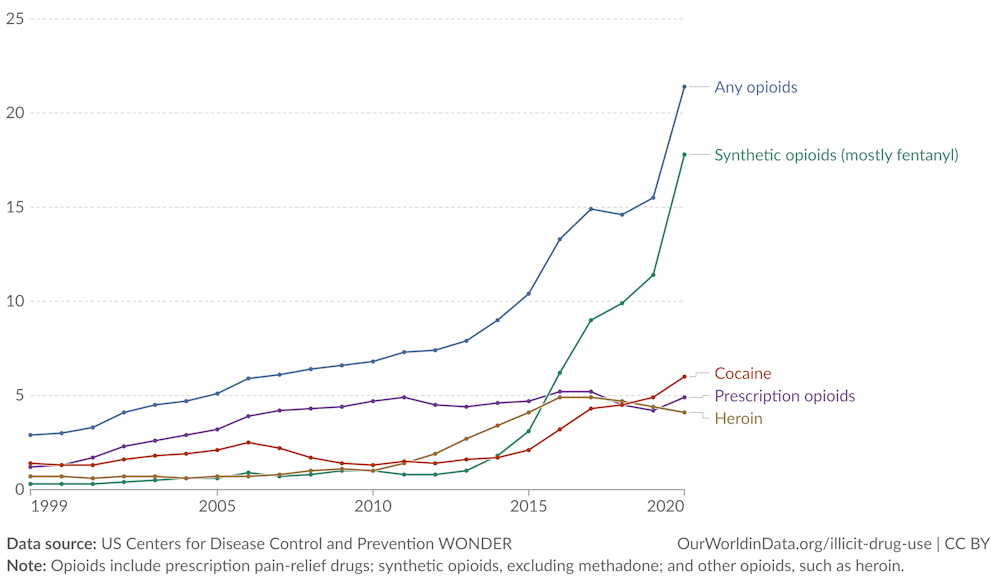
Synthetic drugs are also inflicting great harm on people and communities, caused by an increase in methamphetamine trafficking in south-west Asia, the near and Middle East and south-eastern Europe, and fentanyl overdoses in North America.
Meanwhile, the opium ban imposed by the de facto authorities in Afghanistan is having a significant impact on farmers’ livelihoods and incomes, necessitating a sustainable humanitarian response.
The report notes how organised criminal groups are “exploiting instability and gaps in the rule of law” to expand their trafficking operations, “while damaging fragile ecosystems and perpetuating other forms of organised crime such as human trafficking”.
Illicit drug use is damaging large parts of the world socially, politically and environmentally. Patterns of supply and demand are changing rapidly. In our new longform series Addicted, leading drug experts bring you the latest insights on drug use and production as we ask: is it time to declare a planetary emergency?
At every stage of the process of producing drugs such as cocaine, there are not only societal impacts but environmental ones too. An example of the interconnected relationship between climate change and drugs is demonstrated in the use of land.
Demand for cocaine has grown rapidly across many western countries, and meeting this can only be met by changing how land is used. Forests are cleared in South America to make way for growing coca plants. The refinement of coca into cocaine involves toxic chemicals that pollute the soil and nearby watercourses. This in turn compromises those living in these areas as access to clean water and fertile land is reduced.
Until this is reversed, these local communities will not be able to cultivate the land to earn an income or rely on water sources to live. And each year, some of their number will add to the hundreds of thousands of people around the world who die, directly or indirectly, as a result of illicit drug use.
People in the world with drug use disorders (1990-2021)
Having spent most of my career researching the human toll of drug use at almost every stage of the supply and consumption chain, I believe a complete shift in the way we think about the world’s drug problem is required.
We already have many years of evidence of the ways that drugs – both natural and (increasingly) synthetic – are destabilising countries’ legal and political institutions, devastating entire communities, and destroying millions of lives. My question is, as with climate change, why are we so slow to recognise the existential threat that drug use poses to humanity?
The disconnect between users and producers
For decades, problems with drugs have been viewed as a mainly western issue, affecting Europe, North America and Australasia in terms of drug taking. This perception was fostered in part by US president Richard Nixon’s “war on drugs” announcement in June 1971, when he declared drug abuse to be “public enemy number one”.
This western-centric focus has come at a cost – we still have little data and information about drug use and problems in Africa, for example. But we are beginning to see how far drugs and their associated devastation has reached beyond traditional western borders.
Illicit drug use has increased by 20% over the past decade, only partly due to population growth. Almost 300 million people are estimated to consume illicit drugs regularly, with the three most popular being cannabis (228 million users), opioids (60 million) and cocaine (23 million). According to the UN report:
The range of drugs available to consumers has expanded, making patterns of use increasingly complex and polydrug use a common feature in most drug markets. One in 81 people (64 million) worldwide were suffering from a drug use disorder in 2022, an increase of 3% compared with 2018.
There are multiple harmful consequences of drug use. The largest global burden of disease continues to be attributed to opioids, use of which appears to have remained stable at the global level since 2019, in contrast to other drugs.
In the same way that climate change has threatened whole populations, so too have drugs. Yet many of us remain disconnected from how they are produced and distributed – and the misery they cause throughout the supply chain, all over the world.
The production of cocaine, for example, is associated with violence and exploitation at every stage of the manufacturing process. Death threats to farmers and unwilling traffickers have all increased in parallel with the growing demand for cocaine in the US and Europe.
Global drug use disorder deaths by substance (2000-21):
Organised crime groups not only supply and distribute drugs but also trade in people, whether for the commercial sex trade or other forms of modern slavery. This makes sense as the infrastructure and contacts to move drugs are similar to those used to move humans across borders and even continents. Yet many cocaine users are oblivious – wilfully or otherwise – of the violence associated with how this drug is supplied to them. As the UK National Crime Agency points out:
Reducing demand is another critical factor in reducing the supply of illegal drugs. Many people see recreational drug use as a victimless crime. The reality is that the production of illegal drugs for western markets has a devastating impact in source countries in terms of violence, exploitation of vulnerable and indigenous people and environmental destruction.
While some of the suffering associated with the production of drugs like cocaine makes the headlines, it’s often overshadowed by the glamorisation of criminal drug gangs in films and on TV. To the extent that people worry about the impact of drugs, it’s usually focused on those in our immediate communities, such as people dependent on heroin who are sleeping rough and vulnerable to exploitation. But there have already been other victims before the drug reaches our streets.
Shifts in the global supply chain
Tracking heroin routes demonstrates the way that drug supply is an international effort which affects every community on its journey, from the Afghan farmer to officials who are bribed so the drug can cross borders or be let through ports without being seized, to the person injecting or smoking the finished product.
Much of Europe’s heroin is produced in Afghanistan by small farming operations growing opium, which is then transformed into the drug. Most Afghan farmers are simply surviving growing the crop, and don’t reap significant wealth from their harvest. It is those supplying and distributing the opium as heroin who can make serious money from it.
Meanwhile, following the return of the Taliban to power in Afghanistan in August 2021, those farmers’ livelihoods have faced a new threat.
The Taliban is ideologically opposed to the production of opium. Soon after assuming control, its leaders issued a decree banning farmers from growing opium. They have enforced this by destroying crops when farmers have ignored the ban – although there is still believed to be a significant stockpile of heroin in the country, meaning that as yet, there has not been a big impact on supply to Europe and the UK. But this could change amid the emergence of more deadly synthetic alternatives, including nitazenes and other new synthetic opioids.
Heroin trafficking flows based on reported seizures (2019-22):
Either way, the drug gangs who traffic heroin won’t worry about the opium farmers’ wellbeing. As so often happens with changes in the availability of illicit drugs, when there is a shortage, these groups prove adaptable and nimble at providing alternatives quickly.
While gathering intelligence about organised crime gangs is difficult and potentially dangerous, the European Union Drugs Agency (EUDA) has provided some insights about who these groups are and how they operate. The Netherlands remains an important hub for the distribution of heroin, with several Dutch criminal groups involved in importing and distributing heroin from Afghanistan.
But others are involved too: the EUDA’s intelligence shows that criminal networks with members from Kurdish background are central to the wholesale supply and have control over many parts of the supply chain. These professional, well-organised groups have established legal businesses throughout the route of supply that facilitate their illicit activities – largely along the Balkan route with hubs in Europe.
Intermediate & final recipients of heroin shipments (2019-22):
Unlike these organised crime gangs, governments and law enforcement appear to respond to emerging threats slowly and lack the flexibility and ingenuity that the gangs repeatedly demonstrate.
As drug detection techniques have improved, organised crime has shown how inventive it can be. Taking advantage of the COVID-19 pandemic, dealers used consignments of surgical masks to conceal large quantities of cocaine being trafficked to China and Hong Kong from South America.
And as western markets for cocaine become saturated, organised crime gangs have exploited new markets in Asia, where cocaine seizures, a proxy for use of cocaine, have increased. But the shifting landscape is also reflected in changes in consumption, with use of the synthetic stimulant methamphetamine growing rapidly in Asia – reflected in record levels of seizures in the region in 2023.
For the organised crime gangs, production and supply of synthetic drugs is in many ways easier, as it is not reliant on an agricultural crop in the way that heroin and cocaine are and can be manufactured locally. This reduces the distribution logistics and distance needed for an effective supply chain. According to the UN Office on Drugs and Crime, organised crime gangs are exploiting gaps in law enforcement and state governance to both traffic large volumes of drugs and expand their production in the region.
Where there is destabilisation, there is opportunity for those who seek to profit from drug addiction. In Syria, Russia and Ukraine, war has made some people very rich.
Syria and Russia: the new drug hotspots
The wars in Syria and Ukraine bear testament to the way drugs provide solutions to people who are experiencing the worst of times – and to governments that are ready to exploit evolving situations.
As the war in Syria progressed, the Bashar Al-Assad regime actively developed a strategy to dominate the captagon market in the Middle East and North Africa. First produced in the 1960s in Germany to treat conditions such as attention deficit disorders and narcolepsy and other conditions, captagon is a stimulant that staves off hunger and sleep, making it ideal for military use – particularly in countries where food supplies are inconsistent. It has been referred to as the “drug of jihad” used by Islamic fighters in the region.
As the war progressed in Syria, the country and its leader became increasingly isolated, its economy crashed creating the perfect conditions to develop the trade in captagon. Rather than drug production leading to the collapse of law and order, it was the other way round.
Isolated by the west and with a historically strained relationship with its neighbours including Saudi Arabia, the Assad regime – under the guidance, reportedly, of Assad’s brother Maher al-Assad– ruthlessly positioned itself as the world’s main producer and distributor of this drug, then used this position to leverage its influence and try to reintegrate into the Arab world.
Video by TRT World.
Captagon also provided much-needed revenue for the Assad regime. The drug was estimated to be worth US$5.7 billion annually to the Syrian economy – at a time when western governments have placed severe sanctions on the country, restricting its ability to raise revenue. Saudi Arabia was one of the main countries being supplied captagon by Syria. Until the fall of Assad, it was the senior leadership in Syria that controlled the supply and distribution of the drug – giving rise to the label “the world’s largest narco state”.
The Assad government achieved this position by making captagon good value – a viable alternative to alcohol in terms of price and for those who don’t drink. Exploiting many of its own citizens, the regime encouraged individuals and businesses to participate in manufacturing and distributing the drug.
The fall of Assad and his hurried escape to Russia left the rebel fighters to pick up vast hauls of captagon and other drug ingredients. “We found a large number of devices that were stuffed with packages of captagon pills meant to be smuggled out of the country. It’s a huge quantity,” one fighter belonging to the Hayat Tahrir al-Sham (HTS) group told the Guardian. What this will do to drug production and supply in the region is unclear.
While the latest UN World Drug Report highlights “a rapid increase in both the scale and sophistication of drug trafficking operations in the region over the past decade”, it goes on to highlight that “one of the most striking changes worldwide in drug trafficking and drug use over the past decade has taken place in Central Asia, Transcaucasia [Armenia, Azerbaijan and Georgia] and eastern Europe”, where there has been a shift “away from opiates, mostly originating in Afghanistan – towards the use of synthetic stimulants, notably cathinones … There is hardly any other region where cathinones play such a significant role.”
This is part of “a groundbreaking shift in the global drug trade, pioneered in Russia and now spreading globally,” according to the Global Initiative Against Transnational Organized Crime. This shift is changing the nature of drug sales, using “darknet markets and cryptocurrency for anonymous transactions, allowing buyers to retrieve drugs from hidden physical locations or ‘dead drops’, rather than direct exchanges.”
The rise of Russia’s dead drop drug trade stems from several unique national factors: restrictive anti-drug policies, strained western trade relations, and a strong technological foundation. Enabled by these conditions, the dead drop model has reshaped how drugs are distributed in Russia.
Drug transactions now involve no face-to-face interactions; instead, orders are placed online, paid for with cryptocurrency, and retrieved from secret locations across cities within hours. This system, offering convenience and anonymity, has seen synthetic drugs – especially synthetic cathinones like mephedrone – overtake traditional imported substances like cocaine and heroin in Russia … These potent synthetic drugs are cheap, easy to manufacture, and readily distributed through Russia’s vast delivery networks.
The report notes that this shift in drug distribution has been accompanied by rising levels of violence including punishment beatings, and a public health crisis.
Podcast by the Global Initiative Against Transnational Organized Crime.
Yet officially, there is very little reliable data about drug use in Russia. Under the premiership of Vladimir Putin, Russia has no sympathy with those who are dependent, viewing them as weak and without value. And its invasion of Ukraine three years ago has had ramifications for Ukraine’s users too.
Prior to the war, Ukraine had demonstrated an increasingly progressive policy towards those who had problems with drugs, establishing treatment centers and encouraging access to treatment. Since Russia invaded Ukraine in February 2022, this strategy has been severely set back, with many people who need access to substitute treatments such as methadone unable to secure consistent supply of these drugs.
Another global blind spot is China, where, like Russia, little is known about the extent or type of problems that drugs are causing. Both regimes are ideologically opposed to recreational or problem drug use and, as far as we know, there is no state-funded rehabilitation provided in either country; the approach is to criminalise people rather than offer health-based interventions.
We shouldn’t be too critical as many western countries, including the UK, also need to pivot from a criminal approach to drug problems towards a health-focused one. Portugal made such a policy change several years ago, recognising that people who develop problems with drugs such as dependency need help rather than punishment.
This radical shift in thinking has made a significant change to the way those using drugs are treated, in the main offered help and specialist support rather than being arrested and sent to jail, only to be released and then repeat the same cycle of drug use, arrest and prison.
The evidence of this policy change is impressive: not only have drug-related deaths fallen, but population-level drug use is among the lowest in Europe. Nowhere is this policy shift more urgent than the US.
North America: epicentre of the opioid crisis
In the US, the synthetic opioids fentanyl and oxycodone have contributed to more than 100,000 fatal overdoses each year since 2021. While there are signs this deaths toll is at last beginning to fall, the harm and pain of addiction and overdose affects every strata of American society – as shown in moving portrayals of America’s opioid crisis such as Painkiller and Dopesick. Most fatalities are caused by respiratory depression where breathing is significantly slowed or stops altogether.
Official trailer for Painkiller (Netflix)
Fentanyl is an analgesic drug that is 50-100 times more potent than heroin or morphine. Where China used to be the principal manufacturer and supplier of fentanyl to the US, Mexico is now the primary source. In December 2024, Mexican authorities announced “the largest mass seizure of fentanyl pills ever made” – amounting to more than 20 million doses of fentanyl pills worth nearly US$400 million. The pills were found in Mexico’s Sinaloa state, home of the Sinaloa drug cartel and a hub of fentanyl production,
“This is what makes us rich,” one fentanyl cook recently told the New York Times. He was scathing about the idea that Donald Trump would be able to stamp out the supply of fentanyl from Mexico to the US by threatening Mexico’s government with tariffs. “Drug trafficking is the main economy here.”
However, the introduction of synthetic opioids to the US came not via organised crime but through a deliberate strategy of the pharmaceutical industry. Upon launching its prescription opioid painkiller OxyContin (a brand name for oxycodone) in 1996, Perdue Pharma, owned by the Sackler family, devised a plan to increase prescriptions of the drug by incentivizing and rewarding doctors to give these drugs to their patients. On a business level, this was a success; on a human level, it has been a disaster.
As patients quickly developed tolerance to drugs such as OxyContin, they had to take higher doses to avoid withdrawal symptoms or the positive feelings it gave them. Taking more of these opiates increases the risk of accidental overdose, many of which proved to be fatal. It has also driven those dependent on drugs to the black market, and into the hands of organised drug gangs, as they seek the drugs in greater quantities.
Dependency on fentanyl and other opioids is all-consuming. When not using these drugs, people are entirely focused on ensuring sufficient supply of the next dose. This includes funding supply which can take people to places they thought they would never be, for example breaking the law, shoplifting or getting involved in commercial sex to make enough money to buy drugs.
Synthetic opiates like OxyContin and fentanyl have proved to be classless, ageless and sex blind. The first-hand experience of addiction and fatalities have radically altered the way many Americans think about drugs and the problems they cause. Canada, too, is suffering a major crisis.
Compounding this tragedy is the failure of the state to provide interventions and treatment that could have reduced fatal and non-fatal overdoses. It is only now that evidence-based interventions are beginning to be made widely available, such as access to Naloxone – a drug that can reverse the effects of opiates and potentially save a life.
Of course, it isn’t just hospitals and health professionals that are challenged by the results of widespread use of opioids, but public services like the police and fire service. In some areas of the US, there have been so many daily overdoses that every service was called on to try and deal with it. Local mayors have made it a priority to train police and fire personnel to be trained as first responders, such is the scale of the problem.
But it is not just in North America that we see the failure of politicians and the state to act when faced with growing problems with drugs. In the UK, where record numbers are dying because of using drugs such as heroin, the government has not invested in overdose prevention strategies. At a time when fatal overdoses increase year on year, budgets for specialist treatment have been reduced. It remains to be seen what the recently elected Labour government will do, if anything, to tackle the tragic rise in drug related fatalities.
What connects both examples from the US and UK is the attitude and perception of drug use many of us have. Drug use and the heavy use of prescription painkillers is still heavily stigmatised. Many of us still view this as something individuals bring on themselves or have a choice about.
So, if we don’t care about what happens to people who develop problems with drugs, why should our elected representatives? In part, it is our bigotry that is enabling the lack of timely intervention, despite us possessing the knowledge and evidence of how drug harms can be minimised.
Latin America: breakdown of the rule of law
Under the last Conservative government, the UK Home Office asserted that people who used cocaine recreationally are supporting violence not only in the UK but in the countries that produce its raw ingredients. It’s not clear if this has made any difference to those using cocaine in the UK – personally, I doubt many people consider or are aware of how cocaine is produced or its provenance.
Perhaps if those using cocaine, mainly in western countries, realised the extent of violence and suffering that cocaine manufacture causes they might think again. Latin America has suffered enormously, with few countries there not touched in some way by the violence and breakdown of law associated with drug production and supply. According to the latest UN World Drugs Report:
Global cocaine supply reached a record high in 2022, with more than 2,700 tons of cocaine produced that year, 20% more than in the previous year … The impact of increased cocaine trafficking has been felt in Ecuador in particular, which has seen a wave of lethal violence in recent years linked to both local and transnational crime groups, most notably from Mexico and the Balkan countries.
Cocaine seizures and homicide rates increased five-fold between 2019 and 2022 in Ecuador, with the highest such rates reported in the coastal areas used for trafficking the drug to major destination markets in North America and Europe.
Cocaine trafficking flows based on reported seizures (2019-22):
As with opium production in Afghanistan, it is small-scale farmers in Colombia, Peru and Bolivia that grow the coca plant that will be turned into cocaine. Like their Afghan counterparts, they grow coca as it is more profitable than alternatives such as coffee. While it may be profitable in the short term, there are greater costs to them and their society.
Cocaine production brings with it violence as those further up the drug production chain try to control its trade. Few parts of these societies are unscathed, from bribing local politicians through to whole regions that are controlled by organised crime. Keeping control means that the use of firearms and violence increases. Against this backdrop, it is unsurprising that basic health and social services suffer.
So, while a coca grower may have more money, every other aspect of their life is negatively impacted. Whether it is regional or state institutions, both are compromised by the drug trade and those that control it. While this may not lead to the total collapse of law and order, it does create injustice and distorts the rule of law in many areas of Latin America and the Caribbean, where competition between gangs has also resulted in an increase in homicides.
The impact is on all sectors of society, now and into the future. For example, while historically the role of women has been largely underrepresented in research and drug policy, the UN report recognises that this is changing:
As women increasingly participate in economic activities, the role that women play in the drug phenomenon may become increasingly important. For example, a shift away from plant-based drug production may affect many women in rural households involved in opium poppy and coca bush cultivation.
The UN also identifies the specific risk to young people and the drugs trade, highlighting:
Long-term efforts to dismantle drug economies must provide socioeconomic opportunities and alternatives, which go beyond merely replacing illicit crops or incomes and instead address the root structural causes behind illicit crop cultivation, such as poverty, underdevelopment, and insecurity. They must also target the factors driving the recruitment of young people into the drug trade, who are at particular risk of synthetic drug use.
Meanwhile, demand for treatment in Europe due to problems with cocaine has risen significantly in recent years, since 2011 there has been an 80% increase in treatment presentations. This reflects the growing number of people using cocaine and the rise in purity of the drug.
Amid what may seem to be a story of unrelenting despair and hopelessness, there are local initiatives and even a few state-wide policies that provide optimism that change is possible.
In my roles both as clinician and scientist, I’ve often been amazed by how ingenious people can be when faced with the apparently impossible. For example, the way some people use heroin to dampen their psychotic symptoms, such as auditory and visual hallucinations – or the development of Naloxone, a drug that can temporarily reverse the effects of opioids, providing a short window for emergency services to treat people who have overdosed.
Early in my career, I witnessed the emergence of HIV in the UK in the 1980s. The speed at which this disease spread was not matched by our ability to treat it. Our response to HIV was undoubtedly hampered by prejudice and stigma towards marginalised groups in society, namely gay men and those using drugs (particularly injecting them).
However, unexpectedly and courageously, the Conservative government recognised those who were most at risk of contracting HIV, and organised a package of measures to contain the spread of infection. One part of this was a media campaign based on public health messaging designed to reduce the risk of contracting the disease. But the government also invested in treatment for those who had been infected and engaged with people at high risk, such as those intravenously injecting drugs.
I worked in specialist HIV clinics for those using drugs. At the time, methadone and diamorphine were provided as an alternative to heroin. Regulations and protocols that restricted the prescribing of these medical opioids were eased, so we could ensure patients attending these clinics were given sufficient oral and injectable opioids that they didn’t need to source street heroin.
This meant they had access to medical grade opioids and, crucially, were given regular supplies of sterile injecting equipment. It was this that reduced the risk of contracting HIV, as some people would share injecting equipment when using heroin.
This impressive policy ran counter to the Conservative party’s ideology at the time, which was to punish rather than help those using drugs like heroin. It showed me how, even with traditional mindsets, it is possible to shift policy thinking in the face of a health crisis. And make no mistake, the global drug problem is an ongoing health crisis. Today, the UN points to the risks that intravenous users of drugs still face:
An estimated 13.9 million people injected drugs in 2022, with the largest number living in North America and East and South-East Asia … The relative risk of acquiring HIV is 14 times higher for those who inject drugs than in the wider population globally.
There are, though, signs of positive change in the way some countries and regions are changing their drug policies. Scotland recently opened a drug consumption facility in Glasgow – a safe place for people to use their drugs, usually injecting drugs like heroin. Such spaces provide access to sterile injecting equipment, reducing the risk of blood-borne infections such as HIV or Hepatitis. At the same time, they offer the opportunity to engage with people who have not accessed traditional health services.
Portugal, as mentioned earlier, has made substantial changes to the way it approaches drug use and the problems associated with it. This policy shift since 2000 has saved lives and brought a more humane way of treating people who develop problems with drugs.
Contrast this with the wasted effort and resources ploughed into the war on drugs – initiated by Nixon and followed by so many western governments ever since. My plea to policymakers is simple: employ the same evidence-based science you use for health issues towards drugs and problem drug use.
Science and research can help in many ways, if given the chance. Some of it might seem radical, like providing safe drug consumption spaces. Some of it is more mundane, but vital – like tackling inequality, a clear driver of problem drug use across the world.
But while we often look to politicians to take the lead on change, it is people – us – that really hold the solution. By far the greatest threat to people and society from drugs is ignorance and bigotry. So many lives have been lost to drugs because of shame, either as a driver of drug use or a barrier to seeking help.
Beliefs are notoriously difficult to shift. As with climate change, the most powerful driver of change is personal experience. We know that when a family or community is affected by a drug overdose, their beliefs and perceptions change. But this is not the way any of us should want to see change happen.
To hear about new Insights articles, join the hundreds of thousands of people who value The Conversation’s evidence-based news. Subscribe to our newsletter.
Ian Hamilton does not work for, consult, own shares in or receive funding from any company or organisation that would benefit from this article, and has disclosed no relevant affiliations beyond their academic appointment.
The UK government’s new plan to foster innovation through artificial intelligence (AI) is ambitious. Its goals rely on the better use of public data, including renewed efforts to maximise the value of health data held by the NHS. Yet this could involve the use of real data from patients using the NHS. This has been highly controversial in the past and previous attempts to use this health data have been at times close to disastrous.
Patient data would be anonymised, but concerns remain about potential threats to this anonymity. For example, the use of health data has been accompanied by worries about access to data for commercial gain. The care.data programme, which collapsed in 2014, had an similar underlying idea: sharing health data across the country to both publicly funded research bodies and private companies.
Poor communication about the more controversial elements of this project and a failure to listen to concerns led to the programme being shelved. More recently, the involvement of the US tech company Palantir in the new NHS data platform raised questions about who can and should access data.
The new effort to use health data to train (or improve) AI models, similarly relies on public support for success. Yet perhaps unsurprisingly, within hours of this announcement, media outlets and social media users attacked the plan as a way of monetising health data. “Ministers mull allowing private firms to make profit from NHS data in AI push,” one published headline reads.
These responses, and those to care.data and Palantir, reflect just how important public trust is in the design of policy. This is true no matter how complicated technology becomes – and crucially, trust becomes more important as societies increase in scale and we’re less able to see or understand every part of the system. It can, though, be difficult, if not impossible, to make a judgement as to where we should place trust, and how to do that well. This holds true whether we are talking about governments, companies, or even just acquaintances – to trust (or not) is a decision each of us must make every day.
The challenge of trust motivates what we call the “trustworthiness recognition problem”, which highlights that determining who is worthy of our trust is something that stems from the origins of human social behaviour. The problem comes from a simple issue: anyone can claim to be trustworthy and we can lack sure ways to tell if they genuinely are.
If someone moves into a new home and sees ads for different internet providers online, there isn’t a sure way to tell which will be cheaper or more reliable. Presentation doesn’t need – and may not even often – reflect anything about a person or group’s underlying qualities. Carrying a designer handbag or wearing an expensive watch doesn’t guarantee the wearer is wealthy.
Luckily, work in anthropology, psychology and economics shows how people – and by
consequence, institutions like political bodies – can overcome this problem. This work is known as signalling theory, and explains how and why communication, or what we can call the passing of information from a signaller to a receiver, evolves even when the individuals communicating are in conflict.
For example, people moving between groups may have reasons to lie about their identities. They might want to hide something unpleasant about their own past. Or they might claim to be a relative of someone wealthy or powerful in a community. Zadie Smith’s recent book, The Fraud, is a fictionalised version of this popular theme that explores aristocratic life during Victorian England.
Yet it’s just not possible to fake some qualities. A fraud can claim to be an aristocrat, a doctor, or an AI expert. Signals that these frauds unintentionally give off will, however, give them away over time. A false aristocrat will probably not fake his demeanour or accent effectively enough (accents, among other signals, are difficult to fake to those familiar with them).
The structure of society is obviously different than that of two centuries ago, but the problem, at its core, is the same — as, we think, is the solution. Much as there are ways for a truly wealthy person to prove wealth, a trustworthy person or group must be able to show they are worth trusting. The way or ways this is possible will undoubtedly vary from context to context, but we believe that political bodies such as governments must demonstrate a willingness to listen and respond to the public about their concerns.
The care.data project, was criticised because it was publicised via leaflets dropped at people’s doors that did not contain an opt-out. This failed to signal to the public a real desire to alleviate people’s concerns that information about them would be misused or sold for profit.
The current plan around the use of data to develop AI algorithms needs to be different. Our political and scientific institutions have a duty to signal their commitment to the public by listening to them, and through doing so develop cohesive policies that minimise the risks to individuals while maximising the potential benefits for all.
The key is to place sufficient funding and effort to signal – to demonstrate – the honest motivation of engaging with the public about their concerns. The government and scientific bodies have a duty to listen to the public, and further to explain how they will protect it. Saying “trust me” is never enough: you have to show you are worth it.
Richard Milne receives funding from Wellcome under grant 220540/Z/20/A to the Wellcome Sanger Institute and the Kavli Foundation, grant G115418 to the University of Cambridge.
Jonathan R Goodman does not work for, consult, own shares in or receive funding from any company or organisation that would benefit from this article, and has disclosed no relevant affiliations beyond their academic appointment.
Visit a supermarket in 2025 and you’ll see that a tub of Lurpak butter can cost £5.70. It may strike you that this represents a staggering increase from £3.65 just three years ago, so instead of paying the premium, you reach for the supermarket’s own brand at £3.80.
This kind of switch, multiplied across millions of shopping baskets, represents a massive shift in consumer behaviour that has been largely invisible to official statistics. But that’s changing, as the UK embarks on its biggest revolution in measuring living costs since the second world war.
The Office for National Statistics (ONS) is transforming the way it tracks inflation, moving from painstakingly checking prices to analysing millions of real purchases through supermarket scanners. Consider olive oil, the price of which surged by 47% in a year, or milk, which jumped by more than 25%. While official statistics captured these price rises, they couldn’t track how households adapted – whether by switching to cheaper alternatives, buying less, or cutting back elsewhere. This was a blind spot in our understanding of consumer behaviour.
Currently, price collectors visit stores across the country each month, checking the prices of about 25,000 products. It’s like taking a snapshot of what’s on the shelves at a particular moment. But this system, designed decades ago, often misses the real impact of inflation on different household types in things like choosing different products or switching stores.
This is crucial for understanding the real impact of inflation on lower-income households. These families often have less flexibility in their budgets and must make more dramatic changes to their shopping habits when prices rise. During recent periods of high inflation, many on low incomes found that official figures didn’t match their experience, which was of even higher inflation than the headline rates. And there’s a good reason why.
Inflation statistics aren’t just academic exercises. They drive decisions that affect every aspect of our financial lives. The Bank of England uses them to set interest rates, which in turn influence mortgage payments and savings returns. Employers use them in wage negotiations. Government uses them to adjust benefits, state pensions and tax thresholds. Even commercial contracts, including mobile phone bills and rail fares, are often linked to inflation rates.
When these numbers don’t accurately reflect price pressures, it can have serious consequences. If official figures underestimate the inflation experienced by lower-income households, benefit increases might not keep pace with their actual cost increases. Similarly, if wages don’t rise in line with real living costs, workers effectively experience a pay cut.
The scanner data revolution
The ONS’s new approach, to be introduced next year, will analyse around 300 million price points from supermarket scanners, covering about half of all grocery transactions in the UK. Instead of just seeing what’s on the shelf, they’ll know exactly what prices people are paying at checkouts across the country.
This massive increase in data points – from 25,000 to 300 million – will allow for a more nuanced understanding of consumer behaviour.
The change will also enable quicker identification of emerging price trends. After the start of the COVID pandemic and the Ukraine war, prices of certain goods changed rapidly. Scanner data could help spot these changes faster, allowing for more timely policy responses. It might also reveal regional variations in price pressures.
Take the 2023 surge in food prices – while overall food inflation hit 19%, the impact varied dramatically across households. Current statistics would not capture lower-income families switching from fresh to frozen vegetables, or from branded to value ranges.
In times of cost pressures, shoppers may switch from fresh produce to frozen. sirtravelalot/Shutterstock
With scanner data, policymakers could spot these trends quickly and respond more precisely – perhaps by adjusting benefit payments or targeting support to specific households when essential food costs spike. Instead of waiting for quarterly surveys to reveal hardship, they will be able to see in real time how different groups are coping with price pressures.
The ONS recently said full implementation will come in 2026, a year later than planned. While it will have the technical capability ready by March 2025, it is opting for a year of parallel running to ensure accuracy. This approach reflects how crucial these statistics are for the economy.
It has already modernised other areas of price collection, including incorporating 40 million train fare data points and 300,000 used car prices. But grocery prices, being central to household budgets and varying significantly across different income groups, require extra attention.
The change is coming at a crucial time. Recent years have shown how rapidly economic conditions can change and how differently these changes can affect various segments of society. The pandemic, Brexit adjustments, and global supply chain disruptions have all contributed to price pressures.
For consumers, while the changes won’t directly lower prices, they could lead to more appropriate responses from the Bank of England, government and employers. Most importantly, it could ensure that official inflation figures better reflect the reality of the weekly shop, particularly during times of economic stress.
The transformation of inflation statistics might seem like a technical detail, but its implications reach far beyond government offices and economic reports. It’s about ensuring that the official measures of living costs better reflect the reality experienced by millions of households across the UK. In this challenging economic environment, that’s something worth getting right.
Marcel Lukas receives funding from the British Academy. He is the Director of Executive Education at the University of St Andrews and Fellow of the ONS. The presented views are his own and do not represent the ONS.
Portsmouth City Council’s administration has announced proposals that address immediate and unexpected financial pressures without impacting services to residents. Alongside this the plans also look to mitigate one of the largest financial pressures facing councils across the country.
Nationally councils are facing increasing demand and costs for social care services and temporary accommodation.
In Portsmouth the number of households in temporary accommodation has gone up by 54% in the last year to more than 500, while the costs have risen by 84%. This resulted in the current forecast of costs going £5.9m over budget in 2024/25, even higher than the 5.6m shortfall predicted in October 2024.
The budget proposals include investing £31m in acquiring properties to use as temporary accommodation for residents who might find themselves in situations where they have been made homeless. This would reduce the current need to rely on less suitable but costly privately-rented accommodation, with an expectation this will start to ease the existing budget pressure this year and significantly improve the position over the following two years.
Cllr Steve Pitt, Leader of Portsmouth City Council, said:
“It is good news for the city that we’re able to put forward a budget that addresses the immediate financial pressures without reducing services that people rely on.
However, there are funding problems nationally with social care and temporary accommodation that need to be solved. As insufficient government support is coming forward we want to take the proactive steps we can to address these issues and provide better solutions for our residents. The revenue budget savings need to come from £191m of council spending and will take the council’s total savings made in the last 14 years to £110m.
“Last year it was forecast we would need to save £1m in this budget, these spending pressures doubled that and we need to stop that happening in future years. By investing in our own temporary accommodation stock we can save the council tens of millions of pounds in the next decade.”
In addition to the longer-term view the council’s administration is proposing £2m of savings to its revenue budget, which will be met through efficiencies and generating extra income without seeing any significant reduction in services to the public.
The proposals also include raising council tax in line with government’s expectation of 4.99%, 2% of which will go specifically towards funding adult social care. In total the council tax increase would raise £5.1m for the council and see the average Portsmouth home’s (band B) council tax bill increase by the equivalent of £1.29 per week.
Cllr Pitt added:
“We are always mindful of the impact of the decision to increase council tax and don’t take the decision lightly, but the funding government gives us is based on the assumption we will increase council tax by 4.99%, and it still isn’t enough to pay for everything we need. Councils relying on significant use of reserves to balance budgets are increasingly finding themselves in severe financial distress and here in Portsmouth we will not allow that to happen. The only alternative to raising council tax, is to reduce services that people rely on and doing that would hurt our residents even more, especially those who rely on them the most.”
The council will be receiving additional income from renting out new business spaces while there will be increases of 10p or 20p an hour to parking charges in certain locations, in line with existing policy. This follows a freeze on parking charges last year, meaning it is a below inflation increase over the two-year period.
The proposals also include investment in regeneration and economic development, such as future development of the city centre. Funding has been allocated to develop options for regenerating Guildhall Square and finding a more efficient solution to the current Civic Offices building, alongside continued financial support for the City Centre North project, which will deliver new housing, leisure and retail space to the area.
The budget proposals will be considered at the council’s Cabinet meeting on 11 February and if accepted will then go to the Full Council meeting on 25 February for approval.
Home » Latest News » New campaign puts the focus on food waste
A campaign gets underway today (Monday 3 February) to try and boost the uptake of food waste collections across the district.
Our officers have been working with counterparts at Kent County Council on the project.
Over the next few weeks, ‘no food waste stickers’ will be placed on the black bins of properties that are suitable for food waste collections, encouraging residents to use their food caddies instead.
This project does not mean that people who continue to use their black bin for food waste will not get it emptied. Black bin collections will continue unchanged.
But we are hoping it will result in residents thinking about how they dispose of their food waste and changing their behaviour to improve recycling rates.
Food caddies are emptied weekly using a separate vehicle and are easy to rinse out and keep clean.
Residents can place any raw or cooked food in their caddy to be recycled, but not anything that is not solid food, such as oils, liquids or packaging of any sort.
The project has been funded jointly by us and KCC, and because recycling food uses less energy and is less costly than burning food waste mixed with general rubbish, the money spent on it should be recovered by lower disposal costs in the future.
BOSTON — U.S. Immigration and Customs Enforcement apprehended an illegally present Dominican national convicted for murder in Massachusetts in 2007 when officers arrested Cesar Augusto Polanco, 59, January 24 at the Massachusetts Correctional Institution in Norfolk after he was released from state custody.
“Cesar Augusto Polanco came to this country lawfully; however, his horrendous actions have deemed him a significant threat to the residents here,” said acting ICE Enforcement and Removal Operations Boston Field Office Director Patricia H. Hyde. “We will not allow our communities to be subjected to the danger posed by violent alien offenders. ICE ERO Boston will continue to prioritize public safety by arresting and removing these criminals from New England.”
Polanco lawfully entered the United States at John F. Kennedy International Airport March 18, 1990 and later violated the terms of his lawful admission.
Polanco was convicted of murder March 8, 2007, and sentenced to life in prison with the possibility of parole. ICE issued an immigration detainer against Polanco June 20, 2013, with the Massachusetts Correctional Institution.
ICE served Polanco with a notice to appear before a Department of Justice immigration judge December 20, 2013, and was ordered removed from the U.S. to the Dominican Republic June 25, 2014.
The Massachusetts Correctional Institution honored the immigration detainer and informed ICE Boston of Polanco’s release. Polanco remains in ICE custody pending removal proceedings.
“ICE recognizes the importance of our relationships with state and local law enforcement partners, and we will continue to share information and coordinate operations with those partners in a way that ensures safety within our community,” Hyde said. “As a result of this partnership, the Massachusetts Correctional Institution contacted ICE and allowed for a safe transfer of a violent criminal. In doing so, they enabled us to make the arrest in the safety of a jail cell rather than sending a team of officers into the community to make a potentially dangerous arrest.”
The 287(g) program – through the delegation of some immigration officer duties – allows ICE to cooperate with its state and local law enforcement partners to protect the homeland through the arrest and removal of noncitizens who undermine the safety of U.S. communities and the integrity of U.S. immigration laws. While the 287(g) Program has yielded successes, ICE recognizes the program is not universally regarded as the most effective or appropriate model in every jurisdiction. Accordingly, ICE maintains its authority to utilize 287(g) agreements and exercise strict oversight. ICE continually evaluates the overall effectiveness of the program.
Members of the public with information regarding child sex offenders can report crimes or suspicious activity by dialing the ICE Tip Line at 866-DHS-2-ICE (866-347-2423) or completing the online tip form.
Learn more about ERO Boston’s mission to increase public safety in our New England communities on X at @EROBoston.
FAIRFAX COUNTY, Va. — U.S. immigration and Customs Enforcement apprehended an illegally present Salvadoran national convicted of sexually assaulting a Virginia resident when officers with ICE Washington, D.C. arrested Nicolas Alberto Hernandez-Lopez, 46, Jan. 15 in Fairfax County, Virginia.
“Nicolas Alberto Hernandez-Lopez illegally reentered the United States, and then victimized a resident of our Virginia community. This is not something that the officers of ICE Washington, D.C. will tolerate,” said ICE Enforcement and removal Operations Washington, D.C. acting Field Office Director Patrick Divver. “We will continue our mission of arresting public safety threats and removing egregious alien offenders from our Washington, D.C. and Virginia neighborhoods.”
Hernandez-Lopez lawfully entered the U.S. and later violated the terms of his lawful admission.
Officials in Fairfax County, Virginia convicted Hernandez-Lopez of second-degree sexual assault March 7, 2019, and sentenced him to prison.
Officers with ICE arrested Hernandez-Lopez April 7, 2023, and served him with a notice to appear before a Department of Justice immigration judge. The immigration judge ordered Hernandez-Lopez removed from the U.S. on May 23, 2023, and ICE officers removed Hernandez-Lopez to El Salvador June 9, 2023.
Hernandez-Lopez unlawfully re-entered the United States on an unknown date, at an unknown location, and without being inspected, admitted, or paroled by a U.S. immigration official.
Officers with ICE Washington, D.C. arrested Hernandez-Lopes January 15 in Fairfax County, Virginia. He remains in ICE custody.
Members of the public with information regarding child sex offenders can report crimes or suspicious activity by dialing the ICE Tip Line at 866-DHS-2-ICE (866-347-2423) or completing the online tip form.
Learn more about ERO Boston’s mission to increase public safety in our New England communities on X at @EROWashington.

.jpg)