Category: United Kingdom

  • MIL-OSI United Kingdom: Manchester Christmas Markets – location lowdown for festive markets in Santa’s favourite city

    Source: City of Manchester

    Manchester Christmas Markets return on 8 November

    With only a month to go until the opening of Manchester’s world-famous Christmas Markets on Friday 8 November, the location lowdown for this year’s festive markets in Santa’s favourite city reveals even more stalls, more choice and more space for visitors to tackle their Christmas shopping, or to simply soak up the sights and sounds of the season.

    Open daily for a six-week seasonal take-over of the city centre until Sunday 22 December, this year’s markets will include seven weekends of festive fun for visitors and Christmas shoppers instead of the usual six, due to the way dates fall.

    Taking place in the city now for over a quarter of a century, with the city’s very first festive market held in December 1998,  Manchester’s annual Christmas markets are known across the globe, each year bringing millions of people into the city centre to spend time with friends and family and fill up on fantastic festive treats.

    This year’s markets will see over two hundred of the iconic wooden ski chalet market stalls across nine different locations throughout the city centre.

    New for this year is an expanded Winter Gardens at Piccadilly, with more space and stalls to enjoy along with two fabulous festive marquees fit for the Santa season and festooned with twinkling fairy lights, to provide more of the all-important under-cover space for Christmas shoppers to get cosy if the weather turns cold.

    Also new this year at the Winter Gardens is an expanded seasonal offer from next-door neighbours Piccadilly Street Food Market, with stalls there also staying open until 9 pm each night, serving up their unique flavours from around the world – mouth-watering pictures of which are regularly to be found picking up the likes on social media.

    With the Winter Gardens at Piccadilly at the heart of this year’s Christmas Markets, the markets will also see the transformation of Market Street, Cathedral Gardens, Exchange Street, New Cathedral Street, St Ann’s Square, Exchange Square, The Corn Exchange, and King Street into Manchester’s very own magical Christmas wonderland.

    Visitors will be spoilt for choice at Manchester’s Christmas markets

    Here’s the full lowdown on each of Manchester’s nine Christmas market locations this year and what to expect:

    The Winter Gardens at Piccadilly
    Piccadilly Gardens will be transformed into a bigger and better Winter Gardens this year with two twinkling light filled marquees providing more under-cover space for Christmas shoppers.
    All the festive food and drink favourites are back for 2024 – expect pancakes, bratwursts, churros, and more, with bars serving continental and foreign ales. Plus, the much-loved Piccadilly Street Food Market will also stay open until 9pm each night, serving up flavours from across the globe.
    Winter Gardens will offer live entertainment and music everyday beneath the shelter of marquees and under-cover seating areas – perfect for taking the weight off your feet and cosying up with family and friends.

    Market Street
    Get your Christmas shopping all wrapped up on Market Street with even more stalls lined up there for this year.
    Expect a Santa’s sack full of goods on offer from stalls offering bespoke crafts, gifts and produce – from tweed hats to spiced rum, Christmas decorations to candles, freshly baked coconut macaroons and jewellery, to gift sets of cheese truckles, and much more. 

    Cathedral Gardens
    Families will find there’s plenty for all ages – particularly our youngest visitors – to enjoy at Cathedral Gardens.
    Experience Skate Manchester’s huge, covered ice rink (open daily) and free live entertainment hosted every Thursday to Sunday all the way up to New Year’s Eve. Plus, warm up with authentic crepes, gourmet hotdogs, hot chocolate, and much more. 

    St Ann’s Square and Exchange Street
    St Ann’s Square was the original site of Manchester’s first-ever Christmas Market
    Take in the atmosphere, cosy up for a drink in the undercover bar and enjoy a selection of authentic German goods from some of our longest-standing traders. Think German beers and cherry glühwein,  bratwurst, salt and pepper chicken from Northern Quarter favourite, Yard and Coop, or hot chocolate cones poured right from the chocolate taps.

    Plenty of stalls for foodies to enjoy

    New Cathedral Street
    New Cathedral is your go-to spot for high end gifts and foodie favourites.
    Craft-lovers will be enchanted by the selection of handmade candles, ceramics, local spirits, and thoughtful keepsakes on offer – a must-visit destination for Christmas shopping. And when your shopping’s all done, savour a cold beer and currywurst from The Witch House or a hearty burrito from Wrap Up. 

    Exchange Square
    One of the largest market locations in the city Exchange Square is where Christmas shoppers will find a host of seasonal stalls selling everything from clothing, soaps, boutique babywear, local crafts, and handmade gifts.
    Feeling chilly? Warm up at The Mill Exchange with their Mancunian mulled wine made on site and enjoy the legends of Manchester artwork adorning their walls. This is also the place to try the much-loved Yorkshire pudding wrap from Porky Pig, as well as everything from birria bowls and hot curries to mini pancakes and fresh fudge.

    King Street
    King Street is a must-visit for foodies and shoppers alike.
    Authentic Italian deli, Ballaro, will be serving up fresh cannelloni and arancini, and El Gato Negro will bring some Mediterranean menu flavours to their seating area. Plus, a range of stalls to browse selling crafts including the always popular French soap stall, personalised tree decorations, handmade wooden furniture and beautifully illustrated bottles from local distillery, Salford Rum.

    The Corn Exchange
    Situated between Corn Exchange and Shambles Square, you’ll find some of the most unique gifts available from our crafters.
    Expect handmade pies, Nepalese woollen jumpers, handmade jewellery, Christmas decorations made from recycled wood, plus photo frames, artisan chocolates and much more.

    Lots of tasty treats on offer

    Councillor Pat Karney, Christmas spokesperson for Manchester City Council, said: “Manchester Christmas Markets are by a million miles the very best in the world and the phenomenal number of festive visitors we get each year flocking into the city centre specially to visit them one hundred per cent proves this.

    “2024 looks set to be Manchester’s best-ever Christmas yet ,and with an extra weekend this year to really make the most of our legendary Christmas Markets, I can already smell the cinnamon and churros, and just can’t wait!”

    Manchester’s Christmas Markets will be open daily from Friday 8 November to Sunday 22 December.
    Craft stalls and stalls selling seasonal goods will be open each day from 10 am – 8 pm, whilst food and drink stalls will be open from 11 am – 9 pm each day.

    The markets wrap for Christmas at 6pm on Sunday 22 December, except for the food and drink stalls at Cathedral Gardens which will stay open until December 31 alongside the ice rink.

    Stalls selling all kinds of crafts and gifts .

    More information on Christmas in Manchester here

    MIL OSI United Kingdom

  • MIL-OSI Translation: VATICAN – Pope announces a Consistory: 21 new Cardinals in December

    MIL OSI Translation. Region: Italy –

    Source: The Holy See in Italian

    Sunday, October 6, 2024

    Vatican Media

    Vatican City (Agenzia Fides) – “I am pleased to announce that on December 8th I will hold a Consistory for the nomination of new Cardinals”. Surprisingly, as has often happened in these years of pontificate, Pope Francis, at the Angelus, announces the imposition of the red hat. In total, 21 monsignors will receive the purple: 10 are European, of which 4 are Italian; 6 are from the American continent, of which 5 are South American, 4 Asian, two African. Of these, only one, having reached the age limit, will not be an elector in a future conclave. Among them also Bishop Baldassarre Reina who from today, as specified by the Pontiff, will hold the role of new Vicar General for the Diocese of Rome, thus succeeding Cardinal De Donatis, appointed Major Penitentiary last April. Here are the names of the new Cardinals: H.E. Monsignor Angelo Acerbi, Apostolic Nuncio; H.E. Monsignor Carlos Gustavo Castillo Mattasoglio, Archbishop of Lima, Peru; H.E. Monsignor Vicente Bokalic Iglic, C.M., Archbishop of Santiago del Estero, Primate of Argentina; H.E. Mons. Cabrera Gerardo Cabrera Herrera, O.F.M., Archbishop of Guayaquil, Ecuador; H.E. Monsignor Natalio Chomalí Garib, Archbishop of Santiago de Chile, Chile; H.E. Mons. Tarcisio Isao Kikuchi, S.V.D, Archbishop of Tokyo, Japan; H.E. Monsignor Pablo Virgilio Siongco David, Bishop of Kalookan, Philippines; H.E. Monsignor Ladislav Nemet, S.V.D., Archbishop of Beograd -Smederevo, Serbia;H.E. Mons. Jaime Spengler, O.F.M, Archbishop of Porto Alegre; H.E. Monsignor Ignace Bessi Dogbo, Archbishop of Abidjan, Ivory Coast; H.E. Monsignor Jean-Paul Vesco, O.P., Archbishop of Alger, Algeria; H.E. Mons. Paskalis Bruno Syukur, O.F.M, Bishop of Bogor, Indonesia; H.E. Mons. Joseph Mathieu, O.F.M. Conv., Archbishop of Tehran Ispahan, Iran; H.E. Monsignor Roberto Repole, Archbishop of Turin, Italy; H.E. Monsignor Baldassare Reina, from today Vicar General for the Diocese of Rome; H.E. Mons. Francis Leo, Archbishop of Toronto, Canada; H.E. Mons. Rolandas Makrickas, Coadjutor Archpriest of the Papal Basilica of Santa Maria Maggiore; H.E. Mons. Mykola Bychok, C.Ss.R., Eparch of Saints Peter and Paul of Melbourne of the Ukrainians; Rev. Father Timothy Peter Joseph Radcliffe, O.P, theologian; Rev. Father Fabio Baggio, C.S., Under-Secretary of the Dicastery for the Service of Integral Human Development; Mons. George Jacob Koovakad, Official Secretary of State, responsible for Papal Trips. In total, in these almost twelve years of pontificate, Pope Francis has created 142 cardinals of which 113 electors. From Sunday 8 December 2024, the College of Cardinals will be enriched with new members and will therefore be composed of 256 members, of which 141 electors and 115 non-electors. The biographies of the new cardinalsS. E. Monsignor Tarcisio Isao KIKUCHI, S.V.D., Archbishop of Tokyo (Japan). He was born on 1 November 1958 in the prefecture of Iwate, diocese of Sendai. He studied in Japan. He made his perpetual profession in the Congregation of the Missionaries Verbiti in March 1985 and was ordained a priest in March 1986. He completed his studies at the “Spiritual Institute of Sacred Heart” in Melbourne (Australia). He was: 1986-1992: Missionary in the dioceses of Accra and Koforidua, in Ghana; 1993-1994: Trainer and vice-prefect of Verbiti postulants in Japan, and director for vocations of the Institute; 1994-1999: Provincial Councilor of the Verbiti. Since 1994: Teacher at Nanzan University, member of the “International Aid Committee” of the Episcopal Conference of Japan. Since 1996 he has been Coordinator of the “Justice and Peace” Office in the Asia and Pacific area of ​​the Verbiti. Since 1998: Member of Caritas Japan and representative of the Japanese Bishops for various international conferences and meetings. Since 1999: Provincial Superior of the Verbites in Japan (second mandate since 2002). Executive Director of Caritas Japan. Member of the committee for the ongoing formation of the clergy of the diocese of Nagoya. Prior to his installation as archbishop of Tokyo in 2017, he had served as bishop of Niigata since 2004, when he was first appointed as bishop.H.E. Monsignor Pablo Virgilio SIONGCO DAVID, Bishop of Kalookan (Filipinas) He was born in Betis, Guagua, Pampanga, in the archdiocese of San Fernando, on 2 March 1959. He was ordained a priest on 12 March 1983 for the archdiocese of San Fernando. After a year as assistant parish priest, he was Director of the Mother of God Counsel Seminary until 1986. From 1986 to 1991 he studied abroad, obtaining a licentiate and then a doctorate in Holy Theology at the Catholic University of Louvain, and attending courses at the Ecole Biblique de Jerusalem where he graduated. Upon returning to his homeland he held various management and teaching roles in the educational team of the archdiocesan seminary. In 2002 he became director of the seminary’s Theology Department, continuing to teach Sacred Scripture. In the same year he was elected Vice-President of the Association of Catholic Biblical Scholars of the Philippines and Vice-President of the Archidiocesan Media Apostolate Networks. He is the author, at both an academic and popular level, of several publications on Sacred Scripture. On 27 May 2006 he was appointed titular bishop of Guardialfiera and auxiliary of San Fernando by Benedict XVI, and was consecrated the following 10 July. On 14 October 2015, he was appointed Bishop of Kalookan (Philippines).H.E. Monsignor Paskalis Bruno SYUKUR, O.F.M., Bishop of Bogor (Indonesia) He was born on 17 May 1962 in Ranggu, in the diocese of Ruteng, on the Island of Flores (Indonesia). After primary school, he attended the Pius X minor seminary in Kisol. He completed his philosophical studies at the Faculty of Driyakara Philosophy in Jakarta, then continued his theological studies at the Faculty of Theology in Yogyakarta. He made his solemn profession with the Franciscans Minor on 22 January 1989. He was ordained a priest on 2 February 1991. He then held the following roles: 1991-1993: Ministry in the parish of Moanemani, diocese of Jayapura (West Papua); 1993-1996: Studies for the Licentiate in Spirituality at the Antonianum, in Rome; 1996-2001: Master of Novices at Depok; 1998-2001: Guardian of the O.F.M. Community in Depok and Member of the Provincial Council; 2001-2009: Provincial Minister in Indonesia; since 2009: General Definitor of the O.F.M. for Asia and Oceania in Rome. On 21 November 2013, Pope Francis appointed him Bishop of the diocese of Bogor (Indonesia).S. E. Mons. Dominique Joseph MATHIEU, O.F.M. Conv., Archbishop of Tehran Ispahan (Iran) He was born on 13 June 1963 in Arlon, Belgium. After his high school studies, he entered the Order of Friars Minor Conventual. He made his solemn profession in 1987 and was ordained a priest on 24 September 1989. Since 2013 he has been incardinated in the Provincial Custody of the East and of the Holy Land. Within his Order, he held various positions: Vocational Promoter, Secretary, Vicar and Provincial Minister of the Belgian Province of the Conventual Friars Minor, becoming General Delegate after unification with the Province of France; Rector of the National Sanctuary of Saint Anthony of Padua in Brussels and Director of the related Confraternity. He was also President of two different non-profit associations linked to the presence of the Conventual Friars Minor in Belgium, with roles of responsibility in the Catholic School of Landen. He was President of the Central European Federation of Conventual Friars Minor and a member of the International Commission for the Economy of his Order. Having moved to Lebanon in 2013, he was Custodial Secretary, Formator, Master of Novices and Rector of Postulants and Candidates in the Provincial Custody of the East and the Holy Land. Since 2019 he has been General Definitor and General Assistant for the Central European Federation of Conventual Friars Minor. On 8 January 2021, he was appointed Archbishop of Tehran Ispahan (Iran).H.E. Mons. Jean-Paul VESCO, O.P., Archbishop of Alger (Algeria) He was born in Lyon (France) on 10 March 1962. He obtained a degree in Law and practiced law in a lawyer’s office in Lyon, until the choice to enter the Order of Preacher Fathers. In 1995 he began his novitiate year and made his first religious profession on 14 September 1996. He was ordained a priest on 24 June 2001 in Lyon. He arrived in the diocese of Oran (Algeria) on 6 October 2002 at the convent of Tlemcen. In 2004 he was chosen as a delegate of the diocese for the preparation of the Interdiocesan Assembly of Algeria (AIDA). Since 2005 he has been Vicar General of the same diocese and since 2007 he has also assumed the office of diocesan bursar. On 16 October 2007 he was elected Superior of the Dominican Community of Tlemcen, a position he held until January 2011, when he was elected Provincial Superior of France. On 1 December 2012, he was appointed Bishop of Oran (Algeria), until 27 December 2022, when the Holy Father appointed him Metropolitan Archbishop Alger (Algeria).H.E. Mons. Ignace BESSI DOGBO, Archbishop of Abidjan (Ivory Coast) He was born on 17 August 1961 in Niangon-Adjamé, Diocese of Yopougon. He was ordained a priest on 2 August 1987. He has held the following positions: parish ministry (1987-1989); License in Exegesis from the Pontifical Biblical Institute of Rome; diocesan director of the Pontifical Mission Societies (1993-1995); Vicar General of Yopougon (1995-2004); parish priest of Yopougon Cathedral (1997-2004); Professor of Biblical Languages ​​in the Saint Paul Major Seminary of Abadjin Kouté; Diocesan Spiritual Assistant of the J.E.C. He was elected Bishop of the Diocese of Katiola on 19 March 2004 and received episcopal consecration on the following 4 July; President of the Episcopal Conference (2017-2023); since 2017, Apostolic Administrator ad nutum Sanctae Sedis of the Metropolitan Archdiocese of Korhogo; from 2021 to 2024, Metropolitan Archbishop of Korhogo. On 20 May 2024, he was appointed Archbishop of Abidjan (Ivory Coast).H.E. Mons. Carlos Gustavo CASTILLO MATTASOGLIO Archbishop of Lima (Peru) He was born in Lima on 28 February 1950. Having entered the Santo Toribio major seminary of Mogrovejo of the archdiocese of Lima, he was sent to Rome for his ecclesiastical studies where, in 1979, he obtained a bachelor’s degree in philosophy and, in 1983, in theology from the Pontifical Gregorian University. He was ordained a priest, incardinating in the archdiocese of Lima on 15 July 1984. He obtained the licentiate in 1985 and, in 1987, the doctorate in dogmatic theology, again from the Pontifical Gregorian University. He has held the following positions: Professor of Theology at the Pontifical Catholic University of Peru (from 1987 to the present); Councilor of the National Union of Catholic Students (1987-1998); Parochial vicar in the parish of San Francisco de Asís (1987-1990); Parochial vicar of the parish of La Encarnación (1990-1991); Archdiocesan head of the University Pastoral of Lima and collaborator at the parish of San Juan Apóstol (1991-1999); Vicar for youth ministry of Lima, organizer of the vicar for youth and responsible for vocational ministry (1996-1999); National Councilor of the Episcopal Commission for Youth of the Peruvian Episcopal Conference (1990-2001); parochial vicar of the parish of San Juan Apóstol (1999-2001); National councilor for youth ministry (2000); parish priest of the parish of Virgen Medianera (2002-2009); Director of relations with the Church and member of the University Council of the Pontifical Catholic University of Peru (2003-2006); Parish priest of the parish of San Lázaro (2010-2015). On 25 January 2019 Pope Francis appointed him Metropolitan Archbishop of the archdiocese of Lima (Peru).H.E. Monsignor Vicente BOKALIC IGLIC C.M., Archbishop of Santiago del Estero (Primado de la Argentina). He was born on 11 June 1952 in Lanús (Buenos Aires). In 1970 he entered the Congregation of the Mission (Lazarists). He studied philosophy at the Jesuit Maximo College in San Miguel, and theological studies at the Seminary of Buenos Aires. He took his perpetual vows on 5 June 1976. Ordained a priest on 1 April 1978, he was in charge of the vocational and youth ministry of Buenos Aires and, since 1981, he has also exercised the office of Parish Vicar of Nuestra Señora de la Medalla Milagrosa. From 1983 to 1986 he was a formator and bursar, and from 1987 to 1990 superior in the Seminary of the Congregation of the Mission. From 1991 to 1993 he worked again in the Nuestra Señora de la Medalla Milagrosa Parish, from 1994 to 1997 he was a missionary in the Prelature of Deán Funes and, from 1997 to 2000, Superior of the Seminary of his Congregation in San Miguel. Missionary and parish priest in the diocese of Goya from 2000 to 2003, from December 2003 to December 2009 he exercised the office of Provincial Superior of the Congregation of the Mission. Then he was sent again to the Nuestra Señora de la Medalla Milagrosa Parish in Buenos Aires. On 15 March 2010 he was appointed titular bishop of Summa and auxiliary of Buenos Aires (Argentina). He received episcopal consecration on May 29 of the same year. On 23 December 2013, Pope Francis appointed him Bishop of Santiago del Estero (Argentina). On 22 July 2024, the Holy Father elevated the Diocese of Santiago del Estero (Argentina) to the rank of Primatial Archdiocese of Argentina, and appointed him the first Archbishop of Santiago del Estero (Argentina).H.E. Mons. Luis Gerardo CABRERA HERRERA, O.F.M., Archbishop of Guayaquil (Ecuador). He was born in Azogues on 11 October 1955. He attended the Franciscan minor seminary in Azogues and Quito, studied philosophy and theology at the Pontifical Catholic University of Ecuador and he obtained a Doctorate in philosophy from the Antonianum in Rome. He was ordained a priest on 3 September 1983. He held the following roles: assistant to the Master of Novices O.F.M. and then novitiate master of Riobamba; member of the Provincial Council of the Order, responsible for vocational pastoral care and the formation of aspirants of the Franciscan province; Director of the philosophical-theological institute “Card. B. Echeverría” of Quito; Secretary of the ecumenism sector of the Episcopal Commission of Magisterium and Doctrine of the Ecuadorian Episcopal Conference. In August 2000 he was elected Provincial Minister of the Franciscans of the Province of Ecuador and Vice President of the Conference of Religious. From 2003 until 2009 he was Definitor of the Franciscan Order and Delegate of the Minister General for the Franciscan Provinces of Latin America and the Caribbean. On 20 April 2009 he was appointed Archbishop of Cuenca, receiving episcopal consecration the following 4 July. In the period 2001-2014 he was Vice-President of the Ecuadorian Episcopal Conference. Since 24 September 2015 he has been Archbishop of Guayaquil (Ecuador).H.E. Monsignor Fernando Natalio CHOMALÍ GARIB Archbishop of Santiago de Chile (Chile) He was born on 10 March 1957 in Santiago de Chile. After graduating in Civil Engineering from the Pontificia Universidad Católica de Chile, he completed his philosophical and theological studies at the Pontifical Major Seminary of Santiago. He received priestly ordination on 6 April 1991 for the Archdiocese of Santiago de Chile. He held the following positions and carried out further studies: Licentiate in Moral Theology at the Pontifical Alphonsian Academy in Rome; Doctorate in Theology at the Pontifical Gregorian University of Rome; Master in Bioethics at the Pontifical John Paul II Theological Institute for Marriage and Family Sciences in Rome; Parish vicar; Episcopal Delegate for University Pastoral; Professor of Moral Theology and Bioethics in the Faculties of Theology and Medicine of the Pontificia Universidad Católica de Chile and in the Major Seminary; Parish Priest of Santa María de la Misericordia; Moderator of the Curia and President Delegate of the Economic Council of the Archdiocese of Santiago de Chile; Member of the Pontifical Academy for Life (since 2001). On 6 April 2006 he was appointed titular bishop of Noba and auxiliary of Santiago de Chile, receiving episcopal consecration the following 3 June. On 20 April 2011 he was appointed Archbishop of Concepción and, on 25 October 2023, Archbishop of Santiago de Chile. He is currently Vice President of CECH.S.E. Mons. Jaime SPENGLER, O.F.M., Archbishop of Porto Alegre (Brasil) He was born on 6 September 1960, in Blumenau, in the State of Santa Catarina, in the diocese of the same name. He did his Franciscan postulancy in Guaratinguetá (1981) and his novitiate in Rodeio (1982); he made his perpetual profession in 1985 and was ordained a priest on 17 November 1990. He completed his studies in philosophy at the São Boaventura Philosophical Institute in Campo Largo and those in theology, first at the Franciscan Theological Institute in Petrópolis (1986- 1987) and then at the Theological Institute of Jerusalem (1987-1990), where he obtained a license in Sacred Scripture. Subsequently he obtained a degree in Philosophy in Rome, at the Pontifical Athenaeum Antonianum (1995-1998). He has held the following positions: Professor in the Franciscan Novitiate in Rodeio, Master of Postulants (1990); Professor in the Postulancy and Parish Vicar in Guaratinguetá (1991-1994); Professor and Vice-Rector of the São Boaventura Institute of Philosophy in Campo Largo (2000-2003); Religious Assistant of the Federação Brasileira das Irmãs Concepcionistas (2001-2002); local superior and parish vicar of the Senhor Bom Jesus Parish, in the archdiocese of Curitiba (2004-2006), Professor of Philosophy at the São Boaventura Faculty in Curitiba (2000-2003); Vice-president of the Franciscan Association of Ensino Senhor Bom Jesus in Campo Largo and Guardian of the Local Convent. On 10 November 2010 he was appointed titular bishop of Patara and auxiliary of Porto Alegre. He received episcopal ordination on 5 February 2011. On 18 September 2013, he was appointed Metropolitan Archbishop of Porto Alegre (Brazil).H.E. Mons. Francis LEO, Archbishop of Toronto (Canada) He was born on 30 June 1971 in Montreal (Canada). In 1990 he entered the Seminary obtaining the Baccalaureate in Philosophy (1992), the Licentiate and then the Doctorate in Theology (2005), with specialization in Marian Studies, obtained at the International Marian Research Institute (IMRI), University of Dayton (Ohio ). He was ordained a priest on December 14, 1996 for the Metropolitan Archdiocese of Montreal. After his priestly ordination, he was Deputy Parish Priest of Notre-Dame-de-la-Consolata (1996-2001); Administrator of the Parish Saint-Joseph-de-Rivière-des-Prairies (2003-2005); Chaplain of the Roscelli School and religious teacher of the Collège Reine-Marie (2003-2005); Parish priest of Saint-Raymond-de-Peñafort (2005-2006). From 2006 to 2008 he was sent to the Pontifical Ecclesiastical Academy in Rome. Having entered the diplomatic service of the Holy See, he worked in the Apostolic Nunciature in Australia (2008-2011) and then at the Study Mission of the Holy See in Hong Kong (2011-2012). Returning to Montreal in 2012, he was appointed Director and Professor of Dogmatics of the Major Seminary, Director of the Department of Canon Law of the IFTM and Vice President of the Diocesan Work for Vocations. From 2013 to 2015 he was a member of the Presbyteral Council. From 2015 to 2021 he was General Secretary of the Canadian Episcopal Conference. In 2021 he received the role of Vicar General and Moderator of the Archdiocesan Curia of Montreal. On 16 July 2022 he was appointed titular bishop of Tameda and auxiliary of Montreal, and was consecrated the following 12 September. On 11 February 2023 he was appointed Auxiliary Bishop of the Metropolitan Archdiocese of Montreal.S.E. Monsignor Mykola BYCHOK, C.Ss.R., Bishop of the Eparchy Saints Peter and Paul of Melbourne of the Ukrainians. He was born on 13 February 1980 in Ternopil in Ukraine. He entered the Redemptorist Order in July 1997, and trained in Ukraine and Poland, obtaining a license in Pastoral Theology. On 17 August 2003 he took his final vows, and on 3 May 2005 he was ordained a priest in Lviv. He has held the following positions: missionary in the Mother Church of Perpetual Help in Prokopyevsk in Russia, Superior of the Monastery of St. Joseph and Parish Priest of the Mother Parish of Perpetual Help in Ivano-Frankivsk in Ukraine, Bursar of the Redemptorist Province of Lviv and since 2015 Vicar of the Parish of St. John the Baptist in Newark, NJ, Archeparchy of Philadelphia of the Ukrainians. On 15 January 2020 he was appointed Bishop of the Eparchy Saints Peter and Paul of Melbourne of the Ukrainians. On 7 June 2020 he was consecrated bishop by His Beatitude Patriarch Sviatoslav Shevchuk in St. George’s Cathedral, Lviv. On 12 July 2021, the feast of Saints Peter and Paul in the Julian Calendar, he was enthroned as the third bishop of the Eparchy of Melbourne by His Grace Peter Comensoli, Archbishop of Melbourne, in the Cathedral of Saints Peter and Paul, Melbourne.S. E. Monsignor Ladislav NEMET, S.V.D., Archbishop of Beograd – Smederevo, (Serbia) He was born on 7 September 1956 in Odžaci, in the Diocese of Subotica (Serbia). In 1977 he entered the Society of the Divine Word and was ordained a priest on 1 May 1983. He obtained a Doctorate in Dogmatic Theology from the Pontifical Gregorian University in Rome. He held the following positions: Missionary in the Philippines; Teacher in Poland, Austria and Croatia; Collaborator of the Permanent Mission of the Holy See to the UN in Vienna; Provincial of the Hungarian Province of the Society of the Divine Word; General Secretary of the Hungarian Episcopal Conference. He was appointed Bishop of Zrenjanin on 23 April 2008. In 2021, he was re-elected for a second term as President of the International Episcopal Conference of Saints Cyril and Methodius; furthermore, he is Vice President of the Council of Episcopal Conferences of Europe (CCEE).H.E. Mons. Rolandas MAKRICKAS, Coadjutor Archpriest Papal Basilica of Santa Maria Maggiore He was born in Biržai, Lithuania, on 31 January 1972. Ordained a priest on 20 July 1996 for the Diocese of Panevėžys, from 1996 to 2001 he was under-secretary of the Lithuanian Episcopal Conference and head of the National Committee of the Great Jubilee of 2000. He obtained a Doctorate in Ecclesiastical History from the Pontifical Gregorian University in Rome in 2004. Having entered the diplomatic service of the Holy See on 1 July 2006, he worked at the Pontifical Representations in Georgia, Sweden, the United States of America and Gabon, and at the General Affairs Section of the Secretariat of State. From 15 December 2021 to 19 March 2024 he was extraordinary commissioner for the Papal Basilica of Santa Maria Maggiore. On 11 February 2023 he was appointed titular Archbishop of Tolentino and on the following 15 April he received episcopal ordination, in the Basilica of Santa Maria Maggiore in Rome, from Cardinal Pietro Parolin, Secretary of State of His Holiness. On 19 March 2024 he was appointed by the Holy Father Coadjutor Archpriest with right of succession of the Papal Basilica of Santa Maria Maggiore.H.E. Mons. Baldassare REINA, auxiliary bishop of Rome, former vice-gerent and, from today, Vicar General for the Diocese of Rome. He was born on 26 November 1970 in San Giovanni Gemini, in the province and Archdiocese of Agrigento. He entered the Archbishop’s Seminary in 1981. In 1995 he obtained a Baccalaureate in Sacred Theology and in 1998 a Licentiate in Biblical Theology from the Pontifical Gregorian University of Rome. He was ordained a priest on 8 September 1995. From 1998 to 2001 he was Diocesan Assistant of Catholic Action and Vice-Rector of the Archbishop’s Seminary of Agrigento. From 2001 to 2003 he was parish priest of the Blessed Mary Virgin of Itria in Favara. From 2003 to 2009 he was Prefect of studies of the San Gregorio Agrigentino Theological Study and from 2009 to 2013 Parish Priest of S. Leonead Agrigento. From 2013 to 2022 he was Rector of the Major Seminary of Agrigento. He also held the following roles in the Diocese: Teacher of Sacred Scripture at the Institute of Religious Sciences; Permanent teacher at the San Gregorio Agrigentino Theological Studio; Director of the Culture Office; Canon of the Cathedral Chapter; Member of the Presbyteral Council and of the College of Consultors. On 27 May 2022, he was appointed titular bishop of Acque di Mauritania and auxiliary of Rome. On 6 January 2023, the Holy Father appointed him Vicegerent of the Diocese of Rome.H.E. Mons. Roberto REPOLE, Archbishop of Turin (Italy) He was born in Turin on 29 January 1967. Having entered the Seminary at the age of eleven, he completed his high school studies at the Minor Seminary, obtaining his classical high school diploma at the Valsalice Salesian High School in Turin in 1986. He studied philosophy and theology at the archiepiscopal seminary of Turin and received presbyteral ordination on 13 June 1992. From 1992 to 1996 he was parochial vicar at the parish of Gesù Redentore and collaborator of the parish of Ss. Nome di Maria in Turin. He continued his studies in systematic theology at the Pontifical Gregorian University in Rome, obtaining his licentiate in 1998 and his doctorate in 2001 with a thesis on the thought of Henri de Lubac in dialogue with Gabriel Marcel. Since 2001 he has taught systematic theology at the parallel Turin branch of the Theological Faculty of Northern Italy and the Higher Institute of Religious Sciences of the same city. Canon of the Royal Church of San Lorenzo in Turin since 2010, he was president of the Italian Theological Association from 2011 to 2019; dean of the Turin section of the Theological Faculty of Northern Italy and collaborator of the Santa Maria della Stella parish in Druento. On 19 February 2022, Pope Francis appointed him the 95th Metropolitan Archbishop of Turin and Bishop of Susa, thus uniting the two sees in person as bishops. On 7 May 2022 he received episcopal ordination. In September 2022, the Permanent Episcopal Council of the CEI appointed him as a member of the Episcopal Commission for Catholic Education, School and University. In October 2022 in Aosta the bishops of Piedmont and Valle d’Aosta elected him vice president of the Episcopal Conference of Piedmont and Valle d’Aosta (CEP).R.P. Timothy Peter Joseph RADCLIFFE, OP, theologian Born in London in 1945, he joined the Dominican order in 1965. After completing his studies in Oxford and Paris, he began teaching sacred Scripture at the University of Oxford. Ordained a priest in 1971, actively involved in the peace movement, he also carried out pastoral ministry among AIDS sufferers. From 1982 to 1988 he was prior of the convent of Oxford, then provincial of England from 1988 to 1992, and finally master general of the order founded by Saint Dominic from 1992 to 2001. Orator, lecturer, preacher and writer of international fame, he is member of CAFOD (agency of the Catholic Church of England and Wales, involved in charitable support and development in overseas countries) and of the theological commission of international Caritas. He has received honorary degrees from Oxford University and other academic institutions in France, Italy and the United States. In 2007 he was awarded the Michael Ramsey Prize for theological writings.R. Fr Fabio BAGGIO, C.S., under secretary of the Dicastery for Promoting Integral Human Development. He was born in Bassano del Grappa in 1965 and, in 1976, entered the Scalabrini-Tirondola Seminary of the Missionaries of San Carlo, making his perpetual profession in 1991. The following year he was ordained a Priest. In 1998 he obtained a doctorate in Church History from the Pontifical Gregorian University in Rome. From 1995 to 1997, in Santiago de Chile, in addition to exercising the pastoral ministry, he held the position of Advisor to the Episcopal Commission for Migration of Chile (INCAMI). Subsequently, until 2002, he was Director of the Department for Migration of the Archdiocese of Buenos Aires, also covering, in 1999, the role of National Secretary of the Society for the Propagation of the Faith, Pontifical Mission Societies Argentina. On 14 December 2016 he was appointed Under-Secretary of the Dicastery for Promoting Integral Human Development. On 23 April 2022, the Holy Father confirmed him as Under-Secretary of the Dicastery for Promoting Integral Human Development also with responsibility for the Migrants and Refugees Section and Special Projects Mons. George Jacob KOOVAKAD, Official of the Secretary of State, responsible for Papal Trips. He was born in Chethipuzha (India) on 11 August 1973. He was ordained a Priest on 24 July 2004, incardinated in Changanacherry. Graduated in Canon Law. Having entered the Diplomatic Service of the Holy See on 1 July 2006, he was assigned to the Apostolic Nunciature in Algeria, as Attache. On March 2, 2009, he was transferred to the Apostolic Nunciature in Korea until February 2012, when he was transferred to the Apostolic Nunciature in Iran. On February 16, 2015, he was transferred to the Apostolic Nunciature in Costa Rica. Since July 10, 2020, he has worked in the Secretariat of State, General Affairs section. on 10 July 2020. From 2021, Pope Francis has entrusted him with the organization of papal trips.H.E. Mons. Angelo Acerbi, Apostolic Nuncio He was born on 23 September 1925 in Sesta Godano (Italy) and was ordained a priest on 27 March 1948 for the then Diocese of Pontremoli. Having entered the diplomatic service of the Holy See in 1956, he served in the Papal Representations in Colombia, Brazil, France, Japan and Portugal, as well as in the Council for Public Affairs of the Church of the Secretariat of State. St. Paul VI, on June 22, 1974, appointed him an apostolic pro-nuncio in New Zealand and apostolic delegate in the Pacific Ocean, assigning him the headquarters of Zella and the personal title of Archbishop; The same Holy Pontiff, on the following 30 June, conferred him the episcopal ordination in the papal basilica of San Pietro in the Vatican. St. John Paul II, then, sent him as Nunzio to Colombia – where, together with other diplomats, he was hostage for six weeks by the guerrillas of the Movimiento 19 de Abril – and, subsequently, in Hungary and Moldova and in the Netherlands. From 2001 to 2015 he held the office of prelate of the Sovereign Military Hospital Order of San Giovanni di Jerusalem of Rhodes and Malta.

    EDITOR’S NOTE: This article is a translation. Apologies should the grammar and/or sentence structure not be perfect.

    MIL Translation OSI

  • MIL-OSI United Kingdom: UK trade mission visits Kyiv to deepen industry ties

    Source: United Kingdom – Executive Government & Departments

    Trade mission agrees key requirements for Ukraine’s future equipment and capability needs.

    A UK trade mission, formed of representatives from the Ministry of Defence, Department for Business and Trade, and the defence trade association ADS, visited Ukraine to hold meetings with Ukrainian Government and industry representatives.

    It is the latest step in the growing relationship between the UK’s defence industrial sector and Ukraine’s, following the signing of a major agreement in July which will enable Ukraine to harness the power of UK industry by drawing on £3.5 billion worth of export finance to purchase further military capabilities.

    The cross-government group, led by the Minister for the Armed Forces, travelled to Kyiv, where the trade mission visited the Ukraine Defence Industrial Forum to take part in a series of meetings and forum discussions.

    Whilst there the minister discussed the UK’s steadfast support for Ukraine as long as it takes, the ever-growing relationship between the UK and Ukraine’s defence industry and the government’s pledge to continue to boost investment into our own industry which will in turn support Ukraine’s fight.

    Agreements were made with Ukrainian officials on their requirements for complex weapons and land systems support during the event, which provides a signal to UK industry as to the types of equipment they most need and for which the MOD will now contract with UK industry on Ukraine’s behalf.

    Minister for the Armed Forces, Luke Pollard MP said:

    The UK’s support for Ukraine is ironclad. We continue to lead the way in providing military aid, but our support is much broader than simply providing equipment. Our flourishing defence industrial relationship symbolises the work happening across Government and the private sector to ramp up and speed up our support.

    By deepening our ties with Ukraine’s defence industry, we are expanding own industrial capacity, while boosting Ukraine’s own capabilities. We stand shoulder to shoulder with Ukraine, and we will provide support for as long as it takes.

    The MOD already placed contracts with Thales for air defence missiles and Sheffield Forgemasters for artillery gun barrels forgings, in order to warm up industry in preparation for further orders.  Future orders are in the pipeline and will be funded by Ukraine, drawing on their own reserves and the £3.5 billion of United Kingdom export finance made available by the UK to support Ukraine’s war effort.

    Task Force HIRST is the UK cross-government team incorporating MOD, DBT and UK Export Finance to stimulate UK industrial production and international collaboration in support of Ukraine, including collaboration with Ukrainian companies.

    Last week, the Defence Secretary confirmed the Government is delivering on its commitment to speed up and ramp up deliveries of support for Ukraine, surpassing its pledge to deliver 12 AS90 artillery guns within 100 days of taking office.

    A total of 16 units are now on course to be delivered, with 10 already provided, and six more to follow in the coming weeks.

    Updates to this page

    Published 6 October 2024

    MIL OSI United Kingdom

  • MIL-Evening Report: Australia is hosting the world’s first ‘nature positive’ summit. What is it, and why does it matter?

    Source: The Conversation (Au and NZ) – By Andrew Lowe, Director, Environment Institute, University of Adelaide

    MPIX, Shutterstock

    This week, Australia hosts the inaugural Global Nature Positive Summit in Sydney. It comes at a crucial time: biodiversity loss and ecosystem collapse is one of the biggest risks the world faces in the next decade.

    The event, which begins tomorrow, brings together leaders from government, business, academia, environment groups and Indigenous Peoples. Together, they will seek ways to drive investment in nature and improve its protection and repair.

    More than half the world’s economy directly depends on nature. Biodiversity loss threatens global financial stability, putting at least US$44 trillion (A$64 trillion) of economic value at risk.

    Industries such as agriculture, fishing, forestry, tourism, water and resources rely heavily on nature. But ultimately, all of humanity depends on the natural world – for clean air, water, food, and a liveable climate.

    In Australia significant investment is needed to reverse the decline in our natural environment. It will require action from governments, landholders and the private sector.

    That’s why this week’s summit is so important. Nature conservation and restoration is expensive and often difficult. The task is beyond the capacity of governments alone.

    What’s going on at the summit?

    According to the World Economic Forum, “nature positive” is an economic worldview that goes beyond limiting environmental damage and aims to actually improve ecosystems.

    Under the Kunming-Montreal Global Biodiversity Framework, to which almost 200 countries have signed up, at least 30% of land and waters must be protected or restored by 2030. The summit is exploring ways to realise this global commitment, which is also known as the 30×30 target.

    The federal and New South Wales governments are co-hosting the event.

    Federal Environment Minister Tanya Plibersek will address the summit on day one, outlining her government’s Nature Positive Plan. It commits to the 30×30 target as well as “zero new extinctions”. Achieving these commitments involves environmental law reform, setting up a Nature Repair Market and establishing a national Environment Protection Agency.

    Delegates are expected to demonstrate their commitment and progress towards the 30×30 goal. They will then turn to the main point of the summit: building consensus on the economic settings needed to increase private investment in nature.

    Finance models and corporate partnerships are on the agenda, along with how to make this work, including how to measure, monitor and report on progress and manage risk.

    Sessions will focus on specific sectors of the environment such as agriculture and farming, cities, oceans and forests. On Thursday, delegates will visit nature sites around Sydney.

    Creating a market to incentivise biodiversity investment | 7.30.

    Investing in a market for nature repair

    Substantial co-investment from the private sector, including landholders, will be required to repair and protect nature at the scale required.

    Market-based approaches can drive private investment in natural resources. But most existing environmental markets focus on water and carbon. A more holistic approach, including nature repair, is needed.

    Australia’s Nature Positive Plan includes building a nature repair market. This world-first measure is a legislated, national, voluntary biodiversity market in which individuals and organisations undertake nature repair projects to generate a tradeable certificate. The certificate can be sold to generate income. Demand for certificates is expected to grow over time.

    But the role the government will take remains unclear. For example, will the government both regulate market prices and decide what, in a scientific sense, amounts to repairing nature?

    On day two, the summit explores how nature markets can unlock new sources of finance. We can expect this discussion to include ways carbon and biodiversity markets can work together: so-called “carbon-plus” outcomes.

    For example, when landholders conserve vegetation, the plants can both draw carbon dioxide from the atmosphere and provide habitat for animals, preventing biodiversity loss. Markets could be designed so landholders are rewarded for achieving these dual results.

    Significant economic returns

    Under optimistic estimates, the global nature-positive transition will unlock business opportunities worth an estimated US$10 trillion (almost A$15 trillion) a year and create 395 million jobs by 2030.

    The potential benefits for Australia are also substantial. They include benefits to nature such as restoring habitat for wildlife, while storing carbon. It can also provide returns for agriculture, by improving land value, yield and quality.

    A strong nature-positive stance from Australia will also help safeguard our access to global markets. For example, the European Union has already established trade barriers to imports that damage forests. This could have serious consequences for the Australian beef industry.

    So the potential benefits have to be weighed against the risks of not doing anything. The summit is a chance to get a wide range of people on board, working towards a shared vision of a more positive future.

    It’s time for a nature-positive mindset

    The Albanese Labor government came to power promising to overhaul Australia’s national environment laws, following a scathing independent review.

    When the summit was conceived, the government may have envisaged having cause for celebration by now. But some proposed reforms stalled in the Senate.

    Nonetheless, the Nature Repair Market, a significant government win, is taking shape.

    This week’s summit offers Australia an opportunity to show the world we have embraced the nature-positive mindset. There really is no time to waste.

    Australia, the sixth most biodiverse country in the world, has listed 2,224 species and ecological communities as threatened with extinction. These losses are predicted to escalate if we continue business as usual and allow continued decline of ecosystems.

    Despite having pledged to end deforestation by 2030, Australia is the only deforestation hotspot among developed nations. Land clearing continues apace in northern Australia, often without being assessed under national environmental laws.

    We desperately need to reverse the decline in nature, once and for all.

    Andrew Lowe receives funding from a range of national and international funding sources including the Australian Research Council, Australian Centre for International Agricultural Research, The International Tropical Timber Organization.

    This article was crafted following conversations with the Advisory Committee of the Nature Positive Economy CRC bid, including Daisy Mallett – Lawyer / International Abitrator; Ian Overton – Principal, Natural Economy Consulting; Professor Hugh Possingham – University of Queensland; Nicki Hutley – Climate Council; Cheryl Hayman – Beston Global Food Company; Robert Waterworth – FLINTPro; Kate Andrews – NRM Regions Australia; Tim King – Melior Investment Management; Peter Boyd – Rozetta Institute; David Shelmerdine – ClimateWorks; Wendy Mackay – Pollination Group; Tim Jarvis – Fauna & Flora International; Jody Gunn – Australian Land Conservation Alliance; Joshua Bishop – University of Sydney; Phil Duncan – University of Canberra; Dr Paul Dalby – Rozetta Project Director.

    ref. Australia is hosting the world’s first ‘nature positive’ summit. What is it, and why does it matter? – https://theconversation.com/australia-is-hosting-the-worlds-first-nature-positive-summit-what-is-it-and-why-does-it-matter-236236

    MIL OSI AnalysisEveningReport.nz

  • MIL-OSI United Kingdom: News story: PM statement on one-year anniversary of the October 7th attacks

    Source: United Kingdom – Prime Minister’s Office 10 Downing Street

    Words from Prime Minister Keir Starmer, on the one-year anniversary of the October 7th attacks.

    7 October 2023 was the darkest day in Jewish history since the Holocaust. One year on, we stand together to remember the lives so cruelly taken. 

    Over a thousand people were brutally murdered. Men, women, children and babies killed, mutilated, and tortured by the terrorists of Hamas. Jewish people murdered whilst protecting their families. 

    Young people massacred at a music festival. 

    People abducted from their homes.

    Agonising reports of rape, torture and brutality beyond comprehension which continued to emerge days and weeks later. 

    As a father, a husband, a son, a brother – meeting the families of those who lost their loved ones last week was unimaginable. Their grief and pain are ours, and it is shared in homes across the land. 

    A year on, that collective grief has not diminished or waned.

    Yet their strength and determination to cherish the memories of those they had lost continues, and our determination to bring those still captive home endures. I stand firm in our commitment to bring the hostages home, and we will not give up until they are returned.

    One year on from these horrific attacks we must unequivocally stand with the Jewish community and unite as a country. We must never look the other way in the face of hate. 

    We must also not look the other way as civilians bear the ongoing dire consequences of this conflict in the Middle East. I reiterate my call for immediate ceasefires in Gaza and Lebanon, and for the removal of all restrictions on humanitarian aid into Gaza.

    We will not falter in our pursuit of peace and on this day of pain and sorrow, we honour those we lost, and continue in our determination to return those still held hostage, help those who are suffering, and secure a better future for the Middle East.

    Updates to this page

    Published 6 October 2024

    MIL OSI United Kingdom

  • MIL-OSI United Kingdom: PM statement on one-year anniversary of the October 7th attacks

    Source: United Kingdom – Executive Government & Departments

    Words from Prime Minister Keir Starmer, on the one-year anniversary of the October 7th attacks.

    7 October 2023 was the darkest day in Jewish history since the Holocaust. One year on, we stand together to remember the lives so cruelly taken. 

    Over a thousand people were brutally murdered. Men, women, children and babies killed, mutilated, and tortured by the terrorists of Hamas. Jewish people murdered whilst protecting their families. 

    Young people massacred at a music festival. 

    People abducted from their homes.

    Agonising reports of rape, torture and brutality beyond comprehension which continued to emerge days and weeks later. 

    As a father, a husband, a son, a brother – meeting the families of those who lost their loved ones last week was unimaginable. Their grief and pain are ours, and it is shared in homes across the land. 

    A year on, that collective grief has not diminished or waned.

    Yet their strength and determination to cherish the memories of those they had lost continues, and our determination to bring those still captive home endures. I stand firm in our commitment to bring the hostages home, and we will not give up until they are returned.

    One year on from these horrific attacks we must unequivocally stand with the Jewish community and unite as a country. We must never look the other way in the face of hate. 

    We must also not look the other way as civilians bear the ongoing dire consequences of this conflict in the Middle East. I reiterate my call for immediate ceasefires in Gaza and Lebanon, and for the removal of all restrictions on humanitarian aid into Gaza.

    We will not falter in our pursuit of peace and on this day of pain and sorrow, we honour those we lost, and continue in our determination to return those still held hostage, help those who are suffering, and secure a better future for the Middle East.

    Updates to this page

    Published 6 October 2024

    MIL OSI United Kingdom

  • MIL-OSI United Kingdom: Building a Green Future

    Source: United Kingdom – Executive Government & Departments

    On 7 October, UKRI will hold an event in Westminster showcasing projects that support the clean energy transition and the development of a sustainable green economy.

    Themes at the UKRI Building a Green Future Congress will include flooding, electricity generation, how to future proof the grid, making products last longer, recycling, remanufacture and reuse of medical technologies, solar power and solar waste, critical minerals, large-scale recycling for a circular economy, net zero buildings, e-waste, sustainable agriculture, and the financial cost of damage to the natural environment.

    Journalists came to this SMC briefing to hear some of the keynote speakers talk about where the problems lie, the potential solutions, and what the UK needs to do to reduce carbon emissions and improve the environment.

    Speakers included:

    Prof Louise Heathwaite, NERC Executive Chair and UKRI Building a Green Future theme SRO

    Prof Phil Taylor, Vice-Chancellor and President, and expert in energy systems, University of Bath

    Prof Peter Hopkinson, Co-Director of the Exeter Centre for the Circular Economy, University of Exeter

    MIL OSI United Kingdom

  • MIL-OSI United Kingdom: Commemorating victims of 7 October attacks

    Source: Scottish Government

    First Minister expresses sympathy as he calls for peace.

    First Minister John Swinney expressed his sympathy to the Jewish community as he remembers all those who lost their lives in the Hamas 7 October terror attacks a year ago.

    Since the attacks, the Scottish Government has consistently called for the immediate release of all hostages, a ceasefire in Gaza, the urgent provision of humanitarian aid to all who need it, and a two-state solution with sovereign Israeli and Palestinian states.

    The First Minister said:

    “The atrocious attacks carried out by the terrorist organisation, Hamas, on 7 October resulted in the worst single loss of Jewish life since the Holocaust. Jewish communities across the world, including here in Scotland, are deeply traumatised by the attacks,

    “As we remember those who died, I express my sympathy to the Jewish community and all those who mourn. 

    “I also remember the thousands of innocent people who have been killed in the crisis over the last year. Now more than ever, an immediate ceasefire is needed in Gaza, and the Middle East.

    “As communities across Scotland reflect on the 7 October terrorist attacks and the subsequent loss of further innocent life that has followed, I pledge the unwavering support of my government to ensure our communities remain united, that all communities are kept safe and that we live in a Scotland where people of all faiths, and none, can live in peace.”

    MIL OSI United Kingdom

  • MIL-OSI United Kingdom: BLOG | Book captures the quirkiness and uniqueness of the 86 bus

    Source: City of Liverpool

    What do you get if you cross an artist-in-residence with the 86 bus? A relatable, heart-warming and humorous collection of observations and conversations that celebrate the beauty found in everyday interactions. Author Nicki McCubbing explains …

    From November 2023 to April 2024 as part of a ‘Listening’ residency with Metal, I sat (and stood) on the 86 bus recording what I heard, saw and smelt on my notes section on my phone. I also took photos through the windows and inside the bus on my phone. This was an ideal residency for me. I love watching people, eavesdropping and collecting stories for my own enjoyment and sometimes I make art out of it. I decided to write very succinct notes, inspired by Sophie Calle’s True Stories, to reflect the fleeting exchanges we have with strangers whilst on the bus. Metal’s idea for this project was to get to know the people in the Picton area and the best way to do this is to listen. To sit and really listen and notice all the small details was harder than I originally thought. Like most other passengers I was so used to zoning out, looking at my phone, or looking out of the window thinking of all the things I had to do.

    The 86 has been my bus route between the city centre and my different homes for over 25 years. As I’ve grown older, my relationship to the bus has changed. I was a student myself when I first rode the 86. Now I am old enough to be the students’ mum. I have seen many things in those years on the 86 including a girl’s hair being set on fire, several fights and an old woman flashing the bus by lifting up her skirt. As I started this listening residency though, I realised that the smaller observations like people’s clothes and conversations and what was in their bags were what formed a more rounded picture of this community. 

    The bus route is unique in Liverpool as it includes so many different areas and people – different ages, from different places with different concerns, beliefs and experiences – all riding together on the same bus. It is important that ordinary people see themselves in art and I have tried to capture the many people riding on this bus with love and humour. Riding the bus has this strange mix of being together and separate which can often create its own unique type of poetic sadness.

    It was hard to know when to stop collecting these observations as there was always a new insight and I started to find beauty and value in almost every journey. I rode the bus during the day and night and eventually I had more than 200 notes and 300 photos which I then had to piece together. I chose to illustrate a variety of people who were representative of the area, all remaining anonymous. Sometimes I wrote notes about how I felt on the bus too. I feel like the observations on their own often reveal quite a lot about me in the fact that I have noticed them, maybe other people would notice something completely different. Everybody’s experience is different because we are all different.

    I’m really thrilled with the final book – I feel it captures the bus route during this specific point in time. It is small and can fit in a pocket, perfect for carrying on the bus. I hope that readers will find the book humorous and recognise some elements of themselves in the writing and how they too, encounter people. I would like readers to see that we are constantly around strangers all going through all different experiences that we don’t know about and that there can be intrigue, beauty and humour in the everyday, even on the bus.

    MIL OSI United Kingdom

  • MIL-OSI United Kingdom: First Minister confirms awards from Marine Fund Scotland

    Source: Scottish Government

    £14 million for marine industries and coastal and island communities in 2024/25.

    First Minister John Swinney has confirmed that 67 projects will share a total of £14 million in support from the latest round of Marine Fund Scotland.

    The First Minister made the announcement in Shetland, where this morning he will tour Lerwick’s daily electronic fish auction and meet the Shetland Fishermen’s Association before attending the Convention of the Highlands and Islands.

    This year’s awards include seven to Shetland-based projects, including support for a new fisher from Scalloway to help secure a vessel to enter the industry, along with grants for Blueshell Mussels in Brae to enhance its mussel-growing process and to Cooke Aquaculture to trial an innovative water-borne feeding system.

    Other awards to island-based businesses include for Vonin Scotland to help establish a net service station for the aquaculture sector at Kyleakin on Skye, initially creating 15 new jobs. This project means nets will now only need to be transported a short distance by boat rather than via an extended road journey to the Central Belt, reducing CO2 emissions, and will improve recycling rates of nets preventing material ending up in landfill or incineration.  

    First Minister John Swinney said:

    “Our island and coastal communities and the marine industries based here make a huge contribution to Scotland – not just to our economy but also to our efforts to drive innovation and sustainability.

    “I’m very pleased therefore to be here in Shetland to confirm these awards to a wide range of projects, all of which have demonstrated that they will help to drive innovation in the marine sector and help sustain coastal communities.

    “Over the last four years, Marine Fund Scotland has supported hundreds of pioneering projects that are already contributing to building prosperity whilst at the same time protecting the planet.”

    The First Minister is also expected to visit Scottish Sea Farms salmon processing facilities later before meeting Lerwick Port Authority leadership.  

    Sectors receiving support include sea fisheries; aquaculture; seafood processing; wild fisheries including wild salmon; projects that tackle marine litter and improve recycling; and the wider marine environment. Applicants are assessed against strict eligibility criteria including alignment with Scotland’s Blue Economy Vision.

    David Brown, Shetland Regional Manager at Cooke Scotland, said: “We are grateful for the grant assistance which will enable us to trial and develop a new waterborne feed delivery method where rural communities such as Shetland can continue feeding the world with premium Scottish salmon.

    “The health and welfare of our fish is a top priority and the project aims to enhance their wellbeing by encouraging the salmon to feed lower down in the pens, minimising the impact from environmental challenges and wildlife, as well as reducing our energy consumption and ensuring the durability of our feed pipes.”

    Background

    Marine Fund Scotland

    List of 2024/25 awards

    Blue Economy Vision

    MIL OSI United Kingdom

  • MIL-Evening Report: Kamala Harris maintains narrow lead in key states in US presidential race

    Source: The Conversation (Au and NZ) – By Adrian Beaumont, Election Analyst (Psephologist) at The Conversation; and Honorary Associate, School of Mathematics and Statistics, The University of Melbourne

    The United States presidential election will be held on November 5. In analyst Nate Silver’s aggregate of national polls, Democrat Kamala Harris leads Republican Donald Trump by 49.3–46.2, a slight gain for Trump since last Monday, when Harris led Trump by 49.3–46.0.

    Joe Biden’s final position before his withdrawal as Democratic candidate on July 21 was a national poll deficit against Trump of 45.2–41.2.

    In economic data, the US added 254,000 jobs in September and the unemployment rate slid 0.1% to 4.1%. The unemployment rate had peaked at 4.3% in July.

    The US president isn’t elected by the national popular vote, but by the Electoral College, in which each state receives electoral votes equal to its federal House seats (population based) and senators (always two). Almost all states award their electoral votes as winner-takes-all, and it takes 270 electoral votes to win (out of 538 total).

    Relative to the national popular vote, the Electoral College is biased to Trump, with Harris needing at least a two-point popular vote win to be the Electoral College favourite in Silver’s model.

    In the key states, Harris remains ahead in Silver’s poll aggregates by one to two points in Pennsylvania (19 electoral votes), Michigan (15), Wisconsin (ten) and Nevada (six). If Harris wins these four states, she probably wins the Electoral College by at least 276–262. Trump leads by 0.5 points in North Carolina (16 electoral votes), one point in Georgia (16) and 1.2 points in Arizona (11).


    Read more:
    Kamala Harris the slight favourite to win US election as she narrowly leads in key states


    In Silver’s model, Harris has a 56% chance to win the Electoral College, unchanged since last Monday’s article. The FiveThirtyEight model was more favourable to Harris in September, but now gives her a 55% chance to win. It’s close to a 50–50 probability for either candidate, but Harris remains a slight favourite.

    There are still more than four weeks to go until the election, so there’s time for the polls to change and for one candidate to have a decisive Electoral College advantage on election day. Or the polls could be understating either Harris or Trump, in which case the candidate that benefits from the poll error could have a decisive win.

    Thumping lead for LNP in Queensland

    The Queensland state election is on October 26. A Freshwater poll for The Financial Review, conducted September 26–29 from a sample of 1,067, gave the Liberal National Party (LNP) a 56–44 lead, a five-point gain for the LNP since the previous Freshwater poll in July 2023.

    Primary votes were 43% LNP (up three), 30% Labor (down four), 12% Greens (up one), 8% One Nation (up one) and 7% for all Others (down one).

    Labor Premier Steven Miles had a net approval of -5, while LNP leader David Crisafulli had a +15 net approval. Crisafulli led Miles by 46–38 as preferred premier.

    The poll asked about the federal leaders’ Queensland ratings, with Anthony Albanese at net -17, while Peter Dutton was at net zero. Queensland is a Coalition-friendly state at federal elections relative to the national results.

    Federal Newspoll quarterly data

    On September 30, The Australian released aggregate data for the four Newspolls taken from July to September, which had a combined sample size of 5,035. The Poll Bludger said the Coalition led in New South Wales by 51–49, unchanged on the June quarter.

    In Victoria, Labor led by 52–48, a two-point gain for the Coalition. In Queensland, the Coalition led by an unchanged 54–46. In Western Australia, Labor led by an unchanged 52–48. In South Australia, Labor led by 54–46, a one-point gain for Labor.

    The Poll Bludger’s BludgerTrack data shows the results by educational attainment. In the September quarter, Labor led by 53–47 among university-educated people, a one-point gain for Labor. With TAFE-educated people, there was a 50–50 tie, a one-point gain for the Coalition. Those with no tertiary education favoured the Coalition by 51–49, a one-point gain for the Coalition.

    Coalition gains lead in Morgan poll

    A national Morgan poll, conducted September 23–29 from a sample of 1,668, gave the Coalition a 51–49 lead, a 1.5-point gain for the Coalition since the September 16–22 Morgan poll.

    Primary votes were 38% Coalition (up 0.5), 30% Labor (down two), 13.5% Greens (up one), 4.5% One Nation (down 0.5), 9.5% independents (steady) and 4.5% others (up one).

    The headline figure uses respondent preferences. But if preferences were assigned using the 2022 election flows, Labor led by 51.5–48.5, a 0.5-point gain for the Coalition. There was an unusually large gap last week between the two measures.

    Resolve poll on Middle East conflict

    Voting intentions have not yet been released from a national Resolve poll for Nine newspapers that was conducted October 1–5 from a sample of 1,606. Regarding the political response in Australia to the Middle East conflict, 22% thought Dutton and the Liberals had responded best, 18% Albanese and Labor and 6% Adam Bandt and the Greens, while 55% said none had responded best or were unsure.

    On Australia’s actions, 23% thought we should voice in-principle support for Israel, 12% Gaza and 65% both or none. On accepting refugees, 52% don’t want any refugees accepted, 24% would accept refugees from either Israel or Gaza, 13% Gaza only and 11% Israel only.

    Adrian Beaumont does not work for, consult, own shares in or receive funding from any company or organisation that would benefit from this article, and has disclosed no relevant affiliations beyond their academic appointment.

    ref. Kamala Harris maintains narrow lead in key states in US presidential race – https://theconversation.com/kamala-harris-maintains-narrow-lead-in-key-states-in-us-presidential-race-240117

    MIL OSI AnalysisEveningReport.nz

  • MIL-Evening Report: XEC is now in Australia. Here’s what we know about this hybrid COVID variant

    Source: The Conversation (Au and NZ) – By Lara Herrero, Research Leader in Virology and Infectious Disease, Griffith University

    Kateryna Kon/Shutterstock

    Over the nearly five years since COVID first emerged, you’d be forgiven if you’ve lost track of the number of new variants we’ve seen. Some have had a bigger impact than others, but virologists have documented thousands.

    The latest variant to make headlines is called XEC. This omicron subvariant has been reported predominantly in the northern hemisphere, but it has now been detected in Australia too.

    So what do we know about XEC?

    Is COVID still a thing?

    People are now testing for COVID less and reporting it less. Enthusiasm to track the virus is generally waning.

    Nonetheless, Australia is still collecting and reporting COVID data. Although the number of cases is likely to be much higher than the number documented (around 275,000 so far this year), we can still get some idea of when we’re seeing significant waves, compared to periods of lower activity.

    Australia saw its last COVID peak in June 2024. Since then cases have been on the decline.

    But SARS-CoV-2, the virus that causes COVID, is definitely still around.

    Which variants are circulating now?

    The main COVID variants circulating currently around the world include BA.2.86, JN.1, KP.2, KP.3 and XEC. These are all descendants of omicron.

    The XEC variant was first detected in Italy in May 2024. The World Health Organization (WHO) designated it as a variant “under monitoring” in September.

    Since its detection, XEC has spread to more than 27 countries across Europe, North America and Asia. As of mid-September, the highest numbers of cases have been identified in countries including the United States, Germany, France, the United Kingdom and Denmark.

    XEC is currently making up around 20% of cases in Germany, 12% in the UK and around 6% in the US.

    The virus behind COVID continues to evolve.
    Photo by Centre for Ageing Better/Pexels

    Although XEC remains a minority variant globally, it appears to have a growth advantage over other circulating variants. We don’t know why yet, but reports suggest it may be able to spread more easily than other variants.

    For this reason, it’s predicted XEC could become the dominant variant worldwide in the coming months.

    How about in Australia?

    The most recent Australian Respiratory Surveillance Report noted there has been an increasing proportion of XEC sequenced recently.

    In Australia, 329 SARS-CoV-2 sequences collected from August 26 to September 22 have been uploaded to AusTrakka, Australia’s national genomics surveillance platform for COVID.

    The majority of sequences (301 out of 329, or 91.5%) were sub-lineages of JN.1, including KP.2 (17 out of 301) and KP.3 (236 out of 301). The remaining 8.5% (28 out of 329) were recombinants consisting of one or more omicron sub-lineages, including XEC.

    Estimates based on data from GISAID, an international repository of viral sequences, suggests XEC is making up around 5% of cases in Australia, or 16 of 314 samples sequenced.

    Queensland reported the highest rates in the past 30 days (8%, or eight of 96 sequences), followed by South Australia (5%, or five out of 93), Victoria (5%, or one of 20) and New South Wales (3%, or two of 71). WA recorded zero sequences out of 34. No data were available for other states and territories.

    What do we know about XEC? What is a recombinant?

    The XEC variant is believed to be a recombinant descendant of two previously identified omicron subvariants, KS.1.1 and KP.3.3. Recombinant variants form when two different variants infect a host at the same time, which allows the viruses to switch genetic information. This leads to the emergence of a new variant with characteristics from both “parent” lineages.

    KS.1.1 is one of the group commonly known as “FLiRTvariants, while, KP.3.3 is one of the “FLuQE” variants. Both of these variant groups have contributed to recent surges in COVID infections around the world.

    The WHO’s naming conventions for new COVID variants often use a combination of letters to denote new variants, particularly those that arise from recombination events among existing lineages. The “X” typically indicates a recombinant variant (as with XBB, for example), while the letters following it identify specific lineages.

    We know very little so far about XEC’s characteristics specifically, and how it differs from other variants. But there’s no evidence to suggest symptoms will be more severe than with earlier versions of the virus.

    What we do know is what mutations this variant has. In the S gene that encodes for the spike protein we can find a T22N mutation (inherited from KS.1.1) as well as Q493E (from KP.3.3) and other mutations
    known to the omicron lineage.

    Will vaccines still work well against XEC?

    The most recent surveillance data doesn’t show any significant increase in COVID hospitalisations. This suggests the current vaccines still provide effective protection against severe outcomes from circulating variants.

    As the virus continues to mutate, vaccine companies will continue to update their vaccines. Both Pfizer and Moderna have updated vaccines to target the JN.1 variant, which is a parent strain of the FLiRT variants and therefore should protect against XEC.

    However, Australia is still waiting to hear which vaccines may become available to the public and when.

    In the meantime, omicron-based vaccines such as the the current XBB.1.5 spikevax (Moderna) or COMIRNATY (Pfizer) are still likely to provide good protection from XEC.

    It’s hard to predict how XEC will behave in Australia as we head into summer. We’ll need more research to understand more about this variant as it spreads. But given XEC was first detected in Europe during the northern hemisphere’s summer months, this suggests XEC might be well suited to spreading in warmer weather.

    Lara Herrero receives funding from NHMRC.

    ref. XEC is now in Australia. Here’s what we know about this hybrid COVID variant – https://theconversation.com/xec-is-now-in-australia-heres-what-we-know-about-this-hybrid-covid-variant-239292

    MIL OSI AnalysisEveningReport.nz

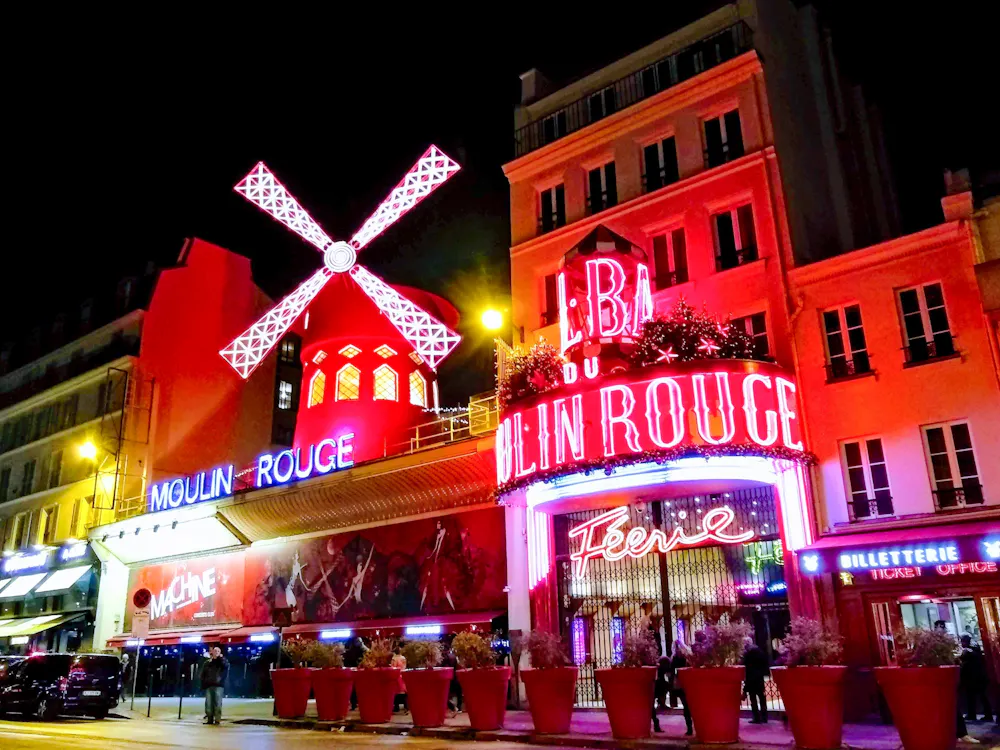
  • MIL-Evening Report: From cheeky thrill to grande dame – the Moulin Rouge celebrates 135 years of scandal and success

    Source: The Conversation (Au and NZ) – By Will Visconti, Teacher and researcher, Art History, University of Sydney

    Henri de Toulouse-Lautrec At the Moulin Rouge – The Dance, 1890 Henri de Toulouse-Lautrec/Wikimedia Commons

    When the Moulin Rouge first opened on October 6 1889, it drew audiences from across classes and countries.

    The Moulin offered an array of fin-de-siècle (end-of-the-century) entertainments to Paris locals and visitors. Located in Montmartre, its name, the “red windmill”, alluded to Montmartre’s history as a rural idyll. The neighbourhood was also associated with artistic bohemia, crime, and revolutionary spirit. This setting added a certain thrill for bourgeois audiences.

    From irreverent newcomer to a French institution, the Moulin Rouge has survived scandal, an inferno and found new ways to connect with audiences.


    Read more:
    How the Eiffel Tower became silent cinema’s icon


    Red and electric

    In 1889, the Moulin Rouge was not the only red landmark to open in Paris. The Eiffel Tower, built as part of the Universal Exhibition and originally painted red, had opened earlier that same year. What set them apart, however, was their popularity.

    The Moulin Rouge was an instant hit, capitalising on the global popularity of a dance called the cancan. Dancers like Moulin Rouge headliner La Goulue (“The Glutton”, real name Louise Weber) were seen as more appropriate emblems for the city than the Tower, which many considered an eyesore.

    In an illustration from Le Courrier Français newspaper, a dancer modelled on a photograph of La Goulue holds her leg aloft, flashing her underwear with the caption “Greetings to the provinces and abroad!”.

    Every aspect of the Moulin spoke to the zeitgeist, from its design to the performances, the use of electric lights that adorned its façade, and its advertising.

    Its managers, the impresario team of Joseph Oller and Charles Harold Zidler, had a string of successful venues and businesses to their names. They recognised the importance of modern marketing, using print media, publicity photographs, and posters to spark public interest.

    Among the most iconic images of the Moulin is Henri de Toulouse-Lautrec’s 1891 poster. At its centre is La Goulue, kicking her legs amid swirling petticoats.

    Henri Toulouse-Lautrec’s 1891 poster.
    Shutterstock

    She certainly can cancan

    Found primarily in working-class dance halls from as early as the 1820s, the cancan became a staple of popular entertainment the world over.

    Part of the dance’s thrill lay in the dancers’ freedom of movement and titillation of spectators, as well as its anti-establishment energy. Women used the cancan to thumb their nose at authority via steps like the coup de cul (“arse flash”) or coup du chapeau (removing men’s hats with a high kick).

    The cancan was not the only attraction at the Moulin. There were themed spaces, sideshows, and variety performances ranging from belly dancers and conjoined twins to Le Pétomane (“The Fartomaniac”) who was a flatulist and the highest-paid performer. People watching was equally popular.

    Famous farter, Le Pétomane (Joseph Pujol).
    Wikimedia Commons

    Scandals, riots, and royalty

    Over the years, the Moulin has been no stranger to controversy.

    In its early years, it cultivated an air of misbehaviour and featured in pleasure guides for visiting sex tourists.

    In 1893 it hosted the Bal des Quat’z’Arts (Four-Arts Ball) held by students from local studios. Accusations of public indecency were made against the models and dancers in attendance, and violent protests followed after the women were arrested.

    In 1907 the writer Colette appeared onstage at the Moulin in an Egyptian-inspired pantomime with her then-lover, Missy, the Marquise de Belbeuf. When the act culminated in a passionate kiss, a riot broke out.

    Historical footage shows the Moulin Rouge as it was.

    Kicking on and on

    Over time, the Moulin Rouge shows changed their format to keep pace with public taste, though the cancan remained. The venue hosted revues and operettas, and various stars including Edith Piaf, Ella Fitzgerald, Frank Sinatra and Liza Minnelli.

    Famous guests have included British royalty: from Edward VII (while Prince of Wales) to his great-granddaughter, Queen Elizabeth II, and her son, Prince Edward.

    Since its opening, the Moulin’s fortunes have waxed and waned.

    In 1915 the Moulin Rouge burned down but was rebuilt in 1921. Its famous windmill sails fell off overnight earlier this year but were swiftly repaired.

    In the 1930s, it survived the Depression and rise of cinema (also capturing the attention of several filmakers). It also survived the Nazi occupation of Paris in the 1940s.

    By the early 1960s, Jacki Clerico was managing the Moulin’s show after his father had revamped the venue as a dinner theatre destination. The younger Clérico oversaw additions like a giant aquarium where dancers swam with snakes, and its now-famous “nude line” – a chorus of topless dancers – in its shows.

    In 1963, the Moulin Rouge struck upon a winning formula: revues, all named by Clérico with titles beginning with the letter “F” – from Frou Frou to Fantastique and Formidable. Since 1999, the revue Féerie (“Fairy”, also a French genre of stage extravaganza) has been performed almost without interruption.

    The Moulin Rouge or ‘red mill’ today, with its famous windmill.
    Rafa Barcelos/Shutterstock

    Ticket sales were boosted thanks to Baz Luhrmann’s 2001 film Moulin Rouge! and more recently Moulin Rouge! The Musical.

    Since COVID, the Moulin Rouge management have diversified. The windmill’s interior has been rented out via AirBnB and the Moulin’s dance troupe has performed on France’s televised New Year’s Eve celebrations. This year, the Moulin Rouge and its dancers were part of the Paris Olympics celebrations, dancing in heavy rain.

    Though people have come to appreciate the Eiffel Tower too, the Moulin Rouge can still argue its status as the pinnacle of live entertainment in the French capital: immediately recognisable, internationally visible, and quintessentially Parisian.

    Will Visconti is the author of Beyond the Moulin Rouge: The Life & Legacy of La Goulue (2022), published by the University of Virginia Press.

    ref. From cheeky thrill to grande dame – the Moulin Rouge celebrates 135 years of scandal and success – https://theconversation.com/from-cheeky-thrill-to-grande-dame-the-moulin-rouge-celebrates-135-years-of-scandal-and-success-239849

    MIL OSI AnalysisEveningReport.nz

  • MIL-OSI United Kingdom: Government reignites industrial heartlands 10 days out from the International Investment Summit

    Source: United Kingdom – Executive Government & Departments 2

    Government confirms funding to launch the UK’s first carbon capture sites, set to bring thousands of new skilled jobs, billions in private investment and support acceleration to net zero.

    • New era for the clean energy industry with carbon capture clusters launched – in the week that Britain became the first industrialised nation to end its 150-year usage of coal
    • UK will be among the first to deploy this game-changing technology at scale in Teesside and Merseyside – capturing CO2 emissions before they reach the atmosphere and storing them away safely
    • projects will create thousands of jobs, attract £8 billion of private investment, and accelerate the UK towards net zero in 2050

    The UK today enters a new era for clean energy investment and jobs, as the government announces it has reached commercial agreement with industry, and funding to launch carbon capture in the UK.

    Major funding for 2 carbon capture sites will inject growth into the industrial heartlands of the North West and North East of England – directly creating 4,000 jobs and supporting 50,000 jobs in the long-term while powering up the rest of the country. 

    This comes 10 days before the government’s set-piece International Investment Summit which is poised to put the UK back at the global table – kickstarting a decade of economic renewal and giving business confidence and opportunity to invest in the United Kingdom.

    CCUS technology removes CO2 emissions before it reaches the atmosphere and stores it safely beneath the seabed – using tried and tested technology that has been deployed across the globe for over 20 years.

    In a boost for economic growth and protecting the environment, the new carbon capture and CCUS enabled hydrogen projects will create 4,000 new jobs, sustain important British industry, and help remove over 8.5 million tonnes of carbon emissions each year – the equivalent of taking around 4 million cars off the road.

    Prime Minister Keir Starmer, the Chancellor Rachel Reeves, and Energy Secretary Ed Miliband are visiting the North West today to confirm the funding for 2 sites in Teesside and Merseyside, which are expected to bring in £8 billion of private investment into these communities.

    These projects will set the UK on course to become a global leader in CCUS and hydrogen – delivering good jobs and turbocharged growth for decades to come.

    Prime Minister Keir Starmer said:

    We’re reigniting our industrial heartlands by investing in the industry of the future.

    For the past 14 years, business has been second-guessing a dysfunctional government – which has set us back and caused an economic slump.

    Today’s announcement will give industry the certainty it needs – committing to 25 years of funding in this groundbreaking technology – to help deliver jobs, kickstart growth, and repair this country once and for all.

    Today’s announcement confirms up to £21.7 billion of funding available, over 25 years, to make the UK an early leader in 2 growing global sectors, CCUS and hydrogen, to be allocated between these 2 clusters. The UK’s commitment was first made in 2009, and the confirmation of funding today represents a major success story for British industry.

    In the week in which Britain became the first industrialised nation to end its 150-year usage of coal to produce power, the nation now begins a new era of clean energy technology. The UK has enough capacity to store 200 years’ worth of emissions – making CCUS a revolutionary method in tackling the climate crisis and helping industry to decarbonise.

    Energy Secretary Ed Miliband said: 

    On Monday, 150 years of coal in this country came to an end. Today, a new era begins.

    By securing this funding, we pave the way for securing the clean energy revolution that will rebuild Britain’s industrial heartlands.

    I was proud to kickstart the industry in 2009, and I am even prouder today to turn it into reality. This funding is a testament to the power of an active government working in partnership with businesses to deliver good jobs for our communities.

    Chancellor of the Exchequer Rachel Reeves, said: 

    This game-changing technology will bring 4,000 good jobs and billions of private investment into communities across Merseyside and Teesside, igniting growth in these industrial heartlands and powering up the rest of the country.

    Working in partnership with business is at the heart of our plan to deliver strong growth and investment, so we can rebuild Britain and make everyone better off.

    This announcement will also help turbocharge the low carbon hydrogen sector by paving the way for the UK’s first large-scale hydrogen production plant, decarbonising vital industrial sectors.

    It also marks a game-changing development in the mission to tackle climate change – protecting the environment from harmful emissions at a time when the UK has seen a year of record-breaking temperatures. It follows advice from the independent Climate Change Committee, who described CCUS as critical for decarbonising the UK’s heavy industry and a “necessity” for the UK to reach its legally binding target for net zero emissions by 2050.

    Similarly, the International Energy Agency and the Intergovernmental Panel on Climate Change have endorsed CCUS as a critical tool in decarbonisation, particularly in heavy industry such as cement and steel.

    The carbon capture, usage and storage industry is expected to support 50,000 good, skilled jobs as the sector matures in the 2030s, helping to support the oil and gas sector’s transition away from high emission fossil fuels by using the transferable expertise of their workforce. This supports the UK’s mission for growth, while putting the country at the cutting edge for developing the skills of the future.

    An up and running carbon capture industry is expected to add around £5 billion per year to the UK economy by 2050 and the backing of these 2 sites sends a clear signal to investors that the UK is open for business.

    As part of the partnership with GB Energy and The Crown Estate, the progress on Track-1 comes as The Crown Estate awarded an Agreement for Lease to Eni to repurpose existing infrastructure to transport and store CO2, reducing cost and environmental impact. 

    Louise Kingham, SVP Europe and head of country, UK for bp, said:

    This announcement represents another step forward for the Northern Endurance Partnership and East Coast Cluster.

    Major projects like these have the potential to help stimulate economic growth – supporting thousands of jobs, helping UK companies prosper through the vast supply chains involved and creating the infrastructure to help major industrial companies with their decarbonisation plans.

    Collaboration is key in helping to progress and deliver the energy transition in the UK, and we look forward to continuing to work alongside the government and our partners to move these innovative projects forward.

    Alex Grant, SVP and head of country, UK for Equinor, said:  

    We welcome this major milestone in progressing these 2 key projects and applaud the hard work and collaboration that has led us here.

    Equinor has been an energy partner with the UK for over 45 years and today’s announcement is a step for both Equinor and the UK to progress our energy partnership further.

    This will help decarbonise the country’s industrial heartlands and achieve its net zero ambitions whilst providing jobs and value creation.

    The UK will continue to be a key market for Equinor, building on our history of significant energy provision along its East Coast, which is transitioning from traditional oil and gas demand to renewables and low carbon options like CCS and hydrogen.

    Eni CEO, Claudio Descalzi, said:

    Today’s news is an important step towards the creation of a new business chain linked to the energy transition.

    HyNet will become one of the first low-carbon clusters in the world and the project will decarbonise one of the key energy-intensive industrial districts as well as unlock significant economic growth in this region of the UK.

    This commitment is clear evidence of how governments and industry can work together to implement pragmatic and effective industrial policies, in order to accelerate decarbonisation. On our side, it reaffirms Eni’s role as a key partner with the UK in enabling its journey towards Net Zero.

    James Richardson, Acting Chief Executive of the Climate Change Committee, said:

    It’s fantastic to see funding coming through for these big projects. We can’t hit the country’s targets without CCUS so this commitment to it is very reassuring. It will no doubt provide comfort to investors and business about the direction of travel for the country.

    We know these projects will provide good, reliable jobs in communities that need them. It is important that prosperity for these parts of the country is built into a clean energy future.

    Emma Pinchbeck, Energy UK’s Chief Executive, said:

    CCUS is a tool in our armoury of technologies which we need to decarbonise parts of energy that we currently can’t do with clean electricity, such as major industrial processes.

    The energy transition is gathering pace, and the development of CCUS here for industrial processes unlocks inward investment, creates jobs and helps areas with a proud history of engineering and industry pioneer the technologies of the future in the UK.

    Olivia Powis, CEO of the Carbon Capture and Storage Association (CCSA), said:

    The government’s confirmed support for carbon capture and storage and hydrogen demonstrates their commitment to the UK’s journey to net zero.

    Today’s announcement shows that decarbonisation does not mean de-industrialisation, and highlights the UK’s leadership in these important technologies.

    The industry has made significant strides towards deploying carbon capture projects and by establishing the first 2 CCUS clusters in the North West and North East of England, it means that we can deliver thousands of new highly skilled jobs whilst reducing our CO2 emissions and retaining existing jobs in our industrial areas in critical industries like cement and manufacturing across the UK.

    Celia Greaves, CEO of the Hydrogen Energy Association, said:

    This is a vital step forward, catapulting hydrogen towards long-term certainty we need in the UK. Supporting hydrogen at scale in 2 of the biggest UK industrial clusters is the government giving hydrogen another green light as a key component of its green energy ambitions. We particularly welcome the news that this will provide thousands of new jobs given the HEA’s solid focus on hydrogen’s role in delivering clean growth.

    Our own project map has built up a blueprint of hydrogen endeavours across all parts of the UK and this significant investment in carbon capture clusters is going to bring forward the first large scale projects we have seen in the country. What’s more, it will inject further enthusiasm for wider investment to power-up business confidence which will have a knock-on effect of continuing to position the UK as a global player in hydrogen technology and innovation.

    Clare Jackson, CEO of Hydrogen UK, said:

    We are thrilled to see the UK government’s commitment to advancing Track-1 clusters in partnership with the private sector. This initiative is a crucial step forward for regional development, driving economic growth, and creating high-quality jobs across the country.

    The integration of CCUS technology with hydrogen production is pivotal for achieving our net zero targets. CCUS-enabled hydrogen not only provides a low carbon, and scalable energy solution but also ensures the UK remains at the forefront of the global hydrogen economy.

    By moving forward with Track-1, we are laying the foundation for a cleaner, more resilient energy future for all.

    Updates to this page

    Published 4 October 2024

    MIL OSI United Kingdom

  • MIL-OSI Australia: Minister Shorten interview on the Today Show with Sarah Abo and Leader of the Opposition, Peter Dutton

    Source: Ministers for Social Services

    E&OE TRANSCRIPT

    SUBJECTS: Planned protests to mark one year anniversary of Oct 7 attacks; Australians in Lebanon; NRL grand final

    SARAH ABO, HOST: Well, thousands of protesters will take to the streets this weekend to mark a year of the Israel-Gaza conflict, with authorities calling for calm after the rallies were given the green light. For more, we’re joined by NDIS and Government Services Minister Bill Shorten in Melbourne and opposition leader Peter Dutton in Brisbane. Good to see you both. Pete, I’ll start with you. So, New South Wales tried to block this rally, that was overruled. The SA, in South Australia, the police say they don’t oppose it. Those attending say it’ll be peaceful. So how do we strike the right balance here?

    PETER DUTTON, LIBERAL PARTY: Well, Sarah, this is the biggest loss of Jewish life since the Holocaust. And that’s what October 7th is. So, it’s the anniversary of the terrorist attack in the kibbutz’s and where people were slaughtered in the Nova music festival. So, there were no attacks, no rockets launched by Israel on October 7th or October 8th or October 9th. The response came after that, as we know. So, this is an anniversary of 1200 people losing their lives. And that’s why the protests shouldn’t go ahead. And you would only be protesting the anniversary of that loss of life if you were trying to be provocative or difficult. If you were marking the anniversary of the Holocaust, people would be outraged. And I just think it’s completely unacceptable that people would be using this opportunity to essentially rub, you know, I just think they’re compounding the grief of people who have lost lives. And it’s completely unacceptable.

    ABO: Yeah, I mean, Pete, I guess despite all of that, they are still going ahead. I mean, there’s nothing we can do to stop it. So, it’s really just about upholding the peaceful intended nature of it.

    DUTTON: Well, just again, Sarah, I mean, why would people why would people want to do this? And I think there are people within the community, leaders so-called within the community, who should show greater sensitivity and there are other dates that they can commemorate. But October 7th is an anniversary where 1200 people were killed by a terrorist organization and people who were sympathizers to the terrorist organization in this country, frankly, are at odds with our values and our rule of law.

    ABO: And, Bill, there are obviously significant sensitivities around this. And as we know, the tensions are escalating currently in the Middle East. There’s a lot of heat in the community, and it seems little is being done to sort of turn down that temperature. Is the government concerned that these protests may cause further rifts in the community?

    BILL SHORTEN, MINISTER FOR THE NDIS AND GOVERNENT SERVICES: Well, I agree with a fair bit of what Peter was saying there. October the 7th was a massacre of Israelis. Hamas crossed the border. They killed young people at a concert. They committed shocking crimes. They kidnapped people. They sexually abused people. I don’t know what someone who’s – I don’t know why someone would protest about that or be in some fashion being seen to lend their weight to it. I mean, we are a free country. We don’t want to become like the countries that we criticize. But I just think on October the 7th, that was a massacre of innocent people. Now, there might be some people watching who say, oh, what about, you know, my side of the argument and my hurt and my pain. I accept that, but one, you’ve got to keep it peaceful. Two, why do it on the day where – you know, if you really think that Hamas was right. I do not understand how you think. I do not understand how people would want to celebrate Hamas’ actions.

    ABO: Yeah.

    SHORTEN: So yeah, but I think most Australians don’t want to see these arguments from overseas coming to these shores. They certainly expect it to be peaceful. And I’ll just say to any protesters, if you think somehow, you’re convincing or changing anyone’s mind, think again.

    ABO: It is truly horrific, that’s for sure. The fresh wave of attacks that we’re seeing, bill in Lebanon at the moment. The UN has called this truly catastrophic. We know that the Australian government is doing what it can, deploying the RAAF planes there to try and evacuate some. How is that all tracking at the moment?

    SHORTEN: Yeah. I want to thank our people in the Australian Defence Force. We have military resources to help evacuate people pre-positioned in Cyprus. I know the government’s assisted people on Monday, Tuesday, and Thursday to get commercial flights out. I know there’ll be opportunities on Saturday for 500 Australian citizens and immediate family members. But also, I have to say that the Prime Minister and the government has been saying since last November, please do not go to Lebanon. Whilst it might have been a surprise on which particular day the fighting escalated, the point is there was a big chance the fighting was going to escalate. So please get out now. Do not go to Lebanon. Please get out now. The Australian Government has a phone number. I think it’s 6261 3305. 6261 3305. But yeah, just let’s get out of there. It’s just – there’s nothing going to be good about being in Lebanon right now.

    ABO: Yeah. I think both sides are in agreement on that. Look, it’s all very heavy and really tragic and awful. So, let’s focus on something a little bit different now because this weekend of course we have the big NRL grand final decider. It’s less than 48 hours away with the Storm taking on the Panthers. Pete, I wanted to ask you. I mean, seeing as you’re single handedly responsible for the turning of the political tide in Victoria, you would, of course, be backing the Storm right now, right?

    DUTTON: Well, I’ve picked. I’ve picked Penrith, I think. Just an amazing –

    ABO: What? Pete.

    DUTTON: They are an amazing team. They are an amazing team.

    ABO: You need to win Melbourne over mate, come on.

    DUTTON: I’m still celebrating the Lions win. I’m still, I’m still – every Victorian was going against the New South Wales team last weekend. So, they were all on the Lions and we were on a unity ticket. So, this week – you know I just think I mean storms had had an incredible season as well. But I just think Penrith will be too strong.

    ABO: Billy, surely you’ve got the storm, right?

    SHORTEN: Yeah. No, I think the Storm’s a really well-run club. I’ve been lucky enough to have a bit to do with them over the journey and, you know they did beat Penrith in 2020. Craig Bellamy, ten grand finals. Penrith is a really strong team. One thing’s for sure. The two best teams are playing in the grand final. But, you know, Pete, there was that chance for you to sort of cement the deal in Victoria, but given two choices –

    ABO: I know, I gave him an opportunity.

    SHORTEN: But you went the wrong way, I know

    ABO: He didn’t take it. 
    .
    SHORTEN: Sarah just laid it out in the red carpet. I don’t know. I don’t know.

    DUTTON: Hey, Bill, I’m just glad that you know there’s an NRL team in in Victoria. Well done.

    ABO: We couldn’t leave this chat without a sledge. Right? Okay.

    SHORTEN: That’s good. And do you know what? Even though we’re not an NRL, even though we’re not an NRL state, we can still win the flag. I love it. When Victorians turn their mind to something. We’re unstoppable.

    ABO: Yes. Let’s go with that.

    SHORTEN: It’s actually the third Queensland team anyway.

    ABO: Thank you both very much for joining us.

    MIL OSI News

  • MIL-OSI Australia: A-League Central Coast Mariners take a stand against betting advertising

    Source: New South Wales Premiere

    Published: 4 October 2024

    Released by: Minister for the Central Coast, Minister for Gaming and Racing


    Fans of the Central Coast Mariners FC will continue to enjoy A-League games with less sports betting advertising thanks to a new Reclaim the Game partnership with GambleAware.

    Under the new partnership, the Club will turn down sports betting sponsorships and eliminate sports betting advertising at their home games across both the men’s and women’s A-League teams.

    The Mariners will also work to educate fans, players and staff about the risks and harms which can arise from gambling.

    Reclaim the Game launched in 2020 and has grown to include 19 teams across six codes in NSW. It has reached millions of sports fans, both on TV and in stadiums.

    The Mariners, who continue to grow in popularity, particularly off their back-to-back men’s A-League titles over the past two seasons, are the first Central Coast sporting club to sign on for this awareness initiative.

    The Central Coast has a high rate of gambling participation and Reclaim the Game will remind fans that they can enjoy watching their team without spending their hard-earned money on betting.

    A recent survey conducted by Reclaim the Game suggests that Mariners’ fans are on board with the new partnership. In the survey, 85% of fans agreed that there is too much gambling advertising.

    As well as the new Mariners’ partnership, GambleAware has extended its partnerships with the Western Sydney Wanderers, and Cricket NSW which includes Sydney Sixers and Sydney Thunder.

    For more information on Reclaim the Game visit: http://www.gambleaware.nsw.gov.au/resources-and-education/awareness-campaigns/reclaim-the-game.

    The Minns Labor Government has a strong track record on reducing gambling harm since coming into office, including:

    • Committing $100 million to harm minimisation – investing in research, treatment, services and reform
    • Establishing an Independent Panel of experts overseeing a cashless gaming trial
    • Banning all external gambling signage in venues and introducing Responsible Gambling Officers for venues with more than 20 machines
    • Forbidding political donations from clubs with electronic gaming machines.

    For free and confidential gambling support 24/7 call GambleAware on 1800 858 858.

    Minister for Gaming and Racing and Minister for the Central Coast David Harris said:

    “Sports betting advertising and sponsorship is just about everywhere. We see it across most codes and many fans don’t know sport without it.

    “The NSW Government, through Reclaim the Game, is partnering with sporting clubs to take a stand and challenge the impact that sports betting advertising has on fans.

    “All our partners are committed to eliminating sports betting advertising at their home games, and to take action in educating their fans, players and staff about the potential harms of sports betting.

    “It’s no secret I’m a big fan of the mighty Mariners, so I am absolutely delighted by this new partnership, which will have a positive impact on the Central Coast.”

    Mariners CEO Alyssar Narey said:

    “We are proud to partner with the NSW Government’s Reclaim the Game initiative.

    “This collaboration underscores our commitment to promoting a healthy and positive environment in sports, where our players and fans can thrive without the influence of gambling.

    “Together, we can create a stronger community and ensure that the joy of the game remains at the forefront.” 

    About Reclaim the Game:

    Reclaim the Game was launched in 2020. 19 teams from six codes are partners in the program:

    Rugby League:
    1. Canterbury-Bankstown Bulldogs
    2. South Sydney Rabbitohs

    Basketball:
    3. Illawarra Hawks
    4. Sydney Kings
    5. Sydney Flames

    Football (Soccer):
    6. Western Sydney Wanderers (A-League men’s)
    7. Western Sydney Wanderers (A-League women’s)

    8. Central Coast Mariners (A-League men’s)

    9. Central Coast Mariners (A-League women’s)

    Cricket:
    10. Sydney Sixers (BBL)
    11. Sydney Sixers (WBBL)
    12. Sydney Thunder (BBL)
    13. Sydney Thunder (WBBL)
    14. NSW Blues
    15. NSW Breakers

    Australian Football League (AFL):
    16. Sydney Swans (AFL)
    17. Sydney Swans (AFLW)

    Netball:
    18. NSW Swifts
    19. GIANTS Netball

    MIL OSI News

  • MIL-OSI Australia: Study subsidies strengthening NSW’s health workforce

    Source: New South Wales Premiere

    Published: 3 October 2024

    Released by: The Premier, Minister for Health


    More than 3,900 students across NSW have already benefitted from the Minns Labor Government’s $120 million investment in tertiary health study subsidies, with all subsidies now awarded for the 2024 calendar year.

    The recipients of the subsidies include 1,840 nursing students, 280 midwifery students, 1,020 allied health, 520 medical students and 262 paramedical students.

    Students beginning their degrees will receive subsidies of $4,000 per year over three years.

    The subsidies, announced as part of the 2023-24 Budget, are also expected to support a further 8,000 healthcare students over the next four years.

    Students seeking to receive the subsidy in 2025 can apply from mid-January 2025 and must be willing to make a five-year commitment to the NSW public health system.

    The subsidies form part of a series of measures introduced by the Minns Labor Government to further strengthen the state’s health workforce, including:

    • Implementing the Safe Staffing Levels initiative in our emergency departments
    • Providing permanent funding for 1,112 FTE nurses and midwives on an ongoing basis
    • Abolishing the wages cap and delivering the highest pay increase in over a decade for nurses and other health workers
    • Beginning to roll out 500 additional paramedics in regional, rural and remote communities.

    The full list of 2025 eligible workforce groups will be available in October 2024 on the NSW Health website.

    Quotes attributable to Premier Chris Minns:

    “I am so pleased more than 3,900 people across NSW have already benefitted from our health worker study subsidies.

    “The subsidies help students with costs such as fees, technology, travel, and helps us keep talented people here in NSW, working in the country’s largest public health system.

    “Attracting skilled healthcare workers is a longstanding challenge, and while there is a long way to go rebuilding our healthcare system, we are committed to doing it so that people can access the care they need, when they need it.”

    Quotes attributable to Minister for Health Ryan Park:

    “We are shoring up the future of our health workforce in NSW and we’re honouring our election commitment to reducing financial barriers to studying healthcare.

    “When we boost our health workforce we improve health outcomes, it’s as simple as that.

    “It’s encouraging to see such a strong subscription of these subsidies.”

    MIL OSI News

  • MIL-Evening Report: NSW will remove 65,000 years of Aboriginal history from its syllabus. It’s a step backwards for education

    Source: The Conversation (Au and NZ) – By Michael Westaway, Australian Research Council Future Fellow, Archaeology, School of Social Science, The University of Queensland

    The NSW Education Standards Authority has announced that teaching of the Aboriginal past prior to European arrival will be excluded from the Year 7–10 syllabus as of 2027.

    Since 2012, the topic “Ancient Australia” has been taught nationally in Year 7 as part of the Australian Curriculum. In 2022, a new topic called the “deep time history of Australia” was introduced to provide a more detailed study of 65,000 years of First Nations’ occupation of the continent.

    However, New South Wales has surprisingly dropped this topic from its new syllabus, which will be rolled out in 2027. Instead, students will only learn First Nations’ history following European colonisation in 1788.

    This directly undermines the Alice Springs (Mparntwe) Education Declaration of 2020. This is a national agreement, signed by education ministers from all jurisdictions, which states:

    We recognise the more than 60,000 years [sic] of continual connection by Aboriginal and Torres Strait Islander peoples as a key part of the nation’s history, present and future.

    If the planned change to the syllabus goes through, the only Aboriginal history taught to NSW students would be that which reflects the destruction of traditional Aboriginal society. It also means Aboriginal students in NSW will be denied a chance to learn about their deep ancestral past.

    The significance of Australia’s deep time past

    Bruce Pascoe’s groundbreaking 2014 book Dark Emu (which sold more than 500,000 copies), and the associated documentary, have highlighted an enormous appetite for learning about Australia’s deep time past.

    Hundreds of thousands of Australians engaged with Dark Emu. As anthropologist Paul Memmott notes, the book prompted a debate that encouraged a better understanding of Aboriginal society and its complexity.

    It also generated research that investigated whether terms such as “hunter-gatherers” are appropriate for defining past Aboriginal society and economic systems.


    Read more:
    Farmers or foragers? Pre-colonial Aboriginal food production was hardly that simple


    In schools, teachers have used Pascoe’s book Young Dark Emu to introduce students to sophisticated land and aquaculture systems used by First Peoples prior to colonisation.

    The book raises an important question. If you lived in a country that invented bread and the edge-ground axe – a culture that independently developed early trade and social living – and did all of this without resorting to land war – wouldn’t you want your children to know about it?

    For many students, the history they learn at school is knowledge they carry into their adult lives – and knowledge is the strongest antidote to ignorance. Rather than abandoning the Aboriginal deep time story, schools should be encouraging students to engage with it.

    Learning on Country

    One of the strengths of the current NSW history syllabus is the requirement for students to undertake a “site study” in Years 8 and 9. Currently, NSW is the only jurisdiction that has made this mandatory.

    Site studies are an excellent opportunity for students to learn on Country. Many teachers organise excursions to Aboriginal cultural sites where students can directly engage with local Traditional Owners and Elders.

    New South Wales is brimming with sites of cultural significance to Aboriginal people. The map below highlightssome of these, ranging from megafauna sites, to extensive fish traps, to the enigmatic rock art galleries and ceremonial engravings (petroglyphs).


    How students will miss out

    The Ngambaa people and archaeologists from the University of Queensland are currently investigating one of the largest midden complexes in Australia. This complex, located at Clybucca and Stuart’s Point on the north coast, spans some 14 kilometres and dates back to around 9,000 years ago.

    Middens, or “living sites”, are accumulations of shell that were built over time through thousands of discarded seafood meals. Since the shells help reduce the acidic chemistry of the soil, animal bones and plant remains are more likely to be preserved in middens.

    For instance, the Clybucca-Stuarts Point midden complex contains remains from seals and dugongs. Both of these animals were once part of the local ecosystem, but no longer are.

    The middens also extend back to before the arrival of dingoes, so studying them could help us understand how biodiversity changed once dingoes replaced thylacines and Tasmanian devils on the mainland.

    Local school students, especially Aboriginal students, will be actively participating in this cutting-edge research alongside the Ngambaa people, archaeologists and teachers. Among other things, the students will learn how the Ngambaa people sustainably managed land and sea Country over thousand of years during periods of dramatic environmental change.

    But innovative programs like this will no longer be as relevant if Australia’s deep time history is removed from the NSW syllabus.

    An opportunity for leadership

    The study of First Nations archaeological sites, history and cultures tells us a broader human story of continuity and adaptability over deep time. Indigenising the curriculum – wherein Aboriginal knowledge is braided with historical and archaeological inquiry – is a powerful way to reconcile different approaches to understanding the past.

    The NSW Education Standards Authority’s proposed changes risk sending young people the message that Australia’s “history” before colonisation is not an important part of the country’s historic narrative.

    But there is still time to show leadership – by reversing the decisions and by connecting teachers and students to powerful stories from Australia’s deep time past.

    Michael Westaway receives funding from the Australian Research Council and Humanities and Social Science at the University of Queensland .

    Bruce Pascoe is the author of the texts mentioned in this article, Dark Emu and Young Dark Emu: A Truer History. He also has positions on the boards of Black Duck Foods, the Twofold Aboriginal Corporation and First Languages Australia.

    Louise Zarmati receives research funding from the ARC Centre of Excellence of Australian Biodiversity and Heritage.

    ref. NSW will remove 65,000 years of Aboriginal history from its syllabus. It’s a step backwards for education – https://theconversation.com/nsw-will-remove-65-000-years-of-aboriginal-history-from-its-syllabus-its-a-step-backwards-for-education-240111

    MIL OSI AnalysisEveningReport.nz

  • MIL-OSI Australia: Get on board: make this summer your safest boating season yet

    Source: New South Wales Government 2

    Headline: Get on board: make this summer your safest boating season yet

    Published: 4 October 2024

    Released by: Minister for Emergency Services, Minister for Police and Counter-terrorism, Minister for Transport


    NSW Maritime, Marine Rescue NSW, NSW Police Marine Area Command, and Surf Life Saving NSW have joined forces on NSW waterways, calling on the public to put safety first this boating season, which begins this Labour Day long weekend.

    With a hot summer predicted, the state’s water rescue agencies are on high alert for a busy boating season ahead.

    The start of the boating season aligns with National Safe Boating Week, a week long initiative with a focus on lifejacket wear, care and servicing. All boaters are encouraged to always wear a lifejacket, make sure everybody on board is wearing one, and remember it can only save your life if you’re wearing it.

    Over the last five years, there have been 13 boating-related fatalities on Hunter waterways, with nine of those found to not be wearing a lifejacket.

    Statewide, there were 61 coastal drownings along the state’s coastline last financial year, with life savers undertaking 4,489 surf rescues.

    Leading into the season launch NSW Maritime kicked off the school holidays with Operation Get On Board, a two-day statewide safety and education blitz to help boaters prepare for the months ahead on the water.

    NSW Maritime has conducted 33,265 vessel safety checks in the Hunter over the past five years.

    While the majority of boaters have been doing the right thing, the top 3 offences in the Hunter over the last five years have been:

    • License offences or unregistered vessels – 1478
    • Lifejacket non-compliance – 1239
    • Improper or no safety equipment on board – 969

    All boaters are encouraged to Log On with Marine Rescue NSW before spending a day on the water.

    Logging On provides peace of mind for boaters and their families, knowing that dedicated volunteers will keep watch for their safe return. It is quick and easy to Log On via the free Marine Rescue NSW app or VHF Channel 16. It only takes a minute to protect a lifetime.

    For more on boating safety visit, https://www.nsw.gov.au/driving-boating-and-transport/waterways-safety-and-rules/lifejackets-and-safety-equipment/equipment-checklist

    Minister for Transport Jo Haylen said:

    “New South Wales is the best place in the world to get out on the water, but popular waterways are busy waterways and we have to work hard to remind every skipper and their passengers safe.

    “Lots of boats will have been sitting idle over winter, so give them a proper once over and check all your safety gear is on board before you set out on the water.

    “Last summer, Boating Safety Officers carried out around 35,000 vessel safety checks across the state and lifejacket non-compliance was the number one offence, accounting for 30 per cent.

    “Sadly, there have been six boating related fatalities this financial year, and five of whom were not wearing a lifejacket.

    “A lifejacket can only save you if you’re wearing it. So if you step into a boat, pop on a lifejacket. It’ll keep you safe.”

    Police Minister Yasmin Catley said:

    “Police will be patrolling all the state’s waterways including dams and rivers and will not tolerate any dangerous and anti-social behaviour this boating season.

    “Officers will be conducting drug and alcohol testing as well as compliance checks – so make sure that your vessel is in good working order, know your vessel’s capabilities and don’t go beyond its limits.

    “We want everyone to get home safely, so we remind skippers that they are responsible for the safety of everyone on board their vessel – it is vital that everyone has a fitted lifejacket, as it could save a life.”

    Minister for Emergency Services Jihad Dib said:

    “As the weather warms up and people flock back to our waterways, it’s important that boat users check they have enough life jackets on board and make sure their vessels are seaworthy.

    “Our Marine Rescue NSW volunteers dedicate their time to keeping water users safe, and communities need to do their bit by logging on and off with Marine Rescue NSW so volunteers know they are on the water.”

    MIL OSI News

  • MIL-OSI Australia: Record breaking season for Snowy Mountains Bus Service

    Source: New South Wales Government 2

    Headline: Record breaking season for Snowy Mountains Bus Service

    Published: 4 October 2024

    Released by: Minister for Regional Transport and Roads


    A record breaking number of people have ditched cars for the Minns Labor Government’s expanded Snowy Mountains Bus Service which has hit a major milestone of more than 90,000 customer journeys for the first time.

    This snow season has been the service’s most successful ever, with more than 10,000 additional journeys taken compared to the 2023 season.

    The success of the service has led to improved road safety, with Transport for NSW estimating about 30,000 fewer car trips have been taken to and from the Alpine slopes due to the availability of the bus service.

    The winter school holidays was unsurprisingly the busiest period this year, with an additional 50 services scheduled to manage the demand. Between 8 and 28 July, 409 services ran at 100 per cent capacity – or about 20 per cent of all services.

    Feedback from passengers was again overwhelmingly positive, with 90 per cent of those surveyed saying they would use the service again.

    The Snowy Mountains Bus Service for 2024 will conclude on 6 October.

    Minister for Regional Transport and Roads Jenny Aitchison said:

    “The Minns Labor Government is proud to have supported another successful season for the Snowy Mountains Bus Service which is going from strength to strength.

    “In response to this growing demand, we delivered an expansion of routes to include a Cooma via Berridale to Jindabyne service while more trips were also added to support the school holiday peak.

    “Increased services led to improved safety on our roads at the busiest times for the snowfields, contributing to fewer journeys by car on roads impacted by ice and snow.

    “The convenience was experienced by both locals and visitors to our region who not only used the bus as a reliable way to get to the snow, but also to access our mountain trails for other recreational activities.”

    Member for Monaro Steve Whan said:

    “The Snowy Mountains Bus Service continues to offer a reliable public transport option improving access to the snowfields for workers, visitors and locals. This also means less cars on the road which is a great safety outcome.

    “The service allows a stress-free journey to the snowfields for all snow goers and takes the stress off drivers who might not have much experience driving in the alpine conditions.”

    MIL OSI News

  • MIL-Evening Report: New video shows sharks making an easy meal of spiky sea urchins, shedding light on an undersea mystery

    Source: The Conversation (Au and NZ) – By Jeremy Day, PhD researcher, University of Newcastle

    Author provided

    Long-spined sea urchins have emerged as an environmental issue off Australia’s far south coast. Native to temperate waters around New South Wales, the urchins have expanded their range south as oceans warm. There, they devour kelp and invertebrates, leaving barren habitats in their wake.

    Lobsters are widely accepted as sea urchins’ key predator. In efforts to control urchin numbers, scientists have been researching this predator-prey relationship. And the latest research by my colleagues and I, released today, delivered an unexpected result.

    We set up several cameras outside a lobster den and placed sea urchins in it. We filmed at night for almost a month. When we checked the footage, most sea urchins had been eaten – not by lobsters, but by sharks.

    This suggests sharks have been overlooked as predators of sea urchins in NSW. Importantly, sharks seem to very easily consume these large, spiky creatures – sometimes in just a few gulps! Our findings suggest the diversity of predators eating large sea urchins is broader than we thought – and that could prove to be good news for protecting our kelp forests.

    A puzzling picture

    The waters off Australia’s south-east are warming at almost four times the global average. This has allowed long-spined sea urchins (Centrostephanus rodgersii) to extend their range from NSW into waters off Victoria and Tasmania.

    Sea urchins feed on kelp and in their march south, have reduced kelp cover. This has added to pressure on kelp forests, which face many threats.

    Scientists have been looking for ways to combat the spread of sea urchins. Ensuring healthy populations of predators is one suggested solution.

    Overseas research on different urchin species has focused on predators such as lobsters and large fish. It found kelp cover can be improved by protecting or reinstating these predators.

    Sea urchins feed on kelp.
    Nathan Knott

    In NSW, eastern rock lobsters are thought to be important urchin predators. The species has been over-fished in the past but stocks have significantly bounced back in recent years.

    But despite this, no meaningful reduction in urchin populations, or increase in kelp growth, has been observed in NSW.

    Why not? Could it be that lobsters are not eating urchins in great numbers after all? Certainly, there is little empirical evidence on how often predators eat urchins in the wild.

    What’s more, recent research in NSW suggested the influence of lobsters on urchin populations was low, while fish could be more important.

    Our project aimed to investigate the situation further.

    Eastern rock lobsters are thought to be major urchin predators.
    Flickr/Richard Ling, CC BY

    What we did

    We tied 100 urchins to blocks outside a lobster den off in Wollongong for 25 nights. This tethering meant the urchins were easily available to predators and stayed within view of our cameras.

    Then we set multiple cameras to remotely turn on at sunset and turn after sunrise each day, to capture nocturnal feeding. We used a red-filtered light to film the experiments because invertebrates don’t like the white light spectrum.

    We expected our cameras would capture lobsters eating the urchins. But in fact, the lobsters showed little interest in the urchins and ate just 4% of them. They were often filmed walking straight past urchins in search of other food.

    Sharks, however, were very interested in the urchins. Both crested horn sharks (Heterodontus galeatus) and Port Jackson sharks (H. portusjacksonii) entered the den and ate 45% of the urchins.

    As the footage below shows, sharks readily handled very large urchins (wider then 12 centimetres) with no hesitation.

    Until now, it was thought few or no predators could handle urchins of this size. Larger urchins have longer spines, thicker shells and attach more strongly to the seafloor, making them harder to eat.

    But the sharks attacked urchins from their spiny side, showing little regard for their sharp defences. This approach differs from other predators, such as lobsters and wrasses, which often turn urchins over and attack them methodically from their more vulnerable underside.

    In fact, some sharks were so eager to eat urchins, they started feeding before the cameras turned on at sunset. This meant we had to film by hand.

    Footage captured by the researchers showing crested horn sharks eating sea urchins. Horn sharks generally do not pose a threat to humans.

    A complex food web

    Our experiment showed the effect of lobsters on urchins in the wild is less than previously thought.
    This may explain why efforts to encourage lobster numbers have not helped control urchin numbers.

    We also revealed a little-considered urchin predator: sharks.

    Lobsters are capable but hesitant predators, whereas sharks seem eager to eat urchins. And crested horn sharks are an abundant, hardy species that is not actively fished.

    When interpreting these findings, however, a few caveats must be noted.

    First, sharks (and lobsters) are not the only animals to prey on urchins. Other predators include bony fishes, and more are likely to be identified in future.

    Second, other factors can control urchin numbers, such as storm damage and the influx of fresh water.

    And finally, it is unsurprising that we found a key predator when we intentionally searched for it by laying out food. Tethering urchins creates an artificial environment. We don’t know if the results would be replicated in the wild.

    And even though we now know some shark species eat sea urchins, we don’t yet know if they can control urchins numbers.

    But our research does confirm predators capable of handling large urchins may be more widespread than previously thought.

    Jeremy Day received funding from University of Newcastle, Ecological Society of Australia, Royal Zoological Soceity of New South Wales and Fisheries Research and Development Corporation.

    ref. New video shows sharks making an easy meal of spiky sea urchins, shedding light on an undersea mystery – https://theconversation.com/new-video-shows-sharks-making-an-easy-meal-of-spiky-sea-urchins-shedding-light-on-an-undersea-mystery-240205

    MIL OSI AnalysisEveningReport.nz

  • MIL-OSI Australia: Wollongong to host Multicultural Water Safety Day

    Source: New South Wales Government 2

    Headline: Wollongong to host Multicultural Water Safety Day

    Published: 4 October 2024

    Released by: Minister for Planning and Public Spaces, Minister for Regional Health, Minister for Sport


    As summer approaches, local government, sporting and community organisations have come together to host a free Multicultural Water Safety Day at Wollongong City Beach next Friday.

    In the 12 months to 30 June 2024, 61 people drowned at beaches, coastal waterways and the ocean according to Surf Life Saving NSW data.

    The Multicultural Water Safety Day aims to empower multicultural communities in the Illawarra with the skills and confidence to safely enjoy local waters.

    The initiative is a collaboration between the NSW Office of Sport, Illawarra Multicultural Services, Multicultural Communities Council Illawarra, Surf Life Saving NSW, Royal Life Saving, University of Wollongong, and other local stakeholders designed to educate multicultural communities on vital water safety skills and knowledge, particularly the beach, inland water and rock fishing safety.

    As well as interactive educational sessions including a live rip dye and resuscitation demonstrations, there will be hands-on practical activities and the opportunity to engage with facilitators and local organisations.

    The event will be held at Wollongong City Beach from 10am on Friday, 11 October. 

    Minster for the Illawarra and the South Coast, Ryan Park, said:

    “The Illawarra and South Coast is home to some of the best beaches in the State and the NSW Government is committed to making sure that all members of our community can enjoy them safely.

    “With a focus on inclusivity and community engagement, this initiative aims to make a lasting impact on the water safety in the region.”

    “We hope that this event is the first step in instilling a lifelong understanding and appreciation of water safety among our multicultural communities.”

    Minister for Sport, Steve Kamper, said:

    “Swimming and being on or near the water is a key part of the Australian lifestyle, but too many people, particularly those from multicultural backgrounds, continue to lose their lives to drowning.”

    “The NSW Government wants to ensure that people participating in water activities or just enjoying a swim at the beach have the skills and knowledge to do so safely.”

    Member for Wollongong, Paul Scully, said:

    “Wollongong is a diverse community and events such as these allow us to provide targeted resources to our multicultural residents, particularly those who may not have grown up around the water.

    “Many newer residents and visiting students have little or no experience in the surf, it’s important they gave a good understand of water safety. 

    “I encourage as many members of our community as possible to come down, participate and learn potentially life-saving lessons.”

    Projects Coordinator for Illawarra Multicultural Services, Amro Zoabe said:

    “Working with multicultural communities, IMS understands the importance of having vital information available in language. By having our multilingual community workers provide language support for this event, we ensure everyone has equitable access.

    “We are lucky to be living on Dharawal land on waters. This event helps make sure our multicultural communities, access these waters safely.”
     

    MIL OSI News

  • MIL-OSI Australia: Northern Kosciuszko National Park reopened to the public

    Source: New South Wales Environment and Heritage

    NSW National Parks and Wildlife Service (NPWS) closes much of this section of the park to traffic every winter, while parts of the national park are covered in snow. Resort precincts remain open for tourism and recreational activities including skiing and snowboarding.

    This year’s closure started 2 months early to enable implementation of measures under the Wild Horse Heritage Management Plan, as well as the control of pigs, deer and other feral animals.

    The control program is designed to protect the globally significant conservation values in Kosciuszko National Park, including a suite of threatened native plants and animals.

    All control operations have been conducted in accordance with the highest animal welfare standards.

    It is standard practice when undertaking feral animal control on public and private land for carcasses to be left to decompose where the animal was shot.

    However, additional measures are implemented in Kosciuszko National Park to move horse carcasses away from waterways and key visitor areas wherever practical.

    Visitors may still encounter deer, pig or horse carcasses. These carcasses do not present a risk to the public provided they are left alone.

    Some carcasses may also be apparent in central and southern areas of Kosciuszko National Park. Recent ground shooting operations around Geehi Camping area saw the removal of significant numbers of deer.

    If you are concerned about the location of animal carcasses, their location can be reported to npws.wildhorses@environment.nsw.gov.au.

    Visitors to Kosciuszko National Park will be able to enjoy key areas such as the Currango Homestead, campgrounds around Blue Waterholes, Long Plain and Tantangara areas as well as facilities adjacent to the Snowy Mountains Highway.

    Further updates on Kosciuszko National Park can be found via the National Parks and Wildlife Service website.

    MIL OSI News

  • MIL-OSI Australia: ‘Beat the bite’ helps youngsters stay mosquito safe

    Source: New South Wales Premiere

    Published: 4 October 2024

    Released by: Minister for Health


    Thousands of children can help their families ‘Beat the Bite’ with the statewide distribution of books that help teach the importance of mosquito bite prevention.

    ‘Jack & Angie – Beat the Bite’ is an entertaining story about two youngsters who love playing in and exploring the great outdoors while staying safe from mosquito bites.

    More than 77,000 books have been printed and are being delivered to schools, early childhood and education centres and local councils across NSW, with 430 public and independent schools, 103 early childhood and education centres, 66 councils already having opted in to receive books. Other services such as Aboriginal health and immunisation services, scouts and guides across NSW have also ordered books.

    The statewide distribution is an expansion of a popular Murrumbidgee Local Health District (MLHD) initiative which saw more than 43,000 books distributed across Murrumbidgee, Southern and Western NSW.

    Mosquitoes can transmit diseases that are spread to humans through mosquito bites. In NSW they can carry viruses such as Japanese encephalitis (JE), Murray Valley encephalitis (MVE), Ross River, and Barmah Forest virus.

    These viruses may cause symptoms ranging from tiredness, rash, headache, and sore and swollen joints to rare but severe symptoms of seizures and loss of consciousness.

    Protective measures to avoid bites, include:

    • Wear light, loose-fitting long-sleeved shirts, long pants and covered footwear and socks
    • Avoid being outdoors at dawn and dusk
    • Apply repellent to all areas of exposed skin, especially those that contain DEET, picaridin, or oil of lemon eucalyptus which are the most effective against mosquitoes
    • Reapply repellent regularly, particularly after swimming. Always apply sunscreen first and then apply repellent
    • Use insecticide sprays, vapour dispensing units and mosquito coils to repel mosquitos. Mosquito coils should only be used outside.

    A vaccine is available to protect against Japanese encephalitis virus, which is available for free to those at greatest risk of exposure. For more information on eligibility visit https://www.health.nsw.gov.au/jevaccine

    Services interested in receiving ‘Jack & Angie – Beat the Bite’ can contact the Surveillance and Risk Unit, Environmental Health Branch at HSSG-EHBSurveillance@health.nsw.gov.au

    Quotes attributable to Minister for Health, Ryan Park:

    “This is a fun and informative way of helping youngsters understand the risk mosquitoes pose and ways to protect themselves and their families.

    “The best way to avoid infection by mosquito borne diseases is to avoid being bitten by mosquitoes, and this creative children’s book explains to children and their families four simple steps to take to stay bite free; spray up, cover up, screen up and clean up.

    “Through this story, we hope children can encourage their families, peers, and even the community to take simple actions to protect themselves from mosquito-borne diseases.”

    Quotes attributable to MLHD Senior Environment Officer and Author, Tony Burns:

    “I am really excited that Jack and Angie are going to be helping spread the message about mosquito bite prevention to a much wider audience.

    “We know mosquitoes can transmit a range of diseases, so we want to make sure as many people as possible get this important message. We’re keen to see youngsters get the message early, so they can develop good habits around taking precautions against mosquito bites.”

    MIL OSI News

  • MIL-OSI United Kingdom: Greens respond to carbon capture plans

    Source: Green Party of England and Wales

    Reacting to the government announcement of investment in carbon capture and storage projects, Green MP and party co-leader Adrian Ramsay said: 

    “Labour has spent too long listening to the pleadings of energy companies for major public investment in unproven technological solutions like carbon capture that simply won’t deliver the immediate real change we need.  

    “This announcement is no substitute for the urgent and immediate investment needed in home and business insulation to cut energy use and the increased renewables funding that is badly needed to meet future energy needs.” 

    Press Releases

    MIL OSI United Kingdom

  • MIL-OSI United Kingdom: Blue Badge holders notified of York’s Christmas Market arrangements

    Source: City of York

    Published Thursday, 3 October 2024

    Blue Badge holders are being notified that the 2 routes into York city centre will temporarily close from 10.30am to 7.00pm daily during the Christmas market period of 14 November to 22 December.

    This will be the first such closure since the routes reopened, and access will remain open overnight, between 7.00pm and 10.30am.

    It was agreed when these routes reopened, that at extremely busy times during major events, they would need to close temporarily. One of these times was expected to be during the Christmas Markets.

    This formed part of the original consultation to allow Blue Badge holder access that included disabled people, businesses and residents. The closure was recommended by the city’s multi-agency Safety Advisory Group.

    Taxi firms are also being contacted about this temporary change.

    Cllr Kate Ravilious, Executive Member for Transport at City of York Council, said:

    When we reopened these important routes, we were clear that at extremely busy times, we’d have to consider temporarily closing them. The popular Christmas Markets are one such time.

    “In future years we intend to find ways to enable Blue Badge holders’ access to the city centre during the Christmas Market, but this requires significant forward planning with Make it York.

    “We’re notifying Blue Badge holders and taxi drivers and operators well ahead of this temporary closure from Thursday 14 November to Sunday 22 December, 10.30am to 7.00pm.

    “This will be York’s first Christmas with the temporary barriers replaced with permanent barriers, now offering a safe and attractive city centre environment during a very busy period. The temporary barriers did the job but I’m not sorry to see them go.”

    See more detail on the routes for Blue Badge holders.

    MIL OSI United Kingdom

  • MIL-OSI United Kingdom: UK bolsters support to Lebanon

    Source: United Kingdom – Executive Government & Departments 3

    £10 million humanitarian package will support thousands of people who have been displaced and impacted by the conflict

    • The Foreign Secretary continues to work with his counterparts to reduce tensions in the Middle East.
    • Comes as the UK Government has chartered more flights to help British nationals leave Lebanon

    The UK is boosting its humanitarian support for Lebanon with a further £10 million to respond to the mass displacement of people, as well as the growing number of civilian casualties.

    The funding comes as the UK continues to urge all British nationals to leave the country as soon as possible, and for an immediate ceasefire between Lebanese Hizballah and Israel. A ceasefire would provide the space necessary to find a political solution in line with Resolution 1701 and enable civilians on both sides to return to their homes.

    The aid package responds to serious concerns over a widespread lack of shelter, and reduced access to clean water, hygiene and healthcare. It will be delivered through trusted humanitarian organisations, who have a long-established presence delivering aid within Lebanon. 

    The announcement follows the £5 million humanitarian package delivered through UNICEF to support access to clean water and sanitation, health, and nutrition supplies.

    The UN’s Central Emergency Response Fund (CERF), which the UK is the largest donor to, this week also allocated £7.6m to respond to the urgent conflict-related needs and displacement in Lebanon.

    Anneliese Dodds, Minister of State for Development and Minister of State for Women and Equalities, said: 

    The human cost of the conflict in Lebanon is clear for all to see. This additional funding from the UK will help to address the rapidly deteriorating humanitarian situation, providing relief for people displaced by the continuing violence.

    This lifesaving aid is vital, but not a long-term solution. The only way to truly address the growing humanitarian crisis is an immediate ceasefire adhered to by both sides.

    We continue to urge British nationals in Lebanon to leave immediately.

    The Government yesterday (3 October) announced that it is also chartering more flights to help British nationals leave Lebanon. More than 150 British nationals and dependants left Beirut on a government-chartered flight on Wednesday (2 October).

    British nationals and their spouse or partner, and children under the age of 18 are eligible. All passengers must hold a valid travel document. Dependants who are not British nationals will require a valid visa that has been granted for a period of stay in the UK of more than 6 months.    

    The UK continues to work with partners to increase capacity on commercial flights for British nationals. Around 700 troops and Foreign Office and Home Office staff, including Border Force officers, have been deployed to Cyprus for contingency planning.

    Defence Secretary John Healey travelled to Cyprus yesterday to meet and thank deployed military personnel.

    Background 

    • Today’s funding announcement comes from pre-existing Official Development Assistance budgets and is already accounted for. 

    • The UK is committed to supporting the most vulnerable in Lebanon, including refugees and Lebanese communities, with timely, flexible assistance to address basic needs and reduce suffering. 

    • The UK’s bilateral humanitarian support to Lebanon this financial year through the Lebanon Humanitarian Programme – including this £10 million – is focussed on:   

    • Supporting the most vulnerable refugee and Lebanese communities to meet their basic needs  

    • Providing essential education and child protection services to over 5,000 of the most vulnerable and marginalised out of school children and   

    • Supporting the Government of Lebanon to develop more inclusive, sustainable, and accountable social protection systems 

    • Through the Lebanon Humanitarian Programme, the UK is one of the largest donors to UN OCHA’s Lebanon Humanitarian Fund which has allocated $14.7 million to a range of non-governmental organisations for preparedness and response to displacement.
    • In addition to the $10m announced this week, earlier this year a CERF allocation of $9 million was released to support UN partners response to the rising needs in Southern Lebanon.   
    • $2.2 million Education Cannot Wait (ECW) funding has been released to support 5,000 children affected by the crisis. The UK is the second largest donor to ECW.

    Media enquiries

    Email newsdesk@fcdo.gov.uk

    Telephone 020 7008 3100

    Contact the FCDO Communication Team via email (monitored 24 hours a day) in the first instance, and we will respond as soon as possible.

    Updates to this page

    Published 4 October 2024

    MIL OSI United Kingdom

  • MIL-OSI United Kingdom: Ulster University have questions to answer after parachuting Alliance pair into plum jobs

    Source: Traditional Unionist Voice – Northern Ireland

    TUV leader Jim Allister said:
    “Oh, the elitism of Alliance knows no bounds!
    Now, electorally rejected Stephen Farry and colleague are to be parachuted into plum jobs by UU in a process which defies every component of conventional recruitment. Due process has been shamelessly jettisoned!
    “Instead, jobs for the boy and girl of Alliance are secured through handpicking them, without the threat or trouble of competition, and all done under what is deceptively called ‘Exceptional talent Pool process’.
    “What process? What exceptional talent?
    UU, which is heavily publicly funded, should be ashamed of the blatant politicising of its processes and of the brazen preferential advancement of two Alliance hacks.”

    MIL OSI United Kingdom

  • MIL-OSI United Kingdom: Hay Hill re-opens to the public with a stunning new look

    Source: City of Norwich

    Published on Friday, 4th October 2024

    We are excited to announce that Hay Hill has re-opened to the public today.

    The £3.2m investment has created a public garden in the heart of the city where large areas of new planting complement the existing mature trees. The relocated Thomas Browne statue and new water feature bring a new focal point, attraction and ambiance to the city centre space. Whilst the new layout with level access, steps with handrails, more seating, and performance area makes Hay Hill a vibrant, more accessible and usable area than ever before.

    Cllr Emma Hampton said, “The regeneration of this well-known, much-loved landmark has transformed the area into a vibrant space that can be enjoyed by everyone. We would like to thank everyone for their patience, while we’ve been finishing the works to make this a beautiful place where people can sit, reflect and enjoy the nature around them in the heart of our city.”

    We are also pleased to welcome the local trader from the current ice cream stand into a newly constructed kiosk in the new area.

    This significant city centre regeneration project was completed as part of the £25m investment from the Ministry of Housing, Communities and Local Government to revitalise key areas of the city.

    The Homage to Thomas Browne sculptures, previously located on Hay Hill, have been moved to Eaton Park. For further information see our previous news release.

    MIL OSI United Kingdom

  • MIL-OSI United Kingdom: UK commits additional £10 million of aid to Lebanon

    Source: United Kingdom – Executive Government & Departments

    £10 million humanitarian package will support thousands of people who have been displaced and impacted by the conflict

    • The Foreign Secretary continues to work with his counterparts to reduce tensions in the Middle East.
    • Comes as the UK Government has chartered more flights to help British nationals leave Lebanon

    The UK is boosting its humanitarian support for Lebanon with a further £10 million to respond to the mass displacement of people, as well as the growing number of civilian casualties.

    The funding comes as the UK continues to urge all British nationals to leave the country as soon as possible, and for an immediate ceasefire between Lebanese Hizballah and Israel. A ceasefire would provide the space necessary to find a political solution in line with Resolution 1701 and enable civilians on both sides to return to their homes.

    The aid package responds to serious concerns over a widespread lack of shelter, and reduced access to clean water, hygiene and healthcare. It will be delivered through trusted humanitarian organisations, who have a long-established presence delivering aid within Lebanon. 

    The announcement follows the £5 million humanitarian package delivered through UNICEF to support access to clean water and sanitation, health, and nutrition supplies.

    The UN’s Central Emergency Response Fund (CERF), which the UK is the largest donor to, this week also allocated £7.6m to respond to the urgent conflict-related needs and displacement in Lebanon.

    Anneliese Dodds, Minister of State for Development and Minister of State for Women and Equalities, said: 

    The human cost of the conflict in Lebanon is clear for all to see. This additional funding from the UK will help to address the rapidly deteriorating humanitarian situation, providing relief for people displaced by the continuing violence.

    This lifesaving aid is vital, but not a long-term solution. The only way to truly address the growing humanitarian crisis is an immediate ceasefire adhered to by both sides.

    We continue to urge British nationals in Lebanon to leave immediately.

    The Government yesterday (3 October) announced that it is also chartering more flights to help British nationals leave Lebanon. More than 150 British nationals and dependants left Beirut on a government-chartered flight on Wednesday (2 October).

    British nationals and their spouse or partner, and children under the age of 18 are eligible. All passengers must hold a valid travel document. Dependants who are not British nationals will require a valid visa that has been granted for a period of stay in the UK of more than 6 months.    

    The UK continues to work with partners to increase capacity on commercial flights for British nationals. Around 700 troops and Foreign Office and Home Office staff, including Border Force officers, have been deployed to Cyprus for contingency planning.

    Defence Secretary John Healey travelled to Cyprus yesterday to meet and thank deployed military personnel.

    Background 

    • Today’s funding announcement comes from pre-existing Official Development Assistance budgets and is already accounted for. 

    • The UK is committed to supporting the most vulnerable in Lebanon, including refugees and Lebanese communities, with timely, flexible assistance to address basic needs and reduce suffering. 

    • The UK’s bilateral humanitarian support to Lebanon this financial year through the Lebanon Humanitarian Programme – including this £10 million – is focussed on:   

    • Supporting the most vulnerable refugee and Lebanese communities to meet their basic needs  

    • Providing essential education and child protection services to over 5,000 of the most vulnerable and marginalised out of school children and   

    • Supporting the Government of Lebanon to develop more inclusive, sustainable, and accountable social protection systems 

    • Through the Lebanon Humanitarian Programme, the UK is one of the largest donors to UN OCHA’s Lebanon Humanitarian Fund which has allocated $14.7 million to a range of non-governmental organisations for preparedness and response to displacement.
    • In addition to the $10m announced this week, earlier this year a CERF allocation of $9 million was released to support UN partners response to the rising needs in Southern Lebanon.   
    • $2.2 million Education Cannot Wait (ECW) funding has been released to support 5,000 children affected by the crisis. The UK is the second largest donor to ECW.

    Media enquiries

    Email newsdesk@fcdo.gov.uk

    Telephone 020 7008 3100

    Contact the FCDO Communication Team via email (monitored 24 hours a day) in the first instance, and we will respond as soon as possible.

    Updates to this page

    Published 4 October 2024

    MIL OSI United Kingdom