Category: United Kingdom

  • MIL-OSI United Kingdom: Government sets out progress of financial services competitiveness programme03 July 2025 A major Government-led programme to strengthen and grow Jersey’s financial services industry is to be showcased at a public event later this month. The conference – at the Radisson Blu Hotel on 23 July… Read more

    Source: Channel Islands – Jersey

    03 July 2025

    A major Government-led programme to strengthen and grow Jersey’s financial services industry is to be showcased at a public event later this month. 

    The conference – at the Radisson Blu Hotel on 23 July – will provide the first significant update on the project, launched earlier this year in collaboration with Jersey Finance Ltd, the Jersey Financial Servies Commission (JFSC) and industry partners. 

    The Competitiveness Programme aims to support and find new areas of growth for Jersey’s financial and related professional services (FRPS) sector – the Island’s largest employer and the most significant contributor to tax revenues that fund public services. 

    In a keynote speech, Deputy Ian Gorst, Minister for External Relations with responsibility for Financial Services, will outline the need for action amid an ever-changing and increasingly uncertain global landscape, and set out the work undertaken in the programme so far. 

    The Minister will also discuss the future plans for the programme, which will culminate in a report setting a clear strategy to safeguard and grow the industry over the next ten years and beyond. 

    Further presentations and panel discussions will focus on: 

    • Updates on the programme’s workstreams on tax, ‘quick win’ changes, and longer-term improvements to Jersey’s business and regulatory environment
    • Global trends affecting international finance centres 
    • Insights from the JFSC strategy and registry review 
    • Opportunities to collaborate on upcoming work. 

    Deputy Gorst said: “The importance of our financial-services industry cannot be underestimated – it is by far our largest employer and the tax revenues it generates play a fundamental part in supporting Island life as we know it. It is essential we do all we can to safeguard this industry and find new areas to grow the sector in an increasingly competitive global market. I look forward to welcoming stakeholders and updating them on the good work undertaken so far – and setting out what we aim to achieve over the coming year.” 

    The event takes place on Wednesday 23 July 2025, 9am-11am and can be watched live online. Register online via Eventbrite.

    More information about the Competitiveness Programme can be found at: Financial Services Competitiveness Programme​.​

    MIL OSI United Kingdom

  • MIL-OSI United Kingdom: Thousands of items collected in 24-hour litter pick of Aberdeen

    Source: Scotland – City of Aberdeen

    Hundreds of volunteers collected thousands of items in a 24-hour litter pick across dozens of areas in Aberdeen.

    The annual event – with the aim of making the city more sparklingly clean in the summer months – had 37 separate clean-ups from organisations including primary and secondary schools, community groups, and individuals.

    It involves litter picks starting every hour over 24 hours from midnight to midnight and included Tall Ship volunteers doing a session to ensure the city is ship shape in time for next month’s event.

    Aberdeen City Council Co-Leader Councillor Ian Yuill said: “It’s good that so many groups came out to help keep our city looking sparkling clean. 

    “Council staff work hard to keep our city clean and tidy. Unfortunately they cannot be everywhere at the same time so the action taken by these communities, groups, workplaces, and individuals makes a big difference.”

    Aberdeen City Council Net Zero, Environment and Transport Committee convener Councillor Miranda Radley said: “We’d prefer if people didn’t litter in the first place as it is bad for the environment and makes our city look unattractive. We are all responsible for keeping our city beautiful. This effort can be as simple as picking up litter outside our front gates every day, or a bigger effort such as litter picks carried out by dozens of groups throughout the year.

    “These organised litter-pick events really do make a huge difference to local communities and help foster pride in our beautiful city.”

    The 393 participants in the Aberdeen City Council-organised event managed to fill 197 black bin bags across the 37 clean-ups.

    This year’s event was started by ACC’s library services team at midnight on Wednesday followed by ACC’s environmental services staff, countryside rangers, and tree squads doing the early hours and then by the other groups every hour.

    Areas which benefitted included Morningside, Garthdee, Mastrick, Hazlehead, Summerhill, Tillydrone, Kincorth, Bucksburn, West End, Airyhall, city centre, Heathryfold, Garthdee, Cove, Powis, Torry, Seaton, Rosemount, Stockethill, Donmouth, Northfield, Fittie, and the beachfront.

    Other groups taking part this year included Riverbank School, Kirkhill School, Bucksburn Academy, Bright Horizons, Airyhall School, Phoenix Futures, Hazlehead Primary, Keep Middlefield Clean, Tall Ships volunteers, Charleston School, St Machar Academy, Loirston School, Boat Club, Fresh Community Wellness, Friends of Victoria and Westburn Parks, Ashgrove and Stockethill
    Community Council, ACC Green Champions, Northfield Community Centre, Kincorth and Leggart Community Council, Friends of St Fittick’s Park. Members of the public took part in litter picks at Torry Battery, Fittie, and the beachfront.

    The places the groups picked litter up from included school grounds, pitches, car parks, golf course woods, streets, green spaces, parks, along the River Dee, community centre grounds, and near the Tall Ships site.

    The event is part of the year-round Clean Up Aberdeen campaign which encourages people not to litter in the first place, and also provides equipment for groups wanting to organise a litter pick. For more details, or to get help organising an event, go to Clean Up Aberdeen | Aberdeen City Council.

    MIL OSI United Kingdom

  • MIL-OSI United Kingdom: Portsmouth businesses welcome top Ambassador to Japan

    Source: City of Portsmouth

    The UK’s Ambassador to Japan, Julia Longbottom, visited a selection of Portsmouth  businesses today to boost economic ties as part of a new roadshow launched by the Foreign Secretary David Lammy to drive growth in every part of the UK.

    Ambassador Longbottom met with the Lord Mayor of Portsmouth City Cllr. Gerald Vernon-Jackson and Natalie Brahma-Pearl, Chief Executive of Portsmouth City Council and visited locally based businesses including Griffon Marine, Airbus Portsmouth, BAE Systems and the Mary Rose.

    Portsmouth is a key centre of Japanese trade and investment within the Hampshire region, in part due to the strength of its maritime, defence and advanced manufacturing sectors.

    Ambassador Longbottom said:

    “It’s exciting to be in Portsmouth as part of this first-of-its-kind roadshow – going the extra mile to develop relationships that will help us supercharge growth to every corner of the UK.

    “The UK Government’s Modern Industrial Strategy and Trade Strategy are making Britain the best country to do business with – and that is the message I’m giving, loud and clear, to businesses in Japan.

    “Japanese companies are choosing to invest and create jobs in the UK because of our skilled workforce, our world-class innovation, and our deep, trusted partnership with Japan. Portsmouth has all of these, and it’s my job to put Portsmouth on the map in Japan.

    “That’s why I’m in Portsmouth today – exploring new opportunities both for local companies seeking to export to Japan, and to understand how Japanese companies can invest and create more jobs and growth here.

    “I am particularly excited by Portsmouth’s strong defence industrial base, cutting-edge technology, and advanced manufacturing sector. These are all fantastic opportunities for partnership with Japan.

    “I look forward to building on these opportunities further, including when the Royal Navy’s flagship aircraft carrier HMS Prince of Wales visits Japan later this year as part of her deployment to the Indo-Pacific. Having set sail from Portsmouth in April, this is just another example of the strong links between Portsmouth and Japan.”

    Japan is now the UK’s 15th largest trading partner. Ambassador Longbottom will use today’s roadshow visit to build on figures which show total trade between UK and Japan was £27.1 billion in 2024 – with many companies across Hampshire benefiting.

    Exports from the Hampshire & Isle of Wight region to Japan in 2022 totalled £1billion, while total imports were £206million. Most of the exports from Hampshire & Isle of Wight are in goods – £833 million exported in goods versus £170 million in services, owing to the presence of major goods ports at Southampton and Portsmouth.

    Cllr Steve Pitt, Leader of Portsmouth City Council said:

    “We are delighted to welcome Ambassador Longbottom to Portsmouth as part of this important national initiative. Her visit is a valuable opportunity to showcase the world-class innovation and expertise that defines our city’s defence, maritime and advanced manufacturing sectors.

    Working closely with Portsmouth’s global business partners like Griffon Marine, Airbus, BAE and the Mary Rose, we are building a resilient, forward-looking economy that benefits everyone in our city. This visit is a clear signal that Portsmouth is open for business and ready to play a leading role in the UK’s global trade ambitions.”

    Lord Mayor of Portsmouth, Cllr Gerald Vernon-Jackson added:

    “Portsmouth is proud of its strong international connections, particularly with Japan, and we are committed to strengthening these ties to create new jobs, attract investment, and open up global opportunities for our residents.”

    Mark Downer, CEO of Griffon Marine, said:

    “Ambassador Longbottom’s visit highlights the importance of UK-Japan collaboration in shaping the future of maritime defence. At Griffon Marine, we are proud to lead the Wyvern-J programme, a platform that reflects the best of British innovation, engineering, and global support. Wyvern-J has the power to bring meaningful regeneration to Portchester by creating high-value jobs, apprenticeships, and a skilled workforce rooted in the community.”

    Dominic Jones, CEO of the Mary Rose Trust, said:

     “It was an honour to welcome Ambassador Longbottom to the Mary Rose Museum—home to the world’s largest collection of everyday Tudor artefacts. We were delighted to share the story of the Mary Rose, history’s greatest maritime archaeological salvage project, and its ongoing significance to Portsmouth’s heritage. We hope Her Excellency enjoyed her visit.”

    Main image: L to R: David Ryan (Department of Business & Trade, Mark Downer (Griffon Marine) , Natalie Brahma-Pearl (Portsmouth City Council) Ambassador to Japan Julia Longbottom, Lord Mayor Portsmouth Cllr Gerald Vernon-Jackson, Lady Mayoress Leila Ferguson and Jeremy Greaves (Airbus Portsmouth)

    MIL OSI United Kingdom

  • MIL-OSI United Kingdom: Riverfest returns to celebrate all things Great Stour

    Source: City of Canterbury

    Canterbury’s annual celebration of the River Stour returns for a third time this September, promising a fun-packed week of free activities and events.

    The Great Stour Riverfest 2025 gets underway on Sunday 21 September with the fantastic spectacle that is the Rotary Club of Canterbury’s Annual Duck Race in the Westgate Gardens.

    It is followed through the week by a range of free events including walks, talks, river cleans, yoga sessions and plenty more, before the festival wraps up with a Riverfest fair at the Riverside development at Kingsmead on Sunday 28 September.

    This special family event features stalls from local organisations and community groups and is suitable for all ages.

    The focus for Riverfest this year is on wellness, nature and the rights of rivers, with the schedule of activities organised by the local community in partnership with the city council and Canterbury BID.

    Some events that have limited spaces will be ticketed and these will be available to book online in due course.

    Cabinet member for biodiversity and open spaces, Cllr Mel Dawkins, said: “Riverfest has now become an established fixture in the city’s events calendar as we celebrate our greatest ecological, historical and cultural asset.

    “Once again there is a great variety of activities to get involved in across the week and I would like to thank everyone who is playing a part in making this happen. It truly is a festival put on by the community, for the community.

    “We are very much looking forward to another brilliant Riverfest and encourage people to keep an eye on the website for all the latest news and event booking.”

    All the Great Stour Riverfest 2025 information is on the Visit Canterbury website.

    Published: 3 July 2025

    MIL OSI United Kingdom

  • MIL-OSI United Kingdom: Circular 009/2022: Police, Crime, Sentencing and Courts Act 2022

    Source: United Kingdom – Executive Government & Departments 3

    Correspondence

    Circular 009/2022: Police, Crime, Sentencing and Courts Act 2022

    This circular sets out the pre-charge bail provisions in England and Wales, and police driver standards in England, Wales and Scotland.

    Applies to England and Wales

    Documents

    Details

    In May 2018, the Home Office conducted a public consultation to review the law, guidance, procedures and processes surrounding police pursuits. The government announced a new test to assess the driving standards of police officers as a response to the consultation.

    In November 2019, the government also announced a review of pre-charge bail legislation before conducting a public consultation in 2020. The purpose of this was to make sure the pre-charge bail process is efficient, victim focused and used in all cases where necessary.

    This circular informs the police and other relevant public authorities about reforms within the Police, Crime, Sentencing and Courts Act 2022 and the commencement of the pre-charge bail and police driver standards measure.

    The pre-charge bail provisions commenced on 26 and 28 October 2022. The Road Traffic Act 1988 (Police Driving: Prescribed Training) Regulations 2022 commenced on 30 November 2022.

    The text was further amended in July 2025 to reflect a new statutory instrument, the Road Traffic Act 1988 (Police Driving: Prescribed Training) (Amendment) Regulations 2025, which amends the standards for police driver training in the 2023 Regulations. The statutory instrument was laid on 3 July 2025 and commences on 24 July 2025.

    Sign up for emails or print this page

    MIL OSI United Kingdom

  • MIL-OSI United Kingdom: UK and Peru hold sixth iteration of bilateral Political Consultations Mechanism in London

    Source: United Kingdom – Executive Government & Departments

    News story

    UK and Peru hold sixth iteration of bilateral Political Consultations Mechanism in London

    The Minister for International Development, Latin America and Caribbean and Peruvian Vice Minister of Foreign Affairs co-chaired the 6th session of the Peru-UK Political Consultations in London on 3 July.

    The Rt. Hon Baroness Chapman of Darlington, Minister for International Development, Latin America and Caribbean welcomed Peruvian Vice Minister of Foreign Affairs, Ambassador Felix Denegri to London on 3 July, where the two Ministers co-chaired the 6th session of the Peru-UK Political Consultations.

    A historic relationship rooted in shared values dating back over 200 years, the UK and Peru reaffirmed their commitment to strengthening their modern partnership.

    Successes celebrated since the last meeting include the successful ratification of the UK’s CPTPP accession; the signing of a Double Taxation Agreement; and signing a new Memorandum of Understanding (MOU) on Climate Change. The two countries celebrated the  culmination of the 200-year anniversary of Peru-UK relations in 2023 and numerous high-level visits both ways.

    1. On security and defence, the parties reaffirmed their commitment to a rules-based international order and willingness to jointly tackle global insecurity. The UK and Peru agreed to drive collaboration through a Memorandum of Understanding on Security cooperation, addressing transnational drug trafficking, illicit financial flows, corruption and environmental crime.

    2. On growth, the parties celebrated the strengthening of bilateral trade and investment, supported by a growing framework of trade and government-to-government agreements (G2Gs). Peru acknowledged the UK’s valuable contribution to Peru’s infrastructure on health, education and flood defences. This includes the UK’s position as the largest foreign direct investor in mining in Peru. The UK also presented its recently launched Industrial Strategy and the two sides discussed collaboration on Peru’s clean energy transition, including unlocking green hydrogen potential.

    3. The parties highlighted their joint efforts to address climate change, protect the Amazon Rainforest, promote green investment and tackle environmental crime. They celebrated the recent signing of a Memorandum of Understanding on Climate and Biodiversity and discussed Peru’s leadership as a key partner in Latin America ahead of COP30. The UK offered to continue supporting Peru in developing a National Bioeconomy Strategy by 2026.

    4. Lastly, the UK and Peru stressed the value of shared cultural experiences as a foundation to the bilateral relationship. They celebrated the promotion of English Language learning through the British Council and academic excellence through the UK’s Chevening scholarships programme. The parties will soon drive this further through the signing of two Memorandum’s of Understanding to collaborate on quality higher education in Peru delivered by the British Council.

    Speaking after the Consultations, Baroness Chapman said:

    The UK and Peru share a warm and historic friendship – over 200 years strong,  grounded in our values, mutual respect and common ambitions.

    Today we are working closer than ever for shared growth and prosperity. The UK is already Peru’s largest foreign investor and I had a fantastic discussion with Ambassador Denegri today on how we can build on this, from trade, to climate and security.

    Vice minister of Foreign Affairs of Peru, Félix Denegri said:

    We had very fruitful discussions with Baroness Chapman, in which we ratified our commitment to continuously expand and strengthen our bilateral agenda, based on our shared principles, values and interests.

    I am greatly satisfied with the level of bilateral engagement between Peru and the UK, shown in reciprocal ministerial, vice-ministerial and high authorities visits in the last two years. We both highlighted the continuity of our Political Consultations Mechanism, being this the sixth since its establishment in 2018.

    We look forward to welcome Baroness Chapman for our next round of Consultations, in Peru.

    The UK and Peru will continue to strengthen bilateral ties across security, growth, climate and education, invigorated through their new agreements and MOUs. The parties agreed to reconvene in Peru in 2026.

    Media enquiries

    Email newsdesk@fcdo.gov.uk

    Telephone 020 7008 3100

    Email the FCDO Newsdesk (monitored 24 hours a day) in the first instance, and we will respond as soon as possible.

    Updates to this page

    Published 3 July 2025

    MIL OSI United Kingdom

  • MIL-OSI Security: U.S. Attorney’s Office Announces Five Individuals Charged as Part of Department of Justice’s 2025 National Health Care Fraud Takedown

    Source: US FBI

    Louisville, KY – Today, United States Attorney Kyle G. Bumgarner of the Western District of Kentucky announced criminal charges against five defendants in connection with alleged schemes to defraud Medicaid and divert controlled substances. The charges filed in federal court are part of the Department of Justice’s 2025 National Health Care Fraud Takedown. The charges stem from conspiracy to illegally use a DEA registration number issued to another, conspiracy to obtain a controlled substance by misrepresentation, fraud, forgery, deception, or subterfuge, health care fraud, theft of medical products, tampering with consumer products, obtaining a controlled substance by fraud or deceit, and burglary involving controlled substances.

    “Health care providers must be trusted to appropriately prescribe highly-addictive medications only to those in need. Doing otherwise only exacerbates the opioid epidemic that has ravaged our Commonwealth and destroyed families,” said U.S. Attorney Bumgarner. “As alleged in each of the charging documents, these defendants breached that trust and illegally diverted controlled substances. While these defendants are professionally obligated to help communities, the charging documents allege that they have unfortunately done the opposite. They will be held to account.”

    “This record-setting Health Care Fraud Takedown delivers justice to criminal actors who prey upon our most vulnerable citizens and steal from hardworking American taxpayers,” said Attorney General Pamela Bondi. “Make no mistake – this administration will not tolerate criminals who line their pockets with taxpayer dollars while endangering the health and safety of our communities.”

    The charges announced today by U.S. Attorney Bumgarner are part of a strategically coordinated, nationwide law enforcement action that resulted in criminal charges against 324 defendants for their alleged participation in health care fraud and illegal drug diversion schemes that involved the submission of over $14.6 billion in alleged false billings and over 15 million pills of illegally diverted controlled substances. The defendants allegedly defrauded programs entrusted for the care of the elderly and disabled to line their own pockets. The United States has seized over $245 million in cash, luxury vehicles, and other assets in connection with the takedown. 

    The following individuals were charged in the Western District of Kentucky: 

    Ashley Barnett, 41, of Louisville, Kentucky, Laura Webb, 37, of Springfield, Kentucky, and Rachel Goldstein, 43, of Jeffersonville, Indiana, were charged by information. According to the information, Barnett and Webb, both doctors of veterinary medicine, were charged in a conspiracy to illegally use a DEA registration number issued to another. In addition, Barnett and Goldstein were charged with conspiracy to obtain a controlled substance by misrepresentation, fraud, forgery, deception, or subterfuge. As part of the conspiracy, Barnett, Goldstein, and others conspired to issue prescriptions for over 25,000 Schedule II controlled substances, such as oxycodone and hydrocodone, in the names of various canines, including some deceased and fictitious canines, when in reality, Barnett and Goldstein were the recipients of the controlled substances. Barnett was also charged with theft of medical products for taking and concealing buprenorphine from her employer prior to the controlled substances being made available for retail purchase by a consumer. Finally, Barnett and Goldstein were charged with health care fraud in connection with a scheme whereby Barnett requested Goldstein fill Goldstein’s dextroamphetamine prescription, a Schedule II controlled substance, and provide it to Barnett. Goldstein caused the submission of the claim for the dextroamphetamine prescription to Medicaid. The case is being prosecuted by Assistant U.S. Attorney Joe Ansari of the U.S. Attorney’s Office for the Western District of Kentucky.

    Kristina Coomer, 43, of Louisville, Kentucky, was charged by information with theft of medical products. According to the information, Coomer, an employee of a retail pharmacy in the supply chain for oxycodone, took, carried away, and concealed oxycodone from the pharmacy, prior to the controlled substances being made available for retail purchase by a consumer. The case is being prosecuted by Assistant U.S. Attorney Joe Ansari of the U.S. Attorney’s Office for the Western District of Kentucky.       

    Matthew Ryan Elkins, 40, of Crestwood, Kentucky, was charged by indictment with tampering with consumer products, obtaining a controlled substance by fraud or deceit, and burglary involving controlled substances. According to the indictment, Elkins, an advanced practice registered nurse-certified registered nurse anesthetist, tampered with one pre-filled, capped syringe containing fentanyl citrate and bupivacaine, prescribed to a patient by removing a portion of the listed ingredients and replaced it with another liquid. Elkins was also charged with obtaining and attempting to obtain three injectable vials containing a quantity of a mixture and substance containing a detectable amount of fentanyl, a Schedule II controlled substance, by misrepresentation, deception, and subterfuge. Finally, Elkins was charged with burglary involving controlled substances when he entered a business registered with the Drug Enforcement Administration with the intent to steal any material and compound containing any quantity of a controlled substance. The case is being prosecuted by Assistant U.S. Attorney Erin McKenzie of the U.S. Attorney’s Office for the Western District of Kentucky.

    Nationwide, cases are being prosecuted by U.S. Attorneys’ Offices in the Western and Eastern Districts of Kentucky, the Health Care Fraud Unit’s National Rapid Response, Florida, Gulf Coast, Los Angeles, Midwest, New England, Northeast, and Texas Strike Forces; U.S. Attorneys’ Offices for the District of Arizona, Central District of California, Northern District of California, Southern District of California, District of Columbia, District of Connecticut, District of Delaware, Middle District of Florida, Northern District of Florida, Southern District of Florida, Middle District of Georgia, District of Idaho, Northern District of Illinois, Eastern District of Louisiana, Middle District of Louisiana, District of Maine, District of Massachusetts, Eastern District of Michigan, Western District of Michigan, Northern District of Mississippi, Southern District of Mississippi, District of Montana, District of Nevada, District of New Hampshire, District of New Jersey, Eastern District of New York, Northern District of New York, Southern District of New York, Western District of New York, Eastern District of North Carolina, Western District of North Carolina, District of North Dakota, Northern District of Ohio, Southern District of Ohio, Northern District of Oklahoma, Western District of Oklahoma, District of Oregon, Eastern District of Pennsylvania, District of South Carolina, Middle District of Tennessee, Western District of Tennessee, Northern District of Texas, Southern District of Texas, Western District of Texas, District of Vermont, Eastern District of Virginia, Western District of Washington, and Northern District of West Virginia; and State Attorneys General’s Offices for California, Illinois, Indiana, Louisiana, Massachusetts, Michigan, Missouri, New York, Ohio, Pennsylvania, South Carolina, and Wisconsin. The Health Care Fraud Unit’s Data Analytics Team used cutting-edge data analytics to identify and support the investigations that led to these charges.

    The Western District of Kentucky, in particular, worked with the following law enforcement organizations to investigate and prosecute the cases filed during the enforcement period: the Drug Enforcement Administration, the Internal Revenue Service Criminal Investigation, the Federal Bureau of Investigation, the U.S. Food and Drug Administration Office of Criminal Investigations, the Kentucky State Police, the Louisville Metro Police Department, and the Kentucky Cabinet for Health and Family Services Office of Inspector General.

    Descriptions of each case involved in today’s enforcement action are available on the Department’s website: https://www.justice.gov/criminal/criminal-fraud/2025-national-health-care-fraud-takedown. 

    A complaint, information, or indictment is merely an allegation. All defendants are presumed innocent until proven guilty beyond a reasonable doubt in a court of law.   

    ###

    MIL Security OSI

  • MIL-OSI Security: National Health Care Fraud Takedown Results in 324 Defendants Charged in Fraud Scheme Totaling Over $14.6 Billion

    Source: US FBI

    As a part of the largest Health Care Fraud Enforcement Action in Department of Justice History, The Eastern District of Louisiana Strike Force Announces Charges Against Four Individuals.

    Today, Acting United States Attorney Michael M. Simpson announced criminal charges against four defendants in connection with alleged schemes to defraud Medicare and other government programs. The charges filed in federal court are part of the Department of Justice’s 2025 National Health Care Fraud Takedown.

    “The charges announced yesterday reinforce the combined missions of the Department of Justice, the U.S. Attorney’s Office for the Eastern District of Louisiana, and our law enforcement partners, to aggressively, and relentlessly, pursue those perpetrators who attempt to victimize our nation’s citizens,” said Acting U.S. Attorney Michael M. Simpson. “Our office, along with our law enforcement partners, will continue to investigate and prosecute perpetrators of fraud, and seek justice for those impacted by Health Care Fraud schemes.”

    “This record-setting Health Care Fraud Takedown delivers justice to criminal actors who prey upon our most vulnerable citizens and steal from hardworking American taxpayers,” said Attorney General Pamela Bondi. “Make no mistake – this administration will not tolerate criminals who line their pockets with taxpayer dollars while endangering the health and safety of our communities.”

    The charges announced today by Acting U.S. Attorney Michael M. Simpson are part of a strategically coordinated, nationwide law enforcement action that resulted in criminal charges against 324 defendants for their alleged participation in health care fraud and illegal drug diversion schemes that involved the submission of over $14.6 billion in alleged false billings and over 15 million pills of illegally diverted controlled substances. The defendants allegedly defrauded programs entrusted for the care of the elderly and disabled, to line their own pockets. The  Government, in connection with the 2025 National Health Care Fraud Takedown,  seized over $245 million in cash, luxury vehicles, and other assets.

    The following individuals were charged in the Eastern District of Louisiana:

    • Leland Roberts, 46, of Tifton, Georgia, was charged by indictment with conspiracy to commit health care fraud in connection with a scheme to bill Medicare for over $30 million for medically unnecessary genetic testing, and to pay and receive kickbacks. As alleged in the indictment, Roberts, co-owner, chief executive officer of, and (later) consultant to Luminus Diagnostics, a diagnostic laboratory located in Tifton, Georgia, conspired with others to procure orders for genetic testing in exchange for kickbacks, including orders acquired through purported telemedicine. To ensure the false and fraudulent claims would be paid, Roberts and his co-conspirators allegedly designed the genetic testing order forms to be “dummy proof”—with prepopulated diagnosis codes and check-the-box panels—and frequently billed the tests through another laboratory where co-conspirators thought the claims were more likely to be approved, which they concealed via a sham contract. Roberts and his co-conspirators caused the submission of over $30 million in false and fraudulent claims to Medicare for genetic testing, and Medicare paid approximately $4.4 million based on those claims. The case is being prosecuted by Assistant U.S. Attorney Nicholas D. Moses of the Eastern District of Louisiana and Trial Attorney Kelly Z. Walters of the Gulf Coast Strike Force.
    • Dr. Marion Lee, 61, of Cordelle, Georgia, was charged by information with conspiracy to defraud the United States in connection with a scheme to bill Medicare approximately $24 million for medically unnecessary genetic testing, and to pay and receive kickbacks. As alleged in the information, Dr. Lee, co-owner of and medical advisor to Luminus Diagnostics, a diagnostic laboratory located in Tifton, Georgia, conspired with others to procure orders for genetic testing in exchange for kickbacks, including orders acquired through purported telemedicine. To ensure the false and fraudulent claims would be paid, Lee and his co-conspirators allegedly designed the genetic testing order forms to be “dummy proof”—with prepopulated diagnosis codes and check-the-box panels—and frequently billed the tests through another laboratory where co-conspirators thought the claims were more likely to be approved, which they concealed via a sham contract, among other deceptive means. Dr. Lee and his co-conspirators caused the submission of over $24 million in false and fraudulent claims to Medicare for genetic testing, and Medicare paid approximately $4 million based on those claims. The case is being prosecuted by Assistant U.S. Attorney Nicholas D. Moses of the Eastern District of Louisiana and Trial Attorney Kelly Z. Walters of the Gulf Coast Strike Force.
    • Steven D. Peyroux, 56, of Canton, Georgia, was charged by indictment with conspiracy to commit health care fraud and two counts of health care fraud in connection with a scheme to bill Medicare approximately $12.1 million for over-the-counter (“OTC”) COVID-19 tests that were not requested and ineligible for reimbursement. As alleged in the indictment, Peyroux, a chiropractor and purported health care consultant, conspired with others to pay kickbacks in exchange for Medicare beneficiary information nationwide, including names, Medicare identification numbers, and clearly fabricated recordings of individuals posing as beneficiaries and requesting OTC COVID-19 tests, which they used to bill Medicare for OTC COVID-19 tests that were not requested. In an attempt to avoid Medicare scrutiny, the indictment alleged that Peyroux and co-conspirators solicited multiple providers to join the scheme, who they directed to enter into sham agreements and make false statements in response to Medicare audits, to conceal the misconduct. Peyroux and his co-conspirators caused the submission of approximately $12.1 million in false and fraudulent claims, of which Medicare paid approximately $11 million. The case is being prosecuted by Assistant U.S. Attorney Nicholas D. Moses of the Eastern District of Louisiana and Trial Attorney Kelly Z. Walters of the Gulf Coast Strike Force.
    • Zoe Francis, 46, of New Orleans, Louisiana, was charged by information with theft concerning programs receiving federal funds in connection with her role in embezzling funds from the Institute of Women and Ethnic Studies (“IWES”), a non-profit organization based in New Orleans that received grants from the U.S. Department of Health and Human Services and other federal funds. As alleged in the information, Francis, as the chief operating officer of IWES, embezzled the funds for the benefit of herself and family members, including unauthorized expenditures for personal events and Amazon purchases. The case is being prosecuted by Assistant U.S. Attorney Nicholas D. Moses of the Eastern District of Louisiana and Trial Attorney Gary A. Crosby II of the Gulf Coast Strike Force.

    “The scale of this Takedown is unprecedented, and so is the harm we’re confronting. Individuals who attempt to steal from the federal health care system and put vulnerable patients at risk will be held accountable,” said HHS-OIG Acting Inspector General Juliet T. Hodgkins. “Our agents at HHS-OIG work relentlessly to detect, investigate, and dismantle these fraud schemes. We are proud to stand with our law enforcement partners in protecting taxpayer dollars and safeguarding patient care.”

    “Stealing from the patients who rely on our government to provide healthcare is despicable,” said Special Agent in Charge Jonathan Tapp of the FBI New Orleans Field Office. “The FBI will continue working side by side with the U.S. Attorney’s Office for the Eastern District of Louisiana to bring these individuals to justice for their actions.”

    The Health Care Fraud Unit’s National Rapid Response, Florida, Gulf Coast, Los Angeles, Midwest, New England, Northeast, and Texas Strike Forces; U.S. Attorneys’ Offices for the District of Arizona, Central District of California, Northern District of California, Southern District of California, District of Columbia, District of Connecticut, District of Delaware, Middle, District of Florida, Northern District of Florida, Southern District of Florida, Middle, District of Georgia, District of Idaho, Northern District of Illinois, Eastern District of Kentucky, Western District of Kentucky, Eastern District of Louisiana, Middle District of Louisiana, District of Maine, District of Massachusetts, Eastern District of Michigan, Northern District of Mississippi, Southern District of Mississippi, District of Montana, District of Nevada, District of New Hampshire, District of New Jersey, Eastern District of New York, Northern District of New York, Southern District of New York, Western District of New York, Eastern District of North Carolina, Western District of North Carolina, District of North Dakota, Northern District of Ohio, Southern District of Ohio, Northern District of Oklahoma, Western District of Oklahoma, District of Oregon, Eastern District of Pennsylvania, District of South Carolina, Middle District of Tennessee, Western District of Tennessee, Northern District of Texas, Southern District of Texas, Western District of Texas, District of Vermont, Eastern District of Virginia, Western District of Washington, and Northern District of West Virginia; and State Attorney Generals’ Offices for Arizona, California, Georgia, Illinois, Indiana, Louisiana, Massachusetts, Missouri, New York, Ohio, and Pennsylvania are prosecuting the cases in the National Health Care Fraud Takedown, with assistance from the Health Care Fraud Unit’s Data Analytics Team.

    Descriptions of each EDLA case and others involved in yesterday’s enforcement action are available at website.

    The Eastern District of Louisiana, in particular, worked with the Department’s Criminal Division and the following law enforcement organizations to investigate and prosecute the cases filed during the enforcement period: the U.S. Department of Health and Human Services Office of Inspector General (HHS-OIG); the Federal Bureau of Investigation; the United States Secret Service; and the United States Postal Inspection Service.

    An information or indictment is merely an allegation.

    All defendants are presumed innocent until proven guilty beyond a reasonable doubt in a court of law.

    ###

    MIL Security OSI

  • MIL-OSI Security: Four Individuals Charged in Northern District of Texas with Health Care Fraud Schemes Totaling Over $210 Million as Part of National Takedown

    Source: US FBI

    WASHINGTON — The Justice Department today announced the results of its 2025 National Health Care Fraud Takedown, which resulted in criminal charges against 324 defendants, including 96 doctors, nurse practitioners, pharmacists, and other licensed medical professionals, in 50 federal districts and 12 State Attorneys General’s Offices across the United States, for their alleged participation in various health care fraud schemes involving over $14.6 billion in intended loss. The Takedown involved federal and state law enforcement agencies across the country and represents an unprecedented effort to combat health care fraud schemes that exploit patients and taxpayers.

    Demonstrating the significant return on investment that results from health care fraud enforcement efforts, the government seized over $245 million in cash, luxury vehicles, cryptocurrency, and other assets as part of the coordinated enforcement efforts. As part of the whole-of-government approach to combating health care fraud announced today, the Centers for Medicare and Medicaid Services (CMS) also announced that it successfully prevented over $4 billion from being paid in response to false and fraudulent claims and that it suspended or revoked the billing privileges of 205 providers in the months leading up to the Takedown. Civil charges against 20 defendants for $14.2 million in alleged fraud, as well as civil settlements with 106 defendants totaling $34.3 million, were also announced as part of the Takedown.

    Today’s Takedown was led and coordinated by the Health Care Fraud Unit of the Department of Justice Criminal Division’s Fraud Section and its core partners from U.S. Attorneys’ Offices, the Department of Health and Human Services Office of Inspector General (HHS-OIG), the Federal Bureau of Investigation (FBI), and the Drug Enforcement Administration (DEA). The cases were investigated by agents from HHS-OIG, FBI, DEA, and other federal and state law enforcement agencies. The cases are being prosecuted by Health Care Fraud Strike Force teams from the Criminal Division’s Fraud Section, 50 U.S. Attorneys’ Offices nationwide, and 12 State Attorneys General Offices.

    “This record-setting Health Care Fraud Takedown delivers justice to criminal actors who prey upon our most vulnerable citizens and steal from hardworking American taxpayers,” said Attorney General Pamela Bondi. “Make no mistake – this administration will not tolerate criminals who line their pockets with taxpayer dollars while endangering the health and safety of our communities.”

    “These individuals lined their own pockets, egregiously stealing beneficiaries’ identities and pillaging the coffers of federal programs,” said Acting U.S. Attorney Nancy Larson.  “We will never tolerate this behavior and will relentlessly pursue prosecution of these offenders to the fullest extent possible. We applaud the tremendous work of our law enforcement partners in this National Takedown, whose diligent efforts dismantled layers of complex financial transactions created by these bad actors attempting to conceal their fraudulent conduct.”

    “As part of making healthcare accessible and affordable to all Americans, HHS will aggressively work with our law enforcement partners to eliminate the pervasive health care fraud that bedeviled this agency under the former administration and drove up costs,” said Secretary Robert F. Kennedy Jr. of the Department of Health and Human Services.

    “The scale of today’s Takedown is unprecedented, and so is the harm we’re confronting. Individuals who attempt to steal from the federal health care system and put vulnerable patients at risk will be held accountable,” said HHS-OIG Acting Inspector General Juliet T. Hodgkins. “Our agents at HHS-OIG work relentlessly to detect, investigate, and dismantle these fraud schemes. We are proud to stand with our law enforcement partners in protecting taxpayer dollars and safeguarding patient care.”

    “The Criminal Division is intensely committed to rooting out health care fraud schemes and prosecuting the criminals who perpetrate them because these schemes: (1) often result in physical patient harm through medically unnecessary treatments or failure to provide the correct treatments; (2) contribute to our nationwide opioid epidemic and exacerbate controlled substance addiction; and (3) do all of that while stealing money hardworking Americans contribute to pay for the care of their elders and other vulnerable citizens,” said Matthew R. Galeotti, Head of the Justice Department’s Criminal Division. “The Division’s Health Care Fraud Unit and U.S. Attorneys’ Offices stand united with our law enforcement partners in this fight, and we will continue to use every tool at our disposal to protect the integrity of our health care programs for the American people.”

    “Health care fraud drains critical resources from programs intended to help people who truly need medical care,” said Director Kash Patel of the FBI. “Today’s announcement demonstrates our commitment to pursuing those who exploit the system for personal gain. With more than $13 billion in fraud uncovered, this is the largest takedown for this initiative to date. Together, the FBI and our law enforcement partners will continue to hold those accountable who steal from the American people and undermine our health care systems.”

    “The perpetrators of this fraud used deceptive tactics and their access to beneficiary information to personally profit off government-sponsored health insurance programs. These programs provide critical care and services to individuals in our communities that need it most,” said FBI Dallas Special Agent in Charge R. Joseph Rothrock. “The FBI and our law enforcement partners will continue to identify and investigate the pervasive health care fraud schemes that cost taxpayers tens of billions of dollars annually.”

    Cases Charged in the Northern District of Texas

    As part of the 2025 National Health Care Fraud Takedown, four defendants were charged by indictment in the Northern District of Texas with collective fraudulent billing of approximately $210 million submitted to federally-funded programs and other insurers, announced Acting United States Attorney for the Northern District of Texas Nancy E. Larson.  Those charged include:

    •    Demitrious Gilmore, 46, of Lubbock, Texas, was charged by indictment with conspiracy to commit health care fraud in connection with the submission of false and fraudulent medical claims for various benefits, items, and services that were ineligible for reimbursement, not medically necessary, not performed, or not provided. As alleged in the indictment, Gilmore, the owner of WM Wellness, LLC and Gilmorehands, Inc. d/b/a Work-Med, submitted the claims to the Department of Labor Office of Workers Compensation Program (“DOL-OWCP”), which administers workers’ compensation benefits to federal employees who suffered an injury, disease, or death in the performance of duty. Gilmore is alleged to have conspired with another physician and a former United States Postal Service employee and union official to submit the false and fraudulent claims. The alleged false claims include claims for knee braces, including several instances where “DOL-OWCP” was billed for multiple expensive custom knee braces for a single claimant; physical therapy, including an instance where “DOL-OWCP” was billed for multiple hours of physical therapy while the claimant was having knee surgery; as well as platelet rich plasma treatments and at-home ultrasonic devices that were not medically necessary, never provided, and/or not provided as represented. In all, Gilmore and his co-conspirators submitted approximately $19 million in false and fraudulent claims to “DOL-OWCP”, of which at least approximately $17 million was paid. Over $1 million was seized from bank accounts controlled by Gilmore. The U.S. Postal Service Office of Inspector General and DOL-OIG investigated the case.  The case is being prosecuted by Assistant U.S. Attorney Renee Hunter of the U.S. Attorney’s Office for the Northern District of Texas.  

    •    Gary Martin, 62, of McKinney, Texas, was charged by indictment with conspiracy to solicit or receive kickbacks for referrals to a federal health care program and solicitation and receipt of kickbacks in connection with the submission of over $73 million in false and fraudulent medical claims to Medicare for over-the-counter COVID-19 (“OTC COVID-19”) tests in 2023. As alleged in the indictment, Martin, the owner of medical clinics, conspired with health care providers and other individuals to pay and receive kickbacks based on Medicare reimbursements for OTC COVID-19 tests. In order to bill Medicare for the claims, Martin and his co-conspirators are alleged to have provided Medicare patient information, to which they had access, to co-conspirators without the Medicare beneficiaries’ knowledge or consent and/or notwithstanding that they had not requested any OTC COVID-19 tests. In fact, as alleged in the indictment, in numerous instances the beneficiary was deceased. Once Medicare paid the claim, Martin’s co-conspirator allegedly paid a kickback based on the reimbursement. Martin’s co-defendant, Damon Heath Roberts, previously pled guilty to conspiracy to pay or offer to pay kickbacks for referrals to a federal health care program in connection with the scheme and is awaiting sentencing. The Federal Bureau of Investigation’s Dallas Field Office and Department of Health & Human Services’ Office of Inspector General conducted the investigation.  The case is being prosecuted by Assistant U.S. Attorney Renee Hunter of the U.S. Attorney’s Office for the Northern District of Texas.

    •    Khadeer Khan Mohammed, 44, a citizen of India, was charged by indictment with health care fraud in connection with a scheme to submit false and fraudulent medical claims to Medicare for genetic testing that was allegedly never requested, ordered and/or performed. As alleged in the indictment, Mohammed, the owner of American Premier Labs LLC, located in Richardson, Texas, used the personal identifying information of physicians with no relationship to the Medicare beneficiaries, and without the physicians’ knowledge or consent, to submit the false and fraudulent claims to Medicare. In all, Mohammed caused the submission of approximately $93 million in false and fraudulent claims, of which approximately $65 million was paid, including payment of approximately $13 million over a single ten-day period in 2023. Nearly $6 million was seized from bank accounts controlled by Mohammed. The Federal Bureau of Investigation’s Dallas Field Office and Department of Health & Human Services’ Office of Inspector General conducted the investigation.  The case is being prosecuted by Assistant U.S. Attorney Renee Hunter of the U.S. Attorney’s Office for the Northern District of Texas.

    •    Olatunbosun Osukoya, 67, of Plano, Texas, was charged by indictment with conspiracy to commit health care fraud in connection with the submission of over $25 million in false and fraudulent medical claims to Medicare, TRICARE, and other insurers for electroencephalogram (EEG) testing. As alleged in the indictment, Osukoya, the owner of Ayo Biometrics, LLC d/b/a Cambridge Diagnostics, sought out individuals with insurance plans to undergo expensive EEG testing and recruited and paid kickbacks and bribes to physicians and others to refer patients to Cambridge Diagnostics. To conceal the scheme and to make it appear that the services were necessary, Osukoya and his co-conspirators allegedly falsified diagnoses and falsely labeled kickback payments as loans, medical directorships, and consultation fees, among other things. Osukoya, through Cambridge Diagnostics, was paid over $5 million for the claims and is alleged to have paid out over $450,000 in illegal kickbacks.  The Federal Bureau of Investigation’s Dallas Field Office and Department of Health & Human Services’ Office of Inspector General conducted the investigation.  The case is being prosecuted by Assistant U.S. Attorney Renee Hunter of the U.S. Attorney’s Office for the Northern District of Texas.

    Additional charges across the country involved a variety of fraudulent medical billing schemes, as noted below:

    Transnational Criminal Organizations

    29 defendants were charged for their roles in transnational criminal organizations alleged to have submitted over $12 billion in fraudulent claims to America’s health insurance programs.

    For instance, a nationwide investigation known as Operation Gold Rush resulted in the largest loss amount ever charged in a health care fraud case brought by the Department. These charges were announced in the Eastern District of New York, the Northern District of Illinois, the Central District of California, the Middle District of Florida, and the District of New Jersey against 19 defendants. Twelve of these defendants have been arrested, including four defendants who were apprehended in Estonia as a result of international cooperation with Estonian law enforcement and seven defendants who were arrested at U.S. airports and the U.S. border with Mexico, cutting off their intended escape routes as they attempted to avoid capture.

    The organization allegedly used a network of foreign straw owners, including individuals sent into the United States from abroad, who, acting at the direction of others using encrypted messaging and assumed identities from overseas, strategically bought dozens of medical supply companies located across the United States. They then rapidly submitted $10.6 billion in fraudulent health care claims to Medicare for urinary catheters and other durable medical equipment by exploiting the stolen identities of over one million Americans spanning all 50 states and using their confidential medical information to submit the fraudulent claims. As alleged, the organization exploited the U.S. financial system by laundering the fraudulent proceeds and deploying a range of tactics to circumvent anti-money laundering controls to transfer funds into cryptocurrency and shell companies located abroad. The arrests announced today also include a banker who facilitated the money laundering of fraud proceeds on behalf of the organization through a U.S.-based bank.

    The Health Care Fraud Unit’s Data Analytics Team and its partners detected the anomalous billing through proactive data analytics, and HHS-OIG and CMS successfully prevented the organization from receiving all but approximately $41 million of the approximately $4.45 billion that was scheduled to be paid by Medicare. HHS and CMS intend to seek to return the $4.41 billion in escrow to the Medicare trust fund for needed medical care. The scheme nonetheless resulted in payments of approximately $900 million from Medicare supplemental insurers. To date, law enforcement has seized approximately $27.7 million in fraud proceeds as part of Operation Gold Rush.

    In another action involving foreign influence, charges were filed in the Northern District of Illinois against five defendants, including two owners and executives of Pakistani marketing organizations, in connection with a $703 million scheme in which Medicare beneficiaries’ identification numbers and other confidential health information were allegedly obtained through theft and deceptive marketing. The defendants allegedly used artificial intelligence to create fake recordings of Medicare beneficiaries purportedly consenting to receive certain products. According to court documents, the beneficiaries’ confidential information was then illegally sold to laboratories and durable medical equipment companies, which used this unlawfully obtained and fraudulently generated data to submit false claims to Medicare. Certain defendants controlled dozens of nominee-owned durable medical equipment companies and laboratories that allegedly submitted fraudulent claims for products and services the beneficiaries did not request, need, or receive. Certain defendants also allegedly conspired to conceal and launder the fraud proceeds from bank accounts they controlled in the United States to bank accounts overseas. In total, the defendants caused approximately $703 million in alleged fraudulent claims to Medicare and Medicare Advantage plans, which paid approximately $418 million on those claims. The government seized approximately $44.7 million from various bank accounts related to this case.

    Finally, a defendant based in Pakistan and the United Arab Emirates who owned a billing company allegedly orchestrated a scheme to prey upon vulnerable individuals in need of addiction treatment by conspiring with treatment center owners to fraudulently bill Arizona Medicaid approximately $650 million for substance abuse treatment services. According to court documents, some of the services billed were never provided, while other services were provided at a level that was so substandard that it failed to serve any treatment purpose. As part of the conspiracy, treatment center owners allegedly paid illegal kickbacks in exchange for the referral of patients recruited from the homeless population and Native American reservations. The defendant received at least $25 million of ill-gotten Arizona Medicaid funds as a result of the conspiracy and is charged with a money laundering offense for his alleged use of those funds to purchase a $2.9 million home located on a golf estate in Dubai.

    Fraudulent Wound Care

    Charges were filed in the District of Arizona and the District of Nevada against seven defendants, including five medical professionals, in connection with approximately $1.1 billion in fraudulent claims to Medicare and other health care benefit programs for amniotic wound allografts. As alleged, certain defendants targeted vulnerable elderly patients, many of whom were receiving hospice care, and applied medically unnecessary amniotic allografts to these patients’ wounds. Many of the allografts allegedly were applied without coordination with the patients’ treating physicians, without proper treatment for infection, to superficial wounds that did not need this treatment, and to areas that far exceeded the size of the wound. Certain defendants allegedly received millions in illegal kickbacks from the fraudulent billing scheme.

    “Today’s unprecedented enforcement action demonstrates that CMS and our federal partners are united in our mission to protect the integrity of Medicare and Medicaid by crushing waste, fraud, and abuse,” said Administrator Dr. Mehmet Oz of CMS. “Every dollar we prevent from going to fraudsters is a dollar that stays in the system to serve legitimate beneficiaries. Through advanced data analytics, real-time monitoring, and swift administrative action, CMS is leading the fight to protect Medicare, Medicaid, and the trust Americans place in these vital programs. We’re not waiting for fraud to happen—we’re stopping it before it starts.”

    Prescription Opioid Trafficking

    74 defendants, including 44 licensed medical professionals, were charged across 58 cases in connection with the alleged illegal diversion of over 15 million pills of prescription opioids and other controlled substances. For example, five defendants associated with one Texas pharmacy were charged with the unlawful distribution of over 3 million opioid pills. As alleged, the defendants conspired to distribute massive quantities of oxycodone, hydrocodone, and carisoprodol, which were subsequently trafficked by street-level drug dealers, generating large profits for the defendants. This coordinated action is a continuation of the Health Care Fraud Unit’s systematic approach to stopping drug trafficking organizations and their pharmaceutical wholesale suppliers, which together have fueled an epidemic of prescription opioid abuse for nearly a decade.

    DEA also announced today that in the last six months, DEA charged 93 administrative cases seeking the revocation of pharmacies, medical practitioners, and companies authority to handle and/or prescribe controlled substances.

    “Health care fraud isn’t just theft — it’s trafficking in trust. Today’s announcement shows that when doctors become drug dealers and treatment centers become profit-driven fraud rings, DEA will act,” said Acting Administrator Robert Murphy of the DEA. “We’re targeting the entire ecosystem of fraud — from pill mills in Texas to kickback clinics exploiting Native communities. If you abuse your medical license to push poison or pad your pockets, we will hold you accountable.”

    Telemedicine and Genetic Testing Fraud

    In today’s Takedown, 49 defendants were charged in connection with the submission of over $1.17 billion in allegedly fraudulent claims to Medicare resulting from telemedicine and genetic testing fraud schemes. For example, in the Southern District of Florida, prosecutors charged an owner of telemedicine and durable medical equipment companies with a $46 million scheme in which Medicare beneficiaries were allegedly targeted through deceptive telemarketing campaigns and then fraudulent claims were submitted to Medicare for durable medical equipment and genetic tests for these beneficiaries. The Department continues to focus on eliminating health care fraud schemes that depend on telemedicine, including schemes involving fraudulent claims for genetic testing, durable medical equipment, and COVID-19 tests.

    Other Health Care Fraud Schemes

    The other cases announced today charge an additional 170 defendants with various other health care fraud schemes involving over $1.84 billion in allegedly false and fraudulent claims to Medicare, Medicaid, and private insurance companies for diagnostic testing, medical visits, and treatments that were medically unnecessary, provided in connection with kickbacks and bribes, or never provided at all. For example, in the Western District of Tennessee, prosecutors charged three defendants, including business owners and a pharmacist, with a $28.7 million scheme to defraud the Federal Employees’ Compensation Fund by allegedly billing for medications for injured United States Postal Service employees that were never prescribed by a licensed practitioner and largely were not dispensed as claimed. And in the Western District of Washington and the Northern District of California, prosecutors charged medical providers with allegedly stealing fentanyl and hydrocodone, respectively, that was meant for the providers’ patients, including child patients in need of anesthesia.

    “VA’s Integrated Veteran Care Programs provide critical community-based health care to our nation’s disabled veterans and their dependents,” said Acting Inspector General David Case of the Department of Veterans Affairs Office of Inspector General (VA-OIG). “Robust oversight of VA’s health care system is one of VA-OIG’s highest priorities. VA-OIG is committed to holding accountable those who defraud government benefits programs intended to care for our nation’s heroes.”

    Breaking Down Silos in the Fight Against Health Care Fraud

    In connection with the coordinated nationwide law enforcement operation, the Department is announcing that it is working closely with HHS-OIG, FBI, and other agencies to create a Health Care Fraud Data Fusion Center to bring together experts from the Department’s Criminal Division, Fraud Section, Health Care Fraud Unit Data Analytics Team; HHS-OIG; FBI; and other agencies to leverage cloud computing, artificial intelligence, and advanced analytics to identify emerging health care fraud schemes. The Health Care Fraud Unit’s Data Analytics Team was established in 2018 to enhance the Unit’s ability to detect, investigate, and prosecute complex health care fraud schemes. Joining forces with data analysts from HHS-OIG, FBI, and other partners will increase efficiency, detection, and rapid prosecution of emerging health care fraud schemes. It will also implement the President’s Executive Order Stopping Waste, Fraud, and Abuse by Eliminating Information Silos (Exec. Order No. 14243, 3 C.F.R. 294 (2025)) by reducing duplicative data teams, increasing operational efficiency through a whole-of-government approach, and leveraging cloud computing, artificial intelligence, and other agency resources.

    Principal Assistant Deputy Chief Jacob Foster, Assistant Deputy Chief Rebecca Yuan, Trial Attorney Miriam L. Glaser Dauermann, and Data Analyst Elizabeth Nolte, all of the Health Care Fraud Unit of the Criminal Division’s Fraud Section, led and coordinated this year’s Takedown. Four cases are being prosecuted by the U.S. Attorney’s Office for the Northern District of Texas, in addition to those handled by the Health Care Fraud Unit’s National Rapid Response, Florida, Gulf Coast, Los Angeles, Midwest, New England, Northeast, and Texas Strike Forces; U.S. Attorneys’ Offices for the District of Arizona, Central District of California, Northern District of California, Southern District of California, District of Columbia, District of Connecticut, District of Delaware, Middle District of Florida, Northern District of Florida, Southern District of Florida, Middle District of Georgia, District of Idaho, Northern District of Illinois, Eastern District of Kentucky, Western District of Kentucky, Eastern District of Louisiana, Middle District of Louisiana, District of Maine, District of Massachusetts, Eastern District of Michigan, Western District of Michigan, Northern District of Mississippi, Southern District of Mississippi, District of Montana, District of Nevada, District of New Hampshire, District of New Jersey, Eastern District of New York, Northern District of New York, Southern District of New York, Western District of New York, Eastern District of North Carolina, Western District of North Carolina, District of North Dakota, Northern District of Ohio, Southern District of Ohio, Northern District of Oklahoma, Western District of Oklahoma, District of Oregon, Eastern District of Pennsylvania, District of South Carolina, Middle District of Tennessee, Western District of Tennessee, Southern District of Texas, Western District of Texas, District of Vermont, Eastern District of Virginia, Western District of Washington, and Northern District of West Virginia; and State Attorneys General’s Offices for California, Illinois, Indiana, Louisiana, Massachusetts, Michigan, Missouri, New York, Ohio, Pennsylvania, South Carolina, and Wisconsin. The Health Care Fraud Unit’s Data Analytics Team used cutting-edge data analytics to identify and support the investigations that led to these charges.

    In addition to FBI, HHS-OIG, DEA, and CMS, HSI, VA-OIG, IRS Criminal Investigation, Defense Criminal Investigative Service, Department of Labor, United States Postal Service Office of Inspector General, Office of Personnel Management Office of Inspector General, and other federal, state, and local law enforcement agencies participated in the operation. The Medicaid Fraud Control Units of California, the District of Columbia, Florida, Georgia, Illinois, Indiana, Louisiana, Massachusetts, Michigan, Missouri, New York, North Carolina, North Dakota, Ohio, Pennsylvania, South Carolina, Texas, Virginia, and Wisconsin also participated in the investigation of many of the federal and state cases announced today.

    The Fraud Section leads the Criminal Division’s efforts to combat health care fraud through the Health Care Fraud Strike Forces. Prior to the charges announced as part of today’s nationwide Takedown and since its inception in March 2007, the Health Care Fraud Strike Force, which operates in 27 districts, charged more than 5,400 defendants who collectively billed Medicare, Medicaid, and private health insurers more than $27 billion.

    An indictment, information, or complaint is merely an allegation. All defendants are presumed innocent until proven guilty beyond a reasonable doubt in a court of law.

    The following materials related to today’s announcement are available on the Health Care Fraud Unit’s website:

    •  Court Documents
     

    MIL Security OSI

  • MIL-OSI United Kingdom: City of York Council to Appoint New Chief Executive as Ian Floyd Announces Retirement

    Source: City of York

    Claire Douglas and Ian Floyd

    Published Thursday, 3 July 2025

    City of York Council has today announced that Ian Floyd, Chief Operating Officer and Head of Paid Service, will retire at Easter 2026 after dedicating more than 17 years of service to the city.

    A key figure in York’s recent history, Ian has served as Chief Operating Officer since 2020 and has been instrumental in delivering transformational projects and guiding the council through significant challenges. Under his leadership, the council successfully navigated the COVID-19 pandemic, maintained a balanced financial position despite national funding pressures, and oversaw the adoption of York’s first Local Plan in over 70 years. He helped secure an ‘Outstanding’ Ofsted rating for Children’s Services in 2024, played a key role in establishing the York and North Yorkshire Combined Authority, the York Central development and the completion of the York Community Stadium.

    Recruitment for a new Chief Executive will begin in the coming weeks, following approval at Staffing Matters and Urgency Committee later this month. Subject to approval, the new Chief Executive will take up the statutory role of Head of Paid Service and will lead the organisation into its next chapter, working closely with elected members, partners, and communities to deliver on the Council Plan and York’s long-term ambitions.

    Claire Douglas, Leader of City of York Council, paid tribute to Ian, saying:

    Ian has dedicated the last 17 years of his working life to York, including as Head of Paid Service since 2019. He has provided calm, consistent and visionary leadership through periods of uncertainty and change.

    “His commitment to public service, his support for staff, and his passion for the city have made a lasting impact. I thank him sincerely for his dedication and service.”

    Reflecting on his decision to retire, Ian Floyd said:

    It has been a privilege to serve City of York Council and to work alongside so many talented and committed colleagues to deliver lasting improvements for the city.

    “From the adoption of our first Local Plan in decades, to the launch of the Combined Authority and the transformation of services for children and families, I’m incredibly proud of what we’ve achieved together. This decision is a personal one, and I’m making the announcement now to allow for a smooth transition.”

    The new Chief Executive is expected to be appointed later this year, with a planned start date in spring 2026. Full details of the recruitment process will follow on the council’s website.

    MIL OSI United Kingdom

  • MIL-OSI United Kingdom: Pupils’ maritime masterpieces to go on Tall Ships display

    Source: Scotland – City of Aberdeen

    Winning artwork by school pupils taking part in a citywide Tall Ships-inspired drawing competition will go on public display when the spectacular maritime festival sails into Aberdeen in two just weeks’ time.

    The winning works, portraying sailing ships, were selected by judge from the Counci, Aberdeen Inspired and Port of Aberdeen and will go on show in digital display boards along the quayside throughout the Tall Ship Races Aberdeen 2025 celebrations along with a selection from the mammoth 2,500 competition entries in city libraries in the run up to and during the big event.

    Councillor Martin Greig, Chair of the Aberdeen Tall Ships organising committee and Aberdeen City Council’s lead in education and culture, said: “It was wonderful to see the amazing art and design work which the young people produced. We were delighted with every single picture.

    There was a great deal of talent and imagination on display. The drawings and paintings add so much to the Tall Ships celebration. It was a joy to take part in this activity. 

    The winning entries were:

    P1-P3 category

    1st Aymen Jawad (Cults School P1), Runner-up Amalia Grandal Schumann (Ashley Road School P2), 3rdMillán Notivol Garrido (Cults School P3)

    P4-P7 category

    1st Arianna Browne (Scotstown School P6), Runner-up Lola Stephen (Kittybrewster School P7) 3rd  Antony Babiarz (St.Joseph’s Roman Catholic School P5)

    Secondary School category

    1st Marie Schwarz (Cults Academy’s S4), Runner-up Eni Adedeji (Harlaw Academy S2), 3rd Emelly Biesiada (Harlaw Academy S3)

    The Hazlehead School team of Daniel Gholizadeh, Jamie Ferris, Emilie Findlay and Lewis Hamil were awarded first prize for their model ship ‘Drum Destroyer’ in a separate citywide schools’ competition; a Miniature Tall Ships Races challenge based on pupil’s science, technology, engineering and mathematics (STEM) learning.  

    The runner-up in the competition was Broomhill School’s Magizhan Sathiyamoorthy with ‘The Sea Keeper’ while in third place was Orchard Brae School’s Jack Johnstone, Lexi Browers and Angel Michie with ‘The Captain’s Sail’

    In addition to seeing their work highlighted throughout the Tall Ships festival, expected to attract some 400,000 visits, the winners will be given a private tour of the TS Royalist which is one of the largest UK vessels taking part in the races.

    Photograph shows Councillor Martin Greig with the competition winners

    MIL OSI United Kingdom

  • MIL-OSI United Kingdom: Chaddesden resident faces the music after noise complaints

    Source: City of Derby

    Chaddesden residents can enjoy some peace and quiet after Derby City Council successfully prosecuted a resident for breaching a Community Protection Notice.

    The resident of Derwent House, Huntingdon Green found themselves in front of Derby Magistrates after breaching the notice for playing loud music. They have now been handed more than £1500 in fines and costs.

    The Council first received a complaint from Derby Homes in July 2024 about a noisy neighbour playing loud music, and a Community Protection Warning letter was issued by the housing provider. Further recordings were sent to the Council via the Noise App, which showed that loud music was still being played throughout the day and prompted further action.

    The Council then issued the resident a Community Protection Notice (CPN), requiring them to reduce the volume to a level which would not cause a disturbance to the local community, but the noise continued.

    The Council applied to Derby Magistrates Court to obtain a warrant under section 51 of Anti-social Behaviour, Police and Crime Act 2014. The application was successful, and a warrant was granted to enter the property.

    With the support of Derbyshire Police and Derby Homes, the council seized several items of electrical equipment which were believed to be used for playing loud music.

    The Derwent House resident attended Derby Magistrates Court on Friday 13 June 2025, pleaded guilty to breaching the CPN and was ordered to pay £1580.83. The Court also ordered the forfeiture and destruction of the items seized from their property.

    Councillor Shiraz Khan, Cabinet Member for Housing, Property and Regulatory Services, said:

    Our residents have the right to feel safe and relaxed in their own homes. This prosecution shows that we will take the appropriate action to address issues such as noise, so that our residents can live happy, healthy lives.

    It’s also another great example of the Environmental Protection Team, Derby Homes and Derbyshire Constabulary, working closely in partnership to ensure the best possible outcome for our communities.

    Anyone needing help or support with noise disturbances can contact the Environmental Protection Team through the Derby City Council website or call 01332 642020.

    MIL OSI United Kingdom

  • MIL-OSI Africa: Ruth First and activist research: the legacy of a South African freedom fighter

    Source: The Conversation – Africa – By Saleem Badat, Research Professor, UFS History Department, University of the Free State

    Ruth First, born 100 years ago, was a South African freedom fighter, journalist and scholar who worked against the racist system of apartheid during white minority rule. She was assassinated by apartheid forces in her office at the Eduardo Mondlane University in Mozambique in 1982.

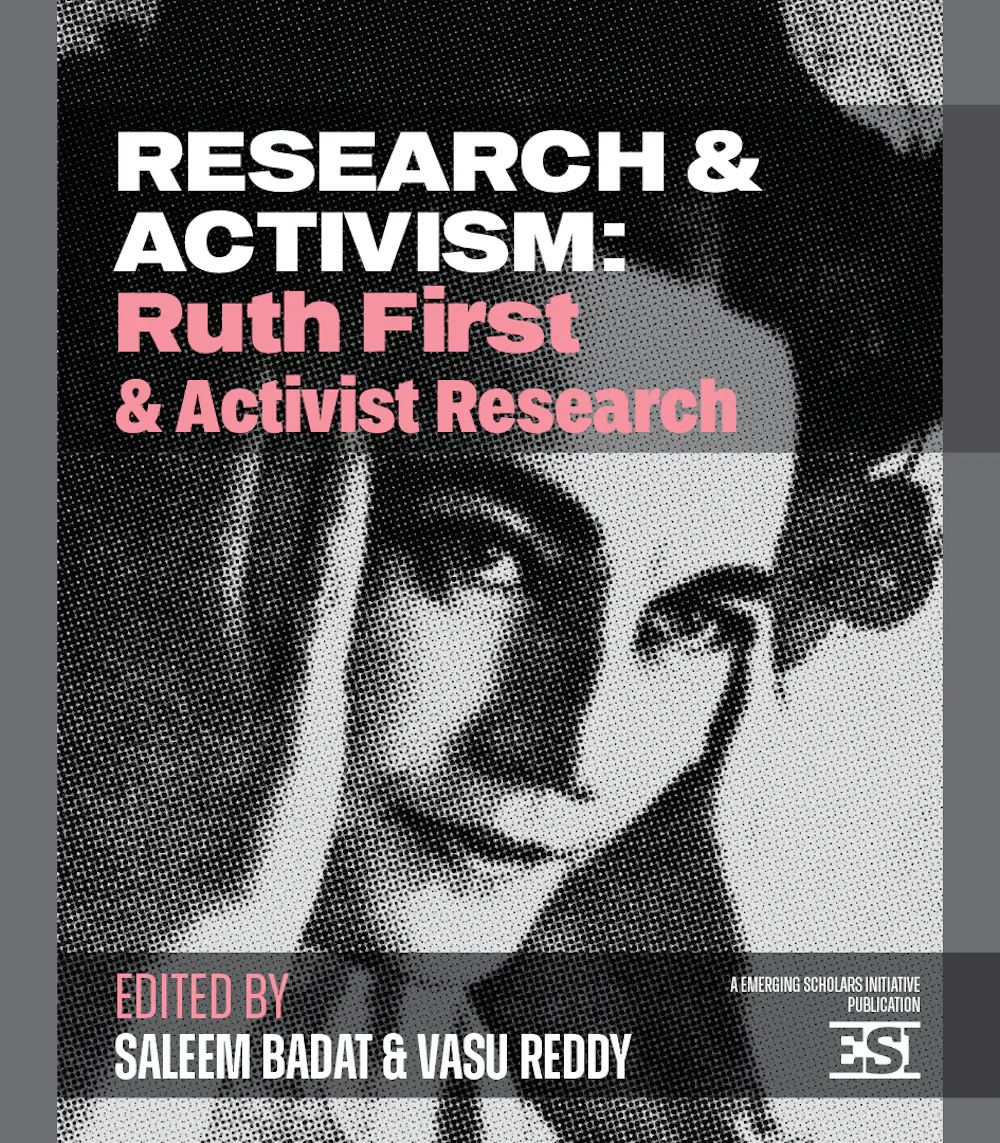
    Her ideas, work and legacy live on. Sociologists Saleem Badat and Vasu Reddy have edited a new book called Research and Activism: Ruth First & Activist Research. We asked them about her and their project.


    Who was Ruth First?

    Heloise Ruth First was born on 4 May 1925 in Johannesburg to Jewish parents who had migrated from eastern Europe to South Africa in the early 1900s. Her parents were founder members of the South African Communist Party.

    She joined the Young Communist League and the Federation of Progressive Students and graduated from the University of the Witwatersrand in 1946 with a Bachelor of Arts degree.

    At 21, First joined the left-wing South African newspaper The Guardian. When it was banned, the New Age took its place until it too was banned in 1962. She served as the newspaper’s Johannesburg editor for 17 years.

    In 1963, First was arrested at the University of the Witwatersrand library and held in solitary confinement for 117 days, during which time she was ruthlessly interrogated. The following year she and her three children left South Africa for England on an exit permit, where they joined her partner, the activist and politician Joe Slovo. She would not set foot again in South Africa. Continuing with her activist research in England, she taught at Durham University and then joined Eduardo Mondlane University until hear death.

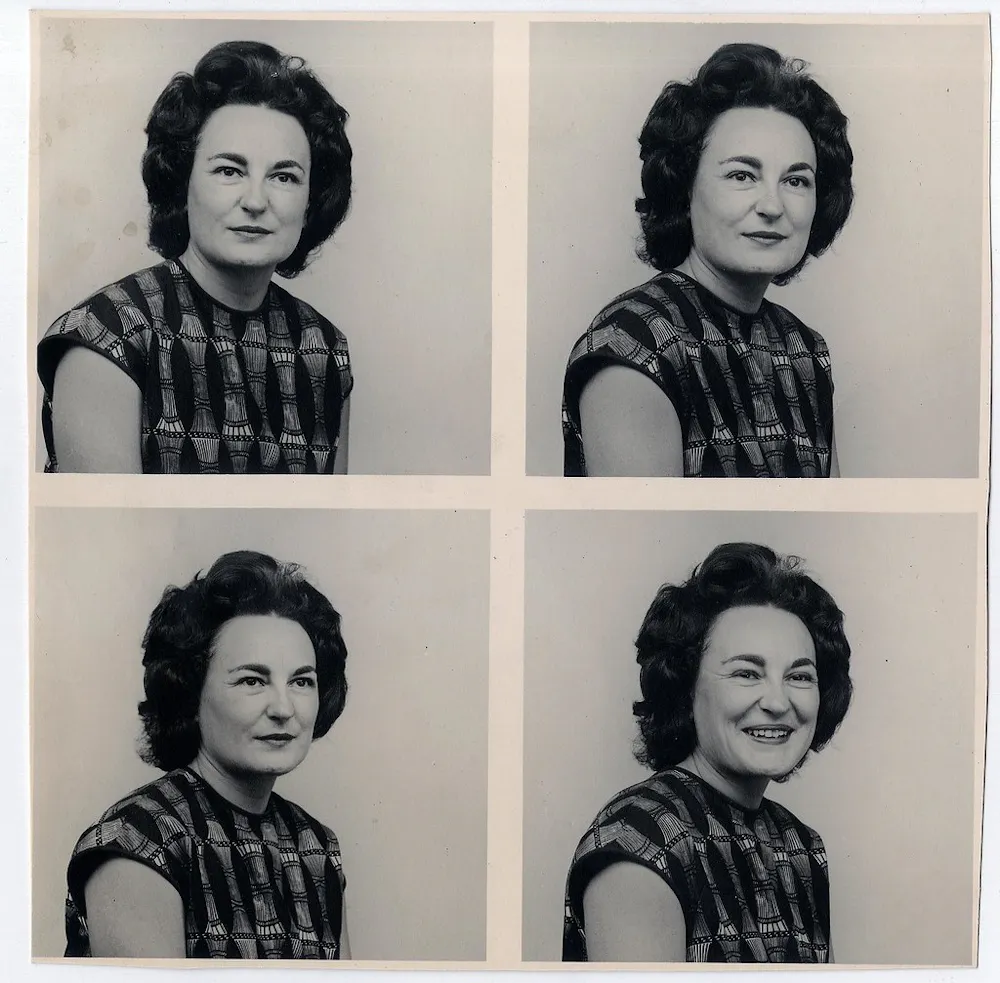
    Ruth First. Courtesy the Slovo family

    The mid-1940s to early 1960s were tumultuous years in South Africa. With the rise of formal apartheid in 1948, racial segregation was intensified.

    First’s intrepid and penetrating journalistic research exposed her to the brutality of labour exploitation and control on the mines and the farms. It reinforced her understanding of South Africa in Marxist terms.

    She wrote:

    Silence in the face of injustice is complicity.

    For her:

    The will to fight is born out of the desire for freedom.

    She was confident that:

    The power of the people is greater than the power of any government.

    First believed that ignorance is “the enemy of progress and justice” and that knowledge and education are “key to empowering individuals and challenging oppressive systems”. These words ring true in today’s global events driven by right-wing authoritarianism, US imperialism and acts of genocide.

    On learning of her death, former South African President Nelson Mandela recalled:

    I was in prison when Ruth First was assassinated, felt almost alone. Lost a sister in arms  … It is no consolation to know that she lives beyond her grave.

    What is activist research and how is it applied in the book?

    As authors, we revisit Ruth First’s life, work and ideas and its relevance for the current context. We focus especially on the nature of her scholarship and how she navigated the tensions between her activism and her research – whether journalistic or for her books on South West Africa (today’s Namibia), Libya or western investment in apartheid. Other of her acclaimed books included The Barrel of a Gun: Political Power in Africa and the Coup d’etat and, during her Mozambican sojourn, Black Gold: The Mozambican Miner, Proletarian and Peasant.

    In the process we invite renewed critical reflection about her life and work. Inspired by First’s contributions, the book considers how universities and scholars engage with institutions and social movements beyond the university.

    ESI Press

    For example, in the book a research group from Durham University in the UK considers how to balance objectivity (showing no bias) with more politically participatory research methods and how objectivity can be enhanced despite the difficulties faced by activist research.

    Other scholars reflect on the work of the assassinated South African anti-apartheid activist scholar and lecturer Rick Turner on climate change. And on the complexities of undertaking activist research in Marikana with a women’s organisation, Sikhala Sonke. Marikana was the site where South African police opened fire on and killed 34 striking mineworkers in 2012.

    There is examination of a research partnership between University of Cape Town activist scholars and some Khoi-San communities, reflection on the challenges of legal practice and education, and critical analysis of the decolonisation challenges of the KwaZulu-Natal Society of the Arts.

    How do you frame activist research in your book?

    The book shows that there is a difference between engaged research, critical research and activist research.

    Engaged research tries to connect knowledge produced by academics with institutions, movements and experts outside the university to collaboratively address issues and promote cooperation.

    Critical research uses radical critical theory to critique oppression and injustice, to show the gap between what exists today and more just ways of living. However, it does not necessarily connect with political and social movements.

    Ruth First addresses a rally in Trafalgar Square, London in 1960. Courtesy the Slovo family

    First’s research was not only engaged, but also critical in orientation and activist in nature. As activist research it challenged oppression and inequality.

    It both critiqued the status quo in South Africa and elsewhere and tried to change it. It was linked with movements and connected to political activism that was anti-colonial, anti-imperialist, and committed to socialism.


    Read more: Lessons learnt from taking sides as a sociologist in unjust times


    First’s activist research did not confine itself to the academic arena but engaged with larger, wider and more diverse publics. It used this experience to critique dominant and often limited thinking at universities and promoted other ways of producing knowledge. The expertise developed was used to improve scholarship in various ways.

    What do you want readers to take away?

    There is much talk about the “engaged university” and engaged research. However, only certain connections and engagements seem to be valued.

    Prior to democracy in 1994, South African researchers connected with social movements for change. Now this is seldom the case. Universities and scholars largely engage with those with money – the state, business, elites and donors.


    Read more: Regina Twala was a towering intellectual and activist in Eswatini – but she was erased from history


    This raises questions about the roles of researchers in South Africa, whose interests are prioritised and the place of critical and activist research in the engaged university.

    How should Ruth First be remembered?

    We must honour her for her intellectual and practical activism. What matters is not just her knowledge archive, but also her example as both an outstanding interpreter of the world and an activist scholar committed to changing society in the interests of the downtrodden, marginalised and voiceless.

    First was a critical and independent thinker who refused to accept anything as settled and beyond questioning. But that intellect was committed to loyalty to the national liberation movement of which she was an invaluable cadre.


    The views expressed in this piece do not reflect or represent the position of the university to which Badat and Reddy are affiliated.

    – Ruth First and activist research: the legacy of a South African freedom fighter
    – https://theconversation.com/ruth-first-and-activist-research-the-legacy-of-a-south-african-freedom-fighter-257687

    MIL OSI Africa

  • MIL-OSI Security: Five Defendants Charged for Their Roles in Health Care Fraud and Illegal Drug Diversion Schemes

    Source: US FBI

    Today, United States Attorney Craig H. Missakian announced criminal charges against five defendants in connection with allegations that they defrauded Medicare and other federal health care benefit programs and illegally diverted drugs. The charges filed in federal court are part of the Department of Justice’s 2025 National Health Care Fraud Takedown. The charges stem from various schemes, including a doctor who submitted unnecessary claims for medical equipment, individuals who ran or participated in fraud schemes to obtain money from federally funded health insurance programs through false claims, and a nurse who diverted pain medication for his own use.

    “Fraud and abuse in our health care system all too often result in harm to the elderly and sick and a loss to the American taxpayer.  The five cases announced today reflect the far-reaching impact of health care fraud and my office’s commitment to prosecuting schemes that target these vital programs,” said United States Attorney Craig H. Missakian.  “We will hold accountable any person who chooses greed over patient well-being.”

    “This record-setting Health Care Fraud Takedown delivers justice to criminal actors who prey upon our most vulnerable citizens and steal from hardworking American taxpayers,” said Attorney General Pamela Bondi. “Make no mistake – this administration will not tolerate criminals who line their pockets with taxpayer dollars while endangering the health and safety of our communities.”

    The charges announced today by U.S. Attorney Missakian are part of a strategically coordinated, nationwide law enforcement action that resulted in criminal charges against 324 defendants for their alleged participation in health care fraud and illegal drug diversion schemes that involved the submission of over $14.6 billion in alleged false billings and over 15 million pills of illegally diverted controlled substances. The defendants allegedly defrauded programs entrusted for the care of the elderly and disabled to line their own pockets, and the Government, in connection with the Takedown, seized over $245 million in cash, luxury vehicles, and other assets.

    The following individuals were charged in the Northern District of California:

    • Vincent Thayer, 41, of San Jose, California, was charged by indictment with wire fraud, health care fraud, and aggravated identity theft in connection with a $68 million medical office visit scheme. As alleged in the indictment, Thayer owned Patient Payment Agent, which did business as My Community Testing, and was a purported COVID-19 testing money. Through this company, Thayer caused the submission of approximately $68,205,233 in false and fraudulent claims to Medicare, Medicaid, and the HRSA COVID-19 Uninsured Program, of which approximately $11,751,819 was paid, for office visits purportedly performed by medical professionals but that never occurred. Thayer also misappropriated the identity of a doctor to enroll his company in Medicare and Medi-Cal (California’s Medicaid program). The case is being prosecuted by Trial Attorneys Matthew Belz of the Los Angeles Strike Force and Lauren Randell of the National Rapid Response Strike Force and Assistant U.S. Attorney Ryan Rezaei of the Northern District of California.
    • Sevendik Huseynov, 47, a national of Azerbaijan currently residing in Sunnyvale, California, and the owner and CEO of Vonyes, Inc. in Sunnyvale, California, was charged by criminal complaint and arrested on June 26, 2025.  The complaint alleges that the defendant committed health care fraud through a scheme to submit fraudulent claims to Medicare Advantage Organizations (“MAOs”) on behalf of unsuspecting beneficiaries for durable medical equipment (“DME”).  The complaint alleges that Huseynov, from January 15, 2025, through June 16, 2025, through his entity Vonyes, submitted more than 7,200 claims to at least eight separate MAOs offering Medicare Part C benefit plans, and that those claims sought reimbursement of more than $137 million for DME such as back braces, knee braces, and wrist braces.  The complaint alleges that certain of the purported beneficiaries contacted by law enforcement were not aware of the DME prescriptions and did not need the prescribed DME.  The complaint also alleges that a healthcare provider listed as a referring physician on many billing claims had never prescribed DME supplied by Vonyes and that the patients listed on those claims were not his patients.  The complaint also alleges that a review of bank records for Vonyes and Huseynov did not show any purchases of actual DME.  At least $761,037.63 was paid to Vonyes, into accounts controlled solely by Huseynov, from MAOs during the scheme.  The case is being prosecuted by Assistant U.S. Attorney Maya Karwande, of the U.S. Attorney’s Office for the Northern District of California.
    • Clinton Johnson Christian, 38, of Fairfield, California, was charged by indictment with tampering with consumer products and intentionally obtaining controlled substances through deception and subterfuge in connection with diverting a controlled substance for his personal use. As alleged in the indictment, Christian accessed a machine that held hydromorphone by falsely stating a patient needed the controlled substance, removed a vial of hydromorphone, extracted the hydromorphone and re-filled the vial with saline before replacing the vial and cancelling the patient’s order. The case is being prosecuted by Assistant U.S. Attorney Jonathan U. Lee of the U.S. Attorney’s Office for the Northern District of California.
    • Dr. Yasmin Pirani, 46, of British Columbia, Canada, was charged by indictment with health care fraud and false statements related to health care matters in connection with a $35.2 million telemedicine fraud scheme. As alleged in the indictment, in exchange for payments from a telemedicine company, Dr. Pirani signed prescriptions for DME that was medically unnecessary, for Medicare beneficiaries with whom she lacked a pre-existing doctor-patient relationship, without a physical examination, and without any conversation with the beneficiary or based solely on a short telephonic conversation. Dr. Pirani falsely diagnosed Medicare beneficiaries with certain conditions to support the DME prescriptions and falsely attested that the information in medical records was accurate, concealing that she did not have any interaction with the Medicare beneficiaries or that the interaction was brief and telephonic. The telemedicine company solicited illegal kickbacks and bribes from DME suppliers in exchange for DME prescriptions signed by Dr. Pirani, and the DME suppliers billed Medicare approximately $32.5 million based on Dr. Pirani’s prescriptions. The case is being prosecuted by Trial Attorney S. Babu Kaza of the Midwest Strike Force and Assistant U.S. Attorney Alexandra Shepard of the  Northern District of California.
    • Patrick Omeife, 33, of Ghana, was charged by indictment with two counts of concealment money laundering in connection with a scheme to launder approximately $33,765 that was fraudulently disbursed from a federal COVID-19 relief program and intended for an optometrist whose identity had been stolen. As alleged in the indictment, Omeife, falsely purporting to be a covert agent of the U.S. government, began an online romantic relationship with a woman and requested that the woman use her bank account to receive his salary. This woman provided Omeife with her bank account information, and her account was used in a September 2020 fraudulent application for funds from the COVID-19 Provider Relief Fund (“PRF”). The PRF provided funds to health care providers that were financially impacted by COVID-19. Based on the fraudulent September 2020 application, the PRF disbursed approximately $33,765 intended for the optometrist into the woman’s bank account. At Omeife’s direction, the woman converted the funds to Bitcoin cryptocurrency and transferred the Bitcoin to Omeife’s cryptocurrency account. Omeife repeatedly provided identifying information to his cryptocurrency exchange, to include his Republic of Ghana driver’s license and “selfie” photographs of his face and bare upper body, depicting a distinctive tattoo on his chest of the Bitcoin currency symbol. Numerous additional fraudulent PRF applications connected to the application made in the optometrist’s name resulted in at least $1.6 million of fraudulent disbursement of funds related to COVID-19 relief programs. The case is being prosecuted by Trial Attorney Babu Kaza of the Midwest Strike Force and Assistant U.S. Attorney Kristina Green of the Northern District of California.

    “Healthcare fraud is not a victimless crime. It drains critical resources from healthcare programs, undermines public trust, and ultimately steals from American taxpayers. The FBI is committed to rooting out health care fraud in all its forms, working alongside our law enforcement partners to hold perpetrators accountable and protect the integrity of our nation’s healthcare system,” said FBI Special Agent in Charge Sanjay Virmani.

    “FDA is fully committed to the vigorous criminal prosecution of individuals who threaten the safety of U.S. consumers,” said Special Agent in Charge Robert Iwanicki, FDA Office of Criminal Investigations Los Angeles Field Office.  “We remain committed to working with our law enforcement partners to protect the public health and bring to justice those who compromise patients’ health.”

    In addition to the U.S. Attorney’s Office for the Northern District of California, the Health Care Fraud Unit’s National Rapid Response, Florida, Gulf Coast, Los Angeles, Midwest, New England, Northeast, and Texas Strike Forces; U.S. Attorneys’ Offices from around the country; and State Attorney Generals’ Offices for Arizona, California, Georgia, Illinois, Indiana, Louisiana, Massachusetts, Missouri, New York, Ohio, and Pennsylvania are prosecuting the cases in the National Health Care Fraud Takedown, with assistance from the Health Care Fraud Unit’s Data Analytics Team. Descriptions of each case involved in today’s enforcement action are available here.

    The Northern District of California, in particular, worked with the Department’s Criminal Division and Health Care Fraud Unit and the following law enforcement organizations to investigate and prosecute the cases filed during the enforcement period: the U.S. Department of Health and Human Services Office of Inspector General; the Federal Bureau of Investigation, and the FDA Office of Criminal Investigations.

    A complaint, information, or indictment is merely an allegation. All defendants are presumed innocent until proven guilty beyond a reasonable doubt in a court of law.
     

    MIL Security OSI

  • MIL-OSI Security: District of Arizona Charges Seven Defendants as Part of National Health Care Fraud Takedown

    Source: US FBI

    PHOENIX, Ariz. – Today, United States Attorney Timothy Courchaine announced criminal charges against seven defendants in connection with alleged schemes to receive health care kickbacks and to defraud Medicare and Medicaid (specifically AHCCCS, the Arizona Health Care Cost Containment System). The charges filed in federal court are part of the Department of Justice’s 2025 National Health Care Fraud Takedown. The charges stem from alleged schemes to obtain over $1.1 billion by the collective submission of approximately $1.65 billion in fraudulent claims to Medicaid and Medicare and the receipt of health care kickbacks and bribes.

    “Health care fraud doesn’t just steal money from taxpayers, it also degrades trust in the system Americans rely on to care for themselves and their loved ones” said United States Attorney Timothy Courchaine. “I am proud that the District of Arizona, in coordination with the entire Department of Justice, is working hard to hold criminals accountable for putting ill-gotten gains above their community’s well-being.”   

    “This record-setting Health Care Fraud Takedown delivers justice to criminal actors who prey upon our most vulnerable citizens and steal from hardworking American taxpayers,” said Attorney General Pamela Bondi. “Make no mistake – this administration will not tolerate criminals who line their pockets with taxpayer dollars while endangering the health and safety of our communities.”

    The charges announced today by United States Attorney Courchaine are part of a strategically coordinated, nationwide law enforcement action that resulted in criminal charges against 324 defendants for their alleged participation in health care fraud and illegal drug diversion schemes that involved the submission of over $14.6 billion in intended loss and over 15 million pills of illegally diverted controlled substances. The defendants allegedly defrauded programs entrusted for the care of the elderly and disabled to line their own pockets. The United States has seized over $245 million in cash, luxury vehicles, and other assets in connection with the takedown.

    The following individuals were charged in the District of Arizona:

    Farrukh Jarar Ali, 41, of Pakistan, was charged by indictment with conspiracy to commit health care fraud and wire fraud, three counts of wire fraud, and money laundering in connection with an alleged $650 million scheme involving at least 41 substance abuse treatment clinics in Arizona. As alleged in the indictment, Ali owned ProMD Solutions (“ProMD”), a Pakistan-based company that provided credentialing, enrollment, medical coding, and billing services for outpatient treatment centers that were purportedly in the business of providing addiction treatment services for persons suffering from alcohol and drug addiction. Ali and ProMD credentialed and enrolled multiple substance abuse treatment clinics as providers with Arizona’s Medicaid agency, the Arizona Health Care Cost Containment System (“AHCCCS”), but these clinics did not provide legitimate care to patients, many of whom were recruited from the homeless population or Native American reservations. Ali submitted approximately $650 million in false and fraudulent claims to AHCCCS for addiction treatment services that were not provided, were not provided as billed, were so substandard that they failed to serve a treatment purpose, were not used as part of or integrated into any treatment plan, and were medically unnecessary. AHCCCS paid approximately $564 million for these false and fraudulent claims. Ali also created false therapy notes for treatment that was never provided, and the clinics working with Ali provided these falsified records to AHCCCS in response to audits. Ali personally received approximately $24.5 million of AHCCCS funds as a result of the scheme, and he used $2.9 million of the funds to purchase a home located on a golf estate in Dubai, United Arab Emirates. The case is being prosecuted by Trial Attorney S. Babu Kaza of the Midwest Strike Force, Assistant Chief James Hayes of the National Rapid Response Strike Force, and Assistant U.S. Attorney Matthew Williams of the District of Arizona.

    Cle’Esther Davenport, 51, of Peoria, Arizona, was charged by indictment with conspiracy to defraud the United States and receive and pay kickbacks, and receiving kickbacks, in connection with a substance abuse treatment scheme. As alleged in the indictment, Davenport owned a company, Davenport House LLC, that purportedly provided housing to individuals enrolled in health plans funded by the Arizona Health Care Cost Containment System (“AHCCCS”), Arizona’s Medicaid program. Davenport received approximately $739,000 in illegal kickbacks to refer individuals to Tusa Integrated Clinic, LLC (“Tusa”), an outpatient treatment center that purported to provide substance abuse and behavioral health treatment to AHCCCS-insured patients, resulting in improper payments of approximately $1.58 million from AHCCCS to Tusa. The case is being prosecuted by Assistant Chief James Hayes and Trial Attorneys Sarah Edwards and Lauren Randell of the National Rapid Response Strike Force and Assistant U.S. Attorney Matthew Williams of the District of Arizona.

    Ira Denny, 56, of Surprise, Arizona, was charged by information with conspiracy to commit health care fraud in connection with a scheme to defraud Medicare by billing for medically unnecessary amniotic allografts that were procured through kickbacks and bribes. As alleged in the information, medically untrained sales representatives identified and referred elderly Medicare beneficiaries to Denny, a nurse practitioner, who applied amniotic allografts to the beneficiaries without exercising independent medical judgment and in the amount and frequency determined by the sales representatives. Medicare was billed approximately $209,359,607 for allografts ordered and applied by Denny, which were medically unreasonable and unnecessary, ineligible for reimbursement, and procured through kickbacks and bribes. Medicare paid approximately $138,590,922 based on these false and fraudulent claims. The case is being prosecuted by Trial Attorneys William Hochul III and Shane Butland of the National Rapid Response Strike Force and Assistant U.S. Attorney Matthew Williams of the District of Arizona.

    Tyler Kontos, 29, of Mesa, Arizona, Joel “Max” Kupetz, 36, of Scottsdale, Arizona, and JorgeKinds, 49, of Phoenix, Arizona, were charged by indictment with conspiracy to commit health care fraud, health care fraud, and conspiracy to defraud the United States in connection with a $1 billion amniotic wound allograft fraud scheme. Kontos and Kupetz were also charged with transactional money laundering, and Kupetz was charged with receiving health care kickbacks. As alleged in the indictment, the defendants targeted elderly Medicare patients, many of whom were terminally ill in hospice care, through Arizona-based companies Apex Mobile Medical LLC, Apex Medical LLC, Viking Medical Consultants LLC, and APX Mobile Medical LLC to cause unnecessary and expensive allografts to be applied to these vulnerable patients’ wounds indiscriminately, without coordination with the patients’ treating physicians, to superficial wounds that did not need this treatment, and in sizes excessively larger than the wound. Kontos and Kupetz—neither of whom had any medical training—located elderly Medicare patients with wounds of any size or severity, ordered and recommended the ordering of allografts to be placed on the patients’ wounds, and referred the patients to Kinds and other nurse practitioners to apply the allografts. Kinds, a licensed nurse practitioner, applied whatever quantities and sizes of allografts medically untrained sales representatives ordered for the patients, without conducting an independent medical assessment, resulting in the application of numerous and inappropriately large allografts to single small wounds and wounds that required only traditional conservative treatment to heal. In just fourteen months, the defendants and their co-conspirators caused the submission of over $1 billion in false and fraudulent claims to Medicare, CHAMPVA, TRICARE, and commercial insurers, of which over $600 million was paid. Kontos and Kupetz received illegal kickbacks for ordering and arranging for and recommending the purchasing and ordering of allografts, while Kinds received up to $1,000 for each allograft application. Assets were seized upon the defendants’ indictment, including cryptocurrency and bank accounts totaling more than $7.2 million. The case is being prosecuted by Trial Attorneys William Hochul III and Shane Butland of the National Rapid Response Strike Force and Assistant U.S. Attorney Matthew Williams of the District of Arizona. Trial Attorney Yuliana Reyes of the Money Laundering and Asset Recovery Section and Assistant U.S. Attorney Joseph Bozdech of the District of Arizona are handling asset forfeiture.

    Gina Palacios, 40, of Phoenix, Arizona, was charged by information with conspiracy to commit health care fraud in connection with a scheme to defraud Medicare by billing for medically unnecessary amniotic allografts that were procured through kickbacks and bribes. As alleged in the information, medically untrained sales representatives identified and referred elderly Medicare beneficiaries to Palacios, a nurse practitioner, who applied amniotic allografts to the beneficiaries without exercising independent medical judgment and in the amount and frequency determined by the sales representatives. Medicare was billed approximately $59,470,478 for allografts ordered and applied by Palacios, which were medically unreasonable and unnecessary, ineligible for reimbursement, and procured through kickbacks and bribes. Medicare paid approximately $28,442,271 based on these false and fraudulent claims. The case is being prosecuted by Trial Attorneys William Hochul III and Shane Butland of the National Rapid Response Strike Force and Assistant U.S. Attorney Matthew Williams of the District of Arizona.

    “The FBI takes the responsibility to investigate and pursue those who commit fraud for personal gain extremely seriously,” said FBI Phoenix Special Agent in Charge Heith Janke.  “Fraud and dishonesty undermine the integrity of our health care system and cost taxpayers’ money; but beyond that and most importantly, when funds are diverted from where they are truly needed, the people who are most vulnerable are hurt the most.”

    The Health Care Fraud Unit’s National Rapid Response, Florida, Gulf Coast, Los Angeles, Midwest, New England, Northeast, and Texas Strike Forces; U.S. Attorneys’ Offices for the District of Arizona, Central District of California, Northern District of California, Southern District of California, District of Columbia, District of Connecticut, District of Delaware, Middle, District of Florida, Northern District of Florida, Southern District of Florida, Middle, District of Georgia, District of Idaho, Northern District of Illinois, Eastern District of Kentucky, Western District of Kentucky, Eastern District of Louisiana, Middle District of Louisiana, District of Maine, District of Massachusetts, Eastern District of Michigan, Northern District of Mississippi, Southern District of Mississippi, District of Montana, District of Nevada, District of New Hampshire, District of New Jersey, Eastern District of New York, Northern District of New York, Southern District of New York, Western District of New York, Eastern District of North Carolina, Western District of North Carolina, District of North Dakota, Northern District of Ohio, Southern District of Ohio, Northern District of Oklahoma, Western District of Oklahoma, District of Oregon, Eastern District of Pennsylvania, District of South Carolina, Middle District of Tennessee, Western District of Tennessee, Northern District of Texas, Southern District of Texas, Western District of Texas, District of Vermont, Eastern District of Virginia, Western District of Washington, and Northern District of West Virginia; and State Attorney Generals’ Offices for Arizona, California, Georgia, Illinois, Indiana, Louisiana, Massachusetts, Missouri, New York, Ohio, and Pennsylvania are prosecuting the cases in the National Health Care Fraud Takedown, with assistance from the Health Care Fraud Unit’s Data Analytics Team. Descriptions of each case involved in today’s enforcement action are available on the Health Care Fraud Unit’s Website.

    The District of Arizona, in particular, worked with the Department’s Criminal Division and the following law enforcement organizations to investigate and prosecute the cases filed during the enforcement period: the FBI, the Department of Health and Human Services Office of Inspector General, the Department of Defense – Defense Criminal Investigative Service, and the Department of Veterans Affairs Office of Inspector General.

    A complaint, information, or indictment is merely an allegation. All defendants are presumed innocent until proven guilty beyond a reasonable doubt in a court of law.

    CASE NUMBERS:         CR-25-00822-PHX-DWL, CR-25-0083-PHX-MTL, CR-25-00915-PHX-SMB, CR-25-00944-PHX-SPL, CR-25-00947-PHX-DWL
    RELEASE NUMBER:    2025-106_Health Care Fraud Takedown

    # # #

    For more information on the U.S. Attorney’s Office, District of Arizona, visit http://www.justice.gov/usao/az/
    Follow the U.S. Attorney’s Office, District of Arizona, on Twitter @USAO_AZ for the latest news.

    MIL Security OSI

  • MIL-OSI United Kingdom: Support Hub for victims and survivors of terrorism

    Source: United Kingdom – Executive Government & Departments

    News story

    Support Hub for victims and survivors of terrorism

    Victims and survivors of terrorism will receive strengthened support as the government today launches a commercial competition to establish a new dedicated support hub.

    As part of the Plan for Change, the government committed to establishing a new dedicated support hub for victims and survivors, supporting their needs in the immediate and long-term aftermath of a terrorist attack.

    The new 24/7 support hub will provide specialist, trauma-informed care to victims and survivors of terrorism, ensuring they have access to the help they need.

    The tender, which opened on Thursday 3 July, is supported by Pool Re, a strategic partner in the government’s CONTEST strategy and the Counter Terrorism Alliance. Pool Re has provided funding to help deliver on our shared mission of supporting victims and survivors.

    Security Minister Dan Jarvis said:

    The repercussions of a terrorist attack are catastrophic. Victims and survivors require dedicated care to help rebuild their lives.

    This new hub will give victims the comprehensive support they need, and I thank Pool Re for being a crucial partner in delivering this.

    Tom Clementi, Director and CEO of Pool Re, said:

    Pool Re is proud to support victims and survivors of terrorism. As the UK’s largest terrorism reinsurer, we recognise that while the economic impact of terrorism is often in the spotlight, the human cost is just as significant.

    This dedicated support hub will help ensure that those affected receive the long-term care they deserve. We look forward to continuing our collaboration with the Home Office through the Counter Terrorism Alliance, to increase the UK’s resilience to the impact of terrorism attacks.

    The 24/7 support hub is a part of wider reforms that have been designed in response to direct engagement with victims and survivors, and insights drawn from international best practice.

    In March, the government also announced a consultation on a new National Day for Victims and Survivors of Terrorism. This closed on 11 June and sought views on proposals to help the country to remember and honour those who have been tragically killed or impacted by terrorist attacks. The outcome of the consultation will follow in due course.

    The Home Office Victims of Terrorism Unit will continue to engage with key stakeholders on progress. 

    Support is available to victims and survivors of terrorism and all those affected, regardless of whether the attack took place in the United Kingdom or overseas. More information is available at gov.uk/victimsofterrorism.

    Updates to this page

    Published 3 July 2025

    MIL OSI United Kingdom

  • MIL-OSI United Kingdom: Environment Secretary Steve Reed: Groundswell Show speech

    Source: United Kingdom – Executive Government & Departments

    Speech

    Environment Secretary Steve Reed: Groundswell Show speech

    Speech by Environment Secretary Steve Reed at the 2025 Groundswell Show.

    It’s fantastic to be with you all here today. I’m delighted to have this opportunity to speak to so many people.

    It’s exciting to be here at Groundswell with the pioneers and innovators who are shaping the future of British farming.

    I’ve really been looking forward to coming to Groundswell because I know this is where the big ideas are taking shape. 

    You’re confronting the challenges of the future by drawing on the power of the past, looking at how we can use regenerative agriculture to shape the future of farming, and inspiring others to get involved in those approaches.

    You’ve been the ones to break the mould, championing the vital role of nature in sustainable food production from the start – the pioneers of an agricultural transition that must be just and must recognise the importance of community and tradition as we shape that future.

    Protecting British food security has never been more important. We’ve just had our warmest spring on record. Flooding is on the rise. Geopolitical events are threatening global food supply chains.

    Food security is national security. And you, more than anyone, know it’s only by restoring nature that we can make our food secure.

    Restoring nature is central to the Government’s approach.

    In the Spending Review, we committed to spend £2.7 billion a year on sustainable farming and nature’s recovery over the next three years.

    Funding for farmers through the Environmental Land Management schemes will increase by 150 per cent to £2 billion by 2029. And a further £400 million will be available from other nature schemes, including projects for tree planting and peatland restoration.

    This is the biggest financial investment in nature-friendly farming in our country’s history.

    Take a moment to compare this to 2017, when Groundswell first started. Back then, £350 million was invested into ELMs’ predecessor.

    Thanks to your efforts, nature-friendly farming has come a very long way in the past nine years.

    There are now over 39,000 SFI agreements producing fantastic results for nature. That’s something to celebrate. 

    [Political line removed]

    We’ve got the money out the door into farmers’ bank accounts, and I’m proud of that. But once you’ve spent a budget, you can’t keep spending it or you damage the economy, and we’re not doing that.

    Those farmers who missed out at the time the scheme closed to new applicants will be able to make claims once it reopens. But budgets can’t be unlimited, so we need to make sure we focus that public money where it’s going to make the biggest impact. 

    Farms are businesses, and all businesses need to be profitable to survive. I see it as central to my job to help make farming profitable. 

    I firmly believe the Sustainable Farming Incentive and ELMs are the best tools to support farmers’ transition to sustainable food production and to profitability.

    Later this summer, I will provide more details of our reformed SFI offer. We are working with farmers to shape the scheme, which will start accepting applications in the new year.

    We need to return firmly to the principle of public money for public goods.

    Our reformed SFI will maximise benefits for the environment, particularly around water quality and biodiversity, so we can clean up our polluted rivers, welcome wildlife back to farms, and strengthen the natural foundations that are vital to sustainable food production.

    We will simplify the SFI and support farmers to take on packages of actions which, when done together, achieve more for nature. And I know we need to upgrade the IT system so it’s easier for farmers to submit applications.

    That is part of my broader plan to rewire and reset Defra, to remove the bureaucracy and barriers that stand in the way of people getting the support they need.

    More environmental benefits, a simpler offer, supporting farmers through the transition, a focus on profitability, and visibility of the overall budget so we get it out the door and you know when it’s going to be fully allocated.

    This will be the shape of our reformed SFI.

    We’re also reopening our Capital Grants offer today – with £150 million in the latest round to invest in nature-friendly farming.

    That includes funding to plant hedgerows, buy equipment that will help clean up our rivers, or restore habitats that support biodiversity.

    Farmers and land managers can apply for a total of 78 items under the latest round, including four new items on woodland condition, wildlife management, stone walls and educational visits.

    We’ve taken time to assess and improve our offer. Putting funding limits on certain actions will ensure we manage budgets fairly so we can open the grants over a longer period of time.

    The SFI and Capital Grants form part of a much wider reset for farming.

    We want to support farmers to run profitable and financially resilient businesses that produce nutritious, high-quality food and other produce, and help to restore nature at the same time.

    Our 25-Year Farming Roadmap will outline our shared vision for the sector and set the direction for how we get there. It will give farmers clarity, stability and transparency.

    This will be a transition led by farm businesses, drawing on your experiences and your expertise.

    With government as the enabler, but farmers as the leaders.

    We’ve seen how effective farm clusters can be in supporting nature over a wider area – an initiative led by the sector which the Government can support.

    I’ve asked Baroness Minette Batters, former NFU President, to lead a review into how we can boost farm profitability – and she has written to the sector to get your ideas to inform the review.

    And we’re continuing to work with the Farm Tenancy Forum to ensure tenant farmers can access our reformed farming schemes.

    The farming sector is also leading the way on innovation.

    Agri-tech is one of our highest growth sectors, with 40 times the number of UK agri-tech businesses than we had ten years ago.

    Our ADOPT programme puts farmers in the driving seat, giving them the chance to test new technologies on their farm – such as solar panels on soft polytunnels or cultivation equipment to improve soil health in potato production. 

    Under the Government’s Industrial Strategy, we are taking this further. We’re investing over £200 million in the Farming Innovation Programme between now and 2030, as well as launching an Agri-Tech Export Accelerator Programme to help agri-tech businesses identify the best international markets.

    It’s been an interesting year, and certainly far from always straightforward.

    But we are now at a point where we can make things work better for farmers, food production and nature. I strongly believe in nature-positive farming. It is the way we can help farming to become more sustainable and successful both environmentally and financially.   

    You are the pioneers. I’m here to learn. Together we can give farming the bright and exciting future it, and our countryside, needs and deserves.

    Updates to this page

    Published 3 July 2025

    MIL OSI United Kingdom

  • MIL-OSI United Kingdom: New easier British citizenship route for Irish citizens launched

    Source: United Kingdom – Executive Government & Departments 3

    News story

    New easier British citizenship route for Irish citizens launched

    Irish people living in the UK can soon benefit from this new British citizenship route.

    Irish people living in the UK will soon be able to apply for British citizenship under a new easier, cheaper route, strengthening the unique relationship between the two countries.  

    Migration and Citizenship Minister Seema Malhotra visited Belfast today (3 July) to formally welcome the commencement of the British Nationality (Irish Citizens) Act 2024.  

    The new route, part of the act, makes it easier for Irish citizens to become British. Applicants will be subject to a more streamlined application process and will not be required to demonstrate knowledge of English language or sit the Life in the UK test. 

    The registration fee will be 50% cheaper than for other nationalities, at £723 for adults and £607 for children. Children looked after by the local authority will be processed free of charge, as will those who can credibly demonstrate they can’t afford the application fee. 

    Migration and Citizenship Minister Seema Malhotra said: 

    The UK and Ireland enjoy a close and continued shared history and geographic links that have fostered deep cultural connections and family ties across generations. 

    This new route represents the unique relationship between our two countries and builds upon the Common Travel Area arrangements that have benefited citizens of both nations for decades. 

    I am pleased the route will enable eligible Irish nationals who have made their home in the UK to fully participate in British society while maintaining their Irish citizenship.

    Under nationality birth rights in the Good Friday Agreement, people born in Northern Ireland to a British citizen, Irish citizen or a settled person have the right to hold British and Irish nationality.  

    From 22 July 2025, which is when the British Nationality (Irish Citizens) Act 2024 comes into force, Irish citizens living in England, Scotland, Wales, Northern Ireland, the Channel Islands and the Isle of Man will be able to apply for British citizenship under this new, easier route.  

    An Irish citizen will be able to register as a British citizen where: 

    • they can show they have been living in the UK for the previous 5 years 

    • during the 5 years, they must have not been absent for a total of more than 450 days 

    • during the final year, they must have not been absent for more than 90 days 

    • during the 5 years, they must have not been in breach of the immigration laws 

    • they are of good character

    Updates to this page

    Published 3 July 2025

    MIL OSI United Kingdom

  • MIL-OSI United Kingdom: VMD relaunches Veterinary Dispensary Manager Online Course

    Source: United Kingdom – Executive Government & Departments

    News story

    VMD relaunches Veterinary Dispensary Manager Online Course

    This popular online training event is scheduled for Thursday 23 October 2025 and is ideal for anyone involved in veterinary dispensary roles.

    Who is this for

    This event is ideal for Veterinary Surgeons, Veterinary Nurses, SQPs, Veterinary Pharmacists, Veterinary Practice Managers and anyone involved in a veterinary dispensary role.

    Whether you’re looking to refresh your knowledge or are new to this area, this course will provide critical insights into the safe and compliant handling of veterinary medicines.

    Course content

    Delivered by the VMD Inspection Team, this course provides an in-depth guide to the principles and protocols essential for the responsible management of veterinary medicines and the veterinary dispensary. The content covered will include; prescribing, supplying, dispensing, sourcing and storing, processes to minimise dispensing errors and updates on amendments to the Veterinary Medicines Regulations (VMR).

    The day will provide you with the tools and knowledge needed to effectively manage veterinary medicines within the legislative requirements. This will be delivered through an interactive online session, including talks and practical examples, to provide real-life applications of the learning received. Included will be:

    • Amendments to the Veterinary Medicines Regulations: What You Need to Know
    • Sourcing Veterinary Medicines
    • Correct Storage
    • Temperature Monitoring and recording
    • Prescribing, Supplying, Dispensing, and Labelling
    • Managing Controlled Drugs: Storage and Record-Keeping
    • Reducing Dispensing Errors
    • Common Deficiencies noted in VMD Inspections

    Networking opportunities will be available throughout the day, along with dedicated time to ask VMD Inspectors individual questions.

    Real-life scenarios and examples will highlight common pitfalls and how to avoid them, with opportunities for attendees to reflect on and apply insights to their own practice.

    Course duration

    The event will run from 9 am to 4 pm.

    Course outcome

    On completion of the course, attendees will be equipped to confidently manage veterinary medicines, ensure proper storage, and dispense with greater assurance. They will be able to fulfil their responsibilities with due regard for both clients and animals, secure in the knowledge that all legislative requirements are met.

    The VMD is committed to providing accessible and supportive training to industry. Delegate feedback from previous training events include:

    “For an online course, it was clear and concise. I liked the use of the polls and interactions”

    “Friendly, clear instructions and knowledgeable”

    “I enjoyed the real-world insights—because knowing the rules is one thing, but understanding how they play out in inspections and day-to-day operations is what really matters”

    VMD’s Training Centre Coordinator, Ali Pitfield, said:

    “Our training events offer a unique opportunity for industry professionals and those in the veterinary sector to engage directly with our experts, and receive immediate answers to their questions. It’s fantastic to hear the training is valued by attendees”.

    Registration

    If you are interested in attending the event, please visit Eventbrite for further information and to book your place.

    Course cost

    This course costs £495

    Special offer! For the first 20 tickets sold we will be offering a £100 discount, making the course cost £395 per person.

    Disclaimer: Once the first 20 tickets are sold the price will then remain at £495 per person.

    All attendees will receive a certificate of attendance.

    Enquiries

    If you have any questions, training enquiries or would like to contact the VMD Training Team, please email training@vmd.gov.uk.

    Updates to this page

    Published 3 July 2025

    MIL OSI United Kingdom

  • MIL-OSI United Kingdom: ‘Aberdeen welcomed me when I needed it most’: Eissa’s resilience sees him graduate Eissa Hassan’s journey to graduation has been more challenging than most.

    Source: University of Aberdeen

    Eissa has faced many challenges in his journey to graduation

    Eissa Hassan’s journey to graduation has been more challenging than most.
    After leaving his home in Yemen, the 28-year-old arrived in the UK, determined not to be defined by his past, but his future.
    Eissa explains: “Arriving in the UK as a refugee with nothing but hope, with limited resources, I faced the daunting task of rebuilding my life from the ground up. I sought a place that didn’t just offer education – but transformation.
    “I chose the University of Aberdeen because it embodies opportunity and growth. This institution opened its doors to me at a time I needed it most, nurturing my potential and empowering me to turn hardship into leadership. This University welcomed me with open arms and gave me not just an education, but a community and a future.
    “Entering this new academic environment felt like stepping into a world vastly different from anything I had known. I confronted self-doubt about my ability to integrate and succeed. As a refugee adjusting to unfamiliar cultural and educational norms, I grappled with feelings of uncertainty and isolation.
    “However, this initial apprehension gave way to resilience. Through daily engagement, academic challenges and support from the University community, I began to adapt and grow. This period marked a critical turning point, affirming my capacity to overcome adversity, embrace new opportunities and commit myself to lifelong learning and personal development.”

    Where we begin does not define where we can go” Eissa Hassan

    While studying for his degree in Business Management, Eissa was able to pursue not only his academic passions, but learn more about himself and what he wanted for his future.
    He continues: “Studying Business Management has been both academically enriching and personally empowering. I had the privilege of representing youth voices on climate justice globally, coordinate sustainability programmes and lead community events – all while balancing my studies.
    “One of the most meaningful highlights was working with climate and refugee networks across the UK and internationally, turning my lived experience into leadership. Of course, there were challenges – financial pressure, culture shock and grief after losing my mother, who passed away four months after I arrived in Aberdeen. But I found strength in my purpose and support from peers and staff who believed in me. Aberdeen gave me more than a degree; it gave me the platform to become the change I want to see in the world.”
    His journey has not been easy, but with resilience and support from the University community, Eissa is proud to be celebrating his hard work at his graduation.
    “Graduating fills me with profound gratitude and heartfelt reflection. This milestone represents not only the culmination of my academic journey but also the resilience required to overcome significant challenges. It reaffirms my belief that where we begin does not define where we can go and honours the sacrifices of my late mother. She was such an important part of my life and her dream was always to see me succeed. I was always trying to make her proud and happy and in the end, I feel like she succeeded.
    “This achievement is a testament to the power of perseverance, reminding me of my potential and the meaningful impact that dedication and determination can create. My future aspirations are to advance my work in climate justice, with a particular focus on supporting vulnerable communities disproportionately impacted by climate change. I look forward to leading with purpose, guided by the lessons of my past and hope for the future.”

    MIL OSI United Kingdom

  • MIL-OSI United Kingdom: Standing up for the most vulnerable in society

    Source: Liberal Democrats UK

    Rushed legislation is poor legislation. 

    It should not have taken a major rebellion for the Government to realise that these cuts would cause immense damage to some of the most vulnerable and risk creating a false economy by actually forcing some people out of work.

    To appease their own backbenches, the Government was willing to create a two-tier system, with new Personal Independent Payment (PIP) claimants unable to access the same support as those currently receiving it – only scrapping these plans at the final moment.

    PIP allows people to do the simple activities we all take for granted and stay in work. Cutting it will push more people into poverty and out of employment.

    Liberal Democrats will continue to oppose any system where some disabled people are more equal than others.

    It’s clear that the welfare bill is too high, but if the Government was serious about cutting welfare spending it would get serious about fixing health and social care, to tackle chronic ill-health at its root.

    Carers have been ignored by the Government throughout this whole debacle. Their voices must now be heard loud and clear. Ministers must ensure that this review listens carefully to both carers’ charities to understand the impact these changes will have, on family carers.

    The scale of this week’s rebellion shows that the Government is just not listening, and not delivering on the change that people are crying out for. 

    It is time for the Government to take their fingers out of their ears and realise it is time to change course. They must scrap this flawed legislation, go back to the drawing board, and work cross-party to fairly reduce the need for high welfare spending, by getting more people into work and fixing our broken health and care systems. 

    And when it comes to balancing the books, rather than cutting support for disabled people, ministers should be asking the social media giants, the big banks and the big online gambling companies to pay their fair share of tax.

    Image: ©House of Commons

    MIL OSI United Kingdom

  • MIL-OSI United Kingdom: Fit for the Future: Health and Social Care Secretary’s statement

    Source: United Kingdom – Government Statements

    Oral statement to Parliament

    Fit for the Future: Health and Social Care Secretary’s statement

    Wes Streeting, Secretary of State for Health and Social Care, made an oral statement announcing Fit for the Future: 10 Year Health Plan for England.

    Thank you, Madam Deputy Speaker.

    With your permission, I will make a statement to the House on ‘Fit for the Future’ – the Government’s 10 Year Health Plan for England.

    There are moments in our national story when our choices define who we are.

    In 1948, the Attlee Government made a choice founded on fairness: that everyone in our country deserves to receive the care you need, not just the care you can afford. 

    It enshrined in law and in the service itself, our collective conviction that healthcare is not a privilege to be bought and sold, but a right to be cherished and protected.

    And now it falls to our generation to make the same choice: to rebuild our National Health Service, and protect in this century what Attlee’s government built for the last.

    That is the driving mission of our Ten-Year Plan.

    In September, Lord Darzi provided the diagnosis: The NHS was broken [political content redacted].

    In the past year, Labour has put the NHS on the road to recovery.

    • We promised 2 million extra appointments, and we’ve delivered more than 4 million.
    • We promised 1,000 new GPs on the frontline. We’ve recruited 1,900.
    • We’ve taken almost a quarter of a million off waiting lists, cutting waiting lists to their lowest level in two years.

    And we have launched an independent commission, chaired by Baroness Casey, to build a national consensus around a new national care service to meet the needs of older and disabled people into the 21st century.

    Today, the Prime Minister has set out our prescription to get the NHS back on its feet and make it fit for the future.

    Our Plan will deliver three big shifts:

    First, from hospital to community.

    We will turn our National Health Service into a Neighbourhood Health Service. The principle is simple: Care should happen as locally as it can: digitally by default, in a patient’s home if possible, in a neighbourhood health centre when needed, in a hospital if necessary.

    We’ll put Neighbourhood Health Centres in every community, so you can see a GP, nurse, physio, care worker, therapist, get a test, scan, or treatment for minor injuries, all under one roof. The NHS will be organised around patients, rather than patients having to organise their lives around the NHS.

    It will be easier and faster to see a GP. We will train thousands more, end the 8am scramble, provide same-day consultations, and bring back the family doctor.

    If you are someone with multiple conditions and complex needs, the NHS will co-create a personal care plan, so your care is done with you, not to you.

    Pharmacy will play an expanded role in the Neighbourhood Health Service. They will manage long-term conditions; treat conditions like obesity and high blood pressure; screen for disease and vaccinate against it.

    And we will reform the dental contract, to get more dentists doing NHS work, rebuilding NHS dentistry.

    Over the course of this Plan, the majority of the 135 million outpatient appointments done each year will be moved out of hospitals. The funding will follow, so a greater share of NHS investment is spent in primary and community care.

    Second, from analogue to digital.

    No longer will NHS staff have to enter seven passwords to login to their computers, or spend hours writing notes and entering data. Our Plan will liberate frontline staff from the parts of the job they hate, so they can focus on the job they love – caring for patients.

    For the first time ever, patients will be given real control over a single, secure and authoritative account of their data. The single patient record will mean NHS staff can see your medical records and know your medical history, so they can provide you with the best possible care.

    Wearable technology will feed in real-time health data, so patients’ health can be monitored while they stay in the comfort of their own home, with clinicians reaching out at the first signs of deterioration.

    The NHS App will become the front door to the health service, delivering power to the patient. You will be able to:

    • Book and rearrange appointments for you, your children, or a loved one you care for
    • Get instant advice from an AI doctor in your pocket
    • Leave feedback on your care, and see what feedback other patients have left
    • Choose where you’re treated
    • Book appointments in urgent care, so you don’t wait for hours
    • And refer yourself to a specialist where clinically appropriate

    And of course, patients can already do these things, but only if they can afford private healthcare. With Labour’s plan, every patient will receive a first-class service, whatever their background and whatever they earn.

    Third, from sickness to prevention.

    Working with the food industry, we will make the healthy choice the easy choice to cut calories.

    We will rollout obesity jabs on the NHS.

    We’ll get Britain moving, with our new NHS Points scheme.

    We’ll update school food standards so kids are fed healthy, nutritious meals.

    And we will tackle the mental health crisis, with support in every school to catch problems early, 24/7 support with virtual therapists for moderate need, and dedicated emergency departments for patients for when they reach crisis point

    Madam Deputy Speaker, the science is on our side. The revolution in artificial intelligence, machine learning and big data offers a golden opportunity to deliver better care at better value.

    New innovator passports and reform of NICE and the MHRA will see medicines and technology rapidly adopted.

    Robotic surgery will become the norm in certain procedures, so patients recover from surgery at home rather than in hospital beds.

    And the NHS will usher in a new age of medicine, leapfrogging disease so we are predicting and preventing it, rather than just diagnosing and treating. It is therefore the ambition of this plan to provide a genomic test for every newborn baby by 2035.

    Thanks to my Right Honourable Friend, the Chancellor, this plan is backed by an extra £29 billion a year by the end of the Spending Review period, and the biggest capital investment in the history of the NHS.

    Of course, alongside that investment, comes reform. This plan slashes unnecessary bureaucracy, and devolves power and resource to the frontline.

    It abolishes more than 200 bodies, because listening to patients, guaranteeing safety, and protecting whistleblowers is core business for the NHS, and should never have been outsourced.

    It commits to publishing league tables to rank providers.

    We will intervene in failing providers to turn them around, and reinvent the foundation trust model in a new system of earned autonomy.

    Pay will be tied to performance, so excellence is recognised, and failure has consequences.

    Tariffs will be reduced to boost productivity.

    Block contracts will end, with funding tied to outcomes.

    The plan gives power to the patient, so hospitals are financially rewarded for a better service.

    It closes health inequalities by investing more in working class communities.

    And it establishes a National Investigation into maternity and neonatal services – to deliver the truth, justice, and improvement that bereaved families deserve.

    Madam Deputy Speaker, I am sometimes told that NHS staff are resistant to change. On the contrary, they’re crying out for it. They suffer the moral injury of seeing their patients treated in unfit conditions. And they’re the ones driving innovation on the frontline, and so their fingerprints are all over this Plan.

    The public are desperate for change, too. Each of us has our own story about the NHS and the difference it has made to our own lives. And we also know the consequences of failure. That is why we cannot afford to fail.

    To succeed, we need to defeat the cynicism that says that says ‘nothing ever changes’. 

    We know the change in our Plan is possible because it’s already happening. We have toured the length and breadth of the country and scouted the world for the best examples of reform. If Australia can effectively serve communities living in the outback, we can surely meet the needs of rural England. If community health teams can go door to door to prevent illness in Brazil, we can certainly do the same in Bradford.

    We know we can build the Neighbourhood Health Service, because teams in Cornwall, Camden, Northumbria, and Stratford – where I was with the Prime Minister and Chancellor this morning – are already showing us how to do it. 

    So, we will take the best of the NHS to the rest of the NHS. And we will apply the best examples of innovation from around the world, to benefit people here at home.

    Above all else, we will give power to the patient. This Plan fulfils Nye Bevan’s commitment in 1948 to put a megaphone to the mouth of every patient. And it will restore the founding promise of the NHS, to be there for us when we need it.

    [Political content redacted]

    It falls to us to make sure that the NHS not only survives, but thrives. And we will not let our country down.

    And of course, if we succeed, we will be able to say with pride that will echo down the decades of the 21st century, that we were the generation that built an NHS fit for the future and a fairer Britain, where everyone lives well for longer.

    [I commend this statement to the House.]

    Updates to this page

    Published 3 July 2025

    MIL OSI United Kingdom

  • MIL-OSI United Kingdom: Report by the Head of OSCE Mission to Montenegro: UK statement to the OSCE, July 2025

    Source: United Kingdom – Executive Government & Departments

    Speech

    Report by the Head of OSCE Mission to Montenegro: UK statement to the OSCE, July 2025

    UK Chargé d’Affaires, Deputy Ambassador James Ford, underlines the UK’s full support for Montenegro’s Euro-Atlantic integration and welcomes the Mission’s work in support of the government’s national strategic objectives.

    Thank you, Madam Chair.

    Firstly, I would like to welcome Ambassador Haukaas to the Permanent Council for the first time as Head of Mission. Thank you, Ambassador, for the work of your team over the last year, and for this report.

    Madam Chair, the United Kingdom continues to fully support Montenegro’s Euro-Atlantic integration. We recognise the progress on legislative reforms approved by Montenegro’s parliament during the reporting period, and the positive interim benchmark assessment from the European Commission. The UK continues to strongly support Montenegro’s reform agenda. This was something UK Special Envoy to the Western Balkans Dame Karen Pierce underlined during her recent visit to Podgorica, which included signing a Strategic Partnership with Foreign Minister Ibrahimovic, enhancing UK-Montenegro cooperation on priority issues.

    The UK positively notes the Mission’s work in support of the government’s national strategic objectives, in line with the Mission’s mandate and OSCE commitments and principles. The Mission’s focus also combines well with the UK’s own engagement in support of reforms in Montenegro.

    In particular, we commend the Mission’s continued cooperation with Montenegro’s parliament on strengthening institutional capacity and the skills of parliamentary staff. We support your continued focus on electoral reform, including on voter education ahead of elections in April. And we welcome the Mission’s ongoing engagement in combatting serious and organised crime and corruption, including through training to law enforcement agencies on specialised investigative methods and forensics.

    Ambassador Haukaas, we also particularly commend the Mission’s continued focus on gender, including your support to the Gender Equality Committee in drafting a new gender action plan for Montenegro’s Parliament.

    Madam Chair, OSCE field operations continue to deliver excellent work despite increasingly constrained funding. It is vital for the work of all OSCE structures that participating States agree a Unified Budget for 2025 and beyond. The continued non-agreement of budgets makes it hugely challenging for field missions to deliver their mandates. We urge all participating States to engage constructively with budget proposals and ensure all OSCE structures are adequately funded.

    Thank you again, Ambassador Haukaas, for your leadership of the OSCE Mission to Montenegro, and I wish you continued success in the role.

    Updates to this page

    Published 3 July 2025

    MIL OSI United Kingdom

  • MIL-OSI United Kingdom: New wicket boosts opportunities for community cricket

    Source: City of Winchester


    The installation of a new wicket at a local cricket pitch has been celebrated during an opening ceremony.   

    The non-turf wicket at King George V Playing Field has been funded by the England & Wales Cricket Board (ECB), with support from Winchester City Council and Compton & Chandlers Ford Cricket Club (CCFCC).  

    The new wicket was officially opened on Wednesday 25 June with a celebratory under-16s girls’ match featuring CCFCC and St Cross Symondians Cricket Club.  

    The first ball bowled at the new wicket 

    Winchester City Council Cabinet Member for Heathy Communities Cllr Kathleen Becker said: 

    “Cricket is an important part of sporting life in the district, so I’m delighted to be able to open this new wicket in a space where it will benefit so many players including members of girls’, women’s and disability cricket teams.   

    “This new wicket at King George V playing field is durable and weather-resistant, opening up opportunities for more cricket to be played, for longer periods of the year. 

    “I’d particularly like to thank Compton & Chandlers Ford Cricket Club for the crucial role they have played in making this project happen”.  

    Michael Pollard, Senior Cricket Development Manager at Hampshire Cricket Board, said: 

    “Hampshire Cricket Board were delighted to be able to support Compton & Chandlers Ford Cricket Club and Winchester City Council to install a new artificial wicket, through the ECB County Grants Fund under the theme of providing enhanced playing facilities and opportunities.  

    “We are well aware of the increased pressures on facilities and grounds with the sheer amount of cricket being played across Winchester. This particular theme of the fund has an emphasis on growing the women’s, girls’, and disability game, which Compton & Chandlers Ford are playing a huge part in.  

    “CCFCC currently has girls’ teams at U9, 11, 13 and 15 age groups as well as a women’s softball and hard ball team. They also host one of our Disability Super 1s hubs at the club which is continuing to grow year-on-year. This new facility will allow the club to continue to grow by allowing more matches to be played, taking the pressure off the grounds team at both the club and Winchester City Council.” 

    MIL OSI United Kingdom

  • MIL-OSI United Kingdom: Martyn Oliver’s speech at the Festival of Education

    Source: United Kingdom – Executive Government & Departments

    Speech

    Martyn Oliver’s speech at the Festival of Education

    Sir Martyn Oliver, Ofsted’s Chief Inspector, spoke at the 2025 Festival of Education.

    Optimism, inclusion and Ian Dury

    Good morning, everybody. I’m delighted to be here at the festival of education; to be here in the beautiful grounds of Wellington school; here in the sunshine.

    And that’s apt because I’m hoping in the time we have together this morning we can let a little sunshine in. We can talk a bit about optimism. I want us to think about why we do what we do as educators, as people who work in this field: in many cases, as people who have dedicated their working lives to improving the life chances and prospects of a younger generation.

    I thought I’d open my speech this morning with a cliché. And I thought I’d try and find out who coined that cliché and how far back it goes. But there is no clarity about who first said, ‘school days are the best days of your life’. So, as we all do, I asked AI for the answer – and I know a lot of the discussions over the next couple of days are going to be dominated by the march of AI.

    The AI summary told me that ‘the phrase doesn’t have a clear single origin or a specific person who first said it’. It went on: “one early reference comes from a 1910 song titled School Days by Will D. Cobb and Gus Edwards which includes the line school days, school days, dear old golden rule days. While not an exact match it captures the nostalgic view of school days as a cherished time.”

    So, no answer then.

    Like all cliches, this one has survived because it works – because it’s true, at least for many of us (though not all, and I’ll return to this later). It alludes to the idea of a more carefree time, of friendships built in the playground, of growing confidence, moments of satisfaction, of joy – reasons to be cheerful to quote Ian Dury. That’s why we say it.

    I’m starting with that cliché because I want to strike an optimistic note this morning – which is not always a natural position for people in our profession to adopt. Things are always tough in education; there are always challenges to overcome. There are new expectations put on all of us – and it’s not lost on me that you’re waiting to read about Ofsted’s revised inspection model in September. There’s never enough money to go around. Doing ‘more with less’ is another cliché – as old as it is tiresome – but still a reality that we need to accommodate.

    But even so, I still believe there are plenty of reasons to be cheerful and reasons to be optimistic. And those reasons are rooted in schools. These transformative institutions that have shaped lives for centuries and will, I hope, shape them for centuries to come.

    However hard bitten and cynical we may have become over the years, most of us can look back to our school days and agree that they were, at least some of the happiest days of our lives.

    Schooling shapes lives

    I want to talk a little bit about what school meant for me.

    I’ll do my best to do this without the aid of rose-tinted spectacles. I shan’t be skipping through the daisies of my mind as it were. There’s a lot that wasn’t great about my school days. The quality of teaching and the quality of the curriculum I was taught was not good enough – and I think that was something that an awful lot of schools in the 1970s and 80s had in common. Standards were not high, and aspiration was not always encouraged.

    But, as with many of us, I had stand-out, individual teachers – people who I really connected with and who helped shape my life. People like my art teacher, Mrs Scarsbrick – she had a wonderful skill for painting and drawing landscapes. I remember that watercolour paintings of trees was her particular talent, whilst I was already increasingly focusing on portraiture, which I later went on to study.

    Then Mr Senior, the English teacher who inspired me from the first lesson at the beginning of secondary school. That very first lesson in September started with a brand new, hardback book: Steinbeck’s Of Mice and Men. We spent the first 10 minutes being instructed on how to loosen the binding and prevent cracking the spine. I also remember being devastated when he took a secondment to the USA when I was in Year 4/5 (Year 10/11 now): I took GCSEs in their first year of use and can recall even now that some teachers were totally lost in the new specification – so losing my trusted English tutor at this crucial time was especially difficult.

    And there was Mr Ashton, the PE teacher who arranged for me to go training 3 lunchtimes a week – running the well-known, and often well-hated, cross-country course with his staff, as I was a budding cross-country runner. 

    Each of these experiences recall relationships. Relationships with teachers – teachers who went above and beyond, teachers who I placed trust in and who I knew had my best interests at heart. They didn’t just inspire in art, English and PE, they inspired my interest in education, in teaching itself.

    And school had another function for me. It was the place I built friendships.

    I was extremely ill from the age of 2 to 12 (the crucial years to get the best start in life) and whilst my school attendance was good, the powerful drug I was on had clear side effects for me which affected my concentration. The drug relied on sedation – ideal in helping me be well, but not at all good for educational purposes! 

    I undoubtedly would have had an EHCP had such things existed then. Instead, I had a few stand-out teachers who cared for me as an individual and I had an army of excellent friends. The benefit of living on a new housing estate meant that many families moved onto the estate at the same time and I had dozens of peers who lived on the same street, let alone the same estate, who I could rely upon to help me.

    Generational shifts

    A lot has changed over the years in our schools. The quality of education has most definitely changed for the better. There are lots of reasons for that – including better training and development for teachers – the greater professionalisation of the sector in general. And you would expect me to make an argument that the introduction of Ofsted 30-odd years ago had a real impact in improving consistency in education and driving improvements.

    But alongside rising standards, schools have also changed to fit the needs and expectations of each generation. They’ve evolved alongside society. They have adapted to new qualifications, crafted new curriculums, embraced new subjects. Perhaps more than anything else, schools have responded to the advance of new technology.

    In my school days technology in the classroom was generally limited to that moment when the teacher would wheel out the big telly to play us a video – hugely exciting at the time of course. (The debate then was Betamax or VHS, what’s the equivalent debate now? Is it perhaps, generative or predictive AI?)

    But as computers made their way into schools, there was a more profound change. And that became seismic when the computers were no longer confined to the corners of classrooms and moved into our pockets. Their influence is everywhere and drives the debates and disagreements over the place of technology in learning.

    Artificial intelligence

    Right now, that debate is focused on artificial intelligence. It dominates the discourse in the media, and at events like this one. It’s a big topic of conversation at Ofsted and within government more widely.

    We’ve recently published a piece of research commissioned by the DfE which looks at early AI adopters in education. The research found that AI is beginning to have real benefits in terms of staff workload – particularly in areas like lesson planning; and that leaders are clear that they are prioritising safe, ethical and responsible uses of AI. So no robot teachers yet!

    It seems that there is always a commentator keen to tell us how AI will either transform learning or destroy it; how it presents an existential challenge to the traditional approach to education that we’ve all grown up with.

    But I would mount a defence of the traditional approach. Right now, many children live much of their lives online. Socially, they are never ‘off’ and always in touch with their friends. And they increasingly receive life lessons from influencers or AI– generated summaries. I would argue that the place of learning, real learning, classroom learning – with human interactions – has never been more important.

    Young people are growing up in an increasingly curated world in which their favoured influencers or corporate algorithms can have a disproportionate impression on their views and opinions. It’s more important than ever that young people are able to lift their eyes from the screen and connect with their teachers, in person.

    They need broad, balanced, considered and above all challenging information to help them learn and to help them grow. Being an art teacher, it was never lost on me that drawing makes you look harder at the world around you, it greatly increases your attention. It seems to me that many technologies now do the exact opposite and actively seek to give short-term, instant gratification.

    Not far short of 4 hundred years ago, John Milton wrote that he couldn’t ‘praise a cloistered and fugitive virtue, unexercised and unbreathed, that never sallies out and sees her adversary.’ He was arguing in favour of freedom of speech – ironically one of the great supposed touchstones for today’s keyboard warriors. Except, of course, they generally mean freedom of speech only for those that agree with them. In fact, in Areopagitica, Milton highlights the idea that true virtue is developed through experience and engagement with challenges, not through avoidance or seclusion.

    In a way there’s something cloistered about living one’s life in a curated online environment. You may be able to find ‘the best that has been thought or said’ if you go looking for it. But who’s guiding you through it? Where’s the human connection? And of course, where’s the protection?

    Community, relationships and learning

    Schools have never just been places of learning. They were, and are places of safety, even refuge. Places of community and connection. Places of friendship and humanity. They are citadels of childhood: communities within communities looking after their own and helping children develop into well-rounded adults – capable of looking after others in turn.

    Human relationships lie at the heart of every school’s success. And I’ve said ‘schools’ today, as they are the great universal service. But of course, those relationships begin for many in nurseries and continue on into further or higher education. Human connection is what makes education tick. And that is particularly true for more vulnerable children – those who need a little more attention paid to their wellbeing, alongside their education.

    Of course, schools have statutory roles to play. Safeguarding is an absolutely fundamental part of what we look at on inspection. Its principles are described over nearly 200 pages of guidance in Keeping Children Safe in Education. Safeguarding is something that all of us involved in education prioritise perhaps above everything else – and it’s a human process, not paperwork. People working together to safeguard children. Nothing infuriates me more than glib commentary about schools falling short on inspection because of duff paperwork – or schools pulling the wool over inspectors’ eyes because their paperwork is on point.

    Any of us here who have worked in schools understand that safeguarding starts with relationships. Good teachers, good head teachers know their pupils. They know which children are having a tough time in their life. They know which children are experiencing vulnerability for one reason or another. Perhaps it’s part of their life story – they are a child in care, or a child with special educational needs, or a child growing up in poverty. But really great teachers understand too that children will experience short-term difficulties – because childhood is full of challenges. Well-being issues, mental health issues, family issues, financial issues. It’s the ebb and flow of growing up for so many children and the really great schools get that.

    When I was head teacher of a secondary school with 2,200 pupils, those personal relationships were clearly difficult, but I always made it my priority to support those who needed us most, no matter how busy I might be – and that always involved working with parents and carers, as well as the pupil. I also understood, from my own personal experience, that children form relationships with those they trust – their art, English or PE teacher, in my case.

    Schools provide a safe, protective environment. To continue with my ‘citadels of childhood’ metaphor: they have walls, and they have watchers on those walls. But it’s within the walls where lives are changed. Where sparks of interest are fanned into flames and children can discover talents, they weren’t aware of, and passions that take them by surprise. They are taught the knowledge and skills that they need for life – but also the subjects that bring them joy.

    Cynics sometimes decry the norms of education. Exams are ‘gradgrindian’ in their eyes, the 3 R’s are no longer preparing children for the ‘jobs of tomorrow’. And Ofsted are accused of being enforcers for this ‘out-of-date’, ‘joyless’ system – forcing schools to jump through these hoops.

    Well let me tell you how it looks from where I’m standing. For Ofsted, teaching a full, rich range of subjects isn’t just a nice to have, it’s fundamental to a great education. Music and art and sports aren’t add-ons to the core curriculum, they are some of the most important subjects to study, in terms of developing a child’s awareness of the world around them. And in a more macro sense, feeding into the cultural evolution of our country and pushing civilization on.

    It often surprises people when I say that I started out as an art teacher, in 1995. Art was my passion then and it’s still my passion now. When I have the time I love to paint. I find that it forces me to slow down and deeply observe the world around me. But I too feel that temptation to pick up my smartphone and check my emails far too often, breaking the observational trance-like state. I can only imagine how difficult and tempting this is for children.

    Opening doors

    Of course, learning about art means learning about perspective.

    That’s a good thing in the context of mental health and well-being – such hot topics, sadly, at the moment. But if you think about the influence of art on human history – its central role in the Renaissance, or the influence of perspective on the Age of Discovery – art has been a driver of exploration, of invention and pushing back the frontiers of human knowledge.

    It is also no surprise to an art historian that there is expression in breaking the established rules – that’s the essence of original creativity. So 500 years after the rules of perspective were established, the Cubists proved this point. Life evolves as we move with the times. Another favourite quote of mine is from Lampedusa’s, Il Gattopardo, “if we want things to stay as they are, things will have to change”. It’s quite a common refrain that children should be taught ‘creativity’ – but creativity relies upon a deep understanding of knowledge and facts; it comes from pushing at the limits of knowledge, and first you need to be taught where those limits are.

    Every subject we teach our children opens doors for them. So, the rounded classroom experience: a broad and rich curriculum, structured carefully by expert teachers and taught within a safe and welcoming environment, is fundamental to the intellectual growth of individuals and the development of society. Matthew Arnold’s quote still holds. ‘The best that has been thought and said’ still matters. And while an AI-enabled search engine can find the raw material, I wouldn’t want to entrust the teaching to the same machine – at least not without the art and skill of the teacher as a guide and storyteller.

    The classroom experience is based on human relationships and a sense of belonging. I spoke about the first priority for schools being the safety of children. Well, children feel safe when they know somebody cares. When they know that their teachers will show up and keep showing up day after day to make sure they’ve learned what they were taught yesterday and are ready to learn something new today. We can’t outsource human contact. Teachers are, and must always remain, the heart of education.

    And education is an exercise of the heart as much as it is of the head. It’s about support and care, as well as instruction. They go hand in hand. Which brings me on to inclusion.

    Inclusion

    As you’ll all be aware Ofsted will publish the full details of our revised education inspection framework in early September. We’re taking time to analyse and consider all of the feedback we were given in the public consultation this spring. There will be some changes from the proposals we published back in February. But I don’t think I’m jumping the gun to say that inclusion will remain a central tenet – perhaps the central tenet in our new approach.

    And I hope the reason for that is obvious. It’s my north star. Inclusion is both my guiding principle and the fire in my belly. That was true as a teacher, as a head of sixth form, as a head teacher, as a multi-academy trust leader. It’s true now for me as His Majesty’s Chief Inspector.

    Those of you who have spent far more time than is healthy listening to or reading about the things that I’ve said since taking on the job, will have heard me talk about vulnerable and disadvantaged children. Asserting repeatedly that if schools get it right for the most vulnerable and disadvantaged among their pupils, they will get it right for all of their pupils.

    I use that phrase time and time again because I happen to believe that it’s true. And I have been challenged on my assertion now and then. But I have never seen or heard of a school that looks after the interests of disadvantaged and vulnerable children perfectly well but lets down those pupils who aren’t grappling with some of life’s more obvious challenges.

    That’s because those schools get it. They know their children and they understand that the secret of success lies in the relationships that bind the school community together.

    A school that truly understands the needs of its pupils will do right by its most vulnerable children, by its most gifted students and by all those children in-between.

    As always when we at Ofsted talk about a concept – like inclusion – it sparks debate and it energises the commentators and consultants to try and unpick what we mean.

    It’s really about relationships. It’s about belonging and thriving. It doesn’t mean being soft on behaviour or attendance. It doesn’t mean taking a dim view of head teachers who find the need to suspend or exclude a child, either in the pupil’s best interests or the interests of their classmates.

    When we talk about schools as places where children can feel safe, to grow, develop and express themselves we mustn’t forget how stabilising it is to understand the rules and to know they will be applied consistently and fairly. In the words of that 1910 song again: “School days – dear old golden rule days.”

    No – inclusion is about making sure that all pupils feel that they belong – no matter their personal talents or aptitudes, or the barriers and obstacles they need to overcome to feel that sense of belonging.

    And it is about putting disadvantaged and vulnerable children at the heart of what you do – as they will be at the heart of what we do as an inspectorate.

    And just as the term ‘inclusion’ can be a little hard to pin down, it’s also not easy to define what we mean by vulnerable. I think we all instinctively have a better understanding of disadvantage. There are clearer definitions. I’m sure everybody here who works in a school will be aware of how many of their children attract pupil premium for example. I’m sure many of you could reel off names.

    The concept of vulnerability is a little looser. Statutory responsibilities point us to formal designations: children with SEND, children who are looked after by the state. It’s absolutely right that we all maintain a laser-like focus on those children. But what about others who are experiencing vulnerability?

    I recently met with groups of young carers. Listening to their experiences and perspectives was both interesting and humbling. They feel a bit forgotten. All too often they are not included in our headline definitions of vulnerable children. And yet they are vulnerable. They don’t have the care structures that so many of us took for granted during our own childhoods. Instead, they themselves are the care structures for the adults in their lives. That has a huge impact on the way they view themselves, the way they view their potential and the way they think about their future.

    This week we published a piece of work that we commissioned from the National Children’s Bureau. We asked the NCB to consider how we might better define vulnerability in the context of our work.

    Their report is entitled ‘from trait to state’ and the definition of vulnerability that it puts forward leans into the idea that children move into and out of various degrees of vulnerability throughout their childhood.

    This describes vulnerability less as an immutable trait and more of a fluid state. It’s an interesting, and a logical concept, speaking to the importance of relationships that I’ve addressed in my comments today. Of course, it doesn’t detract from the responsibility that we all have to the children with SEND, those in care and children supported through pupil premium funding.

    But I think this definition gives us more latitude to think about how life impacts on the well-being of children in different ways, at different times. And how we best address vulnerability within the safe and nurturing communities that we create.

    I remember a particularly vulnerable cohort of SEND students who my SENDCO was desperately worried about leaving school at 16. So, she worked with their families and offered a uniquely bespoke post-16 course which gave this group the time and support that they needed to prepare for the transition to further education and employment. My wonderful SENDCO knew the children and worked to influence the entire school’s post-16 provision to meet their needs…it wasn’t a case of insisting that those children meet the needs of the school!

    Aspiration and optimism

    Education should be aspirational. And it should be aspirational for every child. Not everyone can ace their exams and get into Oxbridge. Not everyone will want to. Not everyone will turn a passion for music into a career as a concert pianist. But everyone can aim to learn a little more, develop a new skill and improve themselves one step at a time.

    That is as true for children with SEND as it is for those without; it’s as true for the poorest children as it is for the wealthiest. That’s not to deny the existence of barriers, but rather to flag a determination to overcome them.

    And if we are aspirational for all children, it stands to reason that we should be aspirational for all schools. I nodded earlier to the influence of Ofsted over the last 3 decades. I do believe that inspection helps schools look at where and how they can improve. It doesn’t make the improvement happen – that’s down to brilliant teachers and brilliant leaders working within their school community. But done right inspection can provide some pointers in the right direction.

    I’ve repeatedly said that I want inspection to feel done with not done to. That’s not just a nice touchy-feely sentiment. I want inspection to mirror what goes on in the places we inspect. Education at its best is done with, not done to. The best schools – the citadels of childhood – are places of belonging, rooted in human relationships and a sense of shared endeavour. They are optimistic places.

    Optimism isn’t easy. Particularly at our age…and especially if we read the papers!

    But children are optimistic. It’s a natural state of mind when you’re young, with your life stretching ahead of you, enjoying the best years of your life.

    It’s so much easier to be pessimistic and cynical as you get older. Because they are learned behaviours. But they should never be taught ones.

    That’s on all of us.

    Thank you for all you do for children and learners – and thank you for listening.

    Updates to this page

    Published 3 July 2025

    MIL OSI United Kingdom

  • MIL-OSI United Kingdom: expert reaction to Government’s 10 Year Health Plan

    Source: United Kingdom – Executive Government & Departments

    Scientists comment on the Government’s 10 Year Health Plan. 

    Prof Siddharthan Chandran, Director the UK Dementia Research Institute, said:

    “This bold and visionary 10-year plan that embraces the digital-data revolution will position the UK to lead again in health innovation.

    “We particularly welcome the move toward a neighbourhood health service. We know from our research and our community of people with lived experience of dementia that this is what they wish to see. At the UK Dementia Research Institute, our researchers are working with the NHS to integrate ‘at home’ pioneering digital and AI tools and technology to allow people with dementia to live safely, well and in their own homes for longer with reduced need for hospitalisation.

    “As the UK’s national research institute for dementia and related neurodegenerative conditions, we are leading transformative research that will lay the ground for individualised prediction, prevention and brain protection to ensure healthy brain ageing for all.”


    Professor Steve Turner, RCPCH President, said:

    “The 10-Year Health Plan makes a bold and welcome commitment to transforming the NHS into a more accessible, community-focused service, and offers a vital opportunity to reimagine how we deliver care to children and families. I’m really pleased to see the Plan emphasise prevention, early intervention, and integrated care. Embedding paediatric expertise within neighbourhood health teams, alongside mental health professionals, health visitors, and community workers, could be transformative for children – especially those with complex or long-term conditions.

    “Fundamentally, the success of this plan will also depend on sustained investment in the paediatric workforce. Children’s needs are unique, and these new models of care must be underpinned by adequate staffing, training, and support for professionals working in community settings, alongside equitable funding between children’s and adult’s services.

    “We must jointly seize the opportunity to transform child health, and as such RCPCH now look forward to working closely with government and NHS leaders to deliver a robust implementation plan for child health and realise the government’s ambition to raise the healthiest generation of children ever.”


    *DHSC Press Release: https://www.gov.uk/government/news/pm-launches-new-era-for-nhs-with-easier-care-in-neighbourhoods


    Declared interests

    The nature of this story means everyone quoted above could be perceived to have a stake in it. As such, our policy is not to ask for interests to be declared – instead, they are implicit in each person’s affiliation.

    MIL OSI United Kingdom

  • MIL-OSI United Kingdom: Independent Review of Disclosure and Fraud Offences Part 2: updates

    Source: United Kingdom – Executive Government & Departments

    Correspondence

    Independent Review of Disclosure and Fraud Offences Part 2: updates

    Updates on the work and progress of part 2 of the Independent Review of Disclosure and Fraud Offences.

    Documents

    Details

    Updates from Jonathan Fisher KC, Chair of the Independent Review of Disclosure and Fraud Offences.

    Updates to this page

    Published 3 July 2025

    Sign up for emails or print this page

    MIL OSI United Kingdom

  • MIL-OSI United Kingdom: Views sought on proposals for protecting Scotland’s environment

    Source: Scottish Government

    Draft plan to tackle nature loss, climate change and pollution

    Members of the public are being asked to have their say on proposals aimed at boosting the health, prosperity and wellbeing of communities by improving Scotland’s environment.

    The draft Environment Strategy sets out the opportunities for strengthening Scotland’s economy and improving people’s lives as a result of restoring and regenerating biodiversity, cutting levels of pollution and waste, supporting national net zero targets and improving Scotland’s environmental impact on countries across the world.

    It includes key government actions which aim to support green jobs and industries, tackle poverty and promote social justice including:

    • the transition to a circular economy through the reuse and repurposing of materials
    • increasing renewable energy generation in Scotland and supporting industrial decarbonisation with independent scenarios from Ernst and Young (EY), showing that with the right support, Scotland’s low carbon and renewable energy sector could support nearly 80,000 jobs by 2050
    • projects to restore nature – including those supported through the Nature Restoration Fund – which are also improving people’s physical and mental wellbeing by providing greater access to nature

    Cabinet Secretary for Climate Action and Energy Gillian Martin said: “This draft Environment Strategy sets out ways in which Government action will help tackle the nature crisis, as well as reduce pollution and support our net zero targets.

    “These issues are interlinked, and by tackling them together we can protect our planet in ways that improve people’s health and wellbeing, reduce inequalities, and create new opportunities for business and investment.

    “We have already made significant progress in improving Scotland’s environment. We have cut pollution levels by banning a number of the most problematic single-use plastic products and introduced Low Emission Zones.

    “Scotland’s energy grid is also greener, thanks to the increase in the amount of renewable energy we now generate, we are more than halfway to reaching net zero by 2045, and our forthcoming Natural Environment Bill will introduce new statutory targets for restoring nature. 

    “However there is still much more we can do – and it is vital we tackle these global crises in ways that create wider benefits for Scotland – supporting green jobs and industries, improving people’s health, tackling poverty and promoting social justice.

    “I urge everyone with an interest to have their say on the proposals.” 

    Deputy First Minister and Cabinet Secretary for Economy and Gaelic Kate Forbes said: “This draft Strategy shows how we can achieve both our environmental and our economic ambitions for Scotland, highlighting the business and investment opportunities that will flow as we move to a net zero, nature positive future.”

    Background

    The draft Environment Strategy will be open for public consultation until 25 September 2025

    Consultation on the draft Environment Strategy

    The draft Strategy fulfils Ministers’ obligation under section 47 of the UK Withdrawal from the EU (Continuity) (Scotland) Act 2021 to prepare, consult on and publish an environmental policy strategy. Section 47 of the Continuity Act also requires Scottish Ministers to have due regard to the strategy when making policies, including proposals for legislation.

    MIL OSI United Kingdom

  • MIL-OSI United Kingdom: Managing healthcare easy as online banking with revamped NHS App

    Source: United Kingdom – Government Statements

    Press release

    Managing healthcare easy as online banking with revamped NHS App

    NHS App to become complete digital front door to NHS, where patients book appointments, manage medicines, and view data

    • PM sets out how 10 Year Health Plan will bring NHS into 21st century to meet the needs of patients around the country
    • Patients to make self-referrals via App, connect with a clinician, link-up wearable tech, and gain free access to health apps
    • Plan for Change will rebuild NHS and see ground-breaking Single Patient Record finally in one place – viewable on App from 2028

    Patients will be able to access a range of healthcare services and advice at the touch of a button, Prime Minister Keir Starmer has set out today, as the Government’s Plan for Change drives forward fundamental reform to the NHS to make it easier and fairer for everyone to access the care they need.

    Launching the 10 Year Health Plan today – the government’s roadmap to rebuilding the health service to make it fit for the future – the PM set out how the App will act as a digital front door to the health service, overhauling how people get advice, manage appointments and interact with services to make their healthcare more convenient and more personalised.

    For the first time, patients will be able to book, move and cancel all their appointments on the App – ending the 8am scramble for a GP – and the App will use artificial intelligence to provide instant advice for patients who need non-urgent care, available 24/7.

    Through the plan, which has been published in Parliament today, patients will have quicker, better access to the right care. They will be able to self-refer on the App to mental health talking therapies, musculoskeletal services, podiatry, and audiology – freeing up GPs and new Neighbourhood Health Services to focus on providing direct care while dramatically slashing waiting lists for these services – delivering on the government’s Plan for Change promise to cut waiting lists.

    Accessing healthcare will be quicker than ever thanks to expanded features on the app. People will be able to manage their medicines and book vaccines from their phone, connect with a clinician for a remote consultation, and even leave a question for a specialist to answer without making an appointment. Patients simply being able to book an appointment digitally rather than today’s convoluted process will save the NHS £200 million over 3 years.

    For parents, the new App will deliver a 21st century alternative to the ‘red book’, ensuring that their children’s medical records are available to them in their pocket, so they do not have to carry their red books to every appointment. It will also provide advice and support throughout childhood, offering guidance on weaning and healthy habits. Over time, it will record feeding times, monitor sleep, and use AI analytics to understand the best way to care for children when they are unwell.

    The changes will build on the progress Government has already made to increase the number of hospitals allowing patients to view appointment information on the app. Almost 12 million fewer paper letters have been sent by hospitals since July 2024. Forecasts for this year show the use of in-app notifications for planned care will prevent the need for 15.7 million SMS messages.

    Prime Minister Keir Starmer said:

    For far too long, the NHS has been stuck in the past, reliant on letters, lengthy phone queues and even fax machines.

    But that doesn’t match the reality of our daily lives, where everything from shopping and banking to entertainment and travel can be sorted with the touch of a button from our phones.

    To rebuild our NHS, we have to make sure it reflects the society it serves. That’s why our 10 Year Health Plan will bring it into the digital age by opening up fairer and more convenient access to healthcare. Through our new App – a digital front door for your care – parents will be able to keep track of their children’s health through an online ‘red book’ fit for the 21st century, and we will put a stop to patients having to endlessly repeat their medical history thanks to a single patient record.

    Our Plan for Change promised to make our NHS fit for the future and that’s what we are getting on with delivering – fixing the foundations of our health service and making sure it will be there to look after us for decades to come.

    This is one major arm of the technological innovation at the heart of the 10 Year Health Plan launched today, which also includes introducing the single patient record, rolling out AI scribes to take notes for clinicians, using Generative AI to create the first draft of care plans, and introducing single sign-on for NHS software.

    The government’s 10 Year Health Plan sets out the fundamental reforms we will deliver to address the challenges facing the health service in the face of inherited underinvestment and neglect and the evolving needs of a modern society.

    Speaking at the launch of the plan today, the PM set out how the plan will deliver three key shifts to make the NHS fit for the future: hospital to community; analogue to digital; and sickness to prevention. Through fundamental reforms to rewire the NHS around these shifts, the plan will deliver the government’s pledge to cut waiting lists, improve healthcare for everyone wherever they live, and ensure the NHS is equipped to look after us for decades to come.

    This historic transformation will fundamentally change the future of healthcare, and it will be underpinned by a new Single Patient Record. This will finally bring together all of a patient’s medical records into one place, so patients do not have to repeat their medical history to each clinician they see. The Single Patient Record will make sure patients get seamless care no matter who they are being treated by in the NHS.

    Two-thirds of outpatient appointments – which currently cost in total £14 billion a year – will be replaced by automated information, digital advice, direct input from specialists and patient-initiated follow ups via the NHS App.

    Health and Social Care Secretary Wes Streeting said:

    The NHS App will become a doctor in your pocket, bringing our health service into the 21st century.

    Patients who can afford to pay for private healthcare can get instant advice, remote consultations with a doctor, and choose where and when their appointments will be. Our reforms will bring those services to every patient, regardless of their ability to pay.

    The 10 Year Health Plan will keep every patient fully informed of their healthcare and make using the NHS as easy and convenient as doing your banking or shopping online. It will deliver a fundamental shift in the way people access their care – from analogue to digital.

    A new Single Patient Record will bring an end to the frustration of repeating your medical history to different doctors. Instead, health and care professionals will have your record in one, handy place, so they can give you the best possible care.

    Through our Plan for Change, this Government is shifting care to digital and delivering an NHS which is truly fit for the future.

    The Government will make the Single Patient Record possible through new legislation that places a duty on every health and care provider to make the information they record about a patient, available in the Single Patient Record. 

    We will also legislate to give patients access to their record by default. From 2028, patients will be able to view it, securely, on the NHS App. Over time, that data will include not only medical records, but a personalised account of health risk, drawing from lifestyle, demographic and genomic data – helping catch problems early before they develop, and prevent people from poor health.

    The Single Patient Record is designed as National Critical Infrastructure. This means it will be built and maintained to meet the highest levels of security, equivalent to those used for the UK’s most vital systems, such as energy and transport networks. Health and care professionals treating and caring for a patient will have secure access to their record; patients can control who else they share it with and will have a robust audit trail of who has accessed their record.

    Sir Jim Mackey, Chief Executive at NHS England, said:

    The NHS App will be at the heart of the tech transformation we’re planning for the NHS to give people much more ownership of their healthcare – all from wherever they are at the tap of a screen. 

    Millions of us already have the app downloaded on our phones and the improvements we’re introducing as part of the 10 Year Health Plan, from booking appointments and speaking to clinicians online to seeing all your medical records in one place, will make the NHS App the digital front door to the NHS.

    A My Health tool will include real-time data from wearables, biometric sensors, or smart devices and will connect to relevant NHS data too – whether that is the results of recent tests at home or in a neighbourhood health centre. Wearables will be able to feed vital data into the App such as step count, heart rate and sleep quality, to provide tailored, personal health advice. The single patient record will have robust security controls.

    And a new My NHS GP tool will harness AI to direct people to the most appropriate and timely care they need. In some cases, it will advise on self-care – and help direct patients to well-evidenced consumer healthcare products. In others, it might direct to a community pharmacy, a neighbourhood health centre or to emergency care.

    Over the course of the plan, the features set to be developed through the NHS App will include the ability to:

    • My NHS GP – book a remote or face-to-face appointment, and receive personalised health advice using new AI tool
    • My Specialist – self-refer when clinically appropriate and leave a question for a specialist to answer
    • My Consult – connect with a clinician for a remote consultation
    • My Medicines – manage repeat prescriptions for delivery/collection and receive reminders
    • My Care – book and manage appointments, enrol in a clinical trial and access Single Patient Record
    • My Companion – get information about a health condition or procedure, and ask AI or a clinician a question
    • My Choices – find nearest pharmacy, the best providers, and leave feedback on services
    • My Vaccines – see when vaccines are up-to-date and book appointments to get them organised, and find travel vaccine info
    • My Health – bring data like blood pressure, heart rate, glucose levels together, and include real-time date from wearables or smart devices
    • My Children – a digitised red book, where parents can get advice and support for parents throughout childhood
    • My Carer – securely prove you are a carer, book appointments and talk to your loved one’s care team

    Caroline Abrahams, Charity Director at Age UK said: 

    It’s clear that technology is set to transform many aspects of our lives for the better over the next decade, including the delivery of healthcare and how we interact with the NHS.  

    The potential of the NHS App for example, is truly exciting, but we must also ensure that no one is left behind, including the many millions of older people who are not online and who often want and need to use more traditional means of communication, such as telephone and face to face.  

    The Government’s commitment to a digitally inclusive approach is really important in building public trust. It is also essential for the NHS’s promise of being equally accessible to continue to hold true in our increasingly digital world. The voluntary sector can certainly help by supporting people who are not digital natives and at Age UK we look forward to playing our part in this way.

    Julian David, CEO, techUK said: 

    We welcome today’s announcement as a landmark moment in the digital transformation of the NHS. The enhanced NHS App marks a bold step forward in putting citizens at the centre of their care, empowering patients with the same ease, accessibility, and control we expect from modern digital services. 

    Ongoing and meaningful engagement with the tech sector will be essential to delivering this transformation at scale. techUK will continue to work with government, NHS bodies, and our members to ensure this transformation is inclusive, secure, and future-ready.

    Boosting the App will not only benefit those managing their healthcare digitally but will also free up capacity in traditional healthcare routes and provide more access to care and appointments – freeing up phone lines so calls are answered on time and freeing up GPs’ capacity to offer face-to-face appointments.

    The government will aim to empower and upskill everyone to feel confident using the NHS App so that they can benefit from the additional access to services and the greater convenience the App will bring.

    The government will continue a partnership with libraries and other community organisations to set people up on the App, with show-and-tells to teach them how to use it and reap the benefits – this will be alongside ongoing work across government to improve access to technology and boost confidence among groups that have previously struggled.

    Children’s Commissioner Dame Rachel de Souza said: 

    The foundations for a healthy life are laid in childhood, so an ambition of creating the healthiest generation of children yet is an important step towards tackling the deep inequalities in their healthcare. 

    I have long called for a child’s ‘red book’ to be digitised, so this is a really welcome move. Taken with plans currently going through Parliament to develop a unique childhood identifier, will vastly improve how we protect and care for the most vulnerable children, with fewer in danger of falling through gaps in services. 

    Children tell me that when they need additional support, they want it in one place, so creating neighbourhood services that bring different professionals under one roof will make a practical difference in their lives, as will increasing access to GPs and dentists.

    Andrew Davies, Executive Director of Digital Health, Association of British HealthTech Industries (ABHI), said:  

    This transformation of the NHS App is an important milestone for healthcare delivery. A single, secure platform to access a range of services, digital tools and therapeutics, and connect devices will enable patients to more effectively engage with their care.  

    This plan showcases how HealthTech can drive a more efficient, personalised and accessible NHS, which in turn will free up time for clinicians to focus on care where it is needed most. Our members look forward to working with the NHS and Government to ensure these digital tools are implemented successfully and deliver meaningful benefits for patients across the country.

    Rachel Power, Chief Executive, the Patients Association said: 

    We welcome the government’s ambition to expand the NHS App as a central part of the 10 Year Health Plan. It could deliver the fundamental change patients have asked for in their interactions with the NHS, including the ability to manage their appointments, self-refer to vital services, and, in three years’ time, be able to view their health records through the Single Patient Record.  

    Our work with patients shows that those using the app often feel more in control and more satisfied with their care. But with nearly one in four still facing barriers to digital access, we must ensure that innovation doesn’t come at the cost of inclusion. If the NHS App is to become the digital front door, there must always be a real-world, accessible front door as well, with face-to-face or telephone options in place for those who need or want them. True progress means making the system work for everyone.

    Professor Habib Naqvi, chief executive of the NHS Race and Health Observatory, said: 

    We need a more focused and systematic approach to tackling health inequalities and addressing unacceptable variation in healthcare amongst our communities. A key enabler for this endeavour is digital tools. The transformation of the NHS App has the potential to lead to a more efficient, agile, and technologically enabled NHS – an NHS that will deliver care quicker and closer to where people live. The App will empower people and transform the way the public receives healthcare and engages with NHS services. The Observatory will help ensure this shift, in the way healthcare is provided, benefits all communities equitable.

    Jacob Lant, Chief Executive of National Voices said: 

    Technology is moving at a blistering pace, and quite simply the NHS has failed to keep up. So, the increased emphasis on the App and other digital services is welcome, especially where it can help the NHS meet expectations that have become common place in other sectors.  

    Critically the Plan recognises there will always be patients with more complex needs and commits to using the resource freed up by digital innovations to continue offering more traditional forms of access to those who need it.” 

    Richard Stubbs, Chair of the Health Innovation Network said:  

    It is right that the 10 Year Health Plan will establish the digital and data foundations of the NHS to realise the potential of health innovation in empowering patients, better supporting the NHS workforce and driving economic growth in every community.  

    The Health Innovation welcomes the focus on AI, expansion of the NHS App and the commitment to a single patient record, all of which will involve innovation partnerships to deliver change to local services, that will have a national impact. 

    The 15 health innovation networks across England, look ahead to operationalising these plans and working with our partners to find, test and implement at scale innovations that improve patient outcomes, increased NHS productivity and reduce waiting lists, while delivering economic growth. If we get this right we will not only greatly increase outcomes and satisfaction for our patients, but we will also boost our essential life sciences sector and, as our Defining the Size of the Health Innovation Prize report found, add up to £278bn a year to the UK economy.

    Updates to this page

    Published 3 July 2025

    MIL OSI United Kingdom

  • MIL-OSI United Kingdom: Council praised for helping to build strong communities in Stoke-on-Trent

    Source: City of Stoke-on-Trent

    Published: Thursday, 3rd July 2025

    Council and community leaders have outlined the key challenges and opportunities facing neighbourhoods in Stoke-on-Trent – just weeks after the city was awarded up to £20m ‘trailblazer’ funding.

    On Friday 27 June, Baroness Hilary Armstrong – who chairs the Independent Commission on Neighbourhoods (ICON) which is reviewing the current state of neighbourhoods across England – visited the city to find out more about the issues facing neighbourhoods in Stoke-on-Trent and learn about future regeneration opportunities.

    Baroness Armstrong’s visit comes just weeks after Bentilee and Ubberley was chosen as one of only 25 trailblazer neighbourhoods across the UK. Announced as part of the government’s Comprehensive Spending Review, the area will receive up to £20 million to transform the area through community-led regeneration projects.

    During her visit to the city, Baroness Armstrong stopped off at St John’s Church in Abbey Hulton where she observed a Stay and Play session hosted by Thrive at Five.

    She also visited St John’s Day Service, run by the council’s Adult Social Care and All Age Commissioning service, which supports adults with learning disabilities with activities including cookery, gardening, health, education and digital skills.

    The Baroness was later joined by stakeholders and community leaders for a roundtable discussion at Bentilee Neighbourhood Centre where she met members of community groups which are actively working to improve the lives and opportunities for residents in Stoke-on-Trent.

    She finished off the day at The Portland Inn Project, in Hanley, learning about their plans to transform a former pub into a new community hub.

    Baroness Armstrong said: “It was a real pleasure to visit Stoke-on-Trent last week, meeting local community organisations, public service leaders and elected representatives. 

    “I saw first-hand how the council and grassroots organisations are building strong communities and enriching neighbourhoods. 

    The path to national renewal lies in neighbourhood renewal. I hope Ministers will closely examine the lessons from community-led regeneration, in Stoke-on-Trent and across the country.” 

    Councillor Jane Ashworth, leader of Stoke-on-Trent City Council, said: “It was a privilege to welcome Baroness Armstrong to Stoke-on-Trent and to be able to sit down with her and discuss the challenges and opportunities facing our local communities.

    “We were pleased to be able to showcase community in action at our Stay and Play session and be able to introduce her to community organisations which are leading the way when it comes to improving opportunities for local residents and families, particularly those in left behind neighbourhoods.

    “We are committed to continuing those efforts with the government funding we have received. We want to empower residents to improve and enhance the places where they live and work.”

    MIL OSI United Kingdom