Category: Universities

  • MIL-OSI Africa: Post-flood recovery: lessons from Germany and Nigeria on how to help people cope with loss and build resilience

    Source: The Conversation – Africa – By Olasunkanmi Habeeb Okunola, Visiting Scientist, United Nations University – Institute for Environment and Human Security (UNU-EHS), United Nations University

    Extreme climate events — floods, droughts and heatwaves — are not just becoming more frequent; they are also more severe.

    It’s important to understand how communities can recover from these events in ways that also build resilience to future events.

    In a recent study, we analysed how communities affected by the extreme flood events of 2021 in Germany’s Ahr Valley and in Lagos, Nigeria, grappled with recovery from floods.

    Our aim was to identify the factors – and combinations of factors – that served as barriers (or enablers) to recovery from disasters.

    We found that financial limitations, political interests and administrative hurdles led to prioritising immediate relief and reconstruction over long-term sustainable recovery.

    In both cases immediate and long-term recovery efforts were siloed, underfunded and focused on reconstruction to pre-disaster conditions.

    We concluded from our findings that the success of recovery efforts lies in balancing short-term relief and a long-term vision. While immediate aid is essential after a disaster, true resilience hinges on proactive measures that address systemic challenges and empower communities to build a better future.

    Recovery should not be merely action-oriented and building back infrastructure (engineering). It should also include insights in other areas, like governance and psychology, helping people to deal with losses and to heal.

    What worked

    To understand the recovery pathways of the two regions, we reviewed relevant literature, newspaper articles and government documents. We also interviewed government agencies, NGO representatives, volunteers and local residents in the communities where these floods occurred.

    We found that in the Ahr Valley, recovery wasn’t just about rebuilding structures, it was about empowering individuals.

    Through initiatives like mental health and first aid courses, residents learned to support one another. This fostered a sense of community and resilience that was essential for meeting the emotional challenges posed by the disaster.

    The focus on rebuilding with a sustainable vision also included environmental initiatives. For example, a type of heating system was put in place that didn’t rely on fossil fuels.

    Not only did this reduce carbon emissions, it also served as a symbol of hope. It showed there was an opportunity to create a more sustainable and environmentally friendly community.

    In Lagos, too, residents found strength in community and innovation. Grassroots efforts using sustainable materials like bamboo and palm wood highlighted the ingenuity and resourcefulness of the people. Faith-based organisations provided material aid as well as emotional and spiritual support. This reinforced the bonds that held the community together.

    Each community faced unique challenges. But they shared a common thread: the importance of adaptive governance – flexible decision-making and strong community ties.

    For example, established building codes in the Ahr Valley provided a framework for reconstruction, ensuring that new structures were resilient and safe.

    In Lagos, the absence of strong government support highlighted the critical role of community organisations in providing services and fostering a sense of shared responsibility.

    What needs improvment

    In both the Ahr Valley and Lagos, the journey towards recovery has been fraught with obstacles as well.

    In the Ahr Valley, bureaucratic red tape has become a formidable barrier. Residents, eager to rebuild their lives, find themselves entangled in a complex web of regulations and lengthy approval processes. This has delayed their access to insurance and recovery funds. Waiting for months or even years has eroded hope and fuelled a sense of abandonment.

    Meanwhile, in Lagos, insufficient government support has left communities to fend for themselves, creating a breeding ground for uncertainty and conflict.

    Land tenure disputes, fuelled by a lack of clear property rights, sow seeds of distrust and hinder resettlement efforts. Political disagreements complicate the picture, as competing interests divert attention and resources away from those who need them most.

    In Lagos, none of the respondents reported having insurance to help them to recover from disaster-related losses.

    While some residents in the Ahr Valley did have insurance, many were under-insured.

    The Ahr Valley’s building codes offer a framework for reconstruction. But it’s clear that processes should be streamlined so communities can take ownership of their recovery.

    In Lagos, the importance of robust social safety nets is clear. Partnerships between communities and authorities are also needed.

    A different approach

    Recovery isn’t a separate process that occurs after disasters only. It should be seen as an essential part of managing risks. It’s important to understand what recovery involves and what resources are needed.

    This will help reduce future risks and increase resilience after extreme events.

    Governments should encourage flexible governance structures that value community voices and local knowledge to enable recovery. A good example is the New Orleans Recovery Authority, established after Hurricane Katrina. It involved local residents and city officials in planning and rebuilding efforts.

    Grassroots efforts in Lagos demonstrated the power of sustainable materials and community-led initiatives. Seeing things from the community’s point of view can help tailor solutions that fit the situation and adapt to evolving challenges.

    Training and capacity-building programmes empower communities to be active in their own recovery.

    Mental health and first aid courses were successful in the Ahr Valley. Equipping individuals with skills in sustainable practices and disaster preparedness helps weave a social fabric capable of weathering future storms.

    – Post-flood recovery: lessons from Germany and Nigeria on how to help people cope with loss and build resilience
    https://theconversation.com/post-flood-recovery-lessons-from-germany-and-nigeria-on-how-to-help-people-cope-with-loss-and-build-resilience-240260
    MIL OSI Africa

  • MIL-OSI Russia: Congratulations to Otari Didmanidze on being awarded the honorary title of “Honored Scientist of the Russian Federation”

    MILES AXLE Translation. Region: Russian Federation –

    Source: State University of Management – Official website of the State –

    On October 11, 2024, at the 26th Russian agro-industrial exhibition “Golden Autumn”, a solemn ceremony of presenting state awards was held, timed to coincide with the Day of Agricultural and Processing Industry Workers. The ceremony was attended by the Chairman of the Government of the Russian Federation Mikhail Mishustin.

    “It is you who, with your hard work, are solving issues of food security, which are the most important issues for the development of the entire society and the achievement of national development goals that the head of state sets for us,” Mikhail Mishustin addressed the laureates and congratulated them on the upcoming holiday.

    For merits in scientific and pedagogical activity, training of qualified specialists and many years of conscientious work, the honorary title “Honored Scientist of the Russian Federation” was awarded to Academician of the Russian Academy of Sciences, Head of the Department of Tractors and Automobiles of the Russian State Agrarian University named after K.A. Timiryazev, Doctor of Technical Sciences, Professor Otari Didmanidze.

    The State University of Management has long and fruitfully cooperated with Otari Nazirovich in the field of training a personnel reserve for subordinate organizations of the Russian Academy of Sciences. In addition, Otari Didmanidze is the scientific director of a large project “Ensuring food security of the country based on the creation of software and hardware systems and intelligent platform digital solutions in the field of development of agro-industrial technologies of the full life cycle”, carried out by the State University of Management together with the Omsk Agrarian Scientific Center and the Udmurt State University.

    Let us recall that within the framework of this project, a team of young scientists from the State University of Management is developing a high-tech system for managing agricultural enterprises, and this week a working meeting was held between the management of the State University of Management and the Omsk Scientific and Technical Center, where the process of implementing the project was discussed.

    The State University of Management congratulates Otari Nazimovich on being awarded the honorary title of “Honored Scientist of the Russian Federation”, wishes him further success in science and work, and also expresses hope for the continuation of fruitful cooperation.

    Subscribe to the TG channel “Our GUU” Date of publication: 11.10.2024

    Please note: This information is raw content directly from the source of the information. It is exactly what the source states and does not reflect the position of MIL-OSI or its clients.

    Please note; This information is raw content directly from the information source. It is accurate to what the source is stating and does not reflect the position of MIL-OSI or its clients.

    Congratulations to Otari Didmanidze on being awarded the honorary title of “Honored Scientist of the Russian Federation”

    MIL OSI Russia News

  • MIL-OSI United Kingdom: New research promises to connect the dots around marine microbiome A major European research project which aims to harness the full potential of the marine microbiome has entered a new stage.

    Source: University of Aberdeen

    Photo credit:Tabitha Turner on unsplashA major European research project which aims to harness the full potential of the marine microbiome has entered a new stage.
    A microbiome is the community of microorganisms that can usually be found living together in any given habitat. The marine microbiome is one of the fastest growing segments of the so-called ‘blue bioeconomy’, and its study is vital for the discovery, understanding, protection and use of ocean resources. 
    The BlueRemediomics project, which was awarded funding through the European Commission’s Horizon Europe programme, involves researchers from a range of universities and research organisations worldwide, including Professors Abbe Brown and Marcel Jaspars, from the University’s School of Law and Department of Chemistry respectively. 
    Professor Jaspars is leading the use of genomic data for the discovery of new antimicrobial peptides (part of the innate immune response found among all classes of life) to target bacterial infections. 
    Meanwhile, Professor Brown is exploring innovative legal and policy approaches to improving access, protection, and governance of marine genetic resources and intellectual property rights. 
    This month, the completion of the 15-month long Traversing European Coastlines (TREC) expedition marks the beginning of an exciting research phase that involves the analysis of 23,000 marine samples and 70,000 terrestrial samples, providing new opportunities to study human impact on coastal ecosystems in unprecedented detail. 
    For the BlueRemediomics project, which aims to develop novel tools and approaches to explore marine microbiome data, these samples will provide critical insights into the search for novel products and cosmeceuticals derived from valuable marine bioresources. 

    MIL OSI United Kingdom

  • MIL-OSI Security: U.S. Naval Hospital Okinawa Welcomes the New Mayor of Ginowan

    Source: United States Navy (Medical)

    In a display of continuity and stability, Capt. Kathleen Cooperman, Commanding Officer (CO) of U.S. Naval Hospital Okinawa, welcomed the returning City of Ginowan Mayor, Mr. Atsushi Sakima. Mayor Sakima, who previously held the position from 2012 to 2018, stepped back into the role following the sudden passing of Mayor Masanori Matsugawa in July.

    Mayor Sakima and Capt. Cooperman met in a spirit of unity and collaboration. The CO expressed her condolences and fondly recalled the strong relationship she shared with former Mayor Matsugawa. Mayor Sakima, in turn, thanked the CO for her presence at the former Mayor’s funeral and expressed his commitment to continuing the successful relationship.

    The two spoke about the upcoming opening of the new University of the Ryukyus Hospital and the positive economic growth it will bring to the city. The new hospital shares a fence line with the Naval hospital, and the two healthcare organizations have a robust relationship. Capt. Cooperman spoke about the recent opening of the hospital gate with 24/7 access, allowing the hospital sailors to walk off base and frequent the shops and restaurants just outside the entrance. The CO spoke about how she and the hospital leadership talk about being good ambassadors to our neighbors on the other side of the fence. Mayor Sakima expressed his desire to continue building on several current volunteer efforts in which the hospital staff participates and forging new opportunities in the future.

    There is no doubt that the relationships formed between the U.S. forces here in Japan are crucial to the ability to prosper and win during potential threats from natural disasters, pandemics, or potential hostile contingencies. The two leaders discussed upcoming strategic meetings and opportunities to bring children in need to the hospital trunk or treat, and the Mayor was invited to the annual tree lighting in December. The meeting went very well, and there is no doubt that the Naval Hospital personnel and the staff of the Mayor of Ginowan will continue to work together to make their neighborhood better any chance they get!

    The U.S. Navy Medicine Readiness and Training Command Okinawa (USNMRTCO) supports the Defense Health Agency’s U.S. Naval Hospital, Okinawa (USNHO) as the largest OCONUS Navy Medicine medical treatment facility and stands at the ready to respond to contingency operations to support the INDOPACOM region. It is a critical regional asset for direct care delivery, regional referrals, and medical contingency operations. The staff of USNHO understands their vital role as pre-positioned, forward-deployed naval forces within the first island chain, aligned and in support of the joint military commands and operations.

    Trey Savitz, Public Affairs Officer
    U.S. Naval Hospital Okinawa, Japan
    Comm: 011-81-971-7024
    DSN: (315) 646-7024
    isaac.s.savitz.civ@health.mil

    MIL Security OSI

  • MIL-OSI Security: I Am Navy Medicine – and Hispanic Heritage – assigned to NHB/NMRTC Bremerton

    Source: United States Navy (Medical)

    The Peruvian coastal capital of Lima is approximately 4,970 miles south of Naval Hospital Bremerton.

    Yet Lt. Renzo D. Sobrevilla has seamlessly bridged that distance from South American to North America as a Navy Medical Service Corps officer assigned to NHB.

    In conjunction with October recognized by the Department of Defense as [National] Hispanic Heritage Month, Sobrevilla reflected on his roots, culture, and lineage.

    “Hispanic Heritage Month, celebrated from September 15 to October 15, is a time of great pride for me,” said Sobrevilla. “It’s an opportunity to recognize the vibrant contributions of Hispanic Americans and celebrate the rich cultures, histories, and traditions of the Hispanic community.”

    “As someone with Hispanic roots, I take pride in celebrating the Hispanic community’s rich cultures, histories, and traditions,” continued Sobrevilla. “I value the diversity of the Hispanic diaspora. I appreciate the influence of countries which have contributed immensely to the arts and culture in the U.S.”

    With this year’s Hispanic Heritage Month theme, ‘Pioneers of Change: Shaping the Future Together,’ Sobrevilla notes that the premise is directly applicable to his responsibility at NHB which is dedicated to ensuring that the right material, contracted services and healthcare equipment are in the right place at the right time to provide medical and dental care to active duty, retirees and their families at NHB and three branch health clinics.

    “The theme is significant in my role at the command. It highlights the importance of diversity and collaboration in shaping the future. It’s about how a diverse community, like ours, can come together to bring about positive change, not just within our command but also in the broader context of Navy Medicine,” stated Sobrevilla, who started from humble beginnings to embark upon his chosen career path.

    “As an immigrant, I always encourage my Sailors to take full advantage of the opportunities the Navy provides. Starting as an E-1 and working my way up, I’ve seen firsthand how hard work, dedication, and motivation can turn the American dream into reality. Becoming an MSC officer was a pivotal moment for me and proof that with the right attitude, anyone can succeed,” remarked Sobrevilla.

    His interest in Navy Medicine began after he enlisted in the Navy in 2007. Several influential leaders set the foundation for him to pursue a career in the medical field. After completing his Bachelor of Science in Finance and Accounting from Northeastern University, Sobrevilla merged his growing healthcare interest with leadership and chose the Navy’s most diverse corps, MSC, which offers a number of healthcare administrator specialties.

    “The Navy Medical Service Corps appealed to me because of its commitment to diversity and inclusivity. This career has allowed me to work in various settings, each contributing to the mission of Navy Medicine,” shared Sobrevilla, NHB Materiel Management Department head, who has been part of Navy Medicine since 2016 and served in various roles, including as a plans, operations, and medical Intelligence officer, comptroller, and logistics officer.

    Sobrevilla epitomizes the value of education, having attained his Master of Healthcare Administration with Executive Concentration, Specialization in Management, Education and Training Management, and Healthcare Management from George Mason University. He is currently completing his dissertation for his Doctor of Business Administration at Grand Canyon University.

    He can also add linguistic chops to a growing curriculum vitae.

    “Thanks to my parents’ heritage, I am bilingual in Italian and Spanish,” Sobrevilla added, noting that the best part of his career has been the opportunity to work with diverse people from all over the world. “There’s the sense of fulfillment that comes from making a positive impact in their lives through Navy Medicine.”

    Sobrevilla is optimistic that staff, as well as patients and visitors, look favorable on NHB’s Hispanic Heritage Month recognition.

    “I hope others take away an appreciation for the contributions of Hispanic Americans to our society, both within the military and in broader cultural contexts,” exclaimed Sobrevilla. “It’s about understanding the importance of diversity and how it strengthens our Navy and our country.”

    When asked to sum up his experience with Navy Medicine, Sobrevilla replied, “Navy Medicine has been a transformative journey, offering me the opportunity to grow both personally and professionally. It’s a testament to the fact that with hard work and a strong work ethic, anything is possible.”

    MIL Security OSI

  • MIL-OSI Russia: Students and staff will be vaccinated against influenza at the State University of Management

    MILES AXLE Translation. Region: Russian Federation –

    Source: State University of Management – Official website of the State –

    On October 16, 2024, in order to prevent the occurrence and spread of acute respiratory viral infections and influenza among employees and students during the 2024/2025 epidemic season, work was organized at the State University of Management to vaccinate students and employees against influenza.

    Flu vaccination is carried out in the medical office (hostel #2, 1st floor). Starts at 12:00.

    Please bring your compulsory medical insurance policy with you.

    Subscribe to the tg channel “Our State University” Announcement date: 10/11/2024

    Please note: This information is raw content directly from the source of the information. It is exactly what the source states and does not reflect the position of MIL-OSI or its clients.

    Please note; This information is raw content directly from the information source. It is accurate to what the source is stating and does not reflect the position of MIL-OSI or its clients.

    Students and staff will be vaccinated against influenza at the State University of Management

    MIL OSI Russia News

  • MIL-OSI: EBC Financial Group Enhances Liquidity and Lowers Trading Costs on Major Stock Indices

    Source: GlobeNewswire (MIL-OSI)

    SINGAPORE, Oct. 11, 2024 (GLOBE NEWSWIRE) — Amidst a global stock market resurgence, EBC Financial Group (EBC) is enhancing liquidity for five major stock indices, including the U.S. Dow Jones, Nasdaq, S&P 500, the A50 (China), and the Hang Seng Index (Hong Kong). This strategic move aims to provide investors with more optimised, efficient trading across all global sessions by reducing trading costs and offering greater access. The global stock market is going through big changes, with lots of money flowing in and companies going public again (IPO boom). This is making stock markets around the world rise.

    As market valuations rise and capital flows increase globally, these enhancements position investors to capitalise on key opportunities emerging in this pivotal moment for financial markets. EBC, a global financial broker, is here to help investors make the most of these opportunities. They do this by using advanced technology to offer low-cost, high-quality access to markets where big financial players (banks, institutions) operate. In short, EBC helps investors get better deals and access to big markets at low costs.

    Liquidity Strengthens Major Indices Amid Global Recovery
    The ongoing recalibration of global stock markets is driven by several interconnected factors: fresh capital entering the system, a resurgence in IPO activity, and a series of market corrections that are realigning valuations. Emerging markets, once considered high-risk due to volatility, are now benefiting from new regulatory changes that boost investor returns, particularly in dividend payouts.

    David Barrett, CEO of EBC Financial Group (UK) Ltd, offered an early prediction in June that undervalued markets were set to rebound. “Value reversion is a powerful force,” Barrett said at the time, emphasising that markets under pressure were now ripe for capital returns. He also noted that emerging markets, bolstered by new dividend regulations, are enhancing their attractiveness to global investors.

    The past months have borne out these predictions. Since the start of 2024:

    • All three major U.S. stock indices (Dow Jones, Nasdaq, and S&P 500) have hit new all-time highs since the start of 2024, driven by fresh investment and increased investor confidence.
    • Asian markets, particularly in China and Hong Kong, are experiencing their most significant gains in a decade, marking them as central to global growth.

    Why EBC’s Liquidity Enhancement Matters
    EBC’s liquidity enhancement couldn’t have come at a better time. As the world’s investors hunt for undervalued assets, EBC has strengthened its ability to offer the lowest trading costs for five major stock indices, giving traders a unique edge in the market.

    • Tighter spreads:
      1. Dow Jones Index (U30USD): Spread reduced to 1.00, reflecting a reduction of up to 70%.
      2. S&P 500 Index (SPXUSD): Spread reduced to 0.31, with reductions reaching 64%.
      3. Nasdaq Index (NASUSD): Spread reduced to 0.70, with reductions as high as 85%, the most significant improvement.
      4. Hang Seng Index (HSIHKD): Spread reduced to 6.50, achieving a reduction of up to 55%.
      5. China A50 Index (CNIUSD): Spread reduced to 6.00, marking a reduction of 14%.
    • Wider access: Whether you’re trading in the Asian, European, or U.S. markets, EBC ensures that you’ll benefit from these cost-saving improvements, no matter the time zone.

    EBC’s role in implementing these reductions positions them among institutions actively working to streamline market access for a diverse range of investors.

    The Role of IPOs and Global Capital Flows
    Global capital is not simply flowing into traditional assets. A fresh wave of initial public offerings (IPOs) is reshaping the investment landscape, offering new opportunities for growth in sectors ranging from fintech to renewable energy. These IPOs, while centred in key regions, are attracting worldwide attention, pulling in capital from investors eager to capitalise on new and emerging trends.

    “The market’s expectation for interest rate cuts has shifted the landscape,” Barrett said, adding that the rise of fintech IPOs, in particular, shows no signs of slowing down. As the global economy shifts into a new phase of monetary policy—with central banks signaling lower interest rates—investors are now betting on sustained growth in these innovative sectors.

    With this, liquidity enhancements in major indices such as the Nasdaq and the Hang Seng are not simply reactive measures—they are strategic moves by institutions like EBC to prepare for the next wave of market activity. As more capital moves across borders, liquidity becomes essential for efficient, low-cost trading. The reduced spreads and enhanced market access make these indices more attractive to institutional and individual investors alike.

    These developments come at a time when emerging markets are increasingly seen as key pillars of global growth, particularly as advanced economies grapple with inflationary pressures and slow economic recovery. The influx of liquidity into major indices reflects a broader confidence in global market resilience and the promise of continued returns in the months ahead.

    Investors’ Next Steps: Navigating the Shift
    As global capital searches for growth, liquidity becomes more than a technical feature—it’s a vital asset in a world where time and access to markets matter. This period of heightened activity may well define the next phase of global finance, one in which agility, market awareness, and access to liquidity will determine winners and losers.

    EBC Financial Group’s liquidity enhancements across major indices align with broader market trends and provide investors with the tools they need to navigate these changes efficiently. By lowering costs and ensuring stability in key markets, EBC is laying the groundwork for investors to capture opportunities in the global markets of tomorrow.

    Investors, particularly those focused on long-term wealth appreciation, would do well to remain vigilant. The liquidity enhancements we are seeing today are laying the foundation for future market opportunities. Those who understand these shifts and act accordingly will find themselves well-positioned in a rapidly evolving global financial landscape.

    About EBC Financial Group
    Founded in the esteemed financial district of London, EBC Financial Group (EBC) is renowned for its comprehensive suite of services that includes financial brokerage, asset management, and comprehensive investment solutions. EBC has quickly established its position as a global brokerage firm, with an extensive presence in key financial hubs such as London, Hong Kong, Tokyo, Singapore, Sydney, the Cayman Islands, and across emerging markets in Latin America, Southeast Asia, Africa, and India. EBC caters to a diverse clientele of retail, professional, and institutional investors worldwide.

    Recognised by multiple awards, EBC prides itself on adhering to the leading levels of ethical standards and international regulation. EBC Financial Group’s subsidiaries are regulated and licensed in their local jurisdictions. EBC Financial Group (UK) Limited is regulated by the UK’s Financial Conduct Authority (FCA), EBC Financial Group (Cayman) Limited is regulated by the Cayman Islands Monetary Authority (CIMA), EBC Financial Group (Australia) Pty Ltd, and EBC Asset Management Pty Ltd are regulated by Australia’s Securities and Investments Commission (ASIC).

    At the core of EBC Group are seasoned professionals with over 30 years of profound experience in major financial institutions, having adeptly navigated through significant economic cycles from the Plaza Accord to the 2015 Swiss franc crisis. EBC champions a culture where integrity, respect, and client asset security are paramount, ensuring that every investor engagement is treated with the utmost seriousness it deserves.

    EBC is the Official Foreign Exchange Partner of FC Barcelona, offering specialised services in regions such as Asia, LATAM, the Middle East, Africa, and Oceania. EBC is also a partner of United to Beat Malaria, a campaign of the United Nations Foundation, aiming to improve global health outcomes. Starting February 2024, EBC supports the ‘What Economists Really Do’ public engagement series by Oxford University’s Department of Economics, demystifying economics, and its application to major societal challenges to enhance public understanding and dialogue.

    https://www.ebc.com/

    Media Contact:
    Chyna Elvina
    Global Public Relations Manager (APAC, LATAM)
    chyna.elvina@ebc.com

    Savitha Ravindran
    Global Public Relations Manager (APAC, LATAM)
    savitha.ravindran@ebc.com

    Douglas Chew
    Global Public Relations Lead
    douglas.chew@ebc.com

    A photo accompanying this announcement is available at https://www.globenewswire.com/NewsRoom/AttachmentNg/54d1f25c-3548-44f0-8ca1-9e4efa4190f3

    The MIL Network

  • MIL-OSI USA: Governor Newsom announces appointments 10.10.24

    Source: US State of California 2

    Oct 10, 2024

    SACRAMENTO – Governor Gavin Newsom today announced the following appointments:

    Kristen Erickson-Donadee, of Folsom, has been appointed Director of the California Department of Child Support Services. Erickson-Donadee has been Chief Deputy Director at the California Department of Child Support Services since 2020 and has served in several roles there since 2009, including Chief Counsel, Assistant Chief Counsel, Attorney and Contract Attorney. She was an Attorney at the Sierra Nevada Regional Department of Child Support from 2006 to 2012. Erickson-Donadee earned a Juris Doctor degree from the University of California, Davis School of Law and a Bachelor of Arts degree in Economics from California State University, Sonoma. This position requires Senate confirmation and the compensation is $226,334. Erickson-Donadee is a Democrat. 

    Jay Wierenga, of Sacramento, has been appointed Deputy Secretary of Communications at the California Business, Consumer Services, and Housing Agency. Wierenga has served as Communications Director at the California Fair Political Practices Commission since 2014. He was Principal at Jay Alan Communications from 2012 to 2014. Wierenga was Vice-President at Aderfo Group from 2011 to 2012. He was a Strategic Communications Advisor at the U.S. Department of Homeland Security from 2011 to 2012. Wierenga served as Director of Communication and Deputy Director of Public Affairs at the California Governor’s Office of Homeland Security from 2007 to 2011. He was Director of Communications at the California Conservation Corps in 2007. Wierenga was an Anchor, Co-Host and Managing Editor at KFBK-AM from 2003 to 2007. He was an Anchor at KTXL-TV from 2000 to 2003 and at KHPO-TV from 1995 to 1999. Wierenga is a member of the KVIE-TV Community Advisory Board. He earned a Bachelor of Arts degree in Communications, Radio and TV from Dordt University. This position does not require Senate confirmation and the compensation is $160,200. Wierenga is a Democrat. 

    Hayley Figeroid, of Carmichael, has been appointed Deputy Director of Strategic Initiatives at the Office of Data and Innovation, where she has served as Head of Government Relations since 2022. Figeroid held several positions at Covered California from 2018 to 2022, including Assistant Deputy Director of Plan Management, Senior Manager of Distribution Services and Manager of the Certification Services Team. She  was an Exam Specialist at the Contractors State License Board from 2016 to 2018. Figeroid was a Provider Enrollment Analyst at the California Department of Health Care Services from 2015 to 2016. She was an English Teacher at St. Francis High School from 2010 to 2015. Figeroid is a member of California Women Lead and the Sacramento State Alumni Association. She earned a Master of Education degree in Educational Administration and Leadership from Concordia University, a Master of Arts degree in English Literature from California State University, Sacramento and a Bachelor of Arts degree in English from the University of San Francisco. This position does not require Senate confirmation and the compensation is $165,000. Figeroid is registered without party preference.

    Ludmil Alexandrov, of San Diego, has been appointed to the Carcinogen Identification Committee. Alexandrov has been Chief Scientific Officer at io9 since 2021, and a Professor at the University of California, San Diego since 2017. He was a J Robert Oppenheimer Distinguished Postdoctoral Fellow at the Los Alamos National Laboratory from 2014 to 2017. Alexandrov was a Consultant at Deloitte from 2007 to 2009. He is a member of the American Association for Advancement of Science, the Environmental Mutagenesis and Genomics Society, the American Association for Cancer Research, the American Statistical Association, and the International Society for Computational Biology. Alexandrov earned a Doctor of Philosophy degree in Cancer Genetics from the University of Cambridge, a Master of Science degree in Computational Biology from the University of Cambridge and a Bachelor of Science degree in Computer Science from the Neumont College of Computer Science. This position does not require Senate confirmation and there is no compensation. Alexandrov is registered without party preference. 

    Dean Felsher, of San Mateo, has been appointed to the Carcinogen Identification Committee. Felsher has been an Oncologist, Cancer Scientist and Professor at Stanford University since 1999 and Director of Translational Research and Applied Medicine since 2011. He was an Oncology Fellow at the University of California, San Francisco from 1994 to 1999. Felsher earned a Doctor of Medicine degree in Medicine and Molecular Biology and a Doctor of Philosophy degree in Molecular Biology from the University of California, Los Angeles. He earned a Bachelor of Arts degree in Chemistry from the University of Chicago. This position does not require Senate confirmation and there is no compensation. Felsher is a Democrat.

    Mark Toney, of Lakeport, has been reappointed to the State Bar of California Board of Trustees, where he has served since 2020. Toney has been Executive Director of The Utility Reform Network since 2008. He was Executive Director of the Center for Third World Organizing from 2000 to 2004 and Executive Director of Direct Action for Rights and Equality from 1986 to 1994. He was Lead Organizer at Workers’ Association for Guaranteed Employment from 1982 to 1985. Toney is a member of the Board of Directors of the National Whistleblower Center. He earned a Doctor of Philosophy degree in Sociology from the University of California, Berkeley and a Bachelor of Arts degree in Political Science from Brown University. This position requires Senate confirmation and the compensation is $50 per diem. Toney is a Democrat.

    Recent news

    News What you need to know: California rolls out new dashboards showing a ramp up in fuels management to help protect California communities from wildfires and improve forest health. SACRAMENTO – California unveiled newly updated, first-of-their-kind dashboards that…

    News SACRAMENTO – Governor Gavin Newsom and First Partner Jennifer Siebel Newsom issued the following statement today on the passing of Ethel Kennedy:“California joins the nation in mourning the passing of Ethel Kennedy, beloved family matriarch and powerful force for…

    News In total, California has now deployed 354 highly specialized personnel to support recent hurricane response effortsSACRAMENTO – With Hurricane Milton making landfall in Florida tonight, Governor Gavin Newsom today announced the deployment of an additional 70…

    MIL OSI USA News

  • MIL-OSI USA: For Immediate Release: GOVERNOR GREEN ESTABLISHES HISTORIC INAUGURAL HAWAIʻI STATE LGBTQ+ COMMISSION

    Source: US State of Hawaii

    For Immediate Release: GOVERNOR GREEN ESTABLISHES HISTORIC INAUGURAL HAWAIʻI STATE LGBTQ+ COMMISSION

    Posted on Oct 10, 2024 in Latest Department News, Newsroom


    DEPARTMENT OF HUMAN SERVICES 

    KA ʻOIHANA MĀLAMA LAWELAWE KANAKA 


    JOSH GREEN, M.D.

    GOVERNOR

    KE KIAʻĀINA


    RYAN I. YAMANE

    DIRECTOR 

    KA LUNA HOʻOKELE


    JOSEPH CAMPOS II 

    DEPUTY DIRECTOR 

    KA HOPE LUNA HOʻOKELE 


     TRISTA SPEER 

    DEPUTY DIRECTOR 

    KA HOPE LUNA HOʻOKELE 

    FOR IMMEDIATE RELEASE

    October 10, 2024

    GOVERNOR GREEN ESTABLISHES HISTORIC INAUGURAL HAWAIʻI STATE

    LGBTQ+ COMMISSION


    HONOLULU — The state of Hawaiʻi has established an advisory body to develop and improve the state’s interaction with its lesbian, gay, bisexual, transgender, queer, plus (LGBTQ+) citizens in accordance with HRS 369. The commission, one of few in the country, is comprised of eight voting members.

    • Commission Chair – Kathleen O’Dell, Ph.D. (she/her) – representing the City and County of Honolulu
    • Michael Golojuch Jr. (he/him) – representing the City and County of Honolulu
    • Secretary (temporary) Joe Tolbe (he/him) – representing Maui County
    • Finance Director Shanda Brack (she/her) – representing the Hawai‘i Sexual and Gender Minority working group out of the Department of Health
    • Sandy Harjo-Livingston, Ph.D. (he/him/they/them) – representing the City and County of Honolulu
    • Philip Steinbacher, Ph.D. (he/him) – representing Kaua‘i County
    • Joseph “Rocco” Vick (he/him) – representing Hawai‘i County
    • Richard Velasquez (he/him) – representing the City and County of Honolulu

    The commission operates administratively under the Department of Human Services.

    “The eight commissioners come to the table with a wide range of diverse and relevant experience and history,” stated commission Chair O’Dell. “It’s easy to feel how committed the members are and how enthusiastically they honor the responsibilities they are charged to take on.”

    The commissioners were sworn in on June 28, 2024. by Lt. Governor Sylvia Luke. June 28 was selected by the commissioners as it commemorates the 55th Anniversary of the Stonewall Uprising, a significant date in LGBTQ+ history and efforts toward equality.

    Powers and duties of the commission include creating public awareness and understanding of the responsibilities, needs, potentials and contributions of Hawai’i’s LGBTQ+ community; maintaining contacts with appropriate federal, state, local and international agencies concerned with the status of Hawaiʻi’s LGBTQ+ community; recommending legislative and administrative action on equal treatment and opportunities for members of Hawai’i’s LGBTQ+ community, and submitting to the governor and legislature an annual report with recommendations.

    In addition to the eight voting members, the commission includes six ex officio, nonvoting members or their designees, including the superintendent of the Department of Education, the president of the University of Hawai‘i system, the director of Labor and Industrial Relations, the director of Human Resources Development, the director of Human Services; and the director of the Department of Health.

    Honolulu Mayor Rick Blangiardi invited members of the commission to attend the ceremony for Honolulu Pride Month to raise the Pride flag above the Frank F. Fasi Civic Center Grounds and to proclaim the Wilhelmina Tenney Rainbow Shower Tree as the “Official Pride Tree of Honolulu.” This took place on Tuesday, October 1, 2024 in front of the Frank F. Fasi Municipal Building. Commissioners also helped to celebrate the beginning of Pride Month at the Aliʻiōlani Hale that evening and attended a round table discussion featuring current Hawaiʻi Supreme Court Justice Sabrina McKenna,and former Hawaiʻi Supreme Court Justices Steve Henry Levinson and Daniel R. Foley. They discussed Hawaiʻi’s entrance onto the marriage equality stage. The evening concluded with the debut of a traveling exhibition “Kaulike No Nā Mea A Pau: Toward Queer Justice in Hawaiʻi.”


    Additionally, the commission will be participating in the Honolulu Pride Parade at 4:00 pm, Saturday, October 19, 2024, down Kalākaua Avenue. Honolulu Pride is celebrated in October to coincide with LGBTQ+ History Month, National Coming Out Day and Spirit Day.

    Commission Contact:

    Commission Chair – Kathleen O’Dell, Ph.D. (she/her)

    [email protected]

    Media Contact:

    Amanda Stevens

    Public Information Officer

    Department of Human Services

    [email protected]

    Photos courtesy of the State of Hawaiʻi LQBTQ+ Commission

    NOTICE: This information and attachments are intended only for the use of the individual or entity to which it is addressed, and may contain information that is privileged and/or confidential. If the reader of this message is not the intended recipient, any dissemination, distribution or copying of this communication is strictly prohibited and may be punishable under state and federal law. If you have received this communication and/or attachments in error, please notify the sender via email immediately and destroy all electronic and paper copies.

    MIL OSI USA News

  • MIL-OSI Video: 5th Joint BoC – ECB – NY Fed Conference – Keynote Day 1

    Source: European Central Bank (video statements)

    Keynote – Financial Literacy: Why Should Central Banks Care
    Annamaria Lusardi, Stanford University

    Keynote chair: Isabel Schnabel, Member of the Executive Board of the ECB

    https://www.youtube.com/watch?v=U-6Lf_zhERg

    MIL OSI Video

  • MIL-OSI Asia-Pac: English Translation of Prime Minister’s Intervention at the 19th East Asia Summit, Vientiane, Lao PDR

    Source: Government of India

    Posted On: 11 OCT 2024 11:49AM by PIB Delhi

    Your Majesty,

    Excellencies,

    NAMASKAR.

    First of all, I express my deep condolences to those affected by “Typhoon Yagi.”

    During this challenging time, we have provided humanitarian assistance through Operation Sadbhav.

    Friends,

    India has consistently supported the unity and centrality of ASEAN. ASEAN is also pivotal to India’s Indo-Pacific vision and Quad cooperation. There are important similarities between India’s “Indo-Pacific Oceans Initiative” and the “ASEAN Outlook on Indo-Pacific.” A free, open, inclusive, prosperous, and rules-based Indo-Pacific is crucial for the peace and progress of the entire region.

    The peace, security, and stability in the South China Sea are in the interest of the entire Indo-Pacific region.

    We believe that maritime activities should be conducted in accordance with UNCLOS. Ensuring freedom of navigation and airspace is essential. A robust and effective Code of Conduct should be developed. And, it should not impose restrictions on the foreign policies of regional countries.

    Our approach should focus on development and not expansionism.

    Friends,

    We endorse ASEAN’s approach to the situation in Myanmar and support the Five-Point Consensus. Furthermore, we believe it is crucial to sustain humanitarian assistance and implement suitable measures for the restoration of democracy. We believe that, Myanmar should be engaged rather than isolated in this process.

    As a neighbouring country, India will continue to uphold its responsibilities.

    Friends,

    The most negatively affected countries, due to ongoing conflicts in various parts of the world, are those from the Global South. There is a collective desire for the restoration of peace and stability in regions such as Eurasia and the Middle East as soon as possible.

    I come from the land of Buddha, and I have repeatedly stated that this is not the age of war. Solutions to problems cannot be found in the battlefield.

    It is essential to respect sovereignty, territorial integrity, and international laws. With a humanitarian perspective, we must place a strong emphasis on dialogue and diplomacy

    In fulfilling its responsibilities as a VISHWABANDHU, India will continue to make every effort to contribute in this direction.

    Terrorism also poses a serious challenge to global peace and security. To combat it, forces that believe in humanity must come together and work in tandem.

    And, we must strengthen mutual cooperation in the areas of cyber, maritime, and space.

    Friends,

    The revival of Nalanda was a commitment we made at the East Asia Summit. This June, we fulfilled that commitment by inaugurating the new campus of Nalanda University. I invite all the countries present here to participate in the ‘Heads of Higher Education Conclave’ to be held at Nalanda.

    Friends,

    The East Asia Summit is a key pillar of India’s Act East Policy.

    I extend my heartfelt congratulations to Prime Minister Sonexay Siphandone for the excellent organisation of today’s summit.

    I extend my best wishes to Malaysia as the next Chair and assure them of India’s full support for a successful presidency.

    Thank you very much.

    DISCLAIMER – This is the approximate translation of Prime Minister’s remarks. Original remarks were delivered

    MIL OSI Asia Pacific News

  • MIL-OSI Asia-Pac: Prime Minister’s participation in the 19th East Asia Summit

    Source: Government of India

    Posted On: 11 OCT 2024 12:34PM by PIB Delhi

    Prime Minister (PM) attended the 19th East Asia Summit (EAS) on 11 October 2024 in Vientiane, Lao PDR.

    In his address, PM stressed on ASEAN’s central role in the Indo-Pacific regional architecture, in India’s Indo-Pacific Vision and in Quad cooperation. He underlined that India’s participation in East Asia Summit was an important pillar of its Act East Policy. Noting that a free open, inclusive, prosperous and rules-based Indo-Pacific was important for peace and development in the region, he spoke of the similarity and common approach between India’s Indo-Pacific Ocean’s Initiative and ASEAN Outlook on Indo-Pacific. He emphasized that the region should pursue a development based approach rather than one pivoted on expansionism.

    Reiterating the importance of the EAS mechanism and reaffirming India’s support to further strengthen it, PM recalled support received from EAS Participating Countries on the revival of Nalanda University. PM took this opportunity to invite the EAS countries for a Heads of Higher Education Conclave to be held at Nalanda University.

    The leaders also exchanged views on regional and international issues affecting peace, stability and prosperity in the Indo-Pacific. Underlining the severe impact of conflicts on the Global South, PM highlighted that the path of dialogue and diplomacy based on a humanitarian approach must be adopted for peaceful resolution of conflicts in the world. He further reiterated that there was no solution for them to be found on the battlefield. Prime Minister stressed that terrorism along with cyber and maritime challenges posed a serious threat to global peace and security, for which countries must come together to combat them.

    Prime Minister thanked Prime Minister of Laos for successfully hosting the East Asia Summit. He conveyed his good wishes to Malaysia as the new Chair of ASEAN and expressed India’s full support to it.


    ***

    MJPS/SR

    (Release ID: 2064083) Visitor Counter : 18

    MIL OSI Asia Pacific News

  • MIL-OSI Asia-Pac: Prime Minister meets with President of Lao PDR

    Source: Government of India

    Posted On: 11 OCT 2024 1:43PM by PIB Delhi

    Prime Minister Shri Narendra Modi met H.E. Thongloun Sisoulith, General Secretary of the Central Committee of Lao People’s Revolutionary Party (LPRP) and President of Lao PDR in Vientiane today. Prime Minister congratulated President Sisoulith for successfully hosting the ASEAN Summit and the East Asia Summit.

    The two leaders discussed bilateral ties and reaffirmed their commitment to further strengthen the close partnership. They noted that India-Laos contemporary partnership was deeply rooted in age-old civilizational bonds. They expressed satisfaction at the ongoing collaboration between the two countries in the fields of development partnership, heritage restoration and cultural exchanges. Highlighting that 2024 marks a decade of India’s Act East Policy, Prime Minister noted its salience in adding further momentum to India’s engagement with Laos. While referring to civilizational ties between the two countries, Prime Minister called for strengthening people-to-people ties through the opportunities presented by the new Nalanda University. President Sisoulith thanked Prime Minister for India’s humanitarian assistance to Lao PDR in the wake of floods caused by Typhoon Yagi.

    ​Prime Minister thanked President Sisoulith for the support extended by Laos to strengthen India-ASEAN ties. The two leaders also discussed regional and global issues of mutual interest.


    ***

    MJPS/SR

    (Release ID: 2064115) Visitor Counter : 51

    MIL OSI Asia Pacific News

  • MIL-OSI Russia: Tatyana Nam: “In “Harmony” pure leadership qualities are developed, without any admixture of ambition”

    MILES AXLE Translation. Region: Russian Federation –

    Source: Peter the Great St Petersburg Polytechnic University – Peter the Great St Petersburg Polytechnic University –

    As a child, she played “Timurovtsy” and helped her neighbors, and when she grew up, she headed a volunteer organization at the Polytechnic. Director of the Center for Volunteer Projects “Harmony”, Deputy Director of the Humanitarian Institute, Associate Professor of the Higher School of Linguistics and Pedagogy Tatyana Nam became the winner of the St. Petersburg volunteer community award “FORM OF GOOD – TOP25 Kindest People of St. Petersburg” in early September.

    Tatyana Anatolyevna has been running Harmony since 2015, supervising dozens of projects and events. Combining teaching with volunteer work, she has become a mentor for many students, helped them find their place in life, choose the path that their soul lies in. We often see Tatyana Nam surrounded by young people at various events, we know about the volunteers she has trained, but we don’t know much about her.

    So what is Tatyana Nam like? What in life helps her “to be, and not to seem?” Read intoday’s episode of the special project “Persona”.

    Please note: This information is raw content directly from the source of the information. It is exactly what the source states and does not reflect the position of MIL-OSI or its clients.

    Please note; This information is raw content directly from the information source. It is accurate to what the source is stating and does not reflect the position of MIL-OSI or its clients.

    http://vvv.spbstu.ru/media/nevs/polytech-media/Tatyana-we-are-in-harmony-developing-pure-leadership-qualities-without-admixture-of-ambition/

    MIL OSI Russia News

  • MIL-OSI Europe: Recommitting to advance gender equality in politics, in focus of ODIHR event

    Source: Organization for Security and Co-operation in Europe – OSCE

    Headline: Recommitting to advance gender equality in politics, in focus of ODIHR event

    Participants at the annual Women’s Power Breakfast organized by the OSCE Office for Democratic Institutions and Human Rights (ODIHR) at the margins of the Warsaw Human Dimension Conference. (OSCE/Piotr Dziubak) Photo details

    Recommitting to advance gender equality in politics was the topic of discussion at the annual Women’s Power Breakfast organized by the OSCE Office for Democratic Institutions and Human Rights (ODIHR) at the margins of the Warsaw Human Dimension Conference this week. ODIHR also presented the latest gender-responsive governance toolkit.
    “We urgently need men’s involvement to advance women’s political participation,” said ODIHR Director’s Alternate, Tea Jaliashvili. “They play a fundamental role in creating an environment where women are listened to and empowered to bring change, and so are the political parties – gatekeepers of democracy.”
    The event was joined by representatives of OSCE governments, European umbrella NGOs and international experts, who agreed that equal political participation of women and men is a precondition for further developing democratic institutions and gender-responsive governance.
    “Today, many people see the presence of 60 per cent of young women among university students as ‘female dominance’, while 60 per cent of men among members of parliament are seen as gender equality obtained. This leads me to the conclusion that, for many, male-dominated institutions are still seen as ‘natural’,” said Drude Dahlerup, professor at Stockholm University.
    ODIHR has been active in promoting the political participation of women across the OSCE region over the last thirty years. The Office has developed numerous tools to assist political parties, parliaments, governments and civil society in advancing gender equality.

    MIL OSI Europe News

  • MIL-OSI Russia: Yandex Museum x HSE Design School: “New Life for Everyday Things” Opens in St. Petersburg

    MILES AXLE Translation. Region: Russian Federation –

    Source: State University Higher School of Economics – State University Higher School of Economics –

    Project curators: Sasha Puchkova and Maria Stepanova.

    Participants of the exhibition: Sofia Kucheryavaya, Anastasia Vokina, Darius Nazarov, Ksenia Chepanova, Maria Kostyukova, Natalia Ozhereleva, Pavel Vasiliev, Alexandra Pokotilova, Valeria Tsaregorodtseva, Victoria Lunina, Egor Ugrimov, Sofia Perova, Sofia Bakhtina, Anastasia Kogteva, Boris Gladyshev, Vasilina Kovalenko, Vladislav Khegai, Maxim Tatarintsev, Maria Kaznacheeva, Polina Braginets, Tatyana Pichugina, Darius Ryapolova, Kirill Ostanin, Ekaterina Shupik, Ksenia Vinogradova, Polina Pribludova.

    The exhibition “New Life of Ordinary Things” will be held from October 11 to November 30 at the address: St. Petersburg, Nevsky Prospekt, 68a. Admission is free.

    Please note: This information is raw content directly from the source of the information. It is exactly what the source states and does not reflect the position of MIL-OSI or its clients.

    Please note; This information is raw content directly from the information source. It is accurate to what the source is stating and does not reflect the position of MIL-OSI or its clients.

    http://desizhn.hse.ru/nevs/4308

    MIL OSI Russia News

  • MIL-OSI United Kingdom: Free training programme for arts and culture freelancers and organisations

    Source: City of Coventry

    Coventry City Council is launching a brand new programme to support the city’s arts and culture sector, with a specific focus on smaller organisations and freelancers.

    The programme offers a range of free training sessions to help organisations and freelance creatives develop their skills and knowledge.

    There are over 300 places available, with a blend of both online and in-person sessions. The programme covers a wide range of topics, including fundraising, marketing, safeguarding, media coaching and writing.

    The programme’s sessions will be taking place between 11 November and 13 December and it is aimed at people working in the arts and cultural sectors in Coventry.

    Cllr Naeem Akhtar, Cabinet Member for Housing and Communities at Coventry City Council, said: “This is a wonderful opportunity for those working in the arts and culture sector to learn new skills or develop ones they already have. The programme has been developed in partnership with a number of external providers to ensure that there’s a strong variety of options.

    “The arts and culture sector is so important to the city and we really want to reach the right people. We encourage those working in the industry in Coventry to see whether any of the sessions could be useful to them or their business.”

    Course providers include Coventry University, University of Warwick, Artswork, Coconut Communications, West Midlands Ownership Hub, Arts Marketing Association and Arts Fundraising & Philanthropy.

    The courses are funded by the West Midlands Combined Authority Commonwealth Games Legacy Enhancement Fund and the programme is being launched as part of the West Midlands Creativity Week.

    For more information on the courses, or to register, visit the Arts and Culture Business Booster webpage.

    Published: Friday, 11th October 2024

    MIL OSI United Kingdom

  • MIL-OSI Russia: St. Petersburg State University of Architecture and Civil Engineering (SPbGASU) Graduates – Winners of the International Competition “ArkhGeneration 2024”

    MILES AXLE Translation. Region: Russian Federation –

    Source: Saint Petersburg State University of Architecture and Civil Engineering – Saint Petersburg State University of Architecture and Civil Engineering –

    The results of the International Competition of Graduation Qualification Works (Projects) of Bachelors, Specialists, and Masters in Urban Planning, Architecture, Reconstruction and Restoration of Architectural Heritage, Design, and Decorative and Applied Arts “Archgeneration 2024” have been announced. St. Petersburg State University of Architecture and Civil Engineering graduates are among the winners.

    The competition was held from August 26 to September 8, 2024. It was organized by the Siberian Federal University, Vitebsk State University named after P. M. Masherov (Republic of Belarus), the Union of Architects of Russia, the Union of Designers of Russia, the Union of Restorers of Russia and the Service for the State Protection of Cultural Heritage Sites of the Krasnoyarsk Territory.

    351 diploma projects participated in the competition. SPbGASU presented 16 projects in the nominations “Urban development of territories. Bachelor’s degree”, “Urban development of territories. Master’s degree”, “Landscape organization of public spaces. Master’s degree”. All of them were awarded first and second degree diplomas, two received the Grand Prix.

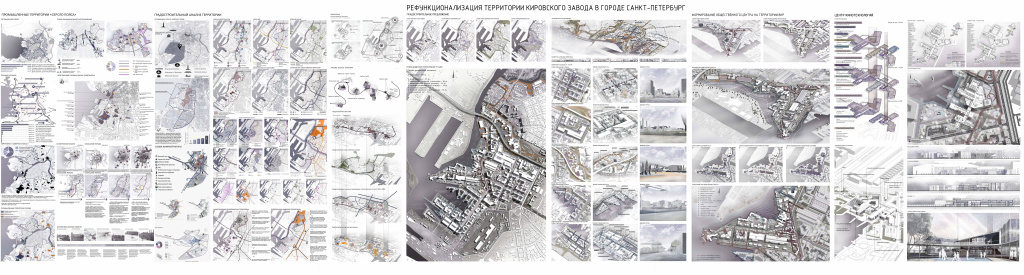
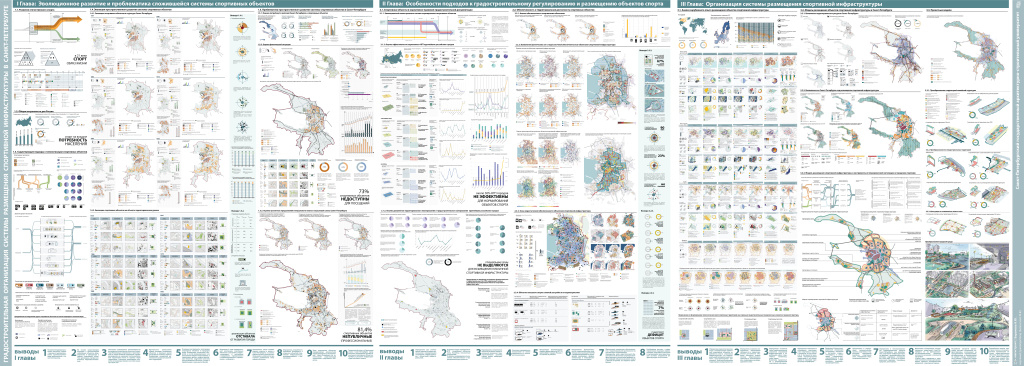
    In the nomination “Urban development of territories. Master’s degree” the Grand Prix was won by Anna Baranova with the topic “Urban development organization of the system of placement of sports infrastructure in St. Petersburg” (supervised by Mikhail Vilensky). In the nomination “Urban development of territories. Bachelor’s degree” the Grand Prix was won by Maxim Kolosov with the work “Refunctionalization of the territory of the Kirov plant in St. Petersburg” (supervised by Mikhail Vilensky, Ksenia Veretennikova, Elena Karpenko).

    Project by Maxim Kolosov. Open full size image

    The graduates’ supervisors and teachers of the Department of Urban Planning were also awarded laureate diplomas: Head of the Department Yulia Yankovskaya, Associate Professors Ksenia Veretennikova, Mikhail Vilensky, Oksana Peslyak, Assistant Elena Karpenko.

    “It was not easy to choose a direction for the research, but I settled on the topic of sports, since it is an integral part of people’s lives, regardless of whether we are talking about regular sports activities or recreational shooting at a shooting range on a weekend. Today, mass sports are not only leisure, but also a way of life for many city dwellers; it has a direct impact on the general condition of a person, as well as the urban environment in which sports facilities are located. Therefore, the issue of providing the population with the necessary quantity and quality of sports infrastructure for mass sports is very relevant, and its placement and regulation in the city is a problem that requires attention,” said Anna Baranova.

    Project by Anna Baranova. Open full size image

    According to the author of the project, the study of the evolution in the regulation of sports facilities and the assessment of modern urban planning standards for a number of major cities showed that the shortage of sports infrastructure facilities is largely due to the loss of the binding of the regulation system to territorial planning and urban zoning documents. As a possible solution, Anna proposed a territorial model of placement and a model of regulation of sports infrastructure based on the placement and regulation of sports areas.

    “Work on the study was constantly accompanied by curiosity, which was “ignited” by newly discovered facts or random observations of people playing sports in various places in St. Petersburg. My curiosity in this topic has not exhausted itself, so I intend to continue the study,” shared Anna Baranova.

    Please note: This information is raw content directly from the source of the information. It is exactly what the source states and does not reflect the position of MIL-OSI or its clients.

    Please note; This information is raw content directly from the information source. It is accurate to what the source is stating and does not reflect the position of MIL-OSI or its clients.

    https://vvv.spbgasu.ru/nevs-and-events/nevs/graduates-spbgasu-winners-of-the-international-competition-archgeneration-2024/

    MIL OSI Russia News

  • MIL-OSI Asia-Pac: Press Release – Workshop validates Samoa’s first National Science, Technology and Innovation Policy, paving way to launch at CHOGM

    Source: Government of Western Samoa

    Share this:

    Representatives of line ministries with a stake in science, technology and innovation for development and representatives of the National University of Samoa have validated the draft National Science, Technology and Innovation Policy at a workshop at Nafanua convened on 2nd October by the Honorable Minister of Agriculture and Fisheries. The involvement of multiple ministries reflects the fact that, as the minister put it, ‘science is everywhere’. The workshop was hosted by the Scientific Research Organisation of Samoa.

    This will be Samoa’s first National Science, Technology and Innovation Policy, the aim of which is to enhance the interaction of science, technology and innovation with our society in the years to come. The policy will enable science, technology and innovation in addressing complex issues affecting Samoa such as climate change, food security, biodiversity loss, resource depletion, poverty reduction, health, education, gender equality and clean energy.

    In recent years, we have witnessed groundbreaking discoveries and innovative technologies in fields ranging from agriculture to healthcare, climate science and artificial intelligence. Yet, these advancements come with complex challenges that require thoughtful frameworks, which the National Science, Technology and Innovation Policy strives to address.

    The validation process has been a crucial step in elaborating the policy, not merely as an exercise in approval but, rather, as an opportunity for critical reflection and constructive dialogue.

    The validation workshop was well attended by a wide range of stakeholders who included policymakers and technical experts in communication, technology, education, health, environment, agriculture and other areas where science plays an important role. Each brought unique insights and experiences to the table that were vital to finalizing a policy that truly serves different sectors’ collective interests and, most importantly, Samoa’s people. For instance, the participants stressed the importance of collaboration and of taking an intersectoral approach for the policy to be impactful.

    At the workshop, the Honourable La’aulialemalietoa Leuatea Polataivao Schmidt acknowledged UNESCO for its continual funding and support, which has been instrumental in the development of this Science, Technology and Innovation policy.

    END.

    SOURCE – Scientific Research Organisation of Samoa

    See insights and ads

    Boost post

    All reactions:

    88

    Share this:

    MIL OSI Asia Pacific News

  • MIL-OSI Asia-Pac: PRESS RELEASE – NUS launched The Journal of Samoan Studies Volume 14

    Source: Government of Western Samoa

    Share this:

    Apia, Samoa – Friday 4th October 2024

    In celebration of the completion of the latest General Issue of The Journal of Samoan Studies (JSS), the NUS – Centre for Samoan Studies hosted an Author Appreciation and Issue Launch on Wednesday 2nd October 2024.

    Volume 14 of the JSS boasts 31 authors, ranging in rank and experience from Emeritus Professors to NUS Support Staff, collectively representing 7 international tertiary institutions. Twenty-one of the authors bring homegrown expertise to the collection as employees of NUS. Volume 14 features 10 Peer Reviewed Articles, 2 Research Reports and 1 Shorter Communication. Topics covered in this Issue include governance, indigenous leadership, archaeology, gender, education, business, aging, pedagogy and labor mobility. Volume 14, No 1 has now been launched in print (in a limited run) and online at https://journalofsamoanstudies.ws/2024/09/30/volume-14-2024/.

    Newly appointed JSS Chief Editor Dr. Dionne Fonoti said that the event was necessary for several reasons. “JSS experienced a long lapse after COVID-19 and the retirement of former editor Professor Penelope Schoeffel Meleisea and this issue was in limbo for about a year. It is to the enormous credit of our wonderful authors and reviewers who patiently waited while we reorganized and rebuilt that this issue has come to fruition, so this was just a small token of thanks to show our appreciation and celebrate together,”

    According to Fonoti, JSS is planning to publish two more issues this year, a two-part Special Issue titled “Samoa’s New Labour Trade”, guest edited by Professor Penelope Schoeffel Meleisea, Professor Kalissa Alexeyeff and Emeritus Professor Meleisea Malama Meleisea with Associate Editor Ellie Meleisea. Other Special Issues are also in the works, one entirely in the Samoan language guest edited by CSS Director Ta’iao Dr. Matavai Tautunu and another one deconstructing academic collaborations guest edited by Professor Jessica Hardin from the US.

    Visit the JSS website for more information: https://journalofsamoanstudies.ws/

    Volume 14, No. 1: Issue Contents

    Peer Reviewed Articles

    • United States Deportation Policy and its effects on Sāmoan Deportees, Dr. Timothy Fadgen

    • Servant Leadership and Indigenous Sāmoan Organic Leadership, Epenesa Esera

    • Corporal Punishment and Fa’aSāmoa: Road to Success, Tavita Lipine

    • Humans of Apia: Building a Chronology of Pre-Colonial Human Activity in the Nu’u Mavae of Apia, Dionne Fonoti, Greg Jackmond and Brian Alofaituli

    • A short account of the long history of chiefly female leadership in Sāmoa, Penelope Schoeffel and Malama Meleisea

    • Le Faamati’e, Faae’etia, O Atina’ega ma le una’ia a avanoa mo tina ma tama’ita’i Sāmoa – Atoa ai ma o latou aia tatau faa-le-tulafono, Namulauulu Dr. Nu’ualofa Masoe Toga Potoi ma Fesola’i Aleni Sofara

    • A Culturally appropriate Classroom Management Practice at the National University of Sāmoa, Pauline Nafo’i

    • Understanding The Curriculum Process – Business Studies in Sāmoa, Faalogo Teleuli Mafoa

    • Reflection-In-Action as a model for Reflection: A tertiary teacher’s account from Sāmoa, Sesilia Lauano

    • Sāmoan Elders’ Understanding of Age, Ageing and Wellness , Falegau Melanie Lilomaiava Silulu, Professor Stephen Neville, Dr. Sara Napier, Professor Camille Nakhid, Emeritus professor Peggy Fairbairn-Dunlop, Dr. Leulua’ali’i Laumua Tunufa’i, Dr. Fa’alava’au Juliet Boon

    Research Reports

    Results of a qualitative survey of Sāmoan workers in Australia’s Pacific labour mobility programme (PALM), Angela Anya Fatupaito, Dora Neru-Fa’aofo, Temukisa Satoa-Penisula, Loimata Poasa, Malotau Lafolafoga, Ielome Ah Tong, Fiu Leota Sanele Leota, Penelope Schoeffel and Kalissa Alexeyeff

    Gender equity, equality and empowerment for Sāmoan women, Aruna Tuala, Felila Saufoi Amituanai and Raphael Semel

    Shorter Communications

    When the Land and Titles Court of Sāmoa exceeds its Jurisdictions: A critical review of LTC unlawful decision involving Sāmoan Customary Land Lease, Fesola’i Aleni Sofara.

    END.

    SOURCE – The National University of Samoa

    Share this:

    MIL OSI Asia Pacific News

  • MIL-OSI Security: NMRLC Member Becomes U.S. Citizen

    Source: United States Navy (Medical)

    Congratulations LSSR Andrea Ordinola Valdez, on becoming a United States citizen, Oct. 8, 2024, during the Naturalization Oath of Allegiance to the United States of America ceremony.

    Throughout our history, the United States has welcomed immigrants from all over the world who have helped shape and define our country. Granting citizenship to eligible lawful permanent residents is vital to our nation’s security, economic prosperity, and a future built on the principles of the U.S. Constitution.

    “The Navy is the most powerful and greatest institution worldwide, so I was excited when my recruiter told me I had the requirements to join, such as having a green card, a Social Security number, and my certificates and academic degrees,” said Ordinola Valdez. “I was interested in the rate or career related to business, logistics and administration.”

    Ordinola Valdez attended one of Peru’s most prestigious universities, Universidad Nacional de San Agustin, studying economics and logistics and earning an undergraduate degree. Additionally, she has a master’s in business management and a PhD in administration.

    She was a professor in universities in Tacna, Jorge Basadre Grohmann University, and Private University of Tacna. She studied at San Agustin University and held the number one ranked position during the development of her career. She also won the Criscos Scholarship to study in Argentina, and ultimately returned to the city where she was born to share her knowledge with local youth in Tacna.

    “My parents always taught me ethics, honesty and the importance of work, since work dignifies human beings,” said Ordinola Valdez. “I’m a person with solid ethical values and a professional at work. These are the values that my parents instilled in me.”

    Today, Ordinola Valdez serves as a logistics specialist responsible for operating financial accounting systems and managing inventories of repair parts and general supplies that support ships, squadrons and shore-based activities.

    “I like all the activities in the office and in the storerooms, the training to learn more about the Navy and the different programs, and to learn more about logistics,” said Ordinola Valdez. “It is the perfect job that combines physical and mental activity.”

    Headed by Capt. Christopher Barnes, NMRLC develops, acquires, produces, fields, sustains, and provides enduring lifecycle support of medical materiel solutions to the Fleet, Fleet Marine Force, and Joint Forces in high-end competition, crisis, and combat. At the forefront of Navy Medicine’s strategic evolution, NMRLC is well positioned to be the Joint Force’s premier integrated medical logistics support activity.

    MIL Security OSI

  • MIL-OSI United Kingdom: Ratan Tata

    Source: City of Coventry

    Coventry Council notes with considerable regret the death of the Indian industrialist and philanthropist Ratan Tata – and honorary freeman of the city – on October 9. 

    Mr Tata, who led the group bearing his family name for 21 years, and during that time the company acquired Jaguar Land Rover in 2008, helped to secure the future of such an important regional brand and created thousands of jobs during his chairmanship.

    The city made Mr Tata a freeman of the city in 2015 in recognition of the investment of Tata Steel into Jaguar Land Rover (JLR) which enhanced and protected the status of car manufacturing in the region, the JLR brand and particularly the employment of its employees and many subsidy suppliers, supported by the Warwick Manufacturing Group.

    Council leader Cllr George Duggins expressed his personal and the city’s sadness: “Ratan Tata was a great friend of the region and of the city in particular. 

    “Through his support to regenerate Jaguar Land Rover, his role in establishing the National Automotive Innovation Centre at the University of Warwick, his contribution to Coventry’s confident regeneration can not be underestimated. 
    “I have written to the Tata family to pay the respects of the council and all its residents to titan of the business world.”

    Published: Thursday, 10th October 2024

    MIL OSI United Kingdom

  • MIL-OSI United Kingdom: Pupils fair-tricket wi winning Scots Bairns Book o the Year

    Source: Scotland – City of Aberdeen

    A book written in Doric by pupils at Riverbank School about a naughty herring gull has won Scots Bairns Book o the Year at the Scots Language Awards.

    ‘Summer e Magic Scurry’ was written by the Primary 5F class at the school with the book launch held on 28 March 2024.

    The book tells the story of a herring gull that does all the things a ‘scurry’ – the Doric word for a gull – usually does, but then, using magic, takes the pupils on an adventure to various places. It includes a facts section, in which the scurry answers questions asked by the children, such as “Why don’t they perch on trees?” and “Do gulls pee?!”

    The pupils were able to create their Doric book thanks to Aberdeen City Council’s Creative Fund programme, with support from writer Jackie Ross and illustrator Aaron Gale from Doric Books.  The children learned all about gulls from members of the Zoology Department at the University of Aberdeen.

    Councillor Martin Greig, the Convener of Aberdeen City Council’s Education and Children’s Services Committee, said: “I am delighted that the hard work and enthusiasm of the Primary 5F pupils at Riverbank School has been recognised with this national award.  Working together as a team to create the book was a positive experience for the pupils. The project offered some great opportunities to learn about writing and language. The young people found out more about the animals, the environment and local history.

    “I am especially grateful for the amazing support and help given to the young people in this project. The Council’s Creative Fund has clearly been put to good use. The award is richly deserved.”

    Councillor Jessica Mennie, Vice-Convener, of the Education and Children’s Services Committee, said: “To win first place in the Best Children’s Book category at the Scots Language Awards is fantastic. Many congratulations to all the pupils involved in writing the book and to everyone who supported them.”   

    Carol Baxter, Depute Head Teacher, Riverbank School, said: “This project was, truly, cross-curricular. From literacy to numeracy – the writing of the story to the costings of things, from art to printing – the illustrating of the book to how the book was put together and published.

    “Grace Farquharson, the class teacher, coordinated the project and the whole class participated in all of the activities.  Everyone at Riverbank School is so proud of their award-winning achievement.”

    Jackie Ross, Co-Director, Doric Books, said: “Doric Books is fair trickit at Summer e Magic Scurry won best bairns’ book. We really enjoyed working with P5F and are so pleased that the class’s hard work has been recognised through this award. It’s a really fun wee book.”

    The book is £10 and is currently available to purchase directly from Riverbank School, or online at  https://doricbooks.com and from The Owl at Number Two, 4 Beechgrove Terrace, Rosemount, Aberdeen.

    The award for Scots Bairns Book o the Year, is sponsored by the Scottish Government.

    The Scots Language Awards event was held in Cumnock Town Hall on Saturday 14 September 2024. 

    Photo (from Left to Right): Alistair Heather, Scots Language activist and columnist, presented the Scots Bairns Book o the Year award to Jackie Ross, Co-Director, Doric Books; and Grace Farquharson (holding the award), Class Teacher, Riverbank School.   

    MIL OSI United Kingdom

  • MIL-OSI Russia: Transformer bench and therapy dogs: results of Accessibility Week at SPbGASU

    MILES AXLE Translation. Region: Russian Federation –

    Source: Saint Petersburg State University of Architecture and Civil Engineering – Saint Petersburg State University of Architecture and Civil Engineering – Sergey Chisty

    From September 30 to October 4, SPbGASU hosted Accessibility Week. The program included lectures by experts and other events aimed at developing students’ professional competencies.

    Sergey Chisty, Chairman of the Board of the Charitable Foundation “City for All”, gave a lecture on October 1, “Reasonable adaptation as a tool for designing a barrier-free environment”. According to Sergey Vladimirovich, regulatory documentation is constantly “catching up” with life. There are more and more codes of rules, which slows down business and creativity. Therefore, there is now a transition from directive regulation to more effective parametric regulation.

    The lecture by Sergey Sokhranskiy, editor-in-chief of the magazine “Accessible Environment” and a member of the author’s teams for the development of a number of codes of practice, took place on October 2 and began with a short interactive session. As he was climbing the podium, Sergey Serafimovich tripped over a ledge in the floor and exclaimed: “This is also a barrier!” In this way, he clearly demonstrated that the issues of creating a barrier-free environment concern everyone and are relevant in all spheres of life. During the lecture, Sergey Sokhranskiy drew the attention of the audience to the problems that arise in the course of developing regulatory documents for the creation of a barrier-free environment.

    Kirill Morozov, head of the KMK Landscape Workshop, discussed with students on October 3 what means can be used to achieve barrier-free and convenient conditions for everyone. In particular, what width should doorways and open openings in the wall of a building be, how parking lots should be arranged, what tactile surfaces exist, etc. Dmitry Potaralov, head of a personal architectural workshop, shared information about his projects, including those related to solving inclusive problems, during a lecture on October 4.

    The final event of the week was a discussion of the projects of SPbGASU student teams, which were presented at the All-Russian competition of student works in the field of universal design and design of barrier-free urban environments for people with limited mobility. The final of the competition was held in Moscow on May 15–17.

    As Oleg Fedorov, leading specialist of the Educational Center for Project-Based Learning at SPbGASU, explained, our university planned to send eight projects to the competition. However, the organizers limited the number of works from one university. The university competition committee selected four projects, and three works made it to the final. All of them won awards, including the Grand Prix.

    “We decided to hold this informal meeting so that all the guys could get feedback. Including those who did not get into the competition and did not make it to the finals. The second reason was the desire to introduce other students to these wonderful competition projects,” said Oleg Fyodorov.

    The contestants focused on the urban environment of Azov in the Rostov Region. They had to create four tablets: the first was dedicated to the conceptual development of the city, the second presented the results of a comprehensive analysis of one of its sections, the third was to formulate proposals for the improvement of the selected section, and the fourth was to consider a separate building, proposing a reconstruction option for an existing facility or new construction.

    The team consisting of Sofia Malysheva (captain), Maxim Shemetillo, Dmitry Erofeev, Daniil Medvedev and Yulia Makhneva failed to take part in the competition. However, the students developed solutions worthy of prizes. Among them are an inclusive playground and a pavilion for canister therapy (a type of therapy with animals, when specially selected and trained dogs are used for rehabilitation and treatment). The students emphasized that the equipment they chose was from catalogs, it can be easily ordered and purchased. The team was led by Oleg Fyodorov and Elena Bobrova, senior lecturer of the Department of Urban Development.

    The multifunctional bench designed by the LINKK team consisting of Inga Khafizova (captain), Elizaveta Abdullina, Anastasia Fedorova, Ksenia Saifullina and Kristina Nosovaya cannot be found in any catalog yet. This bench can be made with armrests, with a backrest or without a backrest. It has built-in trash containers, it can be placed both in the center and along the road. It can be used for flowerbed arrangement classes. And it has an unlimited length.

    According to the competition committee of our university, the LINKK team did not make it to the final only because the students did not limit themselves and complicated the task by choosing several areas at once. And all these areas were developed in detail. The team’s work was supervised by Oleg Fedorov, Alexey Perov, senior lecturer of the Department of Architectural Environment Design, and Alesya Boyko, assistant of this department.

    The team consisting of Daria Krasnova (captain), Arina Bezzubenkova, Anastasia Glukhova, Polina Fait and Ekaterina Kholshchigina, under the leadership of Oleg Fedorov, spoke about their competition project at the meeting. The competitors focused on the area next to the city hospital and proposed adding landscaping, new driveways, parking spaces and pedestrian paths.

    The winners of the competition also presented their projects: the Delta team, which included Varvara Dericheva (captain), Alina Lagkueva, Angelina Savitskaya and Mikhail Rakhimov, and the Faces of the City team, consisting of captain Alisa Mikhailova, Sofia Nikolaeva and Vladislava Savelyeva.

    More about the laureates’ works

    Please note: This information is raw content directly from the source of the information. It is exactly what the source states and does not reflect the position of MIL-OSI or its clients.

    Please note; This information is raw content directly from the information source. It is accurate to what the source is stating and does not reflect the position of MIL-OSI or its clients.

    http://www.spbgasu.ru/nevs-and-events/nevs/bench-transformer-and-therapy-dogs-results-of-the-week-of-barrier-free-environment-in-spbgasu/

    MIL OSI Russia News

  • MIL-OSI Russia: Works by HSE graduates at Cosmoscow 2024 fair

    MILES AXLE Translation. Region: Russian Federation –

    Source: State University Higher School of Economics – State University Higher School of Economics –

    The educational program “ART VYSHKA. Contemporary Art” at the HSE School of Design was created to train artists and curators, photographers and video artists, theorists and practitioners in all areas of contemporary art. The program offers bachelor’s, master’s and postgraduate programs.

    In the bachelor’s degree program, you can choose one of the educational profiles: “Contemporary Art”, “Screen Arts”, “Sound Art and Sound Design”, “Concept Art and Digital Art”, “Event. Theater. Performance”, “Design and Contemporary Art” and “Curating and Art Management”.

    For applicants to the Master’s program who have clearly decided on the direction of their development, we offer the profiles “Practices of Contemporary Art”, “Contemporary Painting”, “Performance”, Sound Art

    Please note: This information is raw content directly from the source of the information. It is exactly what the source states and does not reflect the position of MIL-OSI or its clients.

    Please note; This information is raw content directly from the information source. It is accurate to what the source is stating and does not reflect the position of MIL-OSI or its clients.

    http://desizhn.hse.ru/nevs/4248

    MIL OSI Russia News

  • MIL-OSI Russia: Polytechnic University Rector Andrey Rudskoy spoke at the St. Petersburg International Gas Forum

    MILES AXLE Translation. Region: Russian Federation –

    Source: Peter the Great St Petersburg Polytechnic University – Peter the Great St Petersburg Polytechnic University –

    On the third day of the St. Petersburg International Gas Forum, a meeting of the Scientific and Educational Interuniversity Council of PJSC Gazprom was held with the participation of the heads of the corporation and its partner universities. The Polytechnic University was represented by the Rector of SPbPU, Chairman of the St. Petersburg Branch of the Russian Academy of Sciences Andrey Rudskoy, Vice-Rector for Research Yury Fomin, Vice-Rector for Educational Activities Lyudmila Pankova, Vice-Rector for Continuing and Pre-University Education Dmitry Tikhonov, Director of the Scientific and Educational Center for Information Technology and Business Analysis of Gazprom Neft Irina Rudskaya, and Scientific Secretary Dmitry Karpov.

    Opening the discussion, Deputy Chairman of the Management Committee of PJSC Gazprom Sergey Khomyakov named the main areas of joint activities with universities: education of the younger generation, professional orientation and training, training of qualified personnel and scientific research work.

    At the meeting, the rector of SPbPU, chairman of the St. Petersburg branch of the Russian Academy of Sciences Andrey Rudskoy made a report. He recalled that in 2024, important legislative regulations were signed at the federal level regulating strategic guidelines, national goals and priority areas of scientific and technological development of Russia, and noted that almost every such document speaks of close interaction between the university and academic communities with industrial partners.

    The cooperation between Polytechnic University and Gazprom is developing in many areas — from educational (starting with work with schoolchildren) to scientific and technological. Of the significant results, Andrey Rudskoy highlighted several joint events this year: the Gazprom student Olympiad, a job fair and a tournament on flexible skills; modernization of the laboratory and educational base through financing from PJSC Gazprom.

    In the scientific and technological sphere, the rector of the Polytechnic University noted the rapid development of the field of additive printing with metals at the university and the production of high-quality products for Gazprom using this method, the development of fundamentally new technological solutions for laser cladding, heat treatment, defect detection methods, the assembly of a mobile laser cladding complex by specialists from the Institute of Mechanical Engineering, Materials and Transport, and projects of the Advanced Engineering School “Digital Engineering” in the areas of the fuel and energy complex.

    In conclusion, Andrey Rudskoy made several proposals to strengthen cooperation between Polytechnic University and Gazprom.

    “Undoubtedly, the existing forms of interaction between the Polytechnic University and PJSC Gazprom are effective, but they need to be expanded and scaled up,” the Rector of SPbPU believes. “One of the forms of integrating science and production could be the creation of research and production associations (RPAs), whose participants could be universities and high-tech industrial companies. In the USSR, RPAs demonstrated high efficiency in consolidating the resources of scientific and industrial organizations. Modern RPAs will be able to receive federal support. Following his trip to the Sverdlovsk and Chelyabinsk regions, the President of Russia instructed the Ministry of Science and Higher Education, as well as the Ministry of Industry and Trade of the Russian Federation to develop mechanisms to support RPAs. In the near future, it is planned to launch a federal pilot project to create RPAs, and the Polytechnic University is ready to join this experiment. We invite you to join the joint work to create RPAs for the further development of cooperation for the benefit of science and industry in our country.”

    Andrey Rudskoy also proposed creating an association of Gazprom’s flagship universities and establishing a joint journal.

    It is important that the advanced experience and knowledge that have accumulated over all this time in our flagship universities are recorded and made publicly available, Andrey Rudskoy emphasized. He asked Alexey Miller to become the editor-in-chief of the journal.

    Russian Energy Minister Sergey Tsivilev and Chairman of the Management Committee of PAO Gazprom Alexey Miller took time out of their schedule to attend the meeting of the Interuniversity Council and thank its participants for their cooperation.

    “Today, at this forum, higher education has the opportunity to see with its own eyes the results of our common work,” Alexey Miller addressed the audience. “The first forum took place eight years ago, we set priorities, and now every year we see fundamentally new technological developments, new equipment, at the stands, above the world level.”

    At the council meeting, speaking about the interaction of the Polytechnic University and Gazprom in the field of higher education, Andrey Rudskoy cited as an example two educational systems developed this year based on VR technologies. One of them was presented at the SPbPU stand and aroused genuine interest among the forum guests, especially among young people. One of the teenagers who visited the stand even thought: Maybe I should go to the Polytechnic University?

    The “Maintenance and Repair of Piston Compressor and Auxiliary Equipment for Underground Gas Storage Systems” complex is a virtual model of the real Nevskaya station and is designed to study the main actions during maintenance and operation of compressor equipment used at underground gas storage facilities. This virtual training complex is a joint effort of two departments of the Polytechnic University. The compressor engineering sector of the Higher School of Power Engineering of the Institute of Power Engineering is responsible for the technical side and implementation in the educational process, and the software implementation is performed by the Laboratory of Streaming Data Processing.

    “To train students in compressor and related specialties, practical classes at compressor stations are necessary. But it is difficult to get to these facilities, or students cannot do anything with their hands. Our joint work consists of preparing a scenario and technical actions, and programmers create a virtual gas-pumping unit with all the necessary control elements, on which students can practice the necessary actions according to the scenarios of the actions of a gas-pumping unit operator and a shift engineer,” said Vasily Semenovsky, associate professor at the Higher School of Power Engineering. “The simulator has been introduced into the educational process of bachelors and masters, and if necessary, we also work with this virtual model in additional education courses.

    According to Vasily Semenovsky, another virtual model is 90 percent ready: an automatic gas-filling compressor station for refueling passenger and freight vehicles with methane.

    This year, Polytechnic University and the St. Petersburg Branch of the Russian Academy of Sciences presented a joint stand at the St. Petersburg International Gas Forum. Among the developments of the RAS institutes: Voron and Strizh unmanned aerial vehicles of the St. Petersburg Federal Research Center (FRC RAS), the small-sized quadrupole mass spectrometer MS7-200 for analyzing the composition of gas mixtures at atmospheric pressure of the Institute of Analytical Instrumentation of the Russian Academy of Sciences, etc.

    The Voron model is a multi-base UAV for solving a wide range of tasks. The most popular applications are: real-time aerial monitoring, signal retransmission, delivery of small-sized cargo, terrain mapping, search and rescue operations, aerial photography and aerial video filming.

    The Strizh UAV can perform aerial monitoring in real time, deliver small-sized cargo, participate in search and rescue operations, and conduct aerial photography and aerial video filming.

    Traditionally, the SPbPU History Museum also takes part in the exhibition. This year, the museum staff introduces the guests of the stand to the Polytechnic gas plant, which produced lighting gas for laboratories. Combustible gas was obtained by dry distillation of coal at a temperature of 1000 °C.

    Every day, the institute consumed over 900 cubic meters of gas: the chemical laboratory – 425 m³, metallurgical – 283 m³, the rest – 198 m³.

    Light gas prepared at the plant was collected in a gas holder (gas storage) before entering the gas network, where it was under pressure. The gas holder was designed on the principle of a caisson – an engineering structure for forming an empty chamber under water.

    With the advent of main gas pipelines, the work of the institute’s gas plant became irrelevant. In the 1960s, a laboratory building appeared on the site of the gas plant. The gas holder was built into the building. The round projections in the laboratory building can still be seen today.

    Please note: This information is raw content directly from the source of the information. It is exactly what the source states and does not reflect the position of MIL-OSI or its clients.

    Please note; This information is raw content directly from the information source. It is accurate to what the source is stating and does not reflect the position of MIL-OSI or its clients.

    https://vvv.spbstu.ru/media/nevs/partnership/rector-polytechnic-andrei-rudskoy-spoke-at-the-St. Petersburg-international-gas-forum/

    MIL OSI Russia News

  • MIL-OSI Russia: Nine-hour board game marathon to take place at SUM

    MILES AXLE Translation. Region: Russian Federation –

    Source: State University of Management – Official website of the State –

    On October 16, 2024, the State University of Management will host a board game marathon.

    The organizer of the marathon is the club “Mind Games”. It will last 9 hours! At the event you can play any game from our large collection of the club, and this is more than 30 titles.

    Date: October 16 Time: 11:00-20:00 Place: Hall of the Central Control Center

    We also invite students from other universities. To do this, you must register before October 13 (inclusive). Enter the data as in your passport, and do not forget to take it with you so that you are let through. The address, instructions and route are in the same form. It is not necessary to arrive exactly at 11:00, but it is advisable to be no later than 18:30.

    Play boldly, think strategically! See you at the marathon!

    Subscribe to the tg channel “Our State University” Announcement date: 10.10.2024

    Please note: This information is raw content directly from the source of the information. It is exactly what the source states and does not reflect the position of MIL-OSI or its clients.

    Please note; This information is raw content directly from the information source. It is accurate to what the source is stating and does not reflect the position of MIL-OSI or its clients.

    Nine-hour board game marathon to take place at SUM

    MIL OSI Russia News

  • MIL-OSI Global: Tory MPs have accidentally knocked out their own man – and reminded voters why they lost the last election

    Source: The Conversation – UK – By Ben Worthy, Lecturer in Politics, Birkbeck, University of London

    The Conservative party leadership ballot is a private affair. The MPs don’t have to reveal who they voted for if they don’t want to. And given how badly they appear to have bungled their final round of voting in this contest, it seems unlikely we’ll ever know what really happened.

    James Cleverly was the firm favourite among MPs, and yet an attempt to manoeuvre him into the final two against the candidate his supporters felt most sure of beating in the final run-off, when party members vote, seems to have backfired.

    It would appear Cleverly and his supporters forgot Lyndon B. Johnson’s first rule of politics – learn to count. As a result, party members now have a choice between two rightwing candidates, Robert Jenrick and Kemi Badenoch. Both are popular among members but less electable and palatable for the wider public. The debacle has exposed (not for the first time) the problems with the electoral system.

    Cleverly was seen as the unifier of the party, with the ministerial experience and communication skills to help with a transformation. He had wowed party conference with a well-calibrated speech hinting that the party needed to “normalise” to regain trust. Yet his record leaves questions as to exactly how good his communication skills are in reality. He had made several “jokes”, which were not jokes at all – just offensive comments – and reportedly described his own government’s immigration policy as “batshit”.

    A Telegraph article just before his shock loss in the parliamentary party vote feared he would “sign the death warrant” of the party as a “middle-of-the-road bluffer who tickles the tummies of members of the parliamentary party by flattering them that their historic defeat was not so bad after all”. Yet judging by the audible gasps when the result was announced, Tory MPs were shocked at how they had messed the vote up. Both the Liberal Democrats and Labour reacted with glee at the news.

    Tory MPs react to the news that they’ve inadvertently knocked out their favourite candidate.

    The final two

    Badenoch has less ministerial experience than Cleverly but is loved by the Tory party as a battler and is now the favourite to win. The same “death warrant” article called Badenoch a “Warrior Queen”, but that cuts both ways. Badenoch, by channelling her inner Thatcher, is pitching herself as a fighter taking on the forces of reaction within and without. But, to quote another Tory, the Duke Of Wellington, Thatcher would only fight battles she knew she could win. Badenoch’s battle seem rather less focused, and her war on the forces of woke now includes new mothers and civil servants (10% of whom, in her view, should be in prison).

    Another recent article, this time in the Guardian spoke of how “she often finds it hard to get through an interview without patronising or arguing with the presenter in a manner that reinforces claims she’s divisive and abrasive”. At the same time, her attempt to tell “hard truths” saw her publishing a lengthy pamphlet featuring some triangles – seemingly explaining electoral realignment – which no one could understand. Not ideal attributes for a leader.

    So far in this contest, Jenrick’s most notable interventions have been to grandstand about the European Court of Human Rights (ECHR), compete to be toughest on immigration, and (and we need to follow the logic slowly here) argue that the ECHR is causing UK special forces to kill instead of capture terrorists. Jenrick is the living embodiment of the old Groucho Marx joke “those are my principles, and if you don’t like them…well, I have others”. He has made either a Damascene or cynical journey from squishy centre to hard right just ahead of this contest. What does he really believe? No one is sure.

    The reasons for the Tories’ recent catastrophic election loss are in plain sight. Voters saw the Conservative governments as a toxic combination of poor delivery, scandals and being out of touch. The 2024 defeat was a combination of Boris Johnson’s immorality and Liz Truss’s incompetence. Rishi Sunak then finally fractured his own coalition with a self-defeating immigration policy. None of the candidates have addressed the reasons for the loss and the final two are evidently still in denial.

    But it is the Tory members who are voting here. Their version of events is that disunity and a failure to deliver on immigration lost them power. Members may well be torn, as political scientist Tim Bale points out, between values and electability – though with Cleverly out, this latter may be a problem.

    Peering through the fog of the contest, there are two things which are very likely. First, Johnson’s shifting of the party to the right, and his closer alignment of the Tory party with the remnants of UKIP is now more evident, and will be further deepened by whoever wins. While Badenoch and Jenrick differ on whether they should beat or join Reform, the Tory party is now on the latter’s territory. There is unlikely to be any Tory “hard truths” to address the electorate’s loss of trust in the party, but instead the talking points will be culture wars, immigration, and leaving the ECHR.

    Second, as a result, the party will move further from the centre ground, and away from the average voter, and their concerns. The mess the parliamentary party has made of the contest and the long shadow of dysfunctional leadership have served only to remind voters of the reasons why the party was thrown out of office in July. Peering through his snazzy new glasses, Starmer can see his bad week just got a lot better.

    The authors do not work for, consult, own shares in or receive funding from any company or organisation that would benefit from this article, and have disclosed no relevant affiliations beyond their academic appointment.

    ref. Tory MPs have accidentally knocked out their own man – and reminded voters why they lost the last election – https://theconversation.com/tory-mps-have-accidentally-knocked-out-their-own-man-and-reminded-voters-why-they-lost-the-last-election-240983

    MIL OSI – Global Reports

  • MIL-OSI Global: Dark energy: could the mysterious force seen as constant actually vary over cosmic time?

    Source: The Conversation – UK – By Robert Nichol, Pro Vice-Chancellor and Executive Dean, University of Surrey

    Globular cluster NGC 2005. ESA/Hubble & Nasa, F. Niederhofer, L. Girardi, CC BY-SA

    As I finished my PhD in 1992, the universe was full of mystery – we didn’t even know exactly what it is made of. One could argue that cosmologists had made little progress in our understanding of these basic facts since the discovery of the cosmic microwave background (CMB), the afterglow of the Big Bang, in the 1960s.

    I left the UK after my doctoral studies to begin a research career in the US, where I was lucky to be recruited to work on a new experiment called the Sloan Digital Sky Survey (SDSS). This new survey embraced advances in digital technologies with the ambition of measuring the “redshifts” (how light becomes more red if a source appears to move away from you) of a million galaxies.

    These redshifts were then used to measure distances, and allowed cosmologists to map the three-dimensional structure of the universe.

    One cosmic puzzle in the 1980s, based on the pioneering CfA Redshift Survey of Margaret Geller and John Huchra, was the significant lumpiness of galaxies, and therefore matter, in our cosmic neighbourhood. Galaxies were clustered together across a wide range of scales, with evidence for coherent “superclusters” of galaxies spanning over 30 million light years in length.


    This article is part of our series Cosmology in crisis? which uncovers the greatest problems facing cosmologists today – and discusses the implications of solving them.


    It was important to know how such superclusters could have formed from the smooth CMB, as it would tell us the total amount of matter in the universe and, more intriguingly, what that matter was made of. That was assuming the only force in play was gravity.

    By the end of the first phase of the SDSS, we had achieved our goal of a million redshifts. This data was used to discover many superclusters across the universe, including the amazing “Sloan Great Wall”, which remains one of the largest known coherent structures in the universe, over a billion light years in length.

    Type 1A supernova remnant.
    Nasa/CXC/U.Texas

    I am lucky to have lived through this amazing era of cosmic discovery around the turn of the century. Surveys like SDSS, combined with new observations of the CMB and searches for distant exploding stars known as Type Ia Supernovae (SNeIa), coincided to deliver an emphatic answer to the question: “What is the universe made of?”

    The discovery of dark energy

    From 1999 to 2004, the cosmological community came together to agree that the universe was 5% normal (baryonic) matter, 25% dark matter (unknown, invisible matter), and 70% “dark energy” (an expansive force) – essentially a cosmological constant, which was first postulated by Einstein. The discovery that the universe was dominated by this constant energy shocked everyone, especially as Einstein had called the cosmological constant his “biggest blunder”.

    Today, cosmologists still agree this is the most likely make-up of our universe. But observational cosmologists like me have refined our measurements of these cosmic variables significantly – reducing the errors on these quantities.

    The latest numbers from the Dark Energy Survey (DES) indicate that 31.5% of the universe is matter (a combination of dark and normal), with the remainder being dark energy assuming a cosmological constant. The error on this measurement is just 3%.

    Knowing these numbers to higher precision will hopefully help cosmologists understand why the universe is like this. Why would we expect to have 70% of the universe today as “dark” (can’t be seen via electromagnetic radiation) and not associated with “matter” like everything else in the universe?

    The origin of this dark energy remains the biggest challenge to physics, even after 20 years of intense study.

    Intriguing measurements

    Like me, a few cosmologists have become distracted by other problems over the last two decades. However, 2024 could be the start of a new era of discovery. This year, cosmologists published new results based on two of our best cosmological probes.

    The first probe consists of exploding stars dubbed “SNeIa”. As these stars have a narrow range of masses, their explosions can be well calibrated, giving cosmologists a predictable brightness that can be seen far away. By comparing the known brightness of these SNeIa to their redshifts, we can determine the expansion history of the universe. These objects were, in fact, critical for discovering that the expansion of our universe is accelerating.

    The second probe works by looking at Baryon Acoustic Oscillations (BAO) – relics of predictable sound waves in the plasma (charged gas) of the early universe, before the CMB. These are now frozen into the large-scale structure of galaxies around us. Like SNeIa, their predictable size can be compared with their observed size today to measure the expansion history of the universe.

    Recently, DES reported its final SNeIa results from over a decade of work, detecting and characterising many thousands of supernova events. While these SNeIa results are consistent with the orthodox view that the universe is dominated by a cosmological constant, they do leave open the tantalising possibility of new physics – namely, that the dark energy could be varying with cosmic time.

    That said, scientists are trained to be sceptical, and there are many reasons to distrust a single experiment, single observation, or even a single set of cosmologists!

    Cosmologists now go to extraordinary lengths to “blind” their results from themselves during analysis of the data, only revealing the answer at the last moment. This blinding is done to avoid unconscious human biases affecting the work, which could possibly encourage people to get the answer they believe they should see.

    This is why repeatability of results is at the heart of all science. In cosmology, we cherish the need for multiple experiments checking and challenging each other.

    The second result to turn heads was the first BAO measurements from the Dark Energy Spectroscopic Instrument (DESI), successor to the SDSS. The first DESI map of the cosmos is deeper and denser than the original SDSS. Its first BAO results are intriguing – the data alone is still consistent with a cosmological constant, but with hints of a possible time-varying dark energy when combined with other data sources.

    DESI in the dome of the Nicholas U. Mayall 4-meter Telescope at the Kitt Peak National Observatory.
    wikipedia, CC BY-SA

    In particular, when DESI analyses the combination of its BAO results with the final DES SNeIa data, the significance of a time-varying dark energy increases to 3.9 sigma (a measure of how unusual a set of data is if a hypothesis is true) – only 0.6% chance of being a statistical fluke.

    Most of us would take such odds, but scientists have been hurt before by systematic errors within their data that can mimic such statistical certainty. Particle physicists therefore demand a discovery standard of 5 sigma for any claims of new physics – or less than a one in a million chance of being wrong!

    As scientists will say: “Extraordinary claims require extraordinary evidence.”

    Mindboggling implications

    Are we entering a new era of cosmological discovery? If so, what would it mean?

    The answer to my first question is probably yes. The next few years will be fun for cosmologists, with new data and results due from the European Space Agency’s Euclid mission. Launched last year, it is already scanning the sky with unprecedented accuracy.

    Likewise, DESI will get more and better data, while the European Southern Observatory starts its own massive redshift survey in 2025. Then you have the Rubin Observatory in Chile coming online soon. Combining these datasets should prove beyond doubt if dark energy varies with cosmic time.

    If it does, it implies there is less dark energy now than in the past. This could be caused by many things but, interestingly, it could signify the end of a present, accelerated phase of the expansion of the universe.

    It also implies that dark energy is probably not a cosmological constant thought to be due to the background energy associated with empty space. According to quantum mechanics, empty space isn’t really empty, with particles popping in and out of existence creating something we call “vacuum energy”. Ironically, predictions of this vacuum energy do not agree with our cosmological observations by many orders of magnitude.

    So, if we did discover that dark energy varies over time, it might explain why observations are at odds with quantum mechanics, which is an extremely well-tested theory. This would suggest the assumption in the standard model of cosmology, that dark energy is constant, needs a rethink. Such a realisation may help solve other mysteries about the universe – or pose new ones.

    In short, the new cosmological observations coming this decade will stimulate a new era of physical thinking. Congratulations to my younger cosmologists: it is your era to have fun.


    Read more:
    The earliest galaxies formed amazingly fast after the Big Bang. Do they break the universe or change its age?


    Read more:
    Astronomers can’t agree on how fast the universe is expanding. New approaches are aiming to break the impasse


    Read more:
    The universe is smoother than the standard model of cosmology suggests – so is the theory broken?


    Read more:
    Cosmology is at a tipping point – we may be on the verge of discovering new physics


    Robert Nichol receives funding from STFC for work on 4MOST.

    ref. Dark energy: could the mysterious force seen as constant actually vary over cosmic time? – https://theconversation.com/dark-energy-could-the-mysterious-force-seen-as-constant-actually-vary-over-cosmic-time-238247

    MIL OSI – Global Reports

  • MIL-OSI Global: Charging, not range, is becoming a top concern for electric car drivers

    Source: The Conversation – USA – By Alan Jenn, Associate Professional Researcher in Transportation, University of California, Davis

    A Nissan Leaf charges at a station in Pasadena, Calif., on Sept. 23, 2024. Mario Tama/Getty Images

    The Biden administration is using tax credits, regulations and federal investments to shift drivers toward electric vehicles. But drivers will make the switch only if they are confident they can find reliable charging when and where they need it.

    Over the past four years, the number of public charging ports across the U.S. has doubled. As of August 2024, the nation had 192,000 publicly available charging ports and was adding about 1,000 public chargers weekly. Infrastructure rarely expands at such a fast rate.

    Agencies are allocating billions of dollars authorized through the 2021 Bipartisan Infrastructure Law for building charging infrastructure. This expansion is making long-distance EV travel more practical. It also makes EV ownership more feasible for people who can’t charge at home, such as some apartment dwellers.

    Charging technology is also improving. Speeds are now reaching up to 350 kilowatts – fast enough to charge a standard electric car in less than 10 minutes. The industry has also begun to shift to a standard called ISO 15118, which governs the interface between EVs and the power grid.

    This standard enables a plug-and-charge system: Just plug in the charger and you’re done, without contending with apps or multiple payment systems. Many existing chargers can be retrofitted to it, rather than needing to install totally new chargers.

    Tesla’s decision to open its reliable Supercharger network to non-Tesla vehicles promises to further expand access to fast chargers, although this shift is proceeding slowly.

    Severed cable on a vandalized EV charger in the Tarzana neighborhood of Los Angeles on May 16, 2024.
    Patrick T. Fallon/AFP via Getty Images

    As a researcher studying adoption of EVs, I’m encouraged by these advancements. But there’s still a need to make the charging experience more reliable and accessible for everyone. Stories of charging woes abound online and are a popular focus for EV critics. Here are the key issues drivers are confronting.

    Broken, slow or inaccessible

    Although EV charging infrastructure has improved in the past several years, reliability is still a critical issue. For example, a 2022 study by researchers at the University of California, Berkeley, found that nearly 30% of public non-Tesla fast chargers in the Bay Area didn’t work. A national study in 2023 that used artificial intelligence models to analyze driver reviews of EV charging stations reached a similar result.

    These findings highlight the need for more robust maintenance and monitoring systems across charging networks. Federal guidelines require that chargers must have an average annual “uptime,” or functional time, greater than 97%, but this metric is not always as clear-cut as it sounds. While many charging-point operators report high uptime percentages, their figures often exclude factors such as slow charging speeds or incomplete charges that degrade users’ experience.

    Cars waiting to charge at a center in San Diego.
    Gil Tal, CC BY-ND

    Many drivers complain about throttling – chargers that dispense electricity at less than the maximum rate the car is capable of accepting, so the car charges more slowly than expected. Sometimes this is normal: Cars will charge more slowly as their battery gets closer to full in order to avoid damaging the battery. Other factors can include weather conditions and the number of other vehicles simultaneously using the charging station.

    Drivers’ issues with chargers involve more than just uptime. Technical barriers, such as payment processing and vehicle-charger communication, sometimes can prevent a charge from starting or completing.

    To ensure that all EVs can charge smoothly at any network, groups such as the National Charging Experience Consortium and CharIN are bringing automakers, charging providers and national laboratories together to address these issues.

    Other obstacles are more local, such as long lines at charging stations and chargers that are blocked by parked cars, snowbanks or other obstacles. Finding vehicles with internal combustion engines parked in EV charger spots is common enough that it has a name: getting ICEd. There’s a clear need for more comprehensive solutions to help the charging experience keep pace with demand for EVs.

    A Wall Street Journal tech columnist finds abundant chargers – with abundant challenges – in Los Angeles.

    A street-level view

    At the University of California, Davis, we are working with the California Energy Commission to understand the range of charging obstacles that EV drivers face. As part of a three-year study, we are sending undergraduate students out to test thousands of chargers across the entire state of California.

    So far, our results show that just over 70% of charge attempts have succeeded. Many issues have caused failed charges, including traffic congestion at charging stations, damaged or offline chargers, difficulty using navigation apps to find charging stations, and malfunctioning chargers.

    Quantity and quality both matter

    As federal investments continue to pour money into EV charging, our findings indicate that it’s important to use these resources not only to expand the network but also to improve the user experience at every step.

    Areas for improvement include stricter oversight of charger maintenance; more robust uptime requirements that reflect real-world performance; and better collaboration between automakers, charging-point operators and software providers to ensure that vehicles and chargers can work together seamlessly.

    The future of EV adoption depends not just on how many chargers are available, but on how reliable and easy they are to use. By addressing specific pain points that drivers face, policymakers and industry leaders can create a charging ecosystem that truly supports the needs of all EV drivers. Reliability is key to unlocking widespread confidence in the EV charging infrastructure and ensuring that it can keep pace with the growing number of electric vehicles on the road.

    Alan Jenn receives funding from the California Energy Commission and is a participant in the National Charging Experience Consortium (ChargeX)

    ref. Charging, not range, is becoming a top concern for electric car drivers – https://theconversation.com/charging-not-range-is-becoming-a-top-concern-for-electric-car-drivers-240496

    MIL OSI – Global Reports