Category: Universities

  • MIL-OSI Global: Medicare vs. Medicare Advantage: sales pitches are often from biased sources, the choices can be overwhelming and impartial help is not equally available to all

    Source: The Conversation – USA – By Grace McCormack, Postdoctoral researcher of Health Policy and Economics, University of Southern California

    It can take a lot of effort to understand the many different Medicare choices. Halfpoint Images/Moment via Getty Images

    The 67 million Americans eligible for Medicare make an important decision every October: Should they make changes in their Medicare health insurance plans for the next calendar year?

    The decision is complicated. Medicare has an enormous variety of coverage options, with large and varying implications for people’s health and finances, both as beneficiaries and taxpayers. And the decision is consequential – some choices lock beneficiaries out of traditional Medicare.

    Beneficiaries choose an insurance plan when they turn 65 or become eligible based on qualifying chronic conditions or disabilities. After the initial sign-up, most beneficiaries can make changes only during the open enrollment period each fall.

    The 2024 open enrollment period, which runs from Oct. 14 to Dec. 7, marks an opportunity to reassess options. Given the complicated nature of Medicare and the scarcity of unbiased advisers, however, finding reliable information and understanding the options available can be challenging.

    We are health care policy experts who study Medicare, and even we find it complicated. One of us recently helped a relative enroll in Medicare for the first time. She’s healthy, has access to health insurance through her employer and doesn’t regularly take prescription drugs. Even in this straightforward scenario, the number of choices were overwhelming.

    The stakes of these choices are even higher for people managing multiple chronic conditions. There is help available for beneficiaries, but we have found that there is considerable room for improvement – especially in making help available for everyone who needs it.

    The choice is complex, especially when you are signing up for the first time and if you are eligible for both Medicare and Medicaid. Insurers often engage in aggressive and sometimes deceptive advertising and outreach through brokers and agents. Choose unbiased resources to guide you through the process, like http://www.shiphelp.org. Make sure to start before your 65th birthday for initial sign-up, look out for yearly plan changes, and start well before the Dec. 7 deadline for any plan changes.

    2 paths with many decisions

    Within Medicare, beneficiaries have a choice between two very different programs. They can enroll in either traditional Medicare, which is administered by the government, or one of the Medicare Advantage plans offered by private insurance companies.

    Within each program are dozens of further choices.

    Traditional Medicare is a nationally uniform cost-sharing plan for medical services that allows people to choose their providers for most types of medical care, usually without prior authorization. Deductibles for 2024 are US$1,632 for hospital costs and $240 for outpatient and medical costs. Patients also have to chip in starting on Day 61 for a hospital stay and Day 21 for a skilled nursing facility stay. This percentage is known as coinsurance. After the yearly deductible, Medicare pays 80% of outpatient and medical costs, leaving the person with a 20% copayment. Traditional Medicare’s basic plan, known as Part A and Part B, also has no out-of-pocket maximum.

    Traditional Medicare starts with Medicare parts A and B.
    Bill Oxford/iStock via Getty Images

    People enrolled in traditional Medicare can also purchase supplemental coverage from a private insurance company, known as Part D, for drugs. And they can purchase supplemental coverage, known as Medigap, to lower or eliminate their deductibles, coinsurance and copayments, cap costs for Parts A and B, and add an emergency foreign travel benefit.

    Part D plans cover prescription drug costs for about $0 to $100 a month. People with lower incomes may get extra financial help by signing up for the Medicare program Part D Extra Help or state-sponsored pharmaceutical assistance programs.

    There are 10 standardized Medigap plans, also known as Medicare supplement plans. Depending on the plan, and the person’s gender, location and smoking status, Medigap typically costs from about $30 to $400 a month when a beneficiary first enrolls in Medicare.

    The Medicare Advantage program allows private insurers to bundle everything together and offers many enrollment options. Compared with traditional Medicare, Medicare Advantage plans typically offer lower out-of-pocket costs. They often bundle supplemental coverage for hearing, vision and dental, which is not part of traditional Medicare.

    But Medicare Advantage plans also limit provider networks, meaning that people who are enrolled in them can see only certain providers without paying extra. In comparison to traditional Medicare, Medicare Advantage enrollees on average go to lower-quality hospitals, nursing facilities, and home health agencies but see higher-quality primary care doctors.

    Medicare Advantage plans also often require prior authorization – often for important services such as stays at skilled nursing facilities, home health services and dialysis.

    Choice overload

    Understanding the tradeoffs between premiums, health care access and out-of-pocket health care costs can be overwhelming.

    Turning 65 begins the process of taking one of two major paths, which each have a thicket of health care choices.
    Rika Kanaoka/USC Schaeffer Center for Health Policy & Economics

    Though options vary by county, the typical Medicare beneficiary can choose between as many as 10 Medigap plans and 21 standalone Part D plans, or an average of 43 Medicare Advantage plans. People who are eligible for both Medicare and Medicaid, or have certain chronic conditions, or are in a long-term care facility have additional types of Medicare Advantage plans known as Special Needs Plans to choose among.

    Medicare Advantage plans can vary in terms of networks, benefits and use of prior authorization.

    Different Medicare Advantage plans have varying and large impacts on enrollee health, including dramatic differences in mortality rates. Researchers found a 16% difference per year between the best and worst Medicare Advantage plans, meaning that for every 100 people in the worst plans who die within a year, they would expect only 84 people to die within that year if all had been enrolled in the best plans instead. They also found plans that cost more had lower mortality rates, but plans that had higher federal quality ratings – known as “star ratings” – did not necessarily have lower mortality rates.

    The quality of different Medicare Advantage plans, however, can be difficult for potential enrollees to assess. The federal plan finder website lists available plans and publishes a quality rating of one to five stars for each plan. But in practice, these star ratings don’t necessarily correspond to better enrollee experiences or meaningful differences in quality.

    Online provider networks can also contain errors or include providers who are no longer seeing new patients, making it hard for people to choose plans that give them access to the providers they prefer.

    While many Medicare Advantage plans boast about their supplemental benefits , such as vision and dental coverage, it’s often difficult to understand how generous this supplemental coverage is. For instance, while most Medicare Advantage plans offer supplemental dental benefits, cost-sharing and coverage can vary. Some plans don’t cover services such as extractions and endodontics, which includes root canals. Most plans that cover these more extensive dental services require some combination of coinsurance, copayments and annual limits.

    Even when information is fully available, mistakes are likely.

    Part D beneficiaries often fail to accurately evaluate premiums and expected out-of-pocket costs when making their enrollment decisions. Past work suggests that many beneficiaries have difficulty processing the proliferation of options. A person’s relationship with health care providers, financial situation and preferences are key considerations. The consequences of enrolling in one plan or another can be difficult to determine.

    The trap: Locked out

    At 65, when most beneficiaries first enroll in Medicare, federal regulations guarantee that anyone can get Medigap coverage. During this initial sign-up, beneficiaries can’t be charged a higher premium based on their health.

    Older Americans who enroll in a Medicare Advantage plan but then want to switch back to traditional Medicare after more than a year has passed lose that guarantee. This can effectively lock them out of enrolling in supplemental Medigap insurance, making the initial decision a one-way street.

    For the initial sign-up, Medigap plans are “guaranteed issue,” meaning the plan must cover preexisting health conditions without a waiting period and must allow anyone to enroll, regardless of health. They also must be “community rated,” meaning that the cost of a plan can’t rise because of age or illness, although it can go up due to other factors such as inflation.

    People who enroll in traditional Medicare and a supplemental Medigap plan at 65 can expect to continue paying community-rated premiums as long as they remain enrolled, regardless of what happens to their health.

    In most states, however, people who switch from Medicare Advantage to traditional Medicare don’t have as many protections. Most state regulations permit plans to deny coverage, impose waiting periods or charge higher Medigap premiums based on their expected health costs. Only Connecticut, Maine, Massachusetts and New York guarantee that people can get Medigap plans after the initial sign-up period.

    Deceptive advertising

    Information about Medicare coverage and assistance choosing a plan is available but varies in quality and completeness. Older Americans are bombarded with ads for Medicare Advantage plans that they may not be eligible for and that include misleading statements about benefits.

    A November 2022 report from the U.S. Senate Committee on Finance found deceptive and aggressive sales and marketing tactics, including mailed brochures that implied government endorsement, telemarketers who called up to 20 times a day, and salespeople who approached older adults in the grocery store to ask about their insurance coverage.

    The Department of Health and Human Services tightened rules for 2024, requiring third-party marketers to include federal resources about Medicare, including the website and toll-free phone number, and limiting the number of contacts from marketers.

    Although the government has the authority to review marketing materials, enforcement is partially dependent on whether complaints are filed. Complaints can be filed with the federal government’s Senior Medicare Patrol, a federally funded program that prevents and addresses unethical Medicare activities.

    Meanwhile, the number of people enrolled in Medicare Advantage plans has grown rapidly, doubling since 2010 and accounting for more than half of all Medicare beneficiaries by 2023.

    Nearly one-third of Medicare beneficiaries seek information from an insurance broker. Brokers sell health insurance plans from multiple companies. However, because they receive payment from plans in exchange for sales, and because they are unlikely to sell every option, a plan recommended by a broker may not meet a person’s needs.

    Help is out there − but falls short

    An alternative source of information is the federal government. It offers three sources of information to assist people with choosing one of these plans: 1-800-Medicare, medicare.gov and the State Health Insurance Assistance Program, also known as SHIP.

    The SHIP program combats misleading Medicare advertising and deceptive brokers by connecting eligible Americans with counselors by phone or in person to help them choose plans. Many people say they prefer meeting in person with a counselor over phone or internet support. SHIP staff say they often help people understand what’s in Medicare Advantage ads and disenroll from plans they were directed to by brokers.

    Telephone SHIP services are available nationally, but one of us and our colleagues have found that in-person SHIP services are not available in some areas. We tabulated areas by ZIP code in 27 states and found that although more than half of the locations had a SHIP site within the county, areas without a SHIP site included a larger proportion of people with low incomes.

    Virtual services are an option that’s particularly useful in rural areas and for people with limited mobility or little access to transportation, but they require online access. Virtual and in-person services, where both a beneficiary and a counselor can look at the same computer screen, are especially useful for looking through complex coverage options.

    We also interviewed SHIP counselors and coordinators from across the U.S.

    As one SHIP coordinator noted, many people are not aware of all their coverage options. For instance, one beneficiary told a coordinator, “I’ve been on Medicaid and I’m aging out of Medicaid. And I don’t have a lot of money. And now I have to pay for my insurance?” As it turned out, the beneficiary was eligible for both Medicaid and Medicare because of their income, and so had to pay less than they thought.

    The interviews made clear that many people are not aware that Medicare Advantage ads and insurance brokers may be biased. One counselor said, “There’s a lot of backing (beneficiaries) off the ledge, if you will, thanks to those TV commercials.”

    Many SHIP staff counselors said they would benefit from additional training on coverage options, including for people who are eligible for both Medicare and Medicaid. The SHIP program relies heavily on volunteers, and there is often greater demand for services than the available volunteers can offer. Additional counselors would help meet needs for complex coverage decisions.

    The key to making a good Medicare coverage decision is to use the help available and weigh your costs, access to health providers, current health and medication needs, and also consider how your health and medication needs might change as time goes on.

    This article is part of an occasional series examining the U.S. Medicare system.

    Grace McCormack receives funding from the Commonwealth Fund and Arnold Ventures.

    Melissa Garrido receives funding from Commonwealth Fund, the Laura and John Arnold Foundation, and the National Institutes of Health for Medicare-related research, including research discussed in this piece.

    ref. Medicare vs. Medicare Advantage: sales pitches are often from biased sources, the choices can be overwhelming and impartial help is not equally available to all – https://theconversation.com/medicare-vs-medicare-advantage-sales-pitches-are-often-from-biased-sources-the-choices-can-be-overwhelming-and-impartial-help-is-not-equally-available-to-all-236635

    MIL OSI – Global Reports

  • MIL-OSI Global: Why Trump accuses people of wrongdoing he himself committed − an explanation of projection

    Source: The Conversation – USA – By April Johnson, Associate Professor of Political Science, Kennesaw State University

    Donald Trump accuses others of acts he has done at an Oct. 3, 2024, rally in Michigan. AP Photo/Carlos Osorio

    Donald Trump has a particular formula he uses to convey messages to his supporters and opponents alike: He highlights others’ wrongdoings even though he has committed similar acts himself.

    On Oct. 3, 2024, Trump accused the Biden administration of spending Federal Emergency Management Agency funds – money meant for disaster relief – on services for immigrants. Biden did no such thing, but Trump did during his time in the White House, including to pay for additional detention space.

    This is not the first time he has accused someone of something he had done or would do in the future. In 2016, Trump criticized opponent Hillary Clinton’s use of an unsecured personal email server while secretary of state as “extreme carelessness with classified material.” But once he was elected, Trump continued to use his unsecured personal cellphone while in office. And he has been criminally charged with illegally keeping classified government documents after he left office and storing them in his bedroom, bathroom and other places at his Mar-a-Lago estate.

    After complaining about how Hillary Clinton handled classified documents, Donald Trump stored national secrets in a bathroom.
    Justice Department via AP

    More recently, the Secret Service arrested a man with a rifle who was allegedly planning to shoot Trump during a round of golf. In the wake of this event, Trump accused Democrats of using “inflammatory language” that stokes the fires of political violence. Meanwhile, Trump himself has a long history of making inflammatory remarks that could potentially incite violence.

    As a scholar of both politics and psychology, I’m familiar with the psychological strategies candidates use to persuade the public to support them and to cast their rivals in a negative light. This strategy Trump has used repeatedly is called “projection.” It’s a tactic people use to lessen their own faults by calling out these faults in others.

    Projection abounds

    There are plenty of examples. During his Sept. 10, 2024, debate with Vice President Kamala Harris, Trump claimed that Democrats were responsible for the July 13 assassination attempt against him. “I probably took a bullet to the head because of the things that they say about me,” he declared.

    Earlier in the debate he had falsely accused immigrants in Springfield, Ohio, of eating other people’s pets – a statement that sparked bomb threats and prompted the city’s mayor to declare a state of emergency.

    Similarly, congressional investigators and federal prosecutors have found that Trump’s remarks called thousands of people to Washington, D.C., on Jan. 6, 2021, encouraging them to violently storm the Capitol in order to stop the counting of electoral votes.

    Trump isn’t the only politician who uses projection. His running mate, JD Vance, claimed “the rejection of the American family is perhaps the most pernicious and the most evil thing the left has done in this country.” Critics quickly pointed out that his own family has a history of dysfunction and drug addiction.

    Projection happens on both sides of the political aisle. In reference to Trump’s proposed 10% tariff on all imported goods, the Harris campaign launched social media efforts to condemn the so-called “Trump tequila tax.” While Harris frames this proposal as a sales tax that would devastate middle-class families, she deflects from the fact that inflation has made middle-class life more expensive since she and President Joe Biden took office.

    How it works

    Projection is one example of unconscious psychological processes called defense mechanisms. Some people find it hard to accept criticism or believe information that they wish were not true. So they seek – and then provide – another explanation for the difference between what’s happening in the world and what’s happening in their minds.

    In general, this is called “motivated reasoning,” which is an umbrella phrase used to describe the array of mental gymnastics people use to reconcile their views with reality.

    Some examples include seeking out information that confirms their beliefs, dismissing factual claims or creating alternate explanations. For example, a smoker might downplay or simply avoid information related to the link between smoking and lung cancer, or perhaps tell themselves that they don’t smoke as much as they actually do.

    Motivated reasoning is not unique to politics. It can be a challenging concept to consider because people tend to think they are fully in control of their decision-making abilities and that they are capable of objectively processing political information. The evidence is clear, however, that there are unconscious thought processes at work, too.

    Influencing the audience

    Audiences are also susceptible to unconscious psychological dynamics. Research has found that over time, people’s minds subconsciously attach emotions to concepts, names or phrases. So someone might have a particular emotional reaction to the words “gun control,” “Ron DeSantis” or “tax relief.”

    And people’s minds also unconsciously create defenses for those seemingly automatic emotions. When a person’s emotions and defenses are questioned, a phenomenon called the “backfire effect” can occur, in which the process of controlling, correcting or counteracting mistaken beliefs ends up reinforcing the person’s beliefs rather than changing them.

    For instance, some people may find it hard to believe that the candidate they prefer – whom they believe to be the best person for the job – truly lost an election. So they seek another explanation and accept explanations that justify their beliefs. Perhaps they choose to believe, even in the absence of evidence, that the race was rigged or that many fraudulent votes were cast. And when evidence to the contrary is offered, they insist their views are correct.

    Vice President Kamala Harris has campaigned with Liz Cheney, right, a prominent Republican who formerly served in Congress.
    AP Photo/Mark Schiefelbein

    A way out

    Fortunately, research shows specific ways to reduce people’s reliance on these automatic psychological processes, including reiterating and providing details of objective facts and – importantly – attempting to correct untruths via a trusted source from the same political party.

    For instance, challenges to Democrats’ belief that the Trump-affiliated conservative agenda called Project 2025 is “dangerous” would be more effective coming from a Democrat than from a Republican.

    Similarly, a counter to Trump’s claim that the international community is headed toward World War III with Democrats in the White House would be stronger coming from one of Trump’s fellow Republicans. And certainly, statements that Trump “can never be trusted with power again” carries more weight when it comes from the lips of former Republican Vice President Dick Cheney than from any member of the Democratic Party.

    Critiques from within a candidate’s own party are not out of the question. But they are certainly improbable given the hotly charged climate that is election season 2024.

    April Johnson does not work for, consult, own shares in or receive funding from any company or organization that would benefit from this article, and has disclosed no relevant affiliations beyond their academic appointment.

    ref. Why Trump accuses people of wrongdoing he himself committed − an explanation of projection – https://theconversation.com/why-trump-accuses-people-of-wrongdoing-he-himself-committed-an-explanation-of-projection-237912

    MIL OSI – Global Reports

  • MIL-OSI Global: LGBTQ rights: Where do Harris and Trump stand?

    Source: The Conversation – USA – By Marie-Amelie George, Associate Professor of Law, Wake Forest University

    The Republican Party and Democratic Party offer voters starkly different visions of LGBTQ rights in America. Douglas Rissing via Getty Images

    Polls show that LGBTQ rights will likely factor into most Americans’ pick for president this November as they choose between former Republican President Donald Trump and Vice President Kamala Harris, a Democrat.

    A March 2024 survey by independent pollster PRRI found that 68% of voters will take LGBTQ rights into consideration at the polls. Fully 30% stated that they would vote only for a candidate who shares their views on the issue.

    It is no coincidence, then, that LGBTQ rights issues feature prominently in the party platforms.

    The Republican Party’s electoral promises include cutting existing federal funding for gender-affirming care and restricting transgender students’ participation in sports. Meanwhile, the Democratic Party platform proposes to outlaw discrimination against LGBTQ people, including passing the Equality Act, which would prohibit discrimination based on sexual orientation and gender identity in housing, health care and public accommodations.

    As a legal scholar who has written extensively on the history of LGBTQ rights, I have seen that the clearest indication of how a politician will act once in office is not what they promise on the campaign trail. Instead, it’s what they have done in the past.

    Let’s examine their records.

    Trump restricted some LGBTQ rights

    Trump and his running mate, U.S. Sen. JD Vance of Ohio, are both relatively new to politics, so their records on LGBTQ rights issues are slim.

    Trump enacted two policies restricting LGBTQ rights early in his one term in office. The first was his 2017 executive order Promoting Free Speech and Religious Liberty, which reinforced that federal law must respect conscience-based objections to comply with the First Amendment. This order indirectly imperiled LGBTQ rights because many LGBTQ rights battles are fought over whether conservative Christian businesses run afoul of anti-discrimination laws when they refuse to serve same-sex couples.

    A few months later, Trump banned transgender individuals from serving in the U.S. armed forces. He ultimately revoked the directive, implementing instead a new policy that allowed existing transgender soldiers to remain in the military but barred new transgender recruits from enlisting.

    Vance has opposed trans rights

    Vance, a one-term senator, has accrued a record of trying to roll back the rights of transgender Americans during his short time in public office.

    Between 2023 and 2024, Vance introduced or sponsored five bills opposing trans rights. One seeks to restrict gender-affirming care for minors by imposing criminal sanctions on doctors who perform such surgeries; another aims to do the same by exposing physicians to civil liability for either prescribing gender affirming hormones or performing surgeries.

    JD Vance has made rolling back the rights of transgender Americans a centerpiece of his short congressional career.
    Christian Monterrosa/AFP via Getty Images

    Another Vance bill would expand health care workers’ ability to make conscience-based objections to transgender rights. One more would amend Title IX, which prohibits discrimination based on sex in education, to limit transgender student participation in athletics.

    Vance has also tried to pass legislation that would stop the Department of State from issuing passports with an unspecified “X” gender designation, a policy that launched in 2021. Gender-neutral passports allow transgender, intersex and nonbinary individuals to carry identity documents that reflect their gender identity and avoid what can be significant problems getting through airport security with misgendered IDs.

    Congress has not voted on any of these proposals.

    A ‘legislative priority’ for Harris

    Harris and her vice presidential pick, Minnesota Gov. Tim Walz, have both made LGBTQ rights a legislative priority throughout their long political careers.

    Harris initially took public office in 2003 as San Francisco’s district attorney. In that role, she established a hate crimes unit that prosecuted violence against LGBTQ youth in schools. She also trained prosecutors nationwide to counter the “gay panic” and “trans panic” defenses in court, which is when lawyers attempt to justify violence as a fear-based reaction to the victim’s sexual orientation or gender identity.

    Harris was elected California’s attorney general in 2011 and declined to defend the state’s ban on same-sex marriage when opponents challenged the law’s constitutionality before the U.S. Supreme Court. She also joined amicus briefs supporting transgender bathroom access after North Carolina barred transgender people from using bathrooms that did not match the gender on their ID.

    Harris, however, did not unequivocally champion LGBTQ rights. In 2015, she opposed two prisoners’ request for urgent gender-confirmation surgery. She has since called for a “better understanding” of transgender health needs.

    As a U.S. senator from 2017 to 2021, Harris sponsored bills proposing to better address distinct LGBTQ issues in health care and the criminal justice system. She also sponsored five Senate bills to prohibit discrimination based on sexual orientation and gender identity in employment, housing and public accommodations. Other bills she sponsored focused on LGBTQ youth, aiming to prohibit discrimination in child welfare programs and barring federal funds from supporting so-called conversion therapy of LGBTQ teens.

    The Senate did not vote on any of these bills.

    As vice president, Harris has been part of what advocates describe as the most pro-LGBTQ administration in U.S. history.

    Since 2021, President Joe Biden has issued multiple executive orders to combat discrimination against the LGBTQ community, including by eliminating the Trump-era restrictions on transgender military service. Biden also signed into law the Respect for Marriage Act, which changed the federal definition of marriage from “a man and a woman” to “two individuals.” The statute ensures that the federal government would continue to recognize same-sex unions if the Supreme Court ever reversed its decision to legalize marriage equality.

    Walz: Ally in the statehouse

    Harris’ vice-presidential pick has a similarly extensive record backing LGBTQ rights.

    As a U.S. representative from 2007 to 2019, Walz supported efforts to grant federal benefits to same-sex couples before marriage equality became federal law. He also co-sponsored many of the House versions of the same bills as Harris.

    As Minnesota’s governor, Walz has issued several executive orders promoting LGBTQ inclusion and equity and banned conversion therapy for minors. He also declared Minnesota as a “trans refuge state” that will not enforce laws interfering with children’s access to gender-affirming care.

    Walz signs a law in 2023 that declares Minnesota to be a refuge for people traveling for gender-affirming medical care.
    Glen Stubbe/Star Tribune via Getty Images)

    Starkly different records

    If elected, Trump has promised to cut federal funds for public schools that “push … gender ideology” and “keep men out of women’s sports.” Harris pledges to “defend the freedom to love who you love openly and with pride.”

    As citizens head to the polls in November, they can be confident that, on this topic at least, the candidates mean what they say.

    Marie-Amelie George does not work for, consult, own shares in or receive funding from any company or organization that would benefit from this article, and has disclosed no relevant affiliations beyond their academic appointment.

    ref. LGBTQ rights: Where do Harris and Trump stand? – https://theconversation.com/lgbtq-rights-where-do-harris-and-trump-stand-237298

    MIL OSI – Global Reports

  • MIL-OSI Global: Caitlin Clark, Christine Brennan and how racial stereotypes persist in the media’s WNBA coverage

    Source: The Conversation – USA – By Molly Yanity, Professor and Director of Sports media and Communication, University of Rhode Island

    Indiana Fever guard Caitlin Clark, right, scrambles for a loose ball against Connecticut Sun guard DiJonai Carrington during a game on Aug. 28, 2024. Brian Spurlock/Icon Sportswire via Getty Images

    The “Caitlin Clark effect,” or the impact on women’s basketball from a ponytailed rookie phenomenon from America’s heartland, is real: The 2024 WNBA season shattered viewership, attendance and merchandise sales records.

    Clark, however, didn’t get a chance to compete for a league title.

    The Connecticut Sun eliminated Clark’s team, the Indiana Fever, in the first round of the playoffs with a two-game sweep, ending her record rookie-of-the-year campaign.

    And it may be just the latest chapter in a complicated saga steeped in race.

    During the first game of the series, the fingers of Sun guard DiJonai Carrington hit Clark in the eye as Carrington followed through on a block attempt of a Clark shot.

    During the next day’s media availability, USA Today columnist Christine Brennan recorded and posted an exchange between herself and Carrington.

    In the brief clip, the veteran sports writer asks Carrington, who is Black, if she purposely hit Clark in the eye during the previous night’s game. Though Carrington insisted she didn’t intentionally hit Clark, Brennan persisted, asking the guard if she and a teammate had laughed about the incident. The questions sparked social media outrage, statements from the players union and the league, media personalities weighing in and more.

    Hit the pause button here.

    As a longtime sports writer who has covered the WNBA – and as a journalism scholar who studies women’s sports and fandom – I’ll concede that Brennan’s line of questioning seems, on its face, like business as usual in sports journalism.

    After all, haven’t most baseball fans seen a scribe ask a pitcher if he intentionally beaned a batter?

    But Brennan’s questions were not asked in a vacuum. The emergence of a young, white superstar from the heartland has caused many new WNBA fans to pick sides that fall along racial lines. Brennan’s critics claim she was pushing a line of questioning that has dogged Black athletes for decades: that they are aggressive and undisciplined.

    Because of that, her defense of her questions – and her unwillingness to acknowledge the complexities – has left this professor disappointed in one of her journalistic heroes.

    Brennan and much of the mainstream sports media, particularly those who cover professional women’s basketball, still seem to have a racial blind spot.

    The emergence of a Black, queer league

    When the WNBA launched in 1997 in the wake of the success of the 1996 Olympic gold-medal-winning U.S. women’s basketball team, it did so under the watch of the NBA.

    The NBA set out to market its new product, in part, to a white, heterosexual fan base.

    The plan didn’t take hold.

    While the league experienced fits and starts in attendance and TV ratings over its lifetime, the demographic makeup of its players is undeniable: The WNBA is, by and large, a Black, queer league.

    In 2020, the Women’s National Basketball Players Association reported that 83% of its members were people of color, with 67% self-reporting as “Black/African-American.” While gender and sexual identity hasn’t been officially reported, a “substantial proportion,” the WNBPA reported, identify as LBGTQ+.

    In 2020, the league’s diversity was celebrated as players competed in a “bubble” in Bradenton, Florida, due to the COVID-19 pandemic. They protested racial injustice, helped unseat a U.S. senator who also owned Atlanta’s WNBA franchise, and urged voters to oust former President Donald Trump from the White House.

    Racial tensions bubble to the surface

    In the middle of it all, the WNBA has more eyeballs on it than ever before. And, without mincing words, the fan base has “gotten whiter” since Clark’s debut this past summer, as The Wall Street Journal pointed out in July. Those white viewers of college women’s basketball have emphatically turned their attention to the pro game, in large part due to Clark’s popularity at the University of Iowa.

    Money is also pouring into the league through a lucrative media rights deal and new sponsorship partners.

    While the rising tide following Clark’s transition to the WNBA is certainly lifting all boats, it is also bringing detritus to the surface in the form of racist jeers from the stands and on social media.

    After the Sun dispatched the Fever, All-WNBA forward Alyssa Thomas, who seldom speaks beyond soundbites, said in a postgame news conference: “I think in my 11-year career I’ve never experienced the racial comments from the Indiana Fever fan base. … I’ve never been called the things that I’ve been called on social media, and there’s no place for it.”

    Echoes of Bird and Magic

    In “Manufacturing Consent,” a seminal work about the U.S. news business, Edward Herman and Noam Chomsky argued that media in capitalist environments do not exist to impartially report the news, but to reinforce dominant narratives of the time, even if they are false. Most journalists, they theorized, work to support the status quo.

    In sports, you sometimes see that come to light through what media scholars call “the stereotypical narrative” – a style of reporting and writing that relies on old tropes.

    Scholars who study sports media have found that reporters routinely fall back on racial stereotypes. For example, coverage of Black quarterbacks in the NFL as less intelligent and more innately gifted would go on to hinder the progress of Black quarterbacks.

    Magic Johnson defends a shot by Larry Bird during the 1985 NBA Finals.
    Bob Riha, Jr./Getty Images

    In Brennan’s coverage of the Carrington-Clark incident, there appear to be echoes of the way the media covered Los Angeles Lakers point guard Magic Johnson and Boston Celtics forward Larry Bird in the 1980s.

    The battles between two of the sport’s greatest players – one Black, the other white – was a windfall for the NBA, lifting the league into financial sustainability.

    But to many reporters who leaned on the dominant narrative of the time, the two stars also served as stand-ins for the racial tensions of the post-civil rights era. During the 1980s, Bird and Magic didn’t simply hoop; they were the “embodiments of their races and living symbols of how blacks and whites lived in America,” as scholars Patrick Ferrucci and Earnest Perry wrote.

    The media gatekeepers of the Magic-Bird era often relied on racial stereotypes that ultimately distorted both athletes.

    For example, early in their careers, Bird and Johnson received different journalistic treatment. In Ferrucci and Perry’s article, they explain how coverage of Bird “fit the dominant narrative of the time perfectly … exhibiting a hardworking and intelligent game that succeeded despite a lack of athletic prowess.” When the “flashy” Lakers and Johnson won, they wrote, it was because of “superior skill.”

    When they lost to Bird’s Celtics, they were “outworked.”

    Framing matters

    Let’s go back to Brennan.

    Few have done more for young women in the sports media industry than Brennan. In time, energy and money, she has mentored and supported young women trying to break into the field. She has used her platform to expand the coverage of women’s sports.

    Brennan defended herself in a lengthy interview on the podcast “Good Game with Sarah Spain”:

    “I think [critics are] missing the fact of what I’m trying to do, what I am doing, what I understand clearly as a journalist, asking questions and putting things out there so that athletes can then have an opportunity to answer issues that are being discussed or out there.”

    I don’t think Brennan asking Carrington about the foul was problematic. Persisting with the narrative was.

    Leaning into racial stereotypes is not simply about the language used anymore. Brennan’s video of her persistent line of questioning pitted Carrington against Clark. It could be argued that it used the stereotype of the overly physical, aggressive Black athlete, as well.

    At best, Brennan has a blind spot to the strain racism is putting on Black athletes today – particularly in the WNBA. At worst, she is digging in on that tired trope.

    A blind spot can be addressed and seen. An unacknowledged racist narrative, however, will persist.

    Molly Yanity does not work for, consult, own shares in or receive funding from any company or organization that would benefit from this article, and has disclosed no relevant affiliations beyond their academic appointment.

    ref. Caitlin Clark, Christine Brennan and how racial stereotypes persist in the media’s WNBA coverage – https://theconversation.com/caitlin-clark-christine-brennan-and-how-racial-stereotypes-persist-in-the-medias-wnba-coverage-240272

    MIL OSI – Global Reports

  • MIL-OSI Global: AI was central to two of 2024’s Nobel prize categories. It’s a sign of things to come

    Source: The Conversation – UK – By Nello Cristianini, Professor of Artificial Intelligence, University of Bath

    The 2024 Nobel Prizes in physics and chemistry have given us a glimpse of the future of science. Artificial intelligence (AI) was central to the discoveries honoured by both awards. You have to wonder what Alfred Nobel, who founded the prizes, would think of it all.

    We are certain to see many more Nobel medals handed to researchers who made use of AI tools. As this happens, we may find the scientific methods honoured by the Nobel committee depart from straightforward categories like “physics”, “chemistry” and “physiology or medicine”.

    We may also see the scientific backgrounds of recipients retain a looser connection with these categories. This year’s physics prize was awarded to the American John Hopfield, at Princeton University, and British-born Geoffrey Hinton, from the University of Toronto. While Hopfield is a physicist, Hinton studied experimental psychology before gravitating to AI.

    The chemistry prize was shared between biochemist David Baker, from the University of Washington, and the computer scientists Demis Hassabis and John Jumper, who are both at Google DeepMind in the UK.

    There is a close connection between the AI-based advances honoured in the physics and chemistry categories. Hinton helped develop an approach used by DeepMind to make its breakthrough in predicting the shapes of proteins.

    The physics laureates, Hinton in particular, laid the foundations of the powerful field known as machine learning. This is a subset of AI that’s concerned with algorithms, sets of rules for performing specific computational tasks.

    Hopfield’s work is not particularly in use today, but the backpropagation algorithm (co-invented by Hinton) has had a tremendous impact on many different sciences and technologies. This is concerned with neural networks, a model of computing that mimics the human brain’s structure and function to process data. Backpropagation allows scientists to “train” enormous neural networks. While the Nobel committee did its best to connect this influential algorithm to physics, it’s fair to say that the link is not a direct one.

    Proteins can now be quickly designed to counter viruses.
    Radoxist Studio / Shutterstock

    Training a machine-learning system involves exposing it to vast amounts of data, often from the internet. Hinton’s advance ultimately enabled the training of systems such as GPT (the technology behind ChatGPT), and the AI algorithms AlphaGo and AlphaFold, developed by Google DeepMind. So, backpropagation’s impact has been enormous.

    DeepMind’s AlphaFold 2 solved a 50-year-old problem: predicting the complex structures of proteins from their molecular building blocks, amino acids.

    Every two years, since 1994, scientists have been holding a contest to find the best ways to predict protein structures and shapes from the sequences of their amino acids. The competition is called Critical Assessment of Structure Prediction (CASP).

    For the past few contests, CASP winners have used some version of DeepMind’s AlphaFold. There is, therefore, a direct line to be drawn from Hinton’s backpropagation to Google DeepMind’s AlphaFold 2 breakthrough.

    David Baker used a computer program called Rosetta to achieve the difficult feat of building new kinds of proteins. Both Baker’s and DeepMind’s approaches hold enormous potential for future applications.

    Attributing credit has always been controversial aspect of the Nobel prizes. A maximum of three researchers can share a Nobel. But big advances in science are collaborative. Scientific papers may have 10, 20, 30 authors or more. More than one team might contribute to the discoveries honoured by the Nobel committee.

    This year we may have further discussions about the attribution of the research on backpropagation algorithm, which has been claimed by various researchers, as well as for the general attribution of a discovery to a field like physics.

    We now have a new dimension to the attribution problem. It’s increasingly unclear whether we will always be able to distinguish between the contributions of human scientists and those of their artificial collaborators – the AI tools that are already helping push forward the boundaries of our knowledge.

    In the future, could we see machines take the place of scientists, with humans being consigned to a supporting role? If so, perhaps the AI tool will get the main Nobel prize with humans needing their own category.

    Nello Cristianini is affiliated with the University of Bath, and the author of two books that cover the topics of this article, The Shortcut (CRC Press, 2023) and Machina Sapiens (Mulino, 2024).

    ref. AI was central to two of 2024’s Nobel prize categories. It’s a sign of things to come – https://theconversation.com/ai-was-central-to-two-of-2024s-nobel-prize-categories-its-a-sign-of-things-to-come-240954

    MIL OSI – Global Reports

  • MIL-OSI Global: Dark energy: could the mysterious force we think of as constant actually vary over cosmic time?

    Source: The Conversation – UK – By Robert Nichol, Pro Vice-Chancellor and Executive Dean, University of Surrey

    Globular cluster NGC 2005. ESA/Hubble & Nasa, F. Niederhofer, L. Girardi, CC BY-SA

    As I finished my PhD in 1992, the universe was full of mystery – we didn’t even know exactly what it is made of. One could argue that cosmologists had made little progress in our understanding of these basic facts since the discovery of the cosmic microwave background (CMB), the afterglow of the Big Bang, in the 1960s.

    I left the UK after my doctoral studies to begin a research career in the US, where I was lucky to be recruited to work on a new experiment called the Sloan Digital Sky Survey (SDSS). This new survey embraced advances in digital technologies with the ambition of measuring the “redshifts” (how light becomes more red if a source appears to move away from you) of a million galaxies.

    These redshifts were then used to measure distances, and allowed cosmologists to map the three-dimensional structure of the universe.

    One cosmic puzzle in the 1980s, based on the pioneering CfA Redshift Survey of Margaret Geller and John Huchra, was the significant lumpiness of galaxies, and therefore matter, in our cosmic neighbourhood. Galaxies were clustered together across a wide range of scales, with evidence for coherent “superclusters” of galaxies spanning over 30 million light years in length.


    This article is part of our series Cosmology in crisis? which uncovers the greatest problems facing cosmologists today – and discusses the implications of solving them.


    It was important to know how such superclusters could have formed from the smooth CMB, as it would tell us the total amount of matter in the universe and, more intriguingly, what that matter was made of. That was assuming the only force in play was gravity.

    By the end of the first phase of the SDSS, we had achieved our goal of a million redshifts. This data was used to discover many superclusters across the universe, including the amazing “Sloan Great Wall”, which remains one of the largest known coherent structures in the universe, over a billion light years in length.

    Type 1A supernova remnant.
    Nasa/CXC/U.Texas

    I am lucky to have lived through this amazing era of cosmic discovery around the turn of the century. Surveys like SDSS, combined with new observations of the CMB and searches for distant exploding stars known as Type Ia Supernovae (SNeIa), coincided to deliver an emphatic answer to the question: “What is the universe made of?”

    The discovery of dark energy

    From 1999 to 2004, the cosmological community came together to agree that the universe was 5% normal (baryonic) matter, 25% dark matter (unknown, invisible matter), and 70% “dark energy” (an expansive force) – essentially a cosmological constant, which was first postulated by Einstein. The discovery that the universe was dominated by this constant energy shocked everyone, especially as Einstein had called the cosmological constant his “biggest blunder”.

    Today, cosmologists still agree this is the most likely make-up of our universe. But observational cosmologists like me have refined our measurements of these cosmic variables significantly – reducing the errors on these quantities.

    The latest numbers from the Dark Energy Survey (DES) indicate that 31.5% of the universe is matter (a combination of dark and normal), with the remainder being dark energy assuming a cosmological constant. The error on this measurement is just 3%.

    Knowing these numbers to higher precision will hopefully help cosmologists understand why the universe is like this. Why would we expect to have 70% of the universe today as “dark” (can’t be seen via electromagnetic radiation) and not associated with “matter” like everything else in the universe?

    The origin of this dark energy remains the biggest challenge to physics, even after 20 years of intense study.

    Intriguing measurements

    Like me, a few cosmologists have become distracted by other problems over the last two decades. However, 2024 could be the start of a new era of discovery. This year, cosmologists published new results based on two of our best cosmological probes.

    The first probe consists of exploding stars dubbed “SNeIa”. As these stars have a narrow range of masses, their explosions can be well calibrated, giving cosmologists a predictable brightness that can be seen far away. By comparing the known brightness of these SNeIa to their redshifts, we can determine the expansion history of the universe. These objects were, in fact, critical for discovering that the expansion of our universe is accelerating.

    The second probe works by looking at Baryon Acoustic Oscillations (BAO) – relics of predictable sound waves in the plasma (charged gas) of the early universe, before the CMB. These are now frozen into the large-scale structure of galaxies around us. Like SNeIa, their predictable size can be compared with their observed size today to measure the expansion history of the universe.

    Recently, DES reported its final SNeIa results from over a decade of work, detecting and characterising many thousands of supernova events. While these SNeIa results are consistent with the orthodox view that the universe is dominated by a cosmological constant, they do leave open the tantalising possibility of new physics – namely, that the dark energy could be varying with cosmic time.

    That said, scientists are trained to be sceptical, and there are many reasons to distrust a single experiment, single observation, or even a single set of cosmologists!

    Cosmologists now go to extraordinary lengths to “blind” their results from themselves during analysis of the data, only revealing the answer at the last moment. This blinding is done to avoid unconscious human biases affecting the work, which could possibly encourage people to get the answer they believe they should see.

    This is why repeatability of results is at the heart of all science. In cosmology, we cherish the need for multiple experiments checking and challenging each other.

    The second result to turn heads was the first BAO measurements from the Dark Energy Spectroscopic Instrument (DESI), successor to the SDSS. The first DESI map of the cosmos is deeper and denser than the original SDSS. Its first BAO results are intriguing – the data alone is still consistent with a cosmological constant, but with hints of a possible time-varying dark energy when combined with other data sources.

    DESI in the dome of the Nicholas U. Mayall 4-meter Telescope at the Kitt Peak National Observatory.
    wikipedia, CC BY-SA

    In particular, when DESI analyses the combination of its BAO results with the final DES SNeIa data, the significance of a time-varying dark energy increases to 3.9 sigma (a measure of how unusual a set of data is if a hypothesis is true) – only 0.6% chance of being a statistical fluke.

    Most of us would take such odds, but scientists have been hurt before by systematic errors within their data that can mimic such statistical certainty. Particle physicists therefore demand a discovery standard of 5 sigma for any claims of new physics – or less than a one in a million chance of being wrong!

    As scientists will say: “Extraordinary claims require extraordinary evidence.”

    Mindboggling implications

    Are we entering a new era of cosmological discovery? If so, what would it mean?

    The answer to my first question is probably yes. The next few years will be fun for cosmologists, with new data and results due from the European Space Agency’s Euclid mission. Launched last year, it is already scanning the sky with unprecedented accuracy.

    Likewise, DESI will get more and better data, while the European Southern Observatory starts its own massive redshift survey in 2025. Then you have the Rubin Observatory in Chile coming online soon. Combining these datasets should prove beyond doubt if dark energy varies with cosmic time.

    If it does, it implies there is less dark energy now than in the past. This could be caused by many things but, interestingly, it could signify the end of a present, accelerated phase of the expansion of the universe.

    It also implies that dark energy is probably not a cosmological constant thought to be due to the background energy associated with empty space. According to quantum mechanics, empty space isn’t really empty, with particles popping in and out of existence creating something we call “vacuum energy”. Ironically, predictions of this vacuum energy do not agree with our cosmological observations by many orders of magnitude.

    So, if we did discover that dark energy varies over time, it might explain why observations are at odds with quantum mechanics, which is an extremely well-tested theory. This would suggest the assumption in the standard model of cosmology, that dark energy is constant, needs a rethink. Such a realisation may help solve other mysteries about the universe – or pose new ones.

    In short, the new cosmological observations coming this decade will stimulate a new era of physical thinking. Congratulations to my younger cosmologists: it is your era to have fun.


    Read more:
    The earliest galaxies formed amazingly fast after the Big Bang. Do they break the universe or change its age?


    Read more:
    Astronomers can’t agree on how fast the universe is expanding. New approaches are aiming to break the impasse


    Read more:
    The universe is smoother than the standard model of cosmology suggests – so is the theory broken?


    Read more:
    Cosmology is at a tipping point – we may be on the verge of discovering new physics


    Robert Nichol receives funding from STFC for work on 4MOST.

    ref. Dark energy: could the mysterious force we think of as constant actually vary over cosmic time? – https://theconversation.com/dark-energy-could-the-mysterious-force-we-think-of-as-constant-actually-vary-over-cosmic-time-238247

    MIL OSI – Global Reports

  • MIL-OSI Global: Slow-moving sloths will struggle to adapt quickly to climate change – new study

    Source: The Conversation – UK – By Heather Ewart, Postdoctoral Researcher, Evolutionary Biology, University of Manchester

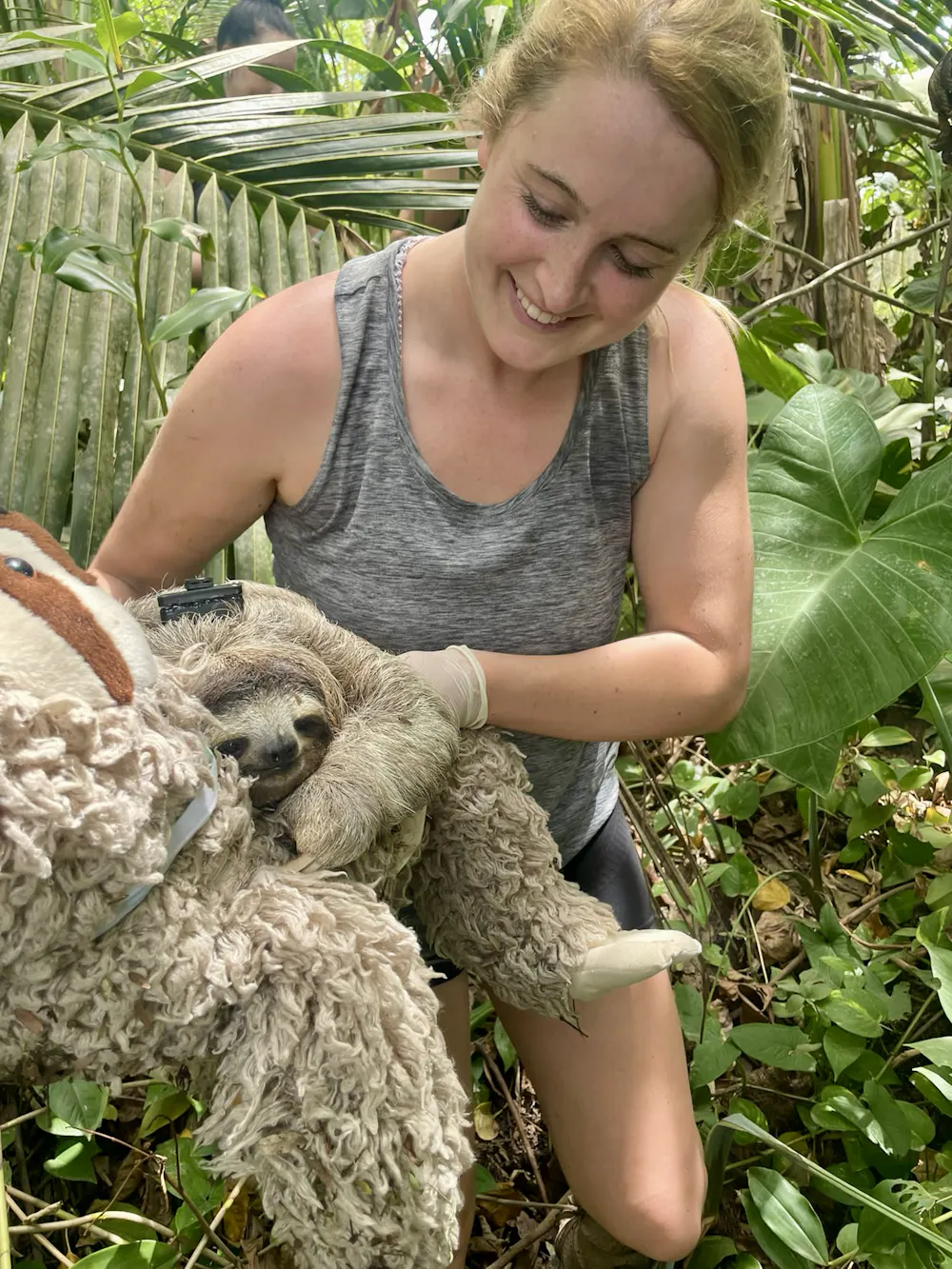
    Conservation biologist Rebecca Cliffe fits an accelerometer backpack to a wild three-fingered sloth to measure its movement. The Sloth Conservation Foundation, CC BY-NC-ND

    Sloths are more vulnerable to the rising temperatures associated with climate change than other mammals, due to their unique physiology.

    In a new study, my colleagues and I found that sloths’ ability to adapt to warming temperatures varies between the cooler, high-altitude and warmer, low-altitude forests of Costa Rica.

    Unlike most mammals, sloths do not actively regulate their body temperature. Like reptiles, they rely heavily on ambient temperature to do so. This affects all aspects of their survival, including digestion, metabolism and movement. Combined with their extremely low-calorie, relatively inflexible leaf-based diet, these traits mean sloths have much less energy at their disposal than most other mammals.

    As sloth body temperatures become hotter with rising temperatures, their metabolic rate increases. But those with sharply increasing metabolic rates are at risk of lower survival rates when temperatures rise, compared with other sloths.

    The author, Heather Ewart, returns a wild three-fingered sloth back to its point of capture following the application of a GPS tracking collar and accelerometer.
    Heather Ewart, CC BY-NC-ND

    Together with colleagues, including the founder of UK-based Sloth Conservation Foundation Rebecca Cliffe, I found that their degree of vulnerability depends on the altitude of the forests where each sloth originates from.

    We calculated the metabolic rates of high- and low-altitude sloths across a range of temperatures using a method called respirometery. This involves putting a sloth in a large, closed box (comfortably) to measure how much oxygen it consumes at each temperature within an allotted time period.

    Lowland sloths were able to slow their metabolic rate when temperatures became too hot. This is an important survival mechanism that may benefit these populations as climate change continues.

    Highland sloths were unable to slow their metabolic rate, which increased with temperature and became critical above 32°C. Highland sloths are at another disadvantage – cooler, high-altitude forests tend to be smaller due to the slower growth rate of trees at higher elevations coupled with habitat loss. Highland sloths are therefore much less able to migrate and are more restricted than lowland sloths.

    Sloths can’t adapt their metabolism quickly so are at risk from rising temperatures.
    Rebecca Cliffe, CC BY-NC-ND

    Sloths with higher metabolic rates use more energy, so they need to eat more food to produce more energy. However, due to their extremely slow rates of food intake and digestion, sloths take much longer to process food into energy than other mammals. Essentially, sloths cannot simply eat more food to match their energy requirements or achieve “energy balance” – the state where calories consumed equals calories burnt through physical activity.

    Combined with inflexible migration options, the restricted metabolism of highland sloths makes them especially vulnerable to climate change. However, while lowland sloths appear to have more flexible metabolic responses to warming temperatures, they won’t be able to escape the effects of climate change if temperature increases are too extreme, putting their survival at risk as well.

    There is a considerable lack of data on the current status and abundance of sloths. No comprehensive, long-term population monitoring has been conducted at a scale that reflects the true challenges sloths face.

    Conserving cooler microclimates

    My team of ecologists, who have been studying sloth behaviour and abundance across Costa Rica for 15 years, are concerned about how sloths are being affected by climate change. Areas once highly populated are now devoid of sloths, driven primarily by habitat loss and fragmentation resulting from extensive destruction of rainforests.

    Costa Rica has transformed into a predominantly urban society over the past 40 years, with its urban footprint increasing by 112%. In the Talamanca province, where our team currently tracks wild sloths, urban sprawl has increased substantially with an estimated 3,000 sloths lost annually. Electrocution is one of the leading causes of admissions to wild animal sanctuaries in Costa Rica, partly because sloths use power lines to cross between fragmented forests in certain places.

    A two-fingered sloth uses power lines over a busy road to move between trees.
    Heather Ewart, CC BY-NC-ND

    Both native sloth species of Costa Rica are now listed as conservation concerns. Globally, an estimated 40% of all sloth species are threatened with extinction. Climate change poses a serious threat – and sloth conservation efforts need to take this into account. We predict that rising temperatures will have devastating consequences for sloths’ ability to maintain their energy balance and survive.

    Sloth conservation is crucial, as they play a vital role in keeping the rainforest ecosystem healthy. Sloths are herbivores (plant eaters) that help regulate plant growth and recycle nutrients. They are an integral part of the food web, hosting a diverse ecosystem of unique organisms in their fur and serving as prey for other animals, such as ocelots and jaguars.

    Protecting sloths is an incredibly complex challenge. Right now, natural habitats must be preserved and restored to support cooler microclimates. Particularly in vulnerable high-altitude regions, remaining forest fragments should be reconnected by building wildlife corridors – strips of natural habitat that connect fragmented areas and allow animals to move more easily.

    Sloth conservation is challenging.
    Katarzyna Przygodzka/Shutterstock

    Sloth conservation can only be achieved by addressing the root issue: climate change. A global, coordinated effort is required, with strict adherence to international climate accords such as the Paris agreement to limit global warming to below 1.5°C and prevent irreversible damage to rainforests.

    If climate change continues unchecked, sloths won’t be able to migrate like other species. Once their environment becomes too hot, their survival is unlikely. Sloth conservation is directly linked to the actions humanity now takes to preserve our planet.


    Don’t have time to read about climate change as much as you’d like?

    Get a weekly roundup in your inbox instead. Every Wednesday, The Conversation’s environment editor writes Imagine, a short email that goes a little deeper into just one climate issue. Join the 35,000+ readers who’ve subscribed so far.


    Heather Ewart does not work for, consult, own shares in or receive funding from any company or organisation that would benefit from this article, and has disclosed no relevant affiliations beyond their academic appointment.

    ref. Slow-moving sloths will struggle to adapt quickly to climate change – new study – https://theconversation.com/slow-moving-sloths-will-struggle-to-adapt-quickly-to-climate-change-new-study-240052

    MIL OSI – Global Reports

  • MIL-OSI USA: Cook, Entrepreneurs, Innovation, and Participation

    Source: US State of New York Federal Reserve

    Thank you for the kind introduction, Jennet.1 Let me start by saying my thoughts are with all the people in Florida, Georgia, North Carolina, South Carolina, Tennessee and Virginia who have felt the force of Helene’s and Milton’s impact. I am saddened by the tragic loss of life and widespread disruption in this region. The Federal Reserve Board and other federal and state financial regulatory agencies are working with banks and credit unions in the affected area. As we normally do in these unfortunate situations, we are encouraging institutions operating in the affected areas to meet the needs of their communities.2
    It is an honor to stand before you and speak to this group of audacious, innovative women. I am also very happy to be back in Charleston. I grew up in Milledgeville, Georgia, just about 250 miles down the road. Some of my fondest childhood memories of traveling in the South, especially as a Girl Scout, include South Carolina.
    Today I would like to talk with you about the important role startups, new businesses, and entrepreneurship play in our economy from the perspective of a Federal Reserve policymaker. I also want to share a bit of my story. Just like many of you—including those who have started a business or those who dream of doing that someday—I have faced and overcome hurdles along a winding path.
    My StoryI was born and raised in Milledgeville, where my mother, Professor Mary Murray Cook, was a faculty member in the Nursing Department of Georgia College and State University. She was the first tenured African American faculty member at that university. My father, Rev. Payton B. Cook, was a chaplain and then in senior leadership at the hospital there. My family lived through the events that brought Milledgeville out of a deeply segregated South. My sisters and I were among the first African American students to desegregate the schools we attended. I drew strength from the example set by my family, others in the Civil Rights Movement, and the village that raised me and from their conviction in the hope and promise of a world that could and would continually improve.
    While I had an interest in economics even before I entered high school, that was not the initial field of study I pursued. I entered Spelman College in Atlanta as a physics and philosophy major. After graduation, I had the honor of studying at the University of Oxford as a Marshall Scholar.
    After Oxford, I continued my education at the University of Dakar in Senegal in West Africa. However, at the end of my year in Africa, it was the chance to climb Mount Kilimanjaro in Tanzania in East Africa where I discovered my love of economics. I hiked alongside a British economist, and, by the end of the trek, he convinced me that studying economics would provide me with the tools to address some big and important questions I had pondered for a long time.
    I went on to earn my Ph.D. in economics from the University of California, Berkeley. Entering the economics profession came with its usual challenges, and, for women, a few more challenges existed. To this day, women are still underrepresented in economics. Women earned just 34 percent of bachelor’s degrees in economics and 36 percent of Ph.D.’s in economics in 2022, the most recent available data from the U.S. Department of Education. The share of women earning those degrees rose only modestly from 1999, when women earned about 32 percent of economics bachelor’s degrees and 27 percent of Ph.D.’s. The data stand in sharp contrast to all science and engineering degrees, including in social science fields, where women earned roughly half of degrees granted in 2022.3
    Education was paramount in my family and was construed as a means of realizing the promise of the Civil Rights Movement and continual improvement of our society and economy. Of course, economics, like physics, is a field where math skills are vitally important. Between my mother, my aunts, and my extended family, I had essentially understood STEM (science, technology, engineering, and mathematics)-related jobs to be women’s work. I was grateful to have these role models in my orbit to give me the confidence to undertake study in a STEM field.
    Access and encouragement for girls to pursue study in math and science are a significant concern. Economist Dania V. Francis’s research shows that Black girls are disproportionately under-recommended for Advanced Placement calculus.4 The course is often a gateway for economics, for STEM classes, and for college preparation, in general.5
    My mentors and role models encouraged careful study, teaching, and scholarship and helped me block out the voices saying I did not belong at each juncture. They encouraged my work and have been champions for me. As a result, I have been committed to serving as a mentor, as well. For several years, I was the director of and taught in the American Economic Association’s Summer Program, an important training ground for disadvantaged students considering economics careers. Each year, the share of students who are women oscillated between 41 percent and 67 percent, much higher than the enrollment in undergraduate economics courses nationally.6 I told those students—and continue to tell them as they make their way through graduate programs in economics and through the economics profession—”You belong here. Your insights are unique, and the profession will benefit from them.”
    In my career as an economist, I studied, researched, and taught in roles at universities and worked in the private sector and in government before I was nominated by the President and confirmed by the Senate to become a member of the Board of Governors of the Federal Reserve System in 2022. I am honored and humbled to serve in this role and proud to be the first African American woman and first woman of color to serve on the Board of Governors. As Fed policymakers, we make decisions affecting the entire economy and the well-being of every American by focusing on the dual mandate given to us by Congress: maximum employment and stable prices.
    Entrepreneurs’ Vital Role in the EconomyIn my years of conducting research and while at the Board, I have met many inventors, innovators, and entrepreneurs who made important contributions to the economy. Many of them happened to be women who were very knowledgeable, creative, and inspiring. So I want to discuss the vital role entrepreneurship and new business creation play in our economy.
    You might ask what interest I have in this subject, as a monetary policymaker focused closely on the dual mandate of maximum employment and stable prices. Well, this topic has interested me for a long time, and I conducted a fair amount of research on entrepreneurship and innovation before joining the Board. But the topic is also important precisely because of our dual mandate. To convince you of this, I will explain a few of the ways in which economists think about entrepreneurship, and how they relate to the dual mandate.
    The first is the most basic: For many people—many millions, in fact—entrepreneurship or self-employment is a career choice.7 It is their preferred way of participating in the labor market and obtaining income for themselves and their families. They prefer to be their own bosses, with all the benefits and risks that entails.8 But whether they end up hiring others or not, self-employed individuals support the labor market by providing a job for themselves.
    A second way economists think about entrepreneurship is a little broader: New business creation is a large contributor to overall job growth. In fact, new businesses punch above their weight. For example, during the handful of years before the pandemic, in a typical year only about 8 percent of all employer firms were new entrants, but these new entrants accounted for about 15 percent of annual gross job creation.9 And research has found that this job creation effect is long lasting. Even though many new firms do not survive, those that do survive tend to grow rapidly over 5 to 10 years, largely offsetting the job losses from those firms that shut down.10
    A third way economists think about entrepreneurship, which I have explored in my own research, is that a small but critical subset of new firms are innovators—they introduce new products or business processes that change how we consume or produce.11 As such, they make large contributions to overall productivity growth over time. That is, innovative entrepreneurs help enable us to do more with less—and even more so if access to innovation participation is equitable.12 It is important that everyone, including women, historically underrepresented groups, people from certain geographic regions, and other diverse representative groups, can participate in the entrepreneurship and innovation economy. In my research, I have found that investors underrate the prospects of Black-founded, or simply outsider-founded, startups in early funding stages. Better assessment of the early stages of invention and innovation could broaden the range of new entrants and the ideas they contribute to their local communities and the broader economy.
    Consider the Dual MandateSo let’s return to the dual mandate. You can now understand that self-employment and entrepreneurial job creation are relevant for our employment mandate. Indeed, one could argue that entrepreneurs are critical to Fed policymakers’ efforts to promote maximum employment. And the productivity gains we reap from entrepreneurship are like productivity growth from any other source. When the pace of productivity growth increases, it allows for economic activity and wage growth to be robust while also being consistent with price stability.
    The importance of business startups to our dual mandate objectives is why I have watched closely as various measures of new business formation have surged since the onset of the COVID-19 pandemic.
    Applications for new businesses jumped to a record pace shortly after the pandemic struck the U.S.13 The pace of applications has remained elevated above pre-pandemic norms all the way from the summer of 2020 to the most recent data, even though the pace appears to be cooling some this year.14 At first, it might have seemed like these business applications were mainly being submitted by people who lost their jobs, or perhaps by an increase in “gig economy” work. There was doubtless some of that going on, but research and data since then have painted a more optimistic picture.
    When researchers look across areas of the country, the pandemic business applications had only a weak connection with layoffs. The surge in applications persisted long after overall layoffs fell to the subdued pace we have seen since early 2021. The applications did have a strong relationship with workers voluntarily leaving their jobs. Some quitting workers may have chosen to join these new businesses as founders or early employees. And surging business applications were soon followed by new businesses hiring workers and expanding. Over the last two years of available data, new firms created 1.9 million jobs per year, a pace not seen since the eve of the Global Financial Crisis.15
    The industry patterns of this surge reflect shifts in consumer and business needs resulting from the pandemic and its aftermath. For example, in large metro areas, new business creation shifted from city centers to the suburbs, perhaps because of the increase in remote work. Suddenly, people wanted to eat lunch or go to the gym closer to their home, rather than close to their downtown office. Likewise, consumer and business tastes for more online purchases, with the shipping requirements that entails, are evident in the surge of business entry in the online retail and transportation sectors. But this is not only about moving restaurants closer to workers or changing patterns of goods consumption. There was also a particularly strong entry into high-tech industries, such as data processing and hosting, as well as research and development services.16 That may have more to do with developments like artificial intelligence than with the pandemic specifically, as I discussed in a speech in Atlanta last week.17
    Economists will spend years debating the various causes of the surge in business creation during and soon after the pandemic. Perhaps strong monetary and fiscal policy backstopping aggregate demand played some role, or pandemic social safety net policies, or simply the accommodative financial conditions of 2020 and 2021.18 Indeed, more research is needed and will be the subject of many dissertations in the near future.
    I do think a large part of the story is ultimately a case of resourceful and determined American entrepreneurs, perhaps including some of you, responding to the tumultuous shocks of the pandemic. They, like some of you, stepped in to meet the rapidly changing needs of households and businesses. This points to a fourth way economists like to think about entrepreneurship, which is that entrepreneurship plays a big role in helping the economy adapt to change. Research suggests that entrepreneurs and the businesses they create are highly responsive to big economic shocks, and the COVID-19 pandemic was certainly a seismic shock.19 To be sure, the future is uncertain. It is unclear what the productivity effects of the pandemic surge of new businesses, particularly in high tech, will be.20 And whether that surge will continue is an open question; after all, the pre-pandemic period was a period of declining rates of new business creation, and the pandemic surge itself does appear to be cooling off recently.21
    ConclusionFor now, let me say that I am grateful that entrepreneurs continue to give us a hand in meeting our employment mandate, and whatever productivity gains we may reap in coming years as a result may help ease tradeoffs with inflation as well.
    Finally, I will share one last story about why South Carolina will always hold a special place in my and my sisters’ hearts. Every summer and at Thanksgiving, we would travel through the Palmetto State to our grandparents’ house in Winston-Salem. Sitting in the back seat of the station wagon, we were entranced by the many colorful signs along Interstate 95 advertising what I, as a child, viewed as South Carolina’s number one attraction: the South of the Border roadside amusement park. We begged our parents to stop every time. It was an epic struggle that went on for more than a decade. Once or twice they did relent, a sweet childhood victory! And here is the funny thing about travels—paths can cross. The timing is such that my sisters and I may have even been helped by a waiter named Ben, a young man from Dillon, South Carolina, who would go on to be Federal Reserve Chairman Ben Bernanke! 22 Perhaps it was the world’s way of foreshadowing.
    Thank you for having me here in Charleston. It is inspiring to meet this group of bold, entrepreneurial women in South Carolina, and I look forward to continuing our conversation.

    1. The views expressed here are my own and not necessarily those of my colleagues on the Federal Open Market Committee. Return to text
    2. See Federal Deposit Insurance Corporation, Federal Reserve Board, National Credit Union Administration, Office of the Comptroller of the Currency, and State Financial Regulators (2024), “Federal and State Financial Regulatory Agencies Issue Interagency Statement on Supervisory Practices regarding Financial Institutions Affected by Hurricane Helene,” joint press release, October 2. Return to text
    3. See U.S. Department of Education, National Center for Education Statistics (NCES), Integrated Postsecondary Education Data System, Completions Survey, available on the NCES website at https://nces.ed.gov/ipeds/survey-components/7. Return to text
    4. See Dania V. Francis, Angela C.M. de Oliveira, and Carey Dimmitt (2019), “Do School Counselors Exhibit Bias in Recommending Students for Advanced Coursework?” B.E. Journal of Economic Analysis & Policy, vol. 19 (July), pp. 1–17. Return to text
    5. See Lisa D. Cook and Anna Gifty Opoku-Agyeman (2019), “‘It Was a Mistake for Me to Choose This Field,’” New York Times, September 30. Return to text
    6. See Lisa D. Cook and Christine Moser (2024), “Lessons for Expanding the Share of Disadvantaged Students in Economics from the AEA Summer Program at Michigan State University,” Journal of Economic Perspectives, vol. 38 (Summer), pp. 191–208. Return to text
    7. There is no single way to measure the number of self-employed individuals and related businesses, but it certainly numbers in the millions. The latest Bureau of Labor Statistics Current Population Survey indicates there are roughly 10 million unincorporated and 7 million incorporated self-employed individuals. Separate data on businesses from the U.S. Census Bureau indicate that, as of 2021, there were about 25 million nonemployer and 800,000 employer sole proprietorships (Nonemployer Statistics; Statistics of U.S. Businesses).
    For analysis of inconsistencies between self-employment data sources, see Katharine G. Abraham, John C. Haltiwanger, Claire Hou, Kristin Sandusky, and James R. Spletzer (2021), “Reconciling Survey and Administrative Measures of Self-Employment,” Journal of Labor Economics, vol. 39 (October), pp. 825–60. Return to text
    8. See Erik Hurst and Benjamin Wild Pugsley (2011), “What Do Small Businesses Do? (PDF)” Brookings Papers on Economic Activity, Fall, pp. 73–142; and Erik G. Hurst and Benjamin W. Pugsley (2017), “Wealth, Tastes, and Entrepreneurial Choice,” in John Haltiwanger, Erik Hurst, Javier Miranda, and Antoinette Schoar, eds., Measuring Entrepreneurial Businesses: Current Knowledge and Challenges (Chicago: University of Chicago Press). Return to text
    9. Gross job creation refers to all jobs created by entering and expanding establishments. Data are from the Census Bureau Business Dynamics Statistics, averaged for 2015–19. New firms’ share of net job creation is much higher, but this is partly an artifact of measurement practices: Firms with an age less than one measured in annual data cannot contribute negatively to net job creation. Return to text
    10. See John Haltiwanger, Ron S. Jarmin, and Javier Miranda (2013), “Who Creates Jobs? Small versus Large versus Young,” Review of Economics and Statistics, vol. 95 (May), pp. 347–61; and Ryan Decker, John Haltiwanger, Ron Jarmin, and Javier Miranda (2014), “The Role of Entrepreneurship in US Job Creation and Economic Dynamism,” Journal of Economic Perspectives, vol. 28 (Summer), pp. 3–24. Return to text
    11. For evidence on the importance of innovating young and small firms, see Daron Acemoglu, Ufuk Akcigit, Harun Alp, Nicholas Bloom, and William Kerr (2018), “Innovation, Reallocation, and Growth,” American Economic Review, vol. 108 (November), pp. 3450–91. For recent trends in technology diffusion of relevance to business entry, see Ufuk Akcigit and Sina T. Ates (2023), “What Happened to US Business Dynamism?” Journal of Political Economy, vol. 131 (August), pp. 2059–2124. Return to text
    12. See Lisa D. Cook (2011), “Inventing Social Capital: Evidence from African American Inventors, 1843–1930,” Explorations in Economic History, vol. 48 (December), pp. 507–18; Lisa D. Cook (2014), “Violence and Economic Activity: Evidence from African American Patents, 1870–1940,” Journal of Economic Growth, vol. 19 (June), pp. 221–57; and Lisa D. Cook (2020), “Policies to Broaden Participation in the Innovation Process (PDF),” Hamilton Project Policy Proposal 2020-11 (Washington: Brookings Institution, August). Return to text
    13. “Business applications” refers to applications for new Employer Identification Numbers submitted to the Internal Revenue Service. These are reported by the U.S. Census Bureau in the Business Formation Statistics. An application does not necessarily mean an actual firm with employees, revenue, or both will result. Return to text
    14. Unless otherwise noted, the facts described in this section are documented in Ryan A. Decker and John Haltiwanger (2024), “Surging Business Formation in the Pandemic: A Brief Update,” working paper, September; and Ryan A. Decker and John Haltiwanger (2023), “Surging Business Formation in the Pandemic: Causes and Consequences? (PDF)” Brookings Papers on Economic Activity, Fall, pp. 249–302. Return to text
    15. Data from the Bureau of Labor Statistics Business Employment Dynamics (BED) report new firm job creation of 1.9 million, on average, in 2022 and 2023, the highest pace since 2007. Alternative data on firm births from the Census Bureau Business Dynamics Statistics, which lag the BED by one year, report 2.5 million jobs created by new firms in 2022, also the highest pace since 2007. Return to text
    16. See Ryan Decker and John Haltiwanger (2024), “High Tech Business Entry in the Pandemic Era,” FEDS Notes (Washington: Board of Governors of the Federal Reserve System, April 19). Return to text
    17. See Lisa D. Cook (2024), “Artificial Intelligence, Big Data, and the Path Ahead for Productivity,” speech delivered at “Technology-Enabled Disruption: Implications of AI, Big Data, and Remote Work,” a conference organized by the Federal Reserve Banks of Atlanta, Boston, and Richmond, Atlanta, October 1. Return to text
    18. For a potential role of fiscal policy, see Catherine E. Fazio, Jorge Guzman, Yupeng Liu, and Scott Stern (2021), “How Is COVID Changing the Geography of Entrepreneurship? Evidence from the Startup Cartography Project,” NBER Working Paper Series 28787 (Cambridge, Mass.: National Bureau of Economic Research, May). For safety net programs (specifically expanded unemployment insurance), see Joonkyu Choi, Samuel Messer, Michael Navarrete, and Veronika Penciakova (2024), “Unemployment Benefits Expansion and Business Formation,” working paper, April. For the importance of financial conditions for entrepreneurship in past business cycles, see Michael Siemer (2019), “Employment Effects of Financial Constraints during the Great Recession,” Review of Economics and Statistics, vol. 101 (March), pp. 16–29; and Teresa C. Fort, John Haltiwanger, Ron S. Jarmin, and Javier Miranda (2013), “How Firms Respond to Business Cycles: The Role of Firm Age and Firm Size,” IMF Economic Review, vol. 61 (3), pp. 520–59. Return to text
    19. Examples of research finding a large role for business entry in responding to aggregate shocks include Manuel Adelino, Song Ma, and David Robinson (2017), “Firm Age, Investment Opportunities, and Job Creation,” Journal of Finance, vol. 72 (June), pp. 999–1038; Ryan A. Decker, Meagan McCollum, and Gregory B. Upton, Jr. (2024), “Boom Town Business Dynamics,” Journal of Human Resources, vol. 59 (March), pp. 627–51; and Fatih Karahan, Benjamin Pugsley, and Ayşegűl Şahin (2024), “Demographic Origins of the Startup Deficit,” American Economic Review, vol. 114 (July), pp. 1986–2023. Return to text
    20. The last period of robust productivity growth in the U.S., the late 1990s and early 2000s, was preceded by several years by strong business creation in high-tech industries; see Lucia Foster, Cheryl Grim, John C. Haltiwanger, and Zoltan Wolf (2021), “Innovation, Productivity Dispersion, and Productivity Growth,” in Carol Corrado, Jonathan Haskel, Javier Miranda, and Daniel Sichel, eds., Measuring and Accounting for Innovation in the Twenty-First Century (Chicago: University of Chicago Press). Return to text
    21. The number of annual new firms as a share of all firms declined from around 12 percent in the 1980s, on average, to around 9 percent in the period of 2010–19. New firms’ share of gross job creation declined from nearly 20 percent to less than 15 percent over the same period. Data are from Census Bureau Business Dynamics Statistics. The pre-pandemic trend decline in entry rates was documented by Ryan Decker, John Haltiwanger, Ron Jarmin, and Javier Miranda (2014), “The Role of Entrepreneurship in US Job Creation and Economic Dynamism,” Journal of Economic Perspectives, vol. 28 (Summer), pp. 3–24. Return to text
    22. See Ben S. Bernanke (2009), “Brief Remarks,” speech delivered at the Interstate Interchange Dedication Ceremony, Dillon, S.C., March 7. Return to text

    MIL OSI USA News

  • MIL-OSI USA: Governor Newsom announces judicial appointments 10.9.24

    Source: US State of California 2

    Oct 9, 2024

    SACRAMENTO – Governor Gavin Newsom today announced his appointment of 18 Superior Court Judges, which include one in Colusa County; one in Contra Costa County; five in Los Angeles County; two in Orange County; three in Sacramento County; one in San Bernardino County; four in San Diego County; and one in Sutter County.

    Colusa County Superior Court

    Brendan M. Farrell, of Colusa County, has been appointed to serve as a Judge in the Colusa County Superior Court. Farrell has served as District Attorney of Colusa County since 2023. He was a Chief Deputy District Attorney at the Colusa County District Attorney’s Office from 2016 to 2022 and a Deputy District Attorney there from 2010 to 2016. Farrell served as a Volunteer Attorney at the Los Angeles City Attorney’s Office in 2010. He earned a Juris Doctor degree from the University of Notre Dame Law School. He fills the vacancy created by the retirement of Judge Jeffrey A. Thompson. Farrell is registered without party preference.
     
    Contra Costa County Superior Court

    Robert S. Leach, of Contra Costa County, has been appointed to serve as a Judge in the Contra Costa County Superior Court. Leach has served as Chief of the Special Prosecutions Section at the U.S. Attorney’s Office, Northern District of California since 2023 and has served in several positions there since 2012, including Deputy Chief of the Corporate and Securities Fraud Section and Assistant U.S. Attorney. He served in several roles at the U.S. Securities and Exchange Commission from 2003 to 2012, including Assistant Regional Director, Branch Chief and Staff Attorney. Leach was an Associate at Latham & Watkins LLP from 1998 to 2003 and served as a Law Clerk for the Honorable John G. Davies at the U.S. District Court for the Central District of California from 1997 to 1998. Leach earned a Juris Doctor degree from the University of California, Los Angeles School of Law. He fills the vacancy created by the retirement of Judge Susanne Fenstermacher. Leach is registered without party preference.
     
    Los Angeles County Superior Court

    Leslie B. Gutierrez, of San Bernardino County, has been appointed to serve in an interim appointment as a Judge in the Los Angeles County Superior Court. Gutierrez has served as a Deputy District Attorney at the Los Angeles County District Attorney’s Office since 2012. She was a Sole Practitioner from 2011 to 2012. Gutierrez earned a Juris Doctor degree from Southwestern Law School. She fills the vacancy created by the retirement of Judge Brian C. Yep. The Governor’s appointment allows her to immediately assume the position she was otherwise elected to begin in January 2025. Gutierrez is a Democrat.
     

    Heather M. Hocter, of Los Angeles County, has been appointed to serve as a Judge in the Los Angeles County Superior Court. Hocter has served as a Deputy Alternate Public Defender at the Los Angeles County Alternate Public Defender’s Office since 2017. She served as a Deputy Public Defender at the Los Angeles County Public Defender’s Office from 2006 to 2017. Hocter earned a Juris Doctor degree from Southwestern Law School. She fills the vacancy created by the retirement of Judge Amy Pellman. Hocter is a Democrat.

    Karen C. Joynt, of Los Angeles County, has been appointed to serve as a Judge in the Los Angeles County Superior Court. Joynt has served as a Commissioner at the Los Angeles County Superior Court since 2022. She was Owner and Lead Attorney at Joynt Law from 2019 to 2022. Joynt served in several positions at the Office of the Los Angeles County Counsel from 2010 to 2019, including Assistant County Counsel, Senior Deputy County Counsel and Deputy County Counsel. She served as a Deputy Alternate Public Defender in the Office of the Los Angeles County Alternate Public Defender from 2006 to 2010. Joynt served as a Deputy Public Defender in the Office of the Los Angeles County Public Defender from 2003 to 2006. She earned a Juris Doctor degree from Southwestern Law School. She fills the vacancy created by the retirement of Judge Richard J. Burdge. Joynt is a Democrat.
     

    Esther K. Ro, of Los Angeles County, has been appointed to serve as a Judge in the Los Angeles County Superior Court. Ro has served as a Senior Appellate Attorney at the Second District Court of Appeal since 2019. She was a Partner at Morgan, Lewis & Bockius LLP from 2017 to 2019 and an Associate there from 2011 to 2017. Ro was an Equal Justice Works AmeriCorps Recovery Fellow at the Asian Pacific American Legal Center from 2009 to 2010 and an Associate at Squire, Sanders & Dempsey LLP from 2007 to 2009. She earned a Juris Doctor degree from the University of California, Los Angeles School of Law. She fills the vacancy created by the retirement of Judge Paul A. Bacigalupo. Ro is a Democrat.

    Karla Sarabia, of Los Angeles County, has been appointed to serve as a Judge in the Los Angeles County Superior Court. Sarabia has been a Deputy Public Defender at the Los Angeles County Public Defender’s Office since 2008. She served as a Deputy Public Defender at the Fresno County Public Defender’s Office from 2006 to 2008. Sarabia served as a Law Clerk in the Contra Costa County Public Defender’s Office from 2005 to 2006. Sarabia earned a Juris Doctor degree from the University of San Francisco School of Law. She fills the vacancy created by the retirement of Judge Steven D. Blades. Sarabia is a Democrat. 
     
    Orange County Superior Court

    Julianne Sartain Bancroft, of Orange County, has been appointed to serve as a Judge in the Orange County Superior Court. Bancroft has been Senior Appellate Research Attorney at the Fourth District Court of Appeal, Division Three since 2002. She was a Partner at Snell & Wilmer from 1997 to 2002 and an Associate there from 1994 to 1997. Bancroft was an Associate at Wilson, Sonsini, Goodrich & Rosati from 1991 to 1994 and served as a Law Clerk for the Honorable Melvin T. Brunetti at the U.S. Court of Appeals for the Ninth Circuit from 1990 to 1991. She earned a Juris Doctor degree from the University of California, Los Angeles School of Law. She fills the vacancy created by the retirement of Judge James E. Rogan. Bancroft is a Democrat.

    Randy K. Ladisky, of Orange County, has been appointed to serve as a Judge in the Orange County Superior Court. Ladisky has served as a Senior Deputy Alternate Public Defender in the Office of the Orange County Alternate Public Defender since 2014 and has been an Alternate Public Defender there since 2001. He was an Associate at the Law Office of Joel M. Garson from 2000 to 2001 and at the Law Office of Ronald Talmo from 1999 to 2000. Ladisky earned a Juris Doctor degree from the Western State College of Law. He fills the vacancy created by the appointment of Judge Martha K. Gooding to the Court of Appeal. Ladisky is a Democrat.
     
    Sacramento County Superior Court

    Lee S. Bickley, of Sacramento County, has been appointed to serve as a Judge in the Sacramento County Superior Court. Bickley has served as a Senior Attorney at the California Public Employees’ Retirement System since 2024. She served as an Assistant U.S. Attorney at the U.S. Attorney’s Office, Eastern District of California from 2010 to 2024. Bickley was a Branch Chief for the U.S. Securities and Exchange Commission from 2005 to 2010 and a Senior Litigation Associate at Cravath, Swaine & Moore LLP from 1998 to 2005. Bickley earned a Juris Doctor degree from Yale Law School. She fills the vacancy created by the retirement of Judge Gerrit W. Wood. Bickley is a Democrat.
     

    Joseph M. Cress, of Sacramento County, has been appointed to serve as a Judge in the Sacramento County Superior Court. Cress has been a Chief Assistant Public Defender at the Sacramento County Public Defender’s Office since 2022 and has served in several roles there since 1995, including Supervising Assistant Public Defender and Assistant Public Defender. He was an Adjunct Professor at the University of the Pacific, McGeorge School of Law from 2012 to 2015. Cress earned a Juris Doctor degree from the University of California College of the Law, San Francisco. He fills the vacancy created by the retirement of Judge James M. Mize. Cress is a Democrat.
     

    Brenda R. Dabney, of Sacramento County, has been appointed to serve as a Judge in the Sacramento County Superior Court. Dabney has been Northern California Regional Director at the Children’s Law Center of California since 2017. She has held several roles at the Children’s Law Center of California since 2001, including Firm Director from 2011 to 2017, Supervising Attorney from 2005 to 2011 and Staff Attorney from 2001 to 2005. Dabney earned a Juris Doctor degree from Loyola Law School, Los Angeles. She fills the vacancy created by the retirement of Judge Paul L. Seave. Dabney is a Democrat.
     
    San Bernardino County Superior Court

    James M. Taylor, of Riverside County, has been appointed to serve as a Judge in the San Bernardino County Superior Court. Taylor has been a Sole Practitioner since 2000. He was an Attorney for the San Bernardino County Indigent Defense Program from 2001 to 2020 and for Conflict Defense Lawyers from 2005 to 2014. Taylor earned a Juris Doctor degree from the Western State College of Law. He fills the vacancy created by the retirement of Judge Ingrid A. Uhler. Taylor is registered without party preference.
     
    San Diego County Superior Court

    Jami L. Ferrara, of San Diego County, has been appointed to serve as a Judge in the San Diego County Superior Court. Ferrara has been a Sole Practitioner since 2001. She was a Trial Attorney at Federal Defenders of San Diego Inc. from 1997 to 2000. Ferrara earned a Juris Doctor degree from George Mason University Law School. She fills the vacancy created by the retirement of Judge John S. Meyer. Ferrara is a Democrat.

    Rachel L. Jensen, of San Diego County, has been appointed to serve as a Judge in the San Diego County Superior Court. Jensen has been a Partner at Robbins Geller Rudman & Dowd LLP since 2008 and an Associate from 2004 to 2007. She served as a Law Clerk for the Office of the Prosecutor at the United Nations International Criminal Tribunal for the Former Yugoslavia in 2003 and the United Nations International Criminal Tribunal for Rwanda in 2002. Jensen served as a Law Clerk for the Honorable Warren J. Ferguson at the U.S. Court of Appeals for the Ninth Circuit from 2001 to 2002. She was an Associate at Morrison & Foerster LLP from 2000 to 2001. Jensen earned a Juris Doctor degree from the Georgetown University Law Center in 2000. She fills the vacancy created by the appointment of Judge David Rubin to the Court of Appeal. Jensen is a Democrat.

    Devon L. Lomayesva, of San Diego County, has been appointed to serve as a Judge in the San Diego County Superior Court. Lomayesva has been Chief Judge at the Intertribal Court of Southern California since 2016. She has been a Sole Practitioner since 2014. Lomayesva was a Pro Tem Judge at the Intertribal Court of Southern California from 2015 to 2016 and Tribal Attorney for the Soboba Band of Luiseño Indians from 2013 to 2014. She was Executive Director at California Indian Legal Services from 2007 to 2012 and In-House Counsel for the Iipay Nation of Santa Ysabel from 2004 to 2007. She was Directing Attorney at California Indian Legal Services from 2003 to 2004 and a Staff Attorney there from 1999 to 2002. Lomayesva was a Staff Attorney at the California Indian Lands Office from 2002 to 2003. She earned a Juris Doctor degree from the California Western School of Law. She fills the vacancy created by the retirement of Judge Harry Powazek. Lomayesva is a Democrat.

    Catherine A. Richardson, of San Diego County, has been appointed to serve as a Judge in the San Diego County Superior Court. Richardson has served as a Commissioner at the San Diego County Superior Court since 2024. She served as a Senior Chief Deputy City Attorney at the San Diego City Attorney’s Office from 2014 to 2024 and was Senior Counsel at Klinedinst PC from 2011 to 2014. Richardson served as a Deputy City Attorney at the San Diego City Attorney’s Office from 2009 to 2011 and from 1990 to1997. She was a Sole Practitioner from 2005 to 2009. She was a Partner at Thorsnes Bartolotta McGuire from 1997 to 2005 and an Associate there from 1988 to 1990. Richardson earned a Juris Doctor degree from the University of San Diego School of Law. She fills the vacancy created by the retirement of Judge Carlos O. Armour. Richardson is a Democrat.
     
    Sutter County Superior Court

    Fritzgerald A. Javellana, of Sutter County, has been appointed to serve as a Judge in the Sutter County Superior Court. Javellana has served as a Deputy County Counsel in the Office of the Sutter County Counsel since 2022. He was a Contract Juvenile Dependency Attorney for the Office of the Butte County Counsel from 2016 to 2022. Javellana was a Partner at Williams & Javellana LLP from 2014 to 2022 and an Associate at Rooney Law Firm from 2010 to 2014. Javellana earned a Juris Doctor degree from Southwestern Law School. He fills the vacancy created by the retirement of Judge Perry M. Parker. Javellana is registered without party preference. 

    The compensation for each of these positions is $243,940.

    Recent news

    News What you need to know: The California Highway Patrol recently conducted two enforcement stops leading to the seizure of nearly $1.7 million of illegal fentanyl and multiple illegally possessed firearms and the arrests of three out-of-state suspects in the Central…

    News What you need to know: The state is awarding $206 million in new funding to expand bus and rail services in disadvantaged communities, which face disproportionate impacts from pollution.  SACRAMENTO — Governor Gavin Newsom today announced that Caltrans will award…

    News In total, California has deployed 284 highly specialized personnel to support hurricane response efforts in recent weeksSACRAMENTO – With Hurricane Milton expected to make landfall in Florida this week as a Category 5 hurricane, Governor Gavin Newsom today…

    MIL OSI USA News

  • MIL-OSI USA: Social Work Professor Focused on HIV, Intimate Partner Violence Research Brings New Perspective

    Source: US State of Connecticut

    Even though Chenglin Hong didn’t grow up locally and came to UConn via Beijing, Seattle, and Los Angeles, students in his classes might have more in common with him than they realize.

    “I grew up in a very rural area in northeast China,” he says. “Neither of my parents went to middle school, so I had to navigate the education system and academia by myself. UConn has a very diverse student body. Many are from underserved communities or low-income families, and quite a few also are first-generation students.”

    Chenglin Hong, assistant professor in the UConn School of Social Work (Contributed photo)

    It’s a shared experience that Hong believes will help him relate to those he’s mentoring as one of the newest faculty members in the UConn School of Social Work. He also thinks that even though his position as assistant professor is steeped in research – and some students might find that intimidating – together, they can work in tandem.

    “The majority of students will work as clinicians and practitioners, either as psychotherapists or case managers,” he says. “It’s important for them to know, though, that research and clinical practice are connected. Their experiences will inform my research, and my research will inform the way they deliver services.”

    Hong describes himself as a global health scholar, one who started his career as a medical social worker in China and went on to get his Master of Social Work and Master of Public Health from the University of Washington and Ph.D. from UCLA.

    And what he studies falls under a self-described “big umbrella.”

    Right now, he’s considering the relationship between intimate partner violence among gay and bisexual men and an increased risk of HIV and sexually transmitted infections, an understudied area, he says, even though research has shown the prevalence of intimate partner violence among this group is similar or higher than among heterosexual counterparts.

    Hong says his previous research found that as the prevalence of violence rises among gay and bisexual men, so too does the risk of mental health disorders, substance use, and HIV and STIs. He hopes to take this research a step further and look at how technology-based interventions, like eHealth and mHealth, might fit in.

    “My work considers the intersection of social work, public health, psychology, and implementation science to see how I can utilize those interdisciplinary approaches to address the health issues this population faces,” Hong says.

    “I came from a culture where sexual and gender identity are highly stigmatized and people don’t seek care after receiving an HIV diagnosis or an STI diagnosis,” he continues. “That really shaped my research. I want the knowledge I generate to inform practice and policy. I want to be a part of optimizing the standard of services we have and designing new ways to help individuals access health care.”

    The health system in China is vastly different than the United States, Hong notes, explaining that social workers’ primary task in working with those who’ve been diagnosed with HIV is to connect people with medical services, things like getting and taking medications and showing up for follow-up appointments.

    In the U.S., Hong says, supporting one’s medical care isn’t necessarily the focus. There’s already a standard of care and treatment thanks to antiretroviral therapy that offers a life expectancy much the same as the general population.

    “We’re not only talking about physical health in the U.S., we’re also talking about mental health and social well-being,” he says, adding that his work in California with Black sexual minority men living with HIV included a team of professionals, from medical clinicians to lawyers. “That is really different, and I appreciate that approach because physical health is just one component of the overall well-being of individuals.”

    As he begins to establish his research lab at UConn, Hong admits he misses China, his family, and the community he left behind. They’re always in his heart, he says, and have profoundly impacted the way he looks at the world and how he approaches his work.

    “I’m half Korean, half Chinese,” Hong says. “The U.S. is a multicultural society with people from different backgrounds and different cultures. My own experience helps me see the health disparities and think about the best approach for us as researchers to design interventions and services to address societal problems.”

    Read more about Hong’s work here.

    MIL OSI USA News

  • MIL-OSI United Kingdom: expert reaction to study looking at the association of maternal serum folate supplementation with congenital heart disease (CHD) risk in offspring

    Source: United Kingdom – Executive Government & Departments

    A study published in JAMA Network Open looks at maternal folate levels and congenital heart disease risk in babies.

    Dr Erica D. Watson, Associate Professor in Reproductive Biology at University of Cambridge, said:

    “It is important to be responsible when writing about this subject because folic acid supplementation has real benefits to fetal health, and we do not want to scare people off from taking their pregnancy vitamins!

    The study indicates that maternal folic acid supplementation largely benefits the development of the baby’s heart. However, the study also shows that in some cases high folate levels in the mother’s blood was associated with an increased risk of heart defects in the baby. More research is needed to understand why this is. It is difficult to predict exactly how much folic acid is too much because genetics, metabolism, diet, and other aspects of the environment of both parents might interact to impact heart development. Importantly, moderate folic acid supplementation likely benefits fetal heart development.”


    ‘Maternal Serum Folate During Pregnancy and Congenital Heart Disease in Offspring’ by Qu et al., 2024 was published in JAMA Network Open at 16:00 UK time on Thursday 10th October.

    DOI: 10.1001/jamanetworkopen.2024.38747

    Declared interests

    Dr Erica D. Watson “I have no conflicts of interest to declare”

    MIL OSI United Kingdom

  • MIL-OSI Economics: Microsoft expands AI capabilities to shape a healthier future

    Source: Microsoft

    Headline: Microsoft expands AI capabilities to shape a healthier future

    REDMOND, Wash. — Oct. 10, 2024 — On Thursday, Microsoft Corp. is unveiling several Microsoft Cloud for Healthcare innovations that connect care experiences, enhance team collaboration, empower healthcare workers, and unlock clinical and operational insights.

    Through new healthcare AI models in Azure AI Studio, capabilities for healthcare data solutions in Microsoft Fabric, the healthcare agent service in Copilot Studio, and an AI-driven nursing workflow solution, Microsoft Cloud for Healthcare is supporting healthcare organizations on every step of their journey toward shaping a healthier future.

    “We are at an inflection point where AI breakthroughs are fundamentally changing the way we work and live,” said Joe Petro, corporate vice president, Healthcare and Life Sciences Solutions and Platforms at Microsoft. “Across the broader healthcare and life sciences industry, these advancements are dramatically enhancing patient care and also rekindling the joy of practicing medicine for clinicians. Microsoft’s AI-powered solutions are helping lead these efforts by streamlining workflows, improving data integration, and utilizing AI to deliver better outcomes for healthcare professionals, researchers and scientists, payors, providers, medtech developers, and ultimately the patients they all serve.”

    Expanding the reach of AI beyond text: healthcare AI models in Azure AI Studio

    Microsoft is announcing the launch of healthcare AI models, a collection of cutting-edge multimodal medical imaging foundation models available in the Azure AI model catalog. Developed in collaboration with partners like Providence and Paige.ai, these models enable healthcare organizations to integrate and analyze diverse data types — ranging from medical imaging to genomics and clinical records. By using these advanced models as a foundation, healthcare organizations can rapidly build, fine-tune and deploy AI solutions tailored to their specific needs, all while minimizing the extensive compute and data requirements typically associated with building multimodal models from scratch.

    “The development of foundational AI models in pathology and medical imaging is expected to drive significant advancements in cancer research and diagnostics,” said Carlo Bifulco, MD, chief medical officer of Providence Genomics and a co-author of the Prov-GigaPath study. “These models can complement human expertise by providing insights beyond traditional visual interpretation and, as we move toward a more integrated, multimodal approach, will reshape the future of medicine.”

    Harnessing the power of healthcare data with Microsoft Fabric

    Historically, healthcare data has been difficult to access due to its unstructured nature and the limitations of existing data management systems. These challenges have limited organizations’ ability to gain a comprehensive view of patient experiences and access valuable insights.

    With the general availability of healthcare data solutions in Microsoft Fabric, healthcare organizations can overcome these barriers by reshaping how users access, manage and act on data with a single, unified AI-powered platform. Additionally, healthcare security application templates for Microsoft Purview, an innovative suite of features designed to help govern healthcare data, are available in public preview. We’re also launching new capabilities in public preview within healthcare data solutions in Microsoft Fabric including:

    • Conversational data integration: Send conversational data, such as patient conversations, from DAX Copilot to the Fabric platform. By sending DAX Copilot audio files, transcripts and draft clinical notes to Fabric, customers and partners can leverage various native tools in Azure and Fabric to analyze this data and/or combine it with other data to generate comprehensive insights.
    • Social determinants of health (SDOH) public dataset transformation: Ingest, persist, harmonize and consume SDOH national and international public datasets to enable healthcare organizations to identify risks and health-related social needs to help create equitable healthcare for all patients and communities.
    • Centers for Medicare & Medicaid Services (CMS) claim and claim line feed (CCLF) data ingestion: Streamline the ingestion of claims data and harmonize with clinical, imaging and SDOH data to unlock actionable insights on patients and populations.
    • Care management analytics: Leverage unified healthcare data and care management analytical templates to enhance patient care by identifying high-risk individuals, optimizing treatment plans and improving care coordination.
    • Data discovery and cohorting: Utilize an integrated workflow that allows healthcare organizations to create, manage, analyze and share patient cohorts.

    Building a safe and responsible healthcare agent

    Healthcare organizations face numerous challenges, including workforce shortages, rising costs and increasing patient care demands. Generative AI offers a potential solution to these challenges by automating administrative tasks, analyzing vast amounts of data for actionable insights and assisting healthcare professionals in decision-making.

    To address this, Microsoft is announcing the public preview of healthcare agent service in Copilot Studio to build Copilot agents for appointment scheduling, clinical trial matching, patient triaging and more. Organizations can leverage the healthcare agent service to help create connected patient experiences, improve clinical workflows, and empower healthcare professionals while helping organizations meet industry expectations with Microsoft Copilot Studio. Early adopters, like Cleveland Clinic, which provided feedback to help optimize the solution for a healthcare setting, are already using these innovations to enhance patient experiences and improve operational efficiency.

    Enhancing nursing workflows with AI: nursing early outcomes

    With the World Health Organization (WHO)1 predicting a shortage of 4.5 million nurses by 2030, the urgency to deliver technology to support the nursing profession is felt more than ever.

    Last month at Epic’s UGM, we announced the next focus area for our collaboration in Epic Workshop. Today, we’re sharing more about how we’re actively collaborating with several leading healthcare organizations — including Advocate Health, Baptist Health of Northeast Florida, Duke Health, Intermountain Health Saint Joseph Hospital, Mercy, Northwestern Medicine, Stanford Health Care, and Tampa General Hospital — to build an AI solution using ambient technology that addresses nursing documentation by drafting flowsheets for review, allowing nurses to focus less on paperwork and more on their patients. This innovation expands on the company’s long-standing strategic collaboration and joint development initiatives with Epic.

    “AI is transforming nursing workflows by streamlining administrative tasks, allowing nurses to focus more on patient care,” said Corey Miller, vice president of R&D at Epic. “Together with Microsoft, we’re using AI-powered ambient voice technology to populate patient assessments. Nurses using the tool are already sharing positive feedback on how it enhances personalized patient interactions.”

    “For nurses, the integration of AI-driven solutions into our workflows is a game changer,” said Terry McDonnell, DNP, ANCP-BC, senior vice president and chief nurse executive, Duke University Health System, vice dean for Clinical Affairs, Duke University School of Nursing, Duke Health. “It allows us to focus more on patient care rather than the administrative burden of documentation. By automating tedious tasks, Microsoft’s ambient AI solution helps alleviate burnout and gives us more time to connect with our patients at the bedside, where we truly make a difference.”

    Empowering responsible AI practices across healthcare

    In line with Microsoft’s dedication to responsible AI, these new solutions adhere to the company’s AI principles established in 2018 to help guide AI development and use. Microsoft remains committed to developing responsible AI by design, ensuring that these technologies positively impact both the healthcare ecosystem and broader society. In practice this means properly building, testing and monitoring systems to avoid undesirable behaviors, such as harmful content, bias, misuse and other unintended risks. Over the years, we have made significant investments in building out the necessary governance structure, policies, tools and processes to uphold these principles and build and deploy AI safely. At Microsoft, we are committed to sharing our learnings on this journey of upholding our Responsible AI principles with our customers. We use our own best practices and learnings to provide people and organizations with capabilities and tools to build AI applications that share the same high standards we strive for.

    For more information on Microsoft Cloud for Healthcare and the new data and AI solutions and their impact, visit https://news.microsoft.com/hlth-2024, or visit Microsoft at booth #4004 at HLTH 2024.

    Microsoft (Nasdaq “MSFT” @microsoft) creates platforms and tools powered by AI to deliver innovative solutions that meet the evolving needs of our customers. The technology company is committed to making AI available broadly and doing so responsibly, with a mission to empower every person and every organization on the planet to achieve more.

    1Nursing and midwifery, World Health Organization, 2024

    For more information, press only:

    Microsoft Media Relations, WE Communications, (425) 638-7777, [email protected]

    Note to editors: For more information, news and perspectives from Microsoft, please visit Microsoft Source at https://news.microsoft.com/source. Web links, telephone numbers and titles were correct at time of publication but may have changed. For additional assistance, journalists and analysts may contact Microsoft’s Rapid Response Team or other appropriate contacts listed at https://news.microsoft.com/microsoft-public-relations-contacts.

    This press release includes key announcements on AI-driven healthcare innovations by Microsoft and includes a quote emphasizing AI’s transformative role in healthcare.

    Epic is a registered trademark of Epic Systems Corp.

    MIL OSI Economics

  • MIL-OSI Economics: Education under siege: How cybercriminals target our schools​​

    Source: Microsoft

    Headline: Education under siege: How cybercriminals target our schools​​

    Introduction | Security snapshot | Threat briefing
    Defending against attacks | Expert profile 

    Education is essentially an “industry of industries,” with K-12 and higher education enterprises handling data that could include health records, financial data, and other regulated information. At the same time, their facilities can host payment processing systems, networks that are used as internet service providers (ISPs), and other diverse infrastructure. The cyberthreats that Microsoft observes across different industries tend to be compounded in education, and threat actors have realized that this sector is inherently vulnerable. With an average of 2,507 cyberattack attempts per week, universities are prime targets for malware, phishing, and IoT vulnerabilities.¹ 

    Security staffing and IT asset ownership also affect education organizations’ cyber risks. School and university systems, like many enterprises, often face a shortage of IT resources and operate a mix of both modern and legacy IT systems. Microsoft observes that in the United States, students and faculty are more likely to use personal devices in education compared to Europe, for example. Regardless of ownership however, in these and other regions, busy users do not always have a security mindset. 

    This edition of Cyber Signals delves into the cybersecurity challenges facing classrooms and campuses, highlighting the critical need for robust defenses and proactive measures. From personal devices to virtual classes and research stored in the cloud, the digital footprint of school districts, colleges, and universities has multiplied exponentially.  

    We are all defenders. 

    A uniquely valuable and vulnerable environment 

    The education sector’s user base is very different from a typical large commercial enterprise. In the K-12 environment, users include students as young as six years old. Just like any public or private sector organization, there is a wide swath of employees in school districts and at universities including administration, athletics, health services, janitorial, food service professionals, and others. Multiple activities, announcements, information resources, open email systems, and students create a highly fluid environment for cyberthreats.

    Virtual and remote learning have also extended education applications into households and offices. Personal and multiuser devices are ubiquitous and often unmanaged—and students are not always cognizant about cybersecurity or what they allow their devices to access.

    Education is also on the front lines confronting how adversaries test their tools and their techniques. According to data from Microsoft Threat Intelligence, the education sector is the third-most targeted industry, with the United States seeing the greatest cyberthreat activity.

    Cyberthreats to education are not only a concern in the United States. According to the United Kingdom’s Department of Science Innovation and Technology 2024 Cybersecurity Breaches Survey, 43% of higher education institutions in the UK reported experiencing a breach or cyberattack at least weekly.² 

    QR codes provide an easily disguised surface for phishing cyberattacks

    Today, quick response (QR) codes are quite popular—leading to increased risks of phishing cyberattacks designed to gain access to systems and data. Images in emails, flyers offering information about campus and school events, parking passes, financial aid forms, and other official communications all frequently contain QR codes. Physical and virtual education spaces might be the most “flyer friendly” and QR code-intensive environments anywhere, given how big a role handouts, physical and digital bulletin boards, and other casual correspondence help students navigate a mix of curriculum, institutional, and social correspondence. This creates an attractive backdrop for malicious actors to target users who are trying to save time with a quick image scan. 

    Recently the United States Federal Trade Commission issued a consumer alert on the rising threat of malicious QR codes being used to steal login credentials or deliver malware.³

    Microsoft Defender for Office 365 telemetry shows that approximately more than 15,000 messages with malicious QR codes are targeted toward the educational sector daily—including phishing, spam, and malware. 

    Legitimate software tools can be used to quickly generate QR codes with embedded links to be sent in email or posted physically as part of a cyberattack. And those images are hard for traditional email security solutions to scan, making it even more important for faculty and students to use devices and browsers with modern web defenses. 

    Targeted users in the education sector may use personal devices without endpoint security. QR codes essentially enable the threat actor to pivot to these devices. QR code phishing (since its purpose is to target mobile devices) is compelling evidence of mobile devices being used as an attack vector into enterprises—such as personal accounts and bank accounts—and the need for mobile device protection and visibility. Microsoft has significantly disrupted QR code phishing attacks. This shift in tactics is evident in the substantial decrease in daily phishing emails intercepted by our system, dropping from 3 million in December 2023 to just 179,000 by March 2024. 

    Source: Microsoft incident response engagements.

    Universities present their own unique challenges. Much of university culture is based on collaboration and sharing to drive research and innovation. Professors, researchers, and other faculty operate under the notion that technology, science—simply knowledge itself—should be shared widely. If someone appearing as a student, peer, or similar party reaches out, they’re often willing to discuss potentially sensitive topics without scrutinizing the source. 

    University operations also span multiple industries. University presidents are effectively CEOs of healthcare organizations, housing providers, and large financial organizations—the industry of industries factor, again. Therefore, top leaders can can be prime targets for anyone attacking those sectors.

    The combination of value and vulnerability found in education systems has attracted the attention of a spectrum of cyberattackers—from malware criminals employing new techniques to nation-state threat actors engaging in old-school spy craft.  

    Microsoft continually monitors threat actors and threat vectors worldwide. Here are some key issues we’re seeing for education systems. 

    Email systems in schools offer wide spaces for compromise 

    The naturally open environment at most universities forces them to be more relaxed in their email hygiene. They have a lot of emails amounting to noise in the system, but are often operationally limited in where and how they can place controls, because of how open they need to be for alumni, donors, external user collaboration, and many other use cases.  

    Education institutions tend to share a lot of announcements in email. They share informational diagrams around local events and school resources. They commonly allow external mailers from mass mailing systems to share into their environments. This combination of openness and lack of controls creates a fertile ground for cyberattacks.

    AI is increasing the premium on visibility and control  

    Cyberattackers recognizing higher education’s focus on building and sharing can survey all visible access points, seeking entry into AI-enabled systems or privileged information on how these systems operate. If on-premises and cloud-based foundations of AI systems and data are not secured with proper identity and access controls, AI systems become vulnerable. Just as education institutions adapted to cloud services, mobile devices and hybrid learning—which introduced new waves of identities and privileges to govern, devices to manage, and networks to segment—they must also adapt to the cyber risks of AI by scaling these timeless visibility and control imperatives.

    Nation-state actors are after valuable IP and high-level connections 

    Universities handling federally funded research, or working closely with defense, technology, and other industry partners in the private sector, have long recognized the risk of espionage. Decades ago, universities focused on telltale physical signs of spying. They knew to look for people showing up on campus taking pictures or trying to get access to laboratories. Those are still risks, but today the dynamics of digital identity and social engineering have greatly expanded the spy craft toolkit. 

    Universities are often epicenters of highly sensitive intellectual property. They may be conducting breakthrough research. They may be working on high-value projects in aerospace, engineering, nuclear science, or other sensitive topics in partnership with multiple government agencies.  

    For cyberattackers, it can be easier to first compromise somebody in the education sector who has ties to the defense sector and then use that access to more convincingly phish a higher value target.  

    Universities also have experts in foreign policy, science, technology, and other valuable disciplines, who may willingly offer intelligence, if deceived in social-engineering cyberattacks employing false or stolen identities of peers and others who appear to be in individuals’ networks or among trusted contacts. Apart from holding valuable intelligence themselves, compromised accounts of university employees can become springboards into further campaigns against wider government and industry targets.

    Nation-state actors targeting education 

    Peach Sandstorm

    Peach Sandstorm has used password spray attacks against the education sector to gain access to infrastructure used in those industries, and Microsoft has also observed the organization using social engineering against targets in higher education.  

    Mint Sandstorm 

    Microsoft has observed a subset of this Iranian attack group targeting high-profile experts working on Middle Eastern affairs at universities and research organizations. These sophisticated phishing attacks used social engineering to compel targets to download malicious files including a new, custom backdoor called MediaPl. 

    Mabna Institute  

    In 2023, the Iranian Mabna Institute conducted intrusions into the computing systems of at least 144 United States universities and 176 universities in 21 other countries.  

    The stolen login credentials were used for the benefit of Iran’s Islamic Revolutionary Guard Corps and were also sold within Iran through the web. Stolen credentials belonging to university professors were used to directly access university library systems. 

    Emerald Sleet

    This North Korean group primarily targets experts in East Asian policy or North and South Korean relations. In some cases, the same academics have been targeted by Emerald Sleet for nearly a decade.  

    Emerald Sleet uses AI to write malicious scripts and content for social engineering, but these attacks aren’t always about delivering malware. There’s also an evolving trend where they simply ask experts for policy insight that could be used to manipulate negotiations, trade agreements, or sanctions. 

    Moonstone Sleet 

    Moonstone Sleet is another North Korean actor that has been taking novel approaches like creating fake companies to forge business relationships with educational institutions or a particular faculty member or student.  

    One of the most prominent attacks from Moonstone Sleet involved creating a fake tank-themed game used to target individuals at educational institutions, with a goal to deploy malware and exfiltrate data. 

    Storm-1877  

    This actor largely engages in cryptocurrency theft using a custom malware family that they deploy through various means. The ultimate goal of this malware is to steal crypto wallet addresses and login credentials for crypto platforms.  

    Students are often the target for these attacks, which largely start on social media. Storm-1877 targets students because they may not be as aware of digital threats as professionals in industry. 

    A new security curriculum 

    Due to education budget and talent constraints and the inherent openness of its environment, solving education security is more than a technology problem. Security posture management and prioritizing security measures can be a costly and challenging endeavor for these institutions—but there is a lot that school systems can do to protect themselves.  

    Maintaining and scaling core cyberhygiene will be key to securing school systems. Building awareness of security risks and good practices at all levels—students, faculty, administrators, IT staff, campus staff, and more—can help create a safer environment.  

    For IT and security professionals in the education sector, doing the basics and hardening the overall security posture is a good first step. From there, centralizing the technology stack can help facilitate better monitoring of logging and activity to gain a clearer picture into the overall security posture and any vulnerabilities. 

    Oregon State University 

    Oregon State University (OSU), an R1 research-focused university, places a high priority on safeguarding its research to maintain its reputation. In 2021, it experienced an extensive cybersecurity incident unlike anything before. The cyberattack revealed gaps in OSU’s security operations.

    “The types of threats that we’re seeing, the types of events that are occurring in higher education, are much more aggressive by cyber adversaries.”

    —David McMorries, Chief Information Security Officer at Oregon State University

    In response to this incident, OSU created its Security Operations Center (SOC), which has become the centerpiece of the university’s security effort. AI has also helped automate capabilities and helped its analysts, who are college students, learn how to quickly write code—such as threat hunting with more advanced hunting queries. 

    Arizona Department of Education 

    A focus on Zero Trust and closed systems is an area that the Arizona Department of Education (ADE) takes further than the state requirements. It blocks all traffic from outside the United States from its Microsoft 365 environment, Azure, and its local datacenter.

    “I don’t allow anything exposed to the internet on my lower dev environments, and even with the production environments, we take extra care to make sure that we use a network security group to protect the app services.”

    —Chris Henry, Infrastructure Manager at the Arizona Department of Education 

    Follow these recommendations:  

    • The best defense against QR code attacks is to be aware and pay attention. Pause, inspect the code’s URL before opening it, and don’t open QR codes from unexpected sources, especially if the message uses urgent language or contains errors. 
    • Consider implementing “protective domain name service,” a free tool that helps prevent ransomware and other cyberattacks by blocking computer systems from connecting to harmful websites. Prevent password spray attacks with a stringent password and deploy multifactor authentication.  
    • Educate students and staff about their security hygiene, and encourage them to use multifactor authentication or passwordless protections. Studies have shown that an account is more than 99.9% less likely to be compromised when using multifactor authentication.   

    Corey Lee has always had an interest in solving puzzles and crimes. He started his college career at Penn State University in criminal justice, but soon realized his passion for digital forensics after taking a course about investigating a desktop computer break-in.  

    After completing his degree in security and risk analysis, Corey came to Microsoft focused on gaining cross-industry experience. He’s worked on securing everything from federal, state, and local agencies to commercial enterprises, but today he focuses on the education sector.  

    After spending time working across industries, Corey sees education through a different lens—the significantly unique industry of industries. The dynamics at play inside the education sector include academic institutions, financial services, critical infrastructure like hospitals and transportation, and partnerships with government agencies. According to Corey, working in such a broad field allows him to leverage skillsets from multiple industries to address specific problems across the landscape. 

    The fact that education could also be called underserved from a cybersecurity standpoint is another compelling challenge, and part of Corey’s personal mission. The education industry needs cybersecurity experts to elevate the priority of protecting school systems. Corey works across the public and industry dialogue, skilling and readiness programs, incident response, and overall defense to protect not just the infrastructure of education, but students, parents, teachers, and staff. 

    Today, Corey is focused reimagining student security operations centers, including how to inject AI into the equation and bring modern technology and training to the table. By growing the cybersecurity work force in education and giving them new tools, he’s working to elevate security in the sector in a way that’s commensurate with how critical the industry is for the future. 

    Next steps with Microsoft Security

    To learn more about Microsoft Security solutions, visit our website. Bookmark the Security blog to keep up with our expert coverage on security matters. Also, follow us on LinkedIn (Microsoft Security) and X (@MSFTSecurity) for the latest news and updates on cybersecurity.


    ¹The Institutional Impacts of a Cyberattack, University of Florida Information Technology. January 18, 2024.

    ²Cyber security breaches survey 2024: education institutions annex, The United Kingdom Department for Science, Innovation & Technology. April 9, 2024

    ³Scammers hide harmful links in QR codes to steal your information, Federal Trade Commission (Alvaro Puig), December 6, 2023.

    Methodology: Snapshot and cover stat data represent telemetry from Microsoft Defender for Office 365 showing how a QR code phishing attack was disrupted by image detection technology and how Security Operations teams can respond to this threat. Platforms like Microsoft Entra provided anonymized data on threat activity, such as malicious email accounts, phishing emails, and attacker movement within networks. Additional insights are from the 78 trillion daily security signals processed by Microsoft each day, including the cloud, endpoints, the intelligent edge, and telemetry from Microsoft platforms and services including Microsoft Defender. Microsoft categorizes threat actors into five key groups: influence operations; groups in development; and nation-state, financially motivated, and private sector offensive actors. The new threat actors naming taxonomy aligns with the theme of weather.  

    © 2024 Microsoft Corporation. All rights reserved. Cyber Signals is for informational purposes only. MICROSOFT MAKES NO WARRANTIES, EXPRESS, IMPLIED OR STATUTORY, AS TO THE INFORMATION IN THIS DOCUMENT. This document is provided “as is.” Information and views expressed in this document, including URL and other Internet website references, may change without notice. You bear the risk of using it. This document does not provide you with any legal rights to any intellectual property in any Microsoft product. 

    MIL OSI Economics

  • MIL-OSI USA: Neurodiversity Workshops to be Delivered at No Cost to Corporate America through UConn and Wells Fargo Collaboration

    Source: US State of Connecticut

    Wells Fargo has partnered with the University of Connecticut’s Center for Neurodiversity & Employment Innovation to introduce free neurodiversity workshops for corporate America. The new workshops, an academic and corporate collaboration, aim to provide instruction to key leaders from Fortune 500 companies to help design neurodiversity initiatives end-to-end.

    The full-day workshops are part of a larger $3.75 million grant from Wells Fargo to create the Wells Fargo Center for Neurodiversity and Inclusive Employment at UConn. There are three components to the grant: 1) Providing neurodiversity education and training; 2) funding groundbreaking academic research study to capture much-needed metrics about the business outcomes of neurodiversity programs and to create standards for measuring success in this arena; and 3) working with universities, non-profits, and vocational rehab agencies nationwide to bring efficiency, programming, and education to their regions and better connect job seekers and inclusive employers within their local communities.

    Neurodiversity refers to the natural variation in the ways people think, behave, and communicate. Neurodivergence is when that variation falls outside of what is typical, often creating barriers to success in finding and keeping meaningful employment. Neurodivergent conditions commonly include autism spectrum disorder (ASD), attention deficit hyperactivity disorder (ADHD), dyslexia, and other differences.

    Only about half of autistic college graduates are fully employed compared to their peers, according to Stephen DeStefani, the Wells Fargo team’s program executive who has led the initiative to partner with UConn.

    “Partnering with Wells Fargo’s team has been amazing,” says Judy Reilly, Executive Director of UConn’s Center for Neurodiversity and Employment Innovation. “Wells Fargo’s willingness to share their real-world industry expertise to create—and deliver at no cost—education for corporate America that’s grounded in academic and research excellence is unheard of in this field.”

    “This partnership enables UConn to blend academic instructional design and research with real-world industry application and expertise to create solutions for corporate America,” Reilly says.

    “The workshops further the Center’s mission to create inclusive workplaces by increasing employer awareness and understanding of the value of neurodivergent talent,” says Anne D’Alleva, provost and executive vice president for academic affairs at UConn. “This is a great example of how UConn’s research provides novel approaches to solve real-world problems in Connecticut and nationwide.”

    “Since we launched our Neurodiversity program in 2020, we’ve experienced first-hand the significant impact these highly skilled individuals can have on the nation’s largest organizations,” said Kristy Fercho, head of Diverse Segments, Representation and Inclusion at Wells Fargo. “With continued underemployment of neurodivergent talent, we understand our responsibility to work with our corporate partners to collectively educate and bring awareness to this extraordinarily valuable and untapped talent pool.”

    Job seekers and organizations can learn more about the new workshops and programming at https://neurodiversity-employment.org or neurodiversity.employment@uconn.edu.

    MIL OSI USA News

  • MIL-OSI USA: Lunar Autonomy Mobility Pathfinder Workshop: A NASA Chief Technologist Sponsored Workshop

    Source: NASA

    OVERVIEW
    The NASA chief technologist’s team, within the Office of Technology, Policy, and Strategy (OTPS), is hosting a Lunar Autonomy Mobility Pathfinder (LAMP) workshop on Tuesday, November 12, 2024, to provide a community forum to discuss modeling and simulation testbeds in this domain. The workshop is in coordination with NASA’s Space Technology Mission Directorate. 
    With the Artemis campaign, NASA will land the first woman and first person of color on the Moon, using innovative technologies to explore more of the lunar surface than ever before. Technologies like trusted autonomy are necessary to support these types of sustained operations. Trusted autonomy is a more robust level of autonomy designed for long-term operational use. 
    The LAMP workshop will be held on Tuesday, November 12, 2024, from 10 a.m. to 5 p.m. PST at the University of Nevada Las Vegas (UNLV) Black Fire Innovation Facility in Las Vegas, Nevada. The Black Fire Innovation Center Building is located at 8400 W. Sunset Blvd. Las Vegas, NV 89113, approximately 20 minutes from the UNLV main campus. 
    This workshop has been designed to coincide with the 2024 Lunar Surface Innovation Consortium fall meeting (also taking place in Las Vegas, Nevada).  
    The OTPS solver-in-residence is the main organizer and facilitator for this workshop.
    PROGRAM 
    The LAMP workshop will provide a forum for a discussion on topics that include: 

    A modeling and simulation (M&S) pathfinder to explore an integrated sim environment for lunar stakeholders from commercial industry, other U.S. government agencies, international partners and academia, to simulate their systems that would eventually operate in the lunar environment and to test interoperability between systems.     
    How to leverage the planned rover missions to 1) calibrate and improve this M&S environment over time, and 2) potentially use them as autonomy testbeds to safely mature algorithms in a relevant environment. 

    Please RSVP for in-person or virtual attendance by registering at the following site: https://nasaevents.webex.com/weblink/register/rdf4dd38bc3bf176dc32d147513f7b77c
    *Please note registration is on an individual basis. If attending with multiple guests, each guest must register for the event separately. 
    LAMP Workshop Agenda
    (All times listed are in PST and subject to change)

    10:00 a.m. – 12:00p.m.
    Modeling and Simulation (M&S) showcase (In-person only & optional)This is an opportunity for interested participants to show their lunar simulation capabilities inside of UNLV’s Blackfire Innovation esports arena. Space is limited. Please indicate if you are interested in participating when you register, and we will reach out with additional information. 

    1:00 –2:00p.m.
    Challenges to Developing Trusted Autonomy NASA will discuss the challenges of maturing autonomy that can be trusted to operate over long periods of time and how we can work together to overcome those challenges.

    2:00 –3:00p.m.
    Pre-Formulation Discussion of a Lunar Autonomy Mobility Pathfinder Modeling and Simulation EnvironmentSubject matter experts (SMEs) from NASA will layout thoughts on what a digital transformation pathfinder would look like that benefits lunar autonomy efforts across the globe. 

    3:00 – 3:15p.m.
    Break

    3:15 – 4:15p.m.
    Lunar Testbeds DiscussionThis will be a discussion focused on how assets on the moon could be used as testbeds to generate truth data for Earth-based simulations and to validate that autonomy can be trusted in the lunar environment.

    4:15 – 5:00p.m.
    Polling and DiscussionsAudience feedback will be solicited on various topics. This will include a pre-formulated series of questions and real time polls.

    CONTACT 
    For questions, please email:

    Dr. Adam Yingling2024 OTPS Solver-in-ResidenceOffice of Technology, Policy, and Strategy (OTPS) NASA Headquarters Email: adam.j.yingling@nasa.gov
    The Solver-in-Residence (SiR) program is a one-year detail position with the chief technologist in NASA’s Office of Technology Policy and Strategy. The program enables a NASA civil servant to propose a one-year investigation on a specific technology challenge and then work to identify solutions to address those challenges.

    MIL OSI USA News

  • MIL-OSI USA: Go With the (Atmospheric) Flow: A Former NREL Wind Energy Intern Comes Full Circle

    Source: US National Renewable Energy Laboratory


    Kelly Huang, a Kalsi assistant professor at the University of Houston, reflects on her transformative journey from NREL wind energy intern at NREL to educator, inspiring the next generation of engineers with real-world research opportunities. Photo from Kelly Huang

    Kelly Huang was on the fence as she wrapped up her junior year as a mechanical engineering major at Cornell University. Senior year was fast approaching, and then graduation, and then the rest of her life. Should she seek a career in industry or academia? Should she pursue a master’s degree? A Ph.D.?

    Luckily, Huang had landed an internship with the National Renewable Energy Laboratory’s (NREL’s) Science Undergraduate Laboratory Internship (SULI) Program. For 10 weeks that summer, Huang supported NREL’s research on offshore wind energy, collaborating with leading researchers and gaining experience that shaped her future career.

    “I fell in love with atmospheric flows, fluid dynamics, and the hands-on aspects of fieldwork: going out, collecting data, and using instrumentation that we built ourselves,” Huang recalled. “Those 10 weeks showed me what research could really be like.”

    During her internship, Huang developed code for optimizing the dimensions of floating offshore wind turbine spar structures, which are long, vertical, floating components that extend deep into the water and allow the turbine to float without being anchored to the seabed. The team’s end goal was to integrate this code into NREL’s Wind Plant Integrated System Design and Engineering Model (WISDEM), which helps analyze how different parts of a wind energy system work together in order to find ways to improve performance and lower costs.

    “The coding part was helpful for gaining basic engineering skills,” Huang said. “But more importantly, the whole experience showed me that there’s a whole community of scientists working on similar problems. It gave me the courage to pursue a Ph.D., which had seemed like a very daunting task up to that point.”

    A Journey of Growth and Giving Back

    During their internship, Huang and fellow interns Caelan Lapointe (middle) and Julian Quick (right) conducted wind energy field research at NREL’s National Wind Technology Center. Photo from Kelly Huang

    Ten weeks passed, the internship concluded, and Huang completed her senior year, graduating with a bachelor of science in mechanical engineering. During her senior year, she applied and was accepted to Princeton University, where she earned a master of arts and a Ph.D. in mechanical and aerospace engineering. Today, Huang is a Kalsi assistant professor of Mechanical Engineering at the University of Houston. Huang recently returned to NREL to participate in the Faculty-Applied Clean Energy Sciences (FACES) program—another 10-week program that gave her the opportunity to collaborate with researchers and enhance her research skills.

    The FACES program aims to bridge the gap between national laboratories and faculty at minority-serving institutions. Participants work with NREL researchers to enhance their expertise in clean energy science, develop scalable educational modules, and receive mentorship. Huang used field data from NREL’s AWAKEN campaign to build a curriculum for a class she is launching called “Introduction to Environmental Fluid Dynamics.”

    “Students will use open-source data, like the data from the AWAKEN campaign, for independent projects on environmental fluid mechanics,” Huang said. “This will expose students to real-world research so that they can gain experience with data analysis and scientific inquiry.”

    For Huang, participating in the FACES program brought her full circle in several ways.

    “I grew up in Houston and really appreciated the diverse, multicultural community there,” Huang said. “That was one reason why I accepted my position at the University of Houston. It inspired me to give back to that community. I was happy to see NREL also recognize the importance of supporting diverse communities through education and research communities.”

    Huang also reconnected with NREL researcher Senu Sirnivas, her supervisor from her SULI internship.

    “He told me that my code had been integrated into the WISDEM tool and that researchers still use it, which was really cool to learn,” Huang said. “He was already supportive during the internship, and this time, he was excited to catch up and went out of his way to advise me on navigating my role as a professor and the challenges that come with it.”

    Upon visiting the NREL campus again, Huang was pleased to see how the wind energy internship cohort has grown over the years.

    “When I started, there were only eight of us at the wind site,” Huang recalled. “Now, there are so many interns, they have to do separate cohorts because onboarding is taking so long. Which is a great problem to have—it means the program is thriving.”

    Huang’s internship also fostered lasting connections among its participants.

    “I still keep in contact with my internship cohort,” Huang said. “One of them is an assistant professor of mathematics at University of Seattle, one of them is a researcher at the Technical University of Denmark, and a few work in the clean energy industry.”

    Huang plans to encourage her colleagues in academia to apply for the FACES program and also to get her students involved with NREL through SULI and other internship programs.

    “Working with NREL as a SULI intern and later as a FACES partner were such valuable experiences,” Huang said. “They both changed the course of my career.”

    Visit NREL’s internships page to learn more about the wide variety of programs available to undergraduate and graduate students. Check out the FACES program page to learn how you can enhance your research skills with expertise in clean energy science.

    MIL OSI USA News

  • MIL-OSI USA: First wave of COVID-19 increased risk of heart attack, stroke up to three years later

    Source: US Department of Health and Human Services – 2

    News Release

    Thursday, October 10, 2024

    NIH-funded study focused on original virus strain, unvaccinated participants during pandemic.

    Infection from COVID-19 appeared to significantly increase the risk of heart attack, stroke, and death for up to three years among unvaccinated people early in the pandemic when the original SARS-CoV-2 virus strain emerged, according to a National Institutes of Health (NIH)-supported study. The findings, among people with or without heart disease, confirm previous research showing an associated higher risk of cardiovascular events after a COVID-19 infection but are the first to suggest the heightened risk might last up to three years following initial infection, at least among people infected in the first wave of the pandemic.

    Compared to people with no COVID-19 history, the study found those who developed COVID-19 early in the pandemic had double the risk for cardiovascular events, while those with severe cases had nearly four times the risk. The findings were published in the journal Arteriosclerosis, Thrombosis, and Vascular Biology.

    “This study sheds new light on the potential long-term cardiovascular effects of COVID-19, a still-looming public health threat,” said David Goff, M.D., Ph.D., director for the Division of Cardiovascular Sciences at NIH’s National Heart, Lung, and Blood Institute (NHLBI), which largely funded the study. “These results, especially if confirmed by longer term follow-up, support efforts to identify effective heart disease prevention strategies for patients who’ve had severe COVID-19. But more studies are needed to demonstrate effectiveness.”

    The study is also the first to show that increased risk of heart attack and stroke in patients with severe COVID-19 may have a genetic component involving blood type. Researchers found that hospitalization for COVID-19 more than doubled the risk of heart attack or stroke among patients with A, B, or AB blood types, but not in patients with O types, which seemed to be associated with a lower risk of severe COVID-19.

    Scientists studied data from 10,000 people enrolled in the UK Biobank, a large biomedical database of European patients. Patients were ages 40 to 69 at the time of enrollment and included 8,000 who had tested positive for the COVID-19 virus and 2,000 who were hospitalized with severe COVID-19 between Feb. 1, 2020, and Dec. 31, 2020. None of the patients had been vaccinated, as vaccines were not available during that period.

    The researchers compared the two COVID-19 subgroups to a group of nearly 218,000 people who did not have the condition. They then tracked the patients from the time of their COVID-19 diagnosis until the development of either heart attack, stroke, or death, up to nearly three years.

    Accounting for patients who had pre-existing heart disease – about 11% in both groups – the researchers found that the risk of heart attack, stroke, and death was twice as high among all the COVID-19 patients and four times as high among those who had severe cases that required hospitalization, compared to those who had never been infected. The data further show that, within each of the three follow-up years, the risk of having a major cardiovascular event was still significantly elevated compared to the controls – in some cases, the researchers said, almost as high or even higher than having a known cardiovascular risk factor, such as Type 2 diabetes.

    “Given that more than 1 billion people worldwide have already experienced COVID-19 infection, the implications for global heart health are significant,” said study leader Hooman Allayee, Ph.D., a professor of population and public health sciences at the University of Southern California Keck School of Medicine in Los Angeles. “The question now is whether or not severe COVID-19 should be considered another risk factor for cardiovascular disease, much like type 2 diabetes or peripheral artery disease, where treatment focused on cardiovascular disease prevention may be valuable.”

    Allayee notes that the findings apply mainly to people who were infected early in the pandemic. It is unclear whether the risk of cardiovascular disease is persistent or may be persistent for people who have had severe COVID-19 more recently (from 2021 to the present).

    Scientists state that the study was limited due to inclusion of patients from only the UK Biobank, a group that is mostly white. Whether the results will differ in a population with more racial and ethnic diversity is unclear and awaits further study. As the study participants were unvaccinated, future studies will be needed to determine whether vaccines influence cardiovascular risk. Studies on the connection between blood type and COVID-19 infection are also needed as the mechanism for the gene-virus interaction remains unclear.

    This study was supported by NIH grants R01HL148110, R01HL168493, U54HL170326, R01DK132735, P01HL147823, R01HL147883, and P30ES007048.

    About the National Heart, Lung, and Blood Institute (NHLBI): NHLBI is the global leader in conducting and supporting research in heart, lung, and blood diseases and sleep disorders that advances scientific knowledge, improves public health, and saves lives. For more information, visit http://www.nhlbi.nih.gov.

    About the National Institutes of Health (NIH): NIH, the nation’s medical research agency, includes 27 Institutes and Centers and is a component of the U.S. Department of Health and Human Services. NIH is the primary federal agency conducting and supporting basic, clinical, and translational medical research, and is investigating the causes, treatments, and cures for both common and rare diseases. For more information about NIH and its programs, visit http://www.nih.gov.

    NIH…Turning Discovery Into Health®

    ###

    MIL OSI USA News

  • MIL-OSI USA: Upcoming US Law Webinars – November 2024

    Source: US Global Legal Monitor

    We are excited about what the changing of the season has brought us so far and with that, the Law Library of Congress is offering more educational webinars in November. The Law Library of Congress’s next offerings will be a Lunch and Learn webinar concerning the use of secondary sources, an Orientation to Legal Research webinar on federal legislative history, and an Orientation to Law Library Collections webinar with a special guest from the Alaska State Court Law Library. We hope you can join us.


    Flyer announcing the Lunch and Learn Webinar titled, “Using Secondary Sources in Legal Research.” The webinar will take place on November 5, 2024 at 1:00 PM EST. Created by Taylor Gulatsi.

    A Lunch and Learn Webinar: Using Secondary Sources in Legal Research

    Date: Tuesday, November 5, 2024, 1:00 p.m. – 2:00 p.m. EST

    Content: This webinar will provide an overview of secondary sources such as legal encyclopedias, treatises, and dictionaries. In addition, the webinar will provide examples to show how these resources are used in practice. The presentation will demonstrate how secondary sources are an important step in the legal research method and how they can guide researchers to primary sources. Many of the materials and content for this webinar have come from the Law Library’s research guide, Legal Research: A Guide to Secondary Resources.

    Instructors: Olivia Kane-Cruz and Linnea Eberhart. Olivia Kane-Cruz is a legal reference librarian at the Law Library of Congress. Olivia holds a B.A. in political science from Humboldt State University (Cal Poly Humboldt), a J.D. and a master of environmental law and policy from Vermont Law School, and an M.L.I.S. from the University of Washington. Linnea holds a B.A. in international studies and criminology from the University of South Florida Judy Genshaft Honors College, a J.D. from the University of Florida Levin College of Law, and an M.S.I. from Florida State University. She is currently a Librarian-in-Residence at the Law Library.

    Register here. 


    An Orientation to Legal Research Webinar: Federal Legislative History

    Date: Thursday, November 7, 2024, 1:00 p.m. – 2:00 p.m. EST

    Content: This entry in the series provides an overview of U.S. federal legislative history resources, including information about the methods of identifying and locating them. In tackling this area of research, the focus will largely be on finding these documents online.

    Instructor: Jason Zarin. Jason is a legal reference specialist at the Law Library. Jason has a B.A. in economics from Tufts University, an M.A. in economics from UCLA, a J.D. from the University of Southern California, an LL.M. in taxation from Georgetown University, and a Master of Science in information systems from the University of Texas at Austin.

    Register here.


    An Orientation to Law Library Collections Webinar feat. the Alaska State Court Law Library

    Date: Thursday, November 14, 2024, 1:00 p.m. – 2:00 p.m. EST

    Content: This webinar is designed for patrons who are familiar with legal research, and would instead prefer an introduction to the collections and services specific to the Law Library of Congress. Some of the resources attendees will learn about include the Law Library’s research guides, digital collections, and the Guide to Law Online, among others. This Orientation to Law Library Collections webinar will feature a special appearance by Susan Falk, State Law Librarian for the Alaska State Court Law Library as part of our 50 State Outreach Program.

    Instructor: Anna Price. Anna is a legal reference librarian at the Law Library. Anna holds a B.S. in communications from Ithaca College, a J.D. from the University of Washington School of Law, and an M.L.I.S. from the University of Washington iSchool.

    Register here.


    To learn about other upcoming classes on domestic and foreign law topics, visit the Legal Research Institute.

    Subscribe to In Custodia Legis – it’s free! – to receive interesting posts drawn from the Law Library of Congress’s vast collections and our staff’s expertise in U.S., foreign, and international law.

    MIL OSI USA News

  • MIL-Evening Report: AI affects everyone – including Indigenous people. It’s time we have a say in how it’s built

    Source: The Conversation (Au and NZ) – By Tamika Worrell, Senior Lecturer in the Department of Critical Indigenous Studies, Macquarie University

    Since artificial intelligence (AI) became mainstream over the past two years, many of the risks it poses have been widely documented. As well as fuelling deep fake porn, threatening personal privacy and accelerating the climate crisis, some people believe the emerging technology could even lead to human extinction.

    But some risks of AI are still poorly understood. These include the very particular risks to Indigenous knowledges and communities.

    There’s a simple reason for this: the AI industry and governments have largely ignored Indigenous people in the development and regulation of AI technologies. Put differently, the world of AI is too white.

    AI developers and governments need to urgently fix this if they are serious about ensuring everybody shares the benefits of AI. As Aboriginal and Torres Strait Islander people like to say, “nothing about us, without us”.

    Indigenous concerns

    Indigenous peoples around the world are not ignoring AI. They are having conversations, conducting research and sharing their concerns about the current trajectory of it and related technologies.

    A well-documented problem is the theft of cultural intellectual property. For example, users of AI image generation programs such as DeepAI can artificially generate artworks in mere seconds which mimic Indigenous styles and stories of art.

    This demonstrates how easy it is for someone using AI to misappropriate cultural knowledges. These generations are taken from large data sets of publicly available imagery to create something new. But they miss the storying and cultural knowledge present in our art practices.

    AI technologies also fuel the spread of misinformation about Indigenous people.

    The internet is already riddled with misinformation about Indigenous people. The long-running Creative Spirits website, which is maintained by a non-Indigenous person, is a prominent example.

    Generative AI systems are likely to make this problem worse. They often conflate us with other global Indigenous peoples around the world. They also draw on inappropriate sources, including Creative Spirits.

    During last year’s Voice to Parliament referendum in Australia, “no” campaigners also used AI-generated images depicting Indigenous people. This demonstrates the role of AI in political contexts and the harm it can cause to us.

    Another problem is the lack of understanding of AI among Indigenous people. Some 40% of the Aboriginal and Torres Strait Islander population in Australia don’t know what generative AI is. This reflects an urgent need to provide relevant information and training to Indigenous communities on the use of the technology.

    There is also concern about the use of AI in classroom contexts and its specific impact on Indigenous students.

    Looking to the future

    Hawaiian and Samoan Scholar Jason Lewis says:

    We must think more expansively about AI and all the other computational systems in which we find ourselves increasingly enmeshed. We need to expand the operational definition of intelligence used when building these systems to include the full spectrum of behaviour we humans use to make sense of the world.

    Key to achieving this is the idea of “Indigenous data sovereignty”. This would mean Indigenous people retain sovereignty over their own data, in the sense that they own and control access to it.

    In Australia, a collective known as Maiam nayri Wingara offers important considerations and principles for data sovereignty and governance. They affirm Indigenous rights to govern and control our data ecosystems, from creation to infrastructure.

    The National Agreement on Closing the Gap also affirms the importance of Indigenous data control and access.

    This is reaffirmed at a global level as well. In 2020, a group of Indigenous scholars from around the world published a position paper laying out how Indigenous protocols can inform ethically created AI. This kind of AI would centralise the knowledges of Indigenous peoples.

    In a positive step, the Australian government’s recently proposed set of AI guardrails highlight the importance of Indigenous data sovereignty.

    For example, the guardrails include the need to ensure additional transparency and make extra considerations when it comes to using data about or owned by Aboriginal and Torres Strait Islander people, to “mitigate the perpetuation of existing social inequalities”.

    Indigenous Futurisms

    Grace Dillon, a scholar from a group of North American Indigenous people known as the Anishinaabe, first coined the term “Indigenous Futurisms”.

    Ambelin Kwaymullina, an academic and futurist practitioner from the Palyku nation in Western Australia, defines it as:

    visions of what-could-be that are informed by ancient Aboriginal cultures and by our deep understandings of oppressive systems.

    These visions, Kwaymullina writes, are “as diverse as Indigenous peoples ourselves”. They are also unified by “an understanding of reality as living, interconnected whole in which human beings are but one strand of life amongst many, and a non-linear view of time”.

    So how can AI technologies be informed by Indigenous ways of knowing?

    A first step is for industry to involve Indigenous people in creating, maintaining and evaluating the technologies – rather than asking them retrospectively to approve work already done.

    Governments need to also do more than highlight the importance of Indigenous data sovereignty in policy documents. They need to meaningfully consult with Indigenous peoples to regulate the use of these technologies. This consultation must aim to ensure ethical AI behaviour among organisations and everyday users that honours Indigenous worldviews and realities.

    AI developers and governments like to claim they are serious about ensuring AI technology benefits all of humanity. But unless they start involving Indigenous people more in developing and regulating the technology, their claims ring hollow.

    Tamika Worrell does not work for, consult, own shares in or receive funding from any company or organisation that would benefit from this article, and has disclosed no relevant affiliations beyond their academic appointment.

    ref. AI affects everyone – including Indigenous people. It’s time we have a say in how it’s built – https://theconversation.com/ai-affects-everyone-including-indigenous-people-its-time-we-have-a-say-in-how-its-built-239605

    MIL OSI AnalysisEveningReport.nz

  • MIL-Evening Report: ‘Violence at all levels’: UN report into the abuse of women and girls in sport is a wake-up call for Australia

    Source: The Conversation (Au and NZ) – By Kate Fitz-Gibbon, Professor (Practice), Faculty of Business and Economics, Monash University, Monash University

    PeopleImages.com – Yuri A/Shutterstock

    This week the United Nations (UN) Special Rapporteur on violence against women and girls presented a report detailing the violence experienced by women and girls in sport globally.

    The report provides a global snapshot of the abuse women athletes experience, who is most likely to perpetrate the violence, and makes recommendations on what should been done to promote safety of women and girls.

    Off the back of the Paris Olympic and Paralympic games, where Australia cheered on the record-breaking success of women athletes, the report should be a wake-up call for Australian sports and clubs.

    Abuse of women and girls in sport

    Drawing on more than 100 submissions and consultations with 50 people, the report finds:

    Women and girls in sport face widespread, overlapping and grave forms and manifestations of violence at all levels.

    These abusive behaviours include coercive control, physical violence, corporal punishment, verbal abuse, social exclusion, bullying and identity abuse.

    The impacts of this violence are wide-ranging: physical injuries, insomnia, fear and anxiety, reduced self-confidence, substance misuse, eating disorders, self harm, and decline in athletic performance and participation.

    These impacts can extend well beyond the athlete’s involvement in their sport.

    Women and girls also experience economic violence in sport. For example, when women athletes do not have control over their earnings, or when they are coerced into signing exploitative contracts.

    The report notes women athletes also experience heightened rates of abusive and harassing behaviours in online settings. This includes sexual harassment and threats, racism, ridicule, body shaming, sexualised comments, stalking, doxing and revenge porn.

    Perpetrators are wide-ranging. They include coaches, managers, spectators, teachers, peers, sports lawyers, referees and medical staff.

    The report describes sexual harassment and abuse as “rampant” and acknowledges the high rate of sexual violence, in particular with relationships between coaches and athletes.

    This includes grooming of younger athletes, where power and control dynamics, combined with an abuse of trust between an adult and child athlete, provide the conditions for sexual abuse to proliferate.

    It follows a 2023 report from the UN Educational, Scientific and Cultural Organisation (UNESCO) and UN Women, which estimates 21% of girls worldwide have experienced at least one form of sexual abuse as a child in sport.

    Is this a problem in Australia?

    Australians often pride themselves on how sports bring the nation, communities and families together but we too have a wide-reaching problem in this area.

    In 2021, a review of Swimming Australia found women athletes and coaches had experienced physical and mental abuse while the “Change the Routine” review of Gymnastics Australia revealed child abuse and neglect, misconduct, bullying, abuse, sexual harassment and assault towards gymnasts.

    More recently, a review by Sports Integrity Australia into Australian volleyball, which revealed systemic verbal and physical abuse of athletes, prompted a formal apology to past athletes.

    And a 2024 Deakin University study showed 87% of Australian sportswomen had experienced online harm within the past year.

    A lack of accountability and consequence

    In the traditionally male-dominated culture of sport, abusers have often gone unsanctioned, while those who experience abuse often leave their sport early and with significant consequences to their careers, financial stability, and mental and physical wellbeing.

    There are examples where abuse has been minimised or ignored by those in leadership to protect the reputation of the team or the sporting code, and where coaches have been able to move between teams without consequence.

    Take, for example, the sexual abuse of young female gymnasts by United States coach Larry Nassar.

    The first complaint against Nassar was made in 1997. Despite this, and the numerous other complaints which followed, Nassar remained in his coaching position with USA Gymnastics and Michigan State University until 2015. In December 2017 he was convicted of numerous counts of sexual abuse of minors.

    Outcomes of investigations by sporting bodies often remain confidential. For example, in 2017 the Fremantle Dockers and the AFL were criticised for their use of a “confidentiality agreement” in settling a sexual harassment matter.

    This impunity demonstrates a significant lack of accountability.

    The barriers to reporting abuse in sport

    There are significant barriers to reporting.

    Women elite athletes may fear losing their funding and sponsorship deals if they report abuse.

    In Australia, the Royal Commission into Institutional Responses to Child Sexual Abuse heard child athletes are most at risk of experiencing abuse by a person of authority (such as a coach) when they are about to achieve their best performance.

    As the UN Report states, it is at this time that “there is very little to gain by revealing the abuse and too much to lose”.

    This must change.

    When sporting codes put a desire to win above safeguarding and accountability, the clear message sent to victims is that violence is excusable, and that sporting heroes are immune to the consequences of their abusive actions.

    Raising awareness around early identification of abusive behaviours is key.

    The UN report reveals athletes often feel uncertain and uncomfortable in identifying early forms of abusive behaviours and lack information on what supports are available to them when they do.

    Ensuring a suite of reporting pathways is also critical. There is no one-size-fits-all model.

    Why Australia should take the lead

    Participating in sport has significant benefits. But sport settings must be safe for all.

    Many sporting organisations and clubs have recognised the problem of abuse of women and girls in sport, rolling out respect and responsibility programs, sexual harassment policies, as well as clearer reporting and investigation policies.

    This is a good start but must be built on.

    Indeed, the safety of women and girls must be a key focus of the Australian High Performance “Win Well” strategy for the Brisbane 2032 Olympic and Paralympic Games.

    Recent initiatives and policy changes should be monitored to examine how they work and whether they deliver safer outcomes for women and girls in sport at all levels.

    Responses to proven allegations of abuse must hold perpetrators to account. And critically, investigations must be independent, transparent and timely.

    The UN report reminds us “sports is a microcosm of society”.

    Violence against women and children in Australia has been declared a national emergency – ensuring the safety of women and girls in all sport settings is one critical component of addressing that crisis.

    Kate has received funding for family violence-related research from the Australian Research Council, Australian Institute of Criminology, Australia’s National Research Organisation for Women’s Safety, the Victorian, Queensland and ACT governments, the Commonwealth Department of Social Services and the Victorian Women’s Trust. This piece is written by Kate Fitz-Gibbon in her role at Monash University and is wholly independent of Kate Fitz-Gibbon’s role as Chair of Respect Victoria.

    ref. ‘Violence at all levels’: UN report into the abuse of women and girls in sport is a wake-up call for Australia – https://theconversation.com/violence-at-all-levels-un-report-into-the-abuse-of-women-and-girls-in-sport-is-a-wake-up-call-for-australia-239085

    MIL OSI AnalysisEveningReport.nz

  • MIL-Evening Report: A patchwork of spinifex: how we returned cultural burning to the Great Sandy Desert

    Source: The Conversation (Au and NZ) – By Braedan Taylor, Traditional Owner; Karajarri Lands Trust Association/UWA, Indigenous Knowledge

    How can a desert burn? Australia’s vast deserts aren’t just sand dunes – they’re often dotted with flammable spinifex grass hummocks. When heavy rains fall, grass grows quickly before drying out. That’s how a desert can burn.

    When our Karajarri and Ngurrara ancestors lived nomadic lifestyles in what’s now called the Great Sandy Desert in northwestern Australia, they lit many small fires in spinifex grass as they walked. Fires were used seasonally for ceremonies, signalling to others, flushing out animals, making travel easier (spinifex is painfully sharp), cleaning campsites, and stimulating fresh vegetation growth ready for foraging or luring game when people returned a few months later. The result was a patchwork desert.

    After colonisation, this ended. Without management, the spinifex and grassy deserts began to burn in some of the largest fires in Australia.

    But now the work of caring for desert country (pirra) with fire (jungku, or warlu) has begun again. We are Karajarri and Ngurrara rangers who care for 110,000 square kilometres of the Great Sandy Desert. Our techniques have changed – we now drop incendiaries from helicopters to cover more distance – but our goals are similar. Guided by our elders, we are combining traditional knowledge with modern technologies and science to refine how we manage fire in a changing world.

    In research published today, we and our co-authors paired analysis of historic fire patterns with five years of fauna surveys. Put together, we found mature spinifex was important for creatures of the Great Sandy Desert – and that means we should burn small and often, like our ancestors.

    Fire and sand

    In the 1940s and ‘50s, the Royal Australian Air Force photographed the Great Sandy Desert from the air. These photos were taken before our people moved to settlements and pastoral stations between the 1960s and ’80s.

    That means these aerial photographs capture a time when traditional burns were still happening.

    Our ranger teams are studying these photographs to draw out the fire patterns produced by our ancestors.

    These photographs tell a story. Our ancestors burned many small areas, creating a complicated patchwork of spinifex at different stages of regrowth after fire.

    But they also left a great deal of mature spinifex – large old hummocks that hadn’t burnt for years. This patchwork of burned and unburned areas made it hard for bushfires to spread far and fast. When traditional burning practices stopped, bushfires became common.

    The knowledge contained in these old photos is very valuable. The images give us clear goals for our fire management. We combine this with guidance from elders and information on fuel loads across Country gleaned from remote sensing and weather modelling, to plan our fire management.

    We could see where our ancestors burnt (white patches) in the Karajarri Indigenous Protected Area in this aerial photo from the late 1940s.
    National Library of Australia, CC BY-NC-ND

    What does fire mean for desert creatures?

    Australian deserts are remarkably biodiverse, especially in reptiles. In a single clump of mature spinifex, you might find up to 18 different species of lizard. Then there are snakes and goannas, as well as mammals such as marsupial moles found only in the arid zone.

    Spinifex hummocks are crucial to many of these species, offering shelter, food and prey. What does fire do to spinifex-dwellers?

    On this topic, scientific knowledge is playing catchup with Indigenous traditional knowledge but we see value in using the scientific method – a universal language – to help us manage Country, and tell other people about what we are doing.

    The past few decades have been a time of major change for the Great Sandy Desert. Cultural burns stopped, and feral animals such as camels and cats grew in number. As a result, many native animals are disappearing or already gone.

    We think larger, more frequent fires play a part. Our Karajarri and Ngurrara rangers are using science to make sure our patchwork burns – known as right-way fire – are good for native animals.

    Between 2018 and 2022, we surveyed reptiles and mammals from 32 sites across the Karajarri and Warlu Jilajaa Jumu (Ngurrara) Indigenous Protected Areas in the desert. We caught almost 3,800 mammals and reptiles from 77 species. Reptiles made up the lion’s share, with 66 species. We also recorded when fire had come through, and how big the burnt patches were.


    The data showed reptile species care a lot about where they live. Some prefer recently burned areas, where the spinifex is gone or still very small. Others like old spinifex, huge hummocks going unburned for years. And others still liked mid-sized spinifex.

    We found mammals were rare in recently burned areas and more common in mature spinifex. We also found more mammal diversity in areas with fine-scale patchworks of fires.

    This shows we must keep our fires small, burning different areas at different times, and protect enough mature spinifex.

    This patchwork approach will help spinifex hopping mice, desert mice, planigales, dunnarts, and dozens of small reptile species to survive. But it will also help now-rare game species, the marlu (red kangaroo in Walmajarri language) and pijarta (emu in Karajarri).

    Our research tells us returning to the traditional burning techniques of our ancestors is still the right thing to do – even though the desert has changed.

    Karajarri Rangers talk about the Pirra Junkgu-Warlu project.

    Rare finds

    Scientists have rarely surveyed the Great Sandy Desert. As a result, our surveys have turned up important findings.

    The kaluta (Dasykaluta rosamondae), for instance, is a feisty little carnivorous marsupial. We found it on the Canning Stock Route, 500km further north than the distribution known to scientists.

    Similarly, we found the threatened Dampierland sandslider (Lerista separanda), a vividly coloured skink, in the Karajarri Indigenous Protected Area, expanding its distribution 450km southeast. Karajarri people call sandsliders winkajurta, or “lice eaters”, because in the old days you could use them to hunt lice in your hair.

    Our research gives us confidence that bringing back traditional burns helps desert creatures. We want more people to know that right-way fire is part of healthy Country, including our own mob and tourists who pass through, so we can all look after the desert.

    In our work, we take our old people out onto Country to get advice on burning and their knowledge of animals. As one told us, seeing the old ways return made him “real happy [and] to come alive” – just like the desert.

    We thank Karajarri and Ngurrara Traditional Owners and acknowledge past and present elders. Thanks to the many rangers and coordinators who helped in these surveys, and our partners: Environs Kimberley, Charles Darwin University, Western Australian Department of Biodiversity, Conservation and Attractions, and Indigenous Desert Alliance. Special thanks to Hamsini Bijlani, our project coordinator.

    Braedan Taylor and other rangers in this project were funded by the Australian Government’s Indigenous Protected Area Program, Indigenous Ranger Program, and the National Environmental Science Program via the Threatened Species Recovery Hub; by the Western Australia State Natural Resource Management, Aboriginal Ranger Program, Lotteries West, and via in kind support from the Department of Biodiversity, Conservation and Attractions; by the Indigenous Desert Alliance/10Deserts; and by the Australian Research Council.

    Jacqueline Shovellor receives funding from the same sources as the lead author.

    Frankie McCarthy receives funding from the same sources as the lead author.

    Sarah Legge receives funding from the Australian Research Council. The work reported here was partly funded by the National Environmental Science Program via the Threatened Species Recovery Hub.

    Thomas Narda receives funding from the same sources as the lead author.

    ref. A patchwork of spinifex: how we returned cultural burning to the Great Sandy Desert – https://theconversation.com/a-patchwork-of-spinifex-how-we-returned-cultural-burning-to-the-great-sandy-desert-240447

    MIL OSI AnalysisEveningReport.nz

  • MIL-Evening Report: Are you over 75? Here’s what you need to know about vitamin D

    Source: The Conversation (Au and NZ) – By Elina Hypponen, Professor of Nutritional and Genetic Epidemiology, University of South Australia

    OPPO Find X5 Pro/Unsplash

    Vitamin D is essential for bone health, immune function and overall wellbeing. And it becomes even more crucial as we age.

    New guidelines from the international Endocrine Society recommend people aged 75 and over should consider taking vitamin D supplements.

    But why is vitamin D so important for older adults? And how much should they take?

    Young people get most vitamin D from the sun

    In Australia, it is possible for most people under 75 to get enough vitamin D from the sun throughout the year. For those who live in the top half of Australia – and for all of us during summer – we only need to have skin exposed to the sun for a few minutes on most days.

    The body can only produce a certain amount of vitamin D at a time. So staying in the sun any longer than needed is not going to help increase your vitamin D levels, while it will increase your risk of skin cancer.

    But it’s difficult for people aged over 75 to get enough vitamin D from a few minutes of sunshine, so the Endocrine Society recommends people get 800 IU (international units) of vitamin D a day from food or supplements.

    Why you need more as you age

    This is higher than the recommendation for younger adults, reflecting the increased needs and reduced ability of older bodies to produce and absorb vitamin D.

    Overall, older adults also tend to have less exposure to sunlight, which is the primary source of natural vitamin D production. Older adults may spend more time indoors and wear more clothing when outdoors.

    As we age, our skin also becomes less efficient at synthesising vitamin D from sunlight.

    The kidneys and the liver, which help convert vitamin D into its active form, also lose some of their efficiency with age. This makes it harder for the body to maintain adequate levels of the vitamin.

    All of this combined means older adults need more vitamin D.

    Deficiency is common in older adults

    Despite their higher needs for vitamin D, people over 75 may not get enough of it.

    Studies have shown one in five older adults in Australia have vitamin D deficiency.

    In higher-latitude parts of the world, such as the United Kingdom, almost half don’t reach sufficient levels.

    This increased risk of deficiency is partly due to lifestyle factors, such as spending less time outdoors and insufficient dietary intakes of vitamin D.

    It’s difficult to get enough vitamin D from food alone. Oily fish, eggs and some mushrooms are good sources of vitamin D, but few other foods contain much of the vitamin. While foods can be fortified with the vitamin D (margarine, some milk and cereals), these may not be readily available or be consumed in sufficient amounts to make a difference.

    In some countries such as the United States, most of the dietary vitamin D comes from fortified products. However, in Australia, dietary intakes of vitamin D are typically very low because only a few foods are fortified with it.

    Why vitamin D is so important as we age

    Vitamin D helps the body absorb calcium, which is essential for maintaining bone density and strength. As we age, our bones become more fragile, increasing the risk of fractures and conditions like osteoporosis.

    Keeping bones healthy is crucial. Studies have shown older people hospitalised with hip fractures are 3.5 times more likely to die in the next 12 months compared to people who aren’t injured.

    People over 75 often have less exposure to sunlight.
    Aila Images/Shutterstock

    Vitamin D may also help lower the risk of respiratory infections, which can be more serious in this age group.

    There is also emerging evidence for other potential benefits, including better brain health. However, this requires more research.

    According to the society’s systematic review, which summarises evidence from randomised controlled trials of vitamin D supplementation in humans, there is moderate evidence to suggest vitamin D supplementation can lower the risk of premature death.

    The society estimates supplements can prevent six deaths per 1,000 people. When considering the uncertainty in the available evidence, the actual number could range from as many as 11 fewer deaths to no benefit at all.

    Should we get our vitamin D levels tested?

    The Endocrine Society’s guidelines suggest routine blood tests to measure vitamin D levels are not necessary for most healthy people over 75.

    There is no clear evidence that regular testing provides significant benefits, unless the person has a specific medical condition that affects vitamin D metabolism, such as kidney disease or certain bone disorders.

    Routine testing can also be expensive and inconvenient.

    In most cases, the recommended approach to over-75s is to consider a daily supplement, without the need for testing.

    You can also try to boost your vitamin D by adding fortified foods to your diet, which might lower the dose you need from supplementation.

    Even if you’re getting a few minutes of sunlight a day, a daily vitamin D is still recommended.

    Elina Hypponen receives funding from the National Health and Medical Research Foundation, Medical Research Future Fund, Australian Research Council, and Arthritis Australia.

    Joshua Sutherland’s studentship is funded by the Australian Research Training Program Scholarship, and he volunteers on the board for the Australasian Association and Register of Practicing Nutritionists.

    ref. Are you over 75? Here’s what you need to know about vitamin D – https://theconversation.com/are-you-over-75-heres-what-you-need-to-know-about-vitamin-d-231820

    MIL OSI AnalysisEveningReport.nz

  • MIL-Evening Report: It’s time to talk about how the media talks about sexual harassment

    Source: The Conversation (Au and NZ) – By Rawan Nimri, Lecturer in Tourism and Hospitality, Griffith University

    Sexual harassment is all too common in hospitality and tourism. One Australian survey found almost half of the respondents had been sexually harassed, compared to about one in three in workplaces more generally.

    Hospitality and tourism are marked by intense and close interpersonal interactions and dismissive treatment by some customers, including verbal and physical aggression, bullying and sexual suggestions.

    Workers who are young, female, low-paid and casual are especially vulnerable.

    The scandals at the Merivale Hospitality Group and Sydney’s Swillhouse restaurant are only the most recent.

    The widely held view that “the customer is always right” gives customers power. The power imbalance is magnified where tipping makes up a substantial part of workers’ earnings.

    What newspapers report

    To examine how sexual harassment is reported, we identified about 2,000 newspaper articles across a number of countries published between 2017 and 2022 dealing with the treatment of hotel room attendants, airline cabin crew and massage therapists. We zeroed in on 273 for closer analysis.

    This was a period in which the public awareness of sexual harassment climbed with the rise of the #MeToo movement and media coverage probably peaked.

    Media coverage matters because of its effect on public opinion.

    Computer-assisted thematic analysis showed four different types of coverage, some overlapping, relating to legal matters, celebrities, power dynamics, and calls to action.

    The language used varied according to the countries in which the newspapers were located.

    In the United States and the United Kingdom, the accused were often described by their social or economic status, with cases involving famous people getting a lot of attention. In Asia and Africa, the reports focused on basic details such as the offender’s age and where they lived.

    Women infantilised

    But universally we found the terms used to describe victims were highly gendered and dated in ways that suggested subservience and undermined their professional skills. Cabin crew were called “air hostesses”. Room attendants were called “maids”.

    Framing these professionals as modern-day servants has the potential to foster and perpetuate an expectation that sexual harassment is to be expected.

    Reports involving celebrity harassers highlighted victims’ narratives with emotionally charged quotes using words such as “awful” and “terrible”. These words were perhaps intended to evoke empathy for the victims but also serve to further victimise them.

    Female aggression under-reported

    In all cases, women were heavily featured as victims but never as aggressors. It is a gender bias that does not match the established statistics, which show that almost one-quarter of aggressors are women.

    This misrepresentation creates a skewed understanding of who commits and suffers from sexual harassment. It has the potential to discourage victims of harassment by women from coming forward.

    It’s important for the tourism industry to foster secure and dignified working conditions. But it is also important that the media reflect the actual behaviour of aggressors and victims.

    Done better, reporting could help

    The media could play a crucial role in bringing about better policies and practices in these industries by emphasising the severe consequences of ignoring the problem and the benefits of taking proactive steps.

    More respectful and accurate reporting might be able to help drive lasting change, making a positive difference in the lives of the skilled workers on whom so many of us depend.

    The authors do not work for, consult, own shares in or receive funding from any company or organisation that would benefit from this article, and have disclosed no relevant affiliations beyond their academic appointment.

    ref. It’s time to talk about how the media talks about sexual harassment – https://theconversation.com/its-time-to-talk-about-how-the-media-talks-about-sexual-harassment-238771

    MIL OSI AnalysisEveningReport.nz

  • MIL-Evening Report: Use of AI in property valuation is on the rise – but we need greater transparency and trust

    Source: The Conversation (Au and NZ) – By William Cheung, Senior Lecturer, Business School, University of Auckland, Waipapa Taumata Rau

    New Zealand’s economy has been described as a “housing market with bits tacked on”. Buying and selling property is a national sport fuelled by the rising value of homes across the country.

    But the wider public has little understanding of how those property valuations are created – despite their being a key factor in most banks’ decisions about how much they are willing to lend for a mortgage.

    Automated valuation models (AVM) – systems enabled by artificial intelligence (AI) that crunch vast datasets to produce instant property values – have done little to improve transparency in the process.

    These models started gaining traction in New Zealand in the early 2010s. The early versions used limited data sources like property sales records and council information. Today’s more advanced models include high-quality geo-spatial data from sources such as Land Information New Zealand.

    AI models have improved efficiency. But the proprietary algorithms behind those AVMs can make it difficult for homeowners and industry professionals to understand how specific values are calculated.

    In our ongoing research, we are developing a framework that evaluates these automated valuations. We have looked at how the figures should be interpreted and what factors might be missed by the AI models.

    In a property market as geographically and culturally varied as New Zealand’s, these points are not only relevant — they are critical. The rapid integration of AI into property valuation is no longer just about innovation and speed. It is about trust, transparency and a robust framework for accountability.

    AI valuations are a black box

    In New Zealand, property valuation has traditionally been a labour-intensive process. Valuers would usually inspect properties, make market comparisons and apply their expert judgement to arrive at a final value estimate.

    But this approach is slow, expensive and prone to human error. As demand for more efficient property valuations increased, the use of AI brought in much-needed change.

    But the rise of these valuations models is not without its challenges. While AI offers speed and consistency, it also comes with a critical downside: a lack of transparency.

    AVMs often operate as “black boxes”, providing little insight into the data and methodologies that drive their valuations. This raises serious concerns about the consistency, objectivity and transparency of these systems.

    What exactly the algorithm is doing when an AVM estimates a home’s value is not clear. Such opaqueness has real-world consequences, perpetuating market imbalances and inequities.

    Without a framework to monitor and correct these discrepancies, AI models risk distorting the property market further, especially in a country as diverse as New Zealand, where regional, cultural and historical factors significantly influence property values.

    Transparency and accountability

    A recent discussion forum with real estate industry insiders, law researchers and computer scientists on AI governance and property valuations highlighted the need for greater accountability when it comes to AVMs. Transparency alone is not enough. Trust must be built into the system.

    This can be achieved by requiring AI developers and users to disclose data sources, algorithms and error margins behind their valuations.

    Additionally, valuation models should incorporate a “confidence interval” – a range of prices that shows how much the estimated value might vary. This offers users a clearer understanding of the uncertainty inherent in each valuation.

    But effective AI governance in property valuation cannot be achieved in isolation. It demands collaboration between regulators, AI developers and property professionals.

    Bias correction

    New Zealand urgently needs a comprehensive evaluation framework for AVMs, one that prioritises transparency, accountability and bias correction.

    This is where our research comes in. We repeatedly resample small portions of the data to account for situations where property value data do not follow a normal distribution.

    This process generates a confidence interval showing a range of possible values around each property estimate. Users are then able to understand the variability and reliability of the AI-generated valuations, even when the data are irregular or skewed.

    Our framework goes beyond transparency. It incorporates a bias correction mechanism that detects and adjusts for constantly overvalued or undervalued estimates within AVM outputs. One example of this relates to regional disparities or undervaluation of particular property types.

    By addressing these biases, we ensure valuations that are not only accountable or auditable but also fair. The goal is to avoid the long-term market distortions that unchecked AI models could create.

    The rise of AI auditing

    But transparency alone is not enough. The auditing of AI-generated information is becoming increasingly important.

    New Zealand’s courts now require a qualified person to check information generated by AI and subsequently used in tribunal proceedings.

    In much the same way financial auditors ensure accuracy in accounting, AI auditors will play a pivotal role in maintaining the integrity of valuations.

    Based on earlier research, we are auditing the artificial valuation model estimates by comparing them with the market transacted prices of the same houses in the same period.

    It is not just about trusting the algorithms but trusting the people and systems behind them.

    The authors do not work for, consult, own shares in or receive funding from any company or organisation that would benefit from this article, and have disclosed no relevant affiliations beyond their academic appointment.

    ref. Use of AI in property valuation is on the rise – but we need greater transparency and trust – https://theconversation.com/use-of-ai-in-property-valuation-is-on-the-rise-but-we-need-greater-transparency-and-trust-240880

    MIL OSI AnalysisEveningReport.nz

  • MIL-Evening Report: The Texas Chain Saw Massacre and its harrowing, visceral impact has been rarely matched, 50 years on

    Source: The Conversation (Au and NZ) – By Nicholas Godfrey, Senior Lecturer, College of Humanities, Arts and Social Sciences, Flinders University

    The Texas Chain Saw Massacre is a product of a unique time in American filmmaking, when independent exploitation films were nastier than ever, and equally capable of piercing the mainstream consciousness.

    Tobe Hooper’s 1974 film arrived in a recently transformed exhibition landscape. The 1967 outcry over onscreen violence in Bonnie and Clyde marked the end of Hollywood’s Motion Picture Production Code and the introduction of film ratings.

    Films like Easy Rider (1969) elevated the standing of formerly disreputable exploitation fare within Hollywood. By 1973, The Exorcist was packing out cinemas and producing lines around city blocks with the promise of the most unremitting horror film yet made.

    The Texas Chain Saw Massacre was shot quickly on a shoestring budget, financed in part by the newly-formed Texas Film Commission. The film assembled its cast and crew from Austin’s circles of recent college graduates and dropouts.

    Its plot is straightforward enough: a group of young people are stranded when they run out of gas in rural Texas. They are terrorised and subsequently murdered by an eccentric local family, including the chainsaw wielding Leatherface – a nonverbal, childlike giant who wears masks made from the skin of his flayed victims.

    We learn this family have lost their jobs at the local slaughterhouse with the introduction of bolt gun technologies, leaving them sell roadside meat made from human victims.

    This detail has inspired a range of thematic interpretations for the film, encompassing commentary on class and family, gender and animal rights.

    The film lays bare the horrors of meat production, inflicted on human victims. The family home is the site where these themes come into conflict.

    Porn and violence on screen

    The Texas Chain Saw Massacre was picked up by the Bryanston Distributing Company. In 1972, Bryanston was the distributor for the theatrical release of the hardcore pornographic film Deep Throat. The film’s success shifted popular discourse around pornography, and helped Bryanston widen the theatrical release for The Texas Chain Saw Massacre.

    In subsequent years, media reported on alleged abusive on-set conditions on Deep Throat, along with claims Bryanston was connected with organised crime. Director Hooper, and many of the Chain Saw Massacre cast, alleged they never received their share of box office from the distributor.

    A 1974 poster.
    Ralf Liebhold/Shutterstock

    The Texas Chain Saw Massacre’s proximity to Deep Throat stoked controversy, conflating concern about increasingly extreme depictions of sex and violence onscreen.

    Two years earlier, young filmmaker Wes Craven had transitioned from making pornography to horror film. His low budget rape-revenge exploitation film The Last House on the Left (1972) was originally developed as a hardcore pornographic film. This approach was abandoned when it entered production.

    Unlike Craven’s notorious film, The Texas Chain Saw Massacre is not overtly sexualised. While there may be a sexual undertone to Leatherface’s pursuit of Sally and her companions, it does not escalate to onscreen acts of sexual violence.

    Regardless, the film drew condemnation, particularly in the United Kingdom, where it was banned, and later figured in public debates about the censorship of “video nasties” in the 1980s.

    For my part, I remember encountering The Texas Chain Saw Massacre at the video rental store as a child: its title, cover and R-rating promised horrors beyond comprehension, many years before I actually saw the film itself.

    Horrors implied, rather than shown

    Beyond its controversies, The Texas Chain Saw Massacre played an important role in the developing field of horror film studies. It figures prominently in Robin Wood’s taxonomy of “reactionary” horror movies (which uphold traditional values) and “progressive” horror movies, which take a more ambivalent stance on the figure of the monster, challenging conservative social values. Wood counts The Texas Chain Saw Massacre in the latter category.

    It is also central to Carol J. Clover’s influential codification of the “final girl” narrative trope, in which a sole young woman is able to withstand the monster’s onslaught.

    Alongside Halloween (1978), The Texas Chain Saw Massacre helped steer the trajectory of American horror films in the 1980s.

    Halloween is situated within the manicured surroundings of suburbia, and conveys its menace through the slick technical qualities of its gliding camera, and John Carpenter’s staccato synth score.

    By contrast, The Texas Chain Saw Massacre locates its horror in the backroads and decrepit farmhouses of central Texas. The idea of Texas looms large, connoting a place of lawlessness, violence and danger.

    Hooper punctuates his long shots with extreme close ups via rapid editing. The film’s most grotesque horrors are implied, rather than shown. Its most visceral impact comes from its extended chase sequences, and via its soundtrack: Sally’s piercing screams, and Leatherface’s ever-present chainsaw.

    While the Texas Chain Saw Massacre spawned several sequels and influenced even more imitators over the years, from the Ramones to Wolf Creek (2005) and X (2022), it has rarely been matched in its intensity, and its harrowing, visceral impact.

    Nicholas Godfrey does not work for, consult, own shares in or receive funding from any company or organisation that would benefit from this article, and has disclosed no relevant affiliations beyond their academic appointment.

    ref. The Texas Chain Saw Massacre and its harrowing, visceral impact has been rarely matched, 50 years on – https://theconversation.com/the-texas-chain-saw-massacre-and-its-harrowing-visceral-impact-has-been-rarely-matched-50-years-on-236700

    MIL OSI AnalysisEveningReport.nz

  • MIL-OSI USA: Sorensen Helps Secure Over $22,000 for Illinois State University Police

    Source: United States House of Representatives – Congressman Eric Sorensen (IL-17)

    PEORIA, IL – Today, Congressman Eric Sorensen (IL-17) announced that he helped secure over $22,000 for Illinois State University (ISU) Police. The money will be used to improve relations with underserved communities on campus. 

    “We need to make sure Illinois State University police have the tools to keep every student and neighbor safe,” said Sorensen. “That means providing them with the resources to engage with the many diverse communities that exist on campus and across Bloomington and Normal. I was proud to help ISU secure this important grant funding that will make their campus safer for students, university police, staff, and faculty.”   

    “Illinois State University Police is grateful to Representative Sorensen for supporting this effort to engage and uplift marginalized voices on our campus,” said Illinois State University Chief of Police Aaron Woodruff. “This funding will create new training, accreditation, and engagement opportunities that will enrich our student experience and enhance safety for the broader Bloomington/Normal community.” 

    The $22,005 in funding for ISU is coming from the Community Policing Development (CPD) Program under the Community Oriented Policing Services (COPS) Office, which provides funding to local and state law enforcement agencies to implement demonstration or pilot projects that offer creative ideas to advance crime fighting, community engagement, problem solving, or organizational changes in support of community policing.  

    This past May, Sorensen wrote a letter on behalf of ISU to the CPD grant program manager in support of the university receiving this grant. Sorensen also led a group of 24 of his colleagues in calling on Congress to fully fund the COPS program in direct response to roundtable discussions and meetings he has hosted with law enforcement from across Central and Northwestern Illinois.   

    Congressman Eric Sorensen serves on the House Committee on Agriculture and the House Committee on Science, Space, and Technology. Prior to serving in Congress, Sorensen was a local meteorologist in Rockford and the Quad Cities for nearly 20 years. His district includes Illinois’ Quad Cities, Rockford, Peoria, and Bloomington-Normal.

    ###

    MIL OSI USA News

  • MIL-OSI Global: Evacuating in disasters like Hurricane Milton isn’t simple – there are reasons people stay in harm’s way, and it’s not just stubbornness

    Source: The Conversation – USA – By Carson MacPherson-Krutsky, Research Associate, Natural Hazards Center, University of Colorado Boulder

    Evacuation is more difficult for people with health and mobility issues. Ted Richardson/For The Washington Post via Getty Images

    As Hurricane Milton roared ashore near Sarasota, Florida, tens of thousands of people were in evacuation shelters. Hundreds of thousands more had fled coastal regions ahead of the storm, crowding highways headed north and south as their counties issued evacuation orders.

    But not everyone left, despite dire warnings about a hurricane that had been one of the strongest on record two days earlier.

    As Milton’s rain and storm surge flooded neighborhoods late on Oct. 9, 2024, 911 calls poured in. In Tampa’s Hillsborough County, more than 500 people had to be rescued, including a dozen people trapped in a flooding home after a tree crashed though the roof at the height of the storm.

    In Plant City, 20 miles inland from Tampa, at least 35 people had been rescued by dawn, City Manager Bill McDaniel said. While the storm wasn’t as extreme as feared, McDaniel said his city had flooded in places and to levels he had never seen. Traffic signals were out. Power lines and trees were down. The sewage plant had been inundated, affecting the public water supply.

    Evacuating might seem like the obvious move when a major hurricane is bearing down on your region, but that choice is not always as easy as it may seem.

    Evacuating from a hurricane requires money, planning, the ability to leave and, importantly, a belief that evacuating is better than staying put.

    I recently examined years of research on what motivates people to leave or seek shelter during hurricanes as part of a project with the Federal Emergency Management Agency and the Natural Hazards Center. I found three main reasons that people didn’t leave.

    Evacuating can be expensive

    Evacuating requires transportation, money, a place to stay, the ability to take off work days ahead of a storm and other resources that many people do not have.

    With 1 in 9 Americans facing poverty today, many have limited evacuation options. During Hurricane Katrina in 2005, for example, many residents did not own vehicles and couldn’t reach evacuation buses. That left them stranded in the face of a deadly hurricane. Nearly 1,400 people died in the storm, many of them in flooded homes.

    When millions of people are under evacuation orders, logistical issues also arise.

    Two days ahead of landfall, Milton was a Category 5 hurricane. About 5 million people were under evacuation orders, and highways were crowded.

    Gas shortages and traffic jams can leave people stranded on highways and unable to find shelter before the storm hits. This happened during Hurricane Floyd in 1999 as 2 million Floridians tried to evacuate.

    People who experienced past evacuations or saw news video of congested highways ahead of Hurricane Milton might not leave for fear of getting stuck.

    Health, pets and being physically able to leave

    The logistics of evacuating are even more challenging for people who are disabled or in nursing homes. Additionally, people who are incarcerated may have no choice in the matter – and the justice system may have few options for moving them.

    Evacuating nursing homes, people with disabilities or prison populations is complex. Many shelters are not set up to accommodate their needs. In one example during Hurricane Floyd, a disabled person arrived at a shelter, but the hallways were too narrow for their wheelchair, so they were restricted to a cot for the duration of their stay. Moving people whose health is fragile, and doing so under stressful conditions, can also worsen health problems, leaving nursing home staff to make difficult decisions.

    At least 700 people stayed in chairs or on air mattresses at River Ridge Middle/High School in New Port Richey, Fla., during Hurricane Milton.
    AP Photo/Mike Carlson

    But failing to evacuate can also be deadly. During Hurricane Irma in 2017, seven nursing home residents died in the rising heat after their facility lost power near Fort Lauderdale, Florida. In some cases, public water systems are shut down or become contaminated. And flooding can create several health hazards, including the risk of infectious diseases.

    In a study of 291 long-term care facilities in Florida, 81% sheltered residents in place during the 2004 hurricane season because they had limited transportation options and faced issues finding places for residents to go.

    Some shelters allow small pets, but many don’t. This high school-turned-shelter in New Port Richey, Fla., had 283 registered pets.
    AP Photo/Mike Carlson

    People with pets face another difficult choice – some choose to stay at home for fear of leaving their pet behind. Studies have found that pet owners are significantly less likely to evacuate than others because of difficulties transporting pets and finding shelters that will take them. In destructive storms, it can be days to weeks before people can return home.

    Risk perception can also get in the way

    People’s perceptions of risk can also prevent them from leaving.

    A series of studies show that women and minorities take hurricane risks more seriously than other groups and are more likely to evacuate or go to shelters. One study found that women are almost twice as likely than men to evacuate when given a mandatory evacuation order.

    If people have experienced a hurricane before that didn’t do significant damage, they may perceive the risks of a coming storm to be lower and not leave.

    Video from across Florida after Hurricane Milton shows flooding around homes, trees down and other damage. At least five people died in the storm, and more than 3 million homes lost power.

    In my review of research, I found that many people who didn’t evacuate had reservations about going to shelters and preferred to stay home or with family or friends. Shelter conditions were sometimes poor, overcrowded or lacked privacy.

    People had fears about safety and whether shelter environments could meet their needs. For example, religious minorities were not sure whether shelters would be clean, safe, have private places for religious practice, and food options consistent with faith practices. Diabetics and people with young children also had concerns about finding appropriate food in shelters.

    How to improve evacuations for the future

    There are ways leaders can reduce the barriers to evacuation and shelter use. For example:

    • Building more shelters able to withstand hurricane force winds can create safe havens for people without transportation or who are unable to leave their jobs in time to evacuate.

    • Arranging more shelters and transportation able to accommodate people with disabilities and those with special needs, such as nursing home residents, can help protect vulnerable populations.

    • Opening shelters to accommodate pets with their owners can also increase the likelihood that pet owners will evacuate.

    • Public education can be improved so people know their options. Clearer risk communication on how these storms are different than past ones and what people are likely to experience can also help people make informed decisions.

    • Being prepared saves lives. Many areas would benefit from better advance planning that takes into account the needs of large, diverse populations and can ensure populations have ways to evacuate to safety.

    Carson MacPherson-Krutsky works for the Natural Hazards Center (NHC) at the University of Colorado Boulder. She receives grant and contract funding for her work at NHC through the National Science Foundation, the U.S. Army Corps of Engineers, the Federal Emergency Management Agency, and other funders.

    ref. Evacuating in disasters like Hurricane Milton isn’t simple – there are reasons people stay in harm’s way, and it’s not just stubbornness – https://theconversation.com/evacuating-in-disasters-like-hurricane-milton-isnt-simple-there-are-reasons-people-stay-in-harms-way-and-its-not-just-stubbornness-240869

    MIL OSI – Global Reports

  • MIL-OSI Global: Evacuating in disasters like Hurricane Milton isn’t simple – there are reasons people stay in harm’s way, and not just stubbornness

    Source: The Conversation – USA – By Carson MacPherson-Krutsky, Research Associate, Natural Hazards Center, University of Colorado Boulder

    Evacuation is more difficult for people with health and mobility issues. Ted Richardson/For The Washington Post via Getty Images

    As Hurricane Milton roared ashore near Sarasota, Florida, tens of thousands of people were in evacuation shelters. Hundreds of thousands more had fled coastal regions ahead of the storm, crowding highways headed north and south as their counties issued evacuation orders.

    But not everyone left, despite dire warnings about a hurricane that had been one of the strongest on record two days earlier.

    As Milton’s rain and storm surge flooded neighborhoods late on Oct. 9, 2024, 911 calls poured in. More than 500 people were rescued in Tampa’s Hillsborough County. Tampa police helped more than a dozen adults and children from a flooding home after a tree crashed though the roof at the height of the storm.

    In Plant City, 20 miles inland from Tampa, at least 35 people had been rescued by dawn, City Manager Bill McDaniel said. While the storm wasn’t as extreme as feared, he said his city had flooded in places and to levels he had never seen. Traffic signals were out. Power lines and trees were down. The sewage plant had been inundated, affecting the public water supply.

    Evacuating might seem like the obvious move when a major hurricane is bearing down on your region, but that choice is not always as easy as it may seem.

    Evacuating from a hurricane requires money, planning, the ability to leave and, importantly, a belief that evacuating is better than staying put.

    I recently examined years of research on what motivates people to leave or seek shelter during hurricanes as part of a project with the Federal Emergency Management Agency and the Natural Hazards Center. I found three main reasons that people didn’t leave.

    Evacuating can be expensive

    Evacuating requires a car, gas money, a place to stay, the ability to take off work days ahead of a storm and other resources that many people do not have.

    With 1 in 9 Americans facing poverty today, many have limited evacuation options. During Hurricane Katrina in 2005, for example, many residents did not own vehicles and couldn’t reach evacuation buses. That left them stranded in the face of a deadly hurricane. Nearly 1,400 people died in the storm, many of them in flooded homes.

    When millions of people are under evacuation orders, logistical issues also arise.

    Two days ahead of landfall, Milton was a Category 5 hurricane. About 5 million people were under evacuation orders, and highways were crowded.

    Gas shortages and traffic jams can leave people stranded on highways and unable to find shelter before the storm hits. This happened during Hurricane Floyd in 1999 as 2 million Floridians tried to evacuate.

    People who experienced past evacuations or saw news video of congested highways ahead of Hurricane Milton might not leave for fear of getting stuck.

    Health, pets and being physically able to leave

    The logistics of evacuating are even more challenging for people who are disabled or in nursing homes. Additionally, people who are incarcerated may have no choice in the matter – and the justice system may have few options for moving them.

    Evacuating nursing homes, people with disabilities or prison populations is complex. Many shelters are not set up to accommodate their needs. In one example during Hurricane Floyd, a disabled person arrived at a shelter, but the hallways were too narrow for their wheelchair, so they were restricted to a cot for the duration of their stay. Moving people whose health is fragile, and doing so under stressful conditions, can also worsen health problems, leaving nursing home staff to make difficult decisions.

    At least 700 people stayed in chairs or on air mattresses at River Ridge Middle/High School in New Port Richey, Fla., during Hurricane Milton.
    AP Photo/Mike Carlson

    But failing to evacuate can also be deadly. During Hurricane Irma in 2017, seven nursing home residents died in the rising heat after their facility lost power near Fort Lauderdale, Florida. In some cases, public water systems are shut down or become contaminated. And flooding can create several health hazards, including the risk of infectious diseases.

    In a study of 291 long-term care facilities in Florida, 81% sheltered residents in place during the 2004 hurricane season because they had limited transportation options and faced issues finding places for residents to go.

    Some shelters allow small pets, but many don’t. This high school-turned-shelter in New Port Richey, Fla., had 283 registered pets.
    AP Photo/Mike Carlson

    People with pets face another difficult choice – some choose to stay at home for fear of leaving their pet behind. Studies have found that pet owners are significantly less likely to evacuate than others because of difficulties transporting pets and finding shelters that will take them. In destructive storms, it can be days to weeks before people can return home.

    Risk perception can also get in the way

    People’s perceptions of risk can also prevent them from leaving.

    A series of studies show that women and minorities take hurricane risks more seriously than other groups and are more likely to evacuate or go to shelters. One study found that women are almost twice as likely than men to evacuate when given a mandatory evacuation order.

    If people have experienced a hurricane before that didn’t do significant damage, they may perceive the risks of a coming storm to be lower and not leave.

    Video from across Florida after Hurricane Milton shows flooding around homes, trees down and other damage. At least five people died in the storm, and more than 3 million homes lost power.

    In my review of research, I found that many people who didn’t evacuate had reservations about going to shelters and preferred to stay home or with family or friends. Shelter conditions were sometimes poor, overcrowded or lacked privacy.

    People had fears about safety and whether shelter environments could meet their needs. For example, religious minorities were not sure whether shelters would be clean, safe, have private places for religious practice, and food options consistent with faith practices. Diabetics and people with young children also had concerns about finding appropriate food in shelters.

    How to improve evacuations for the future

    There are ways leaders can reduce the barriers to evacuation and shelter use. For example:

    • Building more shelters able to withstand hurricane force winds can create safe havens for people without transportation or who are unable to leave their jobs in time to evacuate.

    • Arranging more shelters and transportation able to accommodate people with disabilities and those with special needs, such as nursing home residents, can help protect vulnerable populations.

    • Opening shelters to accommodate pets with their owners can also increase the likelihood that pet owners will evacuate.

    • Public education can be improved so people know their options. Clearer risk communication on how these storms are different than past ones and what people are likely to experience can also help people make informed decisions.

    • Being prepared saves lives. Many areas would benefit from better advance planning that takes into account the needs of large, diverse populations and can ensure populations have ways to evacuate to safety.

    Carson MacPherson-Krutsky works for the Natural Hazards Center (NHC) at the University of Colorado Boulder. She receives grant and contract funding for her work at NHC through the National Science Foundation, the U.S. Army Corps of Engineers, the Federal Emergency Management Agency, and other funders.

    ref. Evacuating in disasters like Hurricane Milton isn’t simple – there are reasons people stay in harm’s way, and not just stubbornness – https://theconversation.com/evacuating-in-disasters-like-hurricane-milton-isnt-simple-there-are-reasons-people-stay-in-harms-way-and-not-just-stubbornness-240869

    MIL OSI – Global Reports

  • MIL-OSI Global: US inflation rate fell to 2.4% in September − here’s what that means for interest rates and markets

    Source: The Conversation – USA – By Jason Reed, Associate Teaching Professor of Finance, University of Notre Dame

    All eyes on the CPI. Sila Damrongsaringkan/Getty Images Plus

    It wasn’t that long ago that the Federal Reserve, the central bank for the United States, was worrying that annual inflation would surpass 9% in the middle of 2022. The U.S. economy hadn’t seen prices rise that fast since the 1980s, and most everyone feared that a series of interest rate hikes would plunge the economy into a recession.

    What a difference two years can make.

    Inflation cooled to 2.4% in September 2024, according to consumer price index data released by the Labor Department on Oct. 10. That’s down from 2.5% the previous month and in line with market expectations of 2.3% to 2.4%. The inflation rate peaked at 8.9% in June 2022 – a 41-year high.

    The news brings the Fed – and its chair, Jerome Powell – much closer to reaching its 2% inflation target. It also marks the fourth straight month that year-over-year price changes have been below 3% and the third consecutive month of declining inflation rates.

    Speaking as an economist and finance professor, I think this could be a big deal for the Federal Reserve, which next meets – and could again cut interest rates – in November.

    Fodder for another rate cut?

    The Fed has what’s called a dual mandate: It pursues both low inflation and stable employment, two goals that can sometimes be at odds. Cutting interest rates can help employment but worsen inflation, while hiking them can do the opposite.

    Since inflation started to take off during the COVID-19 pandemic, Fed officials have emphasized that their job isn’t done until price increases are back down to the 2% target.

    But in light of recent labor market news, Powell and his colleagues have changed their messaging a bit. This indicates that the upside risks of inflation are lower than the risks associated with a weakening labor market.

    And in September, the Fed slashed the federal funds rate by 0.5 percentage point, or 50 basis points – the first cut since it began hiking rates in March 2022. The move came as unemployment had ticked up to 4.3% in July, job openings plummeted and broader labor markets weakened.

    Increasingly optimistic markets

    Equity markets rallied on the news of the September rate cut. Investors believe reductions in the federal funds rate, which is a prime rate that helps to dictate mortgage rates, auto loans, credit card rates and home equity lines of credit, will spur increases in investment and consumption, guiding the economy to a so-called soft landing instead of a recession.

    After that meeting, most members of the Federal Reserve Board indicated they would also favor cutting rates by 25 basis points at each of their upcoming November and December meetings.

    Between today’s inflation news and the unexpectedly sunny jobs report on Oct. 4, investors and markets have a lot of news to digest as they consider what path interest rates will take in the months ahead. Many continue to believe that we may well see two 25-basis-point cuts by the end of 2024 – and so do I.

    Jason Reed does not work for, consult, own shares in or receive funding from any company or organization that would benefit from this article, and has disclosed no relevant affiliations beyond their academic appointment.

    ref. US inflation rate fell to 2.4% in September − here’s what that means for interest rates and markets – https://theconversation.com/us-inflation-rate-fell-to-2-4-in-september-heres-what-that-means-for-interest-rates-and-markets-240872

    MIL OSI – Global Reports

  • MIL-OSI Asia-Pac: Speech by DSJ at Spanish National Day Reception in Hong Kong (English only) (with photos)

    Source: Hong Kong Government special administrative region

         Following is the speech by the Deputy Secretary for Justice, Mr Cheung Kwok-kwan, at the Spanish National Day Reception in Hong Kong today (October 10):
     
    Consul General (Consul General of Spain in Hong Kong, Mr Miguel Aguirre de Cárcer), Deputy Commissioner Fang Jianming (Deputy Commissioner of the Office of the Commissioner of the Ministry of Foreign Affairs of the People’s Republic of China in the Hong Kong Special Administrative Region), distinguished guests, ladies and gentlemen,
     
         Good evening. I’m delighted to be here tonight to celebrate the national day of Spain. This is a proud and festive occasion throughout Spain, one of the major economies in the European Union.
     
         A celebration, too, of the growing ties between our two economies.
     
         Less than three weeks ago, the Financial Secretary visited Madrid, leading a high-profile delegation of Hong Kong start-up companies, together with the heads of Hong Kong Science Park and Cyberport.
     
         Over three fruitful days, the Financial Secretary and his delegation visited a variety of Spanish start-ups, investors and corporate representatives, such as start-up accelerators IMPACT and Wayra, and Spanish telecommunications company Telefónica, and met with the Director General of CDTI (the Centro para el Desarrollo Tecnológico y la Innovación), which promotes I&T (innovation and technology) co-operation between Spain and other economies.
     
         They also met with Spain Startup President and officials from IE University, the organisers of the renowned innovation and entrepreneurship event South Summit, which brings together a world of start-ups, investors, and entrepreneurs each year. The Financial Secretary welcomed the prospect of holding the South Summit in Hong Kong, and for good reasons.
     
         Asia’s super-connector, Hong Kong is at the heart of the Guangdong-Hong Kong-Macao Greater Bay Area and its consumer-powered population of more than 80 million people. Technology and innovation will drive the flourishing future of both Hong Kong and the Greater Bay Area.
     
         Hong Kong is also among the world’s leading financial centres – placing third worldwide and topping the Asia-Pacific in the latest Global Financial Centres Index. Also, in the World Bank Group Business Ready 2024 Report which was just published last week, Hong Kong is among the top ten performers among 50 economies covered in that report. 
     
         We are familiar with the common law and we have connection with the Mainland legal system through a number of very important mutual legal assistance arrangements. Hong Kong is also a unique gateway. We can help Spanish start-ups find markets, and fund their expansion in the Mainland China and throughout Asia.
     
         Our legal co-operation with Spain is also well-established. I’m pleased to say that there has been well-established regimes for legal co-operation on mutual legal assistance in criminal matters, and the co-operation has been smooth and effective.
     
         Our good ties extend to culture and culinary creativity, too. This year’s Hong Kong Wine & Dine Festival opens in less than two weeks at Central Harbourfont. And I know Hong Kong will revel in the Festival’s Spanish gourmet delights and featured wine and spirit tastings. They will surely be among the highlights of this year’s Wine & Dine Festival. I’ll see you there.
     
         And now, ladies and gentlemen, please join me in a toast: to the people of Spain.      

    MIL OSI Asia Pacific News