Category: Vehicles

  • MIL-OSI Analysis: The pandemic is still disrupting young people’s careers

    Source: The Conversation – UK – By Sviatlana Kroitar, Honored Research Visiting Fellow, Labour Studies, University of Leicester

    Goksi/Shutterstock

    Unlike previous economic downturns, the COVID pandemic created a crisis that disrupted both education and employment, abruptly halting young people’s emerging careers and clouding their hopes for the future. It doubly affected those transitioning into adulthood, out of school or university and into work, and it threatened the job security of those embarking on their careers when the pandemic began.

    There has been a disproportionate and often hidden cost borne by young people which has had a lasting impact on their career paths, financial independence and mental wellbeing.

    The pandemic sparked widespread educational disruption. Schools were closed, there was a rapid switch to online learning and exams were cancelled. This hindered young people’s ability to acquire essential knowledge, skills and qualifications.

    This aggravated existing educational gaps, particularly between students from different backgrounds, and those with and without reliable digital access and learning support.

    The cancellation of internships and work placements – vital for practical experience – left many with a gap in their skills. This may have increased the pressure to undertake unpaid work for employability.


    Get your news from actual experts, straight to your inbox. Sign up to our daily newsletter to receive all The Conversation UK’s latest coverage of news and research, from politics and business to the arts and sciences.


    Young people are heavily concentrated in precarious, in-person employment sectors such as hospitality and retail. These jobs are characterised by temporary contracts, low wages and limited benefits.

    This instability made them acutely vulnerable during the pandemic. Precarious roles offered few safety nets, leading to immediate job losses or reduced hours. Labour markets contracted sharply, especially in in-person sectors. This affected young people in particular, who faced higher job losses and unemployment.

    Graduate recruitment also plummeted as companies froze or reduced entry-level hiring, creating a bottleneck for university leavers. This convergence of job losses and a shrinking graduate market made securing stable employment exceptionally difficult.

    The pandemic also magnified existing vulnerabilities. It exacerbated hardship and job insecurity for young people who were already marginalised and disadvantaged. Young people already in non-standard employment – such as gig work, zero-hours contracts or temporary roles – experienced disproportionately severe outcomes.

    The situation was the same for young people from lower-income backgrounds, women and disabled young people.

    Less affluent young people often lack financial support from their families. This means deeper financial instability, increased debt and housing insecurity. These issues were exacerbated by the impact of the pandemic on employment.

    Precarity carries elevated long-term risks, including prolonged low wages and stunted career progression. This often delays the achievement of typical adult milestones such as financial autonomy and independent living.

    Young people may have been more inclined to take any available work.
    Raushan_films/Shutterstock

    Economic uncertainty destabilised emerging careers, forcing young people to rethink their options – a situation dubbed “precarious hope”. Many graduates, feeling less prepared, lowered their expectations.

    They may well have prioritised finding any available work, taking jobs that didn’t match their qualifications, leading to lower wages and poorer working conditions.

    Transitions to adulthood

    Research has found that the pandemic created significant disruptions to the typical transition to adulthood. A prominent trend was the rise of “boomerang” trajectories: young adults returning to live with parents due to economic hardship or job loss.

    More broadly, the pandemic contributed to delayed milestones such as leaving home, achieving financial independence and building stable relationships, creating prolonged dependence for many.

    The pandemic also blurred young professional identities. Disrupted final years of study and remote transitions stripped away traditional markers of closure. Cancelled exams, internships and graduations plunged many into prolonged limbo.

    This absence of clear rites of passage and the unexpected conclusion to studies added ambiguity to young people’s ideas of their own identity and life paths. This lack of clear professional selves left young people feeling helpless, their future out of their hands.

    The psychological toll

    The pandemic inflicted a profound psychological burden on young people. The loss of expected life passages, social and professional connections and routines fostered feelings of isolation, stagnation and diminished control. This distress was amplified by relentless uncertainty surrounding disrupted education, altered qualifications and a volatile job market.

    A “COVID echo” continues to resonate for young people. Graduates from the pandemic period may still feel that they lag behind in their careers.

    The early disruptions it caused through lost entry-level job opportunities, fewer chances to build networks and hindered skill development continue to cast a shadow over the further career prospects of these young people.

    Enduring negative consequences like this are termed “scarring”, threatening to affect employment and earning potential for years.

    Addressing these potential long-term scars requires an overhaul of the youth labour market. This means tackling precarious work, enhancing training and re-skilling, and strengthening social safety nets. Robust support, as well as listening to what young people have to say about their futures, will be vital in empowering this generation to overcome the crisis and reach their full potential.

    Sviatlana Kroitar does not work for, consult, own shares in or receive funding from any company or organisation that would benefit from this article, and has disclosed no relevant affiliations beyond their academic appointment.

    ref. The pandemic is still disrupting young people’s careers – https://theconversation.com/the-pandemic-is-still-disrupting-young-peoples-careers-258768

    MIL OSI Analysis

  • MIL-OSI Analysis: Trauma is carried in your DNA. But science reveals a more complicated story

    Source: The Conversation – Global Perspectives – By Tara-Lyn Camilleri, Postdoctoral researcher of transgenerational effects, Monash University

    Radu Bercan/Shutterstock

    As war continues to rage in Gaza and Ukraine, there is concern about how the related trauma might be transmitted to future generations of people in those regions.

    More generally, interest in the idea of transgenerational trauma has recently surged. For example, earlier this year, National Geographic magazine asked whether genes carry past family trauma.

    But while this might be a catchy question, it’s also slightly misleading. Because while trauma can ripple across generations, shaped by how our bodies respond to their environments, its effects aren’t hard-coded in our genes.

    Plastic minds and bodies

    At the heart of this process is what’s known as phenotypic plasticity.

    This is the capacity for organisms to produce different outcomes from the same genes, depending on their environment. These outcomes, called phenotypes, can include stress sensitivity and body shape.

    One way different phenotypes can arise from the same genes is via epigenetics: small chemical changes to the DNA molecule that make particular genes more or less active. Think of these like a director’s notes on a script. These notes guide the cell on which lines to emphasise or soften, without changing the script itself.

    But epigenetics is just one way this plasticity is expressed.

    Understanding how trauma is passed across generations means looking beyond genes and cells to the environments that shape and influence them.

    Human development is sculpted by lived experience, from caregiving and community to stress, safety and belonging.

    These factors interact to produce lasting – but not always fixed – effects. By focusing on how they interact, rather than on single causes, we can better understand why trauma echoes across generations. This also helps us identify how that cycle might be disrupted.

    Widespread in nature

    Phenotypic plasticity is widespread in nature.

    In honeybees, genetically identical larvae become queens or workers depending on what they eat while developing. In three-spined stickleback fish, early exposure to predators reshapes their stress physiology and body shape, making them harder for predators to grasp.

    These aren’t genetic differences – they’re environmental effects on development.

    In humans, early-life conditions similarly shape development. A child raised in an unsafe setting may develop heightened vigilance or stress sensitivity – traits that help in danger but can persist as anxiety or chronic stress in times of safety. This is known as environmental mismatch.

    Across generations, plasticity becomes more complicated. In some of my past research, I studied how diet in one generation of fruit flies shaped health, reproduction and longevity in their offspring and grand offspring.

    The results varied depending on diet, generation and trait. Traits that appeared to be useful in one generation weren’t always so in the next. This highlights how difficult transgenerational effects are to predict – precisely because of this plasticity.

    In three-spined stickleback fish, early exposure to predators reshapes their stress physiology and body shape.
    drakiragavon/iNaturalist, CC BY-ND

    Too narrow an explanation

    Epigenetics often reflect environmental exposures – such as stress, trauma, nutrition or caregiving. But they’re not necessarily permanent “scars”. Many are dynamic and can shift with changing environments – especially early in life.

    Studies show that epigenetic patterns linked to early childhood adversity vary depending on later environments such as family stability and social support. This suggests the biological imprint of early stress is shaped by what happens next.

    It’s tempting to treat epigenetics as the key to explaining inherited trauma – but that’s too narrow. Trauma can influence the next generation through altered hormones, immune function or in utero conditions – all of which shape brain development and stress reactivity.

    Genetic variation also plays a major role. It doesn’t encode trauma itself, but it shapes traits such as sensitivity to threat or emotional regulation. These traits aren’t chosen – they arise from a web of biological and social influences beyond our control.

    But how they unfold, and whether they’re amplified or softened, depends on the systems that surround us.

    Connection to culture

    Connection to culture plays an important role too.

    In Aotearoa New Zealand, Māori-led initiatives that centre land, language and whakapapa (ancestral lineage) have shown promise in restoring wellbeing after generations of colonisation-related trauma.

    For Holocaust survivors and descendants, connection to cultural identity through ritual and shared narrative can reduce the psychological burden of transmitted trauma.

    But not all trauma is collective or institutional. Interventions such as trauma-informed parenting and early relational therapies have been shown to improve outcomes in the next generation.

    These psychological supports affect biology. Feeling safe in our relationships, having stable routines and a sense of meaning can reduce stress hormones, modulate immune function, and buffer against long-term disease risk.

    In this way, culture, caregiving and connection are all biological interventions. When they soften the effects of earlier stress, they may help interrupt its transmission.

    Trauma-informed parenting has been shown to improve outcomes in the next generation.
    fizkes/Shutterstock

    Reframing inherited vulnerability

    This matters, because it changes how we understand inherited vulnerability.

    Rather than a permanent wound passed down through DNA, the effects of trauma are better understood as changeable responses shaped by context.

    Thanks to plasticity, our biology is always in conversation with the environment – and when we change the context, we can change the outcome.

    Tara-Lyn Camilleri receives funding from from Australian Graduate Women, a not-for-profit organisation that advocates for education and supports women in postgraduate education with scholarships. Her research has also been supported by Australian Research Council grants and Royal Society funding. She is a volunteer committee member for Graduate Women Victoria.

    ref. Trauma is carried in your DNA. But science reveals a more complicated story – https://theconversation.com/trauma-is-carried-in-your-dna-but-science-reveals-a-more-complicated-story-259057

    MIL OSI Analysis

  • MIL-OSI Submissions: The pandemic is still disrupting young people’s careers

    Source: The Conversation – UK – By Sviatlana Kroitar, Honored Research Visiting Fellow, Labour Studies, University of Leicester

    Goksi/Shutterstock

    Unlike previous economic downturns, the COVID pandemic created a crisis that disrupted both education and employment, abruptly halting young people’s emerging careers and clouding their hopes for the future. It doubly affected those transitioning into adulthood, out of school or university and into work, and it threatened the job security of those embarking on their careers when the pandemic began.

    There has been a disproportionate and often hidden cost borne by young people which has had a lasting impact on their career paths, financial independence and mental wellbeing.

    The pandemic sparked widespread educational disruption. Schools were closed, there was a rapid switch to online learning and exams were cancelled. This hindered young people’s ability to acquire essential knowledge, skills and qualifications.

    This aggravated existing educational gaps, particularly between students from different backgrounds, and those with and without reliable digital access and learning support.

    The cancellation of internships and work placements – vital for practical experience – left many with a gap in their skills. This may have increased the pressure to undertake unpaid work for employability.


    Get your news from actual experts, straight to your inbox. Sign up to our daily newsletter to receive all The Conversation UK’s latest coverage of news and research, from politics and business to the arts and sciences.


    Young people are heavily concentrated in precarious, in-person employment sectors such as hospitality and retail. These jobs are characterised by temporary contracts, low wages and limited benefits.

    This instability made them acutely vulnerable during the pandemic. Precarious roles offered few safety nets, leading to immediate job losses or reduced hours. Labour markets contracted sharply, especially in in-person sectors. This affected young people in particular, who faced higher job losses and unemployment.

    Graduate recruitment also plummeted as companies froze or reduced entry-level hiring, creating a bottleneck for university leavers. This convergence of job losses and a shrinking graduate market made securing stable employment exceptionally difficult.

    The pandemic also magnified existing vulnerabilities. It exacerbated hardship and job insecurity for young people who were already marginalised and disadvantaged. Young people already in non-standard employment – such as gig work, zero-hours contracts or temporary roles – experienced disproportionately severe outcomes.

    The situation was the same for young people from lower-income backgrounds, women and disabled young people.

    Less affluent young people often lack financial support from their families. This means deeper financial instability, increased debt and housing insecurity. These issues were exacerbated by the impact of the pandemic on employment.

    Precarity carries elevated long-term risks, including prolonged low wages and stunted career progression. This often delays the achievement of typical adult milestones such as financial autonomy and independent living.

    Young people may have been more inclined to take any available work.
    Raushan_films/Shutterstock

    Economic uncertainty destabilised emerging careers, forcing young people to rethink their options – a situation dubbed “precarious hope”. Many graduates, feeling less prepared, lowered their expectations.

    They may well have prioritised finding any available work, taking jobs that didn’t match their qualifications, leading to lower wages and poorer working conditions.

    Transitions to adulthood

    Research has found that the pandemic created significant disruptions to the typical transition to adulthood. A prominent trend was the rise of “boomerang” trajectories: young adults returning to live with parents due to economic hardship or job loss.

    More broadly, the pandemic contributed to delayed milestones such as leaving home, achieving financial independence and building stable relationships, creating prolonged dependence for many.

    The pandemic also blurred young professional identities. Disrupted final years of study and remote transitions stripped away traditional markers of closure. Cancelled exams, internships and graduations plunged many into prolonged limbo.

    This absence of clear rites of passage and the unexpected conclusion to studies added ambiguity to young people’s ideas of their own identity and life paths. This lack of clear professional selves left young people feeling helpless, their future out of their hands.

    The psychological toll

    The pandemic inflicted a profound psychological burden on young people. The loss of expected life passages, social and professional connections and routines fostered feelings of isolation, stagnation and diminished control. This distress was amplified by relentless uncertainty surrounding disrupted education, altered qualifications and a volatile job market.

    A “COVID echo” continues to resonate for young people. Graduates from the pandemic period may still feel that they lag behind in their careers.

    The early disruptions it caused through lost entry-level job opportunities, fewer chances to build networks and hindered skill development continue to cast a shadow over the further career prospects of these young people.

    Enduring negative consequences like this are termed “scarring”, threatening to affect employment and earning potential for years.

    Addressing these potential long-term scars requires an overhaul of the youth labour market. This means tackling precarious work, enhancing training and re-skilling, and strengthening social safety nets. Robust support, as well as listening to what young people have to say about their futures, will be vital in empowering this generation to overcome the crisis and reach their full potential.

    Sviatlana Kroitar does not work for, consult, own shares in or receive funding from any company or organisation that would benefit from this article, and has disclosed no relevant affiliations beyond their academic appointment.

    ref. The pandemic is still disrupting young people’s careers – https://theconversation.com/the-pandemic-is-still-disrupting-young-peoples-careers-258768

    MIL OSI

  • MIL-OSI Analysis: From glass and steel to rare earth metals, new materials have changed society throughout history

    Source: The Conversation – USA – By Peter Mullner, Distinguished Professor in Materials Science and Engineering, Boise State University

    Steel played a large role in the Industrial Revolution. Monty Rakusen/DigitalVision via Getty Images

    Many modern devices – from cellphones and computers to electric vehicles and wind turbines – rely on strong magnets made from a type of minerals called rare earths. As the systems and infrastructure used in daily life have turned digital and the United States has moved toward renewable energy, accessing these minerals has become critical – and the markets for these elements have grown rapidly.

    Modern society now uses rare earth magnets in everything from national defense, where magnet-based systems are integral to missile guidance and aircraft, to the clean energy transition, which depends on wind turbines and electric vehicles.

    The rapid growth of the rare earth metal trade and its effects on society isn’t the only case study of its kind. Throughout history, materials have quietly shaped the trajectory of human civilization. They form the tools people use, the buildings they inhabit, the devices that mediate their relationships and the systems that structure economies. Newly discovered materials can set off ripple effects that shape industries, shift geopolitical balances and transform people’s daily habits.

    Materials science is the study of the atomic structure, properties, processing and performance of materials. In many ways, materials science is a discipline of immense social consequence.

    As a materials scientist, I’m interested in what can happen when new materials become available. Glass, steel and rare earth magnets are all examples of how innovation in materials science has driven technological change and, as a result, shaped global economies, politics and the environment.

    How innovation shapes society: Pressures from societal and political interests (orange arrows) drive the creation of new materials and the technologies that such materials enable (center). The ripple effects resulting from people using these technologies change the entire fabric of society (blue arrows).
    Peter Mullner

    Glass lenses and the scientific revolution

    In the early 13th century, after the sacking of Constantinople, some excellent Byzantine glassmakers left their homes to settle in Venice – at the time a powerful economic and political center. The local nobility welcomed the glassmakers’ beautiful wares. However, to prevent the glass furnaces from causing fires, the nobles exiled the glassmakers – under penalty of death – to the island of Murano.

    Murano became a center for glass craftsmanship. In the 15th century, the glassmaker Angelo Barovier experimented with adding the ash from burned plants, which contained a chemical substance called potash, to the glass.

    The potash reduced the melting temperature and made liquid glass more fluid. It also eliminated bubbles in the glass and improved optical clarity. This transparent glass was later used in magnifying lenses and spectacles.

    Johannes Gutenberg’s printing press, completed in 1455, made reading more accessible to people across Europe. With it came a need for reading glasses, which grew popular among scholars, merchants and clergy – enough that spectacle-making became an established profession.

    By the early 17th century, glass lenses evolved into compound optical devices. Galileo Galilei pointed a telescope toward celestial bodies, while Antonie van Leeuwenhoek discovered microbial life with a microscope.

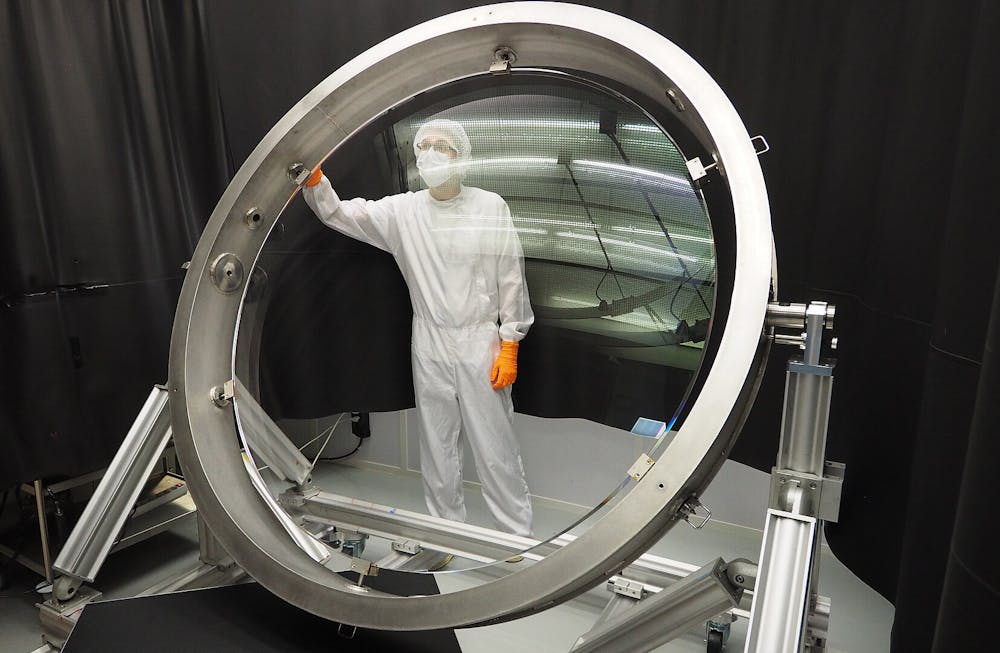
    The glass lens of the Vera Rubin Observatory, which surveys the night sky.
    Large Synoptic Survey Telescope/Vera Rubin Observatory, CC BY

    Lens-based instruments have been transformative. Telescopes have redefined long-standing cosmological views. Microscopes have opened entirely new fields in biology and medicine.

    These changes marked the dawn of empirical science, where observation and measurement drove the creation of knowledge. Today, the James Webb Space Telescope and the Vera C. Rubin Observatory continue those early telescopes’ legacies of knowledge creation.

    Steel and empires

    In the late 18th and 19th centuries, the Industrial Revolution created demand for stronger, more reliable materials for machines, railroads, ships and infrastructure. The material that emerged was steel, which is strong, durable and cheap. Steel is a mixture of mostly iron, with small amounts of carbon and other elements added.

    Countries with large-scale steel manufacturing once had outsized economic and political power and influence over geopolitical decisions. For example, the British Parliament intended to prevent the colonies from exporting finished steel with the iron act of 1750. They wanted the colonies’ raw iron as supply for their steel industry in England.

    Benjamin Huntsman invented a smelting process using 3-foot tall ceramic vessels, called crucibles, in 18th-century Sheffield. Huntsman’s crucible process produced higher-quality steel for tools and weapons.

    One hundred years later, Henry Bessemer developed the oxygen-blowing steelmaking process, which drastically increased production speed and lowered costs. In the United States, figures such as Andrew Carnegie created a vast industry based on Bessemer’s process.

    The widespread availability of steel transformed how societies built, traveled and defended themselves. Skyscrapers and transit systems made of steel allowed cities to grow, steel-built battleships and tanks empowered militaries, and cars containing steel became staples in consumer life.

    White-hot steel pouring out of an electric arc furnace in Brackenridge, Penn.
    Alfred T. Palmer/U.S. Library of Congress

    Control over steel resources and infrastructure made steel a foundation of national power. China’s 21st-century rise to steel dominance is a continuation of this pattern. From 1995 to 2015, China’s contribution to the world steel production increased from about 10% to more than 50%. The White House responded in 2018 with massive tariffs on Chinese steel.

    Rare earth metals and global trade

    Early in the 21st century, the advance of digital technologies and the transition to an economy based on renewable energies created a demand for rare earth elements.

    Offshore turbines use several tons of rare earth magnets to transform wind into electricity.
    Hans Hillewaert/Wikimedia Commons, CC BY-SA

    Rare earth elements are 17 chemically very similar elements, including neodymium, dysprosium, samarium and others. They occur in nature in bundles and are the ingredients that make magnets super strong and useful. They are necessary for highly efficient electric motors, wind turbines and electronic devices.

    Because of their chemical similarity, separating and purifying rare earth elements involves complex and expensive processes.

    China controls the majority of global rare earth processing capacity. Political tensions between countries, especially around trade tariffs and strategic competition, can risk shortages or disruptions in the supply chain.

    The rare earth metals case illustrates how a single category of materials can shape trade policy, industrial planning and even diplomatic alliances.

    Mining rare earth elements has allowed for the widespread adoption of many modern technologies.
    Peggy Greb, USDA

    Technological transformation begins with societal pressure. New materials create opportunities for scientific and engineering breakthroughs. Once a material proves useful, it quickly becomes woven into the fabric of daily life and broader systems. With each innovation, the material world subtly reorganizes the social world — redefining what is possible, desirable and normal.

    Understanding how societies respond to new innovations in materials science can help today’s engineers and scientists solve crises in sustainability and security. Every technical decision is, in some ways, a cultural one, and every material has a story that extends far beyond its molecular structure.

    The National Science Foundation, the Department of Energy, NASA, and other national and regional agencies have funded former research of Peter Mullner.

    ref. From glass and steel to rare earth metals, new materials have changed society throughout history – https://theconversation.com/from-glass-and-steel-to-rare-earth-metals-new-materials-have-changed-society-throughout-history-258244

    MIL OSI Analysis

  • MIL-OSI United Nations: Deputy Secretary-General’s remarks at the Closing Ceremony of the Finance for Development 4 Conference [as delivered]

    Source: United Nations secretary general

    Your Excellency, President Pedro Sanchez, Excellencies, Distinguished guests,Dear colleagues,

    At the opening of this conference, the Secretary-General remarked that, for decades, the mission of sustainable development has united countries.

    Yet today, development and its great enabler — international cooperation — are facing massive headwinds.

    Over the last four days – through formal sessions, 6 multistakeholder roundtables, 400 side-meetings and special sessions, and countless bilateral discussions – we have reckoned with this challenge.

    The human consequences of rising debt burdens, escalating trade tensions, and steep cuts to official development assistance have been brought into sharp relief.

    Likewise, we understand all too well the collateral damage that competing government priorities can have on development finance, and that global support for sustainable development can no longer be taken for granted.

    Nevertheless, amid this sobering backdrop, the Sevilla conference has delivered a powerful response.

    We have agreed an outcome document – the Compromiso de Sevilla – that upholds the commitments from Addis Ababa ten years ago, and seeks to rekindle the sense of hope embodied in the Sustainable Development Goals.

    The outcome document contains three major areas of commitments.

    First, an investment push to close the financing gap.

    This incorporates steps to grow the full capital stack: domestic, international and private capital.

    Second, at last, a serious attempt to confront the debt crisis.

    The actions agreed here seek to reset how debt is used, managed, and treated, to make it work in service of sustainable development.    

    Third, the elevation of developing countries throughout the international financial architecture.

    Developing countries need to be heard in global policymaking – just as they have been at this conference.

    In addition to the outcome document, the conference has witnessed the unveiling of more than 130 initiatives to turn the outcome document into action: through the Sevilla Platform for Action.

    The Platform includes:

    A debt pause alliance to relieve countries of fiscal stress in times of crisis.

    A new tool for Multilateral Development Banks to manage currency risks.

    A commission to explore the future of development cooperation.

    And the introduction of the world’s first solidarity levy on premium-class flights and private jets to generate new resources for sustainable development including climate action.

    In addition, I’m delighted to report today that the Spanish Government will support the UN Secretary-General, in consultation with Member States and stakeholders, to operationalize the Sevilla Forum on Debt, to help countries learn from one another and coordinate their approaches in debt management negotiations and restructuring.

    As I think back over the past four days, I’ve been struck by three aspects about this conference.

    First is the remarkable sense of resolve on display.

    Attendees here are under no illusion of the difficulty of our current context.

    But they have approached this moment with a sense of unity and solidarity, and demonstrated that inter-governmental processes still matter and still work.

    I hope this spirit will be taken forward into the World Summit for Social Development, the G20 and COP30 later this year.

    Second, the conference has been deeply practical.

    In today’s constrained financial environment, our community is working to stretch the resources we have, and to focus them where they’re most needed, to confront the largest problems, and search for
    innovative solutions.

    Third, everyone is focused on implementation.

    The commitments agreed in the outcome document come with specifics, and member states, financial institutions, businesses and civil society are already looking ahead at how these commitments will be
    delivered, with a can-do attitude.

    Taken together – resolve, practicality and implementation – this provides a basis for rebuilding trust and solidarity.  

    Let me conclude by sincerely thanking the people and the Government of Spain, who have proven not only to be gracious hosts, but have demonstrated outstanding leadership on sustainable development.

    Excellencies,

    The journey ahead will not be easy. The global challenges we face will not be overcome overnight.

    But I leave Sevilla confident that we can walk that path together with clarity, with courage, a sense of purpose and commitment.

    Let FFD4 be remembered as a conference where the world chose cooperation over fragmentation, unity over division, and action over inertia.

    Let us leave here inspired and ready to finance the future that we want.

    Thank you.

    [END]

    MIL OSI United Nations News

  • MIL-OSI United Nations: Deputy Secretary-General’s remarks at the Closing Press Conference of the Fourth International Conference on Financing for Development [as delivered]

    Source: United Nations secretary general

    Good afternoon colleagues, Ladies and gentlemen, Members of the media,

    Over the last four days, over 10,000 people, over 50 heads of government and state, leaders of international financial institutions and businesses, have rushed through these corridors – pausing only occasionally for a cold drink – in pursuit of solutions to finance sustainable development.

    Through formal sessions, 6 multistakeholder roundtables, 400 side-meetings and special sessions, and countless bilateral discussions – we have grappled with the challenge of how to close a widening SDG financing gap, in a moment of heightened global tension and uncertainty.

    Now is a moment to take stock of what we achieved.     

    We have agreed an outcome document – the Compromiso de Sevilla – that upholds the commitments made in Addis Ababa ten years ago, and seeks to rekindle the sense of hope embodied in the Sustainable Development Goals.

    The outcome document contains three major areas of action.

    First, an investment push to close the financing gap.

    Second, a serious, and long-overdue attempt to confront the debt crisis.

    And third, the elevation of developing countries across the international financial architecture.

    In addition to the outcome document, the conference has witnessed the unveiling of more than 100 initiatives to turn the outcome document into action, through the Sevilla Platform for Action.

    From a global hub for debt swaps to a debt pause alliance; a new tool for Multilateral Development Banks to manage currency risks, and the introduction of the world’s first solidarity levy on premium-class flights and private jets to generate new resources for sustainable development including climate action.

    This platform has sparked new partnerships and innovative solutions that will deliver real change in people’s lives.

    In that spirit, I’m delighted to report today that the Spanish Government will support the UN Secretary-General, in consultation with Member States and stakeholders, to operationalize the Sevilla Forum on Debt.

    This commitment, which was supported by Member States in the outcome document, will help countries to learn from one another and coordinate their approaches in debt management and restructuring.

    As I think back over the past four days, I’ve been struck by three aspects about this conference.

    First is the remarkable sense of resolve on display.

    Second, the conference has been deeply practical.

    And third, everyone is focused on implementation.

    Taken together – resolve, practicality and implementation – this provides a basis for rebuilding trust. 

    This trust needs to be earned.

    On that note, I want to acknowledge the frustrations expressed by civil society, who have contributed greatly to this conference but have not had the degree of access they expected.

    We hear you and will endeavor to do better at future events.

    The journey ahead will not be easy. The global challenges we face will not be overcome overnight.

    But I leave Sevilla confident that we can walk that path together with clarity, courage, and commitment.

    Let me conclude by expressing my deep gratitude to the people and Government of Spain, who have proven not only to be wonderful hosts, but have demonstrated outstanding leadership on sustainable
    development.

    Thank you.
     

    MIL OSI United Nations News

  • MIL-OSI Security: Secretary Noem Commends President Trump and One Big Beautiful Bill Signing into Law: Historic Win for the American People and the Rule of Law

    Source: US Department of Homeland Security

    This historic legislation will help deliver on President’s Trump’s mandate to arrest and deport criminal illegal aliens

    WASHINGTON – Department of Homeland Security (DHS) Secretary Kristi Noem today released the following statement on President Donald J. Trump’s historic signing of the One Big Beautiful Bill (BBB) Act into law. The BBB secures a historic $165 billion in appropriations for DHS, which will help deliver on the President’s mandate to arrest and deport criminal illegal aliens and make America safe again.  

    “President Trump’s signing the One Big Beautiful Bill is a win for law and order and the safety and security of the American people,” said Secretary Kristi Noem. “This $165 billion in funding will help the Department of Homeland Security and our brave law enforcement further deliver on President Trump’s mandate to arrest and deport criminal illegal aliens and MAKE AMERICA SAFE AGAIN!”  

    In June, Secretary Noem laid out the national security wins that the BBB secures for the American people. The highlights include:  

    • $46.5 billion to complete construction of the border wall.
    • $14.4 billion for removal transportation.
    • $12 billion in state reimbursements for states that fought against the Biden administration’s open border.
    • $4.1 billion to hire additional CBP personnel, including 3,000 more customs officers and 3,000 new Border Patrol agents.
    • $3.2 billion for new technology and $2.7 billion for new cutting-edge border surveillance.
    • $855 million to expand Customs and Border Protection’s vehicle fleet.
    • The law will also provide ICE with the funding to hire 10,000 new agents, which would allow the rate of deportations to reach as high as 1 million per year. ICE currently has 20,000 law enforcement and support personnel across 400 offices.
    • The BBB provides ICE with enough detention capacity to maintain an average daily population of 100,000 illegal aliens and secures 80,000 new ICE beds.
    • The Big Beautiful Bill will also fully fund ICE’s 287(g) program, which empowers state and local law enforcement to assist federal immigration officers.
    • Under the law, ICE and Border Patrol agents will also receive a $10,000 bonus for the next four years.  

    The BBB also bolsters the U.S. Coast Guard (USCG) with the following:  

    • $14.1 billion for USCG cutters.
    • $3.7 billion for USCG aircraft.
    • $6 billion for USCG infrastructure. 

    ###

    MIL Security OSI

  • MIL-OSI Security: Secretary Noem Commends President Trump and One Big Beautiful Bill Signing into Law: Historic Win for the American People and the Rule of Law

    Source: US Department of Homeland Security

    This historic legislation will help deliver on President’s Trump’s mandate to arrest and deport criminal illegal aliens

    WASHINGTON – Department of Homeland Security (DHS) Secretary Kristi Noem today released the following statement on President Donald J. Trump’s historic signing of the One Big Beautiful Bill (BBB) Act into law. The BBB secures a historic $165 billion in appropriations for DHS, which will help deliver on the President’s mandate to arrest and deport criminal illegal aliens and make America safe again.  

    “President Trump’s signing the One Big Beautiful Bill is a win for law and order and the safety and security of the American people,” said Secretary Kristi Noem. “This $165 billion in funding will help the Department of Homeland Security and our brave law enforcement further deliver on President Trump’s mandate to arrest and deport criminal illegal aliens and MAKE AMERICA SAFE AGAIN!”  

    In June, Secretary Noem laid out the national security wins that the BBB secures for the American people. The highlights include:  

    • $46.5 billion to complete construction of the border wall.
    • $14.4 billion for removal transportation.
    • $12 billion in state reimbursements for states that fought against the Biden administration’s open border.
    • $4.1 billion to hire additional CBP personnel, including 3,000 more customs officers and 3,000 new Border Patrol agents.
    • $3.2 billion for new technology and $2.7 billion for new cutting-edge border surveillance.
    • $855 million to expand Customs and Border Protection’s vehicle fleet.
    • The law will also provide ICE with the funding to hire 10,000 new agents, which would allow the rate of deportations to reach as high as 1 million per year. ICE currently has 20,000 law enforcement and support personnel across 400 offices.
    • The BBB provides ICE with enough detention capacity to maintain an average daily population of 100,000 illegal aliens and secures 80,000 new ICE beds.
    • The Big Beautiful Bill will also fully fund ICE’s 287(g) program, which empowers state and local law enforcement to assist federal immigration officers.
    • Under the law, ICE and Border Patrol agents will also receive a $10,000 bonus for the next four years.  

    The BBB also bolsters the U.S. Coast Guard (USCG) with the following:  

    • $14.1 billion for USCG cutters.
    • $3.7 billion for USCG aircraft.
    • $6 billion for USCG infrastructure. 

    ###

    MIL Security OSI

  • MIL-OSI Security: Secretary Noem Commends President Trump and One Big Beautiful Bill Signing into Law: Historic Win for the American People and the Rule of Law

    Source: US Department of Homeland Security

    This historic legislation will help deliver on President’s Trump’s mandate to arrest and deport criminal illegal aliens

    WASHINGTON – Department of Homeland Security (DHS) Secretary Kristi Noem today released the following statement on President Donald J. Trump’s historic signing of the One Big Beautiful Bill (BBB) Act into law. The BBB secures a historic $165 billion in appropriations for DHS, which will help deliver on the President’s mandate to arrest and deport criminal illegal aliens and make America safe again.  

    “President Trump’s signing the One Big Beautiful Bill is a win for law and order and the safety and security of the American people,” said Secretary Kristi Noem. “This $165 billion in funding will help the Department of Homeland Security and our brave law enforcement further deliver on President Trump’s mandate to arrest and deport criminal illegal aliens and MAKE AMERICA SAFE AGAIN!”  

    In June, Secretary Noem laid out the national security wins that the BBB secures for the American people. The highlights include:  

    • $46.5 billion to complete construction of the border wall.
    • $14.4 billion for removal transportation.
    • $12 billion in state reimbursements for states that fought against the Biden administration’s open border.
    • $4.1 billion to hire additional CBP personnel, including 3,000 more customs officers and 3,000 new Border Patrol agents.
    • $3.2 billion for new technology and $2.7 billion for new cutting-edge border surveillance.
    • $855 million to expand Customs and Border Protection’s vehicle fleet.
    • The law will also provide ICE with the funding to hire 10,000 new agents, which would allow the rate of deportations to reach as high as 1 million per year. ICE currently has 20,000 law enforcement and support personnel across 400 offices.
    • The BBB provides ICE with enough detention capacity to maintain an average daily population of 100,000 illegal aliens and secures 80,000 new ICE beds.
    • The Big Beautiful Bill will also fully fund ICE’s 287(g) program, which empowers state and local law enforcement to assist federal immigration officers.
    • Under the law, ICE and Border Patrol agents will also receive a $10,000 bonus for the next four years.  

    The BBB also bolsters the U.S. Coast Guard (USCG) with the following:  

    • $14.1 billion for USCG cutters.
    • $3.7 billion for USCG aircraft.
    • $6 billion for USCG infrastructure. 

    ###

    MIL Security OSI

  • MIL-OSI Security: Secretary Noem Commends President Trump and One Big Beautiful Bill Signing into Law: Historic Win for the American People and the Rule of Law

    Source: US Department of Homeland Security

    This historic legislation will help deliver on President’s Trump’s mandate to arrest and deport criminal illegal aliens

    WASHINGTON – Department of Homeland Security (DHS) Secretary Kristi Noem today released the following statement on President Donald J. Trump’s historic signing of the One Big Beautiful Bill (BBB) Act into law. The BBB secures a historic $165 billion in appropriations for DHS, which will help deliver on the President’s mandate to arrest and deport criminal illegal aliens and make America safe again.  

    “President Trump’s signing the One Big Beautiful Bill is a win for law and order and the safety and security of the American people,” said Secretary Kristi Noem. “This $165 billion in funding will help the Department of Homeland Security and our brave law enforcement further deliver on President Trump’s mandate to arrest and deport criminal illegal aliens and MAKE AMERICA SAFE AGAIN!”  

    In June, Secretary Noem laid out the national security wins that the BBB secures for the American people. The highlights include:  

    • $46.5 billion to complete construction of the border wall.
    • $14.4 billion for removal transportation.
    • $12 billion in state reimbursements for states that fought against the Biden administration’s open border.
    • $4.1 billion to hire additional CBP personnel, including 3,000 more customs officers and 3,000 new Border Patrol agents.
    • $3.2 billion for new technology and $2.7 billion for new cutting-edge border surveillance.
    • $855 million to expand Customs and Border Protection’s vehicle fleet.
    • The law will also provide ICE with the funding to hire 10,000 new agents, which would allow the rate of deportations to reach as high as 1 million per year. ICE currently has 20,000 law enforcement and support personnel across 400 offices.
    • The BBB provides ICE with enough detention capacity to maintain an average daily population of 100,000 illegal aliens and secures 80,000 new ICE beds.
    • The Big Beautiful Bill will also fully fund ICE’s 287(g) program, which empowers state and local law enforcement to assist federal immigration officers.
    • Under the law, ICE and Border Patrol agents will also receive a $10,000 bonus for the next four years.  

    The BBB also bolsters the U.S. Coast Guard (USCG) with the following:  

    • $14.1 billion for USCG cutters.
    • $3.7 billion for USCG aircraft.
    • $6 billion for USCG infrastructure. 

    ###

    MIL Security OSI

  • MIL-OSI Security: Secretary Noem Commends President Trump and One Big Beautiful Bill Signing into Law: Historic Win for the American People and the Rule of Law

    Source: US Department of Homeland Security

    This historic legislation will help deliver on President’s Trump’s mandate to arrest and deport criminal illegal aliens

    WASHINGTON – Department of Homeland Security (DHS) Secretary Kristi Noem today released the following statement on President Donald J. Trump’s historic signing of the One Big Beautiful Bill (BBB) Act into law. The BBB secures a historic $165 billion in appropriations for DHS, which will help deliver on the President’s mandate to arrest and deport criminal illegal aliens and make America safe again.  

    “President Trump’s signing the One Big Beautiful Bill is a win for law and order and the safety and security of the American people,” said Secretary Kristi Noem. “This $165 billion in funding will help the Department of Homeland Security and our brave law enforcement further deliver on President Trump’s mandate to arrest and deport criminal illegal aliens and MAKE AMERICA SAFE AGAIN!”  

    In June, Secretary Noem laid out the national security wins that the BBB secures for the American people. The highlights include:  

    • $46.5 billion to complete construction of the border wall.
    • $14.4 billion for removal transportation.
    • $12 billion in state reimbursements for states that fought against the Biden administration’s open border.
    • $4.1 billion to hire additional CBP personnel, including 3,000 more customs officers and 3,000 new Border Patrol agents.
    • $3.2 billion for new technology and $2.7 billion for new cutting-edge border surveillance.
    • $855 million to expand Customs and Border Protection’s vehicle fleet.
    • The law will also provide ICE with the funding to hire 10,000 new agents, which would allow the rate of deportations to reach as high as 1 million per year. ICE currently has 20,000 law enforcement and support personnel across 400 offices.
    • The BBB provides ICE with enough detention capacity to maintain an average daily population of 100,000 illegal aliens and secures 80,000 new ICE beds.
    • The Big Beautiful Bill will also fully fund ICE’s 287(g) program, which empowers state and local law enforcement to assist federal immigration officers.
    • Under the law, ICE and Border Patrol agents will also receive a $10,000 bonus for the next four years.  

    The BBB also bolsters the U.S. Coast Guard (USCG) with the following:  

    • $14.1 billion for USCG cutters.
    • $3.7 billion for USCG aircraft.
    • $6 billion for USCG infrastructure. 

    ###

    MIL Security OSI

  • MIL-OSI Submissions: From glass and steel to rare earth metals, new materials have changed society throughout history

    Source: The Conversation – USA – By Peter Mullner, Distinguished Professor in Materials Science and Engineering, Boise State University

    Steel played a large role in the Industrial Revolution. Monty Rakusen/DigitalVision via Getty Images

    Many modern devices – from cellphones and computers to electric vehicles and wind turbines – rely on strong magnets made from a type of minerals called rare earths. As the systems and infrastructure used in daily life have turned digital and the United States has moved toward renewable energy, accessing these minerals has become critical – and the markets for these elements have grown rapidly.

    Modern society now uses rare earth magnets in everything from national defense, where magnet-based systems are integral to missile guidance and aircraft, to the clean energy transition, which depends on wind turbines and electric vehicles.

    The rapid growth of the rare earth metal trade and its effects on society isn’t the only case study of its kind. Throughout history, materials have quietly shaped the trajectory of human civilization. They form the tools people use, the buildings they inhabit, the devices that mediate their relationships and the systems that structure economies. Newly discovered materials can set off ripple effects that shape industries, shift geopolitical balances and transform people’s daily habits.

    Materials science is the study of the atomic structure, properties, processing and performance of materials. In many ways, materials science is a discipline of immense social consequence.

    As a materials scientist, I’m interested in what can happen when new materials become available. Glass, steel and rare earth magnets are all examples of how innovation in materials science has driven technological change and, as a result, shaped global economies, politics and the environment.

    How innovation shapes society: Pressures from societal and political interests (orange arrows) drive the creation of new materials and the technologies that such materials enable (center). The ripple effects resulting from people using these technologies change the entire fabric of society (blue arrows).
    Peter Mullner

    Glass lenses and the scientific revolution

    In the early 13th century, after the sacking of Constantinople, some excellent Byzantine glassmakers left their homes to settle in Venice – at the time a powerful economic and political center. The local nobility welcomed the glassmakers’ beautiful wares. However, to prevent the glass furnaces from causing fires, the nobles exiled the glassmakers – under penalty of death – to the island of Murano.

    Murano became a center for glass craftsmanship. In the 15th century, the glassmaker Angelo Barovier experimented with adding the ash from burned plants, which contained a chemical substance called potash, to the glass.

    The potash reduced the melting temperature and made liquid glass more fluid. It also eliminated bubbles in the glass and improved optical clarity. This transparent glass was later used in magnifying lenses and spectacles.

    Johannes Gutenberg’s printing press, completed in 1455, made reading more accessible to people across Europe. With it came a need for reading glasses, which grew popular among scholars, merchants and clergy – enough that spectacle-making became an established profession.

    By the early 17th century, glass lenses evolved into compound optical devices. Galileo Galilei pointed a telescope toward celestial bodies, while Antonie van Leeuwenhoek discovered microbial life with a microscope.

    The glass lens of the Vera Rubin Observatory, which surveys the night sky.
    Large Synoptic Survey Telescope/Vera Rubin Observatory, CC BY

    Lens-based instruments have been transformative. Telescopes have redefined long-standing cosmological views. Microscopes have opened entirely new fields in biology and medicine.

    These changes marked the dawn of empirical science, where observation and measurement drove the creation of knowledge. Today, the James Webb Space Telescope and the Vera C. Rubin Observatory continue those early telescopes’ legacies of knowledge creation.

    Steel and empires

    In the late 18th and 19th centuries, the Industrial Revolution created demand for stronger, more reliable materials for machines, railroads, ships and infrastructure. The material that emerged was steel, which is strong, durable and cheap. Steel is a mixture of mostly iron, with small amounts of carbon and other elements added.

    Countries with large-scale steel manufacturing once had outsized economic and political power and influence over geopolitical decisions. For example, the British Parliament intended to prevent the colonies from exporting finished steel with the iron act of 1750. They wanted the colonies’ raw iron as supply for their steel industry in England.

    Benjamin Huntsman invented a smelting process using 3-foot tall ceramic vessels, called crucibles, in 18th-century Sheffield. Huntsman’s crucible process produced higher-quality steel for tools and weapons.

    One hundred years later, Henry Bessemer developed the oxygen-blowing steelmaking process, which drastically increased production speed and lowered costs. In the United States, figures such as Andrew Carnegie created a vast industry based on Bessemer’s process.

    The widespread availability of steel transformed how societies built, traveled and defended themselves. Skyscrapers and transit systems made of steel allowed cities to grow, steel-built battleships and tanks empowered militaries, and cars containing steel became staples in consumer life.

    White-hot steel pouring out of an electric arc furnace in Brackenridge, Penn.
    Alfred T. Palmer/U.S. Library of Congress

    Control over steel resources and infrastructure made steel a foundation of national power. China’s 21st-century rise to steel dominance is a continuation of this pattern. From 1995 to 2015, China’s contribution to the world steel production increased from about 10% to more than 50%. The White House responded in 2018 with massive tariffs on Chinese steel.

    Rare earth metals and global trade

    Early in the 21st century, the advance of digital technologies and the transition to an economy based on renewable energies created a demand for rare earth elements.

    Offshore turbines use several tons of rare earth magnets to transform wind into electricity.
    Hans Hillewaert/Wikimedia Commons, CC BY-SA

    Rare earth elements are 17 chemically very similar elements, including neodymium, dysprosium, samarium and others. They occur in nature in bundles and are the ingredients that make magnets super strong and useful. They are necessary for highly efficient electric motors, wind turbines and electronic devices.

    Because of their chemical similarity, separating and purifying rare earth elements involves complex and expensive processes.

    China controls the majority of global rare earth processing capacity. Political tensions between countries, especially around trade tariffs and strategic competition, can risk shortages or disruptions in the supply chain.

    The rare earth metals case illustrates how a single category of materials can shape trade policy, industrial planning and even diplomatic alliances.

    Mining rare earth elements has allowed for the widespread adoption of many modern technologies.
    Peggy Greb, USDA

    Technological transformation begins with societal pressure. New materials create opportunities for scientific and engineering breakthroughs. Once a material proves useful, it quickly becomes woven into the fabric of daily life and broader systems. With each innovation, the material world subtly reorganizes the social world — redefining what is possible, desirable and normal.

    Understanding how societies respond to new innovations in materials science can help today’s engineers and scientists solve crises in sustainability and security. Every technical decision is, in some ways, a cultural one, and every material has a story that extends far beyond its molecular structure.

    The National Science Foundation, the Department of Energy, NASA, and other national and regional agencies have funded former research of Peter Mullner.

    ref. From glass and steel to rare earth metals, new materials have changed society throughout history – https://theconversation.com/from-glass-and-steel-to-rare-earth-metals-new-materials-have-changed-society-throughout-history-258244

    MIL OSI

  • MIL-OSI Russia: Marat Khusnullin: Road surface installation has begun at the interchange under construction at the intersection of the Central Ring Road and Dmitrovskoye Highway

    Translation. Region: Russian Federal

    Source: Government of the Russian Federation – An important disclaimer is at the bottom of this article.

    Previous news Next news

    Construction of a transport interchange at the intersection of the third launch complex of the Central Ring Road and Dmitrovskoe Highway

    In the Moscow Region, the implementation of the infrastructure project for the construction of a transport interchange at the intersection of the third launch complex of the Central Ring Road and Dmitrovskoye Highway continues. At present, the construction of layers of road pavement has begun at the site, and earthworks here have been completed by 50% of the planned volume. This was reported by Deputy Prime Minister Marat Khusnullin.

    “The construction of new roads is inextricably linked with the modernization of the existing network, including the creation of modern interchanges. This ensures smooth integration of traffic flows, reduces the load on key nodes, minimizes congestion and improves traffic safety. An integrated approach to the development of road infrastructure allows us to avoid imbalances in the transport system and use each new facility as efficiently as possible. In the Moscow Region, we are implementing a project to build a transport interchange at the intersection of the Central Ring Road with Dmitrovskoye Highway. Currently, specialists are carrying out excavation work, 50% of which has already been completed. In parallel, the site has begun to install structural layers of the asphalt concrete road surface. In addition, the foundations and supports of all three future overpasses have been built and their superstructures have been partially installed,” said Marat Khusnullin.

    The Deputy Prime Minister added that transition plates and expansion joints are currently being installed on artificial structures.

    A complex of works is expected ahead, including the installation of asphalt concrete pavement layers, drainage structures and strengthening works. In addition, it is necessary to install metal span structures over the current section of the Central Ring Road with intensive traffic. A large volume of work on the installation of road safety elements is also envisaged.

    According to the Chairman of the Board of the state company Avtodor, Vyacheslav Petushenko, the project also includes the construction of four exits and the reconstruction of the A-107 Moscow Small Ring road.

    “As part of the reconstruction, a set of works will be carried out to change the longitudinal profile and geometric parameters of the road. This will improve its transport and operational characteristics. It is planned to replace all culverts to protect the roadway from water, preserve natural watercourses, and prevent flooding. It is also planned to install outdoor electric lighting lines for comfortable travel at night and in poor visibility. To improve road safety, a metal barrier fence will be installed. The total length of the reconstructed section is about 2.3 km. In general, the new interchange will improve the accessibility of adjacent areas, redistribute traffic flows from the A-107 “MMK” highway to the Central Ring Road and significantly improve the conditions for transit traffic bypassing Moscow,” said Vyacheslav Petushenko.

    About 230 people and 85 units of road construction equipment are involved in the construction of the interchange. The launch of vehicle traffic on the new facility is planned for 2026.

    Please note: This information is raw content directly from the source of the information. It is exactly what the source states and does not reflect the position of MIL-OSI or its clients.

    MIL OSI Russia News

  • MIL-OSI United Nations: In Dialogue with Haiti, Experts of the Human Rights Committee Welcome Efforts to Establish a New Constitution, Raise Questions on Measures to Combat Gang-Related Gender-Based Violence and Lynchings

    Source: United Nations – Geneva

    The Human Rights Committee today concluded its consideration of the second periodic report of Haiti on how it implements the provisions of the International Covenant on Civil and Political Rights . Committee Experts appreciated the referendum to establish a new national Constitution, while raising questions as to how the State was tackling the high level of violence against women and girls perpetuated by gang members and lynchings carried out by citizens, against a backdrop of distrust in the police.

    One Committee Expert said they saw the referendum to establish a new Constitution in a positive light, as an attempt to reestablish the institutionality of the country.

    Another Expert said that the scale of violence against women and girls was reportedly considerable, with sexual violence, including rape of children as young as five years old, gang rape, and forced prostitution, used as a weapon of control by gangs. According to reports, the judiciary were not sensitive to cases of gender-based violence and victims were hesitant to report cases. What measures were taken to encourage women to file complaints? Was there a fund to help survivors of violence? How were they supported by State services?

    Lynchings continued to be regular and numerous, another Expert said, citing reports of more than 500 cases in 2023. These were often the work of self-defence groups in or around Port-au-Prince, who did not trust the police, mainly due to corruption. Was this violence investigated, including when the police were accused of supporting or encouraging it? Had the perpetrators of lynchings, stonings and mutilations been prosecuted and punished proportionately? How could trust be restored between the police and the civilian population?

    Pedrica Saint Jean, Minister for the Status of Women and Women’s Rights and head of the delegation, introducing the report, said from 2020 to 2025, Haiti was confronted with repeated political crises, marked by lockdown operations and successive protests. The COVID-19 pandemic, frequent floods and the earthquake of 14 August 2021, which devastated part of the Great South region, were additional challenges faced by the country. This complex situation was further aggravated by the assassination of the Haitian President on 6 July 2021.

    Ms. Saint Jean said an agreement for a peaceful transition was reached on 3 April 2024, establishing a transition period with a nine-member Transitional Presidential Council and a Prime Minister, with the aim of restoring security, continuing constitutional reform, and organising democratic elections.

    The delegation said several strategies had been undertaken to combat gender-based violence, including a national strategy that spanned from 2017 to 2024. An assessment of the strategy was almost completed. A gender-based violence cell had been established to train police officers to take the needs of female victims of violence into account. The Office to Combat Gender-Based Violence streamlined services for victims, enabling them to receive legal, psychosocial and medical assistance in one place. In areas with armed gangs, women were typically the primary victims. Violence was used as a weapon of repression.

    The delegation also said the Government had always condemned lynchings, which were not part of the country’s culture. Incidents needed to be reported at a police station so perpetrators could be incarcerated and tried for their crimes. The community police were carrying out an awareness raising campaign to progressively build trust with the general population. Training sessions were being organised for police officers, with a view to protecting the population. When complaints were made against the police force, the national inspector for the police carried out investigations and measures were taken as necessary.

    In concluding remarks, Ms. Saint Jean thanked the Committee for the kindness it had shown to the Haitian delegation, and the Experts for their insights. Haiti had taken due note of all recommendations and was determined to take further steps to develop effective, concrete responses to the Committee’s concerns relating to the implementation of the Covenant. Everybody was working to see the day when Haiti could leave the crisis behind.

    Changrok Soh, Committee Chairperson, in concluding remarks, said the Committee acknowledged the profound political, economic and humanitarian challenges facing Haiti, which had hampered efforts to protect human rights. Haiti was encouraged to take this opportunity to advance necessary reforms to ensure that the rights enshrined in the Covenant were fully recognised for all Haitians.

    The delegation of Haiti was made up of representatives of the Ministry for the Status of Women and Women’s Rights; the Ministry of Justice and Public Security; the Ministry of Foreign Affairs; the Ministry of Social Affairs and Work; the Cabinet; the Government of Port-au-Prince; the Prime Minister’s Office; the Haitian National Police; the Anti-Violence Unit; and the Permanent Mission of Haiti to the United Nations Office at Geneva. Some members of the delegation were unable to attend the meeting in person due to travel restrictions.

    The Human Rights Committee’s one hundred and forty-fourth session is being held from 23 June to 17 July 2025. All the documents relating to the Committee’s work, including reports submitted by States parties, can be found on the session’s webpage . Meeting summary releases can be found here . The webcast of the Committee’s public meetings can be accessed via the UN Web TV webpage .

    The Committee will next meet in public at 3 p.m., Monday 7 July to begin its consideration of the fourth periodic report of Viet Nam (CCPR/C/VNM/4). 

    Report

    The Committee has before it the second periodic report of Haiti (CCPR/C/HTI/2).

    Presentation of Report

    PEDRICA SAINT JEAN, Minister for the Status of Women and Women’s Rights and head of the delegation , said between 2020 to 2025, Haiti had experienced both positive and negative developments. From a positive perspective, the Government had multiplied efforts in many areas to improve the rule of law and respect for human rights. However, the country had been plagued by unprecedent insecurity that required the intervention of a foreign force, through the deployment of the Multinational Security Support Mission on October 2, 2024. This force intervened in the context of an agreement signed between Haiti and Kenya on police and security cooperation in March 2024, following the adoption of the United Nations Security Council Resolution 2699.

    From 2020 to 2025, Haiti was confronted with repeated political crises, marked by lockdown operations and successive protests which accompanied them. The COVID-19 pandemic, frequent floods and the earthquake of 14 August 2021, which devastated part of the Great South region, were additional challenges faced by the country. This complex situation was further aggravated by the assassination of the Haitian President on 6 July 2021.

    An agreement for a peaceful transition was reached on 3 April 2024, establishing a transition period with a nine-member Transitional Presidential Council and a Prime Minister, with the aim of restoring security, continuing constitutional reform, and organising democratic presidential elections. The Council was also tasked with economic and judicial reforms and combating corruption. The agreement provided for the establishment of three key bodies, including the Body for the Control of Government Action, in charge of controlling the acts of the Executive, since Parliament was currently non-existent; the National Security Council, to respond to the various aspects of the country’s security crisis; and the National Conference, accompanied by a steering committee. The Government had already established the National Security Council and the National Conference and its steering committee. The referendum decree, resulting from the work of the National Conference and the steering committee, would allow Haiti to have a new Constitution. Currently, efforts were underway to strengthen the capacities of the Haitian National Police and the Armed Forces of Haiti, which had a budget increase of 11 per cent in 2024-2025. An agreement was concluded with Colombia to monitor the Haitian coast, to curb the illicit trafficking of firearms.

    The Government had attached great importance to the judicial reform already initiated by its predecessors. Six new Courts of First Instance and the corresponding Public Prosecutor’s Offices were created between September 2024 and April 2025. The law of 10 September 2018 created the National Council for Legal Assistance and established legal aid offices in 18 jurisdictions in Haiti, aiming to provide free legal assistance to those who were financially struggling. The Penal Code and the Code of Criminal Procedure had previously been criticised by civil society in 2020. Following the revision of the two texts by a special commission, they were adopted on 24 June 2025. This marked an important step in the fight against insecurity, corruption and impunity.

    Two other important decrees had been adopted in the context of judicial reform. The first, adopted on 16 April 2025, which created two specialised judicial poles: one for the repression of complex financial crimes and offences and the other for the repression of mass crimes and sexual violence. The second decree of 4 May 2023 sanctioned money laundering, terrorist financing and the financing of the proliferation of weapons of mass destruction in Haiti.

    Despite Government efforts, due to the deteriorating security situation, the majority of prisons in Port-au-Prince had been vandalised, leading to the uncontrolled release of a number of detainees. The Government had been forced to relocate several jurisdictions to allow the resumption of judicial activities in minimum security conditions and the normal application of appropriate sentences and sanctions.

    The Haitian State aimed to follow up on complaints against police officers for excessive use of force, and it organised human rights training sessions for police personnel. However, it was regrettable that, despite the Government’s efforts, some citizens, driven by anger at the atrocities committed by criminal groups, resorted to extreme methods, including the lynching of captured gang members, instead of handing them over to the authorities. The Government recognised the severity of these acts and strongly condemned all forms of mob justice.

    The crisis in the country led to an increase in gender-based violence, particularly for displaced persons in camps. The Haitian State was working to protect and facilitate access to justice for survivors of violence, including through the creation of the Office for Combatting Gender-Based Violence as well as the organization of training adapted to the needs of survivors for police officers and judges. Medical, legal and psychosocial assistance were also offered to women and girls at internal displacement camps.

    Article 262 of the Penal Code, adopted by decree on 23 June 2025, punished the perpetrators of acts of torture and barbarism, with sentences ranging from 15 to 20 years in prison. Prison overcrowding remained a major problem, especially with the destruction of the main prisons in March 2024. Instructions had been issued to the Public Prosecutor’s Offices and Courts of First Instance to carry out regular criminal hearings, with the aim of relieving overcrowding in the prisons in provincial cities.

    The Transitional Presidential Council was making every effort to organise general elections in 2025 and to install a President elected on 7 February 2026. Despite its efforts, the Haitian State was aware that the implementation of the provisions of the Covenant had not yet reached a satisfactory level. However, Haiti pledged to do everything in its power to implement the provisions on the Covenant.

    Questions by Committee Experts

    A Committee Expert acknowledged how difficult it was for the State party to participate in person in the dialogue and expressed gratitude to the delegation in Geneva. The Committee was aware of the grave humanitarian crisis suffered by Haiti for decades, compounded with the assassination of the President in 2021. In that context, the Committee noted an increase in widespread human rights violations and growing control of armed gangs in significant parts of Port-au-Prince, leaving the population more vulnerable to violence and human rights abuses, and leading to the displacement of more than one million people.

    Were courts in Haiti directly applying the Covenant? Could examples be provided? Were courses on international human rights law and the Covenant provided in training to judges? The Committee had been informed of situations where civil servants had opposed the execution of orders handed down by judges to free individuals. Could this be explained? What role did these civil servants play in the judicial system? Had steps been taken to ratify the Optional Protocol of the Covenant on individual communications? In May 2025, a bill of law was presented on the development of a new constitution, with a decree adopted to hold a referendum on the issue. Was this bill in line with the rights enshrined in the Covenant? Was it realistic to carry out a referendum in the context of violence? When was the state of emergency ordered? Was it still in force? Which articles of the Covenant were suspended?

    Did the current budget of the Office for Citizen Protection allow it to carry out its functions and extend its activities to the most remote parts of the country? Were there plans to expand the powers of the Office to allow it to consider human rights violations that had their origin in the acts of private entities?

    What steps had been taken to end discrimination against lesbian, gay, bisexual and transgender persons? Were there laws in place to punish acts of discrimination against these groups? Had the State taken actions been to allow these people to carry out public demonstrations and to protect them? Had it adopted measures to change discriminatory cultural attitudes in Haitian society, to end stigmatisation of lesbian, gay, bisexual and transgender persons? 

    Another Expert said despite the crisis in the country, Haiti remained bound by its international obligations. The dialogue would address problems such as insecurity, the deep humanitarian crisis that the population was experiencing, the endemic violence of gangs, the forced displacement of the population, the dysfunction of the justice system, chronic impunity and serious challenges to the rule of law. All these problems were linked to corruption. The report published in 2023 by the United Nations Expert on Human Rights in Haiti stated that corruption in Haiti was “public enemy number one” and found that more than 90 per cent of Haitian civil servants did not comply with the national anti-corruption law. The Anti-Corruption Unit and the Central Financial Intelligence Unit, which were suspected of lacking independence, had brought nearly 100 major cases of corruption to justice, but these had not led to any convictions.

    Did the State plan to set up a financial prosecutor’s office or judges specialised in the fight against corruption? Could more information be provided on the decree adopted on the creation of financial judicial units? What measures were being taken to support the work of the Anti-Corruption Unit and the Central Financial Intelligence Unit and to ensure that the cases referred were followed up independently?

    Haiti had expressed its commitment to ensuring accountability for the serious violations committed during Jean-Claude Duvalier’s presidency. However, a case assessing these violations had been in the courts of cassation since 2014, and there had not been any progress. What explained the delay? Could the delegation enlighten the Committee on the situation of Jean Gabriel Robert, who was convicted in absentia in the case of the “Raboteau massacre”?

    Information showed that the scale of violence against women and girls was considerable, with sexual violence, including rape, which was sometimes perpetrated against children as young as five years old; gang rape; and forced prostitution, used as a weapon of control by gangs. According to reports, the judiciary were not sensitive to cases of gender-based violence and victims were hesitant to report cases. What measures were taken to encourage women to file complaints? Was there a fund to help survivors of violence? How were they supported by State services?

    According to information received by the Committee, lynchings continued to be regular and numerous, with more than 500 in 2023. These were often the work of self-defence groups in or around Port-au-Prince, who did not trust the police, mainly due to corruption. In addition, the 2024 report of the United Nations Expert on Human Rights in Haiti noted that police were passive, and it appeared that some murders were encouraged, supported or facilitated by the police forces. Was this violence investigated, including when the police were accused of supporting or encouraging it? Had the perpetrators of lynchings, stonings and mutilations been prosecuted and punished proportionately? How could trust be restored between the police and the civilian population?

    Another Expert said specific steps had not been taken to combat impunity. What hope existed, looking forward to the immediate and long-term future, regarding a reversal of the situation? There were several cases in which there had been impunity for human rights violations. Attacks against the population in the La Saline suburb in 2018 had not been condemned by the Government and no steps had been taken to provide support to victims. What measures had been taken against the involvement of political agents in these cases? Why was the La Saline case withdrawn from the original judge?

    Data showed that 28 percent of civil servants in Haiti were women. In 2019 a strategy was presented to ensure equality for women by 2030. What progress had been made? How would the State party solve the problem of the low rate of political representation of women in Haiti?

    What actions were being taken to guaranteed women’s access to health care, in situations where criminal groups took control of health centres? How was access to medicines ensured?

    Another Expert asked what Haiti’s prospects were looking forward? What urgent measures were envisaged to protect women and girls in areas under gang control? What mechanisms had been established to guarantee security and safety for survivors of sexual violence, and to encourage the reporting of cases? Could Haiti provide updated information on the draft law preventing violence against women and girls? Was there a timeline for its adoption? What had been done to bolster the amount of medical, legal and psychosocial services for survivors, particularly in areas under gang control? What measures were envisaged to protect the right to life of those in extreme poverty? Was there an intersectional strategy to prevent avoidable deaths linked to poverty?

    What measures were taken to protect civilians living in areas under the control of armed gangs? What had been the result of the assistance from Kenya? Was it meeting the challenges? What guarantees existed when it came to the investigation of its own officers by the Haitian police? How was it ensured that the police did not carry out disproportionate use of force during protests? How was action being bolstered in areas under gang control?

    Was there a road map regarding ratification of the Covenant’s Second Optional Protocol concerning the death penalty? How did the State party intend to ensure that those who had served their sentence were properly released? Had the system for monitoring judicial cases been reactivated? What efforts were underway to improve detention conditions? Were construction projects for new prisons still planned? How many women had access to shelters in the last three years? What measures were envisaged to guarantee all police stations should have trained personnel, particularly in areas most affected by police insecurity?

    Responses by the Delegation

    PEDRICA SAINT JEAN, Minister for the Status of Women and Women’s Rights and head of the delegation , said the Government had priorities outlined in the April 2024 agreement on the peaceful transition, including combatting insecurity, conducting the referendum and bringing the country to elections to appoint a robust Government. To combat insecurity, the budget allocated to the police and armed forces had been increased, allowing them to better contain the problems they were confronting. The police, the Haitian armed forces, and the security mission needed to work together to combat insecurity to allow for the milestone referendum to be held. Nine electoral commissioners were currently out in the field assessing the requirements. Haiti was not waiting for the security issues to subside before moving to the referendum.

    Haiti was doing its utmost to implement its commitments under the Covenant through a raft of measures. Six new courtrooms had been established in the country, allowing proximity between those needing to access the justice system and the infrastructure in place. Bureaus had been established to work on specific criminal areas, including mass crimes which had remained unpunished. For some time, courts had not been operational because they were in the hands of gangs. Two bureaus would be responsible for crimes of sexual violence, and another was responsible for financial crimes. Some 34 new judges and prosecutors had been appointed to support the justice system.

    The method of choosing judges for the Anti-Corruption Unit had not hindered its independence. Cases were currently going ahead at the Court of First Instance. Three prisons had been built to international standards, with one dedicated to female inmates. Institutional measures had been put in place to freeze the funds of certain agencies which were found to be corrupt but had impunity from the Anti-Corruption Unit, and those responsible were being brought before the court.

    The Government of Haiti had always condemned lynchings, which were not part of the country’s culture. Incidents needed to be reported at a police station so perpetrators could be incarcerated and tried for their crimes.

    The delegation said several assessment missions had been established to gain an understanding of the situation of detention centres and propose tangible solutions. One of the main challenges was the provision of food, due to lack of access to main roads. To address this situation, the Justice Ministry sought to ensure that providers of food should be placed directly in situ. In the last few months, prisons had greater autonomy and managed their needs themselves, providing a better and tailored approach to local realities.

    Haiti had done a lot to combat gender-based violence. This phenomenon was topical in Haiti, particularly when it came to displaced women. Several strategies had been undertaken to combat gender-based violence, including a national strategy that spanned from 2017 to 2024. An assessment of the strategy was almost completed. A gender-based violence cell had been established within the police, to train police officers to take the needs of female victims of violence into account. The Office to Combat Gender-Based Violence streamlined services for victims, enabling them to receive legal, psychosocial and medical assistance in one place. Psychosocial support services had been set up for women victims in internal displacement camps. Several initiatives had been adopted to bolster protections for minors, including host families and prevention and readaptation programmes for children recruited by armed games. Training and awareness raising sessions were organised for judges.

    In areas with armed gangs, women were typically the primary victims. The number of victims was increasing, particularly against younger women, but violence by armed gangs was also affecting children and the elderly. Violence was used as a weapon of repression. There were still people in Haiti who did not want to report. During times of political turbulence, the phenomenon of violence against women was heightened. There was a need for awareness raising to eradicate the phenomenon. Women should not be used as an instrument to place pressure on the Government.

    Incest had never been part of Haitian culture, but it did not mean this phenomenon did not exist. When incest occurred, people usually preferred to solve the issue in the family. Attention needed to be paid to the phenomenon of incest involving displaced people. The State sanctioned based on the relevant 2006 decree and used case law when dealing with these offences. It was important to continue legislating to bring tangible solutions to this phenomenon.

    For 15 years, judges had been receiving training on the Covenant from the Government and the Haitian police.

    Lesbian, gay, bisexual, transgender and intersex persons had been looked down on in Haiti; they were formerly not given the right to complain. While progress was not significant, these people were now considered to be fully fledged citizens who needed to be protected by the State and to enjoy their full human rights.

    Quotas had been implemented calling for at least 30 per cent of decision-making posts to be held by women. This issue had been poorly addressed. In the new Constitution, the State was advocating for parity. Until there was a critical mass of women in decision-making posts, the problems they faced would persist. A series of consultations had been launched with officials to create incentive measures to promote equality regarding candidate lists.

    The law on the organization of the Ministry on the Status of Women had not properly been reformed, which was why the Ministry had difficulties in playing its primary role. The Ministry submitted a law on its reorganization to ensure it could achieve its goals. By the start of next year, the State would launch its first national action plan covering the participation of women in restoring peace and security in Haiti. Work was being done with survivors in internal displacement camps to transform them into fully-fledged actors. Women, including young girls and survivors of violence in these camps, had been appointed as peace ambassadors, to sensitise the message of peace throughout Haiti.

    Haiti was relying on the work of the Multinational Security Support Mission and the international community to help the police and armed forces overcome the corruption and security issues in the country.

    Follow-up Questions by Committee Experts

    A Committee Expert asked follow-up questions, including on the functions to be undertaken by the bureaus on mass crimes, sexual crimes and financial crimes. This was a fantastic idea, but the bureaus needed to have the resources to operate properly. Other questions were asked on measures planned to restore the trust between the police and the justice system; lynchings committed by the police force; steps to tackle the circulation of weapons; and the mandate of the Office for Citizens’ Protection.

    An Expert said they saw the referendum to establish a new Constitution in a positive light, as an attempt to reestablish the institutionality of the country. Who drafted this bill? Did it go through various sectors, with participation from civil society? What did the “green and red zones” mean? Were green zones under Government control? Did red zones mean there was no State control? What happened if there was a referendum in the red zones?

    More questions were asked on how the long tradition of impunity could be alleviated; alternative measures to detention; detention beyond the lengths of sentences; efforts to prevent discrimination against women; and access to voluntary interruption of pregnancy. What was the Government’s perception of the processes involving the participation of the international community that aimed to improve the situation for the population of Haiti?

    According to information received by the Committee, around 40 per cent of births enjoyed the proper medical support. How did midwives treat risky pregnancies? Did the State intend to include the ratification of the Second Optional Protocol in the planned reform of the draft Constitution?

    Responses by the Delegation

    The delegation said the death penalty was abolished in Haiti through a decree adopted in 1987.

    Regarding the red and green zones, there were currently zones under gang control, where the State was doing everything possible to convert them to green zones. Green zones were placed where the State could provide appropriate services to the population. The police were trying to gain access to the red zones to bring about peace and security. Progress had been made in penetrating many of the red zones; it was expected that there would be further progress in this area.

    The referendum was a compulsory, milestone measure to lay the groundwork for national elections and allow the population to get their new Constitution. All different sectors of society had been consulted in the drafting of the new Constitution.

    Haiti had implemented measures that aimed to provide a structure to prevent the free circulation of weapons, including weapons of mass destruction.

    The delegation said there was a legal bureau on mass crimes and sexual violence in Port-au-Prince and another on financial crimes. The bureaus were comprised of 10 judges who worked with the police and financial oversight and regulatory bodies. Their operations were ensured by donors from the international community and the State.

    The community police were carrying out an awareness raising campaign to progressively build trust with the general population. Training sessions were being organised for police officers, with a view to protecting the population. When complaints were made against the police force, the national inspector for the police carried out investigations and measures were taken as necessary.

    Haiti had a plan to set up scanners at customs to prevent the flow of illegal weapons into the country. Controls at the border with the Dominican Republic and checks of containers coming from the United Staes had been strengthened, and strict checks were being conducted on private vehicles, including motorbikes. Authorities had also suspended land imports from the Dominican Republic, ensuring seizures of illegal imports. Despite this, Haiti was facing increased criminal activity and corruption, with the need for increased international support to reduce the weapons flow into Haiti.

    Green zones were safe zones while red zones were ones where there was a heightened risk.

    A draft of the new Constitution had been shared across different sectors to receive their inputs, which had been sent to the Committee responsible for the drafting of the new Constitution.

    Haitian midwives played a key role in early detection of illnesses and in responding to complications during birth. They carried out post monitoring operatives in rural areas, while caesarean procedures were performed by obstetric doctors.

    Questions by Committee Experts

    A Committee Expert asked if there were obstacles preventing Haiti from ratifying the Covenant’s Second Optional Protocol? Murderous attacks by gangs against ambulances had been reported, and health staff had fled the country. Did the Government have any plans to confront these problems? Haiti had an astonishing overcrowding rate in its prisons, at allegedly over 300 per cent. There was a lack of access to the appellate procedure for all inmates and for persons with disabilities. How did Haiti plan to resolve this problem?

    Another Expert appreciated Haiti’s delegation comprised of high-level women. It was reported that police agents or persons acting with their complicity tortured inmates on a daily basis in prisons and police custody facilities. Why had the perpetrators of cases of torture not been prosecuted and brought to justice? Had there been capacity building of law enforcement in the area of torture? Why had the State not ratified the Convention against Torture?

    Reports received by the Committee stated that forced evictions had become widespread since the earthquake in 2010, but this was denied by the State. It was alleged that these evictions affected a wide number of families and were not addressed by the State. What information was available about three resident families who had not taken up possession of reconstructed homes? Which Government civil servants were responsible for these families’ forced evictions? How had the Government taken steps to prosecute those involved?

    Hurricane Matthew had affected more than 2.6 million people, including 600,000 children; what measures had been taken to protect them? Could information be provided on the distribution of financial aid and the resources used to reconstruct infrastructure following this natural disaster? During the imposed state of emergency, was it only economic rights which were affected? What solutions were available for those still awaiting assistance from the damage 10 years ago? What resources had been allocated to address housing issues?

    A Committee Expert asked about the implementation of the National Plan to Combat Child Labour, adopted in 2019; what was the duration of the plan? Was it still in force or had a new plan been adopted? Could data on the number of children exploited and those in situations of begging be provided? What work had been done specifically on the exploitation of children by the Committee to Combat Human Trafficking?

    Various reports had documented violence against children, who were recruited and used by the gangs and injured or killed as a result. An even more severe impact was felt by children with disabilities. The Secretary-General’s report had outlined 383 grave violations against children in 2024. In December 2024, the gangs had committed a high number of abductions, including of 17 girls and 10 boys. What measures had been taken by the State to combat these grave violations? To help minors, child soldiers and victims of armed groups, a Commission had been created to support the creation of a national network of shelters and rehabilitation centres. How did the State ensure that the Commission had the human and financial resources necessary to support its functions? What did its work consist of? Was the National Committee for Combatting Human Trafficking able to carry out its functions? What measures had been adopted along the Dominican-Haitian border to prevent trafficking of children who were then sold in the Dominican Republic?

    It was understood that a commission to implement criminal reform was created in July 2024. What were the main reforms being carried out? What measures had been adopted to deal with the firebomb attacks on judges? How was the safety and security of judges being ensured? What was the current situation of the National Council for Legal Assistance? Regarding the appointment of judges in the Cassation Council, how was it ensured that the involvement of the Senate did not affect the Council’s independence? What role did the Council play in combatting corruption in the judicial sphere?

    Another Committee Expert said people who were displaced often lost their identification documents. What was the State party doing to resolve this issue? Two journalists reporting on insecurity in Haiti had been executed in 2022. The Committee had also received information that five journalists were murdered in 2024, with no investigations carried out. Gang violence had also led to the closure and restriction of media, including the suspension of popular programmes on suspicion of serving as platforms for gangs. Journalists had also been threatened by gangs. How could elections take place if the State could not facilitate the free circulation of ideas? How did Haiti intend to combat impunity surrounding executions or ill-treatment of journalists? What was done to protect human rights defenders? How was it ensured that social media platforms were regulated?

    In March 2025, anti-Government protests were held to decry the security context and inaction by the State. What measures had been taken to establish the responsibility of police directly involved in the use of force in suppressing peaceful demonstrations? What had been done to guarantee the work of non-governmental organizations in full security and free from harassment?

    Responses by the Delegation

    The delegation said overcrowding in prisons remained a major issue for the Government which it was working to address. Instructions had been issued to the prosecution offices and tribunals of the Courts of First Instance to encourage the holding of more criminal sessions, including sessions in which a jury was not present, with a view to relieving overcrowding in provincial prisons. In 2023 and2024, this occurred in 14 jurisdictions, leading to 159 convictions. In 2024, the total number of people detained in the country was around 12,000. The State had managed to capture around 12 prisoners who had escaped. The drop in the number of detainees in 2025 was explained primarily due to the escapes that followed the armed attacks carried out against certain penitentiary infrastructure. Courts had been actively engaged to implement non-custodial measures when appropriate, as a means of alleviating prison overcrowding. The Government recognised the need to prevent arbitrary arrests. Men, women and children were placed in different prisons. Despite the State’s efforts, there was only one police officer per every 14 detainees.

    The Government remained committed to improving prison conditions, despite security constraints. The mortality rate had dropped between 2024 and 2025 thanks to coordinated action to provide medical care and humanitarian aid. Healthcare services had been established in several penitentiaries. In 2017, a Presidential Commission was established to shed light on deaths in the Port-au-Prince prison. It highlighted aggravating factors including severe overcrowding, insufficient hygiene and a lack of medical support, among others. Measures were implemented to improve nutrition, detention conditions and investigate causes of deaths.

    The internal regulations of the penitentiary administration outlawed all forms of torture and inhumane treatment. Finances had been provided to the National Anti-Trafficking Committee to support the implementation of its national action plan. A protocol had been signed to guarantee legal aid to victims of trafficking. Some 100 students from the University of Haiti had received training on the issue of human trafficking. Several human traffickers had been prosecuted, however following the mass escapes in March 2024, a number of these traffickers were unfortunately able to escape.

    The Constitution guaranteed that judges could not be dismissed. In the judicial hierarchy in Haiti, the Constitution had the highest ranking, followed by international conventions. In Haiti, the Constitution outlawed the death penalty in all areas, meaning there was no need to fear its reinstation. The ratification of the Second Optional Protocol could be discussed when the legislature was functional.

    Families who were forcibly evicted due to the development of road infrastructure or for airport security purposes had a right to fixed compensation, as well as the right to appeal decisions blocking their access to redress.

    A State project had been launched to combat domestic labour by children, in line with the Convention on the Rights of the Child. The project had been launched in 16 regions in the country and included a concrete list of jobs banned for children. Twenty-three surveys of young people had been conducted, allowing them to express themselves on themes including domestic labour, birth registration, violence against children, and education. A social protection project ensured monetary transfers for children under the age of five, pregnant women and persons with disabilities. The project was financed by the World Bank and allowed vulnerable families to provide care to their children. Around 25,000 homes received regular monetary transfers to the value of 40 United States dollars per month.

    A professional training programme had been launched in conjunction with the International Labour Organization, allowing for the training of more than 800 vulnerable teenagers in various technical and farming activities. Some 9,200 children had received support for school re-enrolment. Four thousand vulnerable homes at risk of family separation received monetary transfers to support income-generating activities, as well as financial education. A pilot programme had been launched in targeted communes with the United Nations Children’s Fund, which had developed a foster programme for children taken out of situations of domesticity to support their reintegration.

    Legal assistance officers had been established in 12 jurisdictions and the rollout was ongoing. A decision would be made on the draft Constitution based on a participatory process. A Commission had been established to follow up on gender-based violence cases in the country.

    Steps had been taken to prevent the phenomenon of forced evictions, but results were still limited. The Government had not been encouraging forced evictions and had taken new steps to support victims. Demolished homes had been rebuilt and several previous owners had already taken ownership of their new homes. Authorities ensured that no one living in camps or informal housing was evicted without a humane alternative provided.

    The Haitian State reiterated its commitment to freedom of the press and its respect for the work of human rights defenders. Efforts were made to ensure journalists could freely conduct their work, including by strengthening protection mechanisms. Haitian authorities reaffirmed their desire to shed light on the murders of several journalists, which were currently at being investigated by the Public Prosecutor.

    The courts did not all apply the Covenant in the same way, but it was often evoked in individual cases. Alternative measures to prison were allowed for in the new Criminal Code, which had been adopted in June 2025. Judges were equipped with armed vehicles and would have security details at their disposal for their personal safety. The police force was taking steps to bolster security in zones with a heightened level of insecurity and ensure that the referendum could take place. The Government was engaged in an intense campaign to fight the armed violence being perpetrated by gangs.

    Follow-up Questions by Committee Experts

    Committee Experts asked follow-up questions regarding identification papers, which more than 70 per cent of the population did not have, as well as the role of the Government Commissioners within the courts of justice.

    A Committee Expert expressed hope that the programme being laid out by the State for elections would bring about the enjoyment of rights by the population. It seemed impossible to bring this about given the current insecurity in Haiti. Was the State in a position to achieve peace given the current context? The context in Haiti required international, shared responsibility, with involvement from all States parties.

    Closing Statements

    PEDRICA SAINT JEAN, Minister for the Status of Women and Women’s Rights and head of the delegation , thanked the Committee for the kindness it had shown to the Haitian delegation, and the Experts for their insights. Haiti had taken due note of all recommendations and was determined to take further steps to develop effective, concrete responses to the Committee’s concerns relating to the implementation of the Covenant. One day, in the not-too-distant future, the country would exit the crisis. Everybody was working to see the day when Haiti could leave the crisis behind. Despite the efforts it had made, the Haitian State was aware that the implementation of the Covenant and progress in bolstering of the rule of law had not yet reached a satisfactory level. Haiti had a massive raft of problems to resolve, including travel restrictions, which had prevented some members of the delegation from traveling to Geneva. The State of Haiti was committed to doing its utmost to implement the provisions of the Covenant.

    CHANGROK SOH, Committee Chairperson, expressed sincere gratitude to all who had contributed to the dialogue. The Committee acknowledged the profound political, economic and humanitarian challenges facing Haiti, which had hampered efforts to protect human rights. The Committee underscored the importance of continued diligence and commitment to the rights enshrined in the Covenant, especially in times of crisis. During the dialogue, the Committee had raised serious issues regarding the right to life, gang violence, lynchings, protection of vulnerable populations, corruption, protection of journalists and the need to combat impunity, among other concerns. Despite these challenges, the Committee appreciated the State party’s willingness to engage in dialogue. Haiti was encouraged to take this opportunity to advance necessary reforms to ensure that the rights enshrined in the Covenant were fully recognised for all Haitians.

    ___________

    Produced by the United Nations Information Service in Geneva for use of the media; 
    not an official record. English and French versions of our releases are different as they are the product of two separate coverage teams that work independently. 

    CCPR25.015E

    MIL OSI United Nations News

  • MIL-OSI New Zealand: Fatal crash, Motutere

    Source: New Zealand Police

    One person has died following a serious two-vehicle crash near Motutere last night.

    Police were called to State Highway One near Jellicoe Point at around 7.45pm.

    Sadly, despite best efforts of emergency services, one person died at the scene.

    The road was closed while the Serious Crash Unit conducted a scene examination.

    Enquiries into the circumstances of the crash are ongoing.

    ENDS

    Issued by the Police Media Team

    MIL OSI New Zealand News

  • MIL-OSI New Zealand: Fatal Crash, Leeston

    Source: New Zealand Police

    One person has died after a serious crash in Leeston last night.

    Police were called to the intersection of Leeston and Lakes Road and Harts Road at around 7.40pm after a report of a vehicle colliding with two pedestrians.

    Sadly, one pedestrian was located deceased at the scene.

    The other pedestrian received serious injuries and was transported to hospital.

    The road was closed while the Serious Crash Unit conducted a scene examination.

    Enquiries into the circumstances of the crash are ongoing.

    ENDS

    Issued by the Police Media Team

    MIL OSI New Zealand News

  • 2nd Test: Brook-Smith stand rescues England, but Siraj’s 6/70 keeps India on driver’s seat

    Source: Government of India

    Source: Government of India (4)

    Mohammed Siraj grabbed six wickets as India bowled out England for 407 runs, taking a first-innings lead of 180 runs in the second Test at Edgbaston, Birmingham. Akash Deep also contributed with four wickets.

    Before stumps, India lost Yashasvi Jaiswal for 28. KL Rahul (28*) and Karun Nair (7*) stood tall at the crease as India finished Day 3 on 64/1, leading by 244 runs.

    England began the third session at 355/5, trailing by 232 runs, with Harry Brook and Jamie Smith unbeaten on 140 (209) and 157 (169), respectively. Brook reached his 150 in the 79th over, pushing the ball towards point for a single.

    In the 82nd over, the duo brought up a 300-run partnership for the sixth wicket. Akash Deep finally broke the stand, cleaning up Brook for a brilliant 158, which included 17 fours and a six.

    Chris Woakes joined Smith at the crease but fell to Deep in the 87th over for just five. After Woakes’ dismissal, Siraj ran through the lower order, claiming three wickets in two overs to bowl out England for 407.

    Jamie Smith remained unbeaten on 184, while Brook scored 158. Smith made history by registering the highest score by a wicketkeeper for England in a Test match.

    Smith now also holds the record for the highest Test score by an England batter at No. 7 or lower, surpassing KS Ranjitsinhji’s 175 against Australia at the SCG in 1897.

    In India’s second innings, Jaiswal and Rahul opened aggressively, reaching 50 runs in just the eighth over. In the same over, Jaiswal was dismissed by Josh Tongue for 28 off 22 balls, which included six fours.

    Karun Nair then joined Rahul at the crease.

    Earlier in the day, Smith and Brook tormented the Indian bowlers in the second session, thriving under the aggressive ‘Bazball’ approach and keeping England in the contest on Day 3 of the Test.

    At Tea, England had reached 355/5, still trailing by 232 runs, with Brook and Smith unbeaten.

    Brook brought up his ninth Test century early in the session, guiding the ball past a diving Nitish Kumar Reddy at gully. Indian spinners Washington Sundar and Ravindra Jadeja were ineffective against the attacking English duo.

    Smith continued with aggressive intent, while Brook showcased a mix of aggression and solid defence. Luck favoured England, as Brook survived a couple of close calls and Smith was dropped by Pant off a tough chance.

    Smith hit back-to-back boundaries off Nitish in the 62nd over and followed it with a pull shot for four off Deep in the next. He brought up his 150 in the 64th over, steering the ball to deep backward point for a single.

    With reverse swing and spin missing, Jadeja bowled a rare maiden over but couldn’t break through. Brook used reverse sweeps effectively, helping England reach 350 in the 74th over.

    England had started Day 3 at 77/3 with Joe Root (18*) and Brook (30*) at the crease. Siraj struck early, removing Root for 22 and captain Ben Stokes for a golden duck in the 22nd over.

    Smith then joined Brook, and the duo counter-attacked. England crossed 100 in the 25th over. Brook reached his fifty in 73 balls, and Smith smashed 23 runs in a single over from Prasidh Krishna — equalling the most runs conceded by an Indian bowler in an over against England.

    Smith reached his fifty soon after and brought up his century before Lunch with back-to-back boundaries off Jadeja.

    Brief Scores:

    India:587 (Shubman Gill 269, Ravindra Jadeja 89; Shoaib Bashir 3/167) England: 407 (Jamie Smith 184, Harry Brook 158; Mohammed Siraj 6/70)

    India 2nd innings: 64/1 (KL Rahul 28*, Yashasvi Jaiswal 28; Josh Tongue 1/12)

  • MIL-OSI Russia: Israeli army claims control over 65% of Gaza Strip territory

    Translation. Region: Russian Federal

    Source: People’s Republic of China in Russian – People’s Republic of China in Russian –

    Source: People’s Republic of China – State Council News

    JERUSALEM, July 4 (Xinhua) — The Israel Defense Forces (IDF) announced in a statement on Friday that it has now established operational control over more than 65 percent of the Gaza Strip.

    The statement was accompanied by a military map showing areas under Israeli control, primarily in the northern, southern and eastern parts of the Palestinian enclave, as well as IDF deployment zones throughout the region.

    According to Israeli television channel Channel 12 News, when the Israeli military resumed its offensive in Gaza in March, it set a goal of controlling 75 percent of the territory.

    The IDF also said it had killed more than 100 militants in Gaza over the past week, including four senior commanders. Since March 18, the Israeli Air Force has struck more than 7,500 military infrastructure sites, including weapons depots, rocket launch sites and underground bunkers.

    Israel’s offensive, which began in October 2023, has left at least 57,130 documented Palestinians dead and 135,173 wounded, Gaza health authorities said Thursday. –0–

    MIL OSI Russia News

  • MIL-OSI Europe: Written question – Illegal import of English cars to Cyprus via Bulgaria – E-002583/2025

    Source: European Parliament

    Question for written answer  E-002583/2025
    to the Commission
    Rule 144
    Loucas Fourlas (PPE)

    There has been an increase in the number of cases of second-hand vehicles being illegally imported from the United Kingdom into the Republic of Cyprus via non-EU countries – mainly Bulgaria. Some cases show that administrative loopholes and rules governing the movement of vehicles in the EU are being exploited to avoid customs and fiscal checks. These practices undermine public security, tax fairness and transparency in the second-hand vehicle market.

    In view of this, can the Commission answer the following:

    • 1.Is it aware of these practices and the dangers they pose?
    • 2.Does it intend to strengthen the framework for cooperation between customs authorities in the Member States to deal with such phenomena?
    • 3.What measures does it propose to ensure the traceability of a vehicle’s movements between countries in the EU?

    Submitted: 26.6.2025

    Last updated: 4 July 2025

    MIL OSI Europe News

  • MIL-OSI Europe: Written question – Illegal import of English cars to Cyprus via Bulgaria – E-002583/2025

    Source: European Parliament

    Question for written answer  E-002583/2025
    to the Commission
    Rule 144
    Loucas Fourlas (PPE)

    There has been an increase in the number of cases of second-hand vehicles being illegally imported from the United Kingdom into the Republic of Cyprus via non-EU countries – mainly Bulgaria. Some cases show that administrative loopholes and rules governing the movement of vehicles in the EU are being exploited to avoid customs and fiscal checks. These practices undermine public security, tax fairness and transparency in the second-hand vehicle market.

    In view of this, can the Commission answer the following:

    • 1.Is it aware of these practices and the dangers they pose?
    • 2.Does it intend to strengthen the framework for cooperation between customs authorities in the Member States to deal with such phenomena?
    • 3.What measures does it propose to ensure the traceability of a vehicle’s movements between countries in the EU?

    Submitted: 26.6.2025

    Last updated: 4 July 2025

    MIL OSI Europe News

  • MIL-OSI Europe: EU invests €852 million in six innovative electric vehicle battery projects

    Source: EuroStat – European Statistics

    European Commission Press release Brussels, 04 Jul 2025 Today, the European Commission announced that six pioneering electric vehicle (EV) battery cell manufacturing projects will receive a total of €852 million in grants from the Innovation Fund, using revenues from the EU Emissions Trading System (EU ETS).

    MIL OSI Europe News

  • MIL-OSI Australia: Athllon Drive upgrades progress

    Source: Northern Territory Police and Fire Services

    Enabling work will make the future construction work safer for workers, as well as path and road users.

    In brief:

    • Enabling works have begun on the southern section of the Athllon Drive Duplication project.
    • These will prepare the Athllon Drive corridor for the project’s main construction.
    • The work will take around six months to complete (weather permitting).

    Work has begun on the second package of enabling works for the duplication of the southern section of Athllon Drive.

    The work will prepare the Athllon Drive corridor for the main construction of the duplication between Sulwood Drive and Drakeford Drive in Kambah. This is a key link connecting Tuggeranong and Woden.

    These enabling works will make it safer for workers, as well as path and road users, when the main construction takes place.

    This phase of the project will include:

    • relocating underground services
    • upgrading active travel paths
    • construction of new path connections
    • improving path lighting.

    The work will take around six months to complete (weather permitting).

    The Athllon Drive Duplication project

    The project will see the duplication of 2.4 kilometres of Athllon Drive between Sulwood Drive and Drakeford Drive in Tuggeranong.

    Athllon Drive is a vital road for people living in Canberra’s south.

    Two rapid bus routes, cyclists and around 2,000 vehicles currently use this road every hour during peak periods.

    The duplication will:

    • improve travel times for all transport modes
    • improve safety for walking, cycling, public transport and driving
    • not preclude light rail which may be constructed in this transport corridor in the future.

    To find out more about this project, visit the Built for CBR website.

    Read more like this:


    Get ACT news and events delivered straight to your inbox, sign up to our email newsletter:


    MIL OSI News

  • MIL-OSI Europe: JOINT MOTION FOR A RESOLUTION on the human cost of Russia’s war against Ukraine and the urgent need to end Russian aggression: the situation of illegally detained civilians and prisoners of war, and the continued bombing of civilians – RC-B10-0304/2025

    Source: European Parliament

    Michael Gahler, Andrzej Halicki, Sebastião Bugalho, David McAllister, Siegfried Mureşan, Isabel Wiseler‑Lima, Nicolás Pascual de la Parte, Mika Aaltola, Wouter Beke, Krzysztof Brejza, Lena Düpont, Jan Farský, Mircea‑Gheorghe Hava, Rasa Juknevičienė, Sandra Kalniete, Ewa Kopacz, Andrey Kovatchev, Reinhold Lopatka, Antonio López‑Istúriz White, Liudas Mažylis, Danuše Nerudová, Mirosława Nykiel, Ana Miguel Pedro, Paulius Saudargas, Oliver Schenk, Michał Szczerba, Davor Ivo Stier, Alice Teodorescu Måwe, Ingeborg Ter Laak, Riho Terras, Matej Tonin, Pekka Toveri, Inese Vaidere
    on behalf of the PPE Group
    Yannis Maniatis, Nacho Sánchez Amor, Thijs Reuten
    on behalf of the S&D Group
    Adam Bielan, Michał Dworczyk, Małgorzata Gosiewska, Sebastian Tynkkynen, Roberts Zīle, Reinis Pozņaks, Ivaylo Valchev, Aurelijus Veryga, Mariusz Kamiński, Charlie Weimers, Alexandr Vondra, Assita Kanko, Joachim Stanisław Brudziński
    on behalf of the ECR Group
    Petras Auštrevičius, Malik Azmani, Dan Barna, Anna‑Maja Henriksson, Ľubica Karvašová, Ilhan Kyuchyuk, Nathalie Loiseau, Urmas Paet, Marie‑Agnes Strack‑Zimmermann, Eugen Tomac, Hilde Vautmans, Lucia Yar, Dainius Žalimas
    on behalf of the Renew Group
    Sergey Lagodinsky
    on behalf of the Verts/ALE Group

    European Parliament resolution on the human cost of Russia’s war against Ukraine and the urgent need to end Russian aggression: the situation of illegally detained civilians and prisoners of war, and the continued bombing of civilians

    (2025/2710(RSP))

    The European Parliament,

     having regard to its previous resolutions on Ukraine and on Russia,

     having regard to the Hague Conventions, the UN Charter, the Geneva Conventions and their additional protocols, the Convention on the Prevention and Punishment of the Crime of Genocide, the European Convention on Human Rights, the UN Convention Against Torture, the Rome Statute of the International Criminal Court (ICC) and the UN Convention on the rights of the child,

     having regard to the Association Agreement between the European Union and its Member States, of the one part, and Ukraine, of the other part[1], and to the accompanying Deep and Comprehensive Free Trade Area between the European Union and Ukraine, signed in 2014,

     having regard to all relevant resolutions by the UN General Assembly and Security Council, in particular UN General Assembly Resolution ES-11/7 adopted on 25 February 2025,

     having regard to the NATO Washington Summit Declaration of 10 July 2024 and the Hague Summit Declaration of 25 June 2025,

     having regard to Rule 136(2) of its Rules of Procedure,

    A. whereas Russia has been waging a brutal, illegal, unprovoked and unjustified full-scale war of aggression against Ukraine since 24 February 2022;

    B. whereas Russia’s aggression against Ukraine did not begin in February 2022, but in 2014, with the illegal occupation and annexation of Crimea and parts of the Donetsk and Luhansk regions, with severe humanitarian, economic and ecological consequences and resulting in regional instability; whereas Russia could stop the brutal and unjustified war of aggression at any time;

    C. whereas the UN General Assembly, in its resolution of 2 March 2022, immediately qualified the Russian war against Ukraine as an act of aggression in violation of Article 2(4) of the UN Charter, and, in its resolution of 14 November 2022, recognised the need to hold Russia accountable for its war of aggression and legally and financially responsible for its internationally wrongful acts, including by making reparation for the injuries and damage caused;

    D. whereas thus far in 2025, Russia has deployed over 20 000 drones against Ukraine, or around 3 500 per month, representing a 350 % increase compared to the 2024 monthly average; whereas Russia has killed over 1 050 civilians and injured 4 300 more, constituting clear evidence that it actively targets civilians, including ambulances and rescue personnel, in contrast to Ukraine’s defensive actions; whereas the recent attacks on Kyiv and Dnipro were the second deadliest and the deadliest attacks on these cities since the start of Russia’s invasion, starkly conflicting with Russia’s claims that it is interested in peace;

    E. whereas, as a reaction to Russia’s war of aggression against Ukraine, the EU has adopted 17 sanctions packages of unprecedented scope against Russia and continues to adopt sanctions against Russia with a view to definitively undermining its capacity to continue waging its illegal war of aggression against Ukraine; whereas the circumvention of sanctions, including through Russia’s shadow fleet and the incomplete implementation of sanctions, remain a major enabler of Russia’s war of aggression; whereas despite these and other sanctions, Russia continues to wage its war of aggression against Ukraine;

    F. whereas the US has again halted supplies of crucial military assistance to Ukraine;

    G. whereas Russia’s aggression against Ukraine has caused the largest forced displacement of civilians in Europe since the Second World War, with 10 million Ukrainians – mostly women and children – displaced, including 7 million who have found refuge abroad[2];

    H. whereas Russia continues unabated to commit heinous war crimes against innocent civilians; whereas according to the Ukrainian authorities, approximately 16 000 Ukrainian civilians are known to be currently detained in Russia and the temporarily occupied Ukrainian territories, although the real figures are likely to be significantly higher; whereas more than 70 000 Ukrainians – including civilians, children, and military personnel – are officially listed as missing;

    I. whereas the Russian authorities have systematically carried out enforced disappearances against large numbers of Ukrainian civilians, detaining individuals with no military affiliation on baseless and fabricated charges, with their fate and whereabouts remaining unknown, leaving their families in agonising uncertainty; whereas enforced disappearances by Russia are part of a widespread, systematic and coordinated assault on Ukraine’s civilian population;

    J. whereas, according to the Office of the UN High Commissioner for Human Rights, at least 29 civilians have died in custody in Russian detention facilities, and 170 have been executed in areas under Russian control since February 2022;

    K. whereas throughout the process of enforced disappearances, the Russian authorities have consistently failed to inform the families of the fate or location of their loved ones; whereas multiple responses from various authorities have likewise failed to provide any meaningful information;

    L. whereas the Russian authorities have systematically employed torture and other forms of inhumane and degrading treatment against numerous illegally detained Ukrainian civilians; whereas the UN Independent International Commission of Inquiry on Ukraine has found evidence of Russia using rape and sexual violence as means of torture against both male and female detainees;

    M. whereas Russia refuses to disclose the number of Ukrainian prisoners of war (POWs) it currently holds; whereas the Russian authorities are blatantly failing to meet their obligations under the Geneva Conventions to allow international representatives of the International Committee of the Red Cross (ICRC) to visit prisoners and to transmit the relevant information to the ICRC, state authorities and the families of POWs;

    N. whereas Ukrainian POWs and civilian captives are subjected to torture, including starvation, beatings, various types of coercion, physical, sexual and psychological violence and denial of medical care and legal representation;

    O. whereas Ukraine and international bodies have documented hundreds of executions of Ukrainian POWs by Russian forces since February 2022; whereas the Office of the Prosecutor General of Ukraine is investigating the execution of 268 Ukrainian POWs (208 on the battlefield and 59 in the ‘Olenivka’ prison); whereas the increasing number of executions and available evidence suggests that these crimes are not isolated incidents but part of a systematic and deliberate policy, constituting serious violations of international law and human rights, and war crimes under the Geneva Conventions and the Rome Statute;

    P. whereas Ukraine and Russia have conducted 65 prisoner exchanges since February 2022, resulting in the release of 5 757 people, including three large-scale exchanges in May 2025, with an additional 469 individuals released outside formal exchange mechanisms;

    Q. whereas since the occupation and annexation of Crimea in 2014, Russia has systematically targeted Crimean Tatars with politically motivated prosecutions, enforced disappearances, intimidation and harassment; whereas Crimean Tatar leaders, journalists, civil society activists and religious figures have faced disproportionate repression, including under the guise of anti-extremism and anti-terrorism charges; whereas these actions amount to violations of international human rights and humanitarian law and aim to erase the identity and presence of the indigenous Crimean Tatar people;

    R. whereas Russia, while posturing as a defender of the Christian faith and values, has been conducting mass and systematic violations of religious rights in occupied Ukrainian territories, with the Ukrainian Greek Catholic Church banned outright, at least 47 Ukrainian religious leaders killed and more subjected to torture, and religious property willingly targeted and destroyed by Russian forces; whereas in parallel Russia weaponises the Orthodox Church of the Moscow Patriarchate as a tool to tyrannise and control religious communities and the Ukrainian population more broadly;

    S. whereas the torture and killing of Ukrainian journalist Viktoriia Roshchyna in Russian captivity highlights the grave and growing dangers faced by Ukrainian journalists held by Russian forces; whereas others, including Iryna Danylovych, Dmytro Khyliuk, Iryna Levchenko and Heorhiy Levchenko, remain in detention under life-threatening conditions;

    T. whereas according to the ‘Bring Kids Back UA’ initiative and the Yale Humanitarian Research Lab (HRL), since February 2022 around at least 20 000 and possibly up to 35 000 Ukrainian children have been forcibly deported to Russia and Belarus or detained in temporarily occupied Ukrainian territories, with only 1 366 returned and 637 confirmed dead; whereas the real figures are assumed to be much higher, as these transfers and deportations continue; whereas the HRL’s Ukraine Conflict Observatory has had its funding cut as of 1 July by the Trump administration, jeopardising the continuation of its work;

    U. whereas the ICC has been conducting an investigation into the situation in Ukraine since 2 March 2022 and on 17 March 2023 issued arrest warrants for Vladimir Putin, President of the Russian Federation, and Maria Lvova-Belova, so-called Commissioner for Children’s Rights in the Office of the President of the Russian Federation, for the war crime of unlawful deportation of Ukrainian children, followed up by additional arrest warrants against Russian officials issued on 24 June 2024; whereas the EU supports the Special Tribunal for the Crime of Aggression that is being established in the framework of the Council of Europe;

    1. Condemns, in the strongest possible terms, Russia’s unprovoked, illegal and unjustified war of aggression against Ukraine; demands that Russia immediately cease all military activities in Ukraine, fully withdraw from Ukraine’s internationally recognised territory, end forced deportations, release all detained and deported Ukrainians and compensate Ukraine and victims of war crimes; reiterates its condemnation of Belarus’s direct involvement in Russia’s brutal war of aggression against Ukraine;

    2. Confirms its unwavering commitment to the independence, sovereignty and territorial integrity of Ukraine, within its internationally recognised borders and reiterates its policy of non-recognition of Ukrainian territories temporarily occupied by Russia; strongly underlines Ukraine’s inherent right to self-defence, in line with Article 51 of the UN Charter, which entails the right to strike military targets on Russian soil;

    3. Reaffirms its unwavering solidarity with the people of Ukraine in their heroic defence of their nation, their land, and our shared European values; reiterates its belief that a strong, independent and democratic Ukraine is vital for Europe’s security, stability and prosperity; calls for the EU and all its 27 Member States to substantially enhance the effectiveness and accelerate the delivery of military support to Ukraine in order to allow Ukraine to legitimately defend itself against Russia’s escalating attacks on cities and civilian infrastructure across the country, and to put Ukraine in the strongest possible position for negotiations;

    4. Condemns Vladimir Putin’s ongoing revisionist and imperialist rhetoric and ideology, and treacherous propaganda; denounces the systematic attempts by the Russian Government to erase Ukraine’s history, culture, language and identity;

    5. Stresses that Russia’s full-scale invasion of Ukraine has shattered peace and stability in Europe and gravely undermined global security; underscores that Russia remains the most significant and direct threat to European security;

    6. Strongly condemns the execution of Ukrainian POWs by Russian forces, constituting war crimes and grave breaches of the Geneva Conventions;

    7. Reiterates that Russia bears sole responsibility for its war of aggression and that there can be no impunity for violations of human rights, war crimes, or other breaches of international law committed by Russian forces and officials; expresses deep outrage at Russia’s brutal attacks on civilians and the indiscriminate targeting of civilian infrastructure; stresses that the systematic and deliberate targeting of civilians and, in particular, the deportation of children may constitute a genocidal strategy orchestrated and executed by the Russian Government;

    8. Fully supports the ICC’s ongoing investigations into the war crimes and crimes against humanity committed by Russia; welcomes the recent agreement between the Council of Europe and Ukraine on the establishment of a Special Tribunal for the Crime of Aggression against Ukraine; emphasises that all those responsible for war crimes perpetrated in Ukraine must be held accountable and stresses that justice is essential for any sustainable peace; expresses its utmost concern about the US sanctions on the ICC and its prosecutors, judges and staff, which undermine all its ongoing investigative and prosecutorial work and constitute a serious attack on the system of international justice; calls on the Commission to urgently activate the Blocking Statute and on the Member States to urgently step up their diplomatic efforts in order to protect and safeguard the ICC as an indispensable cornerstone of the system of international justice;

    9. Reiterates its condemnation of Russia’s forcible deportation, illegal detention and inhumane treatment of countless Ukrainian civilians; demands that Russia immediately provide families with accurate information regarding the whereabouts and state of health of detainees and calls for the immediate release of all the Ukrainian civilians currently held captive by the Russian authorities; underscores that the forced displacement, unlawful detention and mistreatment of Ukrainian civilians exemplify the intrinsic brutality of the Russian regime and its flagrant disregard for human life; strongly condemns the gruesome tactics deployed by the Russian authorities against both Ukrainian civilians and prisoners of war; deplores the wide and systematic use of terror in Ukraine’s occupied territories, aimed at intimidating the civilian population, stifling resistance and political dissent, suppressing civic activism and eradicating the Ukrainian language and national identity;

    10. Condemns the ongoing persecution of Crimean Tatars in illegally occupied Crimea, including politically motivated detentions, torture, enforced disappearances and restrictions on freedom of religion, expression and association; calls for the immediate release of all Crimean Tatars imprisoned on political grounds and urges the EU and international organisations to enhance monitoring and advocacy on behalf of the indigenous people of Crimea;

    11. Urges Russia to immediately agree to and implement a comprehensive ‘all-for-all’ exchange of POWs with Ukraine, in accordance with its obligations under international humanitarian law and the Geneva Convention relative to the Treatment of Prisoners of War;

    12. Strongly condemns Russia’s violent actions and the complicity of Belarus in the mistreatment of Ukrainian children, including murder, torture and criminal prosecution, forced transfer and deportation, sexual abuse and exploitation, forced Russification and militarisation; denounces the forced imposition of Russian citizenship on deported children and their state-sponsored adoption by Russian families as part of a deliberate policy of forced assimilation; regrets that the EU was unable to help Yale’s HRL secure sufficient funding; calls on its Member States to closely cooperate with and support the Ukrainian authorities and local and international non-governmental organisations in their efforts to document all missing and deported Ukrainian children, determine their whereabouts and repatriate them in order to promptly reunite them with their parents or legal guardians; reiterates that the deportation of Ukrainian children is a grave violation of international humanitarian law, in particular of Article 49 of the Fourth Geneva Convention, and constitutes a war crime; urges the EU to hold those responsible to account and to sanction individuals and entities implicated in these crimes;

    13. Demands that, in line with its obligations under the respective Geneva Conventions, Russia grant the ICRC immediate access to POW camps and other sites where Ukrainian soldiers or civilians are being held captive; notes the marked difference in the way Ukraine and Russia have treated the POWs they hold, with Ukrainian military personnel having been severely tortured, maltreated and malnourished, in violation of the laws of war and international humanitarian law;

    14. Reiterates its call for the EU and its Member States to increase humanitarian and rehabilitation assistance for victims of Russian captivity, including access to medical and psychological care, reintegration services and legal assistance; commends Ukrainian and international civil society organisations for supporting families of abducted Ukrainian children, POWs and illegally detained civilians;

    15. Reaffirms the EU’s steadfast commitment to the reconstruction of Ukraine and reiterates its readiness to contribute to rebuilding Ukraine’s economy and infrastructure; stresses the strategic importance of the Ukraine Facility in reinforcing Ukraine’s resilience, accelerating its recovery, and supporting its path towards sustainable development and EU membership; reiterates its firm conviction that Russia must pay for the massive damage caused in Ukraine and therefore calls for the confiscation of Russian state assets immobilised under EU sanctions or otherwise for their use to support Ukraine’s defence and reconstruction; underlines its conviction that various legal pathways to do so are available and that lack of action is an inexcusable failure on the part of European governments;

    16. Condemns the Russian State Duma’s protocol adopted on 24 June 2025 allowing the member states of the Collective Security Treaty Organization to deploy their troops on the territory of other members in the event of armed conflict, threats, crisis situations and military exercises; condemns this step as a clear attempt by Russia to further scale up its relentless attacks on Ukraine by forcibly mobilising troops from neighbouring and allied states;

    17. Strongly condemns the recruitment and deployment of Cuban soldiers in addition to the involvement of North Korean troops;

    18. Urges all Member States to immediately provide further military assistance and to engage in joint procurement of additional capabilities, in particular air defence, long range strike and artillery systems and ammunition; in that regard, urges all Member States to devote a significant part of their SAFE Defence Investment Plans to assistance for Ukraine; urges the Member States and their defence industries to invest in and partner with the Ukrainian defence industry, including through additional investments and setting up joint ventures, in order to maximise the full potential of its production capabilities to produce critical equipment in the most efficient way;

    19. Recalls the bold statements by several EU Heads of State and Government that Russia’s failure to agree to the US-proposed 30-day ceasefire would be met with severely enhanced sanctions and therefore urges the Council, the Commission and the Member States to follow-up on their declarations and substantially increase the effectiveness and impact of sanctions on Russia; welcomes the seventeenth sanctions package of 20 May 2025 but urges the Member States to adopt the next sanctions package without further delay; underlines that there is a current strategic imperative to act boldly now; stresses that the negative global security and economic consequences of any future Russian aggression far outweigh the military and financial commitment needed today to definitively end Russia’s war of aggression against Ukraine, to deter further Russian aggression and achieve a just, fair and lasting peace; resolutely calls on the EU Member States to stop their shameful business as usual approach and instead act with a renewed sense of urgency and purpose;

    20. Believes that in order to pressure Russia to end its war of aggression, beginning with a sustained ceasefire, substantially more effective military, economic, political and diplomatic efforts and measures must be applied by the EU and like-minded partners; calls for all necessary steps to be taken to avoid the circumvention of sanctions, in particular by targeting Russia’s ‘shadow fleet’ vessels; calls for a full ban on Russian liquefied natural gas (LNG), oil and raw materials, and interim measures to minimise Russia’s ability to pay for its war of aggression through energy exports, including a lower oil price cap and the introduction of an LNG price cap; underlines the importance of adopting the 18th sanctions package without further delay; calls on the Member States that are blocking the adoption of the latest sanctions package to follow other Member States, which have successfully found alternative sources for oil and gas deliveries; underlines that it is unacceptable that, in the fourth year of Russia’s full-scale war against Ukraine, Russian missiles and unmanned aerial vehicles used in attacks continue to rely heavily on Western-manufactured components;

    21. Recalls that the overall support for Ukraine must be sufficient to stop Russia’s war of aggression and allow Ukraine to liberate all its people, re-establish full control over its territory within its internationally recognised borders and deter any further aggression by Russia; recalls that Europe has already supported Ukraine with EUR 50 billion in military aid, but underlines that further assistance is required and that such support now depends largely on Europe itself; urges the Member States to provide more arms and ammunition to Ukraine before any negotiations are concluded; denounces any attempts to pressure Ukraine to cede occupied territory, in which the population is exposed to continued repression, violence, forced disappearances, illegal detentions, deportations and other forms of systematic terror;

    22. Calls on the EU to impose personal sanctions against Russian officials responsible for violence and torture against imprisoned and detained Ukrainians;

    23. Expresses its full support for a just and lasting peace in Ukraine, based on terms determined by Ukraine and acceptable to its people; stresses that any agreement must uphold Ukraine’s sovereignty and territorial integrity, prevent Russia from rearming and guarantee Ukraine’s long-term security; insists on accountability for war crimes and on reparations; underlines that peace negotiations must be preceded by an unconditional ceasefire;

    24. Stresses that in the light of the shift in the US stance on Russia’s war of aggression, the EU and its Member States must remain Ukraine’s primary strategic allies and should reinforce their leadership role in supporting Ukraine’s struggle for sovereignty, peace and justice; calls for the EU and its Member States to work towards maintaining the broadest possible international support for Ukraine, including through building coalitions with like-minded non-EU partners;

    25. Instructs its President to forward this resolution to the Vice-President of the Commission / High Representative of the Union for Foreign Affairs and Security Policy, the Council, the Commission, the governments and parliaments of the Member States, the Council of Europe, the Organization for Security and Cooperation in Europe, the President, Government and Parliament of Ukraine, and to the authorities of Russia and Belarus.


    MIL OSI Europe News

  • MIL-OSI Russia: Financial news: Registration of the European accident report.

    Translation. Region: Russian Federal

    Source: Central Bank of Russia (2) –

    Updated: 04.07.2025

    A special mobile application – “Gosuslugi Avto”, “OSAGO Assistant” or the insurer’s own application with the ability to issue an electronic Europrotocol – allows you to fill out a notification of an accident without calling the traffic police to the scene of the accident, as well as take photographs of the damage.

    The law provides for two options for registering an accident — with or without photo recording. In the case of photo recording without disagreement on the circumstances of the accident, the maximum limit of compensation under OSAGO is 400 thousand rubles, if photo recording is performed and there is disagreement — 200 thousand rubles, and when there is no photo recording and no disagreement — 100 thousand rubles (Article 11.1 of the Law on OSAGO). It is worth considering that if there is disagreement between drivers on the circumstances of the accident or the nature of the damage to vehicles, photo recording is mandatory for registering an accident without traffic police officers, without it, the insurance payment is not guaranteed. Make sure that the photos have been successfully uploaded through the application — wait for a confirmation notification.

    Mobile applications are available for download in application stores (App Store, Google Play), as well as onPublic servicesor websites of insurance companies.

    Please note: This information is raw content directly from the source of the information. It is exactly what the source states and does not reflect the position of MIL-OSI or its clients.

    MIL OSI Russia News

  • MIL-OSI: Best Online Casino in Canada 2025: Spin Casino’s Verified No Deposit Bonus

    Source: GlobeNewswire (MIL-OSI)

    New York City, NY, July 04, 2025 (GLOBE NEWSWIRE) — A recent analysis of top Canadian online casinos reveals that Spin Casino is the only platform currently offering a no deposit bonus to Canadian players. Positioned as a top real money online casino in Canada, the platform continues to attract attention in 2025 for its unique bonus accessibility, strong regulatory credentials, and fair terms.

    Key Highlights

    • Spin Casino remains the only platform among the best online casino in Canada selections to offer a verified no deposit bonus in 2025.
    • The no deposit bonus allows new Canadian players to explore real money games without upfront payment, supporting no risk online gambling.
    • Spin Casino is fully licensed by the Malta Gaming Authority and the Kahnawake Gaming Commission, ensuring compliance with Canadian regulatory standards.
    • The platform supports secure CAD payment options and is optimized for mobile and desktop gameplay, reinforcing its position as a top-tier real money gaming destination in Canada.

    Spin Casino now offers Canadian players a full welcome package, featuring a no deposit bonus and 100 free spins.

    How to Claim the No Deposit Bonus

    For Canadian players looking to try a best online casino in Canada without making an initial deposit, Spin Casino currently provides a verified no deposit bonus. Here’s how to claim it:

    1. Visit Spin Casino’s Official Website

    Navigate to the Canadian version of the Spin Casino homepage to ensure eligibility for region-specific bonuses.

    1. Register a New Account

    Complete the sign-up process with accurate details. This typically includes your email, phone number, and preferred currency (CAD supported).

    1. Verify Your Account

    You may need to confirm your email or phone number. This verification step is required to unlock bonus eligibility.

    1. No Deposit Required

    Once verified, the no deposit bonus is currently C$10 and 100 free spins and is automatically credited to your account or becomes claimable via the promotions tab.

    1. Review Wagering Requirements

    Check the terms, including expiry time, withdrawal limits, and playthrough multipliers. Players must complete these steps before they can cash out winnings from most no deposit offers.

    1. Start Playing

    Use your free spins or bonus credits on eligible slot games that contribute fully toward wagering requirements.

    Overview of Canada’s Online Casino Market in 2025

    The casino market in Canada continues to grow steadily in 2025 and competition among sites to be seen as the major online casino option has intensified. Players are increasingly interested in secure, real money sites that combine safety, game variety, and strong bonus offers. A key feature that draws attention is the no deposit bonus, which allows users to try a casino without funding their account. While many sites reference this perk, only a limited number such as Spin Casino provide it to Canadian players.
    Among this group, Spin Casino currently provides a real money no deposit offer, qualifying it as the best online casino for bonus-seeking Canadian players. The others offer high-value welcome packages that require an initial deposit but still offer strong promotions.
    The next section takes a closer look at what Spin Casino offers Canadian players in 2025. From its verified no deposit bonus to its real money games and mobile-friendly design, the platform stands out for delivering a safe, flexible, and trusted gambling experience.

    Spin Casino: Best Online Casino in Canada with No Deposit Bonus

    Spin Casino has become one of the top tier casino brands in Canada, offering players a modern design, trusted licensing, and a rare standout in today’s bonus landscape: a verified no deposit bonus. This gives Spin Casino a clear advantage, especially for newcomers who want to try the best online casino without making an initial deposit.

    Key Features

    Spin Casino is fully licensed by the Malta Gaming Authority and the Kahnawake Gaming Commission. It supports Canadian dollars and local payment options like Interac, Visa, and e-wallets. Players can contact support 24/7 in both English and French, which makes it easy for users across Canada to get help whenever needed.
    The game library includes over 600 titles. These range from modern video slots and classic reel machines to blackjack, roulette, and a full live dealer section. Providers include Microgaming, NetEnt, and Evolution, giving players access to popular titles like Mega Moolah, Thunderstruck II, and Lightning Roulette.
    On mobile, the site performs well. The site runs smoothly in mobile browsers, and there’s also a dedicated app for both Android and iOS. Load times are fast, and the layout works well even on smaller screens.

    No Deposit Bonus (Verified)

    As of June 2025, Spin Casino offers Canadian players a C$10 no deposit bonus on registration with no payment required. This bonus is credited after account verification and allows real money play and 100 free spins on selected slots.
    Terms normally include:

    • 70x wagering for no deposit funds
    • C$100 maximum cashout
    • 7-day expiry after activation

    Always review the promotions section on the site or user dashboard to be up to date on current bonus terms.
    Claim the No Deposit Bonus at Spin Casino – the best online casino in Canada

    Deposit Bonus Offer

    Beyond the no deposit promo, the site also offers a welcome package worth up to C$1,000:

    • 1st Deposit: 100% match up to C$400
    • 2nd Deposit: 100% match up to C$300
    •  3rd Deposit: 100% match up to C$300

    Player Experience and Loyalty Program

    Spin Casino is built for long-term users. Every time you play with real money, you earn loyalty points. These points add up and can be turned into bonus credits. The more you play, the more rewards you unlock.
    There are different levels in the loyalty system. If you reach higher levels, you can get better offers, faster withdrawals, and special promotions. But even if you play just once in a while, you still get points and access to seasonal deals.
    The site works well for all types of players. If you just want to play for fun or try a few games, you’ll find it easy to use. If you play more often, there are enough features to keep things interesting. The banking is quick, the site is safe, and many games offer good payout rates, especially the slots and table games.

    Why Players Choose Spin Casino

    Spin Casino is ideal for players looking to explore a real money online casino especially for those who want to try the best online casino in Canada with no deposit required.
    Its verified no deposit bonus makes it especially appealing to new users who prefer to explore gameplay and bonus mechanics before committing financially. If you are bonus-driven or simply cautious about the real money gambling, Spin offers a unique entry point without risk.

    Beyond the no deposit angle, it suits slot-focused players who value variety and mobile flexibility. It is reviewed as a top-rated Canadian platform offering NetEnt games alongside Microgaming and Evolution content. The mobile interface is reliable and quick, making it a strong choice for users who play on the go. Players who enjoy climbing loyalty tiers and unlocking structured perks will also benefit from Spin Casino’s point-based rewards system.

    With a balance of risk-free access, strong mobile performance, and high-quality slot providers, Spin Casino stands out as the top option for players in Canada who value both freedom and functionality in their real money gaming experience helping maintain its reputation as the best online casino in Canada for flexibility and mobile gameplay.

    Smart Ways to Use a No Deposit Bonus

    No deposit bonuses are one of the easiest ways to start playing online casino games in Canada. They let you try real money games without using your own money. This is great for new players who are still learning or for anyone who wants to test a casino before making a deposit.
    In 2025, Spin Casino is the best online casino in Canada that offers a real, verified no deposit bonus. This makes it easier for players to get started with no pressure and no risk.
    Here are some simple tips and strategies to make the most out of your no deposit bonus:
    Start with simple slot games
    Most no deposit bonuses work with slot machines. It is a good idea to start with games that are easy to play. Look for games that have a high payout rate. These games usually pay out more often, even if the prize is small. That gives you more chances to keep playing and learn how everything works.
    Use all of your spins
    Some casinos give you a certain number of free spins. Do not rush through them. Take your time and enjoy each spin. Try to play slowly and notice how the game works. You can also check how much each spin is worth, so you get the best value.
    Pay attention to the rules
    Each bonus comes with some conditions. These are called “wagering requirements.” This means you have to play the bonus money a certain number of times before you can take out your winnings. For example, if the wagering rule is 70 times, and you win 10 dollars, you must play 700 dollars worth of bets before you can withdraw the money. It sounds like a lot, but it helps keep the bonus system fair for everyone.
    Check the time limit
    Most no deposit bonuses do not last forever. Some expire in 3 days, some in 7 days. Always check how long you have before the bonus ends. Try to use it as soon as possible so you don’t miss the chance.
    Try different games
    If your bonus allows, you can try different kinds of games. This could be video slots, table games like blackjack, or even live casino games. Trying different games is a smart way to find out what you like best. Some people enjoy the fast pace of slots, while others like the skill and strategy of blackjack or poker.
    Do not expect to win big
    No deposit bonuses are small. They are made to give you a chance to try the best online casino. If you win something, that’s great. But it is better to treat it like a free sample. If you like how the site works, you can choose to deposit later and unlock bigger bonuses.
    Use it as a learning tool
    This kind of bonus is also a great way to learn. You can get used to the website, try the support service, and see how fast the games load. You can also test how easy it is to find games, understand how to cash out, and check if you like the design. All of this helps you feel more confident before using your own money.
    Why it matters in Canada
    In Canada, only a few of trusted online casinos offer real no deposit bonuses. Spin Casino is one of them. It gives players a simple way to try real money games without taking a risk. That’s why many people say Spin is the best online casino in Canada if you want to start safe and see what the casino has to offer before you deposit.
    No deposit bonuses are not just for fun. They help you learn, test, and decide what kind of player you want to be. And they make it easy for new players in Canada to begin their online casino journey with confidence.

    Top High-RTP Games at Real Money Online Casinos in Canada

    Players searching for the best online casino in Canada often overlook one essential factor: the Return to Player (RTP) percentage of the games themselves. While promotional offers and platform reputation are crucial, RTP plays a significant role in maximizing real money outcomes over time. This section looks at high-RTP games available at Spin Casino, highlighting titles that are popular among Canadian players for their strong payout potential.
    High-Payout Slot Games Worth Playing
    Blood Suckers, a NetEnt slot with an impressive RTP of around 98% available at Spin Casino, is a smart choice for bonus hunters seeking maximum returns during wagering. Thanks to its low volatility and high RTP, it’s often considered one of the best online slots for players clearing bonus conditions.
    Other top-performing slots found at Spin Casino include titles with RTPs above 97%, offering steady returns for real money players. Games like Thunderstruck II and Immortal Romance, both available at Spin Casino, offer rich features and payout consistency, making them popular during bonus play. These titles combine exciting visuals with reliable performance, helping players meet wagering terms while enjoying the experience.

    Table Games with the Highest Win Potential

    While slots are the focus of many bonuses, table games such as Blackjack and Baccarat still dominate in terms of RTP. With house edges under 1 percent, these games offer effective long-term value. They are especially useful for players transitioning out of bonus play and focusing on real-money strategy. All three featured online casinos versions of these games in both virtual and live dealer formats.

    Final Tip for Bonus Efficiency

    If you’re aiming to convert bonus funds into real, withdrawable cash, it’s essential to choose games that contribute 100 percent toward wagering while offering high RTP. Stick with trusted titles, avoid low-contribution games during active bonuses, and plan deposits accordingly. At over 96 percent RTP, the games listed above are reliable picks for Canadian players in 2025 looking for low-risk play on top-tier platforms.

    FAQs

    Are Online Casinos in Canada Legal in 2025?

    Yes, Canadian players can legally access online casinos, but the rules depend on provincial regulations. In most provinces, players can use internationally licensed online casinos without legal risk. All casinos featured in this report are licensed by recognized authorities such as the Malta Gaming Authority or the Kahnawake Gaming Commission, ensuring fair play, secure transactions, and regulatory compliance.

    Which real money online casino in Canada pays out the most?

    Spin Casino is considered one the best online casinos in Canada with jackpot games like Mega Moolah that pay out millions. However, JackpotCity and Spin Casino are two top online casinos known for paying out well, especially on slot games with high RTPs over 96%. While individual outcomes vary, these sites combine fast withdrawal systems, transparent terms, and a strong track record, making them reliable options for real money players in 2025.

    Which online casino is the most trustworthy?

    Spin Casino is one of the most established and regulated online casinos in Canada. It holds international licenses, undergo regular eCOGRA audits, and offer 128-bit SSL encryption for data security. Additionally, these sites maintain positive user reviews and have consistently ranked among the best online casinos in Canada due to their transparency, longevity, and dependable service.

    What casino app pays real money in Canada?

    Spin Casino is often ranked as the top choice in Canada for mobile users who prioritize real money play. Several other casino apps, including JackpotCity, are also fully optimized for Canadian players. Players can use these casinos on their phones, pay with Interac or cards, and play or withdraw money in Canadian dollars.
    Whether players prefer mobile slots, table games, or live dealer options, these real money online casinos offer a full-featured gaming experience with secure, regulated play.

    What’s the best online casino in Canada to win real money?

    The ideal choice depends on individual player preferences. Spin Casino offers a rare no deposit bonus to Canadian users, making it attractive for risk-free play. Others provides a welcome package of up to C$1,600, allowing for deeper bonus engagement. All reviewed sites provide regulated real money gaming with strong player protections and verified withdrawal systems.
    Game selection further influences bonus strategy. Most users favor slot games when bonuses are active, as table games often contribute less or not at all to wagering progress. Many delay live dealer play until their bonus is cleared to maximize effectiveness.

    Final Thoughts on the Best Online Casino in Canada

    As Canada’s online casino market continues to evolve in 2025, players are becoming more selective about where they play and what offers they claim. Spin Casino is one of the few trusted platforms in Canada that gives players a real no deposit bonus. This makes it a strong choice for anyone who wants to try games without putting money in first.
    At the same time, some players prefer larger bonuses that come with a deposit. Spin Casino offers both options, along with a big game selection, smooth mobile access, and a strong track record for security and fair play.
    The best way to find the best online casino in Canada is to look closely at the bonus terms and pick what fits your playing style. Some people like to start small with no deposit bonuses. Others go for bigger rewards. Either way, it’s smart to stick with casinos that are licensed, safe, and built for real money play.

    Contact details:
    Email: info@apuestasuerte.com
    Phone: +1-800-555-0148

    Attachment

    The MIL Network

  • MIL-OSI Canada: Backgrounder: Canada Invests in Carbon Capture and Storage in Alberta

    Source: Government of Canada News

    Today, the Honourable Tim Hodgson, Minister of Energy and Natural Resources, announced more than $21.5 million toward cutting-edge, made-in-Canada carbon capture, utilization and storage technologies — from advancing CO2 storage sites and subsurface analysis technologies to cleaner diesel engines. These projects will drive emissions reductions, create jobs and catalyze new opportunities for Canadian innovation.

    Energy Innovation Program — Carbon Capture, Utilization and Storage Research, Development and Demonstration Call

    Funding under this call supports the research, development and demonstration of next-generation carbon capture and storage technologies that have the potential to significantly reduce the costs of capturing and storing carbon.

    Project name: Bow Valley Carbon – Storage Demonstration Project
    Recipient: Bow Valley Carbon Cochrane Limited Partnership (a collaboration between Inter Pipeline Ltd. and Entropy Inc.)
    Location: Calgary and Cochrane, Alberta
    Funding amount: $10,000,000
    Description: This project will design and install a CO2 compression and conditioning system, transportation pipeline and sequestration well. Together, these components will aim to capture 40,000 tonnes of CO2 /year of emissions, equivalent to taking approximately 12,255 cars off the road annually, from the Interpipeline Cochrane Natural Gas Extraction Plant. The data and findings will be shared with academia to support further research on carbonate sequestration.

    Project name: The Wabamun Hub CO2 Storage Optimization Project
    Recipient: Enbridge Inc.
    Location: Calgary, Alberta
    Funding amount: $4,000,000
    Description: This project will characterize deep saline reservoirs in Central Alberta. It supports Enbridge’s Open Access Wabamun Hub being developed north and west of Edmonton to provide dedicated, utility-scale CO2 transportation and storage solutions serving COcapture projects including Heidelberg Materials’ Edmonton capture project.

    Project name: Enhance’s Origins CCS Hub: Development and Regulatory Work
    Recipient: Enhance Energy Inc.
    Location: Calgary, Alberta
    Funding amount: $5,000,000
    Description: This project will use a wide range of subsurface data to support the Origins CCS Hub. This approach, which targets a pressure-depleted saline aquifer within a Canadian carbonate reservoir, has the potential to support hub development in novel geologies without access to the Basal Cambrian Sandstone.

    Project name: Geophysical Subsurface Imaging and Analytics Evaluation
    Recipient: OptiSeis Solutions Ltd.
    Location: Calgary, Alberta
    Funding amount: $538,000
    Description: This project aims to improve the cost-effectiveness of new and existing subsurface analysis technologies for measurement, monitoring and verification of CO2 geological storage.

    Project name: Development of Oxy-Fire Combustion for Diesel Generator CO2 Capture
    Recipient: OCCAM’s Technologies Inc.
    Location: Nisku, Alberta
    Funding amount: $2,016,364
    Description: This project will investigate and test modifications to diesel engines to enable cost-effective, small-scale carbon capture using exhaust gas recirculation. This approach has the potential to develop economically viable capture processes for distributed emission sources in hard-to-decarbonize industries such as locomotive rail transport, marine shipping and heavy-duty trucking.

    MIL OSI Canada News

  • MIL-OSI Russia: FlixBus bus overturns in northeastern Germany, injuring at least 23

    Translation. Region: Russian Federal

    Source: People’s Republic of China in Russian – People’s Republic of China in Russian –

    Source: People’s Republic of China – State Council News

    BERLIN, July 4 (Xinhua) — At least 23 people were injured, one of them seriously, after a FlixBus long-distance bus traveling from Denmark to Austria overturned early Friday in northeastern Germany, German police said.

    The accident occurred at around 2:40 a.m. local time on the A19 motorway in the state of Mecklenburg-Vorpommern as the bus traveled to Berlin. According to law enforcement, the passenger with the most serious injuries remained trapped inside the vehicle for two hours before being rescued and airlifted to a Berlin hospital.

    The police noted that information about the number of victims and the severity of their injuries is not final, since the investigation is ongoing.

    There were 54 passengers and two drivers on the bus at the time of the accident. According to local media, the passengers included citizens of at least 20 countries, including Germany, Denmark, Ukraine, France, Italy, Australia, Syria, Japan and China. –0–

    MIL OSI Russia News

  • MIL-OSI Africa: bp South Africa Enhances Fuel Distribution Through Retail Site Upgrades

    Source: APO

    bp South Africa – a subsidiary of global energy major bp – is undergoing a strategic transformation to modernize its services, infrastructure and customer experience across the country. In May 2025, the company launched a comprehensive nationwide upgrade of its existing service stations and announced plans to construct 40 new retail sites equipped with expanded offerings, including electric vehicle charging stations and a low-carbon battery rental service. These efforts underscore bp South Africa’s commitment to driving innovation while addressing energy poverty and decarbonization.

    As part of this strategic evolution, bp South Africa returns to African Energy Week (AEW) 2025: Invest in African Energies as a Platinum Partner, reaffirming its commitment to Africa’s energy future. Held under the theme Positioning Africa as the Global Energy Champion, AEW: Invest in African Energies serves as the continent’s premier platform for high-level dialogue, deal-making and partnership-building. The event brings together key stakeholders to accelerate progress toward a just and inclusive energy transition.

    AEW: Invest in African Energies is the platform of choice for project operators, financiers, technology providers and government, and has emerged as the official place to sign deals in African energy. Visit www.AECWeek.com for more information about this exciting event.

    In line with its growth strategy, bp South Africa is enhancing fuel logistics through partnerships with DP World and Makwande Supply & Distribution, ensuring more efficient and cost-effective delivery of petroleum products nationwide. The company signed an agreement with the two logistics firms in 2024, enabling bp South Africa to outsource highly-specialized, non-core functions These initiatives aim to improve fuel accessibility and operational resilience across urban and rural markets.

    Beyond infrastructure, bp South Africa is deeply invested in local economic development, gender empowerment and inclusive growth. The company places a strong emphasis on diversity, with various programs being implemented to empower local businesses, enhance skills development and outreach. Notably, through a R58 million partnership with the Small Enterprise Finance Agency, bp South Africa is supporting black-owned SMEs with funding and technical skills to operate service stations, contributing to broader economic empowerment. A cooperation agreement was signed in 2023, aimed at supporting black-owned businesses across the country’s fuel retain space.

    bp in Africa

    These efforts align with the broader goals of the larger bp group to advance energy projects in Africa. Driven by a commitment to innovation and inclusive growth, bp is scaling up its operations across the continent through strategic investments and partnerships. In Angola, the company merged its assets with those of energy major Eni in 2022, creating Azule Energy – the country’s largest independent equity producer of oil and gas. Azule Energy targets 250,000 barrels per day in Angola, with several projects coming online in the coming months. These include the Agogo Integrated West Hub Development and Angola’s first non-associated gas project. In the MSGBC region, bp leads the Greater Tortue Ahmeyim LNG project – situated on the maritime border of Senegal and Mauritania. The project achieved first gas flow in January 2025. The company also plays a major role in North Africa’s gas sector. Notably, in February 2025, bp went onstream with the second-phase development of the Raven field, offshore Egypt. In Libya, the company is driving a multi-well drilling campaign following its return to the country in 2024. These investments underscore bp’s commitment to Africa.

    “bp South Africa has played a foundational role in shaping the country’s energy sector for over 100 years. As the energy landscape evolves, the company’s inclusive approach, focus on innovation and support for women and entrepreneurs will continue playing an instrumental part in driving sustainable solutions,” said NJ Ayuk, Executive Chairman of the African Energy Chamber.

    Distributed by APO Group on behalf of African Energy Chamber.

    Media files

    .

    MIL OSI Africa

  • MIL-OSI United Kingdom: SAIL project making Sunderland City Centre safer as anti-social behaviour falls significantly

    Source: City of Sunderland

    As this week’s UK Anti-Social Behaviour (ASB) Awareness Week with its theme of ‘Making Communities Safer’ draws to a close, Sunderland City Council is highlighting the success of a key project that’s helping to do just that in the city centre.

    The Sunderland Altogether Improving Lives (SAIL) project was launched by Northumbria Police, the Violence Reduction unit and Sunderland City Council in 2022. SAIL continues to make a real difference in the city centre by reducing anti-social behaviour and making the community safer. The project brings together a wide range of partner agencies under one roof to deliver a coordinated, long-term approach to tackling issues that matter to residents, businesses and visitors.

    Latest figures show that between June 2024 and May 2025, the city centre has seen major reductions in key issues:

    • All ASB is down 32%
    • Youth ASB down 20%
    • Alcohol Related ASB down 28%

    Other types of crime have also seen notable reductions during the same period, including a 22% drop in theft and handling, a 23% decrease in vehicle crime, and a 13% fall in serious youth violence.

    SAIL works with many partners including Sunderland City Council’s Neighbourhood Enforcement, Housing and Environmental Service together with officers from Northumbria Police, Northumbria Violence Reduction Unit and British Transport Police. By working together with these key partners and other organisations such as NHS, Gentoo, Wear Recovery Sunderland, Youth Drug and Alcohol Project (YDAP) and Sunderland BID (Business Improvement District)., SAIL has been able to make a real difference to Sunderland city centre.  

    Councillor Kelly Chequer, Sunderland City Council’s Deputy Leader and Cabinet Member for Health, Wellbeing and Safer Communities, said: “These numbers show the incredibly positive impact the SAIL project has had on our city centre.”

    “By working with young people to deter them from committing anti-social behaviour, and reducing overall crime in the city centre, this partnership is helping create a cleaner, safer and more vibrant place.”

    The SAIL project further develops the working relationships between Sunderland City Council, Northumbria Police, the Violence Reduction Unit, Sunderland BID and other key partners to tackle crime and anti-social behaviour in Sunderland.

    Northumbria Police and Crime Commissioner, Susan Dungworth said: “These are fantastic results, and a powerful example of what can be achieved when we come together with a shared commitment to tackling the issues that matter most to our communities.

    “I’m really pleased to see the difference the SAIL project is making in Sunderland City Centre. By tackling anti-social behaviour, and reducing crime, this partnership is helping create a safer, and more welcoming place for everyone who lives, works and visits the city.

    “The strength of the SAIL project comes from having a range of partners based in the city centre, working together to respond to issues in a proactive way. It’s not just about enforcement, it’s about building trust, supporting young people, preventing crime from happening, and making sure residents and businesses feel heard and supported.

    “This is exactly the kind of approach we need to build safer, stronger communities for everyone.”

    Chief Inspector of Communities, Gemma Calvert, from Northumbria Police said: “It’s great to see the continued impact the SAIL partnership has in the local community – it’s a testament to the hard work and dedication of our neighbourhood officers and partner agencies.

    “As a Force, we have a real focus on tackling anti-social behaviour in Sunderland and these latest figures show clearly the progress that we’re making together.

    “And while these results are welcoming ones, we know that our work is far from over.

    “We’ll continue to work alongside each other to have a positive presence in the community, including educating and building trust with young people – doing all we can to divert them from getting involved in crime and anti-social behaviour.”

    SAIL works closely with the businesses in the city centre and Sunderland Business Improvement District (BID).

    Chief Executive of Sunderland BID, Sharon Appleby said: “SAIL is a brilliant project and since its launch has shown excellent results.  It is so important that businesses in the city centre see the issues of ASB and general crime being taken seriously by everyone and it builds confidence in the trading environment.  This is such a key initiative given the transformation journey the city centre is on as we try and attract new businesses to locate here.”

    The SAIL project builds on the success of the award-winning SARA project in Southwick and HALO project in Hetton which were set up to work with local communities and help build a sense of ownership and pride in the area at the same time as tackling a range of issues including anti-social and criminal behaviour, environmental crime, unemployment and poor mental health.

    Residents are encouraged to work together with projects like SAIL and continue reporting ASB. You can report ASB easily online at: Anti-social behaviour – Sunderland City Council. Together we can make Sunderland a safe place for everyone.

    MIL OSI United Kingdom

  • MIL-OSI Africa: Central African Republic: Activists Arrested at Memorial Event

    Source: APO


    .

    Central African Republic authorities arrested activists holding a memorial event for students who died in a high school explosion, Human Rights Watch said today.

    On June 27, 2025, civil society activists organized a vigil in memory of the students who died in the explosion on June 25 at Barthelemy Boganda High School in Bangui, the capital, where they were taking year-end exams. The death toll was reported in the media to be 29, with at least 250 others injured. The authorities arrested seven people at the memorial event, including three of the organizers, although all have since been released.

    “Students should not fear death or injury when they are attending school and have a right to full public accountability,” said Lewis Mudge, Central Africa director at Human Rights Watch. “The government should follow through on its obligation to conduct transparent and effective investigations and not target those calling for accountability.”

    The government issued a statement on July 1 saying that 20 students died and 65 others were hospitalized. The government has promised an investigation into the cause of the explosion.

    The explosion at the school, which occurred when power was being restored to an electrical transformer on the premises, caused a stampede of 5,000 students who were taking exams, according to witnesses and media reports. One student told Human Rights Watch that it took a long time for ambulances to arrive, and that bystanders had to transport the injured to hospitals by motorcycle taxis.

    “My daughter had jumped out of a second story window,” the father of a 21-year-old victim, who was not at the scene, told Human Rights Watch. “Her friends and classmates waited for over an hour for an ambulance and decided to take her on a motorcycle, but she died on the way to the hospital. This was her baccalaureate exam, and she was excited for her future. We buried her yesterday and we are still in shock.”

    Journalists who covered the incident told Human Rights Watch that the number of dead is 29 and that the number of injured, including those seriously injured, is also higher than the official number. The government should carry out an effective, transparent, and public investigation into both the cause and the extent of the damage immediately, Human Rights Watch said.

    The president announced three days of national mourning, which took place from June 27 to 29. Civil society activists from an umbrella group, the Civil Society Working Group (Groupe de Travail de la Société Civile, GTSC), organized a vigil on June 27 to commemorate the victims, call for safer schools, and demand an investigation.

    One of the activists told Human Rights Watch the organizers tried to hold the memorial ceremony at the school but were denied access by the Education Ministry because investigations were underway. Understanding this reason, they selected a different location, but the security minister said the vigil was not authorized, citing a 2022 ban on protests in public spaces.

    The organizers along with the students and their families started to hold the vigil anyway, but police broke it up and arrested seven people including the three organizers, Gervais Lakosso, Fernand Mandéndjapou, and Paul Crescent Beninga, the activists said.

    Photos showing police beating vigil participants, seen by Human Rights Watch, circulated on social media. Human Rights Watch was also sent photos from one of the vigil organizers showing wounds from when he was thrown in a police truck.

    “We were trying to light candles and put down flowers in memory of those we lost,” Beninga said. “Where is the security risk in that? We were trying to mourn our young people that were studying for their future and the police came, beat, and arrested us and took us away.”

    During their interrogation, three civil society activists were informally accused by the police of “association with criminals” and of having ties to the Republican Bloc for the Defense of the Constitution (Bloc Républicain pour la Défense de la Constitution, BRDC), a coalition of opposition parties. People close to the government often disparage the coalition and accuse it of supporting armed groups.

    “We were treated like criminals and traitors,” Mandéndjapou said.

    The Internal Security Ministry posted its rejection of the activists’ request to hold the memorial event on its Facebook page, along with photos of the three activists in handcuffs. The post says that the “detained,” while free, will “be subject to close police surveillance.”

    Authorities took Lakosso and Mandéndjapou to a cell at the National Security Unit and Beninga to a cell at the Central Office for the Repression of Banditry (Office Central de Répression du Banditisme, OCRB), a police unit in Bangui notorious for abuses, where they spent the night. Sending an activist detained for organizing a memorial for dead students to a facility run by a unit known for torture, executions, and shooting suspects on sight can only be designed to intimidate and send a threatening message to activists.

    The three activists, as well as the four others arrested with them, were released after President Faustin-Archange Touadéra intervened, according to the activists and the ministry’s Facebook page.

    Since 2022, Central African authorities have cracked down on civil society, media, and opposition political parties. The police have prevented opposition political protests and government officials have made unfounded accusations that civil society activists are collaborating with armed groups.

    Repression increased ahead of local and national elections in 2023, and a referendum in 2023 led to a new constitution that removed term limits and allows Touadéra to run for a third term, which had not been permitted under the 2016 constitution.

    “When tragedies like this occur, civil society should be able to commemorate, call for accountability, and support people in their grief,” Mudge said. “The government’s crackdown on this memorial event shows how much it relies on repression and assumes the worst from civil society.”

    Distributed by APO Group on behalf of Human Rights Watch (HRW).

    MIL OSI Africa