The International Committee of the Red Cross (ICRC) announced Saturday the completion of the second phase of a prisoner-hostage exchange between Hamas and Israel, implemented under the initial terms of a ceasefire agreement.
The second phase, including the release of 200 Palestinian prisoners and four Israeli hostages, was carried out after thorough coordination and review procedures conducted by the ICRC, a neutral intermediary that ensured the smooth and secure implementation of the exchange, it said.
The Israeli hostages were transferred safely, with their well-being prioritized, whereas the Palestinian prisoners were released from Israeli detention centers and transported to Gaza and the West Bank following ICRC’s interview with them, during which it verified their identities, evaluated their health conditions, and confirmed their readiness for travel, it said.
The ICRC urged ongoing dialogue between the parties and their continuous humanitarian commitments, so as to create the necessary conditions for the safe execution of future operations.
Earlier on Saturday, the Israel Defense Forces and the Israel Security Agency said in a joint statement that four female Israeli soldier hostages held in Gaza were transferred to them and crossed the border into Israel.
Meanwhile, Abdullah Zaghari, head of the Palestinian Prisoners Club, as well as Palestinian officials in the Ramallah Governorate said 200 Palestinian prisoners were handed over to ICRC.
Some prisoners were released into the West Bank, some bound for Gaza, and some have arrived in Egypt via the Rafah crossing, according to Palestinian sources and Egyptian media reports.
The first stage of the six-week ceasefire took effect on Jan. 19.
The ceasefire agreement between Hamas and Israel was reached after 15 months of intense fighting, as a result of negotiations mediated by Egypt, Qatar and the United States.
One of China’s most well-known art troupes spiced up celebrations of the 60th anniversary of China-Zambia diplomatic relations with a thrilling performance.
On Thursday night, the Zambia Chinese Association in collaboration with the Chinese Embassy in Zambia presented a cultural event as part of celebrations for the bilateral ties by showcasing Chinese dramas and musical compositions.
Presented by east China’s Zhejiang Wu Opera Research Center, the Wu Opera dazzled the audience, comprised of Chinese nationals and Zambian locals, who kept ululating and clapping for an encore.
They couldn’t help but take videos and photos of the intriguing performance.
The event saw the group providing various performances which included “9-Pieced Segment Dragon,” Suona Solo “Picking Dates,” Wu Opera “the goddess of heaven scatters flowers.”
Leonard Milomo, a resident of Lusaka, the capital of Zambia, was left mesmerized by the performance. Milomo said he was overwhelmed by the performance because it was something he had never seen.
“I am overwhelmed by the performance of our visitors from China. I have never seen such, it’s a very overwhelming feeling to be part of this partnership between Zambia and China, and it’s something that we also learn from culture and tradition,” he said in an interview.
Milomo said he would not hesitate to watch the performances anytime and that he was planning to visit during one of the holidays in order to have a feel of what China offers.
Chinese Ambassador to Zambia Han Jing said the frequent cultural exchanges and people-to-people exchanges between the two countries have brought the people of the two countries closer. And the cultural exchanges between the two countries have been happening frequently with art groups paying exchange visits.
Wu Opera, also known as Jinhua Opera, has a history of more than 500 years and is the second major regional operatic genre in Zhejiang Province. It first grew in popularity in Jinhua and its surrounding areas and was named after Wuzhou, the name of Jinhua in ancient China.
A screen promoting the upcoming 7th China International Import Expo (CIIE) is pictured at the entrance of National Exhibition and Convention Center (Shanghai), the main venue for the CIIE, in east China’s Shanghai, Oct. 22, 2024. [Photo/Xinhua]
The seventh China International Import Expo (CIIE) highlights China’s commitment to global openness and willingness to engage in trade with countries worldwide, a Zambian economic expert has said.
Bernadette Deka-Zulu, founder of Shaping Futures Zambia, a non-governmental organization supporting youth involvement in policy, described China’s move to embrace opening up as a significant step toward fostering a global environment conducive to free trade among nations.
“The CIIE has offered itself as a leading example to bring about different countries and companies representing various regions, and this is offering an openness. China is saying we are ready to trade with anyone, it also shows that China is open for business,” she told Xinhua in an interview on Thursday.
She noted that the CIIE not only contributes to China’s economic growth but also serves as a gateway for emerging economies to access an open market, allowing them to display their products and tap into China’s demand for diverse commodities.
As a former executive director of the Policy Monitoring and Research Center, Deka-Zulu emphasized that the CIIE will also offer a valuable platform for China to learn from other nations and for other countries to observe China’s industrialization progress.
She further emphasized that China’s commitment to globalization through events like the CIIE has set a benchmark for global economic integration, ensuring equal participation for all countries regardless of economic size — a move critical for enhancing global livelihoods.
In an era marked by protectionist policies, China’s openness creates a strategic advantage for emerging economies in global trade, she said, praising China’s zero-tariff policy for all least-developed countries with diplomatic relations, calling it a tangible example of its commitment to fair trade.
She expressed optimism that this initiative would boost exports and elevate economies in these countries. Additionally, she noted that nine Zambian companies have so far registered for this year’s expo, marking a notable increase from previous years and paving the way for more participation in future events.
Scheduled from Nov. 5 to 10 in Shanghai, the annual CIIE has, since 2018, supported international procurement, investment promotion, cultural exchange, and cooperative partnerships.
Palau’s largest newspaper is being sued for defamation by the company of President Surangel Whipps Jr’s father, just days ahead of general elections in the Pacific nation.
Surangel and Sons alleges “negligence and defamation” by the Island Times and its editor Leilani Reklai for an article published on Tuesday with “false and unsubstantiated allegations,” owner Surangel Whipps Sr said in a press release on Thursday.
Reklai has rejected the company’s allegations and said the “lawsuit is trying to control how media here in Palau tells a story”, a news article about the case in the Island Times reported on Friday.
“I feel like we are being intimidated, we are being forced to speak a certain narrative rather than present diverse community perspectives,” said Reklai, who is also a stringer for BenarNews.
The Micronesian nation of 17,000 people — 650 km north of Papua New Guinea — goes to the polls on November 5. Whipps Jr’s rival is his brother-in-law Tommy Remengesau Jr, who was president from 2001 to 2009 and 2013 to 2021.
The controversy comes after Palau was top of the inaugural 2023 Pacific Media Freedom Index of 14 island countries that highlighted the region’s media facing significant political and economic pressures, bribes and corruption, as well as self-censorship.
Island Times editor Leilani Reklai . . . fears the lawsuit could have serious consequences for the media in Palau and bankrupt the newspaper. Image: Stefan Armbruster
Island Times reported on Friday the suit is seeking compensation and punitive damages and that the company asserts the “monetary awards should be substantial enough to prevent similar conduct from the newspaper and Reklai in future”.
Surangel and Sons financial details — leaked from the country’s tax office — were posted on social media last weekend, prompting heated online debate over how much it paid.
A new corporate and goods and services tax system introduced by Whipps Jr’s government is currently being rolled out in Palau and its merits have been a focus of election campaigning.
The company in a statement said its “privacy rights had been violated,” the tax details were obtained illegally, posted online without consent, and some of the figures had been altered.
Motivation ‘confusing voters’ “The motivation behind the circulation of this document is clearly for misinformation and disinformation to confuse voters. In the end Surangel and Sons is not running for office. Unfortunately, it has been victimised by this smear campaign,” the company posted on social media.
Island Times in a 225-word, front-page story headlined “Surangel & Sons condemns tax report leak as privacy violation” reported the company’s statement on Tuesday. It also quoted financial details from the leaked documents and accompanying commentary.
Whipps Jr. in a press conference on Wednesday accused the Island Times of publishing disinformation.
“Island Times continues to print political propaganda, it’s not accurate,” Whipps Jr said, calling for a correction to be published.
The lawsuit against the paper and its editor was served the next day.
Whipps Jr’s spokesperson told BenarNews any questions related to the lawsuit should be directed to the parties involved.
Eightieth birthday celebrations for Surangel Whipps Sr (left) with his son Surangel Whipps Jr in February 2020. Image: Diaz Broadcasting Palau screenshot BenarNews
Surangel and Sons was founded in 1980 by Whipps Sr, who also served as Palau’s president briefly in 2005 and for two years from 2007.
Business ‘offers everything’ The privately-owned business “offers everything from housing design and automotive repair to equipment rentals, groceries, and scuba gear” through its import, sales, construction and travel arms, the company’s website says.
Previously as CEO, Whipps Jr transformed the company from a family store to one of Palau’s largest and most diversified businesses, employing more than 700 people.
His LinkedIn profile states he finished as CEO in January 2021, after 28 years in the position and in the month he became president. His spokesperson did not respond to questions from BenarNews about if he still retains any direct financial or other links to the company.
Surangel and Sons said the revelation of sensitive business information threatens their competitive advantage and puts jobs at risk.
Palau’s Minister of Finance Kaleb Udui Jr told the president’s press conference on Wednesday an investigation was underway, a special prosecutor would be appointed and apologized for the leak to the company.
“I would hope the media would make extra effort to help educate the public and discourage misinformation and breaches of privacy of the tax office and any other government office,” Udui said, confirming the tax documents had been altered before being posted on social media.
He said tax office staff have previously been warned about leaks and ensuring data confidentiality, as breaches negatively impact the confidence of foreign investors in Palau.
Explanation rather than leak Whipps Jr added that the newspaper should have explained the tax system instead of reporting the leaked information.
He also accused Island Times of failure to disclose a paid advertisement in this week’s edition of the paper for his political opponent.
“I’m disappointed in the Island Times, because there was an article that was not an article, a paid advertisement,” Whipps Jr said about a colourful blue and yellow election campaign graphic.
Island Times told BenarNews it was not usual practice to put “Paid Advertisement” on advertisements but it would review its policy for political campaign material.
Reklai fears the lawsuit could have serious consequences for the media in Palau and bankrupt Island Times, the paper reported.
“If I don’t stand up to this, it sends a signal to all journalists that they risk facing claims for damages for powerful companies and government officials while carrying out their work,” she said.
Palau has two newspapers and four radio stations and enshrined in its constitution are protections for journalists, including a guarantee they cannot be jailed for refusing to disclose sources.
Surangel and Sons said they would no longer sell Island Times through their outlets.
A federal judge this week convicted a former Fairmount Heights, Maryland, police officer on one count of obstructing justice by writing a false police report.
U.S. District Court Judge Deborah Boardman for the District of Maryland found Martique Vanderpool guilty following a 3-day bench trial that ended on Oct. 24. The judge found that former officer Vanderpool falsified a police report with intent to impede an investigation into an incident on Sept. 6-7, 2019, during which he and another officer arrested a 19-year-old woman and took her in handcuffs to the locked and otherwise-empty Fairmount Heights police station, where the officers uncuffed her and Vanderpool told her to “make this right” before having sex with her while she was in custody.
“Martique Vanderpool obstructed justice to cover up his own serious police misconduct,” said Assistant Attorney General Kristen Clarke of the Justice Department’s Civil Rights Division. “This former officer’s conduct is a betrayal both of the young woman who was in his care and of the entire law enforcement profession. With this verdict comes accountability for his crime.”
“When those sworn to uphold the law choose instead to violate it, it undermines the very foundation of our society,” said Assistant Director Chad Yarbrough of the FBI Criminal Investigative Division. “Martique Vanderpool abused his power and violated his oath as a police officer. He betrayed the community that put their trust in him and will now face the consequences of his actions.”
According to evidence at trial and findings of fact made by the judge, Vanderpool and his partner, former Officer Phillip Dupree arrested the young woman for speeding and learned that she was rushing to get to her young son, who had been injured in an accident. Upon learning that the young woman had only a learner’s permit, Dupree asked her to get out of the car, at which point the young woman had a panic attack and Dupree took her to the ground and handcuffed her. In “an apparent state of mental distress,” the handcuffed young woman ran into the street and then banged her head on the side of the car she had been driving.
The officers had the car towed from the scene and transported the young woman to the Fairmount Heights police station, even though the station had no holding cell or booking facilities and officers were not supposed to take prisoners there. The officers took the young woman inside, in handcuffs, and then removed the cuffs. Vanderpool told her “We gotta make this right,” and then had sex with her on a couch in the main room of the station. Afterward, the officers drove the young woman to a tow lot where the car, which was registered to someone else, was returned to her.
According to the judge’s findings, Vanderpool then falsified an incident report to create a misleading impression that the officers and the young woman never left the scene of the traffic stop and that the car was returned to the registered owner. The report purposely omitted that the officers took the young woman from the scene to the police station; that Vanderpool had sex with her; and that the officers caused the car to be towed and later coordinated the release of the car to her. The report also purposely misstated that the car was returned to the registered owner.
The judge, in finding that the false report was intended to interfere with an investigation that was within the jurisdiction of the FBI, noted that the young woman was a teenager, was slight of build, was in a state of panic, was forced to the ground by an officer, had her car towed, said that she needed to get to her son, was taken in handcuffs to the police station and was told to “make this right.”
A sentencing hearing is scheduled for Feb. 20, 2025. Vanderpool faces a maximum penalty of 20 years in prison. A federal district court judge will determine any sentence after considering the U.S. Sentencing Guidelines and other statutory factors.
Vanderpool’s partner, Phillip Dupree, was recently convicted in an unrelated case of committing a federal criminal civil rights violation by using unreasonable force during an unrelated arrest.
The FBI Baltimore Field Office investigated the case.
Deputy Chief Bobbi Bernstein and Trial Attorney Tara Allison of the Justice Department’s Civil Rights Division prosecuted the case, with assistance from Trial Attorney Betsy Hutson of the Justice Department’s Civil Rights Division.
A federal judge this week convicted a former Fairmount Heights, Maryland, police officer on one count of obstructing justice by writing a false police report.
U.S. District Court Judge Deborah Boardman for the District of Maryland found Martique Vanderpool guilty following a 3-day bench trial that ended on Oct. 24. The judge found that former officer Vanderpool falsified a police report with intent to impede an investigation into an incident on Sept. 6-7, 2019, during which he and another officer arrested a 19-year-old woman and took her in handcuffs to the locked and otherwise-empty Fairmount Heights police station, where the officers uncuffed her and Vanderpool told her to “make this right” before having sex with her while she was in custody.
“Martique Vanderpool obstructed justice to cover up his own serious police misconduct,” said Assistant Attorney General Kristen Clarke of the Justice Department’s Civil Rights Division. “This former officer’s conduct is a betrayal both of the young woman who was in his care and of the entire law enforcement profession. With this verdict comes accountability for his crime.”
“When those sworn to uphold the law choose instead to violate it, it undermines the very foundation of our society,” said Assistant Director Chad Yarbrough of the FBI Criminal Investigative Division. “Martique Vanderpool abused his power and violated his oath as a police officer. He betrayed the community that put their trust in him and will now face the consequences of his actions.”
According to evidence at trial and findings of fact made by the judge, Vanderpool and his partner, former Officer Phillip Dupree arrested the young woman for speeding and learned that she was rushing to get to her young son, who had been injured in an accident. Upon learning that the young woman had only a learner’s permit, Dupree asked her to get out of the car, at which point the young woman had a panic attack and Dupree took her to the ground and handcuffed her. In “an apparent state of mental distress,” the handcuffed young woman ran into the street and then banged her head on the side of the car she had been driving.
The officers had the car towed from the scene and transported the young woman to the Fairmount Heights police station, even though the station had no holding cell or booking facilities and officers were not supposed to take prisoners there. The officers took the young woman inside, in handcuffs, and then removed the cuffs. Vanderpool told her “We gotta make this right,” and then had sex with her on a couch in the main room of the station. Afterward, the officers drove the young woman to a tow lot where the car, which was registered to someone else, was returned to her.
According to the judge’s findings, Vanderpool then falsified an incident report to create a misleading impression that the officers and the young woman never left the scene of the traffic stop and that the car was returned to the registered owner. The report purposely omitted that the officers took the young woman from the scene to the police station; that Vanderpool had sex with her; and that the officers caused the car to be towed and later coordinated the release of the car to her. The report also purposely misstated that the car was returned to the registered owner.
The judge, in finding that the false report was intended to interfere with an investigation that was within the jurisdiction of the FBI, noted that the young woman was a teenager, was slight of build, was in a state of panic, was forced to the ground by an officer, had her car towed, said that she needed to get to her son, was taken in handcuffs to the police station and was told to “make this right.”
A sentencing hearing is scheduled for Feb. 20, 2025. Vanderpool faces a maximum penalty of 20 years in prison. A federal district court judge will determine any sentence after considering the U.S. Sentencing Guidelines and other statutory factors.
Vanderpool’s partner, Phillip Dupree, was recently convicted in an unrelated case of committing a federal criminal civil rights violation by using unreasonable force during an unrelated arrest.
The FBI Baltimore Field Office investigated the case.
Deputy Chief Bobbi Bernstein and Trial Attorney Tara Allison of the Justice Department’s Civil Rights Division prosecuted the case, with assistance from Trial Attorney Betsy Hutson of the Justice Department’s Civil Rights Division.
Source: State University Higher School of Economics – State University Higher School of Economics –
The importance of statistics in the digital age is reaching a new level. Most decisions at the state level and in business are made based on data analysis. However, the attitude towards official statistics is ambiguous, and this negatively affects the level of trust in government policy. How to change this was discussed by the heads of statistical agencies of the BRICS countries in Kazan. A representative of the Higher School of Economics also took part in the forum.
The 16th meeting of heads of national statistical services of the BRICS countries was held in Kazan on October 28–29 as part of the BRICS Summit. Representatives of various government agencies and experts from Russia, South Africa, the UAE, Brazil, China, Ethiopia, Iran, Egypt, India, the Republic of Belarus and the Republic of Azerbaijan participated in it.
The special session “Development of the statistical community in Russia and the BRICS countries” was organized at the initiative of the Russian delegation. The experts discussed issues of cooperation between statistical professional and expert communities, modernization of statistical production, interaction of state statistical services with the public and increasing statistical literacy of the population.
Professor of the National Research University Higher School of Economics, Chairman of the Board of the Russian Association of Statisticians Alexey Ponomarenko said that in Russia, starting in 2023, the subject “Probability Theory and Statistics” has become a mandatory part of the school curriculum. In grades 7–11, there is at least one lesson on statistics per week. Thus, about 6 million schoolchildren receive knowledge and skills in statistical thinking. They will be able to understand and competently apply information containing statistical data.
Meanwhile, today school teachers need the help of professional statisticians. Moreover, targeted efforts are needed to develop literacy and education in this area. One of the centers of such work could be the National Research University Higher School of Economics, where a team of statisticians with extensive experience in practical work and scientific research has been formed.
“We are ready to cooperate with both Russian teachers and colleagues from the BRICS countries, especially since the statistical community of many BRICS countries is well developed and there is much to learn from our colleagues,” emphasized Alexey Ponomarenko.
Teachers and researchers of the Department of Statistics and Data Analysis of the Faculty of Economic Sciences of the National Research University Higher School of Economics fully support the idea of cooperation with statisticians of the BRICS countries, confirmed the Director of Statistical Research at the HSE, Head of the Department of Statistics and Data Analysis of the National Research University Higher School of Economics Department of Statistics and Data AnalysisFEN Alexander Surinov. “We have many common problems with such huge BRICS countries as China, India or Brazil. For example, subnational studies of indicators of socio-economic development of regions taking into account local specifics. I think that if such projects are implemented, HSE statisticians will take an active part in them,” he concluded.
Please note: This information is raw content directly from the source of the information. It is exactly what the source states and does not reflect the position of MIL-OSI or its clients.
Source: Peter the Great St Petersburg Polytechnic University – Peter the Great St Petersburg Polytechnic University –
The first meeting of the Joint Intergovernmental Russian-Tanzania Commission on Trade and Economic Cooperation was held in Tanzania. The parties agreed to begin work on a whole range of issues, including science and higher education, and also emphasized the importance of developing a regulatory framework for cooperation.
The Russian Center for Science and Culture (Russian House) in Tanzania hosted a Russian-Tanzanian inter-university meeting, organized by the Ministry of Science and Higher Education of the Russian Federation. The Deputy Director of the Department of International Cooperation of the Ministry of Education and Science of Russia Stepan Sokolov gave a welcoming speech, thanking the Embassy of the Russian Federation in Tanzania and the Russian House for their assistance in organizing our meeting.
Today we have an excellent opportunity to discuss current issues of developing cooperation between Russian and Tanzanian universities. The Russian Ministry of Education and Science attaches great importance to strengthening educational cooperation with Tanzania. It is worth noting that, as part of the training of national personnel for Tanzania for the 2024-2025 academic year, within the quota of the Government of the Russian Federation, 90 places for study in Russian higher education institutions have been allocated for Tanzanian citizens, as well as for the 2023-2024 academic year, – said Stepan Sokolov.
Cooperation between Russia and Tanzania will be able to significantly expand the scope of interests and practical results in science, educational and methodological work, will improve the quality and versatility of professional training of personnel, and will also contribute to the familiarization of the peoples of Russia and Tanzania with the peculiarities of national cultures.
From the Tanzanian side, the meeting was attended by representatives of the University of Dodoma, the University of Dar es Salaam (UDSM), Dar es Salaam Tumaini University (DarTU), and the State University of Zanzibar (SUZA).
The Russian side included representatives from Peter the Great St. Petersburg Polytechnic University, Sevastopol State University, Samara State Technical University, Bauman Moscow State Technical University, Patrice Lumumba Peoples’ Friendship University of Russia, Russian State Humanitarian University, and A. A. Kadyrov Chechen State University.
SPbPU was represented by Maxim Zalyvskiy, head of the project office of the Russian-African Network University (RAFU), which is coordinated by the Polytechnic University on behalf of the Russian Ministry of Education and Science.
Russian participants spoke about the activities of their universities, areas of professional training, and academic exchange programs.
Representatives of Tanzanian universities received information about the Consortium “Russian-African Network University” (RAFU), which is the flagship project of the Russian Ministry of Education and Science to create a single Russian-African educational space.
At the moment, more than 80 Russian universities and more than 30 African organizations from 12 countries have joined the consortium. Such African countries as Malawi, Gambia, Lesotho, Sudan, and the Central African Republic are currently considering their participation in RAFU. Through RAFU, we are already inviting African countries to actively participate in our events, especially in such events as the Summer Multidisciplinary University, which is being held for the third time this year, noted Maxim Zalyvsky.
This year, from July to September, 19 Russian universities conducted 19 educational programs for African students in various fields: geology and meteorology, ecology and sustainable development, computer science and artificial intelligence, medical and biotechnology, agriculture and water management, as well as Russian language, culture and traditions. During the Summer University in 2024, about 290 African citizens studied.
On October 29, agreements between Russian and Tanzanian universities were signed in the Pushkin Hall of the Russian House in Dar es Salaam. The Russian-African Network University Consortium signed memorandums of accession to RAFU with Tumaini University (Dar es Salaam) and the Association of Graduates of Russian and Soviet Universities in Tanzania.
In addition, representatives of Russian universities took part in the opening ceremony of an exhibition at the Russian Center of Science and Culture dedicated to the contribution of the USSR to the liberation of African peoples from colonial oppression.
Together with employees of the Russian Ministry of Education and Science, Maxim Zalyvskiy spoke at a business forum on strengthening business ties between Russia and Tanzania. The Russian delegation was headed by the head of the Ministry of Economic Development Maxim Reshetnikov.
The importance of cooperation with Tanzania is difficult to overestimate. The country occupies an advantageous position on the African continent, it could become for Russia, as well as in the global logistics chain, a continuation of the development of the North-South transport corridor. Now the parties are actively discussing the prospects for cooperation between Russia and Tanzania in the field of agriculture, digitalization of the economy, and tourism. There is great potential in the energy sector, the development of peaceful nuclear energy, and the extraction of minerals. I am confident that the busy program of the first meeting of the Joint Intergovernmental Russian-Tanzania Commission on Trade and Economic Cooperation and the agreements signed in Tanzania, including between educational organizations, will give an additional impetus to the development and strengthening of Russian-Tanzanian economic, tourist, and educational ties, Maxim Zalyvsky emphasized.
Please note: This information is raw content directly from the source of the information. It is exactly what the source states and does not reflect the position of MIL-OSI or its clients.
Source: Africa Press Organisation – English (2) – Report:
LAGOS, Nigeria, November 2, 2024/APO Group/ —
NBA (www.NBA.com) Nigeria is hosting the third edition of “NBA Meets Art,” a curated installation celebrating basketball through the lens of Nigerian art and culture as part of West Africa’s premier art fair Art X Lagos, which is underway at The Federal Palace in Lagos, Nigeria until Sunday, Nov. 3.
This year’s “NBA Meets Art” will showcase the work of Nigerian pop artist and illustrator Williams Chechet through an installation titled “Breaking Barriers,” which explores the role of basketball in shaping new identities, inspiring hope and encouraging the next generation to dream beyond their present limitations. The installation intertwines the game’s energy with cultural symbols and the spirit of activism to represent limitless possibility. The main element of the artwork features the hands of different people reaching out to grab a ball together, reinforcing the idea of collaboration.
“Breaking Barriers” uses the physical and metaphorical dynamics of basketball, such as teamwork, movement, strategy and goal setting, as a powerful analogy for the continuous struggle for change. The artwork is integrated with augmented reality technology, where visitors can scan a QR code after which the artwork comes to life in animated form on their mobile phones, which they can record and share on their social media channels. Visitors can also help create an art collage by cutting and trimming colorful images from magazines and newspapers at the installation.
“NBA Meets Art continues to be a great platform that represents the unique intersection of basketball and African culture. For the third edition, we are excited to deepen our engagement at Art X Lagos through the work of Williams Chechet, an artist from Northern Nigeria who draws his basketball inspiration from playing basketball in Zaria,” said Vice President and Head of NBA Nigeria, Gbemisola Abudu. “As we continue to explore our heritage and Nigeria’s impact on basketball, art, and culture, we celebrate the role of the game in building connections, redefining limits, breaking barriers, and inspiring the next generation of African youth to dream big. We look forward to seeing basketball and art lovers at Art X this weekend.”
Last year’s “NBA Meets Art” featured the work of Dennis Osadebe at an installation at Art X Lagos titled, “Passing / Building / Victory,” which explored the key role of teamwork on the court and how similar collaboration can help develop communities, aligning with the NBA’s mission to inspire and connect people everywhere through the power of basketball. The initiative launched in Nov. 2022 with an evening reception that brought together industry leaders from fashion, music, art, business, and sports and showcased Nigerian art through music, fashion, and a photo display.
Source: African Development Bank Group Tanzania is setting new benchmarks in food self-sufficiency across Africa, raising hope that the fight against hunger and malnutrition on the continent is achievable.
President Samia Suluhu Hassan of Tanzania said her country had reached 128 percent food security and is now exporting surplus to neighbouring…
Source: United Kingdom – Executive Government & Departments 3
Foreign Secretary David Lammy visits Nigeria and South Africa.
Economic growth to underpin work in both Nigeria and South Africa, as Foreign Secretary agrees to develop a new UK-South Africa Growth Plan and a new Strategic Partnership with Nigeria.
Climate continues to top the agenda of Foreign Secretary’s engagement as he visits Earthshot+ event in Cape Town.
Foreign Secretary sets out “Growth is the core mission of this government and will underpin our relationships in Nigeria, South Africa and beyond.”
David Lammy will begin a visit to Nigeria and South Africa today (3rd November), his first trip to the African continent as Foreign Secretary and the first to visit South Africa since 2013.
Committing to a fresh approach to Africa that works productively from Morocco to Madagascar, the Foreign Secretary will announce the start of a five-month consultation process, to ensure African voices inform and sit at the very heart of the UK’s new approach to the continent. Accommodating the diverse needs and ambitions of 54 countries, the consultation will guarantee the UK’s relationships across Africa are based on mutual respect and partnership.
Foreign Secretary David Lammy said:
Africa has huge growth potential, with the continent on track to make up 25% of the world’s population by 2050.
Our new approach will deliver respectful partnerships that listen rather than tell, deliver long term growth rather than short term solutions and build a freer, safer, more prosperous continent. I want to hear what our African partners need and foster relationships so that the UK and our friends and partners in Africa can grow together.
Growth is the core mission of this government and will underpin our relationships in Nigeria, South Africa and beyond.
This will mean more jobs, more prosperity and more opportunities for Brits and Africans alike.
In Nigeria, the Foreign Secretary will sign a modern and progressive Strategic Partnership – the first of its kind between the UK and Nigeria. This new dialogue will cover the breadth of the UK-Nigeria areas of shared cooperation from growth and jobs to national security, tackling the climate and nature crisis to strengthening our people-to-people ties.
Nigeria will be the world’s fifth largest economy by 2075 – the Foreign Secretary will advocate for further collaboration on mutual growth via the UK-Nigeria Enhanced Trade and Investment Partnership, signed earlier this year. This partnership is the key vehicle for driving trade and market access between the UK and Nigeria and plays a vital role in the UK’s growth mission.
The Foreign Secretary will advocate for further trade and climate collaboration between Nigeria and the UK in high level meetings with President Tinubu, Foreign Minister Tuggar and Lagos Governor Sanwo-Olu.
Building on President Tinubu’s macro-economic reforms, the Foreign Secretary will announce a diverse Technical Assistance package to the Nigerian Ministry of Finance, offering British expertise from the Bank of England, HMRC and others to help continue to modernise and diversify the Nigerian economy. Catalysing reform across Nigeria will create further opportunities within the flourishing Nigerian economy for British businesses – generating growth, jobs and incomes for Brits and Nigerians.
Travelling on to South Africa, David Lammy will agree to develop a new UK-South Africa Growth Plan. South Africa is our largest trading partner on the continent and this plan will allow trade to flourish even more through collaboration on market access, a new UK Trade Partnership programme to boost South Africa exports, and a new programme to increase the number of agricultural jobs in rural South Africa. This will simultaneously boost trade for Brits whilst bolstering opportunities within South Africa.
At the biennial UK-South Africa bilateral forum the Foreign Secretary and Foreign Minister Lamola will refresh the Comprehensive Strategic Partnership to 2030 – raising joint ambition on climate, nature, trade and security and committing to UK-SA cooperation for the next two years on trade and investment, energy transition, and security.
South African exports to the UK supported over 137,000 jobs in 2020 – the Foreign Secretary will boost this with the renewal of a risk-sharing partnership between British International Investment and Standard Chartered to provide trade finance for SMEs and corporates operating across Africa and Asia.
No growth can be truly inclusive nor effective unless it is green. In both Nigeria and South Africa, the Foreign Secretary will build on the momentum from his Kew Lecture to encourage green growth and climate cooperation. In South Africa the Foreign Secretary will celebrate climate innovation at the Earthshot+ thought leadership conference. Founded by Prince William, The Earthshot Prize is a global environmental prize and platform designed to discover, accelerate and scale ground-breaking solutions to repair and regenerate the planet. The Foreign Secretary will speak with these innovators to understand how the UK can support and help channel finance to where biodiversity, climate risk and energy needs are greatest. He will announce a further Biodiversity Challenge Fund to help tackle the illegal wildlife trade and technical assistance to support South Africa’s energy transition.
The 27.1-kilometer Nairobi Expressway, built by a Chinese firm, received four prestigious awards on Friday evening for advancing green and seamless mobility in Kenya and across the East African region.
The expressway garnered acclaim at the third annual Africa Mashariki Transport Award (AMTA), an event established in 2022 to honor excellence in transport across Kenya and the broader region. Hosted by BH Media Agency in collaboration with Kenya’s Ministry of Roads and Transport, the AMTA awards recognize organizations with outstanding records in sustainability, efficiency and customer-centered service.
The award ceremony took place ahead of the third annual ATMA Expo and Gala, which ran from Wednesday to Friday, bringing together a diverse range of participants to showcase innovations under the theme “Data-Driven Approach to Safety in Transport.”
The Nairobi Expressway received four major honors: Road Transport Infrastructure of the Year, Sustainable Transport, Best Technological Innovation and Corporate Road Safety Initiative of the Year. Speaking on the recognition, Jeanne May Ong’iyo, spokesperson for the Nairobi Expressway, said the awards reaffirm the company’s dedication to customer satisfaction, green mobility and positive economic impact.
“We are committed to continually enhancing the customer experience and partnering with like-minded industry players to deliver world-class service,” Ong’iyo said.
Construction of the Nairobi Expressway began in September 2020, and the road was officially launched in July 2022 after a successful trial period that started in May 2022. Since its launch, the toll road has significantly cut travel time between Nairobi’s southern areas, home to the main airport, and the upscale Westlands suburb, from two hours during peak times to just 20 minutes.
Bultosa Hirko, deputy head of the Oromia Regional State Education Bureau, speaks at the first annual seminar on Chinese language education in Addis Ababa, Ethiopia’s capital, on Nov. 1, 2024. Xinhua/Michael Tewelde)
The first annual seminar on Chinese language education was held Friday in Addis Ababa, Ethiopia’s capital, emphasizing the need to promote Chinese language education across the East African country.
The event, which brought together Chinese and Ethiopian language instructors and experts, focused on establishing an effective Chinese language education system in Ethiopia and addressing challenges in the process.
Speaking at the seminar, Zhang Yawei, cultural counselor at the Chinese Embassy in Ethiopia, said the conference aimed to share experiences, build on successes, address issues and jointly advance Chinese language education in Ethiopia.
“With globalization accelerating and cultural exchanges between China and Ethiopia increasing, expanding Chinese language education in Ethiopia is essential. It helps Ethiopian students understand Chinese culture and history and opens more opportunities for them in the future,” Zhang said.
Noting that Chinese language education in Ethiopia faces challenges such as a shortage of teaching staff and resources, Zhang said that a significant number of Ethiopian students are now studying Chinese at the undergraduate and postgraduate levels in both Ethiopian and Chinese universities.
Bultosa Hirko, deputy head of the Oromia Regional State Education Bureau, said Chinese language education is gaining popularity in Ethiopia, unlocking economic opportunities, promoting cultural exchange and fostering mutually beneficial cooperation between the two countries.
“Ethiopia and China have developed a robust partnership over the years, marked by collaboration across various sectors, including education, infrastructure, trade, investment and development assistance,” Hirko said. He added that China’s rising global influence has underscored the importance of learning and understanding the Chinese language worldwide.
“The Chinese government has been instrumental in supporting the implementation of the Chinese language curriculum in Ethiopia, recruiting and training teachers, and providing essential curriculum materials,” Hirko added.
The seminar also featured presentations of research papers on Chinese language learning in Ethiopia, the recognition of Chinese as a global language, and the strengthening strategic partnership between China and Ethiopia.
With Ethiopia’s strong economic ties to China and the growing presence of Chinese companies, especially in road, railway and industrial zone development, the demand for Chinese language education has surged in Ethiopian universities and colleges.
Zhang Yawei, cultural counselor at the Chinese Embassy in Ethiopia, speaks at the first annual seminar on Chinese language education in Addis Ababa, Ethiopia’s capital, on Nov. 1, 2024. (Xinhua/Michael Tewelde)
The first annual seminar on Chinese language education is held in Addis Ababa, Ethiopia’s capital, on Nov. 1, 2024.(Xinhua/Michael Tewelde)
Bultosa Hirko, deputy head of the Oromia Regional State Education Bureau, speaks at the first annual seminar on Chinese language education in Addis Ababa, Ethiopia’s capital, on Nov. 1, 2024. Xinhua/Michael Tewelde)
The first annual seminar on Chinese language education was held Friday in Addis Ababa, Ethiopia’s capital, emphasizing the need to promote Chinese language education across the East African country.
The event, which brought together Chinese and Ethiopian language instructors and experts, focused on establishing an effective Chinese language education system in Ethiopia and addressing challenges in the process.
Speaking at the seminar, Zhang Yawei, cultural counselor at the Chinese Embassy in Ethiopia, said the conference aimed to share experiences, build on successes, address issues and jointly advance Chinese language education in Ethiopia.
“With globalization accelerating and cultural exchanges between China and Ethiopia increasing, expanding Chinese language education in Ethiopia is essential. It helps Ethiopian students understand Chinese culture and history and opens more opportunities for them in the future,” Zhang said.
Noting that Chinese language education in Ethiopia faces challenges such as a shortage of teaching staff and resources, Zhang said that a significant number of Ethiopian students are now studying Chinese at the undergraduate and postgraduate levels in both Ethiopian and Chinese universities.
Bultosa Hirko, deputy head of the Oromia Regional State Education Bureau, said Chinese language education is gaining popularity in Ethiopia, unlocking economic opportunities, promoting cultural exchange and fostering mutually beneficial cooperation between the two countries.
“Ethiopia and China have developed a robust partnership over the years, marked by collaboration across various sectors, including education, infrastructure, trade, investment and development assistance,” Hirko said. He added that China’s rising global influence has underscored the importance of learning and understanding the Chinese language worldwide.
“The Chinese government has been instrumental in supporting the implementation of the Chinese language curriculum in Ethiopia, recruiting and training teachers, and providing essential curriculum materials,” Hirko added.
The seminar also featured presentations of research papers on Chinese language learning in Ethiopia, the recognition of Chinese as a global language, and the strengthening strategic partnership between China and Ethiopia.
With Ethiopia’s strong economic ties to China and the growing presence of Chinese companies, especially in road, railway and industrial zone development, the demand for Chinese language education has surged in Ethiopian universities and colleges.
Zhang Yawei, cultural counselor at the Chinese Embassy in Ethiopia, speaks at the first annual seminar on Chinese language education in Addis Ababa, Ethiopia’s capital, on Nov. 1, 2024. (Xinhua/Michael Tewelde)
The first annual seminar on Chinese language education is held in Addis Ababa, Ethiopia’s capital, on Nov. 1, 2024.(Xinhua/Michael Tewelde)
Source: The Conversation – Africa – By Charlie Shackleton, Professor & Research Chair in Interdisciplinary Science in Land and Natural Resource Use for Sustainable Livelihoods, Rhodes University
Alongside a national flag, anthem and coat of arms, most countries have one or more plant and animal species that they designate as national symbols. The national animal of China, for example, is the giant panda, a nation-wide source of pride and diplomacy. Americans salute the bald eagle as a symbol of strength and freedom.
But how do South Africans relate to their official national symbols? Do they even know what they are? It’s a country with an enviable variety of ethnicities, cultures, languages, histories, landscapes and biodiversity. It’s also a country fractured by colonialism and apartheid.
South Africa is still in the process of building a unified and national identity as it moves beyond apartheid, an oppressive system of legislated racial division that formally ended with the advent of democracy in 1994.
The process of nation building includes developing a shared history, identity, pride and values of what it means to be South African. One dynamic in this process is the shaping of a collective identity around particular national icons, symbols, activities and personalities. The national anthem, flag, sports stars, artists and the like. Things that make citizens proud of their country and its people, despite a divided past.
King protea.Carol Phillips/iStock/Getty Images
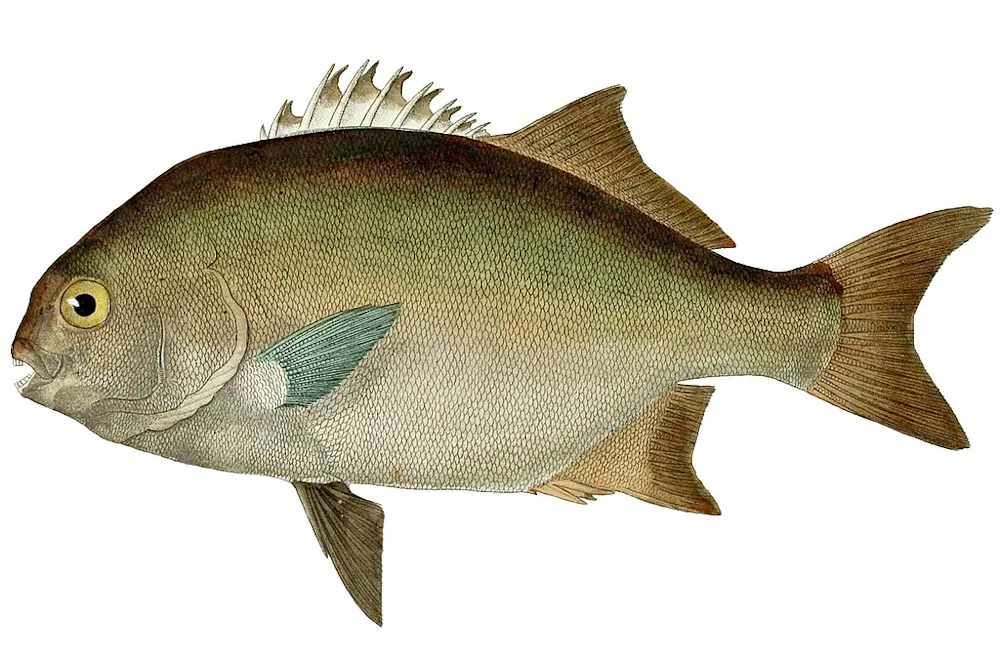
Reflecting its mega-biodiversity status, South Africa boasts five national animal and plant symbols. These are the national animal (springbok), fish (galjoen), bird (blue crane), flower (king protea) and tree (real yellowwood). Yet, their usefulness in helping build a national identity depends on South Africans actually knowing what they are. Sadly, this seems not to be the case.
As environmental scientists we’re intrigued by the relationships between humans and nature. Environmental scholars Ondwela Tshikombeni, Monde Ntshudu and I recently conducted a study to find out how much South Africans know about the five biodiversity symbols. We found that only a tiny fraction could name all of them. The level of knowledge about them was generally low.
This indicates that these symbols can’t be effectively used to help build a common South African identity. Nor will they add value to biodiversity conservation campaigns in a time when the need to protect nature increases due to the impacts of human development and climate change.
National animals and plants
The process of choosing a species as a national symbol is different depending on the country and may even be contested. In Turkey, for example, the national animal is the grey wolf. It can be a symbol of pride or be rejected because it’s the controversial name of a rightwing political group.
Many national symbols are rooted in history and could stem from the emblems of the political, colonial or economic elites of the past. Or they may be more recent and based on lobbying by certain groups or even via public vote. Britain, for example, asked the public to choose a national bird. The robin won.
Galjoen.Biodiversity Heritage Library/Wikimedia Commons, CC BY
The first national animal to be used as a symbol in South Africa was the springbuck (or springbok), proposed in 1906 as a name for the country’s rugby team ahead of a tour of Europe. The most recent addition was the galjoen in 1992.
Our study
We surveyed 382 urban dwellers in four towns spanning three provinces: Mossel Bay, Kariega (formerly Uitenhage), Gcuwa (formerly Butterworth) and Kokstad. In each town we set out to interview 25 adults across low-, medium- and high-income areas and the central business district.
Blue crane.Knowsley Hall/Wikimedia Commons
As part of the survey, we asked people to name each of the five national biodiversity symbols. After that, we presented them with photos of four different species (one of which was the national one) and asked them to correctly identify the national species.
What we found
Only 11 of the respondents (3%) could name all five symbols, while almost half (48%) could not correctly name a single one. The most widely known were the springbok (40%) and the king protea (40%), perhaps because they correspond to the names of national sporting teams. The blue crane was mentioned by only 16% of the respondents and the galjoen (8%) and yellowwood (6%) fared even worse.
The numbers were slightly better when respondents were asked to identify each species from a photo of four choices – 58% identified the protea, 51% the blue crane, 45% the springbok, 26% the galjoen and 16% the real yellowwood.
Real yellowwood.Abu Shawka/ Wikimedia Commons, CC BY-SA
To benchmark these knowledge levels, we also asked a few questions about the national flag and coat of arms. Only eight people knew the meaning of the phrase at the base of the coat of arms (ǃke e꞉ǀxarraǁke, meaning “diverse people unite” in the |Xam language of the country’s original inhabitants). Only 29% correctly knew that the Y-shape in the middle of the national flag was green. This indicates that the low knowledge of national symbols is not limited to just biodiversity symbols.
What can be done about it
It’s clear that a great deal more effort is needed to popularise the national biodiversity symbols if they’re to be used to help shape a national identity in South Africa. They could be promoted in schools where other national symbols, like the flag and anthem, are common.
The South African National Biodiversity Institute and the Department of Sport, Arts and Culture could promote them during September’s heritage month celebrations. They could engage the public by popularising their names in the different official languages of the country and their roles in folklore and indigenous knowledge. They could also be featured in national and international tourism promotions.
Ondwela Tshikombeni and Monde Ntshudu contributed to this article
– Only 3% of South Africans can name all five national animals and plants. Why these symbols matter – https://theconversation.com/only-3-of-south-africans-can-name-all-five-national-animals-and-plants-why-these-symbols-matter-241284
Source: The Conversation – Africa – By Charlie Shackleton, Professor & Research Chair in Interdisciplinary Science in Land and Natural Resource Use for Sustainable Livelihoods, Rhodes University
The springbok is best known, thanks to it being a name for sports teams.A Oosthuizen/iStock/Getty Images
Alongside a national flag, anthem and coat of arms, most countries have one or more plant and animal species that they designate as national symbols. The national animal of China, for example, is the giant panda, a nation-wide source of pride and diplomacy. Americans salute the bald eagle as a symbol of strength and freedom.
But how do South Africans relate to their official national symbols? Do they even know what they are? It’s a country with an enviable variety of ethnicities, cultures, languages, histories, landscapes and biodiversity. It’s also a country fractured by colonialism and apartheid.
South Africa is still in the process of building a unified and national identity as it moves beyond apartheid, an oppressive system of legislated racial division that formally ended with the advent of democracy in 1994.
The process of nation building includes developing a shared history, identity, pride and values of what it means to be South African. One dynamic in this process is the shaping of a collective identity around particular national icons, symbols, activities and personalities. The national anthem, flag, sports stars, artists and the like. Things that make citizens proud of their country and its people, despite a divided past.
King protea. Carol Phillips/iStock/Getty Images
Reflecting its mega-biodiversity status, South Africa boasts five national animal and plant symbols. These are the national animal (springbok), fish (galjoen), bird (blue crane), flower (king protea) and tree (real yellowwood). Yet, their usefulness in helping build a national identity depends on South Africans actually knowing what they are. Sadly, this seems not to be the case.
As environmental scientists we’re intrigued by the relationships between humans and nature. Environmental scholars Ondwela Tshikombeni, Monde Ntshudu and I recently conducted a study to find out how much South Africans know about the five biodiversity symbols. We found that only a tiny fraction could name all of them. The level of knowledge about them was generally low.
This indicates that these symbols can’t be effectively used to help build a common South African identity. Nor will they add value to biodiversity conservation campaigns in a time when the need to protect nature increases due to the impacts of human development and climate change.
National animals and plants
The process of choosing a species as a national symbol is different depending on the country and may even be contested. In Turkey, for example, the national animal is the grey wolf. It can be a symbol of pride or be rejected because it’s the controversial name of a rightwing political group.
Many national symbols are rooted in history and could stem from the emblems of the political, colonial or economic elites of the past. Or they may be more recent and based on lobbying by certain groups or even via public vote. Britain, for example, asked the public to choose a national bird. The robin won.
Galjoen. Biodiversity Heritage Library/Wikimedia Commons, CC BY
The first national animal to be used as a symbol in South Africa was the springbuck (or springbok), proposed in 1906 as a name for the country’s rugby team ahead of a tour of Europe. The most recent addition was the galjoen in 1992.
Our study
We surveyed 382 urban dwellers in four towns spanning three provinces: Mossel Bay, Kariega (formerly Uitenhage), Gcuwa (formerly Butterworth) and Kokstad. In each town we set out to interview 25 adults across low-, medium- and high-income areas and the central business district.
Blue crane. Knowsley Hall/Wikimedia Commons
As part of the survey, we asked people to name each of the five national biodiversity symbols. After that, we presented them with photos of four different species (one of which was the national one) and asked them to correctly identify the national species.
What we found
Only 11 of the respondents (3%) could name all five symbols, while almost half (48%) could not correctly name a single one. The most widely known were the springbok (40%) and the king protea (40%), perhaps because they correspond to the names of national sporting teams. The blue crane was mentioned by only 16% of the respondents and the galjoen (8%) and yellowwood (6%) fared even worse.
The numbers were slightly better when respondents were asked to identify each species from a photo of four choices – 58% identified the protea, 51% the blue crane, 45% the springbok, 26% the galjoen and 16% the real yellowwood.
Real yellowwood. Abu Shawka/ Wikimedia Commons, CC BY-SA
To benchmark these knowledge levels, we also asked a few questions about the national flag and coat of arms. Only eight people knew the meaning of the phrase at the base of the coat of arms (ǃke e꞉ǀxarraǁke, meaning “diverse people unite” in the |Xam language of the country’s original inhabitants). Only 29% correctly knew that the Y-shape in the middle of the national flag was green. This indicates that the low knowledge of national symbols is not limited to just biodiversity symbols.
What can be done about it
It’s clear that a great deal more effort is needed to popularise the national biodiversity symbols if they’re to be used to help shape a national identity in South Africa. They could be promoted in schools where other national symbols, like the flag and anthem, are common.
The South African National Biodiversity Institute and the Department of Sport, Arts and Culture could promote them during September’s heritage month celebrations. They could engage the public by popularising their names in the different official languages of the country and their roles in folklore and indigenous knowledge. They could also be featured in national and international tourism promotions.
Ondwela Tshikombeni and Monde Ntshudu contributed to this article
Charlie Shackleton received funding from the National Research Foundation under the SARChI Chairs programme for this work.
There is some disagreement among legal practitioners and scholars about whether corporations have duties under international law.
Many argue that only states are bound by international law, and it is those states which are obliged to regulate how businesses operate within their borders. Corporations have only a voluntary responsibility to avoid committing human rights violations through their operations.
I have been doing research in the area of corporate accountability for human rights violations since 2006. My most recent paper looks at the role of multinational corporations (multinationals) in benefiting from and perpetuating structural poverty in the global south.
I argue that international law can no longer exempt corporations from liability for human rights violations, including those arising from poverty. Under certain circumstances, corporations should have duties under international law to ensure human rights are fulfilled. I argue that this is particularly true when it comes to socio-economic rights such as the rights to housing, education, food, water and healthcare.
International human rights law must be developed to impose duties directly on multinational corporations to alleviate poverty in the developing countries where they operate.
This is not an absolute duty – it would only arise in certain circumstances and for specific periods of time, as I show in my paper.
Poverty and corporations
Some estimate that as many as 1.3 billion people live in poverty – more than 10% of the world’s population, the vast majority in the global south.
Poverty is also deadly. It is estimated that at least 21,300 people die every day as a result of poverty and inequality. Poverty is a human rights violation, affecting the rights to dignity, life, food and water.
Businesses have a long history of profiting from human rights abuses. Finance and transport companies have acknowledged ties to the slave trade. European banks reportedly assisted South Africa’s apartheid government to procure arms.
Even when they are not directly responsible for human rights violations, multinational corporations may be complicit. Multinationals based in the global north tend to exploit developing countries for their cheap labour, natural resources and weak regulatory frameworks. In other words, corporations benefit from poverty.
International law
In 2005, Professor John Ruggie was appointed as the United Nations secretary-general’s special representative on the issue of human rights and transnational corporations and other business enterprises. He developed the United Nations Guiding Principles on Business and Human Rights. This framework adopts the position that only states are subjects and have duties under international human rights law.
The UN guiding principles are organised around three pillars, known as Protect, Respect and Remedy. The first pillar relates to states’ obligations to uphold human rights. It includes the duty to regulate businesses to ensure they do not violate rights through their operations. The second pillar refers to corporations’ responsibility to respect human rights. This is voluntary and not a legal obligation. The third pillar ensures that victims of human rights violations have access to effective remedies.
This framework relies on three factors: states which have the interests of their citizens at heart, corporations complying with human rights standards, and effective remedial systems. If all three work together, then the UN guiding principles can address corporate accountability for rights violations.
In practice, however, this is not the case. Many states, particularly those in the developing world with high levels of poverty, rely on foreign investment. This creates a power imbalance when negotiating with large multinational corporations. Multinationals are able to demand favourable investment conditions, including relaxing laws that might protect human rights.
Under the UN guiding principles, if states do not impose obligations on corporations to comply with human rights, they do not have such obligations.
Next steps
Not all corporations should have the same duties as states. I propose a set of factors that would determine when a corporation might have a duty under international human rights law to fulfil socio-economic rights. These factors are:
the extent of the violation
the position or vulnerability of the victim
the urgency of the situation
whether the corporation is the only actor that can fulfil the right.
For example, let us imagine a scenario in which a company operates a mine in the Central African Republic. It has built a hospital for its workers and management. Surrounding the mining operations are indigent communities who resided in the area before the operations began.
One day, a child from one of the settlements is knocked over by a car. Her injuries are not life-threatening, but they are severe and the child is in terrible pain. The closest hospital is the mine-owned private hospital. There is a public hospital, but it is far away and travelling there would take time and be costly. The child’s family rushes her to the mine’s hospital for emergency treatment. Does the hospital have a legal duty to admit the child and pay for her treatment?
Applying a combination of the factors, the answer is yes. The child is vulnerable by virtue of her age and poverty, the situation is urgent, and the mine hospital is the only entity that can fulfil the right under the circumstances.
Using this framework, I argue that international human rights law should be developed to mitigate the harm of poverty in the global south, by imposing duties on corporations that benefit from poverty. Some corporations have a perverse incentive to keep communities poor. International law has a role to play in overturning this state of affairs.
Ultimately, my proposal seeks to review what we think of as a fair and just economy. Nothing will change if only states have obligations under international law. The global economic market is neither free nor fair. It has created the most severe human rights violations of our age. International human rights law must address this.
Bonita Meyersfeld has received funding from the National Research Foundation as part of her NRF rating.
Source: The Conversation – Africa – By Bonita Meyersfeld, Associate Professor, University of the Witwatersrand
There is some disagreement among legal practitioners and scholars about whether corporations have duties under international law.
Many argue that only states are bound by international law, and it is those states which are obliged to regulate how businesses operate within their borders. Corporations have only a voluntary responsibility to avoid committing human rights violations through their operations.
I have been doing research in the area of corporate accountability for human rights violations since 2006. My most recent paper looks at the role of multinational corporations (multinationals) in benefiting from and perpetuating structural poverty in the global south.
I argue that international law can no longer exempt corporations from liability for human rights violations, including those arising from poverty. Under certain circumstances, corporations should have duties under international law to ensure human rights are fulfilled. I argue that this is particularly true when it comes to socio-economic rights such as the rights to housing, education, food, water and healthcare.
International human rights law must be developed to impose duties directly on multinational corporations to alleviate poverty in the developing countries where they operate.
This is not an absolute duty – it would only arise in certain circumstances and for specific periods of time, as I show in my paper.
Poverty and corporations
Some estimate that as many as 1.3 billion people live in poverty – more than 10% of the world’s population, the vast majority in the global south.
Poverty is also deadly. It is estimated that at least 21,300 people die every day as a result of poverty and inequality. Poverty is a human rights violation, affecting the rights to dignity, life, food and water.
Businesses have a long history of profiting from human rights abuses. Finance and transport companies have acknowledged ties to the slave trade. European banks reportedly assisted South Africa’s apartheid government to procure arms.
Even when they are not directly responsible for human rights violations, multinational corporations may be complicit. Multinationals based in the global north tend to exploit developing countries for their cheap labour, natural resources and weak regulatory frameworks. In other words, corporations benefit from poverty.
International law
In 2005, Professor John Ruggie was appointed as the United Nations secretary-general’s special representative on the issue of human rights and transnational corporations and other business enterprises. He developed the United Nations Guiding Principles on Business and Human Rights. This framework adopts the position that only states are subjects and have duties under international human rights law.
The UN guiding principles are organised around three pillars, known as Protect, Respect and Remedy. The first pillar relates to states’ obligations to uphold human rights. It includes the duty to regulate businesses to ensure they do not violate rights through their operations. The second pillar refers to corporations’ responsibility to respect human rights. This is voluntary and not a legal obligation. The third pillar ensures that victims of human rights violations have access to effective remedies.
This framework relies on three factors: states which have the interests of their citizens at heart, corporations complying with human rights standards, and effective remedial systems. If all three work together, then the UN guiding principles can address corporate accountability for rights violations.
In practice, however, this is not the case. Many states, particularly those in the developing world with high levels of poverty, rely on foreign investment. This creates a power imbalance when negotiating with large multinational corporations. Multinationals are able to demand favourable investment conditions, including relaxing laws that might protect human rights.
Under the UN guiding principles, if states do not impose obligations on corporations to comply with human rights, they do not have such obligations.
Next steps
Not all corporations should have the same duties as states. I propose a set of factors that would determine when a corporation might have a duty under international human rights law to fulfil socio-economic rights. These factors are:
the extent of the violation
the position or vulnerability of the victim
the urgency of the situation
whether the corporation is the only actor that can fulfil the right.
For example, let us imagine a scenario in which a company operates a mine in the Central African Republic. It has built a hospital for its workers and management. Surrounding the mining operations are indigent communities who resided in the area before the operations began.
One day, a child from one of the settlements is knocked over by a car. Her injuries are not life-threatening, but they are severe and the child is in terrible pain. The closest hospital is the mine-owned private hospital. There is a public hospital, but it is far away and travelling there would take time and be costly. The child’s family rushes her to the mine’s hospital for emergency treatment. Does the hospital have a legal duty to admit the child and pay for her treatment?
Applying a combination of the factors, the answer is yes. The child is vulnerable by virtue of her age and poverty, the situation is urgent, and the mine hospital is the only entity that can fulfil the right under the circumstances.
Using this framework, I argue that international human rights law should be developed to mitigate the harm of poverty in the global south, by imposing duties on corporations that benefit from poverty. Some corporations have a perverse incentive to keep communities poor. International law has a role to play in overturning this state of affairs.
Ultimately, my proposal seeks to review what we think of as a fair and just economy. Nothing will change if only states have obligations under international law. The global economic market is neither free nor fair. It has created the most severe human rights violations of our age. International human rights law must address this.
– Big companies profit from poverty but aren’t obliged to uphold human rights. International law must change – scholar – https://theconversation.com/big-companies-profit-from-poverty-but-arent-obliged-to-uphold-human-rights-international-law-must-change-scholar-241398
NERMEEN SHAIKH: Israel’s deadly siege on northern Gaza has entered a 30th day. Early week, the World Health Organisation managed to deliver some medical supplies to the Kamal Adwan Hospital, but on Thursday, Israeli fighter jets bombed the hospital’s third floor, where the supplies were being stored.
Al Jazeera reports Israeli forces are continuing to shell Beit Lahia, the scene of multiple massacres last week. On Wednesday, an Israeli attack on a market in Beit Lahia killed at least 10 Palestinians. Earlier in the week, Israel struck a five-story residential building, killing at least 93 people, including 25 children.
Meanwhile, at the United Nations, the UN Special Rapporteur on the Occupied Palestinian Territory, Francesca Albanese, has released a major report accusing Israel of committing genocide.
Albanese concludes that Israel’s war on Gaza is part of a campaign of, “long-term intentional, systematic, state-organised forced displacement and replacement of the Palestinians” . The report is titled Genocide as Colonial Erasure.
AMY GOODMAN: Francesca Albanese is now facing intensifying personal attacks from Israeli and US officials. She was set to brief Congress earlier last week, but the briefing was cancelled. On Tuesday, the US Ambassador to the United Nations, Linda Thomas-Greenfield, wrote on social media, “As UN Special Rapporteur Albanese visits New York, I want to reiterate the US belief she is unfit for her role. The United Nations should not tolerate antisemitism from a UN-affiliated official hired to promote human rights.”
On Wednesday, Francesca Albanese spoke at the United Nations and responded to the US attacks.
FRANCESCA ALBANESE: I have the same shock that you have, looking at how the United States is behaving in this context, in the context of the genocide that is unfolding in Gaza. I’m not — I’m not surprised that they attack anyone who speaks to the facts that are, frankly, on our watch in Gaza. And they do that so brutally because they feel called out, because it’s not that it’s that the United States is simply an observer. The United States is being an enabler in what Israel has been doing.
AMY GOODMAN: That was UN Special Rapporteur Francesca Albanese speaking at the United Nations on Wednesday. She joins us here in our studio.
Welcome back to Democracy Now! Thanks so much for joining us.
Well, before we get you to further respond to what the US and Israel is saying, can you lay out the findings of your report?
Colonial Erasure’: UN expert Francesca Albanese on Israel’s “intent to destroy” Gaza Video: Democracy Now!
FRANCESCA ALBANESE: Absolutely. First of all, thank you for having me.
I have to say that this report is the second I write on — and I present to the United Nations on the topic of genocide. And it has been very reluctantly that I’ve taken on the responsibility to be the chronicler of — the chronicler of an unfolding genocide in Gaza.
In March this year, I concluded that there were reasonable grounds to believe that Israel had committed at least three acts of genocide in Gaza, like killing members of the protected group, Palestinians; inflicting severe bodily and mental harm; and creating conditions of life that would lead to the destruction of the group. And the reason why I identified these were not just war crimes and crimes against humanity is because I identified an intent to destroy.
And I understand that even in this country, people are quite confused about what is genocidal intent, because it’s not a motive. One can have many motives to commit a crime. And I understand genocide is a very insidious one, and it’s difficult to identify what’s a motive. But this is not about the motives. The intent to commit genocide is the determination to destroy, which is fully evident in — especially in the Gaza Strip, as I identified in — as argued in March already.
The reason why I continue to write about genocide — and, in fact, this report walks on the heels of the previous one — is in order to better explain the intent, especially state intent, because there is another misunderstanding that there should be a trial of the alleged perpetrators in order to have — to attribute responsibility to a state.
No, because not only you have had acts committed that should have been prevented by the — in a rule of law, in a proclaimed rule of law system like Israel, where there is the government, the Parliament, the judiciary, working as checks and balances, genocide has not only been not prevented, [it] has been enabled through the various organs of the state.
And I explain what has happened as of October 7, which has provided the opportunity to escalate violence, to build on the rage and on the fury of many Israelis, turning the soldiers into willful executioners, is that there was already a plan, hatred.
I mean, the Palestinians, like Ilan Pappé says, are victims not of war, but of a political ideology that has been unleashed. Palestinians have always been an unwanted encumbrance in the Israeli mindset, because they are an obstacle both as an identity and as legal status to the realisation of Greater Israel as a state for Jewish Israelis only.
NERMEEN SHAIKH:So, we’ll go back to — because I do want to ask about the Israeli state institutions that you name and the branches of the Israeli state that have been involved in forming this state’s intent. But if you could elaborate on the point that you make, the difference between intent and motive, and in particular what you say in the report about how it’s critical to determine genocidal intent, “by way of inference”?
You know, that’s a different phrasing than one has heard in all of this conversation about genocide so far. If you explain what you mean by that and what such a determination makes possible? So, rather than just looking at genocidal intent in other forms, what it means to infer genocidal intent?
FRANCESCA ALBANESE: So, first of all, what constitutes genocide is established by Article II of the Genocide Convention, which creates a twofold obligation for member states, to prevent genocide so genocide doesn’t have to complete itself. When there is a manifestation of intent, even genocidal intent, there is already an obligation to intervene, because a crime is unfolding.
And then there is an obligation to punish. How the jurisprudence, especially after Rwanda and after former Yugoslavia, there have been cases both for criminal proceedings, where individual perpetrators have been investigated and tried, and [the] responsibility of the state, litigated before the International Court of Justice. This is how the jurisprudence on genocide has developed.
And the intent has been further elaborated upon what the Genocide Convention says. And while it might be difficult to have direct intent, meaning to have — it’s difficult but not impossible, in fact, to have a state official say, “Yes, let’s go and destroy everyone” — although I do believe that there is direct intent in this genocide in Gaza.
But the court also established that genocide can be inferred from the scale of the attack on the people, the nature of the attack, the general conduct. And what it says is that normally there should be a holistic approach in order to identify intent, which is exactly what I’ve done.
And indeed, this is why I proposed in this report what I called the triple lens approach. We need to look at the conduct, like the totality of the conduct, instead of studying with a microscope each and every crime. We need to look at the whole, against the totality of the people, the Palestinians as such, in the totality of the land, that Israel has slated as its own by divine design.
NERMEEN SHAIKH: No, absolutely. And then, if you could — the other precedent you’ve just spoken about — of course, Rwanda and former Yugoslavia — another case that you cite in the International Court of Justice is The Gambia v. Myanmar. So, how is that comparable to what we see happening in Gaza? Why is that a relevant example and different from both Rwanda and former Yugoslavia?
FRANCESCA ALBANESE: Let me tell you what I see as the major differences in the case of Israel, because it’s a very complex discussion. But in all four cases, there is a toxic combination of hatred, ideological hatred, which has informed political doctrines. And this is true in all the various contexts we are mentioning. The other common element is that there is [a] combination of crimes. Like, forced displacement is not an act of genocide per se, but the jurisprudence says that it can contribute to corroborate the intent.
But, again, mass killing or mass destruction of property, torture and other crimes against a person, which translate into an infliction of physical and mental harm to the group, not individuals as such, but individuals as part of the group, these are common elements to all genocides.
What I find characteristic in this one is, first of all, this is not — I mean, the state of Israel is not Myanmar and is not Rwanda 30 years ago. This is not war-torn former Yugoslavia. This is a state which has a separation of powers, different organs, as I said, checks and balances. And let me give you a specific example, because you asked me to comment on the state functions.
In January this year, the International Court of Justice issued a set of preliminary measures in the context of its identification, before even looking at the merits of the case initiated by South Africa for Israel’s breach, alleged breach, of the Genocide Convention, which identified the plausibility of risk for the rights protected — of the rights of the Palestinians protected under the Genocide Convention, which means plausibility — it’s semantics, but it’s plausibility that genocide might be committed against the Palestinians in Gaza.
And the provisional measures included an obligation to investigate and prosecute the various cases of incitement, genocidal incitement, that the court had already identified. And it mentions leaders, senior leaders, of the Israeli state. Has there been any investigation? Has there been any prosecution?
But I’m telling you more. The genocidal statements didn’t resonate as shocking in the Israeli public, not only because there was rage, an enormous rage and animosity, of course. I mean, this is understandable, that the facts of October 7 were brutal and traumatized the people.
But at the same time, hatred against the Palestinians and hate speech, it’s not something that started on October 7. I do remember, and I do remember the shock I felt because no one was reacting, and years ago, there were Israeli ministers talking of — freely, of killing, justifying the killing of Palestinians’ mothers and children because they would turn into terrorists.
AMY GOODMAN: Francesca Albanese, talk about the title of your report, Genocide as Colonial Erasure.
FRANCESCA ALBANESE: This is another element which I think — and, in fact, it’s the most important, where we see the difference between this genocide and others, because there is a settler-colonial component. And again, if you look at what the International Court of Justice in July this year concluded, when it decided that the — when it found that Israel’s 57 years of occupation in Gaza, the West Bank and East Jerusalem is unlawful and needs to be withdrawn totally and unconditionally, as rapidly as possibly, which the General Assembly says by September 2025.
The court said that it amounts to — that the colonies amount to — have led to a process of annexation and racial segregation and apartheid. And these are the features of settler colonialism, the taking of the land, the taking of the resources, displacing the local population and replacing it. This has been a feature.
Now, it is in this context that we need to analyse what is happening today. And by the way, don’t believe, don’t listen only to Francesca Albanese. Listen to what these Israeli leaders and ministers are saying — reoccupying Gaza, retaking Gaza, recolonising Gaza, reconquesting Gaza. This is what they are saying.
And there are settlers on expeditions, not only to Gaza but also to Lebanon. So, this is why I say that the main difference, the main feature of this genocide, apart all the horrible aspects of it, is that this is the first settler-colonial genocide to be ever litigated before a court, an international court.
And this is why coming to this country, which is a country birthed from a genocide, when I meet the Native Americans, for example, I feel the pain of these people. And I say if we manage to build on the intersectionality of Indigenous struggle, the cry for justice behind this case for Palestine will resonate even louder, because it will somewhat be an act of atonement from the settler-colonial endeavor, which has sprouted out of Europe, toward Indigenous peoples. So there is a lot of symbolism behind it.
NERMEEN SHAIKH:And, you know, the analogy — first of all, you talked about the case brought by South Africa, so what they share, apart from South Africa and Israel-Palestine, is both the fact that they were colonial-settler states, as well as the fact that apartheid has been established as having occurred in both places.
Now, in the case of South Africa, it was a decision that was taken by the United Nations at the time of apartheid, was unseating South Africa from the General Assembly. There have been calls now to do the same with Israel. So, if you could — if you could comment on that?
And then, I just want to quote another short sentence from your report, in which you say, “As the world watches the first live-streamed settler-colonial genocide, only justice can heal the wounds that political expedience has allowed to fester.” So, if you could talk about the International Court of Justice’s case in that context, what role you think they can play, South Africa’s case, in resolving or addressing — seeing and addressing this wound?
FRANCESCA ALBANESE: First of all, let me unpack the question of the unseating Israel, because this is one of the recommendations I made in my report. Under Article 6 of the UN Charter, a member state can be suspended of its credentials or its membership by the General Assembly upon recommendation of the UN Security Council. And the first criticism I got is that we cannot do that, because every states commit international law violations. Absolutely. Absolutely.
But there are two striking features here. First, Israel is quite unique in maintaining an unlawful occupation, which has deemed such by — in at least one full occasion, but again, there was already a case brought before the ICJ in 2004, so there have been two ICJ advisory opinions.
There is a pending case for genocide. There has been the violations of hundreds of resolutions by the — on Israel — over occupied Palestinian territory, by the Security Council, the General Assembly, the Human Rights Council, and steady violation of international humanitarian law, human rights law, the Apartheid Convention, the Genocide Convention. So this is quite unique.
But all the more, this year alone, Israel has conducted an attack, an unprecedented attack, against the United Nations. It has attacked physically, through artillery, weapons, bombs, UN premises. Seventy percent of UNRWA offices and UNRWA buildings, clinics, distribution centers have been hit and shelled by the Israeli army.
Two hundred and thirty UN staff members have been killed by Israel in Gaza alone. UN peacekeepers in Lebanon have been attacked. And this doesn’t even take into account the smear, the defamation against senior UN officials, the declaration of the secretary-general as persona non grata, the referring to the General Assembly as a “cloak of antisemites”.
Again, this has mounted to a level — the hubris against the United Nations and international law has been unchecked and unbounded forever, but now, especially after the Knesset passed a law outlawing UNRWA, declaring UNRWA a terrorist organisation, and therefore disabling it from its capacity to deliver aid and assistance especially in Gaza and the West Bank and East Jerusalem, this is the nail in the coffin of the UN Charter.
And it can also contribute to that sense of colonial erasure, because here it’s not just at stake the function of a UN body — and UNRWA is a subsidiary body of the General Assembly, so it’s even more serious. But there is the capacity of UNRWA to deliver humanitarian aid in a desperate situation, and also the fact that UNRWA is seen by Israel as the symbol of Palestinian identity, especially the Palestinian refugees. So there is an attempt to erase Palestinianness, including by hitting UNRWA.
AMY GOODMAN: I want to ask you about your trip here, as we begin to wrap up. The US Ambassador to the United Nations, Linda Thomas-Greenfield, quoted on — tweeted on Tuesday, “As UN Special Rapporteur Albanese visits New York, I want to reiterate the US belief she is unfit for her role. The United Nations should not tolerate antisemitism from a UN-affiliated official hired to promote human rights.” If you can further address their charge of antisemitism against you?
FRANCESCA ALBANESE: Yeah.
AMY GOODMAN: And talk about what happened. You were supposed to come to Congress and speak and brief them, but that was cancelled this week.
FRANCESCA ALBANESE: Yes, it was canceled. But let me — first of all, I’m very embarrassed to read this, because a senior US official who writes this, I mean, it shows a little bit of desperation. I’m sorry, but, you know, I’m very candid.
And let me unpack my antisemitism for the audience. So, what I’ve been accused of — the reason why I’ve been accused of antisemitism — is because I’ve allegedly compared the Jews to the Nazis. Never done. Never done.
What I’ve said, what I’ve done is saying, and I keep on saying, that history is repeating itself. I’ve never done such a comparison where I draw the parallel. It’s on the behaviour of member states who have the legal and moral obligation to prevent atrocities, including an unfolding genocide.
In the past, they have done nothing — nothing — until the end of the Second World War, to prevent the genocide of the Jews and the Roma and Sinti. And they’ve done nothing to prevent the genocide of the Bosnians.
And they’ve done nothing to prevent the genocide of the Rwandans. And they are doing the same today. This is where I insist that now, compared to when there was the Holocaust, now we have a human rights framework that should prevent this. The Genocide Convention to prevent this. So, this is one of the points.
The second point, — which leads to portray me as an antisemite, which is really offensive — is that I’ve said that October 7 was not — I’ve contested, I’ve challenged the argument that October 7 was an antisemitic attack. October 7 was a crime, was heinous. And again, I’ve condemned the acts that were directed against the Israeli civilians, and expressed solidarity with the victims, with the families. I’ve been in contact with the families of the hostages.
But I’ve also said the hatred that led that attack, that prompted that attack, to the extent it hit civilians, not the military, but it was prompted not by the fact that the Israelis are Jews, but the fact that the Israelis — I mean, the Israelis are part of that endeavor that has kept the Palestinians in a cage for 17 years and, before, under martial law for 37 years. And Palestinians have tried — it’s true they have used violence, but before violence, they have tried dialogue. They have tried collaboration. They have tried a number of means to access justice, and they have gone nowhere.
I can — I mean, let me relate just this case, because last year I worked with children. And someone who was 17 years old before October 7 last year had never set foot out of Gaza. This is the reality. And I spoke with children while I was writing my report on “unchilding”, the experience of Palestinians under Israeli occupation. And one of them — I mean, there were these two girls fighting, because one of them had been able to go to Israel and the West Bank because she had cancer and could be treated, and the other was jealous, because, she said, “At least she was sick, and she could go, she could travel. I’ve never seen the mountains.”
And again, this doesn’t justify violence, but, please, please, put things in context. And even Israeli scholars have said claiming that October 7 was prompted by antisemitism is a way to decontextualize history and to deresponsibilise Israel.
I condemn Israel not because it’s a Jewish state. It’s not about that, but because it’s in breach of international law through and through. And were the majority of Israelis Buddhists, Christians, atheists, it would be the same. I would be as vocal as I am now.
NERMEEN SHAIKH: Francesca, just one last question, and we only have a minute. Your recent book, J’Accuse, you take the title, of course, from the letter Émile Zola wrote during the Dreyfus Affair to the French president. You came under severe criticism for the choice of that title. Could you explain why you chose it and what it means in this context?
FRANCESCA ALBANESE: Absolutely. I have the sense that whatever I say comes under scrutiny and criticism. But J’Accuse is — first of all, it’s the title that was proposed by the editor, the publisher. And I was against it until October 7.
When I saw the narrative, the dehumanization of the Palestinians after October 7, and what it was legitimising, I said, “This is the title. We need to use it,” because I draw the parallel between what is happening to the Palestinians and what has happened to other groups, particularly the Jewish people in Europe.
I say the Holocaust was not just about the concentration camps. The Holocaust was a culmination of centuries of discrimination, and the previous decades had led the Jewish people in Europe to be kicked out of jobs, professions, to be treated like subhumans, as animals. And it’s this dehumanisation that we need to look at in the face today, in the eyes today, and recognise as leading to atrocity crimes.
AMY GOODMAN: We want to thank you for being with us, Francesca Albanese, UN Special Rapporteur on the Occupied Palestinian Territory.
am pleased to send my greetings to the World Internet of Things Convention.
Digital technology has transformed every aspect of our lives.
It is also an increasingly powerful engine of business and economic growth. Real-time data sharing, IoT applications, information networking and artificial intelligence are enabling the development of smart grids, smart homes and smart cities. Across various sectors, including transportation, agriculture, energy, and healthcare, these technologies are improving quality of life, promoting sustainability, and fostering more responsive services.
But not all countries or communities are benefitting equally. For those without capacity or connectivity, the digital divide is an opportunity divide. And as your theme reminds us, unleashing the potential of a new digital economy depends on a fully connected world.
Last month, leaders adopted the Global Digital Compact to help close the divide and support efforts to ensure that communities and countries get the financial and technological assistance to expand connectivity to all people.
On AI, we also made an essential breakthrough: the first truly universal agreement on governance giving every country a seat at the AI table.
Digital technology is about bridging divides.
Let’s ensure that these rapidly evolving technologies serve all people, equally.
Attendees take part in the “Science and Technology for Risk-Informed Sustainable Development” thematic session at the 2024 World Science and Technology Development Forum (WSTDF), in Beijing, Oct. 24, 2024. [Photo courtesy of WSTDF] The 2024 World Science and Technology Development Forum (WSTDF) held a thematic session in Beijing on Oct. 24 focused on “Science and Technology for Risk-Informed Sustainable Development.” Leading representatives of policymakers, scholars and private sector took part in the event, discussing how to mobilize science and technology to navigate emerging global risks and build a safer, more inclusive and sustainable future. The session was hosted by the Integrated Research on Disaster Risk (IRDR), the International Society for Digital Earth (ISDE) and the International Research Center of Big Data for Sustainable Development Goals (CBAS), and supported by the International Science Council (ISC) and the U.N. Office for Disaster Risk Reduction (UNDRR). Salvatore Arico, CEO of the ISC, and Marco Toscano-Rivalta, head of UNDRR’s Regional Office for Asia and the Pacific, co-chaired the event, and it was co-moderated by IRDR Executive Director Yang Saini and Senior Science Officer Han Qunli. Collaboration and shared solutions for global risks As climate change accelerates and disaster risks become more complex, the importance of international scientific cooperation grows ever more crucial. Wu Guoxiong, an academician at the Chinese Academy of Sciences (CAS) and a researcher at the CAS Institute of Atmospheric Physics, highlighted the significance of international cooperation in early warnings for disasters. He pointed to the Sub-seasonal to Seasonal (S2S) Prediction Project as a successful model of global collaboration. Countries including China, the United Kingdom, the United States and Japan participate in the project, which allows real-time comparisons of their climate prediction models, improving collective capacity to address climate-related disasters. Rajib Shaw, chair of the UNDRR Asia-Pacific Scientific and Technical Advisory Group, emphasized the need for increased global cooperation to bridge technological divides. He noted that technologies such as artificial intelligence and drones are vital for disaster risk reduction, yet many Global South countries lack access to these advanced tools, making the collaboration essential. Manon Burger, biochemistry publishing director for Elsevier, underlined the importance of open access to scientific research in fostering global knowledge sharing. “We publish more than 3,000 journals, many of which are available open access, ensuring that researchers worldwide can stay updated on the latest scientific advancements,” Burger said. She also introduced Elsevier Foundation, which has partnered with over 100 institutions in 70 countries since it was established in 2005, offering approximately $16 million in funding for initiatives supporting climate action and inclusive health care. Josephine Ngaira, professor of geography (climatology) in the School of Disaster Management and Humanitarian Assistance at Masinde Muliro University of Science and Technology in Kenya, stressed the need to address the specific challenges of grassroots communities and vulnerable populations in disaster risk management. She advocated for inclusive models that ensure technological benefits reach all levels of society, advancing sustainable development worldwide. DRR education and empowerment of young professionals Young people are a driving force behind technological innovation and sustainable development. Shabhaz Khan, director of the UNESCO Regional Office for East Asia, stated that the youth is highly recognized by the United Nations, and can be mobilized and engaged in pilot disaster research activities. Salvatore Arico, CEO of the ISC, underscored the importance of interdisciplinary training for young researchers. He pointed out that current education systems often remain siloed within single disciplines, whereas solving complex global issues requires interdisciplinary research and training. He advocated for education reforms to provide young scientists with more diverse learning opportunities and to encourage cross-sector exploration. Khamarrul Azahari Razak, director of Malaysia’s Disaster Preparedness and Prevention Center, emphasized the importance of investing in human resources and listening to the voices of young people. Meanwhile, professor Christopher Garimoi Orach from the School of Public Health at Makerere University in Uganda, highlighted the need to strengthen disaster risk management education in developing countries, particularly at the higher education level. He noted that training specialists in disaster risk reduction is crucial for future global risk preparedness. Building social resilience through government policies In tackling global risks, national policies and government support are the keys. Robert Walker, fellow of the Royal Society of Arts and the Academy of Social Sciences Academy of UK and professor at the University of Oxford, stated that social policy should focus on enhancing social resilience by providing people with a sense of security, thus reducing their anxieties and enabling them to contribute to disaster risk reduction. Walker praised China’s efforts in promoting social security and resilience through advancing common prosperity, poverty reduction and energy transition. Salvatore Arico further emphasized that collaboration between governments, communities and scientists is essential for addressing global challenges such as climate change, land degradation and declining water quality. He noted that considering the practical applicability of scientific methods from the beginning of policy design would help enhance implementation effectiveness and ensure technology-driven progress. Rajib Shaw called for greater adaptability in governance mechanisms. Given the existing gap between sci-tech advancements and governance structures, he suggested policy adjustments from governments to facilitate adaptive governance, thus ensuing effective application of scientific tools in disaster risk reduction and management.
Source: The Conversation – Africa – By Samuel Adomako, Associate Professor of Strategy and Innovation, University of Birmingham
Financial literacy is vital for individuals and households. Simply put, it’s the ability to understand and effectively use various financial skills: budgeting, managing debt, making sound investments, and understanding financial statements.
These skills are crucial for businesses, too – especially small and medium enterprises. Small and medium enterprises are widely recognised as the backbone of many low-income countries’ economies. The World Bank estimates that these businesses account for between 60% and 70% of jobs in sub-Saharan Africa and approximately 40% of low-income countries’ GDPs globally.
Ghana is one of the countries whose economy relies heavily on small and medium enterprises. Much emphasis has been placed on how important it is for these businesses to access finance. But far less has been discussed about the value of financial literacy. In Ghana, as is the case in many other countries, the reality is that many small and medium enterprises still fail to grow as expected, even when they have access to capital. This surprising outcome suggests that access to finance, while crucial, is not the sole factor determining business success. The missing piece of the puzzle? Financial literacy.
We conducted a study to find out whether managers at small and medium enterprises in Ghana believed that financial literacy would help them to improve their growth after accessing finance. CEOs and senior financial managers who self-identified as being financially literate told us that their businesses had grown as a result, explicitly linking growth and financial literacy.
It is clear from this study that financial literacy empowers the managers of small and medium enterprises to make informed decisions, make the best use of their resources, and avoid common pitfalls that can derail business growth. It enables them not only to access finance but also to use it effectively for sustainable growth and long-term success.
Our findings have wider implications. Small and medium enterprises are vital for economic growth. But their potential is being undermined by a lack of financial literacy. This isn’t just a problem for businesses themselves: it’s a problem for the entire economy they are part of. When small and medium enterprises fail to grow, job creation stalls, innovation slows down, and the economy as a whole suffers.
We defined small and medium enterprises in the same way as Ghana’s Statistical Service does: companies that have 250 or fewer employees.
Ultimately, 201 firms across the manufacturing and services sectors took part in the study. The vast majority of responses were from CEOs and senior finance managers, which is important since people in these positions ought to have comprehensive knowledge about a firm’s growth and performance.
The respondents saw a clear link between financial literacy and access to finance for growing their businesses. One CEO said:
Understanding financial principles is the foundation of our business decisions. Without financial literacy, we wouldn’t have been able to secure the necessary funding to expand our operations. It’s not just about getting access to finance but knowing how to manage it effectively that drives growth.
A senior financial manager told us:
Before improving our financial literacy, we struggled to convince lenders of our potential. Learning how to present our financials clearly and manage our cash flow gave us the credibility we needed to secure financing and invest in our growth.
Some interviewees discussed how not being financially literate had hampered their ability to properly use funding. A finance manager said that, after securing an initial round of funding. “we quickly realised we couldn’t manage cash flow effectively”, adding:
It felt like we were putting out fires every day. I didn’t understand terms like ‘liquidity ratios’ or ‘debt management’ until I started learning about financial literacy. It was eye-opening.
These lessons happened in various ways, some more formal than others. One CEO, realising their own financial management skills needed work, hired a financial officer with strong abilities in this area and learned a great deal from them.
Some CEOs signed themselves up for financial management workshops; others organised short courses for their entire teams. One told us: “We took a financial literacy course designed for entrepreneurs, and it gave us new insights into how to manage loans and investments. It wasn’t just about survival but also about how to leverage what we had to grow. Now, we budget better, monitor our cash flow closely, and even started saving for unexpected expenses.”
There are several ways to improve financial literacy among small and medium enterprises.
First, policymakers should incorporate mandatory financial literacy training into existing support programmes for these businesses. It should cover essential financial management skills such as budgeting, cash flow management and investment planning.
Policymakers could also facilitate partnerships between banks, microfinance institutions and educational organisations to offer targeted financial literacy workshops for managers at small and medium enterprises. This would equip businesses to manage the financial support they receive.
Finally, policymakers should introduce incentives, such as reduced interest rates or preferential loan terms, for small and medium enterprises that complete certified financial literacy courses. This would motivate managers to enhance their financial management skills, leading to more sustainable business growth and improved economic outcomes.
– Financial skills like managing debt are key to success, but Ghana’s small businesses don’t have them – https://theconversation.com/financial-skills-like-managing-debt-are-key-to-success-but-ghanas-small-businesses-dont-have-them-241955
Financial literacy is vital for individuals and households. Simply put, it’s the ability to understand and effectively use various financial skills: budgeting, managing debt, making sound investments, and understanding financial statements.
These skills are crucial for businesses, too – especially small and medium enterprises. Small and medium enterprises are widely recognised as the backbone of many low-income countries’ economies. The World Bank estimates that these businesses account for between 60% and 70% of jobs in sub-Saharan Africa and approximately 40% of low-income countries’ GDPs globally.
Ghana is one of the countries whose economy relies heavily on small and medium enterprises. Much emphasis has been placed on how important it is for these businesses to access finance. But far less has been discussed about the value of financial literacy. In Ghana, as is the case in many other countries, the reality is that many small and medium enterprises still fail to grow as expected, even when they have access to capital. This surprising outcome suggests that access to finance, while crucial, is not the sole factor determining business success. The missing piece of the puzzle? Financial literacy.
We conducted a study to find out whether managers at small and medium enterprises in Ghana believed that financial literacy would help them to improve their growth after accessing finance. CEOs and senior financial managers who self-identified as being financially literate told us that their businesses had grown as a result, explicitly linking growth and financial literacy.
It is clear from this study that financial literacy empowers the managers of small and medium enterprises to make informed decisions, make the best use of their resources, and avoid common pitfalls that can derail business growth. It enables them not only to access finance but also to use it effectively for sustainable growth and long-term success.
Our findings have wider implications. Small and medium enterprises are vital for economic growth. But their potential is being undermined by a lack of financial literacy. This isn’t just a problem for businesses themselves: it’s a problem for the entire economy they are part of. When small and medium enterprises fail to grow, job creation stalls, innovation slows down, and the economy as a whole suffers.
We defined small and medium enterprises in the same way as Ghana’s Statistical Service does: companies that have 250 or fewer employees.
Ultimately, 201 firms across the manufacturing and services sectors took part in the study. The vast majority of responses were from CEOs and senior finance managers, which is important since people in these positions ought to have comprehensive knowledge about a firm’s growth and performance.
The respondents saw a clear link between financial literacy and access to finance for growing their businesses. One CEO said:
Understanding financial principles is the foundation of our business decisions. Without financial literacy, we wouldn’t have been able to secure the necessary funding to expand our operations. It’s not just about getting access to finance but knowing how to manage it effectively that drives growth.
A senior financial manager told us:
Before improving our financial literacy, we struggled to convince lenders of our potential. Learning how to present our financials clearly and manage our cash flow gave us the credibility we needed to secure financing and invest in our growth.
Some interviewees discussed how not being financially literate had hampered their ability to properly use funding. A finance manager said that, after securing an initial round of funding. “we quickly realised we couldn’t manage cash flow effectively”, adding:
It felt like we were putting out fires every day. I didn’t understand terms like ‘liquidity ratios’ or ‘debt management’ until I started learning about financial literacy. It was eye-opening.
These lessons happened in various ways, some more formal than others. One CEO, realising their own financial management skills needed work, hired a financial officer with strong abilities in this area and learned a great deal from them.
Some CEOs signed themselves up for financial management workshops; others organised short courses for their entire teams. One told us: “We took a financial literacy course designed for entrepreneurs, and it gave us new insights into how to manage loans and investments. It wasn’t just about survival but also about how to leverage what we had to grow. Now, we budget better, monitor our cash flow closely, and even started saving for unexpected expenses.”
There are several ways to improve financial literacy among small and medium enterprises.
First, policymakers should incorporate mandatory financial literacy training into existing support programmes for these businesses. It should cover essential financial management skills such as budgeting, cash flow management and investment planning.
Policymakers could also facilitate partnerships between banks, microfinance institutions and educational organisations to offer targeted financial literacy workshops for managers at small and medium enterprises. This would equip businesses to manage the financial support they receive.
Finally, policymakers should introduce incentives, such as reduced interest rates or preferential loan terms, for small and medium enterprises that complete certified financial literacy courses. This would motivate managers to enhance their financial management skills, leading to more sustainable business growth and improved economic outcomes.
Samuel Adomako does not work for, consult, own shares in or receive funding from any company or organisation that would benefit from this article, and has disclosed no relevant affiliations beyond their academic appointment.
One Health is based on an understanding that our health and that of animals, plants and ecosystems are interdependent. (Shutterstock)
November 3 is World One Health Day. One Health brings all parts of society and governments together to tackle joint problems of human, animal, plant and ecosystem health.
Canada needs a One Health plan now to better face worsening climate change, accelerating biodiversity loss, pandemic threats, and threats from superbugs resistant to antibiotics. Canada’s actions on these issues are reactive rather than preventive, and aren’t well co-ordinated or funded. This undermines our readiness and response.
One Health is based on an understanding that our health and that of animals, plants and ecosystems are interdependent. It presents a way to promote the health of all and to navigate the inevitable trade-offs.
The virus had never been reported in cows before. Its detection was slow and too little was done to stop the spread. As of Nov. 1, H5N1 had spread quickly to 404 dairy farms across 14 states, costing millions in lost milk production and spilling back into poultry and wildlife, killing millions more birds.
It is concerning that H5N1 has also infected at least 39 people, primarily farm workers, fortunately causing only mild symptoms.
H5N1 is a growing threat because it infects many species, including seals, mink, bears, foxes, coyotes, dogs and cats. Influenza viruses that jump species pose a greater pandemic threat because of the mixing that may occur when different influenza viruses infect the same animal or person. This can produce new, more severe strains of human flu.
No one wants to face another pandemic. Canada’s actions to keep ahead of this threat would be enhanced by national One Health planning and co-ordination.
One Health around the world
National One Health plans of other countries, like Rwanda, Thailand and Bangladesh, have been shown to help prevent human and animal disease outbreaks. Global Affairs Canada and the International Development Research Centre have invested $40 million since 2021 to support One Health internationally, including in hotspots of disease emergence.
The U.S. has a One Health Act and recently launched its national co-ordination platform. However, Canada has just begun this work at home. Canada created a high level steering committee to oversee the Pan-Canadian Action Plan on Antimicrobial Resistance (AMR). Time and effort were taken to involve federal, provincial and territorial agencies, Indigenous people, civil society and researchers to arrive at an inclusive framework with the right objectives, responsibilities and outputs. It’s an ideal model for a new Canadian One Health action plan.
Canada has a mixed track record of working across sectors, whether to fight past outbreaks of Mad Cow Disease, avian or swine flu, or co-ordinating actions by people from different departments and agencies on H5N1 or COVID-19 today. There are problems: nationally, collaboration is informal and focused on single issues, more reactive than preventive, and not supported by any overarching plan, decision-making structure or resources to ensure consistent, ongoing co-operation across threats and issues.
The risks of not putting these measures in place include information not reaching decision-makers, resources and expertise not being used optimally, trade-offs being misread by other agencies or partners, duplication and gaps, and too little getting done to prevent health threats.
Implementing One Health
Without a national One Health plan, Canada risks being vulnerable to new threats, including pandemics. (Shutterstock)
There is guidance. In 2021, the World Health Organization, the UN Food and Agriculture Organization, UN Environment, and the World Organisation for Animal Health agreed to work together on a One Health Joint Plan of Action and implementation guidance.
With gender equality, inclusiveness and equity, and the importance of local and traditional knowledge at the fore, countries should start implementing One Health by assessing capacities and programs already in place, setting up and funding national co-ordination, setting priorities for action, then producing and putting into action their national plan.
Canada should mirror what it has done to manage antibiotic-resistant microbes by developing and governing our own national One Health action plan, similar to the Pan-Canadian Action Plan on Antimicrobial Resistance.
Without a national One Health plan, Canada risks being vulnerable to new threats (including pandemics), investing too little in prevention and having a suboptimal response. It’s time for Canada’s One Health action plan.
This article was co-authored by Andrea Ellis, DVM, MSc., a consultant currently supporting One Health work with the World Organisation for Animal Health. She is the former Senior Veterinary Advisor to the Chief Veterinary Officer and World Organisation for Animal Health Delegate for Canada.
Dominique Charron is affiliated with the McEachran Institute and START.org. She is a member of the One Health High Level Expert Panel that advises the World Health Organization, UN Food and Agriculture Organization, UN Environment, and World Organisation for Animal Health. She is a former Vice-President, Programs and Partnerships, of the International Development Research Centre.
Cate Dewey is currently working on a community One Health project in Rwanda. The project is managed by Veterinarians without Borders, North America and is funded by Global Affairs Canada
As a scholar focused on race and gender issues, I recognize that these seemingly inconsistent definitions of blackness are not inconsistent at all. They demonstrate a consistent position on whiteness.
In both cases, Trump implies that the race of his opponent is all voters need to know to determine their characters. It is an ideology that normalizes the dominance and privilege of white Americans within a racial hierarchy.
Trump has said he believes America was at its best in the 1940s and 1950s. However, Trump’s long-standing inflammatory rhetoric around race — including his recent racist comments degrading Haitian refugees in Springfield, Ohio — do not simply glorify a time immediately before the civil rights era. They recall an older era.
Calls to “Make America Great Again” hearken back to colonialism, when whiteness — particularly white, male power — was at its peak. The period from 1500 to the 1960s was a time when white men could exercise control over people of color by racially classifying their bodies. And they protected whiteness by passing laws that declared “one drop” of Black blood as enough to declare someone Black.
Whiteness is property, as the legal scholar Cheryl Hines has argued. It’s an asset for those who possess it. It offers benefits like white privilege and the idea of being white as moral and superior.
More specifically, one-drop statutes reflected a fear that people who were considered white in terms of their appearance but had Black ancestry could reproduce with other white people. This, in turn, would result in the supposed degeneration of the white race.
These laws attempted to legally define Blackness.
Power and dominance
Harris and Obama, the children of immigrants, both have mixed-race backgrounds. Harris is the child of a Black Jamaican father and an Indian mother. Obama is the son of a Black Kenyan father and a white American mother.
However, Trump insists that Harris was “Indian all the way,” while Obama was a “Black president.” For me, this perspective reveals another aspect of Trump’s racial thinking: He appears to believe in the impenetrability and power of whiteness.
Trump sees Harris as capable of dancing back and forth between being Indian and being Black. Yet he has never implied that Obama can dance between being Black and being white.
In a society that often ties physical characteristics to racial identity, many people might find it difficult to imagine Obama as identifying as white. That’s because our society associates his skin tone and hair texture with Blackness.
However, I argue that the inability to view this hypothetical racial dance as possible for Harris and not for Obama is tied to white supremacist beliefs.
These beliefs defend whiteness as being imbued with dominance over other racial groups. This power is reflected in the ability to define the race of others, regardless of how they may identify themselves. And it is reflected in the desire to also limit who can count as white.
Trump does both of those things.
Donald Trump answers questions at the National Association of Black Journalists’ annual convention in Chicago on July 31, 2024. Kamil Krzaczynski/AFP via Getty Images
A foil to white identity
“She was always of Indian heritage, and she was only promoting Indian heritage. I didn’t know she was Black until a number of years ago, when she happened to turn Black, and now she wants to be known as Black,” Trump said in July at a gathering of Black journalists.
He added: “So I don’t know, is she Indian or is she Black? I respect either one, but she obviously doesn’t, because she was Indian all the way, and then all of a sudden she made a turn and she went – she became a Black person.”
By suggesting that Harris has strategically identified as Black for political gain, Trump implies that there’s a political advantage to being Black in America.
This notion aligns with the racist belief, fueled by white racial resentment, that Black Americans are afforded privileges over whites and Asian Americans.
The sociologist Arlie Hochschild has shown that many white Trump supporters believe circumstances in America have gotten worse for whites in recent decades. They believe many of the gains for people of color — affirmative action and other diversity policies — have been at the expense of the rights of white people.
Simultaneously, Trump’s comments emphasize his own whiteness by using Harris’ and Obama’s race as a foil to his white identity. Research on the construction of race in America shows that whiteness is devoid of meaning without something to define itself against.
For white people who feel many things have been taken away from them in an increasingly multiracial America, Trump is their warrior. He campaigns to protect the white population and culture of America.
Marya T. Mtshali does not work for, consult, own shares in or receive funding from any company or organization that would benefit from this article, and has disclosed no relevant affiliations beyond their academic appointment.
MARRAKESH, Morocco, Nov. 03, 2024 (GLOBE NEWSWIRE) — The 2024 Trophée Roses des Sables rally concluded on October 26 in Marrakesh with a grand awards ceremony and gala. This year’s rally gathered 125 teams who, despite grueling challenges and countless obstacles, were unified by a shared mission of community, solidarity, and philanthropy. TSplus was there to support its team, Crew 21, aka “Colibris des Sables” association.
TSplus Proudly Sponsor of Colibris des Sables
TSplus proudly sponsored Crew 21: Alexandra and Pauline, two inspiring women dedicated to making a difference. As participants in this adventure, they aimed to support local communities and raise awareness for autoimmune disease research through their own association, *Colibris des Sables*. Their journey took an unexpected turn early in the race when Pauline had to withdraw due to a serious health issue after the second day. Refusing to let this setback stop her, Alexandra pressed on, advocating to continue solo, and eventually received special permission from the organizers to continue alongside another participant who had also lost her teammate.
Despite the challenges, Alexandra’s determination to finish what she and Pauline had started exemplifies the spirit of resilience that is a hallmark of this rally. Crew 21’s journey through the desert brought moments of teamwork, as they assisted locals with the resources they carried and supported fellow “Roses” stuck in the sand, even when it risked penalties for their team. These selfless actions underscored the essence of Trophée Roses des Sables: compassion and endurance, not merely competition.
TSplus Celebrates a Human and Solidarity Success
Over the course of ten days, participants experienced Morocco’s natural beauty—from rocky trails and canyons to sweeping dunes and a memorable marathon stage that ended at the dramatic fortress of Gara Medouar. After reaching Marrakesh, teams celebrated the rally’s end with family and friends before concluding with the awards ceremony. Although Crew 21 did not place on the podium, their success is seen in the connections made, the lives touched, and their unwavering commitment to their cause.
Mariam Essafi, the Sales executive who initiated TSplus’s sponsorship of Colibris des Sables, traveled to Marrakesh to represent TSplus and offer in-person support to Alexandra and Pauline.
Reflecting on the journey, Mariam shared,
“Alexandra and Pauline’s story of resilience and compassion is a testament to the rally’s core values. At TSplus, we are honored to support such inspiring women who embody perseverance and solidarity.”
As the Trophée Roses des Sables wraps up another remarkable edition, TSplus is proud to have stood alongside Colibris des Sables, contributing to a rally that impacts lives far beyond the finish line.
To know more about TSplus and its range of products, visit www.tsplus.net
About TSplus TSplus is a global provider of innovative remote access, remote support, and server monitoring solutions designed to empower organizations with secure, easy-to-manage IT solutions. Serving businesses of all sizes across diverse industries, TSplus aims to connect the world through accessible, reliable technology that enables collaboration and growth. As a company, TSplus is committed to supporting community-driven initiatives that foster resilience, connection, and progress.
he Secretary-General is very concerned about reports of troops from the Democratic People’s Republic of Korea being sent to the Russian Federation, including their possible deployment to the conflict zone. This would represent a very dangerous escalation of the war in Ukraine.
Everything must be done to avoid any internationalization of this conflict.
The Secretary-General reiterates his support for all meaningful efforts towards a just, lasting and comprehensive peace in Ukraine, in line with the UN Charter, international law and resolutions of the General Assembly.
With millions of people already displaced by climate change disasters in Africa, the richer countries most responsible for global warming must agree at the COP29 climate conference in Baku, Azerbaijan to fully pay for the catastrophic loss of homes and damage to livelihoods taking place across the continent, Amnesty International said. They must also fully fund African governments’ adaptation measures to prevent further forced displacement, stop human rights violations and help them achieve a fast and fair phaseout of fossil fuel production and use.
These same countries must then follow up on their agreement by urgently financing the Fund for responding to Loss and Damage, the main international fund addressing climate change’s unavoidable harms. So far, such countries have pledged less than USD 700 million of the 400 billion dollars that lower-income countries estimate they need for loss and damage by 2030. Meanwhile, adaptation may cost USD 30 to 50 billion per year in sub-Saharan Africa alone. International financial institutions must ensure equitable distribution of the money to African countries based on need.
African people have contributed the least to climate change, yet from Somalia to Senegal, Chad to Madagascar, we are suffering a terrible toll of this global emergency.
Samira Daoud, Amnesty International Regional Director for West and Central Africa
“African people have contributed the least to climate change, yet from Somalia to Senegal, Chad to Madagascar, we are suffering a terrible toll of this global emergency which has driven millions of people from their homes. It’s time for the countries who caused all this devastation to pay up so African people can adapt to the climate change catastrophe,” said Samira Daoud, Amnesty International Regional Director for West and Central Africa.
The Albanese Government is boosting aviation competition, trade and tourism opportunities for Australians, securing new or updated air services arrangements with seven international markets following months of negotiations.
These arrangements will allow Australian airlines to expand their international networks and international airlines to increase operations into Australia, a boost for Australian travellers and diaspora communities.
This includes unrestricted capacity with Canada and Malaysia – the first arrangements of this type since a deal struck with India in 2018.
Along with Canada and Malaysia, arrangements have landed with Hong Kong, Chile, Mongolia, Latvia, and Rwanda.
Australia now has more than 110 bilateral air services arrangements in place with other countries or economies, with today’s announcement following recent enhanced arrangements secured in the past 12 months with Türkiye, Vietnam and Sri Lanka.
Each arrangement is negotiated to serve Australia’s national interest, with the Australian Government signing with some of our larger tourism markets, including:
Immediate increase in available capacity for airlines to 50,000 weekly passenger seats with Malaysia, and unrestricted capacity for passenger services from 2026
Immediate increase in available capacity for airlines to 50 weekly passenger services with Canada, and unrestricted capacity for passenger services from 2026
Immediate increase in available capacity for airlines to 84 passenger services per week, and unlimited cargo services with Hong Kong
A doubling of available capacity for airlines to and from Chile by 2025
Inaugural arrangements were signed between the Australian Government and the governments of Latvia, Mongolia and Rwanda, each allowing 14 passenger services per week to and from Australia along with unrestricted dedicated cargo services.
These arrangements deliver on our commitment in the Aviation White Paper to expand capacity under our bilateral air services arrangements ahead of demand,ensuring airlines have adequate time to plan for additional future services and add new routes to their schedules. It also aligns with our commitments to prioritise negotiations within our region.
These arrangements have already resulted in significant additional capacity being added into the Australian market, supporting growth in visitor numbers. For example, ABS data for the 12 months to August shows arrivals from Vietnam were 49 per cent higher than pre-pandemic, making it Australia’s fastest growing inbound visitor market.
Quotes attributable to Minister for Infrastructure, Transport, Regional Development and Local Government Catherine King:
“We’re expanding our international aviation network to increase competition and deliver a better experience for Australian travellers.
“Whether travelling to these countries or using them as stepping stones to the rest of the world, each of these arrangements represents a stronger connection with our global market – for travel, trade and tourism.
“We committed to this in our Aviation White Paper and today we are delivering on that commitment – landing additional capacity in the international sector.”
Quotes attributable to Senator Don Farrell, Minister for Trade and Tourism:
“Increased flights means we can welcome more visitors to Australia, boosting our tourism industry and supporting jobs and local economies, particularly in regional Australia.
“It also means we can get more cargo in the bellies of outbound flights, giving our exporters more opportunities for growth and to expand into new markets.”