Category: Analysis

  • MIL-OSI Global: Africa’s Great Green Wall will only combat desertification and poverty by harnessing local solutions

    Source: The Conversation – UK – By Jeremy Allouche, Professor in Development Studies, Institute of Development Studies

    Flags indicate how many trees each donor country has planted. Jeremy Allouche, CC BY-ND

    In the rural village of Téssékéré, the increasing number and intensity of droughts linked to climate change is making the lives and livelihoods of the local Fulani communities increasingly vulnerable. Here, in the northern Sahel desert region of Senegal (known as the Ferlo), the pastoral population walks over dry, dusty ground with their livestock in search of grazing areas and working borehole water pumps. In favourable years, these farmers can stay in the fields around their local borehole, but climate change is forcing them to move further afield to find pasture to feed their cattle.

    In the small Ivory Coast town of Kani, a farmer is concerned about the increase in plantation areas to the detriment of forests, which no longer provide shade. The scarcity and fluctuation of rainfall is altering the sowing periods for rice, maize and yams, and the intermittent nature of the rains is leading to a drop in production quality.

    These issues of gradual desertification – where more of the land slowly becomes desert – affects both nature and people. As soil degrades, people migrate to different areas and it can be harder for them to access health services and education while undermining subsistence and production economies, therefore increasing poverty.

    As a response, the African Union set up an ambitious continent-wide megaproject in 2007 to address these social-ecological issues and combat poverty. The Great Green Wall initiative is a tree planting restoration project that stretches from Senegal to Djibouti, 5,000 miles (8,000km) across Africa’s Sahel region.

    In Téssékéré, bare, scattered plots of fenced-off land covered in cracked soil is now being used to test out techniques for growing seedlings and protect it from further damage by grazing cattle. Winter crops such as peanuts or black-eyed peas are being grown based on an agroecological model, a sustainable farming strategy considering ecological processes.

    But large-scale projects like this often don’t consider the needs of local people or places. Our new research shows that the Great Green Wall won’t work effectively unless it considers more localised contexts.

    At the other end of the continent, the Green Legacy Initiative, a project launched by the Ethiopian government, claims to have planted 566 million trees in one day. In Ivory Coast, which lies outside the original route, local and state authorities see the project as a means of stabilising the ecosystem. However, local populations are concerned that it will be implemented in an ad hoc, unstable and unsustainable manner. In short, the project gives rise to a diversity of opinions and, above all, a multitude of implementation strategies.

    Two decades after its launch, the Great Green Wall project is not meeting the expectations of the Intergovernmental Panel on Climate Change and other independent experts, especially regarding forest cover increase in the area and global implementation of the project.

    In 2021, the French president Emmanuel Macron launched the Great Green Wall accelerator to bring the project into line with a new political timeframe to speed it up.

    With investment of US$19 billion (£14.82 billion), more action, such as land restoration and investment in farming, can be rolled out across Africa, so the focus is now on large-scale change rather than localised projects. The Great Green Wall has become an umbrella term, a brand encompassing many development projects managed by different international and intergovernmental organisations. This is at odds with our research findings confirming that the ambitious aims of the project aren’t being implemented locally in an effective manner.

    This “takeover” of the project by developed countries prompts us to question what the project has now become and its ability to meet its original purpose.

    Set to fail?

    The Great Green Wall will fail unless it returns to its original aim of being a pan-African project made up of a multitude of aspirations, imaginations and local social-ecological contexts. Project funding alone is not enough to ensure the success of the project – it needs local appropriation. Success should not be measured solely in terms of how many trees are being planted, but on whether local people see a positive difference from the project in their areas and on their lives.

    From Senegal to Ethiopia, our research shows that the Great Green Wall implies a diversity of world views. The project is therefore implemented specifically in each region, in each country, to form a project mosaic. The initiative loses its substance and its capacity for local appropriation when homogenised and globalised to fit into external political agendas.

    An agroecological initiative like this one only works when it involves the people living on the ground. More than simply an eco-project, it is a diverse, pan-African and locally embedded social-ecological initiative with scope to make substantial change at scale if executed well.


    Don’t have time to read about climate change as much as you’d like?

    Get a weekly roundup in your inbox instead. Every Wednesday, The Conversation’s environment editor writes Imagine, a short email that goes a little deeper into just one climate issue. Join the 35,000+ readers who’ve subscribed so far.


    Jeremy Allouche receives funding from the Economic and Social Research Council.

    Elie Pedarros works for Newcastle University

    ref. Africa’s Great Green Wall will only combat desertification and poverty by harnessing local solutions – https://theconversation.com/africas-great-green-wall-will-only-combat-desertification-and-poverty-by-harnessing-local-solutions-235240

    MIL OSI – Global Reports

  • MIL-OSI Global: Britain has neglected Africa and the Commonwealth for over a decade: 4 ways it can reset relations

    Source: The Conversation – Africa – By Nicholas Westcott, Professor of Practice in Diplomacy, Dept of Politics and International Studies, SOAS, University of London

    The United Kingdom is resetting its relations with Africa and other countries in the global south after more than a decade of neglect. At the United Nations in September, British prime minister Keir Starmer promised his government was

    returning the UK to responsible global leadership.

    This should include reconnecting with the countries of the global south which feel they have been neglected and among whom Britain’s voice is now at a discount.

    The new Labour government’s recently launched reviews of Britain’s global impact and its international economic and development policies provide an opportunity to reevaluate and relaunch these relations. The opportunity must be seized for the sake of global stability.

    The post-cold war order is fraying. America is increasingly reluctant to act as a global guarantor for a multilateral system governed by international rules and respecting human rights and freedoms. China, Russia and emerging middle powers such as Iran, Turkey and the Gulf States seem happier with a multipolar system based on the exercise of military and economic power. Meanwhile, the accelerating impact of climate change adds to the challenges to regional stability in Africa, Asia and the Middle East.

    I have followed these questions for nearly 50 years, as an academic and diplomat. Much has changed in those years, but recent British governments have been slow to adapt to these changes. To reconnect with countries in Africa and the global south, Britain needs a new attitude as well as new policies; and, paradoxically perhaps, the Commonwealth can play a constructive role in achieving this.

    Britain’s problem

    Distracted by its domestic political and economic difficulties since Brexit, recent British governments have neglected both Africa and the Commonwealth.

    • Aid has been cut, and policy incoherence exacerbated by the merger between the Foreign and Commonwealth Office and Department for International Development.

    • An investment conference with Africa due earlier in 2024 was scrapped at short notice.

    • Successive prime ministers gave little time to meeting African and other leaders from the global south. They had no answer to the questions being asked about Britain’s relationship with the south.

    Yet Britain’s links to these countries remain strong. Not least through the growing diaspora communities in the UK that are now an integral part of Britain’s social and political fabric. With 5.5 million people of Asian heritage and 2.5 million of African or mixed heritage in the UK in 2021, these bonds need to be politically recognised.


    Read more:
    How Commonwealth countries have forged a new way to appoint judges


    Most of those Britons come from Commonwealth countries. The Commonwealth as an organisation is no substitute for closer engagement with individual countries. But it provides a forum where connections can be made and a new, more equal relationship built.

    Though British governments have neglected it, King Charles, the ceremonial head of the Commonwealth, has not, as his visit to Kenya in 2023 showed. And other countries are still seeking to join, as Gabon and Togo did last year.

    Commonwealth heads of government meeting

    From 21-26 October Samoa will host the biennial Commonwealth Heads of Government meeting (Chogm), which will choose a new secretary-general – this time from Africa. The summit brings together representatives from every continent: from G7 members to least developed countries, from the most populous country (India at 1.45 billion people) to the smallest (Tuvalu with under 10,000), from major greenhouse gas emitters to small islands at risk of disappearing beneath the sea.

    Despite its imperial origins, the Commonwealth is an international network that cuts across the multi-polarity that risks dividing the world. It includes countries from the global south, the global north and the global east. The diversity makes it an ideal forum for honest conversations on difficult issues like climate change and multilateral institutional reform.

    Unlike the recent Forum on China-Africa Cooperation (Focac) in Beijing, the Commonwealth is an organisation run by its members. They share common values and interests as well as a common language. They come together to exchange ideas, not pledges of investment or aid. Its traditions of democracy and equality between members make it unique and valuable. It provides, for example, a ready-made network of global influence for any member state. For small island states, particularly in the Caribbean and Pacific, it is one forum where their voices can be amplified.

    This is important. With the community of nations struggling to address global challenges of the scale of climate change and pandemics, or to resolve regional conflicts, opportunities to build consensus are needed more than ever. The wars in Ukraine, the Middle East, the Sahel and the Horn of Africa are a portent of things to come if we fail to sustain a global structure that can resolve rather than exacerbate such conflicts. UN peacemaking efforts might then be crowned with success rather than with futility and frustration.

    What Britain needs to do

    Britain is only one among many voices, so it needs a persuasive narrative that will help preserve a world order that can tackle humanity’s challenges, rather than one that simply fights over what is left. The Commonwealth, like the UN, is a place where the UK can start building support for a more equal and more effective global system.

    A new narrative, and a new relationship with Africa and the global south, should be based on four elements.

    Firstly, repentance for sins past. Britain’s empire played a central role in making the modern world, for better and worse. While the better is often taken for granted, the sins of empire still rankle, and – like a stone in the shoe – will distract relations. Best therefore to acknowledge them, and move forward.

    Secondly, the new relationship must be based on mutual respect and partnership. In particular, the age of traditional development programmes with their paternalistic tendencies is past. What countries in the global south are seeking, as many feel they do get from China, is a genuine partnership of equals that recognises the relationship as a whole and focuses on the political as well as economic sources of growth.

    Thirdly, Britain needs to work with African and other southern governments to amplify their voice in multilateral institutions such as the UN and international financial institutions, so that those institutions genuinely protect their interests and those countries defend the institutions.

    Finally, Britain needs to engage with the public as much as with governments in these countries. The BBC World Service, the British Council and Britain’s education sector are becoming more important in challenging disinformation as the battle of narratives hots up. Now is the time to reinforce them, not let them fade away.

    A new narrative along these lines at Chogm, and incorporated into the government’s reviews, could be the start of a genuine reset in Britain’s relationship with the global south, to the benefit of all.

    Nicholas Westcott does not work for, consult, own shares in or receive funding from any company or organisation that would benefit from this article, and has disclosed no relevant affiliations beyond their academic appointment.

    ref. Britain has neglected Africa and the Commonwealth for over a decade: 4 ways it can reset relations – https://theconversation.com/britain-has-neglected-africa-and-the-commonwealth-for-over-a-decade-4-ways-it-can-reset-relations-239852

    MIL OSI – Global Reports

  • MIL-OSI Global: Kenya’s laws make it a crime to attempt suicide – this hurts vulnerable people

    Source: The Conversation – Africa – By Linnet Ongeri, Principal Clinical Research Scientist, KEMRI Wellcome Trust Research Programme

    One in every 100 deaths globally is by suicide. Each year, more than 700,000 people die by suicide. A staggering 77% of suicides occur in low- and middle-income countries, with the African region bearing the highest burden at a rate of 11.2 deaths per 100,000 people. In Kenya, the crude suicide rate is 6.1 deaths per 100,000 people. Men are three times more likely to die by suicide than women. Linnet Ongeri is a psychiatrist and a mental health researcher with a focus on suicide prevention. She examines the factors behind Kenya’s suicide rate and recent efforts to decriminalise attempted suicide.

    What are the drivers of suicide?

    Suicide is a complex issue. It results from the interplay of various factors, including genetic, biological, psychological, socioeconomic and cultural influences.

    There is a strong link between suicide and mental health disorders. However, many suicides occur impulsively during moments of crisis or in response to significant life challenges. These challenges often involve the denial of basic human rights and access to resources. They could also be brought on by stressful events like a loss of livelihood, academic or work-related pressures, relationship breakdowns and other life crises.

    Stigmatising views portray suicide as a sign of weakness or failure, rather than a result of deep emotional distress or mental health challenges. Suicide stigma refers to the negative attitudes, beliefs and misconceptions that surround individuals who experience suicidal thoughts or attempt suicide. This stigma often manifests as judgment, shame or social exclusion. This makes it difficult for people to openly discuss their struggles or seek help.

    Societal stigma isolates individuals and creates barriers to accessing mental health support. This further compounds the risk of suicide.

    What role does the criminalisation of suicide play?

    The relationship between stigma and the criminalisation of suicide is especially concerning.

    In Kenya, Section 226 of the penal code states that any person who tries to kill him or herself is guilty of a misdemeanour. He or she is liable to imprisonment of up to two years, a fine, or both. This law, inherited from the English common law, has been repealed in several countries globally.

    Suicide was criminalised under British law prior to the 1960s largely due to historical and religious beliefs. These beliefs viewed suicide as a moral transgression and influenced legal systems. In 1961, efforts to decriminalise suicide gained global momentum following growing recognition of the link to mental health. Of the 20 countries that still criminalise attempted suicide, nine are in Africa.

    Even though the law is aimed at deterring people from taking their own lives, there is local and international evidence that criminalisation of attempted suicide increases suicide risk. Treating survivors of suicide as criminals worsens the stigma that surrounds mental health. This impedes them from seeking help and support.

    The threat of legal sanctions for a suicide survivor, who is already experiencing severe mental anguish and emotional distress, can have serious negative repercussions. Punitive measures can worsen an individual’s mental health, increase their sense of isolation and make them more vulnerable. This heightens the risk of suicidal behaviour.

    Further, criminalisation of suicide impedes accurate data collection and prevention-related interventions. A clearer understanding of who is affected and why is critical for designing context-specific prevention strategies that use limited resources effectively.

    Kenya has made progress in developing a national suicide prevention strategy. However, several of its proposed interventions are at odds with the existing legal framework.

    This legal incompatibility hinders the government and healthcare providers from carrying out the strategy.

    Why is decriminalising suicide important?

    Decriminalising suicide safeguards individuals’ right to health by enabling them to seek care and support during times of crisis.

    It helps shift the narrative from treating attempted suicide as a criminal act to recognising it as a mental health crisis. This reduces stigma and encourages open discussions about mental health. Healthcare providers can focus on offering treatment rather than involving law enforcement. It also allows survivors to get help without fear of legal consequences or discrimination.

    Both the United Nations Sustainable Development Goals and the World Health Organization’s (WHO) Comprehensive Mental Health Action Plan aim to reduce the global suicide rate by one-third by 2030.

    As a WHO member state, Kenya is committed to achieving this target. Kenya’s suicide prevention strategy aims to reduce suicide deaths by 10% by 2026.

    What’s being done to decriminalise attempted suicide in Kenya?

    A 2020 report from a national task force on mental health emphasised the need to decriminalise attempted suicide. It also called for a national suicide registry to improve access to mental healthcare, suicide crisis support, and data on suicide and suicidal attempts. These recommendations would support the country’s suicide prevention strategy.

    In 2022, the Kenya National Commission on Human Rights filed a constitutional petition to repeal Section 226 of the penal code, deeming it unconstitutional. The petition argues that the current law violates the rights of individuals living with mental health conditions. A final judgment on this case is expected in November 2024. It would be a crucial step towards aligning Kenya’s legal framework with mental health advocacy and human rights.

    In August 2024, Lukoye Atwoli, an associate director of the Brain and Mind Institute at Kenya’s Aga Khan University, launched a petition with the national assembly calling for the decriminalisation of attempted suicide.

    These efforts reflect a growing recognition of the need to address suicide as a public health issue rather than a criminal offence.

    What needs to happen next?

    Lessons from countries like Ghana and Pakistan, which recently decriminalised suicide, emphasise the need for continued advocacy and awareness.

    A key next step is to develop an awareness programme to ensure that the shift in law (when it does happen) is accompanied by meaningful changes in practice.

    This programme should focus on training first responders – including police officers, emergency healthcare providers, mental health professionals and peer supporters – who interact with individuals at risk of suicide. Proper training will equip them with the skills to offer compassionate support, timely intervention and appropriate care. This would help ensure decriminalisation efforts translate into tangible improvements in suicide prevention and mental health care.

    Linnet Ongeri does not work for, consult, own shares in or receive funding from any company or organisation that would benefit from this article, and has disclosed no relevant affiliations beyond their academic appointment.

    ref. Kenya’s laws make it a crime to attempt suicide – this hurts vulnerable people – https://theconversation.com/kenyas-laws-make-it-a-crime-to-attempt-suicide-this-hurts-vulnerable-people-240374

    MIL OSI – Global Reports

  • MIL-OSI Global: Rushing or delaying decisions is linked to anxiety and depression in young people – South African study

    Source: The Conversation – Africa – By Eugene Lee Davids, Associate Professor, University of Pretoria

    Each day we make thousands of decisions, starting with what to have for breakfast and what to wear. We make so many decisions that we don’t keep count.

    But it’s important to understand the way we make choices. This is because the approach we take can influence our mental health.

    Over the last eight years, I’ve been researching how young people (15-25) make decisions – especially decisions that have an impact on their mental health. Mental health is a major health and social concern, shaping the lives of young people globally.

    In a recent study, I looked at whether decision-making styles contribute to anxiety and depression among young adults in South Africa.

    One style of making decisions is to evaluate all the possible options and choose the one that would lead to the best outcome. This is called vigilant decision-making.

    The second approach is to make “rushed” decisions, or to put off making a decision.

    I found that vigilant decision makers typically had lower anxiety and depression symptoms. Young adults who put off or rushed their decisions had more anxiety and depression symptoms.

    In the total study group, 37.3% were at risk of a diagnosis for major depressive disorder and 74.2% were at risk for anxiety disorder. These risks were high because rushed or delayed decision makers made up a big share of the total group.

    Understanding the impact of decision-making on mental health helps us recognise whether our choices support or undermine emotional well-being.

    High stress levels

    My research study included 1,411 young South Africans from eight of the country’s nine provinces. They each completed an online questionnaire which measured how they made decisions together with their levels of anxiety and depression symptoms. The types of questions asked included how they would rate statements such as “I like to consider all the alternatives” or “I put off making decisions”.

    The young people in the study were in a stage of development called “emerging adulthood” – between the ages of 18 and 29. Young people in this age group experience high levels of stress and uncertainty, often because of their changing role in society. They are deciding which career path to follow or taking on more adult-like roles.

    Participants in the study were at a stage of life when they could easily develop a disorder. Many mental health disorders start to develop by the age of 15. But it is estimated that by age 25 close to 63%-75% of mental health disorders would be present.

    When a person has to make a decision, time plays a big role. It can influence whether the person uses a vigilant style or a rushed approach. And that approach, in turn, can reduce or create anxiety.

    For example, if a young person needs to decide what contraceptive to use, and they have the time do a thorough search of all the possible contraceptive options and are optimistic about finding the best one, they can arrive at a decision which will be the best for them. The young person is able to evaluate all the possible options without any stress or concern about time.

    But when a concern about time arises and it results in a more rushed decision, or when a decision is delayed for a later stage because of the pressure, it is likely to lead to an increase in anxiety and depression symptoms. The decision of what degree to pursue at university, while the deadline for applying is looming, is an example.

    In the study, an advanced statistical analysis technique was used to look at the links between styles of decision-making and anxiety and depression symptoms. Using this analysis technique I was able to predict which of the styles of decision-making were linked with the anxiety and depression symptoms among the young people in the study.

    Steps to take when making decisions

    Having time on your side often allows for better choices. So it’s worth looking at some useful steps when making decisions:

    1. Identify the problem or situation clearly.

    2. Brainstorm all the possible solutions or options available.

    3. Research the pros and cons of each solution or option.

    4. Determine which of the solutions or options would result in the best outcome for you, based on the problem or situation.

    5. Then, if you are still uncertain, you could consult someone you trust and who has made good decisions previously.

    These five steps are similar to the vigilant decision-making style.

    Looking forward

    Globally, there is a gap in our understanding of mental health among young people. Studying how they make decisions allows researchers to better understand how their choices shape their mental health. It’s then possible to develop programmes that support decision-making that leads to positive mental health outcomes.

    It’s even more important today, when big trends such as the impact of climate change and the (unsafe) digital world are affecting mental health.

    Eugene Lee Davids does not work for, consult, own shares in or receive funding from any company or organisation that would benefit from this article, and has disclosed no relevant affiliations beyond their academic appointment.

    ref. Rushing or delaying decisions is linked to anxiety and depression in young people – South African study – https://theconversation.com/rushing-or-delaying-decisions-is-linked-to-anxiety-and-depression-in-young-people-south-african-study-237516

    MIL OSI – Global Reports

  • MIL-OSI Global: Senegal’s female rappers aren’t letting obstacles get in their way – who the rising voices are

    Source: The Conversation – Africa – By Mamadou Dramé, enseignant-chercheur, Université Cheikh Anta Diop de Dakar

    In Senegal, rap music and hip-hop culture emerged in the 1980s, driven by the urban youth. It has grown to be one of the most popular music genres in the country. But what role do female Senegalese artists play in developing and promoting hip-hop? And what challenges do they face in this male-dominated industry? Mamadou Dramé, who has done several studies on Senegalese hip-hop, answers these and other questions.


    What characterises Senegalese hip-hop?

    The year 1988 marks the beginning of rap in Senegal. After a phase of imitation, artists set themselves apart from the rest of the world by incorporating local languages such as Wolof, Serer, Pulaar and Joola alongside French and English.

    They went on to infuse Senegalese rhythms into the music by using traditional instruments like the kora, peule flute and xalam. They also started collaborating with musicians from other genres such as mbalakh, also known as mbalax (think Daara J with Youssou Ndour, PBS with Baaba Maal, Pacotille with Fatou Laobé).

    Unfortunately this originality faded by the late 1990s, particularly when it came to the use of local sounds. This followed the rise of hardcore rap – a genre marked by its intense, politically charged lyrics and rejection of making music just for fun.

    That said, Senegalese rap has always been political and socially engaged, rarely seen as art for art’s sake. As a result, rappers have influenced Senegal’s political landscape. They made raising awareness among young people a priority, helping them realise they could help shape their country’s political trajectory. In 2000, for example, hip-hop helped topple the regime of Abdou Diouf and bring about a change of government.

    What role does rap play in the popular music scene today?

    Rap has played a crucial role in the local music scene in Senegal. At one point, it was the most listened to and widely performed genre in the country. Radio stations dedicated prime afternoon slots for rap shows to build their reputations. Artists who understood the importance of rappers and their ability to mobilise young people often created duets with them or used them as opening acts for their concerts.


    Read more:
    Hip hop and Pan Africanism: from Blitz the Ambassador to Beyoncé


    Rappers have also shown that music can be a pathway to entrepreneurship. Many rappers have developed side ventures and business structures to generate income, in the process making a positive impact on the lives of young people in their communities. This is why it’s more common in Senegal to find rappers as opinion leaders than artists from other genres. For example, Malal Talla, known by his stage name Fou Malade (Crazy Sick), has become a prominent figure in the broadcasting landscape and is regularly invited to comment on current political issues.

    When it comes to pan-Africanism, Didier Awadi is a sought after voice. In the realm of youth employment and training, rapper Amadou Fall Ba has played such a pivotal role that Dakar’s city council was able to establish the Maison des Cultures Urbaines, which works closely with Guédiawaye Hip Hop, a collective of rappers.

    Women are reported to be emerging in rap. What is the current situation?

    For a long time, the rap scene was very misogynistic, with a very minimal female presence. There have been female rappers like Fatim de BMG 44, Sister Yaki in the group Timtimol, and Syster Joyce, to name a few. However, apart from a few like Fatim, women have often played second fiddle or been confined to the role of backing singers.

    There have been attempts to form all-female groups, such as Alif (Attaque Libératrice pour l’Infanterie Féministe), but many either left rap or music altogether, or transitioned to other genres. In recent years, we are witnessing Senegalese women asserting themselves in rap and taking on leading roles. While their numbers are still small compared to men, they are certainly present and making their mark.

    Which female voices stand out?

    We could mention Mounaaya, who is very well known. She’s been in the business for a very long time. Toussa is from the same generation. She’s famous for her song Rap bou Djigene bi (Female Rap).

    Mamy Victory rose to prominence by winning Best Female Artist 2016 at Senegal’s Galsen Hip Hop Awards. There’s also OMG, who was a double finalist for the Prix Découvertes RFI reality singing competition in 2019. She was also named Best Female Artist at the 2018 Galsen awards.

    What challenges do women rappers face?

    For a long time, women have been subjected to prejudices and social pressures. The negative perception surrounding rap in its early days did not make things any easier. Navigating a predominantly male environment has been challenging for young women. Parents often wouldn’t allow their daughters to associate with men, especially since many events take place at night.

    Women face many biases and social judgements that have caused them to drop out of music. Many are expected to marry and take on family responsibilities rather than make rap. These are all obstacles that make it difficult for women to maintain a permanent presence in hip-hop.

    However, female rappers are gradually carving out their space. While they still have a long way to go due to their relatively small numbers, they are not backing down; instead they are increasingly asserting their talent and individuality.

    Mamadou Dramé does not work for, consult, own shares in or receive funding from any company or organisation that would benefit from this article, and has disclosed no relevant affiliations beyond their academic appointment.

    ref. Senegal’s female rappers aren’t letting obstacles get in their way – who the rising voices are – https://theconversation.com/senegals-female-rappers-arent-letting-obstacles-get-in-their-way-who-the-rising-voices-are-240237

    MIL OSI – Global Reports

  • MIL-OSI Global: Trad wives hearken back to an imagined past of white Christian womanhood

    Source: The Conversation – Canada – By Brandi Estey-Burtt, Fellow with the Centre for Interdisciplinary Research on Narrative; part-time lecturer in English Literature, St. Thomas University (Canada)

    As with many social media trends, trad wives have sparked debate and criticism about their content and who it is meant for. (Flickr/SportSuburban), CC BY

    If you’ve been on TikTok or Instagram recently, you’ve likely come across trad wives. The trend features videos of young women influencers showcasing their domestic lives as trad or “traditional” wives.

    The clips see them performing domestic activities that have traditionally been seen as the role of wives and mothers: taking care of the home, raising children, baking from scratch and even homesteading.

    As with many social media trends, #tradwife has sparked debate and criticism about the content and who it is meant for. There have been attempts to chart the origins and history of the trad wives, their nostalgia for the past and their highly estheticized content.

    There are connections to “momfluencers,” the “girl bosses” of the early 2010s and a general backlash against capitalism and the demands for feminized labour. However, there is an equally strong link to fundamentalist Christianity and concerns about white womanhood.

    As scrutiny grows, especially given the uproar caused by the recent profile of trad wife Hannah Neeleman, also known as Ballerina Farm, one other connection bears consideration: Christian romance fiction.

    Many of the characters of this genre of fiction display key qualities of trad wives.

    In recent decades, Christian evangelicals have used cultural tools such as fiction and now social media to romanticize the lifestyle of white, westernized femininity. The stories often contain an emphasis on restricted public and domestic roles for women based on narrow ideas of biblical womanhood. In this way, such characters can be viewed as cultural predecessors to the trad wives.

    Christian romance and purity

    Mostly marketed to women, the genre gained ground with the publication of Canadian author Janette Oke’s first historical romance novel in 1979. The market for such fiction rapidly expanded, and the genre developed as consumer appetite grew. For example, Amish and Mennonite sub-genres have become very popular since American novelist Beverly Lewis began publishing in the late 1990s.

    Though the genre of Christian romance fiction (or inspiration fiction as it is sometimes called) spans many different sub-genres and historical periods, it contains repeated themes about personal faith, sexual purity and heterosexual marriage. These themes encode gender and racial overtones within stories that focus predominantly on white women characters.

    The sexual norms of these stories are not surprising, given longstanding Christian evangelical interest in how religious and sexual purity are meshed together.

    Purity culture sets out highly prescriptive notions of sex, sexuality and gender roles. Scholars of religion such as Sara Moslener tie these norms directly to white Christian nationalist ideas of femininity. Religious notions of sexual purity become linked to racial purity through a concern for maintaining the integrity of the body of the white woman as well as the body of the nation against the threat of racialized others.

    It’s no surprise that both Christian romance fiction and trad wives are overwhelmingly white, and that a number of trad wives have been documented as possessing links to the far right.

    Romanticizing a mythical past

    Theology professor Emily McGowin has noted how the “tradwife trend looks to a mythic past where everyone knew their role.” Writer Kathryn Jezer-Morton points out that trad wives uphold a romanticized notion of the past that is actually a fantasy. They often wear outfits that look like they are from the 1950s or a previous colonial era, and there is no clear definition of what the “trad wife” label is.

    What and whose tradition are these fantasies representing? Certainly not all women, including many racialized and poor women who have never had the option of staying home. This nostalgic re-imagining of a very complex past whitewashes history and ignores how women had few legal or reproductive rights over their own bodies, finances or domestic lives.

    So, too, have Christian romances fantasized about different historical moments, often in American history. There is a decidedly white Christian supremacist undertone to many of these stories. They often reiterate the goodness of westward expansionism in North America and erase (or use as a plot device) the physical and cultural genocide of Indigenous peoples across the continent. This is also true of Oke’s work, which features “pioneer” (settler) narratives and romanticizes the RCMP, a problem that continues in television adaptations of her books.

    The Amish and Mennonite sub-genre further romanticizes what non-Amish and non-Mennonite authors portray as pre-modern (or even anti-modern) lifestyles. In these novels, there is little technology, an emphasis on agrarianism and homesteading, and hardly any physical contact among potential couples.

    As one reviewer who grew up Amish puts it, at times it feels like romance writers and readers “superimpose their values on the Amish.” In other words, many Christian romance novels offer feel-good fantasies about an imagined past. This fantasy has little basis in how women — especially women of colour and Indigenous women — experienced those historical periods.

    Like the social media accounts of trad wives, the sub-genre focuses on the aesthetics of a lifestyle rather than the very real legal, domestic, financial and racial implications of that life for women.

    Marketing romance — and tradition

    Romance fiction is often mocked as not being “serious” literature, but romance writers or readers are not necessarily passive or ignorant. Readers consume romances for a vast array of complex reasons, their faith or their relationships to romantic partners being only part of the mix.

    However, the Christian romance genre is a publishing and marketing phenomenon, one that has sold millions upon millions of copies across North America alone. These romance novels are sold not just in niche Christian bookstores but in big box stores — even grocery store check-outs.

    As Historian Daniel Silliman notes, the romance fiction genre was part of a larger Christian publishing boom that began in the 1950s in the United States. Fiction became an integral part of evangelical identity and an imagined community. It also played a crucial role in how evangelicals engaged with broader theological, cultural and political currents, though scholars question whether fiction shaped or reflected this engagement.

    Their concerns about cultural change — be it sexual, demographic, or otherwise — influence their fiction. Literature and religion professor Christopher Douglas makes the crucial point that evangelical Christians don’t just “get their knowledge primarily through fact sheets or decontextualized data, but rather through the power of narrative.”

    Christian romance fiction may not have caused the current iteration of trad wives, but its highly visible place in popular culture deserves greater scrutiny. These romance stories have contributed to ideas of westernized femininity that are notably white and decidedly constraining. They also provide romanticized visions of the past that lay a fictional groundwork for the appeal, and wide acceptance, that trad wives now enjoy on social media.

    Brandi Estey-Burtt does not work for, consult, own shares in or receive funding from any company or organisation that would benefit from this article, and has disclosed no relevant affiliations beyond their academic appointment.

    ref. Trad wives hearken back to an imagined past of white Christian womanhood – https://theconversation.com/trad-wives-hearken-back-to-an-imagined-past-of-white-christian-womanhood-239999

    MIL OSI – Global Reports

  • MIL-OSI Global: Opt-out laws designed to make organ donation easier may have actually made it harder, says research

    Source: The Conversation – UK – By Leah McLaughlin, Research Officer in School of Health Sciences, Bangor University

    In 2020, England introduced an opt-out system for organ donation with the aim of making it easier for organs to be donated after a person’s death. The Organ Donation (Deemed Consent) Act 2019 assumed that unless someone explicitly opted out, they consented to organ donation.

    This change was expected to boost the number of organ donations and, ultimately, save more lives. But research by my colleagues and I reveals a different story. Rather than simplifying organ donation, the law has created more confusion and complications. This may help explain why organ donation rates haven’t recovered from the drop seen during the pandemic.

    Before the change in the law, organ donation in England required people to opt in to the system by registering their consent. With the new system, unless adults over the age of 18 opt out, their consent is presumed. The law is however “soft”. Families are supposed to support the decision, but can still override it, if they disagree, without consequence.

    The law, introduced during the height of the COVID-19 pandemic, was meant to increase donation rates by shifting the burden from individuals needing to sign up to individuals needing to declare they didn’t want to donate organs or tissue. Similar laws had already been implemented in Wales in 2015 and later in Scotland in 2021.

    But the results haven’t lived up to expectations. Consent rates for organ donation in England have dropped since the law came into effect, from 67% in 2019 to 61% in 2023. The same has happened in Wales where donation rates have reduced from 63% to 60.5%, and in Scotland where rates have dropped from 63.6% to 56.3%.

    This drop coincided with the spread of COVID-19, and it’s difficult to untangle the consequences of the change in the law with the lasting effects of the pandemic on how people interact with health services. But it does mean that potential organ donors don’t necessarily leave explicit instructions that they wish to donate, which may affect how their families, and the healthcare staff responsible for implementing the law, feel.

    Our research involved interviewing the families of potential organ donors and healthcare professionals involved in the process. We found that many families still said they wanted to be the final decision-makers, even though the law presumed their loved one’s consent. This reflects the potential for confusion and stress at an already difficult time.

    What went wrong?

    An important issue is that the deemed consent law challenges the longstanding norm in healthcare that emphasises explicit consent, and particularly the role of familial consent. This divergence from established ethical practices has placed healthcare professionals in a difficult position. They now face a dilemma – they want to respect the law and increase organ donations, but they also risk being perceived as overstepping ethical boundaries by “taking organs” without clear family consent.

    This fear of being seen as disregarding the emotions and rights of bereaved families has led to a high level of risk aversion among those responsible for implementing the law. Consequently, the processes involved in obtaining consent have become increasingly complex and cautious. This has undermined the law’s original purpose.

    A sympathetic understanding of this situation is crucial, however. The risk-averse stance adopted by official bodies is not a failure of intention but a reflection of the ethical and emotional complexities surrounding organ donation.

    Well-meaning legal changes, while theoretically sound, have encountered practical challenges that stem from the need to balance the law with respect for the sensitivities of grieving families.

    The anticipated increase in organ donation has not materialised. Although the pandemic may have played a role in this, our research suggests that legislative changes alone are insufficient without addressing the underlying ethical tensions and the need for clear, compassionate communication with families during such difficult times.

    Many families we spoke with didn’t fully understand the concept of deemed consent. This is where a decision to donate is assumed unless a person has actively opted out. In some cases, families struggled with the idea of their loved one undergoing surgery, losing sight of the potential lives saved through organ donation.

    The process was also overwhelming. Families were faced with complex consent paperwork and lengthy procedures, adding to the emotional burden of losing a loved one.

    shutterstock.
    Kmpzzz/Shutterstock

    What needs to change?

    Our research suggests several possible ways to improve the system. Better public understanding is vital. Clearer public education campaigns are needed to explain to people how the opt-out system works and to healthcare providers the importance of discussing organ donation decisions with family members. Many people still don’t understand that if they don’t opt out, they are presumed to have given consent.

    The process needs to be simplified too. Reducing the steps involved in “consenting” to organ donation would help ease the burden on grieving families.

    Strengthening donor decisions may also help the situation. Giving more legal weight to decisions made in life, such as registration on the Organ Donor Register, could prevent families from overturning their loved ones’ wishes.

    It’s important that healthcare professionals are trained appropriately. Nurses and doctors need better training to navigate the complexities of the law so they can help families during organ donation discussions.

    And regular prompts encouraging people to update their organ donation preferences may help to ensure that families are aware of their loved ones’ wishes, reducing confusion at critical moments. Only then can we hope to increase organ donation rates and fulfil the goal of saving more lives.

    Leah McLaughlin receives funding from National Institute Health Research (NIHR) and Health and Care Research Wales (HCRW).

    ref. Opt-out laws designed to make organ donation easier may have actually made it harder, says research – https://theconversation.com/opt-out-laws-designed-to-make-organ-donation-easier-may-have-actually-made-it-harder-says-research-228708

    MIL OSI – Global Reports

  • MIL-OSI Global: As an ethical hacker, I can’t believe the risks people routinely take when they access the internet in public

    Source: The Conversation – UK – By Christopher Patrick Hawkins, Lecturer in Cyber Security and Computer Science, University of Staffordshire

    In the modern world we are all constantly connected, but this comes with risks. As most cybersecurity specialists will tell you, the biggest vulnerability in any system is the user – whether at home or work.

    The most common ways in which hackers break into systems are via attacks on users such as phishing, rather than by breaching technical infrastructure. As much as 94% of all malware is delivered via email, while phishing is the primary means of attack in 41% of all incidents. This risk is also increasing, with 75% of security experts reporting an overall rise in cyberattacks year on year in 2023.

    Many corporate IT teams have been spending heavily on training users to be more wary of such attacks. However, this has tended to focus on best practice in the workplace. In public areas, where people’s guards might be lowered, it’s quite a different story.

    I’ve recently seen several examples of this for myself. As a certified ethical hacker with years of experience in cybersecurity and contributing to cybercriminal investigations, I can’t tell you how easy it is for these kinds of situations to be exploited by bad actors.

    In the first incident, I was in a shop buying some household items. While I queued, staff were asking customers for email addresses to send them e-receipts for their items.

    This might sound innocent, and it’s surely better for the environment than paper receipts, but it could easily be exploited by a savvy hacker who might be listening. Combined with contextual information such as location, item and cost, they could craft a phishing email that would probably fool most people. It could be an invite to complete a feedback survey, for instance, or a discount code for their next visit to the same store.

    On another occasion I was at a live concert. While we waited for the show to begin, an individual in front of me was browsing his phone. From observing for just a short time, I ascertained his name, job, address, vehicle, phone number and even bank balance. Again, this could have been used by a hacker in a number of malicious ways, including posing as the individual to steal their identity or even coercing them to act against their employer, say by threatening to reveal sensitive information.

    We therefore all need to be mindful of the information that we are exposing to strangers when we are in public. Equally, we need to think about what devices we are using, and what we are connecting them to.

    Unsecured network risks

    While at the same concert, I saw numerous people connecting to the stadium wifi, which was totally unprotected and required no authentication. When you log in to an unsecured network, it exposes your device to risks such as evil twin attacks.

    Evil twin attacks involve the attacker creating a wifi hotspot, which can be set to any name they choose, such as “stadium wifi 2” or whatever. When an unprotected device connects to this network, the attacker can potentially steal the data they are transmitting.

    It can also be used for other nefarious purposes such as snooping on confidential networks, injecting malware into downloads or “man-in-the-middle” attacks in which the hacker poses as the other person in a communication, again usually to steal information.

    People can be exposed to similar threats on unsecured networks through another hacking ruse known as packet sniffing. This is where a hacker uses a program to monitor the data moving over the network and steal information.

    Connecting now …
    Alexander Supertramp

    You can avoid these risks by logging in from a virtual private network (VPN), not that I saw anyone doing that at the concert. More generally, people can protect themselves from identity theft by, for instance, having anti-phishing systems in their inboxes.

    However, the easiest defence of all is to be alert to the risks and take sensible precautions in public. By protecting your data and devices, no matter where you are, you can avoid becoming one of the victims.

    Christopher Patrick Hawkins does not work for, consult, own shares in or receive funding from any company or organisation that would benefit from this article, and has disclosed no relevant affiliations beyond their academic appointment.

    ref. As an ethical hacker, I can’t believe the risks people routinely take when they access the internet in public – https://theconversation.com/as-an-ethical-hacker-i-cant-believe-the-risks-people-routinely-take-when-they-access-the-internet-in-public-240599

    MIL OSI – Global Reports

  • MIL-OSI Global: Tackling the UK’s housing crisis means addressing one key problem: affordability

    Source: The Conversation – UK – By Paul Anand, Professor of Economics, The Open University

    Jevanto Productions/Shutterstock

    The UK government has serious ambition when it comes to solving England’s housing crisis. Shortly after the 2024 general election, it pledged to build 1.5 million new homes over the next five years.

    It’s a big plan which could help improve the quality of life of millions of people. But is such an ambitious target plausible? Or has the government created a rod for its own back, and embarked on an economic mission that is doomed to failure?

    For, at the heart of this mission is a political desire to shape the direction of the economy. And to succeed, this desire needs to be matched with a clear understanding of the economic reality at the heart of the UK’s housing crisis – a reality that is all about affordability.

    To be successful, housing policies aimed at helping those on lower incomes need to address this head on. But the government’s emphasis so far has been on “zoning” (allowing houses to be built on land which was previously protected), or speeding up the planning process and tackling nimbyism. All of these factors are distractions from the main and simple point – that too many people simply cannot afford to buy, or even rent, a decent home.

    And while there has been some suggestion that a bigger proportion of new housing projects need to be affordable, details have been scant.

    Instead, most of the talk has been about “greybelt zones”, where planning permission will be granted more easily and quickly to create new opportunities for house building. But it is far from clear this will help to bring down – or even stabilise – the costs of housing.

    Obtaining planning permission is a small fraction of that total cost. And when these permissions are granted, the value of land rises. The landowner makes money, but the hopeful future house buyer or tenant gains nothing, other than the fact there are extra houses on the market.

    Imposing a requirement for higher proportions of affordable housing from building companies might be the single most effective thing the government can do. However, those companies may then increase their margins on the larger houses they plan to sell. And higher prices for bigger homes raises demand – and then prices – for smaller ones.

    If the government wants to tackle the affordability issue by increasing supply, it should note that just over half the costs of new housing are down to expensive construction. The use of modern pre-fabricated methods to help reduce those costs is still relatively low in the UK.

    Sweden uses this approach for over 80% of its new house building, and a faster switch (with government persuasion) to more affordable building methods in the UK could be beneficial.

    An expensive business.
    Clare Louise Jackson/Shutterstock

    More new towns have also been promised. They’re not a bad idea, but building them takes a very long time, so any contribution they make to the housing crisis will take years (decades even) to be seen.

    Local knowledge

    The government has already announced a series of house-building targets for local areas as part of its five-year plan. But this adds a further complication, in a classic example of regional planning being done from Westminster instead of locally. How do they know that these houses will be built where people actually want to live?

    For a good sense of where people do want to live, the government could immediately turn to housing associations – private, non-profit making organisations that already provide low-cost housing to millions. There might be some mileage in seeking to boost their stock by encouraging – and even underwriting – further borrowing by them.

    Typically, housing associations charge significantly lower rents as they are not focused on making a return for shareholders, and their long-term stability attracts lower borrowing costs. If the government’s promised increase in the UK’s housing stock leads to an expansion in the housing association sector, this could make a meaningful contribution to limiting the rents paid by those on lower incomes – and enhancing the potential for them to eventually buy a genuinely affordable home.

    But for many others, the biggest hurdle over the coming years will be mortgage rates. Even if interest rates come down gradually over the next five years, this is unlikely to make much difference to those who cannot afford a mortgage. And it won’t happen quickly enough to conjure up 1.5 million new homeowners in five years.

    It seems doubtful then, that the government will reach its target, however laudible. But if it is to stand a chance, it needs to be thoughtful in its economics. Merely setting targets and expressing frustration when they are not met – as they are unlikely to be – is not enough.

    Paul Anand owns shares in Taylor Wimpey, Persimmon, Barratt Development and Rathbones Global Opportunity Fund.
    He is a professor at the Open University and research associate at Oxford University.

    ref. Tackling the UK’s housing crisis means addressing one key problem: affordability – https://theconversation.com/tackling-the-uks-housing-crisis-means-addressing-one-key-problem-affordability-239051

    MIL OSI – Global Reports

  • MIL-OSI Global: Flooded industrial sites and toxic chemical releases are a silent, growing threat in hurricanes like Milton and Helene

    Source: The Conversation – USA – By James R. Elliott, Professor of Sociology, Rice University

    An industrial storage tank overturned by Hurricane Helene in Asheville, N.C., shows the power of fast-moving floodwater. Sean Rayford/Getty Images

    Hundreds of industrial facilities with toxic pollutants are in Hurricane Milton’s path as it heads toward Florida, less than two weeks after Hurricane Helene flooded communities across the Southeast.

    Milton, expected to make landfall as a major hurricane late on Oct. 9, is bearing down on boat and spa factories along Florida’s west-central coast, along with the rubber, plastics and fiberglass manufacturers that supply them. Many of these facilities use tens of thousands of registered contaminants each year, including toluene, styrene and other chemicals known to have adverse effects on the central nervous system with prolonged exposure.

    Farther inland, hundreds more manufacturers that use and house hazardous chemicals onsite lie along the Interstate 4 and Interstate 75 corridors and their feeder roads. And many are in the path of the storm’s intense winds and heavy rainfall.

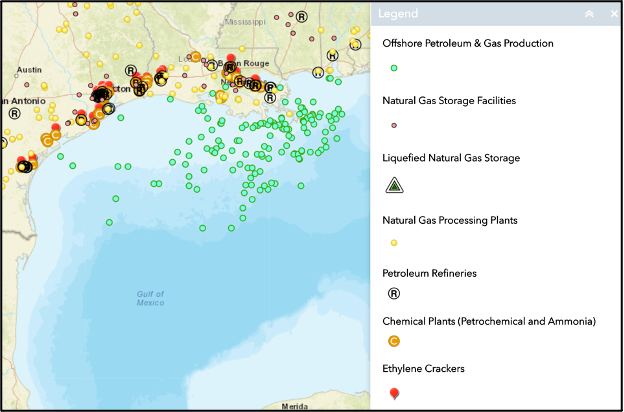
    Black dots indicate facilities in EPA’s 2022 Toxic Release Inventory within Hurricane Milton’s projected impact zone.
    Rice University Center for Coastal Futures and Adaptive Resilience, CC BY-ND

    Helene’s heavy rainfall in late September 2024 flooded industrial sites across the Southeast. A retired nuclear power plant just south of Cedar Key, Florida, was flooded by Helene’s storm surge.

    In disasters like these, the industrial damage can unfold over days, and residents may not hear about releases of toxic chemicals into water or the air until days or weeks later, if they find out at all.

    Yet pollution releases are common.

    After Hurricane Ian broadsided Florida’s western coast in 2022, runoff that included hazardous materials from damaged storage tanks and local fertilizer mining facilities, in addition to millions of gallons of wastewater, was visible from space, spilling across the coastal wetlands into the Gulf of Mexico. A year earlier, Hurricane Ida triggered more than 2,000 reported chemical spills.

    During Hurricane Harvey in 2017, floodwater surrounded chemical facilities near Houston. Some caught fire as cooling systems failed, releasing huge volumes or pollutants into the air. Emergency responders and residents, who didn’t know what risks they might face, blamed the chemicals for causing respiratory illnesses.

    Many types of toxic material can spread, settle and change the long-term health and environmental safety of surrounding communities – often with little notice to residents. Our team of environmental sociologists and anthropologists has mapped hazardous industrial sites across the country and paired them with hurricanes’ projected impact maps to help communities hold nearby facilities accountable.

    Major polluters on Gulf Coast at high risk”

    The risks from industrial facilities are most obvious along the U.S. Gulf Coast, where many major petrochemical complexes are clustered in harm’s way. These refineries, factories and storage facilities are often built along rivers or bays for easy shipping access.

    But those rivers can also bring storm surge flooding that can raise the ocean by several feet during hurricanes. The storm surge from Helene was over 10 feet above ground level in Florida’s Big Bend and over 6 feet in Tampa Bay. With Milton, forecasters warning of a 10- to 15-foot storm surge at Tampa Bay.

    A boom surrounds flooded railcars to try to contain leaks at a chemical plant in Braithwaite, La., after Hurricane Isaac in 2012.
    AP Photo/David J. Phillip

    A recent study found evidence of two to three times more pollution releases during hurricanes in the Gulf of Mexico than during normal weather from 2005 to 2020.

    The effects of these pollution releases fall disproportionately on low-income communities and people of color, further exacerbating environmental health risks.

    Why residents may not hear about toxic releases

    The statistics are disconcerting, yet they get little attention. That is because hazardous releases remain largely invisible due to limited disclosure requirements and scant public information. Even emergency responders often don’t know exactly which hazardous chemicals they are facing in emergency situations.

    The U.S. Environmental Protection Agency requires major polluters to file only very general information about chemicals and on-site risks in their risk management plans. Some large-scale fuel storage facilities, such as those holding liquefied natural gas, are not even required to do that.

    These risk management plans outline “worst-case” scenarios and are supposed to be publicly accessible. But, in reality, we and others have found them difficult to access, heavily redacted and housed in federal reading rooms with limited access. The reason local officials and national scientific review panels often give for the secrecy is to protect the facilities from terrorist attack.

    Oil storage tanks and industrial facilities line the Houston Ship Channel, which is vulnerable to storm surge from Gulf of Mexico hurricanes.
    AP Photo/David J. Phillip

    Adding to this opacity is the fact that many states – including those along the Gulf – suspend restrictions on pollution releases during emergency declarations. Meanwhile, real-time incident notifications from the National Response Center – the federal government’s repository for all chemical discharges into the environment – typically lag by a week or more,

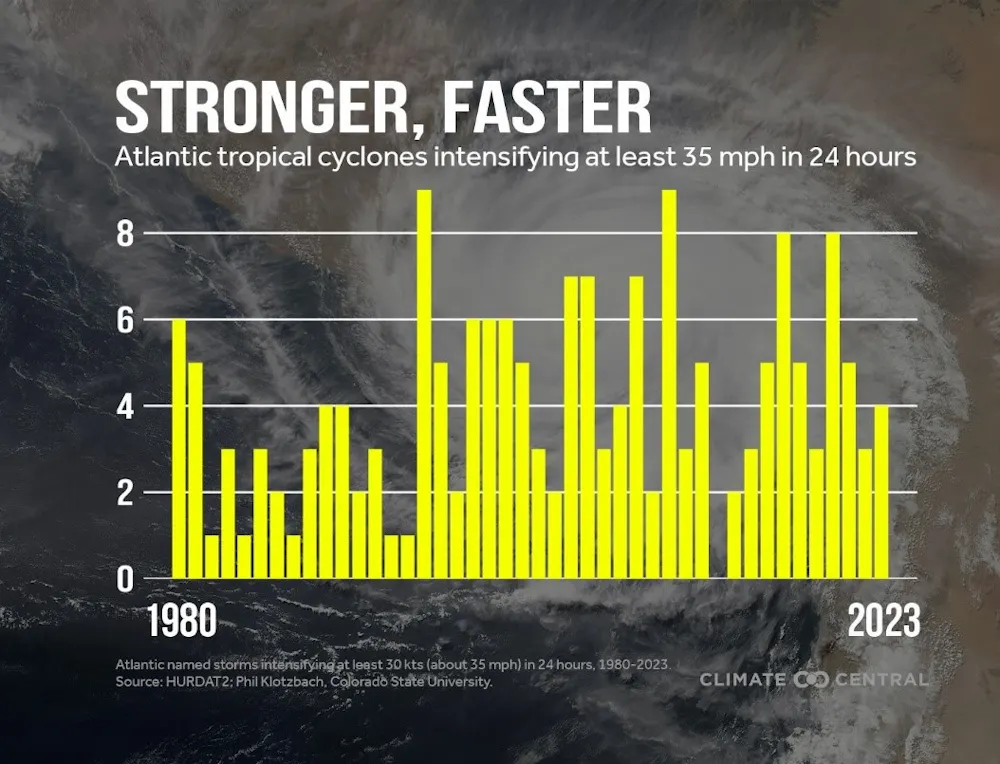
    We believe this limited public information on rising chemical threats from our changing climate should be front-page news every hurricane season. Communities should be aware of the risks of hosting vulnerable industrial infrastructure, particularly as rising global temperatures increase the risk of extreme downpours and powerful hurricanes.

    Mapping the risks nationwide to raise awareness

    To help communities understand their risks, our team at Rice University’s new Center for Coastal Futures and Adaptive Resilience investigates how industrial communities in flood-prone areas nationwide can better adapt to such threats, socially as well as technologically.

    Our interactive map shows where elevated future flood risks threaten to inundate major polluters that we identify using the EPA’s Toxic Release Inventory.

    The U.S. has several hot spots with clusters of flood-prone polluters. Houston’s Ship Channel, Chicago’s waterfront steel industries and the harbors at Los Angeles and New York/New Jersey are among the biggest.

    Three of the biggest hot spots, where large numbers of industrial facilities with toxic materials face elevated future flood risks, are in the Northeast, the northwestern Gulf Coast and the southern end of the Great Lakes.
    Rice University Center for Coastal Futures and Adaptive Resilience, CC BY-ND

    But, as Helene revealed, there can also be great concern in less obvious spots. Inland, particularly in the mountains, runoff can quickly turn normally tame rivers into fast-rising torrents. The French Broad River at Asheville, North Carolina, rose about 12 feet in 12 hours during Helene and set a new flood stage record.

    When hurricanes and tropical storms are headed for the U.S., our interactive maps show where major polluters are located in the storm’s projected cone of impact. The maps identify hazardous flood-prone facilities down to the address, anywhere in the country.

    Knowledge is the first step

    Knowing where these sites are located is only the first step. Often, it’s up to communities themselves, many of them already overexposed and historically underserved, to raise concerns and demand strategies for mitigating the health, economic and environmental risks that industrial sites at risk of flooding and other damage can pose.

    These discussions can’t wait until a disaster is on the way. By knowing where these risks may be, communities can take steps now to build a safer future.

    This article, originally published Sept. 30, has been updated with Hurricane Milton.

    James R. Elliott receives funding from the National Science Foundation and the National Renewable Energy Lab.

    Dominic Boyer receives funding from the National Science Foundation, NOAA and Texas Sea Grant.

    Phylicia Lee Brown has nothing to disclose.

    ref. Flooded industrial sites and toxic chemical releases are a silent, growing threat in hurricanes like Milton and Helene – https://theconversation.com/flooded-industrial-sites-and-toxic-chemical-releases-are-a-silent-growing-threat-in-hurricanes-like-milton-and-helene-239977

    MIL OSI – Global Reports

  • MIL-Evening Report: Will the Earth warm by 2°C or 5.5°C? Either way it’s bad, and trying to narrow it down may be a distraction

    Source: The Conversation (Au and NZ) – By Jonny Williams, Climate Scientist, University of Reading

    Getty Images

    Climate change is usually discussed in terms of rising temperatures.

    But scientists often use a different measure, known as “equilibrium climate sensitivity”. This is defined as the global mean warming caused by a doubling of pre-industrial carbon dioxide (CO₂) levels in the atmosphere.

    We use this measure to describe the range of potential temperature increases on longer timescales, and to compare how well climate models reproduce observed warming.

    But the predicted range of rising temperature has remained stubbornly wide, somewhere between 2°C and 5.5°C of warming, as assessed in several generations of reports issued by the Intergovernmental Panel on Climate Change. This is despite concerted efforts to narrow it down.


    The Intergovernmental Panel on Climate Change has assessed Earth’s climate sensitivity in each of its reports.
    IPCC, CC BY-SA

    Measuring long-term climate sensitivity is central to future predictions, but we are already seeing the effects of warming across the world with extremes in weather, even at the low end of the range. We argue efforts to boil down Earth’s response to climate change to one number may be unhelpful.

    The continued uncertainty could be seen as a failure of climate models to converge on the correct value. Using equilibrium climate sensitivity as a metric for “precisely” predicting the amount of warming expected from a given amount of greenhouse gases is, at best, ambiguous.

    History of climate sensitivity

    About a century before the first computational estimates of Earth’s climate sensitivity were published in 1967, the Swedish physicist and 1903 Nobel laureate Svante August Arrhenius was the first to estimate values at 4-6°C.

    Since the early efforts to model Earth systems, computer simulations have steadily increased in complexity. The first models only simulated the atmosphere, but they have evolved to include vegetation, processes in the ocean and sea ice.

    While undoubtedly beneficial to the understanding of fundamental science, each of these added processes has introduced uncertainties in the models’ warming response.

    Indeed, given the level of complexity (which differs between models) and resolution of some current models, it is not surprising the estimates of climate sensitivity differ so much.

    Self-enforcing feedbacks

    Climate feedbacks are central to our argument that equilibrium climate sensitivity is poorly defined. An example of this is the relationship between ice volume and reflectivity.

    As highly reflective ice melts on land or sea, the underlying surface is exposed and less sunlight reflected back into space. This increases the amount of warming for a given amount of greenhouse gases. It’s what scientists refer to as a positive feedback loop.

    Another such self-enforcing feedback concerns potentially large climate impacts from the release of methane from tropical wetlands and permafrost melt.

    Atmosphere models can’t account for this alone, and when they are coupled with an ice-sheet or sea-ice model, the estimate of climate sensitivity changes.

    Melting permafrost, such as seen here on Svalbard, represents a climate feedback loop, increasing the amount of warming for a given amount of greenhouse gases.
    Getty Images

    Overheated arguments

    It quickly became apparent when studying some recent climate model results that some simulations are producing equilibrium climate sensitivity ranges noticeably higher than before.

    In some models, this has been linked to larger self-enhancing cloud feedbacks and how aerosols are represented.

    There has been some hesitancy to trust the results produced by these models. They are considered “too hot”.

    But we feel these high equilibrium simulations still have value. While we are not arguing they are correct, they force us to consider the what-if situation of very high climate sensitivity, where a doubling of CO₂ would result in warming of 5°C or higher. We know the impact on our environment would be devastating.

    Some view high equilibrium climate sensitivity as more consistent with warmer climates in the past, but others have questioned this.

    There are several reasons why past climate sensitivity may differ from modern conditions. We may be in a different phase of Earth’s orbital cycles or the balance between volcanism and weathering.

    Of course, we should treat all scientific results with caution, but the potential insights gained for uncertain futures are of particular importance when climate change is already being felt across the globe.

    Where to from here?

    We are continually improving our understanding of the climate – how it has changed in the past and how we think it may change in the future. Equilibrium climate sensitivity has consequently become the single solution we are seeking from climate models, even though the precise value will arguably never be known.

    Equilibrium climate sensitivity is undoubtedly a convenient way of distilling future projections. However, it is important not to over-rely on an idealised quantity, because its utility as a useful comparative measure of climate models can give the false impression of a lack of progress in understanding.

    There is similarity with the common misconception of a 50% probability of rainfall in a weather forecast, which is often misinterpreted as forecasters not knowing whether it will rain or not.

    Communicating uncertainty in projections of future climate conditions is a “wicked” problem. But we risk losing perspective of Earth’s system response by focusing on the effort to make climate models agree on one measure. This is not the answer future generations need.

    Jonny Williams receives funding from the Deep South National Science Challenge.

    Georgia Rose Grant receives funding from MBIE Strategic Science Investment Fund.

    ref. Will the Earth warm by 2°C or 5.5°C? Either way it’s bad, and trying to narrow it down may be a distraction – https://theconversation.com/will-the-earth-warm-by-2-c-or-5-5-c-either-way-its-bad-and-trying-to-narrow-it-down-may-be-a-distraction-229497

    MIL OSI AnalysisEveningReport.nz

  • MIL-Evening Report: Republicans once championed immigration in the US. Now, under Trump, an ugly nativism has been normalised

    Source: The Conversation (Au and NZ) – By Prudence Flowers, Senior Lecturer in US History, College of Humanities, Arts, and Social Sciences, Flinders University

    It might seem surprising today in the era of Donald Trump, but Republicans in the United States once championed immigration and supported pathways to citizenship for undocumented Americans.

    In January 1989, Ronald Reagan’s final speech as president was an impassioned ode to the immigrants who made America “a nation forever young, forever bursting with energy and new ideas”.

    Contrast this with Trump, who has normalised dehumanising rhetoric and policies against immigrants. In this year’s presidential campaign, for instance, he has referred to undocumented immigrants as “animals” who are “poisoning the blood of our country”.

    Both Trump and his vice presidential running mate, JD Vance, also repeated a false story about Haitian “illegal aliens” eating pets in Springfield, Ohio.

    Perhaps most troubling, Trump has pledged to launch “the largest deportation operation in the history of our country”, if he’s elected.

    Immigration policies throughout history

    Nativism, or anti-immigrant sentiment, has a long history in American politics.

    In 1924, a highly restrictive immigration quota system based on racial and national origins was introduced. This law envisaged America as a white, Anglo-Saxon, Protestant nation.

    However, there was no restriction on immigrants from the Western Hemisphere. The agricultural and railroad sectors relied heavily on workers from Mexico.

    In 1965, the quota system was replaced by visa preference categories for family and employment-based migrants, along with refugee and asylum slots.

    Then, as violence and economic instability spread across Central America in the 1970s, there was a surge in undocumented immigration to the US.

    Scholar Leo Chavez argues that in the late 1980s and early 1990s, an alarmist “Latino threat narrative” became the dominant motif in media discussions of immigration.

    This narrative was frequently driven by Republican politicians in states on the US-Mexico border, who derived electoral advantage from amplifying voter anxieties.

    The growing popularity of this negative discourse coincided with a significant increase in income inequality – a byproduct of neo-liberal policies championed by Reagan and other Republicans.


    Read more:
    Before Trump, there was a long history of race-baiting, fear-mongering and building walls on the US-Mexico border


    A dramatic shift in Republican rhetoric

    In the early-to-mid 20th century, Democrats were often the party that supported restrictive immigration and border policies.

    However, most Republicans at the national level – strongly supported by business – tended to endorse policies that encouraged the easy flow of workers across the border and increased levels of legal immigration.

    Prominent conservative Republicans also rejected vilifying rhetoric towards undocumented Americans. They presented all immigrants as pursuing opportunities for their families, a framing that emphasised a shared vision of the American dream. In this telling, their labour contributed to the economy and America’s growth and prosperity.

    George H. W. Bush And Ronald Reagan debate immigration in a Republican primary debate in 1980.

    Reagan, the most influential conservative of the late 20th century, opposed erecting a border wall and supported amnesty over deportation.

    Reagan also strongly supported bipartisan immigration reform. In 1986, Congress passed an immigration act that increased border security funding, but also ensured 2.7 million undocumented immigrants, primarily of Latino background, were able to gain legal status.

    Twenty years later, President George W. Bush and Republican Senator John McCain lobbied for a bipartisan bill that would have tightened border enforcement while simultaneously “legalising” an estimated 12 million undocumented immigrants. It was narrowly defeated.

    This vocal support for immigrants by leading Republicans was striking because for much of the period between the late 1980s and the early 2000s, a majority of Americans actually wanted immigration levels reduced.

    Then, around 2009, a dramatic shift in political rhetoric took place. The Tea Party movement brought border security and “racial resentment” towards immigrants centre stage, challenging conservative Republicans from the populist right.

    As a result, more and more Republicans began to voice restrictionist and xenophobic rhetoric and support legislation aimed at cracking down on illegal immigration.

    What’s surprising, though, is the number of undocumented immigrants in the US was actually declining at this time, from 12.2 million in 2007 to 10.7 million in 2016.

    Donald Trump and the new nativism

    In this worsening anti-immigrant climate, Trump descended a golden escalator in mid-2015 to launch his presidential campaign.

    In his speech that day, immigration was front and centre. Trump vowed to “build a great wall” and accused Mexico of sending “rapists” and “criminals” to America.

    His speeches during the presidential campaign were marked by frequent anti-Mexican assertions and calls for Islamophobic visa policies. This hostile stance on immigration was central to his victory in both the Republican primaries and the general election against Hillary Clinton.

    Once in office, Trump then adopted a “zero tolerance” stance towards undocumented immigration. His administration pursued a heartrending family separation policy that split children and their undocumented parents at the border. This approach was celebrated on conservative media outlets such as Fox News.

    During his presidency, he also reduced legal immigration by almost half, drastically cut America’s refugee intake, and introduced bans on people from Muslim-majority countries.

    Policy expert David Bier concluded the goal of Republican lawmakers had shifted:

    It really looks like the entire debate about illegality is not the main issue anymore for Republicans in both chambers of Congress. The main goal seems to be to reduce the number of foreigners in the United States to the greatest extent possible.

    Indeed, Trump’s vision of the nation had overtly racial overtones.

    In one 2018 meeting, he asked why America should accept immigrants from “shithole countries” like Haiti, El Salvador or the African continent. His preference was for Norwegian migrants.

    Immigration as a major election theme

    From 2021–2023, undocumented US-Mexico border crossings surged due to natural disasters, economic downturns and violence in many Latin American and Caribbean nations. Many of the recent arrivals are asylum seekers.

    Though the numbers have fallen sharply in 2024, immigration and the border are still one of the top issues for voters across the political spectrum. The issue is particularly important in the key swing state of Arizona.

    In 2024, Trump’s central immigration promise was encapsulated by the beaming delegates waving signs calling for “Mass Deportations Now” at the Republican National Convention.

    The Trump-Vance ticket has blamed undocumented immigrants for almost every economic and social problem imaginable. The two candidates present them as a dangerous and subversive “other” that cannot be assimilated into mainstream American culture.

    Yet Trump, as both president and candidate, has worked to prevent the passage of border security legislation. Turmoil on the border benefits him.

    And his nativism now encompasses all forms of immigration – he has pledged to curb legal channels for people to enter the country, as well.

    All of this rhetoric has had a dramatic impact on public opinion. Between 2016 and 2024, the number of people supporting the deportation of undocumented immigrants jumped from 32% to 47%.

    In July 2024, 55% of Americans also said they wanted to see immigration levels decrease, a 14-point increase in one year.

    Many Americans do not perceive immigration as a source of vitality and renewal as they had in the past. Instead, reflecting Trump’s language, they are viewing immigrants as an existential threat to the country’s future.

    Prudence Flowers does not work for, consult, own shares in or receive funding from any company or organisation that would benefit from this article, and has disclosed no relevant affiliations beyond their academic appointment.

    ref. Republicans once championed immigration in the US. Now, under Trump, an ugly nativism has been normalised – https://theconversation.com/republicans-once-championed-immigration-in-the-us-now-under-trump-an-ugly-nativism-has-been-normalised-239836

    MIL OSI AnalysisEveningReport.nz

  • MIL-Evening Report: Unprecedented peril: disaster lies ahead as we track towards 2.7°C of warming this century

    Source: The Conversation (Au and NZ) – By Thomas Newsome, Associate Professor in Global Ecology, University of Sydney

    You don’t have to look far to see what climate change is doing to the planet. The word “unprecedented” is everywhere this year.

    We are seeing unprecedented rapidly intensifying tropical storms such as Hurricane Helene in the eastern United States and Super Typhoon Yagi in Vietnam. Unprecedented fires in Canada have destroyed towns. Unprecedented drought in Brazil has dried out enormous rivers and left swathes of empty river beds. At least 1,300 pilgrims died during this year’s Hajj in Mecca as temperatures passed 50°C.

    Unfortunately, we are headed for far worse. The new 2024 State of the Climate report, produced by our team of international scientists, is yet another stark warning about the intensifying climate crisis. Even if governments meet their emissions goals, the world may hit 2.7°C of warming – nearly double the Paris Agreement goal of holding climate change to 1.5°C. Each year, we track 35 of the Earth’s vital signs, from sea ice extent to forests. This year, 25 are now at record levels, all trending in the wrong directions.

    Humans are not used to these conditions. Human civilisation emerged over the last 10,000 years under benign conditions – not too hot, not too cold. But this liveable climate is now at risk. In your grandchild’s lifetime, climatic conditions will be more threatening than anything our prehistoric relatives would have faced.

    Our report shows a continued rise in fossil fuel emissions, which remain at an all-time high. Despite years of warnings from scientists, fossil fuel consumption has actually increased, pushing the planet toward dangerous levels of warming. While wind and solar have grown rapidly, fossil fuel use is 14 times greater.

    This year is also tracking for the hottest year on record, with global daily mean temperatures at record levels for nearly half of 2023 and much of 2024.

    Next month, world leaders and diplomats will gather in Azerbaijan for the annual United Nations climate talks, COP 29. Leaders will have to redouble their efforts. Without much stronger policies, climate change will keep worsening, bringing with it more frequent and more extreme weather.


    Bad news after bad news

    We have still not solved the central problem: the routine burning of fossil fuels. Atmospheric concentrations of greenhouse gases – particularly methane and carbon dioxide – are still rising. Last September, carbon dioxide levels in the atmosphere hit 418 parts per million (ppm). This September, they crossed 422 ppm. Methane, a highly potent greenhouse gas, has been increasing at an alarming rate despite global pledges to tackle it.

    Compounding the problem is the recent decline in atmospheric aerosols from efforts to cut pollution. These small particles suspended in the air come from both natural and human processes, and have helped cool the planet. Without this cooling effect, the pace of global warming may accelerate. We don’t know for sure because aerosol properties are not yet measured well enough.

    Other environmental issues are now feeding into climate change. Deforestation in critical areas such as the Amazon is reducing the planet’s capacity to absorb carbon naturally, driving additional warming. This creates a feedback loop, where warming causes trees to die which in turn amplifies global temperatures.

    Loss of sea ice is another. As sea ice melts or fails to form, dark seawater is exposed. Ice reflects sunlight but seawater absorbs it. Scaled up, this changes the Earth’s albedo (how reflective the surface is) and accelerates warming further.

    In coming decades, sea level rise will pose a growing threat to coastal communities, putting millions of people at risk of displacement.

    Accelerate the solutions

    Our report stresses the need for an immediate and comprehensive end to the routine use of fossil fuels.

    It calls for a global carbon price, set high enough to drive down emissions, particularly from high-emitting wealthy countries.

    Introducing effective policies to slash methane emissions is crucial, given methane’s high potency but short atmospheric lifetime. Rapidly cutting methane could slow the rate of warming in the short term.

    Natural climate solutions such as reforestation and soil restoration should be rolled out to increase how much carbon is stored in wood and soil. These efforts must be accompanied by protective measures in wildfire and drought prone areas. There’s no point planting forests if they will burn.

    Governments should introduce stricter land-use policies to slow down rates of land clearing and increase investment in forest management to cut the risk of large, devastating fires and encourage sustainable land use.

    We cannot overlook climate justice. Less wealthy nations contribute least to global emissions but are often the worst affected by climate disasters.

    Wealthier nations must provide financial and technical support to help these countries adapt to climate change while cutting emissions. This could include investing in renewable energy, improving infrastructure and funding disaster preparedness programs.

    Internationally, our report urges stronger commitments from world leaders. Current global policies are insufficient to limit warming to 1.5°C above pre-industrial levels.

    Without drastic changes, the world is on track for approximately 2.7°C of warming this century. To avoid catastrophic tipping points, nations must strengthen their climate pledges, reduce dependence on fossil fuels, and accelerate the transition to renewable energy.

    Immediate, transformative policy changes are now necessary if we are to avoid the worst effects of climate change.

    Climate change is already here. But it could get much, much worse. By slashing emissions, boosting natural climate solutions and working towards climate justice, the global community can still fend off the worst version of our future.

    Thomas Newsome receives funding from the Australian Research Council. He is immediate past-president of the Australasian Wildlife Management Society and President of the Royal Zoological Society of New South Wales.

    William Ripple receives funding from the CO2 Foundation and University of Oregon donor Roger Worthington.

    ref. Unprecedented peril: disaster lies ahead as we track towards 2.7°C of warming this century – https://theconversation.com/unprecedented-peril-disaster-lies-ahead-as-we-track-towards-2-7-c-of-warming-this-century-240549

    MIL OSI AnalysisEveningReport.nz

  • MIL-Evening Report: Bhutan’s king is set to visit Australia for the first time. Here’s why thousands will line the streets to see him

    Source: The Conversation (Au and NZ) – By Tashi Dema, PhD Candidate in Language and Politics, University of New England

    Deki, a 23-year-old resident of the remote town of Armidale, NSW, has been sleepless with excitement since the Bhutanese embassy in Canberra announced an upcoming visit from Bhutan’s fifth monarch, King Jigme Khesar Namgyel Wangchuck.

    King Jigme Khesar will be visiting from October 10 to 16. It will be his first time in Australia, as well as the first ever visit from a Bhutanese head of state.

    According to Bhutan’s ministry of foreign affairs and external trade, the king will meet with Australian government officials, business leaders and the Bhutanese community during his trip. Audiences with the king are scheduled in Sydney on October 12, Canberra on October 13, and Perth on October 16.

    Deki will be travelling to Sydney by train on October 11 with about 60 people from Armidale’s Bhutanese community. The journey will take more than eight hours. Some residents will fly on the morning of October 12.

    The Armidale residents have practised dances to present to the royal entourage. Their enthusiasm is palpable. With more than 35,000 Bhutanese people living in Australia, the embassy received an overwhelming number of registrations for the royal audience.

    Chhimi Dorji, president of the Association of Bhutanese in Perth, said many Bhutanese residents applied for leave the moment the royal visit was announced. He said the community’s overwhelming excitement signifies a deep love and respect for the king.

    A deep reverence for the king

    Devotion to the king is ingrained in Bhutanese society; he is even considered a sacred figure. This love and respect stems from a view of the monarchy as a symbol of pride and unity.

    My ongoing research on language and politics in Bhutan – as well as the many years I spent working there as a journalist – has revealed a genuine admiration for the king among the public. Research participants in rural Bhutan told me politicians should learn from the king in order to serve their people.

    In 2008, King Jigme Khesar facilitated Bhutan’s transition from an absolute monarchy to a democratic constitutional monarchy. As party politics fragmented the small nation and divided people along party lines, the monarchy was seen as a beacon of hope.

    The Bhutanese public’s devotion to its king defies theories which claim that the concept of the monarchy more broadly is becoming obsolete.

    Serving the people

    One reason King Jigme Khesar is so revered is because of his role in helping to build and advance Bhutan. During the pandemic, he was hailed for implementing pandemic response strategies and for visiting every nook and corner of the country to comfort citizens.

    He has also implemented programs that provide important public services. For instance, Desuung, a volunteer training program that started in 2011, delivers volunteers for a variety of projects such as disaster operations and charity events. Another national service program, Gyalsung, was started this year.

    Currently, the king is planning to develop the world’s first mindfulness city in Gelephu – a southern plain in Bhutan spanning more than 1,000 square kilometres – with hopes to attract foreign investment and encourage emigrated Bhutanese people to return.

    Ahead of the royal visit, Sydney resident Tshering Palden said he and his children were clearly excited to greet King Jigme Khesar.

    Besides other things, I am excited to hear about the developments around Gelephu Mindfulness City and how Bhutanese living abroad like me can be part of His Majesty’s brain child and the long-term nation building […]

    Foreigners are also intrigued and very interested to know about the project and ask us a lot about it.

    The Australian dream

    As a landlocked country that really only made itself known to the world in 1999 (after internet and television were finally introduced), Bhutan is something of an enigma.

    It is touted as the world’s happiest country, largely due to its uptake of a unique metric called “gross national happiness” in the 1970s. In 1972, King Jigme Singye Wangchuck (King Jigme Khesar’s father) proclaimed the country’s gross national happiness was an even more important measure of progress than gross domestic product (GDP).

    Today, however, the tiny Himalayan country of about 800,000 people faces an existential crisis due to widespread unemployment and huge numbers of youth and young professionals moving overseas for a better future.

    Australia remains a top destination for Bhutanese residents – and currently has more Bhutanese diaspora than any country in the world. Bhutan is also said to be Australia’s 14th largest source country for international students.

    But despite living so far away, Bhutanese diaspora in Australia remain deeply rooted to their identity, culture and devotion to the monarchy. Most of them still celebrate the king’s birthday on February 21 each year, as well as Bhutan’s National Day on December 17.

    Meanwhile, Deki – who has portraits of Jigme Khesar in her home in central Bhutan – says being able to meet the king will be a “dream come true”.

    Tashi Dema does not work for, consult, own shares in or receive funding from any company or organisation that would benefit from this article, and has disclosed no relevant affiliations beyond their academic appointment.

    ref. Bhutan’s king is set to visit Australia for the first time. Here’s why thousands will line the streets to see him – https://theconversation.com/bhutans-king-is-set-to-visit-australia-for-the-first-time-heres-why-thousands-will-line-the-streets-to-see-him-239932

    MIL OSI AnalysisEveningReport.nz

  • MIL-Evening Report: Oral vaccines could provide relief for people who suffer regular UTIs. Here’s how they work

    Source: The Conversation (Au and NZ) – By Iris Lim, Assistant Professor in Biomedical Science, Bond University

    9nong/Shutterstock

    In a recent TikTok video, Australian media personality Abbie Chatfield shared she was starting a vaccine to protect against urinary tract infections (UTIs).

    Huge news for the UTI girlies. I am starting a UTI vaccine tonight for the first time.

    Chatfield suffers from recurrent UTIs and has turned to the Uromune vaccine, an emerging option for those seeking relief beyond antibiotics.

    But Uromune is not a traditional vaccine injected to your arm. So what is it and how does it work?

    First, what are UTIs?

    UTIs are caused by bacteria entering the urinary system. This system includes the kidneys, bladder, ureters (thin tubes connecting the kidneys to the bladder), and the urethra (the tube through which urine leaves the body).

    The most common culprit is Escherichia coli (E. coli), a type of bacteria normally found in the intestines.

    While most types of E. coli are harmless in the gut, it can cause infection if it enters the urinary tract. UTIs are particularly prevalent in women due to their shorter urethras, which make it easier for bacteria to reach the bladder.

    Roughly 50% of women will experience at least one UTI in their lifetime, and up to half of those will have a recurrence within six months.

    UTIs are caused by bacteria enterning the urinary system.
    oxo7051/Shutterstock

    The symptoms of a UTI typically include a burning sensation when you wee, frequent urges to go even when the bladder is empty, cloudy or strong-smelling urine, and pain or discomfort in the lower abdomen or back. If left untreated, a UTI can escalate into a kidney infection, which can require more intensive treatment.

    While antibiotics are the go-to treatment for UTIs, the rise of antibiotic resistance and the fact many people experience frequent reinfections has sparked more interest in preventive options, including vaccines.

    What is Uromune?

    Uromune is a bit different to traditional vaccines that are injected into the muscle. It’s a sublingual spray, which means you spray it under your tongue. Uromune is generally used daily for three months.

    It contains inactivated forms of four bacteria that are responsible for most UTIs, including E. coli. By introducing these bacteria in a controlled way, it helps your immune system learn to recognise and fight them off before they cause an infection. It can be classified as an immunotherapy.

    A recent study involving 1,104 women found the Uromune vaccine was 91.7% effective at reducing recurrent UTIs after three months, with effectiveness dropping to 57.6% after 12 months.

    These results suggest Uromune could provide significant (though time-limited) relief for women dealing with frequent UTIs, however peer-reviewed research remains limited.

    Any side effects of Uromune are usually mild and may include dry mouth, slight stomach discomfort, and nausea. These side effects typically go away on their own and very few people stop treatment because of them. In rare cases, some people may experience an allergic reaction.

    How can I access it?

    In Australia, Uromune has not received full approval from the Therapeutic Goods Administration (TGA), and so it’s not something you can just go and pick up from the pharmacy.

    However, Uromune can be accessed via the TGA’s Special Access Scheme or the Authorised Prescriber pathway. This means a GP or specialist can apply for approval to prescribe Uromune for patients with recurrent UTIs. Once the patient has a form from their doctor documenting this approval, they can order the vaccine directly from the manufacturer.

    Antibiotics are the go-to treatment for UTIs – but scientists are looking at options to prevent them in the first place.
    Photoroyalty/Shutterstock

    Uromune is not covered under the Pharmaceutical Benefits Scheme, meaning patients must cover the full cost out-of-pocket. The cost of a treatment program is around A$320.

    Uromune is similarly available through special access programs in places like the United Kingdom and Europe.

    Other options in the pipeline

    In addition to Uromune, scientists are exploring other promising UTI vaccines.

    Uro-Vaxom is an established immunomodulator, a substance that helps regulate or modify the immune system’s response to bacteria. It’s derived from E. coli proteins and has shown success in reducing UTI recurrences in several studies. Uro-Vaxom is typically prescribed as a daily oral capsule taken for 90 days.

    FimCH, another vaccine in development, targets something called the adhesin protein that helps E. coli attach to urinary tract cells. FimCH is typically administered through an injection and early clinical trials have shown promising results.

    Meanwhile, StroVac, which is already approved in Germany, contains inactivated strains of bacteria such as E. coli and provides protection for up to 12 months, requiring a booster dose after that. This injection works by stimulating the immune system in the bladder, offering temporary protection against recurrent infections.

    These vaccines show promise, but challenges like achieving long-term immunity remain. Research is ongoing to improve these options.

    No magic bullet, but there’s reason for optimism

    While vaccines such as Uromune may not be an accessible or perfect solution for everyone, they offer real hope for people tired of recurring UTIs and endless rounds of antibiotics.

    Although the road to long-term relief might still be a bit bumpy, it’s exciting to see innovative treatments like these giving people more options to take control of their health.

    Iris Lim does not work for, consult, own shares in or receive funding from any company or organisation that would benefit from this article, and has disclosed no relevant affiliations beyond their academic appointment.

    ref. Oral vaccines could provide relief for people who suffer regular UTIs. Here’s how they work – https://theconversation.com/oral-vaccines-could-provide-relief-for-people-who-suffer-regular-utis-heres-how-they-work-240437

    MIL OSI AnalysisEveningReport.nz

  • MIL-Evening Report: AI is a multi-billion dollar industry. It’s underpinned by an invisible and exploited workforce

    Source: The Conversation (Au and NZ) – By Ganna Pogrebna, Executive Director, AI and Cyber Futures Institute, Charles Sturt University

    Olena Yakobchuk/Shutterstock

    In dusty factories, cramped internet cafes and makeshift home offices around the world, millions of people sit at computers tediously labelling data.

    These workers are the lifeblood of the burgeoning artificial intelligence (AI) industry. Without them, products such as ChatGPT simply would not exist. That’s because the data they label helps AI systems “learn”.

    But despite the vital contribution this workforce makes to an industry which is expected to be worth US$407 billion by 2027, the people who comprise it are largely invisible and frequently exploited. Earlier this year nearly 100 data labellers and AI workers from Kenya who do work for companies like Facebook, Scale AI and OpenAI published an open letter to United States President Joe Biden in which they said:

    Our working conditions amount to modern day slavery.

    To ensure AI supply chains are ethical, industry and governments must urgently address this problem. But the key question is: how?

    What is data labelling?

    Data labelling is the process of annotating raw data — such as images, video or text — so that AI systems can recognise patterns and make predictions.

    Self-driving cars, for example, rely on labelled video footage to distinguish pedestrians from road signs. Large language models such as ChatGPT rely on labelled text to understand human language.

    These labelled datasets are the lifeblood of AI models. Without them, AI systems would be unable to function effectively.

    Tech giants like Meta, Google, OpenAI and Microsoft outsource much of this work to data labelling factories in countries such as the Philippines, Kenya, India, Pakistan, Venezuela and Colombia.

    China is also becoming another global hub for data labelling.

    Outsourcing companies that facilitate this work include Scale AI, iMerit, and Samasource. These are very large companies in their own right. For example, Scale AI, which is headquartered in California, is now worth US$14 billion.

    Cutting corners

    Major tech firms like Alphabet (the parent company of Google), Amazon, Microsoft, Nvidia and Meta have poured billions into AI infrastructure, from computational power and data storage to emerging computational technologies.

    Large-scale AI models can cost tens of millions of dollars to train. Once deployed, maintaining these models requires continuous investment in data labelling, refinement and real-world testing.

    But while AI investment is significant, revenues have not always met expectations. Many industries continue to view AI projects as experimental with unclear profitability paths.

    In response, many companies are cutting costs which affect those at the very bottom of the AI supply chain who are often highly vulnerable: data labellers.

    Low wages, dangerous working conditions

    One way companies involved in the AI supply chain try to reduce costs is by employing large numbers of data labellers in countries in the Global South such as the Philippines, Venezuela, Kenya and India. Workers in these countries face stagnating or shrinking wages.

    For example, an hourly rate for AI data labellers in Venezuela ranges from between 90 cents and US$2. In comparison, in the United States, this rate is between US$10 to US$25 per hour.

    In the Philippines, workers labelling data for multi-billion dollar companies such as Scale AI often earn far below the minimum wage.

    Some labelling providers even resort to child labour for labelling purposes.

    But there are many other labour issues within the AI supply chain.

    Many data labellers work in overcrowded and dusty environments which pose a serious risk to their health. They also often work as independent contractors, lacking access to protections such as health care or compensation.

    The mental toll of data labelling work is also significant, with repetitive tasks, strict deadlines and rigid quality controls. Data labellers are also sometimes asked to read and label hate speech or other abusive language or material, which has been proven to have negative psychological effects.

    Errors can lead to pay cuts or job losses. But labellers often experience lack of transparency on how their work is evaluated. They are often denied access to performance data, hindering their ability to improve or contest decisions.

    Making AI supply chains ethical

    As AI development becomes more complex and companies strive to maximise profits, the need for ethical AI supply chains is urgent.

    One way companies can help ensure this is by applying a human right-centreed design, deliberation and oversight approach to the entire AI supply chain. They must adopt fair wage policies, ensuring data labellers receive living wages that reflect the value of their contributions.

    By embedding human rights into the supply chain, AI companies can foster a more ethical, sustainable industry, ensuring that both workers’ rights and corporate responsibility align with long-term success.

    Governments should also create new regulation which mandates these practices, encouraging fairness and transparency. This includes transparency in performance evaluation and personal data processing, allowing workers to understand how they are assessed and to contest any inaccuracies.

    Clear payment systems and recourse mechanisms will ensure workers are treated fairly. Instead of busting unions, as Scale AI did in Kenya in 2024, companies should also support the formation of digital labour unions or cooperatives. This will give workers a voice to advocate for better working conditions.

    As users of AI products, we all can advocate for ethical practices by supporting companies that are transparent about their AI supply chains and commit to fair treatment of workers. Just as we reward green and fair trade producers of physical goods, we can push for change by choosing digital services or apps on our smartphones that adhere to human rights standards, promoting ethical brands through social media, and voting with our dollars for accountability from tech giants on a daily basis.

    By making informed choices, we all can contribute to more ethical practices across the AI industry.

    Ganna Pogrebna does not work for, consult, own shares in or receive funding from any company or organisation that would benefit from this article, and has disclosed no relevant affiliations beyond their academic appointment.

    ref. AI is a multi-billion dollar industry. It’s underpinned by an invisible and exploited workforce – https://theconversation.com/ai-is-a-multi-billion-dollar-industry-its-underpinned-by-an-invisible-and-exploited-workforce-240568

    MIL OSI AnalysisEveningReport.nz

  • MIL-Evening Report: More workers are being forced back to the office – yet a new study shows flexibility is the best way to keep employees

    Source: The Conversation (Au and NZ) – By John L. Hopkins, Associate Professor of Management, Swinburne University of Technology

    Gorodenkoff/Shutterstock

    Less than a month after Amazon announced employees would need to give up their flexible work arrangements and return to the office full-time, new research has reinforced the value of a flexible work culture.

    The 2024 Employee Benefits Review, by consultancy firm Mercer, found 89% of Australian organisations still offer the option of working from home, with the average number of mandated office days stable at about three a week, the same as last year.

    In this era of limited pay growth, businesses are also increasingly leveraging flexible work arrangements to attract and retain top talent, enhance employee engagement and foster a positive workplace culture.

    The research shows some Australian workers are even prepared to take a pay cut for the sake of a more flexible work life. This and other findings conflict with a renewed push by some big businesses to get employees back to the office.

    Businesses at odds with the research

    Three weeks ago, Amazon CEO Andy Jassy issued a memo calling all employees back to the office five days a week.

    Up to this point, the return to office (RTO) conversation had largely fallen silent for most of this year. Hybrid work arrangements were generally being accepted as the norm for office workers.

    Amazon’s move has reignited the topic. Shortly after the Amazon announcement, Tabcorp CEO Gillon McLachlan ordered workers back to the office to improve performance and create “a winning culture”.

    However, not everybody supports the idea, here or overseas. Senior executives at Google and Microsoft were quick to distance themselves. They reassured workers hybrid arrangements would stay as long as productivity levels didn’t fall.

    What a new national survey found

    Mercer’s report, released on October 2, is based on data from 502 Australian organisations across all major industry groups and sectors. It found flexible work – when managed well – can contribute to a positive workplace culture. It can also improve diversity and inclusion, while broadening the potential talent pool.

    As well as letting people work from home, the report found 77% of participating firms allow staff to adjust their start and finish times. And 5% let their employees work four days instead of five at the same pay. This is commonly referred to as the 100:80:100 model of a four day work week.

    Many businesses gave employees the flexibility to change their start and finish times.
    Monkey Business Images/Shutterstock

    Four per cent of businesses offered a “compressed working year” – the ability to work the equivalent of 48 weeks in just 40 weeks. Another business was experimenting with letting staff work four years at 80% of salary, and take the fifth year as leave.

    Mercer’s client engagement manager Don Barrera said

    employers need to find the balance between the needs of their employees and the overall business objectives in order to create a benefits strategy that delivers value to all.

    Changing culture

    With flexible work now firmly embedded in many Australian companies, work culture is changing too.

    Just under 60% now define their culture around “work-life balance.” This places greater emphasis on people, but not at the expense of performance.

    This fits with 2021 research identifying positive links between flexibility, employee engagement, productivity and overall performance.

    Workplace Gender Equality Agency research released earlier this year describes flexible work as “the key to workplace gender equality”.

    Other studies have found flexible work increased potential employment opportunities for people with disabilities.

    Flexibility also now extends beyond simply work arrangements. According to the Mercer research, it can include career development, training opportunities, parental leave, part-time work, annual leave, and support for financial wellbeing.

    In recognition of cost-of-living pressures, 65% of organisations now offer health and wellbeing classes and 29% offer financial wellness programs. By broadening the scope of flexibility, businesses can better respond to their workforce’s evolving needs.

    Everyone benefits

    Both employers and employees can benefit from flexibility. For employees, it’s about improving work-life balance, with one-third now willing to forgo a 10% pay rise in favour of flexible, reduced hours, or a compressed work schedule.

    For employers, the benefits are attracting and retaining top talent, fostering a positive workplace culture, and being able to adapt to changing market conditions with a skilled and engaged workforce.

    By understanding the interconnection between these needs, firms can create a work culture that recognises employees have commitments and interests outside work. This can help employees achieve better work-life balance.

    John L. Hopkins does not work for, consult, own shares in or receive funding from any company or organisation that would benefit from this article, and has disclosed no relevant affiliations beyond their academic appointment.

    ref. More workers are being forced back to the office – yet a new study shows flexibility is the best way to keep employees – https://theconversation.com/more-workers-are-being-forced-back-to-the-office-yet-a-new-study-shows-flexibility-is-the-best-way-to-keep-employees-240649

    MIL OSI AnalysisEveningReport.nz

  • MIL-OSI Global: Hurricane Milton explodes into a powerful Category 5 storm as it heads for Florida − here’s how rapid intensification works

    Source: The Conversation – USA – By Zachary Handlos, Atmospheric Science Educator, Georgia Institute of Technology

    Hurricane Milton rapidly intensified into a dangerous Category 5 hurricane on Oct. 7, 2024, as it headed across the Gulf of Mexico toward Florida. Twenty-four hours earlier, it was barely a Category 1 storm.

    As its wind speed increased, Milton became one of the most rapidly intensifying storms on record. And with 180 mph sustained winds and very low pressure, it also became one of the strongest storms on the planet in 2024.

    Less than two weeks after Hurricane Helene’s devastating impact, this kind of storm was the last thing Florida wanted to see. Hurricane Milton was expected to make landfall as a major hurricane late on Oct. 9 or early Oct. 10 and had already prompted widespread evacuations.

    Hurricane Milton’s projected storm track, as of midday Oct. 7, 2024, shows how quickly it grew from formation into a major hurricane (M). Storm tracks are projections, and Milton’s path could shift as it moves across the Gulf of Mexico. The cone is a probable path and does not reflect the storm’s size.
    National Hurricane Center

    So, what exactly is rapid intensification, and what does global climate change have to do with it? We research hurricane behavior and teach meteorology. Here’s what you need to know.

    What is rapid intensification?

    Rapid intensification is defined by the National Weather Service as an increase in a tropical cyclone’s maximum sustained wind speed of at least 30 knots – about 35 mph within a 24-hour period. That increase can be enough to escalate a storm from Category 1 to Category 3 on the Saffir-Simpson scale.

    Milton’s wind speed went from 80 mph to 175 mph from 1 p.m. Sunday to 1 p.m. Monday, and its pressure dropped from 988 millibars to 911.

    The National Hurricane Center had been warning that Milton was likely to become a major hurricane, but this kind of rapid intensification can catch people off guard, especially when it occurs close to landfall.

    Hurricane Michael did billions of dollars in damage in 2018 when it rapidly intensified into a Category 5 storm just before hitting near Tyndall Air Force Base in the Florida Panhandle. In 2023, Hurricane Otis’ maximum wind speed increased by 100 mph in less than 24 hours before it hit Acapulco, Mexico. Hurricane Ian also rapidly intensified in 2022 before hitting just south of where Milton is projected to cross Florida.

    What causes hurricanes to rapidly intensify?

    Rapid intensification is difficult to forecast, but there are a few driving forces.

    • Ocean heat: Warm sea surface temperatures, particularly when they extend into deeper layers of warm water, provide the energy necessary for hurricanes to intensify. The deeper the warm water, the more energy a storm can draw upon, enhancing its strength.
    Sea surface temperatures have been warm in the Gulf of Mexico, where Hurricane Milton was crossing just northwest of the tip of Mexico’s Yucatan Peninsula on Oct. 7, 2024. A temperature of 30 degrees Celsius is equivalent to 86 degrees Fahrenheit.
    NOAA
    • Low wind shear: Strong vertical wind shear – a rapid change in wind speed or direction with height – can disrupt a storm’s organization, while low wind shear allows hurricanes to grow more rapidly. In Milton’s case, the atmospheric conditions were particularly conducive to rapid intensification.

    • Moisture: Higher sea surface temperatures and lower salinity increase the amount of moisture available to storms, fueling rapid intensification. Warmer waters provide the heat needed for moisture to evaporate, while lower salinity helps trap that heat near the surface. This allows more sustained heat and moisture to transfer to the storm, driving faster and stronger intensification.

    • Thunderstorm activity: Internal dynamics, such as bursts of intense thunderstorms within a cyclone’s rotation, can reorganize a cyclone’s circulation and lead to rapid increases in strength, even when the other conditions aren’t ideal.

    Research has found that globally, a majority of hurricanes Category 3 and above tend to undergo rapid intensification within their lifetimes.

    How does global warming influence hurricane strength?

    If it seems as though you’ve been hearing about rapid intensification a lot more in recent years, that’s in part because it’s happening more often.

    The annual number of tropical cyclones in the Atlantic Ocean that achieved rapid intensification each year between 1980-2023 shows an upward trend.
    Climate Central, CC BY-ND

    A 2023 study investigating connections between rapid intensification and climate change found an increase in the number of tropical cyclones experiencing rapid intensification over the past four decades. That includes a significant rise in the number of hurricanes that rapidly intensify multiple times during their development. Another analysis comparing trends from 1982 to 2017 with climate model simulations found that natural variability alone could not explain these increases in rapidly intensifying storms, indicating a likely role of human-induced climate change.

    How future climate change will affect hurricanes is an active area of research. As global temperatures and oceans continue to warm, however, the frequency of major hurricanes is projected to increase. The extreme hurricanes of recent years, including Beryl in June 2024 and Helene, are already raising alarms about the intensifying impact of warming on tropical cyclone behavior.

    Zachary Handlos receives funding from the National Science Foundation. He is affiliated with the American Meteorological Society as the incoming chair of their Board on Higher Education. He is also an academic faculty partner of the Georgia Climate Project.

    Ali Sarhadi receives funding from NSF and Georgia Tech.

    ref. Hurricane Milton explodes into a powerful Category 5 storm as it heads for Florida − here’s how rapid intensification works – https://theconversation.com/hurricane-milton-explodes-into-a-powerful-category-5-storm-as-it-heads-for-florida-heres-how-rapid-intensification-works-240754

    MIL OSI – Global Reports

  • MIL-Evening Report: Should you need a permit to protest? Here’s why that’s a bad idea (and might be unlawful)

    Source: The Conversation (Au and NZ) – By Maria O’Sullivan, Associate Professor of Law, Member of Law as Protection Centre, Deakin Law School, Deakin University

    Australians’ ability to protest has again been in the news this week. Against the background of an armed conflict in the Middle East and rallies nationwide, the government has suggested Australia should establish a permit system for all protests.

    Minister for the NDIS and Government Services Bill Shorten made the suggestion on television this week:

    how the permit system works is it doesn’t stop people protesting, but the purpose of is to look at the circumstances […] I don’t necessarily think it should apply to industrial relations, but for some of these protests we’ve seen week in, week out, I do think that having a permit system would at least straighten it up.

    So what are protest laws like around the country? Do any states or territories have this permit system, and should they? And importantly, what effect to these laws have on the right to protest?

    What are the laws like nationally?

    A permit system to allow protest organisers to hold an “authorised public assembly” operates in most states and territories in Australia. These systems allow police to “authorise” a particular protest and require a written application to police and/or the relevant local council.

    For instance, in New South Wales, people who wish to hold an authorised protest must lodge a “notice of intention to hold a public assembly” with the NSW Police Commissioner.

    Similar provisions also exist in Queensland, where organisers wishing to obtain authorisation for a protest must send a “Notice of Intention to Hold a Public Assembly” form to Queensland Police Service and the local council.

    In Western Australia, organisers may apply for a permit to hold a public meeting and/or procession under the Public Order in Streets Act.

    However, there a significant differences in the detail of these laws. In most states, the permit system simply allows the protest to be “authorised”. This means that while it is not a criminal offence to hold a protest without a permit, it provides a level of protection to protesters from certain criminal charges such as obstructing traffic.

    Victoria does not have a permit system like NSW. Instead, it has laws that enable police to move people on, or to arrest someone for violent or anti-social behaviour.

    However, in Tasmania, a section of the Police Offences Act makes it an offence for a person to organise or conduct a demonstration without a permit if it is to be held, wholly or partly, on a public street. It’s punishable by a fine.

    The period of notification also varies widely. In most states and territories, the lead time is anywhere from five days to two weeks.

    However, in Tasmania, protest organisers are advised to lodge an application with police 12 weeks before the demonstration.

    Finally, the grounds for rejection of a permit can be overly broad. For instance, in South Australia, police and other authorities may reject a permit on the ground that “it would, if effectuated, unduly prejudice any public interest”. The legislation does not set out any criteria for that test.

    Which laws are the best?

    In terms of how these laws compare with one another and which approach is the most preferable, we need to consider two factors: the practicalities of a permit system, and whether allowing government authorities to control protests is advisable.

    In terms of practicalities, the paperwork burden, cost and uncertainty of a mandatory permit system may be unworkable. There could also be ensuing litigation to consider.

    This was starkly demonstrated in 2020 when planned protests against Indigenous deaths in custody were litigated in the NSW Supreme Court.

    In NSW, which has a permit system, the “Stop All Black Deaths in Custody” protest was initially rejected by the NSW Supreme Court but was then declared an authorised public assembly by the NSW Court of Appeal only minutes before the protest was scheduled to start.

    In deciding on the best approach to permits, we must also consider whether it is wise to allow government agencies to give the green light to some protests and disallow others. Will this put too much power into the hands of police and individual judges?

    The human right of protesting

    Here it is relevant to consider Australia’s international human rights treaty obligations, which protect the right to assemble peacefully. United Nations guidance on this right recognises that states can set up notification provisions for protests, but they cannot establish authorisation requirements.

    This means Australia can set up a notification system to allow police to facilitate the smooth conduct of a protest in advance (such as by organising road closures).

    However, this cannot require people to get permission from the police before undertaking a protest. In fact, this international human rights guidance states that having to apply for permission to protest undermines its status as a basic human right.

    More generally, it should be remembered that protests can be spontaneous and should be allowed to be so.

    This is best illustrated by one of the most important acts of protest in Australian history: the Aboriginal Tent Embassy. This was set up spontaneously on January 26 1972 when four Indigenous men set up a beach umbrella on the lawns opposite Parliament House in Canberra as a protest against the government’s approach to Indigenous land rights.

    It stands to this day and is a visual reminder of the power of spontaneous protest, carried out without police permission, and a sober reminder of the importance of protest in our democratic system.

    Maria O’Sullivan is part of a Public Intoxication Reform Evaluation which is funded by the Victorian Department of Justice.

    ref. Should you need a permit to protest? Here’s why that’s a bad idea (and might be unlawful) – https://theconversation.com/should-you-need-a-permit-to-protest-heres-why-thats-a-bad-idea-and-might-be-unlawful-240671

    MIL OSI AnalysisEveningReport.nz

  • MIL-Evening Report: Manawanui sinking: an expert explains why a speedy cleanup will be crucial – and the main challenges ahead

    Source: The Conversation (Au and NZ) – By Christopher Battershill, Professor in Coastal Science, University of Waikato

    HMNZS Manawanui arrives at Devonport Naval Base in 2019 still bearing its original Norwegian name,
    Edda Fonn.
    Getty Images

    Speed will be of the essence as salvage crews attempt to stop fuel leaking from the sunken New Zealand naval ship off the coast of Samoa.

    The HMNZS Manawanui ran aground last weekend on a reef about one nautical mile off the south coast of Upolu, Samoa’s most populated island. The specialist dive and hydrographic vessel was on its third deployment, conducting a reef survey, when it caught fire and sank.

    Manawanui listing on the reef, October 6.
    Samoa Fire and Emergency Services Authority via Facebook

    The ship has come to rest at a depth of up to 150 metres, which means it may be relatively undisturbed even during storms. Any hull cracks from the impact should not be exacerbated.

    But depth makes the salvage operation challenging. Crew may need decompression chambers, and there’s only a narrow window of time to seal any fuel leaks – and, ideally, pipe out more than 900 tonnes of marine diesel the ship carries.

    Fuel leaks the first priority

    The Manawanui’s sinking is a marine disaster. But it arguably poses a lesser risk than the oil spill caused by the container ship MV Rena, which ran aground near the Astrolabe Reef off Tauranga in 2011.

    The Rena was loaded with 1,368 containers, some of which contained hazardous materials, as well as 1,700 tonnes of heavy fuel oil. It also carried thousands of tonnes of dairy products, which effectively fertilised the ocean and caused massive algal blooms, visible from space.

    The fuel oil on board the Manawanui is lighter. Its most toxic short-chain hydrocarbons will likely evaporate with wave action. But if the remaining slick washes up on beaches, it will be harder to remove. During low tides, it will be running onto the reef, likely killing off corals and fish in a swath moving inshore or driven by wind and currents.

    The salvage crew’s first focus will probably be on mitigating fuel leaks. But they will also need to clean up any crushed coral and contaminated sediment around the reef and wreck as quickly as possible, as it may have been exposed to the ship’s anti-fouling paint. In calm weather this would be possible as it’s shallow on the reef crest.

    Ships in the past have been painted with the anti-fouling paint Tributylin. It has now been banned because of its toxicity, but many ships simply painted over it with modern paints. Any damage to the hull could expose old layers. Without a thorough cleanup, this could preclude coral recovery.

    My experience, and that of colleague’s both in New Zealand and in tropical Australia, shows a speedy cleanup can make all the difference for the environmental recovery after ships ground on reefs and sometimes sink.

    When the Malaysian-flagged container ship Bunga Teratai Satu ran into the Sudbury Reef in the Great Barrier Reef in 2001, the vessel was refloated without losing any cargo or fuel. But it had scraped against the reef, spreading tributyltin-coated fragments. The salvage operation cleaned up the toxic material and the coral was on a recovery trajectory within four years.

    In contrast, the sinking of the Shen Neng 1 in 2010 flattened 8,000 square metres of reef east of Great Keppel Island on Queensland’s Capricorn coast. While the ship was also refloated and removed, there was no cleanup and no signs of coral recovery a decade after the disaster.

    Should oil dispersants be used?

    All 75 crew and passengers have been taken off the Manawanui by life rafts and other boats that came to the rescue. A Court of Inquiry is under way to establish exactly what caused the sinking.

    Rescued crew and passengers from Manawanui on Upolu’s southern coast.
    Samoa Fire and Emergency Services Authority via Facebook

    The focus is now on mitigating environmental impacts.

    At this point, there are no signs of oil on the beaches where the vessel sank, but locals are reporting an oil-like substance in the water around the wreck.

    Should fuel oil spill ashore, locals will have to find ways of harnessing the public for the beach cleanup. When the oil slick from the Rena contaminated local beaches, thousands of volunteers helped with the recovery operation.

    Locals will likely also face decisions about using oil dispersants, which break up oil into smaller droplets into the water column.

    At the time of the Rena operation, there was a public outcry against the use of dispersants because they spread the pollution further into the marine environment, and the chemical combination of oil and dispersant can be more toxic than either alone.

    The use of dispersants makes sense however, if an oil spill threatens turtle nesting areas for example, as it did when the cargo ship Pacific Adventurer was caught in a cyclone off Queensland in 2009 and 270 tonnes of oil created a 5.5 kilometre long slick.

    The reef where the Manawanui struck is well known for its large population of sea turtles, which come to feed in the area. They are likely to sense the pollution and eventually stay away, as will pelagic fish.

    Given the area is the local villagers’ food basket and a tourist destination, any deleterious effects on the coastal environment and coral reefs will be keenly felt. As in Aotearoa, the intimate bond between people and the sea is profound. Drawing on past experiences will empower speedy action and hasten ecological restoration.

    Christopher Battershill received funding from the Ministry for the Environment to examine the environmental effects of the MV Rena ship wreck. He is affiliated with the Oil Pollution Advisory Committee and has previously worked with the Australian Institute of Marine Science.

    ref. Manawanui sinking: an expert explains why a speedy cleanup will be crucial – and the main challenges ahead – https://theconversation.com/manawanui-sinking-an-expert-explains-why-a-speedy-cleanup-will-be-crucial-and-the-main-challenges-ahead-240775

    MIL OSI AnalysisEveningReport.nz

  • MIL-Evening Report: An unbroken night’s sleep is a myth. Here’s what good sleep looks like

    Source: The Conversation (Au and NZ) – By Amy Reynolds, Associate Professor in Clinical Sleep Health, Flinders University

    Bricolage/Shutterstock

    What do you imagine a good night’s sleep to be?

    Often when people come into our sleep clinic seeking treatment, they share ideas about healthy sleep.

    Many think when their head hits the pillow, they should fall into a deep and restorative sleep, and emerge after about eight hours feeling refreshed. They’re in good company – many Australians hold the same belief.

    In reality, healthy sleep is cyclic across the night, as you move in and out of the different stages of sleep, often waking up several times. Some people remember one or more of these awakenings, others do not. Let’s consider what a healthy night’s sleep looks like.

    Sleep cycles are a roller-coaster

    As an adult, our sleep moves through different cycles and brief awakenings during the night. Sleep cycles last roughly 90 minutes each.

    We typically start the night with lighter sleep, before moving into deeper sleep stages, and rising again into rapid eye movement (REM) sleep – the stage of sleep often linked to vivid dreaming.

    If sleeping well, we get most of our deep sleep in the first half of the night, with REM sleep more common in the second half of the night.

    Deepest sleep usually happens during the first half of the night.
    Verin/Shutterstock

    Adults usually move through five or six sleep cycles in a night, and it is entirely normal to wake up briefly at the end of each one. That means we might be waking up five times during the night. This can increase with older age and still be healthy. If you’re not remembering these awakenings that’s OK – they can be quite brief.

    What does getting a ‘good’ sleep actually mean?

    You’ll often hear that adults need between seven and nine hours of sleep per night. But good sleep is about more than the number of hours – it’s also about the quality.

    For most people, sleeping well means being able to fall asleep soon after getting into bed (within around 30 minutes), sleeping without waking up for long periods, and waking feeling rested and ready for the day.

    You shouldn’t be feeling excessively sleepy during the day, especially if you’re regularly getting at least seven hours of refreshing sleep a night (this is a rough rule of thumb).

    But are you noticing you’re feeling physically tired, needing to nap regularly and still not feeling refreshed? It may be worthwhile touching base with your general practitioner, as there a range of possible reasons.

    Common issues

    Sleep disorders are common. Up to 25% of adults have insomnia, a sleep disorder where it may be hard to fall or stay asleep, or you may wake earlier in the morning than you’d like.

    Rates of common sleep disorders such as insomnia and sleep apnoea – where your breathing can partially or completely stop many times during the night – also increase with age, affecting 20% of early adults and 40% of people in middle age. There are effective treatments, so asking for help is important.

    Beyond sleep disorders, our sleep can also be disrupted by chronic health conditions – such as pain – and by certain medications.

    There can also be other reasons we’re not sleeping well. Some of us are woken by children, pets or traffic noise during the night. These “forced awakenings” mean we may find it harder to get up in the morning, take longer to leave bed and feel less satisfied with our sleep. For some people, night awakenings may have no clear cause.

    A good way to tell if these awakenings are a problem for you is by thinking about how they affect you. When they cause feelings of frustration or worry, or are impacting how we feel and function during the day, it might be a sign to seek some help.

    If waking up in the night is interfering with your normal day-to-day activities, it may indicate a problem.
    BearFotos/Shutterstock

    We also may struggle to get up in the morning. This could be for a range of reasons, including not sleeping long enough, going to bed or waking up at irregular times – or even your own internal clock, which can influence the time your body prefers to sleep.

    If you’re regularly struggling to get up for work or family needs, it can be an indication you may need to seek help. Some of these factors can be explored with a sleep psychologist if they are causing concern.

    Can my smart watch help?

    It is important to remember sleep-tracking devices can vary in accuracy for looking at the different sleep stages. While they can give a rough estimate, they are not a perfect measure.

    In-laboratory polysomnography, or PSG, is the best standard measure to examine your sleep stages. A PSG examines breathing, oxygen saturation, brain waves and heart rate during sleep.

    Rather than closely examining nightly data (including sleep stages) from a sleep tracker, it may be more helpful to look at the patterns of your sleep (bed and wake times) over time.

    Understanding your sleep patterns may help identify and adjust behaviours that negatively impact your sleep, such as your bedtime routine and sleeping environment.

    And if you find viewing your sleep data is making you feel worried about your sleep, this may not be useful for you. Most importantly, if you are concerned it is important to discuss it with your GP who can refer you to the appropriate specialist sleep health provider.

    Amy Reynolds receives funding from the National Health and Medical Research Council, the Medical Research Future Fund, the Australian Research Council, the Lifetime Support Authority, and has received consulting and/or speaker fees from industry-funded sources including Compumedics, Teva Pharmaceuticals and Sydney Trains.

    Claire Dunbar received funding from The Hospital Research Foundation for their PhD Scholarship and previously from Flinders University development grants.

    Hannah Scott receives research funding from Re-Time Pty Ltd, Compumedics Ltd, the American Academy of Sleep Medicine Foundation, and Flinders University.

    Nicole Lovato receives funding from the Australian Research Council, the National Health and Medical Research Council, the Medical Research Future Fund, the Hospital Research Foundation, the Lifetime Support Authority, and industry including ResMed, Phillips, and ReTime.

    Gorica Micic does not work for, consult, own shares in or receive funding from any company or organisation that would benefit from this article, and has disclosed no relevant affiliations beyond their academic appointment.

    ref. An unbroken night’s sleep is a myth. Here’s what good sleep looks like – https://theconversation.com/an-unbroken-nights-sleep-is-a-myth-heres-what-good-sleep-looks-like-238069

    MIL OSI AnalysisEveningReport.nz

  • MIL-Evening Report: I have a stuffy nose, how can I tell if it’s hay fever, COVID or something else?

    Source: The Conversation (Au and NZ) – By Deryn Thompson, Eczema and Allergy Nurse; Lecturer, University of South Australia

    Lysenko Andrii/Shutterstock

    Hay fever (also called allergic rhinitis) affects 24% of Australians. Symptoms include sneezing, a runny nose (which may feel blocked or stuffy) and itchy eyes. People can also experience an itchy nose, throat or ears.

    But COVID is still spreading, and other viruses can cause cold-like symptoms. So how do you know which one you’ve got?

    Remind me, how does hay fever cause symptoms?

    Hay fever happens when a person has become “sensitised” to an allergen trigger. This means a person’s body is always primed to react to this trigger.

    Triggers can include allergens in the air (such as pollen from trees, grasses and flowers), mould spores, animals or house dust mites which mostly live in people’s mattresses and bedding, and feed on shed skin.

    When the body is exposed to the trigger, it produces IgE (immunoglobulin E) antibodies. These cause the release of many of the body’s own chemicals, including histamine, which result in hay fever symptoms.

    People who have asthma may find their asthma symptoms (cough, wheeze, tight chest or trouble breathing) worsen when exposed to airborne allergens. Spring and sometimes into summer can be the worst time for people with grass, tree or flower allergies.

    However, animal and house dust mite symptoms usually happen year-round.

    Ryegrass pollen is a common culprit.
    bangku ceria/Shutterstock

    What else might be causing my symptoms?

    Hay fever does not cause a fever, sore throat, muscle aches and pains, weakness, loss of taste or smell, nor does it cause you to cough up mucus.

    These symptoms are likely to be caused by a virus, such as COVID, influenza, respiratory syncytial virus (RSV) or a “cold” (often caused by rhinoviruses). These conditions can occur all year round, with some overlap of symptoms:


    Natasha Yates/The Conversation

    COVID still surrounds us. RSV and influenza rates appear higher than before the COVID pandemic, but it may be due to more testing.

    So if you have a fever, sore throat, muscle aches/pains, weakness, fatigue, or are coughing up mucus, stay home and avoid mixing with others to limit transmission.

    People with COVID symptoms can take a rapid antigen test (RAT), ideally when symptoms start, then isolate until symptoms disappear. One negative RAT alone can’t rule out COVID if symptoms are still present, so test again 24–48 hours after your initial test if symptoms persist.

    You can now test yourself for COVID, RSV and influenza in a combined RAT. But again, a negative test doesn’t rule out the virus. If your symptoms continue, test again 24–48 hours after the previous test.

    If it’s hay fever, how do I treat it?

    Treatment involves blocking the body’s histamine release, by taking antihistamine medication which helps reduce the symptoms.

    Doctors, nurse practitioners and pharmacists can develop a hay fever care plan. This may include using a nasal spray containing a topical corticosteroid to help reduce the swelling inside the nose, which causes stuffiness or blockage.

    Nasal sprays need to delivered using correct technique and used over several weeks to work properly. Often these sprays can also help lessen the itchy eyes of hay fever.

    Drying bed linen and pyjamas inside during spring can lessen symptoms, as can putting a smear of Vaseline in the nostrils when going outside. Pollen sticks to the Vaseline, and gently blowing your nose later removes it.

    People with asthma should also have an asthma plan, created by their doctor or nurse practitioner, explaining how to adjust their asthma reliever and preventer medications in hay fever seasons or on allergen exposure.

    People with asthma also need to be alert for thunderstorms, where pollens can burst into tinier particles, be inhaled deeper in the lungs and cause a severe asthma attack, and even death.

    What if it’s COVID, RSV or the flu?

    Australians aged 70 and over and others with underlying health conditions who test positive for COVID are eligible for antivirals to reduce their chance of severe illness.

    Most other people with COVID, RSV and influenza will recover at home with rest, fluids and paracetamol to relieve symptoms. However some groups are at greater risk of serious illness and may require additional treatment or hospitalisation.

    For RSV, this includes premature infants, babies 12 months and younger, children under two who have other medical conditions, adults over 75, people with heart and lung conditions, or health conditions that lessens the immune system response.

    For influenza, people at higher risk of severe illness are pregnant women, Aboriginal people, people under five or over 65 years, or people with long-term medical conditions, such as kidney, heart, lung or liver disease, diabetes and decreased immunity.

    If you’re concerned about severe symptoms of COVID, RSV or influenza, consult your doctor or call 000 in an emergency.

    If your symptoms are mild but persist, and you’re not sure what’s causing them, book an appointment with your doctor or nurse practitioner. Although hay fever season is here, we need to avoid spreading other serious infectious.

    For more information, you can call the healthdirect helpline on 1800 022 222 (known as NURSE-ON-CALL in Victoria); use the online Symptom Checker; or visit healthdirect.gov.au or the Australian Society of Clinical Immunology and Allergy.

    Deryn Thompson is affiliated with Loreal, Ego Pharmaceuticals and Quality Use of Medicines Alliance having received honorariums for educational talks or advisory work.

    ref. I have a stuffy nose, how can I tell if it’s hay fever, COVID or something else? – https://theconversation.com/i-have-a-stuffy-nose-how-can-i-tell-if-its-hay-fever-covid-or-something-else-240453

    MIL OSI AnalysisEveningReport.nz

  • MIL-Evening Report: Grave cleaning videos are going viral on TikTok. Are they honouring the dead, or exploiting them?

    Source: The Conversation (Au and NZ) – By Edith Jennifer Hill, Associate Lecturer, Learning & Teaching Innovation, Flinders University

    Shutterstock

    Cleaning the graves of strangers is the latest content trend taking over TikTok. But as millions tune in to watch the videos, it’s becoming clear not all of them are created equal. Two grave-cleaning creators in particular seem to reside at opposite ends of the trend.

    One of the first accounts to gain popularity for grave cleaning was @ladytaphos. This account is run by Alicia Williams, a Virginia resident who treats the graves with great dignity. Williams will often share the story of the person residing within, and acts with grace and kindness as she restores beauty to the graves.

    On the other end of the spectrum is Kaeli Mae McEwen, or @the_clean_girl, who leans into more clickbait-y tactics. McEwen is known for throwing a pink spiky ball through a graveyard and cleaning the grave it lands on. She also uses her videos to promote her own pink foamy cleaner (which at one point could be purchased via a link in her bio).

    Cleaning and death

    While Williams’ and McEwen’s videos may seem novel to some, death and cleaning have a long and varied relationship that spans time and cultures.

    Washing a loved one’s body before burial or cremation isn’t just practical – it’s a significant ritual that provides meaning during a period of grief. In certain cultures and religions it’s also a process of purification, or preparation for the afterlife.

    Much has been written about cleaning and clearing out the homes of deceased people. Family members often won’t agree on how to approach such a task. In his essay on death and objects, author Tony Birch writes about his mother clearing out his grandmother’s house.

    “My mother decided that our first task after her death was to empty out her Housing Commission flat and scrub it clean,” Birch writes.

    He first laments the move, but later recognises the value of cleaning together before sorting – and treasuring – the items his grandmother left behind.

    Grave cleaning is a practice steeped in history.
    Shutterstock

    Margaretta Magnuson’s 2017 book, The Gentle Art of Swedish Death Cleaning, is a humorous and thoughtful introduction to the Swedish movement of döstädning. The book (and subsequent reality TV series) has sparked various conversations on death and cleaning, and especially on cleaning before you yourself pass away so you don’t leave a mess for your loved ones.

    Grave cleaning can be seen as another continuation of caring for the deceased. People who decide to clean the graves of strangers may do so out of respect, or in an attempt to give them “their name back” (as names on graves become visible following the removal of debris).

    Two very different approaches

    Williams and McEwen are received quite differently by viewers. Anecdotally, viewers respond more positively to the calmer and more respectful cleaning videos by Williams, who takes time to explain the process while ensuring the correct products are used.

    Meanwhile, many find McEwen’s videos problematic and criticise her for not adhering to proper graveyard decorum. McEwen makes a spectacle of sites of mourning, such as by pretending to vacuum graves, replacing flowers placed by others and making jokes. Viewers also speculate the products she uses may cause damage to the graves.

    Perceived intent plays a role in how each creator’s content is received. While Williams focuses on respectfully restoring graves to their former glory, McEwen positions herself as the focus and merely uses the graves for content.

    A complex emotional object

    Similar to other funerary objects such as coffins and urns, graves are associated with both the person who died and the fact of their death. As such, they are emotionally complex objects that bring both strength and sadness to those left behind.

    But graves are unique also in that they are private objects of grief exposed in a public context. Anyone visiting the graveyard can view and interact with them. Does that make them “fair game” for content creators?

    Graves don’t just represent deceased loves ones. They can also act as stand-ins in their absence, becoming stone bodies of sorts. As sociologist Margaret Gibson describes in her book Objects of the Dead: Mourning and Memory in Everyday Life, “death reconstructs our experience of objects”.

    “There is the strangeness of realising that things have outlived persons, and, in this regard, the materiality of things is shown to be more permanent than the materiality of the body,” she says.

    Caring for and cleaning graves can therefore be interpreted as caring for the deceased, by extending their existence through the materiality of their resting place.

    Psychological researcher Svend Brinkmann asserts artefacts such as graves are “culturally sanctioned”, gaining “significance from a collective system of meaning”.

    In other words, we as a community create and uphold reverence for such items. This is partly why the desecration of graves is viewed as abhorrent. It is societally understood to be a desecration of the person themselves. It’s also why content creators must tread lightly.

    A reason for haunting?

    There are ways to interact with gravestones (and even create content) which acknowledge their complexity and connection to their owners.

    TikTok creator Rosie Grant (@ghostlyarchive) bakes recipes found on headstones and records the process. She has even met with the families of the deceased to make the recipes together and learn more about the people behind the engraving-worthy food.

    However, randomly cleaning the graves of strangers is fraught territory – and rife with potential privacy issues. It isn’t clear whether McEwen seeks permission from loved ones before cleaning graves, but contextually this seems unlikely.

    Recent discussions have also uncovered questionable editing in her videos. Some graves in her before-and-after videos have been edited to appear cleaner and to have their structure altered. McEwen’s pink foaming cleaner also appears to be a blue cleaner edited to appear pink, raising even more questions about intent and responsibility.

    While McEwen claims to be “honouring” lives by cleaning “final resting places”, the consensus from viewers is her actions are dishonourable. As one host commented on a in podcast discussing McEwen cleaning a baby’s grave while speaking in a kiddish voice: “Fuck you, you’re going to get haunted.”

    The authors do not work for, consult, own shares in or receive funding from any company or organisation that would benefit from this article, and have disclosed no relevant affiliations beyond their academic appointment.

    ref. Grave cleaning videos are going viral on TikTok. Are they honouring the dead, or exploiting them? – https://theconversation.com/grave-cleaning-videos-are-going-viral-on-tiktok-are-they-honouring-the-dead-or-exploiting-them-240553

    MIL OSI AnalysisEveningReport.nz

  • MIL-Evening Report: Productivity is often mistaken for wages. What does it really mean? How does it work?

    Source: The Conversation (Au and NZ) – By David Peetz, Laurie Carmichael Distinguished Research Fellow at the Centre for Future Work, and Professor Emeritus, Griffith Business School, Griffith University

    Alexey_Rezvykh/Shutterstock

    Australia’s productivity growth has reverted to the same stagnant pattern as before the pandemic, according to the Productivity Commission’s latest quarterly report.

    Productivity is complex and often misunderstood in media and policy debates. So before we read too much into this latest data, here are six key things to understand about productivity.

    1. It’s about quantities, not costs

    Productivity “measures the rate at which output of goods and services are produced per unit of input”. So it’s about how many workers does it take to make how many widgets?

    Most Australian workplace managers don’t know how to measure productivity correctly.

    If someone says “higher wages mean lower productivity”, they don’t know what they’re talking about. Wages aren’t part of the productivity equation. People often cite “productivity” as a reason for a policy they like because they can’t say “we like higher profits”.

    In fact, high wages can encourage firms to introduce new technology that improves productivity. If labour becomes more expensive, it may be more profitable for firms to invest in labour-saving technology.

    But lower productivity isn’t always a bad thing. Sometimes higher selling prices can lower productivity. It seems odd, but works like this: if prices for commodities such as iron ore or coal are high, it becomes profitable for mining companies to dig through more rock to get to it.

    This takes more time. But it’s now worth extracting these small quantities, because they’re so valuable. For this reason, with high commodity prices, mining labour productivity fell by 13% between 2019-20 and 2022-23. Mining productivity had the largest negative impact on national productivity growth in 2022-23.

    2. Productivity is directed by management, not workers

    The biggest single factor that shapes productivity is technology. Who’s responsible for what technology a business introduces? Management. Workers often don’t have much of a say.

    OECD research suggests new technology such as artificial intelligence (AI) meets lower resistance from employees when they are consulted over its introduction. That’s because new technology makes their firms more competitive and they want to keep their jobs.

    Not surprisingly, there’s lots of research showing management that engages and consults workers gets greater output.

    Output will also be better with an educated and skilled workforce. If people can do more things with their brains, they’ll be more productive.

    3. Measuring productivity is dodgier the more complex it gets

    Measuring labour productivity – output per unit of labour input – is fairly straightforward if you’ve got a single output that is sold in a free market, and you’re looking at a single input (labour). It’s not hard to measure, or describe, the number of cars produced per worker in a week.

    It gets very tricky when you’re looking at multi-factor productivity (output per unit of, say, labour-and-capital input). Economists can’t even describe the denominator. (What even is a unit of “labour-and-capital”?) So they express what they measure as an index (giving it a value of 100 in some base year). All sorts of bold assumptions get made.

    Estimates are highly creative. In its report, the Productivity Commission looked at revisions to quarterly growth figures and found productivity estimates are “constantly being revised”.

    On almost a third of occasions, initial estimates are out by 0.5 percentage points or more. When your estimate is that productivity increased by 0.5% – the number for the year to this June quarter – the potential for error is huge.

    Even more creative assumptions are made when you try to measure productivity in the public sector, when the market is not the aim.

    Productivity is higher in classrooms when there are fewer teachers per student. At least, the bean-counters will tell you that, but the students will tell you the opposite.

    So you should be very wary when someone says the “productivity challenge is […] greater and more pressing in the non-market sector”, when the meaning is so contested.

    4. It is best measured over long periods

    Productivity growth is so erratic, that you can tell very little from one quarter’s figures. “Revise, revise, revise again”, as the PC report said.

    Often the best thing to do, as the Australian Bureau of Statistics recognised long ago is to average it over the whole of a “growth cycle”, that is, between one peak of growth and the next.

    Trouble is, growth cycles vary in length, and the end point is not easy to pick when it happens, only later.


    Growth averaged over a long period is a lot more meaningful than growth measured over a short period. At least the Productivity Commission showed five-year averages alongside it’s latest quarterly estimates. But chances are your start date will be at a different stage in the growth cycle to your end date, so it’s not that good a measure.

    5. Productivity is falling here and overseas

    In Australia, productivity growth has been on a long-term decline since the 1960s, with a brief, unsustained upturn in the mid 1990s.

    That pattern gives pause for thought: if big reforms to competition policy, industrial relations and wage fixing were aimed at improving productivity growth, why was that unsustainable, and why did it then continue to decline? It pays to remember that a lot of reforms people advocate in the name of productivity growth have quite different aims and effects anyway.

    Internationally, the picture is not much different.

    Productivity growth across industrialised countries has unevenly but gradually declined since the 1950s and 1960s. The world-wide adoption of what were often called neoliberal reforms from the 1980s failed to improve productivity growth.

    6. Productivity growth once drove living standards. Not any more

    In theory, higher labour productivity enables higher living standards. In practice, that is driven by the ability of workers to negotiate for higher wages.


    It depends on how you measure it and what years you focus on, but from at least the early 2010s, productivity growth was much faster than hourly compensation per employee.

    Again, it’s not just Australia. The OECD calls this the “decoupling” of wages and productivity.

    Just because something can increase potential earnings growth, it does not follow that it will.

    As a university employee and since then, David Peetz has undertaken research over many years with occasional financial support from governments from both sides of politics, employers and unions. He has been and is involved in several Australian Research Council-funded and approved projects, some of which included contributions from an employer body, a superannuation fund, and two unions. The projects do not concern the subject matter of this article.

    ref. Productivity is often mistaken for wages. What does it really mean? How does it work? – https://theconversation.com/productivity-is-often-mistaken-for-wages-what-does-it-really-mean-how-does-it-work-240113

    MIL OSI AnalysisEveningReport.nz

  • MIL-Evening Report: 700 million plastic bottles: we worked out how much microplastic is in Queensland’s Moreton Bay

    Source: The Conversation (Au and NZ) – By Elvis Okoffo, PhD candidate in Environmental Science, The University of Queensland

    M-Productions/Shutterstock

    When it rains heavily, plastic waste is washed off our streets into rivers, flowing out to the ocean. Most plastic is trapped in estuaries and coastal ecosystems, with a small fraction ending up offshore in the high seas.

    In the coastal ocean, waves and tides break down plastic waste into smaller and smaller bits. These micro and nanoplastics linger in the environment indefinitely, impacting the health of marine creatures from microorganisms all the way up to seabirds and whales, which mistake them for food.

    When we look at the scale of the problem of microplastics (smaller than 5mm) and nanoplastics (defined as 1 micrometer or less), we find something alarming. Our new research shows the shallow embayment of Moreton Bay, off Brisbane in Southeast Queensland now has roughly 7,000 tonnes of accumulated microplastics, the same as 700 million half-litre plastic bottles.

    This bay accumulates plastics fast, as the Brisbane River funnels the city’s waste into it, along with several other urban rivers. The research hasn’t yet been done, but we would expect similar rates of microplastics in Melbourne’s Port Phillip Bay and Sydney Harbour.

    Our research shows how much plastic waste from a big city makes it into its oceans.

    Brisbane’s Moreton Bay has mangroves and seagrass meadows as well as a port and many urban rivers.
    Ecopix/Shutterstock

    Plastic buildup in Moreton Bay

    What volume of microplastics does a large city accumulate offshore? It’s hard to measure this for cities built on open coastlines. That’s because sediments and microplastics are rapidly washed away from the original source by waves and currents.

    But Moreton Bay is different. The large sand islands, Moreton (Mugulpin) and North Stradbroke (Minjerribah) Islands largely protect the bay from the open ocean. This is why the bay is better described as an enclosed embayment. These restricted bays act as a trap for sediments and pollutants, as waves and currents have limited ability to wash them out. These bays make it possible to accurately measure a city’s microplastic build-up.

    The bay supports a range of marine habitats from mangroves, seagrass and coral reefs, as well as an internationally recognised wetland for migrating seabirds. Dugong and turtles have long grazed the seagrass in Moreton Bay’s shallow protected waters, while dolphins and whales are also present. But microplastic buildup may threaten their existence.

    Most types of plastic are denser than water, which means most microplastics in coastal seas will eventually sink to the seafloor and accumulate in sediment. Mangroves and seagrass ecosystems are particularly good at trapping sediment, which means they trap more microplastics.

    We wanted to determine whether Moreton Bay’s varying ecosystems had accumulated different amounts of plastics in the sediment.

    We measured the plastic stored in 50 samples of surface sediment (the top 10cm) from a range of different ecosystems across Moreton Bay, including mangroves, seagrass meadows and mud from the main tidal channels.

    The result? Microplastics were present in all our samples, but their concentrations varied hugely. We found no clear pattern in how plastics had built up. This suggests plastics were entering the bay from many sources.

    We tested for seven common plastics: polycarbonate (PC), polyethylene (PE), polyethylene terephthalate (PET), poly (methyl methacrylate) (PMMA), polypropylene (PP), polystyrene (PS), and polyvinyl chloride (PVC).

    Of these, the most abundant microplastic was polyethylene (PE). This plastic is widely used for single-use plastic items such as chip packets, plastic bags and plastic bottles. It’s the most commonly produced and used plastic in Australia and globally.

    In total, we estimate the bay now holds about 7,000 tonnes of microplastic in its surface sediments.

    In our follow-up paper we explored how rapidly these plastics had built up over time. We took two sediment cores from the central part of the bay, where sediment is accumulating. Cores like this act as an archive of sediment and environmental changes over time.

    The trend was clear. Before the 1970s, there were no microplastics in Moreton Bay. They began appearing over the next three decades. But from the early 2000s onwards, the rate rose exponentially. This is in line with the soaring rate of plastic production and use globally. Our analysis shows a direct link between microplastic concentration and population growth in Southeast Queensland.

    The challenge of measuring microplastics

    To date, we have had limited knowledge of how much plastic is piling up on shallow ocean floors. This is because measuring microplastics is challenging. Traditionally, we’ve used observation by microscope and a technique called absorption spectroscopy, in which we shine infrared light on samples to determine what it’s made up of. But these methods are time-consuming and can only spot plastic particles larger than 20 micrometres, meaning nanoplastics weren’t being measured.

    Our research team has been working to get better estimates of microplastic and nanoplastic using a different technique: pyrolysis-gas chromatography mass spectrometry. Here, a sample is dissolved in a solvent and then heated until it vaporises. Once in vapour form, we can determine the concentration of plastic and what types of plastics are present.

    This method can be used to estimate how much plastic pollution is present in everything from water to seafood to biosolids and wastewater.

    What’s next?

    It’s very likely microplastics are building up rapidly in other restricted bays and harbours near large cities, both in Australia and globally.

    While we might think microplastics are safe once buried in sediment, they can be consumed by organisms that live in the sediments. Currents, tides and storms can also wash them out again, where marine creatures can eat them.

    This is not a problem that will solve itself. We’ll need clear management strategies and policies to cut plastic consumption and improve waste disposal. Doing nothing means microplastics will keep building up, and up, and up.

    Elvis Okoffo receives funding from the Goodman Foundation, The Australian Academy of Science and The Australian Research Council (ARC) Training Centre for Hyphenated Analytical Separation Technologies (HyTECH).

    Alistair Grinham has received funding from state and federal government, industry and NGOs. He has an honorary role at the University and works for environmental monitoring company Fluvio.

    Ben Tscharke receives funding from the Australian Criminal Intelligence Commission and the Australian Research Council.

    Helen Bostock receives funding from the Australian Research Council.

    Kevin Thomas receives funding from the Australian Criminal Intelligence Commission, Australian Research Council, Goodman Foundation, Minderoo Foundation, National Health and Medical, Research Council, Queensland Corrective Services, Queensland Health and Research Council of Norway.

    ref. 700 million plastic bottles: we worked out how much microplastic is in Queensland’s Moreton Bay – https://theconversation.com/700-million-plastic-bottles-we-worked-out-how-much-microplastic-is-in-queenslands-moreton-bay-238892

    MIL OSI AnalysisEveningReport.nz

  • MIL-Evening Report: Australia will protect a vast swathe of the Southern Ocean, but squanders the chance to show global leadership

    Source: The Conversation (Au and NZ) – By Andrew J Constable, Adviser, Antarctica and Marine Systems, Science & Policy, University of Tasmania

    The Albanese government has today declared stronger protections for the waters around Heard Island and McDonald Islands, one of Australia’s wildest, most remote areas. The marine park surrounding the islands will be extended by 310,000 square kilometres, quadrupling its size.

    Announcing the decision, Environment Minister Tanya Plibersek said Heard Island and McDonald Islands – about 4,000 kilometres southwest of Perth – are a “unique and extraordinary part of our planet. We are doing everything we can to protect it.”

    But the announcement, while welcome, is a missed opportunity on several fronts.

    Important areas around the islands remain unprotected, despite a wealth of scientific evidence pointing to the need for safeguards. On this measure, the government could have done far more to protect this unique wildlife haven.

    A special place

    Heard Island and McDonald Islands are a crucial sanctuary for marine life in the Southern Ocean. The land and surrounding waters support a food chain ranging from tiny plankton to fish, invertebrates, seabirds and marine mammals such as elephant seals and sperm whales.

    Both the marine and land environments of the islands are globally recognised for their ecological significance, and include species not found elsewhere in Australia.

    In 2002, a marine reserve was declared over the islands and parts of the surrounding waters. The reserve was extended in 2014.

    The expansion announced today means most waters around the islands have protection. The new safeguards primarily extend to foraging areas for seals, penguins and flying birds such as albatrosses.

    The expansion covers some deep water areas but excludes important deeper water locations including underwater canyons and seamounts, and a feature known as Williams Ridge.

    This is an important oversight that compromises the strength of the expanded protections.

    The protections do not extend to an important undersea feature known as William’s Ridge.

    The science is clear

    In March this year, my colleagues and I released a report showing existing protections for Heard Island and McDonald Islands were no longer adequate and should urgently be expanded.

    The report drew on more than two decades’ of research and new scientific understanding. In particular, we found climate change was warming the waters around the islands, posing risks to marine life such as the mackerel icefish.

    The icefish lives in shallow water and is an important food source for other animals. To maintain the islands’ biodiversity as the climate warms, we recommended extending the existing marine reserve to cover more shallow waters in the east, and protecting currently unprotected deeper waters.

    Today’s announcement does not protect these deeper waters. This is a major shortcoming. Our report showed deeper water areas to the east of Heard Island are significant to the region’s biodiversity, and to its ability to cope with warmer seas under climate change.

    The government says its decision came after extensive consultation with a range of parties – including the fishing industry and conservation groups.

    Heard Island and McDonald Islands host valuable fisheries for Patagonian toothfish and mackerel icefish. The footprint of fishing operations has expanded over the past 30 years.

    The fishery for mackerel icefish uses a range of methods including bottom trawling. This is the only fishery in the Southern Ocean to use bottom trawling methods. This is a damaging fishing technique that uses towed nets to catch fish and other marine species on or near the seabed.


    Read more:
    These extraordinary Australian islands are teeming with life – and we must protect them before it’s too late


    Deeper water areas to the east of Heard Island are significant to the region’s biodiversity.
    Wikimedia/Tristannew, CC BY

    A range of non-target fish species, especially skates, are accidentally caught by the fisheries around Heard Island and McDonald Islands. Skates are a vulnerable species because they are slow to grow and mature. Indicators suggest skate bycatch is too high.

    The new measures should have prevented fishing in some deeper waters to reduce pressure on this and other vulnerable species. In particular, bottom trawling should have been prohibited.

    As climate change worsens and fishing activity continues, the area must be managed to take account of these dual pressures. The management should also maximise the resilience of species imperilled by climate change, such as mackerel icefish – a cold-adapted species not found anywhere else in Australia’s marine zone.

    My colleagues and I proposed deep-sea protections over about 30% of the existing fishing grounds around Heard Island and McDonald Islands. Catch limits would not have been adjusted, and the fisheries were not likely to have been substantially affected.

    The decision to allow fishing, including bottom-trawling, in some areas of high conservation value means other measures will be needed to protect marine life in deep areas under pressure from climate change.

    An opportunity missed

    Today’s announcement follows a decision by the government last year to triple the size of Macquarie Island Marine Park. The move was largely in keeping with the science, and both protected important biodiversity regions and provided for fisheries.

    The protection awarded to Heard Island and McDonald Islands falls short of this standard. It fails to protect vulnerable marine species from climate change and fishing, and squanders a chance for Australia to show international leadership.

    Andrew J Constable received part funding from Pew Charitable Trusts and Australian Marine Conservation Society to produce the independent report on “Understanding the marine ecosystems surrounding Heard Island and McDonald Islands (HIMI) and their conservation status”.

    ref. Australia will protect a vast swathe of the Southern Ocean, but squanders the chance to show global leadership – https://theconversation.com/australia-will-protect-a-vast-swathe-of-the-southern-ocean-but-squanders-the-chance-to-show-global-leadership-240789

    MIL OSI AnalysisEveningReport.nz

  • MIL-Evening Report: What is amortisation, and what does it have to do with Peter Dutton’s nuclear proposal?

    Source: The Conversation (Au and NZ) – By Jessica Yi, Course coordinator, University of South Australia

    atk work/Shutterstock

    This article is part of The Conversation’s “Business Basics” series where we ask experts to discuss key concepts in business, economics and finance.


    Nuclear power is expensive, but it remains a cornerstone of the Coalition’s plan to get Australia to net-zero emissions.

    The federal opposition is yet to release its own costings for the proposal.

    Nonetheless, federal Opposition Leader Peter Dutton caused something of a stir when in a recent speech, he said the costs of Australia’s nuclear plants could be “amortised” over their 80-year lifespan.

    If hearing a word like “amortised” immediately makes your eyes glaze over, you’re probably not alone.

    To make things even more confusing, Dutton may have confused the term with the closely related concept of “depreciation”. We’ll discuss why later.

    But amortisation and depreciation are both important concepts in any corporate decision making.

    So what exactly was the opposition leader talking about here, and what does it mean to write off the cost of an asset over time?

    What is amortisation?

    Amortisation has a wide range of applications across finance, including credit, loans and investment planning.

    Here, though, we’ll focus on what amortisation means in the accounting context.

    You might notice amortisation looks a bit like the more familiar term “mortgage”. This is because both are derived from the same root in Latin.

    Amortise comes from “ad” – Latin for “to” – and “mortus” – which means “dead”.

    Obviously, we usually don’t mean dead in a literal sense – rather, the more abstract process of bringing something to an end.

    Spreading costs over time

    In corporate accounting, amortisation is a technique used to gradually write down the cost or value of an intangible asset over its expected period of use.

    It helps to think of intangible assets as things that don’t have a “grabbable” physical presence. Companies can operate using all kinds of intangible assets, such as copyrights, trademarks and patents.

    In contrast, tangible assets are physical things like land, machinery, buildings and vehicles.

    Companies can purchase intangible assets, but they can also generate them internally.

    Company trademarks are examples of intangible assets.
    rvlsoft/Shutterstock

    Finite or infinite

    Intangible assets can also have a “finite” or “infinite” useful life. If deemed infinitely useful, an asset does not need to be amortised.

    If only finitely useful, however, its economic benefit to a company will be systematically reduced over the span of its useful life.

    To account for this, we list some of its consumption as an expense on the company’s balance sheet each year. This process helps spread the cost of an asset evenly over its life.

    It’s important to note that amortisation is a “non-cash” expense. It appears on a company’s balance sheet as an expense and can lower profit, but it doesn’t affect a company’s cash flows.

    How is it calculated?

    There are a few different ways to calculate how costs should be spread over an asset’s useful life. For amortisation, one of the most common is the straight-line method.

    Using the straight-line method, amortisation can be calculated by dividing an asset’s “depreciable amount” by its useful life.

    Intangible assets – such as software – often have only a finite useful life.
    CapturePB/Shutterstock

    The depreciable amount is the cost or value of an asset minus its “residual value” – what it is worth at the end of its useful life.

    The residual value of an intangible asset will usually be zero, unless a third party has committed to purchase it at the end of its life, or its value can be determined on some active market.

    What’s depreciation then?

    You might be more familiar with the related term “depreciation”. Both accounting concepts refer to spreading the costs of long-life assets over their finite useful life.

    The main difference is that amortisation is used to expense intangible assets while depreciation expenses tangible assets – physical things such as buildings, machinery and plant.

    This leads to another key difference. Often, it is much easier to estimate the residual value of a tangible asset at the end of its useful life, because it or its component parts can be more easily sold.

    Depreciation deals with tangible assets, such as machinery.
    Another77/Shutterstock

    Wait, how are nuclear reactors ‘intangible’?

    Reading this, you may have spotted something. As explained above, the main difference between the “amortisation” and the “depreciation” is the type of depreciable assets.

    If we go back to how Dutton used the concept of amortisation in his speech, we can reasonably conclude the term depreciation would have been more technically correct.

    He was speaking specifically about the useful life of nuclear plants, which clearly have tangible, physical forms.

    You could argue he was referring to one of amortisation’s other meanings: the amortisation of a loan or other liability in finance. Amortisation in this sense refers to spreading out loan payments over time.

    This is unlikely, however, given he was specifically speaking about the useful life of the nuclear plants and the cost of depreciable assets.

    Careful with your calculations

    It should be noted that just because an asset has a long useful life, that doesn’t mean its amortisation or depreciation costs will be small.

    Let’s look at some of the examples employed by Dutton: nuclear plants, touted to have 80 years of useful life, and renewables, such as wind turbines with 20 to 30 years.

    It might be tempting to assume nuclear plants would have a lower depreciation expense, with a significantly longer useful life, but that risks ignoring their enormous initial upfront costs and continuous restructure costs that need to be capitalised.

    If the initial and capitalised cost or value of nuclear plants are significantly greater than those of renewables, the annual depreciation expense of nuclear plants could end up being significantly greater.

    It all depends on what goes into the equation. Depreciating costs can’t give us anything for free.

    Jessica Yi does not work for, consult, own shares in or receive funding from any company or organisation that would benefit from this article, and has disclosed no relevant affiliations beyond their academic appointment.

    ref. What is amortisation, and what does it have to do with Peter Dutton’s nuclear proposal? – https://theconversation.com/what-is-amortisation-and-what-does-it-have-to-do-with-peter-duttons-nuclear-proposal-240321

    MIL OSI AnalysisEveningReport.nz

  • MIL-Evening Report: Politics with Michelle Grattan: Danielle Wood on the keys to growing Australia’s weak productivity

    Source: The Conversation (Au and NZ) – By Michelle Grattan, Professorial Fellow, University of Canberra

    “Productivity” might sound a nerdy word to many, but improving it is vital for a more affluent life for Australians in coming years. At the moment it is languishing.

    Investigating ways in which our national productivity can be improved is at the heart of the work of the Productivity Commission, headed by Danielle Wood.

    Wood is an economist and former CEO of the Grattan Institute. Picked by Treasurer Jim Chalmers for the PC job, she has already acquired a reputation for being willing to express forthright views, even when they don’t suit the government. She joins us today to talk about the tasks ahead, the commission’s work and some of the current big issues.

    On Australia’s weak productivity numbers, Wood highlights what steps the government can and can’t take:

    There’s a lot in productivity that’s outside of government’s control. So we sometimes talk about it like it’s something that government does to the economy. There’s a lot around technology, the pace of change and diffusion of change that are critically important for productivity that’s largely outside of government’s hands.

    There’s no sort of single lever that you pull that makes all the difference. And, you know, if you looked at the Productivity Commission’s last big review of productivity released at the start of last year, you definitely get that sense.

    If I was to pick just a small number […] of what I think are critically important areas. Sensible, durable, long-term market-based approach to climate policy that’s going to allow us to make the huge transition, including the energy transition that we need in the lowest possible cost way. That’s hugely important for long-run productivity. Housing: fixing the housing challenge and that’s got to go to some pretty serious work being done on planning policy, which I think is really important.

    Then I would point to policies that support the rollout of new technologies. As I said before technological change is critical for productivity growth. So policies that build the right environment, particularly for big changes in technology like AI. So there you’re looking at the regulatory environment, your data policies, your IP policies. They all need to be working together.

    If I can sneak in one more, I would put the government’s announcement that it will revitalise national competition policy, and I think that’s a really exciting one. And if it’s done well, if they can actually get the states to come to the table and agree on areas where we can reduce regulatory and other barriers to competition across the country, that’s a really important lever for getting economic dynamism moving again.

    How has working from home has affected productivity?

    Look, it’s a very big change, and you don’t often get these kinds of really sharp structural shifts in behaviour and in labour markets, and we’re still learning about it.

    The research tends to suggest that hybrid work, so working at home sometimes and in the office sometimes, […] doesn’t seem to have negative productivity impacts If anything, slightly positive productivity benefits, and it has big benefits to individuals in terms of giving them flexibility, avoiding the commute and particularly for things like women’s workforce participation. I think it’s been really helpful and positively influential.

    On the other hand, fully remote work, which is rarer – there is some evidence if you’re not ever coming into the office, you miss out on some of the spill-over benefits of sharing ideas, the kind of water-cooler effects, training and development.

    I work from home one day a week, on Monday, and I do no meetings or calls on that day. And I do all my deep, deep work on Monday, and then the rest of the week I’m in the office and back to back.

    With housing policy front and centre and a debate about whether changes to negative gearing and the capital gains discount should be made, Wood hoses down how much difference that would make:

    It’s not a silver bullet on the house price front. There may be other reasons that you make those changes, particularly if you were doing a kind of broader base tax reform exercise. I would say that you’d want to have those on the table. But when it comes to housing challenges, there’s probably some bigger ones there. The ones […] around planning, around construction productivity, around workforce, are going to be more important in the long term to getting the housing challenge right.

    Wood was initially had concerns about the Future Made in Australia policy. Now she says she now is pleased with where the government has landed:

    Look, I’m certainly very pleased with the guardrails that the government have put in place. I think the publishing of the national interest framework, which puts a lot more economic rigour around the assessments of particular sectors looking for support, was a really important development.

    Certainly puts my mind at ease that there is a lot of rigour around who gets support. Because as you said there is always a risk with these types of policies that we end up wasting money for supporting industries that don’t have a good case for economic support from the taxpayer.

    — Transcript —

    Michelle Grattan: Danielle Wood is almost a year into her post as head of the Productivity Commission. A leading economist and formerly chief of the think tank the Grattan Institute, Wood has taken the Commission’s message out into the public arena. She’s been refreshingly forthright in her willingness to critique government policies, most notably the Future Made in Australia industry policy, for which legislation is due to pass Parliament soon. Languishing productivity is one of Australia’s major economic challenges. In this podcast, Danielle Wood joins us to discuss this and other issues.

    Danielle Wood in your relatively brief time as head of the Productivity Commission, you’ve been out and about and publicly vocal a good deal more, I think, than your predecessors, sometimes criticising government policies. Did you decide on this strategy when you accepted the job? And how important do you think it is for the head of key institutions like the Commission and indeed the Reserve Bank to be willing to use their voices even when that might make the Government squirm a bit?

    Danielle Wood: A very interesting question, Michelle. Look, I mean, I have been out and about a lot, and I certainly did make that a deliberate strategy. And that’s largely because I think organisations like the Productivity Commission have a really important role in informing and shaping debate and making the case for difficult policy reform. I think it’s true to say that any time I say something that might be seen as politically inconvenient for the government the media get excited. And there’s probably a lot more reporting on those comments than perhaps a lot of the other commentary I’ve been making. Making those sort of criticisms is definitely not something I do lightly. But I think there are circumstances where the PC has deep expertise and research in areas. And I think if the policy’s not as well designed as it could be that there can be a case for independent agencies like the PC to speak up. And in doing so I really hope that makes the debate stronger. I think it makes the policy responses stronger. And I think we’re fortunate to have a system with the degree of political maturity that allows that to happen. You know, there are actually not that many countries with an independent, broad ranging policy institution like the Productivity Commission. The fact that governments of various stripes have supported that role over several decades now – I think it makes it a really important and unique part of the policy landscape.

    Michelle Grattan: Now productivity in Australia is languishing. What are the reasons, do you think, for this? And what are the top performing countries when it comes to productivity and how are they performing better?

    Danielle Wood: This is a complicated one and I think it’s really important to differentiate, as I’ll do, Michelle, between what’s happened since COVID and the more business as usual world pre-COVID, because we’ve been on this crazy rollercoaster ride when it comes to productivity in the post-COVID period. It shot up very rapidly early on in COVID as we shut down parts of the economy because they were the lower productivity services sectors that mechanically made it go up. We then came down that hump as things reopened.

    On the other side of COVID we’ve also had a very strong labour market just because of the very fast increase in working hours we’ve seen as unemployment’s come down, as borders have reopened, as people are working more hours. Our capital stock hasn’t kept up and that’s kept productivity really subdued in the post-COVID period. So we’re running at only about half a percent in the year to June.

    In that period, most countries have been going through similar challenges. The US actually stands out as a very strong performer in this post-COVID period and we’re doing some work with the RBA at the moment looking at that and trying to understand that – it may be because of their COVID policies or because they’ve got a fairly substantial investment boom underway. It can be about differences in the labour market. But we’re looking at that question.

    The more substantive piece, given that a lot of that is about the macro environment, is really the question of what are we recovering to? You’ll recall that that decade sandwiched between COVID and the GFC leading up to 2020 saw really weak productivity growth. We were running about 1.1% a year on average – the lowest level in 60 years. That was not just an Australian phenomenon. At that point, if you looked around the industrialised world, we saw that same sluggish productivity growth basically everywhere.

    There’s a number of structural factors at play that we think contributed to that. One is the expansion of services sectors– they tend to be lower productivity. We’ve seen fewer gains from technological advancements – at least up to that point technology hadn’t played the same role in driving productivity improvements as it had in the past. A reduction in economic dynamism, so fewer new businesses being started, fewer people changing jobs. And just more generally lower levels of investment – it looked like businesses were scarred in a post-GFC world and were not investing in the way they had in the past. So there’s a lot of common factors across countries. The real question going forward is can we break free of some of those constraints and see productivity moving again?

    Michelle Grattan: So what would you say would be the three most productivity enhancing measures that Australia could take in the short term?

    Danielle Wood: You’re really going to try and pin my colours to the mast Michelle! So two things I think are really important to say at the outset of this conversation. First, there’s a lot in productivity that’s outside of government’s control. So we sometimes talk about it like it’s something that government does to the economy. There’s a lot around technology, the pace of change and diffusion of change that are critically important for productivity, largely outside of government’s hands.

    The other thing to say is it’s a game of inches. You actually need governments to move across a range of different policy fronts at once. There’s no single lever that you pull that makes all the difference. And if you look at the Productivity Commission’s last big review of productivity released at the start of last year, you definitely get that sense. There were 70 recommendations, five big areas for reform.

    But if I was to pick just a small number of critically important areas, and we will take some political constraints off the table here maybe for the purposes of this conversation… a sensible, durable, long-term market-based approach to climate policy that’s going to allow us to make the huge transition, including the energy transition that we need in the lowest possible cost way. That’s hugely important for long-run productivity.

    Housing. Fixing the housing challenge. And that’s got to go to some pretty serious work being done on planning policy, which I think is really important. But there are a lot of other barriers to housing supply around the regulatory environment and workforce. And that matters because if you can’t build houses where people live close to jobs, if people can’t get into housing, they have reduced capacity to start their own businesses and take risks in the economy. That is a big drag on productivity over time.

    Then I would point to policies that support the rollout of new technologies. As I said before, technological change is critical for productivity growth. So policies that build the right environment, particularly for big changes in technology like AI. There you’re looking at the regulatory environment, your data policies, your IP policies. They all need to be working together, of course we need to manage the risks associated with these new technologies, but we don’t want to be putting unnecessary impediments that would slow down technological change across the economy.

    So those are three big areas. Actually, if I can sneak in one more… the Government has announced that it will revitalise national competition policy, and I think that’s a really exciting one. And if it’s done well, if they can actually get the states to come to the table and agree on areas where we can reduce regulatory and other barriers to competition across the country, that’s a really important lever for getting economic dynamism moving again.

    Michelle Grattan: Just on housing, there’s been a lot of controversy lately, of course, around negative gearing and the discount. Do you think that it would be useful to change negative gearing arrangements and the capital gains discount? The Grattan Institute, where you came from, was a supporter of change. Do you agree with that?

    Danielle Wood: You know, it’s not something that the Productivity Commission has done work on so I can’t talk about it from a PC perspective.

    Michelle Grattan: But you are, beyond tax, you’re a tax expert.

    Danielle Wood: Yes, indeed. But look, what we said in that Grattan work, which I think is important, is it’s not a silver bullet on the house price front. There might be other reasons that you make those changes, particularly if you were doing a kind of broader base tax reform exercise I would see that you’d want to have those on the table. But when it comes to housing challenges, there’s probably some bigger ones there. You know, the ones I was talking about before around planning, around construction productivity, around workforce, that are going to be more important in the long term to getting the housing challenge right.

    Michelle Grattan: So you would say it is a second-order issue in terms of housing policy?

    Danielle Wood: In terms of housing affordability that’s right. But there may be other reasons that you would look at it if you were looking at the tax system more broadly.

    Michelle Grattan: Now, you mentioned services before, and they’re obviously an increasingly large part of our economy, and yet it’s hard to define productivity in this sector. For example, if you have a carer spending a longer time with a person in a nursing home, is that actually increasing productivity? Probably not, but it has other obvious benefits. So how do you deal with this non-market part of the economy?

    Danielle Wood: It’s an incredibly important question and it’s a very difficult one, and I think there are two parts to it. So the thing you’re picking up with your aged care example is essentially the challenge of trying to measure service quality. Across the national accounts when we work out productivity we try and adjust for quality, and I think the ABS does that really well in some areas like housing and technology, there are ways that they control for quality change over time, but that is very hard to do in services.

    The PC did some recent work where we looked at this question for health and we tried to control for improvements in health outcomes across a range of chronic diseases. And what we found is productivity is much higher than what would be measured using traditional techniques because we’ve seen these really big improvements in outcomes for treating chronic diseases that don’t get captured in the statistics. And that gets even harder, as you say, in areas like aged care. How do you measure the warmth of care or the quality of care? I think we just have to recognise that there will always be gaps in the statistics and they are not perfect when it comes to measuring quality of services.

    The other big challenge when it comes to services is that historically we haven’t seen the same productivity gains in services as we’ve seen in areas like manufacturing or agriculture. Going forward, I think we can look at new technologies like AI and see potential for gains in some areas of government-provided services like health and perhaps education. But there are going to be other sectors, particularly those care sectors, where it is irreducibly human. You know, I say labour is the product, that spending time with people is what you are providing. And that means it’s just going to be harder to get productivity gains in those sectors. So none of that is to say that we shouldn’t provide these services and continue to support them and expand them where there is a good economic or social policy case to do so. But we need to recognise that the productivity gains will not be there in those areas as they are in other parts of the economy.

    Michelle Grattan: Now you have a long-term interest in childcare and the Commission has just recommended a major expansion in government spending on early childhood education and care, but it does not envisage that this will in fact lift women’s participation in the workforce to any great degree. So is expanding childcare now mainly about educational equity rather than participation and productivity?

    Danielle Wood: Well, I think the first thing to say is that childcare has been transformative for women’s workforce participation. And even in the last few years, Michelle, as you would know, as it’s become more affordable, we have seen big gains in workforce participation. Women’s workforce participation is now at record levels.

    But it is true that you expect some of those gains to start to slow down as participation rises. And what we found in our report is not that there aren’t barriers to access and affordability that constrain women’s choices, but that childcare is a smaller part of that now. And things like the tax and transfer system, withdrawal of family tax benefits play a bigger role in the sort of workforce disincentives that we’ve been worried about for a long time. Critically, though, as you say, it’s the education benefits that really loom large here. And we found that kids that are going to get the most out of childcare in terms of their development and education are the ones that are accessing it least. So children from disadvantaged backgrounds tend to use care a lot less than other children. Helping those children get the benefits of care for development, for being school ready, is a critical social and economic opportunity.

    Michelle Grattan: The pandemic saw a big shift to many people working from home, and this has continued to a considerable degree. Workers want it and indeed, in some companies, are demanding it. What are the productivity implications of this shift?

    Danielle Wood: Yeah, look, it’s a very big change and you don’t often get these really sharp structural shifts in behaviour and in labour markets. And we’re still learning about it, you need to be modest about these things, but from the research and data we’ve seen to date, I’m much less concerned that it’s going to have a big negative impact as we might have been earlier on. And by that, I mean the research tends to suggest that hybrid work, so working at home sometimes and in the office sometimes, particularly well-managed hybrid work, doesn’t seem to have negative productivity impacts. If anything, it has slightly positive productivity benefits. And it has big benefits to individuals in terms of giving them flexibility, avoiding the commute. And particularly for things like women’s workforce participation I think it’s been really helpful and positively influential.

    On the other hand, fully remote work, which is rarer… there is some evidence, again, the data is mixed, but some studies suggest that it may negatively affect productivity. If you’re not ever coming into the office, you miss out on some of the spill-over benefits of sharing ideas, the kind of watercooler effects, training, development. So, if we were in a world where everyone was working fully remotely I think I would be more concerned. But I think broadly, when it comes to hybrid work, the best evidence we have suggests it’s unlikely to be a drag on productivity.

    Michelle Grattan: What about your own work? Do you work from home at all?

    Danielle Wood: I work from home one day a week on Monday, and I do no meetings or calls on that day. And I do all my deep work on Monday. Then the rest of the week I’m in the office and back-to-back.

    Michelle Grattan: Now, the government has made a number of important changes in the industrial relations area. It’s been a priority for it. How important are workplace arrangements to productivity and have the recent changes been positive or negative or mixed for our productivity challenge?

    Danielle Wood: Look, it’s definitely fair to say that workplace relations policies matter for productivity. This is not an area that the Commission has been asked to look into for some time. I think the last time we did a serious review into workplace relations was a decade or so ago, Michelle. And in that review, we really talked about the balancing act that exists – the need to balance the need for good standards in the workplace and protections for workers, against the benefits that come with flexibility and the advantages of that for business. And at that time, we had suggestions for improvements, but we found that the system was working relatively well. There have been a number of changes since then, including in recent years. But without reviewing those in any detail, it’s difficult for me to comment on the broader impact of those particular changes.

    Michelle Grattan: Treasurer Jim Chalmers indicated some time ago when he was talking about the reform of the PC that he wanted it to be active in the sphere of the energy transition. How have you responded to this?

    Danielle Wood: Something that I’ve done since taking on the role of Chair is to recognise the need to build expertise in some key policy areas that aren’t going away. So we’ve developed a number of research streams, energy and climate being one of those. We are really building up a team that will continue to work on those issues and put out research on those issues over time. We have a new Commissioner, Barry Sterland, who has deep expertise in climate policy, so that’s an important part of building that internal expertise. So you will see us putting out a whole series of pieces on energy and climate and I think we’re really well-placed to make a constructive contribution in that sphere. So watch this space.

    Michelle Grattan: Could you give us any detail of time or topic?

    Danielle Wood: I am not able to do that at the moment for various complicated reasons, but there will certainly be material coming out next year.

    Michelle Grattan: One thing that you made a media splash on was the Government’s Future Made in Australia program, its industry program aimed at supporting Australian industry in the transition to the green economy. You expressed some concern about it at the time. Are you now convinced that there are enough guardrails around this policy that it doesn’t become a waste of taxpayer money and that money won’t be going to rent seekers who don’t deserve or need it?

    Danielle Wood: Look, I’m certainly very pleased with the guardrails that the Government has put in place. I think the publishing of the National Interest Framework, which puts a lot more economic rigour around the assessments of particular sectors looking for support, was a really important development. We think that it’s really important that those sector assessments be done before the government offers support to new areas. And we’ve encouraged things like the sort of public release of those assessments, which I believe will occur. So, I think provided that process gets used, it certainly puts my mind at ease that there is a lot of rigour around who gets support. Because as you said, you know, there is always a risk with these types of policies that we end up wasting money supporting industries that don’t have a good case for economic support from the taxpayer.

    Michelle Grattan: So would the Commission be doing its own assessment of how this program is working after some time?

    Danielle Wood: We are putting in a submission to the Treasury consultation process on the frameworks that might underpin the national interest assessments and the legislation, if it passes, I think requires ongoing consultation with the Commissioners as Treasury does these assessments. So we will continue to play an active role in this process going forward.

    Michelle Grattan: Now, just finally, in a speech recently, you defended the role of economists in assessing government policies and programs. You were saying that they were able to tell, in your words, inconvenient truths, but you also had a go at your profession saying that many have been willfully blind to questions of distribution, arguing that it’s not their job to consider economic inequality. Can you just say what you’re getting at here and perhaps give some examples of this failing? And why do you think this blind spot is there?

    Danielle Wood: Well let me let me give the plug for economists, Michelle, before we talk about all our failures. As I was trying to say in that speech, economists bring something really important to the table in policy discussions, and that is, you know, rigorous frame frameworks for thinking about trade-offs. And that’s really important in the policy world because you’ve got a million good ideas out there, as you know, but you’ve got scarce resources. Scarce time, scarce money. You need to prioritise and you need to make trade-offs. So economists can and should play a really important role in policy for that reason.

    The blind spots I was talking about, as I said, there had been a sort of strain in the economics profession, I think, for a long time that basically said we’re focussed on questions of efficiency, we don’t do distribution. And I think that came from the fact that that was seen to involve value judgements that we don’t want to contend with. We’ve since learned a lot more about the way in which inequality can feed into growth, around the importance of issues like economic mobility. I think most economists would now understand that these are actually really important economic as well as social questions. In terms of where that played out – probably the place where it was most evident, and I think this is probably more squarely in the US and Australia, was around fallout to trade policy and trade liberalization. It was all about increasing the size of the pie, which it did very effectively. But it certainly never said that, you know, there wouldn’t be any losers from that. I think the learning was that you really have to care about the transition, that you have to work with the communities and workers that are affected if you’re doing a policy that’s broadly in the public good, but sees some people go backwards. I think we did that better in Australia than the US, but there are probably still some lessons to learn there.

    The other area I was pointing out where I think economists haven’t always covered themselves with glory, more in the Australian context, was around opening up human services markets to competition. I think there were a number of areas where we were too enamoured with the idea that competition and consumer choice would drive good outcomes, and we just didn’t give enough thought to questions of provider incentives, the regulatory frameworks we would need in place. I think employment services and vocational education and training are key examples of that, and probably some of the challenges we face with the NDIS at the moment as well. So I think they were areas where some economists were a bit naive and certainly I think the thinking and the profession has progressed a lot about how we could do better in those types of markets.

    Michelle Grattan: Danielle Wood, thank you so much for joining us today. We hope to hear continued bold words from you in the months and years ahead. That’s all for today’s Conversation Politics podcast. Thank you to my producer, Ben Roper. We’ll be back with another interview soon, but goodbye for now.

    Michelle Grattan does not work for, consult, own shares in or receive funding from any company or organisation that would benefit from this article, and has disclosed no relevant affiliations beyond their academic appointment.

    ref. Politics with Michelle Grattan: Danielle Wood on the keys to growing Australia’s weak productivity – https://theconversation.com/politics-with-michelle-grattan-danielle-wood-on-the-keys-to-growing-australias-weak-productivity-240793

    MIL OSI AnalysisEveningReport.nz

  • MIL-Evening Report: Partisanship dominates as federal parliament fights over Middle East war

    Source: The Conversation (Au and NZ) – By Michelle Grattan, Professorial Fellow, University of Canberra

    Federal parliament has split on partisan lines over the Middle East crisis, just a day after the anniversary of the Hamas atrocities against Israelis.

    After discussions between Anthony Albanese and Peter Dutton failed to reach agreement, the government’s wide-ranging motion passed the House of Representatives with the Coalition voting against it.

    The Greens abstained from voting. Almost all the crossbench voted with the government, although “teal” MP Allegra Spender said “I wish that we as a parliament could come together and lead unitedly”.

    The division between Labor and Coalition over the escalating war has increasingly widened over recent months, with Dutton giving unqualified backing to Israel’s strategy and using the issue to paint the prime minister as a “weak” leader.

    The government, while backing Israel’s right to defend itself, has had a more qualified position, including supporting calls for a ceasefire.

    The long motion reiterated “unequivocal condemnation” of the Hamas’ terror attacks, and called for the immediate release of the remaining hostages.

    It condemned antisemitism “in all its forms and stands with Jewish Australians who have felt the cold shadows of antisemitism reaching into the present day”.

    It also recognised the number of Palestinian civilians killed in Gaza, and supported international efforts to provide humanitarian assistance in Gaza and Lebanon.

    It condemned Iran’s attacks on Israel and recognised Israel’s right to defend itself.

    Backing international efforts for a ceasefire in Gaza and in Lebanon, the motion reaffirmed “support for a two-state solution, a Palestinian State alongside Israel, so that Israelis and Palestinians can live securely within internationally recognised borders, as the only option to ensuring a just and enduring peace”.

    As well, the motion recognised the deep distress the Middle East situation was causing many in Australia.

    Albanese told parliament the government would continue to call for de-escalating the violence and conflict in the region. “Tragically, we are seeing the situation worsening.”

    “Further hostilities put civilians at risk. We cannot accept the callous arithmetic of so-called acceptable casualties.”

    Dutton said the motion was supposed to be about what had happened on October 7.

    “The prime minister is trying to speak out of both sides of his mouth.”

    “There has been a position of bipartisanship on these issues, and your predecessors would have had the decency to respect the Jewish community in a way that you have not done today. And for that, prime minister, you should stand condemned.”

    He accused Albanese of rejecting the opposition’s position “for his own political domestic advancement”.

    A later attempt by Dutton to move his alternative motion was shut down by the government.

    In the Senate Greens senators held up placards with the words “SANCTIONS NOW”. Some Greens wore keffiyehs.

    Crossbencher Lidia Thorpe accused Foreign Minister Penny Wong of being “complicit in genocide”.

    Michelle Grattan does not work for, consult, own shares in or receive funding from any company or organisation that would benefit from this article, and has disclosed no relevant affiliations beyond their academic appointment.

    ref. Partisanship dominates as federal parliament fights over Middle East war – https://theconversation.com/partisanship-dominates-as-federal-parliament-fights-over-middle-east-war-240791

    MIL OSI AnalysisEveningReport.nz

  • MIL-OSI Global: When medicines don’t work: eliminating neglected tropical diseases will reduce drug resistance – a win for all

    Source: The Conversation – Africa – By Francisca Mutapi, Professor in Global Health Infection and Immunity. and co-Director of the Global Health Academy, University of Edinburgh

    A major health challenge of our time is when drugs no longer work to treat infections. This happens when the agents that cause infections – they may be bacteria, viruses or fungi – become resistant to the drugs.

    Antimicrobials are a broad range of medications that act on microbes – like bacteria, fungi, viruses, or parasites. Antibiotics, for instance, are one type of antimicrobial working against bacteria.

    Resistance to antimicrobial drugs therefore makes it difficult to treat and prevent a wide range of infections.

    Antibiotic resistance compromises public health programmes, such as TB treatments. It can also compromise other medical interventions where treatment is needed to prevent infection, like surgery, caesarean sections or cancer treatment.

    The main causes of antimicrobial resistance are the misuse and overuse of antimicrobials in humans, animals and plants.

    Antimicrobial resistance leads to more deaths and illness in Africa compared to anywhere else. The continent recorded 21% of the global antimicrobial resistance related deaths in 2019. In that year, over 1.05 million deaths in Africa were associated with antimicrobial resistance. This poses an exceptional health threat.

    Worryingly, antimicrobial resistance related deaths are predicted to increase globally. The trend is already being observed in Africa. For example, the latest data shows that the share of E. coli infections resistant to cephalosporins (the antibiotic used to treat them) is rising.

    To change this, it’s necessary to reduce the burden of diseases that require antimicrobial treatment.

    One group of infectious diseases prevalent in Africa are the neglected tropical diseases (NTDs). There are already effective tools to prevent and even eliminate them. But every year, millions of people are infected and treated for them using antimicrobials. This increases the risk of spreading resistance.

    Having been involved in the design and implementation of large-scale neglected tropical diseases control programmes, I argue for a push to eliminate these diseases. This must be done through integrated approaches, including preventive medicine, water and sanitation, and controlling the agents that spread the diseases.

    Even countries where neglected tropical diseases are not common should make this push, as part of global health security.

    Controlling neglected tropical diseases

    Neglected tropical diseases are a group of 21 diverse conditions capable of causing long term health and economic challenges.

    They are caused by a variety of pathogens including worms, bacteria, fungi and viruses. Of these diseases, six are treated with antibiotics: buruli ulcer, leishmaniasis, leprosy, onchocerciasis, trachoma and yaws.

    Globally, millions of people with neglected tropical diseases are treated with antimicrobials every year.

    One of the most effective public health approaches for controlling neglected tropical diseases is preventative chemotherapy, which involves mass drug administration, where people are treated without diagnosis. Nonetheless, it is not sustainable, both in terms of cost and because it increases the risk of antimicrobial resistance.

    However, preventative chemotherapy is a necessary and effective tool for reducing infection and disease. Since 2012, over 600 million people have been cured of neglected tropical disease infection this way.

    An example of this is Zimbabwe’s control programme for schistosomiasis (an acute disease caused by parasitic worms), which I’ve been involved with. Preventative chemotherapy was administered to about 5 million children every year between 2012 and 2019. Infection levels were reduced from 32% to just under 2% in children aged 6-15.

    The latest World Health Organization report from 2022 indicated that just under 1.7 billion people globally required preventative chemotherapy. Of these just under 600 million are in Africa.

    Another risk for an increase in antimicrobial resistance is that the antibiotics used to treat neglected tropical diseases are also used to treat other infections. For example, azithromycin (for treating trachoma and yaws) is used also to treat other bacterial infections including bronchitis, pneumonia and sexually transmitted diseases.

    Already, of the six neglected tropical diseases that are treated with antibiotics, five have documented drug resistance. This trend will only increase.

    It’s therefore vital that neglected tropical diseases are eliminated so that fewer antibiotics and antimicrobials are used. This also protects people from other dangerous infections.

    Ready-made tools

    The good news is that the tools to eliminate neglected tropical diseases already exist.

    Within the past decade, 51 countries have eliminated at least one neglected tropical disease. Underlying these successes are the use of multiple tools, cross-sectoral strategies and sustained efforts to prevent and treat infections.

    ”>

    In the case of diseases which are transmitted by animals or insects (vectors), it’s about controlling the vector. For instance, killing the flies that transmit onchocerciasis parasites or snail hosts for schistosomiasis.

    Similarly, provision of safe water and sanitation facilities is critical for disease elimination. For example, the organisms that cause some diseases spend some stages of their life in faeces (poop). So, when faeces are poorly disposed of, they can contaminate the environment and the disease can be passed on.

    The World Health Organization has set a target of 100 countries eliminating at least one neglected tropical disease by 2030.

    This would be a massive health and economic win for countries where the diseases are prevalent.

    It will also lead to a reduction in antimicrobial use – which is a vital global health goal.

    Francisca Mutapi receives funding from the Aspen Global Innovation Programme, Scottish Funding Council funding to the University of Edinburgh, Academy of Medical Sciences, British Academy and the Royal Society.
    Francisca Mutapi is the Deputy Director of the Tackling Infections to Benefit Africa (TIBA) Partnership and Deputy Board Chair of Uniting to Combat NTDS

    ref. When medicines don’t work: eliminating neglected tropical diseases will reduce drug resistance – a win for all – https://theconversation.com/when-medicines-dont-work-eliminating-neglected-tropical-diseases-will-reduce-drug-resistance-a-win-for-all-239658

    MIL OSI – Global Reports