Category: Canada

  • MIL-OSI Global: A chance discovery of a 350 million-year-old fossil reveals a new type of ray-finned fish

    Source: The Conversation – Canada – By Conrad Daniel Mackenzie Wilson, PhD candidate in Earth Sciences, Carleton University

    An artist’s rendition of the newly discovered fish, _Sphyragnathus tyche_. (C. Wilson), CC BY

    In 2015, two members of the Blue Beach Fossil Museum in Nova Scotia found a long, curved fossil jaw, bristling with teeth. Sonja Wood, the museum’s owner, and Chris Mansky, the museum’s curator, found the fossil in a creek after Wood had a hunch.

    The fossil they found belonged to a fish that had died 350 million years ago, its bony husk spanning nearly a metre on the lake bed. The large fish had lived in waters thick with rival fish, including giants several times its size. It had hooked teeth at the tip of its long jaw that it would use to trap elusive prey and fangs at the back to pierce it and break it down to eat.

    For the last eight years, I have been part of a team under the lead of paleontologist Jason Anderson, who has spent decades researching the Blue Beach area of Nova Scotia, northwest of Halifax, in collaboration with Mansky and other colleagues. Much of this work has been on the tetrapods — the group that includes the first vertebrates to move to land and all their descendants — but my research focuses on what Blue Beach fossils can tell us about how the modern vertebrate world formed.

    Blue Beach Fossil Museum curator Chris Mansky below the fossil cliffs.
    (C. Wilson), CC BY

    Birth of the modern vertebrate world

    The modern vertebrate world is defined by the dominance of three groups: the cartilaginous fishes or chondrichthyans (including sharks, rays and chimaeras), the lobe-finned fishes or sarcopterygians (including tetrapods and rare lungfishes and coelacanths), and the ray-finned fishes or actinopterygians (including everything from sturgeon to tuna). Only a few jawless fishes round out the picture.

    This basic grouping has remained remarkably consistent — at least for the last 350 million years.

    Before then, the vertebrate world was a lot more crowded. In the ancient vertebrate world, during the Silurian Period (443.7-419.2 MA) for example, the ancestors of modern vertebrates swam alongside spiny pseudo-sharks (acanthodians), fishy sarcopterygians, placoderms and jawless fishes with bony shells.

    Armoured jawless fishes had dwindled by the Late Devonian Period (419.2-358.9 MA), but the rest were still diverse. Actinopterygians were still restricted to a few species with similar body shapes.

    By the immediately succeeding early Carboniferous times, everything had changed. The placoderms were gone, the number of species of fishy sarcopterygians and acanthodians had cratered, and actinopterygians and chondrichthyans were flourishing in their place.

    The modern vertebrate world was born.

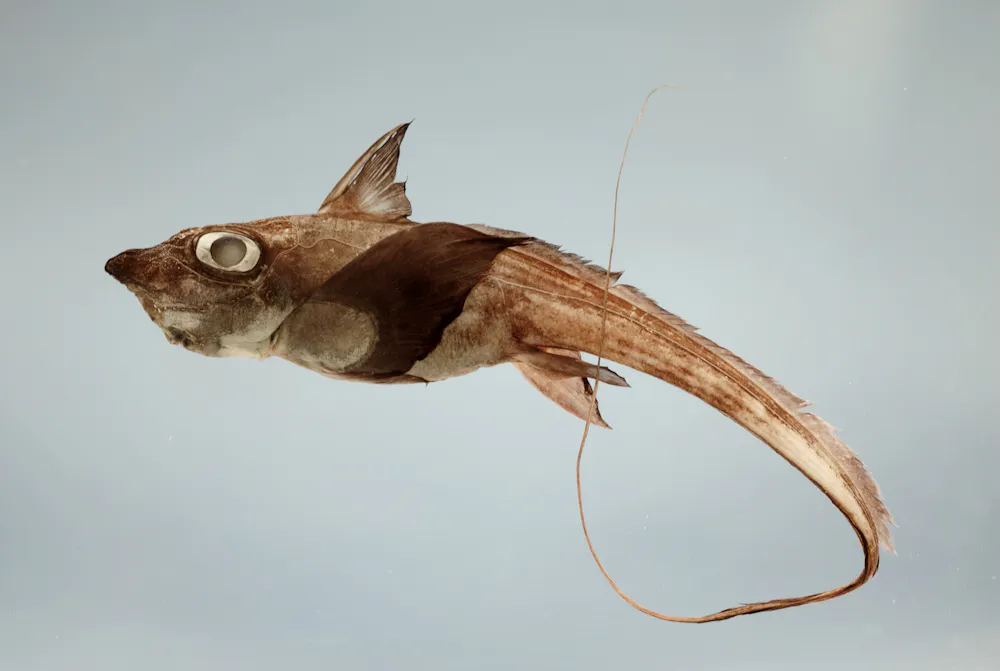
    A shortnose chimaera, belonging to the chondrichthyan group of vertebrates.
    (Shutterstock)

    A sea change

    Blue Beach has helped build our understanding of how this happened. Studies describing its tetrapods and actinopterygians have showed the persistence of Devonian-style forms in the Carboniferous Period.

    Whereas the abrupt end-Devonian decline of the placoderms, acanthodians and fishy sarcopterygians can be explained by a mass extinction, it now appears that multiple types of actinopterygians and tetrapods survived to be preserved at Blue Beach. This makes a big difference to the overall story: Devonian-style tetrapods and actinopterygians survive and contribute to the evolution of these groups into the Carboniferous Period.

    But significant questions remain for paleontologists. One point of debate revolves around how actinopterygians diversified as the modern vertebrate world was born — whether they explored new ways of feeding or swimming first.

    Comparing the jawbones of Sphyragnathus, Austelliscus and Tegeolepis.
    (C. Wilson), CC BY

    The Blue Beach fossil was actinopterygian, and we wondered what it could tell us about this issue. Comparison was difficult. Two actinopterygians with long jaws and large fangs were known from the preceding Devonian Period (Austelliscus ferox and Tegeolepis clarki), but the newly found jaw had more extreme curvature and the arrangement of its teeth. Its largest fangs are at the back of its jaw, but the largest fangs of Austelliscus and Tegeolepis are at the front.

    These differences were significant enough that we created a new genus and species: Sphyragnathus tyche. And, in view of the debate on actinopterygian diversification, we made a prediction: that the differences in anatomy between Sphyragnathus and Devonian actinopterygians represented different adaptations for feeding.

    Front fangs

    To test this prediction, we compared Sphyragnathus, Austelliscus and Tegeolepis to living actinopterygians. In modern actinopterygians, the difference in anatomy reflects a difference in function: front-fangs capture prey with their front teeth and grip it with their back teeth, but back-fangs use their back teeth.

    Since we couldn’t observe the fossil fish in action, we analyzed the stress their teeth would experience if we applied force. The back teeth of Sphyragnathus handled force with low stress, making them suited for a role in piercing prey, but the back teeth of Austelliscus and Tegeolepis turned low forces into significantly higher stress, making them best suited for gripping.

    We concluded that Sphyragnathus was the earliest actinopterygian adapted for breaking down prey by piercing, which also matches the broader predictions of the feeding-first hypothesis.

    Substantial work remains — only the jaw of Sphyragnathus is preserved, so the “locomotion-first” hypothesis was untested. But this represents the challenge and promise of paleontology: get enough tantalizing glimpses into the past and you can begin to unfold a history.

    As for the actinopterygians, research indicates they survived and diversified during Devonian times and had shifting roles during the birth of the modern vertebrate world — at least until more fossils are found that could determine whether that’s the case.

    Conrad Daniel Mackenzie Wilson receives funding from the Natural Sciences and Engineering Research Council of Canada, the Ontario Student Assistance Program, and the Society of Vertebrate Paleontology.

    ref. A chance discovery of a 350 million-year-old fossil reveals a new type of ray-finned fish – https://theconversation.com/a-chance-discovery-of-a-350-million-year-old-fossil-reveals-a-new-type-of-ray-finned-fish-254246

    MIL OSI – Global Reports

  • MIL-OSI Canada: Saskatchewan Wildfire Update – June 24

    Source: Government of Canada regional news

    Released on June 24, 2025

    As of 4:00 p.m. on Wednesday, June 24, there are 19 active wildfires in Saskatchewan. Of those active fires, one is categorized as contained, five are not contained, 11 are ongoing assessment and two are listed as protecting values.   

    This year, Saskatchewan has had 267 wildfires, which is well above the five-year average of 163 to date. 

    Four communities remain under an evacuation order: East Trout Lake, as well as priority individuals from Creighton, Denare Beach and Cumberland House.  

    The Saskatchewan Public Safety Agency’s (SPSA) Recovery Task Team has begun meeting with community leaders to discuss recovery efforts.   

    Over $4 million has been transferred directly to residents as well as communities that are distributing the $500 Government of Saskatchewan Financial Assistance to their residents that have been impacted by the wildfires. The SPSA is continuing to coordinate with communities that have asked for its support in distributing this financial assistance. 

    Evacuees who have not yet registered are encouraged to do so through the Sask Evac Web Application or by calling 1-855-559-5502 between 8:00a.m. and 5:00p.m. A full list of evacuated and repatriated communities can be found on the Information for Evacuees webpage.  

    Evacuees supported by the Canadian Red Cross can call 1-800-863-6582. 

    The latest information, an interactive fire ban map, frequently asked questions, fire risk maps and fire prevention tips can be found at saskpublicsafety.ca

    -30-

    For more information, contact:

    MIL OSI Canada News

  • MIL-OSI: Bitcoin Treasury Corporation Announces TSX Venture Exchange Listing and the Issuance of Shares

    Source: GlobeNewswire (MIL-OSI)

    Not for distribution to United States news wire services or for dissemination in the United States.

    TORONTO, June 24, 2025 (GLOBE NEWSWIRE) — Bitcoin Treasury Corporation (TSXV: BTCT) (“Bitcoin Treasury” or the “Corporation”), further to its press releases dated May 22, 2025, May 30, 2025, June 17, 2025, and June 23, 2025, is pleased to announce that, pursuant to a bulletin issued by the TSX Venture Exchange (the “TSXV” or the “Exchange”) on June 24, 2025, the Corporation has now met all final listing requirements of the Exchange, assuming closing of the previously announced brokered offering (the “Offering”) of 426,650 Bitcoin Treasury Shares (as defined below). It is anticipated that, effective at markets open on Thursday, June 26, 2025, the common shares of Bitcoin Treasury (the “Bitcoin Treasury Shares”) will be listed (the “Listing”) with an immediate trading halt. The Corporation expects that on Monday, June 30, 2025, following the completion of the previously announced Offering, anticipated to be on June 26, 2025, the Exchange will issue a further bulletin announcing the lifting of the trading halt. Once the trading halt is lifted, the Bitcoin Treasury Shares will trade under the symbol BTCT.

    The Corporation filed a filing statement pursuant to TSXV Form 3D2 – Information Required in a Filing Statement for a Reverse Takeover, dated June 17, 2025, a copy of which can be found under the Corporation’s profile at www.sedarplus.ca.

    For further information, please contact:

    Bitcoin Treasury Corporation
    Elliot Johnson, Chief Executive Officer
    Phone: 416-619-3403
    Email: ejohnson@btctreasurycorp.com

    Neither TSX Venture Exchange nor its Regulation Services Provider (as that term is defined in the policies of the TSX Venture Exchange) accepts responsibility for the adequacy or accuracy of this news release.

    Cautionary Note Regarding Forward-Looking Statements

    This news release includes certain “forward-looking statements” under applicable Canadian securities legislation. Forward-looking statements include, but are not limited to, statements with respect to: expectations related to the anticipated trading the Bitcoin Treasury Shares on the TSXV and timing thereof; and the brokered offering of the Bitcoin Treasury Shares and the timing thereof. Forward-looking statements are necessarily based upon a number of estimates and assumptions that, while considered reasonable, are subject to known and unknown risks, uncertainties and other factors which may cause the actual results and future events to differ materially from those expressed or implied by such forward-looking statements. Such factors include, but are not limited to: business integration risks; the Corporation’s operating results will experience significant fluctuations due to the highly volatile nature of Bitcoin; the Corporation operates in a heavily regulated environment and any material changes or actions could lead to negative adverse effects to the business model, operational results, and financial condition of the Corporation; evolving cryptocurrency regulatory requirements and the impact on the Corporation’s business plan; Bitcoin value risk; reliance on key personnel; implementation of the Corporation’s business plan; lack of operating history; competitive conditions; de banking and financial services risk; anti money laundering and corrupt business practices; additional capital; financing risks; global financial conditions; insurance and uninsured risks; cybersecurity risks; changes to bank fees or practices, or payment card networks; audit of tax filings; market for the Bitcoin Treasury Shares; market price of the Bitcoin Treasury Shares; conflicts of interest; internal controls; tariffs and the imposition of other restrictions on trade could adversely affect the Corporation’s business; risk of litigation; pandemics or other health crisis; acquisitions and integration; risk of dilution of Bitcoin Treasury securities; dividend policy; Bitcoin price volatility; custodial risks; technological vulnerabilities; Bitcoin transactions are irreversible and may result in significant losses; short history risk; limited history of the Bitcoin market; potential decrease in the global demand for Bitcoin; economic and political factors; top Bitcoin holders control a significant percentage of the outstanding Bitcoin; availability of exchange traded products liquidity; security breaches; the requirements that accompany being a publicly traded company may put a strain on the Corporation’s resources, divert attention from management, and adversely affect its ability to maintain and attract management and qualified board members; liquidity risk; leverage risk; and share price fluctuations.

    Although management of the Corporation believes that the expectations reflected in such forward-looking statements are based upon reasonable assumptions and have attempted to identify important factors that could cause actual results to differ materially from those contained in forward-looking statements, there may be other factors that cause results not to be as anticipated, estimated or intended. There can be no assurance that such statements will prove to be accurate, as actual results and future events could differ materially from those anticipated in such statements. Accordingly, readers should not place undue reliance on forward-looking statements. The forward-looking statements and information contained in this news release are made as of the date of this news release, and the Corporation does not undertake any obligation to update publicly or to revise any of the included forward -looking statements or information, whether as a result of new information, change in management’s estimates or opinions, future circumstances or events or otherwise, except as expressly required by applicable securities law.

    The TSXV has neither approved nor disapproved the contents of this news release.

    The MIL Network

  • MIL-OSI: BlackRock® Canada Announces Final June Cash Distributions for the iShares® Premium Money Market ETF

    Source: GlobeNewswire (MIL-OSI)

    TORONTO, June 24, 2025 (GLOBE NEWSWIRE) — BlackRock Asset Management Canada Limited (“BlackRock Canada”), an indirect, wholly-owned subsidiary of BlackRock, Inc. (NYSE: BLK), today announced the final June 2025 cash distributions for iShares Premium Money Market ETF. Unitholders of record on June 25, 2025 will receive cash distributions payable on June 30, 2025.

    Details regarding the final “per unit” distribution amounts are as follows:

    Fund Name Fund Ticker Cash Distribution Per Unit
    iShares Premium Money Market ETF CMR $0.129

    Further information on the iShares ETFs can be found at http://www.blackrock.com/ca.

    About BlackRock
    BlackRock’s purpose is to help more and more people experience financial well-being. As a fiduciary to investors and a leading provider of financial technology, we help millions of people build savings that serve them throughout their lives by making investing easier and more affordable. For additional information on BlackRock, please visit www.blackrock.com/corporate | Twitter: @BlackRockCA

    About iShares ETFs
    iShares unlocks opportunity across markets to meet the evolving needs of investors. With more than twenty years of experience, a global line-up of 1500+ exchange traded funds (ETFs) and US$4.3 trillion in assets under management as of March 31, 2025, iShares continues to drive progress for the financial industry. iShares funds are powered by the expert portfolio and risk management of BlackRock.

    iShares® ETFs are managed by BlackRock Canada.

    Commissions, trailing commissions, management fees and expenses all may be associated with investing in iShares ETFs. Please read the relevant prospectus before investing. The funds are not guaranteed, their values change frequently and past performance may not be repeated. Tax, investment and all other decisions should be made, as appropriate, only with guidance from a qualified professional.  

    Contact for Media:
    Sydney Punchard
    Email: Sydney.Punchard@blackrock.com

    The MIL Network

  • MIL-OSI Canada: Update 7: Alberta wildfire update (June 24, 3:30 p.m.)

    Source: Government of Canada regional news (2)

    MIL OSI Canada News

  • MIL-OSI Canada: BC Coroners Service shares April 2025 unregulated drug-toxicity data

    Preliminary reporting released by the BC Coroners Service (BCCS) finds that 165 people died from unregulated toxic drugs in April 2025.

    In 2025, deaths among those between the ages of 30 and 59 accounted for 68% of drug-toxicity deaths in the province, and 77% were male.

    April marks a return to more than 160 deaths attributed to unregulated drug toxicity reported to the BC Coroners Service after six consecutive months of reporting fewer than 160 deaths a month.

    By health authority in 2025, the highest number of unregulated drug deaths were in Fraser and Vancouver Coastal health authorities (185 and 155 deaths, respectively) making up 57% of all such deaths during 2025.

    Consistent with reporting throughout the public-health emergency, fentanyl and its analogues continue to be the most common substance detected in expedited toxicological testing. More than three-quarters of decedents who underwent expedited testing in 2025 were found to have fentanyl in their systems (68%), followed by methamphetamine (51%) and cocaine (48%).

    It is important to note that data from the report is preliminary and subject to change as additional toxicological results are received and investigations conclude.

    Additional key findings in 2025 include:

    • the number of unregulated drug deaths in April 2025 equates to approximately 5.5 deaths per day;
    • the cities experiencing the highest number of unregulated drug deaths so far in 2025 are Vancouver, Surrey and Greater Victoria;
    • the highest rates of deaths reported were in Northern Health (46 deaths per 100,000 individuals) and Interior Health (35 per 100,000 individuals);
    • 47% of deaths reported occurred in a private residence, compared with 21% outdoors; and
    • smoking continues to be the primary mode of consumption of unregulated toxic drugs, with 64% of investigations indicating the decedent smoked their substances.

    Learn More:

    April 2025 Drug Toxicity Deaths:
    https://app.powerbi.com/view?r=eyJrIjoiM2JlNDY1MTItYjBiNS00NWNiLWJlZjAtNzAzNzQ3ZTYwMzg3IiwidCI6IjZmZGI1MjAwLTNkMGQtNGE4YS1iMDM2LWQzNjg1ZTM1OWFkYyJ9

    Youth Unregulated Drug Toxicity Deaths, 2019-23:
    https://www2.gov.bc.ca/assets/gov/birth-adoption-death-marriage-and-divorce/deaths/coroners-service/statistical/youth_unregulated_drug_toxicity_deaths_in_bc_2019-2023.pdf

    BC Coroners Service Death Review Panel: An Urgent Response to a Continuing Crisis:
    https://www2.gov.bc.ca/assets/gov/birth-adoption-death-marriage-and-divorce/deaths/coroners-service/death-review-panel/an_urgent_response_to_a_continuing_crisis_report.pdf

    BC Ministry of Health mental-health and substance-use supports:
    https://helpstartshere.gov.bc.ca/

    BC Centre on Substance Use: https://www.bccsu.ca

    MIL OSI Canada News

  • MIL-OSI Canada: So Alberta, what’s next?

    [.

    Chaired by Premier Danielle Smith, the Alberta Next panel will bring together a broad mix of leaders, experts, and community voices to gather input, discuss solutions, and provide feedback to government on how Alberta can better protect its interests, defend its economy, and assert its place in Confederation.

    The panel will consult across the province over the summer and early fall to ensure that those living, working, doing business and raising families are the ones to drive Alberta’s future forward. The work will include identifying solutions advanced by Albertans on how to make Alberta stronger and more sovereign within a united Canada that respects and empowers the province to achieve its full potential. It will also include making recommendations to the government on potential referendum questions for Albertans to vote on in 2026.

    It will consider and hear from Albertans on the risks and benefits of ideas like a establishing an Alberta Pension Plan, using an Alberta Provincial Police Service rather than the RCMP for community policing, whether Albertans should consider pursuing constitutional changes, which (if any) changes to federal transfer payments and equalization Albertans should demand of the federal government, potential immigration reform that would give the provincial government more oversight into who comes to the province, and changes to how Alberta collects personal income tax. Albertans will also have the opportunity to put forward their own ideas for discussion.

    “This isn’t just about talk. It’s about action. The Alberta Next Panel is giving everyday Albertans a direct say in the direction of our province. It’s time to stand up to Ottawa’s overreach and make sure decisions about Alberta’s future are made here, by the people who live and work here.”

    Danielle Smith, Premier

    “Right now, there is a need to restore fairness and functionality in the country. Years of problematic policy and decisions from Ottawa have hurt Albertan and Canadian prosperity. I am honoured to be asked by Premier Smith to participate in the Alberta Next Panel. This panel is about listening to Albertans on how we build a stronger Alberta within a united Canada, to which I, and the Business Council of Alberta, are firmly committed.”

    Adam Legge, president of the Business Council of Alberta

    Chaired by Premier Danielle Smith, the panel includes 13 additional members, including elected officials, academics, business leaders and community advocates:

    • Honourable Rebecca Schulz, Minister of Environment and Protected Areas of Alberta
    • Brandon Lunty, MLA for Leduc-Beaumont
    • Glenn van Dijken, MLA for Athabasca-Barrhead-Westlock
    • Tara Sawyer, MLA-elect for Olds-Didsbury-Three Hills
    • Bruce McDonald, former justice, Court of Appeal of Alberta
    • Trevor Tombe, director of fiscal and economic policy, the University of Calgary School of Public Policy
    • Adam Legge, president, Business Council of Alberta
    • Andrew Judson, vice chairman (prairies), Fraser Institute
    • Sumita Anand, vice president, Above and Beyond Care Services
    • Melody Garner-Skiba, business and agricultural advocate
    • Grant Fagerheim, president and CEO, Whitecap Resources Inc.
    • Dr. Akin Osakuade, physician and section chief, Didsbury Hospital
    • Dr. Benny Xu, community health expert
    • Michael Binnion, president, Questerre Energy

    Albertans have a choice: let Ottawa continue calling the shots—or come together to chart our own course. What’s next? You decide.

    Key facts:

    • Town hall dates and sites, along with other opportunities to participate in this engagement, are available online at Alberta.ca/Next. Exact locations will be posted in the weeks ahead of the event, and Albertans will be asked to RSVP online.
    • The panel’s recommendations will be submitted to government by Dec. 31, 2025.
    • It is anticipated that the panel will add additional members in the coming weeks.

    Related information

    • Alberta.ca/Next
    • Panel member biographies

    Related news

    • Alberta Next: Albertans to choose path forward (May 5, 2025)

    Multimedia

    • Watch the news conference

    MIL OSI Canada News

  • MIL-OSI: CIRI Announces 2025 Annual General Meeting Voting Results

    Source: GlobeNewswire (MIL-OSI)

    TORONTO, June 24, 2025 (GLOBE NEWSWIRE) — The Canadian Investor Relations Institute (CIRI) is pleased to report that, at its Annual Meeting of Shareholders held on June 19, 2025, 15 nominees were elected as Directors. Scott Parsons, Senior Vice President, Corporate Development & Investor Relations, Alamos Gold Inc., was appointed Chair for a two-year term, and Adam Borgatti, Senior Vice President, Corporate Development & Investor Relations, Aecon Group Inc., was appointed Past Chair for a one-year term.

    “Scott’s blend of capital markets, investor relations and corporate development experience will be beneficial as CIRI responds to the evolving needs of investor relations professionals. His expertise, coupled with his strong leadership skills, will serve CIRI well as we continue to advance the stature of the profession,” commented Adam Borgatti, Past Chair, CIRI Board of Directors.

    Scott Parsons, Chair, CIRI Board of Directors, commented: “I am very excited to be taking on the role of Chair. With the support of Nathalie and the rest of this talented and diverse Board, I look forward to contributing to CIRI’s strategic direction, continuing to raise the awareness of investor relations in Canada and further promoting CIRI’s mandate to contribute to the transparency and integrity of the Canadian capital market.”

    Scott Parsons is joined by four new Directors: Annemarie Brissenden, Director, Investor Relations, Refined Substance.; Brenda Dayton, Vice President, Investor Relations, Bunker Hill Mining Corporation; Stacey Pavlova, Vice President, Investor Relations & Communications, Faraday Copper Corp.; and Sarah Zapotichny, Vice President, Western Canada, Peterson Capital.

    “It gives me great pleasure to announce that four accomplished individuals – Brenda, Annemarie, Stacey and Sarah – will be joining the CIRI Board. They bring extensive investor relations and capital markets expertise that will be an asset to the organization as we work together to advance the investor relations profession,” commented Scott Parsons, Chair, CIRI Board.

    Annemarie Brissenden is an experienced investor relations professional and accomplished communicator who is passionate about empowering shareholders to make educated investment decisions. Over the past 25 years as an investor relations professional, she has played lead roles in several financings, an initial public offering and a spin-out. She has advised on shareholder activism, rebranded several public companies and worked on a transformative corporate merger. Annemarie is currently a member of CIRI’s Issues Committee, contributes to CIRI’s IR leader publication, and has served on two not-for-profit boards. She is a Certified Professional in Investor Relations (CPIR) and has a degree in English Literature (with Distinction) from McGill University.

    Brenda Dayton is an accomplished executive with experience in corporate governance, communications and investor relations within the mining sector. Currently, Brenda serves as Vice President, Investor Relations at Bunker Hill Mining Corp., where she develops and executes marketing strategies to enhance the company’s visibility and market recognition, and manages direct communications with shareholders, stakeholders and media organizations. Brenda holds a Bachelor of Arts degree from the University of Calgary, where she received the Charles S. Noble Leadership Award and the Outstanding Graduate Award. She has completed advanced studies in negotiation, mining, capital markets and corporate governance, including the Canadian Securities Course and the Women Get on Board – Getting Board Ready Program.

    Stacey Pavlova is a finance professional with 15 years of experience in the mining industry, specializing in investor relations, corporate communications, finance, and metal sales. She is currently Vice President, Investor Relations and Communications at Faraday Copper Corp., a TSX-listed exploration company advancing its flagship Copper Creek Project in the United States. In this role, Stacey leads the company’s strategic communications and investor engagement, supporting capital markets initiatives and corporate growth. Stacey serves on the Board of Directors of NiCAN Ltd., a TSX-V listed nickel exploration company, and has held several leadership roles with the Canadian Investor Relations Institute, including Board Member, Audit Committee Member, and Chair of the British Columbia Chapter. She holds the Chartered Financial Analyst designation and earned her Master’s in Finance from the University of Denver.

    Sarah Zapotichny has over 20 years of experience in investor relations and corporate communications. In her current role as VP of Western Canada at Peterson Capital, she provides capital markets retail advisory to public companies across a diverse range of industries. Sarah holds a BA (Hons) in Criminology and Psychology from Simon Fraser University and has specialized training in Mediation and Third-Party Intervention from the Justice Institute of British Columbia. She has also completed the Canadian Securities Course (CSC) and the Certified Professional in Investor Relations (CPIR) program from the Rotman School of Management. Sarah serves as Chair of the Canadian Investor Relations Institute (CIRI), Alberta Chapter, where she champions excellence in investor relations and is deeply committed to mentoring the next generation of business leaders.

    The following 15 individuals will serve as Directors of CIRI:

    Adam Borgatti, CFA, CPIR, ICD.D Senior Vice President, Corporate Development & Investor Relations, Aecon Group Inc.
    Annemarie Brissenden, CPIR Director, Investor Relations, Refined Substance
    Brenda Dayton Vice President, Investor Relations, Bunker Hill Mining Corporation
    Bruno Di Genova, MBA Vice President, Sales, Digicast
    David Frost, LLB Partner, McCarthy Tétrault LLP
    Kevin Hallahan, CPA, CMA Vice President, Marketing & Investor Relations, Linamar Corporation
    Claire Mahaney, CFA Vice President, Investor Relations & ESG, Primaris Real Estate Income Trust
    Jennifer McCaughey, F.CIRI Director, Investor Relations, Calian Group Ltd.
    Nathalie Megann, CPIR, ICD.D President & CEO, CIRI
    Scott Parsons, CFA Senior Vice President, Investor Relations & Corporate Development, Alamos Gold Inc.
    Stacey Pavlova, CFA Vice President, Investor Relations and Communications, Faraday Copper Corp.
    Mahsa Rejali, MBA Vice President, Corporate Development & Investor Relations, Cineplex Inc.
    Quentin Weber, CPIR Senior Advisor, Investor Relations, WSP Global Inc.
    Ann Wilkinson Vice President, Investor Relations, Mineros SA
    Sarah Zapotichny Vice President, Western Canada, Peterson Capital
       

    The Board looks forward to engaging with fellow members and continuing to deliver value through professional development events, resources, networking opportunities and issues education and advocacy.

    Curtis Pelletier, Director, Investor Relations, Graham Corporation, is retiring from the Board. Curtis has dedicated his time volunteering for the organization and has made a tremendous contribution.

    “I want to thank our outgoing Board member – Curtis Pelletier – for his active involvement on the CIRI Board. He has been instrumental in advancing CIRI’s mandate, and his counsel will be missed,” said Scott Parsons, Chair, CIRI Board of Directors.

    About CIRI
    CIRI is a professional, not-for-profit association of executives responsible for communication between public corporations, investors and the financial community. CIRI contributes to the transparency and integrity of the Canadian capital markets by advancing the practice of investor relations, the professional competency of its members and the stature of the profession. With over 300 members and four Chapters across the country, CIRI is the voice of IR in Canada. For further information, please visit CIRI.org. 

    For further information, please contact:
    Nathalie Megann, CPIR, ICD.D
    President & CEO
    Canadian Investor Relations Institute
    (416) 364-8200 ext. 101
    nmegann@ciri.org

    The MIL Network

  • MIL-OSI Analysis: A chance discovery of a 365-million-year-old fossil reveals a new type of ray-finned fish

    Source: The Conversation – Canada – By Conrad Daniel Mackenzie Wilson, PhD candidate in Earth Sciences, Carleton University

    An artist’s rendition of the newly discovered fish, _Sphyragnathus tyche_. (C. Wilson), CC BY

    In 2015, two members of the Blue Beach Fossil Museum in Nova Scotia found a long, curved fossil jaw, bristling with teeth. Sonja Wood, the museum’s owner, and Chris Mansky, the museum’s curator, found the fossil in a creek after Wood had a hunch.

    The fossil they found belonged to a fish that had died 350 million years ago, its bony husk spanning nearly a metre on the lake bed. The large fish had lived in waters thick with rival fish, including giants several times its size. It had hooked teeth at the tip of its long jaw that it would use to trap elusive prey and fangs at the back to pierce it and break it down to eat.

    For the last eight years, I have been part of a team under the lead of paleontologist Jason Anderson, who has spent decades researching the Blue Beach area of Nova Scotia, northwest of Halifax, in collaboration with Mansky and other colleagues. Much of this work has been on the tetrapods — the group that includes the first vertebrates to move to land and all their descendants — but my research focuses on what Blue Beach fossils can tell us about how the modern vertebrate world formed.

    Blue Beach Fossil Museum curator Chris Mansky below the fossil cliffs.
    (C. Wilson), CC BY

    Birth of the modern vertebrate world

    The modern vertebrate world is defined by the dominance of three groups: the cartilaginous fishes or chondrichthyans (including sharks, rays and chimaeras), the lobe-finned fishes or sarcopterygians (including tetrapods and rare lungfishes and coelacanths), and the ray-finned fishes or actinopterygians (including everything from sturgeon to tuna). Only a few jawless fishes round out the picture.

    This basic grouping has remained remarkably consistent — at least for the last 350 million years.

    Before then, the vertebrate world was a lot more crowded. In the ancient vertebrate world, during the Silurian Period (443.7-419.2 MA) for example, the ancestors of modern vertebrates swam alongside spiny pseudo-sharks (acanthodians), fishy sarcopterygians, placoderms and jawless fishes with bony shells.

    Armoured jawless fishes had dwindled by the Late Devonian Period (419.2-358.9 MA), but the rest were still diverse. Actinopterygians were still restricted to a few species with similar body shapes.

    By the immediately succeeding early Carboniferous times, everything had changed. The placoderms were gone, the number of species of fishy sarcopterygians and acanthodians had cratered, and actinopterygians and chondrichthyans were flourishing in their place.

    The modern vertebrate world was born.

    A shortnose chimaera, belonging to the chondrichthyan group of vertebrates.
    (Shutterstock)

    A sea change

    Blue Beach has helped build our understanding of how this happened. Studies describing its tetrapods and actinopterygians have showed the persistence of Devonian-style forms in the Carboniferous Period.

    Whereas the abrupt end-Devonian decline of the placoderms, acanthodians and fishy sarcopterygians can be explained by a mass extinction, it now appears that multiple types of actinopterygians and tetrapods survived to be preserved at Blue Beach. This makes a big difference to the overall story: Devonian-style tetrapods and actinopterygians survive and contribute to the evolution of these groups into the Carboniferous Period.

    But significant questions remain for paleontologists. One point of debate revolves around how actinopterygians diversified as the modern vertebrate world was born — whether they explored new ways of feeding or swimming first.

    Comparing the jawbones of Sphyragnathus, Austelliscus and Tegeolepis.
    (C. Wilson), CC BY

    The Blue Beach fossil was actinopterygian, and we wondered what it could tell us about this issue. Comparison was difficult. Two actinopterygians with long jaws and large fangs were known from the preceding Devonian Period (Austelliscus ferox and Tegeolepis clarki), but the newly found jaw had more extreme curvature and the arrangement of its teeth. Its largest fangs are at the back of its jaw, but the largest fangs of Austelliscus and Tegeolepis are at the front.

    These differences were significant enough that we created a new genus and species: Sphyragnathus tyche. And, in view of the debate on actinopterygian diversification, we made a prediction: that the differences in anatomy between Sphyragnathus and Devonian actinopterygians represented different adaptations for feeding.

    Front fangs

    To test this prediction, we compared Sphyragnathus, Austelliscus and Tegeolepis to living actinopterygians. In modern actinopterygians, the difference in anatomy reflects a difference in function: front-fangs capture prey with their front teeth and grip it with their back teeth, but back-fangs use their back teeth.

    Since we couldn’t observe the fossil fish in action, we analyzed the stress their teeth would experience if we applied force. The back teeth of Sphyragnathus handled force with low stress, making them suited for a role in piercing prey, but the back teeth of Austelliscus and Tegeolepis turned low forces into significantly higher stress, making them best suited for gripping.

    We concluded that Sphyragnathus was the earliest actinopterygian adapted for breaking down prey by piercing, which also matches the broader predictions of the feeding-first hypothesis.

    Substantial work remains — only the jaw of Sphyragnathus is preserved, so the “locomotion-first” hypothesis was untested. But this represents the challenge and promise of paleontology: get enough tantalizing glimpses into the past and you can begin to unfold a history.

    As for the actinopterygians, research indicates they survived and diversified during Devonian times and had shifting roles during the birth of the modern vertebrate world — at least until more fossils are found that could determine whether that’s the case.

    Conrad Daniel Mackenzie Wilson receives funding from the Natural Sciences and Engineering Research Council of Canada, the Ontario Student Assistance Program, and the Society of Vertebrate Paleontology.

    ref. A chance discovery of a 365-million-year-old fossil reveals a new type of ray-finned fish – https://theconversation.com/a-chance-discovery-of-a-365-million-year-old-fossil-reveals-a-new-type-of-ray-finned-fish-254246

    MIL OSI Analysis

  • MIL-OSI United Nations: Unprecedented fires fueled by climate change threaten iconic World Heritage forests

    Source: United Nations

    In an update to the joint UNESCO-WRI-IUCN report “World Heritage forests: carbon sinks under pressure”, new data reveals that fires have accounted for approximately 75% of tree cover loss in World Heritage sites. Steadily increasing tree cover loss due to fires, fueled by climate change, has led to record high emissions, and threatens the robust carbon sinks of forests in World Heritage sites.

    Fires are the primary cause of forest loss in World Heritage sites

    Since 2001, approximately 4.5 million hectares of forest—more than the area of Switzerland—have been lost across World Heritage sites, with fires responsible for around 75% of that loss. The vast majority — approximately 80% — of all fire-related tree cover loss occurred in high-latitude forests, primarily across North America and Siberia. Forests in Australia account for an additional 15% of the loss, while all other regions contributed approximately 5%.

    Solid lines show annual tree cover loss in World Heritage sites by cause, while dotted lines indicate long-term trends.
    Source: WRI Land & Carbon Lab

    While the number of World Heritage sites affected by fires annually has slightly declined in recent years — averaging around half of all forested sites per year — the severity of these events is escalating. Since 2020, fire-related tree cover loss has averaged approximately 240,000 hectares per year — more than twice the annual average recorded in the early 2000s.

    In contrast, non-fire-related tree cover loss has remained relatively stable, averaging around 45,000 hectares per year. This loss is primarily attributed to anthropogenic land-use pressures, such as illegal logging, wood harvesting, and agricultural encroachment related to livestock grazing and crop production, mainly in sites included in the List of World Heritage in Danger. Increases in non-fire-related forest loss were observed in 2016-2017 and 2020, linked to the impacts of hurricanes and storms in the Caribbean and Asia, and intensified agricultural expansion resulting from limited ability to monitor illegal activities during the COVID-19 pandemic, respectively. However, forest loss from non-fire causes has since gradually returned to pre-pandemic levels.

    “The data is clear: climate change is no longer a distant threat—it is here, now, and it is threatening the irreplaceable natural heritage of our world.”

    Climate change is intensifying fires in World Heritage sites

    The steady increase in fire-related tree cover loss highlights the growing influence of climate change on fire regimes in World Heritage sites. While fire plays a natural role in many ecosystems —particularly in temperate and boreal forests in higher latitudes— rising temperatures, prolonged droughts, and changing weather patterns are creating conditions that fuel more intense fires. When forests burn, they release vast amounts of carbon stored in trees and soils into the atmosphere, primarily as carbon dioxide (CO₂). These emissions further exacerbate climate change and increase the likelihood of further fires in a self-reinforcing “fire-climate feedback loop.”

    Source: WRI Global Forest Watch

    Forest fires in World Heritage sites have resulted in an average of nearly 60 million tonnes CO2-equivalent (Mt CO2e) emissions per year, equivalent to Austria’s annual fossil fuel emissions[1]. Largely due to extreme fires, fire-related emissions in World Heritage forests have surged in recent years. In 2023, a record-breaking fire swept through over 300,000 hectares of forest in Canada’s Wood Buffalo National Park, releasing an estimated 190 Mt CO₂e—roughly equivalent to Argentina’s annual fossil fuel emissions. This more than doubled the previous record set in 2021 in Canada’s Pimachiowin Aki (86 Mt CO2e). Australia’s devastating 2019–2020 fires torched around 300,000 hectares in the Greater Blue Mountains Area, emitting over 45 Mt CO2e.

    Tree cover loss due to fires (brown) in Canada’s Wood Buffalo National Park after the 2023 fires (left), Pimachiowin Aki after the 2021-2022 fires (middle) and Australia’s Greater Blue Mountains Area after the 2019-2020 fires (right) 
    Source: WRI Global Forest Watch

    In the tropics—where fires have historically been rare—fire activity has surged, driven by intense outbreaks in sites such as Bolivia’s Noel Kempff Mercado National Park in the Amazon Basin, and Brazil’s Pantanal Conservation Area. Since 2020, fire has been responsible for approximately 35% of tree cover loss and associated emissions in World Heritage tropical forests—more than four times the annual average recorded in the early 2000s.

    Source: WRI Land & Carbon Lab

    “These intensifying fires are not just destroying tree cover and understory—they are unraveling ecological systems and pristine primary forests which underpin people’s livelihoods and provide several ecosystem services, such as climate regulation and human health maintenance.”

    Carbon sinks and biodiversity in World Heritage sites are under increasing risk

    Fires can have profound negative impacts on ecosystems, particularly by contributing to climate change and biodiversity loss. Covering more than 70 million hectares of forests—more than the area of Germany— World Heritage sites have traditionally played a crucial role in sequestering carbon. However, as fire intensity and frequency increases, this role is under threat. Fire-related emissions in World Heritage forests now account for about 40% of the carbon these forests absorb each year (80 vs. 200 Mt CO2/year), resulting in a net carbon sink of 120 Mt CO2e/year. High-latitude World Heritage forests have now collectively shifted from being carbon sinks to becoming net carbon sources, emitting around 5 Mt CO₂e/year. In contrast, lower latitude forests—mainly in the tropics—remain strong carbon sinks, absorbing roughly 130 Mt CO₂e/year. However, fires in tropical regions are especially damaging because their dense vegetation and high biomass cause them to release more carbon per unit of forest lost than fires in cooler regions. This makes tropical fires a growing threat to climate stability, accelerating the fire–climate feedback loop and pushing ecosystems closer to irreversible tipping points.

    Beyond carbon, fires are also placing fragile ecosystems at serious risk. In ecosystems not adapted to fire—such as tropical rainforests and wetlands—fires can permanently alter habitats, disrupt species interactions, and erase biodiversity that has taken millennia to evolve. Australia’s 2019–2020 fires, for example, are estimated to have affected the habitats of at least 293 threatened animal species and 680 threatened plant species. In the Greater Blue Mountains Area alone, over 140 million animals were impacted, including approximately 15 million mammals, 17.7 million birds, and 110.4 million reptiles. Similarly, in the Pantanal Biosphere Reserve—which includes the Pantanal Conservation Area World Heritage site—an estimated 17 million vertebrates may have perished during the 2020 fires. These fires also drastically worsened air quality, exposing surrounding communities to hazardous levels of smoke and particulate pollution, which can lead to serious respiratory and cardiovascular health problems and straining healthcare systems.

    © M & G Therin-Weise / Jaguar coming out of the forest, Pantanal Conservation Area, Brazil

    “The transformation of carbon sinks into carbon sources signals not just an ecological crisis, but a critical tipping point in our climate system — one that threatens both the natural world and the communities that rely on it. Investing in robust fire prevention and response systems is essential to combat wildfires, especially in carbon-rich forests.”

    Helping communities prepare and respond to fires

    As fire continues to threaten both ecological integrity and human livelihoods, proactive fire response and preparedness are more critical than ever. Communities living in and around World Heritage sites are often the first affected by these events—facing loss of land, water resources, cultural heritage, and biodiversity that their lives and traditions depend on.

    To support rapid and informed action, UNESCO has been leveraging real-time fire alert data through platforms like Global Forest Watch, developed by the World Resources Institute (WRI). These tools enable early detection of fire outbreaks and offer actionable insights that help local authorities and conservation managers respond quickly and effectively.

    Complementing this, Land & Carbon Lab – an applied geospatial research lab convened by WRI and the Bezos Earth Fund – provides critical data on carbon storage, emissions and sequestration in terrestrial ecosystems—enhancing global understanding of how fires and other human activities are imperiling carbon sinks and converting some forests to carbon sources. This data helps inform not only emergency response, but also long-term restoration and climate resilience strategies.

    A notable example of these data in action is their integration into the World Heritage Online Map Platform (WHOMP), which has supported the deployment of the Rapid Response Facility (RRF)— a joint initiative from UNESCO and Fauna and Flora. These tools have helped guide emergency response efforts at critical sites, including Brazil’s Pantanal Conservation Area and Bolivia’s Noel Kempff Mercado National Park. In these areas, satellite monitoring and fire alerts have enabled early fire detection, faster mobilization of resources, and timely support for both ecosystems and local communities.

    © Fundación para la Conservación del Bosque Chiquitano 

    “The grant from the Rapid Response Facility (RRF) was crucial in quickly mobilizing resources to keep the ranger corps, community brigade firefighters, and firefighting authorities active in Noel Kempff Mercado National Park. Without this swift support, the damage to the park’s forests and the species that depend on them could have been far more severe.”

    © Panthera

    “The Rapid Response Facility (RRF) made it possible to train brigades, improve communication, support government institutions and, above all, strengthen integrated firefighting actions between the various stakeholders involved.”

    Beyond immediate response, these efforts also strengthen local capacity, foster community engagement, and promote sustainable land management practices. By combining cutting-edge technology, operational monitoring systems based on Earth observation data, and on-the-ground collaboration, UNESCO and its partners are helping vulnerable communities become more prepared and resilient in the face of escalating fire risks. Ultimately, these initiatives play a vital role in safeguarding the world’s natural heritage for future generations—preserving the ecological, cultural, and climate value of these irreplaceable landscapes.

    UNESCO thanks the support of the Government of Norway to the Rapid Response Facility (RRF) and the Government of Flanders (Belgium) to the World Heritage Online Map Platform (WHOMP). WRI thanks the Bezos Earth Fund and Norway’s International Climate and Forest Initiative (NICFI).

    [1] All country emissions equivalencies are for CO2 emissions from fossil fuels in 2023, according to the Global Carbon Atlas produced by the Global Carbon Budget: https://globalcarbonatlas.org/emissions/carbon-emissions/

    MIL OSI United Nations News

  • MIL-OSI Canada: Samuel De Champlain Bridge: Special Illumination for Saint-Jean-Baptiste Day

    Source: Government of Canada News

    Media advisory

    Montreal, Quebec, June 24, 2025 — Tonight, the Samuel De Champlain Bridge will be lit up in blue and white from sunset to 1 a.m. to celebrate Saint-Jean-Baptiste Day.

    Contacts

    For more information (media only), please contact:

    Sofia Ouslis
    Press Secretary
    Office of the Minister of Housing, Infrastructure and Communities
    Sofia.Ouslis@infc.gc.ca

    Media Relations
    Housing, Infrastructure and Communities Canada
    613-960-9251
    Toll free: 1-877-250-7154
    Email: media-medias@infc.gc.ca
    Follow us on XFacebookInstagram and LinkedIn
    Web: Housing, Infrastructure and Communities Canada

    MIL OSI Canada News

  • MIL-OSI USA: Grindr United-CWA Launches Fundraising Campaign to Support Workers Amid Ongoing Legal Fight

    Source: Communications Workers of America

    West Hollywood, Calif. – Grindr United-CWA, a union organizing with the Communications Workers of America (CWA) that is composed of current and former Grindr workers who were pushed out shortly after organizing, has launched a public fundraising campaign to raise critical funds to support union members who are continuing to struggle with hardships from being out of work for extended amounts of time.

    The union includes a diverse coalition of LGBTQIA+ individuals and allies who joined Grindr to build a product grounded in queer connection, joy, and safety. However, in August 2023, after announcing their intent to unionize and advocate for equitable treatment of employees and users, nearly the entire union was laid off in what Grindr United-CWA asserts was a retaliatory act by the company.

    “For many of us, this wasn’t just a job—it was a calling,” said a Grindr United-CWA representative. “We believed in creating something beautiful by the queer community, for the queer community. But when we asked for fair treatment, we were shown the door.”

    Over the past 18 months, many displaced workers—disproportionately queer and people of color—have faced unemployment, underemployment, and financial hardship. The union is now fighting a protracted legal battle to secure recognition, reclaim their positions, and win the back pay owed to them.

    The fundraising campaign will directly support these efforts, providing financial relief for affected members and sustaining the union’s work toward a more just and inclusive tech industry. Their goals include:

    • Inclusive hiring practices and meaningful representation across LGBTQIA+ identities
    • A user-focused product roadmap featuring essential features like verification tools, unlimited blocks, and stronger data privacy
    • Comprehensive healthcare, including gender-affirming care
    • Transparent and equitable pay practices

    “These demands aren’t extravagant—they’re the bare minimum. Grindr made over $300 million in revenue in 2024 while denying dignity and justice to the workers who helped build it. This is about more than Grindr. It’s about showing that queer workers cannot be silenced. That solidarity is stronger than retaliation. That we all deserve better,” said Grindr United-CWA.

    This campaign is a call to the broader community—to anyone who has found love, safety, or belonging through Grindr—to stand with the people who made that possible.

    To donate or learn more, visit: https://ww.gofundme.com/f/support-the-grindr-workers-union.

    Follow Grindr United-CWA on X, Instagram, and Bluesky at @grindrunited for more updates.

    ###

    About CODE-CWA

    The Campaign to Organize Digital Employees (CODE-CWA) is a network of worker-organizers and their staff working every single day to build the voice and power necessary to ensure the future of the tech, game, and digital industries in the United States and Canada. CODE-CWA is a project of the Communications Workers of America, which represents hundreds of thousands of workers throughout tech, media, telecom, and other industries who stand together to fight for justice on the job and in our communities.

    About CWA: The Communications Workers of America represents working people in telecommunications, customer service, media, airlines, health care, public service and education, manufacturing, tech, and other fields.

    cwa-union.org @cwaunion

    MIL OSI USA News

  • MIL-OSI USA: SCHUMER: AS SUMMER SIZZLES, UPSTATE NY TOURISM FIZZLES – NEW DATA SHOWS TRUMP’S TARIFF WAR SLAMS UPSTATE NY, WITH CANADIAN BORDER CROSSINGS PLUMMETING 400,000 LAST MONTH, A 25% DECREASE FROM PREVIOUS…

    US Senate News:

    Source: United States Senator for New York Charles E Schumer
    With Summer Tourism Season Underway Across Upstate NY, New Data Shows Border Crossings Are Continuing To Plummet, Putting NY Main Streets At Risk, Jeopardizing Jobs & Restricting Summer Tourism Economy As A Result Of Trump’s Tariff War & Insulting Comments That Are Driving Away Canadian Visitors
    As Border Crossings Fall Further Amid Tariff Chaos, Schumer Says NY House Republicans Must Stand Up For Upstate NY And Main Street Hotels, Restaurants & Shops Across NY That Rely On Canadian Tourists And Are Seeing Major Hits To Their Bottom Lines
    Schumer: Upstate NY’s Main Streets Are Feeling The Heat Of Trump’s Damaging Tariff War 
    With summer tourism season underway across Upstate NY, U.S. Senator Chuck Schumer revealed new data showing how Trump’s reckless tariff war continues to plummet at border crossings at all major land ports of entry in New York. As Canadians cancel trips to the United States because of Trump’s mistreatment of our closest ally and trading partner, new data shows nearly 400,000 fewer travelers crossed the Upstate NY-Canadian border via land in May 2025 compared to May 2024 according to CBP, a whopping nearly 25% decrease, which Schumer said threatens our regions’ Main Street businesses and tourism economy that rely on a summer boost.
    “As summer sizzles, Upstate NY tourism fizzles thanks to Trump’s reckless and damaging tariff war with Canada. Summer tourism season should be in full swing, but instead our small businesses and Main Streets are left sweating as reservations get cancelled & tourism from Canada continues to plummet,” said Senator Schumer. “This new data shows again how it is Upstate NY families paying the price for Trump’s tariff war and his insults hurled at our top-trading partner, Canada. From Buffalo to Watertown to Plattsburgh, our shops, hotels, restaurants, and thousands of good-paying jobs rely on summer tourism for success. NY House Republicans know Trump’s tariff war with Canada is hurting our communities, but even as the numbers show how badly this is hurting our businesses and jobs they refuse to act. House Republicans need to pass the bipartisan resolution the Senate has already acted on to end Trump’s destructive trade war with Canada, helping to restore our cherished friendly relationship with our next-door neighbor and major economic partner.”
    According to new data from CBP, Upstate NY & Canada saw approximately 1,144,524 border crossings in May, compared to 1,520,424 during the same month in 2024, a nearly 25% decrease across land (both road and bridge) crossings frequented by tourists. This is an even further from April 2025 which saw almost 290,000 fewer travelers, a nearly 22% decrease across ports of entry in NY.
    A breakdown bridge-by-bridge from the Bridge and Tunnel Operators Association of May 2025 crossings shows just how steeply tourism is declining across all the major bridge ports of entry between Upstate NY and Canada:

    NY-Canada Bridge

    Region

    May 2024 Auto Crossings

    May 2025 Auto Crossings

    Percentage Decline

    Peace Bridge

    Western NY

    423,080

    327,209

    -22.66%

    Rainbow Bridge

    Western NY

    203,067

    144,260

    -28.96%

    Lewiston-Queenstown Bridge

    Western NY

    239,954

    228,156

    -4.92%

    Whirlpool Rapids Bridge

    Western NY

    36,403

    27,183

    -25.33%

    Ogdensburg-Prescott International Bridge

    North Country

    48,723

    34,746

    -28.69%

    Thousand Islands Bridge

    North Country

    172,733

    140,600

    -18.6%

    Seaway Bridge

    North Country

    234,826

    224,657

    -4.33%

    Since taking office in January, Trump has damaged the United States’ relationship with Canada by threatening to annex Canada and levying 25% tariffs on Canadian goods. Schumer said this new data on major reductions in border crossings for the second month in a row shows Trump’s threats to annex Canada and tariff Canadian goods are directly impacting commerce between the two countries, including Canadian tourism across New York State.
    Schumer said he is fighting to end this unnecessary, damaging trade war with Canada and protect tourism, small businesses, and local jobs. Earlier this year, the Senate passed a bipartisan resolution to end tariffs on Canada, and Schumer said this new shocking data shows the urgency for House Republicans to take up and pass it as well. Senate Democrats are also pushing for tariff exemptions for small businesses and putting an end to Trump’s across-the-board tariffs. Schumer said ending this costly trade war is key to protecting American families from price increases and job losses as a result of tariffs on Canada.

    MIL OSI USA News

  • MIL-OSI United Nations: Experts of the Committee on the Elimination of Discrimination against Women Commend the Voices of Afghan Women and Girls Demanding Justice, Ask about Discriminatory Laws and Edicts and the Ban on Education

    Source: United Nations – Geneva

    The Committee on the Elimination of Discrimination against Women today concluded its consideration of the fourth periodic report of Afghanistan, with Committee Experts extending profound appreciation to the women and girls of Afghanistan demanding justice, while raising concerns about the discriminatory laws and edicts imposed since the military takeover by the Taliban in 2021, and the ban on education. 

    Bandana Rana, Committee Expert and Country Rapporteur, extended profound appreciation to the women and girls of Afghanistan, whose voices continued to resonate across the world, demanding justice.  Another Expert urged all States parties to amplify the voices of Afghan women. 

    A Committee Expert said the dismantling of the Ministry of Women’s Affairs and replacing it with the Ministry of Vice and Virtue was a violation of article 3.  The law on vice and virtue silenced women’s voices in public and muffled their voices in private.  A March 2024 announcement enforced public flogging, and there had been numerous women publicly flogged for crimes ranging from adultery to dress code violations.  The reinstation of the stoning edict constituted torture and violated the rights to women’s liberty. 

    Another Committee Expert said education was one of the most important conditions for securing women and girls’ rights to equality.  Hence, it was deeply concerning that all eight sub-articles under article 10 were being violated by the State party.  Following the de facto authorities order to close secondary schools in 2021, schools today remained closed.  A shocking 30 per cent of girls in the State party did not even receive primary education.  All Afghan women and girls were entitled to receive full education.  Another concern was that young boys and girls were sent to religious madrasas where the curriculum was aligned with the most extreme versions of Islam. 

    In response to these comments and questions, the delegation said the edicts imposed by the de facto authorities amounted to gender apartheid.  The discrimination that women in Afghanistan faced was unparalleled globally.  There were no laws ensuring human rights in the country.  Women had been left to view these values as unattainable.  The Taliban de facto authorities had stated that Sharia law was the applicable legal framework in Afghanistan.  The Taliban had abolished mechanisms promoting gender equality, and projects promoting gender equality had ceased operations. 

    The delegation said the issue of education had been at the forefront of all of Afghanistan’s struggles and the international community’s demands.  The international community had continually emphasised the need for schools to open, and now there was no hope this would occur. There were currently efforts to implement small-scale education programmes on the ground.  This was better than nothing but could not address a systematic ban and an increasing number of jihadi madrasas.  There needed to be a mechanism to push the education project into Afghanistan, going over the Taliban’s restrictions, using technology. 

    Introducing the report, Nasir Ahmad Andisha, Permanent Representative of Afghanistan to the United Nations Office at Geneva, said that during the last review before the Committee in 2020, the delegation had been led by a woman from the Ministry of Women’s Affairs, which had since been abolished from the Government and replaced by the Ministry of Virtue and Vice.  Since August 2021, there had been over four years of systematic, widespread assault on every aspect of life of women and girls, a complete and total erasure and dehumanisation of women and girls in Afghanistan.

    The laws, policies and institutions that were once enacted to promote and protect women’s rights had been replaced with an intentionally designed edifice of oppression, including discriminatory edicts, decrees, declarations, orders, culminating in a so-called law on the promotion of virtue and the prevention of vice, Mr. Andisha said. 

    In closing remarks, Nahla Haidar, Committee Chair, said every member of the Committee was concerned and stood in solidarity with Afghanistan. This had been one of the most important considerations of a country report.  Ms. Haidar thanked all those from Afghanistan who came to share their views. 

    In his closing remarks, Mr. Andisha appreciated the opportunity to engage with the Committee. The Committee had created a vital pathway to ensure the voices of Afghan women and girls were heard.  Since August 2021, the situation for Afghan women and girls had deteriorated into a system of gender apartheid, which went against every article of the Convention.  It was time to listen, support and stand in solidarity with the women and girls of Afghanistan. They must be at the centre of every solution. 

    The delegation of Afghanistan was comprised of representatives of the National Human Rights Commission of Afghanistan; the Afghanistan Parliament; the Afghanistan Senate; the Ambassador of Afghanistan in Canada; the Ambassador of Afghanistan in Australia; the Ambassador of Afghanistan in Austria; the Administrative Reform Commission; Afghan diplomats; human rights activists; and the Permanent Mission of Afghanistan to the United Nations Office at Geneva.

    The Committee on the Elimination of Discrimination against Women’s ninety-first session is being held from 16 June to 4 July.  All documents relating to the Committee’s work, including reports submitted by States parties, can be found on the session’s webpage.  Meeting summary releases can be found here.  The webcast of the Committee’s public meetings can be accessed via the UN Web TV webpage.

    The Committee will next meet at 10 a.m. on Wednesday, 25 June to begin its consideration of the combined initial to fifth periodic reports of San Marino (CEDAW/C/SMR/1-5).

    Report

    The Committee has before it the fourth periodic report of Afghanistan (CEDAW/C/AFG/4).

    Presentation of Report

    NASIR AHMAD ANDISHA, Permanent Representative of Afghanistan to the United Nations Office at Geneva, thanked the Committee for undertaking this exceptional process despite the extraordinary situation in Afghanistan, where dark clouds overshadowed the lives of women and girls.  Afghanistan had ratified the Convention in 2003, without reservation, marking a landmark step forward for women’s rights in the country. 

    During the last review before the Committee in 2020, the delegation had been led by a woman from the Ministry of Women’s Affairs, which had since been abolished from the Government and replaced by the Ministry of Virtue and Vice.  Since August 2021, there had been over four years of systematic, widespread assault on every aspect of life of women and girls, a complete and total erasure and dehumanisation of women and girls in Afghanistan.  The laws, policies and institutions that were once enacted to promote and protect women’s rights had been replaced with an intentionally designed edifice of oppression, including discriminatory edicts, decrees, declarations, orders, culminating in a so-called law on the promotion of virtue and the prevention of vice. 

    Despite challenges in the preparation of the report, it aimed to provide a comprehensive and accurate account of the situation on the ground since 15 August 2021, reflecting an inclusive and participatory approach.  The report strove to ensure the international community took effective action based on verified information by proposing concrete recommendations for the path forward.  These recommendations aimed to offer hope, a vision, and a path forward towards the transformation of Afghanistan’s society through practical pathways for change in the lives of women and girls at a time when the Taliban de facto authorities had called the situation of women and girls an ‘internal’ matter”.   

    The Committee would hear how girls who still could attend school felt they needed to make the desperate choice to end their lives or were forced into marriage.  The dialogue today aimed to fulfil Afghanistan’s commitment to the international system.  Regardless of the Taliban’s approach, Afghanistan was taking its commitments to the international system seriously. 

    SIMA SAMAR, Former President of the National Human Rights Commission, said the dialogue today was exceptional.  The staff of the Afghanistan embassy did not have to defend themselves regarding the implementation of the Convention in the country.  The Committee and the Ambassador were on the same page.  The situation in Afghanistan was exceptional. After the removal of the Taliban in 2001, use of the word gender apartheid had stopped, and everyone thought they would never have to deal with this regime again.  Unfortunately, there was no other definition for what was happening in Afghanistan today. 

    Afghanistan had a unique situation.  The de facto authority aimed to erase women from public life and put restrictions on women without accountability and justice; this was a key core of their policies. All protection mechanisms established over the past 20 years had been abolished by the Taliban.  Afghanistan was the only Islamic country which had ratified the Convention without reservation.  The normalisation of the present violations of the human rights situation in Afghanistan was a scary concept.  The way Afghanistan now treated women led to a continuation of conflict. 

    FAWZIA KOOFI, Former member of the Afghanistan Parliament, thanked the Committee for listening to the women and girls of Afghanistan.  The women before the Committee were in a unique and tragic position; they were here to represent a State but they did not have a State.  It was emotional and heart wrenching.  Since the Taliban returned to power, women had been systemically excluded from every sphere of political and public life.  All mechanisms enabling women to participate in governance had been dismantled.  The Ministry of Women’s Affairs had been abolished and replaced by the Ministry of Vice and Virtue, which used the police to supress women’s autonomy. Women had been entirely excluded from the civil justice system.  Female prosecutors had been dismissed and faced security threats, particularly from former Taliban prisoners released on 15 August. 

    No female leaders were engaged in any decision-making processes at any level in Afghanistan. Women and girls were deliberately excluded from diplomatic negotiations and from international forums and engagements. Just one month after the Doha meeting, where no women were included, the law on vice and virtue was instigated, which effectively rendered women as second class citizens.  Girls could not attend school after a certain age but could attend madrasa schools which promoted radicalisation.  The Taliban needed to be held accountable for violations of the Convention. 

    SHUKRIA BARAKZAI, Former member of the Afghanistan Parliament, said today, Afghanistan was facing the worst system of gender apartheid. The de facto authorities had erased the legal identity of women and removed their presence from work and public life.  These were clear violations of international law and the Convention.  Yet despite this situation, Afghan women were showing resilience; their bravery must not go unnoticed.  The Committee was urged to recognise gender apartheid as a grave violation of the Convention; hold the de facto authorities accountable for systematic discrimination; and to support Afghan women inside and outside of the country. 

    In Iran, Afghan women could not buy food or use their credit cards.  Embassies had been shut down and were not providing simple documents. Recently, a new order was announced by the Taliban that female doctors and nurses could not go to their work without a male member of their family accompanying them (mahram).  The Convention should not just be a Convention, but an obligation. 

    Questions by a Committee Expert

    BANDANA RANA, Committee Expert and Country Rapporteur, extended profound appreciation to the women and girls of Afghanistan, whose voices continued to resonate across the world demanding justice.  The dialogue transcended mere procedure; it unfolded against the stark reality of one of the gravest human rights catastrophes confronting women and girls.  It was hoped that today’s exchange would prove constructive, anchored in mutual respect, steadfast commitment to strengthening accountability for the rights of Afghan women and girls.

    Since the de facto authorities assumed control, Afghan women and girls had suffered an unprecedented and systematic obliteration of their rights.  The prohibition of girls’ education beyond primary school, limitation to access to justice and healthcare, the wholesale exclusion of women from public and civic participation, and the systematic dismantling of constitutional protections constituted flagrant violations of the Convention’s fundamental principles.

    The Committee bore a solemn obligation, a legal, international and moral imperative, to examine these developments with unflinching clarity and uncompromising resolve. The Committee remained steadfast in its openness to future engagement.  To the de facto authorities, to States wielding influence, and to the international community at large: silence was complicity, not neutrality. It was hoped that today’s dialogue would serve to deepen the accountability of all stakeholders, and galvanise a renewed and unified commitment to restore the inalienable human rights of Afghan women and girls. 

    Since the takeover in August 2021, the de facto authorities had issued a sweeping series of edicts and decrees that institutionalised gender-based discrimination, directly violating article 1 of the Convention.  This discrimination was systemic and far-reaching, affecting every aspect of public, political, social, economic and cultural life.  Women and girls were barred from secondary and tertiary education, excluded from most forms of employment, severely restricted in their freedom of movement, and denied participation in political and public life. The Committee expressed its profound concern regarding these deep and entrenched violations.  The abolition of Afghanistan’s 2004 Constitution, and the dismantling of key legislative protection, including the law on the elimination of violence against women, were grave violations of article 2.  The inconsistent and opaque application of religious and customary law reinforced patriarchal norms, especially in areas such as family law, inheritance, and protection from violence, further entrenching gender inequality.

    The Committee was deeply alarmed by the erosion of legal institutions and access to justice. The dissolution of the Afghanistan Independent Human Rights Commission, closure of family courts, termination of women’s protection centres, and the cessation of legal aid services, dismantled essential accountability mechanisms for survivors of gender-based violence. Since August 2021, many non-governmental organizations had been forced to cease operations, suspend activities, or function underground.  Women human rights defenders were subjected to arbitrary detention, harassment and threats. 

    Prior to the 2021 takeover, Afghanistan had adopted a national action plan on United Nations Security Council resolution 1325, establishing a foundational framework for women’s participation in peacebuilding, conflict prevention, and reconstruction.  This framework had now been dismantled.  Afghanistan currently ranked last on the global women, peace and security index, reflecting the acute deterioration in women’s inclusion, access to justice, and personal safety.  The Committee remained gravely concerned about the systematic and institutionalised discrimination endured by women and girls in Afghanistan, and urgently called upon the de facto authorities and the international community to intensify its efforts, and to uphold the rights of Afghan women and girls in compliance with the Convention.

    Responses by the Delegation 

    The delegation said that the Organization of Islamic Cooperation had categorically rejected the Taliban’s assertion that its actions were based on Sharia law.  The 2004 Constitution had been dismantled by the Taliban.  Since August 2021, the Taliban had issued over 100 decrees which had the effect of segregating women and girls.  Every new decree aimed to further oppress women.  The Taliban had contravened every article in the Convention.  In its recommendations to the international community, the Committee was urged to refrain from normalising the Taliban’s activities; ensure any engagement with the Taliban de facto authorities was contingent on respect for the human rights of all, and promoted an equitable gender government; recognise and codify gender apartheid as an international crime; and adopt a new legitimate Constitution through a consultative process, among other measures. 

    Questions by Committee Experts

    A Committee Expert said the dismantling of the Ministry of Women’s Affairs and replacing it with the Ministry of Vice and Virtue was a violation of article 3.  The law on vice and virtue silenced women’s voices in public and muffled their voices in private.  A March 2024 announcement enforced public flogging, and there had been numerous women publicly flogged for crimes ranging from adultery to dress code violations.  The reinstation of the stoning edict constituted torture and violated the rights to women’s liberty.  Impunity in the criminal justice system eroded international law.  There were numerous punishments of women being beaten with whips, for cases such as making eye contact with men who were not family members. 

    The application by the Prosecutor of the International Criminal Court for arrest warrants broke new grounds, marking the first time gender persecution had been charged as a standalone charge.  Rape and other forms of sexual violence and forced marriage were violations of the Rome Statute.  These crimes may rise to the level of what was increasingly being recognised as a form of gender apartheid, which must be codified in the draft Convention on crimes against humanity.  All States parties were asked to amplify the voices of Afghan women. 

    Another Expert said the Committee expressed its deep concerns regarding the abolished efforts in the State party to increase women’s participation in public life through temporary special measures.  Between 2001 and 2021, several special measures were introduced by the previous government with the goal of achieving greater equality for women.  Among other policies, the election law reserved at least 25 per cent of the seats in each Provincial, District, and Village Council for female candidates.  Such laws and policies managed to increase the representation of women in Community Development Councils to almost 50 per cent in 2019 and in civil service from almost zero per cent during the previous regime (1996–2001) to 28 per cent in 2020. Yet, since taking power in 2021, the de facto authorities had dismantled all measures and programmes aimed at eliminating gender-based prejudices and promoting equality.

    The Committee called for all countries to employ whatever tools at their disposal to aid Afghan women and girls, including by putting in place special measures to deliver funding to local and international aid organizations, increasing quotas for resettlement of Afghani female refugees, and cooperating with neighbouring countries to ensure the safety of Afghani women in their territories.

    Responses by the Delegation

    The edicts imposed by the de facto authorities amounted to gender apartheid, the delegation said.  The discrimination that women in Afghanistan faced was unparalleled globally.  There were no laws ensuring human rights in the country.  Women had been left to view these values as unattainable.  The Taliban de facto authorities had stated that Sharia law was the applicable legal framework in Afghanistan.  The Taliban had abolished mechanisms promoting gender equality, and projects promoting gender equality had ceased operations.  All gender offices had been eliminated.  Women were left with no legal recourse.  Women faced considerable challenges to legal representation. 

    Questions by Committee Experts

    A Committee Expert said Afghan women underwent the worst forms of violence.  The Committee was alarmed by information provided by United Nations Women, including that instances of gender-based violence against women and girls had increased substantially.  The decrees published by the de facto authorities had remained dead letters due to the culture of impunity surrounding these acts.  These harmful practices did not respect the implementation of article 5 of the Convention and were flagrant violations of international law. 

    Another Expert said Afghanistan continued to serve as a transit and destination country for forced labour and sexual exploitation.  Many women had been coerced into prostitution and forced marriage. There were now not merely inadequate trafficking efforts, but the creation of conditions which made trafficking inevitable.  The December 2024 ban on women attending medical institutions had eliminated their last pathway to higher education.  This systematic exclusion violated several articles of the Convention and created a desperate situation which drove women towards trafficking. 

    The criminalisation of trafficking victims was highly alarming.  Women and girls could be charged for “zina” (sex outside of marriage) after being forced into trafficking.  It was acknowledged that the de facto authorities issued a decree around trafficking, however, this decree was inadequate compared to previous legislative frameworks.  The previous government’s efforts to coordinate trafficking efforts had been dismantled and there were no forms of victim identification.  There could be no effective trafficking response without full restoration of women’s rights. 

    Responses by the Delegation 


    The delegation said Islam and Sharia recognised and supported the rights of women and girls. The Taliban de facto authorities had weaponised their interpretation of culture and religion and systematically restricted every part of women’s lives.  These interpretations undermined the agency of women and girls.  Space for women was being limited under the pretence of “culture”.  The term “gender apartheid” should be codified. 

    Women and girls made up the majority of trafficking victims inside and outside Afghanistan. The de facto authorities made no effort to stop these crimes; shelters had been shut down and systems to prosecute traffickers had been dismantled.  Girls faced a higher risk due to being denied their rights to education. Many women were especially vulnerable, including those who were internally displaced.  The recent statement by some countries in support of women in Afghanistan was welcomed.  The Committee was urged to recommend that the international community took strong actions to protect women at risk.  The right to live free from violence, exploitation and trafficking was not optional.   

    Digital abuse had not received proper attention, and this was something which needed to be addressed. 

    Questions by Committee Experts

    A Committee Expert said previously, Afghan women had been active participants in politics, and by 2020 women comprised around one fifth of civil servants.  However, even during this period of progress, women had faced numerous threats in political life.  Women’s voices in peace processes remained largely ceremonial.  Since August 2021, the erasure of Afghan women from public and political life was deeply concerning.  The Expert condemned the dismantling of the Constitutional guarantee for 27 per cent of female political participation.  Not a single women served in the de facto administration. This stance starkly contravened the Convention.  The complete exclusion of women from the judiciary was extremely concerning. 

    Another Expert said the Committee was deeply concerned at the ongoing violations of Afghan women regarding their right to identity, including their inability to have access to identity documents.  Women in Afghanistan could not register the birth of their children and had to rely on a man to do it for them.  They were denied the possibility of transmitting their nationality to their children.  This situation was complicated when it came to women in situations of heightened risk. The lack of civil documentation affected a high percentage of women, putting them at a major risk of ending up as a victim of human trafficking.  There was a pressing need for States, multilateral organizations and those with a presence on the ground to work on a coordinated basis to support documents relating to civil documentation with a gender perspective. It was essential to roll out awareness raising campaigns targeting community and religious leaders. 

    BANDANA RANA, Committee Expert and Country Rapporteur, said the Committee expressed concern regarding the exclusion of Afghan women from international discussions, including the Doha talks.  Refugee and asylum-seeking women must have access to gender sensitive asylum procedures. All host and transit States were urged to uphold their obligations under the Convention. 

    Responses by the Delegation 

    The delegation said female representation across Afghanistan had previously been comprised of 35 per cent of women and was now at zero per cent.  Now that public space was completely closed to women, this space was only provided by the United Nations.  Recently, there had been reports that United Nations female staff were detained by the Taliban. 

    It was currently much more difficult for women in Afghanistan to receive a passport.  If they were single, then they needed a man to go with them to apply.  This had stripped women from fully enjoying their rights as country nationals.  It was difficult to see the de facto authorities appointing females to represent Afghanistan on an international level. 

    Questions by Committee Experts

    A Committee Expert said education was one of the most important conditions for securing women and girls’ rights to equality.  Hence, it was deeply concerning that all eight sub-articles under article 10 were being violated by the State party.  In 2017, more than one third of the student population were girls.  The Constitution and national law provided the right to education without discrimination, and women regularly entered higher education. Following the de facto authorities order to close secondary schools in 2021, schools today remained closed.  A shocking 30 per cent of girls in the State party did not even receive primary education.  All Afghan women and girls were entitled to receive full education. 

    Another concern was that young boys and girls were sent to religious madrasas where the curriculum was aligned with the most extreme versions of Islam.  The exclusion of half the population from education aimed to erase women and girls from public and intellectual life.  These restrictions had led to a rise in early marriage and child labour, and deepened poverty in an already poor country.  The de-facto authorities must reverse all education bans and allow girls to receive an education; there must be pressure from the international community to ensure this occurred. 

    BANDANA RANA, Committee Expert and Country Rapporteur, said host countries were obliged under the Convention to ensure equal education opportunities for Afghan girls who were refugees. 

    Responses by the Delegation 

    The delegation said the issue of education had been at the forefront of all of Afghanistan’s struggles and the international community’s demands.  The international community had continually emphasised the need for schools to open, and now there was no hope this would occur. There were currently efforts to implement small-scale education programmes on the ground.  This was better than nothing, but could not address a systematic ban and an increasing number of jihadi madrasas.  In a few years, there would be female Taliban supporters leaving these institutions.  There needed to be a mechanism to push the education project into Afghanistan, going over the Taliban’s restrictions, using technology. 

    Questions by a Committee Expert

    A Committee Expert said the Committee expressed deep concern at the erosion of Afghan’s women’s right to work.  Most female civil servants had been barred from returning to their jobs since the de facto authorities assumed power in 2021.  In 2022, Afghan women were banned from working for non-governmental organizations, as well as United Nations organizations.  The requirement for a male guardian had resulted in women being stopped from commuting to work all together.  Women in formal labour dropped from around 14 per cent in 2021 to just five per cent in 2023.  Women headed households had been disproportionately impacted by poverty. This was a national development crisis requiring urgent international action.  The right to work was a core human right, fundamental to human dignity and social stability. 

    Responses by the Delegation 


    The delegation said the Taliban de facto authorities had banned women from working in non-governmental organizations.  The loss of this infrastructure had most severely affected the country’s most vulnerable.  Today the majority of Afghan women were excluded from income-generating activities. Unleashing women’s economic potential would unlock the future of the country.  Excluding women had cost the Afghan economy almost a billion dollars. Previously, women had been very active in the private sector and in the civil service.  It had been almost two years that women who had retired were not receiving their pensions, which made the situation even more difficult. 

    Questions by a Committee Expert

    A Committee Expert said the Committee was concerned about the health situation of women in Afghanistan and their access to basic health services.  The systematic restrictive measures taken by the de facto authorities had seriously impacted women’s access to health care.  They faced greater barriers to accessing health care owing to scarce resources and cultural norms, which only allowed women to be treated by women.  Afghanistan had one of the highest child mortality rates in the world, with around 625 deaths per 100,000 births.  This rate was higher in rural and remote areas.  Women had reported high rates of bad mental health and accounted for the majority of suicide attempts.  The Taliban’s disregard of the health of women was a violation of the Convention. The de facto authorities must lift relevant restrictions to create a social and cultural environment conducive to women’s physical and mental health.  It was also hoped that the international community would call on Afghanistan to rebuild its healthcare system and reintroduce the training of female health care professionals. 

    Responses by the Delegation

    The delegation said access to health, and the reduction in maternal and child mortality had been areas where Afghanistan had made phenomenal progress before 2021. Unfortunately, the past four years of reversal had almost washed away all these achievements. 

    Reports of desperation, anxiety and suicide were widespread and worsening.  No mental health support was available to women. The ability of women to access medical treatment had been severely constricted, as they were denied healthcare without a male guardian.  Many women in rural areas died during childbirth due to a lack of resources. The number of female doctors and midwives had already been insufficient before the ban.  The closing of midwife schools could mean that in 10 years, there would be no trained midwives.  The Committee was urged to consider increasing offers to support medical and consulting services and create a safe space, shelter and support centre for those in exile.     

    Access to education was the strongest tool for empowerment; the Taliban was denying this access to restrict the empowerment of women and control them.  The connection between health and education was undeniable, as education gave women and girls the opportunity to choose their profession and their lives.  The radicalisation of girls in the family was also a frightening concept for the country. 

    Questions by a Committee Expert

    An Expert said following the Taliban takeover, sanitation and water infrastructure in Afghanistan had collapsed, drastically impacting women and girls.  The restriction of hammams had also restricted women’s hygiene.   

    Responses by the Delegation

    The delegation said the policies of the Taliban directly attacked the mental health of women in Afghanistan.  Young girls also did not receive iron tablets from the schools under Taliban rule, and periods were considered taboo.  Vaccinations had now been banned and Afghanistan was the only country with cases of polio. 

    Questions by a Committee Expert

    An Expert said it was alarming that over 90 per cent of the population had been plunged into poverty.  Women were banished from economic activity and struggled to meet basic needs.  The economy had sharply declined.  It was perturbing that only 6.8 per cent of women had a personal or joint bank account, compared to 21 per cent of men. There was grave concern that the lockout of women and girls from businesses had stifled the economy.  The international community and private sector trading partners were urged to increase pressure to uphold women and girls as critical contributors to the economy. 

    Responses by the Delegation

    The delegation said since the Taliban’s military takeover, all economic activity by women had ceased after it had been driven underground or was conducted by male intermediaries.  Women-led households were confronting impossible choices, including forced marriage or the sale of children.  Families were trading household belongings or their daughters for survival.  There was no functioning social safety net; pensions had been stripped away.  Women were increasingly barred from inheriting or owning land, homes or other assets.  Over 40 public libraries and community art centres had been shut down since April. Female artists had fled to exile and those who remained lived in fear.  Women’s access to financial resources needed to be enhanced, as did women’s access to cultural opportunities.  These were essential to rebuilding Afghanistan. 

    Questions by a Committee Expert

    An Expert said rural women no longer had access to land or credit and had been nearly totally erased from public spaces.  The Committee was alarmed about the near collapse of maternal and reproductive healthcare in rural areas.  Women with disabilities faced systemic neglect and heightened exposure to abuse. The Committee was also concerned about the forced and mass return of Afghan nationals from Iran and Pakistan since 2023.  The plight of child widows and orphaned girls in rural regions was also alarming.  This violation represented a widespread denial of the rights recognised under the Convention.  Women and girls were also being excluded from technology, including artificial intelligence. 

    Responses by the Delegation

    The delegation said the discrimination faced by women in Afghanistan was even worse for rural women, and those from diverse ethnic groups.  Women human rights defenders were especially at risk.  Rural women were also hit harder by climate change and disasters, with no system to help them recover.  The Committee was urged to ensure that women and civil society inside Afghanistan were able to participate in the development of strategies conducive to the Convention.  Even a cell phone in Afghanistan was not considered personal property; all communications were checked.  All Afghan women were facing the same type of discrimination, whatever their ethnicity, religion or where they lived.  The Olympic Committee in Afghanistan was under the control of the Taliban; the Committee was called on to show support for Afghan athletes, who were largely based outside of Afghanistan. 

    Questions by a Committee Expert

    A Committee Expert said the access of women to inheritance was an area where there had been modest progress.  Courts were currently led by male religious leaders.  Forced marriage and child marriage were other concerning areas. Divorce for women had become almost impossible in practice.  Gender-based violence in Afghanistan had increased significantly in a context of impunity.  The authorities were recommended to establish basic guarantees for women and girls in line with international human rights standards.  The explicit prohibition needed to be outlined, and 18 needed to be laid out as the minimum age for marriage. 

    Responses by the Delegation


    The delegation said the arbitrary arrests of women human rights defenders and activists further undermined the Convention.  Nearly 80 per cent of young women were now excluded from education and employment opportunities.  As such, forced and child marriage increased significantly.  Forced marriage denied women autonomy and led to gender-based violence and risk of death.  The international community was urged to support grassroots organizations working for women’s equality, especially women-led organizations. 

    The decline of gender equality was a global trend.  It was hard for Afghan women and girls to find their way; sometimes they were banned by their own international allies.  How could the women make themselves relevant?  The Committee had a huge responsibility in this regard.  Due urgency had not been given while Afghanistan was losing generations of women.  There needed to be space for the people of Afghanistan to create their own narrative for their country.  Women should be put in the driving seat; they knew how to fix their country. 

    The Taliban had engaged in acts of polygamy with underage girls.  They had cancelled all court orders for women seeking divorce. There was no longer a body to make law in Afghanistan and there was no Constitution.  The Committee must be more than a monitoring body; it needed to be a defender of justice.  Afghan women needed more than a statement; they needed action. 

    Closing Remarks

    NAHLA HAIDAR, Committee Chair, said every member of the Committee was concerned and stood in solidarity with Afghanistan.  The Committee Experts did not represent Governments, but they could speak to all States parties.  Within their limited authority and mandate, they were doing all they possibly could to carry the voices of the women in Afghanistan to those who could take action. It was frustrating when the Committee’s concluding observations did not translate into action.  The action was not necessarily in the hands of the Committee, but they would pave the way for it.  This had been one of the most important considerations of a country report. Ms. Haidar thanked all those from Afghanistan who came to share their views. 

    BANDANA RANA, Committee Expert and Country Rapporteur, said the Committee would do everything within its mandate to improve the rights of women and girls in Afghanistan.  The Committee called on the de facto authorities to restore women’s rights as a matter of urgency, and for the international community’s support.  Ms. Rana thanked all those from Afghanistan who had shared their experiences with the Committee. 

    SIMA SAMAR, Former President of the National Human Rights Commission, thanked the Committee for protecting women’s rights around the world.  Having a lack of female representation was a threat to peace and security.  Ms. Samar thanked the Committee Experts for their solidarity with the women of Afghanistan. 

    NASIR AHMAD ANDISHA, Permanent Representative of Afghanistan to the United Nations Office at Geneva, said he appreciated the opportunity to engage with the Committee. The Committee had created a vital pathway to ensure the voices of Afghan women and girls were heard.  Since August 2021, the situation for Afghan women and girls had deteriorated into a system of gender apartheid, which went against every article of the Convention.  Afghanistan’s women and girls may be denied their dignity, but they were the strongest advocates of human rights. 

    The Committee was urged to expand its procedures in response to the situation in Afghanistan, including to cooperate with the Committee on the Rights of Persons with Disabilities, which allowed for individual complaints.  States were urged to establish a gender response and accountability mechanism.  The human rights system should improve coordination across the United Nations system, with a view to promoting and protecting human rights.  It was time to listen, support and stand in solidarity with the women and girls of Afghanistan.  They must be at the centre of every solution. 

    ___________

    Produced by the United Nations Information Service in Geneva for use of the media; 
    not an official record. English and French versions of our releases are different as they are the product of two separate coverage teams that work independently.

    CEDAW25.017E

    MIL OSI United Nations News

  • MIL-OSI Analysis: Neurodiverse kids at camp: How programs can become places where all children belong

    Source: The Conversation – Canada – By Nicole Neil, Associate professor, Faculty of Education, Western University

    For many families, summer camp is a rite of passage representing friendship, fun and freedom. But for families of children with neurodevelopmental disabilities, it can be a season of rejection, stress and exclusion.

    While other children pack their bags for campfires and canoeing, many children with disabilities are told there’s no space for them, not because they don’t belong, but because the camp isn’t prepared. This is a reality faced by families of children with disabilities.

    That’s why colleagues and I created the Inclusive Camp Hub (inclusivecamp.ca), a free, research-informed platform to help camps become places where every child can participate.

    Why we needed to act

    In Canada, about one in 11 children are diagnosed with a neurodevelopmental disability, such as autism, attention-deficit/hyperactivity disorder (ADHD) and intellectual disabilities. And yet, despite legal protections like the Accessibility for Ontarians with Disabilities Act, many camps report difficulties in creating inclusive environments.

    Our research into inclusion in community settings, such as camps and museums, revealed consistent barriers: staff lacked training, resources were scarce and families were left with few options. As a result, children with neurodevelopmental disabilities were excluded from the same joyful, formative experiences their peers enjoyed.

    These barriers have real consequences. Families often struggle to find respite during the summer, and children miss out on opportunities for social development, peer interaction and community belonging.

    Building the Hub

    Well-trained and supportive staff play a crucial role in fostering inclusion in camps. Interviews with families revealed the importance of staff who are kind, responsive and equipped to support a wide range of needs. It was clear that staff training needed to be a central focus of our work.

    We designed The Inclusive Camp Hub to feature practical tools grounded in research from inclusive education to focus on staff training modules, tip sheets and real-world strategies that are easy to implement.

    In studying and following a module about Universal Design for Learning, for example, camp directors or staff can consider strategies for providing multiple means of representation, engagement and expression — while ensuring physical spaces and materials are universally accessible.

    Less awareness of cognitive accessibility

    While many community settings have made strides in improving physical accessibility, adding ramps, accessible washrooms and mobility-friendly spaces, there has been far less attention paid to cognitive accessibility.

    This includes designing environments that support different ways to participate, such as by making routines predictable and by making activities flexible enough to accommodate different ways of learning.

    In developing the Inclusive Camp Hub, we drew on evidence-based practices identified in our research.

    These include staff training, peer-mediated interventions and behavioural supports such as reinforcement systems and prompting. Reinforcement systems are structured ways to encourage behaviour by offering rewards or positive outcomes when those behaviours happen. Prompting means giving a child cues, like pictures, words or gestures, to help them complete a task such as using a visual schedule to show what comes next.

    We also found that families with children with neurodevelopmental disabilities valued hands-on, multi-sensory learning experiences, clear signage, quiet spaces and staff who are kind and responsive. By incorporating these strategies into our training site, we aimed to make inclusion achievable and sustainable for camps of all types.

    A model camp

    To test and refine our approach to inclusion, we launched a model inclusive camp, called the S3 camp, at Western University.

    We welcomed children ages nine to 14 — with and without neurodevelopmental disabilities — and focused on STEM activities, disability awareness and, most importantly, a sense of belonging.

    The camp was staffed by students in a school psychology program, as well as education and STEM-field students who received specialized training and used inclusive design tools from the Hub. They learned how to create accessible activities, use behavioural supports, support communication differences and foster inclusive group dynamics.

    The results were promising. We saw campers who had difficulty at other camps fully engaged in activities. Staff reported feeling more confident and capable in supporting children with disabilities, and parents said their children came home happy, proud and excited to return the next year.

    Why camp inclusion matters

    At first glance, summer camps might seem like a luxury — a fun experience rather than a critical developmental one. But camps offer more than just fun: they are powerful spaces for growth, learning and connection.

    Research shows that children in inclusive settings experience improved social skills, stronger peer relationships and increased self-esteem. They learn through play, build friendships and develop a sense of belonging, all which are foundational for healthy development.

    These benefits extend to all campers. Neurotypical children gain empathy, communication skills and a broader understanding of diversity

    Looking forward

    Inclusive Camp Hub is now expanding its reach, with plans to partner with more camps and extend its impact while continuing to refine our tools based on feedback from families, staff and community organizations.

    Camp leaders can take the first step by exploring the free tools and training available through the Hub. Families and advocates can continue to ask questions, share their experiences and push for environments where all children are welcomed and supported.

    As a researcher, I’ve spent years studying inclusion. But nothing compares to seeing it in action, watching a child find joy, friendship and confidence at camp. Every child deserves a summer of belonging.

    Nicole Neil’s work is supported in part by funding from the Social Sciences and Humanities Research Council.

    ref. Neurodiverse kids at camp: How programs can become places where all children belong – https://theconversation.com/neurodiverse-kids-at-camp-how-programs-can-become-places-where-all-children-belong-258793

    MIL OSI Analysis

  • MIL-OSI Canada: Province, Vancouver, PavCo provide updated costs for FIFA World Cup 26

    Source: Government of Canada regional news

    With less than one year to go before Vancouver welcomes the FIFA World Cup 26, the Province, City of Vancouver and BC Pavilion Corporation (PavCo) have released updated estimates on costs and revenues.

    “Hosting FIFA World Cup 26 is an extraordinary opportunity to showcase our province to the world, and we are determined to do it in a way that reflects who we are and what we value,” said Spencer Chandra Herbert, Minister of Tourism, Arts, Culture and Sport. “Working with Musqueam, Squamish and Tsleil Waututh peoples helps us deliver an even better FIFA World Cup reflective of where we are, and who we are.”

    The economic benefits of hosting seven matches are estimated by the Province to include more than one million additional out-of-province visitors between 2026 and 2031, generating more than $1 billion in additional visitor spending. Over this same period, more than 18,000 jobs could be generated. Tourism is one of B.C.’s biggest industries and the FIFA World Cup 26 is a premier opportunity to promote B.C. on the world stage. Studies show that first-time visitors to B.C. are likely to return four times during their lifetime.

    “The City of Vancouver’s direct costs, including security, transportation, the FIFA Fan Festival and upcoming milestones remain on track, with no major changes from 2024’s budget projections,” said Ken Sim, mayor of Vancouver. “With less than a year to go until the world’s biggest sporting event arrives in Vancouver, we’re working hard to deliver a safe, memorable experience for residents, fans and visitors. We remain committed to managing costs responsibly while maximizing the long-term benefits for our community.”

    Walt Judas, CEO, Tourism Industry Association of BC, said: “We’re gearing up to leverage the opportunities for B.C.’s tourism sector. “Welcoming fans and visitors from around the globe before, during and after the tournament means real benefits for local tourism businesses and the skilled professionals who power our vibrant industry. We’re looking forward to showcasing unforgettable B.C. experiences and inspiring visitors to keep returning.”

    FIFA’s own economic impact assessment covers the period June 2023 to August 2026 and estimates that preparing for and hosting the tournament could contribute $1.7 billion in economic benefits for B.C. That includes a $980-million increase to GDP and $610 million in labour income.

    “FIFA World Cup 26 is more than a series of matches. It’s a catalyst for economic activity, international visibility, and community pride. Hosting seven games will energize our downtown core, including hotels, restaurants, venues, and surrounding neighbourhoods, and will build on Vancouver’s growing $9.6 billion annual visitor economy, which currently supports more than 63,000 jobs,” said Royce Chwin, president and CEO, Destination Vancouver. “It’s a strong vote of confidence in our city’s ability to deliver world-class experiences with real, lasting benefits for local businesses and communities.”

    The Province is committed to maximizing the social and economic impacts of these matches and will work to ensure people throughout the province share the benefits.

    The FIFA World Cup highlights and accelerates provincial priorities, including building a sustainable, clean economy, strengthening relationships with Indigenous communities and advancing reconciliation. Through collaboration among the Musqueam, Squamish and Tsleil-Waututh Nations, the Province and the City of Vancouver, there is a shared commitment to work together to deliver these matches.

    “FIFA World Cup 26 provides an incredible opportunity for us at Sḵwx̱wú7mesh Úxwumixw (Squamish Nation) to share our culture, our teachings, and our history with the world,” said Sxwíxwtn Wilson Williams, spokesperson, Squamish First Nation. “We are looking forward to welcoming guests to our Territory next year to enjoy the tournament, and to working with all our partners to make FIFA World Cup 26 the best the globe has ever seen!”

    Chief Jen Thomas, səlilwətaɬ (Tsleil-Waututh Nation), said: “Our səlilwətaɬ community (Tsleil-Waututh Nation) believes strongly in the power of sport and how it can inspire our people today and our next seven generations. We are proud to work hand-in-hand with our partners to co-create and deliver an incredible tournament with a lasting legacy that benefits everyone.”

    The Province estimates the updated net core provincial cost of hosting seven FIFA World Cup 26 matches to be within a planning range of $85 million to $145 million, which is similar to the range estimated last year. This does not consider potential additional provincial tax revenues as identified in the Province’s estimates of economic impact benefits.

    “Hosting the FIFA World Cup 26 in Vancouver is huge for British Columbia and Canada,” said Adam van Koeverden, Secretary of State (Sport), Government of Canada. “Sport brings us together like nothing else, and this world-class event will showcase British Columbia’s hospitality, culture and gorgeous landscapes. The FIFA World Cup 26 is about more than football: local businesses, workers, and communities across the province will all benefit from this exciting hosting opportunity. Canada is thrilled to welcome the world in 2026!”

    Renovations and upgrades at the Killarney Park training site are underway and the city is advancing its planning for the FIFA Fan Festival and other activities. Renovations and upgrades to BC Place also continue. These improvements will make the stadium more accessible and help it remain modern and competitive so it can continue to attract and host the world’s best sports, music and events.

    Learn More:

    For provincial cost, revenue, economic benefit estimates for FIFA World Cup 26, visit: https://news.gov.bc.ca/files/Provincial_FIFA_Cost_Update_BG1.pdf

    For City of Vancouver cost and revenue estimates for FIFA World Cup 26, visit: https://news.gov.bc.ca/files/Provincial_FIFA_Cost_Update_BG2.pdf

    To learn more about FIFA World Cup 26 Vancouver, visit: https://www.vancouverfwc26.ca/

    Follow
    Instagram: https://list.vancouver.ca/t/605825/1215640/17772/31/  
    X: https://list.vancouver.ca/t/605825/1215640/17773/32/ and
    Facebook: https://list.vancouver.ca/t/605825/1215640/17774/33/ channels @FWC26Vancouver

    For the March 2024 Vancouver FIFA World Cup 26 Economic Impact Assessment, visit: https://www2.gov.bc.ca/assets/gov/sports-recreation-arts-and-culture/sports/fifa_2026_economic_impacts_and_long_tail_march_2024.pdf

    A backgrounder follows.

    MIL OSI Canada News

  • MIL-OSI Canada: Prime Minister Carney meets with President of Latvia Edgars Rinkēvičs

    Source: Government of Canada – Prime Minister

    Today, the Prime Minister, Mark Carney, met with the President of Latvia, Edgars Rinkēvičs, on the margins of the North Atlantic Treaty Organization (NATO) Summit in The Hague, the Netherlands.

    Building on the two countries’ already strong ties, the Prime Minister and the President discussed deepening the Canada-Latvia partnership, with a focus on increasing trade and investment, including in defence and energy.

    They reaffirmed their shared commitment to regional security and underscored the importance of achieving a just and lasting peace in Ukraine. They also discussed the need to increase pressure on Russia, including through sanctions.

    Prime Minister Carney reiterated Canada’s support for Euro-Atlantic security, as demonstrated by its leadership through the Canada-led NATO Multinational Brigade in Latvia. He thanked the President for Latvia’s exemplary role in hosting Canadian Armed Forces (CAF) members serving under Operation REASSURANCE. The operation includes approximately 2,000 personnel, making it the largest deployment of CAF members overseas.

    The Prime Minister also outlined Canada’s plan to rebuild, rearm, and reinvest in the CAF – meeting the NATO 2 per cent target this year and accelerating defence investments in the years ahead.

    The leaders agreed to remain in close contact.

    Associated Link

    MIL OSI Canada News

  • MIL-OSI Canada: Prime Minister Carney meets with Their Majesties King Willem-Alexander and Queen Máxima of the Netherlands

    Source: Government of Canada – Prime Minister

    Today, the Prime Minister, Mark Carney, was received by Their Majesties King Willem-Alexander and Queen Máxima of the Netherlands for an audience ahead of his participation in the North Atlantic Treaty Organization (NATO) Summit in The Hague, the Netherlands.

    The Prime Minister thanked Their Majesties for the hospitality. The Prime Minister and Their Majesties reflected on the enduring friendship between Canada and the Netherlands – rooted in shared history, including during the Second World War, and deepened through decades of partnership.

    Prime Minister Carney and Their Majesties discussed deepening co-operation, free trade, and innovation between the two nations.

    Associated Link

    MIL OSI Canada News

  • MIL-OSI Canada: Minister Fraser to join Atlantic Indigenous leaders at news conference on advancing economic reconciliation through Indigenous-led research 

    Source: Government of Canada News

    Millbrook First Nation, Nova Scotia · June 24, 2025 · Atlantic Canada Opportunities Agency (ACOA)

    The Honourable Sean Fraser, Minister of Justice and Attorney General of Canada and Minister responsible for the Atlantic Canada Opportunities Agency (ACOA), will attend and speak at a news conference organized by the Atlantic Policy Congress of First Nations Chiefs Secretariat and the Atlantic Indigenous Economic Development Integrated Research Program.

    Date: June 25, 2025

    Time:  11:00 a.m.                      

    Location: Millbrook Cultural and Heritage Centre,
    65 Treaty Trail,
    Millbrook First Nation, Nova Scotia

    MIL OSI Canada News

  • MIL-OSI Canada: Expanded borrowing powers will help municipalities deliver infrastructure quicker

    Source: Government of Canada regional news

    Municipalities throughout B.C. will now have quicker access to financing to deliver capital projects, such as infrastructure or amenities, thanks to changes in provincial borrowing regulations.

    The updated regulations respond to concerns raised by municipalities about the cost, complexity and risk of delays associated with implementing capital projects.

    “Municipalities told us that outdated borrowing thresholds were slowing down their ability to deliver the infrastructure people count on,” said Ravi Kahlon, Minister of Housing and Municipal Affairs. “We have responded by expanding the borrowing powers for municipalities so they can act faster, reduce costs and deliver the services that support growing communities. These changes reflect today’s economic realities.”

    The Province has amended the municipal liabilities regulation and the short-term capital borrowing regulation to give municipalities more flexibility to plan and finance infrastructure projects that support population growth and housing development. Municipalities can now borrow up to 10% of their annual revenue, without having to hold a public vote, saving time and costs. These changes will help municipalities deliver a wider range of essential infrastructure more efficiently.

    “We are pleased to see these changes implemented in response to requests from BC local governments,” said Trish Mandewo, president, Union of B.C. Municipalities. “The amendments will help some local governments manage essential infrastructure more efficiently, ensuring public assets continue to meet the needs of communities facing climate change and population growth.” 

    Provincial law regulates how much money municipalities can borrow before requiring an elector approval process. The Province is now adjusting that amount to account for decades of inflation, giving municipalities a greater opportunity to make the investments needed to continue building British Columbia’s future.

    Municipalities can borrow up to $150 per capita without elector approval, up from $50, when the term of the borrowing is less than five years (amendment to the short-term capital borrowing regulation). For larger amounts of debt or longer-term debt, municipalities can borrow twice as much without elector approval (increased from 5% to 10% of dependable revenue, through an amendment to municipal liabilities regulation).

    To help local governments build housing people need, the Province has delivered a range of tools and funding. This includes:

    • the historic $1-billion Growing Communities Fund to support 188 local governments;
    • $51 million in grant-based funding to support activities or projects, such as updating housing needs reports, official community plans, and zoning bylaws; and
    • $25 million through the Local Government Development Approvals Program.

    These new regulatory improvements build on that support by giving municipalities more flexibility to invest in infrastructure more efficiently and with greater confidence.

    Quotes:

    Ross Siemens, mayor of Abbotsford

    “Abbotsford is growing rapidly, and that growth brings an increased demand for upgrades to infrastructure like roads, utilities and community amenities. These changes will make it easier for all growing communities in B.C. to move forward on major projects more efficiently and with greater flexibility. We are grateful to the Province of BC for supporting local governments to better meet the needs of our growing communities.”

    Mike Hurley, mayor of Burnaby –

    “This program is an important step to enable municipalities to build quickly and efficiently, responding to the rapid growth in our communities. We are facing pressing issues – housing and infrastructure – in our cities, and we look forward to continuing to work with the Province to address the needs of our communities.”

    Leonard Krog, mayor of Nanaimo

    “These regulatory changes are a timely and practical response to the challenges fast-growing communities like Nanaimo are facing. By modernizing borrowing limits that had not been adjusted in decades, the Province is giving municipalities more flexibility to invest in essential infrastructure without unnecessary delays. This will help us move forward on key priorities like housing, transportation and community services, while continuing to manage public finances responsibly.”

    Scott Goodmanson, mayor of Langford

    “We welcome the Province’s decision to modernize borrowing regulations for municipalities. Increasing borrowing thresholds and reducing red tape empowers local governments to respond more effectively to community needs. As we move forward, partnership with the Province on infrastructure costs is essential. With growing populations and ambitious housing targets, municipalities face mounting financial pressures. Working together will allow the city to deliver infrastructure efficiently, reduce costs for local governments and ease the burden on taxpayers.”

    Herb Pond, mayor of Prince Rupert

    “Our community, along with many others in B.C., is in dire need of infrastructure replacement. When infrastructure is failing, it’s our responsibility as public servants to respond as quickly as we can. These changes will help us to better mobilize in times of need.”

    Maria McFaddin, mayor of Castlegar

    “Communities are increasingly tackling replacing aging infrastructure and providing new amenities needed by their residents. With the costs of construction soaring, the changes to borrowing rules are welcomed to allow municipalities to respond quicker to community needs.”

    Quick Facts:

    • The amended municipal liabilities regulation and short-term capital borrowing regulation took effect on June 9, 2025.
    • The amendments apply to all 161 municipalities in B.C., except the City of Vancouver.
    • The City of Vancouver is governed by the Vancouver Charter, which provides different authorities and requirements related to short- and long-term borrowing.
    • In 2024, the local government financial review working group, comprised of staff from the Ministry of Housing and Municipal Affairs, Ministry of Finance and the Union of B.C. Municipalities (UBCM), reviewed the existing borrowing limits and recommended updating.
    • The revisions identified would assist communities in funding critical infrastructure more effectively.

    Learn More:

    Information about the Municipalities Liabilities Regulation can be found here: https://www.bclaws.gov.bc.ca/civix/document/id/complete/statreg/254_2004

    Information about the Short-Term Borrowing Limit Regulation can be found here: https://www.bclaws.gov.bc.ca/civix/document/id/complete/statreg/368_2003

    To learn about the steps the Province is taking to tackle the housing crisis and deliver affordable homes for British Columbians, visit: https://strongerbc.gov.bc.ca/housing/

    MIL OSI Canada News

  • MIL-OSI Canada: Prime Minister Carney meets with Prime Minister of Sweden Ulf Kristersson

    Source: Government of Canada – Prime Minister

    Today, the Prime Minister, Mark Carney, met with the Prime Minister of Sweden, Ulf Kristersson, on the margins of the North Atlantic Treaty Organization (NATO) Summit in The Hague, the Netherlands.

    The prime ministers discussed deepening economic and security ties between their two countries. They reaffirmed their shared commitment to strengthening NATO and maritime defence across the North Atlantic and Arctic regions. They also discussed bolstering co-operation on defence procurement.

    The leaders reiterated their steadfast support for Ukraine and agreed on the imperative of achieving a just and lasting peace.

    Prime Minister Carney and Prime Minister Kristersson agreed to remain in close contact.

    Associated Link

    MIL OSI Canada News

  • MIL-OSI Canada: Off-Road Vehicle Trail Fund supports projects throughout B.C.

    Source: Government of Canada regional news

    Off-road vehicle enthusiasts can soon enjoy improved trails and recreation infrastructure in several communities throughout B.C.

    This year, $400,000 from the Province’s Off-Road Vehicle (ORV) Trail Fund will support 20 regional projects, such as building new trails, maintaining existing trails, or promoting safe and responsible use among riders.

    “Outdoor recreation connects people to nature,” said Tamara Davidson, Minister of Environment and Parks. “It’s all about staying active, building community and respecting our natural spaces. The ORV Trail Fund helps keep our trail networks safe and provides space for people to come together to enjoy the outdoors.”

    The projects are mainly led by volunteer groups and organizations that contribute thousands of hours to maintain and improve trails throughout the province. One of those groups is the Blue Mountain Motorcycle Club (BMMC), which received nearly $25,000 from the ORV Trail Fund to improve two key trails – Canterbury and the Pit – within the Blue Mountain riding area in Maple Ridge.

    Established in the late 1980s, the historic trails serve as connectors through mature forest and rugged terrain, offering riders unique features, such as technical rock slabs. The project ensures the two trails meet modern sustainability standards, while preserving their historic and recreational values for riders.

    “ORV Trail funding provides BMMC the opportunity to supplement our ongoing volunteer trail-maintenance projects with specific focus on erosion control, drainage, water crossings and trail tread hardening,” said Ryan Thom, president, BMMC. “Prioritizing these key practices allows BMMC to lead the charge in sustainable trail maintenance in coastal B.C., which is recognized as one of the most traditionally complex settings to build and maintain. Maintenance at Blue Mountain requires significant planning to bring our key trail improvement practices together with our team of volunteers and contractors, resulting in a long-lasting, sustainable, high-value recreation resource.”

    In the Okanagan, the Kelowna Snowmobile Club received $25,000 from the ORV Trail Fund to launch a major safety and signage improvement project across the Graystokes and McCulloch trail systems. The two-phase project, which supports responsible year-round use by all outdoor recreationists, includes creating new digital maps and artwork, followed by the installation of kiosks, trail markers and hazard warnings.

    “Receiving support from the ORV Trail Fund will allow us to improve trail safety, accessibility and signage across our network,” said Ashley McKillop with the Kelowna Snowmobile Club. “These upgrades will benefit both new and seasoned snowmobilers by creating a more informed and enjoyable riding experience.”

    In the southeastern corner of B.C., the Kootenay Rockies ATV Club received $25,000 to support brushing and maintenance work on more than 22 kilometres of trail northeast of Cranbrook. Four key trail sections that form a scenic loop connecting the St. Mary River Valley, Angus Creek and Hell Roaring Forestry Service Road will be restored to improve access for ATV riders.  

    “The Kootenay Rockies ATV Club is excited to hear we will receive funding from the ORV Trail Fund to improve safety, promote responsible recreation and ensure long-term access to one of the region’s most beautiful trail networks,” said Bernie Ogonoski, chair, Kootenay Rockies ATV Trail Committee. “These trail sections connect to a larger trail network in the area, thus providing some great riding over a vast scenic area just outside of Cranbrook.”

    Now in its eighth year, the ORV Trail Fund is a user-funded program administered by Recreation Sites and Trails BC in partnership with the BC Power Sports Coalition. Since its beginning in 2017, more than $2 million has supported 160 projects throughout the province, removing financial barriers for communities and volunteer groups.

    Learn More:

    To learn more about the Off-Road Vehicle Trail Fund and view a full list of this year’s recipients, visit:
    https://www2.gov.bc.ca/gov/content/sports-culture/recreation/camping-hiking/sites-trails/orv-trail-fund

    To learn more about Recreation Sites and Trails B.C., visit:
    https://www2.gov.bc.ca/gov/content/sports-culture/recreation/camping-hiking/sites-trails

    MIL OSI Canada News

  • MIL-OSI Canada: Statement by Prime Minister Carney on la Fête nationale du Québec

    Source: Government of Canada – Prime Minister

    “I wish all Québecers a happy Fête nationale. This day is an opportunity to celebrate Québec’s culture and heritage, the vitality of the French language, and the rich history of la Belle Province.

    “Canada’s new government will strengthen and modernize our public broadcaster, CBC/Radio-Canada, to ensure rich and varied programming in French and to showcase voices from Québec and across the country.

    “Today, I invite all Canadians to recognize Québec’s essential contribution to our country’s collective identity.”

    MIL OSI Canada News

  • MIL-OSI Canada: Statement by Prime Minister Carney on Saint-Jean-Baptiste Day

    Source: Government of Canada – Prime Minister

    “I wish a happy Saint-Jean-Baptiste Day to all those celebrating. From Saint Boniface to Shediac, from Québec City to Sudbury, Canada’s Francophones have always fiercely defended their language and culture, which are at the heart of Canada’s identity. 

    “For the millions of Canadians who cherish the beautiful French language, Saint-Jean-Baptiste Day is a time to come together and show their pride. It is an opportunity to celebrate the history, heritage, and vitality of Francophone communities in Québec and across the country. Canada’s new government is strengthening French language programming through CBC/Radio-Canada so more French-language stories get told throughout the country. 

    “Today, we celebrate the beauty and richness of the French language and culture in Canada, and we reiterate our commitment to preserving them.”

    MIL OSI Canada News

  • MIL-OSI Global: Non-traditional sports like pickleball and bouldering are helping Canadians get active this summer

    Source: The Conversation – Canada – By Sarah Woodruff, Professor, Director of the Community Health, Environment, and Wellness Lab, University of Windsor

    While gym memberships and traditional sports will always have their place, more people are choosing leisure activities that are fun, flexible and social. (Shutterstock)

    On a warm summer Canadian evening, you might hear the pop-pop of a pickleball game, spot someone scaling a climbing wall at a community centre or catch players rallying on a padel court — a fast-growing racquet sport that looks like a mix between tennis and squash.

    What may once have seemed like fringe hobbies are now part of a growing movement. Canadians are seeking alternative ways to stay physically active, connect socially and improve their mental and physical well-being.

    While gym memberships and traditional sports will always have their place, more people are choosing leisure activities that are fun, flexible and social.

    Activities like pickleball, climbing, padel, disc golf, cricket, ultimate frisbee and stand-up paddleboarding are gaining momentum, offering a fresh approach to fitness that suits all ages, skill levels and motivations.

    Why are these activities booming?

    The COVID-19 pandemic played a big role in reshaping how people get physically active. With gyms closed and organized sports on hold, people turned to parks, driveways and community spaces for movement.

    What began as temporary adjustments soon evolved into permanent shifts for some. Many people realized that being active didn’t have to be rigid or repetitive; it could be more social and genuinely enjoyable. TikTok videos and Instagram reels showcasing everything from “how to videos” to “beginner fails” have also helped pique curiosity and increase participation in these activities.

    According to Pickleball Canada, 1.54 million Canadians are playing the sport in 2025 — a 57 per cent increase in participation over the past three years. Meanwhile, Padel, which is already popular in Europe and Latin America, is gaining ground in major Canadian cities like Toronto and Vancouver because of how accessible and easy to learn it is.

    Sales increases in paddleboards, the debut of sport climbing at the Tokyo 2020/2021 Olympics and the increase in popularity of spikeball (also known as roundnet) all signal a broader shift toward fun, accessible and social forms of physical activity.

    More than just exercise

    The physical and mental health benefits of being physically active are well established, and yet many Canadians are still not active enough to meet the 24-Hour Movement Guidelines. The guidelines recommend that adults get at least 150 minutes of moderate-to-vigorous aerobic activity per week, perform muscle-strengthening activities twice a week, limit sedentary time and aim for seven to nine hours of quality sleep each night.

    Alternative sports may help address this gap by offering new routes into physical activity. Beyond the well-known physical health benefits, such as cardiovascular health, strength, agility and co-ordination, these activities are equally effective at supporting mental health and social well-being.

    For example, a recent study by Canadian researchers looked at 28 studies that investigated health and/or well-being of adult pickleball players. The results suggested positive social and psychological effects — in addition to health and fitness benefits — were evident, particularly for older adults.


    Read more:
    Light exercise can yield significant cognitive benefits, new research shows


    Sports like pickleball, padel and ultimate frisbee thrive on social connection, as players and partners often chat, laugh, build relationships and have potlucks or social time afterwards, all which help build community and foster a sense of belonging.

    Other activities, such as bouldering and climbing, encourage mental concentration, resilience and problem-solving, as routes are often designed to be attempted several times before being successful. This helps get people stronger and more confident, as they learn to keep trying even when something feels hard at first. This sense of progress and enjoyment keeps people motivated.

    When an activity is fun, social and rewarding, people are more likely to stick with it over time. When people want to be active, rather than feeling like they have to, they’re more likely to reap the long-term benefits of being active. This is known as intrinsic motivation, a key factor for maintaining long-term physical activity because people are more likely to do something they genuinely like.

    Because these alternative sports are fun, low-pressure and easy to try at any level, they offer a great starting point for anyone, regardless of age, experience or ability.

    Embracing the movement

    Across Canada, cities are increasingly investing in these growing recreational activities. Municipal parks and empty buildings are rapidly being repurposed for new pickleball and padel courts. According to an industry journal, the number of climbing gyms across Canada increased from 136 in 2021 to 169 in 2024.

    Part of the appeal lies in accessibility. These types of activities are beginner-friendly. Unlike many traditional sports where skills and speed are expected upfront, there is no need to be in peak physical shape or have the best gear. Most people can try these activities with little more than a pair of shoes and a rental.

    These activities are also adaptable and low-impact, making them accessible to a wide range of participants. They’re often intergenerational and focused more on enjoyment than competition.

    Just as importantly, they support physical literacy — the confidence and competence to stay active throughout one’s life. Building physical literacy early and sustaining it throughout adulthood is a cornerstone of long-term health promotion and chronic disease prevention.

    If you’ve been meaning to try one of these activities, this summer might be your chance. After all, fitness doesn’t have to be a chore; sometimes it starts with just showing up and saying yes to something different.

    Sarah Woodruff receives funding from the Social Sciences and Humanities Research Council and We Spark Health Institute.

    ref. Non-traditional sports like pickleball and bouldering are helping Canadians get active this summer – https://theconversation.com/non-traditional-sports-like-pickleball-and-bouldering-are-helping-canadians-get-active-this-summer-258771

    MIL OSI – Global Reports

  • MIL-OSI Global: How to deal with racism in an intimate relationship

    Source: The Conversation – Canada – By Maya A. Yampolsky, Associate Professor, School of Psychology, Université Laval

    Intimate racism can take many forms, ranging from hostile insults and racial slurs to more subtle, pervasive everyday microaggressions. (Shutterstock)

    Relationships between people of different ethnic or racial backgrounds have become increasingly common. Research indicates that more adolescents and young adults are entering into inter-ethnic relationships, and survey data from the United States shows that an increasing number of people have a favourable view of these relationships.

    Inter-ethnic relationships are often seen as an act of love that conquers racism since people from different backgrounds overcome marginalization to create inter-ethnic families.

    While these bonds can potentially decrease prejudice against members of racialized groups, cross-cultural connections are also vulnerable to the far-reaching influence of racism.


    No one’s 20s and 30s look the same. You might be saving for a mortgage or just struggling to pay rent. You could be swiping dating apps, or trying to understand childcare. No matter your current challenges, our Quarter Life series has articles to share in the group chat, or just to remind you that you’re not alone.

    Read more from Quarter Life:


    Intimate racism

    Racism is a system of domination and oppression that is deeply rooted in colonization and slavery, where whiteness was idealized and every other ethnic group was dehumanized. Racialized people who are not white are also susceptible to endorsing this false hierarchy, leading to racism between racialized minority groups.

    We use the term “intimate racism” (inspired by the term intimate partner violence) to highlight that racism exists in close relationships, and that it requires special attention.

    Intimate racism can take many forms, ranging from hostile insults and racial slurs to more subtle, pervasive everyday microaggressions (for example, a parent stereotyping their child as less smart because of their racialized identity).

    Intimate racism can also touch on prejudices against racialized people that are particular to physical and emotional intimacy, which show up differently in our familial and romantic relationships.

    Racism in family

    From childhood, we depend on our parents and family to support and guide us, helping us form secure attachments as well as stable and loving bonds within our families and with others as we grow and expand our social connections.

    These days, multiracial families are more common. However, parents of multiracial children may not always understand their children’s realities with racism, they may not be able to support their racialized children against racism and they may discriminate against their racialized children, shaking the very foundations of the family bonds.

    These days, multiracial families are more common. However, parents of multiracial children may not always understand their children’s realities with racism.
    (Shutterstock)

    Mixed-race children have reported favouritism for lighter skin colour and isolation within their families, as well as having their racial identities denied and stereotyped by family members.

    In a study on microaggressions in families, one mixed-race research participant told researchers:

    “Even though my skin was darker, I had straight hair, I had the white features and I behaved the way a white girl should behave, and so my grandmother always favoured me and was much nicer to me and horrible to my sister.”

    In addition, transracial adoption has a long history of racialized children being forced into white families and institutions in order to erase their heritage and cultural identity.

    This legacy has endured, with many white adoptive families thinking they need to “save” racialized children from their minority families by erasing their backgrounds and cutting them off from their community.

    Racialized adoptees in white families have shared that they experience identity erasure, denial of racism’s existence and microaggressions and insults from the very people who are supposed to protect them. Such experiences expose them to racial isolation and violence.

    Racism in romantic relationships

    Our close relationships are supposed to be safe from racism; our meaningful connections with people who we know accept us, love us and see us for who we are can act as a protection from the harms of oppression.

    So when we experience racism from our loved ones, it is a violation of the shared trust, safety and intimacy that we need from those who are supposed to be closest to us.

    When it comes to romantic partners, our attractions can sometimes be coloured by exposure to media and messages that frame racialized people as “exotic” or inferior.

    People in inter-ethnic romantic relationships have shared experiences where their partner sought them out to fulfil fantasies based on degrading racist sexual stereotypes. Racialized people can also be stereotyped by their partners.

    When people experience intimate racism, they also experience greater distress and trauma and negative impacts on their well-being.
    (Shutterstock)

    These stereotypes can also be echoed by family and friends, who may view an inter-ethnic relationship as unserious and hold negative views of a partner based on racial stereotypes.

    In a study of intimate racism conducted by one of us (Maya A. Yampolsky) and colleagues, a Black participant said: “My former partner accused all Jamaican males of being cheaters and liars.”

    When people experience intimate racism, they also experience greater distress, trauma and negative impacts on their well-being. The impact extends beyond individual hurt to the relationship dynamic, rupturing trust and affection for our loved ones, and leading to strained or even dissolved relationships.

    Groups that are subject to more than one source of marginalization (because of race, gender, class, ability and so on) face multiple oppressions with intimate racism. Racialized women face sexist expectations of submissiveness, and queer racialized people often experience both racism in LGBTQ2S+ spaces and homophobia or transphobia in their racial communities.

    What can you do to address intimate racism?

    There isn’t enough research that looks at resolving intimate racism yet, but we can draw on findings from couples conflict, anti-racism repairs and social therapy for inspiration.

    Interracial couples who value the importance of ethnic identities and multiculturalism are more likely to recognize racism at large, and how it can influence their relationship, which may help prevent intimate racism from showing up in these relationships.

    We know that repairing harm from racism involves acknowledging the impact rather than the intent of our actions, recognizing our own biases and how they appear in our life, apologizing sincerely and committing to changing our behaviour in the future.

    Social therapy can also provide tools to address racial tensions and change harmful relationship dynamics by encouraging open conversations about race, and allowing partners and families to explore how history has shaped their ways of loving, accepting or rejecting one another.

    Ultimately, tackling intimate racism is part of our work to dismantle racism at the roots of all our social institutions so that racism doesn’t creep into our cherished connections.

    Maya A. Yampolsky has received funding from both the Social Sciences and Humanities Research Council and the Fonds de recherche du Québec.

    Iman Sta-Ali, Libera Amadiwakama Mochihashi, and Renaud Dion-Pons do not work for, consult, own shares in or receive funding from any company or organisation that would benefit from this article, and have disclosed no relevant affiliations beyond their academic appointment.

    ref. How to deal with racism in an intimate relationship – https://theconversation.com/how-to-deal-with-racism-in-an-intimate-relationship-247870

    MIL OSI – Global Reports

  • MIL-OSI Canada: Court imposes a fine of nearly $37,000 for British Columbia commercial groundfish harvester

    Source: Government of Canada News (2)

    June 24, 2025

    Daajing Giids, British Columbia – Fisheries and Oceans Canada (DFO) manages groundfish fisheries for seven distinct commercial sectors on the Pacific Coast: Groundfish trawl, Halibut, Sablefish, Inside Rockfish, Outside Rockfish, Lingcod, and Dogfish. These fisheries are highly regulated and managed to conserve the stocks and support economic prosperity for the communities who fish there.

    On May 22, 2025, Stefan Grega, owner of the commercial fishing vessel the Pacific Sunrise, pled guilty to multiple violations of Canada’s Fisheries Act. During the 2022-2023 commercial Halibut fishery, Mr. Grega illegally retained and sold fish caught in the Haida Gwaii Archipelago during a fishery closure. The court imposed a $30,000 fine and ordered Mr. Grega to pay an additional $6,989.35, representing proceeds from the illegal harvest, resulting in a total financial penalty of $36,989.35.

    DFO protects and conserves marine resources, and enforces the Fisheries Act. As part of DFO’s work to disrupt and prevent illegal activity, the Department asks the public for information on activities of this nature or any contravention of the Fisheries Act and regulations. Anyone with information can call DFO Pacific Region’s toll-free violation reporting line at 1-800-465-4336, or email the details to DFO.ORR-ONS.MPO@dfo-mpo.gc.ca.

    MIL OSI Canada News

  • MIL-OSI Canada: Prime Minister Carney meets with Prime Minister of the Netherlands Dick Schoof

    Source: Government of Canada – Prime Minister

    Today, the Prime Minister, Mark Carney, met with the Prime Minister of the Netherlands, Dick Schoof, on the margins of the North Atlantic Treaty Organization (NATO) Summit in The Hague, the Netherlands.

    Prime Minister Carney thanked Prime Minister Schoof for hosting the NATO Summit at such a pivotal time for the Alliance and global security.

    Prime Minister Carney underscored the importance of strengthening ties with the Netherlands, as Canada deepens its partnerships with the European Union. The leaders discussed opportunities to bolster economic co-operation across key sectors, including critical minerals and defence.

    They affirmed their commitment to trans-Atlantic security and their support for a just and lasting peace in Ukraine. They also discussed the situation in the Middle East and stressed the importance of de-escalation.

    Prime Minister Carney and Prime Minister Schoof agreed to remain in close contact.

    Associated Link

    MIL OSI Canada News

  • MIL-OSI Canada: Minister Olszewski announces support to help Alberta businesses diversify, scale up and thrive

    Source: Government of Canada News (2)

    These targeted investments will help seven Alberta businesses and organizations in various sectors navigate a rapidly evolving economic landscape

    June 24, 2025 – Edmonton, Alberta – PrairiesCan

    Today, the Honourable Eleanor Olszewski, Minister of Emergency Management and Community Resilience and Minister responsible for Prairies Economic Development Canada (PrairiesCan), announced federal investments of over $10.9 million for seven Alberta-based businesses and organizations leveraging artificial intelligence (AI), digital adoption and advanced manufacturing. These investments will help them grow, diversify and adapt to a rapidly evolving economic landscape.

    Building on the Prairies’ established strengths in areas such as artificial intelligence and technology, today’s announcement reinforces the province’s reputation as an innovation hub.

    They include:

    • Over $1.9 million for RAM Elevators + Lifts to expand the manufacturing capacity of its elevators and lifts for home and commercial spaces.
    • $1.8 million for samdesk to commercialize and accelerate marketplace adoption of its AI-powered platform for crisis and travel risk management.
    • $2.5 million for Promise Robotics to establish a robotics-driven homebuilding factory that will support the production of sustainable and affordable homes.

    This strategic investment advances the Government of Canada’s commitment to building a stronger, more resilient Canadian economy.

    MIL OSI Canada News

  • MIL-OSI Canada: Backgrounder: Minister Olszewski announces support to help Alberta businesses diversify, scale up and thrive

    Source: Government of Canada News

    PrairiesCan is investing $10,901,711 in repayable and non-repayable funding for seven projects in Alberta through the Business Scale-up and Productivity (BSP) program, the Regional Artificial Intelligence Initiative (RAII), and the Regional Homebuilding Innovation Initiative (RHII).

    These targeted investments will help businesses and organizations access diverse funding opportunities to enhance their productivity, scale up, boost production efficiencies, and tackle challenges with new and innovative technologies. They are expected to support approximately 200 jobs and enable Alberta businesses to capitalize on new opportunities.

    Business Scale-up and Productivity (BSP) program – $5,189,535

    The BSP program supports high-growth businesses that are seeking to improve productivity, scale-up, and commercialize technology. It offers interest-free, repayable funding to incorporated businesses that have been in operation for a minimum of two years.

    PrairiesCan announced investments for three projects under BSP:

    • 48Hour Discovery ($1,149,504)
      Enhance the organization’s drug discovery platform through AI to gain access to new markets.
    • Crust Craft ($2,040,270)
      Expand commercial baking capacity in Edmonton by relocating and installing advanced automated production lines.
    • RAM Elevators + Lifts ($1,999,761)
      Expand the manufacturing capacity of its elevators and lifts for home and commercial spaces in North America, including the introduction of the Flex Lift to market.

    Regional Artificial Intelligence Initiative (RAII) – $3,212,176

    The RAII provides $200 million to help businesses bring new AI technologies to market and speed up adoption in critical sectors such as agriculture, clean technology, healthcare, and manufacturing. This repayable and non-repayable interest-free funding is part of the government’s 2024 budget commitment to ensure Canada is a world leader in AI.

    PrairiesCan announced investments for three projects under the RAII:

    • Canadian Agri-Food Automation and Intelligence Network ($494,000)
      Establish and launch a technology demonstration program to support the commercial adoption of AI-based agriculture technology.
    • Phoenix Farms Ltd. ($918,176)
      Adopt an optical sorter with AI detection to grade and sort potatoes to expand on-farm efficiency and quality market offerings.
    • samdesk ($1,800,000)
      Commercialize and accelerate the marketplace adoption of an AI-powered platform for crisis and travel risk management.

    Regional Homebuilding Innovation Initiative (RHII) – $2,500,000

    Through the RHII, the Government of Canada is investing $50 million over two years to support innovative housing solutions across the country. The RHII provides repayable interest-free funding to pursue new approaches for building houses, including designing and upscaling modular homes, using 3D printing, leveraging panelized construction, as well as implementing net-zero and climate resilient homebuilding practices.

    PrairiesCan announced investment for one project under the RHII:

    • Promise Robotics Inc. ($2,500,000)
      Establish a robotics-driven homebuilding factory in Calgary that will support the production of sustainable and affordable homes.

    Related products

    Associated links

    MIL OSI Canada News