ST. LOUIS, July 27, 2025 – More than 3,200 IAM District 837 members at Boeing facilities in St. Louis, St. Charles, Mo., and Mascoutah, Ill., have overwhelmingly voted to reject the company’s contract offer during a vote held on Sunday, July 27.
IAM Union members delivered a clear message: the proposal from Boeing Defense fell short of addressing the priorities and sacrifices of the skilled IAM Union workforce. Our members are standing together to demand a contract that respects their work and ensures a secure future.
Unless a new agreement is reached, the current contract will expire at 11:59 p.m. CT on Sunday, July 27, at which point there is a seven-day cooling off period before a strike would begin.
The IAM Union remains committed to achieving a fair contract that meets the needs of our members. The IAM Union looks forward to returning to the bargaining table with Boeing’s leadership to deliver meaningful improvements that support the well-being and livelihoods of IAM members and their families.
The IAM Union (International Association of Machinists and Aerospace Workers) is one of North America’s largest and most diverse industrial trade unions, representing approximately 600,000 active and retired members in the aerospace, defense, airlines, shipbuilding, railroad, transit, healthcare, automotive, and other industries across the United States and Canada.
goIAM.org|@IAM_Union
The post IAM District 837 Members in St. Louis Vote to Reject Boeing Defense Contract appeared first on IAM Union.
Premier David Eby has issued the following statement marking Korean War Veterans Day:
“We mark this day in remembrance of more than 26,000 Canadians who served during the Korean War. We honour the ultimate sacrifice of the 516 Canadians who lost their lives during the three-year conflict, as well as more than 1,200 who were wounded.
“On June 25, 1950, troops from North Korea invaded South Korea. United Nations forces soon joined the conflict in defence of that sovereign nation.
“Men and women in the Canadian Army, the Royal Canadian Navy and the Royal Canadian Air Force joined 17 other UN member nations in serving in the region. Approximately 7,000 Canadians served as peacekeepers following the July 27, 1953, armistice.
“Once viewed as a ‘forgotten war,’ the Korean War is now recognized as an important part of Canada’s military history. Over three years, Canadians fought a gruelling and courageous battle on the land, at sea, and in the air, and we owe a tremendous debt of gratitude to all who served.
“We honour their service, their sacrifice and their bravery.”
HE Minister of State for Foreign Affairs Sultan bin Saad Al Muraikhi met on Sunday with HE Ambassador of Canada to the State of Qatar Isabelle Marie Catherine Martin, on the occasion of the conclusion of her tenure in the country.
HE the Minister of State for Foreign Affairs expressed his appreciation to HE the Ambassador for her efforts in strengthening bilateral relations and wished her continued success in her future duties.
A lot of public opinion research on views about democracy focuses on citizens. Surely this is understandable, since they are the ones choosing who is in power in a democratic state.
But what do the people in power or those running for office think about democracy? Surprisingly, for all the attention we place on politicians, we don’t know much about how they regard the democratic systems they operate in.
Why it matters
Why should we care about what politicians think about democracy? Because politicians can influence the views of citizens, and if they’re elected, they can affect or change democratic processes from within major institutions like legislatures.
Therefore, to understand the contemporary health of democracies across the globe, we need to factor in politicians’ satisfaction with the way democracy works.
While there are growing concerns about the current state of democracy around the globe, new open-access research I’ve conducted has hopeful findings, at least from the perspective of politicians. The analysis covers 49 elections in 21 countries — including Canada — from 2005 to 2021.
The results show that politicians’ democratic satisfaction in a country will be higher when:
Elections in their country have high electoral integrity; in other words, when elections are free and fair
Electoral management bodies have sufficient resources to administer elections.
This is good news from the perspective of maintaining a healthy democracy, since the people seeking the power of elected office are more satisfied when their democratic system is working well.
But these findings become convoluted once we consider some attributes of politicians. Specifically, politicians’ democratic satisfaction begins to vary once we consider:
Whether their political party formed the government (winner) or is not part of government (loser)
Whether they identify with the ideological left or right.
Winning and losing
Nobody likes to lose, so it’s natural that a winner will be more satisfied with democracy.
Although, the view that may be surprising — or troubling — is the extent to which politicians who won tolerate low electoral integrity, at least in terms of their democratic satisfaction.
As illustrated above, when electoral integrity is low in a country, politicians who lose will be much less satisfied with democracy than winners. When electoral integrity is high, there is no noticeable difference between politicians that won or lost.
The difference between winners’ and losers’ democratic satisfaction is problematic, but what is most troubling is that winners’ satisfaction with democracy does not significantly change across different levels of electoral integrity.
When it comes to citizens, previous research has shown that when electoral integrity is low, democratic satisfaction among citizens will also be low, regardless of whether their preferred politician or political party won or lost.
Politicians therefore differ from their citizen counterpart — those who won are much more tolerant of lower electoral integrity (at least in terms of their democratic satisfaction).
In a stable democracy with free and fair elections, this might not matter much. However, if a country begins to experience democratic decline, then these attitudes could become detrimental.
If politicians who win are not concerned with low electoral integrity, then they might lack the incentive needed to make necessary changes to electoral processes. Those concerned about electoral processes in these kinds of circumstances may therefore need to find alternative routes or incentives to encourage change.
Left-to-right political ideology
While the contrast between winners and losers may be discouraging, there are more similarities between those on the ideological left and right. Electoral management bodies having sufficient resources to administer elections matters to both leftist and rightist politicians in terms of their democratic satisfaction.
However, as shown above, having sufficient resources to administer elections matters more to politicians on the ideological right. This may surprise some readers given past claims that right-leaning groups or people might advocate for more restrictive voting processes and laws.
For those concerned with democratic stability, it’s promising to note that politicians across the ideological spectrum will generally be more satisfied with democracy when there are more resources to administer elections.
Overall, politicians on average tend to be more satisfied with democracy when it is working well — specifically, when elections are free and fair, and when electoral management bodies have the capacity to administer well-run elections. This is good news given concerns surrounding the current global state of democracy.
However, policymakers and practitioners in Canada and abroad focusing on democratic stability and elections should take note of these findings. The attitudes of politicians in democratic countries may not be concerning when everything is working as intended, but if democratic processes begin to weaken or fail, the indifference of winners towards electoral integrity could be troublesome.
At this moment of heightened concern about the current state of democracy around the globe, researchers and practitioners alike need to better understand the attitudes and motivations of the people who lead our systems of government.
Valere Gaspard is a PhD candidate at the University of Ottawa and a Research Fellow at Western University and Trent University’s Leadership and Democracy Lab. His research is supported in part by funding from the Social Sciences and Humanities Research Council (CGS Doctoral award). His views do not reflect those of any employer(s).
Many Iranians in Canada were glued to their media feeds to stay close to Iran and their friends and families.
Based on preliminary interviews with 30 Iranian activists in Canada, many in the diaspora have experienced what they call “survivor’s guilt.”
The interviews are part of a PhD study conducted online or in person by one of the authors of this story, Fateme Ejaredar, and supervised by co-author Pallavi Banerjee. The information from these interviews helps to untangle the roots of political tensions and evolving solidarities in the Iranian diaspora in Canada. For this research, 30 interviews were conducted, with seven followups after the conflict began on June 13, 2025.
There are also those who oppose the Islamic Republic in support of the deposed shah, a movement currently swayed by Reza Pahlavi, the son of Iran’s last shah. They see the U.S. and Israel as liberators of the Iranian people. The current war resurfaced many of these tensions that continue to divide the diaspora.
The war has left Iranian activists in the diaspora contending with contradictions about both their standing as activists while mourning the assaults on their country, both from within and outside.
After the revolution, many left-wing and other opposition activists who resisted both the pre- and post-revolutionary regimes went into exile. Continued political repression and economic hardship later forced even more Iranians, including activists, to leave the country. Strife peaked again in 2022 during the “Woman, Life, Freedom” protests which deeply impacted the diaspora.
Matin, a participant in her 30s from Alberta (all names of interviewees are pseudonyms), said:
“I’m sad that my home is being bombed. And you don’t have the energy to argue in this situation. For a soul that’s already tired, its wounds from 2022 aren’t healed yet, it can’t go into this again. It’s a dead end.”
This is heightened when the homeland is in a state of political disarray, producing what sociologists have called “exogenous shocks” for the diaspora.
This is the unsettled feeling Iranians in the diaspora have been contending with for the last 45 years. They are constantly navigating life in between the homeland and hostland.
Fragmented nationalism
People’s fragmented sense of nationalism can shape responses to upheavals in the homeland.
Many we spoke with struggle with their own interpretations of Iranian nationalism that clash with their disdain for the Islamic Republic. Their disdain is rooted in their own lived experiences under the regime — ranging from the loss of basic rights and freedoms, to harsh repression including imprisonment and torture for some, or simply an unfulfilled desire of living in a peaceful and free society.
Vida, an interviewee in her 30s who lives in Saskatchewan, said even though she despised the politics of the Islamic Republic and in the past had celebrated the death of key officials like Qasem Soleimani, the recent war has invoked some conflicting feelings about the death of military leaders.
She took pride in solidarities forged among the diaspora due to the war and interpreted it as nationalism. Vida said:
“I never was a nationalist, and I hate nationalism. But there were moments these days that I felt proud. Seeing all the solidarity between people, seeing how they helped each other…”
Even as the activists feel protective of their country because of the war, they also experience a deep sense of loss and guilt they have always felt in exile.
Iranian activists in the diaspora contend with both resisting the Islamic Republic’s role in oppression of Iranians in Iran and the American role in marginalizing Iranians in Iran.
Zara, in her 40s from Ontario, said she now understands more deeply how the world could be indifferent towards those critiquing the actions of Israel, saying she feels:
“… a sense of helplessness and desperation against all that illogical violent power.”
Despite the desolation expressed by our interviewees about the war, many activists also expressed faith in resistance for freedom and justice that allows them to envision a different future.
Jamshid, in his 60s in British Columbia, shared his future vision of Iran. It is:
“ … an Iran that lives in peace. There is social justice in it and no one is injured. It takes care of itself. It’s very kind, immensely kind… Maybe one day it will happen and we’re not here to see it.”
Pallavi Banerjee receives funding from the Social Sciences and Humanities Research Council and Immigration, Refugees and Citizenship Canada.
Fateme Ejaredar does not work for, consult, own shares in or receive funding from any company or organisation that would benefit from this article, and has disclosed no relevant affiliations beyond their academic appointment.
Rugby union, commonly known as just rugby, is a fast-paced and physical team sport. More girls and women in Canada and around the world are playing it now than ever before.
As of 2021, women’s rugby reached a record 2.7 million players globally, a 25 per cent increase over four years, and by 2023, women’s rugby participation was growing at a rate of 38 per cent year-over-year.
Canada’s senior women’s XVs team is currently ranked second in the world and heading into the 2025 Rugby World Cup, which kicks off on Aug. 22 in England. The national sevens team also captured silver at the 2024 Paris Olympics — further evidence of the game’s growing competitiveness in Canada.
However, many systems, including coaching and medical support, have not kept pace with the demands of elite competition. With visibility increasing ahead of the 2025 World Cup, stronger institutional support is needed to match the sports’ growing professionalism and popularity.
These concerns are especially urgent as the women’s game becomes more physical and professionalized, and players are hit harder and more often. Unlike men’s rugby, women’s teams often operate with fewer medical or coaching support resources, which can lead to inconsistent or absent injury prevention programs.
Without proper supports, the physical risks of the game may outweigh its benefits.
Science is still playing catch-up
While women’s rugby is growing rapidly, the science behind it is has not kept pace. Most of what we know about rugby safety — how to tackle, how much to train or when it’s safe to return to play after injury — largely comes from research on men.
Decisions around coaching and player welfare have been based on male data, leaving female players under-served and potentially at greater risk. While these foundations may well apply to girls and women, the problem is we don’t yet know for sure.
Only four per cent of rugby tackle research has focused on women. Much of the early evidence on girls rugby comes from Canada, underscoring the country’s leadership in this space. Still, most coaches and clinicians rely on a “one-size-fits-all” approach that may not account for menstrual cycles, pregnancy, different injury profiles or later sport entry.
Even safety tools reflect this gap. World Rugby’s Tackle Ready and contact load guidelines were designed around male athletes. While well-intentioned, we know little about how they work for girls and women. Instead of discarding these tools, we need to adapt and evaluate them in female contexts to ensure they support injury prevention and provide equal protection.
Women’s rugby needs better data
Change is underway. More research and tools are being designed specifically for girls and women. A search of PubMed, a database of published biomedical research, reveals a steep rise in studies on women’s rugby over the past decade, especially in injury surveillance, injury prevention, performance, physiology and sociocultural contexts.
Much of this new research is led by our team at the Sport Injury Prevention Research Centre, a pan-Canadian, multidisciplinary group focused on moving upstream to prevent concussions in adolescent girls’ rugby.
The women’s game is also driving its own innovations. Resources like World Rugby’s Contact Confident help girls and women safely build tackle skills, particularly those new to contact sport.
The scope of research is also expanding to pelvic health, breast protection and more tailored injury prevention. Global collaboration is making this work more inclusive, spanning different countries, skill levels and age groups, not just elite competitions.
But this is just the start.
A golden opportunity lies ahead
Girls’ and women’s rugby is experiencing unprecedented growth. Rising participation, media attention and new sponsorships are fuelling momentum. It’s a golden opportunity to build strong, sustainable foundations.
Gold-standard support requires focused, ongoing research and a commitment to sharing that evidence with players, coaches, health-care providers and policymakers. It’s time to build systems for women’s rugby based on women’s data, not borrowed assumptions from the men’s game.
But challenges remain. Some national teams still have to raise funds to attend World Cups. Others train without consistent access to medical or performance staff — clear signs that the women’s game is still catching up.
To sustain and accelerate the growth of girls’ and women’s rugby, the sport deserves more resources and research tailored specifically to participants. A “one-size-fits-all” model no longer works. By investing in systems that are safer, focused on prevention, more inclusive and grounded in evidence, we can build a thriving future for women’s rugby that lasts for generations to come.
Isla Shill has received funding from World Rugby.
Stephen West has previously received funding from World Rugby
Kathryn Dane does not work for, consult, own shares in or receive funding from any company or organisation that would benefit from this article, and has disclosed no relevant affiliations beyond their academic appointment.
While cinema-goers have responded enthusiastically to many of the films in the Marvel Cinematic Universe, the history of the Fantastic Four on the silver screen is less heralded.
Yet in comics history, the Fantastic Four have been up to the challenge of driving a popular media enterprise forward — something that the film producers and Marvel fans alike are both now hoping for.
From their 1961 debut, Reed Richards/Mr. Fantastic, Sue Storm/the Invisible Girl, Johnny Storm/the Human Torch and Ben Grimm/the Thing were celebrities who rented office space in a Manhattan highrise and found themselves variously beloved and reviled by both the public and the government.
Cover of ‘The Fantastic Four’ No. 1, 1961. (Marvel)
The team also rejected secret identities. Until the third issue of their series, they even eschewed superhero costumes (in part because of a restriction imposed by the owner of Marvel’s then-distributor, DC Comics).
Pushed representational boundaries
The Fantastic Four comics of the 1960s also pushed boundaries in a number of significant ways. They featured the first pair of married superheroes (Reed and Sue wed in 1965) and the first superhero pregnancy (Sue gave birth to her son Franklin in 1968).
And though not canonical until 2002, it has been suggested by scholars that Ben Grimm was always envisioned as a Jewish superhero by Stan Lee and Jack Kirby, offering another milestone in representation (at least for those readers attuned to the character’s Jewish coding).
These milestones emphasize a dedicated concern for the human aspects of superheroes.
A family with relatable issues
Set amid fittingly fantastic science-fiction landscapes inspired by Space Age optimism was a story about a family who “fought among themselves, sometimes over petty jealousies and insults,” in the words of Christopher Pizzino, an American scholar of contemporary literature, film and television.
This approach of building character dynamics out of internal conflict proved deeply influential.
In his bestselling book All the Marvels, comics critic and historian Douglas Wolk concurs that the “first hundred issues of Fantastic Four are Marvel’s Bible and manual,” establishing the style, theme, genre and approach of the company’s comics for decades to come.
Marvel’s universe continued to expand following the Fantastic Four debut. (Marvel)
Defining personal conflicts
In contrast to moral paragons such as Superman, Batman and Wonder Woman (all published by rival DC Comics), each member of Marvel’s Fantastic Four had defining personal conflicts.
Reed Richards, the team’s patriarch, was a world-altering genius who often fell victim to his own hubristic ambition.
Storm, according to scholar Ramzi Fawaz, “made the concept of women’s social invisibility an object of visual critique by making invisible bodies and objects conspicuous on the comic book page.”
Her younger brother, Johnny Storm, a playboy and showboat, had a lot of growing up to do, a journey that was frustrated by his flashy powers.
Ben Grimm, Reed’s college roommate turned best friend turned rock monster, oscillated between childlike rage and world-weary depression, his rocky hide granting him super-strength and invulnerability while burdening him with social isolation.
While none of us are likely to acquire superpowers through exposure to cosmic rays like the Four, we’ve all dealt with anxiety and grief like these heroes.
Origin of the Marvel universe
The world of the Fantastic Four didn’t just feel unusually human. It also felt unusually lived in, partly because the Fantastic Four comics of the 1960s weren’t just the origin of the Marvel style of storytelling — they were also the origin of the Marvel universe.
Fantastic Four began and became the model for Marvel’s shared continuity universe, in which dozens of superheroes passed in and out of each other’s stories and occasionally intersected long enough for whole crossover story arcs and events. For a time, Marvel’s superheroes even aged alongside their readers, with teenage characters like Johnny Storm graduating high school and enrolling in college.
Previous superhero comics hadn’t embraced this shared continuity in a meaningful way, tending to prioritize discrete stories that had no effect on future tales. But Fantastic Four pitched what comics scholar Charles Hatfield calls “intertitle continuity,” which quickly became “Marvel’s main selling tool.”
Case in point, the Fantastic Four shared the cover of 1963’s Amazing Spider-Man No. 1, helping sell the newly created wall-crawler to their adoring readers.
Voluminous, chaotic universe
The 1965 wedding of Reed and Sue in Fantastic Four Annual No. 3 showcased how quickly the Marvel comics universe became vibrantly voluminous and charmingly chaotic.
This event featured at least 19 superheroes fighting 28 supervillains and foregrounded the Fantastic Four’s symbolic mother and father as the progenitors of an extended super-family.
It also featured a cameo by the Fantastic Four’s creators, Stan Lee and Jack Kirby, previously introduced in 1963’s Fantastic Four No. 10 as the official creators of imaginary adventures starring the “real” Fantastic Four, further blurring the boundary between fiction and reality.
Decades later, this sprawling comics universe would become a sprawling cinematic universe. This informs the pressure facing the latest Fantastic Four adaptation.
Phase 6 of universe
Fantastic Four: First Steps marks the start of what Marvel calls “Phase Six” of the Marvel Cinematic Universe, which began in 2008 with the first Marvel Studios film, Iron Man.
Essentially, Fantastic Four: First Steps is meant to launch a new cluster of shared universe stories, just as Fantastic Four No. 1 did for Marvel Comics in the 1960s.
This cluster will culminate in the release of Avengers: Secret Wars in December 2027. Will Marvel’s first family deliver?
J. Andrew Deman does not work for, consult, own shares in or receive funding from any company or organisation that would benefit from this article, and has disclosed no relevant affiliations beyond their academic appointment.
Source: The Conversation – Canada – By Omid Haeri Ardakani, Research scientist at Natural Resources Canada; Andjunct associate professor, University of Calgary
Hydrogen resources have long been a multi-billion-dollar market, even before recent interest in hydrogen as a contributor to the green energy transition. The environments and conditions that result in natural hydrogen accumulation occur globally. But one of the barriers to investment in many jurisdictions is regulatory, as hydrogen had not previously been considered as a resource.
Natural hydrogen can be used to decarbonize hard-to-abate but globally critical industries. Industries that use hydrogen include fuel refining (about 44 per cent), ammonia and fertilizer production for food sustainability (about 34 per cent), and steel manufacturing (about five per cent).
According to a recent British government policy briefing document, addressing this requires governments to include hydrogen as a listed natural resource. Future uses for hydrogen may include long-distance transportation and contributions to the decarbonization of the mining industry.
High carbon footprint
Most of the hydrogen used today is produced from fossil fuels. Because of this, hydrogen production contributes about 2.5 per cent of global carbon dioxide emissions. Efforts to produce low-carbon (green) hydrogen from renewable electricity and carbon capture and storage technologies remain expensive.
Developing strategies could determine whether hydrogen from any source is an economically viable resource. For natural hydrogen, exploration strategies have to be developed to find and extract natural deposits of hydrogen at an economically feasible cost. This also needs incentives that include natural hydrogen in exploration or production licenses.
An unusual coincidence sparked the current global interest in hydrogen. An accidental discovery of the small natural hydrogen gas field in Mali coincided with the publication of extensive historical data from the former Soviet Union, drawing attention to hydrogen’s immense potential as a clean power resource. Australia, France and the U.S. were among the first countries to re-investigate historical natural hydrogen.
Natural hydrogen and helium systems have similarities to petroleum systems, requiring a source rock, a migration pathway and accumulation in a reservoir. The infrastructure for natural hydrogen wells would be comparable to hydrocarbon wells, albeit with changes in well completion and drilling methods.
The footprint of a natural hydrogen production project would take up much less space to deliver the same amount of energy compared to a green hydrogen production facility, which requires solar or wind farms and electrolyzers.
Similarly, natural hydrogen projects do not need to draw on surface water resources, which are scarce in many parts of the world.
Some jurisdictions lack policies regulating hydrogen exploration. In others, regulation falls under existing mining or hydrocarbon policies. The lack of clear regulations in areas with high potential for natural hydrogen exploration — such as the U.S., Canada, India and parts of Africa and Europe — is a major obstacle for exploration.
An absence of regulation slows down exploration and land acquisition, and prevents the decision-making required for developing infrastructure. And critically, it means that no community consultations are undertaken to ensure the social acceptance essential for the success of such projects.
A project in South Australia demonstrates what legislation can accomplish. Once regulation of natural hydrogen exploration and capture was implemented, the government received dozens of applications from companies interested in natural hydrogen exploration.
The appetite for exploration is clearly there, but policy and regulatory solutions are required. New exploration projects will provide critical new data to understand natural hydrogen’s potential to provide green energy.
Omid Haeri Ardakani has received funding from Natural Resources Canada (NRCan).
Barbara Sherwood Lollar receives funding from the Natural Sciences and Engineering Research Council of Canada and the Nuclear Waste Management Organization.
Chris Ballentine is founder of and owns shares in Snowfox Discovery Ltd, a hydrogen exploration company. He receives research funding from the Natural Environment Research Council (U.K.) and the National Science Foundation (U.S.), in a joint grant, as well as the Canadian Nuclear Waste Management Organization and the Canadian Institute For Advanced Research.
The Hong Kong Special Administrative Region Government today said it strongly opposes and disapproves of smears by government officials and politicians from the US, Canada and Australia, and by anti-China organisations, regarding its lawful acts to pursue individuals wanted in connection with national security offences who have absconded from Hong Kong.
Nineteen people suspected of involvement in a subversive organisation named the “Hong Kong Parliament”, in breach of Article 22 of the National Security Law (HKNSL), have been put on the city’s wanted list.
In a statement, the Hong Kong SAR Government explained that the HKNSL is applicable to Hong Kong permanent residents, and to incorporated or unincorporated bodies set up in Hong Kong, if such residents or bodies commit offences under the HKNSL outside the Hong Kong SAR. Additionally, it said, the HKNSL is applicable where offences under it are committed elsewhere against the Hong Kong SAR by individuals who are not Hong Kong permanent residents.
The Hong Kong SAR Government stressed that the Hong Kong Police Force therefore has a responsibility to pursue, in accordance with the law, people suspected of committing offences under the HKNSL outside of Hong Kong. Acts smearing Hong Kong’s work to safeguard national security are hypocritical and irresponsible, and will not win any public support, it added.
The statement iterated that both the HKNSL and the Safeguarding National Security Ordinance clearly stipulate that human rights shall be respected and protected in safeguarding national security in the Hong Kong SAR, but clarified that the Hong Kong SAR Government will not condone criminal acts, and will not give up pursuing them those who commit them.
Emphasising that absconders should not think that they can evade criminal liability by absconding from Hong Kong, the Hong Kong SAR Government also remarked that no country or organisation should harbour criminals or try to exonerate absconders.
Any attempt by foreign countries or external forces to undermine Hong Kong’s situation will be doomed to fail, the Hong Kong SAR Government added, reiterating that it will continue to discharge its duty in safeguarding national security unwaveringly.
▲ Taeyong Son, Executive Vice President of Visual Display Business at Samsung Electronics and Frank L. Blaimberger, Vice President of TÜV SÜD, were present at the EU RED certification ceremony.
Samsung Electronics today announced that its latest TVs, monitors and commercial display products have been technically evaluated for compliance with the European Union’s Radio Equipment Directive (RED), including updated cybersecurity requirements that take effect on August 1, 2025.
“With the growing emphasis on security in the industry, we are strengthening security features to stay ahead of this evolving trend,” said Taeyong Son, Executive Vice President of Visual Display Business at Samsung Electronics. “In addition to this achievement, we are committed to introducing innovations with advanced security and technology globally, thereby reinforcing customer trust in our solutions.”
The EU’s RED, introduced in 2016, establishes essential requirements for the safety, electromagnetic compatibility and efficient spectrum use of radio-equipped products. In 2022, the EU announced expanded cybersecurity rules under the RED to improve protection against network threats, safeguard personal data and reduce the risk of fraud. These new provisions will become mandatory starting August 2025.
The TÜV SÜD assessment covers Samsung’s entire 2024–2025 visual display lineup for the European market, including TVs, monitors, digital signage and Color E-Paper. Samsung is actively extending this compliance process to all applicable product lines as part of its global regulatory readiness strategy.
In fact, this focus on compliance reflects a broader, ongoing commitment to product security across Samsung’s ecosystem. In 2024, the company’s proprietary cryptographic module,
Samsung CryptoCore, earned FIPS 140-3 certification from the U.S. National Institute of Standards and Technology (NIST).1 As of 2025, Samsung CryptoCore has been integrated into Tizen OS,2 the operating system powering Samsung Smart TVs, to enhance protection across key product lines including TVs, monitors and digital signage.
In addition, Samsung Smart TVs are equipped with its Samsung Knox security platform, which has earned Common Criteria (CC) certification every year since 2015 — further underscoring Samsung’s leadership in consumer device security.
For more information, visit www.samsung.com.
1 Recognized in the United States, Canada, UK, Germany, France, South Korea, Japan, Singapore, Australia and New Zealand.
2 Tizen OS 9.0.
WICHITA, Kan., July 26, 2025 – Nearly 500 members of IAM Union (International Association of Machinists and Aerospace Workers) Local 639 (District 70) in Wichita, Kan., have voted to ratify a strong four-year labor agreement with Bombardier.
Contract highlights include:
Annual general wage increases of 4%, 3%, 3%, and 5%.
Retirement Security: Employer increase in pension contributions from $59 to $66 per year of service.
Pay Equity: A $3 per hour premium pay for some employees will now be for all employees.
A $1.25 hourly airframe premium and a $1.25 hourly powerplant premium, for a total of $2.50 per hour.
“Wichita is unique with its skilled labor force, which contributes significantly to general aviation,” said IAM Southern Territory General Vice President Craig Martin. “Our members at Bombardier are part of that workforce and earned an agreement commensurate with their contributions. We are incredibly proud of their dedication.”
Opening this round of negotiations on June 23, the committee worked to ink a deal that addressed the members’ concerns while remaining competitive among the other aerospace firms in the city.
“Our members at Local 639 always work to ensure that they receive what is due to them,” said IAM District 70 Directing Business Representative Lisa Whitley. “This year’s negotiations are no different. This negotiating team took charge and presented a solid agreement to the membership for their consideration and ratification.”
“We represent the best in class in aerospace in Wichita,” said IAM International President Brian Bryant. “This contract represents our membership’s hard work and dedication to their craft. Congrats to Local 639 members on a job well done.”
The agreement takes effect on Monday, July 28 and expires in 2029.
The IAM Union (International Association of Machinists and Aerospace Workers) is one of North America’s largest and most diverse industrial trade unions, representing approximately 600,000 active and retired members in the aerospace, defense, airlines, railroad, transit, healthcare, automotive, and other industries across the United States and Canada.
goIAM.org|@IAM_Union
The post IAM Local 639 Members at Wichita’s Bombardier Vote to Secure Strong Four-Year Labor Contract appeared first on IAM Union.
For most of the past decade, forecasters have been able to use satellites to track these smoke plumes, but the view was only two-dimensional: The satellites couldn’t determine how close the smoke was to Earth’s surface.
The altitude of the smoke matters.
If a plume is high in the atmosphere, it won’t affect the air people breathe – it simply floats by far overhead.
But when smoke plumes are close to the surface, people are breathing in wildfire chemicals and tiny particles. Those particles, known as PM2.5, can get deep into the lungs and exacerbate asthma and other respiratory and cardiac problems.
An animation on May 30, 2025, shows a thick smoke plume from Canada moving over Minnesota, but the air quality monitors on the ground detected minimal risk, suggesting it was a high-level smoke plume. NOAA NESDIS Center for Satellite Applications and Research
The Environmental Protection Agency uses a network of ground-based air quality monitors to issue air quality alerts, but the monitors are few and far between, meaning forecasts have been broad estimates in much of the country.
Now, a new satellite-based method that I and colleagues at universities and federal agencies have been working on for the past two years is able to give scientists and air quality managers a 3D picture of the smoke plumes, providing detailed data of the risks down to the neighborhood level for urban and rural areas alike.
Data from the TEMPO satellite shows the height of the smoke plume, measured in kilometers. Light blue areas are closest to the ground, suggesting the worst air quality. Pink areas suggest the smoke is more than 2 miles (3.2 kilometers) above the ground, where it poses little risk to human health. The data aligns with air monitor readings taken on the ground at the same time. NOAA NESDIS Center for Satellite Applications and Research
TEMPO makes it possible to determine a smoke plume’s height by providing data on how much the oxygen molecules absorb sunlight at the 688 nanometer wavelength. Smoke plumes that are high in the atmosphere reflect more solar radiation at this wavelength back to space, while those lower in the atmosphere, where there is more oxygen to absorb the light, reflect less.
Understanding the physics allowed scientists to develop algorithms that use TEMPO’s data to infer the smoke plume’s altitude and map its 3D movement in nearly real time.
Aerosol particles in high smoke plumes reflect more light back into space. Closer to Earth’s surface, there is more oxygen to absorb light at the 688 nanometer wavelength, so less light is reflected. Satellites can detect the difference, and that can be used to determine the height of the smoke plume. Adapted from Xu et al, 2019, CC BY
By combining TEMPO’s data with measurements of particles in the atmosphere, taken by the Advanced Baseline Imager on the NOAA’s GOES-R satellites, forecasters can better assess the health risk from smoke plumes in almost real time, provided clouds aren’t in the way.
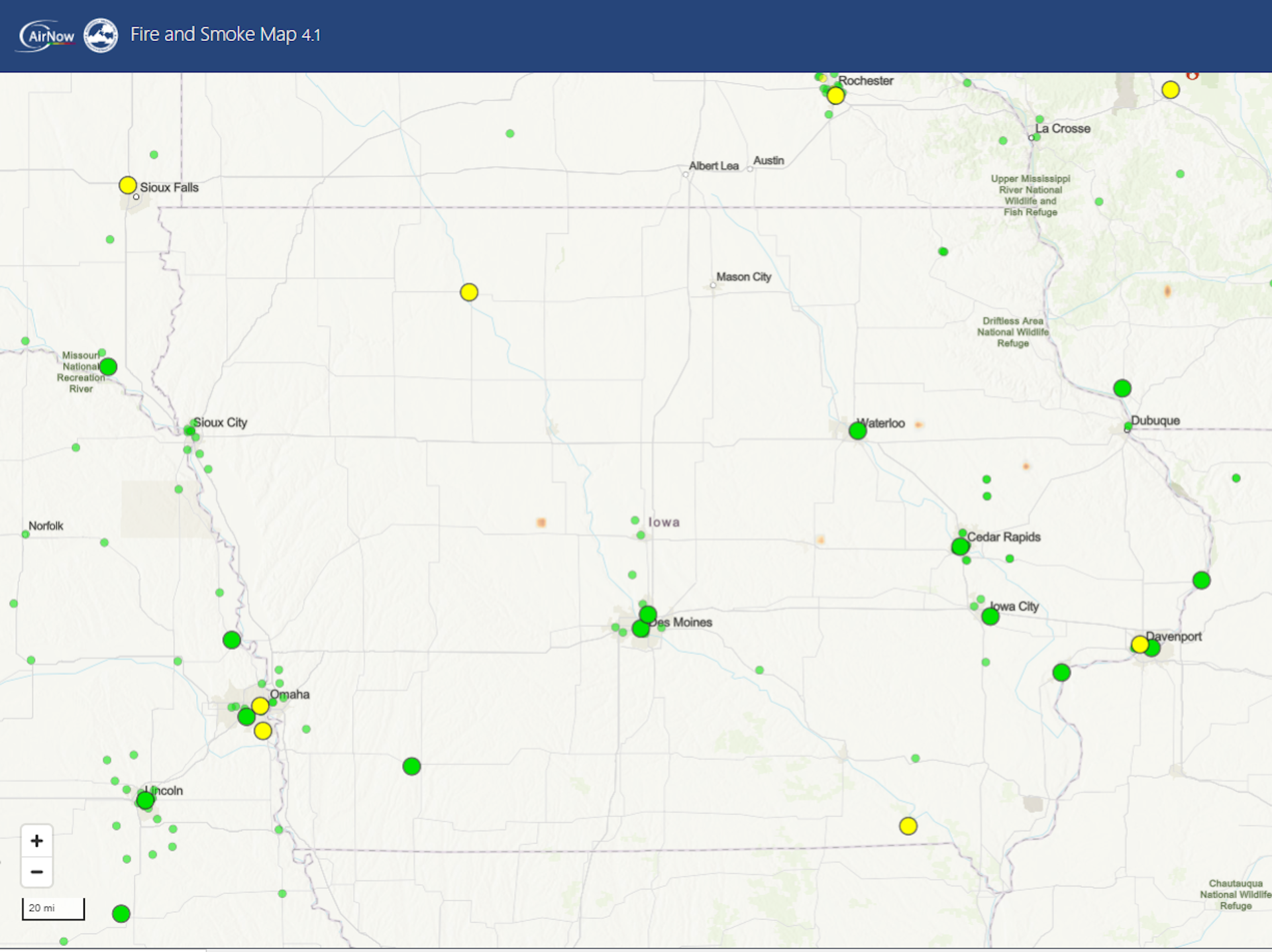
That’s a big jump from relying on ground-based air quality monitors, which may be hundreds of miles apart. Iowa, for example, had about 50 air quality monitors reporting data on a recent day for a state that covers 56,273 square miles. Most of those monitors were clustered around its largest cities.
NOAA’s AerosolWatch tool currently provides a near-real-time stream of wildfire smoke images from its GOES-R satellites, and the agency plans to incorporate TEMPO’s height data. A prototype of this system from my team’s NASA-supported research project on fire and air quality, called FireAQ, shows how users can zoom in to the neighborhood level to see how high the smoke plume is, however the prototype is currently only updated once a day, so the data is delayed, and it isn’t able to provide smoke height data where clouds are also overhead.
While air quality in most of the U.S. improved between 2000 and 2020, thanks to stricter emissions regulations on vehicles and power plants, wildfires have reversed that trend in parts of the western U.S. Research has found that wildfire smoke has effectively erased nearly two decades of air quality progress there.
Our advances in smoke monitoring mark a new era in air quality forecasting, offering more accurate and timely information to better protect public health in the face of these escalating wildfire threats.
Prof. Wang’s group have been supported from NOAA, NASA, and Naval ONR to develop research algorithm to retrieve aerosol layer height. The compute codes of the research algorithm were shared with colleagues in NOAA.
India has taken a significant step toward globalizing its traditional medical systems, with the World Health Organization (WHO), in collaboration with the Ministry of Ayush and the Central Council for Research in Siddha (CCRS), concluding a two-day WHO External Expert Group Meeting on July 24–25. The meeting focused on finalizing the Draft WHO Technical Reports on Training and Practice in Siddha, aiming to establish globally harmonized standards for this ancient Indian medical system.
In his keynote address, Vaidya Rajesh Kotecha, Secretary of the Ministry of Ayush, emphasized India’s commitment to promoting evidence-based practices in traditional medicine. He underscored the importance of robust training standards to enhance Siddha’s global credibility. Joint Secretary Monalisa Dash highlighted Siddha’s scientific relevance and cultural heritage, describing it as a living tradition with growing international resonance. She stressed the need for structured, evidence-based training to elevate Siddha’s global recognition.
Dr. Kim Sungchol, Head of WHO’s Traditional, Complementary, and Integrative Medicine (TCI) Unit, praised India’s leadership in traditional medicine and outlined WHO’s vision to integrate Siddha into national healthcare systems while preserving its traditional roots. He acknowledged the Ministry of Ayush’s technical and financial support in developing evidence-based documents.
The hybrid-mode meeting brought together 16 international experts from 11 countries across all six WHO regions, including Sri Lanka, Japan, Malaysia, the USA, the UK, Germany, Switzerland, the UAE, Singapore, Canada, and Australia. Their region-specific inputs enriched the draft documents, ensuring their global applicability while preserving Siddha’s indigenous identity. Facilitated by WHO’s TCI Unit and supported by the Government of India, the deliberations marked a milestone in aligning Siddha with international frameworks.
Source: United States Navy (Logistics Group Western Pacific)
LAE, Papua New Guinea – Now in its 21st iteration, the Pacific Partnership series is the largest annual multinational humanitarian assistance and disaster management preparedness mission conducted in the Indo-Pacific., July, 26.
Returning to Papua New Guinea following last year’s visit to Port Moresby and Wewak, the mission team will work to strengthen relationships, and bolster host nation capacity in order to provide humanitarian services, and support efforts to prepare and respond to potential natural disasters in the Indo-Pacific region. Engagements for this year’s mission are scheduled to take place across Lae and Port Moresby.
At the invitation of Papua New Guinea, Pacific Partnership’s mission is based on the shared goal of enhancing partnerships with allied nations and building mutual understanding. People-to-people relationships, forged over decades of joint exercises, exchanges, and collaborative response to real-world crises, illustrate the value we place in our allies and partners, and our enduring commitment to maintaining a free and open Indo-Pacific as well as Papua New Guinea outreach events. This year’s mission, featuring nearly 1500 personnel from the United States and participating nations including Australia, Canada, Germany, Japan, New Zealand, Republic of Korea (ROK), Singapore, and the United Kingdom.
“I am excited for what Pacific Partnership 2025 is bringing to Papua New Guinea and grateful for the help of the eight partner nations who are here with us in this effort,” said U.S. Navy Capt. Mark Stefanik, Mission Commander. “The focus is on collective capacity building that strengthens our collaboration with our allies and partners, beginning here in Papua New Guinea — providing opportunities to develop operations, activities and investments as we prepare in calm for times of crisis.”
While in Papua New Guinea, Pacific Partnership 2025 will provide tailored medical subject-matter exchanges and community education, conduct repairs at a local schoolhouse, and knowledge exchanges with exercises covering disaster response and humanitarian assistance. Additionally, the U.S. Pacific Fleet Band, accompanied by band members from the supporting nations, will perform in a variety of community engagements.
“We plan to create lasting bonds of friendship and trust between mission partners and host nations by coming together to prepare in calm, in order to be able to respond quickly in crisis.” said Col. Matt Churchward, Deputy Mission Commander.
Pacific Partnership 2025 underscores the essential role public health plays in strengthening regional cooperation, improving medical readiness, and building trust among partner nations.
Source: People’s Republic of China – State Council News
China defeated the United States 81-69 in the women’s basketball final on Friday at the FISU World University Games.
China delivered a well-rounded performance, with four players scoring in double digits. Small forward Chen Yujie shot eight of 15 from the field to score 19 points while power forward Tang Ziting buried four 3-pointers out of six attempts to add 16 points.
“We told the players to play as they like and not to have any burden mentally,” said Chinese coach Zhao Xuetong.
“We had already achieved what we expected before the Games, so I just told the players to enjoy the final and that they had nothing to lose,” added Zhao.
For the United States, power forward Deyona Gaston had a game-high 21 points and point guard Sidney Love notched 15 points.
“China was very good. In the first half we had the upper hand, and I thought we got them out of their defense pretty well,” said U.S. coach Krista Lea Gerlich. “In the second half, they increased their pressure on the zone, and they were mixing it up, and it was really confusing to our kids.”
China also claimed another gold medal in archery, as Liu Yanxiu and Wang Yan defeated Japan’s Waka Sonoda and Yuya Funahashi 6-2 in the recurve mixed team final.
Three gold medals were decided in the track and field. Finland captured its first gold in the meet from the women’s 100m hurdles as Saara Keskitalo finished first in 12.88 seconds, followed by Hungary’s Anna Toth (12.88), who was just a tiny 0.005s behind. Poland’s Alicja Sielska (12.95) came third.
Belgium also secured its first gold in the Games as Elien Vekemans overcame a height of 4.60 meters in women’s pole vault. Norway’s Kitty Augusta Friele Faye was 10 centimeters lower than the winner and Canada’s Rachel Grenke recorded a personal best of 4.35m in third.
Simon Wieland of Switzerland tossed his season best of 79.33 meters to win the men’s javeline throw, followed by Germany’s Nick Thumm (78.47) and Finland’s Topias Yki Eerik Laine (75.96).
Team USA continues to lead the medal table after Day 9 of competition with 28 gold, 22 silver, and 26 bronze medals. China remains second with 23 gold, 21 silver, and 13 bronze and Japan is third with 22 gold, 13 silver, and 20 bronze.
Source: People’s Republic of China – State Council News
SHANGHAI, July 25 — A total of 170 overseas companies and 27 institutions have participated in all eight editions of the China International Import Expo (CIIE), according to a Friday press conference held by the expo’s organizer.
More than 50 countries and international organizations have confirmed their presence in the comprehensive national exhibition area of this year’s expo, with Sweden and the United Arab Emirates serving as guest countries of honor, and with Kyrgyzstan participating for the first time, the expo’s organizer has said.
This year, the contracted exhibition area for corporate businesses exceeds 330,000 square meters, the organizer noted.
Notably, the scale of participating enterprises from Canada, Malaysia, New Zealand, Norway, Peru and other countries has reached a record high, fully reflecting the confidence of all parties in China’s economy and their enthusiasm for the CIIE, Wu Zhengping, deputy director general of the CIIE Bureau, said at the press conference.
Wu added that this year’s CIIE will for the first time include a special area for products from the least-developed participating countries. It will also include an expanded and upgraded area showcasing African products, as well as a cross-border e-commerce selection platform to help small and medium-sized foreign enterprises enter the Chinese market smoothly.
Toronto, July 25, 2025 (GLOBE NEWSWIRE) — Faircourt Asset Management Inc., as Manager of the Faircourt Fund (CBOE:FGX), is pleased to announce the monthly distribution payable on the Shares of the below listed Fund.
Faircourt Funds
Trading Symbol
Distribution Amount (per share/unit)
Ex-Dividend Date
Record Date
Payable Date
Faircourt Gold Income Corp.
FGX
$0.024
July 31, 2025
July 31, 2025
August 15, 2025
Faircourt Asset Management Inc. is the Investment Advisor for Faircourt Gold Income Corp.
This press release is not for distribution in the United States or over United States wire services.
For further information on the Faircourt Funds, please visit www.faircourtassetmgt.com or please contact 1-800-831-0304.
You will usually pay brokerage fees to your dealer if you purchase or sell Shares of the Fund on the CBOE Canada Exchange or other alternative Canadian trading system (an “exchange”). If the Shares are purchased or sold on an exchange, investors may pay more than the current net asset value when buying Shares of the Fund and may receive less than the current net asset value when selling them.
There are ongoing fees and expenses associated with owning units of an investment fund. An investment fund must prepare disclosure documents that contain key information about the fund. You can find more detailed information about the fund in the public filings available at www.sedar.com. Investment funds are not guaranteed, their values change frequently and past performance may not be repeated.
TORONTO, July 25, 2025 (GLOBE NEWSWIRE) — BlackRock Asset Management Canada Limited (“BlackRock Canada”), an indirect, wholly-owned subsidiary of BlackRock, Inc. (NYSE: BLK), today announced the final July 2025 cash distributions for iShares Premium Money Market ETF. Unitholders of record on July 28, 2025, will receive cash distributions payable on July 31, 2025.
Details regarding the final “per unit” distribution amounts are as follows:
About BlackRock BlackRock’s purpose is to help more and more people experience financial well-being. As a fiduciary to investors and a leading provider of financial technology, we help millions of people build savings that serve them throughout their lives by making investing easier and more affordable. For additional information on BlackRock, please visit www.blackrock.com/corporate | Twitter: @BlackRockCA
About iShares ETFs iShares unlocks opportunity across markets to meet the evolving needs of investors. With more than twenty years of experience, a global line-up of 1600+ exchange traded funds (ETFs) and US$4.7 trillion in assets under management as of June 30, 2025, iShares continues to drive progress for the financial industry. iShares funds are powered by the expert portfolio and risk management of BlackRock.
iShares® ETFs are managed by BlackRock Canada.
Commissions, trailing commissions, management fees and expenses all may be associated with investing in iShares ETFs. Please read the relevant prospectus before investing. The funds are not guaranteed, their values change frequently and past performance may not be repeated. Tax, investment and all other decisions should be made, as appropriate, only with guidance from a qualified professional.
Ravi Parmar, Minister of Forests, has released the following statement in response to the softwood lumber antidumping duties announced by the United States:
“U.S. President Donald Trump has made it his mission to destroy Canada’s economy, and the forestry sector is feeling the full weight of this.
“It is no secret, the sector — one that employs tens of thousands of workers in our province — has faced years of uncertainty, driven by ongoing trade disputes, global market pressures, and the compounding effects of climate change. Now, we face further challenges, with rising unfair and unjust duties imposed by the United States.
“These duties are nothing more than a tax on middle-class Americans trying to build or rebuild a home. They are hurting people on both sides of the border, with the forestry sector being unfairly targeted.
“Let me be clear: we will not stand by while Donald Trump tries to rip paycheques out of the hands of hard-working people in B.C.
“We’re going to fight for our workers, our communities and the future of this sector. Not just to protect jobs, but to build a future where forestry workers and their families thrive for generations to come.
“Premier David Eby is at the table with other premiers federally discussing our Team Canada approach and response. In B.C., I will be convening my Softwood Lumber Advisory Council to advise and support our government’s response and strategy.
“I have appointed former deputy minister to the premier, Don Wright, as a strategic advisor on softwood lumber, to ensure B.C.’s interests are well represented, and to help us align with federal and cross-provincial efforts.
“We will continue to take action to address the challenges the forestry sector is facing because this is about more than lumber; it’s about people and place. By working together with industry, First Nations and communities, we can build a resilient and sustainable forest economy that works for people, protects our resources, and ensures long-term prosperity for everyone in B.C.”
As of 11:00 a.m. on Friday, July 25, there are 55 active wildfires in Saskatchewan. Of those active fires, five are categorized as contained, 14 are not contained, 18 are ongoing assessments and 18 are listed as protecting values.
Twelve communities are currently under an evacuation order: Resort Subdivision of Lac La Plonge, La Plonge Reserve, Northern Village of Beauval, Northern Hamlet of Jans Bay, Resort Subdivision of Ramsey Bay, Patuanak/English River First Nation, Montreal Lake Cree Nation, Northern Village of Pinehouse, Canoe Lake Cree First Nation/Canoe Narrows, Île-à-la-Crosse, Resort Subdivision of Cole Bay and Resort Subdivision of Little Amyot Lake.
A full list of evacuated communities can be found on the Active Evacuations webpage.
Any evacuees should register through the Sask Evac Web Application and then call 1-855-559-5502 between 8 a.m. and 5 p.m. to have their needs assessed for additional assistance. Individuals who need help registering through the application can call the 855 Line for assistance.
Evacuees supported by the Canadian Red Cross should call 1-800-863-6582.
The latest wildfire information, an interactive fire ban map, frequently asked questions, fire risk maps and fire prevention tips can be found at saskpublicsafety.ca.
For more information, review the current fire bans and restrictions in provincial parks and recreation sites.
U.S. Coast Guard Northwest District PA Detachment Astoria Contact: Coast Guard PA Detachment Astoria Office: (503) 861-6380 After Hours: (206) 220-7237 PA Detachment Astoria online newsroom
07/25/2025 05:06 PM EDT
A U.S. Coast Guard aircrew medevaced a man from a fishing vessel approximately 180 miles offshore of Astoria, Oregon, Thursday. A Royal Canadian Air Force CC-295 Kingfisher crew from 19 Wing Comox in British Columbia, provided assistance overhead with weather reporting and communications. The man was safely flown to Astoria where he was transferred to EMS.
U.S. Coast Guard Northwest District PA Detachment Astoria Contact: Coast Guard PA Detachment Astoria Office: (503) 861-6380 After Hours: (206) 220-7237 PA Detachment Astoria online newsroom
07/25/2025 05:06 PM EDT
A U.S. Coast Guard aircrew medevaced a man from a fishing vessel approximately 180 miles offshore of Astoria, Oregon, Thursday. A Royal Canadian Air Force CC-295 Kingfisher crew from 19 Wing Comox in British Columbia, provided assistance overhead with weather reporting and communications. The man was safely flown to Astoria where he was transferred to EMS.
There are 56 wildfires currently burning across Alberta in the Forest Protection Area, and three mutual aid fires.
12 are classified as out of control, 11 are being held and 33 are under control.
There have been 12 new wildfires since yesterday.
Since Jan. 1, there have been 840 wildfires in the Forest Protection Area, burning more than 671,000 hectares.
More than 1,400 Alberta firefighters, contract firefighters and imported firefighters are currently battling wildfires across the province.
Resources currently being used include heavy equipment, air tankers, helicopters and night vision helicopters.
Alberta has imported firefighters and support staff from Newfoundland and Labrador, New Brunswick, Australia and Chile.
Information about wildfires can be found by visiting the Alberta Wildfire Status Dashboard.
Orders and alerts
Updates on evacuation orders are available on www.alberta.ca/emergency.
On July 24, The Kee Tas Kee Now Tribal Council cancelled its evacuation alerts for the communities of Loon Lake, Trout Lake and Peerless Lake.
On July 24, The Municipal District of Opportunity No. 17 cancelled its evacuation alert for Red Earth Creek.
On July 22, the Town of Slave Lake and the Municipal District of Lesser Slave River No. 124 cancelled the evacuation alert for the town and other residences on the east side of the lake.
The Municipal District of Opportunity No. 17’s evacuation order for Chipewyan Lake remains in effect.
Reception centre at Lakeview Sports Centre, 102 Opportunity Drive, Wabasca-Desmarais.
Alberta Emergency Alerts are issued by local authorities and are updated at their discretion. For the best source of information on the status of evacuation orders and alerts, residents are encouraged to follow their local authorities’ preferred communication channels for updates.
People living in Alberta are encouraged to download the Alberta Emergency Alert mobile app, which immediately pushes all alerts out to subscribers.
Fire bans
Fire advisories are in place for the Grande Prairie, Lac La Biche, High Level, Slave Lake and Peace River Forest Areas.
Under the advisory, fire permits will only be considered on a case-by-case basis.
Safe campfires are still permitted.
Please confirm advisories, restrictions or bans for your area at alberta.ca/fire-bans.
Fire bans outside the Forest Protection Area are the responsibility of municipalities and counties.
Everyone has a role to play in wildfire prevention. Follow all fire bans and restrictions to avoid new fire starts. If you see smoke or flames in the forest, call 310-FIRE to report it.
Applying FireSmart principles to homes and property can mitigate the risk of wildfire damage. Removing flammable materials and vegetation around the property and preventing embers from accumulating can help protect your home from wildfires. To learn more, visit FireSmart Alberta.
Air quality
Visit Wildfire Smoke Information for air quality monitoring information to make informed decisions about outdoor activities to protect your health. While wildfire smoke is affecting air quality in parts of Alberta, the presence of smoke does not necessarily mean there is fire near your community. Find information about the status of active wildfires and wildfire updates at Alberta Wildfire.
Roads and highways
There are no road closures from wildfires.
511 Alberta is the best source of real time information as conditions change on our highways. Follow on X (formerly known as Twitter) @511alberta.
Alberta highways that are affected by the wildfires will open and close frequently depending on safety and weather conditions. Be patient and respect the staff at the closure/detour sites – they are there with your safety in mind.
Health
For information about wildfire resources, including mental health, visit Wildfire Resources | Alberta Health Services.
Child care
Opportunity Childcare in Red Earth Creek has reopened.
Licensed child-care programs are required to notify Child Care Connect if they close unexpectedly.
Parents and guardians should reach out to their child-care provider for information on closures.
Justice and court services
The Red Earth Creek courthouse is closed until further notice.
Visit the Alberta Courts website for the most current information regarding court scheduling.
Related information
Active emergency updates
Alberta Emergency Alerts
Download the Alberta Emergency Alerts app
Download the Alberta Wildfire app
How to prepare for an emergency
Wildfire smoke information
Emergency evacuation payments
Free admission to provincial museums and historic sites
Drivers are advised that the new Keating Cross Road flyover will open to northbound traffic on Monday, July 28, 2025.
This means a change to how drivers get to Keating Cross Road from Highway 17 northbound.
The traffic changeover will happen overnight Sunday, July 27. As of midnight, drivers travelling northbound on Highway 17 to Keating Cross Road must use the right travel lane and take Exit 18 onto the flyover. The left‑turn lane and turning bay previously used to get to Keating Cross Road will be permanently closed.
Construction continues in the area, with some temporary closures in place. Access from Tamany Drive to Keating Cross Road will be closed. Local traffic can reach Keating Cross Road via Buena Vista Road.
Motorists should watch for new signage and construction activity, drive carefully and allow extra travel time. For the latest road conditions and traffic updates, visit: https://www.drivebc.ca/.ca
Learn More:
For more information about the Keating Cross Road overpass project, visit: https://gov.bc.ca/keatingoverpass
The new northbound flyover on Patricia Bay Highway connecting to Keating Cross Road will be open for drivers on Monday, July 28, 2025, bringing significant safety and traffic-flow improvements to the region.
“People driving through this region need to be able to count on safe and smooth travel when they’re heading to their homes, work, the airport or ferries,” said Mike Farnworth, Minister of Transportation and Transit. “Opening the Keating Cross Road flyover means we’ve removed a dangerous left turn and have made travel safer for families, commuters, tourists and commercial transport drivers who rely on this corridor every day.”
While moving traffic onto the new flyover is the most significant milestone, final work on the broader project will continue through summer 2025 and conclude in fall 2025. This will include paving the southbound on-ramp toward Victoria, drainage improvements and landscaping. Once complete, the project will include a new sidewalk on Keating Cross Road to improve safety and will support future bus rapid transit to reduce congestion further.
“The opening of the Keating Cross Road flyover is a tremendous achievement for the Saanich peninsula,” said Lana Popham, MLA for Saanich South. “This investment makes travel on this busy corridor safer and more reliable for families, commuters and commercial drivers. It also strengthens ties to our local business community and supports the region’s growth well into the future.”
The total project budget is $76.8 million, with the Government of British Columbia contributing $57.6 million, the Government of Canada contributing $16.7 million and the District of Central Saanich providing $2.5 million.
“With the Keating Cross Road flyover open, drivers and pedestrians in Central Saanich will benefit from improved safety and better access to the region,” said Will Greaves, member of Parliament for Victoria. “Our government is proud to invest in projects that support the expansion of local public transit and make life easier and safer for all Canadians.”
More than 52,000 vehicles use this part of the Patricia Bay Highway every day, with more than 4,000 vehicles per hour at peak travel times. The flyover project was identified as a priority in the South Island Transportation Strategy and supports the Province’s commitment to improving safety, expanding transit infrastructure and building strong, connected communities.
“The new flyover aims to make travel through the Saanich peninsula faster and our neighbourhoods safer. It’s an important connection to the Keating Business District, a key industrial and business centre for our region,” said Ryan Windsor, mayor, District of Central Saanich. “This has been a long-standing priority for our community. We’re grateful to the provincial and federal governments for recognizing its importance and we’re thrilled to see the flyover opening.”
Learn More:
To keep up to date with the latest progress on the Keating Cross Road flyover, visit: https://www2.gov.bc.ca/gov/content/transportation-projects/other-transportation-projects/highway-17-keating-cross-overpass
To learn more about the South Island Transportation Strategy, visit: https://www2.gov.bc.ca/gov/content/transportation/transportation-reports-and-reference/reports-studies/vancouver-island/south-island-transportation-strategy
July 25, 2025 – Victoria, British Columbia – Agriculture and Agri-Food Canada
The governments of Canada and B.C. are making changes to the AgriStability program to provide more financial support to B.C. farmers, following a virtual meeting of the federal, provincial and territorial ministers of agriculture.
Effective Friday, July 25, 2025, there are several enhancements for the 2025 AgriStability program year, including:
increasing the compensation rate from 80% to 90%, meaning producers will receive 90 cents for every dollar of eligible income decline
doubling the compensation cap from $3 million to $6 million to offer more equitable protection for larger farms and ranches
advancing interest-free payments to farmers for up to 75% of their anticipated final claim
B.C. farmers have until Thursday, July 31, 2025, to enrol in AgriStability for the 2025 program year.
These changes respond to international trade concerns and will help many B.C. farmers who are enrolled in the AgriStability program and have suffered income losses from occurrences such as extreme weather damage.
AgriStability is part of the Sustainable Canadian Agricultural Partnership and helps protect farmers from large drops in income due to things like poor yields, rising costs or market changes.
Jagrup Brar, Minister of Mining and Critical Minerals, has released the following statement on the successful rescue of three workers at Red Chris mine in northwestern B.C.:
“Today, we breathe a collective sigh of relief and express our profound thanks in celebration of the rescue and safe return of the three workers at Red Chris mine. After a fall-of-ground incident on Tuesday, July 22, 2025, these men spent more than two days in an underground refuge station before being safely extracted late last night.
“I want to commend the many agencies, organizations, companies and individuals who pulled together in the face of this challenge, the mine rescue teams, Newmont, the Tahltan Nation, industry and government. Your decisive action and collaborative work around the clock helped ensure the best possible outcome in the face of this emergency.
“Earlier this year, I participated in the mine rescue competition, meeting the incredible men and women who are responsible for coming to the rescue in events like these. I was able to see first-hand their incredible skills and dedication in action. Our province is well served by such courageous professionals.
“This is a proud day for our province, and I am so happy to know that Kevin, Darien and Jesse are healthy and well and are safely back with their families.
“As we move forward, we reflect on the impact of this incident and the lessons we can glean from it. The ministry’s chief inspector has begun an investigation, the results of which will be made public, and I know that Newmont will also be conducting its own investigation.
“Thanks once again to everyone involved, and I wish Kevin, Darien and Jesse all the best and a happy reunion with their families and loved ones.”
[. That is why Alberta’s government is providing $114.6 million in grant funding to ensure rural communities have safe and efficient roads, bridges and community airports, as well as modern water and wastewater facilities to support their growing populations.
The funding will be distributed through the Strategic Transportation Infrastructure Program (STIP), the Alberta Municipal Water/Wastewater Partnership (AMWWP) and Water for Life program. STIP provides grants to small and rural municipalities to maintain and improve local road bridges, community airports and local resource roads. AMWWP and the Water for Life program provide grants to municipalities to assist in the construction of high-priority municipal water supply and treatment facilities, as well as wastewater treatment and disposal facilities.
“Rural Alberta is the backbone of our province, driving economic growth, feeding the world and strengthening our communities. Our government is investing in the infrastructure rural communities need to grow and thrive, whether it’s reliable roads, modern bridges, safe community airports or water facilities. These are the essentials that support families, attract investment and keep our rural economy moving. Through Budget 2025, we’re proud to partner with municipalities to deliver real, on-the-ground results that build stronger communities and a stronger Alberta.”
“Rural communities are vital to Alberta’s success. In Budget 2025, we are making targeted investments through the Strategic Transportation Infrastructure Program and our water grant funding programs to ensure rural communities across the province have effective transportation and water infrastructure to support their continued growth and prosperity.”
A total of 51 local road, bridge and community airport projects are receiving funding this year under STIP. They include a $2.6-million grant for reconstruction of Range Road 150 in Newell County, west of Brooks. This road is an important part of the county’s future truck route, providing connectivity for residents and commercial traffic between Highway 1 and Highway 542. STIP grants also include a $2.5-million grant for airfield pavement rehabilitation at the CYLB airport in Lac La Biche County and a $3.6-million grant to support the replacement of the Township Road 352 bridge over the Little Red Deer River, 23 kilometres west of Innisfail.
Additionally, a $3.5-million grant will support an industrial rail extension project in Coaldale, which will allow local producers to transport southern Alberta-grown and manufactured goods to a global customer base in the agrifood processing sector.
Funding is being provided for 35 water and wastewater projects this year in small and rural communities across Alberta. Approved projects under the Alberta Municipal Water/Wastewater Partnership include an $8.9 million grant to the City of Brooks to design and build a mechanical membrane bioreactor wastewater treatment plant to replace the lagoon-based system, a $2.4 million grant to the Wabasca Water Treatment Plant that will improve services at the existing facility while the community plans for a new water treatment facility, and a $923,000 grant to the town of Sylvan Lake to drill three new wells and upgrade an existing well to increase its water supply and ensure the community has reliable access to clean drinking water.
“We’re very pleased to receive this substantial support from the Government of Alberta. The $8.9 million in funding for our new wastewater treatment facility is a critical investment in Brooks’ future. This project will help us meet the needs of a growing population, support economic development and ensure long-term sustainability for our community.”
Projects funded under the Water for Life program include a $1-million grant to the Bonnyville Regional Services Water Commission to support engineering for Phase 2 of the regional waterline extension from Bonnyville to Glendon, providing clean drinking water to many communities along this route. As well, a $14.8-million grant is being provided to the Darwell Lagoon Commission for the Northeast Lagoon Extension project, which will help ensure long-term capacity, protect local watersheds and support future community growth. Additionally, a $1.6-million grant will allow Mountain View Regional Water Services Commission to connect its regional water supply lines to the new reservoirs in the Towns of Didsbury and Carstairs, supplying water to these communities, including water for use in firefighting.
“Rural municipalities are the backbone of Alberta’s economy, fuelling industrial growth across our province. The RMA welcomes these targeted investments in roads, bridges and water infrastructure as a vital step to maintaining safe and reliable rural transportation networks, and we look forward to building on this progress to address remaining priorities. A sustained, collaborative partnership between the RMA and the Government of Alberta will ensure a prosperous future not just for rural municipalities, but for all Albertans.”
This funding is included in Budget 2025 and is part of the Alberta government’s commitment to supporting rural and small municipalities in building and maintaining critical local transportation, and water and wastewater infrastructure.
Budget 2025 is meeting the challenge faced by Alberta with continued investments in education and health, lower taxes for families and a focus on the economy.
Quick facts
Strategic Transportation Infrastructure Program (STIP) grants:
51 projects approved for 2025 will receive a total of $41 million in funding under the following STIP components:
Local Road Bridge Program – 38 projects receiving $23.8 million in provincial funding.
Community Airport Program – Five projects receiving $3.7 million in provincial funding.
Local Municipal Initiatives – Four projects receiving $8.6 million in provincial funding.
Resource Road Program – Four projects receiving $4.9 million in provincial funding.
Water grants:
The 35 water and wastewater infrastructure projects approved for 2025 will receive $73.6 million:
Nine projects will receive about $33.4 million under Water for Life program.
26 projects will receive about $40.2 million through AMWWP.
The Honourable Mélanie Joly, Minister of Industry and Minister responsible for Canada Economic Development for Quebec Regions, will be participating in a site visit at Algoma Steel.
Date: Monday, July 28, 2025
Time: 9:00 a.m. (ET) tour
Location: Sault Ste. Marie, Ontario
Members of the media are asked to contact ISED Media Relations at media@ised-isde.gc.ca to receive event location details and confirm their attendance.
Canada has adopted comprehensive governance structures to address extreme heat, involving national strategies, institutional frameworks, provincial and local government initiatives, and public-private partnerships.
Health Canada plays a pivotal role by providing evidence-basedguidance, heat health science, and best practices for provincial and local authorities to implement Heat Alert and ResponseSystems (HARS). It also collaborates with Environment andClimate Change Canada (ECCC) to inform heat-related weather warnings. Provincial and territorial governments lead the response to heat health risks, with the Federal Government supporting local-level adaptation.
Provincial heat action plans in Ontario, Quebec, and BritishColumbia, along with municipal heat response plans in cities like Toronto, Montreal, and Vancouver, outline specific measures such as establishing cooling centres, disseminating heat health messages, and modifying urban design to reduce heat risks. These efforts are also extended to Indigenous communities, where culturally appropriate response planning is underway.
Public-private partnerships (PPPs) play a significant role in enhancing heat resilience. In Toronto, PPPs have focused on retrofitting buildings with energy-efficient cooling systems, creating green roofs, and expanding urban parks to mitigate the urban heat island effect. Similarly, Hydro-Québec collaborates with businesses to promote energy-saving technologies that reduce electricity demand during heatwaves.
Key achievements include the widespread implementation of HARS, public education campaigns, and strengthened health sector preparedness to manage heat-related illnesses. Canada also collaborates with international organizations to share best practices, filling knowledge gaps and advancing research, such as addressing indoor heat health risks. These coordinated efforts aim to protect public health, enhance urban resilience, and mitigate the impacts of extreme heat across Canada.