The greenhouse effect was discovered more than 150 years ago and the first scientific paper linking carbon dioxide levels in the atmosphere with climate change was published in 1896.
But it wasn’t until the 1950s that scientists could definitively detect the effect of human activities on the Earth’s atmosphere.
In 1956, United States scientist Charles Keeling chose Hawaii’s Mauna Loa volcano for the site of a new atmospheric measuring station. It was ideal, located in the middle of the Pacific Ocean and at high altitude away from the confounding influence of population centres.
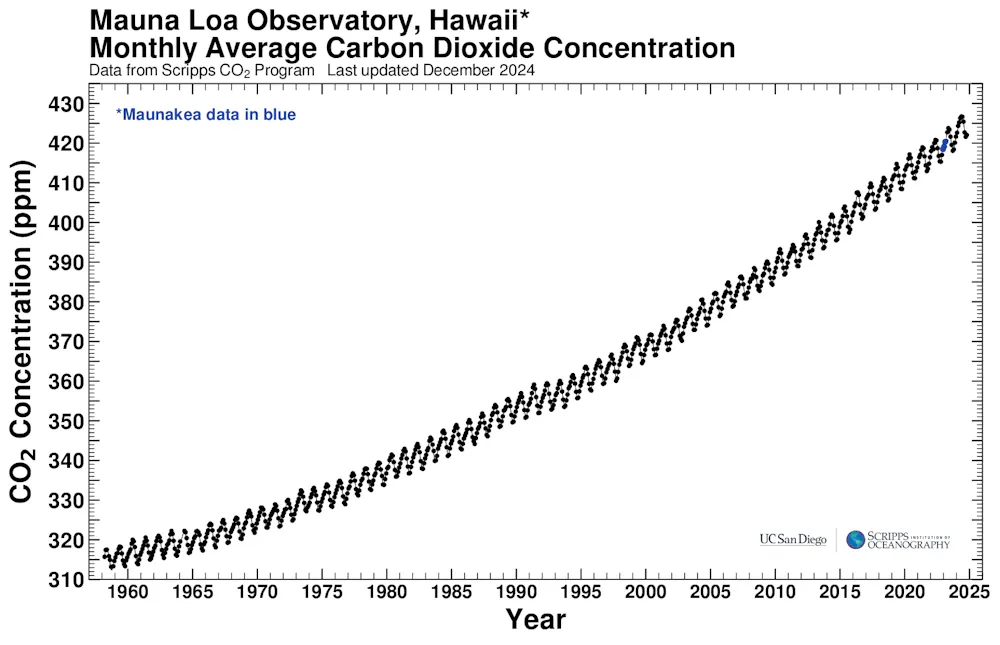
Data collected by Mauna Loa from 1958 onward let us clearly see the evidence of climate change for the first time. The station samples the air and measures global CO₂ levels. Charles Keeling and his successors used this data to produce the famous Keeling curve – a graph showing carbon dioxide levels increasing year after year.
But this precious record is in peril. US President Donald Trump has decided to defund the observatory recording the data, as well as the widespread US greenhouse gas monitoring network and other climate measuring sites.
We can’t solve the existential problem of climate change if we can’t track the changes. Losing Mauna Loa would be a huge loss to climate science. If it shuts, other observatories such as Australia’s Kennaook/Cape Grim will become even more vital.
The first year of measurements at Mauna Loa revealed something incredible. For the first time, the clear annual cycle in atmospheric CO₂ was visible. As plants grow in summer, they absorb CO₂ and draw it out of the atmosphere. As they die and decay in winter, the CO₂ returns to the atmosphere. It’s like Earth is breathing.
Most land on Earth is in the Northern Hemisphere, which means this cycle is largely influenced by the northern summer and winter.
The annual cycle of carbon dioxide is largely due to plant growth and decay in the northern hemisphere.
It only took a few years of measurements before an even more profound pattern emerged.
Year on year, CO₂ levels in the atmosphere were relentlessly rising. The natural in-out cycle continued, but against a steady increase.
Scientists would later figure out that the ocean and land together were absorbing almost half of the CO₂ produced by humans. But the rest was building up in the atmosphere.
Crucially, isotopic measurements meant scientists could be crystal clear about the origin of the extra carbon dioxide. It was coming from humans, largely through burning fossil fuels.
Mauna Loa has now been collecting data for more than 65 years. The resulting Keeling curve graph is the most iconic demonstration of how human activities are collectively affecting the planet.
When the last of the Baby Boomer generation were being born in the 1960s, CO₂ levels were around 320 parts per million. Now they’re over 420 ppm. That’s a level unseen for at least three million years. The rate of increase far exceeds any natural change in the past 50 million years.
The reason carbon dioxide is so important is that this molecule has special properties. Its ability to trap heat alongside other greenhouse gases means Earth isn’t a frozen rock. If there were no greenhouse gases, Earth would have an average temperature of -18°C, rather than the balmy 14°C under which human civilisation emerged.
The greenhouse effect is essential to life. But if there are too many gases, the planet becomes dangerously hot. That’s what’s happening now – a very sharp increase in gases exceptionally good at trapping heat even at low concentrations.
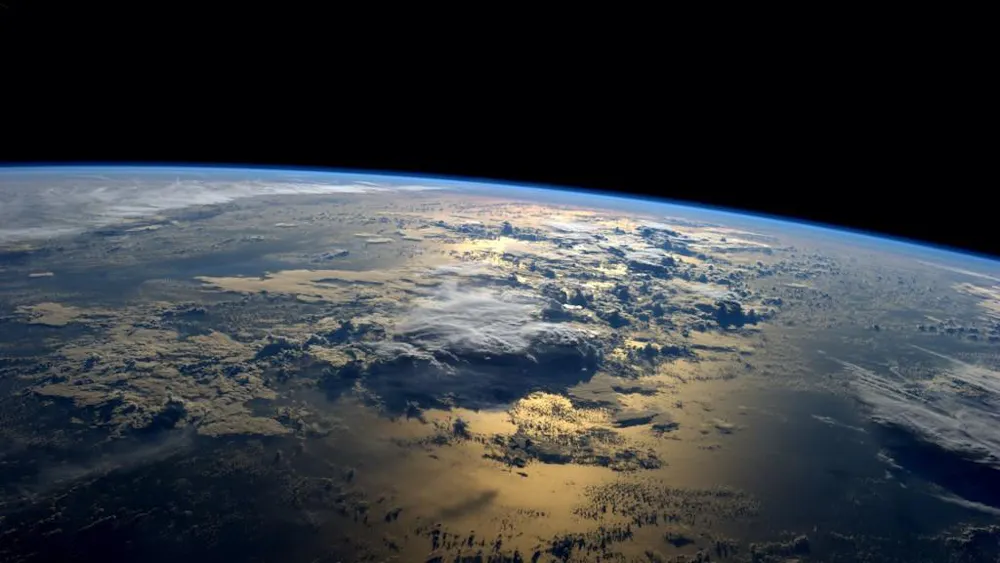
Greenhouse gases are the reason Earth isn’t an icebox. But the rate humans are emitting them is leading to very rapid changes. Reid Wiseman/NASA, CC BY-NC-ND
Keeping our eyes open
It’s not enough to know CO₂ is climbing. Monitoring is essential. That’s because as the planet warms, both the ocean and the land are expected to take up less and less of humanity’s emissions, letting still more carbon accumulate in the air.
Continuous, high-precision monitoring is the only way to spot if and when that happens.
This monitoring provides the vital means to verify whether new climate policies are genuinely influencing the atmospheric CO₂ curve rather than just being touted as effective. Monitoring will also be vital to capture the moment many have been working towards when government policies and new technologies finally slow and eventually stop the increase in CO₂.
The US administration’s plans to defund key climate monitoring systems and roll back green energy initiatives presents a global challenge.
Without these systems, it will be harder to forecast the weather and give seasonal updates. It will also be harder to forecast dangerous extreme weather events.
Scientists in the US and globally have sounded the alarm about what the closure would do to science. This is understandable. Stopping data climate collection is like breaking a thermometer because you don’t like knowing you’ve got a fever.
If the US follows through, other countries will need to carefully reconsider their commitments to gathering and sharing climate data.
Australia has a long record of direct atmospheric CO₂ measurement, which began in 1976 at the Kennaook/Cape Grim Baseline Air Pollution Station in north-west Tasmania. This and other climate observations will only become more valuable if Mauna Loa is lost.
It remains to be seen how Australia’s leaders respond to the US retreat from climate monitoring. Ideally, Australia would not only maintain but strategically expand its monitoring systems of atmosphere, land and oceans.
Alex Sen Gupta receives funding from the Australian Research Council.
Katrin Meissner receives funding from the Minderoo Foundation and has received funding from the Australian Research Council in the past.
Timothy Raupach receives funding from QBE Insurance, Guy Carpenter, and the Australian Research Council.
The greenhouse effect was discovered more than 150 years ago and the first scientific paper linking carbon dioxide levels in the atmosphere with climate change was published in 1896.
But it wasn’t until the 1950s that scientists could definitively detect the effect of human activities on the Earth’s atmosphere.
In 1956, United States scientist Charles Keeling chose Hawaii’s Mauna Loa volcano for the site of a new atmospheric measuring station. It was ideal, located in the middle of the Pacific Ocean and at high altitude away from the confounding influence of population centres.
Data collected by Mauna Loa from 1958 onward let us clearly see the evidence of climate change for the first time. The station samples the air and measures global CO₂ levels. Charles Keeling and his successors used this data to produce the famous Keeling curve – a graph showing carbon dioxide levels increasing year after year.
But this precious record is in peril. US President Donald Trump has decided to defund the observatory recording the data, as well as the widespread US greenhouse gas monitoring network and other climate measuring sites.
We can’t solve the existential problem of climate change if we can’t track the changes. Losing Mauna Loa would be a huge loss to climate science. If it shuts, other observatories such as Australia’s Kennaook/Cape Grim will become even more vital.
The first year of measurements at Mauna Loa revealed something incredible. For the first time, the clear annual cycle in atmospheric CO₂ was visible. As plants grow in summer, they absorb CO₂ and draw it out of the atmosphere. As they die and decay in winter, the CO₂ returns to the atmosphere. It’s like Earth is breathing.
Most land on Earth is in the Northern Hemisphere, which means this cycle is largely influenced by the northern summer and winter.
The annual cycle of carbon dioxide is largely due to plant growth and decay in the northern hemisphere.
It only took a few years of measurements before an even more profound pattern emerged.
Year on year, CO₂ levels in the atmosphere were relentlessly rising. The natural in-out cycle continued, but against a steady increase.
Scientists would later figure out that the ocean and land together were absorbing almost half of the CO₂ produced by humans. But the rest was building up in the atmosphere.
Crucially, isotopic measurements meant scientists could be crystal clear about the origin of the extra carbon dioxide. It was coming from humans, largely through burning fossil fuels.
Mauna Loa has now been collecting data for more than 65 years. The resulting Keeling curve graph is the most iconic demonstration of how human activities are collectively affecting the planet.
When the last of the Baby Boomer generation were being born in the 1960s, CO₂ levels were around 320 parts per million. Now they’re over 420 ppm. That’s a level unseen for at least three million years. The rate of increase far exceeds any natural change in the past 50 million years.
The reason carbon dioxide is so important is that this molecule has special properties. Its ability to trap heat alongside other greenhouse gases means Earth isn’t a frozen rock. If there were no greenhouse gases, Earth would have an average temperature of -18°C, rather than the balmy 14°C under which human civilisation emerged.
The greenhouse effect is essential to life. But if there are too many gases, the planet becomes dangerously hot. That’s what’s happening now – a very sharp increase in gases exceptionally good at trapping heat even at low concentrations.
Greenhouse gases are the reason Earth isn’t an icebox. But the rate humans are emitting them is leading to very rapid changes. Reid Wiseman/NASA, CC BY-NC-ND
Keeping our eyes open
It’s not enough to know CO₂ is climbing. Monitoring is essential. That’s because as the planet warms, both the ocean and the land are expected to take up less and less of humanity’s emissions, letting still more carbon accumulate in the air.
Continuous, high-precision monitoring is the only way to spot if and when that happens.
This monitoring provides the vital means to verify whether new climate policies are genuinely influencing the atmospheric CO₂ curve rather than just being touted as effective. Monitoring will also be vital to capture the moment many have been working towards when government policies and new technologies finally slow and eventually stop the increase in CO₂.
The US administration’s plans to defund key climate monitoring systems and roll back green energy initiatives presents a global challenge.
Without these systems, it will be harder to forecast the weather and give seasonal updates. It will also be harder to forecast dangerous extreme weather events.
Scientists in the US and globally have sounded the alarm about what the closure would do to science. This is understandable. Stopping data climate collection is like breaking a thermometer because you don’t like knowing you’ve got a fever.
If the US follows through, other countries will need to carefully reconsider their commitments to gathering and sharing climate data.
Australia has a long record of direct atmospheric CO₂ measurement, which began in 1976 at the Kennaook/Cape Grim Baseline Air Pollution Station in north-west Tasmania. This and other climate observations will only become more valuable if Mauna Loa is lost.
It remains to be seen how Australia’s leaders respond to the US retreat from climate monitoring. Ideally, Australia would not only maintain but strategically expand its monitoring systems of atmosphere, land and oceans.
Alex Sen Gupta receives funding from the Australian Research Council.
Katrin Meissner receives funding from the Minderoo Foundation and has received funding from the Australian Research Council in the past.
Timothy Raupach receives funding from QBE Insurance, Guy Carpenter, and the Australian Research Council.
Source: United Nations General Assembly and Security Council
Following are UN Deputy Secretary-General Amina Mohammed’s remarks at the sixty-eighth session of the Committee on the Peaceful Uses of Outer Space, in Vienna today:
Let me begin with a simple truth: every phone call you made to get here, every global positioning system (GPS) route that guided your journey, every weather forecast that helped you pack — all of it depended on space.
Space is not the final frontier. It is the foundation of our present. Without satellites orbiting overhead right now, global food systems would collapse within weeks. Emergency responders would lose their lifelines. Climate scientists would be flying blind. And our hopes of achieving the Sustainable Development Goals (SDGs) would be out of reach.
This is why your work matters. This is why the work of this Committee — COPUOS — is not just important, but urgent. For over six decades, through shifting geopolitics and changing priorities, this Committee has consistently delivered.
Five space treaties. Space sustainability guidelines. The Space 2030 Agenda. You don’t just talk about space governance — you create it. But today, we need to shift our focus to scale.
The United Nations has identified six critical areas for SDG acceleration: food systems, energy transitions, digital connectivity, education and skills, environmental action, and jobs and social protection.
Every single one depends on space technologies. This is a paradox when you consider that less than half of UN Member States have a satellite in orbit, yet all 8 billion people on Earth benefit from space services daily.
Through your work, and through the United Nations Office for Outer Space Affairs (UNOOSA), we can close this divide — not by putting a satellite in every nation’s hands, but by ensuring that the benefits of space technologies reach every community on our planet.
I’m just coming from the fourth International Conference on Financing for Development in Seville, where the message was crystal clear: in an era of constrained investment, we must align capital with high-impact solutions.
Space is one of them. But impact happens at every level — and I would like to share what I’ve seen.
At the local level, UNOOSA’s programs are building the next generation of inclusive space leaders. They’re ensuring equal access for youth and women in developing countries, where small investments create enormous change. Through these programs, we’re enabling the next Carmen Chaidez, the next Kitaw Ejigu.
At the national level, UNOOSA helps countries build their space capabilities from the ground up. Through space law workshops and direct support for emerging programs, nations develop the expertise they need to harness space for their own development priorities.
The United Nations Platform for Space‑based Information for Disaster Management and Emergency Response (UN-SPIDER) shows what this looks like in practice. In Tonga, Tobago, and Ghana, satellite data is being used to create detailed digital models of entire cities. When disaster strikes, these virtual twins allow Governments to see exactly where help is needed most, deploy resources much faster, and ultimately save more lives.
Through innovative partnerships, UNOOSA has helped Kenya, Guatemala, [Republic of] Moldova, and Mauritius launch their first satellites. Each event was a catalyst — for new space agencies, developing robust legislation, and promoting gender equality in the space sector.
Finally, at the international level, as reinforced by the Pact for the Future, we must work together to ensure COPUOS delivers the governance our rapidly evolving space environment demands of us.
Here’s what’s happening right now: low-Earth orbit satellites are multiplying exponentially. Humanity is preparing to return to the Moon. We’re exploring beyond like never before. And your work has never been more vital and urgent.
We stand at the threshold of potentially historic decision: the fourth United Nations Conference on the Exploration and Peaceful Uses of Outer Space (UNISPACE IV) in 2027. This isn’t just another conference. This could be the milestone that shapes the next sixty years of global space governance. And so I encourage us all to aim high. And aim even higher.
The pressing space issues before us — traffic, debris, resources — each present both risk and opportunity for achieving the SDGs. Each requires the kind of multilateral cooperation that this Committee has proven it can deliver. We need a strong UNOOSA and a strong COPUOS to lead us into UNISPACE IV and beyond.
But strength isn’t about institutions — it’s about the people within them and the systems that we run. As a practical next step, I encourage you to champion the implementation of the UNOOSA Gender Mainstreaming Toolkit for the Space Sector launched last year. Because when we leave talent on the sidelines, we will all lose.
Let me leave you with one final message. The view from space shows no countries, no borders — only one shared planet, our common home. Let that aspect guide you as you build the governance frameworks for space exploration and use. Let us ensure that outer space remains safe and sustainable for everyone. Let us make space a catalyst for achieving our 2030 Goals with 5 years to go. And let us build governance frameworks that serve not just us, but generations to come.
Nearly all higher education institutions in the Northeast have demonstrated a commitment to sustainability, and most have an Office of Sustainability. While each university has its own unique challenges in pursuing environmental progress, many of these offices face similar issues – How do we get students prepared for green careers? What’s the most efficient way to run a move-out donation program?
UConn Office of Sustainability Director, Patrick McKee, welcomes guests to the NECSC Summit.
That’s where the Northeast Campus Sustainability Consortium (NECSC) comes in! The NECSC was established in 2004 to support sustainability officers in advancing progress on university campuses in the northeast and Canadian maritime region. The NECSC is an informal group, but commits to hosting an annual meeting to provide members close networking opportunities, professional development and access to the area’s vibrant sustainability practitioner community. Hosts of the annual gathering are leaders of sustainability in the region.
Following 2024’s annual summit at Southern New Hampshire University, UConn’s Office of Sustainability and Connecticut College agreed to co-host the event for 2025. The NECSC conference is also an opportunity to highlight the hosts’ sustainability progress and leadership regionally. UConn’s Avery Point Campus was the perfect location – not only is it a gorgeous waterfront campus, it also plays an outsize role in environmental progress for Connecticut.
In 2021, Avery Point upgraded 121 of their outdoor light fixtures with LED lights which saved 25 tons of carbon dioxide over the course of a year. The Student Center secured LEED Silver Certification in recognition of its energy efficiency in 2023. Avery Point is also home to the Connecticut Institute for Resilience and Climate Adaptation (CIRCA) and Connecticut Sea Grant which act as research hubs for climate resilience, coastal ecosystems, and aquaculture within Long Island Sound. Faculty and students are collaborating with Eversource and Orsted on a $1.25m grant to understand the impact of offshore wind projects on marine habitats, including project Starboard Wind. EcoHusky is the student-run organization that organizes yearly sustainability events for faculty and students including the Earth Day Event, supported by the Office of Sustainability in 2025. EcoHusky was also a part of securing an Environmental and Sustainability Small Grant from the Office of Sustainability in 2022 to install a solar panel and wind turbine on the sailing shed to provide independent, renewable-energy sources for campus buildings. In December of 2024, UConn entered a historical memorandum with CT’s five recognized tribes to establish Avery Point as a Native-American Serving, Nontribal Intuition (NASNTI) to reach at least 10% Native American enrollment and supporting tribal education through academics and community engagement.
Nearly 100 higher education sustainability staff and faculty members attended the NECSC summit, held June 9-11, 2025. Ranging from Maryland to Maine, attendees hailed from Ivies, state universities and private liberal arts schools. The event kicked off with a keynote address by Dr. Annemarie Seifert, Dean of UConn Avery Point, and was followed by engaging sessions on creating circular economies on campus, geothermal buildings, decarbonization communications and more.
Leaders of higher ed’s preeminent sustainability networks provided global perspectives on shifting political landscapes for sustainability. Megan Fay Zahniser, Executive Director of the Association for the Advancement of Sustainability in Higher Education, and Tim Carter, President of Second Nature, urged attendees to work together and with their home communities to push for continued environmental progress.
Throughout the event, UConn Dining provided excellent food and low-waste catering. Mike White, Executive Director of UConn Dining Services, spoke about their team’s dedication to reducing food waste, using local and organic produce, and UConn’s partnership with Quantum Biopower which converts food scraps into energy. All attendees enjoyed menus featuring cheese from local farms like Cato Corner in Colchester, and greens from Full Moon Farm in Hampton.
Guests participated in marine research in Long Island Sound with Project Oceanology.
The NECSC summit concluded with a marine biology excursion on Long Island Sound. Project Oceanology, a nonprofit marine education and research facility, took guests out on a ship to catch, record, and measure sea life from the sound. They also took the crew up the Thames River for a closer look at the offshore wind assembly pier.
“It is always uplifting to network, share stories, insights, and best practices as we work to collectively make a larger impact on the planet and in the lives of students,” shares Patrick McKee, Director of the UConn Office of Sustainability. “It was a pleasure co-hosting the NECSC Summit at UConn Avery Point, and we look forward to visiting Rutgers in 2026.”
To learn more about NECSC and join the mailing list, click here.
Source: United Kingdom – Executive Government & Departments
News story
UK and Peru hold sixth iteration of bilateral Political Consultations Mechanism in London
The Minister for International Development, Latin America and Caribbean and Peruvian Vice Minister of Foreign Affairs co-chaired the 6th session of the Peru-UK Political Consultations in London on 3 July.
The Rt. Hon Baroness Chapman of Darlington, Minister for International Development, Latin America and Caribbean welcomed Peruvian Vice Minister of Foreign Affairs, Ambassador Felix Denegri to London on 3 July, where the two Ministers co-chaired the 6th session of the Peru-UK Political Consultations.
A historic relationship rooted in shared values dating back over 200 years, the UK and Peru reaffirmed their commitment to strengthening their modern partnership.
Successes celebrated since the last meeting include the successful ratification of the UK’s CPTPP accession; the signing of a Double Taxation Agreement; and signing a new Memorandum of Understanding (MOU) on Climate Change. The two countries celebrated the culmination of the 200-year anniversary of Peru-UK relations in 2023 and numerous high-level visits both ways.
On security and defence, the parties reaffirmed their commitment to a rules-based international order and willingness to jointly tackle global insecurity. The UK and Peru agreed to drive collaboration through a Memorandum of Understanding on Security cooperation, addressing transnational drug trafficking, illicit financial flows, corruption and environmental crime.
On growth, the parties celebrated the strengthening of bilateral trade and investment, supported by a growing framework of trade and government-to-government agreements (G2Gs). Peru acknowledged the UK’s valuable contribution to Peru’s infrastructure on health, education and flood defences. This includes the UK’s position as the largest foreign direct investor in mining in Peru. The UK also presented its recently launched Industrial Strategy and the two sides discussed collaboration on Peru’s clean energy transition, including unlocking green hydrogen potential.
The parties highlighted their joint efforts to address climate change, protect the Amazon Rainforest, promote green investment and tackle environmental crime. They celebrated the recent signing of a Memorandum of Understanding on Climate and Biodiversity and discussed Peru’s leadership as a key partner in Latin America ahead of COP30. The UK offered to continue supporting Peru in developing a National Bioeconomy Strategy by 2026.
Lastly, the UK and Peru stressed the value of shared cultural experiences as a foundation to the bilateral relationship. They celebrated the promotion of English Language learning through the British Council and academic excellence through the UK’s Chevening scholarships programme. The parties will soon drive this further through the signing of two Memorandum’s of Understanding to collaborate on quality higher education in Peru delivered by the British Council.
Speaking after the Consultations, Baroness Chapman said:
The UK and Peru share a warm and historic friendship – over 200 years strong, grounded in our values, mutual respect and common ambitions.
Today we are working closer than ever for shared growth and prosperity. The UK is already Peru’s largest foreign investor and I had a fantastic discussion with Ambassador Denegri today on how we can build on this, from trade, to climate and security.
Vice minister of Foreign Affairs of Peru, Félix Denegri said:
We had very fruitful discussions with Baroness Chapman, in which we ratified our commitment to continuously expand and strengthen our bilateral agenda, based on our shared principles, values and interests.
I am greatly satisfied with the level of bilateral engagement between Peru and the UK, shown in reciprocal ministerial, vice-ministerial and high authorities visits in the last two years. We both highlighted the continuity of our Political Consultations Mechanism, being this the sixth since its establishment in 2018.
We look forward to welcome Baroness Chapman for our next round of Consultations, in Peru.
The UK and Peru will continue to strengthen bilateral ties across security, growth, climate and education, invigorated through their new agreements and MOUs. The parties agreed to reconvene in Peru in 2026.
On July 2, H.E. Amb. Guo Haiyan paid a courtesy call on Hon. Dr. Deborah Mlongo Barasa, Cabinet Secretary, Ministry of Environment, Climate Change and Forestry. Mr. ZHOU Jun, DPR of China to UNEP, and Amb. Jane Makori, Deputy Director General, MFDA, Kenya attended the meeting.
Amb. Guo shared China’s latest progress and important achievements in the field of ecological and environmental protection. China stands ready to share its experience with Kenya, promoting cooperation in the field of climate change, green BRI and green industry investment, with an aim of jointly enhancing ecological and environmental governance capacity.
Hon. Dr. Deborah Mlongo Barasa positively acknowledged the process in China-Kenya environmental cooperation, and expressed the willingness to enhance collaboration in the field of circular economy, waste management, biodiversity, and South-South cooperation on climate change.
Distributed by APO Group on behalf of Embassy of the People’s Republic of China in the Republic of Kenya.
Source: United Kingdom – Executive Government & Departments
Speech
Environment Secretary Steve Reed: Groundswell Show speech
Speech by Environment Secretary Steve Reed at the 2025 Groundswell Show.
It’s fantastic to be with you all here today. I’m delighted to have this opportunity to speak to so many people.
It’s exciting to be here at Groundswell with the pioneers and innovators who are shaping the future of British farming.
I’ve really been looking forward to coming to Groundswell because I know this is where the big ideas are taking shape.
You’re confronting the challenges of the future by drawing on the power of the past, looking at how we can use regenerative agriculture to shape the future of farming, and inspiring others to get involved in those approaches.
You’ve been the ones to break the mould, championing the vital role of nature in sustainable food production from the start – the pioneers of an agricultural transition that must be just and must recognise the importance of community and tradition as we shape that future.
Protecting British food security has never been more important. We’ve just had our warmest spring on record. Flooding is on the rise. Geopolitical events are threatening global food supply chains.
Food security is national security. And you, more than anyone, know it’s only by restoring nature that we can make our food secure.
Restoring nature is central to the Government’s approach.
In the Spending Review, we committed to spend £2.7 billion a year on sustainable farming and nature’s recovery over the next three years.
Funding for farmers through the Environmental Land Management schemes will increase by 150 per cent to £2 billion by 2029. And a further £400 million will be available from other nature schemes, including projects for tree planting and peatland restoration.
This is the biggest financial investment in nature-friendly farming in our country’s history.
Take a moment to compare this to 2017, when Groundswell first started. Back then, £350 million was invested into ELMs’ predecessor.
Thanks to your efforts, nature-friendly farming has come a very long way in the past nine years.
There are now over 39,000 SFI agreements producing fantastic results for nature. That’s something to celebrate.
[Political line removed]
We’ve got the money out the door into farmers’ bank accounts, and I’m proud of that. But once you’ve spent a budget, you can’t keep spending it or you damage the economy, and we’re not doing that.
Those farmers who missed out at the time the scheme closed to new applicants will be able to make claims once it reopens. But budgets can’t be unlimited, so we need to make sure we focus that public money where it’s going to make the biggest impact.
Farms are businesses, and all businesses need to be profitable to survive. I see it as central to my job to help make farming profitable.
I firmly believe the Sustainable Farming Incentive and ELMs are the best tools to support farmers’ transition to sustainable food production and to profitability.
Later this summer, I will provide more details of our reformed SFI offer. We are working with farmers to shape the scheme, which will start accepting applications in the new year.
We need to return firmly to the principle of public money for public goods.
Our reformed SFI will maximise benefits for the environment, particularly around water quality and biodiversity, so we can clean up our polluted rivers, welcome wildlife back to farms, and strengthen the natural foundations that are vital to sustainable food production.
We will simplify the SFI and support farmers to take on packages of actions which, when done together, achieve more for nature. And I know we need to upgrade the IT system so it’s easier for farmers to submit applications.
That is part of my broader plan to rewire and reset Defra, to remove the bureaucracy and barriers that stand in the way of people getting the support they need.
More environmental benefits, a simpler offer, supporting farmers through the transition, a focus on profitability, and visibility of the overall budget so we get it out the door and you know when it’s going to be fully allocated.
This will be the shape of our reformed SFI.
We’re also reopening our Capital Grants offer today – with £150 million in the latest round to invest in nature-friendly farming.
That includes funding to plant hedgerows, buy equipment that will help clean up our rivers, or restore habitats that support biodiversity.
Farmers and land managers can apply for a total of 78 items under the latest round, including four new items on woodland condition, wildlife management, stone walls and educational visits.
We’ve taken time to assess and improve our offer. Putting funding limits on certain actions will ensure we manage budgets fairly so we can open the grants over a longer period of time.
The SFI and Capital Grants form part of a much wider reset for farming.
We want to support farmers to run profitable and financially resilient businesses that produce nutritious, high-quality food and other produce, and help to restore nature at the same time.
Our 25-Year Farming Roadmap will outline our shared vision for the sector and set the direction for how we get there. It will give farmers clarity, stability and transparency.
This will be a transition led by farm businesses, drawing on your experiences and your expertise.
With government as the enabler, but farmers as the leaders.
We’ve seen how effective farm clusters can be in supporting nature over a wider area – an initiative led by the sector which the Government can support.
I’ve asked Baroness Minette Batters, former NFU President, to lead a review into how we can boost farm profitability – and she has written to the sector to get your ideas to inform the review.
And we’re continuing to work with the Farm Tenancy Forum to ensure tenant farmers can access our reformed farming schemes.
The farming sector is also leading the way on innovation.
Agri-tech is one of our highest growth sectors, with 40 times the number of UK agri-tech businesses than we had ten years ago.
Our ADOPT programme puts farmers in the driving seat, giving them the chance to test new technologies on their farm – such as solar panels on soft polytunnels or cultivation equipment to improve soil health in potato production.
Under the Government’s Industrial Strategy, we are taking this further. We’re investing over £200 million in the Farming Innovation Programme between now and 2030, as well as launching an Agri-Tech Export Accelerator Programme to help agri-tech businesses identify the best international markets.
It’s been an interesting year, and certainly far from always straightforward.
But we are now at a point where we can make things work better for farmers, food production and nature. I strongly believe in nature-positive farming. It is the way we can help farming to become more sustainable and successful both environmentally and financially.
You are the pioneers. I’m here to learn. Together we can give farming the bright and exciting future it, and our countryside, needs and deserves.
Excellencies, Dear colleagues, Champions of our shared cosmic future, Let me begin with a simple truth: every phone call you made to get here, every GPS route that guided your journey, every weather forecast that helped you pack – all of it depended on space. Space is not the final frontier. It is the foundation of our present. Without satellites orbiting overhead right now, global food systems would collapse within weeks. Emergency responders would lose their lifelines. Climate scientists would be flying blind. And our hopes of achieving the Sustainable Development Goals would be out of reach. This is why your work matters. This is why the work of this Committee – COPUOS – is not just important, but urgent. For over six decades, through shifting geopolitics and changing priorities, this Committee has consistently delivered. Five space treaties. Space sustainability guidelines. The Space 2030 Agenda. You don’t just talk about space governance – you create it. But today, we need to shift our focus to scale. The United Nations has identified six critical areas for SDG acceleration: food systems, energy transitions, digital connectivity, education and skills, environmental action, and jobs and social protection. Every single one depends on space technologies. This is a paradox when you consider that less than half of UN Member States have a satellite in orbit, yet all eight billion people on Earth benefit from space services daily. Through your work, and through UNOOSA, we can close this divide – not by putting a satellite in every nation’s hands, but by ensuring that the benefits of space technologies reach every community on our planet. Excellencies, I’m just coming from the Fourth International Conference on Financing for Development in Seville, where the message was crystal clear: in an era of constrained investment, we must align capital with high-impact solutions. Space is one of them. But impact happens at every level – and I would like to share what I’ve seen. At the local level, UNOOSA’s programs are building the next generation of inclusive space leaders. They’re ensuring equal access for youth and women in developing countries, where small investments create enormous change. Through these programs, we’re enabling the next Carmen Chaidez, the next Kitaw Ejigu. At the national level, UNOOSA helps countries build their space capabilities from the ground up. Through space law workshops and direct support for emerging programs, nations develop the expertise they need to harness space for their own development priorities. UN-Spider shows what this looks like in practice. In Tonga, Tobago, and Ghana, satellite data is being used to create detailed digital models of entire cities. When disaster strikes, these virtual twins allow governments to see exactly where help is needed most, deploy resources much faster, and ultimately save more lives. Through innovative partnerships, UNOOSA has helped Kenya, Guatemala, Moldova, and Mauritius launch their first satellites. Each event was a catalyst – for new space agencies, developing robust legislation, and promoting gender equality in the space sector. Finally, at the international level, as reinforced by the Pact for the Future, we must work together to ensure COPUOS delivers the governance our rapidly evolving space environment demands of us. Excellencies, Here’s what’s happening right now: low-Earth orbit satellites are multiplying exponentially. Humanity is preparing to return to the Moon. We’re exploring beyond like never before. And your work has never been more vital and urgent. We stand at the threshold of potentially historic decision: UNISPACE IV in 2027. This isn’t just another conference. This could be the milestone that shapes the next sixty years of global space governance. And so I encourage us all to aim high. And aim even higher. The pressing space issues before us – traffic, debris, resources – each present both risk and opportunity for achieving the SDGs. Each requires the kind of multilateral cooperation that this Committee has proven it can deliver. We need a strong UNOOSA and a strong COPUOS to lead us into UNISPACE IV and beyond. But strength isn’t about institutions – it’s about the people within them and the systems that we run. As a practical next step, I encourage you to champion the implementation of the UNOOSA Gender Mainstreaming Toolkit for the Space Sector launched last year. Because when we leave talent on the sidelines, we will all lose. Let me leave you with one final message. The view from space shows no countries, no borders – only one shared planet, our common home. Let that aspect guide you as you build the governance frameworks for space exploration and use. Let us ensure that outer space remains safe and sustainable for everyone. Let us make space a catalyst for achieving our 2030 Goals with 5 years to go. And let us build governance frameworks that serve not just us, but generations to come. Thank you.
Mahone Bay, Nova Scotia, July 3, 2025 — Members of the media are invited to an infrastructure announcement with Jessica Fancy-Landry, Member of Parliament for South Shore–St. Margarets; Her Worship Suzanne Lohnes-Croft, Mayor of the Town of Mahone Bay; and Jordan Veinot, Climate Change Program Manager, Coastal Action.
Date: Friday, July 4, 2025
Time: 10 a.m. ADT
Location: The Michael O’Connor Memorial Bandstand Next to 543 Main Street (Nick’s Your Independent Grocer) Mahone Bay, Nova Scotia, B0J 2E0
Mahone Bay, Nova Scotia, July 3, 2025 — Members of the media are invited to an infrastructure announcement with Jessica Fancy-Landry, Member of Parliament for South Shore–St. Margarets; Her Worship Suzanne Lohnes-Croft, Mayor of the Town of Mahone Bay; and Jordan Veinot, Climate Change Program Manager, Coastal Action.
Date: Friday, July 4, 2025
Time: 10 a.m. ADT
Location: The Michael O’Connor Memorial Bandstand Next to 543 Main Street (Nick’s Your Independent Grocer) Mahone Bay, Nova Scotia, B0J 2E0
Draft plan to tackle nature loss, climate change and pollution
Members of the public are being asked to have their say on proposals aimed at boosting the health, prosperity and wellbeing of communities by improving Scotland’s environment.
The draft Environment Strategy sets out the opportunities for strengthening Scotland’s economy and improving people’s lives as a result of restoring and regenerating biodiversity, cutting levels of pollution and waste, supporting national net zero targets and improving Scotland’s environmental impact on countries across the world.
It includes key government actions which aim to support green jobs and industries, tackle poverty and promote social justice including:
the transition to a circular economy through the reuse and repurposing of materials
increasing renewable energy generation in Scotland and supporting industrial decarbonisation with independent scenarios from Ernst and Young (EY), showing that with the right support, Scotland’s low carbon and renewable energy sector could support nearly 80,000 jobs by 2050
projects to restore nature – including those supported through the Nature Restoration Fund – which are also improving people’s physical and mental wellbeing by providing greater access to nature
Cabinet Secretary for Climate Action and Energy Gillian Martin said: “This draft Environment Strategy sets out ways in which Government action will help tackle the nature crisis, as well as reduce pollution and support our net zero targets.
“These issues are interlinked, and by tackling them together we can protect our planet in ways that improve people’s health and wellbeing, reduce inequalities, and create new opportunities for business and investment.
“We have already made significant progress in improving Scotland’s environment. We have cut pollution levels by banning a number of the most problematic single-use plastic products and introduced Low Emission Zones.
“Scotland’s energy grid is also greener, thanks to the increase in the amount of renewable energy we now generate, we are more than halfway to reaching net zero by 2045, and our forthcoming Natural Environment Bill will introduce new statutory targets for restoring nature.
“However there is still much more we can do – and it is vital we tackle these global crises in ways that create wider benefits for Scotland – supporting green jobs and industries, improving people’s health, tackling poverty and promoting social justice.
“I urge everyone with an interest to have their say on the proposals.”
Deputy First Minister and Cabinet Secretary for Economy and Gaelic Kate Forbes said: “This draft Strategy shows how we can achieve both our environmental and our economic ambitions for Scotland, highlighting the business and investment opportunities that will flow as we move to a net zero, nature positive future.”
Background
The draft Environment Strategy will be open for public consultation until 25 September 2025
The draft Strategy fulfils Ministers’ obligation under section 47 of the UK Withdrawal from the EU (Continuity) (Scotland) Act 2021 to prepare, consult on and publish an environmental policy strategy. Section 47 of the Continuity Act also requires Scottish Ministers to have due regard to the strategy when making policies, including proposals for legislation.
Source: United Kingdom – Executive Government & Departments
World news story
Cameroon’s hidden green treasures unveiled in a book
The vulnerability of Cameroon’s rich plant biodiversity, with over 850 endangered species is highlighted in the book “Important Plant Areas of Cameroon”.
A copy of the book, ‘Important Plant Areas of Cameroon’ .
In a powerful moment for conservation, the book “Important Plant Areas of Cameroon” was officially launched on 18 June during UK – Cameroon Climate Week. This groundbreaking publication reveals a stunning yet sobering reality: over 850 endangered plant species are spread across 49 critical biodiversity hotspots in Cameroon.
Co-authored by experts from Cameroon’s Institute of Agricultural Research for Development (IRAD) National Herbarium, and the Royal Botanic Gardens, Kew, the book positions Cameroon as Africa’s most tropically diverse nation. From lush rainforests to arid deserts, the country’s ecosystems are as varied as they are vital. Yet, this rich biodiversity faces mounting threats. 10% of Cameroon’s plant species are now endangered, and the country holds the highest number of threatened trees on the continent.
The culprits? Expanding mining operations, aggressive logging, and the relentless spread of palm oil plantations are rapidly eroding Cameroon’s forests. These activities not only endanger plant life but also jeopardize the ecological balance of the entire Congo Basin.
British High Commissioner Matt Woods used the book’s launch to spotlight Cameroon’s critical role in global climate discussions. He urged the international community to amplify Cameroon’s voice at major forums like COP30 and called for stronger global support to safeguard the Congo Basin’s irreplaceable biodiversity.
Speaking during the book launch, the representative of Royal Botanical Gardens in Kew, Prof. Philip Stevenson said:
It’s been a fantastic week of new collaboration. We’ve been working with IRAD National Herbarium and developing opportunities to extend our reach and do more work here in Cameroon.
This book is more than a catalogue of rare plants; it is a call to action. As the world grapples with climate change and biodiversity loss, Cameroon’s green treasures remind us of what’s at stake and what we still have the power to protect.
New research led by Viktoria Cologna at ETH Zurich in Switzerland may help to explain what’s going on. Using data from around the world, the study suggests simple exposure to extreme weather events does not affect people’s view of climate action – but linking those events to climate change can make a big difference.
Global opinion, global weather
The new study, published in Nature Climate Change, looked at the question of extreme weather and climate opinion using two global datasets.
The first is the Trust in Science and Science-related Populism (TISP) survey, which includes responses from more than 70,000 people in 68 countries. It measures public support for climate policies and the extent that people think climate change is behind increases in extreme weather.
The second dataset estimates how much of each country’s population has been affected each year by events such as droughts, floods, heatwaves and storms. These estimates are based on detailed models and historical climate records.
Public support for climate policies
The survey measured public support for climate policy by asking people how much they supported five specific actions to cut carbon emissions. These included raising carbon taxes, improving public transport, using more renewable energy, protecting forests and land, and taxing carbon-heavy foods.
Responses ranged from 1 (not at all) to 3 (very much). On average, support was fairly strong, with an average rating of 2.37 across the five policies. Support was especially high in parts of South Asia, Africa, the Americas and Oceania, but lower in countries such as Russia, Czechia and Ethiopia.
Exposure to extreme weather events
The study found most people around the world have experienced heatwaves and heavy rainfall in recent decades. Wildfires affected fewer people in many European and North American countries, but were more common in parts of Asia, Africa and Latin America.
Cyclones mostly impacted North America and Asia, while droughts affected large populations in Asia, Latin America and Africa. River flooding was widespread across most regions, except Oceania.
Do people in countries with higher exposure to extreme weather events show greater support for climate policies? This study found they don’t.
In most cases, living in a country where more people are exposed to disasters was not reflected in stronger support for climate action.
Wildfires were the only exception. Countries with more wildfire exposure showed slightly higher support, but this link disappeared once factors such as land size and overall climate belief were considered.
In short, just experiencing more disasters does not seem to translate into increased support for mitigation efforts.
Seeing the link between weather and climate change
In the global survey, people were asked how much they think climate change has increased the impact of extreme weather over recent decades. On average, responses were moderately high (3.8 out of 5) suggesting that many people do link recent weather events to climate change.
Such an attribution was especially strong in Latin America, but lower in parts of Africa (such as Congo and Ethiopia) and Northern Europe (such as Finland and Norway).
Crucially, people who more strongly believed climate change had worsened these events were also more likely to support climate policies. In fact, this belief mattered more for policy support than whether they had actually experienced the events firsthand.
Prior research shows less dramatic and chronic events like rainfall or temperature anomalies have less influence on public views than more acute hazards like floods or bushfires. Even then, the influence on beliefs and behaviour tends to be slow and limited.
This study shows climate impacts alone may not change minds. However, it also highlights what may affect public thinking: helping people recognise the link between climate change and extreme weather events.
In countries such as Australia, climate change makes up only about 1% of media coverage. What’s more, most of the coverage focuses on social or political aspects rather than scientific, ecological, or economic impacts.
Omid Ghasemi receives funding from the Australian Academy of Science. He was a member of the TISP consortium and a co-author of the dataset used in this study.
A new flood barrier is being built to prevent climate-induced Flooding in Chittagong in Bangladesh. amdadphoto/Shutterstock.com
At a coastal port in Chittagong, Bangladesh, something remarkable is underway. With support from a US$850 million (£620 million) investment from the World Bank, engineers are building flood-resistant infrastructure that can survive rising seas and stronger storms. A new 3.7-mile-long barrier will protect people, homes, and trade in one of the world’s most climate-vulnerable regions.
Projects like this do more than save lives. They show why investing in climate
adaptation is one of the smartest financial opportunities of our time. There are plenty of global conferences where leaders discuss climate change and make big
promises. Yet, less than 5.5% ofglobal climate finance actually reaches the countries most at risk. That is not just a failure of fairness. It is a missed chance for real impact.
As the world gathers in Seville, Spain for the fourth international meeting on development financing, the focus must go beyond pledges and shift toward practical, on-the-ground investment in resilience.
At the previous UN climate finance meeting, also held in Seville, leaders focused
on fixing how public money flows through global institutions. But just as important is the need to invest in climate adaptation. This means helping people live with the changes already happening, including more floods, longer droughts, rising seas and intense heat.
While mitigation is about stopping climate change getting worse (by switching to clean energy or protecting forests that absorb carbon, for example), adaptation is about coping with the effects we can no longer avoid. It includes building stronger homes, growing more resilient crops, and improving hospitals and schools so they can keep working during extreme weather. Both approaches are necessary, but adaptation often gets less attention. And less money.
Private investors have already committed large sums to clean energy projects. But they have done much less to support communities on the frontlines of climate change. Many of these countries struggle with limited budgets, complex rules for accessing finance, and a lack of support to develop viable projects. So promising ideas often go unfunded.
That is beginning to change. New tools are helping investors take on less risk and back more projects. These include low-interest loans, partnerships between public and private institutions, and guarantees that reduce the risk of failure.
The Green Climate Fund is the largest source of dedicated climate finance for developing countries. By the end of 2023, it had approved US$13.5 billion in funding, rising to US$51.9 billion when co-financing is included. This money helps unlock adaptation efforts that were previously out of reach.
We can already see progress. In Kenya and Ethiopia, farmers are using drought-resistant seeds to grow more food in changing conditions. In the Caribbean, solar energy is powering schools and clinics in remote communities. And in Bangladesh, the new port infrastructure in Chittagong is protecting a vital economic hub while boosting local businesses.
Working with nature
In coastal areas, restoring mangrove forests can reduce the force of incoming storms, protect biodiversity and support fisheries. The Pollination Group, a climate investment firm, is helping turn “nature-based solutions” like these into projects that attract private finance.
In his previous role as the Prince of Wales, King Charles III launched the Natural Capital Investment Alliance, an initiative that aims to mobilise US$10 billion for projects that restore and protect nature while offering solid financial returns. The alliance also helps investors better understand these kinds of opportunities by creating clearer guidance and standards. This supports the Terra Carta, a charter created by King Charles III that offers a roadmap for businesses to align with the needs of both people and the planet by 2030.
Investors who step into these emerging spaces gain more than financial returns. They build long-term relationships with governments and local communities. They help shape future policy. And they create lasting foundations for growth in places that are ready to lead if given the chance.
Adaptation projects also bring real benefits to people. They improve access to clean water, protect food supplies, create jobs, strengthen education and support healthcare systems. For families already facing climate disruption, these changes are not just improvements. They are lifelines.
By creating stable and welcoming environments for responsible investment, governments can accelerate this shift. By simplifying how money is accessed, international institutions can make it easier for good ideas to become funded projects. Philanthropic groups and development agencies can help build local skills and prepare projects for funding. Private investors can bring capital, innovation and experience.
Investing in climate adaptation is no longer just a moral issue. It is a smart, scalable and necessary response to a changing world.
Don’t have time to read about climate change as much as you’d like?
Ali Serim does not work for, consult, own shares in or receive funding from any company or organisation that would benefit from this article, and has disclosed no relevant affiliations beyond their academic appointment.
The UK is now more than halfway (50.4%) to achieving a net zero carbon economy, which means it has reduced its national emissions significantly compared to 1990.
We should even celebrate that 0.4%. Why? Because every tonne of carbon saved from the atmosphere and every fraction of a degree celsius of warming avoided saves lives and leaves more life-sustaining ecosystems intact for our children and grandchildren.
It also reduces the risk of triggering irreversible, devastating tipping points in the Earth system. We absolutely do not want to go there. Though, it may already be too late to save 90% of warm-water coral reefs, on which hundreds of millions of people depend for food and protection from storms.
Luckily, tipping points can also work in our favour. Researchers like us call them positive tipping points, which kickstart irreversible, self-propelling change towards a more sustainable future.
Get your news from actual experts, straight to your inbox.Sign up to our daily newsletter to receive all The Conversation UK’s latest coverage of news and research, from politics and business to the arts and sciences.
Solar energy has already crossed a tipping point, having become the cheapest source of power in most of the world. Because it is quick to deploy widely and in a variety of formats and settings, solar is expanding exponentially, including to the roughly 700 million people who don’t have electricity.
Electric vehicle sales have also crossed tipping points in China and several European markets, as evidenced by the abrupt acceleration of their shares in national vehicle fleets. The more people buy them, the cheaper and better they get, which makes even more people buy them – a self-propelling change towards a low-carbon road transport system.
Recent findings from the Climate Change Committee, independent advisers to the UK government on climate policy, show that the UK too may be on the cusp of a positive tipping point for electric vehicles (EVs), but that further work is needed to reach a tipping point for heat pumps.
EV sales are racing ahead
According to the CCC, more than half of the UK’s success in decarbonising its economy since 2008 can be attributed to the energy sector. Here, the transition from electricity generated by coal to gas and, increasingly, renewable sources like solar and wind, has occurred “behind the scenes”, without much disruption to daily life.
However, over 80% of the greenhouse gas emission cuts needed between now and 2030 (the UK aims to reduce emissions by 68% by 2030) need to come from other sectors that require the involvement and support of the public and businesses.
The adoption of low-carbon technologies by households, including the buying of EVs and installing of heat pumps, is a critical next step to determining the success or failure of the UK’s ability to achieve net zero. Cars account for about 15% of the UK’s emissions and home heating a further 18%.
Encouragingly, and despite concerted misinformation campaigns to discredit EVs, sales in the UK accounted for 19.6% of all new cars in 2024, which puts this sector close to the critical 20-25% range for triggering the phase of self-propelling adoption, according to positive tipping points theory.
This rise in EV sales is happening for two main reasons. First, the UK has a rule that bans the sale of new petrol and diesel cars from 2035, which gives carmakers and buyers a clear deadline to switch.
Second, they are becoming a better choice all round. They’re getting cheaper (some are expected to cost the same as petrol cars between 2026 and 2028), more appealing (with longer ranges and faster charging), and easier to use (thanks to more charging points and better infrastructure).
If this positive trend continues, emissions saved by EV adoption will be sufficient to achieve the UK road transport sector’s 2030 emissions target.
Where is the heat pump tipping point?
Heat pumps have been slower on the uptake in the UK, leading the CCC to identify their deployment as one of the biggest risks to achieving the 2030 emissions target.
The UK government has set a target of installing 600,000 heat pumps a year by 2028. But despite 90% of British homes being suitable for a heat pump, only 1% have one.
There are signs that installations are picking up pace, however. In 2024, 98,000 heat pumps were installed – an increase of 56% from 2023. Deployment will need to be increased more than six times its current rate over the next three years to reach the installation target. In other words, we urgently need to trigger a positive tipping point in this sector.
The triggering of self-propelling change depends on the relative strength of feedbacks that either resist change (damping or negative feedback) or drive it forward (positive feedback).
One important negative feedback highlighted by the CCC is the UK’s high electricity-to-gas price ratio, which increases the running costs of a heat pump on top of the high upfront cost of buying and installing one. Addressing this issue has been at the top of the CCC’s policy recommendations for the last two years.
One positive feedback that needs to be strengthened is the perception among installers of household demand for heat pumps. When installers perceive demand, they are more likely to invest in the training and certifications needed to meet it.
Two ways the CCC suggests the government could encourage installer confidence are to extend the boiler upgrade scheme (which provides grants to households to install heat pumps) and clean heat mechanism (which obliges manufacturers and installers to prioritise heat pumps) and to reinstate the 2035 phase-out rule for new fossil fuel boilers.
An understanding of positive tipping points helps us identify key leverage points where intervention can be most effective in tackling the remaining half of the UK’s emissions. When implemented as part of a coherent national strategy, positive change can be accomplished at the pace and scale required. There is no time to lose.
Don’t have time to read about climate change as much as you’d like?
Kai Greenlees receives funding from the Economic Social Research Council, through the South West Doctoral Training Partnership.
Steven R. Smith does not work for, consult, own shares in or receive funding from any company or organisation that would benefit from this article, and has disclosed no relevant affiliations beyond their academic appointment.
The global ecosystem of climate finance is complex, constantly changing and sometimes hard to understand. But understanding it is critical to demanding a green transition that’s just and fair. That’s why The Conversation has collaborated with climate finance experts to create this user-friendly guide, in partnership with Vogue Business. With definitions and short videos, we’ll add to this glossary as new terms emerge.
Blue bonds
Blue bonds are debt instruments designed to finance ocean-related conservation, like protecting coral reefs or sustainable fishing. They’re modelled after green bonds but focus specifically on the health of marine ecosystems – this is a key pillar of climate stability.
By investing in blue bonds, governments and private investors can fund marine projects that deliver both environmental benefits and long-term financial returns. Seychelles issued the first blue bond in 2018. Now, more are emerging as ocean conservation becomes a greater priority for global sustainability efforts.
By Narmin Nahidi, assistant professor in finance at the University of Exeter
Carbon border adjustment mechanism
Did you know that imported steel could soon face a carbon tax at the EU border? That’s because the carbon border adjustment mechanism is about to shake up the way we trade, produce and price carbon.
The carbon border adjustment mechanism is a proposed EU policy to put a carbon price on imports like iron, cement, fertiliser, aluminium and electricity. If a product is made in a country with weaker climate policies, the importer must pay the difference between that country’s carbon price and the EU’s. The goal is to avoid “carbon leakage” – when companies relocate to avoid emissions rules and to ensure fair competition on climate action.
But this mechanism is more than just a tariff tool. It’s a bold attempt to reshape global trade. Countries exporting to the EU may be pushed to adopt greener manufacturing or face higher tariffs.
The carbon border adjustment mechanism is controversial: some call it climate protectionism, others argue it could incentivise low-carbon innovation worldwide and be vital for achieving climate justice. Many developing nations worry it could penalise them unfairly unless there’s climate finance to support greener transitions.
Carbon border adjustment mechanism is still evolving, but it’s already forcing companies, investors and governments to rethink emissions accounting, supply chains and competitiveness. It’s a carbon price with global consequences.
By Narmin Nahidi, assistant professor in finance at the University of Exeter
Carbon budget
The Paris agreement aims to limit global warming to 1.5°C above pre-industrial levels by 2030. The carbon budget is the maximum amount of CO₂ emissions allowed, if we want a 67% chance of staying within this limit. The Intergovernmental Panel on Climate Change (IPCC) estimates that the remaining carbon budgets amount to 400 billion tonnes of CO₂ from 2020 onwards.
Think of the carbon budget as a climate allowance. Once it has been spent, the risk of extreme weather or sea level rise increases sharply. If emissions continue unchecked, the budget will be exhausted within years, risking severe climate consequences. The IPCC sets the global carbon budget based on climate science, and governments use this framework to set national emission targets, climate policies and pathways to net zero emissions.
By Dongna Zhang, assistant professor in economics and finance, Northumbria University
Carbon credits
Carbon credits are like a permit that allow companies to release a certain amount of carbon into the air. One credit usually equals one tonne of CO₂. These credits are issued by the local government or another authorised body and can be bought and sold. Think of it like a budget allowance for pollution. It encourages cuts in carbon emissions each year to stay within those global climate targets.
The aim is to put a price on carbon to encourage cuts in emissions. If a company reduces its emissions and has leftover credits, it can sell them to another company that is going over its limit. But there are issues. Some argue that carbon credit schemes allow polluters to pay their way out of real change, and not all credits are from trustworthy projects. Although carbon credits can play a role in addressing the climate crisis, they are not a solution on their own.
By Sankar Sivarajah, professor of circular economy, Kingston University London
Carbon credits explained.
Carbon offsetting
Carbon offsetting is a way for people or organisations to make up for the carbon emissions they are responsible for. For example, if you contribute to emissions by flying, driving or making goods, you can help balance that out by supporting projects that reduce emissions elsewhere. This might include planting trees (which absorb carbon dioxide) or building wind farms to produce renewable energy.
The idea is that your support helps cancel out the damage you are doing. For example, if your flight creates one tonne of carbon dioxide, you pay to support a project that removes the same amount.
While this sounds like a win-win, carbon offsetting is not perfect. Some argue that it lets people feel better without really changing their behaviour, a phenomenon sometimes referred to as greenwashing.
Not all projects are effective or well managed. For instance, some tree planting initiatives might have taken place anyway, even without the offset funding, deeming your contribution inconsequential. Others might plant the non-native trees in areas where they are unlikely to reach their potential in terms of absorbing carbon emissions.
So, offsetting can help, but it is no magic fix. It works best alongside real efforts to reduce greenhouse gas emissions and encourage low-carbon lifestyles or supply chains.
By Sankar Sivarajah, professor of circular economy, Kingston University London
Carbon offsetting explained.
Carbon tax
A carbon tax is designed to reduce greenhouse gas emissions by placing a direct price on CO₂ and other greenhouse gases.
A carbon tax is grounded in the concept of the social cost of carbon. This is an estimate of the economic damage caused by emitting one tonne of CO₂, including climate-related health, infrastructure and ecosystem impacts.
A carbon tax is typically levied per tonne of CO₂ emitted. The tax can be applied either upstream (on fossil fuel producers) or downstream (on consumers or power generators). This makes carbon-intensive activities more expensive, it incentivises nations, businesses and people to reduce their emissions, while untaxed renewable energy becomes more competitively priced and appealing.
Carbon tax was first introduced by Finland in 1990. Since then, more than 39 jurisdictions have implemented similar schemes. According to the World Bank, carbon pricing mechanisms (that’s both carbon taxes and emissions trading systems) now cover about 24% of global emissions. The remaining 76% are not priced, mainly due to limited coverage in both sectors and geographical areas, plus persistent fossil fuel subsidies. Expanding coverage would require extending carbon pricing to sectors like agriculture and transport, phasing out fossil fuel subsidies and strengthening international governance.
What is carbon tax?
Sweden has one of the world’s highest carbon tax rates and has cut emissions by 33% since 1990 while maintaining economic growth. The policy worked because Sweden started early, applied the tax across many industries and maintained clear, consistent communication that kept the public on board.
Canada introduced a national carbon tax in 2019. In Canada, most of the revenue from carbon taxes is returned directly to households through annual rebates, making the scheme revenue-neutral for most families. However, despite its economic logic, inflation and rising fuel prices led to public discontent – especially as many citizens were unaware they were receiving rebates.
Carbon taxes face challenges including political resistance, fairness concerns and low public awareness. Their success depends on clear communication and visible reinvestment of revenues into climate or social goals. A 2025 study that surveyed 40,000 people in 20 countries found that support for carbon taxes increases significantly when revenues are used for environmental infrastructure, rather than returned through tax rebates.
By Meilan Yan, associate professor and senior lecturer in financial economics, Loughborough University
Climate resilience
Floods, wildfires, heatwaves and rising seas are pushing our cities, towns and neighbourhoods to their limits. But there’s a powerful idea that’s helping cities fight back: climate resilience.
Resilience refers to the ability of a system, such as a city, a community or even an ecosystem – to anticipate, prepare for, respond to and recover from climate-related shocks and stresses.
Sometimes people say resilience is about bouncing back. But it’s not just about surviving the next storm. It’s about adapting, evolving and thriving in a changing world.
Resilience means building smarter and better. It means designing homes that stay cool during heatwaves. Roads that don’t wash away in floods. Power grids that don’t fail when the weather turns extreme.
It’s also about people. A truly resilient city protects its most vulnerable. It ensures that everyone – regardless of income, age or background – can weather the storm.
And resilience isn’t just reactive. It’s about using science, local knowledge and innovation to reduce a risk before disaster strikes. From restoring wetlands to cool cities and absorb floods, to creating early warning systems for heatwaves, climate resilience is about weaving strength into the very fabric of our cities.
By Paul O’Hare, senior lecturer in geography and development, Manchester Metropolitan University
The meaning of climate resilience.
Climate risk disclosure
Climate risk disclosure refers to how companies report the risks they face from climate change, such as flood damage, supply chain disruptions or regulatory costs. It includes both physical risks (like storms) and transition risks (like changing laws or consumer preferences).
Mandatory disclosures, such as those proposed by the UK and EU, aim to make climate-related risks transparent to investors. Done well, these reports can shape capital flows toward more sustainable business models. Done poorly, they become greenwashing tools.
By Narmin Nahidi, assistant professor in finance at the University of Exeter
Emissions trading scheme
An emissions trading scheme is the primary market-based approach for regulating greenhouse gas emissions in many countries, including Australia, Canada, China and Mexico.
Part of a government’s job is to decide how much of the economy’s carbon emissions it wants to avoid in order to fight climate change. It must put a cap on carbon emissions that economic production is not allowed to surpass. Preferably, the polluters (that’s the manufacturers, fossil fuel companies) should be the ones paying for the cost of climate mitigation.
Regulators could simply tell all the firms how much they are allowed to emit over the next ten years or so. But giving every firm the same allowance across the board is not cost efficient, because avoiding carbon emissions is much harder for some firms (such as steel producers) than others (such as tax consultants). Since governments cannot know each firm’s specific cost profile either, it can’t customise the allowances. Also, monitoring whether polluters actually abide by their assigned limits is extremely costly.
An emissions trading scheme cleverly solves this dilemma using the cap-and-trade mechanism. Instead of assigning each polluter a fixed quota and risking inefficiencies, the government issues a large number of tradable permits – each worth, say, a tonne of CO₂-equivalent (CO₂e) – that sum up to the cap. Firms that can cut greenhouse gas emissions relatively cheaply can then trade their surplus permits to those who find it harder – at a price that makes both better off.
By Mathias Weidinger, environmental economist, University of Oxford
Emissions trading schemes, explained by climate finance expert Mathias Weidinger.
Environmental, social and governance (ESG) investing
ESG investing stands for environmental, social and governance investing. In simple terms, these are a set of standards that investors use to screen a company’s potential investments.
ESG means choosing to invest in companies that are not only profitable but also responsible. Investors use ESG metrics to assess risks (such as climate liability, labour practices) and align portfolios with sustainability goals by looking at how a company affects our planet and treats its people and communities. While there isn’t one single global body governing ESG, various organisations, ratings agencies and governments all contribute to setting and evolving these metrics.
For example, investing in a company committed to renewable energy and fair labour practices might be considered “ESG aligned”. Supporters believe ESG helps identify risks and create long-term value. Critics argue it can be vague or used for greenwashing, where companies appear sustainable without real action. ESG works best when paired with transparency and clear data. A barrier is that standards vary, and it’s not always clear what counts as ESG.
Why do financial companies and institutions care? Issues like climate change and nature loss pose significant risks, affecting company values and the global economy.
However, gathering reliable ESG information can be difficult. Companies often self-report, and the data isn’t always standardised or up to date. Researchers – including my team at the University of Oxford – are using geospatial data, like satellite imagery and artificial intelligence, to develop global databases for high-impact industries, across all major sectors and geographies, and independently assess environmental and social risks and impacts.
For instance, we can analyse satellite images of a facility over time to monitor its emissions effect on nature and biodiversity, or assess deforestation linked to a company’s supply chain. This allows us to map supply chains, identify high-impact assets, and detect hidden risks and opportunities in key industries, providing an objective, real-time look at their environmental footprint.
The goal is for this to improve ESG ratings and provide clearer, more consistent insights for investors. This approach could help us overcome current data limitations to build a more sustainable financial future.
By Amani Maalouf, senior researcher in spatial finance, University of Oxford
Environmental, social and governance investing explained.
Financed emissions
Financed emissions are the greenhouse gas emissions linked to a bank’s or investor’s lending and investment portfolio, rather than their own operations. For example, a bank that funds a coal mine or invests in fossil fuels is indirectly responsible for the carbon those activities produce.
Measuring financed emissions helps reveal the real climate impact of financial institutions not just their office energy use. It’s a cornerstone of climate accountability in finance and is becoming essential under net zero pledges.
By Narmin Nahidi, assistant professor in finance at the University of Exeter
Green bonds
Green bonds are loans issued to fund environmentally beneficial projects, such as energy-efficient buildings or clean transportation. Investors choose them to support climate solutions while earning returns.
Green bonds are a major tool to finance the shift to a low-carbon economy by directing finance toward climate solutions. As climate costs rise, green bonds could help close the funding gap while ensuring transparency and accountability.
Green bonds are required to ensure funds are spent as promised. For instance, imagine a city wants to upgrade its public transportation by adding electric buses to reduce pollution. Instead of raising taxes or slashing other budgets, the city can issue green bonds to raise the necessary capital. Investors buy the bonds, the city gets the funding, and the environment benefits from cleaner air and fewer emissions.
The growing participation of government issuers has improved the transparency and reliability of these investments. The green bond market has grown rapidly in recent years. According to the Bank for International Settlements, the green bond market reached US$2.9 trillion (£2.1 trillion) in 2024 – nearly six times larger than in 2018. At the same time, annual issuance (the total value of green bonds issued in a year) hit US$700 billion, highlighting the increasing role of green finance in tackling climate change.
By Dongna Zhang, assistant professor in economics and finance, Northumbria University
Just transition
Just transition is the process of moving to a low-carbon society that is environmentally sustainable and socially inclusive. In a broad sense, a just transition means focusing on creating a more fair and equal society.
Just transition has existed as a concept since the 1970s. It was originally applied to the green energy transition, protecting workers in the fossil fuel industry as we move towards more sustainable alternatives.
These days, it has so many overlapping issues of justice hidden within it, so the concept is hard to define. Even at the level of UN climate negotiations, global leaders struggle to agree on what a just transition means.
The big battle is between developed countries, who want a very restrictive definition around jobs and skills, and developing countries, who are looking for a much more holistic approach that considers wider system change and includes considerations around human rights, Indigenous people and creating an overall fairer global society.
A just transition is essentially about imagining a future where we have moved beyond fossil fuels and society works better for everyone – but that can look very different in a European city compared to a rural setting in south-east Asia.
For example, in a British city it might mean fewer cars and better public transport. In a rural setting, it might mean new ways of growing crops that are more sustainable, and building homes that are heatwave resistant.
By Alix Dietzel, climate justice and climate policy expert, University of Bristol
The meaning of just transition.
Loss and damage
A global loss and damage fund was agreed by nations at the UN climate summit (Cop27) in 2022. This means that the rich countries of the world put money into a fund that the least developed countries can then call upon when they have a climate emergency.
At the moment, the loss and damage fund is made up of relatively small pots of money. Much more will be needed to provide relief to those who need it most now and in the future.
By Mark Maslin, professor of earth system science, UCL
Mark Maslin explains loss and damage.
Mitigation v adaptation
Mitigation means cutting greenhouse gas emissions to slow climate change. Adaptation means adjusting to its effects, like building sea walls or growing heat-resistant crops. Both are essential: mitigation tackles the cause, while adaptation tackles the symptoms.
Globally, most funding goes to mitigation, but vulnerable communities often need adaptation support most. Balancing the two is a major challenge in climate policy, especially for developing countries facing immediate climate threats.
By Narmin Nahidi, assistant professor in finance at the University of Exeter
Nationally determined contributions
Nationally determined contributions (NDCs) are at the heart of the Paris agreement, the global effort to collectively combat climate change. NDCs are individual climate action plans created by each country. These targets and strategies outline how a country will reduce its greenhouse gas emissions and adapt to climate change.
Each nation sets its own goals based on its own circumstances and capabilities – there’s no standard NDC. These plans should be updated every five years and countries are encouraged to gradually increase their climate ambitions over time.
The aim is for NDCs to drive real action by guiding policies, attracting investment and inspiring innovation in clean technologies. But current NDCs fall short of the Paris agreement goals and many countries struggle to turn their plans into a reality. NDCs also vary widely in scope and detail so it’s hard to compare efforts across the board. Stronger international collaboration and greater accountability will be crucial.
By Doug Specht, reader in cultural geography and communication, University of Westminster
Fashion depends on water, soil and biodiversity – all natural capital. And forward-thinking designers are now asking: how do we create rather than deplete, how do we restore rather than extract?
Natural capital is the value assigned to the stock of forests, soils, oceans and even minerals such as lithium. It sustains every part of our economy. It’s the bees that pollinate our crops. It’s the wetlands that filter our water and it’s the trees that store carbon and cool our cities.
If we fail to value nature properly, we risk losing it. But if we succeed, we unlock a future that is not only sustainable but also truly regenerative.
My team at the University of Oxford is developing tools to integrate nature into national balance sheets, advising governments on biodiversity, and we’re helping industries from fashion to finance embed nature into their decision making.
Natural capital, explained by a climate finance expert.
By Mette Morsing, professor of business sustainability and director of the Smith School of Enterprise and the Environment, University of Oxford
Net zero
Reaching net zero means reducing the amount of additional greenhouse gas emissions that accumulate in the atmosphere to zero. This concept was popularised by the Paris agreement, a landmark deal that was agreed at the UN climate summit (Cop21) in 2015 to limit the impact of greenhouse gas emissions.
There are some emissions, from farming and aviation for example, that will be very difficult, if not impossible, to reach absolute zero. Hence, the “net”. This allows people, businesses and countries to find ways to suck greenhouse gas emissions out of the atmosphere, effectively cancelling out emissions while trying to reduce them. This can include reforestation, rewilding, direct air capture and carbon capture and storage. The goal is to reach net zero: the point at which no extra greenhouse gases accumulate in Earth’s atmosphere.
By Mark Maslin, professor of earth system science, UCL
Mark Maslin explains net zero.
For more expert explainer videos, visit The Conversation’s quick climate dictionary playlist here on YouTube.
Mark Maslin is Pro-Vice Provost of the UCL Climate Crisis Grand Challenge and Founding Director of the UCL Centre for Sustainable Aviation. He was co-director of the London NERC Doctoral Training Partnership and is a member of the Climate Crisis Advisory Group. He is an advisor to Sheep Included Ltd, Lansons, NetZeroNow and has advised the UK Parliament. He has received grant funding from the NERC, EPSRC, ESRC, DFG, Royal Society, DIFD, BEIS, DECC, FCO, Innovate UK, Carbon Trust, UK Space Agency, European Space Agency, Research England, Wellcome Trust, Leverhulme Trust, CIFF, Sprint2020, and British Council. He has received funding from the BBC, Lancet, Laithwaites, Seventh Generation, Channel 4, JLT Re, WWF, Hermes, CAFOD, HP and Royal Institute of Chartered Surveyors.
Amani Maalouf receives funding from IKEA Foundation and UK Research and Innovation (NE/V017756/1).
Narmin Nahidi is affiliated with several academic associations, including the Financial Management Association (FMA), British Accounting and Finance Association (BAFA), American Finance Association (AFA), and the Chartered Association of Business Schools (CMBE). These affiliations do not influence the content of this article.
Paul O’Hare receives funding from the UK’s Natural Environment Research Council (NERC). Award reference NE/V010174/1.
Alix Dietzel, Dongna Zhang, Doug Specht, Mathias Weidinger, Meilan Yan, and Sankar Sivarajah do not work for, consult, own shares in or receive funding from any company or organisation that would benefit from this article, and have disclosed no relevant affiliations beyond their academic appointment.
The India Meteorological Department (IMD) on Thursday predicted heavy to very heavy rainfall in Himachal Pradesh and Uttarakhand over the next five days.
As per IMD, heavy to very heavy rainfall activity is likely to continue over large parts of northwest, central, eastern, and northeastern India, as well as along the west coast, over the next six to seven days.
Extremely heavy rainfall – measuring 21 cm or more – is likely at isolated locations in east Rajasthan, the ghat areas of central Maharashtra, south coastal Maharashtra and Goa, and parts of coastal and south interior Karnataka today.
Weather forecast for Delhi-NCR
In the national capital region, Delhi is likely to see partly cloudy skies with light rain and thunderstorms over the coming days.
Today, the maximum temperature is expected to range between 36°C and 38°C, with very light to light rain accompanied by thunderstorms or lightning. Winds will predominantly blow from the southeast at speeds under 20 kmph during the afternoon, decreasing to 10–15 kmph by night.
On July 4, the weather will remain partly cloudy with chances of light rainfall and thunderstorms. Maximum and minimum temperatures are expected to range between 36–38°C and 26–28°C, respectively, remaining close to the seasonal average. Winds will be lighter, ranging from 8 to 15 kmph, mostly from the southeast and southwest directions.
By July 5, light to moderate rain with thunderstorms is predicted, accompanied by a drop in temperatures. The maximum temperature is expected to settle between 35°C and 37°C, while the minimum may fall to 24–26°C—1 to 3°C below normal. Winds will be relatively light, shifting from east to southeast during the day and picking up slightly by evening.
July 6 may bring further relief, with moderate rainfall expected and temperatures dipping further. The maximum temperature may range from 32°C to 34°C—3 to 5°C below normal—while the minimum is likely to stay between 26°C and 28°C. Winds will predominantly blow from the southwest at light speeds throughout the day.
The India Meteorological Department (IMD) on Thursday predicted heavy to very heavy rainfall in Himachal Pradesh and Uttarakhand over the next five days.
As per IMD, heavy to very heavy rainfall activity is likely to continue over large parts of northwest, central, eastern, and northeastern India, as well as along the west coast, over the next six to seven days.
Extremely heavy rainfall – measuring 21 cm or more – is likely at isolated locations in east Rajasthan, the ghat areas of central Maharashtra, south coastal Maharashtra and Goa, and parts of coastal and south interior Karnataka today.
Weather forecast for Delhi-NCR
In the national capital region, Delhi is likely to see partly cloudy skies with light rain and thunderstorms over the coming days.
Today, the maximum temperature is expected to range between 36°C and 38°C, with very light to light rain accompanied by thunderstorms or lightning. Winds will predominantly blow from the southeast at speeds under 20 kmph during the afternoon, decreasing to 10–15 kmph by night.
On July 4, the weather will remain partly cloudy with chances of light rainfall and thunderstorms. Maximum and minimum temperatures are expected to range between 36–38°C and 26–28°C, respectively, remaining close to the seasonal average. Winds will be lighter, ranging from 8 to 15 kmph, mostly from the southeast and southwest directions.
By July 5, light to moderate rain with thunderstorms is predicted, accompanied by a drop in temperatures. The maximum temperature is expected to settle between 35°C and 37°C, while the minimum may fall to 24–26°C—1 to 3°C below normal. Winds will be relatively light, shifting from east to southeast during the day and picking up slightly by evening.
July 6 may bring further relief, with moderate rainfall expected and temperatures dipping further. The maximum temperature may range from 32°C to 34°C—3 to 5°C below normal—while the minimum is likely to stay between 26°C and 28°C. Winds will predominantly blow from the southwest at light speeds throughout the day.
New research led by Viktoria Cologna at ETH Zurich in Switzerland may help to explain what’s going on. Using data from around the world, the study suggests simple exposure to extreme weather events does not affect people’s view of climate action – but linking those events to climate change can make a big difference.
Global opinion, global weather
The new study, published in Nature Climate Change, looked at the question of extreme weather and climate opinion using two global datasets.
The first is the Trust in Science and Science-related Populism (TISP) survey, which includes responses from more than 70,000 people in 68 countries. It measures public support for climate policies and the extent that people think climate change is behind increases in extreme weather.
The second dataset estimates how much of each country’s population has been affected each year by events such as droughts, floods, heatwaves and storms. These estimates are based on detailed models and historical climate records.
Public support for climate policies
The survey measured public support for climate policy by asking people how much they supported five specific actions to cut carbon emissions. These included raising carbon taxes, improving public transport, using more renewable energy, protecting forests and land, and taxing carbon-heavy foods.
Responses ranged from 1 (not at all) to 3 (very much). On average, support was fairly strong, with an average rating of 2.37 across the five policies. Support was especially high in parts of South Asia, Africa, the Americas and Oceania, but lower in countries such as Russia, Czechia and Ethiopia.
Exposure to extreme weather events
The study found most people around the world have experienced heatwaves and heavy rainfall in recent decades. Wildfires affected fewer people in many European and North American countries, but were more common in parts of Asia, Africa and Latin America.
Cyclones mostly impacted North America and Asia, while droughts affected large populations in Asia, Latin America and Africa. River flooding was widespread across most regions, except Oceania.
Do people in countries with higher exposure to extreme weather events show greater support for climate policies? This study found they don’t.
In most cases, living in a country where more people are exposed to disasters was not reflected in stronger support for climate action.
Wildfires were the only exception. Countries with more wildfire exposure showed slightly higher support, but this link disappeared once factors such as land size and overall climate belief were considered.
In short, just experiencing more disasters does not seem to translate into increased support for mitigation efforts.
Seeing the link between weather and climate change
In the global survey, people were asked how much they think climate change has increased the impact of extreme weather over recent decades. On average, responses were moderately high (3.8 out of 5) suggesting that many people do link recent weather events to climate change.
Such an attribution was especially strong in Latin America, but lower in parts of Africa (such as Congo and Ethiopia) and Northern Europe (such as Finland and Norway).
Crucially, people who more strongly believed climate change had worsened these events were also more likely to support climate policies. In fact, this belief mattered more for policy support than whether they had actually experienced the events firsthand.
Prior research shows less dramatic and chronic events like rainfall or temperature anomalies have less influence on public views than more acute hazards like floods or bushfires. Even then, the influence on beliefs and behaviour tends to be slow and limited.
This study shows climate impacts alone may not change minds. However, it also highlights what may affect public thinking: helping people recognise the link between climate change and extreme weather events.
In countries such as Australia, climate change makes up only about 1% of media coverage. What’s more, most of the coverage focuses on social or political aspects rather than scientific, ecological, or economic impacts.
Omid Ghasemi receives funding from the Australian Academy of Science. He was a member of the TISP consortium and a co-author of the dataset used in this study.
The global ecosystem of climate finance is complex, constantly changing and sometimes hard to understand. But understanding it is critical to demanding a green transition that’s just and fair. That’s why The Conversation has collaborated with climate finance experts to create this user-friendly guide, in partnership with Vogue Business. With definitions and short videos, we’ll add to this glossary as new terms emerge.
Blue bonds
Blue bonds are debt instruments designed to finance ocean-related conservation, like protecting coral reefs or sustainable fishing. They’re modelled after green bonds but focus specifically on the health of marine ecosystems – this is a key pillar of climate stability.
By investing in blue bonds, governments and private investors can fund marine projects that deliver both environmental benefits and long-term financial returns. Seychelles issued the first blue bond in 2018. Now, more are emerging as ocean conservation becomes a greater priority for global sustainability efforts.
By Narmin Nahidi, assistant professor in finance at the University of Exeter
Carbon border adjustment mechanism
Did you know that imported steel could soon face a carbon tax at the EU border? That’s because the carbon border adjustment mechanism is about to shake up the way we trade, produce and price carbon.
The carbon border adjustment mechanism is a proposed EU policy to put a carbon price on imports like iron, cement, fertiliser, aluminium and electricity. If a product is made in a country with weaker climate policies, the importer must pay the difference between that country’s carbon price and the EU’s. The goal is to avoid “carbon leakage” – when companies relocate to avoid emissions rules and to ensure fair competition on climate action.
But this mechanism is more than just a tariff tool. It’s a bold attempt to reshape global trade. Countries exporting to the EU may be pushed to adopt greener manufacturing or face higher tariffs.
The carbon border adjustment mechanism is controversial: some call it climate protectionism, others argue it could incentivise low-carbon innovation worldwide and be vital for achieving climate justice. Many developing nations worry it could penalise them unfairly unless there’s climate finance to support greener transitions.
Carbon border adjustment mechanism is still evolving, but it’s already forcing companies, investors and governments to rethink emissions accounting, supply chains and competitiveness. It’s a carbon price with global consequences.
By Narmin Nahidi, assistant professor in finance at the University of Exeter
Carbon budget
The Paris agreement aims to limit global warming to 1.5°C above pre-industrial levels by 2030. The carbon budget is the maximum amount of CO₂ emissions allowed, if we want a 67% chance of staying within this limit. The Intergovernmental Panel on Climate Change (IPCC) estimates that the remaining carbon budgets amount to 400 billion tonnes of CO₂ from 2020 onwards.
Think of the carbon budget as a climate allowance. Once it has been spent, the risk of extreme weather or sea level rise increases sharply. If emissions continue unchecked, the budget will be exhausted within years, risking severe climate consequences. The IPCC sets the global carbon budget based on climate science, and governments use this framework to set national emission targets, climate policies and pathways to net zero emissions.
By Dongna Zhang, assistant professor in economics and finance, Northumbria University
Carbon credits
Carbon credits are like a permit that allow companies to release a certain amount of carbon into the air. One credit usually equals one tonne of CO₂. These credits are issued by the local government or another authorised body and can be bought and sold. Think of it like a budget allowance for pollution. It encourages cuts in carbon emissions each year to stay within those global climate targets.
The aim is to put a price on carbon to encourage cuts in emissions. If a company reduces its emissions and has leftover credits, it can sell them to another company that is going over its limit. But there are issues. Some argue that carbon credit schemes allow polluters to pay their way out of real change, and not all credits are from trustworthy projects. Although carbon credits can play a role in addressing the climate crisis, they are not a solution on their own.
By Sankar Sivarajah, professor of circular economy, Kingston University London
Carbon credits explained.
Carbon offsetting
Carbon offsetting is a way for people or organisations to make up for the carbon emissions they are responsible for. For example, if you contribute to emissions by flying, driving or making goods, you can help balance that out by supporting projects that reduce emissions elsewhere. This might include planting trees (which absorb carbon dioxide) or building wind farms to produce renewable energy.
The idea is that your support helps cancel out the damage you are doing. For example, if your flight creates one tonne of carbon dioxide, you pay to support a project that removes the same amount.
While this sounds like a win-win, carbon offsetting is not perfect. Some argue that it lets people feel better without really changing their behaviour, a phenomenon sometimes referred to as greenwashing.
Not all projects are effective or well managed. For instance, some tree planting initiatives might have taken place anyway, even without the offset funding, deeming your contribution inconsequential. Others might plant the non-native trees in areas where they are unlikely to reach their potential in terms of absorbing carbon emissions.
So, offsetting can help, but it is no magic fix. It works best alongside real efforts to reduce greenhouse gas emissions and encourage low-carbon lifestyles or supply chains.
By Sankar Sivarajah, professor of circular economy, Kingston University London
Carbon offsetting explained.
Carbon tax
A carbon tax is designed to reduce greenhouse gas emissions by placing a direct price on CO₂ and other greenhouse gases.
A carbon tax is grounded in the concept of the social cost of carbon. This is an estimate of the economic damage caused by emitting one tonne of CO₂, including climate-related health, infrastructure and ecosystem impacts.
A carbon tax is typically levied per tonne of CO₂ emitted. The tax can be applied either upstream (on fossil fuel producers) or downstream (on consumers or power generators). This makes carbon-intensive activities more expensive, it incentivises nations, businesses and people to reduce their emissions, while untaxed renewable energy becomes more competitively priced and appealing.
Carbon tax was first introduced by Finland in 1990. Since then, more than 39 jurisdictions have implemented similar schemes. According to the World Bank, carbon pricing mechanisms (that’s both carbon taxes and emissions trading systems) now cover about 24% of global emissions. The remaining 76% are not priced, mainly due to limited coverage in both sectors and geographical areas, plus persistent fossil fuel subsidies. Expanding coverage would require extending carbon pricing to sectors like agriculture and transport, phasing out fossil fuel subsidies and strengthening international governance.
What is carbon tax?
Sweden has one of the world’s highest carbon tax rates and has cut emissions by 33% since 1990 while maintaining economic growth. The policy worked because Sweden started early, applied the tax across many industries and maintained clear, consistent communication that kept the public on board.
Canada introduced a national carbon tax in 2019. In Canada, most of the revenue from carbon taxes is returned directly to households through annual rebates, making the scheme revenue-neutral for most families. However, despite its economic logic, inflation and rising fuel prices led to public discontent – especially as many citizens were unaware they were receiving rebates.
Carbon taxes face challenges including political resistance, fairness concerns and low public awareness. Their success depends on clear communication and visible reinvestment of revenues into climate or social goals. A 2025 study that surveyed 40,000 people in 20 countries found that support for carbon taxes increases significantly when revenues are used for environmental infrastructure, rather than returned through tax rebates.
By Meilan Yan, associate professor and senior lecturer in financial economics, Loughborough University
Climate resilience
Floods, wildfires, heatwaves and rising seas are pushing our cities, towns and neighbourhoods to their limits. But there’s a powerful idea that’s helping cities fight back: climate resilience.
Resilience refers to the ability of a system, such as a city, a community or even an ecosystem – to anticipate, prepare for, respond to and recover from climate-related shocks and stresses.
Sometimes people say resilience is about bouncing back. But it’s not just about surviving the next storm. It’s about adapting, evolving and thriving in a changing world.
Resilience means building smarter and better. It means designing homes that stay cool during heatwaves. Roads that don’t wash away in floods. Power grids that don’t fail when the weather turns extreme.
It’s also about people. A truly resilient city protects its most vulnerable. It ensures that everyone – regardless of income, age or background – can weather the storm.
And resilience isn’t just reactive. It’s about using science, local knowledge and innovation to reduce a risk before disaster strikes. From restoring wetlands to cool cities and absorb floods, to creating early warning systems for heatwaves, climate resilience is about weaving strength into the very fabric of our cities.
By Paul O’Hare, senior lecturer in geography and development, Manchester Metropolitan University
The meaning of climate resilience.
Climate risk disclosure
Climate risk disclosure refers to how companies report the risks they face from climate change, such as flood damage, supply chain disruptions or regulatory costs. It includes both physical risks (like storms) and transition risks (like changing laws or consumer preferences).
Mandatory disclosures, such as those proposed by the UK and EU, aim to make climate-related risks transparent to investors. Done well, these reports can shape capital flows toward more sustainable business models. Done poorly, they become greenwashing tools.
By Narmin Nahidi, assistant professor in finance at the University of Exeter
Emissions trading scheme
An emissions trading scheme is the primary market-based approach for regulating greenhouse gas emissions in many countries, including Australia, Canada, China and Mexico.
Part of a government’s job is to decide how much of the economy’s carbon emissions it wants to avoid in order to fight climate change. It must put a cap on carbon emissions that economic production is not allowed to surpass. Preferably, the polluters (that’s the manufacturers, fossil fuel companies) should be the ones paying for the cost of climate mitigation.
Regulators could simply tell all the firms how much they are allowed to emit over the next ten years or so. But giving every firm the same allowance across the board is not cost efficient, because avoiding carbon emissions is much harder for some firms (such as steel producers) than others (such as tax consultants). Since governments cannot know each firm’s specific cost profile either, it can’t customise the allowances. Also, monitoring whether polluters actually abide by their assigned limits is extremely costly.
An emissions trading scheme cleverly solves this dilemma using the cap-and-trade mechanism. Instead of assigning each polluter a fixed quota and risking inefficiencies, the government issues a large number of tradable permits – each worth, say, a tonne of CO₂-equivalent (CO₂e) – that sum up to the cap. Firms that can cut greenhouse gas emissions relatively cheaply can then trade their surplus permits to those who find it harder – at a price that makes both better off.
By Mathias Weidinger, environmental economist, University of Oxford
Emissions trading schemes, explained by climate finance expert Mathias Weidinger.
Environmental, social and governance (ESG) investing
ESG investing stands for environmental, social and governance investing. In simple terms, these are a set of standards that investors use to screen a company’s potential investments.
ESG means choosing to invest in companies that are not only profitable but also responsible. Investors use ESG metrics to assess risks (such as climate liability, labour practices) and align portfolios with sustainability goals by looking at how a company affects our planet and treats its people and communities. While there isn’t one single global body governing ESG, various organisations, ratings agencies and governments all contribute to setting and evolving these metrics.
For example, investing in a company committed to renewable energy and fair labour practices might be considered “ESG aligned”. Supporters believe ESG helps identify risks and create long-term value. Critics argue it can be vague or used for greenwashing, where companies appear sustainable without real action. ESG works best when paired with transparency and clear data. A barrier is that standards vary, and it’s not always clear what counts as ESG.
Why do financial companies and institutions care? Issues like climate change and nature loss pose significant risks, affecting company values and the global economy.
However, gathering reliable ESG information can be difficult. Companies often self-report, and the data isn’t always standardised or up to date. Researchers – including my team at the University of Oxford – are using geospatial data, like satellite imagery and artificial intelligence, to develop global databases for high-impact industries, across all major sectors and geographies, and independently assess environmental and social risks and impacts.
For instance, we can analyse satellite images of a facility over time to monitor its emissions effect on nature and biodiversity, or assess deforestation linked to a company’s supply chain. This allows us to map supply chains, identify high-impact assets, and detect hidden risks and opportunities in key industries, providing an objective, real-time look at their environmental footprint.
The goal is for this to improve ESG ratings and provide clearer, more consistent insights for investors. This approach could help us overcome current data limitations to build a more sustainable financial future.
By Amani Maalouf, senior researcher in spatial finance, University of Oxford
Environmental, social and governance investing explained.
Financed emissions
Financed emissions are the greenhouse gas emissions linked to a bank’s or investor’s lending and investment portfolio, rather than their own operations. For example, a bank that funds a coal mine or invests in fossil fuels is indirectly responsible for the carbon those activities produce.
Measuring financed emissions helps reveal the real climate impact of financial institutions not just their office energy use. It’s a cornerstone of climate accountability in finance and is becoming essential under net zero pledges.
By Narmin Nahidi, assistant professor in finance at the University of Exeter
Green bonds
Green bonds are loans issued to fund environmentally beneficial projects, such as energy-efficient buildings or clean transportation. Investors choose them to support climate solutions while earning returns.
Green bonds are a major tool to finance the shift to a low-carbon economy by directing finance toward climate solutions. As climate costs rise, green bonds could help close the funding gap while ensuring transparency and accountability.
Green bonds are required to ensure funds are spent as promised. For instance, imagine a city wants to upgrade its public transportation by adding electric buses to reduce pollution. Instead of raising taxes or slashing other budgets, the city can issue green bonds to raise the necessary capital. Investors buy the bonds, the city gets the funding, and the environment benefits from cleaner air and fewer emissions.
The growing participation of government issuers has improved the transparency and reliability of these investments. The green bond market has grown rapidly in recent years. According to the Bank for International Settlements, the green bond market reached US$2.9 trillion (£2.1 trillion) in 2024 – nearly six times larger than in 2018. At the same time, annual issuance (the total value of green bonds issued in a year) hit US$700 billion, highlighting the increasing role of green finance in tackling climate change.
By Dongna Zhang, assistant professor in economics and finance, Northumbria University
Just transition
Just transition is the process of moving to a low-carbon society that is environmentally sustainable and socially inclusive. In a broad sense, a just transition means focusing on creating a more fair and equal society.
Just transition has existed as a concept since the 1970s. It was originally applied to the green energy transition, protecting workers in the fossil fuel industry as we move towards more sustainable alternatives.
These days, it has so many overlapping issues of justice hidden within it, so the concept is hard to define. Even at the level of UN climate negotiations, global leaders struggle to agree on what a just transition means.
The big battle is between developed countries, who want a very restrictive definition around jobs and skills, and developing countries, who are looking for a much more holistic approach that considers wider system change and includes considerations around human rights, Indigenous people and creating an overall fairer global society.
A just transition is essentially about imagining a future where we have moved beyond fossil fuels and society works better for everyone – but that can look very different in a European city compared to a rural setting in south-east Asia.
For example, in a British city it might mean fewer cars and better public transport. In a rural setting, it might mean new ways of growing crops that are more sustainable, and building homes that are heatwave resistant.
By Alix Dietzel, climate justice and climate policy expert, University of Bristol
The meaning of just transition.
Loss and damage
A global loss and damage fund was agreed by nations at the UN climate summit (Cop27) in 2022. This means that the rich countries of the world put money into a fund that the least developed countries can then call upon when they have a climate emergency.
At the moment, the loss and damage fund is made up of relatively small pots of money. Much more will be needed to provide relief to those who need it most now and in the future.
By Mark Maslin, professor of earth system science, UCL
Mark Maslin explains loss and damage.
Mitigation v adaptation
Mitigation means cutting greenhouse gas emissions to slow climate change. Adaptation means adjusting to its effects, like building sea walls or growing heat-resistant crops. Both are essential: mitigation tackles the cause, while adaptation tackles the symptoms.
Globally, most funding goes to mitigation, but vulnerable communities often need adaptation support most. Balancing the two is a major challenge in climate policy, especially for developing countries facing immediate climate threats.
By Narmin Nahidi, assistant professor in finance at the University of Exeter
Nationally determined contributions
Nationally determined contributions (NDCs) are at the heart of the Paris agreement, the global effort to collectively combat climate change. NDCs are individual climate action plans created by each country. These targets and strategies outline how a country will reduce its greenhouse gas emissions and adapt to climate change.
Each nation sets its own goals based on its own circumstances and capabilities – there’s no standard NDC. These plans should be updated every five years and countries are encouraged to gradually increase their climate ambitions over time.
The aim is for NDCs to drive real action by guiding policies, attracting investment and inspiring innovation in clean technologies. But current NDCs fall short of the Paris agreement goals and many countries struggle to turn their plans into a reality. NDCs also vary widely in scope and detail so it’s hard to compare efforts across the board. Stronger international collaboration and greater accountability will be crucial.
By Doug Specht, reader in cultural geography and communication, University of Westminster
Fashion depends on water, soil and biodiversity – all natural capital. And forward-thinking designers are now asking: how do we create rather than deplete, how do we restore rather than extract?
Natural capital is the value assigned to the stock of forests, soils, oceans and even minerals such as lithium. It sustains every part of our economy. It’s the bees that pollinate our crops. It’s the wetlands that filter our water and it’s the trees that store carbon and cool our cities.
If we fail to value nature properly, we risk losing it. But if we succeed, we unlock a future that is not only sustainable but also truly regenerative.
My team at the University of Oxford is developing tools to integrate nature into national balance sheets, advising governments on biodiversity, and we’re helping industries from fashion to finance embed nature into their decision making.
Natural capital, explained by a climate finance expert.
By Mette Morsing, professor of business sustainability and director of the Smith School of Enterprise and the Environment, University of Oxford
Net zero
Reaching net zero means reducing the amount of additional greenhouse gas emissions that accumulate in the atmosphere to zero. This concept was popularised by the Paris agreement, a landmark deal that was agreed at the UN climate summit (Cop21) in 2015 to limit the impact of greenhouse gas emissions.
There are some emissions, from farming and aviation for example, that will be very difficult, if not impossible, to reach absolute zero. Hence, the “net”. This allows people, businesses and countries to find ways to suck greenhouse gas emissions out of the atmosphere, effectively cancelling out emissions while trying to reduce them. This can include reforestation, rewilding, direct air capture and carbon capture and storage. The goal is to reach net zero: the point at which no extra greenhouse gases accumulate in Earth’s atmosphere.
By Mark Maslin, professor of earth system science, UCL
Mark Maslin explains net zero.
For more expert explainer videos, visit The Conversation’s quick climate dictionary playlist here on YouTube.
Mark Maslin is Pro-Vice Provost of the UCL Climate Crisis Grand Challenge and Founding Director of the UCL Centre for Sustainable Aviation. He was co-director of the London NERC Doctoral Training Partnership and is a member of the Climate Crisis Advisory Group. He is an advisor to Sheep Included Ltd, Lansons, NetZeroNow and has advised the UK Parliament. He has received grant funding from the NERC, EPSRC, ESRC, DFG, Royal Society, DIFD, BEIS, DECC, FCO, Innovate UK, Carbon Trust, UK Space Agency, European Space Agency, Research England, Wellcome Trust, Leverhulme Trust, CIFF, Sprint2020, and British Council. He has received funding from the BBC, Lancet, Laithwaites, Seventh Generation, Channel 4, JLT Re, WWF, Hermes, CAFOD, HP and Royal Institute of Chartered Surveyors.
Amani Maalouf receives funding from IKEA Foundation and UK Research and Innovation (NE/V017756/1).
Narmin Nahidi is affiliated with several academic associations, including the Financial Management Association (FMA), British Accounting and Finance Association (BAFA), American Finance Association (AFA), and the Chartered Association of Business Schools (CMBE). These affiliations do not influence the content of this article.
Paul O’Hare receives funding from the UK’s Natural Environment Research Council (NERC). Award reference NE/V010174/1.
Alix Dietzel, Dongna Zhang, Doug Specht, Mathias Weidinger, Meilan Yan, and Sankar Sivarajah do not work for, consult, own shares in or receive funding from any company or organisation that would benefit from this article, and have disclosed no relevant affiliations beyond their academic appointment.
About 600 miles off the west coast of Africa, large clusters of thunderstorms begin organizing into tropical storms every hurricane season. They aren’t yet in range of Hurricane Hunter flights, so forecasters at the National Hurricane Center rely on weather satellites to peer down on these storms and beam back information about their location, structure and intensity.
The satellite data helps meteorologists create weather forecasts that keep planes and ships safe and prepare countries for a potential hurricane landfall.
Now, meteorologists are about to lose access to three of those satellites.
On June 25, 2025, the Trump administration issued a service change notice announcing that the Defense Meteorological Satellite Program, DMSP, and the Navy’s Fleet Numerical Meteorology and Oceanography Center would terminate data collection, processing and distribution of all DMSP data no later than June 30. The data termination was postponed until July 31 following a request from the head of NASA’s Earth Science Division.
How hurricanes form. NOAA
I am a meteorologist who studies lightning in hurricanes and helps train other meteorologists to monitor and forecast tropical cyclones. Here is how meteorologists use the DMSP data and why they are concerned about it going dark.
Looking inside the clouds
At its most basic, a weather satellite is a high-resolution digital camera in space that takes pictures of clouds in the atmosphere.
These are the satellite images you see on most TV weather broadcasts. They let meteorologists see the location and some details of a hurricane’s structure, but only during daylight hours.
Hurricane Flossie spins off the Mexican coast on July 1, 2025. Images show the top of the hurricane from space as day turns to night. NOAA GOES
Meteorologists can use infrared satellite data, similar to a thermal imaging camera, at all hours of the day to find the coldest cloud-top temperatures, highlighting areas where the highest wind speeds and rainfall rates are found.
But while visible and infrared satellite imagery are valuable tools for hurricane forecasters, they provide only a basic picture of the storm. It’s like a doctor diagnosing a patient after a visual exam and checking their temperature.
Infrared bands show more detail of Hurricane Flossie’s structure on July 1, 2025. NOAA GOES
For more accurate diagnoses, meteorologists rely on the DMSP satellites.
The three satellites orbit Earth 14 times per day with special sensor microwave imager/sounder instruments, or SSMIS. These let meteorologists look inside the clouds, similar to how an MRI in a hospital looks inside a human body. With these instruments, meteorologists can pinpoint the storm’s low-pressure center and identify signs of intensification.
Precisely locating the center of a hurricane improves forecasts of the storm’s future track. This lets meteorologists produce more accurate hurricane watches, warnings and evacuations.
About 80% of major hurricanes – those with wind speeds of at least 111 mph (179 kilometers per hour) – rapidly intensify at some point, ramping up the risks they pose to people and property on land. Finding out when storms are about to undergo intensification allows meteorologists to warn the public about these dangerous hurricanes.
Where are the defense satellites going?
NOAA’s Office of Satellite and Product Operations described the reason for turning off the flow of data as a need to mitigate “a significant cybersecurity risk.”
The three satellites have already operated for longer than planned.
The DMSP satellites were launched between 1999 and 2009 and were designed to last for five years. They have now been operating for more than 15 years. The United States Space Force recently concluded that the DMSP satellites would reach the end of their lives between 2023 and 2026, so the data would likely have gone dark soon.
The advanced technology microwave sounder, or ATMS, can provide data similar to the special sensor microwave imager/sounder, or SSMIS, but at a lower resolution. It provides a more washed-out view that is less useful than the SSMIS for pinpointing a storm’s location or estimating its intensity.
Images of Hurricane Erick off the coast of Mexico, viewed from NOAA-20’s ATMS (left) and DMPS SSMIS (right) on June 18 show the difference in resolution and the higher detail provided by the SSMIS data. U.S. Naval Research Laboratory, via Michael Lowry
ML-1A is a microwave satellite that will help replace some of the DMSP satellites’ capabilities. However, the government hasn’t announced whether the ML-1A data will be available to forecasters, including those at the National Hurricane Center.
Why are satellite replacements last minute?
Satellite programs are planned over many years, even decades, and are very expensive. The current geostationary satellite program launched its first satellite in 2016 with plans to operate until 2038. Development of the planned successor for GOES-R began in 2019.
Scientists prepare a GOES-R satellite for packing aboard a rocket in 2016. NASA/Charles Babir
Delays in developing the satellite instruments and funding cuts caused the National Polar-orbiting Operational Environmental Satellite System and Defense Weather Satellite System to be canceled in 2010 and 2012 before any of their satellites could be launched.
The 2026 NOAA budget request includes an increase in funding for the next-generation geostationary satellite program, so it can be restructured to reuse spare parts from existing geostationary satellites. The budget also terminates contracts for ocean color, atmospheric composition and advanced lightning mapper instruments.
Hurricane forecasters will continue to use all available tools, including satellite, radar, weather balloon and dropsonde data, to monitor the tropics and issue hurricane forecasts. But the loss of satellite data, along with other cuts to data, funding and staffing, could ultimately put more lives at risk.
Chris Vagasky is a member of the American Meteorological Society and the National Weather Association.
Carbon pricing is increasingly recognized worldwide as a powerful tool to combat the devastating impacts of climate change. But what exactly is it, and how does it work? Let’s explore this transformative approach to driving a greener and more sustainable future.
Carbon pricing is a policy mechanism that puts a financial cost on greenhouse gas emissions. This policy tool is primarily aimed at discouraging emitters of the greenhouse gas especially carbon dioxide and encouraging individuals, industries and other stakeholders to reduce such emissions to save the mother earth, as climate change is causing a great deal of damage in almost every part of the world, which appears irreparable in several cases.
Driven largely by the excessive emission of greenhouse gases like carbon dioxide, climate change is increasingly posing a critical threat to global ecosystems, economies and societies. In the process, one of the most effective tools developed to mitigate these emissions is carbon pricing. This mechanism mandates to internalize the environmental damage caused by pollution, thus encouraging industries and consumers to reduce their carbon footprint.
To understand it lucidly, carbon pricing is an economic strategy designed to reduce global warming. It reflects the cost of carbon emissions in the market, encouraging emitters to either reduce their emissions or pay for the same. In simple terms, it is a kind of financial penalty imposed on the release of carbon dioxide into the atmosphere by the people, industries or other stakeholders.
There are two primary forms of carbon pricing- carbon tax and cap-and-trade. Each of these mechanisms puts a price on carbon, but in different ways. While, carbon tax directly sets a price on carbon by defining a tax rate on greenhouse gas emissions or more commonly on the carbon content of fossil fuels, making it easier for businesses to plan future investments.
Besides, carbon tax is imposed by the government on on fossil fuels like coal, oil and gas based on their carbon content. The higher the emissions associated with a fuel, the higher the tax, making high emission fuels more expensive, thus encouraging a shift towards cleaner energy sources. For example, Sweden has one of the highest carbon taxes in the world, set at around $130 per tonne of CO₂. The country has reduced carbon emissions significantly while maintaining economic growth since its adoption of the mechanism in 1991.
On the other hand, under Cap-and-Trade or Emissions Trading System (ETS), the government sets a total cap on emissions and distributes or auctions emission permits to emitters. Companies can buy and sell these allowances, creating a market for carbon emissions. Without doubt, a cap limits total emissions for a group of industries or the entire economy.
In this system, companies receive or purchase allowances representing the right to emit a specific amount of CO2, and if a company emits less than its allowance, it can sell the surplus to other companies. Similarly, if a company exceeds the allowance level, it must buy more. Here, it is interesting to note that the cap doesn’t remain fixed, but is gradually reduced over time to decrease total emissions.
The European Union emissions trading system is the largest and most established cap-and-trade system, as it covers more than 11,000 power plants and factories across Europe and is a cornerstone of the EU’s climate policy.
However, a number of countries worldwide have adopted carbon pricing mechanisms including those in Europe. Canada, China, Japan, South Korea, USA, New Zealand, Britain, South Africa, Mexico, Kazakhstan, Singapore, Colombia, Ukrain, Indonesia, Vietnam and a few others have already adopted different mechanisms. The pioneers in the process are Sweden and Finland. While Sweden introduced it in 1991, Finland was the first country to introduce a carbon tax in 1990.
While, the impacts of climate change are widespread, serious experienced across the globe, the trends to contain it through carbon pricing mechanisms are also encouraging. According to estimates, as of now, carbon pricing mechanisms cover about 23% of global greenhouse gas emissions. The total global value of carbon pricing instruments in operation exceeds $100 billion annually.
At the same time, there is a growing push for international coordination, especially through article 6 of the Paris Agreement, which allows countries to trade emissions reductions. Thus, the carbon market has grown rapidly in the past decade, fueled by increased climate commitments under the Paris Agreement and the development of regional and national carbon pricing mechanisms.
To know more about how different countries of the world are responding to these initiatives, we can approach to the World Bank’s Carbon Pricing Dashboard, which provides a comprehensive overview of carbon pricing initiatives worldwide, including their design, coverage and price levels. The World Bank report on the trends of carbon pricing also shows a significant increase in the number of operational carbon pricing instruments and highlights the growing trend of carbon pricing globally.
In recent years, especially since Narendra Modi government came at the Centre, India has also been rapidly advancing toward a structured and regulated carbon pricing ecosystem. It is a part of India’s broader climate and sustainable development agenda.
Amid the growing global focus on carbon markets and emissions trading, India is taking significant steps toward establishing a rate-based Emissions Trading System (ETS) along with complementary voluntary carbon credit mechanisms. The World Bank’s ‘State and Trends of Carbon Pricing 2025’ report highlights India’s expanding role as a key emerging economy shaping the future of global climate finance and carbon pricing architecture.
Rate-based ETS refers to a system where total emissions are not capped but individual entities are allocated a performance benchmark that serves as a limit on their net emissions. Rate-based ETSs offer additional flexibility in managing future growth uncertainty as well as international competitiveness concerns.
India’s Carbon Credit Trading Scheme (CCTS) is a strategic initiative aimed at reducing greenhouse gas emissions through carbon pricing. It comprises two main components- a compliance mechanism for obligated entities, especially for the industrial sector and an offset mechanism to enable voluntary participation.
The scheme being worked out in India, is designed to incentivize and support efforts toward decarbonizing the Indian economy. By establishing the necessary institutional framework, the CCTS has laid the groundwork for the development of the Indian Carbon Market (ICM).
It’s heartening to note here that carbon pricing is no longer a niche policy meant for only rich countries, now it has become a mainstream tool for climate action worldwide including India and other developing countries. Whether through carbon taxes or emissions trading systems, countries are finding ways to internalize the environmental costs of carbon and transition toward a low-carbon future, which augur well for the future of the planet.
The India Meteorological Department (IMD) on Thursday predicted heavy to very heavy rainfall in Himachal Pradesh and Uttarakhand over the next five days.
As per IMD, heavy to very heavy rainfall activity is likely to continue over large parts of northwest, central, eastern, and northeastern India, as well as along the west coast, over the next six to seven days.
Extremely heavy rainfall – measuring 21 cm or more – is likely at isolated locations in east Rajasthan, the ghat areas of central Maharashtra, south coastal Maharashtra and Goa, and parts of coastal and south interior Karnataka today.
Weather forecast for Delhi-NCR
In the national capital region, Delhi is likely to see partly cloudy skies with light rain and thunderstorms over the coming days.
Today, the maximum temperature is expected to range between 36°C and 38°C, with very light to light rain accompanied by thunderstorms or lightning. Winds will predominantly blow from the southeast at speeds under 20 kmph during the afternoon, decreasing to 10–15 kmph by night.
On July 4, the weather will remain partly cloudy with chances of light rainfall and thunderstorms. Maximum and minimum temperatures are expected to range between 36–38°C and 26–28°C, respectively, remaining close to the seasonal average. Winds will be lighter, ranging from 8 to 15 kmph, mostly from the southeast and southwest directions.
By July 5, light to moderate rain with thunderstorms is predicted, accompanied by a drop in temperatures. The maximum temperature is expected to settle between 35°C and 37°C, while the minimum may fall to 24–26°C—1 to 3°C below normal. Winds will be relatively light, shifting from east to southeast during the day and picking up slightly by evening.
July 6 may bring further relief, with moderate rainfall expected and temperatures dipping further. The maximum temperature may range from 32°C to 34°C—3 to 5°C below normal—while the minimum is likely to stay between 26°C and 28°C. Winds will predominantly blow from the southwest at light speeds throughout the day.
The India Meteorological Department (IMD) on Thursday predicted heavy to very heavy rainfall in Himachal Pradesh and Uttarakhand over the next five days.
As per IMD, heavy to very heavy rainfall activity is likely to continue over large parts of northwest, central, eastern, and northeastern India, as well as along the west coast, over the next six to seven days.
Extremely heavy rainfall – measuring 21 cm or more – is likely at isolated locations in east Rajasthan, the ghat areas of central Maharashtra, south coastal Maharashtra and Goa, and parts of coastal and south interior Karnataka today.
Weather forecast for Delhi-NCR
In the national capital region, Delhi is likely to see partly cloudy skies with light rain and thunderstorms over the coming days.
Today, the maximum temperature is expected to range between 36°C and 38°C, with very light to light rain accompanied by thunderstorms or lightning. Winds will predominantly blow from the southeast at speeds under 20 kmph during the afternoon, decreasing to 10–15 kmph by night.
On July 4, the weather will remain partly cloudy with chances of light rainfall and thunderstorms. Maximum and minimum temperatures are expected to range between 36–38°C and 26–28°C, respectively, remaining close to the seasonal average. Winds will be lighter, ranging from 8 to 15 kmph, mostly from the southeast and southwest directions.
By July 5, light to moderate rain with thunderstorms is predicted, accompanied by a drop in temperatures. The maximum temperature is expected to settle between 35°C and 37°C, while the minimum may fall to 24–26°C—1 to 3°C below normal. Winds will be relatively light, shifting from east to southeast during the day and picking up slightly by evening.
July 6 may bring further relief, with moderate rainfall expected and temperatures dipping further. The maximum temperature may range from 32°C to 34°C—3 to 5°C below normal—while the minimum is likely to stay between 26°C and 28°C. Winds will predominantly blow from the southwest at light speeds throughout the day.
Minister of Forestry, Fisheries and the Environment Dion George has welcomed the Green Climate Fund’s (GCF) approval of the South African National Biodiversity Institute’s (SANBI) Eco Disaster Risk Reduction (Eco DRR) project.
The project was approved during its 42nd board meeting, currently being held in Port Moresby, Papua New Guinea.
The project, funded by a grant of just over US$40 million, reflects South Africa’s commitment to harnessing ecosystem-based approaches to tackle climate-induced disasters.
Over the next eight years, the Eco DRR initiative will benefit more than five million South Africans, particularly in vulnerable communities, by embedding ecosystem-based approaches into disaster risk planning.
This will bolster infrastructure resilience, safeguard livelihoods, and enhance adaptive capacity against climate change impacts.
“This is a monumental achievement for South Africa and a testament to SANBI’s expertise as a Direct Access Entity to the GCF. The Eco DRR project will empower millions of our citizens, ensuring that we build a resilient future where nature and communities thrive together,” said George.
As a Direct Access Entity, SANBI has showcased leadership in securing this substantial funding, marking a proud milestone for both the institute and the nation.
The approval underscores South Africa’s dedication to sustainable development and climate resilience, positioning its institutions as key players in global climate action.
“By leveraging the power of ecosystems, this project not only mitigates disaster risks but also fosters inclusive growth and environmental stewardship. It is a beacon of hope for a greener, stronger South Africa,” said the Minister.
The Eco DRR project aligns with South Africa’s National Climate Change Adaptation Strategy and its vision of fostering a climate-resilient society.
The initiative will deliver long-term benefits by integrating ecosystem-based approaches into national planning frameworks.
The Minister extended his congratulations to SANBI and all stakeholders involved, reaffirming the department’s commitment to supporting the project’s successful implementation.
“We will work tirelessly to ensure that the benefits of this initiative reach our most vulnerable communities, paving the way for a sustainable future,” he said. – SAnews.gov.za
Source: The Conversation (Au and NZ) – By Omid Ghasemi, Research Associate in Behavioural Science at the Institute for Climate Risk & Response, UNSW Sydney
New research led by Viktoria Cologna at ETH Zurich in Switzerland may help to explain what’s going on. Using data from around the world, the study suggests simple exposure to extreme weather events does not affect people’s view of climate action – but linking those events to climate change can make a big difference.
Global opinion, global weather
The new study, published in Nature Climate Change, looked at the question of extreme weather and climate opinion using two global datasets.
The first is the Trust in Science and Science-related Populism (TISP) survey, which includes responses from more than 70,000 people in 68 countries. It measures public support for climate policies and the extent that people think climate change is behind increases in extreme weather.
The second dataset estimates how much of each country’s population has been affected each year by events such as droughts, floods, heatwaves and storms. These estimates are based on detailed models and historical climate records.
Public support for climate policies
The survey measured public support for climate policy by asking people how much they supported five specific actions to cut carbon emissions. These included raising carbon taxes, improving public transport, using more renewable energy, protecting forests and land, and taxing carbon-heavy foods.
Responses ranged from 1 (not at all) to 3 (very much). On average, support was fairly strong, with an average rating of 2.37 across the five policies. Support was especially high in parts of South Asia, Africa, the Americas and Oceania, but lower in countries such as Russia, Czechia and Ethiopia.
Exposure to extreme weather events
The study found most people around the world have experienced heatwaves and heavy rainfall in recent decades. Wildfires affected fewer people in many European and North American countries, but were more common in parts of Asia, Africa and Latin America.
Cyclones mostly impacted North America and Asia, while droughts affected large populations in Asia, Latin America and Africa. River flooding was widespread across most regions, except Oceania.
Do people in countries with higher exposure to extreme weather events show greater support for climate policies? This study found they don’t.
In most cases, living in a country where more people are exposed to disasters was not reflected in stronger support for climate action.
Wildfires were the only exception. Countries with more wildfire exposure showed slightly higher support, but this link disappeared once factors such as land size and overall climate belief were considered.
In short, just experiencing more disasters does not seem to translate into increased support for mitigation efforts.
Seeing the link between weather and climate change
In the global survey, people were asked how much they think climate change has increased the impact of extreme weather over recent decades. On average, responses were moderately high (3.8 out of 5) suggesting that many people do link recent weather events to climate change.
Such an attribution was especially strong in Latin America, but lower in parts of Africa (such as Congo and Ethiopia) and Northern Europe (such as Finland and Norway).
Crucially, people who more strongly believed climate change had worsened these events were also more likely to support climate policies. In fact, this belief mattered more for policy support than whether they had actually experienced the events firsthand.
Prior research shows less dramatic and chronic events like rainfall or temperature anomalies have less influence on public views than more acute hazards like floods or bushfires. Even then, the influence on beliefs and behaviour tends to be slow and limited.
This study shows climate impacts alone may not change minds. However, it also highlights what may affect public thinking: helping people recognise the link between climate change and extreme weather events.
In countries such as Australia, climate change makes up only about 1% of media coverage. What’s more, most of the coverage focuses on social or political aspects rather than scientific, ecological, or economic impacts.
Omid Ghasemi receives funding from the Australian Academy of Science. He was a member of the TISP consortium and a co-author of the dataset used in this study.
Source: Australian Petroleum Production & Exploration Association
Headline: Media release: Major Project Status for Bonaparte project recognises important role of CCS – Australian Energy Producers
The Federal Government’s awarding of Major Project Status to the INPEX-led Bonaparte Carbon Capture and Storage (CCS) project acknowledges the potential of CCS to advance Australia’s low-carbon future.
Australian Energy Producers Chief Executive Samantha McCulloch said Industry and Innovation Minister Tim Ayres’ announcement was welcome recognition of the essential role of CCS in driving large-scale emissions reductions in Australia and the region.
“The granting of Major Project Status to the Bonaparte CCS project recognises CCS is a key technology in driving progress to net zero, and of Australia’s role as a global leader in this proven technology,” Ms McCulloch said.
“Australia has a comparative advantage in CCS, with world class geology, industry experience, and strong links with regional trading partners looking to collaborate on CCS.”
Australia already hosts two of the world’s largest operational CCS projects, Chevron’s Gorgon and Santos–Beach Energy’s Moomba projects, which together store the equivalent of taking one million cars off the road every year.
According to a Net Zero Australia study, Australia will need between two and 20 Moomba-scale CCS projects to be built each year between now and 2050 to reach net zero.
“CCS is essential for achieving climate goals, with the International Energy Agency, the Intergovernmental Panel on Climate Change and CSIRO all clear that there is no pathway to net zero without CCS,” Ms McCulloch said.
“CCS is particularly important for manufacturing, because without it industries like fertiliser and chemical production, steel, bricks and cement will find it harder and more expensive to reach net zero.”
“CCS is delivering significant emissions reductions in Australia today, and the oil and gas sector stands ready to work with other industries to deliver real emissions reductions.”
Australian Energy Producers NT Director David Slama said the announcement is a major win for the Territory.
“This proposed project has the potential to be a game-changer for the Northern Territory, bringing new jobs, investment, and emissions reduction opportunities,” Mr Slama said.
“It underscores the importance of the oil and gas industry to the Territory’s long-term economic growth and energy security.”
Source: People’s Republic of China – State Council News
The Ministry of Water Resources has warned of the increased occurrence of torrential rains and flooding in northern China, as well as a drought-prone scenario in typically water-rich southern regions, as the nation enters peak flood season.
The weather pattern of a heightened risk of flooding in the north and significant potential for drought in the south is expected to persist through July and August, the ministry said in a statement on Tuesday.
Throughout this period, four to five typhoons are forecast to either make landfall on the country’s mainland or have a significant impact there. Some of the storms might extend into northern China, increasing the potential for disaster risks, the ministry said.
It highlighted the potential risk of flooding in the basins of four major rivers in northern China — the Yellow, Huaihe, Haihe and Songhua rivers. For instance, in the Haihe River Basin, where Beijing is located, the Zhangwei, Ziya, Daqing and Yongding rivers are expected to face significant flooding.
The areas around Poyang Lake, China’s largest freshwater lake, in Jiangxi province, the Qiantang River in Zhejiang province in eastern China, the Minjiang River in Fujian province in southern China, and central and northern parts of the Xinjiang Uygur autonomous region may suffer drought, the ministry said.
Chu Minghua, deputy director of the ministry’s Department of Flood and Drought Disaster Prevention, disclosed that so far this year, the overall runoff of major rivers across the country is about 20 percent below the normal level for this period.
However, Chu said that reservoirs across the country have stored more water to help cope with potential drought.
“In total, about 471.8 billion cubic meters of water are currently stored in 9,520 reservoirs across the country, creating a favorable condition for coping with drought,” he said.
He emphasized the measures that the ministry will roll out to reduce risks brought about by mountain torrents, which can occur suddenly and result in significant casualties.
The ministry will carry out inspections in a continuous manner to eliminate safety hazards, with special attention paid to densely populated settlements and tourist attractions along valleys and watercourses, he said.
One of the priorities, for example, is to create tailored evacuation plans for areas with large non-native, mobile populations, including construction sites and places that offer recreation and entertainment activities centered on agricultural themes, he said.
He also said the ministry will enhance the monitoring, forecasting and early warning of mountain torrents.
In addition to issuing mountain torrent disaster risk forecasts each day at 8 am and 6 pm for the following 24 hours, the ministry will also publish mountain torrent early warnings every two hours around the clock, he said. Furthermore, a list of areas at high risk will be sent to each provincial-level region on a daily basis.
The ministry will adopt a “grid-based” strategy to manage risks emerging from mountain torrents to ensure the timely evacuation of residents facing safety hazards.
“Those who need to be evacuated should be relocated as soon as possible, with no one left behind,” he said.
Excellencies, Dear colleagues, Champions of our shared cosmic future, Let me begin with a simple truth: every phone call you made to get here, every GPS route that guided your journey, every weather forecast that helped you pack – all of it depended on space. Space is not the final frontier. It is the foundation of our present. Without satellites orbiting overhead right now, global food systems would collapse within weeks. Emergency responders would lose their lifelines. Climate scientists would be flying blind. And our hopes of achieving the Sustainable Development Goals would be out of reach. This is why your work matters. This is why the work of this Committee – COPUOS – is not just important, but urgent. For over six decades, through shifting geopolitics and changing priorities, this Committee has consistently delivered. Five space treaties. Space sustainability guidelines. The Space 2030 Agenda. You don’t just talk about space governance – you create it. But today, we need to shift our focus to scale. The United Nations has identified six critical areas for SDG acceleration: food systems, energy transitions, digital connectivity, education and skills, environmental action, and jobs and social protection. Every single one depends on space technologies. This is a paradox when you consider that less than half of UN Member States have a satellite in orbit, yet all eight billion people on Earth benefit from space services daily. Through your work, and through UNOOSA, we can close this divide – not by putting a satellite in every nation’s hands, but by ensuring that the benefits of space technologies reach every community on our planet. Excellencies, I’m just coming from the Fourth International Conference on Financing for Development in Seville, where the message was crystal clear: in an era of constrained investment, we must align capital with high-impact solutions. Space is one of them. But impact happens at every level – and I would like to share what I’ve seen. At the local level, UNOOSA’s programs are building the next generation of inclusive space leaders. They’re ensuring equal access for youth and women in developing countries, where small investments create enormous change. Through these programs, we’re enabling the next Carmen Chaidez, the next Kitaw Ejigu. At the national level, UNOOSA helps countries build their space capabilities from the ground up. Through space law workshops and direct support for emerging programs, nations develop the expertise they need to harness space for their own development priorities. UN-Spider shows what this looks like in practice. In Tonga, Tobago, and Ghana, satellite data is being used to create detailed digital models of entire cities. When disaster strikes, these virtual twins allow governments to see exactly where help is needed most, deploy resources much faster, and ultimately save more lives. Through innovative partnerships, UNOOSA has helped Kenya, Guatemala, Moldova, and Mauritius launch their first satellites. Each event was a catalyst – for new space agencies, developing robust legislation, and promoting gender equality in the space sector. Finally, at the international level, as reinforced by the Pact for the Future, we must work together to ensure COPUOS delivers the governance our rapidly evolving space environment demands of us. Excellencies, Here’s what’s happening right now: low-Earth orbit satellites are multiplying exponentially. Humanity is preparing to return to the Moon. We’re exploring beyond like never before. And your work has never been more vital and urgent. We stand at the threshold of potentially historic decision: UNISPACE IV in 2027. This isn’t just another conference. This could be the milestone that shapes the next sixty years of global space governance. And so I encourage us all to aim high. And aim even higher. The pressing space issues before us – traffic, debris, resources – each present both risk and opportunity for achieving the SDGs. Each requires the kind of multilateral cooperation that this Committee has proven it can deliver. We need a strong UNOOSA and a strong COPUOS to lead us into UNISPACE IV and beyond. But strength isn’t about institutions – it’s about the people within them and the systems that we run. As a practical next step, I encourage you to champion the implementation of the UNOOSA Gender Mainstreaming Toolkit for the Space Sector launched last year. Because when we leave talent on the sidelines, we will all lose. Let me leave you with one final message. The view from space shows no countries, no borders – only one shared planet, our common home. Let that aspect guide you as you build the governance frameworks for space exploration and use. Let us ensure that outer space remains safe and sustainable for everyone. Let us make space a catalyst for achieving our 2030 Goals with 5 years to go. And let us build governance frameworks that serve not just us, but generations to come. Thank you.
As some of the country’s senior lawyers and researchers in a range of disciplines (law, economics, Tiriti o Waitangi, public policy, environment), including a former Prime Minister and two New Zealanders of the Year, we cannot stand by as the Regulatory Standards Bill is rushed through a parliamentary select committee next week.
Each of us has written extensively and spoken out against this Bill from our respective areas of expertise. Many of us have done so for the three previous iterations of this Bill when it was promoted unsuccessfully by the Act Party and the Business Round Roundtable (later, the New Zealand Institute).
On each of those occasions Parliament has rejected the Bill as philosophically and legally unsound, profoundly undemocratic, and contrary to Te Tiriti o Waitangi.
This time the Act Party has sought to bypass rigorous parliamentary scrutiny by securing commitments from the National and New Zealand First parties to legislate the Bill into law.There was an opportunity for public submissions on the proposal late last year, where itsecured the support of only 0.33% of the over 23,000 New Zealanders who expressed their views on the consultation document. It is evident that the advice in virtually all the submissions was ignored by the government.
The Bill could have profound constitutional consequences.It establishes a set of principles as a benchmark for good legislation/regulation, many of which are highly questionable and designed to establish a presumption in favour of a libertarian view of the role of the state – one that ceased to have any currency globally more than a century ago.Te Tiriti o Waitangi has been excluded altogether. The power vested in the Minister for Regulation and a ministerial-appointed board is not subject to the normal accountabilities of Crown entities, conferring significant yet largely unaccountable authority on the executive.
Dr Jim Salinger, 2024 New Zealander of the Year, further notes the chilling effect the Bill will have on any future policy on climate change and adaptation following the almost $4 billion cost of the 2023 Auckland Anniversary weekend floods and Cyclone Gabrielle, the highest in our history.
Whilethere is a select committee review of the Bill, it is truncated and circumscribed.
The Coalition government has decided to submit the Bill to the Finance and Expenditure Committee rather than the Justice Committee, limiting the time to hear many tens of thousands of oral submissions to just 30 hours – at most 360 submissions – with 5 minutes per submitter, and truncating the period for those hearings and the committee’s report, further exposes the hypocrisy that this Bill is about good governance, better laws, improved regulation, greater transparency and enhanced governmental accountability. We are gravely concerned that the National Party and New Zealand First appear to be complicit in this undemocratic process.
We have each thought long and hard about whether to say we want to challenge this Bill before the select committee, lest it give some credibility to a process that is devoid of legitimacy. Some of us, such as Professor Dame Anne Salmond, 2013 New Zealander of the Year, and Professor Andrew Geddis, made written submissions, but feel there is no point in participating such a harmful process.
Professor Emeritus Jonathan Boston, Dr Geoffrey Bertram, Dr Bill Rosenberg and Dr Max Harris have indicated they want to address the committee to reinforce their submissions. In Professor Boston’s view:“The current Bill is destined to have a very short and ignominious life as an Act of Parliament: it enjoys virtually no public support; it lacks cross-party backing; it is opposed by the very Ministry that will be responsible for its implementation; and it endorses principles that have been found wanting by multiple generations of people throughout the world”.
In similar vein, long-standing academic critic of the Bill Professor Emeritus Jane Kelsey feels a responsibility “to speak truth to power” – in this case the abuse of proper process and the Act Party’s ongoing contempt for Te Tiriti o Waitangi.
For a time it appeared the Sir Geoffrey Palmer, former Prime Minister and Minister of Justice, Professor of Law at Te Herenga Waka/ Victoria University of Wellington, author of numerous books on parliamentary constitutinalism, and staunch critic of the Bill, was originally not invited to address the select committee, despite saying but he wanted to be heard. He was subsequently offered an opportunity.
All of us appeal to the National and New Zealand First parties to find their democratic voice and prevent this Bill from proceeding past the select committee.
Equally importantly, they are calling on Speaker of the House Gerry Brownlee, as the Chair of the forthcoming review of Standing Orders, to conduct a first principles review of the select committee processes to find an appropriate balance for democratic participation in the digital era, and an effective way to reinstate some degree of integrity and rigorous review to law-making in Aotearoa New Zealand.