Category: Environment

  • MIL-OSI USA: Governor Newsom cuts red tape to accelerate Fresno clean energy project

    Source: US State of California 2

    Mar 19, 2025

    What you need to know: Governor Newsom streamlined a solar and battery storage project in the Fresno area that would provide clean energy to power up to 300,000 homes.

    SACRAMENTO –  Governor Gavin Newsom today announced he is taking action to streamline a clean energy project in Fresno that would power up to 300,000 homes.

    The Governor certified the Cornucopia Hybrid Project in Fresno County utilizing a law to build more, faster that was extended in the historic infrastructure package passed in 2023 with the support of the Legislature. The certification means a streamlined process for legal challenges that can otherwise cause long delays.

    “In California, we’re in the ‘how’ business – we’re moving fast to achieve our world-leading clean energy goals. By fast-tracking critical projects like this one in Fresno, we’re creating good-paying jobs, cutting pollution, and building a cleaner, more reliable energy grid to serve Californians for generations.”

    Governor Gavin Newsom

    Why it matters

    • Cleaner, more reliable energy. The Cornucopia Hybrid Project is poised to deliver 300 megawatts (MW) of renewable solar energy and 300 MW of battery storage. This combination will enable the facility to dispatch carbon-free electricity to the grid during peak demand times, including evening and nighttime hours when renewable generation is limited. 
    • Advancing clean energy goals. The project would help California achieve its world-leading climate and clean energy goals, including powering the state with 90% clean electricity by 2035 and 100% by 2045.
    • Spurring economic growth and creating jobs. The project will generate essential tax revenues for local schools, infrastructure, and emergency services, while boosting the economy with construction and long-term operational jobs.
    • Prioritizing safety. The project aligns with California efforts focused on proactively addressing safety for battery storage systems through comprehensive state-level collaborations and regulatory updates. Governor Newsom recently convened a state-level collaborative to find opportunities to improve safety as the technology continues to evolve. Key initiatives include an update to the California Fire Code happening this year, expected to include enhanced BESS safety standards. 

    A swift path to clean energy

    • SB 7 (2021) allows the Governor to certify eligible clean energy and green housing projects for judicial streamlining under the California Environmental Quality Act (CEQA). This key tool to cut red tape was extended in 2023’s SB 149.
    • Courts must decide CEQA challenges to certified projects within 270 days to the extent feasible – saving months or even years of litigation delays after a project has already passed environmental review, while still allowing legal challenges to be heard.

    How we got here

    • Governor Newsom signed into law a package of bills to accelerate critical infrastructure projects across California that will help build our 100% clean electric grid, ensure safe drinking water and boost the state’s water supply, and modernize our transportation system.
    • By streamlining permitting, cutting red tape, and allowing state agencies to use new project delivery methods, these new laws will maximize taxpayer dollars and accelerate timelines of projects throughout the state, while ensuring appropriate environmental review and community engagement.
    • Over the next ten years, the package will take full advantage of an unprecedented $180 billion in state, local, and federal infrastructure funds and create an estimated 400,000 good-paying jobs. Already, California has put $109 billion to work, creating over 200,000 jobs.
    • Find projects building your community at build.ca.gov

    Press Releases, Recent News

    Recent news

    News Sacramento, California – Governor Gavin Newsom today issued a proclamation declaring March 17, 2025 through March 23, 2025, as Women’s Military History Week. The text of the proclamation and a copy can be found below: PROCLAMATION From the Revolutionary War to…

    News What you need to know: California will provide a total of $2.4 billion in utility bill credits this year thanks to the state’s Cap-and-Trade program that funds critical climate action. SACRAMENTO – Today, Governor Gavin Newsom announced millions of Californians…

    News What you need to know: Governor Newsom and Los Angeles community-based organizations (CBOs) today announced $25 million to advance educational outreach to workers and businesses about vital health, safety, and workplace protections. LOS ANGELES — As rebuilding in…

    MIL OSI USA News

  • MIL-OSI USA: Kaine, Chesapeake Bay State Lawmakers Introduce Bipartisan, Bicameral Legislation to Help Farmers Cut Costs, Enhance Bay Health

    US Senate News:

    Source: United States Senator for Virginia Tim Kaine

    WASHINGTON, D.C. – Today, U.S. Senator Tim Kaine (D-VA), alongside Senators Chris Van Hollen (D-MD), Angela Alsobrooks (D-MD), John Fetterman (D-PA), and Mark Warner (D-VA), announced the introduction of the Chesapeake Bay Conservation Acceleration Act. This legislation would incentivize agricultural conservation practices by providing federal resources to help cut costs for the region’s farmers while improving the health of the Chesapeake Bay. As approximately one-third of the Chesapeake Bay’s 64,000-square-mile watershed is agricultural land, enabling more farmers to implement conservation and environmental resilience measures will help reduce nutrient runoff into the Bay and its tributaries – a significant cause of harm to the health of the Bay’s fisheries and ecosystem. Companion legislation was introduced in the House on a bipartisan basis by U.S. Representatives Rob Wittman (R-VA-01), Sarah Elfreth (D-MD-03), Jen Kiggans (R-VA-02), and Bobby Scott (D-VA-03).

    “Responsible stewardship of the Chesapeake Bay’s ecosystem is crucial to protecting tourism jobs, farmers, and our local seafood industries,” said Kaine. “This legislation will help give Virginia’s agricultural producers—who are especially vulnerable to a changing climate—the support they need to implement smart conservation measures that will reduce pollution in the Chesapeake Bay and ensure the watershed is healthy for generations to come.”

    “The Chesapeake Bay is a national treasure and a regional economic engine – it puts food on our tables, supports the livelihoods of thousands of Marylanders, and serves as a critical habitat for wildlife. This bipartisan legislation will help us both support our farmers and agricultural communities, while providing greater resources to protect the Bay and reducing harmful runoff,” said Van Hollen.

    “The Chesapeake Bay is the heart of Maryland – our state treasure,” said Alsobrooks. “We must do all we can to conserve it. The Bay is one of Maryland’s key economic drivers – supporting the tourism industry, our watermen, and farmers all across the state. And this legislation won’t just support Maryland – it will help Americans across our region access clean drinking water. Let’s get this done.”

    “The Chesapeake Bay is synonymous with Virginia, and it’s crucial that we take meaningful steps to help protect it. I’m proud to introduce this legislation that will boost conservation efforts by providing direct support to the farmers on the ground who are vital to the health and safety of the bay,” said Warner.

    The full text of the bill is available here.

    The Chesapeake Bay Conservation Acceleration Act is endorsed by the Chesapeake Bay Foundation, Choose Clean Water Coalition, and Chesapeake Bay Commission.

    Background on Chesapeake Bay Conservation Acceleration Act

    As extreme weather events and flooding occur with increasing frequency, the Chesapeake Bay region’s farmers are contending with crop damage and runoff of soil and fertilizers, which also carries pollution into waterways. Agricultural conservation practices are one of the most cost-effective solutions to address these urgent problems and they provide multiple benefits. Practices that focus on building healthy soils and maintaining permanent vegetation such as forest buffers can reduce runoff, remove carbon from the atmosphere, and improve the land’s ability to withstand floods, drought, and other extreme conditions. In addition, many practices help producers cut costs and make their farms more resilient to economic shocks by increasing yields.

    The Chesapeake Bay Conservation Acceleration Act focuses federal resources on the approximately 83,000 farms in the Chesapeake Bay watershed to boost voluntary conservation efforts that help achieve water quality goals, increase soil health, and provide economic benefits. Additionally, the legislation provides solutions for developing a more robust agriculture workforce to get more technical assistance on the ground, and it would simplify harvesting invasive blue catfish from the Bay.

    Specifically, this legislation: 

    • Authorizes the Chesapeake Bay States’ Partnership Initiative (CPSI). In May 2022, the U.S. Department of Agriculture (USDA) announced an additional $22.5 million in conservation assistance in fiscal year 2022 to help farmers boost water quality improvements and conservation in the Chesapeake Bay watershed. This administrative action was a significant step toward closing the estimated $737 million investment gap needed to meet agriculture sector nutrient reduction goals. USDA also announced a new task force, jointly with the U.S. Environmental Protection Agency (EPA), to better quantify the voluntary conservation efforts of farmers in the Bay watershed. This legislation codifies these administrative actions, empowering USDA to provide targeted support to Chesapeake Bay watershed farmers.
    • Reforms the Conservation Reserve Enhancement Program (CREP) to boost participation. CREP was once the dominant source of financial and technical assistance for riparian forest buffers in the Chesapeake Bay watershed. However, enrollment has slowed in recent years, despite the cost effectiveness of buffers to address water quality concerns. This bill removes administrative barriers to implementation and allows states to more easily take advantage of legislative improvements to the program.
    • Creates a Chesapeake Bay Watershed Turnkey Pilot Program. This legislation establishes a pilot “turnkey” program for the installation, management, and maintenance of riparian forest buffers (RFB) to be implemented by a third party, where the landowner assigns the cost-share and practice incentive payments to the third party but continues to receive the annual rental payment. This program offers a simple process for landowners who wish to install RFB buffers to apply.
    • Strengthens Chesapeake Bay Watershed Workforce Development. This bill expands the USDA’s National Institute of Food and Agriculture Higher Education Challenge Grant Program to include community college and post-secondary vocational programs, as well as paid work-based learning opportunities. Additional capacity is needed to support the implementation of conservation technical assistance. This legislation will increase the workforce pipeline for trained professionals that work with producers to inform, design, engineer, and install agricultural best management practices in a way that maximizes the benefits for both the producer and the environment. Promoting agricultural conservation courses at institutions that offer one- and two-year programs will help bring students to the workforce more quickly and with a lower student loan debt burden, making these jobs more attractive.
    • Provides Invasive Blue Catfish Inspection Relief. This legislation transfers primary regulatory oversight of domestic wild-caught catfish invasive to the Chesapeake Bay ecosystem from the Department of Agriculture to the Food and Drug Administration. In 2017, all catfish were placed under the regulatory jurisdiction of the USDA Food Safety and Inspection Service, including wild-caught, domestic blue catfish. The establishment of this inspection program has placed constraints on catfish processing in the Bay region.

    “Across the Chesapeake Bay watershed, producers are doing their part to protect the health of their soils and local streams by installing conservation practices. To keep faith with our farmers, we need a strong Farm Bill that enhances the technical and financial support producers need for success,” said Anna Killius, Executive Director of the Chesapeake Bay Commission. “We applaud Senator Van Hollen and all of the original cosponsors of the Chesapeake Bay Conservation Acceleration Act for their forward-thinking approach for the Farm Bill, for our region’s farmers, and for the Chesapeake Bay. “

    “Farmers are essential to restoring the Bay and its waterways. The Chesapeake Bay Conservation Acceleration Act would encourage more farmers to adopt conservation practices that reduce fertilizer and sediment runoff, the largest source of water pollution to the Bay. The bill would also enable more watermen to improve their bottom line by harvesting invasive blue catfish. This would help protect native Bay species and the seafood industry from this voracious predator while supporting the region’s economy. With the staffing turmoil at USDA, the proposals for increasing the number of trained professionals on the ground helping farmers improve water and soil quality are more important than ever,” said Keisha Sedlacek, Federal Director at the Chesapeake Bay Foundation. “The Chesapeake Bay Foundation thanks Reps. Wittman, Scott, Elfreth, and Kiggans and Sens. Van Hollen, Alsobrooks, Fetterman, Kaine, and Warner for reintroducing this bipartisan legislation. We urge Congress to quickly pass a new, more Bay-friendly Farm Bill that includes the smart policy changes outlined in this bill.”

    “With farmers as the original conservationists, we applaud the Chesapeake Bay Conservation Acceleration Act, which will help farmers implement more conservation projects on their land. These projects will not only help local waterways, but also support local economies,” said Kristin Reilly, Director of the Choose Clean Water Coalition. “We thank Senator Chris Van Hollen (D-MD) and Congressman Rob Wittman (R-VA) for their leadership in this effort.” 

    MIL OSI USA News

  • MIL-Evening Report: Rain gave Australia’s environment a fourth year of reprieve in 2024 – but this masks deepening problems: report

    Source: The Conversation (Au and NZ) – By Albert Van Dijk, Professor, Water and Landscape Dynamics, Fenner School of Environment & Society, Australian National University

    Lauren Henderson/Shutterstock

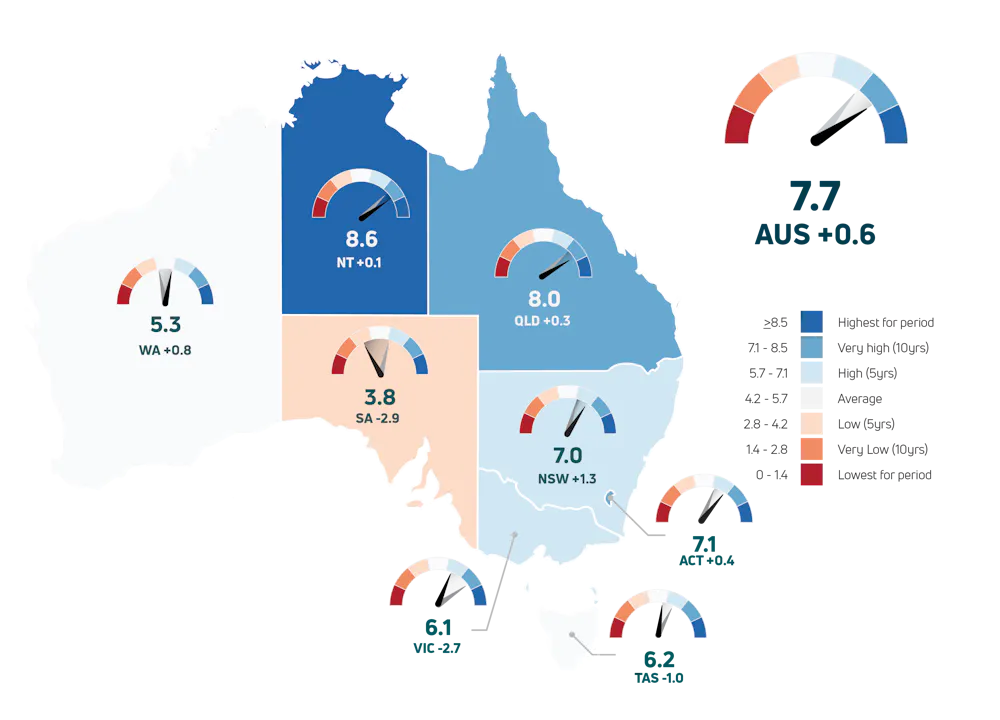
    For the fourth year running, the condition of Australia’s environment has been relatively good overall. Our national environment scorecard released today gives 2024 a mark of 7.7 out of 10.

    You might wonder how this can be. After all, climate change is intensifying and threatened species are still in decline.

    The main reason: good rainfall partly offset the impact of global warming. In many parts of Australia, rainfall, soil water and river flows were well above average, there were fewer large bushfires, and vegetation continued to grow. Overall, conditions were above average in the wetter north and east of Australia, although parts of the south and west were very dry.

    But this is no cause for complacency. Australia’s environment remains under intense pressure. Favourable conditions have simply offered a welcome but temporary reprieve. As a nation we must grasp the opportunity now to implement lasting solutions before the next cycle of drought and fire comes around.

    This snapshot shows the environmental score for a range of indicators in Australia.
    Australia’s Environment Report 2024, CC BY-NC-ND

    Preparing the national scorecard

    For the tenth year running, we have trawled through a huge amount of data from satellites, weather and water measuring stations, and ecological surveys.

    We gathered information about climate change, oceans, people, weather, water, soils, plants, fire and biodiversity.

    Then we analysed the data and summarised it all in a report that includes an overall score for the environment. This score (between zero and ten) gives a relative measure of how favourable conditions were for nature, agriculture and our way of life over the past year in comparison to all years since 2000. This is the period we have reliable records for.

    While it is a national report, conditions vary enormously between regions and so we also prepare regional scorecards. You can download the scorecard for your region at our website.

    Different jurisdictions had quite different environmental scores in 2024.
    Australia’s Environment Report 2024, CC BY-NC-ND

    Welcome news, but alarming trends continue

    Globally, 2024 was the world’s hottest year on record. It was Australia’s second hottest year, with the record warmest sea surface temperatures. As a result, the Great Barrier Reef experienced its fifth mass bleaching event since 2016, while Ningaloo Reef in Western Australia also experienced bleaching.

    Yet bushfire activity was low despite high temperatures, thanks to regular rainfall.

    National rainfall was 18% above average, improving soil condition and increasing tree canopy cover.

    States such as New South Wales saw notable improvements in environmental conditions, while conditions also improved somewhat in Western Australia. Others experienced declines, particularly South Australia, Victoria, and Tasmania. These regional contrasts were largely driven by rainfall – good rains can hide some underlying environmental degradation trends.

    Favourable weather conditions bumped up the nation’s score this year, rather than sustained environmental improvements.

    Mapping the environmental condition score to local government areas reveals poor (red) conditions in the west and the south, with good scores (blue) in the east and north. White is neutral.
    Australia’s Environment Explorer, CC BY-NC-ND

    A temporary respite?

    The past four years show Australia’s environment is capable of bouncing back from drought and fire when conditions are right.

    But the global climate crisis continues to escalate, and Australia remains highly vulnerable. Rising sea levels, more extreme weather and fire events continue to threaten our environment and livelihoods. The consequences of extreme events can persist for many years, like we have seen for the Black Summer of 2019–20.

    To play our part in limiting global warming, Australia needs to reduce its greenhouse gas emissions. Progress is stalling: last year, national emissions fell slightly (0.6%) below 2023 levels but were still higher than in 2022. Australia’s greenhouse gas emissions per person remain among the highest in the world.

    Biodiversity loss remains an urgent issue. The national threatened species list grew by 41 species in 2024. While this figure is much lower than the record of 130 species added in 2023, it remains well above the long-term average of 25 species added per year.

    More than half of the newly listed or uplisted species were directly affected by the Black Summer fires. Meanwhile, habitat destruction and invasive species continue to put pressure on native ecosystems and species.

    The Threatened Species Index captures data from long-term threatened species monitoring. The index is updated annually but with a three-year lag due largely to delays in data processing and sharing. This means the 2024 index includes data up to 2021.

    The index revealed the abundance of threatened birds, mammals, plants, and frogs has fallen an average of 58% since 2000.

    But there may be some good news. Between 2020 and 2021, the overall index increased slightly (2%) suggesting the decline has stabilised and some recovery is evident across species groups. We’ll need further monitoring to confirm whether this represents a lasting turnaround or a temporary pause in declines.

    This graph shows the relative abundance of different categories of species listed as threatened under the EPBC Act since 2000, as collated by the Threatened Species Index.
    Australia’s Environment Report 2024, CC BY-NC-ND

    What needs to happen?

    The 2024 Australia’s Environment Report offers a cautiously optimistic picture of the present. Without intervention, the future will look a lot worse.

    Australia must act decisively to secure our nation’s environmental future. This includes reducing greenhouse gas emissions, introducing stronger land management policies and increasing conservation efforts to maintain and restore our ecosystems.

    Without redoubling our efforts, the apparent environmental improvements will not be more than a temporary pause in a long-term downward trend.

    Australia’s Environment Report is produced by the ANU Fenner School for Environment & Society and the Terrestrial Ecosystem Research Network (TERN), which is enabled by the National Collaborative Research Infrastructure Strategy.

    Albert Van Dijk receives or has previously received funding from several government-funded agencies, grant schemes and programs.

    Shoshana Rapley is a Research Assistant and PhD candidate at the Australian National University and has received funding from the Ecological Society of Australia and BirdLife Australia.

    Tayla Lawrie is a current employee of the Terrestrial Ecosystem Research Network (TERN), funded by the National Collaborative Research Infrastructure Strategy.

    ref. Rain gave Australia’s environment a fourth year of reprieve in 2024 – but this masks deepening problems: report – https://theconversation.com/rain-gave-australias-environment-a-fourth-year-of-reprieve-in-2024-but-this-masks-deepening-problems-report-252183

    MIL OSI AnalysisEveningReport.nz

  • MIL-OSI Europe: Written question – The urgent need to protect the Balkan lynx – E-001038/2025

    Source: European Parliament

    Question for written answer  E-001038/2025
    to the Commission
    Rule 144
    Sebastian Everding (The Left), Gordan Bosanac (Verts/ALE), Thomas Waitz (Verts/ALE)

    The Western Balkans region is an important European biodiversity hotspot, hosting habitats that support a wide array of species and ecosystems. Home to extensive mountain ranges, forests, rivers, lakes and karst landscapes, it harbours numerous endemic and endangered species, such as the Balkan lynx. With fewer than 40 individuals remaining, the Balkan lynx is on the brink of extinction (with ‘critically endangered’ status on the International Union for Conservation of Nature’s Red List), making it one of Europe’s most endangered large carnivores. Apart from illegal killing and a lack of conservation plans, its extinction is propelled by the destruction of its habitat.

    The conservation of this species and the region’s rich natural resources is critical, as both are integral not only to the region’s ecological sustainability, but also to its cultural identity and economic stability, ensuring Europe-wide integrity of ecosystems.

    The Balkan lynx’s habitat traverses Albania, Kosovo and North Macedonia, and is in dire need of protection. National efforts have been limited, regarding the transposition of the EU’s Nature Directives (Birds[1] and Habitats[2] Directives), which would ensure a proper legal framework for habitat protection and management.

    What is the Commission doing to address the urgent need for the transposition of the relevant EU Nature Directives to this region, and to ensure their implementation at national level?

    Submitted: 11.3.2025

    • [1] Directive 2009/147/EC of the European Parliament and of the Council of 30 November 2009 on the conservation of wild birds, OJ L 20, 26.1.2010, p. 7, ELI: http://data.europa.eu/eli/dir/2009/147/oj.
    • [2] Council Directive 92/43/EEC of 21 May 1992 on the conservation of natural habitats and of wild fauna and flora, OJ L 206, 22.7.1992, p. 7, ELI: http://data.europa.eu/eli/dir/1992/43/oj.
    Last updated: 19 March 2025

    MIL OSI Europe News

  • MIL-OSI Europe: Answer to a written question – Fashion-sector companies unable to the EU ‘Fit for 55’ plan’s carbon footprint targets – E-002513/2024(ASW)

    Source: European Parliament

    The Commission acknowledges the importance of the textile sector, including the fashion industry, for the European economy, culture and creativity.

    At the same time, textile production and consumption have major effects on the environment and on climate change, as underlined in the EU Strategy for Sustainable and Circular Textiles[1] and the European Environment Agency report[2]. The EU Strategy for Sustainable and Circular Textiles proposed an agenda to support the sector’s shift towards the green transition.

    Reducing environmental and climate impacts from textiles is essential to achieve a sustainable transition and to meet the climate targets set under the EU ‘Fit for 55’ legislative package.

    The Commission recognises the importance of mobilising investments and supporting operators in adopting circular business models and processes .

    In this respect, the Commission has put forward a proposal for a co-programmed European Partnership ‘Textiles of the Future’[3] under Horizon Europe[4] under the second Horizon Europe Strategic Plan 2025- 2027[5].

    In the 2021-2027 Multiannual Financial Framework and NextGenerationEU, EUR 658 billion is allocated to spending for climate-relevant objectives.

    In most of the EU funding programmes (including Recovery and Resilience Facility[6], the InvestEU programme[7], Cohesion Funds[8], or Horizon Europe[9]) investments on decarbonisation are eligible for all sectors including fashion.

    In addition, textile companies, and in particular small and medium-sized enterprises[10], can be supported through the Enterprise Europe Network[11], the Eurocluster initiative[12], the European Circular Economy Stakeholder Platform[13], and through the Transition Pathway for the Textiles Ecosystem[14].

    • [1]  COM(2022) 141 final, https://environment.ec.europa.eu/publications/textiles-strategy_en
    • [2] EEA (2022), https://www.eea.europa.eu/publications/textiles-and-the-environment-the
    • [3] Innovative actions such as small scale demonstration, piloting of new technologies and innovative business models for competitive manufacturing of sustainable textile products may be funded under the partnership.
    • [4] https://research-and-innovation.ec.europa.eu/funding/funding-opportunities/funding-programmes-and-open-calls/horizon-europe_en
    • [5] https://research-and-innovation.ec.europa.eu/funding/funding-opportunities/funding-programmes-and-open-calls/horizon-europe/strategic-plan_en
    • [6] https://commission.europa.eu/business-economy-euro/economic-recovery/recovery-and-resilience-facility_en
    • [7] https://investeu.europa.eu/investeu-programme_en
    • [8] https://ec.europa.eu/regional_policy/funding/cohesion-fund_en
    • [9] https://research-and-innovation.ec.europa.eu/funding/funding-opportunities/funding-programmes-and-open-calls/horizon-europe_en
    • [10] Small and medium-sized enterprises represent more than 99% of the companies active in the EU textile sector (Eurostat).
    • [11] https://een.ec.europa.eu/
    • [12] https://www.clustercollaboration.eu/euroclusters
    • [13]  https://circulareconomy.europa.eu/platform/en
    • [14] https://single-market-economy.ec.europa.eu/sectors/textiles-ecosystem/textiles-transition-pathway_en

    MIL OSI Europe News

  • MIL-OSI Africa: SA gears up for Water Investment Summit

    Source: South Africa News Agency

    Water and Sanitation Minister Pemmy Majodina is set to host the preparatory meeting for the African Union-Africa Water Investment Programme (AU-AIP) Water Investment Summit 2025.

    The meeting is scheduled to take place on the sidelines of the International Water Association (IWA) Congress, currently underway in Cape Town.

    The department said the preparatory meeting, to take place on Thursday, is a critical step towards the AU-AIP Water Investment Summit, scheduled to take place at Cape Town in August.

    “The summit aims to mobilise at least USD 30 billion annually for climate-resilient water and sanitation initiatives across Africa, aligning with South Africa’s G20 Presidency priorities on economic growth, climate sustainability, and enhanced financing for development,” the Department of Water and Sanitation (DWS) said on Wednesday.

    The preparatory meeting will bring together key stakeholders, including government representatives, international development agencies, private sector investors, and civil society organisations, to refine the objectives, thematic areas, and expected outcomes of the summit scheduled for August.

    “The meeting will also serve as a platform to consolidate bilateral partnerships and secure commitments. Additionally, it will ensure that the summit aligns with South Africa’s G20 Presidency goals and effectively contributes to water security and investment mobilisation in Africa,” the department said.

    Among the delegates expected to participate at the summit, include:
    •    Jakaya Kikwete, former President of the United Republic of Tanzania, chair of the Global Water Partnership Southern Africa (GWPSA), and co-chair of the Africa Water Investment Panel, which includes sitting and former Presidents and eminent leaders (President Cyril Ramaphosa of South Africa is also a member of the AIP Panel).
    •   Arif Alkalali, General Supervisor of the General Directorate for Water Resources in the Ministry of Water, Environment, and Agriculture, Kingdom of Saudi Arabia.
    •    Anxious Jongwe Masuka, Minister of Lands, Agriculture, Water, and Rural Resettlement, Zimbabwe.
    •    Collins Nzovu, Minister of Water Development and Sanitation, Republic of Zambia.
    •    Dr Cheikh Tidiane Dièye, Minister of Water and Sanitation, Republic of Senegal, and President of the African Ministers’ Council on Water (AMCOW). – SAnews.gov.za
     

    MIL OSI Africa

  • MIL-OSI USA: Governor Launches Long Island Seafood Cuisine Trail

    Source: US State of New York

    overnor Kathy Hochul today announced the launch of the Long Island Seafood Cuisine Trail. Officially opened today, the South Shore Trail runs from Bay Shore to Montauk and is intended to drive business and tourism to locations proudly serving and selling locally raised and wild-caught, sustainably harvested fish and shellfish while promoting Long Island’s seafood industry. The Trail is a part of the State’s Blue Food Transformation initiative, first announced in the Governor’s 2024 State of the State proposal, which was created to reinvigorate New York’s aquaculture and wild-caught seafood industries and strengthen local food systems.

    “Long Island’s aquaculture and seafood industries are vital to New York’s agricultural economy – they create jobs, support a healthy environment, and provide New Yorkers with fresh, nutritious seafood,” Governor Hochul said. “The Long Island Seafood Cuisine Trails highlight the amazing fish and shellfish harvested locally, showcase our outstanding small businesses, and attract more visitors to this incredible region.”

    Long Island Seafood Cuisine Trails

    Today’s announcement was made at a special ribbon cutting ceremony at The Snapper Inn in Oakdale where State Agriculture Commissioner Richard A. Ball joined representatives from Cornell Cooperative Extension (CCE) of Suffolk County, state and local elected officials, local business owners, and other partners to unveil the first of two planned Long Island Seafood Cuisine Trails. The Snapper Inn is on the western end of the South Shore Trail, which will include 20 official locations and other points of interest to spotlight New York’s seafood industry, and drive visitors to businesses that serve and sell locally wild-caught, sustainably harvested fish and shellfish. The North Shore Trail, which will run from Oyster Bay to Greenport, is under development and slated to launch in the coming months.

    The event also featured a sneak peek of the forthcoming Long Island Seafood Cuisine Trail digital app, which will make it even easier for customers to discover Long Island establishments serving seafood-centric dishes. Currently under development, the app will guide customers to Long Island establishments where they can enjoy a fine local seafood meal, pick up a variety of oysters for a local oyster tasting, take-out a quick seafood lunch, or fillets from a local seafood shop to prepare a fish dinner at home. An online version of the app is available on the Long Island Seafood Trail website, and the mobile app is expected to be available on the Apple App Store and Google Play in the coming weeks.

    Visitors are encouraged to follow the trail for locations that are known to appreciate and celebrate the bounty of Long Island’s waters while boosting business and supporting local fishing communities. Regional points of interest and local events are also integrated into the app to support a full tourism experience. Visit the Seafood Trail page on the Local Fish website for more information.

    The Trail was created by CCE of Suffolk County’s Marine Program, in collaboration with the New York State Department of Agriculture and Markets (AGM). AGM additionally worked closely with the New York State Department of Transportation (DOT) on the designation of the trails. A list of trail stops is available on the AGM website.

    New York State Agriculture Commissioner Richard A. Ball said, “Long Island’s waters are abundant with fresh, delicious fish and shellfish, and our seafood industry works tirelessly in harvesting and raising these local delicacies. I encourage New Yorkers to visit any number of the many stops on the new Long Island Seafood Cuisine Trail to discover some delicious foods and help support our local aquaculture community.”

    Cornell Cooperative Extension Suffolk Executive Director Vanessa Lockel said, “The CCE Suffolk Marine Program plays a key role in preserving Long Island’s waterways through science, restoration, and education. We are proud to have partnered on the Long Island Seafood Cuisine Trail, a project that aligns with our mission by highlighting the region’s aquaculture and seafood industries—industries that are critical to both our economy and the health of our environment.”

    Seafood Processing Feasibility Study

    Also funded through the Governor’s Blue Food Transformation initiative, CCE of Suffolk County has engaged industry stakeholders and conducted research to define and mitigate challenges necessary to expand capacity for seafood processing on Long Island. The project examines operating models, locations, basic facility design, and capital budget as a baseline for standalone seafood processing facilities. A final draft report will be presented for industry feedback at the Long Island Seafood Summit this month.

    Inter-Agency Task Force

    In addition to the cuisine trails and feasibility study, the Governor also announced that AGM, the Department of Environmental Conservation, Empire State Development, Department of Health, New York Sea Grant, and other agencies involved in the production and marketing of seafood formed the New York State Seafood Interagency Workgroup. The group was tasked with evaluating and coordinating state policies and programs that impact aquaculture licensing, food safety, and economic development measures, and considering pathways for industry growth. The Workgroup’s final report is available online at the AGM website.

    New York State has a diverse sustainable wild-caught seafood industry and growing aquaculture industry that harvest a variety of products including finfish, kelp, and shellfish. Commercial fishermen on Long Island sustainably harvested over 16 million pounds of finfish in 2023, worth over $28 million dollars. Montauk, the state’s largest commercial fishing port, is 51st in the nation for wild-caught seafood based on poundage, and 53rd in the nation based on dollar value.

    From Long Island to the Finger Lakes, both small-scale and commercial-scale aquaculture operations grow fresh, safe, and sustainable seafood, and harvest wild-caught, sustainable fish. According to the most recent USDA Census of Agriculture, the aquaculture industry accounts for over 25 percent of farms on Long Island, with 155 operations in Suffolk County and 15 in Nassau County.​ Combined, the two counties generated over $14.5 million in sales in 2022.

    Department of Environmental Conservation Acting Commissioner Amanda Lefton said, “Thanks to Governor Hochul’s sustained support and protection of the South Shore’s irreplaceable marine habitat and resources, the Long Island Seafood Cuisine Trails initiative is gearing up to launch its first segment and celebrate the fantastic seafood associated with Long Island’s vibrant coastal culture and maritime traditions. DEC appreciates the work of our partners at the Department of Agriculture and Markets and their work to support local hatcheries, boosting the Long Island’s shellfish farming economy and complementing the State’s ongoing efforts to ensure the success of New York’s commercial fishing industry while protecting seafood for consumers.”

    New York State Department of Transportation Commissioner Marie Therese Dominguez said, “Long Island is one of the epicenters of New York’s internationally recognized food and beverage industry, with its world-renowned vineyards, rich farmlands and storied fishing history. The Long Island Seafood Cuisine Trail, which New York State DOT proudly supports, will enhance sustainable and healthy aquaculture and is a perfect way for South Shore residents and visitors to take in Long Island’s pristine beaches and native wildlife, while enjoying some of the most nutritious and delicious seafood anywhere in the world. See you on the Trail!”

    Empire State Development President, CEO and Commissioner Hope Knight said, “The new Long Island Seafood Cuisine Trail will showcase the world class culinary offerings available to residents and visitors alike across the South Shore. This will highlight the importance of the region’s aquaculture industry and introduce more people to the unique small businesses that are vital to local economies.”

    Long Island Farm Bureau Director Rob Carpenter said, “Commercial fishing and aquaculture are very important legacy industries on Long Island. Our fishermen, baymen, and oyster growers provide residents with some of the highest quality and most flavorful seafood found anywhere in the world. This seafood trail will help to promote the incredible restaurants, shops, and seafood products available right in our own backyard for residents to experience and enjoy.”

    Long Island Oyster Growers Association President Eric Koepele said, “If Dorothy hailed from Long Island, every oyster shell trail would skip Oz for a seafood paradise like The Snapper Inn—where local oysters are shining gems behind the curtain. I encourage visitors to check out more beautiful locations over the rainbow on the Long Island Seafood Cuisine Trail to sample the best of Long Island’s delicious, fresh, local oysters.”

    Long Island Commercial Fishing Association Executive Director Bonnie Brady said, “For far too long, consumers and visitors to Long Island had to be “in the know,” to find the local specials of the day from restaurants, seafood shops, and boat-to-table small businesses. Now with the app, anyone can find the freshest Long Island seafood meal, north or south, no matter which Fork they live on or are visiting!”

    Discover Long Island President and CEO Kristen Reynolds said, “Long Island’s rich maritime heritage and world-class seafood industry are key drivers of tourism and economic vitality for our region. As Long Island’s only accredited destination marketing organization with an audience of more than 10 million global viewers, we look forward to sharing this exciting new product, encouraging both locals and visitors to explore and support the small businesses, restaurants, and coastal communities that make our destination truly unique.”

    New York State Restaurant Association President and CEO Melissa Fleischut said, “With its vibrant culinary scene, Long Island is renowned for its outstanding restaurants, and we’re delighted to see Governor Hochul and other state leaders continue their support for local businesses across the state. The summer months are a peak time for tourism, making the launch of the Long Island Seafood Cuisine Trails especially timely. We are eager to see the positive impact this initiative will have on the region’s restaurant industry, driving both awareness and visitors to these local establishments.”

    State Senator Michelle Hinchey said, “Cuisine trails are roadmaps to some of the best local food New York has to offer, guiding people to delicious meals and products while supporting the small businesses that serve them. The launch of the Long Island Seafood Cuisine Trails adds a new layer to New York’s expanding food trail system and we were proud to move this initiative forward in last year’s budget. It’s exciting to see the trail come to fruition, knowing it will give locals and visitors the chance to try the freshest catches, explore new communities, and discover hidden gems along the way.”

    Assemblymember Donna Lupardo said, “I’m very pleased that the Long Island Seafood Cuisine Trail is up and running. We included the Blue Food Transformation Initiative in last year’s state budget to support New York’s aquaculture industry and initiatives like this. Cuisine Trails have proven to be very popular as they promote local food and farm businesses through agri-tourism. This new Trail and digital app will shine a spotlight on the locally raised and harvested fish and shellfish that Long Island is known for.”

    Assemblymember Jarett Gandolfo said, “Long Island’s seafood industry isn’t just a key part of our local economy, it’s part of who we are. From family-owned restaurants to hardworking fishermen, so many livelihoods depend on a thriving aquaculture industry. The launch of the Long Island Seafood Cuisine Trail is a great way to highlight and support these businesses while also giving residents and visitors the chance to experience the incredible seafood our waters provide. Investing in our local seafood industry means protecting jobs, strengthening Long Island’s tourism, and preserving a tradition that has been passed down for generations. I’m genuinely excited to see this take off and be able to see the positive impact it will have on our community.”

    Town of Islip Supervisor Angie Carpenter said, “Long Island’s waterways are one of our greatest natural resources, and initiatives like the Seafood Cuisine Trail not only celebrate our long-standing maritime heritage but also support the hardworking individuals who sustain our local seafood industry. Through our Town’s Shellfish Hatchery initiative, we are committed to protecting water quality, replenishing shellfish populations, and ensuring that locally harvested seafood remains a cornerstone of our economy and culture. I’m proud to stand alongside so many dedicated partners today as we continue working toward a thriving, sustainable future for Long Island.”

    The Blue Food Transformation Initiative was announced in the Governor’s 2024 State of the State proposal to increase consumer demand for local food and strengthen the local food system. The effort will include $5 million in infrastructure funding to bolster marine agriculture, promote a healthy natural environment, and provide New Yorkers with a nutritious source of locally grown seafood. These investments build on the Governor’s commitment to boost demand for New York agricultural products, bolster New York’s food supply chain, and ensure all New Yorkers can access fresh, local foods. This includes the Governor’s Executive Order 32 directing State agencies to increase the percentage of food sourced from New York farmers and producers to 30 percent of their total purchases within five years.

    New York State continues to prioritize increasing access to food for all New Yorkers and providing new markets for farmers through a number of programs and initiatives, including the enhanced FreshConnect Fresh2You initiative, the Farmers’ Market Nutrition Programs, the Urban Farms and Community Gardens Grants Programs, and more. The Department also administers the Nourish New York program, which is slated for an additional $5 million investment in the Governor’s proposed Executive Budget this year.

    The NYS 30 percent Initiative for schools, the State’s Farm-to-School program, and child nutrition programs administered by the State Education Department are focused on buying more local products from New York farmers and increasing healthy and nutritious local foods for New York school lunches.

    Additionally, the Governor is dedicating $50 million over five years to support regional cooking facilities that will facilitate the use of fresh New York State farm products in meal preparation for K-12 school children and a $10 million grant program to support the establishment of farm markets, supermarkets, food cooperatives, and other similar retail food stores, along with supporting infrastructure in underserved communities and regions of the State.

    Learn about the AGM’s programs and initiatives focused on providing new markets for farmers, increasing food access to underserved communities, and building healthier communities on the AGM website at the “Healthy Communities” page.

    MIL OSI USA News

  • MIL-OSI USA: Luján Celebrates Completion of Critical Water Infrastructure Projects in Rural Doña Ana County, Recognizes New Mexico Workers

    US Senate News:

    Source: United States Senator Ben Ray Luján (D-New Mexico)

    Anthony, N.M. – On Tuesday, U.S. Senator Ben Ray Luján (D-N.M.) visited the Anthony Water Treatment Plant to celebrate the completion of two federally funded water infrastructure projects that he helped to fund in rural Doña Ana County. Senator Luján secured funding for the Border Environment Infrastructure Fund (BEIF), which allowed for the completion of these water infrastructure projects that have now connected rural homes to essential wastewater treatment services.

    “It was a privilege to celebrate the completion of two vital water infrastructure projects in Doña Ana County. I’m proud to have secured funding for these projects through the Environmental Protection Agency and its Border Environment Infrastructure Fund,”said Senator Luján. “Projects like these don’t happen without workers making them happen, and workers don’t work without projects like these.”

    “The new wastewater collection system in Sleepy Farms provides cleaner water, safer sanitation, and reduces the risk of groundwater contamination. In Anthony, the replacement of 23,000 feet of aging water lines ensures consistent, safe drinking water for 1,795 residents by preventing leaks, improving pressure, and reducing water loss,”continued Senator Luján. “Water is life in New Mexico, and we cannot afford to waste a single drop.”

    Project 1: Wastewater Collection System Extension and Improvements for Doña Ana County, New Mexico 

    The Project constructed a new wastewater collection system in an unincorporated area commonly known as Sleepy Farms, and rehabilitated a nearby Lift Station. Both components are near Vado in Doña Ana County, New Mexico. 

    The project will prevent groundwater contamination and reduce the risks of waterborne diseases by providing first-time wastewater collection services to 31 homes in the Sleepy Farms area and eliminating substandard and failing septic systems. The new system will collect an estimated 9,400 gallons per day (GPD) of wastewater for treatment and improve service for an additional 2,050 existing connections by increasing the reliability and efficiency of lift station #7, as well as preventing the risk of up to approximately 400,000 GPD of wastewater spills. 
     
    Project 2: Water Distribution System Improvements for Anthony, New Mexico 
     
    The project rehabilitated nearly 23,000 linear feet of deteriorated water distribution lines in Anthony, NM, to ensure reliable drinking water services for approximately 560 existing residential connections by reducing risks of leaks and line breaks.  An estimated 1,795 residents in Anthony will benefit from the project. 

    Anthony Water and Sanitation District (AWSD) provides water and wastewater services to the community of Anthony NM. AWSD currently provides services to approximately 2,900 residential connections or a population of approximately 9,950. Parts of the utility’s water distribution system date back to the mid-1900’s, have reached the end of their service life, and create maintenance issues for AWSD. 

    This project rehabilitated AWSD’s water lines in the Kaylar and Timbers Subdivisions, which had outdated pipes from the 1950s prone to frequent breaks and water losses. The area had issues with inadequate water flow, lack of fire suppression, and limited access to lines. Upgrades to the system will provide reliable drinking water for around 1,795 people, reduce water losses to under 20%, and improve overall water management, ensuring safer, more sustainable water services.

    MIL OSI USA News

  • MIL-OSI Global: Revoking EPA’s endangerment finding – the keystone of US climate policies – won’t be simple and could have unintended consequences

    Source: The Conversation – USA – By Patrick Parenteau, Professor of Law Emeritus, Vermont Law & Graduate School

    Several U.S. climate regulations aim to reduce burning of fossil fuels, a driver of climate change. Visions of America/Joseph Sohm/Universal Images Group via Getty Images

    Most of the United States’ major climate regulations are underpinned by one important document: It’s called the endangerment finding, and it concludes that greenhouse gas emissions are a threat to human health and welfare.

    The Trump administration is vowing to eliminate it.

    Environmental Protection Agency Administrator Lee Zeldin referred to the 2009 endangerment finding as the “holy grail of the climate religion” when he announced on March 12, 2025, that he would reconsider the finding and all U.S. climate regulations and actions that rely on it. That would include rules to control planet-warming emissions of greenhouse gases like carbon dioxide and methane from power plants, vehicles and oil and gas operations.

    But revoking the endangerment finding isn’t a simple task. And doing so could have unintended consequences for the very industries Trump is trying to help.

    EPA Administrator Lee Zeldin announces plans to reconsider more than 30 climate regulations.

    As a law professor, I have tracked federal climate regulations and the lawsuits and court rulings that have followed them over the past 25 years. To understand the challenges, let’s look at the endangerment finding’s origins and Zeldin’s options.

    Origin and limits of the endangerment finding

    In 2007, the U.S. Supreme Court ruled in Massachusetts v. EPA that six greenhouse gases are pollutants under the Clean Air Act and that the EPA has a duty under the same law to determine whether they pose a danger to public health or welfare.

    The court also ruled that once the EPA made an endangerment finding, the agency would have a mandatory duty under the Clean Air Act to regulate all sources that contribute to the danger.

    The Court emphasized that the endangerment finding was a scientific determination and rejected a laundry list of policy arguments made by the George W. Bush administration for why the government preferred to use nonregulatory approaches to reduce emissions. The court said the only question was whether sufficient scientific evidence exists to determine whether greenhouse gases are harmful.

    The endangerment finding was the EPA’s response.

    The finding was challenged and upheld in 2012 by the U.S. District Circuit for the District of Columbia. In that case, Coalition for Responsible Regulation v. EPA, the court found that the “body of scientific evidence marshaled by the EPA in support of the endangerment finding is substantial.” The Supreme Court declined to review the decision. The endangerment finding was updated and confirmed by the EPA in 2015 and 2016.

    Challenging the endangerment finding

    The scientific basis for the endangerment finding is stronger today than it was in 2009.

    The Intergovernmental Panel on Climate Change’s latest assessment report, involving hundreds of scientists and thousands of studies from around the world, concluded that the scientific evidence for warming of the climate system is “unequivocal” and that greenhouse gases from human activities are causing it.

    According to the National Climate Assessment released in 2023, the effects of human-caused climate change are already “far-reaching and worsening across every region of the United States.”

    Summer temperatures have climbed in much of the U.S. and the world as greenhouse gas emissions have risen.
    Fifth National Climate Assessment

    During President Donald Trump’s first term, then-EPA Administrator Scott Pruitt considered repealing the endangerment finding but ultimately decided against it. In fact, he relied on it in proposing the Affordable Clean Energy Rule to replace President Barack Obama’s Clean Power Plan for regulating emissions for coal-fired power plants.

    What happens if the EPA revokes the endangerment finding?

    For the Trump administration to now revoke that finding, Zeldin must first recruit new members of the EPA’s Science Advisory Board to replace those dismissed by the Trump administration. Congress created the board in 1978 to provide independent, unbiased scientific advice to the EPA administrator, and it has consistently supported the 2009 endangerment finding.

    Zeldin must then initiate rulemaking in compliance with the Administrative Procedure Act, provide the opportunity for public comment and respond to comments that are likely to be voluminous. This process could take several months if done properly.

    If Zeldin then decides to revoke the endangerment finding, lawsuits will immediately challenge the move.

    Even if Zeldin is able to revoke the finding, that does not automatically repeal all the rules that rely on it. Each of those rules must go through separate rulemaking processes that will also take months.

    Zeldin could simply refuse to enforce the rules on the books while he reconsiders the endangerment finding.

    However, a blanket policy abdicating any enforcement responsibility could be challenged in lawsuits as arbitrary and capricious. Further, the regulated industries would be taking a chance if they delayed complying with regulations only to find the endangerment finding and climate laws still in place.

    Zeldin’s cost argument

    Zeldin previewed his arguments in a news release on March 12.

    His first argument is that the 2009 endangerment finding did not consider costs. However, that argument was rejected by the D.C. Circuit Court in Coalition for Responsible Regulation v. EPA. Cost becomes relevant once the EPA considers new regulations – after the endangerment finding.

    Moreover, in a unanimous 2001 decision, the Supreme Court in Whitman v. American Trucking Associations held that the EPA cannot consider cost in setting air quality standards.

    A repeal could backfire

    Repealing the endangerment finding could also backfire on the fossil fuel industry.

    States and cities have filed dozens of lawsuits against the major oil companies. The industry’s strongest argument has been that these cases are preempted by federal law. In AEP v. Connecticut in 2011, the Supreme Court ruled that the Clean Air Act “displaced” federal common law, barring state claims for remedies related to damages from climate change.

    However, if the endangerment finding is repealed, then there is arguably no basis for federal preemption, and these state lawsuits would have legal grounds. Prominent industry lawyers have warned the EPA about this and urged it to focus instead on changing individual regulations. The industry is concerned enough that it may try to get Congress to grant it immunity from climate lawsuits.

    To the extent that Zeldin is counting on the conservative Supreme Court to back him up, he may be disappointed.

    In 2024, the court overturned the Chevron doctrine, which required courts to defer to agencies’ reasonable interpretations when laws were ambiguous. That means Zeldin’s reinterpretation of the statute is not entitled to deference. Nor can he count on the court overturning its Massachusetts v. EPA ruling to free him to disregard science for policy reasons.

    Patrick Parenteau does not work for, consult, own shares in or receive funding from any company or organization that would benefit from this article, and has disclosed no relevant affiliations beyond their academic appointment.

    ref. Revoking EPA’s endangerment finding – the keystone of US climate policies – won’t be simple and could have unintended consequences – https://theconversation.com/revoking-epas-endangerment-finding-the-keystone-of-us-climate-policies-wont-be-simple-and-could-have-unintended-consequences-252271

    MIL OSI – Global Reports

  • MIL-OSI USA: 2024 Army Community Partnership Award winners announced

    Source: United States Army

    WASHINGTON – The Department of the Army has announced the seven winners of the 2024 Army Community Partnership Awards.

    “The installations honored this year highlight the excellent commitment to partnering with communities and strengthening those relationships that allow us to provide the best possible resources for Soldiers and their families,” said Lt. Gen. David Wilson, Deputy Chief of Staff, G-9.

    The Army Community Partnership Awards Program seeks to highlight examples of exceptional cooperation and diligence that will encourage continued collaboration to achieve the full potential of community partnerships. The awardees represent partnerships that have improved quality of life for Soldiers and their families, enhanced readiness, driven modernization and contributed to reform initiatives throughout the Army.

    “These partnerships exemplify the collaboration required to enhance our resilience, improve quality of life for our Soldiers and their families, and bolster our operational readiness to meet the needs of our Army today and tomorrow,” said Daniel M. Klippstein, senior official performing the duties of the Assistant Secretary of the Army for Installations, Energy and Environment.

    The Army selected seven winners and their neighboring communities that formed innovative partnerships that improve quality of life for Soldiers and families, enhance readiness, modernize services, provide efficiencies, expand capabilities and strengthen community relations.

    • Fort Leonard Wood and the cities of Saint Robert and Waynesville: Fort Leonard Wood’s new airfield lease project supports the construction of a new non-Army funded terminal critical to the long-term viability of commercial jet service to and from the installation. The new 25-year lease, new terminal, and past investments in planning, improvements, and repairs reiterates long-term commitments from the cities, the FAA and the state of Missouri to maintain accessibility to Fort Leonard Wood. The new terminal will modernize and increase the efficiency of all terminal operational and security services, systems and processes as compared to existing legacy facilities.
    • U.S. Army Garrison Hawaii, Pōhakuloa Training Area and the Hawaii County Fire & Emergency Services: The Mutual Aid Agreement between USAG-HI (PTA) and the Hawaii County Fire & Emergency Services seamlessly integrates resources and joint training exercises. This collaboration is a robust mutual support system enhancing the regional emergency response capabilities. Collaboration between PTA and Hawaii County Fire & Emergency Services maximizes shared resource utilization and operational efficiency.
    • Picatinny Arsenal and the Morris County Municipalities & Fire Districts: The MAA between Picatinny Arsenal and the Morris County Municipalities & Fire Districts provides 24-hour emergency dispatching service at no cost to the Army. The partnership enhances Picatinny’s emergency response capabilities and fills a gap in service availability. By partnering with Morris County, Picatinny Arsenal improved their firefighting capabilities through real-world responses and joint training exercises. The MAA enabled Picatinny to access 24/7 emergency response while also realizing significant cost savings.
    • Fort Carson and the Colorado Springs Utilities: The intergovernmental support agreement between Fort Carson and the Colorado Springs Utilities provides Fort Carson with superior operations and maintenance of electric and gas systems beyond pre-IGSA capabilities. Partnering with CSU enhances Fort Carson’s energy resilience by creating the capability to operate independently in the event of an off-post electrical grid failure. The IGSA created the on-post generation and microgrid capabilities necessary to operate during an off-post blackouts.
    • Fort Bliss and the El Paso Water Utilities Public Service Board: This IGSA between USAG-Fort Bliss and the El Paso Water Utilities Public Service Board provides engineering, technical, project design, consultant services, minor construction, repair, maintenance, geotechnical services, land surveying, soil borings, water quality testing, and water resource planning services associated with and incidental to stormwater management, water quality, water conservation, and those types of capital improvement projects.
    • U.S. Army Garrison Poland and the Republic of Poland: The Polish Provided Logistics Support provides in-kind logistical support to the U.S. Army. The PPLS provides infrastructure, logistical support and munitions storage to facilitate joint military exercises as part of the Enhanced Defense Cooperation Agreement. The availability of pre-positioned equipment and supplies improves the readiness of U.S. forces in the region, enabling a stronger alliance and faster response times.
    • U.S. Army War College and the Cumberland County Department of Public Safety: The MAA between U.S. Army War College and the Cumberland County Department of Public Safety expands operational and mission capabilities by sharing capacity, resources and capabilities. Cooperating with CCDPS has enhanced the War College’s emergency response capabilities. The partnership utilizes joint training and planning, shared emergency response resources, and shared expertise to enhance shared public safety and emergency response capabilities.

    Awardees included partnerships signed in fiscal years 2021-2024 by garrisons, reserve centers and armories. Submissions were evaluated using the following criteria:

    • Improves Soldier/family quality of life
    • Improves or enhances readiness
    • Modernizes a service, system or process
    • Provides cost or other efficiencies
    • Expands capability
    • Improves community relations

    The awards ceremony will be held in the Pentagon Hall of Heroes on April 10, 2025, from 10:00 to 11:00 AM.

    For additional information, please contact the Office of the Deputy Chief of Staff, G-9, usarmy.pentagon.hqda-dcs-g-9.list.sig@mail.mil.

    MIL OSI USA News

  • MIL-OSI Global: Earth’s lungs are choking on plastic and smoke – scientists hope to unblock them

    Source: The Conversation – UK – By Jack Marley, Environment + Energy Editor, UK edition

    Martin.Dlugo/Shutterstock

    A graph I saw in high school appeared to show the Earth breathing.

    It was a graph that plotted carbon dioxide in the atmosphere over the course of the 20th century and into the 21st. CO₂ had risen steadily, and then more rapidly, but it hadn’t gone up in a straight line. Each year it had fallen sharply before rising to a new peak, increasing over time in an upwards zig-zag.

    What explained this annual, temporary fall in CO₂, the gas that is overwhelmingly responsible for climate change? The answer was photosynthesis, my physics teacher explained – the miracle by which plants turn light and CO₂ into food.

    This is how our planet has regulated atmospheric carbon for longer than our species has existed. Fossil fuels are disrupting this equilibrium in several ways.


    This roundup of The Conversation’s climate coverage comes from our award-winning weekly climate action newsletter. Every Wednesday, The Conversation’s environment editor writes Imagine, a short email that goes a little deeper into just one climate issue. Join the 40,000+ readers who’ve subscribed.


    Spring is dawning in the northern hemisphere, where most of the planet’s green land is situated. Trees are unfurling leaves that will soak up carbon in the air and turn it into new bark, roots and branches. On a global scale, it’s like a gigantic inhalation of carbon. In autumn, when trees shed their leaves, Earth will exhale again.

    The air we all breathe is increasingly polluted by fossil fuels. That includes products of fossil fuels, like plastic, which is now so ubiquitous that research suggests simply breathing can introduce microscopic fragments into your brain.


    Read more:
    Breathing may introduce microplastics to the brain – new study


    Something similar is happening in plants – and it could have global consequences.

    Plants are losing their appetite

    “Microplastics are hindering photosynthesis, the process by which plants convert energy from the sun into the fruit and vegetables we eat,” says Denis J. Murphy, an emeritus professor of biotechnology at the University of South Wales.

    “This threatens massive losses in crop and seafood production over the coming decades that could mean food shortages for hundreds of millions of people.”

    Photosynthetic algae feed the fish that ultimately feed us.
    Sinhyu Photographer/Shutterstock

    These are the conclusions of a recent study by researchers in China, Germany and the US. Murphy wasn’t involved, but his own research with plant cells – which the tiniest microplastics can infiltrate, and damage the organs involved in photosynthesis – has him worried.


    Read more:
    Microplastics: are they poisoning crops and jeopardising food production?


    “Given the potential (albeit speculative) risk to global food production, more priority should be given to rigorous scientific research of microplastics and their effects on both crops and the marine life that supports fish and seafood stocks,” he says.

    Not so long ago, people wondered if our fossil fuel habit might actually benefit plant photosynthesis. After all, plants eat CO₂. Flooding the atmosphere with more of it each year could only whet their appetites, right?

    “The amount of CO₂ used by photosynthesis and stored in vegetation and soils has grown over the past 50 years, and now absorbs at least a quarter of human emissions in an average year,” say ecologists Amanda Cavanagh (University of Essex) and Caitlin Moore (University of Western Australia).

    Most of this extra carbon absorption has come from crops and young trees, the pair say, less from mature forests where a lot of the world’s carbon is stored. Cavanagh and Moore say this carbon pump is slowing down, as the other necessary ingredients for photosynthesis – soil nutrients and water – have fallen or stayed the same.


    Read more:
    Carbon dioxide feeds plants, but are earth’s plants getting full?


    Microplastics could slow the rate at which plants remove carbon further. And then there are the effects of climate change, like drought, fires and floods, which will intensify as long as we continue burning fossil fuels.

    After monitoring forests and shrublands in Australia for 20 years, Moore and a team of six colleagues concluded that these ecosystems are at risk of losing their ability to bounce back, and continue absorbing carbon, after successive climate disasters.


    Read more:
    In 20 years of studying how ecosystems absorb carbon, here’s why we’re worried about a tipping point of collapse


    Hacking photosynthesis

    We may have done plenty to reduce global photosynthesis, but a team of scientists at the University of Oxford and the Fraunhofer Society in Germany is trying to turn things around. How? By hacking plants to help them get more out of the process.

    “You would be forgiven for thinking nature has perfected the art of turning sunlight into sugar,” say Jonathan Menary, Sebastian Fuller and Stefan Schillberg.

    “But that isn’t exactly true. If you struggle with life goals, it might reassure you to know even plants haven’t yet reached their full potential.”

    The team say that plants tend to convert less than 5% of sunlight into new tissue – often as little as 1%. That’s because of a mistake plants regularly make, in which an enzyme involved in photosynthesis latches on to oxygen instead of CO₂.

    “If we could prevent this mistake, it would leave plants more energy for photosynthesis,” they say.


    Read more:
    How scientists are helping plants get the most out of photosynthesis


    Cyanobacteria are Earth’s most ancient photosynthesisers. Menary, Fuller and Schillberg say these microscopic organisms could possess useful genes for better sunlight management that might benefit crops like rice and potato plants. Another technique involves helping plants recover from high light exposure quicker.

    Young potato plants in bloom.
    George Trumpeter/Shutterstock

    More efficient photosynthesis, with the help of gene editing and other tools, is not “a silver bullet”, the team stress. Certainly not while fossil fuels continue to drown our green planet in carbon it cannot metabolise.

    However, this work is likely to prove useful as farmers seek to grow more in an increasingly volatile environment, while sparing enough land for nature.

    “This research is about making sure we can grow enough food to feed ourselves,” the team say.

    ref. Earth’s lungs are choking on plastic and smoke – scientists hope to unblock them – https://theconversation.com/earths-lungs-are-choking-on-plastic-and-smoke-scientists-hope-to-unblock-them-252549

    MIL OSI – Global Reports

  • MIL-OSI USA: Baldwin Raises Concerns About How NOAA Firings Will Impact Great Lakes

    US Senate News:

    Source: United States Senator for Wisconsin Tammy Baldwin

    WASHINGTON, D.C. – U.S. Senator Tammy Baldwin (D-WI) and a group of her colleagues are pressing the National Oceanic and Atmospheric Administration (NOAA) for more information about the termination of staff and the potential impact these firings will have on the health and commerce on the Great Lakes, including the countless Wisconsin communities who rely on Lake Michigan and Superior for fresh drinking water and to support their local economies.

    “We write to express our deep concern over the firing of probationary staff at the National Oceanic and Atmospheric Administration (NOAA) and the potential impact these firings will have on the Great Lakes,” wrote the Senators in a letter to NOAA’s Vice Admiral Nancy Hann.

    “The Great Lakes are among the United States’ greatest natural treasures, strengthening our economy and attracting millions of visitors each year. The Lakes provide drinking water to over 30 million people, generate clean hydropower, and generate $3.1 trillion in gross domestic product,” the Senators continued. “National and regional NOAA programs help protect these lakes and support our constituents who call the Great Lakes home.

    The Senators pressed Admiral Hann to detail (1) the number of people fired at NOAA during her tenure as Acting Administrator, (2) the number of people fired at each NOAA program serving the Great Lakes, (3) the services that will be terminated as a result, and (4) her plan to preserve these services.

    In addition to Senator Baldwin, the letter was led by Senator Amy Klobuchar (D-MN) and co-signed by Senators Chuck Schumer (D-NY), Dick Durbin (D-IL), Elissa Slotkin (D-MI), Tina Smith (D-MN), Kirsten Gillibrand (D-NY), and Gary Peters (D-MI).

    A full version of this letter is available here and below.

    Dear Vice Admiral Nancy Hann:

    We write to express our deep concern over the firing of probationary staff at the National Oceanic and Atmospheric Administration (NOAA) and the potential impact these firings will have on the Great Lakes. We request information on these firings—including at the Great Lakes Environmental Research Laboratory (GLERL) and any other NOAA installations and programs that serve the Great Lakes area—as well as a concrete plan for re-establishing terminated public services.

    The Great Lakes are among the United States’ greatest natural treasures, strengthening our economy and attracting millions of visitors each year. The Lakes provide drinking water to over 30 million people, generate clean hydropower, and generate $3.1 trillion in gross domestic product.

    National and regional NOAA programs help protect these lakes and support our constituents who call the Great Lakes home. The National Weather Service provides our weather and climate forecasts and warnings. The National Sea Grant Program helps conserve our aquatic resources. The Marine Debris Program prevents microplastics and litter from entering the Great Lakes, protecting our wildlife, natural resources, fishing and boating economy, and nearby residents’ health. The Cooperative Institute for Great Lakes Research invests in our clean drinking water. And the Great Lakes Environmental Research Laboratory (GLERL) provides critical information for resource use and management decisions, including information on algal blooms and hypoxia, invasive species, ice cover and shipping navigability, and storm surges and coastal flooding.

    We are deeply concerned that the layoffs at NOAA will harm these critical initiatives. The staffing reductions have already required the GLERL, for example, to take an “indefinite hiatus” from its public communications, depriving the public of critical information such as what to do during a flood warning and how to stay safe in the extreme cold. When these communications go dark, the public suffers.

    Therefore, we request the following information by March 28, 2025:

    1. The number of people fired at NOAA during your tenure as Acting Administrator.
    2. The number of people fired at each NOAA program that serves the Great Lakes:
      1. National Weather Service
      2. National Estuarine Research Reserve System
      3. NOAA National Marine Sanctuaries
      4. National Sea Grant Program
      5. NOAA Marine Debris Program
      6. Integrated Ocean Observing System (IOOS)
      7. Great Lakes Bay Watershed Education and Training (B-WET)
      8. Great Lakes Environmental Research Laboratory
      9. Great Lakes Information Network (GLIN)
      10. Cooperative Institute for Great Lakes Research (CIGLR)
      11. Cooperative Institute for Meteorological Satellite Studies (CIMSS)
      12. Midwestern Regional Climate Center (MRCC)
    3. The services that will be terminated as a result of the firings at each of the above programs.
    4. Your plan to maintain or restore these services.

    Thank you for your attention to this important matter.

    MIL OSI USA News

  • MIL-OSI USA: SPC Tornado Watch 57 Status Reports

    Source: US National Oceanic and Atmospheric Administration

    Search by city or zip code. Press enter or select the go button to submit request
    Local forecast by”City, St” or “ZIP” 

    SPC on Facebook

    @NWSSPC

    NCEP Quarterly Newsletter

    Home (Classic)SPC Products   All SPC Forecasts   Current Watches   Meso. Discussions   Conv. Outlooks   Tstm. Outlooks   Fire Wx Outlooks     RSS Feeds   E-Mail AlertsWeather Information   Storm Reports   Storm Reports Dev.   NWS Hazards Map   National RADAR   Product Archive   NOAA Weather RadioResearch   Non-op. Products   Forecast Tools   Svr. Tstm. Events   SPC Publications   SPC-NSSL HWTEducation & Outreach   About the SPC   SPC FAQ   About Tornadoes   About Derechos   Video Lecture Series   WCM Page   Enh. Fujita Page   Our History   Public ToursMisc.   StaffContact Us   SPC Feedback

    Watch 57 Status Reports

    Watch 57 Status Message has not been issued yet.

    Top/Watch Issuance Text for Watch 57/All Current Watches/Forecast Products/Home

    Weather Topics:Watches, Mesoscale Discussions, Outlooks, Fire Weather, All Products, Contact Us

    NOAA / National Weather ServiceNational Centers for Environmental PredictionStorm Prediction Center120 David L. Boren Blvd.Norman, OK 73072 U.S.A.spc.feedback@noaa.govPage last modified: March 19, 2025
    DisclaimerInformation QualityHelpGlossary
    Privacy PolicyFreedom of Information Act (FOIA)About UsCareer Opportunities

    MIL OSI USA News

  • MIL-OSI United Kingdom: Joint Statement on UK-Philippines JETCO

    Source: United Kingdom – Executive Government & Departments

    News story

    Joint Statement on UK-Philippines JETCO

    On Monday 17 March, the UK and the Philippines held the inaugural Joint Economic and Trade Committee (JETCO) meeting.

    Joint Statement on UK-Philippines Joint Economic and Trade Committee

    On Monday 17 March, the UK and the Philippines held the inaugural Joint Economic and Trade Committee (JETCO) meeting.

    The Ministerial JETCO reflects a commitment from both governments to upgrade the growing bilateral economic relationship between both countries, including by exploring ways to boost trade and investment, as well as addressing barriers to market access.

    The committee was hosted in London by UK Minister for Trade Policy and Economic Security, Douglas Alexander MP, and co-chaired by Undersecretary Allan B. Gepty of the Philippines Department of Trade and Industry.

    Minister Alexander and Undersecretary Gepty endorsed a programme of work to advance bilateral cooperation over the next 12-18 months, including government-to-government and government-to-business activity in agreed priority areas such as infrastructure, agriculture, energy, economic development, life sciences, and technology.

    Much of this work will be delivered through four Sectoral Working Groups, which will meet annually to facilitate technical policy exchange and project delivery.

    Infrastructure

    The UK and the Philippines committed to progressing a government-to-government Financing Framework Partnership to support the delivery of national priority infrastructure and development programmes and projects in the Philippines.

    The Framework aims to expand access to £5 billion of financing from UK Export Finance (UKEF) and other sources of cooperation, and provide the Philippines with new paths to UK expertise, technology, and comparative advantage.

    Both countries agreed to develop a project pipeline through the Infrastructure Sectoral Working Group in anticipation of the establishment of the Framework.

    Energy

    The UK and the Philippines reflected on the extensive cooperation in the last year between the Department for Business and Trade (DBT), the Philippines Department of Energy, and the UK Offshore Renewable Energy Catapult, supporting the offshore wind development of the Philippines.

    Both countries emphasised the importance of the sector, recognising its contribution to economic growth and an inclusive green transition and committed to continue working closely on policy and regulatory engagement in the coming year, driven by cooperation at the Energy Sectoral Working Group.

    Agriculture

    Minister Alexander and Undersecretary Gepty discussed the benefits of collaboration between the UK Department for Environment, Food and Rural Affairs (DEFRA) and the Philippines Department of Agriculture with a view to safeguarding and expanding market access for agri-food exporters.

    They agreed to continue collaboration across issues such as animal disease detection and antimicrobial resistance as well as new opportunities for collaboration on precision breeding and genetics.

    They endorsed the role of the Agriculture Sectoral Working Group to drive greater trade and investment in our respective agriculture sectors, including by promoting commercial agriculture opportunities in the Philippines and the UK.

    Economic Development

    Minister Alexander and Undersecretary Gepty recognised the important role of bilateral trade in furthering economic development in the Philippines and endorsed efforts to improve utilisation of the Developing Countries Trading Scheme, which offers Philippine exporters tariff-free access on 92% of products.

    They were pleased to note the upcoming launch of an export handbook that details key regulatory compliance requirements, including how to leverage the UK Developing Countries Trading Scheme to benefit from preferential tariff rates.

    They agreed on activities to further strengthen the business landscape in the Philippines and facilitate investment and digitalisation of trade.

    This covers continuing collaboration on regulatory reform initiatives, facilitating business linkages, and capacity building on AI policy frameworks and governance.

    Regional collaboration

    Minister Alexander and Undersecretary Gepty used the JETCO meeting to discuss the importance of cooperation between the UK and the Philippines in support of regional economic integration.

    The UK looks forward to deepening the UK-ASEAN Partnership and working with the Philippines towards its Chairship of ASEAN in 2026.

    Trade promotion and investment

    Minister Alexander and Undersecretary Gepty concluded discussions by acknowledging the potential for future economic growth and shared prosperity through deepening trade links.

    They acknowledged that in 2024, the UK was the largest single investor in the Philippines, driven by investments in renewables.

    The Philippines, being one of the fastest growing economies in Southeast Asia last year with around 6% growth, has the capacity to boost trade in sectors where the UK holds significant commercial expertise.

    Minister Alexander and Undersecretary Gepty emphasised the importance of delivering real impact from strengthened trade and economic discussions.

    They encouraged future trade promotion and investment activities to facilitate more business opportunities in sectors such as technology and infrastructure including energy.

    After the JETCO meeting, UK Trade Envoy to the Philippines, George Freeman MP, and Undersecretary Gepty, co-hosted a business briefing in partnership with the UK-ASEAN Business Council to share insights from discussions and seek industry views on priorities for growing the bilateral trade and investment relationship.

    Bilateral economic relationship

    The Philippines was the UK’s 60th largest trading partner in the end of Q3 2024 accounting for 0.2% of total UK trade.

    Total trade in goods and services between the UK and the Philippines in the same period was £2.8 billion.  

    The new UK-Philippines JETCO adds extra emphasis to the UK’s deepening relationships across the wider Asia Pacific region.

    As an ASEAN Dialogue Partner, the UK is committed to further enhancing engagement with the region, through both multilateral and bilateral forums, including those with the Philippines.

    The JETCO follows the launch of the UK-Philippines Joint Framework for the Enhanced Partnership – an enhancement of our bilateral relations across foreign policy, economic growth, security and defence cooperation amongst other areas.

    Updates to this page

    Published 19 March 2025

    MIL OSI United Kingdom

  • MIL-OSI USA: INDIANA COUNTY – Lt. Gov. Davis and DEP Acting Secretary Shirley to Unveil New Blacklick Abandoned Mine Treatment Facility

    Source: US State of Pennsylvania

    March 20, 2025Vintondale, PA

    ADVISORY – INDIANA COUNTY – Lt. Gov. Davis and DEP Acting Secretary Shirley to Unveil New Blacklick Abandoned Mine Treatment Facility

    Lieutenant Governor Austin Davis, Pennsylvania Department of Environmental Protection (DEP) Acting Secretary Jessica Shirley, and other local/county officials, will tour Pennsylvania’s newest Abandoned Mine Drainage (AMD) Treatment Facility. The facility will help clean up 25 miles of waterways.
    The Open House, which is also open to community members, is an opportunity to tour the Blacklick Treatment Facility and learn how it will eliminate uncontrolled discharges of untreated mine water into Blacklick Creek. Tours will be available from 12:00 PM to 3:00 PM, with a short ceremony beginning at 1:00 PM.

    WHAT: Blacklick Treatment Facility Open House event
    WHEN: March 20, 2025, 12:00 PM to 3:00 PM
    WHERE: 4252 Wehrum Road, Vintondale, PA 15961
    MEDIA CONTACT: Tom Decker, thomadecke@pa.gov// 814-332-6615

    For more information, visit the Pennsylvania Department of Environmental Protection’s website, or follow DEP on Facebook, X (formerly Twitter), or LinkedIn.

    MIL OSI USA News

  • MIL-OSI United Kingdom: Bringing History to Life: Conservation of the Alexander Frieze Underway at The Harris

    Source: City of Preston

    A new chapter begins for the Alexander Frieze at The Harris Museum, Art Gallery and Library, thanks to awards totalling £25,000 gifted generously from the Pilgrim Trust, Henry Moore Foundation and Friends of the Harris to support conservation and redisplay of the Alexander Frieze.

    Councillor Hindle, Cabinet Member for Culture and Arts at Preston City Council said:

    “The Alexander Frieze is a significant part of The Harris, and this conservation work ensures that it remains an important feature for visitors to enjoy for years to come.

    We are grateful to the Pilgrim Trust, Henry Moore Foundation and Friends of the Harris for their support in helping to preserve this remarkable piece of history as we continue to transform the Harris through the Harris Your Place project.”

    Standing as one of the most striking features of The Harris, the Alexander Frieze is a large-scale sculptural work by Bertel Thorvaldsen, depicting Alexander the Great entering Babylon in 331 BC.

    The sheer size and intricate detail of the piece present a significant conservation challenge, requiring expert care to ensure its long-term preservation. Now, with the support of the funders, conservation specialists Mareva Conservation have begun the process of assessing, stabilising, and restoring this historic masterpiece.

    This work forms part of Harris Your Place, a major project designed to protect and enhance The Harris for future generations.

    Follow the Restoration Journey

    Throughout the conservation process, The Harris will share behind-the-scenes updates, progress images, and video footage, offering a closer look at the delicate work required to preserve the frieze. Visitors and supporters will be able to watch as experts examine the surface, carefully clean, and secure areas at risk of deterioration.

    The Harris will provide regular updates on the progress of the conservation project through its website and social media channels.

    For more information on the Alexander Frieze conservation project and the Harris Your Place project, visit The Harris – Harris Your Place.

    Follow The Harris on: Facebook – The Harris, Instagram – The Harris, X – The Harris.

    MIL OSI United Kingdom

  • MIL-OSI United Kingdom: Solar panel scheme to help more residents save money and protect the planet

    Source: City of Canterbury

    More households in the Canterbury district will have the chance to save money and protect the planet through renewable energy as part of the latest round of Solar Together Kent.

    The group-buying scheme will reopen on Monday 31 March and offers residents cut-price high-quality solar panels and installation from trusted, qualified installers.

    Retrofitting battery storage will also be available as part of the scheme for those who have already invested in solar panels and are looking to get more from the renewable energy they generate.

    To date, Solar Together has installed over 38,900 solar panels in Kent, reducing carbon emissions by 87,100 tonnes over 25 years – equivalent to more than 47,370 cars off the road in that time!

    Cllr Mel Dawkins, Cabinet Member for Environment and Climate Change, said: “This new round of Solar Together comes just at the right time as energy prices are set to rise once again.

    “Investing in renewable energy now will not only protect you from future energy price increases caused by volatile global markets but can also help put money back in people’s pockets through selling electricity back to the grid.

    “On top of that, using solar panels to power your home will reduce your carbon dioxide or CO2 emissions and help you contribute to building a sustainable future.

    “Uptake for the scheme in our patch has been brilliant so far, with 245 low-carbon systems being installed to date, and I hope to see that continue in this latest round.”

    People can register their interest for free on the Solar Together website from 21 March until June this year. There is no obligation at this stage to take up the scheme and they can change their mind.

    Soon after, pre-approved solar panel installers will bid for the work in a reverse auction – the best price wins.

    Everyone who registered will be contacted with the best panels for their particular roof, including the cost and specification, by summer 2025.

    If they choose to accept the recommendation, the details of their installation will be confirmed with a technical survey and a date will be set for install.

    Telephone and email help desks will also be on hand throughout the process to help households make the right decision for them.

    More than 8,000 households will receive a letter from the council about the Solar Together scheme between April and May.

    Published: 19 March 2025

    MIL OSI United Kingdom

  • MIL-OSI Russia: X5 Group and HSE Graduate School of Economics Launch Updated Master’s Program

    Translartion. Region: Russians Fedetion –

    Source: State University Higher School of Economics – State University Higher School of Economics –

    X5 Group and the Higher School of Business of the National Research University Higher School of Economics are relaunching a joint master’s program. The name “Retail Management” was changed to “B2C Business Management: Technologies and Innovations”, completely revising the program’s content. Now students will focus on studying customer experience, new technologies and innovations in management – those competencies that are most in demand in modern business.

    B2C Business Management: Technologies and Innovations” will be the first specialized master’s program that trains leaders in retail and e-commerce. The training, taking into account all the latest trends, will be built around three main blocks – customer experience, new technologies, organizational and operational innovations. Among the disciplines offered to students: Data Science, Business Analytics, Digital Platforms, Digital Marketing, Customer Experience Management in an Omnichannel Environment.

    The program is built on the “experience first” principle. This approach combines academic depth and practical experience: the courses are taught by teachers from the Higher School of Business of the Higher School of Economics, as well as invited teachers-practitioners who hold senior positions in the retail sector. X5 Group top managers actively participate in the program, conducting special courses, lectures, master classes and organizing practice, which allows you to gain knowledge first-hand.

    The Master’s program is focused on solving real cases and business problems – during the training, students will master specific methods of working with the consumer sector, omnichannel business and modern retail, develop strategic thinking and leadership skills. Graduates are in demand in leading companies in the field of retail and e-commerce, in the financial services sector and FMCG companies, occupying leadership positions. The program is also suitable for those who run their own business, or have been working in retail for a long time, but want to master innovative approaches and grow in their career.

    “Modern retail is speed, adaptability, technology and innovative solutions. Russia has long been not just following trends here, we set them, creating unique digital services and the best customer experience in the world. Young professionals are increasingly choosing retail – last year, the number of employees aged 18 to 24 at X5 increased by 12% and amounted to more than 43 thousand people. Because here there is an opportunity to grow and develop your skills in many areas – from the use of machine learning and artificial intelligence tools to managing complex operational processes and systems. In a joint program with the HSE, we have combined all our experience, expertise and accumulated knowledge. Thus, students can adopt what the most advanced retailers, including, of course, X5 as a leader in this field, have been developing for years in different areas. And we, in turn, are very interested in young specialists, so we invest in their development from the very beginning,” said Vladimir Salakhutdinov, Chairman of the Academic Council of the program, First Deputy General Director of X5 Group.

    Starkov Andrey Gennadievich

    Academic Director of the Master’s Program, Associate Professor of Practice at the Higher School of Business, National Research University Higher School of Economics

    “We have updated the curriculum structure of the joint Master’s program with X5 Group, placing an emphasis on project-based learning. Consulting projects, group assignments, and internships will help students form an impressive portfolio in two years for successful career development or launching their own project. Modern teaching methods, elective courses, and extracurricular activities will help develop the necessary management competencies and skills. X5 Group’s participation in the program not only guarantees the relevance of the knowledge gained, but also the integration of students into the professional community through guest lectures, excursions, and round tables.”

    Reception of documents for applicants to the program in 2025 will be held from June 19 to August 15: this year, 63 places are open for students from Russia and one for students from foreign countries. X5 will provide grants for the best students to study.

    Please note: This information is raw content directly from the source of the information. It is exactly what the source states and does not reflect the position of MIL-OSI or its clients.

    MIL OSI Russia News

  • MIL-OSI Global: How a lack of period product regulation harms our health and the planet

    Source: The Conversation – UK – By Poppy Taylor, PhD Candidate, Women’s Health, Bristol Medical School, University of Bristol

    JLco Julia Amaral/Shutterstock

    Did you know that in the UK period products are regulated under the same consumer legislation as candles? For 15 million people who menstruate each month, these items are used internally or next to one of the most sensitive parts of the body for extended times.

    Consumers should be entitled to know what is in their period products before choosing which ones to buy. Yet, because of the current lack of adequate regulation and transparency, manufacturers are not required to disclose all materials. And only basic information is available on brand websites. Campaigners are now calling for better regulation.

    Independent material testing shows that single-use period pads can contain up to 90% plastic. An estimated 4.6 million pads, tampons and panty liners are flushed away daily in the UK. These contribute to blocked sewers and fatbergs. They also pollute rivers and oceans.

    Meanwhile, reusable period products are promoted by aid charities as a way to tackle period poverty and reduce waste. But independent tests by organisations such as Which? have found harmful chemicals inside both single-use and reusable period products.

    These include synthetic chemicals that disrupt hormones – known as endocrine-disrupting chemicals – and forever chemicals or per- and polyfluoroalkyl substances (PFAS) that don’t degrade. These chemicals have been associated with a range of health harms from cancers to reproductive disorders and infertility. They have no place in period products.

    I work as a women’s health researcher at the University of Bristol’s Digital Footprints Lab alongside a team of data scientists. We harness digital data, such as shopping records, to study public health issues. My research looks at how things like education affect which menstrual products people choose.

    In collaboration with the charity Women’s Environmental Network, I am exploring intersections between gender, health, equity and environmental justice – especially among marginalised women and communities. But social stigma prevents open discussions about menstruation and how best to improve period product regulation.

    Menstrual stigma influences everything from the information and support people who menstruate receive to the types of products we use and how we dispose of them. In a study of menstrual education experiences in English schools, my colleague and I found evidence of teacher attitudes perpetuating menstrual stigma.

    Lessons typically lacked content about the health or environmental consequences of period products. Our study showed that just 2.4% of 18- to 24-year-olds surveyed were taught about sustainable alternatives to single-use tampons and menstrual pads.

    An environmenstrual workshop hosted bythe charity, Women’s Environmental Network.
    Women’s Environmental Network / Sarah Larby, CC BY-NC-ND

    For decades, period product adverts portrayed menstrual blood as a blue liquid. The social taboos around periods, largely created and reinforced by period brands over decades of fear-based marketing, has left its mark.

    For example, in response to customer’s anxieties about supposed menstrual odour, manufacturers are increasingly using potentially environmentally harmful antimicrobials like silver and anti-odour additives in period products. This is despite there being no evidence that period products such as menstrual pants or pads transmit harmful bacteria that need sanitising. The silver also washes out after a couple of washes.

    The role of regulation

    In New York state, the Menstrual Products Right To Know Act means that a period product cannot be sold unless the labelling includes a list of materials. In Scotland, a government initiative provides free period products to anyone who needs them.

    Catalonia in Spain has introduced a groundbreaking law that ensures access to safe and sustainable period products, while also working to reduce menstrual stigma and taboos through education.

    A new European “eco label” is a step forward, but companies don’t have to use it. This voluntary label, which shows a product is good for the environment, doesn’t cover period underwear.

    Now, campaigners at the Women’s Environmental Network are calling for the UK government to adopt a Menstrual Health, Dignity and Sustainability Act, backed by many charities, academics and environmentalists. This will enable equal access to sustainable period products, improved menstrual education, independent testing, transparent product labelling and stronger regulations.

    The regulation of period products is currently being considered as part of the product regulation and metrology bill and the use of antimicrobials in period products is being included in the consumer products (control of biocides) bill introduced by Baroness Natalie Bennett. By tackling both health implications and environmental harms, period products can be produced in a safer way, for both people and planet.

    Poppy Taylor’s PhD is funded by the University of Bristol and the Health Foundation.
    Poppy Taylor is a member of the Women’s Environmental Network.

    ref. How a lack of period product regulation harms our health and the planet – https://theconversation.com/how-a-lack-of-period-product-regulation-harms-our-health-and-the-planet-248941

    MIL OSI – Global Reports

  • MIL-OSI Global: Fossil face discovery highlights challenges faced by Europe’s earliest settlers

    Source: The Conversation – UK – By Suzy White, Post-Doctoral Research Assistant, Ecology and Evolutionary Biology, University of Reading

    Piecing together the story of Europe’s earliest settlers is a challenge, largely
    because relevant human fossils are scarce. On March 12, researchers announced the
    discovery of a new fossil from the excavation site of Sime del Elefante, near Burgos in Spain.

    Known as ATE7-1, the new fossil consists of a partial face belonging to an ancient hominin, a biological classification that includes living humans and our closest extinct relatives, such as Neanderthals and Homo erectus. Nicknamed “Rosa” after one of her discoverers, the fossil includes part of the upper jaw, cheek and eye from an adult, and dates to between 1.1 and 1.4 million years ago. As such, she represents the oldest known partial face of a hominin from western Europe.

    Rosa is also a crucial piece of the puzzle explaining how and when humans first entered western Europe – and which species of hominin made those pioneering journeys.

    Hominins evolved in Africa. The first species to occupy multiple continents was Homo erectus, and the first fossil evidence we have of them beyond Africa comes from Dmanisi in Georgia. These fossils are around 1.8 million years old. However, stone tools from Grăunceanu (Romania) indicate that hominins had expanded further north even earlier than the Dmanisi finds – 1.95 million years ago.

    However, fossils from western Europe remain conspicuously absent until 1.4 million
    years ago. By contrast, we have more evidence of hominins moving into Asia during
    this time. They had reached Indonesia by 1.6 million years and descendants of these populations seem to have survived there until relatively recently. Early fossils from Asia are also more numerous and more complete, while their European counterparts are limited to an isolated tooth, a fragment of jaw and a partial skull cap.

    Despite being just a small part of the face, Rosa provides key insights into these
    elusive early European populations. The researchers compared Rosa’s facial
    features to Homo erectus fossils from Africa, Indonesia and Dmanisi. They also
    examined Rosa’s similarities to Homo antecessor, a later European species from Gran
    Dolina, a site close to Sima del Elefante.

    The evidence of settlement at Gran Dolina has been dated to about 860,000 years ago. While Rosa shares her delicate build with Homo antecessor, overall she has more affinities with the Homo erectus fossils – although not enough to confidently place her within this group.

    Rosa may therefore provide support for a hypothesis that the occupation of Europe
    by hominins was discontinuous, at least for the first million or so years. This means that hominins settled there, then went locally extinct and were replaced by other groups of hominins later on.

    Our closest relatives were not able to survive in Europe over long periods of time until much later. But why might that be? What made Europe harder to successfully inhabit than Asia? To begin to answer such questions, we have to combine the evidence from Rosa with what we already know about early human forays beyond their ancestral home continent of Africa.

    Smaller brains, longer legs

    The Dmanisi hominins are notable for their relatively small brains and basic tools.
    This challenged the idea that advanced tools and large brains were necessary for
    expansion beyond Africa. The tools from Grăunceanu are also relatively basic,
    despite the temperate and seasonal climate their makers would have experienced.

    The Dmanisi hominins also have relatively long legs, which would have allowed them
    to move more efficiently over long distances. Perhaps, then, efficient movement,
    rather than brain size or technology, was the driving factor allowing the initial
    expansion. But did the basic stone technology used by early Europeans prevent their long term occupation of the continent?

    It is likely that we will, in time, find even earlier fossils from western Europe. Further fossils from Sima del Elefante could reveal how variable Rosa’s group was, and enable us to either place her within an existing species, or create a new one.

    But, given the sparse information we have for now, the differences between Rosa, the Dmanisi hominins, and Homo antecessor fit within a model of short-term expansions into western Europe. These expansions were probably followed by a retreat of hominin populations into so-called refugia (locations where the environment and climate were more stable), as well as extinctions of local populations. This would have been driven by changing climatic conditions. For now, which and how many species ventured west into Europe is still unknown.

    Much else also remains unknown. Did early western Europeans survive long enough
    to give rise to later species such as Homo antecessor? And how was Homo
    antecessor
    related to later European species? The European fossil record becomes
    more continuous from around 600,000 years ago, first with the appearance of
    a hominin species called Homo heidelbergensis, and then with the appearance of early Neanderthals (Homo neanderthalensis). In fact, these two species appear to have coexisted in Europe for some time.

    Later Europeans were also able to venture further north, with evidence of footprints of a mystery hominin at Happisburgh in the UK by 900,000 years ago. Nevertheless, as with Rosa’s species and Homo antecessor, the Neanderthals and Homo heidelbergensis eventually went extinct – along with all other species of humans globally, except our own.

    The changing climate and northern latitudes of western Europe presented a clear challenge for earlier hominins. As Europe’s climate continues to change, will Homo sapiens be the first hominin capable of long term survival here?

    Suzy White receives funding from the Leverhulme Trust, and has previously received funding from the Arts and Humanities Research Council.

    ref. Fossil face discovery highlights challenges faced by Europe’s earliest settlers – https://theconversation.com/fossil-face-discovery-highlights-challenges-faced-by-europes-earliest-settlers-252413

    MIL OSI – Global Reports

  • MIL-OSI United Kingdom: Spotlight shines on local heroes at annual Mayor’s Awards

    Source: City of Winchester

    Community contributions from across the Winchester district have been recognised during the annual Mayor of Winchester’s awards.

    The ceremony took place in Winchester Guildhall on Thursday 13 March, when a total of 54 award certificates were presented to 71 local individuals, groups and businesses.   

    Among those recognised were: the Rotary Club of Bishop’s Waltham; Jean Browne; Hampshire Swifts; Winchester Young Carers; Winchester Go LD; Gary Munday from Swan Samba; Alan Marlow from Winchester Ramblers; Connect Winchester Community Bus; The Soberton and Newtown Conservation Group; Danny Dubois; Tuesday’s Place in King’s Worthy; Citizens Advice Winchester; Kathy East from Lanterns Nursery School; GrOws (Green Owslebury); Keith Leaman; Natalie March; Anne Collins, Parish Clerk serving Durley and Upham PCs; Wilfred’s Café in Droxford and Meon Valley; Jenny Webb from South Wonston Community Café.

    Swanmore Accredited Community Support Officer (ACSO) Gary McCulloch was presented with an award.

    Mr McCulloch, who has been in the role for five years and works in Swanmore and Owslebury, said: “I was really shocked and humbled to be amongst so many well deserving people from all across the district. Myself and my fellow ACSO Sarah work filling the gaps and taking care of what are often little things; people can see they’re being listened to. If I can solve a problem, it’s good for the local community.  

    “I truly believe that my job is the best there is and I thoroughly enjoy every minute of it. I would like to say a huge thank you to everyone who took the time to nominate me.”

    The Mayor of Winchester Cllr Russell Gordon-Smith said: “The annual Mayor of Winchester Community Awards is one of the most important events in the Mayor’s calendar, and it’s a way to acknowledge and celebrate the quite invaluable work carried out by many community-spirited residents and business of all ages, from all walks of life.

    “It has been heartwarming to see just how many kind and compassionate people there are in our district. I was so impressed by the humbling and inspirational achievements, which included three remarkable instances of lives being saved by quick thinking and well-trained individuals, taking charge of emergency situations; in one case a fourteen-year girl had set in motion a rescue attempt.

    “I offer my profound thanks and admiration to every award recipient, for all that they have done and will no doubt continue to do for our community across the Winchester district.”  

    MIL OSI United Kingdom

  • MIL-OSI USA: EIA forecasts Alaska crude oil production will grow in 2026 for the first time since 2017

    Source: US Energy Information Administration

    In-brief analysis

    March 19, 2025


    In our March 2025 Short-Term Energy Outlook, we forecast crude oil production in Alaska will increase by 16,000 barrels per day (b/d) in 2026 to 438,000 b/d after remaining relatively flat in 2025. Two new oil developments in Alaska—the Nuna and Pikka projects—are expected to boost crude oil production in the state after decades of decline. If realized, this annual production increase will be the first since 2017 and the largest since 2002.

    Average annual crude oil production in Alaska peaked at 2.0 million b/d in 1988, and production has since fallen largely because of the production decline of mature oil fields, limited lease availability, and high exploration and production costs.

    ConocoPhillips produced first oil from the Nuna project in December 2024. We forecast annual crude oil production in Alaska to average 422,000 b/d in 2025, an annual increase of 1,000 b/d, compared with the previous five-year (2020–24) average annual decline of 9,000 b/d. The decline in existing well production is offset by the added production from the Nuna project on the North Slope. ConocoPhillips expects the Nuna project’s 29 wells will produce a combined 20,000 b/d of oil at its peak.

    Additional production from the Phase 1 of the Pikka development project on the North Slope drives the forecast increased production in 2026. The Pikka project, which is jointly owned by Santos and Repsol, is one of the most significant oil developments in Alaska in recent years. At the project’s peak, the companies plan to produce 80,000 b/d from 45 wells.


    The projects would be among the most productive wells in Alaska if they come online as the companies are currently planning. Our annual U.S. Oil and Natural Gas Wells by Production Rate report details state-level distributions of active production. The production profile for Alaska in 2023 records 2,340 active wells, 65% of which produce more than 100 barrels of oil equivalent per day (BOE/d).

    The production estimates from the Nuna and Pikka wells reported by the companies fall on the high side of the 2023 Alaskan active well distribution. As of 2023, the highest concentration of active Alaskan wells was between 100 BOE/d and 200 BOE/d. The reported production rates show these upcoming projects to be at the production brackets of 400 BOE/d–799 BOE/d and 1,600 BOE/d–3,199 BOE/d, respectively.


    Although both onshore and offshore drilling occur in Alaska, most of the activity is on land, particularly in the North Slope, which is where the Nuna and Pikka projects are being developed.

    As of December 2024, 22% of the wells for the Nuna and Pikka projects have been drilled, according to company reports and the Alaska Oil and Gas Conservation Commission. The companies plan to drill an additional 58 wells by 2028, which would support relatively high rig activity.

    The increased crude oil production will go to supply refineries in Alaska, the Pacific Northwest, and California.

    Principal contributors: Merek Roman, Trinity Manning-Pickett

    MIL OSI USA News

  • MIL-OSI Russia: Final of the International Competition: the country’s tourist code was discussed at the State University of Management

    Translartion. Region: Russians Fedetion –

    Source: State University of Management – Official website of the State –

    On March 19, 2025, the State University of Management hosted the in-person stage of the III International Competition “Tourism Code of My Country, City, Town, District – PRO-tourism”, one of the co-organizers of which is our university.

    Delegations from 88 subjects of the Russian Federation and more than ten foreign countries came to Moscow to defend their projects before experts, including representatives of the State University of Management. More than 2,000 applications were submitted for the correspondence stage of the competition, of which 543 projects were selected to reach the in-person defense.

    The Vice-Rector of the State University of Management Dmitry Bryukhanov addressed the audience with a welcoming speech.

    “It is no coincidence that our university has become the venue for the international competition, because the State University of Management is one of the key venues for the implementation of Eurasian integration, we host the secretariat of the Eurasian Network University, in whose work we take an active part. In addition, projects will be presented within the framework of the competition, namely, the State University of Management is the leader in project-based learning and has been approved as a federal innovation platform for the implementation of the project “Interregional Educational and Methodological Center for Project-Based Learning, Project-Based Learning as a Technology of Practical Training,” shared Dmitry Yuryevich.

    Advisor to the rector’s office of the State University of Management, head of the department of state and municipal administration Sergei Chuev noted the importance of love for the Motherland and instilling a sense of patriotism in the younger generation.

    “The theme of the competition is directly related to the work of our department, because without a city, a village, a district, a country and love for them, it is impossible to imagine effective government, either state or municipal. We will do everything we can to promote the development of patriotic feelings. During the SVO, we especially acutely understand that ours is better than someone else’s. Our department is one of the largest at the university, and we will be glad to see you, your children and students among our students,” concluded Sergey Vladimirovich.

    The next speaker was Sergey Kochnev, General Director of the ANO Institute for Local Communities Development, who spoke about the history of the creation of the Russia Territory of Development platform, the dynamics of its development and existing projects.

    “This year, more than two million people voted for the best projects at the All-Russian competition “My Entry Group”, which originated within the walls of the State University of Management from the diploma work of one student. The “Architectural Battle of Ideas” is gaining popularity, within the framework of which we send expeditions to cities to develop solutions for improvement. This year, we were invited to visit the UAE and have already outlined the task that we have to complete. By the way, it is receiving a clear technical assignment from a city or district that is the most difficult part of forming an expedition. No less popular is the project “Ideas that Transform Cities”. Participation of children from a young age in such competitions and projects allows them to feel their involvement, show love for their small homeland and help make it better,” shared Sergey Kochnev.

    After the grand opening, the Boiling Point auditorium of the State University of Management hosted the defense of projects in 47 nominations of participants in 4 age categories: 10-13 years; 14-17 years; 18-35 years; 36 years.

    In parallel, an educational program “Methods and technologies for developing the tourist potential of municipalities of the Russian Federation” was organized for scientific leaders and accompanying persons. A guest from Serbia, Igor Babich, spoke at the scientific seminar.

    At the end of the day, Associate Professor of the Department of State and Municipal Administration Irina Milkina presented letters of gratitude to the heads of the contestants for their scientific support.

    The in-person final of the International Competition was held simultaneously at three venues: GUU, MSU and HSE, the largest of which is our university.

    The organizer of the III International Competition “Tourism Code of My Country, City, Town, District – PRO-tourism” is the Institute for Local Communities Development. The co-organizers of the Competition are the Commission for Territorial Development, Urban Environment and Infrastructure of the Public Chamber of the Russian Federation, the Association of Public Associations “National Council of Youth and Children’s Associations of Russia”, the Center for Children’s and Youth Tourism, Local History and Organization of Recreation and Health Improvement for Children of the Federal State Budgetary Educational Institution of Additional Education FTsDO of the Ministry of Education of the Russian Federation, the All-Russian Assembly for Territorial Development and Public Self-Government, the Project and Educational Laboratory of Urban Development of the State University of Management, and the Center for Network Economy Research of the Lomonosov Moscow State University.

    The award ceremony for the winners and prize winners of the competition will take place on March 20 as part of the International Tourism and Hospitality Industry Exhibition “MITT” at Crocus Expo.

    Subscribe to the TG channel “Our GUU” Date of publication: 03/19/2025

    Please note: This information is raw content directly from the source of the information. It is exactly what the source states and does not reflect the position of MIL-OSI or its clients.

    MIL OSI Russia News

  • MIL-OSI USA: A Stepwise, Coordinated Plan for Stone Wall Conservation

    Source: US State of Connecticut

    New England’s expanse of stone walls is not only picturesque: each wall contains a rich history about the region’s geological past and insights about those who placed each stone.

    Department of Earth Sciences Professor Robert Thorson has worked for decades to tell these stories and build an appreciation for these historical structures, but he says we need a systematic and methodical way to collect and catalog the information to effectively manage and conserve these emblematic features of the landscape.

    In a paper published in The Public Historian, Thorson presents the case for conservation based on scenic, legal, historic, ecologic, and Indigenous values, and lays out a stepwise plan for effective management to ensure stone walls are preserved.

    The Plan for Conservation

    After advocating for stone walls for many years, including writing books and articles, and giving over a thousand talks on the subject, Thorson says, “I asked myself, ‘Why am I doing all of this work for conservation if we do not have a methodological or rational approach?’ I see a very clear parallel to managing stone walls the same way we did with wetlands conservation.”

    Professor Robert Thorson examines a stone wall (UConn Photo)

    This inspired Thorson to develop a plan to bridge this gap. His plan starts with engaging the community to ensure that everyone involved with the project understands and appreciates the importance of preserving relics of local and regional history.

    The next step is locating and mapping the sprawling networks of stone walls across whatever jurisdiction is involved, whether private, town, state, federal, or Indigenous. Using Geographic Information System (GIS) software, Thorson says entities can create a layer and database for the stone domain, just as they do for wetlands, zoning, emergencies, or parks. Using a top-down approach, they can implement the new technology of light detection and ranging technology (LiDAR), to locate potential sites for ground-truthing. From the bottom up, they can import whatever information is already available, for example, inventories from historical commissions and land trusts.

    The next steps involve on-the-ground, inventory, cataloging, and classifying of each wall and related object using a taxonomy—or systematic method of naming—developed by Thorson.

    Description comes next, which Thorson says reveals information not found in any other data source, but the stone walls themselves; for example, their construction methods, types of stone, and idiosyncratic folk art. An example of difference in context includes the layouts of walls across the landscape in New Hampshire compared to Connecticut. The regions have distinct patterns, Thorson says, due to later and earlier settlement patterns.

    An important next step is to determine where the stone walls lie in relation to current property lines. Whether public or private, this will dictate what conservation measures can be taken. Management is the following step in Thorson’s plan, which he says will vary case by case. The final step is interpretation, which culminates in integrating the information, now centrally gathered, and sharing the findings with the public. This can happen through talks, walks, field trips, websites, curricula, and many other types of public programming to share what stories unfold.

    The Stories Waiting to be Told

    The result of the plan is the public would essentially have a library of stone stories for each wall available. For example, we can learn more about the largely lost history of ordinary individuals who tossed or placed each stone by hand as they worked land, often humorously described as containing more rocks than dirt.

    “Ultimately the goal is storytelling, using a source of information that is independent of conventional history,” Thorson says.

    Thorson also hopes to convey that anyone can learn how to interpret the wealth of information from the walls. One can begin scratching the surface by looking at the stones themselves. For example, the familiar rounded gray stones are glacially milled fragments of granite that reveal a story of past climate change. And those with drilled holes can help date a wall, based on technology.

    The structure of the walls reveals more details. As farmers “made land” they stacked the plentiful waste stones at the periphery of their fields, sometimes more haphazardly. During the laborious initial clearing to establish a farm, many were placed by the less experienced hands of younger helpers. Those of later years, may reveal the techniques of a master mason.

    A stone wall along RT 195 near the Jacobson Barn. (UConn Photo)

    “For example, a sprawling band is a pioneering wall, and a well-built double wall with a capstone says something different from a moderately built one without a capstone, which tells you something differently from a single wall that’s just your basic triangular shape,” says Thorson. “Farmers, would toss stones that would become a pasture wall.”

    Later, perhaps as the farm was more well-established and they are past the point of barely surviving, a farmer may have had more opportunities to take the time to build a more deliberate and aesthetically pleasing wall. Or not. All these observations give clues about the people who constructed the walls and sometimes that evidence can be confirmed with additional information gathered from historical archives. With Thorson’s proposed plan, this will be easier to do.

    “The idea is that if you have a GIS layer of the stone domain, you can continue to grow it with field evidence, using students, volunteers, citizen scientists, whoever is interested. And it will be higgledy, piggledy to the extent that whatever your entity is, whether it be town, Park, forest, state, federal, Indigenous, you’ll be using it as a database for management, conservation, research, history, and storytelling.”

    This topic gains a lot of attention, says Thorson, who is regularly contacted by people reaching out for advice or with the hopes that he can help advocate on their behalf.  For example, later this spring he will be working with the Connecticut towns of Litchfield, Lyme, and Stonington, and elsewhere in three other New England states. The interest is accelerating.

    “The main thrust of this recent paper is for people wondering how to go about managing stone walls. Each wall is analogous to a library of Earthly stories or to a natural history museum of specimens. None of this information is available from historical documents. Yet it is easily accessed with limited training. That’s what I’m really getting at for the end user. Though the cataloging is more boring, it has to be done.”

    MIL OSI USA News

  • MIL-OSI USA: In West Point, Virginia, a New ‘Subsidence Superstation’ Measures Changing Land Surface

    Source: US Geological Survey

    USGS Scientists Jim Duda (left) and Roger Moburg (center) counterbalance the West Point Extensometer.

    On December 11th 2024, USGS scientists finished installation of a band new extensometer in West Point, Virginia. Though housed in a simple, nondescript building, this state-of-the-art piece of equipment is only the fourth of its kind on the East Coast.

    Extensometers are instruments that measure certain kinds of land motion. They extend hundreds to thousands of feet below the ground, and measure changes in the thickness of the geologic layers they pass through. Some aquifers, or geologic layers that hold and transmit groundwater, can compact under the weight of the ground above if groundwater levels are reduced. If a layer such as an aquifer compacts, the ground surface sinks, or subsides, and the extensometer can measure this subsidence with incredible precision. This new extensometer at West Point is so sensitive, that it can measure upward or downward motion of the ground by fractions of a millimeter (0.01 – 0.05 mm). 

    That’s smaller than the width of a sheet of paper! 

    USGS Technician Daniel Markey connects a continuous GPS senor mounted to the 1,371 ft. extensometer rod, which extends through the roof of the subsidence superstation equipment shelter.

    The instrument itself consists of a borehole similar to a well which extends a whopping 1,371 ft. below the ground surface, and a steel rod which extends from the base of the borehole all the way to the surface. This rod is carefully counter-balanced at the surface so that it rests nearly-weightlessly at the bottom of the borehole. Pressure transducers record minute changes in how much of the extensometer rod is protruding from the ground, and this is converted into a measure of land motion.

    The West Point extensometer, along with older extensometers in Franklin, Suffolk, and Nansemond, form key pillars of the USGS Virginia Vertical Land Motion Monitoring Network, which is supported by the Hampton Roads Sanitation District, the Virginia Department of Environmental Quality, the Hampton Roads Planning District Commission, and USGS Chesapeake Bay Studies. This network is collecting important data that will help Virginians understand where and how fast portions of eastern Virginia are sinking, which will inform how the area adapts to rising sea level. Coastal Virginia is experiencing the highest rates of relative sea level rise of anywhere on the East Coast.

    West Point will be the second of three Land Motion Observatories, or ‘Subsidence Superstations’, located across eastern Virginia. The first Land Motion Observatory is located in Nansemond, and the third will be installed in Newport News in the coming year. Each of these locations will have not only an extensometer to measure compaction, but also observation wells to track groundwater levels, and continuous GPS receivers and synthetic aperture radar corner reflectors so that land motion can be measured using satellites. Each of these methods of measuring subsidence provides scientists with data they can use to isolate what the main causes of sinking land might be in eastern Virginia.

    MIL OSI USA News

  • MIL-OSI Russia: ArtMasters Championship: Show Your Creativity

    Translartion. Region: Russians Fedetion –

    Source: State University of Management – Official website of the State –

    The State University of Management invites students to take part in the 6th season of the National Open Championship of Creative Competencies ArtMasters in the main age category from 18 to 35 years.

    The aim of the Championship is to select and support the best young representatives of creative professions, create favorable conditions for revealing their potential and develop professional competencies in the cultural industry.

    The Championship participants will compete in 20 creative competencies:

    “Architectural Environment Designer”; “Industrial Engineering”; “Creative Producer”; “UX/UI Web Designer”; “Graphic Designer”; “Virtual World Designer”; “Theater and Film Playwright”; “Clip Director”; “Popular Music Composer”; “Copywriter”; “Media Composer”; “Motion Designer”; “Film and TV Camera Operator”; “Editing Director”; “Sound Designer”; “Computer Game Writer”; “Photographer”; “Design Artist”; “Make-up Artist”; “Costume Designer”.

    The championship is held in 3 stages:

    The selection stage (from March 4 to May 23, 2025) is implemented in absentia and includes electronic registration of the participant on the Championship website, submission and assessment of his portfolio, online testing in the participant’s personal account; The qualification stage (from May 24 to June 23, 2025) consists of the participants completing a practical task and an absentee assessment of the results of its implementation in their personal account on the Championship website; The final stage (from July 14 to September 30, 2025) includes the sequential completion of the following modules: correspondence module, in-person completion of the practical task, a ceremonial meeting of the finalists.

    The winners of the Championship receive cash certificates that can be used for educational purposes, the purchase of professional equipment, materials, tools and software, and the implementation of their own creative project.

    The winners of the Championship also have the opportunity to do an internship and subsequently find employment in a large partner company, use the equipment necessary for creative implementation within the framework of the partnership program, and integrate their final works into existing projects in the creative industries.

    The award ceremony for the winners of the Championship in the main age category is scheduled to take place on September 30, 2025 at the State Academic Bolshoi Theater of Russia in Moscow.

    Subscribe to the TG channel “Our GUU” Date of publication: 03/19/2025

    Please note: This information is raw content directly from the source of the information. It is exactly what the source states and does not reflect the position of MIL-OSI or its clients.

    MIL OSI Russia News

  • MIL-OSI Global: Trump’s phone call with Putin fails to deliver ceasefire – here’s what could happen next

    Source: The Conversation – UK – By Stefan Wolff, Professor of International Security, University of Birmingham

    After more than two hours on the phone on Tuesday, March 17, the US president, Donald Trump, and his Russian counterpart, Vladimir Putin, agreed agreed only to confidence-building measures, not a ceasefire between Ukraine and Russia. The two leaders came away from the call having agreed on a limited prisoner exchange, a suspension of attacks on energy infrastructure, and the creation of working groups to explore further steps towards a ceasefire and ultimately a peace agreement.

    A less charitable way of looking at the outcome of the second call between the two presidents since Trump returned to the White House would be that the ball is now back in America’s court. Putin made it crystal clear to Trump that he is not (yet) in the mood for any compromise.

    This is hardly surprising given recent events.

    The US has pressured Ukraine mercilessly into accepting a proposal for a 30-day ceasefire, which Trump hoped Russia would also agree to. But apart from a vague statement by Trump that he might consider sanctions against Russia, he has so far seemed unwilling to contemplate putting any meaningful equivalent pressure on Putin.


    Sign up to receive our weekly World Affairs Briefing newsletter from The Conversation UK. Every Thursday we’ll bring you expert analysis of the big stories in international relations.


    On the ground, Russia has gained the upper hand in the Kursk region where Ukrainian troops have ceded most of the territory they captured after a surprise offensive last summer. Once Putin’s forces, assisted by thousands of North Korean soldiers, have succeeded in driving the Ukrainians out of Russia, Kyiv will have lost its most valuable bargaining chip in negotiations with Moscow.

    Meanwhile, Russia has also made further gains on the frontlines inside Ukraine especially in parts of Kherson and Zaporizhzhia. These are two of the four regions (the other two are Donetsk and Luhansk) that Putin has claimed for Russia in their entirety since sham referendums in September 2022, despite not yet having full control of them.

    If Russia were to capture yet more Ukrainian territory, Putin would probably find it even easier to convince Trump that his demands are reasonable. The fact that Trump already hinted at a “dividing of assets”, including the nuclear power plant at Zaporizhzhia – Europe’s largest before its forced shutdown in September 2022 – is a worrying indication of how far the Russian president has already pushed the envelope.

    Ukraine war: territory occupied by Russia as at March 18 2025.
    Institute for the Study of War

    But a deal solely between Russia and the US is not going to work. In that sense, time is not only on Putin’s side but also on Zelensky’s.

    The Russian readout of the call between the two presidents claimed that they had discussed “the complete cessation of foreign military assistance and the provision of intelligence information to Kyiv” as a key condition for moving forward – something that Trump subsequently denied in an interview with Fox. This means that, for now, Kyiv is likely to continue to receive US aid.

    Europe at the ready

    Perhaps more importantly in the long term, Europe is also doubling down on support for Ukraine. While Trump and Putin were discussing a carve-up of Ukraine over the phone, the president of the European Commission, Ursula von der Leyen, left no doubt on where the EU stands.

    In a speech at the Royal Danish Military Academy foreshadowing the publication of the commission’s Readiness 2030 white paper on bolstering European defences, she recommitted to developing European “capabilities to have credible deterrence” against a hostile Russia.

    A few hours later, the German parliament passed a multi-billion Euro package that loosens the country’s tight borrowing rules to enable massive investments in defence. This follows announcements of increased defence elsewhere on the continent, including in the UK, Poland, and by the EU itself.

    Meanwhile, the UK and France are leading efforts to assemble a coalition of the willing to help Ukraine. Representatives of the 30-member group gathered in London on March 15 for further talks.

    Afterwards, the UK prime minister, Keir Starmer, released a statement saying that Ukraine’s western partners “will keep increasing the pressure on Russia, keep the military aid flowing to Ukraine and keep tightening the restrictions on Russia’s economy”.

    Undoubtedly, these measures would be more effective if they had Washington’s full buy-in – but they send a strong signal to both the Kremlin and the White House that Ukraine is not alone in its fight against Russia’s continuing aggression.

    Putin’s options

    Putin, meanwhile, may have time on his side in the short term – but he should take note of this. Russian manpower and firepower may dwarf that of Ukraine, but it would be no match for a Ukraine backed by such a coalition of the willing.

    Putin’s apparent plan to drag Trump into the minutiae of negotiating a comprehensive deal may eventually backfire in more ways than one. For a start, really detailed discussions will test the US president’s notoriously short attention span.

    But this will also buy time for Ukraine and its supporters to strengthen Kyiv’s position in future negotiations. And it will continue to strain – but not immediately break – Russia’s economy.

    For now, Trump’s efforts to end the war in Ukraine have stalled. He is attempting to broker a complex ceasefire deal that involves separate agreements with Kyiv and Moscow, pressure on Nato allies, and an attempt to drive a wedge between Russia and China. It’s not clear how this will succeed or indeed where it will end.

    The only certainty is that they are not bringing a just and stable peace for Ukraine any closer.

    Stefan Wolff is a past recipient of grant funding from the Natural Environment Research Council of the UK, the United States Institute of Peace, the Economic and Social Research Council of the UK, the British Academy, the NATO Science for Peace Programme, the EU Framework Programmes 6 and 7 and Horizon 2020, as well as the EU’s Jean Monnet Programme. He is a Trustee and Honorary Treasurer of the Political Studies Association of the UK and a Senior Research Fellow at the Foreign Policy Centre in London.

    Tetyana Malyarenko does not work for, consult, own shares in or receive funding from any company or organisation that would benefit from this article, and has disclosed no relevant affiliations beyond their academic appointment.

    ref. Trump’s phone call with Putin fails to deliver ceasefire – here’s what could happen next – https://theconversation.com/trumps-phone-call-with-putin-fails-to-deliver-ceasefire-heres-what-could-happen-next-252417

    MIL OSI – Global Reports

  • MIL-OSI Africa: Government welcomes agreement on protecting penguin populations

    Source: South Africa News Agency

    Wednesday, March 19, 2025

    The Department of Forestry, Fisheries and the Environment (DFFE) has welcomed the finalisation of a historic settlement agreement — in the form of a court order — securing critical protections for South Africa’s penguin populations. 

    The landmark agreement — reached between the fishing industry and conservation organisations BirdLife South Africa and the Southern African Foundation for the Conservation of Coastal Birds (SANCCOB) — establishes island closures to safeguard the critically endangered African Penguin, while supporting sustainable fishing practices.

    “Today marks a triumph for conservation and sustainable development. This court-ordered settlement realises the DFFE’s long-standing commitment to protecting our penguins and biodiversity, while ensuring the fishing industry’s viability. 

    “I am immensely proud of the collaborative spirit that has brought us here, a model for how industry and conservation can work hand in hand for the greater good,” Minister of Forestry, Fisheries and the Environment, Dr Dion George, said on Tuesday.

    The order, issued by the Pretoria High Court on Tuesday, includes the following island closures:

    • Dassen Island: Interim closure as per current permit conditions.
    • Robben Island: A 20km closure, consistent with the Island Closure Experiment.
    • Stony Point: Closure as depicted by the black hatched line in the agreed diagram, applicable to all fishing vessels.
    • Dyer Island: Interim closure as reflected in current permit conditions.
    • St Croix Island: Closure delineated by coordinates (western boundary: 25°45’E; southern boundary: 34°01′ to 25°50’E; southern boundary east: 33°59′ to 25°59’E; eastern boundary to MPA: 25°59’E).
    • Bird Island: A 20km closure radius from the lighthouse, as implemented during the Island Closure Experiment.

    The DFFE said it is committed to overseeing the effective implementation of these closures and will collaborate with stakeholders to monitor their impact on penguin populations. 

    “With this court order, South Africa sets a global standard for environmental stewardship, proving that unity and science-based solutions can secure a thriving future for both nature and livelihoods.

    “We extend our heartfelt thanks to the fishing industry, BirdLife South Africa, SANCCOB, and all involved parties for their dedication to this process,” the department said. –SAnews.gov.za

    MIL OSI Africa

  • MIL-OSI USA: NSF Project Evaluates Students’ Attitudes Toward Human Rights in Engineering 

    Source: US State of Connecticut

    Every year, more than 2 million tourists flock to the Peruvian Andes town of Cusco, to visit remnants of the Inca Empire and its world-famous citadel, Machu Picchu. Rapid urbanization with this tourism boom however, didn’t develop at the same pace as infrastructure and transportation services. 

    “As a result, low-income residents who live on the outskirts of the city’s center have less access to employment, medical care, education, and social events because they don’t own a private vehicle or their communities lack public transportation,” explains Davis Chacón-Hurtado, an assistant professor jointly appointed in Civil and Environmental Engineering and the Gladstein Family Human Rights Institute. “This is a key barrier for many people to access opportunities and services, resulting in barriers to participation and disparities in access.”

    By using an engineering for human rights-based approach, Chacón-Hurtado and doctoral student Ashley Benítez Ou developed a metric of transport disadvantage and equal access in Cusco’s outer districts. Their goal is to provide data-driven insights so that rural Cusco residents have equal access to essential services. 

    “We as engineers have the potential to either alleviate or intensify societal challenges. Engineering shapes every facet of human life, and with this level of influence comes a profound responsibility.” — Davis Chacón-Hurtado

    “Having the ability to see a doctor or travel to the inner city to work is a human right,” Chacón-Hurtado says. “We as engineers have the potential to either alleviate or intensify societal challenges. Engineering shapes every facet of human life, and with this level of influence comes a profound responsibility.” 

    Chacón-Hurtado is Principal Investigator on a recently awarded National Science Foundation grant, “Measuring Changes in Attitudes Towards Human Rights in Engineering Students,” that explores ways expand students’ awareness of engineering’s societal impact. He and fellow UConn researchers will use the study’s findings to shape human rights curriculum for engineering students. 

    Other members of the research team include Arash Esmaili Zaghi, professor of civil and environmental engineering; Shareen Hertel, Wiktor Osiatyński Chair of Human Rights and professor of political science; and Betsy McCoach, professor of research methods, measurements, and evaluation from the Neag School of Education. Chacón-Hurtado and Hertel also co-direct UConn’s Engineering for Human Rights Initiative, a collaborative venture between UConn’s College of Engineering and the UConn’s Gladstein Family Human Rights Institute. 

    “As students progress through their undergraduate education, their concern for societal well-being tends to diminish,” Chacón-Hurtado says. “The Measuring Changes project proposes that incorporating human rights—particularly principles like indivisibility of rights, accountability, and participation—into the engineering curricula can bridge this gap, fostering a more socially aware generation of engineers.” 

    The Learning Modules  

    Chacón-Hurtado and his team are developing contextualized training modules that will be deployed within current engineering curriculum. The four main modules are aligned with specific learning objectives. They cover foundational concepts of human rights and related ethical paradigms; historical perspectives and connections between engineering and human rights; human rights-based and ethical approaches to engineering practice; and tools used by engineers to assess the impact of human rights and consideration of human rights impacts. The content is based in part on critical observations gleaned during teaching that Chacón-Hurtado carried out jointly with Sandra Sirota, assistant professor in residence in Human Rights and Experiential Global Learning—in particular, from their course on “Engineering for Human Rights” (ENGR/HRTS 2300). The team has the help of a graduate research assistant, Natalie Goncalves, a Master’s student in Human Rights.  

    During the NSF grant period, the research team will integrate the four modules within a controlled comparative research setting, by applying them selectively to student cohorts across two classes: Transportation Engineering and Planning (CE 2710) and Civil Engineering Projects (CE 4900W). Not every student will receive the extra training modules. As part of this quasi-experimental design structure, one group is considered the “treatment” and the other the “control” group.  

    After deploying the modules, the team will survey both groups to measure the effectiveness of the modules by measuring the change in attitudes towards human rights in engineering. They’ll derive psychometric measures from the survey results and use statistical reports to support the quantitative differences.  

    “Our hypothesis is that tailored engineering modules focused on human rights positively influence the attitudes of engineering students towards human rights and the social impact of engineering in society, when compared to a control group of students who do not receive human rights education using a quasi-experimental design,” Zaghi says.  

    Beyond UConn 

    Assistant Professor Davis Chacón-Hurtado, pictured here at an EWB project in Peru, received an NSF grant to study how engineering students perceive human rights in engineering. Findings from this project are relevant to broader human rights education in STEM (contributed photo)

    Once the study is completed, the outcomes and modules will be available freely to both English and Spanish speakers on the Engineering for Human Rights website. 

    “We hope that these dissemination efforts will reach not only engineering educators but also human rights organizations and community-based groups with experience in engaging communities in New England and abroad,” Chacón-Hurtado says. “We hope this will also facilitate research on the development of practical and cross-culturally appropriate tools for education, training, and mentorship tools from diverse contexts and schools in both the U.S. and Global South.”  

    “Human rights are critical enablers of economic development and shared prosperity, promoting progress within the United States and throughout the world – whether in global regions like Cusco, Peru or rural parts of the US,” Chacón-Hurtado says.  

    Ongoing Efforts in Engineering for Human Rights  

    This innovative approach to engineering education is integral to the broader Engineering for Human Rights Initiative at UConn, which applies a human rights framework to diverse engineering challenges—from sanitation to sustainable transportation, and from environmental risk management to economic resilience research. Several students, faculty, and alumni have already completed projects in the discipline: 

    • Faculty are contributing to the UConn Brownfields Program, supporting the remediation of contaminated sites throughout New England.  
    • And alumnus Kevin Musco ’19 (ENG, Human Rights), H’23 JD is using his degree in human rights to objectively assess risk and opportunities in a more wholistic manner. He uses these skills in his current job as an associate attorney at Cohen and Wolf, P.C. in New York City.  

     “The field of human rights offers something for everyone,” Musco says in this past Engineering News article. “For those who currently study the natural or applied sciences, concepts from human rights can be applied to ‘humanize’ subjects which otherwise lack a prominent social aspect.” 

     Additionally, UConn has already gained national recognition for its novel integrative approach to developing the engineering and human curriculum.  

     In November 2024, Chacón-Hurtado and Hertel collaborated with staff of the National Academy of Engineering’s Cultural, Ethical, Social, and Environmental Responsibility in Engineering (CESER) Program and the National Academies’ Committee on Human Rights (CHR) to develop and host a two-day symposium on “Issues at the Intersection of Engineering and Human Rights.” The workshop engaged academic, industry, government and NGO representatives in considering together how engineering solutions could be aligned with human rights principles to address local and global challenges. Chacón-Hurtado, who was integral to the organizing committee, characterized the symposium as “an inspiring event to understand the many ways in which engineering can not only impact human rights but also be enriched by incorporating them at its core.” 

    Recordings of the symposium are available on YouTube.   

     Zaghi believes attitudes toward human rights in engineering should focus on epistemic justice, which means valuing diverse talent, perspectives, and knowledge without forcing any political agendas or ideologies. 
    “Engineering should serve humanity as a whole,” he says. “Engineers need to ensure fairness by including different voices and avoiding biased designs. The focus must remain on technical evidence and practical solutions rather than virtuous narratives. Human rights in engineering are about creating systems that are fundamentally fair, accessible, and enable economic development and shared prosperity. This approach keeps engineering grounded in universal principles and ensures that it benefits everyone.” 

    Read more about human-rights centered engineering at UConn in this recent UConn Today story.

    MIL OSI USA News

  • MIL-OSI: Blackford Capital Announces Hiring of Rick Lopez as Managing Director

    Source: GlobeNewswire (MIL-OSI)

    GRAND RAPIDS, Mich., March 19, 2025 (GLOBE NEWSWIRE) — Blackford Capital (“Blackford”), a leading private equity firm focused on investing in lower middle-market businesses, is pleased to announce the appointment of Rick Lopez as Managing Director. With over 25 years of experience in finance, investment banking, and private equity investing, Rick brings a wealth of expertise to the firm.

    In his new role, Rick will primarily oversee Blackford Capital’s fundraising efforts, while also contributing to transaction sourcing, investment analysis, portfolio construction and management, deal financing, and internal operations. He will be based in the firm’s Chicago office.

    “We are thrilled to welcome Rick to the Blackford Capital team,” said Martin Stein, Founder and Managing Director of Blackford Capital. “Rick’s extensive background in capital raising, deal structuring, and his deep understanding of both investment banking and private equity make him an ideal fit to help guide the firm through its next phase of growth.”

    Prior to joining Blackford Capital, Rick was a Partner and Co-Founder at Rush Street Capital, a middle-market investment bank specializing in capital raising for private equity firms and their portfolio companies. In this capacity, he led the capital markets group and was responsible for deal sourcing, execution, sponsor and capital provider relationship management, and deal structuring and negotiation. Rick co-managed six deal professionals and over a dozen interns in his time at Rush Street. Additionally, Rick worked closely with Rush Street’s investment arm assisting with deal sourcing, fundraising, diligence, the closing process, portfolio management, and served on the boards of the two portfolio companies. While at Rush Street Capital, Rick was involved with 93 total successful middle market raises totaling over $1.4 billion in capital commitments.

    Jeff Johnson, Managing Director of Blackford Capital, noted that, “Rick’s direct working experience with our team and our portfolio gives him a level of familiarity with Blackford Capital that has allowed him to be extremely effective since joining us.” Rick assisted Blackford Capital as an advisor while at Rush Street between 2016 and 2024. During that period, Rick successfully completed 18 different mandates for Blackford Capital raising over $367 million in capital. Rick completed raises for six of Blackford Capital’s current seven portfolio companies, including the initial platform investments for Helio Outdoors, Outova, PACIV, Security Fire Systems, and Design Environments. Rick also assisted with capital raises for key add-on acquisitions, such as Empire Distributing for Outova and Mortech Manufacturing for the recently exited Mopec investment.

    Rick’s extensive career also includes over 15 years at major financial institutions, including Chase Bank, LaSalle Bank, BMO, and Huntington Bank, where he gained valuable experience in retail banking and corporate bond units as well as commercial lending.

    Beyond his professional accomplishments, Rick is an active member of the business community, serving on several boards. He is also a board member and treasurer of the Kellogg Alumni Club of Chicago-Western Suburbs and actively participates in ACG Chicago’s Private Equity and M&A Committee.

    Rick earned his bachelor’s degree in business management from the University of Illinois at Chicago and his MBA from Northwestern University’s Kellogg School of Management. Outside of work, Rick enjoys family time, early morning F3 Naperville bootcamps, and spending time at Wrigley Field.

    “I am excited to join Blackford Capital and look forward to working with the team to help drive the firm’s mission of creating value for our investors and portfolio companies,” said Rick Lopez. “The firm’s strong track record and commitment to supporting industrial businesses in the lower middle-market space present great opportunities for growth, and I am eager to contribute to its continued success and lead our Chicago office.”

    About Blackford Capital
    Founded in 2010, Blackford Capital is a private equity investment firm headquartered in Grand Rapids, Michigan. Blackford acquires, manages, and builds founder and family-owned, lower middle-market companies, with a focus on the manufacturing, industrial and distribution industries. Blackford has a track record of exceptional returns, a disciplined and relentless approach to value creation, and a focus on operational excellence and a compelling culture. In 2023 and 2024, Blackford Capital was named to Inc’s list of Founder-Friendly Investors, was recognized by ACG Detroit with the 2023 M&A Dealmaker of the Year Award and awarded the 2023 Small Markets Deal of the Year award by both Buyouts Magazine and the Global M&A Network Atlas Awards. For more information, visit www.blackfordcapital.com.

    Media Contact:
    Lambert by LLYC
    Jennifer Hurson
    (845) 729-3100
    jhurson@lambert.com

    Jackson Lin
    (646) 717-4593
    jlin@lambert.com

    A photo accompanying this announcement is available at https://www.globenewswire.com/NewsRoom/AttachmentNg/1ba3b42a-a7d3-4c04-b62c-c1101dae6ee8

    The MIL Network