Category: Europe

  • MIL-OSI Russia: New ground transport stops will appear in 11 districts of the capital from February 1

    Translartion. Region: Russians Fedetion –

    Source: Moscow Government – Government of Moscow –

    From February 1, a number of public transport routes in several districts of the capital will be adjusted. For the convenience of passengers, new stops will be added, and some will have their locations changed. This was reported by the Deputy Mayor of Moscow for Transport and Industry Maxim Liksutov.

    “Starting February 1, we will add new stops for buses and electric buses in 11 districts of the capital. Transport will come closer to residential buildings, social facilities and rail frame stations, and in Novye Vatutinki in TiNAO we will extend the express route. We continue to develop the network of ground transport routes of the capital on the instructions of Sergei Sobyanin,” said Maxim Liksutov.

    Thus, the express route E151 in Novye Vatutinki will be adjusted. Now the buses will go clockwise through their eastern part. This will allow them to cover more residential buildings. Thus, city residents will be able to get to the nearest metro stations faster.

    Buses E151 will go towards the metro station “Teply Stan” along 3rd and 1st Novovatutinsky streets. Residents of the Central microdistrict will find it more convenient to get to the metro.

    A stop called “Women’s Health Center” will be added to route #48 in both directions, as well as for buses #291 and 294 heading towards Salyam Adilya Street.

    Buses #172 going in both directions will have a stop called “Institute of Polymer Materials”. In addition, a stop will be added at exit #2 of the General Tyuleneva metro station for route #188, and a stop called “KPP” towards the stop “Promzona Kuryanovo” for route #438.

    Buses #570 will stop at exit #2 of the Vodny Stadion metro station, and #587 will stop at exit #3 of the Bibirevo metro station (the same place where buses #282, 284, 353, 618, 705 and H9 stop).

    At exit No. 4 of the Sokolniki metro station, a stop will also be added for routes E66, No. 78, 265 and 975 – where buses M60, T32, No. 604, H15 and 1716 stop. And for route C17, the stop “Ulitsa Obrucheva” will start operating in both directions.

    In addition, the location of the public transport stop on Aviamotornaya Street will change. Thus, for routes M6, C679, No. 690 and 695, the stop “3-ya Kabelnaya Street” in the direction of the metro station “Aviamotornaya” will be moved behind the intersection with Prud-Klyuchiki Street. On route No. 624, a stop “3-ya Kabelnaya Street” will appear in the direction of “Aviamotornaya”. And buses M6, C679, No. 624, 690 and 695 will start stopping at exit No. 8 of this metro station in the direction of Shosse Entuziastov.

    Buses C949, No. 925, 940, 956 and 998 (towards Stepana Erzya Street), as well as No. 969 and 969k (both ways) will pick up and drop off passengers at the new stop – “Novostroevskaya Street”.

    And for buses M6, C679, No. 690, 695 the stop “8th Taxi Park” will be replaced with a new one – “Institute of Radio Electronics”.

    In addition, in connection with the completion of the improvement works, the stops at the Ukhtomskaya station of the third Moscow Central Diameter will be changed.

    You can quickly find out about all route changes in telegram channel.

    Please note: This information is raw content directly from the source of the information. It is exactly what the source states and does not reflect the position of MIL-OSI or its clients.

    Please Note; This Information is Raw Content Directly from the Information Source. It is access to What the Source Is Stating and Does Not Reflect

    https: //vv.mos.ru/nevs/ite/149421073/

    MIL OSI Russia News

  • MIL-OSI Russia: Additional services to support entrepreneurs will appear in the My Work center on Shabolovka

    Translartion. Region: Russians Fedetion –

    Source: Moscow Government – Government of Moscow –

    The Moscow Employment Service and the State Budgetary Institution “Small Business of Moscow” (MBM) signed a partnership agreement. Now, in the “My Work” center on Shabolovka Street (48), employees of both organizations will conduct consultations on the development of entrepreneurial activity, solving financial and tax issues.

    “Today, the capital offers city residents several options for developing a personal career track. Choosing an entrepreneurial path is one of the most relevant and popular scenarios for professional self-realization among Muscovites. Together with the State Budgetary Institution “Small Business of Moscow”, we have expanded the package of services for future and current entrepreneurs and strengthened our work in this area. Additional consultations, assistance in solving financial and tax issues, participation in specialized events – support that will allow us to fully assist city residents in opening and running their own business,” said Deputy Head of the Moscow Employment Service and the Professions of the Future Center Yan Kortel.

    The capital offers great opportunities not only for those who work for hire, but also for aspiring entrepreneurs. New services will be available to city residents who have already registered their self-employment or individual entrepreneurship, as well as those who are just planning to start a career in business.

    “State Budgetary Institution “Small Business of Moscow” actively supports Muscovites who are just thinking about starting their own business or taking their first steps in this direction. The Business Services Center in the flagship center “My Work” is another opportunity to get answers to questions about starting your own business and feel more confident on the way to your goal,” said Stanislav Ivanov, General Director of State Budgetary Institution “Small Business of Moscow”.

    The flagship center “My Work” on Shabolovka Street has created a unique full-cycle ecosystem “Self-Employment in Hands”. It includes consultations on starting your own business, career guidance classes and developing entrepreneurial skills. Here you can take a test that helps determine your level of preparation for running your own business, get individual consultations and learn important knowledge in trainings and webinars. In addition, the center helps register self-employment and formalize the status of an individual entrepreneur or a limited liability company.

    Moscow offers a modern educational infrastructure to anyone who plans to develop their career, including as an entrepreneur. Thus, in the new center “Professions of the Future” On Shchepkina Street (house 38, building 1) you can master one of 75 in-demand professions in various sectors of the economy in a short time – a maximum of three and a half months.

    Industry and IT sector: the most sought-after sectors for employment in Moscow have been namedSergei Sobyanin summed up the results of the first year of work of the Professions of the Future center

    The Moscow City Employment Service is the largest state personnel operator that helps people find work. Its structure includes employment offices, many of which are located in the My Documents government service centers. The flagship centers are open at the following addresses: Kuusinen Street, Building 2, Block 1, and Shabolovka Street, Building 48. The specialized My Career employment center is located on Sergiya Radonezhskogo Street (Building 1, Bldg. 1).

    At the Professions of the Future center (38 Shchepkina Street, Building 1), you can master one of 75 in-demand professions in various sectors of the economy in a maximum of 3.5 months. Career mentors will help you find a job after completing your training. The center’s partners include more than three thousand employers.

    State Budgetary Institution “Small Business of Moscow”, subordinate to the capital Department of Entrepreneurship and Innovative Development, helps people open and develop their business in the capital. In business service centers, everyone can learn about financial and non-financial measures of state support. Free educational and business events are held for entrepreneurs: forums, seminars, trainings and conferences. They help improve professional competencies and find like-minded people.

    You can get advice on opening and running a business and learn more about current measures to support entrepreneurs in Moscow atMBM website and by phone: 7 495 225-14-14.

    Support for entrepreneurs in the capital is provided within the framework of the federal project “Small and medium entrepreneurship and support for individual entrepreneurial initiative”, which is part of the national project “Efficient and competitive economy”.

    Please note: This information is raw content directly from the source of the information. It is exactly what the source states and does not reflect the position of MIL-OSI or its clients.

    Please Note; This Information is Raw Content Directly from the Information Source. It is access to What the Source Is Stating and Does Not Reflect

    https: //vv.mos.ru/nevs/ite/149444073/

    MIL OSI Russia News

  • MIL-OSI: ASML reports €28.3 billion total net sales and €7.6 billion net income in 2024

    Source: GlobeNewswire (MIL-OSI)

    ASML reports €28.3 billion total net sales and €7.6 billion net income in 2024
    2025 total net sales expected to be between €30 billion and €35 billion

    VELDHOVEN, the Netherlands, January 29, 2025 – Today, ASML Holding NV (ASML) has published its 2024 fourth-quarter and full-year results.  

    • Q4 total net sales of €9.3 billion, gross margin of 51.7%, net income of €2.7 billion
    • Quarterly net bookings in Q4 of €7.1 billion2 of which €3.0 billion is EUV
    • 2024 total net sales of €28.3 billion, gross margin of 51.3%, net income of €7.6 billion
    • ASML expects Q1 2025 total net sales between €7.5 billion and €8.0 billion, and a gross margin between 52% and 53%
    • ASML expects 2025 total net sales to be between €30 billion and €35 billion, with a gross margin between 51% and 53%
    (Figures in millions of euros unless otherwise indicated) Q3 2024   Q4 2024   FY 2023   FY 2024  
    Total net sales 7,467   9,263   27,559   28,263  
    …of which Installed Base Management sales1 1,541   2,147   5,620   6,494  
                     
    New lithography systems sold (units) 106   119   421   380  
    Used lithography systems sold (units) 10   13   28   38  
                     
    Net bookings2 2,633   7,088   20,040 3 18,899 3
                     
    Gross profit 3,793   4,790   14,136   14,492  
    Gross margin (%) 50.8   51.7   51.3   51.3  
                     
    Net income 2,077   2,693   7,839   7,572  
    EPS (basic; in euros) 5.28   6.85   19.91   19.25  
                     
    End-quarter cash and cash equivalents and short-term investments 4,985   12,741   7,010   12,741  

    (1) Installed Base Management sales equals our net service and field option sales.
    (2) Net bookings include all system sales orders and inflation-related adjustments, for which written authorizations have been accepted.
    (3) The sum of quarterly net bookings over the full year.

    Numbers have been rounded for readers’ convenience. A complete summary of US GAAP Consolidated Statements of Operations is published on www.asml.com.

    CEO statement and outlook
    “Our fourth-quarter was a record in terms of revenue, with total net sales coming in at €9.3 billion, and a gross margin of 51.7%, both above our guidance. This was primarily driven by additional upgrades. We also recognized revenue on two High NA EUV systems. We shipped a third High NA EUV system to a customer in the fourth quarter.

    “ASML achieved another record year, ending with total net sales for 2024 of €28.3 billion, and a gross margin of 51.3%.

    “We expect first-quarter total net sales between €7.5 billion and €8.0 billion, with a gross margin between 52% and 53%. ASML expects R&D costs of around €1,140 million and SG&A costs of around €290 million. As we communicated last October, we expect total net sales for the year between €30 billion and €35 billion, with a gross margin between 51% and 53%.

    “Consistent with our view from the last quarter, the growth in artificial intelligence is the key driver for growth in our industry. It has created a shift in the market dynamics that is not benefiting all of our customers equally, which creates both opportunities and risks as reflected in our 2025 revenue range,” said ASML President and Chief Executive Officer Christophe Fouquet.

      
    Update dividend and share buyback program
    ASML intends to declare a total dividend for the year 2024 of €6.40 per ordinary share, which is a 4.9% increase compared to 2023. An interim dividend of €1.52 per ordinary share will be made payable on February 19, 2025. Recognizing this interim dividend and the two interim dividends of €1.52 per ordinary share paid in 2024, this leads to a final dividend proposal to the General Meeting of €1.84 per ordinary share.

    In the fourth quarter, we did not purchase any shares under the current 2022-2025 share buyback program.

    Details of the share buyback program as well as transactions pursuant thereto, and details of the dividend are published on ASML’s website (www.asml.com/investors).

    Media Relations contacts Investor Relations contacts
    Monique Mols +31 6 5284 4418 Jim Kavanagh +31 6 1524 9925
    Sarah de Crescenzo +1 925 899 8985 Pete Convertito +1 203 919 1714
    Karen Lo +886 9 397 88635 Peter Cheang +886 3 659 6771

    Quarterly video interview, annual press conference and investor call
    With this press release, ASML is publishing a video interview in which CEO Christophe Fouquet and CFO Roger Dassen discuss the 2024 fourth-quarter and full-year results and outlook for 2025. This video and the video transcript can be viewed on www.asml.com shortly after the publication of this press release.

    CEO Christophe Fouquet and CFO Roger Dassen will host a press conference in Veldhoven on January 29, 2025, at 11:00 Central European Time, which will also be accessible via a live webcast on www.asml.com.

    An investor call for both investors and the media will be hosted by CEO Christophe Fouquet and CFO Roger Dassen on January 29, 2025 at 15:00 Central European Time / 09:00 US Eastern Time. Details can be found on our website.

    About ASML
    ASML is a leading supplier to the semiconductor industry. The company provides chipmakers with hardware, software and services to mass produce the patterns of integrated circuits (microchips). Together with its partners, ASML drives the advancement of more affordable, more powerful, more energy-efficient microchips. ASML enables groundbreaking technology to solve some of humanity’s toughest challenges, such as in healthcare, energy use and conservation, mobility and agriculture. ASML is a multinational company headquartered in Veldhoven, the Netherlands, with offices across EMEA, the US and Asia. Every day, ASML’s more than 44,000 employees (FTE) challenge the status quo and push technology to new limits. ASML is traded on Euronext Amsterdam and NASDAQ under the symbol ASML. Discover ASML – our products, technology and career opportunities – at www.asml.com.

    US GAAP and IFRS Financial Reporting
    ASML’s primary accounting standard for quarterly earnings releases and annual reports is US GAAP, the accounting principles generally accepted in the United States of America. Quarterly Summary US GAAP consolidated statements of operations, consolidated statements of cash flows and consolidated balance sheets are available on www.asml.com.

    The consolidated balance sheets of ASML Holding N.V. as of December 31, 2024, the related consolidated statements of operations and consolidated statements of cash flows for the quarter and twelve months ended December 31, 2024 as presented in this press release are unaudited.

    In addition to reporting financial figures in accordance with US GAAP, ASML also reports financial figures in accordance with International Financial Reporting Standards as adopted by the European Union (‘IFRS’) for statutory purposes. The most significant recurring differences between US GAAP and IFRS that affect ASML concerns the capitalization of certain product development costs and accounting for income taxes.

    2024 Annual Reports
    ASML will publish its 2024 Annual Report based on US GAAP and its 2024 Annual Report based on IFRS on March 5, 2025. Both reports will include sustainability statements in accordance with the Corporate Sustainability Reporting Directive. The reports and introductory video with CFO Roger Dassen will be published on our website, www.asml.com.

    Regulated information
    This press release contains inside information within the meaning of Article 7(1) of the EU Market Abuse Regulation.

    Forward Looking Statements
    This document and related discussions contain statements that are forward-looking within the meaning of the U.S. Private Securities Litigation Reform Act of 1995, including statements with respect to plans, strategies, expected trends, including trends in the semiconductor industry and end markets and business environment trends, expected growth in the semiconductor industry by 2030, our expectation that AI will be the key driver for the industry and the expected impact of AI demand on our business, our expectation that lithography will remain at the heart of customer innovation, expected demand, bookings, backlog, outlook of market segments, outlook and expected financial results including expected results for Q1 2025, including net sales, Installed Base Management sales, gross margin, R&D costs, SG&A costs, outlook for full year 2025, including expected full year 2025 total net sales, gross margin and estimated annualized effective tax rate, statements made at our 2024 Investor Day, including revenue and gross margin opportunity for 2030, our expectation to continue to return significant amounts of cash to shareholders through growing dividends and share buybacks, statements with respect to our share buyback program, including the amount of shares that may be repurchased thereunder and statements with respect to dividends, statements with respect to expected performance and capabilities of our systems and customer plans and other non- historical statements. You can generally identify these statements by the use of words like “may”, “will”, “could”, “should”, “project”, “believe”, “anticipate”, “expect”, “plan”, “estimate”, “forecast”, “potential”, “intend”, “continue”, “target”, “future”, “progress”, “goal”, “model”, “opportunity” and variations of these words or comparable words. These statements are not historical facts, but rather are based on current expectations, estimates, assumptions, plans and projections about our business and our future financial results and readers should not place undue reliance on them. Forward- looking statements do not guarantee future performance and involve a number of substantial known and unknown risks and uncertainties. These risks and uncertainties include, without limitation, risks relating to customer demand, semiconductor equipment industry capacity, worldwide demand for semiconductors and semiconductor manufacturing capacity, lithography tool utilization and semiconductor inventory levels, general trends and consumer confidence in the semiconductor industry, the impact of general economic conditions, including the impact of the current macroeconomic environment on the semiconductor industry, uncertainty around a market recovery including the timing thereof, the ultimate impact of AI on our industry and business, the impact of inflation, interest rates, wars and geopolitical developments, the impact of pandemics, the performance of our systems, the success of technology advances and the pace of new product development and customer acceptance of and demand for new products, our production capacity and ability to adjust capacity to meet demand, supply chain capacity, timely availability of parts and components, raw materials, critical manufacturing equipment and qualified employees, our ability to produce systems to meet demand, the number and timing of systems ordered, shipped and recognized in revenue, risks relating to fluctuations in net bookings and our ability to convert bookings into sales, the risk of order cancellation or push outs and restrictions on shipments of ordered systems under export controls, risks relating to the trade environment, import/export and national security regulations and orders and their impact on us, including the impact of changes in export regulations and the impact of such regulations on our ability to obtain necessary licenses and to sell our systems and provide services to certain customers, exchange rate fluctuations, changes in tax rates, available liquidity and free cash flow and liquidity requirements, our ability to refinance our indebtedness, available cash and distributable reserves for, and other factors impacting, dividend payments and share repurchases, the number of shares that we repurchase under our share repurchase program, our ability to enforce patents and protect intellectual property rights and the outcome of intellectual property disputes and litigation, our ability to meet ESG goals and execute our ESG strategy, other factors that may impact ASML’s business or financial results, and other risks indicated in the risk factors included in ASML’s Annual Report on Form 20-F for the year ended December 31, 2023 and other filings with and submissions to the US Securities and Exchange Commission. These forward-looking statements are made only as of the date of this document. We undertake no obligation to update any forward-looking statements after the date of this report or to conform such statements to actual results or revised expectations, except as required by law.

    Attachments

    The MIL Network

  • MIL-OSI: TGS Awarded Offshore Wind Site Characterization Contract

    Source: GlobeNewswire (MIL-OSI)

    OSLO, Norway (29 January 2025) – TGS, a leading provider of energy data and intelligence, is pleased to announce the award of an offshore wind site characterization contract on the UK continental shelf for a repeat customer. The contract has a total duration of approximately 60 days and is scheduled to commence in Q1 2025. 

    The Ramform Vanguard will be used for this project and is equipped with Ultra-high-resolution 3D (UHR-3D) streamers. The streamer technology samples the seismic wavefield at a high spatial and temporal rate providing high-resolution data of the shallow subsurface targets for wind farm development.

    Kristian Johansen, CEO of TGS, commented, “We are very pleased to secure more offshore wind site characterization contracts, extending our success in this market during 2024. This project further highlights the integral role UHR-3D acquisition has in providing our clients with better seismic data and helping them make data-driven decisions for their wind farm developments.”

    For more information, visit TGS.com or contact:

    Bård Stenberg
    VP IR & Communication
    Mobile: +47 992 45 235
    investor@tgs.com

    About TGS
    TGS provides advanced data and intelligence to companies active in the energy sector. With leading-edge technology and solutions spanning the entire energy value chain, TGS offers a comprehensive range of insights to help clients make better decisions. Our broad range of products and advanced data technologies, coupled with a global, extensive and diverse energy data library, make TGS a trusted partner in supporting the exploration and production of energy resources worldwide. For further information, please visit www.tgs.com (https://www.tgs.com/).

    Forward Looking Statement
    All statements in this press release other than statements of historical fact are forward-looking statements, which are subject to a number of risks, uncertainties and assumptions that are difficult to predict and are based upon assumptions as to future events that may not prove accurate. These factors include volatile market conditions, investment opportunities in new and existing markets, demand for licensing of data within the energy industry, operational challenges, and reliance on a cyclical industry and principal customers. Actual results may differ materially from those expected or projected in the forward-looking statements. TGS undertakes no responsibility or obligation to update or alter forward-looking statements for any reason.

    The MIL Network

  • MIL-Evening Report: A marine heatwave in northwest Australia is killing huge numbers of fish. It’s heading south

    Source: The Conversation (Au and NZ) – By Sina Pinter, PhD Candidate in Ocean Dynamics, The University of Western Australia

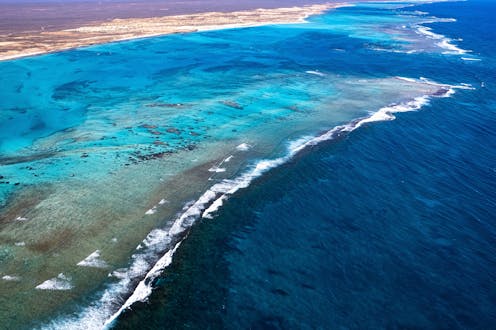
    Ningaloo Reef is facing the heat James C. Farr/Shutterstock

    Tens of thousands of fish have died off northwestern Australia, as a large and long-lasting marine heatwave intensifies.

    The fish kill at Gnoorea Beach near Karratha is concerning our team of scientists, as the hot mass of water heads south towards Ningaloo Reef and the seagrass gardens in Shark Bay. That’s because we’ve seen this before. An enormous marine heatwave in 2010-11 devastated fisheries and ecosystems further down the WA coast.

    This marine heatwave began in September, with temperatures up to 3°C warmer than usual off Broome. There’s no end in sight.

    The heatwave comes as oceans worldwide experience recordbreaking heat, driven by climate change. More than 90% of all heat trapped by greenhouse gases goes into the oceans.

    The fish kill is a visible way to glimpse a disaster often out of sight and out of mind. But these marine heatwaves do much more, from wiping out seagrass meadows and kelp beds to trashing fisheries.

    Up to 30,000 dead fish have washed up around Gnoorea Beach near Karratha.
    WA Department of Primary Industries and Regional Development

    How bad is this marine heatwave?

    Marine heatwaves are periods of at least five consecutive days when ocean temperatures are significantly higher than the long-term average for the region and season.

    Since September 2024, temperatures off Australia’s northwest coast have been high enough to be considered a heatwave.

    In late December, the area of hotter water expanded southward along the Pilbara coast and became more intense. Temperatures hit 4–5°C above normal at the surface. Our research group has gathered data from satellite measurements, which tells us it’s hotter than usual. Data from autonomous ocean gliders also show unusual levels of heat as far down as 200 metres.

    In January, this heatwave has become bad enough to be classified in some areas as a severe marine heatwave.

    There’s no relief in sight yet. The Bureau of Meteorology forecasts marine heatwave conditions to continue through February.

    figure showing intensity of marine heatwave in northwest Western Australia
    On the left, the marine heatwave on the Northwest Shelf is visible in dark red. On the right, the intensity of the heatwave is shown over time on the Northwest Shelf and further south in Central Western Australia.
    Author provided, CC BY

    Will it be worse than the 2010 heatwave?

    The current marine heatwave is, so far, the second-worst in Western Australia’s recorded history.

    Over the 2010–11 summer, a severe marine heatwave devastated seas off the state. Temperatures hit up to 5°C above average, peaking in February and March.

    The worst-hit areas were seas off the central West Australian coastline, leaving those to the north largely unaffected. But the heatwave stretched 2,000 kilometres, from the Pilbara all the way down to Denmark in the southwest.

    The reason the 2010 heatwave spread so far south was due to the Leeuwin Current, which was stronger than usual due to weak southerly winds linked to a low pressure system off the coast.

    figure showing the 2010-11 marine heatwave in Western Australia
    The 2010-11 marine heatwave hit Central West Australian waters hardest. The Leeuwin Current ferried heat southward.
    Author provided, CC BY

    The heat led to local extinction of kelp species along a 100km stretch of coastline. Scallop and blue swimmer crab fisheries had to close. Seagrass meadows in Shark Bay collapsed. Tropical species were sighted in new areas. And coral bleached at Ningaloo.

    By contrast, this current marine heatwave has concentrated on the northern coastline, but may spread south in coming weeks.

    Unfortunately, there are strong similarities between the 2010–11 heatwave and this one. Both occurred during a La Niña year.

    A similar low pressure system in December 2024 weakened southerly winds during this heatwave, though not as pronounced as in 2010-11. We can expect to see the Leeuwin Current intensify and carry more warm water than usual south, but perhaps not as far as in 2010–11.

    Weather systems at present are developing slightly differently to 2010–11, but they could still lead to weaker southerly winds and produce a stronger current channelling heat.

    What does this mean for ocean life?

    Marine heatwaves at this size and intensity can profoundly damage marine ecosystems and fisheries. The Karratha fish kill is the most visible sign of ecosystem distress.

    We have already seen signs of bleaching in the coral reefs of the Kimberley region, while corals are experiencing heat stress at world-famous Ningaloo Reef.

    The heat is now affecting the Gascoyne region between Carnarvon and Exmouth, and is likely to head further south.

    Damage from the heatwave could threaten valuable industries such as the rock lobster fishery and marine tourism on the Coral Coast.

    bleached coral linked to marine heatwave.
    Bleached corals in Cygnet Bay north of Broome. Photo taken on 16th January.
    Kayleigh Foste, CC BY

    More heatwaves will come

    As the climate changes, modelling indicates marine heatwaves will hit more often and to intensify.

    Worldwide, marine heatwaves have devastated ecosystems. One of the worst, the Pacific “blob” heatwave of 2014-2016, killed an estimated 100 million Pacific cod and four million birds from a single seabird species, as well as contributing to the starvation of about 7,000 humpback whales. The intense heat killed off cold-loving species and paved the way for tropical species to enter and even thrive.

    Right now, 28% of the world’s oceans are in heatwave conditions, based on surface temperatures.

    While there is a clear link between the 2010-11 marine heatwave and climate change, we cannot conclusively say this current heatwave off Western Australia is linked to climate change.

    That’s because we don’t have enough data about what’s happening under the surface. Temperatures in the ocean vary greatly by depth, and a hot surface doesn’t always mean heat has reached deeper water.

    So while we know a marine heatwave is in progress, we don’t know how bad it is or how far down the heat has reached in different regions. We need better ways to measure temperatures at depth, to be able to gauge how bad a heatwave is. Installing more temperature sensors along the WA coastline would allow us to better monitor and respond to temperature extremes.

    The earlier we know about a heatwave, the more we can do to prepare. The 2010-2011 heatwave made many people aware of what damage heat can do to an ocean, as fishing boats sat idle and tourists steered clear of dying coral.

    More, and worse, is likely to come. Better conservation and management of our oceans can help. But tackling the root cause of intensifying heat – unchecked greenhouse gas emissions – is still far and away the most important challenge.

    The Conversation

    Matt Rayson receives funding from the Australian Research Council and the Western Australian government. .

    Nicole L. Jones receives funding from Australian Research Council and the Western Australian government.

    Sina Pinter does not work for, consult, own shares in or receive funding from any company or organisation that would benefit from this article, and has disclosed no relevant affiliations beyond their academic appointment.

    ref. A marine heatwave in northwest Australia is killing huge numbers of fish. It’s heading south – https://theconversation.com/a-marine-heatwave-in-northwest-australia-is-killing-huge-numbers-of-fish-its-heading-south-248139

    MIL OSI AnalysisEveningReport.nz

  • MIL-Evening Report: DeepSeek: why the hot new Chinese AI chatbot has big privacy and security problems

    Source: The Conversation (Au and NZ) – By Mohiuddin Ahmed, Senior Lecturer of Computing and Security, Edith Cowan University

    The Chinese artificial intelligence (AI) company DeepSeek has rattled the tech industry with the release of free, cheaply made AI models that compete with the best US products such as ChatGPT.

    Users are rushing to check out the new chatbot, sending DeepSeek’s AI Assistant to the top of the iPhone and Android app charts in many countries.

    However, authorities have sounded a note of caution. US officials are examining the app’s “national security implications”. Australia’s former cybersecurity minister said national security agencies will soon issue formal guidance for users.

    Why are governments and security experts so concerned? The main issue is the app is made in China and stores data there – but that doesn’t mean all the worry is just xenophobia.

    What information does DeepSeek record?

    DeepSeek does not appear to be spyware, in the sense it doesn’t seem to be collecting data without your consent. However, like many online services, it clearly tells you it will record a lot of data about you and your behaviour.

    Specifically, the company’s privacy policy says it collects three categories of information.

    First, there is information you provide directly, such as your name and email address and any text you type in or files you upload.

    Next, there is automatically collected information, such as what kind of device you are using, your IP address, details of how you use the services, cookies, and payment information.

    Finally, there is information from other sources, such as Apple or Google login services, or third-party advertising and analytics companies.

    This is broadly similar to the data collected by ChatGPT and Claude.

    What does DeepSeek do with the information?

    DeepSeek says it uses this information for a range of purposes: to provide services, enforce terms of use, communicate with users, and review and improve performance.

    The policy also contains a rather sweeping clause saying the company may use the information to “comply with our legal obligations, or as necessary to perform tasks in the public interest, or to protect the vital interests of our users and other people”.

    DeepSeek also says it may share this information with third parties, including advertising and analytics companies as well as “law enforcement agencies, public authorities, copyright holders, or other third parties”.

    DeepSeek will also keep the information “for as long as necessary” for a broad range of purposes.

    Again, this is all fairly standard practice for modern online services.

    Causes for concern

    Much of the cause for concern around DeepSeek comes from the fact the company is based in China, vulnerable to Chinese cyber criminals and subject to Chinese law.

    DeepSeek stores the information it collects “in secure servers located in the People’s Republic of China”. The company says it maintains “commercially reasonable technical, administrative, and physical security measures” to protect the information.

    However, we should keep in mind that China is one of the most cyber crime-prone countries in the world – ranking third behind Russia and Ukraine in a 2024 study.

    So even if DeepSeek does not intentionally disclose information, there is still a considerable risk it will be accessed by nefarious actors.

    China is home to a sophisticated ecosystem of cyber crime organisations that often build detailed profiles of potential targets. Microsoft and others have accused the Chinese government of collaborating with cybercrime networks on cybercrime attacks.

    These organisations can use personal information to craft convincing targeted phishing attacks, which try to trick people into revealing more sensitive information such as bank details.

    Should you download DeepSeek?

    So, should you download DeepSeek?

    If you are an experienced user who is familiar with online privacy and the capabilities of modern AI systems, go ahead – but proceed with caution and be very wary about what information you share.

    And if you’re less experienced – if you’re a casual user who is less internet-savvy – my expert advice is to stay well away. DeepSeek won’t give you much you can’t get from other chatbots such as ChatGPT or Claude, and it might make your data vulnerable to Chinese cyber criminals and subject to Chinese law.

    DeepSeek also raises questions for governments. Efforts to prevent scams and cybercrime often focus on banks, telecommunications companies, and social media platforms – but what about chatbots?

    Mohiuddin Ahmed does not work for, consult, own shares in or receive funding from any company or organisation that would benefit from this article, and has disclosed no relevant affiliations beyond their academic appointment.

    ref. DeepSeek: why the hot new Chinese AI chatbot has big privacy and security problems – https://theconversation.com/deepseek-why-the-hot-new-chinese-ai-chatbot-has-big-privacy-and-security-problems-248544

    MIL OSI AnalysisEveningReport.nz

  • MIL-OSI Russia: Sobyanin: Six more Russian regions to join Moscow’s AI platform for medical services

    Translartion. Region: Russians Fedetion –

    Source: Moscow Government – Government of Moscow –

    More than 75 percent of the country’s regions are already working withmedical services on the platform “MosMedia”. This year, six more subjects of the Russian Federation will join it. Sergei Sobyanin said this in his telegram channel.

    “The platform offers 17 services to speed up and improve the accuracy of analysis of computer tomography, radiography, mammography and fluorography. AI algorithms draw the doctor’s attention to pathologies using color markings on medical images and prepare conclusions. These solutions have undergone a full cycle of testing and have been used in Moscow hospitals and clinics for five years,” the Moscow Mayor wrote.

    Source: Sergei Sobyanin’s Telegram channel @Mos_Sobyanin

    The regions joining the capital’s AI services platform is another step towards the digitalization of healthcare throughout the country.

    Please note: This information is raw content directly from the source of the information. It is exactly what the source states and does not reflect the position of MIL-OSI or its clients.

    Please Note; This Information is Raw Content Directly from the Information Source. It is access to What the Source Is Stating and Does Not Reflect

    https: //vv.mos.ru/mayor/tkhemes/12324050/

    MIL OSI Russia News

  • MIL-OSI Russia: The virtual game “Winter in Moscow” now features a symbol of the Chinese New Year

    Translartion. Region: Russians Fedetion –

    Source: Moscow Government – Government of Moscow –

    In a game with augmented reality “Winter in Moscow”, available in the application of the digital tourist service Russpass, a new cartoon has appeared. The red and gold patterned snake has become the personification of the festival “Chinese New Year in Moscow”. It is the official symbol of 2025, created by the Ministry of Culture and Tourism of the People’s Republic of China.

    Explore Moscow with your smartphone

    According to the lunar calendar, the Chinese New Year, or the Spring Festival of Chunjie, which signifies the renewal of nature and life’s opportunities, begins on January 29. According to the eastern calendar, 2025 is the year of the Green Wooden Snake, but the emblem was made in festive shades. In Chinese tradition, red (hong) brings good luck and protects from evil spirits, gold (jin) is associated with wealth and prosperity. The snake symbolizes wisdom, mystery and flexibility.

    The patterned snake can be caught at the sites of the festival “Chinese New Year in Moscow” and get the maximum amount of game currency for it – 800 snowflakes. The cartoon is on Tverskaya Square, Novy Arbat, VDNKh, Kamergersky Lane, the amusement park “Dream Island”, the Moscow Zoo and other places.

    Since the start of the augmented reality game “Winter in Moscow” Russpass app downloaded and updated more than 98 thousand times. After registration, users are given a map with cartoons that they need to catch using their smartphone while traveling around the city.

    Muscovites and tourists are catching the characters from the Soyuzmultfilm studio: Matroskin the cat from the animated series Prostokvashino, Gromozeka from The Secret of the Third Planet, Rooster from The Bremen Town Musicians, and hockey players from the Vympel and Meteor teams from Puck! Puck!

    For example, you can get 800 snowflakes for the parrot Kesha, who lives in the Museum of Moscow and the Ostafyevo Museum Estate. For Umka at the Worker and Kolkhoz Woman monument at VDNKh and the Lesnaya Skazka eco-center – 400. For Carlson at the Southern River Terminal and Vnukovo Airport – 200.

    Accumulated snowflakes open up promo codes for participants to exchange for points in the city loyalty program “A Million Prizes”.

    Chinese Lanterns and Dragon Dances

    The capital is once again celebrating the Chinese New Year on a grand scale as part of the cross-cultural years of 2024–2025.

    From January 28 to February 9, you can experience the atmosphere of China without leaving the capital: watch performances of national theaters on Manezhnaya Square and dragon dances on Tverskaya Square, attend a Chinese-style ice party at VDNKh, make paper dragons and master calligraphy on Bolotnaya Square. In addition, you can take many original photos on sites decorated with Chinese lanterns, air dragons, fans and coins.

    The Winter in Moscow project is the main event of the season, which until February 28 brings together various events in the capital. Citizens and tourists are invited to remember traditions and history, warm up with tea and hot buns, go skating, skiing and tubing, watch ice shows, give gifts to people who find themselves in a difficult life situation, and show concern for those who need it.

    Muscovites and guests of the capital are offered a huge selection of events in the open air and in cultural and sports institutions. The atmosphere of winter traditions has engulfed the entire city: more than 1.9 thousand sites are open. The project organically intertwined with the largest festivals of the capital “Moscow Estates”, “Moscow Tea Party”, “City of Light”, “Snow and Ice in Moscow” and many others. All information about the project and the events of the winter season can be found in a special section of mos.ru.

    Please note: This information is raw content directly from the source of the information. It is exactly what the source states and does not reflect the position of MIL-OSI or its clients.

    Please Note; This Information is Raw Content Directly from the Information Source. It is access to What the Source Is Stating and Does Not Reflect

    https: //vv.mos.ru/nevs/ite/149367073/

    MIL OSI Russia News

  • MIL-OSI Russia: What services of the flagship My Documents in the South-East Administrative District are most in demand

    Translartion. Region: Russians Fedetion –

    Source: Moscow Government – Government of Moscow –

    Over the four years of operation, city residents have contacted the flagship office of “My Documents” of the South-Eastern Administrative District more than a million times. It opened in January 2021 on the first floor of the shopping and entertainment center “Gorod” at the address: Ryazansky Prospekt, Building 2, Building 3 and became the fifth flagship in Moscow.

    During this time, the most popular service was the registration of vehicles (TS) and trailers to them – more than 110 thousand requests were recorded. The second most popular service is cadastral registration and (or) registration of rights to real estate objects, more than 70 thousand applications were received for it. The third place in the rating was taken by the service of registration of citizens of the Russian Federation – over 60 thousand requests.

    The flagship offices of My Documents offer unique services that are not available in district centers, such as out-of-court bankruptcy. Young Muscovites can receive their first passport in a ceremonial setting, and Moscow entrepreneurs can use the services of the state budgetary institution Small Business of Moscow, as well as register a legal entity, a peasant (farming) enterprise, and the status of an individual entrepreneur. City residents also have access to vehicle registration services, making changes to registration data, or deregistering a vehicle. This can be done conveniently by prior appointment on the portal Mos.ru or Internet portal of public services.

    At the flagship of the South-Eastern Administrative District, Muscovites can apply for a foreign passport for children under 14 years of age, submit a birth certificate or marriage registration certificate, extracts from the register of legal entities and other documents for legalization, and also enter information about foreign certificates of registration of civil status acts into the Unified State Register of Civil Registry Offices within 24 hours.

    In addition, residents of the capital are provided with two of the most popular services of the guardianship service, related to the issuance of permission for transactions with property and the management of money in the accounts of minors, incapacitated or partially incapacitated citizens.

    On the territory of the flagship office of the South-East Administrative District, newlyweds can register their marriage in a separate hall equipped with a bright photo zone.

    Muscovites are also offered additional services, such as booking a tour in the “My Travels” zone, visiting the “My Photo” photo studio, or visiting the “Moscow – Caring for History” exhibition. The current exhibition is dedicated to the dynasties of Moscow confectioners. In addition, the flagship has a “My Notary” legal bureau, which has become the most popular additional service. Over four years, residents have contacted this bureau more than 40 thousand times.

    The flagship centers are equipped with everything necessary for the convenience and comfort of visitors and are decorated in a modern design. There are spacious waiting areas with soft sofas, USB ports for charging phones and portable lamps, a large children’s area with interactive games and modern cartoons, a mother and child room. You can also charge your mobile device using a portable power bank. All My Documents flagship offices host exhibitions about outstanding cultural figures. The current exhibition is dedicated to Arkady Gaidar.

    The flagship office of “My Documents” in the South-East Administrative District is open daily from 10:00 to 22:00.

    Please note: This information is raw content directly from the source of the information. It is exactly what the source states and does not reflect the position of MIL-OSI or its clients.

    Please Note; This Information is Raw Content Directly from the Information Source. It is access to What the Source Is Stating and Does Not Reflect

    https: //vv.mos.ru/nevs/ite/149366073/

    MIL OSI Russia News

  • MIL-OSI Russia: The Moskino Cinema Park has shown the play “Cathedral Square” 30 times

    Translartion. Region: Russians Fedetion –

    Source: Moscow Government – Government of Moscow –

    The play “Cathedral Square” in the Moskino cinema park continues to arouse the interest of both residents of the capital and guests of the city. After the premiere, viewers quickly bought up tickets and did not stop leaving enthusiastic reviews. It is planned to hold another 16 shows of the multimedia play about the Time of Troubles. The opportunity to see the spectacular performance is available until February 23 inclusive.

    In each performance, one of the famous actors plays alongside the young artists. Thus, on stage you can see Anna Bolshova, Elena Zakharova, Ekaterina Guseva, Dmitry Pevtsov, Gleb Puskepalis, Yulia Takshina, Evklid Kurdzidis, Valentin Klementyev, Valery Nikolaev, Eduard Flerov and others.

    From the first minutes of the production, the audience finds itself in Russia in the 17th century. They observe the insidious plans of the Polish King and Grand Duke of Lithuania Sigismund III, the impostor False Dmitry II and Marina Mnishek, who are striving for power. The main themes of the play are the cohesion of the Russian people, the unity of the Orthodox faith and the strength of spirit.

    “There were traitors in power, there were traitors among the Cossacks, clans fought, princes could not agree with each other. But it was the spiritual power and the common people that did not allow Russia to perish,” emphasized the play’s director Eduard Boyakov.

    Thanks to the historical scenery, the creative goals of the director and his large professional team were brought to life.

    “The play is a reflection on the fact that our strength is in unity and truth. It is the appeal to Russian roots and origins that makes it so understandable and relevant for every viewer. The heroes of the play – Minin and Pozharsky – become living examples of unwavering faith and willpower for the viewer,” shared actress Anna Bolshova.

    The performance lasts one hour and is intended for viewers over six years of age.

    Tickets are available for purchase by link.

    The Moskino Cinema Park is part of Sergei Sobyanin’s Moscow — City of Cinema project and an object of the Moscow film cluster. The first stage of its development has already been completed: 18 natural sites, four pavilions and six infrastructure facilities have been built here. Among them are the sets of Moscow Center, Moscow of the 1940s, Vitebsk Station, Yurovo Airport, Moscow Cathedral Square, Deaf Village, Partisan Village, County Town, Cowboy Town, St. Petersburg Bar and other sites.

    The Moscow Film Cluster is an infrastructure facility, services and facilities for filmmakers, which are being developed by the Moscow Government within the framework of the Moscow — City of Cinema project. Its structure includes the Moskino film park, the Gorky Film Studio (sites on Sergei Eisenstein Street and Valdaisky Proyezd), the Moskino film factory, the Moskino cinema chain, the film commission and the Moskino film platform.

    Please note: This information is raw content directly from the source of the information. It is exactly what the source states and does not reflect the position of MIL-OSI or its clients.

    Please Note; This Information is Raw Content Directly from the Information Source. It is access to What the Source Is Stating and Does Not Reflect

    https: //vv.mos.ru/nevs/ite/149376073/

    MIL OSI Russia News

  • MIL-OSI Russia: Glavarkhiv published rare documents for the 165th anniversary of Anton Chekhov’s birth

    Translartion. Region: Russians Fedetion –

    Source: Moscow Government – Government of Moscow –

    To mark the 165th anniversary of Anton Chekhov’s birth, Glavarkhiv opened a new online exhibition, “I’ll Fly to Moscow on Wings…”. Its materials introduce the writer’s life and work in the city. Here Chekhov spent his student years, began his literary work and became famous as a playwright. The exhibition can be viewed in the “Media Library” section, in the subsection “Exhibitions”.

    The exhibition includes photographs of Chekhov and his family, documents about the writer’s studies at the Imperial Moscow University (now Moscow State University), records in the register of marriage of Anton Chekhov and Olga Knipper in 1901, as well as the writer’s death in 1904, and other materials. One of the sections of the exhibition tells about the perpetuation of the memory of Anton Chekhov – the creation of a memorial house-museum of the writer on Sadovaya-Kudrinskaya Street and the holding of events in honor of the celebration of his anniversaries.

    Anton Chekhov first visited Moscow in 1877, when he was 17 years old. Two years later, he entered the medical faculty of the Imperial Moscow University and became one of 10 scholarship holders of the Taganrog City Duma, which allocated funds for the education of city natives in higher educational institutions. At the exhibition, you can see a document on the release of the bearer of a coupon for an assignment of 25 rubles, delivered from the Taganrog City Council, on which Anton Chekhov signed. In 1884, he completed his studies at the university. The document on conferring the title of district doctor on students, among whom Chekhov is also mentioned, was signed by the dean of the medical faculty, Nikolai Sklifosovsky.

    A separate section of the exhibition is devoted to Anton Chekhov’s collaboration with the Moscow Art Theatre (MKhT). Documents and photographs make it possible to trace the history of productions of plays based on the playwright’s plays and see the actors who participated in them. The exhibition presents theatre posters, programmes and tickets for MKhT performances, as well as the memories of spectators who saw the productions in 1899–1900.

    Due to his health, the writer was forced to leave Moscow and settle in Yalta. In the summer of 1904, due to a sharp exacerbation of his illness, Anton Chekhov and his wife Olga Knipper-Chekhova went to a resort in Germany. On July 15, he died in the town of Badenweiler. The writer was buried in Moscow at the Novodevichy Convent Cemetery.

    Please note: This information is raw content directly from the source of the information. It is exactly what the source states and does not reflect the position of MIL-OSI or its clients.

    Please Note; This Information is Raw Content Directly from the Information Source. It is access to What the Source Is Stating and Does Not Reflect

    https: //vv.mos.ru/nevs/ite/149432073/

    MIL OSI Russia News

  • MIL-OSI Russia: How Technopolis Moscow SEZ Enterprises Support People in the SVO Zone

    Translartion. Region: Russians Fedetion –

    Source: Moscow Government – Government of Moscow –

    Students and staff of the National Research University of Electronic Technology (MIET), the flagship university of the Technopolis Moscow special economic zone (SEZ), collected more than 150 kilograms of humanitarian aid for the participants of the special military operation (SMO).

    “The enterprises of the Technopolis Moscow special economic zone actively participate in humanitarian actions. Assistance and support are provided not only to participants in the special military operation and residents of border regions, but also to children’s shelters and centers for keeping homeless animals. Another action to collect humanitarian aid was held at the National Research University of Electronic Technology. In two weeks, employees and students collected 150 kilograms of warm clothes, various household chemicals and special equipment, which have already been transferred to the front lines,” said Gennady Degtyarev, CEO of the SEZ.

    The university staff and students collected sets of thermal underwear, tools, catalytic heaters, fleece clothing and much more. The students wove camouflage nets, which are so necessary for the fighters, themselves. This is not the first such action of the university – in August 2024, the institution’s employees handed over 250 kilograms of humanitarian aid to residents of the Kursk region, and in September they collected things for residents of the Donetsk and Lugansk People’s Republics.

    Collections of humanitarian aid for residents of border regions were held at the sites of the special economic zone “Technopolis Moscow”. Employees of the management company and workers of over 50 enterprises brought more than 2.5 tons of various products.

    Other capital enterprises also provide support to the SVO participants and residents of border territories. For example, a manufacturer of ATMs and other high-tech products donated a number of devices it made to help the military. Among them are metal storage boxes, entrenching hooks, heating stoves, and transport equipment.

    The capital’s coffee and sweets factory has shipped more than one ton of its products since 2022. In addition, the company delivered 4.5 thousand coffee bean bags to the special military operation zone, which are used by military personnel to equip flooring.

    Please note: This information is raw content directly from the source of the information. It is exactly what the source states and does not reflect the position of MIL-OSI or its clients.

    Please Note; This Information is Raw Content Directly from the Information Source. It is access to What the Source Is Stating and Does Not Reflect

    https: //vv.mos.ru/nevs/ite/149441073/

    MIL OSI Russia News

  • MIL-OSI Russia: “Chinese New Year”: what awaits guests of “Winter in Moscow” on Tverskoy Boulevard

    Translartion. Region: Russians Fedetion –

    Source: Moscow Government – Government of Moscow –

    The Chinese New Year festival, which is taking place in the capital from January 28 to February 9 as part of the Winter in Moscow project, awaits guests at the venues on Tverskoy Boulevard. There are two chalets there, where master classes, lectures and creative activities are held under the guidance of experts in Eastern culture, including representatives of China and masters studying centuries-old traditions. Admission to all events is free.

    The festival was a continuation of the events dedicated to the Cross Years of Culture of Russia and China, and is timed to coincide with the 75th anniversary of the establishment of diplomatic relations between the countries.

    “Russia and China are the largest neighbors, they have been developing friendly and partnership relations for many decades. In order to strengthen mutual understanding between the peoples of our countries, it is necessary to talk about traditions and customs. The festival movement in Moscow unites and brings together the cultures of Russians and Chinese in holidays, games, master classes, theatrical performances,” said Olga Dolgikh, one of the organizers of the master classes within the framework of the festival, a teacher of the Chinese language, director of the Center for International Education and Professional Training.

    Spring Festival in a Chalet at the Monument to K.A. Timiryazev

    In the chalet, located near the monument to K.A. Timiryazev, guests will become acquainted with the world of Chinese art.

    On January 29 from 12:00 to 15:00 there will be a master class on traditional paper cutting – jianzhi. This activity as an element of the spring festival symbolizes happiness and prosperity, and the patterns created become a bright decoration of houses.

    On January 30, from 12:00 to 14:00, participants of the master class will create a composition called “Wild Orchid and Fry”, and from 19:00 to 19:45, they will create a snowflake, which is associated with spring in China.

    On January 31, from 12:00 to 14:00, guests will learn how to depict geranium, a flower that in Chinese art often symbolizes renewal and harmony.

    From 3 to 7 February, from 12:00 to 15:00, the chalet will host painting and calligraphy classes.

    On February 9 at 19:00 there will be a master class on drawing a meihua plum – a spring symbol of resilience, joy and the awakening of nature.

    Calligraphy, woodcut and tea ceremony in a chalet near the monument to S.A. Yesenin

    In the chalet near the monument to S.A. Yesenin, guests will discover Chinese calligraphy, woodcuts and tea drinking traditions.

    From January 29 to 31, from 12:00 to 15:00, calligraphy classes will be held here. Participants will learn how the elegant lines of hieroglyphs reflect the philosophy and aesthetics of China.

    On January 31 from 19:00 to 19:45, guests are invited to a lecture with a demonstration about the clothing of the main nationality of China, the Han. They will also demonstrate the traditional Chinese costume, Hanfu.

    On February 2, from 12:00 to 15:00, there will be a master class on Chinese xylography – printing from wooden boards, the ancient art of creating illustrations.

    On February 3 at 19:00, the chalet will host a master class on creating an image of a meihua plum. Participants will learn to work in the realistic Chinese painting technique of gongbi. It involves precise drawing of details and the use of delicate gradations of colors.

    On February 5 and 6, from 12:00 to 14:00, guests of the chalet will be immersed in the culture of Chinese tea drinking. Participants will learn how this drink became part of the culture of the Celestial Empire, and will also enjoy its taste and aroma.

    Project “Winter in Moscow”— the main event of the season, which until February 28 unites various events of the capital. Citizens and tourists are invited to remember traditions and history, warm up with tea and hot buns, go skating, skiing and tubing, watch ice shows, give gifts to people who find themselves in a difficult life situation, show care for those who need it.

    Muscovites and guests of the capital are offered a huge selection of events in the open air and in cultural and sports institutions. The atmosphere of winter traditions has engulfed the entire city – more than 1.9 thousand sites are open. The project organically intertwined with the largest festivals of the capital “Moscow Estates”, “Moscow Tea Party”, “City of Light”, “Snow and Ice in Moscow” and many others. All information about the project and winter season events can be found in a special section Mos.ru.

    Please note: This information is raw content directly from the source of the information. It is exactly what the source states and does not reflect the position of MIL-OSI or its clients.

    Please Note; This Information is Raw Content Directly from the Information Source. It is access to What the Source Is Stating and Does Not Reflect

    https: //vv.mos.ru/nevs/ite/149437073/

    MIL OSI Russia News

  • MIL-OSI Russia: Burning Hearts: Stories of Those Who Received the Moscow Volunteer Badge

    Translartion. Region: Russians Fedetion –

    Source: Moscow Government – Government of Moscow –

    These people represent different generations: some have recently graduated from school, while others have already retired. But they are united by a common cause – volunteering. They help organize and hold the Victory Parade, are on duty at major events and collect humanitarian aid, and Resource center “Mosvolonter” — preparation and coordination of concerned Muscovites. The unofficial motto of such enthusiasts is “No other way!” On January 21, Sergei Sobyanin presented the “Volunteer of Moscow” badge of distinction 30 residents of the capital.

    About what merits can lead to receiving an honorary award, how kindness leads to the profession of dreams and helps to create a family – in the material mos.ru.

    A smile as a reward

    One of the youngest volunteers to earn the badge was 18-year-old Yuri Potolokov. He studies at the Moscow City Pedagogical University and plans to teach geography in the future. But even after graduating and getting a job, Yuri plans to participate in public events.

    The young man joined the volunteer movement in 2022, while still at school. “One day I went to a concert at VDNKh and saw guys handing out raincoats to the audience because it was raining. That’s when I noticed that people were smiling at the volunteers. And I realized that I wanted to receive such smiles too. After all, this is the best gratitude for your work! After the concert, I told my mother: “I’m going to volunteer!” She happily accepted my choice,” our interlocutor recalls.

    Yuri Potolokov is a graduate of a cadet school and has been interested in Russian history since childhood. That is why patriotic events are closest to him, for example, meeting veterans who came to Moscow from different cities for Victory Day at train stations. However, over the past two years, the young man has had the opportunity to volunteer at other events. For example, he helped participants National Championship “Abilympics”in 2022 and 2023, navigate the site and get to the competitions on time, coordinated guests at the World Youth Festival in 2024. And recently, I sorted out New Year’s decorations at the N.N. Blokhin National Medical Research Center of Oncology: I twisted the branches of artificial trees with insulating tape, packed the toys and sent them to the warehouse. Moreover, I was already performing the duties of a team leader, managing a team of five people.

    In total, he has over three thousand volunteer hours to his credit. Nevertheless, the mos.ru interviewee did not expect to be among those awarded.

    “I can imagine how many people applied for the badge! And they chose me. Now I want to try even harder than before. In the near future, I hope to hold a master class on creating eco-paintings from recycled materials in the “Good Place” space in the South-Eastern Administrative District,” says Yuri Potolokov, holder of the “Volunteer of Moscow” badge.

    From the veterans’ meeting to the registry office

    Kirill Kononaev is 21 years old. The volunteer is a final-year student at the Moscow Institute of Economics. He joined the “club of caring people” three years ago: first, he headed the student council, and soon he wanted to do good deeds outside the university. “The opportunity presented itself: the pandemic began, and I went to deliver food to the elderly,” recalls the mos.ru source.

    Then there were other events, for example the International Forum of Civic Participation “Moscow helps”The young man devoted more than 1,700 hours to volunteer work. He personally liked patriotic events.

    “Once I was distributing water in the center of the capital during the Immortal Regiment march. It was an amazing feeling: we were met by participants carrying portraits of their fathers and grandfathers who fought for their country in the Great Patriotic War. And it was in our power to make sure that they did not feel thirsty. Another time I was processing applications for the “Faces of Victory” campaign: relatives sent touching stories about their ancestors, battle heroes,” says Kirill Kononaev, holder of the “Moscow Volunteer” badge.

    At one of these events at the headquarters, organized to meet veterans, our interlocutor met his future wife: Taisiya Borisova, a student at the Moscow State Pedagogical University, also a volunteer. They got married in February 2024 and now come to help together.

    “It was very nice to receive a badge of distinction this year. And although I have less and less free time, I will continue to volunteer. So, soon it will be time to distribute St. George ribbons to Moscow residents. Even when I feel tired, helping people and the city allows me to switch off, charges me with positive energy,” smiles Kirill Kononaev.

    Dream job

    Margarita Buchina teaches English at school #2075In 2018, when the capital hosted the World Cup, her students enthusiastically and delightedly told how they rooted for the teams and interacted with foreign guests on the city streets.

    “I thought it was good language practice and a new experience. And soon I signed up through the website Mosvolonter.ruto her first large-scale event — the Moscow Urban Forum — 2019, where guests from different countries came. She successfully passed the interview and became part of the team of volunteers with knowledge of foreign languages, who help at the information desks,” recalls the mos.ru interlocutor.

    Already at the event, Margarita Buchina realized that applying her knowledge for the benefit of the city is her calling. In addition to her teaching profession, she is also a photographer and journalist. Therefore, she offered her help as a media volunteer.

    “Every year on June 22, I go to the Krymskaya Embankment to collect material for a report on the “Candle of Memory” campaign: I get amazing emotional portraits of volunteers in military uniform from the Great Patriotic War, who came to light the lights in honor of those who died in 1941-1945. I was the manager of the volunteer corps at the International Exhibition and Forum “Russia” at VDNKh and supervised media volunteers, photographed Christmas trees decorated with balls with children’s wishes, as part of the “Kind Christmas Tree” charity campaign at festival venues, photographed artists performing at the International Military Music Festival “Spasskaya Tower”. In addition, I am a volunteer editor of the “Good News” magazine, which tells about the lives of active and caring city residents,” says Margarita Buchina, holder of the “Volunteer of Moscow” badge.

    Now she is trying to find her dream job and realize herself as a journalist. But she does not plan to leave volunteering.

    “When I was awarded the “Moscow Volunteer” badge for my services, I once again realized how important and useful my good deeds are for the city. And you can do them in different ways, for example, by helping to collect humanitarian aid. If you were born with a kind heart, then it is not difficult for you to share kindness with others, volunteering is forever!” our interlocutor believes.

    Six thousand hours of good deeds

    Elena Akhtyrskaia is a “silver” volunteer, she is 56 years old. “In 2015, I began to actively attend excursions organized Department of Cultural Heritage of Moscow. Once I was asked to help a guide gather a group and make sure no one was left behind during a walk around the capital. It turned out to be much more interesting than just listening! So I joined the ranks of cultural volunteers. Now I also help organize events for Mosconcert,” she says.

    During the winter holidays, Elena Akhtyrskaya was on duty at the New Year’s game-journey through Russian fairy tales in the Petrovsky Travel Palace, and after the performance she gave gifts to the young spectators.

    However, our interlocutor participates not only in cultural programs. For example, she had the opportunity to accompany the Victory Parade in 2024. “This is the highest honor for a volunteer!” she admits. Elena Akhtyrskaya met visitors at the entrance to Red Square and explained where to go next, and then seated veterans in the stands and watched the procession from a place of honor.

    “I have dedicated almost six thousand hours to good deeds. But when I was awarded the “Volunteer of Moscow” badge, I was surprised. After all, there are many worthy candidates, including “silver” ones, and they are older than me. Of course, it is very nice to receive such an award. However, something else is more important to me: the emotional response of those whom I helped, eyes full of joy and gratitude!” – summarizes the holder of the “Volunteer of Moscow” badge Elena Akhtyrskaya.

    A Holiday for Everyone: How the Mosconcert Cultural Brigade Congratulated Soldiers and Children on the New Year“Moscow Helps”: Sobyanin Told How Muscovites Support SVO ParticipantsOver a thousand events were held in 2024 in the Dobroe Mesto centers in MoscowThe number of events in Moscow involving cultural heritage volunteers has almost doubledWhat dreams does the “Kind Tree” of the “Winter in Moscow” project fulfill?

    Please note: This information is raw content directly from the source of the information. It is exactly what the source states and does not reflect the position of MIL-OSI or its clients.

    Please Note; This Information is Raw Content Directly from the Information Source. It is access to What the Source Is Stating and Does Not Reflect

    https: //vv.mos.ru/nevs/ite/149440073/

    MIL OSI Russia News

  • MIL-OSI Russia: A training center for Russian national football teams will appear in Khoroshevo-Mnevniki

    Translartion. Region: Russians Fedetion –

    Source: Moscow Government – Government of Moscow –

    A training center for Russian national football teams will be built in the northwest of the capital. The City Committee for Architecture and Urban Development (Moskomarkhitektura) has already amended the land use and development rules for the construction of the sports facility. This was reported by Juliana Knyazhevskaya, chairman of the department.

    Land use and development regulations are a set of rules and requirements that govern how land should be used and what can be built on it. They determine what activities are allowed in certain places and what requirements must be met when designing and constructing buildings.

    “According to the document, a territorial zone has been formed in the northwest of Moscow, where a center with an area of over 32.6 thousand square meters will appear. The site will house a training base for national football teams. Its area will be over 19 thousand square meters. In addition, athletes will have the opportunity to live on the territory of the center during training. The total area of the premises for temporary accommodation will be almost three thousand square meters,” said Yuliana Knyazhevskaya.

    The land plot is located on the bank of the Moskva River on Nizhnie Mnevniki Street – a 10-minute walk from the Terekhovo metro station of the Big Circle Line. The area is currently free of development.

    “The training center for the Russian national football teams will be built in the Mnevnikovskaya floodplain as part of a large-scale investment project. For this purpose, the city will provide the Russian Football Union with a land plot of 6.05 hectares. The contract is planned to be concluded for five years, during which time the construction of the sports complex should be completed,” noted the Minister of the Moscow Government, Head of the Department of City Property

    Maxim Gaman.

    Previously Sergei Sobyanin said on the development of the Mnevnikovskaya floodplain.

    Please note: This information is raw content directly from the source of the information. It is exactly what the source states and does not reflect the position of MIL-OSI or its clients.

    Please Note; This Information is Raw Content Directly from the Information Source. It is access to What the Source Is Stating and Does Not Reflect

    https: //vv.mos.ru/nevs/ite/149447073/

    MIL OSI Russia News

  • MIL-OSI Russia: Skoltech and NSU discussed cooperation in the development of new functional materials

    Translartion. Region: Russians Fedetion –

    Source: Novosibirsk State University – Novosibirsk State University –

    Representatives of the Skolkovo Institute of Science and Technology visited Novosibirsk State University to discuss cooperation on R&D carried out by Skoltech on behalf of the NTI Competence Center for New Functional Materials based at NSU. The delegation included Ivan Sergeichev, Director of the Center for Materials Technology at the Skolkovo Institute of Science and Technology, Dmitry Krasovsky, Deputy Director of the Center for Relations with Industry, participants in joint projects with NSU, as well as specialists in building interactions between stakeholders.

    The purpose of the visit was to get acquainted with the structure of the Competence Center of the National Technology Initiative in the direction of “Technologies for modeling and developing new functional materials with specified properties”, which was created at NSU in 2021 with the financial support of the NTI Foundation, as well as with its capabilities and industrial partners.

    — At the end of last year, we signed agreements with Skoltech to implement three large-scale projects: “Design of Materials for Thermal Barrier Coatings”, “Development of Additive Manufacturing Technology for Complex-Geometry Ceramic Rods for Casting Gas Turbine Blades”, and “Metal Oxide Nanoparticles for Protecting Products and Materials from Counterfeiting”. Our task is to create samples of new materials and software products in a short period of time in order to begin introducing new materials and products made from them to the market as soon as possible through interaction with potential industrial partners. These could be manufacturers of engines, gas turbine units and their parts, polymer-composite materials and various products made from them, the authenticity of which, among other things, must be protected from counterfeiting, — explained Alexander Kvashnin, Director of the NTI Center for New Functional Materials at NSU.

    Following the meeting, the parties developed mutually beneficial forms of cooperation. One of them involves Skoltech’s participation in the work of three distributed centers created by the Center for New Functional Materials and its partners at the end of last year – the Distributed Center for Modeling, Calculations and Design, the Distributed Center for Research and Development of Materials and Technologies for Their Production, as well as the Distributed Production Site for Small Batch Products, where it is possible to produce small batches of new materials and products made from them using NSU technologies for further delivery for testing at industrial enterprises. The software developed by the partners will be used in the distributed center for modeling, calculations and design.

    Meanwhile, in Skolkovo, during the implementation of these three projects, the necessary innovative equipment will be created, including a new 3D printer for complex printing of ceramic rods for gas turbine units and a reactor for the production of metal oxide nanoparticles to protect materials and products from counterfeiting. This equipment will be used as part of distributed centers.

    “Our cooperation with Skoltech will allow the university to expand the circle of its Moscow partners and potential customers, which may include the state corporation for assistance in the development, production and export of high-tech industrial products Rostec, United Engine Corporation, Gazpromneft and other large Russian corporations interested in the development and implementation of advanced technologies,” commented Alexander Kvashnin.

    Please note: This information is raw content directly from the source of the information. It is exactly what the source states and does not reflect the position of MIL-OSI or its clients.

    MIL OSI Russia News

  • MIL-OSI Australia: Underlying inflation falls to three-year low

    Source: Australian Treasurer

    Underlying inflation is at its lowest in three years according to new figures released by the Australian Bureau of Statistics today.

    Headline inflation is now in the mid‑twos and underlying inflation is in the low threes.

    This means headline inflation has fallen to an almost four‑year low and now sits in the middle of the RBA’s target band.

    This result is better than expected and better than forecast.

    It’s not mission accomplished, but it means we’ve made much more progress.

    Inflation was higher and rising under the Liberals, but it’s lower and falling under Labor.

    On every measure we’ve made substantial and sustained progress in the fight against inflation.

    Inflation is now almost a third of the 6.1 per cent we inherited when we came to office.

    On a six‑month annualised basis, underlying inflation is around a third of its peak at 2.7 per cent and is within the RBA’s target band for the first time since 2021.

    Trimmed mean inflation was 3.2 per cent through the year to the December quarter, down from 3.6 per cent.

    Trimmed mean inflation almost halved in the quarter, at 0.5 per cent and is a third of what it was at the time of the election.

    Annual trimmed mean inflation in the monthly indicator is also within the RBA’s target band for the first time in three years, at 2.7 per cent in the year to December.

    Headline inflation was 0.2 per cent in the December quarter, to be 2.4 per cent higher through the year, around a quarter of its peak.

    Australia’s headline inflation is now lower than most major advanced economies including the United States, United Kingdom and Germany.

    Annual non‑tradable inflation was 3.1 per cent through the year to the December quarter 2024, down from 4.1 per cent through the year to the September quarter.

    While monthly headline inflation ticked up slightly, it remained in the band for the fifth consecutive month.

    The moderation in today’s figures of categories including building construction costs, rents and insurance is an encouraging sign that inflation is falling more quickly than anticipated in MYEFO.

    The moderation in inflation that we’ve seen so far would not have been possible without our responsible economic management including the $200 billion turnaround in the budget we’ve delivered.

    ABS data shows our cost‑of‑living policies took around three quarters of a percentage point off inflation.

    In the year to the December quarter 2024, electricity prices fell 25.2 per cent and would have fallen 1.6 per cent without the energy rebates we’re rolling out with the states.

    In the year to the December quarter 2024, rents rose 6.4 per cent – without the largest increase to Rent Assistance in 30 years, they would have risen 7.8 per cent.

    Inflation is down, wages are up, unemployment is low and we’ve seen 1.1 million jobs created for Australian workers under Anthony Albanese and Labor.

    The soft landing we have been planning and preparing for is looking more and more likely.

    Many countries around the world have paid for progress on inflation through higher unemployment or lower economic growth, but we’ve been able to preserve the gains we’ve made in our labour market at the same time as we’ve got inflation down.

    Cost of living pressures haven’t disappeared but they are easing.

    The worst of the inflation challenge is well and truly behind us.

    We are confident but not complacent about the year ahead.

    Australians would be thousands of dollars worse off if Peter Dutton had his way on tax cuts, wages and energy bill relief – and worse off still if he wins the election.

    The biggest risk to the progress we have made together would be a Coalition government that would come after Medicare again, push wages down again, and push electricity prices up.

    We’re fighting inflation, helping with the cost of living and building Australia’s future, and today’s figures show our policies are making a meaningful difference.

    MIL OSI News

  • MIL-OSI Russia: NSU scientists have found a way to make platelets react to light

    Translartion. Region: Russians Fedetion –

    Source: Novosibirsk State University – Novosibirsk State University –

    Scientists from the Laboratory of Optics and Dynamics of Biological Systems Physics Department of NSU and the Department of Organic Chemistry Faculty of Natural Sciences of NSU created a new photosensitive molecule, the breakdown of which under the influence of ultraviolet radiation releases adrenaline without the formation of the oxidized form (adrenochrome), which has a neuro- and cardiotoxic effect. It was used to influence platelet receptors with light. It turned out that the release of adrenaline significantly increases the activation of platelets.

    The results of the study were published in January of this year on the website of the Journal of Xenobiotics (Reducing the Formation of Toxic Byproducts During the Photochemical Release of Epinephrine). The article is available at the link: HTTPS: //d.org/10.3390/eh15010008. The study was supported by the grant of the Russian Science Foundation No. 23-75-10049 and is being conducted within the framework of the project “Study of platelet activation under the influence of combined stimuli using optically-mediated release of ligands”.

    -The idea of ​​managing living cells with the help of light is very attractive for researchers, because it can be accurately focused on a particular area, turn on at a given moment and influence any photosensitive receptor. The only problem is that not all living cells have such receptors. They are just platelets. We needed to “force” them to feel light through any signal molecules. The fact is that almost all cells have receptors sensitive to some substances. Different cells feel different signal molecules, and one of the ways is to make artificial compounds that absorb light, and after that they can, decaying into the components or in any way by rebuilding their structure, join the receptors. Then, after the exposure of the light, the cell will begin to “feel” them. This is how it is possible to “force” the cell to show sensitivity to light. Scientists began to develop and apply various compounds of this action to various cells for a long time – from the second half of the last century. Within the framework of our laboratory, this activity has also been conducted over the past years. Our chemical colleagues from the laboratory of photo activated processes of the SB RAS are engaged in the synthesis of molecules, but we study their properties and use to study various cells, mainly platelets, ”explained Alexander Moskalensky, head of the optics and dynamics of the FF NSU Biological Systems.

    Classic photosensitive adrenaline analogues developed in the 90s of the last century, when exposed to light, release adrenaline, which in the process of oxidation is converted into adrenochrome, which is toxic to living cells. For this reason, it is undesirable to use it as an activator of sensitivity to light in living cells, since this substance can trigger other undesirable processes in them or even kill them. Therefore, scientists were faced with the task of finding a way to reduce the formation of adrenochrome, but without stopping the release of adrenaline. As a result, it turned out that this problem can be solved by a simple modification of the molecule, namely, the introduction of a carbamate bridge of 4 carbon and oxygen atoms. The release of adrenaline in this case continued as before, and the amount of its transition to the oxidized form was significantly reduced.

    — We compared two lines of molecules — classical and modified. Surprisingly, while the classical compound resulted in the formation of adrenochrome, its analog with a carbamate bridge did not cause this by-product, which resulted in a pure release of the active substance, i.e. adrenaline. The exposure of both compounds to light was carried out under identical conditions, then the products obtained by photolysis were analyzed using ultraviolet spectroscopy, chromatography and nuclear magnetic resonance. Subsequently, we evaluated the new compound using an in vitro platelet activation assay. The results showed that the release of adrenaline significantly enhances platelet activation, which makes it a valuable tool for in-depth studies of cellular signaling, — said Alexander Moskalensky.

    Since UV radiation does not penetrate the body, it is not possible to use modified molecules of the photosensitive adrenaline analogue inside the body. Therefore, scientists plan to use them to study platelet activation in a test tube, namely, in blood samples. With their help, it will be possible to develop new analysis methods and obtain new information about the platelet activation process.

    This method will allow researchers to obtain more accurate data on the effect of adrenaline on platelet activation. This is important because platelets are very sensitive to mechanical impacts, fluid flows, and other types of impact that can affect the results of such studies.

    Currently, the laboratory’s scientists are developing the next molecule – a photosensitive analogue of adrenaline based on the dye BODIPY, which will be activated by light in the green region of the spectrum, and they also have an understanding of how to modify molecules that could be activated in the red region of the spectrum.

    Please note: This information is raw content directly from the source of the information. It is exactly what the source states and does not reflect the position of MIL-OSI or its clients.

    MIL OSI Russia News

  • MIL-Evening Report: PSNA’s Minto hits back at Gaza ‘genocide hotline’ critics, insists NZ should deny Israeli soldier visas

    Asia Pacific Report

    A national Palestine advocacy group has hit back at critics of its “genocide hotline” campaign against soldiers involved in Israel’s war against Gaza, saying New Zealand should be actively following international law.

    The Palestine Solidarity Network Aotearoa (PSNA) dismissed a “predictable lineup of apologists for Israel” for their criticisms of the PSNA campaign.

    “Why is concern for the sensitivities of soldiers from a genocidal Israeli campaign more important than condemning the genocide itself?,” asked PSNA national chair John Minto in a statement.

    The Minister of Foreign Affairs Winston Peters, the Chief Human Rights Commissioner Stephen Rainbow and the New Zealand Jewish Council have made statements “protecting” Israeli soldiers who come to New Zealand on “rest and recreation” from the industrial-scale killing of 47,000 Palestinians in Gaza until a truce went into force on January 19.

    “We are not surprised to see such a predictable lineup of apologists for Israel and its genocide in Gaza from lining up to attack a PSNA campaign with false smears of anti-semitism,” Minto said.

    He said that over 16 months Peters had done “absolutely nothing” to put any pressure on Israel to end its genocidal behaviour.

    “But he is full of bluff and bluster and outright lies to denounce those who demand Israel be held to account.”

    Deny illegal settler visas
    Minto said that if Peters was doing his job as Foreign Minister, he would not only stop Israeli soldiers coming to Aotearoa New Zealand — as with Russian soldiers in the Ukraine war — he would also deny visas to any Israeli with an address in an illegal Israeli settlement in the Occupied Palestinian Territories.

    The Human Rights Commission had issued a “disingenuous media release”, he said.

    “Our campaign has nothing to do with Israelis or Jews — it is a campaign to stop Israeli soldiers coming here for rest and recreation after a campaign of wholesale killing of Palestinians in Gaza,” Minto said.

    “To imply the campaign is targeting Jews is disgusting and despicable.

    “Some of the soldiers will be Druse, some Palestinian Arabs and others will be Jews.”

    The five-year-old Palestinian girl Hind Rajab, shot 355 times by Israeli soldiers on 29 January 2024. Image: @Onlyloren/Instagram

    Israeli soldiers are facing a growing risk of being arrested abroad for alleged war crimes committed in Gaza, with around 50 criminal complaints filed so far in courts in several countries around the world.

    Earlier this month, a former Israeli soldier abruptly ended his holiday in Brazil and was “smuggled” out of the country after a Federal Court ordered police to open a war crimes investigation against him. The man fled to Argentina.

    A complaint lodged by the Belgium-based Hind Rajab Foundation (HRF) included more than 500 pages of court records linking the suspect to the demolition of civilian homes in Gaza.

    ‘Historic’ court ruling against soldier
    The foundation called the Brazilian court’s decision “historic”, saying it marked a significant precedent for a member country of the International Criminal Court (ICC) to enforce Rome Statute provisions domestically in the 15-month Israeli war on Gaza.

    The foundation is named in honour of five-year-old Palestinian girl Hind Rajab who was killed on 29 January 2024 by Israel soldiers while pleading for help in a car after her six family members were dead.

    According to The New Arab, the foundation has so far tracked and sent the names of 1000 Israeli soldiers to the ICC and Interpol, and has been pursuing legal cases in a number of countries, including Belgium, Brazil, Cyprus, France, Thailand, Sri Lanka, Thailand, the Netherlands, and the United Kingdom.

    In November, the ICC issued arrest warrants for Israeli Prime Minister Benjamin Netanyahu and former Defence Minister Yoav Gallant, together with a former Hamas commander, citing allegations of war crimes and crimes against humanity.

    Minto accused the New Zealand Jewish Council of being “deeply racist” and said it regularly “makes a meal of false smears of anti-semitism”.

    “It’s deeply problematic that this Jewish Council strategy takes attention away from the real anti-semitism which exists in New Zealand and around the world.

    “The priority of the Jewish Council is to protect Israel from criticism and protect it from accountability for its apartheid policies, ethnic cleansing and genocide.

    “We are demanding that accountability.”

    MIL OSI AnalysisEveningReport.nz

  • MIL-Evening Report: Lower inflation in the December quarter boosts chances of an interest rate cut

    Source: The Conversation (Au and NZ) – By John Hawkins, Senior Lecturer, Canberra School of Politics, Economics and Society, University of Canberra

    ChameleonsEye/Shutterstock

    Australia’s headline inflation rate dropped to a three-year low of 2.4% in the December quarter, according to the Consumer Price Index, adding to pressure for an interest rate cut by the Reserve Bank as soon as next month.

    Since it peaked at 7.8% in December 2022, inflation has now fallen for seven out of eight quarters.

    The closely watched core inflation measure dropped sharply to 3.2% from 3.6%, below market expectations, but the central bank is concerned about how sustainable the fall in inflation will be. Strength in the labour market is also weighing against the need for a cut in interest rates.


    The long-running quarterly measure of the CPI is a better indicator than the more volatile monthly version. But the monthly rate is currently very similar; it ended the year at 2.5%.

    Why did inflation fall?

    A main reason headline inflation fell was the electricity rebates, which led to the price of electricity falling by 25.2% during 2024.

    The fall in global oil prices, which led to petrol prices dropping 7.9% during 2024, also contributed to the decline in inflation.

    The rental market is easing, with rents slowing from growth of 7.3% during 2023 to 6.4% during 2024. Increases in Commonwealth Rent Assistance contributed to the deceleration. This still leaves a lot of families facing rental stress.

    Home builders offering discounts have moderated the “new dwellings” component of the CPI. It increased by only 2.9% during 2024, a marked deceleration from the growth rates of around 20% seen in 2022.

    Urban transport fares also fell during 2024.

    Working against the downward trend were increases to the tobacco excise, in addition to the standard indexation, which led to tobacco prices rising by 12.2% during 2024.


    Insurance costs continue to rise, increasing by 11% during 2024. If the Californian fires lead to insurers revising up their assessment of the risks posed by climate change, insurance premia could rise further.

    The decline in the Australian dollar, while not as alarming as some media reports would suggest, would have added to the price of some goods, particularly those imported from the United States or whose price is denominated in US dollars.


    Read more:
    The Australian dollar has hit a 5 year low. Sounds bad but don’t panic


    The decline in inflation may be a pleasant surprise to the half of voters who were expecting inflation to get worse.

    The “underlying” rate of inflation, which looks through temporary measures such as the electricity subsidies and is the preferred measure of the central bank, has also declined. It is now 3.2%.


    Australia’s inflation performance is similar to that in comparable countries. It is slightly lower than inflation in the United Kingdom (2.5%) and the same as in the euro area. It is higher than in New Zealand (2.2%) and Canada (1.8%).

    The fall in inflation to a rate significantly below the 3.5% at which wages are increasing means that the cost of living crisis is abating, although not yet over.

    The quarterly increases in the CPI during 2024 were 1.0% in March and June and 0.2% in September and December. As the large increases in the first half of 2024 are replaced, the annual rate should drop further in coming quarters.

    What does it mean for interest rates?

    The current Reserve Bank board meets next on February 18. By the following meeting, on April 1, the decisions will be taken by the new monetary policy board, which will have two new members.


    Read more:
    The Reserve Bank will now have a separate board just to set interest rates. Here’s why that’s significant


    This is the second consecutive quarter that inflation has been within the Reserve Bank’s medium-term target band of 2–3%. It is now just below the mid-point of the band.

    Inflation is also below the Bank’s latest forecasts of 2.6% (and 3.4% for the “underlying” rate).

    But the bank has stated it will only cut interest rates when “members are confident that inflation is moving sustainably towards target”.

    Inflation that is low just because of temporary electricity subsidies may not be regarded as ‘sustainable’. That is why the Bank places more emphasis on the underlying inflation measure. While not yet within the target band, underlying inflation has been steadily heading there and is now only just above it. This may be enough to give the Bank board members the confidence they seek. Financial markets now think so.

    The government would dearly like to see rates coming down before the election, likely to be in April or May. It faces a nervous wait.

    John Hawkins was formerly a senior economist at the Reserve Bank and Treasury.

    ref. Lower inflation in the December quarter boosts chances of an interest rate cut – https://theconversation.com/lower-inflation-in-the-december-quarter-boosts-chances-of-an-interest-rate-cut-246987

    MIL OSI AnalysisEveningReport.nz

  • MIL-OSI USA: Warren Probes Lutnick for Ties to Crypto Firm with Long Record of Financing Terrorists, Illicit Activity

    US Senate News:

    Source: United States Senator for Massachusetts – Elizabeth Warren
    January 28, 2025
    Ahead of hearing, Sen. Warren wrote to Lutnick about deep ties to Tether, known as “outlaws’ favorite cryptocurrency”
    “Your record of support for and financial involvement with Tether…raise significant questions about your own personal judgment and the conflicts of interest that you will have if you are confirmed as Commerce Secretary.”
    Text of Letter (PDF)
    Washington, D.C. – U.S. Senator Elizabeth Warren (D-Mass.) sent a letter to Howard Lutnick, President Donald Trump’s nominee for Secretary of the Department of Commerce, ahead of his Wednesday confirmation hearing, probing his serious financial conflicts and personal and professional ties to the scandal-ridden cryptocurrency Tether. 
    “In particular, your deep involvement with and support for Tether, a known facilitator of criminal activity that has been described as ‘outlaws’ favorite cryptocurrency’ raises concerns about your judgment and ability to put the interests of the American people ahead of your own financial interests,” wrote Senator Warren.
    Senator Warren requested information about Lutnick’s financial stake in Tether, any conversations with Trump administration officials about Tether, and whether his firm performed due diligence to confirm that Tether is in compliance with “Know Your Customer” rules in the Bank Secrecy Act, international sanctions, and anti-money laundering laws.
    As CEO of Tether’s asset manager, Cantor Fitzgerald, which also reportedly holds a 5 percent stake in the cryptocurrency company, Lutnick played a significant role in Tether’s rise. Despite Tether’s clear ties to criminal activity — including financing North Korean nuclear weapons programs, Mexican drug cartels, Russian arms companies, Middle Eastern terrorist groups, and Chinese manufacturers of chemicals used to make fentanyl — Lutnick “‘vouched’ for Tether when ‘few others would.’”
    Even after Trump’s election win and subsequent decision to nominate Lutnick as Commerce Secretary, Cantor Fitzgerald continued to deepen its ties to Tether, reportedly agreeing to serve as the backbone of Tether’s multi-billion dollar Bitcoin lending program. Lutnick seemingly used his role as Trump Transition co-chair to advance his own interests, including bringing Cantor Fitzgerald lobbyist Jeff Miller to Congressional meetings related to the transition. As Senator Warren noted, “even aides in the Trump administration were questioning [Lutnick’s] continued efforts to mix [his] business interests with [his] duties on the Trump transition team.”
    “You cannot serve as a booster for Tether while impartially fulfilling the Department of Commerce’s mission to ‘create the conditions for economic growth and opportunity for all communities’ as ‘economic growth has taken on increased importance for national security,’” Senator Warren concluded.
    After President Trump announced his decision to nominate Howard Lutnick as Commerce Secretary in November, Senator Warren said: “Donald Trump’s pick of a Wall Street CEO for Commerce Secretary is a win for the billionaire class at the expense of working people. The across-the-board tariff plan is a distraction from the MAGA scam to extend tax giveaways for giant corporations and billionaires like Howard Lutnick.”

    MIL OSI USA News

  • MIL-Evening Report: What is the 90-year-old tax rule Trump could use to double US taxes on foreigners?

    Source: The Conversation (Au and NZ) – By Miranda Stewart, Professor of Law, The University of Melbourne

    US President Franklin D. Roosevelt. National Archives and Records Administration/Wikimedia Commons

    US President Donald Trump isn’t happy about the way some countries are taxing American citizens and companies. He has made clear he’s willing to retaliate, threatening to double taxes for their own citizens and companies.

    Can Trump really do that, unilaterally, as president? It turns out he can, under a 90-year-old provision of the US tax code – Section 891.

    In an executive memo signed on January 20 outlining his “America First Trade Policy”, Trump instructed US Treasury to:

    investigate whether any foreign country subjects United States citizens or corporations to discriminatory or extraterritorial taxes pursuant to Section 891 of Title 26, United States Code.

    A sweeping power

    Section 891 of the US Internal Revenue Code is short, but it is in sweeping terms.

    If the president finds that US citizens or corporations are being subjected to “discriminatory or extraterritorial taxes” under the laws of any foreign country, he “shall so proclaim” this. US income tax rates on the citizens or corporations of that country are then automatically doubled.

    The extra tax that could be collected is capped at 80% of the US taxable income of the taxpayer. The president can revoke a proclamation, if the foreign country reverses its “discriminatory or extraterritorial” taxation.

    Section 891 is an extraordinary provision – but it has never been applied. As far as I know, no other country has legislated such a rule. Importantly, it would only apply to a person or business subject to income taxation by the US.

    Take, for example, a foreign national earning a wage in the US. If this individual’s home country became subject to a proclamation under Section 891, their individual tax rate in the US would be doubled – to as much as 74%.

    A foreign company earning taxable profits in the US would face a doubling of the company tax rate from 21% to 42%.

    A bit of history

    A version of Section 891 has been in the US tax code since 1934, an earlier troubled time of tax disputes and economic depression.

    It was signed into law by Democratic President Franklin D. Roosevelt on May 10 1934, amid a tax dispute between the US and France.

    US President Franklin D. Roosevelt signed Section 891 into law in 1934, putting pressure on France to end a tax dispute.
    Vincenzo Laviosa/Wikimedia Commons

    According to US tax historian Joseph Thorndike, the move followed attempts by France to levy additional taxes on US companies operating there, beginning in the mid-1920s.

    France had tried to use an 1873 law to tax US companies operating in France on profits earned in the parent company back in the US, and in other subsidiaries around the world, not just the French company profits.

    The aim was to counter international profit-shifting, which could be used to reduce the tax payable by US subsidiaries operating in France by claiming deductions or shifting income to other group companies outside France.

    The dispute was long-standing and France tried to assess taxes going back decades for some US companies. The potentially massive tax bill (it seems the tax was never actually collected) became a geopolitical issue, and the companies asked the US government to intervene on their behalf.

    Thorndike explains that a bilateral tax treaty was negotiated between the US and France to remedy this “double tax” situation. But the French legislature refused to ratify it.

    In retaliation, US Congress passed Section 891, and six months later, France ratified its bilateral tax treaty with the US.

    Parallels with today

    In 1934, there were no digital multinational enterprises like Meta or Google. But that tax dispute nevertheless has parallels with modern concerns about taxing companies internationally.

    The French government was trying, with a rather heavy hand, to counter international profit-shifting by large US multinationals.

    Section 891 was re-enacted in later US tax codes, up to today, with minor amendments and no attempt to invoke it. It has remained in the background as a potential exercise of US fiscal and market power, supported by both sides of US politics.

    Tax professor Itai Grinberg, who worked in the Biden administration on the OECD tax deal, suggested it could be applied to the European Union decision that taxes Apple in Ireland.

    The US tech giants are only the latest in a long line of powerful American multinational corporations.
    Tada Images/Shutterstock

    What might Trump do?

    President Trump has specifically targeted the OECD global tax negotiations with this threat, just a month after Australia has legislated the global minimum tax under “Pillar Two” of the OECD Global Tax Deal.

    The OECD deal aims to ensure large multinational enterprises pay a minimum 15% effective tax rate in all the jurisdictions in which they operate, by applying a top-up tax and under-taxed profit tax.

    Trump asserted in a memorandum that the OECD Global Tax Deal is “extraterritorial”, instructing the US Secretary of the Treasury and the US Trade Representative to investigate it.

    Could Australia be singled out?

    Trump’s memorandum also ordered an investigation into “other discriminatory foreign tax practices” that may harm US companies.

    This includes whether any foreign countries are not complying with their US tax treaties or have, or are likely to put in place, any tax rules that “disproportionately affect American companies”.

    Notably, this could put Australia’s proposed “news bargaining incentive” in the crosshairs.

    Under this proposal, digital platforms (many of which are US-owned) would have to pay a new levy, which could be offset if they negotiate or renew deals with Australian news media publishers to pay for hosting news content.

    Section 891 could apply to such taxes if they were found by Trump to be “discriminatory” against US companies. What “discriminatory” means is not clear.

    Its been suggested that foreign citizens or companies could be protected from Section 891 by their country’s tax treaty with the US, under the standard approach that a later treaty prevails over an older code section. But Australia’s tax treaty with the US took effect in 1983, before the most recent re-enactment of Section 891 in the US tax code.


    Read more:
    News bargaining incentive: the latest move in the government’s ‘four-dimensional chess’ battle with Meta


    Miranda Stewart receives funding from the Australian Research Council. Miranda is on the Permanent Scientific Committee of the International Fiscal Association.

    ref. What is the 90-year-old tax rule Trump could use to double US taxes on foreigners? – https://theconversation.com/what-is-the-90-year-old-tax-rule-trump-could-use-to-double-us-taxes-on-foreigners-248154

    MIL OSI AnalysisEveningReport.nz

  • MIL-OSI Russia: Moscow enterprises will take part in 30 foreign exhibitions with the support of Mospromtsentr

    Translartion. Region: Russians Fedetion –

    Source: Moscow Metro

    This year, Moscow-based export-oriented companies will have more opportunities to communicate with foreign partners: the MosProm center will organize 25 international business missions and ensure participation in 5 major international exhibitions. These initiatives, which include both face-to-face and virtual meetings, will provide Moscow manufacturers with important platforms for negotiations with foreign partners, said Maxim Liksutov, Deputy Mayor of Moscow for Transport and Industry.

    Tastes of Moscow.

    On behalf of Sergei Sobyanin, the city prioritizes supporting export-oriented enterprises in expanding their presence in global markets. Our main task is to increase the volume of exports of industrial goods and agricultural products of Moscow production to friendly countries. Moscow manufacturers will present their products at international exhibitions in China, Saudi Arabia, Uzbekistan and Azerbaijan. They will also hold direct negotiations with potential buyers and distributors from Mexico, the UAE, Iran, Kuwait, Jordan, Turkey, Thailand, Vietnam, India, Mongolia, African countries and the CIS, said Maxim Liksutov.

    MosProm was established in 2019 with the aim of increasing the recognition and presence of Moscow-made products in foreign markets. One of the most effective programs offered by MosProm is the buyer program. It allows companies to participate in specialized international exhibitions and business missions, where they can negotiate with potential customers of Moscow-made products in the business-to-business (B2B) and business-to-government (B2G) formats. This enables local industrial companies to expand their export scope and product range, establish new partnerships and customer relationships, and attract valuable investments.

    Tastes of Moscow.

    MosProm specialists provide comprehensive support to Moscow producers at all stages of their foreign economic activity. Thanks to MosProm’s assistance, Moscow non-raw materials and non-energy producers have successfully reoriented their export flows and found new partners in the markets of Latin America, Africa, the Middle East, Southeast Asia and the CIS, – emphasized Anatoly Garbuzov, Minister of the Moscow Government, Head of the Moscow Department of Investment and Industrial Policy.

    In addition, Moscow exporters benefit significantly from national support programs. The national project “International Cooperation and Export” is a set of measures of information, financial, insurance and logistics support. The project includes the digital platform “My Export”, which offers a range of business support services. These include free expert consultations, market analytics, assistance in promoting goods on international platforms, online training programs and much more.

    MIL OSI Russia News

  • MIL-OSI Russia: IMF Executive Board Concludes 2024 Article IV Consultation with Bolivia

    Source: IMF – News in Russian

    January 28, 2025

    Washington, DC: On March 22nd, the Executive Board of the International Monetary Fund (IMF) concluded the Article IV consultation1 for Bolivia. This also included a discussion of the findings of the Financial Sector Assessment Program (FSAP) exercise for Bolivia.[1]

    Bolivia’s growth momentum moderated in 2023, to 2.5 percent, from declining natural gas production, less public investment, and financial market turmoil. Price controls, food and fuel subsidies, export restrictions, and strong agricultural production held inflation below 2 percent at year-end. However, the combination of lower natural gas exports, high fuel imports, a large fiscal deficit―increasingly financed by the central bank―and an overvalued exchange rate contributed to a wider current account deficit (estimated at 5 percent of GDP for 2023) and near-depletion of international reserves. Public debt increased to nearly 84 percent of GDP by end-2023. Sovereign spreads rose sharply in early 2023 as the foreign exchange (FX) shortage became apparent and a mid-sized bank (Banco Fassil) failed. Consequently, banks were forced to restrict the withdrawal of FX deposits, heightening financial sector stability risks.

    Growth is anticipated to decelerate to 1.6 percent in 2024, holding at around 2.2-2.3 percent in the medium term under the continuation of the current policies. Inflation is forecast to reach 4.5 percent in 2024, stabilizing around 4 percent thereafter. The outlook is however predicated on significantly improved access to external financing, without which the risk of disorderly fiscal and/or exchange rate adjustment is elevated. External factors such as reduced demand, intensified global conflicts disrupting trade routes, commodity price volatility, or a renewed tightening of financial conditions could worsen fiscal and external imbalances, impede growth, and destabilize the domestic financial sector.

    Additionally, extreme weather events, like the 2023 droughts and recent floods, pose a risk to Bolivia’s agricultural sector and critical infrastructure. Domestically, a faster decline in hydrocarbon production, higher inflation due to FX scarcity, or confidence shocks could further impact growth, hurt real incomes and exacerbate financial stability risks. Social unrest stemming from inequality and security concerns remains a concern, as evidenced by the prolonged road blockages of early 2024. On the upside, Bolivia could potentially benefit from the global shift towards green energy due to its vast lithium resources, although developing the lithium sector and scaling up domestic production capacity will likely take time.

    Executive Board Assessment[2]

    Executive Directors agreed with the thrust of the staff appraisal. They welcomed Bolivia’s socioeconomic progress over the past several years but expressed concerns about the difficult financial situation Bolivia currently finds itself in, with low reserves, uncertain fiscal financing, and pressures in parallel exchange markets. Directors stressed the urgency of a shift from current unsustainable policies to avoid a disorderly adjustment that would exert significant social and economic hardship.

    Directors called for continued constructive engagement on a sustainable policy mix that is likely to require both fiscal adjustment phased in over the next few years and an up front step devaluation to more quickly address the external imbalance and allow for a build up of reserves. They emphasized the importance of improving the social safety net to shield poorer households from inflation pressures following a realignment of the exchange rate. Directors also emphasized the importance of strengthening fiscal institutions to underpin the credibility of the planned adjustment and to improve central bank governance in support of a shift to a crawling peg and, eventually, to inflation targeting.

    Directors recommended a strengthening of the central banks’ capacity to conduct sterilization operations and to lift lending rate caps to improve the allocation of capital and enhance monetary policy transmission. They also underscored the need to improve crisis preparedness and contingency planning in line with FSAP recommendations to safeguard financial stability.

    Directors recommended a range of supply side reforms to unlock private investment, boost productivity and enhance competitiveness. These should include phasing out export ceilings and price controls and better prioritizing public investment projects. A stronger regulatory framework for hydrocarbon and lithium exploration could be instrumental in increasing investment in those sectors. Directors also called for enhancing AML/CFT framework and ensuring the timely publication of key macroeconomic data.


    Table 1. Bolivia: Selected Economic and Social Indicators, 2022–2026

    Population (millions, 2021)

    11.8

    Poverty rate (percent, 2021)

    36.3

    Population growth rate (percent, 2021)

    1.4

    Adult literacy rate (percent, 2021)

    94.8

    Life expectancy at birth (years, 2021)

    72

    GDP per capita (US$, 2021)

    3,437

    Total unemployment rate (2021)

    7.0

    IMF Quota (SDR, millions)

    240.1

    Est.

    2022

    2023

    2024

    2025

    2026

    Income and prices

    Real GDP

    3.6

    2.5

    1.6

    2.2

    2.2

    Nominal GDP

    8.9

    4.9

    6.2

    6.5

    6.2

    CPI inflation (period average)

    1.7

    2.6

    4.5

    4.2

    3.9

    CPI inflation (end of period)

    3.1

    2.1

    4.8

    4.0

    3.9

    Investment and savings 1/

    Total investment

    15.1

    15.9

    16.6

    16.3

    16.0

    Of which: Public sector

    5.7

    5.0

    6.0

    6.0

    6.0

    Gross national savings

    12.5

    8.6

    10.5

    10.3

    10.5

    Of which: Public sector

    -1.4

    -2.0

    -1.9

    -1.5

    -1.2

    Combined public sector

    Revenues and grants

    28.9

    28.3

    27.6

    27.4

    27.1

    Of which: Hydrocarbon related revenue

    6.0

    5.4

    4.3

    3.9

    3.5

    Expenditure

    36.0

    35.3

    35.5

    34.8

    34.3

    Current

    30.3

    30.3

    29.5

    28.8

    28.3

    Capital 2/

    5.7

    5.0

    6.0

    6.0

    6.0

    Net lending/borrowing (overall balance)

    -7.1

    -7.0

    -7.9

    -7.5

    -7.2

    Of which: Non-hydrocarbon balance

    -12.8

    -12.2

    -12.0

    -11.2

    -10.5

    Total gross NFPS debt 3/

    80.4

    83.6

    86.7

    88.9

    90.9

    External sector

    Current account 1/

    -0.4

    -5.0

    -5.7

    -5.8

    -5.6

    Exports of goods and services

    32.6

    28.5

    27.0

    26.9

    26.5

    Of which: Natural gas

    6.7

    3.8

    3.4

    3.0

    2.7

    Imports of goods and services

    32.9

    34.4

    33.6

    33.6

    32.7

    Capital account

    0.0

    0.0

    0.0

    0.0

    0.0

    Financial account (-= net inflow)

    -1.5

    -0.5

    -5.3

    -5.8

    -5.6

    Of which: Direct investment net

    -0.8

    -0.6

    -0.6

    -0.9

    -0.9

    Of which: Other investment, net

    -0.3

    -0.3

    -4.6

    -4.7

    -5.1

    Net errors and omissions

    -3.0

    0.0

    0.0

    0.0

    0.0

    Terms of trade index (percent change)

    -1.6

    1.2

    -0.6

    0.0

    0.2

    Central Bank gross foreign reserves 4/ 5/ 6/

    In millions of U.S. dollars

    3,796

    1,808

    1,653

    1,555

    1,556

    In months of imports of goods and services

    2.8

    1.3

    1.1

    1.0

    1.0

    In percent of GDP

    8.6

    3.9

    3.4

    3.0

    2.8

    In percent of ARA

    44.5

    20.8

    18.2

    16.2

    15.5

    Money and credit

    Credit to the private sector (percent change)

    6.3

    -0.4

    3.0

    4.3

    5.1

    Credit to the private sector (percent of GDP)

    74.2

    70.5

    68.4

    67.0

    66.3

    Broad money (percent of GDP)

    85.2

    82.8

    81.2

    80.0

    78.9

    Memorandum items:

    Nominal GDP (in billions of U.S. dollars)

    44.3

    46.5

    49.3

    52.5

    55.8

    Bolivianos/U.S. dollar (end-of-period) 7/

    6.9

    6.9

    REER, period average (percent change) 8/

    -0.9

    -1.9

    Oil prices (in U.S. dollars per barrel)

    96.4

    80.6

    77.7

    73.8

    70.9

    Energy-related subsidies to SOEs (percent of GDP) 9/

    4.4

    4.0

    3.5

    2.7

    2.4

    Sources: Bolivian authorities (MEFP, Ministry of Planning, BCB, INE, UDAPE); IMF; Fund staff calculations.
    1/ The discrepancy between the current account and the savings-investment balance reflects methodological differences. For the projection years, the discrepancy is assumed to remain constant in dollar value.
    2/ Includes nationalization costs and net lending.
    3/ Public debt includes SOE’s borrowing from the BCB (but not from other domestic institutions) and BCB loans to FINPRO and FNDR.
    4/ Excludes reserves from the Latin American Reserve Fund (FLAR) and Offshore Liquidity Requirements (RAL).
    5/ All foreign assets valued at market prices.
    6/ Includes a repurchase line of US$99.2 million maturing in 2025.
    7/ Official (buy) exchange rate.
    8/ The REER based on authorities’ methodology is different from that of the IMF (see 2018 and 2017 Staff Reports).
    9/ Includes the cost of subsidy borne by public enterprises and incentives for hydrocarbon exploration investments in the projection period.

    1 Under Article IV of the IMF’s Articles of Agreement, the IMF holds bilateral discussions with members, usually every year. A staff team visits the country, collects economic and financial information, and discusses with officials the country’s economic developments and policies. On return to headquarters, the staff prepares a report, which forms the basis for discussion by the Executive Board.

    [1] The Financial Sector Assessment Program (FSAP), established in 1999, is a comprehensive and in-depth assessment of a country’s financial sector. FSAPs provide input for Article IV consultations and thus enhance Fund surveillance. FSAPs are mandatory for the 47 jurisdictions with systemically important financial sectors and otherwise conducted upon request from member countries. The key findings of an FSAP are summarized in a Financial System Stability Assessment (FSSA).

    [2] At the conclusion of the discussion, the Managing Director, as Chairman of the Board, summarizes the views of Executive Directors, and this summary is transmitted to the country’s authorities. An explanation of any qualifiers used in summings up can be found here: http://www.IMF.org/external/np/sec/misc/qualifiers.htm.


    IMF Communications Department
    MEDIA RELATIONS

    PRESS OFFICER: Rosa Hernandez

    Phone: +1 202 623-7100Email: MEDIA@IMF.org

    https://www.imf.org/en/News/Articles/2025/01/28/PR25018-Bolivia-IMF-Executive-Board-Concludes-2024-Article-IV-Consultation-with-Bolivia

    MIL OSI

    MIL OSI Russia News

  • MIL-OSI Security: Police seize more than 4500 XL Bully dogs since ban

    Source: United Kingdom National Police Chiefs Council

    500% increase in police costs for dealing with dangerous dogs expected by end of financial year 

    Almost one year on from the ban on XL Bully dogs in the UK, the latest figures show the huge burden this has placed on policing, with kennel spaces reaching capacity and costs increasing by the day.  

    Chief Constable Mark Hobrough is National Police Chiefs’ Council lead for dangerous dogs, he said: 

    “Since the introduction of the ban on XL Bully dogs police services have had to quickly adapt, taking positive action to respond to thousands of calls from the public and doing everything we can to remove these dangerous dogs from our communities.  

    “Undoubtedly the ban and our response to it has driven down the number of dog attacks and we are pleased that the public continues to support us by reporting suspected XL Bully dogs in their local area.  

    “However, the demand has been and continues to be simply huge. We are facing a number of challenges in kennel capacity, resourcing and ever-mounting costs and as of today, we have not received any additional funding to account for this.  

    “Veterinary bills and the cost of kennelling across policing has risen from £4m in 2018 to currently standing at more than £11m and this is expected to rise to as much as £25m by the end of April 2025. That’s a predicted 500% increase. 

    “Before the XL Bully ban was introduced there were 120 Dog Liaison Officers across England and Wales, we then trained an additional 100 with a further 40 identified to be trained this coming year.  This means that in some areas established dog handlers have been called away from other policing duties. We have had to purchase additional vehicles, equipment and find countless extra kennel spaces from the finite that are available within the industry.   

    “Policing will uphold the government’s decisions, and we’ll act robustly to do so, but the bigger picture is a focus on responsible dog ownership. People need to be aware of the types of dogs that they’re bringing into their homes and make the right decisions to choose a breed which suits their lifestyle, environment and experience. 

    “We are also asking for amendments to the existing legislation so we have alternative options to deal with the specific circumstances of a particular case. At the moment, the only option you have is to go to court when someone is in possession of an unregistered XL Bully but we feel there are some situations which could be swiftly dealt with through out of court disposals. For example, there’s potentially a big difference in someone who has unwittingly ended up owning a dog from a young age they weren’t aware was an XL Bully or those who on veterinary advice were unable to have their dog neutered by the deadline versus an individual who is intentionally breeding and selling these dogs.  

    “At the top end, unscrupulous criminal dealers and breeders need to feel the full weight of the law going to court but alternative methods of out of court disposals would support us in taking a proportionate response as required.   

    “We will always protect our communities by ensuring these dangerous dogs are dealt with but we urgently need the Government to support us in coping with the huge demand the ban has placed on our ever-stretched resources.” 

    Statistics 
    • Police forces in England and Wales have seized and euthanised 848 dogs between February and September 2024 at an estimated cost of £340K. These were dogs which were surrendered to police by owners who had not complied with the ban, nor taken advantage of the compensation scheme. 
    • Between February and September 2024, policing has seized over 4,586 suspected S1 dogs * throughout England and Wales. People have been going to court, and will continue to do so, facing criminal convictions, fines and imprisonment for being in possession of these illegal types of dog. 
    • Since the start of the XL Bully ban police services have increased kennel capacity by a third.  
    • It can cost up to £1,000 a month to keep dogs in kennels and with up to an 18-month lead in time so both kennel demand / expenditure moving forward will become even more acute. We are aware of court cases not being scheduled until mid-2026 for some dangerously out of control cases. 
    • The police officer/staff overtime bill for forces between February 2024 and September 2024 was circa £560K. 

    *A section 1 dog is any of the specified banned breeds in the Dangerous Dogs Act.  

    MIL Security OSI

  • MIL-OSI Russia: Financial News: Spring Session of Online Financial Literacy Lessons to Begin January 30

    Translartion. Region: Russians Fedetion –

    Source: Central Bank of Russia –

    This year there will be more broadcasts in the Far East: the region has an increased number of lecturers ready to speak in real time, convenient for schoolchildren.

    The program will feature two new lessons that will tell you how not to become a victim of financial fraudsters, what drops do and why it is dangerous. Participants will learn to recognize suspicious calls and messages, protect their accounts from hacking and learn how to avoid financial losses and use bank cards safely.

    You can join the online lessons with your class or individually. There are 29 lessons on financial literacy and career guidance in the schedule. For the convenience of students, the classes will be held from 01:00 to 18:00 Moscow time.

    The spring session will last until April 18. You can choose a lesson and register for it on the project website.

    The Bank of Russia has been conducting online lessons on financial literacy since 2015. During the 2024/2025 academic year, about 29 thousand educational institutions joined them. Over the entire period, they have received almost 26 million views.

    Preview photo: Inside Creative House / Shutterstock / Fotodom

    Please note: This information is raw content directly from the source of the information. It is exactly what the source states and does not reflect the position of MIL-OSI or its clients.

    Please Note; This Information is Raw Content Directly from the Information Source. It is access to What the Source Is Stating and Does Not Reflect

    HTTPS: //vv. KBR.ru/Press/Event/? ID = 23321

    MIL OSI Russia News

  • MIL-OSI Russia: Financial news: On holding auctions on January 29, 2025 to place OFZ issues No. 26235RMFS and No. 26238RMFS

    Translartion. Region: Russians Fedetion –

    Source: Moscow Exchange – Moscow Exchange –

    For bidders

    We inform you that, based on the letter of the Bank of Russia and in accordance with Part I. General Part and Part II. Stock Market Section of the Rules for Conducting Trading on the Stock Market, Deposit Market and Credit Market of Moscow Exchange PJSC, the order establishes the form, time, term and procedure for holding auctions for the placement and trading of the following federal loan bonds:

    1.

    Name of the Issuer Ministry of Finance of the Russian Federation
    Name of security federal loan bonds with constant coupon income
    State registration number of the issue 26235RMFS from 10/12/2020
    Date of the auction January 29, 2025
    Information about the placement (trading mode, placement form) The placement of Bonds will be carried out in the Trading Mode “Placement: Auction” by holding an Auction to determine the placement price. BoardId: PACT (Settlements: Ruble)
    Trade code SE26235RMFS0
    ISIN code RO000A1028E3
    Calculation code B01
    Additional conditions of placement The share of non-competitive bids in relation to the total volume of bids submitted by the Bidder may not exceed 90%.
    Trading time Trading hours: bid collection period: 12:00 – 12:30; bid execution period: 13:00 – 18:00.

    2.

    Name of the Issuer Ministry of Finance of the Russian Federation
    Name of security federal loan bonds with constant coupon income
    State registration number of the issue 26238RMFS from 11.06.2021
    Date of the auction January 29, 2025
    Information about the placement (trading mode, placement form) The placement of Bonds will be carried out in the Trading Mode “Placement: Auction” by holding an Auction to determine the placement price. BoardId: PACT (Settlements: Ruble)
    Trade code SE26238RMFS4
    ISIN code RO000A1038V6
    Calculation code B01
    Additional conditions of placement The share of non-competitive bids in relation to the total volume of bids submitted by the Bidder may not exceed 90%.
    Trading time Trading hours: bid collection period: 14:30 – 15:00; bid execution period: 15:30 – 18:00.

    Contact information for media 7 (495) 363-3232Pr@moex.kom

    Please note: This information is raw content directly from the source of the information. It is exactly what the source states and does not reflect the position of MIL-OSI or its clients.

    Please Note; This Information is Raw Content Directly from the Information Source. It is access to What the Source Is Stating and Does Not Reflect

    HTTPS: //VVV. MOEX.K.M.M.

    MIL OSI Russia News

  • MIL-OSI Russia: Financial news: 01/28/2025, 14:47 the values of the lower limit of the repo price corridor, the rollover rate and the range of interest rate risk assessment of the CIAN security (CIAN-addr) were changed.

    Translartion. Region: Russians Fedetion –

    Source: Moscow Exchange – Moscow Exchange –

    01/28/2025 14:47

    In accordance with the Methodology for determining the risk parameters of the stock market and deposit market of Moscow Exchange PJSC by NCO NCC (JSC) on 28.01.2025, 14-47 (Moscow time), the values of the lower limit of the repo price corridor with settlement code Y0/Y1Dt (up to -20.0%), the transfer rate and the range of interest rate risk assessment (up to -0.56 rubles, equivalent to a rate of 57.72%) of the CIAN security (CIAN-addr) were changed.

    Please note: This information is raw content directly from the source of the information. It is exactly what the source states and does not reflect the position of MIL-OSI or its clients.

    Please Note; This Information is Raw Content Directly from the Information Source. It is access to What the Source Is Stating and Does Not Reflect

    HTTPS: //VVV. MOEX.K.M.M.

    MIL OSI Russia News

  • MIL-OSI Russia: Financial news: Consolidated report of the temporary administration, LLC “Bank BKF”

    Translartion. Region: Russians Fedetion –

    Source: Central Bank of Russia (2) –

    Full company name

    Limited Liability Company “Bank of Corporate Finance”

    Abbreviated company name

    LLC “Bank BKF”

    Registration number

    2684

    Date of registration by the Bank of Russia

    02/11/1994

    Primary state registration number

    1027739542050 (11/13/2002)

    BIC

    044525215

    Address from the charter

    123376, Moscow, Krasnaya Presnya st., 24

    Actual address

    123376, Moscow, Krasnaya Presnya st., 24

    Telephone

    (495) 514-08-10, (495) 514-08-11

    Charter

    Date of approval of the latest version of the charter: 19.06.2018, agreed changes to the charter: other changes (17.11.2023)

    Authorized capital

    RUB 550,000,000.00, date of change in the authorized capital: 06.12.2010

    License (date of issue/last replacement)Banks with a basic license are banks that have a license that has the word “basic” in its name. All other active banks are banks with a universal license.

    The license was revoked by the order of the Bank of Russia OD-1888 dated 11/15/2024

    Participation in the deposit insurance system

    Yes

    Brand name in English

    Corporate Finance Bank LLK; KFB LLK

    Please note: This information is raw content directly from the source of the information. It is exactly what the source states and does not reflect the position of MIL-OSI or its clients.

    MIL OSI Russia News

  • MIL-OSI Russia: Financial News: New Issuer Announces Entry to MOEX Start Pre-IPO Platform

    Translartion. Region: Russians Fedetion –

    Source: Moscow Exchange – Moscow Exchange –

    On January 28, 2025, the MOEX Start platform will begin an over-the-counter placement of shares of JSC Digital Habits, a Russian supplier and developer of digital solutions for fintech companies and banks. Security code – DGTL.

    As part of the placement, the company will offer investors 30,000,000 shares of the additional issue at a price of 30 rubles per ordinary share. The securities will be available only to qualified investors. The collection of investor proposals will be conducted from January 28 to February 13, 2025..

    The MOEX Start service provides Russian non-public companies with the opportunity to attract capital for their development by placing shares through a closed subscription based on the infrastructure of the National Clearing Center (part of the Moscow Exchange Group).

    After the placement, shares can be added to the list of instruments of the over-the-counter stock market with the central counterparty of the Moscow Exchange, on the basis of which the platform operates. The presence of a liquid secondary market significantly simplifies transactions with securities for shareholders and new investors, and also helps the company to obtain a market valuation in the future. At the same time, investors who did not participate in the placement transaction have the opportunity to purchase the securities they are interested in at any convenient time.

    JSC Digital Habits owns the IT companies Digital Habits, Finetive and KIN Platform and provides custom software development services for banks, as well as developing its own platform for rapid testing and launch of IT projects.

    The Moscow Exchange Group is the only multifunctional platform in Russia for trading shares, bonds, derivatives, currencies, money market instruments and commodities. The Moscow Exchange Group includes the central depository (JSC NCO NSD) and the clearing center (JSC NCO NCC), which acts as the central counterparty in the markets, which allows the Moscow Exchange to provide its clients with a full cycle of trading and post-trading services.

    Contact information for media 7 (495) 363-3232Pr@moex.kom

    Please note: This information is raw content directly from the source of the information. It is exactly what the source states and does not reflect the position of MIL-OSI or its clients.

    Please Note; This Information is Raw Content Directly from the Information Source. It is access to What the Source Is Stating and Does Not Reflect

    HTTPS: //VVV. MOEX.K.M.M.

    MIL OSI Russia News