A Melvindale man – and former member of the Michigan Army National Guard – was arrested today after he attempted to carry out a plan to conduct a mass-shooting at a U.S. military base in Warren, Michigan, on behalf of the Islamic State of Iraq and al-Sham (ISIS), a foreign terrorist organization.
Ammar Abdulmajid-Mohamed Said, 19, is charged in a criminal complaint with attempting to provide material support to a foreign terrorist organization and distributing information related to a destructive device.
“This defendant is charged with planning a deadly attack on a U.S. military base here at home for ISIS,” said Sue J. Bai, head of the Justice Department’s National Security Division. “Thanks to the tireless efforts of law enforcement, we foiled the attack before lives were lost. We will not hesitate to bring the full force of the Department to find and prosecute those who seek to harm our men and women in the military and to protect all Americans.”
“ISIS is a brutal terrorist organization which seeks to kill Americans. Helping ISIS or any other terrorist organization prepare or carry out acts of violence is not only a reprehensible crime – it is a threat to our entire nation and way of life,” said U.S. Attorney Jerome F. Gorgon Jr. for the Eastern District of Michigan. “Our office will not tolerate such crimes or threats, and we will use the full weight of the law against anyone who engages in terrorism.”
“The defendant allegedly tried to carry out an attack on a military facility in support of ISIS, which was disrupted thanks to the good work of the FBI and our partners,” said Assistant Director Donald M. Holstead of the FBI’s Counterterrorism Division. “The FBI is steadfast in our commitment to detect and stop terrorist plans aimed at the American homeland or at U.S. interests overseas.”
“The arrest of this former soldier is a sobering reminder of the importance of our counterintelligence efforts to identify and disrupt those who would seek to harm our nation,” said Brig. Gen. Rhett R. Cox, the commanding general of Army Counterintelligence Command. “I commend the tireless work of our special agents and FBI partners who worked together to investigate and apprehend this individual. We will continue to collaborate with our partners to prevent similar incidents in the future. We urge all soldiers to remain vigilant and report any suspicious activity to their chain of command, as the safety and security of our Army and our nation depends on our collective efforts to prevent insider threats.”
According to the complaint, Said informed two undercover law enforcement officers of a plan he had devised and formulated to conduct a mass-shooting at the U.S. Army’s Tank-Automotive & Armaments Command (TACOM) facility at the Detroit Arsenal in Warren, Michigan. In April 2025, the two undercover officers indicated they intended to carry out Said’s plan at the direction of ISIS. In response, Said provided material assistance to the attack plan, including providing armor-piercing ammunition and magazines for the attack, flying his drone over TACOM to conduct operational reconnaissance, training the undercover employees on firearms and the construction of Molotov cocktails for use during the attack, and planning numerous details of the attack including how to enter TACOM and which building to target.
On May 13 – the scheduled day of the attack – Said was arrested after he traveled to an area near TACOM and launched his drone in support of the attack plan. He will make his initial court appearance today in the Eastern District of Michigan. The U.S. Attorney’s Office will be asking the court to hold Said in pretrial detention because of his danger to the community and the risk that he will flee.
Based on the charges in the complaint, Said faces a maximum penalty of 20 years in prison for each count if convicted.
The FBI’s Joint Terrorism Task Force is investigating the case.
Assistant U.S. Attorney Douglas Salzenstein for the Eastern District of Michigan and Trial Attorneys John Cella and Charles Kovats of the National Security Division’s Counterterrorism Section are prosecuting the case.
A complaint is merely an allegation. All defendants are presumed innocent until proven guilty beyond a reasonable doubt in a court of law.
Source: Federal Bureau of Investigation (FBI) State Crime News
CHARLESTON, W.Va. – Luther A. Hanson, 72, of Charleston, was sentenced today to three years of federal probation, including eight months on home detention, and fined $5,000 for willful failure to pay over taxes. The Court previously determined that Hanson owed $146,771.37 to the United States Department of the Treasury as a result of his criminal scheme. Hanson paid the entire $146,771.37 prior to today’s sentencing.
According to court documents and statements made in court, from at least 2015 to September 2020, Hanson willfully and intentionally did not withhold or pay over approximately $149,905.38 in employment taxes to the Internal Revenue Service (IRS) for two employees of his accounting services businesses. Hanson owns, manages, controls and operates The Estate Planning Group Inc. and L.A. Hanson Accounting Services, and the two employees provided accounting and account services for both.
Hanson admitted that some time prior to June 30, 2015, he and the two employees agreed that he would begin treating them as independent contractors. Hanson further admitted that he knew this arrangement would relieve him of paying the employer portion of the employment taxes to the IRA and of withholding the employee withholdings of the two employees.
As a result of this arrangement, Hanson paid gross wages by check to the two employees even though neither changed their job duties or responsibilities. Hanson admitted that he knew that neither was an independent contractor while he paid each by check throughout their continued employment. Hanson further admitted that he did not pay the trust fund taxes to the IRS that were owed and did not pay over the employer’s share of employment taxes for the two employees each quarter during the duration of this arrangement.
One of the employees paid a portion of the taxes owed, resulting in the adjusted figure of restitution owed by Hanson.
Acting United States Attorney Lisa G. Johnston made the announcement and commended the investigative work of the Internal Revenue Service-Criminal Investigations (IRS-CI) and the Federal Bureau of Investigation (FBI).
Senior United States District Judge John T. Copenhaver, Jr. imposed the sentence. Assistant United States Attorney Erik S. Goes prosecuted the case.
A copy of this press release is located on the website of the U.S. Attorney’s Office for the Southern District of West Virginia. Related court documents and information can be found on PACER by searching for Case No. 2:24-cr-119.
The RCMP’s Provincial Internet Child Exploitation (ICE) Unit has charged a Middleton man for child pornography offences after a search of his home in late February.
On February 27, the RCMP’s ICE Unit, assisted by Annapolis District RCMP, Kings District RCMP and RCMP Digital Forensic Services, executed a search warrant at a residence on Main St. in Middleton, seizing several electronic devices, including smartphones, computers and a hard drive.
On May 1, after a forensic examination and analysis of the seized devices, the RCMP ICE Unit, with assistance from the RCMP Interview Assistance Team, safely arrested Devin Doucette, 32, and charged him with Possession of Child Pornography and Failure to Comply with Prohibition Order.
Doucette appeared in Digby Provincial Court on May 1. He was released by the court on conditions and will reappear in Digby Provincial Court on June 9.
This investigation was part of Project Steel, a collaborative effort by law enforcement partners across Canada to target online child sexual exploitation offenders.
In Nova Scotia, it’s mandatory for citizens to report suspected child pornography; anyone who comes across child pornography material or recordings must report it to the police. Failure to report could result in penalties similar to those for failure to report child abuse under the Child and Family Services Act. Be a voice for children who are victims of sexual exploitation by reporting suspected offences to your local police or to Canada’s national tip line: www.cybertip.ca.
A Melvindale man – and former member of the Michigan Army National Guard – was arrested today after he attempted to carry out a plan to conduct a mass-shooting at a U.S. military base in Warren, Michigan, on behalf of the Islamic State of Iraq and al-Sham (ISIS), a foreign terrorist organization.
Ammar Abdulmajid-Mohamed Said, 19, is charged in a criminal complaint with attempting to provide material support to a foreign terrorist organization and distributing information related to a destructive device.
“This defendant is charged with planning a deadly attack on a U.S. military base here at home for ISIS,” said Sue J. Bai, head of the Justice Department’s National Security Division. “Thanks to the tireless efforts of law enforcement, we foiled the attack before lives were lost. We will not hesitate to bring the full force of the Department to find and prosecute those who seek to harm our men and women in the military and to protect all Americans.”
“ISIS is a brutal terrorist organization which seeks to kill Americans. Helping ISIS or any other terrorist organization prepare or carry out acts of violence is not only a reprehensible crime – it is a threat to our entire nation and way of life,” said U.S. Attorney Jerome F. Gorgon Jr. for the Eastern District of Michigan. “Our office will not tolerate such crimes or threats, and we will use the full weight of the law against anyone who engages in terrorism.”
“The defendant allegedly tried to carry out an attack on a military facility in support of ISIS, which was disrupted thanks to the good work of the FBI and our partners,” said Assistant Director Donald M. Holstead of the FBI’s Counterterrorism Division. “The FBI is steadfast in our commitment to detect and stop terrorist plans aimed at the American homeland or at U.S. interests overseas.”
“The arrest of this former soldier is a sobering reminder of the importance of our counterintelligence efforts to identify and disrupt those who would seek to harm our nation,” said Brig. Gen. Rhett R. Cox, the commanding general of Army Counterintelligence Command. “I commend the tireless work of our special agents and FBI partners who worked together to investigate and apprehend this individual. We will continue to collaborate with our partners to prevent similar incidents in the future. We urge all soldiers to remain vigilant and report any suspicious activity to their chain of command, as the safety and security of our Army and our nation depends on our collective efforts to prevent insider threats.”
According to the complaint, Said informed two undercover law enforcement officers of a plan he had devised and formulated to conduct a mass-shooting at the U.S. Army’s Tank-Automotive & Armaments Command (TACOM) facility at the Detroit Arsenal in Warren, Michigan. In April 2025, the two undercover officers indicated they intended to carry out Said’s plan at the direction of ISIS. In response, Said provided material assistance to the attack plan, including providing armor-piercing ammunition and magazines for the attack, flying his drone over TACOM to conduct operational reconnaissance, training the undercover employees on firearms and the construction of Molotov cocktails for use during the attack, and planning numerous details of the attack including how to enter TACOM and which building to target.
On May 13 – the scheduled day of the attack – Said was arrested after he traveled to an area near TACOM and launched his drone in support of the attack plan. He will make his initial court appearance today in the Eastern District of Michigan. The U.S. Attorney’s Office will be asking the court to hold Said in pretrial detention because of his danger to the community and the risk that he will flee.
Based on the charges in the complaint, Said faces a maximum penalty of 20 years in prison for each count if convicted.
The FBI’s Joint Terrorism Task Force is investigating the case.
Assistant U.S. Attorney Douglas Salzenstein for the Eastern District of Michigan and Trial Attorneys John Cella and Charles Kovats of the National Security Division’s Counterterrorism Section are prosecuting the case.
A complaint is merely an allegation. All defendants are presumed innocent until proven guilty beyond a reasonable doubt in a court of law.
Source: United States House of Representatives – Congressman Scott Peters (52nd District of California)
[embedded content]
Washington, D.C. – Today, during the Energy and Commerce Committee’s consideration of the Republican tax plan, which will kick 13.7 million people off their healthcare, Representative Scott Peters (CA-50) called out provisions that will make it easier to build polluting coal power plants and cut back on investments in clean energy technologies.
Watch Rep. Peters’ opening statement against the Republican tax plan here.
Speaking on the Republican plan, Rep. Peters said, “Last Congress, my Republican colleagues were insistent that we should have an all-of-the-above energy strategy, one that leveraged our natural resources, unleashed American innovation, and cut through bureaucratic red tape. Which is why I am confused that we are considering a reconciliation bill that picks winners and losers, and elevates expensive, outdated, and inefficient sources like coal over cheap American-made energy like solar, wind, and storage.”
He continued, “Why does this bill provide government-backed insurance to coal plants, as the President of the United States single-handedly kills hundreds if not thousands of clean energy jobs across the country by illegally targeting projects and weaponizing the permitting process?”
And he concluded, “We need to face reality; we can’t build anything in America anymore. North America has built about 7 gigawatts of interregional transmission since 2014, with less than half of that in the U.S. In that same time frame, South America has built 22 gigawatts, Europe has built 44 gigawatts, and China has built 260. There is a growing bipartisan coalition for permitting reform. Whether it’s forest management, electric transmission, or building housing, I have reached across the aisle and found success in moving solutions forward. Many of us have voiced our desire to work in a bipartisan way to make America more energy dominant. Now is the time to put our money where our mouth is, and focus on durable, common-sense, and all-of-the-above policies that provide certainty for industry and consumers.”
CA-50 Medicaid Facts:
156,100 people in the district rely on Medicaid for health coverage—that’s 20 percent of all district residents.
34,700 children in the district are covered by Medicaid.
17,700 seniors in the district are covered by Medicaid.
64,900 adults in the district have Medicaid coverage through Medicaid expansion—that includes pregnant women who are able to access prenatal care sooner because of Medicaid expansion, parents, caretakers, veterans, people with substance use disorder and mental health treatment needs, and people with chronic conditions and disabilities.
At least five hospitals in the district had negative operating margins in 2022. These hospitals would be especially hard-hit by cuts to Medicaid. For example:
Scripps Mercy Hospital had a negative 25.3 percent operating margin—and nearly 22 percent of its revenue came from Medicaid.
Sharp Coronado Hospital had a negative 3.5 percent operating margin—and over 36 percent of its revenue came from Medicaid.
University of California San Diego Medical Center had a negative 2.4 percent operating margin—and nearly 19 percent of its revenue came from Medicaid.
There are 54 health center delivery sites in the district that serve 529,944 patients.
Those health centers and patients rely on Medicaid—statewide, 69 percent of health center patients rely on Medicaid for coverage.
Health centers will not be able to stay open and provide the same care that they do today, with more uninsured and underinsured patients. They are already operating on thin margins—in 2023, nationally, nearly half of health centers had negative operating margins.
Medicaid cuts put health centers at risk, including:
Family Health Centers of San Diego
Neighborhood Healthcare
North County Health Project
San Diego American Indian Health Centers
St. Vincent De Paul Village
Read Rep. Peters full remarks below:
Last Congress, my Republican colleagues were insistent that we should have an all-of-the-above energy strategy, one that leveraged our natural resources, unleashed American innovation, and cut through bureaucratic red tape.
Which is why I am confused that we are considering a reconciliation bill that picks winners and losers, and elevates expensive, outdated, and inefficient sources like coal over cheap American-made energy like solar, wind, and storage.
Why does this bill expedite permitting for natural gas pipelines – an undeniably important component of our energy system – while completely ignoring transmission lines, without which we would not be able to meet a single kilowatt of energy demand?
Why does this bill provide government-backed insurance to coal plants, as the President of the United States single-handedly kills hundreds, if not thousands, of clean energy jobs across the country by illegally targeting projects and weaponizing the permitting process?
This entire Congress, my Republican colleagues have focused almost exclusively on our need to build baseload power to meet energy demand from data centers, manufacturing, and AI.
However, when they have an opportunity to ensure this baseload power can move from where it’s generated to where it will be used, my Republican colleagues have not only chosen to completely ignore the problem, but are rescinding funds to make it easier to build out the energy infrastructure we need to reduce costs and keep the lights on.
We need to face reality; we can’t build anything in America anymore. North America has built about 7 gigawatts of interregional transmission since 2014, with less than half of that in the U.S. In that same time frame, South America has built 22 gigawatts, Europe has built 44 gigawatts, and China has built 260.
There is a growing bipartisan coalition for permitting reform. Whether it’s forest management, electric transmission, or building housing, I have reached across the aisle and found success in moving solutions forward.
Many of us have voiced our desire to work in a bipartisan way to make America more energy dominant. Now is the time to put our money where our mouth is, and focus on durable, common-sense, and all-of-the-above policies that provide certainty for industry and consumers.
This bill, however, doesn’t come anywhere close to meeting the moment. It isn’t real permitting reform, it doesn’t make us energy dominant, and it only makes things more uncertain for industry, for Americans, and for our future.
Instead of making it easier to build everything, once again we are cutting off our feet in the race to energy resilience. This is the definition of picking winners and losers. And this not the way we will achieve a resilient, energy-abundant future.
Source: United Kingdom – Executive Government & Departments
Speech
Foreign Secretary speech in Lviv on the Special Tribunal
David Lammy outlines UK support for the establishment of the Special Tribunal for the Crime of Aggression against Ukraine during a visit to Lviv, Ukraine.
It is a fitting time and place for this discussion.
It is remarkable that eighty years ago, Allied governments were dealing with detained Nazis, and thinking about accountability for the atrocities.
Some considered simple revenge. But others favoured a different approach.
Holding those criminals accountable under international law.
Drawing in part on work by two great sons of this great city, Rafael Lemkin Sir Hersch Lauterpacht.
The resulting Nuremberg trials were a milestone in building a global order rooted in the rule of law and human rights.
Today, the pursuit of such a global order again seems a tall order.
Russia is waging a war of aggression, with mounting evidence that Russian soldiers are committing atrocities we would have hoped to consign to history – attacks which rain down on civilians, the deportation of children, torture and sexual abuse of civilians and prisoners of war.
Russian leaders show not the slightest concern for the lives of individuals or the laws of war.
But we need to remember figures like Lemkin were not naïve idealists. Indeed, Sir Hersch wrote about anchoring his philosophy of international law in the ‘realities of international life’.
Precisely our task today.
We have it in our hands to hold those responsible for the invasion of Ukraine to account. The UK is proud to have supported the idea of a Special Tribunal since the outset.
A Tribunal is an essential part of the armoury of justice, alongside the efforts of Ukrainian authorities to bring prosecutions inside Ukraine, and the work of the ICC.
As the country where Sir Hersch made his home, we are proud to support the Lviv Joint Statement and endorse the legal foundations for this Tribunal.
It will take time for a Tribunal to become operational. We support using the framework of the Council of Europe. But also believe we must expand the Core Group to more partners from beyond Europe.
The whole world is outraged at Russian crimes. The whole world should now come together to hold Russia to account. We must rally all countries in support of justice.
Our friends in Ukraine are staying true to the legacy of VE Day.
Home » Latest News » Change needed at sheltered plus schemes say councillors
Change is desperately needed at Canterbury City Council’s Sheltered Plus housing schemes to save it and its tenants money and boost the quality of people’s homes.
That the is the conclusion of councillors from all political parties who took part in the Older Persons’ Accommodation Working Group after carefully examining the evidence.
Its report will be discussed by the Overview Committee at its meeting on 22 May.
The working group’s report says: “Sheltered Plus was put in place in 2018 with a large financial subsidy from the Housing Revenue Account (HRA) and a guarantee that it would remain unaltered for two years.
“The council has honoured that commitment and more. Six years have passed and the environment in which the council’s housing operates has changed dramatically and the status quo is not financially sustainable.”
The HRA is the dedicated account the council uses to pay for council housing and which tenants pay their rent into.
The report goes on: “The buildings are ageing and require significant capital investment for repairs, maintenance and modernisation.
“Many are dated with limited space [for tenants], no Wi-Fi or electric vehicle charging points.
“Society has changed dramatically since the schemes were designed and they no longer meet the needs or aspirations of many of today’s over-60s, which is reflected in limited demand.
“However, housing need in general is increasing and the council must make the best use of its scarce supply of affordable homes for the benefit of local households of all ages that desperately need a home.
“This review has conducted extensive research and the findings are clear.
“The full cost of the Sheltered Plus service is unaffordable to many because key elements of the service, such as night reassurance cover and the laundry service do not qualify for Housing Benefit, as they are personal care and not related to the provision of accommodation.
“The unfunded costs have been met by the HRA, which is not what it is intended for and, with the other financial pressures on the HRA, the situation is unsustainable.
“If the council is to survive as a social landlord, this hole in the finances must be addressed and services must adapt to changes in society to ensure they remain relevant for current and future generations.”
The working group recommendations include:
standardising the service in sheltered housing and Sheltered Plus to provide a consistent service across the whole sheltered housing portfolio including removing the laundry service and stopping the provision of night reassurance cover
reducing the number of Independent Living Managers
improving the support provided by the Lifeline service
expanding provision, including telecare and telehealth
installing modern CCTV equipment, monitored by the council’s Central Control room
In its report, the working group recognises the current Sheltered Plus arrangements give tenants and their families peace of mind and make them feel secure.
It wants to listen closely to their views and concerns so we can take these fully into account before a decision is taken.
The same applies to those council staff members that would be affected.
The working group is recommending a comprehensive 12-week consultation.
This will include personal one-to-one meetings with tenants and their families as well as gathering the views of the Resident Engagement Panel and Independent Living Forum which represent tenants and meetings with key stakeholders.
The working group says each tenant would need a personalised support plan if the transition were to go ahead so residents are able to be carefully helped into the new arrangements.
The current Sheltered Plus service is unique and not found anywhere else in Kent.
It is provided at 127 properties across four schemes:
Lang Court in Whitstable
Cranmer House in Canterbury
Collard House in Canterbury
Whitgift Court in Canterbury
The service was designed through consultation with tenants and their families after Kent County Council withdrew its Supporting People Grant in March 2018.
They voted to keep and pay for services beyond standard sheltered housing including:
an on-site, non-residential Independent Living Manager during weekday office hours
a supported laundry service during weekdays because the kitchens of individual flats are too small to install a domestic washing machine, and tenants sometimes find the controls of the commercial-style machines in the communal laundry too heavy to operate
on-call night reassurance service, seven nights a week, in case of emergency
signposting to taking up activities, training, work or engaging with the community
advice about accessing health care and social care.
At Whitgift Court and Lang Court there is a dedicated member of staff, whereas Collard House and Cranmer House share a member of staff and pay commensurately less.
The night reassurance service does not provide a hands-on response in an emergency but contacts the relevant service or family member.
The full cost of the Sheltered Plus service is too expensive for most tenants and a commitment was given by the council to subsidise the service for two years before it was reviewed, with the deficit underwritten by the HRA.
Both sheltered housing and Sheltered Plus are supported by the council’s Lifeline service which enables tenants to raise an alarm in an emergency.
The Overview Committee will meet at the Guildhall, St Peter’s Place, at 7pm on Thursday 22 May.
MISSISSAUGA, Ontario, May 14, 2025 (GLOBE NEWSWIRE) — Powerline Safety Week is here, and Alectra Utilities is urging the public to be extra cautious around powerlines, whether working on job sites or tackling spring projects at home.
According to the Electrical Safety Authority, more than 40 per cent of Ontarians mistakenly believe that direct contact is required to get a shock or burn from a powerline. However, electricity can arc from the line to any object that comes within three metres, such as a ladder, branch or tool, and cause serious injury or death.
“Powerline Safety Week is an important time to remind everyone about the serious and frequently misunderstood risks that powerlines present,” said Patience Cathcart, Director of Data Science and Public Safety Officer, Electrical Safety Authority. “Public safety is one of our highest priorities. By working together to raise awareness, we can help reduce the risk of accidents and protect lives.”
“Ensuring the safety of Alectra employees, customers and the public remains our top priority,” said Chris Hudson, Senior Vice President, Network Operations at Alectra Utilities. “Together, we can ensure an electrically safe and secure community for all.”
Every year, injuries and even fatalities occur when people inadvertently come into contact with overhead, often during routine activities like landscaping, digging, or operating equipment under overhead powerlines.
Here are six essential safety tips to always follow:
Look up and look out: Always maintain awareness of overhead powerlines when engaging in outdoor activities. Identify all powerlines, including those obscured by foliage, near residential and work areas.
Stay back 3 meters from overhead powerlines: You do not have to touch a powerline to get a deadly shock. Electricity can jump or “arc” to you or your tools if you get too close. Always keep a 3-metre gap between you, your tools and powerlines.
Stay 10 metres from a downed powerline: There is no way of knowing if a powerline is live just by looking at it. Wires do not have to spark to indicate they are live. Always assume a downed powerline is energized and dangerous. Call 9-1-1 and the local utility immediately and ensure everyone stays at least 10 metres back—about the length of a school bus—from fallen powerlines.
Call before you dig: Prioritize safety by contacting Ontario One Call at 1-800-400-2255 before initiating any excavation or construction project, ensuring the detection of underground utilities, including powerlines. The locate will only identify utility owned underground line. Customer owned underground lines will require a private locate.
Be mindful of equipment: Avoid flying kites, drones, or other objects near powerlines, as even non-metallic items can conduct electricity, posing severe risks.
Talk to your kids about powerline safety: Help children find safe places to play, away from utility poles and powerlines. Remind children never to climb trees near powerlines, since leaves and branches can hide the wires.
Serving more than one million homes and businesses in Ontario’s Greater Golden Horseshoe area, Alectra Utilities is now the largest municipally-owned electric utility in Canada, based on the total number of customers served. We contribute to the economic growth and vibrancy of the 17 communities we serve by investing in essential energy infrastructure, delivering a safe and reliable supply of electricity, and providing innovative energy solutions. Our mission is to be an energy ally, helping our customers and the communities we serve to discover the possibilities of tomorrow’s energy future.
This recognition marks a significant milestone for AIMS and underscores the success of its strategic investment in global sports sponsorships. The judging panel unanimously praised AIMS, stating:
“AIMS has established a strong presence in global football sponsorship. Having previously been the regional partner of Borussia Dortmund, AIMS made the leap to the Premier League with Tottenham Hotspur FC and has conducted a powerful marketing campaign to cement its sponsorship presence at a global level.”
The award celebrates the impact of AIMS’ football partnerships — from its earlier success with German football giant Borussia Dortmund (BVB) to its current dynamic collaboration with Tottenham Hotspur Football Club, a Premier League powerhouse.
Competing against some of the most recognized names in the financial services industry and AIMS emerged as the top choice. This achievement highlights the company’s innovative approach to sponsorship and its growing influence in both the financial and sporting worlds.
“This award is more than a recognition of our efforts — it’s a reflection of the belief and trust our clients, partners, and supporters have in AIMS. We share this win with all of them,” said Aaron Chang, CEO for AIMS Group. “It motivates us to continue pushing boundaries and building meaningful global connections through the power of sport.”
As AIMS continues its mission to make financial education and trading opportunities accessible to all, this award serves as further validation of its commitment to excellence, innovation, and community impact.
About AIMS
AIMS is a globally trusted financial brokerage offering trading services and infrastructure for both institutional and retail clients in over 17 countries. Known for its high-performance platform, low spreads, and client-first approach, AIMS continues to be a key force in shaping the global trading industry.
Toronto, Ontario, Canada – Consensus, May 14, 2025 (GLOBE NEWSWIRE) — Transactix Financial Inc. today introduced a secure, unified payments platform that frees Canadians from the exorbitant fees and inefficiencies that impact the country’s financial well-being.
Its Open Value Network™ (“OVN”) is engineered to facilitate the immediate and seamless transfer and conversion of digital value – whether in tokens, points, credits, stablecoins, cryptocurrencies, or fiat currency – at a fraction of the cost Canadians have had to pay.
“Moving value should be as cheap and effortless as sending a text message,” said Abou Daya, CEO of Calgary-based Transactix. “But Canadians continue to bear costs for transferring funds that are more comparable to snail mail or shipping a parcel than sending an email. This is an outdated paradigm that OVN will disrupt.”
Similarity in the price of financial transfers and physical mail delivery in Canada stems from legacy infrastructure, regulatory overhead, and the dominance of a few large financial institutions. These factors have kept costs high, even as digital technology has made near-instant, low-cost communication commonplace. In contrast, the OVN leverages modern, patented technology to eliminate these inefficiencies, making value transfer as inexpensive and immediate as digital messaging.
A Platform for Growth, Security, and Innovation
“The launch of the Open Value Network is a testament to Canadian innovation and leadership in blockchain technology,” said Koleya Karringten, Executive Director of the Canada Blockchain Consortium. “By enabling secure, immediate, and low-cost value transfers across a wide range of digital assets, OVN has the potential to empower consumers, drive fintech growth, and strengthen Canada’s economic sovereignty in the rapidly evolving global digital economy.”
Transactix’s OVN is more than a payment network. It is a secure, developer-friendly ecosystem that:
Enables fintechs to build on a cohesive, blockchain native infrastructure, complementing existing legacy payment rails.
Empowers consumers and businesses with new, globally competitive services.
Advocates for regulatory modernization to foster innovation, reduce costs, and protect Canadian interests amid rising tariffs and global competition.
Illustrates to policymakers and regulators on how novel technologies can lower costs and strengthen Canada’s economic resilience.
National Security and Economic Sovereignty
The stability of Canada’s economy and the integrity of its currency are inseparable from national security. The rapid proliferation of stablecoins and cryptocurrencies, many issued by foreign entities, presents both opportunities and challenges for Canadian sovereignty and economic governance. As the world accelerates toward digital currencies, the United States is positioning itself as a global leader. Canada must keep pace with a robust digital currency strategy to safeguard its interests and ensure that Canadian businesses and consumers have access to homegrown digital assets.
About Transactix
Transactix is enabling individuals and companies to exchange money, cryptocurrencies, loyalty rewards, credits, and more — instantly, securely, for less than the price of a text message — with its revolutionary Open Value Network™ and Stablecoin-as-a-Service offerings. It is establishing a new benchmark for speed, affordability, accessibility with compliance in the digital economy powered by a proven infrastructure already processing over $100 billion (US) in transactions. www.transactix.ca
For more information about the OVN launch and Ali Abou Daya’s presentation “Moving Value Cheaper Than Text”, visit the Consensus 2025 Toronto agenda.
Source: United States House of Representatives – Congressman Hakeem Jeffries (8th District of New York)
Today, Democratic Leader Hakeem Jeffries appeared on MSNBC’s Morning Joe where he emphasized that Democrats will continue pushing back against the reckless Republican scheme to rip healthcare and nutritional assistance away from the American people.
MIKA BRZEZINSKI: This morning, the House Energy and Commerce Committee continues its marathon session on proposed Medicaid cuts that will be included in the Republican Party’s sweeping domestic policy bill. Let’s bring in House Minority Leader, Democratic Congressman Hakeem Jeffries of New York. It’s good to have you on sir. Tell us about those cuts. How will Americans be feeling them?
LEADER JEFFRIES: Well, good morning. House Democrats are working hard through the night, both on the Energy and Commerce Committee and the Ways and Means Committee, to push back against this GOP Tax Scam, where they are trying to enact the largest Medicaid cut in American history north of $700 billion. And independent observers have confirmed that if the Republicans are successful in passing this GOP Tax Scam, then approximately 14 million people will actually lose their health coverage. Hospitals will close. Nursing homes will shut down. This really is a matter of life and death, and it’s all being done to try to enact massive tax cuts for MAGA billionaire donors like Elon Musk. It’s shameful.
WILLIE GEIST: Leader Jeffries, I’m also looking deep into this bill at proposed cuts to SNAP. That’s food assistance for people across the country—red states, blue states, white, Black, Latino, you name it. $300 billion cuts proposed. What would be the impact of that?
LEADER JEFFRIES: Republicans are literally ripping food out of the mouths of children and seniors and veterans. About 20% of households that have veterans living in them right now rely upon SNAP. And in addition to trying to jam this massive cut to healthcare down the throats of the American people, this would be the largest cut to nutritional assistance in the history of the United States of America. And so Republicans are really pushing an extreme agenda at this point in time, directed by Donald Trump. And unfortunately, what we’ve seen is that Republicans in the Congress continue to simply be a rubber stamp as opposed to standing up for the best interests of their constituents.
KATTY KAY: Leader Jeffries, there’s so much going on around the country and so much news coming out of this administration that perhaps this bill is not getting the attention you may feel it deserves. I know there were protesters and some people arrested up on Capitol Hill this week. How can you make Democrats and Republicans who could lose in red states and rural areas as well from this bill—how can you make them more aware and get their voices heard so that changes could be made to the bill?
LEADER JEFFRIES: Well, these cuts are deeply unpopular across the country, and we’re seeing that in district after district after district. One of the reasons why Republican House leaders have told their members to stop holding town hall meetings is because the American people in blue states, in swing states, in red states have been showing up protesting these proposed cuts to their healthcare, these proposed cuts in nutritional assistance, the efforts to hurt veterans. And so, we just have to keep the pressure on. We’re in a more-is-more environment. We’re doing town hall meetings in our districts and town hall meetings in Republican districts, rallies and speeches and demonstrations and sit-ins. We’ll continue to elevate for the American people the stakes of this battle. And all we need is to find four Republicans who are willing to do the right thing and we could stop this extreme budget from being enacted.
JOE SCARBOROUGH: Let me circle back to an issue that we were talking about a month ago. And I’m just curious what Congress is doing, what Congress can do, what Democrats can do about USAID. We have a situation where you have the richest billionaire in the world slashing funding that’s going to ultimately take food out of the mouths of the poorest children on the planet. Now, USAID obviously was a congressionally-mandated agency. You all authorized the spending. You appropriated the spending. And I’m just curious, when does Congress circle back? Because I know there are a lot of Republicans on the Hill that don’t want PEPFAR cut, this Bush program that was inspired by his faith, his evangelical faith, saved over 25 million lives in Africa. We can talk about Catholic charities, Baptist charities. A lot of cuts, both secular and religious charities, helping the poorest across the world. What can Congress do to make sure that funding starts back up?
LEADER JEFFRIES: Well, Joe, as you know, the Constitution gives Congress generally, and the House specifically, the power of the purse. And as the appropriations process begins at the conclusion of this Republican budget reconciliation effort, we’re going to have to strongly push our Republican colleagues to join us to make sure that congressionally-mandated funding, including as it relates to USAID, which helps the best interests of the United States of America. It’s the right thing to do. It’s a moral outrage that these funds have been cut, but it’s also a strategic outrage because what the Trump administration and Elon Musk are doing are undermining the soft power of the United States of America. And if we don’t step in to battle these humanitarian situations that are happening across the world, China will step in and that’s bad for the national security of the United States of America.
MIKA BRZEZINSKI: House Minority Leader, Democratic Congressman Hakeem Jeffries of New York, thank you very much for coming on the show this morning. We appreciate it.
Source: The Conversation – Canada – By Gaelle Planchenault, Associate Professor of French Media, Culture, and Applied Linguistics, Simon Fraser University
Amid an ongoing tariff war, Trump’s proposal — which may ultimately remain an empty threat — goes beyond economic protectionism. It is cultural protectionism. It also reflects language ideologies that have long constrained the American film industry and American engagement with multilingual cinema.
Experts have offered various theories about the motivations behind this threat, as well as why it may ultimately prove unwise. In the rush to brace for impact, we often forget the values behind these extreme positions aren’t new. More importantly, we must also remember why it’s vital to protect these cultural expressions.
Such authority and threats are recognizable in this most recent threat to make access to foreign films difficult. The issue is not just about the economic dimension of foreign-made films. It is also about the perceived threat posed by the presence and influence of other languages. At its core, this reflects a fear or rejection of linguistic diversity.
In the film industry, this monolingual ideology is closely tied to glottophobic attitudes, also referred to by some scholars as linguicism. These terms define the misrepresentation and negative stereotyping of speakers of languages other than English.
Hollywood, in particular, has a long history of portraying foreign or heritage languages in stereotypical and often derogatory ways. Consider, for instance, the German-speaking characters in Second World War films, or more recent depictions of Arabic, Mexican Spanish or Russian speakers.
These portrayals illustrate a tendency to depict other languages as menacing — a point that was also made in the American president’s claim that foreign films pose a “threat” because they constitute “messaging and propaganda.”
Linguistic stereotyping
It’s not just characters who speak other languages who have been misrepresented in American films. Those who speak English as a second language — that is with an accent or with a syntax that is marked by their first language — were often played by white actors and subject to similar derogatory stereotypes.
Linguists have identified patterns in these linguistic representations, referring to them as Injun English, Mock Spanish or yellow voices, among others.
Lippi-Green has famously argued that such linguistic depictions are ways to reinforce standard language ideologies through linguistic stereotyping in media, including popular Disney cartoons. They effectively teach American children how to discriminate.
Hollywood has come a long way since the heydays of linguicism, gradually embracing a more inclusive and multilingual cinematic landscape. Today, films that present a more diverse linguistic landscape are increasingly common. And audiences are accustomed to having access to a wide selection of international content.
The global success of the French series Call My Agent is just one example. Among others are popular French spy thrillers and romances, Swedish thrillers, Japanese anime and Korean dystopian series.
As a professor of French media and linguistics, I often use films to teach students about French language and culture. But beyond their educational benefits, foreign-language films offer unique esthetic and emotional pleasures.
A press image for the show Call My Agent. Netflix
Watching a film is to engage with sound and image. The language itself enhances the immersive experience, contributing to the authenticity of the storytelling. For example, one of my students told me he enjoys turning on closed captions in French. These are also known as SDH: Subtitles for the Deaf and Hard-of-Hearing. He does this not just for the dialogue but because they capture the full cinematic experience, including the naming of sounds.
Restricting access to these cultural products would trap viewers in an ideological echo chamber, where only one language is heard and validated.
Gaelle Planchenault does not work for, consult, own shares in or receive funding from any company or organisation that would benefit from this article, and has disclosed no relevant affiliations beyond their academic appointment.
An outrigger canoe would typically have several paddlers and one navigator.AP Photo/David Goldman
Wet and shivering, I rose from the outrigger of a Polynesian voyaging canoe. We’d been at sea all afternoon and most of the night. I’d hoped to get a little rest, but rain, wind and an absence of flat space made sleep impossible. My companions didn’t even try.
It was May 1972, and I was three months into doctoral research on one of the world’s most remote islands. Anuta is the easternmost populated outpost in the Solomon Islands. It is a half-mile in diameter, 75 miles (120 kilometers) from its nearest inhabited neighbor, and remains one of the few communities where inter-island travel in outrigger canoes is regularly practiced.
A documentary team made a recent visit to Anuta.
My hosts organized a bird-hunting expedition to Patutaka, an uninhabited monolith 30 miles away, and invited me to join the team.
Wayfinding techniques vary, depending upon geographic and environmental conditions. Many, however, are widespread. They include mental mapping of the islands in the sailors’ navigational universe and the location of potential destinations in relation to the movement of stars, ocean currents, winds and waves.
Western interest in Pacific voyaging
Disney’s two “Moana” movies have shined a recent spotlight on Polynesian voyaging. European admiration for Pacific mariners, however, dates back centuries.
In 1768, the French explorer Louis Antoine de Bougainville named Sāmoa the “Navigators’ Islands.” The famed British sea captain James Cook reported that Indigenous canoes were as fast and agile as his ships. He welcomed Tupaia, a navigational expert from Ra‘iātea, onto his ship and documented Tupaia’s immense geographic knowledge.
In 1938, Māori scholar Te Rangi Hīroa (aka Sir Peter Buck) authored “Vikings of the Sunrise,” outlining Pacific exploration as portrayed in Polynesian legend.
In 1947, Thor Heyerdahl, a Norwegian explorer and amateur archaeologist, crossed from Peru to the Tuamotu Islands aboard a balsa wood raft that he named Kon-Tiki, sparking further interest and inspiring a sequence of experimental voyages.
Ten years later Andrew Sharp, a New Zealand-based historian and prominent naysayer, argued that accurate navigation over thousands of miles without instruments is impossible. Others responded with ethnographic studies showing that such voyages were both historic fact and current practice. In 1970, Thomas Gladwin published his findings on the Micronesian island of Polowat in “East Is a Big Bird.” Two years later, David Lewis’ “We, the Navigators” documented wayfinding techniques across much of Oceania.
A final strand has been experimental voyaging. Most celebrated is the work of the Polynesian Voyaging Society. They constructed a double-hull voyaging canoe named Hōkūle‘a, built from modern materials but following a traditional design. In 1976, led by Micronesian navigator Mau Piailug, they sailed Hōkūle‘a over 2,500 miles, from Hawai‘i to Tahiti, without instruments. In 2017, Hōkūle‘a completed a circumnavigation of the planet.
In traversing Earth’s largest ocean, one can travel thousands of miles and see nothing but sky and water in any direction. Absent a magnetic compass, much less GPS, how is it possible to navigate accurately to the intended destination?
Which stars are visible, as well as their rising and setting points, changes throughout the year. Therefore, navigation requires detailed astronomical understanding.
Also, stars are constantly in motion. One that is positioned directly over the target island will soon either rise too high to be useful or sink below the horizon. Thus, a navigator must seek other stars that follow a similar trajectory and track them as long as they are visible and low on the horizon. Such a sequence of guide stars is often called a “star path.”
Of course, stars may not align precisely with the desired target. In that case, instead of aiming directly toward the guide star, the navigator keeps it at an appropriate angle.
A navigator must modify the vessel’s alignment with the stars to compensate for currents and wind that may push the canoe sideways. This movement is called leeway. Therefore, celestial navigation requires knowledge of the currents’ presence, speed, strength and direction, as well as being able to judge winds’ strength, direction and effect on the canoe.
During daylight, when stars are invisible, the Sun may serve a similar purpose. In early morning and late afternoon, when the Sun is low in the sky, sailors use it to calculate their heading. Clouds, however, sometimes obscure both Sun and stars, in which case voyagers rely on other cues.
Navigating requires deep understanding of waves, in the form of both swells and seas. AP Photo/Esteban Felix
Waves, wind and other indicators
A critical indicator is swells. These are waves produced by winds that blow steadily across thousands of miles of open sea. They maintain their direction regardless of temporary or local winds, which produce differently shaped waves called “seas.”
The helmsman, feeling swells beneath the vessel, gleans the proper heading, even in the dark. In some locations, as many as three or four distinct swell patterns may exist; voyagers distinguish them by size, shape, strength and direction in relation to prevailing winds.
Once sailors near their target island, but before it is visible, they must determine its precise location. A common indicator is reflected waves: swells that hit the island and bounce back to sea. The navigator feels reflected waves and sails toward them. Pacific navigators who have spent their lives at sea appear quite confident in their reliance on reflected waves. I, by contrast, find them difficult to differentiate from waves produced directly by the wind.
Certain birds that nest on land and fish at sea are also helpful. In early morning, one assumes they’re flying from the island; in late afternoon, they’re likely returning to their nesting spots.
Navigators sometimes recognize a greenish tint to the sky above a not-yet-visible island. Clouds may gather over a volcanic peak.
And sailors in the Solomon Islands’ Vaeakau-Taumako region report underwater streaks of light known as te lapa, which they say point toward distant islands. One well-known researcher has expressed confidence in te lapa’s existence and utility. Some scholars have suggested that it could be a bioluminescent or electromagnetic phenomenon. On the other hand, despite a year of concerted effort, I was unable to confirm its presence.
Estimating one’s position at sea is another challenge. Stars move along a given parallel and indicate one’s latitude. To gauge longitude, by contrast, requires dead reckoning. Navigators calculate their position by keeping track of their starting point, direction, speed and time at sea.
Some Micronesian navigators estimate their progress through a system known as etak. They visualize the angle between their canoe, pictured as stationary, and a reference island that is off to one side and represented as moving. Western researchers have speculated on how etak works, but there is no consensus yet.
For millennia, Pacific voyagers have relied on techniques such as these to reach thousands of islands, strewn throughout our planet’s largest ocean. They did so without Western instruments. Instead, they held sophisticated knowledge and shared understandings, passed by word of mouth, through countless generations.
Richard (Rick) Feinberg has, in the past, received research funding from the National Science Foundation, the National Institute for Mental Health, and Kent State University. He is a member of the American Anthropological Association, the Association of Senior Anthropologists, and the Association for Social Anthropology in Oceania. He has maintained connections with people of the islands on which he has conducted research.
The cyberattack that has targeted Marks & Spencer’s (M&S) is the latest in a growing wave of cases involving something called sim-swap fraud. While the full technical details remain under investigation, a report in the Times suggests that cyber attackers used this method to access M&S internal systems, possibly by taking control of an employee’s mobile number and convincing IT staff to reset critical login credentials.
Sim-swap fraud is not a new phenomenon, but it is becoming increasingly dangerous
and more prevalent. According to CIFAS, the UK’s national fraud prevention service, Sim-swap incidents have surged from under 300 in 2022 to almost 3,000 in 2023. What had been mainly a risk to cryptocurrency investors or online influencers is now much more prevalent.
This form of cyberattack shows how major companies and ordinary people can be compromised through a tactic that exploits human factors, such as trust and how we have built our digital identities around mobile phones.
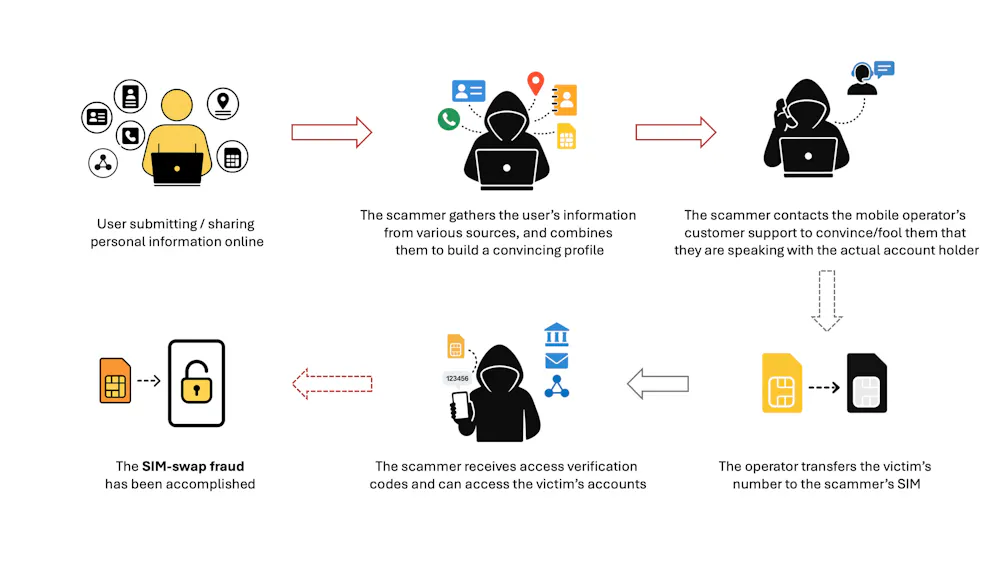
Sim-swap fraud begins when a scammer convinces a mobile operator to transfer a victim’s number to a new sim card, or even an esim (one that’s embedded in the device), under the scammer’s control.
This can be done over the phone, through an online chat, or even with the help of a
bribed insider. Once the number is transferred, all calls and texts intended for the victim are redirected to the scammer. This includes those crucial verification codes used for logging into email, banking, messaging apps such as WhatsApp, and government services such as HMRC.
This alone would be dangerous. But what makes sim-swap fraud so influential is
that the cyber scammer often already has access to a patchwork of personal data
about their target. That information may have been collected from data breaches,
phishing attacks, low-reputation websites, or even the victim’s social media.
People often underestimate the extent to which they reveal themselves online: a birthday posted on Instagram, a phone number included in a job posting, or a home address used in an online giveaway. Scammers combine this data to build a convincing profile, enough to fool a mobile operator’s customer service staff into believing they’re talking to the real account holder.
How the sim-swap fraud works
Once the scammer gains control of a number, the consequences are extensive.
Attackers can access sensitive information, including personal documents and
request and receive password reset links for the user’s other accounts. They can log in to WhatsApp or Telegram accounts, read private messages, impersonate the user, and even contact friends or family members to conduct further scams.
The victims might see false messages posted in their names or fraudulent transactions made from their accounts. This can lead to financial loss, reputation damage, as well as emotional and mental health issues on the part of the victims.
In the case of M&S, attackers apparently used this access to manipulate internal
processes and gain access to sensitive systems. This highlights a broader risk:
many companies still rely on phone numbers as a secondary verification method for
staff, making their systems vulnerable to the same cyberattack used against
individuals.
How sim-Swap fraud works. Hossein Abroshan
Reducing the risk
While real-time detection of mobile number hijacking remains difficult, taking specific steps can significantly reduce the likelihood of being targeted and victimised. People should avoid sharing personal data unnecessarily, especially across multiple platforms and, very importantly, on unknown or untrusted websites.
Many attackers don’t obtain all the necessary information from a single source. Instead, they collect it incrementally, using public profiles, marketing databases and past leaks to form a comprehensive picture.
Being mindful of where you share your phone number, birthday or other identifiers can make it harder for others to impersonate you. It is also crucial to learn how phishing works and how to recognise it, so you will not submit your sensitive information to phishing or fake websites.
Avoiding SMS-based authentication, where possible, is another key step. Many
services now support authenticator apps, such as Google Authenticator, Microsoft Authenticator, Due or Authy, which are not tied to your mobile number. For mobile
accounts themselves, setting up a unique pin or password to your account, which
must be provided to authorise any changes, can add an extra layer of protection. This makes it harder for someone to initiate a sim swap without that code. However, users alone cannot fulfil this duty.
Mobile network operators must strengthen identity verification practices, moving beyond basic questions about names and addresses that can be easily gathered or guessed. Banks and other financial institutions should reconsider using SMS or, at the very least, SMS-only as the default method for sensitive authentication. And companies, particularly those handling personal data or financial assets, need to train their IT and customer service teams to recognise the signs of identity based attacks.
Sim-swap fraud is effective not because it’s highly technical, but because it exploits our trust in phone numbers for identity verification. The M&S case and similar examples show how fragile that trust can be – and why securing our mobile identities is no longer optional.
How reports Moscow City Duma (MCD) website, On May 13, the A.S. Pushkin Library and Reading Room hosted an awards ceremony for the participants of the Second Student Research Paper Competition. The competition was held as part of the V annual scientific and practical conference “History of Moscow: Methodology, Source Studies, Historiography, Popularization.” The initiator and main organizer was the Moscow City Duma. The winners included a postgraduate student Faculty of Humanities HSE University Elizaveta Novokreshchenova.
Deputy Chairman of the Moscow City Duma, head of the working group on Moscow studies and development of the Parliamentary Library of the Moscow City Duma Stepan Orlov (United Russia faction) shared his impressions of the competition with the Moscow City Duma website. “The history of Moscow is very important for the formation of a true patriot, a citizen,” he emphasized. “Of course, we want our students, and even better, schoolchildren, to be interested in the history of their hometown. You can’t be a patriot and a citizen if you don’t know and don’t love the history of the place where you were born and where you live.”
This time, 12 higher education institutions of Moscow took part in the competition — these are the best capital universities; 51 works were submitted to the competition, Stepan Orlov told the Moscow City Duma website. “We had a very authoritative jury. And here in the old building, in the A.S. Pushkin Library and Reading Room, which was created before the revolution, we awarded the best of the best, the students who took prize places. But I believe that everyone is a winner,” he said. The students did not just write some papers, but prepared real scientific works, the Deputy Chairman of the Moscow City Duma emphasized.
On May 15, the winners of the competition will be able to present their work at a scientific and practical conference at the Museum of Moscow together with academics, professors, teachers of leading Moscow universities and research fellows. The reports of the winners of the student work competition will also be included in the conference collection of scientific papers.
In an interview with the Moscow City Duma website, member of the expert council of the competition, candidate of historical sciences Elena Maksimenko, noted that the competition is not simply engaged in historical research and the preservation of historical traditions of universities. “We are engaged in the preservation of historical memory – the memory of those people who lived in Moscow, of those places that they created for us and that exist to this day, having a long history. They left us the beauty of Moscow, its history, and we support this memory and this tradition,” she said.
“I am very happy to take part in the award ceremony, which is taking place in the beautiful mansion of the A.S. Pushkin Library and Reading Room,” HSE Vice-Rector Irina Martusevich shared with the Moscow City Duma website. “I sincerely love Moscow architecture and I want to note that in addition to the fact that we walk with you every day along the most diverse streets of the capital, the city speaks to us in different languages – the languages of the names of its districts and streets. That is, we talk with architecture too. It is great that you are full participants in this dialogue and understand what is happening in our home city. Even if we become Muscovites for the time of our studies at university or graduate school, it is especially pleasant when the city becomes a part of us. We become friends for many years.
Therefore, I sincerely support this competition. I hope that we will expand and multiply this initiative. And of course, I congratulate the participants of the competition, who, in conditions of such high competition, were able to reach the final and become winners.”
The winner of the first place, postgraduate student of the Faculty of Humanities at the Higher School of Economics Elizaveta Novokreshchenova, participated in the competition for the first time. She presented a work entitled “The polisher of the Kremlin Palace Yegor Borisov – an attempt to reconstruct his biography.” An appeal to the documents of the Moscow Palace Fund of the Russian State Archive of Ancient Acts showed that it is possible to study the biography of this representative of the palace servants using the lists of palace servants, meeting logs, and inventories of destroyed files, Elizaveta noted in an interview with the Moscow City Duma website. “Thus, as part of the study, I was able to establish the names of his wife and children, the date of death, and trace his career path – from a freelance to a full-time polisher,” says the HSE postgraduate student. “The research conducted shows that the Moscow Palace Fund contains a sufficient number of documents to trace the life path of the lowest rank of palace servants, which, in turn, makes it possible to study their social portrait and further scientific generalizations. I am happy with the first place in the competition, but I think that I still have something to strive for with this scientific work. I cannot help but mention the venue of the award ceremony – a beautiful mansion. It was nice that they arranged a real celebration for us with a concert. This victory is very significant for me.”
Please note: This information is raw content directly from the source of the information. It is exactly what the source states and does not reflect the position of MIL-OSI or its clients.
Retail electricity prices have increased faster than the rate of inflation since 2022, and we expect them to continue increasing through 2026, based on forecasts in our Short-Term Energy Outlook. Parts of the country with relatively high electricity prices may experience greater price increases than those with relatively low electricity prices.
Overall, U.S. energy prices rapidly increased from 2020 to 2022 as economic activity recovered after the worst of the pandemic and Russia’s invasion of Ukraine interrupted energy supply chains. Since 2022, nominal prices for many fuels have declined, particularly for those such as gasoline and heating oil that are tied more closely to crude oil prices, which are affected by international markets. Electricity prices, though, have continued a steady increase.
Regions with already high electricity prices may see larger increases
Although we expect the nominal U.S. average electricity price to increase by 13% from 2022 to 2025, our forecasts for retail electricity price increases differ across the country. Residential electricity prices in the Pacific, Middle Atlantic, and New England census divisions—regions where consumers already pay much more per kilowatthour for electricity—could increase more than the national average. By comparison, residential electricity prices in areas with relatively low electricity prices may not increase as much.
Electricity prices include more than the cost of generating electricity
Retail electricity prices include the cost of generating, transmitting, and delivering electricity to ultimate customers, as well as taxes and other fees. In recent years, electric utilities have increased capital investment to replace or upgrade aging generation and delivery infrastructure, among other factors. Between 2013 and 2023, electricity prices closely tracked inflation, but we expect increases in electricity prices to outpace inflation through 2026.
Utility spending on electricity distribution has surpassed spending on electricity transmission and production, according to our analysis of utilities’ financial reports to the Federal Energy Regulatory Commission. The generation-related portions of retail electricity typically lag changes in wholesale spot prices of electricity generation fuels such as natural gas and coal depending on the customer contract agreements.
Electricity expenditures are second only to gasoline
U.S. consumers spent an average of about $1,760 on electricity expenditures in 2023. Among fuel-related expenditures, electricity expenditures are surpassed only by gasoline, which averaged nearly $2,450 in 2023, according to the most recent data available from the U.S. Bureau of Labor Statistics’ Consumer Expenditure Survey. Annual fluctuations in electricity expenditures tend to be more moderate than gasoline prices, which tend to follow changes in global crude oil prices.
DALLAS, May 14, 2025 (GLOBE NEWSWIRE) — Texas Capital Bancshares, Inc. (NASDAQ: TCBI), the parent company of Texas Capital, today announced the recipients of its 2025 Honors Awards. Launched in 2022, the Honors Awards are a signature initiative of the Texas Capital Foundation, awarding $250,000 in total annually to four organizations dedicated to addressing community needs across the state.
“We are proud to honor four nonprofits as the recipients of this year’s Honors Awards for their dedication to improving the lives of Texans,” said Rob C. Holmes, Chairman, President & CEO of Texas Capital. “Through the Texas Capital Foundation, we are able to shine a light on organizations that are shaping a better future for all of Texas.”
The Texas Capital Foundation’s approach to grantmaking focuses on nonprofit organizations that operate in areas within the firm’s footprint. Through the Honors Awards, the Texas Capital Foundation aims to fund small to mid-sized organizations that serve the greatest needs of communities through a competitive grant application process.
The third annual Honors Awards recipients are:
The Art Station, a Fort Worth-based nonprofit focused on improving mental health through art therapy. The Art Station is using its grant to hire additional art therapists and expand services by offering a second location to increase accessibility to mental health services for individuals and families across Tarrant County.
Center for Applied Science and Technology (CAST) Schools, a San Antonio-based nonprofit network of schools that prepare students for the future through hands-on, project-based learning rooted in science, technology, engineering, arts and math. The grant will be used to bolster the drone program across the CAST STEM High School and CAST Imagine Middle School.
ScholarShot, a Dallas-based nonprofit focused on increasing college graduation rates for first-generation students will use the grant to hire an additional Academic Manager to expand support for students through academic support, mentorship and career guidance – increasing the number of Scholars served from 160 to 200.
STAR Award (Supporting our Troops Active and Remembered):Folds of Honor is a national nonprofit, with a strong presence in Central Texas and Houston, dedicated to providing educational scholarships to the spouses and children of America’s fallen or disabled military service members and first responders. The organization plans to use the STAR Award to expand its operations and provide college scholarships for 20 Texas families in Houston and Austin, covering tuition, fees, housing, meal plans and textbooks.
For more information about the Honors Awards, visit the Texas Capital Foundation website.
About Texas Capital Texas Capital Bancshares, Inc. (NASDAQ®: TCBI), a member of the Russell 2000® Index and the S&P MidCap 400®, is the parent company of Texas Capital Bank (“TCB”). Texas Capital is the collective brand name for TCB and its separate, non-bank affiliates and wholly owned subsidiaries. Texas Capital is a full-service financial services firm that delivers customized solutions to businesses, entrepreneurs and individual customers. Founded in 1998, the institution is headquartered in Dallas with offices in Austin, Houston, San Antonio and Fort Worth, and has built a network of clients across the country. With the ability to service clients through their entire lifecycles, Texas Capital has established commercial banking, consumer banking, investment banking and wealth management capabilities. All services are subject to applicable laws, regulations, and service terms. Deposit and lending products and services are offered by TCB. For deposit products, member FDIC. For more information, please visit www.texascapital.com.
NEW YORK, May 14, 2025 (GLOBE NEWSWIRE) — Traliant, a leader in online compliance training, today unveiled a reimagined Code of Conduct training featuring The Code – a cinematic TV series that helps employees see how their organization’s Code connects to the choices they make every day. Alongside the training, Traliant also released its 2025 Code of Conduct Report, offering new insights on how employees perceive and navigate ethical situations in the workplace.
Training that helps turn policy into practice Designed to make Code of Conduct training both engaging and effective, The Code delivers short, bingeworthy episodes that immerse employees in realistic ethical dilemmas – from conflicts of interest, accepting gifts and bribery risks to protecting confidential information and reporting misconduct. Paired with a companion podcast that unpacks the learning and shares additional “Code Confessions” scenarios, the experience challenges employees to reflect, relate and apply the lessons long after the course ends.
“A Code of Conduct is only as effective as an employees’ ability to apply it,” said Mike Dahir, CEO of Traliant. “To reduce risk and foster a culture of ethics, organizations need more than awareness – they need to equip employees with the confidence to make the right call, especially in gray areas when the right course of action isn’t always clear. That’s exactly what our training is designed to do.”
With a modular, customizable format, employers can select from a library of pre-recorded risk-based topics that matter most to their organization and even incorporate real stories from within the organization into podcast segments – creating a highly personalized training experience more relevant and aligned with company values.
Insights from the 2025 Code of Conduct Report In tandem with the course launch, Traliant’s 2025 Code of Conduct Report surveyed over 1,000 US employees to explore how well they understand and act on ethical principles in the workplace. The findings highlight a troubling gap between awareness and action, with more than one-third of respondents (37%) reporting they were unsure how to proceed when faced with an ethical situation in the workplace.
The report uncovers additional key findings pointing to why employers need to better align their Code of Conduct training with the everyday challenges employees face, including:
More than half (57%) of those surveyed observed behavior at work that seemed like a potential violation of their company’s Code of Conduct.
While 72% of Baby Boomers reported never encountering an ethical dilemma where they were unsure what to do, only 51% of Gen Z respondents shared that level of confidence.
22% of respondents have been in a situation where they later realized or learned their actions may have violated the Code of Conduct.
54% of respondents said ethical decision-making at their company could be improved with clearer examples and scenarios in training that reflect everyday situations.
“These survey findings reinforce why traditional, checkbox training falls short,” adds Dahir. “Organizations need modern, relatable training that helps employees understand what the Code looks like in action – and empowers them to act ethically when it matters most.”
For more details on Traliant’s Code of Conduct training and report findings, go to www.traliant.com.
Methodology The independent market research firm Researchscape conducted the online survey in March 2025. Respondents included 1,032 US-employed adults working in hospitality, healthcare, retail, industrial/manufacturing, and in-office/professional settings in other industries with 100+ employees.
About Traliant Traliant, a leader in compliance training, is on a mission to help make workplaces better, for everyone. Committed to a customer promise of “compliance you can trust, training you will love,” Traliant delivers continuously compliant online courses, backed by an unparalleled in-house legal team, with engaging, story-based training designed to create truly enjoyable learning experiences.
Traliant supports over 14,000 organizations worldwide with a library of curated essential courses to broaden employee perspectives, achieve compliance and elevate workplace culture, including sexual harassment training, inclusion training, code of conduct training, and many more.
Backed by PSG, a leading growth equity firm, Traliant holds a coveted position on Inc.’s 5000 fastest-growing private companies in America for four consecutive years, along with numerous awards for its products and workplace culture. For more information, visit http://www.traliant.com and follow us on LinkedIn.
WARSAW, Ind., May 14, 2025 (GLOBE NEWSWIRE) — Lakeland Financial Corporation (Nasdaq Global Select/LKFN) and Lake City Bank announced today that Dan Starr and Mindy Creighton Truex have been appointed to their respective Boards of Directors.
“Our boards represent the foundational building blocks of stable corporate governance, leadership and engagement in our Indiana communities and provide balanced and thoughtful feedback to our leadership team. The addition of Dan and Mindy brings two proven business and community leaders to the table,” said David M. Findlay, Chairman and CEO. “Our boards are an extension of the bank in our Indiana markets and are active partners in the focus to drive long-term shareholder value. Both Dan and Mindy share a strong commitment to building long-term relationships within their industries and communities, which fits perfectly with Lake City Bank’s community banking philosophy.”
Starr is CEO of Do it Best Corp., a Fort Wayne-based member-owned hardware, lumber and building materials buying cooperative in the home improvement industry with thousands of member-owned locations across the United States and in more than 60 countries. He has been with Do it Best Corp. for two decades and held several leadership roles prior to becoming President and CEO in 2016. Before joining Do it Best Corp., Starr was a partner with Barnes & Thornburg LLP and served as the firm’s Business, Tax & Real Estate departmental administrator in Fort Wayne.
“Lake City Bank plays a vital role in many communities across our state and joining the board is an exciting opportunity,” said Starr. “I look forward to contributing to the continued growth and momentum of the bank.”
Starr has a juris doctor degree magna cum laude from the Indiana University School of Law. He has served in numerous board leadership roles within the greater Fort Wayne community, including the Northeast Indiana Innovation Center, St. Francis Family Business Center and Fort Wayne Ballet. He currently serves as chairman of the Parkview Health Board of Directors, as well as on the Manchester University Board of Trustees Outreach Committee and the Do it Best Foundation.
Mindy Creighton Truex is President of Creighton Brothers Farms LLC, a Warsaw-based family-owned farm founded in 1925. With extensive experience in the agricultural sector, she has been instrumental in developing innovative initiatives with Creighton Brothers Farms, including educational and farm-to-table experiences. She has served in leadership roles with national and local agricultural advocacy organizations, including the American Egg Board, United Egg Producers, Indiana State Poultry Association and Purdue University Animal Science Department Dean’s Advisory Committee.
“As a sixth generation Kosciusko County farmer, I’m honored to join the Lake City Bank and Lakeland Financial Corporation boards,” said Creighton Truex. “Lake City Bank has been a part of the fabric of our community since 1872 and I’m excited to help the bank continue to grow.”
Creighton Truex has a bachelor’s degree in agribusiness management from Purdue University. She has served on the boards of many nonprofit organizations that impact her local community, including the Kosciusko County Visitor’s Bureau, Kosciusko County Community Foundation, Kosciusko County Leadership Academy, Purdue University’s Kosciusko County Agricultural Extension, Kosciusko County Farm Bureau, and United Way of Kosciusko County.
Lakeland Financial Corporation (Nasdaq Global Select/LKFN) is a $6.9 billion bank holding company headquartered in Warsaw, Indiana. Lake City Bank, its single bank subsidiary, was founded in 1872 and serves Central and Northern Indiana communities with 54 branch offices and a robust digital banking platform. Lake City Bank’s community banking model prioritizes building in‐market long‐term customer relationships while delivering technology‐forward solutions for retail and commercial clients. For more information visit www.lakecitybank.com.
Contact Luke Weick Marketing Manager 574 267-9198, x47279 office 260 431-7061 mobile luke.weick@lakecitybank.com
RALEIGH, N.C., May 14, 2025 (GLOBE NEWSWIRE) — insightsoftware, the most comprehensive provider of solutions for the Office of the CFO, recently finalized a strategic realignment into four dedicated business units: ERP Reporting & BI, EPM, Controllership, and Data & Analytics. This new structure mirrors how modern finance teams operate, enabling insightsoftware to align with the evolving needs of CFOs and their organizations. By aligning to key functional areas within the Office of the CFO, the company is deepening its market focus, accelerating AI-powered product innovation, and enhancing the customer experience across its global footprint.
“As we scale and adapt to market demands, we’ve refined our organizational structure to help us move faster and remain close to our customers,” said Mike Sullivan, CEO of insightsoftware. “Expanding to four business units sharpens our focus on innovation, accelerates product development, and creates new opportunities to enhance how we work with customers and partners. Our newly appointed leaders will play a key role in delivering the speed, agility, and insight that today’s CFOs demand.”
As part of this evolution, insightsoftware is also announcing new Executive Leadership Team members:
Jennifer Warawa joins as General Manager of the Controllership business unit. With more than 25 years of experience in the Office of the CFO landscape, Jennifer brings a proven track record of operational excellence and customer-centric product development. Most recently, she served as president of North America at QuickFee, a payment technology platform. Prior to that, she held executive roles at Sage, where she focused on commercial strategy, partner development, and driving innovation across global markets. In her new role, Jennifer will oversee the equity management, lease lifecycle management, and tax reporting solutions, enhancing insightsoftware’s ability to deliver trusted and effective solutions for its customers.
Chad Theule joins insightsoftware as Chief Customer Officer. He is a seasoned executive with more than 25 years of experience in customer success, leadership, and sales. Chad’s background includes serving as Vice President of Go-To-Market success at UKG, where he led initiatives to improve customer outcomes and expand relationships with key partners. At insightsoftware, Chad will focus on enhancing the customer experience, optimizing customer success strategies, and deepening relationships with customers.
Lindsey Paschal has been promoted to Chief Marketing Officer. Since joining insightsoftware in 2020, Lindsey has been instrumental in shaping and scaling the Marketing organization, most recently as SVP, Global Growth Marketing. She has been a pillar of the department, leading rapid expansion of the team and helping to realign Marketing with the company’s evolving business unit structure. Previously, Lindsey held leadership positions at Relias, a B2B software company serving healthcare organizations, where she led product marketing teams and stood up a corporate marketing function. As CMO of insightsoftware, she will drive global marketing initiatives, focusing on brand growth, customer engagement, and driving impactful results that push the company toward its strategic objectives.
Finance teams are under immense pressure to make high-stakes decisions with speed and precision. With extensive financial reporting solutions that drive efficiency, ensure compliance, and enhance agility, insightsoftware is empowering teams to build the resilience required to navigate any environment. As insightsoftware continues to scale and innovate, its strategic realignment and leadership appointments strengthen the company’s ability to deliver cutting-edge solutions and exceptional service to the Office of the CFO.
Learn more about how insightsoftware is redefining the way finance teams operate at insightsoftware.com.
About insightsoftware insightsoftware is a global provider of comprehensive solutions for the Office of the CFO. We believe an actionable business strategy begins and ends with accessible financial data. With solutions across financial planning and analysis (FP&A), accounting, and operations, we transform how teams operate, empowering leaders to make timely and informed decisions. With data at the heart of everything we do, insightsoftware enables automated processes, delivers trusted insights, boosts predictability, and increases productivity. Learn more at insightsoftware.com.
SINGAPORE, May 14, 2025 (GLOBE NEWSWIRE) — Primech Holdings Limited (“Primech” or the “Company”) (Nasdaq: PMEC), an established technology-driven facility services provider in the public and private sectors operating mainly in Singapore, today announced that it has received notice from the Nasdaq Stock Market (“Nasdaq”) on May 13, 2025 informing the Company that it has regained compliance with the minimum bid price requirement under Nasdaq Listing Rule 5550(a)(2) (the “Rule”) for continued listing on The Nasdaq Capital Market.
Primech was previously notified by Nasdaq on May 14, 2024 that it was not in compliance with the minimum bid price rule because its ordinary share failed to meet the closing bid price of $1.00 or more for 30 consecutive business days. In order to regain compliance with the Rule, the Company was required to maintain a minimum closing bid price of $1.00 or more for at least 10 consecutive trading days. This requirement was met on May 12, 2025, the tenth consecutive trading day when the closing bid price of the Company’s ordinary share was over $1.00. Therefore, Nasdaq considers the prior bid price deficiency matter now closed.
“We are pleased to have regained compliance with Nasdaq’s listing standards,” said Kin Wai Ho, CEO of Primech Holdings Limited. “This reflects the resilience of our business model and the unwavering dedication of our team. We remain focused on our growth initiatives to expand our market presence in the facility services sector, particularly our AI-powered cleaning technologies.”
About Primech Holdings Limited
Headquartered in Singapore, Primech Holdings Limited is a leading provider of comprehensive technology-driven facilities services, predominantly serving both public and private sectors throughout Singapore. Primech Holdings offers an extensive range of services tailored to meet the complex demands of its diverse clientele. Services include advanced general facility maintenance services, specialized cleaning solutions such as marble polishing and facade cleaning, meticulous stewarding services, and targeted cleaning services for offices and homes. Known for its commitment to sustainability and cutting-edge technology, Primech Holdings integrates eco-friendly practices and smart technology solutions to enhance operational efficiency and client satisfaction. This strategic approach positions Primech Holdings as a leader in the industry and a proactive contributor to advancing industry standards and practices in Singapore and beyond. For more information, visit www.primechholdings.com.
Forward-Looking Statements
Certain statements in this announcement are forward-looking statements, including, for example, statements about completing the acquisition, anticipated revenues, growth, and expansion. These forward-looking statements involve known and unknown risks and uncertainties and are based on the Company’s current expectations and projections about future events that the Company believes may affect its financial condition, results of operations, business strategy, and financial needs. These forward-looking statements are also based on assumptions regarding the Company’s present and future business strategies and the environment in which the Company will operate in the future. Investors can find many (but not all) of these statements by the use of words such as “may,” “will,” “expect,” “anticipate,” “aim,” “estimate,” “intend,” “plan,” “believe,” “likely to” or other similar expressions. The Company undertakes no obligation to update or revise publicly any forward-looking statements to reflect subsequent occurring events or circumstances or changes in its expectations, except as may be required by law. Although the Company believes that the expectations expressed in these forward-looking statements are reasonable, it cannot assure that such expectations will be correct. The Company cautions investors that actual results may differ materially from the anticipated results and encourages investors to review other factors that may affect its future results in the Company’s registration statement and other filings with the SEC.
With the extensive overlap between the themes of Agriculture and Food Systems, as well as Waste and Circularity, these two series are being strategically combined into a single event which will take place on the above mentioned date. The synergistic agenda shall drive comprehensive discussions along the entire spectrum of the supply chain right from agtech, farm to table, packaging innovations, and waste management policy.
Bringing together renowned experts with decades of combined agriculture, waste management and sustainable circularity experience, this event promises to be a can’t-miss gathering for those interested in ensuring abundant food security, maintaining enviro-human health securing the farming future of the Southern California region, and waste management innovations.
Recognized pioneers and policy experts from Southern California and surrounding regions will converge to share their invaluable perspectives, practical insights, and vision with attendees across a broad spectrum of areas.
Speaker sessions and panel discussions shall be primarily explore the following thematic areas:
1. Urban Agriculture
Key experts shall discuss fundamental issues such as encouraging locally-sourced food ecosystems including farm-to-table initiatives; developing incentive structures to enable businesses to switch to affordable, eco-packaging; and exploration of ‘beyond the green bin’ end-of-life strategies in the secondary markets.
Speakers shall delve into Case Study A on AgTech and Soil Health, weaving together issues related to regenerative practices, soil health and agtech advancements.
2. Combating the “Ick” Factor Associated with SB1383
One of the key challenges in sustainable waste management is the separation of green waste at the household and business levels. Some of the foremost minds at the intersection of behaviour change and sustainability shall enlighten attendees on designing educational and infrastructure systems that encourage a high-level of compliance to strenghten SB1383 (“California’s Short-Lived Climate Pollutant Reduction Strategy”).
Moreover, innovations on managing kitchen and bin odors that present a challenge to our cities shall be discussed.
In a special session, experts from Sustain SoCal and OC Waste and Recycling shall review their findings in the Multifamily Roundtable series.
Case Study B on SB54 and Regulatory Burdens (“Plastic Pollution Prevention and Packaging Producer Responsibility Act”) shall also be presented, including issues of extended producer responsibility (EPR) and encouraging the streamlining of waste management efforts.
3. Hazardous Waste Management
In the third section of the event, invited speakers shall unpack efforts to improve the waste management of dangerous items such as paint and batteries; and share their perspectives on business opportunities in secondary life systems.
The event also offers attendees a unique opportunity to directly engage with thought leaders and leverage their expertise to better understand cutting-edge concepts, technologies, future market opportunities, products, services, and the regulatory landscape.
C. Scott Kitcher, President, and CEO of Sustain SoCal, emphasized the importance of the event, stating,
“We are pleased to offer a new initiative – Agriculture, Food Systems and Waste Stream Innovations which shall provide a new-age forum for industry experts, businesspersons and agricultural enterprises, policymakers and academics. To drive progress on sustainability, it is more important than ever to take a multi-pronged strategy integrating our knowledge of farmers’ challenges, restaurant business practices, technology-enabled sustainability practices, end-of-life strategies, wider educational initiatives and public innovations, and sharpen the design, adoption and implementation of supportive regulatory regimes and outreach activities. At the May event, invited experts will also share their perspectives and practical opportunities on agricultural science, business, behavorial and policy innovation, and sustainable circularity in the farm-to-restaurant supply chain and other secondary waste markets. We would like to extend special thanks to UCI Beall Applied Innovation that have remained incredibly steadfast in their support for our mission for over a decade. Their profound expertise would be a great asset to anyone in the industry making this a must-attend event for farmers, local food service workers and waste management professionals, both in Southern California and beyond.”
Sustain SoCal, a non-profit organization, accelerates sustainability and economic growth through innovation, collaboration and education in Southern California. The organization has a ten-year history of exploring and implementing pragmatic, real-world solutions to the challenges created by growth, change and inefficiency. It conducts conferences, workshops and networking events that lead to initiatives that positively impact our region’s economic progress and sustainability. For more information, please visit www.sustainsocal.org.
About IBN
IBN consists of financial brands introduced to the investment public over the course of 18+ years. With IBN, we have amassed a collective audience of millions of social media followers. These distinctive investor brands aim to fulfill the unique needs of a growing base of client-partners. IBN will continue to expand our branded network of highly influential properties, leveraging the knowledge and energy of specialized teams of experts to serve our increasingly diversified list of clients.
Please see full terms of use and disclaimers on the InvestorBrandNetwork website applicable to all content provided by IBN, wherever published or re-published:http://IBN.fm/Disclaimer.
Source: The Conversation – Global Perspectives – By Peter Draper, Professor, and Executive Director: Institute for International Trade, and Jean Monnet Chair of Trade and Environment, University of Adelaide
Defying expectations, the United States and China have announced an important agreement to de-escalate bilateral trade tensions after talks in Geneva, Switzerland.
The good, the bad and the ugly
The good news is their recent tariff increases will be slashed. The US has cut tariffs on Chinese imports from 145% to 30%, while China has reduced levies on US imports from 125% to 10%. This greatly eases major bilateral trade tensions, and explains why financial markets rallied.
The bad news is twofold. First, the remaining tariffs are still high by modern standards. The US average trade-weighted tariff rate was 2.2% on January 1 2025, while it is now estimated to be up to 17.8%. This makes it the highest tariff wall since the 1930s.
Overall, it is very likely a new baseline has been set. Bilateral tariff-free trade belongs to a bygone era.
Second, these tariff reductions will be in place for 90 days, while negotiations continue. Talks will likely include a long list of difficult-to-resolve issues. China’s currency management policy and industrial subsidies system dominated by state-owned enterprises will be on the table. So will the many non-tariff barriers Beijing can turn on and off like a tap.
China is offering to purchase unspecified quantities of US goods – in a repeat of a US-China “Phase 1 deal” from Trump’s first presidency that was not implemented. On his first day in office in January, amid a blizzard of executive orders, Trump ordered a review of that deal’s implementation. The review found China didn’t follow through on the agriculture, finance and intellectual property protection commitments it had made.
Unless the US has now decided to capitulate to Beijing’s retaliatory actions, it is difficult to see the US being duped again.
Failure to agree on these points would reveal the ugly truth that both countries continue to impose bilateral export controls on goods deemed sensitive, such as semiconductors (from the US to China) and processed critical minerals (from China to the US).
Moreover, in its so-called “reciprocal” negotiations with other countries, the US is pressing trading partners to cut certain sensitive China-sourced goods from their exports destined for US markets. China is deeply unhappy about these US demands and has threatened to retaliate against trading partners that adopt them.
A temporary truce
Overall, the announcement is best viewed as a truce that does not shift the underlying structural reality that the US and China are locked into a long-term cycle of escalating strategic competition.
That cycle will have its ups (the latest announcement) and downs (the tariff wars that preceded it). For now, both sides have agreed to announce victory and focus on other matters.
For the US, this means ensuring there will be consumer goods on the shelves in time for Halloween and Christmas, albeit at inflated prices. For China, it means restoring some export market access to take pressure off its increasingly ailing economy.
As neither side can vanquish the other, the likely long-term result is a frozen conflict. This will be punctuated by attempts to achieve “escalation dominance”, as that will determine who emerges with better terms. Observers’ opinions on where the balance currently lies are divided.
Along the way, and to use a quote widely attributed to Winston Churchill, to “jaw-jaw is better than to war-war”. Fasten your seat belts, there is more turbulence to come.
Where does this leave the rest of us?
Significantly, the US has not (so far) changed its basic goals for all its bilateral trade deals.
Its overarching aim is to cut the goods trade deficit by reducing goods imports and eliminating non-tariff barriers it says are “unfairly” prohibiting US exports. The US also wants to remove barriers to digital trade and investments by tech giants and “derisk” certain imports that it deems sensitive for national security reasons.
The agreement between the US and UK last week clearly reflects these goals in operation. While the UK received some concessions, the remaining tariffs are higher, at 10% overall, than on April 2 and subject to US-imposed import quotas. Furthermore, the UK must open its market for certain goods while removing China-originating content from steel and pharmaceutical products destined for the US.
For Washington’s Pacific defence treaty allies, including Australia, nothing has changed. Potentially difficult negotiations with the Trump administration lie ahead, particularly if the US decides to use our security dependencies as leverage to wring concessions in trade. Japan has already disavowed linking security and trade, and their progress should be closely watched.
The US has previously paused high tariffs on manufacturing nations in South-East Asia, particularly those used by other nations as export platforms to avoid China tariffs. Vietnam, Cambodia and others will face sustained uncertainty and increasingly difficult balancing acts. The economic stakes are higher for them.
They, like the Japanese, are long-practised in the subtle arts of balancing the two giants. Still, juggling ties with both Washington and Beijing will become the act of an increasingly high-wire trapeze artist.
The authors do not work for, consult, own shares in or receive funding from any company or organisation that would benefit from this article, and have disclosed no relevant affiliations beyond their academic appointment.
If the Ukrainian president, Volodymyr Zelensky, and his Russian counterpart, Vladimir Putin, meet in Istanbul on May 15, territory – and who controls it – will be high on their agenda.
Putin offered to start direct talks between Russia and Ukraine at a press conference on May 11. Donald Trump pushed Zelensky to accept this offer in a social media post, saying that “Ukraine should agree to this, IMMEDIATELY.”
The Ukrainian president, still buoyed by a meeting with the British, French, German and Polish leaders that called for an unconditional 30-day ceasefire, agreed shortly afterwards.
Get your news from actual experts, straight to your inbox.Sign up to our daily newsletter to receive all The Conversation UK’s latest coverage of news and research, from politics and business to the arts and sciences.
These 2022 negotiations focused on Ukraine becoming a permanently neutral state and on which nations would provide security guarantees for any deal. They also relegated discussions over Crimea to separate negotiations with a ten-to-15-year timeframe.
Russia uses the phrase “the current situation on the ground” as thinly disguised code for territorial questions that have become more contentious over the past three years. This relates to Russian gains on the battlefield and the illegal annexation of four Ukrainian regions in September 2022 (in addition to Crimea, which Russia also illegally annexed in 2014).
Russia’s position, as articulated recently by the country’s foreign minister, Sergey Lavrov, is that “the international recognition of Crimea, Sevastopol, the DPR, the LPR, the Kherson and Zaporozhye regions as part of Russia is … imperative”.
This is clearly a non-starter for Ukraine, as repeatedly stated by Zelensky. There could, however, be some flexibility on accepting that some parts of sovereign Ukrainian territory are under temporary Russian control. This has been suggested by both Trump’s Ukraine envoy, Keith Kellogg, and Kyiv’s mayor, Vitali Klitschko.
Institute for the Study of War.
Black Sea’s strategic value
The territories that Russia currently occupies, and claims, in Ukraine have varying strategic, economic and symbolic value for Moscow and Kyiv. The areas with the greatest strategic value include Crimea and the territories on the shores of the Azov Sea, which provide Russia with a land corridor to Crimea.
The international recognition of Crimea as part of Russia, as apparently suggested under the terms of an agreement hashed out by Putin and Trump’s envoy Steve Witkoff, could expand the areas of the Black Sea that Russia can claim to legally control.
This could then be used by the Kremlin as a launchpad for renewed attacks on Ukraine and to threaten Nato’s eastern maritime flank in Romania and Bulgaria. Any permanent recognition of Russia’s control of these territories is, therefore, unacceptable to Ukraine and its European partners.
Donetsk and Luhansk are of lower strategic value, compared with Crimea and the Kherson and Zaporizhzhia regions. However, they do have economic value because of the substantial resources located there. These include some of the mineral and other resources that were the subject of a separate deal which the US and Ukraine concluded on April 30.
They also include Europe’s largest nuclear power plant in Zaporizhzhia and a large labour force among their estimated population of between 4.5 million to 5.5 million people who will be critical to Ukraine’s post-war reconstruction.
Beyond the strategic and economic value of the illegally occupied territories, the symbolism that both sides attach to their control is the most significant obstacle to any deal, given how irreconcilable Moscow’s and Kyiv’s positions are. For both sides, control of these territories, or loss thereof, is what defines victory or defeat in the war.
Putin may be able to claim that some territorial gains in Ukraine since the start of the full-scale invasion in February 2022 are a victory for Russia. But even for him any compromise that would see Russia give up territory that it has conquered – often at exceptionally high cost – would be a risky gamble for the stability of his regime.
Anything less than the complete restoration of the country’s territorial integrity in its 1991 borders would imply recognition of defeat in the war for Ukraine. This would critically threaten the stability of the Zelensky government, whose political programme rests on exactly the premise of a return to the 1991 borders.
Long-term consequences
As a result, the Ukrainian leadership has become hostage to its own information strategy, which has placed the “return of all territories” at the top of the criteria for victory. This is a goal widely shared among Ukrainians, according to a poll conducted by the Razumkov Center in March 2025. But it will be hard to achieve.
Apart from the potential domestic fall-out from any territorial compromises that Ukraine may be forced to make, there is another reason why the territorial question has become so intractable.
Beyond any strategic, economic and symbolic value that the occupied Ukrainian territories hold from the Kremlin’s perspective, control over territory has always been an instrument for Russia to pursue its broader geopolitical agenda of exercising influence over its neighbours – from Moldova, to Georgia, Armenia and Ukraine.
It is also important to remember that Russia’s territorial claims in Ukraine have gradually expanded since 2014. Until September 2022, when it annexed the other four regions, Russia laid claim to Crimea only.
There is no guarantee that any territorial concession from Kyiv now would put a permanent end to Moscow’s territorial expansionism. It is therefore worrying that Trump envoy Witkoff, in an interview with the Breitbart news website, reiterated the US view that the two sides need to find compromises on who controls which territories.
Russia’s aggression against Ukraine was not a war over territory as such, but was part of Moscow’s agenda to restore the sphere of influence that it lost at the end of the cold war. This agenda is far from finished.
The strategy of both Moscow and Washington to focus on territorial consequences may lead to a ceasefire. But it will not address the fundamental issue of how to deal with a vengeful and revisionist autocracy on Europe’s doorsteps.
Stefan Wolff is a past recipient of grant funding from the Natural Environment Research Council of the UK, the United States Institute of Peace, the Economic and Social Research Council of the UK, the British Academy, the NATO Science for Peace Programme, the EU Framework Programmes 6 and 7 and Horizon 2020, as well as the EU’s Jean Monnet Programme. He is a Trustee and Honorary Treasurer of the Political Studies Association of the UK and a Senior Research Fellow at the Foreign Policy Centre in London.
Tetyana Malyarenko does not work for, consult, own shares in or receive funding from any company or organisation that would benefit from this article, and has disclosed no relevant affiliations beyond their academic appointment.
The first-ever study to examine food and nutrition in preschools in Essex has uncovered significant challenges in providing healthy meals to under-5s.
Led by Anglia Ruskin University (ARU) and commissioned by Essex County Council Public Health, the Nourishing Our Future (NOF) preschools report identified food costs and managing food preferences – including an increasing reluctance to try new foods – as the two biggest obstacles to healthy eating in the county.
Essex has extremes of health and wealth within its population of 1.5 million and the 2023-24 National Child Measurement Programme found that 21% of reception-age children (4-5 years old) in Essex are living with obesity or are overweight, underlining the need for targeted local interventions.
Of Essex’s 298 preschools, 67 took part in the Nourishing Our Future study, which set out to understand the current food environment and identify possible improvements.
The study involved workshops, an online survey, menu and photo analysis and parent interviews, and is published on the same day that report authors Dr Kay Aaronricks and the NOF team at Anglia Ruskin University (ARU), along with Emily Fallon and Susie Threadgold of Essex County Council, are presenting findings to MPs at an event held by the Food Foundation at the House of Commons.
When it comes to barriers to providing nutritious meals, 59% of preschools in Essex consider the cost of food to be the greatest challenge, with children’s food preferences and allergies the second biggest factor.
The majority of preschools in the county (57%) only have basic food preparation facilities, such as a microwave, and over two thirds (69%) of children in Essex bring their own food to preschool in the form of parent-provided lunchboxes.
The study identified that these lunchboxes often contained high levels of processed food and had greater nutritional variability than meals provided by the preschools. It also found many lunchboxes of two to four-year-olds included pouches of baby food.
In contrast, meals provided by preschools more consistently adhered to nutritional guidelines, featuring higher protein content, more fruits and vegetables, and less processed food.
One preschool said: “We face a significant challenge with promoting healthy eating to families. Our children’s lunchboxes consist of a lot of processed, unhealthy foods that are high in sugar and additives.”
Another said: “Children are sometimes not used to being encouraged to try anything new! This is evident in some lunch boxes, where the contents never vary.”
One preschool adopts “family mealtimes” to encourage children to try different food. They said: “A lot of children have never eaten the type of food we serve such as soup or pulses and only consume fruit from pouches… It is an increasing challenge to encourage children to try new foods but our family mealtimes where they can watch other children and staff eating and drinking really helps.”
An analysis of 414 photographs of meals (87% home-packed food and 13% provided by the preschool) studied nutritional content. While starchy carbohydrates were well-aligned with portion size guidelines and fruit and vegetables slightly exceeded the target, dairy provision was slightly below and protein was significantly below guidelines.
When it comes to promoting healthier lunchboxes, 75% of communication with parents is carried out at drop off or pick up times Preschools also said they would appreciate support on how to better advise and engage parents in healthier food choices.
The rising cost of food was the single greatest challenge to healthy eating identified by the study. As a recent report by the Food Foundation set out, healthier foods are more than twice as expensive per calorie than less healthy foods. For preschools that provide lunches, delivering high-quality, nutritious meals is becoming increasingly difficult.
Preschools, along with childminders and day nurseries, are not permitted to charge a compulsory fee for food, meaning the cost is borne by the early years settings themselves or through a voluntary contribution from parents.
Practitioners consistently highlighted the financial strain, with one preschool noting, “Fresh food is increasing in price all the time; food purchasing in general has risen significantly over the last two years.”
Trying to provide food on a budget, while also catering to children’s individual food preferences and allergies, adds to the difficulty. One preschool said: “We really try to accommodate food allergies, but more and more children are showing [as] intolerant and [have an] allergy and it is really increasing our spending on food.”
Policy recommendations set out in the Nourishing Our Future report include a nationally funded early years food scheme to support both preschool and parent-provided meals, ensuring affordability and respecting parental choice, establishing public health support for parents on healthy eating, including nutrition advice, and developing targeted programmes to help children build positive relationships around food preferences.
“Our study involved preschools from across Essex, as well as parents, which is important as parents’ voices are often missing from healthy food policy development.
“The report shows that although there is a great deal of excellent work being done by preschools across Essex, there is a need for action to improve the nutritional landscape for young children, including improving children’s relationship with food.
“We would like to see appropriate national funding for preschools to allow them to provide healthy food for all children. However, simply replacing lunchboxes with setting-provided food for one meal a day won’t solve the wider issues for the child or their family, such as what will they eat at the weekend or during the holidays.
“We must support all families in being able to access affordable, healthy food alongside appropriate nutritional advice, because healthy food should be available to all. Of course, there are much wider societal issues around the prevalence of convenience, ultra processed food and the targeted marketing of foods that are high in fat salt and sugar, and tackling this also needs to be a priority.”
Dr Kay Aaronricks, Head of the School of Education at Anglia Ruskin University (ARU)
Source: Saint Petersburg State University of Architecture and Civil Engineering – Saint Petersburg State University of Architecture and Civil Engineering – Evgeny Zhuk
A graduate of LISI (now SPbGASU) Evgeny Zhuk recalls what the institute was like 60 years ago, how he passed exams and studied. At the same time, he emphasizes that he is one of many ordinary graduates of our university. In fact, Evgeny Pavlovich is quite modest. He was awarded the medal “Veteran of Labor”, the badge “Honorary Builder of Russia”, the badge “Builder of St. Petersburg” 2nd degree, the silver and gold medals of the Holy Supreme Apostle Peter, the badge “Construction Glory”, the Order “For Merit in Construction”, the badge “Labor Valor”, the honorary title “Honored Builder of the Russian Federation”, the title “Honored Builder of St. Petersburg”, the badge of the Holy Martyr Veniamin, Metropolitan of Petrograd and Gdov, for services to the St. Petersburg Metropolitanate. During his many years of work, he built objects “for three Leningrads”.
At 81, Evgeny Pavlovich works as the chief specialist of the construction control department of general education facilities of the Educational Facilities Construction Department of the St. Petersburg State Institution “Capital Construction and Reconstruction Fund”, subordinate to the St. Petersburg Construction Committee. We talk to him about how to succeed in the profession and remain in demand, despite the situation in the country and age.
– Evgeny Pavlovich, how can one choose a profession for life in one’s youth?
– I continued the family dynasty: my father and grandfather were builders, my mother also received an education in the construction industry, my uncle was an architect. Their example and advice became the determining factor in choosing a profession. I studied well at school, I had excellent math and physics teachers, so there were no problems with entering civil and industrial construction. At that time, applicants also had to successfully pass the swimming test, which is quite fair: a builder must be ready to navigate any situation, for example, during the construction of bridges over water obstacles.
The state system helped me stay in the profession. My first two years of study went like this: students who entered the daytime department right after school studied according to the evening education program, that is, on Mondays we studied during the day, worked on the construction site the rest of the weekdays, and on Wednesdays and Fridays we also went to classes in the evenings. Therefore, already in the second year, we were awarded the qualification of a first-category transport worker, then a concrete worker and a carpenter of the second and third categories. I completed my industrial practice as a backup foreman. Graduates were immediately employed, as they say now, with a good social package – with the provision of a room first in a dormitory, then in an apartment, and then – separate housing, the area of which depended on the family status and the number of children. In addition, there was a mentoring system and career advancement. Therefore, the profession was popular with young people.
– How did you start your career and what successes have you achieved?
– I worked at the Design Institute for the first two years after graduating, and then moved to Glavleningradstroy, a powerful organization with 70,000 employees, and its boss was at the ministerial level. It was interesting to work there because the workers were highly qualified, they were trained in vocational schools and construction colleges. Many of the foremen then became heads of departments, that is, the personnel were trained on the spot. But higher education was required for career growth. I always say that I was lucky to work with good mentors and managers. I always share my professional successes with them. They taught me a lot, and these skills came in handy at all stages of professional growth, starting from a foreman, a site manager, a senior foreman, a site manager to a chief engineer and a department manager.
What buildings have I participated in the construction of? 22-story buildings on Moskovsky Prospekt from the airport side, buildings at the entrance to Sestroretsk, buildings in Kupchino and Kolpino. Modern buildings include the Buff Theater, the Church of the Holy Apostle Peter in Stroiteley Park, the Triumph of the Russian Fleet monument near the cathedral in Kronstadt, the Boris Eifman Children’s Dance Theater, the first block of the oncology hospital in Pesochny, the swimming pool on Khlopina Street, and the building of the Botkin Clinical Hospital on Piskarevsky. Over the past few years, I have participated in the construction of a dozen schools in different areas of the city, for example, the 777th school for almost 2,000 students in the Primorsky District, the 147th in the Krasnogvardeisky District, the 219th school for 1,375 students in the Krasnoselsky District, and the Church of All Saints Who Shone in the Land of St. Petersburg at the Levashovskoye Memorial Cemetery in St. Petersburg.
– Before your eyes, the construction industry and the country have experienced dramatic changes: the Soviet system was replaced by difficult years after the collapse of the USSR, and the new history brings its own events. How did you manage to stay in the industry?
– In Soviet times, the personnel training system worked effectively. All trusts had dormitories for employees. All social issues were resolved in an elementary way: places in kindergartens, vouchers for health resorts, benefits. And suddenly the system that had been established over decades collapsed. Hard times came. In the nineties of the last century, I worked as the chief engineer of the construction department. There were orders, but there was also a time when, in order to feed the workers, we negotiated with collective farms about the supply of sugar and food. But the thought of leaving the profession never occurred to me. This is the work of my whole life, an activity that I know well and love. Times are changing, but construction will always be a popular, developing industry. Previously, concrete was transported in dump trucks, now – in mixers, modern technology, high-tech machines and materials have appeared. We rarely used the technology of monolithic housing construction, but now a lot is built in monolith. Knowledge of your profession, development in it helps to adapt to any situation.
– How can today’s graduates become successful specialists in the industry?
– I am sure that after receiving a diploma, you need to work on a construction site to gain experience, master specialties and learn to personally understand all construction processes. Dreaming of immediately becoming a boss is a mistake. It is much more correct to rise to a management position from the lowest rung of the career ladder. Then you will become a highly qualified manager, thoroughly understanding all work processes and able to effectively communicate with employees at all levels.
In addition, I was always wary when a job applicant assured that he could do everything. But if a person honestly admitted that he was a carpenter but did not know carpentry, it inspired respect. I understood that this person understood the meaning of his profession, because a carpenter is one profession, a joiner is a completely different one. Today, new in-demand professions are emerging, but the essence of success for specialists does not change: it is important to find a specific area of activity and develop in it, and not try to learn everything, but little by little. It is good that there are smart young guys who move from construction to office work: there is more trust in such managers, because they know the real state of affairs in the industry. And, of course, the main guarantee of success is to love your business, like your girlfriend or wife.
– You have maintained contact with our university for a long time and even provided sponsorship.
– In 2022, I donated about a hundred copies of educational literature on construction production, collected over the years of work in the industry, to the library of our university. At that time, the position of rector was occupied by Yuri Pavlovich Panibratov. He sent a letter of thanks to the construction corporation where I worked as chief engineer, emphasizing my participation in the events held at LISI. In response, I was thanked and awarded a certificate of the corporation. It is nice, but I donated the educational kits from the bottom of my heart, I wanted to help my native institute.
Please note: This information is raw content directly from the source of the information. It is exactly what the source states and does not reflect the position of MIL-OSI or its clients.
Source: United Kingdom – Executive Government & Departments
News story
New Second Permanent Secretary to the Treasury appointed
Jim O’Neil has been appointed as a new Second Permanent Secretary to the Treasury.
Jim brings a wealth of experience from investment banking and corporate finance to the Treasury, after a long career at Bank of America. He also has experience in the public sector, spending three years at UK Financial Investments. As Chief Executive of UKFI, he managed the government’s holdings in Royal Bank of Scotland, Lloyds Banking Group, and UK Asset Resolution.
His appointment is part of the government’s plan to deliver its number one mission to kickstart economic growth as part of the Plan for Change, and follows the Chancellor’s commitment to lead the most pro-growth Treasury in the country’s history.
Jim’s experience will help the government to secure private investment, boost the economy, and ultimately put more pounds in people’s pockets. His deep knowledge of the private sector will help the government to rip out the barriers to growth, provide support for the key industries at home, and work to secure open and fair trade abroad.
Chancellor of the Exchequer Rachel Reeves said:
I’m very pleased to welcome Jim as our new Second Permanent Secretary, his extensive knowledge of the private sector will be vital in helping us deliver our number one mission to grow the economy. It’s fantastic to have him join the Treasury’s top team.
Jim O’Neil said:
I am delighted to have been appointed Second Permanent Secretary to the Treasury at this important time for our country and our economy. We are living through a time of great change globally, making the need for an economy of stability, resilience, and growth all the more important. I look forward to working with the Chancellor, her ministers, and officials across the department to deliver on these missions so the Treasury can bring positive change to the lives of people right across the country.
Jim is expected to start in his new position in July and will work alongside the two other Second Permanent Secretaries in HM Treasury, Beth Russell who is based at the Darlington Economic Campus and Sam Beckett who is also Chief Economic Adviser. As well as overseeing tax and spending, Beth will continue to be responsible for devolution and regional growth including engagement with regional and local government and others in the north.
Jim was appointed through a fair and open competition and has completed all of the necessary declarations of interest.
Source: United States House of Representatives – Congressman Jimmy Gomez (CA-34)
Watch Rep. Jimmy Gomez’s remarks HERE.
WASHINGTON, DC — During a House Ways and Means Committee hearing today, Representative Jimmy Gomez (CA-34) introduced an amendment to extend premium tax credits for women and children — particularly for families about to lose Medicaid coverage under the Republican tax plan. The Congressional Budget Office estimates 4.2 million more people will be uninsured if Republicans allow these credits to expire. Despite the growing health care crisis and skyrocketing costs, Republicans blocked the amendment.
Gomez warned that the Republican tax plan would leave millions of working- and middle-class families without affordable health care: “Let’s remember, this bill does nothing to extend the tax credits that help working families afford health insurance. That means millions of Americans are going to see their premiums skyrocket. In the Chairman’s district, a family of four earning $64,000 a year is going to see their premiums double. That family would have to pay $2,571 more a year. I don’t know where they’re going to find that money—do you, Mr. Chairman?”
He ended with a direct challenge to his Republican colleagues: “What’s it going to be—babies or billionaires? I hope you have a good answer ready when you go home to face your constituents. How about instead of giving massive tax cuts to the rich, join me in passing this amendment to prevent moms and kids from seeing their health care premiums go through the roof.”
Source: United States House of Representatives – Congressman Jimmy Gomez (CA-34)
Watch Rep. Jimmy Gomez’s speechHERE.
WASHINGTON, DC – During today’s House Ways and Means Committee markup, Representative Jimmy Gomez (CA-34) — Chair of the first-ever Congressional Renters Caucus — introduced an amendment that would have delivered direct down payment assistance to first-time homebuyers and incentivized the construction of affordable starter homes. Despite the growing housing affordability crisis, House Republicans blocked the amendment from even receiving a vote.
“This markup should be focused on the needs of the working and middle class–not giving tax breaks to billionaires and fortune 500s paid for by slashing essential programs for workers and families like Medicaid and SNAP,” said Rep. Gomez. “If we can find the money to give tax breaks for massive corporations and billionaires, we should find the money to help average Americans own their home.”
Rep. Gomez sharply criticized the Republican provision to create a so-called “MAGA” savings account for kids: “Republicans have done almost nothing in this massive tax giveaway to actually help Americans buy a home. Creating $1,000 tax-free investment accounts for kids is too little, far too late—especially for Millennials and Gen Z Americans trying to buy a house for their families right now. That’s why I proposed an amendment that would use our tax code to boost homeownership.”
Gomez’s amendment, named the Affordable Homeownership for All (AHOA) Act, would have:
Provided first-time homebuyers with a tax credit of up to $65,000 to cover down payments or closing costs—paid directly at the time they buy their home.
Created a new tax credit for developers to build reasonably sized, affordable starter homes—15% of qualified construction costs, rising to 30% if sold to a first-time homebuyer.
A recent national survey found that 67% of Americans now believe homeownership is an unrealistic goal for younger generations. In LA, the median home price has now surpassed $1 million, putting homeownership even further out of reach for families in Gomez’s district and across the country.
RANCHO CUCAMONGA, Calif., May 14, 2025 (GLOBE NEWSWIRE) — iPower Inc. (Nasdaq: IPW) (“iPower” or the “Company”), a tech and data-driven ecommerce services provider and online retailer, today announced the launch of a new strategic initiative under its SuperSuite supply chain platform aimed at advancing domestic manufacturing and assembly capabilities in the United States.
SuperSuite’s “Made In USA” module is designed to facilitate the establishment and expansion of domestic manufacturing lines by offering comprehensive support in areas such as legal and regulatory compliance, facility sourcing and setup, local management and labor sourcing, funding opportunities, and access to both online and offline sales channels. By providing these critical resources, iPower seeks to bridge the gap for manufacturers and supply chain partners who are considering domestic production but may lack the infrastructure or guidance to do so effectively.
This initiative serves as a cornerstone of SuperSuite’s broader supply chain solution and aligns with the increasing global focus on reshoring as a critical lever for supply chain resilience. As manufacturers seek to diversify operations, reduce dependency on international logistics, and respond to shifting geopolitical dynamics, the “Made In USA” module provides a much-needed platform to bring advanced manufacturing skills and capabilities to U.S. soil.
“Our mission with the ‘Made In USA’ platform is to not only strengthen our own supply chain capabilities but to also empower our partners and contribute to the resurgence of American manufacturing,” said Lawrence Tan, CEO of iPower. “This extension of SuperSuite will provide companies with the essential tools and resources to successfully transition or expand their operations into the United States, creating new opportunities for economic growth and job creation. By investing in domestic manufacturing capabilities, iPower is reinforcing its commitment to building a more resilient and diversified supply chain network while supporting the creation of high-quality, American-made products.”
As the first of several planned collaborations under the “Made In USA” platform, iPower is actively engaging with a sales partner that has an existing sales team, established customer base, and a manufacturing partner to establish a comprehensive domestic production line. This partnership will leverage iPower’s robust support infrastructure, aiming to integrate manufacturing expertise from international partners while utilizing iPower’s established sales and fulfillment network to scale production efficiently. This deal represents the initial step in a series of strategic initiatives aimed at attracting manufacturers and supply chain partners to the United States.
About iPower Inc.
iPower Inc. is a tech and data-driven online retailer, as well as a provider of value-added ecommerce services for third-party products and brands. iPower’s capabilities include a full spectrum of online channels, robust fulfillment capacity, a nationwide network of warehouses, competitive last mile delivery partners and a differentiated business intelligence platform. iPower believes that these capabilities will enable it to efficiently move a diverse catalog of SKUs from its supply chain partners to end consumers every day, providing the best value to customers in the U.S. and other countries. For more information, please visit iPower’s website at www.meetipower.com.
Investor Relations Contact
Sean Mansouri, CFA or Aaron D’Souza Elevate IR (720) 330-2829 IPW@elevate-ir.com