Category: Natural Disasters

  • MIL-OSI USA: Senate Democrats Highlight How DOGE Social Security Takeover Hurts Americans

    US Senate News:

    Source: United States Senator for Massachusetts – Elizabeth Warren
    April 15, 2025
    Democrats mark “Save Social Security Day of Action”
    Trump, Musk, DOGE continue to fire staff, close offices, cut vital services
    Washington, D.C. – On the “Save Social Security Day of Action,” Senate Democrats are highlighting how Donald Trump and Elon Musk’s Department of Government Efficiency (DOGE) takeover of the Social Security Administration is hurting Americans. 
    Read these stories from communities across the country:
    New York Times: ‘Just a Mess’: Staff Cuts, Rushed Changes and Anxiety at Social Security: “‘I didn’t know he was going to pull this,’ said Teresa Boswell, whose vote for Mr. Trump in November helped flip Arizona, but who found herself fuming outside the Social Security office in Glendale last week, unable to sign up for $1,200 in monthly benefits after she retired from her job processing legal papers. ‘This is a joke.’
    Virender Kanwal, a biology professor in New Jersey, applied for retirement benefits online at the end of February, a few months before her 70th birthday. She said she knew she would have to provide proof of her citizenship to complete the process but did not want to risk mailing in her passport, so she planned to visit a field office. To do so, she needed an appointment, and those need to be secured over the phone. Ms. Kanwal said she called daily for weeks but never got through…She began calling every few minutes, and said she was eventually placed on hold for six and a half hours before an agent finally answered just before midnight and gave her an appointment. “This is not what we expect from our country,” Ms. Kanwal said.
    In Poughkeepsie, N.Y., a 90-year-old man using a walker came to a field office because he thought he had to prove he was still alive. In Clinton, S.C., a woman with one leg fell down in the parking lot after coming into the office to show her identification.
    In Southern California, older people with disabilities are spending hours taking public buses to get to Social Security offices only to be turned away, nonprofit groups said.
    ‘People just don’t know what’s going to happen,’ said Bob Kelley, founder of the San Diego Seniors Foundation. ‘Everything is up in the air, so it’s just confusion right now.’
    Bonnie Baum, 68, a resident of the sprawling 55-and-older community Sun City West, decided to stick it out in the hopes of talking to someone. She said her application for $1,800 in monthly retirement benefits had been rejected because she did not file the paperwork on time. She had been unable to reach anyone on the phone, and said she had enough difficulty navigating her smartphone, much less Social Security’s online system. ‘It’s just a mess,” she said.”
    Washington Post: Social Security website keeps crashing, as DOGE demands cuts to IT staff: “The [Social Security] website has crashed repeatedly in recent weeks, with outages lasting anywhere from 20 minutes to almost a day, according to six current and former officials with knowledge of the issues. Even when the site is back online, many customers have not been able to sign in to their accounts — or have logged in only to find information missing. For others, access to the system has been slow, requiring repeated tries to get in.
    In Upland, California, 72-year-old Kathy Stecher began trying to apply for retirement benefits more than a week ago. One of her first steps was to visit the Social Security website to book a required appointment at her local field office, because she believed she had to authenticate her identity in person first. But over several days stretching from last month through Wednesday, the website wouldn’t let Stecher schedule a visit…When she finally reached someone on the phone, the website’s booking tool wasn’t working, she said. The employee sighed and told her that similar problems have become routine, forcing customers to wait on hold for hours.
    In recent weeks, Robert Raniolo, 67, a retired financial analyst in New York, found himself stuck when he tried to update his emergency contact by designating his niece instead of his wife, who has dementia. Since he began receiving retirement benefits five years ago, Raniolo has never missed a payment or had trouble getting online, he said. But this time he got an error message — and kept getting them. ‘Bad Request,’ read one notification, according to a screenshot he provided to The Washington Post. ‘There has been an unexpected system error,’ read another. He was directed to try again during ‘regular service hours’ on the East Coast. So Raniolo kept trying…Nothing worked.’
    CBS: Social Security wrongly told disabled people and some seniors their benefits ended, causing alarm: “Chris Hubbard, whose 37-year-old disabled adult son relies on the program to pay for his group home, told CBS MoneyWatch she became aware of the problem on March 31, when people in a Facebook group for mothers of autistic children flagged the problem. 
    Hubbard, who lives with her husband in Westborough, Massachusetts, said she checked her son’s account and was alarmed to find a similar message, leading her to stay up through the night to keep refreshing the page. She fell asleep at 5 a.m. without seeing a change, she said.
    ‘I was continuing to be worried because the message was still on the site, saying this beneficiary doesn’t receive payments,’ Hubbard said.
    The next morning, however, the correct information was on her son’s page, and the money was deposited on April 1, as scheduled. But she and her husband say they received no outreach from Social Security about the problem, or an explanation of the error. They opted against calling the agency because of the long waits now often required to get someone on the phone.
    The Hubbards said they’re worried the glitch could signal more problems with the service, pointing to the potential impact of cuts to SSA’s workforce.”
    Washington Post: Long waits, waves of calls, website crashes: Social Security is breaking down: “The Social Security Administration website crashed four times in 10 days this month because the servers were overloaded, blocking millions of retirees and disabled Americans from logging in to their online accounts. In the field, office managers have resorted to answering phones in place of receptionists because so many employees have been pushed out. Amid all this, the agency no longer has a system to monitor customer experience because that office was eliminated as part of the cost-cutting efforts led by Elon Musk. And the phones keep ringing. And ringing.
    The recording that 66-year-old Kathy Martinez heard when she called the toll-free number two weeks ago from the San Francisco Bay Area said her hold time would be more than three hours — she was calling to ask what her retirement benefits would come to if she filed for them now or waited until she turned 70. She hung up and tried again last week at 7 a.m. Pacific time. The wait was more than 120 minutes, but she was offered a callback option, and in two hours she spoke with a ‘phenomenally kind person who called me,’ she said. Martinez said she wants to wait to file for benefits to maximize her check. But ‘I’m kind of thinking, I wonder if I should take it now. When I apply, I will do it over the phone. But will there still be a phone system?’
    In one office in central Indiana, the phone lines are jammed by 9 a.m. with hundreds of retirees, further taxing a staff of less than a dozen that is responsible for nearly 70,000 claimants across the state, according to one employee. That worker, who like others spoke on the condition of anonymity for fear of retribution, said the questions have become predictable: What is the U.S. DOGE Service doing to Social Security? Will the office close? Will my benefits continue?
    In one Philadelphia office, the federal government’s return-to-office edict has left 1,200 staffers competing for about 300 parking spots, according to an employee. Staffers wake up as early as 4:30 a.m. to try to snag a space, and some are buying backup spots for $200 a month nearby. As morale has cratered, some employees have stopped wearing business clothes and now come to work in jeans and a T-shirt because, as they tell colleagues, they no longer take pride in their work, the employee said.
    In Baltimore, an employee who works on critical payment systems said nearly a quarter of his team is already gone or will soon be out the door as a result of resignations and retirements. Talented software developers and analysts were quick to secure high-paying jobs in the private sector, he said — and the reduction in highly skilled staff is already having consequences. His office is supposed to complete several software updates and modernization processes required by law within the next few weeks and months, he said. But with the departures, it seems increasingly likely that it will miss those deadlines.”
    Today, Senator Elizabeth Warren (D-Mass.) published an op-ed in Fox News arguing that Trump and Musk gutting Social Security isn’t “efficiency” — it’s a broken promise to the American people.
    Senate Democrats’ Social Security War Room is a coordinated effort to fight back against the Trump administration’s attack on Americans’ Social Security. The War Room coordinates messaging across the Senate Democratic Caucus and external stakeholders; encourages grassroots engagement by providing opportunities for Americans to share what Social Security means to them; and educates Senate staff, the American public, and stakeholders about Republicans’ agenda and their continued cuts to Americans’ Social Security services and benefits.

    MIL OSI USA News

  • MIL-OSI: Intermap Presenting at the Planet MicroCap Showcase on April 23, 2025

    Source: GlobeNewswire (MIL-OSI)

    DENVER, April 15, 2025 (GLOBE NEWSWIRE) —  Intermap Technologies (TSX: IMP; OTCQB: ITMSF) (“Intermap” or the “Company”), a global leader in 3D geospatial products and intelligence solutions, today announced that its Chairman and CEO, Patrick A. Blott, will present at the Planet MicroCap Showcase: VEGAS 2025, in partnership with MicroCapClub on Wednesday, April 23, 2025, at 12:30 pm PT / 3:30 pm ET.

    To access Intermap’s Planet MicroCap presentation
    Date Wednesday, April 23, 2025
    Time 12:30 pm PT / 3:30 pm ET
    Webcast Watch here

    In addition to his presentation, Mr. Blott will host one-on-one investor meetings on Thursday, April 24, 2025, providing an opportunity to discuss the Company’s strategic initiatives and ongoing performance. Interested parties can watch a pre-conference interview with Mr. Blott.

    Intermap is executing on its global strategy following its upsized C$12 million bought deal in February. The Company’s multidimensional partnership with Indonesia continues to expand as demand grows from governments and insurers for its proprietary elevation data. In addition, expanding military collaborations are fueling the development of next-generation technologies, for which Intermap will hold exclusive commercial rights. These strategic initiatives underpin the Company’s 2025 revenue guidance of $30 to $35 million—with 70% growth at the low end—and are expected to boost the adjusted EBITDA margin to approximately 28% compared with 23% in 2024.

    “We’ve never been in a stronger position to accelerate growth and create long-term value for our shareholders,” Patrick A. Blott, Intermap Chairman and CEO. “I look forward to updating investors at the Planet MicroCap Showcase on the full potential of Intermap.”

    If you are unable to attend the live presentation, all Company webcasts will be available on the conference event platform under the Agenda tab.

    To book a meeting with Intermap’s Chairman and CEO Patrick Blott
    If you would like to book a one-on-one investor meeting with Intermap and to attend the Planet MicroCap Showcase: VEGAS 2025, in partnership with MicroCapClub, please make sure to register.

    One-on-one meetings will be scheduled and conducted in person at the conference venue: Paris Hotel & Casino in Las Vegas, NV.

    Intermap Reader Advisory 
    Certain information provided in this news release, including reference to revenue growth, constitutes forward-looking statements. The words “anticipate”, “expect”, “project”, “estimate”, “forecast”, “will be”, “will consider”, “intends” and similar expressions are intended to identify such forward-looking statements. Although Intermap believes that these statements are based on information and assumptions which are current, reasonable and complete, these statements are necessarily subject to a variety of known and unknown risks and uncertainties. Intermap’s forward-looking statements are subject to risks and uncertainties pertaining to, among other things, cash available to fund operations, availability of capital, revenue fluctuations, nature of government contracts, economic conditions, loss of key customers, retention and availability of executive talent, competing technologies, common share price volatility, loss of proprietary information, software functionality, internet and system infrastructure functionality, information technology security, breakdown of strategic alliances, and international and political considerations, as well as those risks and uncertainties discussed Intermap’s Annual Information Form and other securities filings. While the Company makes these forward-looking statements in good faith, should one or more of these risks or uncertainties materialize, or should underlying assumptions prove incorrect, actual results may vary significantly from those expected. Accordingly, no assurances can be given that any of the events anticipated by the forward-looking statements will transpire or occur, or if any of them do so, what benefits that the Company will derive therefrom. All subsequent forward-looking statements, whether written or oral, attributable to Intermap or persons acting on its behalf are expressly qualified in their entirety by these cautionary statements. The forward-looking statements contained in this news release are made as at the date of this news release and the Company does not undertake any obligation to update publicly or to revise any of the forward-looking statements made herein, whether as a result of new information, future events or otherwise, except as may be required by applicable securities law.

    About Planet MicroCap
    Planet MicroCap is a global multimedia financial news, publishing and events company for the MicroCap investing community. We have cultivated an active and engaged audience of folks who are interested in learning about and staying ahead of the curve in the MicroCap space. The Planet MicroCap Showcase: VEGAS 2025 in partnership with MicroCapClub website is available here.

    About Intermap Technologies 
    Founded in 1997 and headquartered in Denver, Colorado, Intermap (TSX: IMP; OTCQB: ITMSF) is a global leader in geospatial intelligence solutions, focusing on the creation and analysis of 3D terrain data to produce high-resolution thematic models. Through scientific analysis of geospatial information and patented sensors and processing technology, the Company provisions diverse, complementary, multi-source datasets to enable customers to seamlessly integrate geospatial intelligence into their workflows. Intermap’s 3D elevation data and software analytic capabilities enable global geospatial analysis through artificial intelligence and machine learning, providing customers with critical information to understand their terrain environment. By leveraging its proprietary archive of the world’s largest collection of multi-sensor global elevation data, the Company’s collection and processing capabilities provide multi-source 3D datasets and analytics at mission speed, enabling governments and companies to build and integrate geospatial foundation data with actionable insights. Applications for Intermap’s products and solutions include defense, aviation and UAV flight planning, flood and wildfire insurance, disaster mitigation, base mapping, environmental and renewable energy planning, telecommunications, engineering, critical infrastructure monitoring, hydrology, land management, oil and gas and transportation. 

    For more information, please visit www.intermap.com or contact:
    Jennifer Bakken
    Executive Vice President and CFO
    CFO@intermap.com
    +1 (303) 708-0955

    Sean Peasgood
    Investor Relations
    Sean@SophicCapital.com
    +1 (647) 260-9266

    The MIL Network

  • MIL-OSI USA: Rep. Barry Moore introduces Why Does the IRS Need Guns Act

    Source: United States House of Representatives – Congressman Barry Moore

    Washington D.C. – This week, U.S. Representative Barry Moore (AL-01) introduced the Why Does the IRS Need Guns Act. The Internal Revenue Service (IRS) has clearly been weaponized against the American people and their latest abuse is the use of taxpayer dollars to purchase firearms for agents. This legislation is cosponsored by Representatives Harriet Hageman (R-WY), Mary Miller (R-IL), and Clay Higgins (R-LA).

    Since the start of 2020, the IRS has spent $10 million on weapons, ammo, and combat gear.

    This legislation:

    • Prohibits the IRS from purchasing, receiving, or storing firearms and ammo.
    • Requires the IRS to transfer to the General Services Administration (GSA) any firearms or ammunition under IRS control.
    • Compels GSA to initiate the sell and auction of the firearms to licensed dealers and the ammunition to the general public.
    • Transfers the IRS Criminal Investigations Division to be folded into the Department of Justice’s jurisdiction.

    “The IRS has consistently been weaponized against American citizens, targeted religious organizations, journalists, gun owners, and everyday Americans,” said Moore. “Arming these agents does not make the American public safer. My legislation, the Why Does the IRS Need Guns Act, would disarm these agents, auction off their guns to Federal Firearms License Owners, and sell their ammunition to the public. The only thing IRS agents should be armed with are calculators.”

    “It is a shocking fact that the Biden administration spent over $10 million on firearms and ammunitions for IRS employees. This is especially troubling in light of the Select Subcommittee on the Weaponization of the Federal Government’s investigation into the IRS which exposed patterns of political targeting and harassment by agents. I am proud to support Congressman Moore’s bill which rightly strips the IRS of its arsenal and transfers the Criminal Investigations Division to the Department of Justice. The Why Does the IRS Need Guns Act will ensure the agency sticks to its mission of collecting revenue rather than moonlighting as a paramilitary law enforcement agency susceptible to politicization.” said Congresswoman Hageman.

    “There is absolutely zero justification for wasting taxpayer dollars to arm a federal agency that was never meant to act as an enforcement arm of the government,” said Congresswoman Mary Miller. “The IRS doesn’t need a stockpile of guns and ammunition — it needs proper transparency, oversight, and accountability. I fully support Rep. Moore’s bill to disarm the IRS and end this dangerous power grab once and for all.”

    “The weaponization of the IRS against working Americans is a threat to our Constitutional freedoms,” said Congressman Higgins. “IRS agents should not hit homes and businesses like SWAT teams, and they should not terrorize American families. This legislation disarms the IRS. I thank my colleague Congressman Moore for introducing this important legislation.”

    ###

    MIL OSI USA News

  • MIL-OSI USA: Huffman, Matsui Express Concerns For Increased Logging On Public Lands

    Source: United States House of Representatives – Congressman Jared Huffman Representing the 2nd District of California

    April 15, 2025

    Washington, D.C. – Today, U.S. Representatives Jared Huffman (CA-02) and Doris Matsui (CA-07) led 37 of their colleagues in a letter to Secretary of Agriculture Brooke Rollins and Secretary of the Interior Doug Burgum, expressing concerns regarding President Trump’s Executive Order that calls for a fast-tracked expansion of U.S. timber production.

    “We urge you to consider the devastating and long-lasting impacts that increased logging will have on our federal forests and future generations of Americans. Federal forests provide a multitude of services for all Americans, and unchecked expansion of logging on these lands threatens our access to clean air, clean water, and the iconic recreational spaces that millions of Americans visit every year. By issuing E.O. 14225, President Trump is prioritizing timber production over all other uses of public lands—regardless of ecological impacts or wildfire mitigation,” the lawmakers wrote.

    “We are particularly concerned that the President’s push to expand timber production will target older trees,” the lawmakers continued. “Mature and old growth forests are a vital resource, providing important habitat for endangered species, mitigating climate change through the absorption and long-term storage of carbon, and protecting vital watersheds that many Americans depend on. Older trees are often more resilient to wildfires because of their thick protective bark and higher canopies. Clearing the way for the destruction of precisely the type of tree that is the best at resisting wildfires is counterproductive and ironic.” 

    In addition to Reps. Huffman and Matsui, the letter was signed by Reps. Betty McCollum, Sean Casten, Raja Krishnamoorthi, Rashida Tlaib, Jill Tokuda, Donald S. Beyer Jr., Jerrold Nadler, Pramila Jayapal, Maxine Waters, Kevin Mullin, Steve Cohen, James P. McGovern, Eleanor Holmes Norton, Adriano Espaillat, Jan Schakowsky, Sara Jacobs, Shri Thanedar, Nanette Diaz Barragán, Julia Brownley, Mark DeSaulnier, Andrea Salinas, Diana DeGette, Salud Carbajal, Mike Quigley, Emanuel Cleaver, II, Henry C. “Hank” Johnson, Jr., Zoe Lofgren, Paul D. Tonko, Judy Chu, Becca Balint, Ted W. Lieu, Melanie Stansbury, Mike Levin, Suzanne Bonamici, and Joe Neguse.

    Read the full letter here.

    ###


    Previous Article

    MIL OSI USA News

  • MIL-OSI USA: SBA Offers Disaster Relief to Virginia Small Businesses and Private Nonprofits Affected by Power Outage and Boil Water Advisory

    Source: United States Small Business Administration

    WASHINGTON  – The U.S. Small Business Administration (SBA) announced the availability of low interest federal disaster loans for small businesses and private nonprofit (PNP) organizations who sustained economic losses caused by the severe storms resulting in power outage and boil water advisory occurring Jan. 5-11. The SBA issued the administrative declaration for an economic injury disaster on April 9. 

    The declaration covers primary counties of Goochland, Hanover, Henrico, and Richmond City; and the adjacent counties of Caroline, Charles City, Chesterfield, Cumberland, Fluvanna, King William, Louisa, New Kent, Powhatan, and Spotsylvania in Virginia. 

    SBA’s Economic Injury Disaster Loan (EIDL) program is available to eligible small businesses, small agricultural cooperatives, nurseries and private nonprofit (PNP) organizations impacted by financial losses directly related to this disaster. The SBA is unable to provide disaster loans to agricultural producers, farmers, or ranchers, except for aquaculture enterprises. 

    EIDLs are for working capital needs caused by the disaster and are available even if the small business or PNP did not suffer any physical damage. They may be used to pay fixed debts, payroll, accounts payable, and other bills not paid due to the disaster. 

    “SBA loans help eligible small businesses and private nonprofits cover operating expenses after a disaster, which is crucial for their recovery,” said Chris Stallings, associate administrator of the Office of Disaster Recovery and Resilience at the SBA. “These loans not only help business owners get back on their feet but also play a key role in sustaining local economies in the aftermath of a disaster.” 

    The loan amount can be up to $2 million with interest rates are as low as 4% for small businesses and 3.625% for PNPs, with terms up to 30 years. Interest does not begin to accrue, and payments are not due, until 12 months from the date of the first loan disbursement. The SBA sets loan amounts and terms based on each applicant’s financial condition. 

    Disaster survivors should not wait to settle with their insurance company before applying for a disaster loan. If a survivor does not know how much of their loss will be covered by insurance or other sources, SBA can make a low-interest disaster loan for the total loss up to its loan limits, provided the borrower agrees to use insurance proceeds to reduce or repay the loan. 

    To apply online, visit sba.gov/disaster. Applicants may also call SBA’s Customer Service Center at (800) 659-2955 or email disastercustomerservice@sba.gov for more information on SBA disaster assistance. For people who are deaf, hard of hearing, or have a speech disability, please dial 7-1-1 to access telecommunications relay services. 

    The filing deadline to return economic injury applications is Jan. 9, 2026. 

    ### 

    About the U.S. Small Business Administration 

    The U.S. Small Business Administration helps power the American dream of business ownership. As the only go-to resource and voice for small businesses backed by the strength of the federal government, the SBA empowers entrepreneurs and small business owners with the resources and support they need to start, grow or expand their businesses, or recover from a declared disaster. It delivers services through an extensive network of SBA field offices and partnerships with public and private organizations. To learn more, visit www.sba.gov. 

    MIL OSI USA News

  • MIL-OSI USA: State Fire Marshal Announces 2025 Wildfire Season Staffing Grant Awardees

    Source: US State of Oregon

    small grant with big impact, helping protect Oregonians when it matters most. The Oregon State Fire Marshal is announcing the 2025 Wildfire Season Staffing Grant recipients. Now in its fourth year, this funding helps local fire agencies, many relying on volunteer crews, bring on extra firefighters during wildfire season. These seasonal staff boost emergency response in 200 agencies across the state, from wildfire calls to everyday emergencies.

    “The OSFM wildfire season staffing grants have greatly improved our response capabilities and those in neighboring districts,” Coburg Fire District Chief Chad Minter said. “With this funding, we can staff a wildland engine daily during fire season with two additional firefighters who respond to all fires and support five nearby districts. When not on calls, the crew assists with recruitment, training, outreach, and prevention. This staffing makes up 50% of our rapid response and is essential to keeping fires small. These grants are a smart investment.”

    Local fire agencies were eligible to apply for up to $35,000 to increase staffing levels during the fire season. Each summer, this grant adds more than 1,500 firefighters across Oregon. The Oregon legislature allocated $6 million to the program this year.

    “The Wildfire Season Staffing Grant is one of our most impactful tools to help local fire agencies respond to emergencies faster, protect communities, and support each other through mutual aid,” Oregon State Fire Marshal Mariana Ruiz-Temple said. “We’re thankful to our legislators for continuing to invest in the safety and resilience of our communities.”

    Since 2022, the grant has proven to be a vital resource in increasing preparedness, response capabilities, and overall community safety during Oregon’s increasingly challenging wildfire seasons.

    To view the list of grant awardees, click here. For more information on the OSFM’s grant programs, click here.

    MIL OSI USA News

  • MIL-OSI Security: Violent Carjacker Sentenced to Nearly 16 Years in Federal Prison

    Source: Office of United States Attorneys

    BOISE – Jordan L. Davis, 34, of Nampa, was sentenced to 188 months in federal prison for carjacking and unlawful possession of a firearm, Acting U.S. Attorney Justin Whatcott announced.

    According to court records, on July 31, 2024, Davis and another individual entered the victim’s home in Nampa, Idaho.  Once inside, Davis entered the victim’s bedroom, drew a firearm, pointed it at the victim’s head, and threatened to kill him if he did not comply with Davis’ demands.  Davis stole several of the victim’s personal belongings and his vehicle.   

    After the victim called 911, law enforcement found Davis driving the stolen vehicle on the freeway.  Davis ignored law enforcement’s attempts to stop him and led officers on a high-speed chase, that at times exceeded 100 mph.  Law enforcement eventually stopped Davis after performing a PIT maneuver.  When officers approached Davis, they saw him holding a firearm. Davis refused to comply with officers’ repeated commands to drop the firearm and get out of the car.  After a nearly 20-minute standoff involving multiple law enforcement agencies, Davis eventually surrendered.

    “Thanks to the heroic efforts of the Nampa Police Department, the Canyon County Sheriff’s Office, and the Idaho State Police, no one was injured during this dangerous incident.”  Acting U.S. Attorney Whatcott stated.  “This sentence appropriately reflects the serious nature of the crimes and ensures that a violent felon is no longer free to victimize members of our community.”

    “This case is a stark reminder of how quickly violent crime can escalate and put lives at risk,” added Canyon County Sheriff Kieran Donahue.  “I’m proud of the courage and professionalism our deputies showed that day, working alongside our law enforcement partners to bring this dangerous individual into custody without anyone being harmed.  I appreciate the work of Acting U.S. Attorney Whatcott and his team for their work in prosecuting this case and putting this dangerous individual behind bars.”

    U.S. District Judge Amanda K. Brailsford also ordered Davis to serve three years of supervised release following his prison sentence and to pay over $37,000.00 in restitution.

    Acting U.S. Attorney Whatcott commended the work of the Nampa Police Department, the Canyon County Sheriff’s Office, and the Idaho State Police, which led to Davis’ arrest and subsequent charges.  Assistant U.S. Attorney David Morse prosecuted this case.

    This case is part of Project Safe Neighborhoods (PSN), a program bringing together all levels of law enforcement and the communities they serve to reduce violent crime and gun violence, and to make our neighborhoods safer for everyone.  On May 26, 2021, the department launched a violent crime reduction strategy strengthening PSN based on these core principles:  fostering trust and legitimacy in our communities, supporting community-based organizations that help prevent violence from occurring in the first place, setting focused and strategic enforcement priorities, and measuring the results.  For more information about Project Safe Neighborhoods, please visit Justice.gov/PSN.

    ###

    MIL Security OSI

  • MIL-OSI NGOs: Week 4 of “Dirty Dems” campaign highlights dismal record of Assemblymember James Ramos on environmental justice

    Source: Greenpeace Statement –

    SAN BERNARDINO, CA (April 15, 2025)—As part of the ongoing “Dirty Dems” campaign, Greenpeace USA, in collaboration with the California Working Families Party and Courage California, continues to hold California State legislators accountable for their damaging connections to the oil and gas industry and their failure to support critical climate, economic justice, and progressive priorities.

    This week, the spotlight is on Assemblymember Jamos Ramos of the 45th District – spanning portions of Southern California’s Inland Empire and San Bernardino. Elected in 2018, he has already directly accepted more than $89,600 in oil and gas industry money, including $19,000 in the last session. Chevron alone has directly given Ramos over $31,000.

    Amy Moas, Ph.D., Greenpeace USA Senior Climate Campaigner, said: “Assemblymember Ramos is failing his constituents left and right. Despite being the first Native American elected to the California State Legislator, and the fact that he represents a diverse, working class district with a significant Democratic voter advantage, Ramos has failed to establish himself as a principled voice for all his constituents, especially those most disadvantaged. He has one of the worst records on environmental justice, workers rights, economic justice, and other progressive priorities among the Democratic Caucus in the California State Legislature, and he consistently sides with corporations over his communities.”

    Assembly Member Ramos has received a failing grade every single year in office from California Environmental Voters, and from the California Environmental Justice Alliance (CEJA). In 2023, his score from CEJA was an atrocious 28%. Assembly Member Ramos has never received higher than a C grade from both the California Labor Federation and from the Sierra Club. Courage California has him on their Dishonorable Mention list, as he’s received an F every year he has been in office. Initiate Justice has also given him a failing F grade since their scorecard began in 2023.

    Other lowlights of his time in office include voting no on a bill to lower pollution near homes in his very district to reduce health and safety impacts (AB 2840). He also skipped a vote aimed at reducing pollution in other parts of the state too – a bill aimed at fenceline monitoring of noxious pollutants that have been linked to asthma and cancer (AB 674). Assembly Member Ramos repeatedly voted with big corporations  on a bill aimed at moderately reducing single use plastic packaging (SB 54), and skipped a vote to reduce toxins in packaging (AB 2761). He even voted against common sense reforms aimed at making children safer by requiring firearms be properly and safely stored (SB 53), and skipped voting on a top labor priority to establish a council to determine minimum wages, working hours, and health and safety standards for fast food workers (AB 257).


    Contact: Katie Nelson, Greenpeace USA Senior Communications Specialist, [email protected], +1 (678) 644-1681

    Greenpeace USA is part of a global network of independent campaigning organizations that use peaceful protest and creative communication to expose global environmental problems and promote solutions that are essential to a green and peaceful future. Greenpeace USA is committed to transforming the country’s unjust social, environmental, and economic systems from the ground up to address the climate crisis, advance racial justice, and build an economy that puts people first. Learn more at www.greenpeace.org/usa.

    MIL OSI NGO

  • MIL-OSI Security: Northern Ohio Violent Fugitive Task Force Surpasses 60,000 Arrests

    Source: US Marshals Service

    Cleveland, OH – U.S. Marshal Pete Elliott announced today that the U.S. Marshals led Northern Ohio Violent Fugitive Task Force (NOVFTF) has surpassed 60,000 arrests. 

    Members of the Cleveland NOVFTF arrested David Wayne Garner, 40.  Garner marks the 60,000th arrest for the NOVFTF. Garner was wanted by the East Cleveland Police Department for aggravated murder.  The murder occurred on January 20, 2025, in the 1700 block of Shaw Ave. in East Cleveland.  According to police, Garner shot and killed the victim while he was sitting in his car.  While a fugitive, Garner evaded law enforcement on multiple occasions. However, on March 24, 2025, Garner was located and arrested by the NOVFTF during a traffic stop near the 2200 block of Brockway Ave in University Heights. 

    Since the inception of the NOVFTF in June 2003, over 2,400 homicide suspects have been arrested.  These arrests have taken place all throughout northern Ohio as well as across the country due to the reach of the USMS as well as the partnerships across the country with the state and local police departments.  These homicide arrests include Andre McCoy who was wanted for the September 21, 2020, shooting death of 4-year-old Rowan Sweeney in Struthers, Ohio.  It also includes the out of state arrest of fugitive Martino Giles, who was a wanted fugitive on the run for 8 years.  Giles was wanted for the shooting death of his roommate, DaAndre Jackson.  After years on the run, he was arrested by the NOVFTF in Bloomington, Illinois. 

    In addition to the over 2,400 homicide arrests, the NOVFTF has arrested more than 2,500 people wanted for rape, over 4,800 wanted for robberies and another 9,700 wanted for felonious assault.  While working fugitive cases the task force often encounters fugitive who, while on the run, continue to carry firearms.  Fugitives such as Adarus Black, who while on the run for the murder of Na’Kia Crawford in Akron, was arrested in possession of an AR type rifle.  Over the past 23 years the NOVFTF has seized more than 2,900 guns.

    Additionally, over 4.5 million in U.S. currency has been seized. 

    In June 2003, the NOVFTF was created in memory of Cleveland Police Patrolman Wayne Leon who was killed in the line of duty by a fugitive on the run.  Patrolman Leon’s memory lives on through the men and woman assigned to this task force throughout northern Ohio.  Since the inception, the task force has grown from a couple teams across the northern district of Ohio to 9 fugitive investigation/apprehension teams, a missing child unit, cold case unit, sex offender investigations, and a full-time training instructor. 

    “Although the success of this task force is often measured in the number of arrests made each day, it is also measured in the partnerships that have been built and sustained over the last 22 years,” U.S. Marshal Pete Elliott stated.  “Partnership and teamwork are exemplified here in northern Ohio; without the daily positive working relationship of the law enforcement community and the civilian community the task force would not have the success it has had.  We are grateful for that.”

    Anyone with information concerning a wanted fugitive can contact the Northern Ohio Violent Fugitive Task Force at 1-866-4WANTED (1-866-492-6833), or you can submit a web tip. Reward money is available, and tipsters may remain anonymous.  Follow the U.S. Marshals on Twitter @USMSCleveland.  

    MIL Security OSI

  • MIL-OSI USA: Mountain Gateway Museum and McDowell Public Library to Launch Historical Book Club

    Source: US State of North Carolina

    Headline: Mountain Gateway Museum and McDowell Public Library to Launch Historical Book Club

    Mountain Gateway Museum and McDowell Public Library to Launch Historical Book Club
    jejohnson6

     Mountain Gateway Museum, in partnership with the McDowell County Public Library, soon will launch a new monthly book club exploring regional history through literature.

    The first gathering of the Mountain Stories Book Club will be held on Wednesday, June 25, from 6-7:30 p.m. at the museum’s new location (78-C Catawba Ave., Old Fort). The featured book is “Guests on Earth” by Lee Smith, a historical novel set in Asheville’s Highland Hospital during the 1930s.

    This free event is open to the public and will highlight a different book each month that connects to western North Carolina’s rich and complex history.

    Copies of “Guests on Earth” are available through McDowell County Public Library in multiple formats. While the Old Fort Branch remains closed because of storm damage, the MCPL Bookmobile will visit the Piggly Wiggly on Tuesdays and Arrowhead Gallery & Studios on Thursdays from 5-6 p.m. For more information, call 828-785-9528 or visit mgmnc.org.

    About the North Carolina Department of Natural and Cultural Resources
    The N.C. Department of Natural and Cultural Resources (DNCR) manages, promotes, and enhances the things that people love about North Carolina – its diverse arts and culture, rich history, and spectacular natural areas. Through its programs, the department enhances education, stimulates economic development, improves public health, expands accessibility, and strengthens community resiliency.

    The department manages over 100 locations across the state, including 27 historic sites, seven history museums, two art museums, five science museums, four aquariums, 35 state parks, four recreation areas, dozens of state trails and natural areas, the North Carolina Zoo, the State Library, the State Archives, the N.C. Arts Council, the African American Heritage Commission, the American Indian Heritage Commission, the State Historic Preservation Office, the Office of State Archaeology, the Highway Historical Markers program, the N.C. Land and Water Fund, and the Natural Heritage Program. For more information, please visit www.dncr.nc.gov.
    Apr 15, 2025

    MIL OSI USA News

  • MIL-Evening Report: Allowing forests to regrow and regenerate is a great way to restore habitat

    Source: The Conversation (Au and NZ) – By Hannah Thomas, PhD candidate in Environmental Policy, The University of Queensland

    Cynthia A Jackson, Shutterstock

    Queensland is widely known as the land clearing capital of Australia. But what’s not so well known is many of the cleared trees can grow back naturally.

    The latest state government figures show regrowth across more than 7.6 million hectares in Queensland in 2020-21. These trees, though young, still provide valuable habitat for many threatened species – as long as they’re not bulldozed again.

    Our new research explored the benefits of regrowth for 30 threatened animal species in Queensland. We found regrown forests and woodlands provided valuable habitat and food for species after an average of 15 years. Some species were likely to benefit from trees as young as three years.

    This presents an opportunity for governments to support landowners and encourage them to retain more regrowing forest and woodland, especially where it can provide much-needed habitat for wildlife. But it’s a challenge because there is strong pressure to clear regrowth, largely to maintain pasture.

    Clearing of regrowth woodlands in Queensland.
    Martin Taylor

    When do young forests and woodlands become valuable habitat?

    We focused on threatened animal species that depend on forests and woodlands, and occur in regions with substantial regrowth.

    We wanted to find out which species use regrowth, and how old the trees need to be. But there’s not much survey data available on threatened species living in naturally regenerated forest and woodlands.

    To elicit this information we asked almost 50 experts to complete a detailed questionnaire and attend a workshop.

    We found 15 years was the average minimum age at which regrowth became useful to threatened species. But the full range was 3-68 years, depending on factors such as what a species eats, how it moves through the landscape and whether it needs tree hollows for shelter or breeding.

    For example, one threatened bird (the squatter pigeon) could use woodlands as young as three years old. Koalas benefited from regrowth as young as nine years old.

    Some species, such as the greater glider, need much older forests. This is because they require large tree hollows to shelter in during the day, and large trees to feed on and move between at night.

    So young forests shouldn’t be seen as an alternative to protecting old forests. We need both.

    The squatter pigeon could benefit from just three years of regrowth.
    Imogen Warren, Shutterstock

    Understanding the extent of habitat loss

    We also estimated the proportion of each species’ current habitat that comprises regrowth, using satellite data and publicly available data.

    For some species, we found regrowth made up almost a third of their potential habitat in Queensland. On average, it was 18%.

    However, nearly three-quarters of the habitat lost in Queensland since 2018 was regrowth forests and woodlands. So while the loss of older, “remnant” vegetation is more damaging per unit area, the regrowth habitat is being lost on a bigger scale.

    Our research suggests retaining more regrowth could be an easy and cost-effective way to help save threatened species.

    In contrast, tree planting is time-consuming and expensive. What’s more, only 10% of our native plants are readily available as seeds for sale. This, combined with more extreme weather such as prolonged droughts, often causes restoration projects to fail.

    Encouraging landholders to retain regrowth

    The fact that habitat can regrow naturally in parts of Queensland is a huge bonus. But farmers also need to maintain productivity, which can decrease if there’s too much regrowth.

    So, how do we help these landowners retain more regrowth?

    One way is to provide incentives. For example, government-funded biodiversity stewardship schemes provide payments to cover the costs of managing the vegetation – such as fencing off habitat and managing weeds – as well as compensation for loss of agricultural production. Targeting areas of regrowth with high habitat values could be a way for such schemes to benefit wildlife.

    Alternatively, market-based schemes allow landowners to generate biodiversity or carbon “credits” by keeping more trees on their property. Then, businesses (or governments) buy these credits. For example, some big emitters in Australia have to purchase carbon credits to “offset” their own emissions.

    However, Australia’s carbon market has been accused of issuing “low integrity” carbon credits. This means the carbon credits were paid for projects that may not have captured and stored the amount of carbon they were supposed to. To make sure these markets work, robust methods are needed – and until now, there hasn’t been one that worked to retain regrowth.

    Trees are good for the land, air and sea

    In February, the Queensland government released a method by which landholders could generate carbon credits by agreeing not to clear their regrowing woodlands and forests.

    The new carbon method provides a promising opportunity to allow landowners to diversify their farm income.

    In addition, tree cover brings direct, on-farm benefits such as more shade and shelter for livestock, natural pest control and better soil health.

    At a landscape level, greater tree cover can improve local climate regulation, reduce sediment run-off to the Great Barrier Reef and reduce Australia’s carbon emissions.

    Ideally, Australia’s carbon and biodiversity markets would work alongside sufficient government funding for nature recovery, which needs to increase to at least 1% (currently it’s around 0.1%).

    Meanwhile, our research has shown embracing natural regeneration potential in Queensland will have benefits for a range of threatened species too.

    We acknowledge our research coauthors, Jeremy Simmonds (2rog Consulting), Michelle Ward (Griffith University) and Teresa Eyre (Queensland Department of Environment, Tourism, Science and Innovation).

    Hannah Thomas received an Australian Government Research Training Program Scholarship with a $10,000 top-up from WWF-Australia. She is an early-career leader with the Biodiversity Council.

    Martine Maron has received funding from various sources including the Australian Research Council, the Queensland Department of Environment and Science, and the federal government’s National Environmental Science Program, and has advised both state and federal government on conservation policy. She is a member of the Wentworth Group of Concerned Scientists, a director of the Australian Wildlife Conservancy, a councillor with the Biodiversity Council, and leads the IUCN’s thematic group on Impact Mitigation and Ecological Compensation under the Commission on Ecosystem Management. She currently sits on the Protect and Enhance advisory panel to the NSW Natural Resources Commission.

    ref. Allowing forests to regrow and regenerate is a great way to restore habitat – https://theconversation.com/allowing-forests-to-regrow-and-regenerate-is-a-great-way-to-restore-habitat-254325

    MIL OSI AnalysisEveningReport.nz

  • MIL-OSI USA: Rep. Dina Titus Leads Letter to GSA Seeking Response to Fine Arts Staff Cuts

    Source: United States House of Representatives – Congresswoman Dina Titus (1st District of Nevada)

    Congresswoman Dina Titus announced today that she and ten other members of Congress have sent a letter to the head of the General Services Administration asking for a response to reports that more than half of the GSA staff responsible for overseeing the nation’s fine arts collection have been laid off.

    “We need answers,” Congresswoman Titus said. “Our national art collection is displayed around the country and reflects our rich cultural history. We need to know whether this national treasure is being properly cared for.”

    The April 14 letter sent to Stephen Ehikian, Acting Administrator of the GSA, reads, “We are deeply concerned by reports that over half of the Fine Arts Program’s staff, who play a critical role preserving the collection and overseeing its care and preservation, have been put on leave. Furthermore, at least five regional offices, which are mandated to inspect these works every two years, have reportedly closed. The consequences of not having enough staff to take inventory of these works and help ensure that they are preserved properly would be long-lasting.”

    The letter asks Ehikian for responses to the following questions:

    1. How many employees from GSA’s Fine Arts Program were placed on leave?
    2. What is GSA’s plan to ensure that the valuable works in this collection are accounted for and taken care of? How does GSA plan to reassign the duties of the staff who were placed on leave?
    3. What is GSA’s plan to ensure that the works displayed at federal buildings across the United States are inspected every two years?

    The letter was co-led by Rep. Chellie Pingree and signed by Reps. Hank Johnson, Eleanor Holmes Norton, Paul Tonko, Nydia Velazquez, Jerry Nadler, Sydney Dove, James McGovern, Betty McCollum and Seth Magaziner, all of whom are members of the Congressional Arts Caucus.

    The letter cited a March 11, 2025, Washington Post article that reported, “The future of a vast collection of public artwork is in doubt as the Trump administration plans to fire workers who preserve and maintain more than 26,000 pieces owned by the U.S. government, including paintings and sculptures by renowned artists, some dating to the 1850s.

    Fine arts and historic preservation workers at the General Services Administration told the Washington Post that at least five regional offices were shuttered last week and that more than half of the division’s approximately three dozen staff members were abruptly put on leave pending their terminations.”

    Background:

    Through its Fine Arts Program, GSA maintains one of the oldest and largest public arts

    collections in the United States. The civic artworks in the collection date back to the 1850s and

    are displayed in federal buildings and courthouses across the United States. The program helps

    preserve historic works of cultural significance, such as Alexander Calder’s 1974 “Flamingo”

    which is on display at the C. Kluczynski Federal Building in Chicago. In Las Vegas, the Lloyd

    D. George U.S. Courthouse features “Eldorado,” a stunning landscape of the desert by Brent

    Thomson commissioned by GSA in 2000, among other works that illustrate Southern Nevada’s

    unique beauty.

    Another important body of work that GSA’s fine arts program manages is art that was created

    under New Deal programs. In 1934, the federal government began loaning or allocating artwork

    created under these programs to public agencies and nonprofit institutions across the country.

    When GSA was established in 1949, it assumed stewardship responsibility for this artwork.

    Today, more than 20,000 New Deal works of art are on long-term loan to museums and other

    nonprofit institutions.

    MIL OSI USA News

  • MIL-OSI USA: Celebrating Progress to Address Mount Vernon’s Water Woes

    Source: US State of New York

    overnor Kathy Hochul today celebrated significant milestones and ongoing progress in the multi-year implementation of New York State’s historic $150 million investment and partnership with the City of Mount Vernon and Westchester County to address the community’s longstanding water infrastructure concerns. The State’s expedited funding and planning processes helped complete construction on the critically important Third Street Sewer Project and Healthy Homes Pilot Program. Additional work is underway to repair water infrastructure and replace lead pipes across the city.

    “The ongoing progress in Mount Vernon is a major victory for environmental justice and an example of what can be accomplished when federal, state, and local governments work together to overcome decades of neglect and disinvestment,” Governor Hochul said. “I am incredibly proud of the historic partnership and agency collaboration that are making these long-overdue infrastructure improvements possible as we work toward a safer and healthier Mount Vernon community.”

    Westchester County Executive Ken Jenkins said, “Today, we celebrate the significant progress being made towards water infrastructure challenges, and longstanding environmental justice concerns in Mount Vernon. The Third Street Sewer Project is a collaborative effort across many levels of government, that will ultimately lead to a more resilient and healthier community for our Westchester County residents living in Mount Vernon. We thank Governor Hochul for her leadership in revitalizing the aging and failing water infrastructure and look forward to working together towards the project’s completion.”

    City of Mount Vernon Mayor Shawyn Patterson-Howard said, “We are deeply grateful to Governor Kathy Hochul and her administration for their unwavering commitment to the City of Mount Vernon. The historic $150 million investment—along with the $10 million WQIP, $3 million Healthy Homes Pilot Program, $2 million Lead Service Line Replacement Program, and $3 million Green Infrastructure Grant Program—represents a transformative partnership between our city, Westchester County, and New York State. These investments are changing lives and restoring dignity to our residents. The completion of the Third Street Sewer Project and the launch of the Healthy Homes Pilot Program are powerful examples of what we can achieve when state and local governments work hand in hand to deliver real results. As we continue the vital work of repairing aging infrastructure and planning for comprehensive lead pipe replacement, we remain steadfast in our commitment to building a healthier, safer, and more resilient Mount Vernon—for this generation and the next.”

    Representative George Latimer said, “This is great news for Mt. Vernon and Westchester County, and I thank Governor Hochul for this infrastructure investment to our community. These projects were able to get off the ground quickly thanks to an innovative partnership between the County, City and State governments and we are already seeing the benefits. Residents deserve access to safe, clean drinking water and these projects will go a long way towards reaching that goal. I will continue to advocate for infrastructure investments and environmental improvements in our communities, and work with the Governor and state officials in my new role to deliver for New York’s 16th District.”

    First announced in April 2022, New York State’s $150 million investment and three-way partnership with Mount Vernon and Westchester County addresses water and public health challenges that plagued the city for decades by updating aging and failed water infrastructure.

    This innovative State-County-City partnership was memorialized in a Memorandum of Understanding (MOU) to expedite priority projects and outline roles, responsibilities, and available funding for this city-wide effort. The MOU formalizes the three-way partnership, including the use of funds for engineering, design, and construction work associated with the Third Street Sewer improvements.

    Department of Environmental Conservation Acting Commissioner Amanda Lefton said, “Through Governor Hochul’s leadership and alongside our partners, Mount Vernon, Westchester County and EFC, DEC is advancing sustainable solutions to address longstanding inequalities and prioritizing environmental justice. The completion of the Third Street Sewer Project and other significant progress in this community are a symbol of the State’s commitment to ensuring the health and safety of all New Yorkers through investments in disadvantaged communities too often overlooked.”

    Environmental Facilities Corporation President and CEO Maureen A. Coleman said, “The transformative projects we’re celebrating today are not just a patchwork of fixes. They are part of Governor Hochul’s strategic initiative to address longstanding citywide environmental challenges with real, lasting solutions. This is exactly what EFC was created to do—bridge the gap between need and action by providing crucial financial resources, especially in communities that have historically been underserved. The State’s $150 million investment isn’t just funding construction—it’s restoring dignity, improving quality of life, and building the capacity Mount Vernon needs to thrive for generations to come.”

    Homes and Community Renewal Commissioner RuthAnne Visnauskas said, “Thanks to the partnership between New York State, Westchester County, and the city of Mount Vernon, the Third Street Sewer Project and the Mount Vernon Healthy Homes pilot program are protecting homes, helping improve the quality-of-life for thousands of residents, and strengthening the infrastructure for this entire city corridor. Through projects like these, we are demonstrating how Governor Hochul’s historic $150 million investment is addressing the environmental inequities that have plagued the city for far too long.”

    Department of Health Commissioner Dr. James McDonald said, “This is a momentous public health achievement for this community thanks to the leadership of Governor Hochul, as well as the collaboration between the City of Mount Vernon, Westchester County and our federal partners. The Department of Health is committed to further eliminating health disparities in this community by identifying lead service lines, a critical component to their replacement and to the overall health of Mount Vernon residents.”

    Senate Majority Leader Andrea Stewart-Cousins said, “Mayor Shawn Patterson-Howard made the Third Street Sewer Project and the Healthy Homes initiative a priority, enabling the completion of these milestones for Mount Vernon. This project demonstrates what’s possible when government at all levels works together. The Governor and the State Legislature secured historic investments in our state’s water infrastructure, recognizing that clean water is not a privilege but a right for all New Yorkers. Through this $150 million partnership, which includes the use of $9 million in Clean Water Infrastructure Act funds, we promised reliable infrastructure that would address decades of neglect. Today, we are delivering on that promise.”

    Third Street Sewer Project

    The Third Street project consists of a new underground pumping station, approximately 400 linear feet of sewer piping on West Third Street, and an emergency generator. The project provides reliable wastewater service and enhanced quality of life for thousands of Mount Vernon residents impacted by broken and long-neglected sewer infrastructure lines. Following an accelerated planning and design process, the completed work will mitigate flooding and sewage backups that have long plagued the area. The project ensures reliable wastewater service for nearby residents who prior to these improvements were served by temporary pumps and a makeshift system staged in the middle of Third Street. Additional infrastructure improvements across the city are planned to advance in phases over five to seven years, prioritizing the city’s most critical infrastructure needs.

    Mount Vernon Healthy Homes Initiative

    Construction is completed on 24 low-to-moderate income households participating in the Mount Vernon Healthy Homes pilot program. The $3 million program, administered by New York State Homes and Community Renewal’s Office of Resilient Homes and Communities (RHC), is in addition to the state’s $150 million investment, installing residential sewer-related improvements in neighborhoods at high-risk for wastewater backflow. The recently completed pilot targeted the most frequently impacted and highest risk properties in the area. It helps New York fulfill its goal to build resilient homes that adapt to a changing climate while prioritizing communities that were neglected in the past.

    Approved homes received the following improvements:

    • New sanitary sewer backflow prevention devices;
    • Wastewater drainage improvements;
    • New whole house water filtration systems;
    • Replacement of up to two low-flow toilets;
    • Cleanup and remediation after damage or mold from wastewater flooding; and
    • Other environmental remediation of hazards such as lead paint or asbestos.

    Ongoing System-Wide Repairs

    Projects began immediately in 2023, using $5 million from CWIA grants to fund 33 priority projects to repair nearly 200 miles of storm and sanitary sewers. In addition, $10 million from DEC’s Water Quality Improvement Project (WQIP) program was invested to implement the comprehensive assessment, remedial design, and full repair of the sewer collection lines that discharge raw sewage to the Hutchinson River. To date, 40 miles of sewer cleaning and 10 miles of sewer repairs have reduced sewer backups in the city by 90 percent.

    EFC dedicated an additional $2 million for administrative services including engineering consultant services to accelerate the work. Mount Vernon and DEC are also undertaking a $1 million asset management program to take inventory, assess, and track the city’s water infrastructure and help create a plan to fund and maintain Mount Vernon’s water quality infrastructure over the long-term. Additionally, a project to reconstruct a pump station on Edison Avenue is moving forward.

    Green Infrastructure Project to Manage Stormwater and Revitalize the Fourth Street Park

    In addition to the state’s $150 million investment, EFC awarded the city a $3 million grant through the Green Innovation Grant Program. Creative green infrastructure practices including bioretention, rain gardens, and porous pavement will alleviate flooding at the Fourth Street Park and improve the water quality of the Hutchinson River, while revitalizing and beautifying the community’s recreational space.

    Lead Service Line Replacement

    DOH is actively working with the Mount Vernon Board of Water Supply (MVBWS) on their lead service line inventory project. The initial $1 million grant financing agreement with EFC was approved by Mount Vernon on Sept. 14, 2022, with an additional $1 million grant approved on August 15, 2024. MVBWS began their inventory efforts by reviewing their archive of more than 12,500 water accounts. Of the approximately 12,000 service line records reviewed to date, approximately 7,800 indicate the presence of lead. In addition to the full archive review, MVBWS launched community engagement efforts in April 2024 with public information mailings and the creation of a lead service line program website, as coordination with the public on this initiative is crucial to its long-term success.

    New York’s Commitment to Water Quality

    New York State continues to increase its nation-leading investments in water infrastructure, including more than $2.2 billion in financial assistance from EFC for local water infrastructure projects in State Fiscal Year 2024 alone. With an additional $500 million proposed for clean water infrastructure in the FY26 Executive Budget announced by Governor Hochul, New York will have invested a record $6 billion in water infrastructure since 2017.

    MIL OSI USA News

  • MIL-OSI Security: ATF National Response Team Investigates Florida Fire

    Source: United States Bureau of Alcohol Tobacco Firearms and Explosives (ATF)

    TAMPA, Fla. – The Tampa Field Division of the Bureau of Alcohol, Tobacco, Firearms and Explosives requested assistance from ATF’s National Response Team investigating a fire in Ocala, Florida. The fire started on April 8 and destroyed a 12,000 square foot structure and caused the deaths of 21 horses.

    The team concluded their on-site investigation and is reviewing and analyzing additional data from the fire. Once this step is complete a final determination will be made regarding the cause of this fire.

    “This deployment highlighted NRT’s distinct role in supporting state and local investigators,” said Kirk Howard, Special Agent in Charge of the ATF Tampa Field Division. “Our partners recognize that ATF is the federal government’s gold standard when it comes to complex fire investigations and that we’ll mobilize our capabilities wherever we’re needed.”

    The team consists of Special Agents, Certified Fire Investigators, Fire Protection Engineers, Electrical Engineers, Forensic Chemists, Certified Explosives Specialists, an Intelligence Research Specialist, a Medic and an Accelerant Detection Canine with handler.

    Since its inception in 1978, the NRT has responded to 928 incidents, including eight activations this fiscal year alone. The NRT’s rapid-response structure enables it to generally deploy within 24 hours, bringing in state-of-the-art technology, including drones, 3D mapping, and portable labs, to aid in fire origin and cause determinations.

    The NRT has a proven track record of handling the nation’s most tragic and complex fire and explosive incidents. Past deployments include:

    • The Maui Wildfire Disaster: One of the deadliest U.S. fires in over a century, requiring an intricate investigation due to high winds and rapid fire spread.
    • Conception Dive Boat Fire: A fatal fire near Santa Barbara where the NRT helped uncover key evidence leading to safety reforms in marine operations.
    • 2020 Midwest Civil Unrest: The team processed over 200 arson scenes linked to protests, providing critical evidence that led to arrests and prosecutions.

    ATF is the federal agency with jurisdiction for investigating fires and crimes of arson. More information on ATF can be found at www.atf.gov.

    ###

    MIL Security OSI

  • MIL-OSI Security: Rockford Man Sentenced to Eight and a Half Years in Prison for Illegally Possessing Firearms

    Source: United States Bureau of Alcohol Tobacco Firearms and Explosives (ATF)

    ROCKFORD — A Rockford man has been sentenced to eight and a half years in federal prison for illegally possessing firearms.

    JOSEPH GARZA, 40, pleaded guilty last year to two counts of possession of a firearm by a prohibited person.  U.S. District Judge Iain D. Johnston imposed the sentence on Monday during a hearing in federal court in Rockford.

    Garza admitted in a plea agreement that in 2017 and 2018 he illegally possessed and sold seven firearms, utilizing two co-defendants as brokers for the sales.  Garza set the price for the firearm sales and delivered the guns to the co-defendants, who then conducted the sales with the buyer, who was working as a confidential informant for the U.S. Bureau of Alcohol, Tobacco, Firearms, and Explosives.

    The sentence was announced by Andrew S. Boutros, United States Attorney for the Northern District of Illinois, and Christopher Amon, Special Agent-in-Charge of the ATF Chicago Field Division.  The government was represented by Assistant U.S. Attorney Robert S. Ladd.

    Holding illegal firearm possessors accountable through federal prosecution is a centerpiece of Project Safe Neighborhoods (PSN).  In the Northern District of Illinois, the U.S. Attorney’s Office and law enforcement partners have deployed the PSN program to attack a broad range of violent crime issues facing the district, particularly firearm offenses. 

    MIL Security OSI

  • MIL-OSI USA: Senators Collins, Baldwin, Peters Introduce Bipartisan Bill to Give Lifeline to Winter Businesses Impacted by Mild Winters

    US Senate News:

    Source: United States Senator for Maine Susan Collins

    Bill would ensure that small businesses impacted by low snowfall are eligible for disaster assistance.

    Washington, D.C. – U.S. Senators Susan Collins, Tammy Baldwin (D-WI), and Gary Peters (D-MI) introduced the Winter Recreation Small Business Recovery Act. This bipartisan legislation would ensure businesses that rely on winter weather can get disaster assistance during winters that do not produce enough snow to meet the needs of their business.

    “Snow droughts pose a significant threat to Maine’s winter businesses, whose financial stability are often dependent on natural snowfall levels,” said Senator Collins. “This bipartisan bill would add snow droughts to the list of recognized disasters under the Small Business Act, providing winter businesses a new tool to manage these unpredictable and costly seasons.”

    The Winter Recreation Small Business Recovery Act would ensure that during winters with a snow drought, small businesses are eligible for disaster relief through the Small Business Administration’s (SBA) Injury Disaster Loans. This existing loan program at SBA is designed to provide small businesses with the funds they need to operate while they recover from a natural or other disaster. Under current law, qualifying disasters include droughts and ice storms or blizzards, but do not include snow droughts.

    MIL OSI USA News

  • MIL-OSI USA: Sens. Warren, Banks Open Bipartisan Investigation Into Harms of Private Equity in Fire Truck Manufacturing

    US Senate News:

    Source: United States Senator for Massachusetts – Elizabeth Warren

    April 15, 2025

    Private equity roll-ups of fire truck manufacturers create sky-high prices and manufacturing backlogs, putting firefighters and communities in danger 

    “While CEOs and shareholders pad their pockets, consolidation in the industry impedes fire fighters’ ability to do their jobs safely and effectively, squeezes fire departments’ budgets, and forces taxpayers to bear the consequences.”

    Text of Letter (PDF)

    Washington, D.C. – U.S. Senators Elizabeth Warren (D-Mass.) and Jim Banks (R-Ind.) opened a bipartisan investigation into the harms of private equity roll-ups of fire truck manufacturers. The lawmakers wrote to the International Association of Fire Fighters (IAFF), North America’s largest union of firefighters, seeking information about the adverse impact of private equity consolidation on firefighters and communities in Massachusetts, Indiana, and across the country. 

    “While CEOs and shareholders pad their pockets, consolidation in the industry impedes fire fighters’ ability to do their jobs safely and effectively, squeezes fire departments’ budgets, and forces taxpayers to

    bear the consequences,” wrote the lawmakers. “We have heard from dozens of fire departments in Massachusetts, Indiana, and elsewhere about difficulties they have faced related to serial roll-ups of fire truck manufacturers, including delivery delays, defective parts, and price increases.”

    In 2006, private equity group American Industrial Partners (AIP) began rolling up independent fire equipment manufacturers, eventually consolidating four smaller companies into REV Group. Today, as a result of additional acquisitions, REV Group owns about a third of the fire truck manufacturing market, the largest share of any company. Meanwhile, independent companies account for only about 20 percent of the market.

    Large fire truck manufacturers may be exploiting their market power to raise fire truck prices and restrict the supply of fire trucks. In 2013, a pumper truck cost $500,000, and a ladder truck cost $900,000. Today, these prices have skyrocketed to nearly $1 million and $2 million, respectively, far outpacing inflation for heavy-duty truck manufacturing over that time period. Some manufacturers also use “floating” prices, increasing the final price of a truck after it goes into production and even withholding the delivery of the vehicles if fire departments do not agree to the price increases. At the same time, companies like REV have permanently shut down their own manufacturers’ plants, reducing manufacturing capabilities and leading to a nationwide backlog in fire truck delivery. 

    “Rising costs and longer delivery times for fire apparatus and ambulances are hurting fire departments and communities across Massachusetts. I just ordered a fire engine that won’t be delivered for another four years. It took three years for our community to get two ambulances. These manufacturing roll-ups only make it harder for us to do our jobs and protect families,” said Mike Kelleher, President of the Fire Chiefs Association of Massachusetts and Chief of the Foxborough Fire Department.

    Firefighters report that they are forced to use outdated fire trucks because their department can’t afford new trucks. When Los Angeles faced deadly wildfires in January 2025, more than half of the Los Angeles Fire Department’s fire trucks were out of service, hindering the Department’s ability to effectively contain the fires. Skyrocketing costs and lengthy wait times for fire trucks and truck repairs, spurred by private equity’s entry into the fire truck manufacturing industry, leave communities across the country less safe. 

    “Private equity is padding shareholders’ wallets at the expense of public safety,” wrote the lawmakers.

    On a shareholders’ call, REV Group’s CFO noted that manufacturing backlogs benefit the company, saying “strong backlogs” provide the “visibility and opportunity to drive significant shareholder value.”

    The senators warned that private equity’s serial roll-ups may be allowing companies to increase their market share while evading antitrust scrutiny. The Federal Trade Commission and U.S. Department of Justice’s 2023 Merger Guidelines clarify that when a merger is part of a series of multiple acquisitions, the agencies may examine the whole series. 

    “These guidelines are important, as they make clear that antitrust enforcers have authority to investigate and unwind serial roll-ups that threaten competition in a single industry,” concluded the senators

    MIL OSI USA News

  • MIL-OSI NGOs: Sudan: ‘A day of shame’ – Two year anniversary of civil war as UK holds ministerial international conference on the conflict

    Source: Amnesty International –

    UK to host a ministerial-level international Sudan on 15 April aimed at strengthening the international community’s response to the conflict 

    ‘Bringing together international leaders could not come at a more vital time for the UK to champion the protection of women and girls from conflict in Sudan’ – Sacha Deshmukh

    ‘Shame on the world for turning away while Sudan burns. Shame on the countries that continue to add fuel to the fire’ – Erika Guevara Rosas

    April 15 marks the two-year anniversary of the outbreak of civil war in Sudan. Last week, Amnesty International released a new investigation finding the Rapid Support Forces committed widespread sexual violence, including rape, gang rape and sexual slavery, amounting to possible crimes against humanity. 

    Despite these atrocities, the world has largely chosen to remain passive. The UN Security Council has failed to implement a comprehensive arms embargo on Sudan to halt the constant flow of weapons fueling these heinous crimes. 

    Today the UK will host a ministerial-level international Sudan Conference in London aimed at strengthening the international community’s response to the conflict.

    Sacha Deshmukh, Amnesty International UK’s, Chief Executive, said: 

    “Bringing together international leaders could not come at a more vital time for the UK to champion the protection of women and girls from conflict in Sudan. However, the UK’s own drastic aid cut plans are deeply worrying and set a poor example – especially when the world is seemingly turning its back on those experiencing extreme violence.

    “Despite the Prime Minister stressing that the UK will still hold a key humanitarian role in Sudan, its aid cut plans may well discourage additional funding from other states. This conference must recognise the horrendous findings from Amnesty’s report and remain prioritising funds for those most at risk.” 

    On the two-year anniversary of the outbreak of Sudan’s civil war, Amnesty International’s Senior Director for Research, Advocacy, Policy and Campaigns, Erika Guevara Rosas, said: 

    “Today is a day of shame. Shame on the perpetrators on both sides of this terrible conflict who have inflicted unimaginable suffering on civilians. Shame on the world for turning away while Sudan burns. Shame on the countries that continue to add fuel to the fire. 

    “Over the last two years, the Sudan Armed Forces, Rapid Support Forces and their allies have committed atrocity crimes, including sexual violence against women and girls, tortured and starved civilians, rounded people up and killed them, and bombed markets, displaced persons camps and hospitals. These atrocities amount to war crimes.  

    “While the world has failed to support the victims of the war in Sudan – many of whom are facing famine or have been forced to flee their homes – it has contributed a paltry 6.6% of the funds needed to address the country’s humanitarian catastrophe. President Trump’s drastic cuts to USAID are the latest cruel twist of the knife against Sudanese civilians who, through no fault of their own, are experiencing their greatest time of need.

    “The people of Sudan urgently need support and solidarity. The UN Security Council must institute an arms embargo on all of Sudan, while countries around the world must steeply increase their humanitarian assistance. Sudan’s partners must also exert real pressure on the parties to the conflict to stop targeting civilians and to bring the perpetrators of international humanitarian and human rights law violations to justice.  

    “The world must stop ignoring Sudan.”


    MIL OSI NGO

  • MIL-OSI NGOs: Sudan: Two years of war and shameful international neglect

    Source: Amnesty International –

    On the two-year anniversary of the outbreak of Sudan’s civil war, Amnesty International’s Senior Director for Research, Advocacy, Policy and Campaigns, Erika Guevara Rosas, said: 

    “Today is a day of shame. Shame on the perpetrators on both sides of this terrible conflict who have inflicted unimaginable suffering on civilians. Shame on the world for turning away while Sudan burns. Shame on the countries that continue to add fuel to the fire. 

    “Over the last two years, the Sudan Armed Forces, Rapid Support Forces and their allies have committed atrocity crimes, including sexual violence against women and girlstortured and starved civilians, rounded people up and killed them, and bombed marketsdisplaced persons camps and hospitals. These atrocities amount to war crimes.  

    “Last week, Amnesty International released a new investigation finding the Rapid Support Forces committed widespread sexual violence, including rape, gang rape and sexual slavery, amounting to possible crimes against humanity. 

    “Despite these atrocities, the world has largely chosen to remain passive. Alarmingly, the UN Security Council has failed to implement a comprehensive arms embargo on Sudan to halt the constant flow of weapons fuelling these heinous crimes. 

    “While the world has failed to support the victims of the war in Sudan – many of whom are facing famine or have been forced to flee their homes – it has contributed a paltry 6.6% of the funds needed to address the country’s humanitarian catastrophe. President Trump’s drastic cuts to USAID are the latest cruel twist of the knife against Sudanese civilians who, through no fault of their own, are experiencing their greatest time of need. 

    “The people of Sudan urgently need support and solidarity. The UN Security Council must institute an arms embargo on all of Sudan, while countries around the world must steeply increase their humanitarian assistance. Sudan’s partners must also exert real pressure on the parties to the conflict to stop targeting civilians and to bring the perpetrators of international humanitarian and human rights law violations to justice.  

    “The world must stop ignoring Sudan.” 

    MIL OSI NGO

  • MIL-OSI Security: Two Men Admit Roles in Armed Robbery of U.S. Postal Service Employee

    Source: Office of United States Attorneys

    NEWARK, N.J. – Two Essex County, New Jersey men admitted their roles in an armed robbery of a U.S. Postal Service employee, U.S. Attorney Alina Habba announced.

    Dyshawn Williams, 28, of Newark, New Jersey, pleaded guilty before U.S. District Judge Claire C. Cecchi to one count of conspiring to interfere with commerce by robbery and one count of assaulting certain federal officers or employees.  Karieem Stamps, 26, also of Newark, New Jersey, pleaded guilty before U.S. District Judge Claire C. Cecchi to wire fraud, aggravated identity theft, and unlawful possession of a firearm and ammunition by a convicted felon.

    According to documents filed in this case and statements made in court:

    In November 2023, three individuals – including Williams – robbed a U.S. Postal Service employee at gunpoint in Newark, New Jersey.  The assailants stole the victim’s cell phone, keys, and wallet – including a credit card and debit card.  The robbery impeded the victim from delivering mail, which interfered with interstate commerce.  Shortly following the robbery, two individuals – including Stamps – used the stolen debit card to make purchases.  Both transactions passed through servers located outside of New Jersey.

    On August 1, 2024, Stamps – who was convicted of a felony offense in 2020 – possessed a Glock 29 Gen5 handgun bearing serial number CCRT895 with an extended magazine and 26 rounds of 9-millimeter ammunition.

    As to Williams, the counts of conspiracy to interfere with commerce by robbery and assaulting or impeding a federal employee carry a maximum penalty of 20 years in prison and a $250,000 fine.  As to Stamps, the count of wire fraud carries a maximum penalty of 20 years in prison and a $1,000,000 fine; the count of aggravated identity theft carries a mandatory two-year prison sentence; and the count of possession of a firearm and ammunition by a convicted felon carries a maximum penalty of 15 years in prison and a $250,000 fine.

    U.S. Attorney Habba credited postal inspectors with the U.S. Postal Inspection Service, Philadelphia Division, under the direction of Christopher A. Nielsen, with the investigation.  She also thanked special agents of the Federal Bureau of Investigation, under the direction of Acting Special Agent in Charge Terence G. Reilly in Newark, deputies of the U.S. Marshals Service, under the direction of United States Marshal Juan Mattos Jr., police officers and detectives of the Newark Police Department, under the direction of Public Safety Director Emanuel Miranda, officers of the New Jersey State Parole Board, under the direction of Chairman Samuel J. Plumeri, Jr., and special agents of the Bureau of Alcohol, Tobacco, Firearms and Explosives, Newark Division, under the direction of Acting Special Agent in Charge L.C. Cheeks, Jr.

    The government is represented by Assistant U.S. Attorney Eli Jacobs of the Organized Crime and Gangs Unit in Newark.

    25-103                                                 ###

    Defense counsel:

    Williams: Laura K. Gasiorowski, Westfield, New Jersey

    Stamps: Joseph Z. Amsel, Newark, New Jersey

    MIL Security OSI

  • MIL-OSI USA: Sens. Markey, Murkowski Urge FEMA to Unfreeze Public Safety Grants for Public Broadcasters

    US Senate News:

    Source: United States Senator for Massachusetts Ed Markey
    Letter Text (PDF)
    Washington (April 15, 2025) – Senator Edward J. Markey (D-Mass.) and Senator Lisa Murkowski (R-Alaska) today sent a letter to Federal Emergency Management Agency (FEMA) Acting Administrator Cameron Hamilton urging the agency to lift its freeze on grants that help improve the resiliency of public broadcasting stations. FEMA has frozen these grants since February. Public broadcasting stations are essential for communicating with the public during emergencies, especially reaching underserved and vulnerable individuals.
    In the letter, the lawmakers write, “Public broadcasters play a vital and often under-recognized role in communicating emergency alerts to the public. Many public broadcasters are designated as Primary Entry Point stations by FEMA, meaning they are the first to receive and disseminate national alerts, including messages from the president, through the U.S. Emergency Alert System. These stations then relay messages to other broadcasters and cable systems, initiating a cascading chain of emergency communication. Public broadcasters also participate in the Integrated Public Alert and Warning System (IPAWS), which enables the delivery of authenticated alerts from federal, state, and local authorities across multiple platforms”
    The lawmakers continued, “This freeze can have serious consequences for the public. Public broadcasters — who have already spent money to upgrade their infrastructure — may face financial challenges without promised reimbursements. They may have to delay or cancel projects intended to make their stations more resilient, potentially preventing them from communicating emergency alerts to the public when the next hurricane, wildfire, or winter storm strikes. To put it simply: this funding freeze is unnecessarily threatening public safety. Given the importance of this funding, we urge FEMA to immediately reopen the payment processing system and continue processing NGWS grant reimbursements.”

    MIL OSI USA News

  • MIL-OSI USA: Kentucky Congressional Delegation Supports Governor’s Request for Federal Major Disaster Declaration

    US Senate News:

    Source: United States Senator for Kentucky Mitch McConnell
    WASHINGTON, D.C. – Kentucky’s federal delegation, including U.S. Senators Mitch McConnell, Senator Rand Paul, and Representatives Hal Rogers (KY-05), Brett Guthrie (KY-02), Andy Barr (KY-06), James Comer (KY-01), Thomas Massie (KY-04), and Morgan McGarvey (KY-03) sent a letter to President Donald Trump expressing their support for Governor Andy Beshear’s request for a major disaster declaration for the Commonwealth of Kentucky as a result of severe storms that began on April 2, 2025.
    In the letter, the delegation wrote: “This storm system produced historic levels of precipitation, with some portions of the Commonwealth receiving more than a foot of rain in just a few days. Excessive rainfall caused deadly flash flooding across the Commonwealth, prompting significant rescue efforts due to blocked roads from high water, mudslides, and downed trees. Several rivers and lakes crested at near-record levels, leading entire communities to evacuate to higher ground. Tragically, several Kentuckians are confirmed dead. Hundreds of homes and businesses have been impacted. Critical infrastructure has been severely damaged, and some Kentuckians were stranded without power or safe drinking water.
    “On April 2, 2025, Governor Beshear issued a State of Emergency. Federal, state, and local authorities have been working overtime assisting with water rescues, debris removal, and emergency infrastructure repairs. However, further federal assistance is necessary given the widespread nature of this disaster.”
    Click here to read the letter from the Kentucky delegation.

    MIL OSI USA News

  • MIL-OSI USA: Extreme Weather & Extreme Cuts: Senator Markey Releases Report on Trump’s Attacks on Disaster Preparedness and Resilience Efforts

    US Senate News:

    Source: United States Senator for Massachusetts Ed Markey

    Report Text (PDF)

    Boston (April 15, 2025) – Senator Edward J. Markey (D-Mass.), a member of the Environment and Public Works Committee and co-Chair of the Senate Climate Change Task Force, today released a report titled “Extreme Weather & Extreme Cuts: The Trump Administration’s Attack on Our Ability to Predict, Prepare for, and Recover from Extreme Weather Events.” The report highlights the increasing frequency and severity of extreme weather around the country, and lays out Trump administration actions that defund, undermine, and eliminate our ability to keep our families and communities safe during and after extreme weather events.

    In the report, Senator Markey writes, “Whether it’s coastal flooding in the East, wildfires in the West, or droughts in the heartland, extreme weather events are on the rise and are devastating communities across the nation. Yet, instead of taking steps to ensure the health, safety, and welfare of Americans living in the path of destruction fueled by climate change, the Trump administration is cutting and gutting our ability to predict, prepare for, and recover from these disasters.”

    Senator Markey continues, “With climate change fueling more frequent and more intense extreme weather events, we should be investing in preparedness, response, and resilience measures. Instead, the climate-denying Trump administration is dismantling them. We must resist this attack, which threatens a livable future for all.”

    Since January, Senator Markey has spoken out fiercely against President Trump and Elon Musk’s illegal funding freezes and staff cuts at NOAA and FEMA. On February 11th, Senator Markey joined a press conference outside of NOAA Headquarters in Silver Spring, Maryland, to condemn DOGE’s infiltration of the building and forced access to NOAA IT systems.

    Last week, Senator Markey introduced the Forecasting Optimization for Robust Earth Climate Analysis and Subseasonal-to-Seasonal Tracking (FORECAST) Act of 2025, which would authorize federal funding to support research, demonstration, and application of cutting-edge data management and weather modeling technologies to improve the reliability of long-term forecasts. On March 7th, Senator Markey joined colleagues in demanding answers from FEMA on personnel firings and grant freezes that limit the agency’s ability to respond to disasters.

    MIL OSI USA News

  • MIL-OSI Europe: Minister highlights key foreign policy milestones and sets future direction

    Source: France-Diplomatie – Ministry of Foreign Affairs and International Development

    Statements by M. Jean-Noël Barrot, Minister for Europe and Foreign Affairs, at his hearing before the National Assembly Foreign Affairs Committee (excerpts) (April 2, 2025)

    (…)

    Thank you for giving me the opportunity to outline the diplomatic track record of the first 100 days of François Bayrou’s government.

    UKRAINE

    The first point, unsurprisingly, relates to Europe’s strategic reawakening and Ukraine’s security. Just over a month ago we entered the fourth year of Russia’s war of aggression in Ukraine, which was a huge jolt for European nations. In recent weeks, as you’ve seen, we’ve made considerable progress towards what could be the resolution of this crisis and, more broadly, a European security architecture capable of deterring the threat for good.

    The Franco-British proposal for a one-month ceasefire in the air, at sea and on energy infrastructure was taken up by the Ukrainian President during his discussions with the United States, which, for its part, insisted on an immediate, complete and unconditional 30-day ceasefire. The Ukrainians, for whom this is a significant compromise, accepted it. (…)

    The Russians rejected the proposal, after suggesting they would abide by it. The situation is now clear: Russia is engaging in delaying tactics and wants to gain time. It hasn’t given up its territorial ambitions, it’s proceeding with further strikes on energy infrastructure, is continuing its war crimes and has even just launched the biggest conscription drive for 14 years – 160,000 young people expected to leave for the front. At this stage, it seems to me that Russia owes the United States, which is striving to lead the mediation, a clear response: yes or no.

    LEBANON

    The second point in our track record is support for Lebanon on the road to reconstruction. Although Lebanon was on the edge of the abyss, we managed to negotiate with our US partners a ceasefire that restored the country’s security and stability. It’s holding, despite the tensions, including the most recent ones. Israeli troops have withdrawn from 99% of the territories they had occupied.

    We’ve helped bring an end to a two-and-a-half-year vacancy for the head of State’s role. President Joseph Aoun was elected in January; he met President Macron in Paris on Friday 28 March. Prime Minister Nawaf Salam is working to give shape to the new hope for that country so close to France’s heart.

    We’ll continue to support its economic recovery and the restoration of a sovereign State by organizing an international conference dedicated to Lebanon’s reconstruction, in Paris this autumn. Between now and then, we’re advising Israel to enter into talks with Lebanon with a view to a definitive withdrawal from the five points it still occupies and the resolution of border disputes.

    SYRIA

    The third point in our record is our clear-sighted and conditional engagement with Syria following the fall of Bashar al-Assad’s criminal regime. We’ve chosen a demanding engagement with the new Syrian authorities, whose past we are aware of, with two goals: to foster a peaceful and inclusive political transition in keeping with Syria’s pluralism, guaranteeing respect for the rights of women and all communities; and to ensure that our security interests, particularly the fight against Islamist terrorism, the destruction of chemical weapons and an end to drug trafficking, are taken into account.

    This explains my visit to Damascus on 3 January and the organization of an international conference on Syria in Paris on 13 February. More recently, we encouraged the signing of an agreement on 10 March between the Damascus authorities and our Kurdish partners in the Syrian Democratic Forces (SDF), which have spearheaded the fight against Daesh in recent years, so that their rights and interests are taken into account in the Syrian transition and we can continue the fight against terrorism. We also ensured that the Organization for the Prohibition of Chemical Weapons (OPCW) can be deployed in Syria to destroy the regime’s stockpile of illegal chemical weapons.

    Our engagement is clear-sighted, demanding, conditional and reversible. We strongly condemned the massacres of Alawite civilians and let the Damascus authorities know that, in the absence of a fight against impunity, we shall not proceed with a lifting of sanctions.

    AFRICA

    The fourth point in the record is the renewal of our partnerships in Africa. At the end of November, the President of Nigeria was welcomed to Paris to strengthen our ties with the continent’s leading demographic power. It was the first state visit to France by an African head of State since 2017. In mid-January we hosted a state visit by the President of Angola, which took over the presidency of the African Union (AU) a month later.

    I personally have made several visits to sub-Saharan Africa: to the Sudanese border, to demonstrate our unfailing mobilization in the face of the world’s biggest humanitarian crisis; to Addis Ababa, headquarters of the AU, to revitalize, five years after the last session, our strategic dialogue with this new G20 member – because the AU has been admitted as a fully-fledged member; to Thiaroye in Senegal, to speak the truth about our shared history; to Johannesburg, to make France’s voice heard at the G20, whose presidency South Africa holds this year; and to Kinshasa and Kigali, to call on the Congolese and Rwandan heads of State to prioritize diplomacy rather than weapons.

    CHINA/TRADE

    Fifth point in the record: progress on trade negotiations in China. My visit last weekend was a first step towards resolving our dispute on Cognac and Armagnac. Before my visit to Beijing, the industry was under threat of an immediate imposition of definitive tariffs ranging from 34% to 39% on Cognac and Armagnac and the definitive closure of access to duty-free shops.

    The demanding dialogue we’ve been conducting has enabled us to maintain this access for goods that have already arrived in China and delay by three months any imposition of definitive tariffs. This significant reprieve allows us to continue this demanding dialogue with China in order to put this dispute behind us. Next step: high-level dialogue between the Economy and Finance Minister and his Chinese counterpart on 15 May.

    ARTIFICIAL INTELLIGENCE

    The sixth point in the record is the success of the Artificial Intelligence (AI) Action Summit, held in Paris in January with more than 100 countries. Co-chaired by France and India, whose prime minister paid an official visit to France on the occasion, it concluded with a statement tackling, for the first time, the challenges of AI in their entirety – environmental, social and democratic. We also managed to secure an announcement of private investment in France to the tune of €109 billion, to benefit our businesses and fellow citizens, which will be followed up with a €50-billion investment by the European Commission, testifying to France’s attractiveness when it comes to this promising technology.

    IRAN/FRENCH HOSTAGES

    The seventh point in the record is the release of several French hostages. On 17 March, after months of active efforts and four conversations with my counterpart, we secured the release of Olivier Grondeau. It was an especially moving moment, shared by the nation’s elected representatives during a tribute paid on 25 March to him and our two other compatriots, Jacques Paris and Cécile Kohler, who are still being held after more than 1,000 days.

    To free them, we’ll be stepping up the pressure on the Iranian regime. First of all, in the coming days, probably during the European Foreign Affairs Council on 14 April, we’ll be adopting additional European sanctions against those Iranians responsible for the state hostages policy. Secondly, given the unacceptable violations of our two compatriots’ right to consular protection, which are sadly just one aspect of their harsh conditions of detention, we’ll be lodging a complaint against Iran with the International Court of Justice, for violating the right to consular protection. (…)

    What makes our diplomacy strong is precisely that it has a more extensive arsenal than others, ranging from dialogue to sanctions, and that it uses it wisely, having learnt from decades and even centuries of French diplomatic successes.

    It’s this strength that I’ll be harnessing in the next 100 days to defend and promote French interests.

    GAZA

    The first area on which we’re focusing efforts is the search for a lasting political solution in Gaza. We’re working for a permanent ceasefire enabling the release of all the hostages and the massive delivery of humanitarian aid, blocked for several weeks, to the civilian population, who are in a tragic situation. We’re convinced that there’s no military solution to the Israeli-Palestinian conflict. In particular, annexation, the forced displacement of people, and settlement activity are a dead end and a threat to the security of Israel itself.

    We’ll continue to work to find the path to a lasting political solution. In Gaza, we support the Arab plan, which proposes a reconstruction framework and credible security guarantees. It aims to establish a new Palestinian governance, in which Hamas must in no way take part. Outside Gaza, we’ll continue working with our Saudi partners, co-chairing an international conference at the United Nations headquarters in New York in the summer, aimed at restoring the prospect of a two-State solution, which alone guarantees peace and security to the Israelis and Palestinians.

    SUDAN

    The second area we’re focusing on concerns the crisis in Sudan, the world’s biggest humanitarian crisis in terms of its scale – 26 million children, women and men in a situation of absolute humanitarian distress. 15 April will mark the second anniversary of the conflict.

    In 2024 we hosted a major international conference on support for Sudan and the neighbouring countries, which raised more than €2 billion in humanitarian commitments. On 15 April I’ll be visiting London for the second conference, co-organized with the United Kingdom, Germany, the European Union and the AU. We’ll review the commitments made last year and call on those involved to shoulder their responsibilities, to ensure that the conflict does not see a third anniversary.

    DRC/RWANDA

    The third area of work concerns diplomatic and humanitarian support in the Great Lakes region. We’re making active efforts to find a diplomatic solution to the crisis tearing apart the eastern DRC, where Rwandan troops are deployed supporting the rebel group M23, in breach of Congolese sovereignty.

    We’re pursuing this goal at several levels: bilaterally, President Macron is in close contact with his two counterparts and the region’s leaders; at the level of the European Union, which recently adopted new individual measures against military leaders from Rwanda and the M23 rebel group; and at the UN, where we played a key role and got the Security Council to adopt a historic resolution at the end of February, unanimously condemning the presence of Rwandan troops in the eastern DRC.

    We’re also in contact with African mediators, who are working on the front line to secure a political resolution to the crisis – i.e. in practical terms, a lasting and mutually-agreed ceasefire and a resumption of negotiations. It’s a matter of urgency. The whole region’s stability is at stake, and the conflict has already led to the displacement of nearly a million people since the beginning of the year, and several thousand deaths. It’s the world’s second most serious humanitarian crisis. So I’ve decided, regardless of the budgetary constraints, to increase our humanitarian support package by €5.5 million.

    IRAN/NUCLEAR PROGRAMME

    Our fourth area of work concerns the search for a binding agreement on Iran’s nuclear programme. Despite the setbacks it has suffered in recent months – the heavy defeat of Hezbollah in Lebanon, the fall of Bashar al-Assad’s regime, Israel’s aerial attack on its territory, a disastrous economic situation – Iran is continuing an agenda of destabilization, raising the stakes in its nuclear programme, which is reaching unprecedented levels, continuing its support for groups that destabilize the region such as the Houthis, supporting Russia’s war in Ukraine by delivering drones and missiles, and a policy of state hostages.

    Ten years after the conclusion of the Joint Plan of Action (JPoA), we remain convinced that Iran must never obtain a nuclear weapon. Our priority is to achieve an agreement that restricts its nuclear programme in a lasting and verifiable way. The window of opportunity is narrow: we have only a few months before the expiry of the JPoA, secured in particular thanks to French negotiators, to whom I pay tribute. In the event of failure, a military confrontation would become all but inevitable. Its cost would be very high, in that it would very badly destabilize the region. We’ve been doing everything to prevent that, for the past 10 years.

    ALGERIA

    Fifthly, we’re focusing our efforts on opening up diplomatic space with Algeria. The tensions between us, which we didn’t cause, serve neither its interests nor ours. We must reduce them rigorously and with honesty, without weakness. That was the approach behind the Prime Minister’s convening of an interministerial meeting on immigration control providing for a re-examination of the agreements reached between the two countries.

    The telephone conversation between President Macron and his Algerian counterpart reopened a diplomatic space allowing the crisis to be resolved. We intend to take advantage of it to achieve results, in the interests of French people, as regards cooperation on migration, justice, security, the economy and remembrance. The two heads of State decided on some principles. They must now find a way to implement them. On Sunday I’ll be visiting Algiers for this. Other ministerial, and no doubt parliamentary, visits will follow.

    WESTERN BALKANS

    Sixth area where we’re focusing our efforts: the Western Balkans. Exactly 30 years ago, the region was in the grip of a very high-intensity war, right at the heart of the European continent, less than 2,000 kilometres from France. In Serbia, the authorities are facing unprecedented public unrest. The negotiations conducted for several months between President Vucic and the demonstrators have made it possible to announce the formation of a new government in the next few weeks, which is a first step towards calming down the situation. Last Saturday, during a conversation, President Macron had the opportunity to encourage him to move further along that path.

    In Bosnia and Herzegovina, since an arrest warrant was issued against him, the President of Republika Srpska, Milorad Dodik, is stepping up his secessionist initiatives, which we have systematically condemned. We gave our consent to a strengthening of the European ALTHEA force, which is under French command, by some 600 additional personnel, so that it could be in a position to calm down the situation if it became toxic. (…)

    We’re focusing on the European Political Community summit being held in Tirana on 16 May, providing President Macron with the opportunity to hold meetings with the authorities in the countries of the region – both the ones gripped by the crisis and those which, on the contrary, are making good progress on their pathway to the European Union, particularly Albania and Montenegro.

    ARMENIA/AZERBAIJAN

    The seventh area on which we’re focusing efforts is the Caucasus, particularly with our support for Armenia. We welcomed the conclusion of negotiations on the peace treaty between Armenia and Azerbaijan. Nothing stands now in the way of it being signed, which I hope will take place as soon as possible. France will continue to unfailingly support Armenia’s resilience and sovereignty. The determination of Nikol Pashinyan’s government to stay on the path of independence, democracy and peace is remarkable, especially as Russia is not hiding its hostility.

    In this context, we are closely following the trial of the Armenians of Nagorno-Karabakh, which began on 17 January at the Baku Military Court. We are being very vigilant as regards the concerns expressed by human rights organizations about the fairness of trials and the treatment of defendants. We call for the release of all prisoners held arbitrarily in Azerbaijan and would like the normalization process between the two countries to allow the issue of prisoners and detainees to be resolved.

    UN OCEAN CONFERENCE

    Our eighth area of work concerns the organization of the third United Nations Ocean Conference (UNOC) in Nice in June. A highlight of our international calendar, 10 years after the conclusion of the Paris climate agreement, it’s set to be its equivalent for the oceans. We’re aiming at several outcomes – one of them is being debated in the Chamber at this very moment – including the entry into force of the international treaty for the protection of the high seas and marine biodiversity, which requires it to be ratified by 60 signatory States. We’ve got to about 20. We’re making active efforts at every level, including that of your committee through Éléonore Caroit, whom I thank. We’ll be opening a ratification office in Nice during UNOC, to encourage countries that are delaying to submit their ratification instruments.

    Allow me to say a word about the two main projects to transform the Ministry.

    INFORMATION WAR

    The first concerns rearmament in the face of the information war. In 2024 France was the European Union country most targeted by foreign interference, with 152 of the 505 cases detected in Europe between November 2023 and November 2024. That year, 2024, saw a great deal of evidence that operations of influence, particularly Russian ones, were being conducted against our civilian population. France has assets to defeat this, but must invest more in informing French people. More broadly, it must not only beef itself up to defend itself but also reinvent itself to make its voice heard, at a time when the information space has become fragmented.

    FOREIGN MINISTRY AND THE PUBLIC

    The second transformation project consists in focusing the Ministry for Europe and Foreign Affairs more on French people and creating through this key State ministry – which is probably one of those least known by our compatriots – a link between diplomacy and nation such as that between the army and the nation. What happens beyond our borders has probably never had so much impact on our compatriots’ daily lives, and both you and I saw during scrutiny of the budget an insufficient understanding of the work we do in parliamentary and ministerial diplomacy to serve our compatriots.

    This transformation project is very far-reaching and affects every dimension of our action. It’s about better assessing and developing the response the Ministry provides to French people’s concerns, for example in terms of employment, the ecological transition, health and immigration. It’s about activating links with French people by supporting economic diplomacy and decentralized cooperation – local authorities are the Ministry’s chief partner. It’s about taking resolute action, with elected representatives of the regions, departments and cross-border communities, to finally remove the many irritants facing the millions of our compatriots who have daily experience of the border. It’s about increasing the number of visits by the Minister within France, which is not customary but seems important in the period we are going through, because our compatriots are worried about what is happening abroad and need to be given some control. Finally, it’s about opening the Quai d’Orsay right up and increasing the number of visits there so that people can properly understand the professions of the diplomatic service, how it can change our compatriots’ lives and why it’s so useful on a daily basis. (…)./.
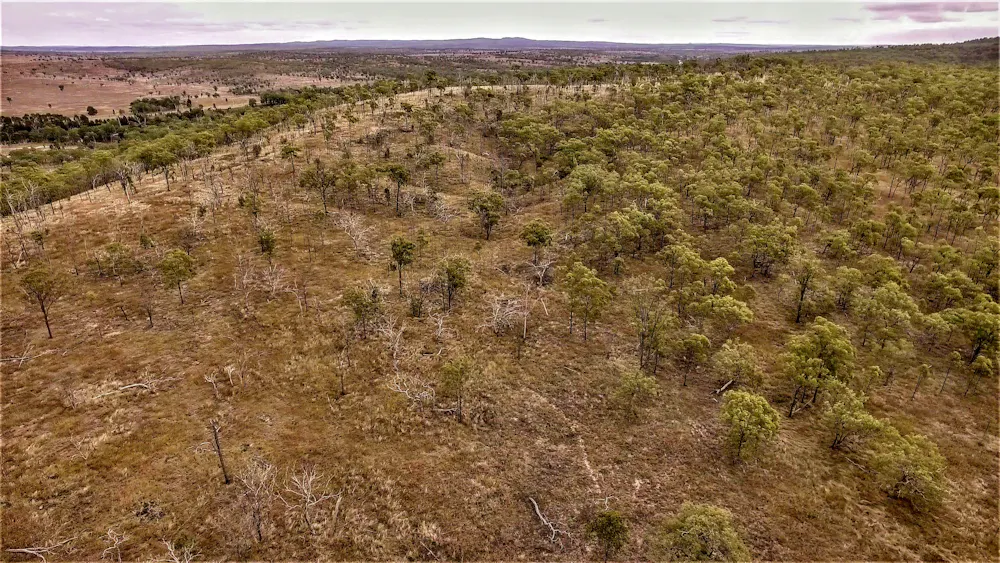
    MIL OSI Europe News

  • MIL-OSI USA: First Partner Siebel Newsom releases recommendations for improving support for survivors of sexual assault

    Source: US State of California 2

    Apr 15, 2025

    What you need to know: The First Partner released the final report of a working group tasked with developing recommendations for policymakers, healthcare providers, law enforcement, and the judicial system in order to better support survivors of sexual assault.

    SAN FRANCISCO – California First Partner Jennifer Siebel Newsom today released a comprehensive roadmap to improve California’s response and resources for survivors of sexual assault. The final report is the culmination of the First Partner’s Working Group on Support for Survivors of Sexual Assault, which she co-chaired with retired Alameda County District Attorney Nancy O’Malley. The report identifies gaps and offers recommendations to ensure survivors are met with dignity, respect, and a path to justice.

    “As a survivor, the work of preventing sexual violence and supporting other survivors is deeply personal to me, as it is to so many others. The Working Group on Support for Survivors of Sexual Assault’s final report is more than a set of recommendations, it’s a call to action for every system designed to support and protect survivors. We’ve laid out a bold, actionable path forward that is rooted in healing, justice, and accountability because every survivor deserves to be treated with dignity. Now is the time for leaders at every level to join us in turning these solutions into action and building a stronger, safer California for everyone.”

    First Partner Jennifer Siebel Newsom

    “For nearly 50 years, California has stood as a national leader in combating, responding to, caring for, and empowering victims of sexual assault crimes. We have done so much, with so much more to be done. Our report makes it clear that all professionals with whom sexual assault victim-survivors engage must be trained and committed to ensuring they’re treated with care, dignity, compassion and empowerment. I believe this Report will be the impetus for all of us to become warriors to combat and end sexual assault in California, in America, and across the globe.”

    Nancy O’Malley, Retired Alameda County District Attorney

    The working group, composed of experts across government, public health, law enforcement, the judicial system, and advocacy was convened by First Partner Siebel Newsom in 2023 to address the persistent challenges in the response to sexual violence. The report serves as a blueprint for policymakers, law enforcement, healthcare providers, and community leaders to make meaningful progress. 

    The working group’s report highlights California’s leadership in addressing sexual violence, including the establishment of the nation’s first Victim Compensation Program, the creation of Rape Crisis Centers, and the implementation of trauma-informed practices. Yet, it acknowledges that systemic barriers continue to prevent survivors from accessing the care and justice they deserve.

    The recommendations include:

    • Evidence-based educational materials on sexual assault myths and trauma survivor behaviors for defense attorneys to review before a trial begins;
    • Trauma-informed jury instruction as well as required trauma-informed training for district attorneys;
    • A clear process for reporting survivor feedback and implementing policy changes based on feedback;
    • Ensured culturally specific, language-accessible support, so no survivor is left behind;
    • Strengthened prevention efforts, including consent-based education in our schools;
    • And the coordination of services statewide, so healing and support are available no matter your zip code.

    The full report is available here.

    Recent news

    News What you need to know: Preliminary data suggests property and violent crimes in California were down in 2024. Sacramento, California – As the state continues to invest in the safety and security of California communities, new data suggests violent and property…

    News What you need to know: With one of the state’s leading climate programs – cap-and-trade – set to expire in 2030, Governor Newsom, Senate President pro Tempore Mike McGuire and Assembly Speaker Robert Rivas announced they would seek an extension of the program….

    News What you need to know: Governor Newsom extended an executive order from January barring predatory investors from making unsolicited undervalued property offers to families in areas impacted by the Los Angeles area firestorms. LOS ANGELES — Governor Gavin Newsom…

    MIL OSI USA News

  • MIL-OSI USA: ICYMI: Crime dropped significantly last year, according to early data

    Source: US State of California 2

    Apr 15, 2025

    What you need to know: Preliminary data suggests property and violent crimes in California were down in 2024.

    Sacramento, CaliforniaAs the state continues to invest in the safety and security of California communities, new data suggests violent and property crime trended down in 2024 statewide. According to an analysis of Real Time Crime Index data by the Public Policy Institute of California, violent crime dropped by 4.6% and property crime dropped by 8.5% in 2024, compared to 2023.

    Through preliminary data for 29 of California’s law enforcement agencies, robberies decreased by 5.2% and aggravated assaults went down by 3.9%. In addition, robbery and homicides in 2024 also dropped by 12.5% and 5.9%, respectively. There was a large decrease for vehicle theft – an 11.9% drop – in 2024. Burglary and larceny also went down by 13.6% and 18.6%, respectively, compared to pre-pandemic levels. 

    Overall, the decreases in violent and property crimes in California were similar to those seen by law enforcement agencies in other states – property crime went down by 8.5% in California and 8.4% elsewhere. 

    Stronger enforcement. Serious penalties. Real consequences.

    California has invested $1.1 billion since 2019 to fight crime, help local governments hire more police, and improve public safety. In 2023, as part of California’s Public Safety Plan, the Governor announced the largest-ever investment to combat organized retail crime in state history, an annual 310% increase in proactive operations targeting organized retail crime, and special operations across the state to fight crime and improve public safety.

    As part of the state’s largest-ever investment to combat organized retail crime, Governor Newsom announced last year the state distributed $267 million to 55 communities to help local communities combat organized retail crime. These funds have enabled cities and counties to hire more police, make more arrests, and secure more felony charges against suspects. 

    Saturating key areas 

    Working collaboratively to heighten public safety, the Governor tasked the California Highway Patrol (CHP) to work with local law enforcement areas in key areas to saturate high-crime areas, aiming to reduce roadway violence and criminal activity in the area, specifically vehicle theft and organized retail crime. Since the inception of this regional initiative, there have been nearly 6,000 arrests, about 4,500 stolen vehicles recovered and nearly 300 firearms confiscated across Bakersfield, San Bernardino and Oakland.

    Cracking down on retail theft 

    In addition, spearheaded by the CHP, the Organized Retail Crime Task Force since 2019 has been involved in over 3,600 investigations, leading to the arrest of more than 4,000 suspects and the recovery of over 1.3 million stolen goods valued at nearly $54 million. Most recently, Governor Newsom announced a strong start to 2025 operations, with 136 retail theft investigations leading to 209 arrests while recovering 24,510 stolen items worth an estimated nearly $2.2 million.

    Last August, Governor Newsom signed into law the most significant bipartisan legislation to crack down on property crime in modern California history. Building on the state’s robust laws and record public safety funding, these bipartisan bills offer new tools to bolster ongoing efforts to hold criminals accountable for smash-and-grab robberies, property crime, retail theft, and auto burglaries. While California’s crime rate remains near historic lows, these laws help California adapt to evolving criminal tactics to ensure perpetrators are effectively held accountable.

    California law provides existing robust tools for law enforcement and prosecutors to arrest and charge suspects involved in organized retail crime — including up to three years of jail time for organized retail theft. The state has the 10th toughest threshold nationally for prosecutors to charge suspects with a felony, $950. 40 other states — including Texas ($2,500), Alabama ($1,500), and Mississippi ($1,000) — require higher dollar amounts for suspects to be charged with a felony.

    Recent news

    News What you need to know: With one of the state’s leading climate programs – cap-and-trade – set to expire in 2030, Governor Newsom, Senate President pro Tempore Mike McGuire and Assembly Speaker Robert Rivas announced they would seek an extension of the program….

    News What you need to know: Governor Newsom extended an executive order from January barring predatory investors from making unsolicited undervalued property offers to families in areas impacted by the Los Angeles area firestorms. LOS ANGELES — Governor Gavin Newsom…

    News What you need to know: California is launching a new campaign to further strengthen tourism between California and Canada — reminding its international partners that the Golden State remains a welcoming, inclusive, and unparalleled travel destination. SACRAMENTO…

    MIL OSI USA News

  • MIL-OSI USA: Governor Newsom, Legislature double down on state’s critical cap-and-trade program in face of federal threats

    Source: US State of California 2

    Apr 15, 2025

    What you need to know: With one of the state’s leading climate programs – cap-and-trade – set to expire in 2030, Governor Newsom, Senate President pro Tempore Mike McGuire and Assembly Speaker Robert Rivas announced they would seek an extension of the program.

    SACRAMENTO – Governor Gavin Newsom, Senate President pro Tempore Mike McGuire and Assembly Speaker Robert Rivas announced today they will seek an extension of California’s nation-leading climate pollution reduction program – known as cap-and-trade – during this legislative year. 

    The program is currently set to expire in 2030, and requires extension by the Legislature. As the Governor noted in his proposed budget, extending the program this year can provide the market with greater certainty, attract stable investment, further California’s climate leadership and set the state on a clear path to achieve its 2045 carbon-neutrality goal.

    Today’s announcement comes as the Trump Administration threatens deep cuts to federal environmental programs and attempts to derail state climate efforts with a “glorified press release masquerading as an executive order.”

    California must continue to lead on reducing pollution and ensuring our climate dollars benefit all residents. That’s why we’re doubling down on cap-and-trade: one of our most effective tools to cut emissions and create good-paying jobs.

    In just the last decade, cap-and-trade has invested billions of dollars in projects by holding polluters accountable – helping clean our air, protect public health and propel new careers.

    Cap-and-trade is a huge success and, working together, we’ll demonstrate real climate leadership that will attract investment and innovation to deliver the technologies of tomorrow, right here in California.

    Governor Gavin Newsom, Senate President pro Tempore Mike McGuire and Assembly Speaker Robert Rivas

    The cap-and-trade program is the state’s leading climate program – proposed by Republican Governor Arnold Schwarzenegger and adopted under a law he signed in 2006 – that holds carbon polluters accountable by charging them for emitting more carbon pollution than allowed. The funds raised are then put to use across the state on projects and programs that help clean the air, protect public health, reduce reliance on fossil fuels, conserve nature, and more. The funds are also delivered directly back to Californians in the form of the California Climate Credit, a credit applied to utility bills twice a year. 

    As of last year, the program had funded $28 billion in investments across the state in the last decade and cut carbon emissions equivalent to taking 80% of the state’s cars off the road. Since 2000, the state has cut carbon emissions by 20% while California’s GDP has increased by 78%. 

    Details of the Governor’s proposal for the cap-and-trade extension will be shared in the coming weeks. 

    Press Releases, Recent News

    Recent news

    News What you need to know: Governor Newsom extended an executive order from January barring predatory investors from making unsolicited undervalued property offers to families in areas impacted by the Los Angeles area firestorms. LOS ANGELES — Governor Gavin Newsom…

    News What you need to know: California is launching a new campaign to further strengthen tourism between California and Canada — reminding its international partners that the Golden State remains a welcoming, inclusive, and unparalleled travel destination. SACRAMENTO…

    News What you need to know: California will receive 32 new rangers and lifeguards serving across 13 state parks – protecting and informing more visitors ahead of the high travel season. PARADISE — While the federal government cuts staffing for national parks, Governor…

    MIL OSI USA News

  • MIL-OSI USA: The Value of Ecosystems’ Land Change Science Program – Ensuring Public Safety and Preparing for Hazards

    Source: US Geological Survey

    In the west, avalanches cause more fatalities on an annual basis than earthquakes and landslides combined. Avalanche frequency has increased due to increasing temperatures and mid-winter rain events. Ecosystems Land Change Science Program science is used by land and transportation infrastructure managers to inform avalanche forecasting, hazard mitigation, and land-use planning in avalanche terrain, which saves human lives, avoids property loss, and minimizes economic losses due to transportation corridor closures.

    For example, in Glacier National Park, park managers rely on USGS Land Change Science expertise to provide on-site avalanche forecasting for the Going-to-the-Sun Road – a major thoroughfare and tourist destination in the park. Since the USGS Glacier National Park Avalanche Program began forecasting efforts in 2003, there have been no avalanche related injuries or fatalities, despite there being 1168 avalanche days with 607 avalanches that impacted the road over the 22-year period. Further, in 2021, due to increased park visitation by tourists and access to higher stretches of road, USGS began providing weekend avalanche forecasts to the Visitor Protection Division at Glacier National Park, which uses those forecasts as the definitive measure of whether to close specific areas for public safety, saving lives and property.

    USGS Land Change Science also partners with Colorado Department of Transportation and Colorado Avalanche Information Center to inform planning and disaster mitigation into the future. Critical transportation corridors run through the state of Colorado, including transcontinental Interstate 70 and many other highways that are at risk from snow avalanche hazards each winter. According to the American Road & Transportation Builders Association, the value of freight shipments to and from businesses in Colorado was $232 billion in 2022 of which 77% was shipped by truck. Thus, road closures and damages by avalanches are extremely costly (millions can be lost for each day of closure), making accurate forecasting and mitigation activities essential for keeping the road open, avoiding both losses of life and property. Long term USGS avalanche frequency data has helped the Colorado Department of Transportation, Burlington National Santa Fe Railway, National Park Service, and Colorado Avalanche Information Center. USGS provided a 200-year avalanche chronology of destructive, large magnitude avalanches that helped them reassess their forecasts to improve public safety, saving lives and property.

    MIL OSI USA News

  • MIL-Evening Report: US-China trade war leaves NZ worse off, but still well placed to weather the storm – new modelling

    Source: The Conversation (Au and NZ) – By Niven Winchester, Professor of Economics, Auckland University of Technology

    Getty Images

    Forecasting the potential impact of Donald Trump’s turbulent tariff policies is a fraught business – and fraught for business. The United States president has changed, paused and exempted various categories of goods so often, the only certainty is uncertainty.

    On “Liberation Day” (April 2) he famously announced far-reaching “reciprocal tariffs” on imports from most trading nations. Since then he has paused those tariffs, but kept 25% on imports of steel, aluminium and motor vehicles, and 10% “baseline” tariffs on all other imports.

    The big exception is China, whose retaliation against the reciprocal US tariffs has resulted in an escalating trade war between the world’s two largest economies.

    On April 9, the US raised tariffs on Chinese goods to 145%, but later scaled back duties on electronic goods such as laptops and smartphones to 20%. On April 12, China increased its tariff on US goods to 125%.

    With China being New Zealand’s largest trade partner by far, and the US its third largest (just behind Australia), the impacts of this global standoff will be indirect but nevertheless significant.

    GDP impacts of a trade war

    To estimate the impacts of a US-China trade war, as well as other tariffs imposed by the US, I use the same global model of production, trade and consumption of goods and services employed to recently calculate the impacts of the Liberation Day tariffs.


    As we can see, China and the US both lose from the tariff war. China’s GDP decreases by US$114 billion (0.58%), which equates to $236 per household per year on average. US GDP declines by $76 billion (0.25%) or $604 per household (all figures in US$).

    The tariffs all but eliminate trade in goods between China and the US, except for electronic goods exported from China, which are subject to a lower tariff (for now).

    Vietnam and India gain from the trade war because they produce many goods that substitute for Chinese products in the US market.

    The trade war will affect New Zealand in at least three ways:

    • as the two nations buy less from each other, there is room for other nations to expand their exports to these markets

    • decreased incomes in China and the US will reduce global demand for all goods

    • and the tariffs will increase the costs of global supply chains.

    The net effect is a 0.03% decrease in New Zealand’s GDP, equivalent to $70 million or $36 per household per year (roughly NZ$120 million and NZ$60 respectively).

    Reshaping of the world economy

    The simulations do not capture the impact of uncertainty caused by Trump’s frequent and abrupt changes in tariffs, carve-outs and clarifications (sometimes announced via social media).

    The global US Trade Policy Uncertainty Index, last updated before the Liberation Day tariffs, is at a record high – 29 times higher than before the 2024 presidential election. This unprecedented uncertainty, coupled with the risk of high tariffs, is making exporters increasingly reluctant to commit to the US market.

    The US currently accounts for 26.3% of global GDP. With higher future growth in many developing economies, especially in Asia, this is forecast to fall to 16.3% by 2050.

    China is predicted to supplant the US as the world’s largest economy sometime in the 2030s, and by 2050 to account for 18.4% of global GDP (up from 16.9%).

    India’s global GDP share is expected to increase significantly, from its current value of 3.7% to 9.7%. Indonesia and Philippines are also expected to grow rapidly.

    New Zealand signed a free trade agreement with China in 2008 (and an upgrade to the agreement in 2022), has begun negotiations for one with India, and has regional agreements with many other rapidly developing Asian economies.

    It remains to be seen whether Trump’s rollout of high tariffs signals a lasting policy shift or is merely a negotiating tactic to secure more favourable terms for US exporters. But New Zealand is well placed to pivot to alternative markets if needed.

    Niven Winchester has previously received funding from the Productivity Commission and the Ministry of Foreign Affairs and Trade to estimate the impacts of potential trade policies. He is affiliated with Motu Economic & Public Policy Research.

    ref. US-China trade war leaves NZ worse off, but still well placed to weather the storm – new modelling – https://theconversation.com/us-china-trade-war-leaves-nz-worse-off-but-still-well-placed-to-weather-the-storm-new-modelling-254469

    MIL OSI AnalysisEveningReport.nz

  • MIL-OSI Video: Sudan: Massive violation of Human Rights – Press Conference | United Nations

    Source: United Nations (Video News)

    A UN Refugee Agency (UNHCR) official said that one in three Sudanese are displaced, and one in six internally displaced persons globally come from Sudan.

    UNHCR’s Regional Director for East and Horn of Africa and Great Lakes Mamadou Dian Balde spoke to reporters today (14 Apr) via video link, on the humanitarian needs inside Sudan and in neighboring countries, as one of the largest displacement crises globally with nearly 13 million people forcibly displaced.

    Balde said, “Countries have been hosting refugees. Regional countries, neighboring countries have not closed their borders. They’ve been receiving the refugees.”

    “Communities that don’t have enough have shared what they have. And that’s really the true spirit of solidarity. And this is what we see happening in the region,” he highlighted

    The UNHCR official also said, “as we speak today, over 70,000 have reached Uganda. Uganda has problem of its own, and Uganda has thankfully opened and kept these borders open despite receiving 1.8 million refugees as we speak, they have added to that 70,000 Sudanese refugees and, Libya over 200,000.”

    Balde also stressed that only 10 percent of the Regional Refugee Response plan is currently funded.

    He called for the support for the 111 partners who are part of the Plan.

    The UNHCR official thanked the various partners who have contributed, stressing that however with only 10 per cent of the plan funded reaching the fifth month of the year, “the level of support to have food, to have water, to have protection services, education, shelter, housing, this level of support is going to be extremely, extremely low.”

    Balde explained that request of the Regional Refugee Response plan is 1.8 billion US dollars to be able to serve 4.9 million refugees and immediate hosts in neighboring countries.

    He added that the 111 partners that are coordinate aid, a third of them are national partners, “people who are closer to the realities, in addition to international NGOs as well as national NGOs and the UN organizations,” the UNHCR official said.

    Balde reiterated the need for ceasefire stressing that us that the Sudanese refugees want “a normalcy so that they can return home and take care of themselves.”

    https://www.youtube.com/watch?v=oPAQ8yRx9Z0

    MIL OSI Video