Category: Report

  • MIL-OSI Global: I study democracy worldwide − here’s how Texas is eroding human rights, free expression and civil liberties

    Source: The Conversation – USA – By Katie Scofield, Assistant Instructional Professor in Political Science, Texas A&M University-San Antonio

    Everything is bigger in Texas, except maybe its democracy. Luis Diaz Devesa/Moment via Getty

    While concerns about the future of American democracy dominate headlines worldwide, millions of Texans are already seeing a rapid decline in democratic standards.

    In December 2024, Texas Attorney General Ken Paxton sued a New York doctor for prescribing abortion-inducing medications to a woman in Collin County, Texas, alleging that the shipment violated Texas’ near-total ban on abortion.

    Two months earlier, Paxton’s office had sued to block a federal rule protecting women’s out-of-state medical records from criminal investigation. And in 2022, it sued the Biden administration over federal guidelines requiring doctors to perform abortions in emergency situations.

    Paxton’s lawsuits – alongside the state’s restrictive abortion policies – raise troubling questions about individual privacy and women’s bodily autonomy in Texas, where I live and teach. And they’re indicative of a broader problem. As my research on democracy and human rights shows, the state government is becoming increasingly antidemocratic.

    Scholars examine a number of factors to determine the health of a democracy. Elections must be free and fair. There should be freedom of expression and belief, multiple competitive political parties and minimal corruption. A democratic government must also respect individual freedom.

    On many of these metrics, I believe Texas falls short.

    Are Texas elections free and fair?

    Texas has some of the most restrictive voting laws in the United States, including strict voter ID laws, stringent limits on mail-in and absentee ballots and no online voter registration.

    Republicans, who passed each of these policies, claim their concern is a democratic one – election integrity. Yet, when Lt. Gov. Dan Patrick offered a US$25,000 reward to anyone who could prove voter fraud in the 2020 election, it led to just one arrest.

    The Texas Legislature nonetheless pledged to pass an even more restrictive voting bill in 2021, referencing “purity of the ballot box,” an old Jim Crow phrase. Democratic lawmakers ended up fleeing the state to paralyze the state assembly and keep the most egregious parts of the bill from passing.

    Healthy democracies also have robust competition between multiple parties so that voters have real choices at the polls.

    Yet since its current constitution was written in 1876, Texas has effectively been a one-party state governed by conservatives. No Democrat has won statewide office since 1994 – the longest Democrats have been locked out of statewide office in any state.

    Money in politics

    Texas puts no limits on individual campaign contributions to the governor, one of just 12 U.S. states that lacks this common anti-corruption measure.

    This has allowed Texas’ current governor, Greg Abbott, who has been in office since 2015, to raise vast sums of money. In the 2022 Texas gubernatorial race – the most expensive in the state’s history at $212 million – Abbott outspent his Democratic opponent by almost $50 million. In 2018, he had 90 times more cash on hand than his Democratic opponent.

    Texas’ lack of effective campaign finance regulations has given big donors access to power in the form of gubernatorial appointments.

    An in-depth investigation by The Texas Tribune in 2022 revealed that 27 of the 41 members of the governor’s COVID-19 task force were campaign donors who had collectively paid $6 million toward the governor’s reelection. Many were business owners who had a vested interest in reopening the state.

    Freedom of expression

    Texas is also at the center of a national struggle over academic freedom, a key component of free expression.

    Texas passed a law in 2023 requiring public universities to close their diversity, equity and inclusion, or DEI, offices, depriving the most vulnerable student communities of resources such as scholarships, mental health programs and career workshops.

    The Texas Senate is considering expanding this legislation to prohibit “DEI curriculum and course content.”

    The mere threat appears to be squelching freedom of thought and intellectual exploration in Texas universities already. The University of North Texas in November started editing course titles and syllabi to remove identity-based topics.

    On Jan. 14, Abbott threatened to fire the president of Texas A&M University – a part of my university system – if faculty attended an academic conference showcasing the work of Black, Latino and Indigenous scholars.

    Human rights at the border

    Abbott’s campaign to control the U.S.-Mexico border has raised concerns among human rights groups about civil rights in the state.

    In March of 2021, Abbott declared a state of emergency in counties on the Texas border, allowing him to deploy the Texas National Guard there. The initiative, Operation Lone Star, was supposed to stop migrants from crossing the border outside official government checkpoints.

    Since border enforcement is a federal authority, however, the troops have mostly enforced state laws on trespassing or drugs and weapons possession. Guardsmen have also participated in busing migrants to Democratic-run cities such as New York and Chicago and built razor-wire barriers in the Rio Grande.

    The result is an $11 billion policing program that has largely targeted Latino American citizens – not immigrants. Fully 96% of those arrested on trespassing charges are Latino, and 75% of those facing court proceedings for that and other crimes as a result of Operation Lone Star are U.S. citizens.

    Gov. Greg Abbott, left, and Donald Trump greet Texas National Guard troops in Edinburg, Texas, on Nov. 19, 2023.
    Michael Gonzalez/Getty Images

    Women’s freedoms

    Finally, women’s right to bodily autonomy is under threat in Texas, which has one of the country’s most restrictive abortion laws.

    At least three women have died as a result of doctors being afraid to treat their miscarriages. Overall, maternal mortality rates have increased by 56% since the ban was imposed in 2021. Scary statistics haven’t stopped the state’s plans to tighten its ban.

    The 2025 Texas legislative session began with Republican legislators having prefiled several bills aimed at ending abortion by mail services, including one that would reclassify common abortion pills as controlled substances like Valium or Ambien. Doctors warn that this reclassification could also make it harder for them to disperse these medications quickly in life-threatening emergencies.

    And a handful of rural Texas counties have made it illegal to transport women seeking out-of-state abortions on their roads.

    As Texas goes, so goes the nation?

    The question of whether a government is democratic is often not black or white. It should be viewed on a sliding scale.

    Freedom House, a nonpartisan international democracy watchdog, ranks countries on a 100-point scale based on the factors I mentioned earlier, among others, and labels countries as “free,” “partly-free” and “not free.”

    The freest country in 2024, Finland, had a score of 100. The U.S. has been sliding down the rankings, receiving a score of 83 in 2024 – down from 94 in 2010. It’s still solidly in the “free” category, but U.S. democracy looks less like Germany’s and more like Romania’s. The antidemocratic policy changes made in Texas and a handful of other states contribute to this slide.

    Freedom House doesn’t rank states, but if it did, Texas would likely still rate as a “free” democracy. There is space for dissent, opposition and free speech. Democratic politicians have occasional political victories.

    But Texas is decidedly less democratic than the U.S. at large. Democracy here is not lost, but I fear Texas is in danger of becoming only “partly-free.”

    Katie Scofield does not work for, consult, own shares in or receive funding from any company or organization that would benefit from this article, and has disclosed no relevant affiliations beyond their academic appointment.

    ref. I study democracy worldwide − here’s how Texas is eroding human rights, free expression and civil liberties – https://theconversation.com/i-study-democracy-worldwide-heres-how-texas-is-eroding-human-rights-free-expression-and-civil-liberties-246936

    MIL OSI – Global Reports

  • MIL-OSI Global: ‘Sorry, I didn’t get that’: AI misunderstands some people’s words more than others

    Source: The Conversation – USA – By Roberto Rey Agudo, Research Assistant Professor of Spanish and Portuguese, Dartmouth College

    Speech recognition systems are less accurate for women and Black people, among other demographics. Jacob Wackerhausen/iStock via Getty Images

    The idea of a humanlike artificial intelligence assistant that you can speak with has been alive in many people’s imaginations since the release of “Her,” Spike Jonze’s 2013 film about a man who falls in love with a Siri-like AI named Samantha. Over the course of the film, the protagonist grapples with the ways in which Samantha, real as she may seem, is not and never will be human.

    Twelve years on, this is no longer the stuff of science fiction. Generative AI tools like ChatGPT and digital assistants like Apple’s Siri and Amazon’s Alexa help people get driving directions, make grocery lists, and plenty else. But just like Samantha, automatic speech recognition systems still cannot do everything that a human listener can.

    You have probably had the frustrating experience of calling your bank or utility company and needing to repeat yourself so that the digital customer service bot on the other line can understand you. Maybe you’ve dictated a note on your phone, only to spend time editing garbled words.

    Linguistics and computer science researchers have shown that these systems work worse for some people than for others. They tend to make more errors if you have a non-native or a regional accent, are Black, speak in African American Vernacular English, code-switch, if you are a woman, are old, are too young or have a speech impediment.

    Tin ear

    Unlike you or me, automatic speech recognition systems are not what researchers call “sympathetic listeners.” Instead of trying to understand you by taking in other useful clues like intonation or facial gestures, they simply give up. Or they take a probabilistic guess, a move that can sometimes result in an error.

    As companies and public agencies increasingly adopt automatic speech recognition tools in order to cut costs, people have little choice but to interact with them. But the more that these systems come into use in critical fields, ranging from emergency first responders and health care to education and law enforcement, the more likely there will be grave consequences when they fail to recognize what people say.

    Imagine sometime in the near future you’ve been hurt in a car crash. You dial 911 to call for help, but instead of being connected to a human dispatcher, you get a bot that’s designed to weed out nonemergency calls. It takes you several rounds to be understood, wasting time and raising your anxiety level at the worst moment.

    What causes this kind of error to occur? Some of the inequalities that result from these systems are baked into the reams of linguistic data that developers use to build large language models. Developers train artificial intelligence systems to understand and mimic human language by feeding them vast quantities of text and audio files containing real human speech. But whose speech are they feeding them?

    If a system scores high accuracy rates when speaking with affluent white Americans in their mid-30s, it is reasonable to guess that it was trained using plenty of audio recordings of people who fit this profile.

    With rigorous data collection from a diverse range of sources, AI developers could reduce these errors. But to build AI systems that can understand the infinite variations in human speech arising from things like gender, age, race, first vs. second language, socioeconomic status, ability and plenty else, requires significant resources and time.

    ‘Proper’ English

    For people who do not speak English – which is to say, most people around the world – the challenges are even greater. Most of the world’s largest generative AI systems were built in English, and they work far better in English than in any other language. On paper, AI has lots of civic potential for translation and increasing people’s access to information in different languages, but for now, most languages have a smaller digital footprint, making it difficult for them to power large language models.

    Even within languages well-served by large language models, like English and Spanish, your experience varies depending on which dialect of the language you speak.

    Right now, most speech recognition systems and generative AI chatbots reflect the linguistic biases of the datasets they are trained on. They echo prescriptive, sometimes prejudiced notions of “correctness” in speech.

    In fact, AI has been proved to “flatten” linguistic diversity. There are now AI startup companies that offer to erase the accents of their users, drawing on the assumption that their primary clientele would be customer service providers with call centers in foreign countries like India or the Philippines. The offering perpetuates the notion that some accents are less valid than others.

    Human connection

    AI will presumably get better at processing language, accounting for variables like accents, code-switching and the like. In the U.S., public services are obligated under federal law to guarantee equitable access to services regardless of what language a person speaks. But it is not clear whether that alone will be enough incentive for the tech industry to move toward eliminating linguistic inequities.

    Many people might prefer to talk to a real person when asking questions about a bill or medical issue, or at least to have the ability to opt out of interacting with automated systems when seeking key services. That is not to say that miscommunication never happens in interpersonal communication, but when you speak to a real person, they are primed to be a sympathetic listener.

    With AI, at least for now, it either works or it doesn’t. If the system can process what you say, you are good to go. If it cannot, the onus is on you to make yourself understood.

    Roberto Rey Agudo does not work for, consult, own shares in or receive funding from any company or organization that would benefit from this article, and has disclosed no relevant affiliations beyond their academic appointment.

    ref. ‘Sorry, I didn’t get that’: AI misunderstands some people’s words more than others – https://theconversation.com/sorry-i-didnt-get-that-ai-misunderstands-some-peoples-words-more-than-others-239281

    MIL OSI – Global Reports

  • MIL-OSI Global: How does raw water compare to tap water? A microbiologist explains why the risks outweigh the benefits

    Source: The Conversation – USA – By Bill Sullivan, Professor of Microbiology and Immunology, Indiana University

    Water that comes straight from natural sources, dubbed “raw water,” is gaining popularity. Raw water advocates reject public water supplies, including tap water, because they don’t enjoy the taste or believe it’s unsafe and depleted of vital minerals.

    On the surface, raw water might seem alluring – the natural surroundings may look beautiful, and the water may look clean and taste refreshing. But unlike tap or commercially bottled water, raw water is not evaluated for safety. This leaves the people who drink it vulnerable to infectious microbes or potentially other toxic contaminants.

    I’m a microbiology researcher studying infectious diseases. From a public health perspective, clarifying misconceptions about tap water and the health hazards of raw water can protect consumers and curtail the spread of infectious diseases.

    A short history of public drinking water

    Archaeological evidence suggests that humans have long associated dirty water with negative health outcomes. As early as 1500 BCE, ancient Egyptians added a binding agent to their water to clump contaminants together for easy removal.

    Two major developments in the mid-1800s showed why impure water is dangerous. First, physician John Snow traced a deadly cholera outbreak to contaminated water from London’s Broad Street pump. Second, Louis Pasteur advanced the germ theory of disease, which postulated that microbes can cause illness. Pasteur established that consumable liquids like raw water and milk can harbor disease-causing pathogens.

    Physician John Snow’s 1854 map of cholera cases in London, highlighted in black, clustered around a contaminated pump.
    John Snow/Wellcome Collection

    These discoveries paved the way for large-scale infrastructure projects in the 20th century to ensure the public water supply is safe.

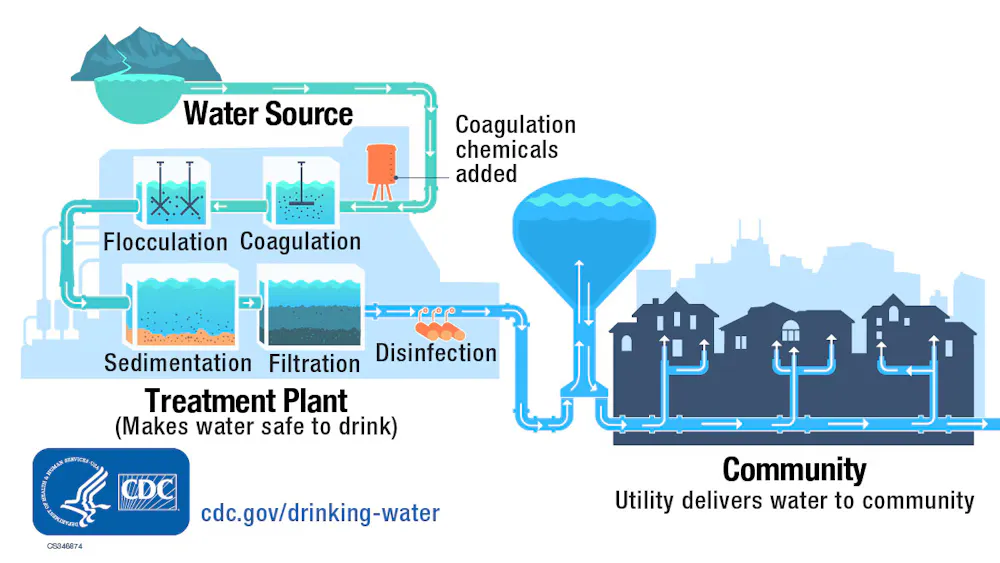
    Today, the process of cleaning water begins with the same steps employed by the ancient Egyptians, followed by extensive filtration to get rid of debris as well as most germs and chemicals. Chlorine is added to kill lingering pathogens, including those that may reside in the service pipes carrying the water to the faucet. Beginning in the 1940s, a small amount of fluoride was added as an inexpensive, safe and effective means to improve dental health.

    The cleanliness and fluoridation of the water supply has dramatically reduced infectious disease and cavities, and has been heralded as one of the 20th century’s greatest public health achievements.

    Is raw water healthier than tap water?

    People who champion raw water claim it has health benefits, such as essential minerals and beneficial bacteria called probiotics, that are stripped from tap water. Let’s unpack each of these claims.

    Water dissolves bits of soil and rock at its source; therefore, its mineral content depends on the local geology. Areas with a lot of limestone, like the Midwest, have water that is higher in calcium. Water from deeper in the ground may have higher mineral content since it passes through more rock on its way to the surface.

    The mineral content of water largely depends on its source and location.
    Sergii Zyskо/iStock via Getty Images Plus

    The idea that tap water is depleted of essential minerals is not true, as these nutrients are too small to be excluded by the filtration process. Test kits can determine the mineral content of your water, and if you find it lacking, mineral supplements can be added. Experts suggest, however, that most minerals you need come from your diet, not water.

    Some also claim that raw water contains probiotics that are removed from tap water. The amount of probiotics in water would also vary by location, and the notion that health-promoting bacteria reside in raw water has not been proved.

    There are no studies associating raw water with any health benefit. Anecdotal claims about smoother skin or increased energy are likely to be placebo effects. Even the idea that raw water tastes better might be more psychological than physiological – a 2018 study showed that most people preferred tap water over bottled water in a blind taste test.

    Risks of drinking raw water

    Raw water carries the risk of serious gastrointestinal infection from a wide variety of pathogens.

    Water-borne viruses include rotavirus and norovirus, which cause rapid-onset diarrhea and vomiting, and hepatitis A, which infects the liver. Bacteria such as E. coli and Salmonella, or parasites like Cryptosporidium and Giardia, also cause severe diarrhea that can lead to dangerous levels of dehydration. Toxoplasma gondii can also lurk in raw water and can cause miscarriage or birth defects if consumed during pregnancy.

    Tap water undergoes several treatment steps before it reaches your faucet.
    CDC

    Carriers of diarrheal infections can transmit them to others if they swim in public pools or fail to properly wash their hands before touching others or preparing food. Norovirus is particularly durable and can survive on surfaces for days, increasing chances of it infecting someone else.

    Raw water can also contain algae that release toxins causing abdominal issues and damage to the brain and nervous system.

    Cholera, dysentery and typhoid fever are no longer health burdens in the U.S. thanks to a robust water treatment system. But areas of the world lacking this privilege suffer high child mortality and widespread diarrheal diseases.

    How safe is tap water in the US?

    Tap water in the U.S. is among the safest to drink in the world. The Biden administration took steps to further improve it, including funding to replace lead pipes and new rules to monitor forever chemicals like perfluoroalkyl and polyfluoroalkyl substances, or PFAS, which have been linked to cancer and developmental disorders.

    Importantly, raw water is not necessarily free from lead, arsenic, pesticides or industrial contaminants. Raw water sources are not reliably monitored by experts, so it is difficult to say which ones pose less risk. In addition, the water may be acceptably safe one day, but not on another. For example, soil runoff from a storm could introduce new germs or pollutants into the area.

    The Environmental Protection Agency routinely screens for nearly 100 contaminants to ensure tap water is safe. In contrast, raw water remains untested, unregulated and untreated, leaving its safety to drink in question. In terms of risks and benefits, there are no demonstrated health benefits from drinking raw water, but clear evidence that you may be exposing yourself to harmful infectious and toxic contaminants.

    Bill Sullivan receives funding from the National Institutes of Health.

    ref. How does raw water compare to tap water? A microbiologist explains why the risks outweigh the benefits – https://theconversation.com/how-does-raw-water-compare-to-tap-water-a-microbiologist-explains-why-the-risks-outweigh-the-benefits-246866

    MIL OSI – Global Reports

  • MIL-OSI Global: Trump has rejected the Paris agreement again, but game theory shows how other countries can still lead by example

    Source: The Conversation – UK – By Renaud Foucart, Senior Lecturer in Economics, Lancaster University Management School, Lancaster University

    petrmalinak/Shutterstock

    It came as a surprise to nobody that one of Donald Trump’s first acts on his return to the White House was to sign an executive order withdrawing the US from the Paris agreement on climate change.

    Almost 200 other countries will remain part of the deal designed to stem global warming. So how will they fare without the participation of one of the biggest polluters on the planet?

    The exit of the US encapsulates a tricky issue when it comes to international efforts to tackle climate change. Any effort to decrease the use of fossil fuels is individual, while any benefits are universal.

    And since 1997, the main approach to tackle climate change multilaterally has been through UN-backed summits known as “Cops” (Conference of the Parties) where countries gather and promise each other to cut their emissions.

    Richer countries, which polluted more in the past and created most of the accumulated CO2 in the atmosphere, have also committed to helping poorer countries develop economically while emitting less, to the tune of US$300 billion (£244 billion) a year by 2035.

    But while plenty of effort goes in to organising the largest possible coalition of countries, in the end, everything is based on good faith and promises. There is no mechanism by which countries which fail to live up to agreements are punished.

    So when national politics or budgetary constraints come into play, climate commitments can be left by the wayside. A project to tax pollution may be cancelled or campaigners may succeed in blocking plans.

    Yet there are benefits to be had from leading by example and cutting emissions without any guarantee that others will do the same. This is partly because humans have a tendency towards what’s known as “conditional cooperation”. People who fail to cooperate when they have to do it at the same time as others are much more likely to join in if they observe previous cooperation.

    For this reason, research I recently published with colleagues on game theory (the mathematical study of strategic interactions), suggests that the best thing for advanced economies to do is keep on cutting their own emissions.

    Because without efforts from rich countries to pursue a path towards mitigating global warming, there is no hope the others will follow. In that case, even a small wealthy country (like the UK) matters in demonstrating an unambiguous commitment to tackling climate change.

    Carbon cooperation

    Beyond encouraging further cooperation, a strong climate policy in the form of carbon taxes is also the most powerful way to punish those who do not take part in the global effort.

    Both the US (under Biden) and the EU have developed their own versions of a tool called a “carbon border adjustment mechanism” which means exporters from countries that do not tax emissions (or tax them less less heavily) need to pay the domestic carbon tax instead.

    Consider for instance a Chinese company exporting a container to the UK. If Chinese manufacturers have already paid a carbon tax worth £100 to the Chinese government for the product in the container, but the UK’s carbon tax would have been £200, the border tax is the difference between the two, £100.

    But if the Chinese government increases its domestic carbon tax to the UK level or above, the tax from the border adjustment mechanism drops to zero.

    This approach has influenced many countries to start their own carbon tax, because it is better to get tax receipts at home than to send them elsewhere. But again, it helps to lead by example. To influence others with border taxes, you need to implement your own system first.

    Cop out?

    Despite all of this apparent cooperation, and widespread concern about the impact of climate change, the latest Cop summit in Azerbaijan, held in November 2024, was considered by many to be a disappointment.

    But there is also some good news, which suggests that efforts are heading in the right direction. The latest data for example, shows that the EU is not far away from its 2030 target. Greenhouse gas emissions are already 37% below what they were in 1990 level. In the UK, the figure is 42%.

    In China, emissions might have apparently already peaked, earlier than expected. Even in the US, emissions are decreasing.

    Looking back at the scenarios that led to the first UN climate summit in Kyoto, not everything is bright. The world is unlikely to avoid global temperatures raising to more than 1.5°C above pre-industrial levels.

    So maybe we shouldn’t rely too much on future summits to make the next environmental breakthrough. The path forward could be more likely to come from technical solutions like carbon taxes and border adjustment mechanisms. And perhaps the best way to convince the rest of the world to cut their emissions is not to give them lectures and conferences – but to lead by example.

    Renaud Foucart does not work for, consult, own shares in or receive funding from any company or organisation that would benefit from this article, and has disclosed no relevant affiliations beyond their academic appointment.

    ref. Trump has rejected the Paris agreement again, but game theory shows how other countries can still lead by example – https://theconversation.com/trump-has-rejected-the-paris-agreement-again-but-game-theory-shows-how-other-countries-can-still-lead-by-example-246818

    MIL OSI – Global Reports

  • MIL-OSI Global: Exercise does increase calorie burn – but probably not as much as you might hope

    Source: The Conversation – UK – By Dylan Thompson, Professor of Human Physiology, University of Bath

    Exercise can still be a benefit if you’re trying to lose weight or get fit. Green Elk/ Shutterstock

    It’s generally accepted that exercise is a key element of losing weight. But this long-held view has been called into question in recent years – with no shortage of articles and podcasts claiming it’s a myth that exercise increases your metabolism and helps you burn calories after you work out.

    The central tenet of these reports is that the amount of calories we burn each day is somehow constrained. This hypothesis was first proposed in 2012 by the evolutionary anthropologist Herman Pontzer. He posited that as you increase your daily energy expenditure (calories burned) through physical activity, your body will find ways to cut back on energy expended on other biological processes – such as your resting metabolism. This leaves your overall daily energy expenditure unchanged.

    This theory has since been popularised in Pontzer’s 2021 book Burn, in which he theorises that “we burn calories within a very narrow range: nearly 3,000 calories per day, no matter our activity level”.

    Building on this, Pontzer suggests that, “The bottom line is that your daily (physical) activity levels have almost no bearing on the number of calories that you burn each day.”

    But before you pack away your running shoes, let’s look at what the research shows us. The most rigorous and robust evidence available on the topic actually shows that exercise does increase energy expenditure – though perhaps not as much as we might expect.

    Exercise and energy expenditure

    The evidence Pontzer used to support his hypothesis came from observational studies that compared energy expenditure in different populations around the world. In an observational study, researchers only take measurements and make comparisons between groups without actually introducing any changes.

    The most eye-catching of the studies Pontzer used to support his hypothesis was research on the Hadza tribe – one of the last remaining hunter-gatherer groups in Africa. Hunter-gatherers are assumed to be highly active in order to survive. But the study observed that the Hadza expended no more energy than the average Westerner did each day.

    We reviewed the constrained energy expenditure hypothesis in 2023. We concluded that Pontzer’s theory raises some interesting questions. However, it’s generally not very convincing due to flaws in the nature of the evidence.

    Indeed, Pontzer’s own observational data shows that daily energy expenditure can vary by more than 1,000 calories per day in a group of older people. This directly contradicts his suggestion that it’s fixed at 3,000 calories a day for everyone.

    The effects of exercise on calorie burn may be more modest than we might hope, however.
    Dean Drobot/ Shutterstock

    When we look at data from randomised controlled trials, we can clearly see that exercise does have an effect on energy expenditure.

    Randomised controlled trials allow researchers to establish cause and effect from a specific treatment or intervention. They allow groups of people to be fairly compared with just one variable manipulated at a time.

    Trials show that a structured, supervised exercise programme done up to five times a week for six and ten months increases daily energy expenditure. These effects were shown in both young and middle-aged men and women.

    This research clearly shows that physical activity does increase how many calories you burn each day.

    Modest increase

    It’s important to note that these trials do report, however, that the increases in daily energy expenditure were not always as big as expected. Put simply, burning 600 calories in the gym will not necessarily increase your daily energy expenditure by the same amount.

    However, a more-modest-than-expected increase in energy expenditure is a far cry from bold statements that exercise does not increase daily energy expenditure at all. The exact number is difficult to estimate though, as it varies a lot between people.

    As we discuss in our review, there are many possible reasons why exercise does not increase energy expenditure by as much as would be expected. Some factors might include physical activity substitution (when your new workout substitutes for physical activity you would normally have done at that time – so you might only end up burning a few calories more than you normally would have) and behavioural compensation (doing less activity later in the day after a morning workout).

    This also highlights a common misunderstanding about the magnitude of exercise’s effects. Exercise can feel hard – so people might reasonably expect a large return on their investment. But five hours of exercise a week is only about 4% of our typical waking time. So this will only go so far in shifting the dial upwards in terms of how many calories we burn through physical activity.

    Part of the misunderstanding about changes in energy expenditure and potential weight loss through exercise is perhaps related to unrealistic expectations about how many calories we burn when working out.

    So, despite what you might have heard or read, the strongest evidence from robust trials clearly demonstrates that exercise can increase daily energy expenditure. Though this might not be as much as you expect or hope.

    Dylan Thompson receives funding from BBSRC, NIHR, and Heart Research UK. He has previously had funding from MRC, BHF, and Unilever. He is a Fellow of The Physiological Society and the British Association of Sport and Exercise Sciences.

    Javier Gonzalez receives funding from BSRC, MRC, British Heart Foundation, Clasado Biosciences, Lucozade Ribena Suntory, ARLA Foods Ingredients, Cosun Nutrition Center, Innocent Drinks and the Fruit Juice Science Centre; is a (non-exec) scientific advisory board member to ZOE; and has completed paid consultancy for 6d Sports Nutrition, Science in Sport, The Dairy Council, PepsiCo, Violicom Medical, Tour Racing Ltd., and SVGC. For a full list of disclosures see https://gonzalezjt1.wordpress.com/2024/03/.

    ref. Exercise does increase calorie burn – but probably not as much as you might hope – https://theconversation.com/exercise-does-increase-calorie-burn-but-probably-not-as-much-as-you-might-hope-247720

    MIL OSI – Global Reports

  • MIL-OSI Global: Compendium of the Occult by Liz Williams is a rich and appealing history

    Source: The Conversation – UK – By Martha McGill, Honorary Research Fellow, Historian of Supernatural Beliefs, University of Warwick

    In the fourth century BC, an unknown – but clearly disgruntled – schemer from the Greek city of Antioch had a curse tablet made. Inscribed on a thin piece of lead and deposited in a well, the tablet called for a “thunder-and-lightning-hurling” god to “strike, bind, bind together Babylas the greengrocer”.

    Around 1,400 years later, an Anglo-Saxon charm advised on how to protect a field. The secret was to take a piece of turf from each corner and anoint it with a mixture of oil, honey, yeast, milk from the animals on the land, pieces of the trees and plants on the land, and water consecrated to the god Thunor.

    In 17th-century England, the antiquarian Elias Ashmole hoped an astrological talisman would expel vermin from his house. Meanwhile, the diarist Samuel Pepys cured his upset stomach by purchasing a new hare’s foot. In 19th-century New Orleans, the Louisiana Creole woman Marie Laveau became famous for her healing, clairvoyance and work as a voodoo priestess, which she displayed in public gatherings at Congo Square.

    These are among the many fascinating snippets discussed in Liz Williams’s new book, Compendium of the Occult: Arcane Artefacts, Magic Rituals and Sacred Symbolism. Looking at western occult traditions from ancient times to the present day, the book explores how human societies have sought power, protection and insight from gods and stars, spells and amulets, sacred places and seductively enigmatic organisations.


    Looking for something good? Cut through the noise with a carefully curated selection of the latest releases, live events and exhibitions, straight to your inbox every fortnight, on Fridays. Sign up here.


    The book is made up of 65 short articles, grouped into six sections: the origins of western occultism; divination, rituals and rites; charms and talismans; curses and hexes; secret societies; and sites of significance.

    Many of the articles cover several centuries, meaning there is no scope for detailed analysis. However, Williams strikes an effective balance between general overview and colourful examples. She is sensitive to differences in perspective, noting the competing explanations for phenomena such as dowsing or Ouija boards.

    She also acknowledges the complexities of reconstructing past beliefs and practices from imperfect surviving evidence, although occasionally unreliable source material is not sufficiently interrogated. The book accepts too readily, for example, the questionable story that Louis XIV’s mistress Madame de Montespan arranged “black masses” in which she used the blood of babies to summon the devil.

    Magic and maladies

    Compendium of the Occult is handsomely bound, pleasingly laid out and beautifully illustrated. There are images of ancient clay tablets crisscrossed with incantations, witch bottles stuffed with nails and urine, voodoo dolls, mummies, skulls, books, statues, artworks and protective amulets in the shape of jaunty phalluses.

    The book accepts too readily that Louis XIV’s mistress Madame de Montespan used the blood of babies to summon the devil.
    Wiki Commons

    Some of the printing causes confusion, however. “Gold dots” on the timelines are difficult to see, as is the introduction’s small white text on black pages. The dating of some entries lacks obvious logic: “palmistry” is dated from the 5th to the 1st century BC, even though the article stretches to the 20th century, and other practices get the vaguer label “ancient times to the present day”. But these are minor quibbles.

    More significantly, the book’s geographical remit is limited. The introduction refers to occult traditions in “the west”, but Britain is a particular focal point. Williams discusses eight “sites of significance”, of which three (Glastonbury, Avebury and Stonehenge) can be found within a 75-mile span in England.

    She does cover ancient Egypt and Mesopotamia; there is an entry on voodoo; there are references to the influences of Arabic astrologers, and occasional mentions of practices in east Asia. But more engagement with occult traditions from beyond Europe, particularly in modern times, would have enhanced the volume and better justified the ambitious title.

    A 1660 illustration of Claudius Ptolemy’s geocentric model of the Universe, from Compendium of the Occult.
    Wikimedia Commons

    All the same, this is a rich and appealing book. Humankind’s inventiveness in conceptualising the workings of the world emerges with force. Much magic is underpinned by a belief that the everything is interwoven: the earth corresponds to the skies, the microcosm of the human body to the macrocosm of the universe.

    Williams quotes the physician and polymath Cornelius Agrippa (1486-1535), who described how a square inscribed with numbers, stamped on a silver plate at the right hour, could call on Jupiter to bring the owner wealth and peace. If printed on coral, it could destroy evil spells.

    Material objects, plants, numbers and heavenly bodies are drawn into a symbiotic relationship, and invested with the power to reshape human lives. Agrippa’s plates reflect an enduring desire to situate humankind in relation to the environment, and impose meaning and harmony on a chaotic cosmos.

    Martha McGill does not work for, consult, own shares in or receive funding from any company or organisation that would benefit from this article, and has disclosed no relevant affiliations beyond their academic appointment.

    ref. Compendium of the Occult by Liz Williams is a rich and appealing history – https://theconversation.com/compendium-of-the-occult-by-liz-williams-is-a-rich-and-appealing-history-246925

    MIL OSI – Global Reports

  • MIL-OSI Global: Think your efforts to help the climate don’t matter? African philosophers disagree

    Source: The Conversation – UK – By Patrick Effiong Ben, Doctoral Researcher in Applied Ethics and African Philosophy, University of Manchester

    PBXStudio/Shutterstock

    When I drive my car on weekends, I emit greenhouse gases – but not enough to change the global climate on my own. But when I, my neighbours and hundreds of millions of other people drive, fly, eat meat and embark on countless other activities that generate greenhouse gas emissions, we raise the Earth’s temperature.

    This is what we might call a collective harm problem, where the acts of many together lead to harmful outcomes, but no discrete act by any one person can solve it. Debates on how to fight climate change generally settle on the need for collective action ~ but does that make personal efforts inconsequential, even pointless?

    If a single pro-environment lifestyle change – like one person giving up their SUV or cutting out meat in favour of plant-based foods – will not turn the tide of global climate change on its own, it’s reasonable to feel there is little that “doing your bit” can achieve. This mindset is disempowering.

    Fortunately, it is not the only way of responding to the challenge. African philosophers have a different way of looking at it.

    Individual contributions are not pointless

    Studies assessing public willingness to contribute to climate action show that people will act even at a personal cost, given the right motivations. The urgent task for philosophers and environmentalists is to provide them with those motivations. This is where African philosophy is helpful.

    By African philosophy, I mean critical reflections on basic questions about the world – spanning the nature of knowledge, existence, morality, meaning and truth, from the perspective of African philosophers.

    I am a philosopher who studies the problem of what appear to be collectively insignificant individual actions. There is a concept from African philosophy that I think is helpful to understand this: “complementarity”.

    Complementarity denotes a relationship of interdependence among all entities – plants, animals, rivers, humans – in an interconnected community of living and non-living things. As a framework for understanding the world, it holds that everything within the human and non-human environment exists in a relationship of mutual dependence. Everything is connected to everything else. No entity can exist and flourish in isolation.

    Our meal choices don’t just affect us.
    Aleksandar Malivuk/Shutterstock

    To that extent, the flourishing of one person depends on and influences the flourishing of other things in the world – including other people and animals as companions, the plants and soil which provide food for survival, rivers and oceans that are a source of water, and the Sun which gives the energy that sustains life on Earth.

    Complementarity has been used by African philosophers like Jonathan Chimakonam, Aïda Terblanché-Greeff, Diana-Abasi Ibanga and Kevin Gary Behrens to develop environmental philosophies based on shared relationships. According to these philosophers, a view of the world based on complementarity neither foregrounds nor diminishes humans. Rather, it sketches a relationship of equals defined by the mutual participation of all.

    This thinking is averse to hierarchy. No individual can claim to have more value than another. Anything that exists serves as an important part of the environment and matters equally, whether alone or collectively. Complementarity holds that the relationships that unite individual things can extend to prove the value of every contribution, no matter its size.

    And so, complementarity rejects the argument that anything you do to help the climate is pointless. Driving my car is not an action that exists in isolation. My emissions are interconnected with other aspects of the environment.

    Similarly, individual climate-positive actions occur in relation to others taken globally, so it is a mistake to assume such actions are pointless. Rather, their relation to other actions makes them not just practically useful but necessary, to make a difference at the level of communities and globally.

    According to this African concept, the race to reduce greenhouse gas emissions is a complementary effort. And so, do not be discouraged from taking your own step in this direction.

    Patrick Effiong Ben receives funding from the AHRC North West Consortium Doctoral Training Partnership (NWCDTP).

    ref. Think your efforts to help the climate don’t matter? African philosophers disagree – https://theconversation.com/think-your-efforts-to-help-the-climate-dont-matter-african-philosophers-disagree-247042

    MIL OSI – Global Reports

  • MIL-OSI Global: England’s maths teacher recruitment problem is set to worsen

    Source: The Conversation – UK – By Neil Saunders, Senior Lecturer in Mathematics, City St George’s, University of London

    Ground Picture/Shutterstock

    Everyone should leave school with a solid understanding of maths. Decent mathematics literacy is a hugely important skill in many aspects of life. We need it when budgeting for a weekly shop, asking for a pay rise and completing a tax return.

    An interest and enjoyment in maths fostered at school can lead people to study the subject further. Mathematics graduates go on to professions in government, industry, software development and financial analytics, as well as many genres of engineering.

    In total, 13% of all employment in the UK is in professions that depend on mathematical sciences. A workforce that has been well taught in maths is crucial to a society’s prosperity.

    Building a workforce skilled in mathematics in England, however, will be difficult when there are not enough people qualified to teach the subject at school. Mathematics is a technical discipline. Quality teaching relies on its educators to have specific training: a university degree in maths.

    Research published in 2019 in Australia found that secondary school students achieved noticeably higher results when they were taught maths by teachers with a university degree majoring in maths than those “out-of-field” teachers.

    But in England, the Department of Education has an ongoing problem of under-recruitment of maths teachers. In the year 2023-24, recruitment in initial trainee maths teaching reached only 63% of its target. Research from 2018 found that less than half of maths teachers in state schools have a mathematics or other relevant degree.

    And maths achievement is declining. In the OECD’s programme for international student assessment (Pisa) tests, introduced in the year 2000, 15 year-olds in the UK are recording their lowest maths results since 2006.

    The longstanding failure to recruit enough maths graduates to become teachers is now set to be exacerbated by the changes in maths provision at universities. Maths degrees are becoming less accessible to the people who are likely to go on to become teachers.

    University options

    Over the previous decade, but particularly since the pandemic, Russell Group universities – research-intensive institutions that take students with the highest A-level grades — have increased their intake of students taking maths degrees.

    On the other hand, maths options are declining at lower-tariff universities and those that offer flexible study options.

    Birkbeck, University of London, no longer offers undergraduate degrees in maths as a single subject. Birkbeck is renowned for its provision of evening and part-time degree courses, which offers flexibility for students who may not be able to attend a traditional course or need to work while studying.

    Huddersfield has also discontinued its mathematics courses after reviewing its provision, and many other institutions are considering further cuts and redundancies.

    In 2011, lower-tariff institutions accounted for 13% of the market share of the intake of mathematics students. This dropped to just 4.5% in 2021, putting such institutions under severe pressure.

    Graduates of post-92 universities – former polytechnics and other recently established institutions, which often require lower grades for entry – are much more likely than their Russell Group counterparts to go into school teaching. A recent report by Professor Paul Wakeling, which was commissioned by the Campaign for Mathematical Sciences, analysed outcomes of mathematical degrees in the UK across the period 2017-18 to 2020-21.

    Over that period, it found that 17.4% of graduates from post-92 institutions went into the secondary teaching, compared with around 5.6% from Russell group universities.

    The accessibility of a degree will affect who enrols.
    VesnaArt/Shutterstock

    The closure of mathematics departments causes the phenomenon of “maths deserts”: large swaths of the country where access to mathematics degree study is limited. This particularly affects students from poorer backgrounds, who are more likely to be living at home during their degree and will attend their local university.

    This also affects the provision of school maths teachers. Graduates in mathematics from more disadvantaged socioeconomic backgrounds are more likely to go into school teaching than graduates from more wealthy backgrounds.

    The decline in the availability of maths degrees at lower-tariff institutions is likely to be reducing the number of potential maths teachers – as well as severely reducing the diversity of people going into maths.

    The chronic shortage of specialist maths teachers is set to worsen. Universities around the country are under severe financial pressure, which is likely to lead to further cutting of courses and staff.

    This will only exacerbate the problem of teacher shortages – which is turn will lead to declining mathematical literacy in the community, as well as a lack of diversity in mathematics.

    Neil Saunders does not work for, consult, own shares in or receive funding from any company or organisation that would benefit from this article, and has disclosed no relevant affiliations beyond their academic appointment.

    ref. England’s maths teacher recruitment problem is set to worsen – https://theconversation.com/englands-maths-teacher-recruitment-problem-is-set-to-worsen-246351

    MIL OSI – Global Reports

  • MIL-OSI Global: Trump’s plan to eliminate FEMA is a very bad idea

    Source: The Conversation – Canada – By Jack L. Rozdilsky, Associate Professor of Disaster and Emergency Management, York University, Canada

    A symbolic visit by an American president to a disaster site can be constructive. Former President Joe Biden’s presence at areas in the United States affected by various disasters allowed him to both show leadership and offer comfort in moments of national tragedy.

    In contrast, a bombastic President Donald Trump used his first domestic trip on Jan. 24 to tour disaster sites in North Carolina and Los Angeles while promoting his litany of grievances and rambling about his dislike of the Federal Emergency Management Agency (FEMA).

    It takes a perverse set of skills for a president to act in a way that squanders the opportunity to genuinely exhibit compassion for disaster victims while also lowering the morale of emergency workers at the same time.

    Trump’s announcement to overhaul or eliminate FEMA — especially in the midst of an ongoing disaster — is unreasonable and foolish.

    Trump’s criticisms

    In a Fox News interview on Jan. 22, Trump suggested that FEMA would be facing a reckoning.

    The president echoed Republican criticisms of the Hurricane Helene disaster response last September. During Hurricane Helene, Trump has used his bully pulpit to endorse or invent false or unsubstantiated claims. The federal government was also falsely accused of a lack of response following Helene.

    While touring hurricane damage in North Carolina on Jan. 24, Trump remarked:

    “Well, I’ll also be signing an executive order to begin the process of fundamentally reforming and overhauling FEMA or maybe getting rid of FEMA. I think, frankly, FEMA is not good.”

    Trump indicated he would like to see state governments respond to disasters.

    The White House later clarified that an upcoming executive order would direct a council of FEMA advisers to examine the agency and come up with proposals for reform.

    Turning back the clock

    If Trump gets rid of FEMA, he’ll be turning back the clock 50 years. It is illogical to call for a return to a time with a weak and disorganized system of disaster management.

    In the 1970s, states were responsible for managing their own disasters. More than 100 different federal agencies could become involved in relief efforts. The system was reactionary and responded on a need basis, with no clear pathways for federal disaster assistance to states.

    State governors became increasingly concerned about the lack of a comprehensive national emergency policy. The dispersion of federal disaster management responsibilities among numerous federal agencies was viewed as impeding states’ own ability to manage disaster situations.

    In advocating for better disaster management, a National Association of Governors’ report entitled 1978 Emergency Preparedness Project made the case for a centralized emergency management system in the U.S.

    President Jimmy Carter acted on the recommendations of the governors with Executive Order 12127 to create FEMA in 1979. It was a cabinet-level agency until 2003, when it was merged into the Department of Homeland Security.


    Read more:
    Jimmy Carter’s death invites us to consider his legacy of nuclear emergency response and disaster management


    Duties enshrined in law

    When a large-scale disaster stretches the ability of an American city to help its citizens, a formal process exists to request aid. As a local disaster expands in size and scope, requests for more assistance can go up to higher levels of administration, from the state governor and ultimately to the president. In this process, FEMA reports to local governments.

    A presidential disaster declaration can open up access to an array of federal programs managed by FEMA to assist with response and recovery.

    FEMA was created by President Jimmy Carter in 1979.
    (J. Rozdilsky), CC BY

    The role of FEMA in supporting the declaration process are defined in provisions in the U.S. Code of Federal Regulations. The Stafford Act also provides for the statutory authority guiding FEMA programs like individual assistance.

    While Trump sits at the top of the executive branch, he can engage in a variety of political shenanigans to undermine FEMA, but he cannot unilaterally abolish the agency. As the agency’s duties are enshrined in law, only an act of the legislative branch can terminate FEMA.

    A turbulent history

    FEMA has existed for 46 years and faced turbulent times due to the poor decision-making by past Republican presidents. In 1980, Reagan appointed agency directors with conservative philosophies who emphasized downsizing. Under George W. Bush’s presidency, among the flurry of reactions to Sept. 11, 2001, FEMA was eviscerated and relegated from a top-level cabinet level agency to a position buried deep in the Homeland Security organizational chart.

    Trump’s aggressive posture in trying to remake government involves creating diversions, sowing chaos and overloading people with lies. Taking a cue from his former White House strategist Steve Bannon on how to deal with the media, Trump’s statements about FEMA have worked to “flood the zone with shit.”

    As with many functions of American government, emergency management is just the latest target of disorientation tactics intended to paralyze government operations.

    Jack L. Rozdilsky receives support for research communication and public scholarship from York University. He also has received research support from the Canadian Institutes of Health Research.

    ref. Trump’s plan to eliminate FEMA is a very bad idea – https://theconversation.com/trumps-plan-to-eliminate-fema-is-a-very-bad-idea-248293

    MIL OSI – Global Reports

  • MIL-OSI Global: Indonesia’s BRICS agenda: 2 reasons Prabowo’s foreign policy contrasts with Jokowi’s

    Source: The Conversation – Indonesia – By Aswin Ariyanto Azis, Head of department of Politics, Government, and International Relations of Universitas Brawijaya, Universitas Brawijaya

    Ilustrasi-ilustrasi bendera negara anggota BRICS dan mitra. justit/Shutterstock

    Indonesia’s decision to pursue membership in BRICS – an emerging economy bloc comprising Brazil, Russia, India, China, and South Africa – signals that President Prabowo Subianto is steering foreign policy in a direction contrasting with his predecessors.

    During Joko “Jokowi” Widodo’s two-term administration, then-former Foreign Minister Retno Marsudi led efforts to integrate Indonesia’s economy with Western institutions by working to secure membership with the OECD.

    Since BRICS is an alternative to Western-dominated organisations, many observers scrutinised and questioned Indonesia’s nonalignment commitment. However, Foreign Minister Sugiono argued that BRICS aligns with Indonesia’s ‘free and active’ foreign policy, allowing Indonesia to collaborate widely without aligning too closely with any single bloc.

    For Sugiono, joining BRICS means paving the way to advance the new government’s goals of food security, energy independence, poverty alleviation, and human capital development. The bloc offers access to funding, technology, and trade opportunities to tackle key challenges in those sectors. BRICS, with its emphasis on fairness and cooperation, supports Indonesia’s vision for a more inclusive and sustainable future.

    The shift from Retno’s OECD focus to Sugiono’s BRICS approach reflects at least two visions. First, Indonesia seeks to reassess its strategic position as the leading economy in Southeast Asia. Second, the country seeks to switch from its nonalignment stance to multi-alignment. The later will help navigate partnerships with both developed and emerging economies, balancing traditional alliances with new opportunities.

    Joining BRICS can amplify Indonesia’s influence in its already strong ties with each of the member countries and unlock opportunities beyond one-on-one partnerships.

    Fear of missing out

    Indonesia’s pivot to BRICS reflects both its relationship with major powers, such as China and the US, and regional pressures.

    Neighbouring countries Malaysia and Thailand have recently expressed interest in BRICS, creating a sense of competition within Southeast Asia. Both countries joining the bloc could erode Indonesia’s leadership and influence in the region, especially in affecting global affairs.

    Through ASEAN, Indonesia has sought to act as a regional stabiliser and mediator amid rising polarisation between the West and China.

    As its de facto leader, Indonesia has historically championed initiatives like the South China Sea Code of Conduct and Myanmar’s peace process. Its G20 presidency further underscored its role as a mediator between global powers.

    This ‘fear of missing out’ has spurred Indonesia’s interest in BRICS.

    Joining BRICS ahead of its regional peers ensures that Indonesia maintains its leadership position in ASEAN. For Prabowo’s administration, BRICS offers a platform to advance Indonesia’s interests in maritime security, economic growth, and global governance. It is a strategic move beyond an economic decision to amplify its voice on global issues and prevent fellow Southeast Asian countries from overtaking it in shaping the bloc’s agenda.

    Bold (but not one) direction

    Indonesia’s BRICS membership announcement highlights the new administration’s foreign policy ambitions, centred on two key shifts: adopting a multi-alignment strategy and strengthening its ‘good neighbour’ policy.

    Prabowo envisions engaging with all nations, fostering friendly relations while opposing oppression. This approach resonates with Indonesia’s historical commitment to sovereignty and equality in international relations.

    Indonesia has traditionally adhered to a nonalignment principle. This virtue has aided the country navigating major power blocs without binding itself to any single alliance. However, the current geopolitical climate – marked by intensifying tensions between global powers, regional conflicts, and intricate challenges – demands a more flexible and strategic approach.

    By joining BRICS, Indonesia avoids taking sides and instead diversifies its partnerships to maximise benefits. This multi-aligned approach enables active participation in BRICS discussions on multilateral reform.

    Prabowo’s ‘good neighbour policy’ further underscores the importance of maintaining positive relations with all countries. It empowers developing nations and advocates for a more equitable global order and economic system. This strategy also facilitates Indonesia’s resilience by fostering partnerships in food and energy security, poverty alleviation, and human capital development.

    Such collaborations reduce reliance on Western financial systems and enhance Indonesia’s autonomy. Ultimately, these strategic directions position Indonesia as a sovereign and dynamic player capable of balancing global relationships while advancing its own priorities.

    What about the OECD?

    This move does not mean the OECD is off the table for Indonesia. Instead, Prabowo’s approach reflects a dual-track strategy that values both alliances for their respective benefits.

    The OECD remains a long-term objective to enhance Indonesia’s economic governance and regulatory standards. It serves the goal of providing the country with stable relationships within the Western economic framework. Meanwhile, BRICS offers an immediate avenue for Indonesia to deepen ties with equivalent economies and actively shape policies that impact the Global South.

    Sugiono’s statement in Kazan emphasised Indonesia’s commitment to engaging in other forums, including the G20 and OECD discussions. It highlighted the country’s flexibility in international alliances.

    This dual-track strategy reinforces Indonesia’s role as a bridge between developed and developing nations, maximising the benefits of both alliances without sacrificing its autonomy.

    What’s next for Indonesia?

    Indonesia’s decision to join BRICS marks a significant evolution in its foreign policy. By participating in BRICS, Indonesia positions itself as a critical player in global discussions on economic reform and development, asserting its voice within a multi-polar world order.

    Indonesia is charting a path that balances traditional alliances with emerging opportunities, reinforcing its role as a dynamic, independent player on the world stage.

    Aswin Ariyanto Azis tidak bekerja, menjadi konsultan, memiliki saham, atau menerima dana dari perusahaan atau organisasi mana pun yang akan mengambil untung dari artikel ini, dan telah mengungkapkan bahwa ia tidak memiliki afiliasi selain yang telah disebut di atas.

    ref. Indonesia’s BRICS agenda: 2 reasons Prabowo’s foreign policy contrasts with Jokowi’s – https://theconversation.com/indonesias-brics-agenda-2-reasons-prabowos-foreign-policy-contrasts-with-jokowis-242920

    MIL OSI – Global Reports

  • MIL-OSI Global: Women having surgery to treat pelvic organ prolapse don’t always need a hysterectomy

    Source: The Conversation – Canada – By Erin A. Brennand, Gynecologist & Associate Professor, Cumming School of Medicine, University of Calgary

    For decades, the standard surgical approach for treating pelvic organ prolapse has generally included a hysterectomy, or removal of the uterus. (Shutterstock)

    Pelvic organ prolapse (POP) affects up to half of all women during their lifetime, and one in eight will have surgery to treat it by the age of 85. Yet, despite how common POP is, the public’s awareness and understanding of this condition remains limited.

    Most people are unfamiliar with POP until they are personally affected, and even then, are often unaware of the different surgical options available to manage it. Our team of medical professionals and health researchers aims to change this.

    POP occurs when pelvic organs, like the uterus, vagina, bladder or bowel, shift downward and sag into, or even through, the vaginal canal. This condition can lead to a range of physical symptoms, with pelvic pressure, urinary incontinence and a vaginal bulge being some of the most common complaints.

    POP can be physically uncomfortable and disruptive to a woman’s quality of life, and the emotional and social impact can be profound. Many affected women report lowered self-esteem, avoidance of intimacy, and heightened anxiety or depression due to the persistent, painful and often stigmatized nature of the condition.

    Hysterectomy is the default

    For decades, the standard surgical approach for treating POP has generally included a hysterectomy, or removal of the uterus. In many cases, the uterus itself is not part of the prolapse, but removing it allows surgeons to access pelvic ligaments and tissues for securing the vaginal walls. Almost one in three Canadian women aged 60 and older have had their uterus removed to treat a number of gynecologic conditions, including POP.

    POP can be physically uncomfortable and disruptive to a woman’s quality of life, and the emotional and social impact can be profound.
    (Shutterstock)

    This surgery is deeply embedded in medical practice with the long-standing belief that removing the uterus is necessary to achieve durable repair of POP, and that the surgery has minimal impact on women’s overall health.

    Newer evidence, including recent systematic reviews, questions whether hysterectomy is the only effective approach for treating POP in women. Studies have shown that uterine-preserving procedures carry lower surgical risks compared to hysterectomy surgeries, while providing similar effectiveness in reducing prolapse symptoms.

    Adding to this body of evidence, our team of urogynecologists and health researchers developed the Hysterectomy vs. Uterine Preserving Prolapse Surgery (HUPPS) study to generate real-world evidence about outcomes after POP surgery.

    Over three years, we enrolled 321 women with POP affecting the top of their vagina who lived in Calgary and surrounding areas of Alberta. Importantly, each woman was free to consider minimally invasive hysterectomy or uterine-preserving POP surgery, based on their own values, preferences and consideration of the evidence. Almost half (47 per cent) chose the uterine-preserving route, which demonstrated substantial interest among Canadian women to keep their uterus when given the option.

    However, in many hospitals in Canada, hysterectomy remains the primary approach for surgical treatment of POP, partly due to historical and educational clinical practices.

    Surgical outcomes

    At one year post-surgery, we found that 17.2 per cent of women who received a hysterectomy surgery experienced recurrence of POP, compared to only 7.5 per cent of women who received a uterine-preserving (UP) surgery. We then statistically accounted for patient differences such as age, body weight and the initial severity of their POP, and found that women who had uterine-preserving surgery indeed experienced approximately half the risk of POP recurrence than the women who had a hysterectomy.

    Our data also showed other benefits of uterine-preserving surgery, including shorter operating time, shorter hospital stay, less post-operative opioid pain relief and fewer complications overall.

    Why preserve the uterus?

    Some women want to avoid hysterectomy due to personal or cultural beliefs about removing their uterus, while others are concerned about the potential long-term effects on their health.
    (Shutterstock)

    Emerging research suggests there can be long-term effects of hysterectomy. For example, hysterectomy may be associated with elevated risk of chronic health issues such as cardiovascular disease and neurological disorders. These risks are higher for people who undergo hysterectomy at younger ages.

    However, there can be instances where patients may want to consider hysterectomy as part of their POP repair. These include a history of repeated abnormal pap smears signalling a higher risk of developing cervical cancer in the future, or in cases where it is strongly recommended to them by a surgeon, such as when precancerous cells have been determined by a biopsy of the uterus.

    For people without these conditions, there is no medical need to remove the uterus.

    However, the historical hysterectomy-based approach to POP assumes that all women want the same approach to their POP treatment. However, during the past five years, our team has noticed growing inquiries from patients around keeping their uterus, and questions about the risks and benefits of a hysterectomy.

    Some women want to avoid hysterectomy due to personal or cultural beliefs about removing their uterus, while others are concerned about the potential long-term effects on their health. The International Urogynecological Association has a helpful pamphlet with more information on this topic.

    The importance of patient-centred care

    Our research findings, combined with growing evidence on surgical treatment of POP, encourage an essential shift in the field of gynecological surgery towards an approach that offers all women a greater sense of autonomy.

    The HUPPS study demonstrates that when people are presented with evidence-based information on the risks and benefits, they can choose the option that aligns with their personal values and long-term health goals and still achieve a good surgical outcome.

    For women in Canada who are affected by POP, this means ensuring that two options are offered and accessible to them: both hysterectomy and uterine-preserving surgeries. If we can achieve a permanent shift in the medical landscape towards more informed, personalized and patient-centred care, it will change women’s lives for the better.

    The authors do not work for, consult, own shares in or receive funding from any company or organisation that would benefit from this article, and have disclosed no relevant affiliations beyond their academic appointment.

    ref. Women having surgery to treat pelvic organ prolapse don’t always need a hysterectomy – https://theconversation.com/women-having-surgery-to-treat-pelvic-organ-prolapse-dont-always-need-a-hysterectomy-241755

    MIL OSI – Global Reports

  • MIL-OSI Global: The year ahead in the Middle East: A weakened Iran has big implications for China

    Source: The Conversation – Canada – By Daniel Lincoln, Policy Research Analyst, Geopolitics, The China Institute, University of Alberta

    Iran’s diminished status in the Middle East means China will likely be compelled to develop stronger ties with other nations in the region, including Saudi Arabia. (Shutterstock)

    The wheels of history have been turning rapidly in the Middle East over the last year.

    For a significant period of time, Iran’s status as a rising power within the region has been regarded as a consistent reality in assessing Middle Eastern geopolitics. But events since the Oct. 7, 2023 attack by Hamas on Israel have seen Iran’s position in the region erode substantially. The balance of power in the Middle East has consequently been irreversibly altered.

    A key pillar supporting Iran’s previously powerful status in the Middle East has been its cultivation of the “Axis of Resistance,” a group of Iranian allies across the region that acted together against Israeli and American interests.

    The members of the axis, in addition to Iran itself, include Hamas, Hezbollah, Iraqi Shiite militias, the Houthis and Bashar al-Assad’s regime in Syria.


    Read more:
    Assad’s fall in Syria will further weaken Hezbollah and curtails Tehran’s ‘Iranization’ of region


    Axis decimation

    Israel’s relentless war in retaliation for the Oct. 7 attack has seen several of the most important members of the axis severely diminished, if not entirely decimated.

    Both Hezbollah and Hamas have been humiliated through the destruction of their respective leaderships, and their operational capacities have been reduced significantly.

    The largest blow to Iran’s proxy network was arguably the recent ousting of Syria’s Assad, ending a decades-long regime that was regarded by top Iranian strategists as Iran’s most important regional ally.

    The adverse consequences of these developments for Iran’s grand strategy raises questions of how a significantly weakened Iran will affect the world at large, especially in terms of its impact on great power politics in the Middle East.

    This undoubtedly represents a welcome development in the United States given the long-standing animosity towards post-1979 Iran among the American foreign policy establishment. But China is likely to have a more nuanced outlook predicated upon its commitment to pragmatic foreign policy maneuvering in accomplishing its top global objectives.

    China’s engagement with Iran

    As China has grown richer and more powerful in recent decades, it’s turned its attention to increasing its diplomatic clout and economic presence throughout the world. Every region of the planet has been affected by this development, but the Middle East achieved a spot of particular importance for China.

    The Chinese government’s motivation to deeply engage in the Middle East has been — and continues to be — driven by several key considerations: the Middle East’s status as a powerhouse of oil production, its strategic geographic location bridging east and west, and its status as a long-standing pillar of American foreign policy.

    China has fostered bilateral partnerships across the entire Middle East, but one of its longest regional relationships has been with Iran. In Iran, Chinese authorities saw a country that provided it with an opportunity to help it achieve China’s main objectives in the region.

    Post-1979, Iran was inherently anti-American, which meant that China was more likely to be warmly received by Tehran, especially when compared to other regional powers like Saudi Arabia that had relatively warm relations with the U.S.

    Perhaps most importantly, Iran could be depended on — to an extent — to stymie American interests in the Middle East given its status as a rising regional power.

    This is not to say that Iran became a Chinese client state, but rather that China could provide diplomatic and economic support to Iran as the Iranians used their power to act disruptively in a region of great strategic importance to the U.S.

    China’s future moves

    Given the motivations underlying deep Chinese-Iranian ties historically, it’s clear that the evaporation of Iran’s clout will likely greatly alter the character of their relationship moving forward.

    In a nutshell, a significant portion of Iran’s appeal to Chinese policymakers has disappeared with the near annihilation of its regional network. This will likely encourage China to seek deeper ties with other Middle Eastern heavyweights, like Saudi Arabia and the United Arab Emirates, in accomplishing its goals in the Middle East — chief among them, increasing its regional influence at the expense of the U.S.

    But it’s also unlikely China will entirely abandon Iran. While it may focus its most concerted efforts on developing deeper ties with other Middle Eastern countries instead of Iran, China would likely be hesitant to see Iran become even further isolated and therefore more predisposed to behaving aggressively.

    China was one of the main behind-the-scenes mediators of the 2015 Iran nuclear deal because it wanted regional tensions to dissipate via Iran’s abandonment of its nuclear program.

    Now that Iran is weakened, it has essentially been boxed into a corner, and has two main options moving forward: either it achieves a rapprochement with the West, or it reinvigorates its nuclear program and acts more aggressively.

    While Iran’s ultra-conservative factions that control the levers of power in the country may be tempted to take a more aggressive path, it is very possible China will attempt to use its substantial economic leverage over Iran to encourage them to pursue the rapprochement option.

    That’s because the Chinese need the Middle East as a source of petroleum to fuel their economy, and because China doesn’t want to be viewed by the West as an implicit accomplice to a bellicose and destabilizing Iran.

    China a moderating influence?

    On the contrary, China is currently attempting to repair relations with many western countries given the importance of the West’s markets to China’s ailing economy.

    In fact, China may wish to play a role in inducing Iran to strike a deal with the West in the near future, given that it would show the incoming Donald Trump administration — which is notoriously hawkish on China — that it can be trusted and worked with constructively.

    At the end of the day, China will seek the path that minimizes the likelihood of full-blown conflict in the Middle East given the importance of the region to the Chinese economy. The country has a strategic opportunity to signal trustworthiness and dependability to the West by working to prevent Iran from choosing a more aggressive path.

    Daniel Lincoln does not work for, consult, own shares in or receive funding from any company or organisation that would benefit from this article, and has disclosed no relevant affiliations beyond their academic appointment.

    ref. The year ahead in the Middle East: A weakened Iran has big implications for China – https://theconversation.com/the-year-ahead-in-the-middle-east-a-weakened-iran-has-big-implications-for-china-245649

    MIL OSI – Global Reports

  • MIL-OSI Global: Businesses must stop caving to political pressure and abandoning their EDI commitments

    Source: The Conversation – Canada – By Simon Blanchette, Lecturer, Desautels Faculty of Management, McGill University

    EDI is good for business and good business: it is both the ethical choice and the smart business decision.
    (Shutterstock)

    Over the past year, several major corporations have scaled back their equity, diversity and inclusion (EDI) initiatives amid shifting political pressures. Walmart is one of the latest major corporations to reduce its EDI programs following conservative backlash and U.S. President-elect Donald Trump’s re-election.

    Ford Motor Company, Lowe’s and Nissan have all announced plans to change their diversity, equity and inclusion (DEI) policies. In the entertainment sector, Hollywood’s commitment to EDI has waned, with several studios and networks reducing or eliminating diversity programs.

    This growing trend reflects a broader corporate retreat from EDI commitments, as businesses navigate the complexities of the current political landscape. So far, many have chosen to respond by negating their commitment to inclusion and diversity.

    Given the close economic and cultural ties between the United States and Canada, this troubling shift could spill over into Canada. It would undermine years of progress towards achieving genuine workplace equity. Ultimately, no one will benefit in the long run — not even the people opposed to it — as they will miss out on the benefits of a more inclusive and diverse workforce.

    Walmart: From EDI commitment to rollback

    As the largest private employer in the world with over two million employees, Walmart has long been at the centre of debates about labour practices, workplace diversity and corporate responsibility.

    For years, the company championed EDI principles. In 2019, Walmart made a public commitment to boost diversity, pledging to increase the percentage of women and racialized people in managerial roles.

    Walmart also introduced initiatives to support underrepresented groups in the workforce, including diversity and inclusion training, the Women’s Resource Community, the OneTen Coalition program and partnerships to recruit people with disabilities.


    Read more:
    Employers miss out on talent by overlooking workers living with disabilities


    Walmart also tracked workforce representation by gender and ethnicity. Its 2023 report revealed that 20 per cent of promotions from hourly to management position were Black and racialized women. Over 86,000 employees completed race and inclusion training, and nearly 800 participated in Walmart’s Culture, Diversity, Equity and Inclusion Institute.

    However, amid a political climate marked by renewed attacks on corporate diversity initiatives and so-called “wokeness,” Walmart started rolling back its EDI policies and diversity training programs.

    For instance, the company has decided not to extend its racial equity centre, a five-year initiative that was launched in 2020. Additionally, it will discontinue the use of terms such as “LatinX” and “DEI” in official communications, opting instead to use the word “belonging.” But who truly belongs if, at the same time, they are cancelling EDI initiatives?

    Understand what EDI means

    This rollback of EDI initiatives reflects a growing trend within big business to selectively adopt social justice agendas when they are advantageous, then scale them back when the political climate changes. This “diversitywashing” mirrors greenwashing where companies claim to support social or environmental causes but retreat when faced with political or public pressure.

    At its core, EDI is about ensuring that all employees, customers and stakeholders have equitable access to work opportunities, regardless of race, gender, sexual orientation, disability or socio-economic background.

    EDI policies and practices are essential for supporting equity-deserving groups — such as women, Black and racialized people, Indigenous Peoples, people with disabilities and 2SLGBTQ+ communities — who have historically faced systemic barriers to opportunity.

    Arguing for a meritocracy without first establishing equity is like trying to lift a sloped playing field instead of leveling it, while ignoring that one side is a mountain and the other is a canyon. It leaves existing barriers and inequities intact on the road to merit, telling people that hard work alone will lead to rewards, while ignoring that they need to work that much harder to achieve the same.

    The idea that we must create an even playing field first should not be controversial, and yet it is.

    The fear that EDI programs compromise competency is both common and unfounded; embracing diversity is about dismantling barriers that have unfairly limited opportunities for talented individuals, not lowering standards.

    EDI is about ensuring that all employees, customers and stakeholders have equitable access to work opportunities.
    (Shutterstock)

    Why corporations must commit to EDI

    EDI initiatives should never be reduced to political tools or marketing gimmicks. The true purpose of these policies is to foster an environment where people of all backgrounds can thrive.

    Organizations greatly benefit from the creativity, problem-solving and innovation that come with diversity.

    When corporations roll back these initiatives in response to political pressures, it signals to the world their commitment to EDI was merely a strategic move to improve their brand image during a period when social justice was a trending topic.

    This can damage a corporation’s reputation in the eyes of both employees and consumers, particularly those from equity-deserving groups who expect representation, as well as those who value diversity and inclusivity.


    Read more:
    How equity, diversity and inclusion policies are becoming a tool for capitalism


    It is essential for large corporations to recognize that adopting EDI policies is not just a moral imperative, but also a sound business strategy. The data is clear: diverse companies perform better, including from a profitability standpoint.

    Diversity related advantages create a competitive edge that drives growth. A McKinsey report revealed that companies with more diverse executive teams were 36 per cent more likely to have above-average profitability. Giving that up is simply bad business.

    As both a scholar and a practising strategy and organizational change consultant, I have never encountered a well-designed and effectively implemented EDI program that did not yield positive results for the organization.

    EDI is good for business and good business: it is both the ethical choice and the smart business decision.

    Walking the talk

    The way forward is clear: corporations, especially large ones, must make a genuine commitment to EDI — not just because it is the morally right thing to do, but because it is the key to long-term business success. Diversity fosters innovation, and innovation drives profitability.

    However, for employees of diverse backgrounds to truly thrive in their workplaces, organizations must go beyond surface-level representation and tokenism. They must build inclusive workplaces where diversity is genuinely respected, supported and embraced unconditionally and independent of political trends.

    By doing so, companies will not only contribute to a more equitable society, but also position themselves for success in an increasingly diverse global marketplace. Achieving this requires leaders who are courageous and prioritize long-term strategic goals over short-term political gains.

    Leading through fear is not leadership; it reflects a failure in strategic foresight. Talent is the defining competitive advantage of this century, and business leaders cannot afford to waste it.

    Simon Blanchette does not work for, consult, own shares in or receive funding from any company or organisation that would benefit from this article, and has disclosed no relevant affiliations beyond their academic appointment.

    ref. Businesses must stop caving to political pressure and abandoning their EDI commitments – https://theconversation.com/businesses-must-stop-caving-to-political-pressure-and-abandoning-their-edi-commitments-245450

    MIL OSI – Global Reports

  • MIL-OSI Global: Australia is banning social media for teens. Should Canada do the same?

    Source: The Conversation – Canada – By Christopher Dietzel, Postdoctoral fellow, the DIGS Lab, Concordia University

    Australia is the first country to implement a nationwide ban of social media for teens, but other measures have been enacted or are being considered here in Canada. (Shutterstock)

    The Australian government recently passed legislation that bans social media for anyone under 16. Prime Minister Anthony Albanese hailed the legislation for putting “the onus on social media platforms — not young people or their parents” — for protecting youth from online harms.

    Australia is the first country in the world to pass a nationwide ban of social media for teens, set to take effect in a year. But other measures have been enacted or considered here in Canada and elsewhere.

    In the United States, it will be illegal for children under 14 in Florida to have social media accounts starting Jan. 1, 2025.

    Beginning in 2024, Québec began banning cellphones in classrooms. This fall, with the start of the 2024–2025 academic year, Ontario also began banning cell phones in schools. This follows a lawsuit filed by four school boards in Ontario against social media companies for disrupting youth learning.

    Québec is reportedly considering a social media banfollowing Australia’s lead — that would limit social media use for teens under 16. Provincial governments recognize that social media and cellphones can be problematic for youth, and they’re not waiting on the federal government to take action.

    Prime Minister Justin Trudeau recently announced that the proposed Online Harms Act (Bill C-63), originally introduced in February 2024, will be separated into two bills. The idea is to pass the part of the bill focused on child protection to address problems like sextortion, image-based sexual abuse, revenge porn and other forms of online sexual violence.

    Since the Online Harms Act is still being debated, MPs in Canada may look to other countries, like Australia, for guidance on protecting youth from these online harms.

    A CBC news report on Australia’s social media ban and the potential for a similar ban in Canada.

    Youth and online harms

    Some people in Canada approve of Australia’s social media ban and see it as a potential solution, including some teens. This idea has received a lot of traction in public discourse too, including with the book The Anxious Generation that argues social media should be banned until age 16.

    Many of us may recall the stories of Rehtaeh Parsons, Amanda Todd and more recently a boy in British Columbia who died by suicide after being cyberbullied and sextorted.

    Some studies have shown that social media use is related to anxiety and depression among adolescents. Bans or regulations raise important questions about how we, as a society, should respond to social media use among youth and deal with online harms.

    Challenges with bans

    We are a team of researchers who study technology-facilitated sexual violence among youth aged 13–18 in Canada. We have conducted 26 focus groups with 149 youth from across the country, and launched a nationally representative survey of around 1,000 youth to learn about their experiences with online harms, what they know about the law and which resources work — and which ones don’t.

    Our initial findings show that youth experience a range of harms as they use digital platforms and social media. We also found that algorithms are fueling harms. Youth have emphasized they want tailored supports and resources to help them have safe, healthy and enjoyable experiences with technology.

    A full ban of social media is not realistic, in part because social media companies have no idea how to implement it. Some ideas are to use facial recognition technology or check someone’s age using credit cards. Another idea is to upload government IDs to third-party platforms for age verification.

    However a ban is implemented, it will almost certainly gather more user data, which raises questions about youth data privacy and security. These measures may also drive youth towards other platforms that are less regulated, such as on the dark web. This could actually make it harder to protect youth from online harms.

    Bans also don’t actually solve the problem. For example, abstinence-based interventions don’t work when it comes to sex education. It is unlikely that an abstinence-based approach would work with social media.

    Technology is increasingly integrated into our daily lives, and youth need to learn how to have healthy and responsible online interactions.
    (Shutterstock)

    Furthermore, technology is increasingly integrated into our daily lives, and youth need to be taught about healthy and responsible online interactions.

    Youth are learning how to become digital citizens. Kicking the problem down the road until they’re 16 or older will postpone the consequences, not solve them. This could cause more harm than a ban intends to solve.

    A ban also frees social media companies, governments and parents from any accountability. Rather than meaningfully addressing the harmful content and their impacts, a ban removes any and all responsibility from the people and institutions whose job it is to protect youth.

    Holistic interventions

    Technology companies need to develop their products with kids in mind, rather than prioritizing their profits and putting child safety and health second. Kids need guidance and support, and a ban does nothing to remove harmful content or resolve its negative impacts.

    Rather than bans, we suggest implementing holistic interventions that emphasize digital citizenship and youth rights and responsibilities so people of all ages learn how to have safe and healthy interactions with technology. This requires a consolidated effort across various sectors of society, including schools, community organizations and, importantly, both tech companies and government agencies.

    While there are resources available for educators, parents and youth about how to have safe and healthy online interactions, we need to act now.

    Rather than resorting to blanket bans, we should prioritize comprehensive societal changes that address the root causes of these harms. By doing so, we can promote youth safety and help our communities confront online harms.

    Christopher Dietzel receives funding from Le Fonds de recherche du Québec – Société et culture (FRQSC).

    Kaitlynn Mendes receives funding from SSHRC and the Canada Research Chairs Program.

    ref. Australia is banning social media for teens. Should Canada do the same? – https://theconversation.com/australia-is-banning-social-media-for-teens-should-canada-do-the-same-245932

    MIL OSI – Global Reports

  • MIL-OSI Global: How global inequality hinders climate action

    Source: The Conversation – UK – By Susan Ann Samuel, PhD Candidate, School of Politics and International Studies, University of Leeds

    Leaders from around the globe are meeting in Davos. Michael Derrer Fuchs/Shutterstock

    World leaders have gathered for the World Economic Forum annual meeting in Davos, Switzerland. One of their main goals is to align their responses to geopolitical shocks such as floods and wildfires that hamper trade, investment and more.

    The meeting also supposedly aims to find ways to stimulate economic growth to improve living standards, foster a just and inclusive energy transition, achieve security and cooperation amidst conflicts, and accelerate the economic response to an “intelligent age” of AI.

    But, a new report from Oxfam International, published on the first day of the meeting in Davos, highlights how global inequality is more rampant than ever. The report, written by a team of policy campaigners and inequality research advisers outlines how billionaire wealth rose sharply in 2024 worldwide, with the pace of the increase three times faster than in 2023.

    The World Economic Forum lists extreme weather as one of the top global risks. But, as world leaders convene in Davos, the high-profile anti-climate stances of some of them stand in stark opposition to any meaningful progress for climate action.

    The Oxfam report highlights the exploitation involved in creating and sustaining wealth and outlines how, as inequalities deepen, vulnerable communities are disproportionately affected. The most vulnerable – overwhelmingly women, people of colour, Indigenous groups and low-wage workers – are caught in a cycle of insufficient wages, limited services and minimal political influence.

    The report also highlights how wealth inequality is often intertwined with historical processes of extraction — both within countries (for example, through weak labour protections that lowers wages) and between countries (through trade, finance, and resource exploitation).

    The climate connection

    Other research has also shown how inequality is deeply interwoven with climate breakdown. Each crisis exacerbates the other. Historically, the richest nations – and within them, the wealthiest people – have contributed the most to greenhouse gas emissions.

    Meanwhile, lower-income countries that bear little responsibility for global heating suffer the most. These countries, already burdened by debt and systemic inequality, have fewer resources to protect communities from extreme weather, crop failures and infrastructure damage. This makes day-to-day survival a struggle for billions.

    When climate change exacerbates existing inequalities, marginalised communities are denied basic human rights. For instance, droughts reduce crop yields and deplete water sources, so more people — often women and children — have to ration supplies or go without. This directly infringes on their rights to food, safe drinking water and sanitation.

    In these ways, without climate action, the warming planet threatens to widen inequalities by affecting the poorest people most severely. A 2020 World Bank report estimated that an additional 68 to 135 million people could be pushed into poverty by 2030 because of climate change. French researchers identified that climate change also slows down the economic catch-up of poorer countries.


    Read more:
    Extreme weather has already cost vulnerable island nations US$141 billion – or about US$2,000 per person


    The reality on the ground is bleak. Floods in Pakistan displaced thousands and affected more than 33 million people in 2023. That’s ten times more than the total population of Los Angeles where, when the recent wildfires struck, 170,000 people had to be evacuated.

    Around the world, climate movements continue. Law suits that demand climate action are transforming governance. High-level negotiations like the UN’s annual climate summit carry on seeking progress, although the processes could be improved to accelerate change.

    What can Davos do? World leaders need to look at how wealth and power can be redistributed (reparations for climate damages is one way to do this) and low-income, climate-vulnerable nations can be better represented in global decision-making.

    Without this kind of change, there’s a risk climate action will perpetuate the same structural imbalances that first enabled environmental exploitation. Only by tackling both climate injustice and economic inequality together can the world prevent further climate disasters and ensure a more equitable future.


    Don’t have time to read about climate change as much as you’d like?

    Get a weekly roundup in your inbox instead. Every Wednesday, The Conversation’s environment editor writes Imagine, a short email that goes a little deeper into just one climate issue. Join the 40,000+ readers who’ve subscribed so far.


    Susan Ann Samuel receives funding from the University of Leeds, for her PhD research.

    ref. How global inequality hinders climate action – https://theconversation.com/how-global-inequality-hinders-climate-action-247841

    MIL OSI – Global Reports

  • MIL-OSI Global: From pop songs to baby names: How Simeulue Island’s ‘smong’ narrative evolves post-tsunami

    Source: The Conversation – Indonesia – By Alfi Rahman, Lecturer at Faculty of Social and Political Sciences, Universitas Syiah Kuala, Director of Research Center for Social and Cultural Studies (PRISB) Universitas Syiah Kuala, and Researcher at Tsunami and Disaster Mitigation Research Center (TDMRC), Universitas Syiah Kuala

    Simelulue men gather to perform ‘nandong,’ a traditional local song. (Jihad fii Sabilillah/Youtube), CC BY

    20 years have passed since the Aceh tsunami, leaving deep scars on Indonesia, especially for those directly affected. Aceh was also recovering from a three-decade armed conflict between the Free Aceh Movement and the national government

    Throughout December 2024, The Conversation Indonesia, in collaboration with academics, is publishing a special edition honouring the 20 years of efforts to rebuild Aceh. We hope this series of articles preserves our collective memory while inspiring reflection on the journey of recovery and peace in the land of ‘Serambi Makkah.’


    Off the southern coast of Aceh lies Simeulue, a small island with a powerful story of survival. When the devastating Indian Ocean tsunami killed hundreds of thousands across the region in 2004, only five people died on Simeulue — some say just three.

    This remarkable survival was credited to a local wisdom called smong — their term for tsunamis in the Simeulue language — that taught them to read nature’s warning signs and escape to safety.

    Passed down through generations since a previous tsunami struck in 1907, smong describes the signs of an upcoming ghostly wave: a strong earthquake and the receding of seawater. This knowledge becomes a survival guide that directs them to move away from the coast immediately or head to higher ground.

    Two decades after the 2004 disaster, our research shows that this life-saving knowledge is transforming, reflecting broader social shifts and information and communication technology development. It is no longer told only through nafi-nafi (oral storytelling) but adapting to new channels, from traditional songs to pop music and even into children’s names.

    From tradition to transformation

    Our study – spanning from 2016 to 2023 and involving interviews with 18 participants – captures how smong evolves over time. Smong, for instance, finds its way to nandong, Simeulue’s traditional songs that now incorporate lyrics about the life-saving local wisdom. A local artist said:

    After the 2004 tsunami, we adapted the smong story into nandong. This became a new way to convey the ‘smong’ message, ensuring it remains relevant and easy to remember.

    One popular nandong lyric goes:

    Linon uwak-uwakmo (The earthquake rocks you like a cradle)

    Elaik kedang-kedangmo (Thunder beats like a drum)

    Kilek suluh-suluhmo (Lightning flashes like your lamp)

    Smong dumek-dumekmo (The tsunami is your bathing water).

    Video containing song or ‘nandong’ about ‘smong’

    But even as Simeulue’s younger generation embraced modern influences, smong kept up. Local artists began creating pop songs in Devayan, one of the island’s local languages. The catchy tunes brought smong into classrooms, as a 23-year-old local testified:

    I first heard a ‘smong’ song at school. The lyrics were simple but clear. They told me exactly what to do if a tsunami came.

    A children’s tale telling a stort about ‘smong’

    Smong as a symbol of resilience

    Today, smong is more than a safety warning; it symbolises the island’s strength and identity. In some families, smong even lives on in names.

    One grandmother named her grandson “Putra Smong” (smong’s son) as a tribute, saying

    His name reminds us of the wisdom that saved our lives.

    The challenge of preservation

    Despite its transformation, preserving the smong narrative faces challenges that risk eroding this customary knowledge.

    The biggest challenge is the shift in lifestyle and culture among Simeulue’s youth. Today’s younger generation is more familiar with digital technology than oral traditions. A mother said:

    In the past, our elders would tell ‘smong’ stories every evening after Maghrib (dusk) prayers. Now, children are too busy with their gadgets.

    Globalisation also brings external cultural influences, diverting the attention of Simeulue’s youth from the local heritage. Many young people grow up with limited knowledge of traditions like nafi-nafi.

    Another major challenge is the declining use of local languages such as Devayan, Sigulai, and Lekon in daily conversations. Since smong originates from these languages, preserving it relies on their continued use.

    Our observation concludes that the transmission of smong narratives remains sporadic. Its spread often depends on individual or small group initiatives and sometimes awaits external interventions.

    Without concrete efforts, the smong narrative risks fading and being forgotten by future generations. A local activist stated:

    I once proposed building a ‘smong’ monument to remind the younger generation, but the idea has yet to be realised.

    Hope for continuity: Bridging tradition and modernity

    The elders of Simeulue firmly believe that smong is a heritage that must be safeguarded. An 80-year-old community elder expressed his hope for future generations to keep smong alive.

    As long as the ‘smong’ story exists, we will remain safe. But if this story is lost, we will lose our most precious wisdom and treasure.

    To keep smong alive, educators and community leaders are looking to the future. Some propose integrating smong into school curriculum, ensuring every child knows its lessons. A teacher said.

    ‘Smong’ isn’t just a story. It’s a life-saving guide that must be passed on to every generation.

    Technology can also be an important means of preserving the native understa. Digital videos, disaster simulations, and interactive storytelling could bring smong to a tech-savvy audience, making it relevant today.

    As we hope these approaches will bridge the old tradition with modern needs, smong transformation highlights that it is not just a relic from the past. Its narrative must evolve to adapt to the times, ensuring its treasured knowledge remains alive amid social changes.

    In the face of ongoing disaster threats, particularly in Indonesia’s Ring of Fire, smong offers a valuable lesson on how preserving local wisdom can form the foundation for disaster preparedness.

    Alfi Rahman receives funding from the Ministry of Education, Culture, Research and Technology of Indonesia for this research (grant number 0168/E5/PG.02.00.PL/2023 and 094/E5/PG.02.00.PL/2024).

    Muzayin Nazaruddin tidak bekerja, menjadi konsultan, memiliki saham, atau menerima dana dari perusahaan atau organisasi mana pun yang akan mengambil untung dari artikel ini, dan telah mengungkapkan bahwa ia tidak memiliki afiliasi selain yang telah disebut di atas.

    ref. From pop songs to baby names: How Simeulue Island’s ‘smong’ narrative evolves post-tsunami – https://theconversation.com/from-pop-songs-to-baby-names-how-simeulue-islands-smong-narrative-evolves-post-tsunami-246153

    MIL OSI – Global Reports

  • MIL-OSI Global: House of the Dragon and families fighting for power – it can happen in business too

    Source: The Conversation – UK – By Bingbing Ge, Lecturer in the Department of Entrepreneurship and Strategy, Lancaster University

    While most agree that HBO’s hit fantasy show House of the Dragon (HotD) might be an interesting dive into the chaos of the Middle Ages, less has been said about its lessons for the contemporary business world.

    Though modern laws make sibling rivalries much more civilised (siblings don’t usually kill each other, nor do they have dragons), there are still many similarities between throne-claiming and today’s family battles over business leadership – especially when multiple siblings are involved.

    As a lecturer in entrepreneurship and strategy, I use the show – a prequel to Game of Thrones that sees siblings fighting to inherit their father’s throne – to illustrate the complications in family business succession.

    When succession of leadership in a business becomes an issue, it is important for the family to be clear about their direction. Important, and often difficult, conversations around which legacy, as well as the methods to achieve it, need to be agreed by all family members.

    The issue of succession is known to contribute to tension in famous family businesses, as seen with the Murdoch family. As one of the most prevalent forms of business worldwide, family businesses could certainly try to avoid conflict – and, in HotD’s case, a kingdom dispute – if successions were handled more carefully.

    In the show, King Viserys I Targaryen, played by Paddy Considine, is not a bad ruler, but when it came to succession planning there was so much more he could have done. By the time he had announced his daughter Rhaenyra (played by Emma D’Arcy) as heir, it was perceived that this decision was taken out of desperation, due to there being no male heir.

    Succession planning.

    Family business leaders typically have a stronger sense of ownership of the firm than non-family employees, which sometimes leads them to keep hold of leadership. While this is human nature, it is important for family business leaders, like kings are to their kingdoms, to remember their responsibility to the businesses’ prosperity and stability and to have a clear Plan B.

    The accession of an heir in a family business often sparks wide discussions, like in the case of Alexandre Arnault of luxury goods conglomerate LVMH. He was recently appointed at just 32 years old as deputy CEO of the group’s wines and spirits business Moët Hennessy. In the case of the heir Rhaenyra in HotD, her half-brother challenged her legitimacy to the throne, with strong support from stakeholders, (that is to say, the lords in the show) who believed that a son would make a more legitimate heir.

    In a family business, successors often need to legitimise their position and get the senior managers (like the lords in HotD), employees, and other stakeholders like customers (the “smallfolk” in the show), to accept the transition.

    While there are different stages of succession, research has shown that it extends far beyond the business arena to affect the lives of family members, with conflict spilling into other areas.

    In a family where everyone gets on, a succession can bind the next generations together – to the point where they might even quit jobs with other companies to carry on the family dream. But HotD portrays a dysfunctional family and intense sibling rivalry, as is also the case in another TV show, Succession.

    In HotD, the king’s first son Aegon (played by Tom Glynn-Carney) was groomed to be fearful and even hateful of his half-sister Rhaenyra and her children. The dysfunctional family life went on to haunt the children when succession discussions arose.

    The Targaryen family in HotD was divided by goals – with Viserys’ and Rheanyra’s side aiming to continue the Targaryen reign, and the king’s second wife Alicent (played by Olivia Cooke) and Aegon’s side trying to maintain primogeniture (where succession goes to the first-born child) and purity in the bloodline. Competing goals are often paradoxical and can be unsettling for stakeholders in family businesses.

    The role of women

    In the show, there are instances where the roles and desires of female characters are marginalised. The role of women in family businesses has also traditionally been overlooked.

    But female family business members are often more important than their titles in the business suggest, where their role in the family in maintaining traditions, values and harmony are sometimes more central.

    HotD demonstrates how the sometimes quieter female voices can influence the succession through the use of a variety of strong female characters. This is a helpful resource to illustrate how females might influence strategic decisions in family businesses.

    Women’s influence in the family and its business can sometimes go unrecognised. This could be particularly tricky in situations where multiple siblings (and even wives) are in competition, like the Majid Al Futtaim (MAF) retail and leisure empire, where ten family members had claims on the estate.

    Sibling rivalries and the challenge of female legitimacy in family business succession take centre-stage in HotD. The complex dynamics between heirs vying for power and the struggles faced by women in leadership roles echo the real-world tensions that often unfold in family-owned businesses.

    Viewers may be immersed in the sweeping political dramas of Westeros, but at the same time the series offers important contemporary lessons in managing family legacies, power struggles and succession planning.

    Bingbing Ge does not work for, consult, own shares in or receive funding from any company or organisation that would benefit from this article, and has disclosed no relevant affiliations beyond their academic appointment.

    ref. House of the Dragon and families fighting for power – it can happen in business too – https://theconversation.com/house-of-the-dragon-and-families-fighting-for-power-it-can-happen-in-business-too-237377

    MIL OSI – Global Reports

  • MIL-OSI Global: 4B: how South Korean women are leading a radical movement against misogyny

    Source: The Conversation – UK – By Youngmi Kim, Senior Lecturer in Korean Studies, University of Edinburgh

    Tanawat Chantradilokrat / Shutterstock

    Donald Trump’s return to the White House has sparked fears about the future for women’s rights in the US. Trump has a long history of misogyny and has boasted about his role in shaping the court that overturned women’s constitutional right to an abortion in 2022. His victory thus, unsurprisingly, sparked a reaction.

    Following November’s election, some American women encouraged each other to delete dating apps, sign up for self-defence classes, and get on birth control. Others drew attention to 4B, a radical feminist movement founded in South Korea that has seen some women refuse to marry, have children, engage in romance, or participate in sexual relationships with men.

    The movement, which first came about in the 2010s as a response to the misogyny that is pervasive across South Korean society, went viral on social media in the aftermath of Trump’s election, especially in the US. It takes its name from its four defining tenets: bihon (no marriage), bichulsan (no childbirth), biyeonae (no dating), and bisex (no sex).

    Feminist activism in South Korea is not new, but it only gained wide popularity and support over the past decade. In 2016, a woman was killed at a public toilet near the Gangnam subway station in the country’s capital, Seoul, by a stranger who told the police he committed the crime because he had been “belittled by women” many times in the past. The tragic event sparked mass public mourning and prompted backlash against misogyny across the nation.

    The #MeToo movement, which has highlighted sexual harassment and abuse around the world, took hold in South Korea the following year. This started with allegations of rape, assault and sexually predatory behaviour against renowned Korean filmmaker Kim Ki-duk and actor Cho Jae-hyeon.

    Kim responded to South Korea’s state broadcaster MBC, where the accusations were first made, by saying, “I never tried to satisfy my personal desires using my status as a film director,” and claimed that he only engaged in “consensual sexual relationships”. Cho pledged his innocence, saying: “The things I see in news are so different from truth.” And, in January 2021, the Seoul Central District Court ruled in his favour.

    But allegations quickly spread to the political arena. Ahn Hee-jung, the governor of the western province of South Chungcheong resigned in 2018 after his secretary publicly accused him of repeatedly raping her. Ahn was sentenced to three-and-a-half years in prison for sexual assault.

    The former mayor of Seoul, Park Won-soon, was then found dead in 2020 after an apparent suicide one day after his secretary filed a complaint against him with the police over sexual harassment. More than 500,000 people signed a petition calling on the government not to use public money for Park’s five-day state funeral.

    Sexual violence in South Korea is not exclusive to influential figures. Thousands of people in South Korea – the vast majority of whom are female – have fallen victim to illicit filming in public places over the past decade. Between 2011 and 2017, there was a fivefold increase in the number of people identified by the police for illicit filming, from 1,300 to 5,300. South Korea’s former president, Moon Jae-in, said in May 2024 that spy cams had become a “part of daily life”.

    Many of these clips are subsequently shared on adult websites. A report by international non-governmental organisation Human Rights Watch in 2021 found that the anguish caused by this crime was so severe that it led to depression and suicidal thoughts among the affected women and girls. It was out of this deep-seated misogyny that South Korea’s 4B movement was born.

    #MeToo protest march in Seoul, South Korea in August 2018.
    Socialtruant / Shutterstock

    From hopelessness to resentment

    The 4B movement took root at a time when South Korea was undergoing its own reckoning with gender violence and inequality. But, in my position as a researcher of online political participation and activism, I see it as also entwined in a broader societal movement in which a generation of South Koreans in their 20s and 30s have given up on numerous things. This includes not only dating, marriage and childbearing, but also employment, home ownership, and, in general, hope for their future.

    This sense of hopelessness can be traced to the aftermath of the Asian financial crisis in 1997, when economic reforms were implemented to increase the flexibility of the labour market. Since then, a growing number of South Korean citizens have found themselves unable to find secure employment, which has led a growing number of young people to give up entirely on searching for a job.

    These feelings of hopelessness have manifested in gender conflict online. Many young men see themselves as victims of the achievements of South Korea’s feminist movements over the past two decades, particularly the abolition of the country’s military service bonus point system in 1999. This system granted men who had completed their mandatory military service an additional 3% to 5% in public official recruitment exams.

    South Korean politicians have weaponised this growing resentment, and have used sexism and misogyny for electoral gain. South Korea’s now suspended current president, Yoon Suk Yeol, won the presidential election in 2022, in part thanks to his efforts to consolidate the support of aggrieved young male voters. During his campaign, Yoon promised to abolish the ministry of gender equality and family, accusing it of treating men like “potential sex criminals”.

    There are certainly aspects of this trend of giving up that are specific to South Korea. But it also resonates across many advanced industrialised societies that are becoming increasingly unequal. Societal conflicts are being compounded by growing economic divides in an increasingly polarised world.

    Youngmi Kim receives funding from the Royal Society of Edinburgh (‘Arts and culture-led mobilization in Leith and Gamcheon’) and the Academy of Korean Studies (‘Consolidating the Scottish Centre for Korean Studies at the University of Edinburgh’).

    ref. 4B: how South Korean women are leading a radical movement against misogyny – https://theconversation.com/4b-how-south-korean-women-are-leading-a-radical-movement-against-misogyny-243296

    MIL OSI – Global Reports

  • MIL-OSI Global: Repression of climate and environmental protest is intensifying across the world

    Source: The Conversation – UK – By Oscar Berglund, Senior Lecturer in International Public and Social Policy, University of Bristol

    Climate and environmental protest is being criminalised and repressed around the world. The criminalisation of such protest has received a lot of attention in certain countries, including the UK and Australia. But there have not been any attempts to capture the global trend – until now.

    We recently published a report, with three University of Bristol colleagues, which shows this repression is indeed a global trend – and that it is becoming more difficult around the world to stand up for climate justice.

    This criminalisation and repression spans the global north and south, and includes more and less democratic countries. It does, however, take different forms.

    Our report distinguishes between climate and environmental protest. The latter are campaigns against specific environmentally destructive projects – most commonly oil and gas extraction and pipelines, deforestation, dam building and mining. They take place all around the world.

    Climate protests are aimed at mitigating climate change by decreasing carbon emissions, and tend to make bigger policy or political demands (“cut global emissions now” rather than “don’t build this power plant”). They often take place in urban areas and are more common in the global north.

    Four ways to repress activism

    The intensifying criminalisation and repression is taking four main forms.

    1. Anti-protest laws are introduced

    Anti-protest laws may give the police more powers to stop protest, introduce new criminal offences, increase sentence lengths for existing offences, or give policy impunity when harming protesters. In the 14 countries we looked at, we found 22 such pieces of legislation introduced since 2019.

    2. Protest is criminalised through prosecution and courts

    This can mean using laws against climate and environmental activists that were designed to be used against terrorism or organised crime. In Germany, members of Letzte Generation (Last Generation), a direct action group in the mould of Just Stop Oil, were charged in May 2024 with “forming a criminal organisation”. This section of the law is typically used against mafia organisations and had never been applied to a non-violent group.

    In the Philippines, anti-terrorism laws have been used against environmentalists who have found themselves unable to return to their home islands.

    Criminalising protest can also mean lowering the threshold for prosecution, preventing climate activists from mentioning climate change in court, and changing other court processes to make guilty verdicts more likely. Another example is injunctions that can be taken out by corporations against activists who protest against them.

    3. Harsher policing

    This stretches from stopping and searching to surveillance, arrests, violence, infiltration and threatening activists. The policing of activists is carried out not just by state actors like police and armed forces, but also private actors including private security, organised crime and corporations.

    In Germany, regional police have been accused of collaborating with an energy giant (and its private fire brigade) to evict coal mine protesters, while private security was used extensively in policing anti-mining activists in Peru.

    4. Killings and disappearances

    Lastly, in the most extreme cases, environmental activists are murdered. This is an extension of the trend for harsher policing, as it typically follows threats by the same range of actors. We used data from the NGO Global Witness to show this is increasingly common in countries including Brazil, Philippines, Peru and India. In Brazil, most murders are carried out by organised crime groups while in Peru, it is the police force.

    Protests are increasing

    To look more closely at the global picture of climate and environmental protest – and the repression of it – we used the Armed Conflicts Location Event database. This showed us that climate protests increased dramatically in 2018-2019 and have not declined since. They make up on average about 4% of all protest in the 81 countries that had more than 1,000 protests recorded in the 2012-2023 period:

    Climate protests increased sharply in the late 2010s in the 14 countries studied. (Data is smoothed over five months; number of protests is per country per month.)
    Berglund et al; Data: ACLED, CC BY-SA

    This second graph shows that environmental protest has increased more gradually:

    Environmental protests in the same 14 countries.
    Data: ACLED, CC BY-SA

    We used this data to see what kind of repression activists face. By looking for keywords in the reporting of protest events, we found that on average 3% of climate and environmental protests face police violence, and 6.3% involve arrests. But behind these averages are large differences in the nature of protest and its policing.

    A combination of the presence of protest groups like Extinction Rebellion, who often actively seek arrests, and police forces that are more likely to make arrests, mean countries such as Australia and the UK have very high levels of arrest. Some 20% of Australian climate and environmental protests involve arrests, against 17% in the UK – with the highest in the world being Canada on 27%.

    Meanwhile, police violence is high in countries such as Peru (6.5%) and Uganda (4.4%). France stands out as a European country with relatively high levels of police violence (3.2%) and low levels of arrests (also 3.2%).

    In summary, while criminalisation and repression does not look the same across the world, there are remarkable similarities. It is increasing in a lot of countries, it involves both state and corporate actors, and it takes many forms.

    This repression is taking place in a context where states are not taking adequate action on climate change. By criminalising activists, states depoliticise them. This conceals the fact these activists are ultimately right about the state of the climate and environment – and the lack of positive government action in these areas.

    Oscar Berglund is a member of the Green Party. The report this article is based on was written with Christina Pantazis, Chris Rossdale and Roxana Pessoa Cavalcanti.

    Tie Franco Brotto does not work for, consult, own shares in or receive funding from any company or organisation that would benefit from this article, and has disclosed no relevant affiliations beyond their academic appointment.

    ref. Repression of climate and environmental protest is intensifying across the world – https://theconversation.com/repression-of-climate-and-environmental-protest-is-intensifying-across-the-world-246379

    MIL OSI – Global Reports

  • MIL-OSI Global: Eating red meat may increase your risk of type 2 diabetes – not a lot of people know that

    Source: The Conversation – UK – By Gulshanara (Rumy) Begum, Senior Lecturer in Nutrition & Exercise Science, University of Westminster

    Red meat has been a part of diets worldwide since early man. It is an excellent source of protein, vitamins (such as B vitamins) and minerals (such as iron and zinc).

    However, red meat has long been associated with increasing the risk of heart disease, cancer and early death. What may not be so well known is the link between red meat consumption and type 2 diabetes.

    A paper published in the Lancet in September 2024 highlighted this link to type 2 diabetes using data from the Americas, the Mediterranean, Europe, south-east Asia and the Western Pacific (20 countries included).

    This recent study, with nearly 2 million participants, found that high consumption of unprocessed red meat, such as beef, lamb and pork, and processed meat, such as bacon, salami and chorizo, increased the incidence of type 2 diabetes.

    The researchers also highlighted a link between the consumption of poultry and the incidence of type 2 diabetes, but the link was weaker and varied across the populations.

    Type 2 diabetes is a serious public health issue affecting 462 million people globally. It occurs when our bodies don’t make enough insulin or can’t use insulin well.

    Insulin is a hormone produced by the pancreas, a small leaf-shaped gland that sits behind the stomach and just in front of the spine. Insulin helps blood glucose enter cells, which stops levels from rising in the blood.

    In type 2 diabetes, due to our body not having enough insulin or inability to use the insulin (also referred to as “insulin resistance” or “impaired insulin sensitivity”), blood glucose reaches high levels, causing symptoms such as extreme thirst, increased need to pass urine and feelings of tiredness. Long-term health issues include nerve damage, foot problems and heart disease.

    The underlying mechanisms linking red meat intake with type 2 diabetes are unclear. Mechanisms could relate to the function of the pancreas, insulin sensitivity or a combination of the two.

    Possible mechanisms

    Red meat has high levels of saturated fat and is low in polyunsaturated fats, which could disrupt insulin sensitivity.

    Research has also shown that a high protein intake from animal sources (compared to vegetarian sources) can increase the risk of type 2 diabetes, possibly due to the high levels of branched-chain amino acids (BCAA) in animal protein.

    BCAA include the amino acids leucine, isoleucine and valine. In a small study, short-term BCAA infusions increased insulin resistance in humans. Similar findings were shown in larger human studies.

    High levels of plasma BCAA can have various origins. These connections between red meat, BCAA, insulin resistance and type 2 diabetes are worth exploring further.

    Another potential mechanism involves gut microbiota, the collection of microbes in our gut.

    Our microbiota metabolises choline (a water-soluble essential nutrient) and L-carnitine (an amino acid found naturally in food), both of which are abundant in red meat, producing trimethylamine. Increased trimethylamine has been associated with a higher risk of developing type 2 diabetes.

    How we cook meat may also add to this conundrum. Cooking meat at high temperatures, such as grilling and barbecuing, can produce harmful compounds called “advanced glycation end products”.

    These compounds can damage cells due to oxidative stress (caused by unstable atoms called free radicals), lead to inflammation (which can be damaging if it occurs in healthy tissues or lasts too long) and insulin resistance.

    Red meat is a great source of iron. But some studies have shown long-term iron intake or iron overload, particularly haem iron (iron from animal-based sources), may increase the risk of type 2 diabetes.

    Eat less red meat

    According to a World Health Organization report, in the last 50 years, global consumption of all types of meat has increased. In some wealthy countries, such as the UK, red meat consumption appears to be stable or declining. Although there is a lot of variation in meat consumption between and within countries.

    In the UK, people are advised to consume no more than 70g (cooked weight) of red meat per day and to avoid eating processed meat. A similar recommendation is given across many countries.

    With the winter holidays around the corner and the festive gatherings in full swing, reducing red meat consumption will be difficult, especially for those who really like the taste. So enjoy these moments without worrying, and where possible, try to consume fibre-rich vegetables with red meat.

    Small steps can be taken to reduce your red meat intake by having smaller portions or choosing a day in the week that is meat free (meat-free Mondays, say), or substituting some (or all) of the meat in recipes with chicken, fish, beans, lentils or the like.

    And for those days you do eat red meat, try poaching, steaming or stewing it – it’s healthier than grilling or barbecuing.

    Gulshanara (Rumy) Begum does not work for, consult, own shares in or receive funding from any company or organisation that would benefit from this article, and has disclosed no relevant affiliations beyond their academic appointment.

    ref. Eating red meat may increase your risk of type 2 diabetes – not a lot of people know that – https://theconversation.com/eating-red-meat-may-increase-your-risk-of-type-2-diabetes-not-a-lot-of-people-know-that-245495

    MIL OSI – Global Reports

  • MIL-OSI Global: Europe’s microstates: the medieval monarchies that survive in our midst

    Source: The Conversation – UK – By Elisa Bertolini, Associate Professor of Comparative Public Law, Bocconi University

    San Marino is one of four microstates with very distinct constitutional arrangements. Shutterstock/kavalenkava

    Continental Europe is home to four microstates with populations of between 30,000 and 80,000 people: Andorra, on the border between France and Spain; Liechtenstein, nestled between Switzerland and Austria; Monaco, which sits on the French Riviera; and San Marino, which is surrounded by northern Italy.

    These states have existed since the medieval period and their tiny size has enabled them to develop and maintain singular constitutional arrangements. They have all developed original solutions to the problems of state architecture, many of which survive today.

    All four of these microstates participate in the Council of Europe (Europe’s human rights organisation) and have therefore had to modernise to meet international standards of governance. This includes the independence of the judiciary.

    However, all four have also implemented these reforms without altering their institutional identity. Their commitment to preserving their distinctiveness from other countries prevents wider reform to their institutions. For them, the protection of national tradition and identity is a form of self-preservation rather than a mere expression of ideology.

    The distinctiveness of the four microstates lies in the survival of institutional arrangements that can no longer to be found practically anywhere else in the world. In the principalities of Liechtenstein and Monaco, for example, the monarchy still has a central role in the constitution.

    Unlike in most European states with a monarchy, in Liechtenstein and Monaco, the royal head of state continues to exercise meaningful power. Andorra and San Marino, meanwhile, operate under a dual head of state arrangement. They effectively have two monarchs.

    The populations of Europe’s medieval microstates.
    World Bank/ Data Commons, CC BY-ND

    Institutional arrangements in these principalities has been shaped by their diminutive size, both in terms of territory and population, and their geographical location. And these arrangements have survived since the middle ages because they have become their identity. While national tradition is an ideological debate in other nations, in these, preserving the past is a survival mechanism.

    Liechtenstein and Monaco

    Liechtenstein and Monaco are constitutional monarchies of the kind that offer substantial power to the royal family. Everything is organised around a prince, who exercises the executive power. Contemporary monarchies in the western legal tradition generally have a ceremonial king or queen but the executive power is held by an elected government. Liechtenstein and Monaco have maintained their historical organisation of government, centred on a very powerful monarch.

    Although his powers are not unlimited, in Monaco, the prince is not even accountable to the parliament for the powers he does hold. Liechtenstein’s prince enjoys even more powers, including the right to appoint half of the members of the constitutional court.

    However, the prince of Liechtenstein’s sovereign power is held in partnership with the people of Liechtenstein. The institutional architecture is built as to allow a system of checks and balances between the prince and the people.

    Since a 2003 constitutional amendment, for example, the people can table a motion of no-confidence in the prince if more than 1,500 citizens are in agreement to do so, which triggers a referendum on confidence in him. The same number of citizens can mount an initiative to abolish the monarchy entirely, should they choose to do so.

    Andorra and San Marino

    The principality of Andorra should more properly be called co-principality, because of its co-princes arrangement. One of the princes is the bishop of Urgell – from Catalonia – and the other is the president of the French Republic (and previously the French king or emperor). So another Andorran peculiarity is that neither of the princes are Andorran nationals.

    Following a 1993 reform that established a fully fledged constitution, neither prince holds sovereign power. Their present constitutional role is almost entirely ceremonial. However, concerns remain over the fact that they are not nationals of the state and that the heads of state are selected neither by the Andorran people nor by their representatives. The historical reason for a foreign head of state is the geographical location of Andorra – wedged between Catalonia and France. Allowing itself to be put under this double sovereignty was a guarantee of survival.

    San Marino also has a two-headed state but both leaders, called the Captains Regent, are Sammarinese nationals. They are elected by the Grand and General Council (the Sammarinese legislative body) and their distinctive trait is that they serve only a six-month term of office.

    The reason for such a short tenure is that San Marino has a population of just under 34,000 people. Everyone knows everyone else, which is a situation that can be detrimental to the independence of elective offices.

    Captains Regent can’t shore up enough power in their short time in office to be able to overthrow the republic. The Captains Regent were first established in 1243, shortly before a number of Italian republics were overthrown by wealthy families. One of the reasons why San Marino has been able to survive is because it has prevented one family from being more powerful than the others for centuries.

    Microstates are, therefore, not like Europe’s regular-sized states. They have distinctive institutional architectures – and often for understandable reasons.

    Elisa Bertolini does not work for, consult, own shares in or receive funding from any company or organisation that would benefit from this article, and has disclosed no relevant affiliations beyond their academic appointment.

    ref. Europe’s microstates: the medieval monarchies that survive in our midst – https://theconversation.com/europes-microstates-the-medieval-monarchies-that-survive-in-our-midst-245328

    MIL OSI – Global Reports

  • MIL-OSI Global: Five ways to beat loneliness this winter

    Source: The Conversation – UK – By Dorothy Yen, Professor in Marketing and Lead on the Happy to Chat project, Brunel University of London

    Tricky_Shark/Shutterstock

    For some people, loneliness can feel overwhelming, especially during winter, but small steps toward connection can make a significant difference. Research shows that micro conversations with strangers can help improve wellbeing and reduce feelings of loneliness.

    This explains why in the UK, the new charity Happy to Chat is trying to encourage people to talk to each other when out and about. In Sweden, a similar scheme – the Say Hi campaign – was also launched in winter 2023 to promote small talks among people in their neighbourhoods.

    Most studies on the benefits of talking to strangers have focused on younger people, leaving a big question mark over how older adults experience these everyday interactions. Yet, this is a group that could stand to benefit the most. The World Health Organization estimates that one in four older adults face social isolation, which can seriously affect their health, happiness, and even how long they live.

    Our research shows that most older people in the UK have a positive attitude towards the idea of small talk when out and about. They see it as being neighbourly, an act of kindness, a way to brighten someone else’s day. Popular spots for these chats include bright, public spaces, like shopping centres, garden centres, libraries, community events, university campuses, or even while waiting for public transport.

    Feeling confident is important; it’s not just about starting a conversation or keeping it going. It’s also about feeling safe and in control. That confidence isn’t the same for everyone, though. Older women, in particular, were more concerned about potential challenges such as personal safety or dealing with an awkward or uncomfortable chat.

    A safe and secure environment can make all the difference in their choice of whether to engage in small talk when out and about. So, it is important that we all make an effort in creating a friendly environment, combating loneliness together through small and meaningful conversations. With that in mind, here are five ways to beat loneliness this winter and build those much needed connections.

    1. Join the ‘happy to chat’ movement

    A simple conversation can go a long way in making both you and others feel more connected. The “happy to chat” initiative in the UK encourages people to sit at designated benches or wear ‘happy to chat’ badges that signal their openness to friendly talks with those passing by. Our research shows that these badges work wonders as ice breakers, making it easier to strike up a conversation. Whether you’re at a park, garden centre, café, or on public transport, a little small talk can brighten your day and build a sense of community.

    2. Volunteer for a local charity

    Giving back not only benefits others but can also create a sense of purpose and connection. Many organisations seek extra hands during the winter, especially for holiday drives, food banks or programmes supporting older people. Volunteering is a great way to meet like-minded people while spreading warmth and joy.

    3. Take part in community activities

    From Christmas carol singing to craft workshops and winter walks, your local area is probably buzzing with events this season. Joining in these activities is a natural way to socialise and meet new people. Have a look at your community centre or local general practitioners notice boards. Neighbourhood gatherings or shared hobbies make connecting with others feel effortless and fun.

    4. Stay active and embrace the outdoors

    Exercise has proven mental health benefits, including reducing feelings of loneliness. Bundle up and take a brisk walk in the park, or join a local fitness class or walking group, where you can enjoy the fresh air while having small talks with others. Outdoor winter activities like ice skating may not be everyone’s cup of tea, but having a visit to seasonal markets can also provide opportunities to interact with others.

    5. Reconnect with friends and family

    The holiday season is a perfect time to reach out to loved ones or people you may have lost in touch with. But don’t forget that loneliness can be all year around. Drop a postcard to say hello, schedule a call or meet-ups, even if it’s just for a quick coffee. If you can’t meet in person, virtual gatherings can still help you feel connected and cared for.

    What is not recommended?

    Although pets can provide companionship, they require long-term commitment, time and care. Getting a pet solely to combat loneliness during the winter isn’t a good idea.

    Pets are for life, not just for the holiday season, and taking on this responsibility without careful thought can lead to challenges for both you and the animal. Instead, consider alternative ways to connect, like volunteering at an animal shelter or spending time with friends who have pets.

    Loneliness can feel overwhelming, especially during winter, but small steps toward connection can make a significant difference. By reaching out to others and engaging in your community, you can transform this season into one of warmth, companionship and joy. Sometimes, all it takes is a simple smile or a friendly conversation to turn someone’s day around – including your own.

    Christina Victor receives funding from ESRC, Dunhill Medical Trust, Wellcome Trust, Alzheimer’s Society, NIHR

    Dorothy Yen does not work for, consult, own shares in or receive funding from any company or organisation that would benefit from this article, and has disclosed no relevant affiliations beyond their academic appointment.

    ref. Five ways to beat loneliness this winter – https://theconversation.com/five-ways-to-beat-loneliness-this-winter-245630

    MIL OSI – Global Reports

  • MIL-OSI Global: In the age of AI, Wallace and Gromit’s claymation style remains a festive favourite

    Source: The Conversation – UK – By Christopher Holliday, Senior Lecturer in Liberal Arts and Visual Cultures Education, Department of Interdisciplinary Humanities, King’s College London

    A new Wallace and Gromit adventure, Vengeance Most Fowl (2024), premieres on BBC One and Netflix this Christmas Day. It’s been nearly 20 years since the last feature film about Yorkshire’s favourite eccentric inventor and his above-intelligent pet dog, The Curse of the Were-Rabbit (2005).

    Aardman’s latest Christmas instalment marks the reappearance of Feathers McGraw, the mysterious and silent penguin villain from The Wrong Trousers (1993). It also represents the latest outing for the Bristol-based company’s signature stop-motion “claymation” style – which is both a symbol of the studio’s enduring relationship to craft, and a vital element of Aardman’s international identity as an animation powerhouse.

    A new era of artificial intelligence is threatening to transform the boundaries of what we understand as art. So it is significant that one of this year’s most highly anticipated festive films celebrates the skill and spirit of handmade animation.


    Looking for something good? Cut through the noise with a carefully curated selection of the latest releases, live events and exhibitions, straight to your inbox every fortnight, on Fridays. Sign up here.


    Aardman was founded in 1972. Over the last 50 years, the studio has cultivated a durable and worldwide reputation as a pioneer of animation as a handmade, craft-based art form.

    Both before and after its feature-film debut, Chicken Run (2000), the studio’s stop-motion approach was refined across an extensive range of animated projects and commissions. These included short films like Creature Comforts (1990), the first Aardman production to win an Academy Award, as well as an array of television idents, music videos and advertising campaigns.

    Such has been Aardman’s longstanding connection to claymation that when the Newplast company shut down in March 2023, sparking rumours of a shortage of its famous modelling clay, the studio issued a statement denying it was running out of materials, while assuring fans it would find a new supplier for future projects.

    The trailer for Wallace and Gromit: Vengeance Most Fowl.

    Aardman’s animated productions have been a staple of Christmas film and television since Wallace and Gromit creator Nick Park’s 30-minute short The Wrong Trousers debuted on Boxing Day 1993.

    So much so, in fact, that Aardman proclaims that it is “proud to be synonymous with Christmas”. The many television specials featuring old and new Aardman characters include the 30-minute Netflix Christmas shorts Shaun The Sheep: A Flight Before Christmas (2021) and Robin Robin (2021), as well as multiple “cracking” Christmas advertising campaigns.

    This Christmas season, that’s included the decorating of London’s Battersea power station with Aardman characters, and a collection of specially commissioned Christmas idents exclusively for the BBC.

    Aardman goes digital

    Despite a defining investment in the creative potential of claymation, the studio has occasionally dipped a toe into the the world of digital technology. A brief foray into computer-animated filmmaking in the early 2000s with Flushed Away (2006) and Arthur Christmas (2011) marked an ultimately short-lived creative partnership with DreamWorks Animation and Sony Pictures.

    While Aardman’s involvement with these renowned Hollywood companies pushed the studio away from its house style and ushered in a new kind of big-screen humour, in design at least, these films retained their quintessential Aardman “look”. But though these characters appeared firmly from the Aardman stable (particularly in their recognisably exaggerated smiles), their animated perfection demonstrated the pristine visuals increasingly afforded by sophisticated computer graphics.

    Clearly, much like Wallace, Aardman animators aren’t immune to the thrill of technological innovation. But they have still largely maintained their claymation methods of production, to instil in audiences the many pleasures of doing things by hand.

    The glimpse of fingerprints accidentally pressed into the modelling clay, coupled with the jerky movements of their plasticine characters, emphasises that Aardman methods remain far removed from modern technology. Craft and the handmade are therefore as much business strategies as they are aesthetic choices, deployed to sell the Aardman brand around the world.

    After a hiatus of almost 20 years, the imminent return of Wallace and Gromit to British screens seems a pointed reflection on the virtues of the handmade, against the acceleration of AI within the film industry.

    With Vengeance Most Fowl telling the story of a rogue automatic garden gnome, Aardman is seemingly questioning a future built from computerised (and potentially dangerous) automation. By preserving the artisanal and anchoring its very British charm once again to the hand-crafted, slightly imperfect models that populate these stop-motion animated worlds, it seems that, for Aardman at least, computers are not always what they are cracked up to be.

    Christopher Holliday does not work for, consult, own shares in or receive funding from any company or organisation that would benefit from this article, and has disclosed no relevant affiliations beyond their academic appointment.

    ref. In the age of AI, Wallace and Gromit’s claymation style remains a festive favourite – https://theconversation.com/in-the-age-of-ai-wallace-and-gromits-claymation-style-remains-a-festive-favourite-246070

    MIL OSI – Global Reports

  • MIL-OSI Global: Are we moral blank slates at birth? A new study offers some clues

    Source: The Conversation – UK – By Madeline G. Reinecke, Postdoctoral Researcher, Collective Moral Development, University of Oxford

    Saulich Elena/Shutterstock

    What does a baby know about right and wrong? A foundational finding in moral psychology suggested that even infants have a moral sense, preferring “helpers” over “hinderers” before uttering their first word. Now, nearly 20 years later, a study that tried to replicate these findings calls this result into question.

    In the original study, Kiley Hamlin and her colleagues showed a puppet show to six- and ten-month-old babies. During the show, the babies would see a character — which was really just a shape with googly eyes — struggling to reach the top of a hill.

    Next, a new character would either help the struggling individual reach the top (acting as a “helper”) or push the character back down to the bottom of the hill (acting as a “hinderer”).

    By gauging babies’ behaviour — specifically, watching how their eyes moved during the show and whether they preferred to hold a specific character after the show ended — it seemed that the infants had basic moral preferences. Indeed, in the first study, 88% of the ten-month-olds – and 100% of the six-month-olds – chose to reach for the helper.

    Kiley Hamlin explains the helper-hinderer experiment.

    But psychology, and developmental psychology, in particular, is no stranger to replicability concerns (when it is difficult or impossible to reproduce the results of a scientific study). After all, the original study sampled only a few dozen infants.

    This isn’t the fault of the researchers; it’s just really hard to collect data from babies. But what if it was possible to run the same study again — with say, hundreds or even thousands of babies? Would researchers find the same result?

    This is the chief aim of ManyBabies, a consortium of developmental psychologists spread around the world. By combining resources across individual research labs, ManyBabies can robustly test findings in developmental science, like Hamlin’s original “helper-hinderer” effect. And as of last month, the results are in.

    With a final sample of 567 babies, tested in 37 research labs across five continents, babies did not show evidence of an early-emerging moral sense. Across the ages tested, babies showed no preference for the helpful character.

    Blank slate?

    John Locke, an English philosopher argued that the human mind is a “tabula rasa” or “blank slate”. Everything that we, as humans, know comes from our experiences in the world. So should people take the most recent ManyBabies result as evidence of this? My answer, however underwhelming, is “perhaps”.

    This is not the first attempted replication of the helper-hinderer effect (nor is it the first “failure to replicate”). In fact, there have been a number of successful replications. It can be hard to know what underlies differences in results. For example, a previous “failure” seemed to come from the characters’ “googly eyes” not being oriented the right way.

    The ManyBabies experiment also had an important change in how the “show” was presented to infants. Rather than a puppet show performed live to baby participants, researchers instead presented a video with digital versions of the characters. This approach has its strengths. For example, ensuring that the exact same presentation occurs across every trial, in every lab. But it could also shift how babies engage with the show and its characters.

    I appreciated the recent remarks made by Michael Frank, founder of the ManyBabies consortium, on social network BlueSky: “Some people will jump to the interpretation that [the results of ManyBabies] shows that the original finding was incorrect (and hence that the other replications were incorrect as well, and the earlier non-replications were right). This [is] one possibility – but we shouldn’t be so quick to jump to conclusions.”

    Rather, we can take this finding for exactly what it is: a well-executed large investigation (senior-authored by Kiley Hamlin herself) of the hypothesis that infants prefer helpers over hinderers. In this instance, the hypothesis was not supported.

    This could be because, underneath it all, Locke was right. Perhaps the babies tested hadn’t had enough time in the world to learn “right from wrong”, so they wouldn’t make any distinction between a helpful character and a harmful one. Or perhaps there’s something more complicated going on. Only more science, with many, many more babies, will tell us.

    At the very least, a question mark now hangs over one of the most famous experiments in developmental psychology.

    Madeline G. Reinecke does not work for, consult, own shares in or receive funding from any company or organisation that would benefit from this article, and has disclosed no relevant affiliations beyond their academic appointment.

    ref. Are we moral blank slates at birth? A new study offers some clues – https://theconversation.com/are-we-moral-blank-slates-at-birth-a-new-study-offers-some-clues-245333

    MIL OSI – Global Reports

  • MIL-OSI Global: Why there’s no such thing as normal in child development

    Source: The Conversation – UK – By Samuel Forbes, Associate Professor in Psychology, Durham University

    Hasnuddin/Shutterstock

    For parents, carers and teachers, it’s often tempting to base our thinking on a child’s development around what we understand as “normal”. Much of the time we do this without thinking, describing a child as “doing well” in one subject and “behind” in another.

    Whenever we make this sort of comparison, we have some sort of mental benchmark or yardstick in our head: for example, a toddler should be able to climb on furniture by age two. Increasingly, child development researchers are arguing that the same thing happens in child development research — the study of how behaviours and abilities such as language develop.

    Many of the studies that claim to research child development either implicitly, or explicitly, claim that their findings are universal.

    There could be many reasons for this. Sometimes there’s a temptation to oversell conclusions, sometimes it might be the way findings are interpreted by readers or the media. The upshot is that what’s been found in one group of children is then taken as the standard — the yardstick against which future research is compared.

    Most of the research into how children develop comes from wealthier, western countries, in particular the US, the UK, the Netherlands, Germany and France. Chances are, if you’ve heard of milestones in child development, they were developed in one of these countries.

    This is so much so that it can be challenging to do basic research on child development in developing countries, as peers and reviewers will ask for or demand comparisons to western populations to put findings from these regions in context. Of course without realising it, these peers and reviewers have set up western children as a norm.

    Most of the existing academic research on child development comes from western countries.
    Olesia Bilkei/Shutterstock

    But is it fair to make these comparisons? One of the tricky things about researching child development is that it occurs within a cultural and social context it can’t be removed from. But this context is often messy. Differences in physical environment, parenting styles, location, climate and so on all interact to shape how children grow.

    Besides these differences, there is individual variation as well. These could be, for instance, curiosity, shyness and neurodiversity, which can all frame how a child shapes their own learning environment.

    Take for example the field of motor development in infancy – the study of
    how children learn to move. Many parents in particular might be familiar with charts showing when they can expect their child to sit, crawl, stand and run. The existence of these charts make it seem pretty universal, and often a child’s motor development is judged accordingly.

    This makes sense. Early research was preoccupied with finding out what was normal, and it makes sense to try to support children who might be at risk of falling behind. The timing and order investigated back then led to the norms and scales we still use today.

    Is something like motor development timing universal? It’s easy to imagine that it might be. When there are no physical or cognitive barriers we all learn to sit and stand, so on the surface it seems fair to say this could be.

    But it turns out that the context that children develop in plays a huge role even
    in something as seemingly universal as this. In countries and
    cultures where babies routinely receive firm massages from caregivers, such as in Jamaica, motor development is accelerated. It’s clear that a norm developed in one culture might not translate well to another.

    Beyond norms

    It’s clear to see that the problems highlighted above are not unique to motor development. In areas like language development or social development the cultural component is even more compelling.

    There is simply no way of understanding these elements of child development without also understanding the context in which they take place. Every child is developing within a context and however normal our own culture feels to us, there is no objective context-free norm that we can compare other children to. That is, to say, we should embrace the mess.

    If we think of normal child development as being something that just happens, researchers miss out on understanding the dynamics of development itself. But worse, educators and caregivers might not realise development is something we can act upon, and miss an opportunity to enact change.

    An important part of seeing child development as being intertwined with culture is that it doesn’t just mean collecting data from other cultures, but involving local communities and research perspectives. Understanding communities means listening to them, empowering them and making space for them to have a voice.

    Moving beyond a western-centric understanding of child development won’t just benefit researchers and lead to more accurate science, but hopefully benefit everyone working with children around the world.

    The authors do not work for, consult, own shares in or receive funding from any company or organisation that would benefit from this article, and have disclosed no relevant affiliations beyond their academic appointment.

    ref. Why there’s no such thing as normal in child development – https://theconversation.com/why-theres-no-such-thing-as-normal-in-child-development-244681

    MIL OSI – Global Reports

  • MIL-OSI Global: Octopuses and their relatives are a new animal welfare frontier − here’s what scientists know about consciousness in these unique creatures

    Source: The Conversation – USA – By Rachel Blaser, Professor of Neuroscience, Cognition and Behavior, University of San Diego

    A common octopus (Octopus vulgaris) off Croatia in the Mediterranean Sea. Reinhard Dirscherl/ullstein bild via Getty Images

    We named him Squirt – not because he was the smallest of the 16 cuttlefish in the pool, but because anyone with the audacity to scoop him into a separate tank to study him was likely to get soaked. Squirt had notoriously accurate aim.

    As a comparative psychologist, I’m used to assaults from my experimental subjects. I’ve been stung by bees, pinched by crayfish and battered by indignant pigeons. But, somehow, with Squirt it felt different. As he eyed us with his W-shaped pupils, he seemed clearly to be plotting against us.

    A common cuttlefish (Sepia officinalis) in Portugal’s Arrábida Natural Park.
    Diego Delso/Wikipedia, CC BY-SA

    Of course, I’m being anthropomorphic. Science does not yet have the tools to confirm whether cuttlefish have emotional states, or whether they are capable of conscious experience, much less sinister plots. But there’s undeniably something special about cephalopods – the class of ocean-dwelling invertebrates that includes cuttlefish, squid and octopus.

    As researchers learn more about cehpalopods’ cognitive skills, there are calls to treat them in ways better aligned with their level of intelligence. California and Washington state both approved bans on octopus farming in 2024. Hawaii is considering similar action, and a ban on farming octopus or importing farmed octopus meat has been introduced in Congress. A planned octopus farm in Spain’s Canary Islands is attracting opposition from scientists and animal welfare advocates.

    Critics offer many arguments against raising octopuses for food, including possible releases of waste, antibiotics or pathogens from aquaculture facilities. But as a psychologist, I see intelligence as the most intriguing part of the equation. Just how smart are cephalopods, really? After all, it’s legal to farm chickens and cows. Is an octopus smarter than, say, a turkey?

    A deepwater octopus investigates the port manipulator arm of the ALVIN submersible research vessel.
    NOAA, CC BY

    A big, diverse group

    Cephalopods are a broad class of mollusks that includes the coleoids – cuttlefish, octopus and squid – as well as the chambered nautilus. Coleoids range in size from adult squid only a few millimeters long (Idiosepius) to the largest living invertebrates, the giant squid (Architeuthis) and colossal squid (Mesonychoteuthis) which can grow to over 40 feet in length and weigh over 1,000 pounds.

    Some of these species live alone in the nearly featureless darkness of the deep ocean; others live socially on active, sunny coral reefs. Many are skilled hunters, but some feed passively on floating debris. Because of this enormous diversity, the size and complexity of cephalopod brains and behaviors also varies tremendously.

    Almost everything that’s known about cephalopod cognition comes from intensive study of just a few species. When considering the welfare of a designated species of captive octopus, it’s important to be careful about using data collected from a distant evolutionary relative.

    Marine biologist Roger Hanlon explains the distributed structure of cephalopod brains and how they use that neural power.

    Can we even measure alien intelligence?

    Intelligence is fiendishly hard to define and measure, even in humans. The challenge grows exponentially in studying animals with sensory, motivational and problem-solving skills that differ profoundly from ours.

    Historically, researchers have tended to focus on whether animals think like humans, ignoring the abilities that animals may have that humans lack. To avoid this problem, scientists have tried to find more objective measures of cognitive abilities.

    One option is a relative measure of brain to body size. The best-studied species of octopus, Octopus vulgaris, has about 500 million neurons; that’s relatively large for its small body size and similar to a starling, rabbit or turkey.

    More accurate measures may include the size, neuron count or surface area of specific brain structures thought to be important for learning. While this is useful in mammals, the nervous system of an octopus is built completely differently.

    Over half of the neurons in Octopus vulgaris, about 300 million, are not in the brain at all, but distributed in “mini-brains,” or ganglia, in the arms. Within the central brain, most of the remaining neurons are dedicated to visual processing, leaving less than a quarter of its neurons for other processes such as learning and memory.

    In other species of octopus, the general structure is similar, but complexity varies. Wrinkles and folds in the brain increase its surface area and may enhance neural connections and communication. Some species of octopus, notably those living in reef habitats, have more wrinkled brains than those living in the deep sea, suggesting that these species may possess a higher degree of intelligence.

    Holding out for a better snack

    Because brain structure is not a foolproof measure of intelligence, behavioral tests may provide better evidence. One of the highly complex behaviors that many cephalopods show is visual camouflage. They can open and close tiny sacs just below their skin that contain colored pigments and reflectors, revealing specific colors. Octopus vulgaris has up to 150,000 chromatophores, or pigment sacs, in a single square inch of skin.

    Like many cephalopods, the common cuttlefish (Sepia officinalis) is thought to be colorblind. But it can use its excellent vision to produce a dizzying array of patterns across its body as camouflage. The Australian giant cuttlefish, Sepia apama, uses its chromatophores to communicate, creating patterns that attract mates and warn off aggressors. This ability can also come in handy for hunting; many cephalopods are ambush predators that blend into the background or even lure their prey.

    The hallmark of intelligent behavior, however, is learning and memory – and there is plenty of evidence that some octopuses and cuttlefish learn in a way that is comparable to learning in vertebrates. The common cuttlefish (Sepia officinalis), as well as the common octopus (Octopus vulgaris) and the day octopus (Octopus cyanea), can all form simple associations, such as learning which image on a screen predicts that food will appear.

    Some cephalopods may be capable of more complicated forms of learning, such as reversal learning – learning to flexibly adjust behavior when different stimuli signal reward. They may also be able to inhibit impulsive responses. In a 2021 study that gave common cuttlefish a choice between a less desirable but immediate snack of crab and a preferred treat of live shrimp after a delay, many of the cuttlefish chose to wait for the shrimp.

    Cuttlefish perform in an experiment adapted from the Stanford “marshmallow test,” which was designed to see whether children could practice delayed gratification.

    A new frontier for animal welfare

    Considering what’s known about their brain structures, sensory systems and learning capacity, it appears that cephalopods as a group may be similar in intelligence to vertebrates as a group. Since many societies have animal welfare standards for mice, rats, chickens and other vertebrates, logic would suggest that there’s an equal case for regulations enforcing humane treatment of cephalopods.

    Such rules generally specify that when a species is held in captivity, its housing conditions should support the animal’s welfare and natural behavior. This view has led some U.S. states to outlaw confined cages for egg-laying hens and crates too narrow for pregnant sows to turn around.

    Animal welfare regulations say little about invertebrates, but guidelines for the care and use of captive cephalopods have started to appear over the past decade. In 2010, the European Union required considering ethical issues when using cephalopods for research. And in 2015, AAALAC International, an international accreditation organization for ethical animal research, and the Federation of European Laboratory Animal Science Associations promoted guidelines for the care and use of cephalopods in research. The U.S. National Institutes of Health is currently considering similar guidelines.

    The “alien” minds of octopuses and their relatives are fascinating, not the least because they provide a mirror through which we can reflect on more familiar forms of intelligence. Deciding which species deserve moral consideration requires selecting criteria, such as neuron count or learning capacity, to inform those choices.

    Once these criteria are set, it may be well to also consider how they apply to the rodents, birds and fish that occupy more familiar roles in our lives.

    Rachel Blaser does not work for, consult, own shares in or receive funding from any company or organization that would benefit from this article, and has disclosed no relevant affiliations beyond their academic appointment.

    ref. Octopuses and their relatives are a new animal welfare frontier − here’s what scientists know about consciousness in these unique creatures – https://theconversation.com/octopuses-and-their-relatives-are-a-new-animal-welfare-frontier-heres-what-scientists-know-about-consciousness-in-these-unique-creatures-241978

    MIL OSI – Global Reports

  • MIL-OSI Global: Could trusting each other more unlock economic growth?

    Source: The Conversation – UK – By Paul Whiteley, Professor, Department of Government, University of Essex

    Shutterstock/GoodStudio

    Trust in Britain’s institutions is in bad shape, according to recent data from the European Social Survey.

    Trust is important because a good deal of governing involves trying to persuade people to do things or convince them that things will get better in the future. This is increasingly difficult to do if trust is in decline. Trust in political institutions is particularly important when governments have to make unpopular decisions, such as raising taxes.

    Data covering a 20-year period shows a marked decline in trust in parliaments, political parties and politicians. The following question is asked in the European Social Surveys over time:

    Please tell me on a score of 0-10 how much you personally trust each of the following institutions. 0 means you do not trust an institution at all, and 10 means you have complete trust in it.

    The decline in trust began around the time of the 2016 survey, when the lowest level of trust in politicians and political parties was recorded in 20 years of doing the survey. Parliament has done a bit better, but decline in trust for it is still quite marked. It is no coincidence that this decline started in 2016 – the year of Brexit.

    Average trust scores for British institutions, 2002-2022

    Trust on the slide.
    P Whiteley, CC BY-ND

    But the European Social Survey carries another important measure of trust – our trust in fellow citizens. A question in the surveys asks how trusting respondents felt about other people on an 11-point scale, with a high score indicating that people are trusting.

    Average trust scores in other people in Britain, 2002-2022

    Trust in other people.
    P Whiteley, CC BY-ND

    After a shaky start at the beginning of the millennium, trust in other people increased significantly in Britain in 2006, to over 5.35 on the 11-point scale. It then dropped in 2008, the year of the financial crisis. The recovery from this decline was in place by 2010. It is noticeable that the trust scores fell again in 2018, when the political consequences of Brexit were making themselves felt. Trust revived again in 2020 during the pandemic.

    So, our trust in each other is in healthier shape than our trust in institutions. This is important because trust in others is a key measure of social capital – the willingness of people to work together to solve social and economic problems in society. The importance of social capital in creating prosperity in the US was highlighted by the American political scientist Bob Putnam in his best-selling book, Bowling Alone.

    Trust is lacking in British politicians.
    Flickr/UK Parliament, CC BY-NC-ND

    There is now a large literature on social capital and trust, some of it focusing specifically on Britain. The findings are that trust promotes prosperity for a number of reasons. If people trust each other, they are more likely to volunteer. This free labour helps to provide a social safety net, which increases prosperity for all – even if it is not fully recognised in the national income statistics.

    High-trust countries like Denmark and Sweden also have low levels of corruption – and corruption is a blocker to growth. In a high-trust environment, the costs of doing business are lower because there is less need for elaborate contracts, expensive lawyers and lots of litigation to make other people behave properly. This is, in part, why high-trust countries are richer than low-trust countries.

    It’s well established that economic growth is driven by investment in innovation, skills and transport, extra manufacturing capacity and greater workplace productivity. However, it is also the case that social capital helps to create economic growth. In researching this across a variety of countries, I found that trust was very important in stimulating economic growth alongside these other factors.

    Government has limited direct influence on social capital, but it can encourage it by investing in voluntary organisations and increasing transparency in its dealings with the public.

    Britain has suffered from a lack of investment in capital spending and infrastructure, and has neglected investment in education over the past 15 years. Social capital seems to be in much better shape, and faced with the significant challenge of restoring growth, the UK government needs to pull every lever at its disposal. It can repair trust in politics with its own actions, and this is likely to help with sustaining social capital, which is part of the solution to restoring economic growth.

    Paul Whiteley has received funding from the British Academy and the ESRC.

    ref. Could trusting each other more unlock economic growth? – https://theconversation.com/could-trusting-each-other-more-unlock-economic-growth-246302

    MIL OSI – Global Reports

  • MIL-OSI Global: Prince Andrew and the British establishment’s ‘target-rich environment’ for spies

    Source: The Conversation – UK – By Philip Murphy, Director of History & Policy at the Institute of Historical Research and Professor of British and Commonwealth History, School of Advanced Study, University of London

    A ruling by the UK’s Special Immigration Appeals Commission has revealed that a Chinese businessman with links to King Charles’ younger brother, Prince Andrew, has been banned from Britain. The commission was upholding a decision originally taken in 2023 by the then home secretary, Suella Braverman, to exclude a man subsequently named as Yang Tengbo.

    Britain’s Security Service, MI5, had advised the commission that Yang posed “a risk to UK national security”. Reports have noted Yang’s visits to royal events at the request of the prince and his communications with one of Andrew’s senior advisers, Dominic Hampshire.

    That Andrew might have been cultivated by an agent of the Chinese government will come as no surprise to anyone who has studied the work of intelligence agencies. Their ideal target will not necessarily be someone who sympathises with the regime they serve. Indeed with the collapse of the ideological certainties of the cold war, this has become increasingly unlikely.

    Rather, a target will probably be someone who has particular weaknesses that can be exploited, often revolving around money or sex. They are seldom at the very pinnacle of power. But that, in itself, can leave them resentful and hungry for affirmation.

    An exaggerated sense of self-importance can render them even more pliable. This can make for a complex relationship between intelligence predator and their prey.

    In Andrew’s case, there are indications that members of his circle actually talked up the prince’s importance as a political contact. The commission’s ruling quoted a message from Hampshire to Yang in March 2020 after the latter had been invited to attend the Prince’s 60th birthday party.

    Hampshire told Yang: “I also hope that it is clear to you where you sit with my principal and indeed his family. You should never underestimate the strength of that relationship. …outside of his closest internal confidants, you sit at the very top of a tree that many, many people would like to be on.”

    Those more familiar with the workings of the British government might be sceptical about the height of the branches Yang had reached. King Charles is, after all, a constitutional monarch with few formal powers. And Andrew has become an increasingly marginalised figure within the royal family.

    A steady stream of revelations about his relationship with sex-trafficker and paedophile Jeffrey Epstein has left him increasingly out in the cold. He was stripped of his role as UK trade envoy in 2011 and was then forced to step down from public duties in 2019. So why bother trying to court him?

    Clues are provided in an important survey of the links between the royal family and the intelligence community published by international history specialists Richard Aldrich and Rory Cormac in 2021. As they note, before 2011, Andrew had enjoyed a long career in the royal navy and then as a British trade envoy, becoming closely involved in the sensitive and secretive world of UK arms sales.

    In 2010, the Wikileaks revelations suggested Andrew had been fiercely critical of the Serious Fraud Office for almost derailing a deal with Saudi Arabia and that his inside knowledge might have extended to some dark corners of the arms trade and its methods. There were also reports that the UK’s foreign intelligence service, MI6, was concerned that a former US deputy police chief close to the investigation into the Epstein affair might have leaked details to Russia, leaving Andrew open to blackmail.

    So Andrew probably was a tempting target, combining personal vulnerability with knowledge that could, at the very least, be embarrassing to the UK. But then, to borrow former US defense secretary Donald Rumsfeld’s vivid phrase about Iraq, the British establishment has long provided foreign intelligence agencies with “a target-rich environment”. And the waters tend to be muddied by the ease with which legitimate contacts based on cultural and trade diplomacy can morph into something more sinister.

    Broader concerns

    The ruling of the Special Immigration Appeals Commission quoted from a statement by the director-general of MI5 from July 2022 which distinguished between legitimate diplomacy and “what we call interference activity – influencing that is clandestine, coercive or corruptive”. Yet, in practice, the distinction is often opaque.

    When darker forces are at work, it often only becomes apparent as a result of prolonged surveillance of those involved. And that, in turn, assumes Britain’s spies are actually doing their job. Various bodies have questioned whether they are.

    In a July 2020 report, the parliamentary intelligence and security committee criticised the intelligence community for not being more curious about certain aspects of Russian activity. The possibility of Kremlin interference in the 2016 Brexit referendum was a significant concern.

    The implication – that intelligence officials had been nervous about getting involved in such a sensitive political issue – was rather borne out by the fate of the committee’s report itself. It was delivered to then prime minister Boris Johnson in October 2019 but was not released to the public until well after his pro-Brexit government had won the general election of December that year.

    Nor is the Labour party without questions to answer. At the same time as the Prince Andrew scandal was unfolding, Christine Lee, who donated £584,177 to the office of the Labour MP Barry Gardiner, lost a claim against MI5 which had accused her of engaging in political interference on behalf of China. Gardiner has said in response that none of the donations “according to MI5, came from an illegal source” and that he has “ceased all contact” with Lee following the MI5 warning.

    Prince Andrew’s behaviour is part of a wider picture and speaks to the general need for higher standards in British public life. Stricter rules on political donations to prevent foreign interference in British politics are long overdue. And people of political influence, including members of both houses of parliament, should be far more closely scrutinised over their relationships with foreign officials and business people. National security, as the term implies, very much begins at home.

    Philip Murphy has received funding from the AHRC. He is a member of the European Movement UK.

    ref. Prince Andrew and the British establishment’s ‘target-rich environment’ for spies – https://theconversation.com/prince-andrew-and-the-british-establishments-target-rich-environment-for-spies-246383

    MIL OSI – Global Reports

  • MIL-OSI Global: Christmas can be stressful for many people – here’s what can help you get through the festive season

    Source: The Conversation – UK – By Jolel Miah, Senior Lecturer, Health Psychology, University of Westminster

    Stress during the holidays doesn’t have to be inevitable. Kaspars Grinvalds/ Shutterstock

    Christmas is a season of joy and togetherness. But for many, it’s also one of the most stressful times of the year.

    Stress arises from an imbalance between the demands placed on us and our ability to cope with those demands. Psychologically, stress is linked to how we cope in situations – and whether we view them as challenging, threatening or manageable. The more challenging or threatening we see a situation to be, the more likely we are to feel stressed out.

    It makes sense, then, that Christmas is such as stressful time of year for many.

    The pressure to make the holidays “perfect”, spending more money than we perhaps should to fulfil expectations, the struggle to balance work and study commitments with holiday shopping, decorating and socialising can leave us feeling overwhelmed and exhausted.

    For others, Christmas highlights feelings of loneliness, grief or estrangement from loved ones. The season can be a painful reminder of lost relationships, financial hardships, or unmet life goals – and this can amplify feelings of inadequacy or sadness.

    Family visits can also bring tension as we’re forced to interact with relatives whose views or habits may clash – leading to conflicts or rehashing unresolved disputes.

    But while some stress during the holidays is inevitable, there are many things you can do to cope – and even prevent this stress in the first place.

    Plan ahead

    When our brains know what to expect, they require less energy to find solutions. This makes it easier to navigate any challenges we may face. And by planning or thinking ahead, it allows us to take control of our thoughts and minimise potential stressors.

    Before the holidays roll around, try spending time thinking about things which tend to be sources of stress to you – and make a plan for how you prevent this stress.

    For instance, if cooking Christmas dinner is a source of stress for you, perhaps making a list of specific tasks you can delegate to certain family members will help take some of the pressure off of you.

    Set boundaries

    It’s important to learn to say “no”, rather than agreeing to everything that might be asked of you. Understanding and respecting your own boundaries will help you allocate your time and resources more effectively – reducing stress.

    This skill takes time to develop but can significantly benefit your long-term wellbeing. The more confident we become in our abilities to manage the challenges we face, the better we become at setting boundaries – ultimately becoming better at managing stress.

    Some boundaries you might set at Christmas could include setting a budget limit for presents so you aren’t stressed about over-spending or limiting the number of social engagements you attend so you don’t get burnt out.

    Manage expectations

    It’s important to recognise that not everything is within your control. While there are many things you can plan and prepare for at Christmas, there are just as many things that are out of your hands. For example, you can’t control the way other people may behave at your Christmas dinner, or the way someone may react to a present you’ve bought them.

    Setting realistic expectations for the holidays and accepting there are things you just can’t control is key in managing stress levels.

    Take time to reflect

    Another helpful way to manage holiday stress is to pause and connect with your feelings.

    Writing down your thoughts may help alleviate stress.
    Ground Picture/ Shutterstock

    Write down your thoughts on a piece of paper. Then pause and really think about how your feel. Giving your brain a moment to process what’s happening can help you moderate your feelings. Keeping a journal can help improve your thoughts and mood, offering a constructive outlet for emotions.

    If you’re finding it difficult to get on with friends and family during the holidays, pause before reacting or saying something you might not mean. This will help you get your emotions under control and may help to reduce your stress.

    Coping after the holidays

    Some people may experience low mood after the holidays – often termed the “post-festive blues” or “post-holiday blues”.


    Read more:
    Why do we feel so ‘blah’ after Christmas?


    The holiday season often brings a mix of joy and stress, creating emotional highs that leave our bodies feeling drained and exhausted once it’s over. It’s important to recognise that these feelings are a natural response to the demands of the festive period – not a reflection of personal inadequacy. Taking the time to acknowledge and accept that our bodies and minds are simply recovering is a crucial step toward moving forward positively.

    There are many strategies you can use to manage these post-holiday blues. Activities such as regular exercise, setting realistic and achievable goals, and reconnecting with others can significantly improve our mood and boost “happy hormones” such as endorphins.

    By consciously planning ways to re-energise and stay connected, we can shift our focus from any lows we may have experienced over the holidays to a more balanced perspective as we step into the new year.

    Jolel Miah does not work for, consult, own shares in or receive funding from any company or organisation that would benefit from this article, and has disclosed no relevant affiliations beyond their academic appointment.

    ref. Christmas can be stressful for many people – here’s what can help you get through the festive season – https://theconversation.com/christmas-can-be-stressful-for-many-people-heres-what-can-help-you-get-through-the-festive-season-246097

    MIL OSI – Global Reports

  • MIL-OSI Global: Nurses need care too – how curbing self-sacrifice can prevent burnouts

    Source: The Conversation – UK – By Ester Ellen Trees Bolt, Post-doctoral Researcher, University of Leeds

    PeopleImages.com – Yuri A/Shutterstock

    Reflecting on my mother’s decade-long nursing career, I often wonder why so many nurses leave the profession after just a few years.

    In the UK, the shortage of nurses has reached alarming levels. Fewer students are enrolling in nursing programmes, and nearly half of newly registered nurses leave within five to ten years.

    Meanwhile, the demand for healthcare continues to grow, as outlined in England’s NHS Long-Term Workforce Plan, which sets out how the NHS will ensure there are enough nurses and doctors to support patients.

    The problem is not confined to the UK: nursing faces a global crisis. The high turnover of skilled professionals has serious implications for healthcare systems worldwide.

    The Netherlands is also experiencing troubling trends, with predictions of a significant healthcare staffing shortfall in the coming decades.

    Burnout is one of the most pressing reasons behind this exodus of nurses from the profession.

    Culture of self-sacrifice

    I interviewed nurses in the Netherlands about their workplace experiences including burnout for my research.

    And I found that one of the main reasons nurses leave is because of the profession’s culture of self-sacrifice. While empathy, compassion, and dedication are hallmarks of nursing, these qualities can lead to them working too hard. Nurses often push themselves so hard to meet their patients’ needs that they neglect their own health. Nursing often reinforces the culture of self-sacrifice, with an unspoken expectation that nurses should prioritise patients’ needs.

    My research shows that nurses are actively seeking employment to avoid burnout, but this often involves changing employers – a decision that is personally and organisationally intense and costly. I argue that, to ensure they remain in the workforce long term, nurses should be trained in setting boundaries and prioritising self-care.

    Nurses, particularly in long-term care, frequently form strong emotional bonds with their patients, which makes it challenging to draw boundaries between professional responsibilities and personal attachment. Interviews with nurses highlight the emotional toll of this. Several nurses mentioned feeling guilt when calling in sick, knowing their patients and colleagues depend on them. Some described how increased workloads, due to colleagues’ absences, eventually left them too overworked to continue. Others reported being constantly contacted to work extra shifts, even on their days off, due to staffing shortages caused by absenteeism and turnover.

    These stories reflect the relentless pressure nurses face. For many, the instinct to help others is both a source of pride and a path to burnout. When nurses don’t to set boundaries, their bodies often force them to stop – through illness and exhaustion.

    How to change

    Although nurses are the backbone of healthcare systems, the profession is undervalued and often viewed as less professional compared to other medical roles. This perception disrespects the complexity of nursing and discourages young people from entering the field.

    To address these issues, nurses need more support from employers and colleagues, including doctors and HR teams. Public campaigns must celebrate nursing as a highly skilled and indispensable profession, challenging outdated stereotypes.

    Burnout prevention also requires systemic changes. Nursing education must teach self-care and boundary setting as essential skills. Research indicates that nurses often report improved mental health and job satisfaction after switching employers, suggesting that organisational culture is pivotal in retaining staff – and that some workplaces are already leading the way.

    Self-sacrifice culture is a double-edged sword. While it reflects the compassion and dedication that define nursing, it poses a serious threat to the sustainability of the profession. To retain nurses, they need to be viewed as true professionals and be acknowledged for the value they deliver to the overall care processes. By fostering a culture that values personal boundaries, supports wellbeing, and elevates the professional identity of nursing, we can ensure that nurses are cared for just as much as they care for others.

    Failure to act will have far reaching consequences not just for nurses but for patients and healthcare systems around the world.

    Ester Ellen Trees Bolt does not work for, consult, own shares in or receive funding from any company or organisation that would benefit from this article, and has disclosed no relevant affiliations beyond their academic appointment.

    ref. Nurses need care too – how curbing self-sacrifice can prevent burnouts – https://theconversation.com/nurses-need-care-too-how-curbing-self-sacrifice-can-prevent-burnouts-244312

    MIL OSI – Global Reports