Category: Report

  • MIL-OSI Global: Saudi Arabia is a controversial choice to host the World Cup, but the spotlight and scrutiny might spark change

    Source: The Conversation – UK – By Wasim Ahmed, Senior Lecturer in Marketing, University of Hull

    The official announcement that Saudi Arabia would host the 2024 Fifa men’s World Cup came as a surprise to nobody. Hosting rights have been on the country’s geopolitical agenda for many years, and football’s international governing body was more than happy to oblige.

    Both parties have come in for heavy criticism as a result.

    A joint statement from 21 campaign groups, including Amnesty International, accused Fifa of making “empty human rights commitments”. The apparent lack of a competitive bidding process was ridiculed, and concerns were raised about the the potential environmental impact.

    So what was Fifa thinking?

    After all the controversy over the 2022 tournament in Qatar (and Russia in 2018) has it simply doubled down on being impervious to global criticism? Or is it genuinely trying to perform a balancing act which fairly distributes the geopolitical and economic power of football?

    Whatever the underlying reason, Fifa has become well practised at defending itself. It said that for the 2034 tournament, a “comprehensive consultation process” had taken place. Fifa president Gianni Infantino added that he expects Saudi Arabia to deliver “social improvements [and] positive human rights impacts” as “one of the responsibilities of hosting a World Cup”.

    And there is some evidence which actually backs up this stance. It has been suggested for example, that after the intense scrutiny around its hosting of the 2022 World Cup, Qatar’s approach to human rights and the treatment of migrant workers improved.

    It could also be argued that Fifa is opening up the sport to new regions, away from the traditional power bases of football. After all, since the 1930s, Europe has hosted 11 Word Cup tournaments, with five in Latin America. It took until 2002 for Asia to have a turn (in Japan and South Korea), while Africa did not have a host nation until 2010 (South Africa).

    Fifa also likes to position itself as a promoter of global peace and international unity. The appointment of former Arsenal manager Arsene Wenger as chief of global football development was a positive move in this direction. Under his leadership, Fifa has established more consultation processes with fans and national confederations to shape the future of football. It still has a way to go though.

    The world is watching

    Fifa would probably argue that it is accountable and open. After all, it went to the trouble of publishing a bid evaluation report. This endorsed Saudi Arabia’s bid for being “innovative” and “forward looking”, showing strong financial and organisational capacity.

    You can understand the “innovative” element. One of the planned stadiums situated on top of a cliff, promises to be a modern marvel. Another will be built 350m above the ground, at the heart of a newly built city.

    The “forward looking” part may be a stretch for a country where the royal family remains omnipotent, the security services are powerful, and questioning the ruling elite is simply not tolerated.

    Yet sport could also provide an opportunity for Saudi Arabia to change. In recent years, the country has lifted a ban on women drivers, opened up job opportunities, and appointed women to some of the top jobs in government. Women attend football matches, there has been a surge in popularity of female-only gyms, and the country’s gay scene is becoming more visible.

    All of this does not match Saudi Arabia to the standards many in the west are used to, but at least it’s a start.

    Fifa certainly appears to see it this way. Justifying the country’s successful bid, it said: “This is about making decisions based on evidence of how effectively bidders intend to address human rights risks connected with a tournament. It is not about peremptorily excluding countries based on their general human rights context.”

    A league apart?

    And it’s perhaps worth noting that few potential host countries would get a completely clean bill of political or societal health. In 2018, when the US, Canada and Mexico were given joint hosting duties for the 2026 tournament, the first Trump presidency had banned travellers from some Muslim countries from entering the country and was sparking huge concerns over the treatment of migrant families at the Mexican border.

    Similarly, Canada continues to grapple with its long-term mistreatment of the country’s indigenous population.

    In 2024 (so far) across the US and Mexico, there have been more than 45,000 deaths linked to gun violence. That includes dozens of politicians in Mexico, where 163 journalists have been killed since 2000.

    The US, Mexico and Canada are also among the biggest oil and gas producing nations in the world. The US has the second biggest carbon footprint of any country, which will be exacerbated by the 78 matches due to be played there during the 2026 tournament.

    Few questioned the decision to award the three countries hosting rights. So perhaps the inconvenient truth for purists is that no nation is perfectly suited for this role.

    Competing to host major events has become something of a geopolitical tournament in itself, where the prizes on offer include power, prestige and the chance to try and change global perceptions. At the same time, football continues to seek ways to satisfy its hunger for commercial development and revenue growth.

    Amid all of this, the hope must be that the world’s favourite sport manages to be a force for social good – wherever it is played.

    The authors do not work for, consult, own shares in or receive funding from any company or organisation that would benefit from this article, and have disclosed no relevant affiliations beyond their academic appointment.

    ref. Saudi Arabia is a controversial choice to host the World Cup, but the spotlight and scrutiny might spark change – https://theconversation.com/saudi-arabia-is-a-controversial-choice-to-host-the-world-cup-but-the-spotlight-and-scrutiny-might-spark-change-246366

    MIL OSI – Global Reports

  • MIL-OSI Global: ‘Yes, I am a human’: bot detection is no longer working – and just wait until AI agents come along

    Source: The Conversation – UK – By Irfan Mehmood, Associate Professor in Business Analytics and AI, University of Bradford

    ‘Let’s try for a third time.’ Gago Design

    You’re running late at the airport and need to urgently access your account, only to be greeted by one of those frustrating tests — “Select all images with traffic lights” or “Type the letters you see in this box”. You squint, you guess, but somehow you’re wrong. You complete another test but still the site isn’t satisfied.

    “Your flight is boarding now,” the tannoy announces as the website gives you yet another puzzle. You swear at the screen, close your laptop and rush towards the gate.

    Now, here’s a thought to cheer you up: bots are now solving these puzzles in milliseconds using artificial intelligence (AI). How ironic. The tools designed to prove we’re human are now obstructing us more than the machines they’re supposed to be keeping at bay.

    Welcome to the strange battle between bot detection and AI, which is set to get even more complicated in the coming years as technology continues to improve. So what does the future look like?

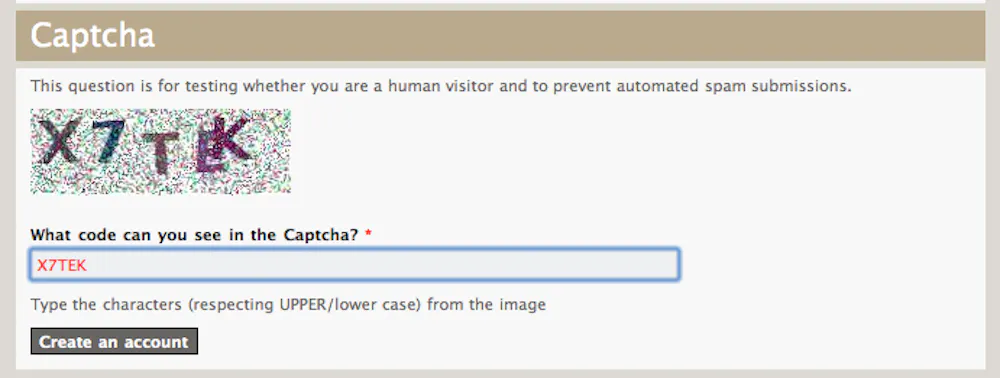
    Captcha, which stands for Completely Automated Public Turing test to tell Computers and Humans Apart, was invented in the early 2000s by a team of computer scientists at Carnegie Mellon University in Pittsburgh. It was a simple idea: get internet users to prove their humanity via tasks they can easily complete, but which machines find difficult.

    Machines were already causing havoc online. Websites were flooded with bots doing things like setting up fake accounts to buy up concert tickets, or posting automated comments to market fake Viagra or to entice users to take part in scams. Companies needed a way to stop this pernicious activity without losing legitimate users.

    The early versions of Captcha were basic but effective. You’d see wavy, distorted letters and type them into a box. Bots couldn’t “read” the text the way humans could, so websites stayed protected.


    Chris Messina, CC BY

    This went through several iterations in the years ahead: ReCaptcha was created in 2007 to add a second element in which you had to also key in a distorted word from an old book.

    Then in 2014 – by now acquired by Google – came reCaptcha v2. This is the one that asks users to tick the “I am not a robot” box and often choose from a selection of pictures containing cats or bicycle parts, or whatever. Still the most popular today, Google gets paid by companies who use the service on their website.

    Damn those bicycles.
    Lilgrapher

    How AI has outgrown the system

    Today’s AI systems can solve the challenges these Captchas rely on. They can “read” distorted text, so that the wavy or squished letters from the original Captcha tests are easy for them. Thanks to natural language processing and machine learning, AI can decode even the messiest of words.

    Similarly, AI tools such as Google Vision and OpenAI’s Clip can recognise hundreds of objects faster and more accurately than most humans. If a Captcha asks an AI to click all the buses in a picture selection, they can solve it in fractions of a second, whereas it might take a human ten to 15 seconds.

    This isn’t just a theoretical problem. Consider driving tests: waiting lists for tests in England are many months long, though you can get a much faster test by paying a higher fee to a black-market tout. The Guardian reported in July that touts commonly used automated software to book out all the test slots, while swapping candidates in and out to fit their ever-changing schedules.

    In an echo of the situation 20 years ago, there are similar issues with tickets for things such as football matches. The moment tickets become available, bots overwhelm the system – bypassing Captchas, purchasing tickets in bulk and reselling them at inflated prices. Genuine users often miss out because they can’t operate as quickly.

    Similarly, bots attack social media platforms, e-commerce websites and online forums. Fake accounts spread misinformation, post spam or grab limited items during sales. In many cases, Captcha is no longer able to stop these abuses.

    What’s happening now?

    Developers are continually coming up with new ways to verify humans. Some systems, like Google’s ReCaptcha v3 (introduced in 2018), don’t ask you to solve puzzles anymore. Instead, they watch how you interact with a website. Do you move your cursor naturally? Do you type like a person? Humans have subtle, imperfect behaviours that bots still struggle to mimic.

    Not everyone likes ReCaptcha v3 because it raises privacy issues – plus the web company needs to assess user scores to determine who is a bot, and the bots can beat the system anyway. There are alternatives that use similar logic, such as “slider” puzzles that ask users to move jigsaw pieces around, but these too can be overcome.

    Slider Captcha:


    GitHub

    Some websites are now turning to biometrics to verify humans, such as fingerprint scans or voice recognition, while face ID is also a possibility. Biometrics are harder for bots to fake, but they come with their own problems – privacy concerns, expensive tech and limited access for some users, say because they can’t afford the relevant smartphone or can’t speak because of a disability.

    The imminent arrival of AI agents will add another layer of complexity. It will mean we increasingly want bots to visit sites and do things on our behalf, so web companies will need to start distinguishing between “good” bots and “bad” bots. This area still needs a lot more consideration, but digital authentication certificates are proposed as one possible solution.

    In sum, Captcha is no longer the simple, reliable tool it once was. AI has forced us to rethink how we verify people online, and it’s only going to get more challenging as these systems get smarter. Whatever becomes the next technological standard, it’s going to have to be easy to use for humans, but one step ahead of the bad actors.

    So the next time you find yourself clicking on blurry traffic lights and getting infuriated, remember you’re part of a bigger fight. The future of proving humanity is still being written, and the bots won’t be giving up any time soon.

    The authors do not work for, consult, own shares in or receive funding from any company or organisation that would benefit from this article, and have disclosed no relevant affiliations beyond their academic appointment.

    ref. ‘Yes, I am a human’: bot detection is no longer working – and just wait until AI agents come along – https://theconversation.com/yes-i-am-a-human-bot-detection-is-no-longer-working-and-just-wait-until-ai-agents-come-along-246427

    MIL OSI – Global Reports

  • MIL-OSI Global: How to detect more antimicrobial resistant bacteria in our waterways

    Source: The Conversation – UK – By Zina Alfahl, Lecturer in Bacteriology, University of Galway

    Antimicrobial resistant superbugs have been found in rivers, lakes and streams worldwide. Freebird7977/Shutterstock

    Antimicrobial resistance (AMR) in waterways presents a critical threat. If commonly used antibiotics are deemed useless, decades of progress in human medicine and agriculture could be undermined.

    By 2050, AMR could cause 10 million deaths annually, according to the UN Environment Programme. But AMR is not just a human health issue. It also contributes to a decline in water quality and is exacerbated by water pollution, particularly from sources such as sewage and agricultural runoff. So, it’s a significant environmental concern with far-reaching implications.

    Addressing AMR in water is challenging because water systems are complex and can carry many different types of resistant bacteria. The lack of efficient, scalable and globally accessible methods to monitor AMR in water makes it difficult to mitigate this growing threat.

    I recently published a review in the Sustainable Microbiology journal that identifies key trends in AMR detection methods and highlights significant gaps.

    Rivers, lakes and wastewater systems around the world act as reservoirs and pathways for resistant superbugs and their genes, allowing AMR to spread across ecosystems, affecting wildlife, agriculture and human populations. River water is the most studied source of water samples, making up 42% of AMR-related research studies. Other water sources, including lakes and wastewater, may also play a key role in spreading resistant genes but, without detailed analysis, will remain misunderstood.

    Most AMR research comes from three countries: the US (17%), China (10%) and Brazil (9%). This shows where the focus is, but many other regions, especially low-income countries, are not well studied. This is concerning because AMR may be even more serious in these areas, yet data is lacking.

    New detection methods are more accurate but more expensive.
    Khomson Satchasataporn/Shutterstock

    To detect AMR, scientists primarily use two advanced molecular methods: polymerase chain reaction (PCR) (used in 57% of studies) and metagenomics (27%), alongside traditional culture-based methods that involve growing bacteria in a lab.

    Culture-based methods are simpler and cheaper than molecular methods but cannot be used onsite. They also can’t detect dead bacteria or hidden resistance genes.

    PCR amplifies specific DNA sequences for detection and can be used to identify specific bacteria. Metagenomics is a technique that analyses all of the genetic material from entire microbial communities within a sample, offering a broader perspective.

    These advanced methods are better at detecting AMR in rivers, lakes and oceans. They can find both known and new types of resistance, making them more useful for thorough monitoring.

    In Brazil, scientists used metagenomics to search for all of the different resistance genes present in waterways in different cities. This technique can detect patterns of resistance that regular tests can’t.

    While these methods are time-consuming and complicated (because they need specialised equipment and trained staff) and can be expensive, costing thousands of euros, they could be used more widely if funding is available. This would help track antibiotic resistance around the world, making it easier to find and fight.

    One Europe-wide study shows that culture methods failed to find all the resistance genes in contaminated river systems in ten countries, while advanced metagenomic techniques were able to identify them. So, molecular tools are crucial for understanding the true extent of AMR.

    My review shows a shift towards molecular techniques as the gold standard for AMR detection. It highlights the inadequacies of traditional culture-based methods and the need for integrated approaches that combine molecular techniques such as PCR (for detecting specific resistance genes) with metagenomics (for broader microbial community analysis).

    For example, wastewater monitoring programs could use PCR to quickly identify key resistance genes in hotspots while employing metagenomics to map the diversity of resistant organisms. This would offer a more balanced approach that optimises cost, efficiency, and accessibility.

    A hybrid approach

    By mapping global research efforts, I identified underrepresented regions such as sub-Saharan Africa and southeast Asia. I also found that certain water sources were underrepresented, particularly rivers in low-income countries. Without more equitable and comprehensive AMR surveillance, those will not be accounted for.

    To make accurate AMR detection more accessible to all, hybrid approaches that combine the comprehensive detection capabilities of molecular methods with the affordability of culture-based methods will be essential.

    Governments around the world must prioritise investments in technologies that are not only scientifically robust but also economically viable, particularly for low- and middle-income countries.

    New methods such as PCR and metagenomics can help us fight the spread of drug resistance. If we can make these methods cheaper and easier to use it could help us manage wastewater better, improve global tracking of drug resistance and make decisions that protect both people and the environment from superbugs.


    Don’t have time to read about climate change as much as you’d like?

    Get a weekly roundup in your inbox instead. Every Wednesday, The Conversation’s environment editor writes Imagine, a short email that goes a little deeper into just one climate issue. Join the 40,000+ readers who’ve subscribed so far.


    Zina Alfahl does not work for, consult, own shares in or receive funding from any company or organisation that would benefit from this article, and has disclosed no relevant affiliations beyond their academic appointment.

    ref. How to detect more antimicrobial resistant bacteria in our waterways – https://theconversation.com/how-to-detect-more-antimicrobial-resistant-bacteria-in-our-waterways-246062

    MIL OSI – Global Reports

  • MIL-OSI Global: Climate, migration and conflict mix to create ‘deadly’ intense tropical storms like Chido

    Source: The Conversation – UK – By Liz Stephens, Professor of Climate Risks and Resilience, University of Reading

    Cyclone Chido was an “intense tropical cyclone”, equivalent to a category 4 hurricane in the Atlantic. It made landfall in Mayotte, a small island lying to the north-west of Madagascar on December 14, generating wind gusts approaching 155mph (250km/hr). Later on, it hit Mozambique, East Africa with the same ferocity.

    This storm skirted north of Madagascar and affected the Comoros archipelago before making landfall in Mozambique. It is well within the range of what is expected for this part of the Indian Ocean. But this region has experienced an increase in the most intense tropical cyclones in recent years. This, alongside its occurrence so early in the season, can be linked to increases in ocean temperatures as a result of climate change.

    News of the effects of tropical cyclone Chido in Mayotte, Mozambique and Malawi continues to emerge. Current estimates suggest 70% of Mayotte’s population have been affected, with over 50,000 homes in Mozambique partially or completely destroyed.

    Ongoing conflict in Mozambique and undocumented migration to Mayotte will have played a key role in the number of deaths and the infrastructure damage.

    Assessing how these cyclones characteristics are changing across southern Africa is part of the research we are involved in. Our team also studies how to build resilience to cyclones where conflict, displacement and migration magnify their effects.

    A human-made disaster?

    The risk that tropical cyclones pose to human life is exacerbated by socioeconomic issues. Migrants on Mayotte, many of whom made perilous journeys to escape conflict in countries such as the Democratic Republic of Congo, now make up more than half of the island’s population.

    Precarious housing and the undocumented status of many residents reportedly made the disaster more deadly, as people feared evacuation would lead them to the police. On islands with poor infrastructure such as Mayotte, there is often simply nowhere safe to go. It takes many days for the power network and drinking water supply to be restored.

    The situation is particularly complex in Mozambique. The ongoing conflict and terrorist violence, coupled with cyclones, including Kenneth in 2019, has caused repeated evacuations and worsening living conditions. Cabo Delgado and Nampula in the far north of Mozambique, the provinces most affected by both Chido and the conflict, rank among the poorest and most densely populated in the country due to limited education, scarce livelihood options and an influx of people displaced by violence.

    As of June 2024, more than half a million people remained without permanent homes in the region, many living in displacement camps. That number is likely to rise significantly after Chido.

    Compounding the crisis, Chido’s landfall so early in the cyclone season meant that the usual technical and financial preparations were not yet fully ramped up, with low stock levels delaying the timely delivery of aid. Unrest following elections in November hampered preparations further, cutting the flow of resources and personnel needed for anticipatory action and early response.

    Tropical cyclones in a warmer world

    Warmer sea surface temperatures not only provide more fuel for stronger storms, but may also expand the regions at risk of tropical cyclones.

    The Indian Ocean is warming faster than the global average, and is experiencing a staggering increase in the proportion of storms reaching the intensity of Chido.

    Climate simulations predict that storms will continue getting stronger as we further warm our world, and could even lead to an unprecedented landfall as far south as the Mozambican capital, Maputo.

    Scientists carry out attribution studies to determine how climate change contributed to specific events. Scientists undertaking rapid attribution studies of Chido have found that the ocean surface temperatures along the path of the storm were 1.1°C warmer than they would have been without climate change. So, temperatures this warm were made more than 50 times more likely by climate change. Another study focusing on Chido itself concluded that the cyclone’s winds were 5% faster due to global heating caused by burning fossil fuels, enough to bump it from a category 3 to a category 4 storm.

    Intense winds are not the only hazard. Scientists are confident that tropical cyclones will dump more rain as a result of climate change. A trend towards slower-moving storms has been observed, causing more of that rain to accumulate in a single location, resulting in floods.

    Cyclone Freddy delivered a year’s worth of rain to southern Malawi in just four days in March 2023. Storm surges, exacerbated by sea level rise, also raise the scale of flooding, as in the devastating Cyclone Idai in March 2019. An increase in the number of storms that rapidly intensify, as Chido did before landfall in Mayotte has also been linked to climate change, which makes it harder to provide early warnings.

    To improve resilience to future cyclones, conflict, migration and social dynamics must be considered alongside climate change, without this, displaced and migrant communities will continue to be the most affected by the risks that climate change poses.


    Don’t have time to read about climate change as much as you’d like?

    Get a weekly roundup in your inbox instead. Every Wednesday, The Conversation’s environment editor writes Imagine, a short email that goes a little deeper into just one climate issue. Join the 40,000+ readers who’ve subscribed so far.


    Liz Stephens also works for the Red Cross Red Crescent Climate Centre, where she works as the Science Lead. She receives funding from the Foreign, Commonwealth & Development Office (FCDO) and the International Development Research Centre in Canada, as part of the CLARE (CLimate Adaptation and REsilience) research programme. Liz holds advisory positions within the Red Cross Red Crescent Movement, for the European Commission’s Global Flood Awareness System, the Anticipation Hub and the African Risk Capacity

    I work for a university which has interest on publications around disasters and climate change. I am part of a research consortium (REPRESA) funded by IDRC to research cyclones in Southern Africa region

    Dan Green does not work for, consult, own shares in or receive funding from any company or organisation that would benefit from this article, and has disclosed no relevant affiliations beyond their academic appointment.

    ref. Climate, migration and conflict mix to create ‘deadly’ intense tropical storms like Chido – https://theconversation.com/climate-migration-and-conflict-mix-to-create-deadly-intense-tropical-storms-like-chido-246219

    MIL OSI – Global Reports

  • MIL-OSI Global: What the colour of your snot says about your immune health

    Source: The Conversation – UK – By Samuel J. White, Associate Professor & Head of Projects, York St John University

    Clear snot is usually the baseline. Dmitrii Pridannikov/ Shutterstock

    Ever wondered why the colour of your snot is different when you’re sick? You’re probably not the first person to ask this question.

    There are actually many reasons why your snot’s changes colour when you’re unwell. And the colour and consistency of nasal mucus can reveal intriguing details about your immune system, and how your body responds to illnesses.

    Mucus is produced by the tissues lining our nasal passages. Often perceived as a mere nuisance, mucus serves a very important role. It acts as a protective barrier, trapping dust, bacteria, viruses and other irritants – preventing them from reaching the respiratory system’s deeper parts.

    Enzymes such as lysozyme and lactoferrin that inhabit our nasal mucus also have antimicrobial properties. They break down bacterial cell walls and help to limit bacterial growth. This protective role makes mucus a critical line of defence – even when we’re not unwell.

    The continuous process of mucus production by the tissues lining our nasal passages exemplifies the body’s natural defence mechanisms in action. When we get sick, mucus changes – becoming thicker, more abundant and sometimes colourful. These changes highlight your immune system’s response.

    Here’s what the many colours of your snot says about your health:

    Clear

    This is the baseline for a healthy nose. It’s mostly water, combined with proteins, salts and cells that keep the nasal passages moist and trap particles.

    Allergies and the very early stages of a viral infection can cause an overproduction of clear mucus. This can also happen when your body reacts to irritants or pathogens.

    White

    White mucus is often a sign of congestion.

    Inflammation in the nasal tissues slows mucus flow, causing it to thicken. This typically signals the beginning of an infection, such as a cold, as your immune system starts mobilising against invaders.

    Yellow

    Yellow mucus indicates your immune system is actively fighting off an infection.

    Don’t be surprised by yellow snot when you’re battling an illness.
    Soloviova Liudmyla/ Shutterstock

    White blood cells sent to attack the infection die and release enzymes that give mucus its yellowish colour. This is a hallmark of the body’s response to many viral infections – including the common cold, influenza and respiratory syncytial virus (RSV).

    Green

    Green mucus results from an intensified immune response. The green tint comes from an enzyme called myeloperoxidase, which is produced by neutrophils (a type of white blood cell). This enzyme generates a specific molecule that destroys pathogens.

    While green mucus often indicates a bacterial infection, it can also occur when your body mounts a robust immune response to aggressive viral pathogens.

    Red or pink

    A pink or reddish tint in mucus means there’s blood present. This often happens when the nasal tissues are irritated, dry or damaged – such as after excessive nose blowing or exposure to dry air. Small amounts of blood are usually not a cause for concern.

    Brown or orange

    Brown or orange mucus may result from dried blood mixing with mucus, or from inhaling environmental debris – such as smoke or dust. While typically harmless, it may suggest irritation or prolonged inflammation.

    Black

    Black mucus is rare and may indicate serious issues – such as a fungal infection (particularly in immunocompromised people) or heavy exposure to pollutants such as soot or cigarette smoke. This warrants medical attention.

    The immune system in action

    Mucus is an indispensable part of your immune system, actively protecting your body by trapping and neutralising harmful pathogens. Changes in its colour and consistency provide a glimpse into your health – helping differentiate between viral bacterial infections. It also provides insight into the complex processes occurring as your body works to keep you healthy.

    Next time you reach for a tissue, remember that mucus isn’t merely a symptom of illness — it’s your immune system in action. Its colours and textures tell a story of resilience, reflecting the intricate defences that keep your body healthy and safe.

    The authors do not work for, consult, own shares in or receive funding from any company or organisation that would benefit from this article, and have disclosed no relevant affiliations beyond their academic appointment.

    ref. What the colour of your snot says about your immune health – https://theconversation.com/what-the-colour-of-your-snot-says-about-your-immune-health-245876

    MIL OSI – Global Reports

  • MIL-OSI Global: What next for Syria? The danger of violence in post-war transitions

    Source: The Conversation – UK – By Chelsea Johnson, Lecturer in International Relations, University of Liverpool

    Images emerging from Syria over the past week have shown jubilation on the streets, as millions celebrate the end of 24 years of repression under Bashar al-Assad.

    It is rare for rebels to manage to tip the scales in their favour and win a war outright after such a long and protracted stalemate. But the obvious next question is: what comes next? Looking to the handful of similar examples, history suggests that new forms of violence could continue to threaten Syria’s political future.

    In Libya, an umbrella coalition of rebel forces known as the National Transition Council defeated Muammar Gaddafi’s government in 2011. Meanwhile, in South Sudan, victory against Omar al-Bashir came in the form of a successful referendum on independence that same year.

    Looking further back, in Idi Amin’s Uganda, an alliance was brokered by neighbouring Tanzania between two rival rebellions in 1979. Their joint military campaign ended in Amin’s defeat soon after.

    The immediate aftermath of rebel victory in each of these cases points to one common lesson. Where a fragmented coalition of armed groups finds itself in a political vacuum, more violence – not less – is probably on the horizon.

    Fragile and shifting coalitions

    The injustices of repressive regimes often motivate rebellion. They can also provide a common enemy that, especially when sensing a window of opportunity, makes it possible for rival armed groups to put aside their differences and work together towards a common cause.

    Subsequently, however, transition periods generate uncertainty over political futures. This can make it difficult for former allies to remain united.

    Many Libyan militias allied behind the National Transition Council during its uprising against Muammar Gaddafi. But they soon became violent rivals in competition over political influence in the transitional government being formed in Tripoli.

    In a vacuum of authority, these new forms of violence may look like local turf wars. But they are often attempts by faction leaders to position themselves advantageously as political spoils are up for grabs at the national level.

    Meanwhile, where dominant factions vie for national power in the presence of many smaller and more localised militias, these weaker factions may be prone to changing allegiances so as to end up on the winning side.

    Fighting in Libya throughout 2017 exhibited this kind of opportunistic flip-flopping. Local militias such as the Kiniyat Brigade changed their allegiances between the faction of former prime minister, Khalifa al-Ghawil, and a rival faction based in Tripoli claiming to represent the legitimate government of Libya.

    The conflict in South Sudan has long been described as ethnic in nature. The main rival leaders, Salva Kiir and Riek Machar, belonged to the country’s two largest ethnic groups, Dinka and Nuer. But this obscures a more complex and strategic constellation of alliances. Many of the groups that have fought against Kiir have also been ethnic Dinkas and vice versa, with loyalties shifting over time as either leader gains an advantage. Some of the most recent violence has been between forces loyal to Machar and a co-ethnic splinter faction known as Kitgwang, which opposes his leadership.

    Numerous reports from international observers and mediators have attested to the difficulty of brokering and maintaining a stable agreement on the terms of transition in these countries due to fluid and shifting coalitions.

    Armed groups in Syria have already shown such tendencies. The Military Operations Command, the coalition of Syrian opposition groups that brought down Assad’s regime, exists in name only. The dominant group, Hayat Tahrir al-Sham (HTS), is itself an amalgam of at least four separate militias, while previous coalitions backed by Turkey and the US have coalesced and fragmented over time.

    HTS leader Ahmed al-Sharaa has pledged that all rebel factions will “be disbanded and the fighters trained to join the ranks of the defence ministry”. But history suggests that a rival is likely to emerge from one of these blocs to challenge the legitimacy of HTS’s claim to lead the transition. This will introduce a new element of uncertainty for the smaller factions forced to choose a side.

    Looking ahead to elections

    Even where a stable transitional coalition can be upheld, peace may eventually be threatened by the outcome of a winner-takes-all election.

    Violence was avoided in post-Amin Uganda for as long as the two faction leaders who overthrew him held top positions in a transitional power-sharing government. But when elections produced a clear win for Milton Obote in 1980, his rival, Yoweri Museveni, relaunched his rebellion. Uganda’s so-called bush war would continue until 1986, when Museveni’s forces took the capital, Kampala, by force.

    Ethiopia’s post-war transition fared slightly better after victory for an allied rebel assault on the authoritarian Derg regime in 1991. Most of Ethiopia’s rebel factions had clear and distinct ethno-territorial bases and, as a result, the new constitution emerging from an inclusive national conference devolved power to ethnic regions in a federal system.

    This attempt to create a political stake for former rebels not wholly dependent on national election results may have succeeded had local or regional elections been held first. Ultimately, however, at least two rebellions returned to low-level violence throughout the 1990s, accusing the new government of marginalisation and attempts to undermine their electoral competitiveness.

    In any case, devolution appears unlikely in Syria. Aside from Kurdish separatists in the north-east, the country’s many militias have less clear linkages to specific demographic groups and often overlap in their areas of influence. And with HTS now calling for a unified state with no federal regions, the national-level political game will remain high stakes and prone to violent forms of contention.

    Chelsea Johnson receives funding from the British Academy.

    ref. What next for Syria? The danger of violence in post-war transitions – https://theconversation.com/what-next-for-syria-the-danger-of-violence-in-post-war-transitions-246073

    MIL OSI – Global Reports

  • MIL-OSI Global: Who chooses to work, and who is forced to, after retirement?

    Source: The Conversation – UK – By Takao Maruyama, Assistant Professor in Business Analytics, University of Bradford

    fizkes/Shutterstock

    The state pension age in the UK is currently 66. Yet 9.5% of people aged 66 and older (1.12 million people) were still working, according to the most recent data from the UK’s Annual Population Survey (July 2023 to June 2024). This figure has been rising over the past decade, increasing from 8.70% (880,000 people) in July 2013 to June 2014.

    We think of retirement as a time to pursue hobbies, relax and enjoy the fruits of our labour. So why then, are so many people still working beyond retirement age, and who are they? This is what we sought to find out in a recent study.

    We investigated who is more likely to “choose to work” and who is “forced to work”, using data from the UK’s annual population survey.

    Older workers are not a homogeneous population. They differ in terms of age, ethnicity, socioeconomic class, financial situation, health conditions and more. Likewise, the reasons for working beyond retirement age vary widely. Some may work because they want to, while others may have no option and feel they have to work in order to make ends meet.

    The below chart shows the breakdown of these retirement-age workers by key demographic and socioeconomic characteristics from the most recent data.

    Three in five retirement-age workers were men, and almost all (94.4%) older workers were white. Just over half (51.5%) of older workers continued to work despite having long-term illnesses.

    Characteristics of workers aged 66 and older:

    Workers aged 66 years and older by demographic and socioeconomic characteristics.
    Author provided, data from Annual Population Survey July 2023 to June 2024, CC BY

    The majority (71.2%) of older workers were married, in a civil partnership or cohabiting. Nearly 40% of older workers were employed in higher managerial, administrative and professional occupations, followed by intermediate occupations such as sales or some service roles (32.1%), and routine manual occupations (25.6%).

    More than 85% of retirement-age workers lived in the south (52.8%) and the north (33.1%) of England, and 70% are homeowners.

    Who is ‘forced’ to work?

    In our study, we calculated the likelihood of pension-age workers (66 years and older) with varying demographic and socioeconomic characteristics being forced to work.

    The Annual Population Survey identifies six main reasons why older workers continue working beyond retirement age. These are:

    A. To pay for desirable items (such as holidays),
    B. Not ready to stop work,
    C. Employer needs your experience or you are needed in the family business,
    D. Due to opportunities to work more flexible hours,
    E. To pay for essential items (such as bills), and
    F. To boost pension pot.

    In our study, we classed reasons (A) to (D) as “choose to work”, and (E) and (F) as “forced to work”. Our analysis, based on the most recent dataset (April 2022 to March 2023) at the time of the study, revealed that women are 25% more likely to be forced to work compared to men, and Asian workers are 120% more likely to be forced to work than white workers (with 34% and 17% more likely for older workers from black and other ethnic backgrounds, respectively).

    Workers without long-term illness are 33% less likely to be forced to work than those with long-term illness, and non-married or single workers are 56% more likely to be forced to work compared to seniors who are married, in a civil partnership or cohabiting.

    Workers in intermediate and routine manual occupations are 37% and 67% more likely to be forced to work, respectively, compared to those in higher managerial occupations. Older workers from the south of England are more likely to be be forced to work compared to seniors from any other parts of the UK, and retirement-age workers with mortgages or renting were 117% more likely to be forced to work compared to those who owned their properties.

    Who is more likely to be ‘forced to work’?:

    % comparison of likelihood of being ‘forced to work’.
    Author provided, data from Annual Population Survey April 2022 to March 2023., CC BY

    Ageing populations

    This matters because of the changing nature of work, the rising cost of living and the UK’s ageing population. Retirement-age workers will be increasingly pressured to work longer due to the rising state pension age (due to increase to 67 in 2026-27).

    Understanding who works by choice and who by necessity into retirement age is important, because these groups will need different kinds of support and resources.

    For example, the higher likelihood of being forced to work among older female workers can be partly attributed to career breaks they took to serve as primary caregivers for their children, which often prevented them from accumulating sufficient pensions.

    As the state pension age is expected to continue rising, it is crucial for policymakers and employers to design support systems for diverse demographic and socioeconomic groups of older workers, addressing their unique needs. This starts with understanding why people are working into old age.

    The authors do not work for, consult, own shares in or receive funding from any company or organisation that would benefit from this article, and have disclosed no relevant affiliations beyond their academic appointment.

    ref. Who chooses to work, and who is forced to, after retirement? – https://theconversation.com/who-chooses-to-work-and-who-is-forced-to-after-retirement-246214

    MIL OSI – Global Reports

  • MIL-OSI Global: A short history of palm reading in the UK – and a guide to how it’s supposed to work

    Source: The Conversation – UK – By Martha McGill, Historian of Supernatural Beliefs, University of Warwick

    Wikimedia , CC BY

    In August 1676, a court in Hertford heard a case of fraud against Joseph Haynes, James Domingo and Domingo’s “pretended wife” Sarah. The three had been travelling between local towns telling fortunes.

    Apparently, Domingo had promised one woman that she would marry a “pretty tall merry-speaking” farmer’s son with a mole on his chin and a respectable £80 to his name. Haynes, meanwhile, boasted that his divinatory efforts had won him £5, three maidenheads and a broken shin.

    The court’s decision is not recorded, but the case encapsulates the divided opinion of divination in the 17th century. Although commonly condemned by the authorities, fortune-telling was a popular and potentially profitable art.

    We do not know how exactly the three miscreants practised, but most travelling fortune-tellers studied facial features (physiognomy) or read palms (palmistry or chiromancy). The idea that there was occult meaning etched in the body’s marks, lines, features and moles stretches back to antiquity.

    The body’s outer form supposedly reflected the state of the soul. Also, it was believed that the body was intimately entwined with the wider cosmos.


    Looking for something good? Cut through the noise with a carefully curated selection of the latest releases, live events and exhibitions, straight to your inbox every fortnight, on Fridays. Sign up here.


    In a popular work from the early 16th century, the German physician Heinrich Cornelius Agrippa explained that the body’s appearance and behaviour invited particular “celestial gifts”. Palmistry was the art of interpreting this “harmonical correspondency”.

    However, Christian authorities were largely unimpressed. Theologians dismissed palmistry as superstitious, or argued that it was presumptuous to pry into God’s plan. The Catholic church officially condemned divinatory arts in a papal bull of 1586. The English Protestant minister William Perkins (1558–1602) wrote that palmistry was an “abomination” that was “detested of God, and ought also to be detestable in the eyes of Gods [sic] people”.

    Official mistrust of palmistry was spurred by its association with “Egyptian” fortune-tellers (often shortened to “gypsies”). This label was used for travellers of diverse origins, but especially the Romani diaspora from India.

    Romani travellers first reached central and western Europe in the 15th century and many claimed to have come from Egypt. Ancient Egyptians were famed for their occult wisdom and the association probably helped Romani groups to win credit as fortune-tellers. Nevertheless, they met with widespread persecution.

    A fortune teller reading the palm of a soldier.
    Wellcome Collection, CC BY-NC

    In England, a 1530 parliamentary act officially banished the “outlandish” people “calling themselves Egyptians” who allegedly travelled about the country, swindling people by pretending divinatory prowess.

    All the same, magical practitioners at various social levels continued to offer palm-reading services. And from the 17th century, pamphlets offered guides to interpreting your own hands.

    An anonymous work published in London in 1700 claimed to fully resolve all questions about human life through “the Rules of Art used by the Ancient and Famous Egyptian Magi, or Wise Men and Philosophers”.

    Here I offer some guidance on how you’re supposed to read your palm based on that work. It may contradict itself hopelessly. It may promise you a grisly death. But if the stars are kind, you too could rise by your good deeds and find a spouse lauded for their virtue – or, at least, a merry man with £80 and a nice mole.

    How to read a palm

    Always consult the left hand.

    1: Life line

    Look for the semi-curved line that starts between the thumb and index finger and runs down toward the wrist.

    If this line is long and clear, not broken with little cross-lines, you will be healthy and live to an old age. However, if the uppermost part of the line is forked or jagged, you will often be sick.

    If there are three stars intersecting with the line, you may suffer “great losses and calamities”. If the line intertwines with the table line, you will gain “honour and riches”.

    2: Table line

    Look for a horizontal line on your upper palm that starts near the index or middle finger and runs to beneath the little finger.

    If this line is broad and vivid in colour, you will be healthy and contented. However, if the line is forked at the end, you will gain riches by trickery and soon lose them again. If it branches towards the index or middle finger, you will rise to a prestigious position.

    3: Middle line

    Look for a horizontal line across the middle part of the palm.

    If there are lots of small lines in between this and the table line, you will be sick when you are young but make a recovery. If there is a halfmoon in this line, you will suffer from “cold and watery diseases”, but a sun or a star promises prosperity.

    4: Line of Venus

    Look for an arching line that runs near the base of your middle, ring and little fingers.

    If this line forks near the index finger, you may be ruined by keeping bad company. If there are crosses on this line near the index and little fingers, you are “inclined to a virtuous and modest course of life”. The author claims that wise men employ this method to choose suitable wives.

    5: Liver line

    Look for a vertical line that starts beneath the ring or little finger and runs to the base of the palm.

    If this line is straight, you are of sound judgement. If it is crooked you are deceitful. If this line and the middle line begin near one other, it means foolishness in men and foretells injury by overwork for women.

    6: Plain of Mars

    Plains are flat areas of the palm that can be associated with difference parts of life. The plain of Mars is the centre of your palm.

    If the lines in this plain are crooked, you will fall by your enemies. If you have lines beginning at the middle of your wrist and reaching into the plain of Mars, you will get into lots of fights. If there are large crosses in the plain, you will, if a man, rise by good deeds or, if a woman, have many husbands and children.

    Martha McGill does not work for, consult, own shares in or receive funding from any company or organisation that would benefit from this article, and has disclosed no relevant affiliations beyond their academic appointment.

    ref. A short history of palm reading in the UK – and a guide to how it’s supposed to work – https://theconversation.com/a-short-history-of-palm-reading-in-the-uk-and-a-guide-to-how-its-supposed-to-work-246276

    MIL OSI – Global Reports

  • MIL-OSI Global: Times journalists deemed ‘legitimate military targets’ – how Russia muzzles criticism at home and abroad

    Source: The Conversation – UK – By Precious Chatterje-Doody, Senior Lecturer in Politics and International Studies, The Open University

    Russia’s former president and current deputy head of its security council, Dmitry Medvedev, has declared that the editors of the Times newspaper in the UK are now “legitimate military targets”.

    Medvedev, who is one of Vladimir Putin’s closest allies, was responding to the newspaper’s coverage of the recent assassination of Russia’s chemical weapons chief, Igor Kirillov, in Moscow on December 17. The paper’s leading article referred to his killing by an explosive device hidden in a scooter as a “legitimate act of defence by a threatened nation”.

    Medvedev took to Telegram to denounce the article, writing: “Those who carry out crimes against Russia … always have accomplices. They too are now legitimate military targets. This category could also include the miserable jackals from the Times who cowardly hid behind their editorial. That means the entire leadership of the publication.”

    The assassination of Kirillov, who was in charge of Russia’s chemical, biological and nuclear defence forces, came a day after he had been charged by Ukraine in absentia with war crimes over Russia’s use of chemical weapons in the ongoing war.

    Once seen as a liberal reformer when he temporarily took over Russia’s presidency between 2008 and 2012, Medvedev has since reinvented himself as a pro-war hawk who regularly makes outlandish or extreme statements on social media.

    In May 2023, following a drone attack on the Kremlin, Medvedev posted a message on Telegram saying there were “no options left other than the physical elimination of [the Ukrainian president] Zelenskyy and his clique”. The post prompted Ukraine’s foreign minister, Dmytro Kuleba, to respond in an interview that “Medvedev should drink less vodka before going on Telegram”.

    In his most recent outburst, Medvedev mirrored the rhetoric used in the Times editorial, claiming that by the same logic, all of Kyiv’s “accomplices” – whether decision-makers in Nato or journalists justifying Ukraine’s actions – are active participants in a war against Russia. This makes them “legitimate military targets” who need to “be careful” even in London, where “anything goes”.

    Part of a pattern

    Medvedev’s comments, while extreme, fall within a broader pattern of Russian officials using humour or courting controversy to justify their positions or ensure international press coverage. But they are also part of an escalation in Russian attacks on freedom of expression and the press.

    Prior to the full-scale invasion of Ukraine, Russia’s media environment was restricted. Opposition viewpoints could, however, still be accessed relatively easily from a range of sources, including the regional press, online outlets and the political blogosphere. But the Kremlin has gradually chipped away at these possibilities by increasing restrictions on independent media and social media users alike.

    These restrictions were ramped up even further following Russia’s invasion of Ukraine in February 2022. Criticism of the armed forces and spreading what the Kremlin deems “false information” about the so-called “special military operation” were criminalised.

    Anti-war activists now routinely face conviction for justifying terrorism, and well-respected news outlets such as Ekho Moskvy have been forced to close. Journalists from Russia and abroad have been tried, convicted and incarcerated for allegedly violating these laws. They are often held in harsh conditions, in isolation and without access to adequate medical care.

    But it is not just journalists and activists within Russia who have come under threat from this increasingly authoritarian regime. As well as its military incursions into Georgia in 2008 and eastern Ukraine since 2014, Russian intelligence organisations have been blamed for a number of targeted provocations abroad in recent years. In the case of the 2018 Salisbury poisonings, these resulted in fatalities on British soil.

    Russian involvement is, of course, always denied. Kremlin propaganda uses a range of disinformation tactics to hide Russia’s culpability. With the Salisbury poisonings, this included an outlandish television interview on Russia’s RT network, where the main suspects claimed to be visiting health supplements salesmen. My research at the time showed that online audiences universally rejected their story, but incredulity over the interview overtook public anger.

    Contrasting values

    As my research has shown, extreme statements and conspiracy theories circulate rapidly and widely in today’s international media environment. With this in mind, it is common for the Kremlin and its proxies to mirror accusations back towards other parties and accuse them of hypocrisy.

    Taking questions from a US journalist in his end-of-year press conference and phone-in on December 19, Putin was asked about the “failure” of the special military operation in Ukraine. The reporter went on to describe Putin’s position as “weaker” than that of the incoming US president, Donald Trump.

    Putin insinuated that the very fact this US journalist was included in the event showed a better treatment by Russia of “esteemed” international journalists than Russian journalists receive from the US.

    This is patently untrue. Wall Street Journal reporter Evan Gershkovich was imprisoned in Russia for 16 months on trumped-up espionage charges, after being detained in March 2023 while covering the effect of western sanctions on the Russian economy.

    Russia’s crackdown on freedom of speech and freedom of the press is precisely because authoritarian regimes recognise they are incredibly vulnerable to the free and open-ended enquiry that my co-authors and I have argued is so crucial to defend.

    As a spokesperson for the UK prime minister, Keir Starmer, noted in response to Medvedev’s latest comments: “A free press is a cornerstone of our democracy.”

    Precious Chatterje-Doody does not work for, consult, own shares in or receive funding from any company or organisation that would benefit from this article, and has disclosed no relevant affiliations beyond their academic appointment.

    ref. Times journalists deemed ‘legitimate military targets’ – how Russia muzzles criticism at home and abroad – https://theconversation.com/times-journalists-deemed-legitimate-military-targets-how-russia-muzzles-criticism-at-home-and-abroad-246361

    MIL OSI – Global Reports

  • MIL-OSI Global: Whales can live way longer than scientists had thought, with potential lifespans as much as double previous estimates

    Source: The Conversation – USA – By Greg Breed, Associate Professor of Quantitative Ecology, University of Alaska Fairbanks

    Animals with long lifespans tend to reproduce extremely slowly. Els Vermeulen

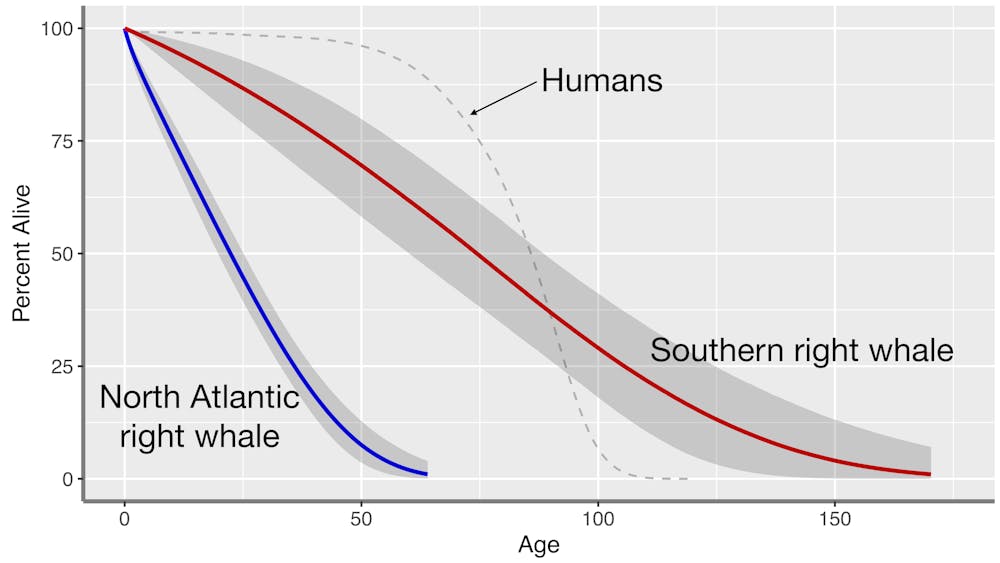
    Southern right whales have lifespans that reach well past 100 years, and 10% may live past 130 years, according to our new research published in the journal Science Advances. Some of these whales may live to 150. This lifespan is almost double the 70-80 years they are conventionally believed to live.

    North Atlantic right whales were also thought to have a maximum lifespan of about 70 years. We found, however, that this critically endangered species’ current average lifespan is only 22 years, and they rarely live past 50.

    These two species are very closely related – only 25 years ago they were considered to be one species – so we’d expect them to have similarly long lifespans. We attribute the stark difference in longevity in North Atlantic right whales to human-caused mortality, mostly from entanglements in fishing gear and ship strikes.

    Survivorship curves show female right whales can live to very old ages, but humans are causing North Atlantic right whales to die well short of their potential. Plotted for comparison is the U.S. survivorship curve for women as estimated by the Social Security Adminstration.
    Greg Breed

    We made these new age estimates using photo identification of individual female whales over several decades. Individual whales can be recognized year after year from photographs. When they die, they stop being photographically “resighted” and disappear. Using these photos, we developed what scientists call “survivorship curves” by estimating the probability whales would disappear from the photographic record as they aged. From these survivorship curves, we could estimate maximum potential lifespans.

    Twenty-five years ago, scientists working with Indigenous whale hunters in the Arctic showed that bowhead whales could live up to and even over 200 years. Their evidence included finding stone harpoon points that hadn’t been used since the mid-1800s embedded in the blubber of whales recently killed by traditional whalers. Analysis of proteins from the eyes of hunted whales provided further evidence of their long lifespan. Like right whales, before that analysis, researchers thought bowhead whales lived to about 80 years, and that humans were the mammals that lived the longest.

    In the years following that report, scientists tried to figure out what was unique about bowhead whales that allowed them to live so long. But our new analysis of the longevity of two close relatives of bowheads shows that other whale species also have potentially extremely long lives.

    Why it matters

    Understanding how long wild animals live has major implications for how to best protect them. Animals that have very long lifespans usually reproduce extremely slowly and can go many years between births. Baleen whales’ life history – particularly the age when females start breeding and the interval between calves – is strongly influenced by their potential lifespan. Conservation and management strategies that do not plan accordingly will have a higher chance of failure. This is especially important given the expected impacts of climate disruption.

    What still isn’t known

    There are many other large whales, including blue, fin, sei, humpback, gray and sperm whales. Like bowhead and right whales, these were also almost wiped out by whaling. Scientists currently assume they live about 80 or 90 years, but that’s what we believed about bowhead and right whales until data proved they can live much longer.

    How long can these other whale species live? Industrial whaling, which ended only in the 1960s, removed old whales from the world’s whale populations. Though many whale populations are recovering in number, there hasn’t been enough time for whales born after the end of industrial whaling to become old.

    It’s possible, even likely, that many other whale species will also prove to have long lifespans.

    Sixty years after the end of industrial whaling, today’s whale populations may still be missing their elders.
    Maxi Jonas/picture alliance via Getty Images

    What other research is being done

    Other research finds the loss of older individuals from populations is a phenomenon occurring across most large animal species. It diminishes the reproductive potential of many species. Researchers also argue this represents a real loss of culture and wisdom in animals that degrades their potential for survival in the face of changing conditions.

    What’s next

    We want to better understand how whaling affected the number of old individuals in current whale populations and predict when the number of old individuals will recover to prewhaling levels. Preliminary results suggest it may be another 100 years before whale populations truly recover, even for species whose populations now number as many as there were before whaling.

    For North Atlantic right whales, our research shows that even when the population was increasing, the management actions taken were insufficient to prevent these whales from dying far too young.

    The Research Brief is a short take on interesting academic work.

    Greg Breed received funding from The Royal Society

    Peter Corkeron headed the National Oceanic and Atmospheric Administration’s large whale research program for the northeastern US from 2011 to 2019, then led the New England Aquarium’s right whale research program through 2022.

    ref. Whales can live way longer than scientists had thought, with potential lifespans as much as double previous estimates – https://theconversation.com/whales-can-live-way-longer-than-scientists-had-thought-with-potential-lifespans-as-much-as-double-previous-estimates-245826

    MIL OSI – Global Reports

  • MIL-OSI Global: DRC has created a reserve force to fight the M23 – why this may backfire

    Source: The Conversation – Africa – By Judith Verweijen, Assistant professor, Utrecht University

    After nearly three decades of warfare, armed conflict in the eastern Democratic Republic of Congo (DRC) seems only to intensify. The Rwanda-backed M23 rebellion has been at the centre of attention in recent years. However, eastern DRC is home to more than 100 other armed groups, which are a major source of instability too. The question of their demobilisation has haunted the country ever since the end of the Second Congo War in 2003.

    A new chapter in this long-standing conundrum seems to have started. In 2022, the government decided to form an alliance with armed groups to fight their common enemy, the M23 and its Rwandan backers. At around the same time, it launched an initiative to create an army reserve, known as the Reserve armée de la défense (RAD). This formalised the Congolese army’s established practice of using armed groups as auxiliaries.

    The creation of the reserve army allows the government to reward armed group allies with integration while bringing them under institutionalised control. But will this actually work?

    Our past and ongoing research on army integration and demobilisation in eastern DRC casts doubt on the plan, for three reasons.

    The first risk is that armed groups will boost their numbers to gain a stronger bargaining position once integration does occur.

    Secondly, reservist forces may compete with the army over territorial control and limited resources and turn against those who created them.

    Finally, merely absorbing armed groups into a reserve force does little to address the long-standing grievances that underlie conflict in the east.

    The Wazalendo: eastern DRC’s predatory patriots

    On 9 May 2022, in a secretive meeting in the town of Pinga in North Kivu, the Congolese armed forces and several Congolese armed groups agreed to cease hostilities against each other and instead form an alliance to fight their common enemy, the M23.

    As a result, these groups became quasi-official and increasingly presented themselves as defenders of Congo’s territorial integrity. They started to call themselves Wazalendo or patriots in Kiswahili. Fuelled by President Félix Tshisekedi’s supportive rhetoric, the Wazalendo became symbols of Congolese resistance against foreign aggression. This benefited the president’s 2023 electoral campaign.

    Across North and South Kivu provinces, armed groups have rebranded themselves Wazalendo, even when not part of the coalition fighting the M23.

    As the Congolese army’s attention is on the M23, these armed groups have benefited from the lull in operations against them. Most Wazalendo groups are allowed to roam around freely and have dramatically expanded their zones of influence and violent systems of revenue generation.

    This includes taxation at markets and rapidly proliferating roadblocks, but also ransom kidnappings and contract killings. There is also evidence that Wazalendo groups are engaged in torture, sexual violence and arbitrary arrests, and frequently recruit child soldiers.

    Chequered history of integration

    A few months after the Pinga meeting, Congo’s government launched a new national defence policy that mentioned the establishment of the reserve army. Though it was passed unanimously in parliament in April 2023, MPs voiced concerns that the new army reserve risked repeating mistakes of the past.

    The army is itself the product of the painstaking integration of former belligerents after the Second Congo War (1998-2003). But rebel-military integration became an open-ended process. Armed group officers alternately integrated into and deserted from the army in the hope of gaining higher ranks and positions in a next round of integration.

    Unending rebel integration also weakened the national army. It reinforced parallel command chains, facilitated intelligence leaks and created a lopsided hierarchy.

    The first iteration of the M23 rebellion in 2012 was the result of rebel integration gone wrong. In its aftermath, the Congolese government banned the wholesale negotiated integration of armed groups into the army.

    Hurdles to integration

    The reserve army risks unleashing the same dynamics of rewarding rebellion by doling out positions to armed group leaders and granting them impunity for past violence. In April 2024, the leaders of many Wazalendo groups were flown to Kinshasa where the army reserve leadership told them to start preparing lists of their combatants ahead of their integration.

    This has prompted numerous armed groups to step up recruitment.

    The prospect of integration has also triggered fierce competition for positions between Wazalendo commanders. This risks worsening animosities between groups.

    Other hurdles, some of which have been faced before, include:

    Unity of command. Forcing smaller armed groups into a hierarchical mould doesn’t always work. Most have deep local roots, with their recruitment and influence limited to a relatively small area. Used to calling the shots in their home areas, these commanders tend to be reluctant to take orders from higher-placed outsiders.

    Ethnic competition. Armed groups may resist full integration if they feel their rank and positions in the reserve army will be lower and that this will hamper their ability to protect members of their ethnic community. Such “local security dilemmas” have obstructed army integration and demobilisation efforts in the past.

    Resources. Armed groups currently enjoy substantial income, and considerable freedom in obtaining it. Will the reserve army command allow its members to engage in illegal taxation, kidnapping for ransom, robbery and ambushes? If not, how will it compensate for their lost opportunities? In addition, the reserve army is likely to compete with the army over revenue-generating opportunities. And some of its members may leak intelligence to fellow armed groups.

    Painkiller or cure?

    The army reserve may be read as the latest attempt at solving the decades-old problem of getting rid of the many armed groups in eastern DRC, this time by bringing them into the fold of the state yet not into the army.

    However, this solution does risk unleashing many of the same detrimental dynamics as army integration. It may fuel armed mobilisation and militarisation rather than contain it.

    Wazalendo groups are currently in a comfortable position and there are no repercussions for not integrating the reserve force. To contain them, both the DRC’s army and the military justice system would need to be professionalised.

    Even if the reserve army did not have negative ripple effects, it would be an unlikely cure for armed mobilisation. That requires comprehensive, bottom-up peace efforts that tackle deep-seated grievances related to past violence and conflict over belonging, territory and local authority. Barring such efforts, the reserve force will remain a painkiller at best.

    Michel Thill is a Senior Program Officer for swisspeace, a Basel University affiliated practice and research institute dedicated to advancing effective peacebuilding. swisspeace receives funding from research funding bodies, and bilateral and multilateral organizations. Michel is also a Fellow of the Rift Valley Institute.

    Judith Verweijen does not work for, consult, own shares in or receive funding from any company or organisation that would benefit from this article, and has disclosed no relevant affiliations beyond their academic appointment.

    ref. DRC has created a reserve force to fight the M23 – why this may backfire – https://theconversation.com/drc-has-created-a-reserve-force-to-fight-the-m23-why-this-may-backfire-247476

    MIL OSI – Global Reports

  • MIL-OSI Global: DRC creates a reserve force to fight the M23 – why this may backfire

    Source: The Conversation – Africa – By Judith Verweijen, Assistant professor, Utrecht University

    After nearly three decades of warfare, armed conflict in the eastern Democratic Republic of Congo (DRC) seems only to intensify. The Rwanda-backed M23 rebellion has been at the centre of attention in recent years. However, eastern DRC is home to more than 100 other armed groups, which are a major source of instability too. The question of their demobilisation has haunted the country ever since the end of the Second Congo War in 2003.

    A new chapter in this long-standing conundrum seems to have started. In 2022, the government decided to form an alliance with armed groups to fight their common enemy, the M23 and its Rwandan backers. At around the same time, it launched an initiative to create an army reserve, known as the Reserve armée de la défense (RAD). This formalised the Congolese army’s established practice of using armed groups as auxiliaries.

    The creation of the reserve army allows the government to reward armed group allies with integration while bringing them under institutionalised control. But will this actually work?

    Our past and ongoing research on army integration and demobilisation in eastern DRC casts doubt on the plan, for three reasons.

    The first risk is that armed groups will boost their numbers to gain a stronger bargaining position once integration does occur.

    Secondly, reservist forces may compete with the army over territorial control and limited resources and turn against those who created them.

    Finally, merely absorbing armed groups into a reserve force does little to address the long-standing grievances that underlie conflict in the east.

    The Wazalendo: eastern DRC’s predatory patriots

    On 9 May 2022, in a secretive meeting in the town of Pinga in North Kivu, the Congolese armed forces and several Congolese armed groups agreed to cease hostilities against each other and instead form an alliance to fight their common enemy, the M23.

    As a result, these groups became quasi-official and increasingly presented themselves as defenders of Congo’s territorial integrity. They started to call themselves Wazalendo or patriots in Kiswahili. Fuelled by President Félix Tshisekedi’s supportive rhetoric, the Wazalendo became symbols of Congolese resistance against foreign aggression. This benefited the president’s 2023 electoral campaign.

    Across North and South Kivu provinces, armed groups have rebranded themselves Wazalendo, even when not part of the coalition fighting the M23.

    As the Congolese army’s attention is on the M23, these armed groups have benefited from the lull in operations against them. Most Wazalendo groups are allowed to roam around freely and have dramatically expanded their zones of influence and violent systems of revenue generation.

    This includes taxation at markets and rapidly proliferating roadblocks, but also ransom kidnappings and contract killings. There is also evidence that Wazalendo groups are engaged in torture, sexual violence and arbitrary arrests, and frequently recruit child soldiers.

    Chequered history of integration

    A few months after the Pinga meeting, Congo’s government launched a new national defence policy that mentioned the establishment of the reserve army. Though it was passed unanimously in parliament in April 2023, MPs voiced concerns that the new army reserve risked repeating mistakes of the past.

    The army is itself the product of the painstaking integration of former belligerents after the Second Congo War (1998-2003). But rebel-military integration became an open-ended process. Armed group officers alternately integrated into and deserted from the army in the hope of gaining higher ranks and positions in a next round of integration.

    Unending rebel integration also weakened the national army. It reinforced parallel command chains, facilitated intelligence leaks and created a lopsided hierarchy.

    The first iteration of the M23 rebellion in 2012 was the result of rebel integration gone wrong. In its aftermath, the Congolese government banned the wholesale negotiated integration of armed groups into the army.

    Hurdles to integration

    The reserve army risks unleashing the same dynamics of rewarding rebellion by doling out positions to armed group leaders and granting them impunity for past violence. In April 2024, the leaders of many Wazalendo groups were flown to Kinshasa where the army reserve leadership told them to start preparing lists of their combatants ahead of their integration.

    This has prompted numerous armed groups to step up recruitment.

    The prospect of integration has also triggered fierce competition for positions between Wazalendo commanders. This risks worsening animosities between groups.

    Other hurdles, some of which have been faced before, include:

    Unity of command. Forcing smaller armed groups into a hierarchical mould doesn’t always work. Most have deep local roots, with their recruitment and influence limited to a relatively small area. Used to calling the shots in their home areas, these commanders tend to be reluctant to take orders from higher-placed outsiders.

    Ethnic competition. Armed groups may resist full integration if they feel their rank and positions in the reserve army will be lower and that this will hamper their ability to protect members of their ethnic community. Such “local security dilemmas” have obstructed army integration and demobilisation efforts in the past.

    Resources. Armed groups currently enjoy substantial income, and considerable freedom in obtaining it. Will the reserve army command allow its members to engage in illegal taxation, kidnapping for ransom, robbery and ambushes? If not, how will it compensate for their lost opportunities? In addition, the reserve army is likely to compete with the army over revenue-generating opportunities. And some of its members may leak intelligence to fellow armed groups.

    Painkiller or cure?

    The army reserve may be read as the latest attempt at solving the decades-old problem of getting rid of the many armed groups in eastern DRC, this time by bringing them into the fold of the state yet not into the army.

    However, this solution does risk unleashing many of the same detrimental dynamics as army integration. It may fuel armed mobilisation and militarisation rather than contain it.

    Wazalendo groups are currently in a comfortable position and there are no repercussions for not integrating the reserve force. To contain them, both the DRC’s army and the military justice system would need to be professionalised.

    Even if the reserve army did not have negative ripple effects, it would be an unlikely cure for armed mobilisation. That requires comprehensive, bottom-up peace efforts that tackle deep-seated grievances related to past violence and conflict over belonging, territory and local authority. Barring such efforts, the reserve force will remain a painkiller at best.

    Michel Thill is a Senior Program Officer for swisspeace, a Basel University affiliated practice and research institute dedicated to advancing effective peacebuilding. swisspeace receives funding from research funding bodies, and bilateral and multilateral organizations. Michel is also a Fellow of the Rift Valley Institute.

    Judith Verweijen does not work for, consult, own shares in or receive funding from any company or organisation that would benefit from this article, and has disclosed no relevant affiliations beyond their academic appointment.

    ref. DRC creates a reserve force to fight the M23 – why this may backfire – https://theconversation.com/drc-creates-a-reserve-force-to-fight-the-m23-why-this-may-backfire-247476

    MIL OSI – Global Reports

  • MIL-OSI Global: LA gets rain, but also risk of flooding and debris flows from wildfire burn scars – a geologist explains the threat

    Source: The Conversation – USA – By Jen Pierce, Professor of Geosciences, Boise State University

    A debris flow channel in a severely burned watershed in Idaho. Amirhossein Montazeri/Boise State University, CC BY-ND

    While firefighters work to extinguish the Los Angeles-area wildfires, city officials and emergency managers are also worried about what could come next.

    Light rain began falling on Jan. 25, 2025, helping firefighters who have been battling fires for nearly three weeks, but rain can also trigger dangerous floods and debris flows on burned hillslopes. The National Weather Service issued a flood watch for the burned areas through Jan. 27.

    Debris flows can move with the speed of a freight train, picking up or destroying anything in their path. They can move tons of sediment during a single storm, as Montecito, just up the coast from Los Angeles, saw in 2018.

    What causes these debris flows, sometimes called mudflows, and why are they so common and dangerous after a fire? I am a geologist whose research focuses on pyrogeomorphology, which is how fire affects the land. Here’s what we know.

    How debris flows begin

    When severe fires burn hillslopes, the high heat from the fires, sometimes exceeding 1,000 degrees Fahrenheit (538 degrees Celsius), completely destroys trees, shrubs, grass and structures, leaving behind a moonscape of gray ash. Not only that, the heat of the fire actually burns and damages the soil, creating a water-repellent, or hydrophobic, layer.

    What once was a vegetated hillslope, with leaves and trees to intercept rain and spongy soils to absorb water, is transformed into a barren landscape covered with ash, and burned soil where water cannot soak in.

    Illustrations show how fire can change the soil and landscape.
    National Weather Service

    When rain does fall on a burned area like this, water mixes with the ash, rocks and sediment to form a slurry. This slurry of debris then pours downhill in small gullies called rills, which then converge to form bigger and bigger rills, creating a torrent of sediment, water and debris rushing downhill. All this debris and water can transform small streams and usually dry gullies into a danger zone.

    Because the concentration of sediment is so high, especially when there is a large amount of ash and clay, debris flows behave more like a slurry of wet cement than a normal stream. This fluid can pick up and move large boulders, cars, trees and other debris rapidly downhill.

    A firefighter walks through knee-deep mud while checking for victims after a debris flow hit Montecito, Calif., in January 2018.
    Wally Skalij/Los Angeles Times via Getty Images

    In January 2018, a few weeks after the Thomas fire burned through the hills above Montecito, a storm triggered debris flows that killed 23 people and damaged at least 400 homes.

    What controls size and timing of debris flows

    The geography of the land, burn severity, storm intensity and soil characteristics all play important roles in if, when and where debris flows occur.

    Fire and debris flow scientists with the U.S. Geological Survey use these variables to create models to predict the likelihood and possible hazards from postfire debris flows. They are already developing maps to help residents, emergency managers and city officials prepare and predict postfire debris flows in 2025 burn areas in Los Angeles.

    The U.S. Geological Survey modeled debris flow risks after the Palisades Fire near Los Angeles. The map shows some of the highest-risk areas if hit by 15 minutes of rain falling at just under 1 inch (24 millimeters) per hour.
    USGS

    Some of the triggers of debris flows are literally part of the landscape.

    For example, the slope angle in a watershed and the amount of clay in the soil are important. Watersheds with gentle slopes – generally less than about 23 degrees – and a lack of clay and silt-sized particles are unlikely to produce debris flows.

    Other key factors that contribute to postfire debris flows relate to the proportion of the watershed that is severely burned and the intensity and duration of the rainstorm event.

    Early important research in the field of pyrogeomorphology demonstrated that while large, intense storms are more likely to cause large, intense debris flows, even small rainstorms can produce debris flows in burned areas.

    Debris flows are becoming more common

    A whopping 21.8 million Americans live within 3 miles of where a fire burned during the past two decades, and that population more than doubled from 2000 to 2019. A recent study from central and northern California indicates that nearly all the observed increases in area burned by wildfires in recent decades are due to human-caused climate change.

    The warming climate is also increasing the likelihood of more extreme downpours. The amount of moisture the atmosphere can hold increases by about 7% per degree Celsius of warming, leading to more intense downpours, particularly from ocean storms. In California, scientists project increases in rainfall intensity of 18% will result in an overall 110% increase in the probability of major debris flows.

    Jon Frye, of Santa Barbara Public Works, shows what happened in the January 2018 Montecito debris flow and why the risks to downslope communities would continue for several years. Source: County of Santa Barbara, 2018.

    Studies using models of fire, climate and erosion rates estimate that the amount of sediment flowing downhill after fires will increase by more than 10% in nine out of every 10 watersheds in the western U.S.

    Even without rain, debris on fire-damaged slopes can be unstable. A small slide in Pacific Palisades shortly after a fire burned through the area split a home in two. A phenomenon called “dry ravel” is a dominant form of hillslope erosion following wildfires in chaparral environments in Southern California

    Preparing for debris flow risks

    Research on charcoal pieces from ancient debris flows has shown fires and erosion have shaped Earth’s landscape for at least thousands of years. However, the rising risk of wildfires near populated areas and the potential for increasingly intense downpours mean a greater risk of damaging and potentially deadly debris flows.

    As their populations expand, community planners need to be aware of those risks and prepare.

    This article, originally published Jan. 23, 2025, has been updated with rainfall in Los Angeles.

    Jen Pierce receives funding from the National Science Foundation and is the chair of the Quaternary Geology and Geomorphology division of the Geological Society of America.

    ref. LA gets rain, but also risk of flooding and debris flows from wildfire burn scars – a geologist explains the threat – https://theconversation.com/la-gets-rain-but-also-risk-of-flooding-and-debris-flows-from-wildfire-burn-scars-a-geologist-explains-the-threat-247770

    MIL OSI – Global Reports

  • MIL-OSI Global: Rain falling on wildfire burn scars can trigger deadly debris flows – a geologist explains how

    Source: The Conversation – USA – By Jen Pierce, Professor of Geosciences, Boise State University

    A debris flow channel in a severely burned watershed in Idaho. Amirhossein Montazeri/Boise State University, CC BY-ND

    While firefighters work to extinguish the Los Angeles-area wildfires, city officials and emergency managers are also worried about what could come next.

    Light rain began falling on Jan. 25, 2025, helping firefighters who have been battling fires for nearly three weeks, but rain can also trigger dangerous floods and debris flows on burned hillslopes. The National Weather Service issued a flood watch for the burned areas through Jan. 27.

    Debris flows can move with the speed of a freight train, picking up or destroying anything in their path. They can move tons of sediment during a single storm, as Montecito, just up the coast from Los Angeles, saw in 2018.

    What causes these debris flows, sometimes called mudflows, and why are they so common and dangerous after a fire? I am a geologist whose research focuses on pyrogeomorphology, which is how fire affects the land. Here’s what we know.

    How debris flows begin

    When severe fires burn hillslopes, the high heat from the fires, sometimes exceeding 1,000 degrees Fahrenheit (538 degrees Celsius), completely destroys trees, shrubs, grass and structures, leaving behind a moonscape of gray ash. Not only that, the heat of the fire actually burns and damages the soil, creating a water-repellent, or hydrophobic, layer.

    What once was a vegetated hillslope, with leaves and trees to intercept rain and spongy soils to absorb water, is transformed into a barren landscape covered with ash, and burned soil where water cannot soak in.

    Illustrations show how fire can change the soil and landscape.
    National Weather Service

    When rain does fall on a burned area like this, water mixes with the ash, rocks and sediment to form a slurry. This slurry of debris then pours downhill in small gullies called rills, which then converge to form bigger and bigger rills, creating a torrent of sediment, water and debris rushing downhill. All this debris and water can transform small streams and usually dry gullies into a danger zone.

    Because the concentration of sediment is so high, especially when there is a large amount of ash and clay, debris flows behave more like a slurry of wet cement than a normal stream. This fluid can pick up and move large boulders, cars, trees and other debris rapidly downhill.

    A firefighter walks through knee-deep mud while checking for victims after a debris flow hit Montecito, Calif., in January 2018.
    Wally Skalij/Los Angeles Times via Getty Images

    In January 2018, a few weeks after the Thomas fire burned through the hills above Montecito, a storm triggered debris flows that killed 23 people and damaged at least 400 homes.

    What controls size and timing of debris flows

    The geography of the land, burn severity, storm intensity and soil characteristics all play important roles in if, when and where debris flows occur.

    Fire and debris flow scientists with the U.S. Geological Survey use these variables to create models to predict the likelihood and possible hazards from postfire debris flows. They are already developing maps to help residents, emergency managers and city officials prepare and predict postfire debris flows in 2025 burn areas in Los Angeles.

    The U.S. Geological Survey modeled debris flow risks after the Palisades Fire near Los Angeles. The map shows some of the highest-risk areas if hit by 15 minutes of rain falling at just under 1 inch (24 millimeters) per hour.
    USGS

    Some of the triggers of debris flows are literally part of the landscape.

    For example, the slope angle in a watershed and the amount of clay in the soil are important. Watersheds with gentle slopes – generally less than about 23 degrees – and a lack of clay and silt-sized particles are unlikely to produce debris flows.

    Other key factors that contribute to postfire debris flows relate to the proportion of the watershed that is severely burned and the intensity and duration of the rainstorm event.

    Early important research in the field of pyrogeomorphology demonstrated that while large, intense storms are more likely to cause large, intense debris flows, even small rainstorms can produce debris flows in burned areas.

    Debris flows are becoming more common

    A whopping 21.8 million Americans live within 3 miles of where a fire burned during the past two decades, and that population more than doubled from 2000 to 2019. A recent study from central and northern California indicates that nearly all the observed increases in area burned by wildfires in recent decades are due to human-caused climate change.

    The warming climate is also increasing the likelihood of more extreme downpours. The amount of moisture the atmosphere can hold increases by about 7% per degree Celsius of warming, leading to more intense downpours, particularly from ocean storms. In California, scientists project increases in rainfall intensity of 18% will result in an overall 110% increase in the probability of major debris flows.

    Jon Frye, of Santa Barbara Public Works, shows what happened in the January 2018 Montecito debris flow and why the risks to downslope communities would continue for several years. Source: County of Santa Barbara, 2018.

    Studies using models of fire, climate and erosion rates estimate that the amount of sediment flowing downhill after fires will increase by more than 10% in nine out of every 10 watersheds in the western U.S.

    Even without rain, debris on fire-damaged slopes can be unstable. A small slide in Pacific Palisades shortly after a fire burned through the area split a home in two. A phenomenon called “dry ravel” is a dominant form of hillslope erosion following wildfires in chaparral environments in Southern California

    Preparing for debris flow risks

    Research on charcoal pieces from ancient debris flows has shown fires and erosion have shaped Earth’s landscape for at least thousands of years. However, the rising risk of wildfires near populated areas and the potential for increasingly intense downpours mean a greater risk of damaging and potentially deadly debris flows.

    As their populations expand, community planners need to be aware of those risks and prepare.

    This article, originally published Jan. 23, 2025, has been updated with rainfall in Los Angeles.

    Jen Pierce receives funding from the National Science Foundation and is the chair of the Quaternary Geology and Geomorphology division of the Geological Society of America.

    ref. Rain falling on wildfire burn scars can trigger deadly debris flows – a geologist explains how – https://theconversation.com/rain-falling-on-wildfire-burn-scars-can-trigger-deadly-debris-flows-a-geologist-explains-how-247770

    MIL OSI – Global Reports

  • MIL-OSI Global: California depends on prison labour to deal with climate disasters — Canada must avoid a similar model

    Source: The Conversation – Canada – By Jordan House, Assistant Professor, Labour Studies, Brock University

    As wildfires continue to burn in and around Los Angeles, the fact that many of the firefighters battling the blazes are inmates from California’s prison system has drawn significant attention in news coverage.

    While the California Department of Corrections and Rehabilitation (CDCR) claims their fire camp program is voluntary and provides prisoners with meaningful opportunities, research demonstrates otherwise.

    Critics, including the American Civil Liberties Union (ACLU), argue that the program exploits incarcerated individuals, labelling it as “modern-day slavery.” One ex-prisoner described it as “involuntary servitude.”

    An inmate shares his experience fighting California wildfires (ABC News).

    The use of prison labour is particularly concerning, given Black Americans are incarcerated at nearly five times the rate of white Americans in state prisons. In 12 states, more than half of the prison population is Black.

    California prisoners are denied access to minimum wage provisions, prevented from forming labour unions and denied access to other workplace safety regulations. They’re also more likely to be injured or to die on the job than non-incarcerated firefighters. Their wages are capped at US$29.80 per day, compared to non-incarcerated firefighters, who earn up to US$358 daily, not including overtime.

    While serving in a fire crew gives prisoners the chance to shave time off of their sentences and have records expunged, neither of these benefits is guaranteed. Both are contingent on the CDCR or county jails deeming the service in a fire camp to be “successful.” This leaves prisoners vulnerable to being denied these benefits, despite risking injury or death.

    Prison labour in the Canadian context

    Some Canadian coverage of the L.A. fires has noted that provincial prisoners in British Columbia also work in a wildfire suppression program. However, little has been said about how that work relates to the larger system of prison labour in the country.

    Like their counterparts south of the border, Canadian prisoners are engaged in various forms of labour, including wildfire management, but are denied basic rights as workers.

    In 1975, Donald Griggs, then-superintendent of Ontario’s Monteith Correctional Complex, told the Globe and Mail that prison labour had been used in response to fires from time immemorial: “When a fire got bad, the jails were emptied and the men were shoved out on the fire line.”

    By the late 1960s, programs for prisoners to support wildfire suppression had become more formalized. During that time, for example, prisoners at Beaver Creek, a federal prison in Ontario, participated in regional bushfire response efforts. Working in the program offered prisoners, who were paid $1.25 an hour, a chance at some “action.”

    By the mid-1970s, some Ontario prisoners earned up to $50 a day battling wildfires. Today, however, most prisoners don’t earn anything close to those wages. Federal prisoner pay maxes out at $6.90 per day.

    In the rare situations where prisoners are relatively well-compensated, prison labour still offers employers unique benefits. Prisoners’ lack of freedom and limited ability to refuse work is touted as an advantage. Correctional Service of Canada (CSC) officials have argued that, compared to volunteer firefighters, prisoners “are always in one place and available for duty.”

    Prison labour in British Columbia

    Canada’s most prominent use of prison labour to manage wildfires is in B.C. While prisoners served in direct firefighting roles in the past, today provincial prisoners, who make between $2 and $8 per day, play a critical support role for wildfire-fighting crews by maintaining equipment and fire camps.

    Notably, all the participating prisoners have “open custody” status, having “behaved exceptionally well during previous experience on other community work crews.”

    In Canada, prisoners are supposed to work as part of their rehabilitation, not as punishment. However, the reality often prioritizes the needs of employers over the rehabilitation of prisoners. A review of the CSC’s Federal Work Release Program, which was established in 1992 and included a firefighting component, notes:

    “It is not necessary that the work be directly related to the offender’s correctional plan…work release is a very flexible program that allows correctional managers to respond to community projects and local needs for labour.”

    This is particularly concerning given that ex-prisoners often struggle to secure gainful employment upon release, despite their participation in employment programming.

    Prison labour as a response to climate disasters

    While the idea of keeping people incarcerated to maintain a labour force to fight disasters might sound like something out of science fiction, it’s not mere speculation. Responses to climate catastrophes like the L.A. fires demand huge amounts of resources and labour.

    Former U.S. vice-president Kamala Harris, as California attorney general, led a campaign to defy a U.S. Supreme Court order to reduce the state’s prison population partly because decarceration would “severely impact fire camp participation.”

    In Canada, prison labour has similarly been used in disaster responses. Most recently, CORCAN, the federal prison industry program, has been contracted to build temporary housing for people displaced by the 2024 wildfires in Jasper, Alta.

    Just as Black, Indigenous and racialized people in the U.S. are more likely to become incarcerated, these are also the populations that suffer disproportionately from the impacts of wildfires. Studies have shown that Indigenous communities in Canada are the hardest hit by wildfires, while Indigenous Peoples make up the fastest growing prison populations.

    Much like the U.S., Canada also disproportionately incarcerates Black, Indigenous and racialized people, while also depriving incarcerated labourers of access to minimum wage rights, workplace safety provisions and the right to unionize.

    The root cause of many of these disasters — climate change — is disproportionately driven by the world’s wealthiest elites. The use of prison labour to fight wildfires only further perpetuates the systemic inequalities exacerbated by climate injustice and reflects a continuation of indentured servitude.

    The authors do not work for, consult, own shares in or receive funding from any company or organisation that would benefit from this article, and have disclosed no relevant affiliations beyond their academic appointment.

    ref. California depends on prison labour to deal with climate disasters — Canada must avoid a similar model – https://theconversation.com/california-depends-on-prison-labour-to-deal-with-climate-disasters-canada-must-avoid-a-similar-model-248099

    MIL OSI – Global Reports

  • MIL-OSI Global: The legacy of anti-Black racism: The public health crisis of racial trauma

    Source: The Conversation – Canada – By Ingrid Waldron, Professor, Faculty of Humanities, HOPE Chair in Peace & Health, McMaster University

    The police killing of George Floyd in 2020 in the United States was an appalling act involving a group of officers who did not place much, if any, value on the life of a Black man. In the agonizing nine minutes before he died under the knee of Derek Chauvin, Floyd cried out for air and for his mother.

    Those moments, recorded by a passerby and shared widely and repeatedly over the days that followed, shocked the consciences of many Americans and others, triggering protests across the United States and in other countries, many of them led by the Black Lives Matter movement.

    Chauvin was convicted of murder, and three other officers were convicted of other serious crimes.


    Read more:
    How to deal with the pain of racism — and become a better advocate: Don’t Call Me Resilient EP 2


    While there is now greater awareness and scrutiny of racism and violence in policing, there is also a long record of reverting to old ways. Indeed, deeply entrenched racial bias is rooted in the soul and psyche of North American society and globally.

    When we think about Black Lives Matter, we typically think of criminal justice, but the movement also started a conversation about the lingering mental health impacts of police brutality on those who experience it directly, as well as those who experience it vicariously.

    Black trauma

    The traumatizing after-effects of anti-Black racism also result from Black people’s experiences within other social structures, such as employment, education and health care.

    The trauma resulting from multiple forms of anti-Black racism has a legacy that took root during the colonial era and has endured, impacting the spiritual, emotional, psychological and mental well-being of Black people in societies harmed by colonialism, such as Canada, the U.S. and the United Kingdom.

    I am a professor and the HOPE Chair in Peace and Health in the Global Peace and Social Justice Program at McMaster University. I have been studying Black trauma for almost 20 years, and recently published a book on the subject, From the Enlightenment to Black Lives Matter: Tracing the Impacts of Racial Trauma in Black Communities from the Colonial Era to the Present.

    The book documents that since the colonial era, Black bodies have been receptacles for trauma that carry the weight of the past and the present. Black trauma is deep, complex and continuing, and has harmful impacts on the mental health of Black people. It includes the dehumanizing and lingering consequences of the slave trade, the social and economic subjugation of Black people in Jim Crow America and the racist social structures that persist there and in Canada, the U.K. and elsewhere.

    For Black people, trauma results from racist assaults to their spiritual, emotional, mental, psychological and physical well-being. When racism resides in the body in these visceral ways, it manifests as emotional pain and rage, and its lingering after-effects endure over generations.

    Public health crisis

    Addressing the public health crisis of racial trauma for Black people requires that racism be recognized as a legitimate issue in health education and training, research, clinical practice, mental health services and policy, and in the mental health system more broadly.

    It also requires that mental health professionals not only become more culturally competent, but also develop skills in structural competency.

    That means being prepared to play a role in dismantling the inequities embedded within our social structures, including addressing the impact of upstream factors (poverty, poor public infrastructure, etc.) on the mental health of Black and other marginalized populations.

    Addressing racial trauma experienced by Black people also demands an analysis that appreciates racism’s inter-generational and multifaceted features. This analysis would examine how racism not only manifests itself over generations, but also at different levels, such as through everyday interactions between people (individual racism), within institutions (institutional racism), or through cultural dominance (cultural racism).

    Challenging legacies

    Addressing racial trauma experienced by Black people also demands an analysis that appreciates racism’s inter-generational and multifaceted features.
    (Shutterstock)

    For too long, efforts to address disparities between Black and white people in education, labour, employment, health and other social structures have focused on attributing these disparities to pathologies presumed to be inherent to Black culture and Black people. Instead, these efforts must be focused on identifying, dismantling and resolving the pathologies embedded within these social structures and peeling back the systems of power that impact mental health and well-being in Black communities.

    Resolving structural pathologies that harm Black people must be accompanied by a willingness to understand and appreciate the complexities of Black life, Black trauma and Black responses to trauma that may appear maladaptive to many, but that are normal and natural responses to racism’s intergenerational, multi-faceted and multilevel manifestations.

    Finally, resolving Black trauma must involve challenging the colonial and imperial legacies that reside within psychiatry and other mental health professions.

    Ingrid Waldron receives funding from CIHR, SSHRC.

    ref. The legacy of anti-Black racism: The public health crisis of racial trauma – https://theconversation.com/the-legacy-of-anti-black-racism-the-public-health-crisis-of-racial-trauma-246104

    MIL OSI – Global Reports

  • MIL-OSI Global: Online platforms risk becoming ideological echo chambers that undermine meaningful dialogue

    Source: The Conversation – Canada – By Alexander Martin, PhD Student, Science and Technology Studies, York University, Canada

    The migration to Bluesky, especially after the 2024 U.S. presidential election, reflects a growing dissatisfaction with centralized platforms and their handling of political content. (Shutterstock)

    There has recently been a shift online from centralized platforms like X (formerly Twitter) to decentralized alternatives like Bluesky. In particular, many users unhappy with the politics and antics of X owner Elon Musk are moving to Bluesky.

    Users migrating from X have cited a rise in bots and hate speech as the reason for leaving the site. Journalist Cory Doctorow termed this the idea of “enshittification,” a process where platforms get worse by focusing on profit and spreading harmful content.

    Under Musk, X has seemingly shifted to promote more extreme accounts, making the platform less welcoming to others. These users are looking for more control, transparency, and less manipulation.

    However, this migration raises an important question. Is this shift towards platforms like Bluesky limiting cross-ideological conversation and increasing political polarization? If so, what does this mean for the health of democracy in the digital age?

    The migration to Bluesky, especially after the 2024 U.S. presidential election, reflects a growing dissatisfaction with centralized platforms and their handling of political content. Understanding this trend is essential, as it could shape how future political debates and movements unfold online.

    Social media and political discourse

    Social media platforms are now central to political discourse. Amid recent political movements, including Donald Trump’s rise, social media has emerged as a key player in shaping political narratives. Figures like Musk and Meta CEO Mark Zuckerberg are increasingly close to Trump.

    Meta donated $1 million to Trump’s inauguration fund, as did other tech companies. Both Zuckerberg and Musk made appearances at Trump’s inauguration, signalling support for Trump’s ascent to power. This demonstrates the tech industry’s close proximity to political power and centralized social media’s potential to amplify certain political agendas.

    The shift from X to Bluesky is part of a larger trend. Left-leaning users are moving to Bluesky because of concerns over political bias and misinformation on X.

    Musk’s acquisition of X in 2022 changed its content moderation policies. This change amplified conservative voices and pushed away users who already felt marginalized. This resulted in an initial exodus to another decentralized social media site called Mastodon, where the user count surged from 3,400 to 113,400 in a single day.

    Commentators have pointed out that many users want a platform with less bias, few manipulations and more freedom of expression.

    Bluesky’s open-source, federated structure provides a space where users have more control over their online experience. This has helped Bluesky grow rapidly, with the platform gaining 2.5 million new users in just two months and seeing a 500 per cent increase in traffic following the U.S. election.

    The platform’s appeal lies in its promise of transparency and user autonomy, qualities that users increasingly value as centralized platforms like X and Meta face scrutiny over political bias and misinformation.

    Tara McGowan discusses the migration of liberals from X to Bluesky.

    May fuel more polarization

    While Bluesky offers an alternative to X’s perceived political bias, it may also deepen political polarization. Its decentralized nature gives users control over what they see, which could reinforce ideological silos.

    Research being done on Mastodon shows that this model can contribute to the democratization of social media by offering more control. As left-leaning users flock to Bluesky while right-leaning users stay on X and Meta, the divide between these groups deepens, further entrenching political silos.

    One of the main reasons for the migration to Bluesky is dissatisfaction with content moderation practices on centralized platforms like X and Meta. Under Musk’s leadership, X has scaled back content moderation and reinstated controversial accounts, raising concerns about the spread of misinformation.

    Similarly, Meta has relaxed its content guidelines by introducing community notes, similar to X. This makes it easier for harmful content to spread. With the community notes, the platform decides what content is considered factual. While this gives users more freedom, it could also enable the spread of false and misleading information.


    Read more:
    Meta is abandoning fact checking – this doesn’t bode well for the fight against misinformation


    Bluesky offers a decentralized model that gives users more control over the content they see. Users can curate their own feeds, creating a more personalized experience.

    Though this model faces challenges, like bot activity and misinformation, it moves away from algorithm-driven approach of platforms like X and Meta. In an era where users worry about bias and censorship, Bluesky’s model offers a potential solution for those seeking more transparency and control over the content they see.

    However, all misinformation threatens the integrity of public discourse. As users gravitate toward platforms that reinforce their existing beliefs, they become more vulnerable to misinformation campaigns.

    This has the potential to undermine public trust in political institutions and the democratic process. Unchecked false information could have serious consequences for democratic participation and the legitimacy of the political process.

    A threat to democracy?

    Bluesky’s decentralized model offers an alternative to traditional centralized platforms that are increasingly seen as biased or manipulative.

    However, this migration also highlights the dangers of political polarization and echo chambers. As users move to platforms that align with their beliefs, space for cross-ideological dialogue shrinks, weakening public discourse.

    This growing division could make it harder for people to have informed, open debates about important issues that matter most. Moving to decentralized platforms like Bluesky may provide more control over the content, but it still requires careful attention to how platforms shape political narratives and the future of democratic engagement.

    Alexander Martin does not work for, consult, own shares in or receive funding from any company or organisation that would benefit from this article, and has disclosed no relevant affiliations beyond their academic appointment.

    ref. Online platforms risk becoming ideological echo chambers that undermine meaningful dialogue – https://theconversation.com/online-platforms-risk-becoming-ideological-echo-chambers-that-undermine-meaningful-dialogue-247982

    MIL OSI – Global Reports

  • MIL-OSI Global: How Jan. 27 came to be International Day of Commemoration in Memory of the Victims of the Holocaust

    Source: The Conversation – Canada – By Robert Jan van Pelt, Professor, School of Architecture, University of Waterloo

    When, in the late 1980s, I began my research on the architectural history of the Auschwitz death camp, Jan. 27 wasn’t marked on any official calendar as a special day of commemoration.

    Since then, as a historian who has focused on the history of the Holocaust in general and the history of Auschwitz in particular, and who has with collaborators curated the Auschwitz exhibition now showing in Toronto, I have seen changes in terms of how the Holocaust generally, and Auschwitz in particular, is publicly remembered and commemorated.

    Jan. 27 is now identified as an annual International Day of Commemoration in Memory of the Victims of the Holocaust. On Jan. 27 1945, the Red Army liberated some 7,000 remaining prisoners in Auschwitz, located in south-central Poland. How was this date chosen, and what issues or reflection might it raise?

    Poland

    With 1.1 million murdered victims — of whom one million were Jews — Auschwitz was the most murderous of the German death camps. It had already become by the mid-1970s a powerful symbol of the Holocaust.

    Yet during the Cold War, European nations commemorated the dead of the Second World War on dates that were anniversaries of the end of the war. In Poland, a profoundly Roman Catholic country, the observances of the victims of the war were held on All Saints Day or, since 1955, the Sunday closest to the Ides of April, not Jan. 27.

    In the early 1990s, the Polish government led by President Lech Walesa decided to make the 50th anniversary of the arrival of the liberating Red Army at the gates of Auschwitz into a major international commemoration in 1995.

    Seventeen heads of state, including German Federal President Roman Herzog, attended the occasion on Jan. 27, 1995. It was, in a sense, a “coming-out” of the now firmly democratic Polish Republic. At that time, Warsaw was eyeing membership of NATO and the EU, which had been formally established by means of the Maastricht Treaty two years earlier.

    In the 1995 commemoration, Jews were largely invisible — in fact, Walesa forgot to mention the Jews in his speech.

    Dates in the Hebrew calendar

    Among Jews, primarily in North America and Israel, Holocaust commemorations are typically associated with three dates in the Hebrew (lunar) calendar:

    1. The ninth day of the Jewish month of Av: Since time immemorial, Jews commemorated on this day the destruction of the First Temple (in 586 BCE) and the destruction of the Second Temple (in 70 CE).

    2. The 10th day of the Jewish month of Tevet: This day, King Nebuchadnezzar II began the siege of Jerusalem that was to lead to the destruction of the First Temple. Traditionally on this day, Jews say the prayer of the dead for family members whose date of death is unknown. As the date of death of most of the Jews murdered in the Holocaust is indeed unknown, the 10th of Tevet became quite prominent in Israel as a date of Holocaust commemoration.

    3. The 27th day of the Jewish month of Nisan: This day, established in 1953 as Yom Hashoah (Shoah Day) by the Israeli government, coincides with the Warsaw Ghetto Uprising, which is a point of great pride to Jews. Thus, Yom Hashoah was meant to commemorate not only the depth of the catastrophe, but at the same time one of the few points of light within the Holocaust.

    In American society, a custom arose in the 1980s to hold a commemorative day of the Holocaust in the period that stretches from the Sunday preceding Yom Hashoah to the Sunday following Yom Hashoah, creating a clear link with the Jewish practice. In Canada, Jews mobilized to introduce provincial days of remembrance, insisting that they would follow Jewish practice and be held on Yom Hashoah.

    Germany

    Months after the 1995 Polish commemoration, the leaders of the allied nations and Germany gathered in Berlin on May 8, 1995 to observe the 50th anniversary of the end of the Second World War. German President Herzog noted that while many Germans still remembered May 8 as a day of defeat, in fact that day had opened a door to a future of peace and co-operation in Europe.

    However, some Germans believed that it was now time to move on and stop talking about the the Nazis, the war and the Holocaust.

    Herzog decided something had to be done to force continued engagement with the Nazi past, and to shut up revisionists who stressed German victimhood. He proclaimed Jan. 27 as Day of Commemoration of the Victims of National Socialism. It was a politically astute move. He knew that in any discussion about the meaning of the Third Reich, the name “Auschwitz” was the ultimate trump card that could not be beaten.

    Sweden, U.K., EU, UN

    In 1998, Swedish Prime Minister Göran Persson declared Jan. 27 to be an official day of Holocaust Remembrance. This move was to lay the groundwork for a larger Swedish-led inter-governmental educational initiative founded to combat rising antisemitism.

    In support of this project, which lead to the Stockholm Declaration and the establishment of the International Holocaust Remembrance Alliance (IHRA), the British and Italian governments adopted Jan. 27 as a day of commemoration in 1999 and 2000.

    A few years later, the Czech Republic, Estonia, Hungary, Latvia, Lithuania, Poland, Slovakia and Slovenia — plus Malta and Cyprus — joined the EU. Until then, it had consisted of countries that had been either stable liberal democracies since 1945, or had become such in the 1970s.

    Most of the new members had been communist-ruled. There was nervousness about the baggage they would bring — especially persistent antisemitism. On Jan. 27, 2005, the European Parliament called on the European Council, Commission and member states to make Jan. 27 European Holocaust Memorial Day, to be observed across the EU.

    The effects were profound: Aleida Assmann, a prominent historian of collective memory, observed that pan-European importance of the Jan. 27 day of commemoration since 2005 confirmed the Holocaust as a common “europäischer Gründungsmythos” or European foundation narrative

    Later in 2005, the General Assembly of the United Nations made Jan. 27 an annual International Day of Commemoration in Memory of the Victims of the Holocaust. The resolution establishing the date invoked the Universal Declaration of Human Rights and reaffirmed “that the Holocaust, which resulted in the murder of one third of the Jewish people, along with countless members of other minorities, will forever be a warning to all people of the dangers of hatred, bigotry, racism and prejudice.”

    What to think of Jan. 27?

    While deeply committed to the study of the history of Auschwitz and profoundly engaged with the commemoration of both the Holocaust in general and Auschwitz in particular, if forced to choose, I have a clear preference for Yom Hashoah over Jan. 27.

    Jan. 27 as a day of commemoration emerged from initiatives taken by non-Jews at the highest political level, without much consultation with Jews.

    A few of my now-deceased Auschwitz survivor friends told me that the entire Jan. 27 date should be cancelled as it has no or little meaning for Jews, and it certainly had no meaning for them as Auschwitz survivors, because they had been taken away from Auschwitz in a death march before the arrival of the Red Army.

    Yet now it exists, and better to work with it. All the good reasons why Auschwitz became a symbol of the Holocaust are still valid — especially the fact that it ties a very complex series of events to a real place that everyone can visit.

    But I would like to invite all who gather on Jan. 27 to remember the Holocaust to consider also its profoundly political origins. And I hope that they will decide to also attend a similar event a few months later, on Yom Hashoah.

    Robert Jan van Pelt is curator for the Auschwitz exhibit at the ROM.

    ref. How Jan. 27 came to be International Day of Commemoration in Memory of the Victims of the Holocaust – https://theconversation.com/how-jan-27-came-to-be-international-day-of-commemoration-in-memory-of-the-victims-of-the-holocaust-248104

    MIL OSI – Global Reports

  • MIL-OSI Global: Canada’s claim that it champions human rights is at odds with its mining practices

    Source: The Conversation – Canada – By Véronique Plouffe, PhD candidate in Feminist and Gender Studies, L’Université d’Ottawa/University of Ottawa

    Canada presents itself as a gender equality and human rights champion both at home and abroad. But it’s also a global leader in mining, an industry with an abysmal human rights record.

    Under the previous Conservative federal government, Canadian foreign aid was more directly aligned with mining and commercial interests. But when Liberal Justin Trudeau was elected in 2015, it appeared to signal a return to more “progressive” values.


    Read more:
    Justin Trudeau’s resignation creates a progressive void in Canada, part of a long-established cycle


    The launch of the Feminist International Assistance Policy in 2017 was a powerful symbol in this direction. But despite Canadian mining companies being accused of environmental and human rights violations in various countries, the Liberal government continues to actively support mining abroad.

    Canada is a global mining powerhouse, home to almost half of the world’s publicly listed mining and mineral exploration companies.

    According to 2023 data, Canadian mining companies operate in 95 foreign countries and the value of Canadian mining assets totalled $336.7 billion. Half of Canadian foreign mining assets are located in Latin America and the Caribbean.

    Canadian mining in Peru

    Peru is a key mining partner; 71 firms operate in the country and Canada has nearly $10 billion of mining assets in the South American country. Canada has the largest number of mining exploration projects in Peru at 24, and ranks third (after the United Kingdom and Peru itself) in terms of mining exploration investments.

    At last year’s Asia-Pacific Economic Cooperation meeting in Lima, Trudeau announced investments to create “a better future by focusing on a healthier planet and equal opportunities for all.” These included initiatives to support women’s and girls’ rights as well as improving access to the justice system for Indigenous and Afro-Peruvian communities.

    Trudeau also announced the creation of a Canada-Peru Dialogue of Critical Minerals and Mining Sustainability.

    But can Canada be both a human rights champion and a global mining leader? While Canada describes its mining industry as sustainable and socially responsible, human rights organizations paint a different picture.

    Backing Boluarte government

    Canadian mining companies have been accused in Peru of environmental contamination, criminalizing community leaders, land dispossession and the violation of Indigenous self-determination. Canada has also supported Peruvian mining law reforms in favour of foreign mining investment.

    Canada’s support of the current and highly unpopular Dina Boluarte government, which ousted left-wing president Pedro Castillo in 2022, points to the ongoing prioritization of mining interests over human rights, even those of Canadian citizens.

    Castillo meanwhile had proposed a plan to renegotiate mining contracts with multinational companies so that more profits stayed in Peru.

    The impact on women

    Reports have shown that women bear the brunt of mining’s negative impacts, which include gender violence, economic and food insecurity and health problems.

    Women human rights defenders confronting extractive industries also face gender-specific risks and challenges. Indigenous women are often at the forefront of resisting extractive projects.

    Despite the bold ambitions of Canada’s Feminist International Assistance Policy to promote a “more peaceful, more inclusive and more prosperous world,” critics have highlighted several weaknesses and challenges.

    Among them: insufficient funding, its instrumentalist approach (when women are used for broader economic and political goals), as well as its emphasis on neoliberal capitalist growth and the private sector.

    Some have also highlighted its lack of coherence with other policy areas, including trade and security, its support for Israel and its treatment of Indigenous women in Canada.


    Read more:
    Canada’s inaction in Gaza marks a failure of its feminist foreign policy


    Structural causes not addressed

    My ongoing research with civil society organizations in Peru suggests that Canada is providing much-needed and highly appreciated support for women’s rights, LGTBQ+ and Indigenous women’s organizations, namely through its Women’s Voice and Leadership Program. The positive impacts of such initiatives should not be overlooked.

    But even though these projects — often short-term — may benefit some people and some organizations, they often fail to tackle the structural causes of poverty and gender inequality. They also neglect to take into account Canada’s role in creating and maintaining global inequalities through its disruptive mining activities.


    Read more:
    The role of Canadian mining in the plight of Central American migrants


    For years, Canadian civil society organizations have been demanding greater accountability and regulation for Canadian overseas corporations. Despite promises to hold companies accountable for abuses abroad with the creation of the Ombudsperson for Responsible Enterprise, the Trudeau government has been criticized for failing to deliver on these pledges.

    With the possible election of a Conservative federal government in the coming months, it’s unlikely that tightening regulations for private Canadian companies operating in other countries will be a priority.

    Despite its feminist ambitions, taking a closer look at Canada’s role in countries where it has significant mining interests reveals a more complex and nuanced image of Canada in the world.

    Véronique Plouffe receives funding from the Social Sciences and Humanities Research Council (SSHRC).

    ref. Canada’s claim that it champions human rights is at odds with its mining practices – https://theconversation.com/canadas-claim-that-it-champions-human-rights-is-at-odds-with-its-mining-practices-246757

    MIL OSI – Global Reports

  • MIL-OSI Global: Urban food gardens produce more than vegetables, they create bonds for young Capetonians – study

    Source: The Conversation – Africa – By Tinashe P. Kanosvamhira, Post-doctoral researcher, African Centre for Cities, University of Cape Town

    Urban farms like this one in Nouakchott, Mauritania, have many benefits. John Wessels/AFP via Getty Images)

    Urban agriculture takes many forms, among them community, school or rooftop gardens, commercial urban farms, and hydroponic or aquaponic systems. These activities have been shown to promote sustainable cities in a number of ways. They enhance local food security and foster economic opportunities through small-scale farming initiatives. They also strengthen social cohesion by creating shared spaces for collaboration and learning.

    However, evidence from some African countries (and other parts of the world) shows that very few young people are getting involved in agriculture, whether in urban, peri-urban or rural areas. Studies from Kenya, Tanzania, Ethiopia and Nigeria show that people aged between 15 and 34 have very little interest in agriculture, whether as an educational pathway or career. They perceive farming as physically demanding, low-paying and lacking in prestige. Systemic barriers like limited access to land, capital and skills also hold young people back.

    South Africa has a higher rate of young people engaging in farming (24%) than elsewhere in sub-Saharan Africa. However, this number could be higher if young people better understood the benefits of a career in farming and if they had more support.

    In a recent study I explored youth-driven urban agriculture in Khayelitsha, a large urban area outside Cape Town whose residents are mostly Black, low-income earners.

    The young urban farmers I interviewed are using community gardens to grow more than vegetables. They’re also nurturing social connections, creating economic and business opportunities, and promoting environmental conservation. My findings highlight the transformative potential of youth-driven urban agriculture and how it can be a multifaceted response to urban challenges. It’s crucial that policy makers recognise the value of youth-led urban agriculture and support those doing the work.

    The research

    Khayelitsha is vibrant and bustling. But its approximately 400,000 residents have limited resources and often struggle to make a living.

    I interviewed members of two youth-led gardens. One has just two members; the other has six. All my interviewees were aged between 22 and 27. The relatively low number of interviewees is typical of qualitative research, where the emphasis is placed on depth rather than breadth. This approach allows researchers to obtain detailed, context-rich data from a small, focused group of participants.

    The first garden was founded in January 2020, just a few months before the pandemic struck. The founders wanted to tackle unemployment and food insecurity in their community. They hoped to create jobs for themselves and others, and to provide nutritional support, particularly for vulnerable groups like children with special needs.

    The second garden was established in 2014 by three childhood friends. They were inspired by one founder’s grandmother, who loved gardening. They also wanted to promote organic farming, teach people healthy eating habits, and create a self-reliant community.

    All of my interviewees were activists for food justice. This refers to efforts aimed at addressing systemic inequities in food production, distribution, and access, particularly for marginalised communities. It advocates for equitable access to nutritious, culturally appropriate food.

    One of the gardens, for instance, operates about 30 beds. It cultivates a variety of produce: beetroot, carrots, spinach, pumpkins, potatoes, radishes, peas, lettuce and herbs. 30% of its produce is donated to local community centres each month (they were unable to say how many people benefited from this arrangement). The rest is sold to support the garden financially. Its paying clients include local restaurants and chefs, and members of the community. The garden also partners with schools, hospitals and other organisations to promote healthy eating and sustainable practices.

    The second garden, which is on land belonging to a local early childhood development centre, also focuses on feeding the community, as well as engaging in food justice activism.

    Skills, resilience and connections

    The gardens also help members to develop skills. Members gain practical knowledge about sustainable agriculture, marketing and entrepreneurship, all while managing operations and planning for growth.


    Read more:
    Healthy food is hard to come by in Cape Town’s poorer areas: how community gardens can fix that


    This hands-on experience instils a sense of responsibility and gives participants valuable skills they can apply in future careers or ventures. The founder of the first garden told me his skills empowered him to seek help from his own community rather than waiting for government intervention. He approached the management of an early childhood development centre in the community to request space on their land, and this was granted.

    Social connections have been essential to the gardens’ success. Bonding capital (close ties within their networks) and bridging capital (connections beyond their immediate community) has allowed them to strengthen relationships between themselves and civil society organisations. They’ve also been able to mobilise resources, as in the case of the first garden accessing community land.

    Additionally, the gardens foster community resilience. Members host workshops and events to educate residents about healthy eating, sustainable farming and environmental stewardship.

    By donating produce to local early childhood centres, they provide direct benefits to those most in need. These efforts have transformed the gardens into safe spaces for the community.

    Broader collaboration has also been key to the gardens’ success. For instance, the second garden has worked with global organisations and networks, like the Slow Food Youth Network, to share and gain knowledge about sustainable farming practices.

    Room for growth

    My findings highlight the need for targeted support for youth-driven urban agriculture initiatives. Policy and financial backing can enable these young gardeners to expand their efforts. This in turn will allow them to provide more food to their communities, create additional jobs, and empower more young people.

    At a policy level, the government could prioritise land access for urban agriculture projects, especially in under-served communities. Cities can foster an environment for youth initiatives to thrive by allocating spaces within their planning for urban farming.


    Read more:
    Africa’s megacities threatened by heat, floods and disease – urgent action is needed to start greening and adapt to climate change


    There’s also a need for educational programmes that emphasise the value of sustainable urban agriculture, and workshops and training on entrepreneurship and sustainable farming techniques. Community organising could further empower young farmers. Finally, continued collaboration with national and international food networks would help strengthen such initiatives.

    Tinashe P. Kanosvamhira does not work for, consult, own shares in or receive funding from any company or organisation that would benefit from this article, and has disclosed no relevant affiliations beyond their academic appointment.

    ref. Urban food gardens produce more than vegetables, they create bonds for young Capetonians – study – https://theconversation.com/urban-food-gardens-produce-more-than-vegetables-they-create-bonds-for-young-capetonians-study-243500

    MIL OSI – Global Reports

  • MIL-OSI Global: What France loses by closing its military bases in Africa

    Source: The Conversation – Africa – By Thierry Vircoulon, Coordinateur de l’Observatoire pour l’Afrique centrale et australe de l’Institut Français des Relations Internationales, membre du Groupe de Recherche sur l’Eugénisme et le Racisme, Université Paris Cité

    Senegalese president Bassirou Diomaye Faye announced on 31 December 2024 that all foreign military bases in his country would close by 2025. On the same day, the Ivorian president said France would hand over control of the Abidjan military base to his country’s army.

    These announcements followed the planned withdrawal of French forces from Chad, Burkina Faso, Mali and Niger. Researcher Thierry Vircoulon discusses the potential implications of these decisions for France.

    What advantages could France lose by withdrawing its troops from African countries?

    France’s military presence in French-speaking Africa has evolved in strategic importance over the past 65 years. Over time, the significance of this presence has diminished. By the end of the 20th century, some French military bases had been closed and the number of pre-positioned troops had reduced from 20,000 in 1970 to 6,000 in 2022.

    Military bases have been a strategic asset for France, initially securing newly independent and fragile regimes in the aftermath of independence. They also played a key role in conducting external operations. These bases served as logistical hubs that enabled French military interventions and the evacuation of French nationals during crises.

    For instance, Operation Sagittarius, which evacuated European nationals from Sudan at the start of the war in April 2023, relied on the resources of the French base in Djibouti.

    Without these logistical points, projecting military strength becomes much more challenging and, in some cases, impossible. The closure of these military bases implies the end of major French military interventions, such as Operation Licorne (2002-2015) or Barkhane (2014-2022).

    In recent years, the cost-benefit analysis of these bases has been questioned in Paris. They have become a political and strategic issue. On one hand, these bases symbolise the old post-independence security pact between Paris and the leaders of some countries, making them appear as a legacy of neocolonialism.

    On the other hand, from a strategic point of view, having a pre-positioned military presence in Africa serves little purpose when the main threats to France come from elsewhere (for instance, eastern Europe and the Middle East). As a result, the strategic value of France’s military bases in Africa has diminished in recent years.

    What impact could military withdrawal have on France’s political and diplomatic influence in its former African colonies?

    The closure of the bases would signal the end of France’s capacity to intervene – whether justified or not – in certain conflicts across Africa.

    This would weaken its influence in the region, particularly as conflicts intensify across the continent, with more and more African countries seeking security providers. Addressing, stabilising or resolving these conflicts requires a combination of diplomacy and military intervention.

    It’s important to distinguish between countries that have chosen to sever military cooperation agreements with Paris (such as Chad and Senegal) and those that have simply closed military bases but maintained the military cooperation (like Ivory Coast).

    The announcement of base closures by African leaders, rather than by Paris, symbolises a rejection of French policy. This marks a significant loss of influence for France in the countries involved.

    Could this withdrawal reduce France’s influence in managing security crises in Africa?

    As part of the informal division of security responsibilities among western nations, France has long been considered the “gendarme of Africa”.

    Between 1964 and 2014, France conducted no fewer than 52 military operations across the continent. At the start of the 21st century, it played the role of lead nation in European military interventions in Africa. Other western powers recognised France’s expertise in managing African crises. In most cases, they either supported or simply followed its policies.

    This was reflected in France’s diplomatic responsibilities within the European Union and at the United Nations. French diplomacy is well represented in the Africa division of the European External Action Service. The French delegation is tasked with drafting UN security council resolutions on Africa. The peacekeeping department at the UN is led by a French diplomat.

    The end of France’s military interventionism will have diplomatic repercussions beyond Africa. They are already being felt in Brussels, Washington and New York.

    In Niger, the United States did not follow France’s hard line stance after the coup that ousted President Mohamed Bazoum in 2023. Instead it attempted to engage with the junta. This effort ultimately failed.

    In Chad, while Paris was complacent towards the dynastic succession from Idriss Déby to his son, Berlin took a critical stance. This led to a diplomatic crisis and the expulsion of ambassadors from Chad and Germany in 2023. In Italy, prime minister Giorgia Meloni publicly criticised French policy in Africa, causing tensions between Paris and Rome.

    How will the reduction in military presence affect France’s ability to protect its economic interests, particularly in the mining and energy sectors?

    In 2023, Africa accounted for only 1.9% of France’s foreign trade, 15% of its supply of strategic minerals, and 11.6% of its oil and gas supply.

    France’s top two trading partners in sub-Saharan Africa are Nigeria and South Africa – former British colonies which have never hosted a French military base.

    Since the beginning of the century, relations between France and African countries have been marked by a clear separation between economic and military interests. France not only has diminishing economic interests in Africa, but these are concentrated in countries that do not host French military bases.

    Thierry Vircoulon is a research associate at the Institut Français des Relations Internationales and an expert on the Global Initiative against Transnational Organized Crime.

    ref. What France loses by closing its military bases in Africa – https://theconversation.com/what-france-loses-by-closing-its-military-bases-in-africa-247898

    MIL OSI – Global Reports

  • MIL-OSI Global: South African telescope discovers a giant galaxy that’s 32 times bigger than Earth’s

    Source: The Conversation – Africa – By Jacinta Delhaize, Lecturer, University of Cape Town

    Inkathazo’s glowing plasma jets are shown in red and yellow. The starlight from other surrounding galaxies can be seen in the background. K.K.L Charlton (UCT), MeerKAT, HSC, CARTA, IDIA, CC BY

    You may not know it, but right now there’s a huge cosmic rave party happening far, far above our heads. The chief party goers are known as supermassive black holes. These mysterious objects can have masses several million or billion times that of the Sun and are so dense that they warp space time around them.

    As far as astronomers know, all galaxies harbour a supermassive black hole at their very centres. In some galaxies, large amounts of interstellar gas are spiralling around the supermassive black hole and getting pulled in beyond the event horizon and essentially on to the black hole. This process creates a huge amount of friction and energy, which can cause the “rave” I’m talking about – releasing huge amounts of light at many different colours and frequencies across the electromagnetic spectrum.

    In some cases, the black hole will even spew jets of plasma, millions of light-years across intergalactic space. The plasma gas is so hot that it’s essentially a soup of electrons moving close to the speed of light. These plasma jets glow at radio frequencies, so they can be seen with a radio telescope and are, aptly, named radio galaxies. In a recent episode of the astronomy podcast The Cosmic Savannah, I likened their appearance to two glow sticks (the plasma jets) poking out of a ball of sticky tack (the galaxy). Astronomers hypothesise that the plasma jets keep expanding outwards as time passes, eventually growing so large that they become giant radio galaxies.

    Millions of normally sized radio galaxies are known to science. But by 2020 only about 800 giant radio galaxies had been found, nearly 50 years since they had been initially discovered. They were considered rare. However, a new generation of radio telescopes, including South Africa’s MeerKAT, have turned this idea on its head: in the past five years about 11,000 giants have been discovered.

    MeerKAT’s newest giant radio galaxy find is extraordinary. The plasma jets of this cosmic giant span 3.3 million light-years from end to end – over 32 times the size of the Milky Way. I’m one of the lead researchers who made the discovery. We’ve nicknamed it Inkathazo, meaning “trouble” in South Africa’s isiXhosa and isiZulu languages. That’s because it’s been a bit troublesome to understand the physics behind what’s going on with Inkathazo.

    This discovery has given us a unique opportunity to study giant radio galaxies. The findings challenge existing models and suggest that we don’t yet understand much of the complicated plasma physics at play in these extreme galaxies.

    Here comes ‘trouble’

    The MeerKAT telescope is located in the Karoo region of South Africa, is made up of 64 radio dishes and is operated and managed by the South African Radio Astronomy Observatory. It’s a precursor to the Square Kilometre Array, which will, when it commences science operations around 2028, be the world’s largest telescope.

    MeerKAT has already been pivotal in uncovering some of the hidden treasures of the southern sky since it was first commissioned in 2018.

    This is the third giant radio galaxy that my collaborators and I have discovered with MeerKAT in a relatively small patch of sky near the equator, around the size of five full moons, that astronomers refer to as the “COSMOS field”. We pointed MeerKAT at COSMOS during the early stages of the most advanced surveys of distant galaxies ever conducted: the International Gigahertz Tiered Extragalactic Exploration (MIGHTEE).


    Read more:
    Discovery of two new giant radio galaxies offers fresh insights into the universe


    The MIGHTEE team, a collaboration of astronomers from around the world, and I first published the discovery of the two other giant radio galaxies in COSMOS in 2021.

    We spotted Inkathazo more recently in my own MeerKAT follow-up observations of COSMOS, as well as in the full MIGHTEE survey.

    However, Inkathazo differs from its cosmic companions in several ways. It doesn’t have the same characteristics as many other giant radio galaxies. For example, the plasma jets have an unusual shape. Rather than extending straight across from end-to-end, one of the jets is bent.

    Additionally, Inkathazo lives at the very centre of a cluster of galaxies, rather than in relative isolation, which should make it difficult for the plasma jets to grow to such enormous sizes. Its location in a cluster raises questions about the role of environmental interactions in the formation and evolution of these giant galaxies.

    A spectral age map of ‘Inkathazo’. Cyan and green show younger plasma, while purple indicates older plasma.
    K.K.L Charlton (UCT), MeerKAT, HSC, CARTA, IDIA., CC BY

    MeerKAT’s exceptional capabilities are helping us to unravel this cosmic conundrum. We’ve created some of the highest-resolution spectral maps ever made for giant radio galaxies. These maps track the age of the plasma across different parts of the galaxy, providing clues about the physical processes at work.

    The results revealed intriguing complexities in Inkathazo’s jets. Some electrons within the plasma jets receive unexpected boosts of energy. We think this may occur when the jets collide with hot gas in the voids between galaxies in a cluster. This gives us hints about what sort of plasma physics might be happening in these extreme parts of the Universe that we didn’t previously predict.

    A treasure trove

    The fact that we unveiled three giant radio galaxies by pointing MeerKAT at a single patch of sky suggests that there’s likely a huge treasure trove of these cosmic behemoths just waiting to be discovered in the southern sky. The telescope is incredibly powerful and it’s in a perfect location for this kind of research, so it’s ideally poised to uncover and learn more about giant radio galaxies in the years to come.

    Kathleen Charlton, a Master’s student at the University of Cape Town, was the lead author of the research on which this article was based.

    Jacinta Delhaize receives funding from the Africa-Oxford Initiative and the National Research Foundation.

    ref. South African telescope discovers a giant galaxy that’s 32 times bigger than Earth’s – https://theconversation.com/south-african-telescope-discovers-a-giant-galaxy-thats-32-times-bigger-than-earths-248023

    MIL OSI – Global Reports

  • MIL-OSI Global: Finding ‘Kape’: How Language Documentation helps us preserve an endangered language

    Source: The Conversation – Indonesia – By Francesco Perono Cacciafoco, Associate Professor in Linguistics, Xi’an Jiaotong-Liverpool University

    Shiyue Wu, a member of Francesco Perono Cacciafoco’s research team at Xi’an Jiaotong-Liverpool University (XJTLU), who is currently developing intensive fieldwork in Alor Island to document and preserve endangered languages, discovered and first documented Kape during a Language Documentation fieldwork in August 2024 and therefore actively contributed to this study.


    As of 2025, more than 7000 languages are spoken across the world. However, only about half of them are properly documented, leaving the rest at risk of disappearing.

    Globalisation has propelled languages such as English and Chinese into the mainstream, and they now dominate global communication.

    Parents today prefer their children learn widely-spoken languages. Meanwhile, indigenous languages, such as Copainalá Zoque in Mexico and Northern Ndebele in Zimbabwe, are not even consistently taught in schools.

    Indigenous people generally did not use writing for centuries and, therefore, their languages do not have ancient written records. This has contributed to their gradual disappearance.

    To prevent the loss of endangered languages, field linguists – or language documentarists – work to ensure that new generations have access to their cultural heritage. Their efforts reveal the vocabulary and structure of these languages and the stories and traditions embedded within them.

    My research team and I have spent over 13 years documenting endangered Papuan languages in Southeast and East Indonesia, particularly in the Alor-Pantar Archipelago, near Timor, and the Maluku Islands. One of our significant and very recent discoveries is Kape, a previously undocumented and neglected language spoken by small coastal communities in Central-Northern Alor.

    Not only is the discovery important for mapping the linguistic context of the island, but it also highlights the urgency of preserving endangered languages by employing Language Documentation methods.

    The discovery of Kape

    In August 2024, while working with our Abui consultants, Shiyue Wu, my Research Assistant at Xi’an Jiaotong-Liverpool University, discovered a previously-ignored, presumably undocumented Papuan language from Alor, ‘Kape’.

    At the time, she was gathering information about the names and locations of ritual altars known as ‘maasang’ in the Abui area, with assistance from our main consultant and several native speakers. In Central Alor, every village has a ‘maasang’.

    During conversations about the variants in altar names across Alor languages and Abui dialects, some speakers mentioned the name of the ‘maasang’ (‘mata’) in Kape—a language previously unrecorded and overlooked in linguistic documentation.

    ‘Kape’ translates to ‘rope’, symbolising how the language connects its speakers across the island, from the mountains to the sea. Geographically and linguistically, it is associated with Kabola in the east and Abui and Kamang in Central Alor.

    At this stage, it is unclear whether Kape is a distinct language or a dialect of Kamang, as the two are mutually intelligible. Much of Kape’s basic lexicon (the collection of words in one language), indeed, shares cognates (related words among languages) with Kamang.

    However, Kape is spoken as the primary (native) language by the whole Kape ethnic group of Alor, and the speakers consider themselves an independent linguistic and ethnic community. This could serve as an element for regarding Kape as a language.

    Kape also shows connections with Suboo, Tiyei, and Adang, other Papuan languages from Alor Island. The speakers, known as ‘Kafel’ in Abui, are multilingual, fluent, to some extent, in Kape, Kamang, Bahasa Indonesia, Alor Malay, and, sometimes, Abui.

    So far, no historical records have been found for Kape, though archival research may reveal more about its origins. Based on its typology and lexical characteristics, Kape appears as ancient as other languages spoken in Alor. Like many Papuan languages, it is critically endangered and requires urgent documentation to preserve its legacy.

    Documenting languages: An ongoing challenge

    Language Documentation aims to reconstruct the unwritten history of indigenous peoples and to guarantee the future of their cultures and languages. This is accomplished by preserving endangered, scarcely documented or entirely undocumented languages in disadvantaged and remote areas.

    External sources, like diaries by missionaries and documentation produced by colonisers, can help reconstruct some historical events. However, they are insufficient for providing reliable linguistic data since the authors were not linguists.

    My research team and I document endangered languages, starting with their lexicon and grammar. Eventually, we also explore the ancient traditions and ancestral wisdom of the native speakers we work with.

    We have contributed to the documentation of several Papuan languages from Alor Island, especially Abui, Kula, and Sawila. These languages are spoken among small, sometimes dispersed communities of indigenous peoples belonging to different but related ethnic clusters.

    They communicate with each other mostly in Bahasa Indonesia and Alor Malay. This is because their local languages are almost never taught in schools and are rarely used outside their groups.

    Over time, in addition to documenting their lexicons and grammars, we worked to reconstruct their place-names and landscape names, oral traditions, foundation myths, ancestral legends and the names of plants and trees they use.

    We also explored their traditional medical practices and local ethnobotany, along with their musical culture and number systems.

    Safeguarding Kape is not just linguistically relevant. Its preservation and documentation are not just about attesting its existence – they also contribute to revitalising the language, keeping it alive, and allowing the local community to rediscover its history, knowledge, and traditions to pass down to the next generations.

    This journey has just begun, but my team and I – with the indispensable collaboration from our local consultants and native speakers – are prepared to go all the way towards its completion.

    Francesco Perono Cacciafoco received funding from Xi’an Jiaotong-Liverpool University (XJTLU): Research Development Fund (RDF) Grant, “Place Names and Cultural Identity: Toponyms and Their Diachronic Evolution among the Kula People from Alor Island”, Grant Number: RDF-23-01-014, School of Humanities and Social Sciences (HSS), Xi’an Jiaotong-Liverpool University (XJTLU), Suzhou (Jiangsu), China, 2024-2025.

    ref. Finding ‘Kape’: How Language Documentation helps us preserve an endangered language – https://theconversation.com/finding-kape-how-language-documentation-helps-us-preserve-an-endangered-language-247465

    MIL OSI – Global Reports

  • MIL-OSI Global: No, America’s battery plant boom isn’t going bust – construction is on track for the biggest factories, with thousands of jobs planned

    Source: The Conversation – USA – By James Morton Turner, Professor of Environmental Studies, Wellesley College

    Workers install battery packs in a BMW X5 in South Carolina. A new battery plant under construction nearby will supply BMW factories. BMW

    The United States is in the midst of the biggest boom in clean energy manufacturing investments in history, spurred by laws like the bipartisan Infrastructure Investment and Jobs Act and the Inflation Reduction Act.

    These laws have leveraged billions of dollars in government support to drive private sector investments in clean energy supply chains across the country.

    For several years, one of us, Jay Turner, and his students at Wellesley College have been tracking clean energy investments in the U.S. and sharing the data at The Big Green Machine website. That research shows that companies have announced 225 projects, totaling US$127 billion in investment, and more than 131,000 new jobs since the Inflation Reduction Act became law in 2022.

    You may have seen news stories that said these projects are at risk of failure or significant delays. In August 2024, the Financial Times reported that 40% of more than 100 projects it evaluated were delayed. These included battery manufacturing, renewable energy projects and metals and hydrogen projects, as well as semiconductor manufacturing plants. More recently, The Information, which covers the technology industry, warned that 1 in 4 companies were walking away from government-supported grants for battery investments.

    Workers assemble battery packs for electric vehicles in Spartanburg, S.C. New battery plants in the state will help move the supply chain closer to U.S. EV factories.
    BMW

    We checked up on all 23 battery cell factories announced or expanded since the Inflation Reduction Act was signed – almost all of them gigafactories, which are designed to produce over 1 gigawatt-hour of battery cell capacity. These factories have some of the largest employment potential of any project supported by the act.

    We wanted to find out if the boom in U.S.-based clean energy manufacturing is about to go bust. What we have learned is mostly reassuring.

    The biggest battery factories are on track

    While the exact investment totals are challenging to pin down, our research shows that planned capital expenditures add up to $52 billion, which would support 490 gigawatt-hours of battery manufacturing capacity per year – enough to put roughly 5 million new electric vehicles on the road.

    While not all 23 companies have announced their hiring plans, these facilities are expected to support nearly 30,000 new jobs, with projects mostly in the U.S. Southeast, Midwest and Southwest.

    We wanted to know if these projects are on track or experiencing delays or problems.

    To do that, we first reached out to local and state economic development agencies. In many instances, local and state tax incentives are supporting these projects. Where possible, we sought to confirm the project’s status through public data or formal announcements. In other instances, we looked for news stories to see if there is evidence of construction or hiring.

    Of the 23 projects, our research shows that 13 appear to be on track, with total planned capital investments in excess of $40 billion and nearly 352 gigawatt-hours per year of capacity. Importantly, these include most of the biggest projects with the largest investments and projected production.

    By our count, 77% of the total planned capital investment, 79% of the proposed jobs and 72% of the planned battery production are on track, which means that a project is likely to happen, roughly on time, and generally with their expected level of investment and employment.

    Three projects are on the bubble. These have shown progress but experienced delays in construction or financing.

    Five others show deeper signs of distress. We don’t yet have enough information to draw a conclusion on two projects.

    An example of a project that is on track is Envision AESC’s battery factory in Florence, South Carolina. Its scale has been expanded twice since it was first announced in December 2022. It is now a $3 billion investment intended to manufacture 30 gigawatt-hours of batteries annually to supply BMW’s factory in Woodruff, South Carolina.

    In early October 2024, South Carolina Secretary of Commerce Harry Lightsey conducted a tour of the Envision site and posted a video. Construction on the plant started in February 2024, and 850 workers are working six days a week to finish the 1.4 million-square-foot facility by August 2025. Once it goes into full production, the project is expected to employ 2,700 people.

    2024 election could end or accelerate the boom

    But a lot hinges on what happens in the upcoming elections.

    Our data suggests the real risk that these projects and projects like them face isn’t slow demand for electric vehicles, as some people have suggested – in fact, demand continues to climb. Nor is it local opposition, which has slowed only a few projects.

    The biggest risk is policy change. Many of these projects are counting on Advanced Manufacturing Tax Credits authorized by the Inflation Reduction Act through 2032.

    On the campaign trail, Republicans up and down the ticket are promising to repeal key Biden-led legislation, including the Inflation Reduction Act, which includes grant funding and loans to support clean energy as well as tax incentives to support domestic manufacturing.

    While full repeal of the act may be unlikely, an administration hostile to clean energy could divert its unspent funds to other purposes, slow the pace of grants or loans by slow-walking project approvals, or find other ways to make the tax incentives harder to get. While our research has focused on the battery industry, this concern extends to investments in wind and solar power too.

    So, is the big boom in U.S.-based clean energy manufacturing about to go bust? Our data is optimistic, but the politics is uncertain.

    Joshua Busby receives funding from the U.S. Department of Defense. He is affiliated with the Center for Climate and Security and the Chicago Council on Global Affairs.

    James Morton Turner and Nathan Jensen do not work for, consult, own shares in or receive funding from any company or organization that would benefit from this article, and have disclosed no relevant affiliations beyond their academic appointment.

    ref. No, America’s battery plant boom isn’t going bust – construction is on track for the biggest factories, with thousands of jobs planned – https://theconversation.com/no-americas-battery-plant-boom-isnt-going-bust-construction-is-on-track-for-the-biggest-factories-with-thousands-of-jobs-planned-242567

    MIL OSI – Global Reports

  • MIL-OSI Global: What is ‘ballot curing’? Election expert explains the method for fixing errors made when voters cast their ballots

    Source: The Conversation – USA – By Paul Gronke, Professor of Political Science and Director, Elections & Voting Infomation Center, Reed College

    An imperfect signature on an absentee ballot can necessitate ballot ‘curing,’ when election workers verify the voter’s identity. Bill Oxford/iStock via Getty

    Most Americans used to vote on Election Day, and a small percentage of voters cast their ballots as absentee voters through the mail. That changed starting in the late 1970s, when some states began to allow no-excuse absentee voting and early in-person voting. Many more states chose to add these methods after the 2000 election, and by 2022, 60% of votes were cast in person at a polling place on Election Day, 21% were cast by mail and 19% were cast early in-person.

    In the 2020 election, many states accelerated the shift already underway to voting by mail to keep people safe from contracting COVID-19. Mail ballots were the dominant method of return that year: 43% of ballots were voted by mail, 31% on Election Day and 26% early in-person. Voting by mail remains the second-most common method of returning ballots and will continue to grow – though it may never reach the level of 2020.

    This rise in usage has created an issue that wasn’t seen much before: The need to “fix” a ballot where, due to a variety of reasons, the identity of the voter who cast the ballot can’t be verified. This process is called ballot “curing,” and it’s how states ensure that every valid vote is counted.

    The Conversation’s politics and democracy editor, Naomi Schalit, spoke about ballot curing with Reed College political scientist Paul Gronke, founder and director of the Elections & Voting Information Center, who studies early voting, election administration, public opinion and elections.

    What is ballot curing?

    Ballot curing is a process that is allowed in some states that, if a ballot has been rejected or challenged because the signature didn’t match or a copy of an ID needed to be included, then the voter has an opportunity to come in within a limited period of time and cure that problem. They can, for example, come in and provide an updated or corrected signature – the most common problem – or provide the required identification.

    An election worker curing a defective ballot cast in the 2024 presidential primary in Provo, Utah, on March 5.
    George Frey/AFP via Getty

    Can that process happen after Election Day?

    The process is triggered when an election office receives a ballot and identifies a problem that falls within the scope of the law and can be cured. As with seemingly everything in American elections, the deadlines and the window vary by state. Some states provide a quite lengthy period after the election. In Oregon, for example, the law provides a window of up to the 21st day after the election. In other states, it’s pretty narrow. In Michigan, it’s the third day after the election. In many but not all states, it’s tied to the deadline for certification of the vote.

    So the idea is that everybody should have the opportunity to have their vote count.

    I would agree with that. The idea is that we want to give everyone an opportunity to be represented. No one should be disenfranchised because of something relatively innocuous, like their signature doesn’t match, or when their ballot was being transported, it was humid or it rained, or something happened that meant the signature can’t be verified, or they forgot to include a copy of necessary identification. These are certainly not reasons why you would want someone to be disenfranchised.

    The Nevada Secretary of State said told a CNN reporter on Nov. 5, 2024, that the state is seeing a surge in ballots with signature problems, many from young voters. As The Wall Street Journal reported, 12,939 ballots have been cured successfully, and 13,906 ballots remain to be cured. “This is an opportunity, probably their first time they’ve had to really use an official signature,” Secretary of State Cisco Aguilar told CNN, “and what’s on their driver’s license, what’s on their voter registration form and what’s on their ballot is a little bit different.” What’s going on here?

    Young people these days – really, anyone under 40 – did not learn cursive when they were in grammar school. Why is that relevant in an election? Because there are clear patterns that people of a certain generation didn’t sign checks and were not sort-of trained in what election officials describe as writing their “formal signatures.” We also know that as people age, or suffer certain kinds of injuries, their signatures can change. And sometimes, people are just in a rush and don’t sign carefully.

    Are there problems with how election officials in different states handle ballots that need to be cured?

    In 2020, there were these major changes to our election system in order to adapt to provide a safe and secure voting environment during the pandemic. Many states ramped up vote-by-mail for the first time. What we saw in 2020 was that there were laws and procedures that fell out of sync with how people were voting. In some states, they mailed ballots to all eligible voters, yet they had laws that said you can’t begin the process of counting absentee ballots until the day of the election. That led to some slow counts in 2020 and opened up a window for charges of malfeasance, even though all that was happening was that officials were working through these piles of mail ballots.

    Since then, many states have improved their laws and brought them in sync with voter behavior. For example, many more now allow election officials to begin the process of processing mail ballots – checking signatures, opening envelopes, preparing to scan – before Election Day. That should improve the speed of ballot counting in 2024.

    Volunteers inform a voter in Nevada that a ballot mailed from his address has a discrepancy that must be fixed, or ‘cured,’ for it to be counted.
    David Becker for The Washington Post via Getty Images

    But there are still some places that could improve. I will highlight Michigan as an example of a place where I’m a little bit concerned, and I’ve heard this also from Michigan officials. Michigan law says the county clerk shall notify the voter of the ballot deficiency by “telephone, email, or text message, if available.” If neither a phone nor email is available, the clerk uses U.S. mail. The voter may cure the ballot by filling out a cure form and returning it in person, electronically or by mail, but the cured ballot has to arrive back at the clerk’s office by 5 p.m. on the Friday following the election – that’s only three days. That’s really not much time!

    Imagine a number of new voters casting ballots by mail in Ann Arbor, in Washtenaw County, and they vote by mail but turn it in at the last minute. And if there’s a problem with their ballot, then election officials have to generate some communications to them, and maybe they don’t have their cellphone, or the voter isn’t immediately responsive to email, and the whole process has to be completed in three days.

    I have spoken to some local officials in Michigan who think that needs to be changed because the rate of voting by mail in Michigan is so high now – nearly one-third of registered voters requested an absentee ballot as of 21 days before the election, and there will be more absentee ballots requested and returned by Nov. 5.

    It’s not just Michigan. There are a number of states that have comparatively high levels of voting by mail and fairly short curing periods. I don’t know the optimal time period, but anything less than five days is asking too much of clerks and of voters, and could disenfranchise people for making an innocuous mistake.

    The way America votes in 2024 is not the way the country voted in 2000 or even the way we voted in 2016. We are in a world where one-third or more of ballots are vote-at-home ballots, and those numbers will continue to increase. Best practices include providing ample time to allow clerks to notify voters of any problems with their ballots, and voters to provide the necessary information to make sure their ballots are counted. If we can do it that way in Oregon, where I live – and Colorado, and Washington, and many other states – I’m sure other states can do it as well.

    Paul Gronke receives funding from Elections Trust Initiative and Democracy Fund. He is a member of the Advisory Board of the MIT Election Data and Science Lab (MEDSL) and a member of the Circle of Advisors of the National Vote At Home Institute.

    ref. What is ‘ballot curing’? Election expert explains the method for fixing errors made when voters cast their ballots – https://theconversation.com/what-is-ballot-curing-election-expert-explains-the-method-for-fixing-errors-made-when-voters-cast-their-ballots-243009

    MIL OSI – Global Reports

  • MIL-OSI Global: US election results: Trump takes first swing state of North Carolina

    Source: The Conversation – UK – By Jonathan Este, Senior International Affairs Editor, Associate Editor

    This is a rolling guide to articles and audio published by The Conversation in the immediate run-up to and aftermath of the election, with some explainers about the process. This page is updated from the top, so older references are moved down the page.


    Good morning world. The United States has made its choice. And, as of 5am Donald Trump and the Republican Party will be the happier contenders, having so far won the most electoral college votes and the first swing state of North Carolina, as well as regaining control of the Senate.

    It’s been a turbulent four months since outgoing president Joe Biden announced he was terminating his bid for a second term and the battlelines between the two candidates, Donald Trump and Kamala Harris were drawn. Soon we will know who will lead the US for the next four years.

    From here, with the help of some of the sharpest analysts of US politics, we’ll keep you updated and informed as the situation develops.

    To get an idea of the scale of the task of counting votes, take a look at the below map of the US colour-coded by poll closing times. How long the count could take is anyone’s guess at this stage. Each state has its own rules.

    Ahead of the polls closing Richard Hargy, an expert in US politics from Queen’s University Belfast, wrote a guide to the process, when the votes are counted and when we might start to see results.


    Read more:
    US election: what time do the polls close and when will the results be known? An expert explains


    Delays are baked into the process, such as Pennsylvania, which doesn’t allow votes cast before election day or ballots posted in to be counted until polls close, which was at 8pm (1am GMT).

    So we’ll just have to be patient. In the mean time, you can also read Hargy’s explainer on the “electoral college” system, which can mean that the candidate with the most votes may not win the presidency.


    Read more:
    US election: how does the electoral college voting system work?


    Early voting and what it might mean

    Scott Lucas, professor of international politics at University College Dublin, believes that in a cliffhanger election, a clue to the outcome may be in the size of turnout. More than 80 million Americans voted early – around half of the total turnout in 2020 and around one-third of the eligible electorate.

    The 80 million figure takes on added significance with the recognition that it is not that distant from the 104 million who participated early in the “pandemic” election four years ago. And that 2020 ballot, with 158.4 million votes and almost 67% participation, was the largest turnout since 1900.

    Who does that favour? Probably Kamala Harris and Tim Walz. Trumpists will turn out for their man come hell or high water. The large question mark has been whether potential Harris voters would sit on their hands, whether from lack of enthusiasm or dissatisfaction on issues such as Israel’s open-ended war on Gaza.

    Any prediction in this election is a risk. But it might be worth setting a marker: if turnout matches or exceeds the record set in 2020, Kamala Harris could be on the way to the White House.

    Tense moment for the US

    During the campaign there have been two assassination attempts on former president Trump as well as arson attacks on ballot boxes and ballots damaged. In Arizona the Democratic party was forced to close one of its offices after it had been shot at three times.

    Dafydd Townley, a fellow in international security at Portsmouth University, believes that there could be a reluctance to accept the result and that this could result in further disturbances. He has written about how much violence there has been during this campaign.


    Read more:
    US election: officials are issued with panic buttons as attacks on ballot boxes continue


    Dafyyd Townley comments on post-election violence.

    How race has played into the campaign

    Rhianna Garrett, PhD researcher and global coordinator of the critical mixed race studies executive board at Loughborough University, says that Trump’s campaign has been “littered with attempts to weaponise” the multiracial heritage of his Democrat opponent Kamala Harris.

    Much of this has been a dog-whistle attempt to stir up his own base, partly with fairly blatant appeals to latent feelings of racism, but also as a tool to position Harris as deceiving and untrustworthy by apparently blurring and shifting her own background.

    In August, not long after Harris took over the Democrat ticket from Biden, Trump appeared at the National Association of Black Journalists conference when he wrongfully claimed that Harris was changing her identity, stating: “I didn’t know she was Black until a number of years ago when she happened to turn Black, and now she wants to be known as Black, So I don’t know. Is she Indian or is she Black?”.

    For her part, Harris’s campaign has also used her multiracial heritage to further their political agendas. On the White House website, she is described as “the first woman, the first Black American, and the first South Asian American” to hold a vice-presidential position, which has effectively attempted to position her as a winner. Harris herself has also foregrounded “race” on her campaign website. In attempt to attack Trump’s campaign, she strategically aims to promote Black and Latino men specifically, as well as women’s rights. These are key voter groups she has aimed to mobilise through identity politics.

    Trump and winning male voters

    Donald Trump widened his appeal to male voters in this election, with polling indicating that he was picking up more support from Black and Latino men, as well as more young men more widely.

    One reason for this may be that in 2024 young men are more conservative than any other group in the US. Another reason why gender has become a divisive issue is the overturning of Roe v Wade, the legal case that gave American women abortion rights.

    Read more on the gender divide in this article from Natasha Lindstaedt, a professor of government at Essex University.


    Read more:
    US election: why more men and fewer white women say they will vote for Trump


    A free speech campaign?

    Julie Posetti, professor of journalism at City St George’s, University of London, and global director of research at the International Center for Journalists, recently conducted a survey of more than 1,000 Americans on their attitudes to the press.

    Breaking down the results, they were able to build a picture of what people in the US think of targeting journalists for criticism and even abuse. You can read all about the study here.


    Read more:
    New survey finds an alarming tolerance for attacks on the press in the US – particularly among white, Republican men


    ref. US election results: Trump takes first swing state of North Carolina – https://theconversation.com/us-election-results-trump-takes-first-swing-state-of-north-carolina-241711

    MIL OSI – Global Reports

  • MIL-OSI Global: Extreme weather has already cost vulnerable island nations US$141 billion – and 38% is attributable to climate change

    Source: The Conversation – UK – By Emily Wilkinson, Principal Research Fellow, ODI

    Multiverse / shutterstock

    Two years ago, when the curtain fell on the COP27 summit in Sharm El Sheikh, Egypt, developing nations on the frontline of climate change had something meaningful to celebrate.

    The creation of a new fund for responding to loss and damage was agreed after a hard-fought diplomatic effort, spearheaded by a group of small island developing states (sometimes known as the Sids). The fund would provide much needed support for climate-vulnerable nations faced with a spiralling human and financial toll from sea-level rise, extreme temperatures, droughts, wildfires, and intensifying floods and storms.

    Yet two years on, the world’s wealthiest nations – also the largest carbon emitters – are still dragging their feet. They’ve not followed up their pledges with anywhere near the finance required.

    Some nations, particularly the 39 Sids, which include places like Barbados, Grenada, Fiji and Vanuatu, are uniquely vulnerable to climate change and are already paying the price.

    Sky-high ocean temperatures created the conditions for Hurricane Beryl to develop in July this year, as the earliest-forming Category 5 hurricane on record in the Caribbean. As oceans warm up, climate science tells us that this rapid intensification is becoming more common.

    Fijians run for shelter as a cyclone approaches.
    ChameleonsEye / shutterstock

    The island nation of Fiji, best known as a tropical paradise, has experienced a frightening series of storms over recent years, linked to climate change. Cyclone Winston in 2016, one of the most intense on record, caused widespread flooding and lead to the loss of 44 lives.

    This episode reduced Fiji’s GDP growth by 1.4 percentage points. According to the Asian Development Bank, ongoing losses from climate change could reach 4% of Fiji’s annual GDP by 2100, as higher temperatures and more extreme weather hold back growth.

    This isn’t an isolated problem. Tropical cyclones and hurricanes have long battered small islands, but what is new is how often the most extreme storms and floods are happening, as well as our improved ability to measure their economic effects.

    Direct and indirect impacts

    Our latest research looked at extreme weather events affecting 35 small island developing nations. We first collected information about the direct consequences of these extreme weather events: the damaged homes, the injured people, and the bridges that must be rebuilt.

    We then looked at how these events have affected GDP growth and public finances. These changes are not felt immediately, but rather as the economy stalls, tourism dries up, and expensive recovery plans inhibit spending in other areas.

    In all, from 2000 to 2020, these direct and indirect impacts may have cost small island states a total of US$141 billion. That works out to around US$2,000 per person on average, although this figure underplays just how bad things can get in some places. Hurricane Maria in 2017 caused damage to the Caribbean island of Dominica worth more than double its entire GDP. That amounted to around US$20,000 per person, overnight. Almost a decade later, the country is still struggling with one of the largest debt burdens on earth at over 150% of GDP.

    Dominica’s lush forests were badly damaged by Hurricane Maria.
    Derek D Galon / shutterstock

    Of these huge aggregate losses across all the small island development states, around 38% are attributable to climate change. That’s according to calculations we made based on “extreme event attribution” studies, which estimate the degree to which greenhouse gas emissions influenced extreme weather events.

    What is clear is that small island economies are among the worst affected by severe weather. These island states have three to five times more climate-related loss and damage than other states, as a percentage of government revenues. That’s true even for wealthier small island states, like the Bahamas and Barbados, where loss and damage is four times greater than other high-income countries. For all small island nations, the economic impacts will increase, with “attributable” losses from extreme weather reaching US$75 billion by 2050 if global temperatures hit 2°C above pre-industrial levels.

    Our research helps us to see how far short the richer nations driving climate change are falling in their efforts to both curb emissions and to compensate the nations harmed by their failure to prevent climate change.

    Developed countries need to pay up

    One of the key discussions at the forthcoming COP29 climate summit in Baku, Azerbaijan, will be the “new collective quantified goal”. This is the technical name to describe how much money wealthy countries will need to contribute to help vulnerable nations to mitigate and adapt to climate change.

    That overall goal must also include a target to finance small islands and other vulnerable countries, with billions more needed per year in the new loss and damage fund. Given the extent of actual and likely losses, nothing less than ambition on the scale of a “modern Marshall Plan” for these states will do.

    In addition to this extra financing, the fund will need to work effectively to support the most climate vulnerable nations and populations when severe weather occurs. This can be done in a few ways.

    The fund could create a budget support mechanism that can help small island states and other vulnerable countries deal with loss of income and the negative effects on growth. It could make sure loss and damage funds can be released quickly, and ensure support is channelled to those who need it the most. It could also make more concessional finance available for recovery, especially for the most adversely affected sectors like agriculture and tourism.

    The world has a troubling history of missing self-imposed targets on climate finance and emissions reduction. But the stakes are ever higher now, and any target for loss and damage finance will need to be sufficient to deal with the challenges posed already by climate change, and in the years to come.

    Emily Wilkinson receives funding from the UK Foreign Commonwealth and Development Office

    Ilan Noy, Matt Bishop, and Vikrant Panwar do not work for, consult, own shares in or receive funding from any company or organisation that would benefit from this article, and have disclosed no relevant affiliations beyond their academic appointment.

    ref. Extreme weather has already cost vulnerable island nations US$141 billion – and 38% is attributable to climate change – https://theconversation.com/extreme-weather-has-already-cost-vulnerable-island-nations-us-141-billion-and-38-is-attributable-to-climate-change-242640

    MIL OSI – Global Reports

  • MIL-OSI Global: Are these tiny insects the world’s most bone-idle bugs?

    Source: The Conversation – UK – By James Gilbert, Lecturer in Zoology, University of Hull

    Dunatothrips family: two mums, two yellow babies, and, very unusually, a dad (smaller). James Gilbert, CC BY

    At less than 3mm long, you may not think Dunatothrips aneurae seem like much. And – as I have shown in a new study – you’d be absolutely right. That’s because these may be the world’s laziest insects.

    Dunatothrips live in the remote Australian outback where they bother nobody. They almost never leave their near-invisible miniature nests, built on Acacia trees from silk they extrude from their bottom. No known predators bother with Dunatothrips and their biggest threat is drying out in the heat if their nest is damaged. Pacifist vegetarians, they feed harmlessly on the plant surface, with no discernible effect on it.

    No bigger than the hyphen on your page, they belong to the thrips, which you may know as thunderbugs owing to a myth that they come out during thunderstorms. Almost everyone gets their name wrong (one thrips is a thrips, not a thrip). Some species make a nuisance of themselves as tomato pests. But for the Dunatothrips I investigated, that sounds a bit much too much like effort.

    I spent a few summers studying the social lives of these tiny insects, trying to understand their unusual habit of sometimes living alone and sometimes in groups with their sisters. I was puzzled to discover that some group members appear to do nothing. Not helping out, not breeding, nothing. Few animal societies are known where group members help no one, not even themselves.

    If the silk nest was damaged, I found, usually only one or two females inside stepped up to repair it. The remaining group members didn’t do anything. The responders’ repair efforts helped everybody, so the laggards enjoyed the benefits without raising a minuscule finger.

    I set out to investigate what these “lazy” thrips were doing. Were they like queen bees, specialising in producing eggs while others acted as workers? Other social insects have this arrangement, including many other Australian thrips.

    But no: when I dissected helpers and non-helpers I found it was the helpers
    that tended to be the ones carrying eggs.

    Maybe they were a reserve workforce, helping when others were lost, as in
    some bird societies like carrion crows. But when first responders were removed, their nestmates remained just as unhelpful as before.

    The author on a thrips collecting foray.
    James Gilbert, CC BY

    I wondered whether they were biding their time, waiting for a chance to breed later, as paper wasps do. I removed all group members except for a lazy one, gifting it a nest of its very own. They declined this opportunity as well, producing few or no eggs and taking up to five times as long to repair the nest as a helpful thrips put in the same situation.

    If the lazy non-helpers don’t even help themselves, doesn’t that make them an evolutionary paradox? Not really: while behaviour only evolves if it furthers individuals’ fitness, evolution tends to work on averages. Within a species, individuals are all different, and some are inevitably of poorer quality than others. They may carry mutations, inherit unfortunate gene combinations, experience poor environments, or all of the above. Perhaps they were jostled to the edge of the leaf as a kid.

    If life gives you lemons

    Animals in this situation will commonly make the best of a bad job. A poor quality thrips can lay only a few eggs, and can only contribute a few strands of silk to repairing a nest. She can’t build the nest she would need to raise offspring on her own. So her best option is to hang around in a group where her young can grow alongside those of others.

    It’s still a mystery why nestmates of these wastrels don’t kick them out. But it may involve their being unusually chilled out in the face of any provocation, even by dangerous intruders like their cousins Akainothrips, a new species I discovered with my colleagues. The resident Dunatothrips just stand aside.

    This pacifism may be related to how risky nestbuilding is. At any moment, out there on a leaf surface, you might fall, be blown out of the nest, or dry out in the outback sun. Given that you might die at any moment, it pays you to tolerate the presence of others who can carry on your nestbuilding work and help keep everyone’s babies alive.

    A simple evolutionary way to achieve this is to drop all aggression towards anyone, including intruders of different species. Some spiders have done this and form cooperative nurseries involving different spider species. For our lucky waster thrips, this means they get a free pass to stay in the group.

    It is also possible these bone-idle bugs may actually be helping, just in subtle ways. For example, Dunatothrips nests have rubbish dumps, so they might help by taking out the trash. In many social insects, including some thrips, workers can act as medics. Even just breathing inside the nest may raise humidity and help the group survive – cockroaches form groups at low humidity for just this reason.

    So, while non-helper Dunatothrips may be among the world’s least motivated insects, they are certainly not the least interesting. The evolutionary persistence of these laggards is helping us understand how different kinds of societies evolve.

    James Gilbert currently receives funding from UKRI (Biotechnology and Biological Sciences Research Council). This study was funded by a Marie Curie Fellowship (2011-2014) under the European Community’s Seventh Framework Programme.

    ref. Are these tiny insects the world’s most bone-idle bugs? – https://theconversation.com/are-these-tiny-insects-the-worlds-most-bone-idle-bugs-242454

    MIL OSI – Global Reports

  • MIL-OSI Global: US election results: Trump leads electoral college votes as Republicans regain Senate

    Source: The Conversation – UK – By Jonathan Este, Senior International Affairs Editor, Associate Editor

    This is a rolling guide to articles and audio published by The Conversation in the immediate run-up to and aftermath of the election, with some explainers about the process. This page is updated from the top, so older references are moved down the page.


    Good morning world. The United States has made its choice. And, as of 5am Donald Trump and the Republican Party will be the happier contenders, having so far won the most electoral college votes and the first swing states of North Carolina and Georgia, as well as regaining control of the Senate.

    It’s been a turbulent four months since outgoing president Joe Biden announced he was terminating his bid for a second term and the battlelines between the two candidates, Donald Trump and Kamala Harris were drawn. Soon we will know who will lead the US for the next four years.

    From here, with the help of some of the sharpest analysts of US politics, we’ll keep you updated and informed as the situation develops.

    To get an idea of the scale of the task of counting votes, take a look at the below map of the US colour-coded by poll closing times. How long the count could take is anyone’s guess at this stage. Each state has its own rules.

    Ahead of the polls closing Richard Hargy, an expert in US politics from Queen’s University Belfast, wrote a guide to the process, when the votes are counted and when we might start to see results.


    Read more:
    US election: what time do the polls close and when will the results be known? An expert explains


    Delays are baked into the process, such as Pennsylvania, which doesn’t allow votes cast before election day or ballots posted in to be counted until polls close, which was at 8pm (1am GMT).

    So we’ll just have to be patient. In the mean time, you can also read Hargy’s explainer on the “electoral college” system, which can mean that the candidate with the most votes may not win the presidency.


    Read more:
    US election: how does the electoral college voting system work?


    Early voting and what it might mean

    Scott Lucas, professor of international politics at University College Dublin, believes that in a cliffhanger election, a clue to the outcome may be in the size of turnout. More than 80 million Americans voted early – around half of the total turnout in 2020 and around one-third of the eligible electorate.

    The 80 million figure takes on added significance with the recognition that it is not that distant from the 104 million who participated early in the “pandemic” election four years ago. And that 2020 ballot, with 158.4 million votes and almost 67% participation, was the largest turnout since 1900.

    Who does that favour? Probably Kamala Harris and Tim Walz. Trumpists will turn out for their man come hell or high water. The large question mark has been whether potential Harris voters would sit on their hands, whether from lack of enthusiasm or dissatisfaction on issues such as Israel’s open-ended war on Gaza.

    Any prediction in this election is a risk. But it might be worth setting a marker: if turnout matches or exceeds the record set in 2020, Kamala Harris could be on the way to the White House.

    Tense moment for the US

    During the campaign there have been two assassination attempts on former president Trump as well as arson attacks on ballot boxes and ballots damaged. In Arizona the Democratic party was forced to close one of its offices after it had been shot at three times.

    Dafydd Townley, a fellow in international security at Portsmouth University, believes that there could be a reluctance to accept the result and that this could result in further disturbances. He has written about how much violence there has been during this campaign.


    Read more:
    US election: officials are issued with panic buttons as attacks on ballot boxes continue


    Dafyyd Townley comments on post-election violence.

    How race has played into the campaign

    Rhianna Garrett, PhD researcher and global coordinator of the critical mixed race studies executive board at Loughborough University, says that Trump’s campaign has been “littered with attempts to weaponise” the multiracial heritage of his Democrat opponent Kamala Harris.

    Much of this has been a dog-whistle attempt to stir up his own base, partly with fairly blatant appeals to latent feelings of racism, but also as a tool to position Harris as deceiving and untrustworthy by apparently blurring and shifting her own background.

    In August, not long after Harris took over the Democrat ticket from Biden, Trump appeared at the National Association of Black Journalists conference when he wrongfully claimed that Harris was changing her identity, stating: “I didn’t know she was Black until a number of years ago when she happened to turn Black, and now she wants to be known as Black, So I don’t know. Is she Indian or is she Black?”.

    For her part, Harris’s campaign has also used her multiracial heritage to further their political agendas. On the White House website, she is described as “the first woman, the first Black American, and the first South Asian American” to hold a vice-presidential position, which has effectively attempted to position her as a winner. Harris herself has also foregrounded “race” on her campaign website. In attempt to attack Trump’s campaign, she strategically aims to promote Black and Latino men specifically, as well as women’s rights. These are key voter groups she has aimed to mobilise through identity politics.

    Trump and winning male voters

    Donald Trump widened his appeal to male voters in this election, with polling indicating that he was picking up more support from Black and Latino men, as well as more young men more widely.

    One reason for this may be that in 2024 young men are more conservative than any other group in the US. Another reason why gender has become a divisive issue is the overturning of Roe v Wade, the legal case that gave American women abortion rights.

    Read more on the gender divide in this article from Natasha Lindstaedt, a professor of government at Essex University.


    Read more:
    US election: why more men and fewer white women say they will vote for Trump


    A free speech campaign?

    Julie Posetti, professor of journalism at City St George’s, University of London, and global director of research at the International Center for Journalists, recently conducted a survey of more than 1,000 Americans on their attitudes to the press.

    Breaking down the results, they were able to build a picture of what people in the US think of targeting journalists for criticism and even abuse. You can read all about the study here.


    Read more:
    New survey finds an alarming tolerance for attacks on the press in the US – particularly among white, Republican men


    When Trump speaks – his supporters hear him loud and clear

    Channel 4 is showing pictures of the Trump party at the Palm Beach Convention Center, where the Maga faithful are celebrating the news that it appears that Trump has retaken Georgia in his second swing-state victory. Their idol is expected to join them soon.

    While we wait for him to speak, here’s a fascinating piece on Trump’s rhetorical style by Loren D. Marsh of the Humboldt University of Berlin. His speeches have been ridiculed by his opponents during the campaign. They say he’s unfocused, rambling and at times nonsensical. He calls it the “weave” and says it’s genius. Marsh says that whatever you may think, it seems to work for his supporters.

    Far from being a liability or an indication he is incapable of staying on message, Trump’s “weave” may well be his intuitive rhetorical strategy, a way of taking control of the media narrative.


    Read more:
    Trump’s speeches are chaotic, rambling, and extremely effective. Aristotle can explain why


    A bad night for the pollsters

    Natasha

    ref. US election results: Trump leads electoral college votes as Republicans regain Senate – https://theconversation.com/us-election-results-trump-leads-electoral-college-votes-as-republicans-regain-senate-241711

    MIL OSI – Global Reports

  • MIL-OSI Global: Trump takes first swing states of North Carolina and Georgia after voting passes peacefully

    Source: The Conversation – UK – By Dafydd Townley, Teaching Fellow in International Security, University of Portsmouth

    Donald Trump looked poised to take some key battleground states this morning as votes continue to be counted. The Republicans were also being predicted to take control of the Senate.

    North Carolina with its 16 electoral college votes was called for Trump in the early hours of the morning, and another key east coast state, Georgia and its 16 electoral college votes, was also predicted to have been gained by Trump. Trump won other major states, from Iowa to Texas, with a strong showing at the polls.

    As well as this, Republicans have taken back control of the Senate as they were forecast to, after Democrats lost their slender lead. If Trump is victorious, this will provide him with the congressional support he needs to get his appointees ratified and pass laws without obstruction.

    Turnout has been impressive and initial speculation is that Trump has surpassed his rural support from 2020 while Democrat Kamala Harris only matched the suburban numbers that Biden achieved four years ago. NBC exit polls also showed Trump had more support from voters under 30 than any Republican candidate since 2008.

    The BBC reported that early exit polls indicated that voters were most concerned with the state of the democracy (35%) with the economy coming a close second (31%).

    These concerns have led to a turnout that will be just below the 2020 figures, according to Professor Michael McDonald, of the University of Florida.

    In too-close-to-call battleground state Pennsylvania, it was reported that voters were queueing in their hundreds over an hour before the polls opened at 7am.

    In Michigan, another key state in the election, officials said that those voters who had voted early – both the absentee and in-person votes – numbered almost as many as the total votes for the 2020 election.

    Michigan’s Secretary of State, Jocelyn Benson, said that the state was “on pace to see another high turnout election with voters all across the state enthusiastic and engaged”. And much of it was done in a good atmosphere with election chairperson Jennifer Jenkins telling reporters that it was “good vibes all around”.

    Safety concerns

    Concerns about whether election day would pass peacefully have not kept voters away.

    As revealed in a memo obtained by the non-partisan group, Property of the People, the Department of Homeland Security had issued a warning in September that election infrastructure was “an attractive target for some domestic violent extremists” particularly those with “election-related grievances” who seek to disrupt the democratic process and election operations.

    In the nation’s capital, Washington DC, police arrested a man who was stopped during the screening process at the US Capitol visitor centre. Authorities stated that he smelled like gasoline and had a torch lighter, flare gun and papers he intended to deliver to Congress.

    Capitol Police Chief J. Thomas Manger, speaking at a press conference shortly after the incident, stated that “there is no indication right now that it had anything to do with the election”.

    The greatest threat to the smooth running of the election on polling day seemed not to come from domestic perpetrators but from foreign interference, particularly in the crucial swing state races.

    Several polling stations in Georgia, Michigan, Arizona and Wisconsin were the victims of hoax bomb threats that caused temporary closures of the sites. The threats were believed to be sent by emails that were traced back to Russian email domains.

    In Navajo County in Arizona, four polling stations were the target of bomb threats. Arizona Secretary of State Adrian Fontes told reporters that election officials in the state had “no reason to believe that any of our voters or any of our polling places are in any sort of jeopardy.”

    “We also have reason to believe, although I won’t get into specifics, that this comes from one of our foreign enemies, namely Russia,” he continued.

    In Pennsylvania, Governor Josh Shapiro announced at a press conference that there had been multiple bomb threats at polling stations and municipal centres across the state.

    Shapiro, who was at one time thought of as a potential running mate for Harris, revealed that “state and local law enforcement – along with the FBI – are investigating these threats and thus far, there is no credible threat to the public”.

    This came after reports emerged of at least ten polling locations in Philadelphia and in surrounding areas were sent a bomb threat via email at 6pm local time.

    Republican Georgia Secretary of State Brad Raffensperger accused Russia of being the cause of the threats aimed at polling locations in the southern state. “They don’t want us to have a smooth, fair and accurate election, and if they can get us to fight among ourselves, they can count that as a victory,” he told reporters.

    The FBI stated that it was aware of the threats and that many appeared “to originate from Russian email domains”. The Russian embassy in Washington denied the threats.

    Last Thursday, Georgia was also the subject of what the US intelligence community called a disinformation campaign designed to cast doubt on the legitimacy of the election result through an online video that “depicted individuals claiming to be from Haiti and voting illegally in multiple counties in Georgia”.

    Researchers at Clemson University in South Carolina identified the work as being that of Russian disinformation group Storm -1516. Darren Linvill of Clemson University, stated that Russian group had “turned their focus squarely on the US election.”

    And the integrity of this election took a further hit when Republican candidate Donald Trump made unfounded accusations on social media platform Truth Social of election fraud in Philadelphia, a must-win state for the former president.

    Philadelphia District Attorney Larry Krasner said through a spokesperson that “the only talk about massive cheating has come from one of the candidates, Donald J. Trump. There is no factual basis whatsoever within law enforcement to support this wild allegation”.

    Experts have warned that such campaigns could give momentum to accusations that the election is not legitimate and that this, in turn, could trigger post-election violence.

    As the results come in, America holds it breath that any potential transition of power will be more peaceful than four years ago.

    Dafydd Townley does not work for, consult, own shares in or receive funding from any company or organisation that would benefit from this article, and has disclosed no relevant affiliations beyond their academic appointment.

    ref. Trump takes first swing states of North Carolina and Georgia after voting passes peacefully – https://theconversation.com/trump-takes-first-swing-states-of-north-carolina-and-georgia-after-voting-passes-peacefully-242716

    MIL OSI – Global Reports