NewzIntel.com

    • Checkout Page
    • Contact Us
    • Default Redirect Page
    • Frontpage
    • Home-2
    • Home-3
    • Lost Password
    • Member Login
    • Member LogOut
    • Member TOS Page
    • My Account
    • NewzIntel Alert Control-Panel
    • NewzIntel Latest Reports
    • Post Views Counter
    • Privacy Policy
    • Public Individual Page
    • Register
    • Subscription Plan
    • Thank You Page

Category: Russian Federation

  • MIL-OSI Europe: Written question – Growing Russian oil trade continues to support the war in Ukraine – E-002061/2024

    Source: European Parliament

    14.10.2024

    Question for written answer  E-002061/2024
    to the Commission
    Rule 144
    Tomáš Zdechovský (PPE)

    Despite EU sanctions, the Russian budget’s revenues from crude oil and refined petroleum products were 56 % higher for January to August 2024 than for the same months in 2023. This is one and a half times higher than one year ago and are almost the same as in the record year 2022[1].

    The biggest problem and challenge for the EU are the illegal ‘shadow’ tanker fleets that account for 90 % of Russia’s seaborne oil exports[2]. These allow Russia to ignore the price caps, so the Kremlin still has enough money to continue the war. If everything remains as it is, reserves will last at least two more years, according to analysts. Ukraine’s allies should therefore take advantage of Russia’s economic vulnerabilities and step up sanctions pressure now.

    • 1.How will the Commission enforce more decisive sanctions against all Russian crude oil and refined petroleum products and ensure that these sanctions cannot be evaded easily?
    • 2.Will the Commission consider placing greater emphasis on checking compliance with sanctions and monitoring their impact on the Russian economy?
    • 3.How else will the Commission contribute to blocking the illegal flow of Russian oil to the European market?

    Submitted: 14.10.2024

    • [1] https://kse.ua/about-the-school/news/kse-institute-s-russia-chartbook-global-prices-weigh-on-oil-exports-cbr-continues-to-struggle-with-inflation/.
    • [2] https://energyandcleanair.org/august-2024-monthly-analysis-of-russian-fossil-fuel-exports-and-sanctions/.
    Last updated: 22 October 2024

    MIL OSI Europe News –

    January 24, 2025
  • MIL-OSI Russia: IMF Staff Concludes Visit to Honduras and Reaches Staff-Level Agreement

    Source: IMF – News in Russian

    October 18, 2024

    End-of-Mission press releases include statements of IMF staff teams that convey preliminary findings after a visit to a country. The views expressed in this statement are those of the IMF staff and do not necessarily represent the views of the IMF’s Executive Board. Based on the preliminary findings of this mission, staff will prepare a report that, subject to management approval, will be presented to the IMF’s Executive Board for discussion and decision.

    • International Monetary Fund (IMF) staff and the Honduran authorities have reached staff level agreement on a set of comprehensive policies and reforms needed to complete the first and second reviews of Honduras’ program supported by the IMF.
    • The authorities have made important progress under their program. Fiscal policy remains prudent, public investment continues to expand, and the authorities have recently begun normalizing monetary and exchange rate policies.
    • Strengthened budget execution, energy sector reforms, including to reduce the public power company’s arrears, and further adjustments to monetary and exchange rate policies remain key to safeguard macroeconomic stability and promote inclusive and sustained growth.

    Tegucigalpa, Honduras: An International Monetary Fund (IMF) team led by Ricardo Llaudes visited Tegucigalpa during October 7-18, 2024. The mission was a continuation of presential and virtual discussions in recent months. At the conclusion of the visit, Mr. Llaudes issued the following statement:

    “The Honduran authorities and the IMF team have reached staff level agreement on the economic policies necessary to complete the first and second reviews of the Extended Credit Facility (ECF) and Extended Fund Facility (EFF) arrangements. The IMF’s Executive Board is expected to consider the case in the coming weeks.

    “The team and the authorities concurred that the Honduran economy remains broadly resilient despite a still-challenging global environment and the impact of the El Niño climate shock. Robust growth has continued this year—projected close to 4 percent—and inflation has stabilized between 4½ and 5 percent, within the tolerance range around the BCH’s inflation objective. On the external front, international reserves levels remain adequate but have continued to decline this year owing to a variety of factors, including the severe drought in the first half of the year—hindering agricultural exports and increasing energy imports—and lower-than-expected multilateral and bilateral financing support.

    “The authorities have reiterated their strong commitment to implement a prudent macroeconomic policy mix to strengthen economic stability and to take prompt actions on all critical aspects of their economic reform program supported by the IMF to ensure program objectives are met. Policy discussions and program reforms revolved around five key pillars.

    “First, continued budgetary discipline to preserve debt sustainability. As in 2023, fiscal performance this year is expected to overperform program objectives, supported by solid tax revenues and strengthened public financial management. The authorities are planning additional measures to further bolster the fiscal position, including enhancing transparency in budget execution, further strengthening the Treasury Single Account, and modernizing the public procurement framework. Timely adoption of the 2025 budget in line with program objectives is essential to support the authorities’ fiscal efforts and public investment program.

    “Second, strengthened social spending to protect the most vulnerable. The authorities have faced capacity constraints in disbursing social support. These constraints are now being lifted, and the authorities agreed on the need to roll out more decisively monetary transfers under the flagship program Red Solidaria, accelerate completion of the census of urban households in extreme poverty, and finalize the Single Social Sector Information System to facilitate the design, monitoring, and transparency of Honduras’ social programs.

    “Third, decisive implementation of monetary and exchange rate policies to keep inflation low and safeguard international reserves. Following the global shocks of 2020-2023—including the COVID-19 pandemic, global commodity shocks, and climate events—the authorities have recently begun normalizing monetary and exchange policies. Key recent measures include an increase in reserve requirements, adjustments to the monetary policy rate (TPM), and a higher rate of crawl of the Lempira, in line with the crawling band regime. There was agreement on the need for additional tightening of the TPM to support demand for Lempira assets and continued decisive implementation of the crawling band regime to achieve a healthy and sustainable external position. The authorities agreed to stand ready to further adjust these policies as needed to ensure achievement of program objectives. Strong communication with the public and markets on these measures will be key to strengthen their effectiveness.

    “Fourth, improved health of the energy sector. The team was encouraged by the recent downward trend in electricity losses by the public power company ENEE. That said, it was agreed that continued reforms will be vital to underpin ENEE’s financial health. In the short run, the authorities agreed that reducing ENEE’s payment arrears through domestic bond issuances and enhancing coordination across relevant official stakeholders to tackle ENEE’s challenges are a priority. These measures are also essential to attract needed investment to expand generation capacity and guarantee adequate provision of energy. In parallel, the authorities committed to continue other structural reforms, including integration of ENEE’s three distribution units and upgrading of its financial accounting to international standards.

    “Fifth, steadfast commitment to fight corruption. The recent establishment of an asset declaration system for public level officials and a National Observatory of Transparency and Anticorruption are welcome. Continuing efforts to strengthen the AML/CFT framework ahead of the evaluation by the Financial Action Task Force (FATF) in 2026 are essential, including approval of the Beneficial Ownership Law and creation of a corresponding firm registry including beneficial ownership information. The authorities also committed to ensure the adoption of the Honduran National Transparency and Anti-Corruption Strategy (ENTAH) and continue to strengthen the public dialogue and participation of civil society.

    “The IMF team would like to thank the authorities, the private sector, and civil society for their kind hospitality and candid discussions.”

    IMF Communications Department
    MEDIA RELATIONS

    PRESS OFFICER: Rosa A Hernandez

    Phone: +1 202 623-7100Email: MEDIA@IMF.org

    @IMFSpokesperson

    https://www.imf.org/en/News/Articles/2024/10/19/pr24384-imf-concludes-visit-to-honduras-and-reaches-staff-level-agreement

    MIL OSI

    MIL OSI Russia News –

    January 24, 2025
  • MIL-OSI China: BRICS urged to enhance its solidarity

    Source: People’s Republic of China – State Council News

    Beijing has highlighted the need for BRICS to build on openness and solidarity among the Global South countries, as the Foreign Ministry announced that President Xi Jinping will attend the 16th BRICS Summit in Kazan, Russia, from Tuesday to Thursday.

    Analysts are closely following this year’s summit because they said it is the first to be held after the most recent historic expansion of BRICS, and it is also the first year of what its members have called “greater BRICS cooperation”.

    During the summit, Xi will attend small-group and large-group talks, as well as the BRICS Plus leaders’ dialogues, and deliver important speeches.

    He will have in-depth exchanges with leaders on the current international situation, BRICS practical cooperation, the development of the BRICS mechanism and important issues of common concern.

    “China stands ready to work with other parties to strive for the steady and sustained development of greater BRICS cooperation, open a new era for the Global South to seek strength through solidarity and jointly promote world peace and development,” said Foreign Ministry spokeswoman Mao Ning.

    Since the establishment of BRICS, member countries have always upheld the spirit of openness, inclusiveness and win-win cooperation, she told a regular news conference on Friday.

    These members have “remained true to its founding purpose of seeking strength through solidarity, stayed committed to upholding multilateralism and become a positive and stable force for good in international affairs”, she said.

    Experts and officials said the BRICS cooperation mechanism has grown to be an essential platform for emerging market countries and developing countries to strengthen solidarity and cooperation and safeguard common interests.

    After the most recent expansion, BRICS countries’ share of global trade has exceeded 20 percent, further expanding their international influence.

    In the first three quarters of this year, China’s imports and exports with the other BRICS member countries totaled 4.62 trillion yuan ($650.6 billion), a year-on-year increase of 5.1 percent, according to China’s General Administration of Customs.

    “Under the guidance of the BRICS spirit of openness, inclusiveness, cooperation and win-win, the big BRICS family has continued to achieve new fruits in trade and exchanges,” said Wang Lingjun, deputy director of the General Administration of Customs.

    In the industrial sector, China and other BRICS countries “have been complementing each other in fundamental sectors such as iron and steel, chemicals and textiles”, he said at a news conference on Monday.

    “In the first three quarters, China’s exports of intermediate goods such as integrated circuits, flat-panel display modules and aircraft parts to other BRICS countries all saw double-digit growth,” he added.

    With the first summit after the latest expansion ready to kick off, China’s economic and trade cooperation with the other BRICS countries “will also continue to go deeper and be more solid” in the future, he said.

    Speaking of the upcoming Kazan summit, Chinese Ambassador to Russia Zhang Hanhui said Russia is an important BRICS partner of China. Beijing “is pleased with the progress made by Russia as the chair of BRICS”, and it will continue to support Russia as a good host to make the summit a success, he added.

    “The BRICS countries play an important role on the international stage,” Zhang told a Russian TV station last week.

    The ambassador also referred to the special summit of BRICS leaders on the Palestine-Israel issue held last year, as well as the BRICS countries’ joint efforts to defend the rights and interests of developing countries in multilateral mechanisms, such as the Group of 20.

    MIL OSI China News –

    January 24, 2025
  • MIL-OSI Russia: The government will allocate more than 3.2 billion rubles to develop infrastructure in the regions of the Far East

    MILES AXLE Translation. Region: Russian Federation –

    Source: Government of the Russian Federation – An important disclaimer is at the bottom of this article.

    An additional 3.2 billion rubles will be allocated to implement social development plans for economic growth centers in regions that are part of the Far Eastern Federal District (FEFD). The orders to this effect were signed by Prime Minister Mikhail Mishustin.

    Subsidies allocated on a co-financing basis are intended, among other things, for Primorsky Krai, Khabarovsk Krai and Magadan Oblast.

    Thus, Primorsky Krai will receive 462.7 million rubles for the modernization of the Mine Town Park in Vladivostok. More than 1.4 billion rubles are intended for Khabarovsk Krai, where it is planned to implement more than 20 different events for the repair, equipment and improvement of social facilities.

    In Magadan Oblast, it is planned to reconstruct the building of the regional center for advanced professional training using federal funds. In addition, funding will be used to improve courtyard areas. A total of 303.8 million rubles will be allocated for these purposes.

    Commenting on the decision takenGovernment meeting on October 17, Mikhail Mishustin recalled that issues of repairing hospitals, schools, cultural facilities, and improving walking, children’s, and sports grounds were discussed during his working visit to the Far Eastern Federal District in July 2024.

    The Government has been supporting the implementation of social development plans for the economic growth centers of the Far East regions on a regular basis since 2018. The program of such support was launched at the initiative of the President. Its main goal is to make the cities and towns of the macroregion modern and attractive. Thanks to federal funding, hundreds of social, engineering, urban, and transport infrastructure facilities have been built and repaired in the Far Eastern regions over the past six years, including kindergartens, schools, hospitals, clinics, sports facilities, roads, and boiler houses.

    The documents will be published.

    Please note: This information is raw content directly from the source of the information. It is exactly what the source states and does not reflect the position of MIL-OSI or its clients.

    Please note; This information is raw content directly from the information source. It is accurate to what the source is stating and does not reflect the position of MIL-OSI or its clients.

    http://government.ru/nevs/53050/

    MIL OSI Russia News –

    January 24, 2025
  • MIL-OSI Russia: The government will allocate more than 9.2 billion rubles for measures for the socio-economic development of a number of regions

    MILES AXLE Translation. Region: Russian Federation –

    Source: Government of the Russian Federation – An important disclaimer is at the bottom of this article.

    Orders from October 17, 2024 No. 2884-r, No. 2885-r

    Documents

    Order dated October 17, 2024 No. 2884-r

    Order dated October 17, 2024 No. 2885-r

    On the instructions of the President, the Government will allocate additional funding for the socio-economic development of the Donetsk and Lugansk People’s Republics, Karelia, Chechnya, as well as the Zaporizhia and Kherson regions. Orders to this effect have been signed.

    Announcing this decision atGovernment meeting on October 17, Mikhail Mishustin reported that the total amount of funds allocated to the six regions will amount to more than 9.2 billion rubles.

    “They will be able to use resources to ensure the balance of their budgets in order to solve a number of important problems for the lives of citizens. Including helping local healthcare, housing and utilities, the agro-industrial complex and other areas,” the Prime Minister specified.

    The funds will be used, in particular, for activities within the framework of the state program for the restoration and socio-economic development of the Donetsk and Luhansk People’s Republics, Zaporizhia and Kherson regions. More than 3.4 billion rubles will be allocated for these purposes. Federal funding is intended to support the operation of boiler houses and water supply systems, as well as to implement other popular measures in this sector so that local residents are provided with all basic utilities without interruptions.

    In addition, more than 993 million rubles will be allocated to maintain the stable operation of the healthcare system in the Kherson region.

    A total of 3.5 billion rubles will be allocated from the Government’s reserve fund to Karelia and Chechnya for socially significant expenses.

    The remaining documents will be published.

    Please note: This information is raw content directly from the source of the information. It is exactly what the source states and does not reflect the position of MIL-OSI or its clients.

    Please note; This information is raw content directly from the information source. It is accurate to what the source is stating and does not reflect the position of MIL-OSI or its clients.

    http://government.ru/nevs/53055/

    MIL OSI Russia News –

    January 24, 2025
  • MIL-OSI Russia: Denis Manturov made a working visit to Indonesia

    MILES AXLE Translation. Region: Russian Federation –

    Source: Government of the Russian Federation – An important disclaimer is at the bottom of this article.

    Denis Manturov with Indonesian President Prabowo Subianto

    The First Deputy Prime Minister, on behalf of President Vladimir Putin, headed the Russian delegation at the inauguration of the country’s elected President Prabowo Subianto. Denis Manturov was received by the President of Indonesia and also held talks with the Minister and Coordinator for Economic Affairs of the Republic of Indonesia, Airlangga Hartarto.

    Trade and economic relations between Russia and Indonesia are showing positive dynamics. “Over the past three years, mutual trade turnover has grown by three quarters and by the end of 2023 amounted to 4.1 billion dollars. This year, despite unfavorable external factors, we have generally managed to maintain a stable level of trade turnover,” Denis Manturov noted.

    The First Deputy Prime Minister discussed bilateral cooperation in the trade, economic and humanitarian spheres with his Indonesian colleagues. The conclusion of the Free Trade Agreement between Indonesia and the EAEU is of great importance for strengthening trade and economic cooperation. Work on the draft agreement is at an advanced stage. Speaking about specific industry areas of cooperation, Denis Manturov singled out the agro-industrial complex. “We have restored supplies of Russian wheat to Indonesia and see preconditions for increasing supplies, given Russia’s leading position in the global grain market. Russia is also ready to increase exports of mineral fertilizers in demand in Indonesia, and to meet the needs of Indonesian partners for fuel, including oil and LNG,” he emphasized. Promising areas of cooperation that were also discussed during the working visit were the peaceful use of nuclear energy and the space sector.

    Next year, Russia and Indonesia are preparing to celebrate the 75th anniversary of the establishment of diplomatic relations. The Soviet Union was one of the first countries to recognize Indonesia’s sovereignty and independence from the Netherlands in 1950. A plan of joint events dedicated to the landmark date has already been prepared. An extensive business and cultural program will be provided for as part of the next meeting of the Intergovernmental Russian-Indonesian Commission on Trade and Economic Cooperation, which will take place in March 2025.

    Please note: This information is raw content directly from the source of the information. It is exactly what the source states and does not reflect the position of MIL-OSI or its clients.

    Please note; This information is raw content directly from the information source. It is accurate to what the source is stating and does not reflect the position of MIL-OSI or its clients.

    http://government.ru/nevs/53059/

    MIL OSI Russia News –

    January 24, 2025
  • MIL-OSI United Kingdom: Green growth and security to underpin UK relationships with Indonesia and South Korea

    Source: United Kingdom – Executive Government & Departments

    Foreign Secretary David Lammy visits Indonesia and South Korea.

    Foreign Secretary David Lammy meets with President of Indonesia, Prabowo Subianto on his visit to Indonesia. Picture by Ben Dance / FCDO

    • UK will put green growth and security at the centre of our relationships across the region. 
    • Government will step up efforts towards a new, deeper Strategic Partnership with crucial G20 partner Indonesia to support green innovation and accelerate the clean energy transition.
    • Driving forward further security collaboration, the Foreign Secretary will visit South Korea to galvanise work on defence, clean energy and growth.

    A new chapter in the relationship between the UK and Indonesia, a vital Indo-pacific and G20 partner, begins with the Foreign Secretary arriving in Jakarta today (20th October).

    The Foreign Secretary will attend the inauguration of President Prabowo Subianto, as the UK and Indonesia celebrate seventy five years of diplomatic relations this year. With new governments in the UK and Indonesia, both countries will work together to build a deeper Strategic Partnership that delivers growth and security while ensuring a sustainable future for our planet. 

    Reinforcing the UK and South Korea’s shared global values, David Lammy will travel onwards to Seoul where he will visit the Demilitarized Zone and underline our geopolitical collaboration on security, climate and growth with another G20 power in the Indo-Pacific. 

    In South Korea the Foreign Secretary will witness first-hand the geopolitical reality and immediacy of the divided Korean peninsula and the ongoing threat posed by North Korea. 

    Foreign Secretary, David Lammy, said: 

    Our South Korean partners have stood side-by-side with us in defence of Ukraine whilst also working to preserve regional stability here on the Korean peninsula.

    It is a stark reminder of the interconnectedness of conflict, with North Korea supporting Russia and prolonging conflict on Europe’s borders whilst their illegal weapons of mass destruction programme threatens regional security. That is why it is so important for the UK to engage globally over conflict on our continent and security beyond it.

    Indonesia is a key player in our fight to tackle the climate crisis – and our new governments are working together to build a strategic partnership that delivers green growth, deepens our cooperation on security and ensures a sustainable future for our planet. 

    Right across this region, we are working to further unlock growth, trade and green innovation.

    Underlining the UK and South Korea’s joint commitment to upholding peace both on the Korean Peninsula and across the globe, the Foreign Secretary will announce the first UK and South Korea Foreign and Defence Ministerial 2 + 2 Dialogue. This set-piece consultation will provide a formalised space to further enhance cooperation in addressing regional and global challenges to peace and security. 

    The Ministerial 2 + 2 will sit alongside an Inaugural UK-Korea Hybrid Threats Dialogue, which will enable discussion on issues of shared national interest and identification of new opportunities to tackle shared threats together – jointly improving our resilience. 

    The Foreign Secretary’s visit to both Indonesia and South Korea will also be underpinned by the UK’s international leadership on the climate crisis, through clean power and green solutions.  

    In Indonesia, the Foreign Secretary will meet Indonesian companies supported by the UK to spearhead green innovations. He will also see first-hand the UK expertise being deployed to support sustainable infrastructure development in Indonesia. 

    In the Republic of Korea, Mr Lammy will visit Ewha Women’s University to share expertise and experience on the UK’s and South Korea’s clean energy transition. Focusing on how both countries can deliver female leadership in climate and growth, the Foreign Secretary will meet with the university’s President, Kim Eun Mee, and leaders within the climate sphere.

    Media enquiries

    Email newsdesk@fcdo.gov.uk

    Telephone 020 7008 3100

    Contact the FCDO Communication Team via email (monitored 24 hours a day) in the first instance, and we will respond as soon as possible.

    Share this page

    The following links open in a new tab

    • Share on Facebook (opens in new tab)
    • Share on Twitter (opens in new tab)

    Updates to this page

    Published 20 October 2024

    MIL OSI United Kingdom –

    January 24, 2025
  • MIL-OSI Russia: Students and teachers of the State University of Management participate in the VII Youth Forum “Heritage”

    MILES AXLE Translation. Region: Russian Federation –

    Source: State University of Management – Official website of the State –

    On October 19, 2024, as part of the educational program of the VII Youth Forum “Heritage”, Associate Professor of the Department of Public and Municipal Administration of the State University of Management Irina Milkina held an open lecture for the Forum participants.

    The lecture was held in the Urban Studies section on the topic of “Revitalization of cultural heritage sites in the context of sustainable development”. Irina Milkina spoke about global challenges and sustainable development goals, about how the restoration and revitalization of cultural heritage sites affects the creation of new opportunities for the social, economic and environmental development of cities and improving the quality of life of the population.

    The educational program also included lectures on other topics that help Forum participants in developing a project: economics, history, management, jurisprudence, sociology, design and architecture, PR.

    The grand opening of the VII Youth Forum “Heritage”, organized by the Department of Cultural Heritage of the City of Moscow, took place on September 28 at the “Youth of Moscow” site. The opening ceremony was attended by students from the State University of Management, the Higher School of Economics, Moscow State University of Civil Engineering, Moscow University of Architecture and Civil Engineering, the Financial University under the Government of the Russian Federation and others. SUM was represented by 3rd and 4th year students of the “Urban Studies and City Management” program.

    The forum was opened by the head of the Moscow Department of Cultural Heritage, Alexey Yemelyanov: “This year, a record number of students are participating in the competition program of the VII Youth Forum “Heritage” — more than 300. The number of universities has also increased — from 23 in 2023 to 28 now. Over the past two years, the guys have been working on restoration and adaptation projects for Moscow estates, and now they will have to prepare a concept for including a constructivist monument — the Palace of Culture of the “Serp i Molot” plant — into the life of a modern metropolis.”

    Participants were drawn and divided into interdisciplinary teams. The teams consist of specialists in architecture, restoration, urban studies, sociology, management, economics, law, design, IT and PR.

    In two months, the Forum participants will have to prepare a restoration project for the Hammer and Sickle Palace of Culture by architects Ignatius Milinis and Aleksandr Vilesov. The 1930 constructivist building is located in the Tagansky District of Moscow and is a cultural heritage site of regional significance.

    From October 5 to 7, a tour of the site was organized for each team, where the participants were able to become familiar with the history of the place in detail, discuss the further work plan of each specialist, and develop a concept for including the site in the life of the city.

    The defense of the finished projects will take place on November 22. At the defense, the jury will evaluate the work done by the participants and select the best projects for the restoration and adaptation of the cultural heritage site.

    Also, within the framework of the Forum, the organizers will hold educational events for participants: lectures, master classes, excursions to restoration workshops, workshops and job fairs.

    Comments from participants:

    Alexandra Nenarokomova, 3rd year student: “I have been participating in the project for the third year now, and I can say that for me this is an opportunity to demonstrate my professional skills, meet specialists in my field, and learn something new about my city.”

    Anastasia Kupreeva, 3rd year student: “I am glad to take part in the Forum this year. We will have to work with a unique object and improve the existing concept.”

    Vladislav Zelensky, 4th-year student: “This year, for the first time, we will be able to work with a Soviet-era monument, which is pleasing and creates additional interest in the forum. In the past two years, as part of this event, my teams and I worked on pre-revolutionary buildings, which had more design restrictions.”

    Subscribe to the TG channel “Our GUU” Date of publication: 21.10.2024

    Please note: This information is raw content directly from the source of the information. It is exactly what the source states and does not reflect the position of MIL-OSI or its clients.

    Please note; This information is raw content directly from the information source. It is accurate to what the source is stating and does not reflect the position of MIL-OSI or its clients.

    Students and teachers of the State University of Management participate in the VII Youth Forum “Heritage”

    MIL OSI Russia News –

    January 24, 2025
  • MIL-OSI Russia: Success of SPbGASU in the competition of the International Public Organization for the Promotion of Construction Education (ASV)

    Translation. Region: Russian Federation –

    Source: Saint Petersburg State University of Architecture and Civil Engineering – Fragment of the work by Anastasia Babinova. Open full size image

    The results of the competition of final qualification works, held by the International Public Organization for the Promotion of Construction Education (ASV), have been summed up. Students and graduates of SPbGASU became its laureates.

    Anastasia Babinova won first place in the nomination “Bachelor’s Project in the Field of Construction Technology and Organization” with her work “Design and Construction of a Complex of Buildings and Structures of a Technopark in the City of Vladikavkaz”. Anastasia continues her studies in the Master’s program. Her supervisor Sergey Bovteyev, Associate Professor of the Department of Construction Organization, tells about the student’s work:

    – Anastasia Babinova’s final qualification work examines a complex of objects, the architectural solutions for which were fully developed by the graduate herself during her third year of study. Margarita Aleksandrovna Gurieva, senior lecturer at the Department of Architectural and Construction Structures, provided great assistance in this. In addition, the project adopted a number of non-standard organizational and technological solutions, and also used modern calendar-network planning software. The knowledge gained from studying the course “Construction Organization” helped here, taught by Roman Vladimirovich Motylev, head of the Department of Construction Organization, and Vera Mikhailovna Chelnokova, associate professor at the Department of Construction Organization.

    Fragment of the work by Tatyana Pletnikova. Open full size image

    Tatyana Pletnikova was awarded a diploma for effective participation in the competition in the nomination “Technology and organization of construction”. The topic of her research is “Application of 4D modeling in the organization of construction of a 27-story monolithic residential building”. Tatyana Pletnikova’s work was also supervised by Sergey Bovteev.

    Anna Rerikh’s project “High-tech building solutions using nanocellulose” became the second among the research works of masters in the direction of “Production and application of building materials, products and structures”. The leader was Georgy Khrenov, associate professor of the Department of Building Materials Technology and Metrology.

    – Anna Vladimirovna demonstrated incredible diligence and perseverance. This allowed her to complete the work at a high level in a short time, publish several articles, including in a journal from the list of the Higher Attestation Commission. But most importantly, she managed to obtain interesting scientific results, determining the rational area of application of nanocellulose in building solutions. Anna Vladimirovna summarized the obtained results and developed a draft of practical recommendations that can be implemented in production, – said Georgy Khrenov.

    Timur Aibedulov with his work “Ventilation of the educational building of SPbGASU, Serpukhovskaya St., Bldg. 10 (TIM-project)” won second place in the nomination “Heat and Gas Supply and Ventilation (project)”. The work was supervised by Kirill Sukhanov, associate professor of the Department of Heat and Gas Supply and Ventilation.

    As Kirill Sukhanov explained, Timur carried out the work as part of a comprehensive TIM project. The team consisted of several people: an architect, a designer, a coordinator, an estimator and specialists in engineering sections. As part of the project, a 3D scan of the building was performed, and a full inspection of the facility was conducted.

    – Timur conducted a survey of the existing ventilation systems of the building. Based on the data obtained, he created an information model. Performed verification calculations of the ventilation system. After creating an information model of the existing facility, a model of the building reconstruction was created. Timur performed the necessary calculations and selected ventilation equipment. Particular attention was paid to the design of the atrium and parking ventilation systems. A ventilation system for the assembly hall was also developed while preserving the historical ventilation grille. Research was carried out on the parameters of the microclimate of the assembly hall with various ventilation equipment. The research was carried out using numerical modeling methods. The results obtained allowed us to select the optimal equipment that provides acceptable microclimate parameters, – said Kirill Sukhanov.

    Kristina Astashkevich with her work “Design of foundations of a multi-storey building with a single-level underground parking in the Kalininsky district of St. Petersburg” took third place in the nomination “Bachelor’s project in the field of geotechnics”. Now Kristina continues her studies in the master’s program. Her supervisor is Andrey Boyarintsev, senior lecturer of the Department of Geotechnics.

    – No construction project can be completed without geotechnical calculations, because each building requires a foundation. Moreover, in dense urban development, there is a need for additional parking spaces. According to current urban planning concepts, underground parking is the best solution for apartment complexes, as it saves above-ground space that can be occupied by public areas or green spaces. However, in the conditions of St. Petersburg, underground construction is complicated by weak water-saturated soils, which requires complex engineering solutions for the construction of the facility. It was this case of underground parking construction in a multi-story residential building, erected on weak soils, that was considered in the final qualification work. Now I continue to do geotechnical calculations, including in poor engineering and geological conditions. I am also involved in projects to strengthen the foundations of historical buildings in St. Petersburg, – said Kristina. The student is grateful for the help, consultations and important engineering solutions of Andrey Boyarintsev and Anatoly Osokin, Director of the Soil Testing Center of St. Petersburg State University of Architecture and Civil Engineering, Head of the Department of Geotechnics.

    Linda Fortas came in third in the nomination “Master’s Research in the Profile of Heat and Gas Supply and Ventilation” with her work “Air-thermal curtains for large-sized gates”. Her supervisor is Viktor Puhkal, associate professor of the Department of Heat and Gas Supply and Ventilation.

    – At automobile transport enterprises intended for repair of heavy-duty vehicles, large gates are used for entry and exit. Recommendations and methods for selecting air-thermal curtains for such gates are absent. That is why Linda chose the topic of her master’s thesis “Air-thermal curtains for large-sized gates”. The work includes studies of temperature and speed fields for various designs, positions and sizes of curtains. The influence of coolant parameters on the efficiency of curtains is also studied. The strengths of the work are the novelty of the research and consideration of issues of energy efficiency of air-thermal curtains, – said Viktor Puhkal.

    In the nomination “Master’s Research in Geotechnics”, Daria Paskacheva distinguished herself with her work “Stress-strain state of flexible enclosing structures in conditions of weak clay soils”, taking third place. Supervisor – Ivan Dyakonov, associate professor of the Department of Geotechnics.

    According to Daria, the high level of development of geotechnics in St. Petersburg is connected with the prevalence of “weak” clay soils in the city, which requires a highly scientific calculation approach to ensure safety during construction.

    The Department of Geotechnics of SPbGASU occupies a leading position in the field of calculations and design in such conditions.

    – I chose this topic because I became interested in what needs to be done to ensure the accuracy of geotechnical calculations in St. Petersburg’s natural conditions. Geotechnical calculations themselves, it seems to me, always include a large share of creative scientific work due to the complexity and relative youth of such a discipline as soil mechanics, – noted Daria Paskacheva.

    Currently, Daria continues to develop this topic in graduate school. The main component of her dissertation is the development of her own mathematical model of weak clay soil. In addition, in a team of graduate students and young teachers of the department, she is working on the creation of a software package based on the finite element method, which will allow the implementation of this model.

    – I would like to express my deep gratitude to my supervisor in the Master’s program, Associate Professor of the Department of Geotechnics Ivan Pavlovich Dyakonov for his support and guidance, which played an important role in my admission to graduate school and continuation of research in this area. I would also like to thank postgraduate student of the Department of Geotechnics Ivan Borisovich Bashmakov for his inspiration and help in choosing geotechnics as the main direction of my scientific and design activities.

    Please note: This information is raw content directly from the source of the information. It is exactly what the source states and does not reflect the position of MIL-OSI or its clients.

    Please note; This information is raw content directly from the information source. It is accurate to what the source is stating and does not reflect the position of MIL-OSI or its clients.

    http://www.spbgasu.ru/nevs-and-events/nevs/success-spbgasu-at-the-competition-of-an-international-public-organization-promoting-construction-industry/

    MIL OSI Russia News –

    January 24, 2025
  • MIL-OSI Russia: IMF Staff Reaches Staff Level Agreement with Armenia on the Fourth Review of the Stand-By Arrangement

    Source: IMF – News in Russian

    October 21, 2024

    End-of-Mission press releases include statements of IMF staff teams that convey preliminary findings after a visit to a country. The views expressed in this statement are those of the IMF staff and do not necessarily represent the views of the IMF’s Executive Board. Based on the preliminary findings of this mission, staff will prepare a report that, subject to management approval, will be presented to the IMF’s Executive Board for discussion and decision.

    • IMF staff and the Armenian authorities have reached a staff-level agreement on the fourth review under the 3-year Stand-By Arrangement (SBA), which the Armenian authorities treat as precautionary. The SBA aims to support the government’s policy and reform agenda to maintain macroeconomic stability and foster strong, sustainable growth.
    • Armenia’s economy continues to grow strongly, with GDP growth projected to reach 6 percent in 2024, driven by domestic demand, before slowing to 4.9 percent in 2025.
    • Policy priorities include enhancing economic resilience, further mobilizing tax revenues to support priority spending while maintaining fiscal sustainability, strengthening institutional frameworks, and continuing structural reforms to boost labor productivity, enhance trade diversification, and improve the overall business environment.

    Washington, DC: An International Monetary Fund (IMF) team, led by Iva Petrova, visited Yerevan from September 18 to October 1, 2024, and held further virtual discussions afterwards for the fourth review under the Stand-By Arrangement (SBA) with Armenia. At the conclusion of the discussions, Ms. Petrova issued the following statement:

    “I am pleased to announce that the IMF team and the Armenian authorities have reached a staff-level agreement on policies for the completion of the fourth review under the three-year SBA, which supports Armenia’s economic reform program. The agreement is subject to approval by the IMF’s Executive Board, scheduled to consider this review in mid-December. This approval would enable access of about US$24.5 million (SDR 18.4 million), bringing total access to about US$122.7 million (SDR 92 million) since the SBA’s inception.

    “Armenia’s economic activity remains robust, with real GDP growing by 6.5 percent in the first half of the year, driven by domestic demand. Employment growth has been steady, averaging 19 percent since the start of 2023, while inflation has remained low at 0.6 percent year-on-year in September. The current account deficit has widened as transitory factors subside, and tourism and remittances continue to normalize. Preliminary data indicate that prudent execution of the 2024 budget has resulted in a small overall fiscal deficit through September 2024. Central government debt remains moderate at 48.4 percent of GDP at end 2023. The banking system enjoys strong capital and liquidity buffers, along with high profitability.

    “The strong growth momentum of the past few years continues to gradually normalize, with GDP growth expected to reach 6 and 4.9 percent in 2024 and 2025, respectively, as domestic consumption and external demand decelerate. Inflation is expected to remain low in the short term and gradually converge to the CBA’s inflation target in the medium term. Significant risks to this outlook include geopolitical tensions and potential growth setbacks in trading partners, a reversal of capital inflows, and surges in global food and energy prices. On the upside, growth could exceed expectations if net exports perform better than anticipated and if structural reforms and refugee integration are implemented more swiftly.

    “The draft 2025 budget appropriately accommodates priority spending needs, including national security and refugee integration. With rising spending pressures, however, careful medium-term expenditure prioritization and the introduction of new tax policies will be necessary to support fiscal consolidation in line with the fiscal rules and maintaining debt at a moderate level. Implementing reforms to strengthen medium-term fiscal planning, enhance public financial management—including through robust fiscal risk management, transparency, and governance—and bolster the public investment management framework remains critical to support fiscal efforts.

    “Amid low inflationary pressures, the Central Bank of Armenia (CBA) has continued its gradual reduction of the policy rate to steer inflation towards its target. Future rate decisions should continue to be guided by the evolution of inflation and inflation expectations. The flexible exchange rate should remain a key shock absorber, and the authorities’ commitment to maintaining healthy international reserve buffers is welcome. Ongoing efforts to improve monetary, foreign exchange, and financial regulatory transparency are helping enhance CBA’s policy communication, and efforts should continue to strengthen the CBA’s prudential and supervisory frameworks. With its continuous financial risk monitoring, including the recent increase in the countercyclical capital buffer, the CBA remains vigilant in mitigating financial sector risks.

    “The government’s structural reform agenda appropriately focuses on fostering inclusive growth, including by boosting labor force participation among the youth, women, and vulnerable populations, encouraging diversification in the country’s export basket and markets, and improving the business environment. Achieving these objectives requires developing and implementing concrete, fully costed employment and export strategies, prioritizing governance reforms, upgrading the insolvency framework, and rationalizing investment incentives to support quality investments.

    “The IMF team thanks the Armenian authorities, private sector, development partners, and the diplomatic community for fruitful discussions and cooperation.”

    IMF Communications Department
    MEDIA RELATIONS

    PRESS OFFICER: Alexander Muller

    Phone: +1 202 623-7100Email: MEDIA@IMF.org

    @IMFSpokesperson

    https://www.imf.org/en/News/Articles/2024/10/21/pr-24386-armenia-imf-staff-reaches-staff-level-agreement-on-the-4th-rev-of-stand-by-arrangement

    MIL OSI

    MIL OSI Russia News –

    January 24, 2025
  • MIL-OSI Russia: IMF Executive Board Concludes the Review of Charges and the Surcharge Policy, and Approves Reforms

    Source: IMF – News in Russian

    October 21, 2024

    • The IMF Executive Board reached consensus on reforms of charges, surcharges, and commitment fees that will substantially reduce the cost of borrowing from the General Resources Account (GRA) at a time of high global interest rates, while safeguarding the IMF’s financial capacity to support its members in need.
    • The reform package is expected to lower IMF borrowing costs for members by about US$1.2 billion annually and reduce payments on the margin of charges and surcharges on average by 36 percent. The number of surcharge payers is expected to decline from 20 to 13 countries (in FY2026).
    • The IMF will reduce the margin paid over the SDR interest rate and the time-based surcharge rate, and increase the borrowing thresholds above which level-based surcharges and commitment fees apply. These changes will take effect on November 1, 2024.

    Washington, DC – October 21, 2024: The Executive Board of the International Monetary Fund (IMF) on October 11, 2024 concluded the Review of Charges and the Surcharge Policy, which for the first time jointly covered charges, surcharges, and commitment fees. The review is part of a continuous effort to ensure the IMF’s lending policies remain fit for purpose and the IMF is able to support its members in a challenging global environment.

    The Executive Board reached consensus on a comprehensive package of measures to meaningfully reduce the cost of borrowing for members, preserve incentive mechanisms for prudent and temporary borrowing, and safeguard the strength of the IMF’s balance sheet.

    The reform package is expected to lower borrowing costs by about US$1.2 billion (SDR 880 million) annually. It will reduce payments on the margin of the rate of charge as well as surcharges on average by 36 percent. The number of surcharge payers is expected to decline from 20 to 13 countries (in FY2026).

    Charges and surcharges are important elements of the IMF’s cooperative lending and risk management framework. They provide incentives for prudent and temporary borrowing that help underpin the revolving nature of IMF resources and allow for the accumulation of reserves to mitigate financial risks. This supports the IMF’s financial foundation, enabling it to play its role as a lender at the center of the global financial safety net.

    The Executive Board approved the following changes:

    • Lowering the margin paid over the SDR interest rate by 40 percent, to 60 basis points from 100 basis points;
    • Increasing the borrowing threshold above which surcharges apply by 60 percent, to 300 percent of quota from 187.5 percent of quota;
    • Aligning the thresholds above which commitment fees apply to the overall annual and cumulative access limits under the GRA (200 and 600 percent of quota, respectively); and
    • Reducing the time-based surcharge rate by 25 percent, to 75 basis points from 100 basis points.

    These changes will become effective on November 1, 2024.

    The Board also approved the following: (i) setting a regular review cycle for the surcharge policy to allow for timely assessments and updates to the surcharge policy framework, every five years or earlier if warranted; (ii) strengthening disclosures and operational procedures to ensure that the authorities have adequate information on the cost of Fund borrowing earlier in negotiations of GRA financing; and (iii) allocating net income after distributions to the Special Reserve until it reaches the Precautionary Balances (PB) floor of SDR 20 billion. The formal decision to place net income after distributions to the Special Reserve is to be taken by the Board at the annual reviews of the Fund’s income position starting at end-FY2025.

    Executive Board Assessment[1]

    Executive Directors welcomed the Review of Charges and the Surcharge Policy. They considered that charges and the surcharge policy are integral parts of the Fund’s multilayered risk management framework, providing price-based incentives for prudent and temporary borrowing, helping to accumulate reserves to protect the Fund’s balance sheet against financial risks, and thus preserving the Fund’s cooperative lending model at the center of the global financial safety net. They noted that the review is an important part of a broader ongoing effort to ensure that the Fund’s lending policies continue to meet the needs of the membership in the current complex global context and agreed that the proposed reforms will meaningfully contribute to these efforts. 

    Directors noted that borrowing costs for members have increased considerably. The sharp rise in global interest rates in recent years pushed up the floating SDR interest rate and, as a result, the basic rate of charge. Meanwhile, Fund lending income increased notably, driven by an expansion of credit to near historical peaks, and the Fund reached its medium-term target for Precautionary Balances of SDR 25 billion in late FY2024, buttressing the strength of its balance sheet. 

    Directors agreed that policy changes should be guided by four principles: (i) meaningfully lowering the cost of borrowing for members; (ii) sustaining effective incentive mechanisms; (iii) preserving adequate income generation capacity; and (iv) maintaining policy simplicity. They broadly agreed that the proposed reforms were consistent with these four guiding principles. 

    Directors broadly supported the reform package outlined in the staff report. They noted that the package balances the interests of creditors and debtors by meaningfully reducing borrowing costs while preserving the price-based incentive mechanism and income generation capacity. They welcomed the expected 36 percent average reduction in borrowers’ costs on account of the lowering of the margin for the basic rate of charge and surcharges, which would help create additional policy space and improve their capacity to repay the Fund. At the same time, they noted that the income outlook after implementation of the proposed measures remained robust, providing for a continued capacity to accumulate reserves, even after possible income distributions to members and under adverse lending and/or investment income scenarios.  

    Directors broadly supported the proposal to reduce the margin for the basic rate of charge from 100 basis points to 60 basis points under Rule I 6(4). A number of Directors expressed their preference for a larger reduction in the margin to further lower the cost for GRA borrowers while being consistent with the relevant rules. A few others would have favored a smaller reduction to safeguard the Fund’s strong financial position, which underpins its capacity to support member countries. 

    On surcharges, Directors agreed with the proposed approach of making parametric adjustments to the current policy framework, although a few would have preferred more fundamental changes to the surcharge architecture. Directors concurred with the proposal to increase the level-based surcharge threshold from 187.5 percent of quota to 300 percent of quota. 

    Directors supported the proposal to reduce the time-based surcharge rate from 100 basis points to 75 basis points. Some Directors, however, saw scope for further reductions in the time-based rate, including in future reviews, while a few others would have preferred to maintain the current rate. 

    Directors welcomed the proposal to align the commitment fee thresholds to the overall annual and cumulative access limits under the GRA (200 and 600 percent of quota, respectively). They noted that these alignments would broadly offset the erosion in recent years and simplify the overall GRA lending policy framework.  

    Directors welcomed the proposal to conduct reviews of the surcharge policy on a regular five-year cycle going forward, which would allow for more timely assessments and updates to the surcharge policy framework and help enhance predictability for members and markets. They noted that reviews could be conducted earlier than every five years if warranted, for instance, by unexpected developments in the Fund’s income and reserves outlook. Some Directors would have preferred to agree now for the next review to take place in three years, followed by reviews on a five-year cycle. 

    Directors welcomed the proposed strengthening of procedures to ensure an earlier and more comprehensive disclosure of charges and surcharges in the negotiation of financial arrangements, to better inform country authorities’ borrowing decisions.    

    Directors stressed the importance of a strong balance sheet to support the IMF’s lending to members with financing needs. To further strengthen the backstop provided by Precautionary Balances for the absorption of possible losses, they agreed with the staff proposal, going forward, to align the level of resources placed in the Special Reserve of the General Resource Account (net of pension adjustments and the endowment) with the SDR 20 billion floor of the Precautionary Balances. Directors noted that this could be achieved by allocating net income after any distributions in future financial years exclusively to the Special Reserve until it reaches the level of the Precautionary Balances floor. Decisions to this effect would be taken by the Board at the annual reviews of the Fund’s income position starting at end FY2025. 

    Directors underscored the need to carefully communicate to a wide range of stakeholders the purpose of the policies, the reform measures, and their impact on member countries and the IMF.

    Additional links:

    FAQs on the Review of Charges and the Surcharge Policy

    Factsheet on IMF Lending

    [1] At the conclusion of the discussion, the Managing Director, as Chairman of the Board, summarizes the views of Executive Directors, and this summary is transmitted to the country’s authorities. An explanation of any qualifiers used in summings up can be found here: http://www.IMF.org/external/np/sec/misc/qualifiers.htm.

    IMF Communications Department
    MEDIA RELATIONS

    PRESS OFFICER: Camila Perez

    Phone: +1 202 623-7100Email: MEDIA@IMF.org

    @IMFSpokesperson

    https://www.imf.org/en/News/Articles/2024/10/21/pr-24385-imf-concludes-the-review-of-charges-and-surcharge-policy-and-approves-reforms

    MIL OSI

    MIL OSI Russia News –

    January 24, 2025
  • MIL-OSI USA: 52 Bipartisan Congressmembers Urge Biden Administration to Tighten Russian Oil Sanctions and Question Exception Approval

    Source: United States House of Representatives – Congressman Lloyd Doggett (D-TX)

    Contact: Alexis Torres, Alexis.Torres@mail.house.gov

    Washington, D.C.—U.S. Representatives Lloyd Doggett (D-TX-37) and Jake Auchincloss (D-MA-4) led a bipartisan effort to demand a tightening of Russian oil sanctions and to question an exception granted to a U.S.-based company, Schlumberger (SLB). Specifically, the lawmakers are questioning Treasury Secretary Janet Yellen and Secretary Antony Blinken as to why the Biden administration has permitted SLB to serve as an accomplice to Vladimir Putin.

    “We write regarding alarming findings that the U.S.-based company and world’s largest oilfield services firm SLB, widely known as Schlumberger, is expanding in Russia,” wrote the members. “Since Russia’s unjustified and illegal full-scale invasion of Ukraine in February 2022, SLB has signed new contracts, recruited hundreds of staff, and imported nearly $18 million in equipment into Russia. This U.S.-based company is keeping Vladimir Putin’s war machine well-oiled with financing for the barbaric invasion of Ukraine. We urge you to continue supporting our Ukrainian allies by pursuing more rigorous oil sanctions to effectively restrict Putin’s profits.”

    “My name is on the first sanctions legislation to become law shortly after the Russian invasion,” said Rep. Doggett. “Implementation of that and similar legislation by our allies has not prevented Putin from earning billions from oil exports. And unfortunately, North Korea and Iran are not the only places providing him help. By permitting his exports and permitting continued American company investments in Russia, Americans, and our European allies, are essentially funding both sides of this war. While well aware of concerns about the price of gasoline at the pump, we must stop oiling the Putin war machine to win this war, secure a just peace, and reparations.”

    “While Ukrainians fight and die on the front lines of freedom, a U.S. oil company is supporting the enemy,” said Rep. Auchincloss. “Oil is the lifeblood of the Russian war economy, which is why the West must stand united in tightening and enforcing oil sanctions. That begins by holding SLB and its collaborators accountable for evading allied sanctions, profiteering from pain, and fueling Putin’s ability to wage war.”

    Additional signers include Representatives Sheila Cherfilus-McCormick (FL-20), Josh Gottheimer (NJ-05), Marcy Kaptur (OH-09), Barbara Lee (CA-12), Wiley Nickel (NC-13), Jared Huffman (CA-02), Dan Goldman (NY-10), Danny Davis (IL-07), Jim Costa (CA-21), Sean Casten (IL-06), Steve Cohen (TN-09), Adam Schiff (CA-30), Susan Wild (PA-07), Joe Wilson (R-SC-02), Hank Johnson (GA-04), Tom Suozzi (NY-03), Brad Sherman (CA-32), Zoe Lofgren (CA-18), Nikema Williams (GA-05), Gerry Connolly (VA-11), Mark Pocan (WI-02), Madeleine Dean (PA-04), Jamie Raskin (MD-08), Earl Blumenaur (OR-03), Seth Magaziner (RI-02), Chris Deluzio (PA-17), Patrick Ryan (NY-18), Chris Smith (R-NJ-04), Bonnie Watson Coleman (NJ-12), Salud Carbajal (CA-24), Raúl Grijalva (AZ-07),  Don Bacon (R-NE-02), Juan Vargas (CA-52), Jerry Nadler (NY-12), Annie Kuster (NH-02), Emanuel Cleaver (MO-05), Frank Pallone (NJ-06), Paul Tonko (NY-20), Adriano Espaillat (NY-13), Ted Lieu (CA-36), John Larson (CT-01), Mike Quigley (IL-05), Jill Tokuda (HI-02), Kweisi Mfume (MD-07), David Trone (MD-06), Seth Moulton (MA-06), Brian Fitzpatrick (PA-01), Stephen Lynch (MA-08), Bennie Thompson (MS-02) and Ro Khanna (CA-17).

    The full letter can be found here.

    Rep. Doggett is a strong champion for a prosperous Ukraine, consistently urging Congress and the Biden administration to take further actions in holding Putin accountable and ensuring full support for a Ukrainian victory. In 2022, the morning after Putin launched his unprovoked and illegal invasion, Rep. Doggett filed the first sanctions legislation, which later became law, to prohibit the direct import of energy products from Russia into the United States. The following year, he introduced the bipartisan Ending Importation of Laundered Russian Oil Act to close a “refining loophole” that allows Russian oil to be laundered through third-party countries and sold in the U.S. as gasoline and other petroleum products—therefore linking American consumers to financing parts of Putin’s war machine. In recent months, Rep. Doggett expanded his efforts to prevent Russia from continuing to profit off Western countries by publishing an opinion piece in Foreign Policy, calling for U.S. sanctions against a network of companies associated with Rosatom, Russia’s state-owned nuclear corporation.

    MIL OSI USA News –

    January 24, 2025
  • MIL-OSI Russia: Girls from the Faculty of Economics are the best volleyball players of NSU

    Translation. Region: Russian Federation –

    Source: Novosibirsk State University – Novosibirsk State University –

    Eight faculties took part in the women’s volleyball championship, which is included in the NSU Spartakiad. This year, the system of the competition was changed, so they played according to the Olympic program “with elimination”. As a result of the draw, pairs were determined. The losers were immediately eliminated, and the winners entered the semi-finals.

    The final match for 1st place between the EF and MMF teams turned out to be very intriguing. It was impossible to determine the winner until the end of the meeting, the girls fought equally, and only at the very last moment of the third game did the economists take the lead. The score of the games was 25:17, 17:25 and 16:14.

    As a result, the places were distributed as follows: 1st place – Faculty of Economics: Anna Remus, Anna Kuzminova, Anastasia Turaeva, Maria Kuminova, Ksenia Kopylova, Darima Bayartueva, Svetlana Ushakova, Ulyana Molodtsova and Ksenia Rekunova 2nd place – Faculty of Mechanics and Mathematics: Maria Bykovskaya, Polina Alekseeva, Asiya Golomolzina, Anastasia Trofimova, Anastasia Nagaeva, Alena Perevalskaya, Anastasia Snigur and Anastasia Moshkova 3rd place – Higher College of Informatics: Victoria Retyeva, Olga Vitmer, Sofia Kochetkova, Darya Kislaya, Polina Krokhova and Polina Efstifeeva 4th place – Institute of Philosophy and Law 5-8th places – Faculty of Natural Sciences, Faculty of Geology and Geophysics, Faculty of Philosophy and Law

    Anna Remus (EF) was recognized as the best player of the tournament.

    We congratulate the team of economists and wish them good luck and success in the upcoming Festival among the faculties of the Novosibirsk Region Universities. We thank the teachers of KaffV Svetlana and Vladimir Krylov for the excellent organization of the tournament.

    Please note: This information is raw content directly from the source of the information. It is exactly what the source states and does not reflect the position of MIL-OSI or its clients.

    MIL OSI Russia News –

    January 24, 2025
  • MIL-OSI Russia: The IV Novosibirsk Scientific Readings in Memory of Academician Tatyana Ivanovna Zaslavskaya were held at NSU

    Translation. Region: Russian Federation –

    Source: Novosibirsk State University – Novosibirsk State University –

    The All-Russian Conference IV Novosibirsk Scientific Readings in Memory of Academician T.I. Zaslavskaya “Time of Change: Individual and Group Choice in Response to New Challenges” was held on October 17-19. The event was organized by Novosibirsk State University and the Institute of Economics and Industrial Engineering of the Siberian Branch of the Russian Academy of Sciences.

    The readings were held in the form of a series of six thematic round tables, the program of which was formed on the basis of participants’ applications: “Socio-economic relations and inequalities in modern Russia”, “Subjects of territorial relations: interests, behavior, interaction”, “Urban spaces and communities: transformation , development, conflicts”, “Dynamics of the labor market and employment in the context of digitalization and economic transformation”, “Spatial mobility and connectivity: what flows make space unified?” and “Development and preservation of human capital: trends, practices, factors.” Scientists from universities and institutes in several regions of Siberia and the Urals, as well as leading universities in Moscow, took part in them. Researchers from the Novosibirsk State University, Novosibirsk State Technical University, Siberian State University of Telecommunications and Informatics (Novosibirsk), Institute of Economic Forecasting of the Russian Academy of Sciences, Russian Academy of National Economy and Public Administration under the President of the Russian Federation, Higher School of Economics, Moscow State University presented their reports. . M.V. Lomonosov, Institute of Economics of the Ural Branch of the Russian Academy of Sciences (Ekaterinburg), Ural Federal University named after. the first President of Russia B.N. Yeltsin (Ekaterinburg), Institute of Mongolian Studies, Buddhology and Tibetology SB RAS (Ulan-Ude), Khakass State University named after. N.F. Katanova (Abakan). The majority of nonresident conference participants were researchers from Moscow universities. Representatives of several scientific organizations traditionally participate in the conference.

    At the opening of the conference, the dean Faculty of Economics, NSU, candidate of sociological sciences Tatyana Bogomolova spoke about the history of the Novosibirsk economic and sociological school. Associate Professor of the Department of General Sociology of the Faculty of Economics of NSU, Head of the Department of Social Problems of the Institute of Economics and Industrial Production of the Siberian Branch of the Russian Academy of Sciences Olga Fadeeva spoke about rural (agrarian) research, which is the “calling card” of the Novosibirsk economic and sociological school.

    The conference was held in a mixed format, but most of the presentations were in person. About 60 participants presented their reports, including not only experienced researchers, but also students, postgraduates and interns of university laboratories. The organizers of the scientific readings deliberately did not single out their presentations in a separate section, recognizing the relevance of the research of young sociologists and economists. Thus, the reports were made by NSU master’s students – Daria Ivanova (“Public conflicts in the Novosibirsk Akademgorodok: participants’ ideas about justice and prospects for their rapprochement”) and Rinat Galiullin (“Modern urban segregation: conceptual foundations of analysis”).

    — Currently, research on urban problems is becoming one of the prominent areas, and at our conference a large block of speeches was devoted to the subjects of urban relations and urban conflicts. Reports were also presented on economic inequality, territorial relations, social aspects of the use of space and infrastructure, population migration, and the accumulation of human potential in a certain territory. Many messages were devoted to problems associated with digitalization, including relations in the labor market. It was discussed how moving many of the processes associated with registering unemployed status or finding a job into the digital space cuts off some job seekers and makes it easier for others to access them. Concluding our conference, we discussed how, due to digitalization, the data with which sociologists work is paradigmatically changing, and what new requirements arise for assessing their relevance, validity and other data quality criteria. On the one hand, we made sure that we were working on the current agenda and presented our research at the conference, on the other hand, we made new contacts, since researchers with whom we were not previously familiar responded to our invitation to take part in the Readings this year – said the head of the department of general sociology of the Faculty of Economics of NSU, leading researcher at the Institute of Economics and Organization of Industrial Production SB RAS Tatyana Cherkashina.

    The participants’ attention was drawn to the report on the study by young researchers from the Higher School of Economics Kirill Chertenkov, Olga Rodina and Mikhail Balaban “What determines the desire to move? Results of questionnaire surveys in 10 regions of Russia”. No less interesting was the report by another postgraduate student of the Higher School of Economics, Georgy Stalinov “Practices of self-organization of couriers, taxi drivers and truck drivers”.

    For the fourth time, representatives of the Center “Institute for Social Analysis and Forecasting” of the Russian Presidential Academy of National Economy and Public Administration took part in the scientific readings. This year, senior researcher Sofia Korzhuk spoke about the study “The Well-being of Foster Families: Obstacles and Ways to Achieve”, conducted jointly with leading researcher Alla Makarintseva. Alla Makarintseva herself gave a report “Factors of Intentions Regarding the Third Child: What Does the Analysis Show Using Machine Learning Methods”. She conducted the study of this problem jointly with senior researcher Alexandra Burdyak. Ekaterina Seredkina presented a report “Child Benefits as a Tool for Reducing Child Poverty in Russia: Microsimulation Analysis” about the study that she conducted together with Marina Kartseva and Polina Kuznetsova.

    A highlight of the IV Novosibirsk Scientific Readings was the presentation by Doctor of Economics, Professor, Head of the Department of Economic Sociology at the Higher School of Economics Vadim Radaev on the topics: “Crisis in Modern Education” and “Non-Standard Consumption: Characteristic Features, Causes and Consequences”.

    — The conference program was designed in such a way that the participants not only listened to the reports, but also discussed them with each other. And according to the feedback from those present, the organizers succeeded in this. Our Moscow colleagues who took part in the online readings showed interest in this format of communication and actively participated in the discussion of their colleagues’ presentations. This is very important for us, because the same processes look and manifest themselves differently from Moscow and Siberia. It seems to me that at the past conference we laid the foundations, if not for joint research, then certainly for fruitful scientific communication, — said Tatyana Cherkashina.

    Please note: This information is raw content directly from the source of the information. It is exactly what the source states and does not reflect the position of MIL-OSI or its clients.

    MIL OSI Russia News –

    January 24, 2025
  • MIL-OSI Europe: State of the Russian economy examined

    Source: Government of Sweden

    State of the Russian economy examined – Government.se

    Please enable javascript in your browser

    Article from Ministry of Finance

    Published 22 October 2024

    Russia’s full-scale war against Ukraine continues with unabated intensity and far-reaching consequences for civilians. At the same time, Russia is spreading propaganda to try and portray the Russian economy as more well-functioning than it actually is. As part of efforts to combat this propaganda, the Swedish Government commissioned the National Institute of Economic Research to analyse economic developments in Russia. Last Wednesday, Minister for Finance Elisabeth Svantesson hosted a seminar in connection with the report’s conclusions.

    • Minister for Finance Elisabeth Svantesson.

      Photographer: Magnus Liljegren/Swedish Government Offices.

    • Minister for Finance Elisabeth Svantesson.

      Photographer: Magnus Liljegren/Swedish Government Offices.

    • Minister for Finance Elisabeth Svantesson, Torbjörn Becker, Director of the Stockholm Institute of Transition Economics (SITE) at the Stockholm School of Economics, Vladimir Milov, Russian opposition politician and economist, and Emil Wannheden, analyst at the Swedish Defence Research Agency (FOI).

      Photographer: Magnus Liljegren/Swedish Government Offices.

    • Minister for Finance Elisabeth Svantesson.

      Photographer: Magnus Liljegren/Swedish Government Offices.

    “Russia is spreading propaganda in an attempt to portray its economy as strong and resilient in order to give the impression that sanctions are ineffective and thereby undermine continuance of support to Ukraine. That’s why it’s important to nuance the view of the Russian economy and look beyond the official figures,” said Ms Svantesson. 

    The seminar was attended by Director of the Stockholm Institute of Transition Economics (SITE) Torbjörn Becker at the Stockholm School of Economics, who presented SITE’s report, done in response to the Government’s assignment to the National Institute of Economic Research. The report calls attention to one of the main challenges in analysing the Russian economy: the lack of reliable data because Russia’s economic reporting has become intertwined with its war propaganda. The Russian government has stopped publishing large parts of previously available data, and the figures that are available are being used to portray a more positive situation.

    The report also highlights that the Russian government’s financial reserves, which have been used to finance war spending, are rapidly running out and may be exhausted within a year. Once these reserves are exhausted, the Russian Central Bank will then be under pressure to lower its policy rate or even to start printing more money, which could lead to high inflation and a weakened rouble.

    “It is clear that the Russian economy is not working as well as Putin would have it appear. Resources are being drained to the war industry and the economy is overheated. There are obviously big question marks surrounding the official figures. We must continue to actively combat Putin’s propaganda. Wednesday’s discussion is an important part of these efforts,” said Ms Svantesson.

    Russian opposition politician and economist Vladimir Milov and analyst and economist Emil Wannheden at the Swedish Defence Research Institute also attended the seminar.

    Introduction by Minister for Finance Elisabeth Svantesson

    Presentation by Torbjörn Becker

    Comments by Vladimir Milov

    Comments by Emil Wannheden

    Questions

    Closing statement by Minister for Finance Elisabeth Svantesson

    MIL OSI Europe News –

    January 24, 2025
  • MIL-OSI Russia: An exhibition dedicated to the 90th anniversary of the Geotechnical Department opened at SPbGASU

    Translation. Region: Russian Federation –

    Source: Saint Petersburg State University of Architecture and Civil Engineering – Saint Petersburg State University of Architecture and Civil Engineering – Book exhibition for the ninetieth anniversary of the Department of Geotechnics of SPbGASU

    On October 21, the reading room of the scientific and technical library of SPbGASU hosted the grand opening of the book exhibition “Scientific School of the Department of Geotechnics (Mechanics of Soils, Foundations and Foundations)”. The exhibition is dedicated to the 90th anniversary of the department.

    The university’s management was represented at the exhibition opening ceremony by Sergey Mikhailov, Vice-Rector for Educational Activities, and Evgeny Korolev, Vice-Rector for Research Activities.

    Evgeny Korolev addressed young researchers with the words of Isaac Newton: “If I have seen further than others, it is because I have stood on the shoulders of giants.” Evgeny Valerievich expressed confidence that a similar exhibition will be held in many years, and current students have the opportunity to increase the number of works presented at it. The Vice-Rector also invited them to the International Scientific and Technical Conference “Modern Theoretical and Practical Issues in Geotechnics: New Materials, Designs, Technologies and Calculation Methods” (GFAC-2024), which will be held on October 27-29.

    “The exhibition is unique in that it is here that we can see how the traditions of scientific schools are formed, how unique scientific research is developed, how its results are applied, and how these results demonstrate the continuity of the university’s achievements. And continuity is a terribly interesting thing. It is this transfer of knowledge and research methods from one generation of scientists to the next that ensures progress in science and allows young people not only to develop and deepen the accumulated experience of their predecessors, but also to create new knowledge,” shared her thoughts Elena Romanova, head of the Scientific and Technical Library of St. Petersburg State University of Architecture and Civil Engineering.

    According to Elena Gennadyevna, the exhibition presents scientific works of famous professors of IGI/LISI/SPbGASU and young specialists. Visitors will also be interested to see rare publications that laid the foundation for current scientific achievements in the field of geotechnics.

    Rashid Mangushev, Director of the Scientific and Production Consulting Center for Geotechnology, Professor of the Department of Geotechnics, donated to the library a two-volume English-language Geotechnical Handbook published in 2024 and announced plans to promote this publication abroad.

    According to Anatoly Osokin, director of the Soil Testing Center and head of the geotechnics department, the new is the well-forgotten old. Anatoly Ivanovich said that he sees here the books that once awakened his interest in geotechnics.

    The exhibition “Scientific School of the Department of Geotechnics (Mechanics of Soils, Foundations and Foundations)” will be open in the reading room of the Scientific and Technical Library of St. Petersburg State University of Architecture and Civil Engineering until November 22. Opening hours: Monday through Thursday from 10:00 to 18:00, Friday from 10:00 to 17:00.

    Please note: This information is raw content directly from the source of the information. It is exactly what the source states and does not reflect the position of MIL-OSI or its clients.

    MIL OSI Russia News –

    January 24, 2025
  • MIL-OSI Russia: Polytechnic students are winners of the competition for St. Petersburg government awards

    Translation. Region: Russian Federation –

    Source: Peter the Great St Petersburg Polytechnic University – Peter the Great St Petersburg Polytechnic University –

    The Diploma Project Commission summed up the results of the competition for the St. Petersburg Government Prize. For the implementation of diploma projects in the 2023/2024 academic year, 33 executive bodies of state power offered students 116 topics for work. 72 people won the competition, seven of whom are SPbPU students. All of them represent the Institute of Industrial Management, Economics and Trade.

    1. Maria Gorshenina, graduate of the Master’s program at the Higher School of Industrial Management, Energy Management program, scientific supervisor: Associate Professor at the Higher School of Industrial Management Inga Skvortsova.

    Project “Analysis and ranking of factors promoting and hindering the introduction of renewable energy sources in the engineering and energy complex of St. Petersburg”. The aim of the study was to improve the elaboration of the scientific base for assessing the feasibility of introducing renewable energy sources into a specific regional energy system by identifying and analyzing key factors that form the environment within which the operation of renewable energy sources is planned in the region.

    To be honest, this work is a story of constant improvements and refinements, as I always wanted to improve my project. The result was worth it: victory in the St. Petersburg government diploma project competition, second place in the TGK-1 competition and, most importantly, my own satisfaction with the work done, Maria shared her impressions.

    2. Leonid Alkhimovich, a graduate of the bachelor’s degree program of the Higher School of Industrial Management, international educational program “International Business”, scientific supervisor: associate professor of the Higher School of Industrial Management Ksenia Kikkas.

    The topic of the thesis is “Corporate training – gamification as a basis for effective interaction in the work process”. The choice of the topic is associated with the rapid development of technologies in the field of corporate training, digital methods of professional development and increasing employee engagement. One of the most common tools in this area is gamification.

    3. Evelina Polushkina, Bachelor of the Higher School of Administrative Management in the direction of “State and Municipal Administration”. The project “The Impact of Digitalization on the Process of State Support for Business” was developed under the supervision of HSAM Associate Professor Maxim Ivanov. During the final qualifying work, recommendations were developed for improving the provision of state support by changing the internal processes for ensuring the operation of digital services, as well as creating directions for their popularization among small and medium-sized businesses.

    Participation in the competition was a very useful and necessary experience for me. I positively evaluate the experience of communication with the executive bodies of St. Petersburg in the person of civil servants, who promptly provided the necessary information and statistics on my topic. I believe that the topic of state support for business is relevant at the moment, so I am glad that the city authorities are actively involved in its implementation and are constantly developing this industry, including with the help of digital technologies, – Evelina noted.

    4. Elizaveta Parkhomchuk, Master of the Higher School of Administrative Management in the direction of “State and Municipal Administration”. Under the supervision of HSAM Associate Professor Tamara Selentyeva, she completed the work “Development of projects for methodological assistance in supporting small and medium-sized businesses in the executive bodies of state power”, which is aimed at creating recommendations for executive bodies of state power to improve the process of providing assistance and support to small and medium-sized businesses. This work was done jointly with specialists from the Center for Development and Support of Entrepreneurship of St. Petersburg.

    5. Mikhail Kiryushatov, a graduate of the bachelor’s degree program at the Higher School of Service and Trade, majoring in “Trade Business”, scientific supervisor: associate professor at the Higher School of Service and Trade Irina Kapustina. The project was called “Analysis of the possibilities of expanding economic cooperation between St. Petersburg and cities of ASEAN countries in modern conditions.”

    The most memorable events were the off-site events in which the External Relations Committee took part. The first of these was the XXIII International Forum “Ecology of the Big City”, where a student of the Higher School of Social and Technical Studies accompanied a delegation from Myanmar headed by the Deputy Minister of Natural Resources and Environmental Protection Min Tu, and also carried out communication at a meeting with Russian partners in the field of geology, Mikhail shared.

    6. Ksenia Fisun, a graduate of the bachelor’s degree program at the Higher School of Service and Trade, majoring in “Trade Business”, scientific supervisor: Associate Professor of the Higher School of Service and Trade Vladimir Bakharev. Her project was called “Trends and Factors Influencing the Development of Small and Medium-Sized Businesses in St. Petersburg”.

    Participation in the project was a very interesting experience for me! Thanks to it, I got acquainted with the activities of government agencies from the inside, and also learned more about the sphere of small and medium entrepreneurship in our city. I am grateful to the Polytechnic University and the government of St. Petersburg for the opportunity to participate in such a project! – shared Ksenia.

    7. Karina Allahverdiyeva, graduate of the Master’s program of the Higher School of Service and Trade, the program “Quality Management at the Enterprise” under the supervision of Associate Professor of the Higher School of Service and Trade Boris Lyamin. The project work on the topic “Monitoring of food products based on the KPPIT as a promising form of quality control and product safety” consisted of identifying discrepancies in the food product monitoring process, assessing the quality control process of samples, developing recommendations for improving and optimizing the food product monitoring process in the testing laboratory of the IL “PETEKS”. It is worth noting that the results of the project work were agreed upon, approved and applied by the head of the testing laboratory.

    The winners will be awarded in November during the St. Petersburg International Scientific and Educational Salon, the city’s largest event aimed at demonstrating educational, scientific research and innovation activities.

    According to statistics, most of the winners of this competition are employed in city administrative structures. It is also worth noting that this year the prize amount has been increased from 16 thousand rubles to 30 thousand rubles for each winner.

    I am proud of our students! IPMET regularly participates and annually remains among the leaders in the number of winners. And this year is a particularly significant event for the entire institute – seven winners from the Polytechnic University and all IPMET students! Your achievements are the result of hard work, creativity and commitment to high quality work. I wish you further success in your professional activities, may your victories continue to delight us with new achievements, – shared the director of IPMET Vladimir Shchepinin.

    Please note: This information is raw content directly from the source of the information. It is exactly what the source states and does not reflect the position of MIL-OSI or its clients.

    MIL OSI Russia News –

    January 24, 2025
  • MIL-OSI Russia: Rector of SPbPU Andrey Rudskoy became a participant of the XXII Mendeleev Congress

    Translation. Region: Russian Federation –

    Source: Peter the Great St Petersburg Polytechnic University – Peter the Great St Petersburg Polytechnic University –

    The 22nd Mendeleev Congress on General and Applied Chemistry was held in the federal territory of Sirius. The rector of Peter the Great St. Petersburg Polytechnic University, Chairman of the St. Petersburg Branch of the Russian Academy of Sciences Andrey Rudskoy took part in the work of the congress.

    This year, the forum was dedicated to the 300th anniversary of the founding of the Russian Academy of Sciences and the 190th anniversary of the birth of Dmitry Ivanovich Mendeleyev. The event is also part of the main program of the Decade of Science and Technology in Russia.

    Four thousand delegates from 40 countries, including over 1,420 young scientists and students, discussed various aspects of chemical science and education over three days. The congress program included nine plenary sessions, 75 sectional sessions within nine sections, 12 symposia, two round tables and three poster sessions, thematically covering all the main areas of fundamental and applied chemistry, the chemical industry, and the history of chemistry. The congress featured an exhibition of devices, scientific, technical and innovative developments of enterprises and organizations from various regions of Russia, as well as an exhibition of scientific literature.

    Among the special features of this year is a separate program for schoolchildren, “Mendeleev Congress for Children,” organized in Sirius together with the International Festival SCIENCE 0, PhyschemQuest, a symposium on the popularization of chemistry, and much more.

    At the opening ceremony, Deputy Minister of Science and Higher Education of the Russian Federation Denis Sekirinsky read out a greeting from the head of the Russian Ministry of Education and Science Valery Falkov. On the first day of the congress, lectures were given by the President of the Russian Academy of Sciences Gennady Krasnikov, the President of the National Research Center “Kurchatov Institute” Mikhail Kovalchuk, the 2011 Nobel Prize laureate in Chemistry Dan Shechtman (Israel), a professor of physics at the National Autonomous University of Mexico Ana Maria Cetto Kramis, and a professor at the University of Southern California Valery Fokin.

    At the plenary session on the third day of the congress, the rector of SPbPU, chairman of the SPbB RAS Andrey Rudskoy gave a report on the current state and prospects for the development of thermomechanical processing of steel.

    One of the most relevant areas of development of metallurgy and mechanical engineering is the creation and implementation of new resource-saving technologies based on modern scientific achievements, ensuring an increase in the range of technological and operational characteristics of products while simultaneously reducing their material and energy intensity, – noted the rector of the Polytechnic University. – These include progressive technologies of plastic forming, which allow a sharp increase in the level of mechanical, technological and operational properties and, first of all, thermomechanical processing (TMO), which, due to the constant improvement of schemes and the creation of new ones, as well as more precise process control, allows achieving an increasingly higher range of mechanical and service properties.

    Andrey Rudskoy emphasized that TMT is the most important energy- and resource-saving technology that allows for the production of modern products with increased structural strength and improved service characteristics from steel and alloys for various industries. It is currently used in the manufacture of products in space, aviation technology, shipbuilding, transport, medicine and many other areas. The Rector of St. Petersburg State University gave examples of products that were created using thermomechanical processing. These are shafts and axles for special tracked vehicles, profile rings, steel for ships, icebreakers and platforms, etc. Developing the topic, the RAS academician also spoke about metal pressure processing methods and materials used in TMT technologies.

    The development of new TMO schemes in combination with rational alloying allows us to sharply reduce the costs of producing high-quality products for critical purposes and contribute to solving the problems of import substitution, concluded Andrey Rudskoy.

    In conclusion, the Chairman of the SPbB RAS recalled that St. Petersburg materials science played an outstanding role in the history of world and domestic science and technology. Currently, the largest universities, research organizations and industrial enterprises work in the Northern capital in the field of creating new materials and technologies. Among them are: SPbPU, SPbSU, St. Petersburg State Marine Technical University, National Research Center “Kurchatov Institute” – Central Research Institute of KM “Prometheus”, A.F. Ioffe Physical-Technical Institute and others.

    The work of the congress once again confirmed that chemistry occupies a key place in the successful transition to sustainable development of the economy of the Russian Federation, and allows us to solve a wide range of problems of scientific and technological progress – from studying the molecular foundations of life, methods of rational use of natural resources and ensuring the safety of the natural environment to the creation of new materials and energy sources and the engineering of energy-efficient, environmentally friendly chemical technologies.

    Reference

    Mendeleev Congresses are scientific forums with international participation in the field of fundamental and applied chemistry. They are held at intervals of 4–5 years and cover the main areas of development of chemical science, technology and industry. The first congress was held in 1907 in St. Petersburg and was dedicated to the memory of Dmitry Ivanovich Mendeleev.

    The XXI Mendeleev Congress was held in 2019 in St. Petersburg and became the main event of the International Year of the Periodic Table of Chemical Elements.

    Photo: http://vk.com/mendeleevcongress

    Please note: This information is raw content directly from the source of the information. It is exactly what the source states and does not reflect the position of MIL-OSI or its clients.

    MIL OSI Russia News –

    January 24, 2025
  • MIL-OSI Russia: The Vibrant World of Construction Teams. Polytechnic SSOs Organized a Fair

    Translation. Region: Russian Federation –

    Source: Peter the Great St Petersburg Polytechnic University – Peter the Great St Petersburg Polytechnic University –

    The student teams of the Polytechnic University held a grand event – a traditional fair, where they showed all the features of each of the SSO areas, and also opened the door to their bright and amazing world!

    The Main Building hosted all sorts of competitions, raffles and even concerts. The second floor was occupied by delightful and unique stands, which attracted the attention of our university students. For example, the guys from the SPO “Sozvezdie” prepared a mini-bouquet for everyone, and the fighters of the SSO “Django” baked cookies with chocolate.

    We made the stand over several days and the result justified itself 100%! It turned out very beautifully. The students are keenly interested in everything. It is also great that the fair is held in the fall, because the first-year students are not yet tired of studying and are ready to study everything with sparkling eyes! All the fighters are incredible fellows, they actively campaigned and supported, – said the commander of the SSO “Django” Dorzhi Zandakov.

    Today, the Polytechnic University has 25 student teams in six areas: construction, pedagogical, archaeological, agricultural, service, and guiding.

    The Student Squad Fair at the Polytechnic University is a significant event that attracts students who want to learn more about summer work opportunities and exciting leisure activities. Every year the event becomes larger and larger, not only because the number of squads and their participants increases, but also due to the high level of training. The fighters come up with original interactive activities, draws, gifts and surprise with their creative stands. The fair allows everyone to see that squads are a chance to make their summer truly unforgettable, full of unique impressions and valuable skills, – shared the commissioner of the SPbPU headquarters Ekaterina Neydorf.

    Please note: This information is raw content directly from the source of the information. It is exactly what the source states and does not reflect the position of MIL-OSI or its clients.

    MIL OSI Russia News –

    January 24, 2025
  • MIL-OSI Russia: The Department of Physical Training and Sports of the Polytechnic University celebrated its anniversary

    Translation. Region: Russian Federation –

    Source: Peter the Great St Petersburg Polytechnic University – Peter the Great St Petersburg Polytechnic University –

    The department occupies an important place in the development of our university. Over 90 years, it has established itself as the center of sports life at SPbPU. On August 23, 1934, a department for military training was created at the Leningrad Industrial Institute, which included the departments of military disciplines and physical education. The latter included 16 teachers, andshe became the progenitor today’s Institute of Physical Culture, Sports and Tourism.

    The anniversary was attended by Vladimir Glukhov, Advisor to the Rectorate, Dmitry Tikhonov, Vice-Rector for Additional and Pre-University Education, Natalya Antyukh, multiple world champion and Honored Master of Sports of Russia in track and field, Leonid Shiyanov, Chairman of the Physical Culture and Sports Society of Trade Unions of St. Petersburg and the Leningrad Region “Russia”, and many other representatives of physical culture and sports of the city.

    The guests were greeted by the Director of the Institute of Physical Education, Sports and Tourism of SPbPU Valery Sushchenko: On behalf of our institute, I would like to sincerely congratulate all of us on the successful celebration of the 90th anniversary of the Department of Physical Education and Sports! This anniversary has become not only a significant milestone in the history of the department, but also a wonderful opportunity to remember all the achievements and people who have contributed to its development over all these years. I would like to thank everyone who came to share this important moment with us. It is not interesting to live in the present, forgetting the past and not dreaming about the future. Therefore, we treat our veterans with respect and warmth, honor traditions and perpetuate the memory of the worthy. Special thanks to all the teachers, staff and students who have actively worked and continue to work to improve the status of our department over the years.

    After this, a presentation of the department’s activities and an award ceremony took place. Awards “For Merit”, gratitude from the physical education and sports society of trade unions for contribution to the development of the department were presented to employees and teachers.

    Today, the department employs 49 highly qualified specialists. Among them, 14 teachers have an academic degree and 11 have an academic title. Currently, classes are held in specializations, where students can study based on their sports interests. There are ten specializations in total: fitness, martial arts, general physical training, strength sports, swimming, health technologies, sports games, orienteering and sports tourism, chess, phygital sports.

    Please note: This information is raw content directly from the source of the information. It is exactly what the source states and does not reflect the position of MIL-OSI or its clients.

    MIL OSI Russia News –

    January 24, 2025
  • MIL-OSI Global: Kim Jong-un sends North Korean troops to fight in Ukraine – here’s what this means for the war

    Source: The Conversation – UK – By Ra Mason, Lecturer in International Relations and Japanese Foreign Policy, University of East Anglia

    It is still unclear how many North Korean soldiers will find their way onto the killing fields of eastern Ukraine. What is clear is that the drive to recruit fighting forces from the Democratic People’s Republic of Korea (DPRK) is at least in part politically motivated. But is it also a tactical masterstroke that will boost the Russian war machine’s chances of a definitive victory?

    The political aspect appears straightforward. The use of foreign forces from an enemy of the United States demonstrates a clear show of opposition towards the Washington-led global order. It also deals a further blow to the myth that the Russian Federation is isolated, as an international pariah, in a world led by western powers.

    But despite boosting troop numbers, there are multiple problems with these would-be mercenaries from the far east joining Putin’s forces on the front line in Europe. North Korea is impoverished and authoritarian. This means its personnel are mostly poorly equipped, unmotivated and undernourished. Where and how they are deployed will, therefore, likely be critical.

    If sent into new theatres of war against state-of-the-art Nato-supplied weaponry, it could effectively mean waves of ill-prepared cannon fodder being thrown into the meat grinder of Donbas’ trenches. Most would surely be killed by FPV (first-person view) drones or western tank fire.

    Defections could well pose an additional risk. If commanded outside the immediate control of Korean officers in the field, some will doubtless view this as a chance to escape oppression and poverty in their homeland. Desertions en masse to the Ukrainian side might become a possibility. Even more so if identified and directed how to surrender by Ukrainian, or other, special forces on the ground.

    Considering these seemingly obvious flaws, it would be easy to assume the deliberate showcasing of training camps in eastern Russia for North Korean soldiers is little more than a political gimmick. One that is designed to strike fear into an already struggling Ukrainian army and poke its western backers in the eye. At the same time, there may be cause to think there is more to this move than pure politics.

    Rules of engagement

    The difference between supplying artillery shells for Russian guns and putting bodies on the line is stark.

    But this fundamental difference does not necessarily mean that there is no tactical value to the deployment of Korean forces on the battlefield. The key likely lies in where and how they are deployed.

    There is the immediate question of international law. Or, perhaps more importantly, how Nato countries might respond to further breaches of the established rules of engagement by Russian directed foreign forces. For sure, use of Korean mercenaries to fight in the Donbas region, which is recognised by western allies as Ukrainian territory, would constitute a gross violation.

    The response from Nato could be rapid and definitive, as it would effectively justify proportionate use of force, including foreign personnel, to counter any subsequent Russian advances. This would likely result in an own goal for Putin. Any initial advantage gained would quickly be lost as friends of Ukraine justifiably enter the fray to push back an illegal Moscow-Pyongyang alliance of aggression. Escalation thereafter would also be a serious and grave concern.

    Conversely, if deployed in a combination of technical and logistical roles, or primarily to defend Russian territory, the utility of additional manpower becomes more credible. Not least, it would seem legitimate from an international legal perspective for Russia to seek assistance from alliance partners in repelling Ukraine’s incursion into the Kursk region of southwestern Russia.

    This could deal a double blow to Kyiv. On the one hand it would likely supply sufficient personnel to rapidly finish off the already threadbare Ukrainian forces holding on to captured sovereign Russian territory. At the same time, Moscow’s own military machine would be able to focus its entire attention on the already growing advances being made along the Donbas front.

    Distraction from the end game

    North Korea’s influence on the international stage has grown since the start of the war in Ukraine as its massive stockpiles of ammunition proved significant in Russia’s attritional tactics. In that respect, the addition of foreign fighters may add a further factor in Moscow’s favour if skilfully deployed and directed.

    Ultimately, however, the limited dispatch of inexperienced Korean troops to a war zone in which they have no legal or moral basis to be sent is unlikely to prove decisive. As it stands, with or without the help of forces supplied by North Korea’s despotic leader, Kim Jong-Un, Russia’s brutal military advance looks set to grind on.

    In these regards, the arrival of North Koreans to Europe’s worst war for a generation is probably little more than another bizarre episode in this cruel conflict. The real concern is how authoritarian states such as Russia and North Korea can be transformed into something resembling civilised societies that might pursue more positive foreign policy pathways.

    Ra Mason does not work for, consult, own shares in or receive funding from any company or organisation that would benefit from this article, and has disclosed no relevant affiliations beyond their academic appointment.

    – ref. Kim Jong-un sends North Korean troops to fight in Ukraine – here’s what this means for the war – https://theconversation.com/kim-jong-un-sends-north-korean-troops-to-fight-in-ukraine-heres-what-this-means-for-the-war-241876

    MIL OSI – Global Reports –

    January 24, 2025
  • MIL-OSI Europe: MOTION FOR A RESOLUTION on the situation in Azerbaijan, violation of human rights and international law and relations with Armenia – B10-0139/2024

    Source: European Parliament 2

    Nathalie Loiseau, Petras Auštrevičius, Helmut Brandstätter, Benoit Cassart, Olivier Chastel, Veronika Cifrová Ostrihoňová, Bernard Guetta, Karin Karlsbro, Ľubica Karvašová, Marie‑Agnes Strack‑Zimmermann, Hilde Vautmans, Lucia Yar, Dainius Žalimas
    on behalf of the Renew Group

    B10‑0139/2024

    European Parliament resolution on the situation in Azerbaijan, violation of human rights and international law and relations with Armenia

    (2024/2890(RSP))

    The European Parliament,

    –  having regard to its previous resolutions on Azerbaijan and on the situation in Nagorno-Karabakh,

    –  having regard to the relevant documents and international agreements, including but not limited to the United Nations Charter, the Helsinki Final Act and the Alma-Ata Declaration of 21 December 1991,

    –  having regard to the Statement of Preliminary Findings and Conclusions of the Election Observation Mission to the Early Presidential elections held on 7 February 2024 and to the Statement of Preliminary Findings and Conclusions of the International Election Observation Mission of the Early Parliamentary Elections in Azerbaijan held on 1 September 2024,

    –  having regard to the report of 29 March 2023 by the Council of Europe’s European Commission against Racism and Intolerance on Azerbaijan and to the memorandum of 21 October 2021 by the Council of Europe Commissioner for Human Rights on the humanitarian and human rights consequences following the 2020 outbreak of hostilities between Armenia and Azerbaijan over Nagorno-Karabakh,

    –  having regard to the orders of the International Court of Justice (ICJ) of 22 February 2023, of 6 July 2023 and of 17 November 2023 on the request for the indication of provisional measures for the application of the International Convention on the Elimination of All Forms of Racial Discrimination (Armenia v Azerbaijan),

    –  having regard to the 1954 Hague Convention for the Protection of Cultural Property in the Event of Armed Conflict,

    –  having regard to Rule 136(2) of its Rules of Procedure,

    A. whereas the choice of Azerbaijan’s capital Baku as the venue for the 29th United Nations Climate Change conference (COP29), scheduled to take place from 11 to 22 November 2024, has sparked controversy, notably owing to Azerbaijan’s worsening human rights record, as well as recent and blatant violations of international law, including aggressive behaviour towards its neighbour Armenia; whereas in the lead-up to this major international conference, the Azerbaijani authorities have intensified their repression of civil society organisations, activists, opposition politicians and the remaining independent media through detentions and judicial harassment;

    B. whereas civil society organisations list over 300 political prisoners in Azerbaijan, including Gubad Ibadoghlu, Anar Mammadli, Bakhtiyar Hajiyev, Tofig Yagublu, Ilhamiz Guliyev, Aziz Orujov, Bahruz Samadov and Akif Gurbanov; whereas there are credible reports of violations of prisoners’ human rights, including detention in inhumane conditions, torture and refusal of adequate medical care;

    C. whereas in recent years, the Azerbaijani authorities have imposed increasingly stringent restrictions on civil society organisations; whereas activists, journalists, political opponents and others have been imprisoned on fabricated and politically motivated charges;

    D. whereas Gubad Ibadoghlu, a political economist, opposition figure and one of the finalists for the 2024 Sakharov Prize for Freedom of Thought, was arrested by Azerbaijani authorities in July 2023 and remained in detention until 22 April 2024, when he was transferred to house arrest; whereas his health has deteriorated significantly since his arrest, as a result of torture, inhumane detention conditions and refusal of adequate medical care, thus endangering his life; whereas the health of Gubad Ibadoghlu’s wife, Irada Bayramova, continues to deteriorate as a result of the physical violence she suffered during her detention by the Azerbaijani authorities;

    E. whereas the Azerbaijani regime appears to extend its repressive actions beyond its borders; whereas, since 2020, Mahammad Mirzali, an Azerbaijani dissident blogger, has been the target of several assassination attempts in France; whereas, on 29 September 2024, Vidadi Isgandarli, a critic of the Azerbaijani regime living as a political refugee in France, was attacked in his home and succumbed to his injuries two days later; whereas the Azerbaijani authorities have also engaged in politically motivated prosecutions of EU citizens, as seen in the case of Théo Clerc, prompting at least one Member State to formally warn its citizens against travelling to Azerbaijan owing to the risk of arbitrary detention;

    F. whereas according to the Election Observation Mission led by the Organization for Security and Cooperation in Europe’s Office for Democratic Institutions and Human Rights (OSCE/ODIHR), the early presidential election held on 7 February 2024 took place in a restrictive environment and was marked by the stifling of critical voices and the absence of political alternatives; whereas Azerbaijan held early parliamentary elections on 1 September 2024 in what the OSCE/ODIHR-led International Election Observation Mission described as a restrictive political and legal environment that did not enable genuine pluralism and resulted in a contest devoid of competition; whereas in the period leading up to the parliamentary elections, several government critics were detained;

    G. whereas according to Reporters Without Borders, virtually the entire media sector in Azerbaijan is under official control, with no independent television or radio broadcasts from within the country, and all critical print newspapers shut down; whereas the authorities continue to suppress the last remaining independent media and repress journalists who reject self-censorship;

    H. whereas media legislation in Azerbaijan has become increasingly repressive, with the February 2022 media law effectively legalising censorship; whereas several other laws affecting the media also violate the country’s international obligations with regard to freedom of expression and press freedom; whereas public criticism of the authorities is subject to severe penalties;

    I. whereas in September 2023, after months of the illegal blockade of Nagorno-Karabakh, Azerbaijan launched a pre-planned, unjustified military attack on the territory, forcing over 100 000 ethnic Armenians to flee to Armenia, which amounts to ethnic cleansing; whereas as a result, Nagorno-Karabakh has been almost entirely emptied of its Armenian population, who had been living there for centuries; whereas this attack represents a gross violation of human rights and international law, a clear breach of the trilateral ceasefire statement of 9 November 2020 and a failure to uphold commitments made during EU-mediated negotiations;

    J. whereas the Armenians of Nagorno-Karabakh lost their property and belongings while fleeing the Azerbaijani military push in 2023 and have been unable to recover them since; whereas actions amounting to ethnic cleansing have continued since then; whereas the EU has provided humanitarian aid to people displaced from Nagorno-Karabakh; whereas credible reports confirm the organised destruction of Armenian cultural and religious heritage in Nagorno-Karabakh; whereas Azerbaijani leaders and officials repeatedly use hate speech against Armenians;

    K. whereas both Azerbaijan and Armenia are bound by international humanitarian law and the Third Geneva Convention protects prisoners of war from all forms of torture and cruel treatment; whereas reports indicate that 23 Armenian prisoners are currently being held in Azerbaijani prisons, including eight former leaders of the unrecognised Nagorno-Karabakh Republic, some of whom have received long prison sentences;

    L. whereas in February 2023, the EU deployed the European Union Mission in Armenia (EUMA) to observe developments at the international border with Azerbaijan; whereas Azerbaijan has refused to cooperate with EUMA and the mission has been the target of disinformation by Azerbaijani authorities and government-controlled media; whereas Azerbaijan occupies territories internationally recognised as Armenian;

    M. whereas Armenia and Azerbaijan have engaged in negotiations on a peace treaty, the normalisation of their relations and border delimitation, both before and after the 2023 attack on Nagorno-Karabakh; whereas, despite mediation efforts by the EU and others, no peace agreement has been signed between Azerbaijan and Armenia; whereas, although both governments have stated that they are close to an agreement, recent remarks by the Azerbaijani President indicate that Baku is not eager to conclude the negotiations;

    N. whereas the EU fully supports the sovereignty and territorial integrity of both Azerbaijan and Armenia and actively supports efforts towards a sustainable peace agreement between the two countries, achieved by peaceful means and respecting the rights of the population concerned;

    O. whereas since Russia’s war of aggression against Ukraine, Azerbaijan has deepened its relations with Russia, including political and economic ties, as well as increased cooperation between their intelligence services; whereas Russia has openly backed Azerbaijan in its aggressive behaviour towards Armenia; whereas there are worrying reports of Russian gas being rebranded as Azerbaijani for sale in the EU;

    P. whereas Azerbaijani leaders have engaged in anti-EU and anti-Western rhetoric; whereas Azerbaijan has intensified its disinformation campaigns targeting the EU and its Member States, with a specific focus on France; whereas Azerbaijan has actively interfered in European politics under the guise of ‘anti-colonialism’, notably in overseas countries and territories such as New Caledonia;

    1. Strongly condemns the domestic and extraterritorial repression by the Azerbaijani regime against activists, journalists, opposition leaders and others, including EU nationals, which has noticeably intensified ahead of COP29; urges the Azerbaijani authorities to release all persons arbitrarily detained or imprisoned on account of their political views, to drop all politically motivated charges, and to cease all forms of repression, both within and beyond Azerbaijan;

    2. Reiterates its call for the Azerbaijani authorities to lift the travel ban and drop all charges against Dr Gubad Ibadoghlu; calls on Azerbaijan to ensure that he receives an independent medical examination by a doctor of his own choosing and to allow him to receive treatment abroad;

    3. Expresses deep concern about the choice of Baku as the host city for COP29, given Azerbaijan’s flagrant violations of fundamental rights, democracy and international law; considers that Azerbaijan’s ongoing human rights abuses are incompatible with its hosting of COP29; urges the EU to use COP29 as an opportunity for the international community to remind Azerbaijan of its international obligations and to condemn and meaningfully address the country’s human rights record in their interactions with the Azerbaijani authorities;

    4. Demands that the organisers of COP29 ensure that human rights and fundamental freedoms are fully enshrined and guaranteed in the Host Country Agreement; calls for the EU and its Member States to do their utmost to ensure that United Nations Climate Change Conferences are not hosted in countries with poor human rights records;

    5. Reminds the Azerbaijani authorities of their obligations to respect fundamental freedoms, and calls on them to repeal repressive legislation that drives independent non-governmental organisations and media to the margins of the law; reminds the Azerbaijani Government of its international obligations to safeguard the dignity and rights of detainees, ensuring that they receive adequate medical care, are detained in humane conditions and are protected from any mistreatment;

    6. Reiterates its call for EU sanctions to be imposed under the EU Global Human Rights Sanctions Regime on Azerbaijani officials who have committed serious human rights violations;

    7. Insists that any future partnership agreement between the EU and Azerbaijan be made conditional on the release of all political prisoners, the implementation of legal reforms, and the overall improvement of the human rights situation in the country;

    8. Calls on the EU Special Representative for Human Rights to request meetings with political prisoners in Azerbaijan;

    9. Reaffirms its support for the sovereignty and territorial integrity of both Azerbaijan and Armenia; reiterates its demand for the withdrawal of Azerbaijan’s troops from the entirety of Armenia’s sovereign territory; calls on Azerbaijan to unequivocally commit to respecting Armenia’s territorial integrity;

    10. Expresses its support for the activities of the European Union Mission in Armenia (EUMA) and underscores the important role it plays; reiterates its concern regarding the repeated smear campaigns originating from Azerbaijan against EUMA; calls on EUMA to continue to closely monitor the evolving security situation on the ground, provide transparent reporting to Parliament and actively contribute to conflict resolution efforts; calls for the EU and its Member States to strengthen EUMA’s mandate, increase its size and extend its duration;

    11. Urges Azerbaijan and Armenia to promptly sign a peace treaty – before COP29 – in order to resolve their long-lasting disputes; warns Azerbaijan that any military action against Armenia would be unacceptable and would have serious consequences for the partnership between Azerbaijan and the EU;

    12. Calls for the full implementation of all orders issued by the International Court of Justice (ICJ), including the 17 November 2023 order indicating provisional measures regarding the safe, unimpeded and expeditious return of people who fled Nagorno-Karabakh; recalls that the decision to host COP29 in Baku was made after Azerbaijan failed to comply with the abovementioned ICJ order as well as those of 7 December 2021 and of 22 February 2023; reiterates its call on the Azerbaijani authorities to allow the safe return of the Armenian population to Nagorno-Karabakh, to provide robust guarantees for the protection of their rights and to refrain from any inflammatory rhetoric that could incite discrimination against Armenians; urges the Azerbaijani authorities to release all 23 Armenian prisoners of war detained following Azerbaijan’s retaking of the Nagorno-Karabakh region;

    13. Reiterates its call for the EU institutions and the Member States to continue to offer assistance to Armenia to deal with the refugees from Nagorno-Karabakh;

    14. Expresses deep concern regarding the preservation of cultural, religious and historical heritage in Nagorno-Karabakh following the massive exodus of its Armenian population; urges Azerbaijan to refrain from further destruction, neglect or alteration of the origins of cultural, religious, or historical heritage in the region;

    15. Instructs its President to forward this resolution to the Council, the Commission, the Vice-President of the Commission / High Representative of the Union for Foreign Affairs and Security Policy, the President, Government and Parliament of the Republic of Azerbaijan, the President, Government and Parliament of the Republic of Armenia, the Director-General of UNESCO, the Organization for Security and Co-operation in Europe, the United Nations and the Council of Europe.


    MIL OSI Europe News –

    January 24, 2025
  • MIL-OSI Europe: MOTION FOR A RESOLUTION on the situation in Azerbaijan, violation of human rights and international law and relations with Armenia – B10-0136/2024

    Source: European Parliament 2

    Yannis Maniatis, Nacho Sánchez Amor, Udo Bullmann, Raphaël Glucksmann, Francisco Assis
    on behalf of the S&D Group

    B10‑0136/2024

    European Parliament resolution on the situation in Azerbaijan, violation of human rights and international law and relations with Armenia

    (2024/2980(RSP))

    The European Parliament,

    – having regard to its previous resolutions on Armenia and Azerbaijan, in particular those of 20 May 2021 on prisoners of war in the aftermath of the most recent conflict between Armenia and Azerbaijan[1], of 10 March 2022 on the destruction of cultural heritage in Nagorno-Karabakh[2], of 19 January 2023 on the humanitarian consequences of the blockade in Nagorno-Karabakh[3], of 14 September 2023 on the case of Dr Gubad Ibadoghlu, imprisoned in Azerbaijan[4], of 13 March 2024 on closer ties between the EU and Armenia and the need for a peace agreement between Azerbaijan and Armenia[5], and of 25 April 2024 on Azerbaijan, notably the repression of civil society and the cases of Dr Gubad Ibadoghlu and Ilhamiz Guliyev[6],

    – having regard to the Partnership and Cooperation Agreement of 22 April 1996 between the European Communities and their Member States, of the one part, and the Republic of Azerbaijan, of the other part,

    – having regard to the joint statement of the Office of the Prime Minister of the Republic of Armenia and the Presidential Administration of the Republic of Azerbaijan of 7 December 2023,

    – having regard to the Organization for Security and Co-operation in Europe (OSCE) Minsk Group’s 2009 Basic Principles,

    – having regard to Rule 136(2) of its Rules of Procedure,

    A. whereas from 11 to 22 November 2024 Azerbaijan will host the 29th Conference of the Parties to the United Nations Framework Convention on Climate Change (COP29); whereas respect for fundamental human rights and civil society participation are enshrined in the host country agreement through which the Azerbaijani Government committed to uphold these rights;

    B. whereas for more than a decade and with increasing determination Azerbaijani authorities have been reducing space for civil society, arbitrarily closing down non-governmental organisations and arresting or forcing into exile civil society representatives;

    C. whereas since the announcement that Azerbaijan would host COP29, control of critical voices has increased, resulting in the arrest, arbitrary detention and prosecution of civil society activists, journalists and media workers, including foreign journalists;

    D. whereas an estimated 300 people are currently being detained on politically motivated charges, including human rights defenders, journalists, academics, peaceful protesters, lawyers and political and other activists; whereas they are being held in conditions that do not meet international human rights standards and they are often denied access to their family members, lawyers and adequate medical care;

    E. whereas the Parliamentary Assembly of the Council of Europe (PACE) decided in January 2024 not to ratify the credentials of the Azerbaijani delegation, noting its ‘very serious concerns as to …[Azerbaijan’s] respect for human rights’; whereas the PACE noted that its Monitoring Committee’s rapporteurs were not allowed to meet with people who had been detained on allegedly politically motivated charges, and that the Azerbaijani delegation refused to allow the rapporteur for the Committee on Legal Affairs and Human Rights to visit the country;

    F. whereas Azerbaijan has implemented a systematic policy of bribing officials and elected representatives in Europe in order to downplay Azerbaijan’s human rights record and to silence critics, as part of a widely used strategy described as ‘caviar diplomacy’; whereas some cases have been investigated and some of those involved have been prosecuted and convicted by national courts in several EU Member States;

    G. whereas Azerbaijan has been actively involved in destabilisation campaigns against the national politics of Member States, as recently observed and well-documented in New Caledonia, where it has conducted disinformation operations and provided support for rioters;

    H. whereas on 3 July 2024, the Council of Europe’s European Committee for the Prevention of Torture and Inhuman or Degrading Treatment or Punishment (CPT) publicly denounced Azerbaijan’s ‘refusal to improve the situation in the light of the Committee’s recommendations’ and the ‘persistent lack of cooperation of the Azerbaijani authorities with the CPT’,

    I. whereas Dr Gubad Ibadoghlu, a renowned political economist, anti-corruption activist and chairperson of the Azerbaijan Democracy and Prosperity Movement, who is due to start his visiting scholarship at Technische Universität in Dresden, was arbitrarily detained on 23 July 2023, kept in prison on dubious charges with limited contact with his family and lawyer and reportedly subjected to inhumane treatment; whereas since Parliament’s resolutions of 14 September 2023 and 25 April 2024, his health has further deteriorated due to the inadequate treatment of his serious medical condition, poor detention conditions and inhumane treatment; whereas on 22 April 2024 Dr Ibadoghlu was moved to house arrest, where he is being kept under constant police surveillance without being allowed to communicate with doctors, while his health condition still gives rise to serious concerns for his life; whereas on 17 October 2024 Dr Ibadoghlu was shortlisted for the 2024 Sakharov Prize;

    J. whereas on 4 December 2023 human rights activist Ilhamiz Guliyev was arrested on politically motivated charges a few months after he gave an anonymous interview to AbzasMedia about the alleged police practice of planting drugs on political activists;

    K. whereas charges have been brought against numerous independent journalists who remain in prison or in pre-trial detention, while independent media outlets such as AbzasMedia, Kanal 13, Toplum TV and others have been shut down after key members of their staff were arrested on politically motivated charges;

    L. whereas Dr Ibadoghlu’s research found that Azerbaijan was highly unlikely to be able to increase its natural gas production sufficiently in order to fulfil its promise to provide gas to the EU as set out in the strategic partnership for energy; whereas Azerbaijan’s increased Russian gas imports are a cause for concern as to whether Azerbaijan can replace Russia as a gas supplier, as Baku, unable to meet European demand, may relabel Russian gas as Azerbaijani for European consumption;

    M. whereas on 19 September 2023 Azerbaijan launched an unjustified attack against Nagorno-Karabakh, resulting in several hundred casualties, the death of civilians, and the majority of the population fleeing from their homes; whereas this forced displacement of the population and offensive against the civilian population represent a de facto ethnic cleansing of Nagorno-Karabakh and gross violations of international law and human rights, which may amount to crimes against humanity;

    N. whereas in December 2023 a joint statement of the Office of the Prime Minister of the Republic of Armenia and the Presidential Administration of the Republic of Azerbaijan brought about the release of 32 Armenian prisoners of war, expressed the commitment of both countries to continue their discussions regarding the implementation of more confidence-building measures, and called on the international community to support their efforts that would contribute to building mutual trust between the two countries and positively impact the entire South Caucasus region;

    1. Urges the Azerbaijani authorities to address the deteriorating human rights situation in the country ahead of COP29 and to show its commitment to fundamental rights and to fundamental principles of democracy, justice, the rule of law and human dignity;

    2. Denounces the reported violations of the rights to freedom of expression, association and peaceful assembly, the reprisals against human rights defenders and journalists, the widespread violations of the right to a fair trial, and the abuse of the criminal justice system for political purposes;

    3. Calls for the immediate and unconditional release of all human rights defenders, activists, journalists and government critics imprisoned in retaliation for their human rights work and dissenting views; demands that freedom of the press and expression be guaranteed and that media organisations not be restricted; calls, therefore, on the Azerbaijani Government to release journalists working for AbzasMedia, including Ulvi Hasanli and Sevinj Vagifqizi, and Alasgar Mammadli who works for Toplum TV;

    4. Deplores the crackdown on civil society, as documented by Amnesty International, around major international events hosted by Azerbaijan, including Eurovision 2012 and the 2015 European Games;

    5. Takes note of the statements of the electoral observation mission of the Organization for Security and Co-operation in Europe Office for Democratic Institutions and Human Rights, according to which Azerbaijan’s presidential and early parliamentary elections of February and September 2024 did not offer voters genuine political alternatives and took place within a legal framework that overly restricted fundamental freedoms and the media;

    6. Reiterates its grave concern over the detention of anti-corruption activist and academic Dr Gubad Ibadoghlu, who was held in pre-trial detention for almost one year despite his deteriorating health, moved to house arrest on 22 April 2024 and continues to be deprived of liberty, and who is not allowed to leave Azerbaijan to receive the medical care he requires; calls on the Vice-President of the Commission / High Representative of the Union for Foreign Affairs and Security Policy (VP/HR) and on the Member States to actively call for the release of Dr Gubad Ibadoghlu; calls on the Azerbaijani authorities to drop all charges against him, release him immediately from house arrest and allow him to leave the country on humanitarian grounds to receive urgently needed medical treatment abroad;

    7. Expresses its concern over the case of Anar Mammadli, a prominent human rights defender and climate advocate, who was arrested on 29 April 2024 and placed in pre-trial detention, and who faces charges of conspiracy in apparent retaliation for his criticism of the government and his activism; calls for his release from prison;

    8. Deplores the arbitrary detention of human rights defender Ilhamiz Guliyev and opposition leader Tofig Yagublu and calls for their immediate and unconditional release;

    9. Calls for the EU and its Member States to impose targeted sanctions on individuals responsible for human rights violations and systematic repression against civil society in Azerbaijan, as well as on Azerbaijani officials responsible for the ethnic cleansing in Nagorno-Karabakh;

    10. Reiterates its call for independent investigations into the abuses committed by Azerbaijani forces in Nagorno-Karabakh that could amount to war crimes; calls, further, on the Azerbaijani authorities to allow the safe return of the Armenian population to Nagorno-Karabakh and to offer solid promises regarding the protection of their rights and protection from intimidation and discrimination, guaranteed and monitored by an international presence;

    11. Highlights the importance of providing continuous support to the Nagorno-Karabakh Armenians who were displaced in September 2023 and beforehand through direct humanitarian aid and budget support for the Armenian Government; calls for the EU, in this regard, to provide a new package of assistance to Armenia to help the Armenian Government address the humanitarian needs of refugees;

    12. Calls on the Azerbaijani Government to immediately and unconditionally release all remaining Armenian prisoners of war, hostages and captives, and to ensure transparency regarding the situation of detainees from Nagorno-Karabakh;

    13. Strongly condemns the destruction of Armenian cultural, religious and historical heritage in Nagorno-Karabakh; calls on Azerbaijan to refrain from destroying this heritage in the region and calls for the protection of this heritage in line with UNESCO standards, including through the authorisation of a UNESCO mission to the area;

    14. Calls for thorough investigations into serious risks of Russian gas laundering through Azerbaijan and into the Azerbaijani authorities’ facilitation of Russia’s circumvention of EU sanctions, which would severely contradict EU foreign policy objectives; calls on the Council to systematically tackle the circumvention of sanctions by non-EU states; calls on the Council to design a new horizontal sanctions regime to counter this circumvention, which will require a more general and holistically applicable instrument to target circumvention in all regimes implemented by the EU;

    15. Insists that any partnership agreement between the EU and Azerbaijan – including on energy – must have strong conditions attached on the respect of international law, fundamental rights and international obligations, in particular on Azerbaijan making substantial progress towards a comprehensive and sustainable peace agreement with Armenia; calls on the Commission, consequently, to urgently assess and review the 2022 Memorandum of Understanding on a Strategic Partnership in the Field of Energy and to act accordingly;

    16. Calls on the VP/HR to suspend the negotiations for a renewed partnership agreement until Azerbaijan has demonstrated its genuine readiness to faithfully engage in the negotiation of a peace agreement with Armenia and to respect the rights of Nagorno-Karabakh Armenians;

    17. Confirms its full and strong support for the sovereignty and territorial integrity of Armenia and Azerbaijan; condemns any military aggression, use of force or hybrid threats against Armenia, as well as foreign interference and attempts to destabilise the political situation in Armenia; welcomes the assistance measures under the European Peace Facility in support of the Armenian armed forces and calls for the cooperation between Armenia and the EU to be further reinforced in security and defence; welcomes the actions undertaken by several Member States to provide defensive military support to Armenia and urges the Member States to consider similar initiatives;

    18. Urges Azerbaijan and Armenia to advance towards full normalisation of their relations on all pending issues and to promptly conclude a comprehensive and sustainable peace agreement; calls on Azerbaijan to demonstrate genuine efforts to this end and invites the VP/HR to continue to support efforts towards a comprehensive peace treaty;

    19. Welcomes the joint Armenia-Azerbaijan statement of 7 December 2023 on confidence-building measures; firmly believes that such measures can benefit the overall peace process and pave the way for increased trust between the two sides; welcomes the progress made in the framework of the Armenia-Azerbaijan border delimitation process, which has led to an agreement on several sections of the border; encourages both sides to take further steps on the remaining sections;

    20. Calls on EU and Member State officials and elected representatives taking part in COP29 in Baku not to turn a blind eye to human rights violations in the country and to use the momentum of the conference to increase diplomatic pressure on the Azerbaijani regime to respect fundamental rights and freedoms, release all political prisoners and return Armenian hostages;

    21. Instructs its President to forward this resolution to the Council, the Commission, the Vice-President of the Commission / High Representative of the Union for Foreign Affairs and Security Policy, the President, Government and Parliament of the Republic of Azerbaijan, the President, Government and Parliament of the Republic of Armenia, the Organization for Security and Co-operation in Europe and the Council of Europe.


    MIL OSI Europe News –

    January 24, 2025
  • MIL-OSI Europe: Written question – Are our future trade relations with China dependent on its ties to Russia? – E-001983/2024

    Source: European Parliament

    Question for written answer  E-001983/2024
    to the Commission
    Rule 144
    Mathilde Androuët (PfE)

    Beijing has lodged a complaint with the World Trade Organization against the EU’s customs duties for Chinese car manufacturers following an anti-subsidy investigation.

    By way of appeasement, the Commission announced on 20 August 2024 that the duties could be lowered[1]. The Commission is also concerned about the threat of countermeasures on EU brandy[2], and China’s anti-dumping investigations into EU pork and dairy exports, which it ‘will challenge vigorously in all available venues’[3].

    On 13 September 2024, Josep Borrell, Vice-President of the Commission / High Representative of the Union for Foreign Affairs and Security Policy, explained that ‘the Union is determined to continue to trade with China’ and to ‘avoid a trade war’, but that ‘future relations with China will also depend on how it behaves with regard to the Ukrainian conflict’, as ‘our greatest concern and geopolitical threat is Russia’[4].

    In the Commission’s view, will the scope and volume of our trade with China, and the activation of mechanisms to protect our industries, depend in future on Beijing hypothetically distancing itself from Moscow?

    Submitted: 8.10.2024

    • [1] ‘EU lowers tariffs on China-made EVs, signals softening trade stance’, Thomas Moller‑Nielsen, Euractiv, 21 August 2024.
    • [2] ‘China holds off on EU brandy tariffs but alleges dumping and damage’, Sofia Sanchez Manzanaro, Euractiv, 29 August 2024.
    • [3] ‘L’UE saisit l’OMC contre une enquête chinoise visant ses produits laitiers’ (L’Opinion with AFP), 23 September 2024.
    • [4] ‘Borrell: riformare l’Unione è difficile ma inevitabile’, Euractiv Italia, 13 September 2024, https://euractiv.it/section/mondo/interview/borrell-riformare-lunione-e-difficile-ma-inevitabile/.
    Last updated: 22 October 2024

    MIL OSI Europe News –

    January 24, 2025
  • MIL-OSI Europe: MOTION FOR A RESOLUTION on the People’s Republic of China’s misinterpretation of the UN resolution 2758 and its continuous military provocations around Taiwan – B10-0140/2024

    Source: European Parliament

    Miriam Lexmann, Sebastião Bugalho, Rasa Juknevičienė, Danuše Nerudová
    on behalf of the PPE Group

    B10‑0140/2024

    European Parliament resolution on the People’s Republic of China’s misinterpretation of the UN resolution 2758 and its continuous military provocations around Taiwan

    (2024/2891(RSP))

    The European Parliament,

    – having regard to its previous resolutions on the People’s Republic of China (PRC) and Taiwan,

    – having regard to the Strategic Compass for Security and Defence, approved by the Council on 21 March 2022,

    – having regard to the joint communication from the Commission and the High Representative of the Union for Foreign Affairs and Security Policy of 16 September 2021 entitled ‘The EU strategy for cooperation in the Indo-Pacific’ (JOIN(2021)0024),

    – having regard to the EU’s ‘One China’ policy,

    – having regard to the statement of 23 September 2024 by the Chair of the G7 Foreign Ministers’ Meeting,

    – having regard to the joint declaration by the G7 Defence Ministers of 19 October 2024,

    – having regard to the urgency motion on Taiwan passed by the Australian Senate on 21 August 2024,

    – having regard to the motion on UN Resolution 2758 passed by the Dutch House of Representatives on 12 September 2024,

    – having regard to UN General Assembly Resolution 2758 (XXVI) of 25 October  1971,

    –  having regard to Rule 136(2) of its Rules of Procedure,

    A. whereas UN Resolution 2758 was passed by the UN General Assembly on 25 October 1971 and shifted official recognition from the Republic of China (Taiwan) to the People’s Republic of China (PRC);

    B. whereas since then, most countries have shifted recognition from Taiwan to the PRC; whereas today, Taiwan, while not being a member of the UN, maintains diplomatic relations with 11 of the 193 UN member states, and with the Holy See;

    C. whereas following the adoption of UN Resolution 2758, Taiwan lost its right to participate in multilateral forums, such as the World Health Organization;

    D. whereas through their statement of 23 September 2024, the G7 members, among other things, underlined their support for ‘Taiwan’s meaningful participation in international organizations as a member where statehood is not a prerequisite and as an observer or guest where it is’;

    E. whereas in recent years, the PRC has deliberately distorted UN Resolution 2758, persistently claiming that the PRC’s ‘One China’ principle allegedly has international endorsement through this resolution, which would entail that Taiwan is part of the PRC;

    F. whereas the EU continues to maintain its own ‘One China’ policy position, which is different from the PRC’s ‘One China’ principle; whereas the EU’s long-standing position has been to support the status quo and a peaceful resolution of differences across the Taiwan Strait, while encouraging dialogue and constructive engagement;

    G. whereas Taiwan has never been part of the PRC; whereas the Republic of China was established in 1912 and the PRC was established in 1949;

    H. whereas over the past decade, the PRC has persistently tried to increase its influence over international institutions, using this to sideline Taiwan and prevent Taiwanese passport holders, including journalists, non-governmental organisation workers and political activists, from accessing international institutions; whereas the PRC exercises transnational repression by misusing extradition treaties to target Taiwanese people abroad and therefore put them at risk of arbitrary persecution and human rights abuses;

    I. whereas the EU and Taiwan are like-minded partners that share common values, such as freedom, democracy, human rights and the rule of law;

    J. whereas Taiwan is a vibrant democracy, with a flourishing civil society; whereas Taiwan held peaceful and well-organised elections on 13 January 2024;

    K. whereas the PRC is a one-party state that is entirely controlled and ruled by the Chinese Communist Party; whereas the Chinese People’s Liberation Army is the military of the Chinese Communist Party and not an army of the PRC’s Government;

    L. whereas on 14 October 2024, the PRC launched a large-scale military drill, named Joint Sword-2024B, that simulated a blockade of Taiwan; whereas during this exercise, a record number of 153 PRC aircraft,18 warships and 17 PRC coastguard ships were detected around Taiwan;

    M. whereas on 23 May 2024, the PRC launched a military drill called Joint Sword-2024A, coming just days after the inauguration of Lai Ching-te as the new President of Taiwan;

    N. whereas over the past years, the PRC has held similar military drills around Taiwan; whereas these military drills have increased in intensity and have been moved closer and closer to Taiwan’s mainland; whereas during a previous drill in August 2022, the PRC also fired missiles into the exclusive economic zone of Japan;

    O. whereas on top of military pressure, the PRC has long been pursuing a sophisticated strategy of targeting Taiwan with foreign information manipulation and interference, including hybrid and cyber attacks with the goal of undermining Taiwan’s democratic society;

    P. whereas the PRC, under the leadership of Xi Jinping, has said that it will not renounce the use of force to seek unification with Taiwan; whereas the PRC is engaging in a historically unprecedented military build-up that is continuously shifting the power balance in the Indo-Pacific; whereas this is negatively affecting cross-Strait stability;

    Q. whereas the PRC is supporting Russia’s war of aggression against Ukraine, in particular through the exportation of dual-use goods to Russia, and the ongoing involvement of PRC-based companies in sanctions evasion and circumvention;

    R. whereas in a speech on 10 October 2024, Taiwan’s national day, Taiwan’s President Lai Ching-te stated that the PRC has ‘no right to represent Taiwan’ and reiterated that the two sides are ‘not subordinate’ to each other; whereas the PRC has justified its recent military exercise by claiming that President Lai Ching-te is pursuing a separatist strategy;

    S. whereas the PRC’s increasingly aggressive behaviour, in particular in its own neighbourhood, such as the Taiwan Strait and the South China Sea, poses a risk to regional and global security; whereas the PRC has for many years promoted an alternative narrative, challenging democratic values, open markets and the rules-based international order; whereas the PRC’s growing influence in international organisations has impeded positive progress and further excluded Taiwan from rightful and meaningful participation in international institutions;

    T. whereas through its 2021 strategy for cooperation in the Indo-Pacific, the EU and its Member States increased their presence in the region, including a higher military presence and the continued passage of military ships through the Taiwan Strait;

    U. whereas the EU is Taiwan’s fourth largest trading partner after the PRC, the United States and Japan; whereas in 2022, Taiwan was the EU’s 12th biggest trading partner; whereas the EU is the largest source of foreign direct investment in Taiwan; whereas Taiwanese investments in the EU remain below their potential;

    V. whereas members of the Australian Senate and of the Dutch House of Representatives have recently adopted motions concerning the distortion of UN Resolution 2758 by the PRC, and called for support for Taiwan’s greater participation in multilateral organisations;

    1. Reiterates that Taiwan is a key EU partner and a like-minded democratic ally in the Indo-Pacific region; commends Taiwan and the Taiwanese people for their strong democracy and vibrant civil society, demonstrated once more by the peaceful and well-organised elections of 13 January 2024;

    2. Strongly condemns the PRC’s military exercises of 14 October 2024, its continued military provocations against Taiwan and its continued military build-up that is changing the balance of power in the Indo-Pacific, and reiterates its firm rejection of any unilateral change to the status quo in the Taiwan Strait; reiterates its call for the EU and its Member States to ensure, through clear and consistent signalling, that any attempt to unilaterally change the status quo in the Taiwan Strait, particularly by means of force or coercion, will not be accepted;

    3. Opposes the PRC’s constant distortion of UN Resolution 2758 and its efforts to block Taiwan’s participation in multilateral organisations; calls for the EU and its Member States to support Taiwan’s meaningful participation in relevant international organisations, such as the World Health Organization, the International Civil Aviation Organization, the International Criminal Police Organization (Interpol) and the UN Framework Convention on Climate Change;

    4. Underlines that UN Resolution 2758 takes no position on Taiwan; strongly rejects and refutes the PRC’s attempts to distort history and international rules;

    5. Strongly underlines that the EU’s ‘One China’ policy corresponds to UN Resolution 2758, while the PRC’s ‘One China’ principle is not endorsed by it;

    6. Reiterates its strong condemnation of statements by Chinese President Xi Jinping that the PRC will never renounce the right to use force with respect to Taiwan; underlines that the PRC’s use of force or threats or other highly coercive measures to achieve unification contradicts international law; recalls that neither Taiwan nor the PRC is subordinate to the other; expresses grave concern over the PRC’s use of hostile disinformation to undermine trust in Taiwan’s democracy and governance; reiterates its previous calls for the EU and its Member States to cooperate with international partners in helping to sustain democracy in Taiwan, keeping it free from foreign interference and threats; underlines that only Taiwan’s democratically elected government can represent the Taiwanese people on the international stage;

    7. Condemns the PRC’s systematic grey-zone military actions, including cyber and disinformation campaigns against Taiwan, and urges the PRC to halt these activities immediately; calls, in this regard, for cooperation between the EU and Taiwan to be deepened further in order to enhance structural cooperation on countering disinformation and foreign interference;

    8. Reiterates its call on the Member States to increase the frequency of freedom of navigation operations in the Taiwan Strait and to deepen security dialogues with Taiwan to deter Chinese aggression against the democratic island;

    9. Reiterates its call on the Member States to engage in meaningful and structural technical cooperation with Taiwan’s National Fire Agency and National Police Agency and with local administrations in the field of civil protection and disaster management;

    10. Reiterates its call on the Member States to engage in meaningful and structural technical cooperation with Taiwan in the field of whole-of-society defence;

    11. Recognises the importance of Taiwan in securing global supply chains, especially in the high-tech sector where Taiwan is the leading producer of semiconductors, and calls for the EU and its Member States to engage in closer cooperation with Taiwan;

    12. Calls on the Commission to launch, without delay, preparatory measures for negotiations on a bilateral investment agreement with Taiwan;

    13. Condemns all forms of pressure and threats of reprisals, including economic coercion, regarding the independent right of the EU and its Member States to develop relations with Taiwan, in line with their interests and shared values of democracy and human rights, without foreign interference;

    14. Welcomes visits by former and current Taiwanese politicians to Europe, including the recent visit of former President Tsai Ing-wen to the European Parliament on 17 October 2024; welcomes, furthermore, continued exchanges between its Members and Taiwan and encourages further visits by official European Parliament delegations to Taiwan; also encourages further exchanges between the EU and Taiwan at all levels, including political meetings and people-to-people encounters; encourages, in this light, increased economic, scientific and cultural interactions and exchanges, focusing, among other areas, on youth, academia, civil society, sports, culture and education, as well as city-to-city and region-to-region partnerships;

    15. Instructs its President to forward this resolution to the Council, the Commission, the Vice-President of the Commission / High Representative of the Union for Foreign Affairs and Security Policy and the governments of the People’s Republic of China and Taiwan.
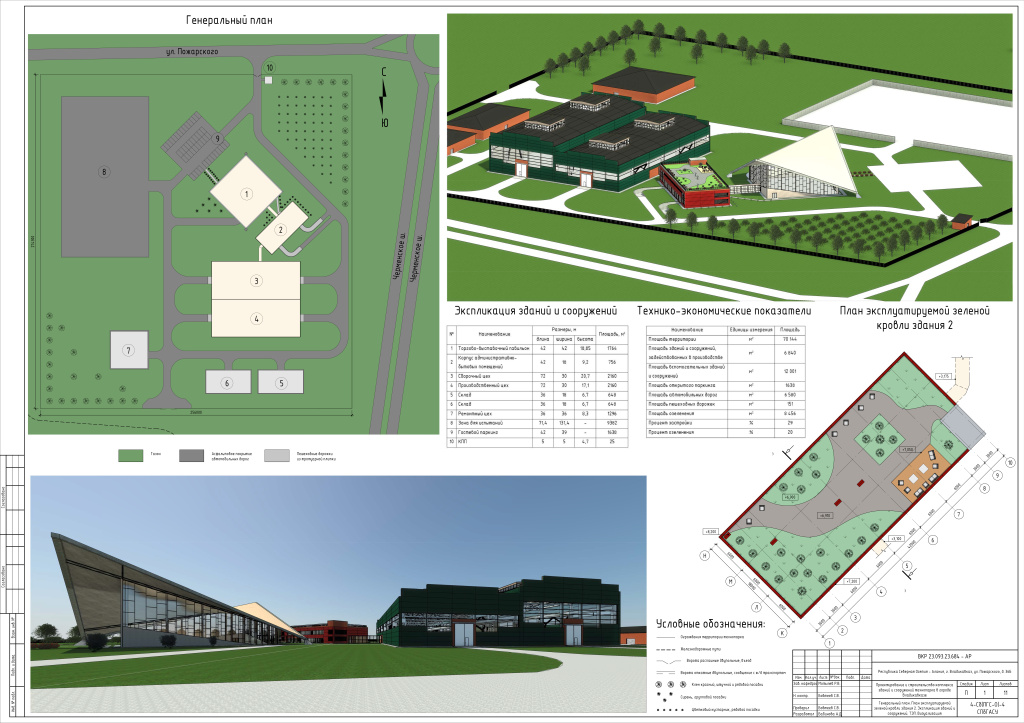
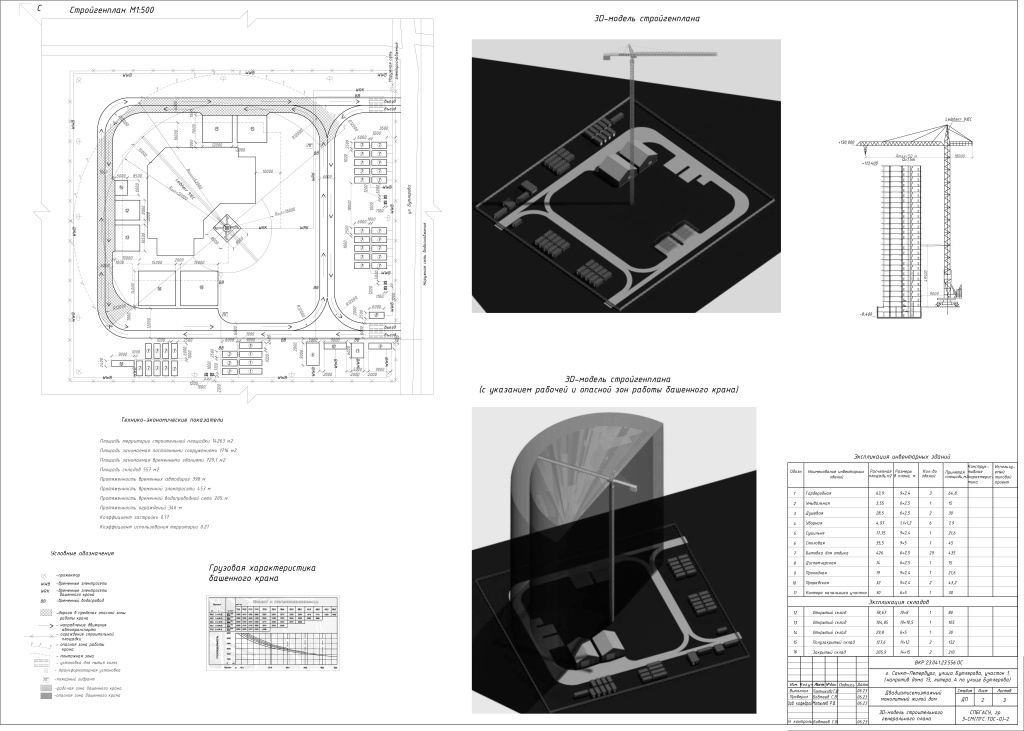


    MIL OSI Europe News –

    January 24, 2025
  • MIL-OSI Russia: Polytechnic University scientists take another step toward creating a cure for Alzheimer’s disease

    Translation. Region: Russian Federation –

    Source: Peter the Great St Petersburg Polytechnic University – Peter the Great St Petersburg Polytechnic University –

    Researchers from Peter the Great St. Petersburg Polytechnic University have published the results of a study of a potential pharmacological agent for the treatment of Alzheimer’s disease. Scientific Reports, the fifth most popular scientific journal in the world, has published an article by a team of scientists from the Polytechnic University and the Russian-Armenian University, dedicated to the study of Alzheimer’s disease.

    This disease is characterized by progressive memory loss and requires new approaches to create effective drug therapy. The transmission of nerve impulses from one cell to another occurs in synapses. Synapse loss is an important indicator of cognitive dysfunction in patients with Alzheimer’s disease. Restoring or limiting synapse loss is a promising strategy for pharmacotherapy of the disease.

    Derivatives of such a substance as piperazine are used for the drug treatment of various diseases, including a number of diseases of the central nervous system. Scientists have synthesized a new piperazine derivative cmp2, which has synaptoprotective properties. In vivo research has shown that cmp2 (10 mg/kg intraperitoneally) eliminates the deficit of synaptic plasticity in mice and it can be argued that cmp2 is a new promising compound for drug development. The mechanism of action of cmp2 is based on selective stimulation of the TRPC6 channel, and it is expected that activation of this channel will compensate for synaptic insufficiency in hippocampal neurons.

    This work was financially supported by the grant of the Russian Science Foundation No. 20-75-10026 and the Ministry of Education and Science of Russia within the framework of the state assignment on the topic “Scientific, methodological and resource support for the implementation of measures to improve the efficiency of the Russian-Armenian (Slavic) and Belarusian-Russian universities in training personnel for the digital economy, including using modern distance technologies” (Additional agreement dated 05/15/2024

    Please note: This information is raw content directly from the source of the information. It is exactly what the source states and does not reflect the position of MIL-OSI or its clients.

    MIL OSI Russia News –

    January 24, 2025
  • MIL-OSI Asia-Pac: Departure Statement for Prime Minister’s visit to Russia for BRICS Summit

    Source: Government of India

    Posted On: 22 OCT 2024 7:32AM by PIB Delhi

    I am departing today on a two day visit to Kazan at the invitation of H.E. Mr. Vladimir Putin, President of the Russian Federation, to attend the 16th BRICS Summit.

    India values the close cooperation within BRICS which has emerged as an important platform for dialogue and discussion on issues concerning the global developmental agenda, reformed multilateralism, climate change, economic cooperation, building resilient supply chains, promoting cultural and people to people connect, among others. The expansion of BRICS with the addition of new members last year has added to its inclusivity and agenda for the global good.

    Building upon the Annual Summit held in July 2024 in Moscow, my visit to Kazan will further reinforce the Special and Privileged Strategic Partnership between India and Russia.

    I look forward to meeting other leaders from BRICS as well.


    ***

    MJPS/SR

    (Release ID: 2066904) Visitor Counter : 44

    MIL OSI Asia Pacific News –

    January 24, 2025
  • MIL-OSI Asia-Pac: Bharat Tex 2025 gains international momentum:

    Source: Government of India (2)

    Bharat Tex 2025 gains international momentum:

    Ministry of Textiles organises interaction session with over 30 Countries

    Bharat Tex 2025 to focus on scale, sustainability and skills

    India is looking at a shared future, a future that is sustainable, equitable and prosperous for all of us: Shri Pabitra Margherita

    Posted On: 22 OCT 2024 2:07PM by PIB Delhi

    Ministry of Textiles organized an interactive Session with Foreign Missions in India for Bharat Tex 2025 at Sushma Swaraj Bhawan, New Delhi yesterday. The event saw participation from over 30 Foreign Missions in India namely Australia, Azerbaijan, Brazil, Colombia, Chile, Denmark, Egypt, Finland, Indonesia, Italy, Kazakhstan, Kenya, Lesotho, Montenegro, Malaysia, Mongolia, Mexico, Peru, Philippines, Republic of Korea, Russia, Sri Lanka, Somalia, Taiwan, Togo, Thailand, Uzbekistan and Vietnam.

    Union Minister of State for External Affairs and Textiles, Shri Pabitra Margherita graced the event as the Chief Guest. The session was also attended by Secretary, Ministry of Textiles, Ms. Rachna Shah; Special Secretary, Ministry of External Affairs, Shri P. Kumaran; Additional Secretary, Ministry of Textiles, Shri Rohit Kansal; Trade Advisor, Ministry of Textiles, Ms. Shubhra; industry leaders and officials.

    Speaking on the occasion, the Minister invited the ambassadors and representatives of various countries to proactively participate in Bharat Tex 2025. Describing it as the largest and the most comprehensive textiles event ever, he described Bharat Tex as a unique effort to bring the entire value chain of textiles under one roof. He highlighted the entrepreneurial spirit of the Indian textile industry in finding innovative solutions for the challenges posed by the global textile industry. He underlined that Bharat Tex will reaffirm the attractiveness of India as a reliable, sustainable sourcing destination as well as an investment destination at a large scale for textiles. The sector has the potential to provide large scale employment across the value chain and touch the lives of people across all social spheres. With innovation, collaboration, and the Make in India spirit at its core, this event is an embodiment of the 5F vision of the Prime Minister- Farm to Fibre to Factory to Fashion to Foreign, he added.


    Ms. Rachna Shah also highlighted the role of Bharat Tex in the Global Textiles Industry. She invited the attendees to participate as a Partner Country in the mega textile global event. Further she emphasised on India’s focus on the Textiles sector with strong policy support backed by various incentives and schemes including PLI and PM-MITRA Parks.  

    Bharat Tex is a mega global textiles event being organized by a consortium of Textile Export Promotion Councils (EPCs) and supported by the Ministry of Textiles. Scheduled to be held from February 14 to 17, 2025 BHARAT TEX 2025, is positioned as a global scale textile trade fair and knowledge platform. The event will be held simultaneously at two state of the art venues: Bharat Mandapam, New Delhi and India Expo Centre and Mart, Greater Noida. While the main event will be held from February 14-17 at the Bharat Mandapam and will cover the entire value chain of textiles, exhibitions pertaining to handicrafts, garment machinery and ethnic apparel will be held from February 12 to 15 at the India Expo Centre and Mart, Greater Noida.

    Bharat Tex 2025 aims to build on the resounding success of the first edition in 2024. Built around the twin themes of resilient global value chains and sustainability, this year’s show promises to be even more vibrant and attractive than the first edition, attracting top policymakers, global CEOs, international exhibitors, and global buyers. A record number of over 5,000 Exhibitors, 6,000 international buyers from over 110 countries and over 1, 20,000 visitors are expected to participate in this year’s event.

    The Bharat Tex 2025 exhibition will feature dedicated pavilions for Apparel, Home Furnishings, Floor Coverings, Fibres, Yarns, Threads, Fabrics, Carpets, Silk, Handlooms, Handicrafts, Technical Textiles, Apparel Machinery, Dyes & Chemicals and many more. It will also have a retail High Street focusing on India’s fashion retail market opportunities.

    The textile mega event will also provide a platform for global textiles dialogue covering conference, seminars, CEO roundtables, and B2B and G2G meetings across various key topics such as Industry 4.0, Sustainability, Global Value Chain, Investment, Trade among other areas.

    Attendees can look forward to live demonstrations, cultural events, and fashion presentations, designer and brand exhibitions and sustainability workshops, and expert talks. Bharat Tex 2025 aims to serve as a unique and consolidated platform to showcase India’s full textile value chain, while highlighting its strengths in fashion, traditional crafts, and sustainability initiatives.

    ***

    VN

    (Release ID: 2067001) Visitor Counter : 79

    MIL OSI Asia Pacific News –

    January 24, 2025
  • MIL-OSI Video: Ukraine: 97 percent of prisoners provided accounts of torture – DPPA Briefing | United Nations

    Source: United Nations (Video News)

    Briefing by Miroslav Jenča, Assistant Secretary-General for Europe, Central Asia and Americas, Departments of Political and Peacebuilding Affairs and Peace Operations, on Maintenance of peace and security of Ukraine.

    ———————–

    Briefing the Security Council Miroslav Jenča, Assistant Secretary-General for Peace Affairs said, “widespread and systematic reports of torture of Ukrainian prisoners of war remains a grave concern. 97 percent of Ukrainian prisoners interviewed by OHCHR since March 2023 provided consistent and detailed accounts of torture or ill-treatment during captivity. 68 percent reported sexual violence.”

    Jenčan also highlighted the civilian toll of Russia’s invasion of Ukraine, citing data from the Office of the High Commissioner for Human Rights (OHCHR). Jenča said, “since the start of Russia’s full-scale invasion of Ukraine in February 2022, launched in violation of the UN Charter and international law, 11,973 civilians, including 622 children, have been killed. 25,943 people, including 1,686 children, have been injured.

    He also raised concerns about renewed attacks on Ukrainian Black Sea ports, which have damaged six civilian vessels and grain infrastructure since September. “Wheat prices have increased more than six percent between 1 September and 14 October,” he noted, attributing the spike to these attacks.”

    https://www.youtube.com/watch?v=TJD7EfGlJqs

    MIL OSI Video –

    January 24, 2025
  • MIL-OSI Economics: Federal Court Decision to Grant Biological Opinion Relief is Welcome News

    Source: National Ocean Industries Association – NOIA

    Headline: Federal Court Decision to Grant Biological Opinion Relief is Welcome News

    For Immediate Release: Monday, October 21, 2024NOIA .org
    Federal Court Decision to Grant Biological Opinion Relief is Welcome News
    Washington, D.C. – National Ocean Industries Association President Erik Milito issued the following statement after a federal court granted the National Marine Fisheries Service (NMFS) more time to complete a new Biological Opinion (BiOp) for the U.S. Gulf of Mexico. Under a previous ruling, the BiOp would have been vacated effective December 20, 2024, threatening to halt new and existing oil and natural gas production and activity in the region. Today’s decision grants NMFS until May 21, 2025 to complete a new BiOp.
    “We are pleased with the court’s decision to grant the requested relief, allowing the federal government additional time to issue a new Gulf of Mexico Biological Opinion. This ruling is crucial for maintaining our energy security, affordability, and national security, all of which depend on the uninterrupted supply of oil and gas from the Gulf of Mexico.
    “It has become readily apparent to elected officials on both sides of the aisle that an impairment of production from the Gulf of Mexico could lead to a cascading effect throughout the American economy, delivering an unwelcome blow to consumers still reeling from inflationary impacts.
    “The Gulf of Mexico is a powerhouse in the global energy landscape. If it were a country, it would rank among the top twelve oil producers worldwide. This region supports nearly 435,000 jobs, produces approximately two million barrels of oil daily, and funds essential conservation and coastal resilience programs. Its role as a vital and well-established energy hub is indispensable to the U.S. economy and national security.
    “Potential permitting and operational delays or logjams pose significant risks, injecting unnecessary uncertainty into this critical sector. We must continue to support and protect the Gulf of Mexico’s energy production to ensure stability and growth for our nation and reduce dependence on volatile global markets and adversarial nations such as Russia or Iran.”
    ##
    About NOIA The National Ocean Industries Association (NOIA) represents and advances a dynamic and growing offshore energy industry, providing solutions that support communities and protect our workers, the public and our environment.

    MIL OSI Economics –

    January 24, 2025
←Previous Page
1 … 485 486 487 488 489 … 530
Next Page→
NewzIntel.com

NewzIntel.com

MIL Open Source Intelligence

  • Blog
  • About
  • FAQs
  • Authors
  • Events
  • Shop
  • Patterns
  • Themes

Twenty Twenty-Five

Designed with WordPress