Category: Tourism

  • MIL-OSI Russia: Xinhua Analytical Center Report Highlights Fruitful Results of China-Central Asia Cooperation

    Translation. Region: Russian Federal

    Source: People’s Republic of China in Russian – People’s Republic of China in Russian –

    Source: People’s Republic of China – State Council News

    ASTANA, June 23 (Xinhua) — China and Central Asian countries have deepened comprehensive cooperation, achieving successful results on a wide range of issues, according to a report released by the Xinhua Think Tank on Sunday.

    Tremendous achievements have been made in developing ties in seven key areas: economic and trade exchanges, infrastructure connectivity, energy cooperation, developing sectors, capacity building for development, mutual learning among civilizations, and peace and security, according to a report titled “Developing the Central Asia-China Spirit: Achievements, Possibilities and Prospects of Regional Cooperation” released by the Xinhua News Agency Research Institute, a think tank affiliated with the Xinhua News Agency.

    From rail corridors to renewable energy, from education to cultural exchanges, China-Central Asia cooperation is delivering real benefits on the ground, laying a stronger foundation for shared growth.

    According to the report, the volume and quality of trade and economic cooperation between China and Central Asian countries has increased in recent years, and China has become Central Asia’s largest trading partner and a significant source of investment.

    To promote sustainable growth, China and Central Asian countries have expanded cooperation in science, technology and education. The Lu Ban Workshop has become a new platform for cooperation in international vocational education. Based on local development needs, the Lu Ban Workshops in Central Asia have created demand-driven training models to promote regional poverty reduction and industrialization.

    Humanitarian exchanges are also flourishing. Central Asian tourism, culture and art festivals are growing in popularity in China. Chinese films and TV dramas have become hits in Central Asia. –0–

    MIL OSI Russia News

  • MIL-Evening Report: NZ’s plan to ‘welcome anyone, from anywhere, anytime’ is not a sustainable tourism policy

    Source: The Conversation (Au and NZ) – By Regina Scheyvens, Professor of Development Studies, Te Kunenga ki Pūrehuroa – Massey University

    Getty Images

    Attracting more Chinese tourists to New Zealand, including during the off-season, was a major part of Prime Minister Christopher Luxon’s trade agenda during his visit to China last week. As Tourism Minister Louise Upston put it: “we welcome anyone, from anywhere, anytime”.

    It’s all part of the government’s plan to “turbocharge” the tourism sector with an additional NZ$13.5 million for marketing this year. The hope is this will help double the value of tourism as an export earner by 2034.

    The China visit built on the government’s Tourism Growth Roadmap which aims to attract 3.89 million visitors by 2026, and 4.78 million by 2030-34.

    Ironically, the release of the roadmap coincided with unprecedented, organised push-back against mass tourism across southern Europe this month. Fed up with the economic and cultural impact of too much “touristification”, residents of popular cities and islands in Italy, Portugal and Spain took part in coordinated protests, some even spraying tourists with water pistols.

    Before COVID upended international tourism in 2020, similar serious concerns were voiced in New Zealand about environmental degradation, crowding and congestion, and declining public support for tourism.

    But the plan to turbocharge tourism specifically aims to return international visitor arrivals to pre-COVID levels.

    From destination management to marketing

    As part of the government’s Tourism Boost Package, money generated by the International Visitor Levy (IVL) will be spent driving demand in Australia and elsewhere over the next two years.

    But this use of the visitor levy (which was raised to $100 in October last year) seems at odds with its stated purpose. According to New Zealand Immigration, “The IVL is your contribution to maintaining the facilities and natural environment you will use and enjoy during your stay”.

    Visitor levy revenue was strategically intended to support tourism regions to protect their natural environments and maintain crucial infrastructure.

    Diverting visitor levy income to fund overall tourism growth also seems to turn a deaf ear to the 2020 interim report from the Tourism Futures Taskforce and the 2023 Tourism Adaptation Roadmap from the Aotearoa Circle industry group.

    Both were widely acknowledged for their vision and ambition to create a future tourism that served the aspirations of Māori and local communities.

    There’s also a risk of the 29 Destination Management Plans developed since 2021 (with financial support from the visitor levy) being shelved in this detour from destination management to marketing.

    Anti-tourism protesters in Barcelona brandish water pistols, June 15.
    Getty Images

    Redefining tourism ‘value’

    There are several key questions about the practical implications of the government’s growth-oriented tourism development approach.

    Firstly, staff and infrastructure limitations mean destinations and business will struggle to accommodate more numbers. As the acting mayor of MacKenzie District has noted, several businesses around Tekapo were forced to operate below capacity last summer because there was no suitable housing available for the staff, only up-market holiday rentals.

    New Zealand also faces a tourism workforce crisis. Over the past ten years, there has been a 63% drop in the number of students taking tourism-related tertiary courses, and a 73% decrease in those completing hospitality courses.

    Meanwhile, from Northland to Queenstown, basic utilities such as electricity and drinking water are being stretched beyond capacity during peak visitation times.

    Secondly, there is a real risk of environmental damage from overtourism compromising the appeal of iconic attractions and destinations.

    But despite concern over growing visitor pressure at Piopiotahi/Milford Sound over the past decade, the government recently rejected a plan to manage numbers and ban cruise ships in the inner sound.

    Thirdly, there is the risk of tourism losing its social licence, as is happening in parts of Europe, given the huge burdens on small communities. As the mayor of Queenstown said recently: “When I first started as the mayor, I think it was one resident night to every 30 visitor nights. It is now one to 47.”

    Ultimately, long-term value creation through tourism can only happen when “value” is defined in more than monetary terms and in ways that deliver for all stakeholders, including businesses, visitors, communities, mana whenua and nature.

    The government’s focus on “turbocharging” economic growth through tourism now puts at risk what little progress has been made toward a sustainable tourism model and giving the regions most affected a voice.

    The authors do not work for, consult, own shares in or receive funding from any company or organisation that would benefit from this article, and have disclosed no relevant affiliations beyond their academic appointment.

    ref. NZ’s plan to ‘welcome anyone, from anywhere, anytime’ is not a sustainable tourism policy – https://theconversation.com/nzs-plan-to-welcome-anyone-from-anywhere-anytime-is-not-a-sustainable-tourism-policy-259246

    MIL OSI AnalysisEveningReport.nz

  • MIL-OSI China: Rural market in spotlight to tap growth

    Source: People’s Republic of China – State Council News

    The campaign to promote new energy vehicles in China’s rural areas features a larger and more diversified portfolio this year, catered to evolving consumer demands to unlock consumption potential in the extensive market.

    Now in its sixth year, the “NEVs Going to the Countryside” initiative — launched by government bodies including the Ministry of Industry and Information Technology and the Ministry of Commerce — has selected 124 models, 25 more than 2024.

    The selected models need to meet essential requirements including good sales performance, high brand recognition, and a well-established network of maintenance service points, said Xu Haidong, vice-chief engineer of the China Association of Automobile Manufacturers, one of the campaign organizers.

    BYD’s Dynasty and Ocean series, along with models from Dongfeng, Geely, Changan and BAIC, have joined in the program with high cost-performance offerings. Their product portfolios span plug-in hybrid SUVs to new energy commercial vehicles, including newcomers such as off-roaders and pickup trucks.

    Notably, the Model Y and Model 3 have been selected, marking Tesla’s first inclusion in the initiative.

    Other models priced above 200,000 yuan ($27,850) on the list include the Li Auto L6 SUV, Nio ES6 SUV and ET5 sedan, Zeekr 001 shooting brake, and XPeng G9 SUV.

    The involvement of the high-end brands indicates the upgrading of rural consumption, Xu said. Many automakers are keen to capture this significant vast market by providing high-performance, cost-effective models.

    Cui Dongshu, secretary-general of the China Passenger Car Association, said that counties, towns and villages have a certain level of economic strength, and consumers there are willing to improve their quality of life. The untapped potential for NEV consumption in rural areas could become another driving force of growth in the Chinese automotive market.

    At the first stop of the 2025 “NEVs Going to the Countryside” campaign held in Rugao, Jiangsu province, in mid-June, some models on display were tailored for rural consumers.

    For those engaged in freight transport, some vehicles featured extra-large cargo spaces. For users balancing personal and commercial needs, there were models that offer five, six, or seven-seat configurations alongside pure electric and range-extended powertrain options.

    However, Xu pointed out that the lack of charging infrastructure remains an obstacle to the widespread adoption of NEVs in rural areas, saying the vast geographical area and low population density result in high construction costs and long payback periods for charging stations.

    In recent years, relevant departments have issued documents aimed at filling the gaps in county-level charging facilities, specifying annual construction tasks, and investment.

    At the event in Rugao, some 10 charging station companies showcased their products and technologies. For example, private charging piles can be shared via apps, providing innovative solutions.

    Xu suggested that properly advancing the layout of charging stations could promote NEV popularization, boost rural tourism, and aid the development of commercial vehicles.

    He cited examples of automakers piloting integrated solar energy storage charging projects in rural areas, which use photovoltaic power generation to power charging stations, thereby cutting operational costs.

    This year, the incentives for “NEVs Going to the Countryside” have been increased. In addition to the national trade-in policy and local government support, automakers such as BYD and Wuling have introduced exclusive discounts, with some models seeing price reductions of more than 10,000 yuan.

    Financial institutions are contributing by offering low-interest loans, interest-free installment plans, and other financial solutions.

    According to data from the CAAM, NEV sales in rural outreach activities exhibited growth from 2020 to 2024.Sales increased from 397,000 vehicles in 2020 to nearly 7.6 million in 2024, surpassing the sector’s total market growth.

    Fu Bingfeng, secretary-general of the CAAM, said over the past five years, there were more than 500 NEV models involved in the program with combined sales totaling 15 million units. Some rural areas have one NEV per five households, driving green mobility transformation in these regions, he added.

    From January to May, NEV sales reached 5.61 million units in China, a year-on-year increase of 44 percent. NEVs accounted for 44 percent of the total new car sales during this period.

    MIL OSI China News

  • MIL-OSI China: Robocops hit Chinese city streets

    Source: People’s Republic of China – State Council News

    Robot police have officially been deployed in southwest China’s Chengdu, one of the country’s top tourist cities, as part of its smart policing initiative in the lead-up to the 2025 World Games in this city in August.

    At Tianfu Square, the city’s busiest public space with daily foot traffic of up to 100,000 people, five Robocop officers have begun routine patrols alongside human police. Working in pairs and rotating every two to three hours, they can send real-time footage and alerts to command centers to assist nearby officers.

    The robots, which include quadruped robots, wheeled robots and humanoid robots, have been undergoing real-world testing since June 16. These trials are designed to improve their operational algorithms in authentic urban environments and adaptability for complex scenarios.

    One humanoid robot has drawn special attention from the public. It waves its arms in sync with traffic lights to guide vehicles and pedestrians, serving as a futuristic presence in this city in Sichuan Province.

    Equipped with autonomous navigation, intelligent obstacle avoidance, real-time audio-video streaming and remote communication capabilities, these Robocop officers assist with policing duties, serve tourists and manage traffic. They can also return to their charging docks automatically, enabling round-the-clock functionality.

    “Robocops can operate overnight and reach high-risk or narrow areas that human officers may not easily access. They can carry up to 20 kilograms of gear, which is a big help to us,” said Zhang Lihang, deputy director of the technology and informatization department of the Chengdu Public Security Bureau. “Despite temperatures reaching 40 degrees Celsius and light rain this week, the Robocops performed their duties smoothly.”

    “If tourists suffer from heatstroke and fall, the Robocops can detect it in a timely manner and call for rescue,” he added.

    “We continuously iterate our algorithms in real-world deployments to enhance the Robocops’ environmental perception and motion control capabilities. At present, our wheeled robots demonstrate outstanding performance in speed regulation and stable video transmission,” said Xu Qin, head of the robotics division at the Chengdu Humanoid Robot Innovation Center and a co-developer of the Robocops.

    Chengdu’s Robocop program reflects China’s broader efforts to accelerate the embodied intelligence industry and advance new productive forces. Cities including Beijing, Shanghai, Shenzhen and Hangzhou are also conducting pilot programs and real-world trials.

    Industry estimates suggest that China’s embodied intelligence market exceeded 480 billion yuan (about 66 billion U.S. dollars) in 2024. With continued advances in large language models, this market is expected to surpass 1 trillion yuan by 2031.

    MIL OSI China News

  • MIL-OSI China: SW China city brewing champion coffee culture

    Source: People’s Republic of China – State Council News

    Guiyang, in southwest China’s Guizhou Province, has earned the title “City of Coffee Champions,” a remarkable feat for a region that grows no coffee beans but fosters champion baristas and thousands of cafes.

    Its streets, lined with over 3,000 cafes boasting a density surpassing even that of east China’s Shanghai, serve as the training ground for an elite cadre of baristas dominating global competitions.

    PIONEER SHOPS TO WORLD STAGE

    Guiyang’s coffee culture started in 2005 when pioneering cafes introduced specialty coffee years before it became mainstream in China. This sparked passion in a generation of young coffee enthusiasts.

    Peng Jinyang is among the pioneers. In May 2025, the Guiyang native won the World Brewers Cup Championship in Jakarta, Indonesia. Already China’s 2024 champion, this marked the first such win for a Chinese mainland competitor since 2019.

    Peng discovered specialty coffee in a Guiyang cafe during high school. His career faced early struggles — his first coffee bean venture sold only 40 bags in its opening month. He then temporarily diversified his business before again focusing solely on coffee roasting via his Captain George brand.

    To improve his skills, Peng traveled for training purposes and learned directly from world champions. He also brought global expertise back to Guiyang by organizing workshops featuring top baristas.

    His competitive record is impressive — champion roaster at Taiwan’s Takao International Coffee Competition (2016), repeated top finishes in the China Brewers Cup Championship (CBrC), and his recent world title. His team, meanwhile, has dominated the CBrC for five consecutive years since 2020.

    Notably, Guiyang has so far nurtured more than 10 world and national titleholders.

    COMMUNITY COFFEE CULTURE

    Black Rock Coffee owner Lei Ming faced a critical choice during a 2017 business slump. Rather than close down, he opted to borrow money to renovate and deepen his coffee expertise. This risk succeeded handsomely.

    After the renovation, his customer base recovered, while Lei also transitioned from competitor to certified coffee judge. During this year’s Dragon Boat Festival, Black Rock served over 300 cups daily, with tourists making up nearly 75 percent of its patrons.

    Lei’s story echoes that of Liu Kaisheng, who started as a barista at one of Guiyang’s earliest specialty coffee cafes. Unhappy with the inconsistent bean quality, Liu taught himself roasting, progressing from temporary setups to a professional studio.

    “Focus entirely on the quality of coffee,” he said. Such dedication is common among Guiyang cafe owners — many of whom are both competition champions and certified judges.

    LOCAL FLAVORS DRIVE INNOVATION

    Guiyang’s cafes stand out through specializing in niches like roasting, brewing, latte art and creative drinks, thereby building unique identities in a crowded market.

    Innovation often carries a local flavor. Lei’s unexpected fusion, a blending of Guiyang’s fish mint with an Americano, evolved from a curiosity into a signature hit. In addition, his “One Bean, Three Ways” menu, pairing single-origin coffee with regional ingredients like fish mint, became a bestseller.

    Beyond taste, unique spaces also fuel the Guiyang coffee scene. Orchard Coffee, housed in a concrete-and-glass structure resembling an art community more than a traditional cafe, merges a roastery with an educational hub. Founder Qiang Hua, himself a top competition judge, said that “champions aren’t just about brewing well — they must elevate the entire industry and push peers forward.”

    At Good Coffee, meanwhile, artistry is evident on the cup. Cups hand-painted by owner Luo Nianyu and her team transform each serving into a unique canvas, earning the cafe a reputation as Guiyang’s “most warm-hearted.” 

    MIL OSI China News

  • MIL-OSI Australia: LGBTIQA+ guide to Canberra

    Source: Northern Territory Police and Fire Services

    • Canberra is Australia’s most welcoming city for the LGBTIQA+ communities.
    • This article lists art and entertainment, events, sports and activities and health related information for LGBTIQA+ communities.

    As the Capital of Equality, Canberra offers a lot for LGBTIQA+ people who call it home.

    For people living here, this isn’t just a saying — it’s something you can see and feel every day. Whether you’ve lived in Canberra your whole life or just moved here, there are many ways to feel safe, meet others, and be yourself.

    Across the city, there are support services, social groups, and events that celebrate LGBTIQA+ communities. You can find places to connect, have fun, and get help if you need it.

    This guide will help you discover a glimpse of what’s out here and how to get involved.

    Art and entertainment

    Canberra Qwire is Canberra’s own LGBTIQA+ choir which celebrates a common love of music and singing. With 120+ members from all walks, you can join the choir or attend a concert.

    SpringOUT is Canberra’s own pride festival held annually in November. While still a little away, the applications to run a range of LGBTIQA+ events or to hold a stall at the Fair Day will soon open.

    FLESH: Queer Life Drawing sessions feature a life model run by and for LGBTIQA+ folks. Join the relaxed, social atmosphere to pursue your own creative approaches.

    Queer Variety Show is a bi-monthly event featuring LGBTIQA+ and disabled performers held at Smith’s Alternative.

    Smith’s Alternative is one of Canberra’s most iconic and loved performance venues. The bar and performing arts cafe celebrate queerness and local culture. Smiths is known for providing a safe and inclusive space. It offers live music, poetry, comedy, burlesque, theatre, drag, queer shows, cabaret, art exhibitions and dance parties.

    She Shapes History is on a mission to promote gender equality through tourism. Join their walking tour to learn about women’s and LGBTIQA+ history of Canberra. You can also listen to the She Shapes History Queer Past podcast about Canberra’s queer history.

    Tuggeranong Arts Centre is a creative hub and gathering place in South Canberra. The centre aims to connect people, create new experiences and celebrate the arts. Keep an eye out for events and workshops.

    Belconnen Arts Centre is an inner-north hub for visual and performing arts classes. As part of the many LGBTIQA+ events and workshops they run, Kaleidescope, an annual exhibition, celebrating LGBTIQA+ experiences.

    Sport and the outdoors

    Queer run CBR is an inclusive community of runners, riders, rollers and strollers. If you are looking to find a space that celebrates LGBTIQA+ folks and allies, look no further.

    ACT Water Polo is an inclusive and diverse club that promotes physical activity and friendship in a safe and judgement free space.

    Pink Tennis is a welcoming group of LGBTIQA+ individuals who encourages people of all abilities to pick up a racquet and join a bunch of queer people in Canberra who like to play tennis.

    Rainbow Racquets Squash is a squash group for LGBTIQA+ people and their allies. They create a relaxed and inclusive space to enjoy squash and connect.

    Canberra Roller Derby League are a competitive flat track roller derby club run by the skaters, for the skaters. They are dedicated to promoting health, sport, community and inclusion.

    Pride Fitness Canberra is a business focused on providing a safe space for community to meet and get active. They offer bootcamp, running meets and post workout coffees.

    Support for LGBTIQA+ communities and their families

    A Gender Agenda is a community organisation that supports intersex, trans, and gender diverse people. Check out their resources and support services.

    Meridian is a community organisation that provides health and social support services to LGBTIQA+ communities.

    Seahorse Playgroup is a local playgroup and community space for LGBTIQA+ parents, carers, and their children.

    Community and support for young LGBTIQA+ people

    Encampment 2025 is a locally run initiative that brings LGBTIQA+ young people aged 13-17 years old together. They help to navigate gender identities and sexualities and strengthen their connection to the community. Check their application dates for 2025/26.

    Bit Bent offers weekly culturally safe and participant-led groups for LGBTIQA+ young people aged 10 to 25. Whether you’re looking for resources, connections, or simply a place to hang out and be with like-minded individuals, they have you covered.

    Rainbow Mob is a local community organisation run for and by Aboriginal and Torres Strait Islander LGBTIQASB+ young people.

    Variations in sex characteristics is a psychosocial service at Canberra Health Services that provides support to children and young people born with sex characteristics that do not fit the typical definitions for male or female bodies.

    Sexual Health and Family Planning ACT (SHFPACT) supports public, private and faith-based schools in Canberra with age-appropriate, accurate and sexuality education. View their resources and education workshops.

    Stun Magazine is a Canberra born and bred queer magazine. New to the scene but already making a huge impact. The magazine covers readers across Sydney, Canberra, Wollongong and Newcastle with high-quality entertainment and queer content.

    FUSE Magazine is a national gay, lesbian bisexual, transgender, intersex and queer lifestyle magazine. It covers everything from news, entertainment, fashion health and social issues.

    LGBTIQA+ Directory is exactly what is sounds like. If you are looking for LGBTIQA+ support, businesses, or community-based connections, look no further.

    ACT Government 

    The Office of LGBTIQA+ Affairs run a community grants program called Capital of Equality Grants, hosts LGBTIQA+ events and engages with LGBTIQA+ communities to help make Canberra the capital of equality.

    For more information visit their website, follow their Facebook page for the Office of LGBTIQA+ Affairs or subscribe to their newsletter.

    MIL OSI News

  • MIL-Evening Report: Illegal US attack on Iran’s nuclear facilities came in spite of no evidence

    BEARING WITNESS: By Cole Martin in occupied Bethlehem

    Kia ora koutou,

    I’m a Kiwi journo in occupied Bethlehem, here’s a brief summary of today’s events across the Palestinian and Israeli territories from on the ground.

    The US struck three of Iran’s nuclear facilities overnight, entering the illegal aggression on Iran with heavy airstrikes despite no evidence that nuclear weapons are being developed. Israel continued its strikes attacking dozens of locations across Iran throughout the day. Three were killed in an Israeli drone attack on an ambulance in central Iran. At least 400 have been killed and 2000 injured, according to the latest Health Ministry figures.

    *

    Heavy Iranian retaliation strikes on Israeli territories saw about 27 injured.

    *

    At least 47 killed by Israeli attacks in Gaza today, 18 while seeking aid. Two killed and 15 wounded in an Israeli airstrike on a house west of Gaza city. The murder of firefighter Muhammad Ghurab brings the total Gaza civil defence casualties to 121, representing 14.3 percent of its employees.

    Today I met a 10-year-old kid called Hassan on the streets of Bethlehem. He was looking for work. His dad had recently stopped working, unemployed like many in Bethlehem; around 80 percent of jobs here depend on tourism. He lives in al-Khader village, an hour’s walk away, but without opportunities there he had walked all this way in an attempt to help support his family.

    Israel’s illegal occupation of the West Bank has suffocated the economy here for decades. Now, as the genocidal war on Gaza continues and Israeli aggression expands to Iran, drawing in the USA and threatening regional collapse, a 10-year-old boy takes to the streets of Bethlehem to find work.

    *

    Israel’s illegal siege across the West Bank continues. Large numbers of Israeli soldiers conducted extensive raids on Bethlehem’s Dheisheh camp including demolitions, arrests, and interrogations last night. Mass demolitions continue across Nour Shams camp in the north, and further arrests, demolitions, and incursions took place across the West Bank. Bethlehem’s gasoline shortages continue due to Israel’s ongoing siege.

    *

    Twenty five killed in a terror attack targeting Mar Elias Church in Damascus, Syria.

    Cole Martin is an independent New Zealand photojournalist based in the Middle East and a contributor to Asia Pacific Report.

    MIL OSI AnalysisEveningReport.nz

  • MIL-OSI China: China’s top political advisor meets Thailand’s National Assembly president

    Source: People’s Republic of China – State Council News

    Wang Huning, chairman of the National Committee of the Chinese People’s Political Consultative Conference (CPPCC), meets with Thailand’s National Assembly President and Speaker of the House of Representatives Wan Muhamad Noor Matha in Beijing, capital of China, June 22, 2025. [Photo/Xinhua]

    China’s top political advisor Wang Huning met with Thailand’s National Assembly President and Speaker of the House of Representatives Wan Muhamad Noor Matha in Beijing on Sunday.

    Wang, chairman of the National Committee of the Chinese People’s Political Consultative Conference (CPPCC), said that in February this year, Chinese President Xi Jinping and Thai Prime Minister Paetongtarn Shinawatra had reached an important consensus on deepening the building of the China-Thailand community with a shared future, further pointing out the direction for the development of bilateral relations.

    China is willing to work with Thailand to take the celebration of the 50th anniversary of diplomatic ties as an opportunity to carry forward the traditional friendship, consolidate the political, economic and public foundation for the China-Thailand community with a shared future, and bring more benefits to the two peoples, Wang said.

    The CPPCC is ready to contribute to the development of relations between the two countries, Wang added.

    Wan Noor said the friendship between Thailand and China enjoys a long history, and the concept of Thailand and China as one family has been deeply rooted in people’s hearts.

    The Thai side supports the series of global initiatives proposed by President Xi and is willing to strengthen cooperation with China in various fields — including joint Belt and Road construction, economy and trade, and tourism.

    He also said the Thai parliament is willing to enhance exchanges and cooperation with China to promote the common development and prosperity of the two countries.

    MIL OSI China News

  • MIL-OSI Australia: Australia’s most friendly and welcoming city for the LGBTIQA+ communities

    Source: Northern Territory Police and Fire Services

    • Canberra is Australia’s most welcoming city for the LGBTIQA+ communities.
    • This article lists art and entertainment, events, sports and activities and health related information for LGBTIQA+ communities.

    As the Capital of Equality, Canberra offers a lot for LGBTIQA+ people who call it home.

    For people living here, this isn’t just a saying — it’s something you can see and feel every day. Whether you’ve lived in Canberra your whole life or just moved here, there are many ways to feel safe, meet others, and be yourself.

    Across the city, there are support services, social groups, and events that celebrate LGBTIQA+ communities. You can find places to connect, have fun, and get help if you need it.

    This guide will help you discover a glimpse of what’s out here and how to get involved.

    Art and entertainment

    Canberra Qwire is Canberra’s own LGBTIQA+ choir which celebrates a common love of music and singing. With 120+ members from all walks, you can join the choir or attend a concert.

    SpringOUT is Canberra’s own pride festival held annually in November. While still a little away, the applications to run a range of LGBTIQA+ events or to hold a stall at the Fair Day will soon open.

    FLESH: Queer Life Drawing sessions feature a life model run by and for LGBTIQA+ folks. Join the relaxed, social atmosphere to pursue your own creative approaches.

    Queer Variety Show is a bi-monthly event featuring LGBTIQA+ and disabled performers held at Smith’s Alternative.

    Smith’s Alternative is one of Canberra’s most iconic and loved performance venues. The bar and performing arts cafe celebrate queerness and local culture. Smiths is known for providing a safe and inclusive space. It offers live music, poetry, comedy, burlesque, theatre, drag, queer shows, cabaret, art exhibitions and dance parties.

    She Shapes History is on a mission to promote gender equality through tourism. Join their walking tour to learn about women’s and LGBTIQA+ history of Canberra. You can also listen to the She Shapes History Queer Past podcast about Canberra’s queer history.

    Tuggeranong Arts Centre is a creative hub and gathering place in South Canberra. The centre aims to connect people, create new experiences and celebrate the arts. Keep an eye out for events and workshops.

    Belconnen Arts Centre is an inner-north hub for visual and performing arts classes. As part of the many LGBTIQA+ events and workshops they run, Kaleidescope, an annual exhibition, celebrating LGBTIQA+ experiences.

    Sport and the outdoors

    Queer run CBR is an inclusive community of runners, riders, rollers and strollers. If you are looking to find a space that celebrates LGBTIQA+ folks and allies, look no further.

    ACT Water Polo is an inclusive and diverse club that promotes physical activity and friendship in a safe and judgement free space.

    Pink Tennis is a welcoming group of LGBTIQA+ individuals who encourages people of all abilities to pick up a racquet and join a bunch of queer people in Canberra who like to play tennis.

    Rainbow Racquets Squash is a squash group for LGBTIQA+ people and their allies. They create a relaxed and inclusive space to enjoy squash and connect.

    Canberra Roller Derby League are a competitive flat track roller derby club run by the skaters, for the skaters. They are dedicated to promoting health, sport, community and inclusion.

    Pride Fitness Canberra is a business focused on providing a safe space for community to meet and get active. They offer bootcamp, running meets and post workout coffees.

    Support for LGBTIQA+ communities and their families

    A Gender Agenda is a community organisation that supports intersex, trans, and gender diverse people. Check out their resources and support services.

    Meridian is a community organisation that provides health and social support services to LGBTIQA+ communities.

    Seahorse Playgroup is a local playgroup and community space for LGBTIQA+ parents, carers, and their children.

    Community and support for young LGBTIQA+ people

    Encampment 2025 is a locally run initiative that brings LGBTIQA+ young people aged 13-17 years old together. They help to navigate gender identities and sexualities and strengthen their connection to the community. Check their application dates for 2025/26.

    Bit Bent offers weekly culturally safe and participant-led groups for LGBTIQA+ young people aged 10 to 25. Whether you’re looking for resources, connections, or simply a place to hang out and be with like-minded individuals, they have you covered.

    Rainbow Mob is a local community organisation run for and by Aboriginal and Torres Strait Islander LGBTIQASB+ young people.

    Variations in sex characteristics is a psychosocial service at Canberra Health Services that provides support to children and young people born with sex characteristics that do not fit the typical definitions for male or female bodies.

    Sexual Health and Family Planning ACT (SHFPACT) supports public, private and faith-based schools in Canberra with age-appropriate, accurate and sexuality education. View their resources and education workshops.

    Stun Magazine is a Canberra born and bred queer magazine. New to the scene but already making a huge impact. The magazine covers readers across Sydney, Canberra, Wollongong and Newcastle with high-quality entertainment and queer content.

    FUSE Magazine is a national gay, lesbian bisexual, transgender, intersex and queer lifestyle magazine. It covers everything from news, entertainment, fashion health and social issues.

    LGBTIQA+ Directory is exactly what is sounds like. If you are looking for LGBTIQA+ support, businesses, or community-based connections, look no further.

    ACT Government 

    The Office of LGBTIQA+ Affairs run a community grants program called Capital of Equality Grants, hosts LGBTIQA+ events and engages with LGBTIQA+ communities to help make Canberra the capital of equality.

    For more information visit their website, follow their Facebook page for the Office of LGBTIQA+ Affairs or subscribe to their newsletter.

    MIL OSI News

  • MIL-OSI Australia: ACT Budget 2025-26: Investing in Tourism, Events and Iconic Destinations

    Source: Northern Territory Police and Fire Services

    As part of ACT Government’s ‘One Government, One Voice’ program, we are transitioning this website across to our . You can access everything you need through this website while it’s happening.

    Released 22/06/2025 – Joint media release

    The ACT Government is investing more than $15 million through the 2025-26 Budget to support Canberra’s growing visitor economy, strengthen the city’s national profile, and deliver high-quality events that benefit the whole community.

    The Budget includes funding to grow tourism, attract more events and business visitors, and continue the revitalisation of one of the capital’s most recognisable landmarks – Telstra Tower.

    Backing tourism, events and destination marketing, the Government is supporting Canberra’s tourism industry with:

    • Continued operational support for the Canberra Convention Bureau
    • An Aviation Stimulus Fund to improve flight access to the capital
    • Continuing the Major Events Fund
    • Support for core activities of Brand Canberra, the National Capital Educational Tourism Project, and in-market tourism representation
    • Additional funding to deliver and enhance major events including Enlighten, Floriade and New Year’s Eve, and the return of Windows to the World in 2025.

    Chief Minister Andrew Barr said the investments would help grow Canberra’s tourism, hospitality and events sectors.

    “This Budget supports a growing visitor economy, with targeted funding to further expand aviation access, bring new events to Canberra, and showcase our strengths,” the Chief Minister said.

    “We’re backing local tourism operators and our major festivals, while also strengthening our international engagement and trade connections to create new economic opportunities for the ACT.”

    The Government will also support the revitalisation of Telstra Tower in partnership with Telstra.  The Government is working towards finalisation of an operational agreement with Telstra.

    “We want Telstra Tower to once again be part of a great Canberra tourism experience,” the Chief Minister said.

    “By working with Telstra to deliver a commercially viable and modern fit-out, we can secure the future of this iconic landmark and boost tourism activity.”

    The Budget also includes funding to continue the ACT’s international engagement activities, including trade missions, business export support and international partnerships, with a focus on business, education and tourism opportunities.

    Treasurer Chris Steel said the investments were part of a broader plan to grow Canberra’s economy and support local jobs.

    “This Budget provides targeted investments in tourism, events, business and trade that will deliver economic returns to the Territory,” Mr Steel said.

    “Whether it’s new events, more flights, or major destination projects like Telstra Tower, we’re making sure Canberra is well-placed to grow as a visitor and business hub.”

    Quote attributable to Brendon Riley, Telstra InfraCo CEO

    “Telstra is proud to be partnering with the ACT Government to revitalise this iconic site. We’ve already taken important steps by preparing the Tower for redevelopment, and we look forward to supporting the ACT’s vision through detailed design collaboration and a staged re-opening. This project represents a strong commitment from both parties to create something enduring for the Canberra community and its visitors.”

    – Statement ends –

    Andrew Barr, MLA | Chris Steel, MLA | Media Releases

    «ACT Government Media Releases | «Minister Media Releases

    MIL OSI News

  • MIL-OSI Submissions: US Iran strikes sparks oil shock, inflation fears, global sector shakeout – deVere Group

    Source: deVere Group

    June 22 2025 – The market impact of President Donald Trump’s military strikes on Iranian nuclear facilities is already beginning to reshape investor expectations across asset classes, sectors and geographies, says Nigel Green, CEO of financial advisory giant deVere Group.

    As markets reopen, investors are bracing for sharp volatility, with crude oil prices expected to surge and inflation forecasts now under intense scrutiny.

    A conflict that had remained largely contained is now threatening to trigger broad-based repricing across the global economy.

    “The US strike on Iran’s nuclear sites is a market-defining moment,” says Nigel Green. “It’s a direct hit to the assumptions that have been driving investor positioning: lower inflation, falling rates, and stable energy prices. This framework has just been broken.”

    Brent crude had already been climbing steadily in recent weeks, but the decision to target Iranian nuclear facilities has dramatically increased fears of retaliation and disruption.

    Any closure or threat to the Strait of Hormuz, through which nearly 20% of the world’s oil flows, would send prices sharply higher.

    Some analysts now warn that crude could spike toward $130 per barrel, depending on Iran’s next move.

    “Such a price shock would filter through to global inflation, which remains elevated and/or sticky in many regions. Market participants had been pricing in rate cuts from central banks including the Federal Reserve in the second half of the year. That is now in question,” notes the deVere CEO.

    “A sustained surge in oil makes rate cuts very difficult to justify. If inflation spikes back up, monetary policymakers will be forced to hold, and possibly even reconsider the easing cycle altogether,” saysNigel Green.

    “That fundamentally changes the landscape for equity sectors, currencies, and credit.”

    He continues: “In equities, the most immediate reaction is likely to be a rotation out of rate-sensitive and consumer-driven sectors. Travel and tourism companies, which are highly vulnerable to energy costs and geopolitical disruptions, are expected to come under pressure. Tech stocks, particularly those trading on high multiples, may also see selling as the bond market rethinks the rate outlook.”

    At the same time, there is likely to be “increased investor appetite for energy producers, commodity firms and companies tied to national defense. With military budgets already rising in several developed economies, firms linked to security, surveillance, aerospace and weapons manufacturing are well-positioned to benefit from a surge in demand.”

    Meanwhile, consumer staples and utility companies, with stable earnings profiles and pricing power, may also draw inflows in this higher-volatility environment.

    Safe-haven flows are expected to intensify. “Government bond yields may fall sharply on the short end, even as long-term inflation expectations creep higher. Gold, which has already rallied this year, is likely to climb further as investors hedge geopolitical and monetary risk.”

    Currency markets could see a short-term bid for the US dollar on safety grounds, but the longer-term picture is more uncertain. With America now deeply embedded in a widening Middle East conflict, and inflation risks rising, the dollar’s appeal could diminish if the US growth outlook deteriorates.

    “The dollar may rally initially, but this isn’t a clean safe-haven story,” says Nigel Green.

    “If oil drives up inflation and suppresses consumer demand, we may see slower growth in the US and renewed pressure on fiscal stability. That’s not necessarily a supportive environment for the dollar longer-term.”

    Green also notes that although past geopolitical events in the region have often led to short-term drawdowns followed by market recoveries, 2025 presents a very different macro backdrop. In previous conflicts, inflation was low, rates were near zero, and central banks had ample room to support asset prices. This is no longer the case.

    “This is not 2019. We’re in a tighter, more fragile system now, with less room for error,” he says.

    “Investors can’t afford to wait and see. They need to respond now, reposition portfolios, and focus on sectors and strategies that can withstand prolonged uncertainty.”

    deVere is advising clients globally to reduce exposure to sectors vulnerable to energy cost spikes and to consider shifting allocations toward energy, commodities, and defensive names. Gold and inflation-linked bonds are also being recommended as part of broader portfolio hedging strategies.

    “The time for passive optimism is over,” conclude the chief executive.

    “This strike marks a turning point. The smart investors are already repositioning, those who hesitate risk being left exposed.”

    deVere Group is one of the world’s largest independent advisors of specialist global financial solutions to international, local mass affluent, and high-net-worth clients.  It has a network of offices around the world, more than 80,000 clients, and $14bn under advisement.


    MIL OSI – Submitted News

  • MIL-Evening Report: Labubu plushies aren’t just toys. They’re a brand new frontier for Chinese soft power

    Source: The Conversation (Au and NZ) – By Ming Gao, Research Fellow of East Asia Studies, Lund University

    Katerina Elagina/Shutterstock

    One of the most sought-after items of 2025 isn’t a designer handbag or the latest tech gadget. It’s a plush elf with a snaggle-toothed grin.

    Labubu (拉布布) is a global sensation. From David Beckham and Rihanna to Dua Lipa and Blackpink’s Lisa, celebrities – and even members of the Thai royal family – have been spotted showcasing their Labubu collections.

    Created in 2015 by Hong Kong artist Kasing Lung for his picture-book series The Monsters, Labubu gained mass popularity when toy company Pop Mart began releasing it as blind-box collectables in 2019. The toys are often sold in these blind-boxes, where people don’t know what make they’ve bought until after opening the box.

    The niche designer toy has since spiralled into a multi billion-dollar obsession. Plushies sell out within minutes, fans queue for hours, and rare editions like the human-sized mint-green-coloured Labubu have fetched over A$230,000 at auction.

    Labubu isn’t just a toy. It’s a glimpse of how China’s long-awaited soft power is beginning to take shape in unexpected ways.

    China’s accidental soft power icon?

    For years, the Chinese government has tried to cultivate a positive image abroad through the Belt and Road Initiative, introducing visa-free entry to boost tourism, and promoting homegrown brands.

    None of these efforts have matched the spontaneous global appeal of this small plush creature. Unlike Japan’s government-funded “Cool Japan” initiative launched in 2010, or South Korea’s highly coordinated export of creative industries, Labubu succeeded without central planning. It went viral organically: fanned by fandoms, fuelled by TikTok and amplified by celebrity endorsements.

    Now, China is starting to look “cool” to the outside world.

    Pop Mart’s blind-box sales model taps into the same reward mechanisms as online gaming. More than buying a toy, it’s about the thrill of unboxing the rarest edition, the social status of ownership, and the resale value of a seemingly childish product. This cultural product is emotionally charged and economically strategic.

    Labubu uses ‘blind boxes’ – where buyers don’t know what model they’ll get – to emotionally hook collectors.
    Tatiana Diuvbanova/Shutterstock

    For China, Labubu represents an unintentional yet potent form of soft power: a quirky figure that makes the country feel playful, creative and emotionally accessible.

    In an era when global perceptions of China are often shaped by geopolitics, surveillance, and authoritarianism, Labubu seems to offer something different – something disarming.

    How Japan and Korea use cultural exports

    Japan, long celebrated for its exports of anime, fashion, and food culture, launched its “Cool Japan” strategy in 2010 to formalise and promote its creative industries abroad.

    The initiative helped amplify global interest in sectors such as anime and cuisine but it often struggled with bureaucratic inefficiency, market misjudgements and unclear performance metrics.

    Many of the country’s cultural successes – from Pokémon and Studio Ghibli to ramen and izakaya – were largely driven by market forces and fan communities, rather than by the government.

    South Korea provides a more recent, effective model. The Korean Wave, or hallyu, has been heavily supported by state investment and infrastructure.

    From the film Parasite to global icons such as K-Pop band BTS, South Korea’s cultural output has earned international acclaim and helped rebrand the nation on the world stage.

    Importantly, it was a case of soft power being harnessed intentionally and strategically, with entertainment at the forefront of foreign policy.

    Labubu represents a third model: accidental soft power born from a commercial ecosystem in China increasingly focused on intellectual property (IP), lifestyle branding and consumer-driven trends.

    The emotional politics of toys

    Beyond its political implications, the Labubu craze reflects wider shifts in global consumer culture. Today’s toy market is no longer just for children.

    The adult “kidult” sector, driven by nostalgia, comfort-seeking, and collectability, is rising.

    The frenzy over Labubu is part of this trend, where millennials and Gen Z buyers invest in emotionally charged objects as expressions of identity, status and belonging.

    The popularity of labubu has seen long lines at PopMart shops around the world, like this one in South Jakarta.
    petanicupu/Shutterstock

    At the same time, Labubu represents a growing intersection between play and finance. The resale market treats plushies like speculative assets. Their scarcity creates value; their emotional resonance creates demand.

    It’s capitalism with a fuzzy face.

    Not everything is cuddly. In cities like London or Seoul, Pop Mart was forced to suspend sales after scuffles broke out among fans competing to buy the toys. And a surge in global counterfeits has raised growing concerns over IP protection and consumer trust.

    The rise of China’s soft power

    Labubu may look like a mischievous little elf, but it carries serious cultural weight.

    It reflects a China that is no longer just a producer of goods, but a producer of desire.

    It’s tempting to see Labubu as a fad like fidget spinners, Beanie Babies, or Tamagotchis. But it signals something deeper: a shift in how Chinese cultural products can evoke emotion, status and aspiration on a global scale.

    This tiny plush toy took nearly a decade to become a global sensation. China’s hopes of fully realising its soft power potential may take even longer. But if Labubu is any indication, the way forward may depend less on state-led campaigns and more on organic, bottom-up cultural momentum.

    Ming Gao receives funding from the Swedish Research Council. This research was produced with support from the Swedish Research Council grant “Moved Apart” (nr. 2022-01864). Ming Gao is a member of Lund University Profile Area: Human Rights.

    ref. Labubu plushies aren’t just toys. They’re a brand new frontier for Chinese soft power – https://theconversation.com/labubu-plushies-arent-just-toys-theyre-a-brand-new-frontier-for-chinese-soft-power-259146

    MIL OSI AnalysisEveningReport.nz

  • MIL-Evening Report: Labubu plushies aren’t just toys. They’re a brand new frontier for Chinese soft power

    Source: The Conversation (Au and NZ) – By Ming Gao, Research Fellow of East Asia Studies, Lund University

    Katerina Elagina/Shutterstock

    One of the most sought-after items of 2025 isn’t a designer handbag or the latest tech gadget. It’s a plush elf with a snaggle-toothed grin.

    Labubu (拉布布) is a global sensation. From David Beckham and Rihanna to Dua Lipa and Blackpink’s Lisa, celebrities – and even members of the Thai royal family – have been spotted showcasing their Labubu collections.

    Created in 2015 by Hong Kong artist Kasing Lung for his picture-book series The Monsters, Labubu gained mass popularity when toy company Pop Mart began releasing it as blind-box collectables in 2019. The toys are often sold in these blind-boxes, where people don’t know what make they’ve bought until after opening the box.

    The niche designer toy has since spiralled into a multi billion-dollar obsession. Plushies sell out within minutes, fans queue for hours, and rare editions like the human-sized mint-green-coloured Labubu have fetched over A$230,000 at auction.

    Labubu isn’t just a toy. It’s a glimpse of how China’s long-awaited soft power is beginning to take shape in unexpected ways.

    China’s accidental soft power icon?

    For years, the Chinese government has tried to cultivate a positive image abroad through the Belt and Road Initiative, introducing visa-free entry to boost tourism, and promoting homegrown brands.

    None of these efforts have matched the spontaneous global appeal of this small plush creature. Unlike Japan’s government-funded “Cool Japan” initiative launched in 2010, or South Korea’s highly coordinated export of creative industries, Labubu succeeded without central planning. It went viral organically: fanned by fandoms, fuelled by TikTok and amplified by celebrity endorsements.

    Now, China is starting to look “cool” to the outside world.

    Pop Mart’s blind-box sales model taps into the same reward mechanisms as online gaming. More than buying a toy, it’s about the thrill of unboxing the rarest edition, the social status of ownership, and the resale value of a seemingly childish product. This cultural product is emotionally charged and economically strategic.

    Labubu uses ‘blind boxes’ – where buyers don’t know what model they’ll get – to emotionally hook collectors.
    Tatiana Diuvbanova/Shutterstock

    For China, Labubu represents an unintentional yet potent form of soft power: a quirky figure that makes the country feel playful, creative and emotionally accessible.

    In an era when global perceptions of China are often shaped by geopolitics, surveillance, and authoritarianism, Labubu seems to offer something different – something disarming.

    How Japan and Korea use cultural exports

    Japan, long celebrated for its exports of anime, fashion, and food culture, launched its “Cool Japan” strategy in 2010 to formalise and promote its creative industries abroad.

    The initiative helped amplify global interest in sectors such as anime and cuisine but it often struggled with bureaucratic inefficiency, market misjudgements and unclear performance metrics.

    Many of the country’s cultural successes – from Pokémon and Studio Ghibli to ramen and izakaya – were largely driven by market forces and fan communities, rather than by the government.

    South Korea provides a more recent, effective model. The Korean Wave, or hallyu, has been heavily supported by state investment and infrastructure.

    From the film Parasite to global icons such as K-Pop band BTS, South Korea’s cultural output has earned international acclaim and helped rebrand the nation on the world stage.

    Importantly, it was a case of soft power being harnessed intentionally and strategically, with entertainment at the forefront of foreign policy.

    Labubu represents a third model: accidental soft power born from a commercial ecosystem in China increasingly focused on intellectual property (IP), lifestyle branding and consumer-driven trends.

    The emotional politics of toys

    Beyond its political implications, the Labubu craze reflects wider shifts in global consumer culture. Today’s toy market is no longer just for children.

    The adult “kidult” sector, driven by nostalgia, comfort-seeking, and collectability, is rising.

    The frenzy over Labubu is part of this trend, where millennials and Gen Z buyers invest in emotionally charged objects as expressions of identity, status and belonging.

    The popularity of labubu has seen long lines at PopMart shops around the world, like this one in South Jakarta.
    petanicupu/Shutterstock

    At the same time, Labubu represents a growing intersection between play and finance. The resale market treats plushies like speculative assets. Their scarcity creates value; their emotional resonance creates demand.

    It’s capitalism with a fuzzy face.

    Not everything is cuddly. In cities like London or Seoul, Pop Mart was forced to suspend sales after scuffles broke out among fans competing to buy the toys. And a surge in global counterfeits has raised growing concerns over IP protection and consumer trust.

    The rise of China’s soft power

    Labubu may look like a mischievous little elf, but it carries serious cultural weight.

    It reflects a China that is no longer just a producer of goods, but a producer of desire.

    It’s tempting to see Labubu as a fad like fidget spinners, Beanie Babies, or Tamagotchis. But it signals something deeper: a shift in how Chinese cultural products can evoke emotion, status and aspiration on a global scale.

    This tiny plush toy took nearly a decade to become a global sensation. China’s hopes of fully realising its soft power potential may take even longer. But if Labubu is any indication, the way forward may depend less on state-led campaigns and more on organic, bottom-up cultural momentum.

    Ming Gao receives funding from the Swedish Research Council. This research was produced with support from the Swedish Research Council grant “Moved Apart” (nr. 2022-01864). Ming Gao is a member of Lund University Profile Area: Human Rights.

    ref. Labubu plushies aren’t just toys. They’re a brand new frontier for Chinese soft power – https://theconversation.com/labubu-plushies-arent-just-toys-theyre-a-brand-new-frontier-for-chinese-soft-power-259146

    MIL OSI AnalysisEveningReport.nz

  • MIL-OSI Russia: CPPCC National Committee Chairman Meets with Speaker of Thailand’s National Assembly

    Translation. Region: Russian Federal

    Source: People’s Republic of China in Russian – People’s Republic of China in Russian –

    Source: People’s Republic of China – State Council News

    BEIJING, June 22 (Xinhua) — Wang Huning, chairman of the National Committee of the Chinese People’s Political Consultative Conference (CPPCC), met with Wan Muhamad Nor Matha, chairman of the National Assembly (parliament) and speaker of the House of Representatives (lower house) of Thailand, in Beijing on Sunday.

    Wang Huning recalled that in February of this year, Chinese President Xi Jinping and Thai Prime Minister Phetongthan Shinawatra reached important agreements on deepening the construction of a China-Thailand community of shared destiny and indicated the future direction of development of bilateral ties.

    As the CPPCC National Committee Chairman noted, China hopes to work with Thailand to seize the 50th anniversary of the establishment of diplomatic relations as an opportunity to continue the traditional friendship, strengthen the political, economic and social foundation of the China-Thailand community with a shared future, and bring greater benefits to the peoples of both countries.

    Wang Huning announced the CPPCC National Committee’s intention to contribute to the development of interstate relations.

    Wan Muhamad Nor Matha, for his part, stressed that Thai-Chinese friendship has a long history, and the concept of “Thailand and China are close as one family” is deeply rooted in the hearts of the people.

    According to him, the Thai side supports a number of global initiatives put forward by President Xi Jinping and is willing to strengthen cooperation with China in various fields, including the joint construction of the Belt and Road, economy, trade and tourism.

    Wan Muhamad Nor Matha added that the Thai parliament is committed to expanding exchanges and cooperation with China to promote the common development and prosperity of the two countries. –0–

    MIL OSI Russia News

  • MIL-OSI Global: US and Iran have a long, complicated history, spanning decades before US strikes on nuclear sites

    Source: The Conversation – USA – By Jeffrey Fields, Professor of the Practice of International Relations, USC Dornsife College of Letters, Arts and Sciences

    People observe fire and smoke from an Israeli airstrike on an oil depot in Tehran, Iran, on June 15, 2025. Stringer/Getty Images

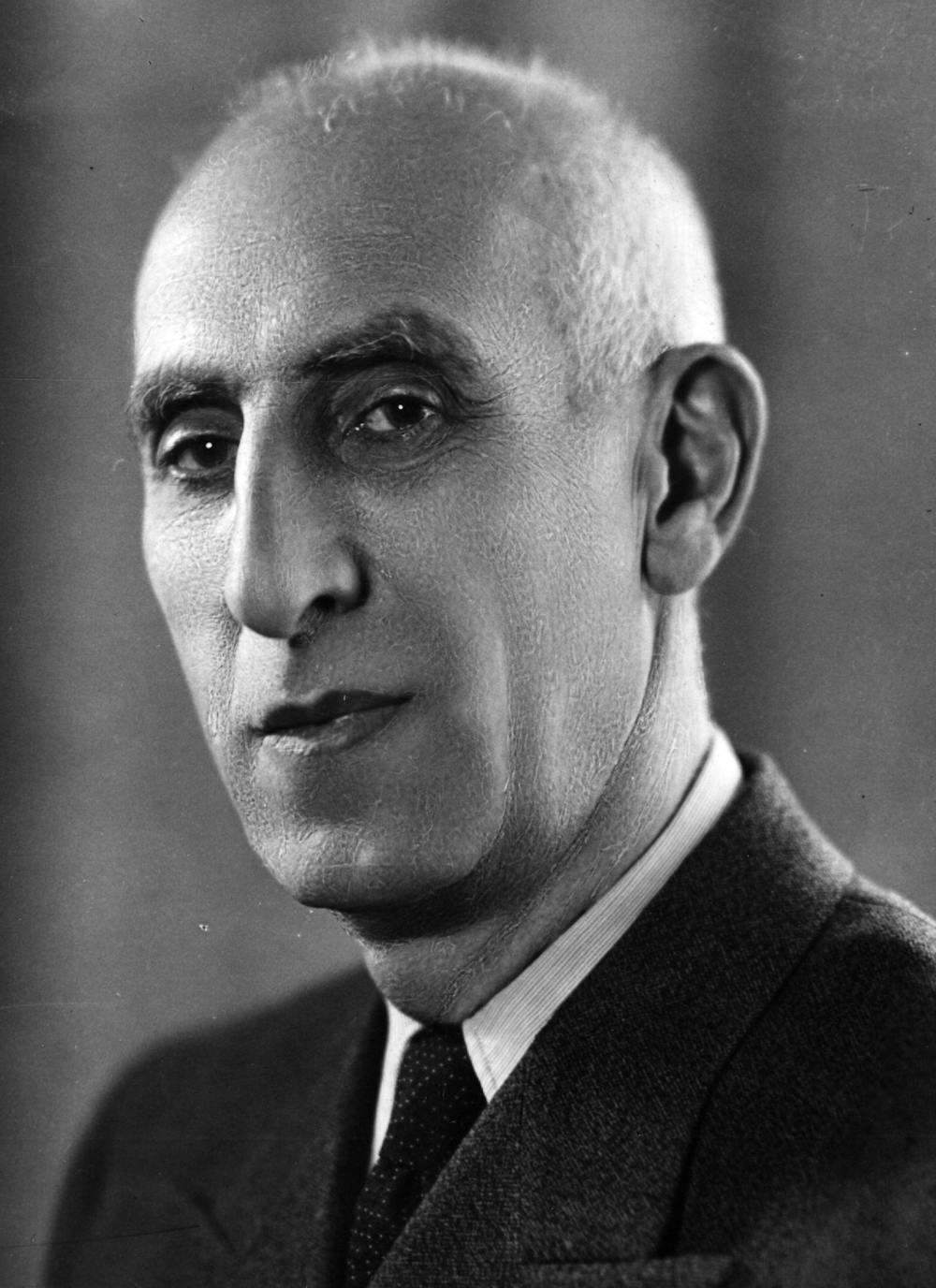
    With the U.S. bombing of three nuclear sites in Iran, relations between the two countries have arguably reached one of the lowest points in modern times. But the bad blood between the two countries isn’t new: The U.S. and Iran have been in conflict for decades – at least since the U.S. helped overthrow a democracy-minded prime minister, Mohammed Mossadegh, in August 1953. The U.S. then supported the long, repressive reign of the Shah of Iran, whose security services brutalized Iranian citizens for decades.

    The two countries have been particularly hostile to each other since Iranian students took over the U.S. Embassy in Tehran in November 1979, resulting in economic sanctions and the severing of formal diplomatic relations between the nations.

    Since 1984, the U.S. State Department has listed Iran as a “state sponsor of terrorism,” alleging the Iranian government provides terrorists with training, money and weapons.

    Some of the major events in U.S.-Iran relations highlight the differences between the nations’ views, but others arguably presented real opportunities for reconciliation.

    1953: US overthrows Mossadegh

    Mohammed Mossadegh.
    Wikimedia Commons

    In 1951, the Iranian Parliament chose a new prime minister, Mossadegh, who then led lawmakers to vote in favor of taking over the Anglo-Iranian Oil Company, expelling the company’s British owners and saying they wanted to turn oil profits into investments in the Iranian people. The U.S. feared disruption in the global oil supply and worried about Iran falling prey to Soviet influence. The British feared the loss of cheap Iranian oil.

    President Dwight Eisenhower decided it was best for the U.S. and the U.K. to get rid of Mossadegh. Operation Ajax, a joint CIA-British operation, convinced the Shah of Iran, the country’s monarch, to dismiss Mossadegh and drive him from office by force. Mossadegh was replaced by a much more Western-friendly prime minister, handpicked by the CIA.

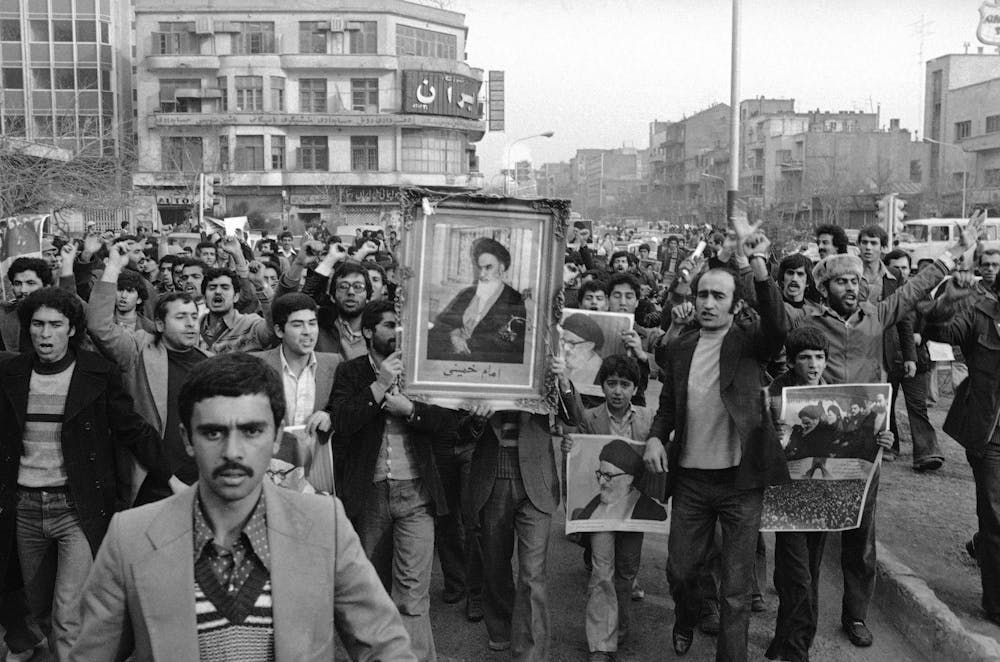
    Demonstrators in Tehran demand the establishment of an Islamic republic.
    AP Photo/Saris

    1979: Revolutionaries oust the shah, take hostages

    After more than 25 years of relative stability in U.S.-Iran relations, the Iranian public had grown unhappy with the social and economic conditions that developed under the dictatorial rule of Shah Mohammad Reza Pahlavi.

    Pahlavi enriched himself and used American aid to fund the military while many Iranians lived in poverty. Dissent was often violently quashed by SAVAK, the shah’s security service. In January 1979, the shah left Iran, ostensibly to seek cancer treatment. Two weeks later, Ayatollah Ruhollah Khomeini returned from exile in Iraq and led a drive to abolish the monarchy and proclaim an Islamic government.

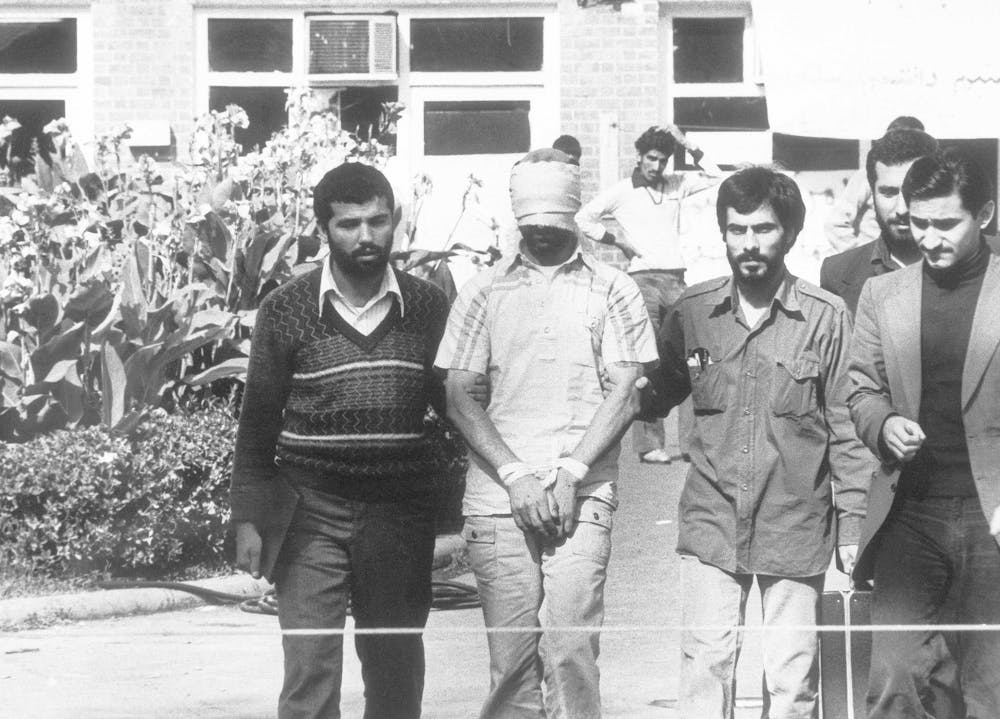
    Iranian students at the U.S. Embassy in Tehran show a blindfolded American hostage to the crowd in November 1979.
    AP Photo

    In October 1979, President Jimmy Carter agreed to allow the shah to come to the U.S. to seek advanced medical treatment. Outraged Iranian students stormed the U.S. Embassy in Tehran on Nov. 4, taking 52 Americans hostage. That convinced Carter to sever U.S. diplomatic relations with Iran on April 7, 1980.

    Two weeks later, the U.S. military launched a mission to rescue the hostages, but it failed, with aircraft crashes killing eight U.S. servicemembers.

    The shah died in Egypt in July 1980, but the hostages weren’t released until Jan. 20, 1981, after 444 days of captivity.

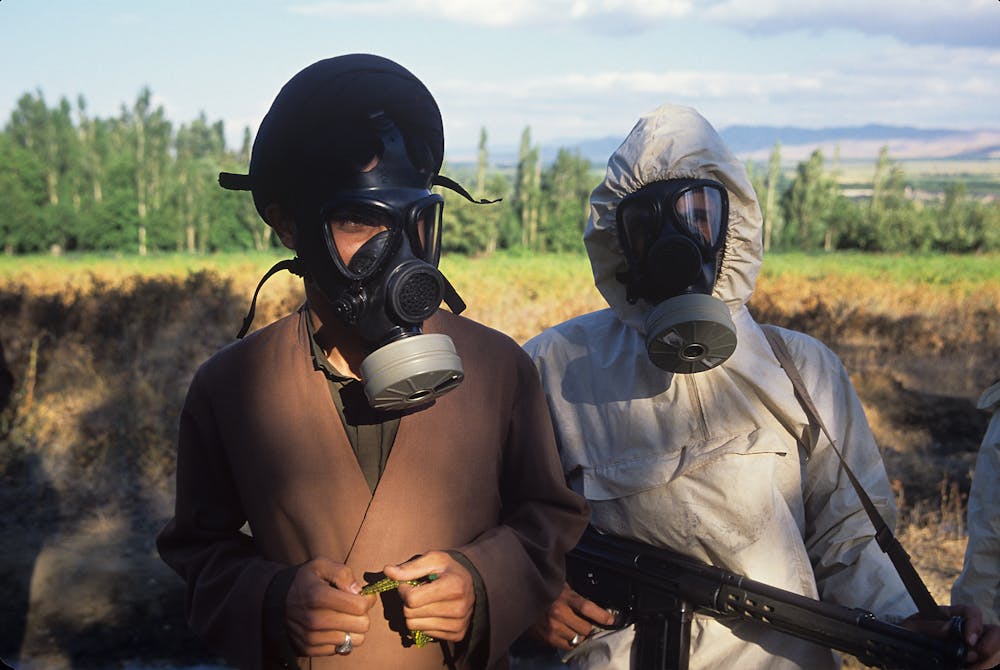
    An Iranian cleric, left, and an Iranian soldier wear gas masks to protect themselves against Iraqi chemical-weapons attacks in May 1988.
    Kaveh Kazemi/Getty Images

    1980-1988: US tacitly sides with Iraq

    In September 1980, Iraq invaded Iran, an escalation of the two countries’ regional rivalry and religious differences: Iraq was governed by Sunni Muslims but had a Shia Muslim majority population; Iran was led and populated mostly by Shiites.

    The U.S. was concerned that the conflict would limit the flow of Middle Eastern oil and wanted to ensure the conflict didn’t affect its close ally, Saudi Arabia.

    The U.S. supported Iraqi leader Saddam Hussein in his fight against the anti-American Iranian regime. As a result, the U.S. mostly turned a blind eye toward Iraq’s use of chemical weapons against Iran.

    U.S. officials moderated their usual opposition to those illegal and inhumane weapons because the U.S. State Department did not “wish to play into Iran’s hands by fueling its propaganda against Iraq.” In 1988, the war ended in a stalemate. More than 500,000 military and 100,000 civilians died.

    1981-1986: US secretly sells weapons to Iran

    The U.S. imposed an arms embargo after Iran was designated a state sponsor of terrorism in 1984. That left the Iranian military, in the middle of its war with Iraq, desperate for weapons and aircraft and vehicle parts to keep fighting.

    The Reagan administration decided that the embargo would likely push Iran to seek support from the Soviet Union, the U.S.’s Cold War rival. Rather than formally end the embargo, U.S. officials agreed to secretly sell weapons to Iran starting in 1981.

    The last shipment, of anti-tank missiles, was in October 1986. In November 1986, a Lebanese magazine exposed the deal. That revelation sparked the Iran-Contra scandal in the U.S., with Reagan’s officials found to have collected money from Iran for the weapons and illegally sent those funds to anti-socialist rebels – the Contras – in Nicaragua.

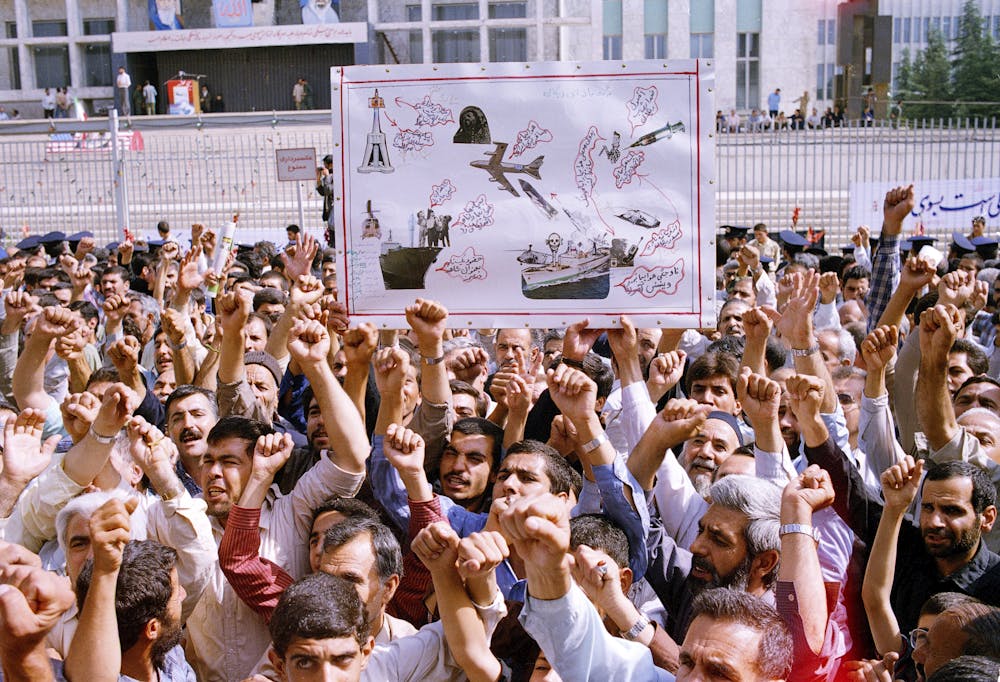
    At a mass funeral for 76 of the 290 people killed in the shootdown of Iran Air 655, mourners hold up a sign depicting the incident.
    AP Photo/CP/Mohammad Sayyad

    1988: US Navy shoots down Iran Air flight 655

    On the morning of July 8, 1988, the USS Vincennes, a guided missile cruiser patrolling in the international waters of the Persian Gulf, entered Iranian territorial waters while in a skirmish with Iranian gunboats.

    Either during or just after that exchange of gunfire, the Vincennes crew mistook a passing civilian Airbus passenger jet for an Iranian F-14 fighter. They shot it down, killing all 290 people aboard.

    The U.S. called it a “tragic and regrettable accident,” but Iran believed the plane’s downing was intentional. In 1996, the U.S. agreed to pay US$131.8 million in compensation to Iran.

    1997-1998: The US seeks contact

    In August 1997, a moderate reformer, Mohammad Khatami, won Iran’s presidential election.

    U.S. President Bill Clinton sensed an opportunity. He sent a message to Tehran through the Swiss ambassador there, proposing direct government-to-government talks.

    Shortly thereafter, in early January 1998, Khatami gave an interview to CNN in which he expressed “respect for the great American people,” denounced terrorism and recommended an “exchange of professors, writers, scholars, artists, journalists and tourists” between the United States and Iran.

    However, Supreme Leader Ayatollah Ali Khamenei didn’t agree, so not much came of the mutual overtures as Clinton’s time in office came to an end.

    In his 2002 State of the Union address, President George W. Bush characterized Iran, Iraq and North Korea as constituting an “Axis of Evil” supporting terrorism and pursuing weapons of mass destruction, straining relations even further.

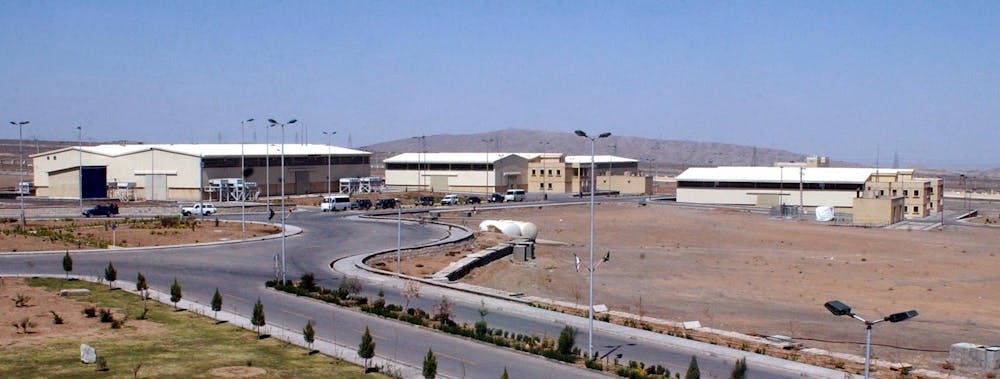
    Inside these buildings at the Natanz nuclear facility in Iran, technicians enrich uranium.
    AP Photo/Vahid Salemi

    2002: Iran’s nuclear program raises alarm

    In August 2002, an exiled rebel group announced that Iran had been secretly working on nuclear weapons at two installations that had not previously been publicly revealed.

    That was a violation of the terms of the Nuclear Nonproliferation Treaty, which Iran had signed, requiring countries to disclose their nuclear-related facilities to international inspectors.

    One of those formerly secret locations, Natanz, housed centrifuges for enriching uranium, which could be used in civilian nuclear reactors or enriched further for weapons.

    Starting in roughly 2005, U.S. and Israeli government cyberattackers together reportedly targeted the Natanz centrifuges with a custom-made piece of malicious software that became known as Stuxnet.

    That effort, which slowed down Iran’s nuclear program was one of many U.S. and international attempts – mostly unsuccessful – to curtail Iran’s progress toward building a nuclear bomb.

    2003: Iran writes to Bush administration

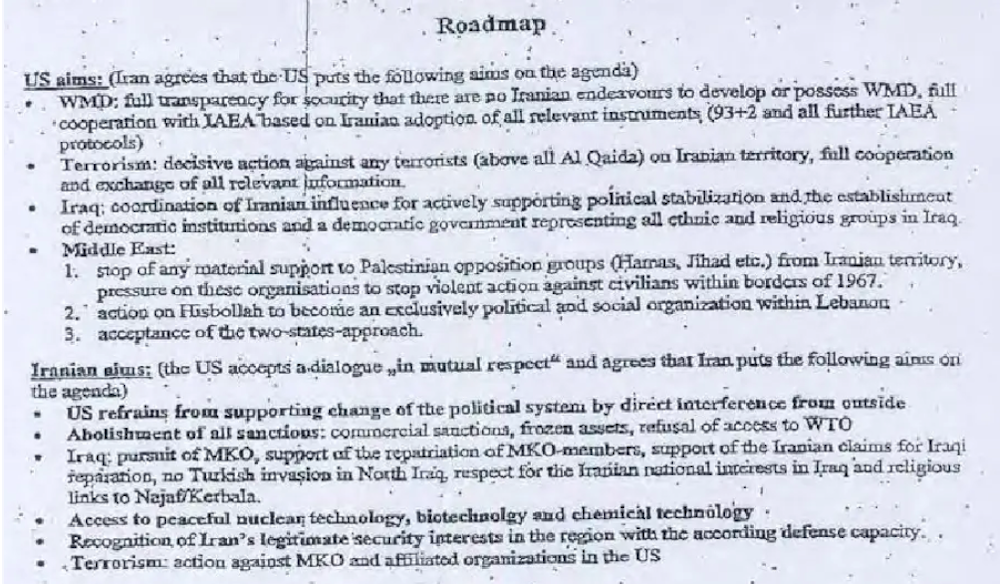
    An excerpt of the document sent from Iran, via the Swiss government, to the U.S. State Department in 2003, appears to seek talks between the U.S. and Iran.
    Washington Post via Scribd

    In May 2003, senior Iranian officials quietly contacted the State Department through the Swiss embassy in Iran, seeking “a dialogue ‘in mutual respect,’” addressing four big issues: nuclear weapons, terrorism, Palestinian resistance and stability in Iraq.

    Hardliners in the Bush administration weren’t interested in any major reconciliation, though Secretary of State Colin Powell favored dialogue and other officials had met with Iran about al-Qaida.

    When Iranian hardliner Mahmoud Ahmadinejad was elected president of Iran in 2005, the opportunity died. The following year, Ahmadinejad made his own overture to Washington in an 18-page letter to President Bush. The letter was widely dismissed; a senior State Department official told me in profane terms that it amounted to nothing.

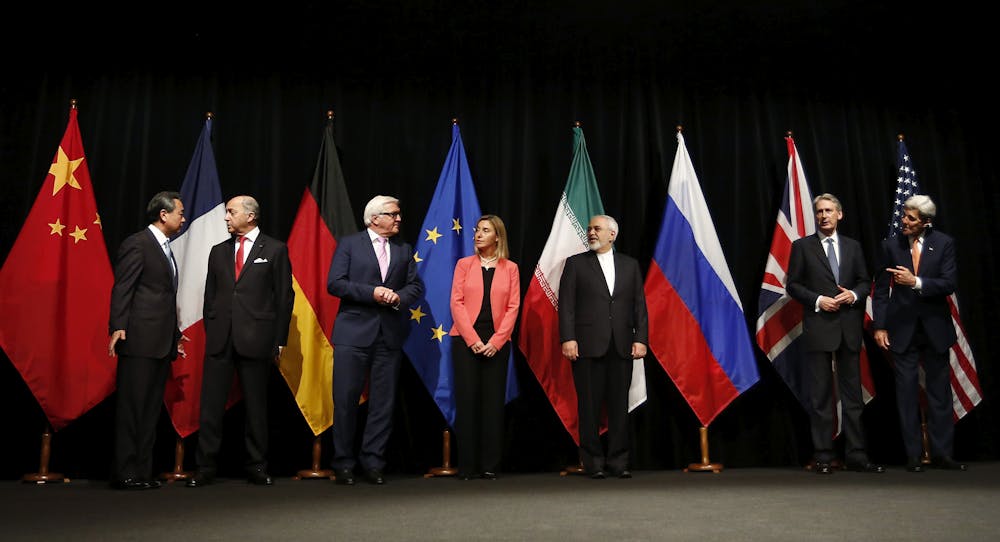
    Representatives of several nations met in Vienna in July 2015 to finalize the Iran nuclear deal.
    Austrian Federal Ministry for Europe, Integration and Foreign Affairs/Flickr

    2015: Iran nuclear deal signed

    After a decade of unsuccessful attempts to rein in Iran’s nuclear ambitions, the Obama administration undertook a direct diplomatic approach beginning in 2013.

    Two years of secret, direct negotiations initially bilaterally between the U.S. and Iran and later with other nuclear powers culminated in the Joint Comprehensive Plan of Action, often called the Iran nuclear deal.

    Two years of secret, direct negotiations conducted bilaterally at first between the U.S. and Iran and later with other nuclear powers culminated in the Joint Comprehensive Plan of Action, often called the Iran nuclear deal.

    Iran, the U.S., China, France, Germany, Russia and the United Kingdom signed the deal in 2015. It severely limited Iran’s capacity to enrich uranium and mandated that international inspectors monitor and enforce Iran’s compliance with the agreement.

    In return, Iran was granted relief from international and U.S. economic sanctions. Though the inspectors regularly certified that Iran was abiding by the agreement’s terms, President Donald Trump withdrew from the agreement in May 2018.

    2020: US drones kill Iranian Maj. Gen. Qassem Soleimani

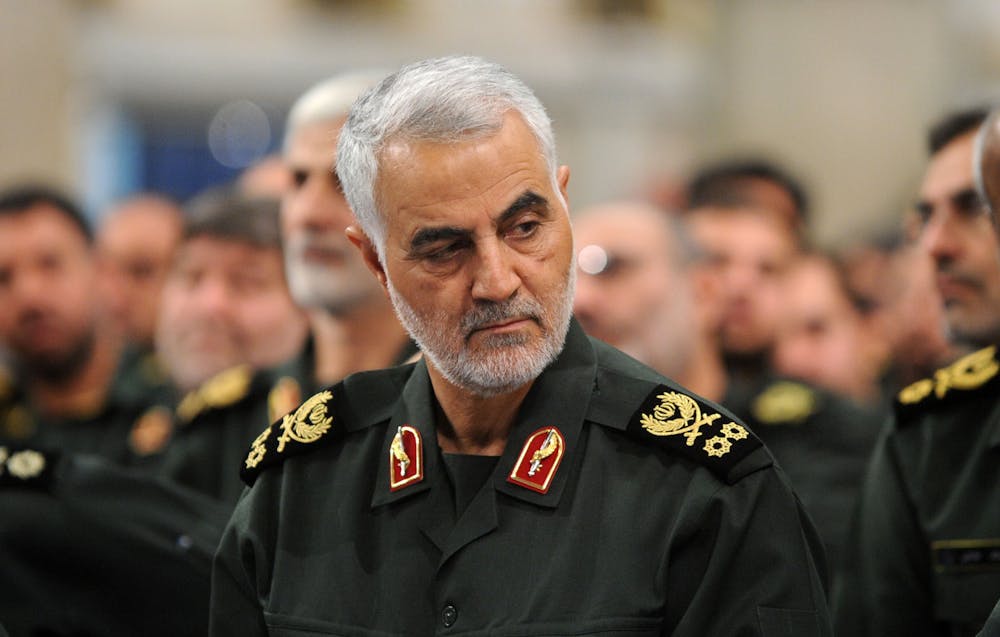
    An official photo from the Iranian government shows Maj. Gen. Qassem Soleimani, who was killed in a Jan. 3 drone strike ordered by President Donald Trump.
    Iranian Supreme Leader Press Office/Anadolu Agency via Getty Images

    On Jan. 3, 2020, an American drone fired a missile that killed Maj. Gen. Qassem Soleimani, the leader of Iran’s elite Quds Force. Analysts considered Soleimani the second most powerful man in Iran, after Supreme Leader Ayatollah Khamenei.

    At the time, the Trump administration asserted that Soleimani was directing an imminent attack against U.S. assets in the region, but officials have not provided clear evidence to support that claim.

    Iran responded by launching ballistic missiles that hit two American bases in Iraq.

    2023: The Oct. 7 attacks on Israel

    Hamas’ brazen attack on Israel on Oct. 7, 2023, provoked a fearsome militarized response from Israel that continues today and served to severely weaken Iran’s proxies in the region, especially Hamas – the perpetrator of the attacks – and Hezbollah in Lebanon.

    2025: Trump 2.0 and Iran

    Trump saw an opportunity to forge a new nuclear deal with Iran and to pursue other business deals with Tehran. Once inaugurated for his second term, Trump appointed Steve Witkoff, a real estate investor who is the president’s friend, to serve as special envoy for the Middle East and to lead negotiations.

    Negotiations for a nuclear deal between Washington and Tehran began in April, but the countries did not reach a deal. They were planning a new round of talks when Israel struck Iran with a series of airstrikes on June 13, forcing the White House to reconsider is position.

    On June 22, in the early morning hours, the U.S. chose to act decisively in an attempt to cripple Iran’s nuclear capacity, bombing three nuclear sites and causing what Pentagon officials called “severe damage.” Iran vowed to retaliate.

    This story has been updated to reflect the U.S. bombing of Iranian nuclear sites on June 22, 2025.

    Jeffrey Fields receives funding from the Carnegie Corporation of New York and Schmidt Futures.

    ref. US and Iran have a long, complicated history, spanning decades before US strikes on nuclear sites – https://theconversation.com/us-and-iran-have-a-long-complicated-history-spanning-decades-before-us-strikes-on-nuclear-sites-259240

    MIL OSI – Global Reports

  • MIL-OSI Africa: Kgodumodumo Dinosaur Interpretation Centre set to grow tourism

    Source: South Africa News Agency

    The Kgodumodumo Dinosaur Interpretation Centre is a living gateway into South Africa’s deep past and dynamic future, Tourism Minister Patricia de Lille said on Sunday.

    “This Centre tells the story of a world 200 million years ago, yet it is also a story of the Basotho people, whose ancient wisdom and oral traditions gave rise to the mythical Kgodumodumo, now brought to life in scientific exhibition,” de Lille said.

    She was speaking at the launch of the centre at the Golden Gate Highlands National Park in the Free State.

    WATCH | Kgodumodumo Dinosaur Interpretive Centre Launch

    [embedded content]

    The Minister said the centre also tells the story of the land claimant settlement agreement which includes a beneficiation package that largely consists of eco-tourism opportunities such as a camping site, horse riding, mountain biking, a 4×4 trail and hiking trails.

    “I want to acknowledge that the Kgodumodumo Dinosaur Interpretation Centre has been made possible through close collaboration and partnership between the Department of Tourism, Evolutionary Studies Institute of the University of the Witwatersrand, South African National Parks [SANParks], National Treasury, the Department of Forestry, Fisheries and Environment [DFFE], the Free State Province and most importantly, the surrounding communities.”

    The Minister was also grateful for the donor funding from the European Union of R120 million.

    “I want to thank all partners for their invaluable contributions, both past and future. A special mention to the University of the Witwatersrand, which has a long tradition of palaeontological research.

    “Subsequent work at this site revealed more nests at different levels, indicating that this was a seasonal nesting place for dinosaurs. We have created something both monumental and meaningful.”

    De Lille said the centre is not just a museum.

    “Government is diversifying tourism attractions to grow tourism. The Interpretation Centre will act as a catalyst for broader tourism development in the Free State’s rural economy,” she said adding that the centre will boost domestic tourism in one of the least visited provinces in the country.

    “The province of the Free State is not a place to travel through but a place to travel to. We have trained 15 tour guides from the local community.”

    The Department of Tourism launched the centre in partnership with the DFFE.

    The two departments recently signed a Memorandum of Understanding (MoU) to develop the Kgodumodumo Dinosaur Interpretation Centre to boost tourism in the Free State.

    The centre will offer visitors an innovative, creative and quality demonstration of scientific knowledge (paleontological, archaeological and geological) with a broader appreciation of cultural heritage through interactive exhibitions.

    The centre is managed by the SANParks, and it is envisaged that the facility will increase the bed occupancy and more activities for visitors to the park. 

    READ | Kgodumodumo Dinosaur Interpretation Centre to boost tourism

    The development of the project includes the Interpretation Centre (paleontological offices and work space), the reception area, lecture halls, the display area-exhibition and display installation, the coffee/curio shop, the activity node – office, activity areas (children), parking – paved parking area, look-out point and bulk services, upgrade electrical supply – transformer and cable, sewer – connect to existing system water – connection. – SAnews.gov.za

    MIL OSI Africa

  • Pahalgam terror attack: Three attackers were Pakistanis linked to LeT, says NIA

    Source: Government of India

    Source: Government of India (4)

    In a significant disclosure, the two locals arrested by the National Investigation Agency (NIA) for harbouring Pahalgam terror attack perpetrators have confirmed that the three terrorists responsible for the attack were Pakistani nationals.

    NIA said on Sunday that two locals arrested during the investigation into the April 22 Pahalgam terrorist attack, in which 26 civilians were killed, told investigators that the three terrorists, who carried out the attack, belonged to the proscribed terrorist outfit Lashkar-e-Taiba (LeT) and were Pakistani nationals.

    The investigating agency in a major breakthrough arrested the two men for harbouring the terrorists who had carried out the April 22 Pahalgam terror attack.

    The two men have been identified as Parvaiz Ahmad Jothar from Batkote, Pahalgam and Bashir Ahmad Jothar of Hill Park, Pahalgam, said the NIA.

    They have disclosed the identities of the three armed terrorists involved in the attack, and have also confirmed that they were Pakistani nationals affiliated with LeT.

    Parvaiz and Bashir had knowingly harboured the three armed terrorists at a seasonal dhok (hut) at Hill Park before the attack, as per NIA investigations.

    “The two men had provided food, shelter and logistical support to the terrorists, who had, on the fateful afternoon, selectively killed the tourists on the basis of their religious identity, making it one of the most gruesome terrorist attacks ever,” said the NIA.

    The NIA, which has arrested the duo under Section 19 of the Unlawful Activities (Prevention) Act, 1967, is further investigating the case RC-02/2025/NIA/JMU, registered after the attack that shook the world on April 22. Further investigations in the case are continuing, said the NIA.

    It must be mentioned that on April 22, Pakistan backed LeT terrorists killed 26 civilians, including 25 tourists and a local pony owner, who had tried to stop the terrorists from spilling innocent blood. Among the 25 tourists was a Nepalese national.

    (With inputs from IANS)

  • MIL-OSI Australia: Budget invests in tourism and events

    Source: Northern Territory Police and Fire Services

    The ACT Government will support the revitalisation of Telstra Tower.

    In brief:

    • The 2025–26 ACT Budget is investing in Canberra’s tourism, hospitality and events sectors.
    • This will help city is grow as a destination for both tourism and business.
    • This story outlines the targeted investment included in the Budget.

    The 2025–26 ACT Budget will support Canberra’s tourism, hospitality and events sectors.

    Targeted investment will help attract more visitors and events to Canberra. It will:

    • support Canberra’s growing visitor economy
    • strengthen the city’s national profile
    • deliver high-quality events that benefit the whole community.

    This will help ensure the city is well-placed to grow as a visitor and business hub.

    Telstra Tower – an iconic landmark

    The ACT Government is committed to returning Telstra Tower as part of the Canberra tourism experience.

    The tower is one of Canberra’s most recognisable landmarks. The Government is partnering with Telstra to support its revitalisation. This will include a modern, commercially viable fit-out.

    The Government is working towards finalising an operational agreement with Telstra.

    Supporting Canberra’s tourism industry

    The Government is supporting the Territory’s tourism industry with:

    • continued operational support for the Canberra Convention Bureau
    • an Aviation Stimulus Fund to improve flight access to the capital
    • continuing the Major Events Fund
    • support for core activities of Brand Canberra, the National Capital Educational Tourism Project, and in-market tourism representation
    • support for major events. These include Enlighten, Floriade, New Year’s Eve, and Windows to the World, returning in 2025.

    Support for international engagement

    The Budget also includes support to continue the ACT’s international engagement activities. These include:

    • trade missions
    • business export support
    • international partnerships, with a focus on business, education and tourism opportunities.

    The investment is part of the ACT Government’s broader plan to grow Canberra’s economy and support local jobs.

    Read more like this:


    Get ACT news and events delivered straight to your inbox, sign up to our email newsletter:


    MIL OSI News

  • MIL-OSI Russia: Report “Development of the “Central Asia-China Spirit”: achievements, opportunities and prospects for regional cooperation” /1/

    Translation. Region: Russian Federal

    Source: People’s Republic of China in Russian – People’s Republic of China in Russian –

    Source: People’s Republic of China – State Council News

    ASTANA, June 22 (Xinhua) — The Xinhua Research Institute on Sunday released a report in the Kazakh capital Astana titled “Development of the Central Asia-China Spirit: Achievements, Possibilities, and Prospects of Regional Cooperation.” The full text of the report is given below.

    Development of the “Central Asia-China Spirit”:

    achievements, opportunities and prospects of regional cooperation

    Xinhua News Agency Research Institute

    Table of contents

    Preface

    Chapter 1. Results of cooperation between China and Central Asia

    1.1 Strengthening trade and economic ties

    1.2 Infrastructure development and deepening interconnectivity

    1.3 Accelerated development of cooperation along the entire production chain in the energy industry

    1.4 Innovative cooperation towards a green transition

    1.5 Promoting the formation of internal development potential in the countries of Central Asia

    1.6 Dialogue of civilizations as a solid spiritual basis for cooperation

    1.7 Peace, security and stability as a basis for sustainable development

    Chapter 2. Opportunities and Challenges in China-Central Asia Cooperation

    2.1 New Opportunities as a Result of China’s Opening Up

    2. Potential for cooperation in the field of green economy and digital technologies

    2.3 Regional cooperation as a factor of geo-economic expansion

    2.4 Risks and challenges in the field of development and security

    Chapter 3. Looking to the Future: Strengthening the Regional Community of Shared Destiny

    3.1 Mutual support as the basis of a regional community of common destiny

    3.2 Joint development for the sake of regional prosperity

    3.3 Formation of a common security barrier for stability of the entire region

    3.4 Friendship of peoples in the spirit of the times as a guarantee of mutual understanding

    Conclusion

    Explanatory note and thanks

    Preface

    Central Asia is the heart of Eurasia, closely linked to China by a common nature and destiny, like two banks of a single river: different, but inseparable. This region is a crossroads of ancient civilizations, where different peoples and customs meet and merge. The region serves as a hub of interregional connections and a real “melting pot” of human culture.

    Looking back, we can see how China, together with the peoples of Central Asia, contributed to the establishment and prosperity of the great Silk Road, leaving behind vivid evidence of cooperation over the centuries: “Caravans stretched to the horizon, and overseas merchants flocked to the border outposts day after day.”

    In the new era, China and the Central Asian countries have become good neighbors, reliable friends, partners and brothers bound by a common destiny. Together, they are opening a new page of “friendly, safe and prosperous neighborhood” in the Eurasian space, developing and shaping the “Central Asia-China Spirit” characterized by mutual respect, mutual trust, mutual benefit, mutual assistance and promoting joint modernization through high-quality development.

    They are creating a model example of regional cooperation for the entire world.

    Since Chinese President Xi Jinping put forward the Belt and Road Initiative in 2013, China and Central Asian countries have been working together to promote the comprehensive revival of the Silk Road and build a close partnership for the future. Bilateral relations have entered a new era and reached an unprecedented level. President Xi Jinping has paid nine visits to Central Asia, visiting all five countries and eight cities, and established strong friendship with the leaders of the region. The video summit to mark the 30th anniversary of the establishment of diplomatic relations and the first China-Central Asia Summit have become important milestones in the history of bilateral ties. Based on the interests of their peoples and striving for a brighter future, China and the Central Asian countries have made a historic choice to build a closer community of shared destiny, which once again underscores their determination to develop cooperation at a higher level, with higher standards and on a qualitatively new basis.

    The recently concluded second China-Central Asia Summit marked a new start in the development of cooperation between China and the countries of the region. At this historic moment, this report offers a comprehensive overview of the key achievements, existing opportunities and challenges of the China-Central Asia partnership in the new era, as well as forecasts and analytical assessments of the prospects for further cooperation.

    The report notes that since the beginning of the new era, cooperation between China and Central Asian countries has borne rich fruit in seven major areas: trade and economic cooperation, infrastructure development, energy cooperation, new areas of partnership, enhancing development potential, mutual cultural enrichment, and joint promotion of peace and stability. China’s high-quality development, high level of its openness, as well as a new round of scientific and technological revolution and industrial transformation create unique opportunities for expanding China-Central Asian cooperation. At the same time, the partnership faces a number of challenges, including unilateral actions, rising protectionism, geopolitical risks, and threats in the field of non-traditional security.

    Looking to the future, the report stressed that cooperation between China and Central Asian countries should be based on the concept of building a community with a shared future for mankind and follow the three global initiatives. Mutual support, common development, common security and friendship passed down from generation to generation should remain the fundamental principles, aiming to strengthen the regional community with a shared future, jointly create a new chapter of regional prosperity, build a common security shield and deepen the cordial affinity between the peoples.

    We believe that in the new era, cooperation between China and Central Asia will bring sustainable development and more benefits to the peoples of the region, bring stability and positive energy to the troubled world, and become an important example of regional partnership in building a community with a shared future for mankind.

    Chapter 1. Results of cooperation between China and Central Asia

    Our cooperation is rooted in more than two thousand years of friendly relations, is reinforced by solidarity and mutual trust that has been established for 30 years since the establishment of diplomatic relations, and is significantly moving forward thanks to mutually beneficial cooperation in the new era. Many years of experience and practice have enabled us to develop and shape the “Central Asia-China Spirit”, characterized by mutual respect, mutual trust, mutual benefit, mutual assistance and the promotion of joint modernization through high-quality development.

    — Chairman of the People’s Republic of China Xi Jinping

    1.1 Strengthening trade and economic ties

    In recent years, trade and economic cooperation between China and the Central Asian countries has been steadily developing in both quantitative and qualitative terms. China has become the largest trading partner and the main source of investment for the countries in the region. After the first China-Central Asia Summit was held in 2023, the Chinese side took additional measures to promote trade, ensuring the stable flow of goods and expanding the supply of products from the Central Asian countries. As a result, bilateral trade is becoming increasingly diversified, the potential for economic cooperation continues to be actively realized, and the scale of trade is reaching new levels. The total volume of trade between China and the Central Asian countries reached 94.8 billion US dollars in 2024, an increase of 5.4 billion compared with the previous year, representing an increase of 7.2%. Compared with the initial period of establishing diplomatic relations, when this figure was only 460 million dollars, it has increased more than a hundredfold.

    Strategic alignment of the parties. An important feature of cooperation between China and the Central Asian countries is the strategic alignment of key plans and initiatives in the field of economic development. The parties strive for in-depth coordination and alignment of the Belt and Road initiative with the national development programs of the countries of the region: the New Economic Policy of Kazakhstan, the National Development Program of Kyrgyzstan until 2026, the National Development Strategy of Tajikistan for the period up to 2030, the Revival of the Silk Road strategy of Turkmenistan and the Development Strategy of the new Uzbekistan for 2022-2026. Such alignment strengthens practical cooperation in various fields and contributes to the formation of a new model of complementary and mutually beneficial partnership. During the second China-Central Asia Summit, China and the five Central Asian countries signed a treaty on eternal good-neighborliness, friendship and cooperation, which enshrined the principle of friendship between generations in legal form and became a new milestone in the history of relations between the six countries.

    Practical cooperation enters the “highway”. As China-Central Asia cooperation deepens, practical cooperation enters the “highway”. The two sides improve trade policies and work hard to ensure a stable, fair, transparent and sustainable investment climate, making trade, investment and business environment even more attractive. As of December 2024, China’s accumulated direct investment in Central Asian countries exceeded US$17 billion, and the total volume of completed contract work amounted to more than US$60 billion. Cooperation covers such areas as oil and gas production, interconnected infrastructure, manufacturing and the digital economy.

    In the Xinjiang-Uygursky Autonomous Region of China, bordering the countries of Central Asia, optimizing the work of border crossings with Kazakhstan, Kyrgyzstan and Tajikistan, passes are more quickly and more efficient. The first cross -border cooperation zone of Horgos, jointly created by China and Kazakhstan, has been operating in the innovative model of “inside the country – outside the customs territory (or“ within the country, but outside customs borders ”). This International Center has become a flagship project of bilateral economic cooperation as part of the“ One Belt, One Way. ”The starting point of the ancient shalk track. – Shensi’s province forms the center of trade in widespread consumption, such as grain, fruits and vegetables, together with the countries of the region, China develops international logistics nodes and logistics parks The Center in the north-west of the Ciano International Port, introduced the RFID radio frequency technology, which allowed to reduce the assembly time of new energy cars and increase the efficiency of organizing trains on the route China-Europe.

    Chinese -made products, including everyday goods, machine -building equipment and electronic products, are in sustainable demand among consumers in Central Asia. Products from the category of “new three types” became the basis of Chinese exports to the region. At the same time, energy resources and agricultural products from Central Asia countries are expanding the Chinese market, expanding the choice for consumers. China discovered eight “green corridors” for accelerated customs clearance of agricultural products, completely covering all car border crossings. The trade in agricultural products between the parties is rapidly developing. Export to China of high -quality agricultural goods from Central Asia, such as lemons from Tajikistan and cherries from Uzbekistan, is growing rapidly. At the same time, fresh peaches from Hebei province and Yanan apples first entered the tables of consumers in Central Asia. The Kerekhovaya and oil and fat industrial group “Aiju Grain and Oil Group), effectively using complementarity in agrarian cooperation between China and the countries of Central Asia, built and commissioned the logistics and agro-industrial park with a capacity of 1 million tons in the North Kazakhstan region. Chinese standards in the field of equipment, technology, management and service have brought real benefits to the local population. Such interaction contributes to mutually beneficial cooperation in the field of food security. Thanks to the joint efforts of China and the countries of Central Asia, the stability and effectiveness of regional production and logistics chains are ensured.

    1.2 Infrastructure development and deepening interconnectivity

    Connectivity development is a priority area of cooperation between China and Central Asian countries. The two sides make full use of the region’s geographical advantages to build “fast corridors” for the free movement of people and improve “green corridors” for the efficient movement of goods. These measures help transform Central Asian countries from “landlocked” to “land-connected,” strengthening their position as an important transportation hub on the Eurasian continent. Such infrastructure development improves people’s living conditions and stimulates the unleashing of the potential of higher-level connectivity, including the Internet of Things and other areas of digital integration between China and Central Asia.

    China and Central Asian countries have been pioneers in jointly implementing the Belt and Road Initiative, accelerating the construction of the China-Central Asia Transport Corridor and forming a multi-layered and diversified system of regional connectivity. This has resulted in the implementation of many mutually beneficial infrastructure projects. China’s construction of the Kamchik Pass Tunnel of the Angren-Pap Railway, the longest in Central Asia, has eliminated the need to bypass third countries when transporting through Uzbekistan, radically changing the mode of transportation for tens of millions of people. The China-Kyrgyzstan-Uzbekistan Highway, which crosses the Tien Shan Mountains, and the China-Tajikistan-Uzbekistan Highway, which passes through the Pamir Plateau, form a dense network of routes for freight transportation between China and Central Asian countries, significantly improving logistics and bringing tangible benefits to the people of the region.

    On December 27, 2024, the construction of the China-Kyrgyzstan-Uzbekistan railway officially began. The route of the new line starts in Kashgar, passes through the territory of Kyrgyzstan and enters Uzbekistan, with the prospect of further construction in the direction of West and South Asia. Once completed, the railway will become an important part of the southern route of the New Eurasian Continental Bridge. It will provide a convenient transport corridor connecting East and Southeast Asia with Central, West Asia, North Africa and Southern Europe. This will significantly reduce the costs of international trade for the participating countries and increase their level of integration into the world economy.

    China has signed intergovernmental air transport agreements with all five Central Asian countries, and the opening up of the aviation market continues to progress. Air traffic between Xi’an and the countries in the region has evolved from no routes at all to covering seven cities in all five countries. Currently, eight passenger flights are operating regularly, connecting China with seven cities in Central Asia. These airlines provide a strong link between the economic zones of China and Central Asia, promoting the effective integration of industrial and social supply chains.

    The China-Europe and China-Central Asia trains, which operate non-stop day and night, effectively ensure the stability and continuity of international logistics chains. On April 23, a China-Europe freight train with 55 containers of consumer goods and electronic components departed from the Khorgos border station in Xinjiang to the Polish city of Malaszewicze. This trip was a landmark one, as the number of trains passing through the Khorgos railway checkpoint exceeded 3,000, and this figure was reached 27 days earlier than last year. This was a new historical record, exceeding the figure of last year by 28.7%. According to statistics, 19 thousand China-Europe trains were sent in 2024, which is 10% more than in the previous year, and the volume of transportation amounted to 2.07 million TEU (conventional containers), which is 9% higher than the same indicator last year. 12 thousand trains were sent on the China-Central Asia route (an increase of 10%), 880 thousand TEU were transported (an increase of 12%). Currently, the China State Railway Corporation has approved 44 regular routes in the direction of Central Asia, thereby forming new international transport corridors in the Eurasian space.

    The Trans-Caspian International Transport Corridor starts in China, passes through Kazakhstan, the Caspian coast, Azerbaijan and Georgia, and then stretches to Turkey and European countries. In July 2024, Chinese President Xi Jinping and Kazakh President Kassym-Jomart Tokayev jointly attended the launch ceremony of the China-Europe direct express route via video link. For the first time, Chinese vehicles reached a Caspian port via a direct road route, which marked the official formation of a multi-level and multi-vector interconnected system combining road, rail, air and pipeline transport.

    The China-Europe train consolidation centers are developing at an accelerated pace, forming a more efficient and convenient transportation system. In February 2024, the Kazakhstan terminal in Xi’an, built in cooperation between Xi’an Free Trade Port Construction and Operation Co., Ltd. and KTZ Express JSC, began operating. In just one year, the terminal handled over 150 thousand tons of cargo, which contributes to the accelerated consolidation and distribution of Kazakhstani goods undergoing import and export operations through Xi’an. In addition, the terminal has become the embodiment of Kazakhstan’s initiative to accelerate the creation of a trade and logistics center in China. With the commissioning of the China-Kazakhstan logistics hub in Almaty on June 10 this year, the hub-to-hub transport corridor has moved to a new level.

    1.3 Accelerated development of cooperation along the entire production chain in the energy industry

    Central Asian countries are important oil and gas producers, and have a high degree of complementarity with China in such aspects as natural resource conditions and industrial structure. In recent years, China and Central Asian countries, through a mutually beneficial cooperation model, have been jointly building multi-vector, safe and efficient energy corridors, consistently expanding cooperation in such basic areas as energy and mining.

    Chinese enterprises attach great importance to the development of energy cooperation with the Central Asian countries, building long-term and strong partnerships with relevant government agencies and energy companies in the region. Back in 1997, the China National Petroleum Corporation (CNPC) successfully won a tender for the development of the Akzhuba oil field in Kazakhstan, which marked the beginning of cooperation between China and Kazakhstan in the oil and gas sector. Over the past years, Akzhubin has grown from an enterprise with an annual oil production volume of just over 2 million tons into a large oil and gas company with an annual production of over 10 million tons of oil and gas. On its basis, a full chain of the industry cycle was formed, including oil and gas exploration and production, pipeline construction and operation, oil refining and petroleum product trading, engineering and construction services, oil and gas equipment production and transportation, information technology and logistics support. The project also contributed to the creation of over 20 thousand jobs for the local population.

    In Tajikistan, Chinese energy equipment manufacturing companies built and commissioned the Thermal Power Plant No. 2 in Dushanbe, which made it possible to permanently resolve the problem of electricity shortages in the capital in winter. In Kyrgyzstan, with the support of the Chinese side, the modernization of the Bishkek Thermal Power Plant was completed, as a result of which its annual electricity generation increased from the previous 262 million kilowatt-hours to 1.74 billion, and the volume of heat supply almost doubled. In Turkmenistan, as part of the project to develop natural gas fields in the Amu Darya basin, implemented with the participation of the China National Petroleum Corporation, a production level equal to tens of millions of tons of oil equivalent per year has already been achieved, and the annual capacity of natural gas supplies exceeds 10 billion cubic meters. The implementation of a number of such large-scale projects contributes to the steady expansion of oil and gas trade between China and the countries of Central Asia, as well as to the deepening of cooperation along the entire production chain of the energy industry.

    Thanks to many years of practical cooperation between China and Central Asian countries, the network of pipeline infrastructure construction and operation is gradually improving. Lines A, B and C of the China-Central Asia gas pipeline, running through endless deserts, have been successfully put into operation and connected to the II and III stages of China’s West-East mainline. The construction of Line D is proceeding at an accelerated pace, bringing real benefits to the people of the countries along the route. In addition, the Kazakhstan-China oil pipeline has become the first international energy corridor directly connecting Kazakhstan with foreign end markets. Its implementation has made a significant contribution to the diversification of Kazakhstan’s energy exports.

    With the steady advancement of the Belt and Road Initiative, energy cooperation between China and Central Asian countries continues to deepen. It not only helps improve the region’s energy infrastructure and inject new impetus into the socio-economic development of both sides, but also makes a significant contribution to optimizing the region’s energy structure and ensuring sustainable ecological development.

    1.4 Innovative cooperation towards a green transition

    Fossil fuels currently account for about 95% of the energy supply in the five Central Asian countries. Against the backdrop of increasing climate change and the global energy transition, the region’s countries are showing growing interest in cooperation in the areas of renewable energy and green economy. However, due to limited financial resources, a shortage of specialists, and an insufficient level of technological development, the implementation of a green transition faces certain difficulties.

    During the first China-Central Asia Summit, China and the five countries in the region reached a number of agreements, including launching a joint initiative on green and low-carbon development, as well as deepening cooperation on sustainable development and combating climate change. In support of the Central Asian countries’ course towards ecological transformation, China, using its governance and production advantages in the field of new energy, is actively promoting the region’s significant potential in the field of renewable energy resources.

    In early April 2025, the Bash and Dzhankeldy wind energy projects, implemented with the investment and operational participation of China Southern Power Grid, were officially commissioned in Uzbekistan. These facilities have become the largest completed wind farms in Central Asia. Their annual output is expected to be about 3 billion kilowatt-hours of clean electricity, which will reduce carbon dioxide emissions by 1.6 million tons annually.

    More and more Chinese companies are investing in the construction of enterprises and the development of green energy in Central Asian countries, actively expanding cooperation in the field of renewable energy sources. In Uzbekistan, a 100-megawatt solar power plant was commissioned in Navoi, in Kazakhstan – a wind farm in Zhanatas, a hydroelectric power station in Turgu-Sun and a solar power plant in Almaty. The Chinese energy corporation China Huadian Group has begun construction of a gas turbine power plant in Aktau and a solar power plant in Sheli. These projects not only provide Central Asian countries with stable and sustainable green electricity, but also contribute to the modernization of local industries and create a significant number of jobs.

    China is actively developing international cooperation with Central Asian countries in combating desertification. The practical experience and scientific approaches developed in the framework of ecological recovery of the “Three Norths”, including Ningxia Hui Autonomous Region, Inner Mongolia and other regions, as well as the experience of developing the Taklamakan Desert have become a reference point for Central Asian countries that are facing similar problems of land degradation. Such cooperation not only offers real solutions in the field of sustainable development, but also opens up broad prospects for promoting the green direction within the framework of the “One Belt, One Road” initiative.

    The Aral Sea, located on the border of Uzbekistan and Kazakhstan, was previously considered the fourth largest lake in the world. But due to half a century of large-scale development of land and water resources, its area has shrunk from about 67,000 square kilometers in 1960 to about 6,000 square kilometers in 2020. This has caused serious environmental consequences: desertification, soil salinization, loss of biodiversity, and other problems. In the face of the environmental crisis, China and Central Asian countries have joined forces to implement comprehensive measures to restore the ecosystem of the Aral region. The Institute of Ecology and Geography of the Xinjiang Branch of the Chinese Academy of Sciences signed a cooperation agreement with the government of Uzbekistan and specialized organizations aimed at the ecological rehabilitation of the Aral Sea. In 2023, a pilot site was organized in the city of Nukus in western Uzbekistan, where drip irrigation technology under a film with the simultaneous supply of water and fertilizers for growing cotton was tested. Already in the first year, the yield reached a record level for this region. Currently, the institute’s specialists continue to work in the city of Muynak, located on the shallow coast. Here, salt- and drought-resistant plant species are being selected, which will become the basis for the future “greening” of the dried-up seabed and the restoration of the region’s ecosystems.

    1.5 Promoting the formation of internal development potential in the countries of Central Asia

    “China’s experience in overcoming poverty clearly shows that with persistence, step-by-step implementation of a unified plan, and persistence like a drop breaking through a rock, the problem of poverty in developing countries can be solved. Even the weakest bird can fly first – and fly high. If China can do it, other developing countries can too.” These are the words with which Chinese President Xi Jinping shared China’s experience in combating poverty with the world community at the G20 Leaders’ Summit in Rio de Janeiro in November 2024.

    Poverty is a long-standing problem of human society and a common challenge facing the entire world. China’s experience in combating poverty has attracted the attention of the international community and has become an important source of inspiration for Central Asian countries. China’s cooperation with the countries of the region has gradually shifted from the traditional one-sided “donor aid” to a model of mutual development based on technology transfer, industrial modernization, personnel training and other forms of assistance. This contributes to the joint formation of internal potential for sustainable growth and social stability.

    Implementation of targeted projects on poverty reduction with an emphasis on technology localization in accordance with the needs of Central Asian countries. China and the Central Asian countries are actively developing specialized cooperation in the field of scientific and technological support for poverty alleviation. Taking into account regional characteristics and industry constraints, the parties are accelerating the transfer of technologies to upgrade production in areas such as agricultural modernization, energy transition and infrastructure development. Within the framework of the first China-Central Asia summit, China and Uzbekistan agreed to establish a subcommittee on cooperation in the field of poverty reduction under the Intergovernmental Cooperation Committee. This is the first such subcommittee established by China in the format of interstate cooperation. Since the launch of the China-Uzbekistan cooperation mechanism on poverty reduction, the parties have achieved significant results in the areas of institutional development, personnel training and exchange of practical experience. These efforts not only contribute to the socio-economic development of Uzbekistan, but also significantly expand the content of the bilateral partnership. According to a joint study conducted by the National Statistics Committee of the Republic of Uzbekistan and the World Bank, in 2024, 719 thousand people overcame the poverty line, and the overall poverty level in the country decreased to 8.9%.

    In recent years, Northwest University of Agricultural and Forestry Science and Technology of China, based on its strong scientific areas (crop breeding, plant protection from diseases and pests, water-saving irrigation, veterinary medicine and animal husbandry, development of saline lands and food processing), has established eight overseas agricultural research and demonstration parks in Central Asian countries. One of them, a demonstration park for the technology of breeding elite varieties of fruit trees, was founded in Kyrgyzstan in 2023 in cooperation with local universities and enterprises. Taking into account the hot and dry climate of the region, which is unfavorable for growing apple trees, Chinese agricultural experts developed and selected variety-rootstock combinations. These combinations showed higher efficiency of moisture use and better survival rate compared to traditional seedlings, which made it possible to significantly increase yields and contribute to an increase in the income of local gardeners.

    Implementation of technical skills development programs as a basis for building domestic development potential. The Lu Ban Workshops, named after the legendary Chinese craftsman Lu Ban, have become a new platform for international cooperation in vocational education. In Central Asian countries, these workshops develop technical training programs based on the actual needs of local development, providing sustainable support for industrialization and poverty reduction in the region.

    Kazakhstan has become the first country in Central Asia to introduce electric vehicles on new energy sources on a large scale. However, despite the rapid growth of this sector, the country is experiencing a serious shortage of qualified specialists capable of servicing such vehicles. In December 2023, the first “Lu Ban Workshop” began operating in Kazakhstan. The first educational program was “Vehicles and Technologies”. Four training and production zones were created for practical training: on vehicle maintenance, traditional (fuel) transport systems, vehicles on new energy sources, and intelligent network transport systems. In response to the needs of the local labor market, in 2024 the workshop developed a number of new courses, including “Transmission and Intelligent Vehicle Control Technologies”, “Driver Assistance Systems (ADAS)”, and others. In addition, a new educational program “Smart Transport and Artificial Intelligence” was launched. Graduates of the Lu Ban Workshop are in high demand, and are actively invited to work by the largest automakers, as well as enterprises in the metallurgical and mining industries of Kazakhstan. In July 2024, China decided to open a second Lu Ban Workshop in the country, which will focus on training personnel for the rapidly developing artificial intelligence industry.

    At the same time, Lu Ban Workshops is implementing a “dual education” model – a combination of Chinese language training and professional skills development, which helps integrate the education system with the real needs of industry. In the context of the implementation of the “One Belt, One Road” initiative, Chinese enterprises are actively being created in Central Asian countries, which opens up broad employment opportunities for local people. The “Chinese language professional skills” model effectively improves the skills of local people through short-term courses, extra-academic and formal vocational training programs. This not only helps partially solve the problem of shortage of qualified personnel for enterprises with Chinese participation, but also promotes job creation, and thus contributes to socio-economic development and improving the standard of living in the region.

    1.6 Dialogue of civilizations as a solid spiritual basis for cooperation

    More than two thousand years ago, the civilization of central China and the cultures of Central Asia entered an era of deep integration thanks to the ancient Silk Road. This historical process laid the foundation for mutually beneficial cultural exchange and coexistence, becoming a solid foundation for modern inter-civilizational dialogue and cultural solidarity. Today, civilizational interaction between China and the Central Asian countries continues at a new level. It not only preserves and develops the cultural genes of the Silk Road era, but also serves as a powerful spiritual resource for promoting the idea of a community with a common destiny for humanity in the context of global transformation.

    A thousand-year-old friendship with the aroma of medicine remains forever. Since the emergence of the Silk Road, traditional Chinese medicine began to spread to the countries of Central Asia along with trade caravans, gradually integrating with local medical practices and contributing to their development. The Xi’an Declaration of the first China-Central Asia Summit particularly emphasized the need to “promote the establishment of traditional Chinese medicine centers, develop cooperation in the field of growing and processing medicinal herbs, and jointly pave the “Healthy Silk Road”.” In recent years, China’s cooperation with the Central Asian countries in the field of traditional medicine has been actively expanding on the basis of a number of specific joint projects. A multi-layered partnership network is being formed, covering healthcare, education and scientific research. Traditional Chinese medicine is becoming an important link, strengthening humanitarian ties and mutual understanding between the peoples of China and Central Asia.

    In March 2023, the Fourth Clinical Hospital of Xinjiang Medical University (regional hospital of traditional Chinese medicine), together with the Institute of Physical and Chemical Technology of the Xinjiang Branch of the Chinese Academy of Sciences, founded the first Center for Treatment and Training of Specialists in Traditional Chinese Medicine in Central Asia in Tashkent. As part of the project, 14 Chinese therapy methods, including acupuncture and Tuina massage, were successfully integrated into the regional healthcare system. In September of the same year, the above-mentioned hospital won a tender for the implementation of a national project to establish a China-Uzbekistan Center for Traditional Chinese Medicine. And in October, a course in Chinese medicine became a mandatory discipline in the bachelor’s degree program in traditional medicine at Tashkent State Medical University. This became the first full-fledged introduction of Chinese medicine into the higher education system of Central Asia, opening the way for the systematic training of specialized personnel locally.

    Culture as a bridge to bring hearts together.

    The Year of Tourism, the Year of Culture and the Central Asian Art Festival have been very popular with the Chinese people, and Chinese TV series such as “Minning City” and “My Altai” have resonated with Central Asian viewers. In order to implement key high-level agreements, China and Turkmenistan organized mutual Years of Culture in 2023-2024, thereby demonstrating their desire to strengthen humanitarian cooperation. Both countries have rich cultural heritage and centuries-old history. Through dance, vocal and theatrical arts, the parties presented their national identity and artistic originality, which contributed to deep cultural integration and rapprochement of peoples.

    The Nauryz holiday is an ancient tradition of the peoples of Central Asia. In March 2025, an art group from the Samarkand region of Uzbekistan presented a vibrant festive program at the Silk Road Happy World Cultural Park in the Chinese city of Xi’an. Through songs and dances, the artists conveyed the atmosphere of spring renewal, and the treat of national dishes turned the performance into a real gastronomic holiday. In April, the Consulate General of the Republic of Kazakhstan in Xi’an organized festive events in honor of Nauryz. The program included a friendly mini-football match, traditional national games, a talent contest, as well as performances of Kazakh folk music and dance. The goal of the holiday was to promote ethnocultural traditions, deepen people’s diplomacy and expand platforms for multilateral humanitarian exchange.

    Cultural and tourist exchange on the Silk Road is a movement towards each other. Tourism is becoming one of the most dynamically developing areas of cooperation between China and the Central Asian countries. The basis for this is not only favorable natural conditions and geographical proximity, but also a common historical and cultural heritage, as well as the complementary needs of the tourism markets of both sides. Deepening political trust, coordinated use of tourism resources and active market interaction make it possible to form a balanced and mutually respectful model of tourism as a form of humanitarian partnership. This gives new energy to the construction of a regional community of a common destiny and strengthens the cultural relationship between peoples.

    Central Asia is one of the fastest growing and most promising regions for inbound tourism to China. At the same time, China remains a key source of tourist flow for the countries of the region. All five Central Asian states are already fully included in the list of priority destinations for outbound tourism for Chinese citizens. In order to expand cross-border tourism, the Central Asian countries are consistently implementing measures to liberalize the visa regime. Since 2021, Uzbekistan has become the first country in the region to grant Chinese citizens the right to a visa-free stay for up to 10 days; to enter, it is enough to have a valid passport and confirmation of the travel itinerary. In November 2023, China and Kazakhstan signed an agreement on a full mutual visa-free regime, providing for the possibility of staying in the partner’s territory for up to 30 days without the need for a visa. Kyrgyzstan and Tajikistan have introduced electronic visa systems, significantly simplifying the entry procedure. On June 1, 2025, the “Agreement between the Government of the People’s Republic of China and the Government of the Republic of Uzbekistan on the mutual abolition of visas” came into force, which became another step towards strengthening humanitarian ties and facilitating mutual travel between the two countries.

    By holding tourism presentations, thematic exhibitions and other promotional activities, both sides consistently increase the recognition of tourism brands, which contributes to the growth of the attractiveness of cross-border tourism. 2024 was declared the Year of Kazakhstan Tourism in China. Thanks to the introduction of a mutual visa-free regime, there was a sharp increase in tourist flow in both directions, the number of Kazakhstani tourists visiting China increased by 31%, and the number of Chinese citizens visiting Kazakhstan increased by more than 50%. On May 29, 2025, the first cultural and tourist train “China – Central Asia” was launched, opening a new route for humanitarian interaction in the Eurasian space. This project not only strengthened the transport interconnectivity between the regions, but also gave new content to the humanitarian dimension of Chinese-Central Asian cooperation.

    1.7 Peace, security and stability as a basis for sustainable development

    At the first China-Central Asia Summit held on May 19, 2023, Chinese President Xi Jinping emphasized that the sovereignty, security, independence and territorial integrity of Central Asian countries must be reliably protected. The development path freely chosen by the peoples of the region should be respected. Central Asia’s efforts to ensure peace, good-neighborliness and stability deserve full and comprehensive support.

    In the Xi’an Declaration of the First China-Central Asia Summit, all parties unanimously noted the exceptional importance of ensuring national security, political stability and constitutional order. Any interference in the internal affairs of other states, regardless of form and pretext, including attempts to undermine the legitimate state power and organize so-called “color revolutions”, was strongly condemned. The parties also expressed firm rejection of all forms of terrorism, separatism and extremism, and confirmed their readiness to jointly combat the “three evil forces”, as well as drug trafficking, transnational organized crime, cybercrime and other types of threats. At the same time, the summit participants declared their intention to strengthen the exchange of experience on ensuring the security of key facilities and large-scale events, as well as jointly promote the safe and sustainable implementation of strategically significant projects.

    In recent years, China and the Central Asian countries have been developing comprehensive and multi-level cooperation in maintaining regional peace and stability in order to build a security community. The parties are actively increasing cooperation in the fight against terrorism, developing effective formats for multilateral interaction, and seeking new, innovative solutions in the field of security. Cooperation has been consistently expanding in key areas such as border control, countering terrorism in cyberspace, and conducting joint operations. These efforts contribute to the formation of a reliable regional security network and give a powerful impetus to ensuring long-term stability.

    In September 2024, the mechanism of the first meeting of the ministers of public security and internal affairs of China and Central Asian countries was officially launched in Lianyungang. The parties reached a number of agreements on countering transnational crime, extremism and cybercrime, and agreed to establish a permanent mechanism for exchanging information and conducting joint operations. In the same month, a meeting of the chief justices of the Supreme Courts of China and Central Asian countries was held in Urumqi, during which the parties agreed to intensify international judicial cooperation and joint efforts to combat violent extremism and terrorism. Representatives of Uzbekistan, Kazakhstan and other countries shared their experiences in the field of anti-terrorism legislation and its enforcement, which gave impetus to the formation of a new format for regional coordination in the fight against terrorism. In April 2025, at the sixth meeting of China-Central Asia foreign ministers, the participants expressed support for the establishment of the SCO Anti-Drug Center in Dushanbe. The center will operate in conjunction with the Central Asian Regional Information and Coordination Center for Combating Illicit Drug Trafficking, which will strengthen measures to identify drug trafficking and combat transnational crime.

    At the same time, China and the Central Asian countries are making efforts to deepen the institutionalization of cooperation in law enforcement and security. Multilateral and bilateral joint exercises and border patrols are held on a regular basis, which significantly reduces the space for the so-called “three evil forces”. This set of measures effectively promotes the protection of common interests in the field of security and makes a significant contribution to maintaining peace and stability in the region.

    The Xinjiang Uygur Autonomous Region of China borders on Central Asian countries. Since the first China-Central Asia Summit, China has consistently promoted security cooperation between Xinjiang and neighboring countries, strengthening cross-border cooperation mechanisms and jointly building a reliable border security line aimed at protecting peace and stability in the region. Given the complex geographical conditions and special challenges in border control in the border areas between China and Kazakhstan, Kyrgyzstan and Tajikistan, local authorities and relevant departments of both sides have been implementing innovative cooperation models.

    In November 2024, the first meeting of the Chinese-Kazakh mechanism of coordination of the activities of local authorities on the International Center for Border Cooperation “Horgos” was held in Sinjiang in the city of Horgos. The parties discussed the joint promotion of the high-quality development of the Center, as well as the strengthening of the interregional interaction between the Xinjiang-Uyghur Autonomous Region and the Zhetysu region of Kazakhstan. During the meeting, the participants exchanged views on a number of key areas of cooperation, including infrastructure development, organizing cross -border tourism, normalizing the border market environment, expanding interaction in the field of phytosanitary and veterinary control, as well as joint measures to combat crime. According to the results of the meeting, “Protocol of the first meeting of the mechanism for coordination of the activities of local authorities” and “Memorandum on the creation of a zone of cooperation in the field of cross -border tourism“ Horgos ”” were signed. In January 2025, the first meeting of the joint Sino-Kazakh commission on state border issues took place in Beijing. The parties officially announced the creation of the commission, approved its charter and highly appreciated the current state of bilateral relations, as well as the progress in the implementation of the “agreement between China and Kazakhstan on the regime of managing the state border”. It was noted that between the two countries, clearly certain boundaries were established, the border areas retain the atmosphere of stability, peace and good neighborliness. Both parties expressed their readiness to use the creation of a commission as an important impulse to further deepen cooperation in the field of border control, thereby making a contribution to the sustainable development of a comprehensive strategic partnership between China and Kazakhstan.

    Today, a stable, united and peaceful region is rapidly emerging in Central Asia, making a significant contribution to peace and stability, thereby creating a solid foundation for building a closer community with a shared future “China-Central Asia”. In March 2025, Kyrgyzstan, Tajikistan and Uzbekistan signed a border alignment agreement, finally settling border issues, which became a model for strengthening peace, stability and prosperity in the region. /follows/

    MIL OSI Russia News

  • MIL-OSI Russia: Report “Development of the “Central Asia-China Spirit”: achievements, opportunities and prospects for regional cooperation” /2/

    Translation. Region: Russian Federal

    Source: People’s Republic of China in Russian – People’s Republic of China in Russian –

    Source: People’s Republic of China – State Council News

    Chapter 2. Opportunities and Challenges in China-Central Asia Cooperation

    At present, China is comprehensively promoting the building of a strong country and the great cause of national rejuvenation through Chinese-style modernization. Regardless of the changes in the international situation, China will unswervingly adhere to the policy of opening up to the outside world.

    — Chairman of the People’s Republic of China Xi Jinping

    2.1 New Opportunities as a Result of China’s Opening Up

    With global economic growth slowing, especially since the beginning of this year, the international situation is characterized by growing instability and mounting contradictions. The strengthening of unilateral actions and trade protectionism, as well as the destruction of international production and logistics chains, are seriously undermining the stability of world trade and calling into question the prospects for further global economic cooperation.

    In the face of a complex and tense external environment, China is relentlessly focused on its own development and firmly promotes a high level of openness to the outside world. In this process, China has always regarded the Central Asian region as an important area of its good-neighborly diplomacy, striving to expand mutually beneficial cooperation with countries in the region. This not only brings stability to the Central Asian economy, but also serves as a model of peaceful coexistence and mutually beneficial cooperation for the world.

    China is a major developing country that has made a major contribution to global economic growth for many years. China’s gross domestic product exceeded RMB 130 trillion in 2024, and its contribution to global economic growth remained at around 30%, the highest among the world’s major economies. As the world’s second-largest economy and one of the largest sources of investment, China has enormous market potential. In steadily advancing the Chinese model of modernization, China not only shares the fruits of its development with countries in the region and around the world to boost the global economy, but also provides new theoretical guidelines and practical models for the modernization of developing and emerging economies.

    China’s modernization model emphasizes high-quality growth based on innovation, green transition, and balanced development. China has steadily increased investment in scientific research and technological innovation, demonstrating impressive results that open up new opportunities for Central Asia. For example, the Chinese company Huawei has established a digital hub in Kazakhstan, introducing advanced ICT infrastructure. This has laid a solid foundation for the development of new forms of business such as e-commerce and mobile payments. China’s experience in renewable energy, combating desertification, reclaiming saline and degraded lands, and water-saving irrigation is no less valuable for the countries of the region. Following the principle of “teaching how to fish, not just giving it to”, China is ready to continue to facilitate the construction of large solar and wind power plants in Central Asia, thereby contributing to the optimization of the energy structure, ecological restoration, and sustainable green development of the region.

    Against the backdrop of increasing global protectionism, China has firmly maintained its high-level opening-up policy, serving as a “stabilizing anchor” and “driving force” of the global economy. The negative list for foreign investment has been reduced from the original 190 items to 29 at the national level and 27 in pilot free trade zones. In the manufacturing sector, restrictions have been completely lifted, creating favorable conditions for multinational companies investing in China. Enterprises from Central Asian countries are actively taking advantage of these opportunities. They are opening production facilities in China or entering into trade cooperation, gaining access to the huge Chinese market and developing economies of scale. The China International Import Expo, China Export and Import Fair (Canton Fair), International Silk Road Expo and other major events provide companies from Central Asian countries with high-quality platforms to showcase their products and enter new markets. For example, through these platforms, Uzbek hand-woven carpets, nuts and dried fruits from Kyrgyzstan and other Central Asian products can be offered directly to global buyers, which will help increase the recognition of these products and expand their share in international markets. In addition, this strengthens the integration of Central Asian countries into international production and logistics chains.

    The Chinese economy maintains a solid foundation, has many competitive advantages, is highly resilient, and has significant domestic potential. The trend toward long-term sustainable growth remains unchanged. China has all the industries included in the United Nations classification, and its production system is complete, flexible, and developed. This allows it to meet a wide range of production and cooperation needs. In addition, the economic structures of China and Central Asian countries are largely complementary, which creates broad opportunities for coordination in industry, logistics, and the development of supply chains between the two sides.

    In the energy sector, Central Asian countries are important suppliers of resources, and China has significant advantages in the exploration and development of deposits, the production of energy equipment and the processing of energy resources. The parties have all the necessary conditions for deepening cooperation at all stages of the energy cycle: from the exploration and production of oil and gas to the construction and operation of pipelines, the processing of raw materials and the production of petrochemical products. Such a comprehensive partnership will make it possible to form a complete and efficient energy chain.

    2.2 Potential for cooperation in the field of green economy and digital technologies

    Against the backdrop of the accelerating new scientific and technological revolution, industrial transformation and deepening regional interaction mechanisms, China and the Central Asian countries are actively developing cooperation in new promising areas.

    Green cooperation as a key to sustainable development. China and the five Central Asian countries have similar approaches and share common goals in the field of green development. In recent years, stable political ties, active economic interaction and a strong partnership in the traditional energy sector have created a solid foundation for in-depth cooperation in the field of ecological transition. Central Asia is rich in water resources, which are mainly concentrated in Tajikistan, Kyrgyzstan and Kazakhstan. In Tajikistan alone, the technical hydropower potential is estimated at about 55 gigawatts, which is more than half of the total potential of all of Central Asia. Significant wind energy resources are concentrated in Kazakhstan, but their development is still at an early stage, with an installed capacity of only about 1.2 GW. This indicates enormous potential for further development of the sector. In addition, the region has extensive reserves of strategically important minerals: cobalt, lithium, silicon, tungsten and other elements necessary for the production of clean energy. These resources have significant potential and can form a solid foundation for the formation of new green value chains.

    Against the background of the growing support of the green transition from the countries of Central Asia, the increasing demand for electricity and the growth of the need for the so -called “transitional minerals”, China is ready to provide the region with the necessary investments, technologies and infrastructure solutions. For many years, China has retained leading positions in the world in the established capacities in the field of renewable energy – in hydropower, solar and wind generation. At the same time, the country is actively promoting the modernization of the economy, based on high environmental standards. The China Energy International Group Corporation in 2024 commissioned a solar power plant with a capacity of 1 GW in Uzbekistan, the project was completely connected to energy networks. In Kazakhstan, China implements projects in the field of hydraulic and wind energy with a total installed capacity of more than 1000 MW. China has not only rich practical experience in the field of renewable energy, but also advanced technologies, competitive equipment, as well as a full -functional industry chain in the field of clean generation. This enables the Chinese side to provide the Central Asian countries with comprehensive technical and engineering solutions. Both sides can expand cooperation at all stages of the energy chain: from design and supply to the construction and operation of facilities. It is also important to develop new forms of partnership, combining investment and industrial interaction. This will contribute to the modernization and intellectualization of the “green” infrastructure of Central Asian countries, and will also bring Sino-Central Asian cooperation in the environmental sphere to a deeper, stable level.

    In the area of humanitarian ties, the number of sister city pairs between China and the five Central Asian countries has exceeded 100. Thanks to the simplification of the visa regime and the increase in the number of direct flights between China and the Central Asian countries, new opportunities are opening up for deepening ties between peoples. China and the countries of the region have a rich historical heritage and unique cultural environment, and their tourism resources complement each other. This creates the preconditions for expanding the joint tourism market. With the deepening and practical development of cooperation in the field of education, students from Central Asia are getting more and more opportunities to study at Chinese universities. In accordance with the current development needs of the countries of the region and the areas of bilateral cooperation, new “Lu Ban Workshops” will be opened in Central Asia – sites specializing in the training of technical specialists. Such cooperation in the field of vocational education will help bring bilateral relations to a new level, deepen cultural exchanges and strengthen mutual understanding between peoples.

    Digital cooperation as a driver of economic development in Central Asia. In recent years, the Central Asian countries have been consistently promoting digital development strategies, focusing on expanding the coverage of mobile payments, actively developing e-commerce and digital finance, as well as comprehensive economic diversification. Against the backdrop of steady growth in GDP per capita and a high proportion of youth (over 60%) in the Central Asian countries, consumer demand is growing rapidly. The regional market is confidently moving from satisfying basic needs to focusing on higher-quality consumption. The digital economy is demonstrating rapid growth. In particular, the Kazakhstani platform Kaspi has about 13.5 million active users per month, covering up to 70% of the country’s population. In Uzbekistan, the penetration of mobile payments has increased from 12% to 58% in three years. These dynamics confirm the accelerated digital transformation. It is estimated that over the next five years, the e-commerce market in Central Asia will exceed US$30 billion, with an average annual growth rate of about 28%, which clearly demonstrates the high potential of the region’s digital sector.

    Against the background of digital modernization of the China -Europe route, expanding foreign warehouse capacities and logistics networks, as well as as part of the joint initiative of the “digital silk road of the 21st century”, the “China -Central Asia” mechanism and the Shanghai organization of cooperation are actively developing the joint activities of China and Central Asia in the field of cross -border electronic commerce and digital economy. Today, almost 300 companies from Central Asia have already entered Chinese electronic trade platforms, and Chinese enterprises are actively entering regional platforms, including Kaspi in Kazakhstan. On the rise, a new form of business activity is the “Electronic commerce + cross-border Livestream” model, the volume of annual transactions of which has already exceeded 1 billion yuan. According to data for 2022, the volume of cross -border electronic trade between China and Central Asian countries increased by 95%. Both sides accelerated the exit of high -quality goods into each other’s markets. However, despite the rapidly growing demand for digital services, the regions of Central Asia are faced with a number of restrictions, including the uneven level of digitalization, insufficient development of digital infrastructure and logistics, and a lag in the regulation of digital technologies and finance. Under these conditions, China and Central Asia countries have broad prospects for cooperation in the following key areas: coordination of the standards of cross-border data exchange, improving the digital business environment, joint construction of regional calculation and payment networks, optimizing payment processes, accelerating the creation of digital infrastructure and international logistics components. The complex promotion of these initiatives will contribute to the rapid growth of cross -border electronic trade and the long -term development of the digital economy in the region.

    Agricultural cooperation: a path to mutual benefit. Agriculture is a key industry for both China and the Central Asian countries. It also occupies an important place in the structure of the China-Central Asia partnership. At a video summit dedicated to the 30th anniversary of the establishment of diplomatic relations between China and the five Central Asian countries, Chinese President Xi Jinping said: “China is ready to open its super-large market to Central Asian countries, increase the import of high-quality goods and agricultural products from the region, continue to hold the China-Central Asia Economic and Trade Cooperation Forum, and strive to ensure that bilateral trade turnover reaches 70 billion US dollars by 2030.” There is a high degree of complementarity between China and the countries of the region in the structure of agricultural production and broad prospects for market interaction. Thus, the volume of agricultural trade between China and the five Central Asian countries grew from $69 million in 2001 to $2.875 billion in 2023, an increase of more than 40 times.

    Against the backdrop of the change of economic drivers and the new wave of the scientific and technical revolution, China and Central Asian countries, based on a strong base of previous interaction, are actively exploring ways to build a new model of agrarian partnership and seek to reveal its new development potential. The development of green agricultural production on technology opens up broad prospects. China and the countries of the region have already created a number of key cooperation platforms, including the agricultural base of the Shanghai Cooperation Organization and the Central Asian Center for Agrarian Research of the Chinese Academy of Agricultural Sciences. These initiatives are the basis for deepening scientific and technological cooperation in the field of agriculture. China has a developed agrarian scientific base and obvious technological advantages in dry agriculture, modern methods of soil processing, sphere of water -saving irrigation systems, landfilling of salt marshes, protecting plants from diseases and pests. All these technologies can significantly increase the productivity and stability of the agricultural sector in Central Asia, as well as contribute to the energy transition in agriculture. In addition, with accelerating penetration of digital solutions in the region, new horizons are opened for “smart” agriculture. According to forecasts, by 2025, more than 2 million devices of the Internet of things will be used in the agricultural sector of Central Asia, and the digital agricultural market will reach 3 billion US dollars. The development of cross -border electronic trade in agricultural products, as well as the use of large data technologies, cloud computing and other digital tools for building digital agrarian trade and relevant applications, opens up new opportunities for regional agricultural food chains, creating added cost and agricultural trade. This will increase the stability of food supplies in the region and significantly increase income from the agricultural sector. In the future, further strengthening of agricultural cooperation between China and Central Asian countries will not only become an effective tool for increasing the level of agricultural technologies, transition from traditional to modern agriculture and ensure national food security, but also a key step towards activating transboundary exchange of scientific and technical resources and achieving sustainable development goals.

    The potential of the cultural and tourist industry requires further implementation. Humanitarian exchanges have always been an integral part of cooperation between China and the countries of Central Asia. They serve as a strong social basis for the development of bilateral relations. Currently, interaction in the field of tourism enters into a new stage, a set of favorable factors opens up additional opportunities for expanding partnerships in the cultural and tourist sphere. Political incentives are gradually bringing results, China and five countries of Central Asia in stages are in stages visa -free regime, which significantly reduces barriers for mutual trips. Kazakhstan, Uzbekistan and other states of the region also activate efforts to simplify tourism procedures and increase investments in the tourism infrastructure, increasing the attractiveness of their directions. The mechanisms of cross -border cooperation are becoming more mature. At the first summit “China -Central Asia”, initiative to strengthen the institutional basis of tourist interaction, to jointly develop cross -border routes and create an “Alliance on tourist cooperation between Xinjiang and Central Asia” to integrate regional resources and combine efforts. In parallel, both “soft” and “tough” interconnectedness are strengthened. Chinese airlines are actively developing a route network in the direction of Central Asia, flights from Urumchi, Beijing, Sian and Cunde are already connecting large Chinese cities with the capitals of the countries of the region. The launch of humanitarian and tourist railway routes focused on traveling to Central Asia is also being promoted. Tourist cooperation between China and Central Asia is distinguished by pronounced specificity and a high degree of complementarity. The parties together contribute to the revival and prosperity of the silk path, relying on deep historical ties and cultural kinship. Rich nature and a unique cultural landscape are made by China and Central Asia countries with mutually attractive tourist destinations. The growth of market demand and innovation in cultural and tourist products also contribute to strengthening interaction. Electronic trading floors and social networks become key channels for promoting tourism services and cultural initiatives, more and more involving the young generation in participation in international music festivals, gastronomic forums and cross-border shopping and entertainment centers, thereby contributing to the expansion of humanitarian ties and folk diplomacy.

    2.3 Regional cooperation as a factor of geo-economic expansion

    Central Asia is located at the strategic center of the Eurasian continent and has historically served as a hub of the Silk Road, connecting trade and cultural flows between the East and West. In the new era, regional cooperation between China and Central Asian countries has continued to deepen through the China-Central Asia mechanism, the Belt and Road Initiative and the Shanghai Cooperation Organization. This has greatly enhanced the geo-economic advantages of Central Asian countries and, through improved connectivity, industrial coordination and multilateral cooperation, has impacted regions such as the Caspian Sea, the Black Sea, the Middle East, South Asia and the Balkans, forming a vast economic network connecting the Eurasian continent. This spatial extension effect is transforming the economic geography of the region and providing Central Asian countries with a strategic opportunity to integrate into the global economy, bringing a new driving force to the prosperity of Eurasia.

    Expanding the Geography of Interconnectivity. Cooperation between China and Central Asian countries through infrastructure development and the modernization of logistics networks has significantly strengthened Central Asia’s position as a key transportation hub on the Eurasian continent, extending this advantage to the wider region. The launch of the direct multimodal China-Europe express route across the Caspian Sea marked the transition of China-Central Asian cooperation from a traditional bilateral trade corridor to a multi-format transportation network covering the Caspian and Black Seas, as well as the Balkans. This turns Central Asia into an important transit hub for Chinese goods to reach the markets of Europe and the Middle East. The start of construction of the China-Kyrgyzstan-Uzbekistan railway, connecting Kashgar, Kyrgyzstan and Uzbekistan, helps reduce logistics costs for Central Asian countries and opens up the prospect of integration with the logistics networks of the Middle East and South Asia, forming a transportation corridor linking West Asia, South Asia and Central Asia.

    Interregional coordination within the framework of industry networks. The cooperation between China and the countries of Central Asia in the format of industry coordination is gradually building a large -scale economic network covering the entire Eurasian continent. This interaction brings to the states of the region significant geo -economic dividends, strengthening their positions in the global economy. In the energy sector, key projects were the construction of the China -Central Asia gas pipeline and the China -Kazakhstan oil pipeline. These infrastructure initiatives not only contribute to the diversification of export routes for the countries of Central Asia, but thanks to the transfer of technologies and expanding the production and logistics chains, they also bring benefits to the Caspian region and the Middle East. An indicative example is the modernization of the oil refinery in Shymkent, which made it possible to establish the production of high -octane fuel. This product not only covers internal needs, but is also exported through the Transkaspian transport corridor to the countries of the Black Sea region and to the Balkans. The expansion of the energy chain increases the export potential of Central Asia and allows it to strengthen her position in the global energy market. The increasing importance of the digital economy and cross -border electronic commerce also helps to expand the geography of industry interaction. Such formats open up new sales channels, including the release of high -quality agricultural products from Central Asia into the markets of South Asia and the Middle East using Chinese electronic trading platforms.

    Global Significance of the Region’s Geoeconomic Transformation. China-Central Asia cooperation, which spans the entire Eurasian space, gives the Central Asian countries a new, more significant global geoeconomic significance. First of all, this partnership brings qualitative changes to the economic geography of central Eurasia. Thanks to deepening interaction, the countries of the region are gradually transforming from a traditional geopolitical “buffer zone” into a strategic hub of global production and logistics chains. Central Asia has the potential to become a key logistics hub connecting China, Europe, the Middle East and South Asia, as well as gain broad opportunities for industrial modernization and the development of new industries oriented towards foreign markets.

    Secondly, this cooperation will significantly strengthen the economic resilience and international influence of the Central Asian countries. Thanks to diversified development in the energy, agriculture and digital economy sectors, the countries of the region will be able to expand their presence in various sectors of foreign trade, reduce dependence on individual markets or raw material exports and thereby increase resilience to foreign economic risks.

    Third, this cooperation opens up new opportunities for the broader involvement of the countries of the Global South in geo-economic processes. In particular, the development of the Trans-Caspian Transport Corridor creates favorable conditions for states such as Turkey and Azerbaijan, allowing them to integrate more closely into the Chinese-Central Asian economic space. At the same time, Pakistan and Afghanistan can take advantage of the expanding logistics network formed within the framework of the China-Kyrgyzstan-Uzbekistan railway project to gain access to Central Asian markets. The geo-economic spread effect of such initiatives not only strengthens the positions of the Central Asian countries, but also gives new impetus to the development of interconnectedness and common prosperity of the entire Eurasian space. Thus, the global significance of the formation of a community of common destiny of China and Central Asia is realized.

    2.4 Risks and challenges in the areas of development and security

    Despite notable achievements in cooperation between China and Central Asian countries, this process faces a number of serious risks and challenges. In the development sphere, these are primarily external threats associated with the strengthening of unilateral actions and trade protectionism. In the security sphere, non-traditional threats are of particular concern.

    2.4.1 Growing risks of unilateral actions and protectionism amid weak global economic recovery

    The rise of unilateralism and trade protectionism poses serious challenges to the economic stability of Central Asian countries and the sustainability of the China-Central Asian partnership. The introduction of higher customs duties, the creation of trade barriers and the use of technological sanctions by individual states undermine the stability of the global economy and disrupt the normal functioning of international production and supply chains. Although the volume of direct trade between the five Central Asian countries and leading Western economies remains relatively low, the impact of global economic fluctuations on the region is difficult to overestimate. According to Thanos Arvanitis, Deputy Director of the Middle East and Central Asia Department at the International Monetary Fund, a further escalation of international trade tensions could lead to a slowdown in the GDP growth rates of the Central Asian countries.

    Fluctuations in international markets have a direct impact on the export-oriented economies of Central Asian countries, especially in the energy, mining and agriculture sectors. In the context of the global economic downturn and declining demand for raw materials, the countries of the region may face a significant reduction in export revenues, especially from oil and cotton supplies. This, in turn, will limit the opportunities for reinvestment of export earnings in national production chains and limit the potential for domestic economic reproduction.

    Trade wars and unilateral sanctions pose a serious threat to the investment climate of Central Asian countries. Some states resort to the practice of secondary sanctions, seeking to limit normal mechanisms of economic and trade interaction between countries and their partners. At the same time, the volatility of global financial markets puts pressure on the exchange rates of the countries in the region. The devaluation of national currencies leads to higher import prices, a decrease in solvency and, as a result, limits opportunities for foreign economic cooperation in such priority areas as infrastructure and energy.

    The restructuring of global supply chains caused by unilateral actions has a negative impact on the logistics and trade network of Central Asian countries. Connectivity projects such as the China-Europe Railway Express and the Trans-Caspian International Transport Corridor have contributed to the transformation of Central Asia into a key logistics hub in Eurasia. However, some countries, by introducing barriers in the form of technical standards and restrictions in logistics, seek to weaken this advantage, increasing the logistics costs of China-Central Asia cooperation. Such economic risks threaten the export potential and investment climate of Central Asian countries and pose challenges to the stable operation of joint projects between China and Central Asia.

    2.4.2 Increase in non-traditional threats

    Central Asia has long been vulnerable to a wide range of non-traditional security threats, including terrorism and extremism, drug trafficking and transnational crime, cyber risks, and environmental challenges related to climate change. In the context of growing interdependence and regional connectivity, China and Central Asian countries should step up joint efforts to develop coordinated responses to effectively address emerging threats and enhance security and stability in the region.

    Combating the threats of terrorism and extremism. Central Asia borders Afghanistan, where the terrorist groups Islamic State, Al-Qaeda and the East Turkestan Movement are currently actively operating in close cooperation with each other. Individual terrorists have infiltrated or “returned” to Central Asian countries, posing a serious threat to regional peace and security. At the sixth China-Central Asian Foreign Ministers’ Meeting held in April 2025, the two sides jointly reaffirmed their determination to strengthen regional and international security and jointly combat the “three evil forces”. China expressed support for the Central Asian countries’ aspiration to deepen cooperation with Afghanistan, jointly counter terrorist threats, and promote Afghanistan’s integration into the regional economic space in order to eliminate the conditions conducive to terrorism.

    Combating drug trafficking, transnational crime and ensuring cybersecurity. Central Asia remains an important transit hub for transnational drug smuggling. In recent years, large consignments of illegally transported narcotics have been repeatedly detected in the region. Within the framework of the mechanisms of meetings of the ministers of foreign affairs, internal affairs and public security, China and the Central Asian countries have repeatedly confirmed their firm position and readiness to cooperate in the fight against drugs. The establishment of the Regional Center for Combating Drugs of the Shanghai Cooperation Organization in Dushanbe was an important step towards deepening joint efforts to counter this threat and significantly strengthened multilateral cooperation. In the field of cybersecurity, against the backdrop of the rapid development of the digital economy, the region has seen an increase in cybercrime. In Kazakhstan and other countries, there are cases of data leaks from electronic trading platforms and phishing attacks, which indicates the need to further strengthen the cybersecurity infrastructure and improve digital regulation mechanisms.

    Combating climate change and environmental threats. The Central Asian countries face protracted and complex environmental challenges. The Aral Sea environmental crisis has led to large-scale land degradation, which has imposed a double constraint on agriculture in Uzbekistan and Kazakhstan in the form of progressive desertification and soil salinization. Climate change is increasing the frequency and intensity of extreme weather events. Mudflows and floods are increasingly common in the mountainous regions of Tajikistan and Kyrgyzstan, and recurrent droughts are observed in the transboundary Ili River basin. These circumstances require greater investment by the countries of the region in climate regulation, environmental protection, and the transfer and implementation of appropriate technologies. At the same time, active work is needed to create both physical and institutional infrastructure for the efficient allocation of transboundary water resources, which will increase the resilience of the region to climate and environmental risks. /follows/

    MIL OSI Russia News

  • MIL-OSI Africa: Sibaya precinct set to transform KwaZulu-Natal investment landscape 

    Source: South Africa News Agency

    The Sibaya Coastal Precinct is set to be a game-changer for investment and job creation in KwaZulu-Natal.

    The landmark R6 billion development is situated on the North Coast of the province. 

    The precinct is expected to serve as a blueprint for future coastal developments, embodying a bold vision of progress, sustainability, and socio-economic transformation in KwaZulu-Natal.

    “This development is not just a construction project—it is a statement that KwaZulu-Natal is open for business. It demonstrates what can be achieved when the public and private sectors come together with a shared purpose of creating opportunity and prosperity for our people,” KwaZulu-Natal Premier Thamsanqa Ntuli said at a ceremony to unveil the development on Friday.

    The project is expected to generate over 70 000 jobs within the next five years.

    Strategically located between Umhlanga and Umdloti along the North Coast, the Sibaya Coastal Precinct is set to become one of South Africa’s premier mixed-use developments.

    The project includes residential, commercial, hospitality, and green space components, designed to integrate luxury living with sustainable urban planning.

    Once completed, the development is expected to attract significant domestic and international investment, boost tourism, and support local economic development.

    Ntuli commended the developers for their long-term vision and commitment to the province’s growth, noting that the investment marks a significant vote of confidence in the province’s economic resilience and potential.

    The Premier emphasised that the provincial government is actively working to create an enabling environment for investment through intensified efforts to combat crime, improve infrastructure, and streamline development approvals.

    “We are strengthening our partnerships with law enforcement and community safety structures to ensure this is a province where investors feel secure, and communities thrive. Fighting crime and lawlessness is not just a safety issue—it’s an economic priority,” the Premier said.

    In addition to job creation, the precinct is expected to provide a substantial boost to the construction, property, retail, and tourism sectors.

    The project will also support emerging businesses and contractors with dedicated efforts to include local small, medium and micro enterprises (SMMEs), and empower historically disadvantaged communities through enterprise development programmes.

    The unveiling forms part of the province’s broader vision to reposition KwaZulu-Natal as South Africa’s leading coastal investment destination, driven by smart infrastructure, inclusive economic growth, and strategic partnerships.

    Ntuli also used the occasion to thank all partners involved in the development, including the eThekwini Municipality, investors, contractors, and community stakeholders.

    He reaffirmed the government’s commitment to working closely with the private sector to fast-track high-impact investments across the province. – SAnews.gov.za
     

    MIL OSI Africa

  • Airlines keep avoiding Middle East airspace after US attack on Iran

    Source: Government of India

    Source: Government of India (4)

    Airlines continued to avoid large parts of the Middle East on Sunday after U.S. strikes on Iranian nuclear sites, according to flight tracking website FlightRadar24, with traffic already skirting airspace in the region due to recent missile exchanges.

    “Following US attacks on Iranian nuclear facilities, commercial traffic in the region is operating as it has since new airspace restrictions were put into place last week,” FlightRadar24 said on social media platform X.

    Its website showed airlines were not flying in the airspace over Iran, Iraq, Syria and Israel. They have chosen other routings such as north via the Caspian Sea or south via Egypt and Saudi Arabia, even if it results in higher fuel and crew costs and longer flight times.

    Missile and drone barrages in an expanding number of conflict zones globally represent a high risk to airline traffic.

    Safe Airspace, a website run by OPSGROUP, a membership-based organisation that shares flight risk information, said on Sunday that the U.S. attacks on Iran may increase risks to U.S. operators in the region.

    “While there have been no specific threats made against civil aviation, Iran has previously warned it would retaliate by attacking US military interests in the Middle East – either directly or via proxies such as Hezbollah,” Safe Airspace said.

    Since Israel launched strikes on Iran on June 13, carriers have suspended flights to destinations in the affected countries, though there have been some evacuation flights from neighbouring nations and some bringing stranded Israelis home.

    In the days before the U.S. strikes on Iran, American Airlines (AAL.O), suspended flights to Qatar, and United Airlines (UAL.O), did the same with flights to Dubai.

    Safe Airspace said it was possible airspace risks could now extend to countries including Bahrain, Kuwait, Oman, Qatar, Saudi Arabia and the United Arab Emirates.

    “We continue to advise a high degree of caution at this time,” it said.

    Israel’s largest carriers, El Al Israel Airlines (ELAL.TA), Arkia and Israir (ISRG.TA), said on Sunday they were suspending rescue flights that allowed people to return to Israel until further notice. El Al said it would also extend its cancellation of scheduled flights through June 27.

    Israel’s airports authority said the country’s airspace was closed for all flights, but land crossings with Egypt and Jordan remained open.

    Tens of thousands of Israelis and others who had booked tickets to Israel are stuck abroad.
    At the same time, nearly 40,000 tourists in Israel are looking to leave the country, some of whom are going via Jordan’s borders to Amman and others by boat to Cyprus.

    The tourism ministry is trying to facilitate getting these people out.

    Japan’s foreign ministry said on Sunday it had evacuated 21 people, including 16 Japanese nationals, from Iran overland to Azerbaijan. It said it was the second such evacuation since Thursday and that it would conduct further evacuations if necessary.

    New Zealand’s government said on Sunday it would send a Hercules military transport plane to the Middle East on standby to evacuate New Zealanders from the region.

    It said in a statement that government personnel and a C-130J Hercules aircraft would leave Auckland on Monday. The plane would take some days to reach the region, it said.

    The government was also in talks with commercial airlines to assess how they may be able to assist, it added.

    (Reuters)

  • MIL-OSI China: Hainan free trade port moves to forefront of China’s opening-up drive

    Source: People’s Republic of China – State Council News

    An immigration officer processes entry procedures for personnel attending the 2025 Blue Bay LPGA at Sanya Phoenix International Airport in Sanya, south China’s Hainan Province, March 3, 2025. (Xinhua/Yang Guanyu)

    For Canadian visitor Stephanie Wing See Yau, the therapy experience at a care center in Bo’ao, a coastal city in China’s southernmost island province of Hainan, felt more like “a vacation.”

    “This place is top-notch. They cater to so many aspects of wellness, not just physical, but mental too,” she told Xinhua during her stay in the Boao Lecheng International Medical Tourism Pilot Zone, which hosts over 30 top-tier domestic and international medical institutions.

    Thanks to special policy support, the pilot zone has introduced 485 cutting-edge medicines and medical devices that are licensed abroad but not yet available in the domestic market. The policy has benefited more than 130,000 patients, including individuals like Yau.

    Her four-day experience — blending advanced health screenings, traditional therapies, tea ceremonies, and cultural immersion — offers much more than just a chance to relax. It showcases a tangible outcome of a key move in China’s opening-up strategy: the transformation of Hainan into a Free Trade Port (FTP).

    As the Hainan FTP is set to begin independent customs operations by the end of the year, it is poised to become not only a tourist haven but also a pivotal gateway for China’s opening-up drive.

    Frontier for free-flowing factors

    A central component of this transformation is the Lecheng medical tourism pilot zone. A total of 25 medical tourism routes have been rolled out to cater to a wide range of needs, including traditional Chinese medicine, chronic disease care, luxury diagnostics and cosmetic rehab, garnering popularity among visitors from countries such as Indonesia, Russia, Spain, and beyond.

    In 2024, the medical special zone attracted over 410,000 medical visitors, up 36.76 percent year on year.

    Lecheng is only one part of Hainan’s wider push for opening up. Beyond the medical sector, the province has been fast-tracking foreign access across sectors ranging from finance and education to communication and high-tech industries, as China aims to build an FTP with global top-tier trade standards.

    Hainan, supported by the country’s vast domestic market and its strategic positioning, stands as a vital hub that connects the world’s second-largest economy with global markets.

    The FTP is gearing up to be “a pivotal gateway leading China’s new era of opening-up,” said Chi Fulin, head of the China Institute for Reform and Development.

    With independent customs operations imminent, the FTP’s policy framework, underpinned by features like zero tariffs, low tax rates, simplified tax systems and facilitated factor flows, has taken shape.

    For firms in Lecheng, a zero-tariff policy on medical imports has saved nearly 8.2 million yuan (about 1.14 million U.S. dollars) in duties since December 2024.

    The start of independent customs operations will represent a concrete step toward building a major gateway for China’s high-level opening-up, Chi said.

    Institutional opening-up luring foreign capital 

    As Hainan FTP has prioritized institutional integration and coordination across trade, finance and regulatory systems, experts believe this will create a powerful driving force for the development of the FTP and contribute to China’s high-standard opening up strategy.

    Official data showed that so far, the province has rolled out a total of 158 institutional innovation cases. These reform measures include technology-empowered public tendering, one-stop business licensing, and a specialized IP zone to support the seed industry.

    Hainan FTP serves not only as a testing ground for free-flowing goods, services and data, but as a frontier for the innovation of regulations and mechanisms, said Zhou Xiaochuan, vice chairman of the Boao Forum for Asia (BFA).

    With its optimized business environment, Hainan has emerged as a premier foreign investment destination, ranking among China’s top performers. In 2024, the number of foreign-invested enterprises in Hainan rose 19.2 percent year on year, while its foreign direct investment volume climbed to the tenth spot nationally.

    To date, Hainan has attracted investment from 158 countries and regions, while its economic openness ratio — the ratio of total trade to GDP — more than doubled from 17.3 percent in 2018 to 35 percent in 2024.

    High-profile events held in the province like the BFA, a premier platform advocating openness and multilateral cooperation, and the China International Consumer Products Expo, the largest consumer expo in the Asia-Pacific region, offer global investors dynamic gateways to observe the country’s evolving openness agenda.

    DFS, the travel retail company of the luxury goods conglomerate LVMH, in 2024 sealed its largest single investment in 60 years to launch a landmark complex in Yalong Bay of Sanya, the well-known tropical resort city in Hainan. The project will merge luxury retail, hotels and entertainment, with the goal of building a top destination for luxury shopping and tourism.

    “Hainan FTP embodies China’s commitment to high-standard openness,” said Nancy Liu, president of DFS China.

    China’s special economic zones, like Hainan FTP and the 21 pilot free trade zones, serve as pivotal engines for industrial transformation and opening up, Chi noted, highlighting their role as “growth accelerators for both regional and global economies.”

    When the independent customs operations begin, Hainan FTP will create key opportunities for international enterprises to access China’s domestic market more efficiently, and play a greater role in enhancing market connectivity with global markets through service trade-focused regulatory alignment, he added. 

    MIL OSI China News

  • MIL-OSI Russia: Active tourist exchanges link Beijing and Moscow

    Translation. Region: Russian Federal

    Source: People’s Republic of China in Russian – People’s Republic of China in Russian –

    Source: People’s Republic of China – State Council News

    BEIJING, June 22 (Xinhua) — According to statistics, the number of visits to the recently held Moscow Seasons in Beijing festival exceeded 2.85 million people, the press service of the Moscow City Tourism Committee reported.

    The event took place from June 12 to 15 in the Chinese capital in honor of the 30th anniversary of the establishment of sister-city relations between Beijing and Moscow. At the festival site, the Russian tourist information pavilion became one of the most attractive sites.

    Cutting-edge technologies such as 3D modeling offered Chinese visitors innovative ways to experience Russia. A digital twin of Moscow allowed the public to immerse themselves in the Russian capital, showing details of the city’s architectural assemblies, utility networks, and transportation systems.

    “This device gives an incredibly realistic effect. It’s a fantastic way to see iconic Russian landmarks from afar,” said Chinese visitor Hou Wen after enjoying the panorama of Red Square.

    “Chinese tourists have shown a huge interest in Russia,” said festival volunteer Oksana Yakimashenko, who is also a Moscow-based Chinese-speaking guide, helping visitors put on VR goggles for a fascinating virtual tour of Moscow.

    Oksana also introduced Xu Bo, a Beijing native who plans to take an in-depth tour of Russia with his wife after retiring in two years, to Russia’s tourist routes. “We prefer to travel by train rather than by plane because we don’t want to miss any of the scenery along the way,” Xu Bo said, adding that he will definitely visit Moscow and St. Petersburg.

    According to Oksana, in recent years she has received more and more travelers from China, many of whom consider Moscow a beautiful city.

    The close ties between the two cities are clearly reflected in the growing number of tourist exchanges. According to available information, China ranks first among foreign countries in the number of tourists visiting the Russian capital. In 2024 alone, Moscow was visited by more than 420,000 guests from China.

    According to the Beijing City Administration of Culture and Tourism, Beijing received 293,000 tourists from Russia last year, and over 175,000 Russian tourists visited the Chinese capital in the first five months of this year. Among foreign travelers who visited Beijing during the same period, Russians ranked first.

    As noted by the First Deputy Head of the Office of the Mayor and the Government of Moscow, Chairman of the Moscow City Tourism Committee Evgeny Kozlov, in order to increase the attractiveness of Moscow as a tourist destination, the multifaceted strategy includes significant investments in the development of transport infrastructure, urban navigation, hotel services and the digital environment for the sake of a comfortable stay for tourists.

    According to E. Kozlov, in order to raise awareness of Moscow among Chinese travelers, we actively promote the capital’s official accounts in popular Chinese social networks – Douyin, WeChat, Xiaohongshu and Weibo. An important step was the opening of an official page on the Ctrip platform in 2024, where both individual and group tours to Moscow are presented, he added.

    Zheng Fang, deputy director of the Beijing City Culture and Tourism Bureau, said Beijing is offering foreign tourists the Beijing Pass, a card designed to enhance their tourism experience in the Chinese capital.

    The card, which can be purchased at the Beijing Service counters at Beijing Capital and Beijing Daxing International Airports, facilitates the process of paying for public transportation, purchasing tickets at tourist attractions, and shopping at shopping malls. In addition, foreign visitors can use it to purchase tickets to 30 popular tourist attractions in Beijing, including parks such as Yiheyuan, Tiantan (Temple of Heaven), and the Badaling section of the Great Wall.

    “I am confident that in the future, tourism exchanges between Beijing and Moscow will be able to steadily expand and demonstrate an even stronger development trend,” Zheng Fang concluded. -0-

    MIL OSI Russia News

  • MIL-OSI New Zealand: Investment Summit drives strong bids for Northland Expressway PPP

    Source: New Zealand Government

    The positive impact of the Government’s Infrastructure Investment Summit earlier this year is beginning to show, following the shortlisting of three consortia for the Warkworth to Te Hana section of the Northland Expressway, Infrastructure and Transport Minister Chris Bishop says.

    “The Investment Summit, which took place in Auckland in March 2025, attracted international and local companies which collectively manage over $6 trillion in capital,” Mr Bishop says. 
    “Ministers’ presentations at the Summit left the investors in no doubt that New Zealand is serious about attracting investment into the big infrastructure projects our country needs.

    “One of the projects featured at the Summit was the Northland Expressway, a critical project to boost jobs and growth in an area rich with untapped potential. During my presentation on this project at the Summit, I announced that we were inviting Expressions of Interest to deliver the first stage of the project.

    “This first stage includes a 26km four-lane expressway from Warkworth to Te Hana which connects to the new Pūhoi to Warkworth expressway. The indicative design for Warkworth to Te Hana includes an 850m long twin bore tunnel in the Dome Valley and three interchanges located at Warkworth, Wellsford and Te Hana.

    “We received very strong interest in this project from both domestic and international consortia, several of which included companies who attended the Investment Summit.

    “Following NZTA’s rigorous evaluation and selection process, three of these consortia have been shortlisted to move forward to the Request for Proposals (RFP) stage, during which they will submit RFPs for the financing, design, construction, management and maintenance of the Warkworth to Te Hana section of the expressway under a PPP.”

    The three shortlisted consortia are:

    • Northway made up of Acciona Concesiones S.L., abrdn Global Sustainable Infrastructure GP IV Ltd and Acciona Construction New Zealand Ltd
    • Go>North made up of VINCI Highways S.A.S., John Laing Limited, VINCI Construction Grands Projets S.A.S., VINCI Construction GeoInfrastructure S.A.S. and HEB Construction Limited
    • Together North made up of Plenary Origination Pty Ltd, Webuild S.p.A, WBCA Pty Ltd, Gamuda Engineering Pty Limited and Service Stream Holdings Pty Limited

    “The shortlisted consortia are all well positioned to deliver a high-quality motorway that will boost regional resilience, enhance road safety and travel reliability and strengthen vital connections for freight, tourism and everyday drivers,” Mr Bishop says.

    “I want to acknowledge the huge amount of work from all respondents who provided high quality submissions, and NZTA for continuing to meet the ambitious timeframes for this procurement. 

    “We are now an important step closer to delivering a vital connection which will help Northland’s economy grow and its communities thrive.”                                                                                                       

    Note to editors:

    The Warkworth to Te Hana section of the corridor has been prioritised for delivery as it is the most advanced section in terms of designation, consents and property acquisition. 

    A Preferred Bidder for the PPP is expected to be confirmed in early 2026. Subject to successful contract negotiations, the contract is expected to be awarded in mid-2026.   

    The successful PPP consortia is expected to start detailed design and early construction works in late 2026.

    NZTA is currently progressing planning and design for the remaining sections of the corridor. The emerging preferred corridor for section 2, Te Hana to Port Marsden Highway, was announced in April 2025.

    MIL OSI New Zealand News

  • MIL-OSI Russia: 8 killed in hot air balloon crash in Brazil

    Translation. Region: Russian Federal

    Source: People’s Republic of China in Russian – People’s Republic of China in Russian –

    Source: People’s Republic of China – State Council News

    SAO PAULO, June 21 (Xinhua) — Eight people were killed on Saturday when a hot air balloon carrying tourists caught fire and crashed in Praia Grande, a popular tourist destination in southern Brazil’s Santa Catarina state, regional authorities said.

    The balloon was carrying 21 people when it burst into flames and crashed to the ground – an incident that was captured on video by nearby tourists and widely shared on social media.

    “There were 21 people in the balloon – 8 of them died, 13 survived,” Santa Catarina Governor Jorginho Mello said on the social network X.

    Praia Grande is known as one of the best places in southern Brazil for hot air balloon rides. –0–

    MIL OSI Russia News

  • MIL-OSI Russia: Hainan Free Trade Port to Play Key Role in China’s Opening-Up Policy

    Translation. Region: Russian Federal

    Source: People’s Republic of China in Russian – People’s Republic of China in Russian –

    Source: People’s Republic of China – State Council News

    HAIKOU, June 21 (Xinhua) — Canadian tourist Stephanie Wing Xi Yao found the wellness treatments at a medical center in Boao Township, south China’s Hainan Province, more like a “resort.”

    “Everything here is top-notch, the staff pays attention to all aspects of health – not only physical but also mental,” she told Xinhua at the Lecheng International Medical Tourism Pilot Zone in Boao, which is home to more than 30 leading domestic and foreign medical institutions.

    Through special policy measures, 485 advanced drugs and medical equipment licensed abroad but not yet available domestically were brought into the pilot zone, benefiting more than 130,000 patients, including Yao.

    Her four-day experience at the medical centre, which combined cutting-edge medical examinations, traditional Chinese medicine treatments, tea ceremonies and cultural immersion, was much more than just a chance to relax. It demonstrates the concrete outcome of a key step in China’s opening-up strategy: turning Hainan into a free trade port (FTP).

    As Hainan FCT prepares to launch a separate customs control regime by the end of the year, it plans to become not only a tourist mecca but also an important gateway for China’s high-level opening-up.

    PLACE OF FREE MOVEMENT OF FACTORS

    The central component of this transformation is the Lecheng Medical Tourism Pilot Zone. A total of 25 medical tourism routes have been launched, covering a wide range of needs, including traditional Chinese medicine, chronic disease treatment, premium diagnostics, and beauty rehabilitation, which have gained popularity among residents of Indonesia, Russia, Spain, and other countries.

    In 2024, the medical special zone was visited more than 410,000 times, which is 36.76 percent more than the previous year.

    Lecheng is just one part of Hainan’s broader efforts to open up. Beyond the medical sector, the province is accelerating foreign companies’ access to finance, education, communications and high-tech industries as China seeks to create a free trade zone with the highest global trading standards.

    Backed by China’s huge domestic market and its strategic positioning, Hainan is an important hub linking the world’s second-largest economy to global markets.

    The Hainan PCT is poised to become “a key gateway leading China into a new era of opening up,” said Chi Fulin, head of the China Institute of Reform and Development Studies.

    With the approach of the launch of the separate customs control regime, the political system of the PST was formed, based on such features as zero tariffs, low tax rates, a simplified tax system and facilitated movement of production factors.

    For companies based in Lecheng, the zero-tariff policy on medical imports has saved nearly 8.2 million yuan (about $1.14 million) in duties since December 2024.

    The launch of separate customs control will be a concrete step towards creating an important gateway for China’s high-level opening up, Chi Fulin noted.

    INSTITUTIONAL OPENNESS ATTRACTS FOREIGN CAPITAL

    Since the Hainan FCT has prioritized institutional integration and coordination in trade, financial and regulatory systems, experts believe that this will create a strong driving force for the development of the FCT and contribute to China’s high-level opening-up expansion strategy.

    Official data show that Hainan Province has implemented a total of 158 institutional innovations to date. These reforms include technology-enhanced government tenders, a one-stop shop for business licenses, and the establishment of a dedicated IP zone to support the breeding industry.

    The Hainan Free Trade Zone serves not only as a testing ground for the free movement of goods, services and data, but also as a front for innovation in regulation and mechanisms, said Zhou Xiaochuan, vice chairman of the Boao Forum for Asia (BOA).

    With an optimized business environment, Hainan has become a leading destination for foreign investment, ranking among the best in the country in terms of its performance. In 2024, the number of foreign-invested enterprises in Hainan increased by 19.2 percent year-on-year, and the volume of foreign direct investment attracted allowed the region to rise to 10th place in the country.

    To date, Hainan has attracted investment from 158 countries and regions, and its economic openness ratio – the ratio of total foreign trade to GRP – has more than doubled from 17.3 percent in 2018 to 35 percent in 2024.

    The province’s landmark events such as BAF, a leading platform advocating for openness and multilateral cooperation, and the China International Consumer Goods Expo, the largest consumer expo in the Asia-Pacific region, offer dynamic opportunities for global investors to observe China’s evolving opening-up agenda.

    LVMH’s luxury retail arm DFS made its largest single investment in 60 years in 2024, opening a landmark complex in Yalong Bay in Sanya, Hainan’s famous tropical resort city. The project will combine luxury retail, hotels and entertainment to create a premier luxury shopping and tourism destination.

    “The Hainan FTA represents China’s commitment to high-standard opening-up,” said DFS China President Nancy Liu.

    China’s special economic zones, such as the Hainan Free Trade Zone and the 21 pilot free trade zones, serve as key drivers of industrial transformation and opening-up, Chi Fulin stressed, noting their role as “growth accelerators for both regional and global economies.”

    Once the separate customs control is put into effect, the Hainan FCP will create key opportunities for international enterprises to more effectively access China’s domestic market and play a greater role in strengthening market connectivity with global markets through regulatory harmonization focused on trade in services, he added. -0-

    MIL OSI Russia News

  • MIL-OSI China: Belt and Road Film Week opens in Shanghai, fueling cross-cultural ties

    Source: People’s Republic of China – State Council News

    The Belt and Road Film Week opened in Shanghai on June 18 as part of the 27th Shanghai International Film Festival (SIFF), serving as a platform for international industry dialogue and offering an immersive cultural experience for residents and visitors.

    Actors Huang Xiaoming, Tang Yan and Yu Shi receive certificates appointing them as Belt and Road Film Week ambassadors during the opening ceremony in Shanghai, June 18, 2025. [Photo courtesy of SIFF Organizing Committee]

    The event, themed “Travel through Cinema” and held primarily in Shanghai’s Pudong New Area, features a diverse program, including film screenings, cultural industry roundtables, the Charm Pudong Tour cultural experience, and a Belt and Road lifestyle market. Organizers said they aim to combine industry expertise with public participation and promote global cultural exchange.

    This year’s lineup features 15 films from Belt and Road countries, spanning a range of genres. Several entries have been screened at major film festivals, including Rotterdam, Locarno, and Tokyo. The program centers on cross-cultural narratives and regional identities, aiming to spotlight the cultures along the ancient Silk Road.

    Event coordinators have arranged eight post-screening filmmaker meet-and-greets, some of which have sold out. Five standout films are screening concurrently in Nanjing, Suzhou, Hangzhou, Ningbo and Hefei, extending the SIFF experience across the Yangtze River Delta. Honors such as the Audience Choice Award and Audience Recommendation Award are being decided by public voting during the film week.

    The event is bringing together more than 40 international filmmakers from over 20 Belt and Road countries in Pudong. Throughout the week, participants will explore key industry topics such as cross-border film collaboration, international distribution strategies, and the nurturing of emerging talent under the Belt and Road Initiative through alliance meetings and roundtable forums.

    The Belt and Road Film Festival Alliance, the foundation of the film week, has expanded rapidly since its launch. With the recent addition of the Serbia International Film and Music Festival, the alliance now includes 56 institutions in 49 countries, up from 31 institutions in 29 countries. Twenty alliance members and international guests received honorary certificates during the opening ceremony.

    Members of the Belt and Road Film Festival Alliance and international guests receive honorary certificates during the opening ceremony of the Belt and Road Film Week in Shanghai, June 18, 2025. [Photo courtesy of SIFF Organizing Committee]

    To strengthen cinematic exchanges among Belt and Road countries, this year’s film week appointed actors Huang Xiaoming, Yu Shi and Tang Yan as event ambassadors. Organizers said the trio will help broaden international outreach and engage audiences in China and overseas.

    The year 2025 marks the 130th anniversary of world cinema and the 120th anniversary of Chinese cinema. Shanghai, the birthplace of Chinese film, has played a key role in both the nation’s cinematic evolution and the global industry. Since its launch seven years ago, the Belt and Road Film Week has combined international films with Chinese storytelling abroad, strengthening cultural ties and expanding its global reach each year.

    Building on last year’s Latin American Fiesta, this year’s Belt and Road Film Week includes a Southeast Asian market at Bicester Village Shanghai. The summer event combines culture, tourism, commerce, sports and exhibitions. Inspired by the Belt and Road Initiative, the market blends Southeast Asian and local elements, offering an immersive experience of food, art and film.

    The Belt and Road Film Week has also brought significant film industry resources to the Shanghai International Resort Area, a major tourism and entertainment zone in Pudong that includes the Shanghai Disney Resort and other commercial and cultural facilities. More than 180 film and cultural companies now operate in the area, covering entertainment, tourism, business and exhibitions.

    Representatives of 20 key film and cultural projects sign agreements to establish operations at the resort during the Belt and Road Film Week opening ceremony in Shanghai, June 18, 2025. [Photo courtesy of SIFF Organizing Committee]

    This year, 20 additional film and cultural companies set up operations in the resort area. Representatives signed agreements at an on-site ceremony during the opening event, marking a new stage in the development of Shanghai International Resort Area as a film and creative hub. Organizers said these efforts support the resort’s goal of becoming a globally influential screen culture center.

    MIL OSI China News

  • MIL-OSI Russia: Special Report: Alternative North-South Highway Becomes “Road to Happiness” for Residents Living Along It

    Translation. Region: Russian Federal

    Source: People’s Republic of China in Russian – People’s Republic of China in Russian –

    Source: People’s Republic of China – State Council News

    BISHKEK, June 21 (Xinhua) — “When we were children, we thought about how to keep livestock, and now young people are learning from us how to better serve tourists,” said Marat Rysaliev, 54, a resident of Kazarman village in Kyrgyzstan’s Jalal-Abad region. He credited the new road built with Chinese construction workers for the big change.

    Kyrgyzstan is a mountainous country. Its capital Bishkek in the north and Jalal-Abad and Osh in the south are important economic areas of the country. However, traffic on the old highway connecting the north and south of Kyrgyzstan was inconvenient.

    “The road used to be bad, gravel. Accidents often happened on it,” recalls M. Rysaliev. “Heavy-duty vehicles like semi-trailers never came here. And the materials and tools needed for construction could not be brought to us.”

    As one of the first countries to support and participate in the joint construction of the Belt and Road, Kyrgyzstan has cooperated with China in the construction of the North-South alternative highway. The new transport route, with a total length of 433 km, has brought real conveniences and improved the well-being of local residents, and has given new impetus to the development of areas located along it.

    “After the construction of the new highway was completed, it became very convenient for people to get to Jalal-Abad, and now you can get to Issyk-Kul much faster. Large loads can be easily brought,” shared M. Rysaliev, adding that there are more and more tourists in Kazarman, and a significant part of the houses in the village were given to them. And in order to provide guests with better services, local residents are beginning to study foreign languages.

    Azamat Mamyrbayev is a restaurant owner in Kazarman. He enthusiastically noted the tangible benefits that the alternative North-South highway has brought to local residents. “Our residents participated in the construction of the highway. They began to receive higher wages, their solvency increased. And my restaurant business took off,” he said.

    A. Mamyrbayev told Xinhua that he really likes driving on the new highway. “I often use this road to travel to Jalal-Abad and Bishkek. The road is very good, standard, and cars have started breaking down less,” he said.

    However, the construction of such a road was not easy. The construction work of the first and second stages of the highway was carried out by the China Road company

    According to Jin Zhe, due to the difficulties in construction work and the special geographical conditions along the route of the new highway, the builders developed special construction plans. “Kyrgyzstan is a mountainous country, so we built a tunnel about 4 km long. The route of the road passes through the Naryn River, the largest waterway in the country. We built two large overpass bridges for this. All this helped accumulate a lot of experience for the implementation of similar large-scale infrastructure projects in mountainous areas in the future,” he added.

    As the head of the Toguz-Toro district of the Jalal-Abad region Manas Murataliev stated, the alternative North-South highway is historically significant for the district. Its construction greatly helped improve the quality of life of the population.

    “It was difficult for residents of our district to travel to Bishkek. For a long time, communications were poorly developed,” said M. Murataliev. “Now the journey to the capital along the new road takes only 5-6 hours. Previously, it took as much as 8-9 hours and even longer.”

    The head of the Toguz-Toro district also emphasized that with the opening of the new highway, local and foreign investors are coming to the district. According to him, this will contribute to the development of tourism and the hotel business of the district.

    “It was the Chinese builders who built this unique road through the mountain and with their hard work made a huge contribution to the economic development of our region and Kyrgyzstan as a whole. Our residents are very grateful to them,” added M. Murataliev. –0–

    MIL OSI Russia News

  • MIL-OSI Australia: $13-million investment reopens Boodjamulla National Park (Aboriginal Land)

    Source: Tasmania Police

    Issued: 20 Jun 2025

    One of Queensland’s most popular outback national parks will reopen on 4 July 2025, in a major boost for the local tourism industry.

    Boodjamulla National Park (Aboriginal Land) was closed following the impacts of an unprecedented flood event in March 2023.

    The Boodjamulla Cooperative Management Council (CMC), comprising the Department of the Environment, Tourism, Science and Innovation (DETSI) and the Waanyi Native Title Aboriginal Corporation, has been working hard to re-open the national park.

    Principal Ranger Marnie Augusteyn said the Queensland Government had invested almost $13 million to reopen the national park, and the tourism industry is thrilled.

    “The funding includes an investment of $6.7 million for repairs and the construction of new visitor infrastructure within the Lawn Hill Gorge section,” Ms Augusteyn said.

    “We’re also investing $6.1 million for reconstruction work on water treatment, sewage management, power supply and flood resilience work into our ranger residences.”

    Michael Miller CEO Waanyi Native Title Aboriginal Corporation said he was on Country recently to inspect the progress.

    “To assist with the staged reopening, Waanyi Elder Everyl Johnny will be based at Boodjamulla gorge to personally welcome visitors on behalf of all Waanyi people to the national park,” Mr Miller said.

    “She will provide inductions to visitors, giving insight into Waanyi culture and the impacts of the flooding.

    “On behalf of the Waanyi Native Title Aboriginal Corporation, we welcome visitors back to the national park.

    “This is our backyard, and please treat it with the same respect that you would your own backyard.

    “Please pay attention to restricted access areas for your own safety and pay respect to our culture.”

    CEO Tourism Tropical North Queensland Mark Olsen said the Lawn Hill Gorge section of Boodjamulla National Park is an iconic location.

    “Reopening Boodjamulla National Park for winter will provide a much needed boost to the northwest and the communities along the Savannah Way that have faced difficult times over past three years,” Mr Olsen said.

    “Our great thanks and appreciation to the Waanyi Native Title Corporation, the DETSI team and the QPWS team onsite that have made this possible, it is a huge boost for the region.”

    In June 2023, the national park was returned to the Waanyi People. Now dedicated as Boodjamulla National Park (Aboriginal Land), it is the first of its tenure class in Queensland.

    For more information on available tourism activities, visit Lawn Hill Gorge, Boodjamulla (Lawn Hill) National Park or Boodjamulla Cooperative Management Council.

    MIL OSI News