Category: Tourism

  • MIL-OSI New Zealand: Templeton Group Celebrates Four Wins at 2025 Property Industry Awards

    Source: Property Council New Zealand Rider Levett Bucknall Property Industry Awards

    Big night for Templeton Group as projects recognised across multiple categories

    Auckland, Tuesday 17 June 2025 — Friday 13 June proved auspicious for Templeton Group, as the company took home four major accolades at the 2025 Property Council New Zealand Rider Levett Bucknall Property Industry Awards, the country’s most prestigious property awards programme.

    The wins spanned 3 projects, across 2 categories and reflected the strength of Templeton’s diverse portfolio, which includes residential, mixed-use, and tourism properties. Templeton’s developments in Long Bay and Upper Queen Street won three awards in the Hawkins Multi Unit Residential Property category:  

    • ABSTRACT (Auckland CBD)     Excellence Award 
    • Kahu (Long Bay)                                Merit Award 
    • Light Box (Long Bay)                         Merit Award

    Templeton was also recognised in the Holmes Group Tourism and Leisure Property Award category, taking home a Merit Award for ABSTRACT, which uniquely bl

    MIL OSI New Zealand News

  • MIL-OSI China: Full text of Xi’s keynote speech at second China-Central Asia Summit

    Source: People’s Republic of China – State Council News

    ASTANA, June 18 — Chinese President Xi Jinping delivered a keynote speech Tuesday at the second China-Central Asia Summit in Astana, Kazakhstan.

    The following is the full text of the speech:

    Championing the China-Central Asia Spirit For High-Quality Cooperation in the Region

    Keynote Speech by H.E. Xi Jinping

    President of the People’s Republic of China

    At the Second China-Central Asia Summit

    Astana, June 17, 2025

    Your Excellency President Kassym-Jomart Tokayev,

    Distinguished Colleagues,

    Friends,

    I am delighted to join you at the second China-Central Asia Summit in the beautiful city of Astana. I’d like to thank President Tokayev and the government of Kazakhstan for the gracious hospitality and thoughtful arrangement.

    During our meeting in Xi’an two years ago, we jointly outlined the Xi’an Vision for China-Central Asia cooperation. The six pomegranate trees we planted together are in full bloom today, auguring the vitality of the cooperation among the six nations.

    Two years on, China and Central Asian countries have further deepened and substantiated Belt and Road cooperation. Our trade has grown by 35 percent, and we have made important progress in industrial investment, green mining, technological innovation, and other fields of cooperation. The package of projects with Chinese financial support are well underway. While more and more Chinese new energy vehicles and photovoltaic products are entering Central Asian markets, Central Asian agricultural products, including honey, fruits, wheat and poultry, are diversifying the dinner tables of Chinese families.

    Two years on, the China-Kyrgyzstan-Uzbekistan railway project has been officially launched. We are making steady progress in planning for the third railway link between China and Kazakhstan, in phase-II restoration of the China-Tajikistan highway, and in China-Turkmenistan energy cooperation. Freight train services are connecting more and more Chinese cities to Central Asia. The Trans-Caspian International Transport Route has been upgraded and expanded. Green industries, digital economy, artificial intelligence, aviation and space are becoming new drivers of our cooperation. Cross-border e-commerce, online education, and other new business models are benefiting more and more people in China and Central Asia.

    Two years on, China and Central Asian countries have made progress in establishing cultural centers in each other as well as in opening branches of Chinese universities and Luban Workshops. China has made mutual visa-free arrangements with Kazakhstan and Uzbekistan, facilitating more than 1.2 million travels between China and Kazakhstan alone in 2024. Tourism and culture years and art festivals of Central Asian countries are very popular in China. Chinese films and TV dramas, such as Min-Ning Town and To the Wonder, have become great hits in Central Asia. The China-Central Asia train services for cultural tourism have been successfully inaugurated. And today, we will witness the number of sister cities between China and Central Asia reach the milestone of 100 pairs.

    Two years on, we have launched 13 ministerial cooperation platforms under the China-Central Asia mechanism. The Secretariat is fully functioning, and the core framework of the mechanism is largely in place.

    I am pleased to see that our consensus at the first Summit has been implemented across the board — from the millennium-old Xi’an to Astana “the pearl of the steppe,” from the coast of the Yellow Sea to the shores of the Caspian Sea, from the Tianshan Mountain Range to the Pamir Plateau. The path of our cooperation is steadily widening, and our friendship is blooming ever more brightly.

    Distinguished Colleagues,

    Friends,

    Our cooperation is rooted in more than 2,000 years of friendly exchanges, cemented by solidarity and mutual trust cultivated through more than three decades of diplomatic ties, and taken forward via openness and win-win cooperation of the new era. Building on our collective efforts over the years, we have forged a China-Central Asia Spirit of “mutual respect, mutual trust, mutual benefit, and mutual assistance for the joint pursuit of modernization through high-quality development.”

    — We practice mutual respect and treat each other as equals. All countries, big or small, are equal. We handle issues through consultation and make decisions by consensus.

    — We seek to deepen mutual trust and enhance mutual support. We firmly support each other in safeguarding independence, sovereignty, territorial integrity, and national dignity. We do not do anything harmful to the core interests of any party.

    — We pursue mutual benefit and win-win cooperation and strive for common development. We view each other as priority partners, and share development opportunities together. We accommodate each other’s interests, and work to build a win-win and symbiotic relationship.

    — We help each other in time of need and stand together through thick and thin. We support each other in choosing development paths suitable to our respective national conditions and in taking domestic matters into our own hands. We work together to address various risks and challenges, and uphold regional security and stability.

    This China-Central Asia Spirit is an important guideline for our endeavor to carry forward friendship and cooperation from generation to generation. We should always uphold it and let it shine forever.

    Distinguished Colleagues,

    Friends,

    Today, unprecedented changes are unfolding at a faster pace across the globe, thrusting the world into a new state of heightened turbulence and volatility. A strong belief in fairness and justice and an unyielding commitment to mutual benefit and win-win cooperation are the only way to maintain world peace and achieve common development. There is no winner in tariff wars or trade wars. Unilateralism, protectionism and hegemonism will surely backfire while hurting others.

    I always maintain that history should move forward, not backward; and the world should be united, not divided. Humanity must not regress to the law of the jungle. Instead, we should build a community with a shared future for mankind.

    Three years ago, we announced together that we would build a China-Central Asia community with a shared future, setting out the goal and direction of our six nations in building consensus, overcoming challenges and pursuing development. We should act on the China-Central Asia Spirit, enhance cooperation with renewed vigor and more practical measures, promote high-quality development of the Belt and Road Initiative, and forge ahead toward our goal of a community with a shared future for the region.

    First, we should stay committed to our fundamental goal of unity, and always trust and support each other. China consistently takes Central Asia as a priority in its neighborhood diplomacy. With a firm belief in an amicable, secure and prosperous neighborhood as well as a strong dedication to amity, sincerity, mutual benefit and inclusiveness, China interacts with Central Asian countries on the basis of equality and sincerity. We always wish our neighbors well.

    Today, we will sign together a treaty on eternal good-neighborliness, friendship and cooperation to enshrine the principle of everlasting friendship in the form of law. This is a new landmark in the history of the relations between our six countries and a pioneering initiative in China’s diplomatic engagement with its neighbors. It is a milestone for today and a foundation for tomorrow.

    Second, we should optimize our cooperation framework to make it more results-oriented, more efficient, and more deeply integrated. We have agreed to designate 2025 and 2026 as the Years of High-Quality Development of China-Central Asia Cooperation. We should focus our cooperation on smooth trade, industrial investment, connectivity, green mining, agricultural modernization and personnel exchanges, and roll out more projects on the ground. We should do our best to get early harvests as soon as possible.

    China is ready to share with Central Asian countries development experience and latest technological advances, promote connectivity in digital infrastructure, enhance cooperation on artificial intelligence, and foster new quality productive forces.

    In order to promote relevant cooperation, China has decided to establish three cooperation centers, i.e. on poverty reduction, on education exchange, and on desertification prevention and control, as well as a cooperation platform on smooth trade under the China-Central Asia cooperation framework. China will provide a grant of RMB 1.5 billion yuan to Central Asian countries this year to be used in livelihood and development projects high on their agenda. China will also provide 3,000 training opportunities to Central Asian countries in the next two years.

    Third, we should develop a security framework for peace, tranquility and solidarity. We should step up regional security governance, deepen law enforcement and security cooperation, jointly prevent and thwart extreme ideologies, and resolutely fight terrorism, separatism and extremism, so as to maintain peace and stability in our region.

    China supports Central Asian countries in modernizing their national defense, law enforcement and security capacities. We will do our best to help Central Asian countries combat terrorism and transnational organized crime and safeguard cybersecurity and biosecurity. We will launch more Safe City projects, and conduct more joint exercises and joint training cooperation.

    Afghanistan is our close neighbor. We should strengthen coordination to help the country boost its development capacity and achieve peace, stability, reconstruction and development at an early date.

    Fourth, we should cement the bonds of shared vision, mutual understanding and mutual affection between our peoples. China will enhance cooperation between legislatures, political parties, women, youth, media and think tanks with Central Asian countries, conduct in-depth exchange of governance experience, and share experience in green development, poverty reduction and anti-corruption.

    China is ready to set up more cultural centers, university branches and Luban Workshops in Central Asia, and launch new majors in Central Asian languages in Chinese universities. We will continue to carry out effectively the “China-Central Asia technology and skills improvement scheme” to train more high-caliber talent for Central Asian countries.

    China supports deepening subnational cooperation with Central Asia. We will make good use of sister-city relations and people-to-people exchanges to nurture heart-to-heart connections at central and subnational levels, between official and non-governmental actors, and from adjacent to broader areas.

    I hope that the travel-facilitation measures we adopt today will be implemented as soon as possible to help our people visit each other more conveniently, efficiently and frequently like relatives, and in the course help them become ever closer to each other.

    Fifth, we should uphold a fair and equitable international order and an equal and orderly world structure. China supports Central Asian countries in playing a bigger role in international affairs. We stand ready to work with all parties to defend international fairness and justice, oppose hegemonism and power politics, and promote an equal and orderly multipolar world and a universally beneficial and inclusive economic globalization.

    This year marks the 80th anniversary of the victory of the Chinese People’s War of Resistance Against Japanese Aggression and the World Anti-Fascist War, and the 80th anniversary of the founding of the United Nations. In the strenuous times of war, Chinese and Central Asian peoples supported each other through adversity, and jointly made important contributions to the cause of justice of humanity. We should promote the correct view of history, defend the fruits of the victory of World War II, uphold the UN-centered international system, and provide more stability and certainty for world peace and development.

    Distinguished Colleagues,

    Friends,

    China is building a great modern socialist country in all respects and advancing the great rejuvenation of the Chinese nation on all fronts through Chinese modernization. No matter how the international situation changes, China will remain unwavering in opening up to the outside world, and embrace higher-quality cooperation with Central Asian countries to deepen the integration of interests and achieve common development.

    Distinguished Colleagues,

    Friends,

    Ancient Chinese philosophy advocates “mutual care and mutual benefit.” Similarly, a Central Asian proverb compares harmony and unity to happiness and wealth. China is ready to work with all parties to carry forward the China-Central Asia Spirit, pursue the goal of a community with a shared future, and strive for new progress in China-Central Asia cooperation.

    Thank you.

    MIL OSI China News

  • MIL-Evening Report: Matariki and our diminishing night sky: light pollution from cities and satellites is making stars harder to see

    Source: The Conversation (Au and NZ) – By Shea Esterling, Senior Lecturer Above the Bar, University of Canterbury

    Zhang Jianyong/Xinhua via Getty Images

    This week, Aotearoa New Zealand officially celebrates Matariki for the fourth time, marked by the reappearance in the night sky of the star cluster also known as the Pleiades.

    Yet, ironically, the accompanying celebrations and the legislation that declares Matariki a public holiday miss the mark. They fail to promote and protect the country’s dark skies, which are crucial to seeing the stars in this small constellation.

    While the law recognises Matariki’s significance to Māori culture and heritage as the beginning of the Māori New Year, it does not acknowledge that it is predicated on the visual presence of the star cluster.

    Even where Matariki is not visible owing to weather conditions, the ability to see other celestial markers is important (for example Puanga/Puaka, also known as Rigel). Light pollution is a visual barrier to experiencing these important stars.

    Since the passage of the legislation, local councils across the country have marked the public holiday with various light displays. This year will be no different, with illuminated artworks, projections and lightboxes at Matariki festivals in several cities.

    Tirama Mai (bringing the light) will return to Ōtautahi Christchurch with brightly lit displays. Tāmaki Makaurau Auckland will see some of its most popular sites, including Queen Street, lit up as part of Tūrama, a series of large-scale, illuminated art installations.

    In Rotorua, Whakatū Nelson and Ōtepoti Dunedin, Matariki festivities include spectacular drone light shows which will light up the night sky.

    After initially ignoring Māori advice that fireworks are not appropriate to celebrate Matariki, many local councils have now abandoned them. But festivities will no doubt continue to contribute to light pollution and ignore the need to protect dark skies at night.

    These ill-conceived festivities are not surprising given the legislation fails to even mention dark skies. This is exacerbated by New Zealand emerging as a major player in the increasingly commercialised space sector which has developed rapidly since the first rocket lifted off from Mahia peninsula in 2017.

    Matariki light displays illuminate Wellington’s waterfront.
    Shutterstock/1124265605

    Fewer people can now see the Milky Way

    Much of Aotearoa’s landmass has some of the darkest skies on the planet. Based on land area, 74% of the North Island and 93% of the South Island rest beneath night skies that are either pristine or degraded only near the horizon. Indeed, the area affected by direct illumination is very low.

    Yet, intense urbanisation means only 3% of the population regularly experience such skies. About half of all New Zealanders can no longer see the Milky Way in winter.

    Globally, the visibility of stars (an indicator of the level of light pollution) decreased by 7-10% per year from 2011 to 2022. The visibility of the night sky in New Zealand appears to be following a similar trend. Between 2012 and 2021, the area affected by light pollution grew at a rate of 4.2% above the global average.

    Advertising and tourism campaigns reinforce the perception that Aotearoa has dark skies, but visible satellites could soon outnumber the stars people can see, from New Zealand and worldwide.

    No legal protection of dark skies

    At present, there is no explicit domestic law protecting dark skies, nor any international laws. The law declaring Matariki a public holiday missed an important opportunity to provide such protection.

    To address this issue, a petition was presented to parliament in January 2023 calling for national legislation to promote and protect dark skies. In March this year, parliament responded it would not take further actions “due to other priorities on the government’s resource management reform work programme”.

    This is not surprising. Nevertheless, we call on the government to develop legislation for the governance of dark skies in Aotearoa New Zealand that incorporates mātauranga Māori (Māori knowledge).

    While there are a variety of ways this could be achieved, controlling light pollution is the crux of the issue. Light pollution emanates both from unmitigated urban lighting as well as the expansion of satellite constellations, which is steadily forming a global net of moving points of light in space.

    An incremental approach could be a government-backed education programme to raise awareness of light pollution, followed by the development of a national policy for its control. An amendment to the Matariki public holiday law could then follow in recognition of the national interest.

    We are aware the challenges ahead are many. Yet, protecting dark skies is vital from a Māori perspective. Practically, such protections are crucial to the enjoyment and honouring of Matariki as we continue to risk disconnection from one of our most important natural features.

    Shea Esterling receives funding from the Borrin Foundation.

    William Grant does not work for, consult, own shares in or receive funding from any company or organisation that would benefit from this article, and has disclosed no relevant affiliations beyond their academic appointment.

    ref. Matariki and our diminishing night sky: light pollution from cities and satellites is making stars harder to see – https://theconversation.com/matariki-and-our-diminishing-night-sky-light-pollution-from-cities-and-satellites-is-making-stars-harder-to-see-258169

    MIL OSI AnalysisEveningReport.nz

  • MIL-OSI Global: US and Iran have a long, complicated history, spanning far beyond Israel’s strikes on Tehran

    Source: The Conversation – USA – By Jeffrey Fields, Professor of the Practice of International Relations, USC Dornsife College of Letters, Arts and Sciences

    People observe fire and smoke from an Israeli airstrike on an oil depot in Tehran, Iran, on June 15, 2025. Stringer/Getty Images

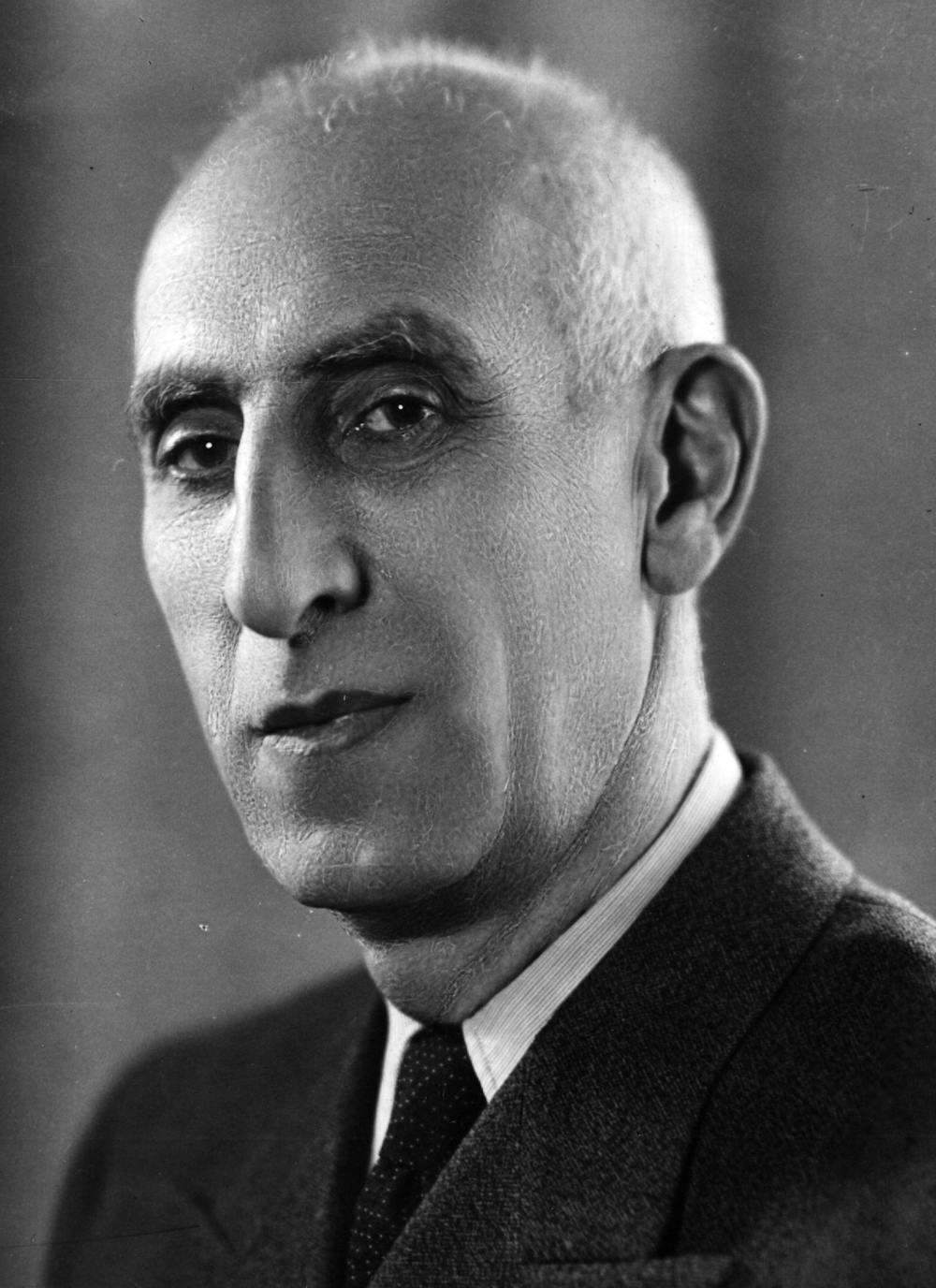
    Relations between the United States and Iran have been fraught for decades – at least since the U.S. helped overthrow a democracy-minded prime minister, Mohammed Mossadegh, in August 1953. The U.S. then supported the long, repressive reign of the Shah of Iran, whose security services brutalized Iranian citizens for decades.

    The two countries have been particularly hostile to each other since Iranian students took over the U.S. Embassy in Tehran in November 1979, resulting in economic sanctions and the severing of formal diplomatic relations between the nations.

    Since 1984, the U.S. State Department has listed Iran as a “state sponsor of terrorism,” alleging the Iranian government provides terrorists with training, money and weapons.

    Some of the major events in U.S.-Iran relations highlight the differences between the nations’ views, but others arguably presented real opportunities for reconciliation.

    1953: US overthrows Mossadegh

    Mohammed Mossadegh.
    Wikimedia Commons

    In 1951, the Iranian Parliament chose a new prime minister, Mossadegh, who then led lawmakers to vote in favor of taking over the Anglo-Iranian Oil Company, expelling the company’s British owners and saying they wanted to turn oil profits into investments in the Iranian people. The U.S. feared disruption in the global oil supply and worried about Iran falling prey to Soviet influence. The British feared the loss of cheap Iranian oil.

    President Dwight Eisenhower decided it was best for the U.S. and the U.K. to get rid of Mossadegh. Operation Ajax, a joint CIA-British operation, convinced the Shah of Iran, the country’s monarch, to dismiss Mossadegh and drive him from office by force. Mossadegh was replaced by a much more Western-friendly prime minister, handpicked by the CIA.

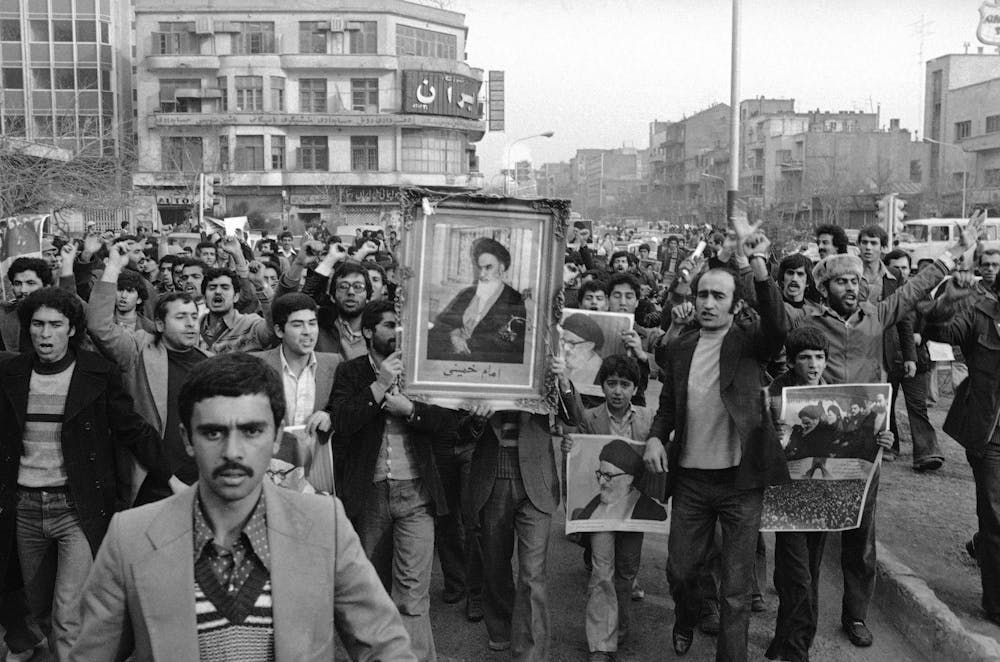
    Demonstrators in Tehran demand the establishment of an Islamic republic.
    AP Photo/Saris

    1979: Revolutionaries oust the shah, take hostages

    After more than 25 years of relative stability in U.S.-Iran relations, the Iranian public had grown unhappy with the social and economic conditions that developed under the dictatorial rule of Shah Mohammad Reza Pahlavi.

    Pahlavi enriched himself and used American aid to fund the military while many Iranians lived in poverty. Dissent was often violently quashed by SAVAK, the shah’s security service. In January 1979, the shah left Iran, ostensibly to seek cancer treatment. Two weeks later, Ayatollah Ruhollah Khomeini returned from exile in Iraq and led a drive to abolish the monarchy and proclaim an Islamic government.

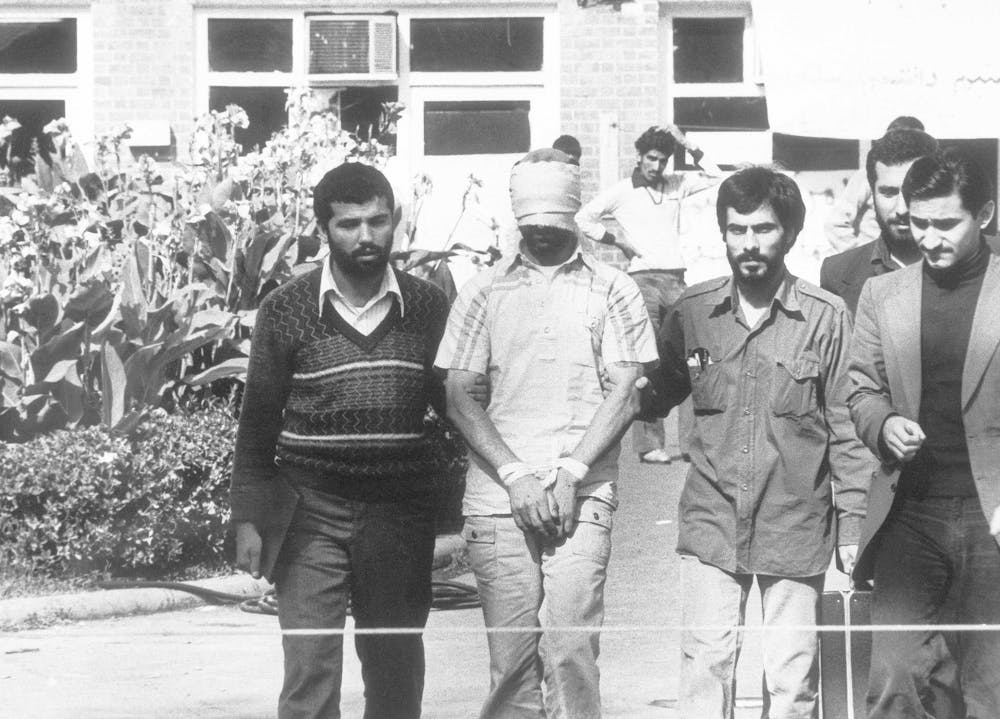
    Iranian students at the U.S. Embassy in Tehran show a blindfolded American hostage to the crowd in November 1979.
    AP Photo

    In October 1979, President Jimmy Carter agreed to allow the shah to come to the U.S. to seek advanced medical treatment. Outraged Iranian students stormed the U.S. Embassy in Tehran on Nov. 4, taking 52 Americans hostage. That convinced Carter to sever U.S. diplomatic relations with Iran on April 7, 1980.

    Two weeks later, the U.S. military launched a mission to rescue the hostages, but it failed, with aircraft crashes killing eight U.S. servicemembers.

    The shah died in Egypt in July 1980, but the hostages weren’t released until Jan. 20, 1981, after 444 days of captivity.

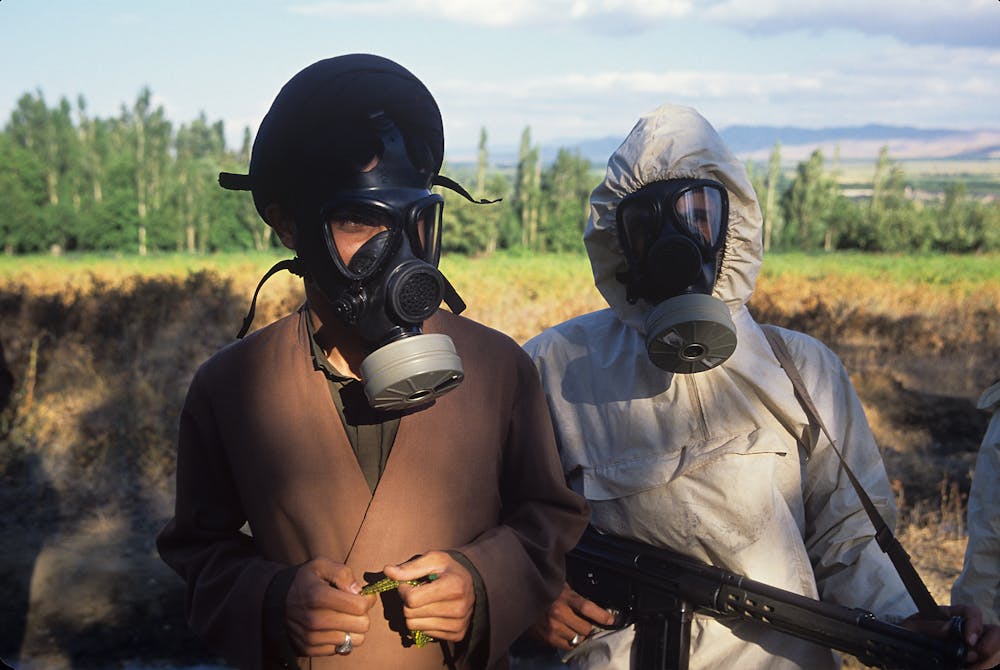
    An Iranian cleric, left, and an Iranian soldier wear gas masks to protect themselves against Iraqi chemical-weapons attacks in May 1988.
    Kaveh Kazemi/Getty Images

    1980-1988: US tacitly sides with Iraq

    In September 1980, Iraq invaded Iran, an escalation of the two countries’ regional rivalry and religious differences: Iraq was governed by Sunni Muslims but had a Shia Muslim majority population; Iran was led and populated mostly by Shiites.

    The U.S. was concerned that the conflict would limit the flow of Middle Eastern oil and wanted to ensure the conflict didn’t affect its close ally, Saudi Arabia.

    The U.S. supported Iraqi leader Saddam Hussein in his fight against the anti-American Iranian regime. As a result, the U.S. mostly turned a blind eye toward Iraq’s use of chemical weapons against Iran.

    U.S. officials moderated their usual opposition to those illegal and inhumane weapons because the U.S. State Department did not “wish to play into Iran’s hands by fueling its propaganda against Iraq.” In 1988, the war ended in a stalemate. More than 500,000 military and 100,000 civilians died.

    1981-1986: US secretly sells weapons to Iran

    The U.S. imposed an arms embargo after Iran was designated a state sponsor of terrorism in 1984. That left the Iranian military, in the middle of its war with Iraq, desperate for weapons and aircraft and vehicle parts to keep fighting.

    The Reagan administration decided that the embargo would likely push Iran to seek support from the Soviet Union, the U.S.’s Cold War rival. Rather than formally end the embargo, U.S. officials agreed to secretly sell weapons to Iran starting in 1981.

    The last shipment, of anti-tank missiles, was in October 1986. In November 1986, a Lebanese magazine exposed the deal. That revelation sparked the Iran-Contra scandal in the U.S., with Reagan’s officials found to have collected money from Iran for the weapons and illegally sent those funds to anti-socialist rebels – the Contras – in Nicaragua.

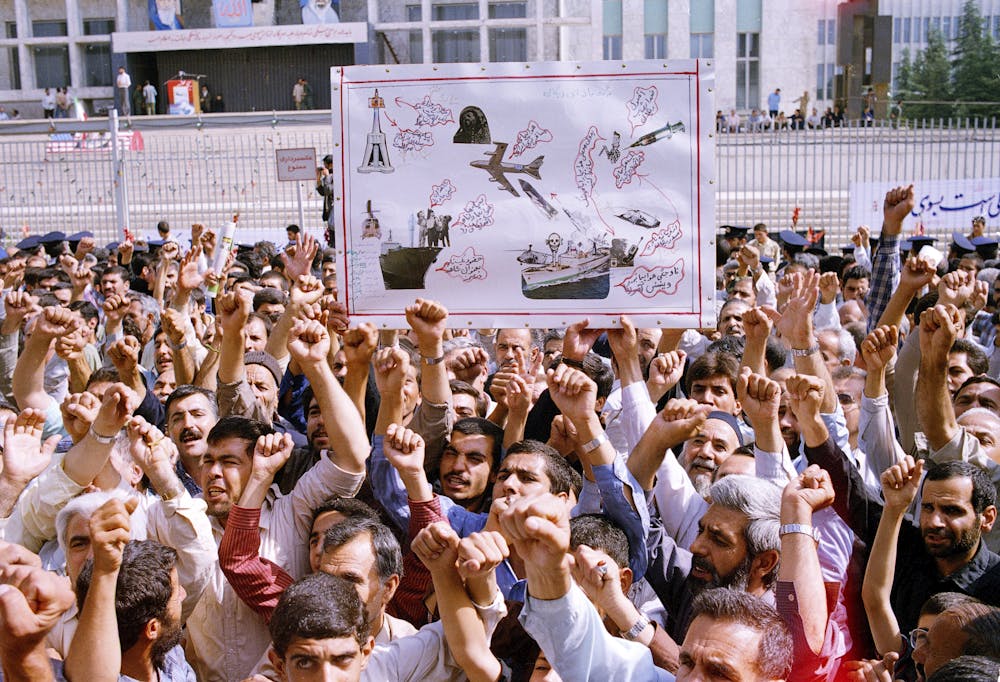
    At a mass funeral for 76 of the 290 people killed in the shootdown of Iran Air 655, mourners hold up a sign depicting the incident.
    AP Photo/CP/Mohammad Sayyad

    1988: US Navy shoots down Iran Air flight 655

    On the morning of July 8, 1988, the USS Vincennes, a guided missile cruiser patrolling in the international waters of the Persian Gulf, entered Iranian territorial waters while in a skirmish with Iranian gunboats.

    Either during or just after that exchange of gunfire, the Vincennes crew mistook a passing civilian Airbus passenger jet for an Iranian F-14 fighter. They shot it down, killing all 290 people aboard.

    The U.S. called it a “tragic and regrettable accident,” but Iran believed the plane’s downing was intentional. In 1996, the U.S. agreed to pay US$131.8 million in compensation to Iran.

    1997-1998: The US seeks contact

    In August 1997, a moderate reformer, Mohammad Khatami, won Iran’s presidential election.

    U.S. President Bill Clinton sensed an opportunity. He sent a message to Tehran through the Swiss ambassador there, proposing direct government-to-government talks.

    Shortly thereafter, in early January 1998, Khatami gave an interview to CNN in which he expressed “respect for the great American people,” denounced terrorism and recommended an “exchange of professors, writers, scholars, artists, journalists and tourists” between the United States and Iran.

    However, Supreme Leader Ayatollah Ali Khamenei didn’t agree, so not much came of the mutual overtures as Clinton’s time in office came to an end.

    In his 2002 State of the Union address, President George W. Bush characterized Iran, Iraq and North Korea as constituting an “Axis of Evil” supporting terrorism and pursuing weapons of mass destruction, straining relations even further.

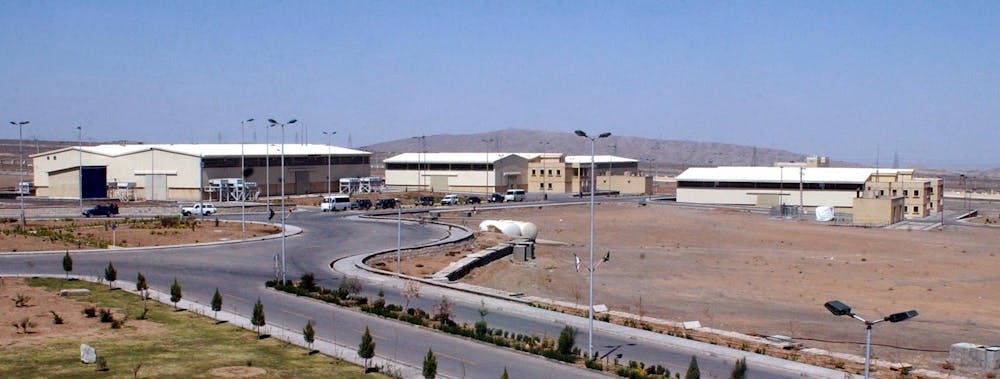
    Inside these buildings at the Natanz nuclear facility in Iran, technicians enrich uranium.
    AP Photo/Vahid Salemi

    2002: Iran’s nuclear program raises alarm

    In August 2002, an exiled rebel group announced that Iran had been secretly working on nuclear weapons at two installations that had not previously been publicly revealed.

    That was a violation of the terms of the Nuclear Nonproliferation Treaty, which Iran had signed, requiring countries to disclose their nuclear-related facilities to international inspectors.

    One of those formerly secret locations, Natanz, housed centrifuges for enriching uranium, which could be used in civilian nuclear reactors or enriched further for weapons.

    Starting in roughly 2005, U.S. and Israeli government cyberattackers together reportedly targeted the Natanz centrifuges with a custom-made piece of malicious software that became known as Stuxnet.

    That effort, which slowed down Iran’s nuclear program was one of many U.S. and international attempts – mostly unsuccessful – to curtail Iran’s progress toward building a nuclear bomb.

    2003: Iran writes to Bush administration

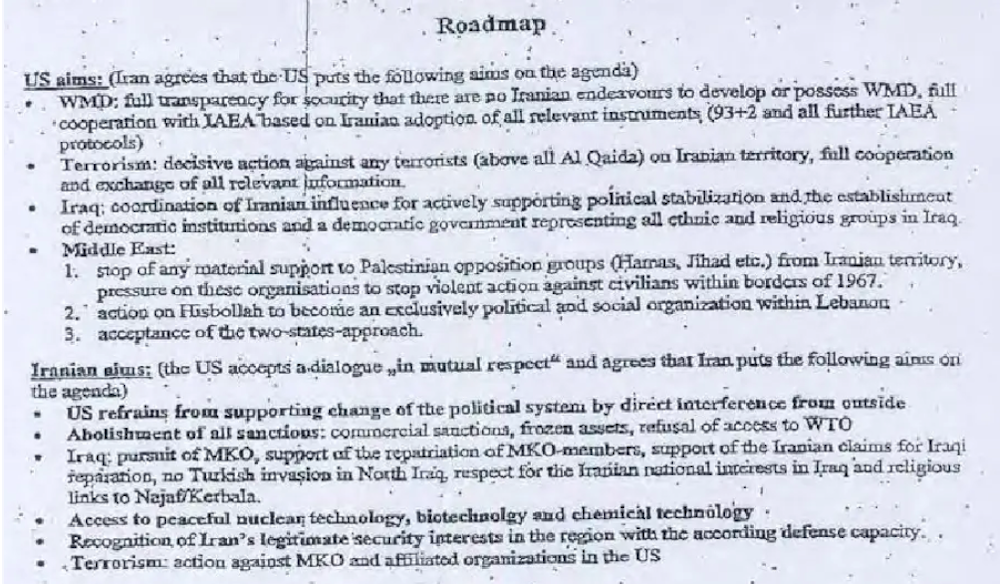
    An excerpt of the document sent from Iran, via the Swiss government, to the U.S. State Department in 2003, appears to seek talks between the U.S. and Iran.
    Washington Post via Scribd

    In May 2003, senior Iranian officials quietly contacted the State Department through the Swiss embassy in Iran, seeking “a dialogue ‘in mutual respect,’” addressing four big issues: nuclear weapons, terrorism, Palestinian resistance and stability in Iraq.

    Hardliners in the Bush administration weren’t interested in any major reconciliation, though Secretary of State Colin Powell favored dialogue and other officials had met with Iran about al-Qaida.

    When Iranian hardliner Mahmoud Ahmadinejad was elected president of Iran in 2005, the opportunity died. The following year, Ahmadinejad made his own overture to Washington in an 18-page letter to President Bush. The letter was widely dismissed; a senior State Department official told me in profane terms that it amounted to nothing.

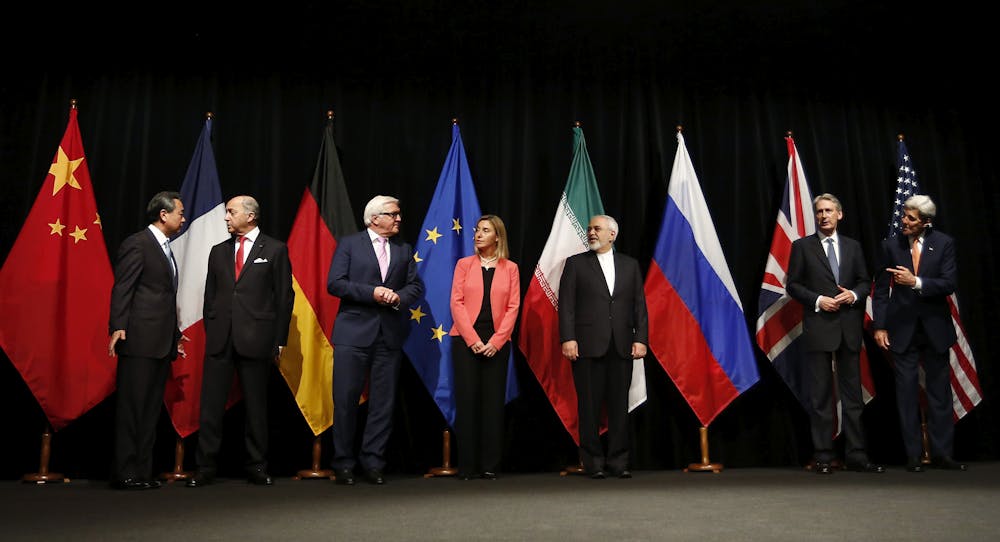
    Representatives of several nations met in Vienna in July 2015 to finalize the Iran nuclear deal.
    Austrian Federal Ministry for Europe, Integration and Foreign Affairs/Flickr

    2015: Iran nuclear deal signed

    After a decade of unsuccessful attempts to rein in Iran’s nuclear ambitions, the Obama administration undertook a direct diplomatic approach beginning in 2013.

    Two years of secret, direct negotiations initially bilaterally between the U.S. and Iran and later with other nuclear powers culminated in the Joint Comprehensive Plan of Action, often called the Iran nuclear deal.

    Two years of secret, direct negotiations conducted bilaterally at first between the U.S. and Iran and later with other nuclear powers culminated in the Joint Comprehensive Plan of Action, often called the Iran nuclear deal.

    Iran, the U.S., China, France, Germany, Russia and the United Kingdom signed the deal in 2015. It severely limited Iran’s capacity to enrich uranium and mandated that international inspectors monitor and enforce Iran’s compliance with the agreement.

    In return, Iran was granted relief from international and U.S. economic sanctions. Though the inspectors regularly certified that Iran was abiding by the agreement’s terms, President Donald Trump withdrew from the agreement in May 2018.

    2020: US drones kill Iranian Maj. Gen. Qassem Soleimani

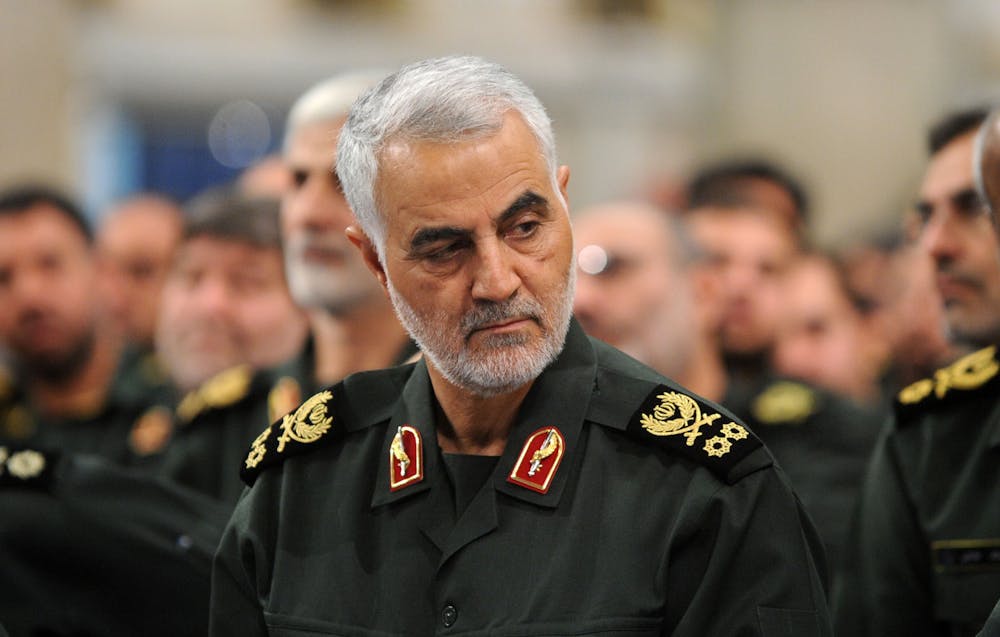
    An official photo from the Iranian government shows Maj. Gen. Qassem Soleimani, who was killed in a Jan. 3 drone strike ordered by President Donald Trump.
    Iranian Supreme Leader Press Office/Anadolu Agency via Getty Images

    On Jan. 3, 2020, an American drone fired a missile that killed Maj. Gen. Qassem Soleimani, the leader of Iran’s elite Quds Force. Analysts considered Soleimani the second most powerful man in Iran, after Supreme Leader Ayatollah Khamenei.

    At the time, the Trump administration asserted that Soleimani was directing an imminent attack against U.S. assets in the region, but officials have not provided clear evidence to support that claim.

    Iran responded by launching ballistic missiles that hit two American bases in Iraq.

    2023: The Oct. 7 attacks on Israel

    Hamas’ brazen attack on Israel on Oct. 7, 2023, provoked a fearsome militarized response from Israel that continues today and served to severely weaken Iran’s proxies in the region, especially Hamas – the perpetrator of the attacks – and Hezbollah in Lebanon.

    2025: Trump 2.0 and Iran

    Trump saw an opportunity to forge a new nuclear deal with Iran and to pursue other business deals with Tehran. Once inaugurated for his second term, Trump appointed Steve Witkoff, a real estate investor who is the president’s friend, to serve as special envoy for the Middle East and to lead negotiations.

    Negotiations for a nuclear deal between Washington and Tehran began in April, but the countries did not reach a deal. They were planning a new round of talks when Israel struck Iran with a series of airstrikes on June 13, forcing the White House to reconsider is position.

    Jeffrey Fields receives funding from the Carnegie Corporation of New York and Schmidt Futures.

    ref. US and Iran have a long, complicated history, spanning far beyond Israel’s strikes on Tehran – https://theconversation.com/us-and-iran-have-a-long-complicated-history-spanning-far-beyond-israels-strikes-on-tehran-259240

    MIL OSI – Global Reports

  • MIL-OSI China: Terracotta Warriors take center stage in new XR experience

    Source: People’s Republic of China – State Council News

    A new extended reality (XR) experience based on the Terracotta Warriors, titled “The Empire Code: Terracotta Warriors – Secrets of the First Emperor’s Mausoleum,” was unveiled on June 14 at the 27th Shanghai International Film Festival (SIFF).

    Wang Yuan, general producer and chairwoman of Xi’an Hongwen Digital Technology Co., introduces “The Empire Code” at the opening of the XR section during the 27th Shanghai International Film Festival, June 14, 2025. [Photo courtesy of Xi’an Hongwen Digital Technology]

    “The Empire Code,” the first XR project officially authorized by Emperor Qinshihuang’s Mausoleum Site Museum, draws on the famous Terracotta Warrior pits and other archaeological discoveries from the UNESCO World Heritage site in Xi’an, Shaanxi province. The interactive underground tomb experience is designed to set a new standard for presenting Chinese civilization in the digital age.

    The project was unveiled at the launch of the festival’s SIFF XR section. Wang Yuan, general producer and chairwoman of Xi’an Hongwen Digital Technology, a joint venture between Shaanxi Culture Industry Investment Group and HTC, said the team was not using technology to resurrect cultural relics, but to allow them to “open history’s door through technology.”

    “Virtual reality serves as a radiant bridge across time, connecting ancient wisdom, eternal art and future imagination,” she added.

    A poster for “The Empire Code: Terracotta Warriors – Secrets of the First Emperor’s Mausoleum.” [Image courtesy of Xi’an Hongwen Digital Technology]

    Along with a trailer and poster launched in Shanghai, audiences can preview a five-minute immersive experience during the festival. The full version is set to open this summer in Beijing and Xi’an.

    The project will also be presented at the festival’s International Film & TV Market, where organizers aim to showcase China’s digital cultural solutions and technological expertise to a global audience.

    “The Empire Code” brings together specialists in archaeology, filmmaking and virtual reality. Historical accuracy is overseen by Zhang Weixing, a researcher at Northwest University’s Collaborative Research Center for Archaeology of the Silk Roads and former head of Emperor Qinshihuang’s Mausoleum Site excavation team. Acclaimed director Jin Tiemu crafts the narrative, while production designer Huo Tingxiao recreates authentic Qin dynasty visuals. The project also draws on technical expertise from HTC Vive Arts, which has partnered with more than 70 museums worldwide, and Wevr, known for its work in 3D and game development.

    A man experiences a preview of “The Empire Code” during the 27th Shanghai International Film Festival on June 14, 2025. [Photo courtesy of SIFF Organizing Committee]

    The project uses XR technology such as 5K ultra-high-definition rendering, six degrees of freedom motion tracking and gesture controls to create an immersive experience aimed at minimizing motion sickness.

    Producers say the cross-disciplinary effort combines cultural, artistic and technological elements, providing an interactive way to share China’s history while maintaining cultural authenticity.

    “The Empire Code” was announced alongside several upcoming projects at SIFF XR, including virtual reality adaptations of China’s animated blockbuster “Chang An,” Jules Verne’s “Journey to the Center of the Earth” and the historical VR film “Creation of the Gods Prequel: A Female General in Shang Dynasty’s Golden Age.”

    Other highlights include the sci-fi VR experience “The Devourer,” based on renowned writer Liu Cixin’s short story in which players defend Earth from aliens, and the location-based mixed reality piece “A Tapestry of a Legendary Land,” adapted from the popular dance drama that immerses audiences in Song dynasty artistry.

    The opening of the XR section at the 27th Shanghai International Film Festival, June 14, 2025. [Photo courtesy of Xi’an Hongwen Digital Technology]

    SIFF XR, a collaboration between the 27th SIFF and the Putuo Culture and Tourism Bureau, ran from June 14 to 16. The event showcased 16 domestic and international feature films, including several global and Asian premieres. 

    Highlights included “Mnemosyne,” inspired by the classical Chinese opera “The Peony Pavilion,” and “Golog Unbounded,” which explores the natural landscapes of Qinghai province. Attendees could also explore the anime universe of “Gundam” and experience narrative-driven works such as “Nana Lou” and “Jack & Flo.”

    By combining film, gaming, performance and tourism, SIFF XR offered immersive experiences that blurred the line between cinema and reality.

    MIL OSI China News

  • MIL-OSI China: Xi urges China, Central Asian countries to promote high-quality Belt and Road cooperation

    Source: People’s Republic of China – State Council News

    Xi urges China, Central Asian countries to promote high-quality Belt and Road cooperation

    Chinese President Xi Jinping delivers a keynote speech during the second China-Central Asia Summit in Astana, Kazakhstan, June 17, 2025. The second China-Central Asia Summit was held in Astana on Tuesday. Kazakh President Kassym-Jomart Tokayev chaired the summit. Xi, Kyrgyz President Sadyr Japarov, Tajik President Emomali Rahmon, Turkmen President Serdar Berdimuhamedov and Uzbek President Shavkat Mirziyoyev attended the summit. [Photo/Xinhua]

    ASTANA, June 17 — Chinese President Xi Jinping on Tuesday called on China and Central Asian countries to promote high-quality Belt and Road cooperation and forge ahead toward the goal of building a China-Central Asia community with a shared future under the guidance of the China-Central Asia Spirit.

    Xi made the remarks in his keynote speech at the second China-Central Asia Summit hosted by Kazakh President Kassym-Jomart Tokayev. Kyrgyz President Sadyr Japarov, Tajik President Emomali Rahmon, Turkmen President Serdar Berdimuhamedov and Uzbek President Shavkat Mirziyoyev also attended the summit.

    Xi pointed out that during their meeting in Xi’an two years ago, they jointly outlined the Xi’an Vision for China-Central Asia cooperation. Two years on, China and Central Asian countries have further deepened and substantiated Belt and Road cooperation, he said, recalling advanced cooperation in various fields.

    The core framework of the China-Central Asia mechanism is largely in place, and the consensus at the first Summit has been implemented across the board, Xi said, adding that the path of cooperation among the countries is steadily widening, and their friendship is blooming ever more brightly.

    Xi stressed that the cooperation between China and Central Asian countries is rooted in more than 2,000 years of friendly exchanges, cemented by solidarity and mutual trust cultivated through more than three decades of diplomatic ties, and taken forward via openness and win-win cooperation of the new era.

    Xi said building on their collective efforts over the years, the six countries have forged a China-Central Asia Spirit of “mutual respect, mutual trust, mutual benefit and mutual assistance for the joint pursuit of modernization through high-quality development.”

    The spirit connotes four aspects of practices. First, Xi said that China and Central Asian countries practice mutual respect and treat each other as equals, and all countries, big or small, are equal, adding that the six countries handle issues through consultation and make decisions by consensus.

    Second, he said that China and Central Asian countries seek to deepen mutual trust and enhance mutual support, firmly support each other in safeguarding independence, sovereignty, territorial integrity and national dignity, and do not do anything harmful to the core interests of any party.

    Third, Xi said China and Central Asian countries pursue mutual benefit and win-win cooperation and strive for common development, view each other as priority partners, and share development opportunities together, adding that they accommodate each other’s interests, and work to build a win-win and symbiotic relationship.

    Fourth, he said China and Central Asian countries help each other in time of need and stand together through thick and thin, supporting each other in choosing development paths suitable to respective national conditions and in taking domestic matters into their own hands, adding that the countries work together to address various risks and challenges, and uphold regional security and stability.

    This China-Central Asia Spirit is an important guideline for their endeavor to carry forward friendship and cooperation from generation to generation, and the six countries should always uphold it and let it shine forever, Xi noted.

    Today, unprecedented changes are unfolding at a faster pace across the globe, thrusting the world into a new state of heightened turbulence and volatility, Xi pointed out, noting that a strong belief in fairness and justice, and an unyielding commitment to mutual benefit and win-win cooperation are the only way to maintain world peace and achieve common development.

    There is no winner in tariff wars or trade wars, and unilateralism, protectionism and hegemonism will surely backfire while hurting others, he noted.

    Maintaining that history should move forward, not backward, and the world should be united, not divided, Xi said humanity must not regress to the law of the jungle, but should instead build a community with a shared future for mankind.

    Xi called on the six countries to act on the China-Central Asia Spirit, and enhance cooperation with renewed vigor and more practical measures.

    To achieve this, he made five points.

    First, China and Central Asian countries should stay committed to the fundamental goal of unity, and always trust and support each other, he said.

    China consistently takes Central Asia as a priority in its neighborhood diplomacy, Xi noted, adding that with a firm belief in an amicable, secure and prosperous neighborhood as well as a strong dedication to amity, sincerity, mutual benefit and inclusiveness, China interacts with Central Asian countries on the basis of equality and sincerity, and the six countries always wish their neighbors well.

    The six countries will sign together a treaty on eternal good-neighborliness, friendship and cooperation to enshrine the principle of everlasting friendship in the form of law, he said, deeming it as a new landmark in the history of the relations of the six countries and a pioneering initiative in China’s diplomatic engagement with its neighbors, which constitutes a milestone for today and a foundation for tomorrow.

    Second, China and Central Asian countries should optimize the cooperation framework to make it more results-oriented, more efficient and more deeply integrated, Xi said.

    Recalling that the six countries have agreed to designate 2025 and 2026 as the Years of High-Quality Development of China-Central Asia Cooperation, he said that all sides should focus the cooperation on smooth trade, industrial investment, connectivity, green mining, agricultural modernization and personnel exchanges, roll out more projects on the ground and foster new quality productive forces.

    He said China has decided to establish three cooperation centers, i.e. on poverty reduction, on education exchange, and on desertification prevention and control, as well as a cooperation platform on smooth trade under the China-Central Asia cooperation framework.

    China supports Central Asian countries in developing livelihood and development projects, Xi said, adding that China will provide 3,000 training opportunities to Central Asian countries in the next two years.

    Third, China and Central Asian countries should develop a security framework for peace, tranquility and solidarity, step up regional security governance, deepen law enforcement and security cooperation, jointly prevent and thwart extreme ideologies, and resolutely fight terrorism, separatism and extremism, so as to maintain peace and stability in the region, Xi said.

    China will do its best to help Central Asian countries combat terrorism and transnational organized crime and safeguard cybersecurity and biosecurity, he said.

    Fourth, China and Central Asian countries should cement the bonds of shared vision, mutual understanding and mutual affection between peoples, he noted, saying that China will enhance cooperation between legislatures, political parties, women, youth, media and think tanks with Central Asian countries, conduct in-depth exchange of governance experience, and is ready to set up more cultural centers, university branches and Luban Workshops in Central Asia to train more high-caliber talent for Central Asian countries.

    China supports deepening subnational cooperation with Central Asia, Xi said, adding that China and Central Asian countries should nurture heart-to-heart connections at central and subnational levels, between official and non-governmental actors, and from adjacent to broader areas.

    Fifth, China and Central Asian countries should uphold a fair and equitable international order and an equal and orderly world structure, stand ready to work with all parties to defend international fairness and justice, oppose hegemonism and power politics, and promote an equal and orderly multipolar world and a universally beneficial and inclusive economic globalization, Xi said.

    This year marks the 80th anniversary of the victory of the Chinese People’s War of Resistance Against Japanese Aggression and the World Anti-Fascist War, and the 80th anniversary of the founding of the United Nations, he said, recalling that in the strenuous times of war, Chinese and Central Asian peoples supported each other through adversity, and jointly made important contributions to the cause of justice of humanity.

    He also noted the need to promote the correct view of history, defend the fruits of the victory of World War II, uphold the UN-centered international system, and provide more stability and certainty for world peace and development.

    Xi pointed out that China is building a great modern socialist country in all respects and advancing the great rejuvenation of the Chinese nation on all fronts through Chinese modernization.

    No matter how the international situation changes, China will remain unwavering in opening up to the outside world, he said, noting that China is ready to embrace higher-quality cooperation and deepen the integration of interests with Central Asian countries, so as to achieve common development and strive for new progress in China-Central Asia cooperation.

    Tokayev and the other four Central Asian leaders unanimously stated that the China-Central Asia mechanism has become an important platform for promoting dialogue and cooperation, as well as for advancing the economic and social development of Central Asian countries.

    In a world full of uncertainties, the strategic significance of the mechanism has become increasingly prominent, and China’s growing prosperity and strength are benefiting its neighboring countries, they said, noting that China is a strategic partner and a true friend that Central Asian countries can always count on.

    The Central Asian countries highly value the model of cooperation with China based on mutual respect, equality and mutual benefit, and look forward to deepening all-round cooperation with China and expanding trade and investment, the five leaders added.

    They also expressed the hope to jointly pursue high-quality Belt and Road cooperation, promote cooperation in such fields as industry, agriculture, science and technology, infrastructure, new energy and connectivity, strengthen regional security collaboration, and enhance people-to-people and cultural exchanges in fields like culture, education and tourism.

    The leaders of the five Central Asian countries expressed their intention to build the China-Central Asia mechanism into a model of regional cooperation, share development and prosperity, jointly promote peace and stability, and build a closer community with a shared future.

    The five parties highly appreciate China’s constructive role in international and regional affairs, and actively support the concept of building a community with a shared future for mankind, as well as the three major global initiatives proposed by President Xi.

    They also expressed the willingness to closely coordinate and cooperate with China to firmly safeguard free trade and the multilateral trading system, and jointly defend international equity and justice.

    During the summit, Xi and the heads of state of the Central Asian nations signed the Astana Declaration of the second China-Central Asia Summit, and a treaty on eternal good-neighborliness, friendship and cooperation.

    The meeting also announced the signing of 12 cooperation agreements regarding the Belt and Road cooperation, facilitation of personnel exchanges, green mining, trade, connectivity, industry and customs.

    At the summit, China signed multiple sister city agreements with the five Central Asian countries, thus the pairs of sister cities between the two sides have exceeded 100.

    Xi and other leaders also witnessed the inauguration of three China-Central Asia cooperation centers and a trade platform, namely the China-Central Asia poverty reduction cooperation center, the China-Central Asia education exchange cooperation center, the China-Central Asia desertification prevention and control cooperation center, as well as the China-Central Asia smooth trade cooperation platform.

    All parties also agreed that China will host the third China-Central Asia Summit in 2027.

    Chinese President Xi Jinping, Kazakh President Kassym-Jomart Tokayev, Kyrgyz President Sadyr Japarov, Tajik President Emomali Rahmon, Turkmen President Serdar Berdimuhamedov and Uzbek President Shavkat Mirziyoyev pose for a group photo in Astana, Kazakhstan, June 17, 2025. The second China-Central Asia Summit was held in Astana on Tuesday. Tokayev chaired the summit. Xi, Japarov, Rahmon, Berdimuhamedov and Mirziyoyev attended the summit. [Photo/Xinhua]
    Chinese President Xi Jinping walks into the venue of the second China-Central Asia Summit in Astana, Kazakhstan, June 17, 2025. The second China-Central Asia Summit was held in Astana on Tuesday. Kazakh President Kassym-Jomart Tokayev chaired the summit. Xi, Kyrgyz President Sadyr Japarov, Tajik President Emomali Rahmon, Turkmen President Serdar Berdimuhamedov and Uzbek President Shavkat Mirziyoyev attended the summit. [Photo/Xinhua]
    Chinese President Xi Jinping shakes hands with Kazakh President Kassym-Jomart Tokayev in Astana, Kazakhstan, June 17, 2025. The second China-Central Asia Summit was held in Astana on Tuesday. Tokayev chaired the summit. Xi, Kyrgyz President Sadyr Japarov, Tajik President Emomali Rahmon, Turkmen President Serdar Berdimuhamedov and Uzbek President Shavkat Mirziyoyev attended the summit. [Photo/Xinhua]
    Chinese President Xi Jinping delivers a keynote speech during the second China-Central Asia Summit in Astana, Kazakhstan, June 17, 2025. The second China-Central Asia Summit was held in Astana on Tuesday. Kazakh President Kassym-Jomart Tokayev chaired the summit. Xi, Kyrgyz President Sadyr Japarov, Tajik President Emomali Rahmon, Turkmen President Serdar Berdimuhamedov and Uzbek President Shavkat Mirziyoyev attended the summit. [Photo/Xinhua]
    Chinese President Xi Jinping, Kazakh President Kassym-Jomart Tokayev, Kyrgyz President Sadyr Japarov, Tajik President Emomali Rahmon, Turkmen President Serdar Berdimuhamedov and Uzbek President Shavkat Mirziyoyev witness inauguration of the China-Central Asia poverty reduction cooperation center, the China-Central Asia education exchange cooperation center, the China-Central Asia desertification control cooperation center and the China-Central Asia trade facilitation cooperation platform in Astana, Kazakhstan, June 17, 2025. The second China-Central Asia Summit was held in Astana on Tuesday. Tokayev chaired the summit. Xi, Japarov, Rahmon, Berdimuhamedov and Mirziyoyev attended the summit. [Photo/Xinhua]

    MIL OSI China News

  • MIL-OSI Russia: China, Central Asian countries agree to promote people-to-people exchanges

    Translation. Region: Russian Federal

    Source: People’s Republic of China in Russian – People’s Republic of China in Russian –

    Source: People’s Republic of China – State Council News

    ASTANA, June 17 (Xinhua) — China and Central Asian countries have agreed to further facilitate people-to-people exchanges, a joint initiative to that effect was adopted on Tuesday.

    China and the five Central Asian countries – Kazakhstan, Kyrgyzstan, Tajikistan, Turkmenistan and Uzbekistan – expressed their willingness to improve the connectivity of roads and railways, upgrade relevant infrastructure and supporting facilities, and create favorable conditions for the cross-border movement of people and goods.

    All parties expressed their intention to launch more direct flights between China and Central Asian countries, strengthen cooperation in the field of tourism, and launch the international cultural and tourist train “China – Central Asia”.

    The six countries intend to expand bilateral student exchanges and continue to establish and strengthen sister city ties at the provincial/regional and city levels.

    In addition, China, Kazakhstan, Kyrgyzstan and Tajikistan have declared their readiness to accelerate the modernization of border checkpoint infrastructure. –0–

    MIL OSI Russia News

  • MIL-OSI USA: Booker, Padilla, Reed, Huffman, Pallone, Castor Lead Charge to Block Trump’s Dangerous Offshore Drilling Plan

    US Senate News:

    Source: United States Senator for New Jersey Cory Booker

    WASHINGTON, D.C. – Today, U.S. Senators Cory Booker (D-NJ), Alex Padilla (D-CA), and Jack Reed (D-RI) along with U.S. House Natural Resources Committee Ranking Member Jared Huffman (D-CA), U.S. House Energy and Commerce Ranking Member Frank Pallone (D-NJ), and Representative Kathy Castor (D-FL) led 40 Democratic Colleagues in the Senate and House to submit formal comments to the Bureau of Ocean Energy Management (BOEM), opposing any new or expanded offshore oil and gas leasing in the Trump administration’s proposed updates to the Outer Continental Shelf (OCS) oil and gas leasing program. 

    In their letter to Interior Secretary Doug Burgum, the lawmakers warned that more offshore drilling would threaten our national security, coastal communities, marine life, and local economies – all while handing more giveaways to an industry already sitting on millions of acres of unused leases. They urged the agency to exclude any new leasing in the final program. 

    “New or expanded oil and gas leasing poses risks to the health and livelihoods of our constituents, jeopardizes our tourism, fishing, and recreational economies, and threatens the marine life that inhabits our coastlines” the members wrote. “New, unnecessary lease sales will lock in decades more of pollution and climate impacts from an industry that already holds more than 2,000 offshore leases covering more than 12 million acres of federal water, of which only 469 leases are currently producing oil and gas. The United States is already the number one producer of oil and gas in the world. There is no need for increased leasing, especially when oil and gas companies continue to impose environmental and climate consequences, public health risks, and billions of dollars in cleanup costs on the American people.”

    Members also reminded the Secretary of the long-standing legal restrictions that prevent the administration from offering lease sales in protected areas. 

    “We remind the agency that it cannot offer sales in areas permanently protected under Section 12(a) of OCSLA, including areas off the Atlantic coast, the Pacific off the coast of California, Oregon, and Washington, the Eastern Gulf of Mexico, and portions of the Arctic Ocean, including the Beaufort Sea and Chukchi Sea planning areas. In 2017, during his first term, President Trump attempted to reverse President Obama’s Arctic and Atlantic withdrawals, but Judge Sharon Gleason for the District Court of Alaska determined that Section 12(a) does not give the president authority to revoke prior withdrawals. President Trump does not have the authority to reverse the Obama and Biden withdrawals, and his Executive Order of January 2025, which attempts to do so, is unlawful,” the members continued.

    During his first term, the Trump administration proposed 47 lease sales over five years, covering nearly every U.S. coastline. Fortunately, this program was never finalized due to litigation and strong bipartisan opposition. But now, with the Biden administration’s leasing plan under review and Secretary Burgum signaling that protections may be on the chopping block, lawmakers are raising the alarm once again.

    At a budget hearing last week, Secretary Burgum refused to commit to protecting Florida’s Gulf Coast from new oil and gas leasing, saying only that “the administration may be considering opportunities.” This region has long been protected by both bipartisan legislation and administrative withdrawals – protections that are now under threat. 

    To read the full text of the letter, click here.

    MIL OSI USA News

  • MIL-OSI USA: Attorney General Bonta Joins Coalition in Submitting a Comment Letter Opposing Offshore Oil, Gas Drilling

    Source: US State of California

    Tuesday, June 17, 2025

    Contact: (916) 210-6000, agpressoffice@doj.ca.gov

    OAKLAND – California Attorney General Rob Bonta joined a coalition of 10 attorneys general in filing a comment letter with the U.S. Department of the Interior’s Bureau of Ocean Energy Management opposing offshore oil and gas drilling in the Atlantic and Pacific Oceans. In the letter, the coalition urges the federal government to exclude all planning areas in the Atlantic and Pacific Oceans from the upcoming 11th National Outer Continental Shelf Oil and Gas Leasing Program. The final program will determine which ocean areas could be opened to lease sales for oil and gas activity during the current five-year planning period, which covers the period 2024-2029. 

    “President Trump is once again taking action to line the pockets of his Big Oil friends. This time, he’s expanding oil and gas development by attempting to drill in our coastal communities,” said Attorney General Bonta. “We won’t stand idly by as the President continues to ignore science. That’s why I, alongside attorneys general nationwide, are calling on the federal government to consider the environmental and public health risks of offshore oil and gas drilling and protect our coastal communities.” 

    There is no compelling need to risk our marine and coastal resources for the limited supplies of fossil fuels off of our coasts. The United States already produces more oil and gas than any other country and exports more than it uses. Demand for gasoline has been dropping since 2019, especially on the East and West coasts. As the comment letter states: “Existing uses of these marine and coastal areas are essential parts of our state economies, national energy needs do not require drilling in these environmentally important areas, and drilling would be inconsistent with laws passed by our state opposing offshore oil and gas activity and promoting reductions in greenhouse gas emissions.” 

    The coalition’s comment letter also further details the devastating impacts of past oil spills, including the Deepwater Horizon disaster that killed 11 workers, spilled 134 million gallons of oil into the Gulf of Mexico, and caused billions of dollars of losses to fishing and tourism industries along the Gulf, as well as oil spills in California that resulted in massive losses of wildlife and harm to local fisheries. Currently, California’s law prohibits offshore drilling in state waters and holds drilling companies strictly liable for spills.

    Attorney General Bonta joins the attorneys general of Delaware, Maine, Maryland, Massachusetts, New Jersey, New York, Oregon, Rhode Island, and Washington in submitting this comment letter. 

    A copy of the comment letter can be found here.

    # # #

    MIL OSI USA News

  • MIL-OSI Europe: Debates – Monday, 16 June 2025 – Strasbourg – Revised edition

    Source: European Parliament

    Verbatim report of proceedings
     427k  841k
    Monday, 16 June 2025 – Strasbourg


    IN THE CHAIR: ROBERTA METSOLA
    President

     
    1. Resumption of the session


      President. – I declare resumed the session of the European Parliament adjourned on 22 May 2025.


    2. Opening of the sitting


    (The sitting opened at 17:00)


    3. Statement by the President


      President. – Dear colleagues, welcome back to Strasbourg for our plenary session. I’ll start with a sad communication on what happened in Austria.

    Last week, we learned of the horrific school shooting in Graz, where a former pupil killed 10 students and staff, and severely injured many others. This was a senseless act of violence that has deeply shaken Austria and all of Europe. Our thoughts are with the victims, their families and the entire school community. We stand with everyone in Austria at this terrible time.

    That same day, we learned of another brutal attack, as a 31-year-old teaching assistant was stabbed to death outside a school in Nogent in France. La victime et ses proches sont dans nos pensées.

    Violence and hatred, dear colleagues, have no place in Europe and no place in our schools. Schools must remain safe spaces of learning and growth – never of fear. So I ask you to please join me in observing a minute’s silence in honour of the victims and all those affected.

    (The House rose and observed a minute’s silence)


    4. Approval of the minutes of the previous sittings


      President. – The minutes and the texts adopted of the sitting of 21 and 22 May 20205 are available.

    Are there any comments? No?

    The minutes are therefore approved.


    5. Composition of Parliament


      President. – Following the resignation of Ondřej Kovařík, and on the proposal of the Committee on Legal Affairs, Parliament takes note of the vacancy of his seat from 31 July 2025, in accordance with the Rules of Procedure, and will inform the national authority concerned thereof.


    6. Requests for waivers of immunity


      President. – I have received a request from the competent authorities in Poland for the parliamentary immunity of Grzegorz Braun to be waived.

    This request is referred to the Committee on Legal Affairs.


    7. Request for the waiver of parliamentary immunity – closure of procedure


      President. – I have received a letter from the competent authorities in Belgium withdrawing the request for the waiver of the parliamentary immunity of our colleague Giusi Princi. The procedure is therefore closed.


    8. Requests for the defence of the immunity of a former Member – termination of procedure


      President. – The Committee on Legal Affairs has informed me that the request for defence of the parliamentary immunity of Helmut Geuking is inadmissible, so the procedure is therefore closed.


    9. Composition of political groups


      President. – Fernand Kartheiser is no longer a member of the ECR Group and sits with the non attached Members as of 4 June 2025.


    10. Composition of committees and delegations


      President. – The ECR Group has notified me of a decision relating to changes to appointments within delegations.

    This decision will be set out in the minutes of today’s sitting and take effect on the date of this announcement.


    11. Interpretation of the Rules of Procedure


      President. – The AFCO Committee has proposed interpretations of the first subparagraph of Article 3(5) and Article 8 of Annex I to Parliament’s Rules of Procedure. The texts are available on the plenary webpage and will be published in the minutes of the sitting.

    Pursuant to Rule 242(4), Members or a political group reaching at least the low threshold may contest the committee’s interpretations within a period of 24 hours following this announcement. If the interpretations are not contested, they shall be deemed approved.


    12. Negotiations ahead of Parliament’s first reading (Rule 72)


      President. – The LIBE Committee has decided to enter interinstitutional negotiations, pursuant to Rule 72(1) of the Rules of Procedure. The report which constitutes the mandate for the negotiations is available on the plenary webpage and the title will be published in the minutes of the sitting.

    Pursuant to Rule 72(2), Members or political groups reaching at least the medium threshold may request in writing by midnight tomorrow, Tuesday, 17 June, that the decision be put to the vote. If no request for a vote in Parliament is made within the deadline, the committee may start the negotiations.


    13. Negotiations ahead of Council’s first reading (Rule 73)


      President. – The SANT Committee has decided to enter into interinstitutional negotiations ahead of Council’s first reading, pursuant to Rule 73 of the Rules of Procedure.

    The position adopted by Parliament at first reading, which constitutes the mandate for those negotiations, is available on the plenary webpage and its title will be published in the minutes of the sitting.


    14. Delegated acts (Rule 114(6))


      President. – I was informed that no objections have been raised within the Conference of Committee Chairs to the recommendation by the AGRI Committee not to oppose a delegated act, pursuant to Rule 114(6) of our Rules. The recommendation is available on the plenary webpage.

    If no objections are raised by a political group or Members reaching at least the low threshold within 24 hours, the recommendation shall be deemed to have been approved.


    15. Corrigenda (Rule 251)


      President. – The ECON Committee has transmitted a corrigendum to a text adopted by Parliament. Pursuant to Rule 251(1), this corrigendum will be deemed approved unless, no later than 24 hours after its announcement, a request is made by a political group or Members reaching at least the low threshold that it be put to the vote.

    The corrigendum is available on the plenary webpage. Its title will be published in the minutes of this sitting.


    16. Signature of acts adopted in accordance with the ordinary legislative procedure (Rule 81)


      President. – I would like to inform you that, since the adjournment of Parliament’s session on 22 May 2025, I have signed, together with the President of the Council, one act adopted under the ordinary legislative procedure, in accordance with Rule 81 of Parliament’s Rules.

    I would also like to inform you that tomorrow I shall sign, together with the President of the Council, five acts adopted under the ordinary legislative procedure.

    The titles of the acts will be published in the minutes of this sitting.

    Now we move to the points of order. I have received 11, so we will go through them in the order that I received them.

    As always, I ask you, please, dear colleagues, we know there’s a little bit of flexibility on Mondays – and it’s also been a few weeks since we met in Strasbourg – but it’s becoming longer and longer. So, please, I ask you for responsibility.


      Γιάννης Μανιάτης (S&D). – Κυρία Πρόεδρε, πριν από λίγες εβδομάδες, με απόφαση αιγυπτιακού δικαστηρίου, από την Ιερά Μονή της Αγίας Αικατερίνης του Σινά —που είναι το αρχαιότερο συνεχώς κατοικούμενο μοναστήρι στον κόσμο— αφαιρέθηκε η ιδιοκτησία του ίδιου του μοναστηριού, καθώς και των παρακείμενων γαιών. Έτσι, η λειτουργία της Μονής εξαρτάται αποκλειστικά από την καλή θέληση του αιγυπτιακού κράτους, το οποίο είναι πλέον ο ιδιοκτήτης. Οι μοναχοί είναι απλοί φιλοξενούμενοι, αφού σχεδόν όλοι τους βρίσκονται εκεί με άδειες παραμονής ενός έτους. Η απόφαση αυτή θέτει σε κίνδυνο τη βιωσιμότητα και τη λειτουργία αυτού του μοναδικού μοναστηριού, που έχει ιστορία 15 αιώνων.

    Ως σοσιαλιστική ομάδα, καταθέσαμε αίτημα για να συζητηθεί στην Ολομέλεια του Κοινοβουλίου, αλλά αυτό δεν ήταν δυνατό για αυτήν την εβδομάδα. Θα επιμείνουμε, όμως, και στην Ολομέλεια του Ιουλίου, καθώς είναι ένα εξαιρετικά σημαντικό ζήτημα, ιδιαίτερα μάλιστα στο πλαίσιο της μακροοικονομικής βοήθειας προς την Αίγυπτο.


      Michele Picaro (ECR). – Signora Presidente, onorevoli colleghi, il 13 giugno scorso a Francavilla Fontana il brigadiere Carlo Legrottaglie è stato ucciso mentre inseguiva i responsabili di una rapina. Un colpo d’arma da fuoco lo ha strappato alla vita. Aveva 59 anni. Mancavano pochi giorni alla pensione, dopo oltre trent’anni di onorato servizio nell’arma dei carabinieri. Eppure, fino all’ultimo istante, Carlo ha fatto ciò che aveva sempre amato fare: servire lo Stato, proteggere i cittadini, onorare la divisa con disciplina, umanità e incrollabile senso del dovere.

    Ma oggi il nostro pensiero va alla sua famiglia. A loro giunga da quest’Aula il nostro abbraccio più sincero e commosso. È tempo che l’Unione europea riconosca questi sacrifici.

    Per questo chiedo l’istituzione di una Giornata della memoria per gli appartenenti alle forze dell’ordine caduti in servizio, affinché ogni Carlo, in ogni paese d’Europa, trovi posto nella coscienza collettiva delle nostre democrazie. Onore a Carlo Legrottaglie per sempre.


      Rima Hassan (The Left). – Madame la Présidente, le 1ᵉʳ juin, j’ai été kidnappée dans les eaux internationales par l’armée israélienne alors que je me trouvais à bord d’un navire humanitaire en route vers Gaza. Nous étions douze à bord du navire, dont dix citoyens européens. Nous avons tous été enlevés, déportés de force par Israël, puis détenus illégalement pendant plusieurs jours dans le silence assourdissant de ce Parlement. Aucune condamnation, aucun appel à libération sans condition. J’ai été menottée, fouillée à nu, menottée aux mains et aux pieds, mise à l’isolement pour avoir inscrit «Free Palestine» dans ma cellule.

    Je veux rappeler, au-delà de nos clivages politiques, chers collègues, que l’action de la flottille est parfaitement légale. Elle a été soutenue par dix rapporteurs spéciaux des Nations unies, des millions de citoyens européens, des centaines de parlementaires et des ONG internationales.

    Non seulement Gaza a le droit de recevoir de l’aide humanitaire, mais les États et les responsables politiques ont le devoir moral et légal de faire cesser la famine et le génocide qui y sévit. Ce silence, Madame la Présidente, est une faute politique grave. Il alimente l’impunité d’Israël et compromet la crédibilité de cette institution. Tant que ce Parlement se taira, l’Europe ne sera plus une voix pour les droits humains, mais l’écho de sa propre complicité et de sa propre lâcheté politique.


      Jordan Bardella (PfE). – Madame la Présidente, Mme Hassan vient de démontrer une fois de plus qu’elle n’était, dans cet hémicycle, pas une députée française au Parlement européen, mais bien l’ambassadrice du Hamas auprès de l’Union européenne. Je souhaiterais donc faire un rappel au règlement intérieur, s’il vous plaît, sur la base de l’article 10, paragraphe 7.

    À l’occasion des Rencontres des jeunes européens qui se sont tenues dans ces murs le week-end dernier, le Parlement a reçu une fois de plus, Madame la Présidente, l’association Femyso. Cette officine s’est illustrée à de nombreuses reprises par des prises de position communautaristes, par des campagnes de promotion du voile islamique, le tout avec le financement public et l’argent des contribuables européens. Il y a quelques semaines, un rapport du ministère de l’Intérieur français identifiait cette association comme un proxy des Frères musulmans en Europe, décrivant cette organisation comme – je cite – une «structure de formation des cadres à haut potentiel de la mouvance».

    Nous ne cessons de vous alerter, Madame la Présidente, sur l’influence grandissante des Frères musulmans au sein même des institutions européennes. Ma question est donc simple: combien de temps allons-nous encore tolérer, financer, légitimer les ennemis de la civilisation européenne?


      Saskia Bricmont (Verts/ALE). – Madam President, colleagues, I refer to Rule 39.

    Autocratic leaders and anti-democratic forces across our continent and worldwide are violently attacking minorities and vulnerable communities. There is no worse moment for the Commission to withdraw the Horizontal Anti-Discrimination Directive, key legislation to protect all Europeans – older people, people with disabilities, women, LGBTQIA+ people and the most vulnerable – from all forms of discrimination. Part of the EPP joined forces with the far-right to stop the European Parliament from contesting this withdrawal, going against the recommendation of the Conference of Committee Chairs and LIBE Committee.

    Madam President, we urge you to preserve the integrity of our procedures, the reputation and fundamental rights agenda of Parliament. Prove to the Commission, civil society and EU citizens that the European Parliament remains committed to fight against all forms of discrimination.


      Rihards Kols (ECR). – Madam President, I would like to make a point of order under Rule 202.

    The EU sanctioned Kremlin propaganda outlets like Russia Today and Sputnik, banning their broadcasts for spreading disinformation and justifying Russia’s aggression. And yet, today, these same sanctioned outlets remain freely accessible inside this Parliament on the internal network, Wi‑Fi and visitor devices.

    After months of notification, letters and discussions to the President and Bureau, nothing has changed. This is not a technical issue. This is an institutional failure. When we demand sanctions enforcement across the EU but fail inside our own House, we move from double standards into complicity.

    The legal basis is clear. The EU Court of Justice upheld the sanctions. National regulators have acted. The European Parliament must not be the last safe haven for sanctioned Kremlin propaganda. We call again for immediate action, a full blocking and compliance audit, binding internal guidelines and accountability.


      Željana Zovko (PPE). – Madam President, dear colleagues, while the world’s attention is turned to conflicts shaking the foundation of our global order, another atrocity has unfolded almost unnoticed before our eyes.

    In the early hours of Saturday, more than 200 people were brutally massacred in Yelwata, Nigeria, sheltered in a local Catholic mission, in a region already ravaged by religious violence. This is the single worst atrocity in recent times, part of an orchestrated militant campaign to forcibly uproot Christian communities from their ancestral land. Entire families were slaughtered. Militants attacked the displaced people, who had already fled violence, attempting to burn them alive. Over 6 500 people have been forced to flee again, many now without shelter or hope.

    Freedom of religion is paid with blood across the world, and in Nigeria, Christians are the most persecuted group. Since 2009, over 52 000 Christians have been killed, 18 000 churches and 2 000 Christian schools destroyed. I think it is about time we do something for Christians who are being persecuted all around the world with the same effort that we have done for other persecuted religions.


      Αφροδίτη Λατινοπούλου (PfE). – Κυρία Πρόεδρε, αύριο συμπληρώνονται επτά χρόνια από τη ντροπιαστική και μειοδοτική Συμφωνία των Πρεσπών, που υπέγραψαν χέρι-χέρι Τσίπρας και Καμμένος. Ως περήφανη Μακεδόνισσα, δεν έχω νιώσει μεγαλύτερη ντροπή απ’ ό,τι με την αναγνώριση μακεδονικής γλώσσας και εθνότητας στους Σκοπιανούς —κάτι που ούτε καν η Βουλγαρία δεν δέχτηκε ποτέ.

    Εμείς, επτά χρόνια τώρα, ανεκτικά και αδιαμαρτύρητα παρακολουθούμε τις συνεχείς προκλήσεις των Σκοπίων, που παραβιάζουν τη συμφωνία σε κάθε επίπεδο —πολιτικό, αθλητικό και ιστορικό. Ο Κυριάκος Μητσοτάκης είχε δεσμευτεί δημόσια πως, αν δεν τηρούνται τα συμφωνηθέντα, θα την καταργήσει. Έξι χρόνια τώρα, ούτε μία καταγγελία, ούτε μία λέξη. Σιωπή και από τον κύριο Δένδια. Και ο Άδωνις Γεωργιάδης, που κάποτε δήλωνε ότι δεν θα την αποκαλέσει ποτέ «Βόρεια Μακεδονία», σήμερα την αποκαλεί μόνον έτσι.

    Δίνω τον λόγο μου, λοιπόν, στους υπερήφανους Μακεδόνες, πως όταν μας δοθεί η δύναμη, θα κάνουμε τα πάντα για να καταργηθεί αυτή η εθνικά ταπεινωτική συμφωνία. Η Μακεδονία είναι μία και είναι ελληνική.


      Sebastian Tynkkynen (ECR). – Madam President, referring to Rule 10(3) of the Rules of Procedure, I would like to bring to your attention to the fact that equal treatment of Members was not upheld during the last plenary session concerning the Israel‑Gaza debate.

    My ECR colleague Kristoffer Storm had a very small pin removed from his jacket – a pin calling for the release of hostages kidnapped by Hamas who had been tortured and raped.

    Meanwhile, when MEP Lynn Boylan from The Left Group approached the podium to deliver her speech wearing a Palestine lanyard, it was not removed. And this despite the fact that I had informed the President well in advance that the MEP in question would soon be speaking and was wearing that lanyard.

    She was allowed to wear that political symbol throughout her entire speech and only after she had finished did the President simply remark that political symbols are not permitted while speaking.

    How can it be that some MEPs are stripped of political expressions while others are not?

    The plenary is the most sacred arena of democracy in the European Parliament. That is why I urge the President to ensure that Members are treated equally in the future and that such blatant double standards become a thing of the past.


      President. – Thank you, Ms Scuderi. And as I told your colleague, Mr Bardella, this will be discussed in the Bureau tonight.


    17. Order of business


      President. – With the agreement of the political groups, I wish to put to the House the following proposal for a change to the final draft agenda.

    On Tuesday, the Council and Commission statements on ‘The assassination attempt on Senator Miguel Uribe and the threat to the democratic process and peace in Colombia’ will be changed to a statement by the Vice-President of the Commission / High Representative of the Union for Foreign Affairs and Security Policy.

    If there are no objections, the change is approved.

    We now move to changes requested by the political groups.

    For Tuesday, the EPP, S&D and Renew groups have requested that a joint debate on ‘The situation in the Middle East’, including a statement by the Vice-President / High Representative on ‘Risk of further instability in the Middle East following the Israel-Iran military escalation’ and a statement by the Vice-President / High Representative on ‘Review of the EU-Israel Association Agreement and the ongoing humanitarian crisis in Gaza’, be added as the ninth point in the afternoon, after the debate on air passenger rights.

    I give the floor first to Mr Gahler to move the joint request.


      President. – Thank you Mr Botenga.

    So does The Left Group ask that in any case the debate be wound up with a resolution? I see.

    So first we will vote by roll call on the joint proposal by the EPP, S&D and Renew groups to add a joint debate on ‘Situation in the Middle East’ as a ninth point in the afternoon.

    (Parliament approved the request)

    Now we vote on the request by The Left Group to have a resolution.

    (Parliament rejected the request)

    Therefore, the agenda is adopted and the order of business is thus established. Thank you very much.


    18. Statement by the President – 40th anniversary of the Schengen area agreement


      President. – The next item is a statement and a group of speakers on the 40th anniversary of the Schengen Agreement.

    This past Saturday, 14 June 2025, marked 40 years since the signing of the agreement that established the Schengen area – a defining achievement of European unity, of cooperation and freedom. What began in 1985 with just five countries has grown into the largest free travel area in the world, making life easier for over 400 million people across the European Union, as well as in Iceland, Liechtenstein, Norway and Switzerland.

    This year, we warmly welcomed Bulgaria and Romania into our Schengen family, which is now made up of 29 countries. It was a long-awaited step towards a more united, prosperous and secure Union. And work continues to extend those same benefits to all Member States.

    Today, the Schengen area allows 3.5 million people each day to cross internal borders freely – to live, love, work and explore Europe without barriers. It boosts our economy by making trade between countries easier, cutting red tape for businesses and helping our single market work better.

    Schengen, as I’m sure we’ll hear throughout this debate, also makes us safer. It helps to keep us safe through closer cooperation between police, customs and border authorities to protect our borders and fight crime.

    Around the world, the Schengen area is looked at with admiration, and it’s really a clear and tangible example of what European cooperation can achieve.

    But we should never take it for granted, because the preservation and the strengthening of Schengen takes constant commitment and effort from all of us. So this Parliament will keep working with Member States and the other EU institutions to modernise and to reinforce the Schengen area so that it stays fit for the future and true to its promise: that we always achieve more together than alone.


      Tomas Tobé, on behalf of the PPE Group. – Madam President, colleagues, the Schengen Area is one of the EU’s greatest achievements. For 40 years, it has meant freedom, prosperity and opportunity to millions of people in Europe. Schengen drives our economy and competitiveness and unites us as Europeans. Without it, we would be weaker and poorer. But let’s be clear: the freedom of Schengen can only survive if we protect it, and the growing threats to our internal security needs a strong European answer.

    The EPP Group calls for a pact for security. We see three major security challenges. Firstly, migration and border security: we need to regain control over our external border. This means fully implementing the migration pact and ensuring effective returns of those who do not have the right to stay in Europe. Secondly, the rise of cross-border organised crime: Schengen is for citizens, not for criminals. We cannot allow the freedom of Schengen to be exploited. Europol must be transformed into a truly operational police agency, with more tools and resources. Thirdly, we need to be ready to counter hybrid attacks from hostile actors.

    We have seen how migration is being used as a weapon to undermine our borders and to destabilise our union, and here we need to face those threats and we need to do it together. Security must be a top priority – because a safe Europe is also a free Europe, with a strong Schengen.


      Birgit Sippel, im Namen der S&D-Fraktion. – Frau Präsidentin! 40 Jahre Schengen-Abkommen – wie kam es dazu, und warum ist das heute noch wichtig? Nach Jahrhunderten voller Kriege hat sich nach dem Zweiten Weltkrieg endlich eine andere Idee in Europa durchgesetzt: miteinander reden und ja, auch miteinander streiten, um gemeinsame Interessen und Lösungen zu finden; das ist gerade angesichts der aktuellen Krisen und Kriege von unschätzbarem Wert. Zugleich war diese Zusammenarbeit dann die Grundlage für die größte Errungenschaft unserer Union: die Vereinbarung von Schengen, die Abschaffung von Schlagbäumen und Kontrollen an unseren Binnengrenzen. Das hat nicht nur den schnellen Austausch von Waren und Dienstleistungen befeuert und Vorteile gebracht. Es vereinfacht grenzüberschreitende Begegnungen von Menschen für Arbeit, Austauschprogramme, Freizeit, lässt gemeinsame Interessen konkret erkennen. Das wollen wir auch für die Mitgliedstaaten erreichen, die daran arbeiten, dem Schengen-Raum beizutreten, denn diese Begegnungen und ihre Folgen sind eine wichtige Voraussetzung für ein starkes Europa, das sich und seine Werte global selbstbewusst vertritt.

    Aber die zunehmenden Grenzkontrollen in Mitgliedstaaten legen die Axt an bisherige Erfolge. Sie bauen neue Barrieren auf und können letztlich unser gemeinsames Europa zerstören. Dabei werden durch diese Kontrollen keine Probleme gelöst, im Gegenteil: Sie sind Vortäuschung einer Lösung auf der Basis von Hass, Ausgrenzung, Abschottung, sie sind das Ende der guten Nachbarschaft in Europa und kosten uns viel Vertrauen.

    Deshalb ist es angesichts dieses 40. Jahrestages ganz klar: Wir müssen die echten Herausforderungen angehen, die Gründungsidee Europa neu stärken, uns Hass und Ausgrenzung entgegenstellen und Grenzkontrollen endlich beenden. Das wäre der beste Beitrag zur Feier von 40 Jahren Schengen.


      Fabrice Leggeri, au nom du groupe PfE. – Madame la Présidente, chers collègues, l’Union européenne célèbre en ce moment les 40 ans de l’accord de Schengen, mais que fête-t-on exactement? L’échec programmé d’un système incapable de protéger les peuples. Ce système, à l’origine fondé sur une coopération internationale, reposait pourtant sur une idée simple: la libre circulation ne pouvait exister qu’à condition de protéger strictement les frontières extérieures. Cette promesse n’a jamais été tenue.

    La Commission s’est arrogé les pouvoirs au détriment des États et n’a jamais assuré sa mission. Depuis 2022, plus d’un million de franchissements illégaux des frontières extérieures ont été détectés, sans compter les vagues précédentes. Pendant ce temps, le nombre de retours de migrants illégaux dans leur pays d’origine est ridicule. Aujourd’hui, seuls les passeurs et les ONG complices ont de quoi se réjouir. En face, et face à cette submersion migratoire nourrie par l’idéologie pro-migrants de Mme von der Leyen, les États n’ont d’autre choix que de rétablir leurs frontières nationales. La Commission ose écrire – je cite – que «Schengen est devenu un système résilient […], fondé sur une gestion efficace des frontières extérieures».

    Bruxelles vit hors sol. Mon groupe, les Patriotes pour l’Europe, exige le retour au réel. Nous voulons que les frontières extérieures de l’Union européenne soient enfin protégées strictement pour que la libre circulation soit véritablement possible, que les demandeurs d’asile soient renvoyés dans des centres situés à l’extérieur du continent, que les migrants illégaux soient renvoyés dans leur pays d’origine, que les ONG complices des passeurs soient sanctionnées, que la coopération policière à travers l’agence Europol soit renforcée et, enfin, que le pacte asile et migration soit abandonné. Si Bruxelles refuse de faire le travail, les électeurs peuvent compter sur mon groupe pour le faire.


      Nicola Procaccini, a nome del gruppo ECR. – Signora Presidente, onorevoli colleghi, oggi celebriamo i quarant’anni di una grande vittoria europea. Schengen è la storia di un’Europa che ha rimosso le barriere interne per garantire a quasi mezzo miliardo di persone la libertà di viaggiare, vivere, lavorare e crescere oltre i propri confini nazionali. Ricordiamo le vicende, i volti dei primi pendolari transfrontalieri, delle famiglie non più divise da un passaporto, delle piccole imprese che hanno potuto allargare il loro mercato senza ostacoli.

    Ma questa libertà non è un fatto acquisito: è il risultato di un patto fra popoli europei che va rispettato giorno dopo giorno. Questo patto, purtroppo, è stato già violato diverse volte. Per rispondere alle giuste proteste popolari di fronte alla pressione migratoria, alcuni governi hanno deciso di reintrodurre le dogane e i controlli alla frontiera. Paradossalmente, a farlo per primi sono stati quei governi che per anni hanno sostenuto politicamente ed economicamente le ONG immigrazioniste e l’ideologia no borders.

    Si è voluto imporre agli Stati europei posti sul confine a sud e ad est del continente l’accoglienza indiscriminata dei migranti e contemporaneamente sono state chiuse le frontiere interne per impedire i movimenti secondari fra uno Stato europeo e l’altro. Una decisione ipocrita che ha scaricato tutto il peso dell’immigrazione sulle nazioni di primo ingresso, provocando poi una serie di analoghe decisioni da parte di mezza Europa.

    Ora, io vi domando: si è mai vista nella storia un’entità politica aperta all’esterno e chiusa al suo interno? Questo approccio è stato un tradimento clamoroso non solo del trattato di Schengen, ma dell’idea stessa di Europa in senso politico e culturale. Io mi auguro che questa lezione sia stata appresa: senza il contrasto dell’immigrazione illegale, senza confini esterni solidi, la nostra libertà vacilla e con essa le ragioni del nostro stare insieme.


      Malik Azmani, on behalf of the Renew Group. – Madam President, colleagues, today in this House, we celebrate a milestone that defines the very essence of our European Union: the 40th anniversary of the Schengen Agreement.

    40 years ago, the Schengen area was born out of a shared vision. A vision where borders would no longer divide us, where freedom of movement would be a fundamental right for every European citizen. This was not just a policy. It was a promise of unity, opportunity and peace.

    And as a Member of Renew Europe, I stand before you proud of our commitment to this vision. We have championed the principles of openness, cooperation and mutual respect. However, we must also acknowledge the challenges that have tested this vision: security issues, migration pressure and the rise of nationalism.

    Let us be clear, the answer is not to retreat behind walls. The answer is to strengthen our external border management, to enhance the cooperation among Member States and with third countries, and to modernise our systems to ensure that Schengen remains a beacon of what Europe can achieve when we stand together.

    Let this anniversary remind us of our shared responsibility to protect and uphold the freedoms that Schengen has granted us. Let it inspire us to work towards a Europe that is not just united in policy, but also united in purpose.


      Terry Reintke, im Namen der Verts/ALE-Fraktion. – Frau Präsidentin, liebe Kolleginnen und Kollegen! Schengen ist ein Versprechen – ein Europa ohne Mauern, weder auf der Straße noch in den Köpfen. Vor 40 Jahren haben wir gemeinsam beschlossen: Alle Europäerinnen und Europäer sollen sich frei bewegen können. Meine Generation und die Menschen, die noch jünger sind, können sich, ehrlich gesagt, gar nicht an eine andere Zeit erinnern. Es gab immer ein Europa ohne Grenzen, ein Europa der Freiheit, und Schengen war für uns ein Versprechen, auf das wir uns verlassen konnten.

    Ich möchte das in der Vergangenheit sagen, denn gerade heute gibt es die eine oder andere Regierung – und ich möchte da insbesondere die deutsche Bundesregierung unter Kanzler Merz erwähnen –, die daran erinnert werden muss: Wer Grenzkontrollen wieder einführt, wer Notlagen erfindet und Gerichtsurteile ignoriert, der beschädigt Schengen und der beschädigt damit die europäische Einigung, der schikaniert Menschen auf dem Weg zur Arbeit, erschwert den Handel und belastet mutwillig die Beziehungen zu unseren Nachbarstaaten, und der bricht am Ende dieses europäische Versprechen.

    Als jemand, der ohne Grenzen in Europa aufgewachsen ist, sage ich: Schluss damit! Wir wollen nicht zurück, nicht in die Kleinstaaterei der Schranken und nicht in die Vergangenheit des Stacheldrahts. Wenn wir heute 40 Jahre Schengen feiern, sollten wir das ernst meinen – und nicht nur dadurch, dass wir große Reden schwingen, während direkt nebenan hier an der Grenze zu Kehl Grenzstaus ganze Regionen lahmlegen.

    Das Schengener Abkommen ist unsere Realität und unsere Zukunft. Lassen Sie uns feiern, dass wir vor 40 Jahren zusammengewachsen sind, und heute versprechen, dass dieses Europa ein Europa der Freiheit bleibt!


      Pernando Barrena Arza, en nombre del Grupo The Left. – Señora presidenta, señorías, hace cuarenta años el Acuerdo de Schengen se presentó como el gran avance que iba a dar forma práctica al Derecho europeo de libre circulación de personas y mercancías y, de hecho, hoy en día los ciudadanos todavía consideran que la libre circulación de personas es uno de los logros más tangibles de la Unión Europea.

    La realidad es que, cuarenta años más tarde, algunos Estados miembros —como Alemania, Francia, Austria, Dinamarca, Suecia, Eslovenia e Italia— establecen controles temporales fronterizos de carretera y dificultan el libre tránsito de personas. Son especialmente llamativos los casos de Alemania, que tiene en vigor controles fronterizos terrestres en nueve puntos hasta el 15 de septiembre, y Francia, que lleva comunicando de manera concatenada avisos de excepcionalidad en sus fronteras desde antes de la pandemia de COVID-19 y, la última vez, hasta octubre de este año.

    Constatamos, por lo tanto, que hay Estados miembros que vienen abusando del Reglamento relativo a Schengen, que trasladan una situación de excepcionalidad permanente para controlar fronteras, lo que causa un grave perjuicio a las comunidades transfronterizas, que sufren retrasos innecesarios e incomodidades en su día a día, además de crear condiciones de inseguridad para los migrantes que desean acceder a la Unión Europea.

    Es un abuso que, además de molestias, crea peligro y está costando vidas, como en la frontera del Bidasoa, donde han muerto ya diez personas migrantes.


      René Aust, im Namen der ESN-Fraktion. – Frau Präsidentin! 40 Jahre Schengen-Abkommen bedeutet Rückkehr zur Normalität. Stefan Zweig sagte einmal: „Die Welt und Europa vor dem Ersten Weltkrieg gehörte jedem.” Jeder sei gegangen, wohin er wollte, und blieb, solange er wollte. Tatsächlich, Grenzschutz und Passkontrollen im heutigen Verständnis gab es nur ausnahmsweise, nicht systematisch. Und wenn, dann gab es Warenkontrollen, nicht Personenkontrollen, mit dem Ziel, Zölle zu erheben. Aber diese Freiheit in Europa nach innen hatte zwei Bedingungen, die die Europäische Union heutzutage systematisch verletzt.

    Erstens: Statt an der Staatsgrenze zu kontrollieren, galt früher die Kontrolle im Landesinneren. Städte und Gemeinden übten Niederlassungsrecht aus. Wer erwerbslos war, erhielt keine Sozialhilfe, sondern musste die Gemeinde verlassen. Im Kontrast dazu heute: Heute gilt aufgrund der naiven und viel zu weit ausgelegten Sozialrechtsprechung auf der europäischen Ebene und daraus abgeleiteten nationalen Rechtsprechung de facto ein Einwanderungsrecht in das deutsche Sozialsystem – das lehnen wir ab. Freizügigkeit für Erwerbstätige und Unternehmer – ja, innereuropäische Sozialmigration – nein.

    Zweitens: Gegen äußere, historische Gefahren stand Europa immer zusammen. Ob es die Athener und Spartaner gegen die Perser waren oder die Franken gegen die Mauren bei Poitiers, und vor Wien verteidigten österreichische Milizen, deutsche Landsknechte und kroatische Adelsheere gemeinsam mit dem polnisch-litauischen König Sobieski Europa.

    Die Freizügigkeit nach innen bedeutet, dass wir die Festung Europa nach außen brauchen. Wer Schengen erhalten möchte, der muss den Missbrauch nach innen vermeiden, und er muss Europa nach außen verteidigen.


    PRÉSIDENCE: YOUNOUS OMARJEE
    Vice-Président


    19. State of play and follow-up two years after the PEGA recommendations and the illegal use of spyware (debate)


      Adam Szłapka, President of the European Council. – Mr President, Madam Commissioner, honourable Members, let me start by thanking the Parliament for this debate.

    The EU institutions and Member States have a joint responsibility to uphold the fundamental values on which the Union is based. It is clear that unjustified and disproportionate interference with individuals’ fundamental rights are not acceptable. We need to ensure that any limitations of fundamental rights are applied under very strict conditions. Furthermore, democracy is based on the exercise of the right to freedom of opinion and expression, and the freedom of information. We must create an environment that protects journalists and media professionals in delivering on these rights.

    The EU Media Freedom Act contributes to such an environment. The illegal use of spyware also highlights the importance of developing measures to protect our cybersecurity. The Cyber Resilience Act is an important step in this regard, but we also need preventive measures to ensure individual protection by raising awareness among individuals on the existing risks.

    Enhancing democratic resilience has been one of the Polish presidency’s priorities. The Council remains committed to tackling the current threats to our democratic institutions, as well as to strengthening the role of civil society in this process. This is an issue at the core of the recent presidential conclusions on strengthening EU democratic resilience. I am looking forward to the European Democracy Shield proposals to be put forward by the Commission later this year.

    In concluding, let me refer back to the joint responsibility which the EU institutions and Member States have on these issues. On the one hand, it is the responsibility of the Commission to oversee and assess the implementation of acceptable EU law. On the other, each Member State must also carry out investigations regarding possible illegal surveillance in accordance with Union and national law.


      Henna Virkkunen, Executive Vice-President of the Commission. – Mr President, honourable Members, thank you for putting this very crucial issue on the plenary agenda.

    The Commission strongly condemns any illegal access to interpersonal communications and other data stored on user devices. Any illegal access to the data of our citizens, including journalists and political opponents, is unacceptable. It undermines our core European values, such as the fundamental rights to privacy and data protection.

    The Commission has been looking at the illegal use of spyware from various angles of the EU law. It is important to address spyware in a holistic way because it poses challenges in many ways. First, in terms of rule of law and fundamental rights, but also data protection, media freedom, trade, cybersecurity, foreign interference and manipulation of information.

    Some of these issues have already been addressed through legislation adopted by the Parliament and the Council. Others are addressed through non‑legislative tools. So what other existing measures do we have?

    First, our data protection rules. They are very clear. They ensure that personal data is processed lawfully, fairly and in a transparent manner. They also limit personal data collection for specified, explicit and legitimate purposes.

    Second, the European Media Freedom Act is another important part of our legal framework. It includes safeguards to protect journalists’ sources and conventional communications against the illegal use of spyware. These rules on media freedom will enter into application this August.

    They also include a general prohibition for intrusive surveillance software in devices used by media service providers, including journalists and related persons. We are currently working with Member States to ensure proper implementation of this and other provisions.

    And third, in addition, we continue to report – when appropriate – on the issue of spyware, also in the annual Rule of Law report from the perspective of checks and balances and the protection of journalists.

    In addition, the ePrivacy Directive prohibits the interception of communications as well as the access to and storage of information on user devices without their consent. Moreover, there is the Cyber Resilience Act, which sets cybersecurity requirements for hardware and software placed on the EU market. It introduces obligations for manufacturers, which will help to reduce system vulnerabilities often exploited by spyware.

    It’s also important to note that the investigations into the earliest misuse of spyware are a matter for national authorities, not for the Commission. And we expect, of course, national authorities to examine to the core any spyware allegations.

    We have also been following with the European External Action Service the Pall Mall Process. This is an international initiative addressing various aspects related to the use of commercial cyber intrusion capabilities. We see this as a very important initiative, the first of its kind at international level and with a very broad scope. Many Member States have already committed to the Pall Mall Process. We are now carefully also exploring options for any further action to decide on the most appropriate way forward.

    It’s important to underline that we must, however, clearly separate the illegal use of spyware from the lawful access to data for law enforcement authorities. When law enforcement authorities use spyware for their purposes, the Law Enforcement Directive applies.

    We must also acknowledge matters of national security, which are the responsibility of the Member States. However, in line with the case law of the Court of Justice, it is not possible for Member States to invoke national security in a general way. Member States must be able to demonstrate that national security would be compromised in the specific circumstances.

    Furthermore, the legal use of spyware is only acceptable if it is non-discriminatory, justified by an overriding reason of public interest, proportionate and also in compliance with legal certainty and also our Charter of Fundamental Rights. And we expect, of course, national authorities to examine any allegations of illegal use of spyware as this is their responsibility.

    So, honourable Members, the Commission and the co-legislators have in recent years addressed the multiple issues of spyware. This Parliament has played a key role in this process. The issue remains complex and further work is needed here, also in view of the changing security landscape and also the emergence of new technologies. The recommendations of the European Parliament’s PEGA Committee have been very helpful to guide this work. I can assure you that the Commission is determined to protect the fundamental rights of our citizens to privacy, data protection and security.


      Jeroen Lenaers, on behalf of the PPE Group. – Mr President, Madam Executive Vice-President, imagine for a moment that someone is reading every message you’ve ever sent. Somebody is watching every video you’ve ever watched, listening into your private conversations with your children, your doctor, your partner. And this isn’t fiction. It’s happening also today. Also in Europe.

    Spyware like Pegasus doesn’t just intercept data, it invades our dignity. And yes, there can be, of course, exceptional circumstances where it can be used by authorities to fight terrorism, to fight serious organised crime. But what we’ve learned in this Parliament after speaking to over 200 people, numerous fact finding missions and several elaborate studies is that, also in the EU, it is abused by certain Member States to spy on opposition colleagues, to spy on journalists, and to spy on activists.

    And it requires a strong response because this is not only about national security, it is also about protecting the rule of law and the EU and the European Commission. It has a role. It has competences when it comes to protecting the rule of law. Even better, we have a responsibility to do so.

    And we also know what to do because our recommendations were very clear. Set up effective a democratic and judicial oversight mechanism, as well as provide citizens with access to legal remedies, regulate the trade in and the use of spyware based on the conditions that we have formulated together here, make sure that the invocation of national security is indeed always subject to independent review and oversight, and several more recommendations. They’re all there.

    What we need is action. And this is where I am a little bit disappointed in the European Commission. Two years ago, the Commission, in its response to our investigation, said that they were exploring the possibility of a non-legislative initiative. Now, this doesn’t sound very ambitious in itself, but still you managed to overpromise and under deliver.

    Sadly, I have to conclude that the previous Commission did not do its job in this regard. So I’m really counting on you also, Executive Vice-President Virkkunen, to make a difference here. I welcome your clear condemnation today, and I agree with you that further work is needed. So let’s get to action. Let’s do this further work and let’s protect all of our citizens from abuse.


      Hannes Heide, im Namen der S&D-Fraktion. – Herr Präsident, sehr geehrte Frau Kommissionsvizepräsidentin, Herr Minister! Schon wieder erschüttert Missbrauch von Spionage- und Überwachungssoftware unsere Demokratie in ihren Grundfesten. Und wieder zeigt sich – dieses Mal mit dem Paragon-Fall in Italien: Es handelt sich schon längst nicht mehr um Einzelfälle, vielmehr hat die Europäische Union ein Strukturproblem.

    Nach wie vor ist die Europäische Kommission leider säumig. Wiederholt haben wir die Kommission aufgefordert, den Empfehlungen des PEGA-Untersuchungsausschusses nachzukommen und einen Rechtsakt mit klaren Regelungen vorzulegen. Was muss passieren, dass die Kommission entsprechend handelt?

    Nationale Sicherheit kann und darf nicht als Begründung für die Aushebelung rechtsstaatlicher Prinzipien dienen. Rechtswidrige Überwachung von Journalistinnen und Journalisten, von Oppositionellen oder Juristinnen und Juristen höhlt unsere Demokratie aus.

    Es braucht gemeinsame Mindeststandards für den Einsatz von Spyware, und was wir nicht brauchen, ist weiteres Zögern auch der neuen Kommission. Gerade jetzt ist ein Vorschlag überfällig, um unsere Bürgerinnen und Bürger wirksam zu schützen und damit das Vertrauen in unsere demokratischen Institutionen zu stärken.


      Maciej Wąsik, w imieniu grupy ECR. – Panie Przewodniczący! Szanowni Państwo! Policja i służby muszą dysponować nowoczesną technologią, bo inaczej będą ślepe i głuche wobec handlarzy narkotyków, przemytników ludzi czy skorumpowanych polityków. Ale oczywiście muszą być zachowane stosowne procedury.

    W Polsce pierwszy taki system typu Pegasus pojawił się w latach 2012–2015, kiedy premierem był Donald Tusk. Pomimo szaleństwa medialnego w moim kraju – w Polsce – nie stwierdzono ani jednego przypadku, żeby służby stosowały takie narzędzia z pominięciem niezbędnych zgód sądowych. Powołana w Polsce do badania nieprawidłowości przy stosowaniu Pegasusa komisja sejmowa od 1,5 roku nie potrafi wykazać żadnych nieprawidłowości. Mało tego – okazuje się, że sama komisja działa nielegalnie, co stwierdził polski Trybunał Konstytucyjny.

    Pegasusa najzacieklej atakują osoby, które mają najwięcej do ukrycia. Atakował go rosyjski szpieg uchodzący za dziennikarza, atakował go komisarz, wobec którego belgijska policja prowadzi postepowanie w sprawie brudnych pieniędzy, atakowała go była wiceprzewodnicząca Parlamentu Europejskiego oskarżona o korupcję.

    W Polsce atakowany jest przez osoby, którym prokuratura zarzucała pranie brudnych pieniędzy albo które organizowały za publiczne pieniądze hejterskie farmy trolli. Będą mówiły, że są ofiarami. Nie dajcie się nabrać!

    Służby nie mogą być ślepe i głuche. To kwestia bezpieczeństwa nas wszystkich.


      Moritz Körner, im Namen der Renew-Fraktion. – Herr Präsident, Frau Exekutiv-Vizepräsidentin, liebe Kolleginnen und Kollegen! Stellen Sie sich für einen Moment mal vor, Pegasus, diese Überwachungssoftware, ist auf Ihrem Handy drauf. Was kann da alles passieren? Man kann Kamera und Mikrofon heimlich einschalten, Livemitschnitte von Gesprächen machen; man kann die Standortdaten des Handys abrufen, also wissen, wo Sie überall sind; alle Nachrichten lesen; Kalender, Fotos, Passwörter, App-Daten – auf all das zugreifen. Ziemlich krass, oder? Und genau das wurde in 14 Mitgliedstaaten der Europäischen Union eingesetzt, oft auch illegal, um Journalisten, Oppositionelle und deren Familien auszuspähen.

    Jetzt haben wir gerade von den Rechten hier gehört, dass das alles völlig in Ordnung ist, aber ich finde, das ist nicht in Ordnung, denn meistens ist es unter dem Deckmantel der nationalen Sicherheit passiert. Aber es ist eben ein krasses Eindringen in die Privatsphäre, es ist ein Ausspähen unserer Demokratie.

    Dann fragt man sich, nachdem wir das alles ermittelt haben, in langer Arbeit im Untersuchungsausschuss, und zwei Jahre später: Was ist eigentlich passiert? Was tut Europa? Es schaut zu. Was tut die Kommission? Sie schaut zu. Sie kündigt an, sie ist besorgt, aber es gibt immer noch keinen Rechtsrahmen, keinen Schutz für die Opfer und vor allem keinen Schutz für unsere Demokratie. Die Kommission muss sich jetzt endlich durchsetzen, auch mal gegen die Mitgliedstaaten. Sie wollen das nicht, ja, das wissen wir. Aber wir brauchen hier Schutz, denn wer in Europa Demokratie ausspäht, der wird zur Rechenschaft gezogen – das muss in dieser Europäischen Union wieder gelten.


      Saskia Bricmont, au nom du groupe Verts/ALE. – Monsieur le Président, je voudrais d’abord exprimer tout mon soutien aux citoyens, journalistes, activistes et élus victimes d’espionnage illégal en Italie, en Grèce, en Hongrie, en Pologne, en Espagne et ailleurs, et qui restent toujours sans réponse.

    Se faire espionner via cette petite chose (l’oratrice montre un téléphone portable) laisse une empreinte indélébile sur la vie personnelle, professionnelle, l’entourage. C’est un viol des droits fondamentaux, du droit à la vie privée, de se rassembler et de la liberté de la presse. C’est la démocratie, l’état de droit, la sécurité des citoyens et de l’Union européenne qui sont attaqués.

    Quatre ans se sont écoulés depuis que Forbidden Stories, Amnesty et Citizen Lab ont révélé les scandales d’espionnage illégal et une industrie cannibale de surveillance basée en Israël, avec l’aval du gouvernement Netanyahou, qui l’utilise pour menacer les gouvernements qui dénoncent son génocide à Gaza. Cela fait deux ans que ce Parlement a adopté les recommandations de la commission d’enquête pour légiférer et pour mettre fin aux abus, qui ont continué depuis à cause de l’inaction du Conseil et de la Commission européenne, qui vient une fois de plus les mains vides.

    Où en est la communication promise il y a plus d’un an? Vous n’en parlez même plus. Qu’attendez-vous donc pour: 1) réguler l’achat, la vente, l’utilisation de ces technologies, 2) créer un laboratoire technologique européen pour soutenir les victimes et la société civile, 3) ouvrir des enquêtes dans les États membres qui, au nom de la sécurité nationale, mettent la sécurité des citoyens et de l’Union européenne en danger et ne répondent à aucune des conditions que vous avez énumérées? Des actes, s’il vous plaît, Madame la Commissaire!


      Γιώργος Γεωργίου, εξ ονόματος της ομάδας The Left. – Κύριε Πρόεδρε, κύριε Lenaers, χαίρομαι πραγματικά που, εκ μέρους του Ευρωπαϊκού Λαϊκού Κόμματος, κάνετε και εσείς την παραδοχή ότι, παρόλο που εργαστήκαμε πάρα πολύ σκληρά ως Επιτροπή PEGA και τους δώσαμε τα πάντα —γεγονότα, αμαρτωλές εταιρείες, ονόματα και διευθύνσεις— και τους κάναμε και συστάσεις, τα ένοχα κράτη δεν έκαναν τίποτα. Ή μάλλον, έκαναν: επέτρεψαν τη χρήση κατασκοπευτικού λογισμικού εναντίον των δημοσιογράφων. Αυτή είναι η αλήθεια, κυρία Επίτροπε και κύριε Υπουργέ.

    Τα λόγια και οι ανέξοδες ρητορείες δεν αρκούν πλέον. Η κατάσταση τώρα είναι χειρότερη από την προηγούμενη. Το λογισμικό Predator εξακολουθεί να χρησιμοποιείται ενεργά. Μάθαμε και για το Graphite, το οποίο αποτελεί εξέλιξη του Pegasus που αναπτύχθηκε από την ισραηλινή NSO. Εδώ, ο ίδιος ο Ισραηλινός πρέσβης στην Ισπανία προειδοποίησε με περισσό θράσος τη χώρα με αποκαλύψεις από παρακολουθήσεις, επειδή η Ισπανία αναγνώρισε την Παλαιστίνη. Πείτε μας, τι δεν καταλαβαίνετε; Δείξτε επιτέλους θάρρος· απαγορεύστε τα. Διαφορετικά, είστε συνένοχοι —όπως βέβαια και σε τόσα άλλα.


      Christine Anderson, im Namen der ESN-Fraktion. – Herr Präsident! Pegasus war doch nur die Spitze des Eisberges. Sie schrecken doch schon lange nicht mehr davor zurück, Kritiker, Journalisten und Oppositionelle auszuspionieren – mit Militärsoftware, ganz so wie in autoritären Staaten. Als Freiheitsrechte während Corona durch Lockdowns, QR‑Codes und Denkverbote in Serie fielen, da waren Sie doch alle ganz vorne mit dabei und haben das totalitäre Gebaren des Staates gefeiert. Pegasus verdammen Sie, die COVID‑Überwachungsapps, die haben Sie aber gefeiert.

    Die systematische Verfolgung der Opposition ist doch schon lange keine Randerscheinung mehr, sie ist doch längst politischer Alltag geworden. Während der Corona‑Jahre wurde die Opposition pauschal diffamiert, ausgegrenzt und medial vernichtet. Wer Fragen hatte, galt als Gefährder, wer widersprach, als Demokratiefeind. Das erleben wir auch heute – bei Marine Le Pen, in Rumänien und in Deutschland, wo offen über ein Verbot der größten Oppositionspartei, der AfD, gesprochen wird.

    Schreiben Sie sich eines hinter die Ohren: Die Demokratie wird nicht von der Opposition bedroht, sondern von denen, die die Opposition bekämpfen. Ich sage es auch noch einmal: Sie haben nicht Angst um die Demokratie, Sie haben Angst vor der Demokratie, und dafür sollten Sie sich was schämen.


      Gabriella Gerzsenyi (PPE). – Tisztelt Elnök Úr! 2 év telt el a PEGA-jelentés óta, és mi, magyarok sajnos pontosan tudjuk, miért volt szükség erre a vizsgálatra.

    A jelenlegi kormánypárt, a Fidesz visszaélt a Pegazus szoftverrel. Újságírókat és ellenzéki politikusokat figyeltek meg nemzetbiztonságra hivatkozva. Valójában a hatalmukat védték, nem az államot és nem a magyarokat.

    Most ugyanez a rendszer új szintre lépett. Az elmúlt napokban kiszivárgott adatbázisok és hackertámadások, amikről maga a jelenlegi miniszterelnök számolt be, világossá tették: a Tisza közösségét célzott támadás éri digitális eszközökkel, megfélemlítési céllal.

    Ez az orosz módszerek bevezetése Magyarországon. A Fidesz által épített Harcosok Klubja koncepciója és az önkénteseket célzó adatgyűjtések az orosz titkosszolgálati pszichológiai műveletek logikáját követik. Már nem csak politikusokat és újságírókat figyelhetnek meg, hanem aktivistákat és civileket is.

    A Tisza semmilyen szenzitív adatot nem ad ki harmadik félnek, minden törvényt betartva a legbiztonságosabb módszerrel dolgozik. De világos, Orbán Viktor pánikban van, és bármilyen fegyvert bevetne, hogy a hatalmát megtartsa. Ezért támogatjuk a PEGA bizottság ajánlásait.

    Erős szabályokra van szükség, mert az állambiztonság nem lehet ürügy a demokrácia leépítésére. A hatalom nem játszhat a félelem eszközeivel. A Tisza egy új, jogállami Magyarországért dolgozik.


      Evin Incir (S&D). – Mr President, sometimes I wonder if the Commission thinks we are a Mickey Mouse Parliament. Two years have passed since the Parliament’s PEGA Committee issued a forceful recommendation to combat the illegal use of spyware within the EU. Yet two years on, the Commission has utterly failed to take decisive actions. It seems like we have a Mickey Mouse Commission – because it is either that or that the Commission refused to defend the people of Europe and uphold democracy, rule of law and human rights. In fact, some Member States, such as Italy and Hungary, are now in an even worse state than before: Hungary has been caught spying on EU officials and Italy on activists – clear violations of fundamental rights that remain unpunished.

    The European Media Freedom Act was passed, but it protects only journalists and only narrowly. What about political opponents? What about activists, lawyers, ordinary citizens? It is high time for bold, unwavering actions from the Commission. Accountability must be enforced and Member States must be held to strict standards. It is time to end the Big Brother society some of our Member States have turned into.


      Stefano Cavedagna (ECR). – Signor Presidente, onorevoli colleghi, approfitto di questo dibattito di quest’oggi per denunciare un fatto grave, che mette in luce tutta l’incoerenza della sinistra italiana ed europea. Mi riferisco, in particolare, all’Italia, al caso Paragon, una tempesta mediatica scatenata ad hoc contro il governo italiano a seguito della scoperta dell’utilizzo dello spyware Graphite eventualmente su giornalisti e attivisti.

    Per settimane, il governo Meloni è stato attaccato e accusato di violare i diritti fondamentali. Quello che noi abbiamo sempre detto è di aspettare che dichiari il Copasir, il Comitato per la sicurezza parlamentare della Repubblica, che, alla fine dei conti, che cosa ha detto? Non solo che non c’è stato alcun tipo di iniziative da parte del governo Meloni, ma ancor di più, che se sono state fatte delle iniziative contro alcuni giornalisti, queste sono state tenute durante il governo precedente di Giuseppe Conte, gestito dai Cinque Stelle e dal Partito Democratico.

    Addirittura, alcuni colleghi hanno presentato un’interrogazione chiedendo se davvero il governo italiano stava minando la sicurezza della nostra democrazia. Chiediamo che vengano in Aula e in commissione a chiedere scusa, perché forse gli oscurantisti sono altri.


      Hannah Neumann (Verts/ALE). – Mr President, dear colleagues, spyware abuse is a massive threat to our fundamental rights, it corrodes democracy from within – we all know it. Yet, Member States again and again say they need it for ‘national security’. Well fine, then let’s talk national security, because spyware companies claim they make us safer, while evidence proves the opposite. The exploits they use are later on picked up by Russia and others and used against us. The highest number of targets are lawmakers, military officials, even governments – the odds are high that people in this very room are infected right now.

    This is absurd, dear colleagues, given the security threats Europe is already facing. And AI is just turbocharging this danger: combining, analysing, exploiting data at a scale we have never seen.

    If we don’t act now, the problem will be a hundred times worse in a year’s time. And we know how to stop this – we spelled it out in the Pegasus report two years ago. So to the Council: get your act together and fix this before it is too late. You in Poland above all should know this.


      Pernando Barrena Arza (The Left). – Señor presidente, señorías, el listado de recomendaciones elaborado por la Comisión PEGA de este Parlamento fue apoyado por una amplia mayoría: apoyos de izquierda a derecha. Pero hoy, dos años más tarde, no tenemos constancia alguna de que esas recomendaciones hayan servido para algo.

    Para empezar, hay que constatar que las víctimas del uso de este software de espionaje no han obtenido ningún tipo de reparación. Ninguno de los Gobiernos europeos implicados —particularmente Polonia, Hungría, España y Grecia— ha dado explicaciones ni se han depurado responsabilidades de ningún tipo. Y, además, sabemos que Marruecos ha utilizado ese software contra cargos políticos y periodistas, principalmente de España y Francia, y no se ha adoptado ningún tipo de acción jurídica o queja diplomática como consecuencia de esa injerencia por parte de un país ajeno a la Unión.

    Así, la sensación final, como decía, es que las nuevas herramientas digitales permiten usos no legítimos contra la ciudadanía y sus derechos, y que, finalmente, nadie rinde cuentas por ello.

    Quiero aprovechar para recordar que Israel es hoy día referente en la producción de herramientas tecnológicas para la vulneración de derechos humanos y en el despliegue de tecnología militar para el genocidio de Palestina. Ambos deben terminar ya. ¡Suspensión del Acuerdo de Asociación UE‑Israel ya!


      Krzysztof Brejza (PPE). – Panie Przewodniczący! Szanowni Państwo! Mówię do Państwa jako ofiara Pegasusa z 2019 roku, kiedy startowałem w wyborach do Parlamentu Europejskiego i do parlamentu polskiego. Przez pół roku byłem atakowany przez tych ludzi. Przez tego człowieka również, który dzisiaj zabierał głos, czyli przez polskich populistów. Przez pół roku ukradziono mi dziewięćdziesiąt tysięcy wiadomości, sfałszowano je i publikowano w ich rządowej, populistycznej telewizji w formie zafałszowanej. Wygrałem w tej sprawie 5 procesów, ale to jest dowód, jak Pegasus może być użyty do podsłuchiwania, do niszczenia ludzi, do niszczenia jednostki. Oni wysyłali nam nawet jako Koalicji Obywatelskiej fałszywe analizy wyborcze. Do tego był używany Pegasus.

    Szanowni Państwo, niełatwo jest mi o tym mówić w sytuacji, kiedy przede mną przemawiał człowiek, który siedział w więzieniu w Polsce za zorganizowanie nielegalnej operacji przeciwko swojemu koledze. Ten człowiek, Maciej Wąsik siedział w więzieniu. On został skazany, on jest przestępcą za nielegalną operację. Jest tutaj tylko dlatego, że jego kolega z partii populistycznej, który jest prezydentem, go ułaskawił.

    Także to narzędzie służyło populistom w Polsce do niszczenia niezależnych sędziów, adwokatów, polityków, do organizowania prowokacji, podsłuchiwania sztabu opozycji, wpływania na wyniki wyborów. To, co oni zrobili w Polsce, nie może się powtórzyć w żadnym państwie europejskim. A dziś wiemy, że w Polsce ich telewizja publikuje materiały z Pegasusa przeciwko byłemu przewodniczącemu Rady Europejskiej Donaldowi Tuskowi. To są ich populistyczne metody. Musimy być temu przeciw.


      Sandro Ruotolo (S&D). – Signor Presidente, onorevoli colleghi, parliamo di PEGA. Dopo due anni, la Commissione non ha ancora proposto una normativa vincolante contro l’abuso degli spyware, né pubblicato la comunicazione promessa. Lo faccia ora, perché c’è un nuovo caso che scuote l’Europa: lo spyware Paragon Graphite. Secondo Meta, 17 paesi europei coinvolti, 61 utenze infettate, di cui 7 italiane. Apple parla di 150 paesi nel mondo.

    Io faccio un appello a chi è stato spiato illegalmente: uscite allo scoperto, aiutateci! Dobbiamo proteggere giornalisti, oppositori e attivisti dallo spionaggio illegale, spiati da un software israeliano finanziato da fondi americani. Citizen Lab conferma che almeno due giornalisti italiani e uno europeo sono stati spiati.

    La Commissione ha risposto alla mia interrogazione dicendo che l’uso illegale di spyware è inaccettabile, ma servono azioni concrete. Il 30 maggio, con i gruppi S&D e Verdi, siamo stati a Roma e abbiamo parlato con le vittime. Questo caso non è solo italiano, è europeo. Mi dispiace per il collega Cavedagna, ma non è aggiornato sui fatti. Non c’è democrazia senza libertà di stampa.


      Joachim Stanisław Brudziński (ECR). – Panie Przewodniczący! Może na początek mojemu rozentuzjazmowanemu przedmówcy z Polski mogę odpowiedzieć polskim przysłowiem: „Diabeł w ornat się ubrał i ogonem na mszę dzwoni”. Zarzuty wobec Polski od początku były polityczną kreacją. Działania, które były podejmowane przez polskie służby, zawsze były podejmowane pod nadzorem sądów i wymierzone były wobec osób, które realnie stanowiły zagrożenie dla bezpieczeństwa państwa, albo wobec osób, które były podejrzane o działania przestępcze.

    Najlepszym przykładem jest tu osoba rosyjskiego szpiega GRU Pawła Rubcowa, który działał pod przykryciem hiszpańskiego dziennikarza, a jego zatrzymanie spowodowało wręcz histerię, również w tej Izbie, i przedstawiane było przez lewicowy establishment, jako przykład represji rządu PiS wobec dziennikarzy. Ten dziennikarz okazał się bardzo groźnym szpiegiem, a ci, którzy brali go w obronę, po raz kolejny okazali się pożytecznymi idiotami Putina.

    Ale, Szanowni Państwo, o hipokryzji i podwójnych standardach świadczy to, że instytucje Unii Europejskiej nie reagują dzisiaj na łamanie praw podstawowych w Polsce przez obecny rząd Tuska za naruszenie fundamentalnych elementów demokracji, chociażby za nielegalne zajęcie mediów publicznych i finansowanie kampanii wyborczej w Polsce przez ośrodki polityczne spoza Unii Europejskiej, przestępcze wstrzymanie finansowania największej partii opozycyjnej. Jesteście hipokrytami.


      Leoluca Orlando (Verts/ALE). – Signor Presidente, onorevoli colleghi, signora Commissaria, grazie per aver ammesso che la Commissione nulla ha fatto dopo richieste e denunce sul caso Pegasus.

    Grazie per aver ammesso che nulla inoltre risulta la Commissione ha fatto su ostacoli e condizionamenti da parte del governo italiano contro la libertà dei giornalisti, certificati al report Brunner 2024 sul Rule of Law. Legga il report del 2024, signora Commissaria. Nulla la Commissione continua a fare sulle accertate responsabilità del governo italiano che ha sostanzialmente autorizzato lo spionaggio da parte della società israeliana Paragon di operatori sociali, responsabili soltanto di salvare vite umane nel Mediterraneo e avrebbe fatto avere le intercettazioni ai criminali libici finanziati dal governo italiano e guidati dal torturatore Almasri, esponendo quegli operatori sociali a rappresaglie di ogni genere.

    Il governo italiano risulta ancora avere impedito alla società Paragon, che ha denunciato ciò formalmente, di individuare gli spyware mercenari che hanno spiato i giornalisti italiani. Nessuna contestazione, nessuna procedura di infrazione da parte della Commissione, pur dopo tante denunce e tante affermazioni. Signora Commissaria, la cosiddetta relazione Copasir, provi a leggerla e vedrà, da questa relazione l’imbarazzante contraddizione di dover ammettere quello che ho appena finito di affermare.


      Konstantinos Arvanitis (The Left). – Κύριε Πρόεδρε, κυρία Επίτροπε, μας είπατε ότι έχουμε κάνει πάρα πολύ καλή δουλειά. Σας ευχαριστούμε πάρα πολύ. Και τι την κάνατε αυτή τη δουλειά; Αυτό είναι το μεγάλο ερώτημα. Στην περασμένη θητεία συστήσαμε την εξεταστική επιτροπή, βγάλαμε πορίσματα, εργαστήκαμε πολύ, και το 2025 έχουμε το Paragon στην Ιταλία.

    Να σας ενημερώσω πως η δικαστική έρευνα στην Ελλάδα για το σκάνδαλο των παρακολουθήσεων μέσω του λογισμικού Predator εξελίσσεται σε θεσμική παρωδία. Ο αντεισαγγελέας του Αρείου Πάγου απέκλεισε κάθε ευθύνη της Εθνικής Υπηρεσίας Πληροφοριών, η οποία —άκουσον, άκουσον— υπάγεται στο γραφείο του πρωθυπουργού της Ελλάδας, και χαρακτήρισε «σύμπτωση» το ότι 27 πρόσωπα, ανάμεσά τους υπουργοί, ευρωβουλευτές, πολιτικοί και δημοσιογράφοι, παρακολουθούνταν ταυτόχρονα από το Predator με εντολή της Εθνικής Υπηρεσίας Πληροφοριών.

    Παρά το ότι εντόπισε τους ιδιώτες πίσω από το λογισμικό, τους δίωξε μόνο για πλημμέλημα. Γιατί; Επειδή η δίωξη για κακούργημα θα οδηγούσε σε έρευνα από εφέτη ανακριτή, κάτι που η κυβέρνηση δεν ήθελε.

    Έτσι, ένα από τα μεγαλύτερα πολιτικά σκάνδαλα έκλεισε χωρίς να περάσει ποτέ σε χέρια ανακριτή. Το παράδειγμα της Πολωνίας θα μπορούσε, βεβαίως, να το ακολουθήσει και η Ελλάδα. Νομίζω ότι είμαστε μετέωροι, πραγματικά, και είμαστε ανοχύρωτοι όταν τα όργανα δεν λαμβάνουν θέση και δεν κάνουν τη δουλειά τους.


    Interventions à la demande


      Michał Szczerba (PPE). – Panie Przewodniczący! Wysoka Izbo! Rozmawiamy o sprawie absolutnie najważniejszej, chodzi o to, czy państwa członkowskie mają prawo inwigilować bez uzasadnienia swoich obywateli? Czy kraje członkowskie, w tym rządy, mają prawo używać oprogramowania szpiegowskiego dla celów politycznych? Odpowiedź z tej Izby jest jednoznaczna i taka musi być. Nie mają prawa.

    Dlatego też do dna trzeba rozliczyć wszystkie afery, które dotyczą tego, jak rządy krajów członkowskich, w tym były polski rząd, który był rządem partii PiS, używał tego oprogramowania wobec polityków, wobec prokuratorów, wobec adwokatów po to, żeby wpływać na decyzje i mieć informacje. To są oprogramowania takie jak Pegasus, które mają być wykorzystywane przeciwko terrorystom z Hamasu, z Hezbollahu, nie przeciwko własnej opozycji demokratycznej. Te sprawy muszą być wyjaśnione i ta rola instytucji europejskich w tym procesie jest kluczowa.


      Maria Grapini (S&D). – Domnule președinte, doamnă comisară, stimați colegi, iată, vorbim de un subiect atât de important ‑ programe de spionaj ‑ într-un spațiu democratic, când știm bine că spionajul era caracteristic statelor în care era dictatură.

    Eu vin dintr-un stat comunist și este greu de înțeles de către cetățenii europeni cum putem să nu avem măsuri de contracarare a acestor programe. Dacă Comisia se mișcă atât de greu, după doi ani nu se reușește a se găsi măsuri. Trebuie protejați nu numai presa sau jurnaliștii, sau, eu știu, prim-miniștrii, ci și cetățenii, doamna comisar, pentru că sunt cetățeni care lucrează în mediul privat, sunt companii spionate, sunt oameni de afaceri spionați, șantajați, sunt cetățeni care nu mai doresc să intre în politică pentru că le e teamă că sunt urmăriți și spionați. Ce facem? Ce răspuns să dăm acasă? Dacă nu reușim să punem capăt, să nu ne mirăm de euroscepticism și de faptul că nu există încredere în instituțiile europene.

    Trebuie să dați răspuns concret: se poate sau nu se poate face ceva, pentru că altfel democrația este pur și simplu dărâmată și nu putem să ne așteptăm la cei mai buni politicieni dacă oamenii sunt suspectați și sunt spionați.


      Juan Fernando López Aguilar (S&D). – Señor presidente, vicepresidenta Virkkunen, el único sentido de una comisión de investigación en este Parlamento Europeo, ya sea sobre Pegasus en la pasada legislatura —hace dos años ya—, ya sea como, en estos momentos, sobre el Escudo Europeo de la Democracia, es deducir lecciones de las malas experiencias, plasmarlas en un documento de conclusiones y que ese documento de conclusiones sea un mandato de iniciativa para la Comisión Europea, que brilla penosamente por su ausencia ante la gravedad de que un programa Pegasus —o Predator en Grecia— haya sido utilizado no para perseguir delitos graves —terrorismo—, con autorización judicial, en la medida en que es intrusivo sobre los derechos más fundamentales de la confidencialidad de datos personales y de las comunicaciones, sino para espiar a jueces, fiscales, oponentes políticos, activistas de derechos humanos, profesionales del Derecho, etc. Es una situación completamente inaceptable.

    Por tanto, vicepresidenta Virkkunen, es absolutamente imperioso que la Comisión, en estos momentos, ponga en vereda esas actuaciones manifiestamente irregulares de los Estados miembros que espían a personas que nada tienen que ver con atentados contra la seguridad colectiva y deduzca también lecciones en relación con la empresa matriz en Israel, que es la que ha suministrado el software.


      Diana Iovanovici Şoşoacă (NI). – Domnule președinte, da, dumneavoastră vorbiți de spionaj și de democrație, hai să fim serioși, în Europa nu mai e demult democrație. În România nici nu a fost vreodată. În România de pe vremea comunismului eram înregistrați, spionați, iar în calitate de avocat vă spun că toți avocații din România sunt spionați și înregistrați. Fostul președinte Băsescu a plătit vreo 500 000 de euro pentru aparatură de înregistrare non-stop a avocaților din România.

    Absolut tot ceea ce se întâmplă în România în politică și aici nu e vorba numai de a apăra jurnaliștii, cei mai mulți jurnaliști sunt cumpărați de către guvern și de către partidele care guvernează. Aici este vorba de avocați, de politicieni, și eu sunt urmărită și spionată, nenumărate mesaje ale mele sunt publice, dar în România este legal și chiar dacă este ilegal, în justiție judecătorii sunt urmăriți, spionați, sunt amenințați, sunt șantajați, la fel ca și oamenii politici.

    Și da, doamna Grapini, are dreptate, oamenii nu mai vor să vină în politică, inclusiv din cauza acestor dosare penale cu șantaj.


      Lukas Sieper (NI). – Herr Präsident, liebe Menschen Europas! In der DDR reichte ein Verdacht und die Stasi hörte mit. Heute braucht es nur ein paar Klicks und Pegasus infiltriert das Handy einer Journalistin, eines Menschenrechtlers, eines Abgeordneten – auch in EU‑Staaten. Doch was fast so gefährlich ist wie diese Software, ist die Tatsache, wer darüber entscheidet, wer sie erhält – ein einzelnes Unternehmen. Ein Unternehmen, das mit autoritären Regierungen Geschäfte macht, sich jeder demokratischen Kontrolle entzieht und aus Angst ein Geschäftsmodell gebaut hat.

    Solche Unternehmen verkaufen keine Software, sie verkaufen Zugänge zu Gedanken, zu Leben, zu Strategien von Menschen, die sich für die Freiheit einsetzen. Sie tun das mit einer Preisliste, aber ohne Transparenz, ohne Ethik, ohne Reue. Wenn Europa das zulässt, dann werden wir bald nicht mehr überwacht trotz Demokratie, sondern wegen ihr. Demokratie braucht Schutz und nicht Spionagesoftware und keinen freien Markt für Überwachung.


    (Fin des interventions à la demande)


      Henna Virkkunen, Executive Vice-President of the Commission. – Mr President, honourable Members, thank you very much for this very topical debate; it clearly shows the complex nature of the illegal use of spyware we are facing.

    Let me state again that the Commission’s view is very clear here: any attempt to illegally access data of citizens, including journalists and political opponents, is unacceptable. We are determined to protect the fundamental rights of our citizens to privacy, data protection and security.

    We already have many rules in place: we have data protection rules, we have the ePrivacy directive and, just recently, we have adopted the Media Freedom Act, that comes into force in August, and also the Cyber Resilience Act. So we have already many, many rules in place. But I very much agree with you that when we look at the security environment where we are, the attacks against our democracies and also the very fast development of different technologies, I see that it is also important to see that further work in this field is needed. I am very grateful for the support from Parliament.


      Le Président. – Le débat est clos.


    20. The human cost of Russia’s war against Ukraine and the urgent need to end Russian aggression: the situation of illegally detained civilians and prisoners of war, and the continued bombing of civilians (debate)


      Adam Szłapka, President-in-Office of the Council. – Mr President, madam Commissioner, honourable Members, our last discussion on the Russian aggression against Ukraine took place only a month ago. The EU has firmly and repeatedly condemned the Russian aggression as a manifest violation of the EU Charter and international law. It is a global security and stability threat reaching well beyond Europe’s borders.

    I take this opportunity to express my respect for this House. The very first resolution adopting during this term, last July, was on the need of EU continued support for Ukraine. It represented a strong political message from Parliament.

    This unjustified war is especially tragic for the Ukrainian population. Let me recall the devastating impact of this brutal aggression on Ukraine. So many civilians and soldiers killed, millions of Ukrainians displaced or having fled abroad. Millions of Ukrainians lack basic humanitarian aid, especially food, water, healthcare, illegally detained civilians and numerous prisoners of war.

    The fate of Ukrainian children who are lawfully deported and transferred to Russia and Belarus is particularly close to our hearts. The Council clearly expressed that Russia and Belarus must immediately ensure their safe return to Ukraine.

    Let me be clear on the main topic of today’s debate. Russia commits war crimes and crimes against humanity by executing Ukrainian prisoners of war, and by subjecting Ukrainian prisoners and civilians to torture and other inhuman treatment. The Council has been very explicit on this matter. No crime can remain unpunished and international humanitarian law must be respected at all items.

    Last week we saw Ukraine brought home the bodies of 1212 soldiers killed in the war of aggression by Russia. Last week too, Russia and Ukraine exchanged dozens of prisoners fathers exchange of prisoners expected to take place soon. Furthermore, thousands of Ukrainian civilians are detained in Russia whose families do not even know about their fate.

    But let us face the reality. Russia does not want peace. On the contrary, Russia is escalating its war in Ukraine. Rather than focusing on the Istanbul peace talks, Moscow has increased its large scale attack on civilians in Kyiv and other Ukrainian cities. The situation is only worsening. This is why we should continue to call for a comprehensive, just and lasting peace based on the UN Charter and international law.

    A full and unconditional ceasefire is essential to stop human suffering. It is also a precondition for meaningful peace talks. Ukraine has accepted it and now it is for Russia to do the same.

    We need to act now to further support Ukraine and further put pressure on Russia. Our position is clear and consistent. Ukraine needs to be in a position of strength to be able to negotiate a sustainable, comprehensive and just peace.

    We are ready to support this effort with the tools that the EU has at its disposal. It is why we will treat the 18 package of sanctions against Russia as a priority in the last weeks of our presidency in the Council.


      Marta Kos, Member of the Commission. – Mr President, dear honourable Members, dear Minister Adam Szłapka, Russia’s war of aggression against Ukraine has had a devastating impact – the killing and suffering of civilians whose cities are subjected to air raids targeting civilian infrastructure; the suffering of those illegally detained by Russia, of prisoners of war, subjected to torture and inhuman treatment and of forcibly transferred Ukrainian children to Russia; the suffering of those who struggle to earn their living among war-induced hardship.

    The Commission stands firm in its condemnation of the numerous well-documented violations of international humanitarian law by Russia. This principled position translates into concrete action in support of the efforts of Ukraine and other members of the international community to ensure accountability.

    First, supporting the International Criminal Court in its ongoing investigations against Russian perpetrators of war crimes and crimes against humanity – this has been possible since 2014, with Ukraine’s recognition of the court’s jurisdiction under Article 12(3) of the Rome Statute. This has become even more straightforward, with Ukraine having completed the ratification of the Rome Statute and becoming a full-fledged state party of the ICC on 1 January this year – a long-standing point of EU-Ukraine political dialogue and a commitment under the Association Agreement with the EU.

    Second, supporting Ukraine’s own capacity to prosecute war crimes and crimes against humanity – as part of its commitments stemming from the ratification of the Rome Statute, Ukraine has recently adopted relevant amendments to its Criminal Code and Criminal Procedure Code. The EU has actively participated in the international Atrocity Crimes Advisory Group, which supports the office of the Prosecutor-General of Ukraine in investigating and prosecuting international crimes committed during Russia’s full-scale invasion. The Commission also supports numerous non-governmental initiatives in Ukraine, engaged in activities such as on-the-ground documentation of atrocities, collection of witness testimonies and support to civilians illegally detained by Russia.

    Third, given the current gap in the ICC’s jurisdiction over Russia’s crime of aggression against Ukraine, the Commission and the VP/HR, Kaja Kallas, have been actively involved in work on the establishment of the Special Tribunal for the Crime of Aggression against Ukraine. Most recently, VP/R Kallas and Commissioner McGrath joined representatives of an international coalition of states gathered in the core group at their high-level meeting in Lviv on 9 May, endorsing texts agreed by legal experts which will lead to the establishment of this tribunal. This text will subsequently be transformed into legal acts of the Council of Europe.

    Fourth, the Commission supports efforts to establish an international claims commission for Ukraine. On 4 February this year, the Commission adopted a recommendation to the Council in this regard.

    Finally, let me stress that the human cost of this war goes beyond the immediate suffering. The war has left Ukraine with a diminished workforce and a severely strained economy. This will profoundly affect the country’s ability to rebuild. Reconstruction is not just a financial task, it is a human one, and the long-term social and economic consequences must be acknowledged alongside the legal and political efforts. The Commission remains committed to engage in reforms that will enable rebuild the economy and infrastructure in Ukraine once the war is over, keeping rule of law in its very centre.

    Next month, I will be in the Ukraine Recovery Conference in Rome, where I will also be discussing the human aspects of Ukraine’s reconstruction – because behind every shattered school, every ruined hospital and every empty village is a life interrupted, and it is in our responsibility to help restore the future they were forced to put on hold.


      Michael Gahler, im Namen der PPE-Fraktion. – Herr Präsident, liebe Kolleginnen und Kollegen! Im Zusammenhang mit Russlands Angriffskrieg gegen die Ukraine wird vieles thematisiert: die Kampfhandlungen, Waffenlieferungen, die Zerstörung der Infrastruktur, die Millionen Flüchtlinge aus der Ukraine in Europa, die Binnenvertriebenen und richtigerweise unsere umfängliche Unterstützung. Weitaus seltener thematisieren wir das Schicksal der Ukrainer unter russischer Kontrolle.

    Da sind zum einen die Kriegsgefangenen. Wenn man anlässlich von Gefangenenaustauschen den körperlichen Zustand der meisten freigelassenen Ukrainer betrachtet und anschließend deren Erzählungen hört, muss man zu der Schlussfolgerung kommen, dass Russland seiner Verpflichtung zur menschlichen Behandlung dieser Gefangenen in keiner Weise nachkommt. Wir müssen daher verlangen, dass Russland internationalen Vertretern des Roten Kreuzes jederzeit Zugang zu den Gefangenenlagern gewährt und diejenigen Wachmannschaften bestraft, die sich schwerster Menschenrechtsverletzungen gegenüber den Kriegsgefangenen schuldig gemacht haben.

    Noch weniger Aufmerksamkeit gilt den willkürlich verhafteten Zivilisten in der russisch besetzten Zone der Ukraine. Am besten macht man das an einem Beispiel deutlich, und ich erwähne hier das Schicksal von Kostjantyn Sinowkin aus Melitopol, der am 12. Mai 2023 unter dem Vorwand der Verletzung der Ausgangssperre verhaftet wurde. Am 14. Juni 2023 wurde der Familie mitgeteilt, er habe gestanden, einen Mann in die Luft sprengen zu wollen. Am 29. Oktober 2023 wurde er im russischen Fernsehen vorgeführt. Mehrere Gerichtsverhandlungen fanden in diesem Frühjahr in Rostow statt. Er muss, weil er unschuldig ist, wie Tausende andere freigelassen werden. Lassen Sie diese Menschen frei, Herr Putin!


      Thijs Reuten, on behalf of the S&D Group. – Mr President, Commission, Council, dear colleagues, let me say upfront that I am a little bit impatient, angry even, in particular with the Member States, not with you personally, but with the paralysis.

    A few weeks ago, European leaders spoke bravely in the presence of President Zelenskyy, but now Europe waits passively for America to realise that Putin’s peace negotiations are just a smokescreen and delaying tactics. We know this yields no results. We cannot speak of wake up calls anymore – we are awake, right? Are we? Because we lack focus, we lack courage, we lack resolve to stop the assault on Ukraine and on the rules-based international order.

    We see the cruelty against thousands of prisoners of war, political prisoners, even abducted children. We see the daily barbaric attacks on innocent civilians. We see the pure terror of targeting hospitals, schools, markets, playgrounds. Putin’s goal is not peace; he seeks the defeat of European democracy, the rule of law and human rights. He remains an existential threat to all of democratic Europe.

    Ukraine’s courageous resistance is our strongest answer. But we are too passive. For example, where are the Patriot systems some EU and NATO allies have enough of? We need them in Ukraine. What Europe needs to do to achieve sustainable peace remains very clear, yet every moment of passivity only increases the risk of our collective failure.

    So I call on the Commission and the Council to be bolder, braver and faster. Equip Ukraine with everything it needs to fight back: militarily, financially and politically. Prioritise justice, accountability and reparations. Impose our most powerful peace-enforcing sanctions package on Russia. Speed up our independence from Russian fossil fuels, and seize frozen assets to support Ukraine. Seize them!

    Do not wait for America’s approval on everything; Europe must lead decisively. Ukrainians are survivors – I’m not worried about that. But Europe? We control how deep the suffering will be for that survival.


      Pierre-Romain Thionnet, au nom du groupe PfE. – Monsieur le Président, nous avons l’habitude de dire que les guerres font toujours des victimes civiles, mais qu’en est-il lorsque, sous les missiles, sous les drones et sous les décombres, ce sont des frères qui sont tués?

    Parler de frères pour parler des Russes et des Ukrainiens, ce n’est évidemment pas remettre en question l’existence d’une nation, d’une identité et d’un peuple ukrainien. C’est faire remarquer leur proximité objective, celle d’une langue certes distincte, mais issue de la famille slave orientale, celle d’un même mythe fondateur, celle d’une même foi orthodoxe, quand bien même elle est déchirée entre deux Églises.

    Nous, Européens, savons très bien à quel point les guerres fratricides sont les plus terribles. Nos croyances et nos mythes en sont les témoins: Caïn et Abel, Romulus et Rémus, Etéocle et Polynice.

    Pourquoi Poutine, qui affirme à longueur de discours qu’Ukrainiens et Russes forment un seul et même peuple, s’est-il donc lancé dans une guerre d’anéantissement? Pour lui, l’Ukraine est un petit frère, mais c’est un frère inégal, un frère illégitime. On le sait depuis 2014, Poutine veut régner en maître dans son domaine impérial, il refuse que les Ukrainiens puissent choisir un autre destin que celui qui est décidé pour eux. Il préfère une Ukraine anéantie à une Ukraine libérée de la tutelle russe.

    Ainsi, alors que les néoconservateurs américains bombardaient au nom de l’humanité, les Faucons russes pilonnent au nom de la fraternité; alors que les Occidentaux changeaient les régimes au nom des droits de l’homme, les Russes veulent le faire au nom de pseudo-droits historiques. À chaque fois, c’est notre conception d’un monde fondé sur les relations entre nations qui est battue en brèche et c’est l’Empire qui s’affirme au détriment des nations.

    Chers collègues, la paix reste possible, mais elle devra s’accompagner aussi d’un changement de mentalité au sommet du pouvoir russe: considérer l’Ukrainien comme un frère, non pas pour mieux le ligoter et le détruire, mais pour reconnaître en lui un égal.


      Michał Dworczyk, w imieniu grupy ECR. – Panie Przewodniczący! Traktowanie jeńców wojennych, jak również ludności cywilnej przez Rosjan wywodzi się niewątpliwie z tradycji sowieckiej i oznacza przemoc, tortury i śmierć. Jako Polacy wielokrotnie doświadczyliśmy tego barbarzyństwa, jak choćby w 1940 r., kiedy na rozkaz Stalina rozstrzelano ponad 22 000 polskich oficerów.

    Dzisiaj ta zbrodnicza działalność jest kontynuowana. Licznie napływające z Ukrainy doniesienia o nieludzkim traktowaniu oraz mordach dokonywanych na jeńcach i więźniach są nie tylko naruszeniem wszelkich norm międzynarodowych, ale przede wszystkim rażącym pogwałceniem podstawowych praw człowieka. Takie czyny są hańbą dla ludzkości i nie mogą pozostać bezkarne. I choć trwająca wymiana jeńców między Rosją a Ukrainą jest krokiem w dobrym kierunku, to musimy jako Parlament Europejski wywrzeć presję na Rosję, aby zgodziła się na wymianę jeńców w formacie „wszystkich za wszystkich”.

    Wobec tej poważnej kwestii prosimy, jako grupa Europejskich Konserwatystów i Reformatorów, o wsparcie naszej propozycji przyjęcia przez Parlament Europejski na następnej sesji plenarnej odpowiedniej rezolucji w tej sprawie.


      Petras Auštrevičius, on behalf of the Renew Group. – Mr President, Minister, Madam Commissioner, autocratic Russia is waging an aggressive war to destroy Ukraine’s sovereignty and the whole Ukrainian nation.

    As well as committing unspeakable war crimes and ecocide, Russia is illegally detaining and deporting Ukrainian civilians, including children.

    The appearance of those who have been returned from Russian captivity best reflects what Ukrainians are experiencing. They look as if they have been through hell, reliving the horrors of the Holodomor, Nazi and Soviet concentration camps altogether at the same time.

    The whereabouts of less than 2 000 Ukrainian civilians in Russian captivity have been identified. I am a guardian of one of them, Dmytro Khyliuk, a civilian journalist who was captured in his own garden near Kyiv in March 2022.

    He remains a Russian hostage to this day, imprisoned in Correctional Colony No. 7 near Moscow, today’s Russian capital, without any contact with the outside world.

    His father, Vasyl, has recently been diagnosed with stage four cancer and his only wish is to hear his son’s voice once again.

    Russia must be held accountable to the war crimes it has committed and continues to commit. To bring Russia to the negotiation table, dear colleagues, we need all possible means, including international pressure, additional sanctions and unambiguous political signals.

    Slava Ukraini!


      Sergey Lagodinsky, on behalf of the Verts/ALE Group. – Mr President, when Victoria Roshchyna, a Ukrainian journalist, returned home in February 2025, she had broken ribs, electrical burns, missing eyes and part of her throat gone. Now we know what happened to her – she was severely tortured and finally strangulated to death. Just one of many. Civilians, prisoners of war, Crimean Tatars accused of being terrorists, journalists who dared to speak Ukrainian – this is a war waged in torture chambers, psychiatric wards and filtration camps.

    People – we know their names, we know their stories, and we know that silence equals complicity. That is why our resolution during the next session will expose the scale of these atrocities, from the abduction of thousands of children to the use of psychiatry as a weapon against free will. Our Parliament demands action, access and active involvement of the International Red Cross coordinated EU response. I assure you, we will do our best to stand on the side of Ukrainians.


    PRZEWODNICTWO: EWA KOPACZ
    Wiceprzewodnicząca


      Özlem Demirel, im Namen der Fraktion The Left. – Frau Präsidentin! Wir reden heute zu den menschlichen Kosten des Krieges in der Ukraine. Dazu gehören die tausenden zivilen Opfer und die hunderttausenden Männer, die auf dem Schlachtfeld auf beiden Seiten gestorben sind. Dieser Krieg hat, ebenso wie viele andere Kriege auch, unvorstellbare Gräueltaten mit sich gebracht. Dieser Krieg muss enden. Stattdessen sagen Kommission und Rat heute wieder, wir sollten nicht auf Friedensverhandlungen setzen, sondern Sanktionen und Waffenlieferungen vorantreiben.

    Die, die über Krieg entscheiden, trifft es in der Regel nicht. Dort auf dem Schlachtfeld kämpft weder ein Herr Putin noch ein Herr Selenskyj noch eine Frau von der Leyen oder ein Herr Trump, dafür aber die Armen aus Russland und der Ukraine: Arme Männer, die sich dem Krieg nicht entziehen können.

    Übrigens können sich die Männer und auch die Frauen in Israel dem Krieg auch nicht ohne Weiteres entziehen. Ja, Russland hat das Völkerrecht gebrochen. Niemand hat das Recht, das Völkerrecht zu brechen. Aber warum redet die Kommission nicht über die Gräuel und die unmenschlichen Taten der israelischen Regierung in Gaza? Warum reden Sie nicht über den Völkerrechtsbruch im Iran mit den Bombardierungen? Warum reden Sie nicht über Frieden, sondern über Krieg, Krieg, Krieg? Sie tun es, weil Sie Geopolitik verfolgen. Ich verfolge Menschlichkeit.


      Hans Neuhoff, on behalf of the ESN Group. – Madam President, colleagues, Donald Trump is a prudent statesman: he upholds the time-honoured principle of audiatur et altera pars – let the other side be heard as well. Trump speaks with Putin.

    The European Union, by contrast, wants to end the bloodshed in Ukraine and bring the war to a close, but in doing so, it listens only to itself and to the Ukrainian side. No one has seriously attempted to consider the Russian perspective. No effort has been made to understand why Russian leaders perceive NATO’s eastward expansion – reaching as far as the Donbas – as an existential threat. The deliberate ignorance, I predict, is precisely why the EU is doomed to fail in the matter.

    Trump is a realist; the EU acts blindly. George F. Kennan, the architect of the containment strategy, once called NATO’s expansion to Russia’s border a fateful error. Yet we continue to repeat it. History will judge us with utter harshness.


      Sandra Kalniete (PPE). – Cienītā sēdes vadītāja! Godātie kolēģi! Rit Krievijas agresijas ceturtais gads. Diendienā ukraiņi tiek nogalināti, sakropļoti, aplaupīti, pakļauti vardarbībai. Īpaši smaga situācija ir okupētajās teritorijās, kur Ukraina cieš no Krievijas administratīvās varas un drošības dienestu noziegumiem, tiek patvaļīgi ieslodzīti un spīdzināti.

    Šī Krievijas koloniālā politika ir noziegums, kuru nekad nevar [ne] aizmirst, ne piedot. Putins ir atjaunojis Staļina metodes – uz Krievijas tālākajiem novadiem tiek deportēti simtiem tūkstošu nevainīgu okupēto apgabalu cilvēku.

    Taču vislielākais Kremļa noziegums ir 20 000 Ukrainas bērnu nolaupīšana. Viņu atrašanās vieta nav zināma, jo daudzi bērni ir piedzīvojuši adopciju, vārda un pilsonības maiņu. Lielākie tiek nometināti pāraudzināšanas nometnēs un pakļauti masīvai rusifikācijai un militārai indoktrinācijai. Kremļa mērķis acīmredzot ir viņus izaudzināt par karavīriem Krievijas armijai, kas cīnīsies pret savu dzimteni.

    Tāda ir Putina Krievijas patiesā seja – agresija, deportācijas, bērnu nolaupīšana un nogalinātu civiliedzīvotāju masu kapi. Starptautiskajai sabiedrībai ir jāsauc pie atbildības Krievija par tās pastrādātajām zvērībām. Nesodāmība nedrīkst atkārtoties, kā tas notika pēc komunistu komunistiskā režīma sabrukuma.


      Heléne Fritzon (S&D). – Fru talman! Kriget i Ukraina är inte bara en kamp om territorium. Det är en kamp om frihet, fred och demokrati. För varje dag bombas civila hem, barn växer upp i skyddsrum och människor fängslas och torteras. Enligt UNICEF har barn vid frontlinjen tillbringat över ett halvår i skyddsrum, och var tredje ungdom känner hopplöshet, särskilt flickor.

    Precis nu när vi debatterar här så hålls civila och krigsfångar olagligt fängslade och det bombas över bostäderna i Ukraina. Vi får aldrig, aldrig någonsin vänja oss vid den här verkligheten, och vi kan göra skillnad. Vårt stöd till Ukraina måste vara tydligt och kraftfullt. Vi måste göra allt vi kan för att öka stödet till Ukraina ekonomiskt, militärt och humanitärt.

    Jag vill därför att alla EU-länder nu, redan i år, når upp till minst en halv procent av sitt BNP i stöd till Ukraina. Det ser väldigt olika ut och jag vill att alla EU:s medlemsstater slutar att köpa den ryska gasen. Den göder Putins krigskassa. Vi kan göra skillnad, vi kan agera här och nu. Slava Ukraini.


      Reinis Pozņaks (ECR). – Cienītā sēdes vadītāja! Labdien, kolēģi! Kopš iepriekšējās debates par Krievijas kara noziegumiem ir pagājušas 77 dienas. Tie ir aptuveni 2500 droni un 160 raķetes, ko Krievija raidījusi pa Ukrainas pilsētām. Vairāki simti bojāgājušu civiliedzīvotāju, vairāki desmiti bērnu.

    Vairākas sarunas dažādos formātos ir bijušas, taču Krievija turpina darīt vienīgo, ko tā prot – terorizēt civiliedzīvotājus, deportēt un spīdzināt. Darīt visu, lai iznīcinātu vai vismaz salauztu tās tautas, kuras nevēlas pakļauties krievu pasaulei. Tas nav nekas jauns. Gan Baltijas valstis, gan Ukraina un daudzas citas valstis tam ir gājušas cauri padomju okupācijas laikā.

    Un kāpēc Krievija to dara? Jo viņi var! Jo nekad iepriekš nav sodīti par šādiem noziegumiem, un ir pārliecināti, ka tas nenotiks arī šobrīd. Un nenotiks tāpēc, jo mēs nevaram joprojām atteikties no Krievijas resursiem un mēs joprojām nevaram nodrošināt Ukrainu ar visu, kas tai ir nepieciešams, lai sakautu un sodītu agresoru.


      Marie-Agnes Strack-Zimmermann (Renew). – Frau Präsidentin, Herr Minister, Frau Kommissarin! Kateryna Korovina ist eine 28-jährige Ukrainerin aus der Region Luhansk. Sie wurde im März letzten Jahres auf dem Weg zur Apotheke vom russischen Inlandsgeheimdienst verschleppt und ist jetzt in einer Haftanstalt im russischen Rostow am Don. Zu zehn Jahren Haft ist sie verurteilt worden, weil sie angeblich kleine Spenden an die ukrainischen Streitkräfte überwiesen haben soll. Und während der Verhöre wurde sie unter Druck gesetzt, ein Geständnis zu unterschreiben, um für ein erzwungenes Propagandavideo gefilmt zu werden, in dem sie einen vorgehaltenen Text ablas. Vor Gericht widerrief sie mutig ihre Aussagen und erklärte, diese seien unter psychischem und physischem Druck gemacht worden. Sie bekannte sich als nicht schuldig und schloss ihre Erklärung mit einem selbstgeschriebenen Gedicht mit dem Titel „Horror in meinem Zuhause“.

    Es ist gut, dass wir heute darüber sprechen, denn die Opfer haben einen Namen; sie sind nicht anonym. Und diese Menschen in den besetzten Gebieten haben unsere Aufmerksamkeit genauso verdient wie all die Opfer in der Ukraine. Und mir wird schlecht, wenn ich dann am rechten Rand jemanden höre, der sich Soziologe nennt, wie hier das mit Füßen getreten wird. Putin ist der Verbrecher und kein anderer mehr.


      Virginijus Sinkevičius (Verts/ALE). – Madam President, dear colleagues, every day Russia’s war against Ukraine brings new pain. Civilians are killed in their homes, children lose their parents. Russian bombs hit schools, hospitals and energy plants. Cities are left in darkness and people continue to live in fear.

    And the suffering does not end at the frontline. Thousands of civilians and prisoners of war are held illegally by Russian forces. Many of them face torture, abuse, rape and even execution, including children. At least 75 of those cases are documented, and this is not a single event. This is a systemic terror against Ukrainian people. And these are not just numbers. These are lives. So every attack, every act of cruelty is a crime against humanity.

    But words are not enough. We must act. We must deliver aid, secure the immediate release of all detainees, support Ukraine’s defence and demand accountability. The Council must tighten sanctions and close every loophole that fuels Russia’s war machine. The world cannot be silent. The human cost is too high. And it’s time to bring justice to Ukraine.


      Petar Volgin (ESN). – Г-жо Председател, главните виновници за продължаването на войната в Украйна се намират в Брюксел. Ръководителите на Европейския съюз постоянно заблуждават украинския народ, че е възможна победа срещу Русия, че дори и Съединените щати да оттеглят подкрепата си за Киев, Европейският съюз ще предостави също толкова, ако не и повече пари и оръжия на Зеленски.

    Другата голяма лъжа, която лидерите на ЕС не спират да повтарят, е, че има някаква ужасна руска заплаха и че ако Русия не бъде спряна сега, в следващите години тя ще завладее цяла Европа.

    Защо евроначалниците говорят подобни обидни за здравия разум глупости? Защото са убедени, че ако уплашат достатъчно силно европейските държави, тези държави ще се свият страхливо и покорно ще изпълняват заповедите на Брюксел.

    Евролидерите смятат, че оттук-насетне ще могат да прокарат всяка идиотска политика с оправданието, че тя „спасява Европа от руснаците“. Ето защо висшите брюкселски бюрократи, а не обитателите на Кремъл са основната пречка пред постигането на мир в Украйна.

    Ако Европейският съюз се сгромоляса, това ще бъде не заради действията на Москва, а заради неадекватната политика на Брюксел.


      Ľuboš Blaha (NI). – Vážená pani predsedajúca, vážení kolegovia, to vám naozaj nepríde trápne, že tu tárate o sankciách proti Rusku, ale nedokážete ani len odsúdiť Izrael za to, že napadol suverénny Irán a ešte aj pácha genocídu na palestínskom národe? Kde sú sankcie proti Izraelu, pani Callasová? Kde sú dodávky zbraní pre Irán? Vojenská agresia odrazu nevadí? Von der Leyenová hanebne vyhlásila, že má pre izraelskú agresiu pochopenie, ale v prípade Ruska nikto nechce chápať, že sa Západ vojensky rozťahoval k hraniciam Ruska a že Rusko sa muselo brániť. Čo je toto za dvojaký meter? Moralizujete o stave ruskej demokracie, ale nevadí vám, že v Estónsku zavreli na šesť rokov novinárku za to, že mala proruské názory? Tomuto hovoríte sloboda slova, kolega? Tvárite sa, že protiruské sankcie niečo riešia, ale v skutočnosti tým iba Európa pácha kolektívnu ekonomickú samovraždu. Ak zakážete dovoz všetkých energií z Ruska, nepotrestáte Rusov, ale nás Slovákov či Maďarov. Ale to je vám jedno, že? Zobuďte sa, vážení, prestaňte s tým dvojitým kilometrom, prestaňte s nenávisťou voči Rusku, prestaňte s tým rinčaním zbraňami.

    (Rečník súhlasil, že odpovie na otázku položenú zdvihnutím modrej karty)


      João Oliveira (The Left), Pergunta segundo o procedimento «cartão azul». – Senhor Deputado Blaha, ouvi com atenção a sua intervenção e queria fazer-lhe uma pergunta. Depois de todas as intervenções que ouvimos ao longo deste debate expressarem preocupação com a perda de vidas humanas, com a destruição da Ucrânia, a pergunta que lhe quero fazer é simples: o senhor deputado acha mesmo que a União Europeia e as suas Instituições estão comprometidas com uma solução de paz e de segurança coletiva, não apenas na Ucrânia, mas para toda a Europa?

    O senhor deputado acha que, quando as Instituições da União Europeia apontam o caminho do militarismo, da corrida aos armamentos, do reforço das medidas de confrontação, é mesmo esse o caminho da paz? Ou, pelo contrário, a União Europeia está a incentivar a guerra para que ela se prolongue indefinidamente?


      Ľuboš Blaha (NI), odpoveď na otázku položenú zdvihnutím modrej karty. – Vážená pani predsedajúca, vážený pán kolega, som presvedčený, že Európska únia, ktorá bola kedysi projektom mieru, sa premenila na vojnovú inštitúciu. Jediným cieľom týchto ľudí, čo po mne kričia, je zbrojiť, zbrojiť a zbrojiť a nenávidieť Rusko a zároveň obhajovať Izrael a genocídu na Palestíne. Absolútne pokrytectvo. Tí ľudia sú absolútne smiešni a máte absolútnu pravdu aj v tom, že dneska už celý svet hovorí o tom, že jediná cesta k mieru na Ukrajine je rokovať s ruskou stranou. Aj preto sme boli my piati alebo šiesti poslanci Európskeho parlamentu v Moskve, aby sme rokovali aj s ruskou stranou, lebo iným spôsobom mier dosiahnuť nevieme.


      Nicolás Pascual de la Parte (PPE). – Señora presidenta, la guerra en Ucrania está alcanzando unos niveles de crueldad y de inhumanidad impensables. Putin y su ejército están bombardeando sistemáticamente y voluntariamente hospitales, escuelas, infraestructuras básicas, centrales de electricidad, depósitos de agua… claramente con el objetivo de romper la voluntad de resistencia del heroico pueblo ucraniano y de provocar olas de inmigración hacia Europa. No lo va a conseguir: ni va a romper la voluntad del pueblo ucraniano ni va a conseguir sus objetivos.

    Exigimos que se libere a los más de 35 000 niños deportados forzosamente a Rusia y adoctrinados. Exigimos que se libere a los más de 16 000 prisioneros adultos que están en cárceles rusas torturados, masacrados, con desnutrición y que son asesinados. Exigimos el intercambio de los miles de prisioneros que están en campos de concentración en Rusia —en el siglo XXI, sí, campos de concentración—. Exigimos su liberación. Y exigimos ante todo que se permita el acceso incondicional e ilimitado al Comité Internacional de la Cruz Roja y a otros organismos internacionales humanitarios para que exijan el cumplimiento de los términos de los Convenios de Ginebra que amparan a los soldados y a los civiles retenidos. Y, en cuarto y último lugar, exigimos que Europa mantenga un sistema de sanciones cada vez más robusto, que seamos capaces de cerrar todas las vías de escape para que el precio de seguir la guerra le sea insoportable a Putin y le obliguemos a venir a la mesa de negociación.


      Tobias Cremer (S&D). – Madam President, dear colleagues, on my last trip to Ukraine, I met a remarkable young man named Vlad. Vlad is not a Rambo‑like soldier, but a skinny teenager from Kherson. But still, Putin fears Vlad so much that, alongside 20 000 other Ukrainian children, he had him abducted from his home, sent him into a reeducation camp deep inside Russia and submitted him to violence and solitary confinement.

    Colleagues, why is Putin so afraid of Ukrainian children? It’s because this isn’t a normal war against a government or against an army. It’s a war conducted against the Ukrainian civilian population. Putin is so afraid of these children because they are the future of Ukraine’s European future. They symbolise the freedom that cannot be broken.

    Vlad himself has shown this will to freedom when one night in the camp, he went up to the flagpole and tore down the Russian flag and pulled up his own underwear instead. In this sign of resistance that could have cost him his life, he has shown real courage and real strength.

    Colleagues, if Western leaders had shown even half of that courage in their support for Ukraine that Vlad and so many Ukrainian civilians have shown to their tormentors, this war could already be over. So let us finally muster up our own courage, put Ukraine in a position of strength, seize Russia’s frozen assets and force Putin to the negotiating table, so that Vlad and every single Ukrainian child can regain not only their freedom, but the future of their country.


      Dan Barna (Renew). – Doamnă președintă, să vorbim despre adevăr. De mai bine de 1000 de zile, Ucraina se luptă cu un agresor scelerat. Zilnic, bombe rusești lovesc spitale, locuințe, grădinițe, școli. Civilii ucraineni sunt răpiți și torturați. Prizonierii de război sunt supuși la tratamente de o cruzime îngrozitoare și le sunt refuzate cele mai elementare drepturi din legislația internațională.

    Acesta este costul uman pe care îl vedem în fiecare zi, iar nevoia de acțiune devine mai importantă ca niciodată.

    În primul rând, accelerarea integrării europene a Ucrainei este un imperativ moral și un scut pentru protecția viitorului acestei țări. În al doilea rând, acest scut are nevoie de energie, de forță. Sprijinul nostru militar pentru Ucraina trebuie susținut și mărit. Apărarea Ucrainei este apărarea Europei. Iar în al treilea rând, trebuie să învățăm din curajul ucrainenilor. Experiența lor directă de luptă trebuie integrată în strategiile noastre de securitate colectivă.

    Istoria ne privește astăzi. Ce trebuie să rețină este că ne-am ridicat la înălțimea acestui moment. Că am luptat pentru libertate și am făcut tot ce a stat în puterea noastră pentru a obține această libertate și pace justă. Slava Ucraina!


      Ville Niinistö (Verts/ALE). – Madam President, an essential part of Russian warfare in Ukraine is war of terror against civilians. Use of rape, torture, detentions illegally and illegal deportations of children are a big part of Russian warfare. This is systematic. Russian propaganda tries to dehumanise Ukrainians. They try to strip their nationhood and they try to strip their identity. This is part of Putin’s imperialism that must be held accountable.

    Total civilian casualties since February 2022 stand at 13 134 deaths and nearly 32 000 injured, as per the UN. Over 19 500 children have been deported and 16 000 Ukrainian civilians remain illegally detained by Russia, subject to torture and mock trials.

    We must demand immediate, unconditional release of all civilians and POWs, including the children. We must demand full humanitarian access to Red Cross, we must increase sanctions, and we must hold Putin accountable also to the war crimes in the special tribunal, in the Council of Europe and in the ICC.


      Michał Szczerba (PPE). – Pani Przewodnicząca! Ukraińskie siły zbrojne walczą o przyszłość Ukrainy w Europie, ale ukraińskie siły zbrojne również walczą o obecność Ukrainy w sojuszach Zachodu, które zagwarantują w przyszłości trwały pokój i rozwój. Ta droga do NATO jest zgodna z deklaracjami szczytu waszyngtońskiego i powinna pozostać nieodwracalna. Komisja, jak również polska prezydencja w Radzie Unii Europejskiej wspierała nowe programy uzbrojenia oraz rozwoju przemysłu obronnego i zabiegała o uwzględnienie w nich Ukrainy.

    Ukraina posiada unikalne doświadczenie wynikające z trwającej i pełnoskalowej wojny. Rozwinęła nowe technologie, rozwinęła przemysł obronny, w szczególności produkcję dronów, które mogą być również użyteczne dla naszego sektora przemysłowego. Kluczowy będzie Szanowni Państwo, o tym trzeba bardzo wyraźnie powiedzieć, szczyt NATO w Hadze.

    Szczyt NATO w Hadze, który dzieje się w okolicznościach również geopolitycznych, bo ta rosyjska agresja nie dzieje się w próżni. Za Moskwą stoi Iran, stoi Korea Północna. Iran dostarcza drony, Korea pociski – to wspólnicy z osi zła. Dlatego też szczyt NATO w Hadze powinien po pierwsze podkreślić naszą kolektywną gotowość do obrony, ale również przyjąć nową strategię NATO dotyczącą Rosji, która stanowi strategiczne zagrożenie dla naszego bezpieczeństwa.


      Evin Incir (S&D). – Madam President, Putin’s tyranny can only be brought to an end through EU unity and decisive actions. The continued import of coal and oil by some Member States directly enables Putin’s war efforts, filling his war machine and enabling him to escalate missiles and drone attacks against Ukrainian cities and civilians, as he has done over the last months.

    It is good to condemn, but more important to act. We must support Ukraine with all available means to ensure that they not only withstand the war, but win the war. This support must be comprehensive: sanctions, military aid, humanitarian assistance, macroeconomic support – there can’t be any limits to our support. However, right now, EU Member States are pumping more money into Putin’s war machine than support to Ukraine. How is that going to ensure that Ukraine will be in a position of strength? Because a position of strength is important to ensure that Putin is forced to the negotiating table and to ensure that Ukraine wins, that we win.


      Michał Kobosko (Renew). – Pani Przewodnicząca! Rosja prowadzi wojnę na wyniszczenie, wojnę obliczoną na eliminację całego narodu ukraińskiego. Rosja ma mnóstwo ludzi, takie jest od zawsze ich podejście. Jak mówił już Stalin: (poseł mówi w języku nieurzędowym) – they have lots of people. Dla Rosji ludzie to tylko liczby. Skoro nie szanowali i nie szanują życia własnych obywateli, tym bardziej nie mają szacunku dla tych, których postrzegają jako wrogów.

    Nie mają szacunku dla bombardowanych ukraińskich cywili, dla przetrzymywanych w nieludzkich warunkach jeńców wojennych, dla setek porwanych do Rosji ukraińskich dzieci. To jest totalna przepaść kulturowa między nimi a nami. Nie możemy zmienić ich mentalności, uwolnić ich zniewolonych umysłów.

    Możemy tylko przez nasze zdecydowane działania zniechęcać Putina do kolejnych ataków na Ukrainę, do ataku na Europę. Wszyscy ci, którzy tu w Parlamencie Europejskim sympatyzują z Putinem, uznają jego racje, jeżdżą do Moskwy i chcą z nim paktować, otwierać Nord Stream, są współodpowiedzialni za okropieństwa tej przedłużającej się wojny.

    Życie ludzkie jest wartością nadrzędną. Życie każdego z nas. Miejmy to na uwadze, gdy sympatycy Putina i spadkobiercy NSDAP marzą o unicestwianiu całych narodów. Nigdy więcej takich zbrodni!


      Mika Aaltola (PPE). – Madam President, dear colleagues, next year, American aid to Ukraine will evaporate; let’s stop pretending. We face a brutal truth – Europe now must finally deliver on its promises or betray everything we claim to stand for. We are brilliant at slogans, we use soaring rhetoric, brave words, yet Ukraine bleeds. We have poured more cash into Putin’s war machine for energy than goes into the fighting for Ukraine.

    We promised Ukraine EU fast-tracking, but when we look closer, are we keeping those promises? The grand announcement has been nothing but PR so far. Virtue signalling, a weak-kneed avoidance of the actual gut punch needed to defeat Russia.

    Consider this: Ukraine is Europe’s breadbasket, it is the most war-experienced military in Europe, a nation forged in fire. Having them as an ally would be a great promise for the security of this continent. But are we just bluffing? Are we a continent missing in action? It is time to shed illusions and face fire. When the Nuremberg War Tribunals ended, they declared that a war of aggression is the supreme war crime. All the other war crimes follow from that: detention of civilians, stealing of children. And we must now face the aggressor.


      Marcos Ros Sempere (S&D). – Señora presidenta, crímenes de lesa humanidad: así, sin paliativos. Así define el informe de la ONU lo que está pasando con las desapariciones de civiles ucranianos, desapariciones forzadas, deportaciones a Rusia, desoyendo todo el Derecho internacional. Violaciones de los derechos humanos, tortura y violencia sexual: esto es lo que el Gobierno de Putin comete contra ciudadanos ucranianos que el régimen percibe como amenaza y que han sido capturados durante la guerra —políticos locales, funcionarios o periodistas, entre otros—. También se produce el asesinato y la desaparición del personal militar capturado.

    Comisaria, necesitamos el retorno inmediato de los desaparecidos, especialmente de los niños ucranianos transferidos y deportados por la fuerza a Rusia. Solo la Unión Europea es la garantía para asegurar el futuro: una Ucrania democrática y con justicia social.

    No podemos fallar al pueblo ucraniano. Su lucha por la libertad es nuestra lucha por la democracia.


      Salvatore De Meo (PPE). – Signora Presidente, onorevoli colleghi, di fronte ai gravi costi umani e alla crudeltà dell’aggressione russa, una guerra alle nostre porte che mina direttamente la nostra sicurezza, non possiamo più limitarci solo a dichiarazioni di condanna o a pacchetti di sanzioni.

    L’Europa deve passare dalla solidarietà all’assunzione di responsabilità. Per questo serve una svolta concreta nella nostra capacità difensiva, dove difesa non significa solo carri armati o investimenti bellici. Difesa oggi vuol dire protezione delle infrastrutture civili, dei nostri ospedali, delle reti energetiche digitali, vuol dire sicurezza alimentare, mobilità strategica, cybersicurezza. Vuol dire costruire una capacità di risposta credibile contro minacce che non sono più convenzionali, ma ibride, asimmetriche e pervasive.

    È giunto il momento di rafforzare con grande convinzione il pilastro europeo della NATO per rendere l’alleanza più forte, più equa e più credibile. L’unità transatlantica è, e resta, il nostro orizzonte strategico, ma perché sia sostenibile tutti devono fare la propria parte e l’Europa oggi deve finalmente assumersi la responsabilità della propria sicurezza.


      Isabel Wiseler-Lima (PPE). – Madame la Présidente, les Ukrainiens ont montré, avec leur opération de bombardement des aéroports militaires russes, qu’ils étaient parfaitement à même de s’introduire profondément en territoire russe et de produire des dégâts conséquents, par choix des dégâts militaires. À la réaction rapportée du chef du Kremlin qu’il allait devoir riposter à ces attaques, ma première pensée a été: riposter comment? En tuant de nouveau des civils?

    D’abord, difficile de qualifier quelque attaque que ce soit de la Russie contre l’Ukraine comme une riposte. C’est l’armée russe qui occupe l’Ukraine, qui l’attaque sans répit. Et puis, ce qui se passe sous mes yeux, c’est l’attaque systématique de civils par le Kremlin. Les bombardements russes ont pour objectif, de manière répétitive, quotidienne des villes ukrainiennes, et les hommes, femmes et enfants qui y vivent.

    Nous parlons souvent des enfants déportés, mais jamais assez. Il faut le faire encore et encore. Et il faut aussi dénoncer, sans se lasser, le fait que les autorités russes détiennent des civils emprisonnés sans autre motif qu’ils sont ukrainiens. L’impunité ne peut gagner. Nous devons le dénoncer et faire en sorte qu’un jour les responsables soient jugés et punis.


      Ingeborg Ter Laak (PPE). – Voorzitter, de schade van oorlog gaat veel verder dan gebouwen, verder dan infrastructuur. De echte littekens zitten in mensen. Mannen, vrouwen en kinderen in Oekraïne zijn slachtoffers van onvoorstelbaar geweld: verkrachtingen, gevangenneming, marteling, ontvoering. Het zijn mannen, vrouwen en kinderen die niets anders willen dan in vrede leven. Zij zien hun toekomst aan flarden worden weggeschoten.

    Toch mogen we, te midden van al deze horror, niet vergeten dat achter elk uniform, aan welke kant ook, een mens zit: een zoon, een dochter, een vader, een moeder. Aan Oekraïense zijde, maar ook aan Russische zijde. Ook zij hebben recht op bescherming. Ook zij hebben recht op een toekomst.

    Oorlogsgevangenen zijn geen pionnen op een schaakbord. Het zijn mensen, en mensenrechten gelden ook in tijden van oorlog. De uitruil van krijgsgevangenen en lichamen tussen Oekraïne en Rusland — recent nog — toont aan dat die rechten niet vanzelfsprekend worden gerespecteerd, en dat is onaanvaardbaar. Europa mag niet zwijgen. Wij moeten staan voor menselijke waardigheid, overal en altijd.


    Zgłoszenia z sali


      Marta Wcisło (PPE). – Pani Przewodnicząca! Już trzy lata trwa inwazja Rosji na Ukrainę, inwazja na wyniszczenie Ukrainy. Każdego dnia niszczone są miasta, wsie, spadają rakiety na szpitale, przedszkola, żłobki, gwałcone są kobiety i dzieci, porywane są dzieci. My doskonale wiemy, Polacy, jak niebezpieczna jest Rosja. Znamy z historii i pamiętamy, jak wyglądało porwanie ludności cywilnej, wysyłanie ludności cywilnej na Sybir i zbrodnie katyńskie.

    I przestrzegaliśmy Europę, jak niebezpieczna jest Rosja. Przestrzegaliśmy i mówiliśmy, że trzeba zatrzymać Rosję. Dziś cała Europa jest zobligowana i zobowiązana do tego, aby zatrzymać imperium zła, aby zatrzymać Rosję, która zagraża Europie i światu.


      Juan Fernando López Aguilar (S&D). – Señora presidenta, señora comisaria, seguramente, entre lo mejor de la respuesta europea después de tres años de guerra de agresión en Ucrania se encuentra la activación en origen de la Directiva de protección temporal, gracias a la que once millones de personas desplazadas procedentes del conflicto en Ucrania han podido ingresar en la Unión Europea con libre circulación, residencia y acceso al mercado de trabajo.

    Pero, todavía, tres años después, está por ver que la Unión Europea ponga sobre la mesa una propuesta diplomática realista, un plan de paz que dé esperanza a esos miles de niños secuestrados en Rusia y a los miles de prisioneros de guerra por ambas partes.

    Por tanto, creo que, después del vacío que plantea la patética inanidad de Trump, que habló de resolver el conflicto en veinticuatro horas pero que no parece haber impresionado mucho a Putin, y después de tantos planes de sanciones, es el momento de que la Unión Europea ponga sobre la mesa un plan de paz que dé esperanza a esos miles de niños ucranianos secuestrados en Rusia y dé también una solución humanitaria a los prisioneros de guerra.


      Annamária Vicsek (PfE). – Tisztelt Elnök Asszony! Az orosz–ukrán háborúnak nem lehet nyertese. A háborúnak csak vesztesei vannak: özvegyek, árvák, gyermekeiket sirató anyák. A kárpátaljai magyarság ukrajnai kisebbségként hatványozottan veszélyeztetett ebben a konfliktusban.

    Ha van közösség, amely igazán érti, mit jelent kisebbségiként háborúba kényszerülni, azok mi vagyunk, vajdasági magyarok. A délszláv háborúk idején magyar férfiakat vittek el fegyverrel harcolni szerb vagy horvát oldalon, attól függően, hol éltek. Az nem a mi háborúnk volt. Ahogy a kárpátaljai magyarok is akaratukon kívül sodródtak a háborúba.

    Magyarország kezdettől a béke pártján áll, és ma már nincs ebben egyedül. Elindult egy nehéz, de reményt adó párbeszéd, amelynek révén hadifoglyok térhettek haza, elesett katonák kaphattak méltó temetést. De az emberek nem temetni akarják a szeretteiket, hanem hazavárják őket élve.

    Az Európai Uniónak nem szítania, hanem csillapítania kellene a háborút. Ukrajnának, a térségnek és egész Európának béke kell.


      Magdalena Adamowicz (PPE). – Szanowna Pani Przewodnicząca! Pani Komisarz! Europejczyku, zamknij oczy. Wyobraź sobie, że twoje dzieci i ty musicie patrzeć, jak twoja żona, a ich matka, jest gwałcona przez ruskich sołdatów. Wyobraź sobie, jak potem musisz patrzeć, jak ci sołdaci gwałcą twoje dzieci. A potem przychodzą inni i zabierają te dzieci. I nigdy już ich nie zobaczysz. Spędzasz miesiące zamknięty w piwnicy, torturowany i głodzony. Zazdrościsz sąsiadom z mieszkania obok, którzy umarli od razu we własnym łóżku, kiedy ruskie bomby spadły na wasz dom.

    Rosja nie prowadzi wojny. Rosja dokonuje eksterminacji cywili i zrównuje Ukrainę z ziemią. To nie wojna, to apokalipsa. Niuansowanie i używanie sprawy pomocy Ukrainie do brudnej polityki to stanięcie w jednym szeregu z rosyjskimi zbrodniarzami.

    Tu, w tej Izbie, przypominam słowa Einsteina: świat nie jest zagrożony przez złych ludzi, ale przez tych, którzy pozwalają złu działać. Dlatego nam nie wolno pozwolić ruskiemu złu działać dalej.


      Dainius Žalimas (Renew). – Madam President, dear colleagues, we have heard many right words about the Russian war of aggression against Ukraine, including immeasurable human losses and sufferings. Regrettably, we have also heard extreme right and left representatives aligning themselves with the aggressor and spreading Russian lies.

    There is no doubt that the aggression is the gravest international crime, no doubt that Russia is committing numerous crimes against humanity and war crimes, no doubt that we have to support Ukraine.

    However, first and foremost, we must believe in the victory of Ukraine, in the victory of international law and justice. All the delays and shortcomings in supporting Ukraine can be explained by a lack of belief and consequently, a lack of determination.

    If Israel, which is almost ten times smaller than Iran, can dismantle the latter’s aggressive potential, why couldn’t Ukraine, with our support, do the same?

    Our belief in Ukraine and trust in ourselves is the most important in compelling the aggressor to peace, and it is indeed the issue of our survival. This is also a burden that history has placed on us.


      João Oliveira (The Left). – Senhora Presidente, Senhora Comissária Kos, há mais de 11 anos que a guerra se arrasta na Ucrânia.

    A realidade demonstra que é urgente o diálogo; um diálogo para uma solução política do conflito, um diálogo que dê resposta aos problemas da segurança coletiva e do desarmamento na Europa, um diálogo que vise o cumprimento dos princípios da Carta da ONU e da Ata Final da Conferência de Helsínquia. O diálogo retomado em Istambul entre a Rússia e Ucrânia é um importante passo. Deve contribuir para fazer avançar um processo negocial que responda às causas do conflito e abra caminho a uma paz justa e duradoura na Europa.

    Impõe-se que os Estados Unidos, a NATO e a União Europeia ponham fim às manobras que visam prolongar a guerra e obstaculizar uma solução política para o conflito.

    Há que parar de insistir na confrontação e na mobilização de milhares de milhões para os armamentos e a guerra –– recursos que faltam e são retirados à coesão, aos salários, à saúde, à educação, à habitação, enfim, à resposta aos problemas dos povos.

    É preciso travar este caminho para o precipício e colocar a paz como verdadeiro futuro da humanidade.


      Maria Grapini (S&D). – Doamnă președintă, doamnă comisară, v-am ascultat cu atenție și trebuie să spun că sunt dezamăgită. Ne-ați făcut niște informări, de fapt. Cetățenii care ne ascultă aici s-au săturat de trei ani noi să dezbatem, să facem rezoluții, Comisia să constate și de fapt să nu se întâmple nimic.

    Mor oameni acolo, doamnă comisară. Țara mea a primit refugiați, și copii, și adulți. Sigur, nu putem să mutăm toată populația Ucrainei. Întreb: există o soluție pentru pace? Ați discutat la nivel internațional, cu comunitatea internațională? Se poate ca un singur om să înfrângă un glob pământesc? Nu se poate!

    Eu cred că diplomația a rămas repetentă, nu s-au pus bazele unei negocieri încât să punem capăt acestui război și acestui măcel. Pentru că nu vorbim numai de obiectivele economice, vorbim aici de oameni, vorbim de copii care rămân marcați pe toată perioada.

    Și sunt state ipocrite. Degeaba am votat noi aici sancțiuni, când statele din Uniunea Europeană au importat mai departe și au alimentat bugetul Rusiei cu bani și nu puțini.

    Deci, doamnă comisară, eu cred că nu mai trebuie să discutăm decât atunci când veniți cu o propunere concretă. Sau ați crezut că domnul Trump face în 24 de ore pace? Iată că n-a făcut, s-a dus în Ucraina ca să pună mâna pe niște bogății acolo și pe niște zăcăminte.

    Eu cred că avem responsabilitate, Uniunea Europeană, să spunem cetățenilor noștri ce putem să facem pentru încetarea războiului.


      Vytenis Povilas Andriukaitis (S&D). – Gerbiama posėdžio pirmininke, gerbiama komisare, kolegos. Čia daug pasakyta teisingų žodžių apie tai, ką, kokius nusikaltimus daro Putinas ir jo agresyvus ir nusikalstamas režimas. Bet mano klausimas yra kitoks. Mano klausimas yra Europos šalių, valstybių ir vyriausybių Vadovų Tarybai. Ar iš tiesų galime ir toliau elgtis taip, kaip elgiamės? Yra šalių, kurios labai smarkiai padeda Ukrainai. Bet yra didelis skaičius šalių, kurių pagalba Ukrainai yra maža. Reikia kelti klausimą [dėl] solidaraus ir vieningo pagalbos dydžio Ukrainai. Reikia didesnio biudžeto ir Europos Sąjungos valanda dabar akivaizdi. Ukrainos žmonės, kaip niekas – aš ten visai neseniai buvau ir vėl važiuosiu, – kaip niekas laukia integracijos į Europos Sąjungą. Mūsų pažadai turi remtis konkrečiais namų darbais, kad mes tikrai paspartintumėm Ukrainos integraciją į Europos Sąjungą. Tai yra vienintelis realus taikos planas.


    (Koniec zgłoszeń z sali)


      Marta Kos, Member of the Commission.(start of speech off mic) … for the efforts to end the war through a comprehensive, just and sustainable peace and, of course, to ensure accountability. The diplomatic efforts to stop the war, as presented by the representative of the Council, are indeed essential to ending the ongoing suffering of the people to Ukraine. We join Ukraine and international partners, including the US, in calling for a full, unconditional ceasefire of at least 30 days.

    Alongside this track, it is no less important to continue the work of ensuring accountability for war crimes. Justice must be rendered to the victims of Russian aggression and, in the long term, impunity must not be allowed to pave the way for future crimes.

    It is not easy to talk about the accession process in Ukraine while the bombs are falling on the country. It is not easy to speak about the reconstruction of Ukraine when something that we already reconstructed is ruined in the next days. But the most difficult thing is to speak about the victims, about the children you have been speaking.

    Therefore, dear Members of the Parliament, Mr Gahler, Mr Auštrevičius, Mr Lagodinsky and Mr Cramer, Ms Strack-Zimmermann, thank you for your personal stories – because every human has a personal story – and also thank you to Mr Kobosko, who said that human life is a supreme value. That’s why I’m proud that the European Union is supporting Ukraine. And that’s why for me, the people of Ukraine are already the winners of this war, even if the war has not ended yet.


      Przewodnicząca. – Dziękuję, panie ministrze.

    Zamykam debatę.

    Głosowanie odbędzie się podczas następnej sesji miesięcznej.


    21. Strengthening rural areas in the EU through cohesion policy (debate)


      Denis Nesci, relatore. – Signora Presidente, onorevoli colleghi, signor Vicepresidente esecutivo Fitto, oggi è con profondo senso di responsabilità e sincera emozione che mi rivolgo a voi per presentare la relazione sul rafforzamento delle zone rurali nell’Unione europea attraverso la politica di coesione.

    Sono figlio di una terra che conosce bene le potenzialità ma anche le difficoltà del mondo rurale. È proprio da questa consapevolezza che nasce il lavoro che oggi vi presento. La relazione vuole essere un punto di partenza per un’azione concreta verso ciò che dovrebbe essere un obiettivo condiviso da tutti noi: portare le zone rurali a essere non più marginali, ma finalmente protagoniste di una strategia di sviluppo mirata.

    Le zone rurali coprono l’80 % del territorio europeo e ospitano quasi un quarto della popolazione. Eppure, sembra che non si sia mai pensato di svilupparle in modo parallelo alle zone urbane. Da troppo tempo queste aree soffrono di isolamento, spopolamento, scarsa connettività, accesso limitato ai servizi essenziali, invecchiamento demografico e difficoltà occupazionali. Ma non sono terre perse, sono risorse preziose, scrigni di cultura, biodiversità, identità e, oggi più che mai, leve strategiche per nuovi modi di produrre energia e per la sicurezza alimentare.

    Il file nasce da questa convinzione: rilanciare le zone rurali non è solo un atto di giustizia territoriale, è una scelta strategica per l’intera Unione. È strategico, infatti, voler fornire alle aree rurali strumenti propri sia in termini finanziari che amministrativi. A questo proposito, la creazione di infopoint dedicati al supporto delle PMI e dei comuni risulta oggi imprescindibile per ottimizzare l’utilizzo delle risorse disponibili e garantire un sostegno concreto alle regioni.

    Abbiamo lavorato con l’obiettivo di dare una cornice chiara e strumenti efficaci per valorizzare le aree rurali come motori di sviluppo. Il testo propone una strategia integrata che unisca politiche agricole, coesione territoriale, innovazione digitale, accesso ai trasporti, formazione, servizi idrici efficienti e sanità. In particolare sulla sanità invitiamo la Commissione a integrare la sua strategia per la sanità digitale, misure specifiche per le zone identificate come rurali nell’ottica di fornire ai presidi sanitari del territorio un supporto concreto per l’aggiornamento delle tecnologie, e chiediamo di potenziare i servizi offerti da tali presidi.

    Sottolineiamo inoltre il ruolo centrale dello sviluppo infrastrutturale per la crescita economica e sociale delle zone rurali, vista la necessità di sistemi di trasporto, in particolare quelli pubblici, che consentano collegamenti migliori e un migliore accesso ai servizi essenziali, ma anche la necessità di reti energetiche più efficienti e resilienti.

    Vogliamo che vivere in una zona definita “rurale” non significhi avere meno opportunità. Questo significa investire in infrastrutture, sostenere le imprese rurali, promuovere il turismo sostenibile, rafforzare la resilienza dei territori, incentivare il ruolo delle donne e il ritorno dei giovani alla loro terra. Il cuore pulsante della proposta è uno: la dignità delle persone. Non possiamo accettare che vivere in un borgo o in una valle significhi essere cittadini di serie B. Ogni comunità rurale ha diritto a servizi, connettività, formazione e prospettive.

    Il lavoro è frutto di un ascolto attento sui territori, attraverso gli incontri con gli agricoltori, gli amministratori locali, le associazioni, i giovani. Questo perché le politiche rurali devono partire dal basso, rispettare il principio di sussidiarietà, rafforzare l’identità e la responsabilità locale.

    Sostenere le zone rurali non significa solo interpretare e ampliare il principio della politica di coesione, ma rappresenta un investimento concreto per il futuro dell’Europa. E poi è un segnale chiaro che rivolgiamo ai nostri cittadini: non vi abbiamo dimenticati. Ѐ soprattutto un messaggio di speranza per chi vuole restare e ancor di più un riconoscimento del diritto dei nostri giovani di restare nella loro terra e costruire lì il proprio futuro.

    Ringrazio tutti coloro che hanno contribuito, in particolare i relatori ombra, gli advisor, i tecnici, per l’efficace collaborazione e invito quest’Aula a far propria questa visione perché centinaia di migliaia di comunità rurali che aspettano da tempo un segnale chiaro dall’Europa non hanno più il tempo di aspettare.


      Raffaele Fitto, Executive Vice-President of the Commission. – Madam President, honourable Members, first, I would like to thank rapporteur Nesci and all the shadow rapporteurs for this important and timely report.

    I fully agree with your analysis. Rural areas are central to our European way of life, and they are essential for Europe’s competitiveness and resilience. I welcome the report’s recognition that cohesion policy plays a crucial role in strengthening rural areas.

    Supporting rural areas is a high priority for the Commission. As rightly emphasised in the report, cohesion policy already delivers significant support in rural areas. This complements the rural development interventions provided by the common agricultural policy. Investment in broadband, transport, clean energy, small and medium enterprises and innovation, and in health, education and local infrastructure, enhances economic and social cohesion.

    However, challenges like skills shortages, the digital divide, demographic decline and the limited access to essential services persist. As correctly underlined in the report, we need further efforts to provide our rural areas with adequate tools to overcome the considerable challenges they face, which have an increasing impact on regional competitiveness and social cohesion.

    A particular priority for me is the right to stay – the right of every European to remain in the place they call home. This is also fundamental for young generations of farmers, which is one of the key challenges in our farming sector. The Commission committed to further promote generational renewal in the agricultural sector through a dedicated strategy later this year.

    Several regions in the EU are facing the problem of depopulation. This has led to a sharp decline for their working-age population. Apart from the tools under cohesion policy and the common agricultural policy, social policies and social innovation can help address this. Through the Harnessing Talent Platform, we are also actively working with 82 regions, including 27 mainly rural regions, to develop local strategies that retain talent and allow for smart adjustments to demographic challenges.

    In addition, the mid-term review of cohesion policy programmes puts the focus on several areas of key concern for rural areas, providing incentives and flexibilities for goals such as water resilience, housing, energy transition and greater competitiveness innovation.

    For example, water resilience – we have seen regions facing water scarcity while others are affected by floods. Through the mid-term review, we propose changes to encourage investment in water resilience, including digitalisation of water infrastructure, and mitigation of drought and desertification impacts.

    The mid-term review proposal will deliver a more responsive cohesion policy, aligned with today’s realities, and better addressing current and future challenges.

    Earlier this year, Commissioner Hansen and I presented the new Vision for Agriculture and Food, strengthening the synergies between policies to help rural areas, updating our rural action plan and further developing rural proofing, as well as the Rural Pact.

    With this in mind, the Commission collaborates with the agrifood sector, ensuring that the sector remains competitive, resilient, attractive for future generations, and profitable.

    Finally, you highlighted in your report the need to simplify administrative procedures by reducing red tape for farmers and small rural businesses. Here, I am happy to point out that in May, the European Commission adopted the omnibus proposal on agriculture, responding to the need to simplify the policy.

    To conclude, this report makes a valuable contribution to the future of rural areas. Collaboration is key. We need to work together. This requires action and partnership across all levels of governance to modernise, simplify and reinforce the cohesion policy, providing tailored solutions to the unique situation of every territory in Europe, with the rural regions at the heart of our efforts.

    I now look forward to the debate and to hearing your views.


      Cristina Guarda, relatrice per parere della commissione AGRI. – Signora Presidente, onorevoli colleghi, innanzitutto vorrei ringraziare i colleghi con cui ho affrontato questo percorso sia nella commissione per l’agricoltura che nella commissione per lo sviluppo regionale, perché finalmente si parla di utilizzare la politica di coesione per sostenere davvero le aree rurali, non soltanto in agricoltura, ma anche per garantire servizi essenziali, opportunità per giovani, donne, genitori, o per investire nella transizione ecologica per difendere le piccole imprese dalla crisi climatica o progetti come le comunità energetiche, che restituiscono potere ai cittadini.

    Ma attenzione all’ipocrisia: con una mano votiamo testi non legislativi che celebrano la coesione per le aree rurali, con l’altra sosteniamo modifiche legislative che rischiano di dirottare quegli stessi fondi verso difesa e grandi imprese. È una contraddizione che è grave, perché se è faticoso trovare i fondi per costruire una strategia di difesa comune, la soluzione non è incentivarne ben 27 nazionali usando gli unici fondi veri della politica sociale europea, perché le armi non combattono lo spopolamento.

    La coesione deve aiutare le comunità, non industrie belliche con profitti record. E le regioni a rischio? I fondi di coesione devono garantire ai loro cittadini servizi sociali, medici e strutture sicure. Ma spostare risorse dalle aree rurali a produzioni militari, magari senza trasparenza, è un tradimento dello spirito della coesione. Troviamone altre di risorse. Domani voteremo una lucida proposta per il futuro dei fondi europei per le aree rurali. Troviamo il coraggio di essere coerenti anche nei prossimi atti.


      Christian Doleschal, im Namen der PPE-Fraktion. – Frau Präsidentin, sehr geehrter Herr Vizepräsident, liebe Kolleginnen und Kollegen! In wenigen Tagen wird die Europäische Kommission ihren Vorschlag für den neuen mehrjährigen Finanzrahmen vorlegen. Jetzt ist der richtige Zeitpunkt, um mit unserem Initiativbericht zur Stärkung des ländlichen Raums ein klares Signal an die Kommission mit Blick auf den nächsten EU‑Haushalt zu senden. Denn eines ist klar: Wenn wir Europa zusammenhalten wollen, muss die Kohäsionspolitik ganz oben auf der Agenda stehen – finanziell und politisch. Sie ist unser stärkstes Instrument für gleichwertige Lebensverhältnisse in der gesamten Union. Ich bin davon überzeugt, dass unsere Politik darauf angelegt sein muss, dass die ländlichen Räume künftig Zukunftsräume in Europa werden. Ich bin dankbar, dass wir viele unserer Prioritäten in dem Bericht unterbringen konnten.

    Ein Punkt, der mir besonders wichtig war, ist, dass wir Grenzregionen innerhalb der Europäischen Union gezielt unterstützen wollen. Ich bin davon überzeugt, dass Europa gerade an seinen Binnengrenzen zusammenwächst; nicht in den Brüsseler Amtsstuben, sondern dort, wo das tägliche Leben stattfindet. Deshalb brauchen wir mehr Handlungsspielraum für die grenzüberschreitende Zusammenarbeit – für Feinschmecker aber dennoch ein wichtiges Thema. Ich bin dankbar, dass wir positioniert haben, dass die europäischen Verbünde für territoriale Zusammenarbeit künftig mehr Eigenverantwortung bekommen sollen.

    Zentralisierung? Ein klares Nein! Uns ist es wichtig, dass wir in der Kohäsionspolitik auch künftig den Regionen den entsprechenden Raum einräumen. Mehr Zentralismus heißt meist mehr Bürokratie, weniger Tempo und geringere Wirksamkeit.

    Ich bin dankbar, dass es gelungen ist, dass wir auch das Wassermanagement besser verankern wollen, um Naturkatastrophen künftig vorzubeugen. Ein Punkt, den ich noch sehr wichtig finde, ist, dass es uns in diesem Bericht auch gelungen ist, dass wir beispielsweise auch das kulturelle Erbe Europas künftig mit europäischen Mitteln fördern wollen. Ich bin davon überzeugt, dass wir beispielsweise Kirchen auch in den nächsten Jahren unterstützen müssen. Sie sind das kulturelle und christliche Fundament Europas.


      Sabrina Repp, im Namen der S&D-Fraktion. – Frau Präsidentin, Herr Exekutiv-Vizepräsident! Vor Kurzem war ich in Zislow, einem kleinen Ort mitten im ländlichen Raum von Mecklenburg-Vorpommern. Wunderschön gelegen, geprägt von Menschen, die ihr Zuhause lieben. Der Altersdurchschnitt ist hoch, junge Familien fehlen, und doch spürt man etwas Kostbares – Engagement, Ideen und Zusammenhalt. Der ländliche Raum ist lebendig. Nicht weil alles einfach ist, sondern weil Menschen füreinander einstehen und ihr Zuhause aktiv mitgestalten. Was es braucht, ist keine Mitleidsbekundung, sondern echte Unterstützung, denn dort, wo Menschen ihr Zuhause mit Herz und Hand gestalten, entsteht Gemeinschaft. Genau diesen Zusammenhalt müssen wir fördern.

    Wir sprechen über ein Europa, das zusammenhält. Genau das ist das Ziel von Kohäsionspolitik. Doch Zusammenhalt gelingt nur, wenn wir alle Regionen mitdenken. Ländliche Räume sind keine Randnotiz. Sie sind Lebensraum für Millionen von Menschen. Sie stehen für Engagement, Innovation und Gemeinschaft. Wenn wir sie vernachlässigen, gerät Europa aus dem Gleichgewicht – politisch, wirtschaftlich und sozial. Es ist ein Fehler, dass die Kommission mit ihren Plänen rund um die Halbzeitbilanz und den Plänen für den neuen mehrjährigen Finanzrahmen zunehmend den Fokus auf industrielle Zentren setzt und damit ganze Regionen ins Abseits stellt.

    Nicht mit uns! Wir stehen für Teilhabe statt Abhängigkeit, für Chancen statt Abwanderung, für das Recht, in der eigenen Herkunftsregion zu leben, mit guter Infrastruktur, fairen Bildungschancen und einer starken öffentlichen Daseinsvorsorge. Wir stehen für ein Europa, das niemanden zurücklässt.


      André Rougé, au nom du groupe PfE. – Madame la Présidente, Monsieur le Commissaire, chers collègues, permettez-moi de saluer l’excellent rapport de notre collègue Nesci. Alors qu’il couvre les 4/5 de l’Union européenne, le monde rural demeure défavorisé, bénéficiant de trois fois moins de financements que les zones urbaines.

    Il assure pourtant des fonctions essentielles: l’aménagement du territoire, la sécurité alimentaire et la transmission aux générations montantes de notre patrimoine historique, culturel et de biodiversité. Le rapport Nesci dresse le bilan chiffré de cette relégation du monde rural en Europe. Un monde où les jeunes se font rares, un monde démédicalisé, numériquement retardé, dépourvu de logements, d’écoles, de commerces et de lieux de vie.

    Avec un tel bilan en Europe continentale, imaginez une seconde ce que veut dire être rural dans une région ultrapériphérique de la France d’outre-mer. C’est être périphérisé dans ce qui est déjà l’ultrapériphérie, c’est la double peine. Et nous ne pouvons nous y résoudre.

    Je m’associe d’autant plus aux propositions formulées dans ce rapport qu’il porte une réelle attention aux outre-mer. Nos propositions spécifiquement ultramarines sur la couverture de très haut débit des zones rurales, la diversification des cultures pour l’autosuffisance alimentaire et le développement des petites entreprises rurales ont été retenues, et je vous en remercie Monsieur le rapporteur.

    Le chemin est encore long, mais les équilibres politiques au sein de cette Assemblée nous permettent aujourd’hui de peser sur les grands choix de l’Union européenne. C’est ce que nous allons continuer à faire inlassablement pour nos peuples et nos nations, en Europe continentale comme dans les outre-mer.


      Francesco Torselli, a nome del gruppo ECR. – Signora Presidente, onorevoli colleghi, signor Commissario, quando parliamo di politiche di coesione pensiamo giustamente al rilancio delle aree interne e alla difesa delle diversità europee.

    Ma permettetemi una riflessione. Chi andrà a ripopolare queste aree? Chi vi farà crescere e studiare i propri figli? Chi investirà i propri capitali se non vi sarà una connessione digitale? Oggi è centrale nello sviluppo della vita in Europa avere una connessione performante. Finalmente in quest’Aula, grazie al collega Nesci, si parla di rilancio delle aree rurali, attraverso la chiusura del gap digitale, attraverso la garanzia di accesso a Internet veloce, alla rete 5G, di istruzione online, di realizzazione di infrastrutture moderne e performanti.

    Ma oggi il Parlamento, grazie a Lei, ha fatto addirittura di più, è andato oltre, ha lanciato una sfida, si è rivolto ai giovani e ha parlato di digitalizzazione. Questa è la sfida delle sfide, e chi si opporrà a questa sfida si opporrà alla più bella rivoluzione culturale che noi potremo fare quest’anno in quest’Aula.


      Ciaran Mullooly, on behalf of the Renew Group. – Madam President, Commissioner, I want to commend the rapporteur for the excellent work. As an Irish MEP representing a large rural constituency, this report highlights many of the structural challenges faced by these communities. However, one of the most pressing issues of our time for our rural communities is access to housing, Commissioner.

    Madam President, a key challenge in solving this rural housing crisis is addressing the lack of infrastructure. Without proper investment in water, broadband and transport links, even the most basic planning permission becomes unattainable. This has had a direct effect on young people who want to stay in our communities, but cannot because of infrastructure. Supporting this kind of generational continuity and ensuring we have adequate support through cohesion policy is essential, Commissioner, in keeping rural life.

    If reports are to be believed, one month from today the European Commission will come forward with the multiannual financial framework. This is a crucial time for our regions, Commissioner. If we do not act now, I fear for the viability in the future. Let’s keep the money for regions, not for defence, Commissioner.


      Valentina Palmisano, a nome del gruppo The Left. – Signora Presidente, onorevoli colleghi, signor Commissario Fitto, innanzitutto permettetemi di ringraziare il collega, il rapporteur Nesci, per il lavoro fatto, e tutti i relatori ombra con i quali è stato davvero un piacere lavorare.

    Oggi discutiamo un provvedimento che tocca da vicino le nostre comunità, i nostri territori. Le aree rurali non sono periferie da assistere, sono una parte essenziale dell’Europa. Eppure, da troppo tempo vengono sistematicamente ignorate. Rafforzarle non è un gesto simbolico. È una questione di giustizia democratica, vuol dire garantire diritti, servizi, opportunità a chi ha scelto di restare e vivere lì. E noi dobbiamo ringraziare queste persone ed aiutarle.

    Con i nostri emendamenti abbiamo inserito nel testo temi cruciali, a noi molto cari. La lotta alla crisi idrica e alla desertificazione, che sta mettendo in ginocchio i nostri agricoltori e gli allevatori, minacciando anche la sicurezza alimentare. Abbiamo tutti davanti agli occhi le immagini degli invasi prosciugati, ad esempio in Puglia o in Sicilia. Il diritto a ricevere cure di qualità nel proprio territorio, con il rafforzamento magari del sistema dei medici di base e la creazione della figura dell’infermiere di comunità. Il recupero di immobili in disuso in aree a rischio spopolamento per creare magari spazi di co-housing e di co-working, e magari poter attrarre i lavoratori che, appunto, lavorano da remoto. La tutela delle lingue minoritarie come patrimonio culturale europeo. In Salento, ad esempio, in molte comunità si parla il griko, così come in Calabria, come saprete bene, si parla l’arbëreshë. Si tratta di un’eredità culturale importante che rischiamo di perdere se non la tuteliamo e la valorizziamo. Oppure la creazione di un Fondo europeo per l’imprenditoria rurale giovanile e gli aiuti ai giovani per garantire la loro autonomia abitativa, invece di essere costretti a vivere con i propri genitori.

    Ecco, queste sono le priorità per i cittadini europei, non quelle di aumentare investimenti in armi, mentre le nostre aree interne continuano a perdere servizi, persone e prospettive. È una scelta politica. Noi siamo dall’altra parte. Io credo ancora in una politica che sia a servizio dei cittadini e continuerò a battermi per questo.


      Irmhild Boßdorf, im Namen der ESN-Fraktion. – Frau Präsidentin! Den Einkaufsladen um die Ecke, eine gute Kinderbetreuung, Zwergschulen, großzügiger Wohnraum und Erwerbsmöglichkeiten in erreichbarer Nähe: Das ist es, was Familien in Europa brauchen und wollen. In Deutschland erleben wir bereits seit 2017 eine neue Lust aufs Land. Immer mehr Familien zieht es in Kleinstädte und Dörfer. Doch der ländliche Raum muss entsprechend entwickelt sein, damit er eine Zukunft hat.

    270 Milliarden Euro werden in den nächsten vier Jahren in unsere ländlichen Regionen fließen. Diese Gelder werden nicht mehr, wie in der letzten Legislaturperiode, für den Kampf gegen Rechts missbraucht. Diese Gelder werden endlich für gute Lebensbedingungen ausgegeben. Mit diesen Geldern wird es uns gelingen, dass es nicht nur das vielbeschworene right to stay, sondern vor allem die possibility to stay gibt. Damit geben wir jungen Familien die Möglichkeit auf ein gutes Leben. Dann entsteht aus Landlust eine neue Heimat.


      Andrey Novakov (PPE). – Madam President, Mr Vice-President, Mr Nesci, I would like to start with grazie mille to you for your work and dedicating so much of your focus to rural areas. I don’t need a written speech to talk about rural areas, because I am proud to come from this kind of society.

    In rural areas, your neighbour is more than your family, and this is something that we should cherish and enjoy in Europe. And the only thing that keeps us away from seeing rural areas as a demographic desert is the cohesion policy. The people who live in those areas don’t need any Amsterdam level of achievements or Paris level of tourism. Very simple things will keep them in the places that they love: a good road (that is not taking innocent human lives in car accidents), clean water, good education and health care. And that’s it.

    Our history shows that during the crisis, people go exactly to those havens in the rural areas. And the first and most important thing that we can do and deliver here from the European Parliament, at least not to make those people lives more complicated than it is at the moment with our legislation – make our regulations easy to read as a newspaper. When we deliver funding for those regions it should be clear what we require and what we provide. So I think we can rely on those people to keep Europe up and running, as they do so far.


      Marcos Ros Sempere (S&D). – Señora presidenta, señor comisario, quien nace hoy en una zona rural de la Unión Europea está condenado a emigrar. Nuestras zonas rurales se despueblan y cualquier ciudadano debería tener el derecho a quedarse donde nació. Las zonas rurales representan el 83 % del territorio de la Unión, pero albergan solo un tercio de la población, y su renta media es solo el 87,5 % de la renta media de las zonas urbanas.

    Las zonas rurales tienen grandes desafíos por delante: mejorar su movilidad y conectividad, garantizar menores tasas de desempleo, incrementar los servicios básicos y las oportunidades de desarrollo económico… Si no actuamos, ponemos en peligro la diversidad europea, así como el progreso social y económico.

    La despoblación rural y la desigualdad atentan contra los principios de la política de cohesión, que deben inspirar el trabajo de las instituciones comunitarias. La política de cohesión más allá de 2027 debe ser ambiciosa y aumentar la descentralización, fomentando un crecimiento equilibrado, con más recursos en sectores estratégicos, emprendimiento rural, turismo rural, políticas que apoyen la transición energética, y apoyando especialmente a las mujeres y a los jóvenes para frenar el declive demográfico.

    Si centralizamos la política de cohesión, estaremos matando definitivamente nuestras zonas rurales. Es nuestra responsabilidad: garanticemos el derecho de todos y todas a quedarse donde han nacido.


      Rody Tolassy (PfE). – Madame la Présidente, Monsieur le Commissaire, chers collègues, aujourd’hui, nous examinons un rapport crucial: le renforcement des zones rurales grâce à la politique de cohésion. Ces territoires, qui couvrent 91 % du territoire de l’Union européenne, abritent plus de la moitié de notre population.

    En France, 11 millions de nos concitoyens vivent en milieu rural, y compris dans les régions ultrapériphériques, trop souvent oubliées dans cette dynamique européenne. Pourtant, ces territoires sont des trésors, des trésors de savoir-faire, de résilience, de lien social, mais aussi parfois des terres abandonnées, toujours des terres de lutte.

    Je veux ici rappeler l’exemple du programme «Avenir montagnes». Il démontre qu’avec une volonté politique affirmée, un accompagnement humain de proximité et des leviers financiers adaptés, nous pouvons transformer la donne. Mobilité durable, ingénierie locale, infrastructures rénovées, tourisme repensé: ce modèle a inspiré une politique de cohésion véritablement solidaire, en particulier à destination des outre-mer.

    Dans nos territoires, la ruralité représente des spécificités. Contrairement à d’autres régions, la population y reste nombreuse, la campagne ne se dépeuple pas. Elle a donc besoin non pas de reconquête, mais de plus de connectivité, de services publics et d’investissements ciblés. Alors ne laissons plus nos campagnes, nos montagnes, nos îles, nos ruralités au bord du chemin européen, renforçons les zones rurales, c’est tenir la promesse de l’Union, celle de l’égalité des chances, partout, pour tous.


      Waldemar Buda (ECR). – Pani Przewodnicząca! Zrównoważony rozwój całej Europy i wszystkich krajów to jest absolutny priorytet. Gratuluję sprawozdania, ponieważ ono rzeczywiście stawia diagnozę, które są dla nas dość oczywiste, to znaczy wyludnianie, niedoinwestowanie, brak jakościowych usług publicznych – to jest to, co znamy na co dzień. I Szanowni Państwo, w dobie tego rodzaju diagnoz powinno być tutaj pytanie, ile więcej przekażemy na politykę spójności, ile więcej przekażemy na wspólną politykę rolną, żeby jednak te problemy minimalizować. I o to w tej sytuacji dzisiaj tutaj stoimy na tej sali, kiedy za chwilkę decydowały się będą decyzje o ograniczeniu wspólnej polityki rolnej i ograniczeniu polityk regionalnych w nowej perspektywie finansowej. Czyli diagnozujemy dobrze, natomiast za chwilkę chcemy postąpić, co pogłębi te problemy, które diagnozujemy w tym sprawozdaniu.

    My w Polsce w latach 2021-2023 ponad 100 mld zł przekazaliśmy, można powiedzieć, taką lokalną polityką spójności, programem strategicznym na rzecz właśnie obszarów małych miast, małych miejscowości. Ten program został zablokowany w poprzednim roku i widzimy już tego skutki. Widzimy te problemy, że małe miejscowości znów stają się nieatrakcyjne, znów nie stanowią pewnego rodzaju alternatywy dla dużych miast. Więc zastanówmy się w tej nowej perspektywie, czy rzeczywiście te plany, o których słyszymy, ograniczania środków na WPR, ograniczenia na politykę spójności doprowadzą do jeszcze głębszych podziałów, jeszcze większych trudności w porównaniu i życiu w małych miejscowościach.


      Christine Singer (Renew). – Frau Präsidentin, sehr geehrter Herr Exekutiv-Vizepräsident! Die Kohäsionspolitik ist ein zentrales Instrument, um regionale Unterschiede auszugleichen – auch bei uns in Bayern –, etwa in strukturschwächeren oder benachteiligten ländlichen Gebieten. Gerade dort braucht es gezielte Impulse, damit die Menschen in ihrer Heimat bleiben und die Zukunft gestalten können. Dazu gehören Investitionen in Infrastruktur, medizinische Versorgung, Digitalisierung und Bildung, und zwar dort, wo sie besonders fehlen.

    Als Abgeordnete vom Land ist es mir ein Herzensanliegen, den ländlichen Raum in seiner ganzen Vielfalt sichtbar zu machen, denn Kohäsionspolitik darf nicht an der Stadtgrenze enden. Wo andere nur Wiesen, Wälder und Dörfer sehen, wird Tag für Tag gesellschaftlicher Zusammenhalt gelebt. Aber was nützen Förderprogramme, wenn Kommunen an komplizierten Antragsverfahren und hohen Eigenmittelanforderungen scheitern? Wir müssen Bürokratie abbauen, Verfahren vereinfachen und die Menschen vor Ort stärker einbinden. So wird Kohäsionspolitik wirklich zum Motor für gleichwertige Lebensverhältnisse in der Stadt und auf dem Land.


      Luis-Vicențiu Lazarus (NI). – Doamnă președintă, aș începe acest discurs prin a întreba ceva care mi se pare extrem de fundamental. Oare noi, aici, în acest Parlament, de câte ori vorbim modelăm realmente realitățile? Pentru că am senzația, ca membru al celor două comisii, pentru transport și turism și pentru agricultură și dezvoltare rurală, că de un an de zile aproape de când vorbesc în aceste comisii nu am rezolvat nimic. Și mă simt neputincios și nu-mi place.

    Pentru că România, oameni buni, dacă știți cumva, este țara cu cel mai mare deficit din Uniunea Europeană și, ca atare, cei care au condus-o până acum și care o conduc în continuare, deși nu neapărat i-a votat poporul, vor să rezolve acest deficit prin creșteri de TVA, prin creșteri de accize la combustibil, ceea ce va lichida turismul rural.

    Totodată, de 17 ani nu am reușit să facem autostrăzi. Oare de ce? Poate reușim acum cu mobilitatea militară. Și lucrurile acestea se perpetuează încontinuu și nu ajungem niciunde. Practic, despre ce politică de coeziune vorbim noi? Cum va acționa această politică de coeziune într-o țară aflată sub deficit, care nu reușește să-și rezolve problemele? Realmente acești bani vor ajunge la oamenii de acasă, de acolo, din mediul rural, unde nici măcar șosele nu sunt sau unde au atâtea și atâtea probleme?


      Marta Wcisło (PPE). – Pani Przewodnicząca! Panie Komisarzu! Rezolucja w sprawie wzmocnienia obszarów wiejskich – niezwykle ważna: ogranicza biurokrację dla rolników, wspiera małe i średnie przedsiębiorstwa, kładzie nacisk na skrócenie łańcucha dostaw oraz wzmacnia bezpieczeństwo żywnościowe. Dodatkowo rezolucja wspiera model rolnictwa rodzinnego oraz małe i średnie gospodarstwa, które są fundamentem między innymi polskiej wsi.

    To są kluczowe zapisy, ale nie jedyne, nad którymi pracowałam jako kontrsprawozdawca. Rezolucja wzywa państwa członkowskie do pełnego wykorzystania wszystkich możliwych środków – zarówno finansowych, pomocowych, jak i administracyjnych – aby wzmocnić obszary wiejskie, zwłaszcza regiony graniczące z Rosją, Białorusią i Ukrainą, które wzięły na siebie największy ciężar wojny za wschodnią granicą Unii Europejskiej.

    Proszę wszystkich europosłów, a w szczególności europosłów z Polski, aby ponad podziałami poparli w głosowaniu tę rezolucję, na którą czekają wszyscy rolnicy.


      Nora Mebarek (S&D). – Madame la Présidente, chers collègues, Monsieur le Commissaire, 137 millions d’Européens vivent dans des zones rurales. Une grande part de notre réussite collective dans les transitions verte, numérique et démographique dépend de ces territoires qui couvrent plus de 80 % de notre continent. C’est ce que le rapporteur – et je le félicite – nous a apporté avec ce rapport, cette vision sur les zones rurales.

    Dès lors, garantir à chaque citoyen européen la liberté de vivre et de rester là où il le souhaite devient un enjeu stratégique pour l’avenir de l’Union. Ce droit à rester où on le souhaite doit maintenant se traduire concrètement par un meilleur accès à la santé, à l’éducation, aux transports, au logement et à une vie digne. Car là où les services publics disparaissent, là où le décrochage socio-économique s’enracine, le sentiment de déclassement prospère et, avec lui, le désespoir.

    C’est pourquoi la politique de cohésion et sa méthode, fondée sur le partenariat avec les autorités locales, doivent rester un pilier fort du prochain cadre budgétaire européen. Cette politique est notre meilleure alliée pour lutter contre les inégalités territoriales et soutenir l’innovation rurale. Préserver le droit de chacun de rester là où il le souhaite et de vivre dignement, c’est protéger l’unité de notre Europe.


      France Jamet (PfE). – Madame la Présidente, on pourrait considérer que ce rapport sur le renforcement des zones rurales dans l’Union européenne grâce à la politique de cohésion contient de bonnes mesures. C’est vrai.

    Le problème, c’est que la Commission européenne dégrade et détruit tout ce qu’elle touche. Que ce soit sur terre, dans nos campagnes, en mer, vis-à-vis de nos paysans, de nos pêcheurs ou de la ruralité dans son ensemble, ce sont toujours les mêmes erreurs, les mêmes obsessions et le même mépris: interdiction de circuler, de travailler, de pêcher, de produire, de cultiver, de louer, de vendre. Ce qui est impardonnable, c’est qu’elle s’acharne toujours sur les mêmes et qu’elle met systématiquement à l’amende et à contribution les plus précaires.

    Sous prétexte de faire le bonheur de ces populations malgré elles, l’idéologie globaliste et éco-fanatique de Bruxelles uniformise tout, détruit nos souverainetés, nos traditions et notre identité. C’est évident, l’Union européenne n’aime pas le peuple. Elle n’aime pas son histoire, elle n’aime pas sa civilisation.

    Alors, si la Commission européenne veut revivifier nos campagnes, au lieu d’imposer et de renforcer son modèle qui nous a quand même menés là où nous en sommes, qu’elle respecte nos campagnes, ses habitants, et qu’elle quitte les lieux, qu’elle nous laisse vivre ici, chez nous, en toute liberté.


      Antonella Sberna (ECR). – Signora Presidente, onorevoli colleghi, signor Commissario, coesione, infrastrutture, giovani, semplificazione, diritto a restare: sono queste alcune delle parole che attraversano il cuore di questa relazione e ne sintetizzano lo spirito. Parole che non sono slogan, ma richieste reali che arrivano con forza da chi vive e amministra le realtà locali. Territori che parlano con la voce degli amministratori, delle famiglie, degli imprenditori e dei giovani che vogliono costruirsi un futuro senza essere costretti ad abbandonare le proprie radici. Aree che chiedono un’Europa più vicina, più concreta, più giusta.

    Questa relazione ha il merito di portare al Parlamento europeo quelle istanze che abbiamo raccolto in mesi di ascolto e confronto diretto. Per questo desidero ringraziare l’onorevole Nesci per l’eccellente lavoro svolto, con un approccio partecipato e un’attenzione reale ai bisogni delle comunità e alla dignità, come ha detto prima, delle aree rurali e di chi le popola.

    Se vogliamo costruire politiche europee efficaci, dobbiamo partire dal dialogo sincero con le aree interne, con i piccoli centri, con quelle zone spesso lasciate ai margini, ma che costruiscono l’anima dell’Europa. E l’attenzione che la Commissione sta dedicando a questo tema è massima e l’apprezziamo molto. È lì, nei borghi, nelle campagne, nei cuori e nei luoghi meno centrali che l’Europa può ritrovare se stessa e il senso della sua missione originaria.


      Branislav Ondruš (NI). – Vážená pani predsedajúca, kolegyne a kolegovia, ak má mať existencia Európskej únie zmysel, nesmieme siahnuť na finančnú podporu regiónom, ktoré čelia nedostatku pracovných príležitostí, chýbajúcim investíciám do modernizácie a rozvoja, hrozbám pre životné prostredie, sociálnej nerovnosti a odlivu obyvateľov. Fondy pre naše regióny sa nesmú stať obeťou európskej militarizácie a pretekov v zbrojení ani osobných záujmov prospechárov. Spravodlivý a udržateľný rozvoj regiónov neprinesie masívna výroba zbraní a munície, ale podpora poľnohospodárov, živnostníkov v lesnom hospodárstve, remeselníkov a malých a stredných podnikov v službách či cestovnom ruchu. Financie najmä sociálnym podnikom a družstvám, nie nadnárodným zbrojársky korporáciám, pretože pre udržateľný rozvoj potrebujeme udržať vytvorené hodnoty v regiónoch. Nech firmy investujú peniaze tam, kde ich zarobili. Preto použitie eurofondov navrhujem podmieniť konkrétnymi sociálnymi a ekologickými kritériami, aby z nich mala prospech celá spoločnosť a nie špekulanti, korupčníci a korporácie. Ďakujem.


      Gabriella Gerzsenyi (PPE). – Tisztelt Elnök Asszony! Májusban a Tisza közössége egymillió lépést tett meg Budapesttől Nagyváradig. Az út során megtapasztaltuk, milyen nagy a szakadék Magyarország vidéki régiói között. Nő az elvándorlás, az elnéptelenedés, a fiatal, képzett munkaerő hiánya pedig óriási versenyképességi hátrányt okoz. Eközben hiányoznak az uniós ezermilliárdok, amelyekből normális közlekedési kapcsolatokat lehetne létesíteni.

    A kohéziós politika egyik legfőbb célja a vidékfejlesztés, hogy valóban senkit se hagyjunk hátra. Elégedett vagyok, hogy a jelentés felhívja a figyelmet a demográfiai kihívások és a regionális egyenlőtlenségek leküzdésére, a sérülékeny társadalmi csoportokra, különösen a nőkre, a fogyatékossággal élőkre.

    Külön öröm magyar szempontból – köszönöm a jelentéstevő munkáját–, hogy kihangsúlyozza több közvetlen uniós forrást szükséges biztosítani helyi és regionális önkormányzatok számára.

    Sajnos a magyar kormány magára hagyja a vidéket. A Tisza viszont kormányra kerülése után haza fogja hozni az embereknek járó uniós forrásokat, és vidéken is valódi fejlesztéseket fog megvalósítani.


      André Rodrigues (S&D). – Senhora Presidente, Senhor Comissário, o relatório que hoje discutimos propõe respostas há muito reclamadas para os desafios estruturais das zonas rurais. Mais investimento em serviços públicos, infraestruturas, digitalização, apoio ao emprego e às comunidades locais. Sublinha também a urgência de travar o despovoamento, reforçar o papel das mulheres e dos jovens, apoiar as PME e garantir que as zonas rurais não ficam para trás na transição energética.

    Mas não tenhamos ilusões; sem uma política de desenvolvimento rural mais ambiciosa, articulada e simples, nenhuma destas respostas será concretizada.

    Há quem queira acabar com o segundo pilar da PAC; aqui dizemos, claramente, não. Ele deve antes ser reforçado e mais bem articulado com uma política de coesão verdadeiramente descentralizada e ancorada nos territórios e nas suas comunidades.

    É preciso ação e ambição, e estas têm de estar refletidas no próximo Quadro Financeiro Plurianual. Cabe agora à Comissão, aos Estados‑Membros e a este Parlamento assumir a responsabilidade que têm perante o mundo rural e não votá-lo ao abandono.

    (O orador aceita responder a uma pergunta «cartão azul»)


      João Oliveira (The Left), Pergunta segundo o procedimento «cartão azul». – Senhora Presidente, Senhor Deputado André Rodrigues, o senhor deputado fez referência a vários aspetos importantes deste relatório, mas queria questioná-lo sobre outros aspetos que vão no sentido negativo.

    Em primeiro lugar, queria perguntar-lhe como é que se apoia o desenvolvimento das zonas rurais pondo este foco no militarismo – que também neste relatório acaba por aparecer com a referência à importância da mobilidade militar; veja-se bem: a mobilidade militar como um aspeto relevante do ponto de vista da coesão e da resposta às necessidades das zonas rurais!

    E, por outro lado, queria saber também como é que se conjugam todos estes objetivos com políticas setoriais nos transportes e na energia, que depois vão em sentido exatamente contrário, como acontece, por exemplo, com as redes transeuropeias de transportes, que deixam completamente de lado a mobilidade das populações nas zonas rurais.

    Como é que isto tudo se pode compatibilizar, Senhor Deputado?


      Valérie Deloge (PfE). – Madame la Présidente, Monsieur le Commissaire, chers collègues, l’Union européenne est vraiment une girouette qui change d’avis tout le temps. D’un côté, il est question d’intégrer la PAC, principal fonds en faveur des campagnes, dans le budget global de l’Union européenne, ce qui le fera diminuer. De l’autre, nous discutons aujourd’hui de l’utilisation des fonds de cohésion, déjà très sollicités, en faveur des zones rurales. Avec des signaux aussi contradictoires, comment avoir confiance?

    Depuis des années, les politiques européennes se concentrent sur les métropoles et les zones urbaines, laissant nos campagnes se vider et nos exploitations disparaître. Ce n’est finalement qu’au moment où les citadins redécouvrent les campagnes, au détour du télétravail, qu’on s’intéresse à nouveau à ces zones.

    Vous prétendez aujourd’hui vouloir nous aider. Comment pouvons-nous soutenir les agriculteurs et les services de proximité, car ce sont eux qui font vivre ces zones? Cessez de nous imposer votre idéologie verte qui nous prive de nos moyens de transport. Redevenez lucides et apprenez à nous respecter.


      Aurelijus Veryga (ECR). – Gerbiama pirmininke, komisare. Eurostato duomenimis, iki 2050 m. Lietuvoje kaimo gyventojų skaičius sumažės beveik penkiasdešimt procentų. Todėl šiandien, kaip niekada, aktualu kalbėti apie teisę pasilikti regionuose. Matant demografines problemas, svarbu suvokti švietimo sistemos regionuose išsaugojimo svarbą. Juolab, kad jau daug investuota į regionų švietimo įstaigų atnaujinimą, mokytojų rengimą. Kita svarbi sritis – tai sveikatos paslaugų užtikrinimas, nes senstant visuomenei tai tampa vis didesniu iššūkiu. Suprantama, kad pirminė sveikatos priežiūra turi būti kaip galima arčiau gyventojų. Tačiau ir kitos paslaugos, tokios kaip onkologinės patikros programos, turėtų būti kaip galima labiau pasiekiamos. Būtina didinti mobilių patikros priemonių prieinamumą, vystyti telemediciną, nes šiuo metu regionų gyventojams dėl paslaugų netolygumų vėliau nustatoma ligos diagnozė, sunkiau pasiekti specializuotą pagalbą. Regionai dažniau susiduria su medikų trūkumu, todėl labai svarbu, kad regionams būtų skiriama pakankamai dėmesio Europos sveikatos programoje, Europos vėžio įveikimo plane ir kitose priemonėse.


      Krzysztof Hetman (PPE). – Pani Przewodnicząca! Panie Przewodniczący! Panie Komisarzu! Na początku chciałbym podkreślić, że polityka spójności już od wielu, wielu, wielu lat wspiera obszary wiejskie na terenie Unii Europejskiej. Ale cieszę się, że dzisiaj możemy rozmawiać o tym, w jaki sposób polityka spójności może w sposób bardziej skuteczny, szybszy i na większym poziomie wspierać rozwiązywanie tych problemów, które dotyczą obszarów wiejskich, takich jak wykluczenie komunikacyjne, poprawa infrastruktury drogowej, edukacyjnej, zdrowotnej, kulturalnej, wsparcie dla rozwoju przedsiębiorczości, a przede wszystkim ten problem, z którym borykamy się już od wielu lat, w wielu miejscach Unii Europejskiej na obszarach wiejskich, mianowicie z wyludnieniem.

    Jeśli chcemy, aby polityka spójności rzeczywiście rozwiązała te problemy, musimy podjąć jedną zasadniczą decyzję, mianowicie zaufać ludziom, tym, którzy tam dzisiaj mieszkają, i tym, którzy podejmują decyzje i wiedzą najlepiej, jakie są oczekiwania i potrzeby społeczne. To oni na dole, tam w swoich samorządach lokalnych, w swoich małych ojczyznach wiedzą najlepiej, na co powinni wydać te pieniądze. Dajmy im taką możliwość. Pierwszy raz w historii Unii Europejskiej. Panie Przewodniczący, cieszę się, że Pan rozumie te problemy. Dajmy im możliwość zdecydowania, na co chcą wydać te pieniądze. Które problemy w pierwszej kolejności chcą rozwiązać. Oni się odwdzięczą, odwdzięczą się pięknymi projektami, odwdzięczą się wspaniałymi zadaniami, które zostaną zrealizowane za środki europejskie, którymi my wszyscy, także Pan Komisarz, Pan Przewodniczący, będzie mógł się chwalić. Zaufajmy ludziom. Dajmy im szansę w końcu podjąć samodzielną decyzję, w jaki sposób chcą wydać te pieniądze, na które sami pracują i wypracowują, a które wpływają do wspólnego budżetu Unii Europejskiej.


      Gerald Hauser (PfE). – Frau Präsidentin, geschätzter Herr Exekutiv-Vizepräsident! Jeder wird den ländlichen Raum stärken wollen. Nur, ein Teilaspekt: Was machen wir im ländlichen Raum ohne Landwirte? Die Kohäsionspolitik hat in dieser Sache komplett versagt. Ich bin aus Österreich, aus Tirol. Nur ein Beispiel dazu: Im Jahr 2000 haben die Bauern für einen Liter Milch in etwa 0,34 Euro bekommen. Jetzt bekommen sie zwischen 0,40 und 0,55 Euro, etwas mehr, aber in Relation zu 2000 inflationsbereinigt wesentlich weniger. Die Erlöse gehen massiv zurück. Auf der anderen Seite steigen die Kosten, die Energiekosten, verursacht durch die Politik der Europäischen Union. Die Arbeitskräfte werden teurer, die Futtermittel werden teurer. Das heißt, die Erträge gehen massiv zurück. Was passiert? Dass so wie in Österreich täglich acht Landwirte zusperren. Zur Statistik: Im Jahr 2000 hatten wir in Österreich 18 000 landwirtschaftliche Betriebe, im Jahr 2000 nur mehr 14 000 – minus 22 Prozent. Täglich sperren acht Betriebe zu. Und Ihre Politik, geschätzter Herr Kommissar, wird daran nichts ändern.

    Wir müssen endlich aufhören, gegen die Menschen im ländlichen Raum, auch gegen die Landwirte, zu arbeiten. Mercosur muss verhindert werden. Der Green Deal ist das nächste, was den Bauern extreme Probleme macht, und die aufgeblähte Verwaltung ist mittlerweile unerträglich. Das ganze Geld, das Sie über die Kohäsionspolitik in die Regionen geben wollen, kommt in die falschen Hände und kommt nicht dort an, wo es ankommen muss. Leider werden die ländlichen Gebiete und auch die Landwirte weiterhin verlieren.

    (Der Redner ist damit einverstanden, auf eine Frage nach dem Verfahren der „blauen Karte“ zu antworten.)


      Sabrina Repp (S&D), Frage nach dem Verfahren der „blauen Karte“. – Ihre Darstellung und der Fokus auf die Landwirte verkennt das Zusammennehmen. Es ist kein Ausspielen von Landwirtinnen und Landwirten und dem ländlichen Raum. Das ist der Fehler, der in den letzten Jahren passiert ist. Wir müssen beide zusammennehmen, um tatsächliche Zukunftsperspektiven für den ländlichen Raum zu schaffen. Wie wollen Sie es gewährleisten, wenn nur das eine fokussiert wird und Sie gar vorwerfen, dass die Kohäsionsmittel in die falschen Hände geraten? Im ländlichen Raum gibt es zahlreiche Menschen, die sich jeden Tag mit Engagement für Projekte einsetzen, für Bürgerhäuser, für Begegnung. Sie sagen, das sind die falschen Hände? Da geht irgendetwas nicht zusammen. Sie spielen verschiedene Menschen im ländlichen Raum gegeneinander aus. Eigentlich muss der ländliche Raum an einem Strang ziehen und den Zusammenhalt stärken. Das ist wichtig. Wie wollen Sie das erreichen, wenn Sie die Menschen im ländlichen Raum so gegeneinander ausspielen?


      Gerald Hauser (PfE), Antwort auf eine Frage nach dem Verfahren der „blauen Karte“. – Ja, das ist das übliche linke Totschlagargument, das daherkommt mit dem Gegeneinander-Ausspielen. Wenn Sie mir zugehört hätten, hätten Sie bemerkt, dass ich mich in den eineinhalb Minuten, die ich Zeit hatte, intensiv für die Landwirte, für die Bäuerinnen und Bauern einsetze. Der ländliche Raum braucht die Bauern, weil sie die Erhalter unserer Kulturlandschaft, unserer Tradition sind, und wenn uns die Bauern immer mehr verloren gehen, dann verödet der ländliche Raum. Das ist die Basis, auf der wir aufbauen müssen. Das heißt, wir müssen zuerst einmal schauen, dass natürlich auch die Landwirte am Leben erhalten werden und Rahmenbedingungen haben, mit denen sie wirtschaften können. Derzeit ist es ihnen nicht möglich, deswegen sperren in Österreich täglich acht Landwirte zu. Das ist eine Entwicklung, die desaströs ist und die wir aufhalten wollen.


      Paulo Do Nascimento Cabral (PPE). – Senhora Presidente, Senhor Vice-Presidente, a União Europeia é muito mais do que as suas capitais, e é por não percebermos isto que estamos a perder muitos defensores do projeto europeu.

    As áreas rurais representam mais de 80 % do território da União Europeia e são a casa de cerca de 25 % dos europeus e de 33 % dos portugueses. Isto indica que a falta de condições leva muitos dos nossos jovens a migrar para as grandes cidades, muitas vezes ficando nas suas periferias sem cumprirem com os seus sonhos.

    O despovoamento, o envelhecimento da população, a escassez de oportunidades económicas e sociais e os rendimentos significativamente inferiores aos das zonas urbanas comprometem a coesão da União.

    Precisamos, portanto, de uma política de coesão mais robusta, flexível, multinível e simplificada, centrada na promoção da igualdade territorial e no combate às assimetrias regionais.

    Para cumprir o direito a ficar, é fundamental termos as infraestruturas e a conectividade necessárias, as acessibilidades adequadas –– no caso das regiões ultraperiféricas, através de um POSEI Transportes –– e um acesso, com dignidade, à educação e a cuidados de saúde.

    É também por isto que a política de coesão é um instrumento essencial para responder aos desafios específicos destas regiões. E agradeço os seus esforços, Senhor Vice-Presidente, para a salvar.

    Não há coesão sem uma Europa integralmente desenvolvida e territorialmente justa. E termino: as zonas rurais têm de ser reconhecidas como de facto são, ou seja, territórios estratégicos para a segurança alimentar, a produção agrícola, a transição energétic e a sustentabilidade ambiental e intervenientes centrais no futuro na União Europeia.


      Mélanie Disdier (PfE). – Madame la Présidente, chers collègues, pendant des décennies, la Commission européenne n’a fait que jouer le jeu du libéralisme à outrance et de la mondialisation effrénée. Cette politique désastreuse a d’abord eu comme effet de créer une fracture importante entre les zones urbaines riches, connectées au monde, et les zones rurales, parfois enclavées et beaucoup plus fragiles économiquement. Pourtant, les zones rurales, cœur battant de notre identité, couvrent 83 % du territoire européen et un quart de sa population.

    La politique de cohésion de l’Union européenne doit cesser d’être une coquille vide et devenir le fer de lance d’un sursaut rural et d’un retour de la puissance agricole et industrielle. Nos campagnes ne sont pas seulement des terres agricoles, elles garantissent notre souveraineté alimentaire et sont les gardiennes de notre patrimoine millénaire que Bruxelles méprise et cherche à effacer.

    Nous exigeons des investissements massifs dans l’agriculture, le transport, l’industrie et la transformation numérique pour redonner vie à nos territoires. De la même manière qu’une grande entreprise ne peut pas vivre sans un tissu de PME adéquates, aucune grande métropole ne pourra se passer des zones rurales pour exister.

    Cette résolution est donc une main tendue à la Commission pour rattraper les errements du passé. Restaurons le modèle économique de nos campagnes. Vous voulez une Europe durable? Restaurons les circuits courts. Vous voulez réindustrialiser? Rouvrons des usines dans nos villes moyennes qui en dépendent. Soutenons les initiatives nationales qui vont en ce sens, sans les étouffer dans des réglementations inutiles et contre-productives, comme vous savez si bien le faire. Nos campagnes méritent respect, moyens et autonomie. Notre avenir en sera assuré.


    Zgłoszenia z sali


      Maria Grapini (S&D). – Doamnă președintă, domnule comisar, stimați colegi, consolidarea zonelor rurale este un obiectiv extrem de important. Domnule comisar, trebuie să gândim Fondul de coeziune împreună cu Politica Agricolă Comună, dar nu să luăm bani de la Politica Agricolă Comună și să punem la coeziune, că nu am făcut nimic.

    Avem acolo posibilități și oportunități: să dezvoltăm turismul, turismul rural, să dezvoltăm și să consolidăm și să păstrăm tradițiile, meșteșugurile, putem, de asemenea, să dezvoltăm comerțul. Dar pentru aceste lucruri, oamenii de acolo și mai ales generația tânără nu se întorc în rural pentru că n-au condiții, n-au infrastructură.

    De aceea spun că trebuie să gândim proiectele consolidat: infrastructură, să aibă medic, să existe școală, să poată să aibă conexiune la internet. Sunt zone întregi rurale în care nu există posibilitatea de conectivitate.

    Sper, domnule comisar, că veți susține ca aceste zone rurale să aibă bugete țintite, pentru că dacă dăm buget la grămadă și mai este o problemă, s-a discutat aici, trebuie să simplificăm procedura de accesare a fondurilor de către administrațiile din comunitățile mici sau de către micii întreprinzători.


    PREDSEDÁ: MARTIN HOJSÍK
    Podpredseda


      Ana Miranda Paz (Verts/ALE). – Senhor Presidente, Senhor Comissário, a política de coesão é fundamental para garantirmos zonas rurais vivas e com serviços básicos. Por isso, não concordamos que o governo europeu reoriente incorretamente os fundos para fins militares.

    Na Galiza, o meu país, ainda se aguarda uma decisão sobre o que financiar com 60 % dos fundos. 62 % dos municípios galegos estão designados como zonas desfavorecidas. O êxodo rural avança de forma imparável na Galiza. Em apenas um ano, 32 aldeias ficaram desertas.

    Temos escassez de serviços básicos nas zonas rurais e muita emigração. As pessoas ficam se houver trabalho e serviços.

    Senhor Comissário, precisamos de um apoio específico para municípios afetados pelo despovoamento, vilas e áreas funcionais. São necessárias áreas funcionais e uma política de emprego dotada de serviços que atraiam as pessoas e que não as expulsem.

    Precisamos de iniciativas para jovens agricultores para que também possam menos Altri e mais projetos, com direito a ficar.


      João Oliveira (The Left). – Senhor Presidente, Senhor Comissário Fitto, o dia em que fazemos o debate sobre este relatório, a propósito da importância da política de coesão para as zonas rurais, é precisamente o dia em que a Comissão dos Orçamentos acaba de votar alterações aos regulamentos dos fundos europeus da política de coesão, nomeadamente o FEDER e o Fundo de Coesão, que passam a ter como objetivos específicos o militarismo.

    A mobilidade militar na União passou a ser um dos objetivos de utilização dos fundos de coesão.

    E nós perguntamos: como é que a mobilidade militar pode contribuir para o desenvolvimento das zonas rurais? O militarismo não serve a política de coesão, nem serve as zonas rurais e as suas necessidades específicas, tal como não serve objetivos de políticas setoriais que contrariam esta discussão que estamos hoje aqui a ter.

    Quando a União Europeia financia o desenvolvimento da Rede Transeuropeia de Transportes, como está a fazer neste momento em Portugal, na ligação Sines-Caia, mas desconsidera a necessidade do investimento no aproveitamento da ligação ferroviária para as populações dessas regiões, não está a contribuir para a coesão, nem para o desenvolvimento das zonas rurais. Estes são objetivos das políticas setoriais que têm de ser considerados também.


      Λευτέρης Νικολάου-Αλαβάνος (NI). – Κύριε Πρόεδρε, οι βιοπαλαιστές αγροτοκτηνοτρόφοι στην Ελλάδα τσακίζονται από τις τεράστιες αυξήσεις του κόστους παραγωγής, για εφόδια, ρεύμα και πετρέλαιο, από τις μηδαμινές αποζημιώσεις για τις μεγάλες καταστροφές, από μύλους και μεσάζοντες που αγοράζουν τα προϊόντα τους σε πολύ χαμηλές τιμές.

    Είναι αποτελέσματα της μεγάλης ενιαίας αγοράς, της ευρωενωσιακής ΚΓΠ που τους έφερε στο χείλος του γκρεμού. Αυτά ευθύνονται για το σκάνδαλο με τις αγροτικές επιδοτήσεις του ΟΠΕΚΕΠΕ, με ευθύνες της σημερινής κυβέρνησης της Νέας Δημοκρατίας και των προηγούμενων. Η Ευρωπαϊκή Ένωση συναινούσε στην κλοπή σε βάρος των αγροτών, χορηγώντας ενισχύσεις αποσυνδεδεμένες από το κτηνοτροφικό κεφάλαιο, με το μοίρασμα επιδοτήσεων σε μη αγρότες-δικαιούχους για εικονικά βοσκοτόπια.

    Πρέπει να γίνουν άμεσα οι πληρωμές που εκκρεμούν και να ανοίξει το σύστημα ώστε να εξυπηρετηθούν οι αγρότες. Οι βιοπαλαιστές αγρότες να απορρίψουν την ευρωενωσιακή γραμμή που τους ξεκληρίζει και τα κόμματα που πίνουν νερό στο όνομά της και τους συκοφαντούν. Να συμπορευτούν με το ΚΚΕ παλεύοντας για την ικανοποίηση των αιτημάτων τους, για τις δικές τους ανάγκες.


      Vytenis Povilas Andriukaitis (S&D). – Gerbiamas posėdžio pirmininke, dėkoju pranešėjui. Tikrai puikus raportas ir, gerbiamas komisare, išklausėt labai daug gerų pasiūlymų. Neabejotina, kad sanglaudos politikos srityje reikalingos horizontalios programos, kurios apimtų švietimo, sveikatos, skaitmeninės infrastruktūros kompleksiškumą, ir nustatytos sąlygos (conditionality), kad niekas, net ir šalis narė, negalėtų pakeisti, nes didieji miestai, didieji regionai ir parlamentuose, kur daug stipresnės yra kitos jėgos, nuskriaudžia kaimo teritorijas. Kitas dalykas, pritraukti jaunimą galima tiktai investuojant stipriai į pažangias ūkininkavimo formas – patrauklias, „advanced farming“. Tos pažangios formos – su robotizacija, su dirbtiniu intelektu, naudojant įvairias naujas technologijas ir naujas veisles – ir augalų, ir taip toliau. Tas patrauktų jaunimą, nes jaunimas yra patrauklus mokslui ir gerai infrastruktūrai.


      Γεάδης Γεάδη (ECR). – Κύριε Πρόεδρε, τόσο ως ECR όσο και ως Εθνικό Λαϊκό Μέτωπο δίνουμε προτεραιότητα στην ενίσχυση των αγροτικών και ορεινών περιοχών. Για εμάς, η διασφάλιση ενός βιώσιμου μέλλοντος για τις αγροτικές περιοχές —που κινδυνεύουν λόγω της γήρανσης του πληθυσμού, της αστυφιλίας, της εγκατάλειψης των νέων, της έλλειψης υπηρεσιών και των περιορισμένων ευκαιριών απασχόλησης και κοινωνικής ένταξης— αποτελεί κορωνίδα της πολιτικής μας.

    Αναντίλεκτα, οι αγροτικές περιοχές αποτελούν το λίκνο της παραγωγής γεωργικών και διατροφικών προϊόντων, ενώ παράλληλα διαφυλάσσουν μια αναντικατάστατη πολιτιστική και τοπική κληρονομιά. Για να εξασφαλιστεί η μακροπρόθεσμη βιωσιμότητά τους, οι αγροτικές περιοχές πρέπει να αποκτήσουν ισότιμη πρόσβαση στην υγειονομική περίθαλψη, τη συνδεσιμότητα, την προσιτή στέγαση, το νερό, την εκπαίδευση, τις κατάλληλες υποδομές και άλλες βασικές υπηρεσίες.

    Η Επιτροπή και τα κράτη μέλη έχουν καθήκον να παρέχουν επαρκή χρηματοδότηση, να κατανοήσουν ότι οφείλουν να στηρίξουν τις οικογένειες ώστε να διασφαλιστεί η ενεργός συμμετοχή τους στην αγροτική ανάπτυξη και τις οικονομικές δραστηριότητες.


      Diana Iovanovici Şoşoacă (NI). – Domnule președinte, vorbeați de faptul că cetățenii trebuie să aibă șansa de a rămâne în locurile în care s-au născut. Românii nu au avut această șansă.

    10 milioane de români, jumătate din populația României, este nomadă în acest moment, în sensul în care a fost dată afară din țară de măsurile Uniunii Europene: pentru că ați închis mineritul, pădurile au fost luate de austrieci, iar la țară nu au mai rămas decât oamenii bătrâni. Românii vă dezvoltă dumneavoastră economiile, pentru că nouă ne-ați închis orice posibilitate de a ne dezvolta.

    Știți că s-au desființat școli la țară? Știți că nu mai sunt dispensare? Știți că acuma, tot venind de la Uniunea Europeană, li se interzice să se mai încălzească cu lemne? Știți că deși avem o treime din rețeaua hidrografică a Europei, românilor le este interzis să mai scoată apă din fântână să-și ude plantele? Știți că dumneavoastră impuneți să avem boli la animale, astfel încât să nu mai avem agricultură și zootehnie?


    (Koniec vystúpení na základe prihlásenia sa o slovo zdvihnutím ruky)


      Raffaele Fitto, Executive Vice-President of the Commission. – Mr President, thank you for your contribution, of which I have taken good note. I appreciate your insights on the challenges the rural areas face and the significant role that cohesion policy plays in shaping the future of the EU’s rural areas.

    You rightly point out the development of infrastructure, particularly in the fields of transport, energy and digital connectivity, alongside essential services for improving the quality of life in rural areas. The reduction of economic, social and territorial disparities will continue to remain at the core of cohesion policy, providing critical support to rural areas.

    Your report and interventions today reaffirm this importance and will further guide our discussions and our work for the future of rural areas.

    I would like to give only two messages.

    First, many problems that you mentioned are the priority of the mid-term review, like water, housing, energy and competitiveness. And I remember to all of you that mid-term review is a voluntary basis. So defence is a possibility. And in particular for eastern border regions that have to face not only the challenge regarding defence but also the new economic challenges.

    Second message, we can work together using also the new governance of the European Commission. As you know, under my executive vice-presidency we have a coordination of three commissioners: agriculture, tourism and transport, fisheries and blue economy. And I agreed with the three commissioners that we must work with a common vision to prepare the strategy for internal rural areas, starting by this important and very positive report.


      Denis Nesci, relatore. – Signor Presidente, onorevoli colleghi, la sintesi del dibattito ha fatto emergere il lavoro che abbiamo fatto in questi mesi con i relatori ombra, con tutto lo staff, con gli advisor, cioè quello di cercare di sintetizzare e di fotografare la situazione attuale delle aree rurali per cercare di andare a risolvere ciò che non va e ciò che è stato dimenticato.

    Io penso che questo dibattito abbia fatto emergere tutto ciò che abbiamo evidenziato: dalle infrastrutture, dalla digitalizzazione, dalla connettività, dai servizi sanitari essenziali, dalla formazione. Quindi, in questa relazione abbiamo centrato l’obiettivo che ci eravamo dati, senza tralasciare soprattutto la bussola che ci ha guidato lungo questo percorso, cioè poter garantire il diritto di restare, che era l’obiettivo principale, cioè la possibilità di dare ai giovani l’opportunità di decidere dove poter sviluppare, dove poter vivere e dove poter creare il proprio futuro.

    Quindi io sono soddisfatto di questo lavoro e ancora ringrazio anche il lavoro fatto dalla Commissione, dal Commissario, dalle parole del Vicepresidente esecutivo, soprattutto perché ci ha trasmesso un messaggio di fiducia in merito all’utilizzo della politica di coesione.

    Quindi concludo con l’invito, che ci è stato dato anche nell’ultimo intervento fatto dal Vicepresidente, che è quello di lavorare insieme. Allora cerchiamo tutti insieme di lavorare affinché si possa guardare nel concreto quelle che sono le problematiche da risolvere e lasciamo possibilmente da parte gli aspetti ideologici che non aiutano i cittadini europei.


      Predsedajúci . – Rozprava je uzavretá.


    22. One-minute speeches on matters of political importance


      Maria Walsh (PPE). – Mr President, recent riots on the island of Ireland, which began in the town of Ballymena in County Antrim, have morphed from concern about a tragic sexual assault allegation into xenophobic violence against migrant families. As Amnesty Northern Ireland Director Patrick Corrigan said, we are just one petrol bomb away from racially motivated murder.

    Families have been forced from their homes as groups hurled bricks, petrol bombs and fireworks, leaving innocent children vulnerable and traumatised. This is not a protest for justice; it’s racism cloaked in outrage.

    Sadly, inflammatory political rhetoric has added fuel to the fire. Some politicians have deliberately fanned the flames of hatred and, by linking migration to crime, they’ve pitted neighbour against neighbour.

    We must stand with victims and prosecute hate-fuelled crimes swiftly. And we must invest in our community dialogue and integration. Ireland and Europe must show that diversity is a strength, not a threat.


      Victor Negrescu (S&D). – Domnule președinte, dragi colegi, în ultimele săptămâni, România s-a confruntat din nou cu inundații grave: oameni evacuați, locuințe distruse, drumuri rupte, vieți afectate. Printre zonele lovite se află și Salina Praid, un monument natural și un important obiectiv economic. Acolo, inundațiile au provocat pagube uriașe. O salină unică în Europa, folosită în scopuri medicale, riscă să se prăbușească.

    Am cerut Comisiei Europene ajutor de urgență, iar apelul meu a fost ascultat. În câteva zile, experții europeni au ajuns în România. Acesta este rezultatul unui demers concret, pe care l-am început chiar aici, în Parlamentul European, dar trebuie mai mult.

    În negocierile pentru bugetul Uniunii am reușit să obțin fonduri suplimentare pentru protecția civilă și catastrofele naturale. Solicit acum ca aceste sume obținute să fie folosite și pentru reconstrucție. Solidaritatea europeană trebuie să însemne și mai multă acțiune, ajutor concret și sprijin pentru oameni. Salina Praid și comunitățile afectate merită acest lucru.


      Rody Tolassy (PfE). – Monsieur le Président, chers collègues, il y a quelques jours, à Nice, se tenait la conférence des Nations unies sur l’océan. Mme von der Leyen a présenté le pacte européen pour l’océan. Fort bien.

    Mais pendant que l’on pactise ici, nos enfants, aux Antilles, continuent de respirer les émanations toxiques des sargasses. Depuis quatorze ans, l’Europe regarde ces algues échouer sur nos côtes, sans réaction. Pourtant, la science est claire: ce fléau n’est pas qu’une conséquence du changement climatique, il est aussi le résultat de déséquilibres structurels.

    Pendant ce temps, nous vivons chaque saison dans l’urgence, dans le silence et dans l’oubli. Alors non, ce pacte ne pourra pas être un texte d’avenir s’il ne regarde pas vers ses avant-postes océaniques, les régions ultrapériphériques. Il est temps que l’Europe parle aussi antillais. Quand elle dit «océan», il est temps qu’elle finance un véritable plan de valorisation des sargasses pour que cette prolifération cesse d’être un désagrément subi et devienne une ressource maîtrisée, gérée directement en mer. Sinon, ce pacte ne sera qu’un parchemin vide, emporté par les mêmes courants qui, déjà, ont charrié le poison jusqu’à nos rivages.


      Cynthia Ní Mhurchú (Renew). – A Chathaoirligh, cuireann aerfoirt réigiúnda na hEorpa go mór le nascacht, le hiomaíochas agus le fás eacnamaíoch cothrom i réigiúin na hEorpa.

    Is údar imní dom, faraor, nach bhfuil ár ndóthain infheistíochta á dhéanamh orthu, mar shampla in iardheisceart na hÉireann, atá lonnaithe i mo thoghcheantar féin, ina bhfuil Aerfort Phort Láirge, Waterford Airport, fágtha leath-dhímhaoin. Is deis iontach ann go n‑úsáidfear Aerfort Phort Láirge chun taighde agus nuálaíocht a chur chun cinn i gcomhar le hOllscoil Teicneolaíochta an Oirdheiscirt.

    Tá an Eoraip go mór chun cúil ar na Stáit Aontaithe maidir le breosla inbhuanaithe a fhorbairt d’eitleáin. Agus níl an scéal ach ina thús i dtaobh teicneolaíochta na ndrón a chabhróidh linn, in oibríochtaí tarrthála, mar shampla. Maidir le turasóireacht, le tacaíocht dírithe trí chiste úr Eorpach, d’fhéadfaí borradh, a bhfuil géarghá leis, a chur faoi nuálaíocht timpeall na hEorpa trínár n‑aerfoirt réigiúnda ar nós Waterford Airport.


      Ana Miranda Paz (Verts/ALE). – Senhor Presidente, o galego é uma língua histórica, com raízes profundas, a língua do meu país, a Galiza.

    O galego é o património imaterial do povo galego. A sua máxima expressão.

    A Europa deve reconhecer os direitos linguísticos do nosso povo, assim o defendo como eurodeputada galega. Por isso, precisamos que o galego seja uma língua oficial na Europa para a representatividade, a visibilidade e o respeito do nosso povo. Porque o galego tem direito, estatuto legal e reconhecido.

    As línguas representam os povos. Não é democrático criar línguas de primeira e línguas de segunda. Para o Governo galego, a nossa língua é uma língua de terceira. Que complexo de inferioridade! Desvaloriza a nossa língua e até faz lobby, aqui, na Europa, para impedir que o estatuto oficial seja reconhecido a nível europeu.

    Que pena existirem governantes que desprestigiam as possibilidades da língua do seu país, a utilidade e o prestígio que isso daria ao galego, as possibilidades de trabalho, o mundo aberto através da nossa irmandade linguística.

    Eu amo Alfonso Castelao, e, como ele dizia, «se ainda somos galegos é por obra e graça do idioma».


      Rudi Kennes (The Left). – Voorzitter, collega’s, ik weet niet hoe jullie je voelen, maar ik schaam mij in ieder geval heel diep. We zijn blijkbaar alle slachtoffers al vergeten, evenals alle offers die onze ouders en grootouders hebben gebracht om na de chaos, de haat en de meer dan 80 miljoen doden tijdens de twee wereldoorlogen een Europa van vrede en gerechtigheid op te bouwen.

    Ik dacht dat we klaar waren met kolonialisme, met blanke suprematie, met martelingen, met verspilling van miljarden aan wapens. En toch zijn we vandaag hier en kijken we gewoon op onze gsm’s naar kinderen en patiënten die levend worden verbrand, gehandicapte burgers die worden verscheurd door door het leger getrainde honden, baby’s die in couveuses worden achtergelaten om te sterven, artsen die worden gemarteld, ziekenhuizen en scholen die worden gebombardeerd, journalisten die worden vermoord en gevangenen en die worden verkracht, keizersneden die moeten worden toegediend zonder verdoving.

    Collega’s, ik doe een beroep op jullie gevoel voor ethiek. We kunnen en mogen niet toestaan dat onze leiders ons medeplichtig maken aan dat alles. We mogen de wereld niet opnieuw overlaten aan psychopaten. Onze vertegenwoordigers moeten zich inzetten voor een wereld van vrede en welvaart, en niet van dood en vernietiging.


      Alexander Jungbluth (ESN). – Herr Präsident! In Deutschland werden die Grundrechte mit Füßen getreten. Dort ist es inzwischen normal, dass man bespitzelt wird, wenn man nicht regierungskonform ist, oder die Polizei einem die Tür eintritt, wenn man einen grünen Minister kritisiert. Nun haben die Mächtigen in Deutschland etwas Neues aus dem Giftschrank geholt – Berufsverbote. Ist es gerechtfertigt, einem talentierten Schriftsteller den Zugang zu seinem Beruf zu verwehren, nur weil seine Meinung kontrovers ist? In Deutschland schon. So wird aktuell einem Juristen die Laufbahn als Richter oder Anwalt verweigert, weil er einen Roman geschrieben hat, der den Behörden nicht passt.

    Damit nicht genug: Uli Grötsch von der SPD fordert, dass AfD‑Mitglieder aus dem Polizeidienst geworfen werden. Die SPD, die auf einem historischen Tiefstand ist und zu einer Splitterpartei verkommt, handelt nach dem Motto: Wenn wir schon so schlecht sind, dass uns niemand mehr wählen will, dann zerstören wir doch einfach die Existenzen der Opposition. Lehrer, die nicht gewillt sind, ihre Schüler maximal zu indoktrinieren, haben auch schon Druck bekommen. Deutschland wird jeden Tag ein wenig unfreier. Wir werden für die Freiheit des deutschen Volkes kämpfen, und die Altparteien werden verlieren.


      Diana Iovanovici Şoşoacă (NI). – Domnule președinte, vorbim de libertatea de exprimare și de democrație. Nu, nu există. Și în România este la fel ca și în Germania și chiar mai rău. Odată ce ești împotriva puterii, ești catalogat drept antisemit.

    Vă spun asta pentru că absolut toată opoziția este făcută antisemită și se adoptă legislație împotriva opoziției, acuzându-i de antisemitism, interzicând istoria României. Bună, rea, este interzisă de un anumit domn reprezentant al khazarilor din România. Este interzisă, iar dacă vorbești despre istoria României, ești băgat în pușcărie 10 ani.

    Dacă tipărești o carte sau cumperi o carte despre istoria României din Cel de-Al Doilea și după Al Doilea Război Mondial, faci pușcărie 10 ani. Dacă îți permiți să vorbești de mareșalul Antonescu și Corneliu Zelea Codreanu și Mișcarea legionară, care nu a fost niciodată condamnată de Tribunalul de la Nuremberg, faci pușcărie 10 ani.

    Și asta pentru că așa vrea domnul Vexler, care e reprezentantul khazarilor din România. Și vă întreb unde este libertatea de exprimare? Cum să suprimi ziare, jurnale și televiziuni, pentru că unora nu le convine adevărul. Shimon Peres a menționat…

    (Președintele a retras cuvântul vorbitoarei)


      Hélder Sousa Silva (PPE). – Senhor Presidente, Senhor Comissário, caros colegas, assinalámos no passado dia 12 de Junho, quatro décadas de adesão de Portugal à então Comunidade Económica Europeia, marco fundamental na consolidação da nossa democracia e também na modernização do país.

    A integração europeia representou para Portugal uma oportunidade de desenvolvimento económico, o reforço do Estado de direito e a projeção internacional.

    Ao longo destes 40 anos, beneficiámos de investimentos estruturantes, ampliámos horizontes para as nossas empresas e para os cidadãos e afirmámos os valores que partilhámos com os restantes Estados‑Membros. Valores da paz, valores da liberdade, valores da solidariedade e valores da coesão.

    Portugal é hoje um membro plenamente comprometido com o projeto europeu. E é com responsabilidade que devemos continuar a contribuir para uma União mais forte, mais coesa e mais próxima dos cidadãos.

    Celebrar 40 anos é, acima de tudo, renovar o nosso compromisso com o futuro da Europa.


      Maria Grapini (S&D). – Domnule președinte, domnule comisar, ați moștenit de la vechea comisie un program de reindustrializare a Uniunii Europene. Am mai pus întrebarea: se ține cont că vrem să avem o industrie sau doar vorbim?

    Am niște date statistice de anul trecut. Țări ca țara mea, România, dar și Italia, și Spania, și Franța au industria, de exemplu, pentru plăci ceramice aproape distrusă, pentru că se importă din India, din Egipt, din Turcia, cu prețuri la jumătate. Oamenii, firmele (în țara mea mai este o singură firmă), au investit sute de milioane de euro și riscă să închidă fabricile.

    Această e concurență neloială cu prețuri la jumătate. Pentru că da, India nu plătește nici certificate verzi, nu plătește nici taxe pe CO2 la consumul de gaz, știm bine că salariile acolo sunt altele, protecția socială nu există.

    Ce facem pentru a face o protecție? Și vă spun, în calitate de vicepreședintă a Comisiei pentru piața internă, vrem să mai avem industrie, vrem să avem locuri de muncă, vrem să crească veniturile oamenilor? Trebuie măsuri concrete și aștept aceste răspunsuri.


      Marie Dauchy (PfE). – Monsieur le Président, comment peut-on tolérer, dans cet hémicycle, l’imposture de Rima Hassan, une élue qui, à chaque prise de parole, détourne le drame israélo-palestinien à des fins idéologiques et communautaristes? Pas un mot pour la France, pas un mot pour l’Europe, seulement une obsession: importer un conflit qui n’est pas le nôtre sur notre sol.

    Sa colère est à géométrie variable. Elle se met en scène en victime après moins de 24 heures de garde à vue, alors que des enfants ont été massacrés le 7 octobre. Quant à sa prétendue grève de la faim de 8 heures, c’est une provocation indécente face à la tragédie vécue à Gaza. Mais le plus inquiétant, c’est le silence, voire la complaisance de trop d’élus dans cet hémicycle.

    L’Union européenne ne doit pas être le porte-voix de ceux qui attisent la haine. Elle doit redevenir une voix de paix, de fermeté et de clarté. Retrouvons le cap, retrouvons la voix de la France.


      Ciaran Mullooly (Renew). – Mr President, we’re in a housing crisis, so we’re told. In Ireland and in Europe we need simple, straightforward reforms.

    Currently, the credit union sector in Ireland have EUR 22 billion in assets, just EUR 7 billion in loans given out. They want to lend out more for housing and other things. But under current central Bank of Ireland rules, credit unions must hold 10 % of the value of any investment in Irish government bonds as a capital reserve. This is despite the fact that under EU banking regulations, government bonds are considered zero‑risk assets and require no such capital buffer.

    If our Irish regulations were to be aligned with EU norms and this reserve requirement were to be removed, credit unions could redirect billions into domestic investment. They would immediately free up EUR 1 billion for lending to families, small businesses, farmers and for building affordable homes.

    Imagine what it would do. People like Tom Allen in Mullingar, a credit union, could put young couples on the first rung of the ladder for houses for the first time, so we need to get our credit unions the tools they need to invest in their future and strengthen our communities.

    I appeal for reform here, reform this 10 % reserve rule and start that investment.


      Nicolae Ștefănuță (Verts/ALE). – Domnule președinte, uciderea Teodorei Marcu a șocat țara noastră și de atunci 26 de femei au fost ucise pentru simplul fapt că sunt, că au fost femei. Singura lor vină a fost dorința bărbaților de a le trata după bunul plac, ca pe proprietăți, să le bată sălbatic și chiar să le omoare, dacă așa își doresc.

    Milioane de femei suferă în tăcere și pot astfel deveni următoarele victime. De aceea trebuie să vorbim despre femicid. De ce? Pentru că este considerată o circumstanță agravantă care adaugă pedepsei penale. Trebuie să vorbim despre femicid ca să arătăm că este cea mai mare crimă a violenței de gen. Trebuie să mai vorbim despre consimțământ, despre viol, despre ce înseamnă abuz psihic, abuz psihologic, abuz fizic împotriva femeilor.

    Și încă ceva: nu trebuie să facă acest lucru femeile mereu, ci toți bărbații Europei trebuie să fie alături de ele.


      João Oliveira (The Left). – Senhor Presidente, Senhoras e Senhores Deputados, a habitação é uma prioridade na resposta aos problemas dos povos e é preciso que a União Europeia tome as medidas necessárias para que haja soluções a nível nacional para aumentar a oferta pública de habitação, proteger os inquilinos, combater a especulação imobiliária, garantir a mobilização do investimento necessário para que as casas que estão devolutas –– os imóveis que são propriedade do Estado –– possam ser afetados ao objetivo da habitação, que tanta falta faz aos povos do espaço da União Europeia.

    Em Portugal, essas necessidades também se fazem sentir de forma absolutamente urgente e imediata. No entanto, aquilo que vemos da parte da União Europeia são opções no sentido contrário, que, de resto, incentivam os Estados e os governos a fazerem as opções exatamente contrárias.

    A proposta de orçamento para 2026 da União Europeia não assume a prioridade da habitação, mas permite o desvio de recursos orçamentais para o militarismo e a guerra. A revisão intercalar das políticas de coesão não deu prioridade à habitação, mas permitiu a utilização dos fundos de coesão para o objetivo do militarismo e da guerra. Por isso, não espanta que o Governo português queira agora gastar em 2025 o triplo dos gastos militares, o triplo das verbas que estavam inicialmente previstas para a habitação no PRR. Essas são as opções erradas.


      Jan-Peter Warnke (NI). – Herr Präsident! Ich habe einen eher grundsätzlichen Punkt zu machen. Wir leben im Jahre 2025 und führen Debatten, als wären wir im Kalten Krieg. Ich war mein Leben lang Arzt und habe nie verstanden, warum Politik nicht friedlich denken kann. Mehr Panzer machen Europa nicht sicherer. Die Zahl schwerer Waffen entscheidet heute nicht mehr über Krieg und Frieden, sondern der politische Wille, Konflikte diplomatisch zu lösen. Lassen Sie uns hier im Parlament gemeinsam für eine europäische Friedensordnung, die auf Kooperation und nicht auf Konfrontation setzt, einstehen.

    Nebenbei bemerkt: Für rund 600 Milliarden Euro – das ist der Umfang der weltweiten Rüstungsausgaben – hätten wir vermutlich längst einen Durchbruch bei der Behandlung von Krebs erzielt. Statt Kriege zu führen, können wir Leben retten. Europa muss ein Vorbild sein, nicht im Wettrüsten, sondern im Friedenshandeln. Wir sind ein Friedensprojekt. Was Gesundheit für den Einzelnen ist, ist Frieden für die Gesellschaft. Ohne beides ist alles nichts.


      Nina Carberry (PPE). – Mr President, addressing the skills gap in Europe has rightly been identified as a core priority of this Commission, and so we should not be surprised to learn that a new report in Ireland has found that there is urgent need to take action in the advanced manufacturing sector. The sector has now faced threats that will impact innovation, competitiveness and economic growth on both sides of the border.

    The 2025 Future Skills Report, compiled on behalf of Louth and Meath Education and Training Board, showed that the engagement in the sector remains low among younger people, and especially women.

    If we are to compete on a global scale, we must break the barriers contributing to the skills gap in Europe. The EU now needs to follow up on its Union of Skills initiative with concrete actions, creating lasting opportunities for young, skilled workers. This is not a task that one region, one sector or one government can tackle alone. It’s a shared challenge.


      Juan Fernando López Aguilar (S&D). – Señor presidente, vicepresidente Fitto, a finales del pasado mes de mayo se desplazó a la isla de El Hierro una delegación de la Comisión de Libertades Civiles, Justicia y Asuntos de Interior. Se trata del punto de mayor afluencia de la ruta más mortífera de migración hacia la Unión Europea. Mi tributo a la sociedad herreña, y a la canaria en general, por su mirada humanitaria ante el hecho migratorio, sin ninguna concesión a la xenofobia ni al rechazo.

    Canarias espera mucho de la implementación del Pacto sobre Migración y Asilo y, particularmente, de su pilar de solidaridad y del coordinador de solidaridad europeo, que debe facilitar la redistribución de las personas arribadas a fronteras exteriores, regiones exteriores, como es el caso de Canarias en el conjunto de la Unión.

    Eso no impide subrayar que España, siendo un país intensamente descentralizado, encuentre un problema para articular esa solidaridad en su interior, como consecuencia de que en el consejo de política migratoria existe una amplia mayoría de comunidades gobernadas por el Partido Popular que se niegan a recibir a los menores no acompañados que se hacinan en Canarias y, por tanto, este es el momento de subrayar que el PP no puede ser, sin más, parte del problema y nunca de la solución.


      Thierry Mariani (PfE). – Monsieur le Président, en février, notre Parlement a adopté une résolution sur la crise à l’est de la République démocratique du Congo, pointant très clairement la responsabilité du Rwanda dans ce drame qui dure depuis 30 ans. Quatre ans après et quelques sanctions symboliques après, la République démocratique du Congo a complètement disparu des préoccupations de l’Union européenne. Mais, quatre ans après, M. Kagame et ses milices continuent d’occuper une partie de la RDC, de la piller et d’y massacrer. Pourquoi? Parce que Kigali se moque ouvertement de nous et de notre lâcheté, à moins qu’ils profitent de notre complaisance.

    Oui, l’UE se moque de l’Union. Oui, l’UE se moque des Congolais, car, pour l’Ukraine, on est capable d’en être à la 18ᵉ vague de sanctions – pour le Congo, une seule vague de sanctions, qui en réalité n’a donné aucun résultat. En RDC, les cadavres et les preuves s’accumulent, mais Bruxelles regarde ailleurs. Toute cette ridicule comédie doit cesser, car plus de 100 millions de Congolais nous regardent et attendent que l’Union européenne sanctionne réellement M. Kagame et son entourage qui sont les seuls responsables de ce massacre.


      Cristian Terheş (ECR). – Domnule președinte, stimați colegi, pentru a reduce prețul electricității, e imperativ să se renunțe la sistemul actual ce stabilește prețul energiei pe baza prețului marginal, care impune ca cel mai scump tip de energie să dicteze prețul întregii piețe.

    Acest model a devenit ineficient și injust, mai ales într-o perioadă în care ponderea energiei regenerabile mai ieftine este în creștere. Dacă 10 % din energie e produsă pe cărbune, care e mai scumpă, e absurd ca restul de 90 % de energie consumată, produsă din surse regenerabile care au cost de producție mai mic, să fie vândută la același preț ca și energia produsă pe cărbune.

    Avem nevoie de un sistem de tarifare a energiei care să acopere costurile reale de producție și să facă profit firmelor, dar în niciun caz genul de cost, cum se întâmplă în prezent, care produce profituri imense firmelor, dar face produsele și serviciile ineficiente. Renunțarea la prețul marginal pentru stabilirea prețului la energie este imperativă pentru reducerea prețului energiei în Europa, ceea ce va conduce la reducerea sărăciei și protejarea familiilor.


      Luis-Vicențiu Lazarus (NI). – Domnule președinte, dragi colegi, după cum știți, România și-a ales în sfârșit președintele. După o serie de încălcări ale Constituției care au presupus atât lichidarea unor candidați, cât și anularea efectivă a alegerilor, în sfârșit avem un președinte care de circa o lună de zile nu e în stare să găsească un prim-ministru.

    Întrucât jumătate din poporul român are senzația că dumneavoastră, Bruxelles-ul și Strasbourgul, ați pus președintele în România, vă rog respectuos să ne puneți și un prim-ministru. Puneți-ne un prim-ministru ca să știe și România încotro merge, care va fi viața ei economică și socială.

    Nu, lăsăm la o parte suveranismul, că înțeleg că suveranismul nu mai este important și că oricum vă displace acel suveranism care este creator de stat modern și care este păstrător de tradiții și obiceiuri. Acel suveranism care se opune până la urmă implicării instituțiilor de guvernanță globală care să vină peste noi și să ne impună ce să mâncăm, cum să mâncăm, ce să facem, cât să stăm în casă, cât să cheltuim, ce bani să cheltuim și până la urmă să ne impună tot stilul de viață.

    Pe când globalismul pare a fi mai la modă, acel globalism care nu reprezintă nimic altceva decât o societate în declin, o societate care uniformizează…

    (Președintele a retras cuvântul vorbitorului)


      Tiago Moreira de Sá (PfE). – Senhor Presidente, na doutrina da Ordo Amoris, Santo Agostinho ensinava que o amor deve ser ordenado: do mais próximo para o mais afastado. Primeiro a Deus, depois à família, à comunidade e só depois aos mais distantes.

    Hoje, com o reagrupamento familiar no centro da política migratória, é essencial afirmar a nossa posição frontalmente contra políticas que promovem a imigração descontrolada.

    Portugal já tem 1,6 milhões de imigrantes. Sem limites, ultrapassaremos os 2 milhões. Esta pressão apaga a nossa identidade, compromete a nossa segurança, desafia a coesão nacional e coloca em risco Schengen, que celebra agora 40 anos.

    Temos de ter coração, mas também cabeça. A generosidade não tem de ser ingénua. A nossa primeira obrigação é com a nossa comunidade e com quem nos elegeu. O rio fora do leito torna-se dilúvio. O remédio, sem medida, faz adoecer. Até o bem, quando desgovernado, pode destruir.

    Para que não destruamos a coesão dos nossos países e a Europa de Schengen, combateremos o reagrupamento familiar de migrantes.


      President. – Thank you very much. That concludes the 1-minute speeches. Thank you, Executive Vice-President, for listening until the end.


    23. Agenda of the next sitting


      Predsedajúci . – Nasledujúce rokovanie sa uskutoční zajtra v utorok 17. júna so začiatkom o deviatej hodine ráno. Program schôdze bol zverejnený, je k dispozícii na webovom sídle Európskeho parlamentu.


    24. Approval of the minutes of the sitting


      Predsedajúci . – Zápisnica z tohto rokovania bude predložená parlamentu na schválenie zajtra na začiatku popoludňajšieho rokovania.


    25. Closure of the sitting


    (Rokovanie sa skončilo o 21:58 h.)


    MIL OSI Europe News

  • PM Modi meets Mexican President at G7 Summit, strengthens bilateral ties

    Source: Government of India

    Source: Government of India (4)

    Prime Minister Narendra Modi on Wednesday held a meeting with the President of Mexico, Dr. Claudia Sheinbaum Pardo, on the sidelines of the G7 Summit in Kananaskis, Canada. This marked the first interaction between the two leaders, with PM Modi extending congratulations to President Sheinbaum on her historic electoral victory.

    Expressing gratitude for Mexico’s support in India’s fight against terrorism, PM Modi emphasized the deep historical bonds of friendship between the two nations. The leaders agreed to deepen bilateral cooperation in key sectors, including trade, investment, startups, innovation, science and technology, and the automotive industry. They also committed to fostering stronger people-to-people connections to enhance cultural exchanges and tourism.

    The discussions highlighted the growing trade and investment ties, with a focus on Mexico’s potential as a near-shoring hub. Opportunities in the pharmaceutical sector were a key point, with India positioned to supply affordable, high-quality medicines and pharmaceutical products. Cooperation in agriculture and holistic health was also explored.

    President Sheinbaum praised India’s advancements in technology, innovation, and digital public infrastructure, expressing keen interest in collaboration. PM Modi proposed joint efforts in emerging fields such as semiconductors, artificial intelligence, quantum technology, and critical minerals. The leaders also acknowledged upcoming engagements between think-tanks of both nations, which are expected to further strengthen ties.

    Both leaders exchanged perspectives on global and regional challenges, emphasizing the priorities of the Global South. PM Modi fondly recalled his 2016 visit to Mexico and extended an invitation to President Sheinbaum to visit India, signaling a commitment to furthering this partnership.

  • MIL-OSI Russia: Chinese-Kyrgyz cooperation has great potential – Xi Jinping /more details/

    Translation. Region: Russian Federal

    Source: People’s Republic of China in Russian – People’s Republic of China in Russian –

    Source: People’s Republic of China – State Council News

    ASTANA, June 17 (Xinhua) — Chinese President Xi Jinping on Tuesday said cooperation between China and Kyrgyzstan has great potential, calling on the two countries to increase trade and investment and expand cooperation in developing sectors.

    Xi Jinping made the statement at a meeting with Kyrgyz President Sadyr Japarov on the sidelines of the second China-Central Asia summit in the Kazakh capital Astana.

    Since the establishment of diplomatic relations 33 years ago, Chinese-Kyrgyz ties have developed rapidly and are now at the highest level in their entire history, Xi Jinping noted.

    He recalled the fruitful meeting with S. Japarov in February in Beijing. During the talks, a number of important consensuses were reached, giving a new and powerful impetus to bilateral cooperation.

    China is willing to work with Kyrgyzstan to continuously deepen the alignment of development strategies, continue to firmly support each other on issues concerning their core interests and major concerns, and safeguard the common and long-term interests of both sides, Xi said.

    Xi Jinping called on the two sides to deepen financial cooperation, improve connectivity networks and promote high-quality construction of the China-Kyrgyzstan-Uzbekistan railway.

    He also called on both sides to stimulate new growth factors in clean energy, green minerals and artificial intelligence, strengthen exchanges in areas such as culture, tourism, education and health care, and implement more projects to benefit the peoples of the two countries.

    Xi Jinping stressed that China and Kyrgyzstan are beneficiaries of economic globalization, and called on the two sides to jointly oppose unilateralism, firmly safeguard the international economic and trade order, and promote the building of a more fair and equitable global governance system.

    Recalling that China and Kyrgyzstan will take turns chairing the Shanghai Cooperation Organization (SCO) and hosting summits, Xi Jinping said Beijing is ready to work with Bishkek to support each other and jointly promote the further development of the SCO.

    For his part, S. Japarov said that under the outstanding leadership of Chairman Xi Jinping, China is moving along the path of prosperity and strength, achieving great achievements and playing an important leadership role in the international arena.

    The Kyrgyz side attaches great importance to the development of relations with China and values strategic partnership based on mutual respect, equality and mutual benefit, as well as good-neighborly friendship, he said.

    According to him, the Kyrgyz side firmly supports China in matters concerning its fundamental interests, adheres to the one-China principle, and also opposes any form of “Taiwan independence” and any interference by external forces in the country’s internal affairs.

    Noting that China is Kyrgyzstan’s largest trade and investment partner, the President indicated that the Kyrgyz side invites more Chinese companies to do business in Kyrgyzstan and is ready to work with China to jointly advance projects such as the China-Kyrgyzstan-Uzbekistan railway, strengthen cooperation in energy, green minerals and other areas for the benefit of the peoples of the two countries.

    Bishkek actively supports three important global initiatives put forward by Chairman Xi Jinping and is ready to cooperate with Beijing for their joint implementation, said S. Japarov.

    He added that Kyrgyzstan will closely coordinate positions and cooperate with China within the framework of the UN, SCO and the China-Central Asia mechanism to promote regional and global security, stability, development and prosperity.

    Following the meeting, the two heads of state attended a signing ceremony for a number of bilateral cooperation documents covering agriculture, customs, science and technology, media and other areas. –0–

    MIL OSI Russia News

  • MIL-OSI China: Xi says China-Kyrgyzstan cooperation holds great potential 2025-06-17 22:05:10 Chinese President Xi Jinping on Tuesday said that cooperation between China and Kyrgyzstan holds great potential, urging the two countries to scale up trade and investment and expand cooperation in emerging sectors.

    Source: People’s Republic of China – Ministry of National Defense

    Chinese President Xi Jinping meets with Kyrgyz President Sadyr Japarov on the sidelines of the second China-Central Asia Summit in Astana, Kazakhstan, June 17, 2025. (Xinhua)

    ASTANA, June 17 (Xinhua) — Chinese President Xi Jinping on Tuesday said that cooperation between China and Kyrgyzstan holds great potential, urging the two countries to scale up trade and investment and expand cooperation in emerging sectors.

    Xi made the remarks in a meeting with Kyrgyz President Sadyr Japarov on the sidelines of the second China-Central Asia Summit in the Kazakh capital of Astana.

    Since the establishment of diplomatic ties 33 years ago, China-Kyrgyzstan relations have achieved leapfrog development and are now at their best in history, Xi noted.

    The Chinese president recalled that he held a fruitful meeting with Japarov in Beijing in February, where they reached a series of important consensuses that have injected new and strong impetus into bilateral cooperation.

    China is ready to work with Kyrgyzstan to continuously deepen the alignment of development strategies, continue to firmly support each other on issues concerning their respective core interests and major concerns, and safeguard common and long-term interests of both sides, he said.

    Xi urged the two sides to deepen financial cooperation, improve connectivity networks and advance the high-quality construction of the China-Kyrgyzstan-Uzbekistan railway.

    He also called on the two sides to foster new drivers of growth in clean energy, green minerals and artificial intelligence, enhance communication in fields such as culture, tourism, education and health, and implement more projects that benefit the people.

    Noting that China and Kyrgyzstan are both beneficiaries of economic globalization, he called on the two sides to jointly oppose unilateralism, firmly safeguard the international economic and trade order, and promote a more just and equitable global governance system.

    Noting that the two sides will successively assume the rotating presidency of the Shanghai Cooperation Organization (SCO) and host summits, Xi said that China is willing to work with Kyrgyzstan to support each other and jointly promote the greater development of the SCO.

    For his part, Japarov said that under the outstanding leadership of President Xi, China has strived forward on the path of prosperity and strength, achieving great accomplishments and playing a crucial guiding role on the international stage.

    The Kyrgyz side attaches great importance to the development of relations with China and cherishes the strategic partnership built on mutual respect, equality and mutual benefit, and good-neighborly friendship, Japarov said.

    On issues concerning China’s core interests, the Kyrgyz side, he said, firmly supports China’s stance, adheres to the one-China principle, opposes all forms of “Taiwan independence,” and opposes any interference by external forces in China’s internal affairs.

    Noting that China is Kyrgyzstan’s largest trading and investment partner, Japarov said the Kyrgyz side welcomes more Chinese enterprises to do business in Kyrgyzstan, stands ready to work with China to jointly advance such projects as the China-Kyrgyzstan-Uzbekistan railway, strengthen cooperation in energy, green minerals and other fields, and better benefit the peoples of both countries.

    Japarov said the Kyrgyz side actively supports the three major global initiatives proposed by President Xi and is ready to work with China to jointly implement them.

    Kyrgyzstan will closely coordinate and cooperate with China within the United Nations, the SCO and the China-Central Asia mechanism to promote regional and global security, stability, development and prosperity, he added.

    Following the meeting, the two heads of state witnessed the signing of multiple bilateral cooperation documents covering agriculture, customs, science and technology, media and other fields. 

    Chinese President Xi Jinping meets with Kyrgyz President Sadyr Japarov on the sidelines of the second China-Central Asia Summit in Astana, Kazakhstan, June 17, 2025. (Xinhua/Zhai Jianlan)

    MIL OSI China News

  • MIL-OSI Europe: Schengen area turns 40

    Source: European Union 2

    Freedom and security

    What do Prague, Lisbon, Geneva and Schengen have in common? 

    They all speak the same language

    They are all cities of countries in the Schengen area

    They all share borders

    All the previous answers are correct

    Correct!

    They are all cities of countries in the Schengen area.

    Incorrect.

    The correct answer is: They are all cities of countries in the Schengen area.

    On 14 June 1985, Belgium, France, Germany, Luxembourg and the Netherlands came together in the town of Schengen and agreed to gradually abolish checks at their internal borders.

    They signed the Schengen Agreement, allowing for the free movement of people, goods, and services amongst themselves.

    Where is Schengen? 

    With a population of over 5 200 the village of Schengen in Luxembourg has been on everyone’s lips for 40 years.

    ©Getty Images | © Allard Schager

    ©Getty Images | © Allard Schager

    Did you know?

    Schengen is bordered by the Moselle, a river that is a shared territory between

    Luxembourg, France, and Germany.

    There is no better symbol of EU integration than this one.

    What does Schengen mean today?

    The Schengen area has blossomed into the world’s largest area of freedom and security.

    The widening of the Schengen area

    A beacon of freedom and opportunity

    People can travel freely between Schengen countries. 

    Shifting border controls to our common external borders has reduced paperwork, waiting times and costs.

    It has fundamentally transformed how people live, work and travel for the better.

    ©Getty Images | Thierry Monasse

    ©Getty Images | Thierry Monasse

    Did you know?

    Every year Europeans make an estimated

    1.25 billion journeys

    within the Schengen area.

    Working together: greater security

    We are safer too, thanks to Schengen.

    Reducing barriers internally was accompanied by increased cooperation between police forces, customs authorities and external border control authorities, helping to make Europe more secure and reinforcing our external borders and managing migration more effectively. 

    This is essential to fight terrorism, organised crime and hybrid threats.

    Schengen Information System (SIS) is the most widely used and largest information sharing system for security and border management in Europe and allows authorities to share and access security alerts in real time across Schengen.

    ©Getty Images | Hristo Rusev

    ©Getty Images | Hristo Rusev

    Did you know?

    Almost

    2 million

    police officers, border guards, immigration officers, and consular staff work and cooperate every day to ensure our freedom and security.

    A place where businesses and citizens can thrive

    Schengen is a major driver of competitiveness and a true enabler of the single market. Since workers and goods can move freely, companies are able to reduce administrative costs and access larger markets at the same time.

    The same goes for the tourism and cultural sectors. Schengen simplifies travel, making Europe an even more attractive tourist destination. For example, visitors coming from non-Schengen countries can access all Schengen 29 countries with just one Schengen visa. This in turn directly benefits revenues for local businesses and economies.

    ©Getty Images | Bloomberg

    ©Getty Images | Bloomberg

    Did you know?

    In 2024,

    nearly 1.5 billion nights

    were spent at tourism establishments across the Schengen countries by tourists from other Schengen states or outside Schengen.

    Freedom. Opportunity. Security. Unity.

    Thanks to Schengen, we have more of all of them.

    40 years of expanding our horizons, while bringing us closer together.

    Now that’s truly something to celebrate.

    MIL OSI Europe News

  • MIL-OSI: Billion Dollar Sports Entertainment Facility Market Witnessing Significantly High Revenue Share

    Source: GlobeNewswire (MIL-OSI)

    PALM BEACH, Fla., June 17, 2025 (GLOBE NEWSWIRE) — FN Media Group News Commentary – Sports facilities are not just earning revenues from sports but are also creating additional revenues from entertainment and other events. A recent report from Market.us said that the Global Sports Facilities Market size is expected to be worth around USD 1,084.0 Billion by 2034, from USD 132.4 Billion in 2024, growing at a CAGR of 23.4% during the forecast period from 2025 to 2034. The report said: “Sports facilities are dedicated spaces for athletic activities, training, and competitions. They include stadiums, arenas, gymnasiums, and community sports complexes. Some focus on professional events, while others serve schools and local leagues. These facilities support various sports, offering equipment, seating, and amenities for players and spectators. The sports facilities market includes businesses that develop, operate, and manage venues for sports activities. It covers public and private stadiums, fitness centers, and training complexes. The market depends on sports popularity, event hosting, and investments in infrastructure. Revenue comes from ticket sales, sponsorships, memberships, and government funding. Sports facilities are evolving to meet rising demand. Governments and private investors are upgrading stadiums, gyms, and training centers to attract more visitors.” Active Entertainment companies active in the markets include: Venu Holding Corporation (NYSE American: VENU), Live Nation Entertainment (NYSE: LYV), TKO Group Holdings, Inc. (NYSE: TKO), Madison Square Garden Sports Corp. (NYSE: MSGS), DraftKings Inc. (NASDAQ: DKNG).

    “Major sports events significantly impact local economies. According to Wikipedia, every $1 spent on operating costs and venues generates $2 for the host city. Additionally, these events create over 18,000 jobs on average. For this reason, cities continue to bid for global tournaments despite the high cost of construction and maintenance. Growth in this market is driven by increased sports participation and tourism. New multi-purpose venues host concerts, exhibitions, and esports events alongside traditional sports. However, competition is intense, with regions vying for sponsorships and government funding. As a result, operators focus on technology, sustainability, and unique fan experiences to stay competitive. The impact of sports facilities extends beyond entertainment. Locally, they create jobs, boost tourism, and promote community engagement. On a larger scale, they strengthen the global sports economy. Well-maintained venues attract international events, driving revenue from ticket sales, sponsorships, and broadcasting rights. Consequently, sports infrastructure plays a key role in economic growth.”

    Venu Holding Corporation (NYSE: VENU) Closes $10.125 Million Strategic Investment from Institutional Investor, Issues Convertible Preferred Stock Venu Holding Corp. ($VENU) has closed a $10.125 million equity investment from a leading institutional investor through the issuance of 675 shares of Series B 4% Convertible Preferred Stock, priced at a Stated Value of $15,000 per share.

    Each share of Series B Preferred Stock is convertible into 1,000 shares of common stock, reflecting a conversion price of $15.00 per share, with a 4% annual cumulative dividend, payable in cash or registered common stock.

    Proceeds from the investment will support the continued development of the Company’s amphitheater buildout, including high-profile venues underway in McKinney, Texas and Tulsa, Oklahoma.

    Key terms of the Series B Preferred Stock include:

    • $15.00/share conversion price
    • Senior priority to common stock
    • Optional redemption rights for the investor if key venues are not operational by August 14, 2027
    • Company call option for conversion if common stock trades above $20.00 for 20 out of 30 consecutive trading days
    • Mandatory redemption if key long-term service agreements are terminated without replacement

    Additionally, the Company has entered into a Registration Rights Agreement and will file a registration statement with the SEC to cover the resale of any common shares issued under the preferred terms. This strategic capital infusion strengthens the Company’s balance sheet and further positions it to capitalize on demand for premium live entertainment infrastructure nationwide.   Read more about Venu Holding at:   https://venu.live/invest/

    In other developments and happenings in the sports/entertainment industry recently include:

    Live Nation Entertainment (NYSE: LYV), the global leader in live events, recently announced the election of Richard Grenell to its Board of Directors. Mr. Grenell brings decades of experience in diplomacy and negotiations, having served as U.S. Ambassador to Germany, Acting Director of National Intelligence, Presidential Envoy for Kosovo-Serbia Negotiations and Presidential Envoy for Special Missions. Mr. Grenell also currently serves as the President of the John F. Kennedy Center for the Performing Arts, where he oversees operations and programming at one of the nation’s premier cultural institutions.

    His career experience will help support Live Nation’s mission to bring more live music to the world, while also advocating for industry reforms that protect both fans and artists. “We are pleased to welcome Ric to our Board,” said Randall Mays, Chairman of the Board of Live Nation Entertainment. “His background will bring a valuable perspective as Live Nation continues to contribute to a growing live music industry around the globe.”

    TKO Group Holdings, Inc. (NYSE: TKO), a premium sports and entertainment company, recently announced that its board of directors has declared a quarterly cash dividend pursuant to which TKO’s Class A common stockholders will receive their pro rata share of an aggregate distribution of approximately $75 million from TKO Operating Company, LLC to its equityholders. The per share dividend to the holders of TKO’s Class A common stockholders will be $0.38 per share. The dividend will be paid on June 30, 2025 to Class A common stockholders of record as of the close of business on June 13, 2025.

    Future declarations of quarterly dividends are subject to the determination and discretion of TKO based on its consideration of various factors, such as its results of operations, financial condition, market conditions, earnings, cash flow requirements, restrictions in its debt agreements and legal requirements and other factors that TKO deems relevant.

    Madison Square Garden Sports Corp. (NYSE: MSGS) recently reported financial results for the fiscal third quarter ended March 31, 2025. Fiscal 2025 third quarter operating results reflected growth in average per-game revenues, including for tickets, sponsorship and premium hospitality offerings, across a combined two fewer New York Knicks (“Knicks”) and New York Rangers (“Rangers”) games played at the Madison Square Garden Arena (“The Garden”) as compared to the prior year quarter. In addition, fiscal 2025 third quarter operating results reflected the impact of expected reductions in local media rights fees as a result of proposed amendments to the Knicks’ and Rangers’ local media rights agreements with MSG Networks Inc. (“MSG Networks”) (as announced on April 25, 2025 and discussed in further detail in the Other Matters section of this earnings release), as well as the impact of the Knicks’ and Rangers’ rosters for the 2024-25 seasons.

    In March, the Company launched its 2025-26 Knicks and Rangers season ticket renewal initiative, which has seen strong demand to date. Subsequent to the end of the fiscal 2025 third quarter, both teams concluded their regular seasons, with the Knicks currently competing in the NBA playoffs.

    For the fiscal 2025 third quarter, the Company generated revenues of $424.2 million, a decrease of $5.8 million, or 1%, as compared to the prior year period. In addition, the Company reported operating income of $32.3 million, a decrease of $47.4 million, or 59%, and adjusted operating income of $36.9 million, a decrease of $51.8 million, or 58%, both as compared to the prior year period.

    In response to the recent and prior sports wagering tax increases passed by the Illinois state legislature on all mobile and online sports wagers placed with licensed operators, DraftKings Inc. (NASDAQ: DKNG) recently announced that it will implement a 50-cent transaction fee on all mobile and online bets placed in Illinois through DraftKings Sportsbook, effective September 1, 2025.

    “Illinois has been an important part of our growth, and we’re proud to have contributed meaningfully to the state through tax revenue, job creation, and a sustained investment in responsible gaming tools and resources,” said Jason Robins, Chief Executive Officer and Co-Founder of DraftKings. “We are disappointed that Illinois policymakers have chosen to more than triple our tax rate over the past two years, and we are very concerned about what this will do to the legal, regulated industry. Meanwhile, Illinois continues to fuel the rapidly growing illegal industry, which pays no taxes or fees and provides none of the consumer protections that regulated operators offer.”

    DraftKings continues to support collaborative policymaking that works for the state and allows for the long-term sustainability of the industry. Should the legislation be repealed, the company will immediately remove the Illinois-specific per wager transaction fee.

    About FN Media Group:

    At FN Media Group, via our top-rated online news portal at www.financialnewsmedia.com, we are one of the very few select firms providing top tier one syndicated news distribution, targeted ticker tag press releases and stock market news coverage for today’s emerging companies. #tickertagpressreleases #pressreleases

    Follow us on Facebook to receive the latest news updates: https://www.facebook.com/financialnewsmedia

    Follow us on Twitter for real time Market News: https://twitter.com/FNMgroup

    Follow us on Linkedin: https://www.linkedin.com/in/financialnewsmedia/

    DISCLAIMER:  FN Media Group LLC (FNM), which owns and operates FinancialNewsMedia.com and MarketNewsUpdates.com, is a third party publisher and news dissemination service provider, which disseminates electronic information through multiple online media channels.  FNM is NOT affiliated in any manner with any company mentioned herein.  FNM and its affiliated companies are a news dissemination solutions provider and are NOT a registered broker/dealer/analyst/adviser, holds no investment licenses and may NOT sell, offer to sell or offer to buy any security.  FNM’s market updates, news alerts and corporate profiles are NOT a solicitation or recommendation to buy, sell or hold securities.  The material in this release is intended to be strictly informational and is NEVER to be construed or interpreted as research material.  All readers are strongly urged to perform research and due diligence on their own and consult a licensed financial professional before considering any level of investing in stocks.  All material included herein is republished content and details which were previously disseminated by the companies mentioned in this release.  FNM is not liable for any investment decisions by its readers or subscribers.  Investors are cautioned that they may lose all or a portion of their investment when investing in stocks.  For current services performed FNM expects to be compensated twenty two hundred dollars for news coverage of the current press releases issued by Venu Holding Corporation by a non-affiliated third party.  FNM HOLDS NO SHARES OF ANY COMPANY NAMED IN THIS RELEASE.

    This release contains “forward-looking statements” within the meaning of Section 27A of the Securities Act of 1933, as amended, and Section 21E the Securities Exchange Act of 1934, as amended and such forward-looking statements are made pursuant to the safe harbor provisions of the Private Securities Litigation Reform Act of 1995. “Forward-looking statements” describe future expectations, plans, results, or strategies and are generally preceded by words such as “may”, “future”, “plan” or “planned”, “will” or “should”, “expected,” “anticipates”, “draft”, “eventually” or “projected”. You are cautioned that such statements are subject to a multitude of risks and uncertainties that could cause future circumstances, events, or results to differ materially from those projected in the forward-looking statements, including the risks that actual results may differ materially from those projected in the forward-looking statements as a result of various factors, and other risks identified in a company’s annual report on Form 10-K or 10-KSB and other filings made by such company with the Securities and Exchange Commission. You should consider these factors in evaluating the forward-looking statements included herein, and not place undue reliance on such statements. The forward-looking statements in this release are made as of the date hereof and FNM undertakes no obligation to update such statements.

    Contact Information:

    Media Contact email: editor@financialnewsmedia.com – +1(561)325-8757 

    SOURCE: FN Media Group

    The MIL Network

  • MIL-OSI USA: Preserving Energy Ties with Canada

    Source: US State of New York

    arlier today, Governor Kathy Hochul participated in an economic development roundtable with Northeastern Governors and Canadian Premiers in Boston, Massachusetts.

    VIDEO: The event is available to stream on YouTube here and TV quality video is available here (h.264, mp4).

    AUDIO: The Governor’s remarks are available in audio form here.

    PHOTOS: The Governor’s Flickr page will post photos of the event here.

    A rush transcript of the Governor’s remarks is available below:

     First of all, thank you to Governor Maura Healey for inviting us here to the beautiful Massachusetts State House and convening the Northeastern Governors as well as the Eastern Canadian Premiers and Representatives. It’s an important conversation, and perhaps it should have started at the outset because we’re reminding ourselves of the shared interests, the common bond that exists between all of us.

    It’s not just the tourism or the industries that the governor just spoke of — it’s our neighbors. These are relationships that have now been damaged because of rhetoric out of Washington as well as tariffs. Which, how do you spell tariff? It is nothing more than a T-A-X — tax. And Americans need to know that this is a tax on everything they buy, and it hurts our competitiveness and we stand to lose hundreds of thousands of jobs if these truly go into effect as envisioned.

    So I always want to call out what this is all about as well as condemning the insults to our Canadian friends, and we want them to come back to our country, but we understand the anger that they feel. But I’m worried about families in New York State and the additional cost that they’re going to spend on everything, including energy.

    Energy is now becoming a huge cost driver for our homes, and we have great relationships. Next year, we’ll power over one million homes with hydroelectric power from Quebec. That starts because you have a friendship, a relationship of trust and I’m very excited about announcing that I launched it in my very first days as Governor.

    The electric grid is so important because we’re bringing Micron, we’re bringing semiconductor manufacturers, we’re bringing artificial intelligence companies that are going to be huge consumers of power. And I want to make sure that we continue being as competitive as we can.

    But we have to use that, and Canada has been a friend of ours in providing this, so I don’t want any more rhetoric, tariffs or anything that’s going to set our relationship further back than it already has been. Now it’s time to start healing and having our own individual relationships between New York, our own states and the various provinces to secure our energy future regardless of what happens in Washington.

    We have to operate as independent actors in this space and think of ourselves because clearly Washington is not, and I apologize. I have to get back to the great State of New York because it’s always complicated — something’s always complicated.

    MIL OSI USA News

  • MIL-OSI Russia: Russians’ interest in the Chinese city of Shanghai is steadily growing

    Translation. Region: Russian Federal

    Source: People’s Republic of China in Russian – People’s Republic of China in Russian –

    Source: People’s Republic of China – State Council News

    BEIJING, June 17 (Xinhua) — Russians’ interest in the Chinese city of Shanghai is steadily growing, according to data from the city’s immigration service.

    In the period from the beginning of January to June 12, 2025, Russia took 6th place in the tourist flow to Shanghai in terms of the number of tourists, writes the newspaper Xinmin Wanbao.

    According to this indicator, the top 10 countries include the Republic of Korea, Japan, the USA, Thailand, Malaysia, Russia, Singapore, Germany, Vietnam and Australia.

    According to official data, Shanghai received a total of over 2.3 million foreign tourists during the period, an increase of 45.6 percent year-on-year.

    Shanghai’s tourism boom is believed to be due to the ongoing optimization of its visa-free policy. China has introduced a visa-free regime for citizens of 47 countries and extended the permitted stay under visa-free transit to 240 hours for citizens of 55 countries.

    Statistics show that during the reporting period, about 1.27 million foreigners made visa-free tourist trips to Shanghai. Their share exceeded 50 percent.

    To make it more convenient for foreigners to travel to the city, the local immigration service hotline 12367 has introduced service functions in Russian and other languages. In addition, police officers who speak foreign languages, including Russian, English, Japanese, Korean and Arabic, are on duty at passport control points. -0-

    MIL OSI Russia News

  • MIL-OSI USA: DHS Bolsters America’s Supply Chains, Critical Infrastructure, and Domestic Industry Through Arctic ICE Pact

    Source: US Federal Emergency Management Agency

    Headline: DHS Bolsters America’s Supply Chains, Critical Infrastructure, and Domestic Industry Through Arctic ICE Pact

    epresentatives from the Department of Homeland Security (DHS) met with Canadian and Finnish counterparts as part of a two-day summit for the ongoing Icebreaker Collaboration Effort (ICE Pact), a trilateral agreement to strengthen United States supply chains, increase domestic jobs, and improve U

    S

    shipbuilding capabilities to defend the American people

    “ICE Pact is a key component of America’s economic future

    President Donald Trump and U

    S

    Homeland Security Secretary Kristi Noem understand that economic security is national security,” said Assistant Secretary Tricia McLaughlin

    “By revitalizing U

    S

    shipyards, creating jobs, strengthening industrial capabilities, and opening up the Arctic’s vast potential to American businesses, the Trump administration is putting America’s prosperity and security first

    ” 
    During the two-day event, government leaders discussed with public and private stakeholders plans to advance four key areas: technical expertise and information exchange; workforce development; relations with allies and industry; and research and development

    The three partner countries concluded this successful meeting with a commitment to reconvene in person by the end of the year for a meeting hosted by the U

    S

    government

    Icebreakers are vital for America’s presence in the Arctic, a region increasingly contested by Russia and China due to its growing potential for oil and gas exploration, critical minerals, trade route traffic, fishing, and tourism

    Russia maintains the largest icebreaker fleet in the world with 40-plus icebreakers and has made the Arctic its top naval priority; China is rapidly expanding its presence in this field as well and is collaborating with Russia on Arctic expansion efforts

    In contrast, until last month, the United States Coast Guard operated just two icebreakers

    In late May, the U

    S

    Coast Guard Cutter Storis began its maiden voyage to the Arctic

    ICE Pact will steer more investment into U

    S

    industry to boost our icebreaker fleet

    Plans developed during ICE Pact meetings will allow the U

    S

    , Canada, and Finland to build American-made Arctic and polar icebreakers

    ###

    MIL OSI USA News

  • MIL-OSI Russia: A test flight on the Kashgar-Bishkek passenger air route was successfully conducted

    Translation. Region: Russian Federal

    Source: People’s Republic of China in Russian – People’s Republic of China in Russian –

    Source: People’s Republic of China – State Council News

    BEIJING, June 17 (Xinhua) — An Airbus A320 passenger plane took off from Laining International Airport in Kashgar Prefecture of northwest China’s Xinjiang Uygur Autonomous Region on Sunday for Bishkek, the capital of Kyrgyzstan, marking the successful launch of a trial flight on the route, Xinjiang Daily reported, citing a source in Kashgar Customs.

    This is also the first international passenger air route opened this year at this airport, the local customs service added.

    The above flight was operated by a Kyrgyzstan airline. After the successful test flight, round trip flights on the new route are expected to be operated once a week. Meanwhile, the number of flights may be increased according to actual needs.

    According to local customs officials, the opening of this air route not only facilitates bilateral people-to-people exchanges, but also brings new opportunities for cooperation in trade, economics, culture and tourism to both sides. -0-

    MIL OSI Russia News

  • MIL-OSI Russia: The Chinese-Russian-Mongolian tournament on health qigong and wushu has ended in Manzhouli

    Translation. Region: Russian Federal

    Source: People’s Republic of China in Russian – People’s Republic of China in Russian –

    Source: People’s Republic of China – State Council News

    BEIJING, June 17 (Xinhua) — The 2025 China-Russia-Mongolia Health Qigong and Wushu Tournament ended Monday in Manzhouli City, north China’s Inner Mongolia Autonomous Region. A total of 367 athletes from 47 teams from three countries took part in the friendly competition over four days.

    Ultimately, the team from the Hailar City People’s Fitness Center and the delegation of the Buryatia Wushu Federation won the health qigong and wushu competitions, respectively, the Jintai information and consulting platform on the Renmin Ribao newspaper website reported.

    “This is my fourth time competing in Manzhouli and every time I notice the hospitality and energy of this city,” said one of the Mongolian athletes.

    Another young athlete from Russia was deeply impressed by the unique architecture in Manzhouli. “I am delighted that here you can both take part in competitions and get acquainted with Chinese culture,” she shared.

    During the tournament, a special master class on health qigong was also organized for guests from three countries, where traditional Chinese exercise techniques were demonstrated by professors from Beijing University of Physical Education and Inner Mongolia Normal University.

    The China-Russia-Mongolia Health Qigong and Wushu Tournament was established in 2016, and has since become an iconic brand of sports events that promotes sports and cultural exchanges between the three countries. In the future, the border city of Manzhouli will continue the integrated development model of “sports culture tourism” to inject new energy into the deepening friendship of the peoples of the three neighboring countries, said Li Yanjun, chairman of the Wushu and Health Qigong Association of Manzhouli City. -0-

    MIL OSI Russia News

  • MIL-OSI China: Beijing funds equipment purchases and upgrades in key sectors

    Source: People’s Republic of China – State Council News

    The Beijing Municipal Commission of Development and Reform recently released a plan on providing loan interest subsidies to further support equipment purchases and upgrades in key sectors.

    The plan prioritizes support for eight sectors this year, namely technological innovation and R&D, strategic emerging industries, future industries, integrated development of advanced manufacturing and modern services, new infrastructure, public social services through social investment, upgrades to cultural tourism and retail spaces, and agriculture.

    It is part of Beijing’s efforts on continuously guiding and supporting equipment procurement and upgrades. Over the past two years, the city has been stepping up its commitment to implementing the policies of large-scale renewal of equipment and trade-in of consumer goods.

    This policy, which will remain in effect through 2027, applies to equipment procurement and upgrade projects that are aligned with designated investment sectors, have executed signed loan agreements and equipment purchase contracts, and can contribute to fixed-asset investment.

    Eligible projects may involve standalone equipment purchases or the equipment components within larger capital investment initiatives. In principle, projects must meet a minimum equipment purchase value of 5 million yuan ($69,600) to qualify.

    According to the plan, eligible projects will receive interest subsidies of up to 2.5 percentage points. For loans with actual interest rates below 2.5%, the subsidy rate will not exceed the actual loan interest rate. The subsidy period is set at two years.

    The municipal development and reform authority will leverage multiple channels to encourage companies to apply for subsidies as early as possible, so as to receive prompt approval and benefit. It will also guide financial institutions to increase funding support for equipment procurement and upgrades, ensuring broader policy coverage for businesses.

    MIL OSI China News

  • MIL-OSI Russia: The prospects for urban development were discussed at the A.A. Vysokovsky Forum at the National Research University Higher School of Economics

    Translation. Region: Russian Federal

    Source: State University Higher School of Economics – State University Higher School of Economics –

    The annual A.A. Vysokovsky Forum, organized by the Faculty of Urban and Regional Development, was held at the National Research University Higher School of Economics. Should development projects be adjusted to the interests of residents, will New Moscow become a new point of attraction, and what will the opening of the A101 Group basic department give to HSE? All this was discussed by officials, business representatives, teachers and experts.

    © Higher School of Economics

    As the head of the Higher School of Urban Studies named after A.A. Vysokovsky, Ruslan Goncharov, noted at the beginning of the presentation of the basic department of the A101 Group, education in urban studies at the HSE can be obtained within the framework of a bachelor’s degree, a master’s degree, a postgraduate degree, and additional professional education. Since the establishment of the school in 2011, more than 600 graduates have completed the educational programs, more than 80% of whom work in their specialty.

    “Very often, many educational platforms discuss the gap in competencies, the discrepancy between graduates and the demands of the labor market, and HSE is doing everything it can to overcome this gap. The faculty organizes workshops and summer schools with industry partners for its students, invites expert practitioners to teach, launches partner courses and educational projects with leading industry organizations. The opening of the Basic Department of the A101 company will help HSE prepare highly qualified personnel in the field of development. This will allow, among other things, “to conduct classes on current issues of integrated urban development, regularly organize expert and public events with industry representatives, and conduct interdisciplinary research in the field of integrated urban development in general and New Moscow in particular. As part of practical classes in the faculty’s educational programs, specific cases from the A101 Group portfolio will be analyzed,” noted Ruslan Goncharov.

    Ruslan Goncharov expects successful synergy with the new partner of the HSE. One of the areas of work of the new department will be the development of the Urban School program for schoolchildren. As the scientific director of the basic department “A101” Maxim Gurvich noted: “Immersing children in the urban agenda from school is the most correct decision.”

    “We are building a city where there are all the opportunities for people to communicate, spend time together, play sports or hobbies, and unite by interests. This creates the very high-quality environment that leads to the growth of social ties. A high-quality environment is created not only by the developer, but also by the people themselves, without them there will be no city. And our task is to help them spend more time with their neighbors, attend cultural and educational events, play sports together – and all this close to their home. This is why we are actively working with district communities. Doing sociology, we found out that a district becomes a real home when you do not just walk from the metro to your apartment, but when you do something together with those who live next to you. And the potential of these connections is huge,” said Dmitry Tsvetov.

    Mikhail Blinkin, the academic director of the Faculty of Urban and Regional Development at the National Research University Higher School of Economics, who was present at the event, asked whether residents of New Moscow would have to sit in traffic jams to get to work in Moscow. According to Dmitry Tsvetov, 30% of residents already work where they live. But the company has ambitious plans here too. “We want there to be more jobs than residents,” Dmitry Tsvetov sets his goal. In particular, the construction of business centers in New Moscow will contribute to this.

    The topic of local community development was continued by Elena Bulin-Sokolova, Doctor of Pedagogical Sciences, Head of the Educational Bureau “A101 Lerniti”: “We build cities in which people want to live, including ourselves. A city is not only comfortable modern housing, it is also a social infrastructure – spaces and events in which you can get involved, finding something to your liking. And a city is also people,” Elena noted.

    “A101 Lernity” creates spaces for family centers and neighborhood clubs, open workshops and public lounges, street cinemas and sports grounds, initiating programs, projects and various events, involving residents themselves and local businesses in their organization, whether it is the revival of the culture of yard games or holding children’s maker summer programs; engineering hackathons for or career guidance internships for teenagers, pedagogical lectures or culinary parties, inter-district sports competitions or huge good-neighborly festivals for everyone – all this helps residents get to know the territory and each other, unites them around interesting things, contributes to the formation of communities.

    As Kirill Puzanov, associate professor at the Higher School of Urban Studies, noted: “A good city is a city that provides a minimum of necessary and a maximum of possible options for its use. Space should provide various options for use at different times and for different categories of citizens,” he is convinced.

    Historian and local historian Denis Romodin, in turn, said that tourism outside the city is currently developing at a rapid pace. In many cities in the Moscow region, new communities have emerged that actively conduct excursions for Muscovites, and they are conducted by young 20-year-olds. “And this is, in general, a very good idea, because it excites such local patriotism, explaining why my region is unique,” says Denis Romodin. At the same time, according to him, such processes are happening not only in historically interesting areas. Such communities interested in their city also exist in New Moscow – for example, in Troitsk.

    Dean of the Faculty of Urban and Regional Development at the National Research University Higher School of Economics Evgeny Mikhaylenko emphasized the importance of comprehensive improvement of urban infrastructure and creation of comfortable living conditions on the sidelines of the event. This contributes to both social and economic development of new districts, and also makes them more unique. “The rejection of uniform standards is the main task and guideline of modern urban policy aimed at diversity of the urban environment. This approach allows each district to acquire its own unique individuality, which makes it especially valuable and beloved by residents. Moreover, the uniqueness of new districts attracts the attention of not only local residents, but also neighboring territories, contributing to the formation of additional urban centers,” he explained.

    During the discussions within the forum, experts also spoke about what changes city residents can expect in terms of transport. Thus, according to Olga Morozova, Director of Strategic Projects of the Department of Transport and Development of Road Transport Infrastructure of the City of Moscow, the first driverless tram has already successfully started operating in Moscow. It has already covered more than 5 thousand km without a single traffic violation. Last year, the next stage of this test began – the launch of an unmanned tram with passengers under the control of a test driver. Already in the fall of 2025, it is planned to launch a completely unmanned tram for regular trips along the route with passengers.

    Continuing the discussion about the transport of the future, Evgeny Mikhailenko shared a forecast for the emergence of new types of real estate and infrastructure related to modern means of mobility, for example, transport hubs for drones, which will contribute to the multifunctionality of urban spaces and the development of a “smart city” that adapts to the demands of the time.

    Another significant event of the Forum was the awarding of Professor of the Faculty of Urban and Regional Development of the National Research University Higher School of Economics Sergey Sivaev with the departmental award of the Ministry of Construction and Housing and Public Utilities of the Russian Federation, the medal “For Impeccable Labor and Diligence” of the 3rd degree.

    Please note: This information is raw content directly from the source of the information. It is exactly what the source states and does not reflect the position of MIL-OSI or its clients.

    MIL OSI Russia News

  • MIL-OSI Russia: The Inspiration Arts Festival will be held at VDNKh in July

    Translation. Region: Russian Federal

    Source: Moscow Government – Government of Moscow –

    From July 23 to 27, the VDNKh will host the International Arts Festival “Inspiration” for the eighth time. It will bring together creative teams and projects of artists from the capital, St. Petersburg, Krasnodar, as well as China, India, Turkey, Egypt and other countries. This was reported by Natalia Sergunina, Deputy Mayor of Moscow.

    “At various exhibition venues, city residents and tourists will be treated to street plays and dance performances, performances and concerts. The stages will feature works by Pyotr Tchaikovsky, Mikhail Glinka, Aram Khachaturian, Frederic Chopin and other famous composers,” the deputy mayor said.

    The festival will take place at 10 venues, including the Main Alley, the square near the Friendship of Nations fountain, the Worker and Kolkhoz Woman pavilion, and the Slovo Museum of Slavic Literature.

    On July 23, the Green Theater will host a performance based on Leo Tolstoy’s epic novel “War and Peace.” It will be performed by a group from Turkey. On July 25, the “Night of One-Act Ballets” project will be presented here. Modern choreographic programs will be demonstrated by dance schools from Egypt and Cuba.

    On July 25, the main stage of the festival will host an opera production. It will introduce the culture of China, in particular the traditions and folk legends of the Guangxi province. A classical music concert will also be held at the same venue. Residents and guests of the capital will be able to hear works by Pyotr Tchaikovsky, Mikhail Glinka, Sergei Rachmaninov and Aram Khachaturian. And on July 27, the performance “Three Sisters” by the Krasnodar Academic Drama Theater named after Maxim Gorky will be shown on the veranda of the VDNKh House of Culture. It is based on the play by Anton Chekhov.

    All events are free. Pre-registration is required to attend.website VDNKh.

    The Inspiration Festival will be held as part of a large-scale project “Summer in Moscow”. It brings together the most vibrant events in the capital. Every day, charity, cultural and sporting events are held in all areas of the city, most of which are free. The Summer in Moscow project is being held for the second time, and this season will be more eventful: new, original and colourful festivals and events will be added to the traditional ones.

    Quickly find out the main news of the capital inofficial telegram channel the city of Moscow.

    Please note: This information is raw content directly from the source of the information. It is exactly what the source states and does not reflect the position of MIL-OSI or its clients.

    Please Note; This Information is Raw Content Directly from the Information Source. It is access to What the Source Is Stating and Does Not Reflect

    https: //vv.mos.ru/nevs/ite/155319073/

    MIL OSI Russia News

  • MIL-OSI Russia: Moscow Concludes 100th Interregional Agreement in Tourism

    Translation. Region: Russian Federal

    Source: Moscow Government – Government of Moscow –

    The International Tourism Forum “Travel!” has ended at VDNKh, bringing together participants from more than 85 regions of Russia and dozens of other countries. Among them are representatives of leading domestic and foreign companies, as well as experts in the hospitality industry.

    The capital presented its event schedule and recreational opportunities. Visitors were able to get acquainted with the program of major festivals, listen to lectures, participate in master classes and see the sights using augmented reality technology. This was reported by Natalia Sergunina, Deputy Mayor of Moscow.

    “At the forum, Moscow concluded the 100th interregional agreement in the field of tourism. It was signed with colleagues from the Tyumen region. Today, we cooperate with almost all Russian regions,” noted Natalia Sergunina.

    Among Moscow’s partners are already 84 subjects of the Russian Federation. These include, in particular, St. Petersburg, the Republic of Tatarstan, the Altai and Kamchatka Territories, the Kaliningrad and Novosibirsk Regions.

    Interregional cooperation involves the creation of joint products to attract tourists from our country and friendly states. Partnership projects are united by the concept of “Moscow”. Within the framework of such trips, it is proposed to visit the capital together with other regions.

    The options include: “Two Cities – a Million Impressions” (Moscow and St. Petersburg), “Moscow Moscow Region. Two Rhythms of an Ideal Journey”, “Moscow Vladimir Region. Journey to a Russian Fairytale”, “Moscow Murmansk Region. Journey to a Russian Miracle”, “Three Capitals: from Dawn to Dusk” (Moscow, St. Petersburg, Nizhny Novgorod).

    The capital is implementing several partnership projects with some regions at once. Thus, in 2024, an agreement was signed with the Moscow, Vladimir, Ivanovo, Kostroma and Yaroslavl regions on cooperation in developing the national tourist route “Golden Ring”.

    The Travel! Forum was held from June 10 to 15. It was organized by the Roscongress Foundation jointly with the Ministry of Economic Development of the Russian Federation.

    Modern technological capabilities of the capital’s tourism industry will be presented at the “Travel!” forum

    Get the latest news quicklyofficial telegram channel the city of Moscow.

    Please note: This information is raw content directly from the source of the information. It is exactly what the source states and does not reflect the position of MIL-OSI or its clients.

    Please Note; This Information is Raw Content Directly from the Information Source. It is access to What the Source Is Stating and Does Not Reflect

    https: //vv.mos.ru/nevs/ite/155318073/

    MIL OSI Russia News

  • FATF condemns Pahalgam terror attack, says it could not have occurred without ‘money and means’

    Source: Government of India

    Source: Government of India (4)

    In a major development, the Financial Action Task Force (FATF) on Monday severely condemned the “brutal terrorist attack” in Pahalgam on April 22, stating that it could not have taken place without “money and the means” to move funds between terrorist supporters.

    “Terrorist attacks kill, maim and inspire fear around the world. The FATF notes with grave concern and condemns the brutal terrorist attack in Pahalgam on 22 April 2025. This, and other recent attacks, could not occur without money and the means to move funds between terrorist supporters,” the FATF said in a statement after its plenary meeting.

    It mentioned further: “As highlighted by the FATF President at the recent No Money for Terror Conference in Munich, no single company, authority, or country can combat this challenge alone. We must be unified against the scourge of global terrorism. Because terrorists need to succeed only once to achieve their goal, while we have to succeed every time to prevent it.”

    As many as 26 innocent tourists were massacred in the Pakistan-sponsored terror attack in Jammu & Kashmir’s Pahalgam.

    Investigations into the Pahalgam terror attack brought out the communication nodes of terrorists in and to Pakistan. A group calling itself The Resistance Front (TRF) – a front for the UN-proscribed Pakistani terror outfit Lashkar-e-Taiba – had claimed responsibility for the attack.

    India had given inputs about the TRF in the half-yearly report to the Monitoring Team of the United Nations’ 1267 Sanctions Committee in May and November 2024, bringing out its role as a cover for Pakistan-based terrorist groups.

    Earlier too, in December 2023, India had informed the monitoring team about LeT and Jaish-e-Mohammad operating through small terror groups such as the TRF. Pakistan’s pressure to remove references to TRF in the April 25 UN Security Council Press Statement were highlighted by the Ministry of External Affairs (MEA) during Operation Sindoor.

    Asserting that Pakistan has a history of misusing bailout packages for cross-border terrorism, Defence Minister Rajnath Singh had called for putting the failed state back on the FATF grey list.

    “The state and non-state actors are two sides of the same coin in Pakistan, which became evident when designated terrorists were accorded funerals with state honours,” Singh said earlier this month.

    The FATF, which develops and promotes policies to protect the global financial system against money laundering, terrorist financing and the financing of proliferation of weapons of mass destruction, has acknowledged in the past that India has suffered from the effects of terrorism consistently since its independence in 1947 and still faces a “disparate range of terrorism threats”, categorised into different theatres.

    Speaking exclusively with IANS recently, several experts, including former diplomats and counterterrorism experts, backed a strong action against Pakistan, including by putting the country back on the grey list of the FATF for its continuous involvement in terror financing and backing global terror outfits.

    “Terror doesn’t come out of the blue. It’s something that has to be financed, structured and so forth. So, it’s a long, concerted action that lies behind all this terror. Therefore, you need to do whatever you can globally, also regionally, to secure that we don’t have financing that will flow into the streams of terror. It has to stop. Pakistan has to be put where they belong. So, they have to be put on that list, no doubt about that,” Freddy Svane, the former Danish Ambassador to India, told IANS in an exclusive interview, earlier this month.

    (With inputs from IANS)

  • MIL-OSI Australia: Council adopts Budget 2025/2026 to invest in community priorities across Greater Bendigo

    Source: New South Wales Ministerial News

    Council last night adopted the Budget 2025/2026 marking a bold step forward with substantial investment in everyday infrastructure and transformative projects, including the redevelopment of Bendigo Art Gallery.

    For the first time, the Budget and the newly adopted Council Plan Mir wimbul 2025-2029 have been developed and planned together to ensure a strong alignment between strategic goals and the resources required to achieve them.

    These milestone documents have been shaped through extensive community engagement that began back in late 2024.

    The Budget 2025/2026 has an annual action plan to ensure efficient and sustainable delivery of services.

    Mayor Cr Andrea Metcalf said investing in long term projects supported Greater Bendigo’s growth.

    “We have some very exciting projects ahead that are vital for the region’s future economic success,” Cr Metcalf said.

    “The $45M redevelopment of the Bendigo Art Gallery will reshape the region’s future.

    As the largest infrastructure project ever undertaken by Council, it will elevate the Gallery’s status as a cultural and economic asset for both our region and the state of Victoria. Council’s $9M investment has helped secure more than $34M in external funding, including $21M from the State Government, $4M from the Gallery Board and more than $9M in philanthropic donations – an amazing achievement.

    “Funding partners are critical to major project delivery across Bendigo, including the State Government fully funding the redevelopment of the Bendigo Bowls and Croquet Clubs, and investing in the Bendigo Low Line Walking and Cycling Trail between Golden Square and White Hills.

    “All three levels of government have invested in the North Bendigo Recreation Reserve stage 1 pavilion works, and the Federal Government and the City are also upgrading the Golden Square Recreation Reserve Pavilion and jointly investing in the new Heathcote Civic Precinct. 

    “The Budget will invest in important infrastructure used daily in the community. There are around 230 road renewals, 12 new footpaths, 14 footpath renewals, new roundabouts, tram track upgrades, bridge renewals, Waratah Road and Midland Highway intersection signalisation, playspace renewals and much more.

    “Developing the Council Plan and Budget at the same time has ensured that our strategic goals are directly supported by the projects and initiatives we’re funding.

    “Top priorities identified through community engagement are roads, (including public and active transport), waste management, and parks and trails. The recurring themes were for Greater Bendigo to be responsible, healthy, thriving and welcoming.

    “The Budget 2025/2026 has been developed to be fiscally responsible while managing community expectations. This is a balanced approach that reflects our commitment to deliver around 60 essential community services, progress multi-year capital works, and maintain essential infrastructure used daily in the community.

    “There are limited funds available and this Budget seeks to address these concerns by continuing to fund existing services wisely and prioritise works and services in a responsible manner.”

    The Budget has been developed in line with the State Government’s rate cap of 3 per cent. As with previous years, Council has not applied for a variation to the rate cap as it seeks to absorb increasing costs for supplies, goods and services.

    There will be no increase to waste charges for ratepayers in the new financial year.

    The Budget 2025/2026 is valued at $259M, with an operating budget of $189M funding services like waste collection, street cleaning, environmental health, statutory planning, road maintenance, flood restoration works, early learning, immunisation, tourism and visitor services, and much more, and a capital works budget of $70M for new infrastructure projects across the community.

    MIL OSI News

  • MIL-OSI New Zealand: New Zealand’s Foreign Policy Reset: Progress & Reflections

    Source: New Zealand Government

    [Keynote speech to the New Zealand Institute of International Affairs (NZIIA) national conference, Takina Convention Centre, Wellington]

    Good afternoon.

    National Chair of the New Zealand Institute of International Affairs, Dr James Kember, Executive Director Dr Hamish McDougall, members of the Diplomatic Corps, distinguished guests. 

    It is a pleasure to speak here today at the New Zealand Institute of International Affairs’ Annual Conference.

    The NZIIA contributes to, and facilitates, discussion and debate about New Zealand’s foreign policy, and we thank you for hosting us. 

    In May last year, it was the NZIIA that hosted us in Parliament for a speech that addressed the challenges we face in a more fractious world and outlined how the Coalition Government was bringing more energy, more urgency and a sharper focus to our foreign policy.

    Just over a year later, we thought we’d reflect on the Government’s Foreign Policy Reset, where progress has been made, and the foreign policy themes we have accentuated in the year since we last spoke to you.

    This is also the time for a clear-eyed appraisal of New Zealand’s strategic circumstances, and the sharply deteriorating international outlook, as evidenced by the protracted illegal war in Ukraine and in the catastrophic escalation of the conflict in the Middle East. 

    Twenty-five years ago, New Zealand enjoyed a world that was becoming more open, more democratic, and more free. Trade liberalisation was gathering pace. Effective multilateralism helped underpin a liberal- oriented international rules-based system.

    Turning to the world of today – and looking out to tomorrow – the changes are stark. Uncertainty is now pervasive across the globe. We face an international operating environment under serious strain, one that poses complex challenges while exposing structural weaknesses in that operating environment.

    While geography remains a constant, distance is no buffer. There is no opting out from the geopolitical realities we face. So, this is a timely reminder of what is at stake, and why our foreign policy matters for all New Zealanders. 

    Foreign policy can often be perceived as far removed from New Zealanders’ daily lives. But recognising how our foreign and trade policy underpins New Zealanders’ security and prosperity is crucial to the open and mature national conversation we must continue to have in our vibrant democracy.

    While operating for the most part quietly and in the background, our foreign and trade policy helps deliver outcomes that matter for all of us.

    From the export dollars our farmers and manufacturers earn in key markets and helping to remove barriers for our exporters.

    • To new international market opportunities being opened for our innovative services firms.
    • To the international rules that provide us with our Exclusive Economic Zone and its resources, preserve Antarctica as a zone of peace and science, and which govern behaviours in outer space and cyber space.
    • To the international security partnerships that enable us to tackle common threats, such as the flow of illegal drugs into our country, or terrorist threats.
    • To the standards that underpin everyday fundamentals we all rely on, whether international air and sea shipping, our telecommunication devices, or biosecurity measures.
    • And to the opportunities for young New Zealanders to travel and work overseas and return with new skills and experiences.

    So while foreign and trade policy may seem abstract, how we act in the world matters for New Zealanders every day.

    This fundamental link between how we advance our interests abroad, and our security and prosperity at home, is why the Coalition Government prioritises foreign policy as a crucial instrument to achieve both. That, after all, is how we maintain support from the taxpayers who underwrite our efforts.

    This demands being present, engaged, and explaining ourselves. There remains no substitute for in-person diplomacy, relationship building, and educating the public about the choices we face. 

    Now, our critics complain that we are leading a radical repositioning of our foreign policy. But only in one very narrow and important respect are they right. We have radically increased the tempo of our diplomacy, in recognition of our predecessors’ torpor, but also because of the sheer magnitude of the challenges we face. 

    Since being sworn into office in November 2023, we have visited 46 countries, several more than once, met with well over 100 Presidents, Prime Ministers, Deputy Prime Ministers and Foreign Ministers, and had over 400 political engagements. 

    Through this engagement we are better informed about the world around us, as are counterparts about New Zealand’s foreign policy perspectives and the values that underpin them.

    And we continue the important duty of communicating New Zealand’s foreign policy priorities to the public and explaining the nature of our changing strategic circumstances and the choices that flow from them.

    We push ourselves to work harder, and explain ourselves better, because New Zealand has understood these past 80 years, that as a small state geographically isolated from the great landmasses of Asia, Europe and the Americas, only through the conduct of a highly active foreign policy can we advance our national interests, defend our region, and make it more prosperous.

    Foreign Policy Reset: Progress

    Distinguished guests, in our speech to you last year we outlined the six priorities that form the Government’s foreign policy reset. Today’s speech is an opportunity to recap the ambition that Cabinet set out and highlight key areas of effort and progress.

    First, we are significantly increasing our focus and resources applied to South and Southeast Asia. 

    With 34 outward Prime Ministerial and Ministerial visits to the region since February 2024 – advancing new business and investment opportunities, while expanding defence and security cooperation, and upgrading a range of key relationships – we are investing in the wider region, commensurate with its strategic and economic significance.

    In 2025, we have upgraded our Viet Nam relationship to a Comprehensive Strategic Partnership, and we are working hard to similarly achieve upgrades in our ASEAN and Singapore relationships.

    It was a pleasure to again visit India last month, and to contribute to this important and growing relationship, including welcoming the negotiations underway towards a comprehensive free trade agreement.

    Complementing this investment in South and Southeast Asia, the Government also remains focused on the depth and breadth of our important relationships across North Asia. Our bilateral relationship with China is New Zealand’s largest trade relationship. It’s proven mutually beneficial and significant for both countries.  The relationship is supported by regular people exchange, including political dialogue, business, education and tourism links. And we are pleased that with the Prime Minister visiting China this week we will have completed reciprocal visits between our respective counterparts over the past two years.

    Our long-standing political connections enable frank and comprehensive discussions on areas of disagreement, including those that stem from our different histories and different systems. Indeed, it is a sign of healthy relationships that we can and do express disagreement on important issues. 

    Japan and Korea are two likeminded democracies in the Indo-Pacific, who view the region and the world in the same way we do and are increasingly central to achieving our interests.

    Second, we are renewing and reinvigorating meaningful engagement with traditional and likeminded partners. 

    Our circumstances underscore the importance of an even deeper strategic partnership with Australia as well as other partners with which we share a deep history and enduring interests.

    Consultations with Australian Foreign Minister Penny Wong in Adelaide last month highlighted that New Zealand has no closer or more important partner that Australia, our one formal ally, with whom we share interests across the full expanse of regional and international issues.

    We have grown the important partnership with the United Kingdom, including advancing trade opportunities and reiterating our shared commitment to tackling international security challenges. 

    Similarly, enhanced engagement with the European Union and its member states is a significant focus for New Zealand.

    The change in the US Administration in January has inevitably generated changes in the priorities and direction of US foreign policy. But the significance of the US’ continued role in the security and stability in the Indo-Pacific and as an essential economic partner remains, and this continues to be the focus of our engagement, including during discussions with Secretary Rubio in Washington and Admiral Paparo, Commander of US INDOPACOM in Honolulu.

    Third, we are sustaining a deeper focus on the Pacific, working in collaboration with Pacific Leaders to protect and advance our interconnected security, economic, social and environmental interests.

    In a more complex global environment, coming together as a region is even more important.  Which is why Pacific regionalism sits at the core of our Pacific approach, with the Pacific Islands Forum at its centre. 

    We will always be members of the same Pacific family. A series of cross-party Parliamentary delegations into the region, alongside our exhaustive travel around Micronesia, Melanesia, and Polynesia, have demonstrated that New Zealand’s commitment to the region spans the political spectrum and is foundational to who we are as a country.

    Our Pacific-focused International Development Cooperation programme – reshaped to achieve more impact by doing fewer, bigger, projects better – is helping to build climate and economic resilience, strengthen governance and security, and to lift heath, education and connectivity.

    Fourth, we are targeting our multilateral engagement on priority global and transboundary issues, working to defend and preserve core principles of international law that underpin our security and prosperity.

    Respect for the UN Charter principles of sovereignty, territorial integrity, and the prohibition on the use of force is essential to avoid a return to a world where the exercise of hard power reigns supreme.

    Where these principles are flagrantly violated, such as in Russia’s continued illegal invasion of Ukraine, we must stand against such aggression and lend our efforts to achieving a just and sustainable peace.

    New Zealand’s response to the Israel-Hamas conflict is also grounded in upholding international law, including international humanitarian law.

    While the multilateral system has served us all well for many decades, it most certainly is not without flaws. We recognise that defending, strengthening, and modernising the rules-based system also means supporting reform of multilateral institutions. 

    We actively support efforts to make these institutions more responsive, efficient and effective to ensure they are focused on making a difference for our citizens, and we feel an urgency around necessary reform.   

    Fifth, we are supporting new groupings that advance and defend our interests and capabilities. 

    The relationship between the Indo-Pacific Four (IP4) countries – Australia, Japan, South Korea and New Zealand – is an example of this new support. 

    Deeper political-level engagement between NATO and the IP4, begun by predecessor governments, has allowed us to raise the profile of shared strategic challenges in the Euro-Atlantic and Indo-Pacific, and to drive enhanced cooperation on priority areas including cyber, artificial intelligence, and defence capability.

    This effort will be given further momentum next week, when the Prime Minister travels to The Hague for engagements with fellow IP4 partners and NATO countries, during the NATO Summit.

    And sixth, we are working hard to advance the Government’s goal of seriously lifting New Zealand’s export value over the next decade. 

    This means harnessing every potential gain from our trade and economic agenda; promoting New Zealand as a place to do business; and creating opportunities for our world-class exporters. 

    This Government has conducted eleven successful trade missions, as we work towards the target of 20 missions involving New Zealand businesses during this Parliamentary term.

    New trade agreements concluded with the United Arab Emirates and the Gulf Cooperation Council will open doors and provide greater certainty as well as create more chances for our exporters to grow and diversify their businesses. 

    As will our efforts to leverage and expand existing trade agreements – such as through the United Kingdom’s accession last year to the Comprehensive and Progressive Agreement for Trans Pacific Partnership (CPTPP).

    Mid-term reflections

    In recent speeches we have outlined that the priorities identified in the foreign policy reset are underpinned by three key concepts:

    • The realism that informs the Government’s foreign policy.
    • Our view of the crucial role that diplomacy needs to play in our troubled world.
    • And our unshakeable belief that small states matter and that all states are equal.

    In fashioning foreign policy responses, the realist tendency is to err on the side of prudence. That is, we are careful in what we say, and when and how we say it. 

    We leave it to the small cabal of ill-informed critics of our foreign policy approach to shout impotently at clouds. They are good at that. Take AUKUS. In our speech to the NZIIA last year we were candid about what AUKUS Pillar 2 was, why the Ardern/Hipkins Governments launched work on it, and we laid out the necessary pre-conditions for participation. 

    A year on, there is nothing new to report, which you might think says something about the current dynamic, but still critics insist dark clouds have formed around our independent foreign policy. Their arguments were ill-informed and rubbish then. They’re ill-informed and rubbish now.

    We said we would update New Zealanders on Pillar 2 when there was something new to say. And we will.       

    In conditions of great uncertainty and disorder, such as we are currently experiencing, prudence is a both a logical and necessary guiding principle for a small state like New Zealand.

    We see our responsibility to the New Zealand people, in conducting foreign policy, as making cool-headed calculations of the country’s own strengths and weaknesses as we fashion our responses to events large or small that impact upon New Zealand’s interests.

    For a small state like New Zealand, the role of diplomacy is a crucial instrument of our foreign policy. In our complex geostrategic environment never has effective diplomacy been more needed. 

    Summing up our wide foreign policy discussions in our National Statement to the United Nations last year, we said it has never been more apparent just how much diplomacy and the tools of statecraft matter in our troubled world. 

    Since war and instability is everyone’s calamity, diplomacy is the business of us all. We have observed that at this moment in time the ability to talk with, rather than at, each other has never been more needed. 

    Those who share our values, and even those who do not, gain from understanding each other’s position, even when we cannot agree. From understanding comes opportunity and from diplomacy comes compromise, the building block of better relations between nations. We said we need more diplomacy, more engagement, more compromise. 

    As Churchill also said in his later years, “meeting jaw-to-jaw is better than war.”

    The inherent tensions and imbalances in the global order – between the desire for a rules-based order that protects small states against aggression, and the unjustified exercise of power by certain Great Powers – have only grown over the last past eight decades. 

    Yet small states matter now as much as they did then. New Zealand holds the foundational belief that all states are equal and that our voices matter as much as more powerful states. Adopting a prudential approach to our diplomacy also means not reacting to everything that happens around us. 

    In closing, it’s fitting to return to the broad theme of the event – New Zealand’s foreign policy in a contested world.

    The outlook is challenging, to say the least, and we – government and public alike – must grapple with the reality of the fraught strategic circumstances that New Zealand faces.

    We have many friends in the world, but no-one owes New Zealand a living. It is incumbent upon us to chart our course, assert our priorities, cultivate our partnerships, and pursue our interests with the vigour we have injected into our diplomatic efforts these past 18 months.

    Amidst serious challenges and risk, there are also opportunities. Realising these means that we must continue to bring energy, urgency and a sharper focus to our foreign policy. 

    Through the Foreign Policy Reset, we are focused on doing exactly that and ensuring that we continue to deliver security and prosperity for all New Zealanders.

    Thank you

    MIL OSI New Zealand News

  • MIL-Evening Report: Cape York deserves World Heritage status – and Queensland may need it to become a global leader in tourism

    Source: The Conversation (Au and NZ) – By Michael Westaway, Australian Research Council Future Fellow, Archaeology, School of Social Science, The University of Queensland

    Last week, the Queensland government launched the ambitious Destination 2045 tourism plan, which aims to make the state a global leader in tourism. The plan highlights that one in six jobs in tropical north Queensland are supported by tourism.

    However, earlier this year the same government tentatively withdrew support from a campaign to add Cape York to the UNESCO World Heritage List.

    If the goal is to position Queensland as a leader in tourism, then linking Cape York’s landscapes to the World Heritage brand would certainly help achieve that.

    Consultation is key

    In June 2024, Steven Miles, Labor’s then-premier in Queensland, and Tanya Plibersek, the federal environment minister, announced they had placed seven of the cape’s national parks on Australia’s tentative World Heritage list.

    In January, however, the newly elected Liberal-National government, under Premier David Crisafulli, ordered a review of the decision. The government cited concerns over a lack of sufficient consultation around the nomination.

    If a lack of consultation is the main issue, there is an opportunity for the Crissafulli government to thoughtfully reopen negotiations.

    Getting this step right could help conserve and encourage tourism to one of Australia’s most diverse landscapes – in line with the Destination 2045 plan.

    How to get onto (and kicked off) UNESCO’s list

    Cape York covers some 137,000 square kilometres. According to the 2021 census, it has a population of less than 8,000 people, including 3,678 Aboriginals and Torres Strait Islanders.

    Fruit Bat Falls is a waterfall located in the Apudthama National Park (Jardine River National Park) in Cape York.
    Jason Clark/Flickr, CC BY-NC

    Inscription to the World Heritage list doesn’t mean the entire cape would be listed – just specific sites and landscapes within it.

    It’s usually the responsibility of a country’s various governments to convince UNESCO, in a nomination bid, a certain place has the necessary “outstanding universal value” and meets at least one of UNESCO’s ten selection criteria.

    Sites that are physically altered or damaged after receiving World Heritage status can be de-listed, either by a state party or by UNESCO. This has happened in Oman, Germany, the United Kingdom and Georgia.

    We also recently saw the Murujuga Cultural Landscape in Western Australia, with its extraordinary record of rock engravings (petroglyphs), denied World Heritage inscription. This was mainly due to the threat of ongoing damage from industrial emissions from Woodside Energy’s nearby Karratha gas plant.

    World Heritage status: a risk or benefit?

    A carefully considered World Heritage inscription doesn’t necessarily block industries and tourism from the listed area.

    Many of the archaeological sites of the Willandra Lakes World Heritage Area in New South Wales are located on sheep stations. These stations, established in the late 19th century, have individual property plans that ensure the sites are conserved while remaining viable for agricultural activity.

    Another example is the tourism seen at the extraordinary eel trap system of Budj Bim in southwest Victoria. Budj Bim is one of Australia’s most recent additions to the World Heritage list. It is also the first site to be inscribed solely for its cultural value.

    The Budj Bim eel traps were engineered some 6,600 years ago, and represent one of the world’s oldest aquaculture systems.

    This cultural landscape is now home to a thriving tourism program that attracts thousands of visitors each year. The World Heritage listing ensures there are enough resources for the Gunditjmara Traditional Owners running the site to improve the health of Country through cultural and environmental management.

    World Heritage often boosts international tourism, funding opportunities and local branding. The Lake District in the UK is a good example of this, although the site has faced some controversy recently.

    While Queensland’s current government has cited concerns over planning restrictions, these types of concerns are typically based on perception rather than proven harm. In Queensland, they were also clearly addressed in government memos and communications.

    Tasmania’s forestry sector resisted World Heritage expansion (there were four expansions between 1989–2013), yet tourism in the region remains economically valuable.

    It’s unlikely the Cape York nominations would threaten the pastoral or mining industries, since most of the nominated sites are already protected as national parks.

    What makes a World Heritage site?

    The list of Cape York sites submitted for World Heritage consideration has some strong contenders. Quinkan Country is undoubtedly the most significant site on the list, distinguished by its diversity and richness of Aboriginal paintings and engravings.

    But the list isn’t exhaustive. There are several other Aboriginal cultural landscapes in Cape York that also deserve to be considered by UNESCO. These include the giant shell mounds around Weipa, Jiigurru (Lizard Island), and the Flinders Island Group with its extraordinary rock art galleries.

    Moving forward

    World heritage listings in Cape York have great potential to allow Aboriginal people to care for the landscapes and create tourism infrastructure that centres Aboriginal perspectives.

    Appointing Aboriginal rangers in the Flinders Island Group could help deliver a unique and sustainable cultural tourism experience, similar to that provided at the World Heritage-listed Kakadu National Park. Destination 2045 highlights the importance of developing Aboriginal ranger programs in such landscapes to boost cultural tourism and economic growth.

    Inggal Odul (Denham Island part of Flinders Island Group). Source: Olivia Arnold (2023).

    The Crisafulli government now has the opportunity to meaningfully engage with the Traditional Custodians of the Cape York landscapes that have been put forth. We argue that the World Heritage listing outcome could help the cape’s economic development and support its communities.

    Michael Westaway receives funding from then Australian Research Council and has undertaken research with Aboriginal communities in the Kaurarag Archipelago, around Mapoon and Weipa including on the Steve Irwin Wildlife Reserve and in the Flinders Island Group adjacent to Princess Charlotte Bay.

    Anna M. Kotarba-Morley receives funding from the Australian Research Council (ARC). Ania previously sat on the International Council of Monuments and Sites (ICOMOS) World Heritage Nomination Bids review panel. Ania undertakes research with Aboriginal communities including within the Kaurareg Archipelago.

    Denis Rose is on the board of the not-for-profit Country Needs People, which advocates for Indigenous Protected Areas and the Indigenous Rangers Program.

    Olivia Arnold has undertaken research with Aboriginal communities in the Flinders Island Group adjacent to Princess Charlotte Bay, Kaurarag Archipelago and Jiigurru (Lizard Island group).

    Rylee Smith does not work for, consult, own shares in or receive funding from any company or organisation that would benefit from this article, and has disclosed no relevant affiliations beyond their academic appointment.

    ref. Cape York deserves World Heritage status – and Queensland may need it to become a global leader in tourism – https://theconversation.com/cape-york-deserves-world-heritage-status-and-queensland-may-need-it-to-become-a-global-leader-in-tourism-248660

    MIL OSI AnalysisEveningReport.nz

  • MIL-Evening Report: Cape York deserves World Heritage status – and Queensland may need it to become a global leader in tourism

    Source: The Conversation (Au and NZ) – By Michael Westaway, Australian Research Council Future Fellow, Archaeology, School of Social Science, The University of Queensland

    Last week, the Queensland government launched the ambitious Destination 2045 tourism plan, which aims to make the state a global leader in tourism. The plan highlights that one in six jobs in tropical north Queensland are supported by tourism.

    However, earlier this year the same government tentatively withdrew support from a campaign to add Cape York to the UNESCO World Heritage List.

    If the goal is to position Queensland as a leader in tourism, then linking Cape York’s landscapes to the World Heritage brand would certainly help achieve that.

    Consultation is key

    In June 2024, Steven Miles, Labor’s then-premier in Queensland, and Tanya Plibersek, the federal environment minister, announced they had placed seven of the cape’s national parks on Australia’s tentative World Heritage list.

    In January, however, the newly elected Liberal-National government, under Premier David Crisafulli, ordered a review of the decision. The government cited concerns over a lack of sufficient consultation around the nomination.

    If a lack of consultation is the main issue, there is an opportunity for the Crissafulli government to thoughtfully reopen negotiations.

    Getting this step right could help conserve and encourage tourism to one of Australia’s most diverse landscapes – in line with the Destination 2045 plan.

    How to get onto (and kicked off) UNESCO’s list

    Cape York covers some 137,000 square kilometres. According to the 2021 census, it has a population of less than 8,000 people, including 3,678 Aboriginals and Torres Strait Islanders.

    Fruit Bat Falls is a waterfall located in the Apudthama National Park (Jardine River National Park) in Cape York.
    Jason Clark/Flickr, CC BY-NC

    Inscription to the World Heritage list doesn’t mean the entire cape would be listed – just specific sites and landscapes within it.

    It’s usually the responsibility of a country’s various governments to convince UNESCO, in a nomination bid, a certain place has the necessary “outstanding universal value” and meets at least one of UNESCO’s ten selection criteria.

    Sites that are physically altered or damaged after receiving World Heritage status can be de-listed, either by a state party or by UNESCO. This has happened in Oman, Germany, the United Kingdom and Georgia.

    We also recently saw the Murujuga Cultural Landscape in Western Australia, with its extraordinary record of rock engravings (petroglyphs), denied World Heritage inscription. This was mainly due to the threat of ongoing damage from industrial emissions from Woodside Energy’s nearby Karratha gas plant.

    World Heritage status: a risk or benefit?

    A carefully considered World Heritage inscription doesn’t necessarily block industries and tourism from the listed area.

    Many of the archaeological sites of the Willandra Lakes World Heritage Area in New South Wales are located on sheep stations. These stations, established in the late 19th century, have individual property plans that ensure the sites are conserved while remaining viable for agricultural activity.

    Another example is the tourism seen at the extraordinary eel trap system of Budj Bim in southwest Victoria. Budj Bim is one of Australia’s most recent additions to the World Heritage list. It is also the first site to be inscribed solely for its cultural value.

    The Budj Bim eel traps were engineered some 6,600 years ago, and represent one of the world’s oldest aquaculture systems.

    This cultural landscape is now home to a thriving tourism program that attracts thousands of visitors each year. The World Heritage listing ensures there are enough resources for the Gunditjmara Traditional Owners running the site to improve the health of Country through cultural and environmental management.

    World Heritage often boosts international tourism, funding opportunities and local branding. The Lake District in the UK is a good example of this, although the site has faced some controversy recently.

    While Queensland’s current government has cited concerns over planning restrictions, these types of concerns are typically based on perception rather than proven harm. In Queensland, they were also clearly addressed in government memos and communications.

    Tasmania’s forestry sector resisted World Heritage expansion (there were four expansions between 1989–2013), yet tourism in the region remains economically valuable.

    It’s unlikely the Cape York nominations would threaten the pastoral or mining industries, since most of the nominated sites are already protected as national parks.

    What makes a World Heritage site?

    The list of Cape York sites submitted for World Heritage consideration has some strong contenders. Quinkan Country is undoubtedly the most significant site on the list, distinguished by its diversity and richness of Aboriginal paintings and engravings.

    But the list isn’t exhaustive. There are several other Aboriginal cultural landscapes in Cape York that also deserve to be considered by UNESCO. These include the giant shell mounds around Weipa, Jiigurru (Lizard Island), and the Flinders Island Group with its extraordinary rock art galleries.

    Moving forward

    World heritage listings in Cape York have great potential to allow Aboriginal people to care for the landscapes and create tourism infrastructure that centres Aboriginal perspectives.

    Appointing Aboriginal rangers in the Flinders Island Group could help deliver a unique and sustainable cultural tourism experience, similar to that provided at the World Heritage-listed Kakadu National Park. Destination 2045 highlights the importance of developing Aboriginal ranger programs in such landscapes to boost cultural tourism and economic growth.

    Inggal Odul (Denham Island part of Flinders Island Group). Source: Olivia Arnold (2023).

    The Crisafulli government now has the opportunity to meaningfully engage with the Traditional Custodians of the Cape York landscapes that have been put forth. We argue that the World Heritage listing outcome could help the cape’s economic development and support its communities.

    Michael Westaway receives funding from then Australian Research Council and has undertaken research with Aboriginal communities in the Kaurarag Archipelago, around Mapoon and Weipa including on the Steve Irwin Wildlife Reserve and in the Flinders Island Group adjacent to Princess Charlotte Bay.

    Anna M. Kotarba-Morley receives funding from the Australian Research Council (ARC). Ania previously sat on the International Council of Monuments and Sites (ICOMOS) World Heritage Nomination Bids review panel. Ania undertakes research with Aboriginal communities including within the Kaurareg Archipelago.

    Denis Rose is on the board of the not-for-profit Country Needs People, which advocates for Indigenous Protected Areas and the Indigenous Rangers Program.

    Olivia Arnold has undertaken research with Aboriginal communities in the Flinders Island Group adjacent to Princess Charlotte Bay, Kaurarag Archipelago and Jiigurru (Lizard Island group).

    Rylee Smith does not work for, consult, own shares in or receive funding from any company or organisation that would benefit from this article, and has disclosed no relevant affiliations beyond their academic appointment.

    ref. Cape York deserves World Heritage status – and Queensland may need it to become a global leader in tourism – https://theconversation.com/cape-york-deserves-world-heritage-status-and-queensland-may-need-it-to-become-a-global-leader-in-tourism-248660

    MIL OSI AnalysisEveningReport.nz

  • India, Cyprus unveil strategic roadmap, strongly condemn Pahalgam terror attack

    Source: Government of India

    Source: Government of India (4)

    Prime Minister Narendra Modi’s official visit to Cyprus concluded with the adoption of a Joint Declaration outlining a roadmap for deepened strategic cooperation between the two nations, according to a press release issued by the Prime Minister’s Office.

    The Ministry of External Affairs and the Government of Cyprus also released coordinated statements underscoring the breadth of this renewed partnership. As per the PMO release, Cyprus expressed solidarity and unwavering support to India in its fight against cross-border terrorism and strongly condemned the recent terrorist attacks in Pahalgam, Jammu and Kashmir.

    Both leaders “strongly condemned the gruesome killing of civilians in the recent heinous terrorist attacks in Pahalgam,” reiterating their zero-tolerance approach to terrorism. The press release also highlighted the shared commitment of both sides to strengthening EU-India relations.

    With Cyprus assuming the Presidency of the Council of the European Union in early 2026, both sides pledged to work towards the timely conclusion of the EU-India Free Trade Agreement by the end of 2025, calling it a move of “significant economic and strategic potential.”

    According to the release, Prime Minister Modi’s visit — the first by an Indian Prime Minister to Cyprus in over two decades — was described as a “historic milestone” that “reaffirms the deep and enduring friendship between the two nations.”The visit was seen as a celebration of a shared past and a “forward-looking partnership” rooted in strategic vision and mutual trust.

    The declaration noted that both leaders held wide-ranging discussions on bilateral, regional, and global issues, acknowledging growing cooperation in economic, technological, and people-to-people domains. Cyprus and India committed to furthering collaboration “as trusted and indispensable partners contributing to regional and global peace, prosperity, and stability.”

    The joint declaration reaffirmed both sides’ shared values–democracy, multilateralism, rule of law, and sustainable development–and their support for a rules-based international order grounded in the UN Charter and international law.

    Both leaders emphasized the importance of UNCLOS in securing freedom of navigation and maritime sovereignty. Cyprus reiterated support for India’s permanent membership in a reformed United Nations Security Council.

    Both countries agreed to coordinate closely within the UN, Commonwealth, and other international organizations, including supporting each other’s multilateral candidacies. The release also detailed the two sides’ agreement to hold regular political dialogue, led by their respective foreign ministries, and to implement a bilateral Action Plan to guide cooperation across key sectors.

    On defence and security, both nations reaffirmed their zero-tolerance approach to terrorism, condemned terrorism in all its forms, and emphasized dismantling terrorist infrastructure and financing. Cyprus expressed solidarity with India’s fight against cross-border terrorism, and the two sides emphasized accountability for perpetrators.

    Recognizing the changing global security environment, the leaders stressed the importance of enhancing strategic autonomy, cyber defence, and maritime cooperation. They agreed to explore greater naval collaboration, port calls, and joint maritime training.

    The declaration further underlined the importance of institutional cooperation in emergency preparedness and crisis response, including evacuation and Search and Rescue (SAR) efforts. On connectivity, Cyprus and India reiterated the significance of the India-Middle East-Europe Economic Corridor (IMEC) as a multi-nodal initiative to promote economic integration and regional stability.

    Cyprus was described as a gateway into Europe and welcomed as a hub for Indian maritime and logistics enterprises. In the areas of trade, innovation, and technology, both leaders supported expanding bilateral trade and investment.

    They called for a Cyprus-India Business Forum and supported enhanced collaboration in innovation, artificial intelligence, and digital infrastructure. The release also mentioned plans to finalize a related MoU to promote research and tech partnerships. Acknowledging people-to-people ties as a strategic pillar, the declaration confirmed efforts to finalize a Mobility Pilot Program Arrangement by the end of 2025. Both sides also agreed to improve tourism and explore direct air connectivity.

    An agreement to prepare a comprehensive 2025-2029 Action Plan to steer bilateral relations was included in the joint declaration, under the supervision of the foreign ministries of both countries. (ANI)