Category: Vehicles

  • MIL-OSI Global: Trump’s lifting of Syria sanctions is a win for Turkey, too – pointing to outsized role middle powers can play in regional affairs

    Source: The Conversation – Global Perspectives – By Hyeran Jo, Associate Professor of Political Science, Texas A&M University

    Turkish President Recep Tayyip Erdogan and Syrian President Ahmad al-Sharaa meet in Turkey on April 11, 2025. TUR Presidency/ Murat Cetinmuhurdar/Handout/Anadolu via Getty Images

    President Donald Trump announced while in Saudi Arabia on May 14, 2025, that the United States would lift sanctions on Syria. The turnaround was a huge victory for the government of Syrian President Ahmad al-Sharaa as he attempts to consolidate power nearly six months on from his movement’s stunning toppling of the longtime regime of Bashar al Assad.

    But it wasn’t all down to Syria lobbying on its own behalf. In announcing the policy shift, Trump largely attributed the shift to his Saudi hosts as well as Turkey. Both nations are longtime Assad foes who quickly championed al-Sharaa and have been pushing the U.S. to normalize ties with Syria’s new government.

    Turkey, whose resources and land have been heavily affected by instability in neighboring Syria, was particularly instrumental in pushing Trump to accept the post-Assad government, even over objections from Israel.

    As experts in international relations and Turkish law and politics, we believe the developments in Syria point to the outsized role a small-to-middle power like Turkey can have in regional and international matters. That is particularly true in the Middle East, where world powers such as the U.S. are perceived to have a declining and at times unpredictable influence.

    An opening in Syria

    After 13 years of devastating civil war, Syria faces a slew of large challenges, including the immediate task of state building. Not only is violence still readily apparent in Syria itself – as the recent killing of Alawites, allegedly by government forces, or fighters aligned with them, showed – but neighboring Israel has also repeatedly attacked positions in Syria in an attempt to weaken the new government. To Israel’s government, a strong, militarized Syria would pose a threat, particularly in regard to the unstable border at the Golan Heights.

    Despite the issues that confront Syria’s new government, it has nonetheless demonstrated a remarkable aptitude for gaining international acceptance – a notable fact given al-Sharaa’s leadership ties to the Hayat Tahrir al-Sham, a formerly al-Qaeda linked group listed as one of the U.S. foreign terrorist organizations since 2014.

    Turkey presses its influence

    In this context, Turkey’s hand has been especially important.

    Since Trump took office, Turkish President Tayyip Erdogan has pressed the American president to lift sanctions. The two men had struck up a strong relationship during the first Trump administration, with the U.S. president declaring himself to be a “big fan” of the Turkish leader.

    Turkey’s behind-the-scenes diplomacy can be seen as part of its broader effort to fill the vacuum left by Assad’s fall. Doing so not only bolsters Erdogan’s position as a regional player, but it also advances his domestic agenda.

    Turkey has moved quickly on numerous fronts in charting the future course of Syria by pursuing economic and security projects in the country. First and foremost, Turkey has upped its investment in Syria.

    Also, as it did in Libya and Somalia, Turkey has contributed to the training and equipping of new Syrian security forces.

    In the northeast Syrian province of Idlib, Turkey is funding education, health care and electricity, and the Turkish lira is the de facto currency across northwestern Syria.

    The roots of these engagements lie in Turkey’s interest in managing its own security situation.

    Since 1984, Turkey has been fighting Kurdish separatist groups, most notably the Kurdistan Workers’ Party, or PKK, which is aligned with the Kurdish YPG militia in northeast Syria – one of the groups that fought Assad’s forces during Syria’s civil war.

    A Syrian Kurd waves the flag of YPG near Qamishli’s airport in northeastern Syria on Dec. 8, 2024.
    Delil Souleiman/AFP via Getty Images

    Assad’s fall led to Russia’s retreat from Syria. Meanwhile, Iranian influence, too, has waned as a result of not only Assad’s departure, but also the military downgrading of Hezbollah in neighboring Lebanon. And the U.S. no longer actively supports the Kurdish YPG militia in northeast Syria.

    Into this void of external influence, Turkey quickly seized an opportunity to reshape the security landscape.

    Ankara, which still controls large chunks of territory in Syria’s northeast from the fight against Assad and Syrian Kurdish groups, agreed to a Syrian plan to incorporate the YPG, the armed wing of the Kurdish Syrian Democratic Forces, or SDF, into the new Syrian army.

    The Turkish perspective has long been that the fight against the PKK can succeed in the long run only with stability on Syrian soil. Now, the PKK is trying to reach peace with the Turkish government, but whether the SDF in Syria will disarm and disband is far from certain. As such, having a strong, stable Syrian government in which a Kurdish majority is accommodated may be in Ankara’s best interests.

    Meanwhile, al-Sharaa’s success in rebuilding Syria after the civil war would also help Turkey on another front: the issue of Syrian refugees.

    Turkey currently hosts around 3.2 million refugees from Syria – the most of any country. The sheer number and length of stay of these displaced people have put a strain on Turkey’s economy and social relations, leading to clashes between Turks and Syrian refugees.

    There is also a broad consensus in Turkey that the Syrian refugee problem in Turkey can be solved only through a comprehensive return strategy.

    Although naturalized Syrians in Turkey make up an important constituency within the voter base of Erdogan’s ruling AK Party, the only solution currently envisaged by the Turkish president and his allies is repatriation. For this, rapid and stable development of infrastructure and the housing stock in Syria is considered essential.

    Donald Trump looks on as Saudi Crown Prince Mohammed bin Salman greets Syrian President Ahmad al-Sharaa on May 14, 2025. The confab also had Turkish fingerprints all over it.
    Bandar Aljaloud/Saudi Royal Palace via AP

    Prospects for small-to-middle powers

    Turkey’s strategic opportunity in Syria is not without clear risks, however. The incursions by the Israeli military illustrates the challenge Turkey faces in advancing its own interests in Syria. It is notable that Trump’s announcement on sanctions was seemingly made without the knowledge – and against the wishes – Israeli Prime Minister Benjamin Netanyahu.

    Additionally, Turkey is looking to finesse a growing role in the region into strengthening its position over the long-running dispute in Cyprus. The island, which lies a couple of hundred miles off Syria’s coast, is divided into two regions, with Greek Cypriots in the south and a breakaway Turkish Cypriot north – with only Turkey recognizing the self-declared state in the north. Turkey is trying to regulate maritime jurisdiction in the eastern Mediterranean through an agreement with Syria, but the plan is stalled since the European Union supports Greece’s position in Cyprus.

    The Turkish moves in Syria are nonetheless being broadly felt elsewhere. Arab nations like Saudi Arabia and Qatar support the post-Assad arrangement in Syria and see their own interests being served alongside Turkey’s, although the rivalry of the Sunni world is at stake.

    The lifting of sanctions by the U.S. will have long-term political impacts beyond short-term economic impacts. Syria has little direct trade with the U.S., only exporting its agricultural products and antiques. But the appearance of political legitimacy and recognition is a diplomatic win for Turkey, as well as for Syria. The political opening brings with it the promise of future investment in Syria.

    Turkey’s dealing with Syria showcases how small-to-middle powers can chart the waters of statecraft in their own way. The days of international affairs being dominated by superpowers appear to be over – as many have long predicted. And in Syria, Turkey is providing a blueprint for how small-to-middle powers can work that to their advantage.

    Hyeran Jo receives funding from the Carnegie Corporation of New York (CCNY). The article was made possible in part by the CCNY grant (G-PS-24-62004, Small State Statecraft and Realignment). She is also a senior fellow at the Center on Armed Groups and a member of an expert advisory group at the Institute for Integrated Transitions. The statements made and views expressed are solely the responsibility of the author.

    Ece Göztepe Çelebi receives funding from the Carnegie Corporation of New York (CCNY). The article was made possible in part by the CCNY grant (G-PS-24-62004, Small State Statecraft and Realignment). She is a Turkish and Comparative Constitutional Law professor at the Law Faculty of Bilkent University (Ankara/Turkey). The statements made and views expressed are solely the responsibility of the author.

    ref. Trump’s lifting of Syria sanctions is a win for Turkey, too – pointing to outsized role middle powers can play in regional affairs – https://theconversation.com/trumps-lifting-of-syria-sanctions-is-a-win-for-turkey-too-pointing-to-outsized-role-middle-powers-can-play-in-regional-affairs-254162

    MIL OSI – Global Reports

  • MIL-OSI USA: ICE arrests Brazilian alien charged with sex crimes against Massachusetts resident

    Source: US Immigration and Customs Enforcement

    FALL RIVER, Mass. — U.S. Immigration and Customs Enforcement, in partnership with Federal Bureau of Investigation, U.S. Drug Enforcement Administration and Bureau of Alcohol, Tobacco, Firearms, and Explosives, arrested illegally present Brazilian national Cristiano Schneider Capdevila Croxato during a traffic stop in Fall River April 8. The 47-year-old criminal alien was convicted of assault and battery on a family or household member Nov. 19, 2024, and has a long list of criminal charges in his past.

    “Mr. Schneider violated the terms of his lawful admission to the United States, and since then, he’s apparently committed a laundry list of crimes that put Massachusetts residents at risk,” said ICE Enforcement and Removal Operations acting Field Office Director Patricia H. Hyde. “Boston isn’t a place for serial criminals to hide. Our officers will continue to prioritize the safety of our communities by arresting, detaining and removing criminal alien offenders to prevent them from threatening our families, friends or neighbors.”

    Since Schneider entered the U.S. in November 2018, he’s been arraigned on the following charges:

    • Violation of an abuse prevention order on March 29, 2024.
    • Receiving a stolen motor vehicle on May 20, 2024.
    • Indecent assault and battery on a person 14 years or over on May 20, 2024.
    • Indecent assault and battery on a person 14 years or over — two counts — on July 12, 2024.

    Schneider has a current and open restraining order and a closed restraining order. He is on active probation with the Fall River District Court until Nov. 18, 2025.

    He will remain in ICE custody pending removal from the United States.

    Report crimes and suspicious activity by dialing 866-DHS-2-ICE (866-347-2423) or completing the online tip form.

    Learn more about ICE’s mission to increase public safety in our New England communities on X, formerly known as Twitter, at @EROBoston.

    MIL OSI USA News

  • MIL-OSI Security: Third man arrested as part of investigation into suspected arsons

    Source: United Kingdom London Metropolitan Police

    A third man has been arrested in connection with a series of arson attacks in north London.

    A 34-year-old [C] was arrested this morning, Monday, 19 May, in the Chelsea area, SW3, on suspicion of conspiracy to commit arson with intent to endanger life.

    He has been taken into custody.

    On Saturday, 17 May, a 26-year-old man [B] was arrested on suspicion of conspiracy to commit arson with intent to endanger life.

    He is currently still in police custody after a warrant of further detention was obtained at Westminster Magistrates’ Court.

    The arrests relate to three incidents – a vehicle fire in NW5 on 8 May, a fire at the entrance of a property in N7 on 11 May and a fire at a residential address in NW5 in the early hours of 12 May.

    All have connections with a high-profile public figure, and therefore officers from the Met’s Counter Terrorism Command have led the investigation into the fires.

    Anyone with information that could assist the investigation should call police on 101 quoting CAD 441/12 May.

    We would ask the public to remain vigilant and if they see or hear anything that doesn’t look or feel right, then to report it to police – either by calling police, in confidence, on 0800 789 321 or via www.gov.uk/ACT

    + A 21-year-old man [A] has already been charged with three counts of arson with intent to endanger life and appeared in court.

    MIL Security OSI

  • MIL-OSI United Kingdom: PM’s remarks at press conference with EU leaders : 19 May 2025

    Source: United Kingdom – Executive Government & Departments

    Speech

    PM’s remarks at press conference with EU leaders : 19 May 2025

    PM’s remarks at his press conference with EU leaders on the UK-EU deal.

    Ladies and gentlemen – Britain is back on the world stage. 

    Working with our partners. Doing deals that will grow our economy and putting more money in the pockets of working people.

    In the last two weeks alone, we’ve delivered trade deals with India and the US. That means: jobs saved, jobs created, more growth and a huge vote of confidence in this country. 

    It shows that – as global instability is rising, the decisions we have taken to stabilise the economy and lead the way internationally have made Britain a place where people want to do business once again.

    And from that position of strength – today we have struck this landmark deal with the EU – a new partnership between an independent Britain and our allies in Europe.

    This is the first UK-EU summit, that marks a new stage in our relationship. And this deal, is a win-win. It delivers what the British public voted for last year. 

    It gives us unprecedented access to the EU market – the best of any country outside the EU or EFTA.

    All while sticking to our red lines in our manifesto about. Not rejoining the single market, no rejoining the customs union and no return to freedom of movement. 

    This deal is good for both sides – and let me set out why it is good for Britain. We’ve struck an SPS deal to make food and agriculture trade with the EU cheaper and easier. 

    Slashing red tape and bureaucracy. That will mean lower food prices at the checkout.

    More choice on our supermarket shelves – and more money in people’s pockets.

    It will boost British exporters because, once again after a long absence, we’ll be able to sell great British burgers, shellfish and other products into the EU.

    We’ve also struck a new Defence and Security Partnership to strengthen our cooperation and strengthen our security – which is vital in this dangerous new era.

    And it will open the door to working with the EU’s new defence fund – providing new opportunities for our defence industry, supporting British jobs and livelihoods.

    We are also increasing our co-operation on emissions trading. Saving UK businesses from having to pay £800 million in EU carbon taxes. Once again: supporting British businesses, backing British jobs. 

    Next, we are increasing our cooperation on energy to drive down bills in the long term. 

    The agreement negotiated by the last government left us with more disconnected with our closest neighbours despite being physically connected to the European grid by our undersea cables.

    Today’s deal will see us work to bring these systems together again – benefitting bill payers and boosting our renewables industry in the North Sea.

    Today’s deal is also good for British steel, protecting our steel exports from new EU tariffs. Saving the industry £25 million each year. Another example of this government backing our steel sector to the hilt. 

    We’ve reached a deal today on fish, protecting our access, rights and fishing areas with no increase in the amount that EU vessels can catch in British waters.  

    Our fishing industry will also benefit from the new SPS agreement which slashes costs and red tape for our exports into the European market. And we already sell 70% of our seafood into that market so it’s really significant. It is also opening the gates to sending shellfish back into the EU. 

    And I can announce today that we’re investing £360 million into our fishing industry – to help them take advantage of this deal. 

    We have acted today to strengthen our borders. The previous deal left a huge gap in our ability to work together to tackle illegal migration.

    So this deal closes that gap so that we can work across the migration routes to end the migration crisis and smash the criminal gangs.  

    We are boosting our cooperation on law enforcement. Combating terrorism and serious organised crime with better sharing of intelligence and data – including facial imaging, for the first time.  

    Today’s deal will also help British holidaymakers as we are confirming that they will able to use e-Gates when they travel to Europe – ending those huge queues at passport control.

    And I call on all EU members states to help make this a reality without delay. 

    Finally – we have agreed today cooperate on a youth experience scheme to allow our young people to travel and work freely in Europe. And I’m clear – this will come with all the appropriate time-limits, caps and visa requirements. 

    So – it’s a long list – and it just shows how much we have achieved here today – real benefits for the British people. 

    Because, it’s time to look forward. It’s time to move on from the stale old debates and political fights to focus on delivering common sense, practical solutions which get the best for the British people.

    We’re ready to work with all our partners. 

    If it means we can improve people’s lives here at home. 

    And that’s what this deal is all about: facing out to the world once again in the great tradition of this nation. Building the relationships we choose, with the partners we choose and closing deals in the national interest.

    Updates to this page

    Published 19 May 2025

    MIL OSI United Kingdom

  • MIL-OSI Russia: Breaking: China urges EU to properly handle anti-subsidy case against Chinese EVs

    Translation. Region: Russian Federal

    Source: People’s Republic of China in Russian – People’s Republic of China in Russian –

    Source: People’s Republic of China – State Council News

    BEIJING, May 19 (Xinhua) — China expects the European Union (EU) to meet each other halfway with the Chinese side and properly handle the EU’s anti-subsidy case on Chinese electric vehicles (EVs) at an early date, Foreign Minister Wang Yi said Monday.

    Wang Yi, who is also a member of the Politburo of the CPC Central Committee, made the remarks during a telephone conversation with German Foreign Minister Johann Wadephul. –0–

    MIL OSI Russia News

  • MIL-OSI Security: Tampa Man With A History Of Drug Trafficking Sentenced To Life Imprisonment For Distributing Fentanyl Resulting In The Death Of Two Victims

    Source: Office of United States Attorneys

    Tampa, Florida – U.S. District Judge William F. Jung has sentenced Marquis Lamar McCullough (39, Tampa) to imprisonment for life for distributing fentanyl, the use of which resulted in the deaths of two victims. On February 13, 2025, a federal jury found McCullough guilty of two counts of distribution of fentanyl, the use of which resulted in the death of a person, and one count of possession with intent to distribute fentanyl. The court sentenced McCullough to life imprisonment for each count of distribution of fentanyl resulting in death, 30 years on the count of possession with intent to distribute fentanyl and ordered that the sentences be served consecutively to prison sentences McCullough is currently serving in the Florida Department of Corrections.

    According to court records and the evidence presented at trial, on April 22, 2021, Hillsborough County Sheriff’s Office (HCSO) deputies responded to the residence of K.K. to conduct a wellness check. They found K.K. dead when they entered his apartment and found two baggies with small quantities of fentanyl in the residence. Detectives reviewed K.K.’s cellphone and found communications with a woman who appeared to help K.K. purchase fentanyl the previous evening. During the investigation, detectives found the woman, who explained that K.K. could not get heroin from his usual source, so he asked her to buy some for him from her source. She arranged a meeting with McCullough, who was her supplier, and she purchased the fentanyl and provided it to K.K. The woman provided McCullough’s phone number to the detectives. 

    On May 6, 2021, the son of N.M. found his father dead, lying in his bed, and called 911 to report the death. HCSO deputies and detectives responded to the residence, and inside N.M.’s wallet they found a baggie with a small amount of fentanyl. While reviewing calls and texts on N.M.’s phone, a detective determined that the last three calls placed by N.M. were to McCullough’s phone number, and the call and text history indicated that McCullough was N.M.’s supplier. Later that day, detectives planned to purchase fentanyl from McCullough, using N.M.’s cellphone to set up the meeting. When McCullough arrived at the meet location, he tried to call N.M., but when his calls went unanswered, McCullough fled the area. An arrest team pursued his vehicle and apprehended McCullough. 

    The Hillsborough County Medical Examiner’s Office investigated both deaths and determined that the use of fentanyl caused the deaths of K.K. and N.M.

    Before he committed these offenses, McCullough had been convicted in Hillsborough County, Florida, for trafficking in cocaine, and he served a prison sentence of 60 months. He was also convicted in state court in 2022 for trafficking in fentanyl and aggravated assault on a law enforcement officer, and he is currently serving a sentence of seven years in the Florida Department of Corrections for those crimes.  

    This case was investigated by the Federal Bureau of Investigation, the Drug Enforcement Administration, the Hillsborough County Sheriff’s Office, and the Hillsborough County Medical Examiner’s Office. It was prosecuted by Assistant United States Attorneys Michael Sinacore and Ross Roberts.

    MIL Security OSI

  • MIL-OSI: Form 8.3 – Craneware Plc

    Source: GlobeNewswire (MIL-OSI)

    8.3

    PUBLIC OPENING POSITION DISCLOSURE/DEALING DISCLOSURE BY
    A PERSON WITH INTERESTS IN RELEVANT SECURITIES REPRESENTING 1% OR MORE
    Rule 8.3 of the Takeover Code (the “Code”)

    1.        KEY INFORMATION

    (a)   Full name of discloser: Rathbones Group Plc
    (b)   Owner or controller of interests and short positions disclosed, if different from 1(a):
            The naming of nominee or vehicle companies is insufficient. For a trust, the trustee(s), settlor and beneficiaries must be named.
     
    (c)   Name of offeror/offeree in relation to whose relevant securities this form relates:
            Use a separate form for each offeror/offeree
    Craneware Plc
    (d)   If an exempt fund manager connected with an offeror/offeree, state this and specify identity of offeror/offeree:  
    (e)   Date position held/dealing undertaken:
            For an opening position disclosure, state the latest practicable date prior to the disclosure
    16/05/2025
    (f)   In addition to the company in 1(c) above, is the discloser making disclosures in respect of any other party to the offer?
            If it is a cash offer or possible cash offer, state “N/A”
    No

    2.        POSITIONS OF THE PERSON MAKING THE DISCLOSURE

    If there are positions or rights to subscribe to disclose in more than one class of relevant securities of the offeror or offeree named in 1(c), copy table 2(a) or (b) (as appropriate) for each additional class of relevant security.

    (a)      Interests and short positions in the relevant securities of the offeror or offeree to which the disclosure relates following the dealing (if any)

    Class of relevant security: 1p Ord
      Interests Short positions
      Number % Number %
    (1)   Relevant securities owned and/or controlled: 2,118,117 5.98%    
    (2)   Cash-settled derivatives:        
    (3)   Stock-settled derivatives (including options) and agreements to purchase/sell:        

            TOTAL:

    2,118,117 5.98%    

    All interests and all short positions should be disclosed.

    Details of any open stock-settled derivative positions (including traded options), or agreements to purchase or sell relevant securities, should be given on a Supplemental Form 8 (Open Positions).

    (b)      Rights to subscribe for new securities (including directors’ and other employee options)

    Class of relevant security in relation to which subscription right exists:  
    Details, including nature of the rights concerned and relevant percentages:  

    3.        DEALINGS (IF ANY) BY THE PERSON MAKING THE DISCLOSURE

    Where there have been dealings in more than one class of relevant securities of the offeror or offeree named in 1(c), copy table 3(a), (b), (c) or (d) (as appropriate) for each additional class of relevant security dealt in.

    The currency of all prices and other monetary amounts should be stated.

    (a)        Purchases and sales

    Class of relevant security Purchase/sale Number of securities Price per unit
    1p Ordinary Shares Sale 110 2180p

    (b)        Cash-settled derivative transactions

    Class of relevant security Product description
    e.g. CFD
    Nature of dealing
    e.g. opening/closing a long/short position, increasing/reducing a long/short position
    Number of reference securities Price per unit
             

    (c)        Stock-settled derivative transactions (including options)

    (i)        Writing, selling, purchasing or varying

    Class of relevant security Product description e.g. call option Writing, purchasing, selling, varying etc. Number of securities to which option relates Exercise price per unit Type
    e.g. American, European etc.
    Expiry date Option money paid/ received per unit
                   

    (ii)        Exercise

    Class of relevant security Product description
    e.g. call option
    Exercising/ exercised against Number of securities Exercise price per unit
             

    (d)        Other dealings (including subscribing for new securities)

    Class of relevant security Nature of dealing
    e.g. subscription, conversion
    Details Price per unit (if applicable)
           

    4.        OTHER INFORMATION

    (a)        Indemnity and other dealing arrangements

    Details of any indemnity or option arrangement, or any agreement or understanding, formal or informal, relating to relevant securities which may be an inducement to deal or refrain from dealing entered into by the person making the disclosure and any party to the offer or any person acting in concert with a party to the offer:
    Irrevocable commitments and letters of intent should not be included. If there are no such agreements, arrangements or understandings, state “none”
    None

    (b)        Agreements, arrangements or understandings relating to options or derivatives

    Details of any agreement, arrangement or understanding, formal or informal, between the person making the disclosure and any other person relating to:
    (i)   the voting rights of any relevant securities under any option; or
    (ii)   the voting rights or future acquisition or disposal of any relevant securities to which any derivative is referenced:
    If there are no such agreements, arrangements or understandings, state “none”
    None

    (c)        Attachments

    Is a Supplemental Form 8 (Open Positions) attached? No
    Date of disclosure: 19/05/2025
    Contact name: Chinwe Enyi – Compliance Department
    Telephone number: 0151 243 7053

    Public disclosures under Rule 8 of the Code must be made to a Regulatory Information Service.

    The Panel’s Market Surveillance Unit is available for consultation in relation to the Code’s disclosure requirements on +44 (0)20 7638 0129.

    The Code can be viewed on the Panel’s website at.

    The MIL Network

  • MIL-OSI Global: When friendship is treated as essential, what happens to young adults who don’t have any?

    Source: The Conversation – Canada – By Laura Eramian, Associate Professor, Department of Sociology and Social Anthropology, Dalhousie University

    All participant names in this story are pseudonyms.

    What does it mean to have few or no friends in a time when social connection is seen as key to a healthy and fulfilling life? This is the question at the centre of our recent research study on modern friendship in an Atlantic Canadian city.

    Friendship is having a cultural moment. From journalists to physicians, a wide range of experts have pointed to friendship and social connection as being vital for people to live good and healthy lives and as a way to combat a growing “loneliness epidemic.”

    But not everyone experiences friendship in the same way. Andrew, a student in his mid-20s who took part in our study, identified as having no friends. He told us:

    “I do feel sad and lonely a lot. But I also feel kind of at peace, because I’m pretty introverted. I do want my alone time. So I kind of struggle going back and forth between liking not having friends and then also hating it. It’s just those two are always in conflict.”

    Andrew’s experience reflects the broader tensions many people feel about modern friendship. While friendship is widely valued, western culture also prizes self-sufficiency and sees virtues in introversion.

    These ideals can affirm a desire for solitude, but they don’t stop people from worrying about the negative effects of living friendless lives. These conflicting messages can leave people unsure of how to feel about living without friends.


    Ready to make a change? The Quarter Life Glow-up is a new, six-week newsletter course from The Conversation’s UK and Canada editions. Every week, we’ll bring you research-backed advice and tools to help improve your relationships, your career, your free time and your mental health – no supplements or skincare required. Sign up here to start your glow-up at any time.


    Exploring friendlessness in adulthood

    In our study, we interviewed 21 men and women to understand experiences of friendlessness. Over half were in the “quarter life” phase, meaning they were in their 20s or 30s. They ranged from young professionals, to students, to minimum wage workers.

    Some participants had rich family lives, professional lives or spousal relationships. Others were almost entirely socially isolated. Still, all participants saw lacking friends as something they struggled with, thought about or needed to justify to others.

    Some participants had strong family ties, but still struggled with friendships. Young parents spend time with their daughter on Family Day in Vancouver in 2018.
    (Shutterstock)

    Research has shown that being alone doesn’t always mean people are lonely and that people may give different meanings to their solitude.

    Since we recruited “friendless” rather than “lonely” people for our study, we didn’t assume that people without friends were lonely. Instead, we aimed to understand how they experienced life without friends.

    Why people struggle to make friends

    Participants in our study reported a range of challenges to making friends, as well as insights into what it’s like not to have them.

    Challenges included lacking regular encounters with others due to the structures of school or work or having quit social media and lost touch with friends. Some were disappointed by friendships in the past, or reported other priorities over making friends.

    For example, Tim, a lawyer in his 30s, explained there are many “metrics” of a good life, and that he had no friends because he had chosen to put his time into his career and family.

    Melissa, an administrative assistant in her 20s, felt she always ended up in “lopsided” friendships where she gave more than she received.

    Andrew explained that he no longer had friends at university after moving out of residence, a problem compounded by the public health restrictions of the COVID-19 pandemic.

    However, the pandemic didn’t necessarily cause new friendship challenges. Most of our participants said they already had no friends, so lockdown orders didn’t change anything.

    Friendless but not always lonely

    Our study revealed two key narratives people told about the relation of friendlessness to loneliness. On the one hand, they reported intense loneliness and said they suffered without friends. On the other hand, people said having no friends afforded opportunities for self-sufficiency and independence.

    Crucially, there was no clear distinction between participants who claimed to be lonely or not lonely. Rather, participants often told conflicting stories of feeling lonely without friends or feeling good about being alone or self-reliant.

    Participants reported a range of challenges to making friends, as well as insights into what it’s like not to have them.
    (Shutterstock)

    Melissa, for example, talked about her profound loneliness, yet also spoke with pride about how she has learned to get herself out of any situation because she had no one to rely on.


    Read more:
    Lonely extroverts, happy hermits: why being alone isn’t the same as being lonely – and why it matters


    Regardless of the degree of loneliness they reported, our quarter-life participants often felt shame or stigma for being friendless. Some of our participants imagined others thought there was something wrong with them.

    If you have experienced these feelings, you aren’t alone. While people may blame themselves or feel shame, as social scientists, we believe the causes of friendlessness or loneliness are bigger than individuals and their choices.

    Making friends isn’t just a personal challenge

    To formulate solutions to social disconnection, it’s not enough to simply ask, “why don’t people just go and make friends?” While friendship often appears to be a matter of personal choice and mutual liking, like all social relationships, it can be enabled or constrained by the broader ways our societies are organized.

    If there is a loneliness epidemic, it can’t be understood solely as a matter of individual choice or the pitfalls of social media or other technology. It also needs to be seen as a structural condition born of infrastructural and policy failures that require collective solutions to address.

    A better question might be: is friendship accessible to people? Are there enough free, inclusive public spaces where people can gather to meet or make friends? How do the rigid, often unpredictable work schedules faced by many young adults make it difficult to cultivate friendships?

    You may recognize these barriers in your own life and feel disconnected not because you aren’t trying, but because the conditions for connection are so often missing.

    If our society values friendship as much as it claims in the quest to combat loneliness, then collectively we could be doing much more to create social spaces and policies that enable social connection.

    Laura Eramian receives funding from the Social Sciences and Humanities Research Council of Canada.

    Peter Mallory receives funding from the Social Sciences and Humanities Research Council of Canada.

    ref. When friendship is treated as essential, what happens to young adults who don’t have any? – https://theconversation.com/when-friendship-is-treated-as-essential-what-happens-to-young-adults-who-dont-have-any-253814

    MIL OSI – Global Reports

  • MIL-OSI Global: Believe it or not, there was a time when the US government built beautiful homes for working-class Americans to deal with a housing crisis

    Source: The Conversation – USA – By Eran Ben-Joseph, Professor of Landscape Architecture and Urban Planning, Massachusetts Institute of Technology (MIT)

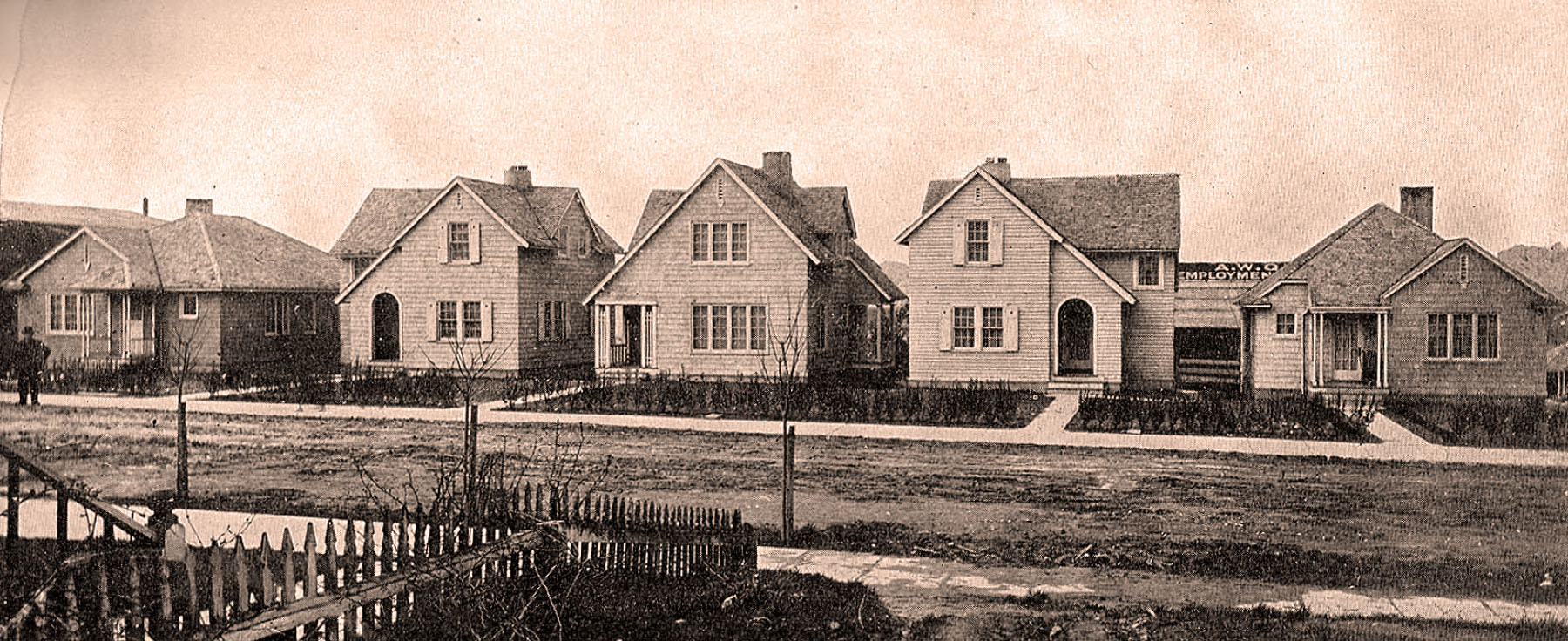
    The U.S. Housing Corporation built nearly 300 homes in Bremerton, Wash., during World War I. National Archives

    In 1918, as World War I intensified overseas, the U.S. government embarked on a radical experiment: It quietly became the nation’s largest housing developer, designing and constructing more than 80 new communities across 26 states in just two years.

    These weren’t hastily erected barracks or rows of identical homes. They were thoughtfully designed neighborhoods, complete with parks, schools, shops and sewer systems.

    In just two years, this federal initiative provided housing for almost 100,000 people.

    Few Americans are aware that such an ambitious and comprehensive public housing effort ever took place. Many of the homes are still standing today.

    But as an urban planning scholar, I believe that this brief historic moment – spearheaded by a shuttered agency called the United States Housing Corporation – offers a revealing lesson on what government-led planning can achieve during a time of national need.

    Government mobilization

    When the U.S. declared war against Germany in April 1917, federal authorities immediately realized that ship, vehicle and arms manufacturing would be at the heart of the war effort. To meet demand, there needed to be sufficient worker housing near shipyards, munitions plants and steel factories.

    So on May 16, 1918, Congress authorized President Woodrow Wilson to provide housing and infrastructure for industrial workers vital to national defense. By July, it had appropriated US$100 million – approximately $2.3 billion today – for the effort, with Secretary of Labor William B. Wilson tasked with overseeing it via the U.S. Housing Corporation.

    Over the course of two years, the agency designed and planned over 80 housing projects. Some developments were small, consisting of a few dozen dwellings. Others approached the size of entire new towns.

    For example, Cradock, near Norfolk, Virginia, was planned on a 310-acre site, with more than 800 detached homes developed on just 100 of those acres. In Dayton, Ohio, the agency created a 107-acre community that included 175 detached homes and a mix of over 600 semidetached homes and row houses, along with schools, shops, a community center and a park.

    Designing ideal communities

    Notably, the Housing Corporation was not simply committed to offering shelter.

    Its architects, planners and engineers aimed to create communities that were not only functional but also livable and beautiful. They drew heavily from Britain’s late-19th century Garden City movement, a planning philosophy that emphasized low-density housing, the integration of open spaces and a balance between built and natural environments.

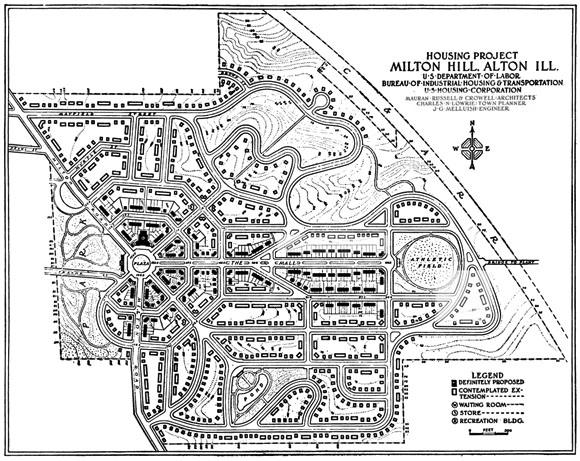
    Milton Hill, a neighborhood designed and developed by the United States Housing Corporation in Alton, Ill.
    National Archives

    Importantly, instead of simply creating complexes of apartment units, akin to the public housing projects that most Americans associate with government-funded housing, the agency focused on the construction of single-family and small multifamily residential buildings that workers and their families could eventually own.

    This approach reflected a belief by the policymakers that property ownership could strengthen community responsibility and social stability. During the war, the federal government rented these homes to workers at regulated rates designed to be fair, while covering maintenance costs. After the war, the government began selling the homes – often to the tenants living in them – through affordable installment plans that provided a practical path to ownership.

    A single-family home in Davenport, Iowa, built by the U.S. Housing Corporation.
    National Archives

    Though the scope of the Housing Corporation’s work was national, each planned community took into account regional growth and local architectural styles. Engineers often built streets that adapted to the natural landscape. They spaced houses apart to maximize light, air and privacy, with landscaped yards. No resident lived far from greenery.

    In Quincy, Massachusetts, for example, the agency built a 22-acre neighborhood with 236 homes designed mostly in a Colonial Revival style to serve the nearby Fore River Shipyard. The development was laid out to maximize views, green space and access to the waterfront, while maintaining density through compact street and lot design.

    At Mare Island, California, developers located the housing site on a steep hillside near a naval base. Rather than flatten the land, designers worked with the slope, creating winding roads and terraced lots that preserved views and minimized erosion. The result was a 52-acre community with over 200 homes, many of which were designed in the Craftsman style. There was also a school, stores, parks and community centers.

    Infrastructure and innovation

    Alongside housing construction, the Housing Corporation invested in critical infrastructure. Engineers installed over 649,000 feet of modern sewer and water systems, ensuring that these new communities set a high standard for sanitation and public health.

    Attention to detail extended inside the homes. Architects experimented with efficient interior layouts and space-saving furnishings, including foldaway beds and built-in kitchenettes. Some of these innovations came from private companies that saw the program as a platform to demonstrate new housing technologies.

    One company, for example, designed fully furnished studio apartments with furniture that could be rotated or hidden, transforming a space from living room to bedroom to dining room throughout the day.

    To manage the large scale of this effort, the agency developed and published a set of planning and design standards − the first of their kind in the United States. These manuals covered everything from block configurations and road widths to lighting fixtures and tree-planting guidelines.

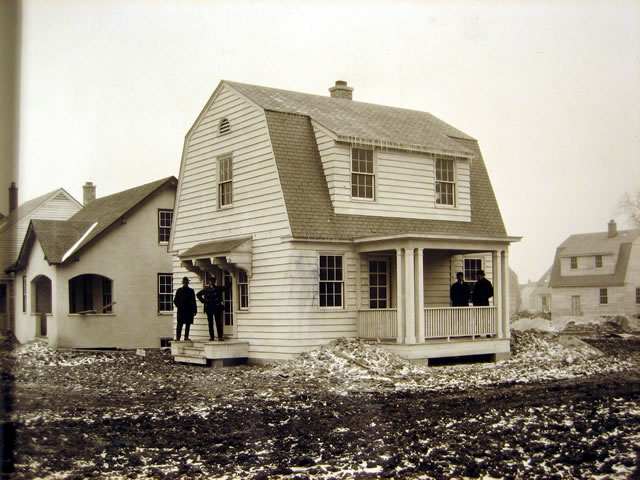
    A single-family home in Bremerton, Wash., built by the U.S. Housing Corporation.
    National Archives

    The standards emphasized functionality, aesthetics and long-term livability.

    Architects and planners who worked for the Housing Corporation carried these ideas into private practice, academia and housing initiatives. Many of the planning norms still used today, such as street hierarchies, lot setbacks and mixed-use zoning, were first tested in these wartime communities.

    And many of the planners involved in experimental New Deal community projects, such as Greenbelt, Maryland, had worked for or alongside Housing Corporation designers and planners. Their influence is apparent in the layout and design of these communities.

    A brief but lasting legacy

    With the end of World War I, the political support for federal housing initiatives quickly waned. The Housing Corporation was dissolved by Congress, and many planned projects were never completed. Others were incorporated into existing towns and cities.

    Yet, many of the neighborhoods built during this period still exist today, integrated in the fabric of the country’s cities and suburbs. Residents in places such as Aberdeen, Maryland; Bremerton, Washington; Bethlehem, Pennsylvania; Watertown, New York; and New Orleans may not even realize that many of the homes in their communities originated from a bold federal housing experiment.

    These homes on Lawn Avenue in Quincy, Mass., in 2019 were built by the U.S. Housing Corporation.
    Google Street View

    The Housing Corporation’s efforts, though brief, showed that large-scale public housing could be thoughtfully designed, community oriented and quickly executed. For a short time, in response to extraordinary circumstances, the U.S. government succeeded in building more than just houses. It constructed entire communities, demonstrating that government has a major role and can lead in finding appropriate, innovative solutions to complex challenges.

    At a moment when the U.S. once again faces a housing crisis, the legacy of the U.S. Housing Corporation serves as a reminder that bold public action can meet urgent needs.

    Eran Ben-Joseph does not work for, consult, own shares in or receive funding from any company or organization that would benefit from this article, and has disclosed no relevant affiliations beyond their academic appointment.

    ref. Believe it or not, there was a time when the US government built beautiful homes for working-class Americans to deal with a housing crisis – https://theconversation.com/believe-it-or-not-there-was-a-time-when-the-us-government-built-beautiful-homes-for-working-class-americans-to-deal-with-a-housing-crisis-253512

    MIL OSI – Global Reports

  • MIL-OSI: Form 8.3 – [CRANEWARE PLC – 16 05 2025] – (CGAML)

    Source: GlobeNewswire (MIL-OSI)

    FORM 8.3

    PUBLIC OPENING POSITION DISCLOSURE/DEALING DISCLOSURE BY
    A PERSON WITH INTERESTS IN RELEVANT SECURITIES REPRESENTING 1% OR MORE
    Rule 8.3 of the Takeover Code (the “Code”)

    1.        KEY INFORMATION

    (a)   Full name of discloser: CANACCORD GENUITY ASSET MANAGEMENT LIMITED (for Discretionary clients)
    (b)   Owner or controller of interests and short positions disclosed, if different from 1(a):
            The naming of nominee or vehicle companies is insufficient. For a trust, the trustee(s), settlor and beneficiaries must be named.
    N/A
    (c)   Name of offeror/offeree in relation to whose relevant securities this form relates:
            Use a separate form for each offeror/offeree
    CRANEWARE PLC
    (d)   If an exempt fund manager connected with an offeror/offeree, state this and specify identity of offeror/offeree: N/A
    (e)   Date position held/dealing undertaken:
            For an opening position disclosure, state the latest practicable date prior to the disclosure
    16 MAY 2025
    (f)   In addition to the company in 1(c) above, is the discloser making disclosures in respect of any other party to the offer?
            If it is a cash offer or possible cash offer, state “N/A”
    N/A

    2.        POSITIONS OF THE PERSON MAKING THE DISCLOSURE

    If there are positions or rights to subscribe to disclose in more than one class of relevant securities of the offeror or offeree named in 1(c), copy table 2(a) or (b) (as appropriate) for each additional class of relevant security.

    (a)      Interests and short positions in the relevant securities of the offeror or offeree to which the disclosure relates following the dealing (if any)

    Class of relevant security: 1p ORDINARY
      Interests Short positions
    Number % Number %
    (1)   Relevant securities owned and/or controlled: 583,000 1.6464    
    (2)   Cash-settled derivatives:        
    (3)   Stock-settled derivatives (including options) and agreements to purchase/sell:        
    TOTAL: 583,000 1.6464    

    All interests and all short positions should be disclosed.

    Details of any open stock-settled derivative positions (including traded options), or agreements to purchase or sell relevant securities, should be given on a Supplemental Form 8 (Open Positions).

    (b)      Rights to subscribe for new securities (including directors’ and other employee options)

    Class of relevant security in relation to which subscription right exists:  
    Details, including nature of the rights concerned and relevant percentages:  

    3.        DEALINGS (IF ANY) BY THE PERSON MAKING THE DISCLOSURE

    Where there have been dealings in more than one class of relevant securities of the offeror or offeree named in 1(c), copy table 3(a), (b), (c) or (d) (as appropriate) for each additional class of relevant security dealt in.

    The currency of all prices and other monetary amounts should be stated.

    (a)        Purchases and sales

    Class of relevant security Purchase/sale Number of securities Price per unit
    1p ORDINARY PURCHASE 5,000 2280p

    (b)        Cash-settled derivative transactions

    Class of relevant security Product description
    e.g. CFD
    Nature of dealing
    e.g. opening/closing a long/short position, increasing/reducing a long/short position
    Number of reference securities Price per unit
    NONE        

    (c)        Stock-settled derivative transactions (including options)

    (i)        Writing, selling, purchasing or varying

    Class of relevant security Product description e.g. call option Writing, purchasing, selling, varying etc. Number of securities to which option relates Exercise price per unit Type
    e.g. American, European etc.
    Expiry date Option money paid/ received per unit
    NONE              

    (ii)        Exercise

    Class of relevant security Product description
    e.g. call option
    Exercising/ exercised against Number of securities Exercise price per unit

    (d)        Other dealings (including subscribing for new securities)

    Class of relevant security Nature of dealing
    e.g. subscription, conversion
    Details Price per unit (if applicable)
    NONE      

    4.        OTHER INFORMATION

    (a)        Indemnity and other dealing arrangements

    Details of any indemnity or option arrangement, or any agreement or understanding, formal or informal, relating to relevant securities which may be an inducement to deal or refrain from dealing entered into by the person making the disclosure and any party to the offer or any person acting in concert with a party to the offer:
    Irrevocable commitments and letters of intent should not be included. If there are no such agreements, arrangements or understandings, state “none”

    NONE

    (b)        Agreements, arrangements or understandings relating to options or derivatives

    Details of any agreement, arrangement or understanding, formal or informal, between the person making the disclosure and any other person relating to:
    (i)   the voting rights of any relevant securities under any option; or
    (ii)   the voting rights or future acquisition or disposal of any relevant securities to which any derivative is referenced:
    If there are no such agreements, arrangements or understandings, state “none”

    NONE

    (c)        Attachments

    Is a Supplemental Form 8 (Open Positions) attached? NO
    Date of disclosure: 19 MAY 2025
    Contact name: MARK ELLIOTT
    Telephone number: 01253 376539

    Public disclosures under Rule 8 of the Code must be made to a Regulatory Information Service.

    The Panel’s Market Surveillance Unit is available for consultation in relation to the Code’s disclosure requirements on +44 (0)20 7638 0129.

    The Code can be viewed on the Panel’s website at www.thetakeoverpanel.org.uk.

    The MIL Network

  • MIL-OSI Global: How aid cuts could make vulnerable communities even less resilient to climate change

    Source: The Conversation – UK – By Kalle Hirvonen, Senior Research Fellow, International Food Policy Research Insitute; Research Fellow, UNU-WIDER, United Nations University

    An irrigation project in Mozambique. Marcos Villalta / Save the Children, CC BY-NC-ND

    As global temperatures rise and climate-related disasters become more frequent, the need to adapt is rapidly increasing. That need for adaptation – from adjusting farming practices to diversifying livelihoods and strengthening infrastructure – is most acute in vulnerable low- and middle-income countries such as Bangladesh, Ethiopia, Haiti and Vietnam.

    Despite contributing a negligible share of historical global greenhouse gas emissions, these countries are facing the brunt of climate change. Yet as the demand for long-term resilience grows, international aid priorities are shifting in the opposite direction.

    Over the past three years, several major rich countries have substantially cut their development aid budgets. Remaining funds have been redirected towards emergency relief.

    This shift could undermine the climate finance commitments made by wealthy countries to mobilise US$300 billion (£228 billion) a year for climate action in the most vulnerable low- and middle-income countries by 2035.


    Get your news from actual experts, straight to your inbox. Sign up to our daily newsletter to receive all The Conversation UK’s latest coverage of news and research, from politics and business to the arts and sciences.


    Emergency aid, while vital for saving lives during crises such as droughts and floods, is reactive by nature. It arrives only after disaster has struck, often with a substantial delay.

    By contrast, climate adaptation is proactive. It focuses on anticipating future risks and helping communities prepare for changing environments.

    A key part of this is supporting transitions away from sectors like crop agriculture that are particularly vulnerable to climate-related shocks. In some cases, adapting to a changing climate may also require helping families move safely — turning relocation into a choice rather than a last resort.

    In Ethiopia, one of the world’s most drought-prone countries, a US government-funded food security programme aimed to strengthen resilience by offering livelihood training, organising savings groups and providing a US$200 lump sum to poor rural households. Research shows that this programme improved food security and protected assets during periods of drought.

    Livestock farming in the Somali region of Ethiopia which was severely affected by droughts in 2011.
    Malini Morzaria/EUECHO, CC BY-NC-ND

    In Nicaragua, families who received cash transfers alongside vocational training or investment grants were better protected against drought shocks than those relying on cash alone. These households could supplement farming with other income sources. This made them less vulnerable to drought-related losses and helped stabilise their earnings throughout the year.

    These schemes are known as “cash-plus programmes”. They help create the conditions for households to adapt and thrive. But when climate and environmental shocks overwhelm the resilience of local communities, relocation may still become the only viable option.

    That’s why proactive adaptation efforts need to be scaled up and broadened — not only to meet immediate needs but to support longer-term transitions. This includes investing in sustainable livelihoods through diversified income sources, skills training and, when necessary, enabling safe and voluntary relocation.

    Some pilot interventions that supported seasonal rural-to-urban migration have shown what’s possible. In Bangladesh, a small migration subsidy of just US$8.50 helped the participating poor farm households affected by seasonal famine cover travel costs.

    Migration for temporary work increased by 22%, and families back home experienced improvements in food security. With even modest support, people were able to access job opportunities in cities and strengthen their resilience.

    Programmes that make it easier for people to choose to move from rural areas to cities could help families move with dignity rather than in desperation. However, scaling up such initiatives successfully remains a challenge, requiring strong political commitment and effective governance.

    Climate relocation

    Without proactive planning and support, migration often happens out of necessity rather than choice. This kind of displacement typically occurs within national borders rather than across continents — contrary to popular narratives.

    In fact, 59% of the world’s forcibly displaced population live within their own country. By the end of 2023, a record 75.9 million people across 116 countries were internally displaced — a 51% increase over the previous five years, driven in part by climate change.

    A family leave their home in Oklahoma, US, as a result of the 1930s dust bowl disaster.
    Dorothea Lange/Library of Congress, Farm Security Administration/Office of War Information.

    History provides sobering lessons about relocation triggered by environmental collapse. In the 1930s, a severe drought and dust storms struck the Great Plains in the US, creating the “dust bowl”. This devastated farmland and forced millions of people to leave their homes, as economic hardship became widespread and the land so degraded that crops wouldn’t grow.

    Today, similar patterns loom as droughts, floods and rising seas threaten livelihoods around the world. Small island states such as Tuvalu face existential threats from rising sea levels, with entire communities at risk of being displaced.

    These mounting threats underscore a hard truth: the window for effective climate adaptation is rapidly closing. As climate disruptions intensify, the case for long-term investment in resilience has never been clearer. Without proactive adaptation, the cycle of crisis and response will only deepen.

    Societies can adapt, but doing so takes foresight, investment and courage. In the face of escalating climate risks, bold, forward-looking policies are not a luxury — they are a necessity. By supporting longer-term strategies, rich-country governments and aid charities can enable vulnerable communities to withstand, adapt and, when necessary, move with dignity.


    Don’t have time to read about climate change as much as you’d like?

    Get a weekly roundup in your inbox instead. Every Wednesday, The Conversation’s environment editor writes Imagine, a short email that goes a little deeper into just one climate issue. Join the 45,000+ readers who’ve subscribed so far.


    Kalle Hirvonen’s recent and ongoing research has been funded by the CGIAR Trust Fund (https://www.cgiar.org/funders/), the United States Agency for International Development (USAID), the U.S. National Institutes of Health (NIH) and the Ministry for Foreign Affairs of Finland.

    Olli-Pekka Kuusela does not work for, consult, own shares in or receive funding from any company or organisation that would benefit from this article, and has disclosed no relevant affiliations beyond their academic appointment.

    ref. How aid cuts could make vulnerable communities even less resilient to climate change – https://theconversation.com/how-aid-cuts-could-make-vulnerable-communities-even-less-resilient-to-climate-change-255358

    MIL OSI – Global Reports

  • MIL-OSI Australia: Man bitten by dingo while fishing on K’gari

    Source: Tasmania Police

    Issued: 19 May 2025

    Rangers are reminding fishers to be alert on K’gari after a man was bitten by a dingo whilst fishing in knee deep water around 11:30am near Eurong on 16 May 2025.

    The man was fishing alone when he was approached from behind by the dingo. It bit him on the back of the leg, resulting in two puncture wounds and a small superficial laceration which required basic first aid treatment.

    The man told rangers from the Department of the Environment, Tourism, Science and Innovation (DETSI) that the dingo was almost fully submerged in the water at the time of the incident.

    He was wearing a fishing bag containing a fish, and rangers believe the dingo may have been attracted by the smell.

    After being bitten, the man used his fishing rod to make contact with the dingo.

    In addition to this incident, DETSI has received recent reports that dingoes have been loitering around fishers on the island in hope of getting a free feed.

    Dingoes are known to steal fish and bait from anywhere they can scavenge, including vehicles, berley bags, shallow waters and straight off a fisher’s line.

    To fish responsibly, it’s important to stay close to the water’s edge when reeling in a fish and avoid dragging your catch across the sand.

    When removing bait from fishing hooks, it is recommended that a protective cover is placed on the hook, and it is stored out of reach of dingoes.

    Ranger Dan Novak would like to remind all visitors including fishers to be alert for dingoes on K’gari.

    “Dingoes are opportunistic predators and will strike when they see a chance to do so,” Mr Novak said.

    “To avoid a dingo incident, it’s always a good idea to have a mate stand guard, preferably holding a dingo stick.

    “It is an offence to hang bait or berley bags on the outside of vehicles, in trees, or have these lying around.

    “We have also seen dingoes grabbing bycatch or fish that are undersized as they’re being released.

    “To reduce the chance of a negative dingo interaction we remind visitors to be dingo safe at all times.”

    Visitors to K’gari are reminded to ‘Be dingo-safe!’ at all times:

    • Always stay close (within arm’s reach) of children and young teenagers
    • Always walk in groups and carry a stick.
    • Camp in fenced areas where possible
    • Do not run. Running or jogging can trigger a negative dingo interaction
    • Never feed dingoes
    • Lock up food stores and iceboxes (even on a boat)
    • Never store food or food containers in tents, and
    • Secure all rubbish, fish and bait.

    For more information go to K’gari dingoes

    MIL OSI News

  • MIL-OSI: Form 8.3 – [GLOBALDATA PLC – 16 05 2025] – (CGWL)

    Source: GlobeNewswire (MIL-OSI)

    FORM 8.3

    PUBLIC OPENING POSITION DISCLOSURE/DEALING DISCLOSURE BY
    A PERSON WITH INTERESTS IN RELEVANT SECURITIES REPRESENTING 1% OR MORE
    Rule 8.3 of the Takeover Code (the “Code”)

    1.        KEY INFORMATION

    (a)   Full name of discloser: CANACCORD GENUITY WEALTH LIMITED (for Discretionary clients)
    (b)   Owner or controller of interests and short positions disclosed, if different from 1(a):
            The naming of nominee or vehicle companies is insufficient. For a trust, the trustee(s), settlor and beneficiaries must be named.
    N/A
    (c)   Name of offeror/offeree in relation to whose relevant securities this form relates:
            Use a separate form for each offeror/offeree
    GLOBALDATA PLC
    (d)   If an exempt fund manager connected with an offeror/offeree, state this and specify identity of offeror/offeree: N/A
    (e)   Date position held/dealing undertaken:
            For an opening position disclosure, state the latest practicable date prior to the disclosure
    16 MAY 2025
    (f)   In addition to the company in 1(c) above, is the discloser making disclosures in respect of any other party to the offer?
            If it is a cash offer or possible cash offer, state “N/A”
    N/A

    2.        POSITIONS OF THE PERSON MAKING THE DISCLOSURE

    If there are positions or rights to subscribe to disclose in more than one class of relevant securities of the offeror or offeree named in 1(c), copy table 2(a) or (b) (as appropriate) for each additional class of relevant security.

    (a)      Interests and short positions in the relevant securities of the offeror or offeree to which the disclosure relates following the dealing (if any)

    Class of relevant security: 0.01p ORDINARY
      Interests Short positions
    Number % Number %
    (1)   Relevant securities owned and/or controlled: 11,066,280 1.3721    
    (2)   Cash-settled derivatives:        
    (3)   Stock-settled derivatives (including options) and agreements to purchase/sell:        
    TOTAL: 11,066,280 1.3721    

    All interests and all short positions should be disclosed.

    Details of any open stock-settled derivative positions (including traded options), or agreements to purchase or sell relevant securities, should be given on a Supplemental Form 8 (Open Positions).

    (b)      Rights to subscribe for new securities (including directors’ and other employee options)

    Class of relevant security in relation to which subscription right exists:  
    Details, including nature of the rights concerned and relevant percentages:  

    3.        DEALINGS (IF ANY) BY THE PERSON MAKING THE DISCLOSURE

    Where there have been dealings in more than one class of relevant securities of the offeror or offeree named in 1(c), copy table 3(a), (b), (c) or (d) (as appropriate) for each additional class of relevant security dealt in.

    The currency of all prices and other monetary amounts should be stated.

    (a)        Purchases and sales

    Class of relevant security Purchase/sale Number of securities Price per unit
    0.01p ORDINARY SALE 2,000 187.76p

    (b)        Cash-settled derivative transactions

    Class of relevant security Product description
    e.g. CFD
    Nature of dealing
    e.g. opening/closing a long/short position, increasing/reducing a long/short position
    Number of reference securities Price per unit
    NONE        

    (c)        Stock-settled derivative transactions (including options)

    (i)        Writing, selling, purchasing or varying

    Class of relevant security Product description e.g. call option Writing, purchasing, selling, varying etc. Number of securities to which option relates Exercise price per unit Type
    e.g. American, European etc.
    Expiry date Option money paid/ received per unit
    NONE              

    (ii)        Exercise

    Class of relevant security Product description
    e.g. call option
    Exercising/ exercised against Number of securities Exercise price per unit

    (d)        Other dealings (including subscribing for new securities)

    Class of relevant security Nature of dealing
    e.g. subscription, conversion
    Details Price per unit (if applicable)
    NONE      

    4.        OTHER INFORMATION

    (a)        Indemnity and other dealing arrangements

    Details of any indemnity or option arrangement, or any agreement or understanding, formal or informal, relating to relevant securities which may be an inducement to deal or refrain from dealing entered into by the person making the disclosure and any party to the offer or any person acting in concert with a party to the offer:
    Irrevocable commitments and letters of intent should not be included. If there are no such agreements, arrangements or understandings, state “none”

    NONE

    (b)        Agreements, arrangements or understandings relating to options or derivatives

    Details of any agreement, arrangement or understanding, formal or informal, between the person making the disclosure and any other person relating to:
    (i)   the voting rights of any relevant securities under any option; or
    (ii)   the voting rights or future acquisition or disposal of any relevant securities to which any derivative is referenced:
    If there are no such agreements, arrangements or understandings, state “none”

    NONE

    (c)        Attachments

    Is a Supplemental Form 8 (Open Positions) attached? NO
    Date of disclosure: 19 MAY 2025
    Contact name: MARK ELLIOTT
    Telephone number: 01253 376539

    Public disclosures under Rule 8 of the Code must be made to a Regulatory Information Service.

    The Panel’s Market Surveillance Unit is available for consultation in relation to the Code’s disclosure requirements on +44 (0)20 7638 0129.

    The Code can be viewed on the Panel’s website at www.thetakeoverpanel.org.uk.

    The MIL Network

  • MIL-OSI: Form 8.3 – [CRANEWARE PLC – 16 05 2025] – (CGWL)

    Source: GlobeNewswire (MIL-OSI)

    FORM 8.3

    PUBLIC OPENING POSITION DISCLOSURE/DEALING DISCLOSURE BY
    A PERSON WITH INTERESTS IN RELEVANT SECURITIES REPRESENTING 1% OR MORE
    Rule 8.3 of the Takeover Code (the “Code”)

    1.        KEY INFORMATION

    (a)   Full name of discloser: CANACCORD GENUITY WEALTH LIMITED (for Discretionary clients)
    (b)   Owner or controller of interests and short positions disclosed, if different from 1(a):
            The naming of nominee or vehicle companies is insufficient. For a trust, the trustee(s), settlor and beneficiaries must be named.
    N/A
    (c)   Name of offeror/offeree in relation to whose relevant securities this form relates:
            Use a separate form for each offeror/offeree
    CRANEWARE PLC
    (d)   If an exempt fund manager connected with an offeror/offeree, state this and specify identity of offeror/offeree: N/A
    (e)   Date position held/dealing undertaken:
            For an opening position disclosure, state the latest practicable date prior to the disclosure
    16 MAY 2025
    (f)   In addition to the company in 1(c) above, is the discloser making disclosures in respect of any other party to the offer?
            If it is a cash offer or possible cash offer, state “N/A”
    N/A

    2.        POSITIONS OF THE PERSON MAKING THE DISCLOSURE

    If there are positions or rights to subscribe to disclose in more than one class of relevant securities of the offeror or offeree named in 1(c), copy table 2(a) or (b) (as appropriate) for each additional class of relevant security.

    (a)      Interests and short positions in the relevant securities of the offeror or offeree to which the disclosure relates following the dealing (if any)

    Class of relevant security: 1p ORDINARY
      Interests Short positions
    Number % Number %
    (1)   Relevant securities owned and/or controlled: 1,714,350 4.8415    
    (2)   Cash-settled derivatives:        
    (3)   Stock-settled derivatives (including options) and agreements to purchase/sell:        
    TOTAL: 1,714,350 4.8415    

    All interests and all short positions should be disclosed.

    Details of any open stock-settled derivative positions (including traded options), or agreements to purchase or sell relevant securities, should be given on a Supplemental Form 8 (Open Positions).

    (b)      Rights to subscribe for new securities (including directors’ and other employee options)

    Class of relevant security in relation to which subscription right exists:  
    Details, including nature of the rights concerned and relevant percentages:  

    3.        DEALINGS (IF ANY) BY THE PERSON MAKING THE DISCLOSURE

    Where there have been dealings in more than one class of relevant securities of the offeror or offeree named in 1(c), copy table 3(a), (b), (c) or (d) (as appropriate) for each additional class of relevant security dealt in.

    The currency of all prices and other monetary amounts should be stated.

    (a)        Purchases and sales

    Class of relevant security Purchase/sale Number of securities Price per unit
    1p ORDINARY SALE 420 2235p
    1p ORDINARY SALE 300 2242.5p
    1p ORDINARY SALE 315 2259p
    1p ORDINARY SALE 300 2267p
    1p ORDINARY PURCHASE 860 2188.4999p
    1p ORDINARY PURCHASE 4,490 2189.2999p
    1p ORDINARY PURCHASE 3,000 2225p
    1p ORDINARY PURCHASE 3,600 2232.109p

    (b)        Cash-settled derivative transactions

    Class of relevant security Product description
    e.g. CFD
    Nature of dealing
    e.g. opening/closing a long/short position, increasing/reducing a long/short position
    Number of reference securities Price per unit
    NONE        

    (c)        Stock-settled derivative transactions (including options)

    (i)        Writing, selling, purchasing or varying

    Class of relevant security Product description e.g. call option Writing, purchasing, selling, varying etc. Number of securities to which option relates Exercise price per unit Type
    e.g. American, European etc.
    Expiry date Option money paid/ received per unit
    NONE              

    (ii)        Exercise

    Class of relevant security Product description
    e.g. call option
    Exercising/ exercised against Number of securities Exercise price per unit

    (d)        Other dealings (including subscribing for new securities)

    Class of relevant security Nature of dealing
    e.g. subscription, conversion
    Details Price per unit (if applicable)
    NONE      

    4.        OTHER INFORMATION

    (a)        Indemnity and other dealing arrangements

    Details of any indemnity or option arrangement, or any agreement or understanding, formal or informal, relating to relevant securities which may be an inducement to deal or refrain from dealing entered into by the person making the disclosure and any party to the offer or any person acting in concert with a party to the offer:
    Irrevocable commitments and letters of intent should not be included. If there are no such agreements, arrangements or understandings, state “none”

    NONE

    (b)        Agreements, arrangements or understandings relating to options or derivatives

    Details of any agreement, arrangement or understanding, formal or informal, between the person making the disclosure and any other person relating to:
    (i)   the voting rights of any relevant securities under any option; or
    (ii)   the voting rights or future acquisition or disposal of any relevant securities to which any derivative is referenced:
    If there are no such agreements, arrangements or understandings, state “none”

    NONE

    (c)        Attachments

    Is a Supplemental Form 8 (Open Positions) attached? NO
    Date of disclosure: 19 MAY 2025
    Contact name: MARK ELLIOTT
    Telephone number: 01253 376539

    Public disclosures under Rule 8 of the Code must be made to a Regulatory Information Service.

    The Panel’s Market Surveillance Unit is available for consultation in relation to the Code’s disclosure requirements on +44 (0)20 7638 0129.

    The Code can be viewed on the Panel’s website at www.thetakeoverpanel.org.uk.

    The MIL Network

  • MIL-OSI: 180 Degree Capital Corp. Issues Q1 2025 Shareholder Letter

    Source: GlobeNewswire (MIL-OSI)

    MONTCLAIR, N.J., May 19, 2025 (GLOBE NEWSWIRE) — 180 Degree Capital Corp. (NASDAQ:TURN) today issued the following Q1 2025 Shareholder Letter:

    Fellow Shareholders,

    As discussed in our press release issued on April 14, 2025, we ended the first quarter of 2025 with a net asset value per share (“NAV”) of $4.42. We are pleased with our performance in Q1 2025, that we believe favorably positions 180 Degree Capital as we continue to make progress on the steps required to complete our proposed Business Combination with Mount Logan Capital Inc. (“Mount Logan”). For those of you who may not have had a chance to listen to our joint call with the team from Mount Logan or to review the presentation deck that summarizes the proposed transaction, both can be found at https://ir.180degreecapital.com/ir-calendar/detail/2908/180-degree-capital-and-mount-logan-capital-proposed-merger. Our excitement for the potential of this transaction to create value for our shareholders has only grown since we announced this proposed Business Combination and conducted this joint call.

    We noted in a press release issued on May 7, 2025, that we filed an amended preliminary joint proxy statement/prospectus on Schedule 14A with the Securities and Exchange Commission (“SEC”) regarding our proposed Business Combination with Mount Logan includes Mount Logan’s financial statements which were prepared in accordance with accounting principles generally accepted in the US, or US GAAP. The conversion of Mount Logan’s financial statements from International Financial Reporting Standards, or IFRS, to US GAAP is an important milestone as now we are in a position to be able to speak freely with current and potential investors regarding historical financial performance and apples-to-apples comparisons of Mount Logan to its publicly traded peers. This conversion to US GAAP also resulted in favorable improvements in historical financial metrics, including an increase in Mount Logan’s reported fee-related earnings in 2024 under IFRS to approximately $9.1 million under US GAAP, and an increase in the reported shareholder equity value of Mount Logan as of December 31, 2024, under IFRS to approximately $104.1 million under US GAAP.

    We believe that the availability of Mount Logan’s US GAAP financial statements will add to the strong indications of support we have received from initial conversations with our shareholders following the filing of our initial joint proxy statement/prospectus in late March 2025. We believe our investors who have signed voting agreements and/or provided indications of support already understood the potential that we believe exists to create significant value for shareholders of 180 Degree Capital through this Business Combination even before Mount Logan’s US GAAP financial statements were available. We appreciate all of this support and patience as we move steadily through the SEC review process, toward the start of soliciting votes, and the ultimate goal of the completion of our proposed Business Combination.

    As mentioned earlier, our belief about the potential of our proposed Business Combination to create significant shareholder value for 180 Degree Capital shareholders has only grown stronger since our initial announcement in January 2025. This belief is amplified by numerous significant shareholders who have voiced their support for our proposed Business Combination to us, as well as new shareholders who were drawn to invest in 180 Degree Capital based on what we believe to be a shared view that our proposed Business Combination is a unique opportunity for future value creation. We continue to believe that converting to an operating company will make 180 Degree Capital’s net asset value a floor for our stock price rather than the ceiling as it is for most closed-end funds. The pro forma combination of our businesses, based on 180 Degree Capital’s net asset value and Mount Logan’s equity value, respectively as of December 31, 2024, less estimated merger-related expenses and other estimated adjustments, yields a combined entity with an estimated shareholder equity value of nearly $140 million. While the ultimate ratio of ownership between 180 Degree Capital and Mount Logan shareholders will be based on 180 Degree Capital’s net asset value at closing of the Business Combination, if the transaction closed on December 31, 2024, the portion of this equity value ascribed to 180 Degree Capital shareholders would equate to more than 180 Degree Capital’s net asset value as of that date. This fact is only one of the multitude of reasons we are so excited about this proposed transaction and its potential opportunity to create meaningful value for 180 Degree Capital’s shareholders.

    To remind everyone of our original views and comments included in our Q4 2024 Shareholder Letter issued on February 14, 2025, Mount Logan has the following attributes that we believe will provide value to 180 Degree Capital shareholders:

    • Mount Logan has what we believe to be an outstanding management team comprised of its CEO, Ted Goldthorpe, its Co-Presidents, Matthias Ederer and Henry Wang, and its CFO, Nikita Klassen;
    • Mount Logan’s asset management platform has approximately $2.4+ billion of assets under management (as of September 30, 2024) that we believe generates predictable fee revenue that can be used to benefit the growth of the combined company and its shareholders;
    • Mount Logan has operational leverage and unique investment access through its association with BC Partners, a leading global private equity and credit firm;
    • Mount Logan is focused on what we believe is the fast-growing market of private credit;
    • We believe that Mount Logan remains undiscovered by the majority of investors due to it being listed on the Cboe Canada exchange rather than a US national exchange; and
    • We believe Mount Logan is significantly undervalued by public market investors.

    For 35 years, I have been a value investor attempting to uncover great companies that I believe are trading below their intrinsic value. As we spent more time with Ted and his colleagues over the past 10 months, it became abundantly clear to us that: 1) we believe Mount Logan is one of these great undiscovered and undervalued companies and 2) the combination of our two companies has the potential to unlock substantial value for 180 Degree Capital shareholders by:

    1. Providing a path to a combined entity that, based on combined shareholder equity as of December 31, 2024, and an estimated distribution of ownership as of the date of the announcement of the Business Combination, would result in 180 Degree Capital shareholder’s portion of the combined shareholder equity being higher than our NAV as of the date of signing of the definitive agreement on January 16, 2025, and as of March 31, 2025.

      For those of our investors who feel more comfortable assessing value based on net asset value/book value, we note that publicly traded comparable companies to what would be our combined company often trade at multiples of book value rather than discounts. For those investors who are comfortable or more interested in valuing based on operating company metrics, we believe the valuation of our combined business will be based on a multiple of fee-related revenues attributed to earnings from the management of permanent and semi-permanent capital vehicles. Other similar businesses commonly trade at significantly higher multiples of operating metrics than the multiple implied by the value of Mount Logan set by the terms of our proposed Business Combination.

    2. Changing to an asset-light operating company that leverages an association with BC Partners enables economies of scale that are not possible at 180 Degree Capital’s current size; and
    3. Substantially increasing the available capital for us to be able to leverage our relationships with small and microcapitalization public companies, to develop capital structure solutions that seek to unlock value and generate favorable risk-adjusted returns.

    As the table below shows, we believe our shareholders have benefited from our ability to generate positive returns on our investments since we took over management of 180 Degree Capital. These returns were offset by material declines in the legacy private portfolio that we inherited.

    Public Portfolio
    Contribution to Change in NAV
    (Q4 2016-Q1 2025)
    Legacy Private Portfolio
    Contribution to Change in NAV
    (Q4 2016-Q1 2025)
    +$3.35/share -$2.41/share
      TURN Public Portfolio Gross Total (Excluding SMA Carried Interest) TURN Public Portfolio Gross Total (Including SMA Carried Interest) Change in NAV Change in Stock Price Russell Microcap Index Lipper Peer Group Average
    Inception to Date
    Q4 2016 – Q1 2025
    +198.7% +218.3% -37.0% -4.1% +44.3% +66.1%

    On a relative basis, our gross total return for Q1 2025 of +4.5% compares favorably to the –14.4% total return for the Russell Microcap Index.1 The difference between our gross total return and our net total return, or change in NAV, of -4.7% to $4.42 as of March 31, 2025, was primarily the result of expenses related to our Business Combination, including almost $300,000 in additional professional fees resulting from the public efforts to derail our proposed Business Combination. Our day-to-day operating expenses declined by over 30% from Q1 2024.

    Public Portfolio Performance in Q1 2025

    The slide below shows the basis for our investment performance in Q1 2025:

    Ticker Symbol Shares Owned @ 12/31/24 Net Shares Purchased (Sold) During Quarter Shares Owned @ 3/31/25 Value @ 12/31/24 Cash (Invested) Received from Sales / Dividends Value @ 3/31/25 Value + Cash Received Total Q/Q Net Change % Change
    ACNT 377,750 (10,890) 366,860 $4,223,245 $133,731 $4,644,448 $4,778,179 $554,934 13.1%
    AREN 992,992 0 992,992 $1,330,609 $0 $1,717,876 $1,717,876 $387,267 29.1%
    AVNW 0 10,200 10,200 $0 ($210,768) $195,534 $195,534 ($15,234) (7.2%)
    BCOV 1,053,580 (1,053,580) 0 $4,583,073 $4,688,431 $0 $4,688,431 $105,358 2.3%
    CVGI 410,000 0 410,000 $1,016,800 $0 $471,500 $471,500 ($545,300) (53.6%)
    IVAC 1,046,597 (1,046,597) 0 $3,558,430 $4,293,141 $0 $4,293,141 $734,711 20.6%
    LTRX 656,139 12,572 668,711 $2,703,293 ($34,949) $1,665,090 $1,665,090 ($1,073,151) (39.2%)
    MAMA 0 20,000 20,000 $0 ($122,552) $130,200 $130,200 $7,648 6.2%
    PBPB 1,091,206 0 1,091,206 $10,279,161 $0 $10,377,369 $10,377,369 $98,209 1.0%
    PBPB/WS 80,605 0 80,605 $351,558 $0 $327,256 $327,256 ($24,301) (6.9%)
    RFIL 472,506 0 472,506 $1,847,498 $0 $2,216,053 $2,216,053 $368,555 19.9%
    SCOR 400,451 0 400,451 $2,338,634 $0 $2,751,098 $2,751,098 $412,465 17.6%
    SNCR 854,788 0 854,788 $8,205,965 $0 $9,308,641 $9,308,641 $1,102,677 13.4%
    SNCR-RS 12,000 12,000 24,000 $103,665 $0 $222,784 $222,784 $119,119 114.9%
    Total Other   $0 ($193,561) $185,350 $185,350 ($8,211) (4.2%)
    Total Public Portfolio $40,541,931 $8,553,473 $34,213,199 $43,328,502 $2,224,746  
    Public Portfolio Gross Total Return (Excluding Carried Interest from SMA) 4.5%
    Public Portfolio Gross Total Return (Including Carried Interest from SMA) 4.5%

    I, as the largest individual shareholder of 180 Degree Capital, and Daniel as a top-ten shareholder, could not be more excited about the future of the combined entity. We are not the only ones who understand the potential for value creation from this Business Combination. Some of our largest shareholders have signed either voting agreements or non-binding indications of support, that when combined with ownership of management and the board, account for approximately 27% of our outstanding shares in the aggregate. We appreciate the time and consideration these shareholders spent to understand the merits of this proposed Business Combination and their support for it. We also appreciate the time and interest of new shareholders who have become interested in 180 Degree Capital’s common stock because of the proposed Business Combination.

    We believe the proposed Business Combination to be the best opportunity to build value for all shareholders of 180 Degree Capital. We believe strongly in its future under the leadership of Ted and his colleagues. I have been an investor in the public markets for 35 years, during which time investors entrusted me with billions of dollars of capital. We are interested in building true value for shareholders over the short and long term. We believe this combination achieves both of these objectives. We look forward to discussing these updates to our preliminary joint proxy statement/prospectus and to having robust conversations with all of our current and potential future shareholders. Feel free to reach out to us at any time and thank you, as always, for your support.

    All the best,

    Kevin M. Rendino
    Chairman and Chief Executive Officer

    The table below summarizes 180 Degree Capital’s performance over periods of time through the end of Q1 20251:

      Quarter 1 Year 5 Year Inception to Date
      Q1 2025 Q1 2024- Q1 2025 Q1 2020- Q1 2025 Q4 2016- Q1 2025
    TURN Public Portfolio Gross Total Return
    (Excluding SMA Carried Interest)
    4.5% 5.6% -6.8% 198.7%
    TURN Public Portfolio Gross Total Return
    (Including SMA Carried Interest)
    4.5% 0.8% 43.8% 218.3%
             
    Change in NAV -4.7% -14.3% -30.5% -37.0%
             
    Change in Stock Price 8.2% -7.5% -2.6% -4.1%
             
    Russell Microcap Index -14.4% -7.0% 76.1% 44.3%
    Russell Microcap Growth Index -17.8% -5.0% 43.5% 29.6%
    Russell Microcap Value Index -11.3% -6.0% 106.7% 57.7%
    Russell 2000 Index -9.5% -4.0% 86.2% 65.3%
    Lipper Peer Group -10.1% -6.6% 113.2% 66.1%


    About 180 Degree Capital Corp.

    180 Degree Capital Corp. is a publicly traded registered closed-end fund focused on investing in and providing value-added assistance through constructive activism to what we believe are substantially undervalued small, publicly traded companies that have potential for significant turnarounds. Our goal is that the result of our constructive activism leads to a reversal in direction for the share price of these investee companies, i.e., a 180-degree turn. Detailed information about 180 Degree Capital and its holdings can be found on its website at www.180degreecapital.com.

    Press Contact:
    Daniel B. Wolfe
    Robert E. Bigelow
    180 Degree Capital Corp.
    973-746-4500
    ir@180degreecapital.com

    Additional Information and Where to Find It

    In connection with the proposed Business Combination, 180 Degree Capital intends to file with the SEC and mail to its shareholders a proxy statement on Schedule 14A (the “Proxy Statement”), containing a form of WHITE proxy card. In addition, the surviving Delaware corporation, Mount Logan Capital Inc. (“New Mount Logan”) plans to file with the SEC a registration statement on Form S-4 (the “Registration Statement”) that will register the exchange of New Mount Logan shares in the Business Combination and include the Proxy Statement and a prospectus of New Mount Logan (the “Prospectus”). The Proxy Statement and the Registration Statement (including the Prospectus) will each contain important information about 180 Degree Capital, Mount Logan, New Mount Logan, the Business Combination and related matters. SHAREHOLDERS OF 180 DEGREE CAPITAL AND MOUNT LOGAN ARE URGED TO READ THE PROXY STATEMENT AND PROSPECTUS CONTAINED IN THE REGISTRATION STATEMENT AND OTHER DOCUMENTS THAT ARE FILED OR WILL BE FILED WITH THE APPLICABLE SECURITIES REGULATORY AUTHORITIES AS WELL AS ANY AMENDMENTS OR SUPPLEMENTS TO THESE DOCUMENTS CAREFULLY AND IN THEIR ENTIRETY WHEN THEY BECOME AVAILABLE BECAUSE THEY WILL CONTAIN IMPORTANT INFORMATION ABOUT 180 DEGREE CAPITAL, MOUNT LOGAN, NEW MOUNT LOGAN, THE BUSINESS COMBINATION AND RELATED MATTERS. Investors and security holders may obtain copies of these documents and other documents filed with the applicable securities regulatory authorities free of charge through the website maintained by the SEC at https://www.sec.gov and the website maintained by the Canadian securities regulators at www.sedarplus.ca. Copies of the documents filed by 180 Degree Capital are also available free of charge by accessing 180 Degree Capital’s investor relations website at https://ir.180degreecapital.com.

    Certain Information Concerning the Participants

    180 Degree Capital, its directors and executive officers and other members of management and employees may be deemed to be participants in the solicitation of proxies in connection with the Business Combination. Information about 180 Degree Capital’s executive officers and directors is available in 180 Degree Capital’s Annual Report filed on Form N-CSR for the year ended December 31, 2024, which was filed with the SEC on February 14, 2025, and in its proxy statement for the 2024 Annual Meeting of Shareholders (“2024 Annual Meeting”), which was filed with the SEC on March 1, 2024. To the extent holdings by the directors and executive officers of 180 Degree Capital securities reported in the proxy statement for the 2024 Annual Meeting have changed, such changes have been or will be reflected on Statements of Change in Ownership on Forms 3, 4 or 5 filed with the SEC. These documents are or will be available free of charge at the SEC’s website at https://www.sec.gov. Additional information regarding the persons who may, under the rules of the SEC, be considered participants in the solicitation of the 180 Degree Capital shareholders in connection with the Business Combination will be contained in the Proxy Statement when such document becomes available.

    Mount Logan, its directors and executive officers and other members of management and employees may be deemed to be participants in the solicitation of proxies from the shareholders of Mount Logan in favor of the approval of the Business Combination. Information about Mount Logan’s executive officers and directors is available in Mount Logan’s annual information form dated March 13, 2025, available on its website at https://mountlogancapital.ca/investor-relations and on SEDAR+ at https://www.sedarplus.com. To the extent holdings by the directors and executive officers of Mount Logan securities reported in Mount Logan’s annual information form have changed, such changes have been or will be reflected on insider reports filed on SEDI at https://www.sedi.ca/sedi/. Additional information regarding the persons who may, under the rules of the SEC, be considered participants in the solicitation of the Mount Logan shareholders in connection with the Business Combination will be contained in the Prospectus included in the Registration Statement when such document becomes available.

    Non-Solicitation

    This letter and the materials accompanying it are not intended to be, and shall not constitute, an offer to buy or sell or the solicitation of an offer to buy or sell any securities, or a solicitation of any vote or approval, nor shall there be any sale of securities in any jurisdiction in which such offer, solicitation or sale would be unlawful prior to registration or qualification under the securities laws of any such jurisdiction. No offering of securities shall be made, except by means of a prospectus meeting the requirements of Section 10 of the U.S. Securities Act of 1933, as amended.

    Forward-Looking Statements

    This letter and the materials accompanying it, and oral statements made from time to time by representatives of 180 Degree Capital and Mount Logan, may contain statements of a forward-looking nature relating to future events within the meaning of federal securities laws. Forward-looking statements may be identified by words such as “anticipates,” “believes,” “could,” “continue,” “estimate,” “expects,” “intends,” “will,” “should,” “may,” “plan,” “predict,” “project,” “would,” “forecasts,” “seeks,” “future,” “proposes,” “target,” “goal,” “objective,” “outlook” and variations of these words or similar expressions (or the negative versions of such words or expressions). Forward-looking statements are not statements of historical fact and reflect Mount Logan’s and 180 Degree Capital’s current views about future events. Such forward-looking statements include, without limitation, statements about the benefits of the Business Combination involving Mount Logan and 180 Degree Capital, including future financial and operating results, Mount Logan’s and 180 Degree Capital’s plans, objectives, expectations and intentions, the expected timing and likelihood of completion of the Business Combination, and other statements that are not historical facts, including but not limited to future results of operations, projected cash flow and liquidity, business strategy, payment of dividends to shareholders of New Mount Logan, and other plans and objectives for future operations. No assurances can be given that the forward-looking statements contained in this press release will occur as projected, and actual results may differ materially from those projected. Forward-looking statements are based on current expectations, estimates and assumptions that involve a number of risks and uncertainties that could cause actual results to differ materially from those projected. These risks and uncertainties include, without limitation, the ability to obtain the requisite Mount Logan and 180 Degree Capital shareholder approvals; the risk that Mount Logan or 180 Degree Capital may be unable to obtain governmental and regulatory approvals required for the Business Combination (and the risk that such approvals may result in the imposition of conditions that could adversely affect New Mount Logan or the expected benefits of the Business Combination); the risk that an event, change or other circumstance could give rise to the termination of the Business Combination; the risk that a condition to closing of the Business Combination may not be satisfied; the risk of delays in completing the Business Combination; the risk that the businesses will not be integrated successfully; the risk that the cost savings and any other synergies from the Business Combination may not be fully realized or may take longer to realize than expected; the risk that any announcement relating to the Business Combination could have adverse effects on the market price of Mount Logan’s common stock or 180 Degree Capital’s common stock; unexpected costs resulting from the Business Combination; the possibility that competing offers or acquisition proposals will be made; the risk of litigation related to the Business Combination; the risk that the credit ratings of New Mount Logan or its subsidiaries may be different from what the companies expect; the diversion of management time from ongoing business operations and opportunities as a result of the Business Combination; the risk of adverse reactions or changes to business or employee relationships, including those resulting from the announcement or completion of the Business Combination; competition, government regulation or other actions; the ability of management to execute its plans to meet its goals; risks associated with the evolving legal, regulatory and tax regimes; changes in economic, financial, political and regulatory conditions; natural and man-made disasters; civil unrest, pandemics, and conditions that may result from legislative, regulatory, trade and policy changes; and other risks inherent in Mount Logan’s and 180 Degree Capital’s businesses. Forward-looking statements are based on the estimates and opinions of management at the time the statements are made. Readers should carefully review the statements set forth in the reports, which 180 Degree Capital has filed or will file from time to time with the SEC and Mount Logan has filed or will file from time to time on SEDAR+.

    Neither Mount Logan nor 180 Degree Capital undertakes any obligation, and expressly disclaims any obligation, to publicly update any forward-looking statement, whether as a result of new information, future events or otherwise, except as required by law. Any discussion of past performance is not an indication of future results. Investing in financial markets involves a substantial degree of risk. Investors must be able to withstand a total loss of their investment. The information herein is believed to be reliable and has been obtained from sources believed to be reliable, but no representation or warranty is made, expressed or implied, with respect to the fairness, correctness, accuracy, reasonableness or completeness of the information and opinions. The references and link to the website www.180degreecapital.com and mountlogancapital.ca have been provided as a convenience, and the information contained on such websites are not incorporated by reference into this press release. Neither 180 Degree Capital nor Mount Logan is responsible for the contents of third-party websites.

    1. Past performance is not an indication or guarantee of future performance. Gross unrealized and realized total returns of 180 Degree Capital’s cash and securities of publicly traded companies are compounded on a quarterly basis, and intra-quarter cash flows from investments in or proceeds received from privately held investments are treated as inflows or outflows of cash available to invest or withdrawn, respectively, for the purposes of this calculation. 180 Degree Capital is an internally managed registered closed-end fund that has a portion of its assets that are fair valued on a quarterly basis by the Valuation Committee of its Board of Directors, and 180 Degree Capital does not have an external manager that is paid fees based on assets and/or returns. Please see 180 Degree Capital’s filings with the SEC, including its 2024 Annual Report on Form N-CSR for information on its expenses and expense ratios.

    The MIL Network

  • MIL-OSI: Enphase Energy Launches IQ Energy Management Solution in France

    Source: GlobeNewswire (MIL-OSI)

    FREMONT, Calif., May 19, 2025 (GLOBE NEWSWIRE) — Enphase Energy, Inc. (NASDAQ: ENPH), a global energy technology company and the world’s leading supplier of microinverter-based solar and battery systems, today introduced IQ® Energy Management that integrates with Enphase solar and battery systems to enable smart management of variable electricity rates and select third-party electric vehicle (EV) chargers, heat pumps, and resistive electric water heaters in France. Homeowners can save money and maximize self-consumption through artificial intelligence (AI)-driven management of key home energy appliances – all controlled from the Enphase® App.

    In France, electrification is booming, with EV deployments up 400% since 2020 and a goal to manufacture one million new heat pumps by 2027. Recent data also shows that approximately 40% of all homes in France – 15 million homes – use electric water heaters, which can represent up to 20% of a household’s energy consumption. The IQ Energy Management solution consists of the IQ® Energy Router™ suite of products which comes with a 5-year warranty in France and works with leading EV chargers, heat pumps, and resistive electric water heaters.

    “Enphase’s IQ Energy Management is a smart solution for managing key home appliances more efficiently,” said Ludovic Vallée, general manager at Sun7, an installer of Enphase products in France. “It helps our customers maximize their solar energy use by intelligently managing EV chargers, heat pumps, and water heaters, ultimately helping users lower their energy costs and boosting energy independence.”

    “As more homeowners in France turn to smart energy solutions, they’re looking for flexibility and savings,” said Kevin Arteaga, manager at SAS Les Panneaux Solaires, an installer of Enphase products in France. “IQ Energy Management with the IQ Energy Router gives them the tools to better manage when and how they use electricity, helping them get the most out of their solar energy systems.”

    “This is a major step forward for smart energy solutions for residential homes in France,” said Alexandre Sibut, co-manager at Activ’Environnement 38, a Platinum level installer of Enphase products in France. “With significant annual savings potential on electricity bills, IQ Energy Management helps our customers to improve their self-consumption rate by steering excess production to critical energy needs and thus optimizing their solar investment.”

    “As part of our vision for smarter, more flexible energy management, we’re proud to offer homeowners in France a powerful solution to get more value from their solar,” said Sabbas Daniel, senior vice president of sales at Enphase Energy. “IQ Energy Management makes it possible to optimize electricity usage across key appliances using the Enphase App, driving savings, self-consumption, and energy resilience – all from one intelligent system.”

    For more information, please visit Enphase’s website for IQ Energy Management and the IQ Energy Router suite of products in France.

    About Enphase Energy, Inc.

    Enphase Energy, a global energy technology company based in Fremont, CA, is the world’s leading supplier of microinverter-based solar and battery systems that enable people to harness the sun to make, use, save, and sell their own power – and control it all with a smart mobile app. The company revolutionized the solar industry with its microinverter-based technology and builds all-in-one solar, battery, and software solutions. Enphase has shipped approximately 81.5 million microinverters, and approximately 4.8 million Enphase-based systems have been deployed in over 160 countries. For more information, visit https://enphase.com/.

    ©2025 Enphase Energy, Inc. All rights reserved. Enphase Energy, Enphase, the “e” logo, IQ, IQ8, and certain other marks listed at https://enphase.com/trademark-usage-guidelines are trademarks or service marks of Enphase Energy, Inc. Other names are for informational purposes and may be trademarks of their respective owners.

    Forward-Looking Statements

    This press release may contain forward-looking statements, including statements related to the expected capabilities and performance of Enphase Energy’s technology and products, including safety, quality, and reliability; Enphase Energy’s expectations of homeowners’ ability to save money and maximize self-consumption through the intelligent management of these key home electricity appliances and statements regarding the timing and availability Enphase Energy’s products in France. These forward-looking statements are based on Enphase Energy’s current expectations and inherently involve significant risks and uncertainties. Actual results and the timing of events could differ materially from those contemplated by these forward-looking statements as a result of such risks and uncertainties including those risks described in more detail in Enphase Energy’s most recently filed Annual Report on Form 10-K, and other documents filed by Enphase Energy from time to time with the SEC. Enphase Energy undertakes no duty or obligation to update any forward-looking statements contained in this release as a result of new information, future events or changes in its expectations, except as required by law.

    Contact:

    Enphase Energy

    press@enphaseenergy.com

    This press release was published by a CLEAR® Verified individual.

    The MIL Network

  • MIL-OSI: Oxford Lane Capital Corp. Announces Net Asset Value and Selected Financial Results for the Fourth Fiscal Quarter and Provides April Net Asset Value Update

    Source: GlobeNewswire (MIL-OSI)

    GREENWICH, Conn., May 19, 2025 (GLOBE NEWSWIRE) — Oxford Lane Capital Corp. (NasdaqGS: OXLC) (NasdaqGS: OXLCP) (NasdaqGS: OXLCL) (NasdaqGS: OXLCO) (NasdaqGS: OXLCZ) (NasdaqGS: OXLCN) (NasdaqGS: OXLCI) (NasdaqGS: OXLCG) (“Oxford Lane,” the “Company,” “we,” “us” or “our”) announced today the following financial results and related information:

    • As previously announced, on March 26, 2025, our Board of Directors declared the following distributions on our common stock:
    Month Ending Record Date Payment Date Amount Per Share
    July 31, 2025 July 17, 2025 July 31, 2025 $0.09
    August 31, 2025 August 15, 2025 August 29, 2025 $0.09
    September 30, 2025 September 16, 2025 September 30, 2025 $0.09
     
    • Net asset value (“NAV”) per share as of March 31, 2025 stood at $4.32, compared with a NAV per share on December 31, 2024 of $4.82.
    • In addition, management’s unaudited estimate of the range of the NAV per share of our common stock as of April 30, 2025, is between $3.98 and $4.08. This estimate is not a comprehensive statement of our financial condition or results for the month ended April 30, 2025. This estimate did not undergo the Company’s typical quarter-end financial closing procedures and was not approved by our Board of Directors. We advise you that our NAV per share for the quarter ending June 30, 2025 may differ materially from this estimate, which is given only as of April 30, 2025. See additional information under “Supplemental Information Regarding April Net Asset Value Estimate” below.
    • Net investment income (“NII”), calculated in accordance with U.S. generally accepted accounting principles (“GAAP”), was approximately $75.4 million, or $0.18 per share, for the quarter ended March 31, 2025.
    • Our core net investment income (“Core NII”) was approximately $95.8 million, or $0.23 per share, for the quarter ended March 31, 2025.
      • Core NII incorporates all applicable cash distributions received, or entitled to be received (if any, in either case), on our collateralized loan obligation (“CLO”) equity investments. See additional information under “Supplemental Information Regarding Core Net Investment Income” below.
      • We emphasize that our taxable income may differ materially from our GAAP NII and/or our Core NII, and that neither GAAP NII nor Core NII should be relied upon as indicators of our taxable income.
    • Total investment income for the quarter ended March 31, 2025 amounted to approximately $121.2 million, which represented an increase of approximately $6.7 million from the quarter ended December 31, 2024.
      • For the quarter ended March 31, 2025 we recorded investment income as follows:
        • Approximately $115.3 million from our CLO equity and CLO warehouse investments, and
        • Approximately $5.9 million from our CLO debt investments and other income.
    • Our total expenses for the quarter ended March 31, 2025 were approximately $45.8 million, compared with total expenses of approximately $42.0 million for the quarter ended December 31, 2024.
    • As of March 31, 2025, the following metrics applied (note that none of these metrics represented a total return to shareholders):
      • The weighted average yield of our CLO debt investments at current cost was 15.9%, down from 16.6% as of December 31, 2024.
      • The weighted average effective yield of our CLO equity investments at current cost was 15.9%, down from 16.1% as of December 31, 2024.
      • The weighted average cash distribution yield of our CLO equity investments at current cost was 20.5%, down from 23.9% as of December 31, 2024.
    • For the quarter ended March 31, 2025, we recorded a net decrease in net assets resulting from operations of approximately $120.8 million, or $0.28 per share, comprised of:
      • NII of approximately $75.4 million;
      • Net realized losses of approximately $8.5 million; and
      • Net unrealized depreciation of approximately $187.7 million.
    • During the quarter ended March 31, 2025, we made additional investments of approximately $526.2 million, and received approximately $136.0 million from sales and repayments of our CLO investments.
    • For the quarter ended March 31, 2025, we issued a total of approximately 60.7 million shares of common stock pursuant to an “at-the-market” offering. After deducting the sales agent’s commissions and offering expenses, this resulted in net proceeds of approximately $300.5 million. As of March 31, 2025, we had approximately 453.2 million shares of common stock outstanding and as of April 30, 2025, we had approximately 467.3 million shares of common stock issued and outstanding.
    • On May 15, 2025, our Board of Directors declared the required monthly dividends on our 6.25% Series 2027 Term Preferred Shares, 6.00% Series 2029 Term Preferred Shares, and 7.125% Series 2029 Term Preferred Shares as follows:
    Preferred
    Shares Type
    Per Share
    Dividend
    Amount
    Declared
    Record Dates Payment Dates
    6.25% – Series 2027   $ 0.13020833   June 16, 2025, July 17, 2025, August 15, 2025 June 30, 2025, July 31, 2025, August 29, 2025
    6.00% – Series 2029   $ 0.12500000   June 16, 2025, July 17, 2025, August 15, 2025 June 30, 2025, July 31, 2025, August 29, 2025
    7.125% – Series 2029   $ 0.14843750   June 16, 2025, July 17, 2025, August 15, 2025 June 30, 2025, July 31, 2025, August 29, 2025

    In accordance with their terms, each of the 6.25% Series 2027 Term Preferred Shares, 6.00% Series 2029 Term Preferred Shares, and 7.125% Series 2029 Term Preferred Shares will pay a monthly dividend at a fixed rate of 6.25%, 6.00% and 7.125%, respectively, of the $25.00 per share liquidation preference, or $1.5625, $1.5000 and $1.78125 per share per year, respectively. This fixed annual dividend rate is subject to adjustment under certain circumstances, but will not, in any case, be lower than 6.25%, 6.00% and 7.125% per year, respectively, for each of the 6.25% Series 2027 Term Preferred Shares, 6.00% Series 2029 Term Preferred Shares and 7.125% Series 2029 Term Preferred Shares.

    Supplemental Information Regarding April Net Asset Value Estimate

    The fair value of the Company’s portfolio investments may be materially impacted after April 30, 2025 by circumstances and events that are not yet known. To the extent the Company’s portfolio investments are impacted by market volatility in the U.S. or worldwide, the Company may experience a material impact on its future net investment income, the fair value of its portfolio investments, its financial condition and the financial condition of its portfolio investments. Investing in our securities involves a number of significant risks. For a discussion of the additional risks applicable to an investment in our securities, please refer to the section titled “Risk Factors” in our prospectus and the section titled “Principal Risks” in our most recent annual report or semi-annual report, as applicable.

    The unaudited estimate of the range of the NAV per share of our common stock as of April 30, 2025 included in this press release (the “preliminary financial data”) has been prepared by, and is the responsibility of, Oxford Lane Capital Corp.’s management. PricewaterhouseCoopers LLP has not audited, reviewed, compiled, or applied agreed-upon procedures with respect to the preliminary financial data. Accordingly, PricewaterhouseCoopers LLP does not express an opinion or any other form of assurance with respect thereto.

    Supplemental Information Regarding Core Net Investment Income 

    We provide information relating to Core NII (a non-GAAP measure) on a supplemental basis. This measure is not provided as a substitute for GAAP NII, but in addition to it. Our non-GAAP measures may differ from similar measures by other companies, even in the event of similar terms being utilized to identify such measures. Core NII represents GAAP NII adjusted for additional applicable cash distributions received, or entitled to be received (if any, in either case), on our CLO equity investments. Oxford Lane’s management uses this information in its internal analysis of results and believes that this information may be informative in assessing the quality of Oxford Lane’s financial performance, identifying trends in its results and providing meaningful period-to-period comparisons.

    Income from investments in the “equity” class securities of CLO vehicles, for GAAP purposes, is recorded using the effective interest method; this is based on an effective yield to the expected redemption utilizing estimated cash flows, at current cost, including those CLO equity investments that have not made their inaugural distribution for the relevant period end. The result is an effective yield for the investment in which the respective investment’s cost basis is adjusted quarterly based on the difference between the actual cash received, or distributions entitled to be received, and the effective yield calculation. Accordingly, investment income recognized on CLO equity securities in the GAAP statement of operations differs from the cash distributions actually received by the Company during the period (referred to below as “CLO equity adjustments”). 

    Furthermore, in order for the Company to continue qualifying as a regulated investment company for tax purposes, we are required, among other things, to distribute at least 90% of our investment company taxable income annually. While Core NII may provide a better indication of our estimated taxable income than GAAP NII during certain periods, we can offer no assurance that will be the case, however, as the ultimate tax character of our earnings cannot be determined until after tax returns are prepared at the close of a fiscal year. We note that this non-GAAP measure may not serve as a useful indicator of taxable earnings, particularly during periods of market disruption and volatility, and, as such, our taxable income may differ materially from our Core NII.

    The following table provides a reconciliation of GAAP NII to Core NII for the three months ended March 31, 2025:

      Three Months Ended  
    March 31, 2025  
      Amount   Per Share  
    Amount  
    GAAP net investment income…………………………………………   $ 75,354,120      $ 0.18   
    CLO equity adjustments……………………………………….………   20,458,574      0.05   
    Core net investment income……………………………………………   $ 95,812,694      $ 0.23   
                 

    We will host a conference call to discuss our fourth fiscal quarter results today, Monday, May 19, 2025 at 9:00 AM ET. Please call 1-833-470-1428, access code number 818188 to participate. A recording of the conference call will be available for replay for approximately 30 days following the call. The replay number is 1-866-813-9403, and the replay passcode is 138532.  

    A presentation containing additional details regarding our quarterly results of operations has been posted under the Investor Relations section of our website at www.oxfordlanecapital.com

    About Oxford Lane Capital Corp. 

    Oxford Lane Capital Corp. is a publicly-traded registered closed-end management investment company principally investing in debt and equity tranches of CLO vehicles. CLO investments may also include warehouse facilities, which are financing structures intended to aggregate loans that may be used to form the basis of a CLO vehicle.

    Forward-Looking Statements

    This press release contains forward-looking statements subject to the inherent uncertainties in predicting future results and conditions. Any statements that are not statements of historical fact (including statements containing the words “believes,” “plans,” “anticipates,” “expects,” “estimates” and similar expressions) should also be considered to be forward-looking statements. These statements are not guarantees of future performance, conditions or results and involve a number of risks and uncertainties.  Certain factors could cause actual results and conditions to differ materially from those projected in these forward-looking statements. These factors are identified from time to time in our filings with the Securities and Exchange Commission. We undertake no obligation to update such statements to reflect subsequent events, except as may be required by law.

    Contact:
    Bruce Rubin
    203-983-5280

    The MIL Network

  • MIL-OSI: Infinium will deploy Electric Hydrogen’s electrolyzer plant at large-scale eFuels facility in Texas

    Source: GlobeNewswire (MIL-OSI)

    PECOS, Texas, May 19, 2025 (GLOBE NEWSWIRE) — Electric Hydrogen, an American manufacturer of high-power electrolyzer plants, announced today that Infinium, a leading producer of commercial eFuels, has selected Electric Hydrogen’s 100 megawatt (MW) HYPRPlant for its large-scale eFuels facility in Texas, Project Roadrunner.

    Electric Hydrogen’s HYPRPlant is a complete solution that lowers hydrogen total installed project cost by up to 60% relative to other electrolyzer solutions. The company manufactures HYPRPlants in the United States: its proprietary electrochemical stacks are built in Electric Hydrogen’s Massachusetts gigafactory while the chemical process modules are manufactured in Texas, drawing on strong local expertise from the oil and gas industry. Electric Hydrogen’s innovative technology and modular manufacturing approach make the HYPRPlant less expensive and more reliable than imported Chinese product, enhancing American energy technology leadership and competitiveness.

    “We are very pleased to be working with Electric Hydrogen and have been impressed with the HYPRPlant design and commercial package,” said Robert Schuetzle, CEO of Infinium. “Low-cost renewable hydrogen is a critical component to eFuel production, and the industry needs the kind of innovation and thoughtful execution we have seen from Electric Hydrogen.”

    Once production begins, Project Roadrunner—expected to be the largest eFuels production facility in the world—will produce sustainable aviation fuel (eSAF), eDiesel and eNaphtha from CO2, power and water for the aviation, heavy-duty trucking, plastics and maritime sectors. The project will bolster American technological advances and bring skilled jobs and economic growth to West Texas. Many of those workers are expected to bring skills and expertise they developed in the oil and gas sector. The facility is projected to commence commercial e-fuels production in 2027.

    “This cutting-edge project exemplifies how low-cost, industrial-scale clean hydrogen production will drive new markets for American-made fuels and support the buildout of domestic manufacturing facilities,” said Raffi Garabedian, Electric Hydrogen’s CEO and Co-founder. “We’re honored to be selected as Infinium’s electrolyzer manufacturer of choice.”

    Brookfield Asset Management and Breakthrough Energy Catalyst are financing partners for Infinium’s Project Roadrunner, making it the world’s first large-scale project-financed eFuels project. The project will supply sustainable aviation fuel over a 10-year period to International Airlines Group (IAG), one of the largest airline companies in the world through subsidiaries Aer Lingus, British Airways, Iberia, LEVEL and Vueling.

    This project announcement follows the unveiling of HYPRPlant, the announcement of Electric Hydrogen’s strategic partnership with Texas-based Titan Production Equipment and the company’s selection as Uniper’s exclusive electrolysis partner for the 200MW Green Wilhemshaven project in Northern Germany.

    To learn more about Electric Hydrogen’s HYPRPlant, visit https://eh2.com/.

    About Electric Hydrogen 
    Electric Hydrogen manufactures, delivers and commissions the world’s most powerful electrolyzers to make clean hydrogen projects economically viable today. The company’s complete HYPRPlant includes all system components required to turn water and electricity into the lowest cost clean hydrogen. Electric Hydrogen has a team of more than 300 people in the United States and Europe. The company was founded in 2020 and is headquartered in Devens, Massachusetts. To learn more about how critical industries leverage Electric Hydrogen’s advanced proton exchange membrane (PEM) technology, visit https://eh2.com/.

    About Infinium
    Infinium is a leading provider of gas conversion solutions and developer of eFuels projects. Our offerings include ultra-low carbon synthetic eFuels, solutions enabling monetization of flare gas and RNG, and patented technology designed to support the rapidly evolving energy industry. Infinium is a company of “firsts”—the first to produce commercial volumes of power-to-liquid clean eFuels; the first to develop and deploy modular gas conversion technology; and the only clean fuels innovator offering end-to-end solutions to customers at every step in their energy journey. Industry leaders including Amazon, American Airlines, Borealis and IAG are customers of Infinium. Learn more at www.infiniumco.com.

    Contact
    V2 Communications for Electric Hydrogen
    electrichydrogen@v2comms.com

    Photos accompanying this announcement are available at:

    https://www.globenewswire.com/NewsRoom/AttachmentNg/3117612d-0390-47a5-95db-6815670b9948

    https://www.globenewswire.com/NewsRoom/AttachmentNg/99612c8f-dd87-434c-af24-cb006611fd8a

    The MIL Network

  • MIL-OSI Russia: Huawei Introduces Laptops Based on Its Own Operating System

    Translation. Region: Russian Federal

    Source: People’s Republic of China in Russian – People’s Republic of China in Russian –

    Source: People’s Republic of China – State Council News

    CHENGDU, May 19 (Xinhua) — Chinese tech giant Huawei on Monday unveiled two new laptops powered by its own operating system (OS) HarmonyOS, marking the debut of the company’s proprietary OS in the personal computer (PC) market.

    The launch of PC models like the Huawei MateBook Pro and MateBook Fold Ultimate Design signal the company’s intention to expand the reach of HarmonyOS beyond smartphones and tablets, entering the PC market that has been dominated for decades by Microsoft Windows and Apple macOS.

    At a launch event in Chengdu, capital of Sichuan Province, southwest China, Huawei CEO Yu Chengdong said that through the deep integration of software, hardware, end devices and cloud technologies, computers based on HarmonyOS will fundamentally change the user experience of using a PC.

    HarmonyOS, or Hongmeng in Chinese, is an open-source operating system designed for a variety of devices and scenarios, including smart screens, tablets, wearables, and cars. It was first launched in August 2019. -0-

    MIL OSI Russia News

  • MIL-OSI: Dimensional Fund Advisors Ltd. : Form 8.3 – DALATA HOTEL GROUP PLC – Ordinary Shares

    Source: GlobeNewswire (MIL-OSI)

    FORM 8.3

    IRISH TAKEOVER PANEL

    OPENING POSITION DISCLOSURE/DEALING DISCLOSURE UNDER
    RULE 8.3 OF THE IRISH TAKEOVER PANEL ACT, 1997, TAKEOVER
    RULES, 2022 BY PERSONS WITH INTERESTS IN RELEVANT
    SECURITIES REPRESENTING 1% OR MORE

    1. KEY INFORMATION  
       
    (a) Full name of discloser Dimensional Fund Advisors Ltd. in its capacity as investment advisor and on behalf its affiliates who are also investment advisors (”Dimensional”). Dimensional expressly disclaims beneficial ownership of the shares described in this form 8.3.  
    (b) Owner or controller of interests and short positions disclosed, if different from 1(a)
    The naming of nominee or vehicle companies is insufficient. For a trust, the trustee(s), settlor and beneficiaries must be named.
       
    (c) Name of offeror/offeree in relation to whose relevant securities this form relates
    Use a separate form for each offeror/offeree
    Dalata Hotel Group PLC  
    (d) If an exempt fund manager connected with an offeror/offeree, state this and specify identity of offeror/offeree    
    (e) Date position held/dealing undertaken
    For an opening position disclosure, state the latest practicable date prior to the disclosure
    16 May 2025  
    (f) In addition to the company in 1(c) above, is the discloser also making disclosures in respect of any other party to the offer?
    If it is a cash offer or possible cash offer, state “N/A”
    N/A  
       
    2. INTERESTS AND SHORT POSITIONS  
       
    If there are interests and short positions to disclose in more than one class of relevant securities of the offeror or offeree named in 1(c), copy table 2 for each additional class of relevant security  
    Interests and short positions in the relevant securities of the offeror or offeree to which the disclosure relates following the dealing (if any)  
       
    Class of relevant security $0.01 ordinary shares (IE00BJMZDW83)  
      Interests Short Positions  
      Number % Number %  
    (1) Relevant securities owned and/or controlled 4,936,564 2.33 %      
    (2) Cash-settled derivatives          
    (3) Stock-settled derivatives (including options) and agreements to purchase/ sell          
      Total 4,936,564 2.33 %      
       
       
    All interests and all short positions should be disclosed.

    Details of options including rights to subscribe for new securities and any open stock-settled derivative positions (including traded options), or agreements to purchase or sell relevant securities, should be given on a Supplemental Form 8.


    3. DEALINGS (IF ANY) BY THE PERSON MAKING THE DISCLOSURE  
       
    Where there have been dealings in more than one class of relevant securities of the offeror or offeree named in 1(c), copy table 3(a), (b), (c) or (d) (as appropriate) for each additional class of relevant security dealt in.

    The currency of all prices and other monetary amounts should be stated.

     
    (a) Purchases and sales  
       
    Class of relevant security Purchase/sale Number of securities Price per unit  
    $0.01 ordinary shares (IE00BJMZDW83) Purchase 6,284 5.3743 EUR  
    There was a Transfer In of 3,580 shares of $0.01 ordinary shares  
       
    (b) Cash-settled derivative transactions  
       
    Class of relevant security Product description e.g. CFD Nature of dealing e.g. opening/ closing a long/ short position, increasing/ reducing a long/ short position Number of reference securities Price per unit  
               
       
    (c) Stock-settled derivative transactions (including options)
     
    (i) Writing, selling, purchasing or varying
     
    Class of relevant security Product description e.g. call option Writing, purchasing, selling, varying etc. Number of securities to which option relates Exercise price per unit Type e.g. American, European etc. Expiry date Option money paid/ received per unit
                   
       
    (ii) Exercise  
       
    Class of relevant security Product description e.g. call option Exercising/ exercised against Number of securities Exercise price per unit  
               
       
    (d) Other dealings (including transactions in respect of new securities)  
                 
    Class of relevant security Nature of dealing e.g. subscription, conversion, exercise Details Price per unit (if applicable)  
             
       
    4. OTHER INFORMATION  
       
    (a) Indemnity and other dealing arrangements  
       
    Details of any indemnity or option arrangement, or any agreement or understanding, formal or informal, relating to relevant securities which may be an inducement to deal or refrain from dealing entered into by the person making the disclosure and any party to the offer or any person acting in concert with a party to the offer.
    Irrevocable commitments and letters of intent should not be included. If there are no such agreements, arrangements or understandings, state “none”
     
    None  
       
    (b) Agreements, arrangements or understandings relating to options or derivatives  
       
    Full details of any agreement, arrangement or understanding between the person disclosing and any other person relating to the voting rights of any relevant securities under any option referred to on this form or relating to the voting rights or future acquisition or disposal of any relevant securities to which any derivative referred to on this form is referenced. If none, this should be stated.  
    None  
       
    (c) Attachments  
       
    Is a Supplemental Form 8 attached? NO  
       
    Date of disclosure 19 May 2025  
    Contact name Thomas Hone  
    Telephone number +44 20 3033 3419  
       

    Public disclosures under Rule 8.3 of the Rules must be made to a Regulatory Information Service.

    The MIL Network

  • MIL-OSI China: China-Cambodia “Golden Dragon 2025” joint exercise kicks off 2025-05-19 18:35:04 The China-Cambodia “Golden Dragon 2025” joint exercise kicked off at the Military Police Training Center of the Royal Cambodian Armed Forces (RCAF) in Kampong Chhnang Province in Cambodia on the morning of May 17.

    Source: People’s Republic of China – Ministry of National Defense

      BEIJING, May 19 — The China-Cambodia “Golden Dragon 2025” joint exercise kicked off at the Military Police Training Center of the Royal Cambodian Armed Forces (RCAF) in Kampong Chhnang Province in Cambodia on the morning of May 17.

      Under the theme of “peace, friendship, and cooperation”, this year’s joint exercise focuses on the topic of joint counter-terrorism and humanitarian relief operations.

      The exercise will be conducted in two domains, namely naval and air operations as well as land and air operations, and adopts a mixed training approach. It involves three phases including adaptive training, command drills, and live drills, aiming to enhance the joint operational capabilities of the two militaries in combating terrorism.

      On May 18, the Chinese naval amphibious dock landing ship Changbaishan (Hull 989), the guided-missile frigates Panzhihua (Hull 621) and Guangyuan (Hull 649), conducted open ship day activities. Subsequently, the Chinese participating troops will also carry out other activities such as medical outreach, as well as educational assistance through donations.

      On May 18, the two sides’ participating troops conducted mixed-group joint training on such subjects as coordination among assault vehicle crews, fast roping, and unmanned equipment operations to strengthen their tactical collaboration.

      The China-Cambodia “Golden Dragon” series of joint exercises, as a regular military cooperation program between the two countries and two militaries, has been successfully held six times before. This year’s joint exercise relies on the China-Cambodia joint logistics and training center at the Ream Naval Base to support the maritime exercise for the first time. For the first time, China sent air force helicopters and radar troops to participate in cross-border joint exercise.

      The joint exercise between the two militaries will make a positive contribution to promoting pragmatic cooperation and the building of an all-weather China-Cambodia community with a shared future in the new era.

    loading…

    MIL OSI China News

  • MIL-OSI United Kingdom: PM secures new agreement with EU to benefit British people

    Source: United Kingdom – Executive Government & Departments

    News story

    PM secures new agreement with EU to benefit British people

    UK secures new agreement with the European Union to support British businesses, back British jobs, and put more money in people’s pockets.

    • UK secures new agreement with the European Union to support British businesses, back British jobs, and put more money in people’s pockets.
    • Package will help make food cheaper, slash red tape, open up access to the EU market and add nearly £9 billion to the UK economy by 2040.
    • Prime Minister hails agreement as ‘good for jobs, good for bills, and good for our borders’.

    The Prime Minister has today confirmed a new agreement with the European Union which will deliver on his core mission to grow the economy, back British jobs and put more money in people’s pockets.

    Extensive negotiations over the last six months have led to the third major deal struck by the government in as many weeks, following the US and India – which the Prime Minister says will be “good for jobs, good for bills and good for our borders”.

    As part of the deal, a new SPS agreement will make it easier for food and drink to be imported and exported by reducing the red tape that placed burdens on businesses and led to lengthy lorry queues at the border. This agreement will have no time limit, giving vital certainty to businesses.

    Some routine checks on animal and plant products will be removed completely, allowing goods to flow freely again, including between Great Britain and Northern Ireland. Ultimately this could lower food prices and increase choice on supermarket shelves – meaning more money in people’s pockets. 

    The EU is the UK’s largest trading partner. After the 21% drop in exports and 7% drop in imports seen since Brexit, the UK will also be able to sell various products, such as burgers and sausages, back into the EU again, supporting these vital British industries.

    Closer co-operation on emissions through linking our respective Emissions Trading Systems will improve the UK’s energy security and avoid businesses being hit by the EU’s carbon tax due to come in next year – which would have sent £800 million directly to the EU’s budget.

    Combined, the SPS and Emissions Trading Systems linking measures alone are set to add nearly £9 billion to the UK economy by 2040, in a huge boost for growth.

    British steel exports are protected from new EU rules and restrictive tariffs, through a bespoke arrangement for the UK that will save UK steel £25 million per year.  

    The UK will enter talks about access to EU facial images data for the first time, on top of the existing arrangements for DNA, fingerprint and vehicle registration data. This will enhance our ability to catch dangerous criminals and ensure they face justice more quickly. 

    British holidaymakers will be able to use more eGates in Europe, ending the dreaded queues at border control. Pets will also be able to travel more easily, with the introduction of ‘pet passports’ for UK cats and dogs – eliminating the need for animal health certificates for every trip.

    Prime Minister Keir Starmer will say:

    It’s time to look forward. To move on from the stale old debates and political fights to find common sense, practical solutions which get the best for the British people.

    We’re ready to work with partners if it means we can improve people’s lives here at home.

    So that’s what this deal is all about – facing out into the world once again, in the great tradition of this nation. Building the relationships we choose, with the partners we choose, and closing deals in the national interest. Because that is what independent, sovereign nations do.

    Today will also see the agreement of the new Security and Defence Partnership, which will pave the way for the UK defence industry to participate in the EU’s proposed new £150 billion Security Action for Europe (SAFE) defence fund – supporting thousands of British jobs and boosting growth.

    At a time of increasing global uncertainty and volatility, this will formalise UK-EU co-operation on defence to ensure Europe’s safety and security.

    Minister for European Union Relations and lead Government negotiator, Nick Thomas-Symonds said:

    Today is a historic day, marking the opening of a new chapter in our relationship with the EU that delivers for working people across the UK.

    Since the start of these negotiations, we have worked for a deal to make the British people safer, more secure and more prosperous. Our new UK-EU Strategic Partnership achieves all three objectives. It delivers on jobs, bills and borders. Today is a day of delivery. Britain is back on the world stage with a Government in the service of working people.

    The UK and the EU have also agreed to co-operate further on a youth experience scheme – which could see young people able to work and travel freely in Europe again. The scheme, which would be capped and time-limited, would mirror existing schemes the UK has with countries such as Australia and New Zealand.

    The Prime Minister is clear that bringing down migration remains an absolute priority for him, which is why today’s agreement also majors on further work on finding solutions to tackle illegal migration – including on returns and a joint commitment to tackle channel crossings.

    The UK and EU have also reached a new twelve year agreement that protects Britain’s fishing access, fishing rights and fishing areas with no increase in the amount of fish EU vessels can catch in British waters, providing stability and certainty for the sector. The UK will also back coastal communities by investing £360 million into our fishing industry to go towards new technology and equipment to modernise the fleet, training to help upskill the workforce, and funding to help revitalise coastal communities, support tourism and boost seafood exports. The British fleet will also benefit from the SPS agreement which slashes costs and red tape to help exports.

    This agreement meets the red lines set out in the government’s manifesto – no return to the single market, no return to the customs union, and no return to freedom of movement.

    The UK will continue to hold talks with the European Union on the details of each commitment.

    Updates to this page

    Published 19 May 2025

    MIL OSI United Kingdom

  • MIL-OSI Security: Man who fled abroad found guilty of manslaughter

    Source: United Kingdom London Metropolitan Police

    A man who fled abroad following the fatal stabbing of a teenager in Finsbury Park has been convicted of manslaughter.

    After a six-week trial at Isleworth Crown Court, Kevin Peraj, 23, was found guilty on Friday, 16 May of killing 19-year-old Ahmed Habib under joint enterprise.

    He was brought to justice following a detailed Metropolitan Police investigation, which included reviewing hundreds of hours of CCTV and extensive enquiries within the UK and abroad.

    Detective Inspector Brett Hagen, who led the investigation, said: I would like to pay my respects to Ahmed’s family, I am, once again, very sorry for your loss. I hope this result, and that Peraj will now face the consequences of his actions, brings some small comfort.

    “Our investigation into the events of that day continues as at least one other man was involved in the attack.

    “I am keen to hear from anyone who may have any information, no matter how small. Please think back to when this happened and come forward if you have any information that may help our investigation.”

    Detectives launched an investigation after receiving reports at about 02:50hrs on Thursday, 11 July 2024 of two men injured in a car in Stroud Green Road, at the junction of Tollington Park, N4.

    Officers, London Ambulance Service and medics from London’s Air Ambulance all attended and found Ahmed, the driver, suffering from stab injuries. Despite the best efforts of the emergency services, he sadly dead at the scene. The injuries of the second man, aged 21, in the car were not life-threatening.

    Detectives established the two men sustained their injuries in Seven Sisters Road close to Yonge Park before driving to Stroud Green Road where the car came to a stop.

    After reviewing many hours of footage, detectives found CCTV that captured Peraj approaching the vehicle and attacking the passenger in the car.

    In an attempt to escape police, on the night of the murder Peraj tried to flee the country. He made his way to Heathrow Airport, but was too late and missed his flight.

    Instead he left the UK via the Eurotunnel and headed to Albania.

    Quick time enquiries had led officers to identify Peraj, [8.7.01] of Islip Street, NW5. He contacted police after a warrant was issued at his family address and was arrested upon his return to the UK on Tuesday, 16 July.

    He was interviewed and charged with murder the following day under joint enterprise, before his conviction for manslaughter. The motive for the attack remains unclear.

    Peraj will be sentenced at Isleworth Crown Court on Friday, 1 August.

    Officers believe Peraj was acting with another man – anyone with information asked to call 101 or ‘X’ @MetCC and give reference 873/11July2024.

    You can also provide information anonymously to the independent charity Crimestoppers on 0800 555 111.

    MIL Security OSI

  • MIL-OSI: CBAK Energy Reports First Quater 2025 Unaudited Financial Results

    Source: GlobeNewswire (MIL-OSI)

    DALIAN, China, May 19, 2025 (GLOBE NEWSWIRE) — CBAK Energy Technology, Inc. (NASDAQ: CBAT) (“CBAK Energy,” or the “Company”) a leading lithium-ion battery manufacturer and electric energy solution provider in China, today reported its unaudited financial results for the first quarter ended March 31, 2025.

    First Quater of 2025 Financial Results

    Net revenues1 were $34.9 million, representing a decrease of 41% compared to $58.8 million in the same period of 2024. The substantial decline primarily stems from our Dalian facilities, where a major portion of customers are in the residential energy supply sector. These facilities are currently undergoing a product portfolio upgrade, transitioning from Model 26650 to Model 40135. Customers who previously purchased Model 26650 are now in a transitional phase of testing and validating the new Model 40135. We anticipate a gradual recovery as both existing and potential customers complete the validation of Model 40135.

    Among these revenues, detailed revenues from our battery business are:

    Battery Business   2024
    First Quater
        2025
    First Quater
        % Change
    YoY
    Net Revenues ($)   44,837,869     20,363,338     -54.6
    Gross Profits ($)   18,458,522     4,720,102     -74.4
    Gross Margin   41.2 %   23.2 %  
    Net Income ($)   11,682,429     336,861     -97.1
    Net Revenues from Battery Business on Applications ($)                
    Electric Vehicles   480,181     537,507     11.9
    Light Electric Vehicles   1,510,292     2,844,874     88.4
    Residential Energy Supply & Uninterruptable supplies   42,847,396     16,980,957     -60.4
    Total   44,837,869     20,363,338     -54.6
    1 Net revenues consist of the Company’s self-operated battery business and Hitrans, which was acquired in 2021, an independently managed raw materials business.


    Cost of revenues
    was $30.14 million, representing a decrease of 24.7% from $40.0 million in the same period of 2024.

    Gross profit was $4.8 million, representing an decrease of 74.43% from $18.78 million in the same period of 2024. Gross margin was 13.7%, compared to 31.9% in the same period of 2024.

    Operating loss amounted to $2.86 million, compared to an operating income of $10.3 million in the same period of 2024.

    Net loss attributable to shareholders of CBAK Energy was $1.58 million, compared to net income attributable to shareholders of CBAK Energy of $9.8 million in the same period of 2024.

    Basic and diluted loss per share were both $0.02, compared to basic and diluted income per share of $0.11 in 2024.

    Zhiguang Hu, Chief Executive Officer of the Company, commented, “As anticipated, we experienced a significant 41% year-over-year decline in net revenues. This decrease was expected, as Model 26650 — a cell developed in 2006 and still produced at our Dalian facilities — has become largely outdated. Both existing and potential customers are currently transitioning from Model 26650 to the more advanced Model 40135. We are confident that, upon completing the construction of new manufacturing lines for Model 40135 in the second half of this year, and as customers finalize product validation, our revenues will begin to recover gradually.”

    Jiewei Li, Chief Financial Officer and Secretary of the Board, added, “As Mr. Hu emphasized, we expect to recover once the product portfolio upgrade at our Dalian facilities is completed. Meanwhile, our Nanjing facilities continue to experience strong growth momentum, driven by robust market demand for Model 32140, our most advanced and flagship product to date. Additionally, we are in the final stages of securing a long-term order from one of our key customers, which we hope to finalize and share with our shareholders in the near future.”

    Conference Call

    CBAK Energy’s management will host an earnings conference call at 9:00 AM U.S. Eastern Time on Monday, May 19, 2025 (9:00 PM Beijing/Hong Kong Time on May 19, 2025).

    For participants who wish to join our call online, please visit:
    https://edge.media-server.com/mmc/p/wfu5unoh

    Participants who plan to ask questions during the call will need to register at least 15 minutes prior to the scheduled call start time using the link provided below. Upon registration, participants will receive the conference call access information, including dial-in numbers, a unique pin, and an email with detailed instructions.

    Participant Online Registration:
    https://register-conf.media-server.com/register/BIb49b754e574a43e68068965ba0234966

    Once completing the registration, please dial-in at least 10 minutes before the scheduled start time of the conference call and enter the personal pin as instructed to connect to the call.

    A replay of the conference call may be accessed within seven days after the conclusion of the live call at the following website: https://edge.media-server.com/mmc/p/wfu5unoh

    The earnings release and the link for the replay are available at ir.cbak.com.cn

    About CBAK Energy

    CBAK Energy Technology, Inc. (NASDAQ: CBAT) is a leading high-tech enterprise in China engaged in the development, manufacturing, and sales of new energy high power lithium and sodium batteries, as well as the production of raw materials for use in manufacturing high power lithium batteries. The applications of the Company’s products and solutions include electric vehicles, light electric vehicles, energy storage and other high-power applications. In January 2006, CBAK Energy became the first lithium battery manufacturer in China listed on the Nasdaq Stock Market. CBAK Energy has multiple operating subsidiaries in Dalian, Nanjing, Shaoxing and Shangqiu, as well as a large-scale R&D and production base in Dalian.

    For more information, please visit ir.cbak.com.cn

    Safe Harbor Statement

    This press release contains “forward-looking statements” that involve substantial risks and uncertainties. All statements other than statements of historical facts contained in this press release, including statements regarding our future results of operations and financial position, strategy and plans, and our expectations for future operations, are forward-looking statements within the meaning of Section 27A of the Securities Act of 1933, as amended and Section 21E of the Securities Exchange Act of 1934, as amended. We have attempted to identify forward-looking statements by terminology including “anticipates,” “believes,” “can,” “continue,” “could,” “estimates,” “expects,” “intends,” “may,” “plans,” “potential,” “predicts,” “should,” or “will” or the negative of these terms or other comparable terminology. Our actual results may differ materially or perhaps significantly from those discussed herein, or implied by, these forward-looking statements.

    Any forward-looking statements contained in this press release are only estimates or predictions of future events based on information currently available to our management and management’s current beliefs about the potential outcome of future events. Whether these future events will occur as management anticipates, whether we will achieve our business objectives, and whether our revenues, operating results, or financial condition will improve in future periods are subject to numerous risks. There are a significant number of factors that could cause actual results to differ materially from statements made in this press release, including: significant legal and operational risks associated with having substantially all of our business operations in China, that the Chinese government may exercise significant oversight and discretion over the conduct of our business and may intervene in or influence our operations at any time, which could result in a material change in our operations and/or the value of our securities or could significantly limit or completely hinder our ability to offer or continue to offer securities to investors and could cause the value of such securities to significantly decline or be worthless, the effects of the global Covid-19 pandemic or other health epidemics, changes in domestic and foreign laws, regulations and taxes, the volatility of the securities markets; and other risks including, but not limited to, the ability of the Company to meet its contractual obligations, the uncertain markets for the Company’s products and business, macroeconomic, technological, regulatory, or other factors affecting the profitability of our products and solutions that we discussed or referred to in the Company’s disclosure documents filed with the U.S. Securities and Exchange Commission (the “SEC”) available on the SEC’s website at www.sec.gov, including the Company’s most recent Annual Report on Form 10-K as well as in our other reports filed or furnished from time to time with the SEC. You should read these factors and the other cautionary statements made in this press release. If one or more of these factors materialize, or if any underlying assumptions prove incorrect, our actual results, performance or achievements may vary materially from any future results, performance or achievements expressed or implied by these forward-looking statements. The forward-looking statements included in this press release are made as of the date of this press release and the Company undertakes no obligation to publicly update or revise any forward-looking statements, other than as required by applicable law.

    For further inquiries, please contact:

    In China:

    CBAK Energy Technology, Inc.
    Investor Relations Department
    Email: ir@cbak.com.cn

    CBAK Energy Technology, Inc. and Subsidiaries
    Condensed Consolidated Balance Sheets
    As of December 31, 2024 and March 31, 2025
    (Unaudited)
    (In US$ except for number of shares)
     
      December 31,
    2024
        March 31,
    2025
     
    Assets          
    Current assets          
    Cash and cash equivalents $ 6,724,360     $ 4,052,010  
    Pledged deposits   54,061,642       43,482,693  
    Term deposits   4,237,090       5,530,030  
    Trade and bills receivable, net   32,938,918       40,835,093  
    Inventories   22,851,027       30,803,486  
    Prepayments and other receivables   20,004,966       17,991,265  
    Receivables from former subsidiary   12,399       9,011  
    Income tax recoverable   566,458       455,342  
    Total current assets   141,396,860       143,158,930  
                   
    Property, plant and equipment, net   85,486,829       84,283,683  
    Construction in progress   42,526,859       51,527,443  
    Long-term investments, net   2,246,494       2,313,725  
    Prepaid land use rights   11,075,973       11,056,715  
    Intangible assets, net   382,962       268,398  
    Deposit paid for acquisition of long-term investments   15,864,318       15,949,095  
    Operating lease right-of-use assets, net   3,237,849       2,906,652  
    Total assets $ 302,218,144     $ 311,464,641  
                   
    Liabilities              
    Current liabilities              
    Trade and bills payable   84,724,386       93,398,948  
    Short-term bank borrowings   26,087,350       29,301,628  
    Other short-term loans   335,715       335,905  
    Accrued expenses and other payables   58,285,635       50,305,373  
    Payable to a former subsidiary, net   419,849       418,211  
    Deferred government grants, current   556,214       559,186  
    Product warranty provisions   23,426       23,000  
    Operating lease liability, current   1,268,405       1,159,373  
    Total current liabilities   171,700,980       175,501,624  
                   
    Long-term bank borrowings         4,131,890  
    Deferred government grants, non-current   7,580,255       10,272,610  
    Product warranty provisions   420,688       417,565  
    Operating lease liability, non-current   2,449,056       2,397,859  
    Total liabilities   182,150,979       192,721,548  
                   
    Commitments and contingencies              
                   
    Shareholders’ equity              
    Common stock $0.001 par value; 500,000,000 authorized; 90,083,396 issued and 89,939,190 outstanding as of December 31, 2024; and 90,083,868 issued and 89,939,662 outstanding as of March 31, 2025   90,083       90,083  
    Donated shares   14,101,689       14,101,689  
    Additional paid-in capital   247,842,445       247,869,511  
    Statutory reserves   1,230,511       3,042,602  
    Accumulated deficit   (122,605,730 )     (125,997,055 )
    Accumulated other comprehensive loss   (14,919,345 )     (14,248,434 )
        125,739,653       124,858,396  
                   
    Less: Treasury shares   (4,066,610 )     (4,066,610 )
                   
    Total shareholders’ equity   121,673,043       120,791,786  
    Non-controlling interests   (1,605,878 )     (2,048,693 )
    Total equity   120,067,165       118,743,093  
                   
    Total liabilities and shareholder’s equity $ 302,218,144     $ 311,464,641  


    CBAK Energy Technology, Inc. and Subsidiaries
    Condensed Consolidated Statements of Operations and Comprehensive Income (Loss)
    For the three months ended March 31, 2024 and 2025
    (Unaudited)
    (In US$ except for number of shares)
     
      Three months ended
    March 31,
     
      2024     2025  
    Net revenues $ 58,822,432     $ 34,938,901  
    Cost of revenues   (40,041,385 )     (30,137,167 )
    Gross profit   18,781,047       4,801,734  
    Operating expenses:              
    Research and development expenses   (2,815,518 )     (3,023,961 )
    Sales and marketing expenses   (1,724,032 )     (896,050 )
    General and administrative expenses   (4,092,527 )     (3,804,137 )
    Allowance of credit losses and bad debts written off, net   114,013       58,395  
    Total operating expenses   (8,518,064 )     (7,665,753 )
    Operating income (loss)   10,262,983       (2,864,019 )
    Finance income, net   9,663       45,120  
    Other income, net   367,438       712,792  
    Share of (loss) income of equity investee   (18,824 )     55,125  
    Income (loss) before income tax   10,621,260       (2, 050,982 )
    Income tax expenses   (1,048,786 )      
    Net income (loss)   9,572,474       (2, 050,982 )
    Less: Net loss attributable to non-controlling interests   263,976       471,748  
    Net income (loss) attributable to shareholders of CBAK Energy Technology, Inc. $ 9,836,450     $ (1,579,234 )
                   
    Net income (loss)   9,572,474       (2,050,982 )
    Other comprehensive income (loss)              
    – Foreign currency translation adjustment   (1,906,048 )     699,844  
    Comprehensive income (loss)   7,666,426       (1,315,138 )
    Less: Comprehensive loss attributable to non-controlling interests   274,223       442,816  
    Comprehensive income (loss) attributable to CBAK Energy Technology, Inc. $ 7,940,649     $ (908,322 )
                   
    Income (loss) per share              
    – Basic $ 0.11     $ (0.02 )
    – Diluted $ 0.11     $ (0.02 )
                   
    Weighted average number of shares of common stock:              
    – Basic   89,925,024       89,938,690  
    – Diluted   90,123,965       89,938,690  

    The MIL Network

  • MIL-OSI NGOs: Yemen: US air strike that has left dozens of migrants dead must be investigated

    Source: Amnesty International –

    A US air strike on a migrant detention centre in Sa’ada, north-western Yemen on 28 April killed and injured dozens of migrants and must be investigated as a violation of international humanitarian law, said Amnesty International today, amid reports that hundreds of people have been killed and injured as a result of US air strikes on Yemen since March 2025.

    According to satellite imagery analysis, the US attacks carried out on Sa’ada prison compound struck the migrant detention centre and another building on the site.

    Amnesty International spoke with three individuals who work with African migrant and refugee communities in Yemen.  Two of them, who had visited the migrant detention centre as well as two nearby hospitals, and their morgues in the aftermath of the air strike, confirmed witnessing evidence of a high number of casualties.  The organization also analysed satellite imagery and video footage of horrific scenes showing migrants’ bodies strewn across rubble and rescuers trying to pull badly wounded survivors from the debris.  

    “The US attacked a well-known detention facility where the Huthis have been detaining migrants who had no means to take shelter. The major loss of civilian life in this attack raises serious concerns about whether the US complied with its obligations under international humanitarian law, including the rules on distinction and precautions,” said Agnès Callamard, Amnesty International’s Secretary General.

    “The US must conduct a prompt, independent and transparent investigation into this air strike and into any other air strikes that have resulted in civilian casualties as well as those where the rules of international humanitarian law may have been violated.”

    The major loss of civilian life in this attack raises serious concerns about whether the US complied with its obligations under international humanitarian law, including the rules on distinction and precautions,

    Agnès Callamard, Amnesty International’s Secretary General

    Witnesses who visited the Republican hospital and al Talh General hospital in Sa’ada, told Amnesty International they saw more than two dozen Ethiopian migrants who sustained injuries including severe amputations and fractures. They also said that the morgues at the hospitals ran out of space to receive dead bodies, so casualties received from the air strike had to be stacked outside. The ICRC, whose staff were at the site in the immediate aftermath of the attack, also confirmed in a statement a high number of casualties, many of whom were migrants.

    Under international humanitarian law attacking forces have an obligation to do everything feasible to distinguish between military and civilian targets, to verify whether their intended target is a military objective and to cancel an attack if there is doubt.  When attacking a military objective, parties to a conflict must also take all feasible precautions to minimise harm to civilians in the vicinity. 

    If civilian harm is found to have occurred, victims and their families should receive full reparation for violations of international humanitarian law. Furthermore, if investigations find that there were direct attacks on civilians and civilian objects or indiscriminate attacks striking military targets and civilians without distinction and which killed or injured civilians, they should be investigated and treated as violations of internation law and potential war crimes.

    Amnesty International’s arms experts analysed photos of the remnants of the weapons used in the attack and identified fragments of at least two 250 pound precision-guided GBU-39 Small Diameter Bombs. US Central Command did not announce the target of the attack but a US defense official said they were assessing “claims” of civilian casualties in the strike, and conducting “our battle-damage assessment”. This assessment, including any conclusions related to civilian harm and efforts to respond to it, should promptly be made public.

    Satellite imagery showing Sa’ada prison compound before the US air strike © 2025 Planet Labs PBC
    Satellite imagery showing the site after the US air strike © 2025 Planet Labs PBC

    The US should have known Sa’ada prison was a detention facility, that has been used for years by the Huthis to detain migrants and that it was regularly visited by ICRC. They should also have known that any aerial attack could result in significant civilian harm.

     Amnesty also recalls that another detention facility within the same Sa’ada prison compound was hit by a Saudi-led coalition air strike on 21 January 2022, using a US-made precision guided munition, killing more than 90 detainees and injuring dozens. According to satellite imagery, since that strike in 2022 the Huthi de facto authorities have constructed additional buildings at that location, one of which was also struck on 28 April.

    Amnesty International was unable to conclusively identify a legitimate military target within the Sa’ada prison compound. Restrictions by the Huthi de facto authorities on independent investigations, including access to the second location struck on 28 April, limit our ability to fully investigate the attack, or to rule out the possibility that there were military objectives within the prison compound. Any attack that fails to distinguish between civilians and civilian objects on the one hand, and legitimate military targets on the other, even within the same compound, constitutes an indiscriminate attack and a violation of international humanitarian law.

     ‘Shock and horror on their faces’

    Amnesty International analysed dozens of videos and photos published by Huthi al Masira TV channel in addition to seven videos privately shared by one witness. This digital evidence showing bodies scattered in the rubble points to dozens of civilian migrant deaths and injuries in the air strike on the detention centre.

    The Huthi-run Ministry of Interior stated that, at the time of the attack, the detention facility was holding 115 African migrant detainees, of whom 68 were killed and 47 were injured.  If this number of casualties proves accurate, it would be the worst case of civilian harm in a single incident by the US military since an air strike in Mosul, Iraq in 2017.

    Amnesty International could not independently verify the death toll, nor speak to survivors or medical workers, due to the Huthis’ ongoing crackdown on civic space. Huthi officials have issued several statements and directives prohibiting people from sharing names, photos, or any information related to the US air strikes’ casualties on social media and other public platforms. Multiple people said they were afraid to speak out of fear of reprisal. In recent years, aid workers, journalists and activists have been detained by the Huthis and accused of espionage.

    Despite this, Amnesty International was able to speak, on condition of anonymity, with three individuals working with African migrant and refugee communities who said that all the migrant detainees held at this detention centre were Ethiopian, with the exception of one Eritrean.  

    One witness said he saw 25 injured migrants in the Republican hospital and nine in Al Talh General hospital in Sa’ada: “They suffered from different fractures and bruises. Some were in critical condition and two had amputated legs… The morgue in the Republican hospital was overwhelmed and there was no place left for tens of corpses that were still left outside the morgue for the second day.”

    Another witness who visited both hospitals and spoke to dozens of the injured Ethiopian migrants said:

    “They told me they were sleeping when they were hit with the first missile at around 4 a.m. in the morning (…) They said they woke up to find dismembered bodies around them. You could see the shock and horror on their faces. Some were still unable to speak because of the trauma.”

    On 27 April, a day before the attack, US Central Command announced it had struck over 800 targets in Yemen since 15 March and that they were intentionally limiting disclosing information about their operations for reasons of operational security.

    US Congress should ensure ongoing efforts to mitigate civilian harm

    Critical systems put in place in recent years building on work started under the first Trump Administration to reduce and better respond to civilian harm caused by US lethal actions abroad are under threat by the current Trump Administration. News outlets have reported that programs at the Defense Department focused on civilian harm mitigation and response are being gutted, and that the US President has rolled back constraints on commanders authorizing certain types of air strikes and special operations.  It has also been reported that Defense Secretary Pete Hegseth fired the top military lawyers responsible for ensuring compliance with international humanitarian law in military operations.

    “At a time when the US appears to be shrinking efforts aimed at reducing civilian harm by US lethal actions, the US Congress should play its oversight role and demand information on investigations to date on these strikes. Congress must further ensure that civilian harm mitigation and response mechanisms remain intact and robustly respond to this and other recent incidents,” said Agnès Callamard.

    Background

     Between November 2023 and January 2025, Huthi armed forces have targeted at least 74 commercial and military vessels in the Red Sea, the Gulf of Aden and the Indian Ocean, which they claimed were linked to Israel, the USA or the UK.

    US President Joe Biden began air strikes against the Huthis in 2024. The new wave of US strikes under the Trump Administration started on 15 March 2025 after the Huthis announced on 11 March that they would resume attacks on Israeli ships passing through the Red and Arabian seas in response to Israel blocking aid into the occupied Gaza Strip.

    Since 15 March, the Huthis have launched missiles and drones at the USS Harry S. Truman, an aircraft carrier stationed in the Red Sea. They have also resumed their attacks on Israel, striking near Tel Aviv’s Ben Gurion Airport on 4 May. Israel retaliated in May with air strikes including on Hodeidah port and Sana’a airport.

    On 6 May, the US announced it was ending its military campaign against the Huthis in Yemen.

    MIL OSI NGO

  • MIL-OSI Banking: Thales to provide a cyber-secured and AI-powered autonomous mine countermeasures system to the Republic of Singapore Navy

    Source: Thales Group

    Headline: Thales to provide a cyber-secured and AI-powered autonomous mine countermeasures system to the Republic of Singapore Navy

    • The unique, sea-proven Pathmaster solution will enable the Navy to accurately detect, classify, and localise mines in one of the busiest maritime straits in the region, in real-time. The solution includes Towed Synthetic Aperture Sonar (TSAS), the MiMap sonar data analysis tool and the M-Cube mission management system.
    • The system will be supported by the Thales Singapore Defence Hub, established in 2023 to provide maintenance, support services, operational availabilities and local development, located in close proximity to the Singapore Armed Forces, and in partnership with ST Engineering.
    Thales © Eloi Stichelbaut | PolaRyse” id=”image-49e65d49-549c-4ff3-8a10-16b56511789a” data-id=”49e65d49-549c-4ff3-8a10-16b56511789a” data-original=”https://cdn.uc.assets.prezly.com/49e65d49-549c-4ff3-8a10-16b56511789a/-/inline/no/image.png” data-mfp-src=”https://cdn.uc.assets.prezly.com/49e65d49-549c-4ff3-8a10-16b56511789a/-/format/auto/” alt=”Thales © Eloi Stichelbaut | PolaRyse”/>
    Thales © Eloi Stichelbaut | PolaRyse

    Maritime trade is of critical importance to the economies of Asia. With Singapore positioned at the heart of major global shipping routes, the need for security at the Straits remains a top priority for the Republic of Singapore Navy (RSN).

    On 28 March 2025, Thales was awarded a contract through ST Engineering (STE) to provide the Republic of Singapore Navy with a Mine Counter Measures system, Pathmaster, which includes the M-Cube mission management system and TSAS towed sonars combined with the MiMap sonar data analysis tool, which will be fitted on ST Engineering’s unmanned surface vehicle.

    Thales will also provide tools to manage mine databases and library. These will be reinforced with Artificial Intelligence (AI) to facilitate target detection and identification, easing the workload of operators. The system will be supported by the Thales Singapore Defence Hub for maintenance and service and to develop compatible applications that can seamlessly interface with the RSN’s systems.

    As seas become increasingly congested and navies face unexpected threats and challenges, mine countermeasures have become a key discipline to ensure the sovereignty and safety of Singapore’s sea lines of communication. The intelligent system is renowned for its incomparable level of detection and low false alarm rate. The Thales Pathmaster solution is the world’s first sea-proven system and is currently already in service with the British Royal Navy and the French Navy, under the Maritime Mine Countermeasure (MMCM) programme. This contract is the first Pathmaster contract for Thales in Asia.

    “This latest contract award reflects the trust that the Republic of Singapore Navy places in Thales’ naval technologies. The Pathmaster system represents a significant step in the RSN’s vision for an autonomous system of systems, offering enhanced operational capabilities while reinforcing the safety of their personnel. As the first Pathmaster system in the Asian region, Thales strengthens its position as a key supplier to the Navy, addressing the operational needs of the navy in this area. Having successfully delivered multiple radars for major vessel programs in the past, today we are excited to take it a step further to ensure that Singapore stays at the forefront of mine warfare in the region, safeguarding the nation’s maritime routes.” Sébastien Gueremy, VP Underwater Systems, Thales.

    About Thales

    Thales (Euronext Paris: HO) is a global leader in advanced technologies for the Defence, Aerospace, and Cyber & Digital sectors. Its portfolio of innovative products and services addresses several major challenges: sovereignty, security, sustainability and inclusion.

    The Group invests more than €4 billion per year in Research & Development in key areas, particularly for critical environments, such as Artificial Intelligence, cybersecurity, quantum and cloud technologies.

    Thales has more than 83,000 employees in 68 countries. In 2024, the Group generated sales of €20.6 billion.

    MIL OSI Global Banks

  • MIL-OSI Russia: HSE MBA: Chinese experience for Russian managers

    Translation. Region: Russian Federal

    Source: State University Higher School of Economics – State University Higher School of Economics –

    The visiting module of the MBA program of the Higher School of Business of the National Research University Higher School of Economics was successfully held in Shanghai. It was attended by 94 students: top managers of large Russian companies, entrepreneurs, heads of departments of state-owned companies.

    The module was organized jointly with Fudan University, one of the leading centers of business education in Asia. The university is among the best universities in China and Asia, widely recognized for its high level of teaching, quality of scientific research and international programs in the field of economics and management.

    The theoretical part of the module covered key aspects of the economy and business of modern China. The classes were taught by Fudan University lecturers – recognized experts in their fields, experienced specialists who are engaged in research projects in the areas of global and digital economy, fintech, corporate governance, blockchain technologies, big data and cybersecurity. Many of them are graduates of leading universities around the world, publish in authoritative scientific journals and actively consult businesses and government agencies. During the week, they immersed listeners in the specifics of the financial system of the PRC, discussed challenges to the country’s competitiveness in the international arena, compared approaches to the digital transformation of industry in China and in other countries.

    The practical part of the program was no less interesting and important for the audience. The organizers of the module offered a rich plan of visits to leading Chinese companies from key industries. Among them were COSCO Shipping, one of the world’s largest operators in the field of maritime logistics; NIO Inc, a developer and manufacturer of intelligent electric vehicles and autonomous driving technologies; SAIC Motor, a Chinese automobile manufacturing corporation actively working in the direction of new energy sources and autonomous transport.

    According to the manager MBA programs Vladimir Koptsev, Higher School of Business at the National Research University Higher School of Economics, international modules allow students not only to expand their professional horizons, but also to see key global economies in dynamics.

    Koptsev Vladimir Sergeevich

    Head of the MBA program at the Higher School of Business, National Research University Higher School of Economics

    Today, China is not just an important player, but one of the world’s leading economies, influencing global processes in business, finance and technology. It is fundamentally important for us that students are not limited to theory, but personally come into contact with this reality: through visits to companies, dialogue with experts and direct immersion in the country’s economic environment.

    The reaction of the participants of the visiting module themselves is indicative; they saw from the inside how the economy of one of the largest and rapidly developing countries in the world functions, and what management models are used by business leaders of the PRC.

    “Shanghai exceeded all expectations – it is a truly technologically advanced metropolis. I especially remember the lectures with Chinese professors about how the country became a global technological leader in 40 years. I was amazed by the number of electric cars – about 80% of cars on the roads, thanks to which the city of its size remains surprisingly quiet. A visit to a robotics company left a great impression. And, of course, it was nice to meet MBA students from parallel groups. I would like to separately thank the HSE Graduate School of Business for organizing the module at such a prestigious university as Fudan, and for the excellent organization of visits to leading Chinese enterprises. This trip will be remembered for a long time – a lot of new knowledge and vivid emotions!” – assessed the results Sergey Bespalov, Manager of Consulting in the field of production and operational management, Accenture AG, Zurich, Switzerland.

    The Chinese partners highly appreciated the cooperation with the HSE Graduate School of Business: “We are sincerely glad that the students not only visited Fudan University, but also benefited from this intercultural exchange. I hope that our program opened up new perspectives for the students, contributed to the development of their communication skills and broadened their horizons. We tried to tell as much as possible about the economic and cultural characteristics of China and demonstrate them during visits to various companies. We hope to continue fruitful cooperation with the HSE Graduate School of Business in the future, so that we can host MBA students within the walls of our university more than once,” Shuang Zhang, Manager of International Programs at Fudan University.

    Upon completion of the module, all students MBA programs received an official certificate from Fudan University confirming their participation and academic achievements.

    Please note: This information is raw content directly from the source of the information. It is exactly what the source states and does not reflect the position of MIL-OSI or its clients.

    MIL OSI Russia News

  • MIL-OSI United Kingdom: Public asked to inform independent Review of Creative Scotland

    Source: Scottish Government

    Eight roundtable discussions to be held across Scotland.

    Artists and communities across Scotland will be given an opportunity this summer to help inform the independent Review of Creative Scotland.

    Eight roundtable discussions will be held across the length and breadth of Scotland this summer to ensure any recommendations are evidence-led and reflect a national perspective on Creative Scotland’s role. Led by Angela Leitch CBE, the independent Review team will also host a separate roundtable for children and young people.

    The engagement plans come as the results of a national culture sector survey are published. Commissioned in January to inform a wider programme of support for the culture sector, the survey received responses from more than 750 artists, creative organisations and members of the public who raised concerns about the complexity of accessing culture funding and disparities across the country.

    Confirming the remit of the independent Review today, Culture Secretary Angus Robertson said the five key areas to be examined had been informed by the Review team’s engagement to-date, alongside a wealth of historic evidence and the survey results:

    • Creative Scotland’s purpose and functions
    • Creative Scotland’s structure and performance
    • Governance and leadership within Creative Scotland
    • Creative Scotland’s finances and distribution of funds
    • Collaboration, relationships and partnerships

    The independent Review is expected to publish recommendations in November.

    Culture Secretary Angus Robertson said:

    “With the 2025-26 Scottish Budget providing a record £34 million uplift for culture, including an additional £20 million for Creative Scotland’s multi-year funding programme, this independent Review will examine Creative Scotland’s operations and structure to maximise the impact of this increase, and ensure the evolving needs of Scotland’s diverse cultural sector can be met.

    “I’m grateful to everyone who took the time to share their experiences and perspective in our survey – your feedback, in addition to informing a wider programme of support for the culture sector, has also helped to shape the remit of the independent Review alongside the review team’s engagement to-date, and a wealth of historic evidence.

    “The review team continue to collect evidence from culture and other organisations who interact with Creative Scotland, so I would strongly encourage anyone with an interest to take part in a roundtable near you this summer.”

    Angela Leitch CBE, Chair of the independent Review of Creative Scotland said:

    “I have already been struck by the wealth of evidence demonstrating the contribution the creative and culture sectors make to us as individuals, to our communities and to our economy. I look forward to engaging further and hearing from a wide range of stakeholders across the country to consider how Creative Scotland can support the sector’s challenges and embrace opportunities.”

    Background

    Independent Review of Creative Scotland: remit – gov.scot

    Culture sector support needs survey – gov.scot

    Individuals and organisations are invited to share their views with the Chair and Vice Chair of the independent Review of Creative Scotland at eight roundtable meetings to be held this summer in the following locations:

    10 June – Selkirk

    11 June – Glasgow

    16 June – Dundee

    23 June – Edinburgh

    24 June – Aberdeen

    25 June – Inverness

    26 June – Orkney

    2 July –  Dumfries

    If you would like to participate in these discussions please contact: creativescotlandreview@gov.scot

    In addition to engaging with Scotland’s creative industries, the independent Review team will also speak with organisations outside the culture sector who are directly impacted by Creative Scotland, including higher and further education institutions, local authorities and the enterprise agencies.

    The independent Review of Creative Scotland was first announced in the 2024-25 Programme for Government, as the first review of Creative Scotland since its establishment in 2010. The Scottish Budget 2025-26 provides an increase of £34 million to culture in Scotland, including £20 million for Creative Scotland’s multi-year funding programme.

    Following Dame Sue Bruce’s withdrawal on health grounds, and the appointment of Angela Leitch CBE as the new Chair, the independent Review is now expected to publish recommendations in November 2025.

    MIL OSI United Kingdom

  • MIL-OSI Russia: China’s rail freight volume up 3.6 pct in Jan-Apr 2025

    Translation. Region: Russian Federal

    Source: People’s Republic of China in Russian – People’s Republic of China in Russian –

    Source: People’s Republic of China – State Council News

    BEIJING, May 19 (Xinhua) — China’s rail freight volume was about 1.3 billion tonnes in January-April 2025, up 3.6 percent year on year, the China State Railway Corporation (CSRC) said Monday.

    According to the KGZhK, the average daily loading at railway stations amounted to 180 thousand cars, which is 4.7 percent more in annual terms.

    From January to April, 672 million tons of coal were transported by rail in the country, 464 million tons of which were intended for electricity generation.

    Coal stocks at power plants remained high, while the volume of transportation of mining products and construction materials increased by 29.3 percent, and metallurgical materials by 10.7 percent, the KGZhK reported.

    Railway authorities across the country have also strengthened cooperation with shipping companies, creating 119 products under the “single bill of lading” multimodal rail-sea transportation system, reducing transportation time and logistics costs. From January to April 2025, the volume of cargo under the multimodal rail-sea transportation system reached 5.38 million TEU (twenty-foot equivalent unit), up 19.1 percent year on year.

    During the reporting period, the volume of cross-border freight continued to grow. The China-Europe freight train sector maintained stable dynamics. Moreover, 4,725 trips of freight trains were made on international freight routes between China and Central Asia, up 21 percent year-on-year, the KGRK noted. Meanwhile, 1.976 million tons of cross-border freight were transported on the China-Laos railway, up 7.6 percent year-on-year. -0-

    MIL OSI Russia News

  • MIL-OSI Russia: Two killed after train hits Ohio

    Translation. Region: Russian Federal

    Source: People’s Republic of China in Russian – People’s Republic of China in Russian –

    Source: People’s Republic of China – State Council News

    FREMONT, U.S., May 19 (Xinhua) — Two people were killed and at least one more was missing Sunday evening after a train struck several pedestrians in the northern U.S. state of Ohio, authorities said.

    Fremont Mayor Danny Sanchez confirmed two deaths, without disclosing the number of injured or hospitalized.

    City police said emergency crews were searching for missing people and urged the public to stay away from the scene. –0–

    MIL OSI Russia News